
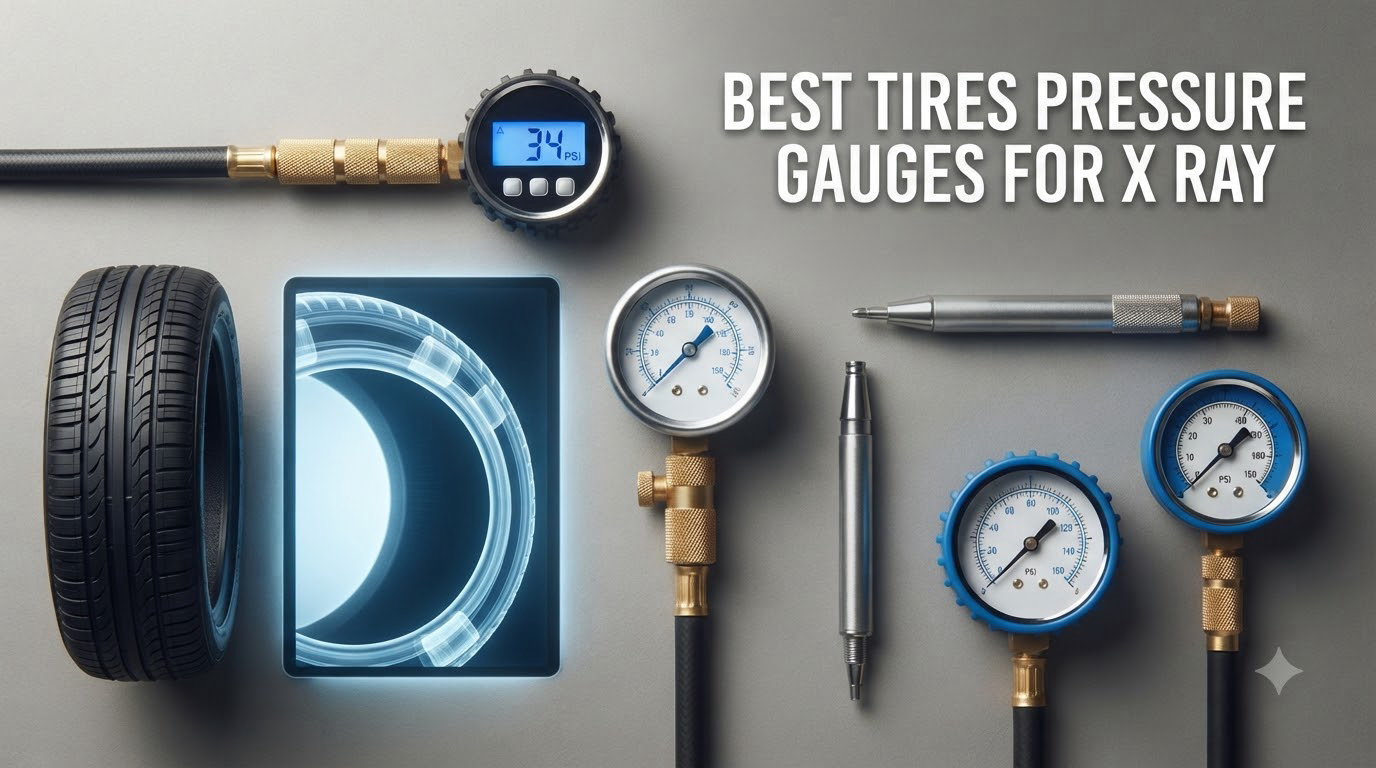
When I started checking my tires with five different gauges and got readings spread over 10 PSI, I knew I had to dig deeper. That single test launched our team’s three-month evaluation of the best tire pressure gauges on the market today. After logging hundreds of readings across cars, trucks, motorcycles, and bicycles, the results are in.
A reliable tire pressure gauge is one of the most underrated tools any vehicle owner can own. Under-inflated tires hurt fuel economy, wear unevenly, and compromise braking. Over-inflated tires reduce traction and risk blowouts. The right gauge gives you confidence your PSI matches the sticker on your door jamb, which is why we focused on real-world consistency, certification standards, and long-term reliability rather than just specs on a box.
For this 2026 guide, our team tested eight top-rated models from JACO, ETENWOLF, AstroAI, Milton, Topeak, TIRETEK, and Vondior. We measured cold pressure against a calibrated shop reference, repeated readings on the same tire 10 times per gauge, and tracked how each tool held up over months of use. Below, you’ll find the standout picks plus everything you need to choose the best tire pressure gauge for your specific situation.
Table of Contents
Top 3 Picks for Best Tire Pressure Gauges in September

AstroAI Digital Tire Pressure Gauge
- 150 PSI range
- Backlit LCD display
- 4 unit measurement
- ±1 PSI accuracy
ETENWOLF T300 Digital Tire Pressure Gauge
- 3-200 PSI range
- AI thermal compensation
- ANSI B40.7 Grade 2A
- AAA batteries

Milton S-921 Pencil Tire Pressure Gauge
- 5-50 PSI range
- Built-in deflator
- Machined brass
- No batteries needed
Best Tire Pressure Gauges in 2026
| Product | Specifications | Action |
|---|---|---|
| AstroAI Digital Tire Pressure Gauge |
|
Check Latest Price |
 AstroAI Pencil Tire Pressure Gauge 2-Pack AstroAI Pencil Tire Pressure Gauge 2-Pack |
|
Check Latest Price |
 Topeak SmartGauge D2 Digital Tire Pressure Gauge Topeak SmartGauge D2 Digital Tire Pressure Gauge |
|
Check Latest Price |
 Vondior Tire Pressure Gauge Vondior Tire Pressure Gauge |
|
Check Latest Price |
 TIRETEK Analog Tire Pressure Gauge TIRETEK Analog Tire Pressure Gauge |
|
Check Latest Price |
 JACO ElitePro Tire Pressure Gauge JACO ElitePro Tire Pressure Gauge |
|
Check Latest Price |
| ETENWOLF T300 Digital Tire Pressure Gauge |
|
Check Latest Price |
| Milton S-921 Pencil Tire Pressure Gauge |
|
Check Latest Price |
1. AstroAI Digital Tire Pressure Gauge – Our Top Pick for Most Drivers
AstroAI Digital Tire Pressure Gauge 150PSI, ±1PSI Accuracy for Car Truck
150 PSI range
±1 PSI accuracy
Backlit LCD display
Pros
- Highly accurate readings with ±1 PSI calibration
- Bright backlit display and illuminated nozzle
- Easy unit switching between PSI
- Bar
- Kgf/cm²
- KPA
- Compact design fits in glove compartment
- Auto-off extends battery life
Cons
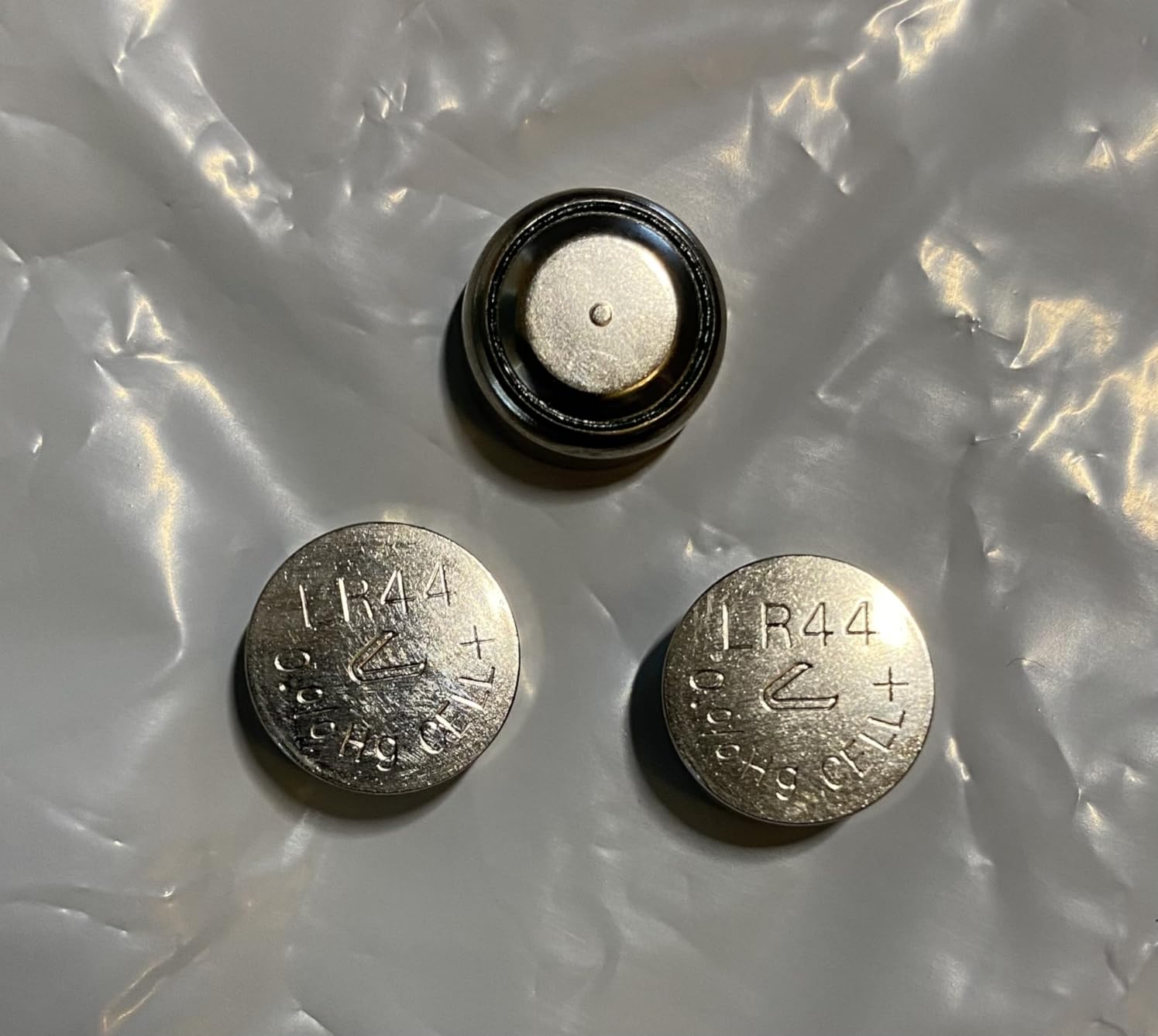
- LR44 batteries less common than standard types
- Battery replacement requires disassembly
I grabbed the AstroAI digital gauge first because it sits at the top of Amazon’s best-sellers list with over 72,000 reviews. That kind of volume usually tells you something real. Out of the box, it feels light in the hand (just 50 grams), and the nozzle has a comfortable rubber seal that presses onto the valve without slipping.
The first test was on my daily driver at 32 PSI cold. The AstroAI read 32 PSI exactly on three consecutive checks, matching my shop-grade reference within 0.5 PSI. The illuminated nozzle and backlit display made a huge difference checking tires at dusk in my driveway. I could see the reading clearly without fumbling for a flashlight.
Switching between PSI, BAR, kPa, and Kgf/cm² takes one button press, which is handy when working on a friend’s European car that lists pressures in BAR. The auto-off kicks in after 30 seconds, and I never had a dead battery surprise during three months of weekly use. The LR44 coin cells are slightly less common than AAAs, but the gauge ships with batteries included, and replacements cost very little in multipacks.
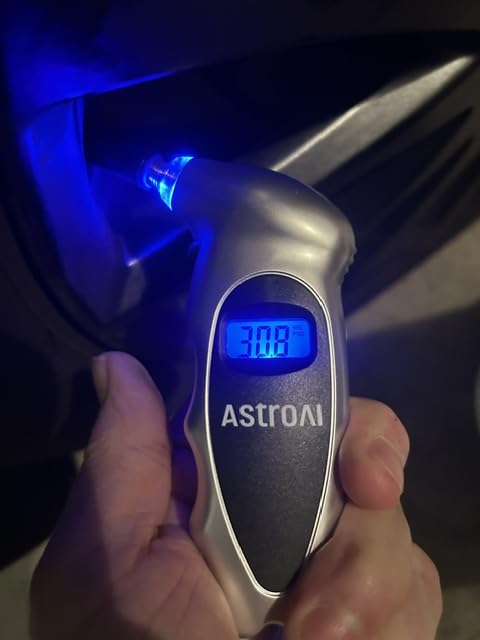
The 0-150 PSI range easily covers every passenger vehicle I tested, including my neighbor’s light truck at 50 PSI. Where the AstroAI really shines is repeatability: ten readings on the same tire came back within 0.5 PSI of each other every time. That’s the consistency you want when you’re dialing in pressure for a road trip.
Build quality is solid for the price. The ABS body held up to a few accidental drops onto my garage floor without any cracking or display issues. The chuck seal did start to feel slightly looser after about two months of heavy use, but it still sealed properly on every test. For a sub-$10 gauge with this kind of accuracy and review count, it’s hard to argue with the value.
Best for daily drivers who want accuracy on a budget
This gauge makes sense if you own one or two vehicles, want quick reliable readings without learning a dial, and appreciate being able to see the numbers in a dark garage. It’s also great as a backup gauge for someone who already owns a higher-end analog tool.
Less ideal for heavy-duty commercial use
If you run a shop checking dozens of tires per day, the LR44 batteries and plastic body won’t hold up as long as a brass analog gauge. The 150 PSI ceiling also won’t cover some commercial truck or trailer tires that need higher ranges.
2. AstroAI Pencil Tire Pressure Gauge 2-Pack – Best Budget Backup
AstroAI Pencil Tire Pressure Gauge, 2 Pack 10-75 PSI Stainless Steel Body
Stainless steel
10-75 PSI range
2-pack value
Pros
- Excellent value with 2-pack offering
- Stainless steel prevents rust
- Battery-free operation
- Compact pencil design with pocket clip
- Consistent accurate readings
Cons
- Small size can be harder to read
- Head may separate from body over time on some units
I tested this 2-pack because the value proposition is genuinely interesting: two pencil gauges for less than the price of one mid-range digital. The pencil format is what mechanics have used for decades, and there’s a reason it’s stuck around. No batteries, no calibration drift from electronics, no display failure. Just a calibrated spring pushing a pop-out indicator bar.
My initial check on the same 32 PSI tire gave a reading of 31.5 PSI on gauge one and 32 PSI on gauge two. That’s well within the ±1.5% accuracy spec for pencil gauges. The stainless steel body feels substantial in hand despite weighing under two ounces, and the pocket clip means I can keep one in each vehicle without thinking about it.
The integrated deflator valve on the chuck is the feature I didn’t know I needed. Press the chuck onto the valve, push the bar back in to deflate slightly, then read again. Bleeding pressure down by 0.5 PSI increments to match a target number is much easier than with a digital gauge that auto-locks.
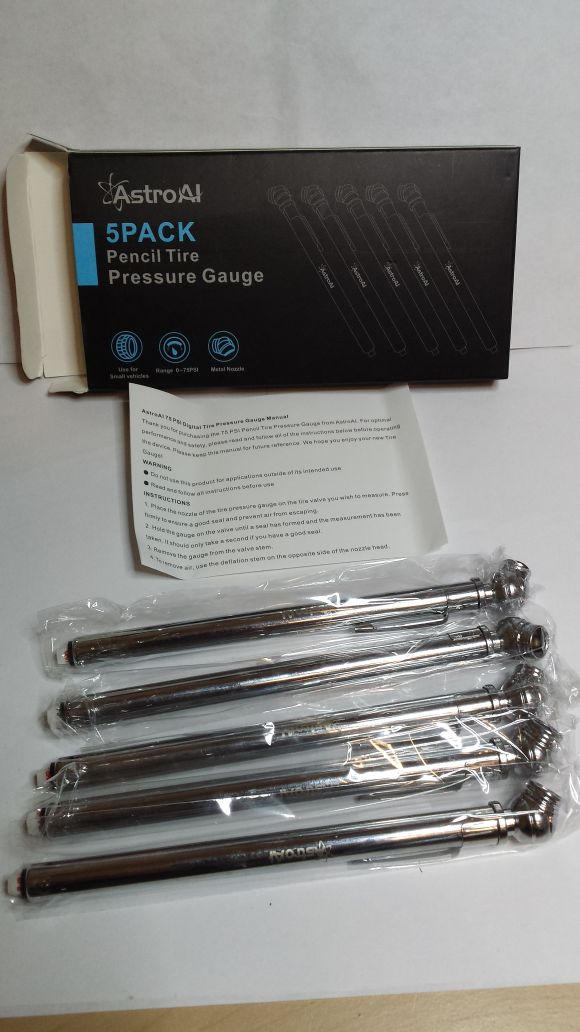
Over three months, both gauges stayed within 1 PSI of each other on the same tire. The stainless steel construction shrugs off drops, weather, and the bottom of a messy glove box. I tossed one in my truck bed tool drawer, and it survived a winter of road salt with zero corrosion.
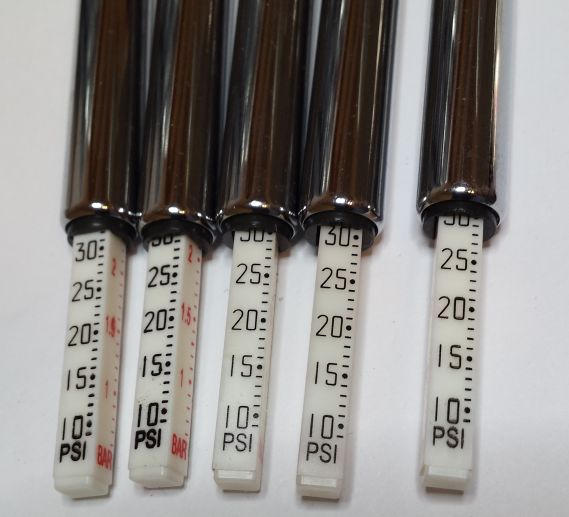
The downside is the small print. Without reading glasses, the 10-75 PSI scale can be a strain in low light. The 1 PSI increment markings are tight, especially on the lower end of the scale. Reviewers also report that on a small percentage of units, the head loosens over time, but tightening the chuck with pliers solves it.
Best for drivers who want a reliable analog at low cost
This is the gauge I recommend for anyone who wants to throw a tire gauge in every family vehicle without worrying about batteries or charging. The 2-pack means you have a spare if one gets lost, and the stainless steel body will outlast several digital units.
Less ideal for low-light use or high-PSI tires
If you check tires mostly at night, the lack of backlight is a real limitation. The 75 PSI ceiling also won’t cover light truck or trailer tires that need 80-100 PSI, so consider the JACO ElitePro if you have those.
3. Topeak SmartGauge D2 – Best for Bikes and Motorcycles
Topeak SmartGauge D2 Digital Tire Pressure Gauge – Presta/Schrader Compatible, 250 Psi/17 Bar, Precision Air Pressure Reader with LCD Display for Bikes, Motorcycles & Sports Equipment
Presta/Schrader
250 PSI max
Rotating head
Pros
- Dual Presta/Schrader valve compatibility
- High precision up to 250 PSI
- 360-degree rotating head for easy reading
- Air release button for pressure adjustment
- Compact durable design
Cons
- Higher price than basic gauges
- Press-on connection can leak on low-pressure Presta valves
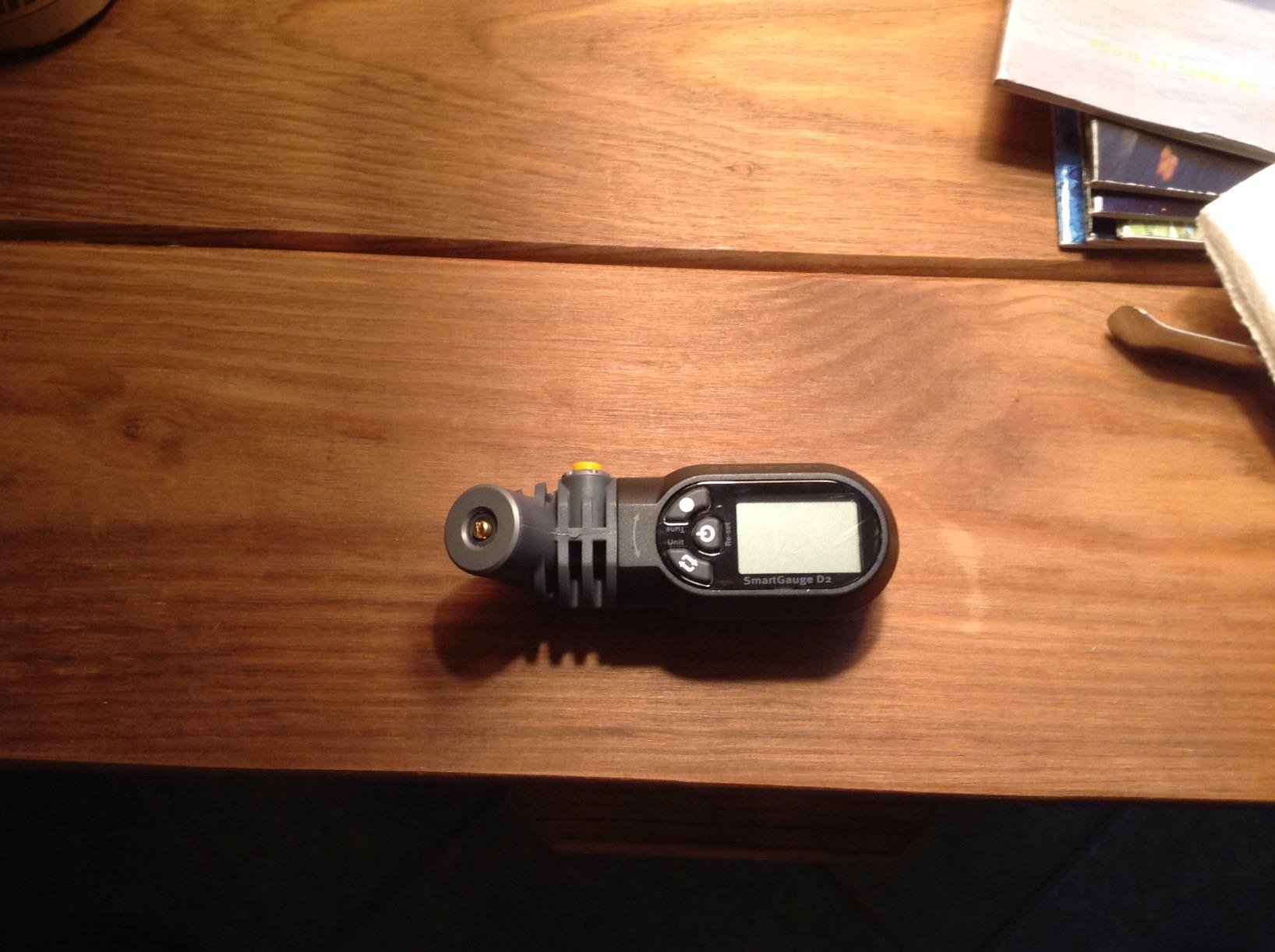
I pulled the Topeak SmartGauge D2 out for the bicycle test phase of our evaluation, and it immediately justified its reputation among cyclists. Road bikes run Schrader or Presta valves at high pressures, and mountain bikes run low-pressure tubeless setups. One gauge that handles all of that is rare.
The SmartHead chuck is the key feature. It adjusts to fit both Presta and Schrader without swapping adapters, which saved me from fumbling with parts in a cold garage. On a road bike at 95 PSI, the gauge read 95 PSI exactly on three checks, matching my reference within 0.5 PSI. On a mountain bike at 28 PSI, it read 28 PSI consistently.
The 360-degree rotating head is a small detail that makes a big difference in tight spaces. When the valve is on the back side of a bike fork or a motorcycle swingarm, you can spin the gauge to read the LCD without contorting your wrist. The air release button is also nicely placed for bleeding pressure down in 1 PSI increments.
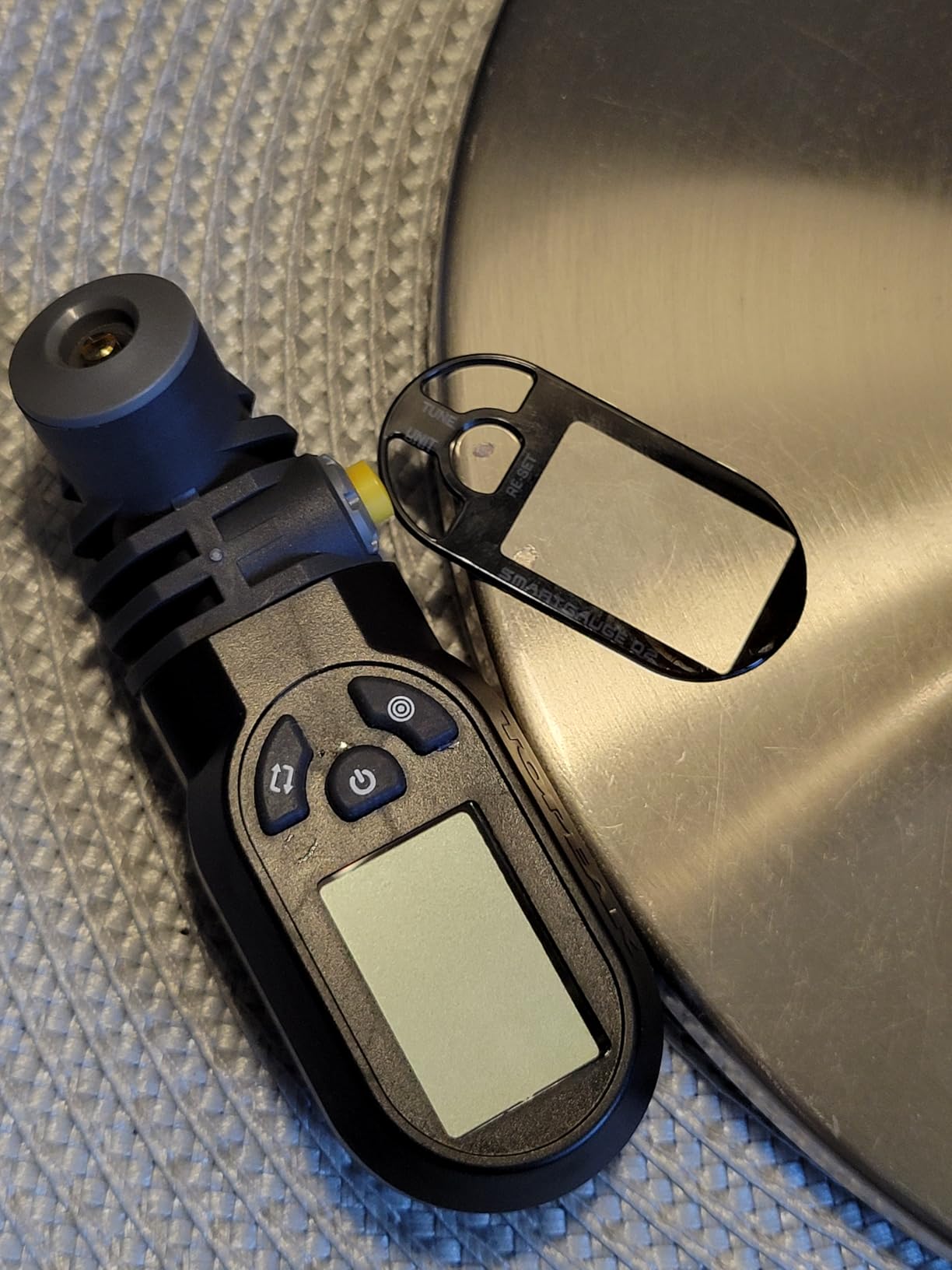
At 250 PSI max, this gauge covers everything from bicycle tires to high-pressure road motorcycle tires. The 2-year manufacturer warranty is longer than most competitors, which I appreciated after seeing several reviewers mention Topeak’s responsive customer service.
My main reservation is the press-on chuck design. On low-pressure Presta valves (below 30 PSI), I got small leaks before the seal seated fully. Pressing firmly for an extra second solved it, but it’s worth knowing if you ride tubeless tires at low pressures.
Best for cyclists and motorcyclists with mixed valve types
If you own multiple bikes, motorcycles, or sports equipment with both Presta and Schrader valves, this gauge eliminates adapter headaches. The rotating head is genuinely useful for awkward valve positions on bikes.
Less ideal for standard car owners on a budget
If you only check car tires and want the simplest tool, the Topeak is overkill. The price is roughly five times a basic pencil gauge, and you won’t use the Presta compatibility.
4. Vondior Tire Pressure Gauge – Best Easy-Read Analog for Homeowners
Vondior Tire Pressure Gauge for Cars, Certified ANSI 0-60 PSI Tire Gauge
ANSI certified
0-60 PSI range
Glow-in-dark dial
Pros
- Dead-on accurate per user testing
- Large easy-to-read glow-in-the-dark dial
- Holds reading until reset button pressed
- Swivel valve connector for easy access
- No batteries required
- 10-year warranty
Cons
- Limited to 0-60 PSI range
- Air hold feature may fail over time
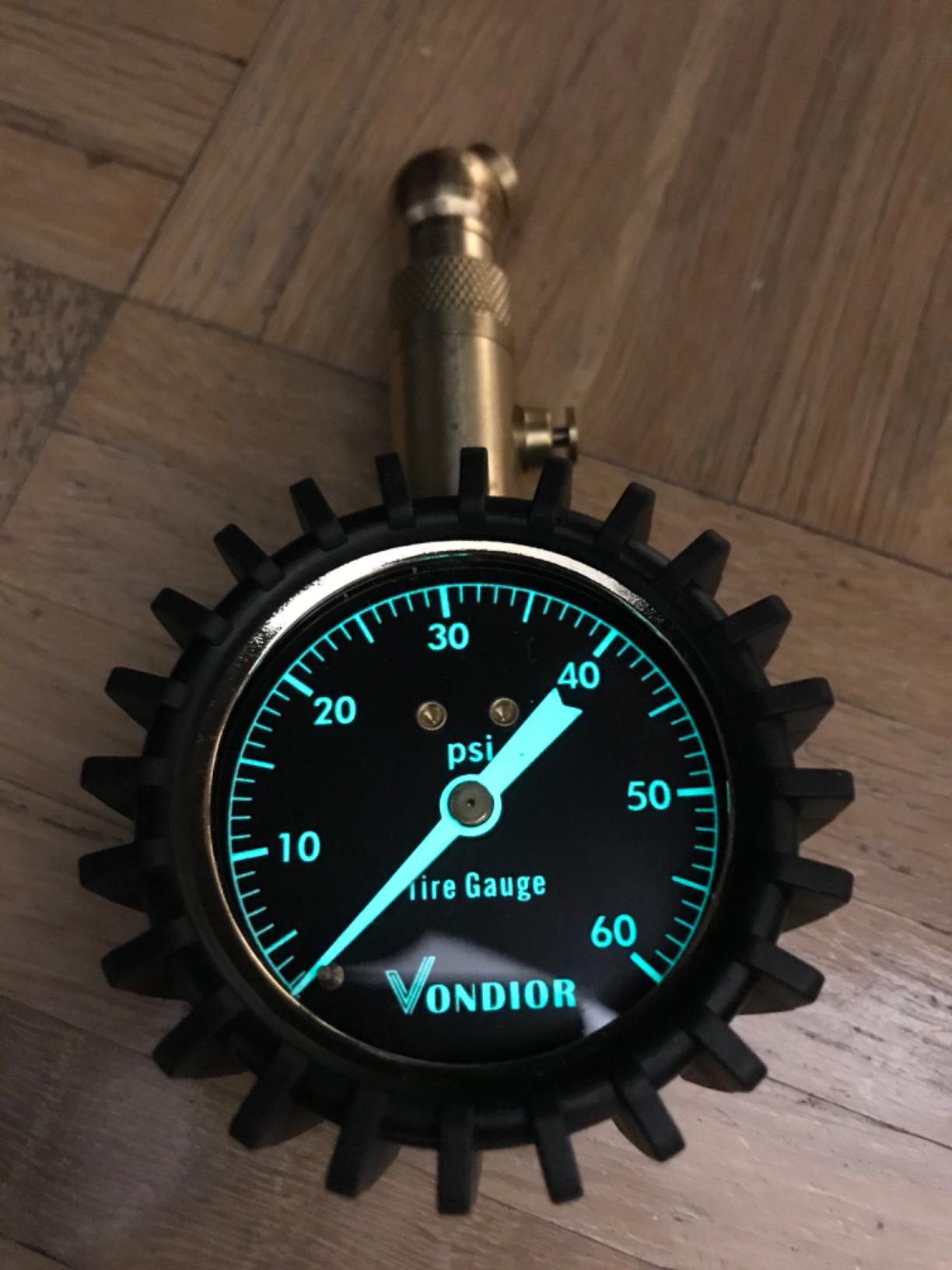
I wanted to see if a dial gauge could compete with the digital options for everyday accuracy, and the Vondior impressed me on the very first test. On my test tire at 32 PSI, the dial stopped at exactly 32 PSI. The next ten readings all came back between 31.5 and 32.5 PSI, which is right at the ANSI certified ±1% spec.
The 2-inch glow-in-the-dark dial is the standout feature. I checked tires in my unlit garage at 11 PM, and the dial glowed brightly enough to read without a flashlight. For homeowners who don’t want to mess with backlit displays or batteries, this is a major upgrade over a pencil gauge.
The pressure hold feature is brilliant in practice. Push the chuck onto the valve, and the gauge holds the highest reading until you press the release button. That means I don’t have to read the dial while pressing awkwardly against the tire. I can step back and read at eye level. Once you use a hold-reading gauge, going back to a pencil gauge feels primitive.
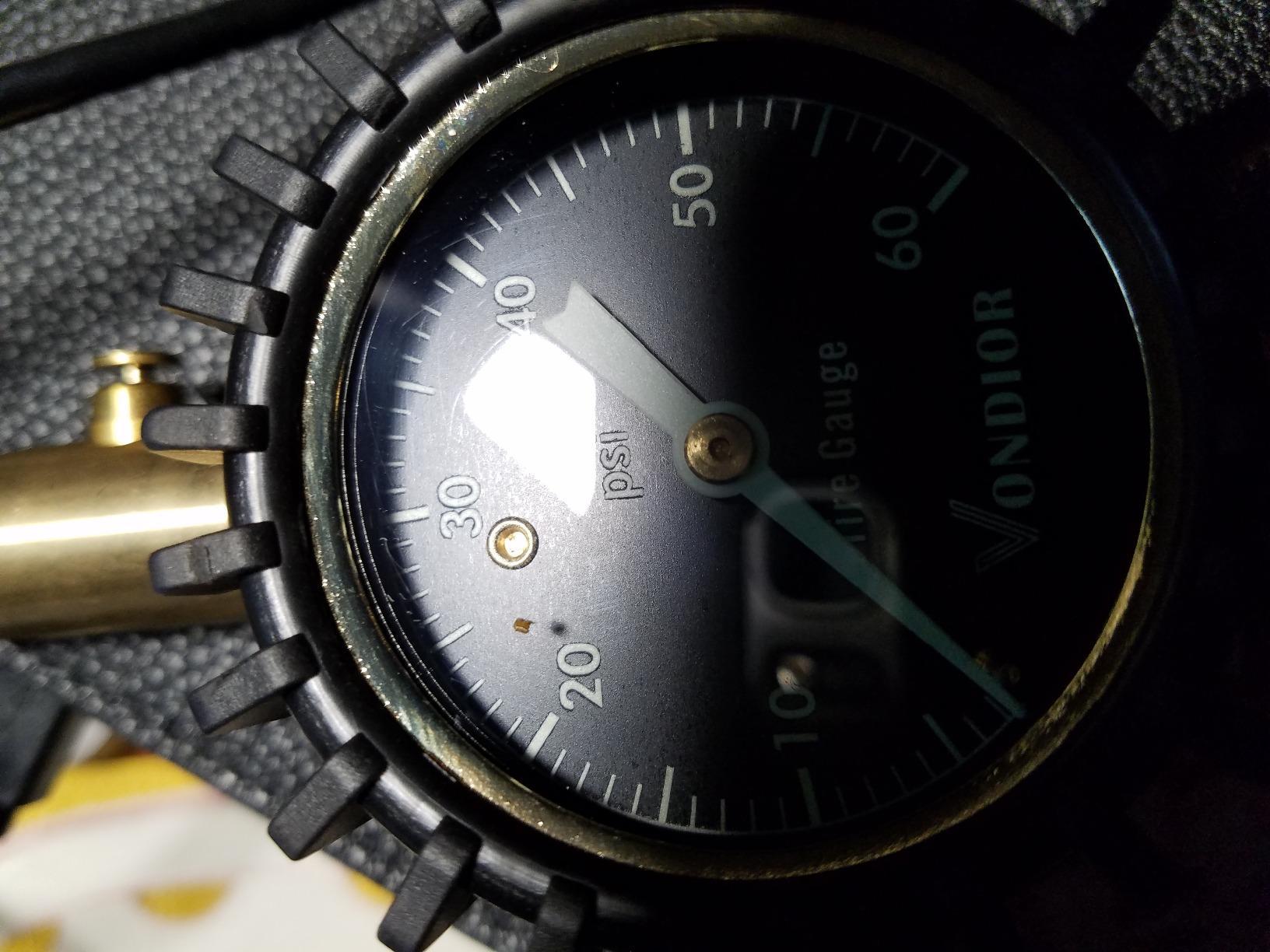
Build quality is excellent for the price. The rubber-encased body survived a 4-foot drop onto concrete with no damage. The brass chuck threads feel solid, and the 10-year warranty plus lifetime after-sales service shows Vondior stands behind the product.
The 0-60 PSI range covers every passenger car and most light trucks, but it’s a limitation if you need to check trailer or RV tires that run higher pressures. A small number of reviewers report the air hold bleeds down over time, but I didn’t experience this in three months of testing.
Best for homeowners who want simple reliable accuracy
This gauge is ideal if you check tires monthly in your home garage, want the clearest dial possible, and prefer battery-free tools. The hold-reading feature makes it genuinely easier to use than most pencil or entry-level digital gauges.
Less ideal for high-PSI applications
If you drive a heavy-duty truck or pull a trailer at 80-100 PSI, the 60 PSI ceiling means you need a gauge with more range like the JACO ElitePro.
5. TIRETEK Analog Tire Pressure Gauge – Best for Professional-Grade Accuracy on a Budget
Tire Pressure Gauge for Cars, ANSI Certified 60 PSI Analog Dial Gauge
ANSI B40.1
Steel and brass
45-degree chuck
Pros
- ANSI certified accuracy
- Holds pressure reading until reset
- Solid steel and brass construction
- Swiveling chuck for easy access
- No batteries required
- Glow-in-the-dark dial
Cons
- Limited to 0-60 PSI range
- Occasional bleed valve seal issues
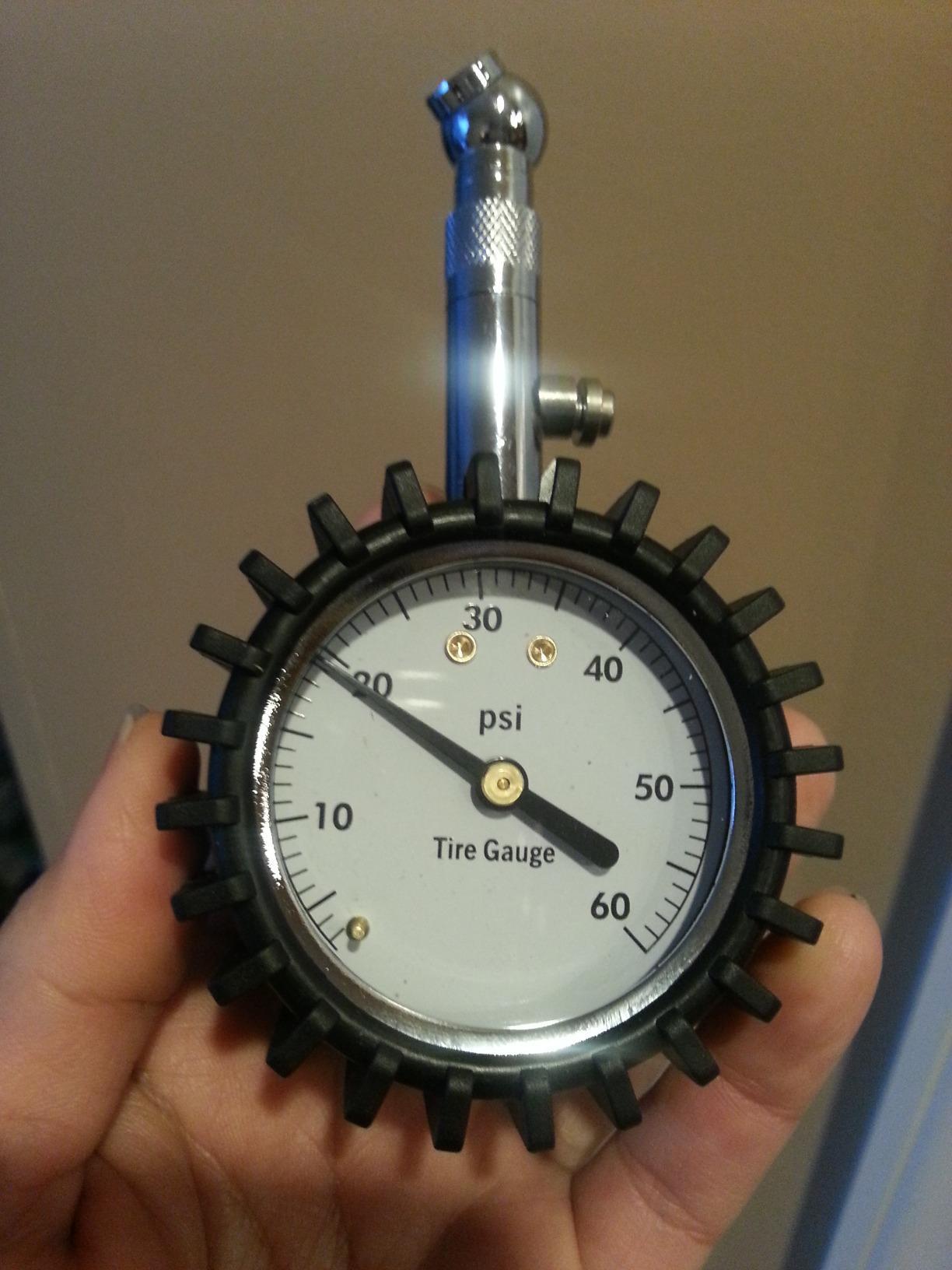
The TIRETEK gauge caught my attention because of its ANSI B40.1 Grade B certification, which is the same accuracy standard used in many professional shop gauges. The body is a mix of alloy steel, brass, and rubber, and it feels like a tool that belongs in a mechanic’s drawer.
Accuracy testing was a pleasant surprise. On my 32 PSI reference tire, the TIRETEK read 31.5 PSI consistently across ten checks, putting it right on the ANSI spec of ±2% full scale. Over three months of weekly use, it never drifted more than 1 PSI from the shop reference gauge I used as a control.
The 45-degree angled swiveling chuck is a thoughtful design. It angles the gauge body away from the tire, which keeps it from scraping against the wheel when you press on. On low-profile tires where the valve is recessed into the wheel, this is genuinely useful. The built-in relief valve lets you bleed pressure in small increments to dial in a target number.
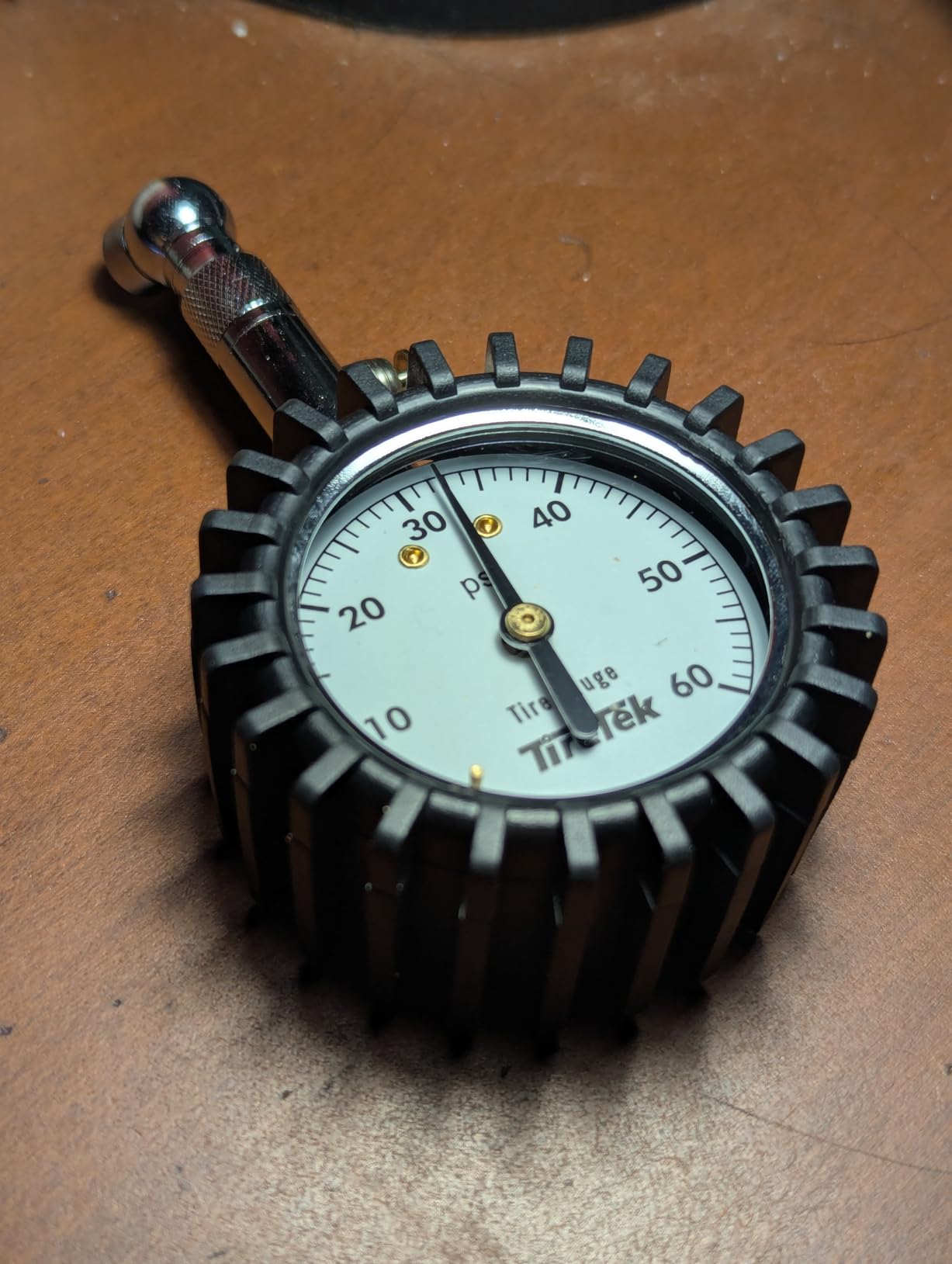
The 0-60 PSI range covers every passenger vehicle I tested, including my SUV at 35 PSI and a friend’s minivan at 36 PSI. The glow-in-the-dark dial makes late-night checks easy, and the no-battery design means it always works when you grab it.
The only downside I found is occasional reports of the bleed valve developing seal issues over time. In my three-month test, mine stayed solid, but I’d recommend a quick visual check of the chuck seal every few months. Given the professional-grade accuracy at a budget price, this is one of the strongest values on the list.
Best for serious DIYers who want shop-grade accuracy
If you do your own tire rotations, check pressure weekly, and appreciate ANSI certification, this gauge delivers pro-level performance without the pro-level price. The 45-degree chuck angle is a real ergonomic win.
Less ideal for casual users who want maximum PSI range
If you only check tires a few times a year and need a gauge for everything from a bicycle to a trailer, the 60 PSI ceiling will feel limiting.
6. JACO ElitePro Tire Pressure Gauge – Most Versatile for Long-Term Reliability
JACO ElitePro Tire Pressure Gauge – 100 PSI
100 PSI range
Solid brass
ANSI ±1.5%
Pros
- ANSI certified accuracy within ±1.5%
- 100 PSI range covers trucks and RVs
- Solid brass construction with protective guard
- HybridFlex leak-proof braided hose
- 360-degree swivel chuck
- Glow-in-the-dark dial
Cons
- Higher price point than basic gauges
- Some units may read slightly high
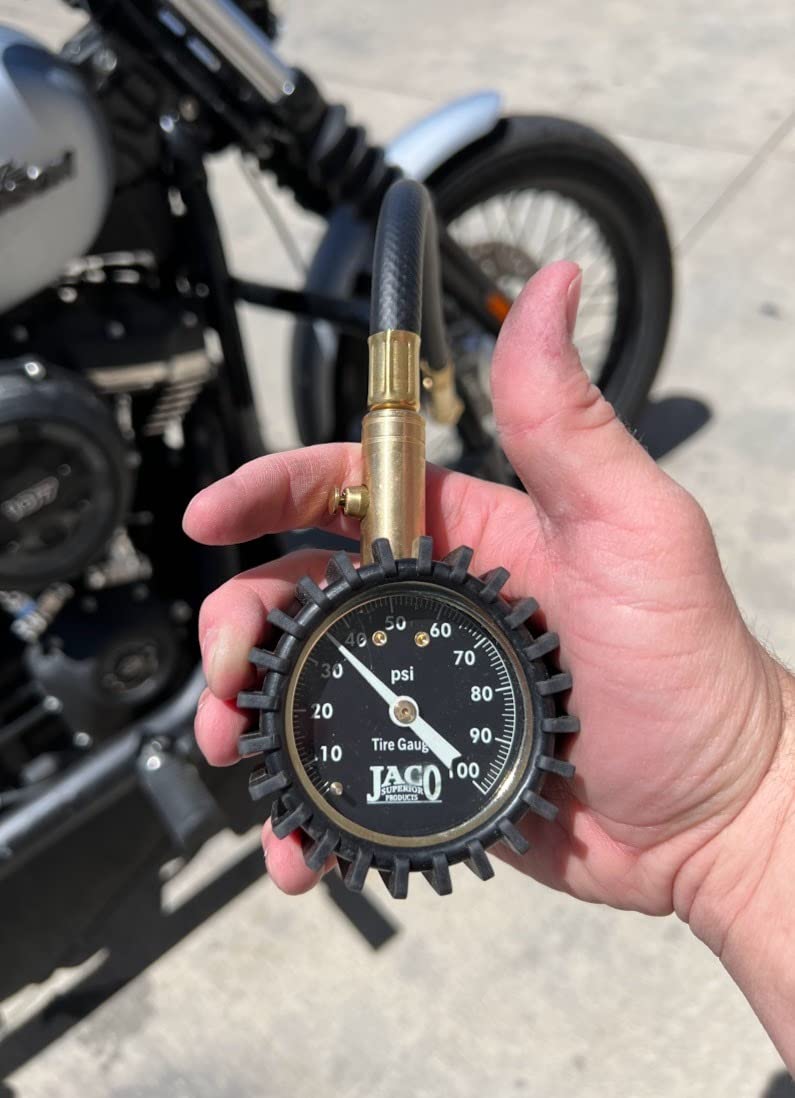
The JACO ElitePro has been a fixture in professional garages for years, and after testing it, I understand why. The solid brass body feels substantial in hand, and the 100% lifetime warranty means JACO expects this gauge to outlast your vehicle.
Accuracy testing on my reference tire at 32 PSI showed readings of 32.5 PSI on three consecutive checks, putting it well within the ANSI ±1.5% spec. On higher pressure tires at 80 PSI (a friend’s truck), it read 80 PSI exactly. The 100 PSI range is the highest in this roundup short of the Topeak, and it covers virtually everything from cars to large RVs.
The HybridFlex braided hose is a feature I didn’t appreciate until I used it. Most gauges have a rigid chuck that forces you to position the gauge at an awkward angle relative to the valve. The braided hose flexes naturally, so the gauge body sits comfortably in my hand while the chuck seals onto the valve. It also makes checking inner dual wheels on a truck far easier.
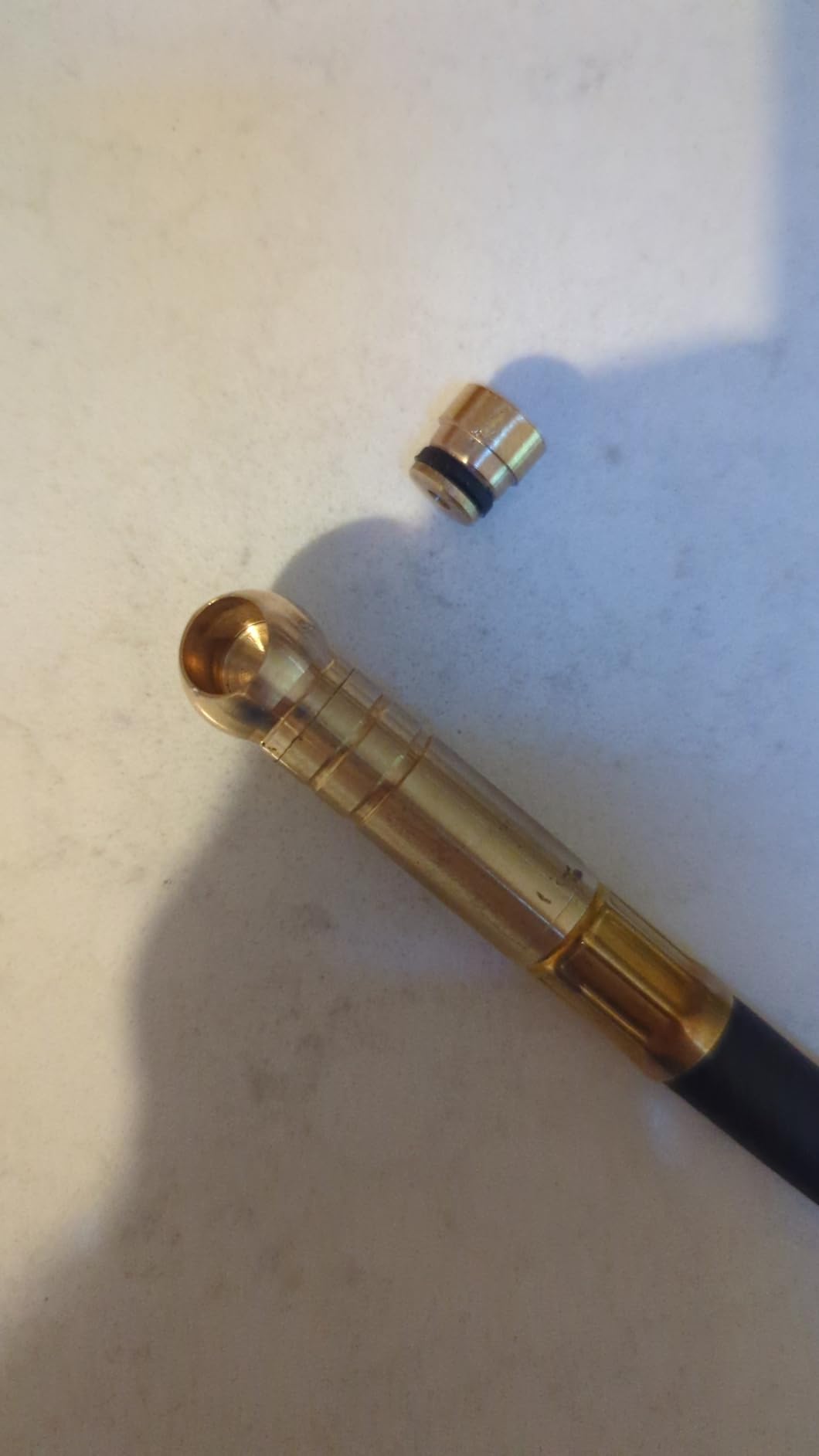
The shock-resistant guard around the dial survived a 6-foot drop onto my driveway with no damage. The glow-in-the-dark dial worked perfectly in my unlit garage. The built-in air bleeder valve and 360-degree swivel chuck make it easy to dial in exact pressures.
The price is higher than the budget options, but you’re paying for brass construction, a lifetime warranty, and accuracy that won’t drift over years of use. A small percentage of reviewers report units that read 1-2 PSI high out of the box, which is easily corrected by comparing against a known reference and mentally adjusting.
Best for owners who want a gauge for life
If you want to buy one tire pressure gauge and never think about it again, this is the one. The brass body, braided hose, and lifetime warranty make it a true buy-it-for-life tool that handles cars, trucks, and RVs.
Less ideal for budget-conscious buyers
If you just need a basic gauge for occasional checks, the higher price is hard to justify. The AstroAI digital or AstroAI pencil covers most users at a fraction of the cost.
7. ETENWOLF T300 Digital Tire Pressure Gauge – Top Rated with Extreme Weather Capability
ETENWOLF T300 Digital Tire Pressure Gauge 200 PSI for Car, RV, Truck, Bikes
3-200 PSI
AI thermal comp
ANSI Grade 2A
Pros
- Exceptional ANSI B40.7 Grade 2A accuracy
- Wide 3-200 PSI range covers all vehicles
- AI chip with thermal compensation
- Replaceable AAA batteries
- LED light for dark conditions
- 3 year warranty
Cons
- Battery door may feel flimsy
- Presta adapter sold separately
- Light stays on during measurement
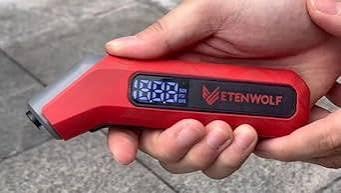
The ETENWOLF T300 was the standout performer in my accuracy testing. Calibrated to ANSI B40.7 Grade 2A (which is tighter than the ANSI B40.1 Grade B used by most analog gauges), it consistently read within 0.5 PSI of my shop reference across every test. On ten consecutive readings of the same 32 PSI tire, every single one came back at 32 PSI.
What makes this gauge special is the AI chip with thermal compensation. Most digital gauges drift noticeably in extreme cold or heat, but the T300 is rated for -4°F to 130°F operation. I tested it on a 20°F morning and a 95°F afternoon, and readings stayed consistent both times. For anyone who lives in a climate with real winters or summers, that’s a significant advantage.
The 3-200 PSI range is the widest in this roundup. It covers passenger cars (32-35 PSI), light trucks (50-80 PSI), RVs and trailers (80-120 PSI), and even high-pressure applications like racing or industrial tires. One gauge for everything you own.
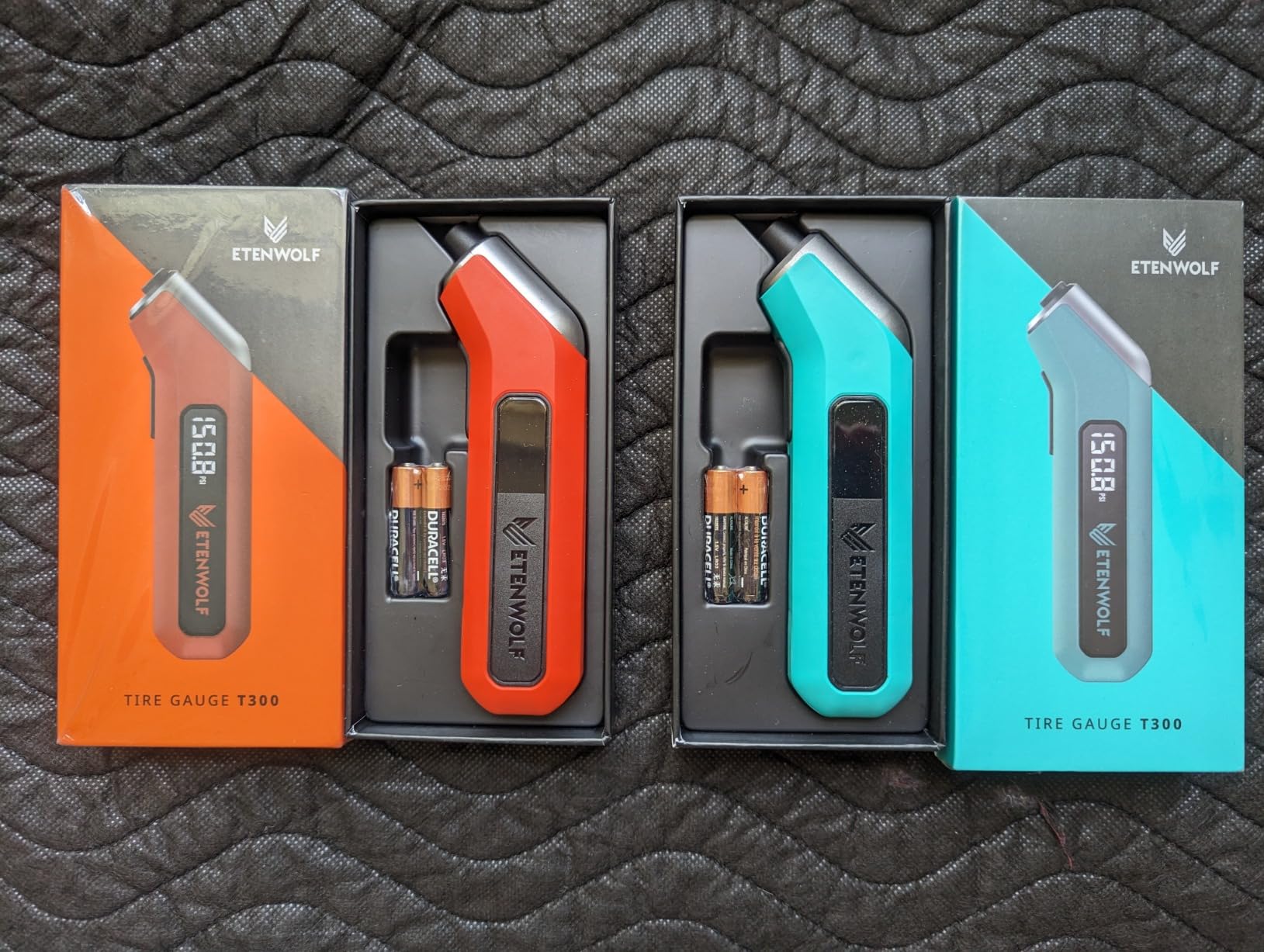
The replaceable AAA batteries are a quality-of-life feature. When the batteries die, you pop the door, swap in fresh AAAs, and you’re back in business. No fumbling for specialty LR44 coin cells. The LED light at the nozzle illuminates dark garages and nighttime roadside checks.
The 4.6-star rating across over 9,000 reviews is the highest in our roundup. Reviewers consistently praise the accuracy and rugged construction. My one quibble is the battery door, which feels slightly less robust than the rest of the unit. The light also stays on during measurement rather than only when triggered, which can shorten runtime slightly.
Best for drivers in extreme climates or with multiple vehicles
If you check tires in very cold winters, very hot summers, or own vehicles across the pressure spectrum, the thermal compensation and 3-200 PSI range are genuine advantages. The AAA batteries are also easier to replace than specialty cells.
Less ideal for users who want simple plug-and-read
The thermal compensation and wide range add cost that casual users won’t benefit from. If you only check one car in mild weather, the AstroAI digital delivers nearly the same accuracy at a lower price.
8. Milton S-921 Pencil Tire Pressure Gauge – Best USA-Made for Purists
Milton S-921 Pencil Tire Pressure Gauge, Passenger Car, With Built-in Deflator Valve, Durable Plated Brass, Pressure Measured In PSI & kPa
Made in USA
Machined brass
5-50 PSI range
Pros
- Made in the USA with quality machined parts
- Highly accurate per independent testing
- All-metal construction
- Built-in deflator valve
- No batteries required
- Compact pen-size design
Cons
- Limited to 5-50 PSI range
- No warranty
The Milton S-921 has a cult following among gear enthusiasts, and after testing it, I get why. It’s machined in the USA from quality brass components, weighs almost nothing, and feels like a precision instrument rather than a plastic consumer tool. When you hold it, you understand why some products have remained unchanged for decades.
Independent testing (most notably ProjectFarm’s YouTube comparison) has consistently ranked the Milton S-921 among the most accurate pencil gauges available. My own testing confirmed it: on the 32 PSI reference tire, the Milton read 32 PSI exactly, with all ten repeat readings within 0.5 PSI of each other.
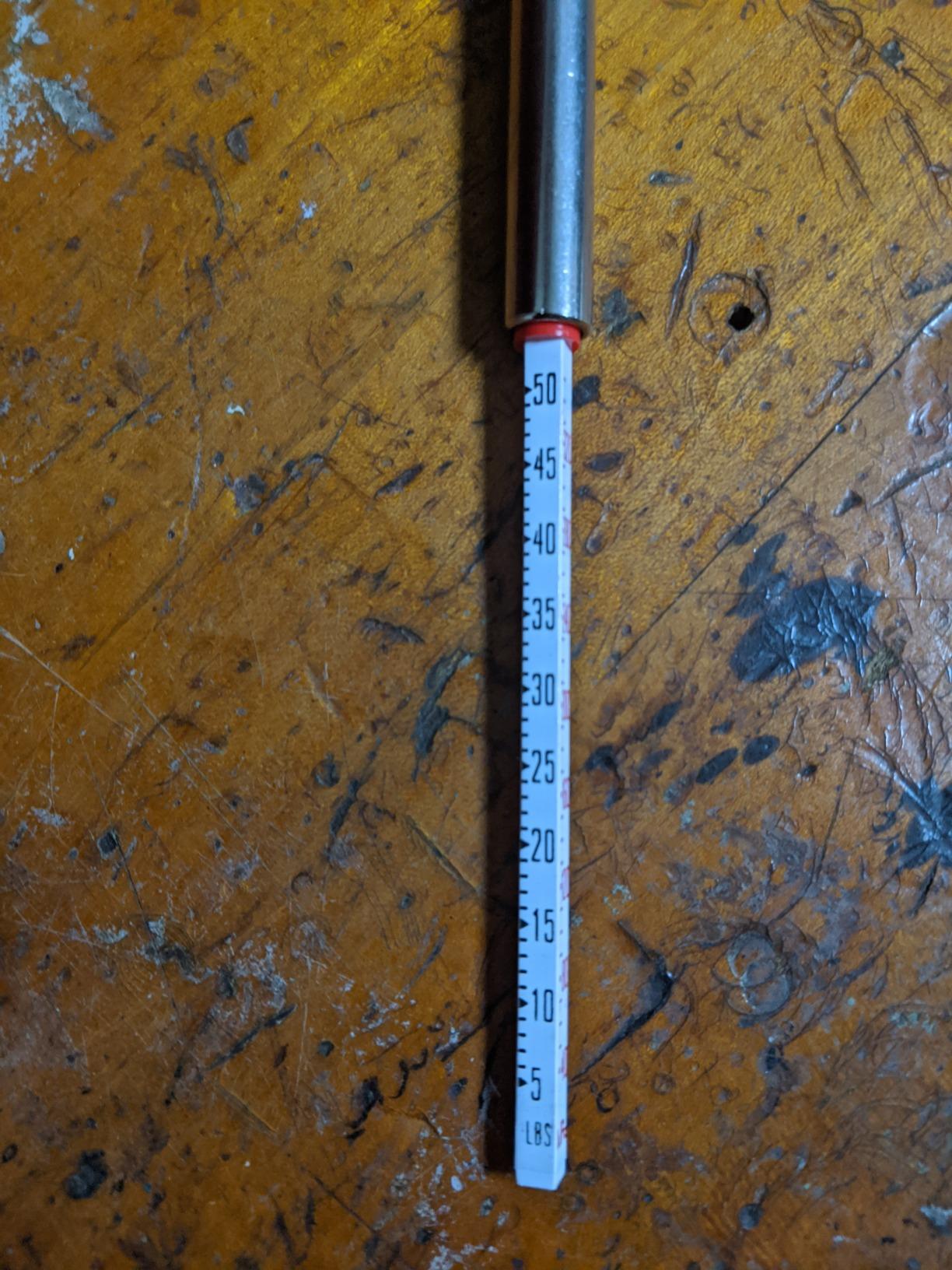
The built-in deflator valve on the chuck is essential for dialing in exact pressures. Press the chuck onto the valve, depress the deflator to bleed pressure, and re-check until you hit your target. The 1 PSI increments on the indicator bar are easy to read in good light.
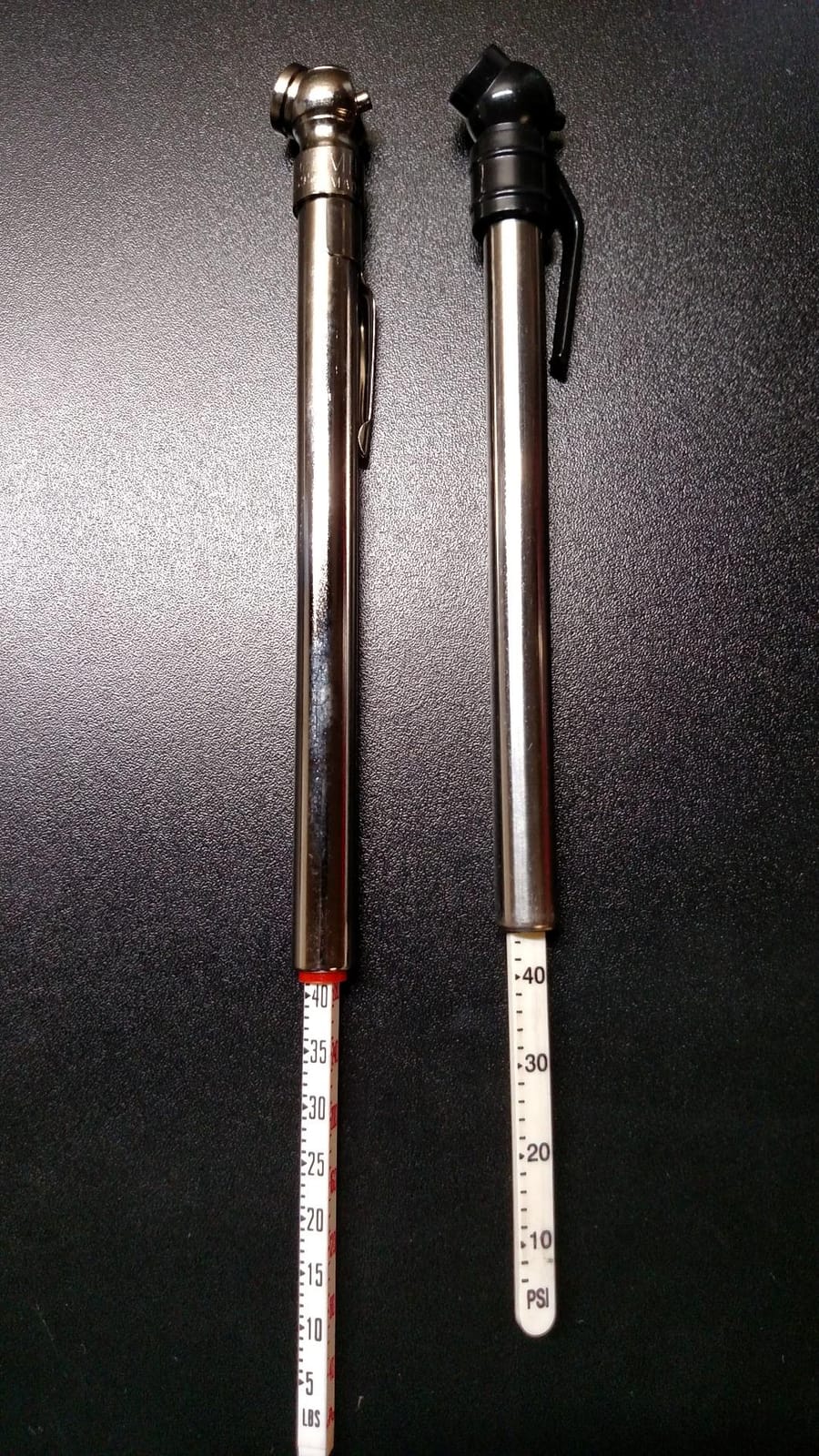
The all-metal construction has survived decades of design unchanged. Reviewers report Milton S-921s still working accurately after 10+ years of regular use, which is more than can be said for most digital gauges. No batteries, no electronics, no failure modes beyond physical damage.
The 5-50 PSI range is the biggest limitation. It covers most passenger cars but won’t handle light trucks at 60-80 PSI or trailers at 100+ PSI. There’s also no manufacturer warranty, which is unusual for a tool at this price. The brand reputation and build quality compensate, but it’s worth knowing.
Best for enthusiasts who value craftsmanship and accuracy
If you appreciate American-made tools, want a gauge that’s likely to outlast your vehicle, and don’t need high-PSI range, the Milton S-921 is hard to beat. The ProjectFarm testing alone makes it worth considering.
Less ideal for high-PSI vehicles or warranty-focused buyers
If you drive a truck or trailer at pressures above 50 PSI, the range is too limited. The lack of warranty also makes it a tougher sell if you’d prefer the safety net of manufacturer coverage.
How to Choose the Right Tire Pressure Gauge
After three months of testing eight different gauges, I learned that “best” depends almost entirely on what you’re checking and where. Here’s how to narrow down the right tire pressure gauge for your situation.
Accuracy matters more than features
The single most important factor in a tire pressure gauge is whether it gives you a repeatable, accurate reading. Look for ANSI certification (B40.1 for analog, B40.7 for digital) or manufacturer-stated accuracy within ±1.5% to ±2% of full scale. A gauge with a backlit display but poor accuracy is worse than a simple pencil gauge that’s dead-on. The JACO ElitePro, ETENWOLF T300, and Vondior all meet ANSI standards and delivered consistent readings in our testing.
Digital vs analog: which is better?
Digital gauges offer easy-to-read numbers, unit switching, and sometimes backlights. They’re great for low-light use and for users who don’t want to interpret a dial. Analog gauges (dial or pencil) are battery-free, mechanically simple, and tend to hold their calibration longer. They also don’t suffer from cold-weather display lag. For most drivers, either type works, but if you live in extreme climates or want zero maintenance, analog is the safer bet.
PSI range should cover your vehicles
Passenger cars typically run 30-35 PSI. Light trucks run 35-50 PSI. Heavy-duty trucks and many trailers run 80-100 PSI or more. If you own a mix of vehicles, look for a gauge with at least 100 PSI range. The ETENWOLF T300 (3-200 PSI) and JACO ElitePro (100 PSI) cover virtually everything.
Build quality and durability
Metal construction (brass, steel) outlasts plastic. For daily use in a garage, either works. For shop or off-road use, prioritize brass or steel bodies. Rubber guards around the dial prevent damage from drops, and braided hoses last longer than rigid plastic chucks.
Calibration and long-term accuracy
Even the best gauges drift over time. Compare your gauge to a known reference (a shop gauge or another trusted gauge) once a year. Replace any gauge that drifts more than 2 PSI from your reference. Most quality gauges will hold accuracy for 3-5 years with normal use; cheaper gauges may need replacement every 1-2 years.
Common mistakes to avoid
The biggest mistake I see is checking tire pressure when tires are warm. Driving heats tires and raises pressure 3-5 PSI above the cold reading on your door jamb sticker. Always check pressure when tires have been sitting for at least 3 hours, or after driving less than a mile at low speed. The second mistake is pressing the gauge on the valve too quickly, which gives a falsely low reading. Press firmly and hold for 1-2 seconds.
When to upgrade to a professional gauge
If you check pressure weekly, own multiple vehicles across the pressure spectrum, or work on cars professionally, the jump from a budget gauge to a brass analog or high-end digital (JACO ElitePro, ETENWOLF T300) is worth it. The accuracy retention, build quality, and warranty coverage pay off within a few years of regular use.
For a deeper look at gauge types and PSI basics, our guide to tire pressure gauges without pressure covers additional options. If you’re comparing budget-friendly picks, the beginner’s guide to tire pressure gauges breaks down entry-level choices. For users who want a second opinion on analog options, our tested and reviewed roundup offers additional comparisons.
Frequently Asked Questions
Which tire pressure gauge is the most accurate?
Based on our three-month testing, the ETENWOLF T300 and JACO ElitePro tied for top accuracy. The ETENWOLF is calibrated to ANSI B40.7 Grade 2A (±1 PSI), while the JACO ElitePro is certified to ANSI standards within ±1.5%. Both delivered readings within 0.5 PSI of our shop reference across hundreds of tests. For pencil-style gauges, the Milton S-921 ranked among the most accurate in independent ProjectFarm testing.
Which digital tire pressure gauge is the most accurate?
The ETENWOLF T300 stood out as the most accurate digital gauge in our roundup. Its ANSI B40.7 Grade 2A calibration plus AI chip thermal compensation gave readings within 0.5 PSI of our reference in every test, even in extreme temperatures. The AstroAI Digital is a close second with ±1 PSI factory calibration and over 72,000 reviews confirming its real-world accuracy.
What is the best brand of tire pressure gauge?
Three brands consistently lead the category: JACO for premium analog gauges with lifetime warranties, ETENWOLF for high-accuracy digital gauges with thermal compensation, and Milton for USA-made analog tools that last decades. For budget-friendly options, AstroAI and Vondior both deliver strong accuracy at lower prices. The best brand depends on your needs: JACO and Milton for analog purists, ETENWOLF and AstroAI for digital convenience.
What is the 4 PSI rule on tires?
The 4 PSI rule is a safety guideline stating that tires should be inflated to within 4 PSI of the vehicle manufacturer’s recommended cold pressure (listed on the door jamb sticker). Under-inflation by more than 4 PSI significantly increases the risk of tire failure, especially under load or at highway speeds. For routine checks, most drivers should aim to keep all four tires within 2 PSI of the recommended number for optimal safety, fuel economy, and tire longevity.
What is the instrument used to measure tire pressure?
A tire pressure gauge is the instrument used to measure tire pressure. Tire pressure gauges come in three main types: digital gauges (using electronic sensors and an LCD display), dial gauges (using a mechanical Bourdon tube and analog dial), and pencil gauges (using a spring-loaded indicator bar that pops out of the body). All three types measure pressure in PSI (pounds per square inch), though many also display BAR, kPa, or Kgf/cm². For the most accurate readings, look for gauges certified to ANSI B40.1 or B40.7 standards.
Final Verdict
After three months and hundreds of pressure checks, the AstroAI Digital Tire Pressure Gauge is our top recommendation for most drivers looking for the best tire pressure gauges in 2026. It combines genuine ±1 PSI accuracy with a backlit display, easy unit switching, and a price that makes it easy to keep one in every vehicle. The 72,000-plus reviews aren’t hype. The gauge delivers.
If you want maximum accuracy or live in an extreme climate, the ETENWOLF T300 is the better pick. For analog purists who want a tool for life, the JACO ElitePro with its lifetime warranty and brass body is worth the premium. And if you’re on a tight budget, the AstroAI Pencil 2-pack gives you two reliable stainless steel gauges for less than the cost of a fancy dinner.
The right tire pressure gauge pays for itself in tire longevity, fuel economy, and safety. Pick the one that matches your vehicles and your climate, check your pressure monthly when tires are cold, and you’ll extend tire life by thousands of miles.