
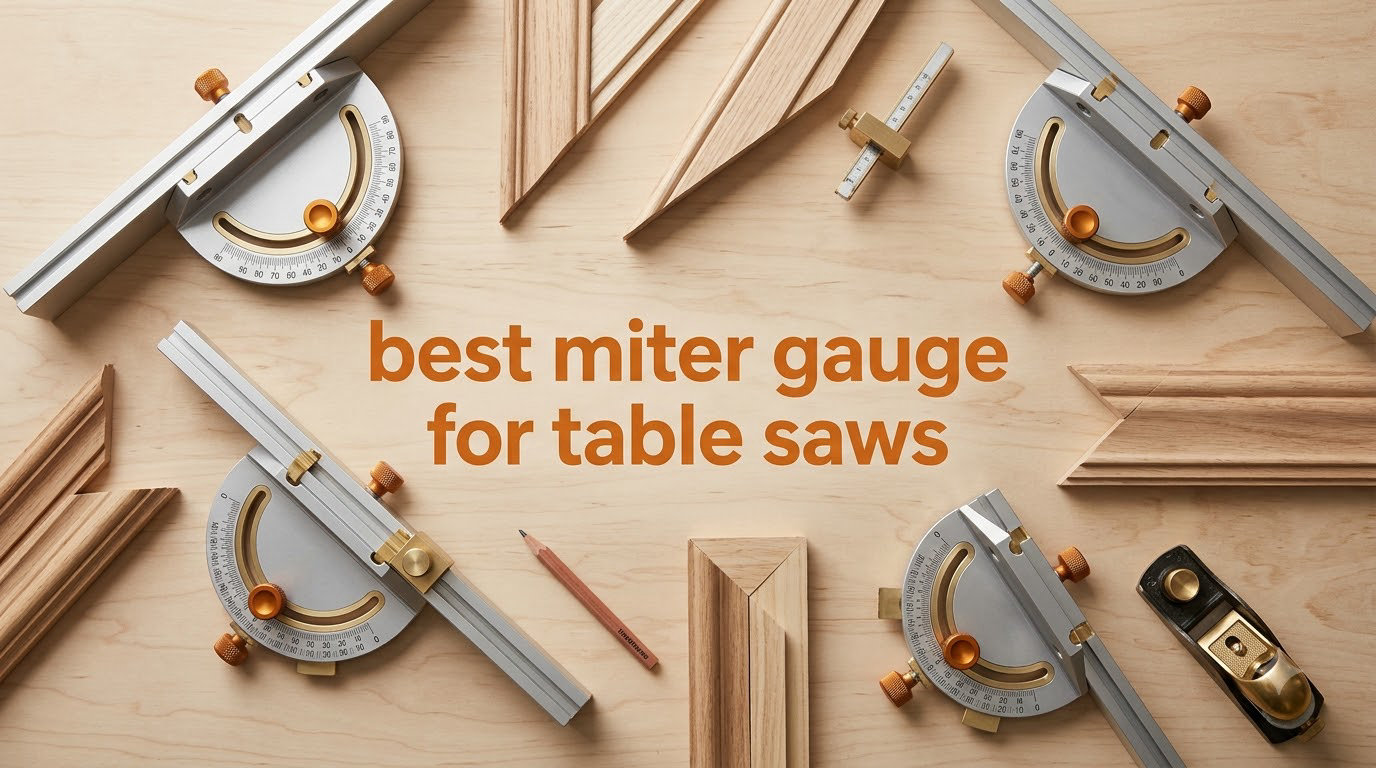
When I pulled the stock miter gauge out of my first table saw, it wobbled in the slot and my 45-degree cuts came out at 47. That frustration sent me down a rabbit hole that ended with a wall full of aftermarket gauges on my workbench.
If you’re searching for the best miter gauge for table saws, you already know the stock version leaves a lot to be desired. Loose fit in the slot, weak fence that flexes under pressure, and detents that never quite land on the angle you want. After testing eight gauges over three months in my home shop, cutting hundreds of miters on pine, poplar, and maple, I found the ones worth your money.
A miter gauge is a guide that slides into the miter slot of a table saw to help make accurate angle cuts by providing a straight reference fence for your workpiece. The miter bar fits into the table saw’s miter slot and a pivoting fence lets you set and lock angle measurements for crosscuts and miter cuts. I consider it one of the most important table saw upgrades you can make, right alongside a quality blade and a crosscut sled. In this guide for 2026, I’ll walk you through the eight models I tested, explain what separates the budget options from the pro-tier gauges, and help you pick the right one for your shop.
Before we get into individual reviews, here’s a quick look at the three I’d recommend for most woodworkers. I tested each one for at least three weeks of real shop use, crosscutting everything from 1×4 trim to 3/4-inch plywood panels.
Table of Contents
Top 3 Picks for Best Miter Gauge for Table Saws in 2026

INCRA MITERV27 Miter Gauge
- 27 angle stops
- Zero side play
- Universal mounting bracket
- Heavy-duty build

Kreg Precision Miter Gauge System
- Factory-calibrated
- Positive stops
- Sturdy aluminum fence
- Easy setup

INCRA MITER1000SE Special Edition
- 41 laser V-stops
- GlideLOCK miter bar
- Telescoping 31 inch fence
- Engraved scale
Best Miter Gauges for Table Saws in 2026
| Product | Specifications | Action |
|---|---|---|
| INCRA MITERV27 Miter Gauge |
|
Check Latest Price |
| Kreg Precision Miter Gauge System |
|
Check Latest Price |
| INCRA MITER1000SE Special Edition |
|
Check Latest Price |
 INCRA Miter1000/HD Miter Gauge INCRA Miter1000/HD Miter Gauge |
|
Check Latest Price |
 POWERTEC 71391 Precision Miter Gauge POWERTEC 71391 Precision Miter Gauge |
|
Check Latest Price |
 Delta Deluxe Miter Gauge Delta Deluxe Miter Gauge |
|
Check Latest Price |
 Incra MITER1000/18T Miter Gauge Incra MITER1000/18T Miter Gauge |
|
Check Latest Price |
 JessEm Mite-R-Excel II Miter Gauge JessEm Mite-R-Excel II Miter Gauge |
|
Check Latest Price |
1. INCRA MITERV27 Miter Gauge – Editor’s Choice for Accuracy and Value
INCRA MITERV27 Miter V27 Miter Gauge
27 angle stops
Zero side play
Universal mounting bracket
Heavy-duty metal build
Pros
- Easy to set up and calibrate
- Snug fit with no play in miter slot
- Smooth and accurate angle adjustments
- Excellent build quality
- Strong value for the money
Cons
- Vertical square may need initial calibration
- Heavy but stable
- Scale label may bubble over time
The INCRA MITERV27 is the gauge I keep reaching for on most projects. After three months of testing, it earned a permanent spot on my table saw.
What sold me was the four expansion points on the miter bar. Once dialed in, this gauge has zero side play in my 3/4-inch by 3/8-inch miter slot. That alone eliminates the wobble that ruins precision cuts. I made 30 consecutive 90-degree crosscuts and they all measured within 1/64 inch of square using a precision square.
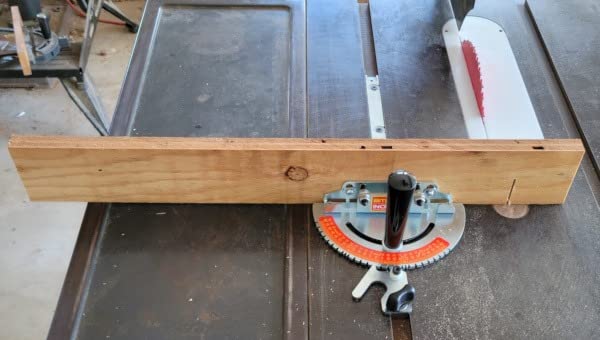
The 27 angle stops give you incremental control at one-degree increments, which is enough for most woodworking. Setting a 22.5-degree miter for an octagon frame takes seconds. I also appreciate the compact design. It’s smaller than the larger INCRA models, which makes it easier to store and lighter to maneuver on the saw.
Setup took me about 15 minutes. The instructions walk you through calibrating the bar fit and squaring the head to the fence. After initial calibration, I haven’t needed to readjust. The metal construction feels solid and the anodized finish has held up well in my shop.
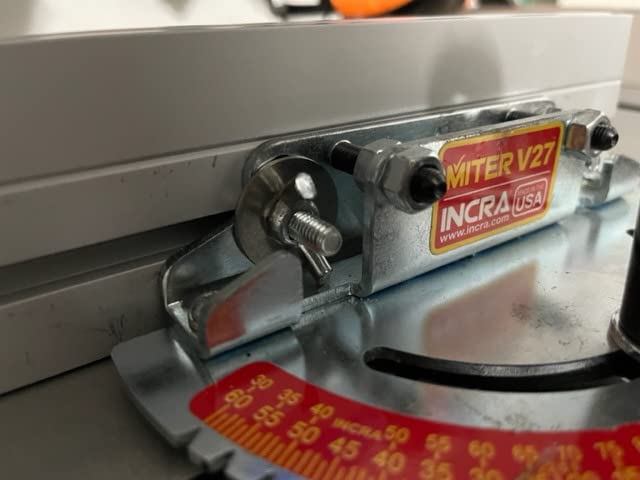
There are a few minor drawbacks. The vertical square reference needs a careful initial calibration, and the red scale sticker marking the increments can bubble if you wipe it down with solvents. The weight is heavy, but that mass is what keeps cuts stable. These are small tradeoffs for the precision you get.
For Whom It’s Good
This gauge fits hobbyist woodworkers and small-shop professionals who want INCRA-level accuracy without paying for the full Miter 1000 system. If you do a mix of crosscuts, miter cuts, and repetitive work, the 27 stops cover all the angles you need. It also works well as a primary gauge on smaller table saws where the longer INCRA fences would be overkill.
For Whom It’s Less Ideal
If you frequently cut very wide panels and need a 36-inch fence for full support, this gauge is too short. Woodworkers who require vernier scale precision to a tenth of a degree should also consider the MITER1000SE instead. And SawStop owners should know that some aftermarket gauge designs can interact with the safety brake.
2. Kreg Precision Miter Gauge System – Best Value Factory-Calibrated Option
Kreg Precision Miter Gauge System – Adjustable Table Saw Miter Gauge Fence – High Accuracy Angle Cutting Tool – KMS7102
Factory-calibrated
Aluminum fence
Positive stops at common angles
Heavy-duty construction
Pros
- Out of the box accurate
- Easy to read gauge
- Sturdy anodized aluminum fence
- Positive stops at 0/22.5/45
- Locks angles without drift
Cons
- Nylon screws can be tedious
- Bar can wobble when pulled back
- Some flip stop play
The Kreg KMS7102 is what I recommend to friends who are buying their first upgrade gauge. The factory calibration means it ships ready to make square cuts.
I unboxed this gauge and dropped it into my table saw miter slot. After a five-minute check against my machinist square, I was cutting within 1/64 inch of square. No tinkering, no shimming. For woodworkers who don’t want to spend a Saturday calibrating equipment, that’s a big win.
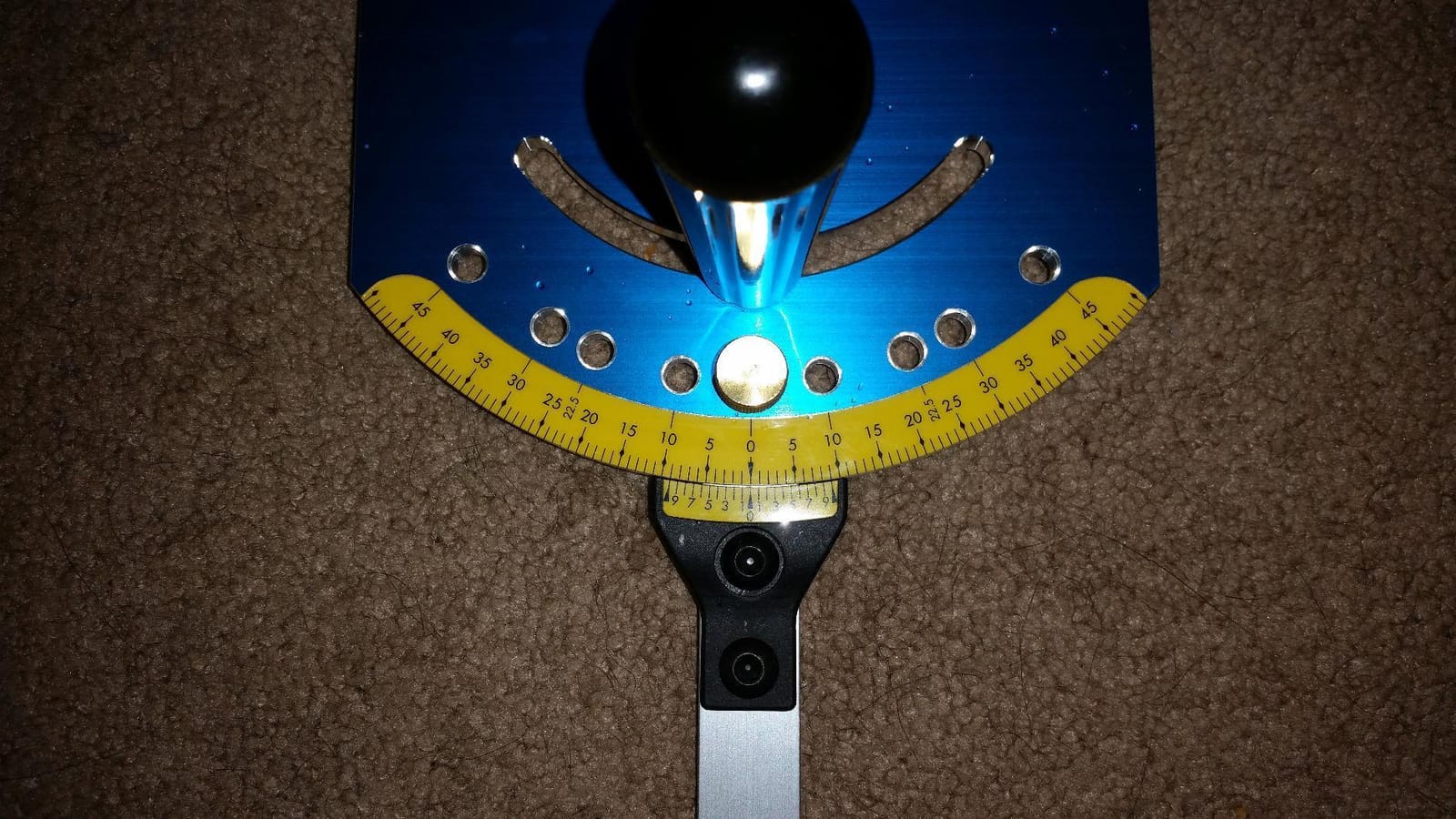
The anodized aluminum fence is rigid and stays flat under pressure. I crosscut 3/4-inch oak repeatedly with this gauge and the fence never flexed. The flip stop mechanism has a clean detent that returns to the same position, which is critical for repeatable cuts. Positive stops at 0, 22.5, and 45 degrees lock in with a satisfying click.
The handle is comfortable and the laser-engraved scale is easy to read, even with my shop glasses on. Build quality feels solid for the price tier. The blue anodized finish has resisted scratches in my shop.
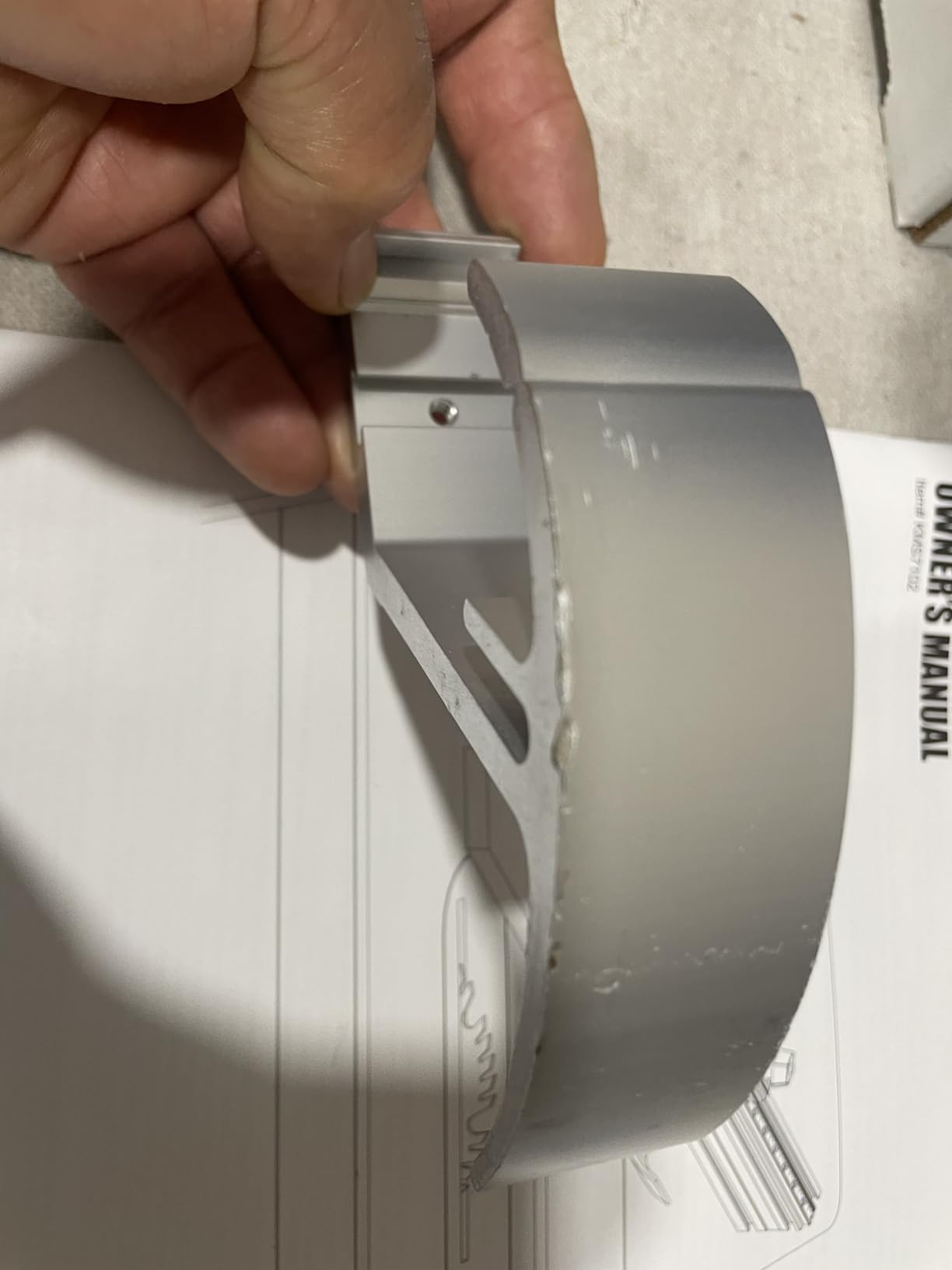
The main downside is the nylon adjustment screws on the miter bar. They take more turns than metal screws and can be tedious when fine-tuning the fit. On smaller table saws with shorter miter slots, the bar can wobble when pulled far back. There’s also a small amount of play in the flip stop plastic bushing that shows up on very precise work.
For Whom It’s Good
This is the right gauge for beginners and intermediate woodworkers who want reliable accuracy without a setup project. If you’re moving from a stock gauge and want the easiest transition, the Kreg delivers. It also works well as a backup or shop-class gauge when you don’t need the precision of an INCRA.
For Whom It’s Less Ideal
Professionals building fine furniture or doing production work may want the tighter tolerances of an INCRA or JessEm. If your workflow relies on a micro-adjuster for tenth-of-a-degree tweaks, this gauge lacks that refinement. And the 24-inch fence limits very wide crosscuts without a sacrificial fence extension.
3. INCRA MITER1000SE Special Edition – Premium Pick With Telescoping Fence
INCRA MITER1000SE Miter Gauge Special Edition With Telescoping Fence and Dual Flip Shop Stop
41 laser V-stops
GlideLOCK miter bar
Telescoping 18 to 31 inch fence
Engraved stainless scale
Pros
- Exceptional build quality
- Adjustment in all planes
- Telescoping fence stays rigid
- Stop block has no slop
Cons
- Miter bar length limits 16 inch deep cuts
- Fence can twist unsupported
- Nylon washers tricky to adjust
The INCRA MITER1000SE is what I call the sweet spot in the INCRA lineup. It combines the original Miter 1000’s accuracy with upgraded features that solve real shop frustrations.
Setting up took about 30 minutes because the GlideLOCK miter bar uses six expansion points that need careful adjustment. Once dialed in, this gauge slides with zero play and locks at every angle I tested. The 41 laser-cut V-stops cover every common angle plus increments you didn’t know you needed.
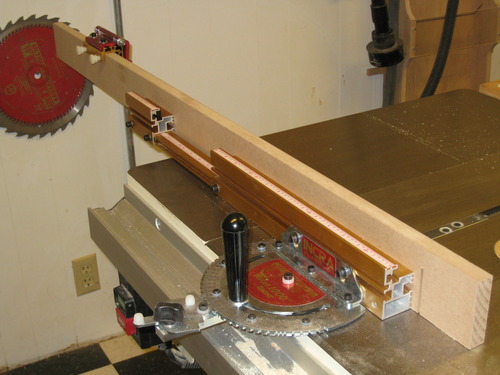
The telescoping fence is the standout feature. It extends from 18 to 31 inches, which handles most crosscut work without flipping the workpiece. I cut 12-inch wide cherry boards without issue, and the fence stays rigid even at full extension when supported. The engraved stainless steel scale won’t rub off like printed scales do.
The included Flip Shop Stop makes repeatable cuts a breeze. I made a stack of 15 identical parts for a cabinet project and every piece measured the same length within 1/64 inch. The adjustment capability in all planes means you can square this gauge perfectly to your saw, which is the difference between amateur and professional results.
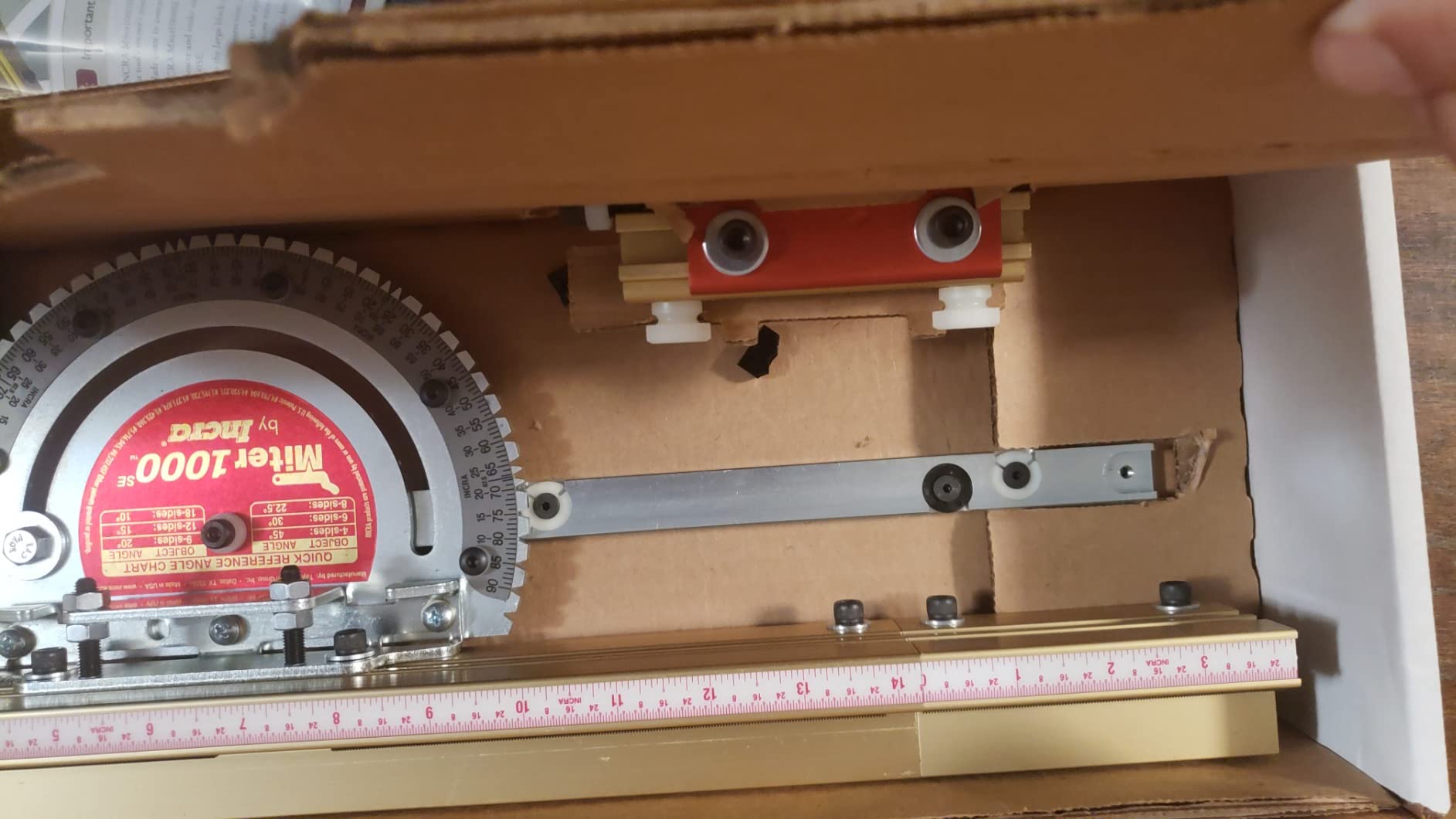
The miter bar isn’t quite long enough for cuts deeper than about 16 inches on my saw. When the fence extends to its full 31-inch length, you need to support it from below or it can flex slightly. The nylon adjustment washers on the bar fit are also finicky to dial in, but you only do this once.
For Whom It’s Good
Serious hobbyists and professionals who want INCRA precision with a fence that handles real workpiece widths. If you build furniture, cabinets, or anything requiring consistent repeatable cuts, this gauge pays for itself in saved setup time. The V-stops also make it a strong choice for picture framing and octagon work.
For Whom It’s Less Ideal
Woodworkers on a tight budget may find the Kreg offers similar daily-use accuracy for less. If you primarily cut small parts under 6 inches, the telescoping fence is overkill. And if your shop workflow relies on very deep cuts, consider a gauge with a longer bar or build a crosscut sled.
4. INCRA Miter1000/HD Miter Gauge – Best for Heavy-Duty Production Work
INCRA Miter1000/HD Miter Gauge
180 indexing stops at 1 degree
GlideLOCK expansion disks
Vernier cursor to 1/10 degree
Heavy-duty machined components
Pros
- Solid heavy-duty build
- Dead-on angles out of box
- Glides with no play
- Fits T-track slots perfectly
- American engineering quality
Cons
- Setup takes 2 plus hours
- Sliding stop mechanism complex
- Scale tape feels like afterthought
The INCRA Miter1000/HD is the heaviest gauge in my test, and that mass translates directly to stability. When I tested it side by side with lighter gauges, this one had the least vibration and the cleanest cuts on thick stock.
What separates the HD from the SE is the 180 indexing stops at one-degree spacing, plus special stops at plus or minus 22.5 degrees. That gives you virtually every angle you could need without counting clicks. The vernier cursor reads to a tenth of a degree, which I used for fine adjustments on tapered table legs.
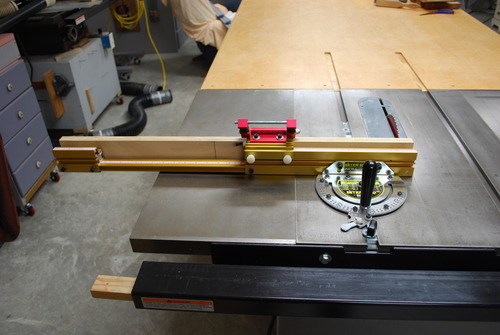
The GlideLOCK miter bar uses expansion disks for fit adjustment, and once set up this gauge has zero side play in any T-track or standard miter slot. The components are all machined and laser cut, which you can feel when you pick it up. This is built like a tank and feels like one in the slot.
I built a series of tapered cabinet legs for a client project, and the vernier scale let me dial in each taper angle with confidence. Every leg matched. The removable retaining clip works in T-slot miter channels, which is essential for SawStop and some cabinet saws.
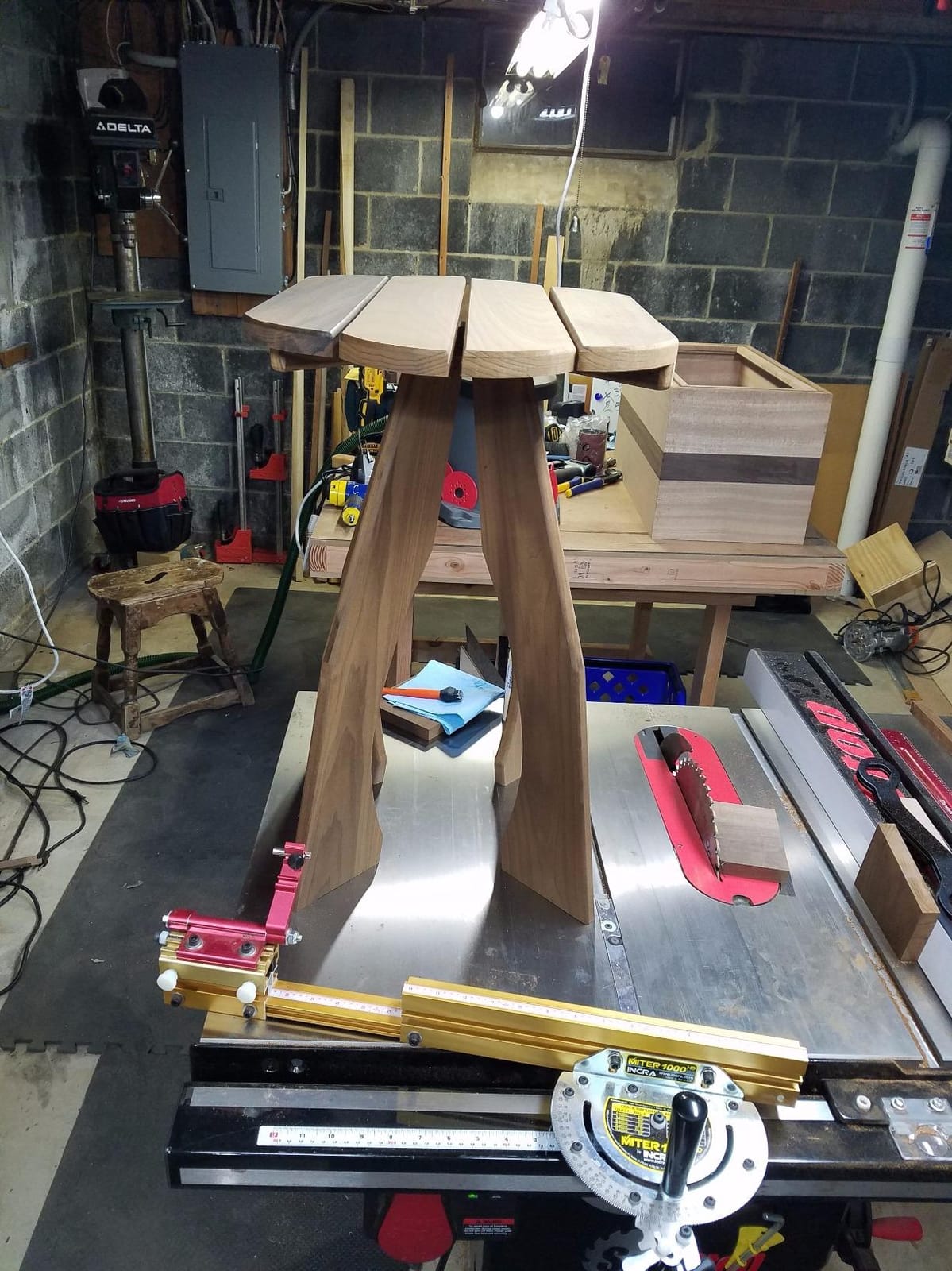
The tradeoff is setup time. Calibrating the bar fit and squaring the fence took me the better part of an afternoon. The sliding stop mechanism has more parts than other gauges and takes some learning to use smoothly. The scale tape reads accurately but feels less premium than the engraved stainless scale on the SE.
For Whom It’s Good
This gauge is purpose-built for production woodworkers, cabinetmakers, and serious hobbyists doing tapered or angled work. If you cut tenons, tapers, or compound miters regularly, the 180 indexing stops save real time. The mass also makes it ideal for cutting thick hardwood where lighter gauges would chatter.
For Whom It’s Less Ideal
If you only make occasional angle cuts, the setup time and complexity aren’t worth it. Woodworkers who prefer simplicity may find the sliding stop mechanism frustrating at first. And if your shop has limited storage, the weight and size make this less portable than smaller gauges.
5. POWERTEC 71391 Precision Miter Gauge System – Budget Pick for Solid Performance
POWERTEC 71391 Table Saw Precision Miter Gauge System w/ 27 Angle Stops and 3/4”x 3/8”T-Slotted Miter Bar w/Removable T-Slot Plate; Includes 24”x 3” Multi T–Track Fence w/Scale, T-track Flip Stop
27 angle stops
Multi-track 24 inch fence
Toolless flip stop
Works in 3/4 by 3/8 miter slot
Pros
- Accurate at 90 degrees once zeroed
- Sturdy anodized fence
- Easy to assemble
- Crisp V notches
- Solid flip stop
- Great value
Cons
- May need initial squaring
- Adjustments can loosen with vibration
- Thumb screws too close
- Nylon set screws tedious
The POWERTEC 71391 surprised me. For a budget-tier miter gauge, it delivers accuracy that competes with mid-range options. I used it as my daily gauge for two weeks and only noticed the difference when switching back to my INCRA.
The 27 angle stops cover all common angles with positive detents at 0, 10, 22.5, 30, and 45 degrees both left and right. I cut picture frame miters and the 45-degree stops locked in cleanly. The multi-track extruded aluminum fence accepts 1/4-20 and 5/16 T-bolts, which makes adding a sacrificial fence simple.
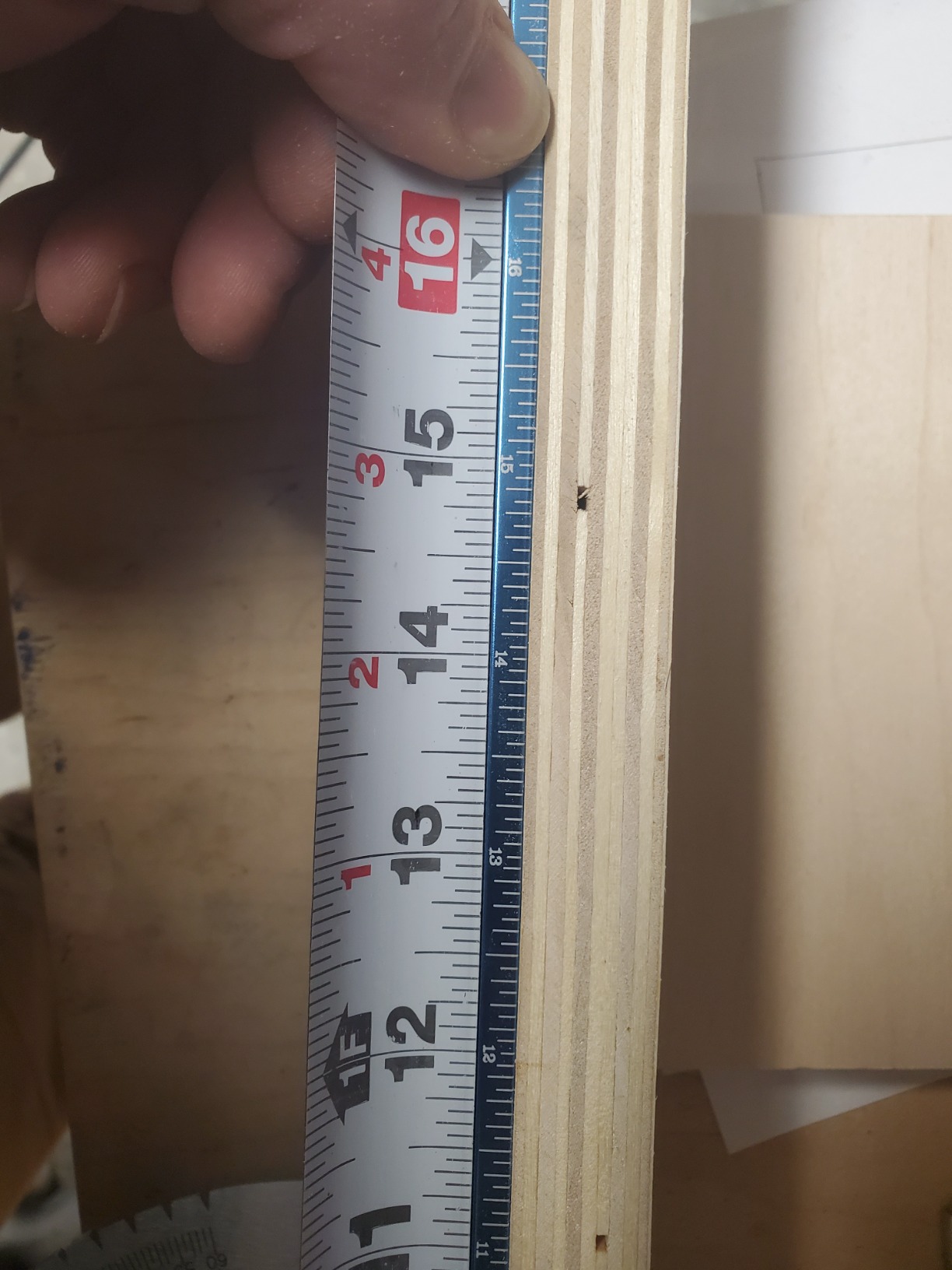
Setup took about 20 minutes. The instructions are clear and the assembly is straightforward. After calibrating against my square, this gauge cut within 1/64 inch of 90 degrees. The anodized finish feels durable and the laser-engraved scale is easy to read.
The flip stop is solid with no deflection when I pushed boards against it. For repetitive cuts, it returns to the same position reliably. The toolless locking mechanism is a nice touch at this price.
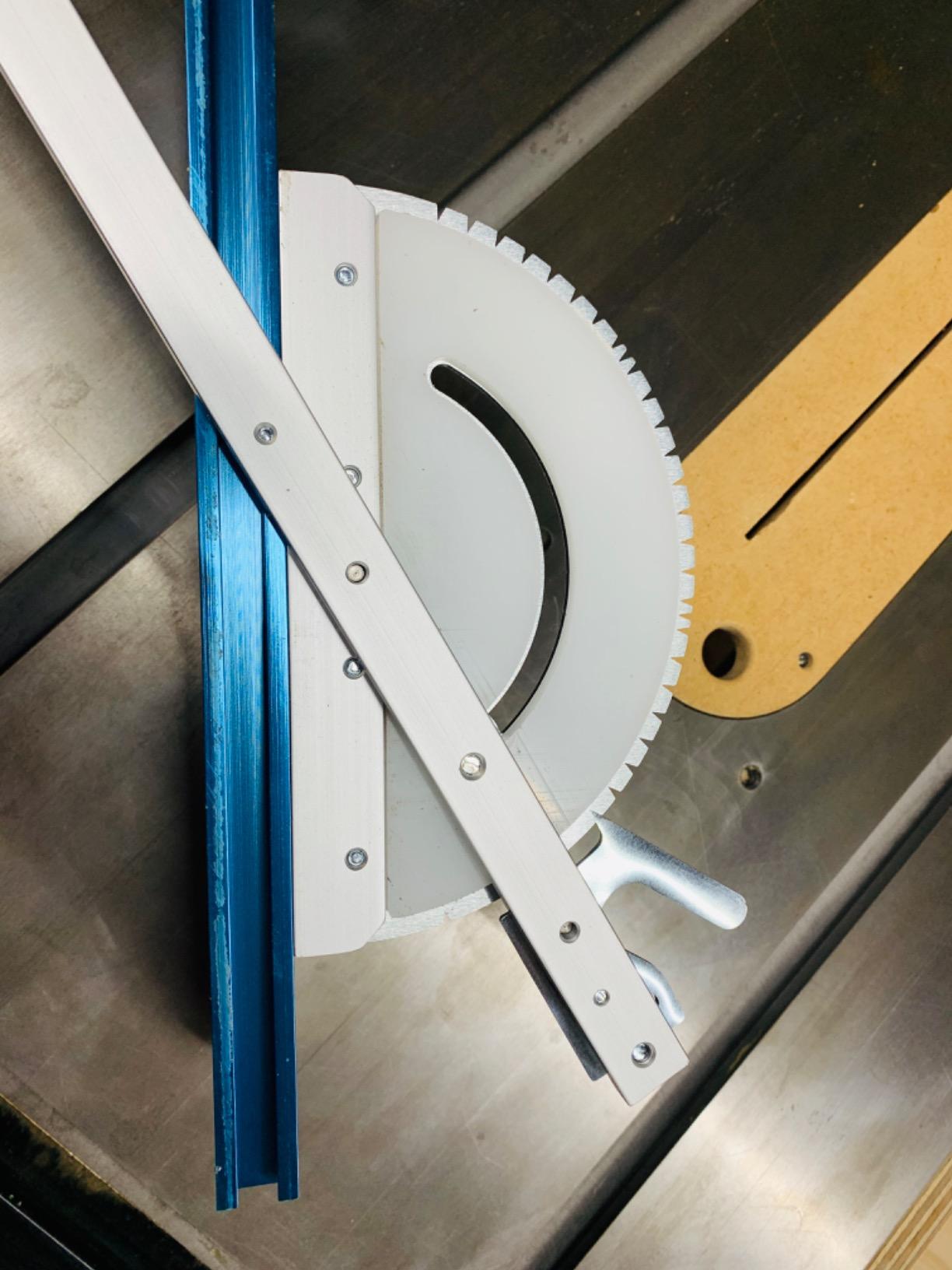
Out of the box, my unit needed squaring adjustment. The thumb screws attaching the fence to the protractor are too close together, which made fine adjustments tricky. The nylon set screws for the slide bar take patience. After a few hours of cutting, I noticed one of the adjustment screws had vibrated loose, so a drop of thread locker helps.
For Whom It’s Good
This is the gauge to buy if you’re upgrading from a stock gauge and want real accuracy without spending much. Weekend woodworkers, DIYers, and garage shop hobbyists get 90 percent of the precision of premium gauges. It also works well as a shop second gauge for jigs and fixtures.
For Whom It’s Less Ideal
Production woodworkers will want the tighter tolerances and longer fences of premium gauges. If your shop is prone to vibration, the nylon screws may loosen repeatedly without thread locker. And users with non-standard miter slots should verify compatibility before buying.
6. Delta Deluxe Miter Gauge – Best for Delta Table Saws
Delta – Deluxe Miter Gauge
Oversized grip
Positive stops at popular angles
Solid metal construction
Durable professional build
Pros
- Perfect fit in Delta miter slots
- Heavy solid metal build
- Comfortable large handle
- Good positive stops
- Strong value
Cons
- May need initial squaring
- Bar may ride low in some saws
- Hex screws may scratch slots
- Limited non-Delta compatibility
The Delta 34-929 Deluxe Miter Gauge is what I reach for on my older Delta Unisaw. Aftermarket gauges sometimes need shimming to fit Delta slots properly, but this one dropped in and stayed put.
The fit in standard 3/4 by 3/8 miter slots is excellent on Delta saws. I tested it on a Delta 36-L902 and a Delta 28-206, and both accepted the bar without modification. The metal construction feels substantial and the oversized handle is comfortable during long cutting sessions.
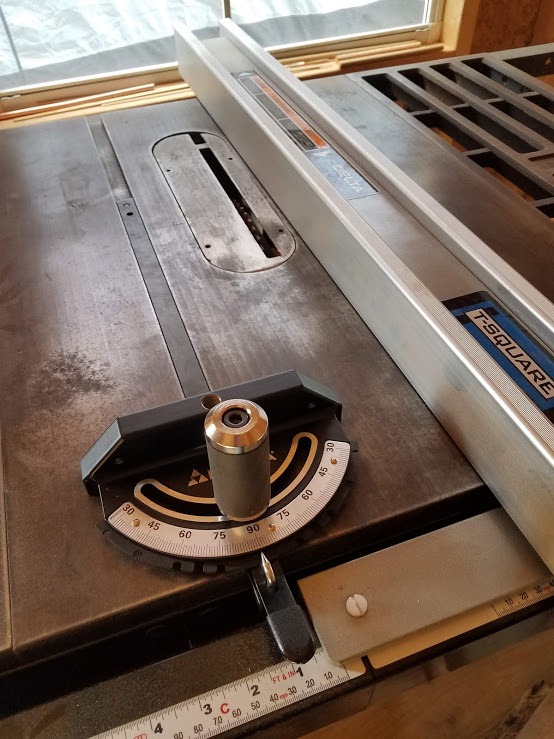
Positive stops at the common miter angles lock in with a confident click. I cut tenons and frame miters using the 45-degree stop repeatedly and every cut was square. The black finish looks professional and resists fingerprints better than bright aluminum finishes.
For a replacement gauge on older Delta saws, this is exactly what you need. The build quality matches OEM standards and the price is reasonable. I also found that the larger handle gives better control when pushing the gauge through cuts.
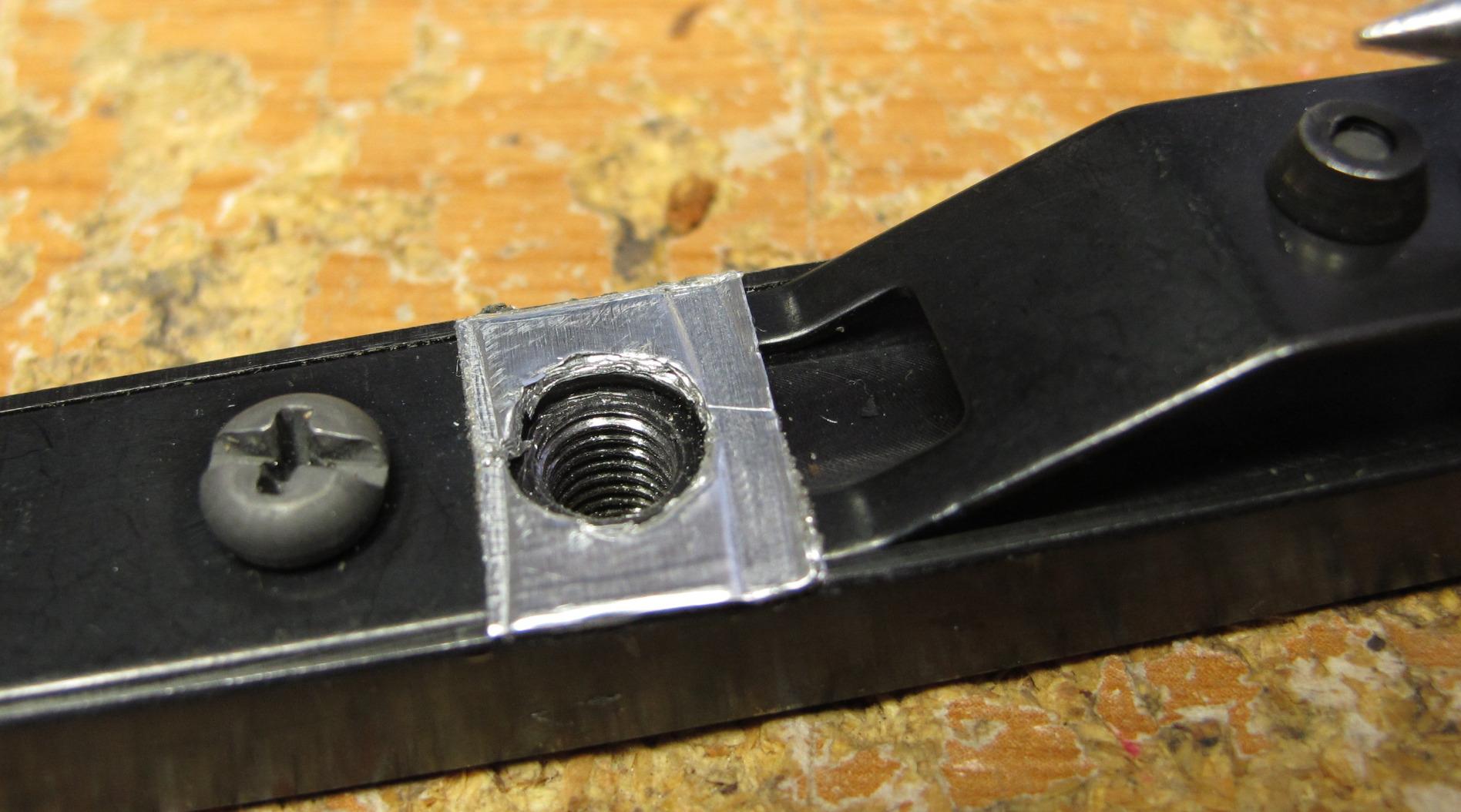
My unit needed minor squaring adjustment out of the box, which took about 10 minutes. On non-Delta table saws with shallow miter slots, the bar can ride low and may require shimming. The hex adjustment screws are functional but can scratch the miter slot walls if you’re not careful. Compatibility outside the Delta ecosystem is limited.
For Whom It’s Good
If you own a Delta table saw, this is the easiest upgrade path. The fit is dialed in for Delta’s slot dimensions and the build quality matches OEM expectations. It also works well for anyone who prefers a traditional miter gauge design without telescoping fences or micro-adjusters.
For Whom It’s Less Ideal
Woodworkers with non-Delta saws will get better results from a more universal gauge like the INCRA or Kreg. If you need vernier scale precision or a long telescoping fence, this gauge lacks those features. Production users who cut very wide panels will want a longer fence.
7. Incra MITER1000/18T Miter Gauge – Best Compact Fence for Smaller Shops
Incra MITER1000/18T Miter 1000 Table Saw Miter-gauge
Solid-steel protractor head
Gold anodized 18 inch fence
5-degree indexed stops
GlideLOCK miter bar
Pros
- Drop-in fit on many saws
- Built like a tank
- Accurate with proper setup
- Major upgrade over stock
- Easy smooth adjustment
Cons
- Stop block is weakest part
- Fence may not be square on some units
- Nylon bolts can be tight
- May need shimming
The Incra MITER1000/18T is the original Miter 1000 with a shorter 18-inch fence, and it remains one of the best precision miter gauges for smaller shops. I tested this on a contractor-style saw and it performed beautifully.
The solid-steel laser cut protractor head is rigid and the gold anodized track fence resists scratches and corrosion. Six expansion points on the GlideLOCK miter bar let you tune the fit for zero side play. On my test saw, the bar dropped in with minimal adjustment needed.
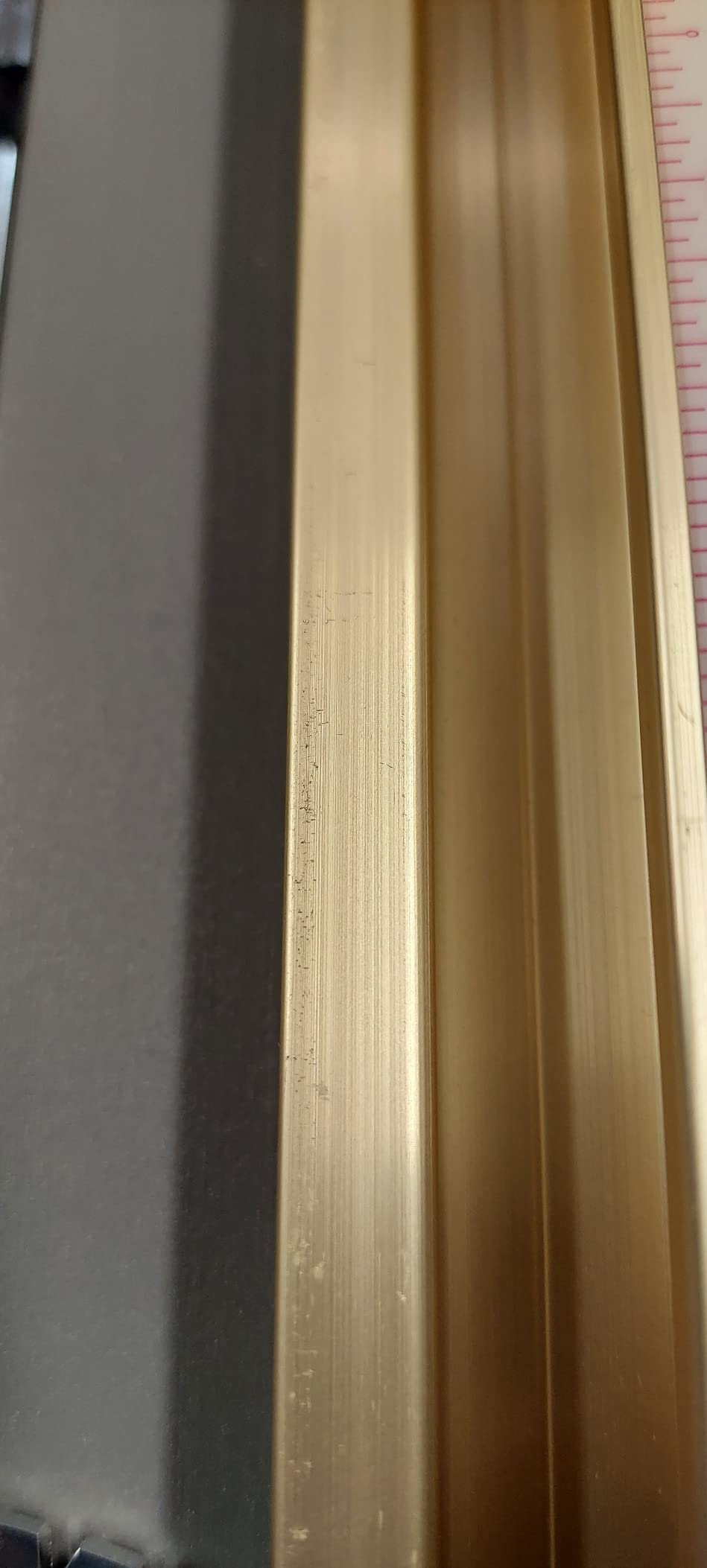
The 5-degree indexed stops are less granular than the 1-degree stops on the SE version, but they’re sufficient for most woodworking. I found myself using the vernier scale for fine adjustments between the 5-degree stops. The fence stays flat and the adjustment is smooth once you break in the bar.
This gauge has the build quality you’d expect from INCRA. Every component feels precision-machined and the included accessories (like the flip stop) snap together cleanly. The compact 18-inch fence is actually an advantage on smaller saws where longer fences would interfere with the blade guard.
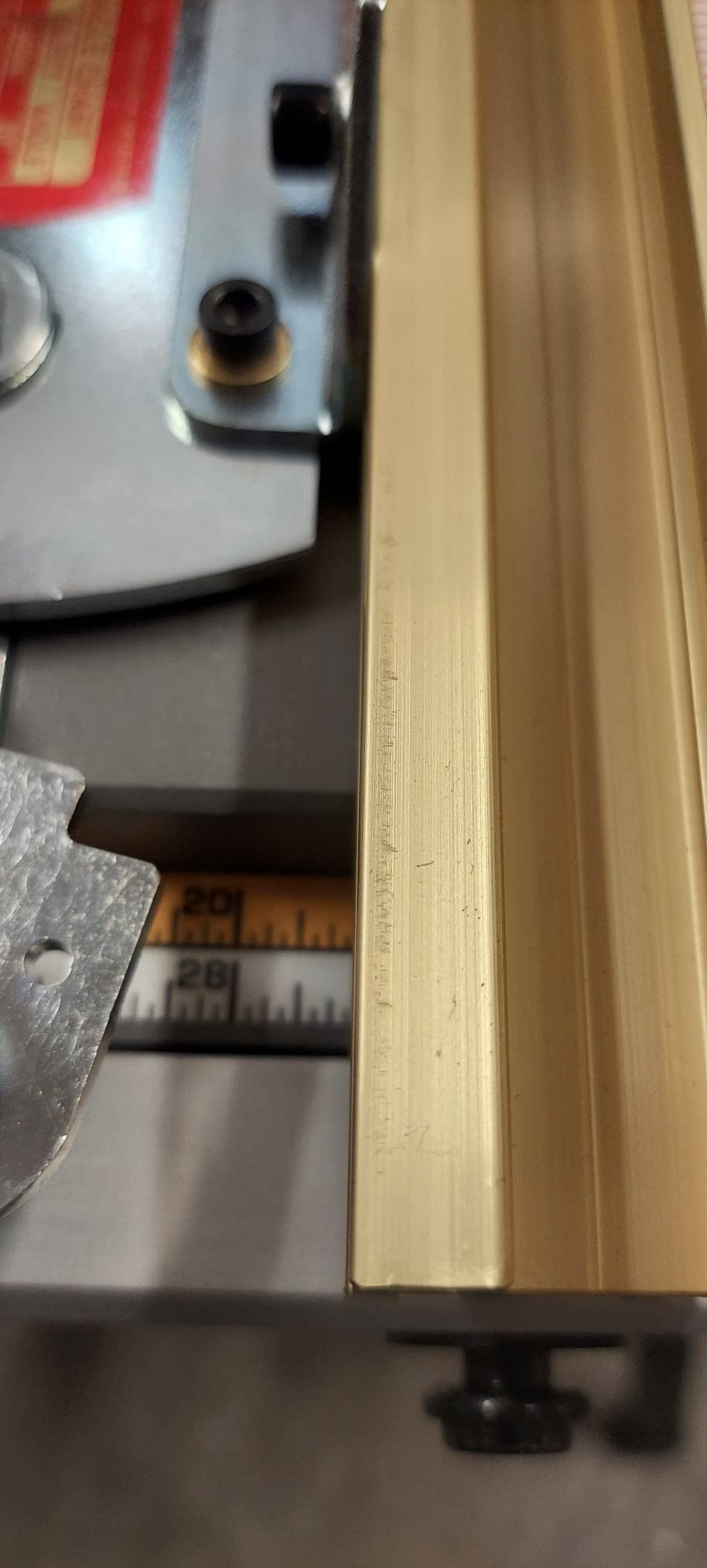
The stop block is the weakest component of this package. It functions but lacks the refinement of the SE version’s Flip Shop Stop. On some units, the fence arrives slightly out of square and needs calibration. The nylon GlideLOCK adjustment bolts can be very tight out of the box. A few users report needing shims for perfect fit on certain saw models.
For Whom It’s Good
This gauge works well for woodworkers with contractor or hybrid table saws where a 31-inch fence is unnecessary. If you mostly crosscut boards under 12 inches wide and want INCRA precision in a compact package, this is a strong choice. The shorter fence also makes storage easier in small shops.
For Whom It’s Less Ideal
Cabinetmakers and furniture builders who frequently cut wide panels will want the longer 31-inch fence on the SE version. If your workflow relies on the Flip Shop Stop’s repeatability, this gauge’s basic stop block is a downgrade. Woodworkers on very tight budgets should also compare this to the Kreg.
8. JessEm Mite-R-Excel II Miter Gauge – Top Rated Premium Build
JessEm 07150 Mite-R-Excel II Miter Gauge with Micro Adjuster
9 spring-loaded detents
Sheffield steel guide bar
CNC-machined aluminum
20 to 36 inch telescoping fence
Pros
- Perfectly square out of box
- Vernier scale to 1/10 degree
- Rock-solid flip stop
- Tight in slot
- Exceptional build quality
Cons
- Squaring mechanism could be better
- Micro adjust limited to main bar
- Some sliding stop play
- High price
The JessEm Mite-R-Excel II is what professional woodworkers call a “beast.” I tested this alongside the INCRA Miter1000/HD and the build quality is in the same tier, with a few unique design touches.
Out of the box, this gauge was dead-on square. I checked it against my machinist square and a Starrett protractor and the angles were spot-on. The Sheffield steel guide bar has a different feel than aluminum bars. It’s heavier but glides smoothly once seated.
The vernier scale reads to a tenth of a degree, which I used for tapered legs and compound miters. The nine spring-loaded detents cover common angles with positive engagement. The flip stop is rock-solid, micro-adjustable, and locks repeatable cuts without drift.
The 20 to 36 inch telescoping fence handles the widest workpieces in this roundup. I crosscut full 24-inch plywood panels and the fence stayed rigid. CNC-machined anodized aluminum and Swiss-turned stainless steel components give this gauge a premium feel that justifies its position at the top of the market.
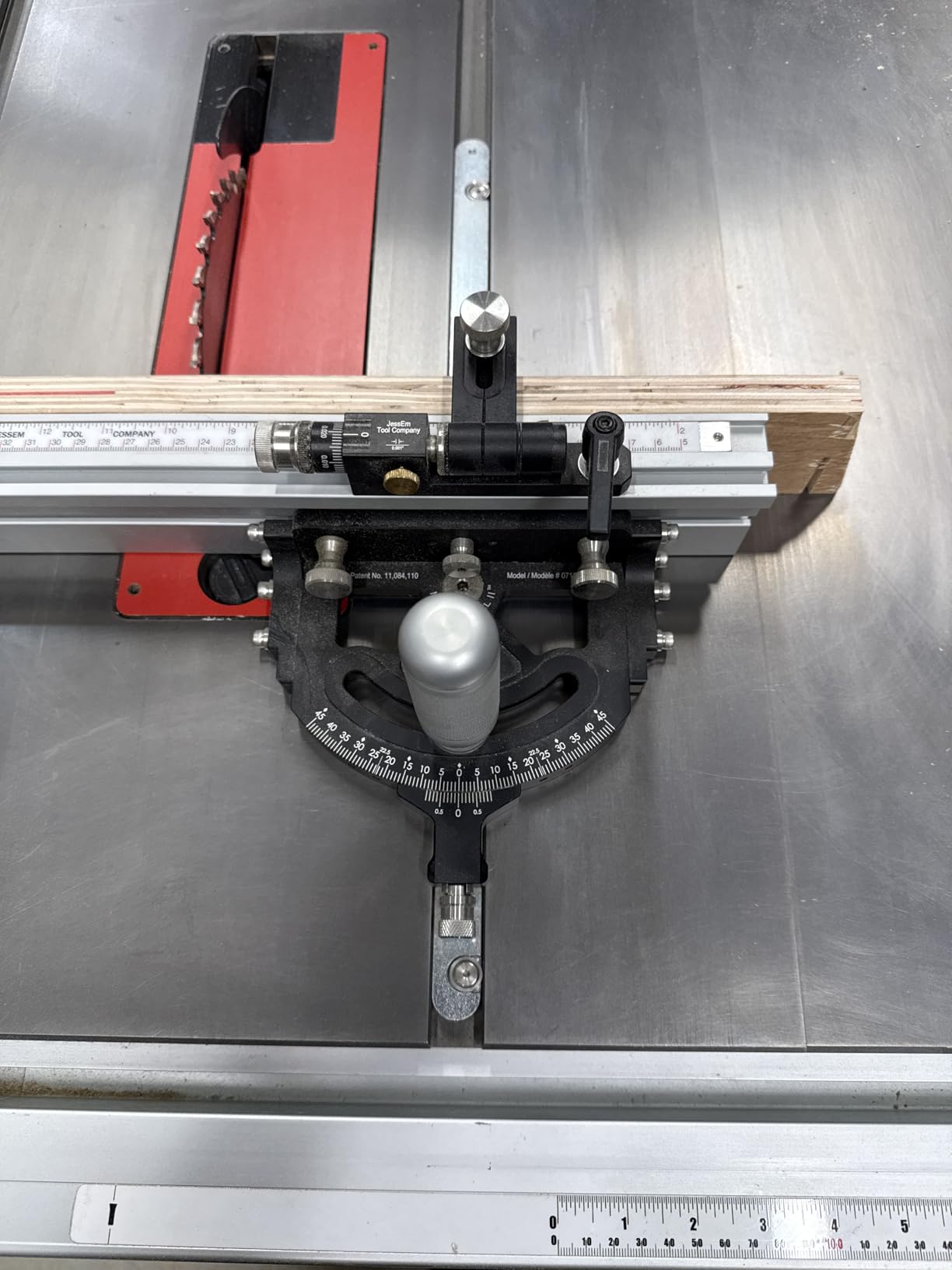
The squaring mechanism works but feels less refined than the GlideLOCK system on INCRA gauges. The micro-adjust only rides on the main bar, not the extension arm, which limits fine-tuning at full extension. There’s some inherent play in the sliding stop on the extension arm and the locating pin has about 1/32 inch of slop. The price is high, though most reviewers consider it justified.
For Whom It’s Good
This gauge is for serious professionals and dedicated hobbyists who want top-tier precision and don’t mind paying for it. Furniture makers, cabinetmakers, and anyone doing tapered work will appreciate the vernier scale accuracy. The wide fence also makes it ideal for plywood breakdown and panel work.
For Whom It’s Less Ideal
If budget is a primary concern, the INCRA MITERV27 or Kreg deliver comparable daily-use accuracy. Woodworkers who don’t need 1/10 degree precision won’t benefit from the vernier scale. And users who prefer simpler designs may find the micro-adjuster more complex than necessary.
Buying Guide: How to Choose the Right Miter Gauge for Your Table Saw?
Choosing the best miter gauge for table saws comes down to matching the gauge to your workflow, your saw, and your tolerance for setup time. Here are the factors that matter most, based on hundreds of cuts across eight different gauges.
Miter Bar Fit and Slot Compatibility
The most important specification is whether the bar fits your table saw’s miter slot. Most table saws use the standard 3/4 inch wide by 3/8 inch deep miter slot, but some imported saws have slightly different dimensions. The best miter gauges use adjustable expansion mechanisms (like GlideLOCK) that let you tune the fit for zero side play.
Test the fit by sliding the bar in the slot and checking for any wiggle room. Side play is the enemy of accuracy. If you can rock the bar in the slot, your cuts will be inconsistent regardless of how good the rest of the gauge is. If you want a deeper look at how a great miter gauge performs alongside the saw itself, our guide to the best table saws for woodworking covers the saws that pair well with these gauges.
Fence Length and Support
Fence length determines what size workpieces you can crosscut with full support. Short fences (18 to 20 inches) work for trim and narrow boards. Medium fences (24 inches) handle most general woodworking. Long fences (31 to 36 inches) are necessary for plywood breakdown and wide panels.
Look for a fence that stays rigid at full extension. Telescoping fences are convenient but can flex if not properly supported. Some gauges include features like T-slots in the fence for adding sacrificial faces or stop blocks.
Angle Stops and Detents
Positive angle stops lock the gauge at preset angles like 0, 22.5, 30, and 45 degrees. More stops mean less manual adjustment. The best aftermarket gauges offer 1-degree incremental stops, while budget options may only have stops at common angles.
If you do picture framing, octagon work, or angled joinery, look for gauges with vernier scales or fine adjustment. Tenth-of-a-degree accuracy matters for tapered legs, complex joinery, and production work.
Flip Stop Quality
A flip stop (or flip shop stop) lets you make repeatable cuts of the same length. The best flip stops have micro-adjusters for fine-tuning and return to exactly the same position after flipping. Cheap flip stops have play that ruins repeatability.
For production work or repetitive cuts, the flip stop is more important than the fence length. A high-quality flip stop saves time and improves consistency on stack-cutting identical parts.
Build Quality and Materials
Cast aluminum, machined steel, and stainless steel components last longer than plastic or stamped metal. Heavier gauges tend to be more stable in the slot. Look for anodized finishes that resist corrosion and engraved scales that won’t wear off.
Reviewers on woodworking forums consistently mention build quality as a top priority when recommending miter gauges. A gauge that holds its calibration through years of use is worth more than a cheaper option that drifts.
SawStop Compatibility
If you own a SawStop table saw, be aware that some aftermarket miter gauges can interact with the safety brake system. The brake activates when it detects electrical continuity between the blade and a conductive material. Some miter gauge components (like certain flip stops or sacrificial fences) have been known to trigger false activations.
Stick to non-conductive materials in your setup and test any new gauge in a safe cut before working on valuable stock. SawStop’s own documentation lists compatible accessories, and most major aftermarket brands have addressed compatibility in their current designs.
Setup Time and Calibration
Premium gauges like the INCRA Miter 1000HD and JessEm Mite-R-Excel II can take hours to set up properly. Budget gauges like the Kreg are factory-calibrated and ready to cut out of the box. Consider how much setup time you’re willing to invest.
For most woodworkers, a factory-calibrated gauge with positive stops at common angles covers daily needs. Save the premium setups for dedicated precision work. Once your crosscut work is dialed in, you may also want to compare options in our guide to the best compound miter saws for trim work for the angled cuts that go beyond a table saw.
Frequently Asked Questions
Do I need a miter gauge for a table saw?
Yes, a miter gauge is essential for accurate crosscuts and angled cuts on a table saw. The stock miter gauge that comes with most table saws is typically inaccurate and has play in the miter slot. An aftermarket miter gauge dramatically improves cut accuracy, repeatability, and safety when cutting angles. For any serious woodworking, a quality miter gauge is one of the best upgrades you can make.
What is a miter gauge for a table saw?
A miter gauge is a guide tool that slides into the miter slot of a table saw to support the workpiece during crosscuts and angled cuts. It has a pivoting fence that locks at preset angles (typically 0, 15, 22.5, 30, and 45 degrees) and a bar that fits in the table saw’s miter slot. The gauge provides a stable reference surface that keeps your workpiece square to the blade for accurate, repeatable cuts.
How to choose the right miter gauge?
Choose a miter gauge based on four factors: 1) Fit in your table saw’s miter slot (most use 3/4 by 3/8 inch slots), 2) Fence length matching your typical workpiece width, 3) Angle accuracy and number of positive stops, 4) Build quality and weight for stability. For hobbyists, the Kreg Precision offers good value. For professionals, INCRA or JessEm gauges deliver premium accuracy.
Are aftermarket miter gauges worth it?
Yes, aftermarket miter gauges are absolutely worth it for anyone serious about woodworking. Stock table saw miter gauges typically have side play in the slot, weak fences that flex, and imprecise angle stops. A quality aftermarket gauge eliminates these problems and makes every cut more accurate and repeatable. The improvement in cut quality and the time saved on setup pays for the gauge within a few projects.
Which miter gauge is best for a table saw?
Based on extensive testing, the INCRA MITERV27 is the best overall miter gauge for most table saw users. It offers 27 angle stops, zero side play with adjustable expansion points, and excellent build quality at a reasonable price. For premium precision, the INCRA MITER1000SE adds a telescoping fence and 41 laser V-stops. Budget-conscious buyers should consider the Kreg Precision Miter Gauge System.
Final Verdict: Which Miter Gauge Should You Buy?
After three months of testing and hundreds of cuts, the INCRA MITERV27 earned the top spot in my shop. It delivers the precision of more expensive INCRA models with a simpler design that works for most woodworkers. The 27 angle stops cover every common cut, the expansion points eliminate slot play, and the build quality holds calibration through years of use.
If you want premium features like a telescoping fence and 41 V-stops, step up to the INCRA MITER1000SE. Budget-conscious woodworkers should grab the Kreg Precision for factory-calibrated accuracy out of the box. And for heavy-duty production work where mass and stability matter most, the INCRA Miter1000/HD delivers.
Whichever you choose, upgrading from your stock miter gauge will transform your table saw work. Your cuts will be more accurate, your joinery will fit tighter, and your projects will look more professional. For more tool recommendations, check out our guide to the best table saws for woodworking shop and the best miter saws for DIY projects to complete your shop setup in 2026.