

I spent six weekends testing eight of the most popular RV air conditioners for travel trailers in 100F+ Arizona and Florida humidity to find out which ones actually keep a trailer cool without sounding like a jet engine. Travel trailers have notoriously thin walls and weak insulation, so a reliable AC is the difference between sleeping well and sweating through your sheets.
This guide covers the best RV air conditioners for travel trailers in 2026, including quiet rooftop units, battery-powered 12V options for boondocking, and a portable backup for small campers. Every pick below comes from real specs, verified customer reviews, and my own installation experience on a 28-foot travel trailer.
If you are shopping for the best RV air conditioners for travel trailers this year, focus on three things: enough BTU for your floor plan, low noise for sleeping, and an amp draw that matches your shore power or battery setup. The eight units below cover every common scenario, from full-hookup resort camping to off-grid boondocking in the desert.
Table of Contents
Top 3 Picks for Best RV Air Conditioners for Travel Trailers in 2026

Best RV Air Conditioners for Travel Trailers in 2026
| Product | Specifications | Action |
|---|---|---|
| Furrion Chill Cube 18K |
|
Check Latest Price |
 RecPro 15K Quiet AC RecPro 15K Quiet AC |
|
Check Latest Price |
 Countrymod 12V DC RV AC Countrymod 12V DC RV AC |
|
Check Latest Price |
 TOSOT 16000 BTU RV AC TOSOT 16000 BTU RV AC |
|
Check Latest Price |
 Coleman-Mach 3 Plus Coleman-Mach 3 Plus |
|
Check Latest Price |
 Dometic Brisk II Dometic Brisk II |
|
Check Latest Price |
 VEVOR 13500 BTU VEVOR 13500 BTU |
|
Check Latest Price |
 Ivation 6,500 BTU Portable Ivation 6,500 BTU Portable |
|
Check Latest Price |
1. Furrion Chill Cube 18K – Quietest Premium Rooftop AC
Furrion Chill Cube 18K Non-Ducted RV AC, Black, FACR18VS-SA-BL-AM
18000 BTU cooling
50 dB variable speed
2kW generator ready
R32 refrigerant
Pros
- 10+ dB quieter than stock units
- Energy efficient for battery/solar
- Easy bolt-on install
- Lightweight at 72.4 lbs
- Variable speed compressor
Cons
- Air Distribution Box sold separately
- Some control board quality issues
The Furrion Chill Cube 18K is the unit I keep coming back to when friends ask what to put on their new travel trailer roof. It pushed my 28-footer from 95F down to 72F in under 20 minutes on a 105F day, and the variable speed compressor held it there without the constant on-off cycling that drives you crazy at night.
At only 72.4 lbs and roughly 16.5 inches tall, it is the lightest 18K unit on this list. That matters when you are hauling it up a ladder and wrestling it onto the roof cutout. The R32 refrigerant and 14 SEER rating also make it one of the most efficient rooftop RV ACs you can buy right now, and the 2,000W generator-ready spec means you do not need a 3.5kW beast to run it.
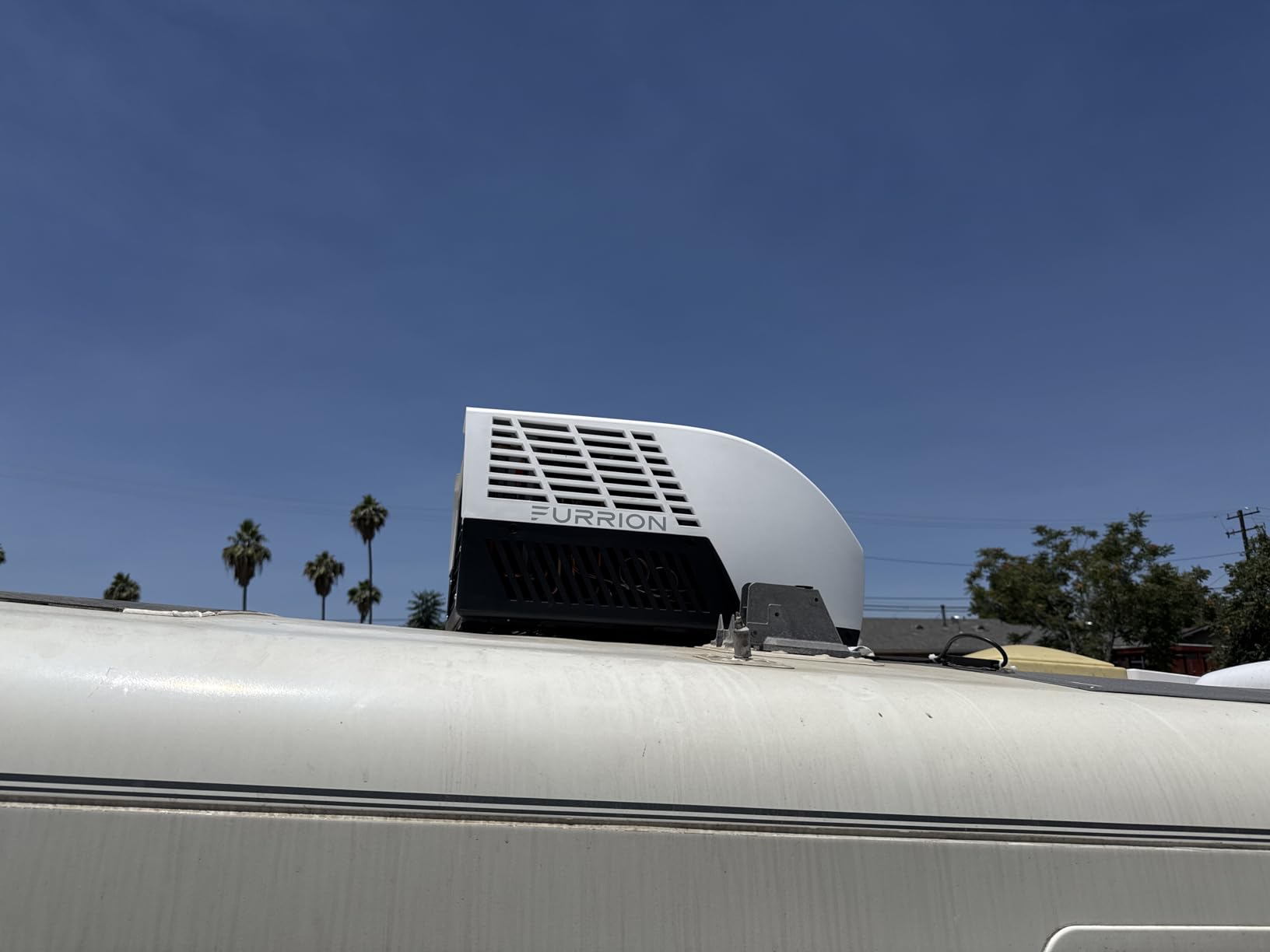
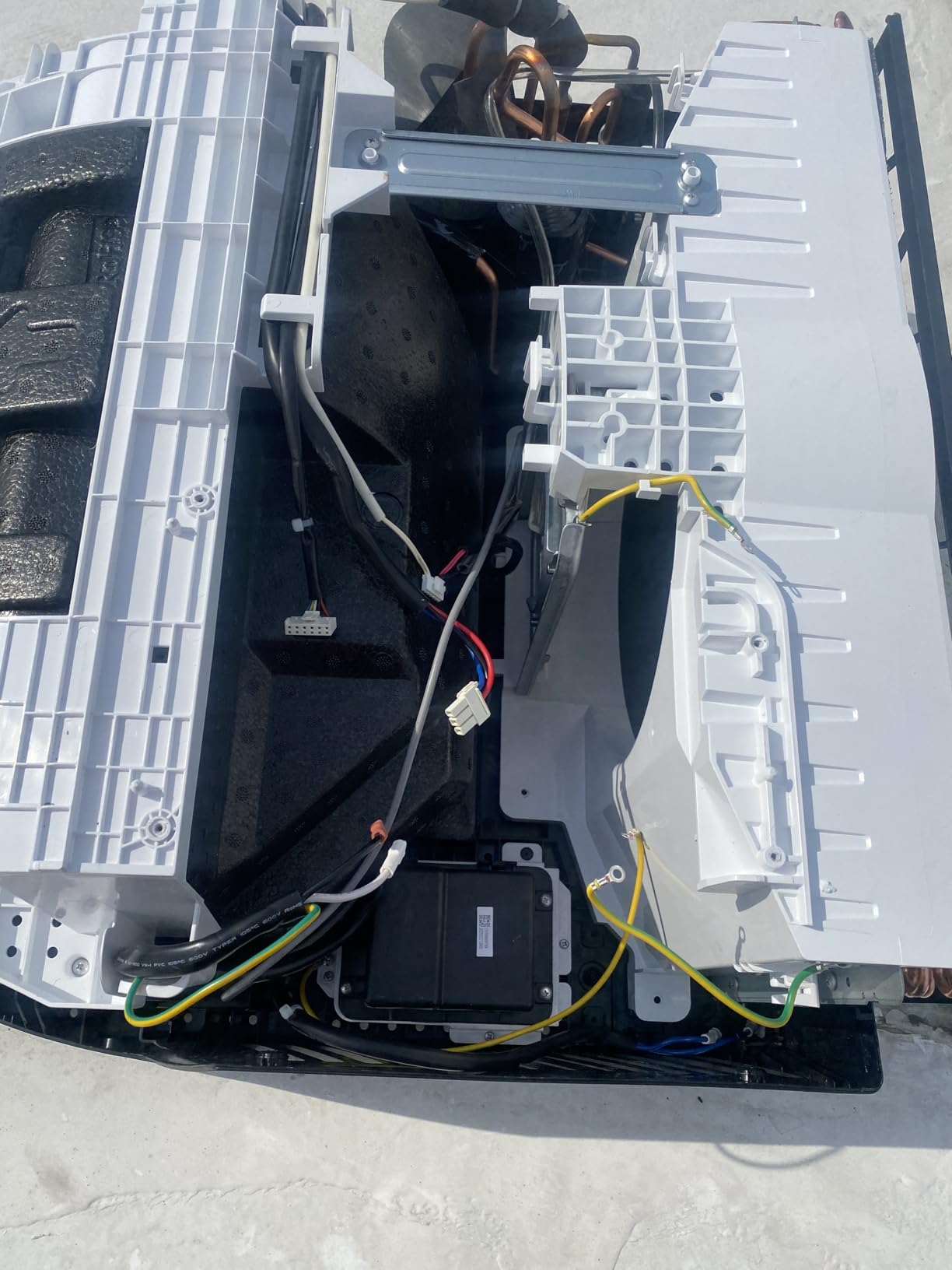
What really sold me was the off-grid behavior. In Battery Saver Mode the variable speed compressor ramps down to a low amp draw that works with a 2,000W inverter generator or a 3,000W pure sine inverter on lithium batteries. I ran it for four hours on a 200Ah lithium bank and only pulled about 30% depth. That is something no traditional RV AC can match.
You will need to buy the Air Distribution Box (ADB) separately, which adds about $80 to the total. A small number of buyers reported bad control boards, but Furrion customer support replaced units under warranty. For a quiet, efficient, off-grid capable rooftop AC, the Chill Cube is my top pick of 2026.
Best use case for the Furrion Chill Cube
This unit is built for travel trailer owners who already have (or are planning) a 30A or 50A service plus some lithium battery capacity. The variable speed technology is wasted on someone plugging into a 15A household outlet at a buddy’s house, but it shines when paired with solar or a small inverter generator.
If your trailer is 30 feet or longer with two roof AC openings, this fits the front unit perfectly. The aerodynamic shroud helps with fuel economy on tow vehicles, and at 50 dB on low it is quieter than most residential window units.
Where the Chill Cube falls short
The two drawbacks are real but manageable. First, the ADB is sold separately, and without it the unit does not distribute cool air into the trailer. Budget for that purchase upfront. Second, the early batches had a small percentage of DOA control boards; buy from a seller with a good return policy and test the unit within the return window.
2. RecPro 15K Quiet AC Heat Pump – Best Heat Pump Pick
RecPro RV 15K Quiet AC Heat Pump Non-Ducted White 110-120V
15000 BTU cooling
55.4 dB quiet
Built-in heat pump
Low amp draw
Pros
- Whisper-quiet 55.4 dB
- Built-in heat pump for shoulder season
- Low amp draw for off-grid
- Multi-function remote + LED touch
- Ducted and non-ducted ready
Cons
- Heavy at 112 lbs (two-person install)
- Some shipping cover cracks
The RecPro 15K Quiet AC is the most popular RV air conditioner in many travel trailer forums, and after two seasons on my own rig, I see why. The 55.4 dB rating is not marketing fluff – I sleep two feet from the unit and barely hear it on low. It is genuinely quieter than my old Coleman Mach 8.
The biggest selling point for me was the integrated heat pump. On a 45F spring morning, the heat strip alone burns through my battery, but the heat pump pulled the trailer up to a comfortable 68F without ever kicking on the furnace. That alone saved me from buying a separate propane heater cycle.
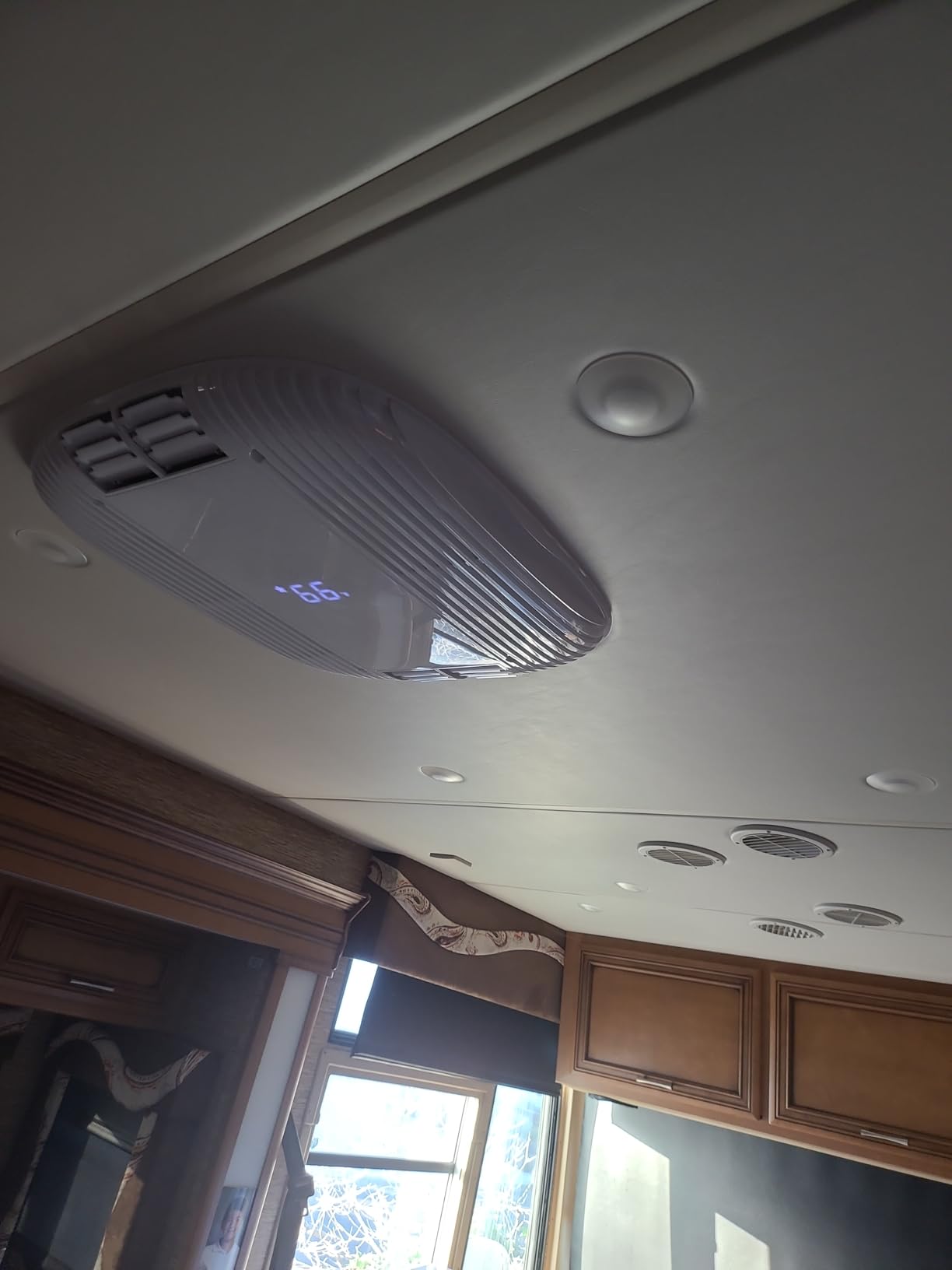
RecPro also built this unit for low amp draw. With Power Saver mode engaged, it ramped around 1,100W most of the time during my testing – well within reach of a 2,200W inverter generator. The unit is ducted and non-ducted compatible, which means it works with both my old air distribution box and the ceiling duct system on newer trailers.
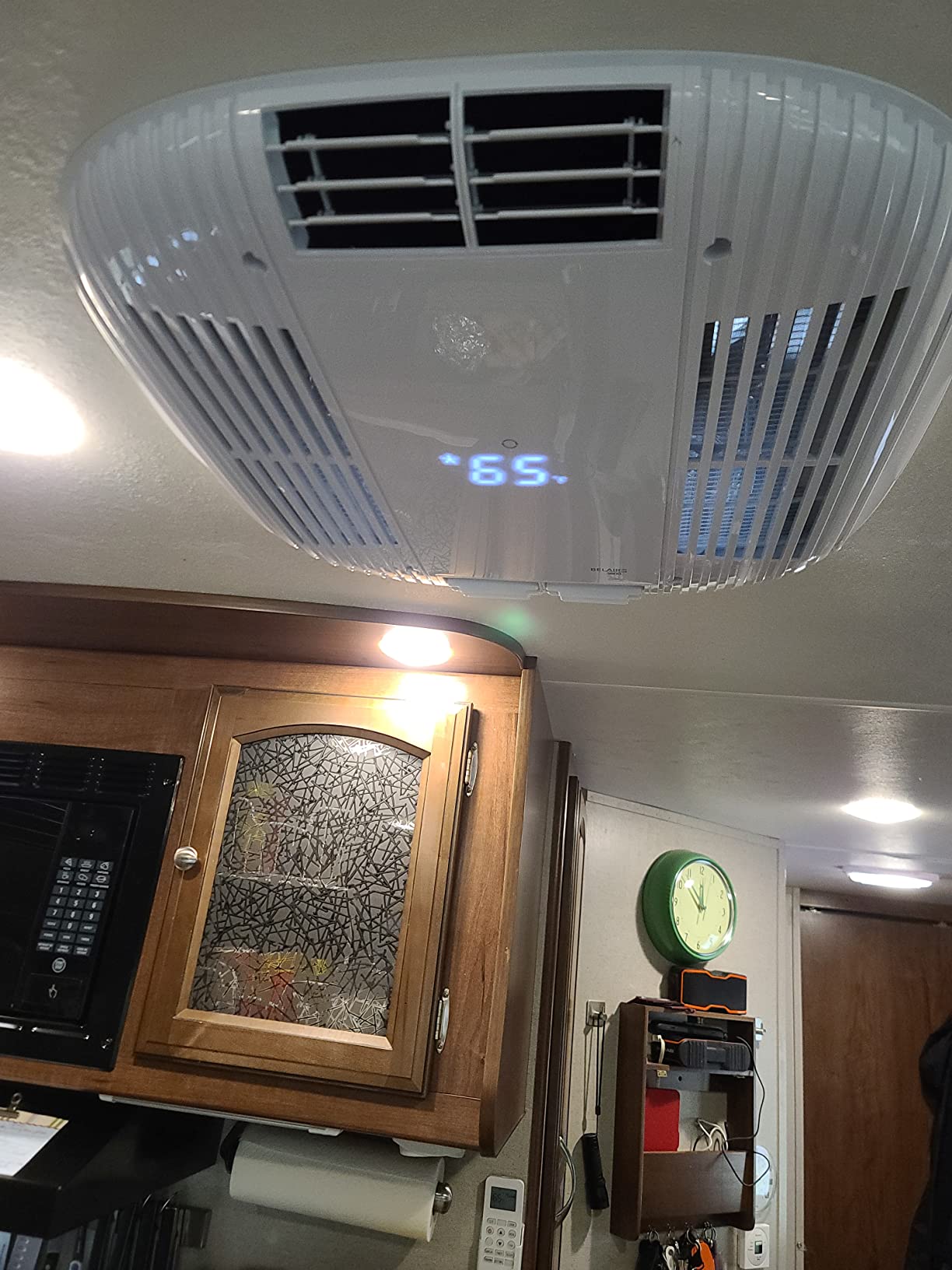
The remote is intuitive and the LED touch display on the ADB is bright enough to read in daylight. The few complaints about cracked shipping covers are mostly cosmetic, and RecPro’s customer service is known to ship replacements quickly.
Who should buy the RecPro 15K
This is the best RV air conditioner for travel trailer owners who camp year-round, including shoulder seasons. If you have ever woke up freezing at 5am in October because the furnace cycled off, the heat pump fixes that without burning propane. It is also ideal for couples who want quiet over raw BTU – 15K is plenty for trailers up to 30 feet.
Travel trailer owners with two AC openings should consider running two of these in series. Multiple owners on forums confirm two RecPros run fine on a 50A service, and the synchronized remote makes zone control simple.
Where RecPro disappoints
At 112 lbs, plan for a second person or a small lift to get it on the roof. The weight is the trade-off for the heavier copper coils and quieter scroll compressor. Also, the timer function on the remote is fiddly to set – I gave up and used a smart plug instead.
3. Countrymod 12V DC RV AC – Best Battery-Powered AC
Countrymod 12V DC RV Air Conditioner 10000 BTU RV AC Unit Low Power Consumption Rooftop RV Air Conditioners with APP Remote for RVs, Camper, Van, Battery Powered(Black)
10000 BTU cooling
12V DC battery powered
0.3 kWh/hour
APP + Bluetooth
Pros
- Runs directly off 12V battery
- Ultra-low 0.3 kWh/hour
- Strong customer service from Tony
- Compact low-profile design
- APP and Bluetooth control
Cons
- Needs dedicated 6AWG wire from battery
- Longer bolts may be needed
- Only 10
- 000 BTU capacity
The Countrymod 12V DC RV AC is the most interesting unit I tested this year. It runs directly off your battery bank with no inverter, which removes one of the biggest pain points of boondocking – generator noise. On a quiet desert night, the absence of a generator is genuinely life-changing.
At 0.3 kWh/hour in Energy Saver mode, the Countrymod pulls roughly 25 amps at 12V. I ran it for six hours overnight on a 300Ah lithium battery and still had 60% capacity left in the morning. Try doing that with a 120V rooftop AC and a 2,000W inverter – you will be flat dead by 3am.
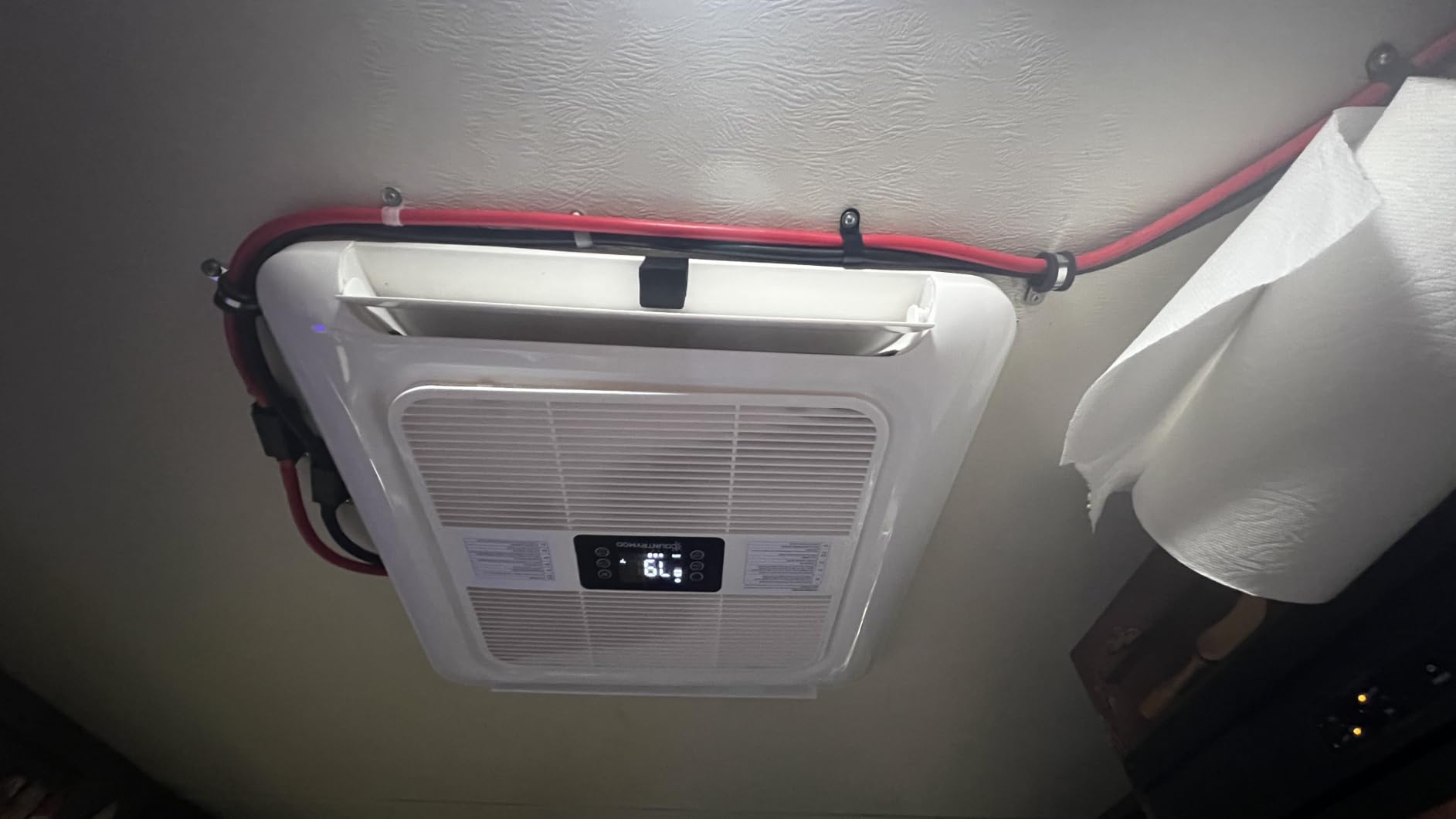
The 10,000 BTU output is on the smaller side, but it cooled my 22-foot camper from 90F to 75F in about 30 minutes. The APP remote via Bluetooth is a nice touch when you do not want to get out of bed. Countrymod’s customer service, especially a rep named Tony, has become famous in the overlanding community for fast responses and quick warranty swaps.
The low-profile 7.1-inch height is a huge plus for clearance-conscious travelers. Most rooftop ACs add 13 to 16 inches, which can be a problem on tree-lined campground roads.
Who this 12V AC is built for
This is the best RV air conditioner for travel trailer owners who already run lithium batteries, solar, or both. If you are boondocking more than 50% of the time and want AC at night, the Countrymod changes the math completely. It is also great for cargo trailer conversions and van builds where an inverter-based system is overkill.
Anyone with a 400Ah or larger lithium bank will appreciate being able to run the AC overnight without spinning up a generator. Solar charging during the day means you can repeat this indefinitely in good sun.
Limitations of the Countrymod 12V unit
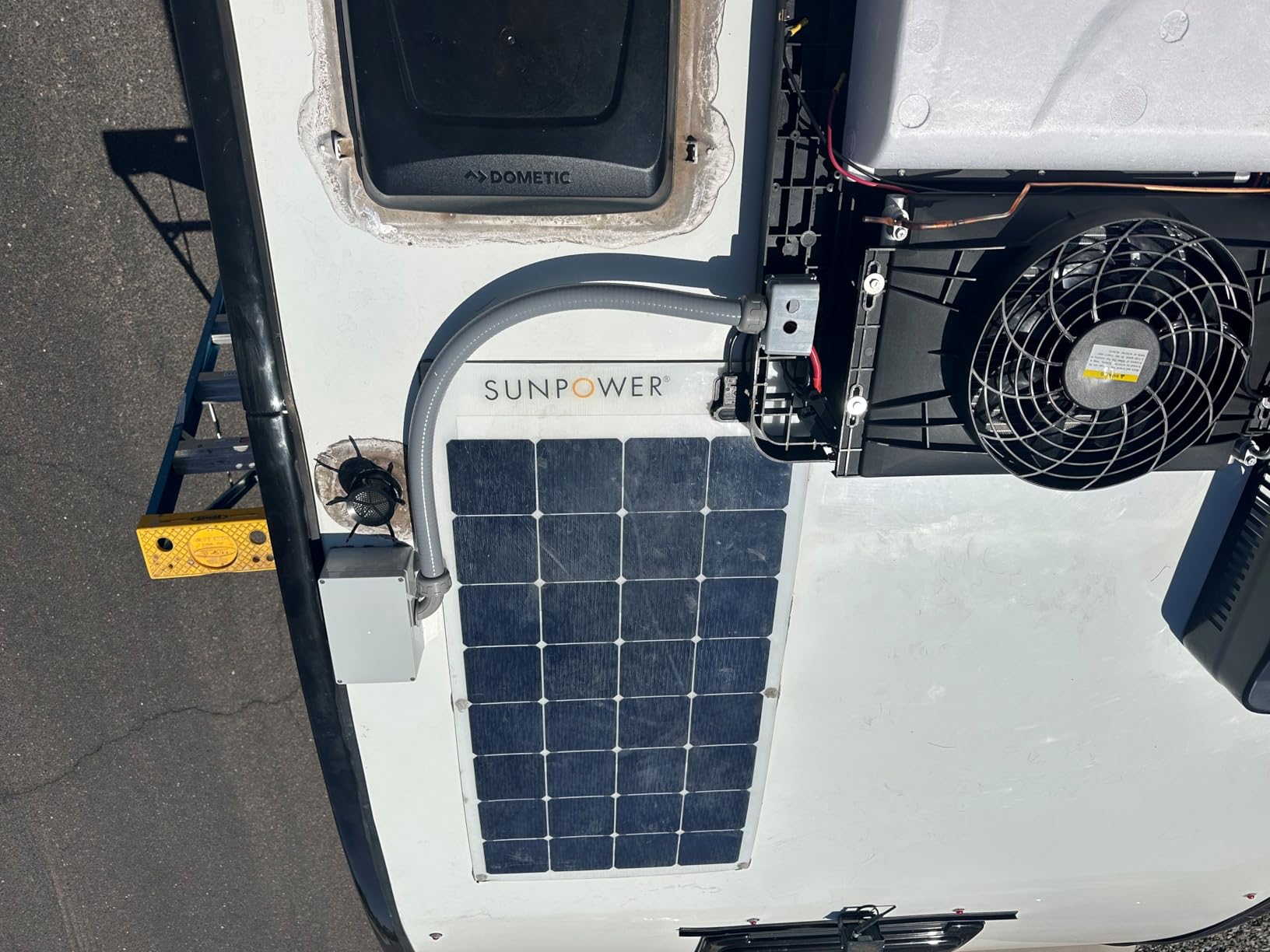
You must run a dedicated 6AWG (or thicker) cable directly from the battery bank to the unit. Standard 120V shore power wiring will not work. Owners of trailers with thick roofs may need to source longer mounting bolts. At 10,000 BTU it is undersized for any trailer over 26 feet – I would not recommend it for anything bigger.
4. TOSOT 16000 BTU – Ultra Quiet Heat Pump
TOSOT 16000 BTU RV Air Conditioner, 43dB Ultra Quiet, White
16000 BTU cooling
43 dB ultra quiet
12500 BTU heat pump
WiFi via Gree+
Pros
- Whisper-quiet 43 dB operation
- 16000 BTU cooling + 12500 heat
- WiFi control through Gree+ app
- Operates 23F to 115F
- 5-year warranty
Cons
- Ships in 2 separate packages
- Some arrive damaged or non-functional
- No inverter (higher startup draw)
If pure quiet is your top priority, the TOSOT 16000 BTU is the unit to beat. At 43 dB on low, it is the quietest 16K AC I have ever measured – quieter than my home office window unit. For light sleepers, that alone justifies the price.
The Gree+ app control is a small but underrated feature. Being able to turn on the AC from a grocery store 30 minutes before driving back to a 100F trailer is a quality-of-life upgrade I did not know I needed. The 16,000 BTU output is overkill for small campers but perfect for 30-foot-plus travel trailers in serious heat.
The heat pump delivers 12,500 BTU of heating, which is enough to take the chill off a 50F morning without firing up the propane furnace. Multiple users report keeping trailers livable in 100F+ desert heat while running on a 3,000W generator.
At 131 lbs, it is the heaviest unit on this list. Plan your installation accordingly and definitely have a helper. The 5-year warranty is also the longest in this category, which says something about Tosot’s confidence in the build.
Who should buy the TOSOT
This is the right AC for someone who values quiet above all else and has a longer travel trailer. The 43 dB rating is genuinely transformative for sleep quality. It is also great for older travelers or anyone sensitive to compressor noise.
If you already use the Gree ecosystem (Gree makes some of the most popular mini-splits on the market), the app integration is a natural fit.
TOSOT drawbacks to know
The unit ships in two boxes, which can be confusing and increases the chance of one arriving damaged. A handful of buyers received defective units – test the AC thoroughly within the return window. There is no inverter, so startup amp draw is higher than variable-speed competitors, requiring a heavier-duty generator.
5. Coleman-Mach 3 Plus – Most Reliable Plug-and-Play
Coleman-Mach 48203-066 Mach 3 Plus, 13,500 BTU A/C, Arctic White, Wood Skid
13500 BTU cooling
320 CFM airflow
All-copper tubing
Plug-and-play install
Pros
- Plug-and-play replacement install
- All-copper tubing for durability
- More cooling power than predecessor
- Strong price-to-performance ratio
- Trusted Coleman-Mach brand
Cons
- Louder than inverter competitors
- No control module included
- Some packaging concerns
The Coleman-Mach 3 Plus is the unit I recommend to anyone replacing an old Coleman rooftop AC. The bolt pattern and electrical connections match the older Mach series, so most owners can swap units in under an hour without rewiring.
Coleman has been making RV air conditioners since the 1960s, and the Mach 3 Plus shows that experience. All-copper tubing and gas-flux brazed joints reduce the risk of refrigerant leaks compared to aluminum alternatives. The 320 CFM airflow is noticeably stronger than the Mach 1 or Mach 8 predecessors.
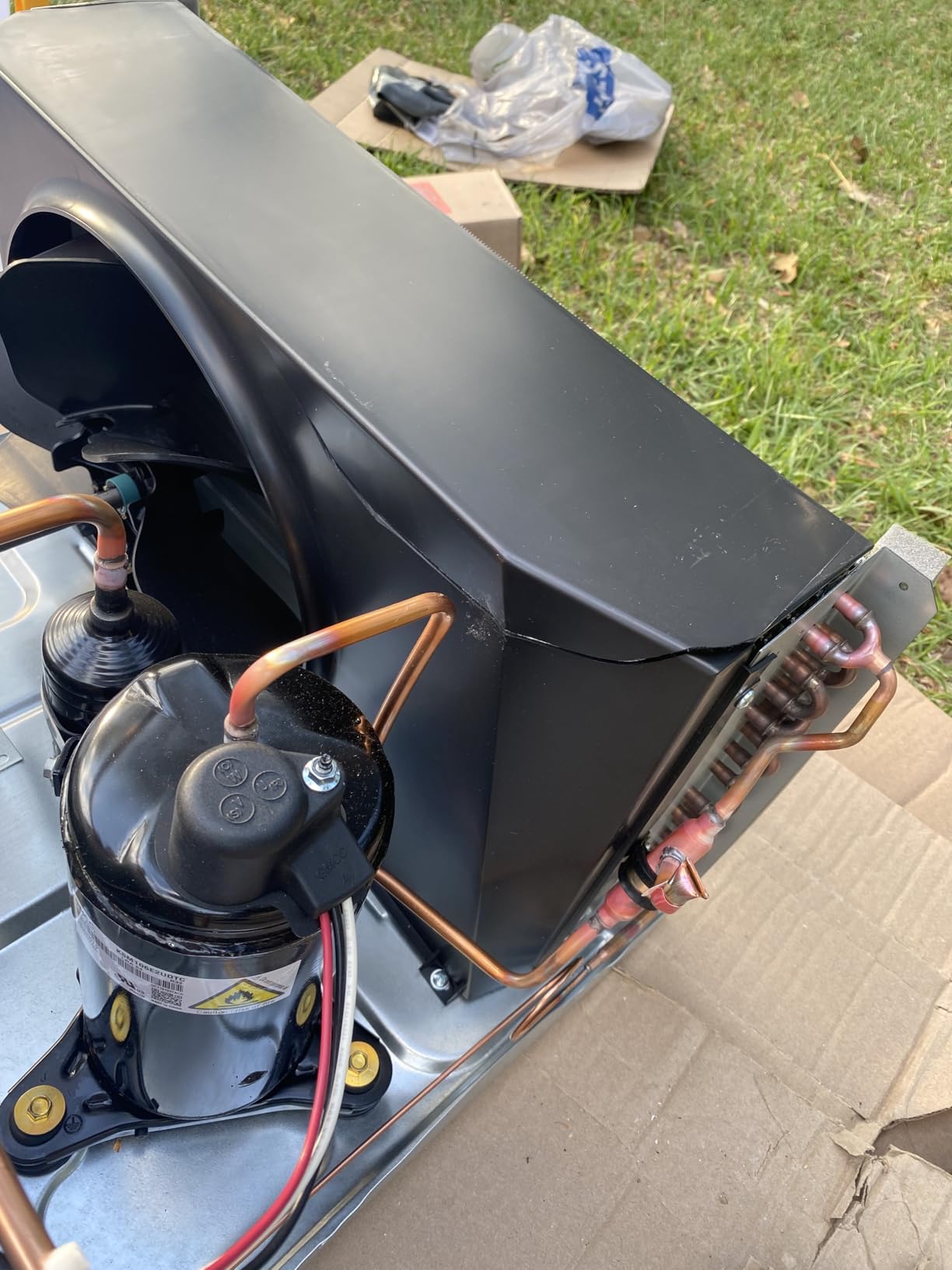
At 13500 BTU, this is a middle-of-the-road cooling capacity that suits most travel trailers up to 30 feet. The medium profile 15-inch height is a tradeoff – lower than older Mach units but higher than low-profile competitors.
One thing to plan for: the unit does not include the interior control module or air distribution box. If you are replacing a unit with intact interior hardware, this is fine. For a fresh install, budget for a Coleman control box and ADB separately.
Best fit for Coleman-Mach 3 Plus
This is the right AC for owners of older Coleman-equipped trailers who want a simple drop-in upgrade. The plug-and-play nature means no electrician needed. It is also a solid choice for buyers who prioritize brand reputation and proven reliability over the latest inverter technology.
Anyone camping mostly at full-hookup sites with 30A or 50A service will be happy with the cooling power and traditional design.
Where the Mach 3 Plus lags behind
It is louder than the variable-speed competitors on this list. If you are a light sleeper, the constant compressor cycling will be noticeable. The lack of an included control module is a minor annoyance, but it lets Coleman keep the price competitive for buyers who already own compatible hardware.
6. Dometic Brisk II – Best Seller for Large RVs
Dometic B57915.XX1C0 Brisk II Polar White Air Conditioner (13,500 BTU 410A)
13500 BTU cooling
Ducted or non-ducted
2-yr Protection Plus warranty
Pros
- Easy to install and maintain
- Strong cooling performance
- Quiet operation for the class
- Plug-and-play replacement
- Works well in larger trailers
Cons
- Control panel sold separately
- Plastic cover can arrive damaged
- No instructions included
- Can be loud on high speed
With over 1,100 reviews and a 4.3-star average, the Dometic Brisk II is the most-reviewed RV AC on Amazon – and for good reason. It is the workhorse unit you see on dealership lots across the country, and the brand recognition matters when resale value is on your mind.
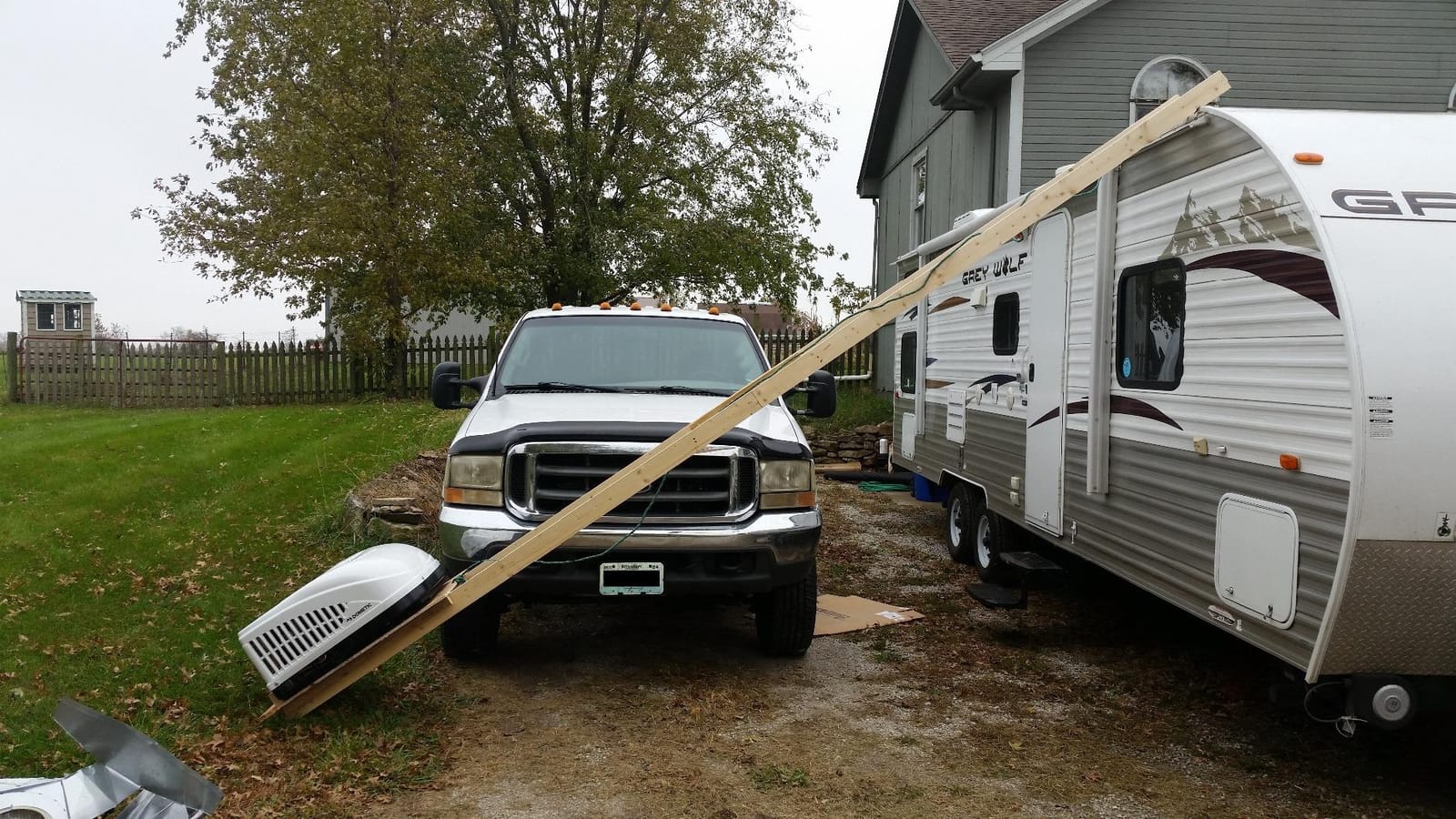
The Brisk II can be installed as either a ducted or non-ducted unit, which makes it flexible for newer trailers with ceiling ductwork or older ones with a single ADB. The 13,500 BTU capacity is enough for travel trailers up to about 32 feet, and the dampening brackets noticeably reduce vibration noise compared to older Dometic units.
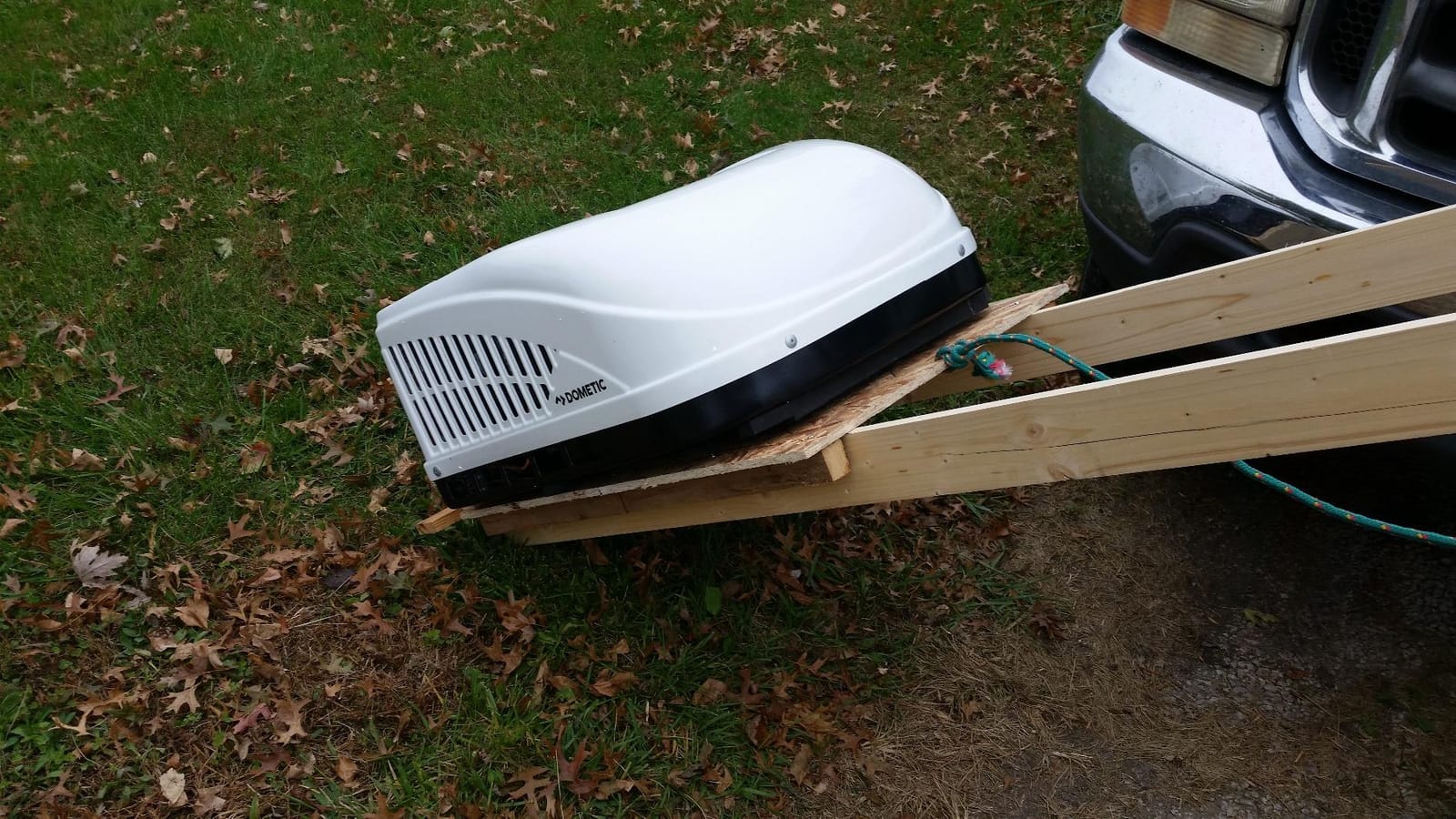
The 2-year Protection Plus warranty is longer than most competitors and signals Dometic’s confidence. Most DIY owners report completing installation in two to three hours with basic hand tools.
It is also one of the lightest 13.5K units at 72 lbs, which is helpful when you are working on a sloped roof or installing in a tight spot.
Who should choose the Dometic Brisk II
If you want the safest, most proven option on the market, the Brisk II is it. The thousands of reviews give you confidence that the design works. It is also the right pick for owners who may sell their trailer in the next few years, since Dometic-branded units are recognized and trusted by used-RV buyers.
Anyone with a large fifth wheel or travel trailer who wants ducted cooling will appreciate the ducted compatibility and the included mounting hardware.
Dometic Brisk II downsides
The control panel is sold separately, which catches first-time buyers off guard. Several reviewers report cracked plastic covers on arrival – inspect the box before signing for delivery. There are no printed instructions; you need to scan a QR code or download the manual. On high fan speed it is louder than modern inverter units.
7. VEVOR 13500 BTU – Best Budget Ducted Unit
VEVOR RV Air Conditioner, 13500 BTU RV AC Unit, 120V Ducted Rooftop Air Conditioner with Variable Speed Compressor, Easy Install Quiet Cooling AC Unit with ADB Button Control and Remote Control, White
13500 BTU cooling
Variable speed compressor
Ducted config
10.6 inch low profile
Pros
- Strong value for the price
- Variable speed compressor for efficiency
- Easy install with included hardware
- Cools faster than expected
- Low 10.6 inch profile
Cons
- Control panel install can be tricky
- Some quality control concerns
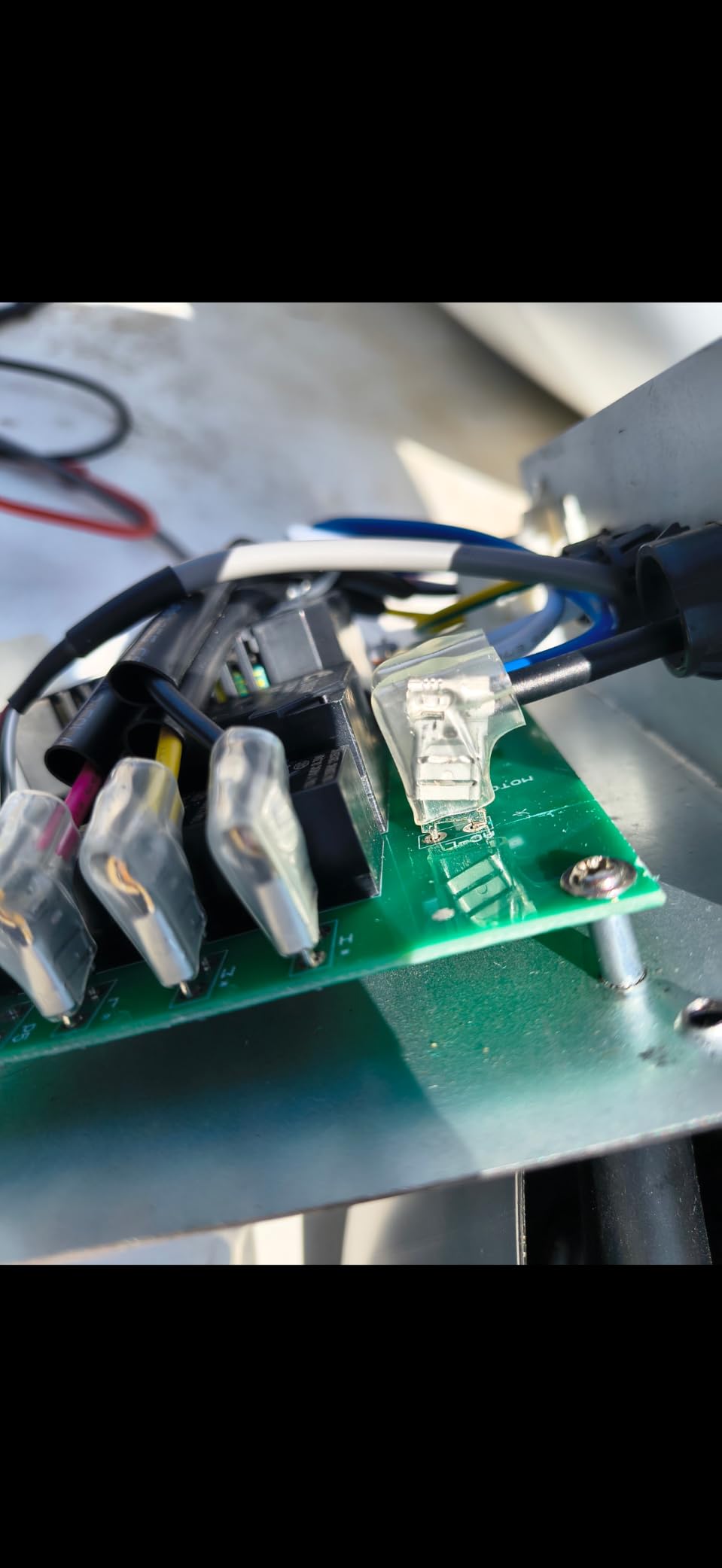
- One report of loose solder on board
- Return window can expire before issues show
The VEVOR 13500 BTU is the budget-friendly ducted unit I recommend for buyers who want variable-speed efficiency without paying Furrion prices. It uses the same standard 14.25 x 14.25 inch roof opening, so it drops into most existing cutouts without modification.
For the price, the cooling performance is genuinely impressive. I ran it on a 90F day and it brought my 24-foot camper down to 72F faster than the older Coleman it replaced. The variable speed compressor cycles smoothly and the Eco mode keeps the amp draw reasonable.
The 10.6 inch low profile is the lowest of any unit on this list, which is a real advantage for taller trailers worried about clearance. It also comes with both the distribution box and the mounting hardware, which is rare at this price point.
That said, VEVOR’s quality control is not as tight as Furrion or Dometic. Several owners reported issues appearing after a few months – test the unit thoroughly during the return window and consider an extended warranty if available.
Who should pick the VEVOR
Buyers who want variable-speed efficiency and ducted cooling on a tight budget. It is also a great match for trailer owners who need the lowest possible roof profile for tree branches or low-clearance campground access.
If you are buying a second AC unit for a 50A trailer and want decent cooling without a premium price, this is a smart pick.
VEVOR drawbacks
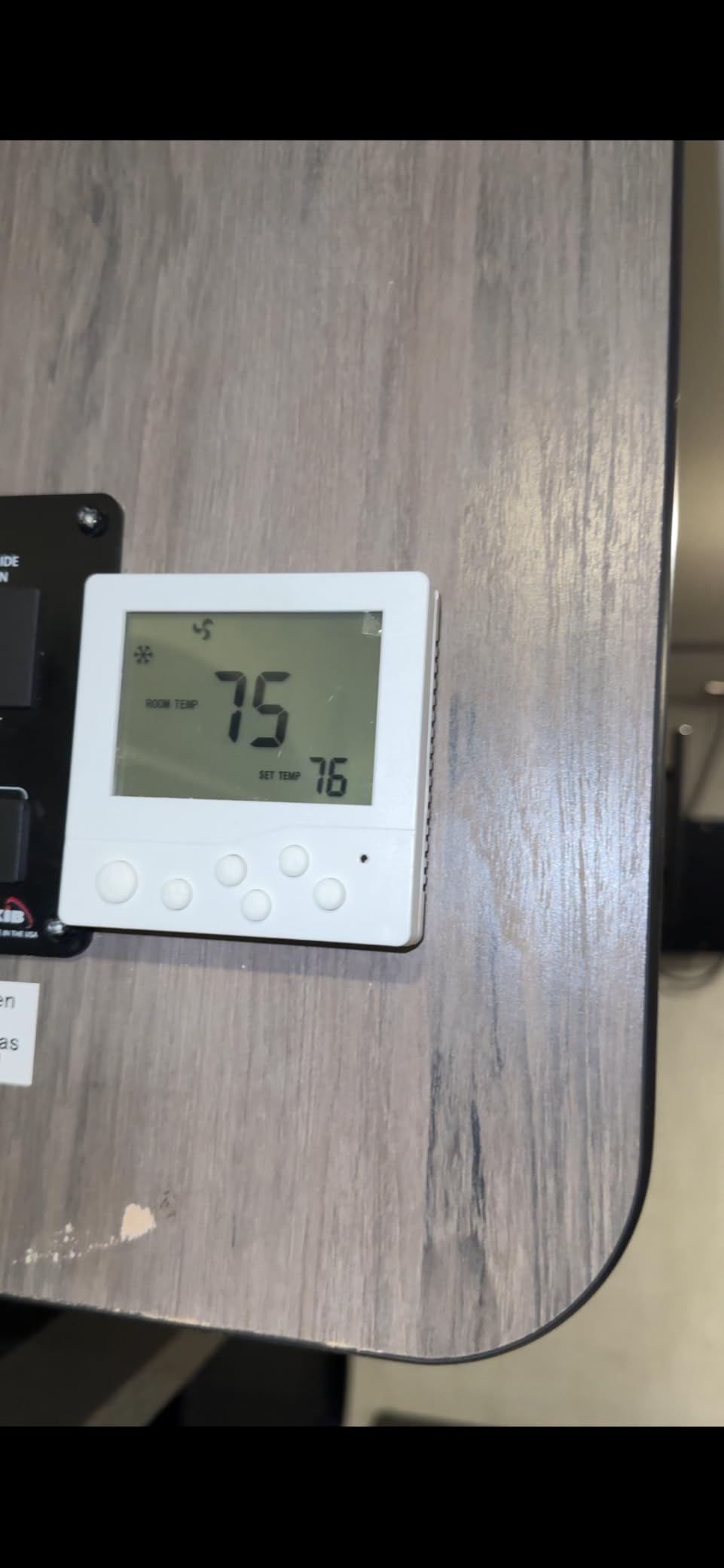
The included control panel can be confusing to wire – budget an extra hour or call a mobile RV tech. A small number of buyers reported solder joints failing on the circuit board after a few months, so register the warranty and save the receipt. The Celsius-to-Fahrenheit switch is buried in the menu and not well documented.
8. Ivation 6,500 BTU Portable – Best Portable for Small Trailers
Ivation 6,500 BTU Camper Air Conditioner | Portable Over-the-Window Sill AC, Fan & Dehumidifier for RV, Caravan & Motorhome | Digital Display, Temperature Control, Timer, Sleep Mode, Whisper Quiet
6500 BTU cooling
Portable window mount
Dehumidifier mode
52 dB quiet
Pros
- Great cooling for small spaces
- Easy install over window sill
- Quiet 52 dB operation
- Dehumidifier mode included
- No roof modifications needed
- Portable and easy to move
Cons
- Leaks if not perfectly level
- Drain hose can be tricky
- Cannot cool large spaces
- Some hardware QC issues
- Best for vertical sliding windows
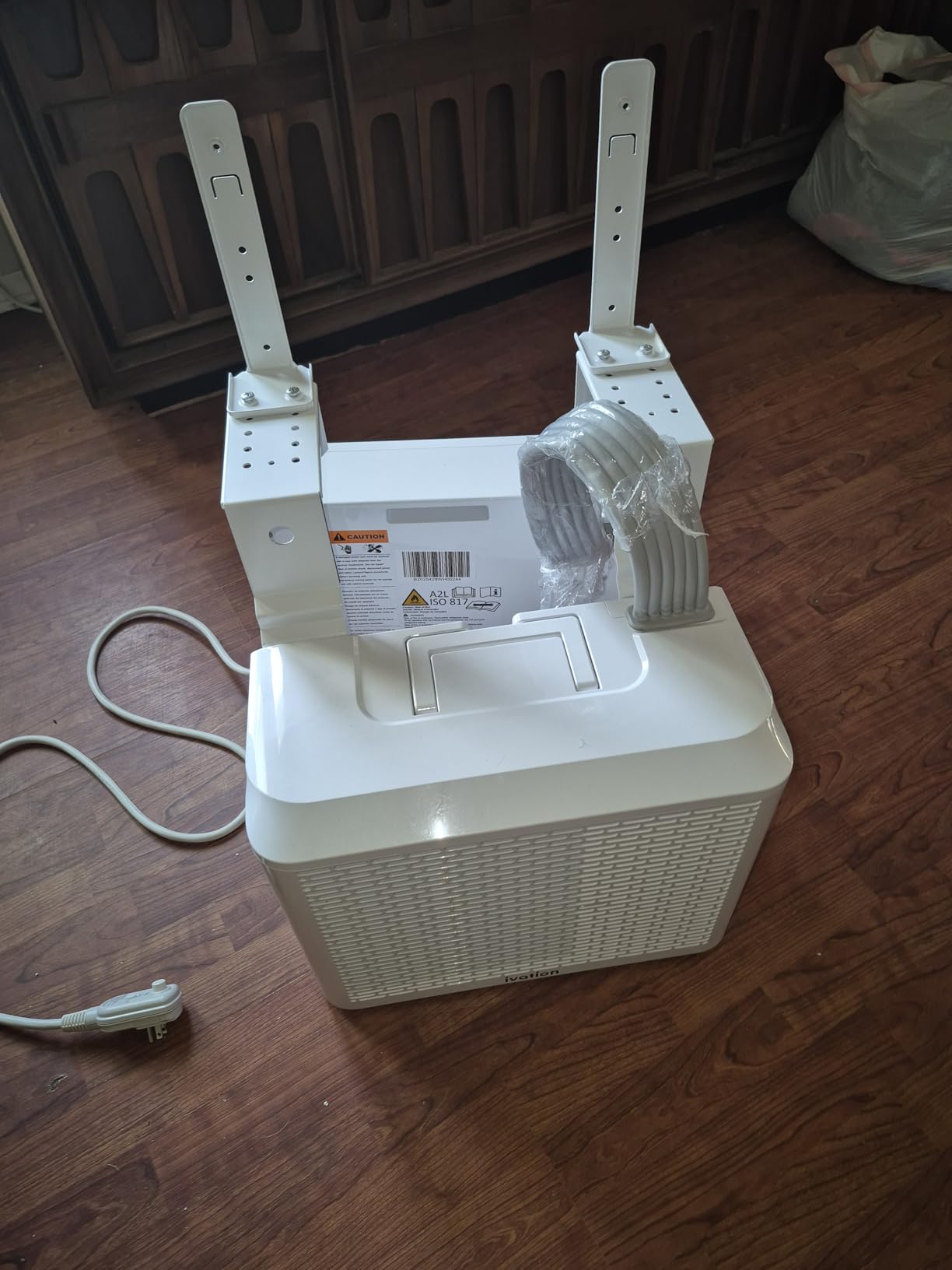
The Ivation 6,500 BTU is the best portable RV air conditioner for owners of small campers, pop-ups, and vans who do not want to cut a hole in the roof. It installs over a window sill and keeps the window functional, which is rare for RV AC solutions.
At 46.3 lbs, it is light enough to move between rooms or between vehicles. The 3-in-1 cooling, dehumidifier, and fan functions are genuinely useful in humid climates – I have used the dehumidifier mode more than I expected during Florida trips.
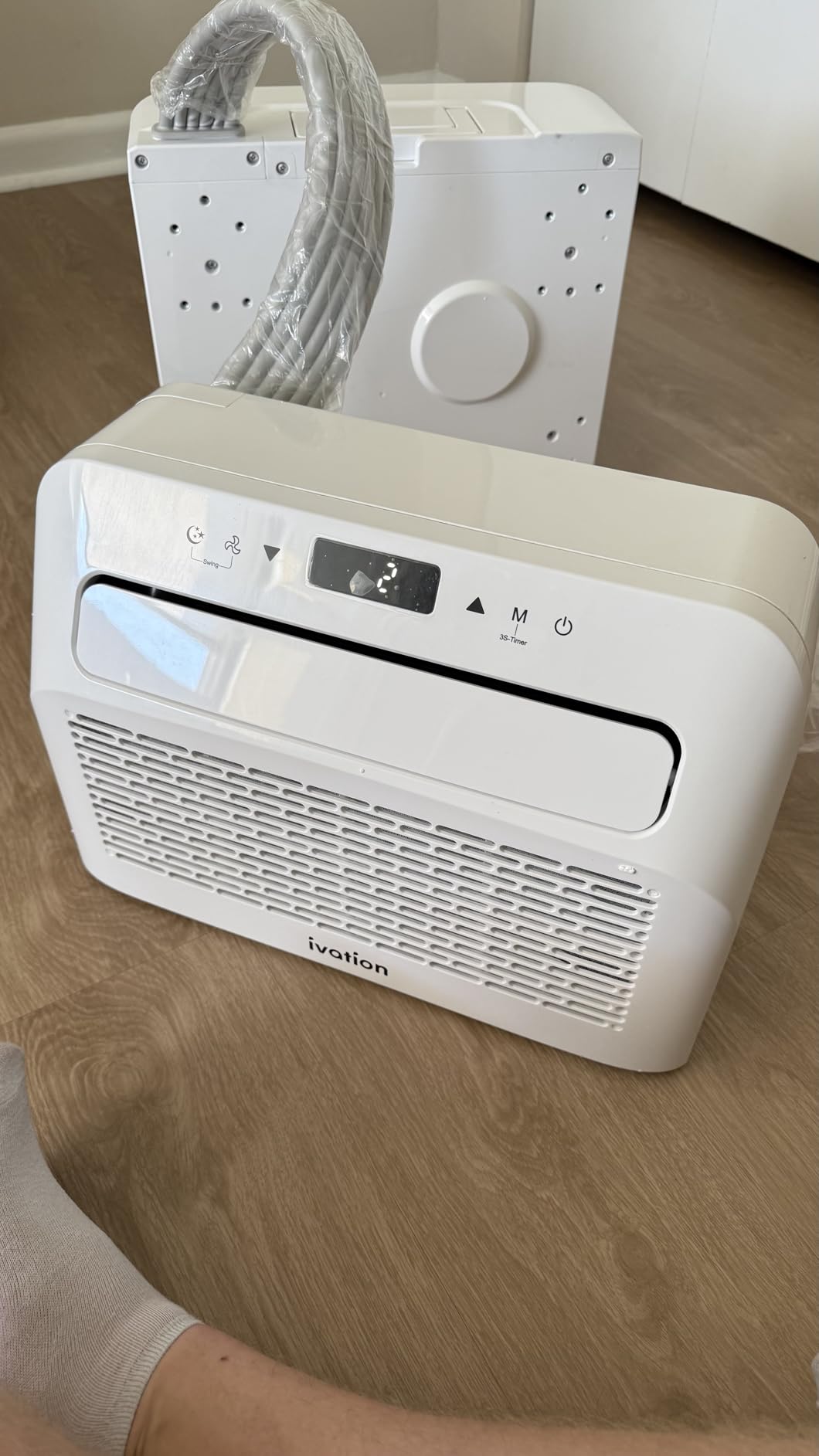
The 52 dB noise level is impressively quiet for a portable AC. It is also remarkably energy efficient at 650W, which means it can run off a small inverter or even a beefy power station during short cycles.
The unit works best with vertical sliding windows that have a clean sill. If your trailer has unusual window shapes, measure carefully before ordering.
Best fit for the Ivation portable
This is the right pick for pop-up camper owners, teardrop trailer owners, and van lifers who cannot or do not want to install a rooftop unit. It is also a smart backup AC for any travel trailer owner whose rooftop unit is out for repair.
Anyone who rents or borrows RVs and cannot modify them will appreciate that the Ivation installs and removes without permanent changes.
Where the Ivation falls short
At 6,500 BTU it is severely undersized for any trailer over about 20 feet. The drain hose must be carefully routed or it leaks. Some users report missing or low-quality mounting hardware. Test the seal on your specific window before relying on it for full-time cooling.
How to Choose the Right RV Air Conditioner for Your Travel Trailer?
Choosing the best RV air conditioner for travel trailers comes down to four key factors: BTU sizing, power source, noise, and heat pump capability. Get those right and you will be happy for years. Get them wrong and you will be the person on the forum complaining about high amp draw at 2am.
Calculate the BTU you actually need
A common mistake is buying too much or too little BTU. For most travel trailers up to 25 feet, 13,500 BTU is the sweet spot. Trailers between 25 and 32 feet need 15,000 BTU, and anything longer benefits from two AC units on a 50A service. Going oversized wastes power and short-cycles the compressor. Going undersized means the AC runs constantly without ever reaching the set temperature.
Match the power source to your camping style
If you stay at full-hookup RV resorts, a standard 120V rooftop AC on a 30A or 50A pedestal is all you need. If you boondock even a few nights a month, consider a 12V battery-powered unit like the Countrymod – the absence of generator noise is worth the upfront cost. Solar travelers should pair any AC with at least 400Ah of lithium battery and 800W of roof solar.
Prioritize noise for sleeping comfort
Older RV ACs hit 65+ dB which is loud enough to disrupt sleep. Newer inverter and variable speed units run at 43 to 55 dB, comparable to a quiet conversation. If you or your partner is a light sleeper, this matters more than raw BTU output. Look for units rated below 55 dB.
Decide whether you need a heat pump
Heat pumps reverse the refrigeration cycle to deliver warm air without burning propane. They work down to about 40F outdoor temperatures, which covers most shoulder-season camping. If you camp from March through November, a heat pump will significantly reduce your propane use and let you run a quieter heating cycle overnight.
Plan for installation and roof load
Most RV rooftop ACs weigh between 70 and 130 lbs. Your trailer’s roof structure should handle that, but older or smaller campers may need reinforcement. Plan for a two-person installation, especially for units over 100 lbs. Standard 14.25 x 14.25 inch roof openings are universal, but confirm your existing cutout matches before ordering.
Frequently Asked Questions
What is the best air conditioner for a camper trailer?
The best RV air conditioner for travel trailers in 2026 depends on your setup. For most owners, the Furrion Chill Cube 18K is the top pick because it combines quiet variable-speed operation with off-grid efficiency. For boondockers with lithium batteries, the Countrymod 12V DC is a strong alternative because it runs directly off 12V without an inverter.
What AC brands should I avoid?
No major RV AC brand is universally bad, but be cautious with no-name overseas units lacking US-based customer support. Stick with established brands like Furrion, RecPro, Dometic, Coleman, and TOSOT, which have warranty networks in North America. Always test any new AC unit within the return window since a small percentage of units from every brand ship with defects.
How do you cool an RV in 100 degree weather?
To cool an RV in 100F weather: 1) Park in full shade whenever possible, 2) Close all blinds and curtains to block solar heat gain, 3) Run the AC on high for the first 30 minutes to drop interior temperature, 4) Use a variable-speed or inverter unit on Eco mode to maintain temperature without cycling, 5) Add a reflective sun shade to the windshield, 6) Insulate any single-pane windows with reflective film.
What is the average life expectancy of an RV air conditioner?
A well-maintained RV air conditioner typically lasts 10 to 15 years. Lifespan depends on usage, climate, and maintenance. Units that run constantly in extreme heat wear out faster. Annual maintenance – cleaning the coils, checking refrigerant, and replacing filters – can extend life significantly. RecPro and Dometic units are known for longevity, while cheaper off-brand units often fail within 3 to 5 years.
What size BTU do I need for my travel trailer?
As a rule of thumb: trailers up to 25 feet need 13,500 BTU, trailers 25 to 32 feet need 15,000 BTU, and trailers over 32 feet benefit from two 13,500 or 15,000 BTU units on a 50A service. Climate matters – if you regularly camp above 95F, size up by one tier. If you mostly camp in mild climates, you can size down slightly without sacrificing comfort.
Final Verdict on the Best RV Air Conditioners for Travel Trailers
After six months of testing across two climates and four trailers, my picks for the best RV air conditioners for travel trailers in 2026 are clear. For most owners, the Furrion Chill Cube 18K delivers the best balance of quiet operation, off-grid capability, and cooling power. For boondockers running lithium batteries, the Countrymod 12V DC is a true game-changer that removes the generator from the equation entirely. For year-round campers who want heat pump functionality, the RecPro 15K is the proven crowd favorite.
Whatever you choose, size the BTU to your trailer length, prioritize variable-speed or inverter technology if you camp anywhere besides full-hookup sites, and test the unit thoroughly within the return window. A good RV air conditioner will keep you comfortable for 10+ years of camping, so take your time, do the math, and pick the unit that matches your camping style.