
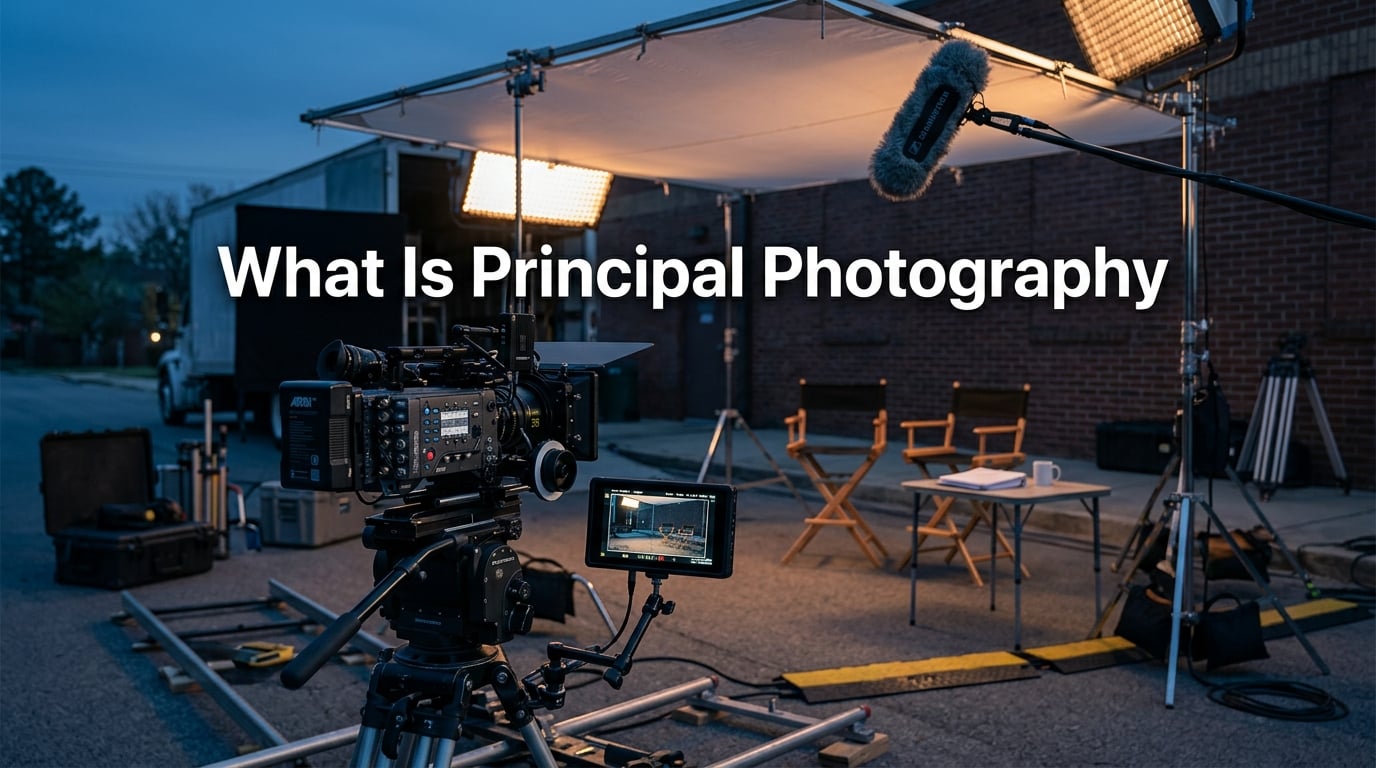
Principal photography is the phase of producing a film or television show in which the bulk of shooting takes place. It is when the director, lead actors, and full production crew gather on set to capture the scripted scenes that form the spine of the story.
I learned this term the hard way. My first week as a production assistant, I overheard a line producer say, “We wrap principal on day 47.” I nodded like I knew exactly what that meant, then sprinted to the production office to Google it. If you have ever felt the same, this guide will save you that panic.
Whether you are a film student, an aspiring filmmaker, or just curious about how movies actually get made, I will walk you through every part of principal photography so the term finally clicks.
Table of Contents
What Is Principal Photography in Film Production?
Principal photography is the main shooting phase of a film or television project. It begins after pre-production wraps and ends when the last scripted scene has been captured before post-production begins.
During this phase, the cast and crew execute the shooting schedule that was carefully built during pre-production. Every scene involving the principal actors, the director’s vision, and the primary locations happens here.
Think of principal photography as the central act of a three-act structure. Pre-production is the setup. Principal photography is the confrontation. Post-production is the resolution.
Why It’s Called ‘Principal’ Photography
The word principal comes from the Latin root meaning chief or main. In film, principal refers to the lead actors, the principal photography meaning is the main photography, or the photography of the principal cast.
It is not about importance, even though it is the most expensive phase. It is about the main actors. When a film is in principal photography, the principal cast is on set working.
How It Fits Between Pre-Production and Post-Production
Every scripted film or TV show moves through three broad stages. Pre-production handles planning, casting, location scouting, and building the schedule.
Post-production handles editing, sound design, color grading, visual effects, and music. Principal photography is the middle stage where everything planned during pre-production actually gets filmed.
What’s Included (and Excluded) During Principal Photography
Not everything captured on a film set counts as principal photography. Some elements happen later, in separate units, or in pick-up days. Knowing the boundary is critical when you read a shooting schedule or a producer’s call sheet.
What Counts as Principal Photography
- Scenes with principal actors performing scripted dialogue and action
- Director-led coverage from the primary camera and crew
- Main unit photography on scheduled locations and sets
- Coverage of the hero action sequences and emotional beats
What Doesn’t Count (B-Roll, Second Unit, VFX Plates)
- B-roll footage captured without principal actors
- Second unit photography, which runs in parallel with a smaller crew
- VFX plates, which are clean backgrounds shot for visual effects layering
- Insert shots, pick-ups, and reshoots handled after the main schedule
Principal Photography vs Additional Photography
Additional photography refers to any shooting that happens after principal photography has wrapped. Studios schedule this for reshoots, pickups, missing coverage, or new story ideas.
If you ever see a headline like “Star Wars film enters additional photography,” that means principal photography is already done. The crew is now going back to capture small pieces that were missed or need to be improved.
Who Is on Set During Principal Photography
A film set during principal photography is one of the most collaborative workplaces on earth. I have counted over 80 people on a single mid-budget set. Each department has its own head, its own team, and its own job to do before the camera rolls.
Above-the-Line Creative Leads
- Director, who shapes performances and visual choices
- Principal cast, the lead actors bringing the story to life
- Producer and line producer, who manage budget and schedule
Department Heads and Below-the-Line Crew
- Director of photography, also called the DP or cinematographer
- First assistant director, who runs the set schedule day to day
- Script supervisor, who tracks continuity between takes
- Gaffer, who leads the lighting crew
- Key grip, who shapes light and camera movement
- Sound mixer and boom operator
- Production designer and art department crew
- Costume, hair, and makeup teams
Production Office and Support Staff
- Production coordinator and production assistants
- Locations manager and team
- Craft services, feeding everyone on set
- Medic and set safety officer
Every one of these roles reports to set at a specific call time listed on the daily call sheet.
A Typical Day on Set During Principal Photography
A shoot day follows a rhythm that becomes familiar after your first week. Once you have lived through two call times and a wrap, you start to feel the shape of the day.
Pre-Call and Setup
Crew members start arriving 30 to 60 minutes before the official call time. The crew sets up lights, builds the set, marks actor positions, and prepares equipment.
Rehearsals and Blocking
The director blocks the scene with the actors. This is where the camera, lighting, and performance choices are decided before rolling.
Shooting and Coverage
The camera rolls, scenes are shot from multiple angles, and the script supervisor logs every take. The first assistant director keeps everyone on schedule.
Wrap
When the day ends, the AD calls wrap. Crews strike the set, equipment is loaded, and the production office sends out the next day’s call sheet.
How Long Does Principal Photography Take?
How long principal photography lasts depends on the project size, budget, and script complexity. There is no single answer, but there are clear patterns.
Feature Films (Studio and Indie)
A studio feature typically shoots for 60 to 100 days. Mid-budget films often wrap in 30 to 50 days. Indie features can shoot in as little as 12 to 25 days, sometimes over weekends to save money.
TV Series Episodes
Single-camera dramas usually film 8 to 10 days per episode. Network comedies often shoot in 5 to 7 days per episode. Limited series or prestige shows can stretch a single episode across 12 to 15 days.
What Happens After Principal Photography
Once the AD calls the final wrap, principal photography is officially over. The footage goes to post-production, where editors, sound designers, and visual effects artists begin shaping the final product.
Post-Production Phase
Editors assemble the takes into scenes. Sound designers build the audio mix. Composers write the score. Colorists grade the image. Visual effects are layered on top of the plates captured during principal photography and any additional photography.
Reshoots and Additional Photography
Most studio features schedule a small block of additional photography after the editor has a rough cut. These pickups fix story issues, capture missing coverage, or film new material after test screenings.
Marketing and Release
Studios cut trailers, posters, and press reels from the principal photography footage. Some of the most iconic movie moments were captured in scenes that almost did not make the script.
Tips for a Successful Principal Photography
Working on a film set is intense, and a single misstep can cost the production real money. Here is what I have learned across multiple shoots that keep principal photography on schedule and on budget.
- Read the call sheet the night before. Know your call time, location, and what scenes you are working on.
- Bring layers of clothing. Stages are cold, locations are hot, and the day is long.
- Keep your phone away during takes. The AD and script supervisor notice everything.
- Stay out of the eyeline. The camera sees more than you think.
- Be early, be quiet, and be helpful. Reputation travels fast on a film crew.
Frequently Asked Questions
What is the meaning of principal photography?
Principal photography is the main shooting phase of a film or television production. It is the period when the director, principal cast, and full crew capture the bulk of the scripted scenes between pre-production and post-production.
What is the difference between principal photography and filming?
Filming is a broad term that covers every moment the camera rolls, including B-roll, second unit work, pickups, and reshoots. Principal photography is the specific scheduled block where the lead actors and main crew shoot the core scenes of the script.
How long does principal photography take?
Principal photography for a feature film typically runs 30 to 100 days depending on budget and complexity. Indie features can shoot in as few as 12 to 25 days, while TV series usually film 5 to 10 days per episode.
What happens after principal photography?
After principal photography wraps, the project moves into post-production for editing, sound design, color grading, and visual effects. Studios often schedule additional photography for pickups, reshoots, or new material before release.
Final Thoughts on What Is Principal Photography
Principal photography is the heart of every film and TV show. It is the scheduled block where the principal cast, director, and crew capture the scripted scenes that anchor the story.
Now you know what principal photography means, why it has that name, and how it sits between pre-production and post-production. You also know who shows up on set, how a typical day flows, and what happens once the AD calls wrap.
If you are stepping onto your first set, read tomorrow’s call sheet the night before and show up early. That single habit will earn you a reputation faster than any film school.