
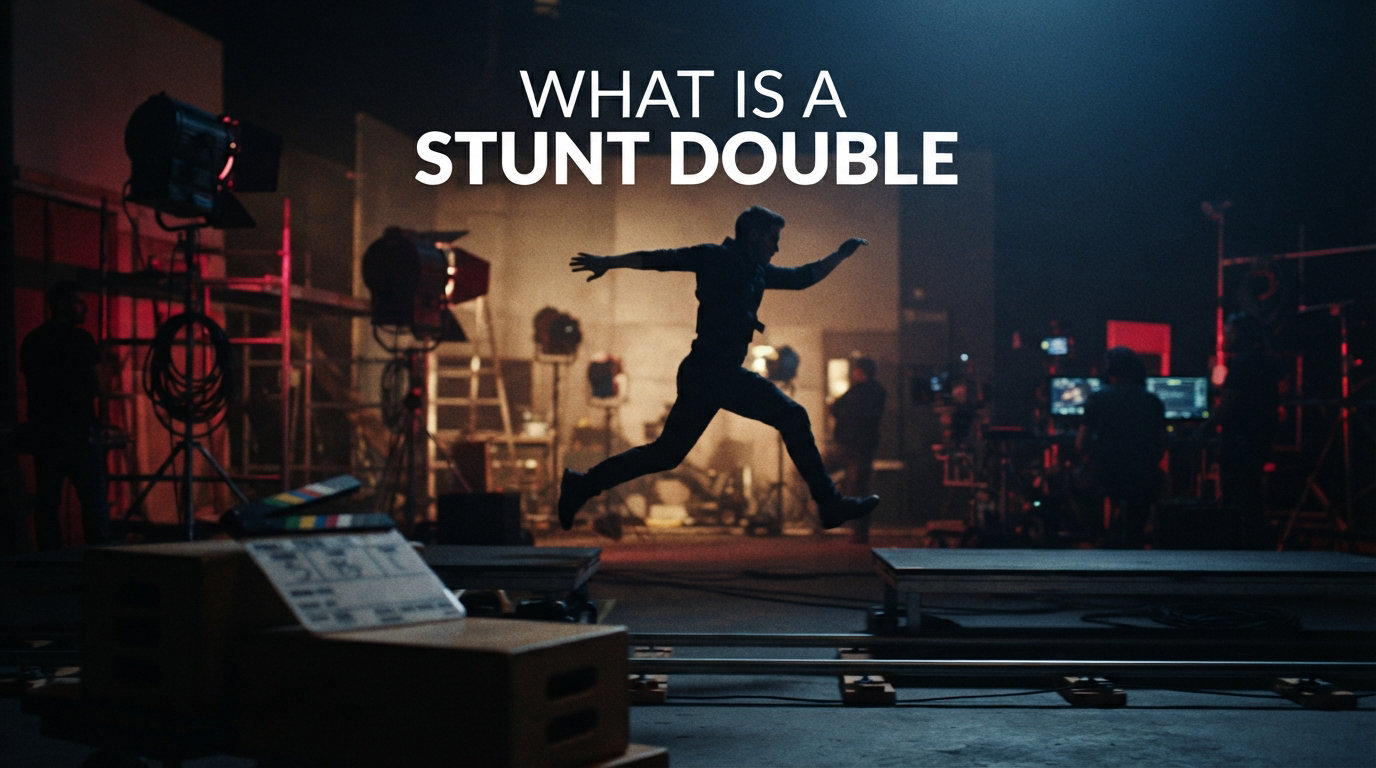
A stunt double is a trained performer who substitutes for an actor during physically dangerous or technically demanding sequences in film, television, and streaming productions. They step in so the principal actor can stay safe, the schedule can stay on track, and the audience can still believe they are watching one person on screen.
I have spent time on sets where the stunt team was working just off-camera while the lead actor rehearsed dialogue fifty feet away. The level of skill is hard to overstate. In this guide, I will walk you through what a stunt double does, how the role differs from a body double or stand-in, what kinds of stunts they perform, what the job pays, and how someone actually breaks into the career.
Table of Contents
What Is a Stunt Double?
A stunt double is a professional performer who physically replaces an actor to execute stunts and dangerous action sequences that the actor is not trained, insured, or available to perform. They are matched to the actor by height, build, skin tone, and sometimes hair color, and they rehearse the actor’s movement style so the swap is invisible to the audience.
The job covers far more than just falling down. A stunt double may perform car crashes, building jumps, fight choreography, wire work, fire burns, motorcycle jumps, and underwater scenes. The camera is then angled, lit, or edited so the audience never sees the switch. From the viewer’s seat in the theater, the actor appears to have done the work themselves.
The role sits inside a larger team led by the stunt coordinator. That coordinator designs the action, hires the doubles, runs rehearsals, and is on set during the actual stunt to keep everyone safe. The double is the person executing the choreography while the coordinator calls the cues.
Stunt Double vs. Body Double vs. Stand-In: Key Differences
Hollywood uses three kinds of “doubles” and the terms get mixed up constantly. Here is how they actually differ.
| Role | Primary Purpose | Visible on Camera? | Performs Dangerous Action? |
|---|---|---|---|
| Stunt Double | Replaces the actor for stunts and dangerous sequences | Usually in wide or profile shots, face often hidden | Yes – this is the whole job |
| Body Double | Replaces the actor for non-stunt scenes where appearance matters (e.g., nude scenes, hands-only shots, crowd shots) | Yes, often clearly visible | No – minimal action required |
| Stand-In | Stands in for the actor during lighting setup, camera blocking, and rehearsal when the actor is off set | Never appears in the final film | No – purely a technical placeholder |
The clearest way to remember it: a stunt double does the dangerous work, a body double fills in for appearance, and a stand-in is never seen at all. A single person can perform all three jobs on different productions, but each role has different casting criteria, pay rates, and union protections.
Body doubles and stunt doubles are sometimes the same person, especially in smaller productions. Stand-ins are almost always different performers and rarely need to match the actor’s face or build as precisely, since their work is purely behind-the-scenes.
Types of Stunts Stunt Doubles Perform
Stunt work is highly specialized. Most professionals focus on a few disciplines and spend years building skill in each one. Here are the major categories you will see on a typical action film call sheet.
- High falls – Drops from buildings, bridges, or platforms onto air bags or crash pads. Can range from 20 feet to over 200 feet for the most experienced specialists.
- Fight choreography – Hand-to-hand combat, sword work, and martial arts sequences performed with trained fight choreographers. Stage combat is its own certification path.
- Fire gags and burns – Controlled exposure to flames using fire-retardant gel, treated clothing, and proximity suits. The double is on fire for only a few seconds at a time, then immediately extinguished.
- Vehicle work – Precision driving, car chases, motorcycle stunts, and crash sequences. Many stunt drivers are also trained mechanics.
- Wire work – Suspended harnesses and rigs that allow actors to perform superhuman jumps, flight sequences, and aerial stunts. Common in superhero films and period fantasy.
- Underwater work – Scuba-certified doubles who handle drowning scenes, submarine escapes, and tank work. Requires dive certification and breath-hold training.
- Horse work – Equestrian-trained doubles who perform riding, falling, and rearing scenes. Often shared with wranglers and animal coordinators.
- Air rams and ratchet pulls – Pneumatic and mechanical rigs that launch or yank performers through the air for explosions or impacts.
Most working stunt doubles are specialists in one or two of these areas. A small number become generalists who can step into any sequence. The generalists tend to be the highest paid because productions value flexibility.
Why Productions Use Stunt Doubles
Three reasons drive every stunt double hire: safety, insurance, and performance. Studios are not in the business of injuring their lead actors, and unions like SAG-AFTRA strictly limit the stunts an actor can be asked to perform without proper training and consent.
Insurance is the practical pressure point. Major productions carry completion bonds and cast insurance that becomes void the moment an actor performs an unauthorized or unusually dangerous stunt. Hiring a trained stunt double keeps the policy intact and protects the production schedule.
There is also a pure performance reason. Many action sequences require a level of physical precision that takes a decade or more to develop. Even if an actor were willing to do the work, they likely cannot execute the choreography at the speed and accuracy the edit demands. A stunt double trained in parkour, martial arts, or gymnastics can hit marks the principal actor simply cannot.
Finally, schedule pressure. Productions often shoot for 12 to 16 hours a day. Doubling certain sequences protects the principal actor from fatigue-related injuries and lets the second unit director film action scenes in parallel with the main unit’s coverage.
The Stunt Coordinator: The Double’s Director
Every stunt double works under a stunt coordinator, sometimes also called the second unit director or action unit director. This is the person who reads the script, breaks down the action, hires the team, designs the choreography, and is physically on set during each stunt to call timing, safety cues, and camera positions.
The coordinator’s job starts weeks before the camera rolls. They meet with the director to understand the visual goal, scout locations, check rigging and fall zones, and pre-visualize complex sequences using simple storyboards or 3D animation. By the time the stunt day arrives, the coordinator has typically rehearsed the action dozens of times at a slower speed and then at full speed before a single frame is captured.
A good stunt coordinator is also a safety officer. They are responsible for calling “Abort!” if a rig fails, a pad shifts, or a performer signals a problem mid-stunt. They hold the authority to stop a take regardless of what the director wants. On professional sets, that authority is absolute and protected by both union rules and insurance policy.
How Stunt Doubles Look Like the Actors
Audiences are usually surprised by how much goes into making a stunt double look like the actor they are replacing. Casting directors for stunt work prioritize height, weight, skin tone, hair color, and general build first. The face is less important than the silhouette, because wide shots and profile angles rarely show the face clearly.
When the face might be visible, the team uses “wigging” – fitting the double with a custom wig, facial hair piece, or makeup prosthetic that matches the actor. Wigs are typically glued or taped down and matched to the actor’s haircut of the moment, since most productions shoot out of order.
Wardrobe and prosthetics also play a big role. The double wears the actor’s exact wardrobe – often handed over from a costume fitting – and may have makeup applied to match skin tone or cover identifying marks like tattoos and scars. For very close shots, a face replacement or digital skin swap can be done in post-production.
The most powerful concealment tool is simply the camera. Cinematographers shoot most stunt doubles from angles that hide the swap: wide shots, profile views, shots framed below the neck, or shots with the character’s back to the camera. By the time the sequence is edited, the audience has no way to spot the transition.
Safety and Risks: Do Stunt Doubles Get Hurt?
Yes, stunt doubles do get hurt, sometimes seriously. The work is by definition dangerous. Even with rigorous safety planning, accidents happen because the variables – fire, gravity, vehicles, height – are inherently unpredictable.
Industry data suggests that stunt performers file workers’ compensation claims at noticeably higher rates than other film crew. The most common injuries are sprains, fractures, concussions, and burns. Fatalities, while rare, do still occur. Several high-profile on-set deaths in recent years have prompted new state-level safety regulations, including California’s Senate Bill 40, which gave Cal/OSHA direct oversight of motion picture safety.
SAG-AFTRA enforces strict safety standards. The union’s Safety Bulletin system requires producers to disclose stunts in advance, hold safety meetings, and use qualified stunt coordinators. Doubles have the right to refuse any stunt they consider unsafe, and a refusal cannot trigger retaliation or replacement.
That said, the industry has gotten measurably safer over the last 40 years. Air bag technology, computer-controlled ratchet systems, and pre-visualization have reduced the need for genuinely risky live falls. Many of the most dangerous-looking shots in modern blockbusters are composites of a relatively safe stunt and digital enhancement.
How to Become a Stunt Double
There is no single path into stunt work, but most working professionals combine athletic training, performance skills, and union membership over several years. Here is the typical route.
Step 1: Build a physical foundation. Most stunt doubles start in one or more of these disciplines: martial arts, gymnastics, parkour, motocross, equestrian riding, scuba diving, or stage combat. Competitive sports backgrounds (diving, skateboarding, snowboarding, BMX) are also common entry points because they teach body awareness and fear management.
Step 2: Train in acting. Stunt doubles are not just athletes. They have to match the actor’s movement, posture, and emotional state. Many take acting classes, study movement analysis, and learn to read scripts so they can understand what a character would actually do in a given moment.
Step 3: Get safety certifications. Drivers need precision driving certificates. Fire performers need fire safety training. Divers need open-water and rescue certifications. Each specialty has its own credentialing path.
Step 4: Join SAG-AFTRA. To work on union productions, you need to join SAG-AFTRA. The union’s stunt roster requires either a minimum number of days worked under a SAG-AFTRA contract (currently around 500 days of employment in good standing) or a recognized stunt training program. Until you join, you can work on non-union productions to build your reel.
Step 5: Build a stunt reel. A two-to-three-minute video showing your best work is your calling card. Early reels are built from low-budget films, commercials, student projects, and stunt workshops.
Step 6: Get noticed. Networking matters enormously. Attend stunt workshops, take classes from established coordinators, post your reel online, and let coordinators know you are available. Most jobs come through word-of-mouth recommendations within a fairly small industry.
Stunt Double Salary and Compensation
Stunt double pay varies widely based on the type of stunt, the production budget, and the performer’s experience level. SAG-AFTRA sets minimum day rates, but top-tier doubles earn multiples of scale.
For union work, the SAG-AFTRA minimum daily rate for a stunt performer in 2026 is in the low four figures, plus overtime, doubling adjustment, and any specialty premiums. A “doubling adjustment” is an additional percentage paid when the performer is doubling a named actor rather than performing as an anonymous stunt performer.
Weekly rates are common on long shoots. Established stunt performers working on major studio features can earn weekly figures in the high four to low five figures, particularly when working in multiple capacities like doubling, performing, and coordinating.
Top-tier doubles – the small group who can handle any sequence on any production – can earn six figures per film when adjusted for specialty pay, residuals, and use fees. Annual incomes for working stunt performers range widely, from low five figures for part-time newcomers to well into six figures for veterans who book consistently.
Non-union work pays considerably less and offers no health or pension benefits. That is why joining the union is a near-universal goal for anyone serious about the career.
Famous Stunt Doubles and Notable Credits
Some stunt doubles have built public careers of their own. Zoë Bell, who doubled for Lucy Lawless on “Xena: Warrior Princess” and Uma Thurman in “Kill Bill,” went on to act and produce. Heidi Marnhout doubled for Jennifer Garner across multiple “Alias” seasons. Jeff Jensen doubled for Chris Hemsworth during the “Thor” and “Avengers” runs.
Stunt doubles are credited in films in a specific way. Modern credits usually appear in the end credits scroll under categories like “Stunt Coordinator,” “Stunt Performer,” or “Stunt Double” followed by the actor’s name in parentheses. On big productions, the stunt team is often 30 to 50 people long.
The Screen Actors Guild has pushed for clearer credit attribution in recent years, partly because streaming platforms compress or skip credits entirely. Productions now often include stunt team credits in on-screen scrolls and in online credit databases, which helps performers build verifiable resumés.
If you watch a modern action film’s end credits, you will almost always find a stunt team listed with specific names attached to specific actors. That visibility is part of what has made stunt performance a respected career path rather than an anonymous job.
Frequently Asked Questions About Stunt Doubles
What is the role of a stunt double?
A stunt double is a trained performer who substitutes for an actor during dangerous or physically demanding sequences in film, television, and streaming productions. Their role is to perform action scenes – such as falls, fights, vehicle chases, and fire stunts – so the principal actor stays safe and the production keeps its schedule and insurance intact.
Do stunt doubles get hurt?
Yes, stunt doubles do get hurt. The work is inherently risky, and injuries ranging from sprains and fractures to concussions and burns are part of the job. Fatalities are rare but have occurred, which is why SAG-AFTRA enforces strict safety protocols, requires pre-production safety meetings, and gives performers the right to refuse any stunt they consider unsafe.
Why do actors get stunt doubles?
Actors get stunt doubles primarily for safety, insurance compliance, and performance reasons. Stunt sequences often require specialized skills like martial arts, precision driving, or wire work that the actor may not have trained in. Insurance policies also typically prohibit principal actors from performing high-risk stunts without proper credentials, so a qualified double is hired to execute the action instead.
How much do stunt doubles get paid?
Stunt double pay depends on the production and the performer’s experience. SAG-AFTRA sets minimum daily rates that fall in the low four figures for union work, with additional doubling adjustments, specialty premiums, and overtime. Top-tier performers working on major studio features can earn weekly rates in the high four to low five figures, and highly experienced specialists can earn six figures per film.
What is the difference between a stunt double and a body double?
A stunt double performs dangerous action sequences like falls, fights, and car chases. A body double replaces the actor for non-stunt scenes where appearance matters, such as nude scenes, hands-only close-ups, or crowd shots. Both roles may be filled by the same performer on smaller productions, but they have different skill requirements and pay scales.
How do stunt doubles look like the actors?
Stunt doubles are cast for height, weight, build, skin tone, and hair color first, with face matching handled by wigs, makeup, prosthetics, and camera framing. The cinematographer also shoots most stunt doubles from angles that hide the face, such as wide shots, profiles, or back-to-camera framing, so the switch is invisible to the audience.
How long does it take to become a stunt double?
Most stunt doubles spend several years building the athletic foundation, specialty skills, and on-set experience needed to work professionally. Many arrive with backgrounds in martial arts, gymnastics, or motorsports, then spend two to five years working non-union jobs to build a reel before joining SAG-AFTRA and competing for union-scale work.
Do stunt doubles appear in the movie credits?
Yes, modern productions credit the stunt team in the end credits under categories like Stunt Coordinator, Stunt Performer, or Stunt Double (with the actor’s name in parentheses). Major productions may list 30 to 50 stunt team members, and SAG-AFTRA has pushed for clearer credit attribution in recent years, especially on streaming platforms that often compress credits.
The Hidden Craft Behind Movie Magic
A stunt double is far more than a stand-in. They are athletes, performers, and safety professionals who quietly carry the physical risk so the audience can believe the story. Every car chase, building jump, and fight sequence you have ever loved on screen almost certainly involves a trained stunt double doing work the principal actor was never asked to attempt.
If you are considering stunt work as a career, the path is demanding but real. Build a strong athletic base, train in a specialty discipline, get safety certified, join SAG-AFTRA, and put together a reel. If you are simply curious about the craft, the next time you watch an action film, hang around for the end credits and look at the stunt team. The number of names is often longer than the principal cast, and every one of them represents years of training behind the scenes.