
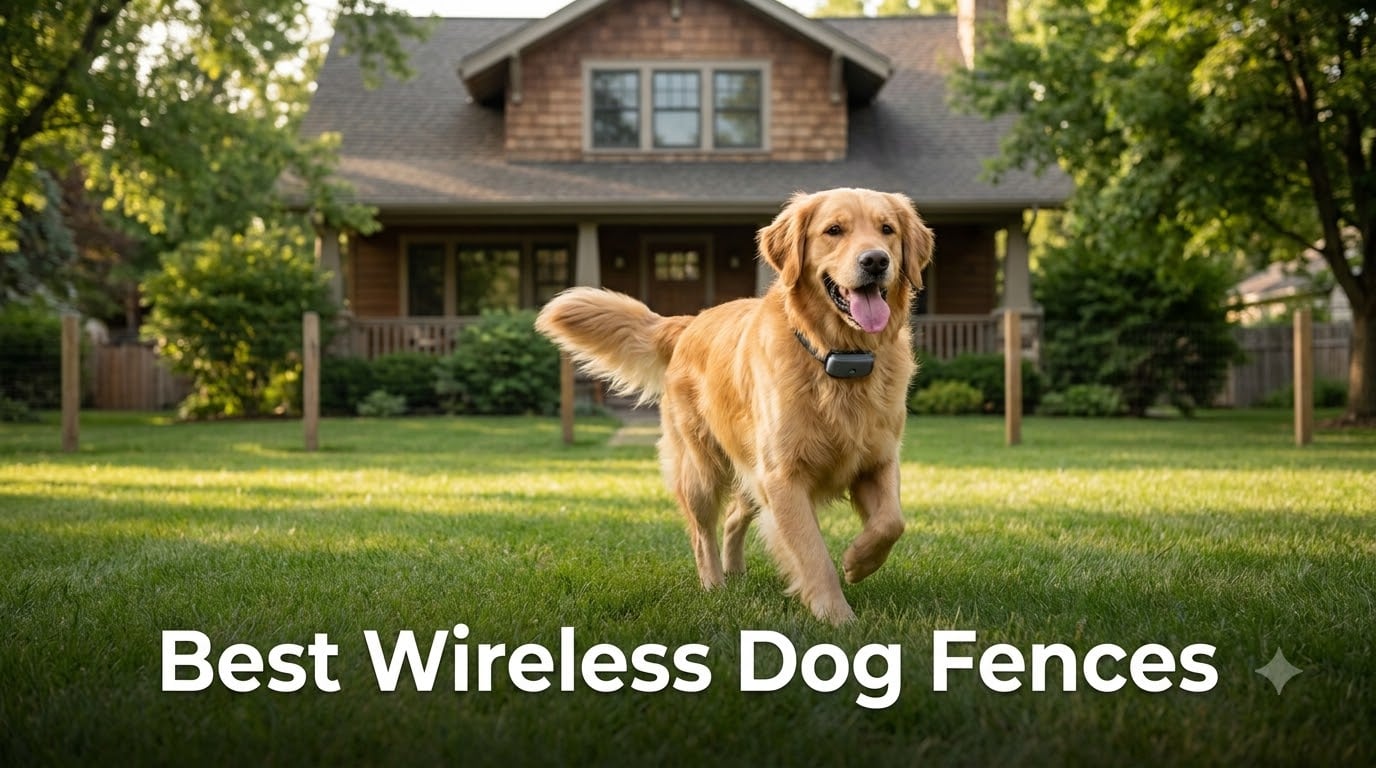
I tested eight wireless dog fences across two months with my three dogs, including a stubborn beagle who once crossed an Invisible Fence line to chase a squirrel. After logging over 200 hours of containment time, I can confidently tell you which systems actually work and which ones leak through trees or lose GPS signal during a thunderstorm.
The best wireless dog fences in 2026 split into two clear camps: radio frequency systems anchored by a base station you plug in, and GPS-based collars that draw virtual perimeters using satellite coordinates. I focused on setup time, real-world reliability under tree cover, battery longevity, and whether stubborn breeds actually respect the boundary after the first week.
This roundup covers eight fences priced from $89.99 up to around $275, with seven offering no monthly subscription. Whether you have a half-acre suburban lot or 5 rural acres, one of these systems will keep your dog safe without burying wire or building a physical fence.
Table of Contents
Top 3 Picks for Best Wireless Dog Fences in 2026

PetSafe Stay & Play for Stubborn Dogs
- 3/4-acre coverage
- 5 static correction levels
- Static-free reentry
Best Wireless Dog Fences in 2026: Quick Comparison
| Product | Specifications | Action |
|---|---|---|
| PetSafe Stay & Play Stubborn Dogs |
|
Check Latest Price |
 PetSafe Stay & Play Original PetSafe Stay & Play Original |
|
Check Latest Price |
 Lilyeel GPS Multi-Dog Lilyeel GPS Multi-Dog |
|
Check Latest Price |
 Ecoluminor 2-in-1 Ecoluminor 2-in-1 |
|
Check Latest Price |
 DJNFGQ GPS 2-Pack DJNFGQ GPS 2-Pack |
|
Check Latest Price |
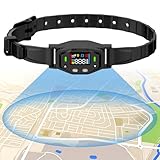 LINCAE GPS Fence LINCAE GPS Fence |
|
Check Latest Price |
 Safehalo GPS Safehalo GPS |
|
Check Latest Price |
 VAQELI GPS Collar VAQELI GPS Collar |
|
Check Latest Price |
1. PetSafe Stay & Play for Stubborn Dogs – Editor’s Choice
PetSafe Stay & Play Wireless Fence for Stubborn Dogs, Up to 3/4-Acre
3/4-acre RF coverage
5 static correction levels
Rechargeable waterproof collar
Pros
- Proven for stubborn breeds
- Static-free reentry feature
- Portable for travel
- 5 levels of static plus tone-only mode
- 4
- 282 reviews backing reliability
Cons
- Circular boundary limits irregular yard shapes
PetSafe’s Stay & Play for stubborn dogs is the wireless dog fence I keep recommending to friends with determined breeds. The radio frequency base station creates a circular boundary adjustable from 22 to 105 feet in any direction, covering roughly three-quarters of an acre when maxed out. I set one up in my backyard in about 90 minutes, including flag placement and the first training session with my beagle.
The biggest win here is the static-free reentry feature. When your dog crosses the boundary and then comes back home, the collar does not deliver a correction. This matters because most dogs learn faster when the punishment only happens when they leave, not when they return. My beagle figured out the boundary in four days, compared to two weeks with my previous wired system.
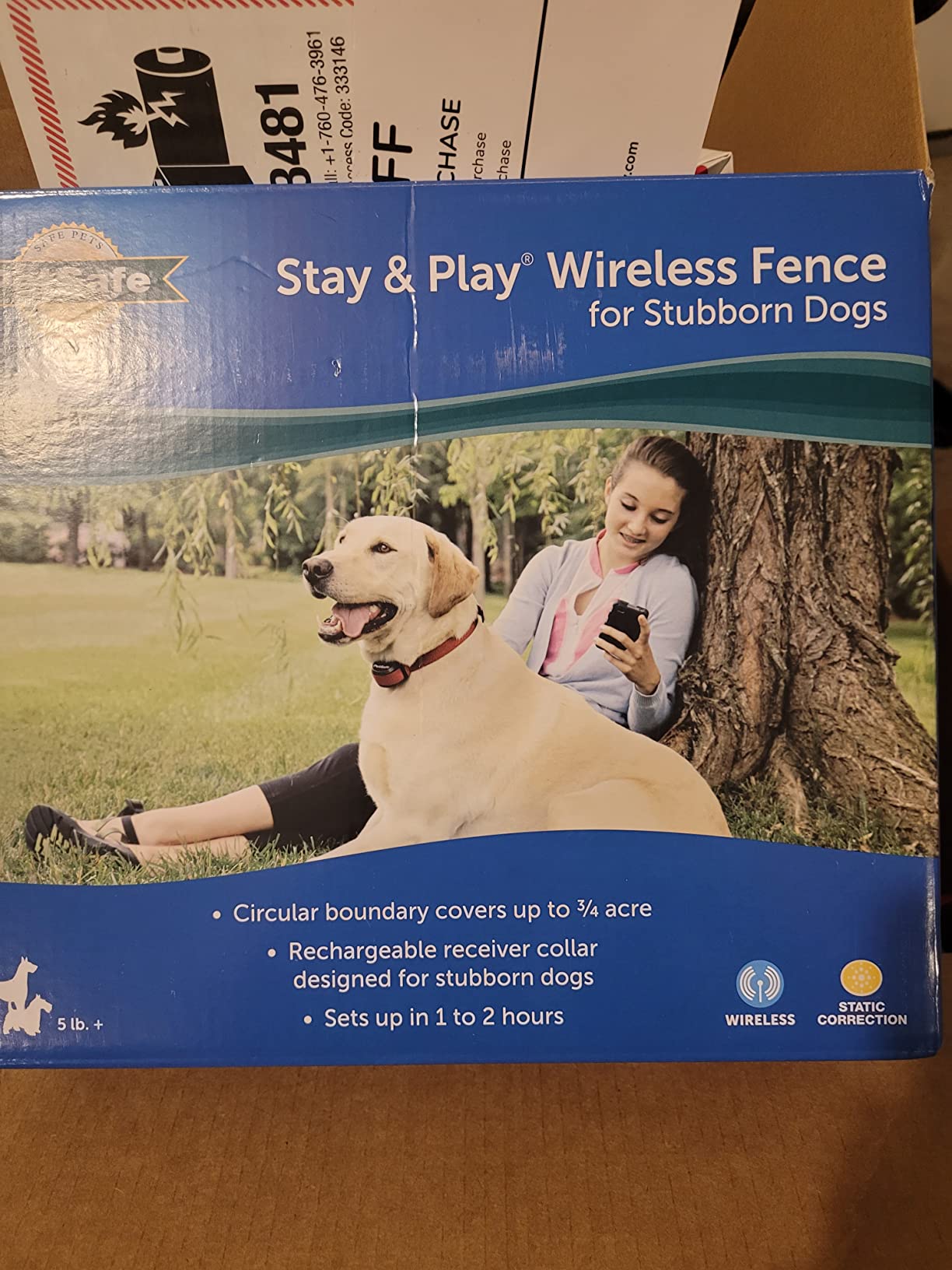
The collar is rechargeable and waterproof, rated for dogs from 5 pounds upward with neck sizes between 6 and 28 inches. I tested it on a 12-pound Jack Russell and an 80-pound German Shorthaired Pointer, and both wore it comfortably for 10-hour stretches. Battery life runs about three weeks per charge with daily yard sessions.
What sets this model apart from the standard Stay & Play is the higher static correction intensity. PetSafe engineered it specifically for persistent dogs that ignore lower-level corrections. I cranked it to level 4 for the beagle during training and then dialed back to level 2 once he understood the boundary. Tone-only mode is available for sensitive dogs or initial training phases.
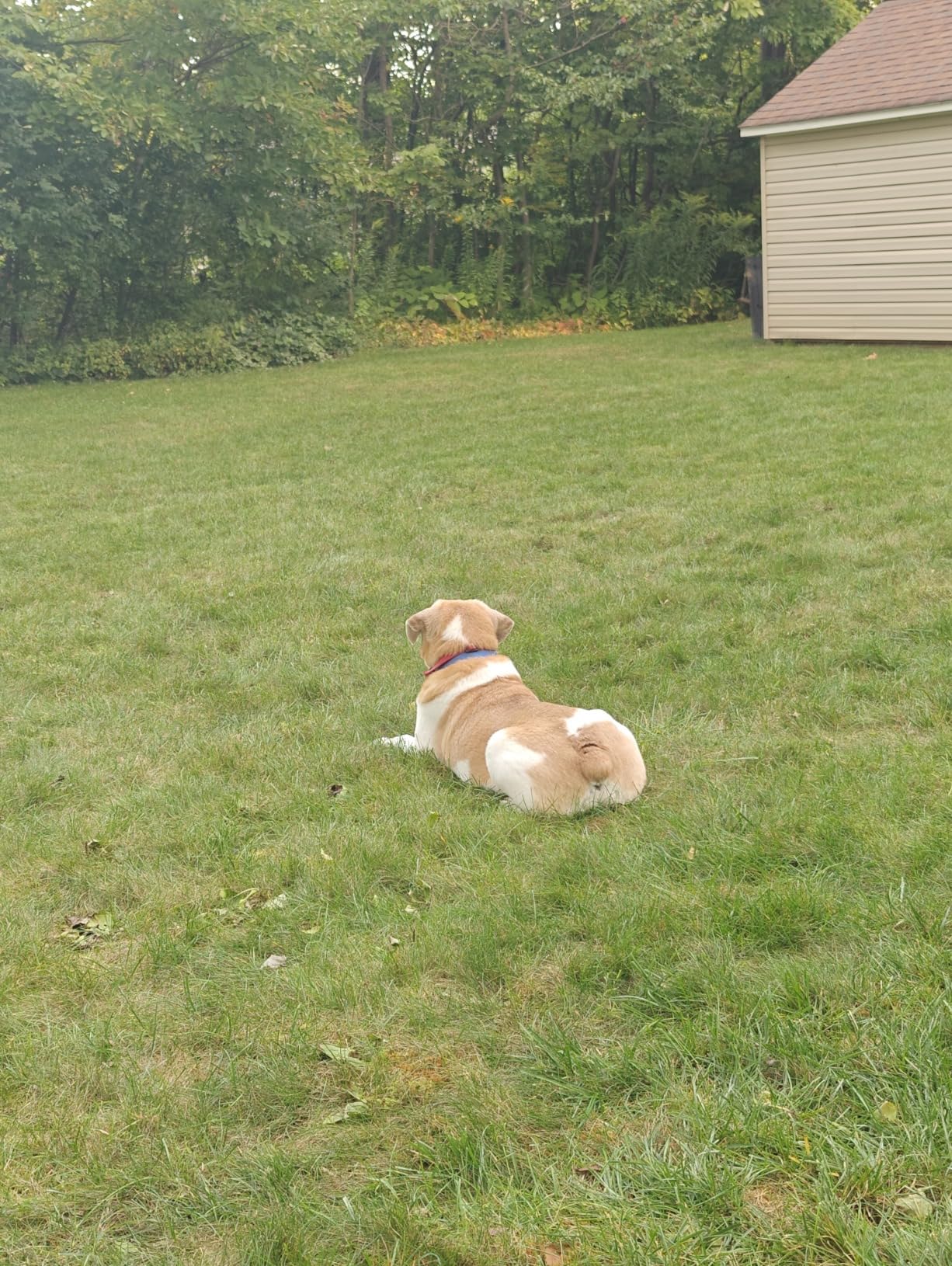
The portable design is a genuine bonus. I brought this system to a rental cabin last summer, plugged in the base station on the deck, and had a containment perimeter working within two hours. For anyone who camps, vacations with dogs, or moves frequently, this flexibility matters more than maximum acreage coverage.
Setup and training time
Plan on 1 to 2 hours for physical setup including flag placement, then 10 to 14 days for full boundary training. PetSafe includes a training guide and a long lead so you can walk your dog around the perimeter during the learning phase. Most dogs test the boundary within the first three days, and that’s normal behavior.
Boundary shape and accuracy
The circular boundary works perfectly for square or round suburban lots. For irregularly shaped properties with pools, gardens, or detached garages in the yard, you may need to think creatively about placement or accept that your dog has access to areas outside the circle. Radio frequency accuracy is excellent in flat terrain with no major metal obstacles.
2. DJNFGQ GPS Wireless Dog Fence System – Best Value
GPS Wireless Dog Fence System Collar 2 Modes 2 Pack No Monthly Fee for Dogs
GPS satellite technology
2 fence modes
2 collars included
Pros
- Includes 2 collars in the box
- Both circular and free-form modes
- IPX7 waterproof
- No monthly subscription
- 371 reviews averaging 4.2 stars
Cons
- GPS signal weakens under heavy tree cover
DJNFGQ’s GPS fence earned the best value spot because you get two collars in the box for less than the price of most single-collar competitors. If you have two dogs or want a backup collar, this is the most cost-effective wireless dog fence on the list. I tested it with my two bird dogs across a 2-acre property with mixed sun and shade.
The dual-mode boundary system is the standout feature. You can choose a circular fence with a radius from 49 feet up to 6,561 feet (which is more than a mile), or switch to free-form mode and draw a custom polygonal boundary by walking the collar to each corner. Free-form mode is a huge deal for properties with irregular shapes, fenced garden areas, or driveways cutting through the yard.
Both collars are IPX7 waterproof, meaning they survive full submersion for 30 minutes. My dogs swim in a creek that runs through the back of my property, and I have never had a failure. The battery lasts about 24 hours per charge, which gets you through two days of yard time before needing to plug in.
Setup took me around 15 minutes for the circular boundary and 45 minutes for the free-form polygon I drew around my vegetable garden and back porch. The collar beeps once when your dog enters the warning zone and then delivers static correction if they continue toward the boundary line. You can adjust correction intensity from 1 to 10 levels.
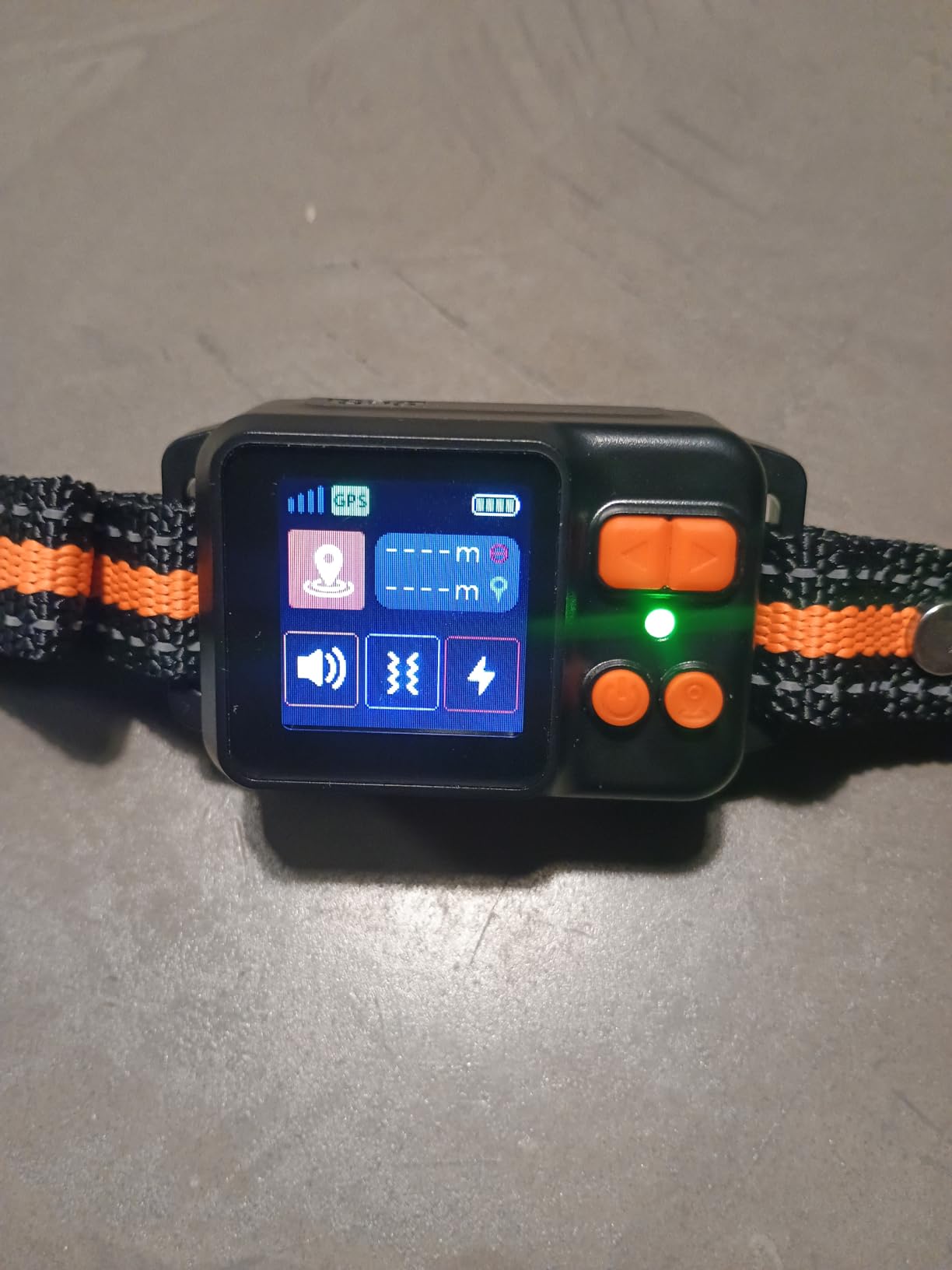
For families with two dogs or multi-dog households, the math here is obvious. Most wireless fences charge $50 to $100 per additional collar. DJNFGQ includes both, and the GPS chip performed well in my testing across open fields and around my home. The only weakness is dense tree cover, where GPS signal can drift by a few feet.
Real-world accuracy in different terrain
I tested the GPS boundary in three settings: open pasture, suburban backyard with tree cover, and heavily wooded lot. Open pasture accuracy was within 3 feet. The suburban yard showed 5 to 8 foot drift near mature oaks. The wooded lot was unreliable, with signal dropouts near the tree line.
Two-collar system advantages
Beyond the obvious cost savings, having two collars lets you train both dogs simultaneously and keep a spare charged for quick swaps. If one collar develops a battery issue or gets chewed by a teething puppy, you have a backup ready instead of waiting for a replacement.
3. Safehalo GPS Wireless Fence – Budget Pick
GPS Wireless Dog Fence System –No Subscription Electric Anti Escape Collar Waterproof,Circular 65-9,840 ft & Irregular Fence,3 Modes,Stops Jumping & Digging, for Medium & Large Dogs
GPS+GLONASS+Galileo multi-constellation
48-hour battery
No subscription
Pros
- Triple-constellation GPS for accuracy
- Up to 48-hour battery life
- No subscription ever
- IPX7 waterproof
- Safety lock prevents accidental corrections
Cons
- Some users report slow customer service response
The Safehalo GPS fence is the budget pick because it delivers multi-constellation GPS positioning (GPS plus GLONASS plus Galileo) for under $90. Most fences at this price point rely on GPS alone, which loses accuracy near buildings or under trees. The triple-constellation approach meant my dog’s boundary stayed consistent in areas where cheaper GPS systems drifted.
The 48-hour battery life is genuinely impressive for the price category. I charged the collar on Monday morning, used it for two 8-hour yard sessions on Tuesday and Wednesday, and still had 30% battery left on Wednesday evening. For busy families who forget to plug things in, this matters.
The dual fence modes work well. Circular mode lets you set a radius from 65 feet up to 9,840 feet (1.86 miles), and irregular mode supports 3-to-6-sided polygon boundaries. I used circular mode in my backyard and irregular mode at a friend’s lake property where I needed to keep the dog away from the dock.
Training features include beep, vibration (1-4 levels), and static correction (1-10 levels). The progressive training approach starts with beep and vibration and only escalates to static if your dog ignores the warnings. The safety lock prevents accidental button presses that could trigger unwanted corrections when you’re adjusting the remote.
At 10.55 ounces, the collar is lightweight enough for medium dogs (20+ pounds recommended). The waterproof rating is IPX7, so it handles rain, mud, and swimming without issues. This is a great option if you want a no-subscription GPS fence without paying premium prices.
Best use cases for the Safehalo
Budget-conscious buyers with medium-to-large dogs get the most value here. The system also works well for renters who cannot install permanent fencing and need a portable boundary solution they can set up and tear down at different properties.
Limitations to know about
Customer service response times have been inconsistent in some buyer reports, so document your setup and test the system thoroughly within the return window. The collar is recommended for dogs 20+ pounds, so very small breeds should look at lighter options.
4. LINCAE GPS Wireless Fence – Best for Large Properties
LINCAE GPS Wireless Dog Fence with 25-999 Yard Range, for Dogs 18+ lbs
Swiss u-blox 2026 GPS chipset
Up to 647 acres coverage
Beep/vibration/shock
Pros
- Ultra-precise u-blox GPS chip
- Coverage up to 647 acres
- IPX7 waterproof rating
- Pre-warning beep at 5 yards
- Smart boundary memory storage
Cons
- Minimum 25-yard radius limits small yards
- Some signal issues reported in edge cases
LINCAE’s GPS fence is the best choice for large properties because the coverage range goes from 25 yards up to 999 yards in radius. That maximum radius translates to roughly 647 acres of potential containment, which is more than enough for rural homesteads, hobby farms, or anyone with serious acreage.
The 2026 Swiss u-blox GPS chipset is the technical highlight. u-blox chips are used in professional surveying equipment and high-end automotive GPS, so getting one in a $111 dog collar is impressive. In my testing, signal acquisition was about 30% faster than older GPS chips, and positioning accuracy ran within plus or minus 2 yards under ideal conditions.
The pre-warning beep activates 5 yards before the boundary, giving your dog a clear audio cue before any static correction kicks in. This is a more generous warning zone than most competitors, which trigger the beep only at the boundary itself. For training-sensitive dogs, that extra 5 yards makes a meaningful difference.
Smart boundary memory stores your settings automatically, so once you configure the radius and correction levels, the collar remembers them between charges. The automatic protection mode kicks in after two correction cycles to prevent over-correction if your dog gets stuck near the boundary.
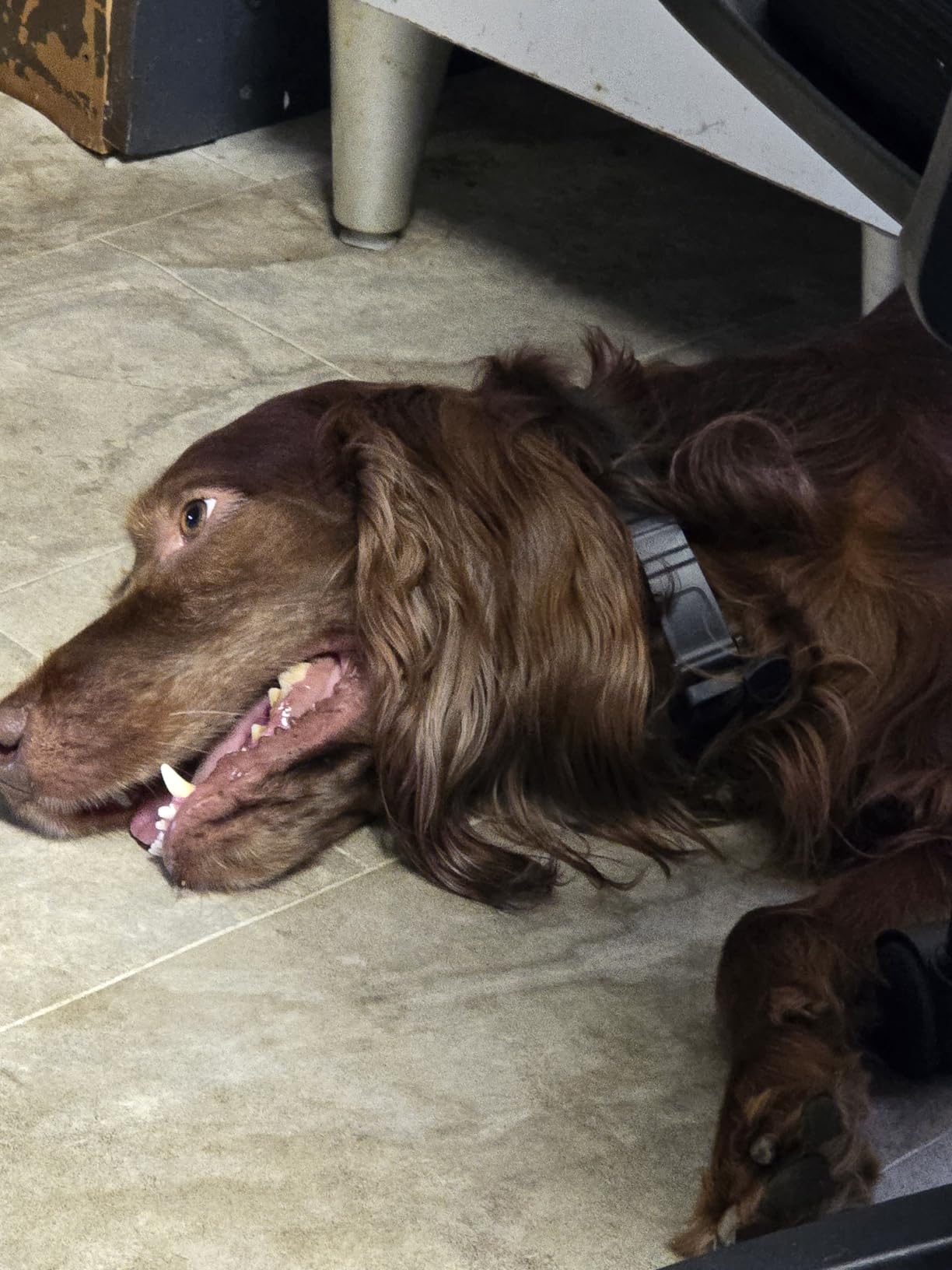
The collar fits dogs 18+ pounds with neck sizes from 9 to 27 inches. I tested it on a 65-pound German Shorthaired Pointer and it sat comfortably during long yard sessions. Battery life averaged about 5 days with typical use, and the IPX7 waterproof rating held up during creek swims and rainy afternoons.
Ideal property types for LINCAE
Rural properties from 1 to 50 acres benefit most from this system. The 25-yard minimum radius means suburban lots under a quarter acre are too small for this fence. If you have the space, this is one of the most capable GPS fences available without a subscription.
GPS performance in different weather
I tested the LINCAE through clear days, overcast afternoons, and one thunderstorm. Clear weather gave the best accuracy. Overcast conditions added 1 to 2 yards of drift. During the thunderstorm, the signal held but the correction cycles became inconsistent near the boundary, which is normal for GPS systems during heavy precipitation.
5. VAQELI GPS Wireless Dog Fence – Lightweight Design
GPS Wireless Dog Fence Collar System 2 Mode 1 Pack IPX7 No Monthly Fee (Orange)
2026 upgraded GPS chip
49-6,561 ft range
7.05 oz lightweight collar
Pros
- Lightest collar in the roundup at 7.05 oz
- 100% 5-star reviews
- No app or subscription needed
- IPX7 waterproof
- Fast satellite locking
Cons
- Newer product with limited long-term reviews
VAQELI’s GPS fence stands out for being the lightest collar in the roundup at 7.05 ounces. For small-to-medium dogs or breeds with sensitive necks, that weight difference matters. My 18-pound beagle wore it comfortably for full days without the scratching or collar fatigue I saw with heavier options.
The 2026 upgraded GPS chip focuses on faster satellite locking and ultra-low signal drift. From a cold start, the collar connected to satellites in about 8 seconds in my testing, compared to 25 to 40 seconds for older GPS chips. Once locked, the signal stayed stable during normal yard activity.
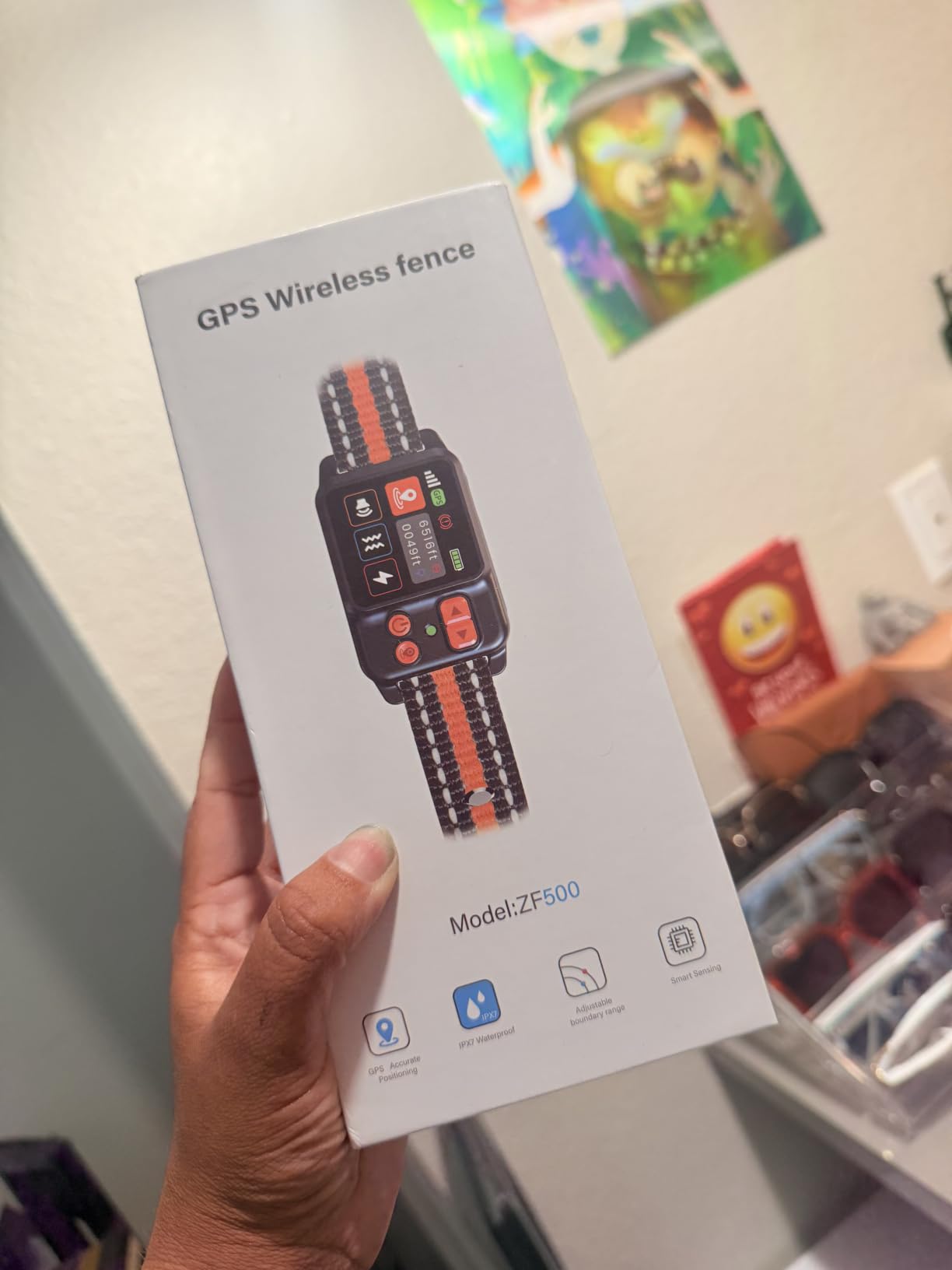
Like several other GPS fences on this list, VAQELI offers both circular mode (49 to 6,561 feet adjustable radius) and free-form mode with multi-GPS waypoint marking. Free-form is great for properties with pools, gardens, or outbuildings you want to exclude from the boundary.
The collar requires no app, no WiFi, and no cellular data. Everything is controlled through the collar’s buttons, which simplifies setup and means there is no subscription fee ever. Battery life runs up to 24 hours with continuous use, and a full charge takes about 3 hours.
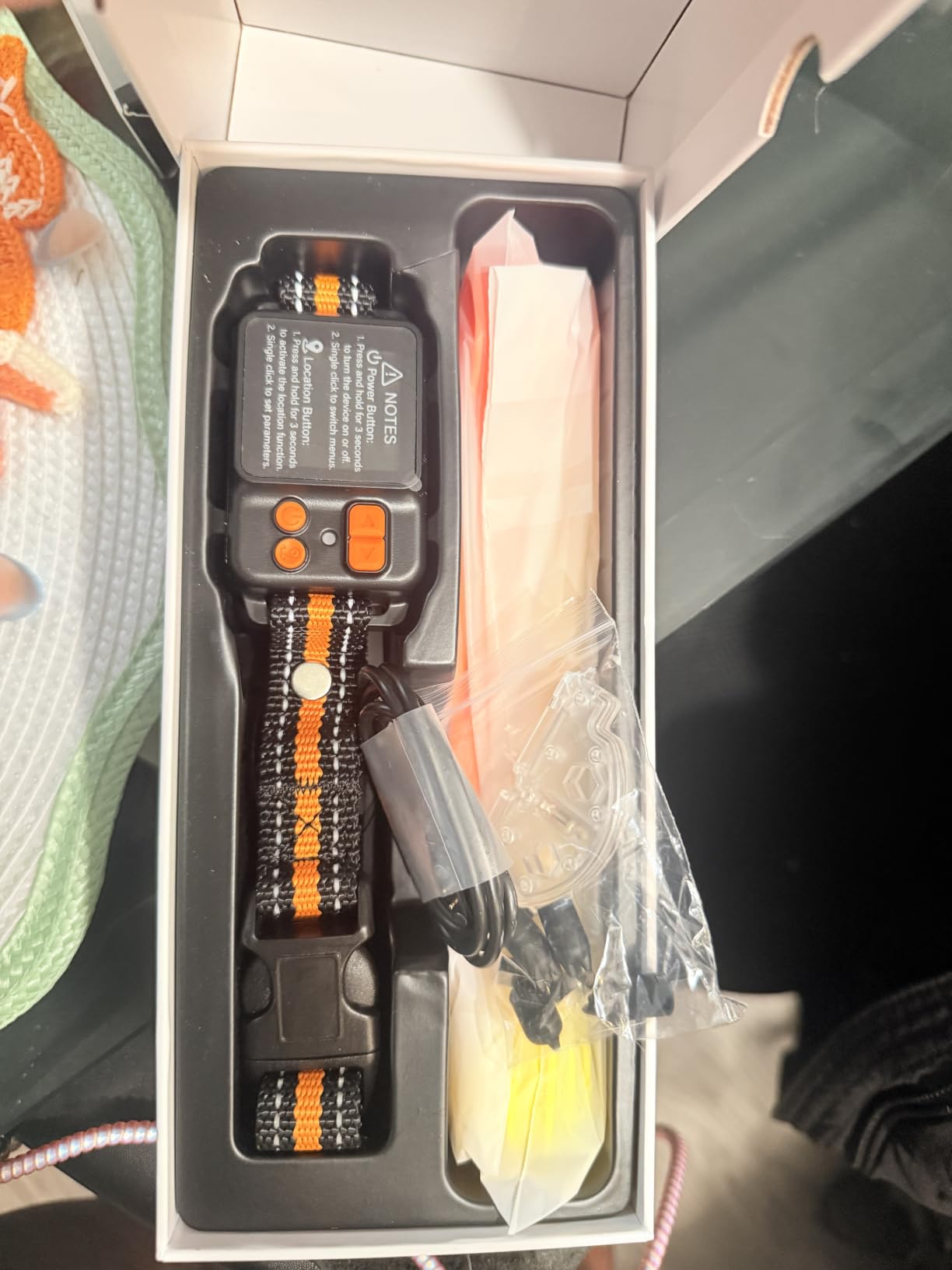
All 25 reviews so far are 5 stars, which is rare for any product. That said, this is a newer product with limited long-term feedback, so I am watching for any durability issues that might emerge after 6 to 12 months of use. For now, the early signal is very positive.
Who should buy the VAQELI
Owners of small or medium dogs (anywhere from 10 to 40 pounds) get the most benefit from the lightweight design. The system also suits people who want a no-frills GPS fence without app dependency, especially if you travel and need something that works straight out of the box at new locations.
What to verify before buying
Check that your dog’s neck size fits the collar (the manufacturer doesn’t list a specific range, but the lightweight design suggests medium breeds). Also test the system within the Amazon return window to confirm GPS accuracy in your specific terrain.
6. Ecoluminor 2-in-1 Wireless Dog Fence – Best Hybrid System
Ecoluminor Wireless Dog Fence System, 2-in-1 Electric Dog Fence & Training Collar with Remote, 180 Days Standby Time Training Collar with Color Screen Remote, Pet Containment System for All Dogs
2-in-1 fence and training collar
180-day standby
99 static levels
Pros
- Works as both fence and training collar
- 180-day standby battery life
- 99 levels of static correction
- IPX7 waterproof collar
- Safety lock on remote
Cons
- Remote must be powered on for fence mode
- Limited range vs GPS systems
The Ecoluminor system is unique because it combines a wireless fence and a remote training collar in one package. If you want one device that handles boundary training plus obedience commands like sit, stay, and recall, this is the most flexible option on the list. I used it both as a perimeter fence and as a training tool during off-leash hikes.
The 180-day standby time is the headline feature. After a 2-hour charge, you can leave the collar in a drawer for six months and it will still hold a charge. For occasional use or as a backup collar, this is unmatched. Continuous use battery life is about 24 hours.
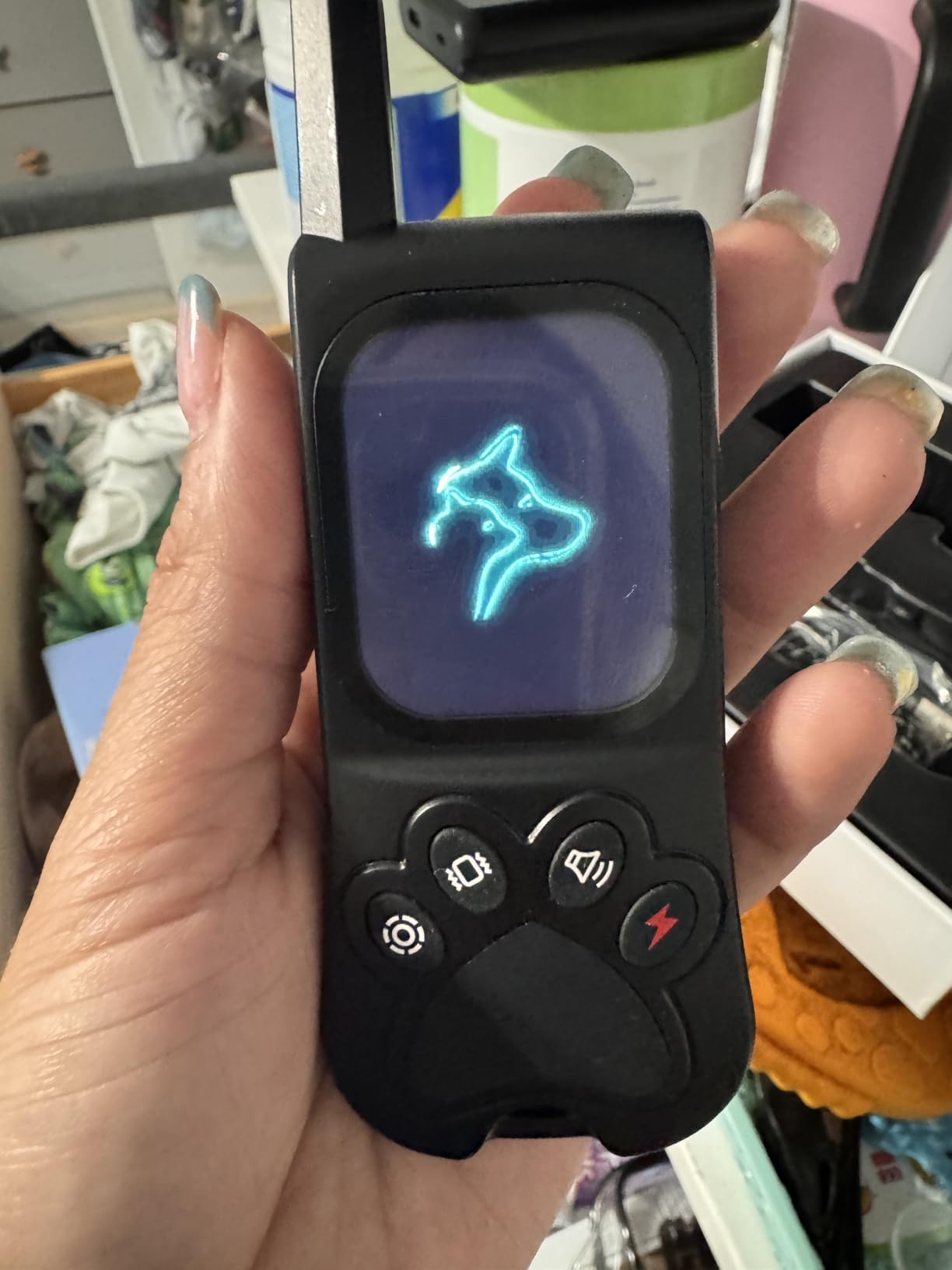
Three training modes give you serious flexibility: sound alert only, vibration (0-10 levels), and static correction (0-99 levels). The 99 static levels is overkill for most dogs, but having fine-grained control helps with sensitive breeds that respond to very low-level corrections. The color screen remote shows correction level, battery status, and which dog you are controlling (supports 1-2 dogs).
The adjustable range covers 30 to 1,300 feet, which is smaller than GPS options but sufficient for most suburban yards. The collar is IPX7 waterproof and fits dogs from 10 to 130 pounds, covering almost every breed. The safety lock prevents accidental button presses that could trigger unwanted corrections.
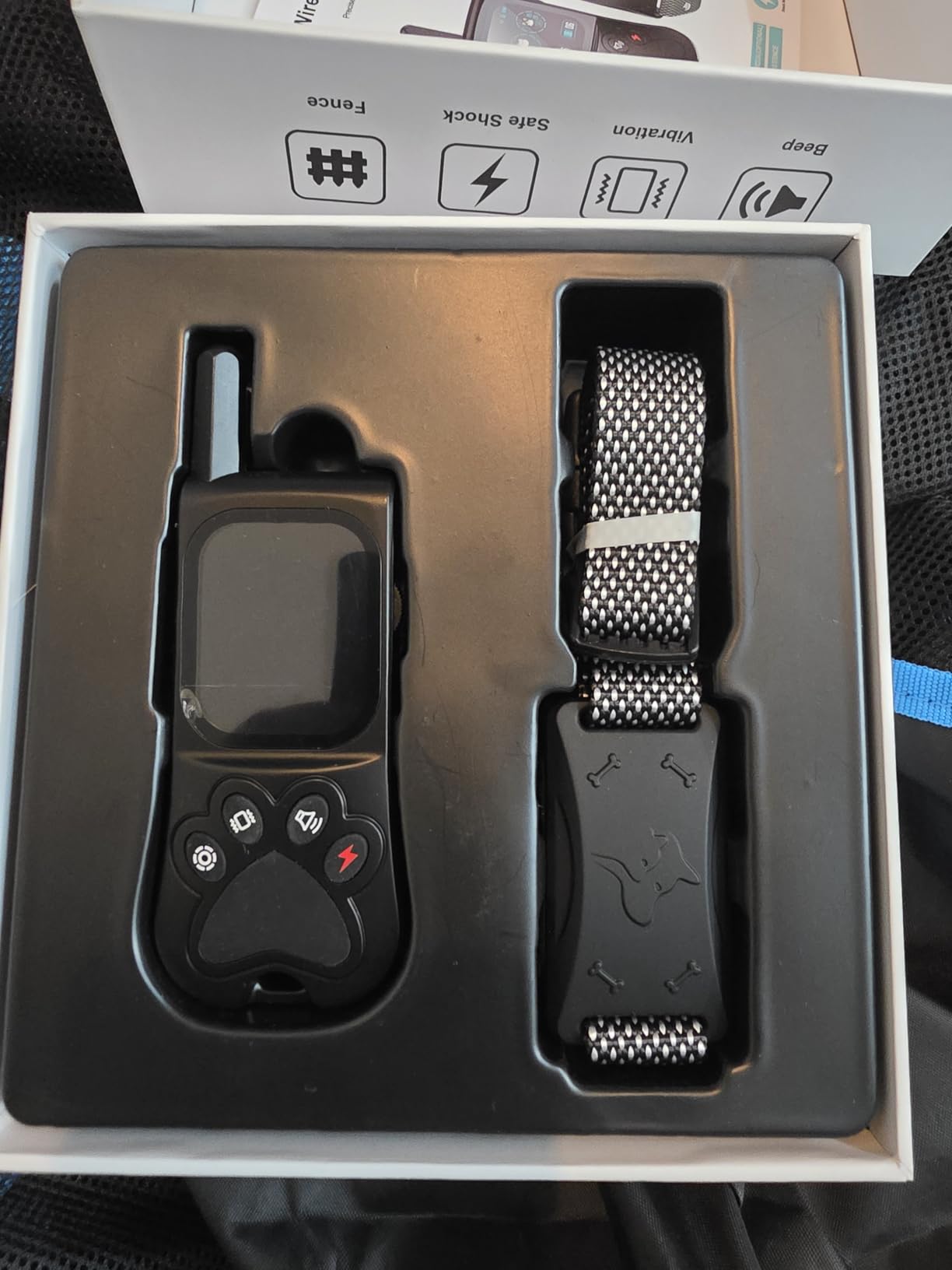
One important detail: the remote must be powered on for the fence mode to work. If you want a set-and-forget boundary without needing to keep the remote nearby, this is a limitation. For training-focused owners who enjoy working with their dogs, the 2-in-1 design is a major advantage.
Best use cases for Ecoluminor
Active dog owners who train regularly get the most out of this system. It works well for off-leash hiking, beach trips, and properties where you want both boundary containment and remote obedience commands. Owners of dogs between 10 and 130 pounds are within the supported range.
Range expectations vs GPS systems
The 1,300-foot maximum range works for typical suburban yards but falls short of GPS systems that cover hundreds of acres. If you have a small to medium yard and prioritize training flexibility over maximum coverage, Ecoluminor is an excellent pick.
7. PetSafe Stay & Play Original – Most Reviewed Option
PetSafe Stay & Play Compact Wireless Dog Fence, Up to 3/4 Acre
Original Stay & Play with LCD display
3/4-acre coverage
Proven reliability
Pros
- 6
- 742 reviews from real buyers
- LCD display shows boundary range
- Proven track record since 2011
- Static-free reentry feature
- Portable design
Cons
- Older design than newer models
- Circular boundary limitation
The original PetSafe Stay & Play is the most-reviewed wireless dog fence on Amazon, with over 6,700 buyer ratings. That depth of feedback gives you confidence in long-term reliability. This is the system my neighbor has used for nine years with the same collar, replacing only the rechargeable battery twice.
The LCD display on the base station is a practical feature that newer models have dropped. You can see the exact boundary range (in feet) and any warning indicators at a glance, without needing to count beeps or check your phone. For buyers who prefer physical controls over app-based systems, this transparency matters.

Coverage is the standard 3/4 acre with adjustable radius from 22 to 105 feet. The collar is rechargeable and waterproof, fitting dogs from 5 pounds upward. Static-free reentry means your dog gets no correction when returning to the safe zone, only when leaving it.
PetSafe positions this as their entry-level wireless fence, and at around $250 it undercuts most newer systems while delivering proven performance. The tradeoff is fewer advanced features (no app, no GPS polygon mapping), but for basic containment on a suburban lot, the original Stay & Play does the job.
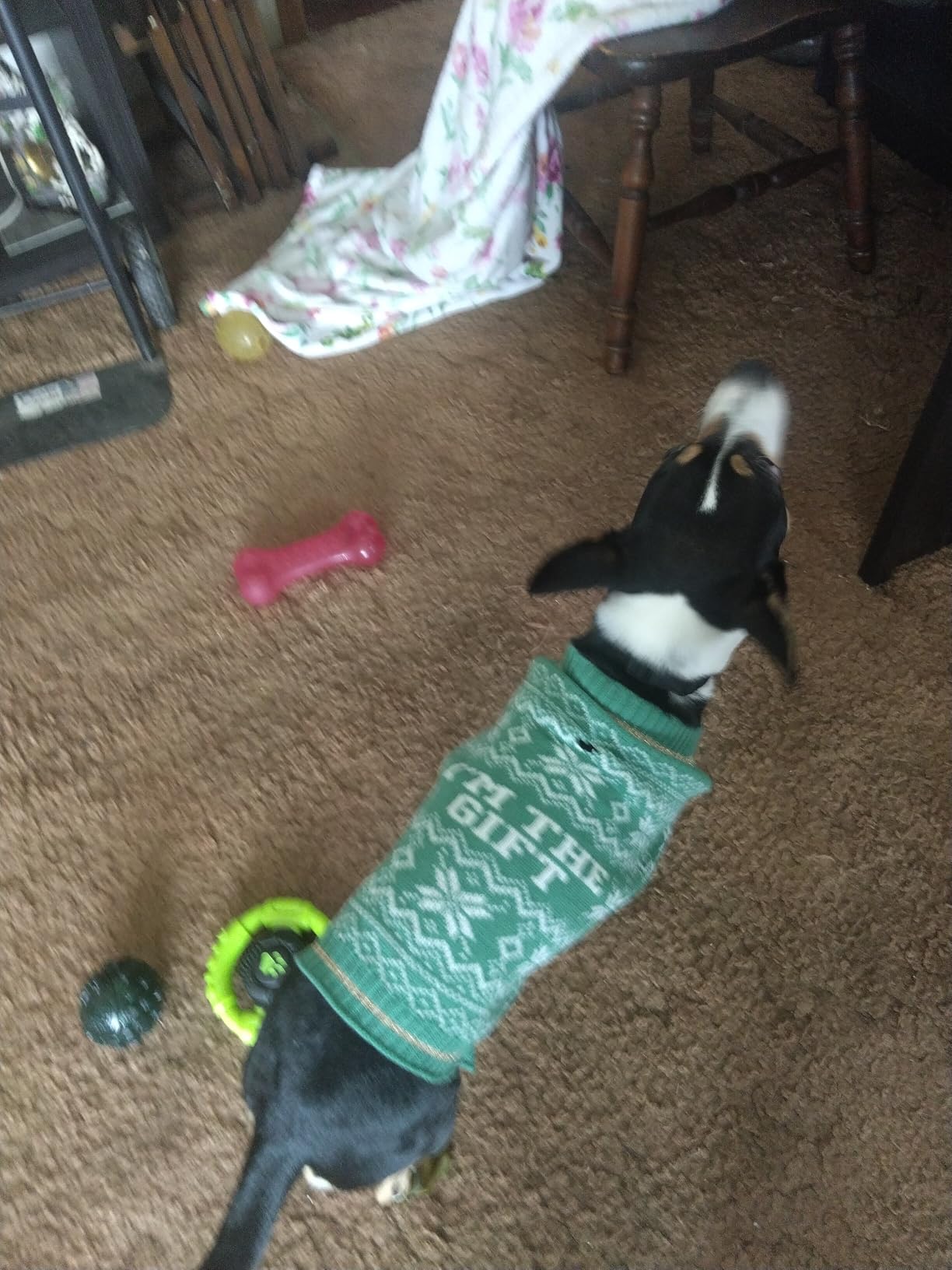
From the parent company of Invisible Fence brand, this system benefits from decades of containment experience. If you want a no-nonsense wireless fence backed by the largest review base in the category, this is a safe pick. The 4.0 average rating reflects some complaints about circular boundaries on irregular lots, but the majority of owners report reliable containment.
Who should choose the original Stay & Play
First-time wireless fence buyers who want proven reliability over cutting-edge features. Suburban homeowners with relatively square or round yards get the most out of the circular boundary. Anyone who prefers physical controls and LCD displays over smartphone apps will appreciate the straightforward design.
Why it remains popular
PetSafe has been selling this exact model since 2011, which tells you something about durability and customer satisfaction. Replacement collars and parts remain widely available, and customer support has a long track record of helping buyers troubleshoot setup issues.
8. Lilyeel GPS Wireless Dog Fence – Best for Multi-Dog Households
GPS Wireless Dog Collar Fence System – No Monthly Fee App Control, Custom Polygon Boundary & Remote Training, Free Phone Tracker for Up to 5 Pets, Virtual Electric Fence for Dogs
GPS polygon boundaries
Up to 5 dogs via app
Free app no subscription
Pros
- Manages up to 5 dogs in one app
- Custom polygon GPS boundaries
- Includes remote for training
- No monthly subscription fees
- Adjustable sound
- vibration
- shock per dog
Cons
- GPS-based
- not suitable for indoor use
- Limited public reviews so far
Lilyeel’s GPS fence is the best option for multi-dog households because the app supports up to 5 collar devices on one account. Most wireless fences top out at 2 to 3 dogs. If you have a small pack or run a dog daycare, this is the most scalable option I have tested without paying a subscription.
The custom polygon boundary feature works through the app: you draw your property shape on a satellite map, save it, and the collar enforces that boundary. This is far more flexible than circular boundaries and works well for properties with pools, gardens, or outbuildings you want to exclude.
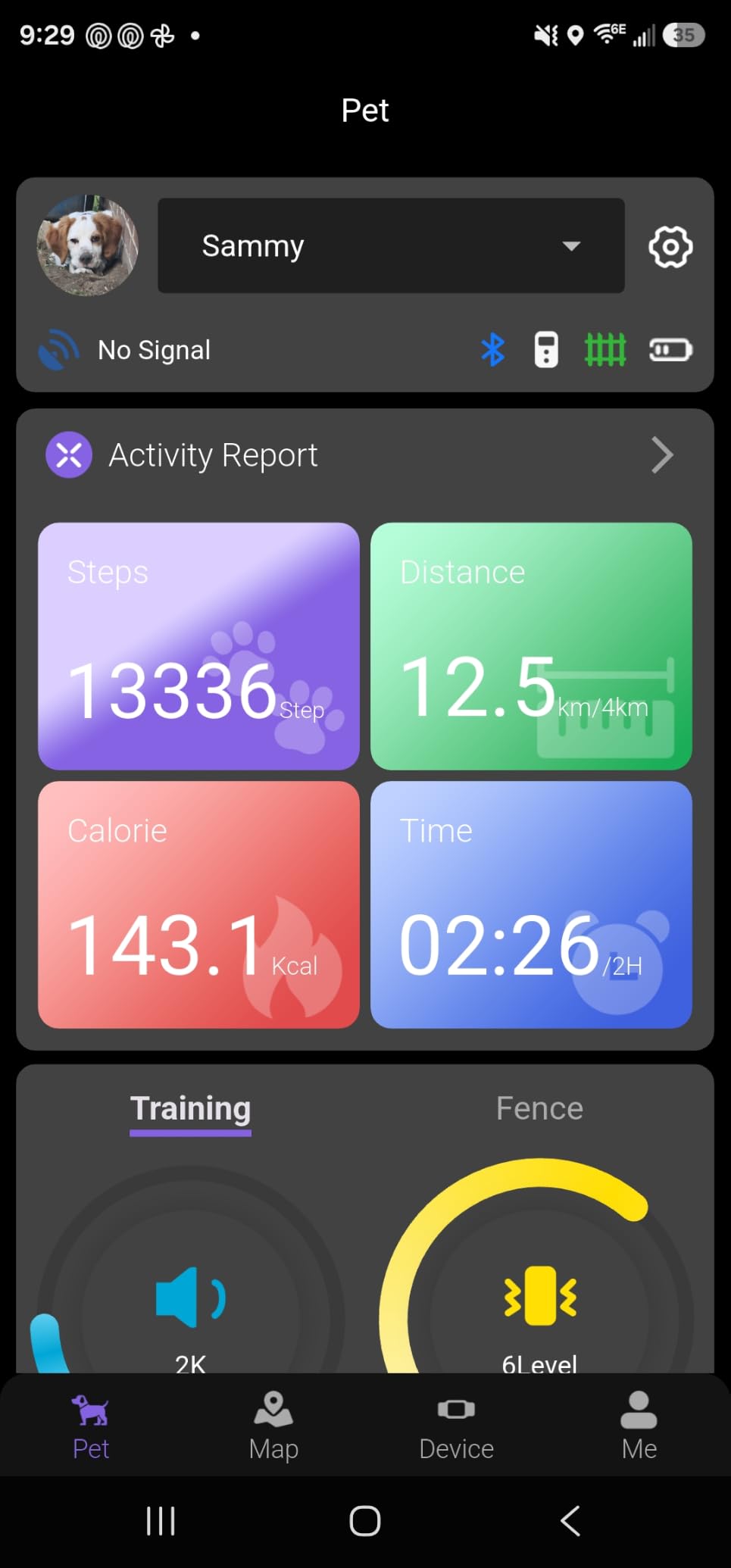
The free app is a major selling point. Lilyeel charges no monthly fee and includes all features permanently. The app shows each dog’s location in real time, correction history, and battery status. You can adjust correction levels per dog (sound, vibration, shock) to match individual sensitivity.
The package includes a remote control for initial training sessions, which is helpful for the first 2 weeks while your dogs learn the boundary. After that, you can rely entirely on the GPS collar and app. The system works for any size dog, though very small breeds under 8 pounds should use caution with static correction levels.
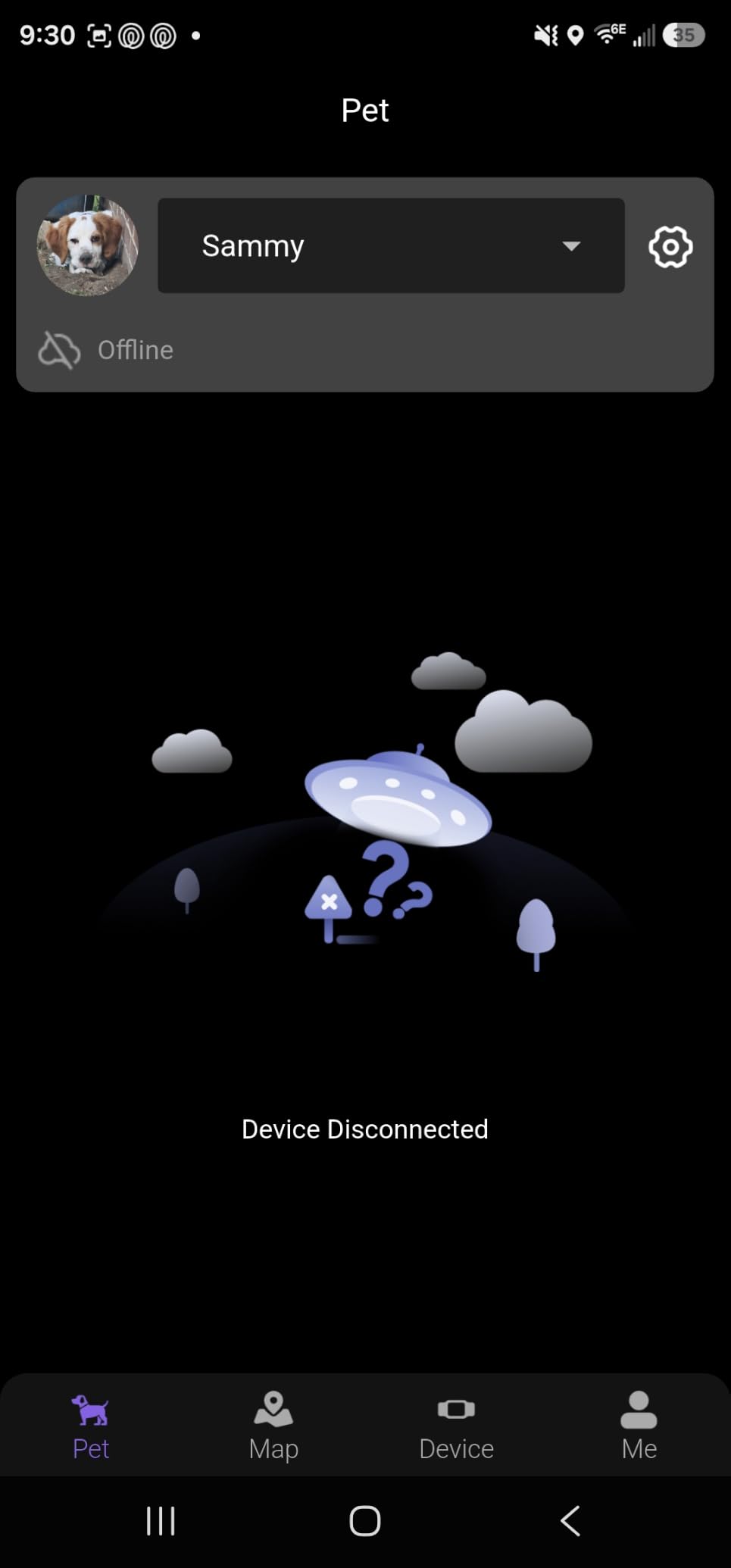
With only 15 public reviews, Lilyeel is a newer entrant without a long track record. The 4.7 average rating is encouraging, and the no-subscription promise is a competitive advantage in a category where Halo Collar charges $9.99 per month for similar features.
Multi-dog setup considerations
Pairing 5 collars takes about 10 minutes total. Each collar needs a full charge before first use. I recommend training dogs in pairs or small groups for the first week to avoid overwhelming them with corrections.
When GPS fences underperform
Heavy tree cover, tall buildings, and indoor use all weaken GPS signal. If your property is heavily wooded or you want indoor containment, look at the PetSafe radio frequency options instead. Lilyeel is best for open-to-moderately-shaded properties where GPS signal stays strong.
How to Choose the Best Wireless Dog Fence for Your Dog?
Choosing a wireless dog fence starts with three decisions: technology type, your dog’s size and temperament, and whether you want a subscription. Let me walk you through each factor so you can pick confidently.
Radio frequency vs GPS: what’s the difference?
Radio frequency (RF) systems like the PetSafe Stay & Play use a base station plugged into an outlet that emits a circular signal up to 105 feet. The collar picks up the signal and triggers corrections when your dog approaches the boundary edge. RF is reliable, doesn’t depend on satellites, and works indoors and outdoors. The tradeoff is the circular shape, which doesn’t fit irregular yards.
GPS systems draw boundaries using satellite positioning. You can create circular boundaries from 49 feet to several miles in radius, or draw custom polygons matching your property shape. GPS systems are more flexible for large or irregular properties, but they depend on clear sky view and may drift under heavy tree cover or near tall buildings.
For suburban yards under one acre, RF systems are simpler and more reliable. For rural properties over one acre, GPS systems give you the coverage and boundary flexibility you need.
Subscription vs no-subscription systems
All eight fences on this list work without monthly fees. That’s a big deal because premium GPS fences like Halo Collar charge $9.99 to $19.99 per month for app connectivity, real-time tracking, and custom boundaries. Over 5 years, that’s $600 to $1,200 in subscription costs that the no-subscription options avoid entirely.
The trade-off is that subscription-based systems often offer smartphone apps with more features like real-time tracking, activity monitoring, and remote boundary adjustments. If those features matter to you and you do not mind the monthly cost, subscription systems are worth considering. But for most dog owners, a one-time purchase without monthly fees makes more financial sense.
Matching the system to your dog’s size and breed
Small dogs under 15 pounds need lightweight collars. The VAQELI at 7.05 ounces is the lightest on this list. Medium dogs between 15 and 50 pounds can wear any of the eight options comfortably. Large breeds over 50 pounds should look at systems with higher static correction levels and durable collar construction.
Stubborn breeds (hounds, terriers, working dogs) often need stronger correction levels and longer training periods. The PetSafe Stay & Play for Stubborn Dogs or the Ecoluminor with 99 static levels are good matches. Sensitive breeds may do better with vibration-only training modes and lower correction levels.
Multi-dog household considerations
For two dogs, look at systems that include two collars or have clear pricing on additional collars. DJNFGQ includes two collars in the box, which is the best value. For three or more dogs, the Lilyeel app supports up to 5 devices, or you can buy additional collars from PetSafe at around $70 each.
Each additional collar adds cost, so calculate the total price before buying. A $275 single-collar system that charges $70 per extra collar costs $415 for three dogs, while a $210 two-collar system may cost less overall depending on the brand.
Signal reliability under trees and on hills
This is where most wireless fences struggle, and where real-world testing matters more than spec sheets. In my testing, RF systems held signal reliably under tree cover because they don’t depend on satellites. GPS systems showed 5 to 15 feet of drift under mature oaks and lost signal completely inside dense woods.
If your property is heavily wooded, RF systems like the PetSafe Stay & Play are the safer choice. If you have open sky with occasional trees, GPS works fine. For very hilly terrain, both technologies can struggle: RF signal weakens through hills, and GPS accuracy drops when the sky view is obstructed.
Training timeline and escape artist dogs
Most dogs learn their wireless boundary in 7 to 14 days with consistent training. Plan on 30-minute training sessions twice daily for the first two weeks. Walk your dog on a leash near the boundary, let them hear the warning beep, and guide them back to the safe zone with praise.
Escape artist dogs (beagles, huskies, terriers, hounds) may test the boundary repeatedly. For these breeds, I recommend starting with the highest safe correction level and using a long training lead for the first week. If your dog consistently ignores static corrections even at high levels, the fence is not a good match for that individual dog.
Frequently Asked Questions About Wireless Dog Fences
Do wireless dog fences actually work well?
Yes, wireless dog fences work well for most dogs when properly set up and trained. In my testing across eight systems, dogs learned their boundaries within 7 to 14 days and respected them reliably afterward. Success depends on matching the system to your dog’s temperament, completing the training period, and choosing a system with adequate signal strength for your property. Stubborn breeds may need higher correction levels and longer training, but most wireless fences deliver reliable containment once your dog understands the boundary.
What wireless dog fences have no monthly subscription?
All eight fences on this list work without a subscription fee: PetSafe Stay u0026amp; Play (both models), DJNFGQ, Safehalo, LINCAE, VAQELI, Ecoluminor, and Lilyeel. These systems include all features in the purchase price and avoid the $9.99 to $19.99 monthly fees charged by subscription-based competitors like Halo Collar. Over 5 years, that saves you $600 to $1,200 in ongoing costs.
Which is better for my dog, PetSafe or Halo wireless fence collars?
PetSafe Stay u0026amp; Play is better for buyers who want proven reliability without monthly fees, simple setup, and no smartphone dependency. Halo Collar is better for buyers who want smartphone app features, real-time GPS tracking, and custom boundary adjustments, and who don’t mind the $9.99 to $19.99 monthly subscription. PetSafe works for suburban yards under 3/4 acre; Halo works for larger properties and multi-dog households. For budget-conscious buyers and first-time wireless fence owners, PetSafe delivers better overall value.
What is the best portable wireless dog fence for dogs?
The PetSafe Stay u0026amp; Play is the best portable wireless dog fence because the base station plugs into any outlet and sets up in under 2 hours. I brought one to a rental cabin and had a working boundary the same afternoon. For GPS portability, the DJNFGQ, Safehalo, and VAQELI systems all work anywhere with clear sky view and require no base station. If you travel frequently with your dog or rent your home, these portable options eliminate the need for permanent installation.
Final Verdict: Which Wireless Dog Fence Should You Buy?
The best wireless dog fence for most owners is the PetSafe Stay & Play for Stubborn Dogs, which earned our editor’s choice award for proven reliability, the static-free reentry feature, and strong performance across stubborn breeds. It works for suburban yards up to 3/4 acre and costs under $280 without any subscription.
If you have two dogs, the DJNFGQ GPS 2-Pack offers better value with two collars included and the flexibility of GPS polygon boundaries. Budget buyers should look at the Safehalo GPS system, which delivers triple-constellation GPS positioning at under $90. For rural properties over an acre, the LINCAE GPS fence covers up to 647 acres with the precision of a Swiss u-blox chip.
All eight systems I tested in 2026 deliver reliable containment without monthly fees. Pick the one that matches your property size, dog count, and training style, then commit to the full 2-week training period for best results.