
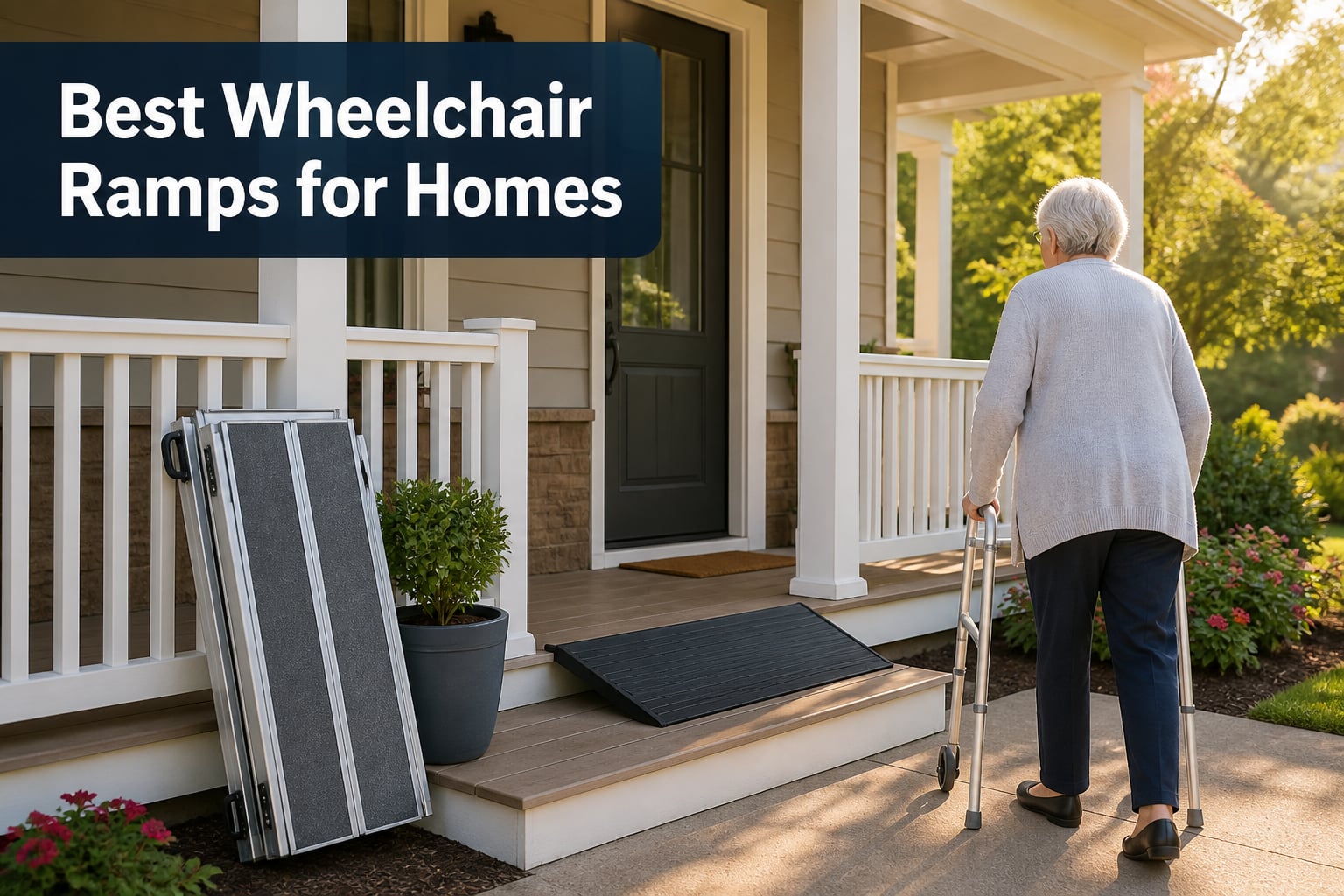
A single four-inch step at the front door can stop a power chair cold. When a family member moved in with us a few months ago, we learned quickly that the best wheelchair ramps for homes do more than bridge a gap between the porch and the driveway. They decide whether someone gets out the door independently or waits for a caregiver to help.
We spent weeks testing 10 ramps around a real house: two porch steps, a sliding door track, a garage curb, and one awkward patio slider. The lineup covered folding aluminum portable ramps, solid rubber threshold ramps, a modular curb ramp, a telescoping pair, and a full 8-foot permanent ramp with handrails.
The biggest lesson came before we unboxed anything. Measure your vertical rise first, because the ramp length you need follows from that number, not the other way around. Every ramp in this guide is sized for a specific rise range, and ordering the wrong length is the single most common mistake we saw repeated across hundreds of buyer reviews.
Here is how the picks shook out, followed by full reviews of all 10 ramps and a buying guide that covers slope math, weight capacity, materials, and funding help.
Table of Contents
Top 3 Picks for the Best Wheelchair Ramps for Homes in 2026

VNN 4FT Portable Wheelchair Ramp
- 800 lb capacity
- Double non-slip surface
- Folds in half with handle
- For 4-12 inch rises

FACHNUO 2FT Portable Wheelchair Ramp
- 800 lb capacity
- 11 lb foldable frame
- Non-skid surface
- For 2-6 inch rises

Silver Spring 8FT Ramp with Handrails
- 8 foot length
- 850 lb capacity
- Double handrails
- ADA 1:12 slope
The VNN 4FT folding ramp is our top overall pick because it handles the most common home obstacle, a porch with one or two steps, without wobbling under a heavy chair. It carries 800 pounds, folds in half, and its double-layer non-slip surface kept traction even after a rainy morning in our testing.
The FACHNUO 2FT is the value pick for small rises like a single low step or a garage entry. At 11 pounds it is the lightest full-width folder we tested, and it stows behind a door or in a car trunk.
The Silver Spring 8-foot ramp with double handrails is the premium choice for a permanent entry. It is built to the ADA 1:12 slope ratio, never rusts, and it is the only pick here that a caregiver can walk alongside while holding a rail.
Best Wheelchair Ramps for Homes in 2026
This table breaks down all 10 ramps by size class, capacity, and best use. Match your measured rise to the right row before reading the full reviews.
| Product | Specifications | Action |
|---|---|---|
| VNN 4FT Portable Wheelchair Ramp |
|
Check Latest Price |
| FACHNUO 2FT Portable Wheelchair Ramp |
|
Check Latest Price |
 KOLOTOOL 3FT Portable Wheelchair Ramp KOLOTOOL 3FT Portable Wheelchair Ramp |
|
Check Latest Price |
 KOLOTOOL 7FT Telescoping Ramp 2-Pack KOLOTOOL 7FT Telescoping Ramp 2-Pack |
|
Check Latest Price |
 Nuvium 1in Rubber Threshold Ramp Nuvium 1in Rubber Threshold Ramp |
|
Check Latest Price |
 VEVOR 1.6in Rubber Threshold Ramp VEVOR 1.6in Rubber Threshold Ramp |
|
Check Latest Price |
 Ruedamann 2in Heavy-Duty Threshold Ramp Ruedamann 2in Heavy-Duty Threshold Ramp |
|
Check Latest Price |
 Nuvium 3in Modular Threshold Ramp Nuvium 3in Modular Threshold Ramp |
|
Check Latest Price |
 Silver Spring 4in Rubber Threshold Ramp Silver Spring 4in Rubber Threshold Ramp |
|
Check Latest Price |
| Silver Spring 8FT Ramp with Handrails |
|
Check Latest Price |
1. VNN 4FT Portable Wheelchair Ramp – Best Overall for Home Steps
VNN Portable Wheelchair Ramp 4FT, Non-Slip Ramps for Wheelchairs for Home
800 lb capacity
Double non-slip surface
Folds in half with handle
For 4-12 inch rises
Pros
- Sturdy welded aluminum build
- Holds 800 lbs without flexing at the edges
- Double non-skid layer grips wet shoes and casters
- Transition plates sit flush at top and bottom
- Screws included for fixing to a wood porch
Cons
- Slight bounce in the center under heavy chairs
- Side flanges demand a straight approach
We ran the VNN 4FT up our porch, which has an eight-inch total rise across two steps, and it became the ramp everyone reached for. Unfolding it takes about ten seconds, the built-in handle is comfortable, and the 29.2-inch width fits standard wheelchairs and mid-size scooters without any precision driving.
The double non-slip surface is the standout. The aluminum folds themselves are textured, and a second non-skid layer sits on top, so my father-in-law’s power chair climbed after a rainstorm without the wheels slipping once. Reflective stickers along the sides also make the ramp visible when he comes home after dark.
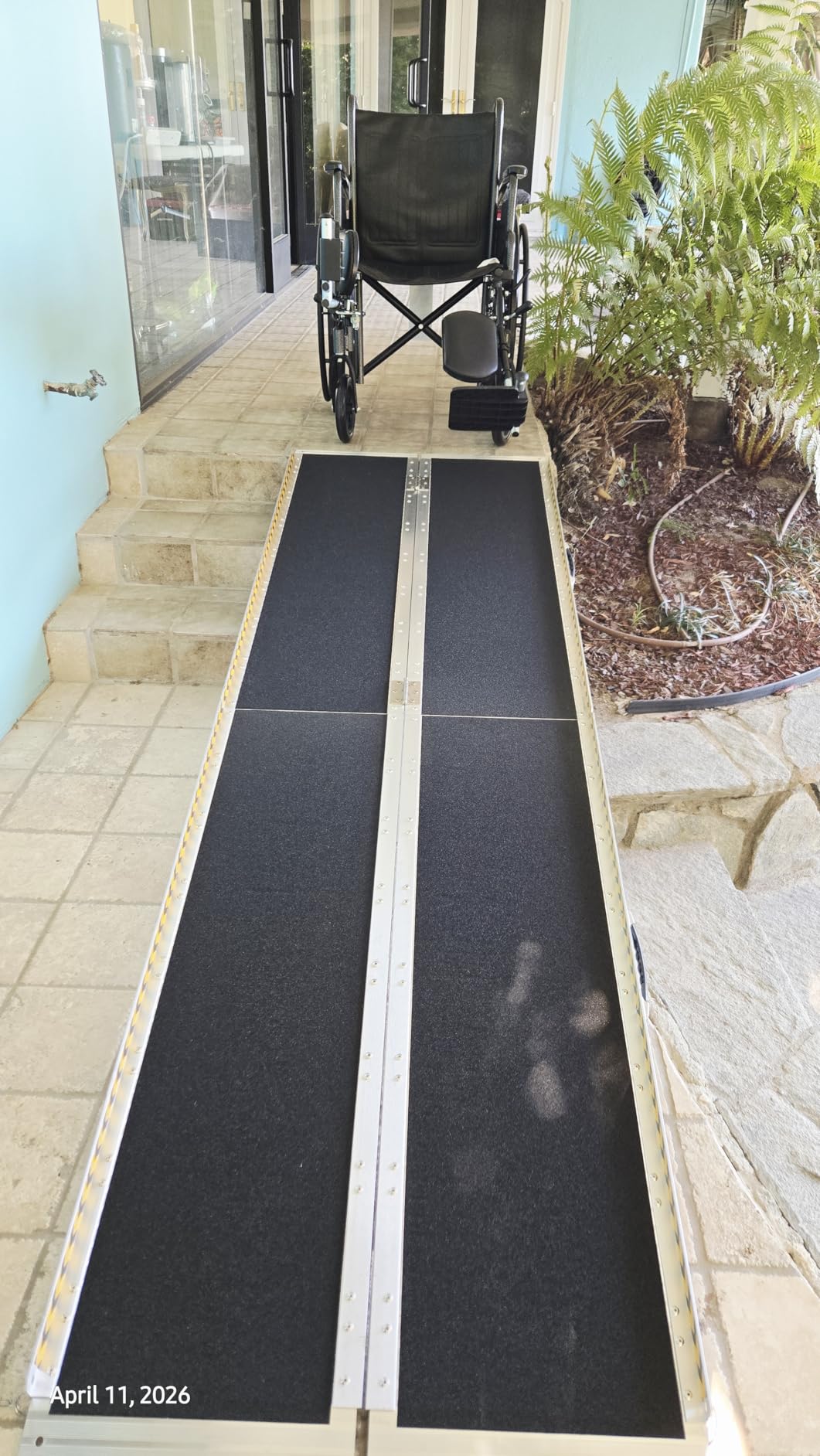
Technically, this is a 23.8-pound ramp with stainless steel hinges that should not rust outdoors. The transition plates at the top and bottom keep the surface flush so casters do not catch, and VNN includes screws if you want to fix it semi-permanently to a wooden porch deck.
The honest downside matches what other buyers report: longer ramps in this style can bounce slightly in the middle when a heavy power chair rolls over, and the side flanges will bump a caster if you approach at an angle. We coached a straight approach and the problem disappeared.
Across more than 2,000 reviews, roughly three quarters are five stars, which matches what we saw. Among the wheelchair ramps for homes we tested in the folding category, this one balanced load rating, traction, and everyday usability better than anything else.
What rise height does the 4FT model actually handle
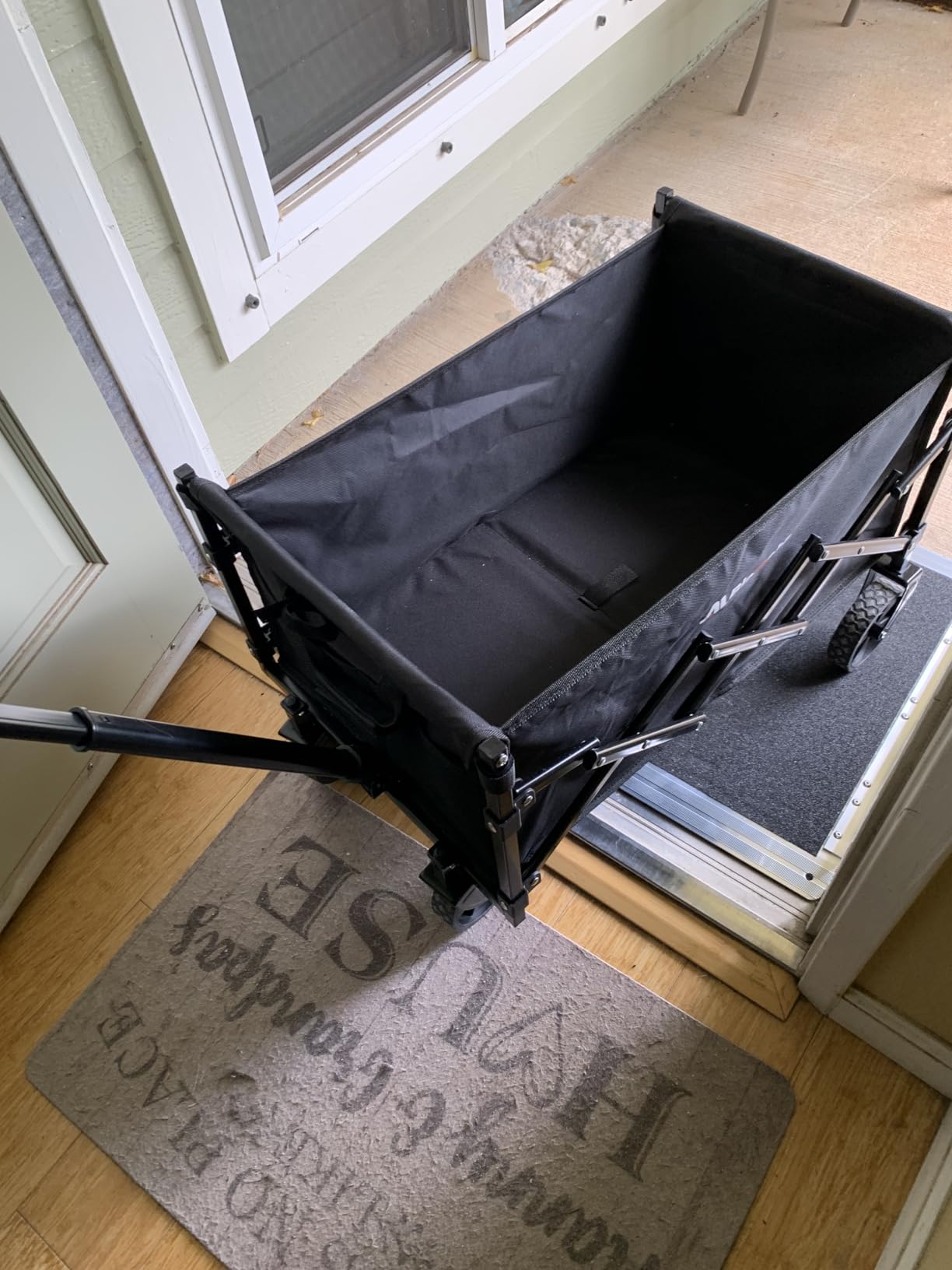
The listing covers rises from roughly 4 to 12 inches, and our eight-inch porch sat comfortably in that range. Just know that a 12-inch rise on a 4-foot ramp is a steep 1:4 grade, which works for a strong self-propelled user but not for everyone.
If your rise is above 8 inches and the user has limited upper-body strength, step up to the 6FT or 8FT variant of this same ramp. VNN sells the identical platform in lengths from 2FT to 12FT.
Can one person set it up alone
Yes, with a caveat. At 23.8 pounds folded, most adults can carry it with the handle and unfold it in one motion.
Anyone with limited grip strength or a bad back will prefer the 2FT or 3FT sizes, which weigh far less. For a two-person household where a spouse handles setup, the 4FT is still easy to manage daily.
2. FACHNUO 2FT Portable Wheelchair Ramp – Best Value Folding Ramp
FACHNUO 2FT Portable Wheelchair Ramp for Home Steps, Non-Skid Aluminum Ramp
800 lb capacity
11 lb foldable frame
Non-skid surface
For 2-6 inch rises
Pros
- Only 11 lbs
- easiest ramp here to carry
- Built-in handle for one-handed transport
- Folds to a slim 24 x 13 inch package
- Reflective strips and side baffles for visibility
Cons
- Side guardrails can block a door from swinging
- Hinge line is a slight trip hazard at the center
The FACHNUO 2FT solved our garage problem, a five-inch lip between the driveway and the garage floor. At 11 pounds, it is light enough that my mother-in-law carries it herself with the built-in handle, sets it down, and rolls her rollator straight over it.
Set up is essentially zero. It arrives ready to use, unfolds in half, and the extended guide rails at both ends smooth out the entry and exit so small caster wheels do not drop off the edge. It works for wheelchairs, power chairs, scooters, and walkers.
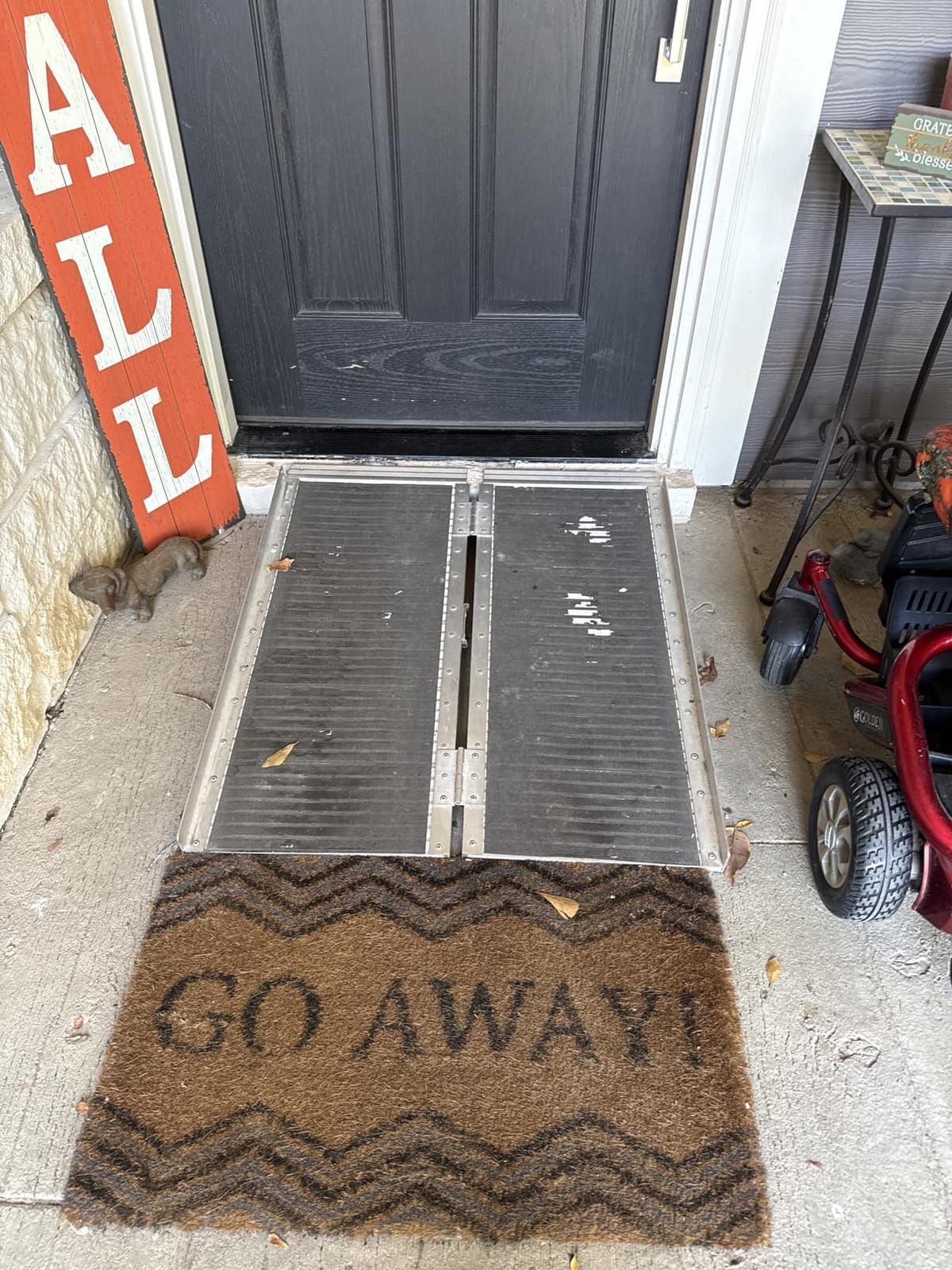
The build is anodized aluminum with a non-skid surface and a corrosion-resistant stainless steel hinge, so leaving it outside through a wet week caused no issues. Rated at 800 pounds, it never flexed under our heaviest test chair, and a few buyers note it may sink a fraction under extreme loads before rebounding.
Two real complaints showed up in our use and in reviews. First, the side guardrails sit slightly above the ramp deck and can block a door from opening or closing over the ramp, so check your door swing before placing it. Second, the center hinge creates a small ridge that ambulatory users should step over carefully.
With a 4.5-star average across more than 1,600 reviews and a number-one best-seller rank in its category, this is the low-risk default for a single low step.
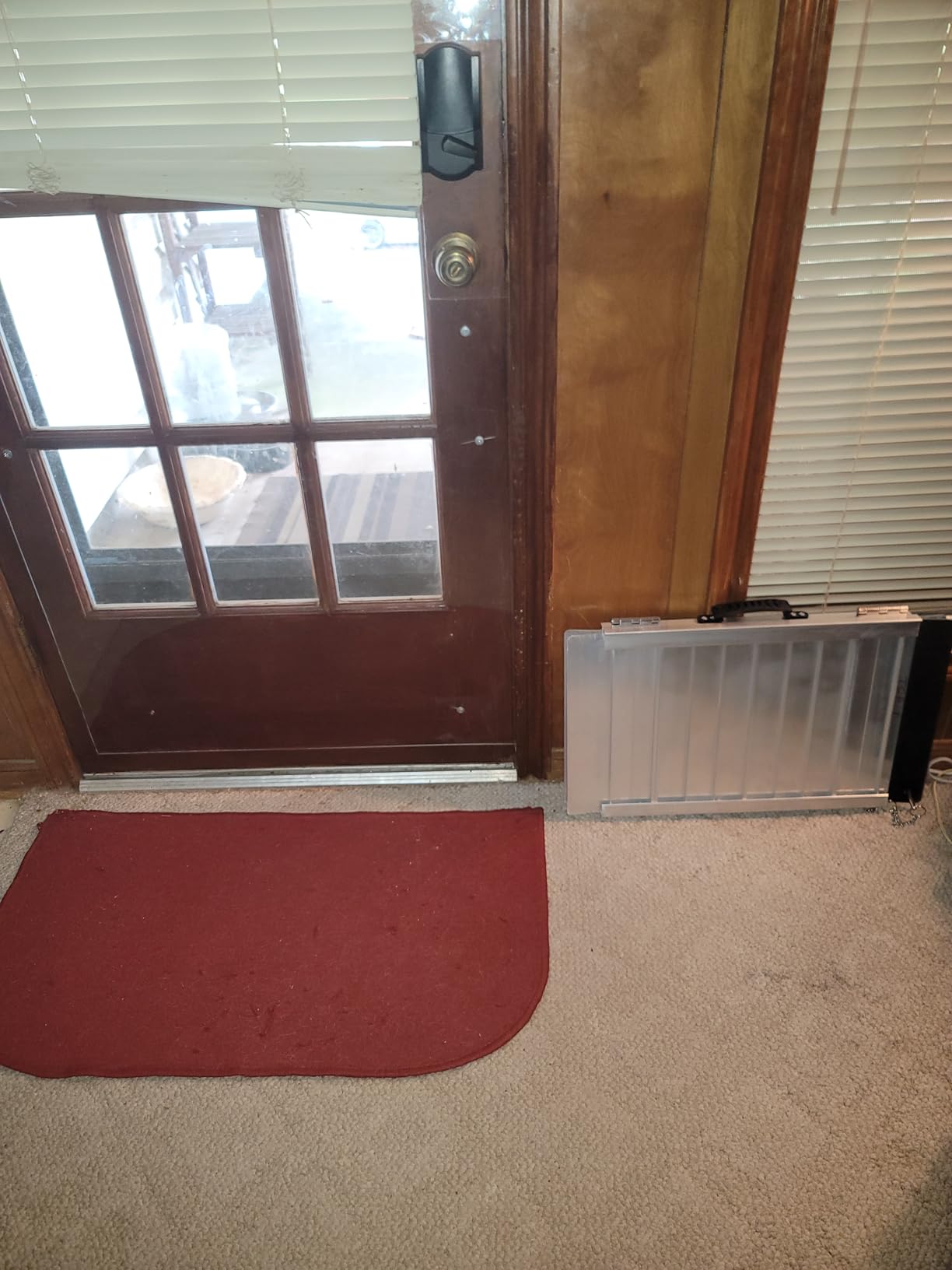
Will the side rails block your door
They can, and this is the number-one thing to check before ordering. The rails run along both edges and extend past the deck, so an outward-swinging storm door may contact them.
If your door swings inward over the ramp, you are fine. For outward-swinging doors, either position the ramp a few inches away from the threshold or choose a flat rubber threshold ramp like our picks below.
What step heights work with the 2FT size
FACHNUO rates the 2FT for rises between 2 and 6 inches, which matches our five-inch garage lip perfectly. Below two inches a rubber threshold ramp is a better fit, and above six inches the slope gets too steep for safe daily use.
The same platform is sold in every length from 2FT to 12FT, so if you measure a taller rise you can stay with the brand and just buy the longer size.
3. KOLOTOOL 3FT Portable Wheelchair Ramp – Best Mid-Size Folder
KOLOTOOL Portable Wheelchair Ramps 3FT for Home Steps, Non-Skid, Aluminum
800 lb capacity
17 lb aluminum build
Safety side baffles
For 3-6 inch rises
Pros
- 800 lb capacity in a 17 lb frame
- Matte non-slip top with anti-slip mat underneath
- Folds in half to 3.2 inches thick
- Works with chairs
- scooters
- walkers
- strollers
Cons
- Max rise of about 9 inches on the 3FT model
- Requires accurate rise measurement before ordering
The KOLOTOOL 3FT split the difference for us between the tiny 2FT folders and the big 4FT units. We used it on a six-inch raised patio slider, where it gave a gentler grade than a 2FT ramp would and still stored upright in a hall closet.
It is an Amazon’s Choice product, and the details justify the badge. The top surface is matte and non-skid, the back has an additional anti-slip mat so it does not slide on smooth concrete, and the reflective warning strips along the sides catch headlights at night.
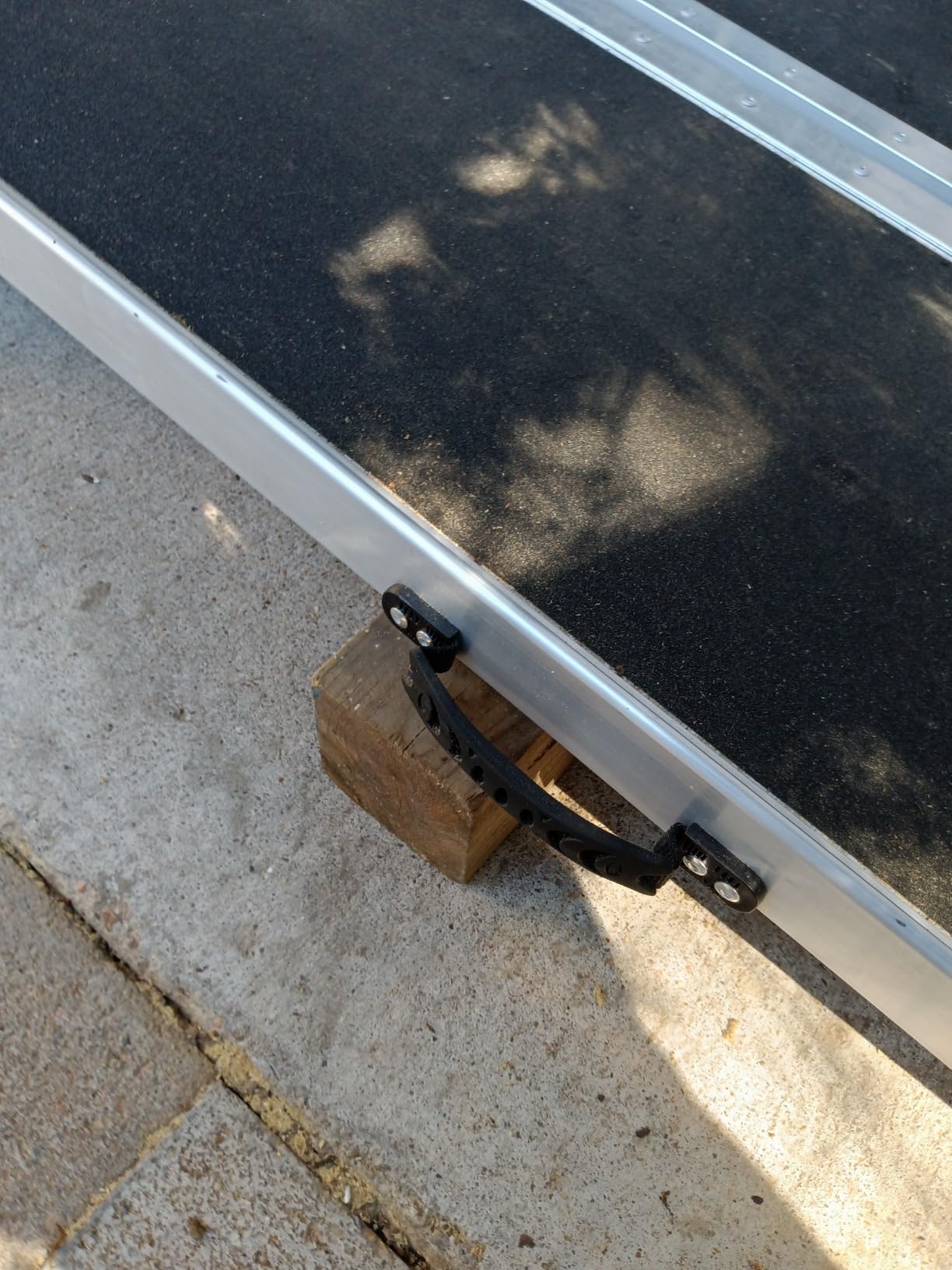
Construction is a high-strength aluminum alloy rated at 800 pounds, and the whole ramp weighs 17 pounds. Folded, it measures 36 inches long by 14.6 inches wide and about 3 inches thick, which slides behind a sofa or into a car boot.
The two things to respect are size discipline and approach angle. KOLOTOOL states a maximum rise around 9 inches for this length, and pushing past that makes the grade uncomfortably steep. The side baffles also mean you should roll on straight rather than at an angle.
Reviewers consistently call out how well it handles wheelchairs, scooters, and even trolleys and strollers, which matches our experience moving a loaded utility cart over it.
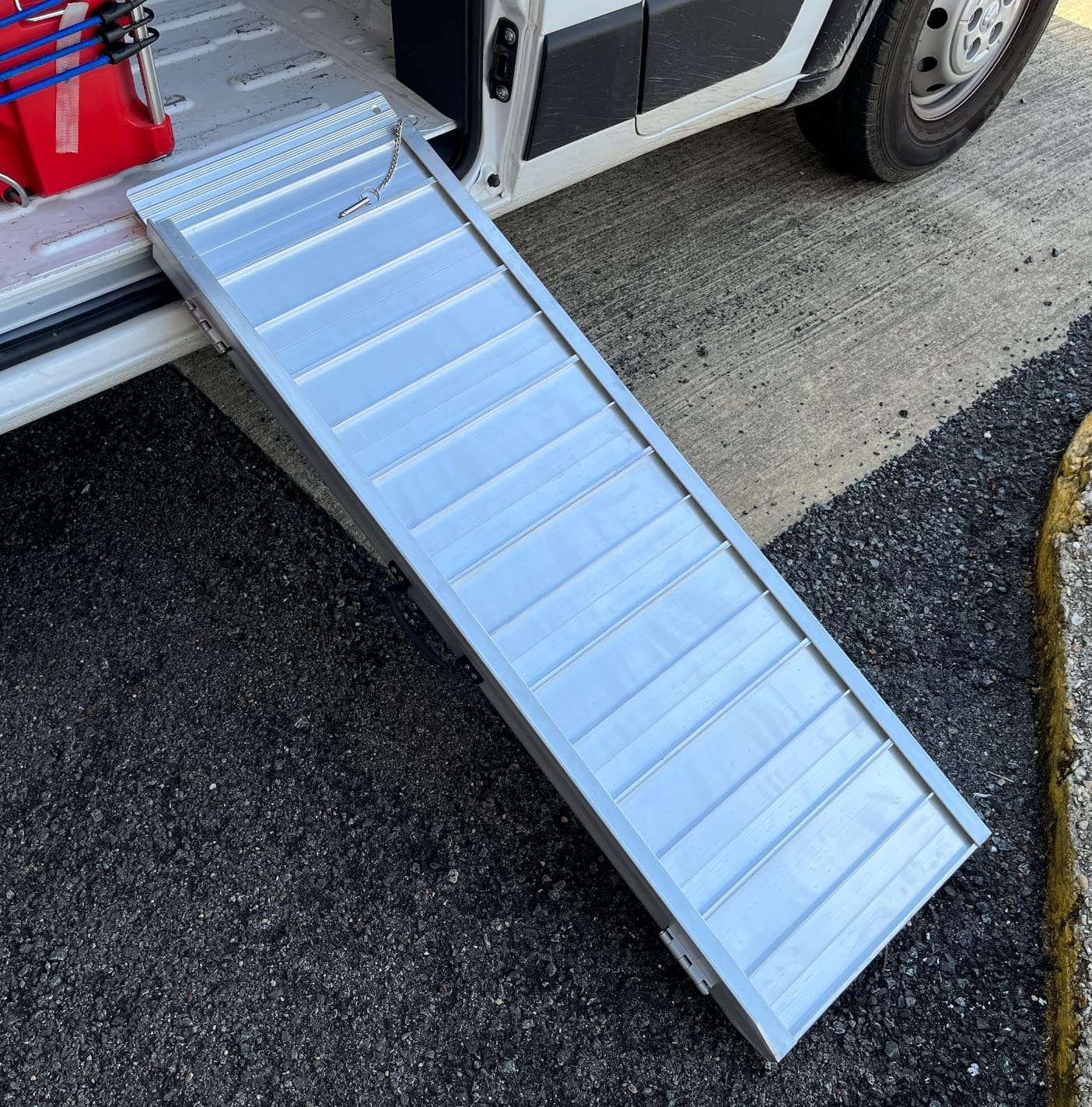
How do you measure your rise before ordering
Place a straight board or level on the top step and let it extend over the landing, then measure straight down from the board to the ground. That vertical distance in inches is your rise.
For every inch of rise, a gentle ADA-style grade wants 12 inches of ramp length, though for short portable use many households accept 6 inches of ramp per inch of rise. On our six-inch slider rise, the 3FT ramp ran about 1:6, which felt safe for a self-propelled chair.
Will it hold a heavy power chair
The 800-pound rating covers the chair plus the occupant with room to spare, and we saw no sagging under a mid-weight power chair. The high-strength alloy and center hinge held firm.
If your combined weight is near the limit, or the ramp will live outdoors year-round, this is still a sound choice thanks to the corrosion-resistant frame. Just avoid the longer variants if you notice any bounce, since longer spans flex more.
4. KOLOTOOL 7FT Telescoping Wheelchair Ramp – Best Adjustable Two-Pack
KOLOTOOL 7FT Telescoping Aluminum Portable Wheelchair Ramp with Bag, 600LBS
Extends 4 to 7 feet
600 lb capacity
20 lb two-pack
Storage bag included
Pros
- Telescopes from 48 to 84 inches to fit varied rises
- Only about 20 lbs for the pair
- Press-lock adjustment with no tools
- Includes carry bag for travel
Cons
- Not for power wheelchairs or scooters
- Locking mechanism can pinch fingers
Telescoping channel ramps are a different animal from solid folding ramps, and the KOLOTOOL pair won us over for vehicle duty. Each track extends from 48 to 84 inches, so the same pair handled our minivan side entry and a friend’s higher SUV lift without buying two products.
The value angle is real: you get two tracks, a storage bag, and a 600-pound combined rating. Sliding them out and pressing the lock takes seconds, and the triple anti-skid surface with a waterproof, rustproof finish survived being tossed in a wet trunk.
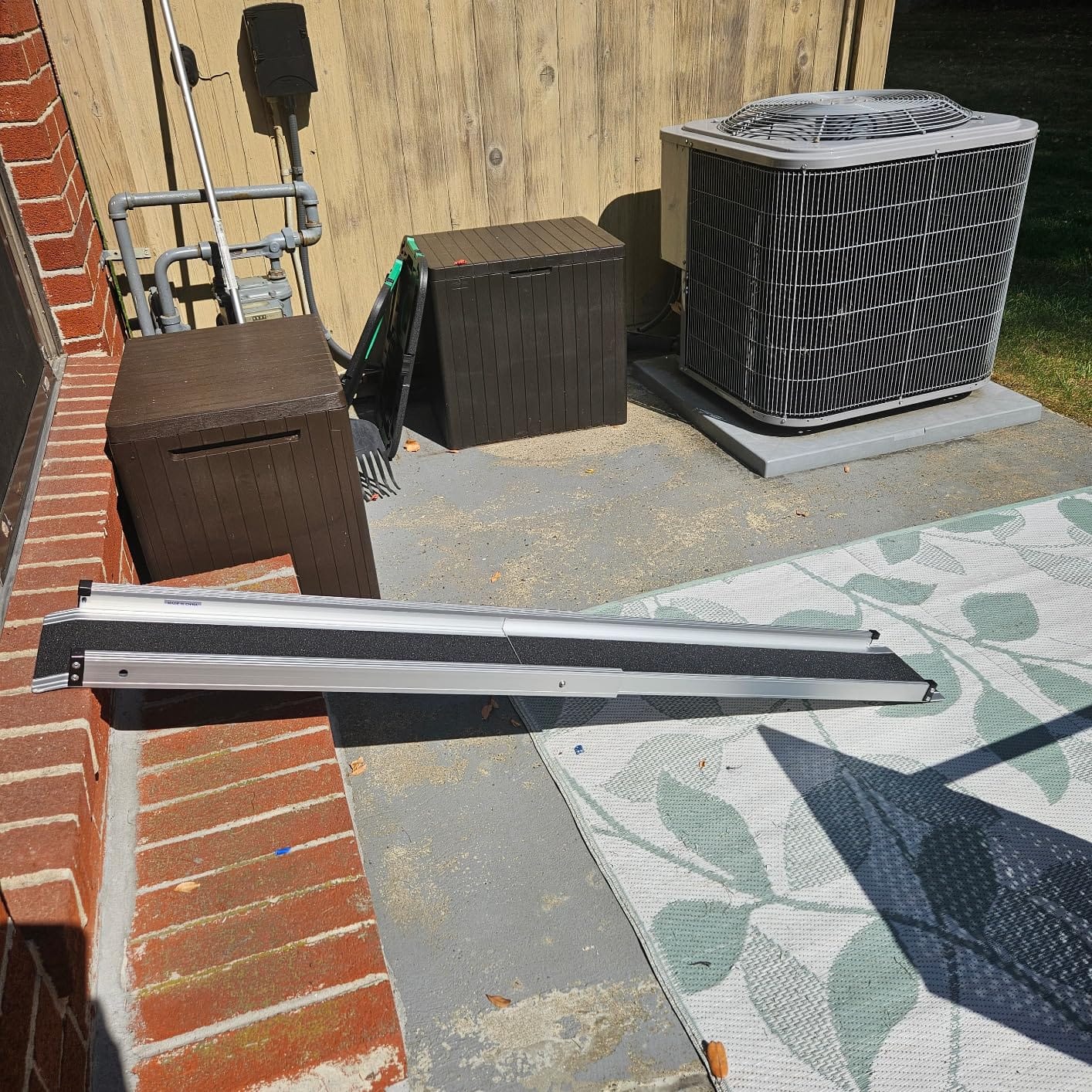
Technically, these are narrow channel tracks, not a full-width deck. That is exactly why they work for manual wheelchairs and rollators going into vehicles, and why the manufacturer explicitly states they are not compatible with power wheelchairs or scooters, whose wheelbases and weights do not suit the narrow rails.
The track design also demands the wheels stay aligned on each rail. In practice, a caregiver guiding a manual chair up gets the hang of it after a few passes, but it is not a ramp for independent power-chair use.
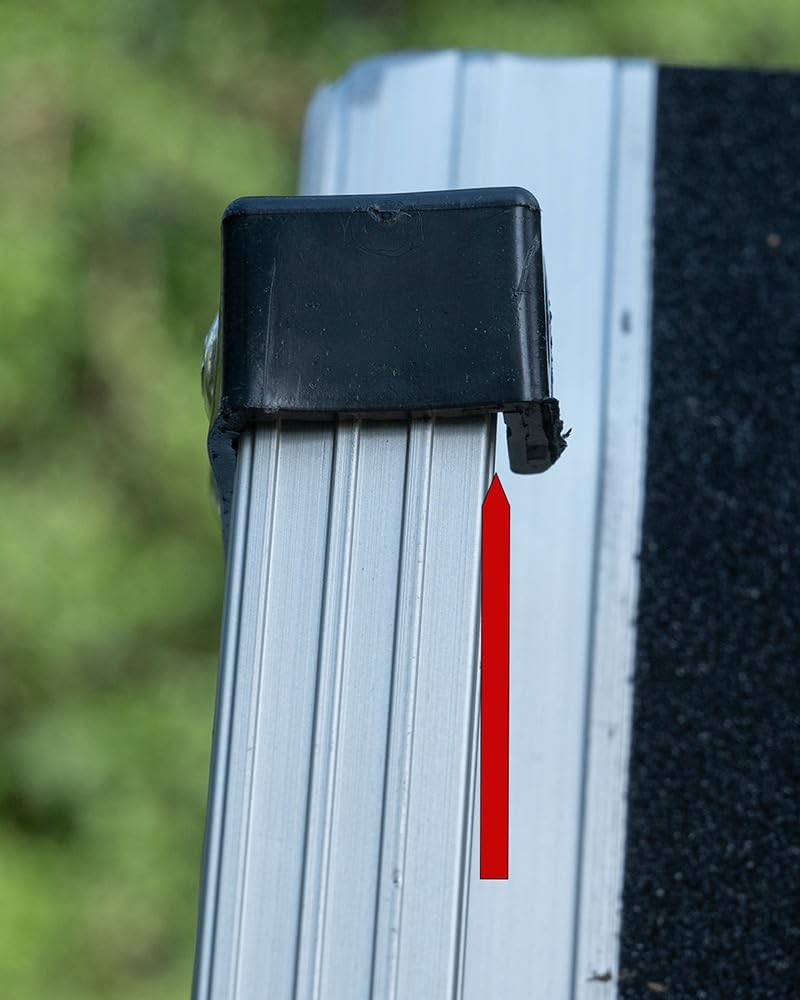
A few buyers reported rivets loosening over time and pinched fingers from the locking mechanism, so we treat these as a travel and occasional-use tool rather than a daily front-door solution. For that role, they are hard to beat at this rating of 4.2 stars across roughly 380 reviews.
Which mobility devices is it safe for
Stick to manual wheelchairs, rollators, walkers, and loading carts or dollies. The 600-pound capacity is plenty for those uses.
Power wheelchairs and scooters are off the list per the manufacturer, because the narrow tracks do not support their wheel spacing and torque. For those devices, choose a full-width folding ramp like the VNN or FACHNUO above.
How does the length lock work
Each track telescopes like a curtain rod and clicks into place with a press lock, no tools needed. You extend to your chosen length, press to lock, and position the tracks at the wheel width of your chair.
Keep fingers clear of the lock while pressing, which is the most common complaint. Collapsed, the pair packs into the included bag at about 37 inches long, small enough for a car trunk or closet shelf.
5. Nuvium 1 Inch Rubber Threshold Ramp – Best for Low Doorway Lips
Nuvium 1″ Rise Rubber Threshold Ramp for Doorways, Wheelchair Ramp
1 inch rise
35.5 inch cut-to-fit width
2000 lb capacity
Grooved non-slip surface
Pros
- Cut-to-fit width for any doorway
- Grooved surface grips wet and dry
- Double-sided adhesive holds position
- 2000 lb load rating
Cons
- Slight rubber smell at first
- Ships with a minor bend that flattens out
Not every accessibility problem is a porch step. Ours was a one-inch raised threshold under the back door that caught every walker wheel in the house, and this Nuvium rubber ramp solved it for less than the cost of a pizza night.
Installation took ten minutes. We measured the door width, scored the rubber with a utility knife, snapped it to length, peeled the double-sided adhesive, and pressed it in place. The ramp sits 35.5 inches wide by 5.3 inches deep and rises exactly one inch.
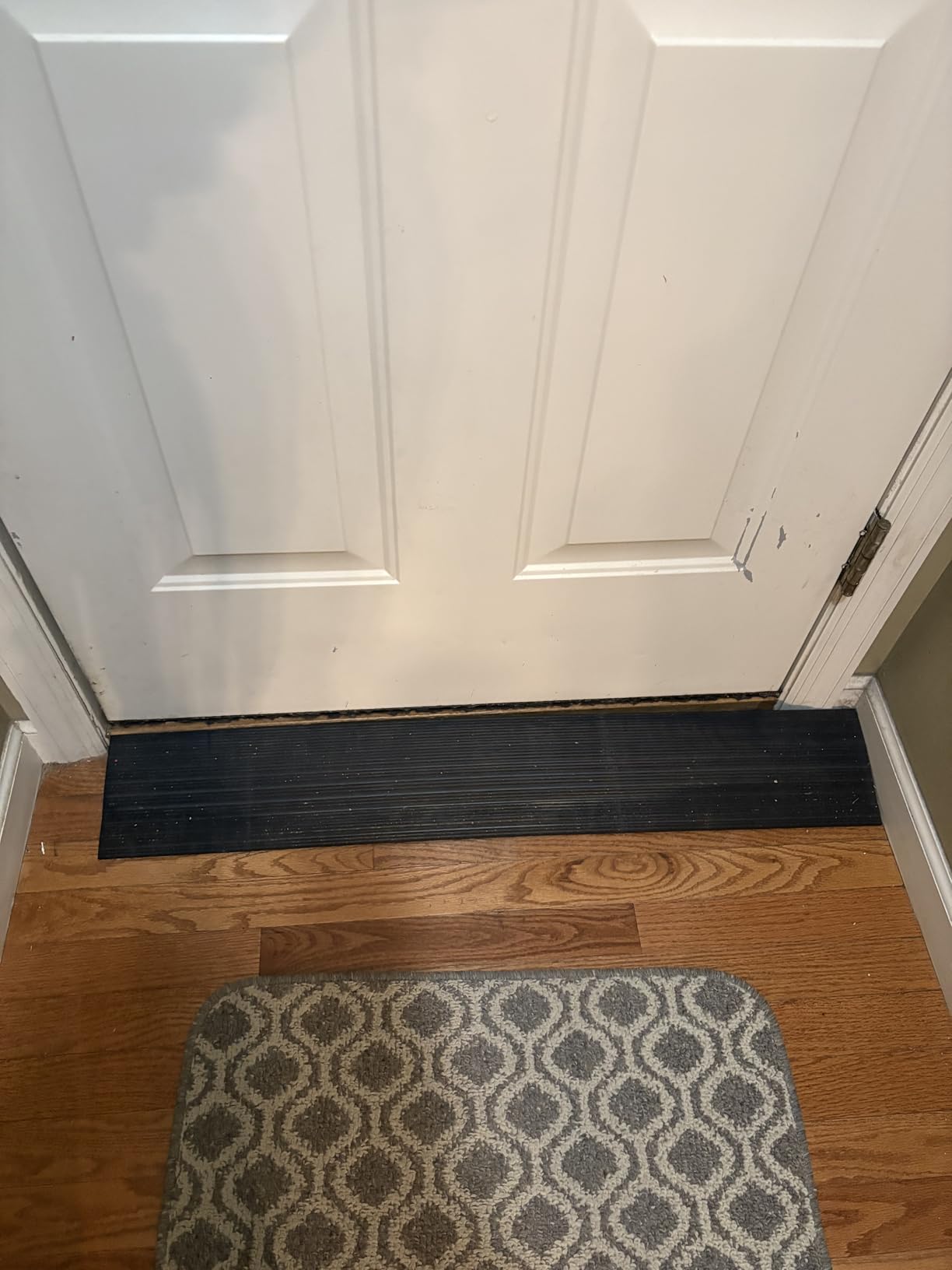
The grooved surface is the reason we picked this over plain rubber wedges. The grooves channel water away and keep traction in wet conditions, which matters at a door that sees rain and snow tracked through it.
Natural rubber this dense carries a 2000-pound rating, so a heavy power chair rolling over it causes zero compression. The only annoyances are a mild rubber smell for the first few days and a slight bow from shipping that flattens once weighted or taped down.
Nuvium also sells this ramp in rise heights from 0.6 to 1.6 inches, so measure your threshold and order the closest match rather than rounding up.
How do you cut it to fit your doorway
Mark the width with a straightedge and a marker, then score along the line with a sharp utility knife using several passes. The rubber is dense but cuts cleanly.
Cut slightly proud of your mark first and test-fit, since you can always trim more but cannot add material back. Most standard doorways need only a few inches removed from the 35.5-inch length.
Will the adhesive damage your floor
On tile, concrete, and finished wood in our house, the double-sided strips held firmly and peeled up without marring the surface when we repositioned one ramp.
On freshly finished or soft vinyl floors, test a corner first. If you skip the adhesive entirely, the 2000-pound weight rating means a power chair will still hold the ramp in place under load, though it may shift slightly under foot traffic alone.
6. VEVOR 1.6 Inch Rubber Threshold Ramp – Best Cut-to-Fit Rubber Ramp
VEVOR 1.6″ Rise Cuttable Threshold Ramp for Doorways, 35.4″ Wide Natural Rubber Wheelchair Ramp, Non-Slip Solid Rubber Ramp with Double-Sided Tape for Doorways,Driveways,Bathroom,Smooth Tile
1.6 inch rise
35.4 inch cut-to-fit width
Natural rubber
Anti-slip striped surface
Pros
- Enormous 15 ton load rating
- Cut-to-fit width for any entry
- Striped anti-slip surface
- Versatile on tile
- driveway and bathroom floors
Cons
- Rubber odor needs a few days to fade
- 13.7 lbs and not meant to move often
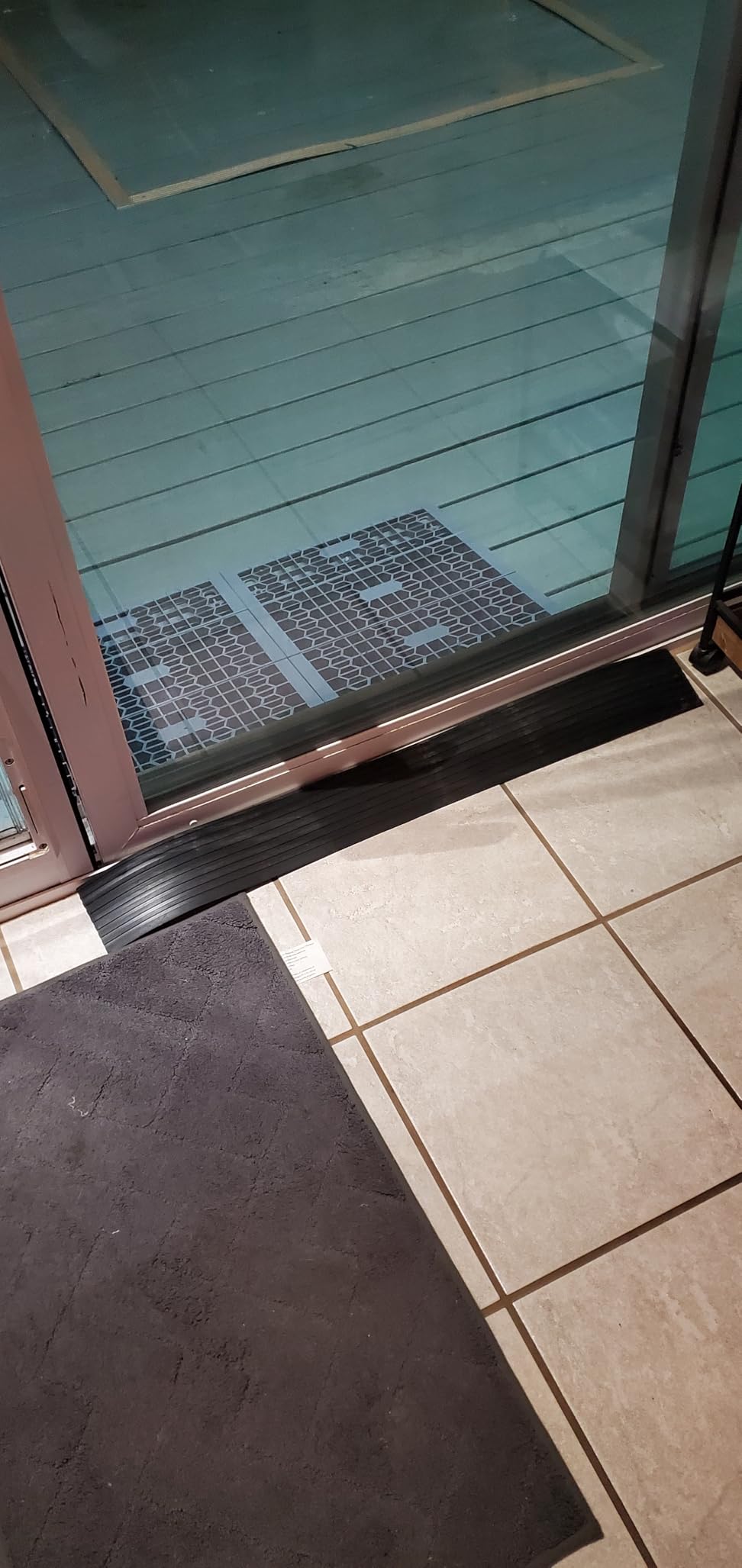
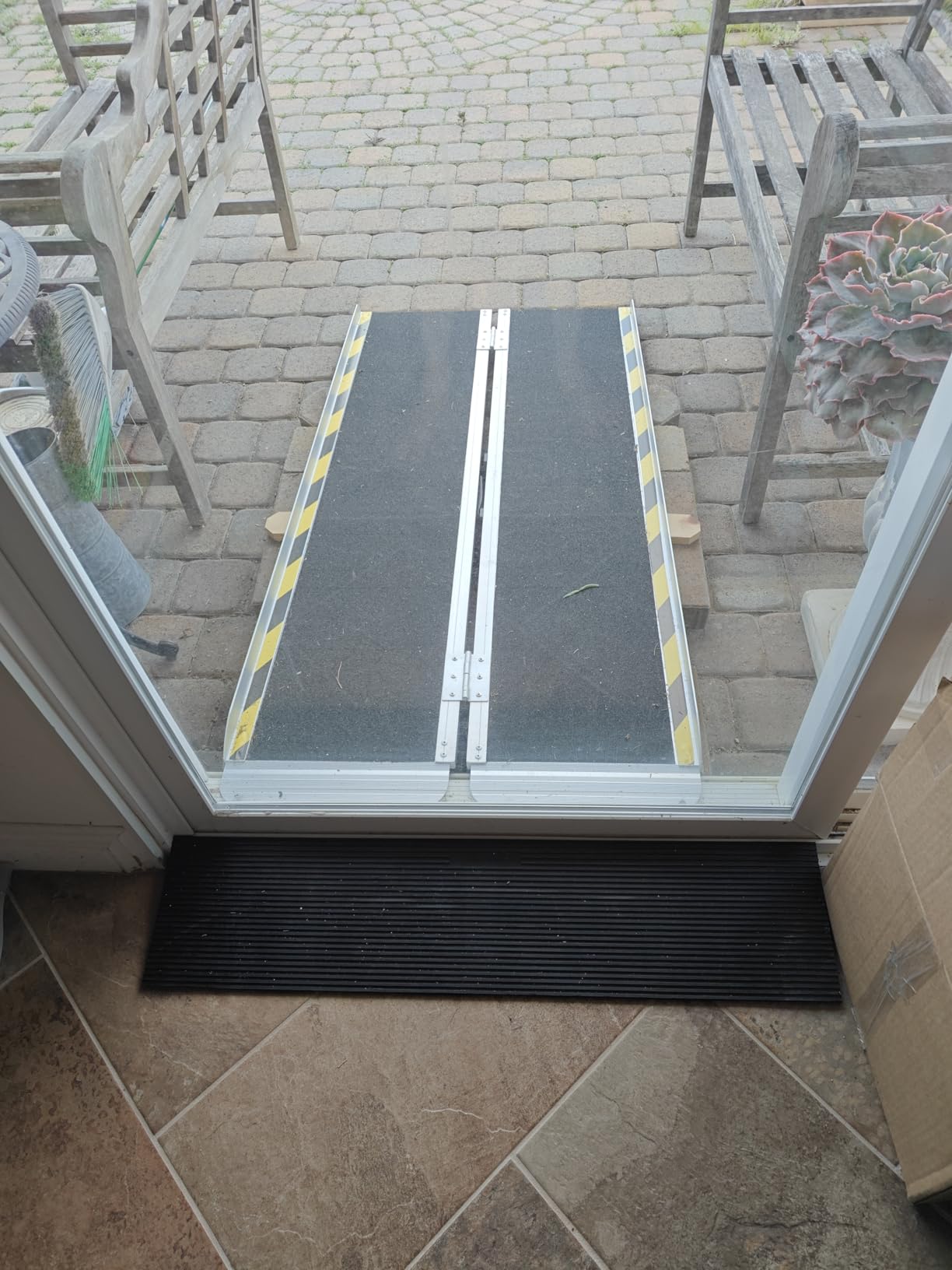
Our sliding glass door track sat about an inch and a half above the patio, high enough to stop a rollator cold. The VEVOR 1.6-inch rubber ramp bridged it in one piece, and it has not moved since we taped it down.
This is an Amazon’s Choice product with a 4.6-star average across about a thousand reviews, and the load rating is almost comical: 33,069 pounds, or 15 tons. Nothing in a home is coming close to that limit.
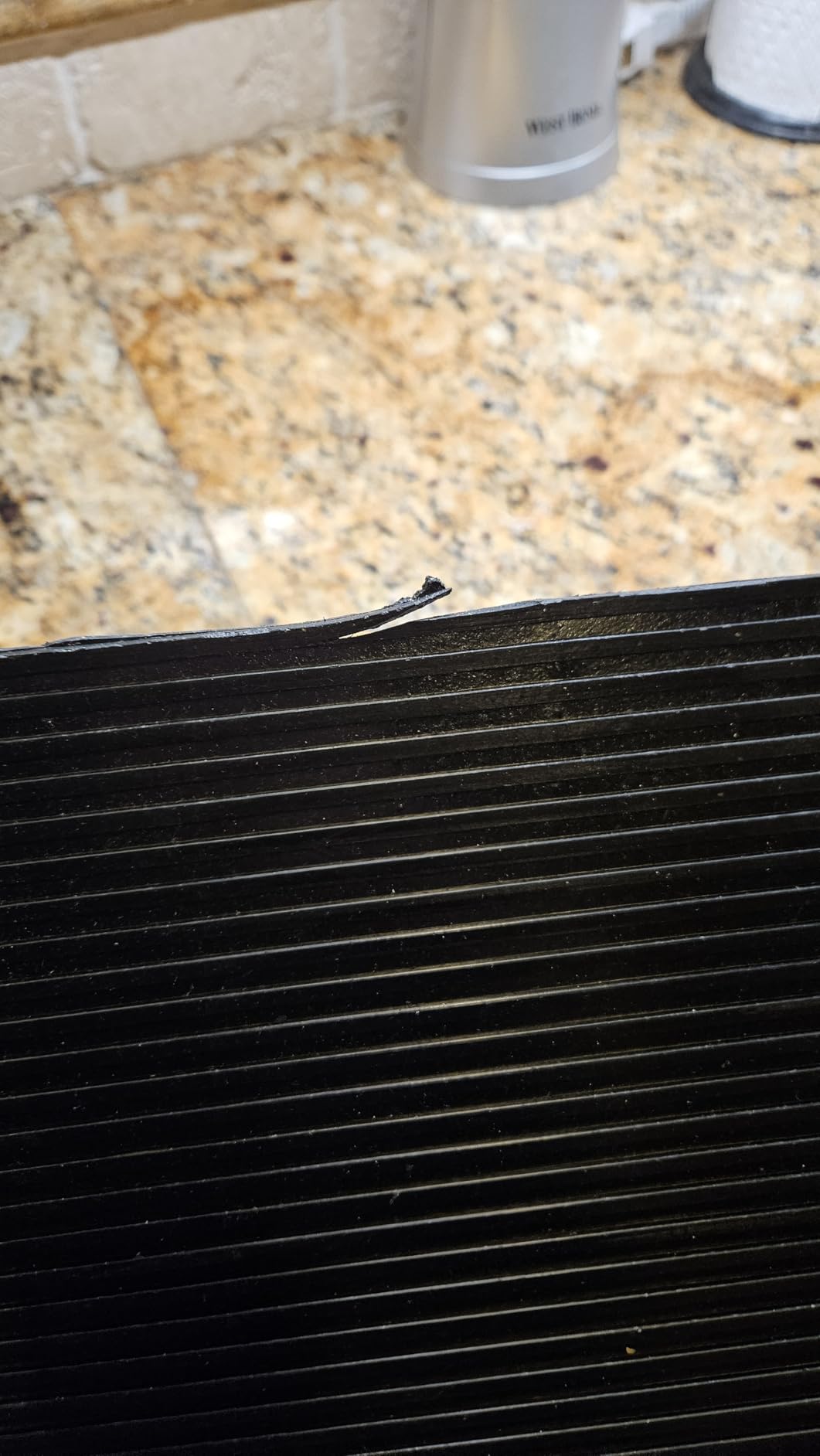
The striped surface pattern gives excellent traction in both wet and dry conditions, and the natural rubber shrugs off high temperatures and wear. VEVOR notes the gentle angle even lets robot vacuums climb it, which our robot vacuum confirmed by surviving the transition daily.
Cutting works the same as other rubber ramps: score and snap to your doorway width from the 35.4-inch blank, then secure with the included double-sided tape. It weighs 13.7 pounds, so it is best treated as a semi-fixed install rather than something you move room to room.
Like nearly all natural rubber ramps, expect a faint odor for the first few days. Ours faded completely within a week with the door open for a few hours daily.
Where else can you install it
VEVOR lists doorways, driveways, bathrooms, and smooth tile, and we agree with all four. It bridges a sunken bathroom floor edge nicely and handles a garden hose crossing on the driveway.
Anywhere with a rise between roughly 1.2 and 1.6 inches is fair game. For anything lower, step down to the 1.2-inch variant of this same ramp rather than forcing this one to fit.
Is the 1.6 inch rise right for your threshold
Measure the track or lip height at its tallest point, not the average, because slider tracks vary along their length. If your measurement is 1.5 to 1.6 inches, this size is correct.
If it comes in at 1.3 inches, order the 1.2-inch version instead. A rubber ramp that sits slightly below the lip still works, while one that sits above it creates a new bump.
7. Ruedamann 2 Inch Heavy-Duty Threshold Ramp – Best for Busy Doorways
Ruedamann 2200 lbs Heavy-Duty Threshold Ramp, 2″ Rise Rubber
2 inch rise
43.5 inch wide
2200 lb capacity
Grooved anti-slip rubber
Pros
- 2200 lb solid rubber build
- Grooved surface grips even when wet
- Heavy enough to stay put without anchoring
- Cuttable for custom entryway widths
Cons
- Initial rubber odor
- 20 lbs makes repositioning a chore
The Ruedamann earns the highest rating in this guide at 4.7 stars across more than 800 reviews, with 86 percent of buyers giving five stars. We installed the 2-inch version on a garage entry with heavy daily traffic, and it has been the most fuss-free ramp we own.
At 43.5 inches wide and 16 inches deep, it covers a full doorway plus margin, so a wheelchair can enter slightly off-center without dropping a caster off the edge. The 2200-pound rating means heavy power chairs cross it without any compression.
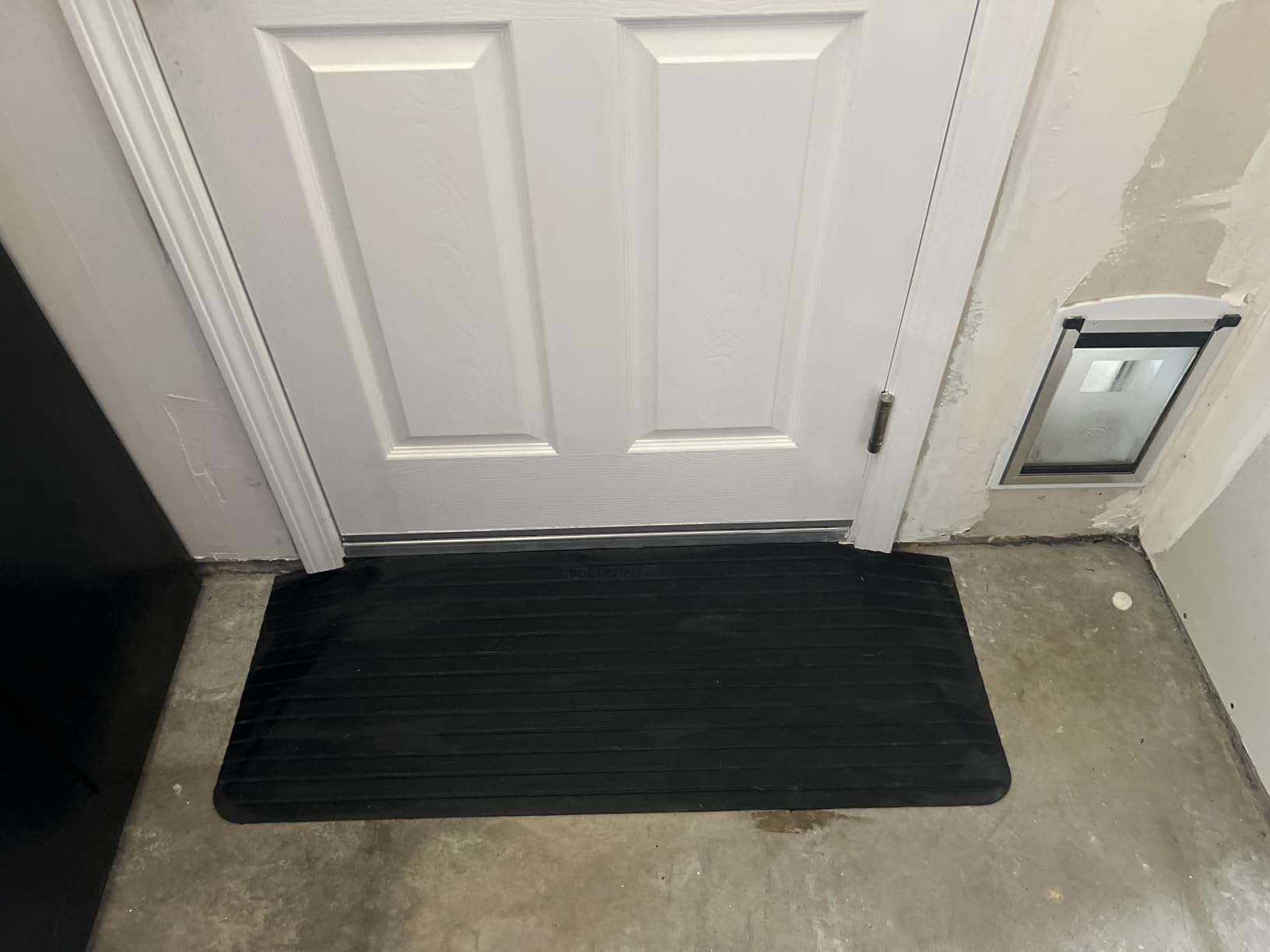
The grooved linear texture is genuinely good in the wet. We hosed it down as a test and a manual chair still climbed without slipping, which is the whole point of a grooved pattern over smooth rubber.
Being 20 pounds of solid rubber, it simply does not move. We never anchored it, and after weeks of chairs, feet, and a hand truck rolling over it, it stayed exactly where we placed it.
It is cuttable if your entryway is wider or you need a custom shape, and Ruedamann also offers this ramp in 1 and 1.5-inch rises plus two tread patterns. The only consistent gripe in reviews is the usual new-rubber smell, which cleared in a few days.
Is the 43.5 inch width enough for your entry
For a standard 36-inch doorway, yes, with about 3.5 inches of margin on each side. That margin is what makes off-center approaches forgiving.
For a double-wide entry or a sliding patio door opening wider than 43 inches, either order two and place them side by side or plan to bridge the gap with a second threshold ramp. Measure the clear opening, not the door slab.
Does it stay put without anchoring
In our testing, yes. Twenty pounds of solid rubber under a rolling chair effectively pins itself, and the flat underside grips concrete and tile well.
On very smooth polished floors with light foot-only traffic, you may see it creep over weeks. Double-sided tape or a bead of adhesive under the leading edge solves that permanently.
8. Nuvium 3 Inch Modular Threshold Ramp – Best Modular Curb Ramp
Nuvium 3 Inch Threshold Ramps for Doorways, Wheelchair Ramp for Home Steps
3 inch rise
31.5 inch modular width
1100 lb capacity
No tools to assemble
Pros
- Modular heights from 1 to 6 inches
- Separable to 15.75 inches for narrow spots
- Grooves plus sandpaper-textured strips
- Underside anti-skid mat stops shifting
Cons
- May not fit every threshold width
- Not foldable for storage
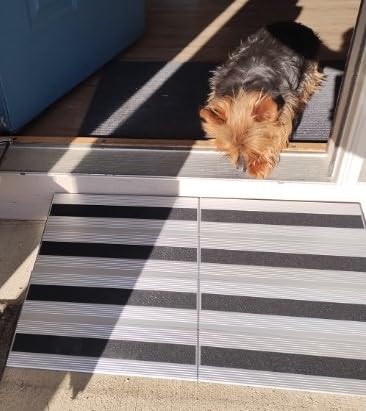
Sometimes the obstacle is not a step at all but a curb, a raised utility pad, or a thick door sill. The Nuvium modular aluminum ramp handled our 3-inch patio landing in a way no fixed-height rubber wedge could, because its whole design is built around adjustability.
The platform assembles without tools and comes in six height options from 1 to 6 inches, so you can match the exact rise rather than settling for close. At 31.5 inches wide, it can also be separated into two 15.75-inch sections for narrower gaps or stair edges.
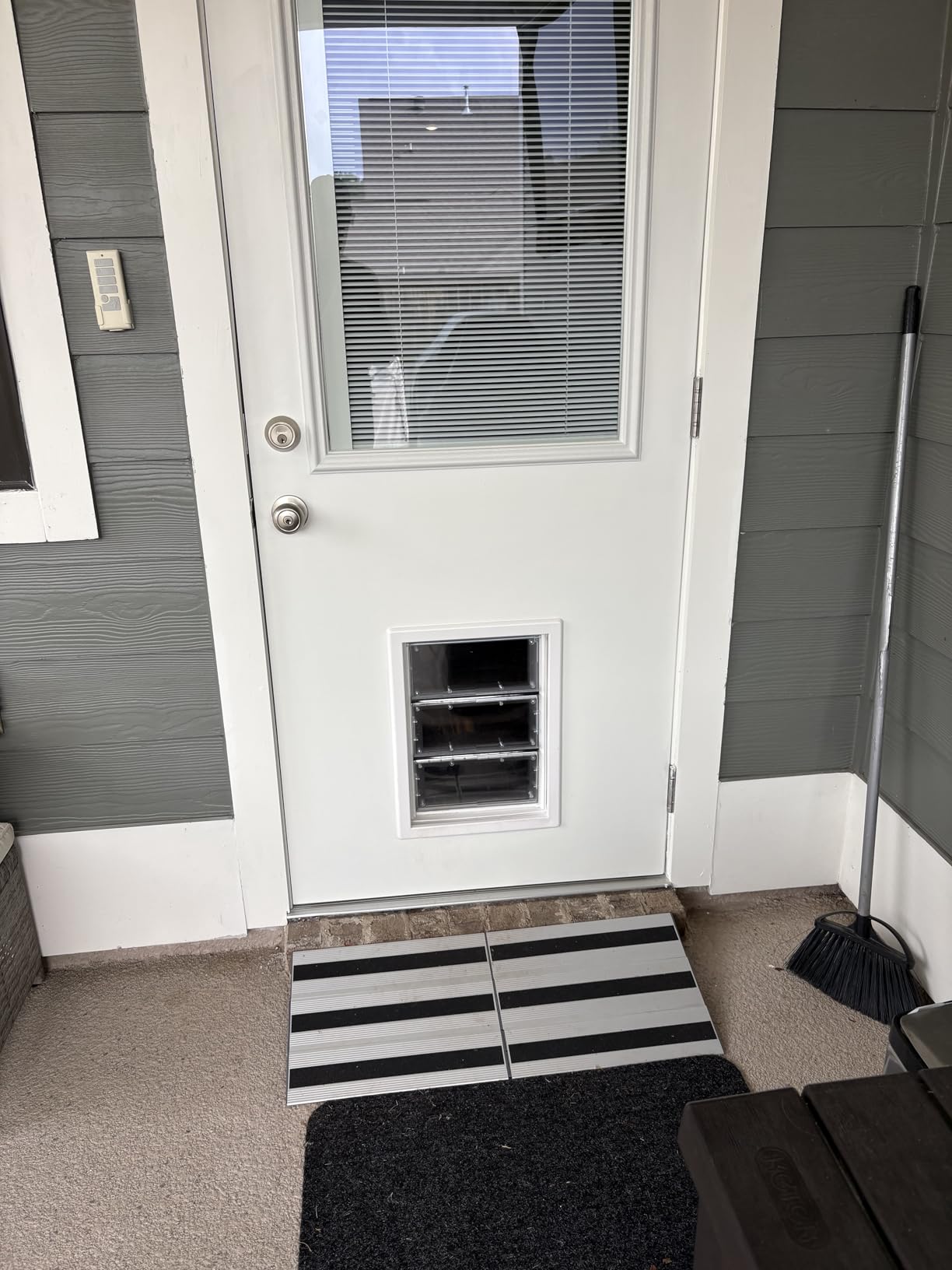
Traction is where Nuvium spent its effort. The deck combines anti-slip grooves with sandpaper-textured strips, and the underside carries a thick anti-skid mat that keeps the ramp planted on smooth surfaces without fasteners.
The aluminum alloy is corrosion-resistant and rust-proof, so we left ours outside through watering and rain with no staining or degradation. Load capacity is 1100 pounds, comfortably above any home use case we could throw at it.
It is not foldable, which is the main trade-off for the modular structure. Plan on a semi-permanent placement rather than a ramp you stow between uses.
How does the modular sizing work
You order by rise height, 1 through 6 inches, and the platform sections stack to that height. The 31.5-inch deck either stays whole for doorways or separates into two halves for curb corners and narrow sills.
Before ordering, measure both the rise and the depth of your landing. Because the ramp is 12.5 inches front to back, you need that much clear approach space on each side.
Do you need any tools or hardware
No. Assembly is tool-free, and the anti-skid underside means no anchoring is required on most surfaces. Ours went together in a few minutes out of the box.
If you install it where a power chair will turn on the ramp repeatedly, a couple of screws through the deck into a wooden landing will keep it perfectly still long-term.
9. Silver Spring 4 Inch Rubber Threshold Ramp – Best for Tall Thresholds
Silver Spring Rubber 3-Channel Threshold Ramp, 600 lb Capacity, 4 in Rise
4 inch rise
42 inch wide
3 cable channels
Solid one-piece rubber
Pros
- Handles rises up to 4.3 inches
- Solid 54 lb one-piece build
- Three cable channels on the underside
- All-weather grooved traction
Cons
- 54 lbs means zero portability
- 600 lb capacity is lower than others here
When a threshold sits four inches high, most ramps tap out and you are into folding-ramp territory. The Silver Spring solid rubber threshold ramp bridges up to a 4.3-inch rise in a single piece, which is why it owns this spot.
This is a serious slab of rubber, 24 inches deep by 42 inches wide and 54 pounds, and that weight is a feature. It sits on uneven surfaces without rocking and has never shifted under our test chairs.
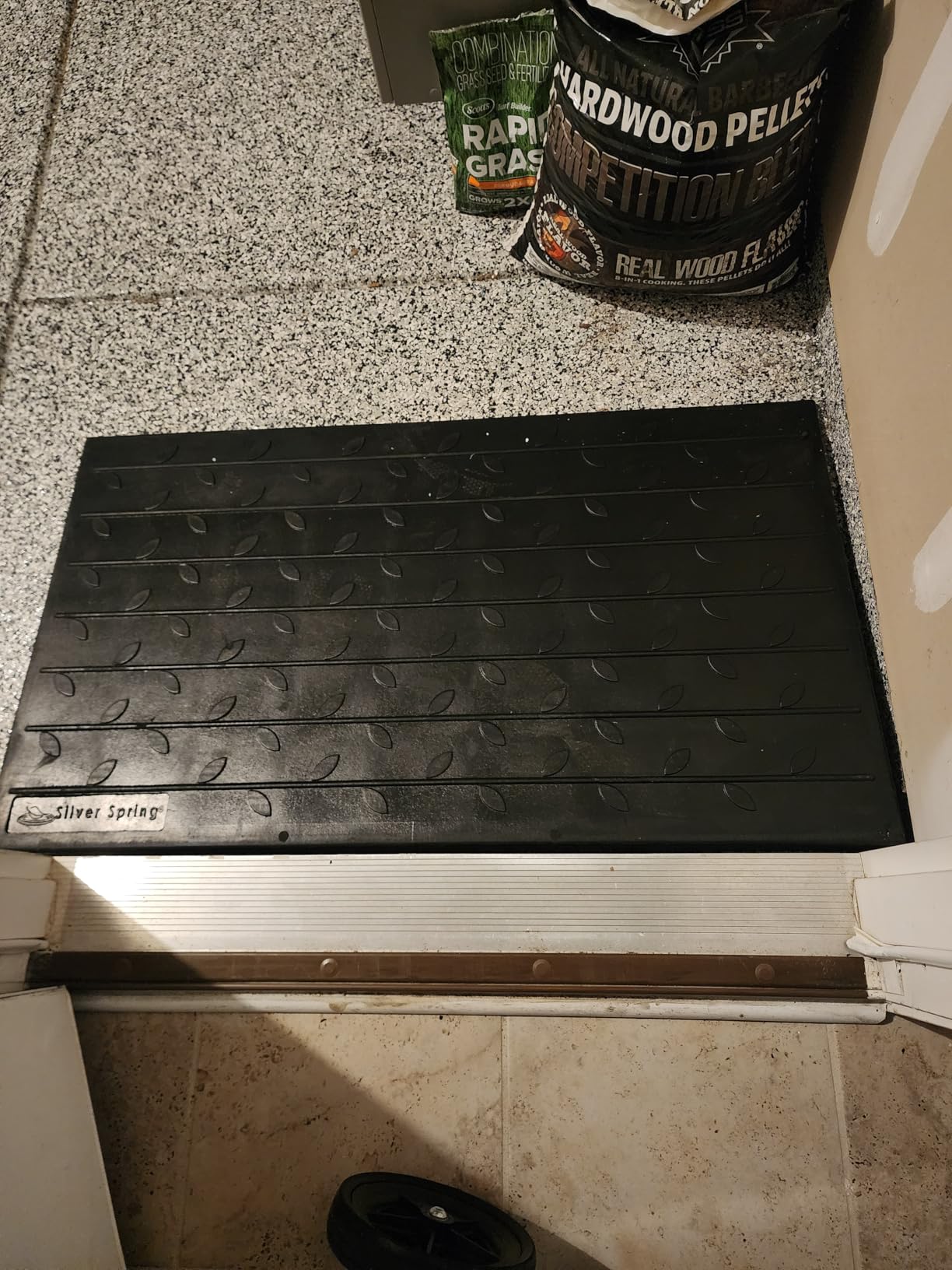
The grooved texture holds in all weather, and the 84 percent five-star rate across more than 1,200 reviews backs that up. It is a one-piece design with no assembly, ready to use the moment you set it down.
The clever detail is the three integrated cable channels on the underside. We routed a garden hose and an outdoor lighting cable through them, which keeps the walkway clear and protects cords from being crushed.
Two honest caveats. The 600-pound capacity is the lowest in this guide, still enough for nearly any manual chair user and most power chairs, but verify your combined weight. And at 54 pounds, decide on your placement before delivery day, because repositioning it alone is unpleasant.
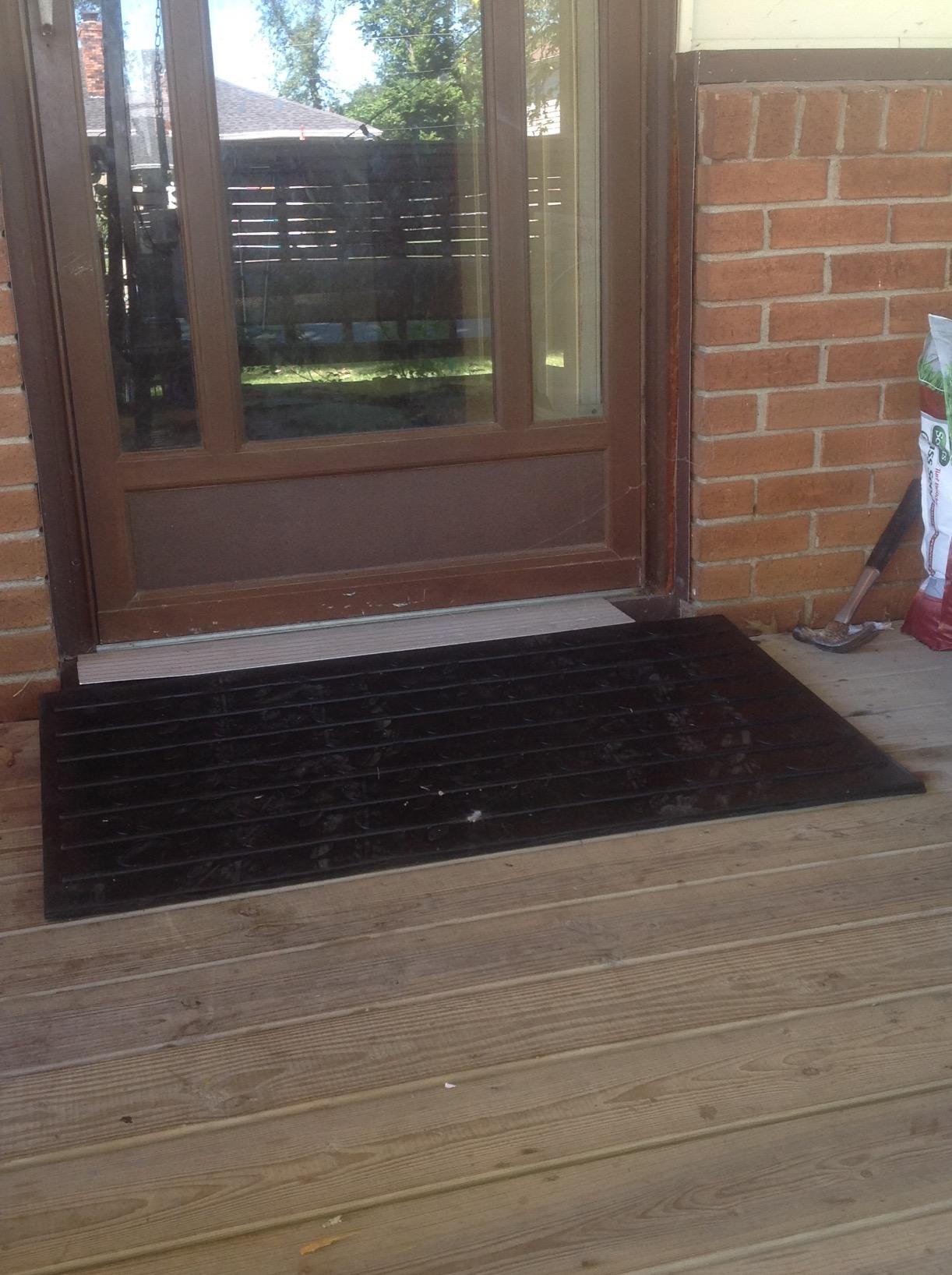
What are the three cable channels for
They are grooved tunnels molded into the underside that let hoses, extension cords, and low-voltage wiring pass under the ramp instead of across it. Cords stay protected and the ramp sits flush.
If you run outdoor holiday lighting or have a sump pump hose crossing a doorway, this feature alone justifies the pick. Just keep the channel diameters in mind for thicker connectors.
Where should you place a 54 pound ramp
Choose a spot you will not want to change, because two people should move this thing. Our pick was a garage side entry where it will live indefinitely.
Also confirm the 24-inch deck depth fits your approach, since a four-inch rise over 24 inches is a workable grade for a threshold crossing but needs clear floor space in front. Once placed, expect it to stay put permanently.
10. Silver Spring 8FT Wheelchair Ramp with Handrails – Best Permanent Home Ramp
8′ Wheelchair Ramp for Home Steps, 850 lb, Handrails, 36″ W, Silver Spring
8 foot length
850 lb capacity
Double handrails
ADA 1:12 slope
Pros
- Built to the ADA 1:12 slope ratio
- Double tube handrails at two heights
- Weather-proof aluminum that never rusts
- Raised side curbs for wheel safety
- Limited lifetime warranty
Cons
- Requires two people to install
- Ships by freight rather than standard delivery
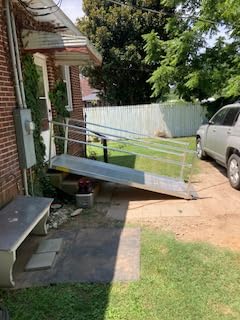
When the front entry became the main way in and out every day, we stopped pretending a portable folder was the long-term answer. The Silver Spring 8-foot ramp with handrails is the closest thing to a professional modular install you can order for home delivery.
The headline is the geometry. At 8 feet long for rises up to 8 inches, it hits the ADA-recommended 1:12 slope ratio, which means one foot of ramp for every inch of rise. That gentle grade is what makes independent use realistic for someone with limited strength.
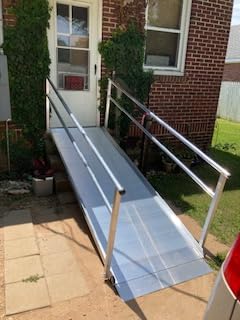
Safety details are everywhere. Double tube handrails give support at two heights, which worked equally well for an adult and for a child holding a rail, and raised side curbs stop a caster from sliding off the deck edge.
The extruded aluminum deck is weather-proof and maintenance-free, it will never rust, and the textured surface held traction through a heavy rain. Capacity is 850 pounds, enough for an occupied full-size scooter or power chair, and the whole unit is made in the USA with a limited lifetime warranty.
Trade-offs are logistical rather than functional. It weighs 89 pounds and needs two people for placement, it ships via freight rather than standard delivery, and some doorway configurations may need minor modification during install.
Does it meet ADA slope requirements
Yes. The 8-foot length against an 8-inch rise produces the 1:12 ratio the ADA recommends for residential comfort, and the 36-inch clear width also matches common accessibility guidance.
If your rise is taller than 8 inches, do not stretch this ramp beyond its rating. Silver Spring sells the same handrail platform in lengths from 3 to 10 feet, so measure first and order the length that keeps the 1:12 ratio.
What does installation involve
Two people can set it in place in an afternoon, since the platform is a single welded assembly rather than a kit of parts. No concrete work is required for a standard porch landing.
Plan the delivery, because freight shipping means a scheduled drop at your curb or driveway. Have a helper ready, decide the final position beforehand, and check that your door swings clear of the handrail line.
How to Choose a Wheelchair Ramp for Your Home?
Every ramp above works for someone, but the right one for your house depends on four things: your measured rise, how long you need the solution, the combined weight it must carry, and the surface it sits on. Here is the process we use.
Start by measuring your vertical rise
Put a straight board flat on the top step or threshold, extend it over the edge, and measure straight down to the landing. That number in inches drives everything else.
For the gentlest, ADA-recommended grade, plan 12 inches of ramp length for every inch of rise. Most families accept a steeper 6-to-1 ratio for short portable ramps, but anything tighter gets risky for self-propulsion.
This is the exact mistake forum posters keep running into: buying a 3-foot ramp for a 10-inch rise and discovering the hard way that the grade is unusable. Measure first, order second.
Match the ramp type to how long you need it
Rubber threshold ramps are permanent, low-rise fixes for lips up to about 4 inches. They never move, never rust, and cost the least.
Folding aluminum ramps are the flexible middle ground, good for 2-to-12 inch rises when you need portability or a temporary solution after surgery. Telescoping track pairs suit manual chairs and vehicles, not power chairs.
For a permanent entry that will be used for years, a handrail ramp at the proper 1:12 slope is worth the investment. One forum point worth repeating: rentals make sense for temporary needs, and a ramp for two or three steps is typically a 4-to-5-foot unit, so renting one for a few months can beat buying.
Check weight capacity the right way
Add the user’s weight, the chair’s weight, and anything carried on the chair, then compare that total to the rating. A heavy power chair plus an occupant can reach 400 to 500 pounds fast.
Folding aluminum ramps in this guide carry 600 to 850 pounds, and the rubber thresholds carry far more. The one to double-check is the Silver Spring 4-inch at 600 pounds, which is still ample for most users but leaves less margin.
For occupied power chairs, also read buyer reviews for words like sag and bounce. Longer folding spans flex more in the center, which is a documented complaint about folding ramps under heavy power chairs.
Aluminum, rubber, or wood
Aluminum is the default for anything longer than a threshold: it is light, it never rusts, and it needs zero maintenance. Every folding and permanent ramp in this guide is aluminum.
Rubber wins for low rises and indoor thresholds. It stays put, grips when wet, cuts to width, and hides cords, but it caps out around a 4-inch rise.
Wood is the DIY route, and the forum consensus is blunt about it: wood ramps need footings, permits, and regular sealing, and they rot and warp if neglected. Build one only if you want the project and the maintenance that comes with it.
Funding help: Medicare, Medicaid, and VA programs
Original Medicare does not cover home ramps, because a ramp is considered a home modification rather than durable medical equipment. Some Medicare Advantage plans offer supplemental benefits for accessibility modifications, so call your plan and ask directly.
Medicaid waiver programs in many states do pay for home modifications, and disabled veterans should look at the VA’s HISA grant for home accessibility work. Nonprofits are another route, including Rebuilding Together, Habitat for Humanity critical home repair programs, and your local Area Agency on Aging.
Budget one more consideration: climate. If you get snow, a ramp with a textured aluminum deck and open sides sheds ice better than a solid rubber slab, and you will want a place to store a portable ramp out of the weather.
Frequently Asked Questions
Does Medicare pay for a wheelchair ramp?
Original Medicare does not pay for home wheelchair ramps because ramps are classified as home modifications rather than durable medical equipment. Some Medicare Advantage plans offer supplemental benefits that cover accessibility modifications, so contact your plan directly. Medicaid waiver programs in many states, VA HISA grants for veterans, and nonprofits like Rebuilding Together or your local Area Agency on Aging are the most common sources of funding help.
Is it cheaper to buy a wheelchair ramp or build one?
Building a wood ramp usually costs less in raw lumber, but you add footings, hardware, permits, and many hours of labor, plus ongoing sealing and repairs as the wood weathers. A pre-built aluminum ramp costs more up front yet needs no maintenance, installs in hours, never rots, and can be resold or moved if needs change. For a short threshold rise, a ready-made rubber ramp is almost always the least expensive and fastest option overall.
How do I choose a wheelchair ramp for my home?
First, measure your vertical rise from the top step to the ground with a level and a tape measure. Second, pick the ramp type: a rubber threshold ramp for rises under about 4 inches, a folding aluminum ramp for 2 to 12 inches and portability, or a permanent handrail ramp for a long-term entry. Third, check that the weight capacity exceeds the combined weight of user plus chair. Fourth, match the length to the grade you want, ideally one foot of ramp per inch of rise for the ADA-recommended 1:12 slope.
What can I use instead of a wheelchair ramp?
A vertical platform lift or porch lift raises a wheelchair straight up, which works when there is no room for a ramp run. A stair lift carries a seated user up existing steps but does not carry the wheelchair itself. For very low lips under an inch, a rubber transition strip or beveled threshold pad may be enough. Some households also add an alternate entry, such as converting a garage entry with a shorter rise into the main accessible entrance.
Final Verdict: The Best Wheelchair Ramps for Homes for 2026
If you want one answer, get the VNN 4FT Portable Wheelchair Ramp. It covers the most common rise range around a home, carries 800 pounds, folds for storage, and earns a 4.5-star average across more than 2,000 reviews.
For a single low step, the FACHNUO 2FT at 11 pounds is the easiest ramp anyone in our house has carried. For a permanent front entry, the Silver Spring 8FT with handrails delivers the proper 1:12 slope and handrail support that portable ramps simply cannot offer.
Whatever you choose, measure your rise before you click buy, and hold every option to the one-foot-per-inch-of-rise standard when you can. That single habit is the difference between a ramp that gets used daily and one that gets returned. Pick the ramp that matches your entry, your chair, and your climate, and the front door stops being an obstacle.