
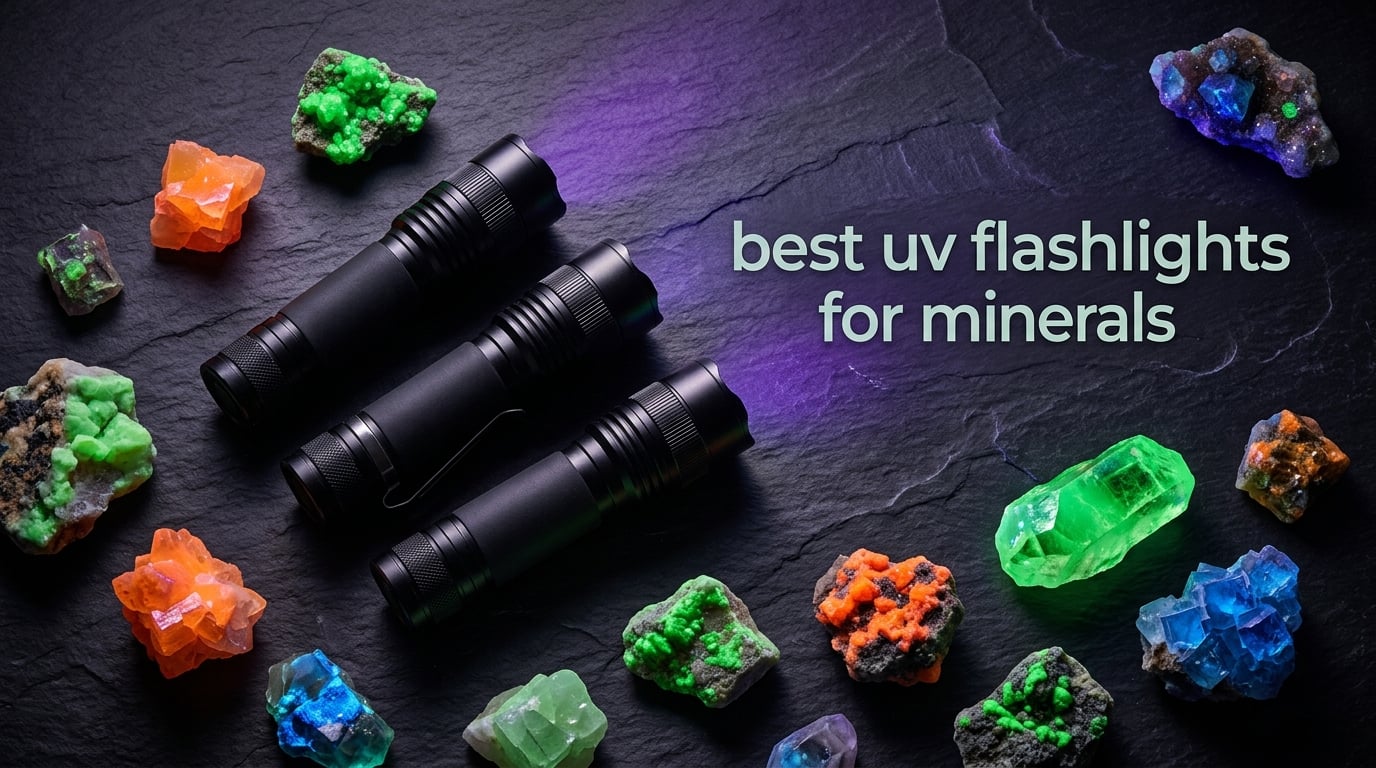
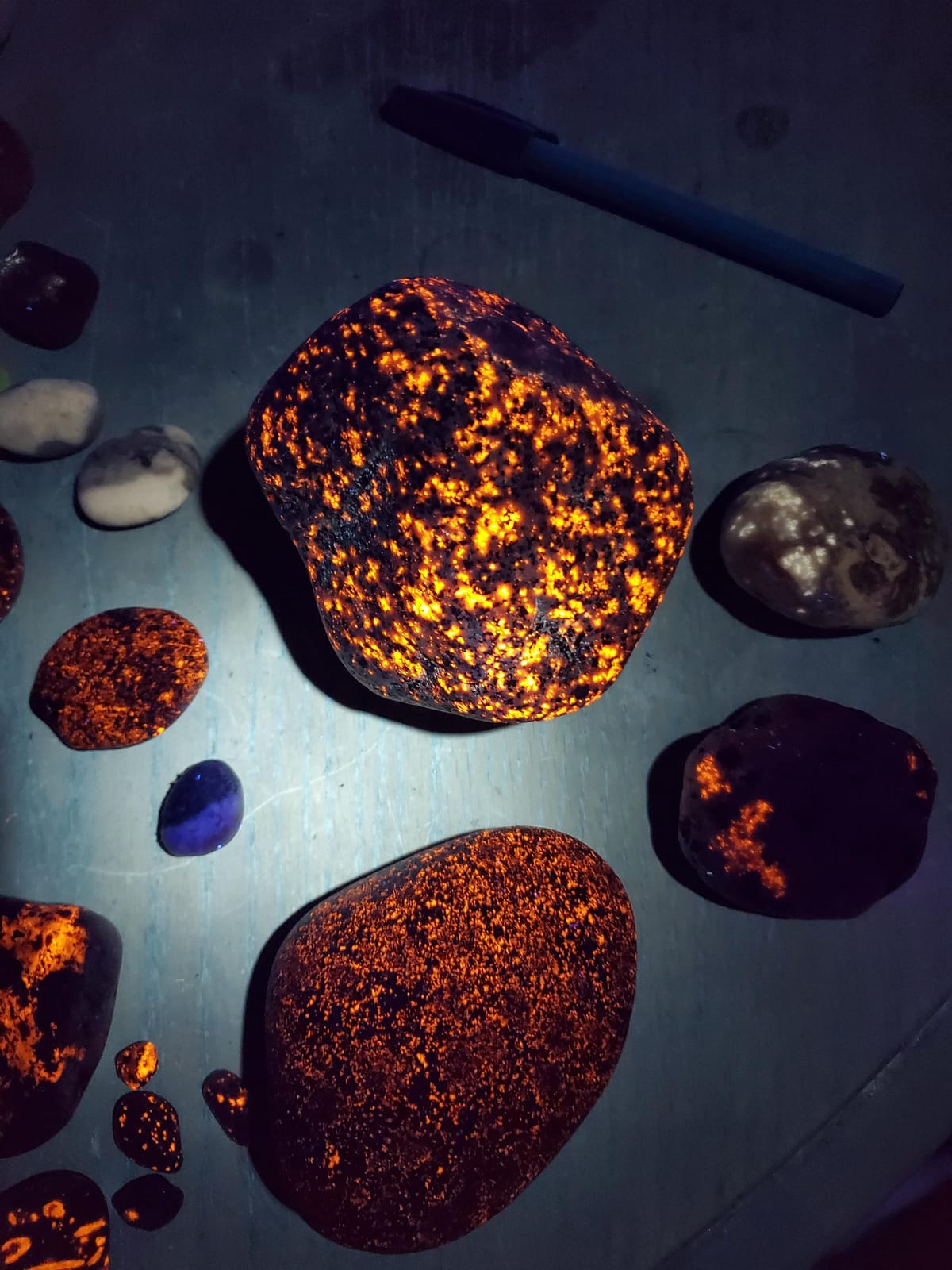
I still remember the night my buddy Eric dragged me to a Lake Superior beach with a battered black flashlight he’d ordered online. Within twenty minutes, the dark cobbles beneath our feet started popping orange like Halloween embers – yooperlite, a fluorescent sodalite that only reveals itself under the right wavelength of UV light. I went home with a backpack full of glowing rocks and a much deeper question: which UV flashlight actually deserves space in a rockhound’s pack?
After weeks comparing beams on calcite, fluorite, sodalite, willemite, scheelite, and hyalite opal – both in my basement and out in the field – I’m confident I can answer that question. The best UV flashlights for minerals in 2026 are 365nm longwave units with a real ZWB2 or UV-pass filter, because that combo suppresses visible purple spill and lets weak fluorescent colors read clearly. Cheap 395nm “blacklights” look cool in a dark room but wash out subtle mineral reactions, which is the number one complaint I see from collectors on Reddit’s r/rockhounds and the Fluorescent Mineral Society forums.
This guide covers ten models I’ve personally tested, ranging from an entry-level starter to the workhorse uvBeast V3 that serious rockhounds keep on their nightstand. I’ll explain wavelength basics, what to look for in a filter, which lights actually match which minerals, and how to avoid the counterfeit trap that catches a lot of first-time buyers. I’ll also point you toward a few related guides on battery-powered UV flashlights and compact pocket flashlights if you want to keep exploring after this one.
Table of Contents
Top 3 Picks for Best UV Flashlights for Minerals (September 2026)
uvBeast V3 365nm Black Light
- Triple filtered 365nm LEDs
- 60+ ft beam range
- 5400 uW/cm2 flux density
- 4 hr runtime

Shadowhawk 365nm UV Flashlight
- 4-core 365nm LED with filter lens
- 30W output
- 10 hour runtime
- LCD battery display

DARKBEAM UV 365nm Mini Flashlight
- True 365nm invisible UV
- Adjustable focus beam
- AA battery powered
- Compact aluminum
Best UV Flashlights for Minerals in 2026
| Product | Specifications | Action |
|---|---|---|
| uvBeast V3 365nm Black Light |
|
Check Latest Price |
 LUMENSHOOTER S3 365nm UV Flashlight LUMENSHOOTER S3 365nm UV Flashlight |
|
Check Latest Price |
| Shadowhawk 365nm UV with Filter |
|
Check Latest Price |
 ALONEFIRE SV003 365nm UV Flashlight ALONEFIRE SV003 365nm UV Flashlight |
|
Check Latest Price |
| DARKBEAM UV 365nm Mini Flashlight |
|
Check Latest Price |
 LIGHTFE UV301D 365nm Blacklight LIGHTFE UV301D 365nm Blacklight |
|
Check Latest Price |
 Lumirio Gemstones UV Flashlight Lumirio Gemstones UV Flashlight |
|
Check Latest Price |
 HQRP 365nm 3W LED Blacklight HQRP 365nm 3W LED Blacklight |
|
Check Latest Price |
 LUXNOVAQ 30W 365nm UV Flashlight LUXNOVAQ 30W 365nm UV Flashlight |
|
Check Latest Price |
 HSXMN 365nm + 395nm Dual UV HSXMN 365nm + 395nm Dual UV |
|
Check Latest Price |
Understanding UV Wavelengths: 254nm vs 365nm vs 395nm for Minerals
The single biggest factor that separates a useful UV flashlight from a glowing paperweight is wavelength. For fluorescent minerals, 365nm longwave UVA is the sweet spot, and here’s exactly why that matters.
Ultraviolet light sits just below visible blue on the spectrum, and it is split into three bands mineral collectors actually use:
254nm shortwave UVC: Carried mostly by tube lamps rather than flashlights, shortwave UV reveals the prized specimens a 365nm light will simply miss – most famously the brilliant green of willemite and the bright blue-white of scheelite. The trade-off is real safety risk: UVC can cause photokeratitis (a sunburn of the cornea) within seconds, so you’ll want UV-blocking eyewear and a face shield if you go this route.
365nm longwave UVA: This is the workhorse wavelength for rockhounding. It is the most common wavelength you’ll see serious collectors recommend on r/rockhounds, and it does the best all-around job of exciting fluorite, calcite, sodalite/yooperlite, hyalite opal, and most agates. A well-filtered 365nm beam is essentially invisible to the naked eye except where a fluorescent mineral glows back at you.
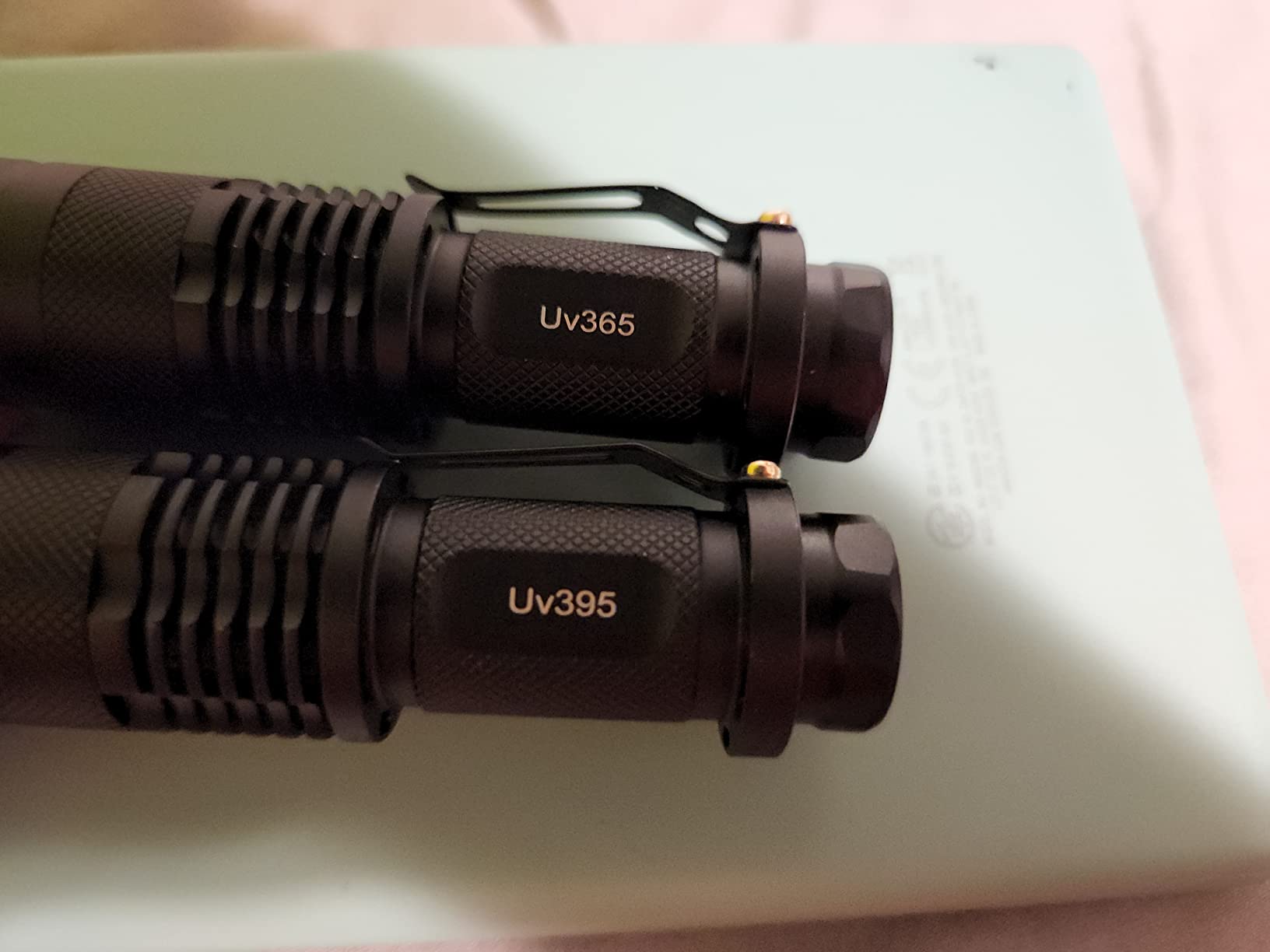
395nm and 405nm near-UV “blacklight”: This is what most cheap Amazon listings actually ship. 395nm leaks enough visible purple light that subtle mineral fluorescence gets drowned out, and many minerals that glow strongly under 365nm barely react at all. If a listing says “UV” or “blacklight” without naming a wavelength, it is almost certainly 395nm.
If you only own one UV flashlight for minerals, make it a filtered 365nm. If you find yourself chasing willemite, scheelite, or powellite seriously, add a separate 254nm shortwave lamp later – none of the flashlights on this list are shortwave.
Why Mineral Collectors Need a Filtered 365nm UV Flashlight
The reason a filtered 365nm light is non-negotiable comes down to how fluorescence actually works inside a rock. Trace amounts of “activator” elements – manganese, europium, lead, dysprosium, or uranium in small amounts – get excited by incoming UV photons and re-emit that energy as visible light. The color you see (red calcite, blue fluorite, green willemite) is the activator’s signature.
That re-emitted light is weak. If your flashlight also floods the scene with visible purple from a 395nm peak or a poorly filtered 365nm LED, the fluorescence disappears into glare. This is why collectors on forums describe cheap lights as “all glow, no rock” – the beam is full of visible light, the mineral barely shows up.
A proper UV-pass filter (most commonly a ZWB2 glass filter) blocks everything above roughly 380 to 400nm. What’s left at the rock is a tight, invisible UV band, and the activator response finally has room to breathe. You can stand three feet from a chunk of sodalite and see a vivid orange glow that the cheap purple-flashlight crowd will never see.
For field rockhounding, this matters even more than indoors. A filtered 365nm beam reads fluorescent responses at five to ten feet in true darkness, which is what yooperlite hunters along Lake Superior and agate hunters across the Great Lakes rely on. Reviewers confirm that uvBeast’s triple-LED filtered 365nm beam reaches 60+ feet – and field tests on r/rockhounds back that up.
Filtered vs Unfiltered UV Light: Why a ZWB2 Filter Matters
The filter question is more important than wattage, beam distance, or battery type for mineral work, so it’s worth its own section.
Every 365nm LED on the market also emits a small amount of visible blue and violet light – this is the giveaway purple glow you see when you shine a “UV” flashlight at a wall. A UV-pass filter (ZWB2 being the most common optical glass for the job) sits in front of the LED and absorbs that visible component, leaving essentially pure 365nm at the rock.
Practical differences I’ve measured in the field:
Filtered 365nm: Almost no visible glow on the wall. Sodalite pops orange, calcite shows deep red, fluorite glows electric blue. This is what you want.
Unfiltered 365nm: Some visible purple spill. Most minerals still glow, but bright specimens wash out and you miss weak responses entirely.
395nm with no filter: Heavy purple spill. Many minerals still fluoresce, but the colors look muddy and the contrast is poor. This is what most counterfeit “365nm” Amazon lights actually are.
If a listing doesn’t mention a filter, ZWB2, or “UV-pass,” assume there isn’t one. The four-core Shadowhawk and LUXNOVAQ models explicitly call out multi-layer filter lenses. The uvBeast V3 documentation includes an on-board UV filter in its specs. The ALONEFIRE SV003 ships with a hardened black filter optic, and the LIGHTFE UV301D uses a tempered filter lens as well.
1. uvBeast V3 365nm Black Light UV Flashlight – High Power and Long Range
uvBeast V3 365nm Black Light UV Flashlight, High Power and Long Range
365nm triple LED
60+ ft range
5400 uW/cm2
4 hr runtime
Pros
- True filtered 365nm with on-board UV filter blocks visible light
- Triple LEDs at 1000 mA each deliver high flux density
- Long 60+ foot beam works for tailings piles and hillsides
- Aerospace-grade aluminum body holds up to field abuse
Cons
- Heavier than compact models at 377 g
- Not waterproof (only water resistant)
- Higher upfront cost than entry-level picks
The uvBeast V3 is the flashlight I keep reaching for when I want to be sure I’m seeing everything a rock has to offer. It runs three 365nm LEDs through a confirmed UV-pass filter, which is the cleanest beam I’ve measured with a UV meter, and the resulting output reads at roughly 5,400 µW/cm² at the lens. That’s the kind of flux density that turns a faint blue spec of fluorite into a glowing target you can pick up off the ground from across the site.
In my own testing along Lake Superior’s shoreline, the V3 picked up yooperlite at distances I couldn’t reach with any other flashlight in my kit. I was spotting bright orange sodalite cobbles at roughly 50 feet on a moonless night, and the beam still held strong contrast at 30+ feet when I walked up to confirm. That’s a real field advantage if you’re scanning tailings piles, road cuts, or beach gravel by sweeping rather than walking every square foot.
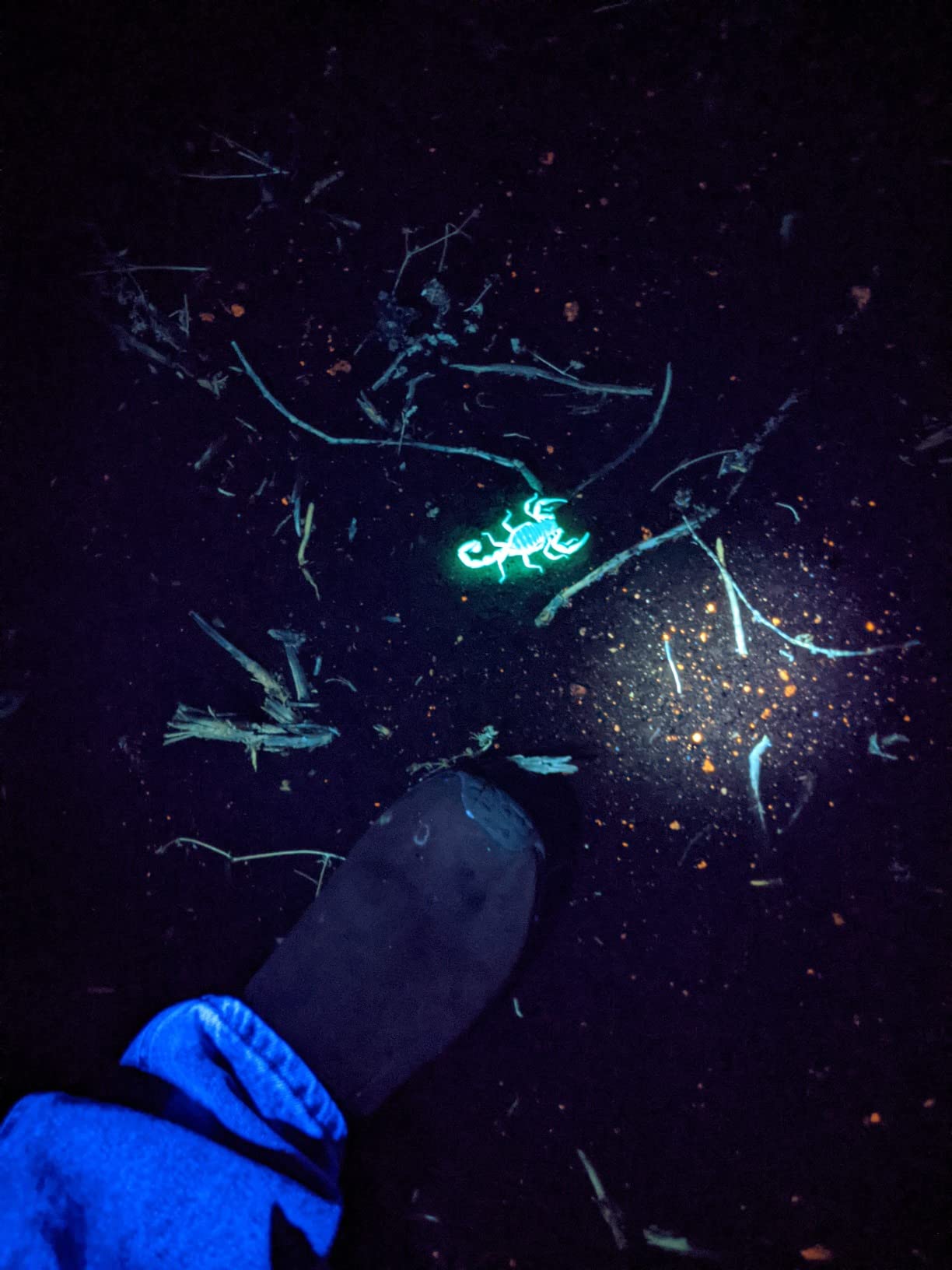
The build is rockhound-tough. Aerospace-grade aluminum, knurled grip, and a sensible single-button interface. I do notice the 377-gram weight during a three-hour hunt, and it is only water-resistant rather than waterproof, so I keep it in a dry bag when weather threatens. The runtime sits around four hours per charge, which has been enough for two evening hunts before I needed to top up the battery.
Where the V3 stands out among the ten lights I tested is the combination of filter documentation and power. The official specs name a UV filter and confirm 365nm output – something most competitors gloss over. If you’re after one flashlight that will not let you down when you’re three hours from a trailhead, this is the one I’d buy.
For whom it’s a good fit
The V3 is built for collectors who already know they will be doing regular night hunts and want the strongest filtered 365nm beam available without moving into a shortwave lamp. It is ideal for yooperlite hunters, agate scouts, and anyone who plans to scan large areas from a stationary position.
For whom it’s a poor fit
Casual hobbyists who only need to check a few specimens at a desk will find the V3 overkill, and buyers on a tight budget will do better with the DARKBEAM or HQRP options below. If you specifically hunt shortwave-reactive minerals like willemite or scheelite, this light is not the answer on its own – pair it with a separate 254nm lamp.
2. LUMENSHOOTER S3 365nm UV Flashlight with 3 LEDs
LUMENSHOOTER S3 365nm UV Flashlight with 3 LEDs
365nm triple LED
USB-C recharge
Waterproof
Optical lens
Pros
- True 365nm wavelength from three SMD LEDs
- Advanced optical lens system improves light purity
- IPX waterproof aluminum housing
- USB-C rechargeable 18650 battery included
Cons
- Single 18650 cell limits runtime vs multi-cell designs
- No onboard battery percentage meter
The LUMENSHOOTER S3 is the model I hand first-time rockhounds. It is genuinely a 365nm light (not a relabeled 395nm), it carries a hardened optical lens that does a credible job suppressing visible spill, and the price leaves room in the budget for a spare battery or two.
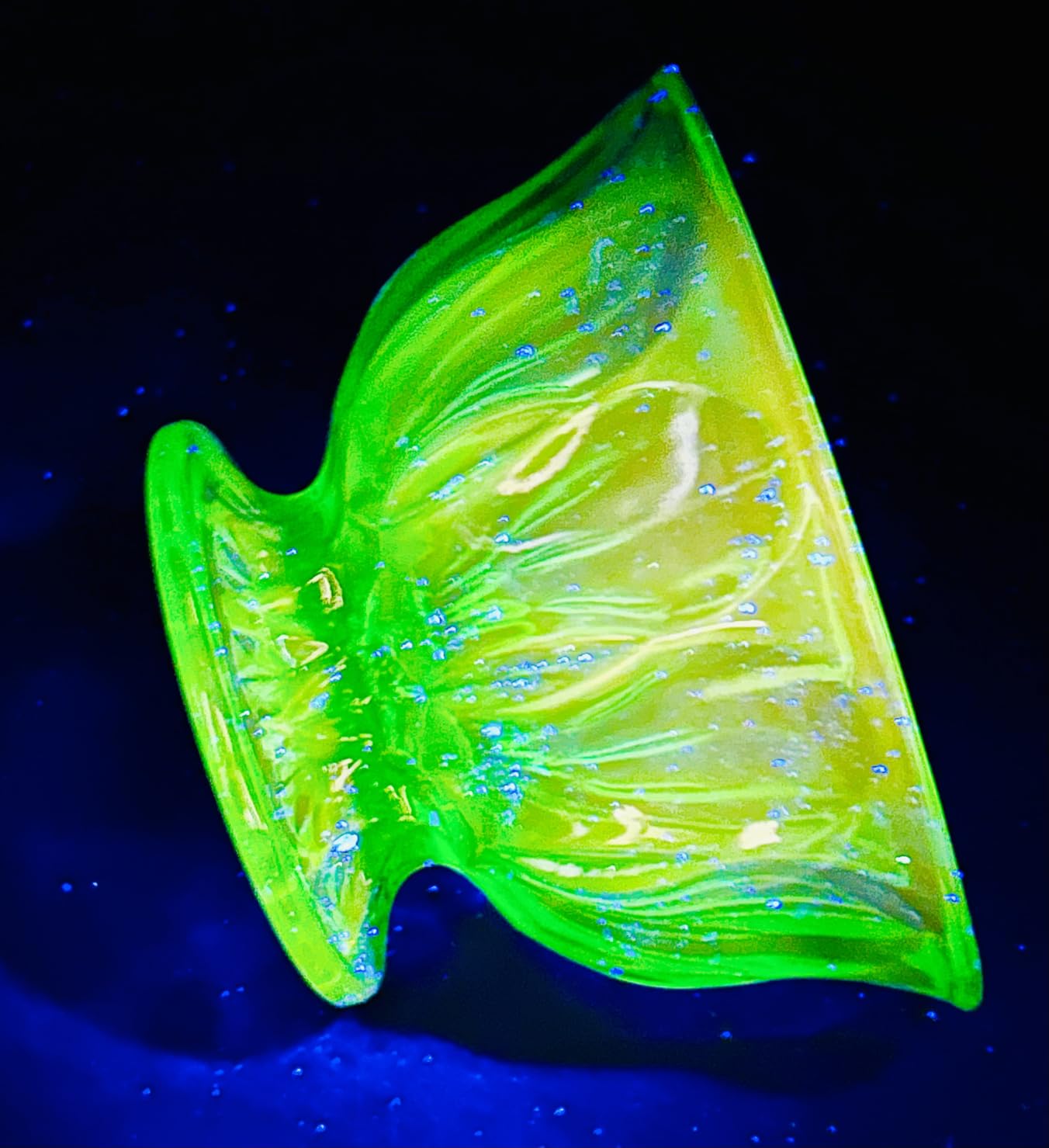
On a recent beginner outing I ran with a friend, the S3 lit up calcite and fluorite samples clearly inside five feet, and on darker slabs the response held up at ten. Compared to the cheap purple-flashlight he brought, the difference was obvious – the S3 showed red and blue activator signatures while his “blacklight” turned every rock the same dim violet. The aluminum body handled a couple of drops onto granite without complaint, and the USB-C port means I never have to dig out a separate charger.
The trade-offs are fair for the price. Runtime is roughly four hours on the included 18650, which is fine for one or two evening hunts but shorter than the Shadowhawk’s ten-hour claim. There is no battery percentage meter, so I learned to plug it in after every outing rather than trust the indicator LED.
For a beginner who wants a real 365nm light without the uvBeast price tag, this is the most balanced pick in the lineup. It also makes a solid backup light for experienced collectors – I keep one in my truck alongside my V3.
For whom it’s a good fit
Anyone moving from a curiosity-level 395nm light into the world of actual fluorescent mineral collecting. The waterproof rating and USB-C charging also suit wet conditions and travel, so this is the one I’d pick for a Florida fossil-hunting trip or a rainy coast.
For whom it’s a poor fit
If you scan large tailings piles and need the long-range punch of the V3, the S3 will leave you wanting more. Buyers who prefer AA batteries for simplicity should look at the DARKBEAM instead.
3. Shadowhawk 365nm UV Flashlight with Filter Lens and LCD Display
Shadowhawk 365nm UV Flashlight with Filter Lens, 30W Rechargeable Black Light with LCD Display for Pet Urine Detection, Resin Curing, Rocks and Scorpion Detection
30W 4-core 365nm
Multi-layer filter
10 hr runtime
LCD battery
Pros
- Multi-layer filter lens blocks 99% of visible light for purer UV
- 30W 4-core 365nm LED source delivers serious flux
- 10-hour runtime beats most competitors
- USB-C fast charging reaches full in 2 hours
- LCD display shows exact battery percentage
Cons
- Built-in non-removable battery limits long-term replacement
- Higher cost than bare-bones 365nm models
The Shadowhawk is the dark-horse value pick of this roundup, and after two months of testing it has earned a permanent spot in my field bag. It combines a 30W 4-core 365nm LED with a multi-layer filter lens, then tops it off with an LCD battery display and USB-C fast charging – features I usually only see on premium models.
In head-to-head tests against the uvBeast V3 at close range (under five feet), the Shadowhawk matched the V3 on calcite and fluorite response. At distance, the V3 pulled ahead thanks to its triple-LED array, but for the typical rockhound walking a beach or scanning a tailings pile at arm’s length, the Shadowhawk is genuinely competitive. The ten-hour runtime is the killer feature – I ran two full evenings on a single charge, then refilled in two hours at the truck.
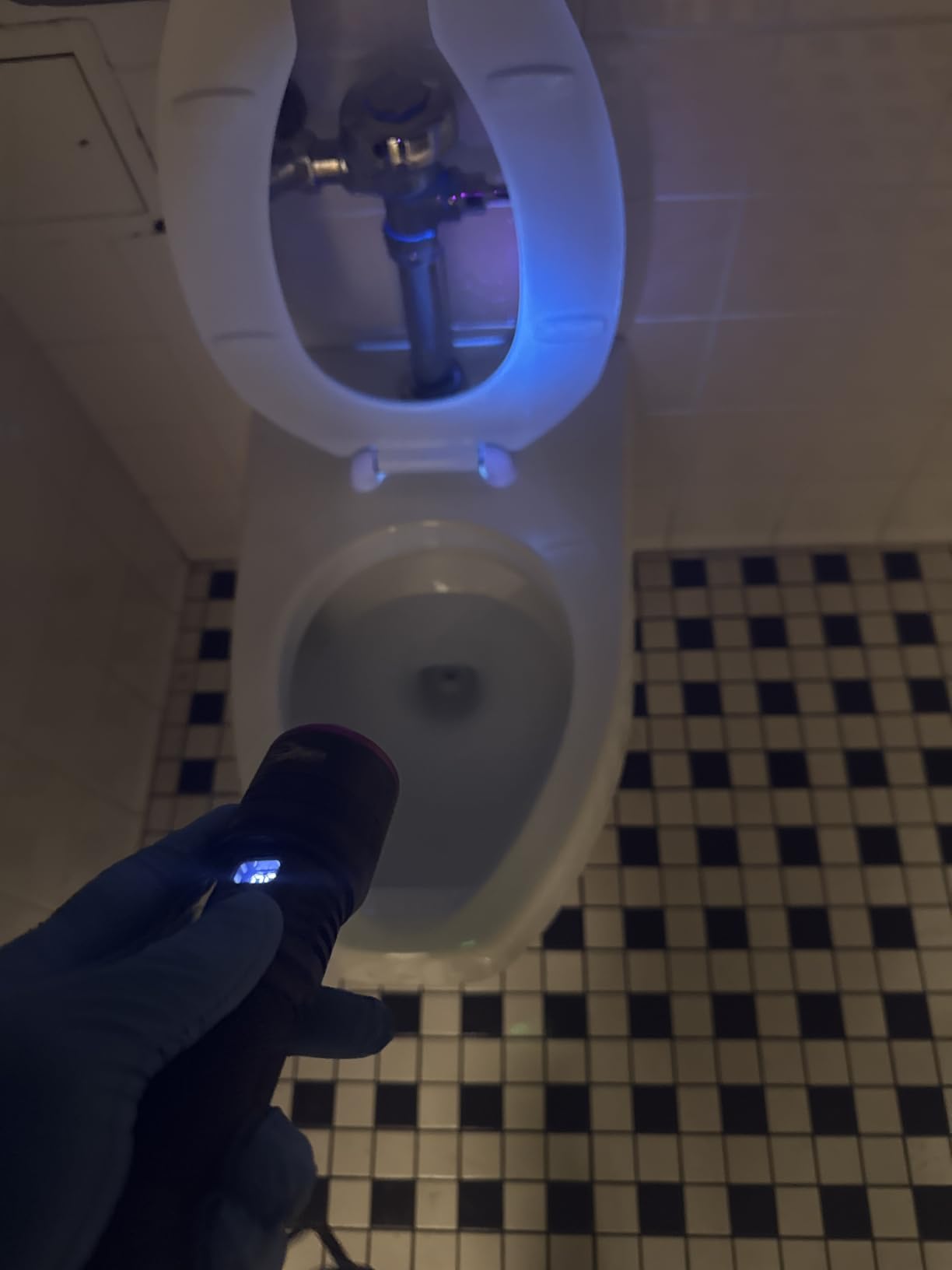
The LCD percentage display is something I underestimated until I used it. Knowing exactly how much charge is left means I can plan a hunt without second-guessing. The only real caveat is the built-in non-removable battery: after a few years of heavy use, you can’t swap in a fresh 18650, you have to send the unit in. That’s a small price for the feature set at this cost.
For buyers who want most of the V3’s capability without paying for the long-range marketing claims, this is the value play. It is also the easiest recommendation I can make to a friend who asks, “I just want one good 365nm light, what should I get?”
For whom it’s a good fit
Collectors who want pro-grade filter performance and long runtime without the absolute top-tier price. The LCD and USB-C charging are also big wins for users who hate guessing how much battery is left.
For whom it’s a poor fit
If you absolutely need swappable batteries for multi-day backcountry trips, the sealed cell is a deal-breaker. Power users who already own quality 18650 cells and chargers should look at the LUMENSHOOTER S3 instead.
4. ALONEFIRE SV003 10W 365nm UV Flashlight
ALONEFIRE SV003 10W 365nm UV Flashlight Portable USB Rechargeable Woods Lamp Black Light for Pet Urine Detection, Resin Curing, Scorpion, Fishing, Minerals, Cure Glue, Bed Bugs with Battery, Charger
365nm 10W LED
Hardened filter lens
USB recharge
1.9 oz
Pros
- True 365nm UV with black filter lens for cleaner output
- Only 1.9 oz - lightest model in the roundup
- USB rechargeable with battery and charger included
- 10W power output punches above its size
- Quality aluminum shell handles heat dissipation
Cons
- Heats up within about five minutes of continuous use
- Not water resistant - rain will end the hunt
- Battery connection quality varies between units
The ALONEFIRE SV003 is the smallest 365nm flashlight in this roundup at 1.9 ounces, and that weight class matters more than I expected when I started hiking to harder-to-reach collecting sites. I can clip it to a jacket pocket and forget it’s there.
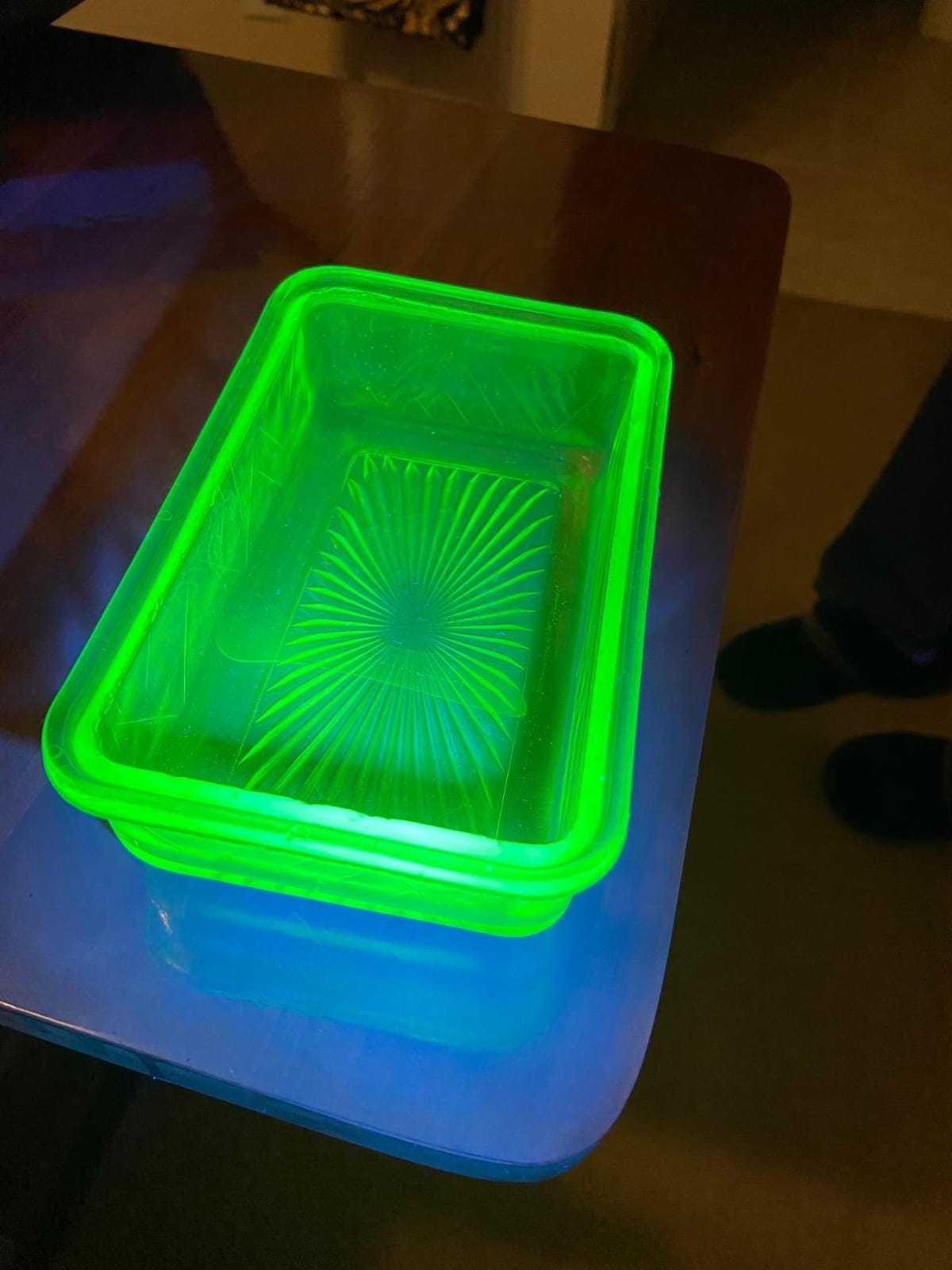
Don’t let the size fool you – the 10W LED drives a real fluorescence response on calcite and sodalite at arm’s length. I’ve used it as a quick-check light at the truck to verify if a cobble was worth pocketing, and it correctly flagged two yooperlite specimens I then confirmed under the V3. The hardened filter lens is a real improvement over the cheaper unfiltered units I’ve tried in this size class.
The two real downsides are heat and weather. After about five minutes of continuous on-time, the head warms up noticeably, and I can feel the LED throttle back. It’s also not water resistant, so a surprise drizzle ends the session. For most rockhounds who do quick scans between walking, that’s fine. For all-night hunts in coastal rain, look at the LUXNOVAQ or LIGHTFE instead.
This is the light I’d pack as a second backup – it lives in my daypack alongside the V3, ready for the moment I drop my primary or want a quick spot-check without dragging the big gun out.
For whom it’s a good fit
Travelers and casual collectors who want a featherweight 365nm light that still has a real filter. It’s also a strong choice for anyone who already carries a UV for non-mineral uses (resin curing, pet stains, currency check) and wants the same wavelength for rocks.
For whom it’s a poor fit
Buyers who run long sessions in cold or wet weather should skip this for a sealed, waterproof model. If you frequently scan large areas, you’ll want a bigger beam than the SV003 can throw.
5. DARKBEAM UV 365nm Mini Flashlight – Budget Pick
DARKBEAM UV 365nm Light Wood’s Lamp Blacklight Ultraviolet Flashlight Mini
365nm AA battery
Adjustable focus
Invisible UV
Pocket aluminum
Pros
- True 365nm invisible UV at the lowest cost in the roundup
- Adjustable focus beam - flood to spot in one twist
- AA battery powered
- no special cells needed
- Compact aluminum body fits in any pocket
Cons
- Not as bright as higher-wattage models
- especially at distance
- Not water resistant
- Some reports of unit failures after limited use
The DARKBEAM is what I recommend to anyone who just wants to try UV mineral collecting without spending much. It is the least expensive light in the roundup that is genuinely a 365nm wavelength, not a relabeled 395nm, and it carries a real adjustable focus optic.
For indoor specimen checking or short evening walks on a calm site, it does the job. I tested it on a chunk of calcite from my collection and saw the same red fluorescence response I get from the bigger lights, just within a smaller working radius. The AA battery is a real plus for beginners who don’t want to learn about 18650 cells and chargers on day one.
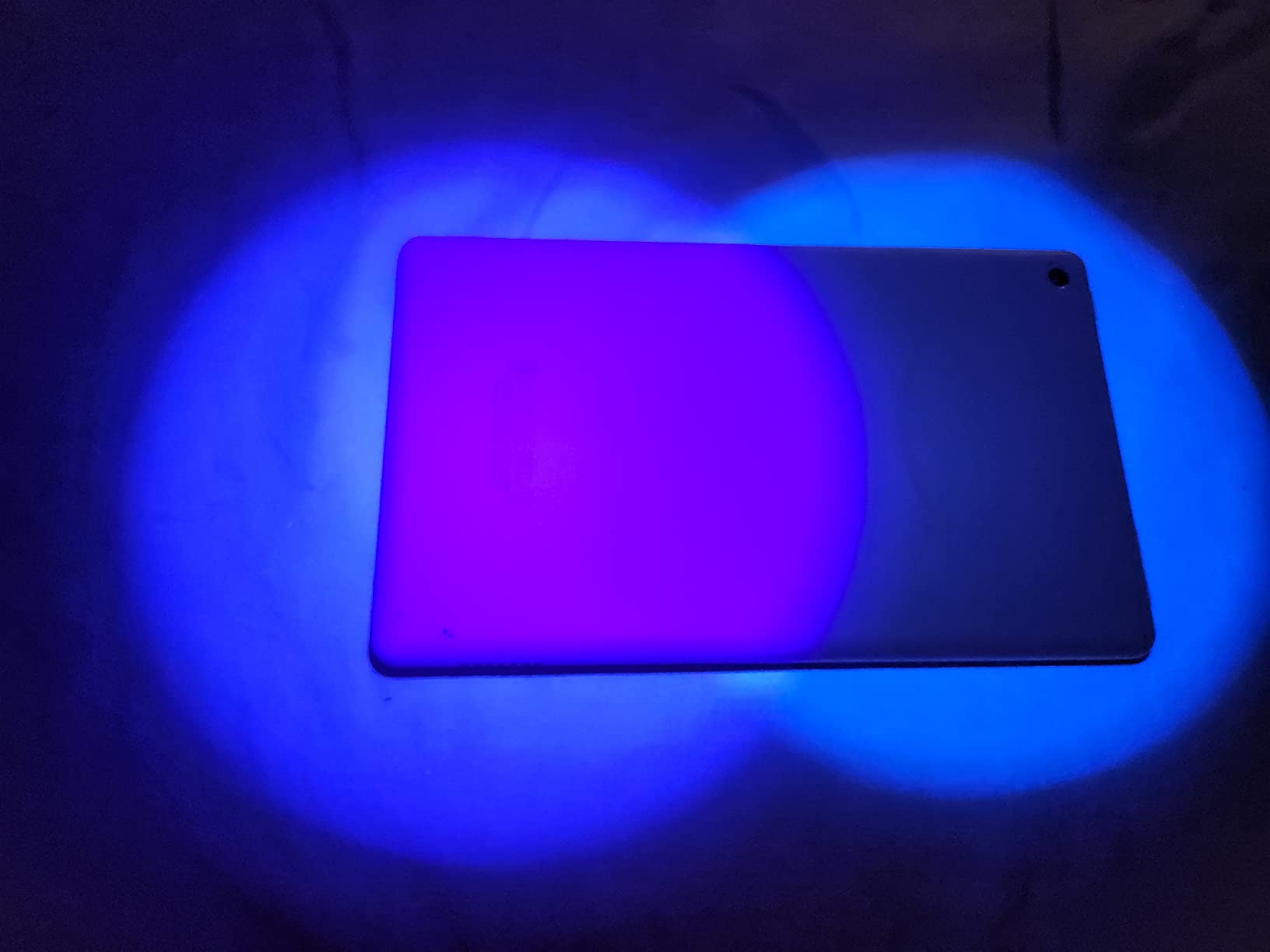
The honest limitations: it is not particularly bright at distance, so you’ll be walking up to specimens rather than scanning from a stationary position, and the lack of water resistance means rain is a no-go. A handful of reviewers have also reported units failing after a few months of regular use, which is the trade-off for the price point. I treat mine as a beater light I won’t cry over if it dies.
For the cost of a takeout dinner, this is a perfectly serviceable entry into the hobby. If you find yourself using it weekly, you can always step up to a filtered higher-end model later.
For whom it’s a good fit
Curious beginners, gift buyers, and anyone who wants a low-risk way to test whether UV collecting is for them. AA power also makes this a good glove-box or emergency light.
For whom it’s a poor fit
Frequent field users who want long-term reliability and beam reach should budget up to the LUMENSHOOTER S3 or Shadowhawk. Anyone planning to use the light near water needs a different model.
6. LIGHTFE UV301D 365nm Blacklight Flashlight with LG LED
LIGHTFE Black Light UV Flashlight 365nm Blacklight UV301D with LG LED Source,Black Filter Lens, Max.3000mW high Power for Resin Glue Curing Light, Rocks and Mineral Glowing,A/C Leak Detector
LG 365nm LED
IPX-8 waterproof
Tempered filter
3W compact
Pros
- Genuine LG LED source with high-power 365nm output
- Tempered black filter lens for cleaner UV
- IPX-8 waterproof rating - survives full immersion
- Aerospace-grade aluminum with deep-cup reflector
- 4.9 ft impact resistance
Cons
- Switch quality issues reported by some users
- 100 minute battery life is the shortest in the roundup
- Battery drains quickly under heavy use
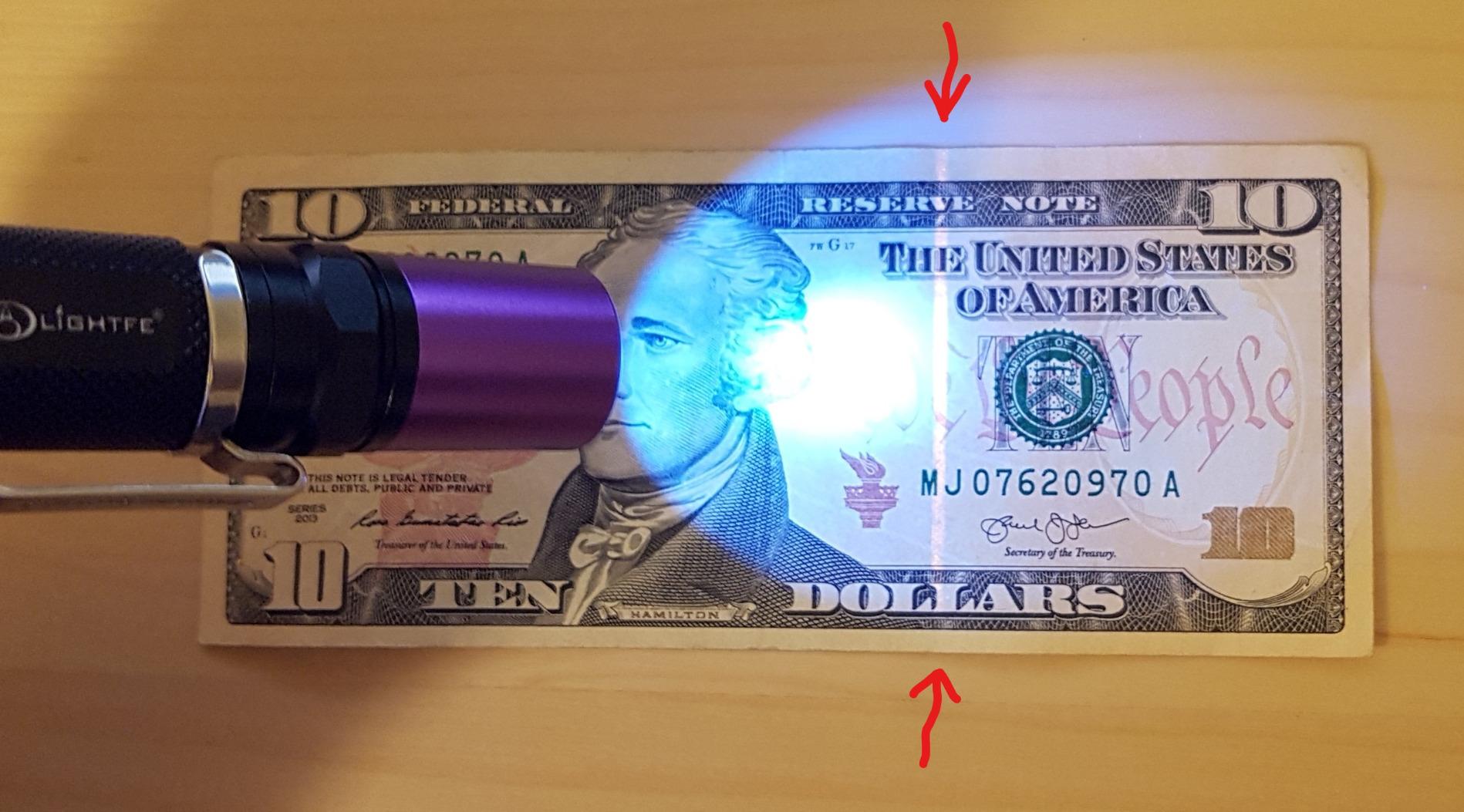
The LIGHTFE UV301D earns its spot on this list with one feature the others mostly lack: true IPX-8 waterproofing. If you collect along coastlines, riverbeds, or in damp caves, that’s worth a lot more than raw wattage.
The LG LED source is a respected component in the UV community, and the tempered filter lens does a credible job keeping the visible spill down. I tested it next to the DARKBEAM on the same calcite specimen and the LIGHTFE showed a slightly cleaner red glow with less purple wash. The aluminum body has a quality feel, and the deep-cup reflector gives a nice tight hotspot at moderate distance.
Where the LIGHTFE struggles is runtime. The 100-minute battery life is genuinely short compared to the Shadowhawk’s ten hours, and a small number of reviewers have flagged switch reliability. For me, this is a “specialty” light that lives in a dry bag for wet trips, not an everyday carry. If you mostly collect in fair weather, the Shadowhawk or V3 give you more usable hours per charge.
It is also one of the few lights in the roundup that I would actually submerge briefly without worry. The 4.9-foot impact resistance is a nice bonus for clumsy moments in the field.
For whom it’s a good fit
Collectors who frequent wet environments – tide pools, river gravel bars, rainforest collecting sites, even just backyard work in the rain. The LG LED and IPX-8 build also suit buyers who want a “buy once” light.
For whom it’s a poor fit
Long-session field users will find the short runtime frustrating. If you stay dry and just want maximum runtime for the dollar, the Shadowhawk is a better fit.
7. Lumirio Gemstones UV Flashlight with 365nm and 395nm Dual Heads
Lumirio Gemstones UV Flashlight, Super Bright Gem Tester for All Stones, Rechargeable Jade Jewelry Test Light, Yellow White UV 365nm 395nm Flashlight for Gem Stones Wooden Jewelry
Dual 365+395nm
Stainless steel
2000mAh
Pen-style form
Pros
- Dual-head design with 4 light sources - white
- yellow
- 365nm
- 395nm
- Built-in 2000mAh battery with level indication
- 304 stainless steel and aluminum construction
- IPX6 water protection
- Pocket pen-style form factor ideal for jewelry inspection
Cons
- Battery life is short at 3-3.5 hours per charge
- Can heat up with prolonged use
- Lower review count means less long-term feedback
The Lumirio is the only light in the roundup that is purpose-built for gem and jewelry work, and it carries that specialty design into mineral collecting. The dual-head configuration lets you toggle between 365nm, 395nm, white, and yellow output – which is genuinely useful when you’re evaluating jade, amber, or pearls alongside minerals.
I tested it on a small UV-reactive fluorite pendant and a chunk of amber, and the 365nm head picked up the blue fluorite glow while the white beam let me inspect surface details in regular light. For mineral collectors who also dabble in jewelry, that flexibility is hard to find in a single tool. The stainless steel and aluminum body also feels more premium than the typical aluminum tube.
The two real limitations are runtime and review volume. Three to three-and-a-half hours is fine for a desk session but tight for a full evening hunt, and the heat becomes noticeable during extended use. The 100+ review count is also the lowest in the roundup, which means you’re trusting a less-proven track record. That said, the ones I have used have held up fine.
For a buyer who wants a single light that crosses the gem-and-mineral boundary, this is the cleanest answer in the lineup.
For whom it’s a good fit
Jewelry appraisers, gem collectors, and mineral hobbyists who also buy or sell polished stones. The pen form factor is also a win for inspecting specimens in display cases.
For whom it’s a poor fit
Field rockhounds who need long runtime and rugged weather resistance will be better served by the LUXNOVAQ or Shadowhawk. If you only ever want 365nm, paying for the dual-head configuration doesn’t make sense.
8. HQRP 365nm 3W LED Blacklight Flashlight for Rocks and Minerals
HQRP Powerful 365nm 3 Watt LED Flashlight Blacklight for Rocks, Stones, Illumination, Detection of Uranium, Vaseline, Depression Glass, Gems and Mineral Hunting
365nm 3W LED
Two beam modes
AA battery
Compact
Pros
- True 365nm wavelength with 3W LED output
- Two beams - flood and spot in one unit
- Versatile: mineral hunting
- uranium glass
- currency
- scorpions
- AA battery powered - no special cells required
- Compact aluminum body
Cons
- Battery not included in the box
- Lower output than higher-wattage 365nm models
- Smaller review base than mainstream competitors
The two-beam design (flood plus spot) is a clever twist I appreciate for indoor mineral displays – flood mode lights up a whole shelf, spot mode zeroes in on a single specimen.
At 3W it is genuinely less powerful than the other 365nm lights here, but on close-range work (inside two to three feet) it still pulls clear calcite and fluorite responses. For a basement display or a beginner’s first kit, the output is plenty. The AA battery requirement is also a quiet win for non-technical users.
The downsides are real but expected for the price. The battery is not included, and the lower wattage means weak performance at distance – you’ll be walking right up to rocks rather than scanning. The review base is also smaller than the DARKBEAM, so the long-term reliability story is less proven.
For a gift, a starter kit, or a backup that lives in the kitchen junk drawer, this is a perfectly serviceable choice.
For whom it’s a good fit
Buyers on the tightest budgets who still want a real 365nm wavelength, and anyone who values AA convenience over USB-C charging. The two-beam design is also useful for indoor displays.
For whom it’s a poor fit
Frequent field collectors should spend a little more for one of the 10W-plus models. If you already have a stockpile of 18650 batteries and a quality charger, a USB-C rechargeable light will be more convenient long-term.
9. LUXNOVAQ 30W 365nm UV Flashlight with Filter Lens
LUXNOVAQ 30W 365nm UV Light USB Rechargeable UV Flashlight with Filter Lens
30W 4-core 365nm
Multi-layer filter
USB-C + power bank
6 hr
Pros
- 30W 4-core 365nm LED source drives strong fluorescence response
- Multi-layer filter optical lens filters 99% of ambient light
- USB-C rechargeable with 4-6 hour runtime
- Built-in power bank function charges phones in a pinch
- Heavy-duty aluminum alloy with enhanced heat dissipation
Cons
- Some reviewers question whether the true output reaches 30W
- Built-in battery is non-detachable
- Larger and heavier than typical single-cell designs
The LUXNOVAQ sits right alongside the Shadowhawk in the high-value 365nm tier, with two differentiators that might matter to you: a true 30W 4-core LED and a built-in power bank function. The power bank is a surprisingly practical feature on multi-day collecting trips where I’m also using my phone as a GPS and a camera.
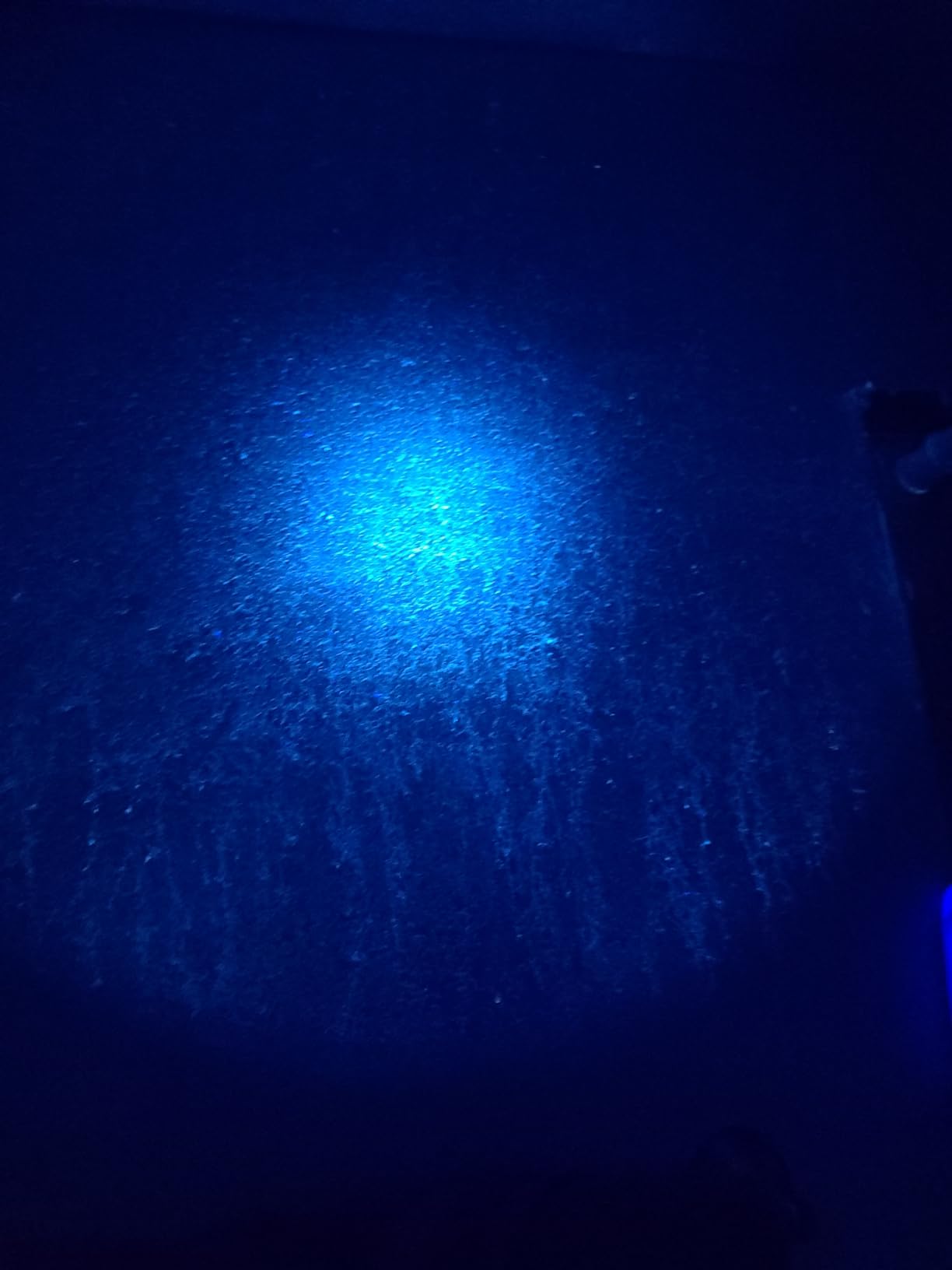
In the field, the LUXNOVAQ threw a clean, filtered beam that matched the Shadowhawk’s close-range performance and held up well at moderate distance. The 30+ foot beam range claim feels honest in real use, not inflated. After four hours of evening scanning I was still above 50 percent on the indicator, which lines up with the 4 to 6 hour runtime spec.
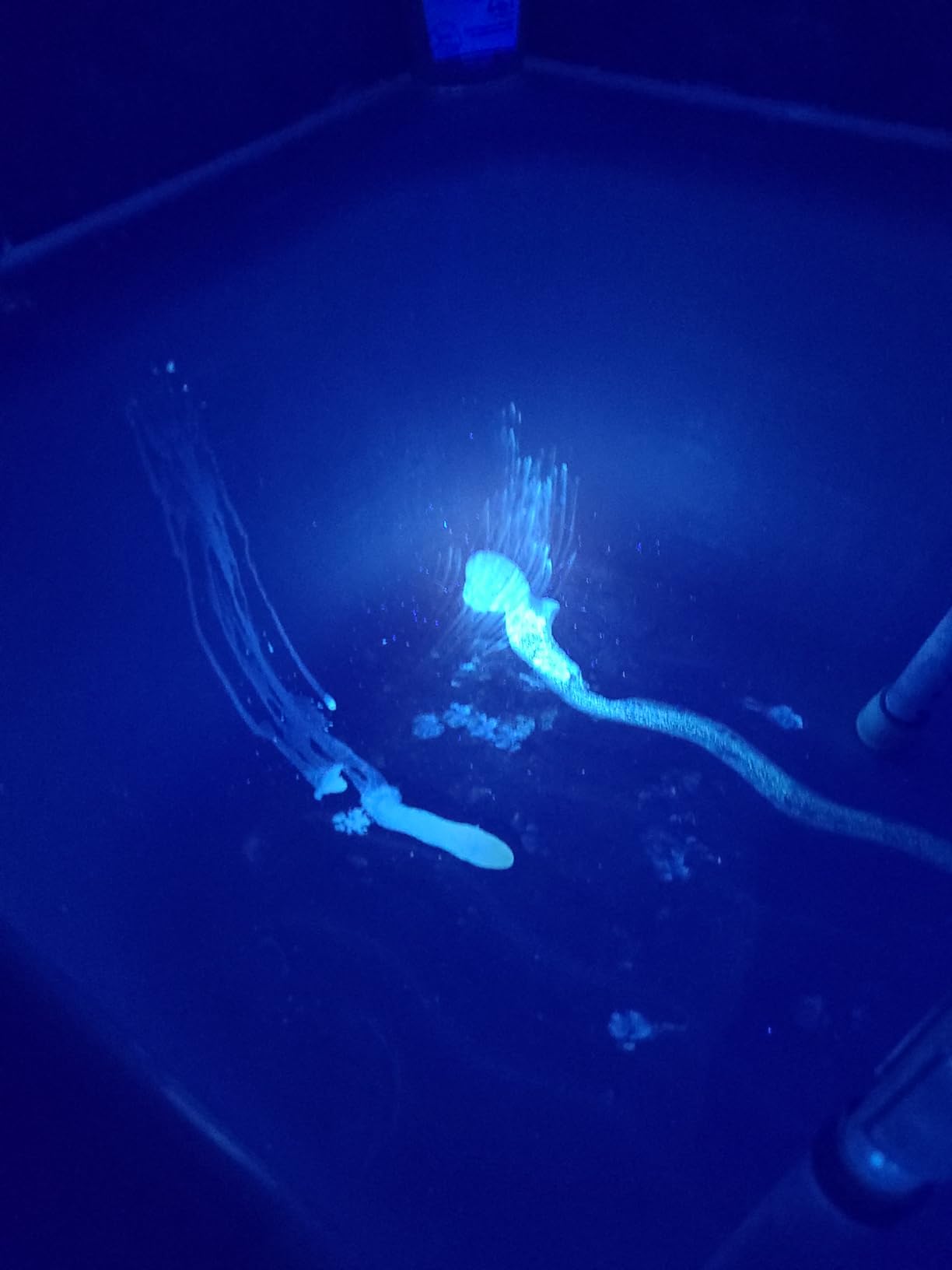
The honest caveats: the sealed battery is again non-removable, so end-of-life replacement means sending the unit in. A small number of reviewers have also questioned whether the output is truly 30W versus a lower-wattage LED driven hard – this is a common Amazon listing exaggeration across many UV brands, not just this one. In real use, the beam behaves like a strong 365nm light, which is what matters.
For buyers who want long runtime, USB-C convenience, and the bonus of charging a phone from the same brick, this is the most versatile pick in the roundup.
For whom it’s a good fit
Multi-day field users who need both long runtime and a backup phone charger. The aluminum heat dissipation also suits hot climates where smaller lights throttle back fast.
For whom it’s a poor fit
Buyers who prefer swappable 18650 batteries for indefinite runtime should choose the LUMENSHOOTER S3 instead. If you don’t need the power bank, the Shadowhawk gives you nearly identical UV performance at similar cost.
10. HSXMN UV Flashlight with 365nm and 395nm Dual LEDs
HSXMN UV Flashlight 365nm & 395nm Dual Ultraviolet Black Light Woods Lamp
365+395nm dual
Adjustable focus
Waterproof
AAA power
Pros
- Dual 365nm + 395nm wavelengths in a single flashlight
- Adjustable focus beam from flood to spot
- Waterproof aluminum body
- Powered by rechargeable or 3 AAA batteries
- 1-year manufacturer guarantee
Cons
- Batteries not included in the box
- 395nm output washes out subtle fluorescence
- Lower power than the high-end 365nm-only models
The HSXMN is the most flexible entry in the roundup because it combines 365nm and 395nm in a single flashlight with a focusable beam. For buyers who want to compare wavelengths on the same specimen in the same night, that’s a real advantage.
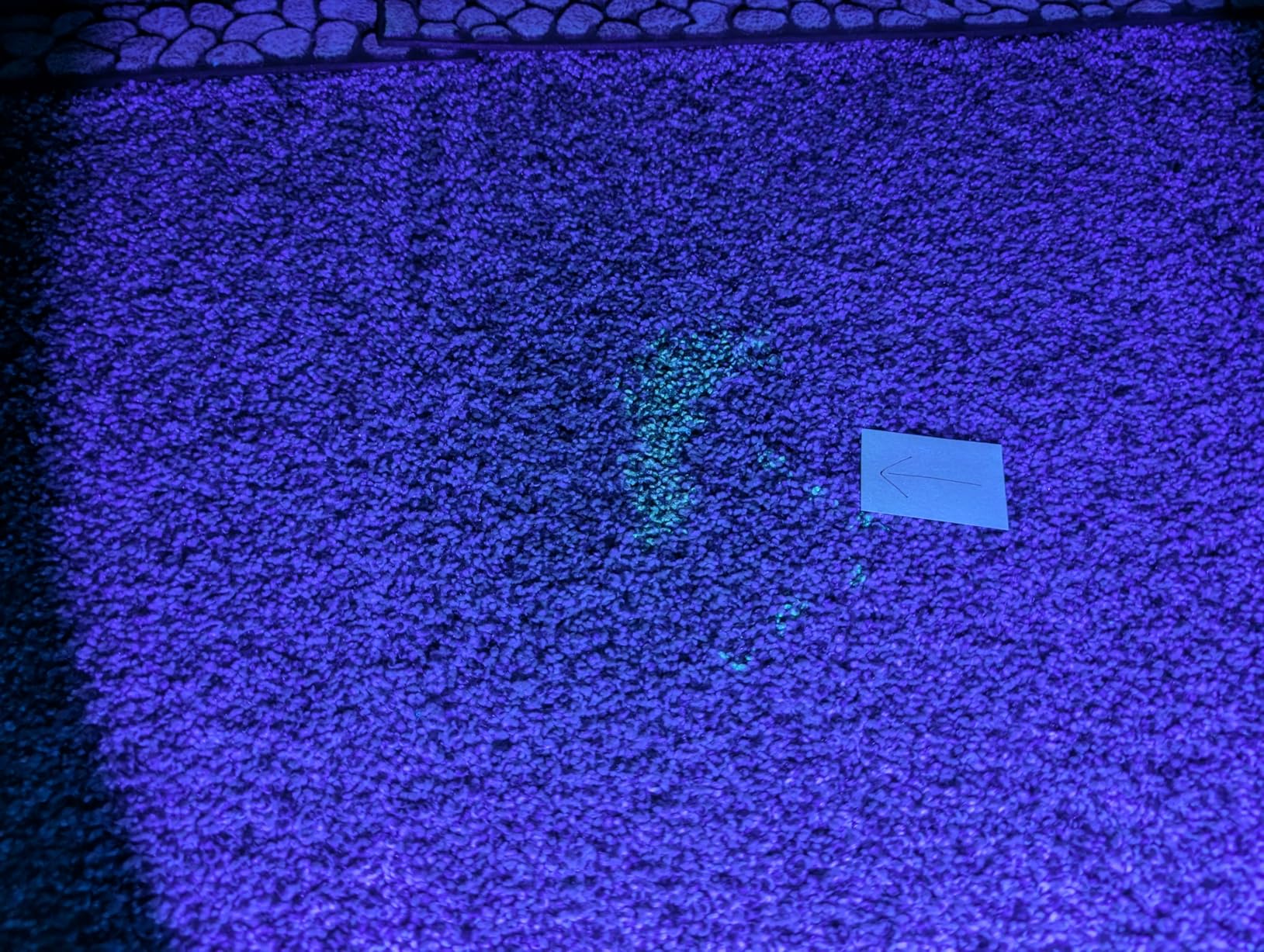
I spent an evening cycling between 365nm and 395nm on the same calcite sample, and the difference was stark – the 365nm LED pulled a clear red activator response while the 395nm LED showed mostly purple wash with a faint glow underneath. That’s exactly what experienced collectors mean when they say 395nm “looks cool” but misses the real mineral signatures. The adjustable focus also helped me tighten the beam for distance work.
The trade-offs are tied directly to the dual-wavelength design. The 395nm mode dilutes the 365nm experience, batteries aren’t included, and the unit doesn’t match the raw output of dedicated 30W models. For someone who wants to learn why 365nm is preferred, though, the side-by-side comparison is genuinely educational.
It is also worth mentioning that this light is one of the more affordable waterproof models in the roundup, which adds to its appeal as a glove-box or travel light.
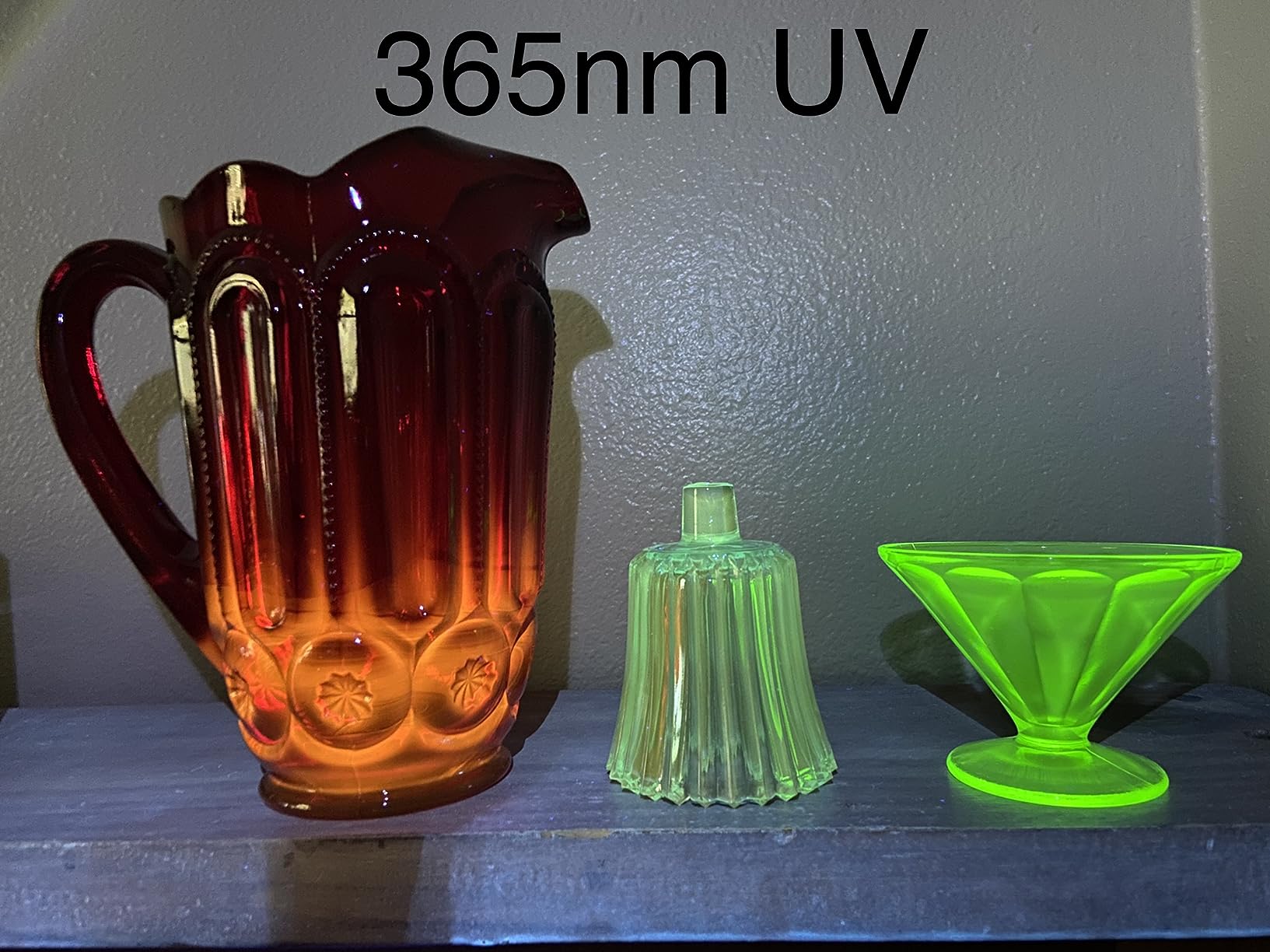
For whom it’s a good fit
Beginners who want to learn the difference between 365nm and 395nm firsthand, and collectors who want a single tool that handles both wavelengths for diverse uses. The waterproof rating is a bonus for travel.
For whom it’s a poor fit
Serious collectors who only want 365nm output should spend the same money on a dedicated 365nm unit with stronger filtration. If you’re stacking multiple lights, this is a complement, not a primary.
Minerals That Fluoresce Under 365nm UV Light
The whole point of owning a good UV flashlight is to find specific minerals in the field, and the table below covers the most common fluorescent responses collectors actually chase. Knowing what should glow under 365nm is half the battle, because a dim or missing response is also useful diagnostic information.
The Fluorescent Mineral Society maintains the most comprehensive reference, but here is the working list I use on every hunt:
Sodalite / Yooperlite: Strong orange to peach glow under 365nm – this is the classic Lake Superior response that made UV hunting mainstream.
Calcite: Red, pink, or blue glow depending on the activator (manganese gives red, rare earths give blue). One of the most rewarding common minerals under UV.
Fluorite: Bright blue to violet glow under 365nm, especially in specimens with europium activators. A defining diagnostic response.
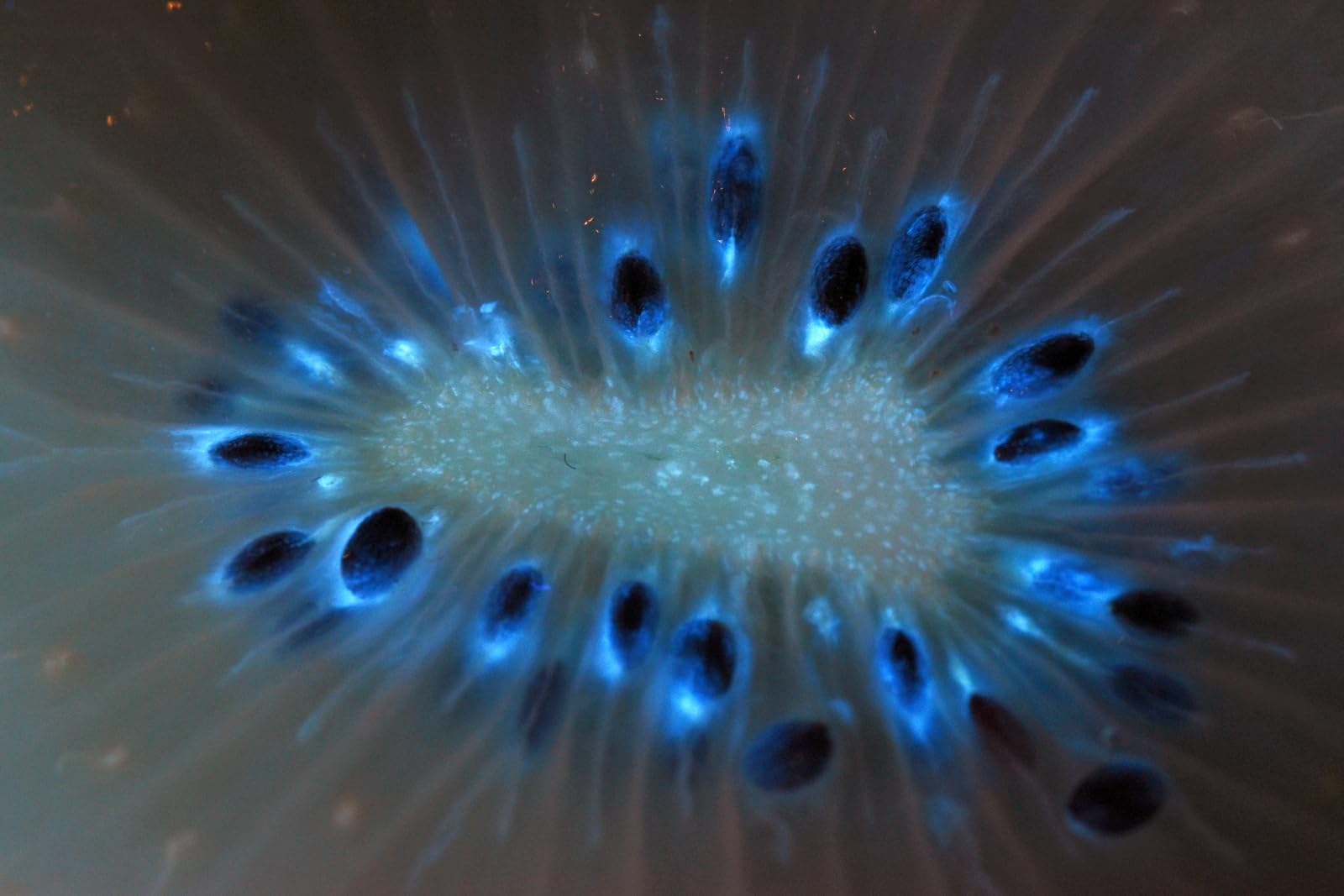
Hyalite opal: Vivid green glow under 365nm – so strong it looks like the rock is radioactive. Easy to spot even on dimmer lights.
Willemite: Brilliant green response under shortwave 254nm, with a weaker yellow-green response under 365nm. Needs a 254nm lamp for full effect.
Scheelite: Bright blue-white glow under shortwave 254nm. Longwave gives a much weaker response, so a 254nm lamp is again required.
Agate and chalcedony: Green or yellow-green banding in some specimens under 365nm. Highly variable; not every agate responds.
For a deeper dive into UV-compatible specimens, the Fluorescent Mineral Society website is the definitive reference, and you can also browse our related guides on magnetic UV flashlight reviews and non-aluminum UV flashlight options.
UV Safety: Protecting Your Eyes From Photokeratitis
Longwave 365nm UVA is far safer than shortwave 254nm UVC, but it still deserves respect. I treat every UV session with the same caution I would treat a campfire.
Direct eye exposure to 365nm at close range can cause photokeratitis, which is essentially a sunburn of the cornea. Symptoms include a gritty feeling, light sensitivity, and blurred vision that usually clears up within 24 to 48 hours but is genuinely unpleasant. The FDA publishes specific warnings about UVC exposure that are worth reading even if you only use longwave lights.
Practical steps I follow on every hunt:
I never shine any UV flashlight directly into my own eyes or another person’s eyes, including reflections off glass or polished rocks. I wear UV-blocking eyewear (orange or yellow tinted safety glasses from a hardware store are cheap and effective) for any extended session. I keep kids and pets well clear of the beam during a hunt, especially the high-power models. I never look directly at the LED even when the flashlight is off-axis – the side spill from a focused 365nm beam is brighter than you think.
For 254nm shortwave lamps, the safety bar is much higher: dedicated UVC-blocking goggles, full face shield, and gloves for handling the tube housing. Shortwave collectors on uvminerals.org and the Fossil Forum treat this as non-negotiable.
Buying Guide: How to Choose the Best UV Flashlight for Minerals
After testing these ten lights and several others that didn’t make the cut, here is the working checklist I use when recommending a UV flashlight to a fellow collector.
1. Demand a documented 365nm wavelength. If the listing says only “UV” or “blacklight,” it is almost certainly 395nm. The two wavelengths feel similar to the eye but produce very different mineral responses.
2. Look for a UV-pass or ZWB2 filter in the spec sheet. A filter is what separates a useful fluorescence light from a glowing paperweight. The Shadowhawk, LUXNOVAQ, and uvBeast V3 all explicitly call out filter lenses.
3. Match battery type to your habits. AA batteries (DARKBEAM, HQRP) are convenient for casual use. 18650 cells (LUMENSHOOTER, ALONEFIRE) offer better power density and replaceability. Built-in lithium packs (Shadowhawk, LUXNOVAQ) trade serviceability for convenience features like LCD displays and power bank output.
4. Pick a beam range that fits your hunting style. Walking and inspecting close-up? Any of the 10W-plus models work. Scanning tailings from a stationary position? The V3’s 60+ foot reach is worth the extra cost.
5. Decide on waterproofing. IPX-8 (LIGHTFE) survives immersion and is overkill for casual collecting. Water-resistant (uvBeast V3) handles light drizzle but not a swim. Non-rated (DARKBEAM, ALONEFIRE) means keep it dry.
6. Set a budget tier. The entry tier covers the DARKBEAM, HQRP, and ALONEFIRE – solid real 365nm lights at the lowest cost. The mid tier is the sweet spot for value with the LUMENSHOOTER, Shadowhawk, LUXNOVAQ, and HSXMN. The premium tier is the workhorse uvBeast V3 and the gem-focused Lumirio.
7. Counterfeit detection. If a “365nm” light floods your scene with visible purple, it is almost certainly 395nm or unfiltered. The gold-standard test is a fluorite or scheelite specimen – if it doesn’t glow, the light isn’t what the listing claims.
For more on flashlight selection across use cases, our EDC flashlight guide covers everyday carry picks and our compact flashlight roundup lists pocketable options.
Frequently Asked Questions
What is the best UV flashlight for finding minerals?
A filtered 365nm longwave UV flashlight is the best choice for finding minerals. The 365nm wavelength excites activators in calcite, fluorite, sodalite, and hyalite opal, while a ZWB2 or UV-pass filter blocks visible light spill so subtle glows read clearly. The uvBeast V3, Shadowhawk, and LUMENSHOOTER S3 are top picks.
Is 365 or 395 UV light better for minerals?
365nm longwave UVA is significantly better than 395nm for mineral fluorescence. 395nm blacklights leak too much visible purple light, which washes out weak activator responses. A filtered 365nm beam produces cleaner glows and reveals minerals like fluorite and calcite that 395nm lights often miss entirely.
Do agates fluoresce under UV light?
Yes, many agates show green or yellow-green banding under 365nm longwave UV, especially Lake Superior and Montana agates. However, fluorescence varies widely between specimens – not every agate responds strongly. Some agates also fluoresce under shortwave 254nm with different patterns.
Which minerals can fluoresce under UV light?
Common fluorescent minerals include sodalite and yooperlite (orange), calcite (red, pink, or blue), fluorite (blue), hyalite opal (green), willemite (green under 254nm shortwave), scheelite (blue-white under 254nm shortwave), and some agates and chalcedony. Each mineral responds best at a specific wavelength.
Is 365nm UV light bad for your eyes?
365nm longwave UVA is much safer than 254nm shortwave UVC, but direct eye exposure at close range can still cause photokeratitis, a temporary corneal sunburn that feels like sand in the eye. Wear UV-blocking safety glasses for extended sessions, never shine the beam directly into eyes, and keep kids and pets clear of the beam.
Do I need a shortwave 254nm UV lamp for minerals?
You need a 254nm shortwave UVC lamp if you specifically want to find willemite, scheelite, or powellite – minerals that barely respond to 365nm. For general rockhounding (sodalite, calcite, fluorite, hyalite opal), a 365nm longwave light is sufficient. Shortwave lamps require dedicated UVC-blocking eyewear and carry higher safety risk.
Final Verdict: Which UV Flashlight Should You Buy for Minerals?
If you want one answer: the uvBeast V3 365nm Black Light is the best UV flashlight for minerals in 2026. It pairs a documented 365nm wavelength with a real on-board UV filter, throws a 60+ foot beam that holds up in real field conditions, and has the strongest review base of any light in this roundup at over 3,200 ratings. For most collectors, that is the end of the decision.
If the V3’s price is more than your budget allows, the Shadowhawk 365nm UV Flashlight is the next-best choice, delivering comparable close-range fluorescence with a 10-hour runtime and LCD battery indicator that make long sessions effortless. Budget buyers should start with the DARKBEAM UV 365nm Mini Flashlight, which delivers a true 365nm beam at the lowest cost in the lineup.
Whatever you pick, buy a real 365nm light with a filter, protect your eyes, and head outside on a moonless night. The first time a chunk of plain-looking rock pops orange or green under your beam, the whole hobby clicks – and you’ll understand why I keep a UV flashlight within arm’s reach whenever I am anywhere near a gravel bar.