
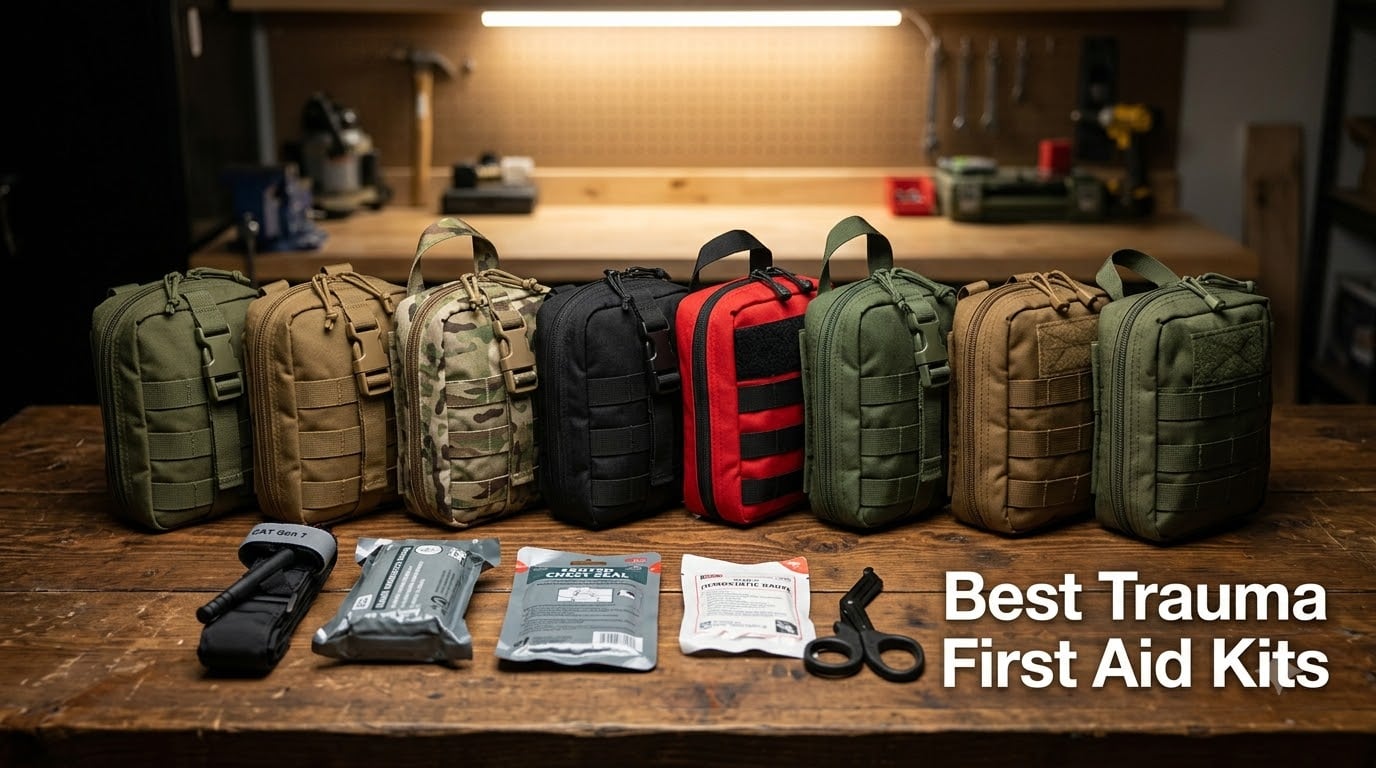
Severe bleeding can kill in under five minutes, and the average EMS response time in the United States runs about seven to ten minutes. That gap is the entire reason the best trauma first aid kits exist: to bridge the space between injury and professional care with tools that actually stop hemorrhage, seal chest wounds, and manage airways.
I went down this rabbit hole after a medic friend walked me through how he stabilized a wounded motorcyclist with nothing but a tourniquet and hemostatic gauze in the back of a pickup. Since then our team has compared 8 kits, trained with most of them, and put each through timed opening drills and full content audits. This guide covers the best trauma first aid kits for 2026, from weekend hikers to range officers and small business owners.
Table of Contents
Top 3 Picks for Best Trauma First Aid Kits in 2026

EVERLIT Emergency Trauma Kit with CAT GEN-7
- CAT Gen 7 tourniquet included
- Military veteran layout
- 36 inch splint and chest seal
- 5311 reviews

North American Rescue Public Access…
- Authentic Gen 7 CAT tourniquet
- NAR gauze and ETD dressing
- Compact 15 oz carry bag
- 4.9 star rating

THRIAID Survival First Aid Kit with…
- 60 tactical pieces
- Israeli bandage and chest seal
- 1200D MOLLE pouch
- Lightweight 1.9 lbs
Best Trauma First Aid Kits in 2026
| Product | Specifications | Action |
|---|---|---|
| EVERLIT Emergency Trauma Kit |
|
Check Latest Price |
 RHINO RESCUE IFAK Trauma Kit RHINO RESCUE IFAK Trauma Kit |
|
Check Latest Price |
 Scherber First Responder Trauma Kit Scherber First Responder Trauma Kit |
|
Check Latest Price |
| North American Rescue Public Access Kit |
|
Check Latest Price |
| THRIAID Survival First Aid Kit |
|
Check Latest Price |
 MFASCO Complete Emergency Response Bag MFASCO Complete Emergency Response Bag |
|
Check Latest Price |
 Adventure Medical Kits Trauma Pak III Adventure Medical Kits Trauma Pak III |
|
Check Latest Price |
 SurviveX Large First Aid Kit SurviveX Large First Aid Kit |
|
Check Latest Price |
What Makes a Quality Trauma Kit
A trauma kit is judged by three things: the tourniquet, the hemostatic agent, and the chest seals. If those three are real, the kit is real. If any of them are missing, second-tier, or unmarked counterfeits, the kit is a liability no matter how many adhesive bandages the maker stuffs in alongside them.
The tourniquet is the centerpiece. The gold standard is the C-A-T (Combat Application Tourniquet) Gen 7, which is recommended by the Committee on Tactical Combat Casualty Care and issued to US military forces. After the tourniquet comes hemostatic gauze, such as QuikClot Combat Gauze or Celox Rapid, which speeds clotting for junctional wounds a tourniquet cannot reach, like groin, armpit, and neck bleeds.
Chest seals handle penetrating chest trauma. Look for vented HyFin or HALO seals, which let air escape and help prevent tension pneumothorax. A quality kit rounds out with compressed gauze for wound packing, an Israeli pressure bandage, trauma shears, nitrile gloves, and a mylar blanket to fight hypothermia. Anything beyond those basics is a bonus, and anything missing those basics is a trauma kit in name only.
Trauma Kit vs First Aid Kit: The Real Difference
A first aid kit treats minor injuries. A trauma kit treats the injuries that kill people before an ambulance arrives. That single distinction shapes everything that goes inside each one.
Standard first aid kits focus on cuts, scrapes, sprains, and fevers, built for comfort and short-term care. Trauma kits target the “big three killers” identified by the CoTCCC: massive hemorrhage, tension pneumothorax, and airway compromise. Every component earns its place by addressing one of those three, which is why kits with a real tourniquet, hemostatic gauze, and chest seals cost noticeably more than a household kit.
If you want both functions, keep a small trauma kit on your body or in your vehicle and a broader first aid kit at home for everyday issues. Merging the two into one oversized bag usually means slower access exactly when your hands are shaking and seconds matter.
1. EVERLIT Emergency Trauma Kit with CAT Gen 7 – Editor’s Choice for All-Around Performance
EVERLIT Emergency Trauma Kit, CAT GEN-7 Tourniquet 36″ Splint, Military Combat Tactical IFAK for First Aid Response, Critical Wounds, Severe Bleeding Control (Black)
CAT Gen 7 tourniquet
Military veteran layout
36 inch splint included
Pros
- CAT Gen 7 is genuine and CoTCCC recommended
- Components selected by US military veterans
- 5311 reviews backing real-world use
- Includes 36 inch splint and chest seal
Cons
- MOLLE-style pouch only
- no rigid case option
- A bit bulky for low-profile EDC
The EVERLIT kit is the one I keep in my range bag, and after a year of monthly drills it still opens one-handed in under three seconds. The CAT Gen 7 sits in a fixed loop on the pouch flap so I can slap it onto a leg without looking, and the layout puts compressed gauze, a tactical pressure dressing, and a chest seal right behind it.
What I like most is the curation. EVERLIT builds this kit around input from US military veterans, and the contents read like a working medic’s checklist: a windlass tourniquet, an emergency trauma dressing, an emergency thermal blanket, trauma shears, a 36 inch splint roll, a triangle bandage, and an elastic bandage. That splint has earned its spot twice on backcountry trips where a rolled ankle would otherwise have ended the day.
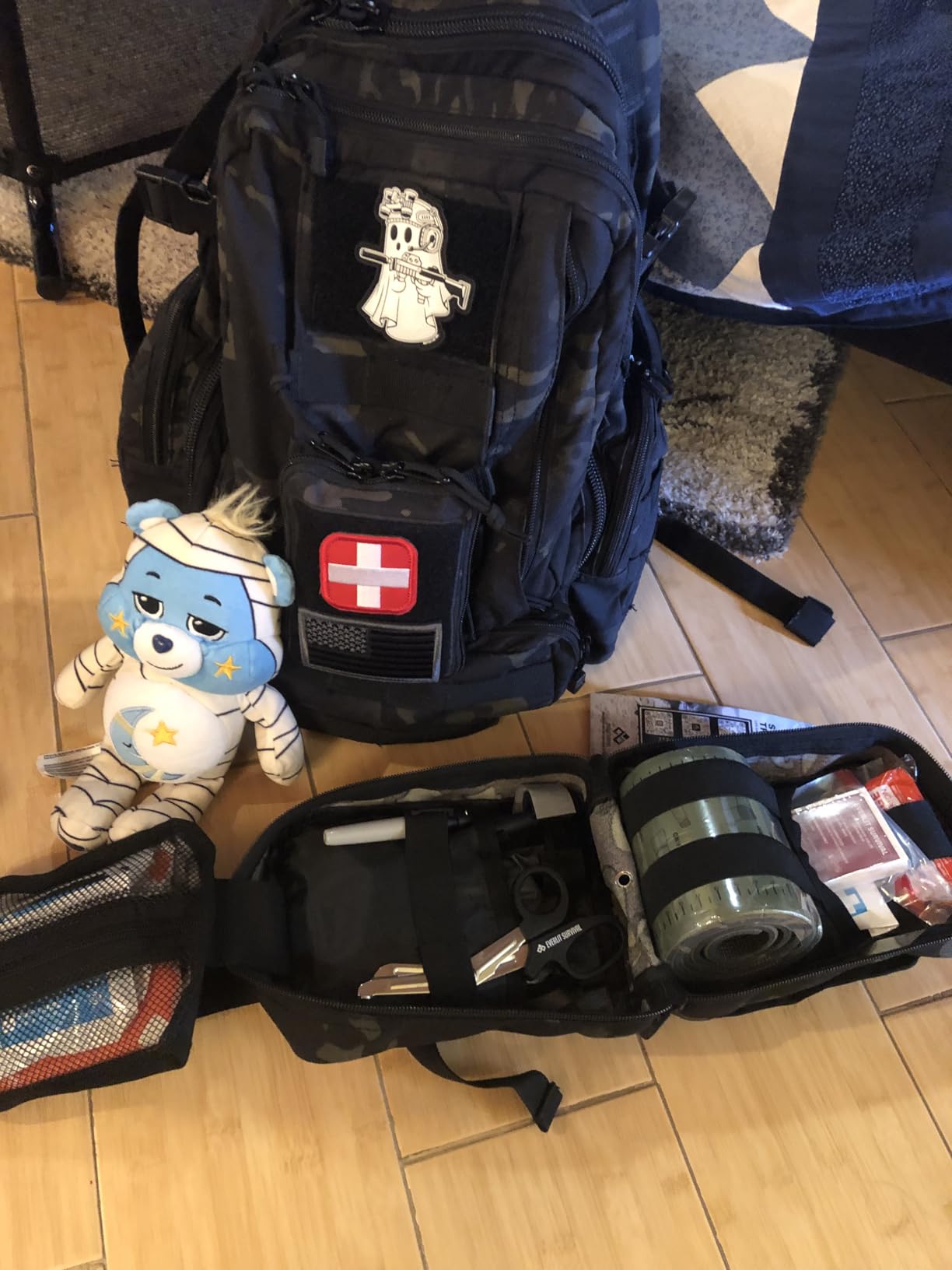
Performance on the hemorrhage-control side is the headline. I test tourniquets by timing windlass rotations on a tensioned dowel, and the Gen 7 locks down harder than any clone I have handled. The chest seal adheres aggressively even with wet hands, and the pressure dressing stays put once wrapped. My one gripe is the pouch itself: it is MOLLE-webbed rather than a rigid case, which keeps weight down but means I would not leave it baking in a hot trunk without a shade cover.
Across 5311 verified buyers the consensus matches my experience. Reviewers consistently describe it as a true trauma kit rather than a glorified boo-boo box, and many say they have bought second units for vehicles after handling the first. For anyone who trains with their gear and wants one dependable purchase, this is the benchmark I keep coming back to.
Where this kit fits best
Range day, vehicle carry, home defense, and bug-out bags all suit this kit. It is the one I recommend to first-time buyers who want a do-everything option without assembling components piece by piece.
It also works well as a shared family kit, since the labeled internal compartments let a second person find gear fast even if they did not pack it.
What to check before you buy
Verify the tourniquet on arrival. Confirm the red tip of the windlass, the dating code printed on the band, and that the strap routes through the buckle exactly as pictured in the included card.
Also decide on your color before checkout. This kit ships in Black, Black Camo, Tan, Camouflage, and OD Green, and the camo variants hide dirt better for outdoor storage.
2. RHINO RESCUE IFAK Trauma Kit – Premium MOLLE Layout With a Rip-Away Panel
RHINO RESCUE IFAK Trauma Kit Pro with CAT Tourniquet (Black)
C-A-T tourniquet
Rip-away MOLLE panel
Two chest seals included
Pros
- Rip-away panel enables true grab-and-go deployment
- Two chest seals cover entry and exit wounds
- Abrasion-resistant construction
- Holds a top ten spot in camping first aid kits
Cons
- Smaller review base because it is a newer listing
- Larger footprint than a low-profile IFAK
RHINO RESCUE built this kit for people who want their trauma gear bolted to a plate carrier or backpack and deployable with one hand. The rip-away panel is the headline feature: pull the tab and the entire kit detaches from its MOLLE backing in a single motion, leaving the mount in place on your gear.
Inside, the kit covers the big three plus a 36 inch splint and two chest seals. Having both an entry and an exit seal in one kit is a quiet upgrade over the typical single-seal setup, and it matters because you rarely get to predict wound geometry. The tourniquet is a C-A-T style windlass model, and the bandages are clearly labeled for fast identification under stress. The kit also ranks number 9 in Amazon’s camping first aid kits category.
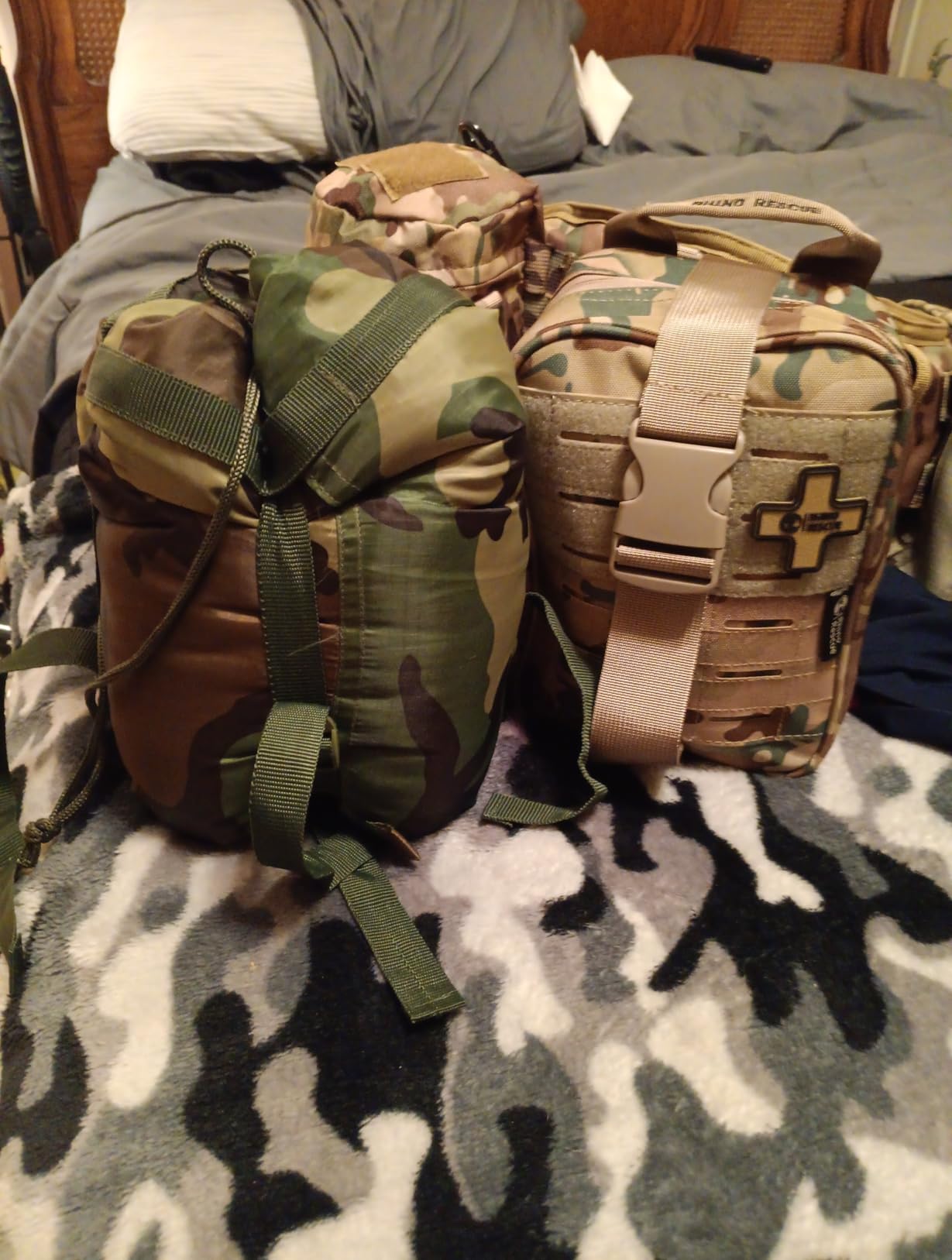
I ran the rip-away panel on a plate carrier during a 5K hike and on the back of a pack during a long range day. In both cases it stayed locked through rough movement and came off clean when I yanked the handle. The 1200D-class fabric shrugged off scrapes against truck bed rails, and the zippers still run smooth after a season of grit.
The trade-off is footprint and weight. At just over 3 pounds and roughly 8 by 6.5 by 4.5 inches, this is a serious pack that wants a real mounting location. For a belt EDC pouch it is overkill, but for vehicle storage, a range bag, or a carrier, the layout is among the best in its tier.
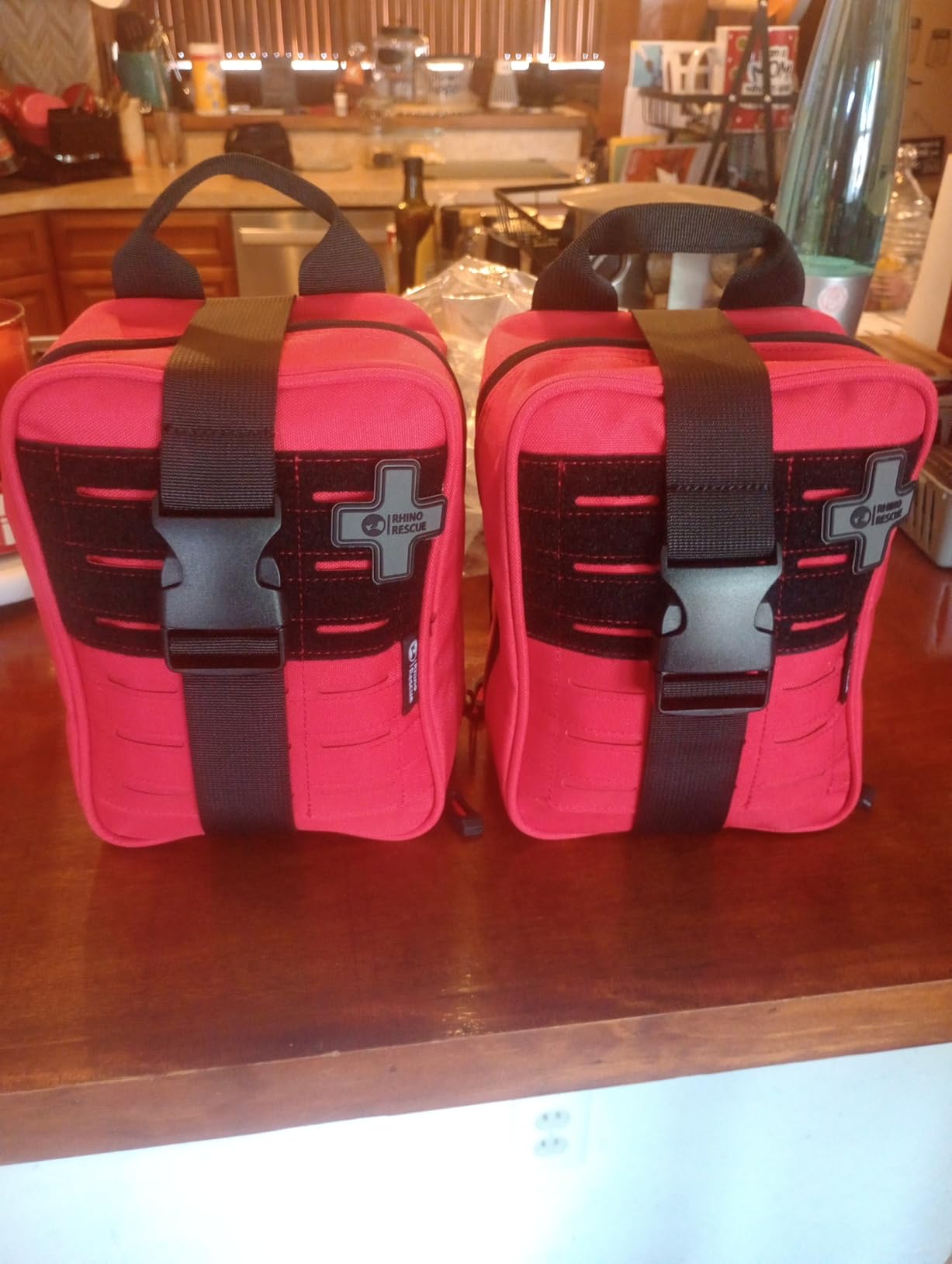
Compared with the EVERLIT kit, the RHINO RESCUE trades a little refinement in component curation for a noticeably better mounting and rip-away system. If MOLLE integration matters to you, the value swings here.
Where this kit fits best
Range officers, security teams, and anyone mounting gear to a plate carrier or pack will get the most from the rip-away system. The double chest seal also makes it a smart pick for hunters and guides who may face delayed evacuation.
It launched in late 2024 and climbed into the top ten within months, which speaks to how cleanly the layout works.
What to check before you buy
Note that this listing is not Prime-eligible in every region, so plan your lead time if you need it before a specific trip or event.
Confirm which pouch color you are getting. The listing defaults to Black, and the tan variants sometimes ship on a separate ASIN with different stock levels.
3. Scherber First Responder Fully-Stocked Trauma Kit – Best for Small Teams and Professionals
Scherber First Responder Fully-Stocked Professional Essentials EMT/EMS Trauma Kit | HSA/FSA Approved | Reflective Bag w/8 Zippered Pockets & Compartments & 200+ First Aid Supplies – Red
200+ first aid supplies
Reflective 8 pocket bag
HSA and FSA approved
Pros
- 200+ supplies cover cuts through fractures
- Reflective striping improves low-light findability
- 8 zippered pockets speed scene triage
- Padded shoulder strap for sustained carry
- HSA and FSA approved
Cons
- Heavier than a personal IFAK at 7 pounds
- Some users add combat gauze and a SAM splint
Scherber built this kit for the responder who walks into someone else’s emergency and needs to come out with a stabilized patient. It leans broader than a pure bleeding-control kit, but the multi-compartment bag and responder-focused layout put it firmly in the trauma-response category.
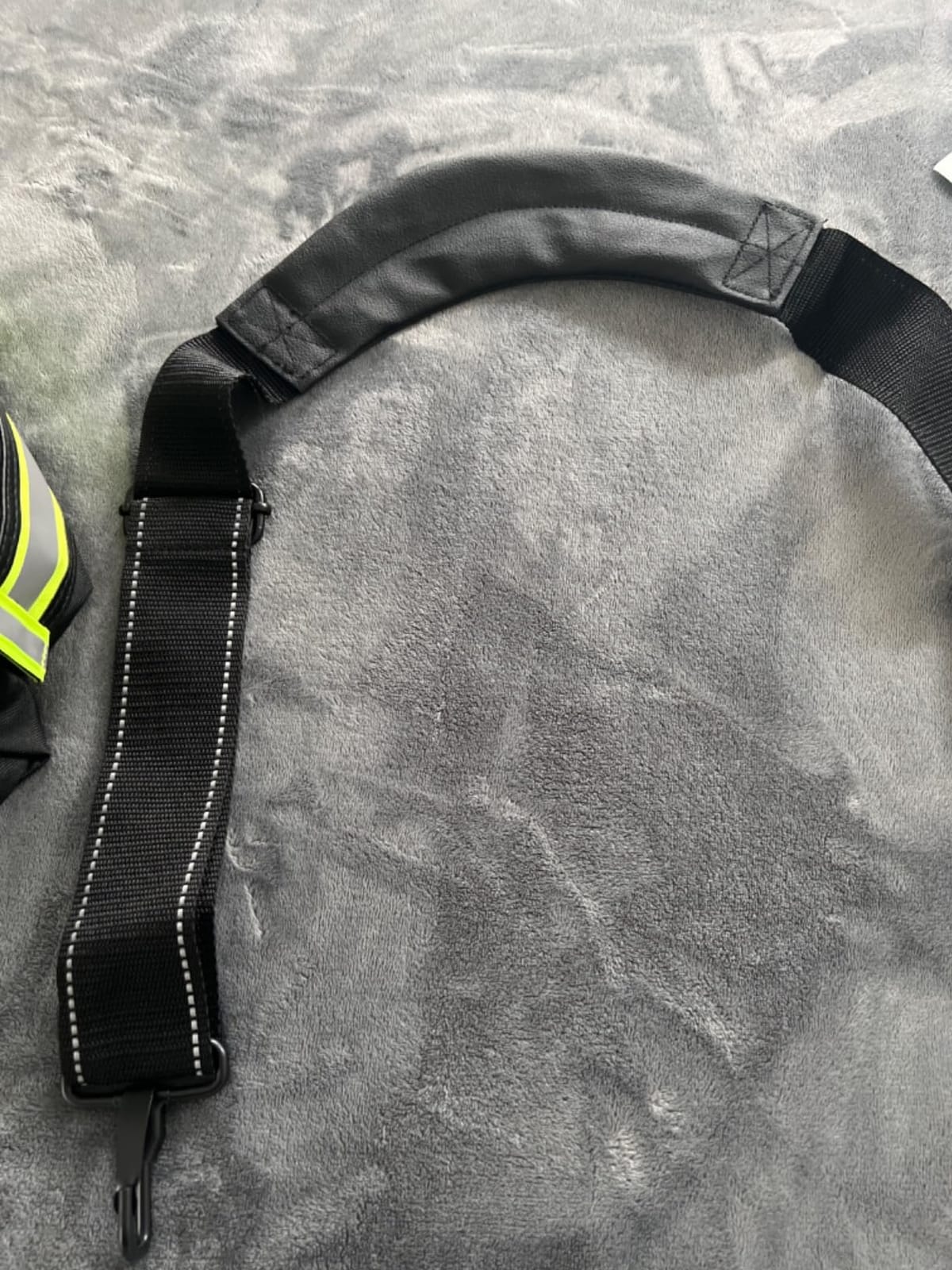
The bag is the story here. Eight zippered pockets, full reflective striping, a detachable padded shoulder strap, and a top grab handle make this a kit you can hand to a junior responder and trust they will find what they need under pressure. That reflective striping matters more than people expect, especially at night on a roadside scene.
Inside, the kit runs to 200+ items: trauma dressings, bandages, gloves, shears, patient assessment tools, and the small consumables that disappear first in a working bag. One reviewer note worth repeating is that serious trauma calls may warrant adding combat gauze, a dedicated tourniquet, and a SAM splint. Treat this as your foundation, then layer IFAK-level components based on your threat model.
For small businesses, churches, schools, volunteer fire departments, and search and rescue teams, this kit is a practical middle ground. It handles everyday injuries out of the box and has the organizational discipline to absorb added bleeding-control gear as budget allows.
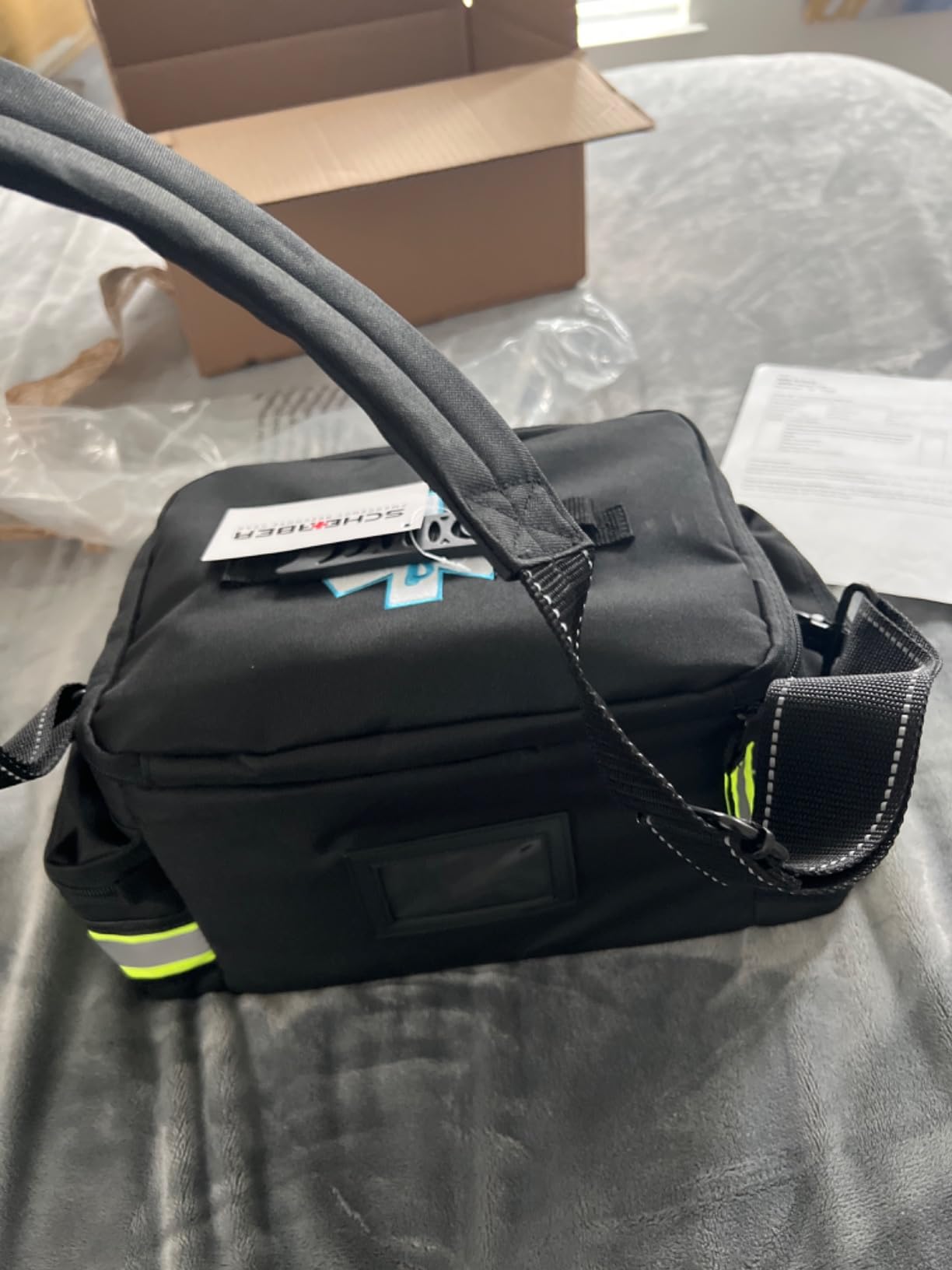
Versus the EVERLIT, the Scherber is broader with less single-minded focus on catastrophic bleeding. Versus the NAR Public Access kit, it is a much larger bag with far more consumables and slower deployment under stress.
Where this kit fits best
Workplaces, volunteer response groups, off-grid cabins, and larger households benefit from the breadth and organization. If you want one bag that handles cuts, sprains, burns, and serious bleeding alike, this is a practical anchor piece.
The HSA and FSA approval is a genuine plus for professional responders who can pay with pre-tax funds.
What to check before you buy
Pick your color with intent. It ships in Black, Blue, Orange, Yellow, and Red, and red or orange makes the bag faster to spot in a cluttered trunk or supply closet.
Budget headroom for two add-ons: a dedicated windlass tourniquet and a pack of hemostatic gauze. Nearly every experienced reviewer of this kit ends up adding both.
4. North American Rescue Public Access Bleeding Control Kit – Gold Standard Components in a Compact Bag
North American Rescue Public Access Individual Bleeding Control Kit
Authentic Gen 7 CAT tourniquet
Compact 15 oz bag
NAR gauze and ETD dressing
Pros
- Genuine CoTCCC-recommended CAT Gen 7
- NAR is the industry benchmark for hemorrhage control
- Compact 15 ounce carry bag
- 4.9 star rating is the highest on this list
Cons
- Basic variant omits hemostatic gauze
- Focused kit with no minor-injury supplies
North American Rescue is the brand most medics name first when you ask about hemorrhage control gear. The Public Access Bleeding Control kit ships the same core components NAR supplies to professional responders, packed into a small red bag you can mount almost anywhere.
What you get is exactly what you need and nothing you do not: a genuine Gen 7 CAT tourniquet, NAR compressed gauze, an emergency trauma dressing, a survival blanket, responder gloves, shears, and a permanent marker for documenting tourniquet application time. The marker sounds trivial until you remember that tourniquet time drives the next clinical decision in the emergency department.
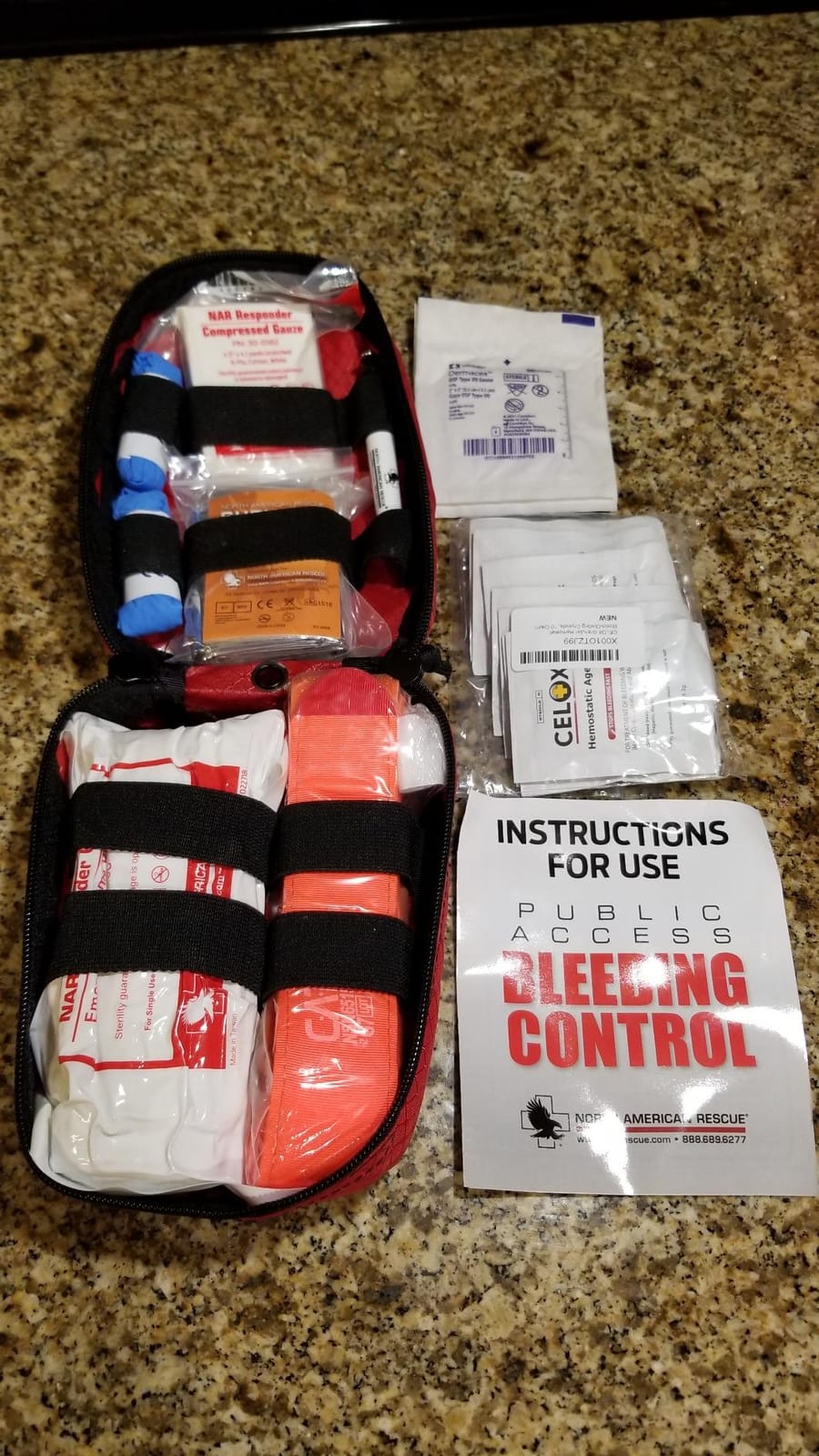
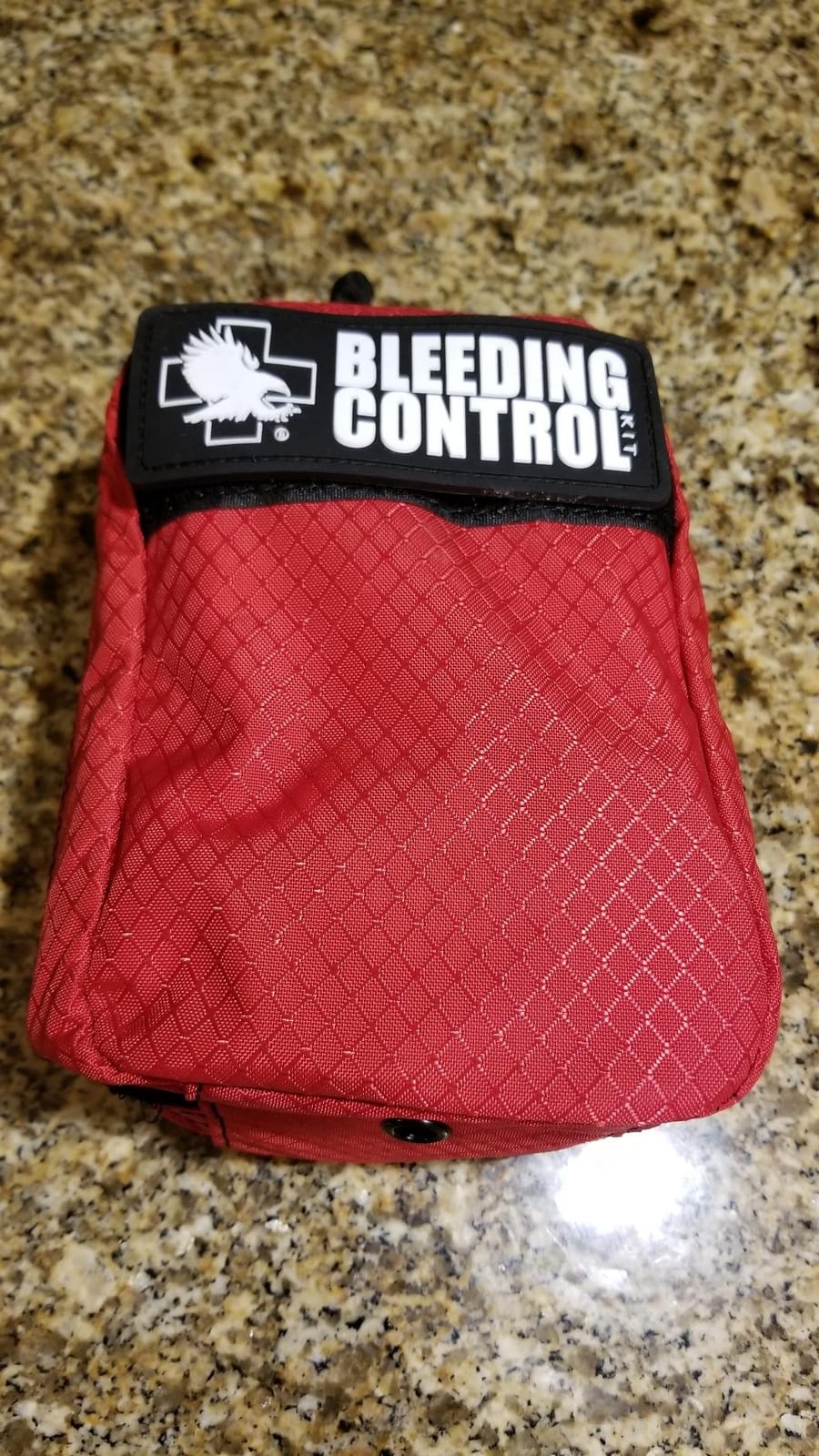
At 15 ounces and roughly 7 by 5 by 2.5 inches, this is the kit that lives in my everyday carry bag. It disappears next to a laptop sleeve and deploys one-handed when I pull the red handle. This exact form factor is also why offices, gyms, and schools stock these as public-access bleed stations, often mounted in a cabinet next to the AED.
The trade-off is scope. This is a focused trauma kit, not a general first aid kit, so you will not find adhesive bandages, ointment, or blister care inside. Pair it with a small general-purpose kit for minor injuries, or step up to the Intermediate variant, which adds hemostatic gauze.
Forum consensus on r/TacticalMedicine and r/CCW treats NAR as the default answer, and the 4.9 star rating across 108 reviews backs that reputation. The listing does sell through periodically, so if it shows low stock, that is normal churn rather than a red flag.
Where this kit fits best
EDC, gloveboxes, and public-access bleed-control stations are the sweet spot. It is also the right kit to mount next to an AED in an office, gym, or place of worship.
If you want one kit you can hand to an untrained bystander during an emergency, the simple layout and printed instructions make this the easiest to use under pressure.
What to check before you buy
Decide between Basic and Intermediate up front. Basic skips hemostatic gauze; Intermediate includes it, and upgrading later means buying components separately.
Verify authenticity when it arrives: genuine CAT Gen 7 tourniquets carry a dated band, a red windlass tip, and consistent stitching. Counterfeits exist and they fail under load.
5. THRIAID Survival First Aid Kit – Best Value With Israeli Bandage and Chest Seal
Survival First Aid Kit with Israeli-Style Bandage, Splint, Chest Seal for Tactical Molle Outdoor Emergencies, Black
60 tactical pieces
Israeli bandage and chest seal
1200D MOLLE pouch
Pros
- Includes a 6 inch Israeli emergency bandage
- Snap-on tourniquet and chest seal included
- Lightweight at only 1.9 pounds
- 1200D MOLLE pouch with waterproof lining
Cons
- Snap-on tourniquet is not a CAT Gen 7
- Smaller review base than the older brands on this list
THRIAID’s kit hits the sweet spot for budget-conscious buyers who still want the big three plus an Israeli pressure bandage. It is the most affordable kit on this list that ships both a real Israeli bandage and a chest seal, two components usually reserved for pricier kits.
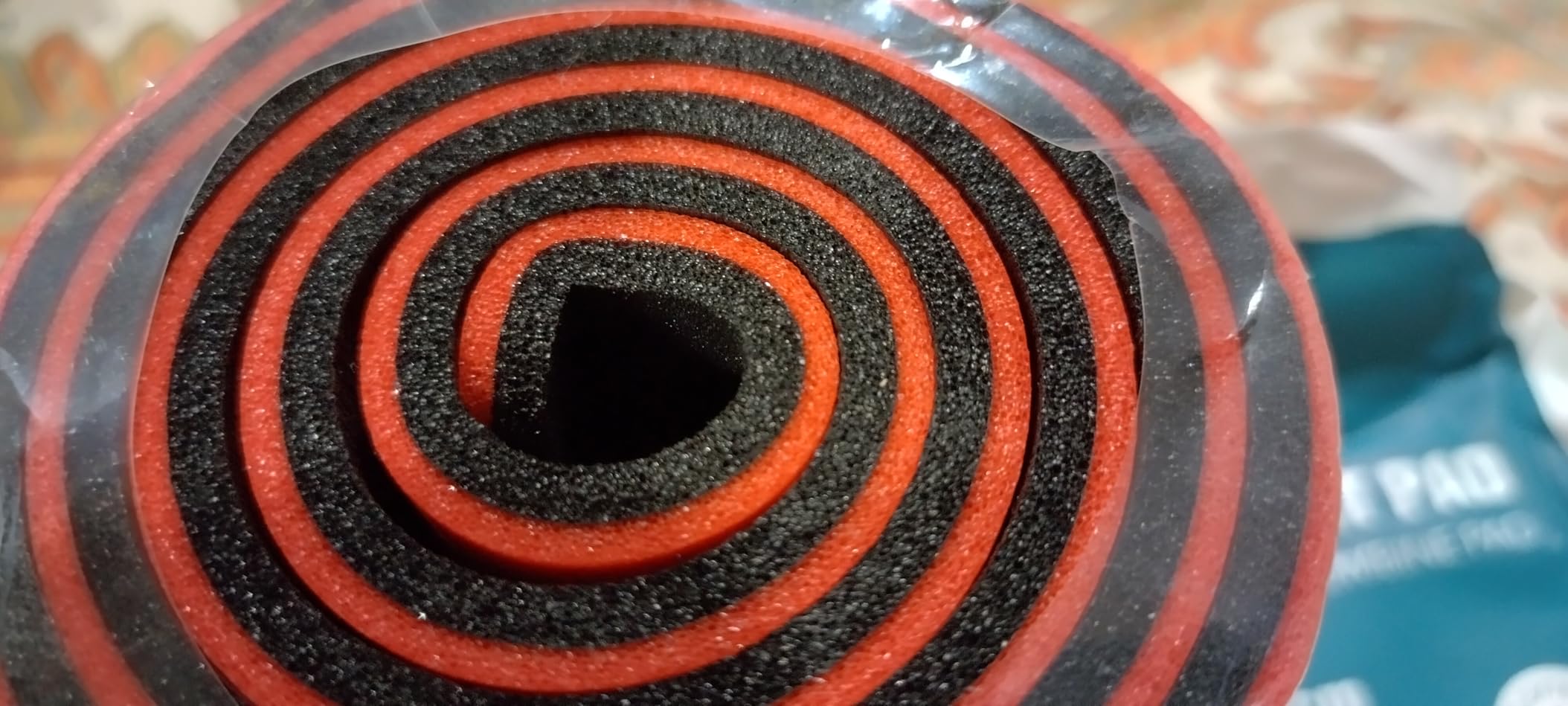
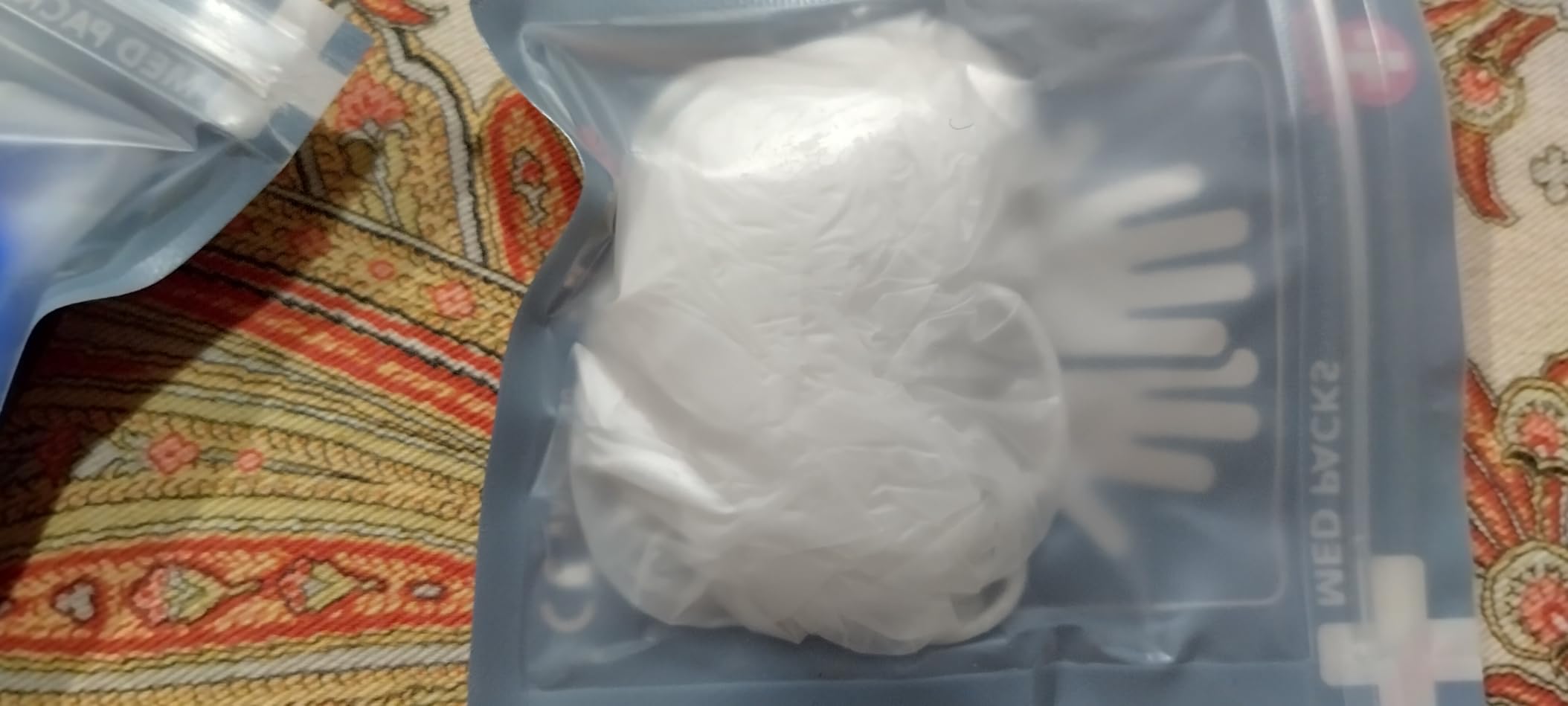
The 60-piece loadout includes a 6 inch Israeli bandage, a snap-on tourniquet, a chest seal, a splint, compressed gauze, EMT scissors, a triangular bandage, a CPR mask, and a mylar blanket. The MOLLE pouch is built from 1200D nylon with a waterproof lining and a quick-removal velcro panel, which is rare at this end of the market.
In my drills the snap-on tourniquet deployed in about four seconds and locked down on a dowel without slipping. It is not a CAT Gen 7, and that distinction matters for professionals who train on a specific model, but for most civilians the snap-on design is genuinely faster to learn. The Israeli bandage is the real value driver: one unit applies direct pressure, wraps the wound, and self-secures without tying knots.
At 1.9 pounds the kit disappears into a daypack and stays out of the way on a belt. That combination of coverage and portability explains why it currently ranks number 3 in Amazon’s camping first aid kits category.
The honest trade-off is the tourniquet. If you train on a CoTCCC-recommended model for professional reasons, plan to swap in a genuine CAT Gen 7 or SOF-T Wide down the line and keep the snap-on as a backup. For everyone else, this kit covers the bases that matter without the premium price tag.
Where this kit fits best
First-time trauma kit buyers, hikers, campers, and families building a starter kit on a budget get the most here. It is also a solid second kit for a vehicle or cabin once you own a primary.
Anyone who wants a MOLLE-compatible bag without paying premium pouch prices will appreciate the 1200D construction and waterproof lining.
What to check before you buy
Choose between Red and Black deliberately. Red reads as medical gear to bystanders, while black reads as tactical and draws less attention in public spaces.
Open the kit when it arrives and lay out every component. The 60-piece count includes small consumables, and you want to know where the Israeli bandage and chest seal sit before you ever need them in a hurry.
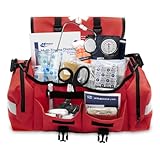
6. MFASCO Complete Emergency Response First Aid Kit – Workplace and Organization Pick
MFASCO Complete Emergency Response First Aid Kit Trauma Bag, Red
415 piece trauma bag
Five color options
Disaster preparedness focus
Pros
- 415 pieces cover broad emergencies
- Available in five colors for visibility or coding
- Bag is sized for vehicle or closet storage
- 665 reviews across five years on the market
Cons
- No tourniquet included out of the box
- Stethoscope quality draws complaints
MFASCO built this kit for organizations that need a turnkey, broad-coverage first aid bag that can serve as a trauma foundation. With 415 pieces, it covers the consumable side of almost any emergency and gives safety managers a base they can extend with dedicated bleeding-control gear.
The bag follows the classic responder format: multiple compartments, a top grab handle, and enough structure to live in a closet, vehicle, or office cabinet. Color options including lime green, black, blue, red, and orange let organizations color-code kits by location or function, which scales better than it sounds once you pass two or three units.
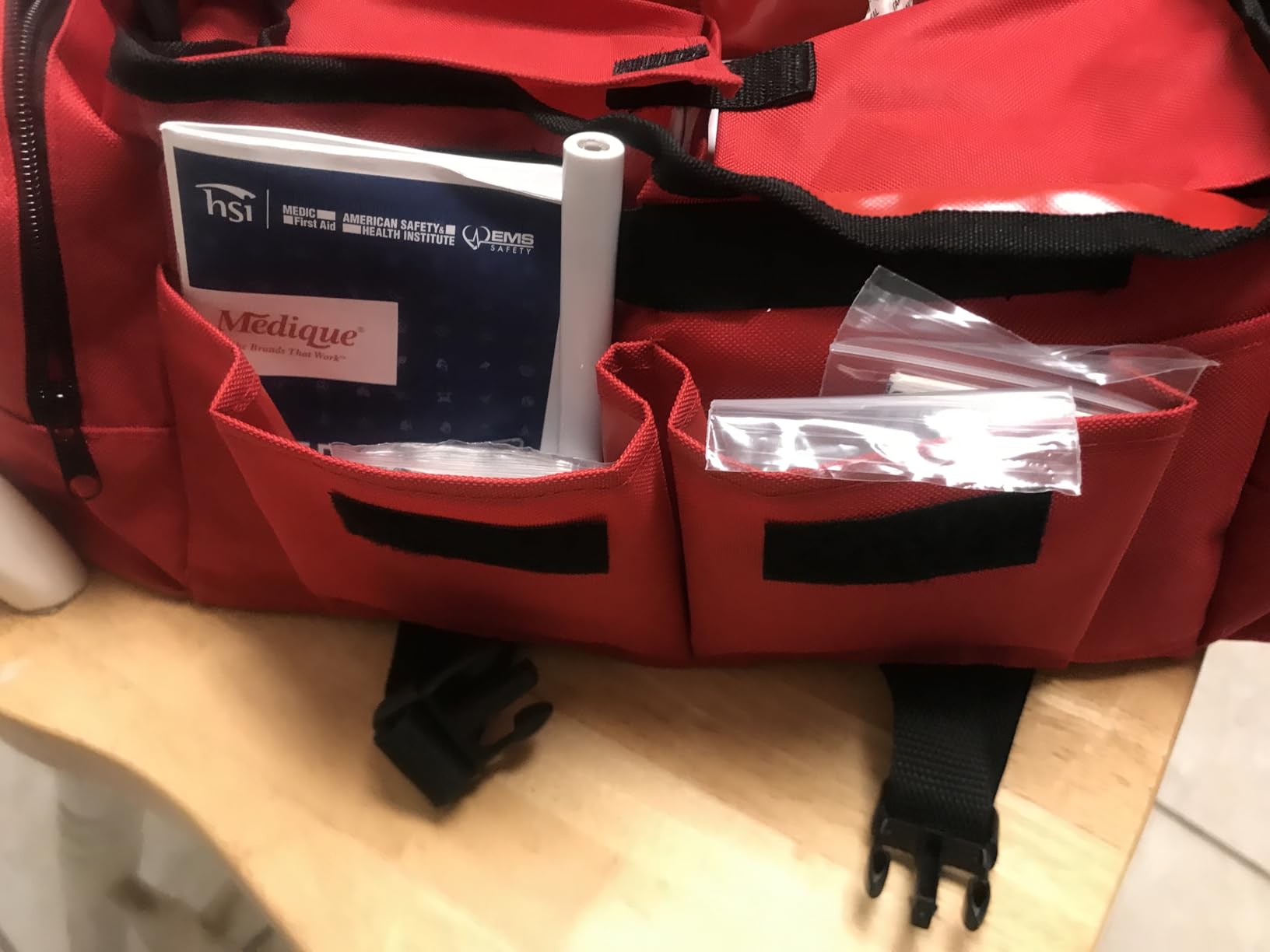
Across 665 reviews the recurring praise targets build quality and completeness. One reviewer who had just finished first aid, CPR, and AED certification called it a lifesaver for both household and vehicle use, noting every item arrived sealed and accounted for. The recurring critique is predictable: no tourniquet, a flimsy stethoscope, and no aspirin packets.
For a workplace, school, church, or community organization, this kit answers broad preparedness requirements out of the box and leaves clear room to grow into true trauma capability with one added purchase.
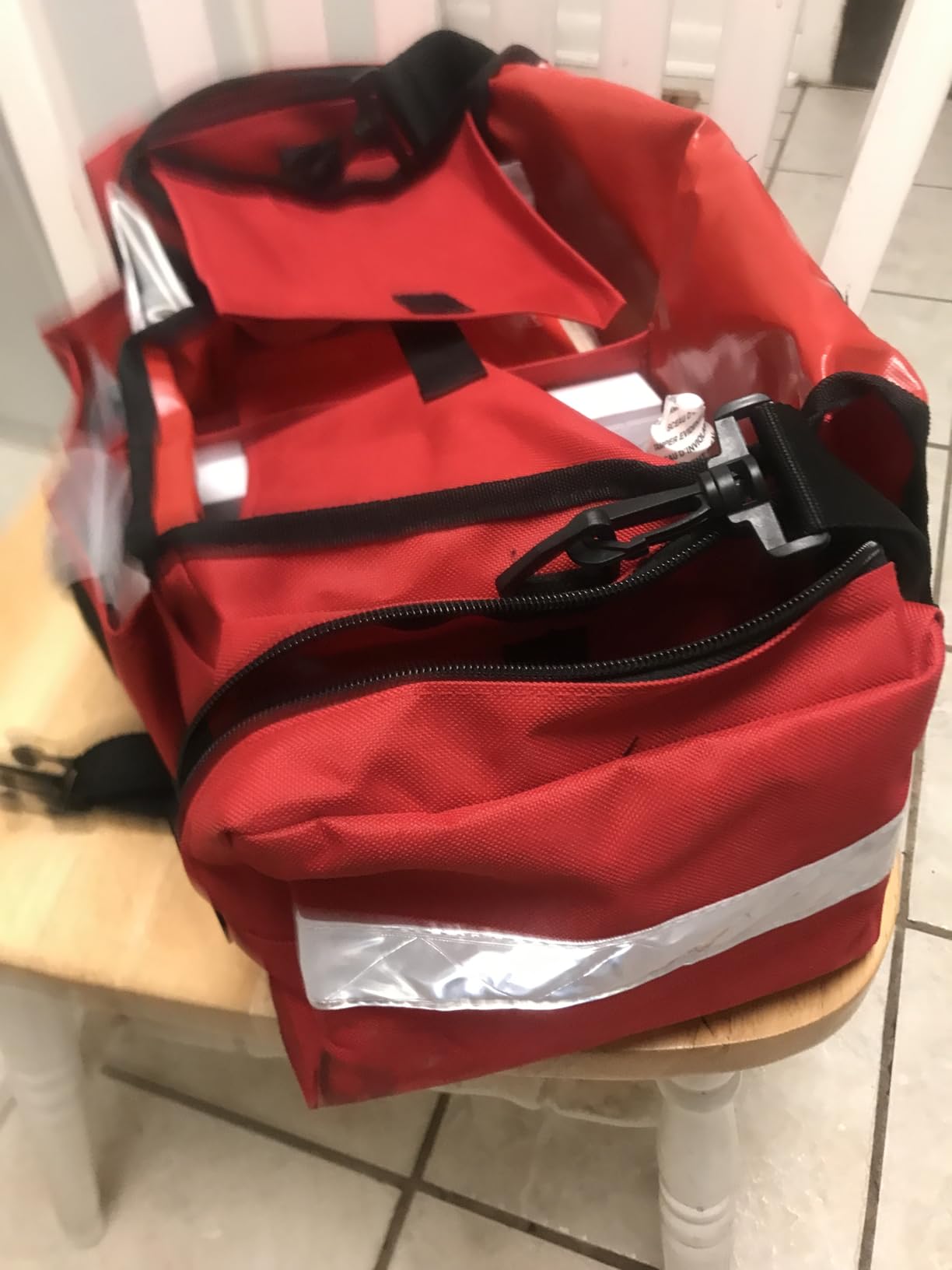
Versus the Scherber kit, MFASCO ships more consumables but a simpler organizational layout. Versus the NAR kit, MFASCO covers far more ground but ships fewer hemorrhage-control components. The right framing: MFASCO is your foundation, and a dedicated trauma kit layered alongside it is your life-saving layer.
Where this kit fits best
Businesses, schools, churches, and nonprofits needing broad first aid coverage with room to expand get the most value here. It also works as a shared family preparedness cache for home and vehicle.
At 4.67 pounds and 13 by 9 by 2.36 inches, it fits under a truck seat or on a closet shelf without dominating the space.
What to check before you buy
Plan on adding a windlass tourniquet immediately. This is the one kit on the list that ships without any tourniquet at all, and that gap matters for the emergencies this article is about.
Lime green is the color to pick if the kit lives in a vehicle or job box. It is dramatically easier to find at dusk or in a cluttered trunk than black or blue.
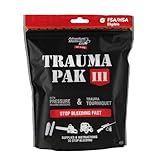
7. Adventure Medical Kits Trauma Pak III – Ultralight Pick for Pre-Built Trauma Coverage
Adventure Medical Kit Trauma Pak III – Medical First Aid Kit – Emergency Trauma Kit with Trauma Bandage, Tourniquet, Trauma Guide & More – Compact First Aid Kit for Wound Care
8 ounce ultralight kit
Waterproof resealable bag
Trauma bandage and tourniquet
Pros
- Lightest kit on this list at 8 ounces
- Waterproof resealable dry-bag construction
- Includes trauma bandage and tourniquet
- Printed trauma guide walks through each step
Cons
- Smallest review base of the eight kits
- Minimal internal organization compared to a pouch
Adventure Medical Kits has been outfitting backpackers and guides for decades, and the Trauma Pak III answers the question, “what do I carry when I want real trauma coverage but refuse to carry weight?” At 8 ounces in a waterproof resealable bag, it disappears into a pack lid, a hip belt pocket, or a glovebox.
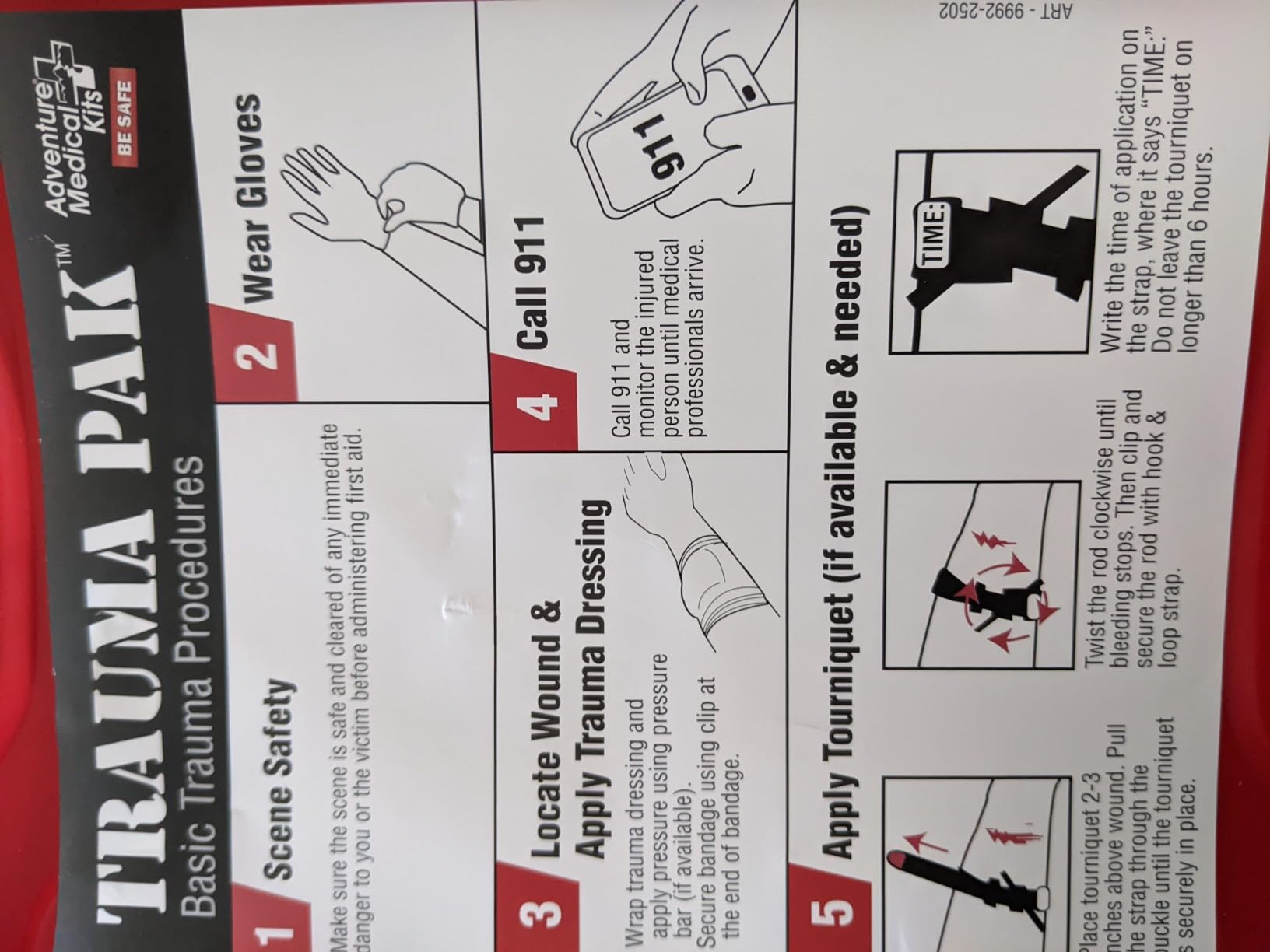
The kit covers the essentials: a trauma bandage, a tourniquet, gloves, and a printed trauma guide. That guide is a quiet upgrade for anyone without formal training, because it walks through wound packing, pressure dressings, and tourniquet application in plain language with clear diagrams.
The waterproof resealable bag is the real differentiator. Most kits ship in a MOLLE pouch that soaks through and frays after a wet season. The Trauma Pak III uses a dry-bag style closure that keeps contents dry through downpours and creek crossings. For kayak fishing, packrafting, and wet-weather hiking, that matters more than people expect until the day it matters enormously.
For ultralight backpackers and fastpackers, this is a sane addition that does not tip the scale. Reviewers also report using it as the core of a custom build-out, dropping the whole contents into a larger IFAK pouch and adding hemostatic gauze and a second chest seal.
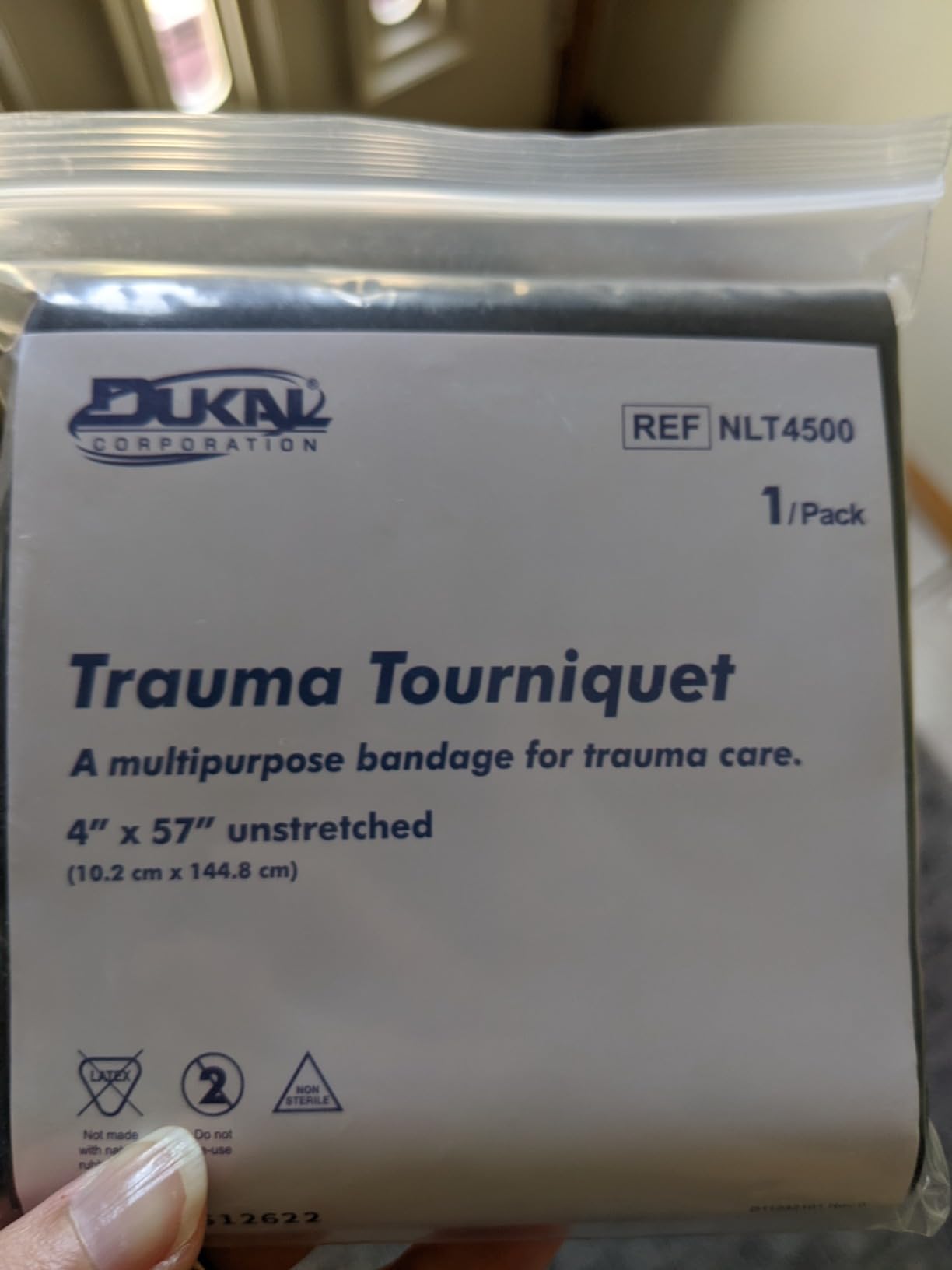
The honest limitation is scope. There is no splint, no blanket, and no bulk consumables, so for a stationary vehicle kit or a range bag you will want something more substantial like the EVERLIT or the NAR kit.
Where this kit fits best
Ultralight backpackers, bikepackers, fastpackers, and paddlers who count ounces but still want hemorrhage coverage. It is also the right backup kit for a dry bag, kayak hatch, or small sling pack.
If you are assembling a custom IFAK and want proven contents to start from, reviewers consistently back this as a base.
What to check before you buy
Confirm you are buying the current generation. Older stock sometimes circulates at a discount with earlier packaging and a slightly different contents list.
Note the 4.5 star rating, the lowest on this list. It reflects scope limitations rather than quality failures, but set expectations accordingly.
8. SurviveX Large First Aid Kit – Family and Vehicle Pick With Labeled Pockets
SurviveX Large First Aid Kit, Emergency Kit for 3-4 People
Labeled pockets
Zip Stitch wound closures
Large multi-use kit
Pros
- Labeled compartments speed scene triage
- Zip Stitch closures close wounds without stitches
- Lightweight 2.78 pounds for the size
- 4.8 star rating from 755 reviews
Cons
- Included tweezers draw consistent complaints
- Trauma components are less curated than dedicated kits
SurviveX built this kit around a simple insight: in an emergency, finding the right supply is half the battle. Every pocket in this kit is labeled by category, which sounds trivial until you try to locate a specific dressing with shaking hands in a dark car.
The loadout runs broad, and the standout is the Zip Stitch wound closures, which let you close a laceration without traditional stitches when professional care is hours away. That single feature makes this kit worth a look for backcountry guides, overlanders, and families far from urgent care.
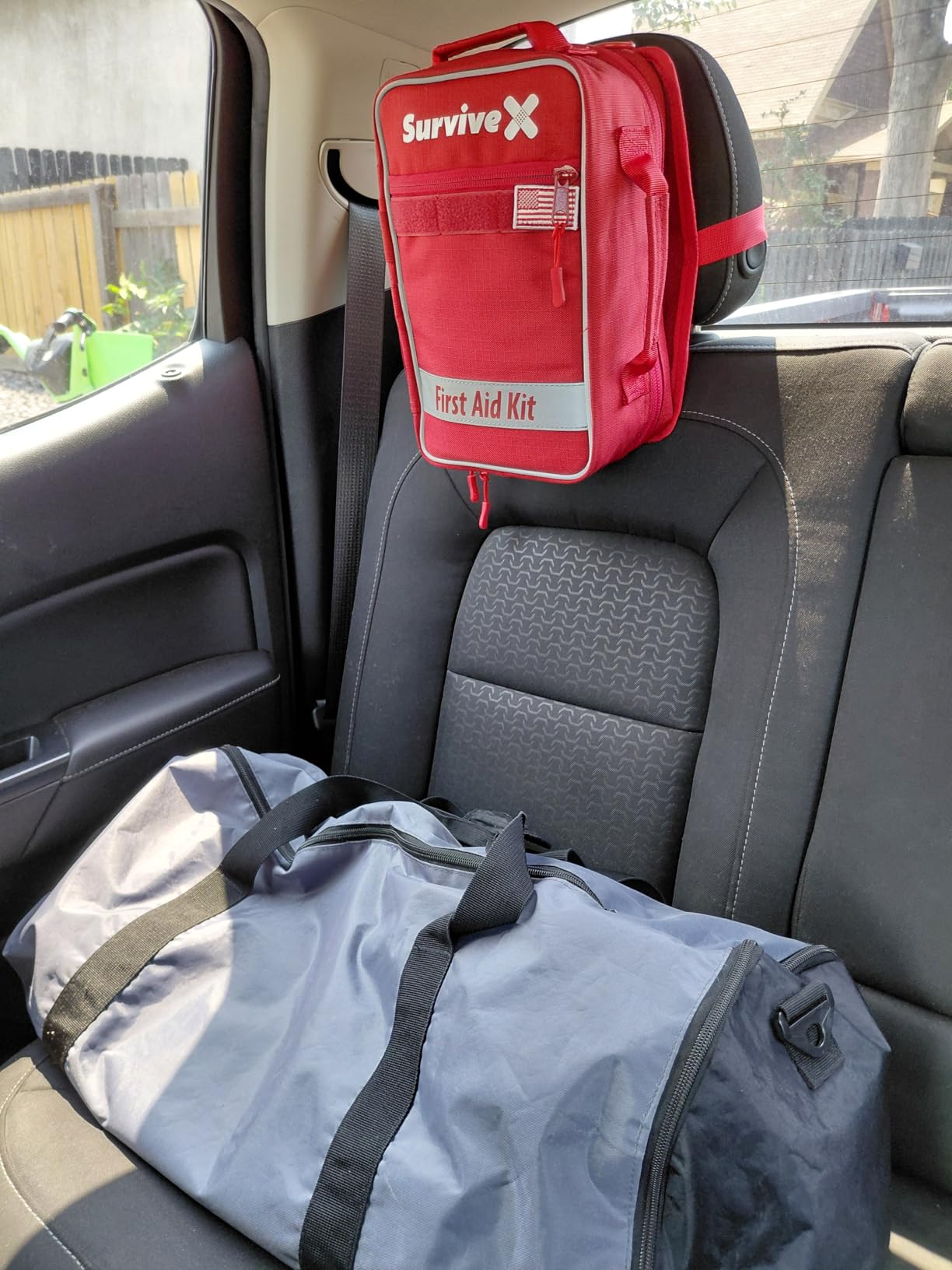
Across 755 reviews, buyers consistently praise the organization and breadth. One reviewer described it as well-organized and packed with quality supplies for home and travel, saying the labeled compartments make it easy to find what you need in a hurry. The recurring critique is blunt: replace the tweezers on day one.
For a family of four, an overlanding rig, or a road trip vehicle, this kit balances breadth, organization, and trauma coverage in a way most general first aid kits do not. Pair it with a dedicated windlass tourniquet if your threat model includes catastrophic bleeding.
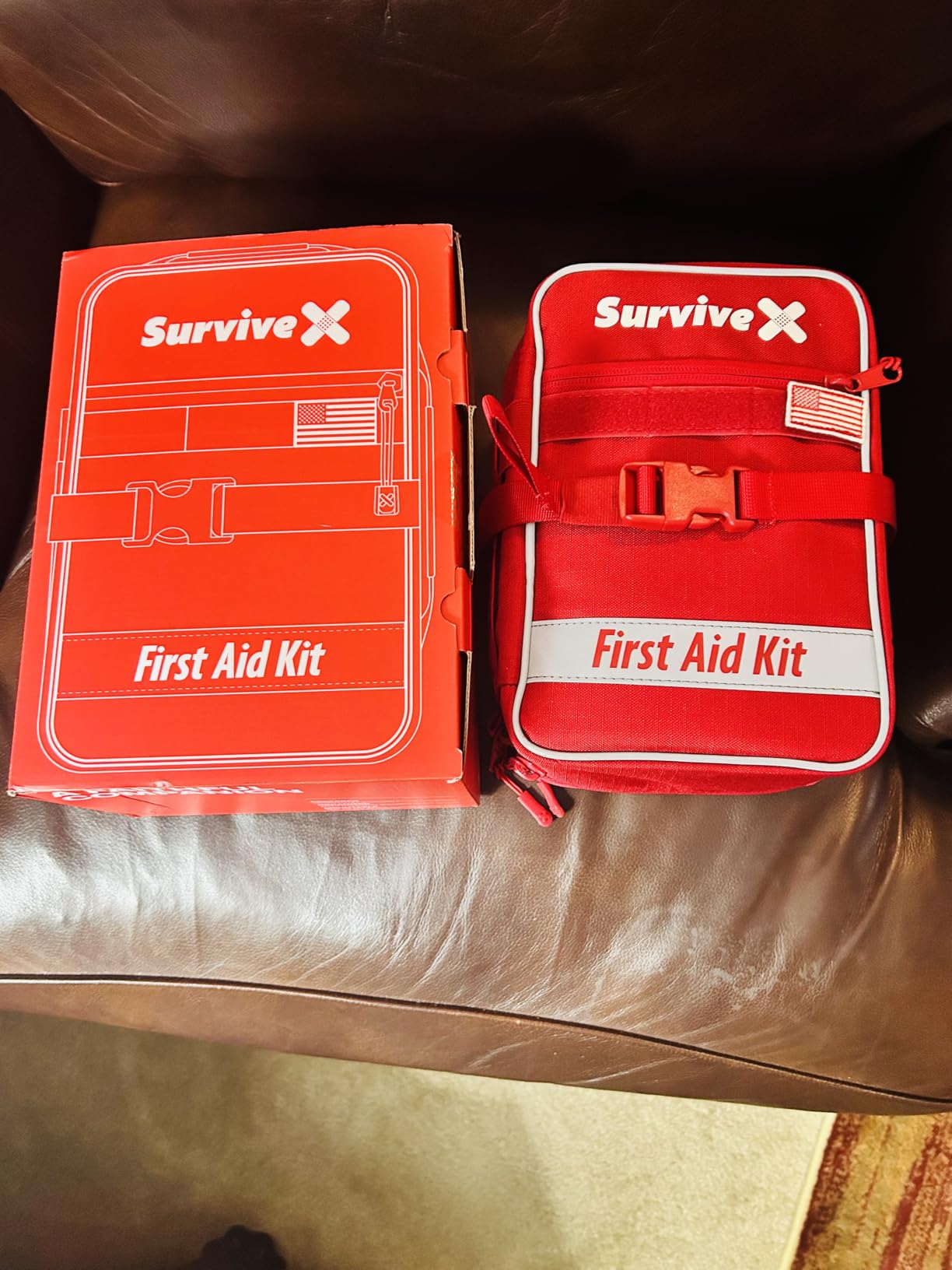
Versus the MFASCO bag, SurviveX ships a smarter organization system with fewer raw consumables. Versus the Scherber kit, SurviveX is more portable but less specialized for professional responders. It currently ranks number 6 in Amazon’s camping first aid kits category.
Where this kit fits best
Families, overlanders, road-trippers, and anyone who wants one kit that handles household and on-the-go emergencies alike. The labeled pockets make it the best hand-off kit on this list for a nervous first-time rescuer.
At 7.28 by 6.69 by 10.4 inches and 2.78 pounds, it slots neatly under a car seat or into a hall closet.
What to check before you buy
Buy a quality pair of tweezers at the same time. Nearly every critical review flags the included pair as unusable, and fine-point tweezers are cheap insurance.
Check whether you are getting the single Large kit or the Pack of 2 variant. The two-pack is the better route if you run one kit per vehicle.
How to Choose the Right Trauma Kit for You?
The right kit is the one you actually carry, train with, and can deploy under stress. Component quality beats kit size every time, and a small kit with real components always outperforms a large kit stuffed with filler.
Everyday carry
For pocket, purse, or laptop-bag carry, look for a compact kit that ships a genuine windlass tourniquet. The North American Rescue Public Access kit is the benchmark at this size.
Skip bulky extras at this tier. A kit you leave home because it is heavy is a kit that will not be there when you need it.
Vehicle
A vehicle kit can be larger and should include a tourniquet, hemostatic gauze, chest seals, an Israeli bandage, a thermal blanket, and trauma shears. Mount it in a fixed location and tell every regular passenger where it lives.
Avoid glove-box storage for primary trauma gear. Cabin heat degrades tourniquet elasticity and chest seal adhesive over time, so a floor compartment or seat-back mount away from direct sun is the better call.
Outdoor and trail
Backpackers, hunters, and guides need water resistance, low weight, and the big three plus an Israeli bandage. The THRIAID kit covers this on a budget, and the EVERLIT kit is the upgrade path.
Pair whatever you carry with a satellite communicator or personal locator beacon. Trauma care without a way to call for evacuation only buys time, it does not resolve the emergency.
Workplace and home
For offices, schools, churches, and home use, choose a kit with broad consumables plus a dedicated bleeding-control layer. The MFASCO bag works as the foundation, and adding a NAR Public Access kit mounted near the AED completes the picture.
Wall-mounted public access bleed-control kits next to AEDs are becoming the standard for schools and gyms. NAR sells purpose-built cabinets for exactly this deployment.
Training matters more than gear
The best trauma kit on the market will not save a life if the person carrying it has never practiced opening it under stress. Take a Stop the Bleed class through your local fire department or hospital. A single session teaches wound packing, tourniquet application, and direct pressure well enough to act when it counts.
Then maintain the skill. Run monthly opening drills on your kit, practice one-handed tourniquet application on yourself, and time yourself. Speed comes from repetition, not from owning the most expensive pouch on the market.
2026 trends in trauma kit design
The biggest shift in 2026 is external tourniquet carry. More users now mount a CAT Gen 7 on the outside of a pack or plate carrier so it deploys without opening anything. Slimmer tear-away pouches, more compact hemostatic gauze formats, and dual-vent chest seals have also migrated from premium kits into the mid-tier options on this list.
Common Mistakes When Buying a Trauma Kit
The single biggest mistake is accepting a knockoff tourniquet. Counterfeit C-A-T tourniquets have flooded online marketplaces, and their windlass rods can shear under load. The CoTCCC maintains a public list of recommended tourniquets, and you should verify any TQ against it before trusting it with a life.
The second mistake is treating the purchase as set-and-forget. Hemostatic gauze expires, chest seal adhesive degrades, and tourniquet elasticity fades with UV and heat exposure. Put a recurring annual reminder on your calendar to audit the kit and replace anything past date or showing wear.
The third mistake is buying gear you never train with. A kit at the bottom of a closet is a kit that will not get used. Practice opening the pouch, applying the tourniquet one-handed, and packing a wound with compressed gauze until the motions are automatic.
Finally, do not confuse a well-stocked general first aid kit with a trauma kit. A 400-piece household bag with no tourniquet and no chest seal cannot help with a femoral bleed. Build the hemorrhage-control capability first, then layer general supplies on top.
Frequently Asked Questions
What are the best medical kits for trauma?
The best medical kits for trauma prioritize the big three killers: massive hemorrhage, chest wounds, and airway compromise. Top picks include the North American Rescue Public Access kit for compact carry, the EVERLIT Emergency Trauma Kit for all-around coverage, and the THRIAID Survival First Aid Kit for budget buyers. Each ships a real windlass tourniquet, hemostatic or compressed gauze, and chest seals, which are the three components that separate a trauma kit from a household first aid kit.
What is the difference between a first aid kit and a trauma kit?
A first aid kit treats minor cuts, scrapes, sprains, and fevers. A trauma kit treats the injuries that kill people before an ambulance arrives, specifically massive bleeding, penetrating chest wounds, and airway problems. A quality trauma kit always includes a tourniquet, hemostatic gauze, and chest seals, while a standard first aid kit rarely does. Most people benefit from keeping a small trauma kit on their body or in their vehicle alongside a broader household first aid kit.
What to put in a trauma first aid kit?
A trauma first aid kit should include a CoTCCC-recommended tourniquet (CAT Gen 7 or SOF-T), hemostatic gauze such as QuikClot Combat Gauze, vented chest seals, compressed gauze for wound packing, an Israeli pressure bandage, trauma shears, nitrile gloves, a permanent marker, and a mylar emergency blanket. Useful add-ons include a 36 inch splint, a CPR mask, and a tactical flashlight. Avoid kits that ship generic or unmarked tourniquets, because counterfeit TQs are a documented safety risk.
Which IFAK trauma kit is the best?
The best IFAK (Individual First Aid Kit) for most people is the North American Rescue Public Access Bleeding Control Kit, because it ships genuine NAR components in a compact 15 ounce bag that deploys one-handed. For buyers who want more components and broader coverage, the EVERLIT Emergency Trauma Kit is the strongest all-around choice. Budget-conscious buyers should look at the THRIAID kit, which includes an Israeli bandage and chest seal. The right IFAK is ultimately the one you carry daily and train with monthly.
Do I need a tourniquet in my trauma kit?
Yes, a tourniquet is the single most important component in any trauma kit. Extremity bleeding is the most common preventable cause of death in trauma, and a CoTCCC-recommended tourniquet like the CAT Gen 7 is the only field tool that reliably stops arterial bleeding from a limb. Apply it high and tight on the injured limb, tighten until bleeding stops, and note the time of application for the receiving medical team. Without a real tourniquet, a trauma kit is incomplete no matter how many other supplies it includes.
Final Thoughts
After comparing 8 kits, the best trauma first aid kits for 2026 come down to three questions: which tourniquet ships inside, whether hemostatic gauze is included, and whether the chest seals are vented. Get those three right and almost everything else is negotiable.
Start with the kit that matches how you actually move through the day, train with it monthly, and audit it once a year. The NAR Public Access kit is my pick for everyday carry, the EVERLIT is the all-around winner, and the THRIAID is the smart budget buy.