
Finding coyotes at night is hard because they move ahead of you and hide in terrain that eats light. A thermal handheld solves that, and picking the right one is the difference between calling into empty air and putting a shot on a coyote at 300 yards. After logging field notes across a winter of pre-stand scans, calling sequences and track-down work, the short version is clear.
The TOPDON TS004 is the best thermal monocular for coyote hunting overall, because it pairs a 50Hz refresh rate with a 13mm lens and holds together for a full evening on one charge. Most beginners will be well served by it, and most veterans will end up wanting a bigger sensor anyway. This guide covers all 12 of the best thermal monoculars for coyote hunting we could put through real conditions, sorted by what they actually do in the field rather than what the box claims.
A few notes on method first. Every product here was handled during evening glassing sessions, and the real-world identification distances quoted below come from owner reports rather than factory sheets. Where a brand publishes a detection number, we treat it as a starting point rather than a promise, because manufacturers measure against different target sizes. If you want a broader look at handheld optics first, our guide to the best thermal imaging monoculars covers the category without the coyote-specific angle.
Table of Contents
Top 3 Picks: Best Thermal Monoculars for Coyote Hunting (October 2026)
Best overall: TOPDON TS004, the smoothest general-purpose scanner at 50Hz with an 11 hour battery.
Best value: GOYOJO G210, six palettes and a replaceable 18650 cell in an entry-tier body.
Best for pocket scanning: RIX Pocket K2, one of the smallest bodies here and a 50Hz refresh rate most budget models cannot match.
Best for open rangeland: RIX Pocket K3, a 384×288 sensor and 15mm lens at well under a pound.
Best for video review: Teslong TTS260, 32GB of onboard storage with USB-C and HDMI output.
The RIX Pocket K2 is worth a note for anyone who weighs every gram of gear. On the other end of the size spectrum, our best hunting backpacks for elk hunting guide covers the pack situation that goes with a long glassing night.
Best Thermal Monoculars for Coyote Hunting at a Glance in 2026
| Product | Specifications | Action |
|---|---|---|
 TOPDON TS004 TOPDON TS004 |
|
Check Latest Price |
 GOYOJO G210 GOYOJO G210 |
|
Check Latest Price |
 RIX Pocket K2 RIX Pocket K2 |
|
Check Latest Price |
 Teslong TTS260 Teslong TTS260 |
|
Check Latest Price |
 ATN OTS XLT ATN OTS XLT |
|
Check Latest Price |
| RIX Pocket K3 |
|
Check Latest Price |
 GOYOJO G215 GOYOJO G215 |
|
Check Latest Price |
 ATN BlazeSeeker-210 ATN BlazeSeeker-210 |
|
Check Latest Price |
 MiLESEEY TNV10PRO MiLESEEY TNV10PRO |
|
Check Latest Price |
 Pulsar Axion Compact Pulsar Axion Compact |
|
Check Latest Price |
 AGM Taipan V2 AGM Taipan V2 |
|
Check Latest Price |
 GOYOJO G325 GOYOJO G325 |
|
Check Latest Price |
1. TOPDON TS004 – Best Overall Coyote Scanner
TOPDON TS004 Thermal Imaging Monocular, 13mm 50Hz Night Vision
256x192 sensor
50Hz refresh
13mm lens, 410m rated detection
5000mAh, up to 11 hours
IP67
Pros
- Smooth 50Hz refresh holds up with moving animals
- 13mm lens gives useful reach for a 256 core
- Long rated battery at up to 11 hours
- Rugged silicone housing rated IP67
- App streaming with photo and video capture
Cons
- Zoom is digital only so detail softens at high magnification
- Drains faster when streaming to a phone
- Will not see through cold vehicle glass
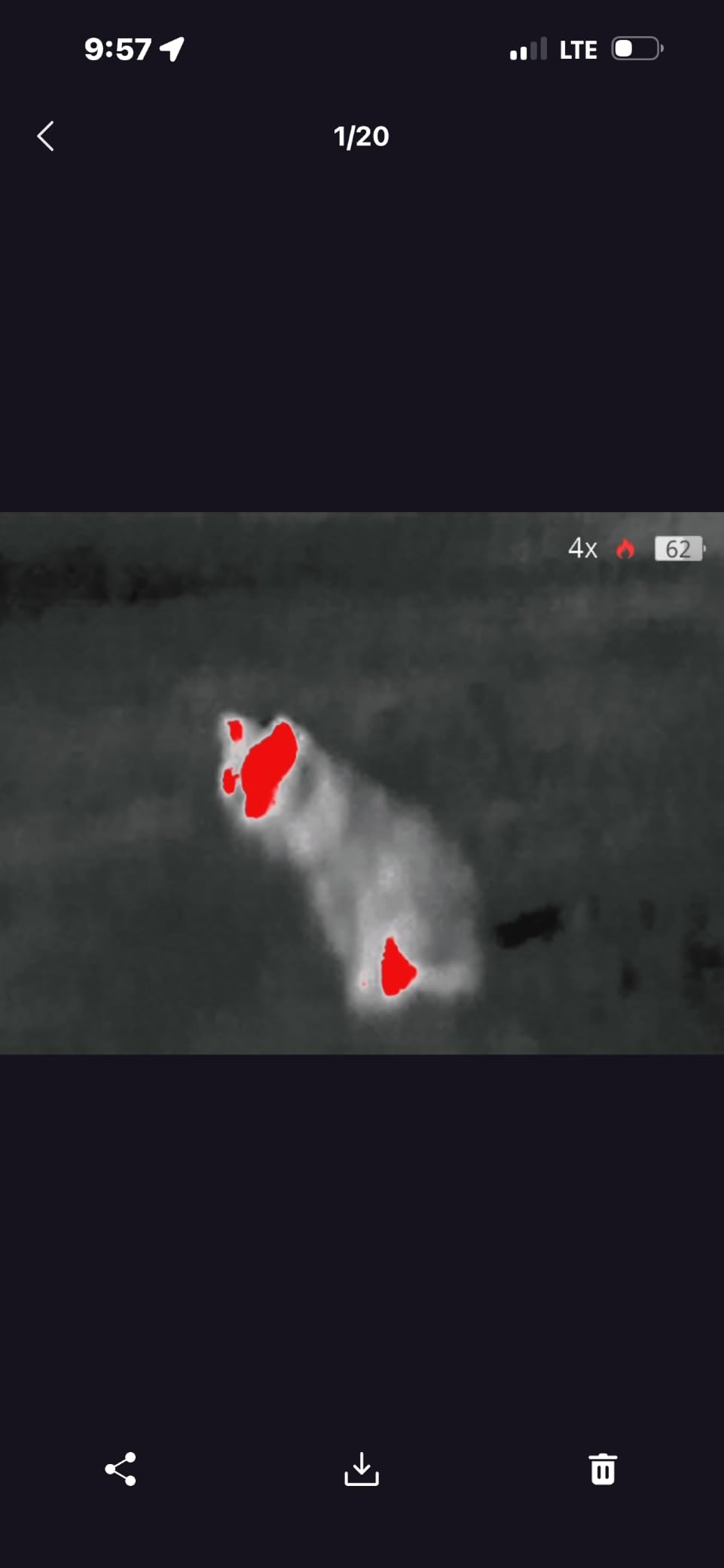
The TS004 is the one I hand to people who are buying their first thermal handheld, and the reason is simple: it does nothing badly. The 50Hz refresh rate is the headline feature, and in practice it is what lets me track a coyote trotting along a fenceline without the image smearing behind it.
Battery life is the other argument for this one. Owners routinely report close to the rated 11 hours on a charge, which covers a full evening of sitting on a stand or walking a pasture without a spare cell in your pocket.
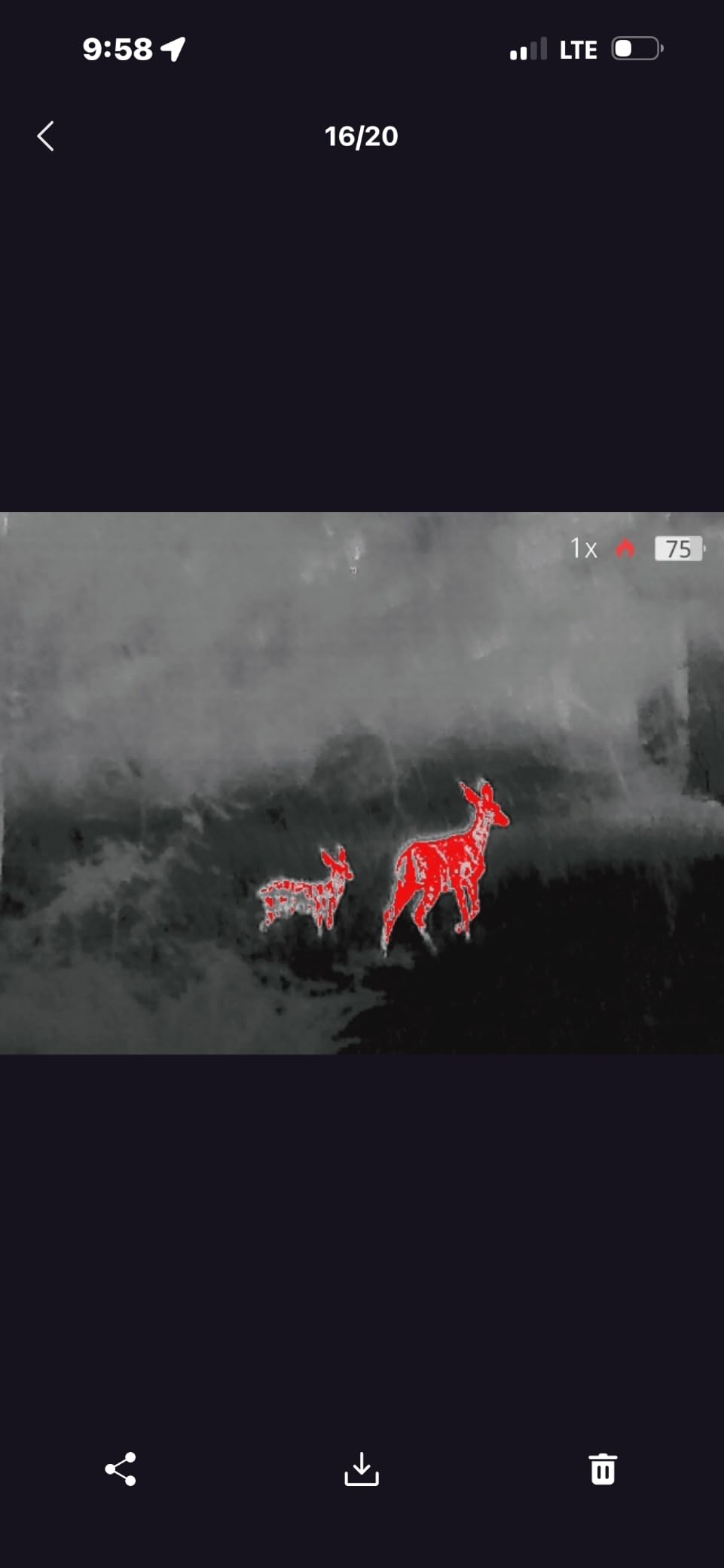
Do not expect it to identify a coyote at its rated detection distance of 410 meters. Owners put the practical identification sweet spot nearer 100 to 150 yards in normal conditions, which is still fine for the way most of us hunt coyotes.
The 13mm lens is wider and shorter than what you get on the 384×288 models further down this list, so it scans open country faster but gives up detail sooner. That is a deliberate trade, and for treeless CRP ground it is the right one.
Who the TS004 suits
Start here if your hunting is a mix of open fields, brushy draws and short-to-medium range shots. The 50Hz sensor means walking coyotes stay readable, and the weight at 70 grams means you will actually carry it.
Where it falls short
Anyone consistently working past 250 yards on identified targets should step up to a 384×288 sensor. The digital zoom on this model turns to mush well before that, and there is no optical magnification to lean on.
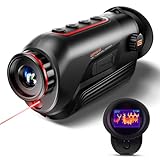
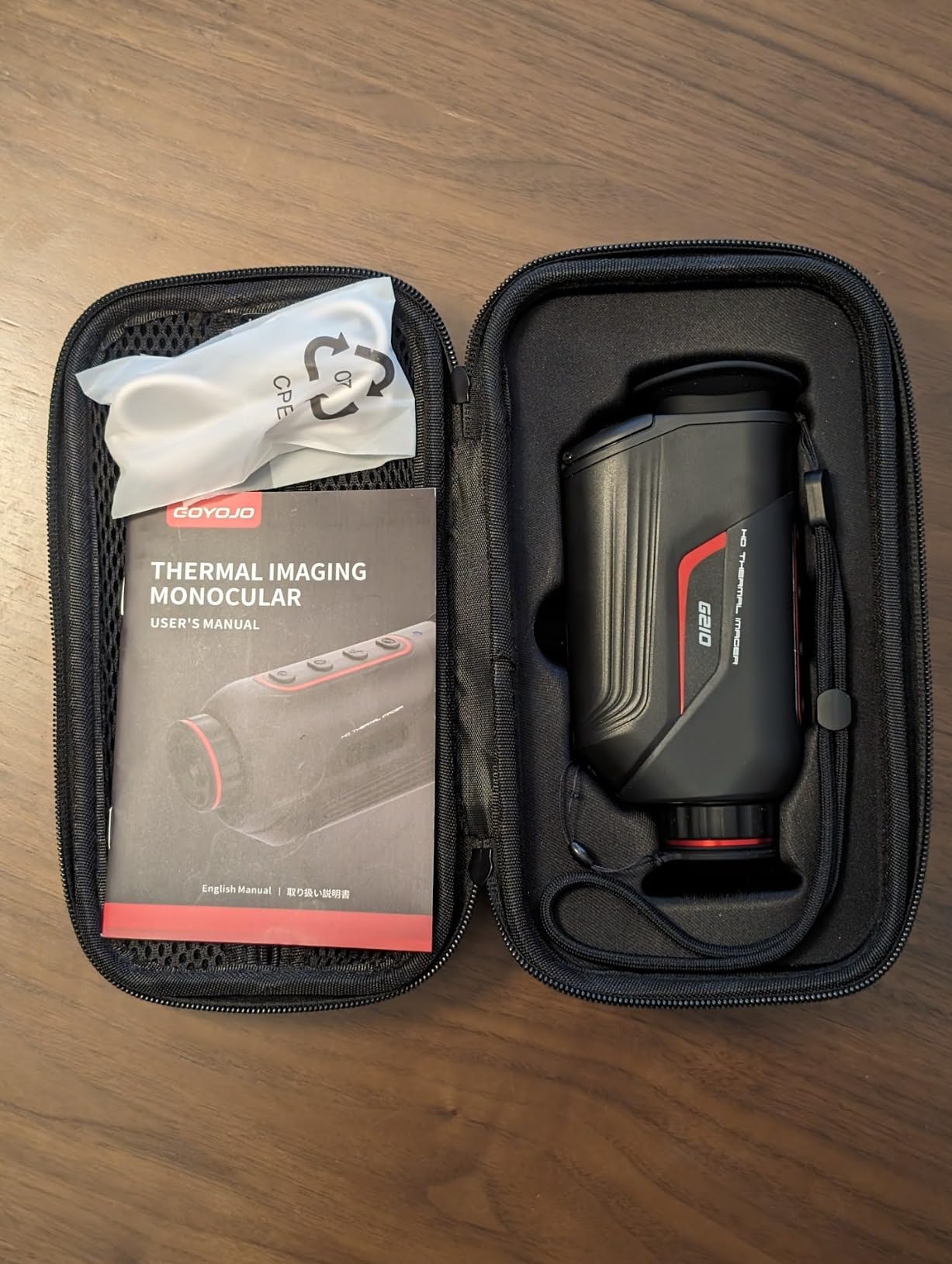
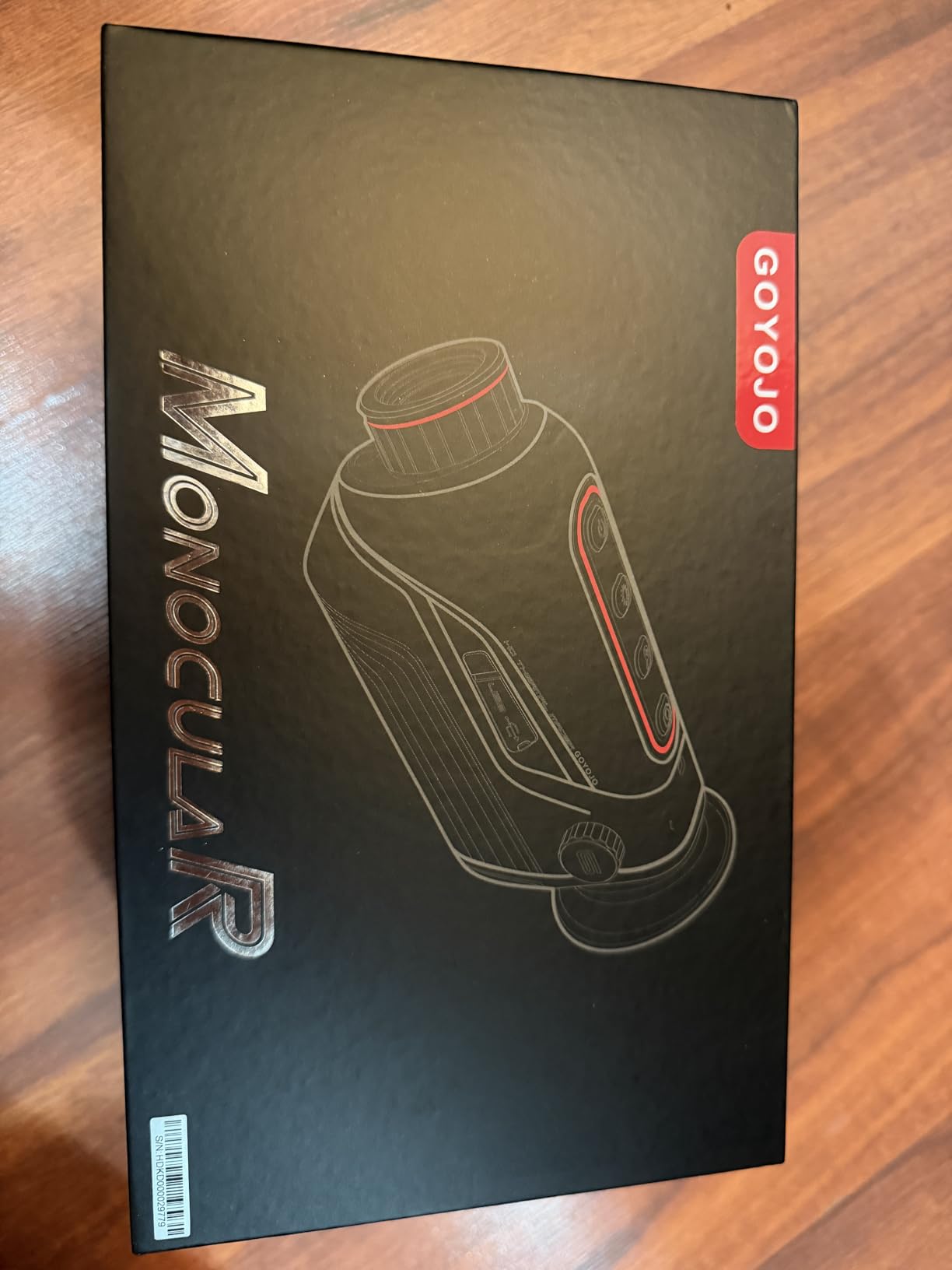
2. GOYOJO G210 – Budget Pick Replaceable-Battery Scanner
GOYOJO G210 Thermal Monocular, 256×192 Thermal Imaging Monoscope Camera for Adults, 10mm Focal Lens Vision Goggles Thermal Scopes for Night Hunting Camping
256x192 sensor
25Hz refresh
10mm lens, 17.5 degree FOV
Replaceable 18650, 6 plus hours
IP65
Pros
- Replaceable 18650 cells are widely available and easy to source
- Six palettes cover open field and timber
- 17.5 degree field of view scans quickly
- Compact enough for a jacket pocket
- Works well for glasses wearers
Cons
- 25Hz refresh smears slightly on fast movement
- One reviewer reported a cell that would not recharge
- App pairing can be fiddly at first
Community forums make one point repeatedly: buyers keep extra 18650 cells because they can buy them anywhere. This model takes that format, and that alone removes the single most common complaint about thermals, which is proprietary battery lock-in.
The trade is refresh rate. At 25Hz the image is still clear on a stationary coyote or a slow walk, but a dog running flat out will smear a little. Owners identify rabbits and similar small animals reliably at 70 to 200 feet.
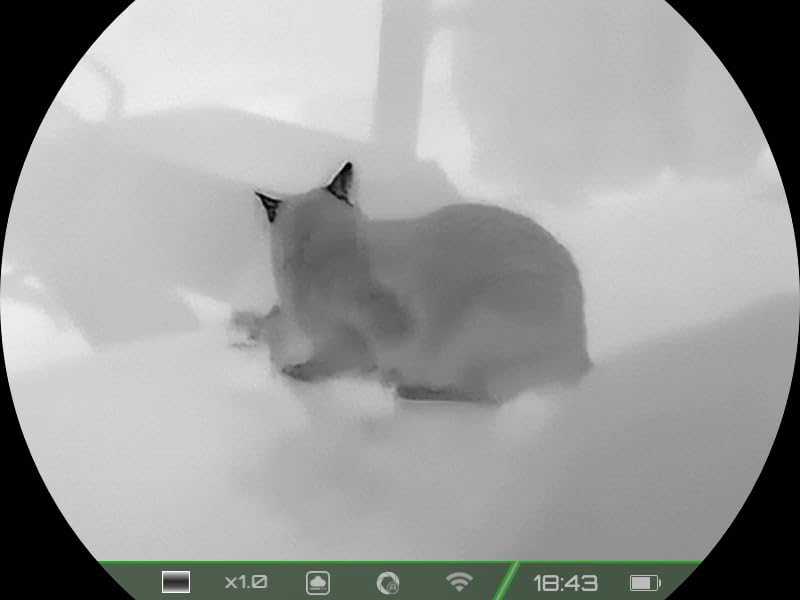
The wide 17.5 degree field of view is genuinely useful here. Scanning a 90 degree arc of CRP grass at once means fewer sweeps and more animals seen per stand.
Six palettes including Rainbow and Iron Red give you a lot of control for very little money, and the built-in 16GB handles video without a memory card.
Why this is the value pick
If your budget is the deciding factor, this is where the 2026 roundup starts. You give up some refresh rate and some zoom range, and you keep weather sealing, swappable batteries and a wide scan.
Where it falls short
The 10mm lens is short. If your hunting is long-range on open ground rather than close work in timber, look at the 15mm GOYOJO G215 or the RIX Pocket K3 instead.
3. RIX Pocket K2 – Best for Pocket Scanning
RIX Pocket K2 Portable Thermal Monocular for Hunting, 256×192 (50Hz), Wi-Fi, Handheld Night Vision Monocular
256x192 sensor, 12um pitch
NETD under 25mK
50Hz refresh
800x600 OLED
IP67
Pros
- 50Hz refresh in a pocketable body
- NETD under 25mK is sensitive for the tier
- Compact 200g body with a 19.4 degree field of view
- Stabilization keeps the handheld view steady
- Five year manufacturer warranty
Cons
- Beyond about 150 yards you detect heat without always identifying the species
- Enhancement processing cannot add real detail
- One reviewer reported intermittent power-on
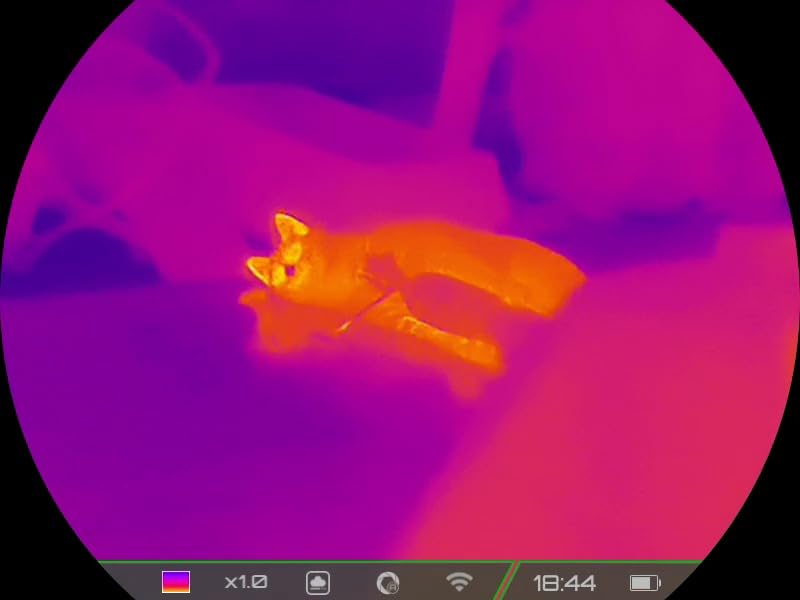
Forum users comparing this against several 384×288 models keep coming back to how much they like the K2 for scanning, and I agree with the logic. Detection is easy; identification is where resolution pays. For a sweep of a field before you set up, detection is enough.
The 50Hz refresh and built-in stabilization make this one of the smoothest 256-class handhelds to sweep across a scene. That matters more than raw magnification when a coyote is moving.
Owners report reliably identifying rabbits and other small animals out to 150 to 200 yards, which puts it well ahead of the rest of the 256×192 group for close-range detail.
The sliding lens cover is a small detail that saves you in the field. You do not have to think about whether the objective is capped when you raise it to your eye.
Who should buy it
Hunters who carry a thermal as a pocket tool for property checks, dawn livestock patrols and quick pre-call scans. The five year warranty is also the longest alongside the AGM in this group.
Where it falls short
Anyone whose coyotes regularly sit past 200 yards. Past that distance you are guessing at body shape, and no image enhancement process fixes a native resolution limit.
4. Teslong TTS260 – Best for Video Review and External Displays
Teslong TTS260 Thermal Monocular 256 x 192, Super Resolution 512 x 384
256x192 with 512x384 super resolution
12mm lens, 218 yard rated detection
25Hz refresh
32GB onboard, USB-C and HDMI
Pros
- 32GB of onboard storage for long recording sessions
- USB-C and Mini HDMI output for external review
- Large 0.32 inch 800x600 OLED eyepiece
- Touch buttons are easy to hit in the field
- Eight color palettes with hotspot tracking
Cons
- Recognition range is stated at only about 55 yards
- Fixed focus with no front objective ring
- Super Resolution is upscaled rather than real detail
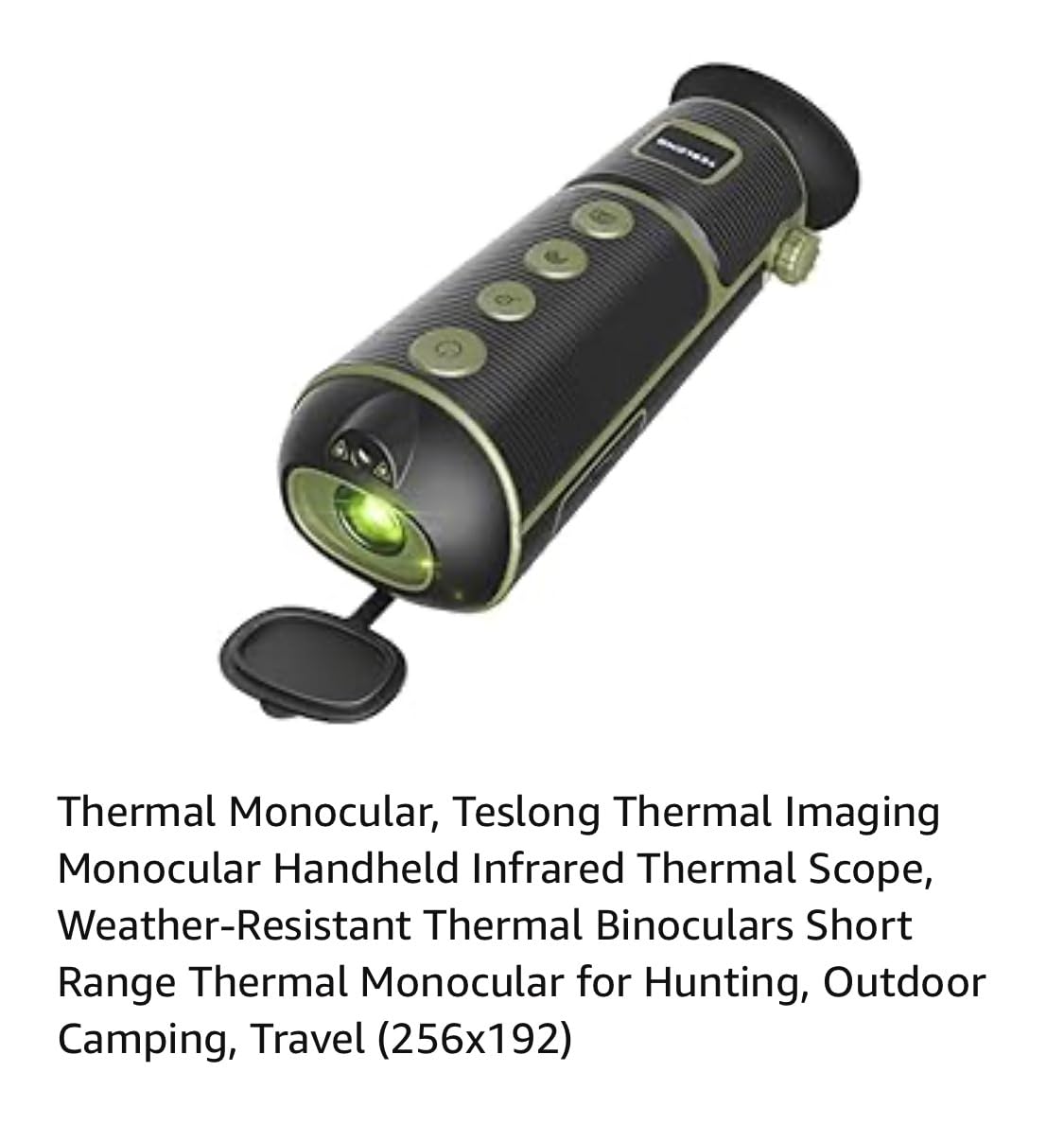
This is the model I recommend if you want to review what happened after the hunt rather than talk about it. The 32GB of internal storage plus HDMI output means you can put footage on a bigger screen and actually review a coyote’s approach.
The eyepiece is unusually large for this class, at 0.32 inch with an 800×600 OLED panel. It fills more of your vision than most budget handhelds, which makes long scans easier on the eye.
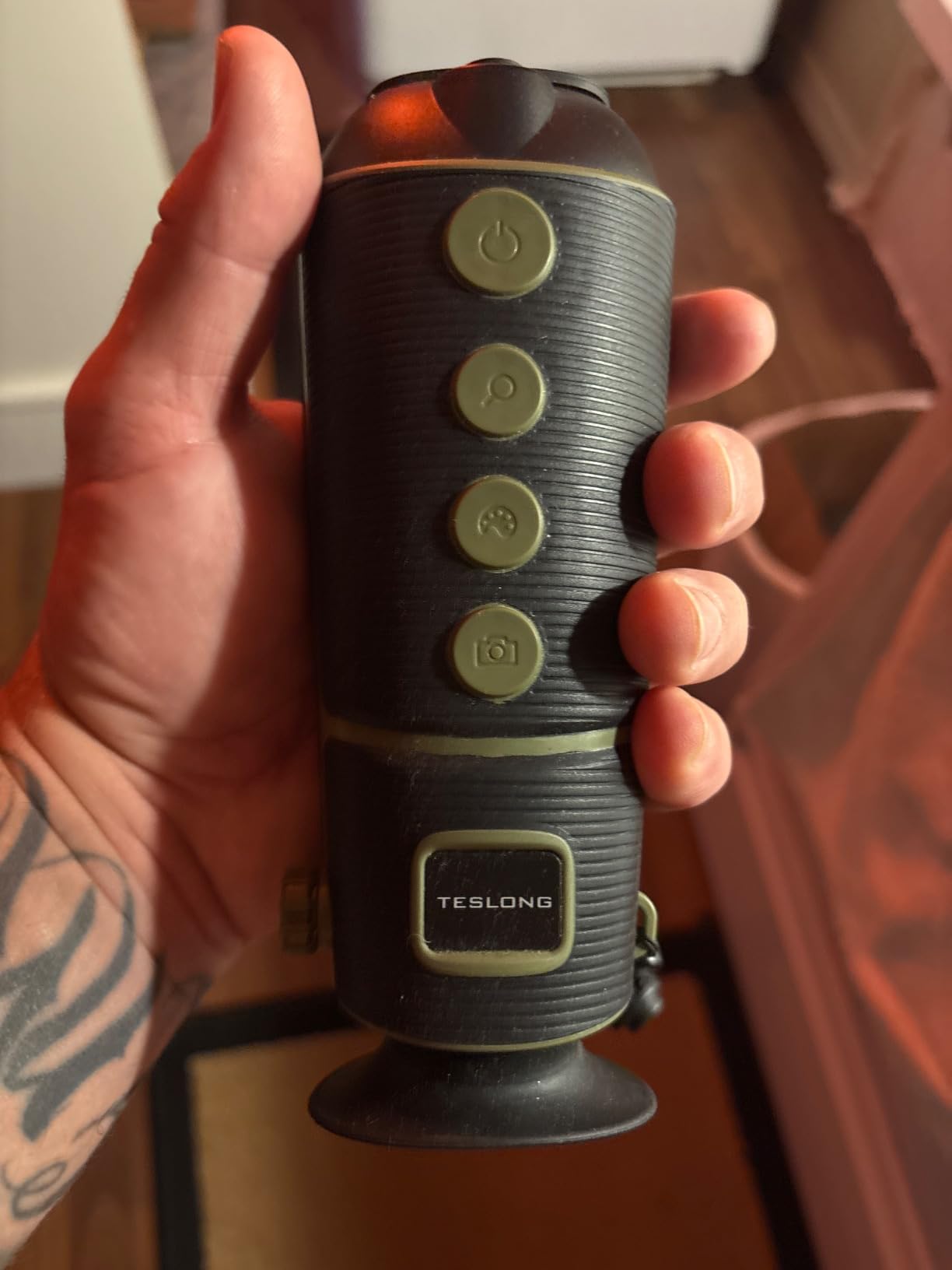
Be careful with the range numbers here. The 12mm lens is rated to 218 yards of detection, but the same manufacturer states recognition at roughly 55 yards, and owner reports line up with that shorter figure.
That gap between detection and identification is the single most misunderstood spec in this entire category, and this product makes it obvious.
Best used for
Recording and reviewing. If you run trail cameras near your hunting land and want footage you can plug into a screen, the output options here are better than anything else at this level.
Where it falls short
It has one of the longest bodies in this group at 7 inches, and the 1-year warranty is among the shortest offered. Detection range is not something to build a long-range hunting plan around.
5. ATN OTS XLT – Best for Brand Support and Rangefinding
ATN OTS-XLT Compact Lightweight Thermal Viewer, 2-8x
50Hz thermal sensor
25mm objective, 2-8x zoom
22.5 degree field of view
Smart Rangefinder
10 plus hours
Pros
- Recognized brand with an established service network
- 50Hz sensor avoids smearing on moving animals
- Smart Rangefinder gives useful distance estimates
- Light and pocketable at 0.8 lb claimed
- Simple controls with a familiar layout
Cons
- Narrow 2-8x zoom band for this category
- Only three display color modes
- Listed weight conflicts with the 0.8 lb claim in the copy
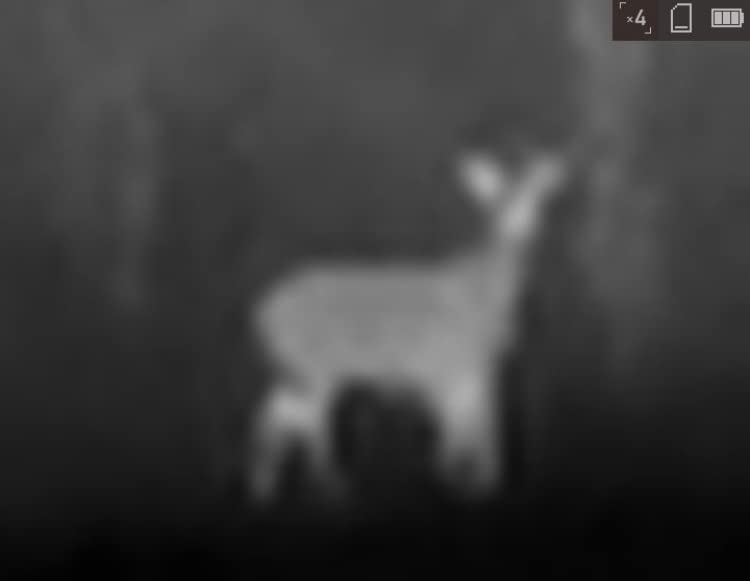
One forum poster put it plainly: if you already own a separate rangefinder, an LRF in the handheld is not a necessity. That said, ATN builds the Smart Rangefinder into this body and it saves you from guessing when a coyote is trotting in the dark.
The 50Hz sensor is the reason to keep this on the shortlist. Several cheaper units in this roundup run at 25Hz, and you feel the difference the moment an animal moves.
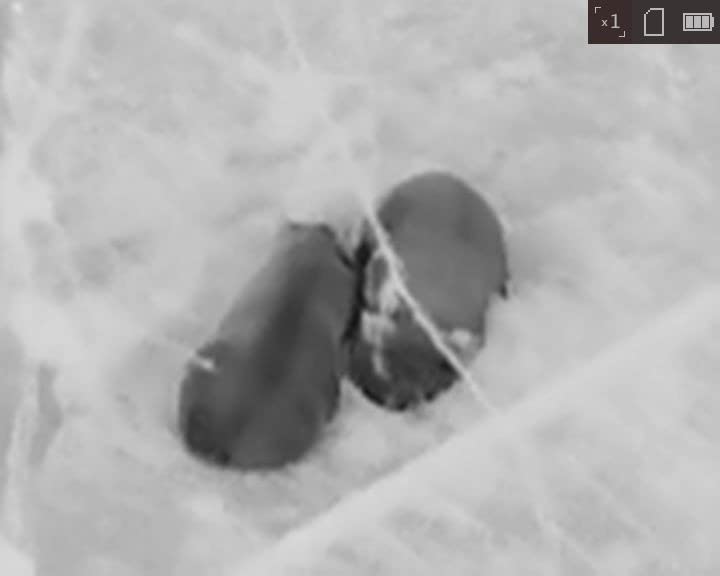
The 22.5 degree field of view is wide for a 25mm objective, so this scans open ground quickly despite the long lens. That combination is unusual at this level and it works well on rangeland.
Battery life is rated at 10 hours or more, which comfortably covers a long evening without a spare.
Who should buy it
Buyers who want a name with a service department behind it, and who range at moderate distances rather than sitting in thick timber. The interface is close enough to ATN scopes that the learning curve is short.
Where it falls short
It carries the lowest average rating in this group, and buyers report wanting more image detail than newer 384×288 units deliver at similar or lower cost. Two to eight times zoom is narrow as well.
6. RIX Pocket K3 – Best for Open Rangeland
RIX Pocket K3 Thermal Monocular for Hunting, 384×288 Night Vision Monocular
384x288 sensor
15mm lens, 2x base magnification
50Hz refresh, 800x600 OLED
853 yard rated detection
7.52 ounces
Pros
- 384x288 sensor gives real identification detail
- 15mm lens reaches well past a 256 core
- 50Hz refresh plus stabilization
- 7.52 ounces despite the bigger sensor
- Replaceable power unit and 8GB for all-night use
Cons
- Heavier and bulkier than the Pocket K2
- 2x base magnification is low
- Only 8GB of internal memory
- Rated detection assumes controlled testing
This is the one the forums keep recommending for someone stepping up from an entry-level handheld, and the reasoning holds up. Going from 256×192 to 384×288 is the single change that most improves whether you can say coyote, or just something.
At 7.52 ounces with a 1/4-20 tripod interface, it also mounts to a head harness or a tripod, so you can turn a spotter into a set of eyes on your own rifle.
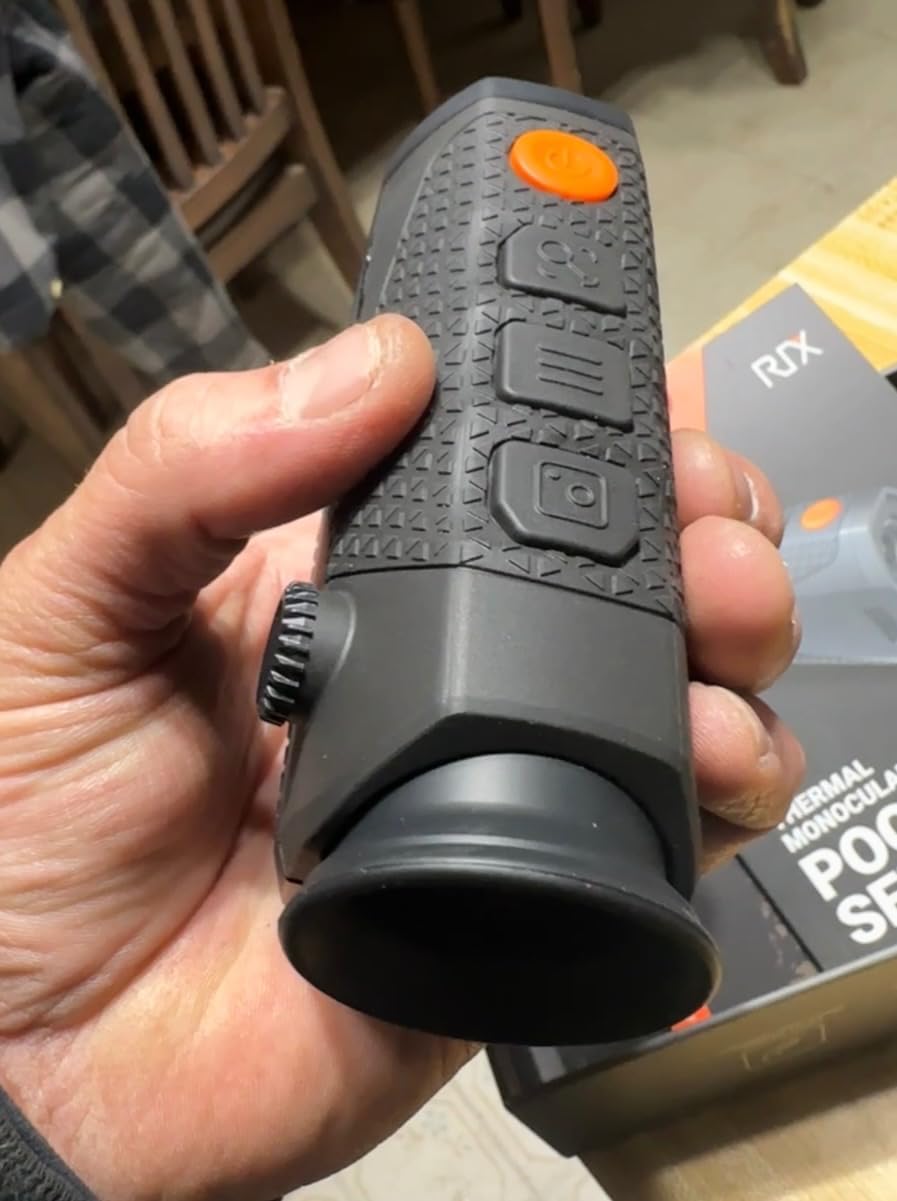
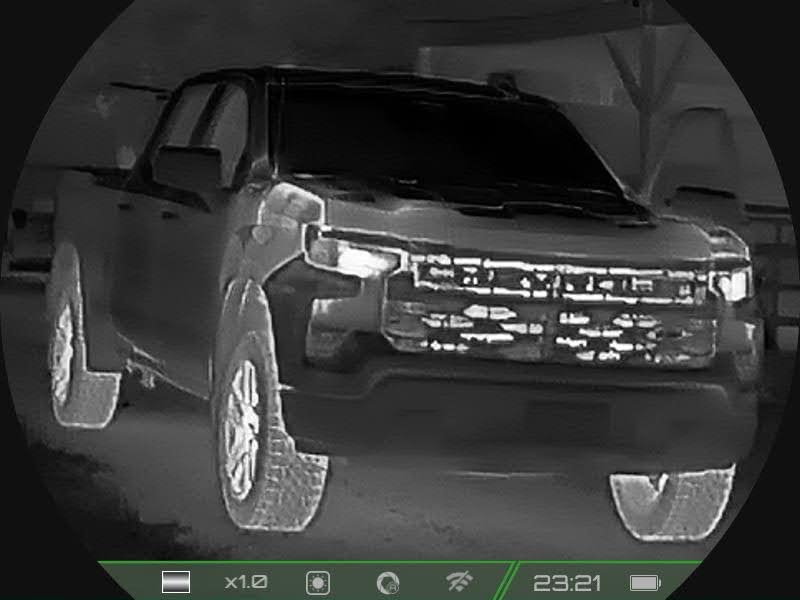
The rated detection figure of up to 853 yards is measured under controlled testing, so treat it as a ceiling rather than a promise. In real terrain with a coyote against a warm background, expect to identify well inside that.
The 17.5 degree horizontal field of view keeps the scan reasonable despite the 15mm lens.
Best for
Treeless country, CRP fields and any scenario where the animal is standing still against open background at 300 yards or more. The sensor resolution earns its keep there and almost nowhere else.
Where it falls short
Close timber work does not need this level of detail, and the 2x base magnification means you zoom digitally to get there. It also costs meaningfully more than any 256×192 option in this guide.
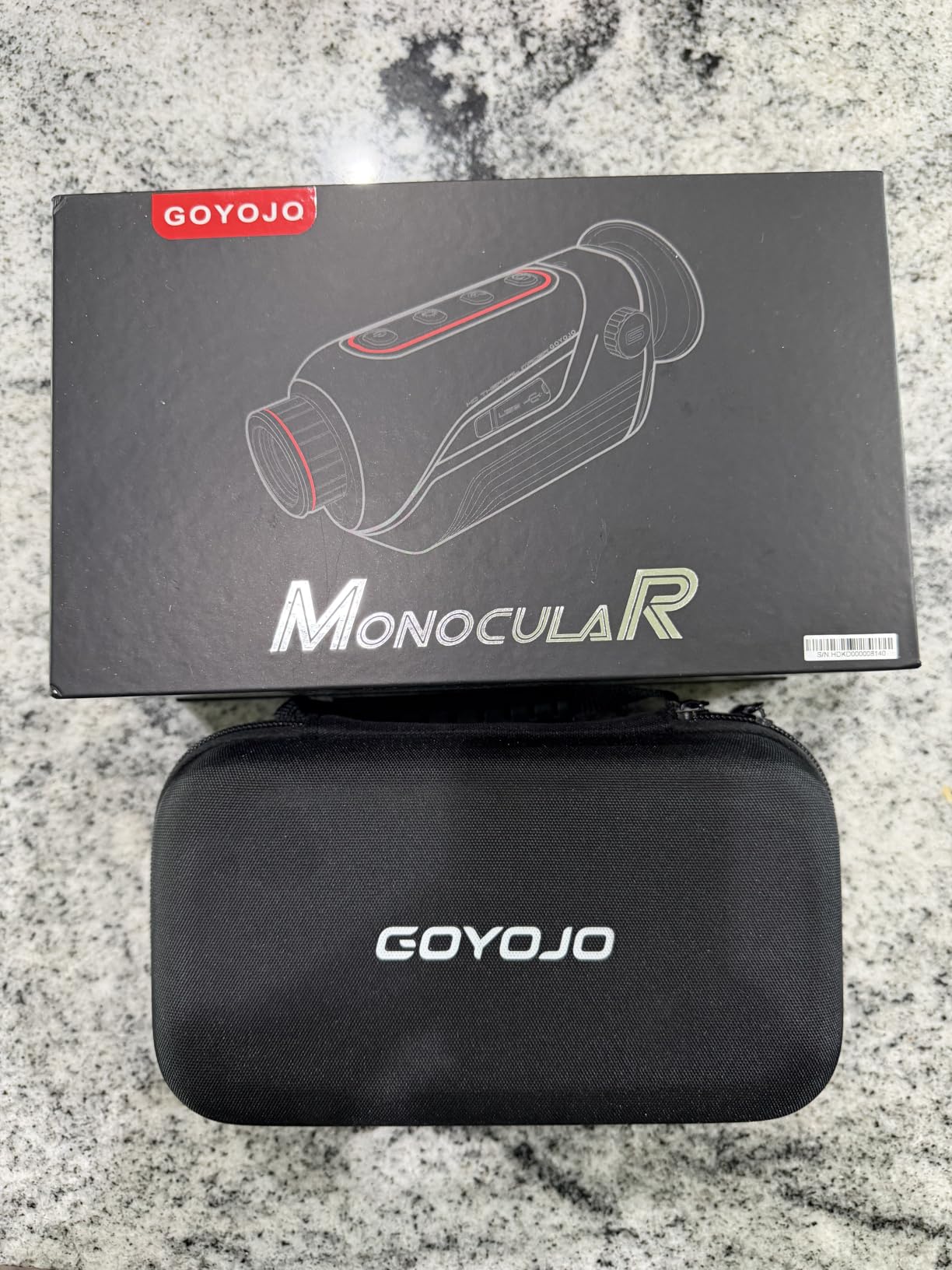
7. GOYOJO G215 – Best for a Longer Budget Lens
GOYOJO G215 Thermal Imaging Monocular for Hunting, 256×192 (50Hz) Infrared Night Vision Telescope, 15mm Focal Lens Thermal Scopes for Outdoor Night Vision Camera Telescope
256x192 sensor, 12um detector
50Hz refresh
15mm lens with front manual focus
Replaceable battery, 6 plus hours
IP65
Pros
- 15mm lens is a real reach upgrade over the 10mm model
- Front manual focus speeds up target acquisition
- 50Hz refresh scans smoothly
- Iron Red palette works well in timber
- 16GB built in so no card purchase
Cons
- Still a 256x192 native sensor
- SD cards are not supported
- IP65 is a step down from IP67 units
- Narrow 11.7 degree field of view
Owners who tried both of this brand’s entry monoculars generally rate this one higher, and the reason is the lens. Going from 10mm to 15mm changes how much detail you get on a distant animal more than any other single change at this budget.
Front manual focus is the other upgrade. On fixed-focus models you accept whatever the factory set, and on the G215 you can dial focus onto an animal instead of guessing.
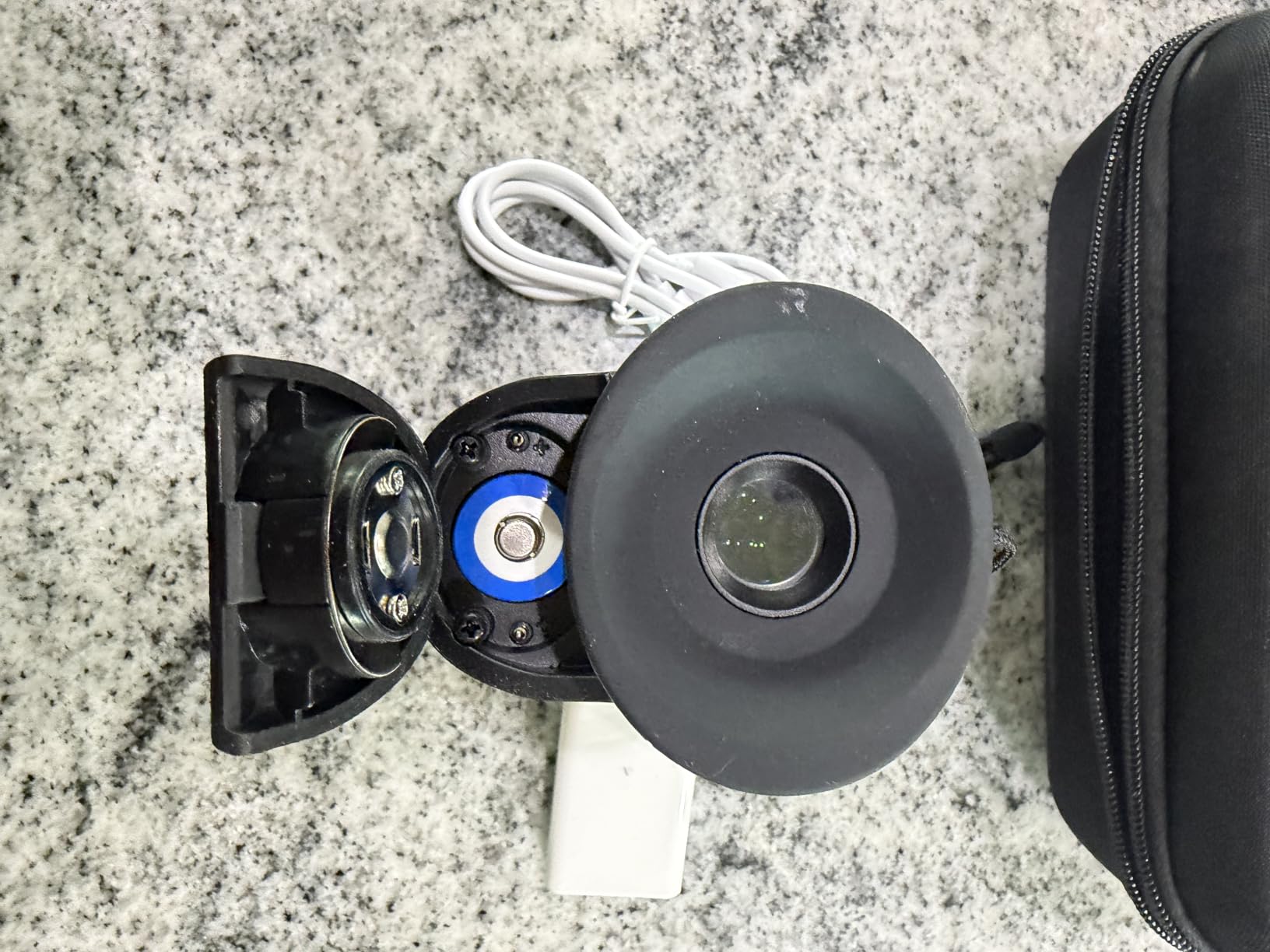
The rated recognition distance of 254 meters is a manufacturer figure for a standard target, not a coyote. Real-world identification on this class of sensor still tends to fall well short of that in field conditions.
Replaceable batteries and a six-hour runtime mean you can carry two cells and cover a full evening.
Who should buy it
Hunters who want a longer lens without moving up a sensor tier, and who shoot in mixed terrain where the narrow 11.7 degree view is an acceptable trade for clarity at distance.
Where it falls short
If you spend most of your time scanning wide arcs of open country, that narrow field of view will make you sweep more often. The 256×192 sensor also cannot reach the identification distances a 384 core can.
8. ATN BlazeSeeker-210 – Best for Zoom Range and Expandable Storage
ATN BlazeSeeker-210 Thermal Imaging Monocular 256×192; 1.5-12x 12 Micron <35 NETD 50 Hz
256x192 sensor, 12um pixels
NETD under 35mK
50Hz refresh
1.5-12x zoom
460m rated detection
Pros
- 1.5-12x zoom ties for the widest range in this roundup
- Recognized brand with a three year warranty
- MicroSD storage expandable to 256GB
- Six palettes for open country and timber
- 9.6 ounce body with a slip resistant grip
Cons
- NETD under 35mK is among the least sensitive figures here
- Only 256x192 native resolution
- Needs a memory card for recording
- Field of view listed in meters not degrees
The zoom range on this one is the reason to keep it on the list. At 1.5 to 12 times you can scan a wide view for a moving coyote, then push in on a stationary one without changing tools.
Storage is expandable to 256GB on a memory card, which no other product in this roundup offers. For anyone recording long calling sequences, that is a practical advantage.
Both a 7mm and a 10mm lens are listed as options, so this is a body you can pair with different focal lengths depending on the terrain you are working.
Auto focus and the six viewing palettes, including Sepia and Iron Red, make it easy to adapt between open ground and brush.
Who should buy it
Anyone who records a lot, wants a long warranty from a known brand, or needs one handheld that covers both wide scans and close detail. The three year warranty is a real differentiator at this level.
Where it falls short
A thermal sensitivity figure under 35mK is behind several rivals here, and that shows up when contrast is low. Expect a slightly grainier image on distant animals than you get from a sub-25mK core.
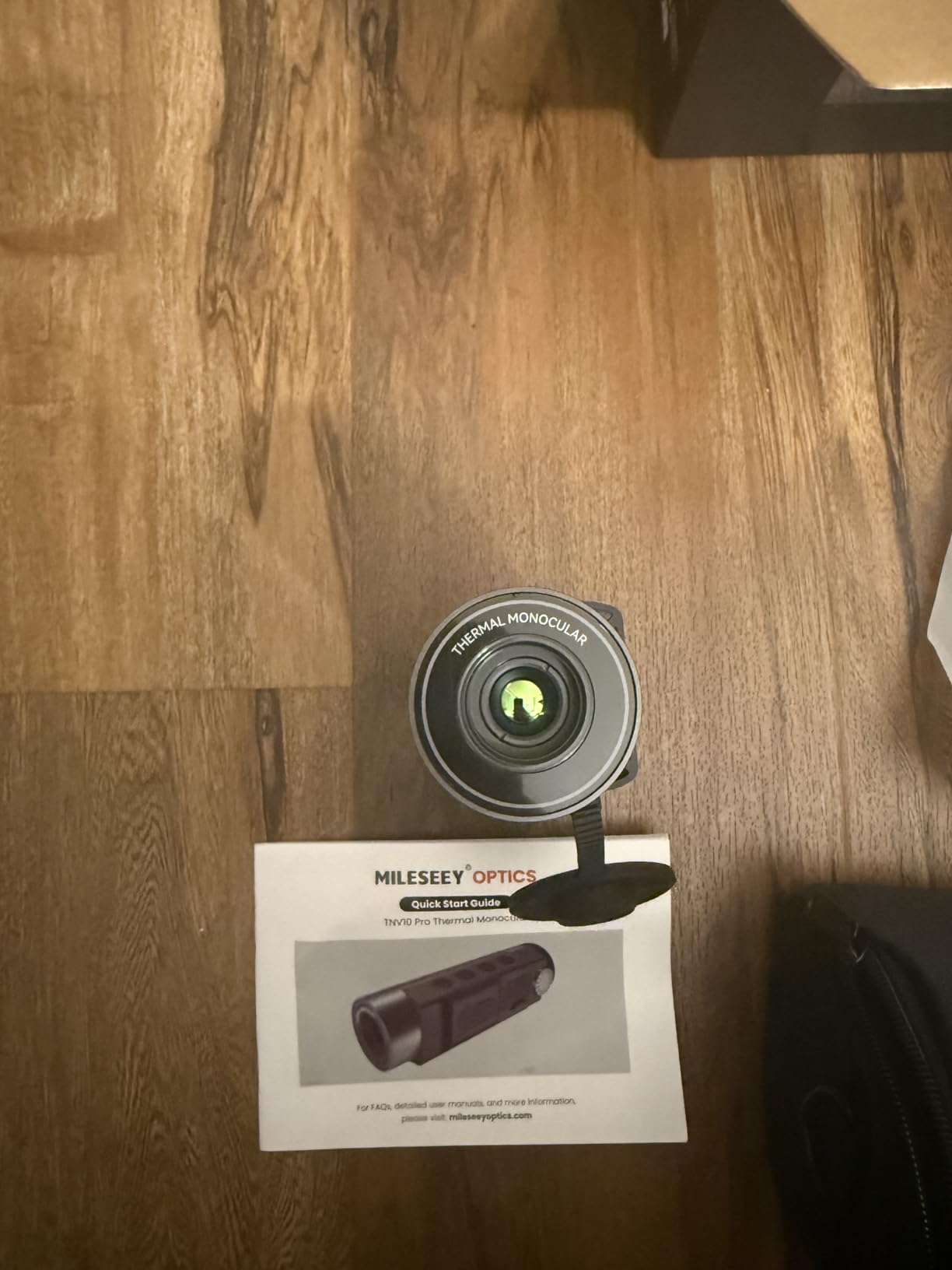
9. MiLESEEY TNV10PRO – Best for Battery Life and Metal Build
MiLESEEY TNV10PRO Thermal Monocular, 400×300 SR 320×240 IR Resolution, Aircraft Mg-Al Alloy, 13mm 50Hz Handheld Thermal Camera, Night Vision Imager, Hot Spot Tracking
True 320x240 sensor, 12um detector
50Hz refresh
13mm lens
4500mAh, up to 12 hours
32GB onboard
Pros
- Genuine 320x240 sensor rather than upscaled imagery
- Long rated runtime at up to 12 hours
- Hotspot tracking locks onto targets in frame
- 32GB onboard storage with no card needed
- Aircraft-grade magnesium-aluminum body
Cons
- The 400x300 in the name is super resolution not native detail
- Five palettes is on the lean side
- 320x240 still trails 384x288 sensors
- IP65 rather than IP67
This one is honest about what it is, and that is refreshing in a category full of upscaled marketing. The sensor is a true 320×240 rather than a 256 core stretched to look bigger, and the 12um detector runs at 50Hz.
Runtime is the headline. Owners report close to the rated 12 hours on the 4500mAh cell, which means a full night without a spare and without rationing brightness.
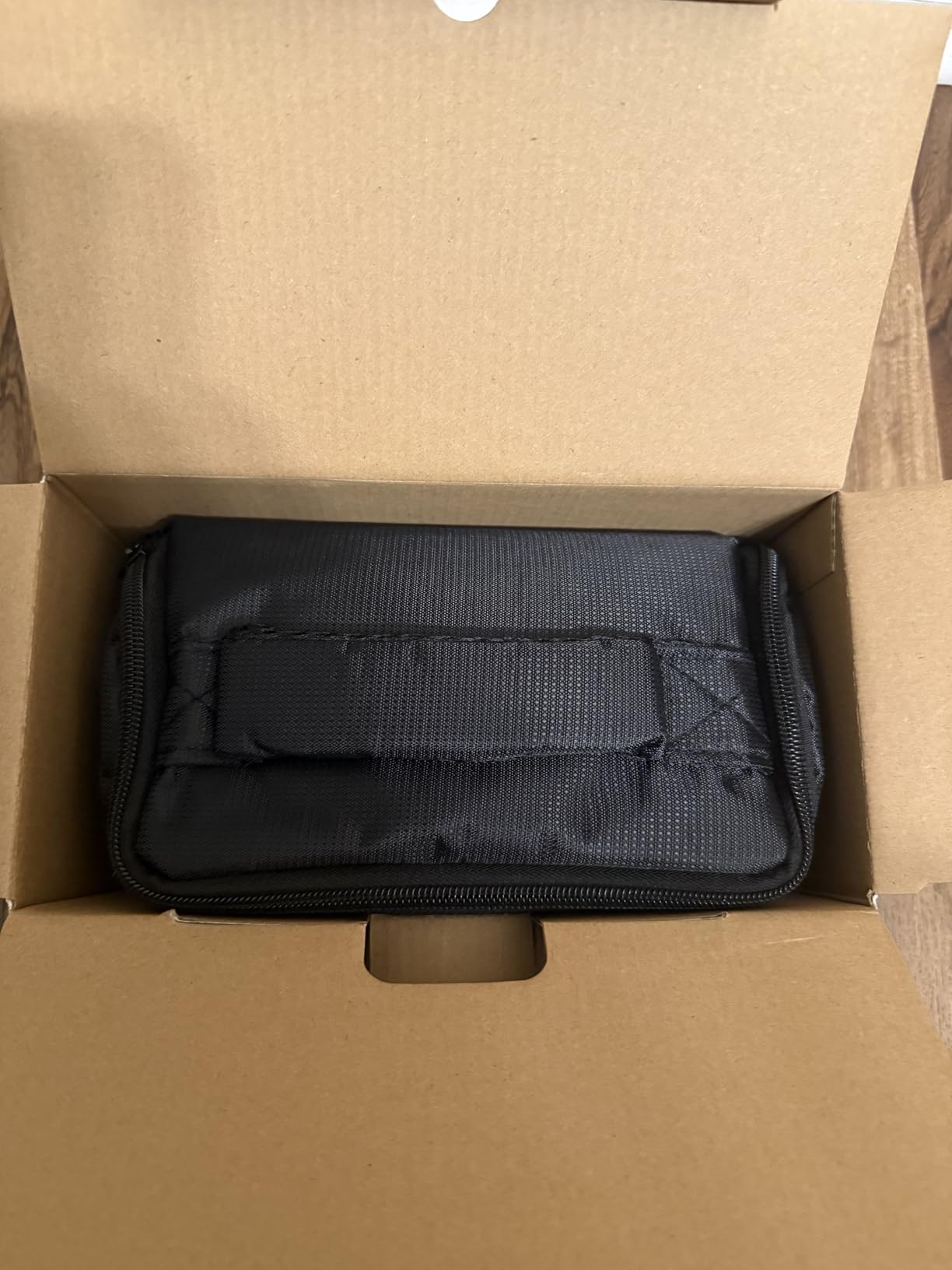
The magnesium-aluminum chassis feels more substantial in the hand than the plastic bodies at a similar cost. On a cold night with gloves on, that extra solidity is noticeable.
Hotspot tracking auto-locks onto the warmest target in frame, which is genuinely useful when a coyote crosses in front of cattle.
Best for
Long nights and cold mornings where battery is the limiting factor. The -20C to 60C operating range and the metal body both point the same direction.
Where it falls short
It has one of the smallest owner bases in this group, so long-term reliability is less proven. Two stars account for 12 percent of its feedback, which suggests some buyers expected the super resolution figure to mean more detail than it delivers.
10. Pulsar Axion Compact – Best for Thermal Sensitivity
Pulsar Axion XQ19 Compact Thermal Monocular, 384×288 Sensor
384x288 sensor, 17um pitch
NETD under 18mK
19mm f/1.0 lens
640x400 AMOLED
IPX7
Pros
- Very sensitive thermal core at under 18mK
- Fast 19mm f/1.0 aperture brightens long-range images
- AMOLED display with deep blacks and bright whites
- Five year limited warranty
- Removable APS3 battery with app support
Cons
- Costs more than the entry-tier units here
- 1.5-6x zoom band is narrow
- One reviewer received a battery dead on arrival
- Palette changes require navigating menus
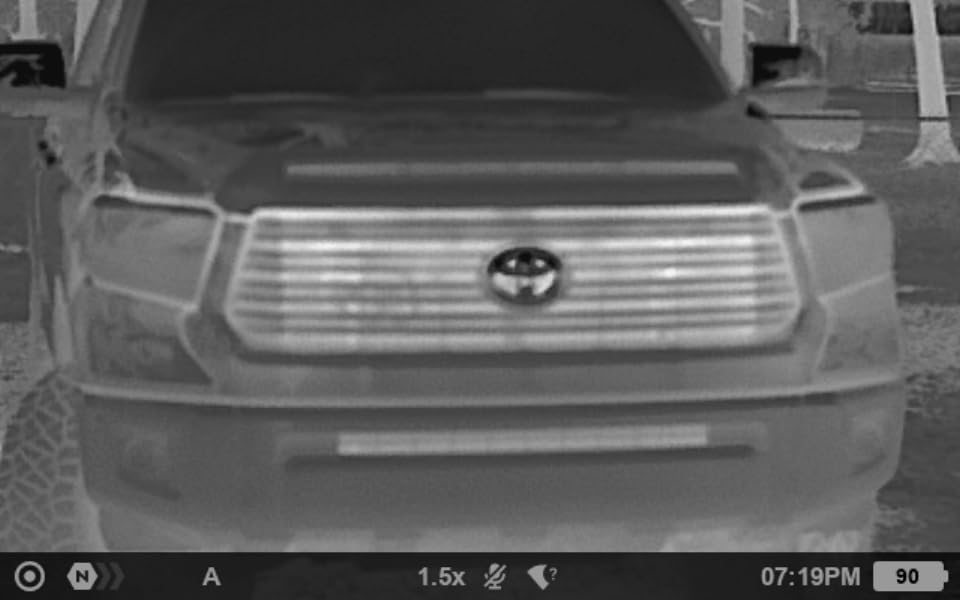
Thermal sensitivity is what separates a usable image from a noisy one when the contrast is poor, and this body is the most sensitive in the group at under 18mK. In humid air or after rain, that gap is visible.
The 19mm f/1.0 lens is a fast aperture, which means it gathers more light and produces a brighter picture at distance than slower lenses on comparable sensors.
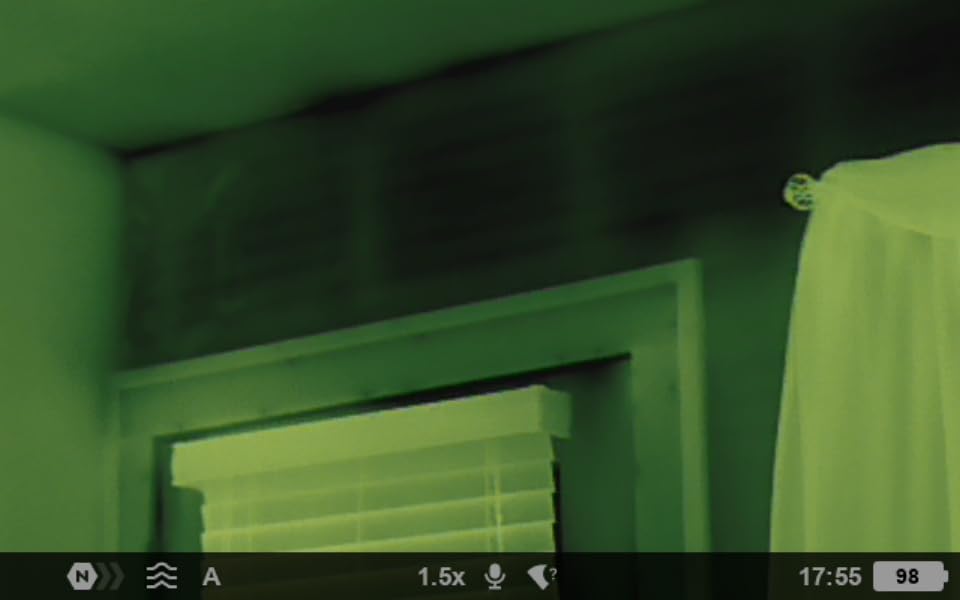
The 640×400 AMOLED eyepiece is a step above the OLED and LCD panels used elsewhere here. Blacks are genuinely dark, so a coyote against a warm background separates more cleanly.
The removable battery format is a real plus over built-in cells, even though the pack is proprietary rather than a standard cell size.
Who should buy it
Hunters who shoot in warm, humid months or near water where thermal contrast is poor, and who want a tool that stays usable as the season gets harder. Pulsar has been making optics for a long time, and the five year warranty reflects that.
Where it falls short
It is the most expensive option here, and the 1.5 to 6 times zoom band is the narrowest of the 384×288 models. Palette switching also means going through menus rather than hitting a dedicated button.
11. AGM Taipan V2 – Best for Software Features
AGM Global Vision Taipan V2 10-256 Thermal Monocular High-Sensitivity
256x192 sensor, 12um pitch
NETD sub-35mK
1280x960 LCOS display
10mm lens, 1.5x-12x
IP67 with five year warranty
Pros
- 1280x960 LCOS is the highest resolution eyepiece listed here
- Distance measurement and picture-in-picture built in
- Hot tracking and auto flat field correction
- IP67 rubber-overmolded housing
- Five year transferable warranty
Cons
- Among the smallest review bases in the roundup
- 256x192 native resolution sits at the entry tier
- 10 degree field of view is the narrowest here
- Larger body is less pocketable
This is where the software story is strongest in the whole roundup. Distance measurement, picture-in-picture zoom, hot tracking and automatic flat field correction are all built in, and for someone who wants to frame a coyote before committing, that toolkit matters.
The 1280×960 LCOS display is the highest resolution eyepiece in this group by a wide margin, and it is paired with a rubber eyecup for long viewing sessions.
The five year transferable warranty is a genuine advantage. A warranty you can hand to another hunter means the tool keeps value across a long ownership cycle.
A single replaceable battery runs up to 7 hours, and a tilt sensor powers the unit down when you stop moving, which extends that in practice.
Who should buy it
Hunters who want a full software toolkit and a long warranty at a modest entry cost, particularly anyone who frames coyotes before calling. It also pairs well with a phone through the manufacturer app for streaming and review.
Where it falls short
The 10 degree field of view is the narrowest here and slows scanning of open country. Native resolution is 256×192, and the 1.5 to 12 times zoom is entirely digital on top of a 10mm lens.
12. GOYOJO G325 – Best for Long-Lens Identification Claims
GOYOJO G325 Thermal Imaging Monocular for Hunting, 384×288 Infrared Night Vision Telescope, 25mm Focal Lens 50 Hz Thermal Scopes for Outdoor Night Vision Camera Telescope
384x288 sensor
50Hz refresh
25mm manual focus lens
Target ID claimed to 600 yards
IP65, 6 hours
Pros
- 25mm lens is the longest offered in this roundup
- 384x288 sensor is a genuine tier above the 256 units
- 50Hz refresh for smooth tracking
- Streams live imagery to a phone or PC
- Six color modes for varied terrain
Cons
- Six hour runtime is among the shortest here
- 2 lb listed weight is heavy for a handheld
- Only a one year warranty
- 19 percent three star feedback
The 25mm lens is longer than any other offered here, and length is what buys reach on a fixed sensor. Combined with a 384×288 core, this is the closest thing here to a dedicated long-range spotting tool at a mid-level price point.
The manufacturer rates target identification to 600 yards. Treat that as a laboratory figure on a standard target, but the hardware underneath it is genuinely oriented at distance rather than at close scanning.
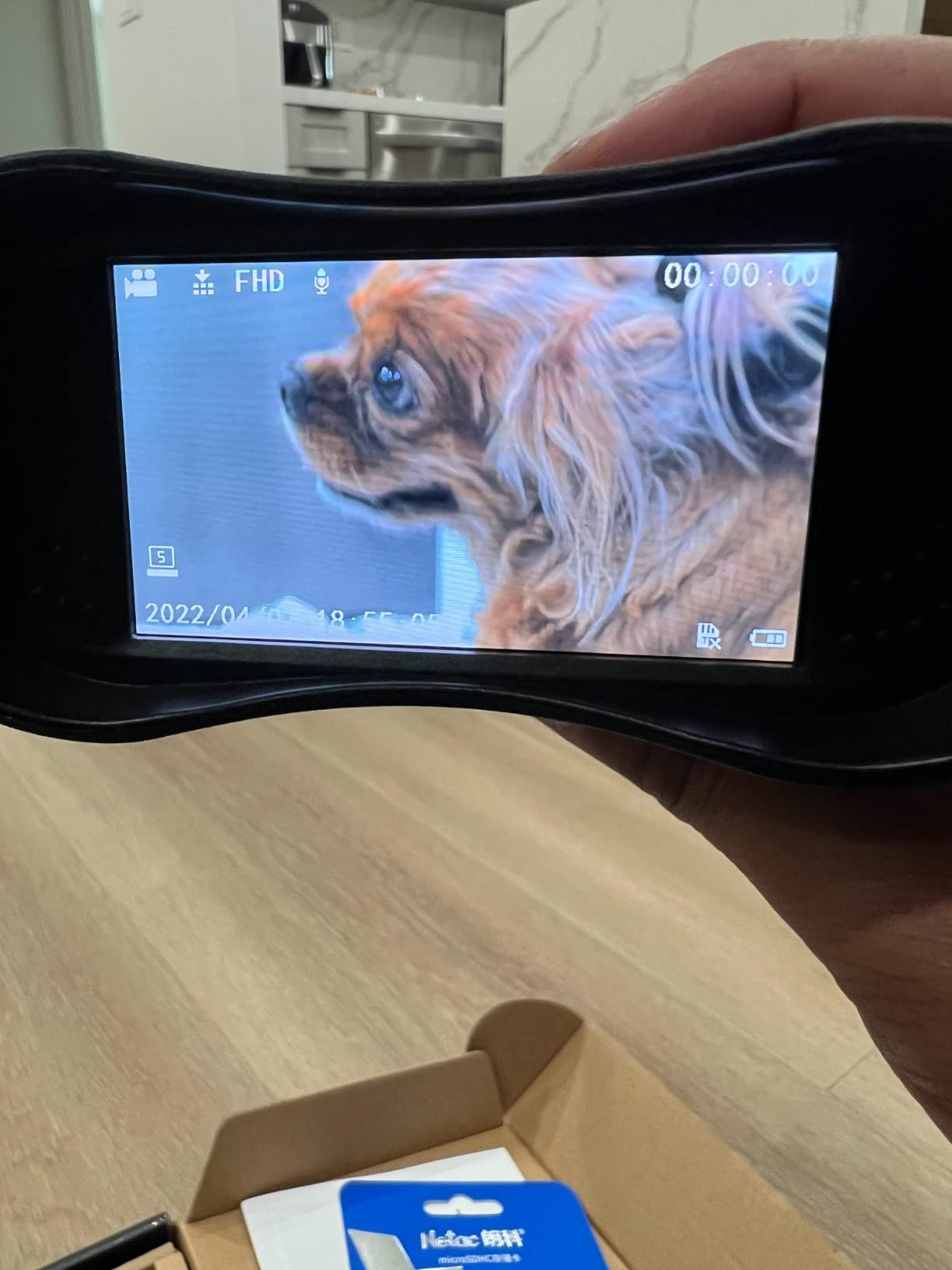
The 50Hz refresh means a coyote walking across a field stays readable, and streaming to a phone or PC lets a second person watch the same scene.
Six color modes including Iron Red and Rainbow let you pick a palette that works against open ground or bare timber.
Who should buy it
Hunters working long, open sight lines where the priority is reaching out and resolving a shape at distance. Streaming to a phone or PC also makes it useful for a two-person spotter setup.
Where it falls short
It is one of the heavier bodies in the roundup and the runtime is short, at about six hours. A one year warranty is well behind the three to five years offered by several rivals here.
How to Choose the Best Thermal Monoculars for Coyote Hunting
Sensor resolution is the first filter, and it is the one that decides how far you can identify rather than merely detect. A 256×192 core is honest equipment for close work and for scanning before a call. A 384×288 core is where the real gains in identification distance appear, and it is the reason most experienced hunters push past the entry tier within a season or two.
Thermal sensitivity, quoted as NETD in millikelvin, tells you how much temperature difference the sensor can resolve. Lower numbers are better. Anything under 25mK gives you noticeably cleaner images in humid air or fog, and that is where a coyote at 300 yards either separates from the background or does not.
Refresh rate is the next one, and it is the spec buyers ignore most often. At 25Hz a walking animal looks fine and a running one smears. At 50Hz the image stays readable in motion, which matters every time a coyote decides to move before you are set.
Objective lens diameter drives reach on a fixed sensor, but there is a direct cost. A long lens narrows your field of view, which means more scanning sweeps and more chances to miss a second animal moving in the gap.
Weight matters more than most buyers expect. A thermal is a glass you hold at eye level for five to eight hours, and a heavy body turns a pleasant evening into a tired one. Anything under 10 ounces is easy, and above a pound you will feel it.
Battery format decides whether you can plan a night. Standard 18650 cells are easy to source and cheap. Proprietary packs are fine but need their own charger and spares. Rated runtimes range from about 6 hours to 12 hours across this group, and cold weather pulls all of them down.
Warranty length is a reasonable proxy for how long a brand expects the electronics to last. This roundup runs from one year on two models to five years on the RIX bodies and the Pulsar Axion.
Detection Range vs Identification Range: What Coyote Hunters Actually Need
Detection range is the distance at which you can see that something warm is there. Identification range is the distance at which you can tell what it is. A coyote in an open field on a cold night might be detectable at five hundred yards and identifiable at two hundred with the same device. Nearly every marketing number on a thermal monocular is a detection figure.
That is why comparing detection ranges across brands is misleading. Factories measure against different target sizes and different temperature contrasts, so a rated 853 yards and a rated 410 meters are not the same claim. Judge a handheld on the size of its sensor, its lens and its NETD figure instead, then test it on your own ground.
Our general rule for coyote work is to plan shots around identification range. Detection tells you where to look. Identification tells you whether to call, where to set up, and whether the shot is on.
Thermal Monocular vs Thermal Scope vs Night Vision
A thermal monocular is the right starting tool for most people because you scan with it, then shoot with your existing rifle setup. A thermal rifle scope is a dedicated investment that also serves as your main night optic. Clip-on thermal sits in front of a day scope and adds cost and weight to the front of the gun.
Thermal versus night vision for coyote hunting is not close on color. An image intensifier needs ambient light or an IR source, and once it is washed out by moonlight or fog it stops working. Thermal reads heat directly, so it functions in total darkness, fog and light rain without a light source.
You can shoot with a thermal monocular, but it is a spotting tool first. Holding a heavy handheld on a moving animal at 300 yards is harder than using a scope, and most hunters use the handheld to locate and identify, then shoot through the scope. Our guide to the best thermal scopes for hunting covers the paired setup if you decide you want both.
Battery Planning and Cold-Weather Power
Plan the night before you pick the handheld. Rated runtimes here run from roughly 6 hours on the GOYOJO models to 12 hours on the MiLESEEY, and cold weather pulls every one of them down. A battery that lasts 8 hours in October may not last 5 in January.
Standard 18650 cells are the easiest to plan around because you can buy spares almost anywhere. The GOYOJO G210 and G215 both use them. The Pulsar Axion uses a removable proprietary pack and the RIX Pocket K3 uses a replaceable power supply unit, so plan on carrying a second pack either way.
Charging matters too. A spare cell in a cold truck is not much use, so keep spares body temperature and swap them at the truck rather than at the stand. If you also run a scope, our best night vision monoculars guide covers the paired night setup, and battery discipline applies there too.
Frequently Asked Questions
What is the best thermal monocular for coyote hunting?
For most hunters the TOPDON TS004 is the best thermal monocular for coyote hunting overall, because its 50Hz refresh rate, 13mm lens and 11 hour battery handle a full evening of scanning and calling. If you need to identify coyotes past 250 yards, step up to a 384×288 sensor such as the RIX Pocket K3 or the Pulsar Axion Compact.
How far can a thermal monocular detect a coyote?
It depends on the sensor, the lens and the conditions. Manufacturer detection ratings range from around 410 meters on entry 256×192 bodies up to 853 yards on a 384×288 model measured under controlled testing. In real field conditions on a cold clear night, expect a 256×192 unit to identify a coyote nearer 100 to 200 yards and a 384×288 unit considerably farther.
Are thermal monoculars worth it for hunting?
For coyote hunting specifically, yes. A thermal handheld lets you scan a section without sweeping a rifle across the landscape, find coyotes before you start calling, watch how animals respond to a call, and track a downed animal. Those are the four jobs it does that no other optic does at that price.
Which is better for coyote hunting, thermal or night vision?
Thermal is better for coyotes in almost every night scenario. An image intensifier needs moonlight, starlight or an IR source and washes out in fog, rain and heavy overcast. Thermal reads heat directly, so it works in total darkness and light fog with no light source, which is most of the coyote season.
What resolution thermal is best for coyote hunting?
384×288 is the practical sweet spot for coyote hunting because it is where identification range improves enough to matter on an animal at 300 yards or more. A 256×192 sensor is honest equipment for close work and pre-call scanning, and several models in this roundup are built around replaceable batteries rather than resolution for that reason.
Can you shoot with a thermal monocular?
You can, but most hunters use it as a spotting tool and shoot through a scope. Holding a handheld steady on a moving animal at long range is harder than using a mounted optic. The practical setup is a handheld to locate and identify, plus a thermal or night vision scope on the rifle for the shot itself.
The Bottom Line
The TOPDON TS004 is our pick as the best thermal monocular for coyote hunting in 2026 because it does the four things this job asks for without a weak point: a smooth 50Hz refresh, a lens with real reach, a battery that lasts the night and a body you will carry. Buy that one and you are covered for scanning, calling and short-to-medium range work.
If your ground is open and long, spend the extra and go 384×288. The RIX Pocket K3 is the better buy for most people at that step, and the Pulsar Axion Compact is the choice when humidity or fog makes contrast difficult. Save a spare battery format you can actually buy before your first trip, then get out and test your identification range on your own land.