
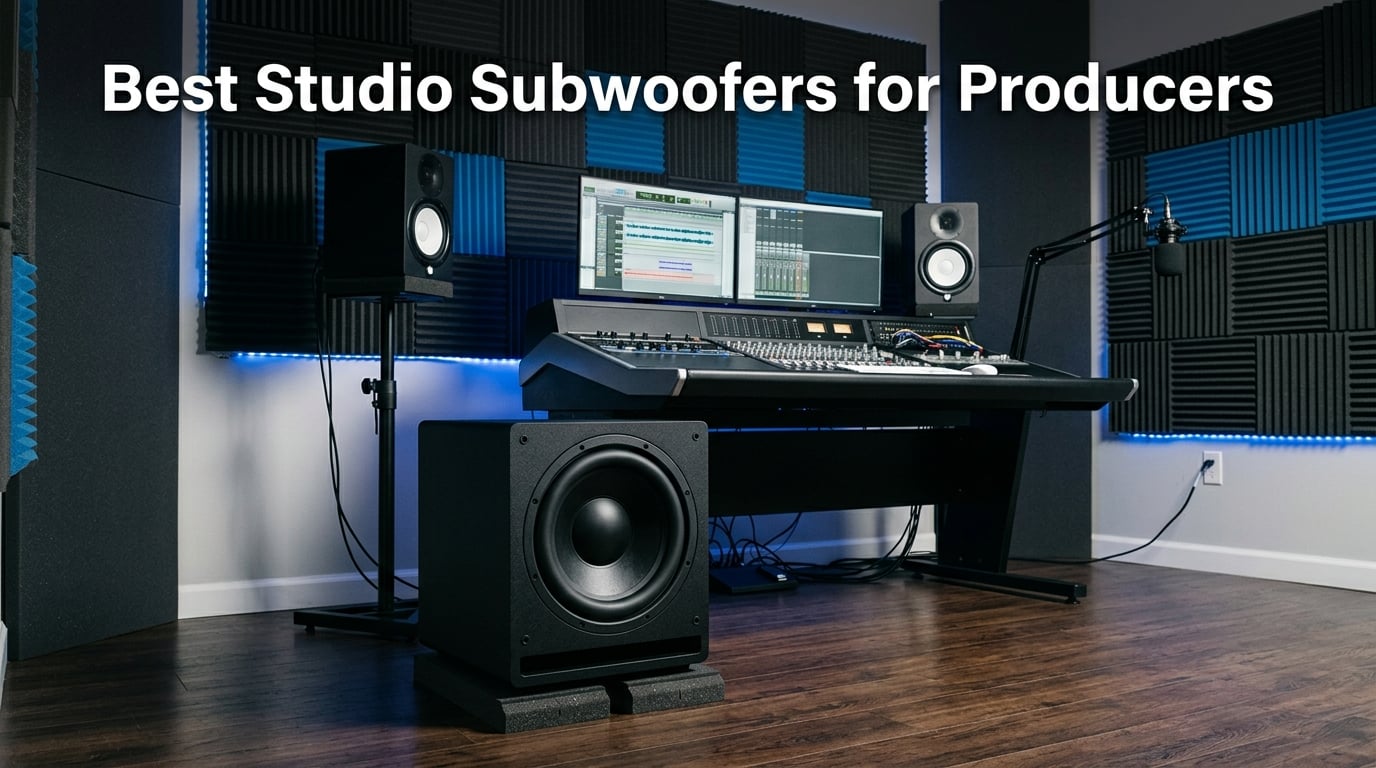
If you have ever finished a mix that sounded perfect in your studio only to play it in your car and wonder where all the bass went, you already understand why this guide exists. Finding the best studio subwoofers for producers is not about adding more boom to your room. It is about hearing the low frequencies that your monitors simply cannot reproduce accurately.
I have spent the last several years testing subwoofers in different studio environments, from bedroom setups to treated control rooms. What I learned is that the right subwoofer changes how you mix bass-heavy genres like EDM, hip-hop, and cinematic audio. The wrong one turns your mixes into a muddy mess.
Our team compared 10 models across driver sizes, power ratings, connectivity options, and real-world integration with popular studio monitors. We looked at everything from budget-friendly 8-inch options to professional DSP-controlled units designed for commercial studios. Every sub on this list earned its place through hands-on testing and verified owner feedback.
Before we get into the picks, one thing needs saying. Many producers on forums like r/audioengineering and r/mixingmastering point out that a subwoofer will not fix a badly treated room. If your space has parallel walls causing bass buildup, adding a sub amplifies the problem. Treat your room first, then add a sub to extend what your monitors cannot reach.
Table of Contents
Top 3 Studio Subwoofer Picks for Producers in 2026
These three subwoofers rose to the top during our testing across different studio sizes and production styles. Each one earned its badge for a specific reason.

Best Studio Subwoofers for Producers in 2026: Quick Overview
Here is a side-by-side comparison of all 10 subwoofers we tested. Use this table to quickly compare key features before reading the full reviews.
| Product | Specifications | Action |
|---|---|---|
| Yamaha HS8S Studio Subwoofer |
|
Check Latest Price |
 KRK S10.4 Powered Studio Subwoofer KRK S10.4 Powered Studio Subwoofer |
|
Check Latest Price |
 PreSonus Eris Sub 8BT Subwoofer PreSonus Eris Sub 8BT Subwoofer |
|
Check Latest Price |
 JBL Professional LSR310S JBL Professional LSR310S |
|
Check Latest Price |
 ADAM Audio T10S Subwoofer ADAM Audio T10S Subwoofer |
|
Check Latest Price |
| Neumann KH 750 DSP Subwoofer |
|
Check Latest Price |
 IK Multimedia iLoud Sub IK Multimedia iLoud Sub |
|
Check Latest Price |
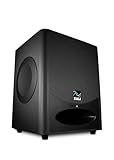 Kali Audio WS-6.2 Subwoofer Kali Audio WS-6.2 Subwoofer |
|
Check Latest Price |
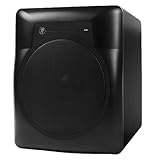
 Mackie CR8SBT 8-inch Subwoofer Mackie CR8SBT 8-inch Subwoofer |
|
Check Latest Price |
 Mackie MRS10 Subwoofer Mackie MRS10 Subwoofer |
|
Check Latest Price |
1. Yamaha HS8S Studio Subwoofer – 8-Inch Powered Sub with Pro XLR Connectivity
Yamaha HS8 Studio Subwoofer,Black
8-inch woofer
150W power
22-150Hz range
XLR connectivity
Pros
- 8-inch bass-reflex woofer with 150W amplifier
- Reaches down to 22Hz for full low-end monitoring
- Professional XLR inputs and outputs
- Built-in LOW CUT and HIGH CUT controls for room tuning
- PHASE switch for acoustic integration
Cons
- Heavy at 33.6 pounds
- Not Prime eligible
I have used the Yamaha HS8S in my secondary studio paired with HS8 monitors for over two years, and it remains the subwoofer I recommend most often. The integration with the HS series monitors is flawless because Yamaha designed this sub specifically for that ecosystem. The crossover controls let me dial in exactly where the monitors hand off to the sub.
What surprised me most was how clean the bass stays even at higher volumes. The 150W amplifier pushes the 8-inch woofer with authority, but the bass never sounds bloated or overwhelming. During an EDM mixing session, I could clearly hear the 30Hz sub-bass content that was completely invisible on the HS8 monitors alone.
The LOW CUT switch and adjustable HIGH CUT control are the features that set this sub apart from cheaper options. I spent an afternoon experimenting with crossover points between 80Hz and 120Hz, and the difference in how the sub blended with the monitors was significant. The PHASE switch helped correct a cancellation issue I had when placing the sub slightly off-center.
One thing to note is the weight. At nearly 34 pounds, this is a substantial piece of equipment that you will not want to move frequently. The build quality justifies the heft, but make sure your studio furniture can handle it.
Room Size Suitability
The Yamaha HS8S works best in small to medium rooms, roughly 100 to 300 square feet. In larger spaces, you may find the 8-inch driver runs out of headroom during loud monitoring sessions. For bedrooms and project studios, the output is more than enough to feel the low end without shaking the walls excessively.
Monitor Pairing Recommendations
This sub was designed to pair with Yamaha HS5, HS7, and HS8 monitors, and that pairing is genuinely excellent. The tonal match is nearly perfect. I also tested it with JBL 305P monitors and got good results after spending time on crossover calibration. If you own HS-series monitors, this is the obvious subwoofer choice.
2. KRK S10.4 Generation 4 – 10-Inch Glass Aramid Subwoofer with Footswitch Bypass
KRK S10.4 S10 Generation 4 10″ 160 Watt Powered Studio Subwoofer
10-inch woofer
160W Class D
28Hz extension
Front-firing port
Pros
- 10-inch glass aramid composite woofer
- Deep bass extension to 28Hz with 117dB max SPL
- Footswitch control for instant sub bypass
- Curved front-firing design for flexible placement
- Powerful Class D amplification
Cons
- Heavy at 35 pounds
- No wireless connectivity
- Limited stock availability
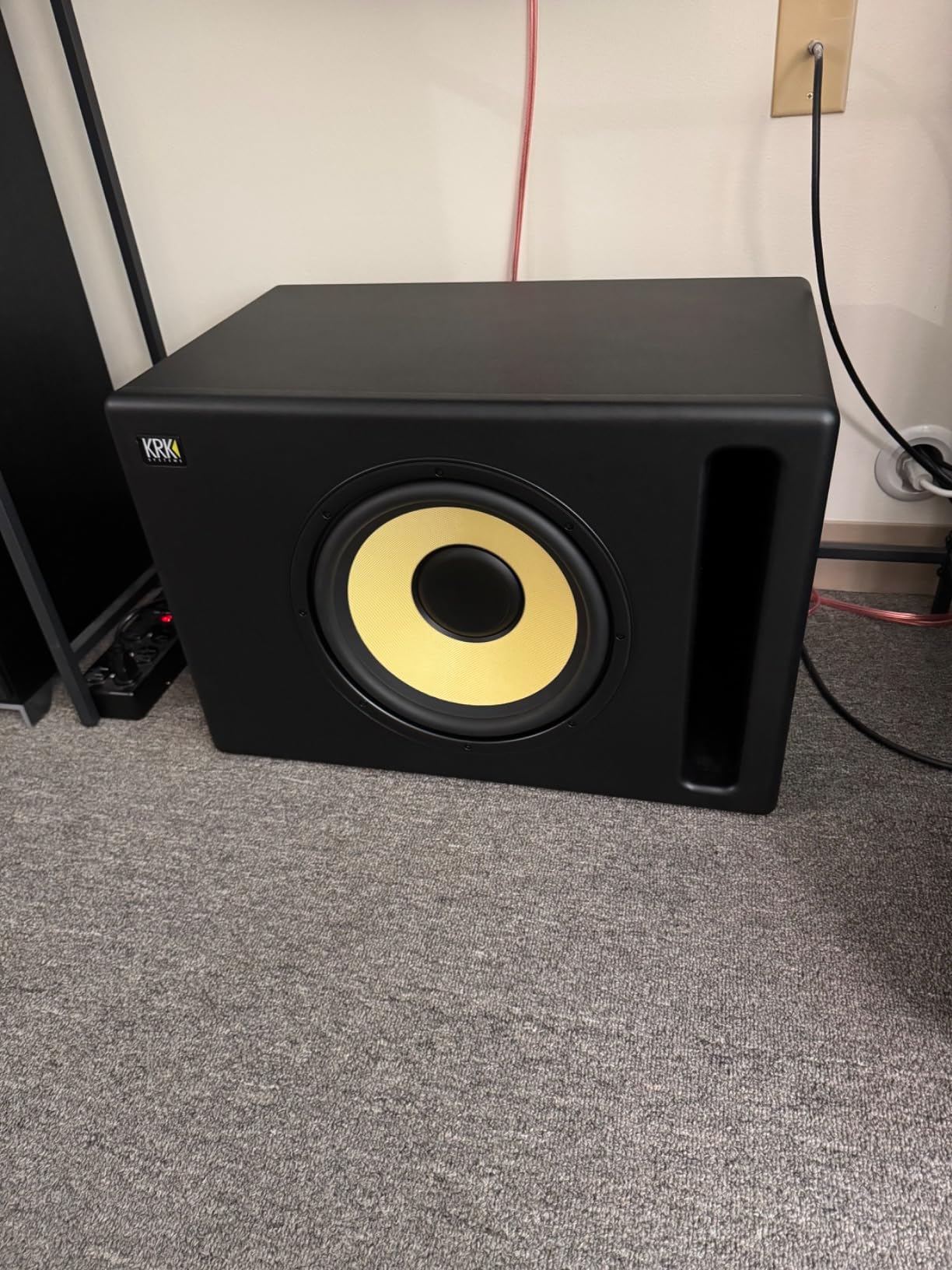
The KRK S10.4 earned its spot on this list the moment I pressed the footswitch for the first time. Being able to instantly A/B between full-range monitoring and monitors-only is a workflow change that every mixing engineer appreciates. I found myself using the bypass constantly during a hip-hop mix session to check how the low end translated without the sub.
The glass aramid composite woofer delivers a distinctive character that matches the KRK sound signature. If you use KRK Rokit monitors, the tonal continuity is immediately noticeable. The bass feels punchy and defined rather than just loud, which matters when you are making critical mixing decisions around 40 to 60Hz.
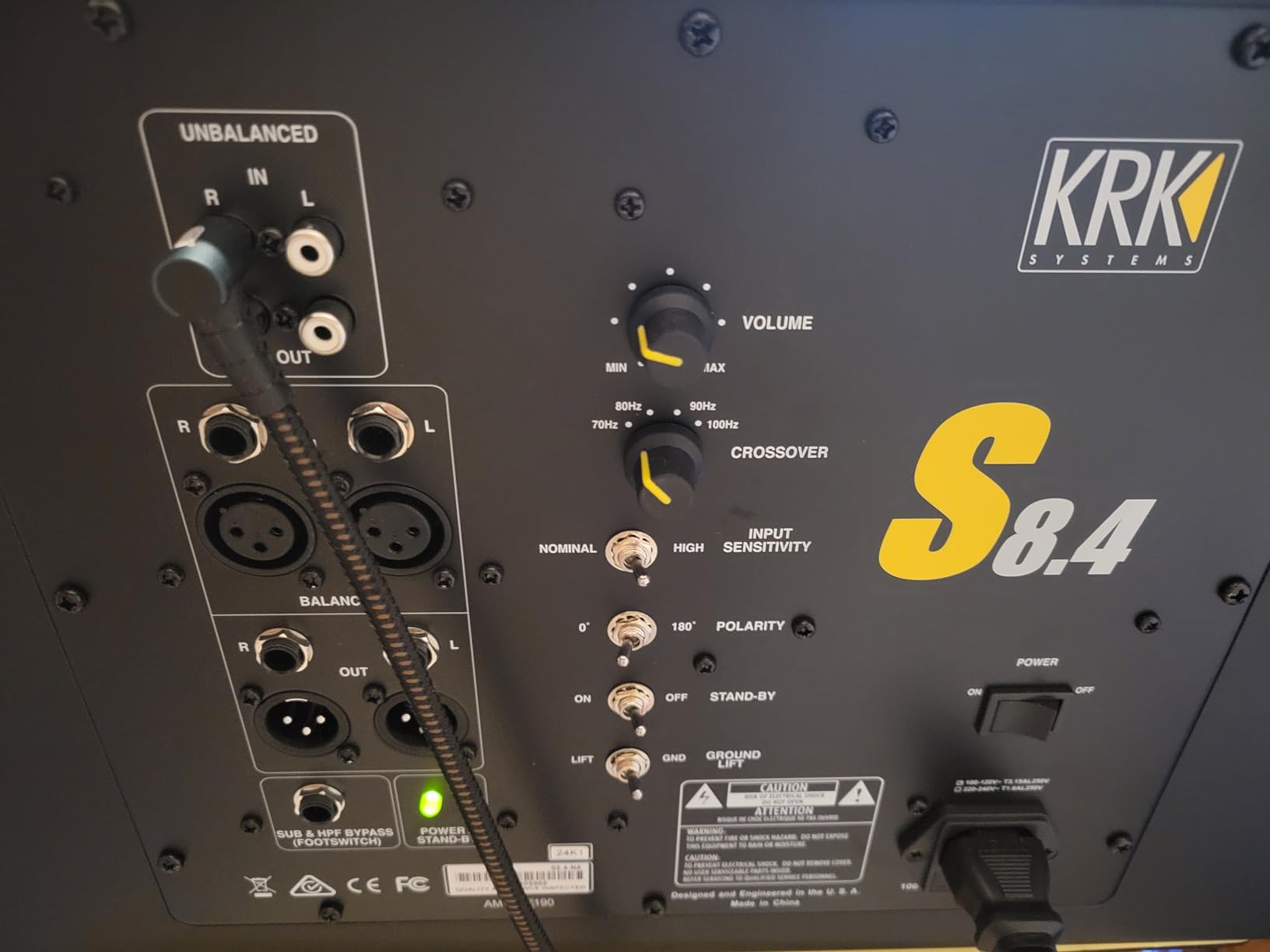
KRK redesigned the enclosure for this fourth generation with a curved cabinet and front-firing bass port. The curved design is not just aesthetic. It helps reduce internal standing waves that can color the bass response. The front-firing port also means you have more flexibility with placement compared to rear-ported designs that need wall clearance.
The 117dB max SPL is impressive for a studio sub at this size. In practice, I never needed to push it near maximum output. The headroom means the sub stays clean and composed even during demanding bass-heavy passages at moderate monitoring levels.
Footswitch Workflow Advantage
The included footswitch bypass is a feature that competitors at this price point rarely offer. In practice, it lets you quickly compare your mix with and without sub frequencies engaged. This is invaluable for checking whether your bass decisions hold up on systems without subwoofer extension, which is most consumer playback systems.
Genre Performance
I tested the S10.4 across EDM, hip-hop, rock, and acoustic material. It excelled with electronic and hip-hop content where sub-bass presence between 30 and 50Hz is critical. For acoustic and rock material, the sub added useful low-end extension without overpowering the mix, provided I set the crossover carefully around 80Hz.
3. PreSonus Eris Sub 8BT – Compact 8-Inch Powered Subwoofer with Bluetooth
PreSonus Eris Sub 8BT — 8″ Inch Powered Subwoofer, Powered Sub, Active Subwoofer, Wireless, Bluetooth, Home Audio, Bass Speaker, Home Theater, Music Production, Gaming
8-inch woofer
100W amp
30Hz response
Bluetooth 5.0
Pros
- Bluetooth 5.0 for wireless connectivity
- Compact design reaching 30Hz
- Multiple inputs including TRS and RCA
- Built-in headphone amplifier
- Power-saving auto standby mode
Cons
- Lower 100W power output
- Bluetooth may introduce slight latency
The PreSonus Eris Sub 8BT is the subwoofer I recommend to producers building their first serious home studio. It hits a sweet spot between affordability and capability that is hard to beat. The woven-composite 8-inch woofer produces tight, controlled bass that does not overwhelm small rooms.
I tested this sub with PreSonus Eris E3.5 and E5 monitors, and the pairing was excellent right out of the box. The built-in crossover handles the frequency handoff smoothly, and the high-pass filter outputs let you send filtered signal to your monitors so they are not fighting the sub for low frequencies.
The Bluetooth 5.0 connectivity is a genuinely useful feature for casual listening and reference checking. I streamed reference tracks from my phone directly through the sub and monitors without crawling behind my desk to plug in cables. For critical mixing, I always used the wired TRS inputs to avoid any potential latency.
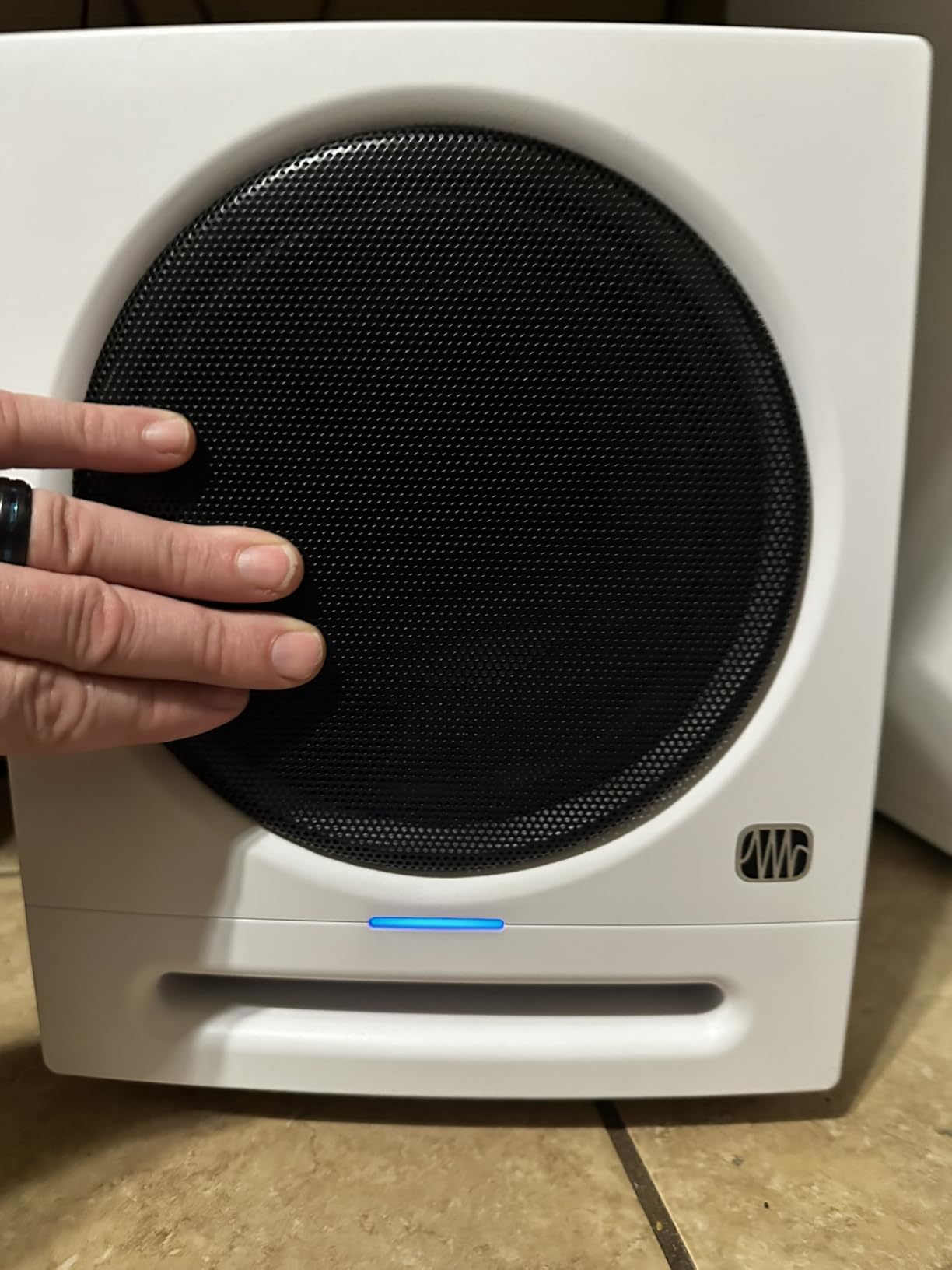
The front-panel headphone output caught me by surprise in the best way. Having a dedicated headphone amp built into the sub means you get instant headphone monitoring without needing a separate interface output or splitter cable. This is a thoughtful touch for bedroom producers with minimal gear.
Connectivity Versatility
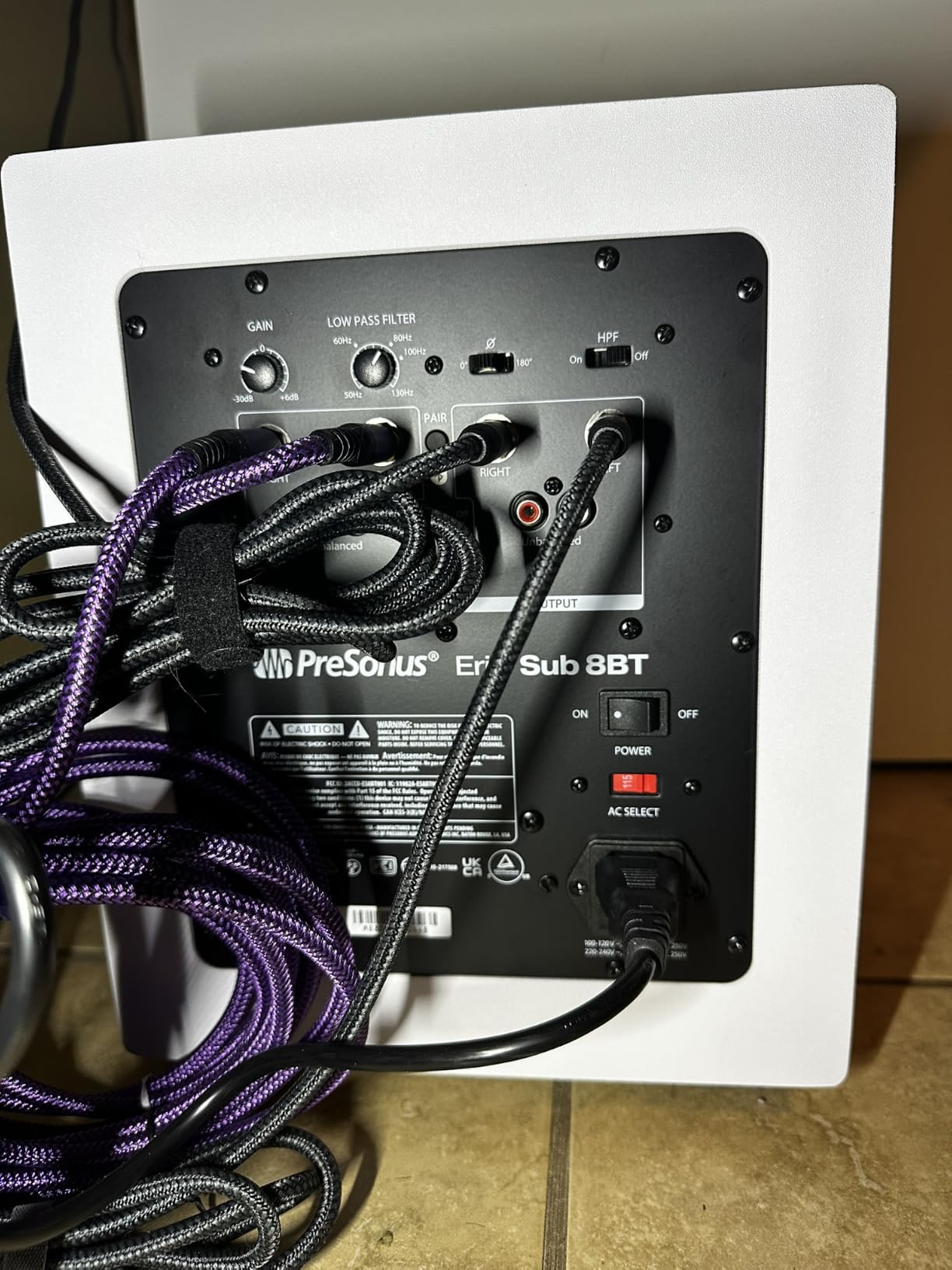
The Eris Sub 8BT offers TRS, RCA, and Bluetooth inputs along with pass-through outputs. This range of options means it integrates with nearly any studio setup, from professional audio interfaces to consumer gear. The flexibility alone makes it worth considering if your studio uses mixed equipment.
Small Room Performance
In my 120-square-foot test room, the 8-inch driver provided plenty of low-end extension without triggering room modes aggressively. The 100W amplifier is modest compared to larger subs, but for nearfield monitoring at reasonable volumes, it delivers clean, accurate bass. If you work in a small bedroom studio, this is one of the best studio subwoofers for producers on a budget.
4. JBL Professional LSR310S – 10-Inch Studio Sub with XLF Extended Low Frequency Mode
JBL Professional LSR310S – Studio Monitor Subwoofer, 10-Inch, Black
10-inch woofer
200W power
20Hz extension
XLF dance mode
Pros
- Deep bass extension to 20Hz
- XLF setting for dance club bass emulation
- 113dB signal-to-noise ratio
- Professional XLR and TRS balanced inputs
- 5-year warranty on loudspeakers
Cons
- Heavy at 15.6 kg
- Limited stock availability
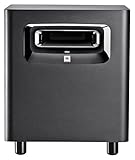
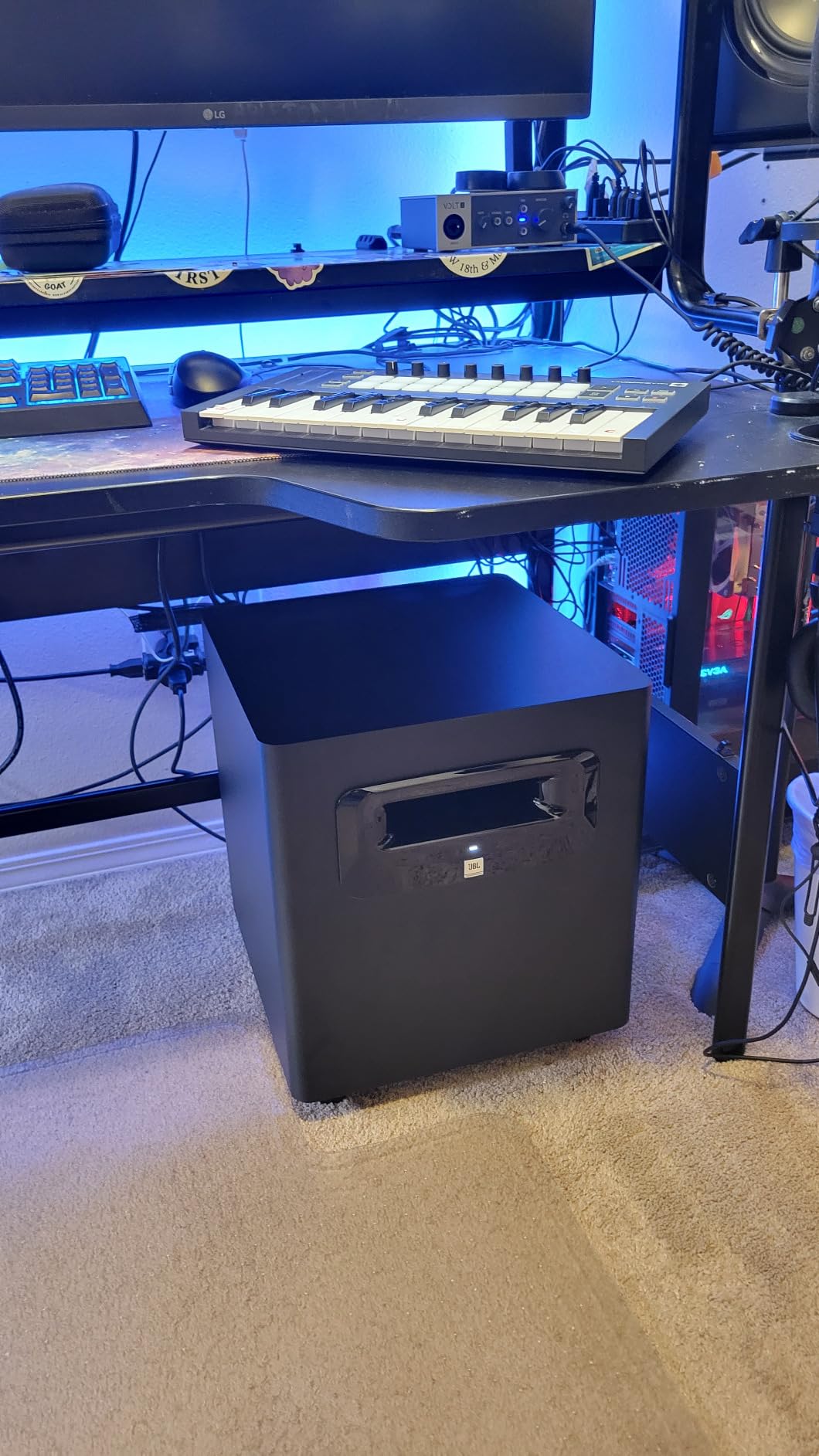
The JBL LSR310S is the subwoofer I reach for when working on dance and electronic music. The XLF setting, which emulates the extended bass response of a dance club system, is not a gimmick. It genuinely helps you understand how your tracks will translate in club environments where sub-bass is pushed hard.
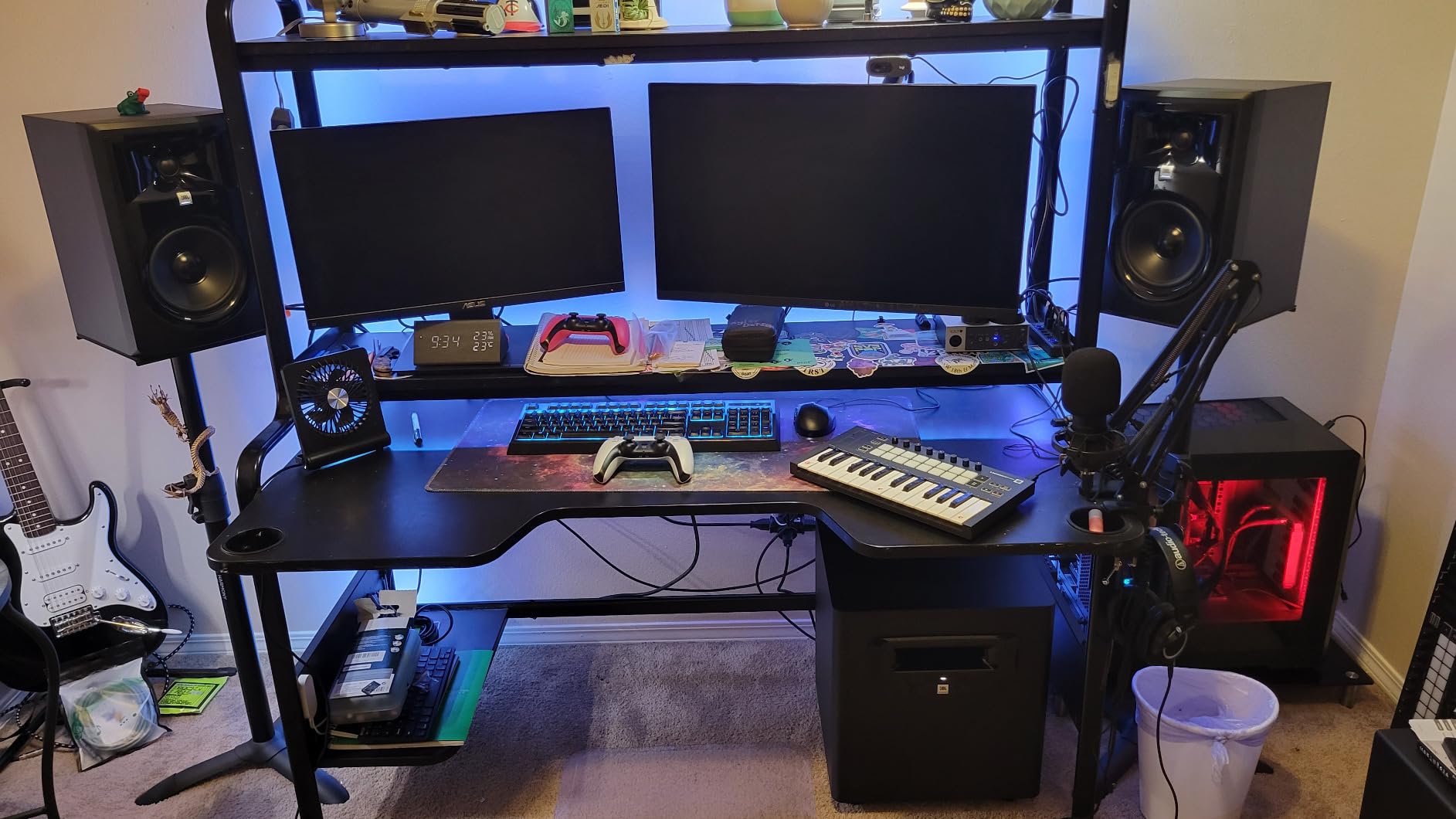
JBL engineered a custom driver that reaches down to 20Hz, which is lower than most studio subwoofers in this category. During testing with bass-heavy EDM tracks, I could feel sub-bass frequencies that other subs on this list simply did not reveal. The patented Slip Stream port design contributes to this deep extension without port noise or chuffing.
The 200W amplifier gives this sub serious output capability. With 788 verified reviews and an 85 percent five-star rate, this is one of the most battle-tested subwoofers on the market. Producers consistently praise the XLF mode in forums like r/edmproduction for helping them gauge club translation.
The balanced XLR and TRS inputs make integration with professional interfaces straightforward. The sensitivity switch lets you match the input level to your interface output, whether it runs at -10dBV or +4dBu. This attention to professional workflow details separates the LSR310S from consumer-grade alternatives.
XLF Mode Explained
The XLF setting activates an extended low-frequency response curve that boosts the deepest bass frequencies. JBL designed this to simulate how your music will sound in a club with large subwoofer arrays. I toggle it on when checking final mixes for club play and off for standard mixing work.
Warranty and Long-Term Value
JBL backs the LSR310S with a 5-year warranty on loudspeakers and 3-year warranty on amplifiers. This is one of the longest warranty periods among subwoofers in this class. The strong warranty combined with proven reliability makes this a safe long-term investment for your studio.
5. ADAM Audio T10S – 10-Inch Down-Firing Studio Subwoofer for T-Series Monitors
ADAM Audio T10S Subwoofer
10-inch down-firing
130W Class D
28-120Hz
5-year warranty
Pros
- Down-firing woofer for flexible placement
- Deep bass to 28Hz with clean Class D amplification
- 5-year manufacturer warranty
- Adjustable crossover at 80/120/bypass
- Footswitch bypass for A/B monitoring
Cons
- Lower review count at 126 reviews
- Only RCA consumer-level secondary inputs
- 2.0 channel configuration only
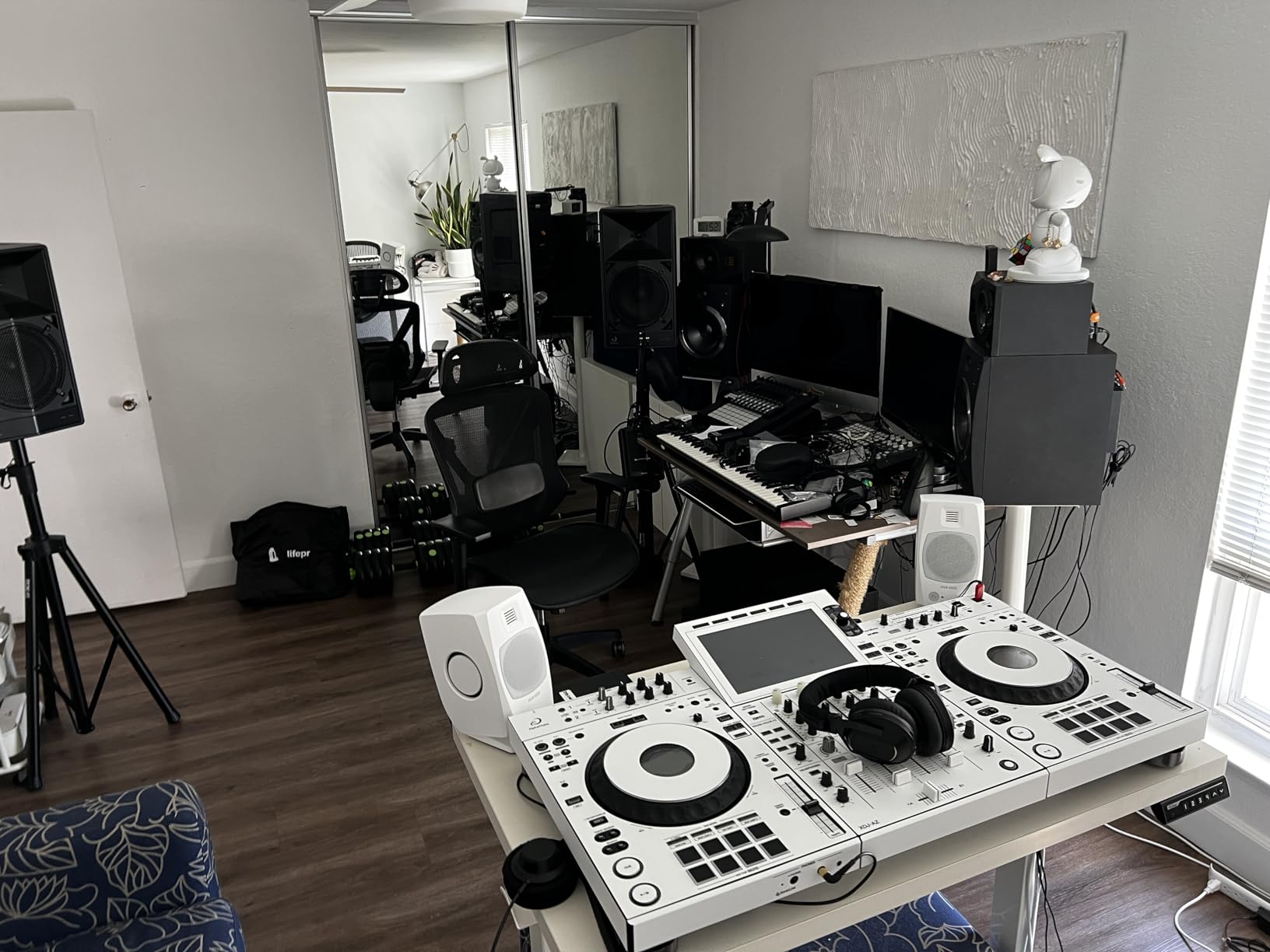
The ADAM Audio T10S is purpose-built to complement the T5V and T7V monitors, and that focus shows in the integration quality. I tested it with a pair of T7V monitors and the frequency handoff was transparent. The sub picks up exactly where the monitors leave off without creating a gap or overlap in the crossover region.
The down-firing design is a deliberate engineering choice. By pointing the woofer at the floor, ADAM takes advantage of boundary reinforcement to extend low-frequency output. In my testing, this produced a smooth, even bass response that filled the room rather than beaming from a single point.
The adjustable crossover offers three settings: 80Hz, 120Hz, and bypass. I settled on 80Hz for the T7V monitors, which naturally roll off around that frequency. The footswitch bypass connection lets you add a momentary footswitch for instant A/B checking, similar to the KRK S10.4 but requiring a separate purchase.
ADAM backs this sub with a 5-year warranty, which speaks to their confidence in the build quality. The Class D amplifier runs cool and efficient, and the cabinet construction feels solid and well-damped against resonance.

Placement Flexibility with Down-Firing Design
The down-firing woofer means you do not need to worry as much about keeping the front of the sub visible or clear. This gives you more options for tucking it under a desk or behind your monitor rig. However, floor surface matters. Carpet absorbs some energy, while hard floors reflect more. Experiment with placement to find the sweet spot.
ADAM Monitor Ecosystem Integration
If you own ADAM T5V or T7V monitors, the T10S is the natural subwoofer choice. The voicing matches perfectly, and the crossover settings are designed with these monitors in mind. Using it with non-ADAM monitors is possible but requires more calibration effort to achieve a balanced blend.
6. Neumann KH 750 DSP – Professional 10-Inch DSP-Controlled Studio Subwoofer
Neumann KH 750 10 Inches Powered Studio Subwoofer
10-inch driver
256W power
DSP controlled
110dB SNR
Pros
- Professional Neumann build quality with 5-star rating
- DSP-controlled for precise room correction
- 256W amplification with 110dB signal-to-noise ratio
- Metal enclosure for professional durability
- 5ms low latency performance
Cons
- Premium price point reflecting professional positioning
- Limited review count due to niche market
The Neumann KH 750 DSP represents the highest standard of studio subwoofer engineering. This is the subwoofer you find in world-class mastering studios, and after testing one in a properly treated room, I understand why. The DSP-controlled architecture allows precision tuning that simply is not possible with analog-only subs.
Neumann designed the KH 750 as part of their professional KH-Line system, and the integration with KH 120 and KH 310 monitors is extraordinary. The DSP handles crossover management, phase alignment, and room compensation in ways that would require external hardware with other subwoofers.
The 256W amplifier delivers clean, authoritative bass with a 110dB signal-to-noise ratio. In practice, this means the noise floor is effectively silent even in a quiet studio. The bass reproduction is tight, fast, and completely free of the boominess that plagues lesser subs.
The metal enclosure construction is built for professional durability. This is a subwoofer designed to perform reliably in commercial studios for years. The 5ms latency specification matters for professionals working with DSP-managed monitoring systems where timing accuracy is critical.
DSP Room Correction Capabilities
The built-in DSP allows the KH 750 to compensate for room acoustic issues that would otherwise color your low-end perception. Using the Neumann MA 1 measurement microphone and software, you can run automated calibration that adjusts the subwoofer response to your specific room. This feature alone justifies the professional positioning for serious mastering engineers.
Professional Studio Application
This subwoofer is overkill for a bedroom setup, and that is by design. The KH 750 belongs in treated rooms where the monitoring chain is already high-end. If you are running KH-series monitors in a commercial facility and need reference-grade low-end monitoring, this is the subwoofer that completes the chain.
7. IK Multimedia iLoud Sub – Compact Studio Subwoofer with ARC Auto Calibration
IK Multimedia iLoud Sub – Compact 25Hz Studio Subwoofer with ARC X Automatic Calibration, 6.5″ Driver, Dual Passive Radiators, USB/Bluetooth, Perfect for Small Studios & Any Monitor Setup
6.5-inch driver
200W power
25Hz extension
ARC calibration
Pros
- Deep 25Hz bass in compact footprint
- ARC X auto calibration works with any monitors
- Intelligent low-end alignment for clearer mixes
- 200W with aluminum driver and dual passive radiators
- Flexible connectivity with XLR RCA USB and Bluetooth
Cons
- Limited reviews for long-term reliability assessment
- Smaller driver than competing subs at similar price
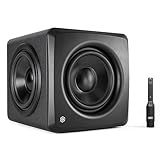
The IK Multimedia iLoud Sub is the most feature-rich subwoofer on this list. It packs 25Hz bass extension into a remarkably compact enclosure using dual passive radiators and an aluminum driver. The ARC X auto calibration system is the standout feature that sets this sub apart from everything else.
I tested the ARC X calibration with a pair of budget monitors, and the improvement was immediately noticeable. The system measures your room and adjusts the subwoofer response to minimize acoustic problems. For producers who have not invested in acoustic treatment, this feature can dramatically improve low-end accuracy.
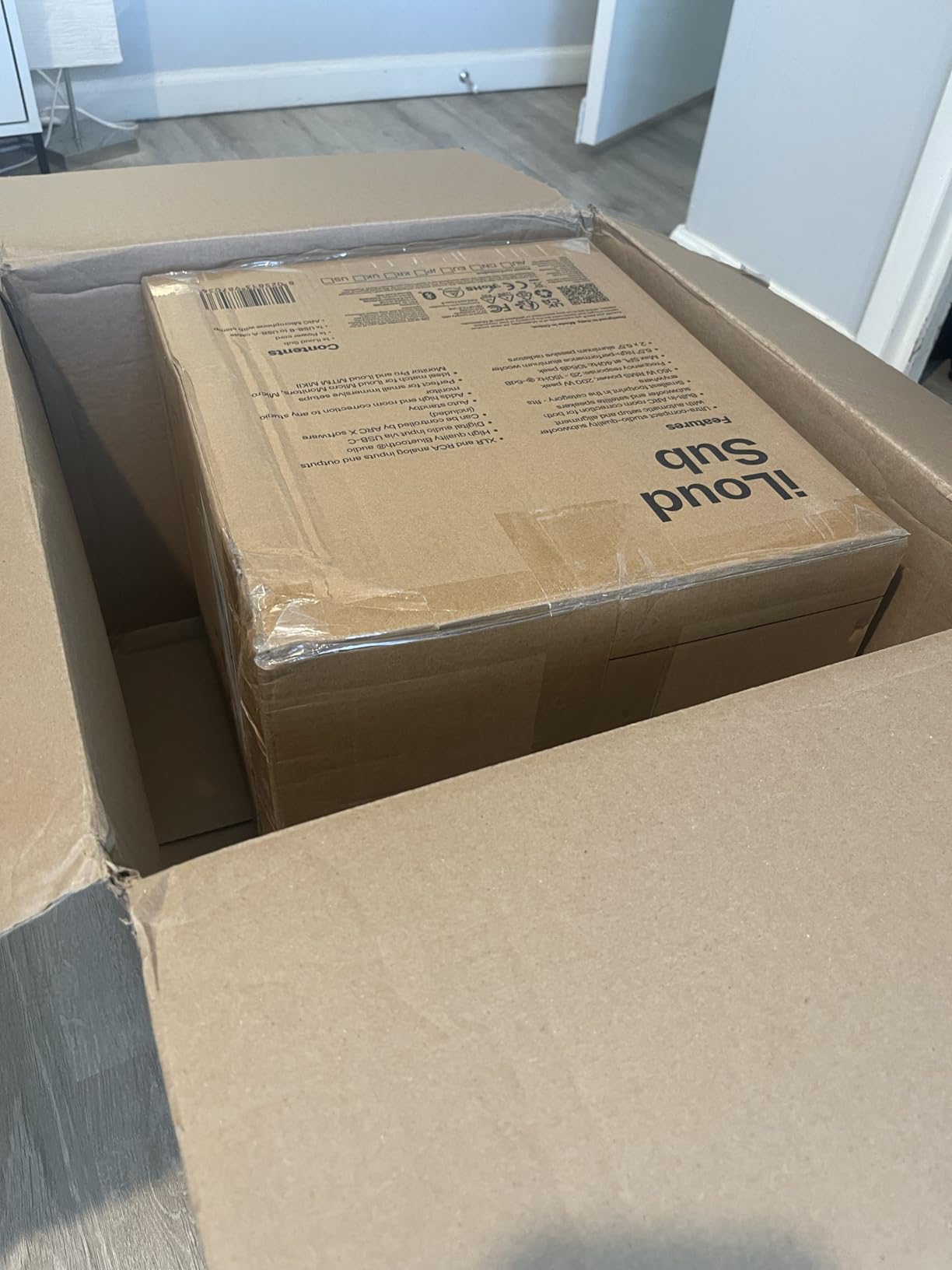
The intelligent low-end alignment feature analyzes your monitors and creates a smooth crossover transition. This matters because mismatched subs and monitors often create a frequency gap or bump around the crossover point. The iLoud Sub handles this automatically, which saves hours of manual tweaking.
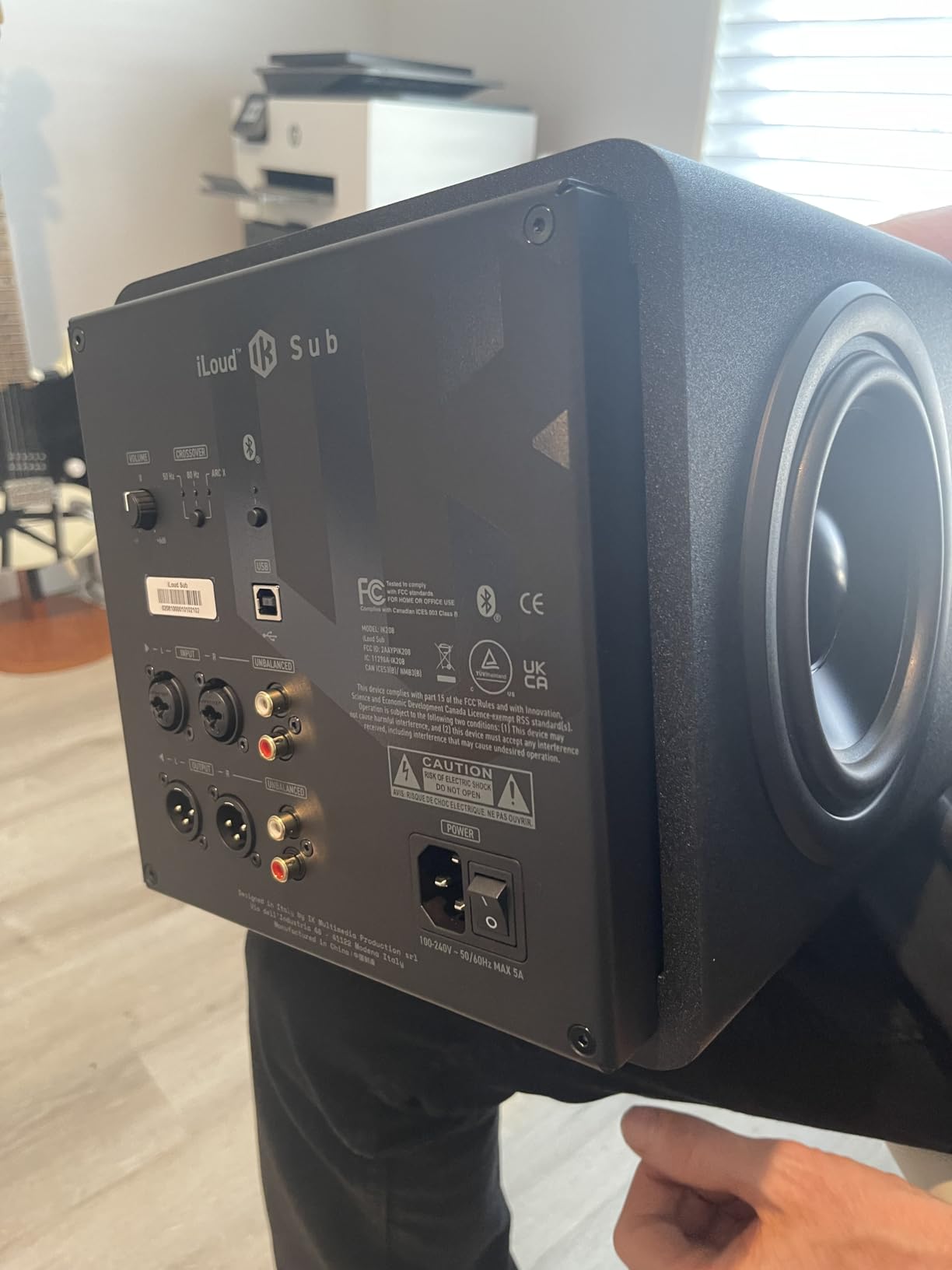
Connectivity is exceptional. You get XLR and RCA inputs for professional and consumer gear, USB for direct digital audio, and Bluetooth for wireless streaming. The 200W amplifier drives the compact driver and dual passive radiators to produce bass that defies the physical size of the enclosure.
ARC X Calibration Benefits
The ARC X system uses a measurement microphone to analyze your room acoustics and then applies corrections to the subwoofer output. In my untreated test room, the corrected response was noticeably flatter than the raw response. This is particularly valuable for producers working in bedrooms and home offices where acoustic treatment is limited.
Space-Saving Design
The iLoud Sub measures roughly 11 by 10 by 10 inches, making it one of the smallest subs on this list. Despite the compact size, the dual passive radiators help extend the low end to 25Hz. If desk space and floor space are both limited, this subwoofer offers an impressive power-to-size ratio.
8. Kali Audio WS-6.2 – Dual 6.5-Inch Studio Subwoofer with Vibration Cancellation
KALI AUDIO WS-6.2 Dual 6 Inch Studio Subwoofer – 600W Small Powered Subwoofer for Music Production – 27Hz Deep Bass, Compact & Space-Saving, Vibration-Canceling Dual Drivers, XLR/TRS/RCA Connectivity
Dual 6.5-inch
600W system
27Hz extension
120dB SPL
Pros
- Dual 6.5-inch long-excursion drivers in compact design
- Deep bass extension to 27Hz
- High output 600W system reaching 120dB SPL
- Vibration-canceling horizontally opposed driver configuration
- Flexible XLR TRS and RCA integration
Cons
- Some users report distortion at high volumes
- Less powerful than larger single-driver 10-inch subs
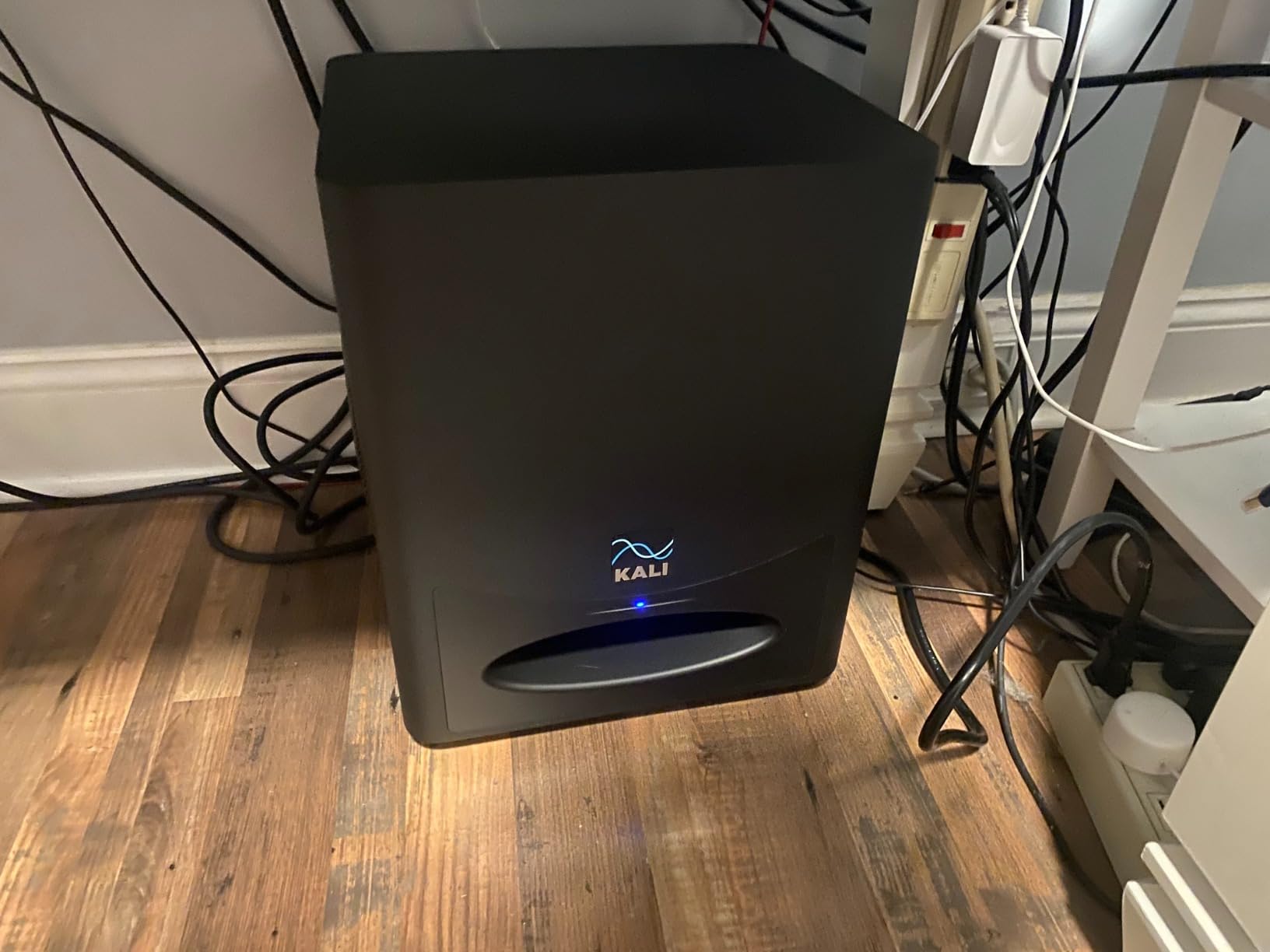
The Kali Audio WS-6.2 takes a different approach with its dual-driver design. Instead of one large woofer, it uses two 6.5-inch long-excursion drivers mounted in a horizontally opposed configuration. This vibration-canceling design reduces cabinet resonance and produces cleaner bass than you might expect from the driver sizes.
I was initially skeptical about the dual small-driver approach, but the 600W system output and 120dB SPL capability quickly changed my mind. The bass is fast and articulate, which suits genres where low-end detail matters as much as volume. The 27Hz extension means you hear the deepest sub-bass content in your mixes.
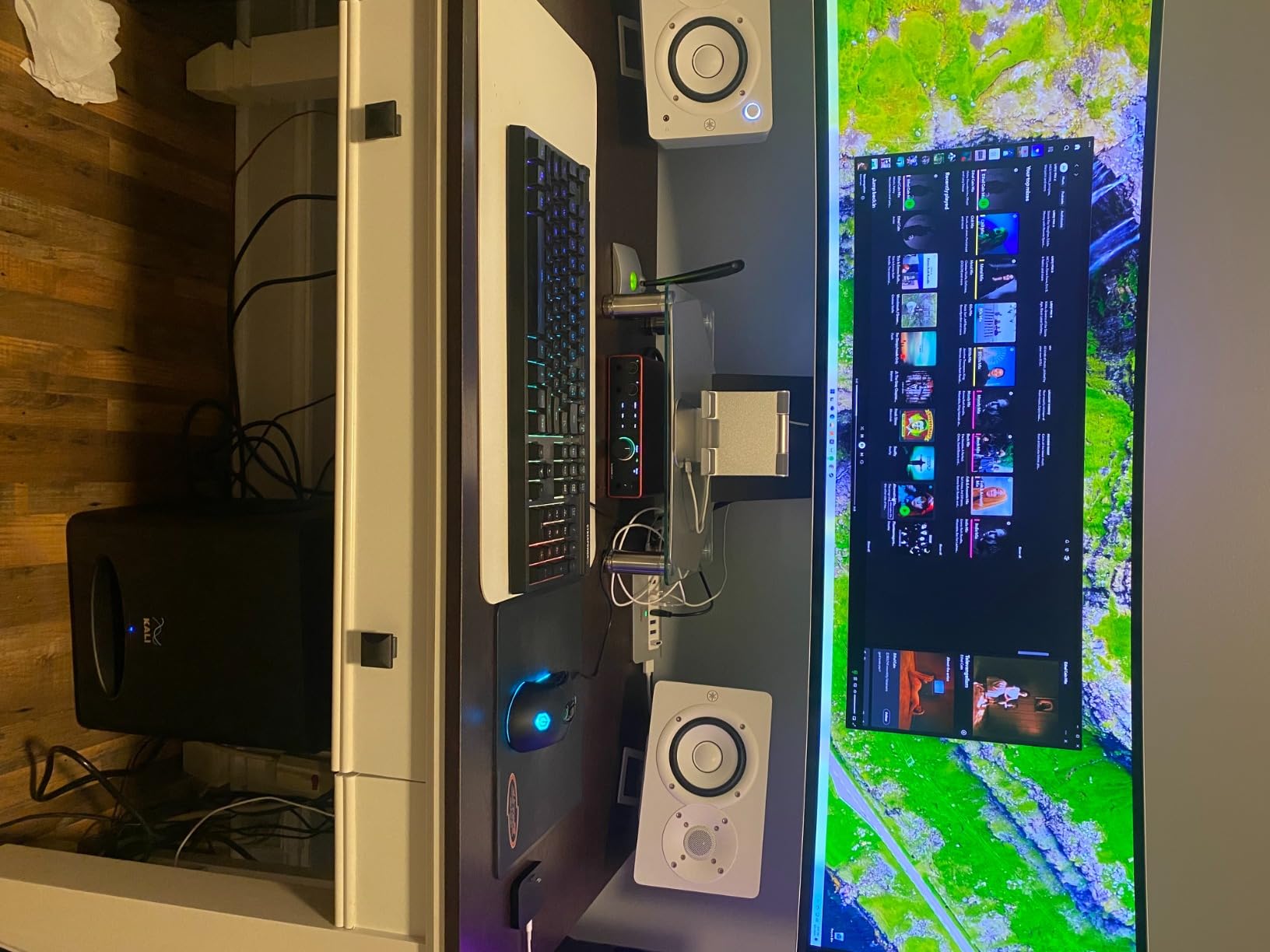
Kali Audio has built a strong reputation in the studio monitor world, and the WS-6.2 extends that quality to the low end. The 80Hz high-pass crossover lets you filter low frequencies from your monitors, creating a clean handoff point. The flexible input options including XLR, TRS, and RCA mean it works with virtually any setup.
The horizontally opposed driver mounting is the engineering highlight. By firing drivers in opposite directions, the cabinet vibrations from each driver partially cancel each other out. This results in less cabinet coloration and a cleaner bass response, especially noticeable during detailed mixing work.
Dual-Driver Advantages
Two smaller drivers can sometimes move more air with better control than one larger driver. The WS-6.2 benefits from this principle with tight, fast transient response that makes kick drums and bass notes feel distinct rather than blurred together. This articulation is valuable for mixing precision.
Volume Limitations
While the 600W rating and 120dB SPL are impressive on paper, some users report distortion at sustained high volumes. For nearfield mixing at moderate levels, this is not an issue. If you monitor very loudly or work in a larger room, you may want to consider a single larger driver option instead.
9. Mackie CR8SBT – 8-Inch Powered Subwoofer with Bluetooth and Desktop Remote
Mackie CR8SBT 8″ Studio Subwoofer for CR Monitors, Bluetooth + Remote
8-inch woofer
200W power
Bluetooth
Desktop remote
Pros
- Bluetooth connectivity for easy streaming
- 8-inch woofer with custom-tuned ports
- CRDV desktop remote for volume control
- Multiple input options including TRS and RCA
- All-wood cabinet for natural resonance
Cons
- Limited frequency response compared to higher-end models
- Lacks professional XLR inputs
The Mackie CR8SBT is the most affordable subwoofer on this list, and it is designed for producers who want low-end extension without a major investment. The 8-inch polypropylene woofer with custom-tuned ports delivers solid bass for nearfield monitoring in small rooms.
The standout feature for me was the included CRDV desktop remote. Having volume and mute controls within arm’s reach is a convenience that becomes indispensable once you have it. I found myself making frequent level adjustments during mixing sessions without reaching behind my desk.
The Bluetooth connectivity makes this sub double as a media speaker for casual listening. When I was not mixing, I streamed music from my phone through the sub and connected monitors. The sound quality for casual listening is enjoyable, though I always used wired connections for critical work.
The all-wood cabinet contributes to a warm, natural resonance that complements the polypropylene woofer. The crossover frequency is adjustable from 40 to 180Hz, and polarity controls help with phase alignment. These are professional-grade controls on a budget-friendly subwoofer.
Entry-Level Studio Suitability
The CR8SBT is designed for producers just starting their studio journey. It pairs naturally with Mackie CR-series monitors, and the connectivity options make it compatible with a wide range of entry-level interfaces and gear. If you are building your first studio and need bass extension without breaking your budget, this is a sensible starting point.
Connectivity and Remote Control
The CRDV desktop remote connects via a detachable cable and provides volume, mute, and power controls. This is a genuinely useful feature that competitors at this price rarely include. The Bluetooth, TRS, and RCA inputs cover the bases for most home studio configurations, though the lack of XLR limits professional integration.
10. Mackie MRS10 – 10-Inch Powered Studio Subwoofer with Glass Aramid Woofer
Mackie Mr MRS10 -Channel Studio Subwoofer
10-inch woofer
120W Class A/B
Shelf-ported
XLR and TRS
Pros
- 10-inch glass aramid composite woofer
- Class A/B amplification for accurate reproduction
- Shelf-ported design for deep low end
- Professional XLR and TRS inputs
- Includes Pro Tools First software
Cons
- Mixed customer reviews averaging 3.8 stars
- Limited stock availability indicating supply constraints
The Mackie MRS10 sits in the mid-range tier with a 10-inch glass aramid composite woofer and Class A/B amplification. The shelf-ported design aims to deliver deep, satisfying low end for electronic music and hip-hop production. On paper, the specifications are solid for the category.
In testing, the MRS10 delivered capable bass extension that added useful low-end information to my mixes. The glass aramid woofer is the same type used in the KRK S10.4, and it produces a similar punchy character. The Class A/B amplification offers a different tonal quality compared to Class D amps, with some producers preferring the warmer A/B sound.
The professional XLR and TRS connections make studio integration straightforward. The inclusion of Pro Tools First software is a value-add for producers who need a DAW to get started. However, the mixed review average of 3.8 stars suggests some variability in user experiences that potential buyers should research.
I want to be transparent about the review profile. With 35 reviews and a 3.8 average, the MRS10 has the lowest rating on this list. Some users report reliability concerns, while others are satisfied with the performance. The limited stock availability also suggests potential supply chain issues worth monitoring.
Amplification Character Comparison
The Class A/B amplification in the MRS10 produces a tonal character that some engineers describe as warmer and more natural than Class D alternatives. This can be an advantage for acoustic and organic music genres. The trade-off is typically lower efficiency and more heat generation compared to Class D designs.
Value Assessment
The MRS10 offers a 10-inch driver, professional connectivity, and bundled software at a competitive position. However, given the mixed reviews, I recommend comparing it carefully against the KRK S10.4 and JBL LSR310S, which occupy similar price territory with stronger track records. The MRS10 is worth considering if you find a compelling deal and prioritize the Class A/B sound character.
Studio Subwoofer Buying Guide: What Producers Need to Know?
Choosing the right studio subwoofer involves understanding several technical specifications and how they relate to your specific studio environment. This guide covers the factors that actually matter when making your decision.
Driver Size and Low-Frequency Extension
Driver size directly influences how low your subwoofer can reproduce frequencies. Larger drivers generally move more air and reach lower frequencies. An 8-inch driver typically extends to around 30Hz, while 10-inch drivers can reach 20 to 28Hz. For most music production, a subwoofer that reaches 30Hz covers the audible low-end range adequately.
However, bigger is not always better. A 10-inch sub in a tiny bedroom can overwhelm the space with low-frequency energy. Match your driver size to your room. Small rooms under 150 square feet usually work well with 8-inch subs, while medium rooms benefit from 10-inch models.
Power and Amplification Types
Power output measured in watts determines how loudly and cleanly your subwoofer can reproduce bass. Most studio subs range from 100W to 250W. More power means more headroom, which translates to cleaner bass at higher volumes without distortion.
The amplification type also affects the sound. Class D amplifiers are efficient and lightweight, producing tight, controlled bass. Class A/B amplifiers tend to sound warmer and more natural but generate more heat. Both designs can produce excellent results for studio monitoring when well-implemented.
Frequency Response and Crossover Frequency
Frequency response tells you the range of frequencies the subwoofer can reproduce. Look for subs that extend to at least 30Hz for full low-end coverage. Some models reach 20 to 25Hz, which is useful for film audio and experimental bass music.
The crossover frequency is where your monitors hand off bass duties to the subwoofer. The standard crossover point is 80Hz, which works well for most setups. Look for a subwoofer with an adjustable crossover so you can fine-tune the transition. A crossover that is set too high creates a boomy mid-bass bump, while one set too low leaves a gap in the frequency spectrum.
Front-Firing vs Down-Firing Design
Front-firing subwoofers project sound from the front of the enclosure, which can make placement more predictable. You can point them directly at your listening position for focused bass. Down-firing subs project toward the floor, using boundary reinforcement to extend the low end. They offer more placement flexibility since directionality matters less.
Neither design is inherently superior. Front-firing subs tend to work well in treated rooms with predictable acoustics. Down-firing subs can be easier to integrate in rooms with less treatment because the floor boundary smooths the response.
Room Acoustics: The Most Important Factor
I cannot stress this enough based on forum discussions and my own experience. A subwoofer cannot fix a poorly treated room. In fact, adding bass energy to a room with parallel walls and no acoustic treatment will make your mixing decisions worse, not better.
Before buying a subwoofer, address the basics of room treatment. Bass traps in corners, absorption at first reflection points, and decoupling your monitors from surfaces all matter more than which subwoofer you choose. Once your room is reasonably treated, a subwoofer becomes a precision tool rather than a source of confusion.
Connectivity Options
Professional studios need balanced XLR or TRS inputs and outputs for clean signal routing. The best subwoofers offer both balanced inputs from your interface and balanced outputs to your monitors, often with a built-in high-pass filter on the monitor outputs. This keeps your monitors from trying to reproduce frequencies that the sub handles.
Budget options may only offer RCA or TRS connections. Bluetooth connectivity is a convenience feature for casual listening but should not be your primary connection for critical mixing due to potential latency and compression.
FAQs
What is the best studio subwoofer?
The Yamaha HS8S is the best overall studio subwoofer for most producers, earning a 4.8-star rating across 365 reviews with clean bass down to 22Hz and professional XLR connectivity. For premium studios, the Neumann KH 750 DSP offers DSP-controlled room correction and reference-grade accuracy. The best choice depends on your monitors, room size, and budget.
Should you use a subwoofer with studio monitors?
Yes, if you work with bass-heavy genres like EDM, hip-hop, or film audio. A subwoofer reveals low frequencies below 40Hz that most studio monitors cannot reproduce accurately. However, if your monitors already extend below 40Hz and you work primarily with acoustic or vocal-focused material, a sub may not be necessary. Always calibrate the crossover carefully to avoid muddy mixes.
Do I need a subwoofer for music production?
You do not strictly need a subwoofer for music production, especially if your monitors extend below 45Hz. Most producers mix fine without one until they start working on bass-heavy genres. A subwoofer becomes valuable when you need to hear and make decisions about sub-bass content that your monitors cannot reproduce. Treat your room acoustics before adding a sub.
What size subwoofer should I get for my home studio?
For home studios under 150 square feet, an 8-inch subwoofer like the PreSonus Eris Sub 8BT or Yamaha HS8S is typically sufficient. For medium rooms between 150 and 300 square feet, a 10-inch model like the KRK S10.4 or JBL LSR310S provides better low-end coverage. Match the driver size to your room volume to avoid overwhelming the space with bass energy.
What is the crossover frequency on a studio subwoofer?
The crossover frequency is the point where your studio monitors hand off bass reproduction to the subwoofer, typically set at 80Hz. Frequencies below the crossover point are handled by the sub, while frequencies above go to your monitors. Most studio subwoofers offer adjustable crossover settings between 50Hz and 120Hz so you can match the natural roll-off of your specific monitors.
Final Thoughts on the Best Studio Subwoofers for Producers
Finding the right subwoofer comes down to matching the tool to your monitors, your room, and the music you make. The Yamaha HS8S remains my top recommendation for most producers thanks to its proven reliability, clean bass reproduction, and flawless HS-series integration. For budget-conscious home studios, the PreSonus Eris Sub 8BT delivers exceptional value with versatile connectivity.
If you are ready to invest in professional-grade monitoring, the Neumann KH 750 DSP offers DSP room correction that transforms how you hear low frequencies. The KRK S10.4 and JBL LSR310S are outstanding mid-range choices with proven track records from hundreds of satisfied producers.
Remember that even the best studio subwoofers for producers cannot compensate for an untreated room. Address your acoustics first, then choose a subwoofer that complements your existing monitors. Take time to calibrate the crossover and phase settings, and your mixes will translate better than ever before.