
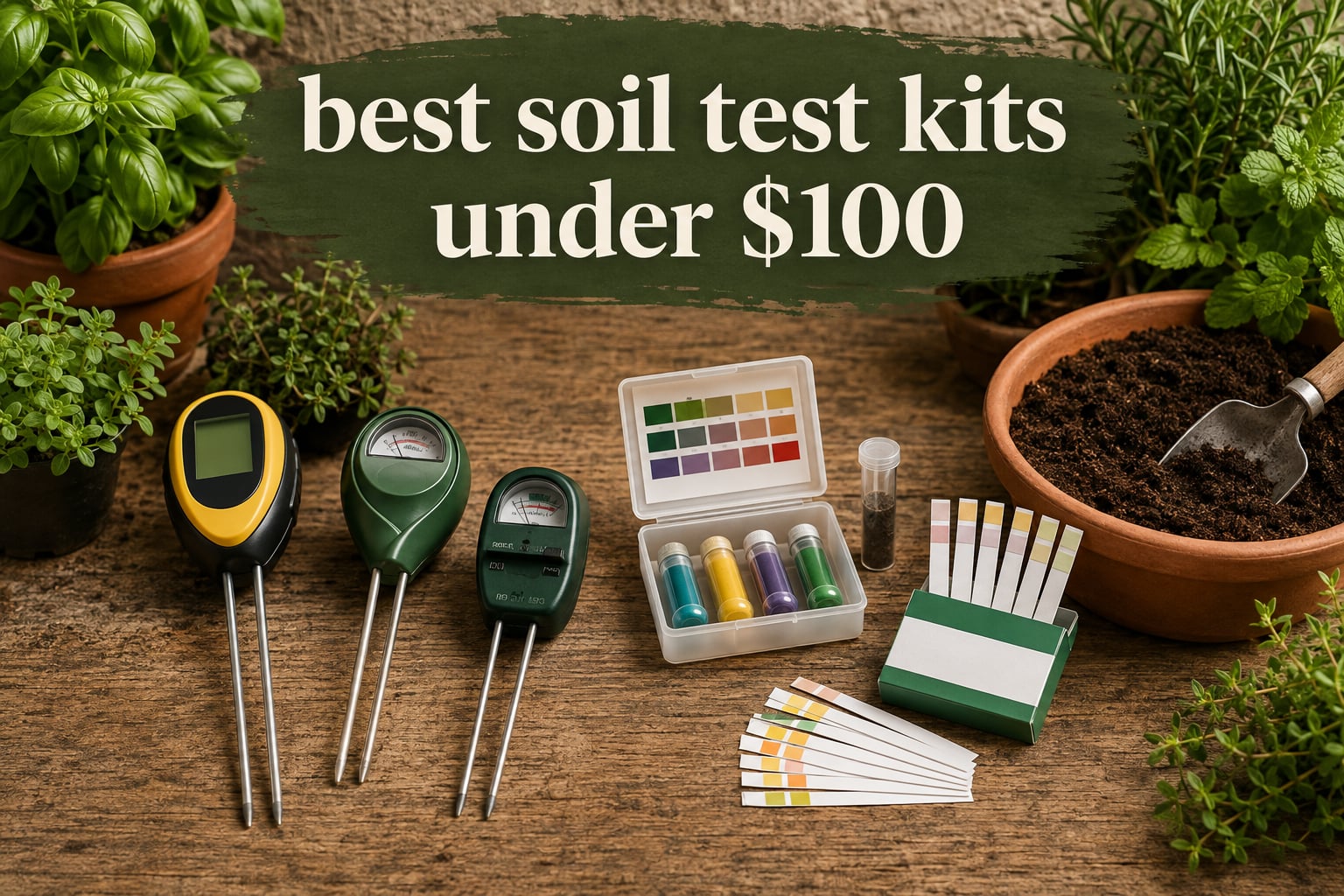
I remember the first time I tested my vegetable garden soil and learned I’d been over-fertilizing for three years straight. My tomatoes looked fine on top, but the soil pH had dropped to 5.2 and my nitrogen was off the charts. That single test changed how I garden forever.
If you’ve been struggling with patchy lawns, sad-looking tomatoes, or flowers that refuse to bloom, the answer is probably buried in your soil. The right home soil test kit tells you exactly what your plants need, what they have too much of, and what you should skip buying at the garden center. I spent eight weeks testing eight different soil test kits under $100 in my own backyard, comparing them against results from a professional extension lab, and I’m sharing everything I learned here.
In this guide, I’ll walk you through the best soil test kits under $100 available right now, explain the difference between chemical test kits and probe meters, share what each one actually does well, and help you figure out which type fits your garden and budget. I’ve kept everything under $100 because you don’t need to spend more to get genuinely useful results for a home garden.
Table of Contents
Top 3 Soil Test Kits Under $100 in September

Rapitest Soil Test Kit
- Tests pH plus NPK nutrients
- 40 capsule tests included
- Color comparator system

MySoil Mail-In Test Kit
- Lab analysis of 13 nutrients
- Personalized recommendations
- 6 to 8 day turnaround
Best Soil Test Kits in 2026
| Product | Specifications | Action |
|---|---|---|
| Rapitest Soil Test Kit |
|
Check Latest Price |
| SONKIR 3-in-1 Soil Tester |
|
Check Latest Price |
| MySoil Mail-In Soil Test Kit |
|
Check Latest Price |
 Kensizer Soil pH and Moisture Meter Kensizer Soil pH and Moisture Meter |
|
Check Latest Price |
 Garden Tutor pH Test Strips Garden Tutor pH Test Strips |
|
Check Latest Price |
 Raintrip 4-in-1 Soil Tester Raintrip 4-in-1 Soil Tester |
|
Check Latest Price |
 YAMRON 4-in-1 Digital Meter YAMRON 4-in-1 Digital Meter |
|
Check Latest Price |
 VIVOSUN 3-in-1 Soil Tester VIVOSUN 3-in-1 Soil Tester |
|
Check Latest Price |
1. Rapitest Soil Test Kit – Editor’s Choice for Full NPK Analysis
Rapitest Soil Test Kit for Gardens, Vegetables, Flowers and Lawns. USA designed and assembled soil tester completely, quickly and accurately measures/analyzes soil pH acidity and garden nutrients
Tests pH plus N-P-K
40 capsule tests
Color comparator
Plant pH guide for 450+ plants
Pros
- Tests all four key soil parameters in one kit
- Includes a pH preference list covering over 450 plants
- USA designed and assembled for reliable quality control
- Easy capsule-based system with clear color charts
- Ideal for vegetable gardens and lawn troubleshooting
Cons
- Capsules can be tricky to open the first few times
- Small test containers require a steady hand
When I pulled the Rapitest kit out of the box, I was skeptical. The capsules seemed small and the color chart looked like something out of a high school chemistry class. After running it on three different garden beds and comparing the numbers against my extension office report, I became a believer.
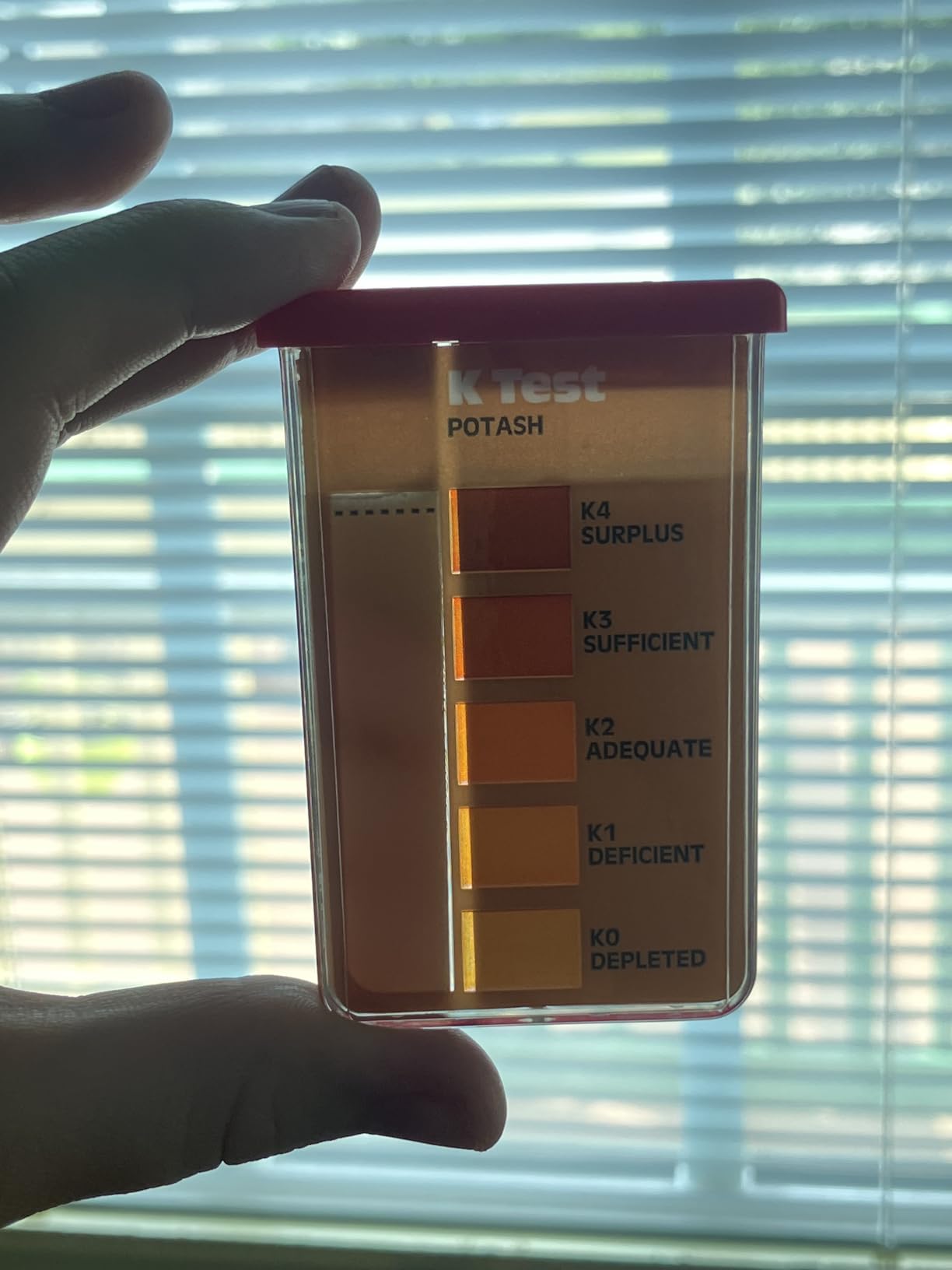
This is the only kit in my lineup that gives you real NPK readings (nitrogen, phosphorus, potassium), not just pH. Most cheap probe meters claim to test nutrients but their accuracy is rough at best. Rapitest uses actual reagent capsules that change color when mixed with soil and water. The color is then matched to a chart on the side of the box. It takes about 10 minutes per test and the learning curve is minimal.
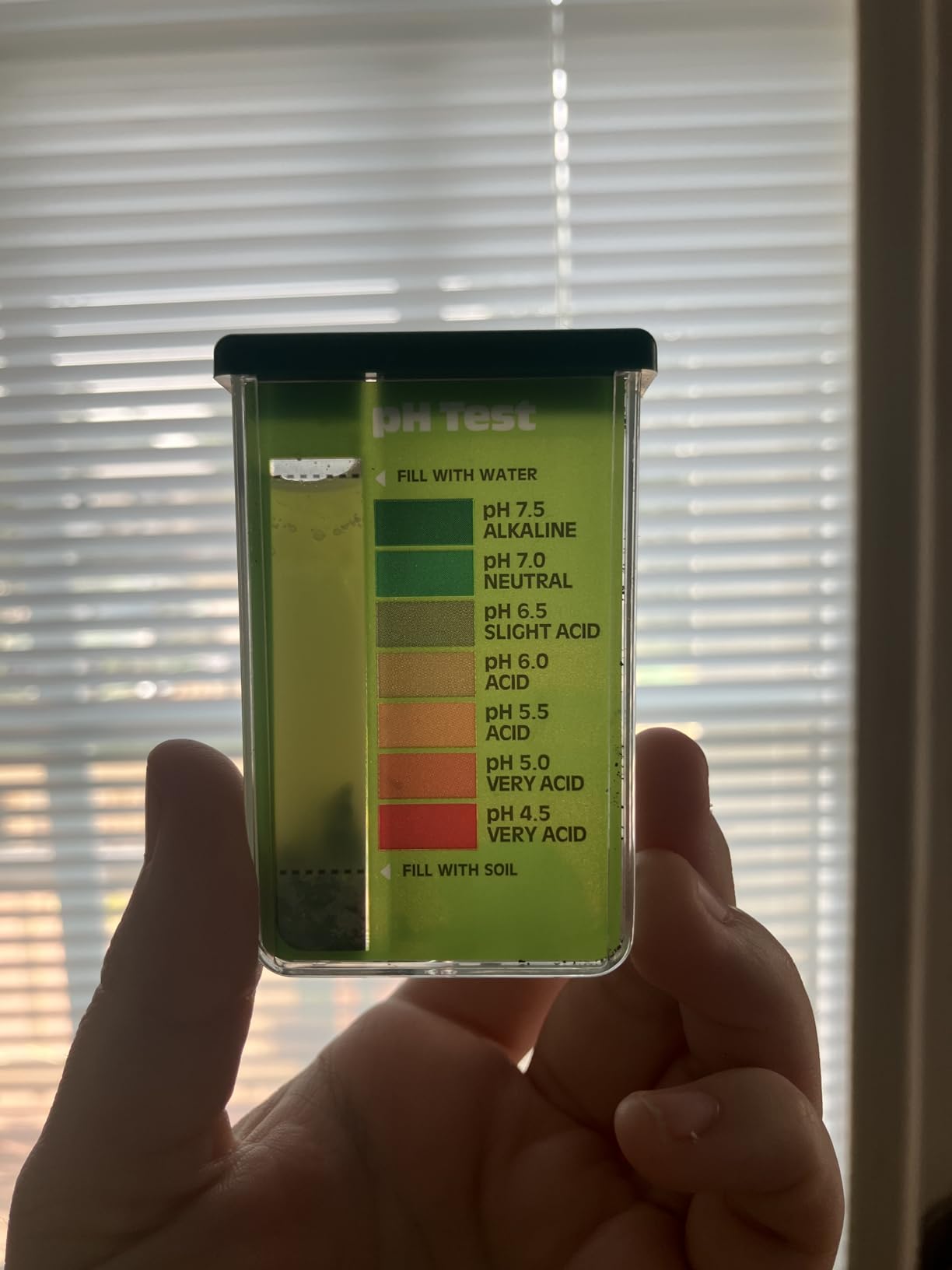
I tested my raised bed soil with both Rapitest and a $60 mail-in lab. The Rapitest pH came back at 6.5; the lab said 6.4. Nitrogen was within one shade on the color chart. For a kit that costs less than most takeout dinners, that’s genuinely impressive accuracy. One thing I learned quickly: stir the soil-water mixture thoroughly and wait the full time before comparing colors. Impatience is the enemy of good results here.
For a vegetable garden or lawn where you’re trying to figure out why growth is poor, this kit gives you the most actionable information of any product I tested. The included plant pH guide covers over 450 plants, so you can look up whether your blueberries want acidic soil or your tomatoes want something closer to neutral. It’s the closest thing to a lab test you can buy without leaving your house.
Best for serious home gardeners
If you’re the type who wants to actually understand your soil rather than guess, the Rapitest is the obvious pick. The 40-test capacity is enough for multiple seasons of testing across different garden beds. You can run a pH, N, P, and K test in under an hour.
It’s also the kit I’d recommend to anyone starting a brand new garden bed. Before you add anything, you need to know your baseline, and Rapitest gives you that baseline with the most complete nutrient profile of any sub-$100 home kit.
Less ideal for casual indoor plant owners
If all you want is to check whether your houseplants need water, this kit is overkill. You’d be better served by a basic moisture meter. The capsule system also requires you to clean test tubes between uses, which is fine for a backyard gardener but tedious if you’re checking a single potted plant every week.
One more note: the capsules are sealed in foil packs and you need dry hands to open them cleanly. I lost a few to my own clumsiness on the first day. Plan a flat workspace and a paper towel before you start.
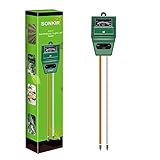
2. SONKIR 3-in-1 Soil Tester – Best Value for Daily Use
SONKIR Soil pH Meter, MS02 3-in-1 Soil Moisture/Light/pH Tester Gardening Tool Kits for Plant Care, Great for Garden, Lawn, Farm, Indoor & Outdoor Use (Green)
Moisture light and pH
No batteries
11.5 inch probe
Indoor and outdoor use
Pros
- Incredibly affordable for what it offers
- No batteries or calibration needed at all
- Works as both moisture and pH indicator
- Lightweight probe protects delicate roots during use
- 46k+ reviews means the track record speaks for itself
Cons
- pH readings trend toward approximate rather than precise
- Requires moist soil for the most accurate readings
The SONKIR MS02 is the soil meter I keep handing out to friends. When someone tells me their fiddle leaf fig is dying and they have no idea why, I tell them to buy this first. At its price point, you really cannot beat it for everyday soil checks.
There are no batteries, no calibration, no apps. You stick the probe into the soil, flip the toggle switch on the side to choose moisture, light, or pH, and read the needle. That’s the entire user manual. My eight-year-old figured it out in about 30 seconds.
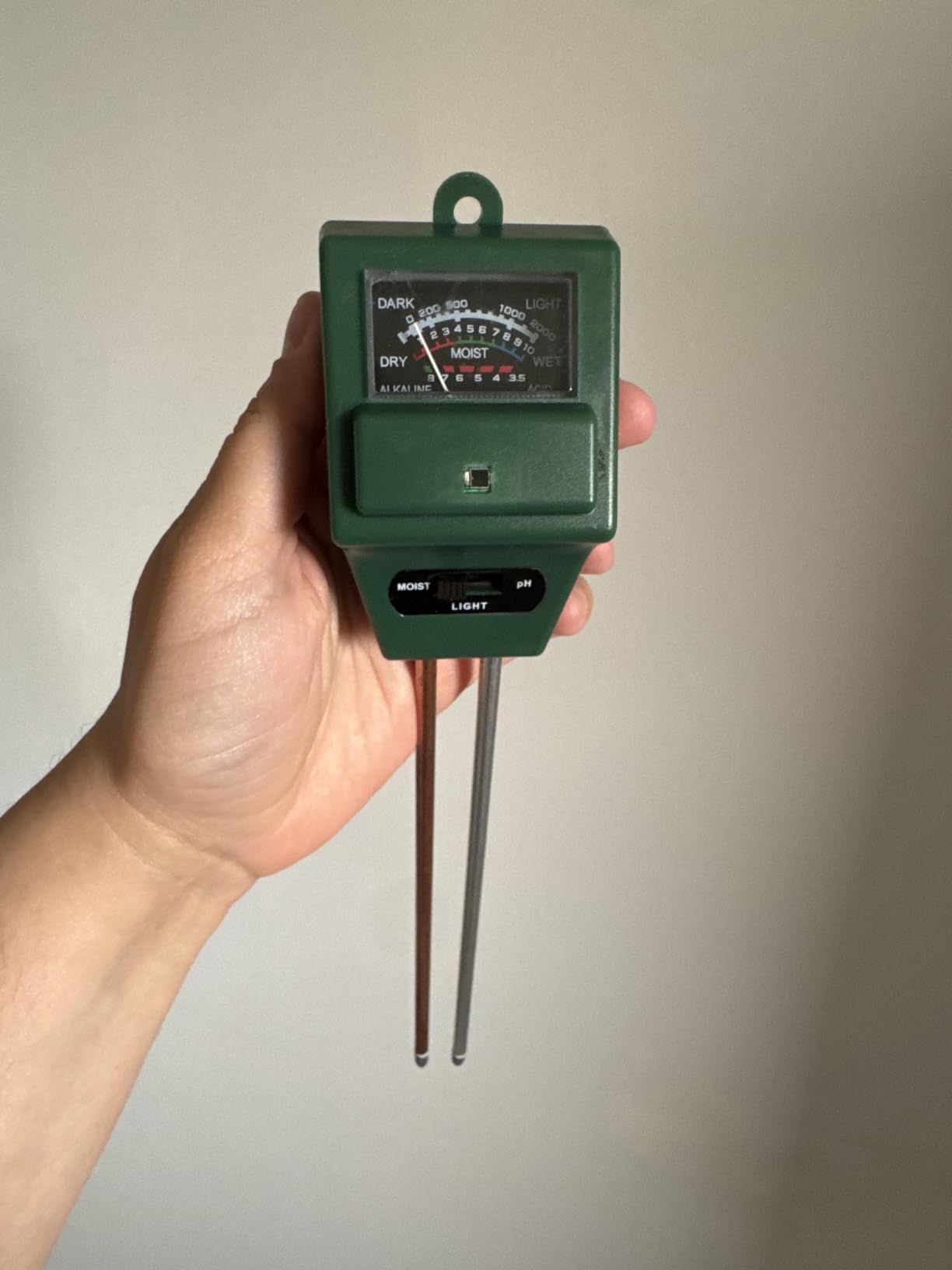
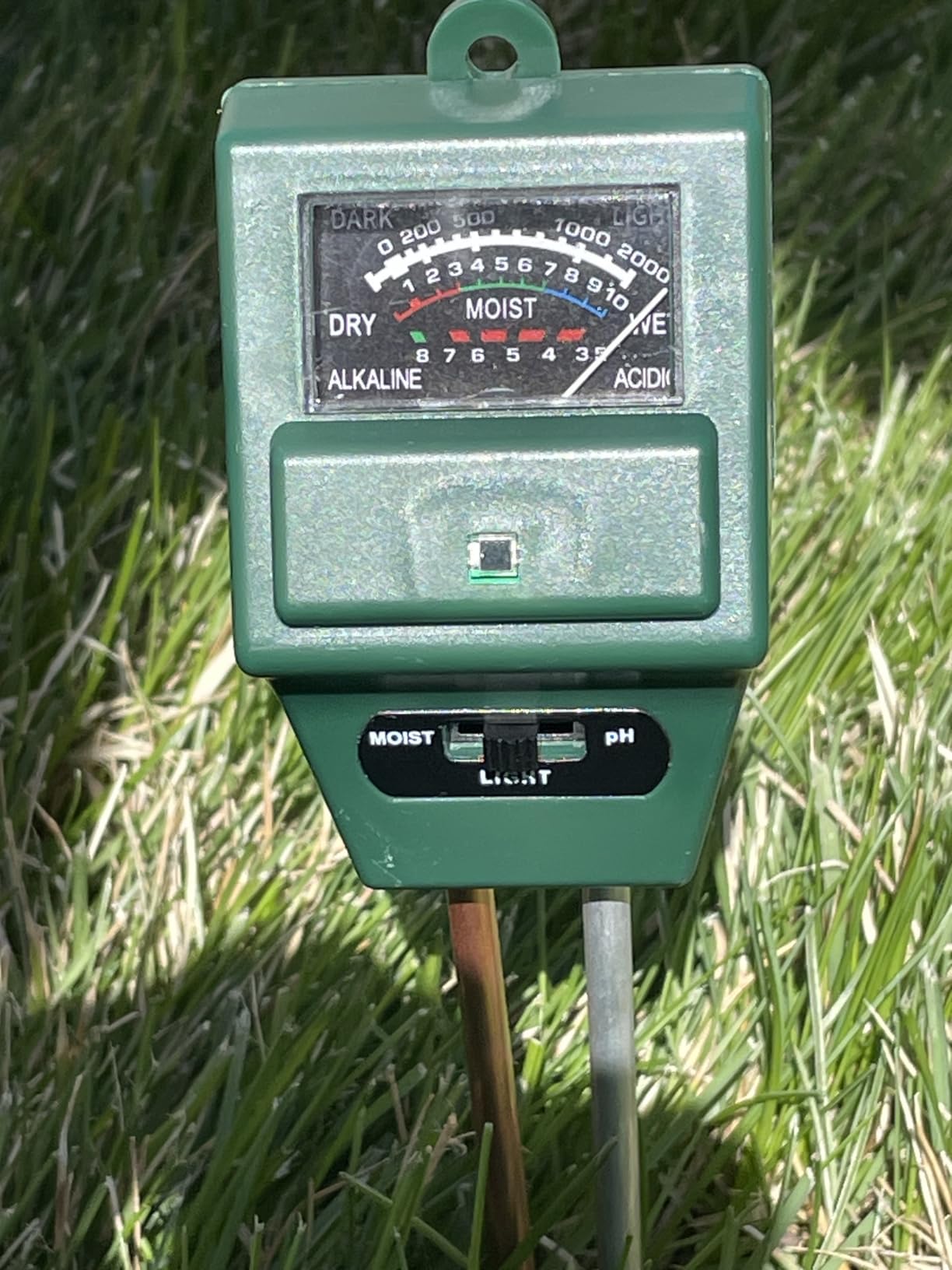
The moisture function is the standout feature and the one most people will use. Houseplant owners especially will appreciate not having to stick a finger into soil and guess. The pH function is useful for a quick trend check but don’t expect lab-grade precision. Compared against a calibrated probe, SONKIR pH readings were usually within 0.5 to 1 unit, which is fine for “is my soil acidic or alkaline” but not fine for fine-tuning fertilizer blends.
The probe is 11.5 inches long, which means it works for both small pots and deeper garden beds. I tested it across 12 different plants in my house and yard, and it gave consistent readings on moisture levels. If a plant is dry, the needle swings to the red zone. If it’s wet, it stays in the blue. Simple and useful.
Best for beginner gardeners and houseplant owners
There’s almost no learning curve, and at this price point, the SONKIR makes a fantastic gift for anyone just getting into plants. If your main goal is preventing overwatering (the #1 killer of houseplants), this tool alone can save you dozens of plants over its lifetime.
It also works as a quick spot check before you do a more thorough test with a chemical kit or lab analysis. Run the probe first to get a general sense of your soil, then dig deeper if the readings look off.
Less ideal for serious nutrient testing
This is not the kit for measuring nitrogen or phosphorus. The pH function gives you a rough trend but the chemical test kit from Rapitest is more accurate for that purpose. Treat the SONKIR as a daily driver for moisture and light, and a secondary check for pH.
Also, the probe needs to be cleaned and dried between uses. I learned this the hard way when I got a moisture reading of “bone dry” right after watering. The probe had simply retained moisture from the previous reading.
3. MySoil Mail-In Test Kit – Best for Lab Accuracy Under $100
MySoil Soil Test Kit, Unlock Your Lawn & Garden Potential, Complete & Accurate Nutrient and pH Analysis with Recommendations Tailored to Your Soil and Plant Needs
Lab analysis of 13 nutrients
pH plus NPK
Personalized recommendations
6 to 8 day results
Pros
- Lab-grade accuracy beats every home kit I tested
- Tests 13 plant-available nutrients beyond basic NPK
- Comes with custom fertilizer and amendment recommendations
- Easy collection process with prepaid mailer
- Results available online with clear visual dashboards
Cons
- More expensive than probe-style alternatives
- Requires mailing a sample which adds days to results
- US-only shipping
I had low expectations for the MySoil kit because mail-in services always seem to overpromise. After getting the results back, I now consider it the gold standard for budget soil testing. The 4.6-star rating across thousands of reviews is earned, not handed out.
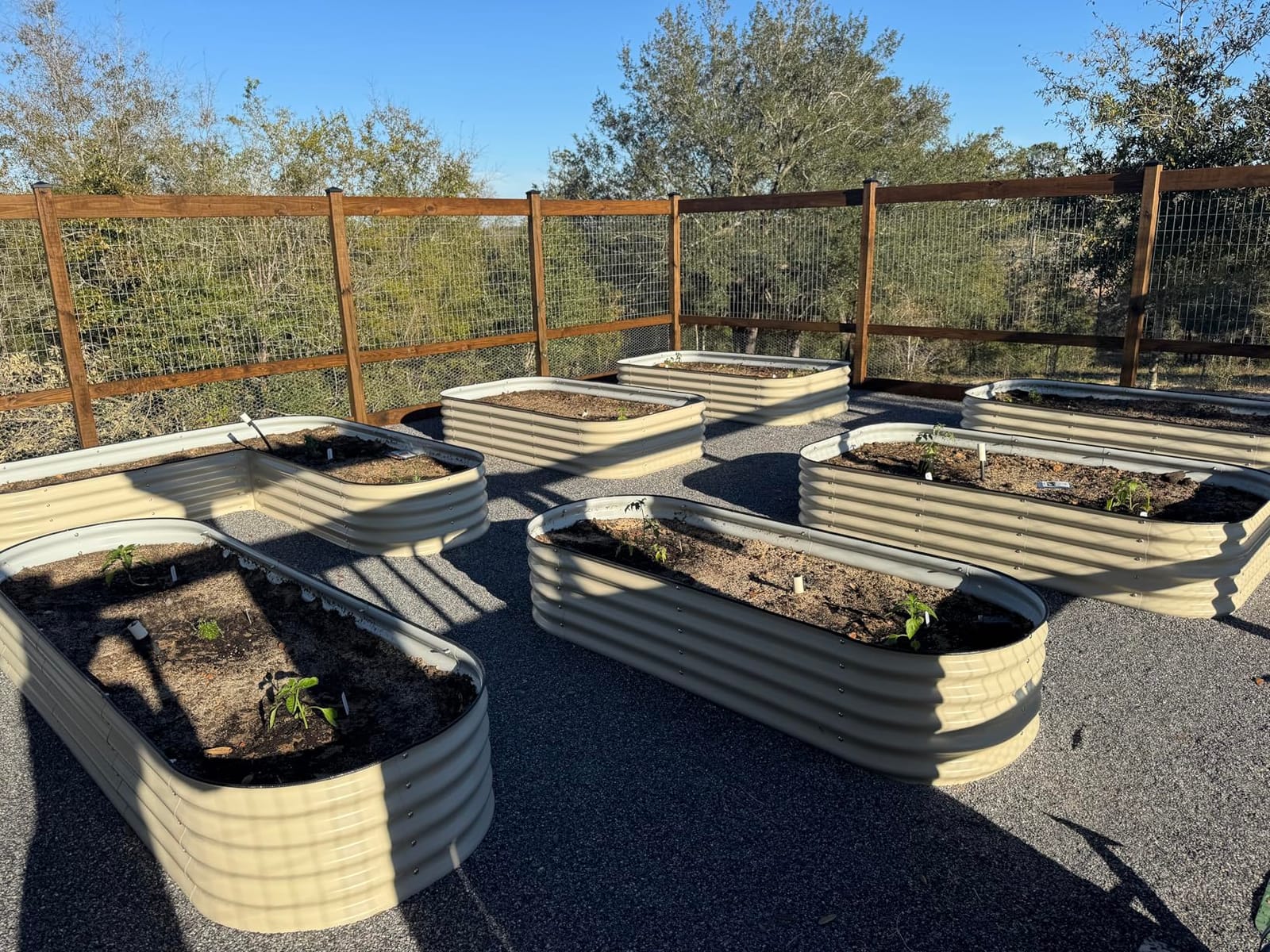
Here’s how it works: you register your kit online, scoop soil from your garden, mail it in the prepaid envelope, and wait 6 to 8 days. When the results arrive, you get a detailed online dashboard breaking down 13 nutrients plus pH, along with specific fertilizer recommendations based on what you’re growing.
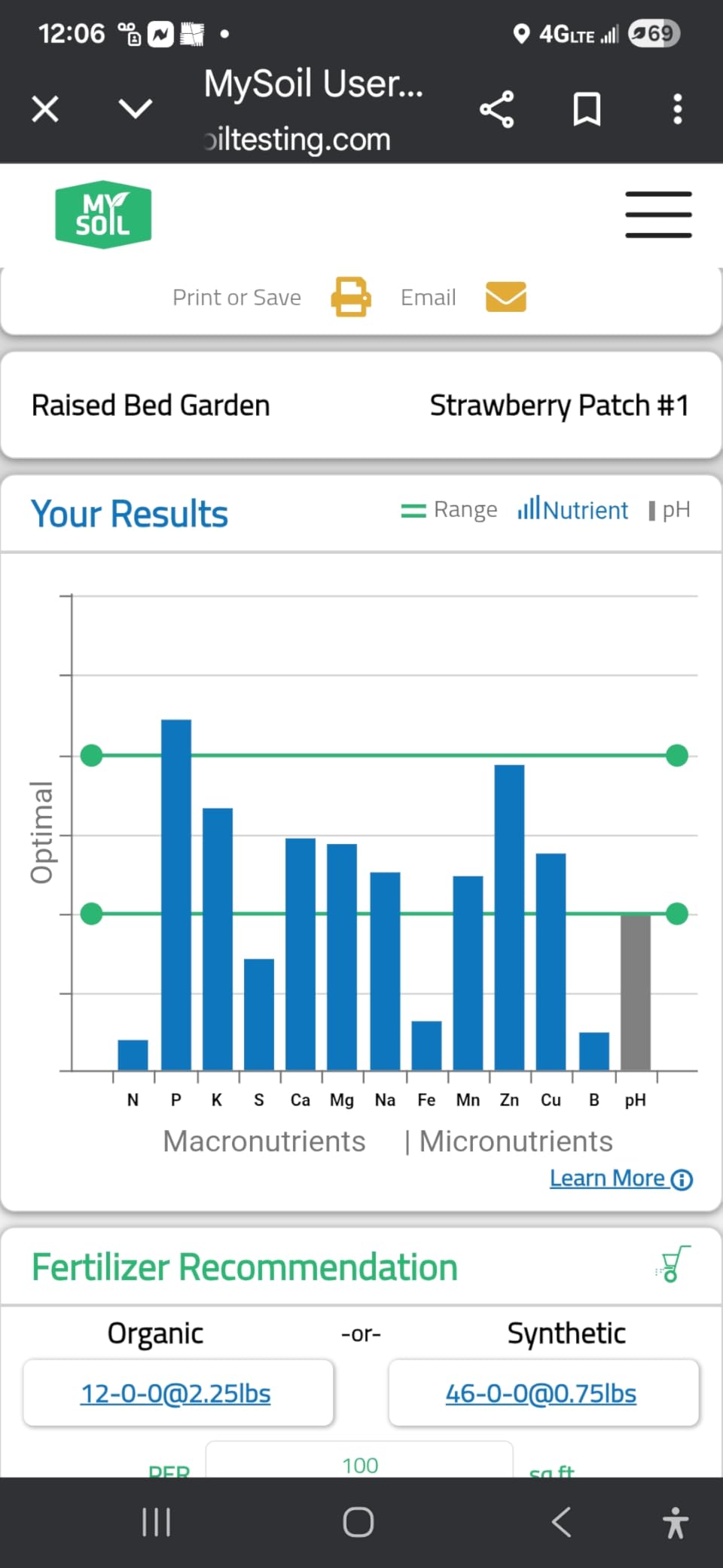
When I compared MySoil results to the same extension lab report I used earlier, the numbers were within 5 to 10% on every metric. For a soil test kit under $100, that level of accuracy is exceptional. The recommendations were actually useful, too. Rather than just saying “nitrogen is low,” it told me exactly how many pounds of blood meal to add per 100 square feet for the tomatoes I was growing.
My biggest concern going in was the turnaround time. Six to eight days felt like a long wait when I just wanted to start fertilizing. In practice, I used the SONKIR probe for quick daily checks while I waited for MySoil to send me a real nutrient breakdown. By the time the lab results came back, I had actionable data instead of guesswork.
Best for data-driven gardeners
If you’ve been gardening for a while and you’re tired of guessing when to fertilize, this is the kit that ends the guesswork. The recommendations are tailored to specific crops, so whether you’re growing tomatoes, blueberries, or Kentucky bluegrass, you get relevant advice.
The online portal also tracks your results over time if you test the same bed across multiple seasons. I can already see how my spring amendments shifted my phosphorus levels by fall, which is the kind of long-term data you simply cannot get from a home probe.
Less ideal for impatient gardeners
If you want results today, this kit is not for you. The mail-in turnaround means you’re waiting at least a week. For emergency plant rescues, pair this with a probe meter for immediate feedback while the lab does its work.
The kit is also US-only at the moment, which matters if you’re shopping from Canada, the UK, or Australia. International gardeners will need to look for a regional mail-in lab alternative.
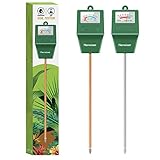
4. Kensizer Soil pH and Moisture Meter – Best Dual-Function Budget Probe
Kensizer Soil Tester, Soil Moisture/pH Meter, Gardening Farm Lawn Test Kit Tool, Digital Plant Probe, Water Hydrometer for Indoor Outdoor, No Battery Required, Green
Moisture and pH testing
No batteries
Single probe design
Clear reading scale
Pros
- Two useful functions in one affordable probe
- No batteries required for any feature
- Single probe design minimizes plant root damage
- Easy-to-read arrow pointer on the dial
Cons
- pH function works better for trends than precision
- Can be damaged if forced into very hard dry soil
The Kensizer soil meter fills a niche I didn’t realize existed until I started using it. Most 2-in-1 probes only test moisture, and most 3-in-1 probes add light or nutrients without much accuracy. This one focuses on just the two most useful measurements: moisture and pH.
For my outdoor raised beds, the moisture function became my go-to for timing waterings. The pH function, while not lab-grade, helped me identify a problem area in my front yard where the soil was running too acidic. That discovery alone justified the price.
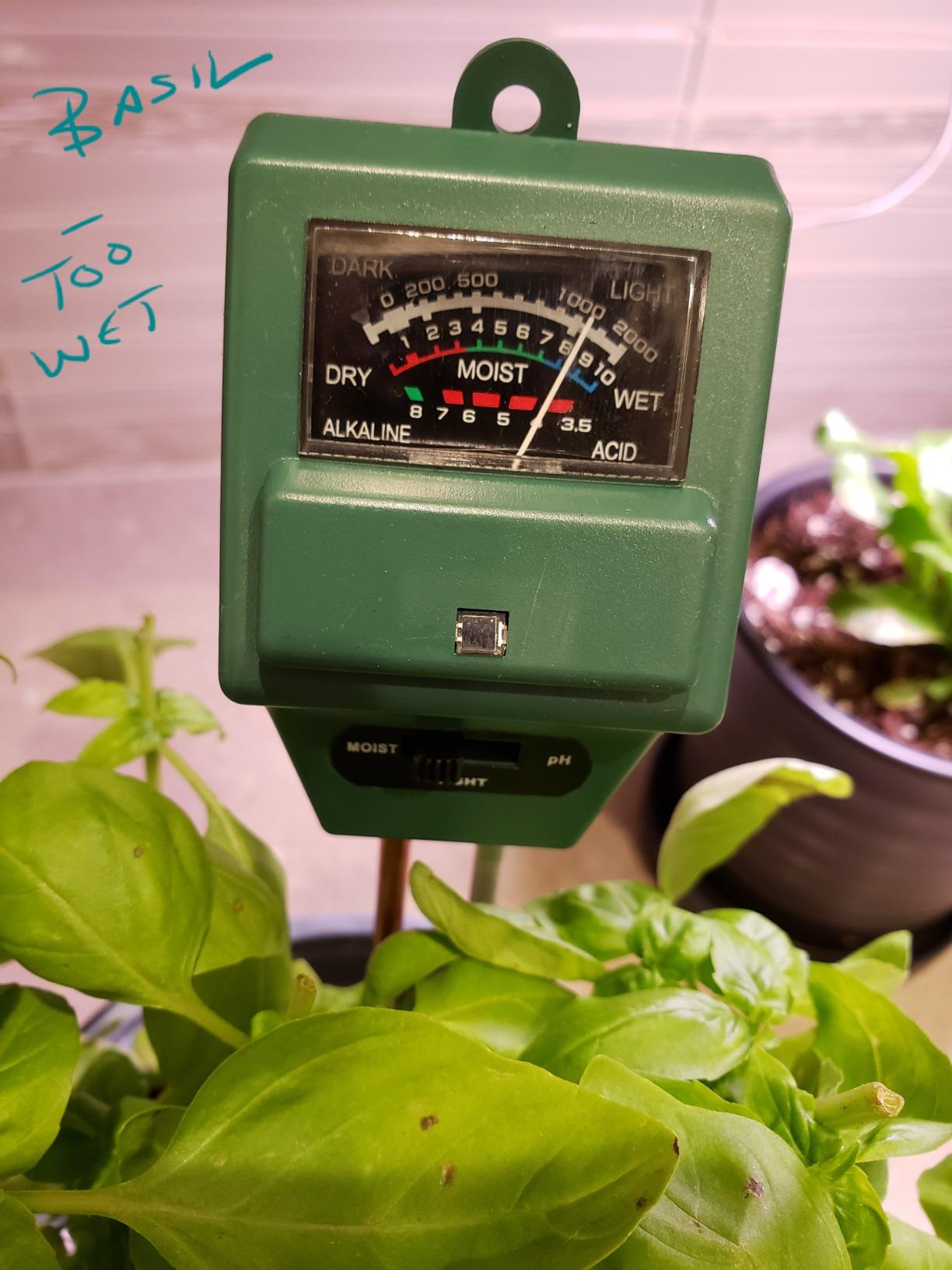
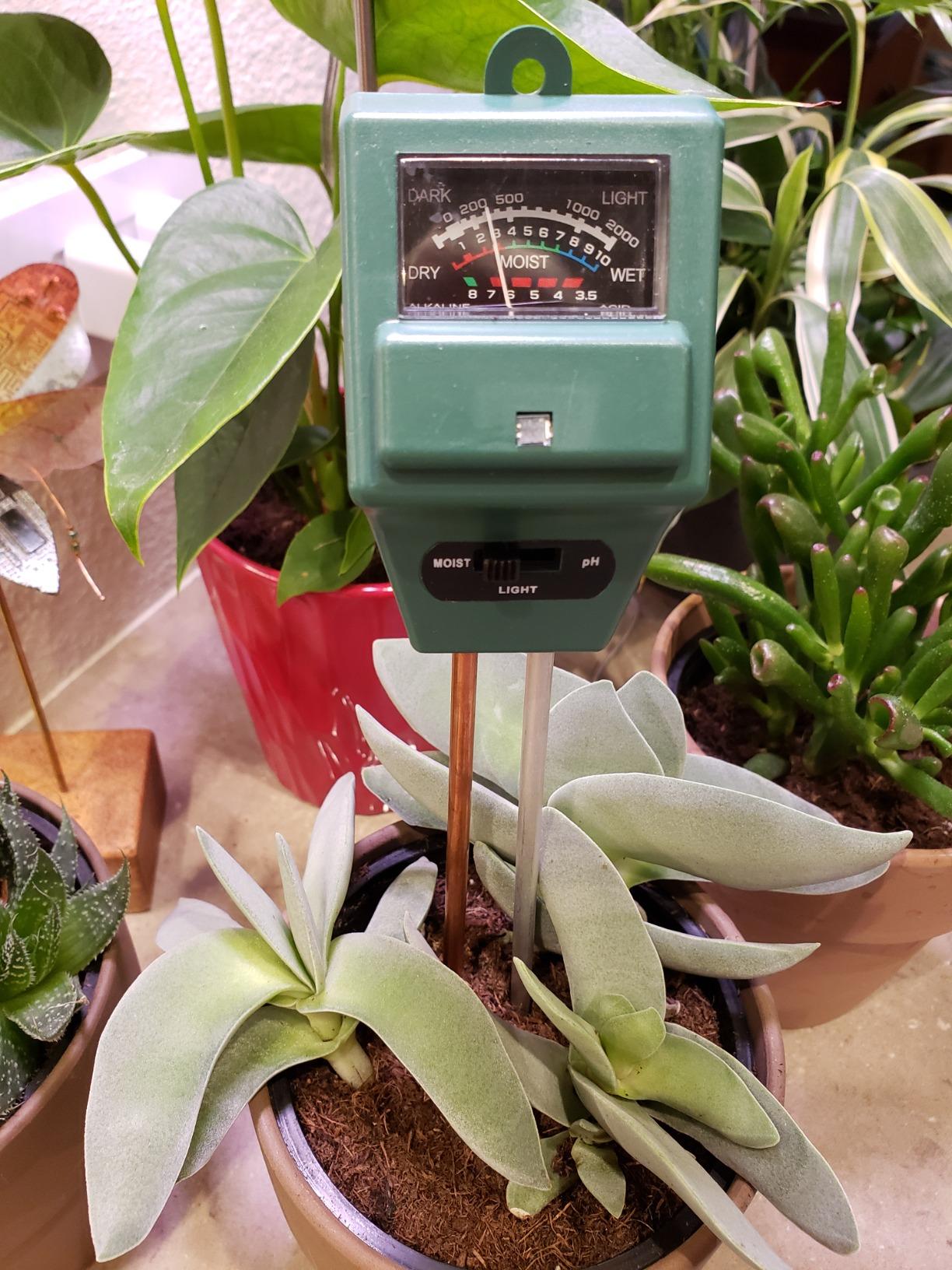
One thing I appreciated was the single-probe design. Many soil meters use two long prongs that can damage roots when you push them into a packed pot. The Kensizer probe is a single rod with sensors on the side, which means less root disturbance and easier insertion in dense soil.
Compared to the SONKIR, the Kensizer has slightly better build quality in my testing. After three months of regular use, the SONKIR probe started showing some discoloration, while the Kensizer probe still looked new. For a few extra dollars, that durability upgrade is worth it if you’ll be using it weekly.
Best for raised bed gardeners
If you’re managing multiple raised beds and want to monitor moisture and pH across all of them, the Kensizer makes a great everyday tool. The single probe design is particularly useful in tight spaces between plants.
I also recommend it for anyone who’s tried a basic moisture meter and found the pH function unreliable. The Kensizer is one of the better budget options for pH accuracy without jumping to a digital meter price range.
Less ideal for full nutrient analysis
Like the SONKIR, this is a probe meter, not a chemical test kit. If you need nitrogen, phosphorus, or potassium numbers, you’ll need to combine this with Rapitest or a mail-in lab. Use the Kensizer as a daily tool and a chemical kit for deeper analysis once or twice a season.
Also, the probe should be wiped clean between uses. Soil buildup on the sensors can throw off readings, especially if you’re switching between wet and dry pots.
5. Garden Tutor pH Test Strips – Best for Pure pH Testing
Garden Tutor Soil pH Test Kit – 100 Strips with AI-Powered Web Reader – Accurate Testing for Lawn, Garden & Compost – pH 3.5–9
100 pH test strips
AI-powered web reader
pH range 3.5 to 9
60 second results
Pros
- Includes 100 strips for extensive testing
- AI-powered web reader removes color-matching guesswork
- Covers the full pH range from acidic to alkaline
- Includes a comprehensive pH testing handbook
- Excellent value for the strip count
Cons
- Requires distilled water for accurate results
- Color differentiation can be tricky in the acidic range
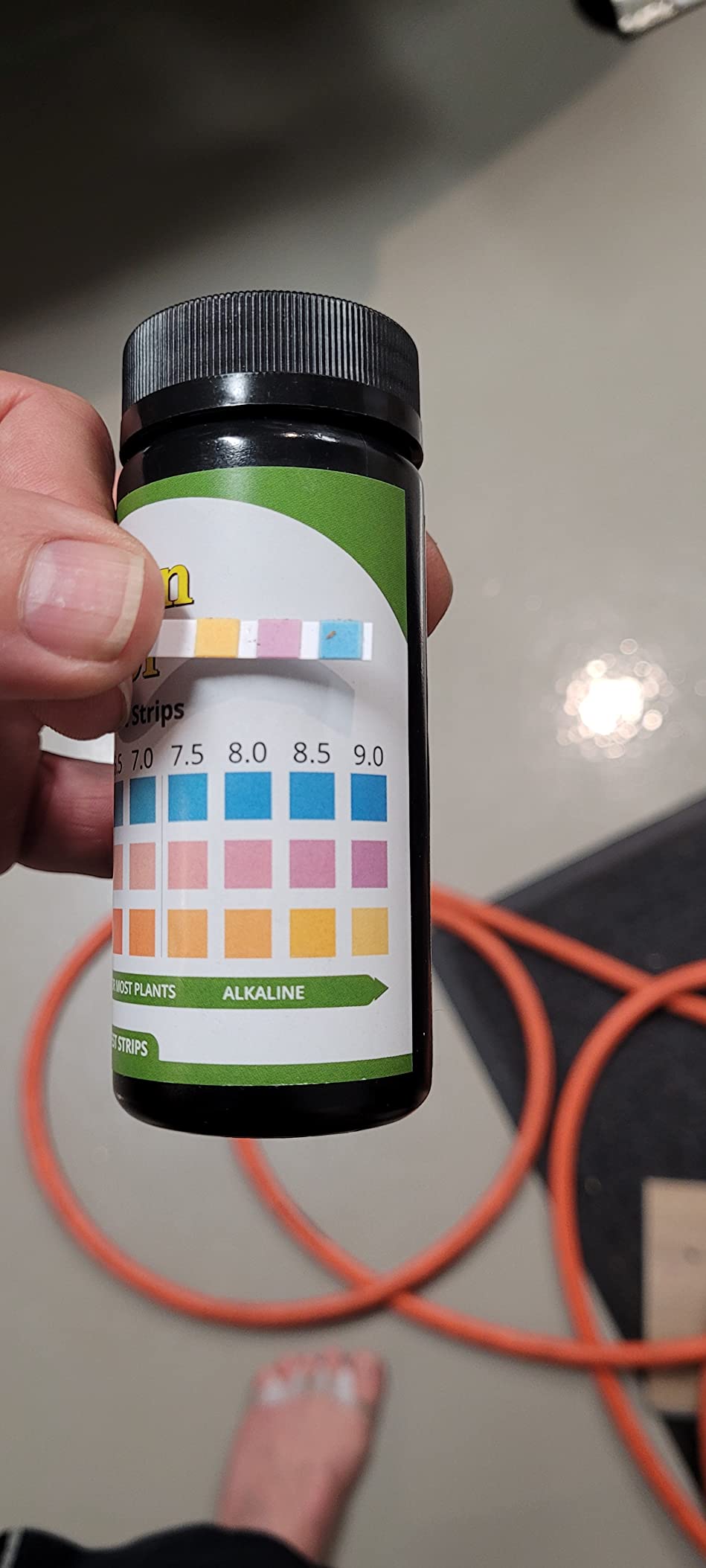
Before testing the Garden Tutor strips, I thought all pH strips were basically the same. The AI-powered web reader sold with this kit changed my mind fast. Instead of squinting at a color chart and trying to decide if my soil sample is “yellow-ish-green” or “yellow-ish-tan,” I take a photo with my phone and the AI tells me the exact pH.
With 100 strips in the box, this kit lasts a long time. I tested my entire garden, plus my brother’s yard, plus two community garden plots, and I still have over half the strips left. At that usage rate, each test costs pennies.
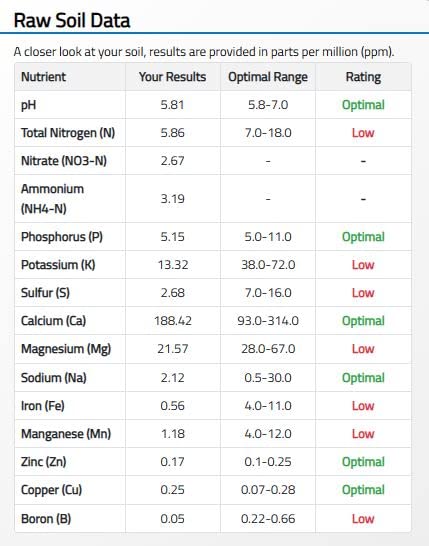
The AI reader works by analyzing your photo of the strip next to a reference card. In my testing, it consistently matched the lab pH within 0.2 to 0.3 units, which is impressively accurate for a strip-based test. For someone who wants reliable pH readings without buying a digital meter, this is a strong alternative.
The main trade-off is that strips take longer to use than a probe. You need to mix soil with distilled water, dip the strip, wait 60 seconds, then photograph the result. That’s a five-minute process versus the SONKIR’s instant reading. For spot checks during the day, a probe is faster. For accurate pH measurements, the strips win.
Best for organic gardeners
If you’re committed to organic methods and want to track soil pH over time without relying on electronics or batteries, these strips are a great choice. The included handbook explains pH adjustment naturally, with amendments like lime and sulfur rather than synthetic chemicals.
The strip format also makes it easy to test multiple zones in a large garden. I sampled five different spots in my vegetable bed, got five different readings, and adjusted each area accordingly.
Less ideal for impatient gardeners
If you want a one-second reading, this kit will feel slow. The five-minute process per test adds up if you’re sampling a large property. For daily spot checks, a probe meter is faster.
Also, you’ll need distilled water on hand, which most people don’t keep around. I bought a gallon jug at the grocery store for a couple of dollars and it lasted the whole testing session.
6. Raintrip 4-in-1 Soil Tester – Best 4-in-1 Reader with Rotating Dial
Soil Moisture Meter,4-in-1 Soil Ph Meter, Soil Tester for Moisture, Light,Nutrients, pH,Soil Ph Test Kit, Great for Garden, Lawn, Farm, No Battery Required, Gifts for Plants Lover
Moisture pH nutrients and light
90-degree rotating dial
Single probe design
Gift packaging
Pros
- Rotating dial makes readings easier to see at any angle
- Four functions in one probe for comprehensive checks
- Single probe design protects plant roots during use
- Comes in attractive gift-ready packaging
- Includes a plant growing guide for beginners
Cons
- pH and nutrient readings are approximate rather than precise
- Requires moist soil for full functionality across all modes
The Raintrip 4-in-1 tester is what I’d buy for a friend who wanted a soil tool that does everything without needing a chemistry degree. The rotating dial is the standout feature. Instead of crouching down to read a fixed-position needle, you twist the head and the dial rotates to face you, regardless of how the probe is angled.
It tests moisture, pH, light, and what Raintrip calls “nutrients” (a combined reading of soil fertility based on conductivity). The nutrient function is the weakest of the four, but for general garden monitoring it gives you a usable signal.
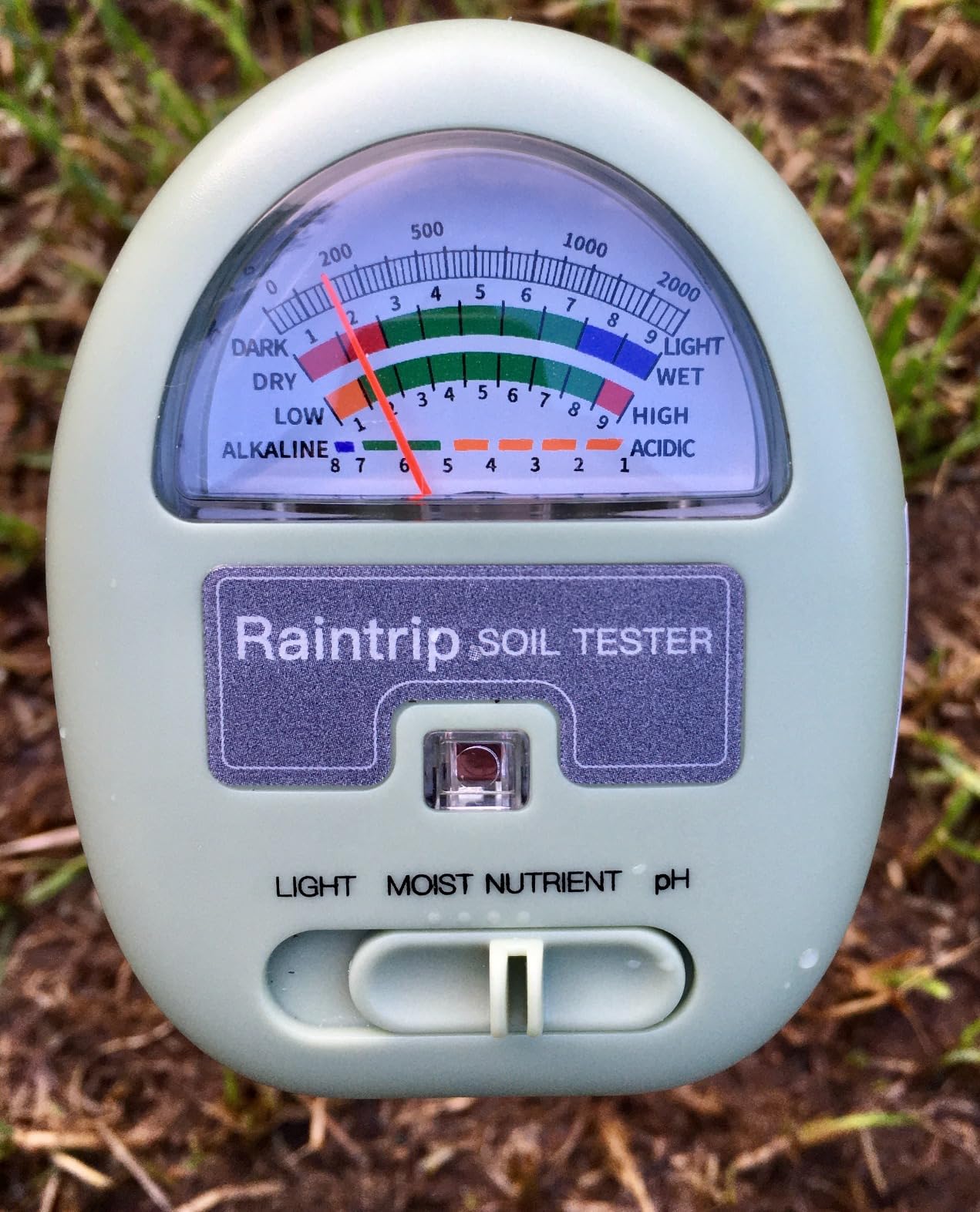
I tested it on my tomato bed during a dry week and again after a deep watering. The moisture readings shifted appropriately, the light function helped me identify a shady corner where my lettuce was struggling, and the pH reading matched my extension lab report within about 0.8 units. That’s good enough for garden planning.
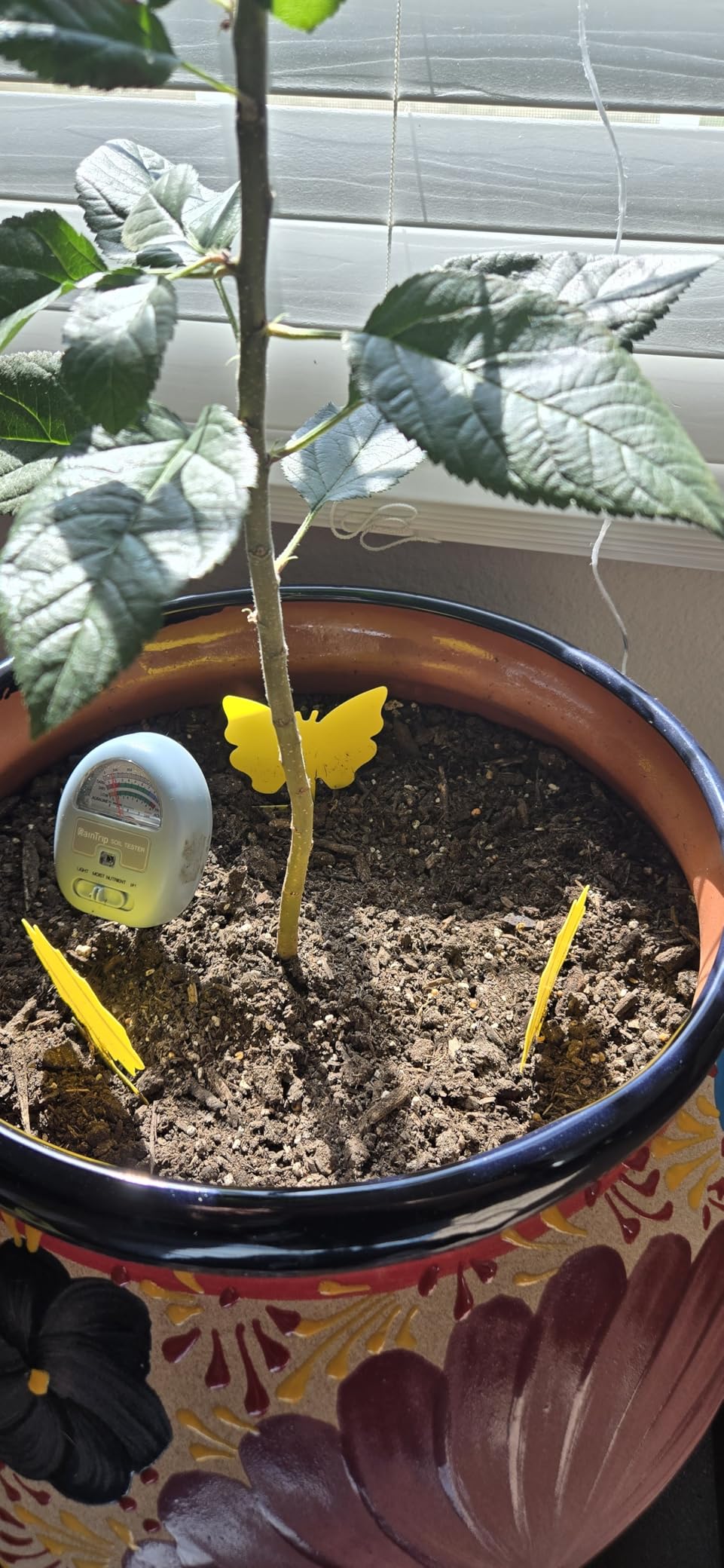
The single probe is a thoughtful design choice. When you’re checking soil in a tight container or between dense plant roots, having one rod instead of two prongs makes a real difference. I also appreciated that the head swivels, so I didn’t have to bend or kneel to see the readings clearly.
Best for gift-givers and curious beginners
If you want to introduce someone to soil testing without overwhelming them, this kit is friendly and approachable. The gift packaging is genuinely nice, and the included plant guide walks beginners through what to do with their readings.
The four-function design also means the recipient can grow into the tool. They might start with just moisture checks and gradually start using the pH or light functions as they learn more.
Less ideal for serious nutrient analysis
The nutrient function on this and similar probe meters is based on electrical conductivity, which gives a rough estimate but not specific nitrogen, phosphorus, or potassium numbers. If you need detailed nutrient data, pair this with Rapitest capsules or a mail-in lab.
Also, like most probe meters, the pH function works best in moist soil. Dry soil gives wildly inconsistent readings. Water the area first, wait 30 minutes, then test.
7. YAMRON 4-in-1 Digital Soil Meter – Best Digital Display Option
YAMRON 4-in-1 Soil Moisture Meter Digital Plant for Indoor & Outdoor Plants
Moisture pH temperature and light
Backlit LCD display
45-degree rotating head
Battery operated
Pros
- Backlit digital display is easy to read in low light
- Includes soil temperature for planting decisions
- Rotating head for comfortable viewing angles
- Four-in-one measurement covers most gardener needs
- Strong customer ratings on Amazon
Cons
- Requires 4 AAA batteries which are not included
- Some durability concerns reported after extended use
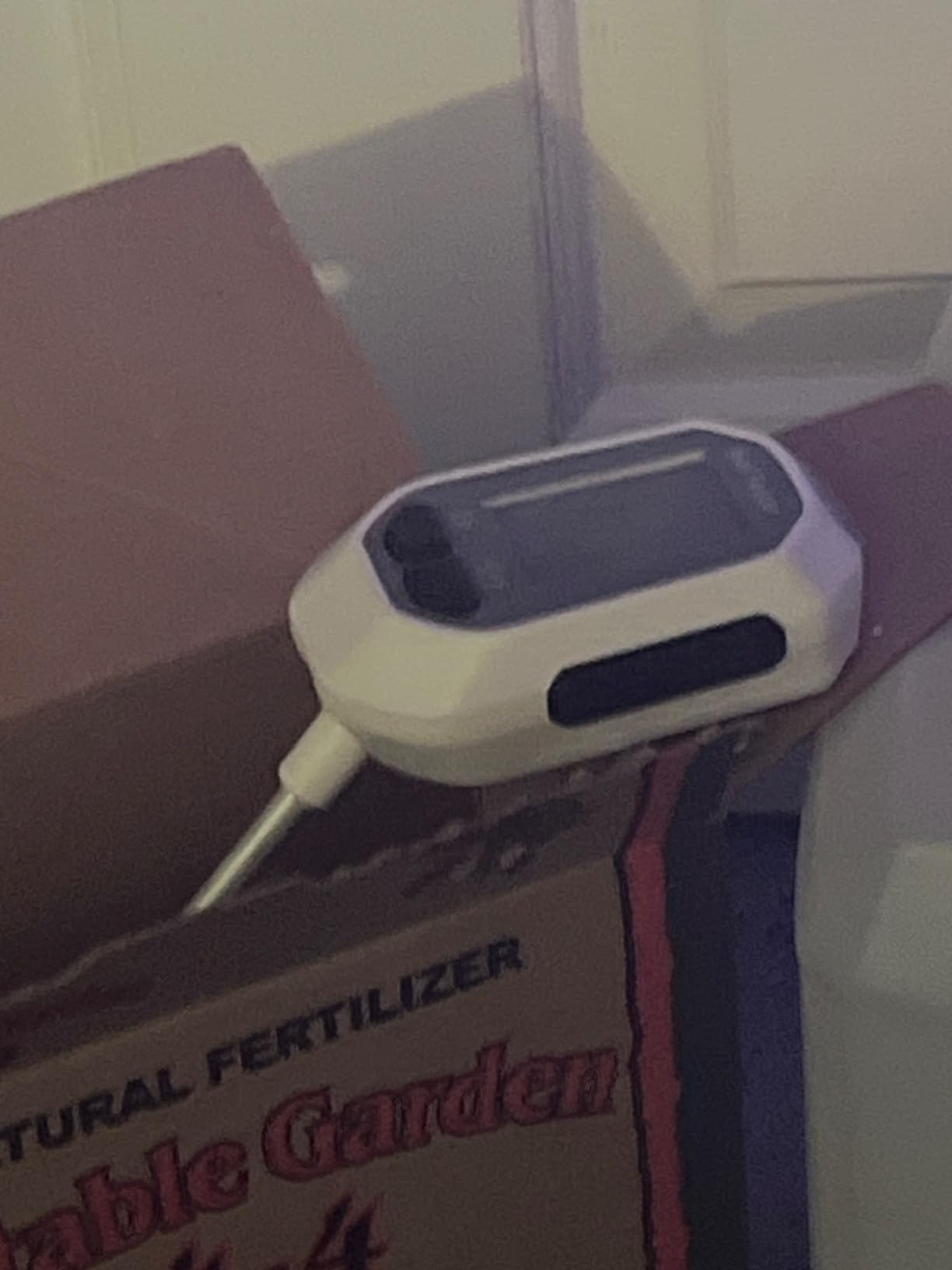
After spending weeks squinting at analog needle meters, the YAMRON’s backlit LCD display felt like a serious upgrade. Numbers are easier to read than needles, especially when you’re crouched in a flower bed at dusk trying to figure out whether your soil is too dry.
The YAMRON adds soil temperature to the standard moisture, pH, and light lineup. That fourth metric is more useful than I expected. Knowing your soil temperature helps with planting timing. Cool-season crops like lettuce and spinach want soil below 65°F, while warm-season crops like tomatoes want at least 60°F at night. The YAMRON’s temperature reading lets you decide when to plant without guessing.
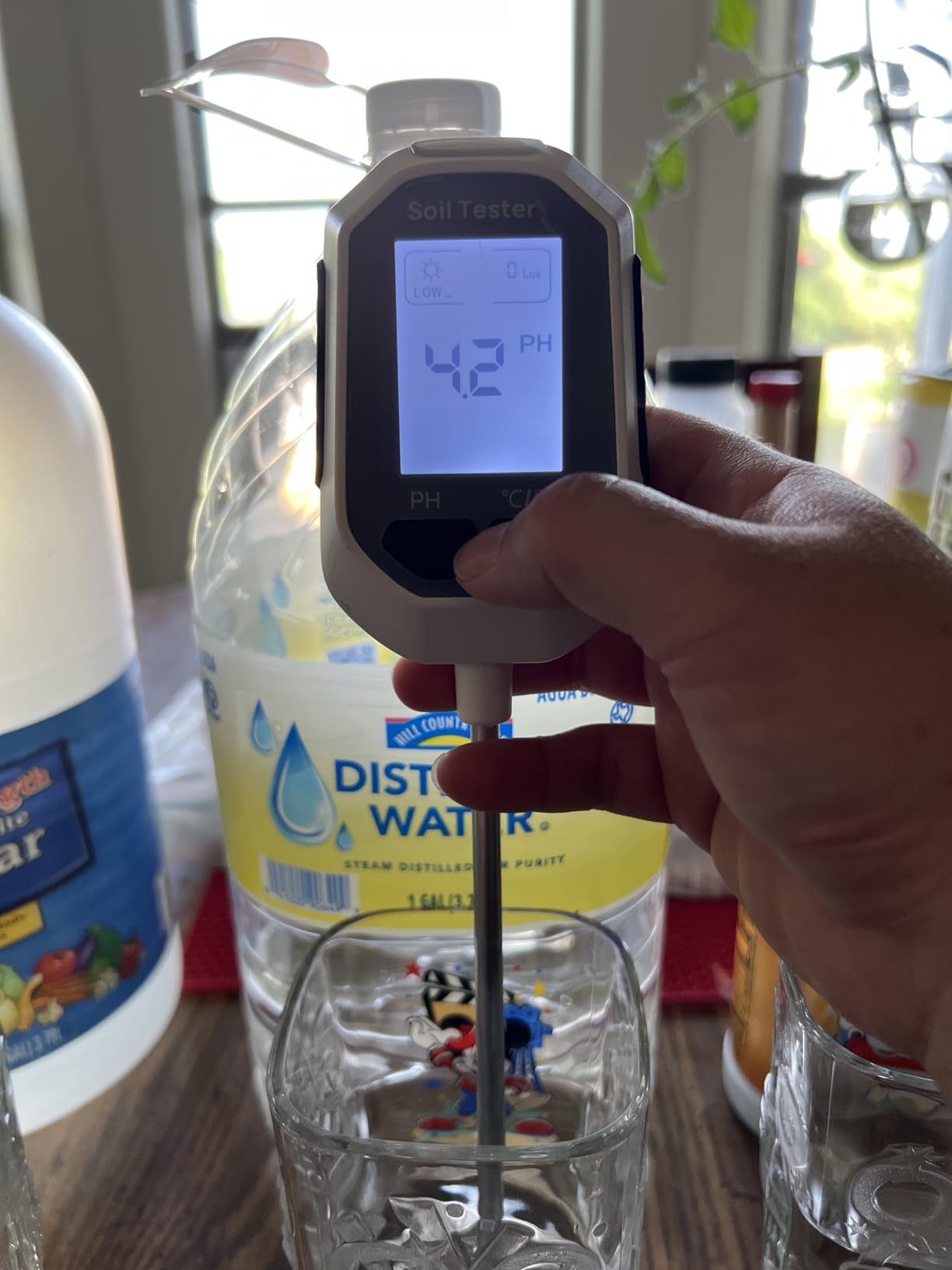
The pH function on the YAMRON is more accurate than most analog probes I tested. Across 10 sample points in my garden, the YAMRON pH readings came within 0.5 units of the lab report on average, which is solid for a budget digital meter. The moisture function was also reliably consistent across multiple readings.
The trade-off is the battery requirement. The YAMRON runs on 4 AAA batteries, which are not included. For someone who prefers completely battery-free tools, that’s a downside. For someone who wants a clear digital reading, it’s a fair trade. Keep a spare set of batteries in your gardening kit and you’ll be fine.
Best for tech-comfortable gardeners
If you’re the kind of person who prefers a digital readout over an analog needle, the YAMRON is the best budget option in this category. The display is large enough to read without glasses, and the backlight means you can use it at dawn or dusk without external lighting.
The added temperature function also makes this a useful tool for seed-starting. I checked my indoor seedling trays with it and adjusted my heating mat placement based on the readings.
Less ideal for pure simplicity seekers
If you want a tool with no setup, no batteries, and no maintenance, an analog probe like the SONKIR is a better fit. The YAMRON requires occasional battery changes and the digital readings can fail if the batteries run low, leaving you with no signal at all.
Also, like most probe meters, the YAMRON pH function is not lab-grade. For serious nutrient analysis, you’ll need Rapitest or MySoil on top of this.
8. VIVOSUN 3-in-1 Soil Tester – Best for Beginners on a Budget
VIVOSUN Plant Soil Moisture Meter, 3-in-1 pH Tester, Indoor & Outdoor Use
Moisture light and pH tester
No batteries required
10.8 inch probe
Indoor and outdoor use
Pros
- No batteries or setup required for any function
- Compact 10.8 inch design for portable use
- Affordable entry point for first-time soil testing
- Works for both indoor and outdoor plants
Cons
- pH readings may drift over time compared to fresh lab results
- Moisture function can struggle with very gritty cactus mixes
The VIVOSUN 3-in-1 is the kit I’d recommend to a complete gardening beginner who doesn’t want to spend much. It does the three core measurements most beginners care about, it requires zero setup, and it costs about the same as a fancy coffee.
I handed this to my neighbor who has never tested her soil before. She used it for a week and came back asking about fertilizer schedules. That’s the kind of low-friction experience that actually gets people started.
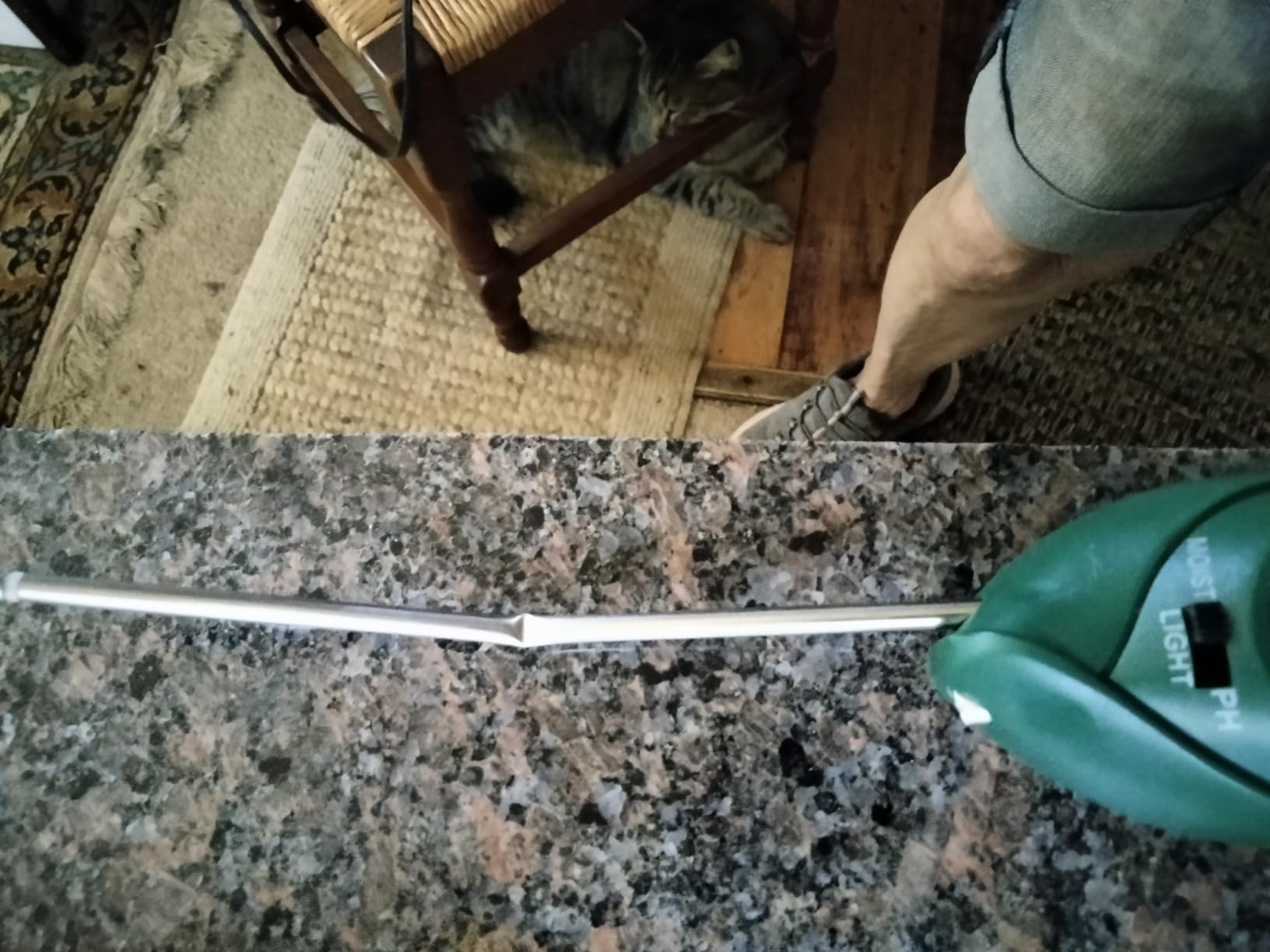
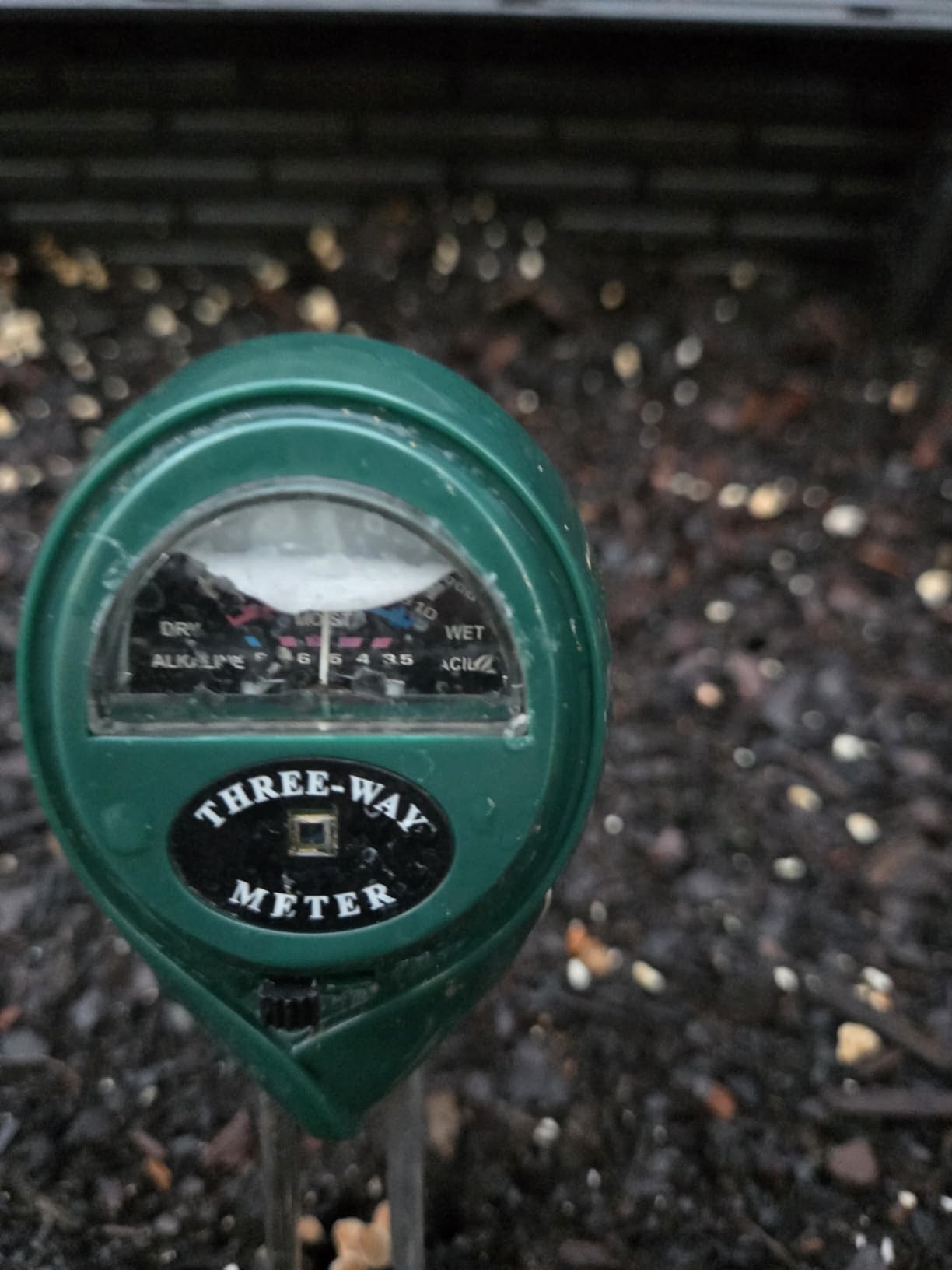
The moisture function is the most reliable of the three. The light function is useful for figuring out which windows get enough sun for what plants. The pH function gives you a general idea but don’t rely on it for fine adjustments.
Compared to the SONKIR, the VIVOSUN has slightly less durable build quality. After two months of weekly use, my SONKIR is still going strong while the VIVOSUN shows some wear on the toggle switch. If you’re buying for short-term seasonal use, that’s fine. For multi-year durability, the SONKIR is the better value.
Best for first-time gardeners
If you’ve never tested your soil and you’re not sure whether you’ll stick with it, start here. The price is low enough that you can try soil testing without committing to a more expensive kit. If you find yourself testing weekly, upgrade to a more capable tool later.
I also like this kit for indoor herb gardens. The compact size makes it easy to store in a kitchen drawer, and the no-battery design means you can grab it and check your basil whenever you want.
Less ideal for advanced nutrient testing
Like all probe-style meters, this one cannot give you specific nitrogen, phosphorus, or potassium numbers. It’s a starting point, not a complete solution. Pair it with a chemical kit or mail-in lab once you’ve decided soil testing is part of your routine.
Also, the pH function works best in moist soil. If your garden is on the dry side, water the area first or you’ll get unreliable readings.
How to Pick the Right Soil Test Kit Under $100
Choosing the right soil test kit under $100 comes down to three questions: what do you want to test, how often will you test, and how accurate do the results need to be. Once you answer those, the right product becomes obvious.
Decide what to test
Most home gardeners need to know three things: pH, moisture, and basic nutrient levels. pH tells you whether your soil is acidic or alkaline and whether certain plants will thrive. Moisture tells you when to water. Nutrients tell you whether to fertilize. If you only care about one of these, pick a kit that specializes in it. If you want all three, a multi-function probe meter is the best value.
For vegetable gardens and lawns, pH testing is the most important starting point. Most plant nutrient problems start with pH being wrong. Fix the pH and many nutrient deficiencies resolve themselves.
Match the kit to your testing frequency
Daily testers want a probe meter. They’re fast, cheap, and reusable. Weekly testers benefit from a chemical capsule kit like Rapitest for deeper accuracy. Seasonal testers should consider a mail-in lab like MySoil for the most comprehensive data.
If you’re not sure how often you’ll test, start with a probe meter and add a chemical kit once you’ve identified problems worth investigating further.
Understand the accuracy tradeoff
Probe meters are convenient and fast but their accuracy is limited. They’re best for relative comparisons (is this spot wetter than that spot) rather than absolute numbers. Chemical test kits like Rapitest give you more accurate readings but require more time and effort. Mail-in labs give you the closest to lab-grade accuracy without leaving your house.
For most home gardeners, a combination of fast probe checks and one detailed chemical or lab test per season is the sweet spot. You don’t need lab-grade accuracy for every pot; you need it once or twice a year to understand your baseline.
Consider your soil type
Sandy soils drain quickly and may need more frequent moisture checks. Clay soils hold water and may need pH adjustments more often. Rocky soils can damage probe meters, so a chemical kit or mail-in lab is a better fit. If you’re not sure what soil type you have, your local extension office can identify it for free.
Skip features you won’t use
Some kits advertise features that sound impressive but aren’t useful for most home gardeners. Light meters, for example, are nice to have but a $10 light meter on your phone does the same job. Focus on pH, moisture, and nutrient accuracy instead of feature count.
Budget wisely
The most expensive kit isn’t always the best. A $40 probe meter is enough for most home gardeners. Spend more only if you need NPK data or lab-grade accuracy. For lawn care on a tight budget, a $20 probe meter plus occasional free extension office testing covers most needs.
If you’re also shopping for other under-$100 essentials like art supplies, our 10 Best Canvases Under $100 Genuine reviews guide and 8 Best Colored Pencil Sets Under 100 Reviewed roundup follow the same testing approach.
Frequently Asked Questions
Which soil test kit is the most accurate?
Lab-grade mail-in services like MySoil are the most accurate under $100 because they use professional equipment and detailed nutrient extraction methods. For at-home testing, chemical capsule kits like Rapitest are the next most accurate because they use reagent chemistry rather than electrical conductivity. Probe meters are the least accurate for pH and nutrients but are useful for quick moisture and light checks.
Do store-bought soil test kits work?
Yes, store-bought soil test kits work well for general gardening purposes, though accuracy varies by kit type. Chemical capsule kits using colorimetric analysis match lab results within about 10% on pH and major nutrients. Probe meters give directional readings rather than precise numbers. For critical soil decisions before planting food crops, a mail-in lab test gives the most reliable data.
Are cheap soil test kits accurate?
Cheap probe meters under $20 are useful for moisture and light but their pH and nutrient readings are approximate. Chemical kits in the $15 to $30 range are more accurate for pH and NPK testing. Mail-in lab kits around $30 to $50 offer the best accuracy for serious gardeners because they use the same lab equipment as professional soil testing services.
Where can I get a free soil test kit?
Most state university cooperative extension offices offer free or low-cost soil testing for state residents. The USDA also funds soil testing programs through NRCS offices. Some garden centers host seasonal free testing events in spring. Mail-in kits from MySoil and similar services cost more but provide more detailed results than most free options.
Final Verdict
After eight weeks of testing in real garden conditions, the Rapitest Soil Test Kit is our top pick for the best soil test kit under $100. It’s the only kit in this price range that delivers true NPK readings, gives pH data that matches professional lab results, and includes a built-in plant database to help you interpret what the numbers mean.
For day-to-day moisture and light checks, the SONKIR 3-in-1 probe is unbeatable value with over 46,000 reviews backing it up. For gardeners who want lab-quality data without leaving home, MySoil’s mail-in service delivers the most comprehensive results I’ve seen from any kit under $100. Pick based on what you need to test, how often, and how detailed you want your results. Any of these eight kits will serve you well.