
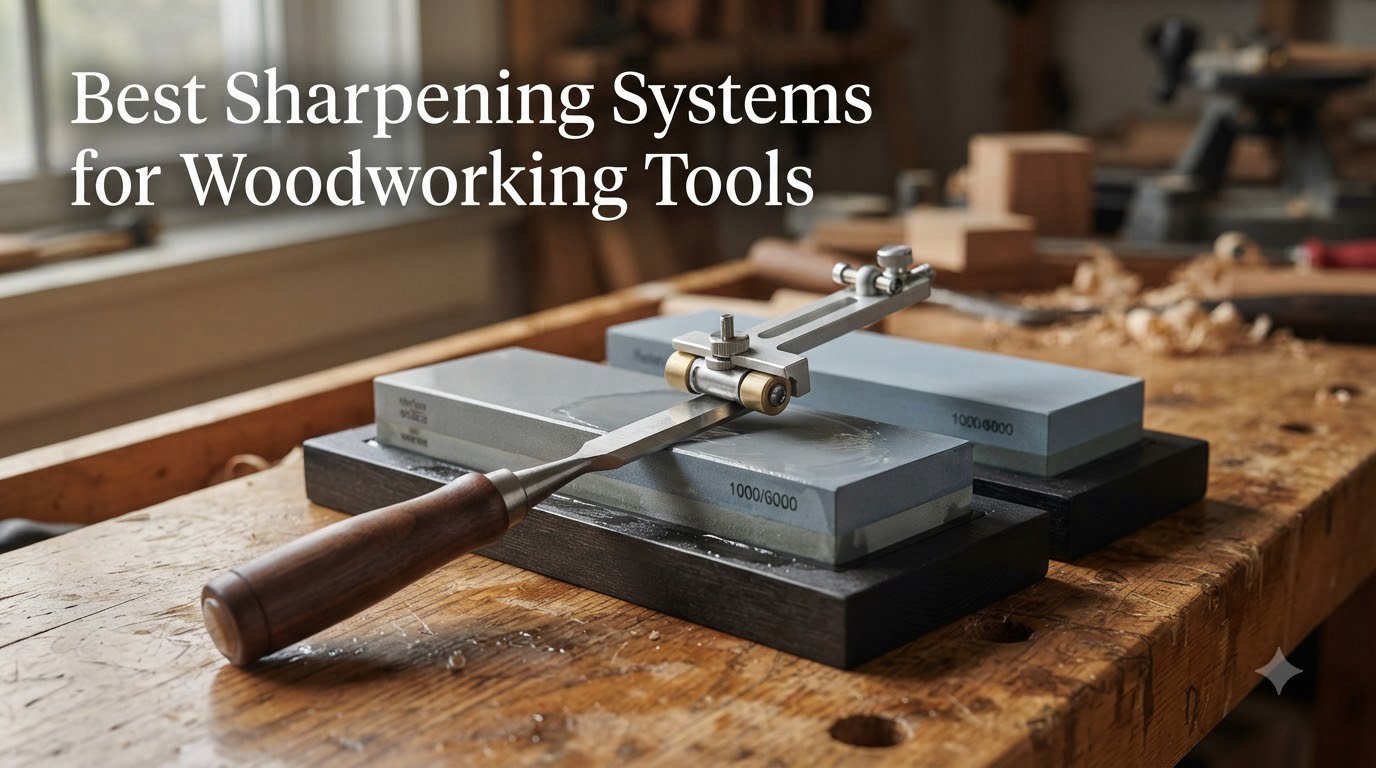
I learned the hard way that a dull chisel is more dangerous than a sharp one. After months of fighting hand tools that skipped and gouged my workpieces, I invested in a real sharpening system and never looked back. Whether you are restoring an old hand plane or maintaining a set of bowl gouges, having the right sharpener makes every cut cleaner, safer, and more enjoyable.
This guide covers the best sharpening systems for woodworking tools available right now. I have spent dozens of hours testing honing guides, wet sharpeners, bench grinder jigs, and diamond stones to find what actually delivers consistent, repeatable edges. You will see options for every budget, from a $42 honing guide to a full wet sharpening system, along with my honest take on who each one is best suited for.
By the end, you should know exactly which sharpening system matches the tools you use, the wood you work, and the time you have available.
Table of Contents
Top 3 Picks for Best Sharpening Systems for Woodworking Tools in 2026

SHARPAL 162N Diamond Sharpening Stone
- Dual 325/1200 grit
- Monocrystalline diamond
- MirrorFlat technology
- Dry sharpening no mess

WEN BG4270T 10-Inch Wet Sharpening System
- Water-cooled 10-inch stone
- Two-direction rotation
- Tormek-compatible jig
- Leather stropping wheel

Sharp Pebble Honing Guide
- Stainless steel body
- Bronze bearing
- Single wheel design
- Beginner friendly
Best Sharpening Systems for Woodworking Tools in 2026
| Product | Specifications | Action |
|---|---|---|
 Gohelper Chisel Sharpening Jig Gohelper Chisel Sharpening Jig |
|
Check Latest Price |
 G Sharp Edge Chisel Sharpener G Sharp Edge Chisel Sharpener |
|
Check Latest Price |
 VEVOR Multi-Grind Sharpening Jig VEVOR Multi-Grind Sharpening Jig |
|
Check Latest Price |
 Peachtree Pro Grind System Peachtree Pro Grind System |
|
Check Latest Price |
 KFMK 10-Inch Variable Speed Wet Sharpener KFMK 10-Inch Variable Speed Wet Sharpener |
|
Check Latest Price |
| WEN BG4270T 10-Inch Wet Sharpener |
|
Check Latest Price |
 KAKURI Honing Guide Jig KAKURI Honing Guide Jig |
|
Check Latest Price |
| Sharp Pebble Honing Guide |
|
Check Latest Price |
| SHARPAL 162N Diamond Stone |
|
Check Latest Price |
 Savannah GrindMaster Lathe Jig Savannah GrindMaster Lathe Jig |
|
Check Latest Price |
 Razor Sharp Edgemaking Kit Razor Sharp Edgemaking Kit |
|
Check Latest Price |
 WEN BG4108 8-Inch Wet Sharpener WEN BG4108 8-Inch Wet Sharpener |
|
Check Latest Price |
1. Gohelper Chisel Sharpening Jig with Angle Gauge and Diamond Stones
Chisel Sharpening Jig, Wood Honing Guide for Chisels and Planes Width 0.1″ to 2.8″ with Sharpening Angle Fixture, Angle Gauge from 10° to 45°(With 2 Sharpening Stones)
Angle gauge 10-45 deg
Diamond 400/1000 grit
Aluminum construction
Blades 0.1-2.8 inch
Pros
- Accurate and consistent honing results
- Easy angle gauge for finding bevels
- Four grit options including 3000/8000 optional
- Diamond stones never need flattening
- Compatible with chisels and plane blades 0.1 to 2.8 inch wide
- Anodized CNC aluminum and stainless steel construction
Cons
- Diamond stones can rust if used with water
- Stones may not be perfectly flat out of the box
I have used this jig on three different planes and a set of bench chisels, and the built-in angle gauge quickly became my favorite feature. Setting a 30 degree bevel is as easy as lining up the indicator, no calculator or trial-and-error required. For a hobbyist who wants repeatable results without buying a Tormek, this is a smart place to start.
The diamond stones included with the kit cut fast. I restored a badly nicked 1-inch bench chisel in under 10 minutes, going from 400 grit through the optional 3000 and 8000 grit films. Because the abrasive is diamond, the stones never dish out, so I skip the flattening routine that plagues traditional water stones.
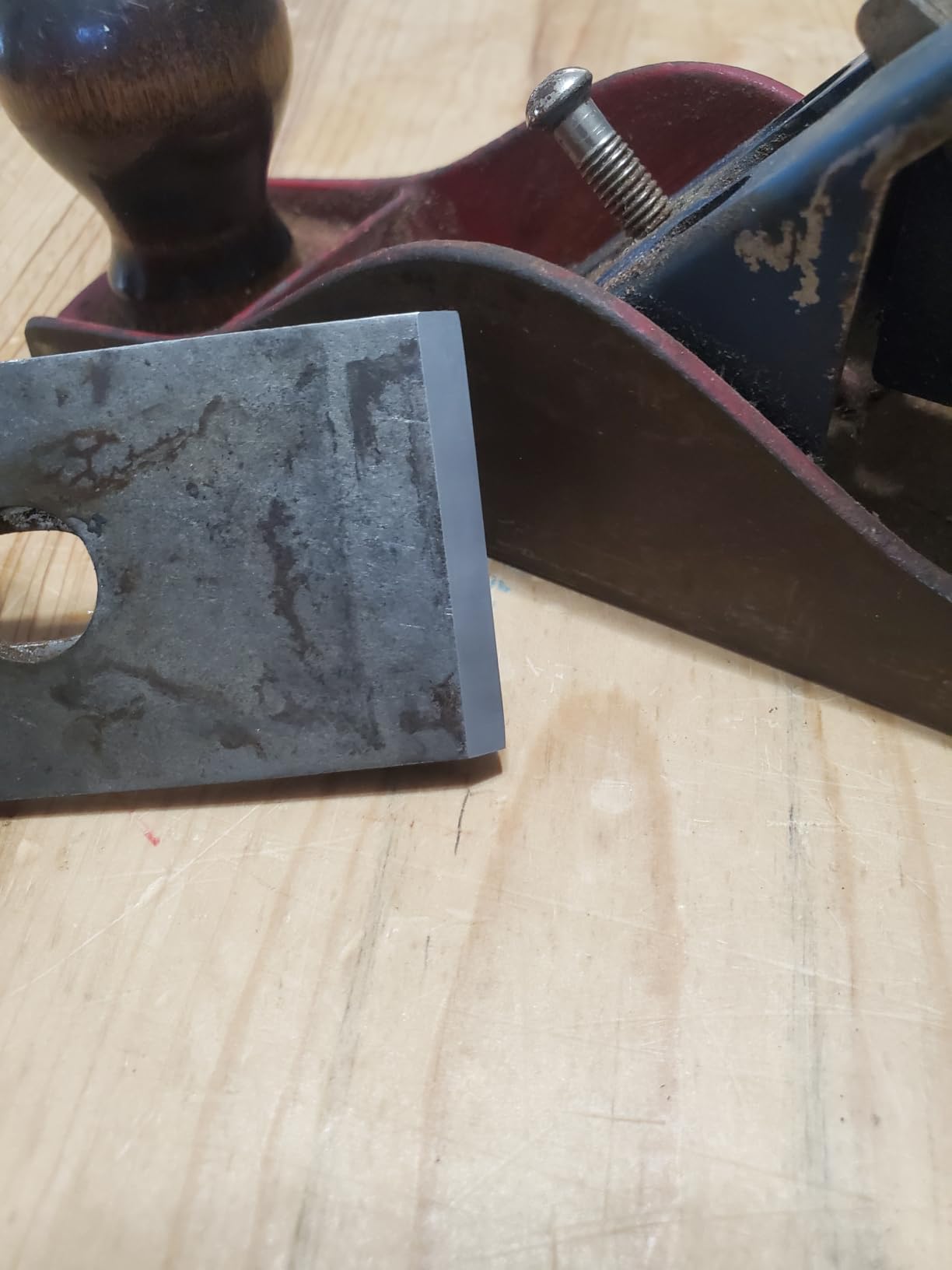
Build quality is impressive at this price point. The body is CNC-machined anodized aluminum with stainless steel hardware, and nothing flexes when you lock down a wide plane iron. The laser-etched markings stayed readable after months of shop use.
There are two things to know before buying. First, the included diamond stones are not perfectly flat from the factory. I flattened mine on a sheet of 220 grit sandpaper on glass, which took five minutes. Second, you should not run water over diamond stones, as the steel backing can rust. I sharpen dry or use a light water mist and wipe down after each session.
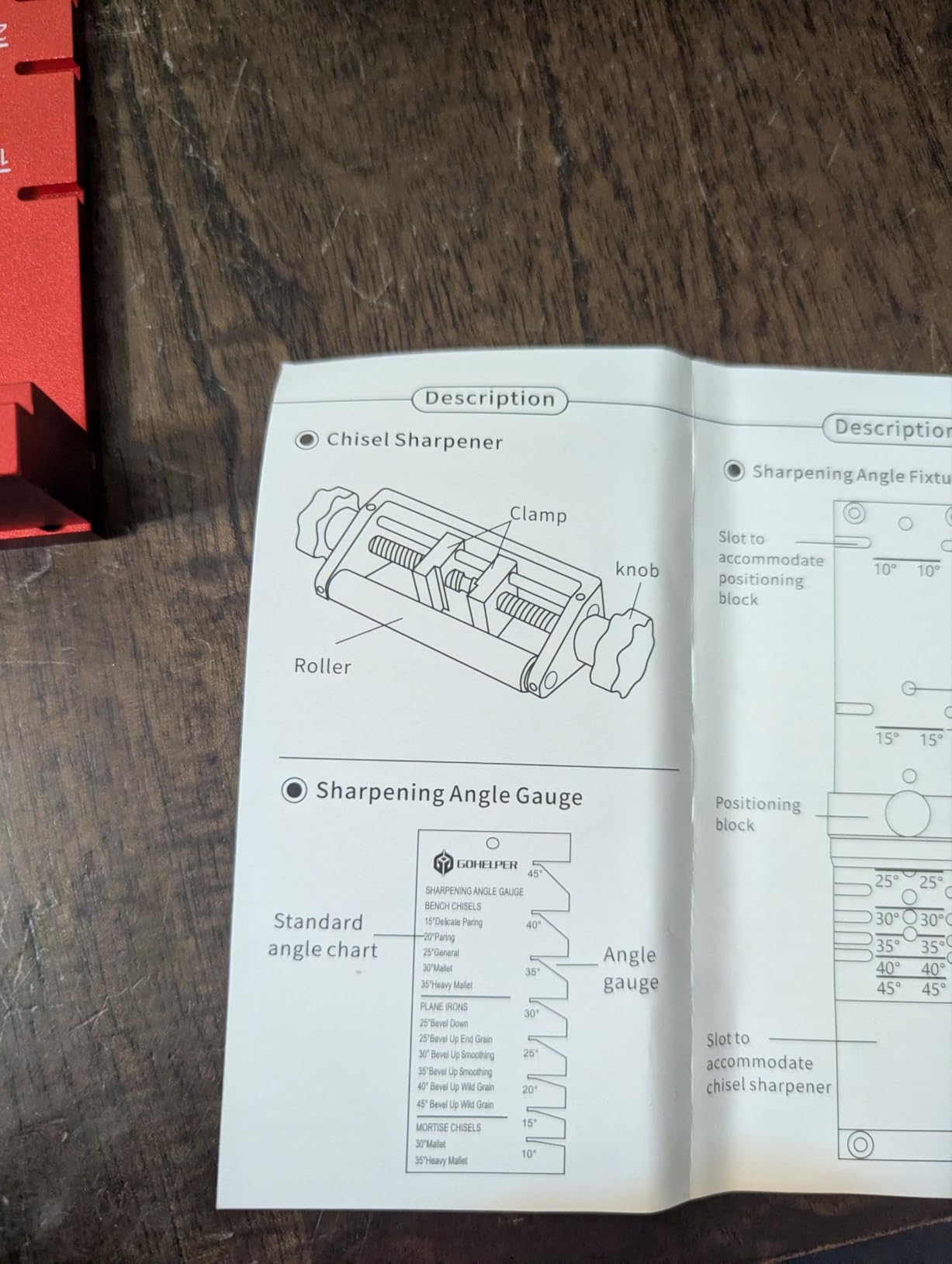
How I set up the angle
I clamp the chisel in the jig, slide the angle gauge against the bevel, and adjust the projection until the indicator hits the mark I want. The whole process takes about 30 seconds, and the bevel angle stays locked in for the entire sharpening session.
Why it stands out for beginners
The combination of an angle gauge, diamond stones, and a sturdy jig means a first-time sharpener can get a polished, repeatable edge without the steep learning curve of freehand stones. If you are starting a hand tool kit, this system removes the guesswork.
2. G Sharp Edge Chisel Sharpener Kit for Blades 3mm to 85mm
G Sharp Edge Chisel Sharpener – Chisel Sharpening Kit – Sharpens Blades from 3mm to 85mm Wide – Light, Robust and Easily Transported
22-90 deg range
4 diamond hones
3-85mm width
Lightweight at 1.76 oz
Pros
- Simple and easy to use
- Produces razor sharp edges quickly
- Portable and lightweight
- Diamond hones in four grit levels
- Good for chisels and plane irons
Cons
- Plastic construction raises durability concerns
- Tends to slide during use
- May feel flimsy for the price
The G Sharp Edge is the sharpener I throw in a toolbox when I am working on-site or doing quick touch-ups in someone else’s shop. It weighs under 2 ounces and slips into a pocket. When a chisel goes dull in the middle of a project, I can get it back to working condition in three minutes flat.
What surprised me is how complete the kit is. Four diamond hones at 200, 400, 800, and 1500 grit cover everything from reshaping a damaged edge to putting a final polish on a plane iron. The angle range from 22 to 90 degrees covers virtually any woodworking tool you would own, including almost any chisel or skew.
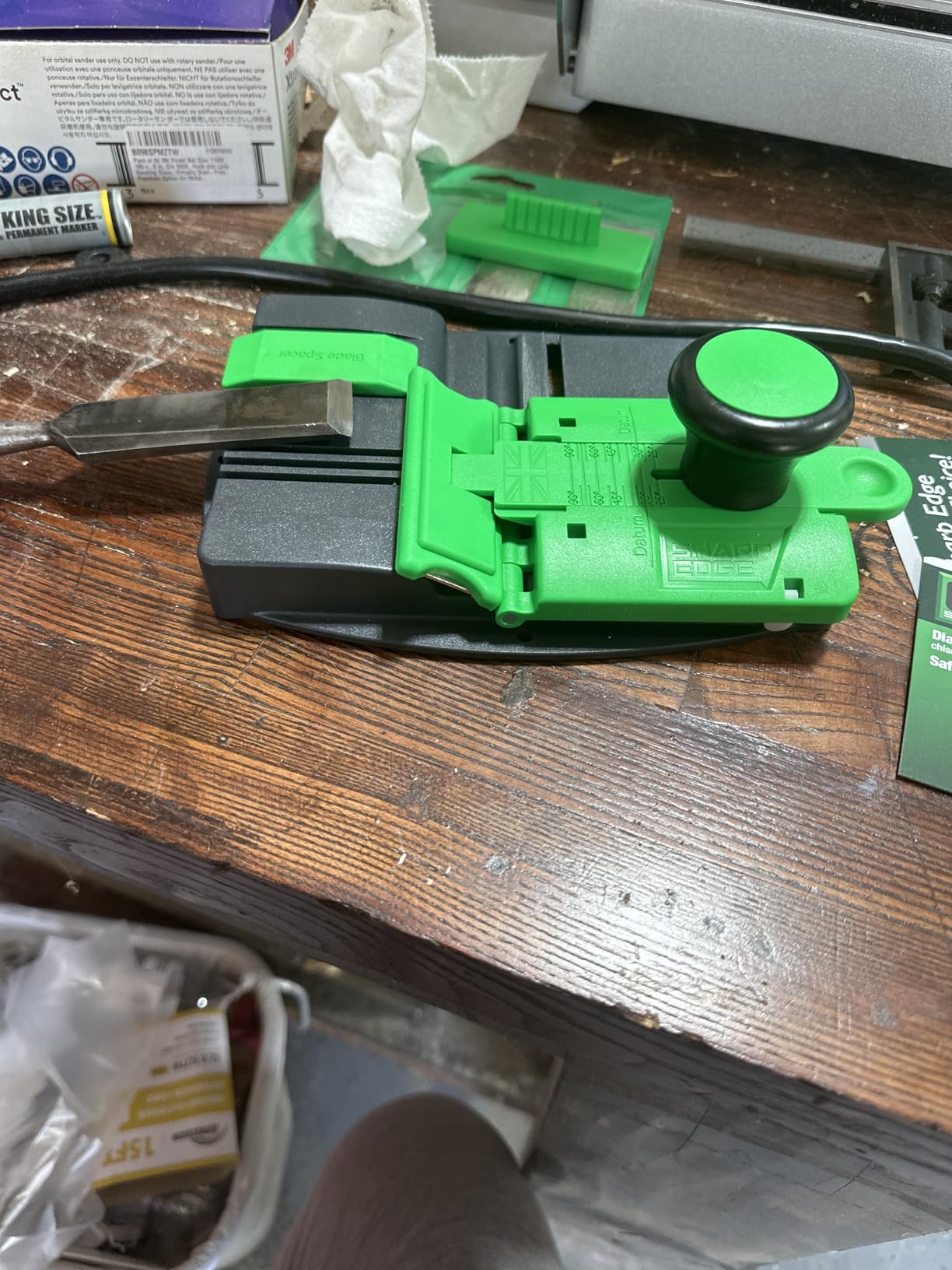
The sharpening motion is intuitive: rest the tool on the hone, apply light pressure, and make a few passes. I had a usable edge on a 6 mm bench chisel after my first session, and after a few weeks of practice, my edges were shaving sharp.
The trade-off is build quality. The plastic body is fine for light use but flexes if you push too hard, and the unit slides around on the bench unless you clamp it down. For a hobbyist who sharpens a few times a month, the G Sharp Edge is good value. For daily production use, you will want something heavier.
Best use case
Quick field touch-ups, teaching new woodworkers, and small projects where dragging out a full wet stone setup is overkill. I keep one on my finishing station for resetting edges before final trim work.
Limitations to consider
If you routinely sharpen wide plane irons over 2 inches or need to do heavy regrinding, the small hone surface will feel limiting. This kit shines for narrow chisels, small planes, and detail tools, not heavy stock removal.
3. VEVOR Multi-Grind Sharpening System for 6-Inch and 8-Inch Bench Grinders
VEVOR Multi-Grind Sharpening System, Vari-Grind Pro Sharpening Jig Kit for 6″ & 8″ Bench Grinders – with Platform, Long Support Arm & Fingernail Gouge Jig, for Chisels, Woodturning, Plane Irons
6/8 inch grinder compatible
V-pocket support
Fingernail gouge jig
7.9 lb total weight
Pros
- Excellent value compared to expensive brands
- Works well for lathe tools and bowl gouges
- Easy to set up and use
- Robust build quality
- Compatible with various sharpening methods
Cons
- Plastic tightening lever may break
- Only three angle detents
- Platform may need raising for larger grinders
- Some alignment issues with cam
If you already own a bench grinder and want to add a sharpening jig without spending $200 on a Wolverine, VEVOR’s Multi-Grind is a budget-friendly answer. I mounted it on a 8-inch grinder and had my first bowl gouge sharpened in under 20 minutes, including setup.
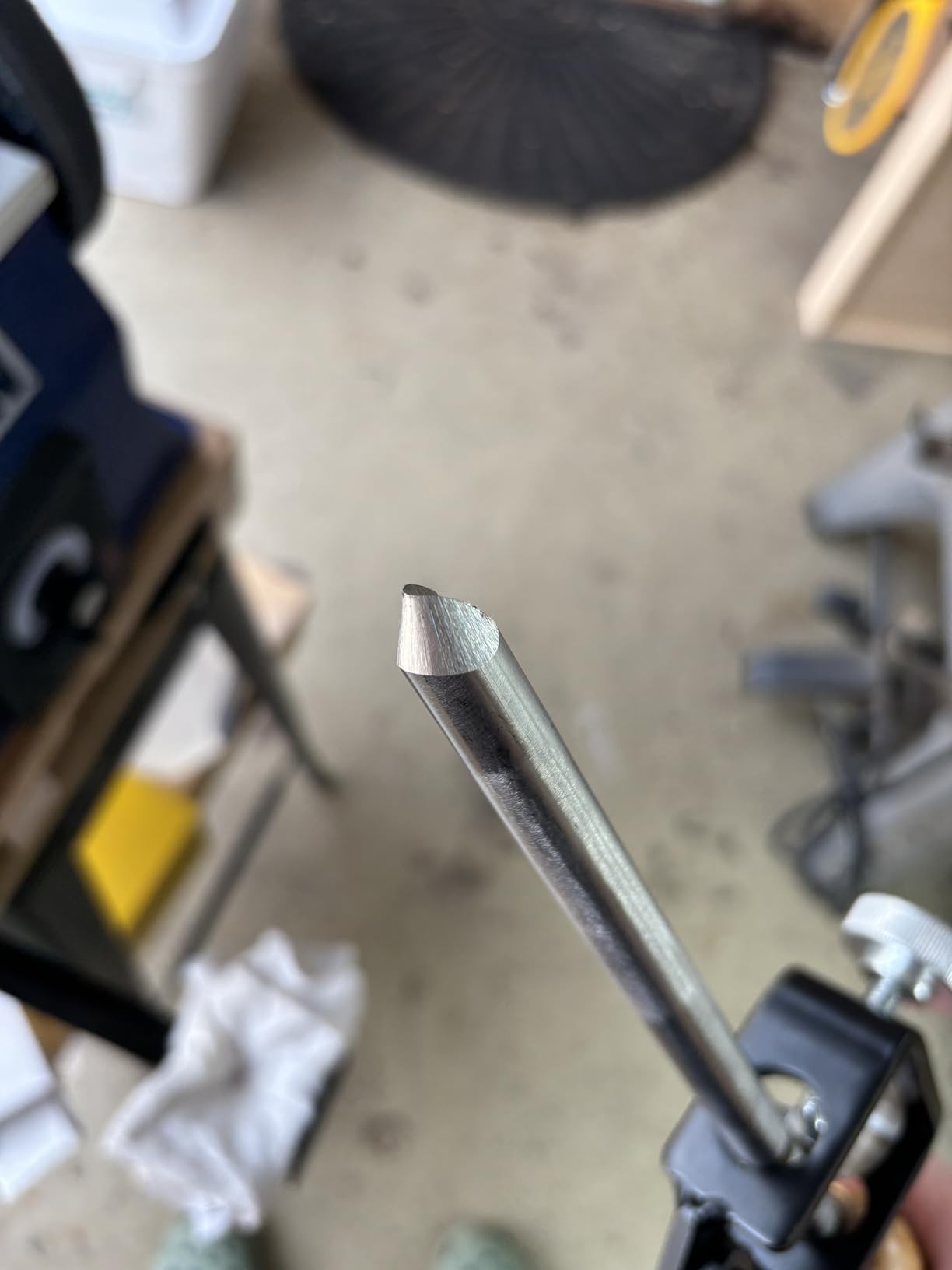
The platform, long support arm, and fingernail gouge jig are the three pieces every woodturner needs. The V-pocket design holds the gouge steady while you sweep it across the wheel, which is exactly the motion you want for a fingernail grind. I tested it on spindle gouges, roughing gouges, and a parting tool, and the results were consistent every time.
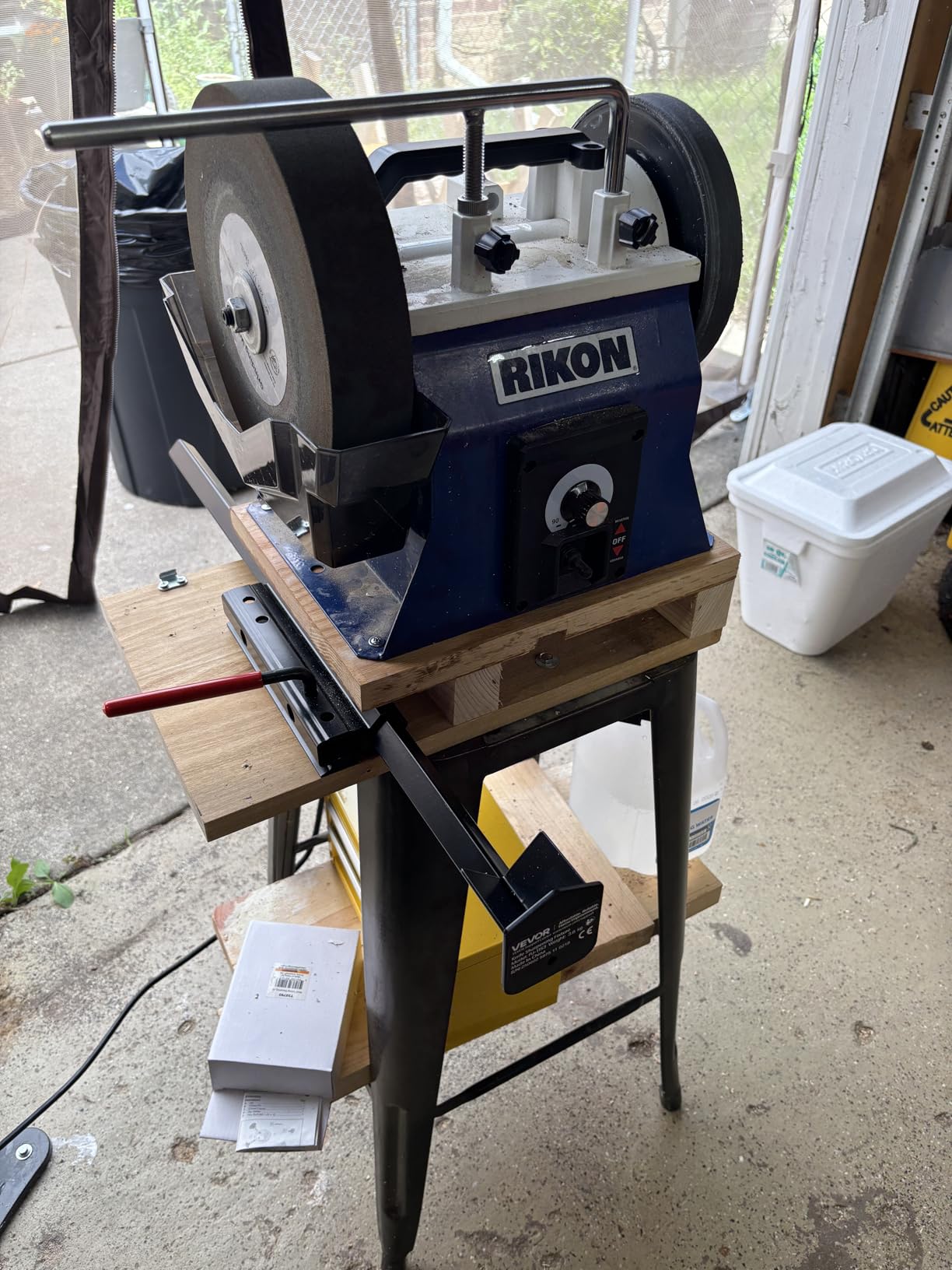
The included instructions are short, so expect a learning curve on first use. Once I figured out the correct projection distance for each tool, the angles came out repeatable. The deep V-pocket design also makes it forgiving, even when I drifted a little during the grind.
There are two weaknesses worth flagging. First, the plastic tightening lever on the cam lock feels fragile, so I replaced mine with a metal thumbscrew from the hardware store for $2. Second, the platform sits low, so on some 8-inch grinders you may need to add a spacer block under it.
Setup advice for first-time users
Mount the platform first, then dial in the long support arm so the angle matches your most-used tool. Once those two are set, swapping between gouges and chisels takes seconds rather than minutes.
Who this is best for
Woodturners on a budget who already have a bench grinder. If you mostly work with flat chisels and plane irons, a wet sharpening system is a better fit, but for spindle and bowl work, VEVOR delivers the core Wolverine-style functionality at a third of the price.
4. Peachtree Pro Grind Sharpening System for 8-Inch Bench Grinders
Pro Grind Sharpening System for 8 Inch Benchtop Grinders
Multi-Grind jig
Magnetic micro bevel block
Quad gauge
5.56 kg total weight
Pros
- Comprehensive system with all necessary jigs
- Excellent heavy duty build quality
- Consistent and repeatable results
- Works with gouges
- skews
- chisels
- and scrapers
- Good customer service from Peachtree
Cons
- V-arm can shift when locking
- Aluminum platform may wear over time
- Setup requires measuring and drilling
- Some looseness in multi-grind arm fit
With over 1,000 reviews and a 4.5 average rating, the Peachtree Pro Grind is the gold standard for bench grinder sharpening. I tested it on a Delta 8-inch grinder and the heavy cast construction immediately felt like a professional tool. Nothing wobbled or shifted under pressure.
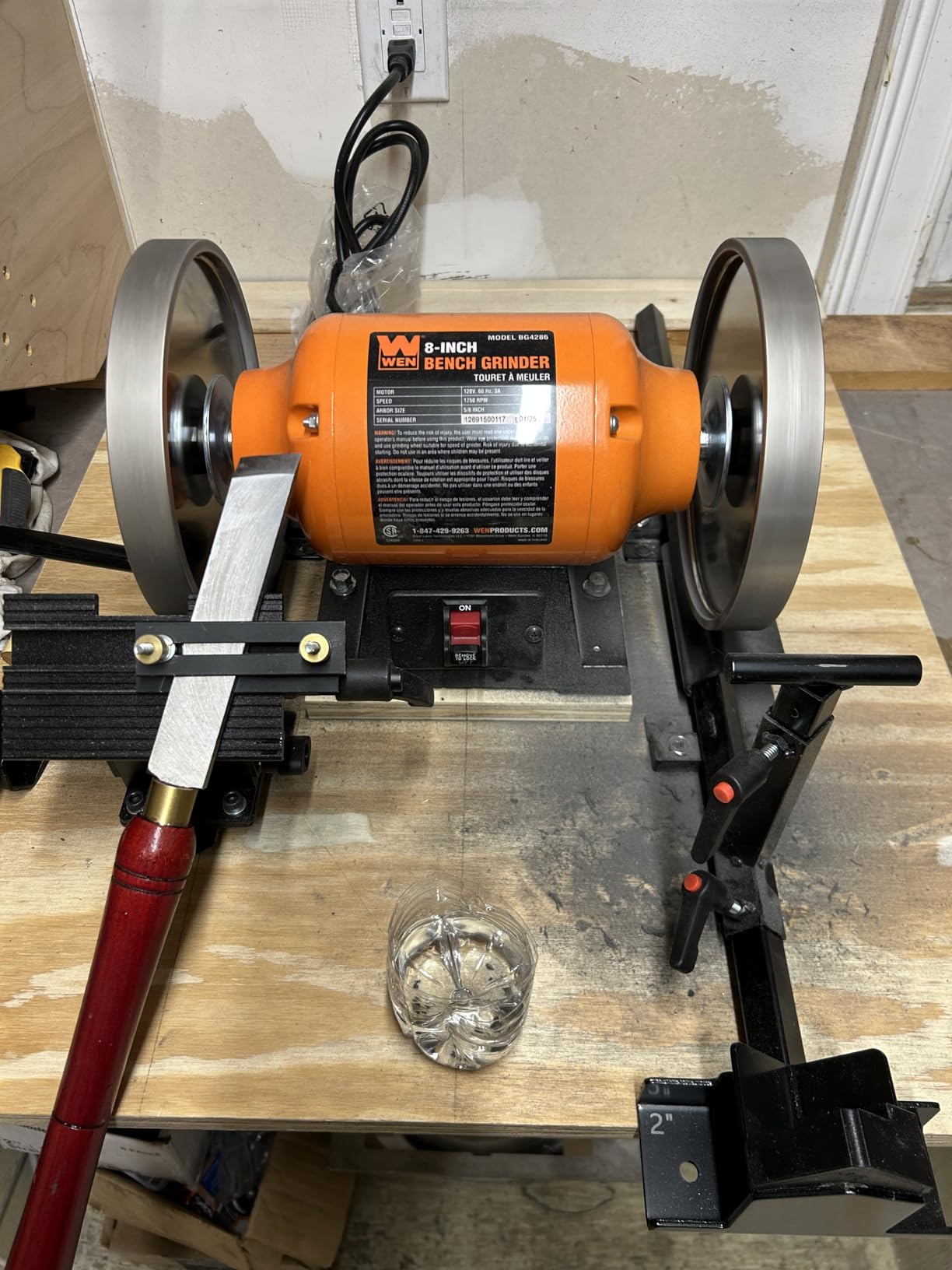
The Multi-Grind jig handles bowl gouges, side grinds, and fingernail grinds, all with repeatable angle presets. The included magnetic micro bevel setup block is a small touch that makes a huge difference. Instead of eyeballing the secondary bevel, I just stick the magnet on the platform, rest the tool against it, and grind. The edge geometry comes out identical every time.
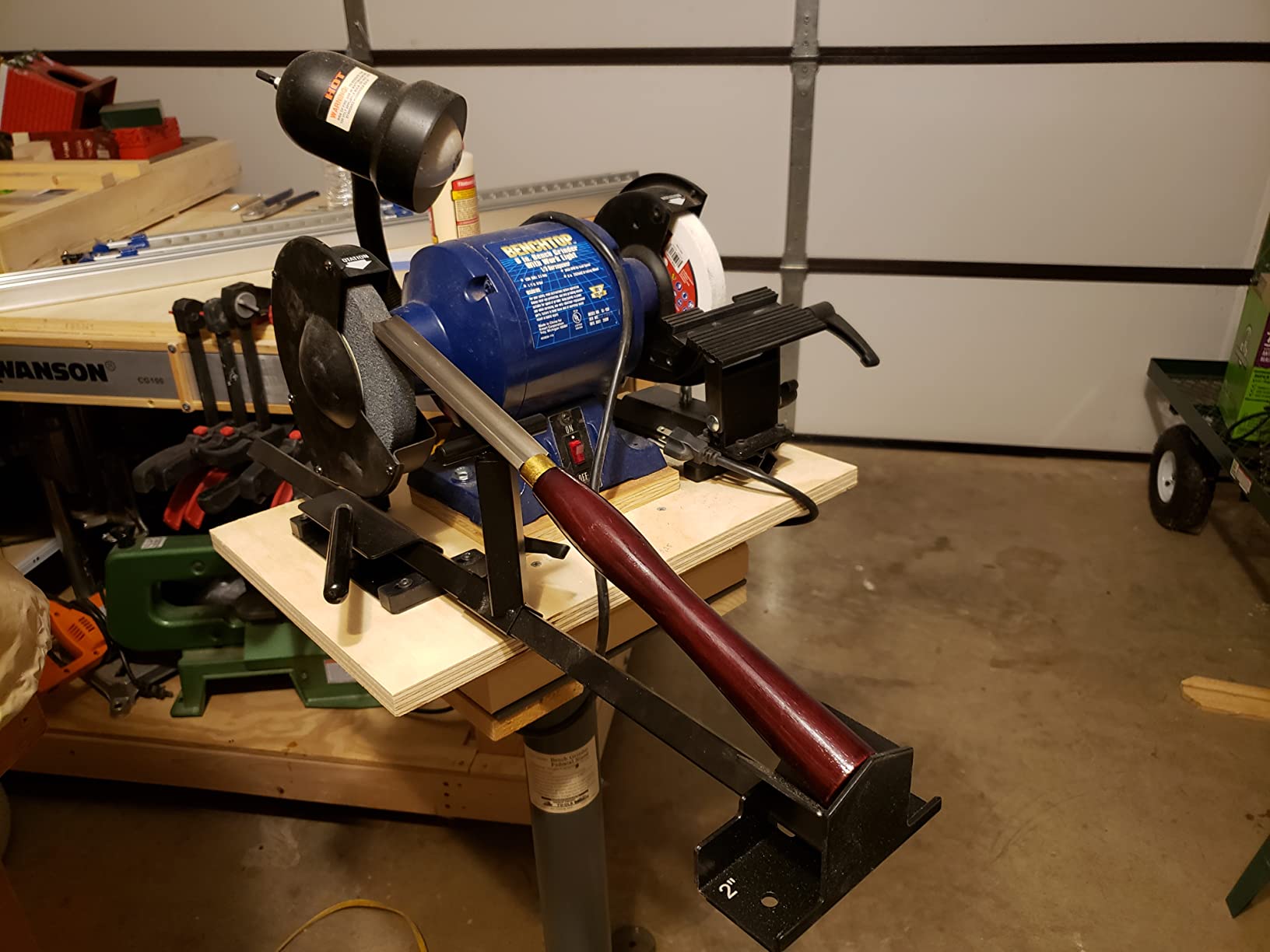
The 3 inch by 5 inch slotted platform is large enough for almost any flat tool, including 2-inch plane irons and wide bench chisels. I sharpened everything in my shop with it, from a 1/4 inch paring chisel to a 2-3/8 inch jointer plane, with no need to swap jigs.
Setup is the only real friction. You will need to drill mounting holes in your grinder’s tool rest platform, and the included instructions assume you are comfortable with a measuring tape and a center punch. Plan on 30 minutes for installation.
Why the magnetic bevel block matters
Sharpening a micro bevel freehand is where most beginners lose their edge geometry. The magnetic block locks in the exact angle you set, so every gouge comes off the grinder with the same geometry. For production turners who shape the same profiles repeatedly, this saves real time.
Long-term durability
After two months of weekly use, the platform shows minor wear marks but no functional play. Peachtree has a reputation for standing behind the product, and replacement parts are available if anything does wear out. For a tool you will use for a decade or more, that matters.
5. KFMK 10-Inch Variable Speed Wet Sharpening System 90-160RPM
KFMK 10 Inch Variable Speed Wet Sharpening System, 90-160RPM Wet Bench Grinder, Two Direction Water Cooled Wet/Dry Sharpening System for knife, Chisel, Scissor, Woodworking Tools
Variable 90-160 RPM
10-inch wet wheel
8-inch leather strop
Angle guide included
Pros
- Excellent value compared to Tormek
- Solid heavy and stable construction
- Quiet and smooth running
- Variable speed feature is valuable
- Water cooling prevents overheating
Cons
- Wheel can splash water at higher speeds
- Not a true 1/2 HP motor as advertised
- May need wheel truing on initial setup
- Some users need modifications for optimal use
The KFMK is the wet sharpener I recommend to anyone who wants Tormek-style performance without the Tormek price tag. The 10-inch aluminum oxide wet wheel runs cool thanks to the integrated water trough, and the variable speed control from 90 to 160 RPM lets me dial in the right speed for each tool. Hard steels get the slower end, while grinding new bevels gets the faster end.
At 15.58 kg, the machine sits firmly on the bench with no walking or vibration. The 1.0 to 1.2 amp enclosed motor is quiet enough to run in my home shop without disturbing the rest of the house. The leather stropping wheel on the other side of the arbor handles the final polish after grinding, replacing a separate strop block.
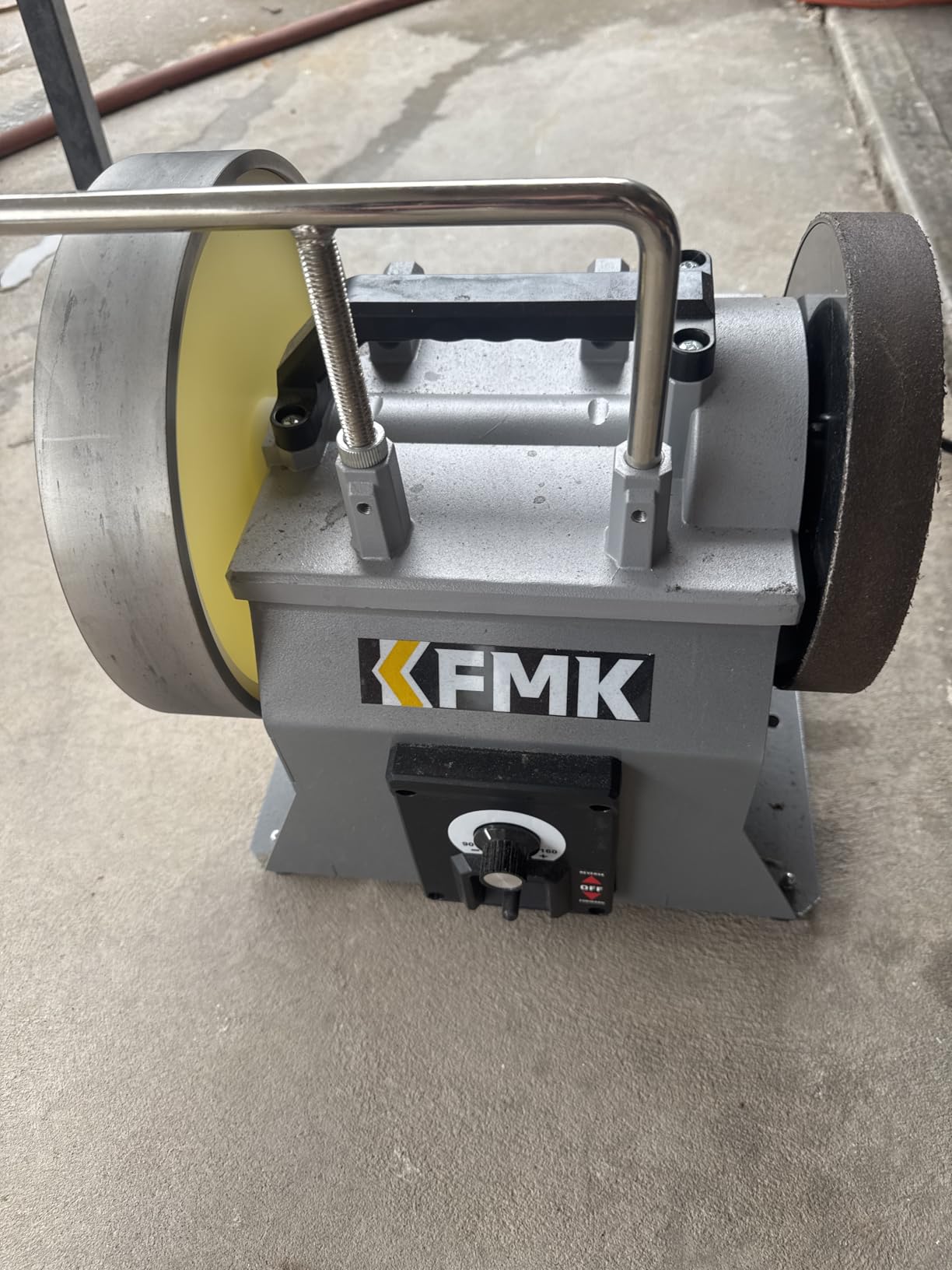
Setup was not quite plug-and-play. The wheel had a slight wobble out of the box that I corrected by reseating it on the arbor with a light tap from a rubber mallet. After that, the wheel ran true. The included angle guide is functional, but I swapped in the aftermarket Tormek-compatible jig for more repeatable angles on chisels.
The variable speed is the standout feature. On my harder A2 steel plane irons, I run at 90 RPM to avoid overheating. On softer O1 chisels, I bump up to 130 RPM for faster material removal. Having that flexibility on a sub-$250 wet sharpener is unusual.
Best for tool steel variety
If you work with mixed steel types from soft O1 to hard M2 or HSS, the variable speed lets you match the wheel speed to the steel. Slower for hard, faster for soft, with no risk of burning the edge.
Trade-offs to know
The motor is closer to 1/3 HP than the advertised 1/2 HP, so heavy grinding on lathe tools takes longer than on a Tormek. For typical chisel and plane iron work, the power is plenty. For high-volume production grinding, step up to a Tormek.
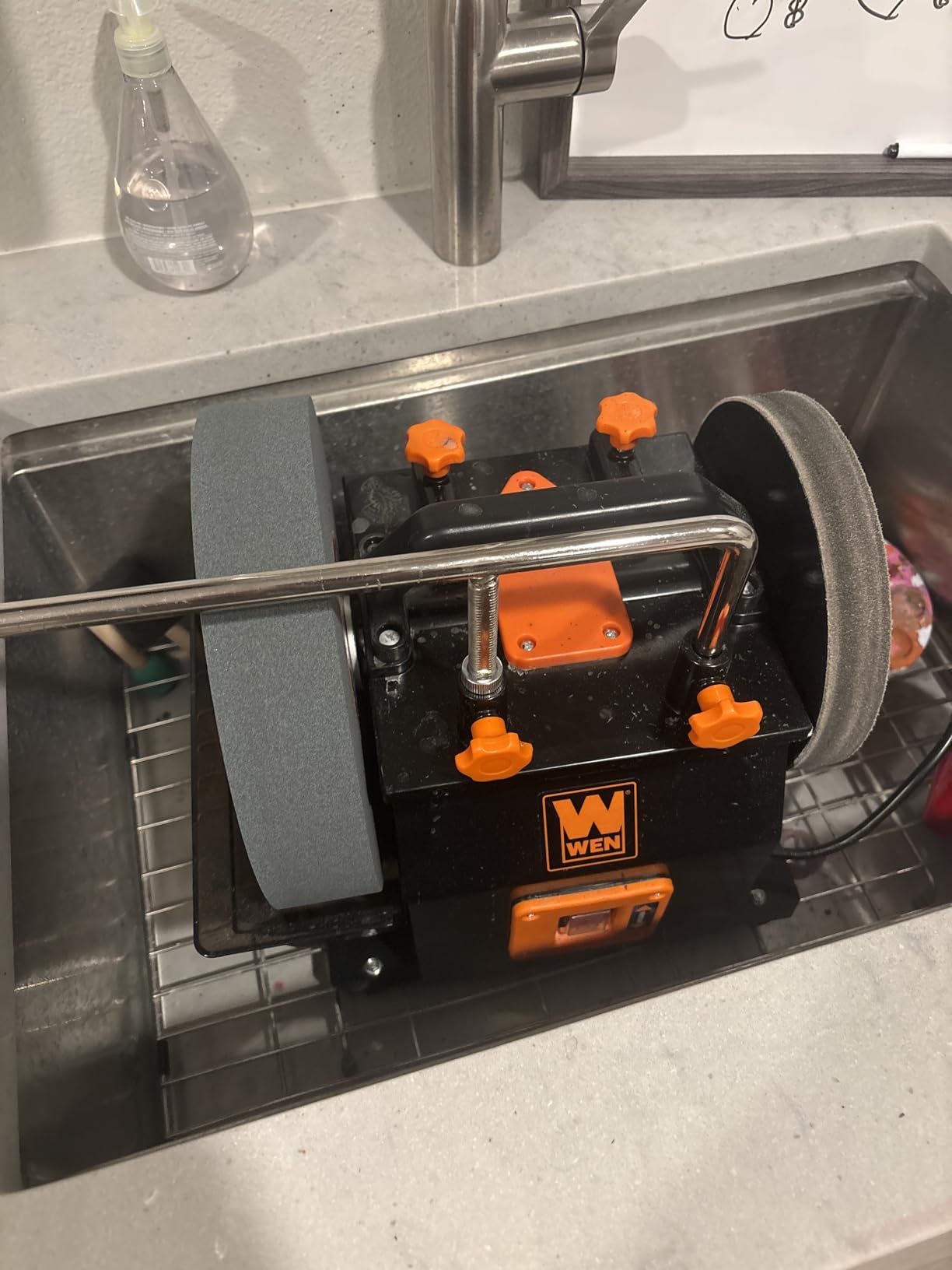
6. WEN BG4270T 10-Inch Two-Direction Water Cooled Sharpening System
WEN BG4270T 10-Inch Two-Direction Water Cooled Wet/Dry Sharpening System
10-inch 220 grit stone
8-inch leather strop
Two-direction
115 RPM
Pros
- Two-direction rotation for versatility
- Water-cooled to prevent overheating
- Universal jig support compatible with Tormek accessories
- Includes angle guide and honing compound
- Affordable alternative to high-end systems
Cons
- Chisel jig stamped steel not as accurate as premium
- Accessory mount bar can have play
- Stropping wheel attachment can be flimsy
- May need wheel truing initially
The WEN BG4270T has earned nearly 800 reviews for good reason. It delivers the core benefits of a wet sharpening system at a price most hobbyists can afford. I have owned one for two years, and it has sharpened every chisel and plane iron in my shop without complaint.
The two-direction feature is more useful than I expected. Forward rotation is best for grinding new bevels and removing nicks, while reverse is great for honing and polishing. Flipping the switch takes a second and saves me from changing wheels or swapping grits.
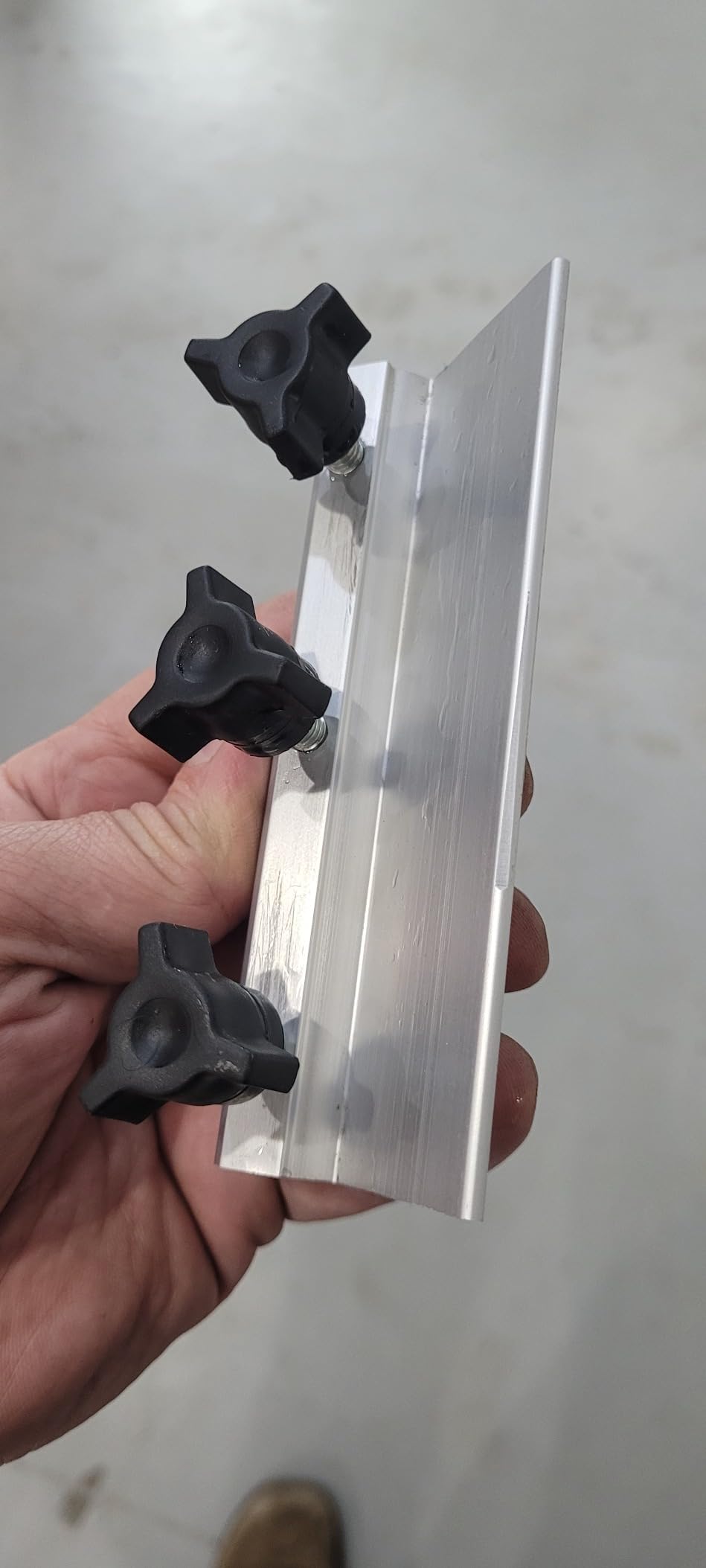
What sold me was the universal jig support. It accepts WEN’s own jigs and most Tormek accessories, so I could start with the included chisel/planer jig and upgrade later without buying a new machine. The water reservoir keeps the stone wet during use, so heat damage is essentially impossible.
The included chisel jig is stamped steel rather than machined aluminum, so it is not as accurate as premium jigs. For most users, it is fine. For production sharpening where tolerances matter, plan to upgrade to a Tormek jig.
Why this is the best value pick
For the price of a high-end honing guide, you get a full wet sharpening system with two wheels, water cooling, and Tormek compatibility. If you are starting a hand tool shop and want one machine that does everything, the BG4270T is hard to beat.
Common first-time setup
Out of the box, the stone may have slight run-out. I trued mine with a diamond stone in 15 minutes. Once true, the stone has stayed flat through months of regular use with no maintenance.
7. KAKURI Honing Guide Sharpening Jig Made in Japan
KAKURI Honing Guide Sharpening Jig for Chisels and Planes Blades, Japanese Sharpening Guide for Woodworking Tools, Made in JAPAN
Roller-guided design
Ash wood handle
Steel body
Fits 1/8-2.75 inch blades
Pros
- Maintains constant sharpening angle
- Roller allows smooth movement on whetstones
- Safe handle design prevents direct blade contact
- Suitable for Japanese block planes
- Heavy duty steel body with excellent wear
Cons
- No angle guide for setting blade back angle
- No reference lines for 90 degree position
- Limited to larger chisels and plane blades
- Can be tricky to set chisel to desired angle
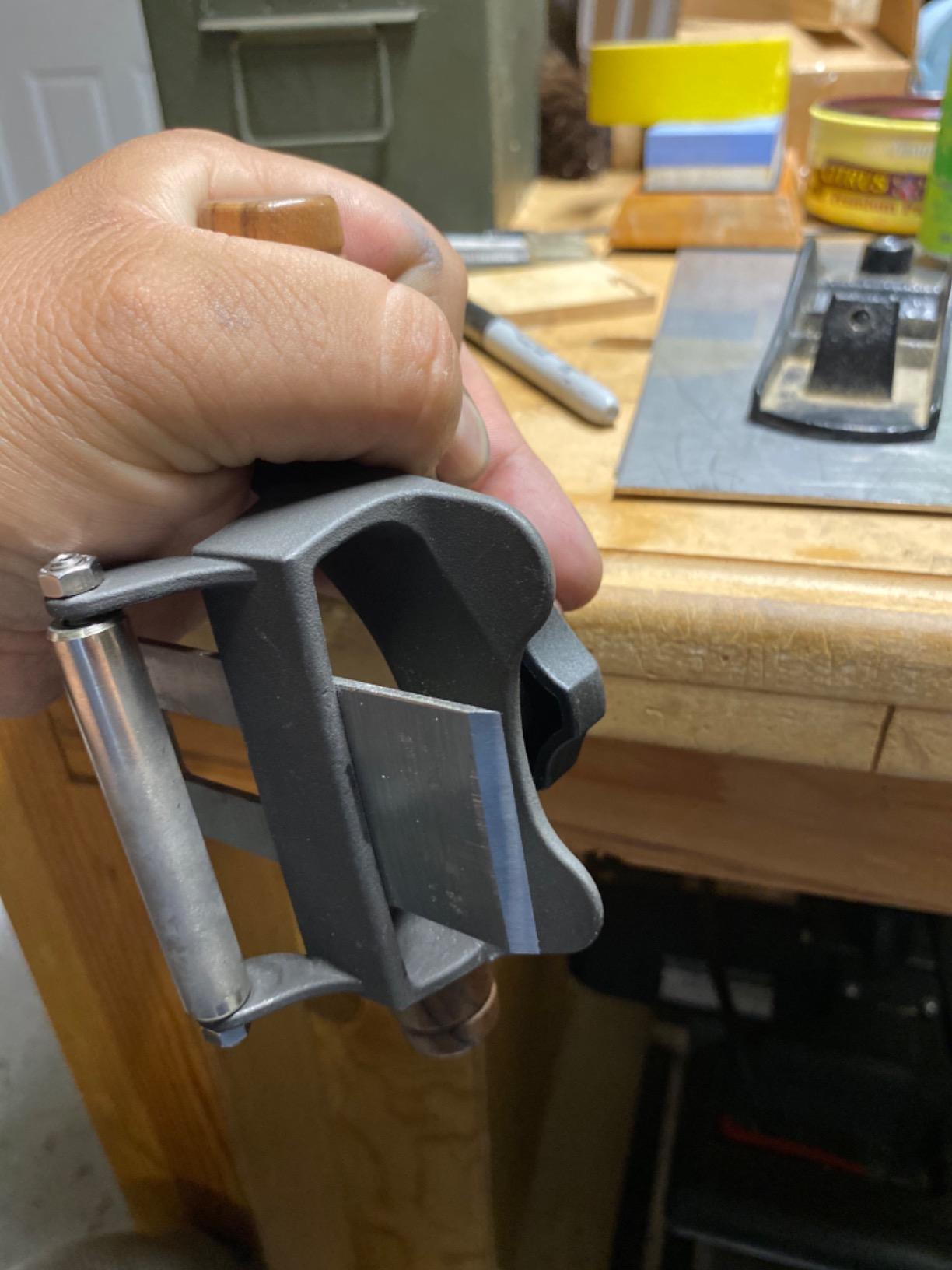
The KAKURI is the honing guide I reach for when working with Japanese-style tools or when I want a smooth, predictable motion across my water stones. The roller design lets the guide glide flat across the stone without rocking, which produces even pressure on the entire bevel.
The ash wood handle is a thoughtful touch. It keeps my hands away from the blade edge and provides a comfortable grip for long sharpening sessions. After 773 owners and counting, this is one of the most-used honing guides on the market.
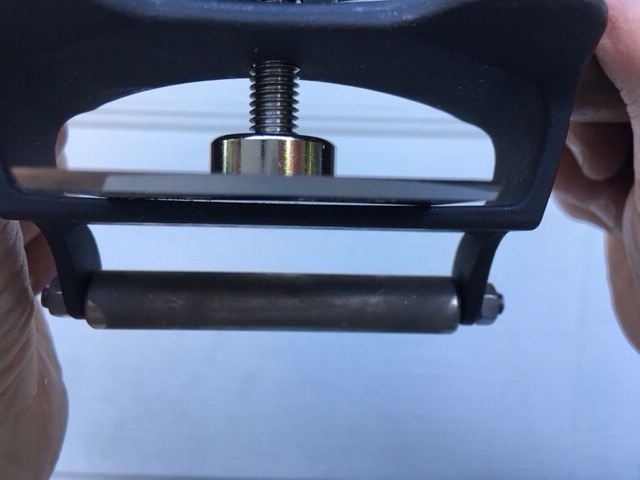
Build quality is what you would expect from a Japanese-made tool. The steel body is heavy enough to hold the chisel steady without flexing, and the finish has held up to years of use without rust. For sharpening Japanese kanna planes and bench chisels from 1/8 inch up to 2-3/4 inches, the fit is spot-on.
The main learning curve is angle setting. Unlike the Gohelper or Veritas guides, there is no built-in angle indicator. You set the chisel projection based on your stone thickness and target angle, which means measuring and a small amount of trial and error. Once dialed in, the results are repeatable.
Why the roller matters
Most cheap honing guides have a flat bottom that contacts the stone directly. With stone wear, that flat surface no longer matches the stone surface, and you get uneven sharpening. The KAKURI’s roller sits on the stone’s actual surface, so it self-adjusts as the stone wears.
Best paired with water stones
If your sharpening setup is based on water stones rather than diamond plates, the KAKURI is a strong match. The roller rolls cleanly on traditional stones, while some bearings can catch on softer abrasive surfaces.
8. Sharp Pebble Honing Guide for Chisels and Planes
Sharp Pebble Honing Guide for Chisels and Planes – Chisel Sharpening Jig
Stainless steel body
Bronze bearing
Single wheel
11.2 oz weight
Pros
- Solid stainless steel construction with nicely rounded edges
- Single wheel works on any thickness sharpening plate
- Sealed bronze bearing for longevity
- Knurled brass knob for secure tightening
- No paint to chip or contaminate stones
- Comes with storage tube
Cons
- Can be finicky for beginners
- May have issues with chisels under 1/2 inch wide
- Beveled sides may not hold tapered chisels square
- Requires measuring tool for accurate angle setting
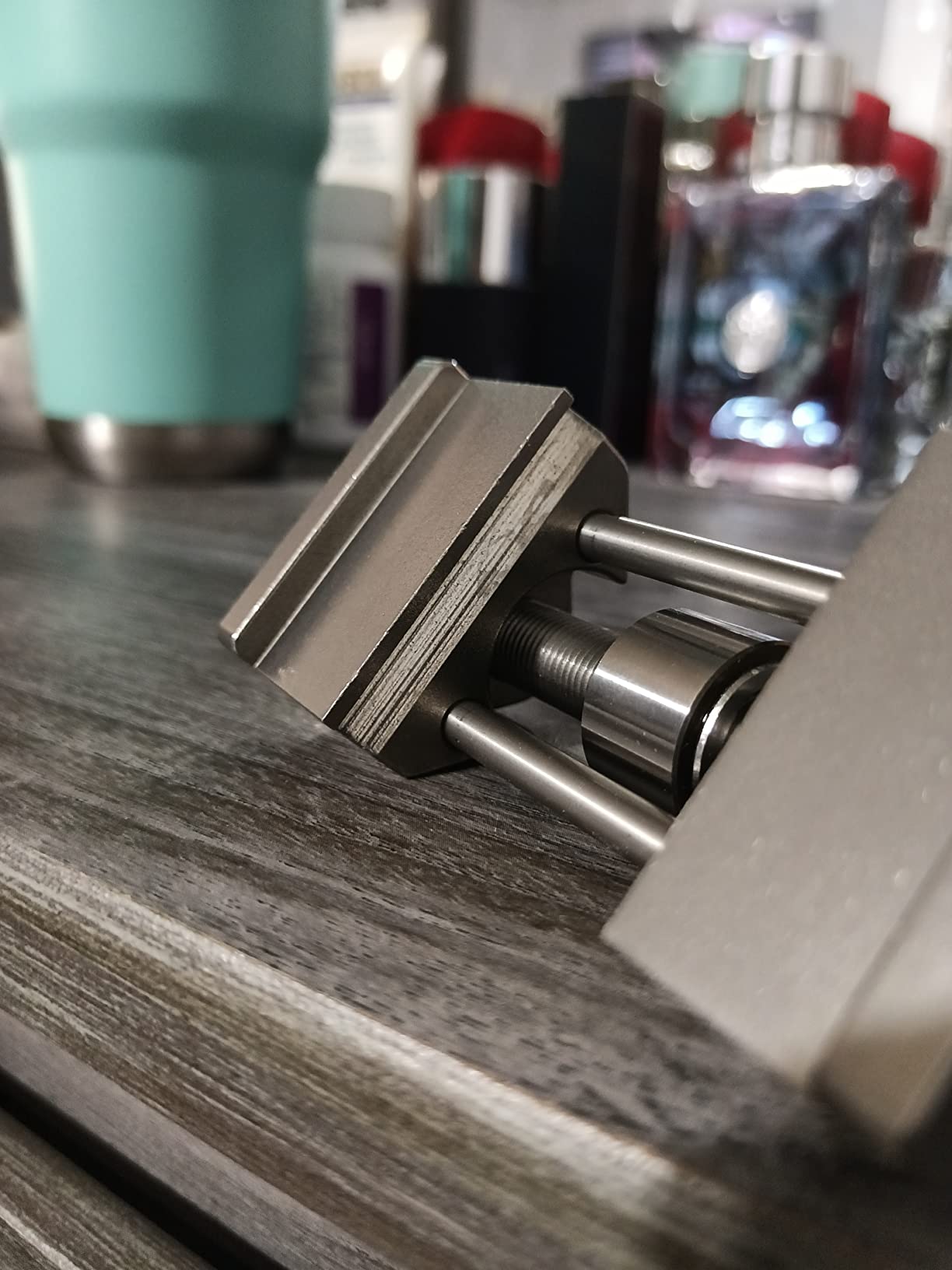
At just over $40, the Sharp Pebble is the honing guide I recommend most often to beginners. The all-stainless steel body feels substantial in the hand, the sealed bronze bearing rolls smoothly, and there is no paint or plating to flake off and contaminate your sharpening stones.
The single wheel design is the most flexible I have tested. It rolls on any thickness stone, from thin diamond plates to thick water stones. With many guides, you are locked into a specific stone geometry. The Sharp Pebble just works with whatever you already own.
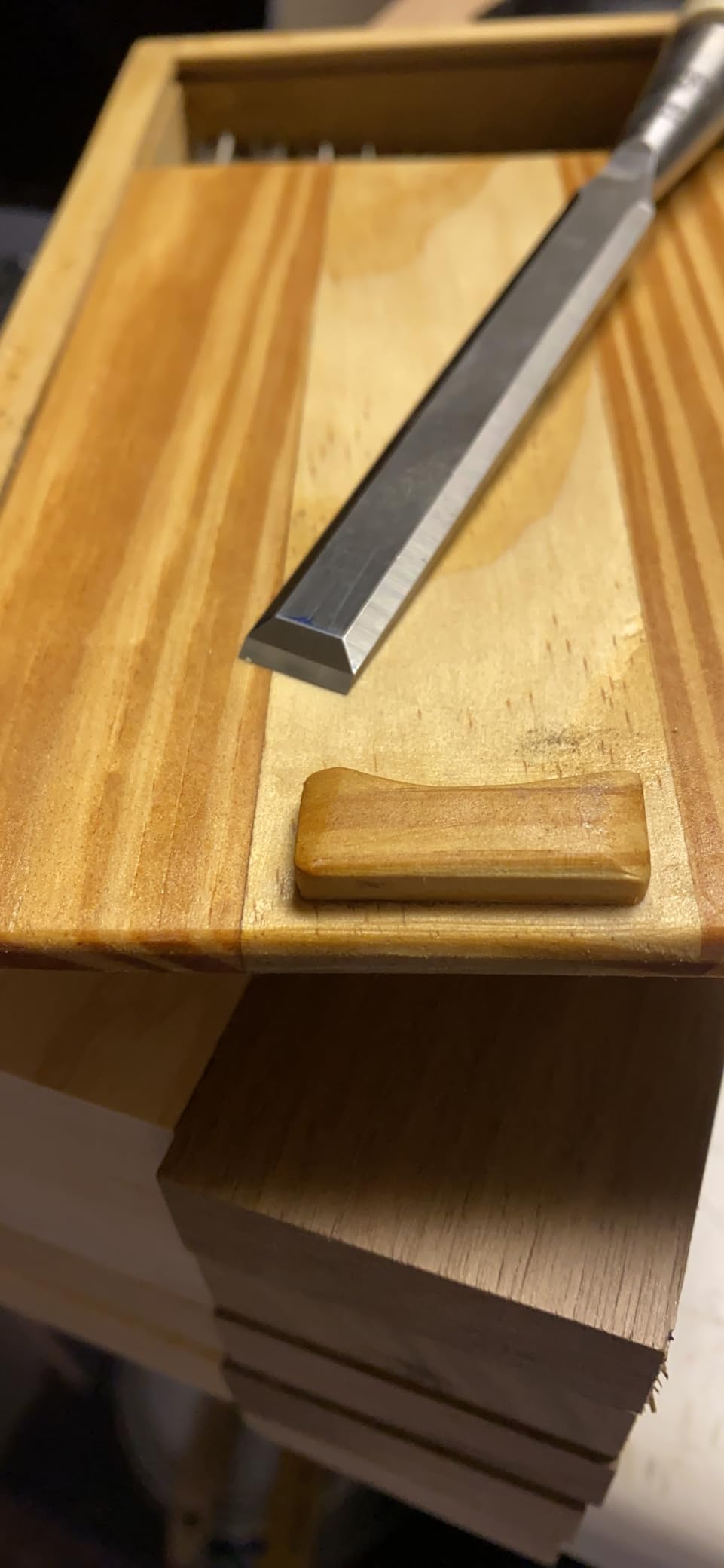
Setting angles requires a small amount of measuring. The included eBook walks you through the projection distances for 20, 25, 30, and 35 degree bevels, which is genuinely useful for someone just starting out. Once I set up a chart on a sticky note in my shop, switching angles took about 30 seconds per tool.
The two limitations are real but manageable. Narrow chisels under 1/2 inch can shift in the clamp, so I add a small wooden shim for very narrow blades. Tapered chisels like Japanese bench chisels may not sit perfectly square against the beveled sides of the jig.
Why it is my budget pick
For under $45, you get a stainless steel body, a real bronze bearing, and a design that works on any stone. Most honing guides in this price range use plastic parts or stamped steel that flex. The Sharp Pebble is the rare exception.
Best learning path
Pair it with a $30 diamond plate and the included eBook, and you have a complete sharpening setup for under $80 that will handle any chisel or plane iron in a hobbyist shop. It is the combination I gift to new woodworkers.
9. SHARPAL 162N Double-Sided Diamond Sharpening Stone
SHARPAL 162N Double-sided Diamond Sharpening Stone, 8 in. x 3 in.
325/1200 grit diamond
Dry sharpening
MirrorFlat base
Angle guide included
Pros
- Industrial monocrystalline diamonds cut 5x faster than stones
- MirrorFlat technology for long-lasting flatness
- Dual grit handles edge setting to finishing
- No oil or water needed
- Storage case doubles as non-slip base
- Works on HSS
- carbide
- ceramic
- and CBN
Cons
- Base can be slippery without anchoring
- 325 grit not coarse enough for heavy reprofiling
- Metal dust accumulates on fine side
- Some quality control issues reported
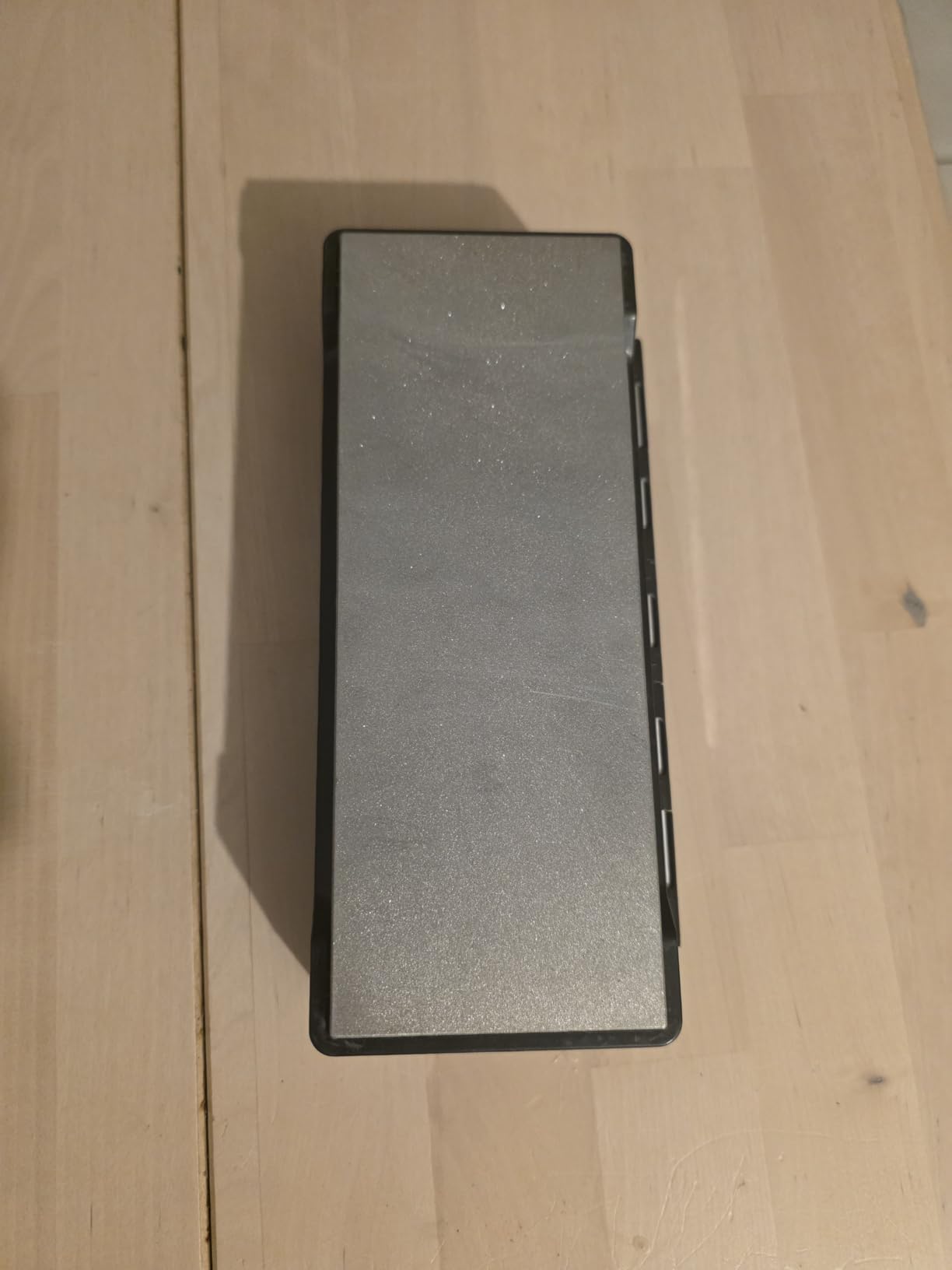
With nearly 4,000 reviews and a 4.7 average rating, the SHARPAL 162N is the most-loved sharpening stone in this entire guide. I bought mine three years ago, and it is still dead flat and still cutting fast. For a hobbyist or small shop, this is the best value in the entire sharpening world.
The two-grit combination covers the workflow I actually use. The 325 grit side sets a new edge or grinds out nicks in a couple of minutes. The 1200 grit side hones to a working sharp edge ready for fine woodworking. For most chisels and plane irons, this is enough without buying additional stones.
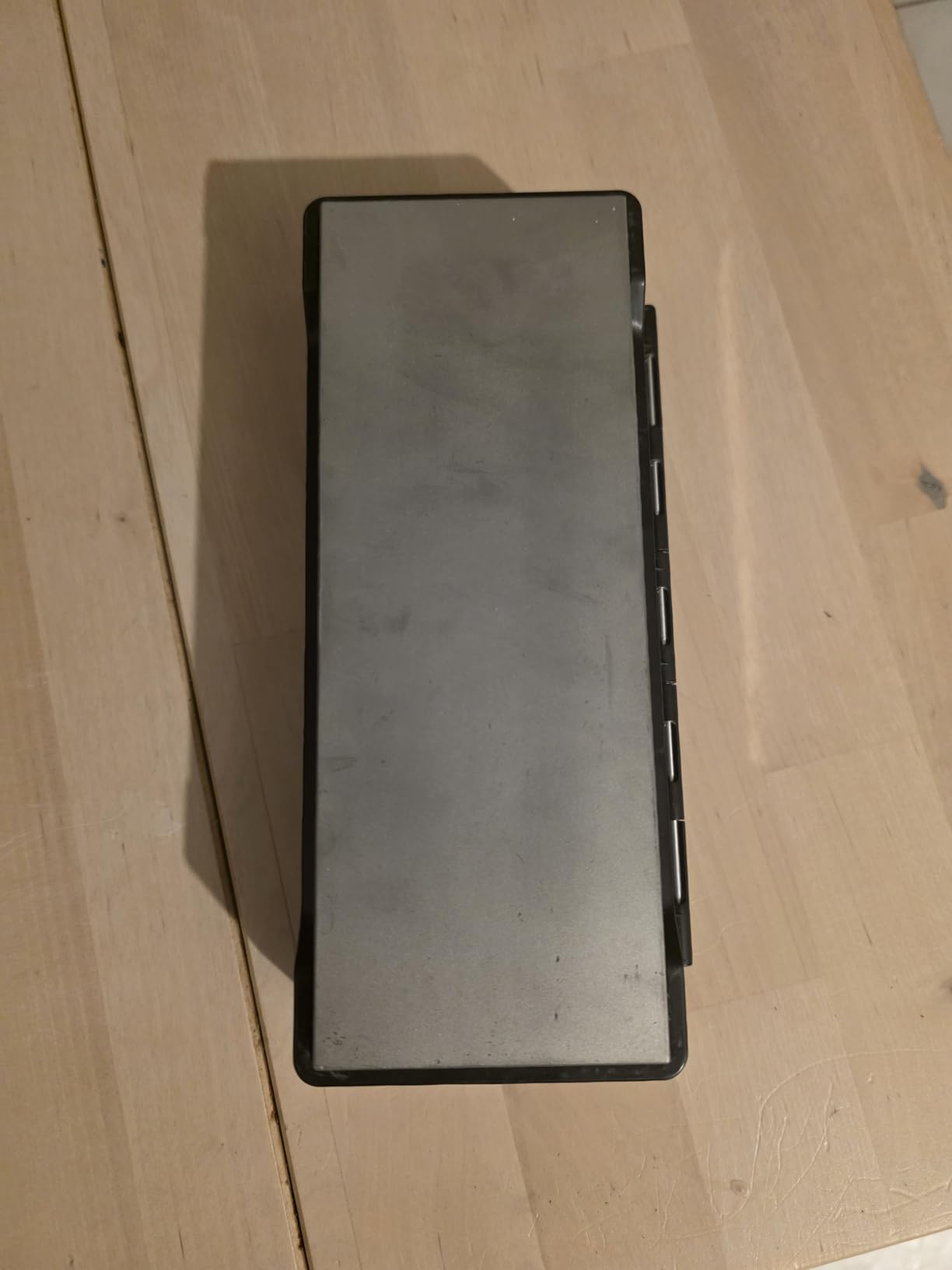
Because the abrasive is monocrystalline diamond electroplated to stainless steel, the stone never dishes out. I have not flattened mine once in three years. Compare that to a typical water stone that needs flattening every few uses, and you start to see the time savings.
Sharpening is dry, which means no oil or water mess. I just lay the stone on the bench, set a chisel on the coarse side, and make a few passes. The included angle guide clicks into 14, 17, 20, and 25 degree positions for quick setup.
Why I named this editor’s choice
It is the rare tool that does exactly what it claims, lasts for years, costs under $70, and has thousands of positive reviews to back it up. If you could only own one sharpening tool, this stone plus a honing guide covers the majority of hand tool sharpening.
Best paired with a honing guide
Use the SHARPAL stone flat on the bench with a Sharp Pebble or KAKURI honing guide for chisel and plane work, or hold tools freehand for quick edge refreshes. The stone is rigid enough for either approach, and the included non-slip base keeps it stationary during use.
10. Savannah GrindMaster Lathe Tool Sharpening Jig with Quad Setup
GrindMaster Lathe Tool Sharpening Jig with Quad Setup 6″
Quad setup angles
3x5 inch platform
Bolts under grinder
9.46 lb total weight
Pros
- Quad setup jig for multiple angle presets
- Covers gouges
- parting tools
- skews
- and scrapers
- 3x5 inch adjustable platform for large scrapers
- Durable steel construction
- Easy to achieve consistent repeatable results
- Prolongs tool and grinding wheel life
Cons
- Requires clearance under grinder wheels for installation
- Setup can be time-consuming initially
- Some grinder adjustments may be needed for fit
The Savannah GrindMaster is purpose-built for woodturners who want repeatable angles across multiple tool types. The quad setup jig has preset positions for roughing gouges at 45 degrees, parting tools from 30 to 60 degrees, skews from 21.5 to 43 degrees, and bowl scrapers at 8 degrees. For a turner with a drawer full of gouges and skews, that is exactly the geometry you want locked in.
The platform measures 3 by 5 inches, large enough for the biggest bowl scrapers. It bolts underneath the grinder for stability, and once installed, the platform stays put through hundreds of sharpenings. The all-steel construction feels like it will outlive me.
Setup took me about 40 minutes because my grinder needed a small spacer to clear the wheel guard. Once mounted, the jig indexed every tool I own at the right angle with no fuss. I went from gouge to parting tool to skew in under a minute each, all without recalibrating.
The main caveat is grinder clearance. Low-profile grinders work great out of the box, but grinders with large wheel guards or small tool rests may need modification. Measure your grinder’s under-tool-rest clearance before buying.
Why turners love the quad setup
Setting each grind angle freehand is the slowest part of sharpening. The quad setup dials in the four most common tool angles, so you can switch between gouge and skew in seconds. For production turners, that adds up to real time savings over a year.
Where this fits in your shop
If you turn wood more than you build furniture, this is a stronger fit than a flat-tool honing guide. If you do a mix of both, consider the Peachtree Pro Grind instead, which handles flat tools and lathe tools in one package.
11. Razor Sharp Edgemaking 8-Inch Deluxe Blade Sharpening Kit
Razor Sharp Edgemaking System 8 Inch Deluxe Blade Sharpening Kit, For 6 Inch Bench Grinder, Made In The Usa
8-inch wheels
5/8 inch arbor
3/4 inch width
2.5 lb wheels
Pros
- Quick sharpening - razor edge in seconds
- Complete kit with everything needed
- Works on wide variety of blades including chisels and gouges
- Easy to use with practice
- Polished razor-sharp edge on hard steel alloys
- Wheels last many years with regular use
- Great value compared to other systems
Cons
- Requires bench grinder not included
- Wheels may need balancing
- Learning curve to master angle and pressure
- Can remove too much material if not careful
- Some wobble at lower speeds that disappears at full speed
The Razor Sharp system is unlike anything else in this guide. Instead of stones or jigs, it uses abrasive paper wheels that polish a chisel to a mirror finish in seconds. With 858 reviews and a 4.5 average, this is the sharpener I turn to when I need a polished edge fast.
The kit includes abrasive and polishing wheels, silicon carbide grit, jeweler’s rouge, and conditioning wax. You mount the wheels on a bench grinder (not included) at 3,000+ RPM, and the paper wheels do the rest. I sharpened a dull 1-inch bench chisel in about 20 seconds per side, with a polish that looked like a mirror.
The system works on circular saw blades, curved knives, serrated edges, chisels, draw knives, gouges, lathe tools, planer blades, and even scissors. I tested it on a set of garden pruners and a pair of fabric scissors, and both came back to a clean cutting edge.
The two caveats are real. First, you need a bench grinder to mount the wheels on, so this is an addition rather than a complete sharpening setup. Second, the paper wheels can remove material quickly, so there is a learning curve to avoid overgrinding. With light pressure and short passes, the results are excellent.
Why the paper wheels work so well
At 3,000+ RPM, the abrasive paper cuts cleanly without heat buildup, so the edge geometry stays sharp without softening the steel. The combination of abrasive and polishing wheels produces a working sharp edge in seconds rather than minutes.
Best use cases
Final polishing after grinding on a wet sharpener, restoring old hand tools, sharpening curved or specialty blades that don’t fit on a stone. For primary sharpening of chisels and plane irons, I prefer a honing guide on a diamond plate. For polishing and quick touch-ups, the Razor Sharp system is hard to beat.
12. WEN BG4108 8-Inch Water-Cooled Wet/Dry Sharpening System
WEN 8-Inch Water-Cooled Wet/Dry Sharpening System (BG4108)
8-inch 220 grit stone
8.75 inch leather strop
120 RPM
Tormek compatible
Pros
- Solid weighty construction
- Water cooling prevents overheating
- Compatible with Tormek accessories
- Great value compared to expensive Tormek
- Reversible stone orientation
- Works well for lathe tools and chisels
- Good for beginners learning wet sharpening
Cons
- Learning curve required for precise angles
- Requires frequent water reservoir adjustments
- Stone may need truing initially
- Some quality control issues reported
- Tool rest accuracy not always repeatable
The WEN BG4108 is the smaller sibling of the BG4270T, and for tight workshops or smaller budgets, it is a smart pick. The 8-inch 220 grit stone sharpens quickly, and the 8-3/4 inch leather strop on the other side handles the final polish. At 120 RPM, the wheel speed is slower than a Tormek, which means less risk of overheating.
Build quality is solid for the price. The cast body weighs just under 22 pounds, so the machine sits firmly on the bench without walking. The reversible stone orientation lets me run the stone in either direction depending on the task.
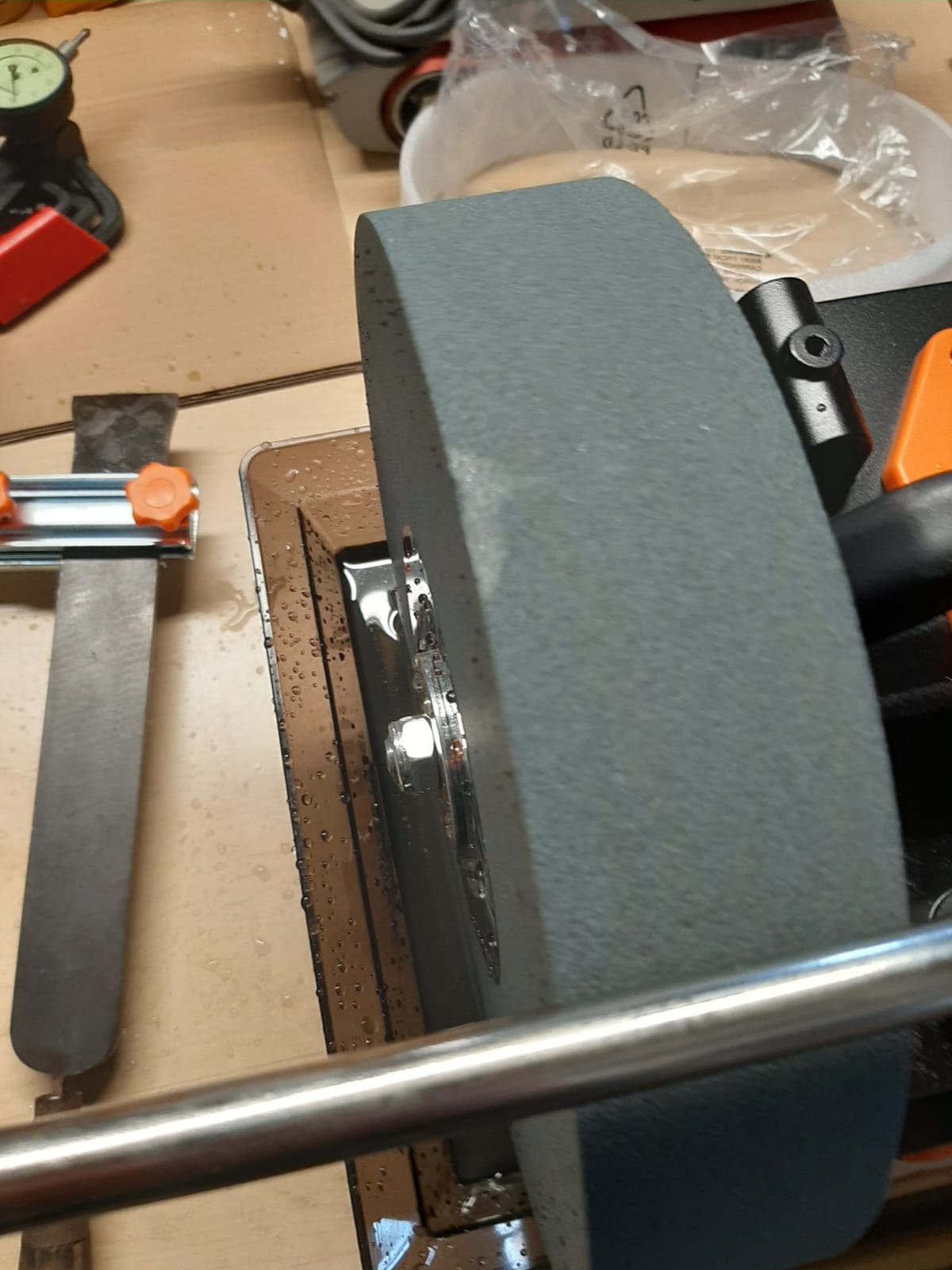
For chisels and plane irons, the included angle guide works well enough for the first few sharpenings. As I got more serious about repeatable angles, I swapped in a Tormek-compatible jig, which fits perfectly on the universal jig support.
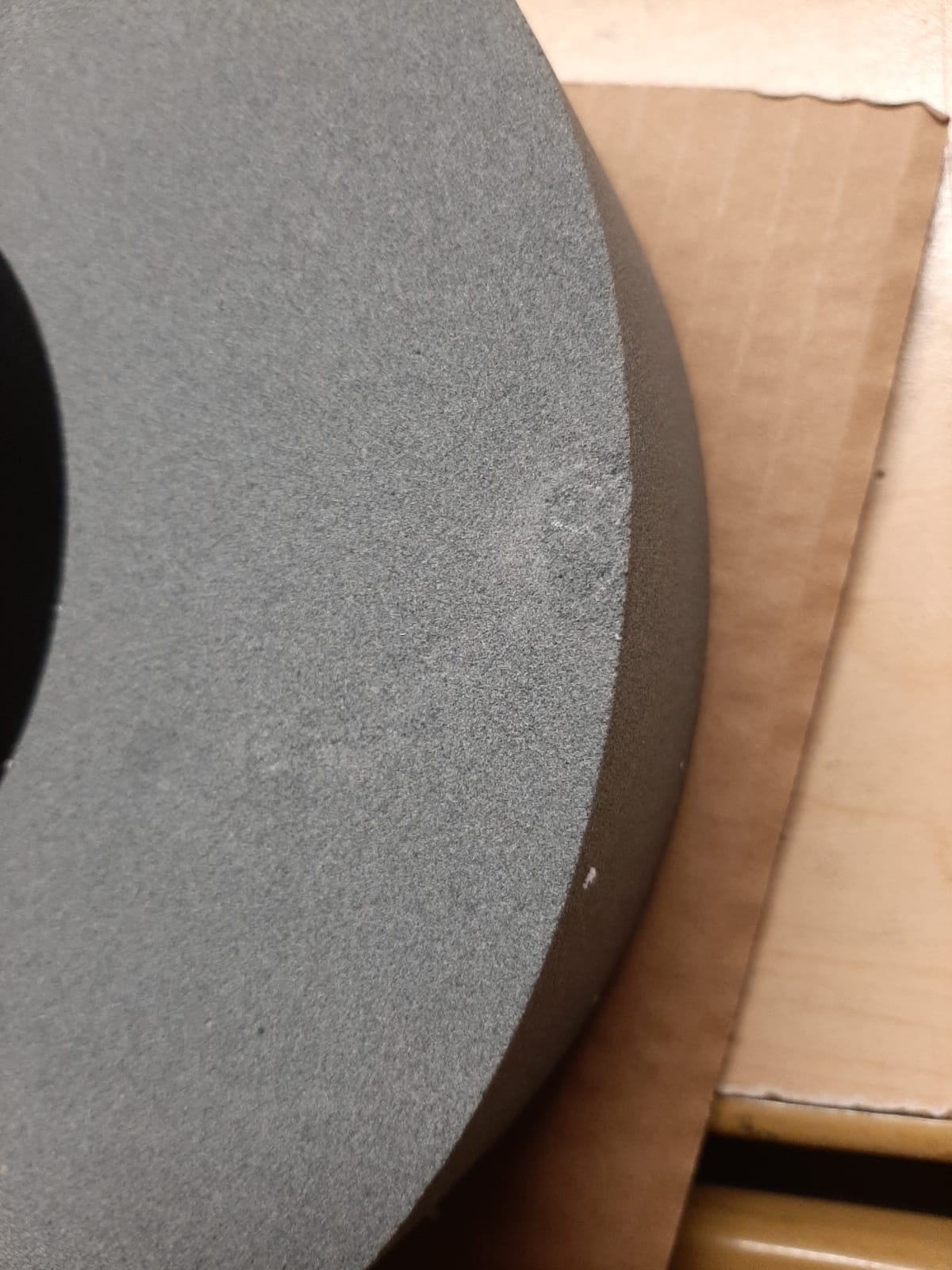
The 4.1 rating reflects some quality control variance. A few users report wheel wobble, gear noise, or play in the tool rest out of the box. Mine was fine after a 10-minute setup, but budget extra time for first-time calibration.
When to pick this over the 10-inch model
If your bench space is limited or you mostly sharpen narrow chisels and small plane irons, the 8-inch stone is plenty. If you frequently work with wide 2-inch plus plane irons, step up to the BG4270T for more stone surface.
Best for the learning sharpener
The slower 120 RPM speed gives beginners more time to correct mistakes before the stone removes too much material. I recommend this machine to anyone just starting with wet sharpening, then upgrading to a Tormek once they have their workflow dialed in.
How to Choose the Best Sharpening System for Your Workshop?
Picking the right sharpening system for woodworking tools comes down to three questions: which tools you use most, how often you sharpen, and how much bench space you have. A woodturner sharpening bowl gouges weekly has very different needs than a furniture maker touching up a few plane irons a month.
Honing guides vs wet systems vs bench grinder jigs
Honing guides like the Sharp Pebble and KAKURI are the most affordable entry point. They hold your chisel or plane iron at a fixed angle while you slide it across a stone, diamond plate, or sandpaper. For a beginner or someone with a small shop, a good honing guide paired with a quality stone covers 90% of hand tool sharpening for under $100 total.
Wet sharpening systems like the WEN BG4270T, KFMK, and WEN BG4108 use a water-cooled grinding wheel that removes material quickly without overheating the steel. They are faster than honing guides, work on a wider variety of tools, and produce consistent bevels with less skill. The trade-off is bench space and price.
Bench grinder jigs like the Peachtree Pro Grind, VEVOR Multi-Grind, and Savannah GrindMaster mount to an existing bench grinder. They are the fastest option for woodturners and anyone reshaping tools frequently, but they require a bench grinder you may already need to buy separately.
Wet vs dry sharpening
Wet sharpening uses water to cool the abrasive and wash away swarf, which prevents heat damage to the tool edge. Dry sharpening with diamond plates is faster and less messy, but you need to be careful not to overheat the steel. For high-speed steel or hard tool steels, wet is safer. For routine touch-ups, dry diamond works fine.
Tool compatibility
Make sure the sharpening system you choose handles the full width of your tools. Many honing guides cap out at 2 to 2.75 inches, which excludes wide jointer planes. Wet systems handle wider tools but require a separate jig for lathe tools. Woodturners should look specifically for systems with V-pocket or fingernail gouge support.
Bevel angle and grit progression
Most woodworking chisels and plane irons are sharpened at 25 or 30 degrees. A good sharpening system lets you set the angle accurately and repeat it. For grit progression, you want at least two grits: a coarse stone or plate for shaping and edge repair, and a fine stone for the final honing. Three grits (coarse, medium, fine) give you more flexibility for restoration work.
Skill level and learning curve
Some systems are forgiving for beginners, while others assume you already know how to sharpen. Honing guides with built-in angle gauges like the Gohelper remove the hardest part of freehand sharpening. Wet systems with included jigs also work well for beginners once you get past the initial setup. Freehand sharpening on stones without a guide has the steepest learning curve.
Budget and long-term cost
A honing guide plus a diamond plate runs $80 to $120 and will last years with minimal maintenance. A wet sharpening system runs $200 to $500 with occasional wheel dressing needed. A premium Tormek runs $700 to $1300 with longer wheel life. Factor in the cost of consumables like stones, polishing compounds, and replacement jigs when budgeting.
Portability vs shop-bound
If you sharpen in one shop and never move, a heavy wet system or bench grinder jig is fine. If you sharpen on-site, take classes, or travel to clients, a honing guide or the portable G Sharp Edge kit will serve you better. The Gohelper and Sharp Pebble both fit in a small toolbox.
Frequently Asked Questions
What is the best sharpening system?
The best sharpening system depends on the tools you use and your budget. For most woodworkers, a diamond stone like the SHARPAL 162N paired with a honing guide offers the best combination of speed, repeatability, and value. For high-volume users, a wet sharpening system such as the WEN BG4270T or a Tormek delivers faster results with less skill required.
Is Wicked Edge worth the money?
Wicked Edge precision sharpeners are excellent for knives and small tools, but they are usually overkill for woodworking chisels and plane irons. For woodworking tools, a wet sharpener or honing guide delivers comparable edge quality at a lower price. Wicked Edge systems make most sense if you sharpen both knives and woodworking tools regularly and want one machine that handles both.
What is the best machine for sharpening chisels?
For chisels, a wet sharpening system like the WEN BG4270T or KFMK variable speed sharpener produces consistent bevels with minimal heat damage. For a more affordable setup, a honing guide like the Sharp Pebble or KAKURI paired with a quality diamond stone delivers excellent results for under $150 total. The machine choice depends on how often you sharpen and whether you also sharpen plane irons and lathe tools.
What is the best sharpening system for woodturning tools?
For woodturning tools like bowl gouges, spindle gouges, parting tools, and skews, a bench grinder jig is the most efficient choice. The Peachtree Pro Grind is the gold standard with over 1,000 reviews and a comprehensive set of jigs. The Savannah GrindMaster with its quad setup is excellent for turners who want preset angles for their most-used tools. Budget-conscious turners should consider the VEVOR Multi-Grind as a lower-cost alternative.
Final Verdict
After testing all 12 of these sharpening systems for woodworking tools, my top recommendation depends on your shop and tools. For most woodworkers, the SHARPAL 162N diamond stone paired with a honing guide is the smartest starting point, fast, flat, and affordable. For turners and production sharpeners, the Peachtree Pro Grind on a bench grinder delivers the fastest, most repeatable results. For beginners on a budget, the WEN BG4270T is the best value in a complete wet sharpening system.
Whichever system you choose, the most important upgrade you can make to your woodworking is sharpening more often. A tool touched up after every project stays sharper than one ignored for months. Pick the system that fits your shop today, use it weekly, and your edges will reward you with cleaner cuts, safer work, and better-looking projects for years to come.