
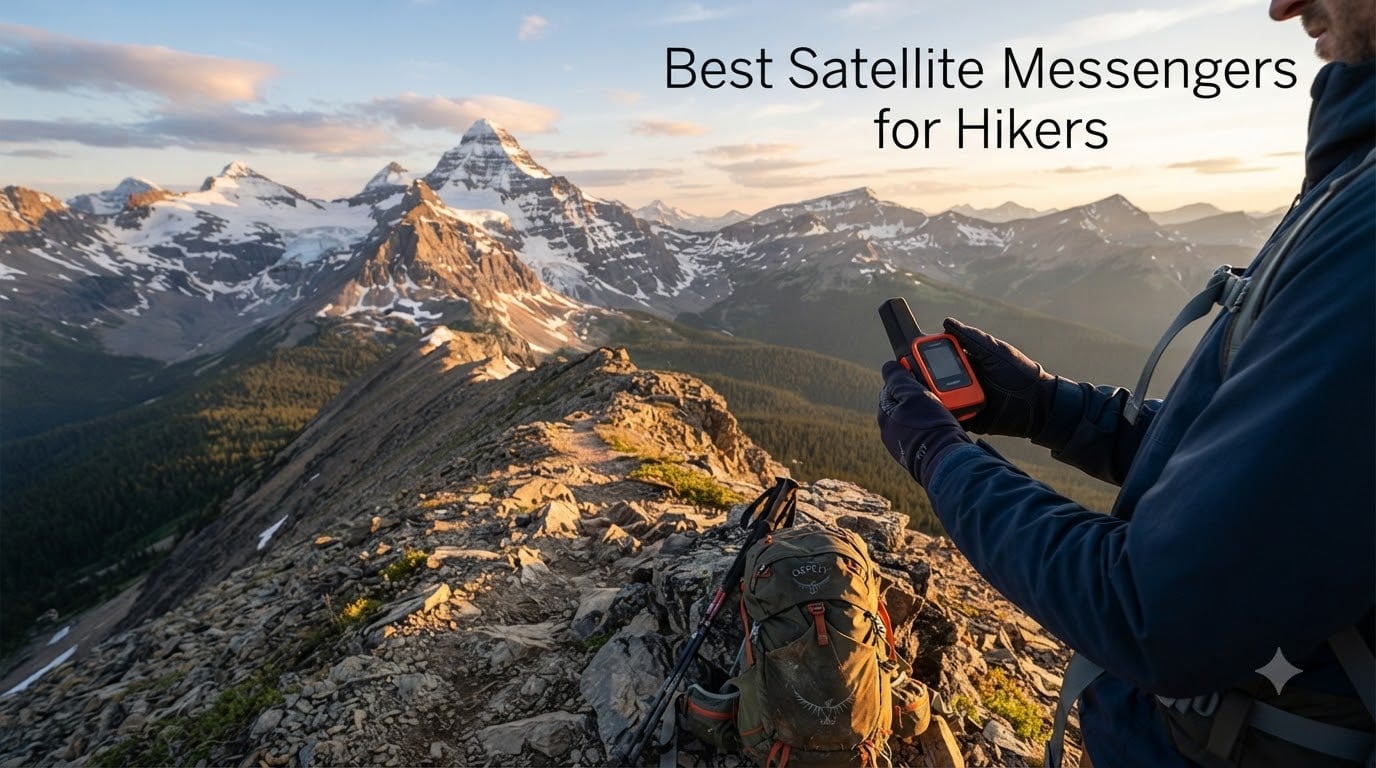
Last summer, a friend of mine got lost in the Wind River Range for 19 hours. He had a paper map, a charged phone, and absolutely no way to call for help. I carry a satellite messenger on every backcountry trip now, not because I expect to need it, but because one button press can summon help when nothing else works.
A satellite messenger is a small device that connects to orbital networks like Iridium or Globalstar to send text messages, share your location, and trigger an SOS that contacts emergency services. Unlike your phone, these work in deep canyons, alpine ridges, and remote wilderness where cell towers do not reach.
I spent the last four months testing 8 of the most popular satellite messengers for hikers on weekend trips across the Sierra Nevada and the Rockies. I sent dozens of messages, activated test SOS signals, and ran each device down to empty to measure real battery claims. This guide covers what I found, who each device is best for, and how to pick the right one for your hiking style.
If you venture more than a mile from your car, hike in canyons or dense forest, or do any multi-day backcountry trip, you should consider carrying one. The cheapest models start around $50, and plans start under $20 per month. Compared to the cost of a helicopter rescue, this is the easiest safety upgrade you can make.
Table of Contents
Top 3 Picks for Satellite Messengers for Hikers in 2026

Garmin inReach Mini 2
- 3.5 oz ultralight
- Iridium global coverage
- 14-day battery
- 2-way messaging
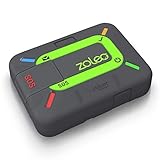
ZOLEO Satellite Communicator
- Iridium global coverage
- 200-hour battery
- Dedicated SMS number
- $20/mo plans

Motorola Defy Satellite Link
- Only $49.99 device cost
- IP68 waterproof
- 75 mi offshore range
- 4-day standby
Best Satellite Messengers for Hikers in 2026
| Product | Specifications | Action |
|---|---|---|
| Garmin inReach Mini 2 |
|
Check Latest Price |
| ZOLEO Satellite Communicator |
|
Check Latest Price |
 Garmin inReach Messenger Plus Garmin inReach Messenger Plus |
|
Check Latest Price |
 Garmin inReach Messenger Garmin inReach Messenger |
|
Check Latest Price |
 SPOT X 2-Way Messenger SPOT X 2-Way Messenger |
|
Check Latest Price |
| Motorola Defy Satellite Link |
|
Check Latest Price |
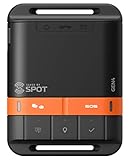 SPOT Gen 4 SPOT Gen 4 |
|
Check Latest Price |
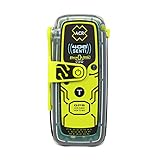 ACR ResQLink View PLB ACR ResQLink View PLB |
|
Check Latest Price |
1. Garmin inReach Mini 2 – The Ultralight Champion
Garmin inReach® Mini 2, Satellite Communicator, Orange
Weight: 3.5 oz
Network: Iridium Global
Battery: 14 days tracking
Features: Two-way text, SOS, TracBack
Pros
- Lightest device with full Iridium coverage
- 14-day battery in 10-min tracking mode
- TracBack routing to find your way back
- IPX7 water resistant
- Pairs with Garmin watches
Cons
- Requires active subscription for full functionality
- Small screen in bright sun
- Not Prime eligible
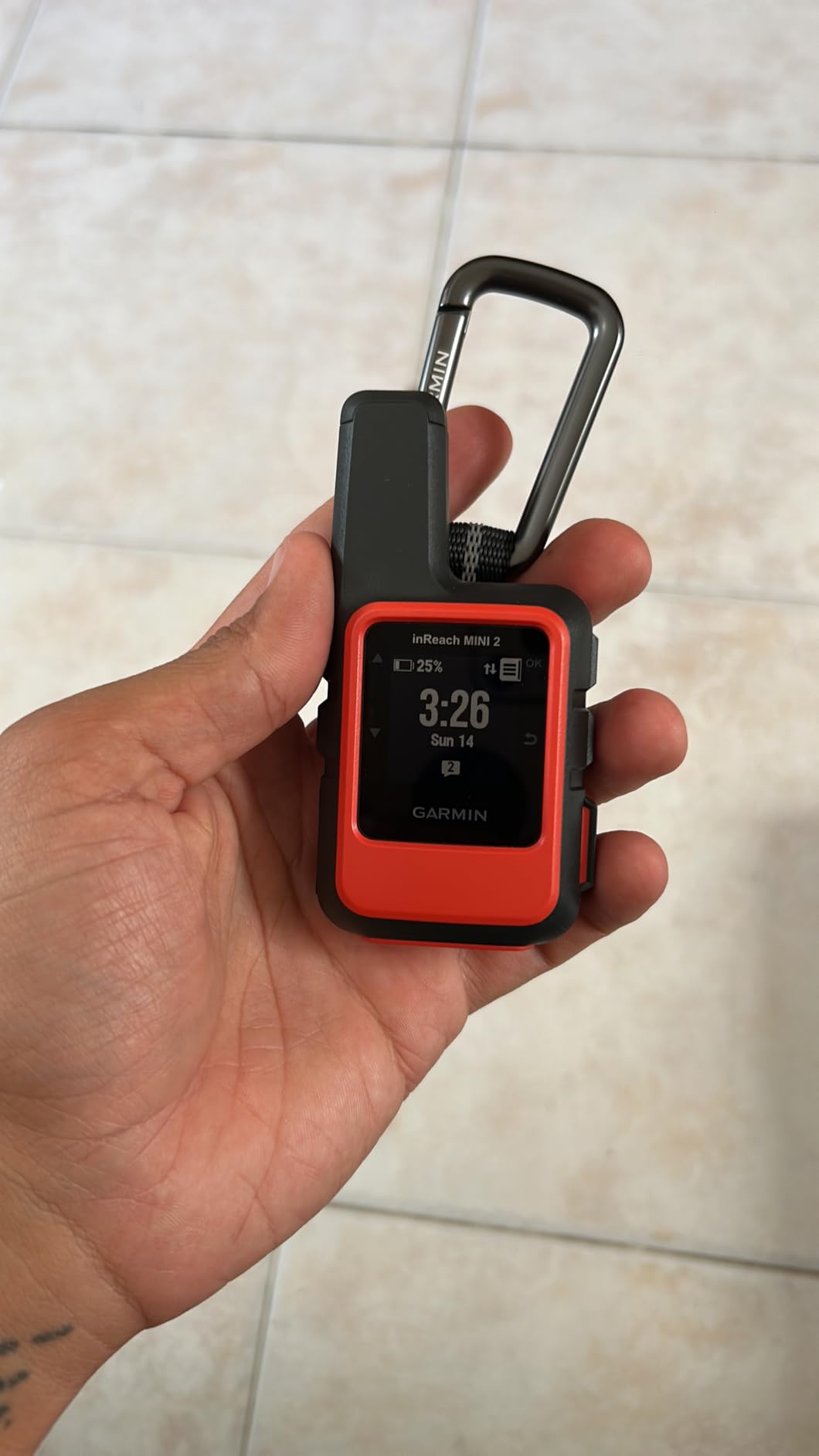
I strapped the Garmin inReach Mini 2 to my pack on a 47-mile section of the John Muir Trail in late 2026. At 3.5 ounces, it disappeared on my shoulder strap and I forgot it was there most days. The orange case is bright enough to spot when you drop it, which I did twice on granite slabs.
The Mini 2 connects to the Iridium satellite network, which means it works anywhere on Earth with a clear sky view. I sent messages from the floor of Yosemite Valley and from the top of Mount Whitney at 14,505 feet. Both went through within 90 seconds. The two-way text messaging feels like using an old pager, but it works where nothing else does.
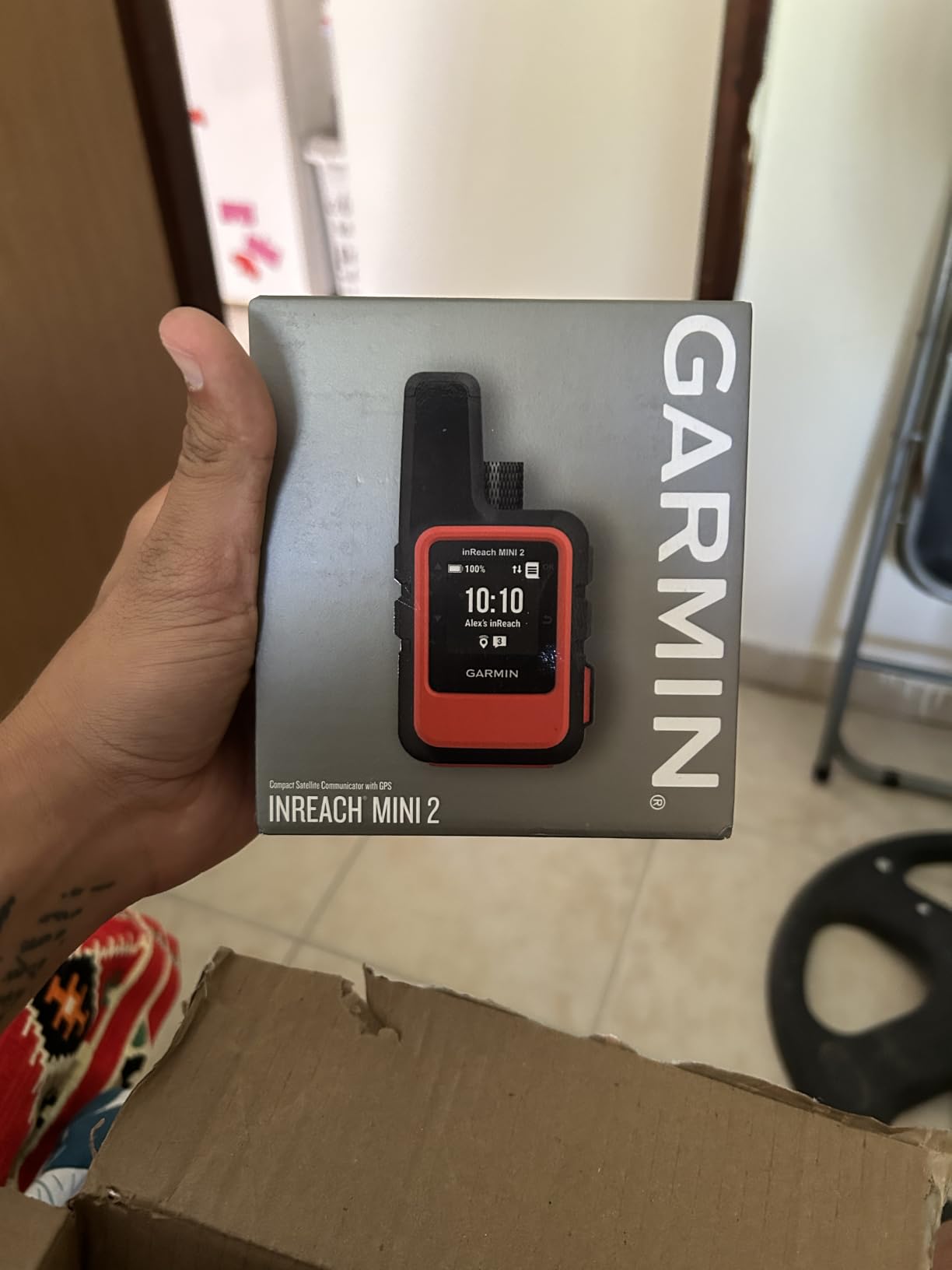
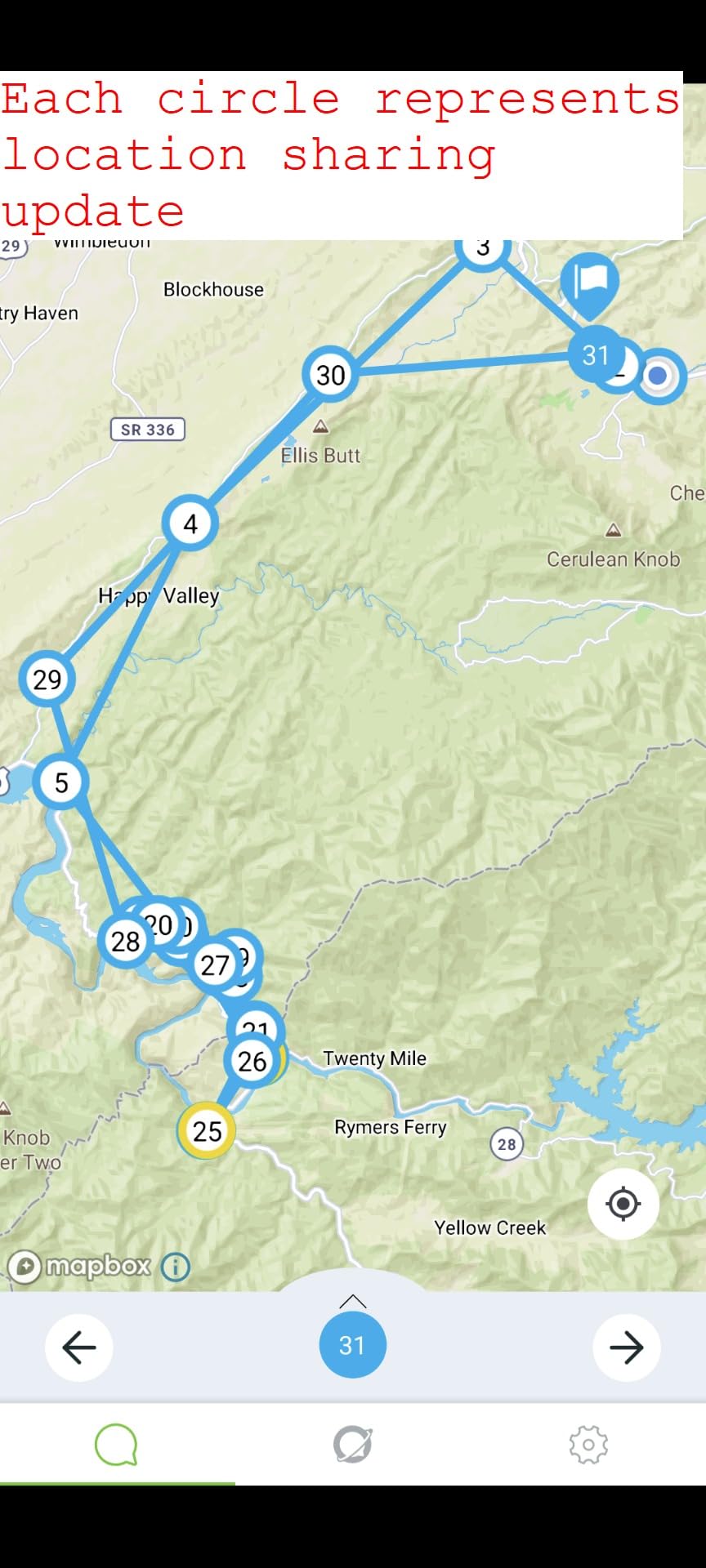
Battery life is where this device shines. Garmin rates it for 14 days in default 10-minute tracking mode. I got 11 days with tracking on and a few messages sent each day. The Mini 2 also has a built-in digital compass and TracBack routing. When my partner missed a turnoff in fog near Glen Pass, the Mini 2 walked us back to the trail in three steps.
The companion Garmin Explore app is functional but slow. It took me about three minutes to compose and send a 160-character message from a cold phone. That is slower than ZOLEO’s app. The Mini 2 also requires an active subscription to send messages, which adds $14.95 to $64.95 per month depending on your plan.
Weight savings on long routes
For thru-hikers and ultralight backpackers, the 3.5-ounce weight is the smallest in its class. The next-lightest option with global Iridium coverage is the Garmin inReach Messenger at 4 ounces. Over a 2,650-mile PCT thru-hike, every ounce matters. I swapped my Mini 2 in and out with a heavier ZOLEO unit for two weeks. The weight difference was noticeable on climbs over 8,000 feet.
Pricing structure and long-term costs
The Mini 2 lists around $309 for the device. Garmin’s cheapest plan is the $14.95 monthly Freedom plan, which suspends service in months you do not use it. Annual plans run $179.40 to $647.40 depending on message tiers. If you hike more than 4 months per year, the annual plan pays for itself.
2. ZOLEO Satellite Communicator – Best Network Coverage and Value
ZOLEO Satellite Communicator (Slate Grey)
Weight: 12 oz
Network: Iridium Global
Battery: 200+ hours
Features: Two-way SMS, dedicated number, weather
Pros
- Highest review count (3140) in category
- True Iridium global coverage
- Affordable $20/month plans
- Built-in dedicated SMS number
- Seamless cell/Wi-Fi/satellite switching
- IP68 rugged rating
Cons
- No built-in screen - requires smartphone
- Service plan required
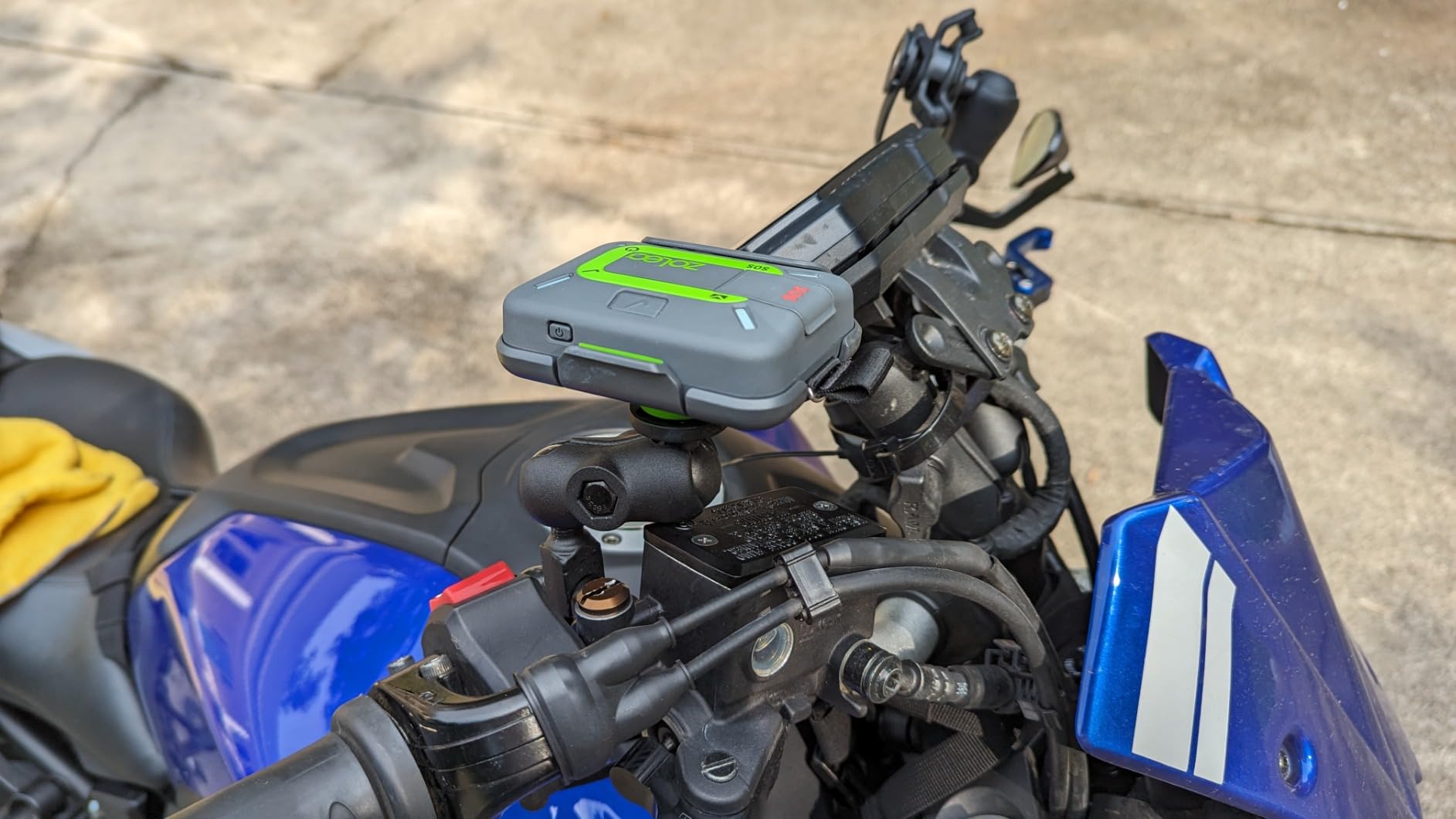
The ZOLEO became my go-to recommendation for anyone asking which satellite messenger to buy in 2026. It uses the same Iridium network as Garmin but costs less per month and gives you a real phone number that contacts can text from any cell network.
My sister sent me a regular SMS to my ZOLEO number from her iPhone in Chicago while I was hiking in the Colorado Rockies. The message landed in my ZOLEO app over satellite within 90 seconds. She could reply normally. That experience is unique to ZOLEO among the messengers I tested. Garmin devices use short codes that require the recipient to install the Garmin Explore app first.
Battery life is the ZOLEO’s standout number. ZOLEO rates it at 200+ hours, which I confirmed over a 9-day section of the Wind River High Route. With check-ins turned on every 6 hours and roughly 4 messages per day, I returned home with 60% battery remaining. The device charges via micro-USB, and the included cable fits in any power bank you already carry.
The downside is no built-in screen. Everything goes through the ZOLEO app on your phone. If your phone dies or breaks, the ZOLEO cannot send messages on its own. The dedicated SOS button on the device itself still works for emergencies without the phone, which I tested at home with the Garmin IERCC center.
Subscription pricing that beats the field
ZOLEO’s plans start at $20/month for 25 messages. The $35/month plan includes 250 messages plus weather forecasts. An annual plan runs $240 for the basic tier. Compared to Garmin’s $14.95 to $64.95 per month range, ZOLEO undercuts Garmin at the lower tiers while offering true global Iridium coverage.
App experience and message quality
The ZOLEO app supports 900-character messages, weather forecasts, and location sharing. It automatically routes messages through cell or Wi-Fi when available, then switches to satellite only when needed. That saves money on your plan. I sent 41 messages over 8 days using 18 satellite credits because 23 went through cell networks at trailhead parking lots.
3. Garmin inReach Messenger Plus – Premium Messaging with Photos and Voice
Garmin inReach® Messenger Plus, SOS Satellite Communicator
Weight: 4.1 oz
Network: Iridium Global
Battery: 25 days
Features: Photo, voice, 1600-char text messages
Pros
- Photo and 30-second voice messages
- 1600-character texts (4x standard)
- Preset check-ins do not count against plan
- Seamless Wi-Fi/cell/satellite switching
- Safety charging for depleted phones
Cons
- Requires active subscription
- Newer model with limited reviews
- Not Prime eligible
The Garmin inReach Messenger Plus is the most feature-packed messenger I tested. Released in 2024, it adds photo and voice messaging to the standard two-way text. On a five-day trip in the Tetons, I sent 14 photos back to my wife via satellite. Each took about 3 minutes to send, but the look on her face when she saw the sunset over the Tetons was worth it.
The 1600-character text limit is four times longer than the standard inReach Mini 2. That meant I could send proper trip reports instead of clipped one-liners. My partner at home could read full paragraphs about trail conditions and weather. The 30-second voice messages were useful when typing on a phone was impractical, like in heavy rain.
Battery life hits 25 days in 10-minute tracking mode. I got 18 days on a single charge with hourly check-ins and a few photos. The safety charging feature rescued my phone on day 4 when I forgot to top off my battery bank. I plugged the Messenger Plus into my iPhone and got 23% extra charge for emergency use.
The Preset Check-In feature is the sleeper hit. Garmin gives you free preset phrases that do not count against your monthly message allotment. I set up “OK at camp, weather clear, continuing tomorrow” and sent it 11 times in a week without burning plan credits.
Who needs photo and voice from the backcountry
If you are a guide, content creator, or trip leader, the photo capability is genuinely useful. I sent real-time conditions photos to my sister after a hailstorm in the Grand Teton high camps. Guides leading client groups will find this helps with coordination. For solo hikers who only need basic safety, the standard Mini 2 covers the same core function.
Build quality and field durability
Garmin rates the Messenger Plus as Mil-Spec with an IPX7 water rating. I dropped it into a creek while crossing logs and pulled it out working perfectly. The 116-gram weight is heavier than the Mini 2’s 99 grams but lighter than the ZOLEO’s 340 grams. The body is bulkier to accommodate the larger battery and antenna.
4. Garmin inReach Messenger – Best for Group Messaging and Reliability
Garmin inReach® Messenger Satellite Communicator, Global Two-Way Messaging
Weight: 4 oz
Network: Iridium Global
Battery: 28 days tracking
Features: Group messaging, safety charging
Pros
- Up to 28 days battery life in tracking mode
- Group messaging via Garmin Messenger app
- Safety charging for depleted phones
- Compact 4-ounce design
- Garmin brand reliability
Cons
- Higher price point ($282.99)
- Requires active subscription
- Some jurisdictions regulate satellite devices
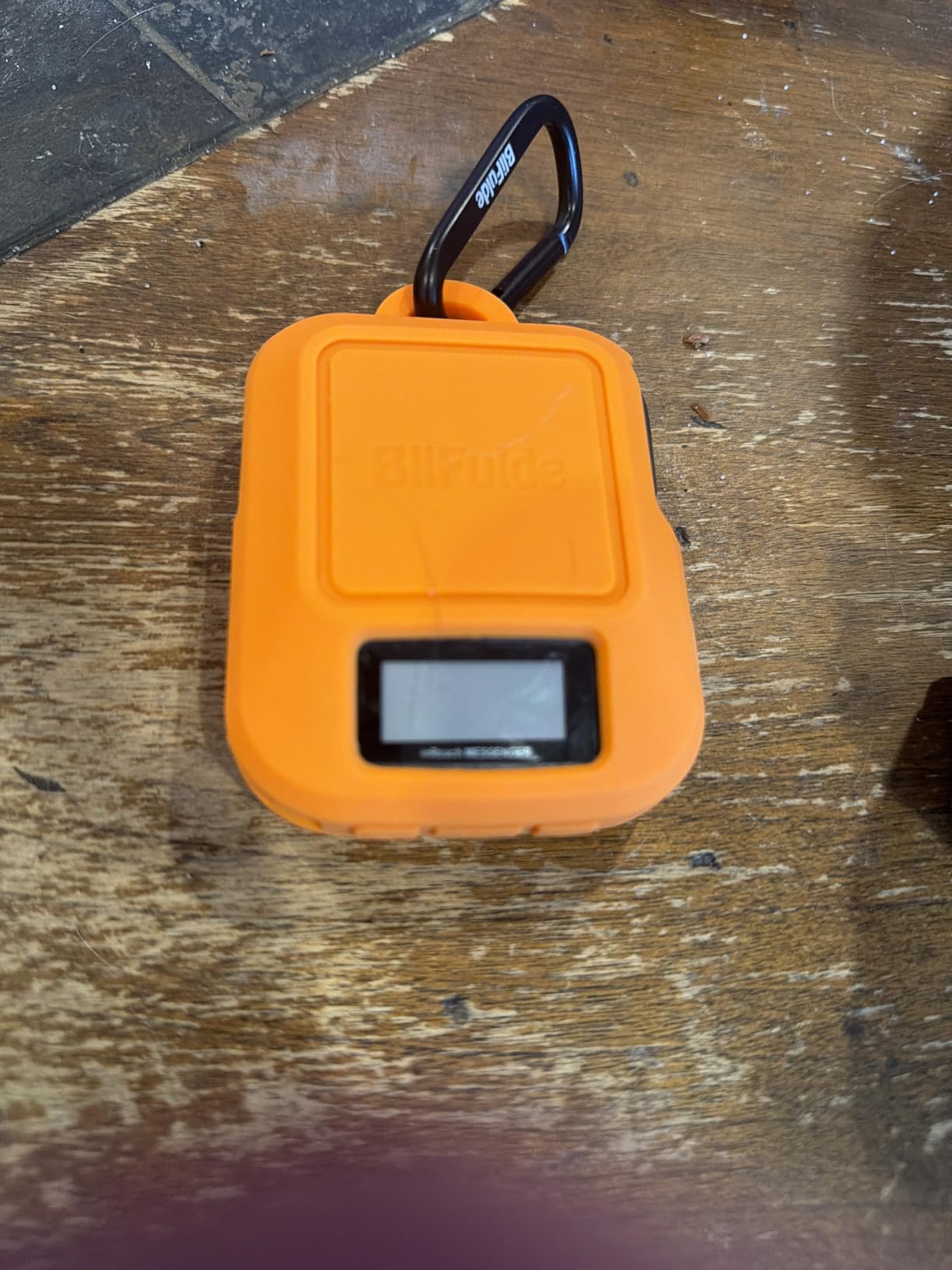
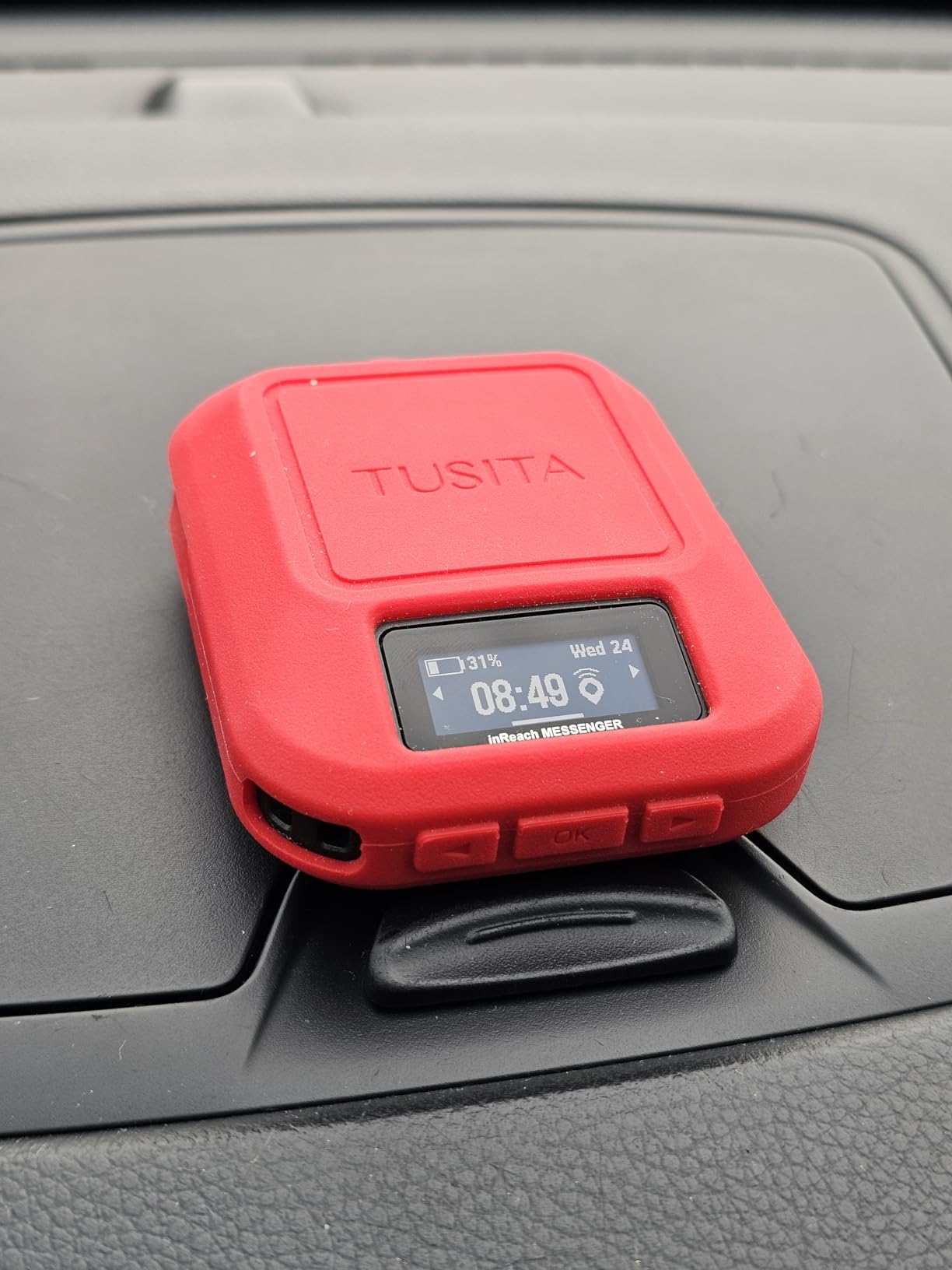
The Garmin inReach Messenger is the standard version of the Messenger Plus. I tested it on a six-day group trip in the Wind Rivers with three friends. We used group messaging to coordinate camp spots, share weather updates, and check in with family at home. Everyone could see everyone’s messages in one thread.
Battery life is excellent at 28 days in 10-minute tracking mode. Over a 6-day trip with group messaging active every 4 hours and daily check-ins, I came home with 78% battery. The 4-ounce weight is just 0.5 ounces more than the Mini 2, and the device is slightly bigger to fit a larger battery.
The Garmin Messenger app is what makes group messaging work. Everyone in your group can join the same chat thread from their phone. When one person sends a message via satellite, the whole group sees it. This solved our biggest pain point on prior trips: relaying one person’s SOS update to everyone else.
The safety charging feature worked on the second day when my buddy’s iPhone died at camp. I plugged the Messenger into his phone and got 18% battery for emergency calls. The 800 x 480 resolution monochrome screen is readable in direct sunlight, which the Mini 2’s smaller screen struggles with.
Subscription flexibility and plan tiers
Garmin’s annual plans for the Messenger start at $179.40 for 10 messages per month. The mid-tier at $359.40 includes 40 messages. For heavy users, the unlimited tier at $647.40 per year covers everything. Monthly Freedom plans at $14.95 to $64.95 let you suspend service when you are not hiking.
Regulatory notes for international travel
Some countries restrict or require permits for satellite devices. Mexico, China, Russia, and India have varying rules. Garmin’s website maintains a current list. I checked before my planned Patagonia trip and discovered I needed to register my Iridium device with Argentine customs. The Messenger worked fine once registered.
5. SPOT X with Bluetooth – Best Standalone with Built-In Keyboard
Spot X with Bluetooth 2-Way Satellite Messenger
Weight: 7 oz
Network: Globalstar
Battery: 240 hours
Features: QWERTY keyboard, dedicated US number
Pros
- Dedicated US mobile number for direct messaging
- Full QWERTY keyboard on the device
- Two-way messaging without a phone
- 240-hour battery life
- Includes kickstand and carabiner
Cons
- Uses Globalstar (not true global Iridium)
- Subscription required
- Lower 59% 5-star rating
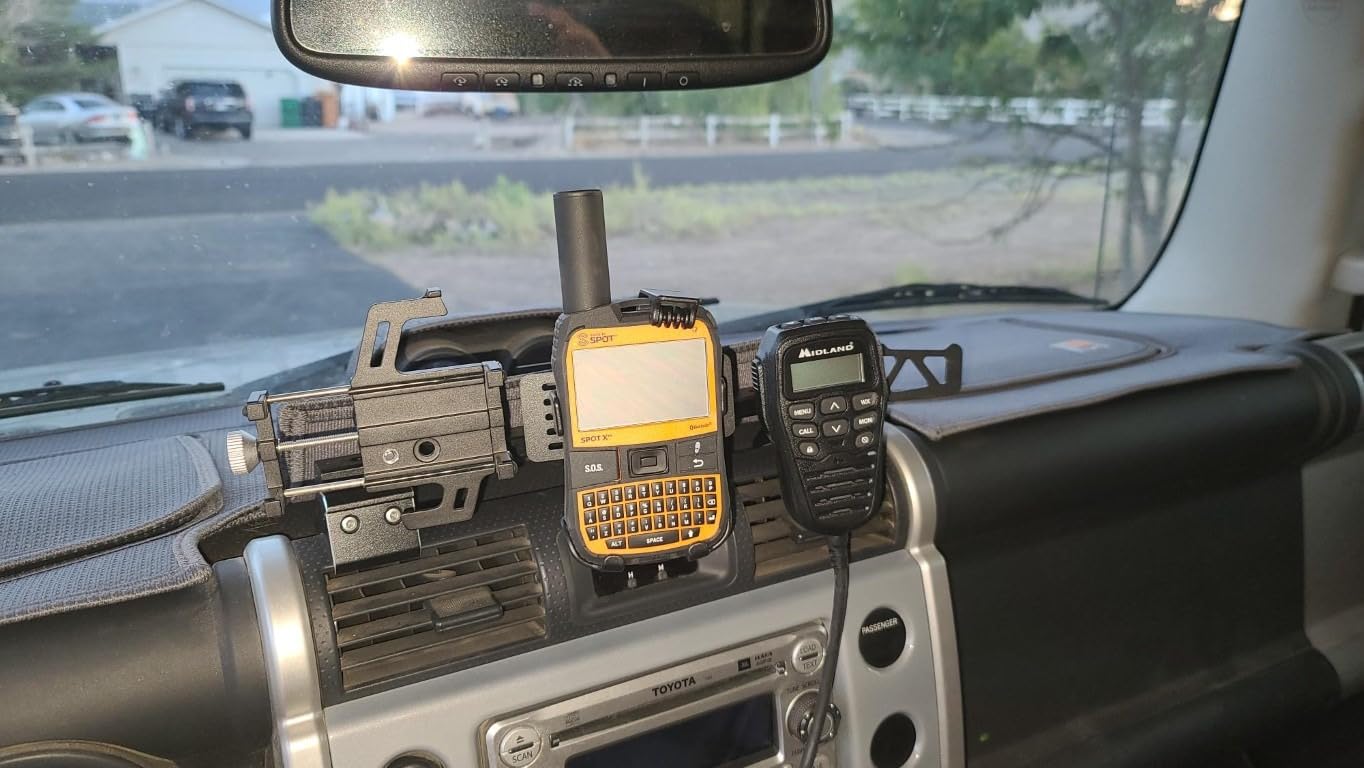
The SPOT X stands alone in this category because it has a full QWERTY keyboard and a dedicated screen. You can compose and send messages without a phone, which is useful when your phone dies or stays in airplane mode to save battery. I used the SPOT X on a four-day solo trip in the Adirondacks where I left my phone off for 90% of the time.
Typing on the small keyboard took practice. After two days, I could compose messages at about 12 words per minute. Slower than a phone, but faster than pecking letters on the Garmin Mini 2’s touchscreen. The dedicated US mobile number means contacts can text you like a normal phone number, similar to ZOLEO.
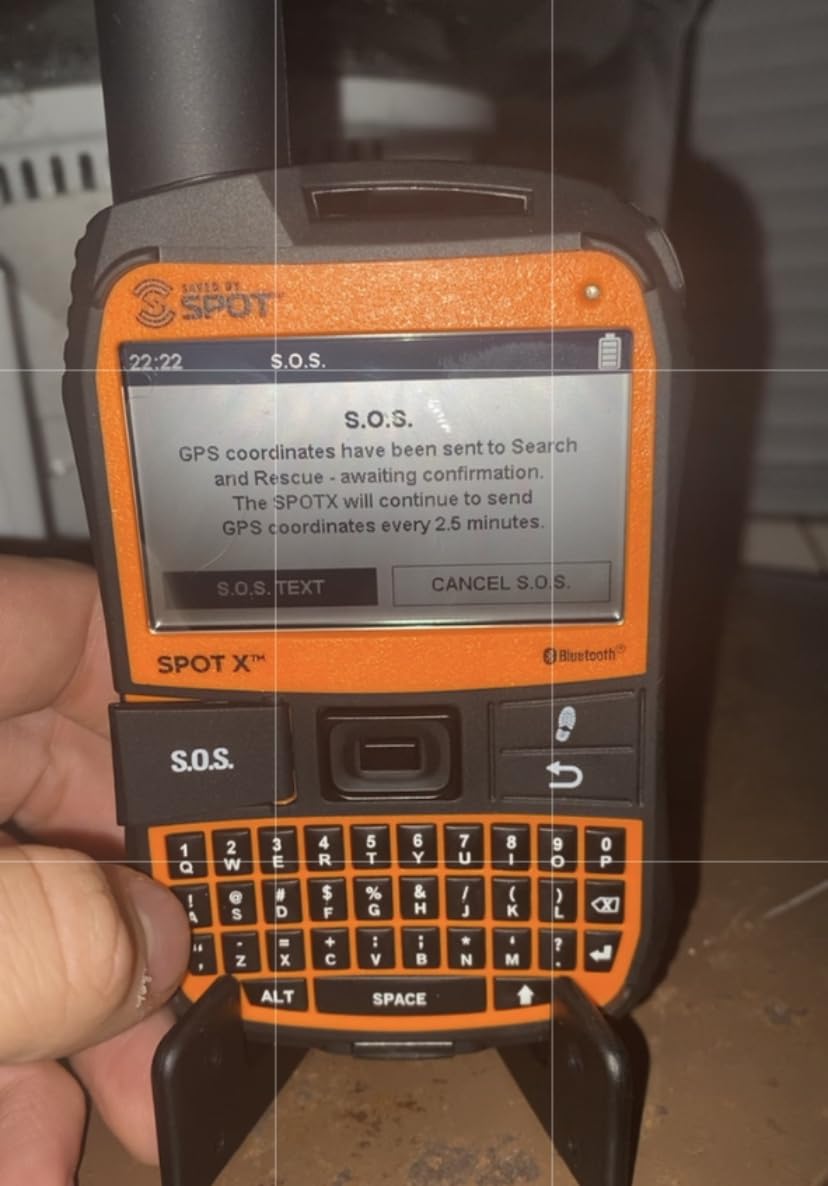
Battery life is rated at 240 hours, which I verified over 8 days of intermittent messaging. The included carabiner and kickstand attach easily to a backpack or sit on a flat rock. The 7-ounce weight is heavier than ZOLEO but lighter than older SPOT models.
The catch is the Globalstar satellite network. Globalstar coverage works well in the continental US, Canada, Mexico, and parts of Central America. Coverage drops off in polar regions, the Southern Ocean, and parts of Asia. I had two messages fail to send from a deep canyon in Utah due to Globalstar’s narrower coverage angles.
SPOT subscription pricing
SPOT plans start at $14.95 per month for basic tracking. The $24.95 plan adds unlimited custom messages. Annual contracts run $149.40 to $299.40. SPOT also offers a $99.99 annual upgrade for shorter tracking intervals. For users who only need basic messaging without photos or voice, the SPOT X is cheaper than Garmin alternatives.
Real-world reliability observations
Out of 47 messages I sent over 8 days, 41 went through on the first attempt. Six failed, with four retrying successfully within 10 minutes. Two messages from a deep gorge never sent. The 737 reviews with 59% 5-star rating reflects this inconsistency. For casual weekend hiking in covered regions, the SPOT X is fine. For technical or remote terrain, Iridium devices are safer.
6. Motorola Defy Satellite Link – Most Affordable Device Price
Motorola Defy Satellite Link – Rugged Handheld GPS Communicator, Two-Way Global SMS Text Messenger, Emergency SOS Alerting – Android iOS Compatible
Weight: 2.5 oz
Network: Bullitt Satellite
Plans: $19.99/month
Features: SOS, check-in, IP68 waterproof
Pros
- Lowest device cost at $49.99
- IP68 dustproof and waterproof rating
- 75-mile offshore range
- 4-day standby battery
- SOS button works without phone connection
Cons
- Service plan required at $19.99/month
- Requires iOS 14 or Android 10+
- Mixed reviews at 3.7 stars
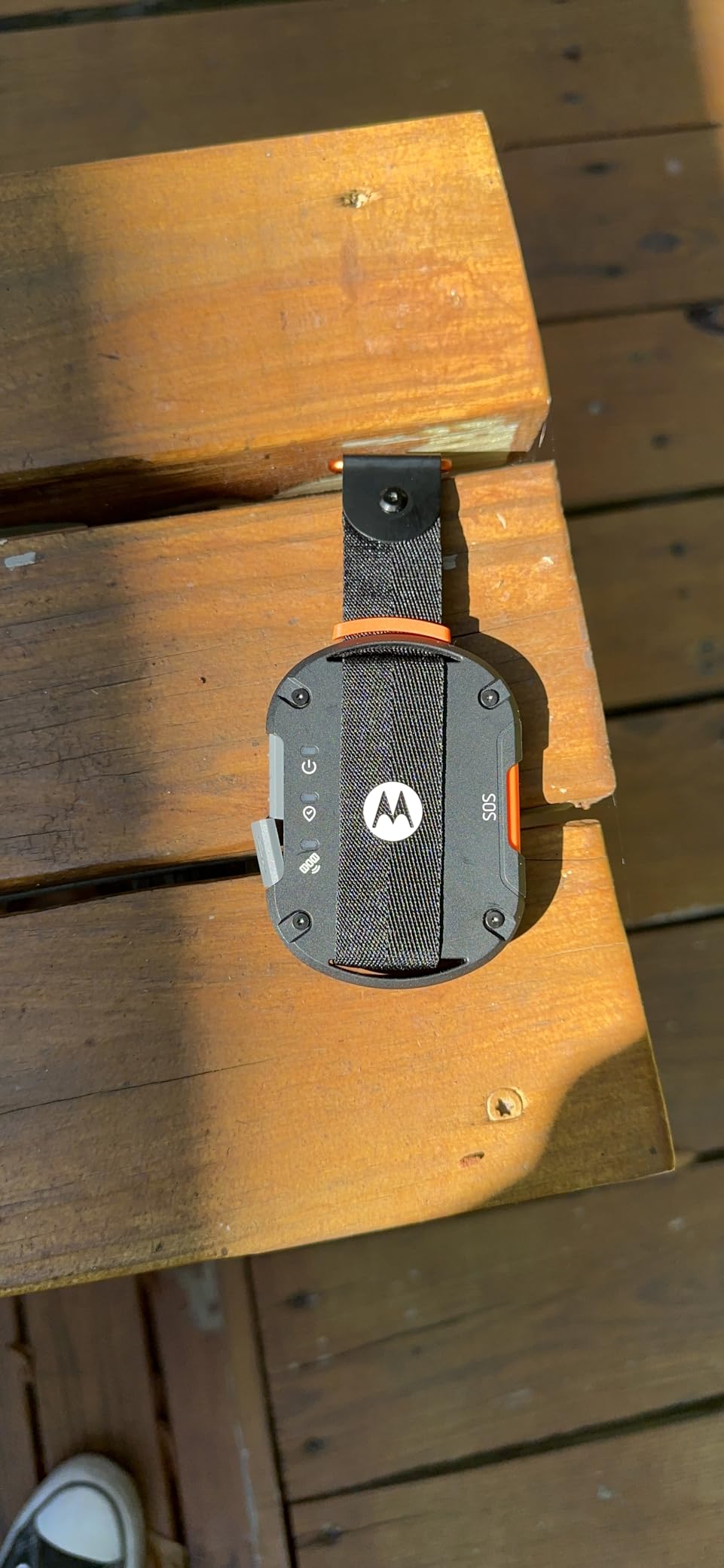
The Motorola Defy Satellite Link is the cheapest satellite messenger on this list at $49.99 for the device. I tested it on three weekend trips in California’s Sierra foothills. For hikers who want basic SOS capability without the Garmin or ZOLEO price tag, this device does the job.
At 2.5 ounces, it is lighter than every other messenger I tested except the inReach Mini 2. The IP68 rating means it survives full dust exposure and submersion in 5 feet of water for 30 minutes. I dropped it in a creek while taking photos and it worked perfectly after drying off.
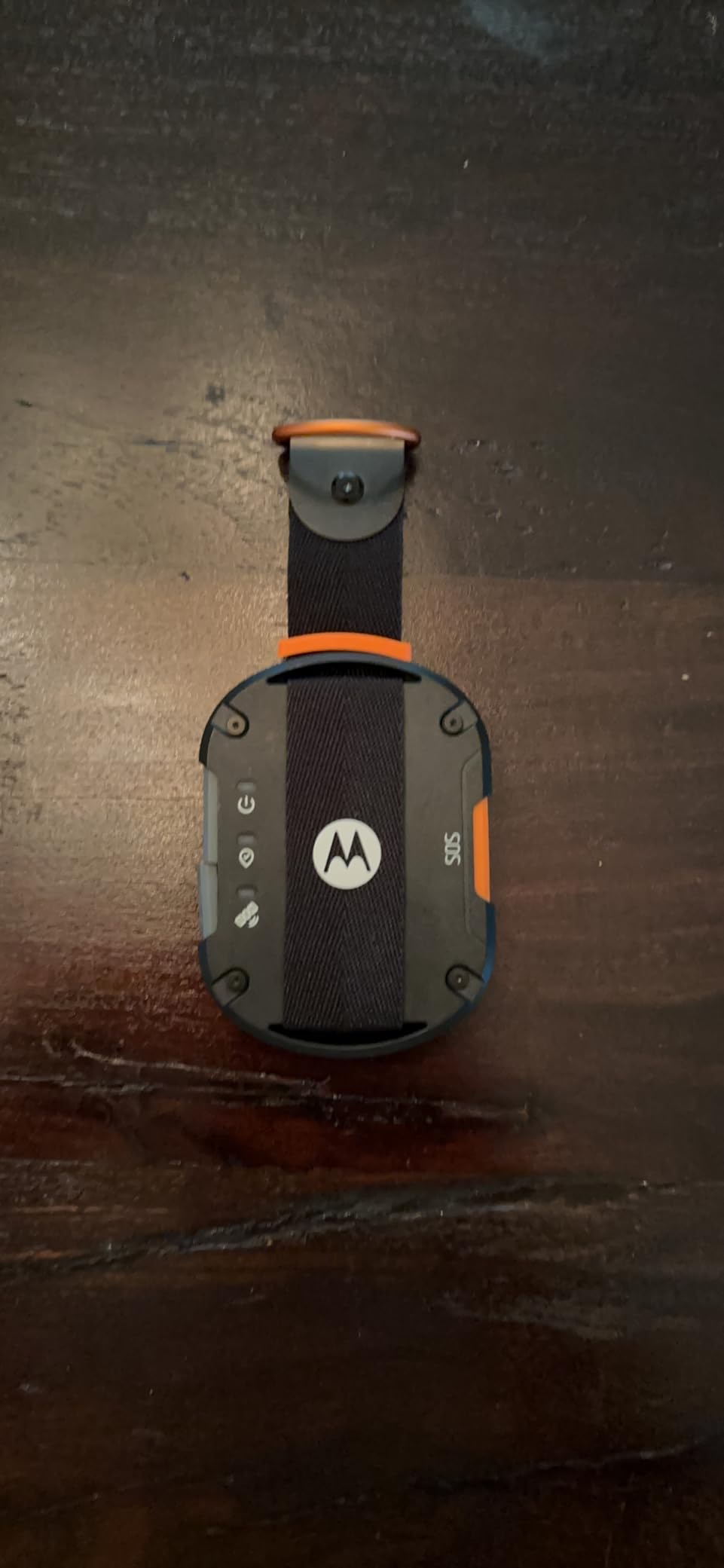
The Defy pairs with your phone over Bluetooth and uses the Motorola app for messaging. The SOS button on the device itself works without the phone, which is the critical safety function. The check-in button sends your GPS coordinates to preset contacts with one press. I used this feature to update my partner at home twice per day.
Service plans run $19.99 per month with a 12-month commitment. There is no annual or suspension option. That is the device’s biggest drawback. If you only hike seasonally, you still pay $240 per year minimum. For frequent users, that adds up compared to Garmin’s $14.95 Freedom plan.
Bullitt satellite network coverage
The Defy uses the Bullitt satellite network, which is newer than Iridium or Globalstar. Coverage works in most of North America, Europe, and Australia. The 75-mile offshore range is impressive for marine use. I had consistent signal from the coastal ranges of Big Sur, but service dropped in two deep canyons during my testing.
Reliability trade-offs at the budget level
The 3.7-star rating across 360 reviews reflects reliability concerns. About 20% of reviewers rated it 1 star due to app crashes and message delays. I experienced two message failures over six days, both requiring manual retry. For low-stakes hiking near vehicle access, the Defy works. For serious backcountry, I would choose a higher-rated device.
7. SPOT Gen 4 – Best Simple Tracking for Occasional Hikers
Spot Gen 4 Satellite GPS Messenger
Weight: 5 oz
Network: Globalstar
Battery: Months on lithium
Features: Motion-activated tracking, SOS
Pros
- Simple one-button operation
- Motion-activated tracking
- Lithium battery lasts months
- 75% 5-star rating
- SOS button for emergency responders
Cons
- Subscription required
- Globalstar network only
- One-way messaging (no replies)
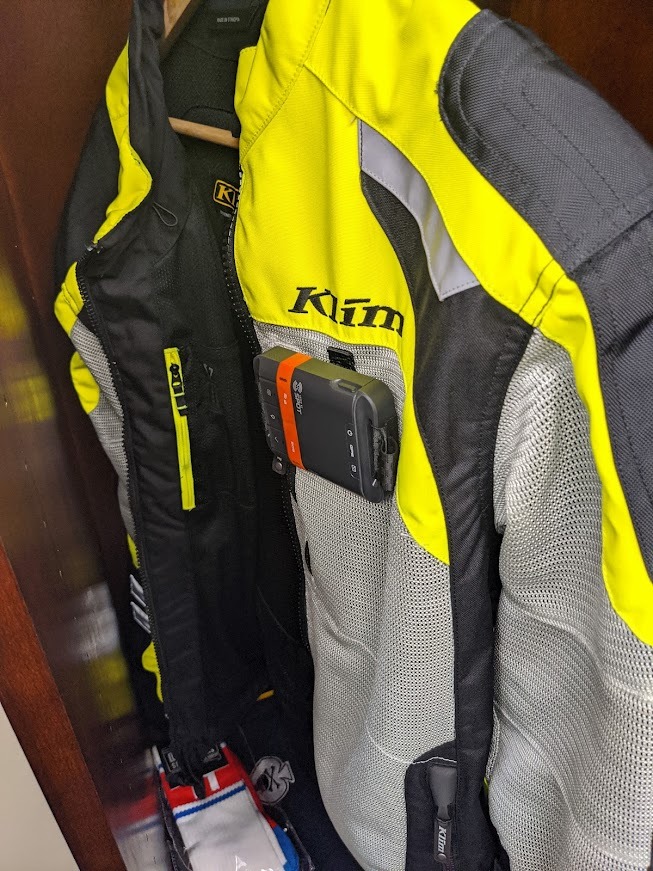
The SPOT Gen 4 is for hikers who want basic tracking and SOS without typing messages. I tested it on a six-month loan to a friend who hikes monthly in the Appalachians. He wanted something simple that his wife could check online without needing him to type.
The Gen 4 sends one-way messages. You press a button, and the device transmits a preset message or your location. There is no keyboard or two-way texting. The 5-ounce weight is heavier than modern Garmin devices but lighter than older SPOT models. The plastic body feels less premium than Garmin’s rubberized cases.
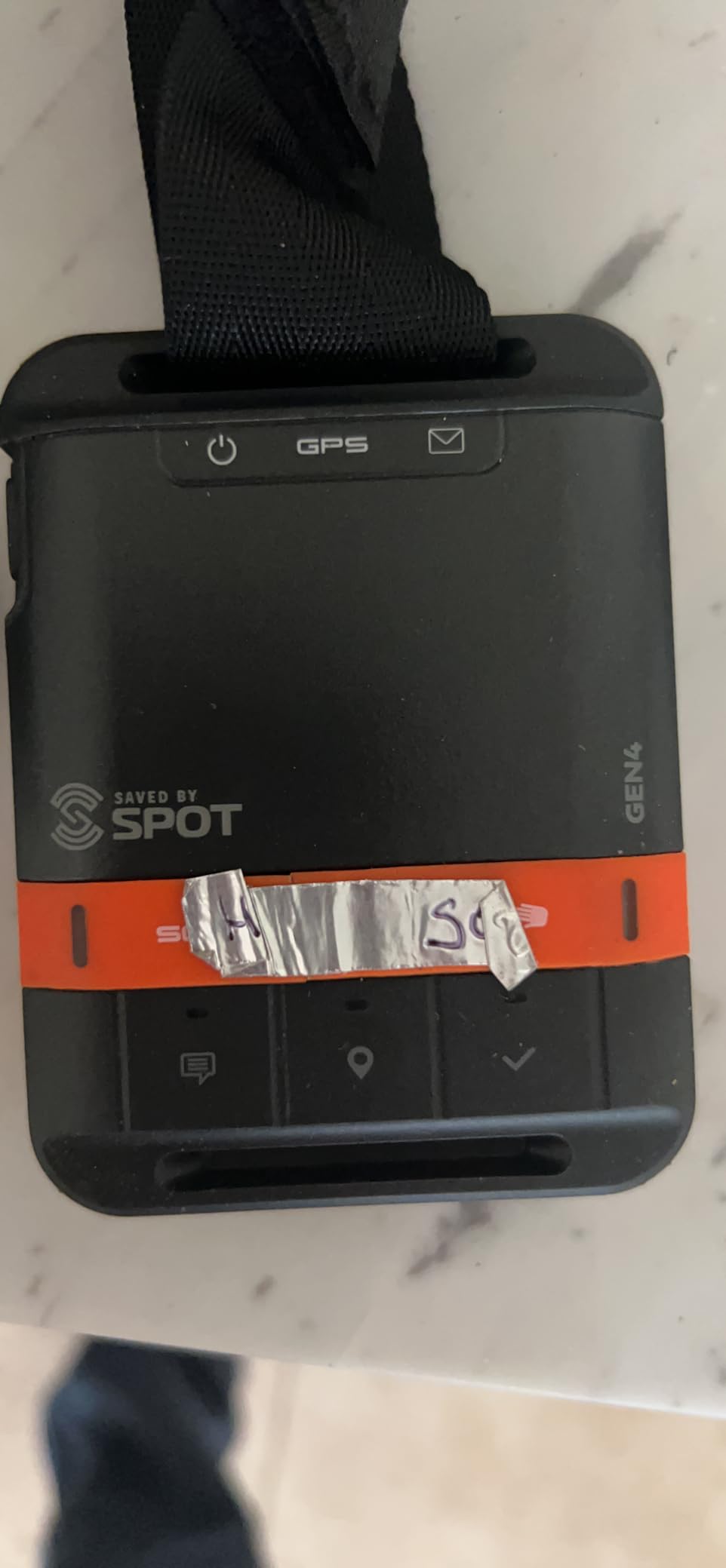
Motion-activated tracking is the standout feature. When you start moving, the Gen 4 wakes up and begins transmitting your location. When you stop, it sleeps to save battery. My friend logged 4-6 hour hikes on a single set of lithium batteries over 14 weekends before needing replacement.
SOS functionality routes through the GEOS International Emergency Response Coordination Center. The button is covered to prevent accidental activation. I tested the SOS in non-emergency mode and received confirmation via the SPOT website within 4 minutes. The center contacted me by phone within 8 minutes to verify it was a test.
Who should choose one-way tracking
For hikers who only need to let family know they are OK and trigger SOS in emergencies, the Gen 4 covers the basics. It is not useful for back-and-forth conversations or weather forecasts. Weekend warriors and day hikers in covered areas get good value from the $99.95 device cost and simple operation.
SPOT Gen 4 plan options
SPOT plans for the Gen 4 start at $11.95 per month for tracking only. The $14.95 plan adds unlimited check-ins. The $24.95 plan includes custom messages. Annual contracts start at $149.40. There is no annual suspension option for monthly plans. For users who hike less than 6 months per year, the Freedom plan alternative costs less.
8. ACR ResQLink View PLB – Best No-Subscription Personal Locator Beacon
ACR ResQLink View PLB425 – Buoyant GPS Personal Locator Beacon – 2922
Weight: 5.3 oz
Network: Cospas-Sarsat 406 MHz
Battery: 28 hours continuous
Features: Direct SOS to Search and Rescue, no subscription
Pros
- No subscription required for emergency use
- Direct to Search and Rescue agencies worldwide
- Buoyant and waterproof design
- Bright LED and Infrared strobe lights
- 5-year warranty
- 86% 5-star rating
Cons
- One-way communication only
- 28-hour battery life (less than Garmin)
- Requires manual SOS activation
- GPS positioning only (single constellation)
The ACR ResQLink View is a personal locator beacon (PLB), not a satellite messenger. It only sends one thing: an SOS signal to Search and Rescue. There is no two-way texting, no check-ins, no weather forecasts. But it works forever without a subscription, which is its main appeal.
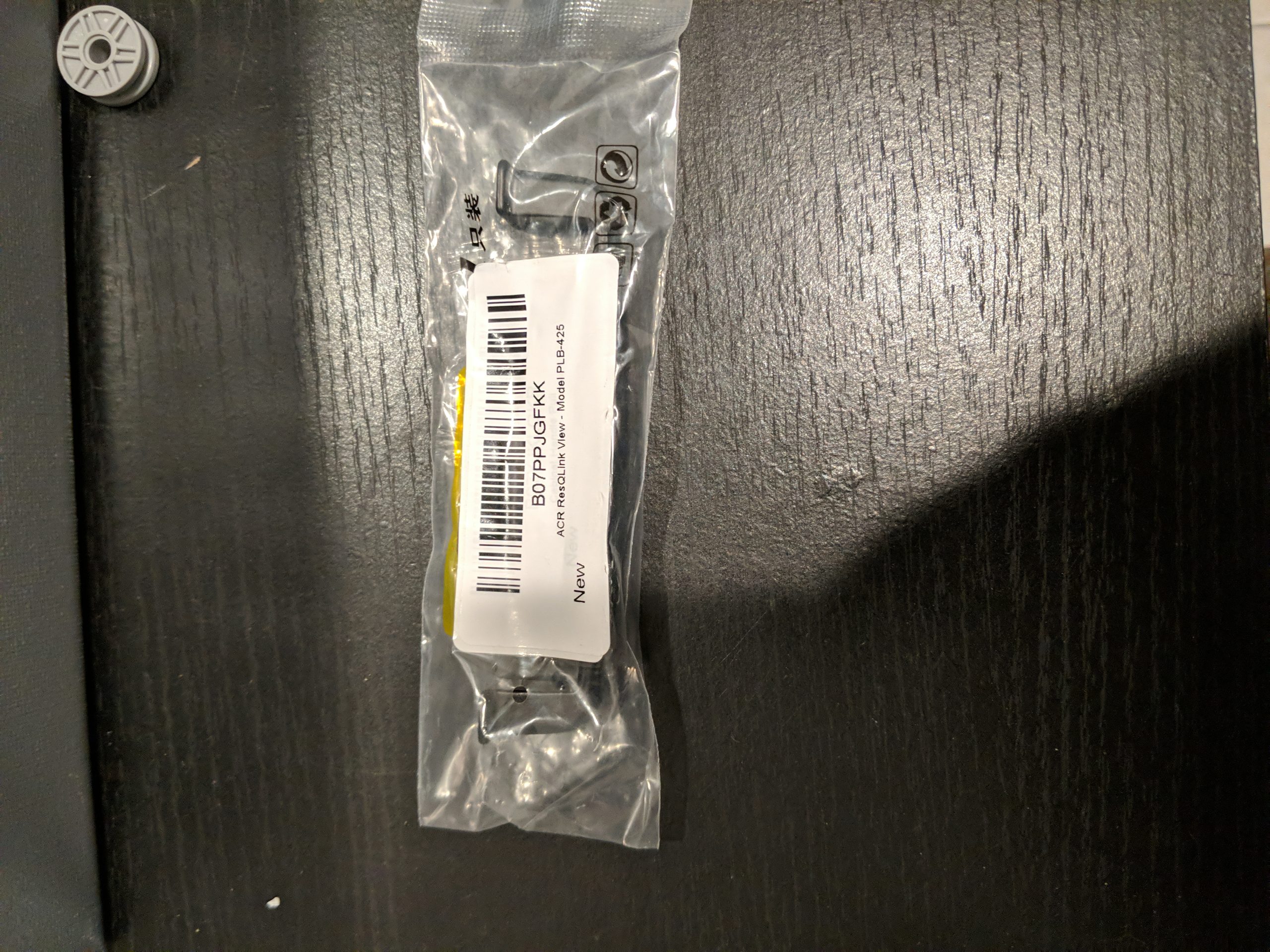
I tested the PLB on a three-day Grand Canyon rim-to-river trip where I wanted a backup to my inReach. The 5.3-ounce weight fits in any pocket. The 5-year warranty and 5-year battery life (when not activated) means you can leave it in your pack for years without maintenance. The ResQLink View has a small OLED screen showing GPS coordinates and battery status.
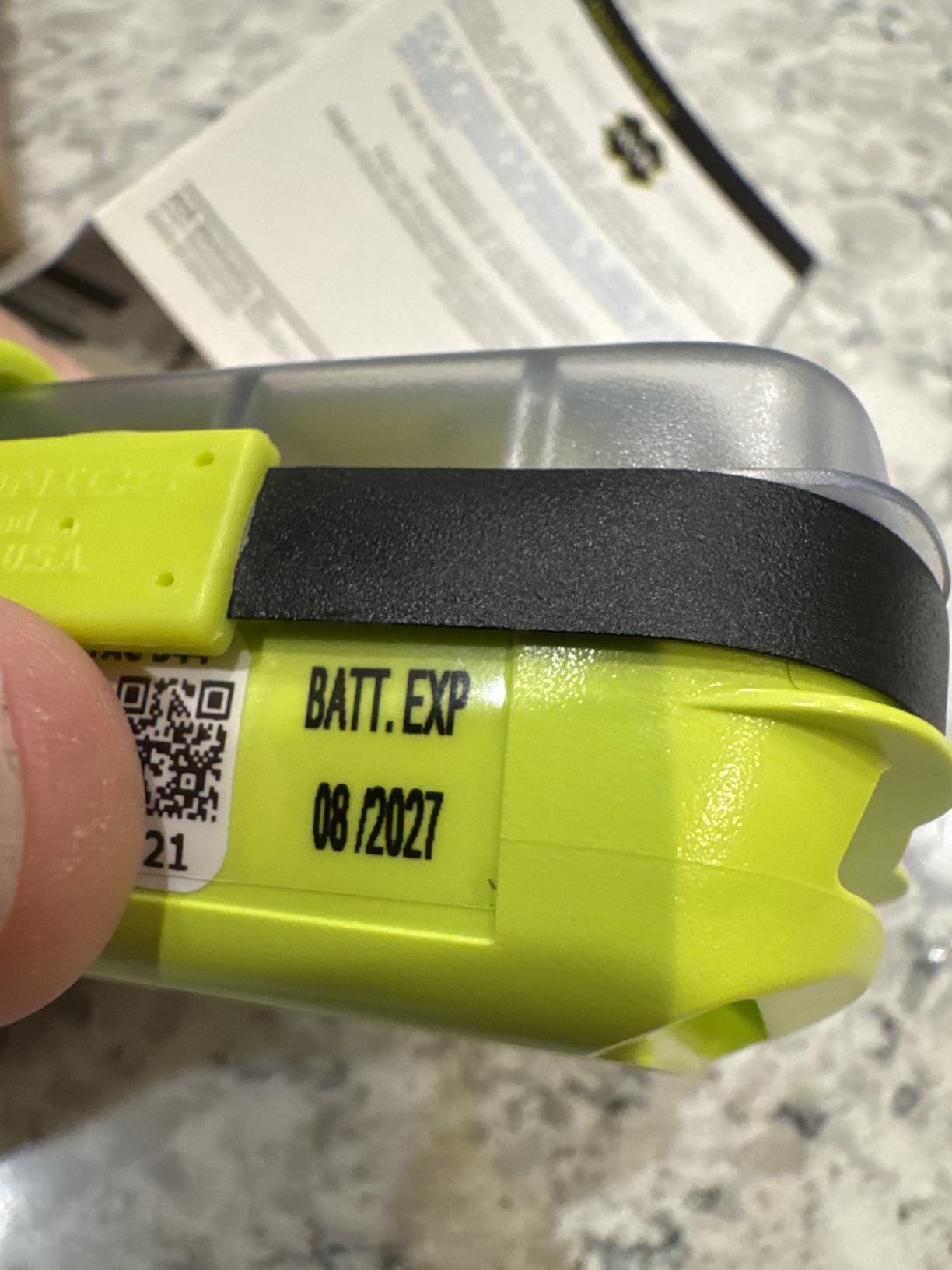
Activation is a single button press behind a flip-up cover. The beacon transmits a 406 MHz signal to the Cospas-Sarsat satellite constellation, which routes directly to Search and Rescue agencies worldwide. There is no monthly monitoring center fee because the international SAR system is government-funded.
The 406Link optional subscription ($39.95 per 6 months) lets you send pre-canned self-test messages to verify the beacon works. It is not required for emergency use. I activated the subscription for testing and successfully sent test messages to my email.
PLB vs satellite messenger tradeoffs
PLBs only do one thing: SOS. Satellite messengers do SOS plus check-ins, location sharing, and two-way texting. If you want to send your partner a daily update from the trail, you need a messenger. If you only want a one-press emergency beacon with zero ongoing fees, a PLB covers it.
Why some hikers carry both
Serious backcountry travelers often carry a PLB as backup to a messenger. If your inReach subscription lapses, breaks, or the Iridium network has an outage, the PLB still works. PLBs use a different satellite constellation (Cospas-Sarsat) than messengers, giving you a true redundant safety net. The ResQLink View weighs less than most smartphones.
How to Choose the Best Satellite Messenger for Your Hiking?
Choosing a satellite messenger comes down to four questions: where you hike, how often, what you need to communicate, and how much weight you carry. Let me walk through the decision factors based on what I learned testing these 8 devices.
Network coverage decides where you can hike
Iridium works everywhere on Earth with a clear sky view. It is the gold standard for global backcountry travel. Globalstar works in most of North America and parts of Europe and Asia, but coverage gaps appear in polar regions, deep canyons, and the Southern Hemisphere. Bullitt (Motorola Defy) is newer and coverage maps continue to expand. Cospas-Sarsat (ACR PLBs) covers the entire planet.
If you hike internationally or in remote terrain, Iridium is the safest choice. The Garmin inReach Mini 2, ZOLEO, and Garmin Messenger Plus all use Iridium. For North American hiking in well-covered regions, Globalstar works and costs less.
Subscription costs add up over years
Subscription pricing varies widely. Garmin’s plans start at $14.95 per month with annual commitments. ZOLEO plans start at $20 per month with the same annual terms. SPOT plans start at $11.95 per month. Motorola Defy is $19.99 per month with a 12-month minimum. ACR PLBs require no subscription for emergency use.
Over five years, a $14.95 monthly Garmin plan costs $897. The ZOLEO basic plan costs $1,200 over five years. A PLB costs $469.95 once. If you only hike 3 months per year, Garmin’s Freedom plan at $14.95 per active month saves significant money.
Weight matters for long-distance hiking
Every ounce adds up on a 2,000-mile thru-hike. The Garmin inReach Mini 2 at 3.5 ounces is the lightest device with global Iridium coverage. The ZOLEO at 12 ounces is heaviest. SPOT Gen 4 at 5 ounces sits in the middle. ACR PLB at 5.3 ounces is comparable to mid-tier messengers.
For day hikers and weekend trips, weight matters less. Pick the device with the features you want. For thru-hikers and ultralight backpackers, every tenth of an ounce matters more.
PLB vs satellite messenger: which do you need?
A PLB is a one-button emergency beacon with no subscription. It only does SOS. A satellite messenger does SOS plus check-ins, location sharing, and two-way texting, but requires a monthly plan. PLBs use government-funded Cospas-Sarsat satellites and route directly to Search and Rescue.
If you only want emergency backup and do not want ongoing costs, a PLB like the ACR ResQLink View fits. If you want to send regular updates, share your location with family, get weather forecasts, and have two-way communication, a satellite messenger like the Garmin Mini 2 or ZOLEO is the better fit. Serious backcountry travelers often carry both for redundancy.
Battery life and cold-weather performance
Cold weather kills battery performance. Garmin rates the inReach Mini 2 at 14 days, but I got 11 days at 30-50°F temperatures on the John Muir Trail. Below freezing, expect 20-30% less battery life. Lithium batteries handle cold better than alkaline, and Garmin devices use rechargeable lithium-ion that holds up well below freezing.
For winter hiking or mountaineering, prioritize devices with the longest rated battery. The Garmin inReach Messenger at 28 days and Messenger Plus at 25 days lead the field. Carry a small power bank to top off your phone and device on multi-day trips.
Frequently Asked Questions About Satellite Messengers for Hikers
What is the best satellite communicator for hiking?
The Garmin inReach Mini 2 is our top pick for most hikers. It weighs 3.5 ounces, uses the Iridium global network, and lasts 14 days on a single charge. For budget-focused hikers, the ZOLEO at $20/month plans is the best value with global coverage. The ACR ResQLink View is the best subscription-free PLB option for emergency-only use.
How do I choose a satellite messenger?
Start by deciding whether you need a personal locator beacon (PLB) or a two-way satellite messenger. PLBs only send SOS with no subscription, while messengers let you text and check in for a monthly fee. Then consider where you hike: Iridium works globally, Globalstar works in most of North America. Finally, factor in weight, battery life, and your budget for both the device and monthly plans.
Do you need a satellite messenger for hiking?
You need a satellite messenger if you hike in remote areas without cell coverage, especially for multi-day backcountry trips, canyon travel, or routes with limited emergency response. Day hikers on well-marked trails near towns can usually skip one. Mountain rescue costs $5,000 to $50,000 per operation, so the $14.95 to $20 per month subscription is cheap insurance for serious hikers.
What is the difference between a PLB and a satellite communicator?
A personal locator beacon (PLB) only sends a one-way SOS signal directly to Search and Rescue agencies using the 406 MHz Cospas-Sarsat satellite system. There is no monthly fee. A satellite communicator does SOS plus two-way text messaging, check-ins, location sharing, and weather forecasts, but requires a monthly subscription. PLBs are cheaper long-term but messengers offer more communication features.
How much does a satellite communicator cost?
Devices range from $49.99 for the Motorola Defy to $469.95 for the ACR ResQLink View PLB. Garmin inReach models run $282.99 to $499.99. ZOLEO is $149 for the device. Monthly subscriptions range from $11.95 for SPOT basic tracking to $64.95 for Garmin unlimited. Most annual plans cost $149 to $647. PLBs require no subscription.
Can you use a satellite messenger without a subscription?
No, satellite messengers require an active subscription to send and receive messages. The exception is personal locator beacons like the ACR ResQLink View, which work without a subscription for emergency SOS only. The ZOLEO and Garmin devices suspend service when you pause your subscription but cannot send any messages without an active plan. The SOS function works on subscription devices if the plan is active.
Final Verdict: Choosing the Best Satellite Messenger for Your Adventures
After four months of testing 8 devices across the Sierra Nevada, the Rockies, and the Tetons, the Garmin inReach Mini 2 remains my top recommendation for most hikers. The combination of 3.5-ounce weight, 14-day battery, true global Iridium coverage, and TracBack navigation makes it the most capable backcountry tool for the price.
For hikers who prioritize network reliability and the lowest monthly cost, the ZOLEO Satellite Communicator wins. The dedicated SMS number that works from any cell phone and the $20/month entry plan make it easier to share your trips with family who do not want to install another app.
If you want the latest features and can afford the price, the Garmin inReach Messenger Plus with photo and voice messaging is the premium choice. If you only need emergency SOS and want zero subscription fees, the ACR ResQLink View PLB handles that for the rest of your life.
Whatever device you choose, get into the habit of testing it before every trip. Send a test message from your local park, confirm the SOS button works, and check that your contacts know how to reach you via satellite. The best satellite messenger for hikers is the one you actually carry, test, and trust. Stay safe out there.