
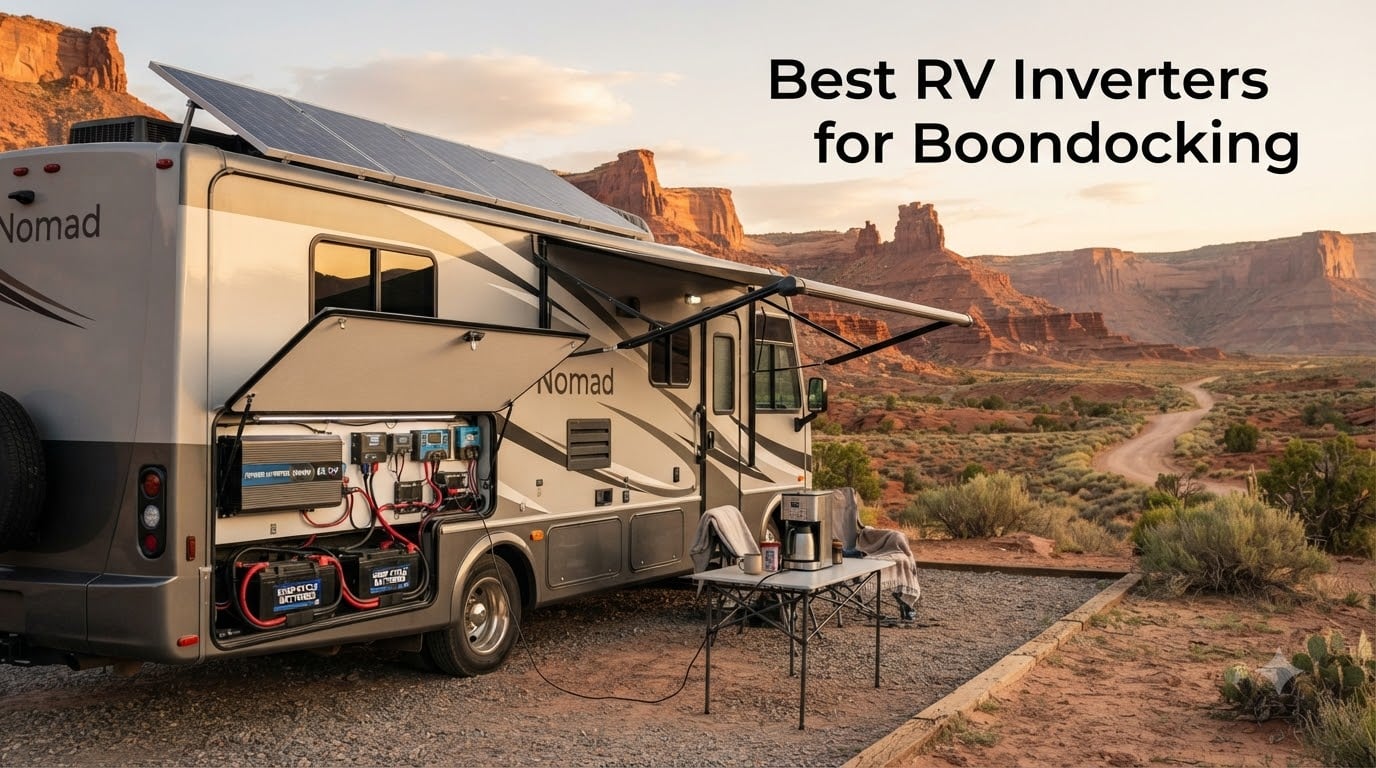
Boondocking is the whole reason many of us bought an RV in the first place. No hookups, no neighbors, no noise except the wind and your own coffee maker. That last part is the catch, though. Without shore power, your house batteries only give you 12V DC power, and almost every appliance you own wants 120V AC.
An RV inverter fixes that. It takes the 12V power stored in your battery bank and converts it into clean 120V AC power, so you can run a microwave, a coffee maker, a hair dryer, or a residential fridge while parked in the middle of nowhere. Our team has spent the last several months digging through spec sheets, owner reviews, and forum threads from communities like r/GoRVing and EscapeForum to figure out which models actually hold up off-grid.
In this guide to the best RV inverters for boondocking, we break down 8 pure sine wave inverters that work for real off-grid setups. We cover everything from compact 1000W units for weekend campers to 4000W workhorses for full-timers running residential appliances. We also explain how to size an inverter for your battery bank, why a transfer switch matters more than most people think, and how to make sense of pure sine wave versus modified sine wave.
Table of Contents
Top 3 Picks for Best RV Inverters for Boondocking in 2026

Renogy 3000W Pure Sine Wave Inverter
- 3000W continuous power
- Bluetooth app monitoring
- UPS transfer switch

BELTTT 3000W Pure Sine Wave Inverter
- 3000W continuous power
- 6000W peak surge
- 23 ft wired remote

BELTTT 1000W Pure Sine Wave Inverter
- 1000W continuous power
- Compact 4.4 lb design
- ETL certified
Our editor’s choice is the Renogy 3000W because it pairs a massive 4700-review track record with Bluetooth monitoring and a true UPS transfer switch. The BELTTT 3000W is the best value pick, delivering the same continuous wattage and a 23-foot remote for a lot less money. If you only need to charge laptops and run small appliances, the BELTTT 1000W gets you pure sine wave power in a compact package.
Best RV Inverters for Boondocking in 2026
| Product | Specifications | Action |
|---|---|---|
| Renogy 3000W Pure Sine Wave Inverter |
|
Check Latest Price |
| BELTTT 3000W Pure Sine Wave Inverter |
|
Check Latest Price |
| BELTTT 1000W Pure Sine Wave Inverter |
|
Check Latest Price |
 ZETAWALE 2500W Inverter with ATS ZETAWALE 2500W Inverter with ATS |
|
Check Latest Price |
 Giandel 4000W Pure Sine Wave Inverter Giandel 4000W Pure Sine Wave Inverter |
|
Check Latest Price |
 LiTime 2000W Inverter with ATS LiTime 2000W Inverter with ATS |
|
Check Latest Price |
 LANDERPOW 3000W Pure Sine Wave Inverter LANDERPOW 3000W Pure Sine Wave Inverter |
|
Check Latest Price |
 Xantrex Freedom XC 2000 Xantrex Freedom XC 2000 |
|
Check Latest Price |
1. Renogy 3000W Pure Sine Wave Inverter – Best Overall for Full-Time Boondocking
Renogy Inverter PUH, 3000W Pure Sine Wave Power Inverter with UPS Transfer Switch & Bluetooth, 12V DC to 120V AC Converter for RV, Truck, Home,Camping – 6000W Surge Power, Remote Monitoring
3000W continuous (6000W surge)
Pure sine wave
Bluetooth monitoring
UPS transfer switch
Under 51dB
Pros
- Excellent build quality
- Built-in Bluetooth app monitoring
- Very quiet under 51dB
- UPS transfer switch for seamless switching
- Reliable long-term performance
Cons
- Higher price point
- Some reports of GFCI trips after months of use
- LED lights draw small power when off
I will start with the one I would put in my own rig. The Renogy 3000W PUH has earned a 4.3-star average across 4700 reviews, which is a serious track record in a category where many inverters have fewer than 500. It is a true pure sine wave unit, so laptops, CPAP machines, and residential fridges run on it without the buzzing or heat that modified sine wave inverters cause.
What sold me is the monitoring. The built-in Bluetooth connects to the Renogy app, so I can check input voltage, output load, and battery status from bed instead of walking out to the bay. The wired remote switch lets you kill the inverter completely at night, which matters because even efficient inverters draw idle power around the clock.
The UPS transfer switch is the feature full-timers care about. When you plug into shore power, it switches sources automatically and the inverter becomes a pass-through. Unplug, and you are back on battery power without flipping anything. Forum users consistently rank Renogy’s build quality near the top, though some report mixed experiences with warranty support responsiveness.
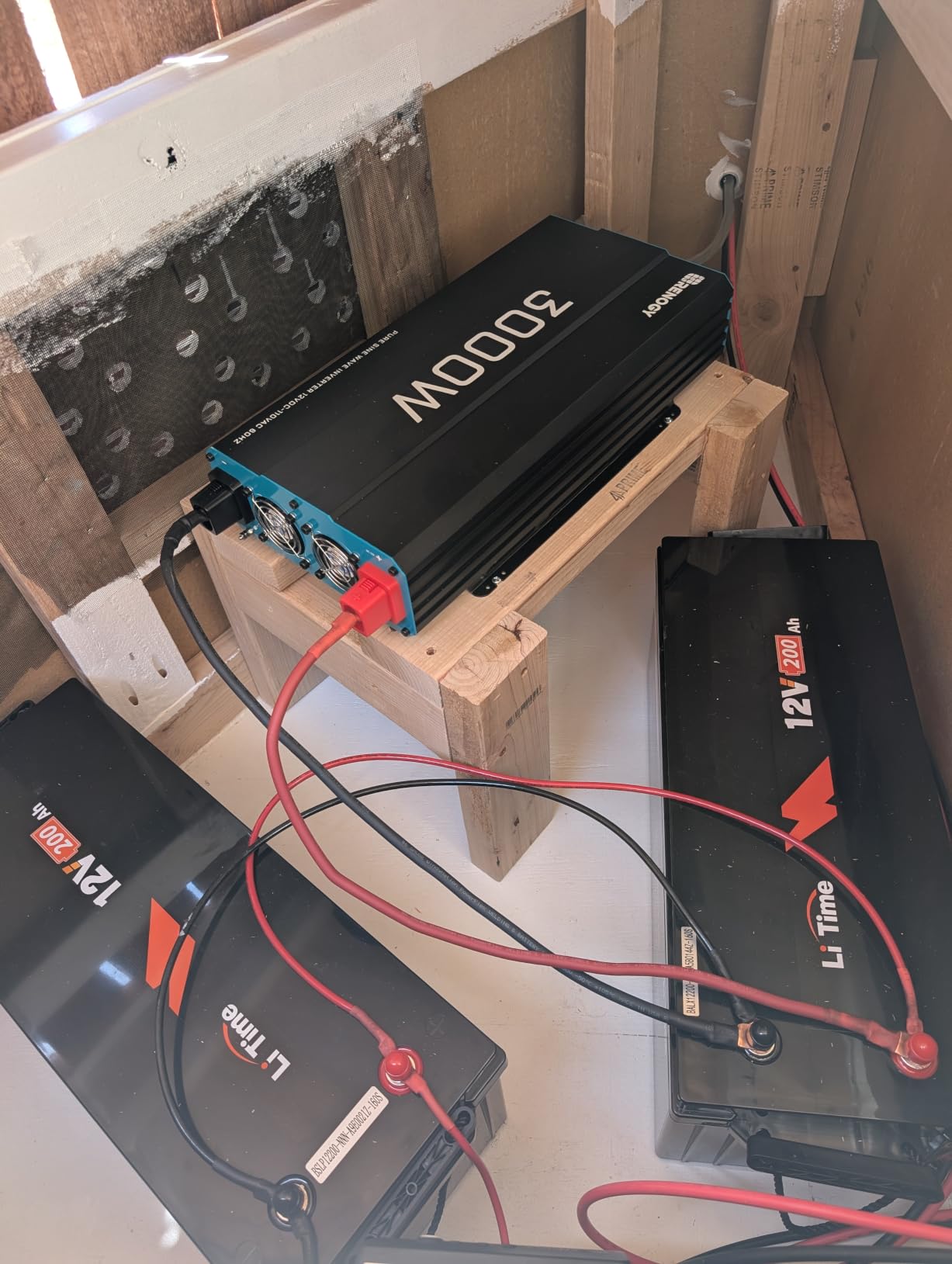
It runs at under 51dB, which is quieter than a normal conversation. Light sleepers in the RV community constantly complain about inverter fans, and this unit is one of the few 3000W models that stays out of the conversation entirely. Efficiency is above 92 percent, so you waste less of your precious battery capacity as heat.
The downsides are real but manageable. A few owners reported GFCI trips after a few months, and the always-on LED lights pull a small current even when the unit is off. The low-voltage alarm can drain a battery fast if you ignore it.
How Much Battery Capacity You Need
A 3000W inverter pulling a full load draws roughly 250 amps from a 12V bank. That means you need at least 400Ah of lithium or a very large AGM bank to use this unit to its potential. Pair it with 400-plus watts of solar if you plan to run heavy appliances daily.
Who Should Pay Extra for This Unit
This is the pick for full-timers and long-trip boondockers who want set-and-forget reliability and app monitoring. If you only camp a few weekends a year, a cheaper 3000W option below will do the same job.
2. BELTTT 3000W Pure Sine Wave Inverter – Best Value 3000W Unit
BELTTT 3000W Pure Sine Wave Inverter 12V DC to 120V AC, 6000W Peak
3000W continuous (6000W peak)
Pure sine wave
LCD display
23 ft wired remote
9.9 lb
Pros
- Pure sine wave at a budget price
- Runs microwaves and air fryers
- 23 ft remote controller
- Fans stay off at low loads
- Solid build quality
Cons
- Outlets spaced too close together
- Included cables too light for full 3kW load
- Gets warm at sustained full load
The BELTTT 3000W is the inverter I recommend most often when someone asks how to get serious off-grid power without the premium price. It holds a 4.5-star rating across 436 reviews and ranks near the top of its Amazon category. You get the same 3000W continuous output and 6000W surge rating as units costing twice as much.
In real-world use, owners report running microwaves, coffee makers, and air fryers without issue. The LCD display shows input and output voltage plus status at a glance, and the 23-foot wired remote is genuinely useful. Being able to mount the inverter in a bay and control it from inside the rig makes installation much cleaner.
The cooling fans are smarter than most. They stay off at low loads, which means silent operation when you are just charging phones or running a TV. That addresses one of the biggest complaints in boondocking forums, where noisy fans ruin otherwise good inverters.
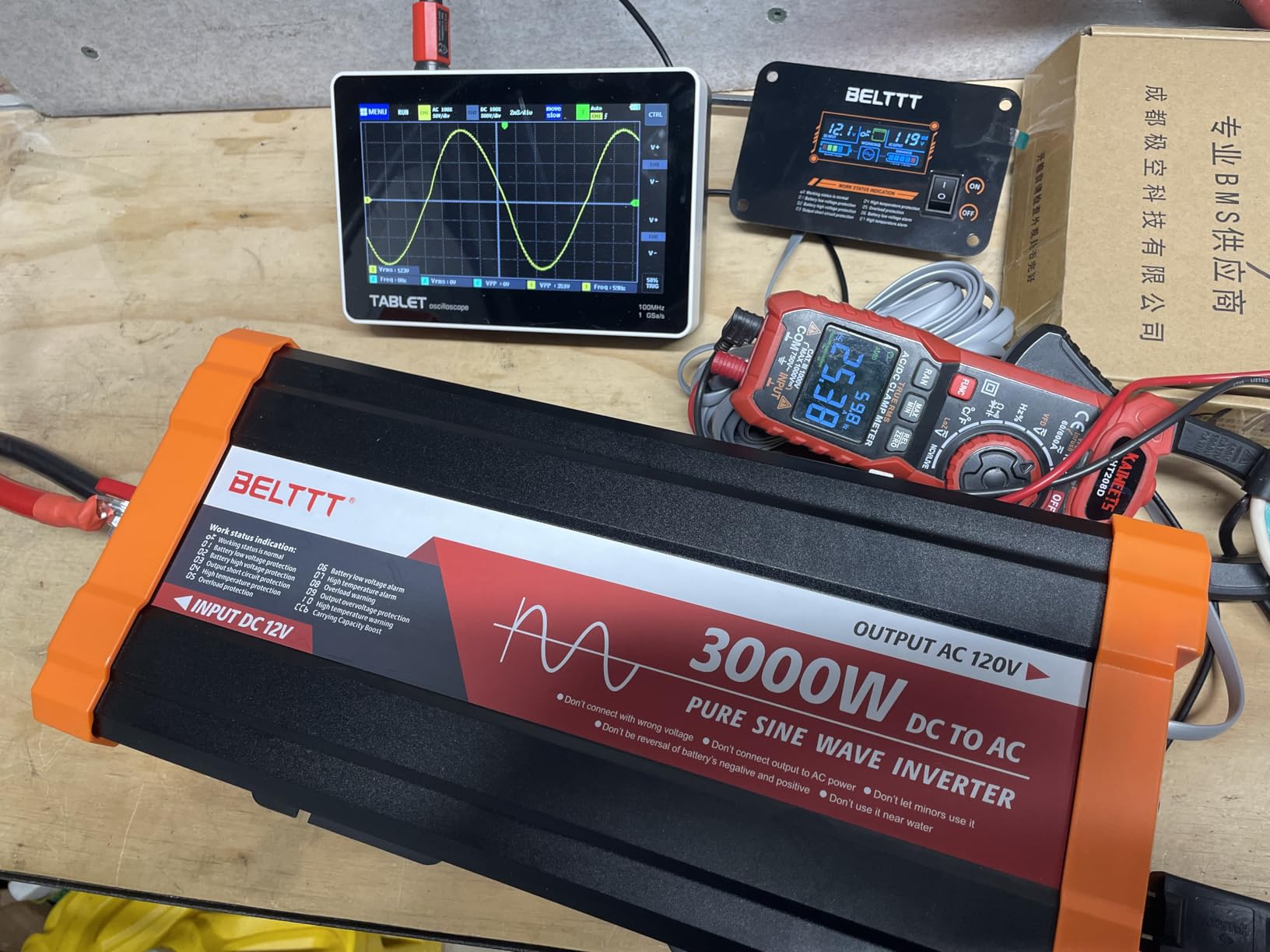
Two things to know before you buy. The AC outlets are spaced close together, so two bulky plugs will not fit side by side, and the included battery cables are too light for a sustained 3000W load. Plan to upgrade to thicker gauge cable with a proper fuse if you will max it out.
It also warms up at sustained full load, so give it ventilation room in whatever bay you mount it in.
Cable and Fuse Sizing for Full Load
For sustained 3000W draws at 12V, you want at least 2/0 AWG cable and a 300A Class T fuse on the positive run. Keep the cable run as short as possible, under 5 feet ideally, to prevent voltage drop that triggers low-voltage shutdowns.
Best Use Cases for This Inverter
This is the sweet spot for weekend and seasonal boondockers with a 200Ah to 400Ah lithium bank who want to run a microwave or coffee maker. Full-timers who monitor their systems closely will also get plenty of value from it.
3. BELTTT 1000W Pure Sine Wave Inverter – Best Budget Pick for Light Loads
BELTTT 1000Watt Pure Sine Wave Inverter 12V DC to 120V AC, 2000W Peak
1000W continuous (2000W peak)
Pure sine wave
LCD display
Dual AC outlets
4.4 lb
Pros
- Excellent price for pure sine wave
- Very quiet operation
- Runs sensitive electronics cleanly
- FCC UL and ETL certified
- Compact and light at 4.4 lb
Cons
- Included cables undersized for high loads
- Directions confusing for some users
- Display mode indicators unclear
Not everyone needs 3000 watts. If your boondocking load is a TV, a laptop, a blender, and maybe a small ice maker, the BELTTT 1000W handles all of it for a fraction of the cost. It carries a 4.6-star rating across 249 reviews, with 78 percent of reviewers giving it 5 stars.
Despite the low price, this is a true pure sine wave inverter with FCC, UL, and ETL certification. Owners specifically praise how it runs sensitive electronics without interference, and one reviewer confirmed it handles inductive loads like a portable ice maker, which is exactly the kind of appliance that kills cheap modified sine units.
The LCD display is a nice surprise at this price, showing input and output voltage plus battery status. At 4.4 pounds and 11 inches long, it fits in a cabinet or under a seat where a big 3000W unit never would.
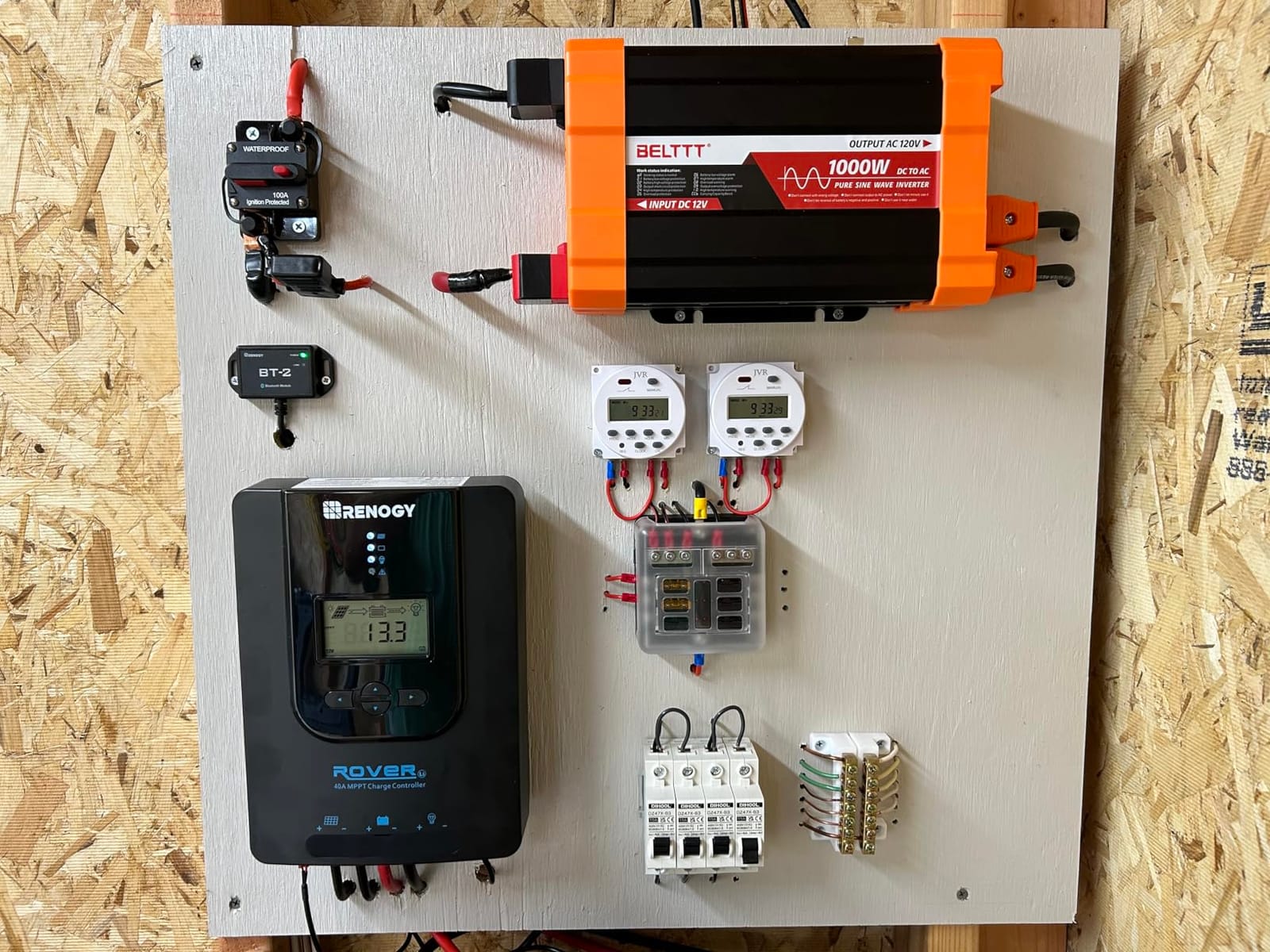
The limitations are the flip side of the price. The included 5AWG cables are fine for moderate loads but undersized if you plan to push 1000W continuously. And the manual leaves something to be desired, so first-time installers should budget an hour with YouTube.
What It Can and Cannot Run
It will comfortably run a TV, laptop, fans, LED lighting, a blender, and a small ice maker. It will not run a microwave, hair dryer, air fryer, or any resistive heating appliance. Those all need 1500W or more, and pushing this unit that hard trips its overload protection.
Who This Unit Fits Best
This is the pick for small travel trailers, truck campers, van conversions, and anyone with a 100Ah battery who just wants clean power for electronics. Pair it with 200 watts of solar and you have a genuinely functional off-grid setup.
4. ZETAWALE 2500W Inverter with Built-In ATS – Best for Automatic Power Switching
2500W Pure Sine Wave Inverter 12V DC to 120V AC with Built-in ATS for RVs
2500W continuous (5000W peak)
Built-in ATS
LCD remote
Hardwire ready
8.2 lb
Pros
- Built-in automatic transfer switch
- Clean sine wave verified by owners
- Powers induction cooktops and power tools
- Works with all common battery types
- Easy hardwire setup
Cons
- Fan is loud with only two speeds
- DC cables inadequate for high loads
- Battery percentage not calibrated for LiFePO4
The ZETAWALE 2500W sits in a smart middle ground between output and price, and its standout feature is the built-in automatic transfer switch. If you split your time between boondocking and RV parks, the ATS detects shore power and switches sources on its own, no plug juggling required.
The output quality is legit. Multiple owners have verified the waveform with an oscilloscope, which is more testing than most inverters ever get. It runs induction cooktops, hair dryers, and power tools, which are brutal loads that expose weak units quickly.
It is also battery agnostic, working with lithium, AGM, deep-cycle, and lead-acid 12V banks. The LCD remote gives you visibility on load and voltage from inside the rig.
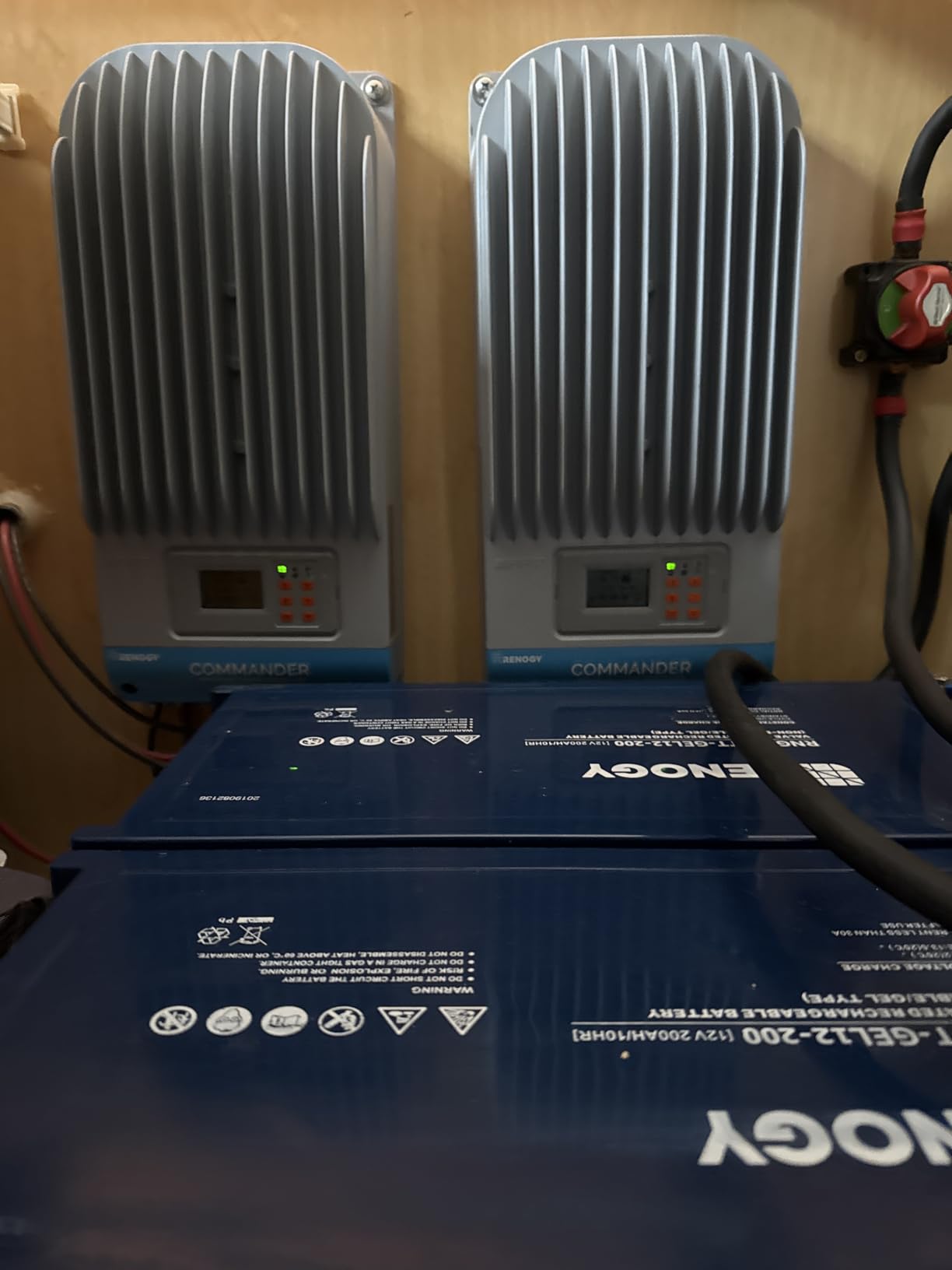
The fan is my main complaint. It only has two speeds, on and off, and the on setting is loud enough to notice inside a quiet rig. The included DC cables also need upgrading for sustained high loads, a recurring theme in this category.
One more quirk: the battery percentage readout is not calibrated for LiFePO4 chemistry, so lithium users should rely on their battery management system for state of charge.
How the Transfer Switch Works
Without an ATS, you either plug your RV’s shore cord into the inverter’s outlets manually or wire dedicated inverter circuits. With an ATS, the inverter sits between shore power and your breaker panel, automatically choosing the source. When shore power appears, it passes through and your converter handles charging.
Installation Considerations for Hardwiring
This unit is designed to feed an RV breaker panel through its hardwire terminal, which means working inside your electrical bay. If you are not comfortable with AC wiring, this is a job for an RV tech. Budget for proper gauge DC cable and a main fuse on the battery side.
5. Giandel 4000W Pure Sine Wave Inverter – Best for Heavy-Duty Off-Grid Loads
GIANDEL 4000W Pure Sine Wave Power Inverter 12V to 120V AC,7000W Max,Compatible with LiFepo4 Batteries,Dual Remote Control,GFCI Outlets, RV Campers Off-Grid Solar Systems
4000W continuous (7000W surge)
Pure sine wave
UL listed GFCI outlets
Dual wired and wireless remotes
Aluminum housing
Pros
- Massive 7000W surge for motor loads
- True pure sine wave output
- Dual remotes wired plus wireless
- UL listed GFCI outlets
- Battery type selectable
Cons
- Cables may be undersized for continuous loads
- Fans get loud at high wattage
- May shut down above 95F ambient
When 3000 watts is not enough, the Giandel 4000W is the answer. It delivers 4000W continuous and a 7000W surge for two full seconds, which is what you need to start compressor motors and other nasty inductive loads. It holds a 4.5-star rating across 764 reviews, with 75 percent five-star ratings.
The safety engineering is a step up from the budget brands. The GFCI outlets are UL listed, the housing is fireproof aluminum alloy, and the low-voltage protection is resettable between 9.5V and 11.5V so you can match it to your battery chemistry. Battery type is selectable across LiFePO4, lead acid, and ternary lithium.
The dual remote setup is genuinely useful. The 30-foot wired remote gives you a dashboard inside the rig, while the wireless remote lets you kill power from outside when you are hooking up or breaking camp.
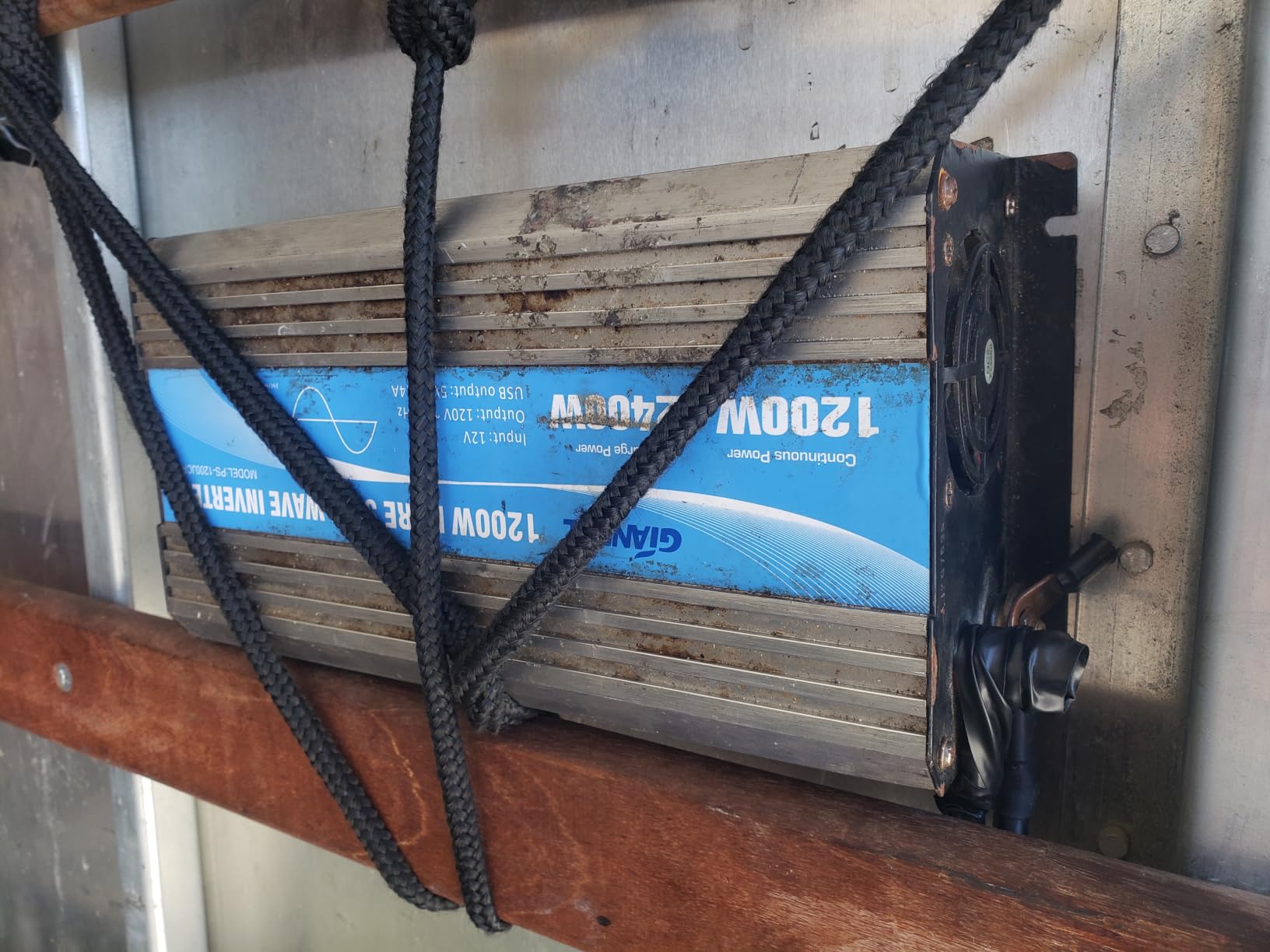
Know the tradeoffs. At 4000W you are pulling over 330 amps from a 12V bank, so this unit really wants a large lithium bank, ideally 600Ah or more, or a 24V system. The fans also get loud at high wattage, and owners in hot climates report thermal shutdowns above 95 degrees Fahrenheit.
Do You Actually Need 4000 Watts
Add up your likely simultaneous loads. A residential fridge, a microwave, and a coffee maker together still fit under 3000W. You need 4000W when you want to run an air conditioner or multiple kitchen appliances at once, and that requires a battery bank most rigs do not have.
Battery Bank Requirements
At full load, plan for at least 600Ah of 12V lithium or a 24V battery system with appropriate cabling. Anything smaller and you will hit low-voltage shutdowns before you ever use the full 4000W. This unit rewards rigs with serious solar arrays to match.
6. LiTime 2000W Inverter with ATS – Best for Efficient Power Management
LiTime 12V 2000W Power Inverter with ATS Transfer Switch, 12V DC-120V AC
2000W continuous (4000W peak)
ATS under 20ms
LCD remote
Under 1A idle draw
8.7 lb
Pros
- Very low idle power under 1 amp
- ATS switches in under 20ms
- Quiet even at max load
- Remote shows volts amps and watts
- Two year warranty
Cons
- ATS will not work if batteries are dead
- Only 2 AC outlets
- Low review count as a newer product
The LiTime 2000W is the newest product on this list, which is why it only has 14 reviews. But those early owners rate it 4.6 stars, and its spec sheet addresses the exact pain points boondockers complain about most: idle drain and slow transfer switching.
The idle draw is the headline. Under 1 amp at rest means you can leave it in standby without watching your battery meter sink overnight. That matters for multi-day boondocking stretches where every amp-hour counts.
The ATS transfers between grid and battery power in under 20 milliseconds, fast enough that most electronics never notice the switch. The LCD remote displays volts, amps, and watts in real time, which is more monitoring detail than most competitors offer.
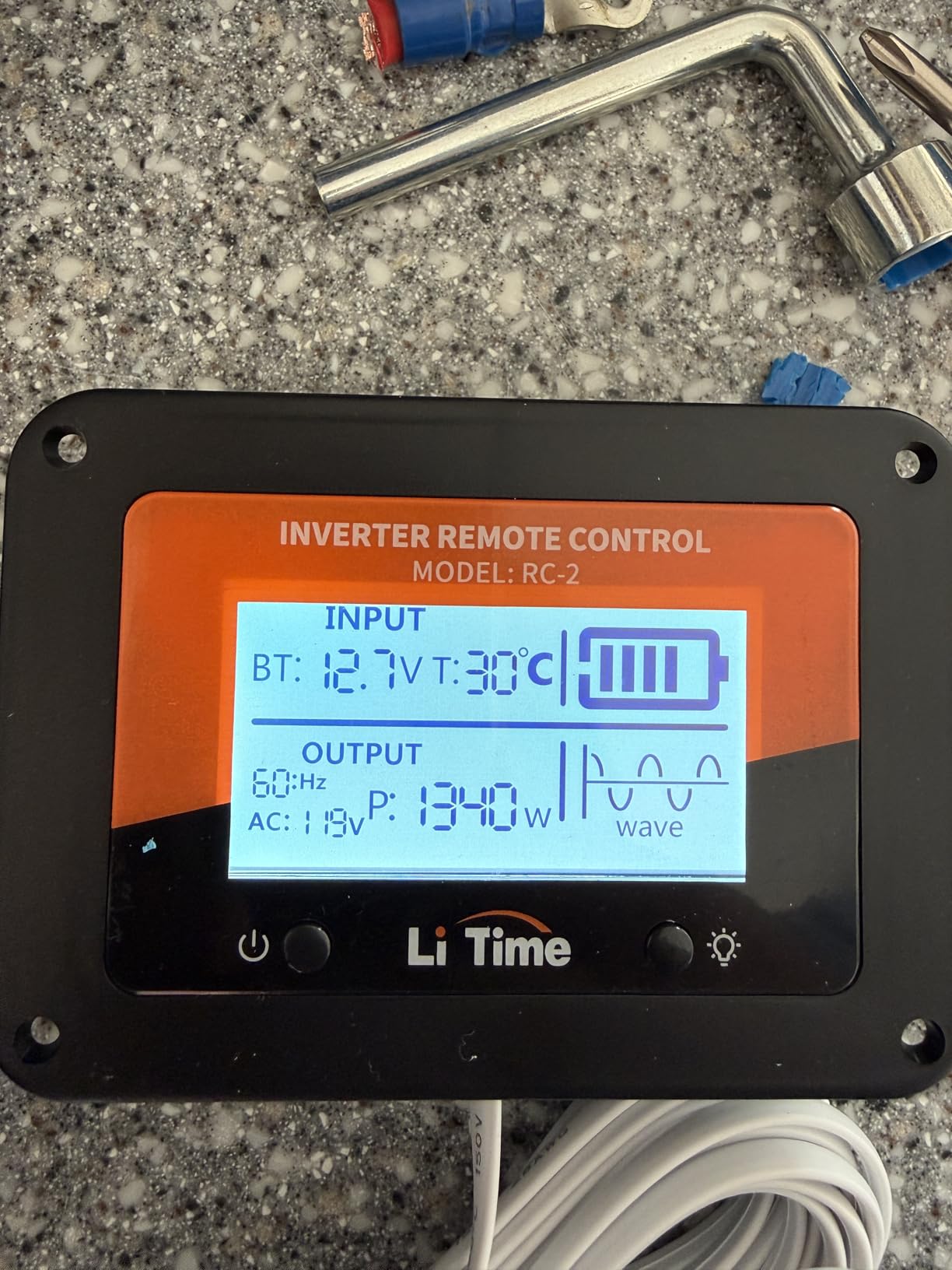
Owners report it runs microwaves and shop vacs quietly, even at max load. The two-year warranty and AIG product liability insurance coverage add confidence for a young product.
The ATS Design Limitation to Know About
The transfer switch needs battery power to function, so if your bank is completely dead, the ATS cannot pass shore power through. Keep a small charge on your batteries and this never becomes an issue, but it is worth knowing before you rely on it in an emergency.
Why the Low Review Count Matters
With only 14 reviews, we have less long-term reliability data than we do for the 4700-review Renogy. The early returns are excellent, but if you want a proven commodity, the more established picks above carry less risk. If you value efficiency and quiet over track record, this is a strong bet.
7. LANDERPOW 3000W Pure Sine Wave Inverter – Best Warranty Coverage
LANDERPOW 3000W Pure Sine Wave Inverter 12V DC to 120V AC 6000W Peak for RV
3000W continuous (6000W peak)
Pure sine wave
30W USB-C
15 ft LED remote
3-year warranty
Pros
- Great value for the output
- Remote with LED battery display
- Fans quiet at moderate loads
- Pure copper 1AWG cables included
- 3-year warranty coverage
Cons
- Some early reliability issues reported
- Included cables thin for peak output
- Some electrical noise measured in output
The LANDERPOW 3000W is another strong value play, earning 4.4 stars across 570 reviews. What sets it apart is the warranty: a full 3 years of coverage, including one year of no-hassle replacement, which is longer than anything else in this lineup.
Feature-wise it punches above its price. You get a 30W USB-C port for fast-charging modern devices, a 15-foot remote with an LED screen showing battery level, and genuinely good 1AWG pure copper battery cables included. That last point matters, since most competitors ship cables you have to replace.
Owners run heat guns, rice cookers, air fryers, vacuums, laptops, and TVs off it. The cooling fans stay quiet at moderate loads, only ramping up when you push the wattage.
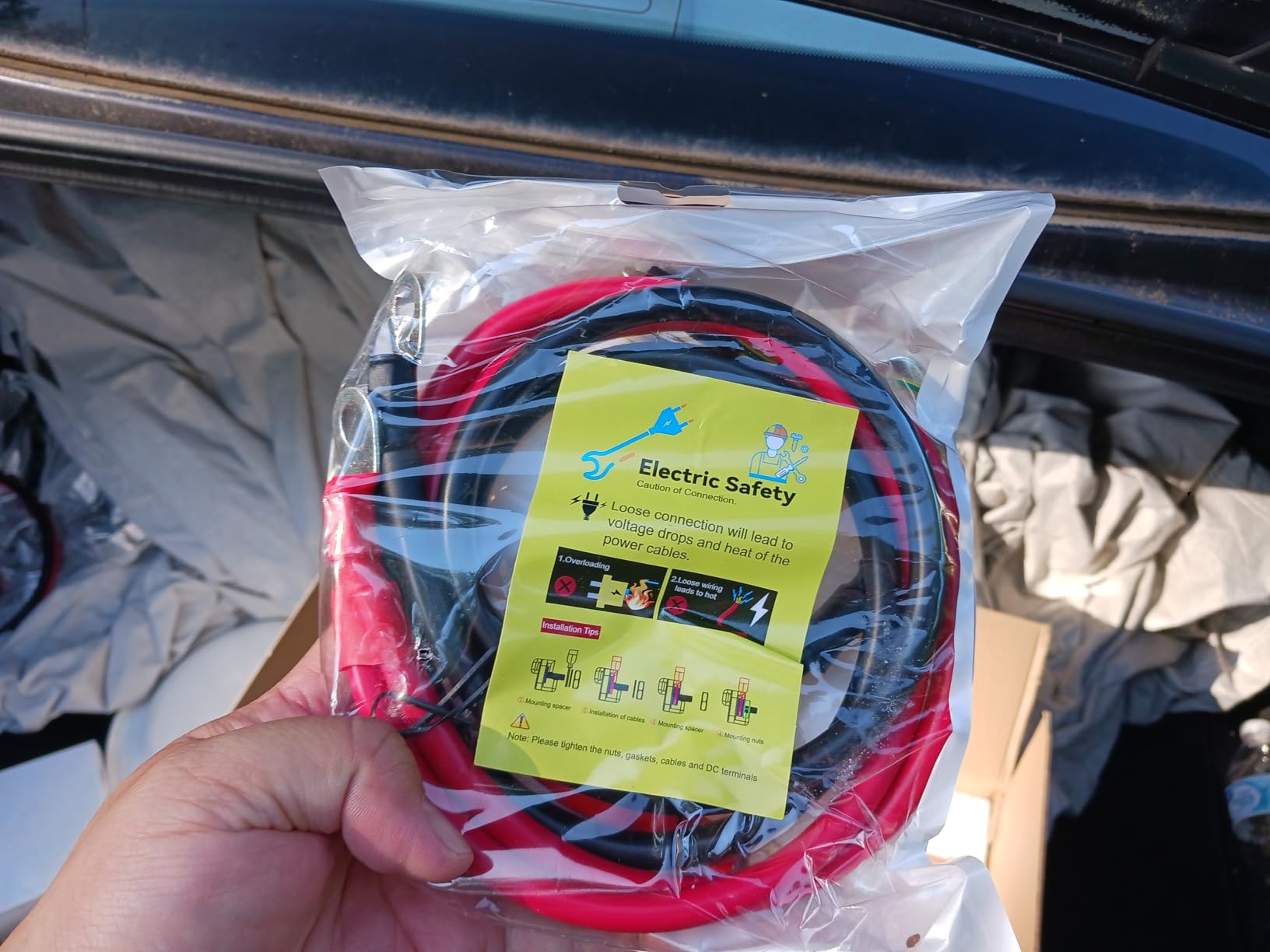
The caveats are the usual budget-brand ones. A minority of owners report reliability problems early in ownership, and independent testing measured some electrical distortion in the 120V output. It is still pure sine wave, just not as clean as the Renogy or Giandel.
What the 3-Year Warranty Covers
You get one year of no-hassle replacement plus two additional years of extended support. In a category where most brands offer 12 to 18 months, that extra coverage is meaningful protection against the early failures that occasionally show up in reviews.
Surge Capacity and What It Means in Practice
The 6000W peak rating covers motor startup surges, like a refrigerator compressor kicking on. That surge only lasts a fraction of a second in normal use. If an appliance trips the overload protection repeatedly, the issue is usually sustained wattage exceeding 3000W, not the surge rating.
8. Xantrex Freedom XC 2000 – Best Inverter Charger Combo
Xantrex Freedom XC 2000 817-2080 Power Inverter
2000W continuous (4000W peak)
True sine wave
80A battery charger
30A transfer relay
UL listed
Pros
- Trusted Xantrex brand quality
- Built-in 80A multistage charger
- Automatic 30A AC transfer relay
- Charges dead batteries from 0 VDC
- Handles motor loads well
Cons
- Most expensive option here
- Heavy at 16.3 pounds
- AC connections difficult to install
- No solar input
- Interface feels dated
The Xantrex Freedom XC 2000 is a different animal from everything else here. It is an inverter charger, meaning it both inverts battery power to AC and charges your batteries from shore power with a built-in 80A multistage charger. Forum users consistently name Xantrex among the most reliable RV inverter brands, alongside Victron and AIMS.
The convenience is hard to overstate. Drive into an RV park, plug in, and the Freedom XC automatically stops inverting and starts charging your bank in bulk, absorption, and float stages. Head back into the desert and it switches to inverter mode without you touch anything, thanks to the 30A transfer relay.
It can even charge a completely dead battery from 0 volts, which has rescued more than one RVer with a neglected bank. Power factor correction and the power share feature let you prioritize loads intelligently on limited shore power.
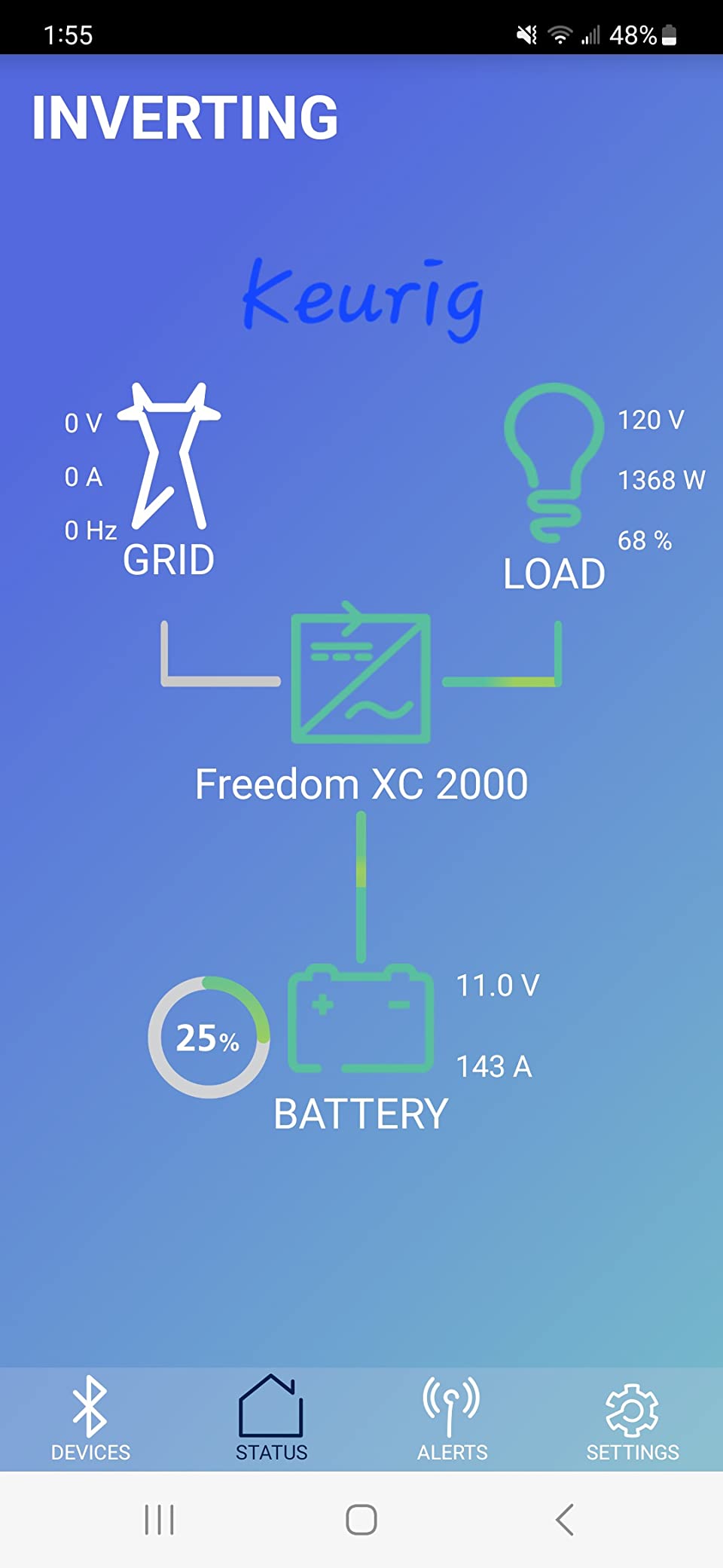
The tradeoffs are price and weight. This is the most expensive unit on our list and at 16.3 pounds it needs serious mounting consideration. The AC wire connections are fiddly to install, and there is no solar input, so your solar charge controller stays a separate device.
Inverter Charger Versus Plain Inverter
A plain inverter only converts DC to AC, and your RV’s converter handles charging separately. An inverter charger combines both functions with an automatic transfer switch, simplifying your electrical system. If your current converter is aging anyway, replacing it and your inverter with one Freedom XC is a clean upgrade path.
Who Should Choose This Unit
This is for RVers doing serious electrical upgrades who want one trusted device instead of three cheap ones. If you are building out a new system or replacing a failed converter and inverter together, the Freedom XC is the premium, integrated solution.
Buying Guide: How to Choose an RV Inverter for Boondocking?
Every inverter on this list converts 12V DC battery power into 120V AC household power. Beyond that, the differences come down to waveform quality, wattage, transfer switching, and how efficiently the unit treats your battery bank. Here is how to match the right model to your rig.
Pure Sine Wave vs Modified Sine Wave
Pure sine wave inverters produce power that matches utility grid power exactly, a smooth oscillating wave. Modified sine wave inverters produce a rougher, stepped approximation that is cheaper to make but harder on anything with a motor or circuit board.
In practice, modified sine works fine for incandescent lights and basic power tools. It causes buzzing in fans, excess heat in motors, lines on TV screens, and it can outright damage some CPAP machines and medical devices. Every pick in this article is pure sine wave because for boondocking, the small price premium is not worth debating.
Sizing Your Inverter: The Wattage Math
Add up the running wattage of everything you want to power at the same time, then add 20 percent headroom. Common boondocking loads: an RV fridge runs 150 to 250W, a microwave pulls 1000 to 1500W, a coffee maker runs 800 to 1200W, a hair dryer demands 1200 to 1875W, and a laptop charger sips 60 to 100W.
For most boondockers, a 2000W to 3000W inverter is the sweet spot, which matches what Battle Born Batteries and most industry guides recommend. Below 2000W you cannot run a microwave. Above 3000W you need a battery bank big enough to feed it.
Also check surge wattage. Anything with a compressor or motor can draw two to three times its running wattage for a split second at startup. All our picks surge to at least double their continuous rating.
Battery Runtime: How Long Will It Actually Run
Here is the calculation boondockers ask for most. Watts divided by 12 volts equals amps drawn from the battery, and amps times hours equals amp-hours consumed. A 1000W microwave load draws about 83 amps, so 10 minutes of microwaving uses roughly 14 amp-hours.
A 100Ah lithium battery, usable down to 80 percent depth of discharge, gives you about 80 usable amp-hours, or roughly 960 watt-hours. Running a 2000W load continuously, that battery is empty in under 30 minutes. This is why inverter sizing and battery bank sizing have to happen together, and why solar recharge matters for multi-day stays.
Why a Transfer Switch Matters
A transfer switch lets your RV’s AC circuits accept power from either shore power or the inverter, switching automatically between them. Without one, you manually plug your shore cord into the inverter, which works but is clumsy and easy to do wrong.
The ZETAWALE 2500W, LiTime 2000W, Renogy 3000W, and Xantrex Freedom XC all include transfer switching. For RVers who mix hookups and dry camping, this feature alone justifies choosing those models.
Battery Compatibility and Solar Integration
Confirm your inverter plays well with your battery chemistry. Most modern units support LiFePO4, AGM, and flooded lead acid, but low-voltage cutoff settings differ. Lithium banks want a lower cutoff around 10 to 10.5 volts, while lead acid should cut off earlier to avoid damage.
For solar, your inverter does not connect to panels directly. Panels feed a charge controller, which feeds the batteries, and the inverter draws from the batteries. The Renogy fits naturally into a Renogy solar ecosystem, and the Xantrex pairs well with any separate charge controller. If you want app-based monitoring of the whole system, build around one brand where possible.
Idle Draw and Noise: The Boondocker Complaints
Two complaints dominate forums: inverters that drain batteries while doing nothing, and fans that keep owners awake. Look for standby draw under 1.5 amps and fans that stay off below roughly 20 percent load. The LiTime’s sub-1-amp idle draw and the BELTTT’s load-sensing fans are the best in this lineup on those measures.
Frequently Asked Questions
Who makes the best inverters for RVs?
Victron, Xantrex, Renogy, Samlex, AIMS, and Go Power! are the most trusted RV inverter brands based on long-term owner reports. Among our tested picks, Renogy earns editor’s choice for its 4700-review track record and Bluetooth monitoring, while Xantrex leads for inverter charger combos. Budget brands like BELTTT and Giandel also perform well for the price.
How long will a 2000 watt inverter run off of a 12 volt battery?
A 2000W load draws about 167 amps at 12V, so a 100Ah battery would be drained in roughly 30 minutes at full load. With a 200Ah lithium bank you get about 1 hour of continuous 2000W use, and a 400Ah bank gives you about 2 hours. In practice you rarely run full load continuously, so real runtime is much longer when powering fridges, laptops, and intermittent appliance use.
Is it okay to leave an RV inverter on all the time?
You can leave it on, but you should not. Every inverter draws idle power, typically 0.5 to 2 amps per hour, which drains 12 to 50 amp-hours from your bank every day while powering nothing. Turn your inverter off when not in use, or choose a model like the LiTime 2000W with under 1 amp idle draw if you need always-on convenience.
What is the difference between a RV converter and an inverter?
A converter changes 120V AC shore power into 12V DC power to run your RV’s DC systems and charge your batteries. An inverter does the opposite, changing 12V DC battery power into 120V AC so you can run household outlets while boondocking. An inverter charger like the Xantrex Freedom XC does both jobs in one unit.
Final Verdict: Which Inverter Should You Buy
For most boondockers, the Renogy 3000W is the best RV inverter for boondocking in 2026 thanks to its proven reliability, quiet operation, Bluetooth monitoring, and built-in transfer switch. The BELTTT 3000W is the smart money pick if you want the same output for less, and the BELTTT 1000W covers light loads in small rigs.
Whatever you choose, size your battery bank and cables to match the inverter, because most failures trace back to undersized wiring rather than the unit itself. Get that right and you can run your coffee maker a mile from the nearest power pole.