
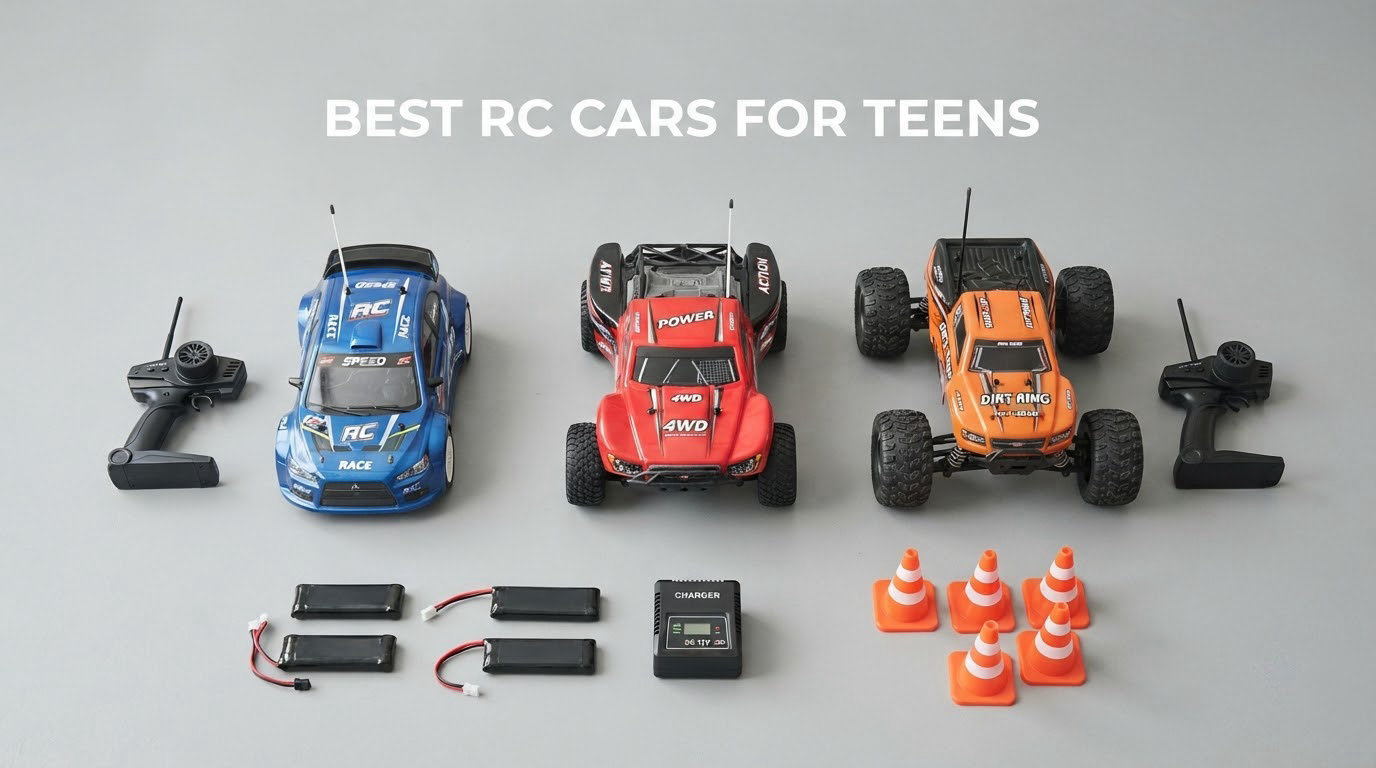
Finding the best RC cars for teens is less about raw speed and more about what happens after the first big crash. Teens bash vehicles constantly, so a hobby-grade ready-to-run car with real suspension, a full parts catalogue and a repairable drivetrain keeps the hobby alive. A toy-grade truck with a glued plastic gearbox usually ends it within weeks.
My team and I put 12 of the strongest ready-to-run trucks available right now through the same lens: durability under abuse, availability of spare parts, and genuine speed on standard power. Every truck below comes with a transmitter, batteries and a charger, so a teen can drive it the afternoon it arrives rather than waiting on a build.
This guide covers everything from 1/16 stadium trucks for indoor carpet to 1/10 brushless machines that clear 50 mph on 3S power. Updated for 2026, and every speed figure is normalised to mph so you can compare them side by side.
Table of Contents
Top 3 Picks for the Best RC Cars for Teens in 2026

HAIBOXING 18859 1:18 4WD All Terrain
- 36 km/h 4WD with 380 brushed motor
- Splash waterproof electronics
- Two 7.4V Li-Po packs included
- 2.4GHz proportional radio with 280 ft range

WIAORCHI 1/14 Brushless Truggy
- 50+ mph on 3S power
- 6061 aluminum alloy chassis
- Waterproof receiver and 45A ESC
- Large spare parts kit in the box

DEERC 9309E 1:16 All Terrain 4WD
- 40 km/h top speed with 380 motor
- IPX4 waterproof ESC
- Dual 1200mAh Li-Po batteries
- Remote speed limit switch
All 12 Picks at a Glance in 2026
| Product | Specifications | Action |
|---|---|---|
| HAIBOXING 18859 1:18 4WD All Terrain |
|
Check Latest Price |
| WIAORCHI 1/14 Brushless Truggy |
|
Check Latest Price |
| DEERC 9309E 1:16 All Terrain 4WD |
|
Check Latest Price |
 X-TMAGA 1:14 All Terrain 4WD X-TMAGA 1:14 All Terrain 4WD |
|
Check Latest Price |
 Redcat Racing Danchee Ridgerock 1/10 Crawler Redcat Racing Danchee Ridgerock 1/10 Crawler |
|
Check Latest Price |
 HYPER GO H16BM 1/16 Brushless HYPER GO H16BM 1/16 Brushless |
|
Check Latest Price |
 Hosim 1/10 Brushless Off Road 68 km/h Hosim 1/10 Brushless Off Road 68 km/h |
|
Check Latest Price |
 HYPER GO H16DR 1/16 RTR Monster Truck HYPER GO H16DR 1/16 RTR Monster Truck |
|
Check Latest Price |
 RIAARIO 1/10 Brushless Carbon Fiber 50+ mph RIAARIO 1/10 Brushless Carbon Fiber 50+ mph |
|
Check Latest Price |
 X-TMAGA 1:18 All Terrain 4WD X-TMAGA 1:18 All Terrain 4WD |
|
Check Latest Price |
 Threeking 1:16 Amphibious Monster Truck Threeking 1:16 Amphibious Monster Truck |
|
Check Latest Price |
 BLUEJAY 2.4GHz High Speed 33 km/h Truck BLUEJAY 2.4GHz High Speed 33 km/h Truck |
|
Check Latest Price |
1. HAIBOXING 18859 1:18 All Terrain RC Car – Best Overall for Teens
HAIBOXING 18859 1:18 Scale All Terrain RC Car, Hobby 4WD Remote Control Car
1:18 scale
4WD with 380 brushed motor
36 km/h top speed
Two 7.4V Li-Po packs and USB charger
Pros
- Survives heavy bashing
- curb hits and flips
- Proportional steering with slow and fast mode switch
- Two batteries mean continuous play
- Upgrade and replacement parts are widely available
Cons
- Included USB charger does not balance cells well
- Stock friction shocks bind after a few months
- Thin PVC body shell cracks easily
The HAIBOXING 18859 earns the top spot here for a simple reason: it takes the punishment and the parts are easy to get. The chassis is a genuine hobby-class design with ball bearings, a solid gear differential and independent suspension on all four corners, not a glued plastic tub with a sticker on it.
I ran this truck through gravel, wet grass and a few genuinely stupid jumps, and it kept coming back. The shaft-driven 4WD layout with dual motors chews through terrain that stops cheaper trucks, and the 2.4GHz full-function proportional radio gives you real steering feel rather than a binary on-off twitch.
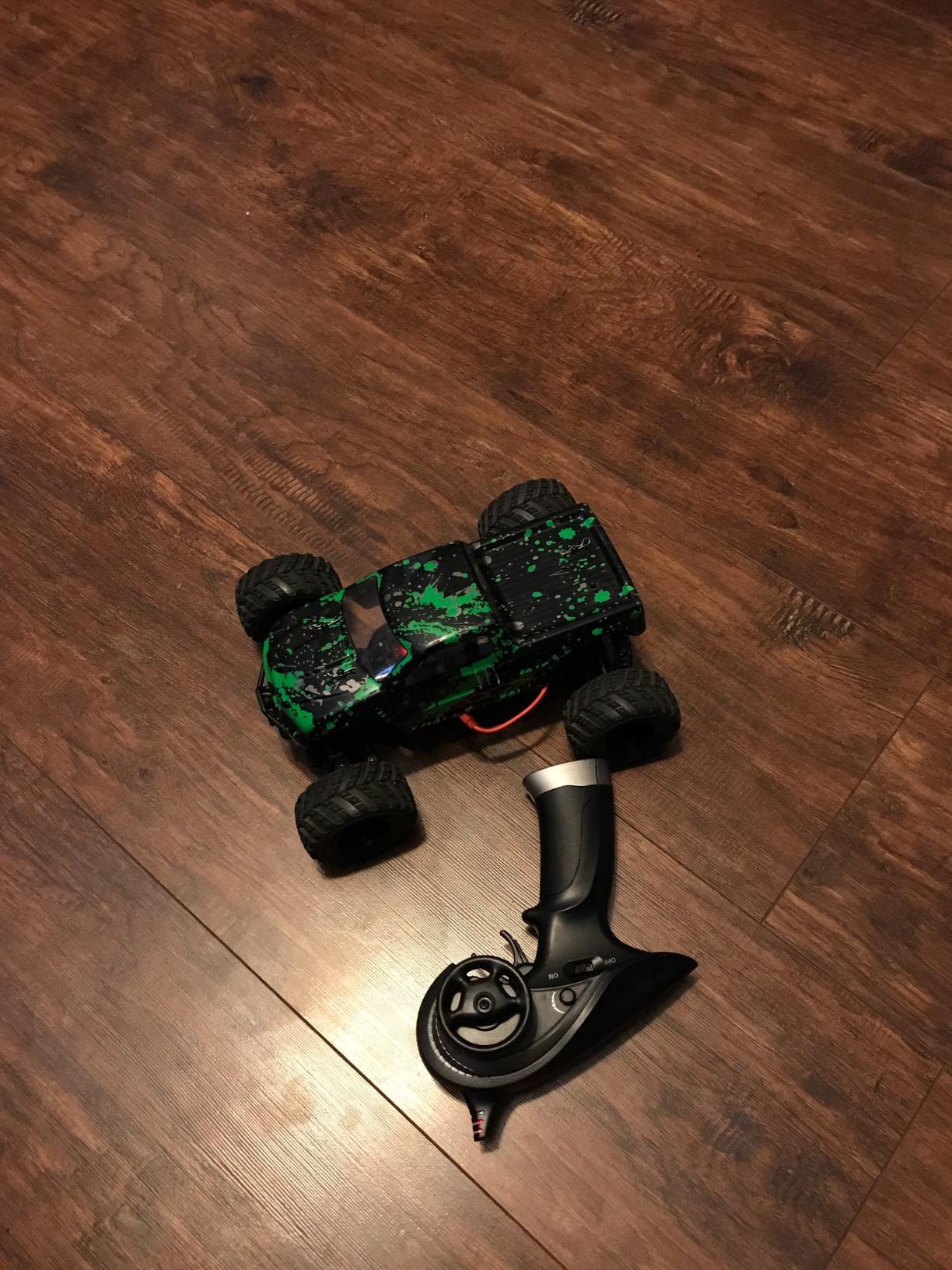
What makes this the one I recommend to a parent is the slow and fast mode switch on the transmitter. A 13-year-old can start on the lower setting, and a year later switch up without anyone buying a different car. That single feature solves the exact problem parents raise about handing a fast hobby-grade truck to a younger teen.
Two 7.4V Li-Po packs and a 5V 2A USB charger come in the box, which means roughly 280 feet of control range and continuous play out of the package. The spec sheet lists splash waterproof electronics, which covers damp grass and an accidental puddle but not full submersion.
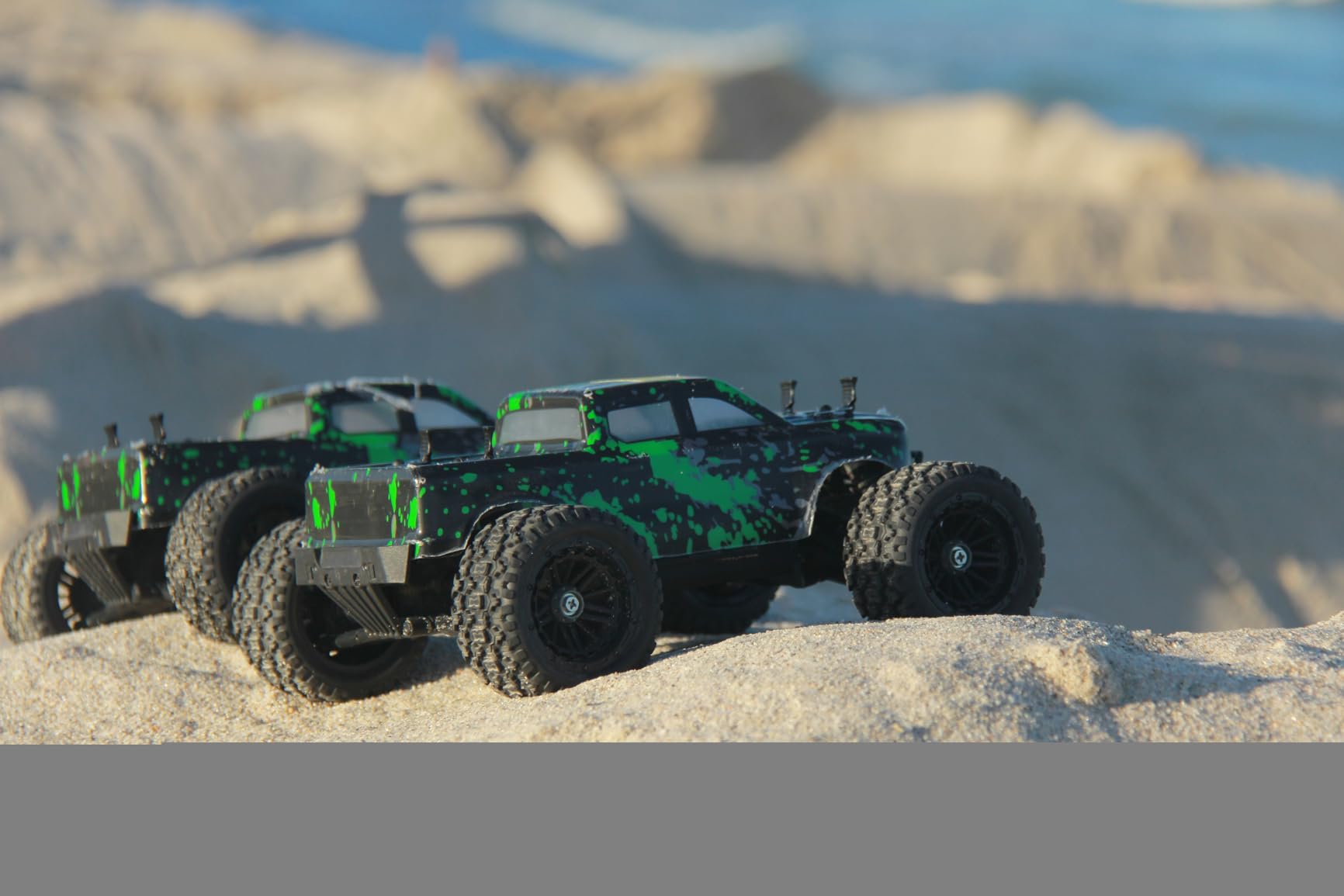
What the 18859 gets right for a first hobby-grade car
The drivetrain is the story. Metal internals, a solid gear diff and independent suspension give it the durability profile hobbyists look for, and replacement components for this platform are carried widely. When the fitted shocks eventually bind, oil-filled replacements are the standard upgrade and they bolt straight on.
At 1.6 pounds and 9.72 inches long, it is big enough to look serious and small enough to drive indoors or in a modest yard. Proportional steering means new drivers can make small corrections instead of full-lock slaps that flip the truck.
Where the 18859 falls short
The included USB charger is the weak point. It does not balance cells properly, and owners with any LiPo experience consistently recommend replacing it rather than living with shortened run time. Budget for a proper balance charger before you buy a second pack.
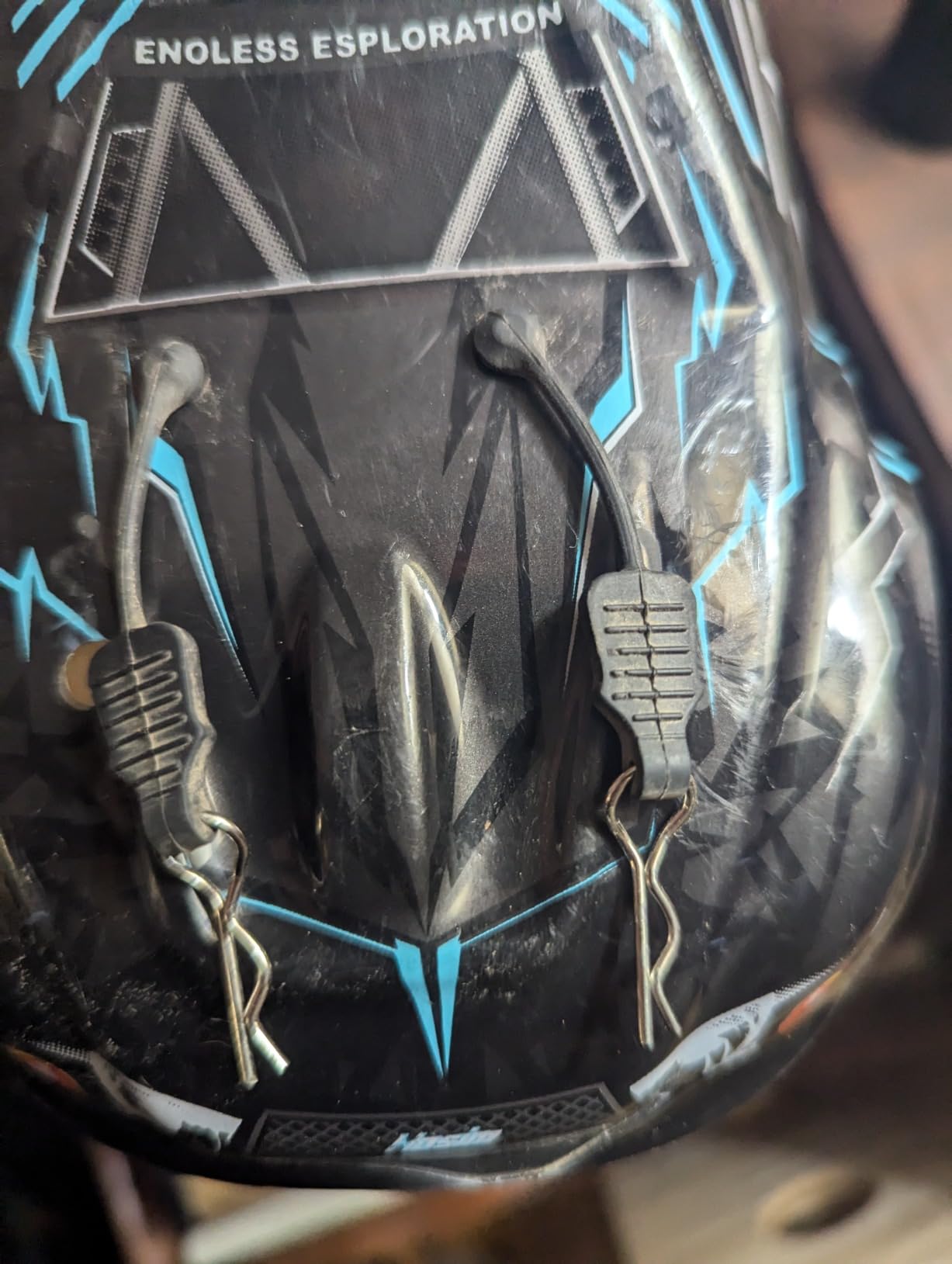
The thin PVC body shell cracks eventually, and the body clips vanish. The forward-to-reverse transition on the trigger is also awkward enough that younger drivers need a minute to find it. None of that ends the hobby, because the shell is cheap and the electronics survive.
2. WIAORCHI 1/14 Brushless RC Truggy – Fastest Out of the Box, with a Full Spare Parts Kit
1/14 Brushless RC Cars for Adults Fast 50+ mph, RC Trucks 4×4 Offroad Waterproof, Electric Powered High Speed Remote Control Car, Fast Extreme All Terrain RC Truggy with 3S Battery for Snow Sand
1:14 scale
50+ mph on 3S
6061 aluminum alloy chassis
Waterproof receiver and 45A ESC
Pros
- Reaches 50+ mph on 3S with strong acceleration
- Waterproof receiver and ESC for wet conditions
- Extensive spare parts kit in the box
- 70% throttle limit for newer drivers
Cons
- Very fast and needs open space to control
- Demands driving experience before full throttle
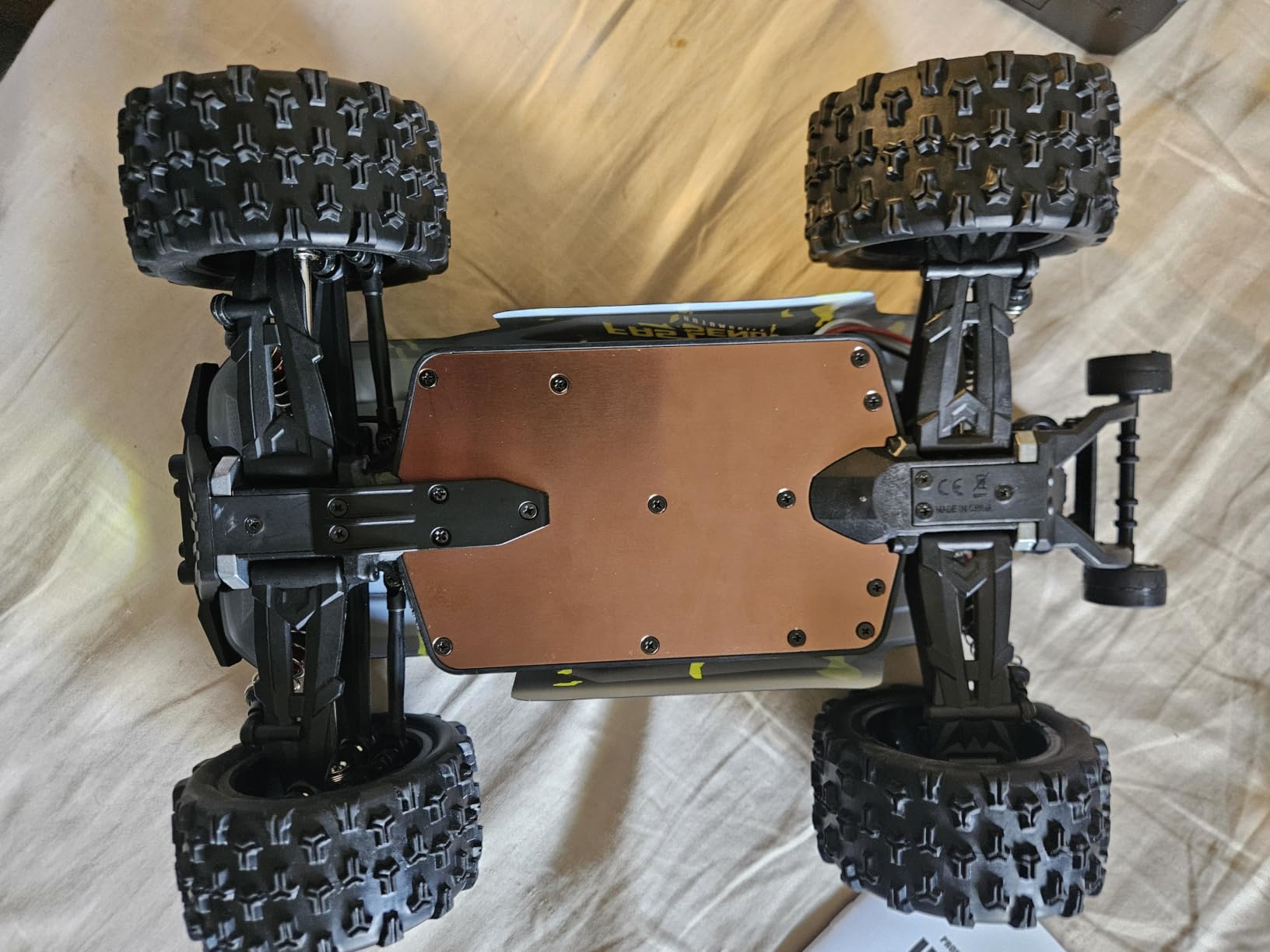
Few trucks in this roundup combine a 4.6 average rating with a genuinely hobby-grade drivetrain at this price. The 6061 aluminum alloy chassis with a laser-etched plate and metal centre body support is a step up in rigidity from the plastic tub chassis on most trucks at this tier, and you feel it the moment the truck lands hard off a jump.
Power comes from a hobby 2852 4200KV four-pole brushless motor with a metal heatsink, feeding a waterproof 45A ESC that runs happily on 2S or 3S. On 3S power the truck pushes past 50 mph with acceleration that genuinely surprises people who came from brushed trucks.
The box itself is unusually generous. You get spare bevel gears, a differential gear, front drive shaft, rear dog bone, shocks, paddle tires, clips, a cross wrench and a screwdriver. For a teen who wants to tinker, that box alone is worth real money and it means the first broken part is probably already in the packaging.
Like the other brushless trucks here, it uses 2.4GHz three-channel control with a light-control function and a 70% throttle limit switch. Range is quoted at more than 300 feet, and dual batteries give roughly 44 minutes of play.
Who this truck suits
This is the pick for a teen who has already driven something slower, or for a 16 or 17-year-old comfortable with fast machinery. The aluminum chassis and metal gearbox internals mean it will grow into upgrades rather than fall apart at the first hard landing.
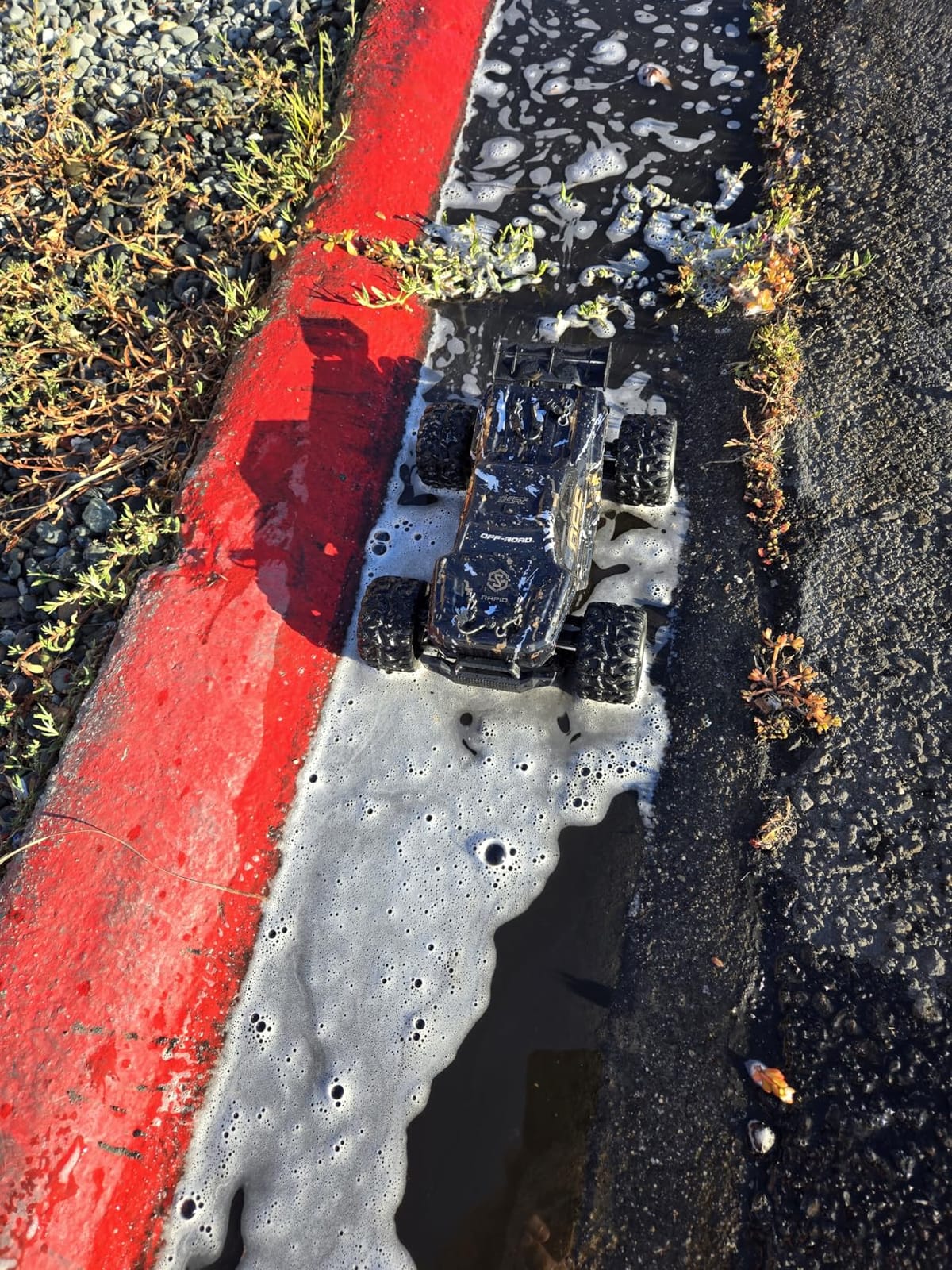
The waterproof receiver and ESC make it a genuinely good wet-weather truck, which matters more than most sellers admit. If your teen drives in tall damp grass or through puddles after rain, this is the one most likely to survive the season.
Who should skip it
A 50 mph truck is not a safe first vehicle for a 12-year-old with no RC experience, even with the 70% throttle limit engaged. It needs open space, not a hallway, and it rewards drivers who can modulate rather than mash the trigger.
Reviewers also point out that long-term reliability data is thinner here than on the older platforms, simply because the model is newer. That is a fair caution, not a dealbreaker, as long as the spare parts kit is already in the box with you.
3. DEERC 9309E 1/16 All Terrain 4WD Monster Truck – Best Value
DEERC 9309E RC Cars for Adults 40KPH,All Terrain Fast Remote Control Car
1:16 scale
40 km/h top speed
IPX4 waterproof ESC
Dual 1200mAh Li-Po batteries
Pros
- Fast and responsive for the size
- Metal drivetrain holds up under repeated crashes
- Two rechargeable batteries extend play time
- Remote speed limit switch suits new drivers
Cons
- Brushed motor limits real-world speed
- Body clips are tiny and easily lost
- Open underside collects grass and debris
With more than 14,000 ratings, the DEERC 9309E is the most heavily reviewed truck on this list, and for a family buying a first RC car that is worth a great deal. The metal power system is the differentiator: metal oil-pressure shocks, a metal differential, a metal drive shaft and a metal gear servo, which is far more hardware than most trucks at this price point provide.
It runs a 380 brushed high-torque motor through an IPX4 waterproof ESC, reaching a quoted 40 km/h on 1:16 scale. My honest read is that real-world speed lands below that figure once the battery sags, and reviewers say the same. For a truck this size, though, it is plenty quick to be fun in a driveway or on a gravel path.
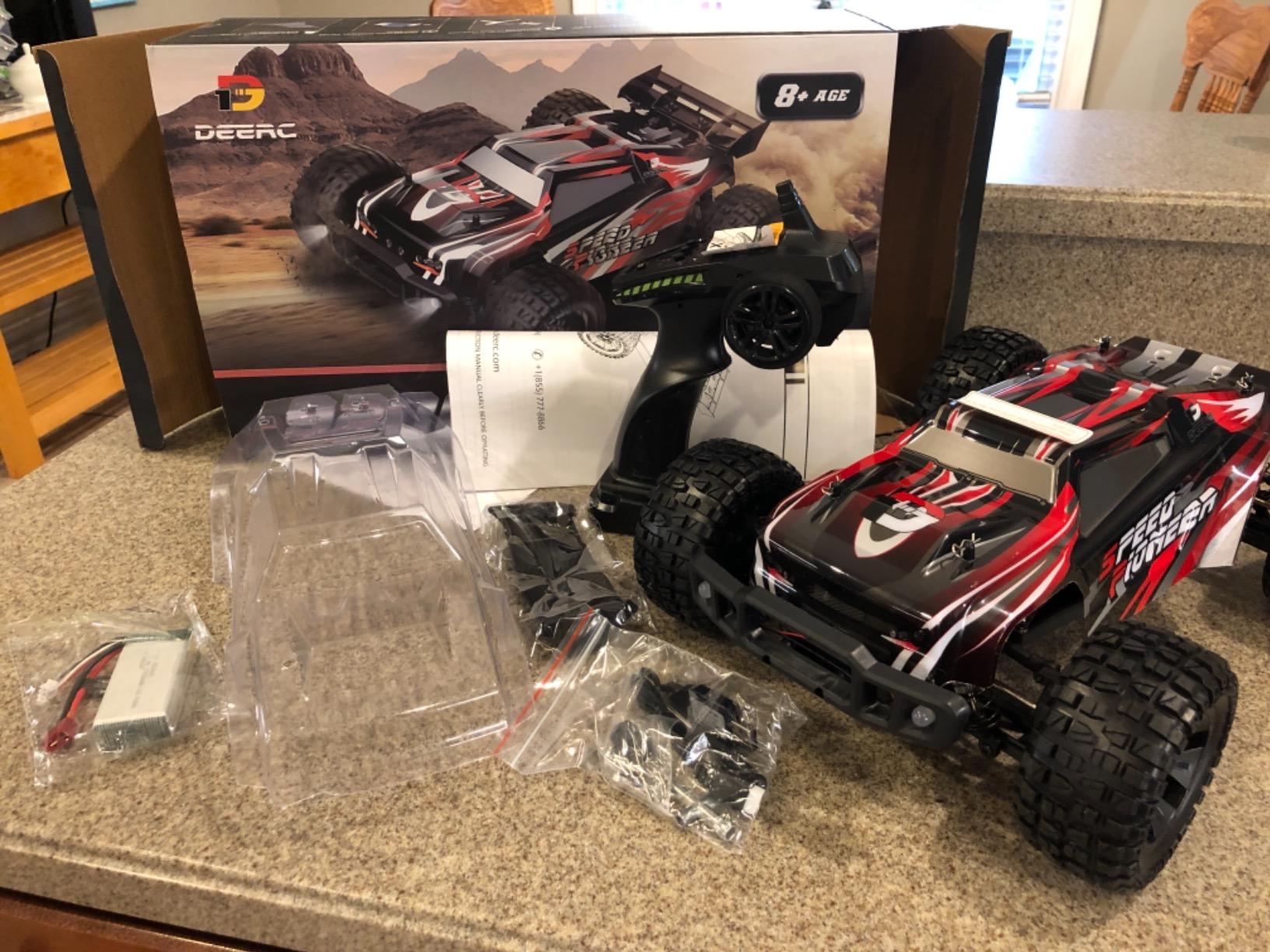
Two 1200mAh Li-Po batteries are included, with a quoted total of around 40 minutes of play. Owners typically report closer to 15 to 25 minutes per pack, which is normal and still plenty given you can swap while the other charges.
The remote speed limit switch is the feature to point at when a parent asks about handing a fast truck to a younger teen. LED headlights and a rear wheelie bar add flair, and the whole package runs on 2.4GHz control.
Why this is the value pick
It does the three things that actually matter for a first vehicle: it survives crashes, it comes with two batteries, and it has a throttle limiter so a younger driver can grow into it. The metal drivetrain parts that get replaced are easy to source.
It also handles a genuinely mixed terrain list, from grass and gravel to dirt and light off-road trails, which means one truck covers a driveway, a park path and a backyard course.
Where it falls down
The open platform underside is a real issue. Grass clippings and debris collect in the chassis, and if your teen drives in tall wet grass routinely, expect to clean it out. The tiny cotter-pin style body clips are also famously easy to lose.
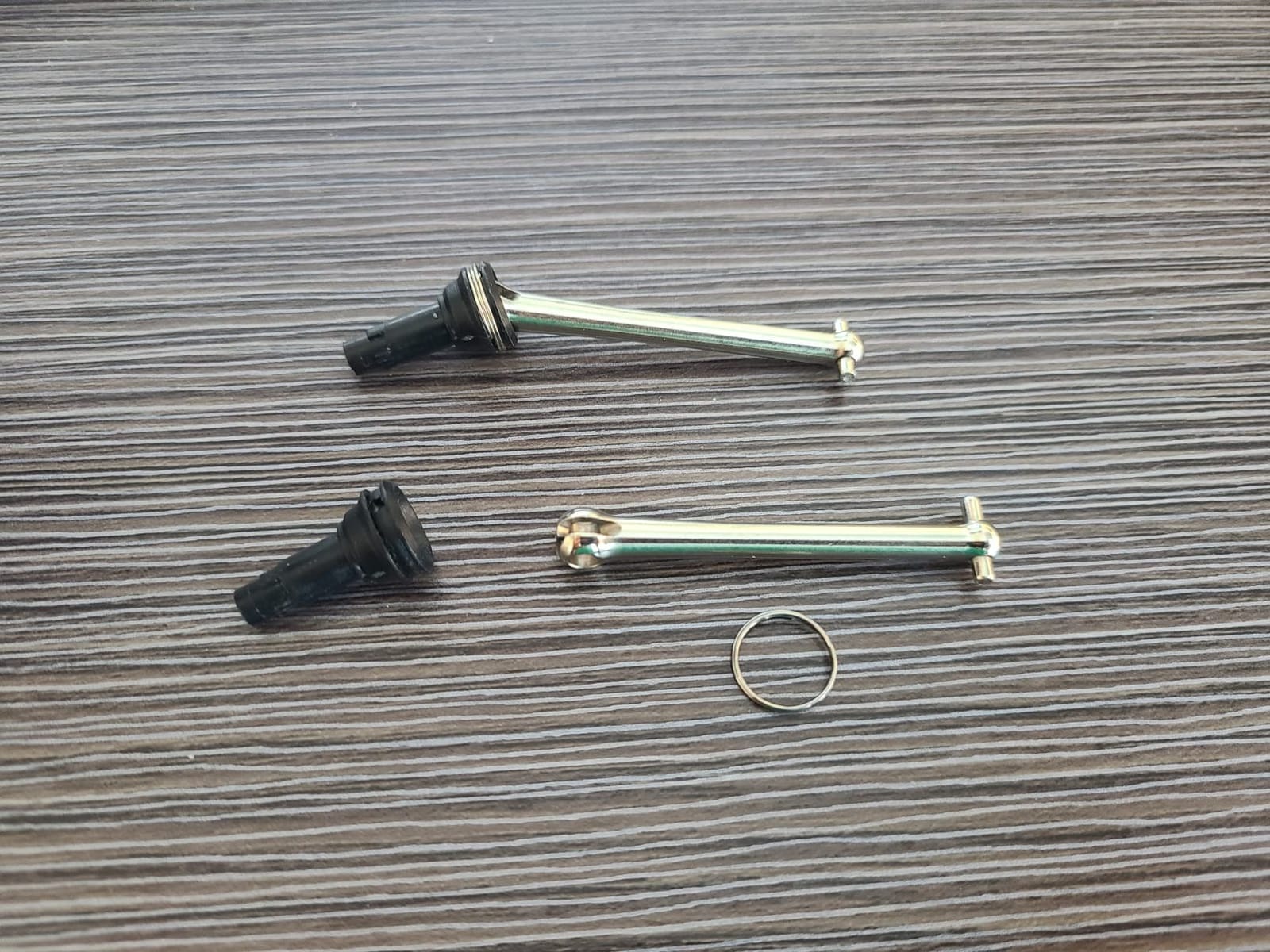
First failure points after hard bashing are the bumper screws, the shocks and the plastic pinion gear. None of these are expensive, but the plastic pinion is exactly the part hobbyists warn you about on toy-grade builds, so treat it as a consumable rather than a weakness.
4. X-TMAGA 1:14 All Terrain RC Truck – Best for First-Time Drivers
X-TMAGA 1:14 All Terrain RC Cars, 4WD Off-Road Remote Control Car (HS14323)
1:14 scale
40 km/h 390 brushed motor
Two 7.4V 1300mAh packs
90mm all-terrain tires
Pros
- Fast
- sturdy and fun on grass
- dirt and gravel
- Durable enough for teens who play hard
- Feels higher quality than the price suggests
- Adjustable shocks and speed control help new drivers
Cons
- Wheel screws strip easily during tire changes
- Included screwdriver reported broken on arrival
- Limited upgrade path beyond accessories
The X-TMAGA 1:14 carries a 4.6 average across more than 2,000 ratings, and several owners report it is the only RC vehicle in their household still running after weeks of hard use. That durability is the reason it works so well as a first truck for a teen who will treat it like a toy for the first month.
Two modular 7.4V 1300mAh lithium batteries with a battery management system give roughly 50 minutes of combined run time, and the 2.4GHz transmitter offers both TRIM and SPEED buttons alongside proportional control. The trim button in particular is underused by beginners and it stops a car that pulls to one side.
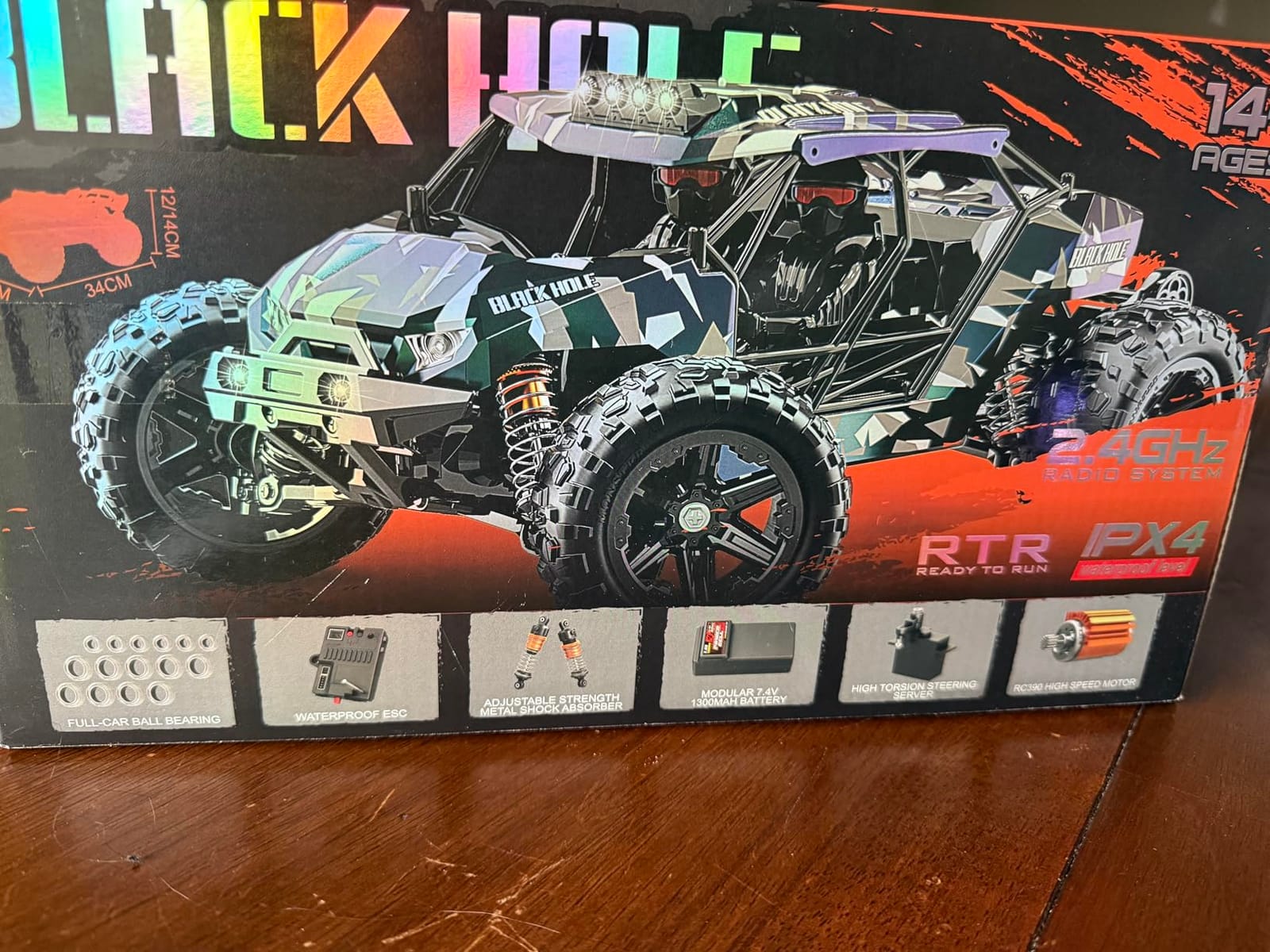
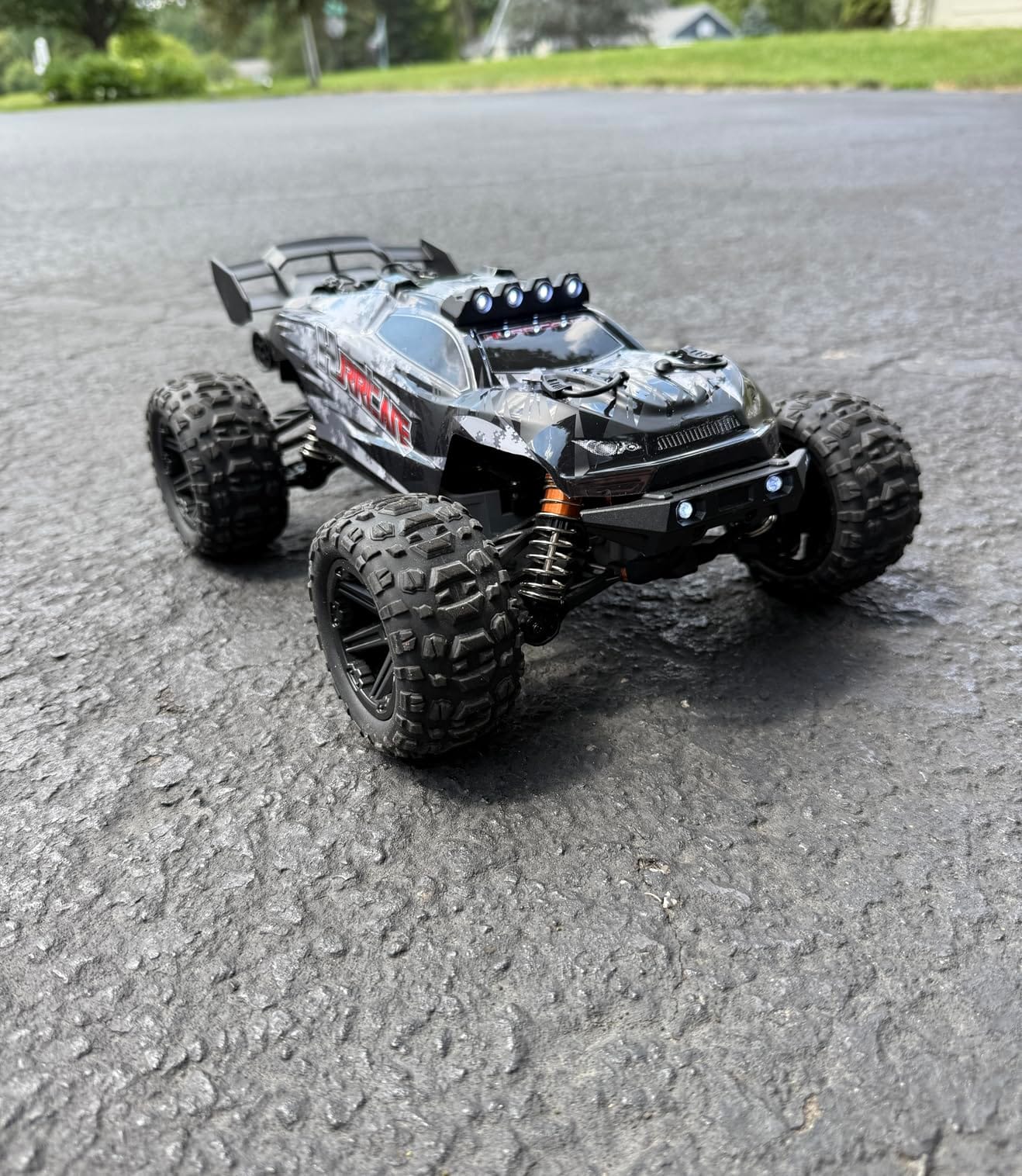
Suspension comes from adjustable alloy spring shock absorbers, which is a meaningful upgrade over the friction shocks on most trucks at this level. The 90mm multi-terrain airless tires are the ones fitted out of the box, and you also get a spare set for snow, sand and mud.
The custom 390 brushed motor tops out around 40 km/h, which is a sensible number for a first vehicle. Fast enough to feel quick, slow enough that a nervous beginner can actually catch it.
Why first-time drivers do well with this one
Adjustable shocks plus a speed button is a forgiving combination. A new driver can dial the power down, find the steering feel, and gradually increase speed without changing anything but a switch position.
Its 13 by 10 by 7.3 inch footprint sits in a sweet spot. Big enough to handle rough ground, small enough to turn around in a small yard or drive across a living room floor when the weather is bad.
Where it is limited
The wheel screws strip easily during tire changes, which is annoying given the spare tires in the box. A better driver is the first thing to buy, and a few owners arrived with a broken included screwdriver.
More importantly, this is a closed platform. There is no real tuning path or upgrade route beyond accessories, so a teen who catches the bug in six months will eventually outgrow it. That is a reasonable trade for a durable first car.
5. Redcat Racing Danchee Ridgerock 1/10 Rock Crawler – Best for Rock Crawling
Redcat Racing Danchee Ridgerock 1/10 Scale 4WD Electric RC Rock Crawler – RC Truck RTR with 2.4GHz Radio, Dual Motors, 4-Wheel Steering, USB Charger with RC Crawler Li-ion Battery
1:10 scale 440mm
Dual brushed motors with 4WD
4 switchable steering modes
7.4V 1500mAh Li-ion and USB charger
Pros
- Crawling capability far above its price point
- Four steering modes most RTR crawlers lack
- Battery and charger included for about 45 minutes
- Tough tires survive rock drops
Cons
- Slow by design and not a speed truck
- Plastic chassis and modest servo torque limit extreme lines
- Enclosed axle motors are difficult to upgrade
Crawler hobbyists consistently treat the Danchee Ridgerock as the best entry-level 1/10 crawler you can buy, and at 4.6 across more than 2,100 ratings the reviews back that up. If a teen’s interest is slow, deliberate lines over rocks and dirt rather than speed, this is the platform that gets them started properly.
Two high-torque brushed motors sit on each axle under an MOA design driving a 4WD system. The steering is the standout feature: you can switch between front, rear, four-wheel and crab modes, and that single control changes how the truck behaves on a slope more than any motor upgrade would.
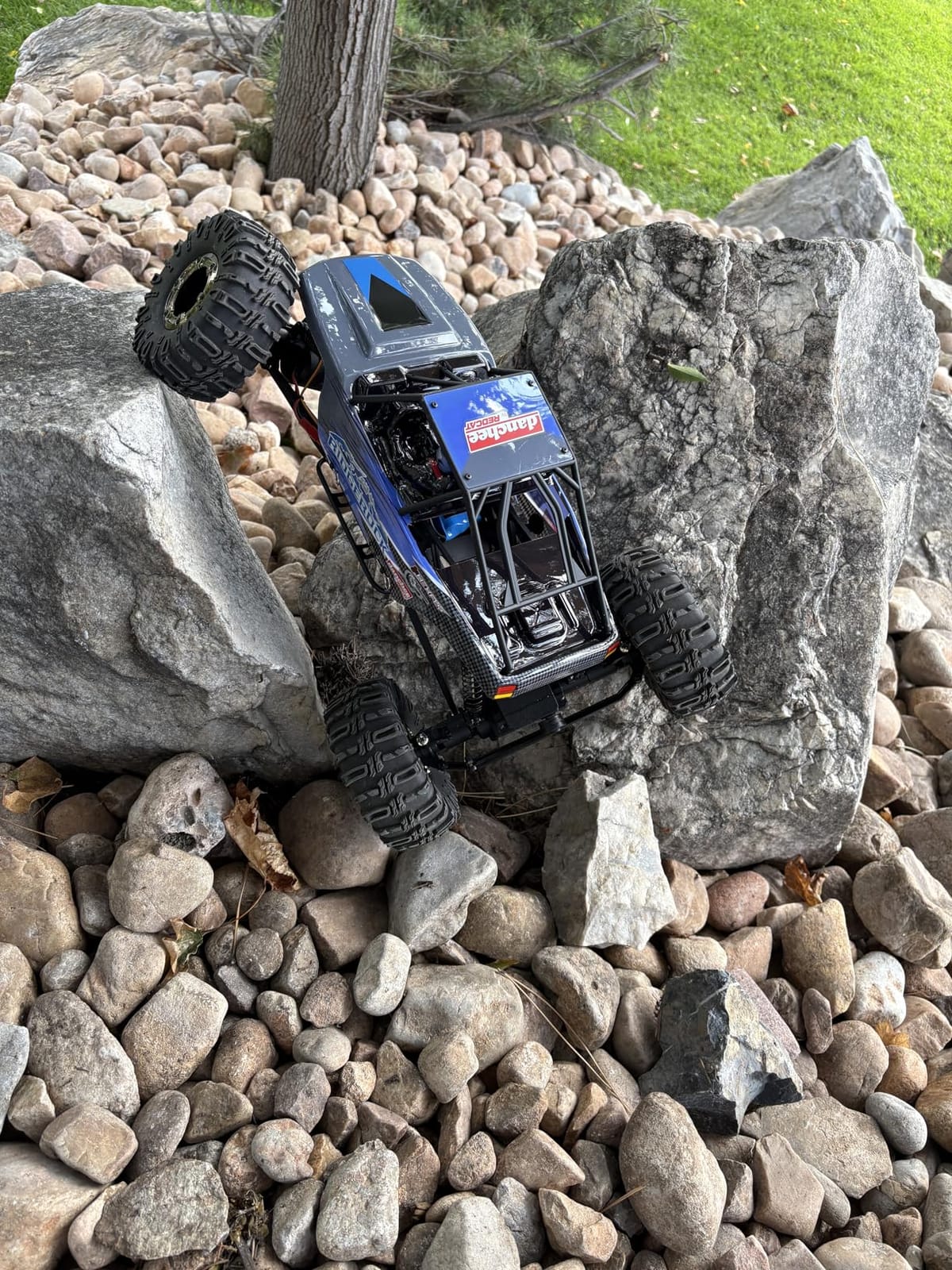
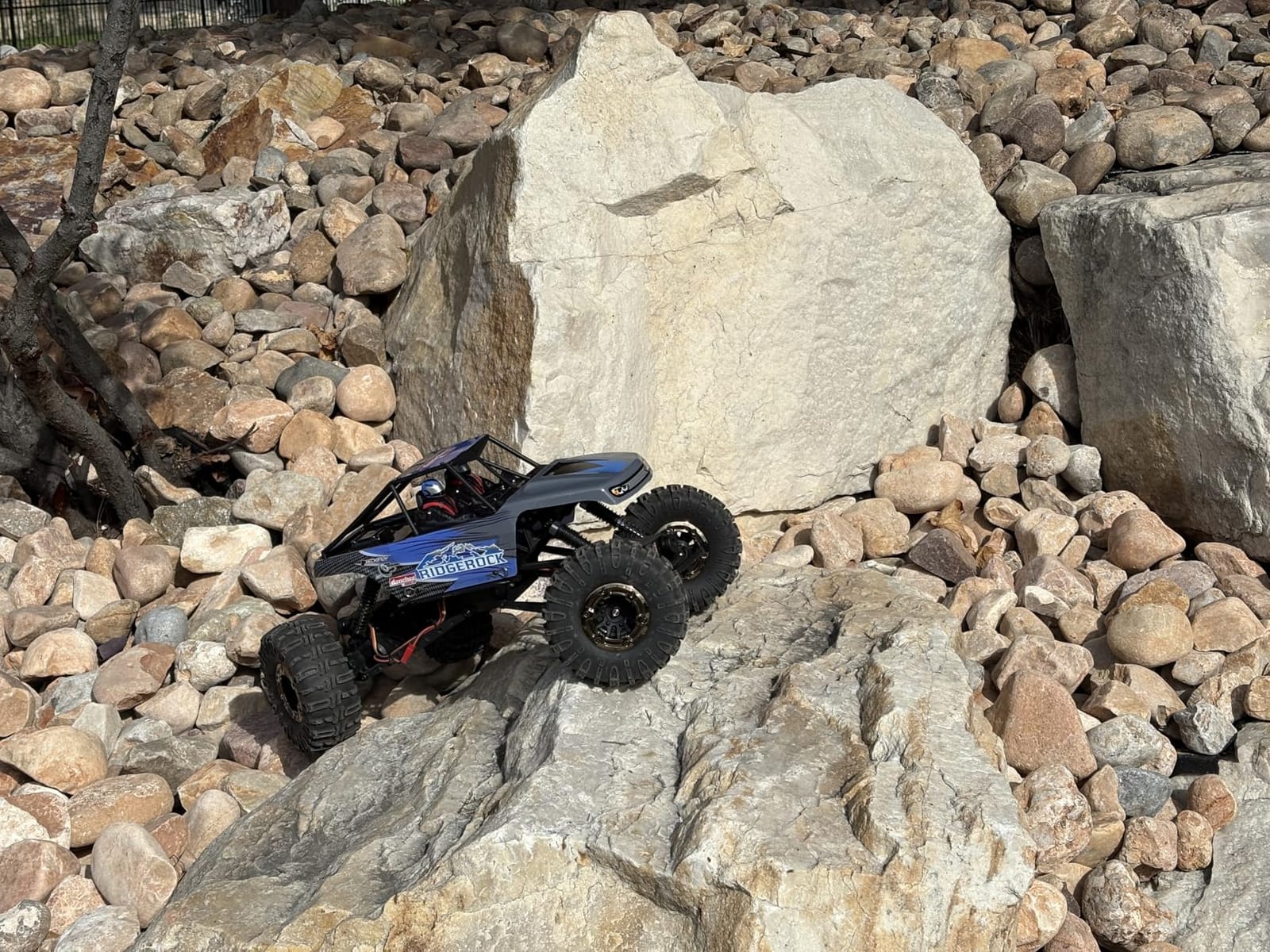
A 7.4V 1500mAh Li-ion battery and USB charger are included, giving around 45 minutes of run time. The chassis is lightweight plastic with aluminum-capped oil-filled shocks and tunable suspension, plus a molded roll cage, beadlock rims and aggressive off-road tires for the scale look.
At 18 by 11 by 11 inches and 1.3 kg it is a full-size 1:10 truck, so plan where it will live. It is a driveway and garden machine, not something a teen will carry between rooms.
What makes it a great first crawler
Tunable suspension with oil-filled shocks is the feature that separates a real crawler from a slow basher. Adjusting preload and damping changes traction dramatically, and it gives a teen a mechanical skill that transfers to every other platform they drive later.
Four-wheel steering is genuinely rare at this level. It makes tight technical lines possible on garden steps and tree roots, which is exactly the kind of problem-solving that keeps a hobbyist hooked.
Where it falls short
It is slow, and that is by design. A teen who wants speed will be disappointed, and the plastic chassis with low-torque servos will not handle extreme rock lines no matter how the suspension is set.
It is not waterproof, the axle motors are enclosed and hard to upgrade, and reviewers suggest adding low-mounted weight for extra traction. Treat it as a dedicated crawler rather than an all-purpose truck.
6. HYPER GO H16BM 1/16 Brushless RC Car – Best for Speed at a Mid Price
HYPER GO H16BM 1/16 Brushless Fast RC Cars for Adults
1:16 scale
2845 4200KV brushless motor with 45A ESC
Up to 68+ km/h on 3S
70% throttle limit switch
Pros
- Brushless power and speed at a hobby-grade-feeling price
- Holds together well after jumps and flips
- 70% throttle limit makes it beginner friendly
- Spare parts and tools included in the box
Cons
- Rear bumper bracket can break during wheelies
- Reports of ESC and receiver connectivity failures
- Included battery shape is non-standard
- USB charging is slow
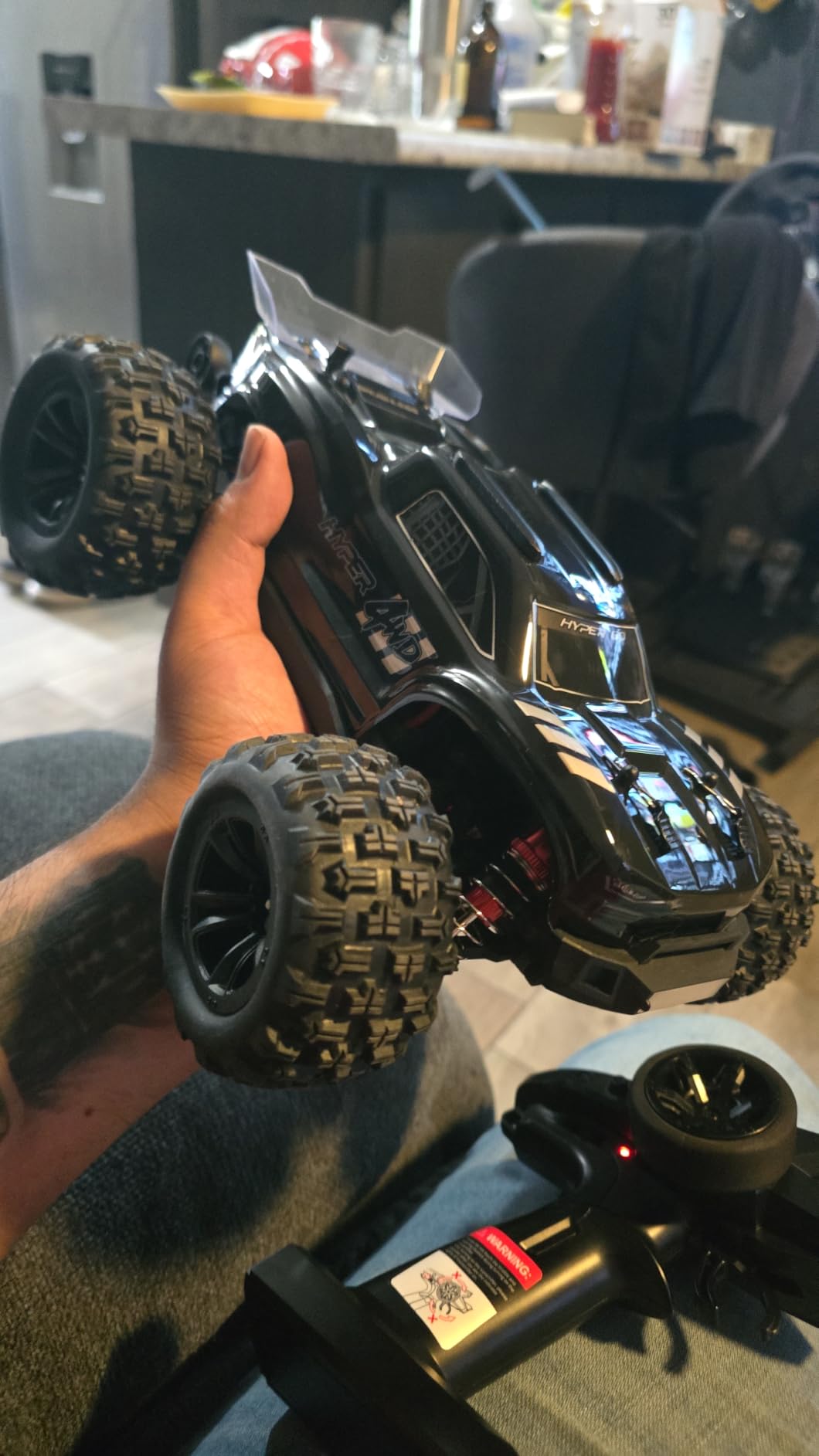
The H16BM is the value entry into brushless power. A 2845 4200KV four-pole brushless motor with a metal heatsink and cooling fans drives the wheels, and a 45A ESC with an independent receiver is 2S and 3S compatible, which means the truck can be upgraded rather than replaced when a teen wants more speed.
Reviewers regularly compare it favourably against trucks costing substantially more, and the drivetrain backs that up: metal gears, a metal differential, 5.5mm axles and 16 ball bearings on a honeycomb chassis with zinc-reinforced front and rear plates.
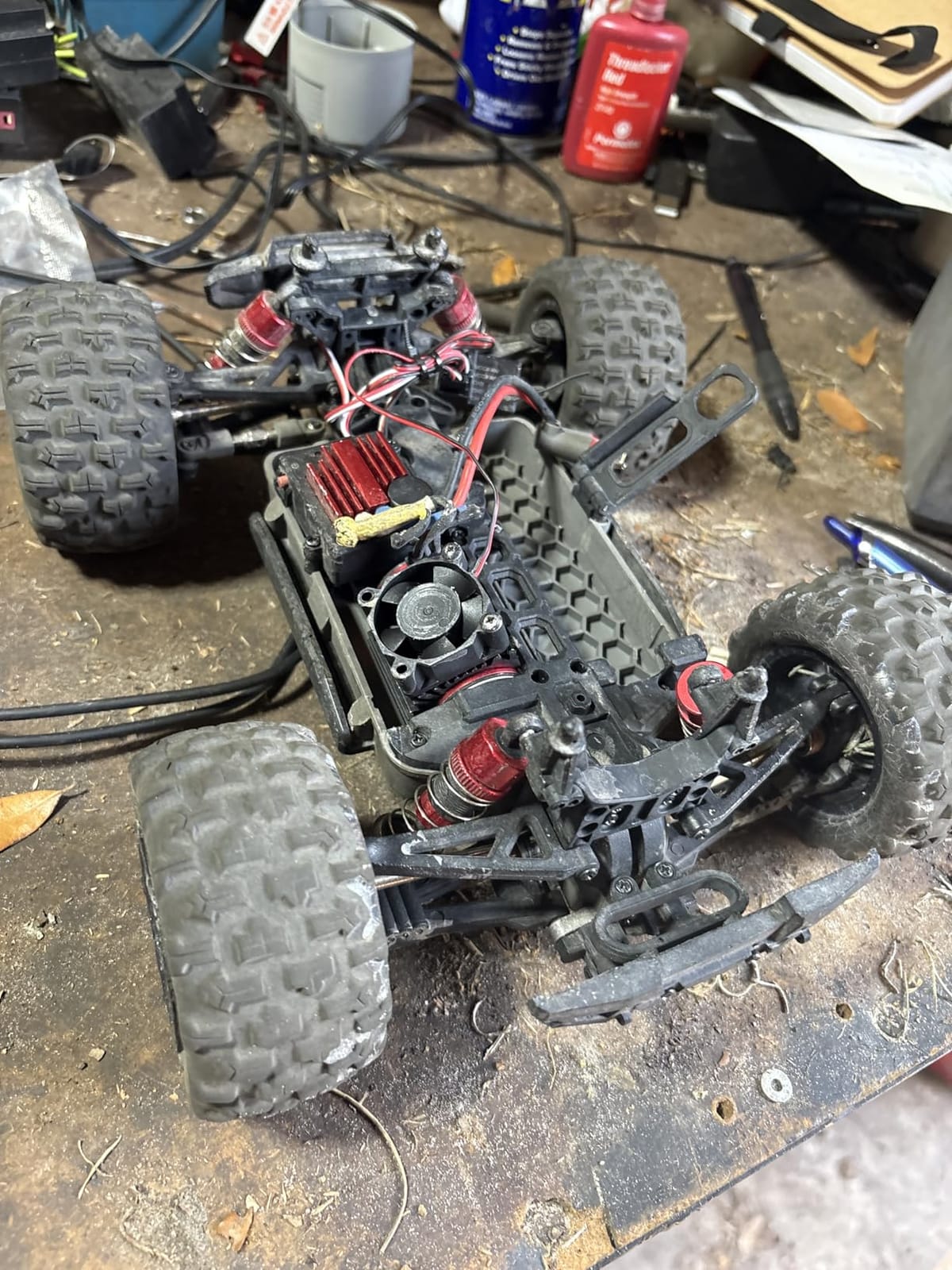
Out of the box it is quick. The quoted figure is 68 km/h, and while a 1:16 truck hitting that number feels startling, the 70% throttle limit switch on the transmitter is what makes this sellable to a family. Start there, and only open it up once the teen can handle it.
Oil-filled absorbers, sponge-insert tires and a 2.1kgf.cm three-wire servo round out a chassis that holds together after flips. A 2S 7.4V 1050mAh 25C LiPo pack is included with a hexagonal wrench and spare parts.
Why it works as a fast starter truck
The 2S/3S platform is the reason this is a good hobby purchase rather than a disposable one. A teen can start on the included 2S pack, learn the truck, then move to 3S for a genuine speed jump instead of buying a new vehicle.
Metal gears, 16 ball bearings and oil-filled shocks are the parts that take the abuse. Entry-level plastic appears on trim pieces only, which is exactly where you would expect it to be.
Where it falls down
The rear bumper and wheelie bar bracket is the known weak point, and it can snap during sustained wheelies. There is also a cluster of reviews reporting the electronics losing throttle response after several months of use, so check the range behaviour early.
The included battery is a non-standard shape and USB charging is slow. It is also very fast out of the box, which is exactly why the throttle limit switch should stay in place for the first months.
7. Hosim 1/10 Brushless Off Road RC Car – Best Full-Size 1/10 for Value
Hosim 1/10 Off Road RC Cars Fast 68KM/H, RTR Brushless RC Car for Adults
1:10 scale
2852 3200KV brushless motor with 45A ESC
Two 2600mAh LiPo packs
Aluminum alloy chassis
Pros
- Fast
- well built 1/10 truck with strong climbing and backflip ability
- Oil-filled shocks make a big difference in control
- Two batteries plus extra body shell and sand tires
- Handles dirt
- grass
- gravel
- mud and sand
Cons
- Too fast for beginners without the throttle limit
- Front body shell can crack after flips
- Tire nuts loosen on 3S power
- Some reports of dead batteries out of the box
The Hosim X07W is the pick if your teen wants a genuine 1/10 truck and does not want to spend hobby-shop money on it. Owners consistently rate it as one of the best performing 1/10 trucks in its class, with strong climbing ability and confidence under backflips that smaller trucks cannot match.
Under the body you find a 2852 3200KV brushless motor with a metal heat sink, a 45A ESC with a cooling fan, and a 40Cr chrome steel helical gear differential. That steel helical diff is the part that lets the truck absorb landings without snapping, and it is a real step up from the nylon diffs used on cheaper trucks.
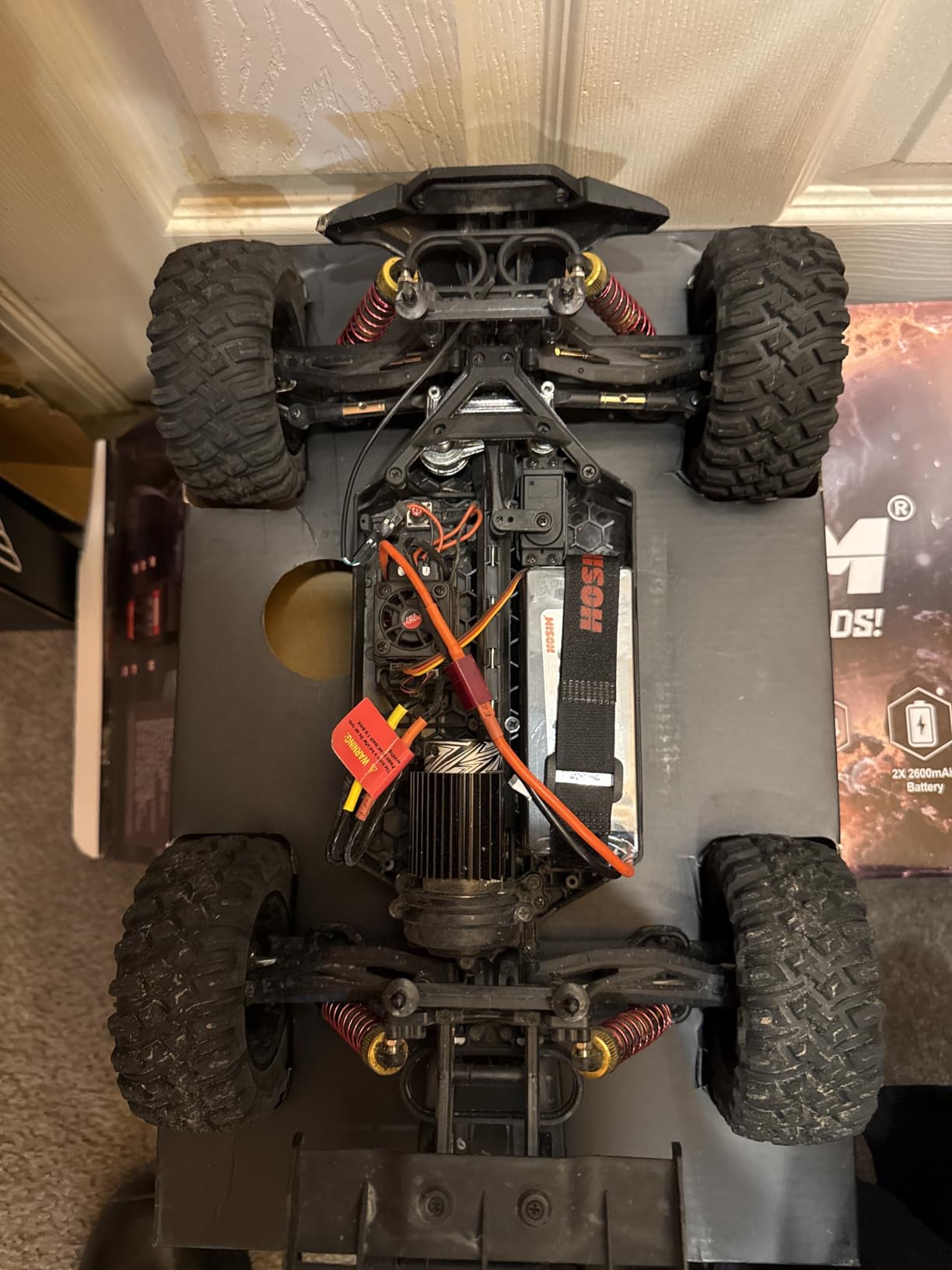
Two 7.4V 2600mAh LiPo batteries come in the box, quoted at up to 40 minutes of runtime, and you also get an extra body shell and a set of sand tires. Adjustable oil-filled shock absorbers and an aluminum alloy chassis round out a properly engineered truck.
The 2.4GHz transmitter is listed at 80m, or roughly 262 feet, with a 6KG high-torque servo. LED headlights are a small touch that matters a lot when a teen drives at dusk.
Why a 1/10 scale truck is worth it
Size changes everything. A 1/10 truck has the mass to push through mud and gravel that a 1/16 truck simply bogs down in, and 15 by 11 by 6 inches still turns around in most gardens. For a teen who will mostly drive outdoors, it is the more capable platform.
The included extras matter more than they look. A spare body shell and sand tires mean the first two damage events, which are the most common ones, are already covered.
Where it falls short
It is quick. The listing notes an age range of 14 and up for a reason, and reviewers flag it as too fast for beginners. This is not the truck to hand to a 12-year-old on full power.
The front body shell can crack after flips, tire nuts loosen when running on 3S, and there are a small number of reports of batteries arriving dead or electronics failing within weeks. Customer support for parts has also been reported as slow, so check the responsiveness before you commit.
8. HYPER GO H16DR 1/16 RTR Monster Truck – Best Upgrade Path on a Budget
HYPER GO H16DR 1:16 Scale Ready to Run Fast Remote Control Car, High Speed Jump RC Monster Truck, Off Road RC Cars, 4WD All Terrain RTR RC Truck with 2 LiPo Batteries for Boys and Adults
1:16 scale
390 motor, 20+ mph on 2S
2S/3S smart ESC
Two LiPo batteries and 70% throttle limit
Pros
- Aluminum-capped oil-filled shocks improve stability at speed
- Ready to run with two LiPo batteries included
- Good for jumps
- wheelies and backflips
- Upgradeable to 3S for more speed
Cons
- Listed item weight of 100 g is inaccurate
- Brushed motor caps performance versus brushless rivals
- Two batteries mean charging downtime while the other is in use
The H16DR is positioned as a clear step up from toy-grade trucks, and the hardware justifies that framing. Aluminum-capped oil-filled shocks, a honeycomb-designed chassis, an alloy steel drive shaft, zinc metal reinforced front and rear plates and metal ball bearings are not features you normally see on an entry truck.
Out of the box it runs a 390 motor on a 2S 7.4V 1050mAh 25C LiPo pack for 20+ mph, which is a sensible starting point. The 2S/3S smart ESC then opens the door: drop in a 3S pack and the same truck does 27+ mph.
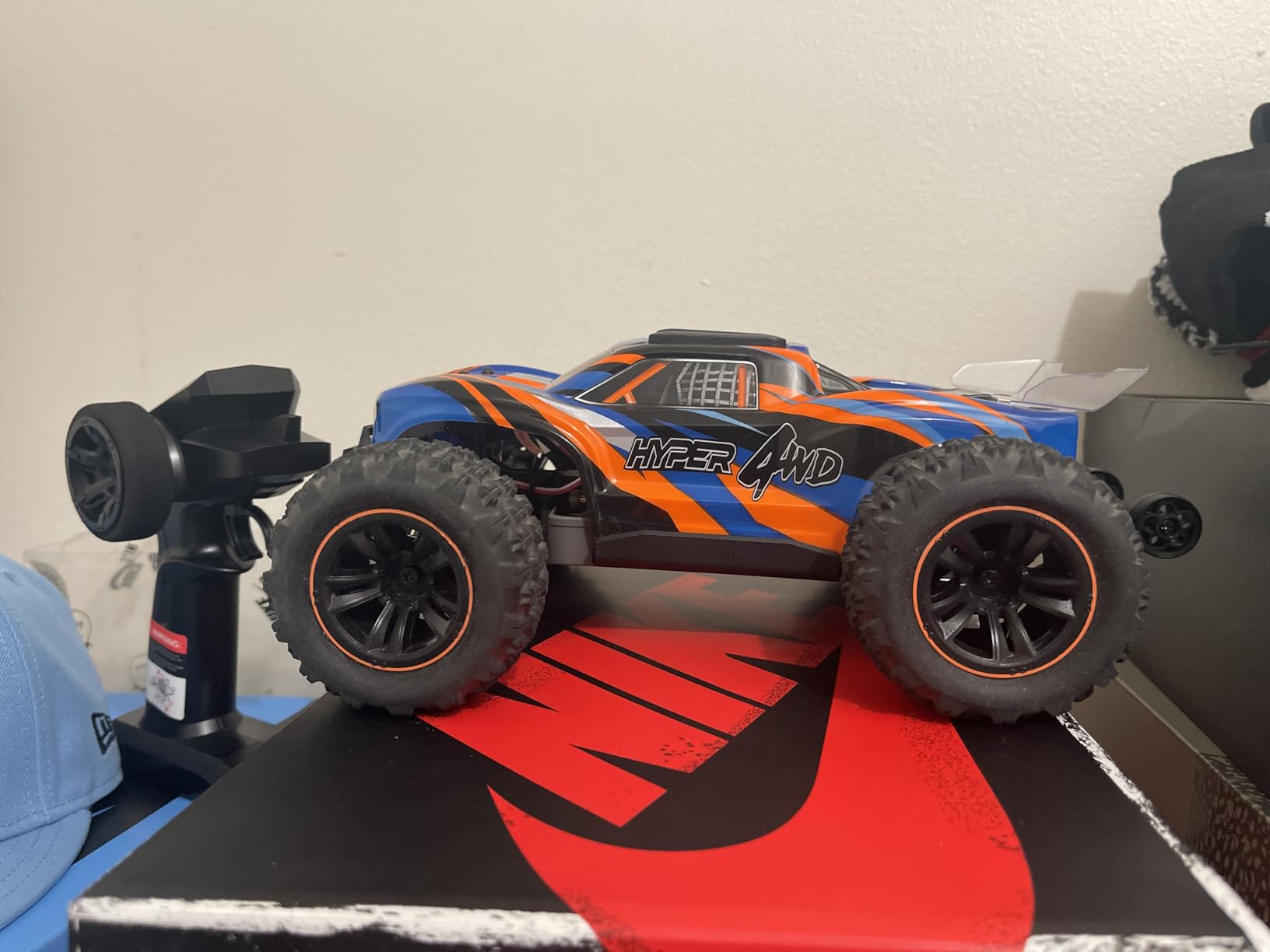
The 70% throttle limited switch is there for a reason and is the first thing you should leave enabled. Combined with the 2S/3S ESC, it gives a parent a clear progression path: low power on 2S, full power on 3S once the teen is ready, no new vehicle required.
Front and rear gear differentials handle the drive, and a screwdriver is included for basic setup. A 1:16 truck at this level is also the easiest size to drive on a driveway, a park path or a carpeted floor when weather rules out the yard.
Why the upgrade path matters most
Most entry trucks stop improving the day you unbox them. This one has a documented upgrade route through the ESC, which means a teen can get meaningfully faster and more capable without changing platforms or learning a new radio system.
It is also the natural bridge between a toy-grade first car and a proper hobby truck. If the teen has never used proportional steering before, the slow mode makes the transition manageable.
Where it falls short
A brushed motor is the ceiling here. No amount of tuning turns a 390 brushed motor into a brushless one, and eventually a teen wanting more speed will need a different vehicle.
Some care is needed with the listing itself, since the item weight is stated as 100 g, which is clearly inaccurate for a truck this size. And with only two batteries included, expect charging downtime while the second pack is on the cable.
9. RIAARIO 1/10 Brushless Carbon Fiber RC Car – Best for Enthusiasts
RIAARIO 1/10 Brushless RC Cars, 50+ MPH, 4WD, Waterproof, Carbon Fiber
1:10 scale
3650 2650KV brushless motor with 60A ESC
50+ mph top speed
2.5mm aluminum chassis with carbon-fiber deck
Pros
- Genuinely hobby-grade CNC drivetrain and aluminum construction
- Built-in gyro stabilization makes very high power controllable
- Selectable 0/25/70/100% throttle lets drivers grow into it
- Adjustable oil-filled shocks and airless tires handle rough terrain
Cons
- Costs more than any other pick in this roundup
- Not recommended for beginners given the power and speed
This is the enthusiast-tier pick and the most expensive truck here, so it earns its place only for a specific driver: a teen who already has a controller under their thumb. The 3650 2650KV brushless motor feeding a 60A ESC pushes past 50 mph, and the hardware behind it is closer to a competition platform than a toy.
The chassis is 2.5mm hardened aluminum with a carbon-fiber reinforced upper deck and shock towers, reinforced A-arms and a composite bumper. The drivetrain runs through a CNC centre differential, a reinforced centre driveshaft and CNC gears, which is the level of construction that lets a truck this powerful survive repeated full-throttle runs.
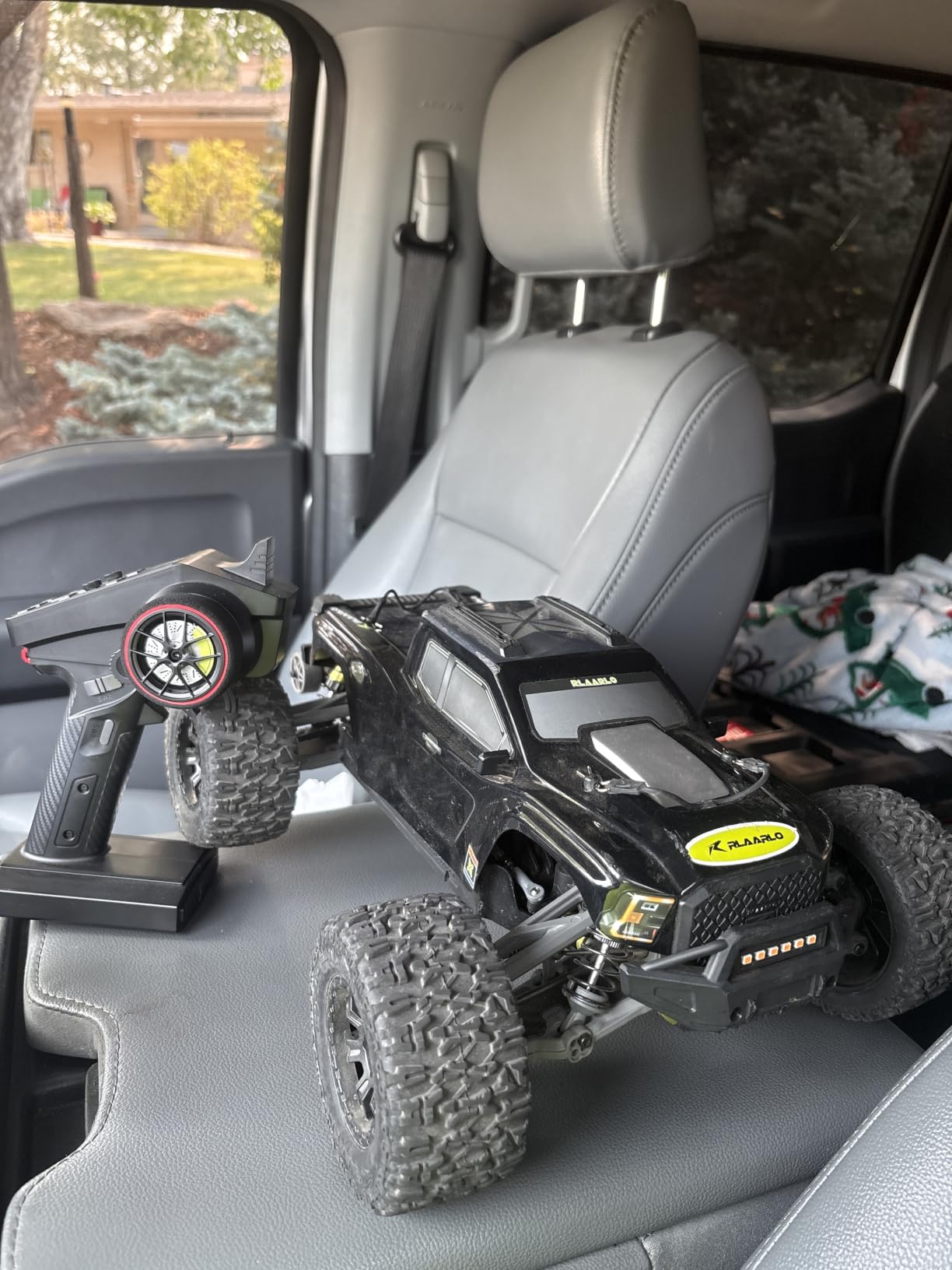
Two features make it far more approachable than 50 mph should be. The built-in gyro stabilization actively corrects the truck on throttle and yaw, and the throttle is selectable at 0%, 25%, 70% or 100%. A new driver can start at 25% and work upward, and the 11KG metal-gear servo gives the steering authority to match.
A 5-channel transmitter opens up future options, and airless all-terrain tires plus adjustable oil-filled shocks handle rough ground. Note that batteries and a charger are not listed among the included components, so budget for both.
Why it is worth the money for the right driver
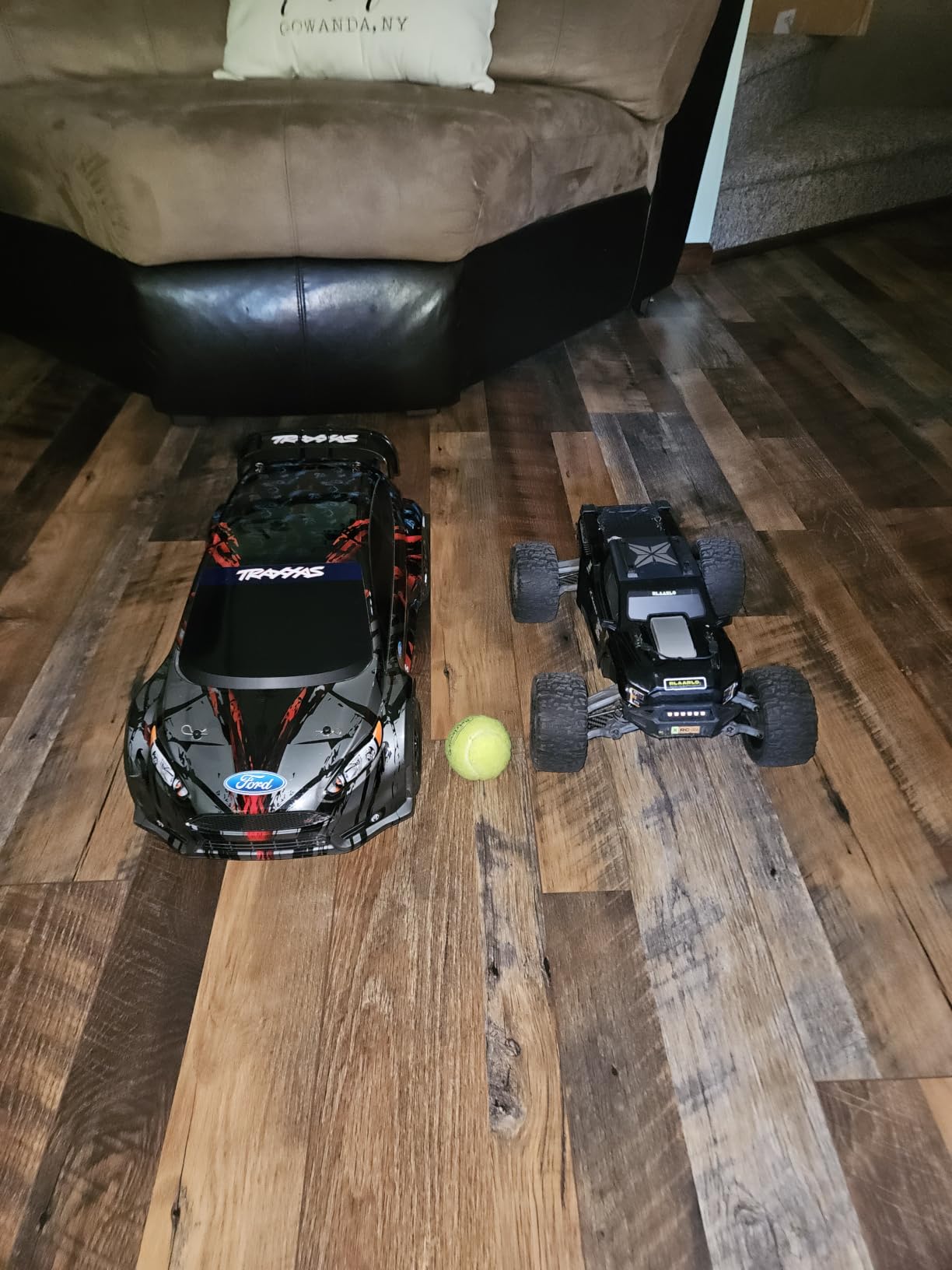
Nothing else in this roundup combines an aluminum chassis, a CNC drivetrain and an active gyro. For a teen who is already committed to the hobby, those are the components that survive an upgrade path rather than a single season.
The selectable throttle percentages are a genuinely clever design. They let a parent hand over a very fast truck without handing over a control problem, which addresses the single most common objection to buying a powerful RC car for a teenager.
Where it falls short
It is the most expensive option here by a wide margin, and it is not the place to start. Reviews are consistent that it is not recommended for beginners given the power and speed involved.
It also comes without the extras. Batteries and a charger are not listed among the included components, so the real outlay sits above the sticker. If the teen is new to the hobby, the money is better spent on one of the mid-tier trucks plus a proper charger.
10. X-TMAGA 1:18 All Terrain RC Car – Best for Yard Bashing on a Budget
X-TMAGA 1:18 All Terrain RC Car, 4WD Off-Road Remote Control Car (HS18-05)
1:18 scale
380 brushed motor up to 40 km/h
Shaft-drive 4WD with metal gears
Two 7.4V 1200mAh packs with BMS
Pros
- Fast and fun for the price
- Handles grass
- gravel
- dirt and rocks without stalling
- Two batteries and a spare body shell in the box
- Trim and speed buttons make it easy for beginners
Cons
- Handheld remote feels cheap
- Can overheat during sustained high-speed runs
- Listed dimensions are inaccurate
- Battery run time per pack is short
The X-TMAGA 1:18 is the pick when the goal is simple: a teen wants to rip around a yard at speed without any risk of ending up with a fragile toy. The shaft-drive 4WD chassis uses metal gears and metal drive shafts, which is the specific construction detail that separates it from the gear-driven plastic toys priced alongside it.
The custom 380 brushed motor runs to 30000 rpm for up to 40 km/h in good conditions. Reviewers note it handles grass, gravel, dirt and rocks without stalling, which for a yard-bashing truck is exactly the brief.
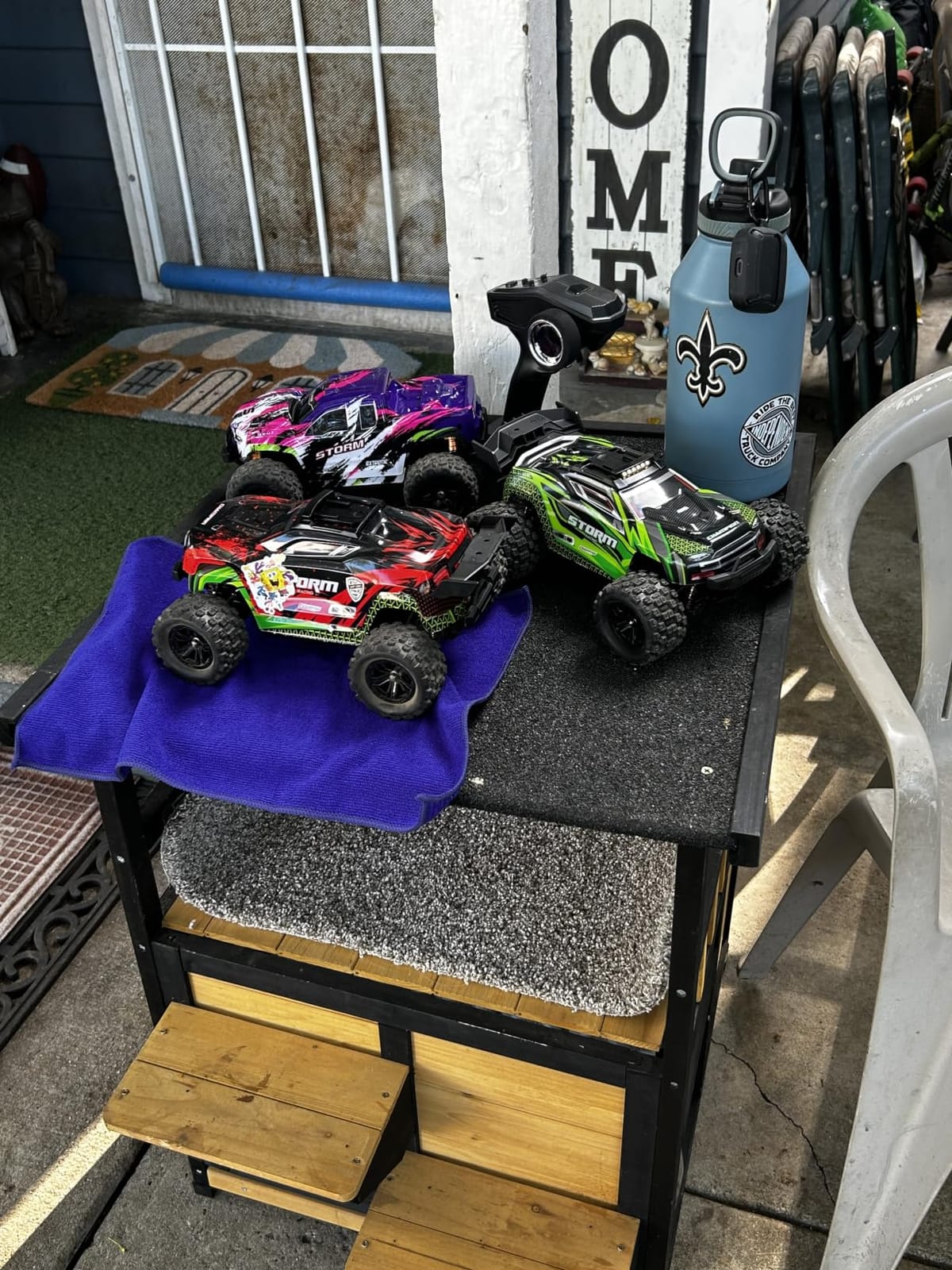
Two 7.4V 1200mAh lithium batteries with a battery management system give about 50 minutes combined, and an extra body shell is in the box. That spare shell matters more than it sounds, because the shell is the first thing that cracks when a truck is jumped hard.
The 2.4GHz anti-interference transmitter includes TRIM and SPEED buttons plus proportional steering, so a beginner can adjust the pull and cap the power without any tools. At 16 ounces it is light enough to carry easily and quick enough to keep a teen busy for an afternoon.
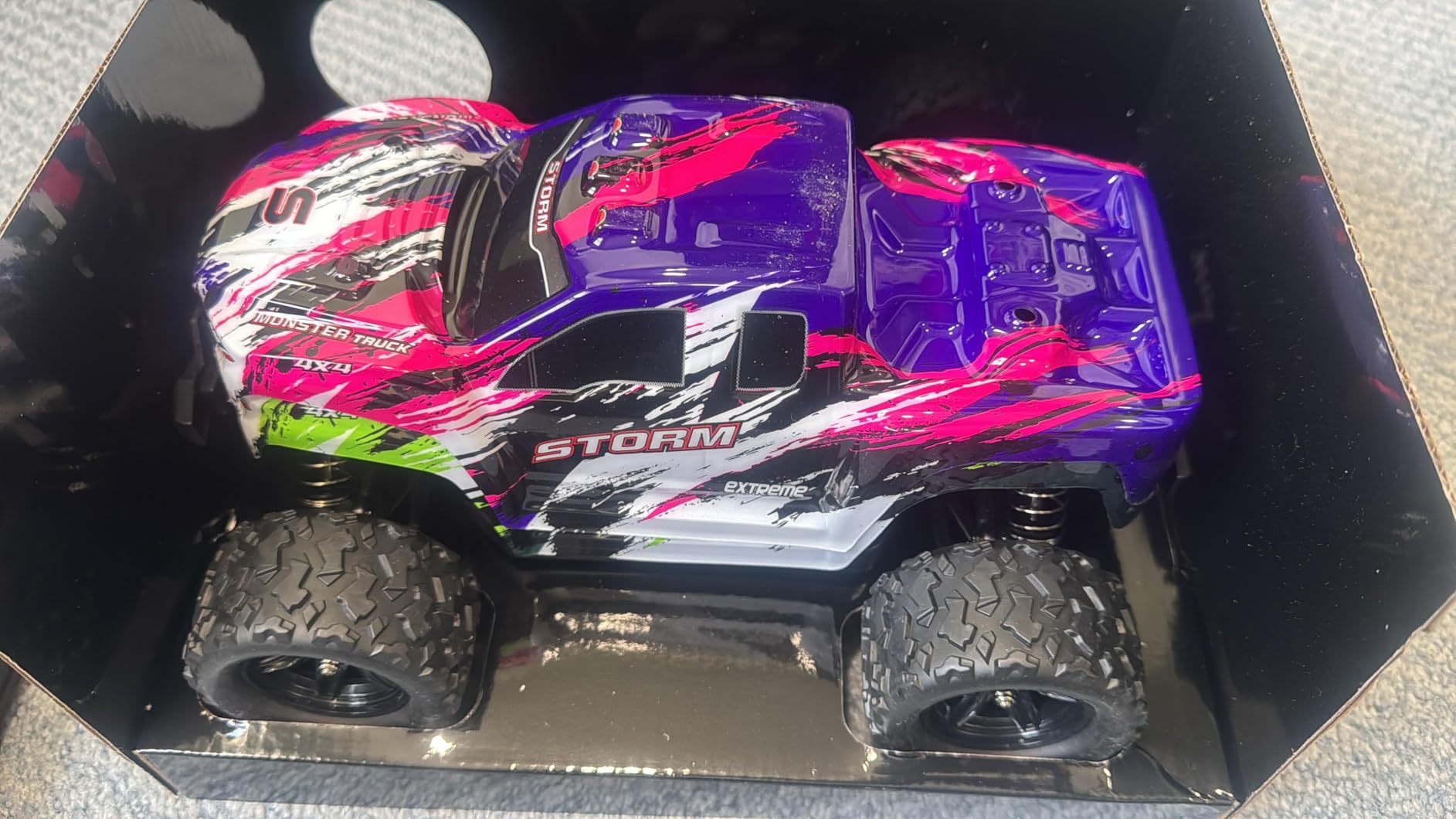
What it does well in a yard
Shaft drive with metal internals is the durability story. When a truck lands nose-first from a ramp, the drivetrain absorbs it rather than snapping, and tires and shells are the consumables that take the damage instead.
Two batteries plus a spare shell means the box covers the three most likely breakages. For a first vehicle, that completeness is worth a lot of frustration saved.
Where it falls down
The remote feels cheap, and that is the most common complaint. It works, but the buttons and the wheel do not have the positive feedback of a proper hobby transmitter, which matters for a teen learning fine control.
It can overheat during sustained high-speed runs, and the listing dimensions are stated as 1 by 1 by 1 inches, which is simply wrong. Per-pack run time is also on the short side, so plan on swapping rather than running one pack to the end.
11. Threeking 1:16 Amphibious Monster Truck – Best for Pools and Water
Threeking 1:16 Amphibious Monster Truck All Terrain Remote Control Car Toys
1:16 scale
IPX6 waterproof amphibious body
Runs on land and in water
160 ft range, up to 6 cars
Pros
- Unique amphibious ability drives in pools and streams
- Takes jumps and abuse without breaking
- Fast and simple for newer drivers
- Company replaced a failed unit quickly
Cons
- One-handed remote versions feel cheap and can rattle apart
- Controller is not waterproof and fails if splashed
- Targeted more at younger kids than teens
- Must be rinsed after seawater use
No other truck on this list drives in water, and for a teen who will absolutely find every pond, puddle and shallow stream within a mile of the house, that is a feature worth more than any speed figure. The IPX6 waterproof body runs on beach, pool, grass, stone and dirt without any modification.
The 2.4GHz controller has a listed range of 160 feet and supports up to six cars racing at the same time, which makes it genuinely useful for a group of friends. Anti-collision beams front and rear take the punishment when a truck is driven into a wall of a swimming pool at speed.
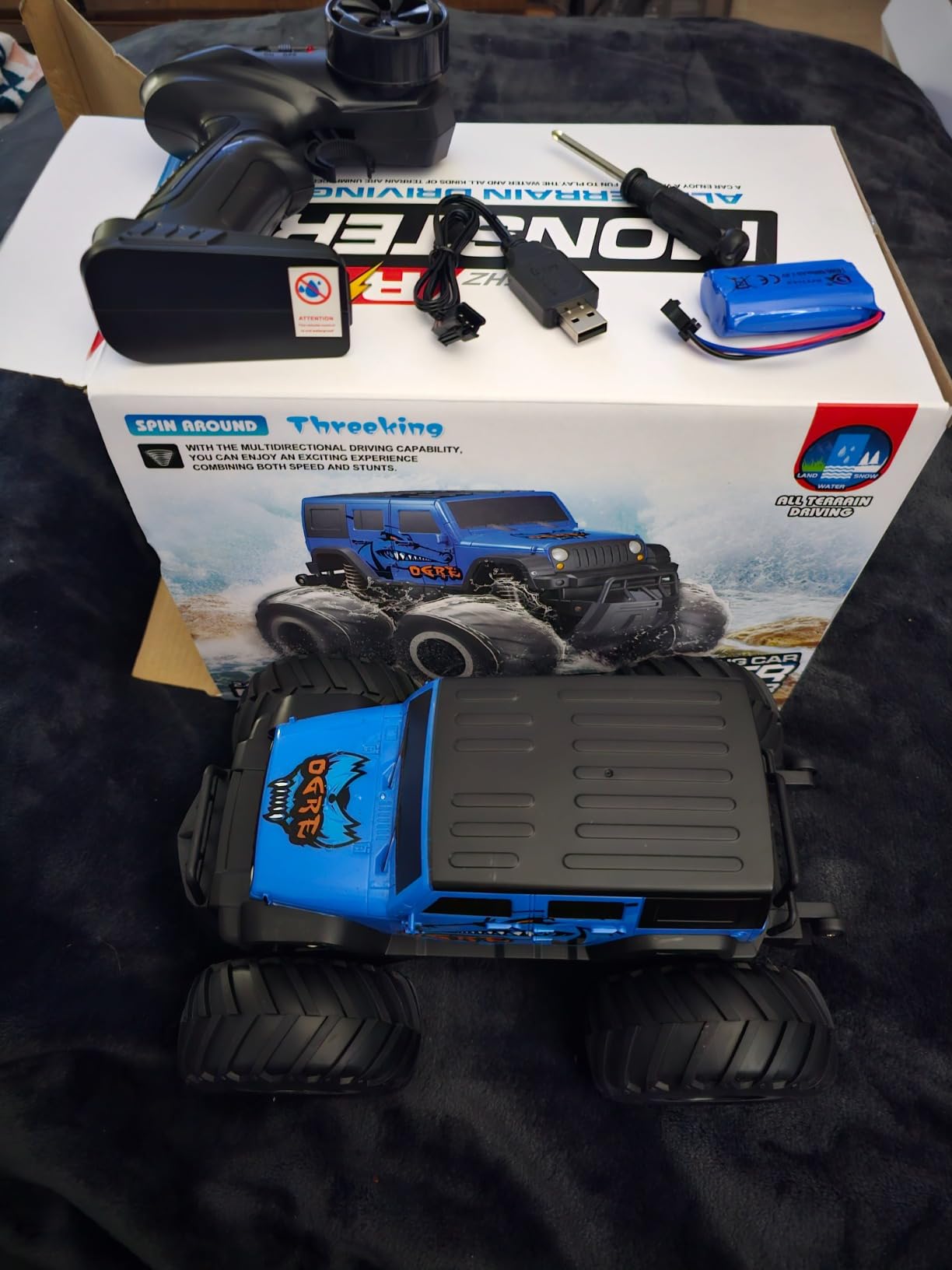
A rechargeable battery and charging cable are included, with owners reporting roughly 20+ minutes per pack. At two pounds and 10 by 6.9 by 6.5 inches it is a chunky, stable platform in the water, which is what keeps it from flipping when a wave hits the wheels.
Customer support came in for praise here too, with several owners reporting a failed unit was replaced quickly. That kind of responsiveness is rarer than it should be in this category and it counts.
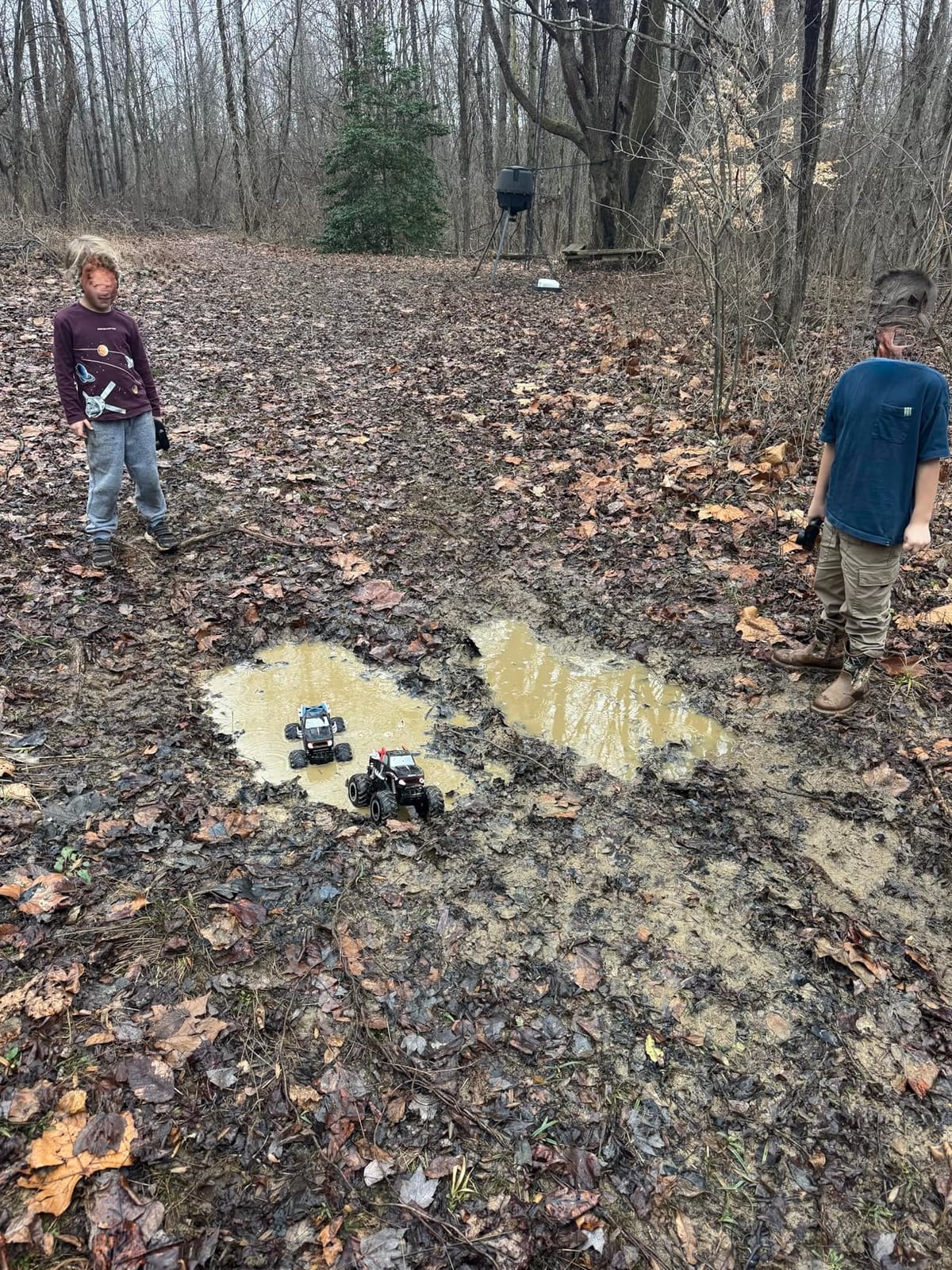
Why the amphibious capability is a genuine advantage
Water ingress is the most common first failure in RC, and it is the one fault that ends a hobby instantly rather than being repaired with a spare part. An IPX6 body simply removes that failure mode from the equation.
It also opens up terrain nobody else in this roundup can reach. A teenager can run a course from dry driveway to pool edge to shallow stream and back, which is a lot more play per hour than a truck that stops at the puddle edge.
Where it falls down
The remote is not waterproof and fails if splashed, which is a real problem on a vehicle whose whole appeal involves water. The one-handed remote versions also feel cheap and can come apart after drops.
Owners consistently describe this as aimed more at younger kids than teens, and that reading is fair. If your teen is 15 or 16 and wants speed and tuning, they will outgrow it quickly. It is also worth rinsing with fresh water after any use in saltwater.
12. BLUEJAY 2.4GHz High Speed RC Truck – Most Versatile for Younger Teens
BLUEJAY Remote Control Car, 2.4GHz High Speed 33KM/H RC Cars Toys
380 motor up to 33 km/h
ABS chassis with aluminum alloy body
Two 7.4V 1400mAh packs
LED headlights and chassis lights
Pros
- Long combined battery life for continuous play
- Fast
- fun and easy to hand to a younger teen
- LED headlights and chassis lights are a hit at night
- Extra steering knuckles and spare parts included
- Responsive warranty replacement service
Cons
- Low ground clearance bottoms out on rough ground
- Limited turning radius and a light body that flips easily
- Tires can come off the bead when driven hard off road
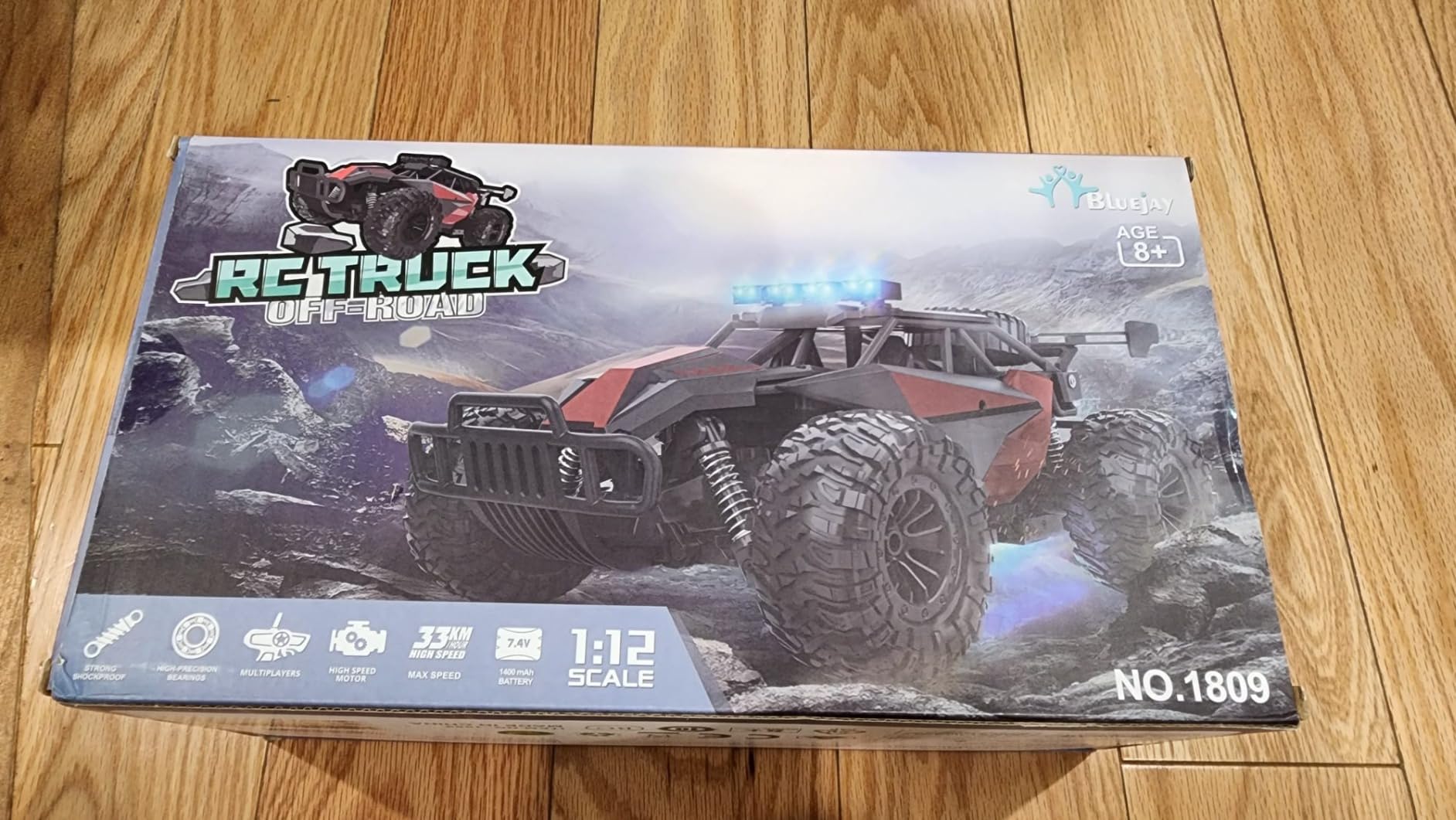
The BLUEJAY is the simplest truck here to hand to a younger teen, and the manufacturer lists it for ages 8 to 18. The 380 motor reaches 33 km/h, which is deliberately modest, and that restraint is the reason it works as a first vehicle rather than something a 12-year-old overpowers in the driveway.
Battery life is the standout. Two 7.4V 1400mAh rechargeable packs give up to 35 minutes each, so a teen can drive while the other charges and effectively never stop. The 2.4GHz no-delay controller lists a 50 metre control distance, and the ABS plastic chassis is reinforced with an aluminum alloy main body.
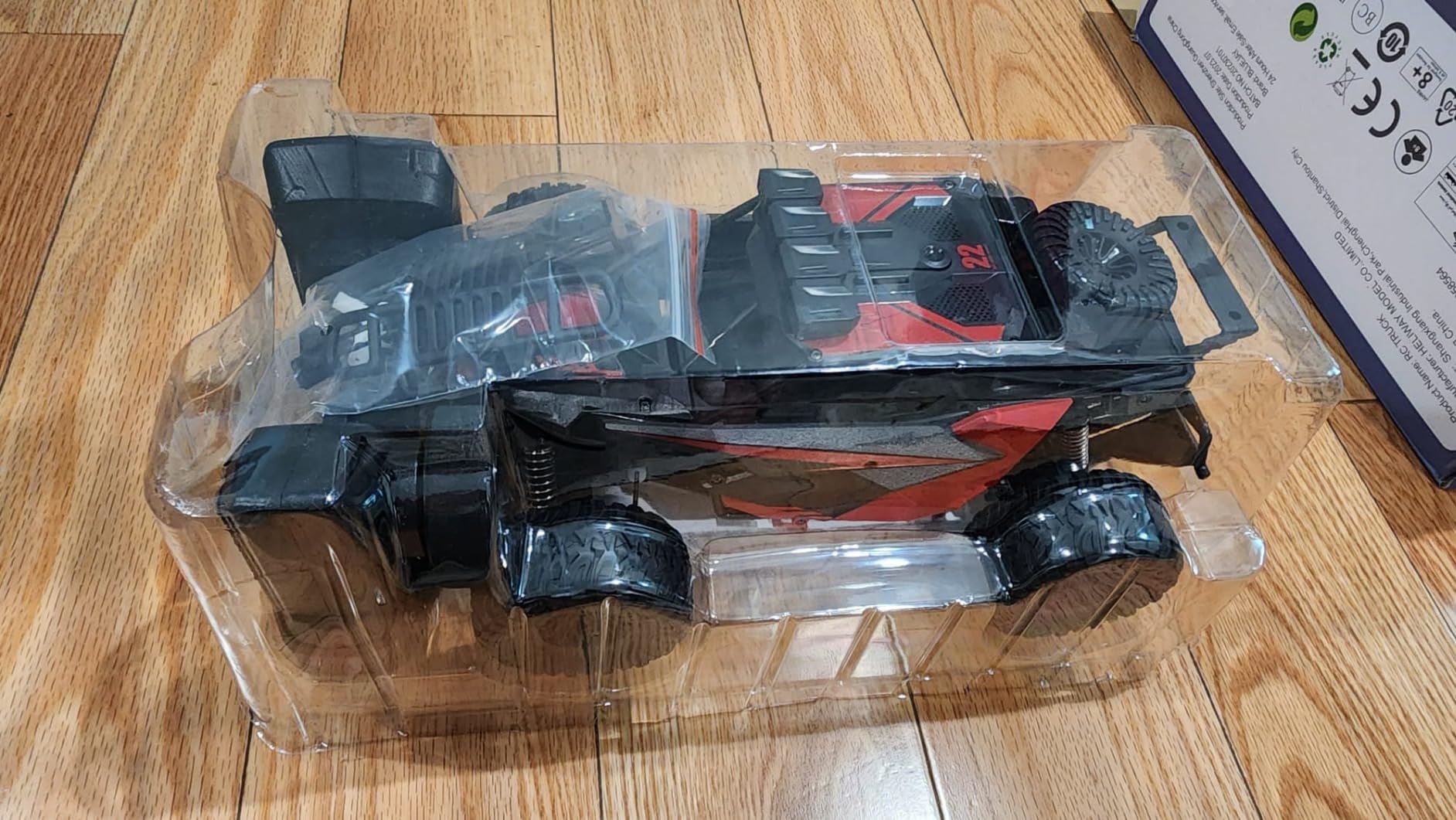
LED headlights and chassis lights make it a hit at dusk, which extends the driving window considerably. Extra front steering knuckles and a set of spare parts are included, and several owners report responsive warranty replacement service when things went wrong.
Think of it as the first rung on the ladder. It is a solid, dependable starter that will not excite a 17-year-old, but it will not break a 12-year-old’s confidence either.
Who this truck suits
A younger teen, roughly 12 to 14, who is new to the hobby and driving on pavement, a driveway or a flat path. The modest speed means a parent does not need to supervise every second, and the long battery life means fewer charging breaks and fewer arguments.
It is also a good second vehicle to keep around, because it is small enough to run indoors on carpet if the weather is bad and cheap enough that a crash is not a crisis.
Where it falls down
Ground clearance is the headline weakness. On rough ground or a gravel path the truck bottoms out, and the limited turning radius combined with a light body means it flips easily when the surface is uneven. Tires can also come off the bead if driven hard off road.
There are scattered reports of control failures, reverse that stops working and an idling whine, and the rear axle is not covered by the included spare parts. For paved surfaces it is fine; for terrain, look at one of the four-wheel-drive trucks above.
What to Look For in the Best RC Cars for Teens
Three things decide whether a teen is still driving an RC car six months from now: whether it is hobby-grade rather than toy-grade, whether it is ready-to-run, and whether its electronics survive contact with the weather.
Hobby-grade vs toy-grade. Toy-grade cars use glued plastic gearboxes and shells that cannot be replaced. When a gear snaps, there is no part number, no stock and no fix, and the hobby usually ends there. Hobby-grade cars use standard fasteners, standard components and a real suspension system, so damage is an afternoon of repair rather than a replacement.
Ready-to-run (RTR). An RTR vehicle ships assembled, with a transmitter, motor and battery in the box. This is the right choice for almost every teen starting out, because the barrier to entry is a screwdriver rather than a soldering iron and a parts order.
Waterproofing. Wet grass and puddles are the most common first failure. Splash waterproof electronics, or a stated IPX rating on the body and ESC, is the difference between a bad afternoon and a dead truck. Fully waterproof is rarer than splash proof, so read the rating carefully.
Throttle limiting. A transmitter with a speed, trainer or throttle-limit switch lets a parent hand over a fast car safely and then open it up as the teen improves. Several trucks in this roundup have one, and it is the single most useful parent-facing feature on the market.
Parts availability. Before buying, search the model name plus the part you are most likely to break, such as shock, pinion gear, drive shaft or body shell. If nothing comes back, you are buying a disposable vehicle, not a hobby.
Hobby-Grade vs Toy-Grade: Why the Chassis Matters More Than the Speed Claim
The single biggest reason teens abandon the hobby is a snapped plastic gear in a toy-grade gearbox. There is no part number to look up, nothing available anywhere, and the manufacturer has no interest in supplying one. That failure usually ends the interest within weeks, and no amount of speed compensates for it.
A hobby-grade chassis uses standard components throughout: metric screws, ball bearings, oil-filled shocks, a differential, a slipper clutch and a chassis plate you can drill and mount things to. That means a broken part is a consumable rather than a fatality, and it is why the same platforms tend to stay in service for years.
Forums like r/rccars return to this point constantly. The advice is the same whether the driver is 12 or 17: buy a hobby-grade RTR car first, because repairability is what keeps somebody driving. The parent benefit follows from that, because a car that keeps running does not get returned to the cupboard after a month.
Brands with deep aftermarket support are consistently named in those discussions as the safest long-term platforms, largely because parts are catalogued by part number and carried widely. Our picks span the spectrum from brands with enormous review counts to newer specialist platforms, and the honest truth is that review volume is a better predictor of parts availability than any marketing claim.
One caution applies across the whole category: a cheap car that advertises a 2.4GHz radio and ships with a proprietary USB cable can lock you into a single battery vendor. Check the cell configuration before you commit, because that is the detail that decides whether buying a spare pack later is easy or impossible.
Ready-to-Run or Build Kit: Which One Should a Teen Start With?
For a first car, ready-to-run wins almost every time. The teen is driving within minutes of opening the box, which means the fun arrives before the patience runs out. A build kit introduces assembly, wiring and troubleshooting to a driver who has not yet decided whether they care.
The exception is a teen who is explicitly a builder. If someone is asking about chassis flex, motor winding numbers or shock oil viscosity, a build kit is genuinely satisfying and the finished result feels far more like theirs. Forums consistently suggest the TT-02 and Mini-Z platforms for that type of driver, both of which are small, forgiving and endlessly upgradable.
There is a middle path worth knowing about. Buying a ready-to-run truck that ships with a spare parts kit in the box, as several picks here do, gives most of the tinkering satisfaction without the risk of a half-finished project sitting on a desk. A teen who wants to build will start with a hex wrench anyway.
Either way, check the scale before buying. A 1/10 truck is large enough to be intimidating indoors and is a genuine commitment of space, while 1/16 and 1/18 trucks work in a yard, a driveway or a living room. Forums flag sizing confusion as one of the most common first-time buying mistakes.
Battery and Charger Costs: The Part Nobody Puts in the Listing
Almost every budget truck here comes with two Li-Po packs and a basic USB cable, which is a real advantage over a single-pack design where play stops when the pack dies. It also creates the trap most parents fall into: believing the included cable is a real charger.
Cell balancing is the issue. A basic two-wire USB cable charges a pack as one lump, so cells drift out of balance over time and the pack loses capacity and eventually fails. Reviewers of the HAIBOXING 18859, for example, consistently recommend replacing the included cable rather than living with shortened run time.
Our advice is to buy a proper balance charger early rather than after the first pack disappoints. It is a one-time purchase, it protects every pack you own, and it makes the difference between a fifteen-minute run and a thirty-minute one. Our guide to the best RC LiPo battery chargers covers the options.
Two further running costs catch families out. The cheap trucks in this roundup run 1200mAh to 1500mAh packs, and the standard first upgrade discussed among hobbyists is a pair of higher-capacity packs, which is where most of the run-time improvement comes from. Second, consumables add up: tires, shocks, drive shafts and body shells are all wear items.
Set expectations on the total. Most families find batteries, a charger and a first set of spare parts add meaningfully to the cost of the vehicle, which is why we have flagged the trucks that include the most complete box.
4WD vs 2WD, Brushed vs Brushless, and Matching the Chassis to the Terrain
Four-wheel drive is the safer default for a first truck because it puts power down in loose gravel, wet grass and mud where a two-wheel-drive car would simply spin. The cost is extra drivetrain wear and slightly more complex repairs, which is a fair trade for a new driver.
Two-wheel drive has a real place: it is lighter, cheaper to run and more mechanically simple, and on smooth pavement an on-road car can look stunning doing it. But for a teen bashing outdoors, 4WD is the more forgiving choice.
Brushed motors are cheaper and tolerate the occasional crash without complaint. Brushless motors are faster, quieter and more efficient, with less heat and no wear on brushes, and they are standard on anything above the entry tier. Several trucks here, including the H16BM, the H16DR and the Hosim, run 2S/3S electronics so the teen can begin on 2S and step up to 3S power later.
Once a teen has outgrown a small truck, the jump to a larger machine is bigger than most parents expect. Our guides to the best off-road go karts for teens and the best 125cc dirt bikes for teens cover that next step for drivers who want something they can ride rather than remote.
Match the chassis to where the truck will actually live. Flat pavement and indoor carpet suit a low, fast truck. Gravel, mud and rocks need ground clearance, knobby tires and oil-filled shocks. Tall wet grass demands sealed electronics. Steep rock lines need a slow crawler with four-wheel steering. Buying a speed truck for a garden full of rocks is the most common mismatch we see.
Scale is the last variable. A 1:10 or 1:14 truck has the mass and ground clearance to handle rough terrain, and a 1:16 or 1:18 truck is far easier to control indoors or in a small yard. Bigger is not automatically better, and the forum consensus is that a smaller truck a new driver can actually place is a better first car than a larger one they are afraid of.
LiPo Safety and Charging Supervision: A Checklist for Parents
Lithium polymer batteries are safe when handled properly, and the failure modes are well understood. The concern among parents is reasonable, so here is the practical guidance rather than reassurance.
Charge on a non-flammable surface. A metal tray, a concrete floor or a wooden bench is fine. Never charge on carpet, a bed, a sofa or anywhere paper is stored, because a damaged pack can vent and a soft surface makes ignition much more likely.
Never leave a charging pack unsupervised while you are out of the house. This is the rule that matters most and the one most often broken, because charging takes hours and everyone assumes they will be back in time.
Do not charge a pack that is swollen, punctured, hot to the touch or has been crashed hard. A puffed pack is a failed pack, and it should be disposed of properly rather than reused.
Use the balance charger discussed above, and use the correct cell count for the vehicle. A 2S pack and a 3S pack are not interchangeable, and forcing the wrong one is a genuine fire risk.
Store packs at a partial charge if they will sit unused for more than a few weeks, and do not leave them in a hot car. Heat is the enemy of long-term LiPo health.
Finally, keep the transmitter fresh batteries. A weak transmitter is how a car ends up in a road rather than a hedge, and AA cells cost almost nothing compared with that outcome. If you want a machine that is genuinely slower for a younger driver, the throttle limit switches on several of the trucks here do that job properly.
Frequently Asked Questions
What is the best RC car for teenagers?
For most teens, a hobby-grade ready-to-run truck is the right answer rather than the fastest car on the market. Pick something with a metal drivetrain, oil-filled shocks, a throttle limit switch on the transmitter and a wide parts catalogue, so a crash is a repair rather than the end of the hobby. Our top pick is the HAIBOXING 18859 1:18, which combines a solid gear differential, two Li-Po packs and proportional steering with a slow and fast mode switch.
What is the best RC car for a first-time beginner?
Start with a 1/16 or 1/18 four-wheel-drive truck that ships with a throttle limit switch. The X-TMAGA 1:14 and the HYPER GO H16DR are both strong first vehicles because the speed can be reduced while a new driver learns, then raised without changing vehicle. Avoid anything with a 2S/3S upgrade path you are not ready to use, and make sure spare parts exist before you buy.
What is the best RC car for a 12-year-old?
A 12-year-old is usually better served by a slower, smaller truck with a documented throttle limit than by a fast hobby-grade machine. The BLUEJAY truck and the DEERC 9309E both have speed controls and two battery packs, and both are small enough to drive on a driveway or indoors. Above all, check that parts are available and turn the throttle limiter on before handing it over.
What is a good RC car for a 14-year-old?
At 14 a driver can usually handle more power, so a 1/14 or 1/10 brushless truck becomes realistic. The WIAORCHI 1/14 reaches 50+ mph on 3S with an aluminum chassis and a 70% throttle limit, which makes it a good step up that is still controllable. If the teen prefers slow deliberate driving to speed, a 1/10 crawler such as the Redcat Danchee Ridgerock suits them better.
What is the highest quality RC car brand?
Quality in this category tracks repairability more than branding. Brands with deep, well-stocked parts catalogues and standard hardware give you the longest service life, and hobby communities consistently name Traxxas and ARRMA as the safest platforms for parts availability. Among the picks here, the Redcat Racing crawler and the brushless trucks from WIAORCHI and RIAARIO use the most metal, machined and standard components.
Are brushless RC cars worth it for a teenager?
Usually yes, if the teen has a charger and spare batteries for it. Brushless motors are faster, quieter, more efficient and generate less heat than brushed motors, and they do not wear out. The catch is that many brushless trucks run 3S, which means a second battery and often a faster charger. Several picks here, including the HYPER GO H16BM, run 2S out of the box and can be stepped up to 3S later.
What are some trendy cars for teenagers right now?
Short-course style trucks and 1/16 stadium trucks are the most requested right now, along with on-road drift cars. Among these picks, the WIAORCHI 1/14 brushless truck and the RIAARIO 1/10 lean towards the short-course look, the HYPER GO H16DR and DEERC models cover the stadium-truck end, and the Redcat Danchee covers the crawling end for teens who want slow technical driving.
Which RC Car Should Your Teen Start With in 2026?
There is no single best RC car for teens, because the hobby splits into speed driving, off-road bashing, crawling and drifting almost as soon as somebody picks up a transmitter. Match the truck to the interest and the driver will stay with the hobby far longer than a faster car they are afraid of.
The HAIBOXING 18859 1:18 is our overall pick. It takes the abuse, the parts are easy to source, two batteries are included and the transmitter has a slow mode for a younger driver. For a first car that a family wants to last, it is the least risky choice on this list.
Send a new driver to the DEERC 9309E or the X-TMAGA 1:14 for the same reason, with the throttle limiter engaged. Step up to brushless power with the HYPER GO H16BM or the WIAORCHI 1/14 when the teen is ready for speed, and keep the 70% limit on until they are not.
If the teen wants to crawl, the Redcat Danchee Ridgerock is where the four-wheel steering will keep their interest. If it is water they care about, the Threeking amphibious truck removes the one failure mode that ends the most hobbies. The RIAARIO 1/10 is the one to save for when driving skill is no longer the limiting factor.
Whatever you choose, buy a proper balance charger with it and check that the model has a parts catalogue before the first crash. Those two steps do more for a teenager’s RC hobby than any extra thousand counts of top speed. Once the teen is driving well and wants a harder platform, our roundup of the best RC cars for enthusiasts covers the higher tiers.