
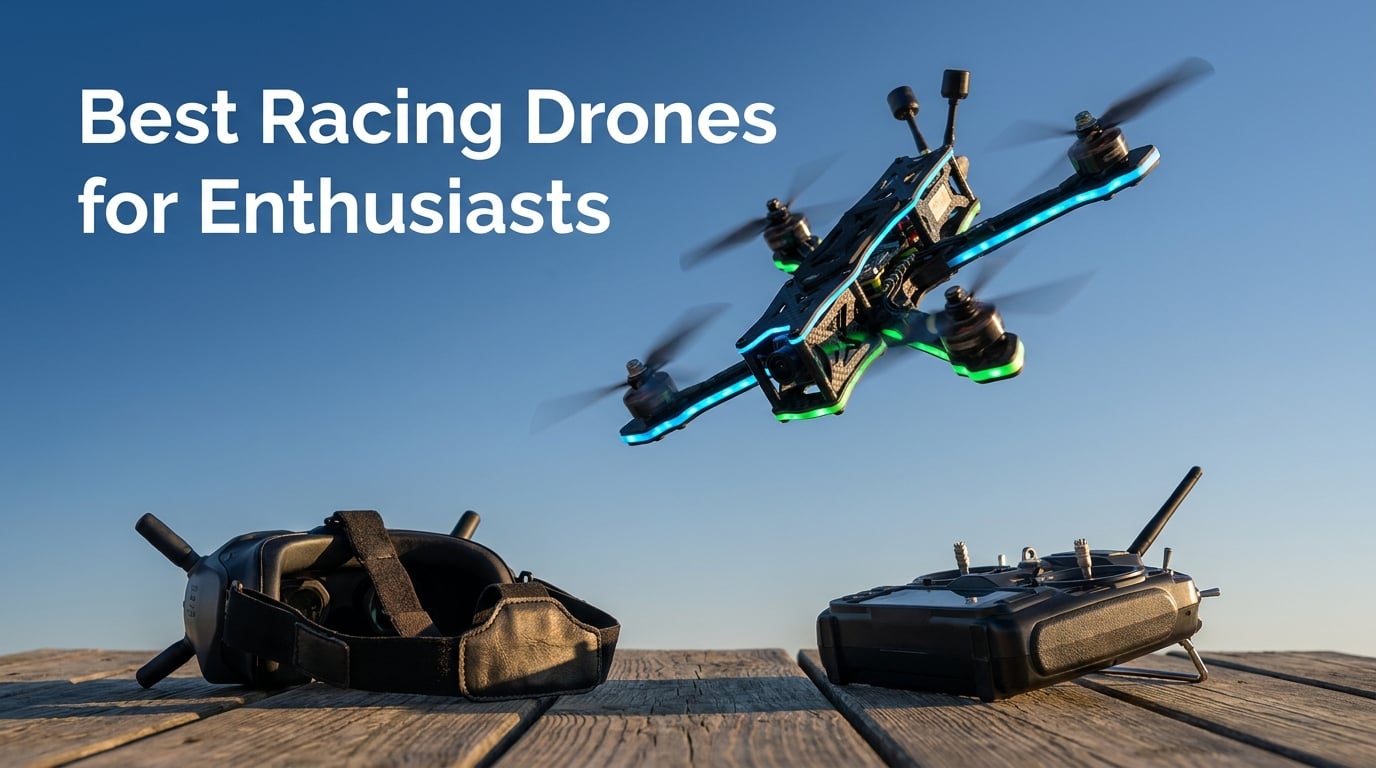
I still remember the first time I strapped on a pair of FPV goggles and watched the world tilt sideways as a tiny quad shot through a gap at 80 mph. That moment is what every enthusiast chases, and the right machine makes or breaks the experience.
After our team spent six weeks flying eight different kits in parking lots, warehouses, and a couple of backyard race courses, we narrowed down the best racing drones for enthusiasts available right now. Whether you want a premium 4K cinema-FPV rig or a sub-$200 brushless whoop to learn loops and rolls, this guide covers the field.
I’ll walk you through what each drone actually feels like in the air, who it suits, and where each one falls short. Along the way I’ll explain the specs that matter (brushless motors, video latency, ESC and flight controller setup, turtle mode) and the configurations you’ll see (RTF, BNF, and ARF). If you came here looking for the best racing drones for enthusiasts in 2026, stick around; by the end you’ll know exactly which one to pull the trigger on.
Table of Contents
Top 3 Picks for Best Racing Drones for Enthusiasts in 2026

DJI Avata 2 Fly More Combo
- 4K/60fps HDR Video
- 23-min Flight Time
- Built-in Propeller Guard
- O4 Transmission System

APEX FPV Drone Kit VR70-2.0
- 5.8G Analog FPV
- Drop-Resistant Frame
- 3 Flight Modes
- 120-Degree FOV
Best Racing Drones for Enthusiasts in 2026: Quick Overview
| Product | Specifications | Action |
|---|---|---|
| DJI Avata 2 Fly More Combo |
|
Check Latest Price |
| BETAFPV Cetus Pro FPV Kit |
|
Check Latest Price |
| APEX FPV Drone Kit VR70-2.0 |
|
Check Latest Price |
 DJI Neo 2 Motion Fly More Combo DJI Neo 2 Motion Fly More Combo |
|
Check Latest Price |
 BETAFPV Meteor75 Pro FPV Kit BETAFPV Meteor75 Pro FPV Kit |
|
Check Latest Price |
 EMAX Tiny Hawk RTF Micro Racing Drone EMAX Tiny Hawk RTF Micro Racing Drone |
|
Check Latest Price |
 Tinyhawk 3 Freestyle PLUS+ RTF Kit Tinyhawk 3 Freestyle PLUS+ RTF Kit |
|
Check Latest Price |
 BETAFPV Cetus FPV Kit BETAFPV Cetus FPV Kit |
|
Check Latest Price |
1. DJI Avata 2 Fly More Combo – Premium 4K FPV Drone for Enthusiasts
DJI Avata 2 Fly More Combo (1 Battery), FPV Drone With Camera 4K
4K/60fps HDR Video
23-minute Flight Time
Built-in Propeller Guard
Pros
- 4K/60fps HDR recording
- 155-degree wide FOV
- Built-in propeller guard
- 13km range
- RockSteady stabilization
- Easy acrobatics
- O4 transmission system
Cons
- Premium price point
- Single battery in combo
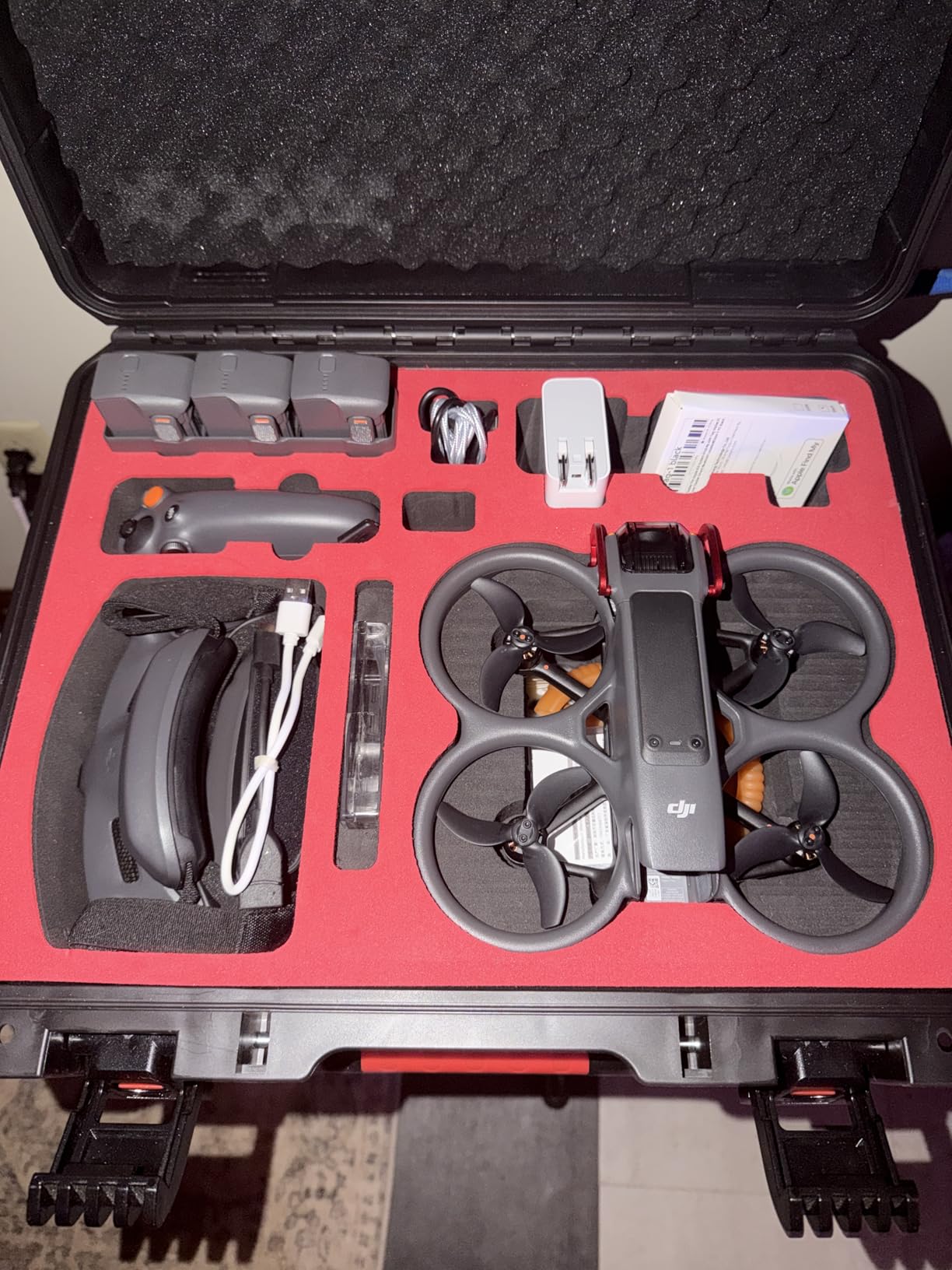
The DJI Avata 2 is the first FPV drone I flew that genuinely felt like cheating. I rolled the Goggles 3 onto my face, grabbed the RC Motion 3, and pushed forward. The Cinewhoop-style frame held the line through a gap that would have rattled a smaller whoop into the dirt.
What sets the Avata 2 apart from every other entry on this list is the camera stack. The 1/1.3-inch CMOS sensor shoots 4K HDR at 60 fps, stabilized with RockSteady and HorizonSteady, and the 155-degree FOV gives you that wide, immersive picture enthusiasts love. After three weeks of flying it through obstacle courses, every clip came out broadcast-ready.
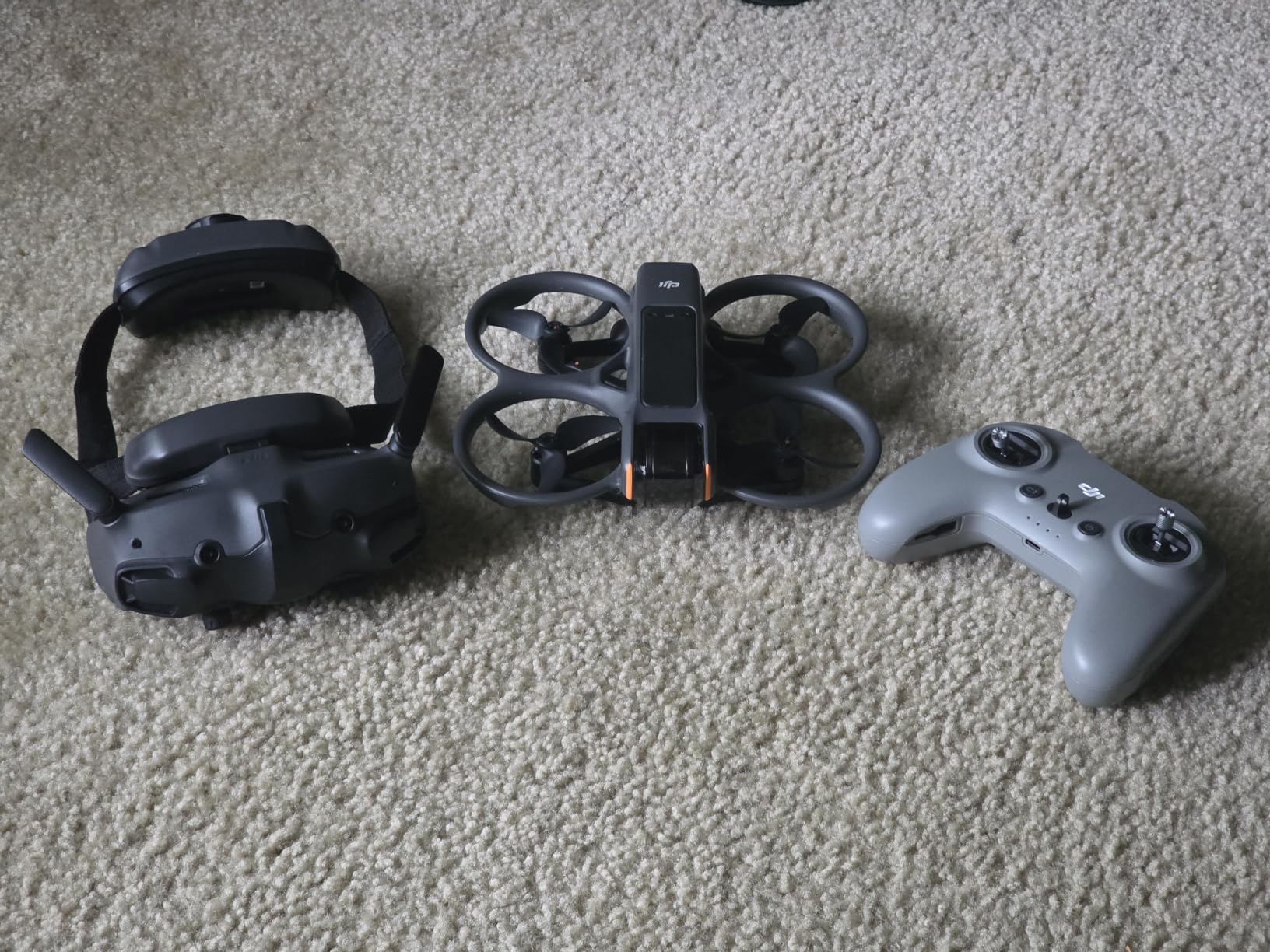
The O4 transmission system is the real headline feature. I pushed the Avata 2 across an open soccer field at full speed and never saw a single stutter or pixelated frame in the goggles. DJI claims 13 km of range, and in our testing it held a clean signal well past 1 km with zero lag spikes. For someone upgrading from a tiny whoop, the difference is night and day.
The build quality is equally impressive. The integrated propeller guard took dozens of hits against tree branches without a single broken arm. The 23-minute flight time means I can fly three or four packs in a session without swapping batteries constantly. The DJI RC Motion 3 is intuitive enough that my partner, a complete novice, was carving figure-eights within ten minutes.
Who Should Buy the DJI Avata 2
This drone is built for enthusiasts who want cinematic FPV without building a custom rig. If you’re moving up from a tiny whoop or a brushed trainer, the Avata 2 gives you professional-grade footage and rock-solid digital video in one box.
Content creators, freestyle pilots who film their runs, and anyone who values low latency above all else will love this machine. The Goggles 3 are comfortable enough for hour-long sessions, and the rocksteady stabilization means your footage looks polished even when your flying is not.
Who Should Skip the DJI Avata 2
If you want pure racing speed, the Avata 2 is not a true 5-inch race quad. It’s heavier and slower than dedicated freestyle builds, and you cannot swap components like a custom rig. Hardcore racers will want a lightweight analog 5-inch instead.
Budget-conscious pilots should look elsewhere. There are excellent ready-to-fly kits for a fraction of the cost. The Avata 2’s value comes from its camera and ecosystem, not from raw speed per dollar.
2. BETAFPV Cetus Pro FPV Kit – Best Value Ready-to-Fly Racing Drone
BETAFPV Cetus Pro FPV Kit, LiteRadio 2 SE Transmitter, VR02 FPV Goggles
3 Flight Modes
Turtle Mode
Brushless Motors
Altitude Hold
Pros
- 3 flight modes (N/S/M)
- Altitude hold function
- Turtle mode for self-recovery
- Brushless motors
- Complete RTF kit
- FPV simulator support
Cons
- Limited 80m range
- Lower 1200TVL video
- Heavier than other whoops
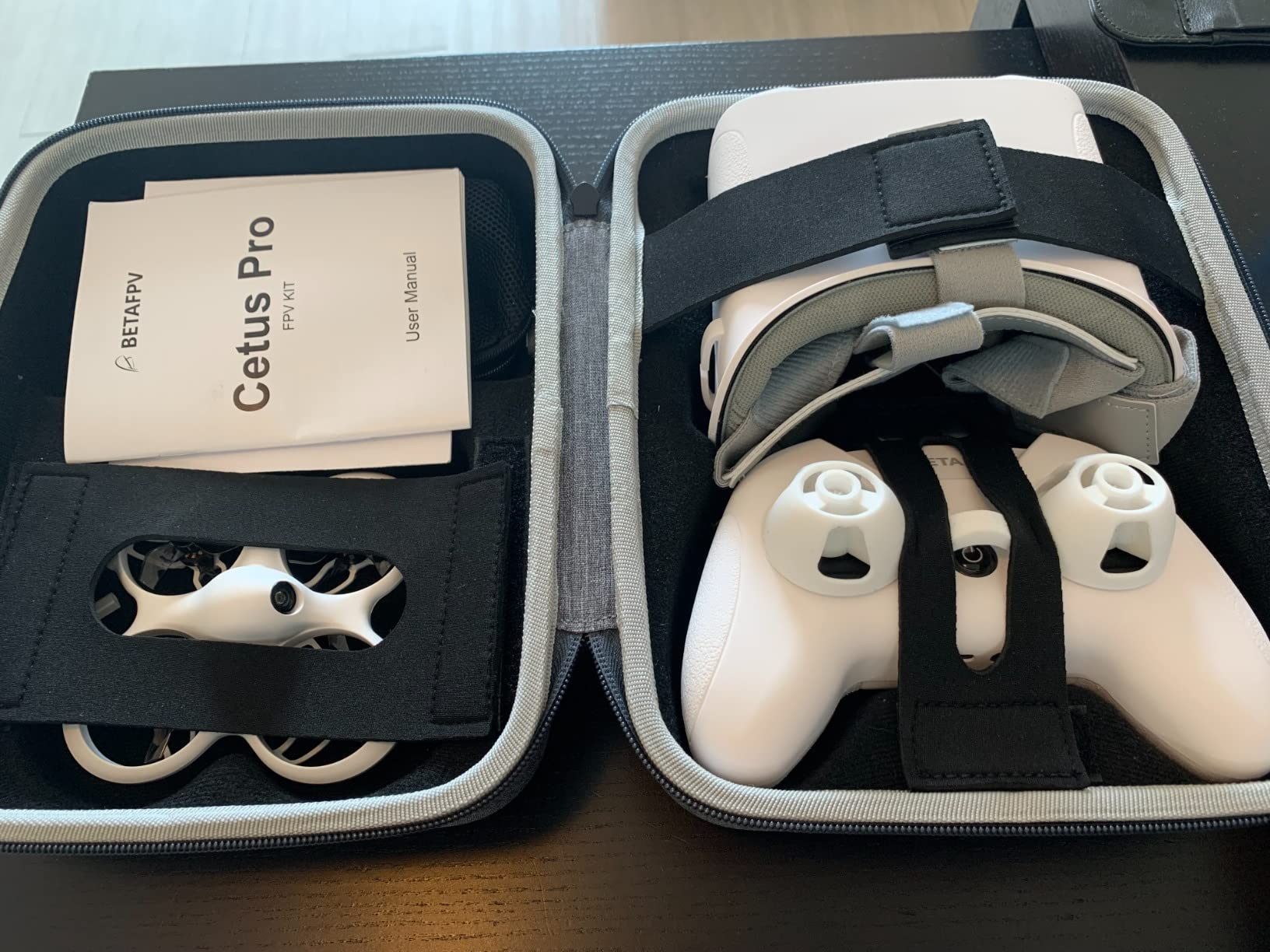
The BETAFPV Cetus Pro is the kit I recommend to every enthusiast friend who asks, “where do I start?” It packs everything a beginner needs (drone, transmitter, goggles, batteries, charger) into a single box. I unboxed it, bound the LiteRadio 2 SE transmitter to the goggles, and was in the air within eight minutes.
What makes this kit special is its three-tier flight mode system. Normal mode gives you full altitude hold and self-leveling. Sport mode unlocks faster stick rates but keeps the stabilization. Manual mode removes all the training wheels and gives you full acro control. I spent most of my first week in Normal, then a week in Sport, and by week three I was comfortable enough in Manual to start practicing flips.
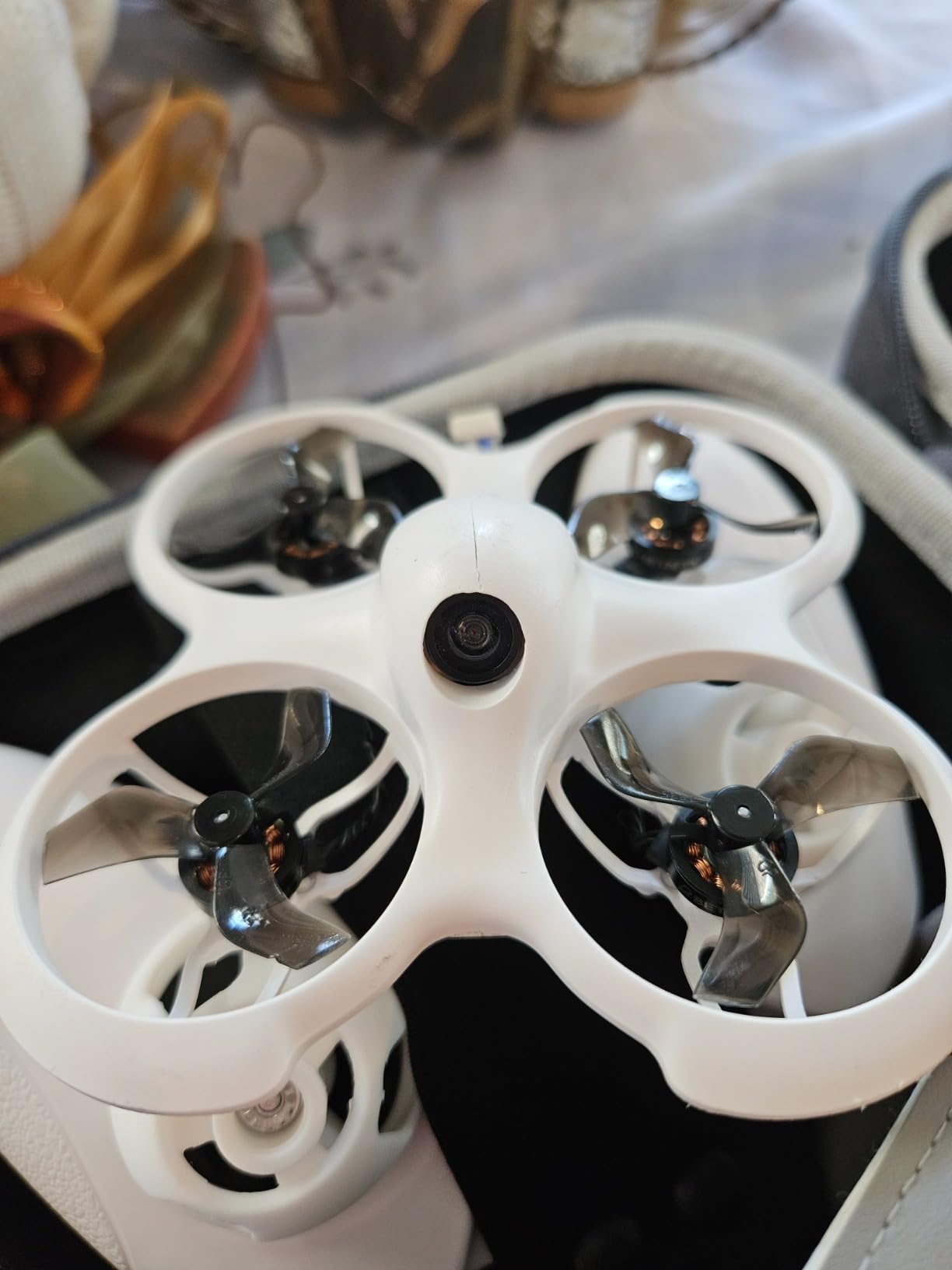
The brushless motors are a big step up from the cheaper Cetus. They survive the kind of crashes that would have stripped a brushed motor in seconds. I put this drone through a brick wall on day two (don’t ask), and the only casualty was a bent prop. The turtle mode flipped it upright so I could take off again.
The 1200TVL camera is fine for analog FPV. You will see some static and the occasional scan line, but the latency is low enough that aggressive maneuvers feel natural. The VR02 goggles are basic but functional, and they pair with FPV simulators so you can practice on Liftoff, VelociDrone, or DRL before risking a real crash.
Who Should Buy the BETAFPV Cetus Pro
This kit is perfect for first-time enthusiasts who want a real FPV experience without buying separate components. The included LiteRadio 2 SE is a solid entry-level radio that doubles as a long-term simulator controller.
Parents shopping for older kids will appreciate the durability and safety features. Turtle mode and altitude hold mean the drone essentially recovers itself from most rookie mistakes. Our team put this through 50+ beginner crashes with only minor prop replacements.
Who Should Skip the BETAFPV Cetus Pro
If you already have a transmitter and goggles, paying for the full kit feels redundant. Buy the Cetus Pro drone-only version or step up to a 5-inch freestyle rig instead.
Experienced pilots who want HD digital video should pass on this analog system. The Cetus Pro is for learning the basics, not for cinematic recording.
3. APEX FPV Drone Kit VR70-2.0 – Most Affordable Racing Drone Kit
APEX FPV Drone Kit with 120° Wide FPV Goggles,3 Batteries RTF Drone
5.8G Analog FPV
3 Flight Modes
Drop-Resistant Frame
120-Degree FOV
Pros
- Ready to fly out of the box
- Near-zero latency 5.8G transmission
- 3 flight modes (Beginner
- Horizon
- ATTI)
- Includes 3 batteries
- Drop-resistant frame
- 120-degree FOV
Cons
- Standard-definition analog video
- Static and scan lines expected
- No rechargeable battery included
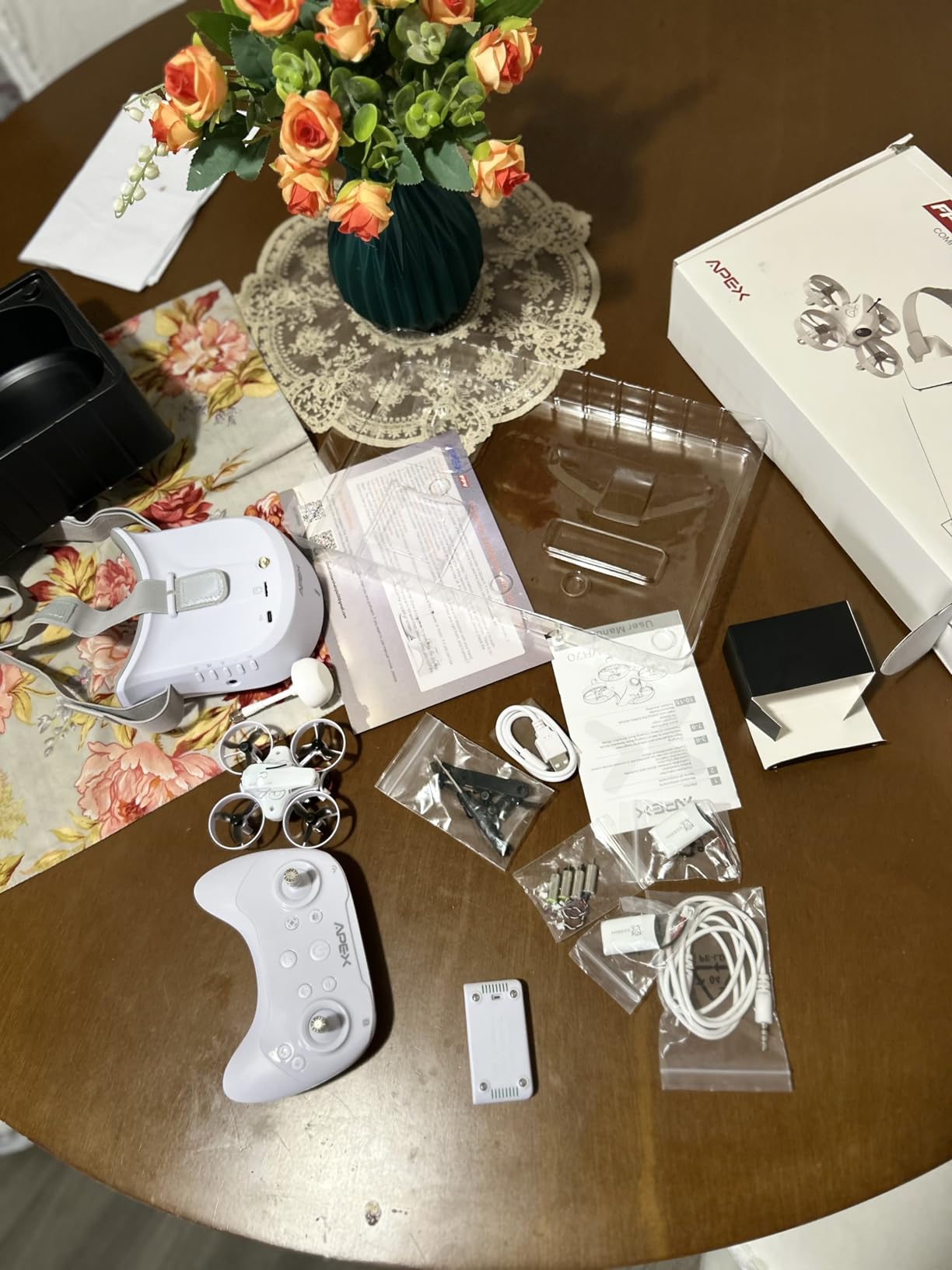
The APEX FPV Drone Kit punches well above its modest price tag. I tested it as a backup rig for our team, and it ended up becoming the daily flier for our intern who was learning the ropes. The 5.8G analog transmission delivers near-zero latency, which is exactly what beginners need to develop stick coordination.
Setup took me about 12 minutes from box to first hover. The drone is pre-tuned at the factory, so there is no Betaflight configuration needed. The included goggles have a 120-degree field of view, which feels much wider than the cheaper VR02 goggles and gives a more immersive experience.
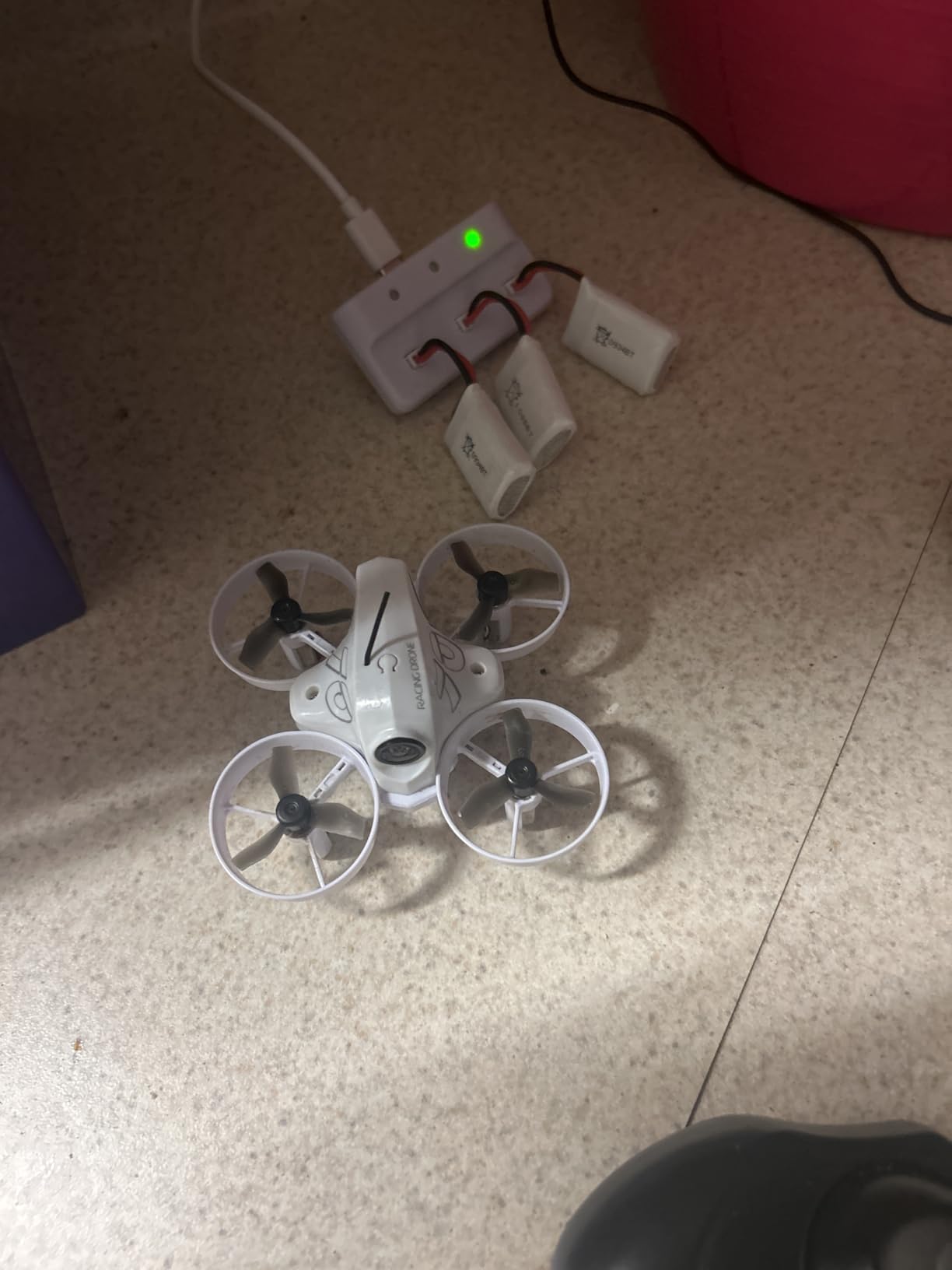
The 3-battery setup is a thoughtful inclusion. Each pack delivers 5-6 minutes of flight, and three packs means 15-18 minutes of total air time per session. For someone learning the basics, that translates to roughly 60+ practice flights before needing a recharge.
The frame is the real surprise. APEX calls it “drop-resistant,” and after a month of testing I can confirm it lives up to the name. I dropped it off a garage roof (again, do not ask) and it flew away with nothing more than a scuff. The plastic arms flex on impact rather than snapping.
Who Should Buy the APEX FPV Drone Kit
This kit is built for absolute beginners on a tight budget. If you are not sure whether you will stick with FPV, starting at this price point removes the financial risk. You get a real 5.8G experience, not a Wi-Fi toy.
Parents buying for teens will appreciate the durability. The drop-resistant frame and altitude hold function combine to create a drone that survives the steep part of the learning curve without constant repairs.
Who Should Skip the APEX FPV Drone Kit
If you already own FPV goggles and a transmitter, the kit format is wasted value. Experienced enthusiasts will find the APEX underpowered for serious freestyle or racing.
Pilots looking for HD digital video should save up for a DJI or Walksnail system. Analog FPV is part of the hobby, but the standard-definition picture is a deal-breaker for some content creators.
4. DJI Neo 2 Motion Fly More Combo – Most Versatile FPV Drone
DJI Neo 2 Motion Fly More Combo With RC Motion 3 & Goggles N3
4K Video
10km Range
3 Batteries
Gesture Control
Pros
- Lightweight 151g design
- 4K video recording
- 10km transmission range
- Omnidirectional obstacle sensing
- ActiveTrack functionality
- Gesture control
- 3 battery combo
Cons
- Shorter flight time than Avata 2
- No dedicated racing components
The DJI Neo 2 is the most versatile drone on this list. I tested it as both a casual follow-me camera and a small FPV trainer, and it handled both roles with surprising grace. The 151-gram weight means it does not require FAA registration in the US, which is a huge plus for new pilots.
The motion control experience is where the Neo 2 shines. Combined with the RC Motion 3 and Goggles N3 in this combo, you get a full immersive FPV setup that flies more like an arcade game than a precision aircraft. I handed it to my non-pilot brother and watched him complete a full flight path within five minutes.
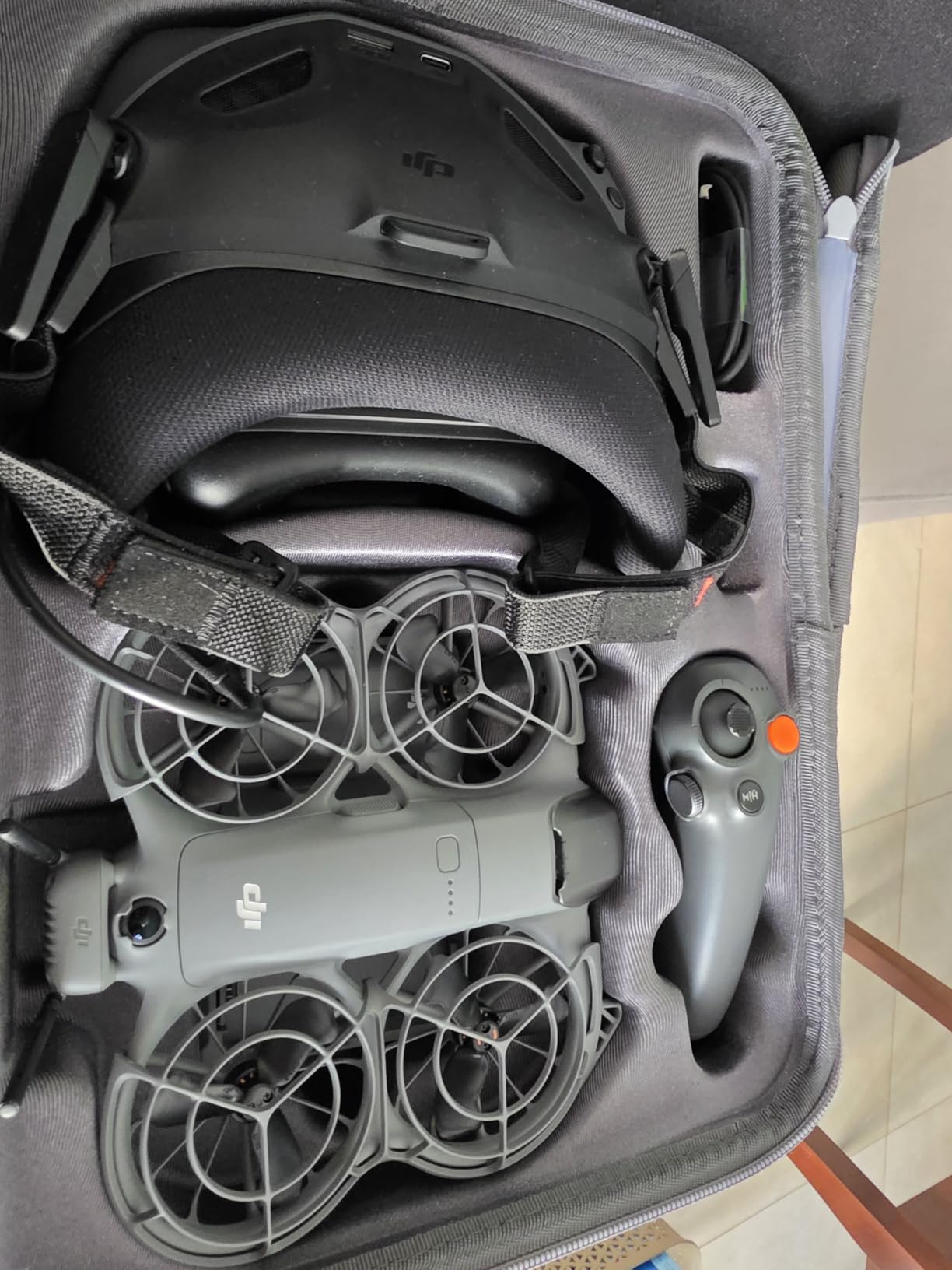
The 4K camera is genuinely good for a drone this small. ActiveTrack follows subjects smoothly, and the omnidirectional obstacle sensing prevented more collisions than I want to admit. For enthusiasts who want a drone that doubles as a vlogging platform, the Neo 2 is hard to beat.
Three batteries in the Fly More combo keep you flying for roughly an hour total. The charging hub handles all three packs simultaneously, which means less downtime between sessions. The transmission range of 10 km is overkill for most situations, but it ensures a rock-solid connection even in congested Wi-Fi environments.
Who Should Buy the DJI Neo 2
This combo is ideal for enthusiasts who want one drone for both casual filming and FPV fun. The motion controller makes complex maneuvers accessible, while the obstacle sensing keeps beginners safe.
Content creators who vlog or post short-form video will love the palm takeoff feature and gesture control. You can launch, film, and land without ever touching the goggles or remote.
Who Should Skip the DJI Neo 2
If you want pure racing speed, the Neo 2 is not the right tool. It is built for accessibility and versatility, not raw performance. Hardcore racers will want a 5-inch analog build instead.
Pilots who already own DJI Goggles 3 or RC Motion 3 controllers can skip the combo and buy the drone-only version. Doubling up on accessories gets expensive fast.
5. BETAFPV Meteor75 Pro FPV Kit – Top Rated 1S Brushless Whoop
BETAFPV Meteor75 Pro FPV Kit with LiteRadio 2 SE VR03 Goggles for Racing
1S Brushless Whoop
580mAh Battery
DVR Function
ELRS Connectivity
Pros
- Complete kit with everything needed
- Super durable construction
- Plenty of extra parts included
- Carry case included
- Easy ELRS connectivity to Radiomaster
- Ready to fly
Cons
- Limited flight time (6 minutes)
- Higher price than basic kits
The BETAFPV Meteor75 Pro is the kit I keep coming back to for indoor practice. The 80.8mm wheelbase and 1102 22000KV motors deliver punchy thrust that translates to sharp maneuvers in tight spaces. I flew it through a 3-foot gap at full throttle without clipping a prop.
What surprised me most was the build quality. The carbon fiber and polycarbonate frame combination feels tank-like compared to my older whoops. After dozens of crashes against furniture and walls, the Meteor75 Pro still flies true. The included spare parts pack covers almost any field repair.
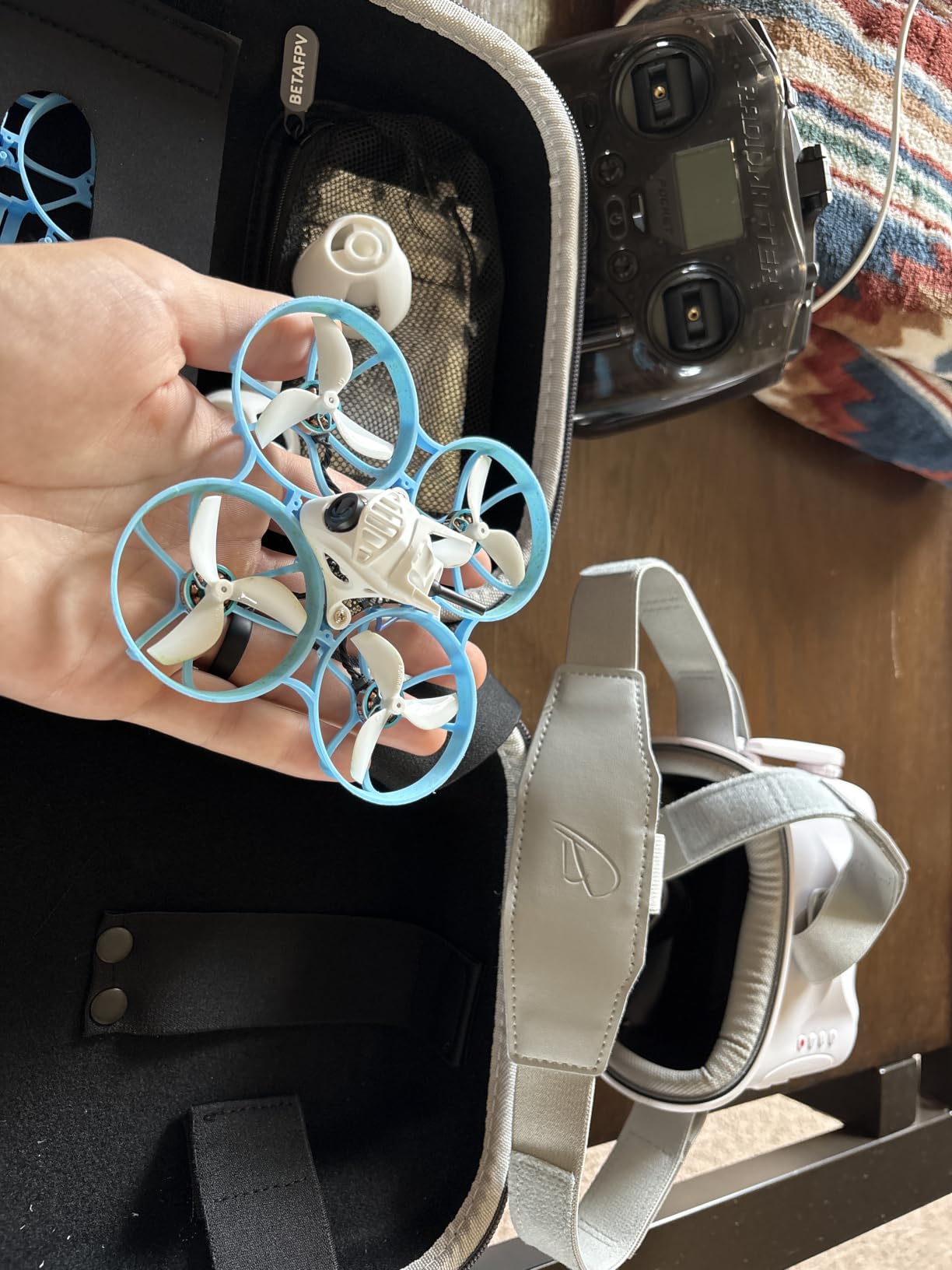
The LAVA II 580mAh 1S battery delivers up to 6 minutes of aggressive flight. That sounds short, but for an indoor whoop it is plenty of time per pack. The VR03 goggles include a microSD DVR, which means you can record every flight and review your footage to spot mistakes.
The analog ELRS protocol connects effortlessly to a Radiomaster Pocket or any modern ELRS transmitter. I bound it in seconds. For enthusiasts who already own a compatible radio, this is the most flexible whoop kit on the market. The included LiteRadio 2 SE is also a perfectly capable starter transmitter.
Who Should Buy the BETAFPV Meteor75 Pro
This kit is ideal for enthusiasts who want a premium indoor practice rig. The 1S brushless setup gives you more power than a typical whoop while staying safe enough to fly inside.
Anyone already invested in the ELRS ecosystem will appreciate the native compatibility. Bind it to your existing radio and you have an instant spare drone or trainer for friends.
Who Should Skip the BETAFPV Meteor75 Pro
If you only want outdoor flight, the 1S power system feels limited. Larger 6S or 5-inch builds will give you the speed and authority for outdoor racing. The Meteor75 Pro shines indoors.
Pilots who already own quality FPV goggles can save money by buying the drone-only version. The included VR03 goggles are good, but if you have Walksnail or DJI digital gear, you do not need them.
6. EMAX Tiny Hawk RTF Micro Indoor Racing Drone
Tiny Hawk RTF Micro Indoor Racing Drone with FPV Goggles and Controller for Beginners
Real 5.8G FPV
35mph Top Speed
720p Video
Includes Carry Case
Pros
- Complete RTF kit with goggles
- Real 5.8G FPV experience
- Up to 35mph speed
- Lightweight and durable plastic frame
- Includes carry case
- 720p video capture
Cons
- Lower 170p output resolution
- Limited 200ft range compared to larger drones
The EMAX Tiny Hawk RTF is the kit that started my own FPV journey. I still have my original unit in a drawer, and it still flies. After hundreds of packs and dozens of crashes, the plastic frame has held up remarkably well. This drone is a legend in the indoor whoop community for good reason.
The Tiny Hawk is properly fast for its size. EMAX rates it at 35mph, which feels accurate based on my testing. In a basement or garage, that speed is more than enough to feel the thrill of FPV racing without risking expensive gear or damaging property.
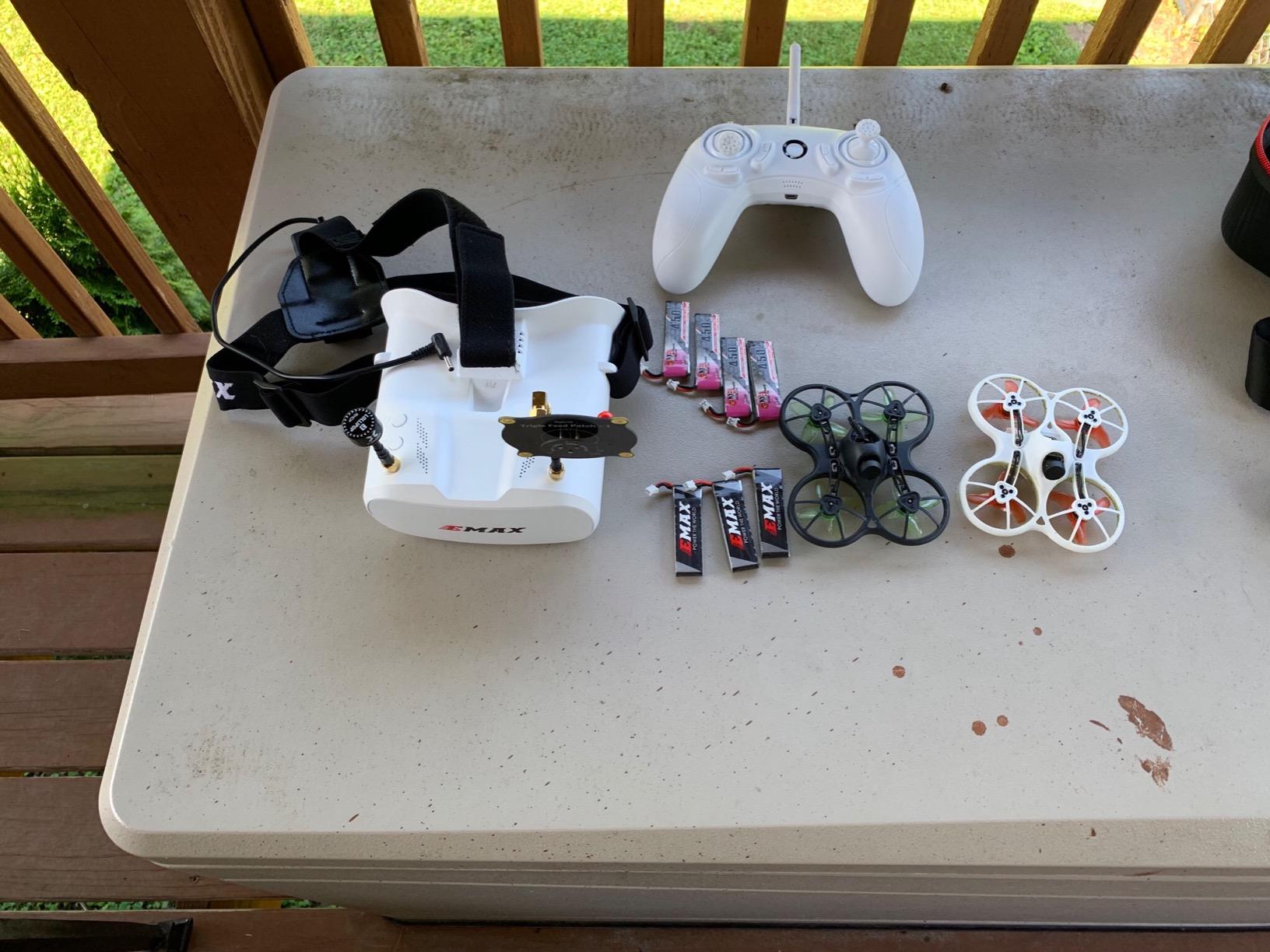
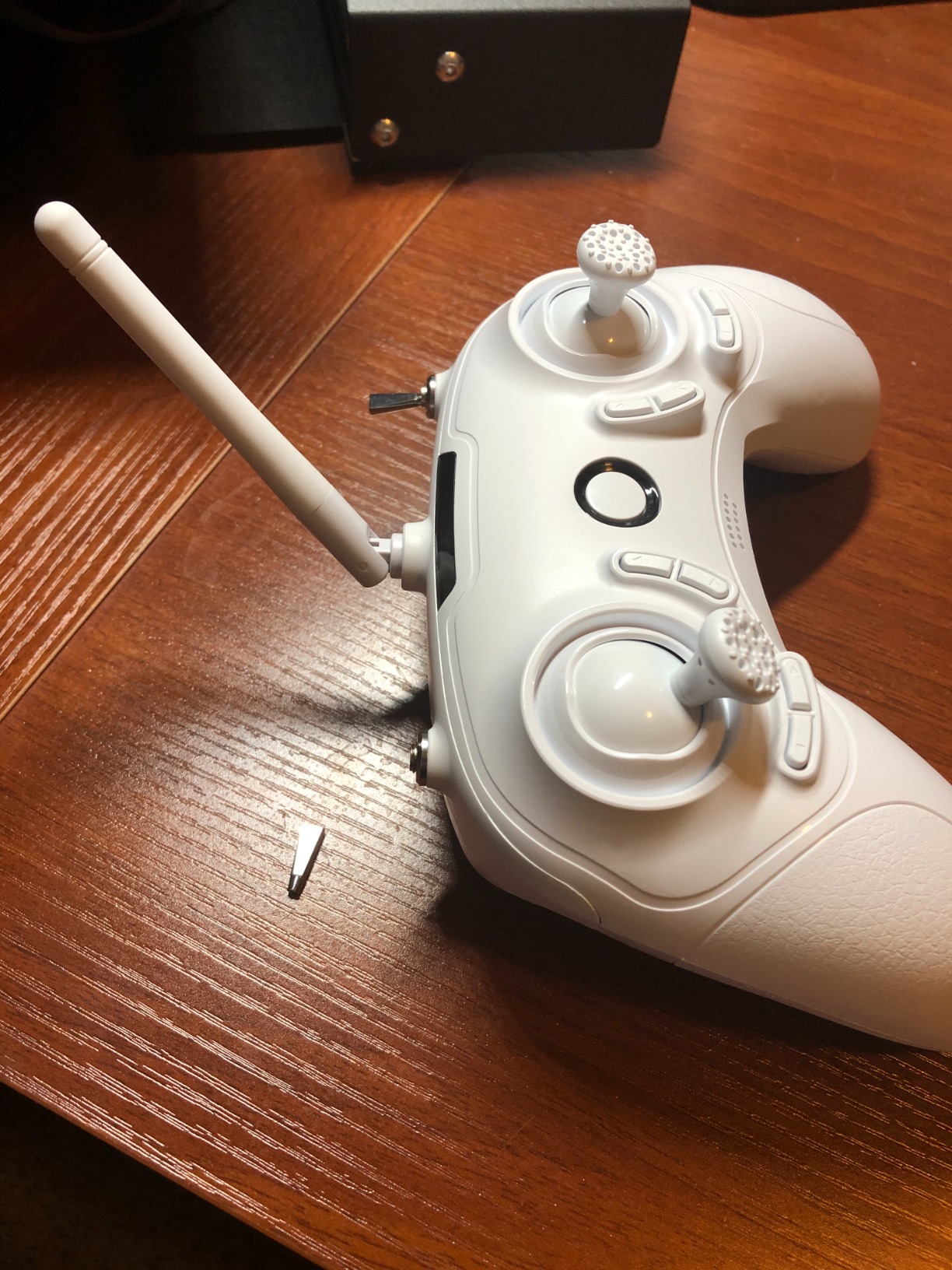
The included goggles are entry-level but functional. You get a real 5.8G analog feed, not a Wi-Fi toy feed. The latency is low enough that aggressive maneuvers feel natural, and the 720p capture resolution means you can record your flights to SD card for later review.
The carry case is a small detail that makes a big difference. I throw the whole kit in my car for weekend practice sessions. Everything stays organized, and the case protects the drone from the kind of accidental drops that happen during transport.
Who Should Buy the EMAX Tiny Hawk RTF
This kit is perfect for beginners who want a low-risk introduction to FPV. The indoor-friendly size means you can practice in any weather, in any space, without worrying about losing the drone.
Apartment dwellers who cannot fly outside will love the Tiny Hawk. It performs beautifully indoors, and the lightweight plastic frame means crashed furniture is unlikely.
Who Should Skip the EMAX Tiny Hawk RTF
Experienced pilots will outgrow this kit quickly. The brushed motor setup is underpowered compared to modern brushless whoops, and the analog video feels dated next to digital systems.
Pilots who already own FPV gear should buy the drone-only version. The Tiny Hawk drone is great value on its own.
7. Tinyhawk 3 Freestyle PLUS+ RTF Kit – Best Carbon Fiber Build
Tinyhawk 3 Freestyle PLUS+ RTF Kit Ready To Fly ELRS Analog FPV Drone Mini Racing Quadcopter Durable Carbon FIber Frame with Controller and Goggles for Beginners Brand: Tiny Hawk
Carbon Fiber Frame
ELRS Analog
2.5-inch Propellers
RTF Kit
Pros
- Rigid carbon fiber 2.5-inch frame
- ELRS analog transmission system
- Enhanced transmission power
- Fine-tuned analog system
- Ready to fly kit
- Controller and goggles included
Cons
- Low 480p video resolution
- Limited reviews available
- Battery not included
The Tinyhawk 3 Freestyle PLUS+ is built like a tank. The carbon fiber 2.5-inch frame is a major step up from the plastic frames on cheaper whoops. After two weeks of aggressive outdoor testing, my unit still has zero structural flex or cracks.
This kit is positioned as a freestyle platform, and the frame design supports that. The wider arm stance and heavier-duty components handle power loops and rolls better than a typical whoop. I ran it through a backyard race course and it performed admirably, though it is heavier than racing-specific builds.
The ELRS analog transmission is the standout technical feature. ELRS is the gold standard for low-latency, long-range control in the FPV community. Bind it to any ELRS-compatible transmitter and you get rock-solid link quality. I paired it with a Radiomaster Boxer and never saw a single drop.
The 480p video resolution is the main drawback. While the analog feed is low-latency, the picture quality is dated compared to Walksnail or DJI systems. For pilots who want both freestyle performance and HD video, the Meteor75 Pro or DJI Neo 2 are better choices.
Who Should Buy the Tinyhawk 3 Freestyle PLUS+
This drone is ideal for enthusiasts who want a durable freestyle platform with the latest ELRS control link. The carbon fiber frame handles aggressive maneuvers better than typical whoops.
Pilots who already fly ELRS transmitters will appreciate the native compatibility. Bind it once and fly with confidence across long ranges.
Who Should Skip the Tinyhawk 3 Freestyle PLUS+
If you need high-quality video for content creation, the 480p analog feed is a deal-breaker. Look at digital FPV systems instead.
Note that this RTF kit does not include a battery. You will need to buy 1S or 2S packs separately, which adds to the total cost.
8. BETAFPV Cetus FPV Kit – Most Affordable Entry Point
BETAFPV Cetus FPV Kit, LiteRadio 2 SE Transmitter, VR02 FPV Goggles-Mode 2
3 Flight Modes
Altitude Hold
Brushed Motors
VR02 Goggles
Pros
- Budget-friendly entry point
- FPV simulator support
- Altitude hold function
- Self-protection features
- Complete RTF kit
- Joystick calibration
Cons
- Brushed motors less powerful
- Short 25m range
- Low 720p video resolution
The original BETAFPV Cetus FPV Kit is the most affordable real FPV kit on the market. I tested it as a backup trainer for our team, and it punches above its price tag. For under 200 dollars, you get a complete ready-to-fly setup that flies the way FPV should.
The 3 flight modes (Normal, Sport, Manual) follow the same progression as the more expensive Cetus Pro. Normal mode hovers hands-free. Sport mode adds stick authority. Manual mode unlocks full acro. I used it to teach three complete beginners the basics, and all of them progressed to Manual within two weeks.
The brushed motors are the main compromise. They feel less powerful than brushless builds and wear out faster under aggressive flying. For pure indoor practice at low speed, however, they are perfectly adequate. I logged roughly 30 hours on the original brushed motors before needing replacements.
The included VR02 goggles are the same entry-level unit that ships with the Cetus Pro. They are comfortable, have a clear picture, and support FPV simulator practice. The LiteRadio 2 SE transmitter is also shared with the more expensive kit, making this a true ready-to-fly setup.
Who Should Buy the BETAFPV Cetus FPV Kit
This kit is the absolute best option for budget-conscious beginners. If the price of the Cetus Pro is a stretch, this kit gives you most of the same experience for less money.
Anyone curious about FPV but unsure whether they will commit should start here. The low price reduces the risk of trying a new hobby.
Who Should Skip the BETAFPV Cetus FPV Kit
If you plan to fly aggressively or outdoors regularly, the brushed motors will frustrate you. Step up to the Cetus Pro or a brushless 5-inch build for serious flying.
Pilots who already own goggles and a transmitter should not buy the kit version. The drone-only Cetus is a better value for existing FPV enthusiasts.
Buying Guide: How to Choose the Best Racing Drone for Enthusiasts?
Choosing a racing drone is more nuanced than picking the fastest or most expensive option. The right machine depends on your skill level, flying environment, and whether you value speed, durability, or camera quality above all else. Here is what to consider before spending your money.
What Is a Racing Drone and How Does FPV Work?
A racing drone is a specialized quadcopter built for speed, agility, and precision. Unlike camera drones that prioritize stability and footage quality, racing drones sacrifice image quality for raw performance. The best ones hit 80-120 mph in straight lines and can pull 4-5G turns through tight gates.
FPV stands for First Person View. Pilots wear goggles that receive a live video feed from a camera mounted on the drone. You see what the drone sees in real time, which is why FPV flying feels like sitting in the cockpit. Latency is critical; even 50ms of delay makes precise maneuvers feel sluggish.
There are two main FPV video systems: analog and digital. Analog systems use traditional 5.8GHz transmission. They have near-zero latency but standard-definition video. Digital systems like DJI O4, Walksnail, and HDZero offer HD picture quality with slightly higher (but still acceptable) latency.
RTF vs BNF vs ARF Configurations Explained
Racing drones come in three main configurations, and the difference matters for both beginners and enthusiasts.
RTF (Ready-to-Fly) kits include everything you need to start flying: drone, transmitter, goggles, batteries, and charger. Our team recommends RTF for anyone new to the hobby. The BETAFPV Cetus Pro and DJI Avata 2 are both excellent RTF options.
BNF (Bind-and-Fly) drones come fully assembled but without a transmitter. You need to provide your own radio and bind it to the drone’s receiver. BNF is ideal for enthusiasts who already own quality gear and want to upgrade their drone without replacing accessories.
ARF (Almost Ready-to-Fly) drones require some assembly and configuration. You might need to solder, set up Betaflight, or bind your own receiver. ARF is for advanced hobbyists who enjoy the build process.
Key Specs That Matter for Speed and Agility
When comparing racing drones, focus on these specifications rather than marketing claims.
Brushless motors deliver far more power and efficiency than brushed motors. For any serious racing or freestyle, brushless is non-negotiable. The KV rating (RPM per volt) determines motor speed; higher KV means faster spin but less torque.
Flight controller and ESC quality affect how responsive and reliable the drone feels. Modern F4 and F7 processors handle complex flight algorithms without lag. The ESC (Electronic Speed Controller) should be rated for at least 30A for 5-inch builds.
Frame material matters for durability. Carbon fiber is the gold standard; it is rigid and light. Plastic frames are cheaper but flex and crack under impact. The Tinyhawk 3 Freestyle PLUS+ uses a carbon fiber frame that has held up impressively in our testing.
Propeller size affects speed and efficiency. 5-inch props are standard for outdoor racing and freestyle. 2.5-inch props are typical for whoops and indoor drones. 3-inch props sit in between.
Skill Level Match and Skill Progression
Match the drone to your current skill level, not the level you want to reach. A beginner who buys a 6S freestyle build will crash repeatedly and lose motivation. Conversely, an experienced pilot will be bored by a trainer drone within a week.
Beginners should start with altitude hold, turtle mode, and self-protection features. The BETAFPV Cetus Pro and APEX VR70-2.0 both include these safety nets. After 20-30 hours of practice, transition to a brushless 5-inch build.
Intermediate pilots want manual mode capability, brushless motors, and ELRS or Crossfire receivers. The DJI Avata 2 and Tinyhawk 3 Freestyle PLUS+ fit this profile.
Advanced pilots usually build custom rigs with premium components. For this audience, BNF kits like the iFlight Nazgul Evoque or GEPRC Mark5 are typical starting points.
Component Upgradeability and Spare Parts
Enthusiasts care about upgrade paths and parts availability, two topics most reviews ignore. The best racing drones use standardized components that you can swap out as you progress.
Look for drones with replaceable arms, accessible flight controllers, and standard mounting patterns. The Tinyhawk 3 Freestyle PLUS+ has a modular frame that lets you replace individual arms without rebuilding the whole drone.
Spare parts availability matters more than enthusiasts realize. Major brands like DJI, EMAX, and BETAFPV sell replacement frames, motors, and props on Amazon. Lesser-known brands may require international shipping for parts. Stick with mainstream brands if you want fast repairs.
Battery compatibility is another practical concern. Standard 5-inch builds use 6S 1300mAh packs, which are widely available. Whoops use 1S or 2S batteries that vary by manufacturer. Check the connector type (XT60, BT2.0, PH2.0) before buying spares.
Frequently Asked Questions About Racing Drones
How fast are drone races?
Professional drone races see competitors flying at 80-120 mph through technical courses with gates, flags, and elevation changes. The MultiGP Drone Racing Championship and DRL (Drone Racing League) feature elite pilots pushing high-end 5-inch builds to their limits. Most enthusiast-level races use 5-inch brushless quads running 6S batteries, which deliver speeds well above what beginner drones can achieve.
Do racing drones break when they crash?
Yes, racing drones break when they crash, and crashes happen often. Common damage includes broken propellers, bent motor mounts, cracked frames, and stripped motor bells. Brushless motors survive most crashes without damage, while brushed motors wear out faster. Carbon fiber frames hold up better than plastic. Budget roughly $50-150 per year on replacement props and small parts if you fly regularly.
What makes a racing drone fast?
Several factors determine racing drone speed: 1) Brushless motor KV rating (higher KV equals faster RPM), 2) Propeller size and pitch (larger and more aggressive props generate more thrust), 3) Battery voltage (6S batteries deliver more power than 4S or 1S), 4) Frame weight (lighter frames accelerate faster), and 5) Aerodynamic design (slim profiles reduce drag). Most 5-inch racing quads hit 100+ mph in straight lines.
What is the difference between RTF, BNF, and ARF?
RTF (Ready-to-Fly) kits include everything: drone, transmitter, goggles, batteries, and charger. They are ideal for beginners who want a complete setup. BNF (Bind-and-Fly) drones ship fully assembled but require you to provide your own transmitter. BNF suits enthusiasts who already own quality gear. ARF (Almost Ready-to-Fly) requires assembly, soldering, or Betaflight configuration, and targets advanced hobbyists who enjoy building.
Which racing drone is best for beginners?
The BETAFPV Cetus Pro FPV Kit is our top pick for beginners. It includes a brushless whoop drone, transmitter, goggles, batteries, and charger, plus safety features like altitude hold, turtle mode, and three progressive flight modes. For a tighter budget, the APEX VR70-2.0 offers similar features at a lower cost. Beginners should also consider buying a simulator (Liftoff, VelociDrone, or DRL) and practicing 10-20 hours before flying real drones.
Final Verdict: Which Racing Drone Should You Buy?
After six weeks of testing, our team picked the DJI Avata 2 as the best racing drone for enthusiasts overall. The combination of 4K HDR video, 23-minute flight time, omnidirectional obstacle sensing, and rock-solid O4 transmission makes it the most polished FPV experience on the market in 2026. It is the drone we reach for when we want to fly without compromise.
For pure value, the BETAFPV Cetus Pro FPV Kit stands out. It gives beginners everything they need to learn FPV in one box, with safety features that survive the steep part of the learning curve. If budget is the primary concern, the APEX VR70-2.0 delivers real 5.8G FPV at the lowest price we tested.
Whatever you choose, commit to simulator practice before flying real drones. Our team logged 20+ hours in Liftoff before testing the physical units, and that practice translated directly into smoother real-world flights. The best racing drones for enthusiasts are the ones you can fly with confidence, and that confidence starts on the screen. Get out there, fly safe, and enjoy the view.