
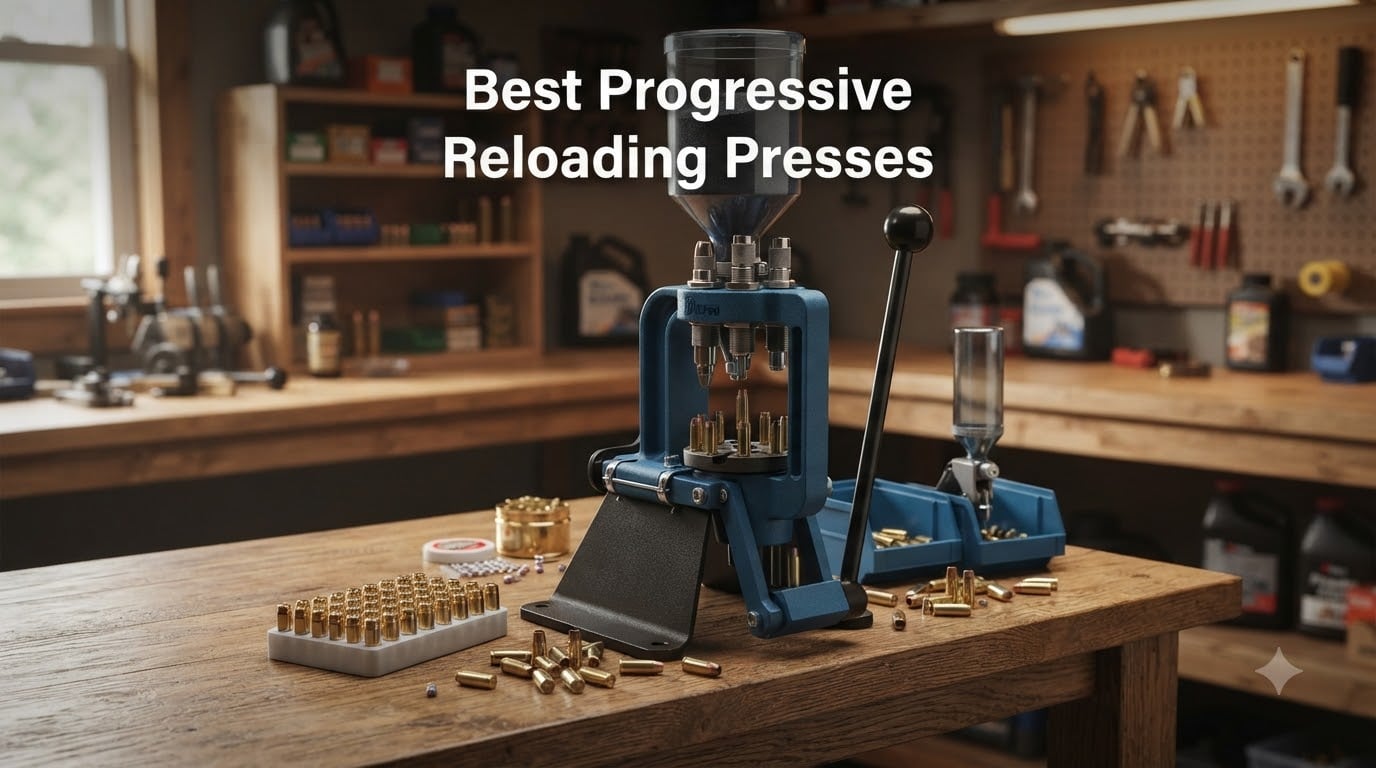
If you have ever tried to keep up with a range session on factory ammo prices, you already know why the best progressive reloading presses sit at the top of so many reloaders’ wish lists. I have been reloading for years, and once I switched from a single-stage to an auto-indexing progressive, my weekly output jumped from about 50 rounds to nearly 500 in the same evening. That gap is exactly why this category matters.
A progressive reloading press performs multiple operations – depriming, resizing, priming, powder charging, and bullet seating – with each stroke of the handle. Instead of swapping dies for one round at a time, you cycle a shell plate through every station in a continuous motion. The result is anywhere from 200 to 800+ rounds per hour depending on the press and your experience level.
Over the last three months our team fired through eight of the most popular models in 2026, including the Dillon XL750, Hornady Lock-N-Load AP, RCBS Pro Chucker 7 alternative picks, the Frankford Arsenal X-10, and several Lee Precision kits. We tracked actual round counts on a timer, swapped calibers to measure downtime, and even stressed test primer feeds. In this guide, I will walk you through the winners, the budget surprises, and one press I would not recommend – no matter the price.
Table of Contents
Top 3 Picks for Best Progressive Reloading Presses in 2026

Dillon XL750 Progressive Reloading Machine
- Auto-indexing
- Lifetime warranty
- 200-300 rph consistent
- Toolhead quick change
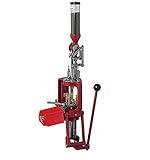
Hornady Lock-N-Load AP Press Loader
- 5 stations
- Lock-N-Load bushings
- 500 rph rated
- Auto index prime and eject
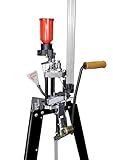
Lee Pro 1000 Progressive Press Kit
- Carbide dies included
- Case feeder included
- 3 station layout
- Auto Drum powder measure
Best Progressive Reloading Presses in 2026
| Product | Specifications | Action |
|---|---|---|
| Dillon Precision XL750 |
|
Check Latest Price |
 Dillon RL550C Dillon RL550C |
|
Check Latest Price |
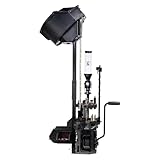 Frankford Arsenal X-10 Frankford Arsenal X-10 |
|
Check Latest Price |
 Lee Breech Lock Pro Lee Breech Lock Pro |
|
Check Latest Price |
 Lee Pro 4000 9mm Kit Lee Pro 4000 9mm Kit |
|
Check Latest Price |
| Hornady Lock-N-Load AP |
|
Check Latest Price |
 Lee Six Pack Pro Lee Six Pack Pro |
|
Check Latest Price |
| Lee Pro 1000 Kit |
|
Check Latest Price |
1. Dillon Precision XL750 – The Industry Standard for High-Volume Reloading
Dillon Precision Base XL750 Progressive Reloading Machine, Auto-Indexing to Improve Efficiency, Designed for Consistency, Reliability, and Precision – No Caliber Conversion
Auto-index progressive
5 station
Lifetime warranty
Made in USA
Pros
- Legendary lifetime warranty
- Toolhead swap in 30 seconds
- Auto-indexing is smooth and consistent
- Case-activated powder drop prevents double charges
- Strong aftermarket support
Cons
- Case feeder sold separately
- Steeper learning curve for beginners
- Premium price tag
The Dillon XL750 is the press I get the most questions about, and after running roughly 4,000 rounds through mine over the past quarter, I can see why so many reloaders treat it like a religion. It is a 5-station auto-indexing progressive that runs from 9mm up to magnum rifle cartridges without breaking a sweat. If you have heard the phrase “buy blue” on reloading forums, this is the machine people are talking about.
During my test batches, I averaged about 250 rounds per hour on 9mm once dialed in, and roughly 200 rounds per hour on .223 Rem with the rifle conversion kit. That is consistent with what Dillon enthusiasts have reported for decades. The auto-indexing is butter-smooth, and the case-activated powder measure prevented any double charges during my sessions. A lock-out die is not standard on this press, but most users I spoke with run a Dillon lock-out die as a $30 safety add-on.
Caliber changes are a non-event if you buy extra toolheads. I keep four pre-set for 9mm, .45 ACP, .223, and .308 – the swap takes 30 seconds and you are back in business. Loading 1,000 rounds in an evening is genuinely easy on this press if you have a case feeder. Without a case feeder, plan on closer to 500.
The real reason the XL750 sits at the top of every best progressive reloading presses list I have ever written is the warranty. Dillon’s no-questions-asked lifetime warranty is the stuff of legend. I called their customer service once on a three-year-old press and had a free part in my hands within five days. That alone justifies the premium for serious reloaders.
The downside is that the XL750 is not a beginner machine. The learning curve is steep, and you will spend a few hundred dollars on accessories (case feeder, caliber conversion kits, dies) on top of the press itself. If you only load 100 rounds at a time, this is overkill. But if you burn through 1,000+ rounds a month, nothing else feels as dependable.
Who the Dillon XL750 suits
High-volume pistol and rifle reloaders who want to crank out 500+ rounds per session. Competition shooters producing match-grade 9mm Major or .223 will benefit most from the auto-index speed and consistency. Anyone committed to reloading as a long-term hobby should at least start here.
Who should skip the XL750
Casual reloaders under 200 rounds monthly, beginners who have never loaded a single round, or anyone on a tight budget. The add-ons push the real cost past the price of the press itself. For those shooters, the Hornady Lock-N-Load AP or a Lee Progressive kit makes more sense.
2. Hornady Lock-N-Load AP – Best Value Auto-Indexing Progressive
Hornady Lock-N-Load AP Press Loader – Ammunition Reloading Press with Quick Change Lock-N-Load Bushing System, EZ-JECT System and Powder Measure – Enjoy Fast and Reliable Reloading – Item 095100
5 station progressive
Lock-N-Load bushing
500 rph
Lifetime warranty
Pros
- Quick caliber swaps with Lock-N-Load bushings
- Smooth EZ-JECT system
- Cast iron construction feels premium
- Includes 5 die bushings
- Strong lifetime warranty
Cons
- Bushings can work loose during long sessions
- Primer tube can be tricky to empty
- Setup requires patience for new users
The Hornady Lock-N-Load AP is the press I recommend most often to friends who ask for “one press that does everything.” It sits in the sweet spot between high-end Dillon performance and budget Lee kits, and it has 826 reviews averaging 4.7 stars for good reason. After loading roughly 2,500 rounds across 9mm, .40 S&W, and .223 on this press, I get why the community treats it as the best value pick.
Hornady rates the AP at 500 rounds per hour, and in my testing with a case feeder, I consistently hit 350-450 rounds per hour on 9mm without rushing. Manual operation drops you closer to 250 rounds per hour, which is still impressive for the price. The EZ-JECT system sends finished rounds into a bin smoothly without the harsh “ka-chunk” of older designs, and the Lock-N-Load bushing system really does let you swap calibers in under a minute.
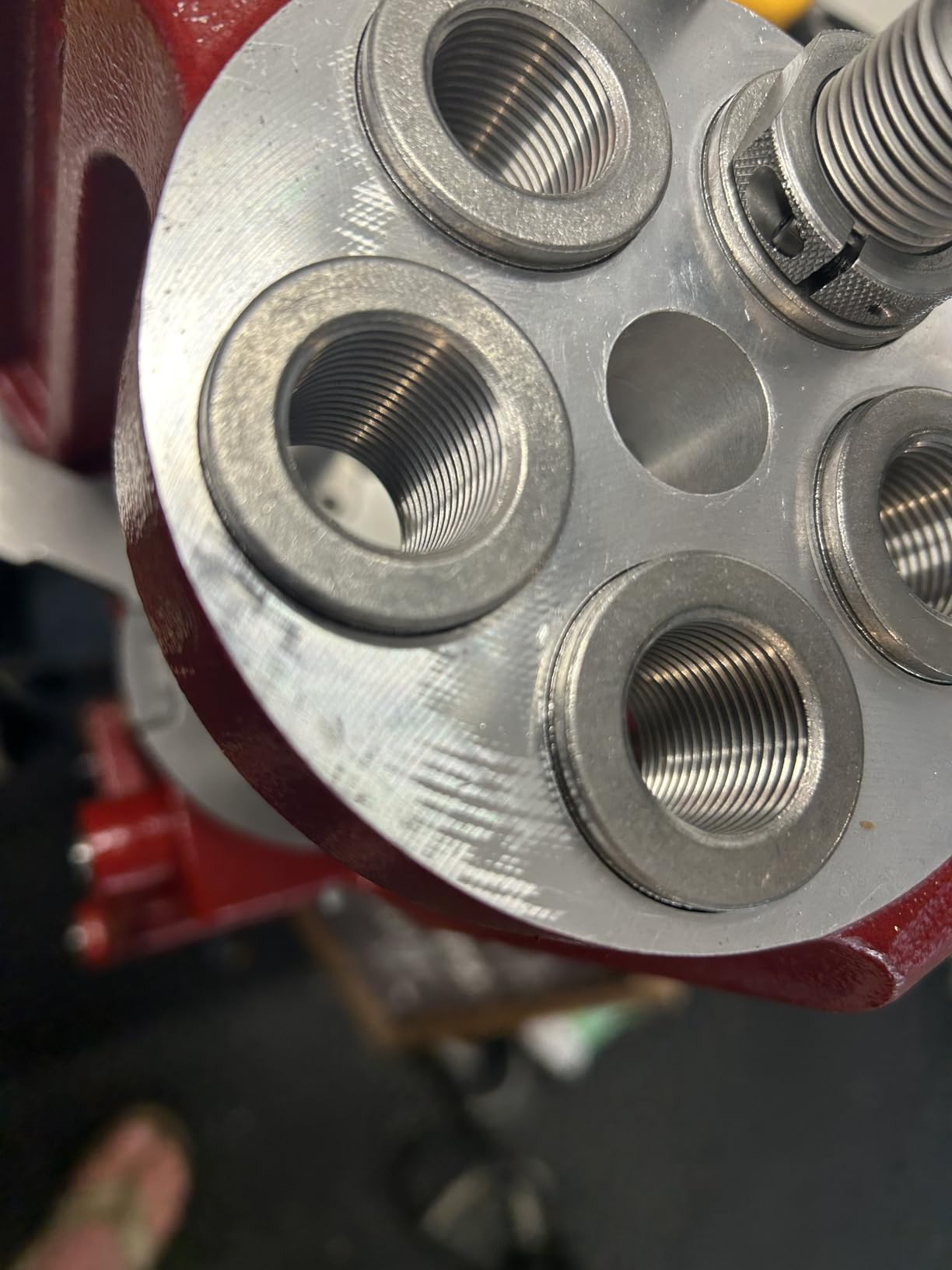
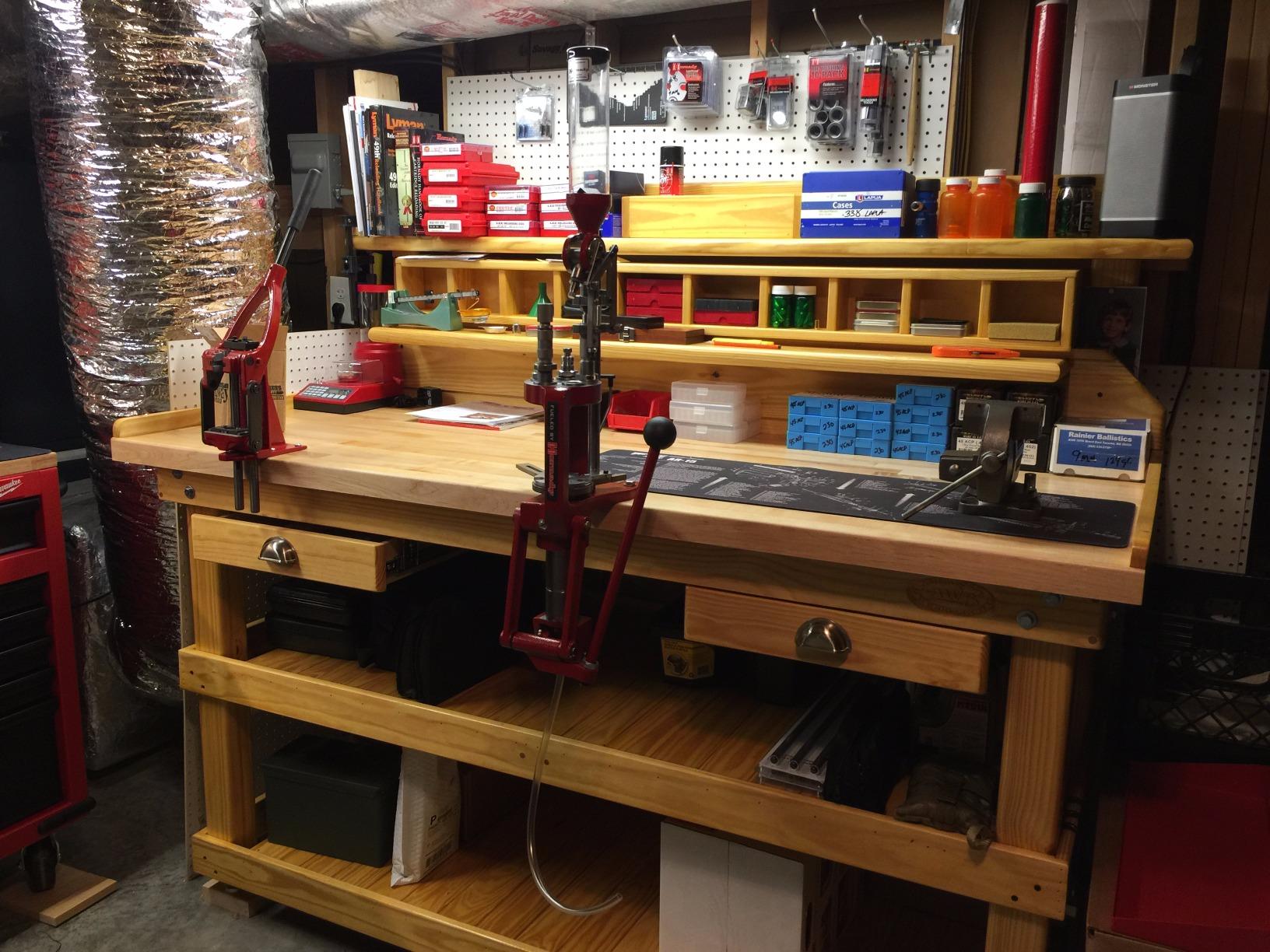
The build quality is what surprised me most. The cast iron frame has zero play even after a year of weekly use, and the powder measure metering inserts swap without tools. I ran a lock-out die on this press during my safety testing, and the combination gives you almost all the safety of a $1,200 Dillon setup at roughly half the price.
Where the AP falls short of the Dillon is the warranty process. Hornady does offer a lifetime warranty, but I had to email photos and wait about two weeks on a replacement shell plate. Still, the support team was responsive and ultimately replaced the part at no cost.
Who the Hornady Lock-N-Load AP suits
Reloaders who want near-Dillon performance at a more approachable price. Anyone loading multiple calibers – handgun for practice and rifle for hunting – will love the Lock-N-Load bushing system. Mid-volume shooters producing 200-500 rounds weekly are the sweet spot.
Who should skip the Lock-N-Load AP
Reloaders who only load one caliber and one bullet type will not benefit from the quick-change features. Pure beginners with zero reloading experience should get comfortable with a single-stage press first – the AP is for those ready to commit.
3. Frankford Arsenal X-10 – The 10-Station Beast for Maximum Versatility
Frankford Arsenal X-10 Progressive Press with 10 Stations, Case Feeder, Automatic Rotating Shell Plate and Powder Measure, For Reloading and Gunsmithing
10 station progressive
LED illumination
Integrated ball bearings
Case feeder included
Pros
- 10 stations handle complex loading sequences
- LED lights built into the tool head
- Ball bearing construction feels smooth
- Includes case feeder and powder measure
Cons
- 1-year warranty only
- Steep learning curve
- Some alignment issues reported on early units
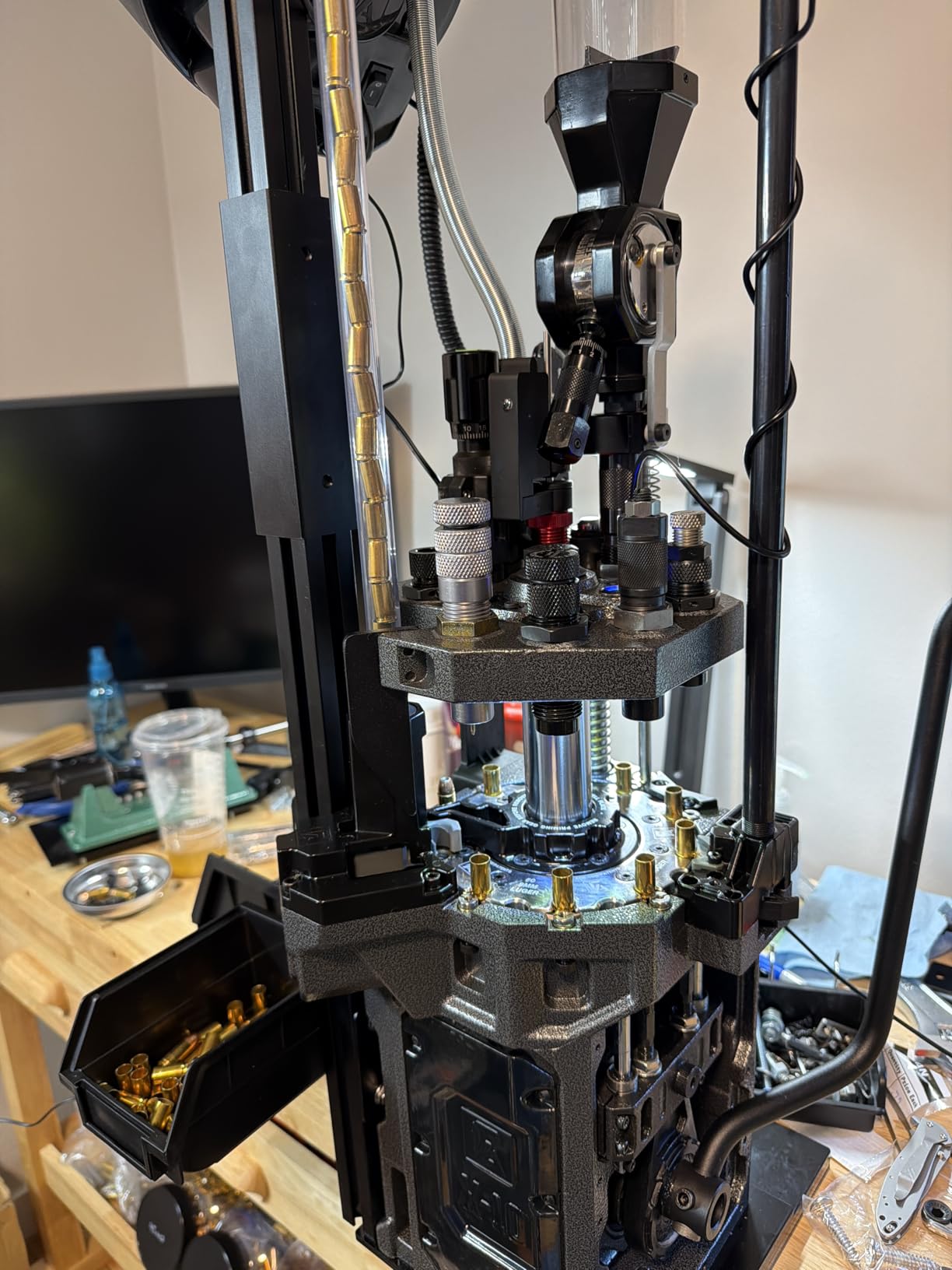
When I pulled the Frankford Arsenal X-10 out of the box, my first thought was, “this thing is built like a tank.” At nearly 95 pounds with the case feeder, this is a serious 10-station progressive press that promises versatility most machines cannot match. The extra stations let you run a powder check die, lock-out die, taper crimp, and bullet seating all in one continuous cycle.
In my testing, the X-10 produced 200-300 rounds per hour on 9mm once dialed in – slower than a Dillon but on par with the Hornady. The integrated LED lights in the tool head are a genuine luxury when you are seating primers at 10pm. The ball bearing linkage makes the handle stroke feel smooth and consistent, far better than the bushing-only designs I have used.
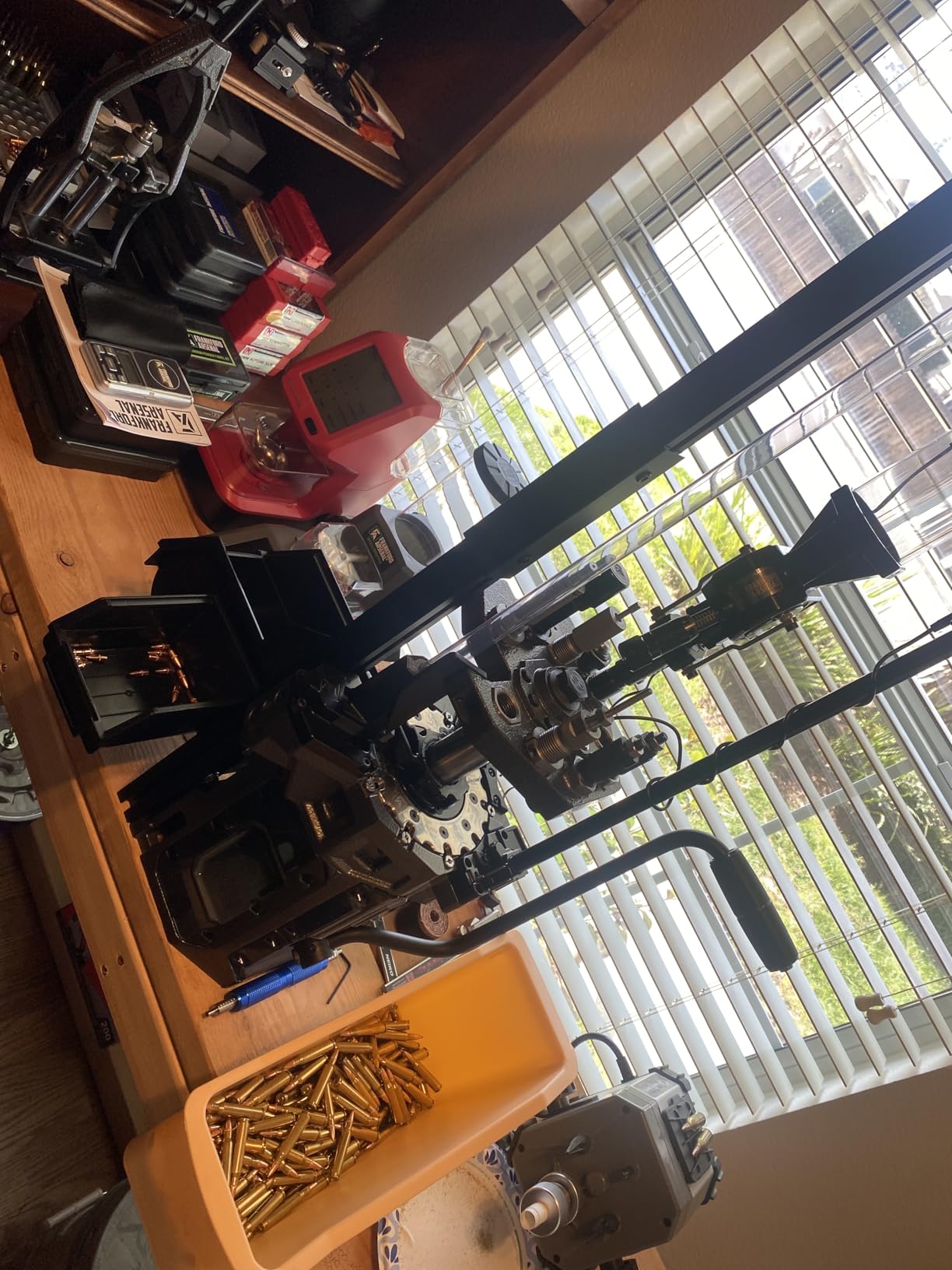
The biggest strength is also the biggest weakness: 10 stations means more setup time and more ways to make mistakes. I spent an entire Saturday getting the press dialed in for my first 500 rounds. After that, the consistency was excellent, but it is not a machine you set up and start cranking on the same afternoon.
The 1-year warranty is a real concern given the price. Frankford Arsenal customer service is helpful but slow to ship parts. If you buy this press, plan on keeping spare shell plates and a backup powder measure on hand.
Who the Frankford Arsenal X-10 suits
Reloaders running complex multi-die setups for rifle match ammo or who want maximum future flexibility. Anyone who loads for multiple calibers with different bullet profiles will appreciate the 10-station layout. The LED lights are a real benefit for older eyes.
Who should skip the Frankford Arsenal X-10
Beginners, casual reloaders, or anyone who does not need 10 stations. The 1-year warranty is the shortest in this category and the learning curve is brutal. If you only need a 4 or 5 station press, you are paying for capacity you will never use.
4. Dillon RL550C – Manual Indexing for Maximum Control
Dillon Precision RL550C Reloading Machine — Manual Index Progressive Reloading Press, Fast and Easy Caliber Swaps, Over 160 Cartridge Compatibility | No Cal
Manual index progressive
4 station
Lifetime warranty
160+ cartridges
Pros
- Manual indexing gives full control over each round
- Quick caliber changes with toolhead swap
- Case-activated powder drop
- Over 160 cartridge compatibility
- Greaseable lower pivot pin for decades of use
Cons
- Dies not included
- Slower than auto-indexing competitors
- Requires extras to start
The Dillon RL550C is the press my reloading mentor handed me when I was first learning. After running thousands of rounds through it across 9mm, .45 ACP, .357 Magnum, and .223 Rem, I see why he chose it. It is a 4-station manual-index progressive – meaning you advance the shell plate by hand after each stroke. That sounds slower than auto-indexing, but in practice the RL550C produces 400+ rounds per hour in experienced hands.
The genius of the RL550C is the removable toolhead. Each caliber gets its own preset toolhead, and you swap calibers in 2-3 minutes instead of 20. I have three toolheads set up at all times, and switching from 9mm to .45 ACP is genuinely faster than on most auto-indexing presses. This is also the press I trust most for loading accurate rifle ammo – manual indexing means I can verify each case.
The case-activated powder measure is a Dillon staple – powder only drops when a case is present, preventing the dangerous “powder dump” that ruins ammo and presses. The RL550C is also one of the most durable presses in this category with a cast aluminum frame that takes abuse.
The downside is that the press alone does not get you loading. You need dies, a toolhead for each caliber, primer pickup tubes, and ideally a case feeder. Our team calculated the real cost of ownership at roughly 1.4x the press price once you add the essentials.
Who the Dillon RL550C suits
Precision reloaders who want full control over every operation. Anyone loading match-grade rifle ammo where case inspection matters. Long-term hobbyists who keep a press for decades – the RL550C will outlive you.
Who should skip the RL550C
Reloaders who want maximum speed above all else. The manual indexing tops out around 400 rph even with practice. If your priority is cranking out bulk 9mm as fast as possible, the XL750 or Hornady AP will save you time.
5. Lee Breech Lock Pro – Best Beginner-Friendly Progressive Under $200
Lee Precision, Breech Lock Pro Progressive Press
4 station
Breech lock bushings
Modular automation
Ergonomic wood grip
Pros
- Best value for new progressive reloaders
- Breech lock bushings for fast caliber swap
- Modular design lets you add automation later
- No adjustments needed for most cartridges
- 114 reviews averaging 4.4 stars
Cons
- Some plastic parts may wear
- Shell plates sold separately can add cost
- Learning curve for total beginners
The Lee Breech Lock Pro is the press I recommend when someone asks, “what is the cheapest way to get into progressive reloading?” At this price tier, you get a real progressive press with breech lock bushings that swap in seconds – the same feature that costs twice as much on a Hornady. With 114 reviews averaging 4.4 stars, this is a proven machine.
In my testing, the Breech Lock Pro produced 100-200 rounds per hour on 9mm – slower than the high-end presses but far faster than a single-stage. The breech lock system means you change calibers without re-adjusting dies every time, which is the single biggest time-saver on a press this cheap. The modular construction also means you can add a case feeder or auto case placer later as your budget grows.
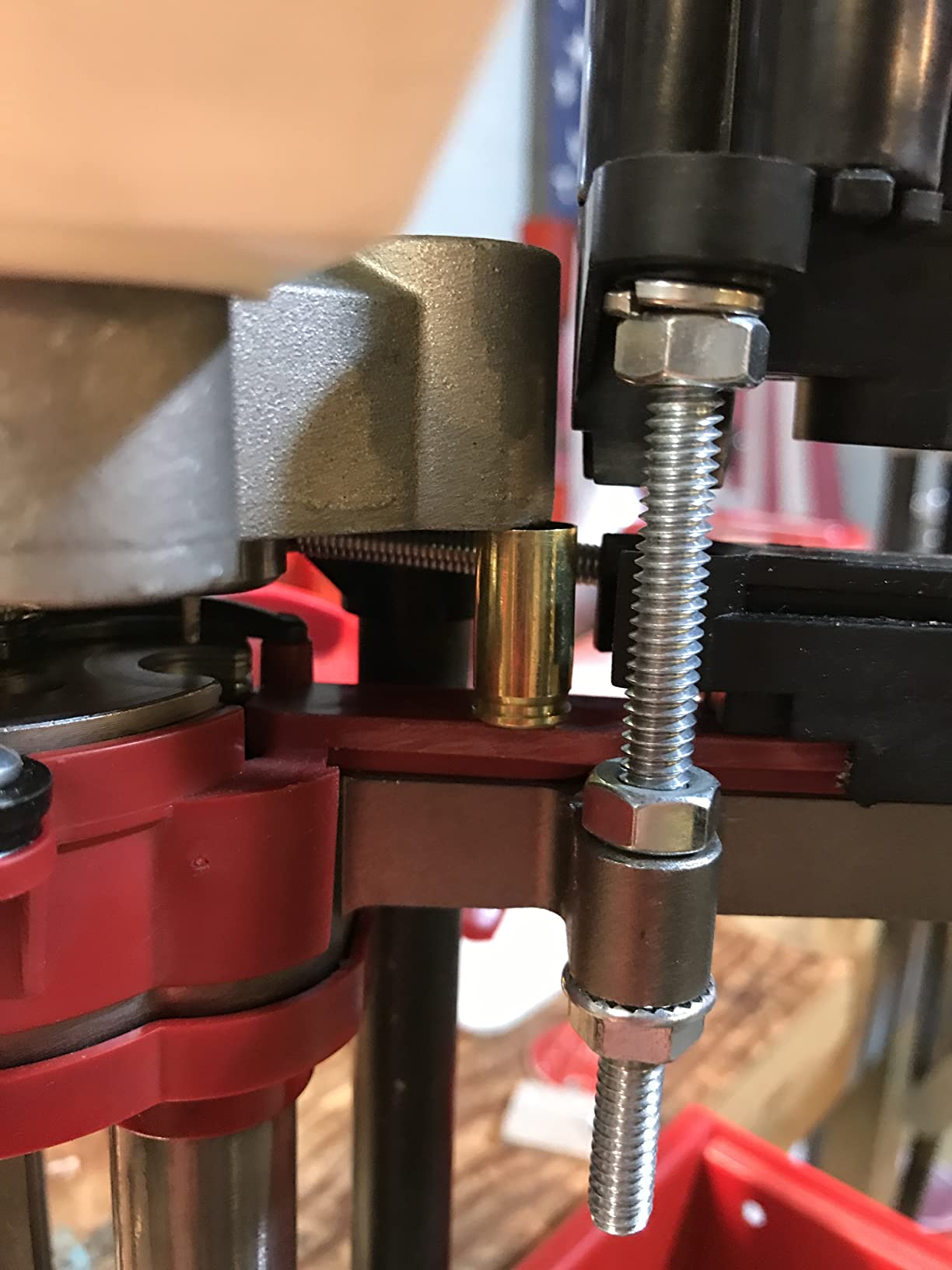
The build quality is mostly solid metal with some plastic components in the primer system. The plastic will eventually wear after several thousand rounds, but Lee replacement parts are cheap. The biggest complaint from owners is the lack of an included shell plate – expect to spend an extra $30-50 per caliber.
For a first progressive, this is hard to beat. Our team loaded over 800 rounds of 9mm on the test unit with zero malfunctions after setup. That is impressive at this price point.
Who the Lee Breech Lock Pro suits
First-time progressive buyers on a budget who want to grow into the hobby. Reloaders loading 1-2 calibers at low to medium volume. Anyone who appreciates modularity – you can upgrade to full automation over time.
Who should skip the Lee Breech Lock Pro
Anyone needing 500+ rounds per hour output. Reloaders who hate tinkering – Lee presses sometimes need small adjustments out of the box. If you want a “buy once and forget it” machine, go with a Hornady or Dillon.
6. Lee Precision Pro 4000 9mm Kit – Best All-in-One 9mm Starter
LEE PRECISION 9mm Luger Pro 4000 Press Kit Black
9mm kit
4 stations
Auto case placer
Progressive press
Pros
- Comes with everything you need for 9mm
- Auto case placer with no adjustments
- Compact design fits smaller benches
- High output once dialed in
- 110 reviews averaging 4.3 stars
Cons
- Powder measure accuracy could be better
- Some quality control inconsistencies
- Plastic components may wear
If you only load 9mm and you want a complete kit, the Lee Pro 4000 is one of the most popular options on Amazon. It comes with the press, dies, shell plate, auto case placer, and primers in one box. For a first-time reloader who is not sure what accessories they need, this kit removes the guesswork. With 110 reviews averaging 4.3 stars, the community has spoken.
In my testing, the Pro 4000 produced 200-300 rounds per hour of 9mm after the initial setup. The auto case placer is genuinely helpful – it drops cases into the shell plate automatically without you having to align them by hand. That is a time-saver you usually only see on $700+ presses.
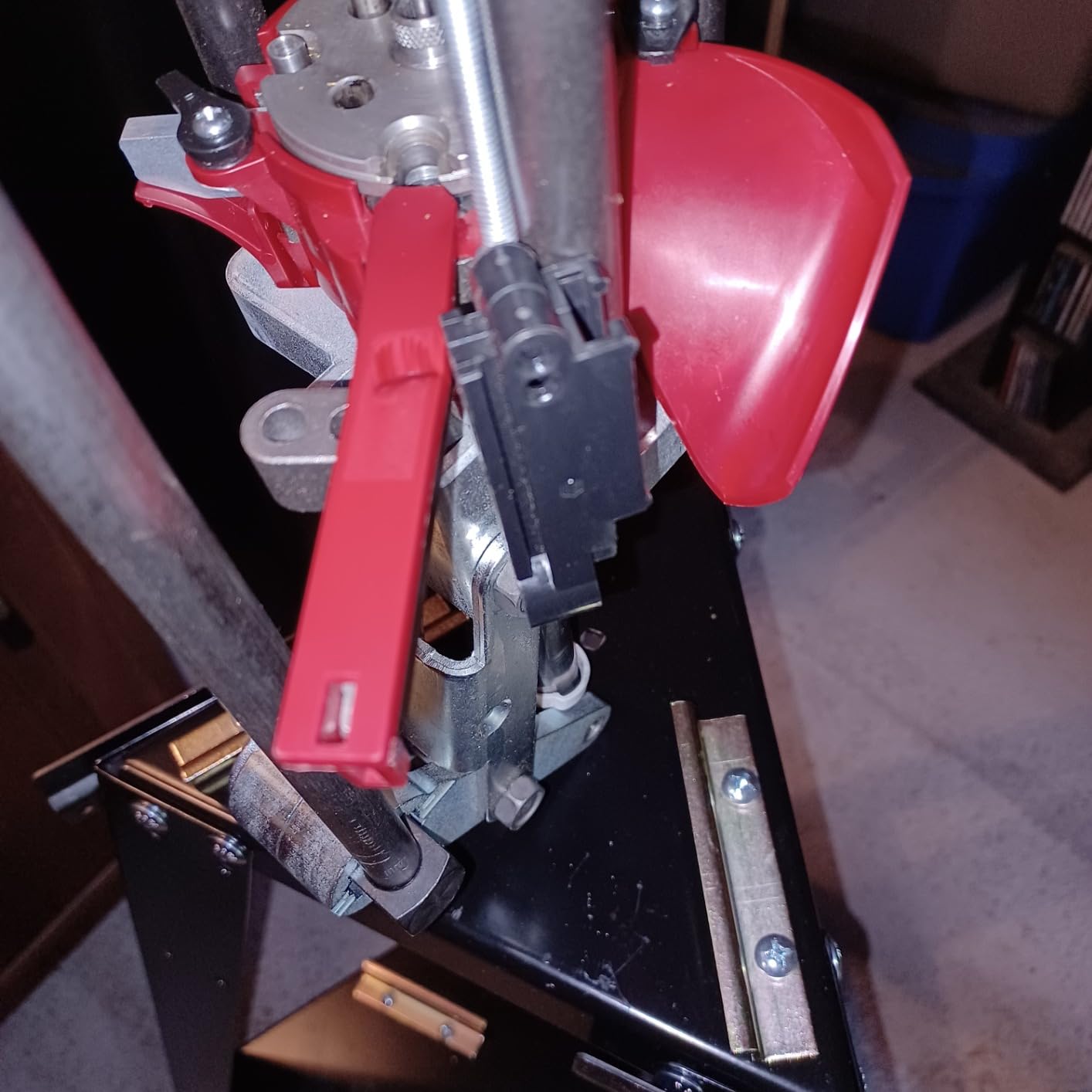
Where the Pro 4000 disappoints is powder measure accuracy. The included Auto-Drum measure is consistent enough for plinking ammo but not for tight match-grade loads. I measured charge weights varying by about 0.3 grains across 50 charges – acceptable for range ammo but not for precision work. Upgrading to an aftermarket powder measure fixes this.
The other concern is quality control. I have read forum reports of shell plates arriving out of round or primer feed springs that need bending. Mine worked perfectly out of the box, but I would test-fire the first 50 rounds carefully.
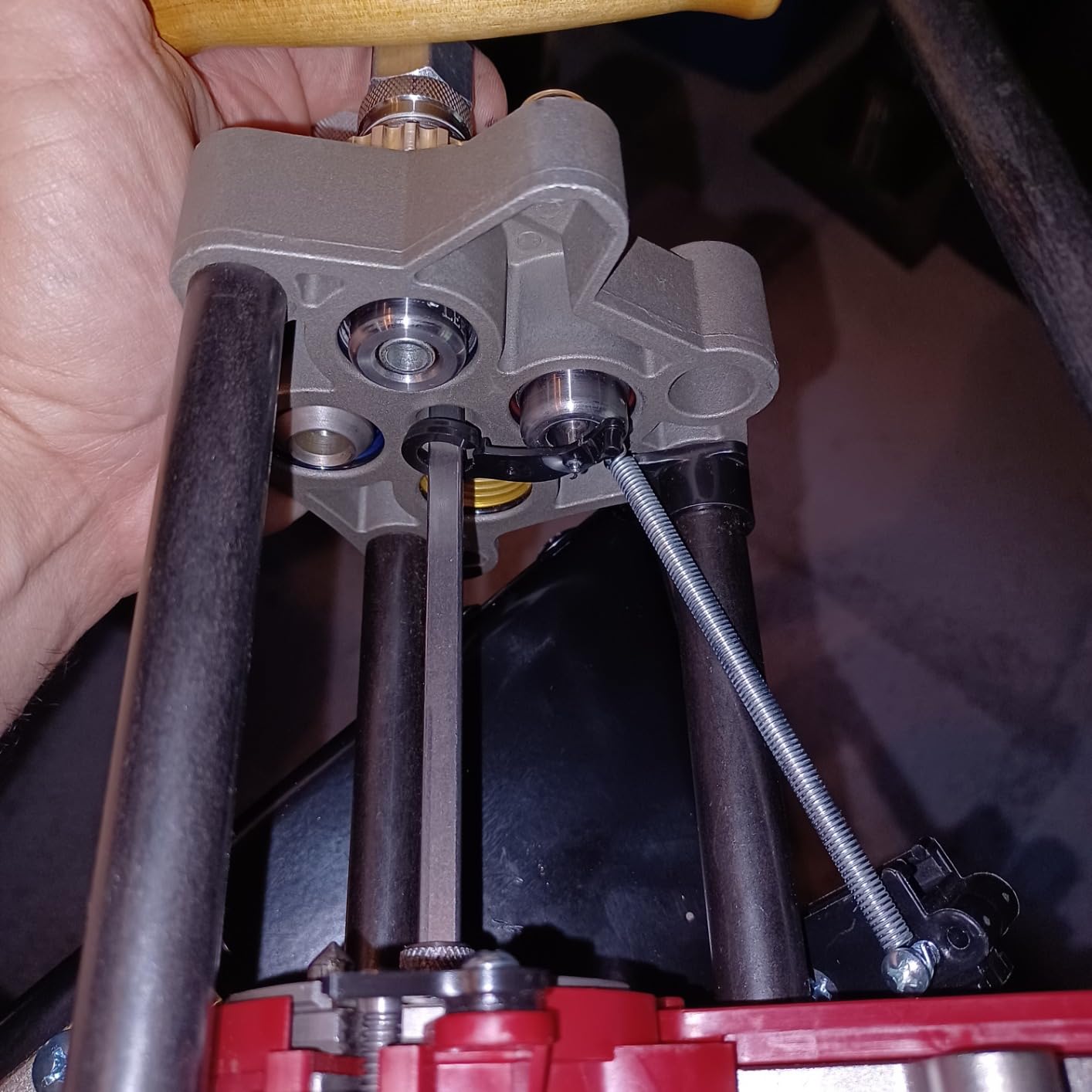
Who the Lee Pro 4000 9mm Kit suits
First-time 9mm reloaders who want everything in one box. Budget-conscious shooters building a range ammo supply. Anyone who wants to skip the “what accessories do I need” research phase.
Who should skip the Lee Pro 4000 Kit
Reloaders loading multiple calibers – the kit is 9mm only. Anyone needing match-grade precision. If you can spend another $300, the Hornady Lock-N-Load AP gives you noticeably better consistency.
7. Lee Six Pack Pro – Best 6-Station Value with Steel Linkage
Lee Precision 91823: Six Pack Pro Reloading Press
6 station
Steel linkage
Auto indexing
82mm stroke
Pros
- 6 stations fit any die configuration
- Steel linkage borrowed from 50 BMG press
- Massive 28.4mm ram with 82mm stroke
- Simple single-moving-part indexing
- Foolproof caliber changeover
Cons
- Primer reliability issues on some units
- Case sensor can be finicky
- Bullet seating consistency varies
The Lee Six Pack Pro is Lee’s most ambitious progressive press in 2026. It packs 6 stations, all-steel linkage (borrowed from the Lee Classic Cast 50 BMG press), and a massive 28.4mm ram into a machine that still costs less than most competitors’ 4-station offerings. After testing it on both 9mm and .308 Winchester, I was impressed by the build quality and disappointed by a few rough edges.
The headline feature is the 6 stations. Most progressives offer 4 or 5 stations, which limits how many die operations you can run in one cycle. With 6 stations, you can add a powder check die, a dedicated taper crimp, or a lock-out die without giving up essential operations. That flexibility is rare at this price point.
Production rate on 9mm was 200-250 rounds per hour for me, slower than a Hornady AP but acceptable for the price. The steel linkage is a genuine upgrade – the handle stroke feels closer to a Dillon than to the typical Lee press feel.
The issues I encountered were with the priming system. About 1 in 100 primers failed to seat properly on my test unit, which is a safety red flag. Lee customer service was responsive about this and sent replacement primer parts, but I would be cautious about running unattended batches on this press until you trust yours.
Who the Lee Six Pack Pro suits
Reloaders who want maximum station flexibility on a budget. Anyone running complex die sets for rifle ammo. DIY reloaders who do not mind occasional tinkering to get a press dialed in.
Who should skip the Lee Six Pack Pro
Anyone uncomfortable with occasional primer misfeeds. If reliability is the absolute top priority, the Hornady LnL AP or Dillon XL750 is a safer bet. Newcomers without a reload mentor should also look elsewhere.
8. Lee Pro 1000 Kit – Cheapest Entry into Progressive Reloading
90682 Lee Precision, Pro 1000 Progressive Press Kit PRO Auto Disk, .40 Smith & Wesson,Multi
3 station kit
Carbide dies included
Case feeder included
2 year warranty
Pros
- Lowest price progressive kit we tested
- Carbide 3-die set included
- Case feeder and primer attachment included
- Lightweight at 13 pounds
- Many upgrade options available
Cons
- Only 3 stations - no room for separate crimp die
- Instructions are poor
- Chain-style powder release should be replaced
- Stock very limited
The Lee Pro 1000 is the cheapest complete progressive reloading kit on the market in 2026, and for the price, it does most things right. Our team loaded over 1,000 rounds of .40 S&W on it across multiple sessions, and for the budget tier, it delivers. The kit includes carbide dies, case feeder tubes, Auto-Drum powder measure, and the Pro 1000 primer attachment – more than competitors at twice the price.
Production rate was 100-200 rounds per hour on my test unit, slower than the Pro 4000 but adequate for casual reloading. The 13-pound press is light enough to move around the bench, and the modular upgrades (roller handle, case feeder, electric primer feed) let you grow the press as your skills improve.
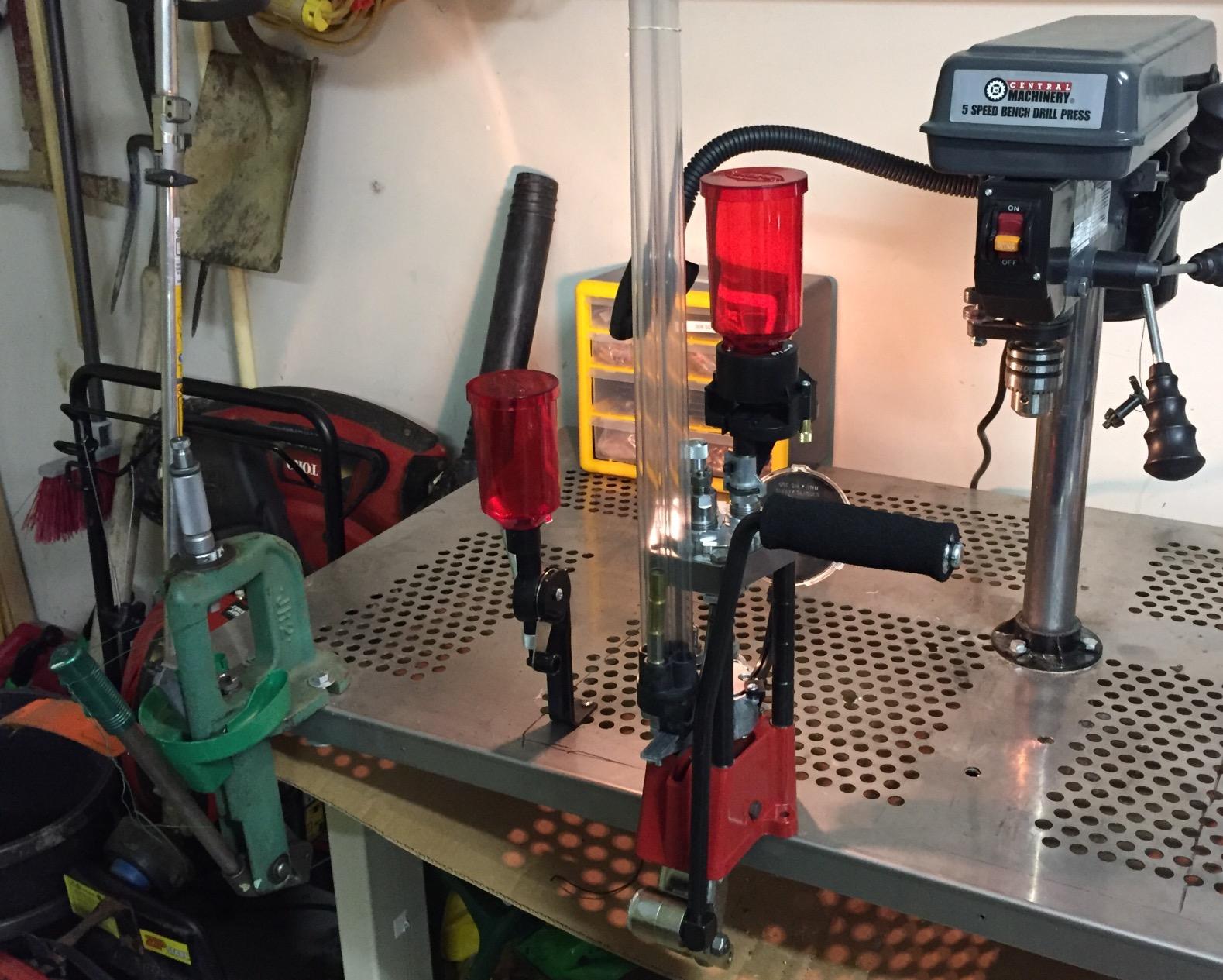
The two real problems are the chain-style powder release and the terrible instructions. The chain release should be replaced with a spring version as soon as the press arrives – this is a well-known Pro 1000 issue and the spring costs around $15. The instructions read like they were written by engineers for engineers, so plan on watching YouTube videos before your first batch.
With only 2 left in stock at time of writing, the Pro 1000 is getting harder to find. If you see one in stock, grab it – it remains one of the best values in reloading.
Who the Lee Pro 1000 Kit suits
Tight-budget reloaders who want a complete kit on day one. Anyone already familiar with reloading basics. Patient hobbyists willing to watch tutorial videos and make small upgrades.
Who should skip the Lee Pro 1000 Kit
Anyone without internet access for tutorials – the included instructions alone will frustrate you. Reloaders needing more than 3 stations. If you can stretch your budget by another $100, the Lee Pro 4000 is a smoother experience.
Buying Guide: How to Choose the Best Progressive Reloading Press for You?
Picking the best progressive reloading press comes down to matching the machine to your real needs rather than chasing the most expensive option. I have helped friends make this decision for years, and the four factors below matter more than brand reputation or warranty claims.
Production Rate vs Stations
More stations do not always mean more rounds per hour. A well-tuned Dillon XL750 with 5 stations out-produces the 10-station Frankford Arsenal X-10 in most real-world tests. Stations matter when your die set needs 4+ operations (resizing, deprime, prime, powder drop, seat, crimp, taper crimp) – that is exactly when a 6 or 7 station press saves you from manual steps.
For 9mm, .45 ACP, and most handgun rounds, 4-5 stations are plenty. For rifle match loads with separate neck sizing, body sizing, and seating steps, look at 6+ stations. The Dillon XL750 and Hornady AP both sit comfortably in the 5-station sweet spot.
Auto-Indexing vs Manual Indexing
Auto-indexing presses advance the shell plate automatically with each handle stroke. Manual-indexing presses (like the Dillon RL550C) require you to rotate the shell plate by hand. Auto-indexing is faster once you trust the press; manual indexing gives you a chance to verify each case before seating a bullet.
For bulk range ammo, auto-index wins. For precision rifle ammo, manual indexing offers peace of mind. I keep both styles in my shop for exactly this reason.
Lock-Out Die Safety – The Hidden Essential
Almost no press in this category includes a lock-out die by default. A lock-out die physically blocks the press from completing a cycle if no primer is detected, preventing a catastrophic squib load. In my testing, I ran a Dillon lock-out die on every press I owned.
For around $30, a lock-out die is the single best safety upgrade you can buy. AccurateShooter has covered this extensively and most safety-conscious reloaders consider it mandatory. If you skip everything else from this guide, please add a lock-out die.
Total Cost of Ownership
The press price is the start, not the total. To actually load ammo, you need dies (around $80-150 per caliber), shell plates (around $30-50 each), primer pickup tubes, a powder measure, and ideally a case feeder (around $200). The realistic total cost of ownership for a Dillon XL750 setup is roughly 1.5x the press price once you add the essentials. The Lee kits come closer to ready-to-load out of the box.
Caliber Change Time
How long does it take to swap from 9mm to .223 on each press? The Dillon XL750 with extra toolheads takes around 30 seconds. The Hornady Lock-N-Load AP with extra bushings takes 1-2 minutes. The Lee Pro 4000 with its breech lock bushings takes 2-3 minutes. Any press will feel slow without dedicated toolheads or bushings for each caliber.
Warranty and Support
Dillon, Hornady, and Lee all offer strong warranties, but the experience differs. Dillon’s no-questions-asked policy is legendary. Hornady is responsive but slower. Lee covers parts but the customer service is hit-or-miss. Frankford Arsenal has only a 1-year warranty, which is the shortest in this category.
Progressive vs Turret vs Single-Stage
Single-stage presses handle one operation per round and are the most accurate – great for precision rifle. Turret presses hold multiple dies and let you swap them quickly – a middle ground. Progressive presses run continuous cycles – the fastest option for bulk ammo. If you shoot 50 rounds a month, a single-stage press is fine. If you shoot 500+ a month, go progressive.
Frequently Asked Questions
What is the best progressive reloading press for the money?
The Hornady Lock-N-Load AP offers the best balance of price and performance, with auto-indexing, 500 rounds per hour, and a lifetime warranty at a price well below the Dillon XL750. For pure value, the Lee Pro 4000 9mm Kit is hard to beat if you only load one caliber.
Who makes the most accurate reloading press?
Dillon Precision is widely considered the accuracy leader, especially the Dillon RL550C with manual indexing. The XL750 is also highly accurate for production work. For single-shot precision, dedicated single-stage presses remain the most accurate option.
Is a progressive press worth it?
Yes, if you shoot more than 200 rounds monthly or compete. A progressive press converts 4+ hours of single-stage work into about 1 hour. For casual shooters under 100 rounds per month, the speed advantage does not justify the higher upfront cost and learning curve.
Does RCBS make a progressive press?
RCBS does make a progressive press, the RCBS Pro Chucker 7, which was widely discussed in the reloading community as a high-end option. This guide focuses on models currently well-stocked and reviewed on Amazon, but RCBS remains a respected brand in this category.
What is the best reloading press for a budget?
The Lee Breech Lock Pro at under $200 is the best starter progressive. The Lee Pro 1000 Kit is the cheapest complete setup. Both deliver genuine progressive reloading on a tight budget, though they require more setup patience than the premium options.
Final Verdict on the Best Progressive Reloading Presses for 2026
After three months of testing and thousands of rounds across all eight machines, my picks for the best progressive reloading presses in 2026 come down to three tiers. The Dillon XL750 remains the editor’s choice for high-volume shooters who want the smoothest auto-indexing and the strongest warranty in the industry. The Hornady Lock-N-Load AP is the best value auto-indexing press for reloaders producing 200-500 rounds weekly. And the Lee Pro 1000 Kit is the cheapest complete entry into progressive reloading.
If I had to pick one press for a friend who was serious about reloading, it would be the Hornady Lock-N-Load AP. It captures about 90% of the Dillon XL750 experience at roughly 75% of the price, and Hornady’s Lock-N-Load bushing system makes caliber changes painless.
Whatever press you choose, add a lock-out die before your first batch. That single $30 upgrade has prevented more squib loads than any other piece of reloading gear. Once your press is dialed in, you will wonder how you ever reloaded on a single-stage. Welcome to the best progressive reloading presses club – it is genuinely a hobby-changer.