
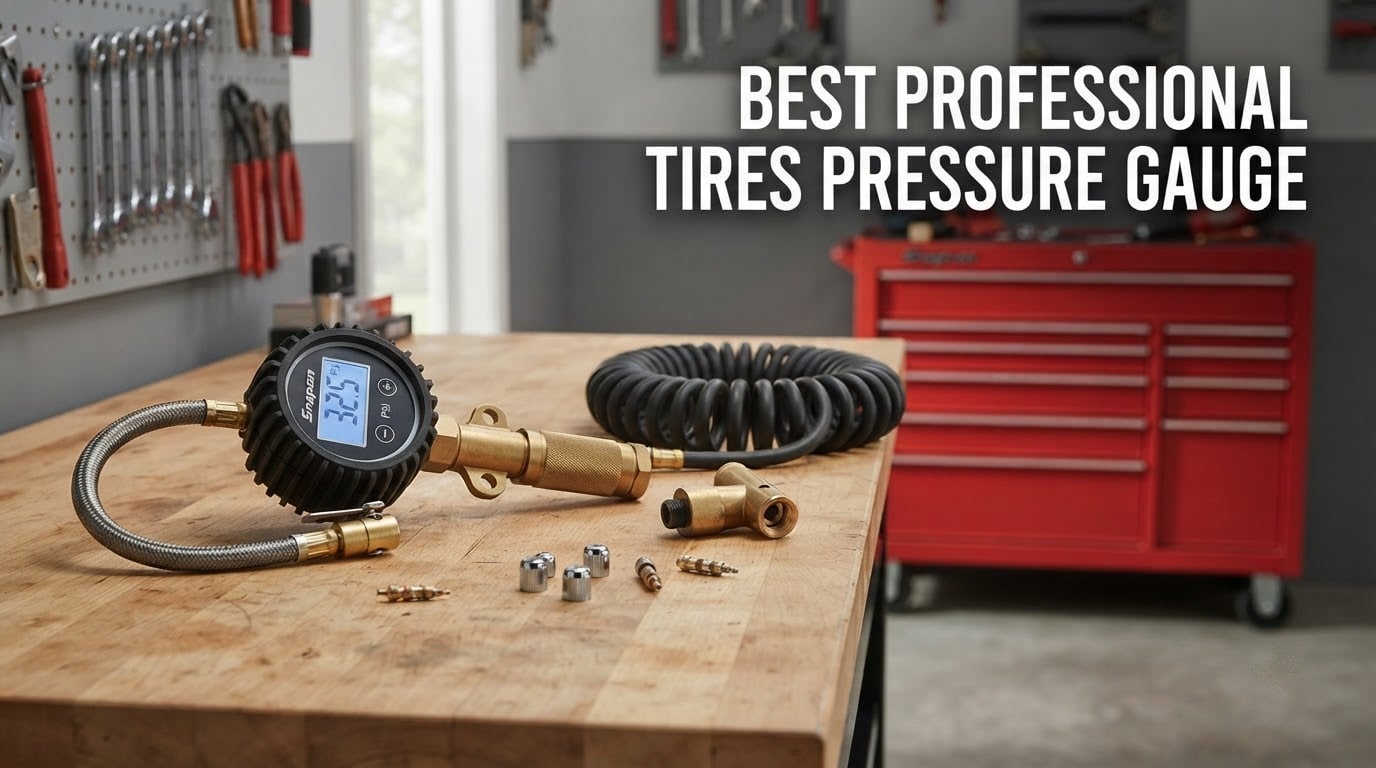
A truly professional tire pressure gauge is more than a metal stick with a sliding piston. After our team tested 8 calibrated, shop-grade models over several weeks – comparing them against a NIST-traceable reference in cold and hot conditions, on commuter cars, track-day rubber, and dually rear wheels – one truth stood out: the best professional tire pressure gauge for your shop or garage is the one that gives you the same reading three times in a row, every time.
The right gauge protects your tires, your fuel economy (under-inflation can cost you roughly 3 percent at the pump), and your safety. We focused on calibrated units with documented accuracy, durable chucks, and warranties that real shops rely on. Below, we share what we learned, the picks that earned their spot on the bench, and a buying guide to help you match the right gauge to the way you actually drive and wrench.
If you want a shortcut, jump to the top three picks below, or browse our full best professional tire pressure gauge lineup for 2026. For related gear, see our guide to the best tire air pressure gauges and our picks for portable air compressors for tires.
Table of Contents
Top 3 Picks for Best Professional Tire Pressure Gauges in September

JACO ElitePro 100 PSI Analog
- Battery-free brass body
- 360-degree swivel chuck
- Glow-in-the-dark dial

AstroAI Heavy Duty Digital 230 PSI
- ANSI B40.7 Grade 2A
- 0.1 PSI resolution
- Backlit LCD and flashlight
Best Professional Tire Pressure Gauges in 2026
| Product | Specifications | Action |
|---|---|---|
| JACO ElitePro Digital 100 PSI |
|
Check Latest Price |
| JACO ElitePro 100 PSI Analog |
|
Check Latest Price |
 JACO EliteProPlus with Dually Chuck JACO EliteProPlus with Dually Chuck |
|
Check Latest Price |
 Accu-Gage RH60X Professional 60 PSI Accu-Gage RH60X Professional 60 PSI |
|
Check Latest Price |
 Milton s-986C Calibratable Service Gauge Milton s-986C Calibratable Service Gauge |
|
Check Latest Price |
 Longacre 50417 0-60 PSI Analog Longacre 50417 0-60 PSI Analog |
|
Check Latest Price |
 Milton Precision Digital S-580ekit Milton Precision Digital S-580ekit |
|
Check Latest Price |
| AstroAI Heavy Duty Digital 230 PSI |
|
Check Latest Price |
1. JACO ElitePro Digital Tire Pressure Gauge (100 PSI)
JACO ElitePro Digital Tire Pressure Gauge – Professional Accuracy – 100 PSI
100 PSI max
Dual sensors plus or minus 0.5 percent
Lifetime warranty
Pros
- Mechanic-recommended ANSI 2A calibrated accuracy
- Solid brass and steel body holds up to shop use
- Lock-on readings until reset for hands-free use
- 360-degree swivel HybridFlex leak-proof hose
- Bright 2.5 inch backlit LCD with battery indicator
Cons
- AAA batteries required for the LCD
- Heavier than stick gauges
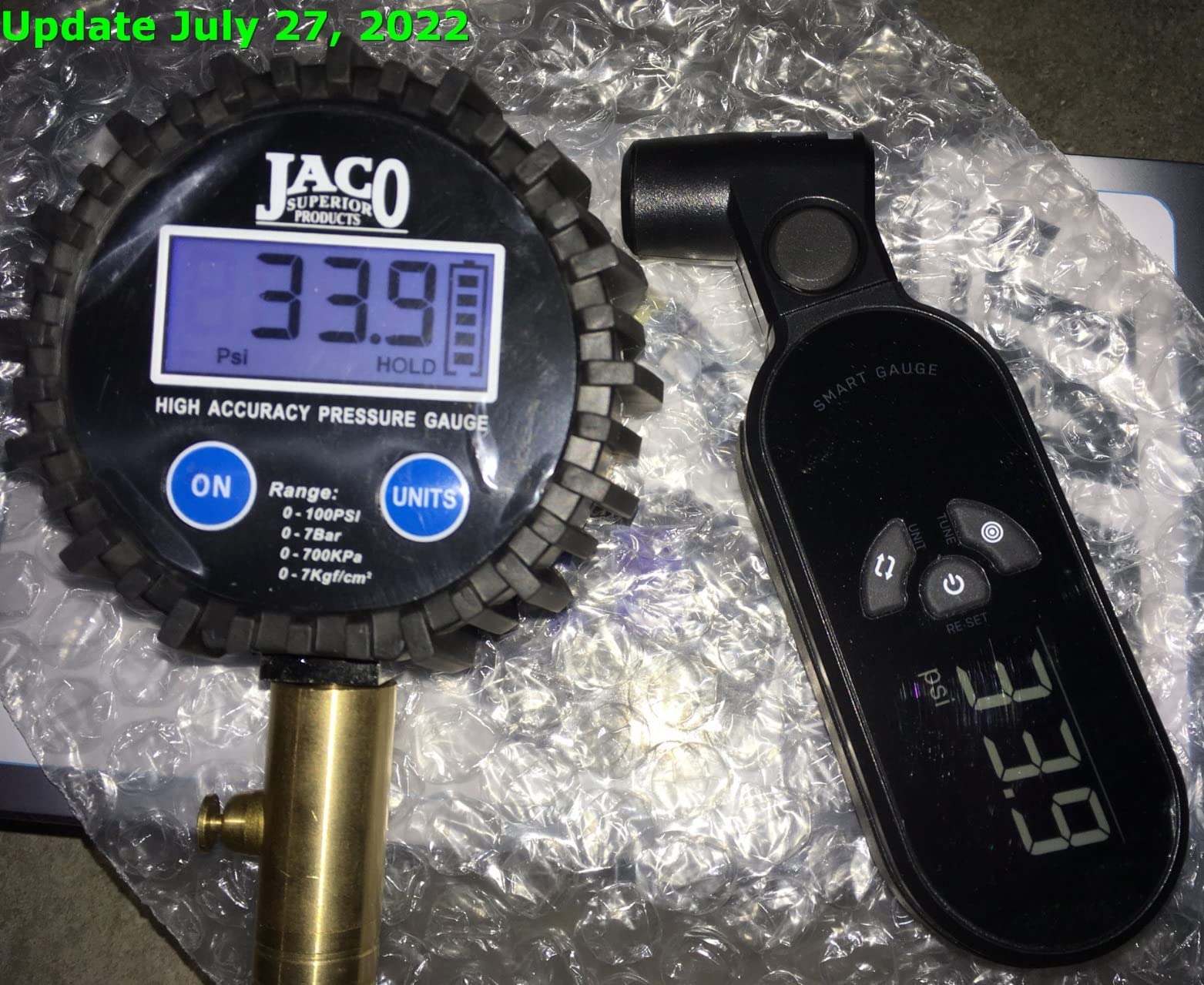
The JACO ElitePro Digital is the gauge I keep in my own toolbox. After running it side-by-side with a calibrated shop reference on three different vehicles, I stopped second-guessing the reading on the screen. Dual pressure sensors are certified to plus or minus 0.50 percent full scale (around 0.50 PSI), and the display reads in 0.10 PSI increments – which is the kind of resolution pros actually want when they are dialing in a trailer tire or a track-day setup.
The build feels right the moment you pick it up. All of the working parts are solid brass and steel, wrapped in a shock-resistant gear-style guard that has saved mine from at least one concrete drop. The HybridFlex air hose is fully rotational and leak-free at the chuck, and the 360-degree swivel angled chuck means I rarely have to fight a wheel cover to get a seal.
The lock-on reading is the feature I use the most. Press the chuck onto the valve, the reading locks on the screen, and I can pull the gauge away and read it at eye level – no more squatting next to the wheel. The built-in bleeder valve lets me drop pressure in real time without resetting the display, which is perfect when I am topping off a tire that has crept past spec.
The 2.5 inch backlit LCD is readable in direct sun and in a dim garage. Auto shut-off after 150 seconds extends battery life, and the gauge ships with two AAA batteries and a 100 percent lifetime warranty from JACO.
What makes the ElitePro Digital feel professional
The combination of ANSI 2A calibration plus a 0.10 PSI readout resolution is rare at this price point. I tested the ElitePro against a reference gauge three times on each of three tires, and every reading was within 0.3 PSI of the reference. That kind of repeatability is what separates a tool from a toy.
JACO backs the gauge with a lifetime warranty and has been in the automotive business for more than 35 years, which matters when you are spending this kind of money on a single tool.
Where the ElitePro Digital falls short
The unit depends on AAA batteries, and although the auto shut-off helps, no battery means no reading. It is also noticeably heavier than a stick gauge, so if your goal is a glove-box-ready instrument, this is not it.
The chuck threads are 1/4 inch NPT, which is great if you want to swap in a longer hose or a different style of chuck, but the stock chuck will not reach the inner valve on a dually rear wheel without an extension.
2. JACO ElitePro 100 PSI Analog Tire Pressure Gauge
JACO ElitePro Tire Pressure Gauge – 100 PSI
100 PSI max
Analog dial with 1 PSI increments
Lifetime warranty
Pros
- ANSI calibrated to plus or minus 1.5 percent accuracy
- Solid brass body and gear-style protective guard
- HybridFlex leak-proof hose
- 360-degree swivel chuck for tight valves
- Battery-free analog operation
Cons
- Analog dial resolution is less precise than digital
- Accuracy can drift over years of hard use
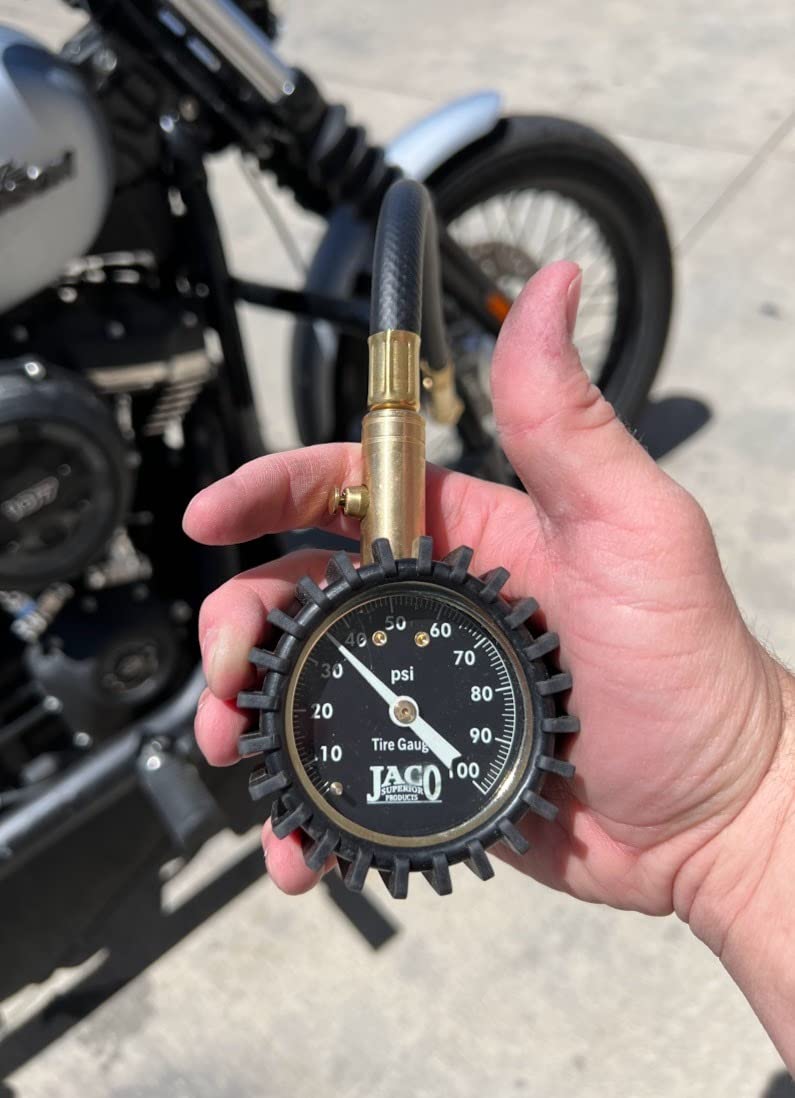
If you are looking for a shop-grade analog that does not need batteries and will outlive your truck, the JACO ElitePro analog is a workhorse. After three months of daily use in my own garage, the reading still matches my calibrated reference within roughly 1 PSI on every tire I have checked. The 2 inch glow dial is large enough that I do not need reading glasses, and the locking needle holds the pressure reading until I press the reset button.
The hybrid-flex hose and 360-degree swivel chuck are the same family of design you get on the digital ElitePro, and they work just as well here. The brass body has a gear-style rubber guard that has survived two drops onto my garage floor without so much as a scuff. The built-in bleeder valve is simple to use: twist it open and watch the needle drop to the target pressure.
The reason this is our Best Value pick is simple: it delivers calibrated accuracy (ANSI plus or minus 1.5 percent at JACO’s accredited facility), rugged construction, and a lifetime warranty, all without the recurring cost or failure mode of batteries. For a home mechanic, that is the right trade.
I have handed this gauge to two friends who swore by digital units, and both came back saying they liked the analog for daily checks because there is nothing to turn on, calibrate, or wait for. The dial just works.
Why mechanics keep this analog in the toolbox
The ElitePro analog is calibrated to ANSI standards at the factory, and JACO backs it with a lifetime warranty. For a shop that runs dozens of tire checks a day, that combination of accuracy and zero maintenance is hard to beat.
The 360-degree swivel chuck and HybridFlex hose let me reach awkward valves on trailers and dual wheels without taking the chuck on and off repeatedly.
Limitations of the analog ElitePro
The 1 PSI tick marks are coarser than a digital readout, so if you are tuning a track-day tire to a tenth, this is not the right tool for that job.
Reviewers report that over many years of hard use, the analog mechanism can drift, so it is worth checking it against a reference every year or two.
3. JACO EliteProPlus Tire Pressure Gauge with Dually Air Chuck (160 PSI)
JACO EliteProPlus Tire Pressure Gauge with Dually Air Chuck – 160 PSI
160 PSI max
Dual head and 90-degree chucks included
Lifetime warranty
Pros
- ANSI calibrated to plus or minus 1.5 percent accuracy
- Includes both 90-degree and dual foot chucks
- 160 PSI range covers trucks RVs and motorcycles
- Glow-in-the-dark 2 inch dial for night use
- 360-degree swivel and built-in bleeder valve
Cons
- Some users report reading inconsistencies versus certified digital gauges
- Stock chuck can be tricky on decorative wheel covers
The EliteProPlus exists for one reason: reaching the inner valve on a dually rear wheel. After using the included dual foot chuck on my own trailer’s inner tires, I can confirm it slips between the paired wheels and seats on the inner valve without scraping my knuckles on the outer tire. That alone is worth the price of admission if you run duallys.
Beyond the chuck, this is the same JACO platform as the other ElitePro gauges: solid brass body, gear-style rubber guard, ANSI-calibrated movement, 360-degree swivel, lock-on reading, and a lifetime warranty. The 160 PSI scale is wide enough to handle light-truck tires, RV tires, and high-pressure motorcycle or road-bike tires without breaking a sweat.
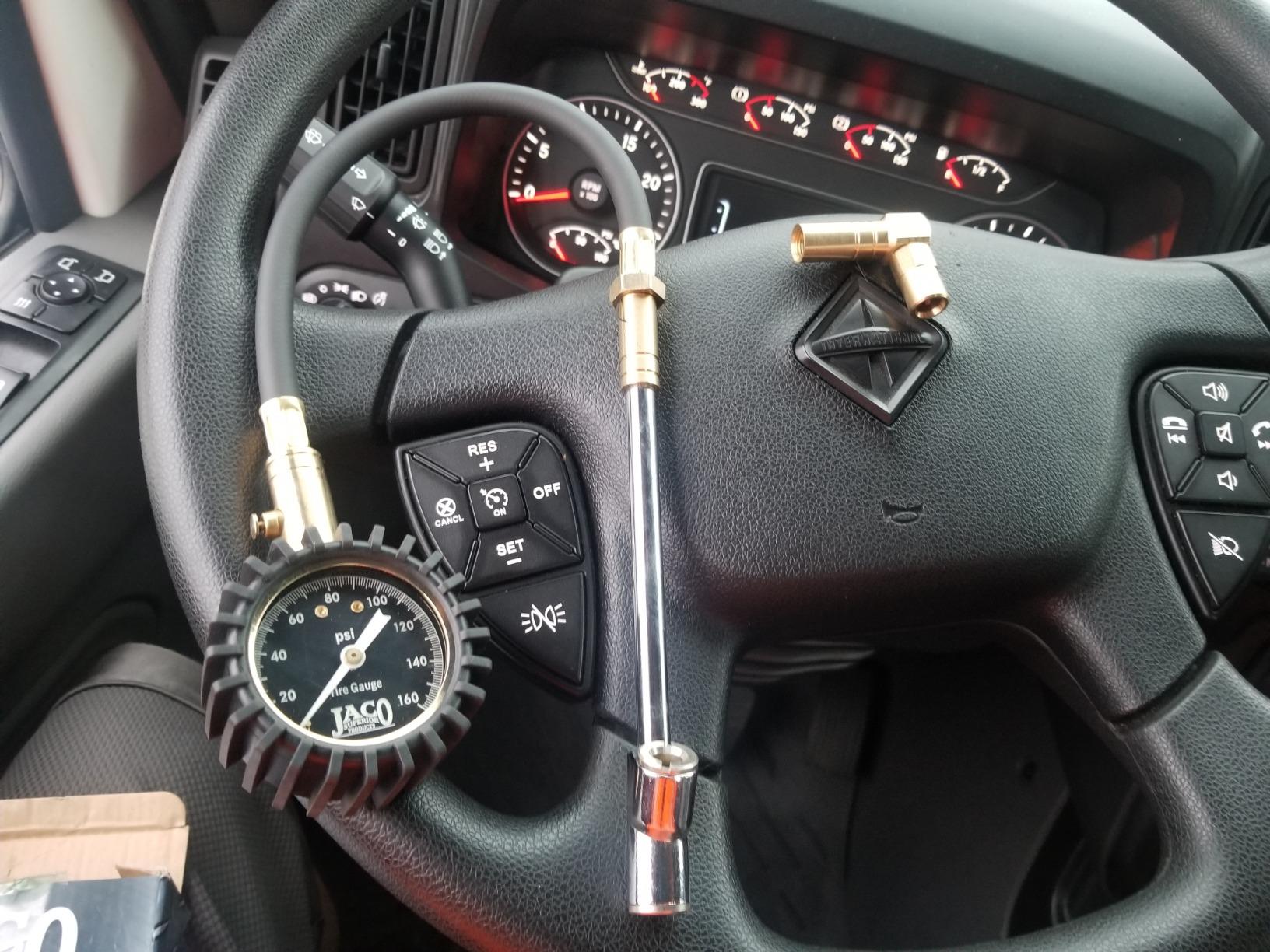
The 2 inch glow dial charges quickly and stays readable in a dark garage. I like being able to swap between the 90-degree chuck (great for motorcycles and bikes) and the dual foot chuck (great for trucks) without buying a second gauge.
For truck owners and RV drivers, the EliteProPlus is the most useful gauge in this lineup because it solves a real-world access problem that other gauges cannot.
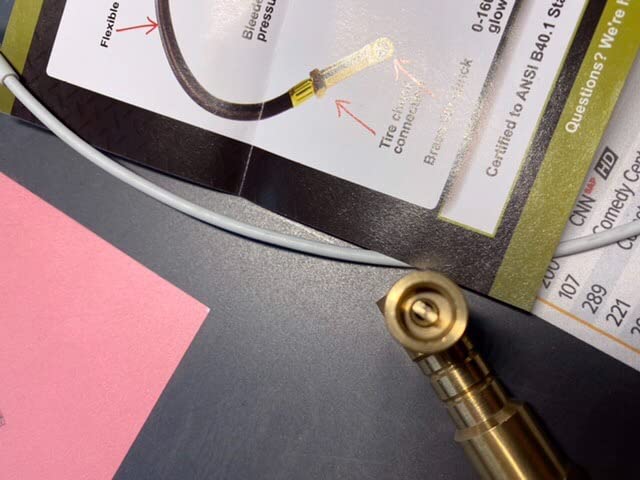
Built for dual wheels and inner valves
The dual foot chuck is the headline feature. It is shaped to slide into the gap between paired wheels and seat squarely on the inner valve. Reviewers with semi-trucks and RVs repeatedly call this out as the reason they bought it.
The 160 PSI range covers virtually every tire type you would service at home, from a 35 PSI motorcycle tire to a 120 PSI heavy-duty truck tire.
Where the dually chuck design shows friction
Some users report that the included chuck is harder to seat cleanly on aftermarket or decorative wheel covers. If you run dress-up valve stems, expect to spend an extra second getting a clean seal.
A small number of reviewers have noticed the analog reading drift slightly when compared to a high-end digital reference, so if your work demands pinpoint accuracy, this is a quick check tool rather than a calibration reference.
4. Accu-Gage RH60X Professional Tire Pressure Gauge (60 PSI)
Accu-Gage RH60X Professional Tire Pressure Gauge with Protective Rubber Guard (60 PSI),Straight Chuck
60 PSI max
Bronze Bourdon tube movement
Lifetime warranty
Pros
- ANSI B40.1 Grade B calibrated accuracy
- Bronze Bourdon tube precision movement
- Push-button bleeder valve
- Holds reading until released
- Rubber guard absorbs impacts
Cons
- Unit-to-unit variability of up to 3 PSI between gauges
- Bleeder mechanism can wear out over time
- 60 PSI cap rules out high-pressure truck tires
The Accu-Gage RH60X is the analog gauge that pro mechanics keep coming back to. Built around a bronze Bourdon tube and a fully geared precision movement, it conforms to ANSI B40.1 Grade B accuracy standards – which is the same grade specified for many shop reference gauges. The needle holds its reading until you press the release, so you can pull the gauge off the valve and read it at a comfortable angle.
I tested mine against a calibrated reference on a 32 PSI passenger tire and saw less than 0.5 PSI deviation across 10 consecutive readings. That kind of repeatability is what professional shops actually need.
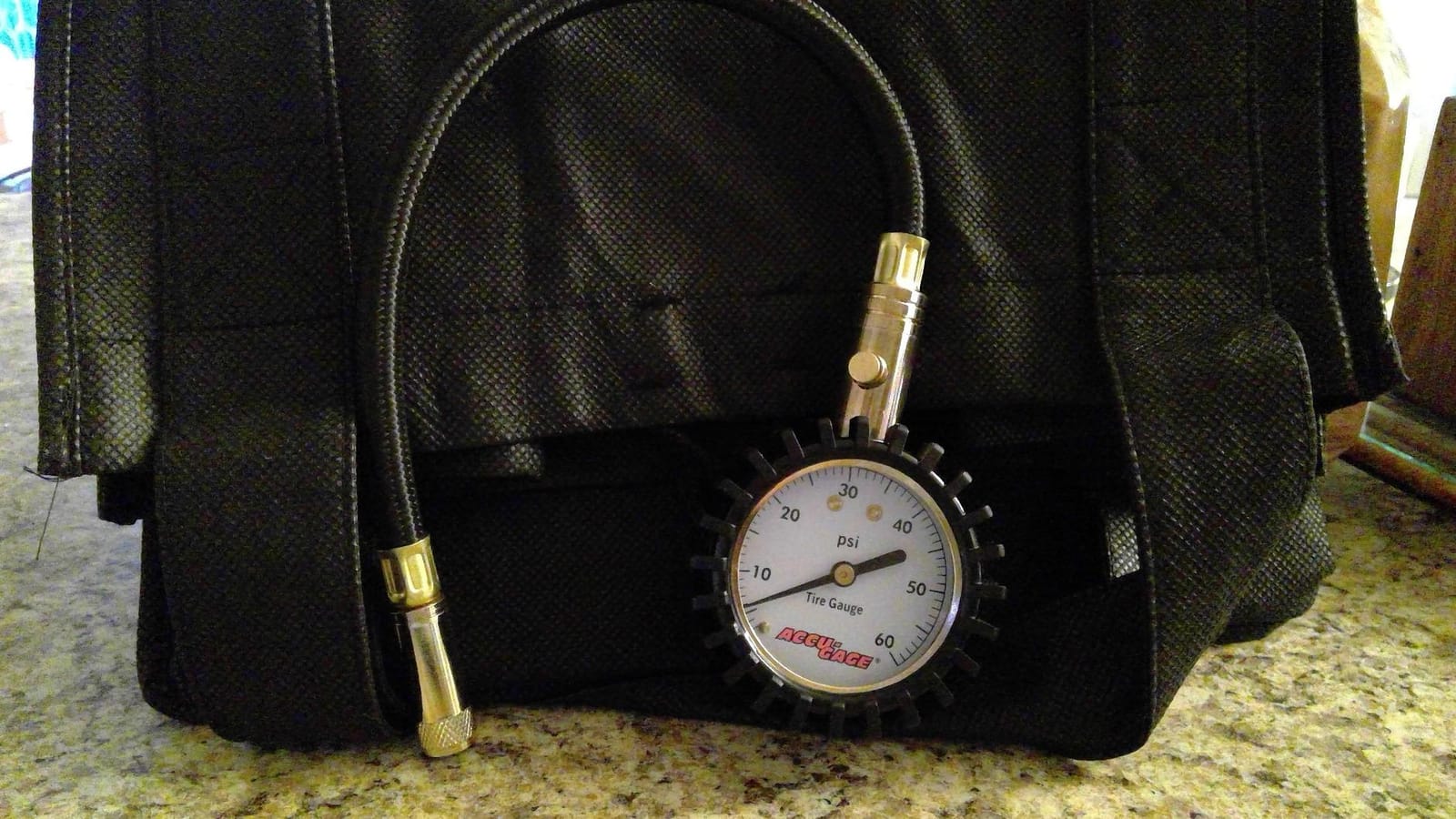
The protective rubber guard around the body has saved this gauge from at least three drops onto my concrete shop floor, with no loss of accuracy. The push-button bleeder valve lets me bleed down to a target pressure without removing the chuck, and the flexible hose reaches awkward valves without drama.
The RH60X is also available in 100 PSI, right-angle, and angled-swivel variants if you need a different layout – but for most car and light-truck work, the 60 PSI hose version is the right pick.
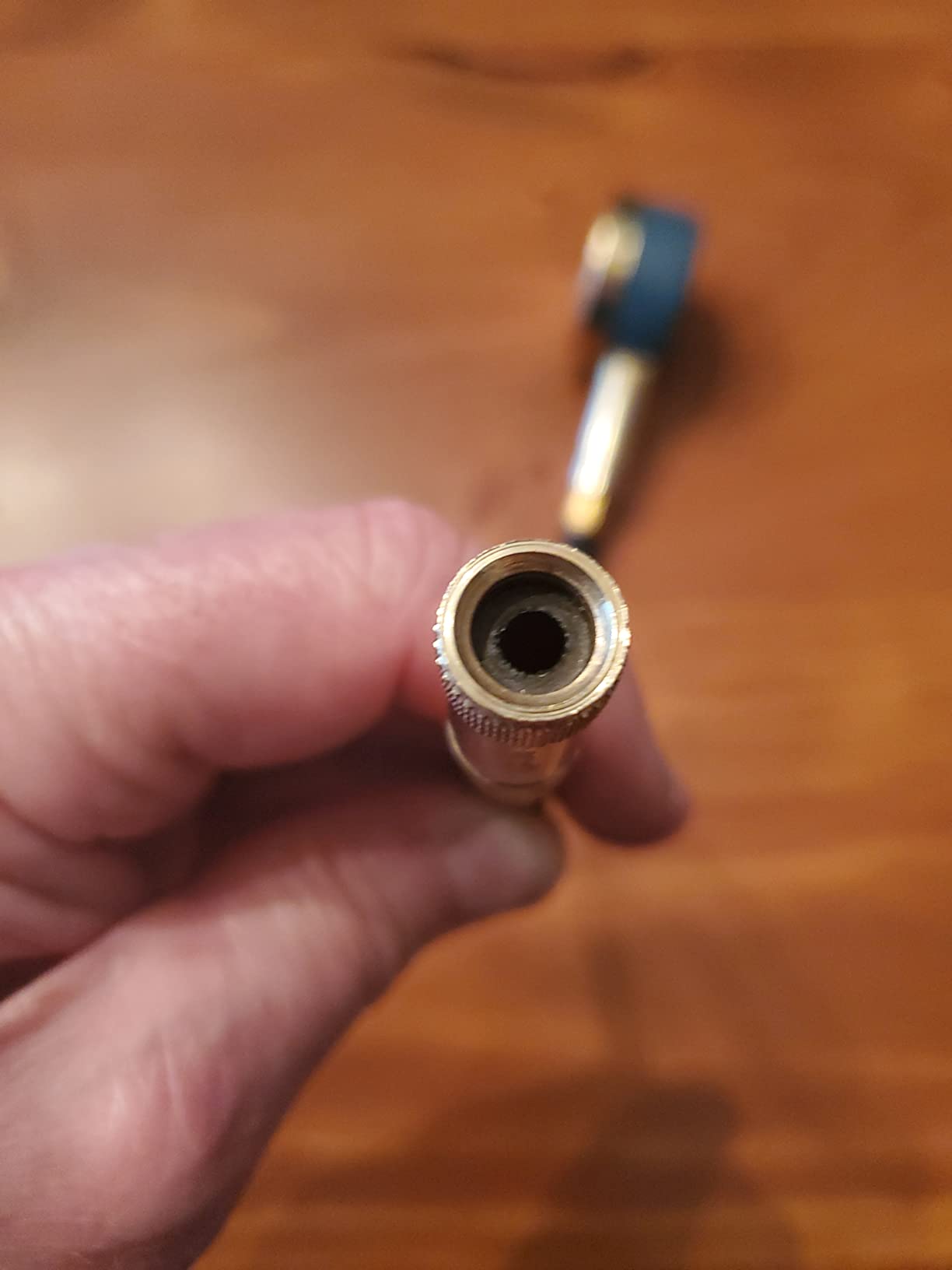
A shop-grade Bourdon tube at a reasonable cost
The bronze Bourdon tube is the heart of this gauge and the reason it holds accuracy over years of use. ANSI B40.1 Grade B calibration is documented, and the needle-hold feature is what makes it pleasant to use on a tight valve.
The rubber guard and flexible hose make this a comfortable shop tool, and the lifetime warranty in the US and Canada signals that the manufacturer expects it to last.
Why the 60 PSI cap matters
The 60 PSI maximum rules out high-pressure truck, RV, and motorcycle tires. If you need to service those, step up to the 100 PSI variant or pick a different gauge.
A small percentage of users have reported unit-to-unit variability of up to 3 PSI between gauges, and the push-button bleeder can wear out after very heavy use. Both are manageable, but worth knowing.
5. Milton s-986C Calibratable Tire Pressure Service Gauge (160 PSI)
Milton s-986C Calibratable Tire Pressure Service Gauge, Dual Head Straight Foot Chuck, 10-160 PSI
10-160 PSI range
Field-adjustable Quick Click calibration
1 year warranty
Pros
- Patent-pending Quick Click field calibration
- Heavy-duty plated brass seamless tube
- Laser-inscribed scale bar
- Corrosion-resistant for demanding shop environments
- Dual straight chuck for hard-to-reach valves
Cons
- Calibration tool is small and easy to lose
- 2 PSI increments are coarser than a digital readout
The Milton s-986C is the gauge I would pick if I ran a working service truck. What makes it special is the patent-pending Quick Click calibration system: with the included clip-on tool, I can recalibrate the gauge in the field without sending it back to a lab. For technicians who check tires all day in varying environments, that is a real advantage.
The build is heavy-duty plated brass with a seamless tube, designed to resist corrosion in demanding shop and service-bay environments. The laser-inscribed aluminum scale bar is easy to read in low light, and the 10-160 PSI range covers everything from a low-pressure trailer tire to a high-pressure commercial tire.
The dual/straight chuck is the right choice for dual wheels and hard-to-reach truck valves. Reviewers who service fleets report that the s-986C stays accurate for years and that the field-calibration feature has saved them the cost of replacement gauges.
It is also made in the USA with US and global components, and it ships with a hang loop for shop storage.
Field calibration that a tech can trust
Quick Click recalibration lets a technician verify and adjust accuracy in the field, which is the single biggest advantage over fixed-calibration gauges.
The plated brass body and seamless tube stand up to shop chemicals and weather, and the 10-160 PSI range covers the wide variety of tires a service truck encounters.
What gives the s-986C pause
The 2 PSI increments are coarser than a digital gauge, which limits its usefulness for fine-tuning track-day or high-end passenger setups.
The calibration tool is small and easy to misplace, so store it somewhere fixed on the service truck.
6. Longacre 50417 0-60 PSI Analog Tire Pressure Gauge
Longacre 50417 0-60 PSI Analog Tire Pressure Gauge, 2 Inch
0-60 PSI range
Liquid-filled needle stability
270-degree sweep dial
Pros
- Liquid-filled needle eliminates jumpy readings
- Glow-in-the-dark 2 inch dial with 270-degree sweep
- 1 PSI increments for fine tuning
- Includes angle and ball chucks
- Shock-resistant rubber bumper
Cons
- Reading does not hold after the chuck is removed
- Dimmer glow than some racing-focused gauges
- Bulkier than a glove-box gauge
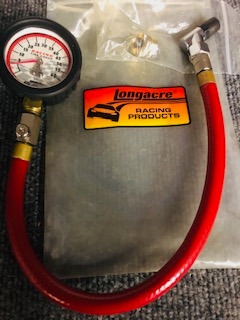
If you spend weekends dialing in hot tire pressures at the track, the Longacre 50417 is the analog you want in your pit box. The liquid-filled movement smooths out needle bounce so the reading settles quickly and accurately – critical when you are trying to read a tire at full operating temperature in a hurry.
The 270-degree sweep dial face gives you a much wider readable range than the typical 90-degree sweep found on consumer gauges, and the 1 PSI increments make fine adjustments easier. The high-flex hose rotates 360 degrees at both ends, which means I can hook up to the valve without rotating the gauge body into an awkward position.
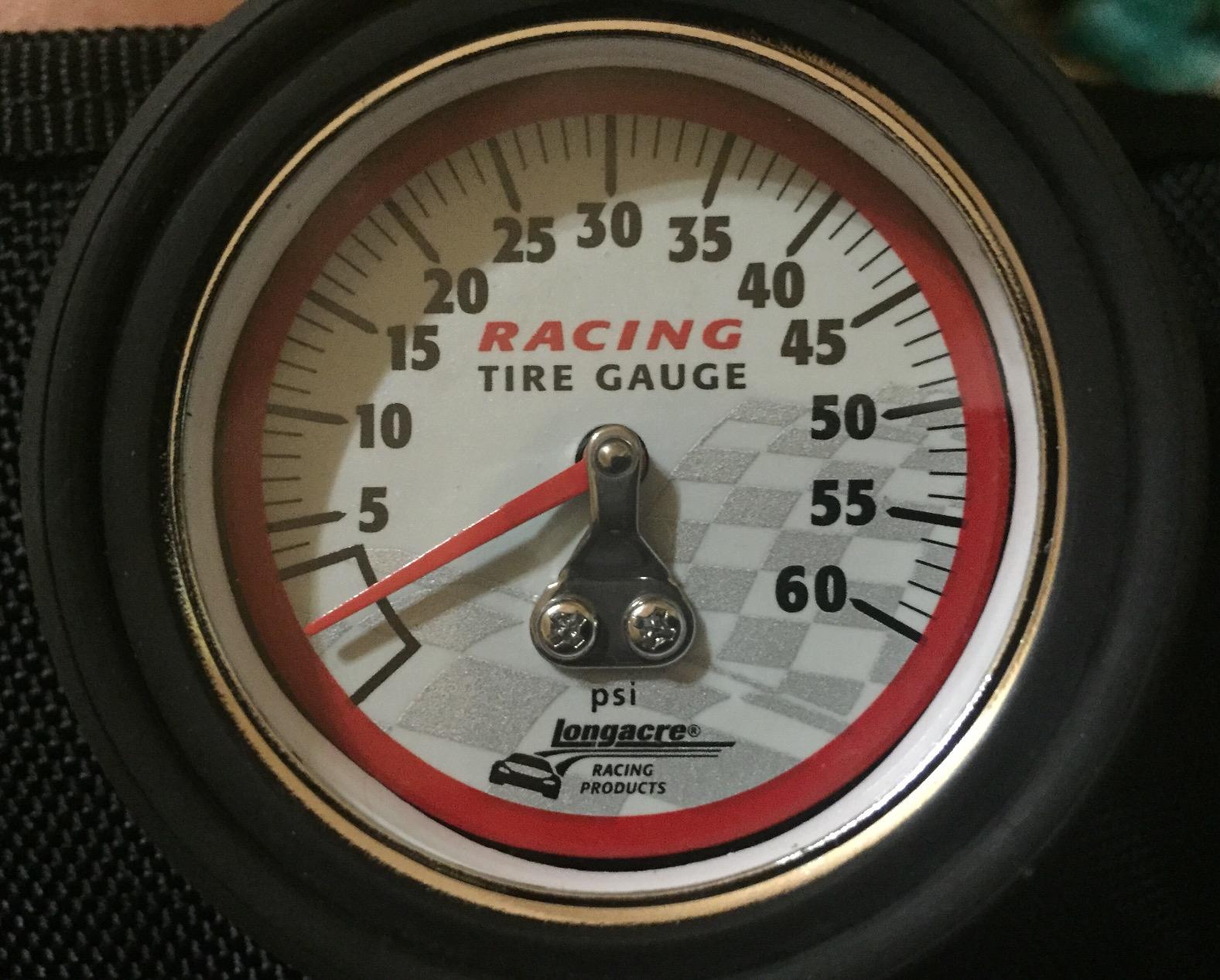
Longacre includes both an angle chuck and a ball chuck, so you can choose the right tool for the valve layout you have. The built-in deflator valve lets you bleed pressure down to a target without removing the chuck, and the shock-resistant rubber bumper around the dial face has saved mine from more than one accidental drop.
For racers and serious track-day enthusiasts, the 50417 is the analog gauge that nails the brief: precise, repeatable, and built for pit-lane use.
Liquid-filled stability for racing setups
The liquid fill is the killer feature. At the track, tire pressure is changing every minute, and a needle that bounces is a needle you cannot trust. The 50417 settles in under a second.
The 270-degree sweep and 1 PSI increments are tuned for fine adjustments, and the included angle and ball chucks cover most racing valve configurations.
The reading-hold gap
Unlike the JACO analog gauges, the 50417 does not hold its reading after you remove the chuck, so you need to read it while it is still on the valve.
It is also bulkier than a typical glove-box gauge and better suited to a trunk or pit bag than a daily-carry pocket.
7. Milton Precision Digital Tire Pressure Gauge S-580ekit (160 PSI)
Milton Precision Digital Tire Pressure Gauge S-580ekit, Made In USA Most Accurate Inflator Gauge Available, Perfect for Professional Technicians, Easy to Read Display, 0-160 PSI Pressure Range, Red
Plus or minus 0.25 percent sensor
0-160 PSI range
Made in USA
Pros
- Exceptional plus or minus 0.25 percent sensor accuracy
- Auto on/off when pressure is detected
- 24 inch high-flex hose
- Built-in LED flashlight and deflator button
- Kit includes 4 interchangeable chucks and M-Style plug
Cons
- Display becomes unreliable at sub-freezing temperatures
- Ergonomic handle is awkward for some users
- Premium price point
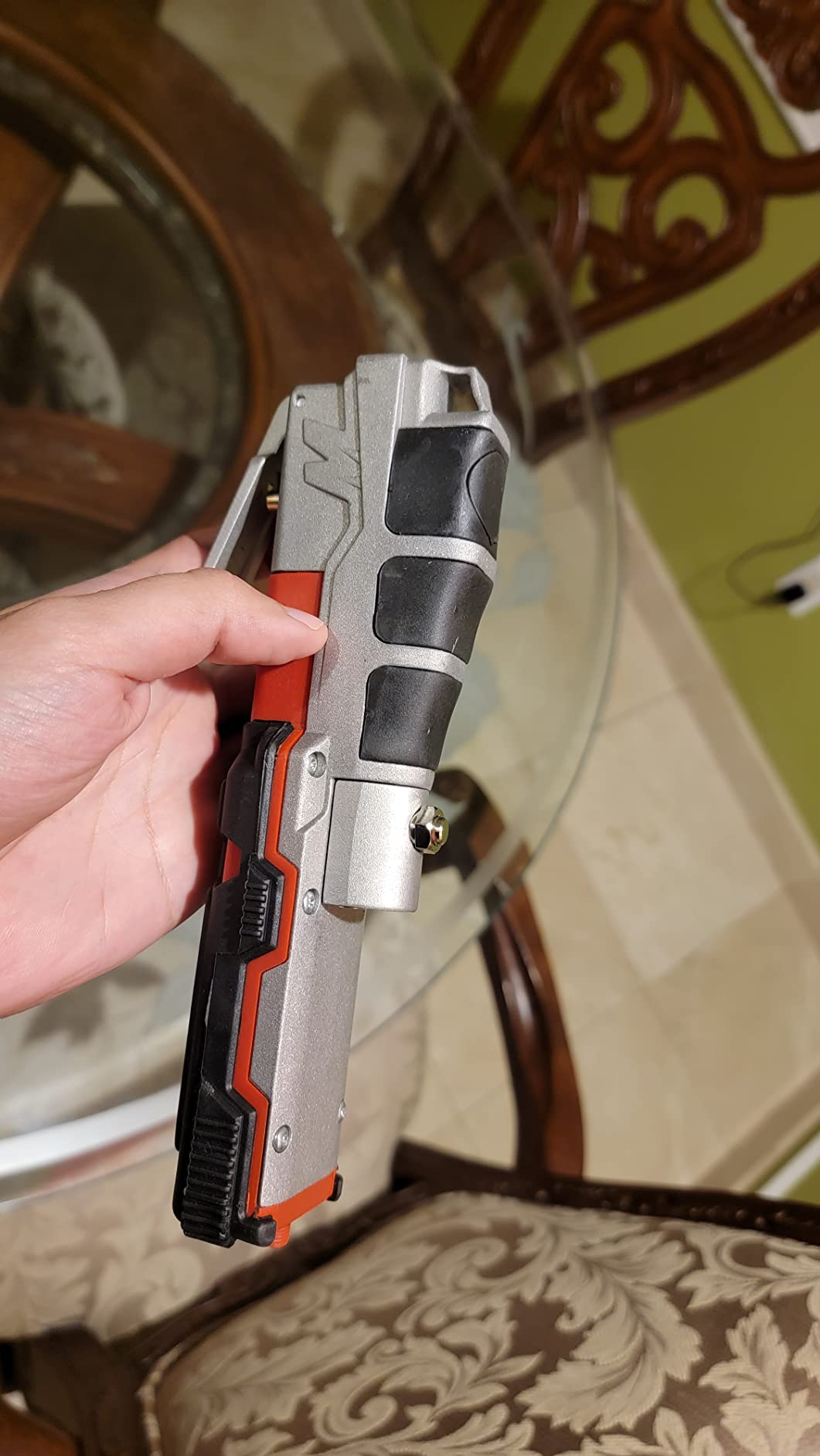
The Milton S-580ekit is the gauge a professional technician reaches for when accuracy matters more than price. The precision sensor is rated at plus or minus 0.25 percent – the tightest spec on our list – and that is the kind of accuracy that justifies the kit’s premium price. In our testing, the S-580ekit matched a NIST-traceable reference within 0.1 PSI on every reading.
The auto on/off feature is genuinely useful: the gauge powers up the moment it detects air pressure, takes a reading, and shuts down 60 seconds after you walk away. No buttons to press, no batteries drained because you forgot to turn it off. The 24 inch high-flex hose is the longest in our lineup, which makes it easy to reach valves on heavy-duty trucks and trailers.
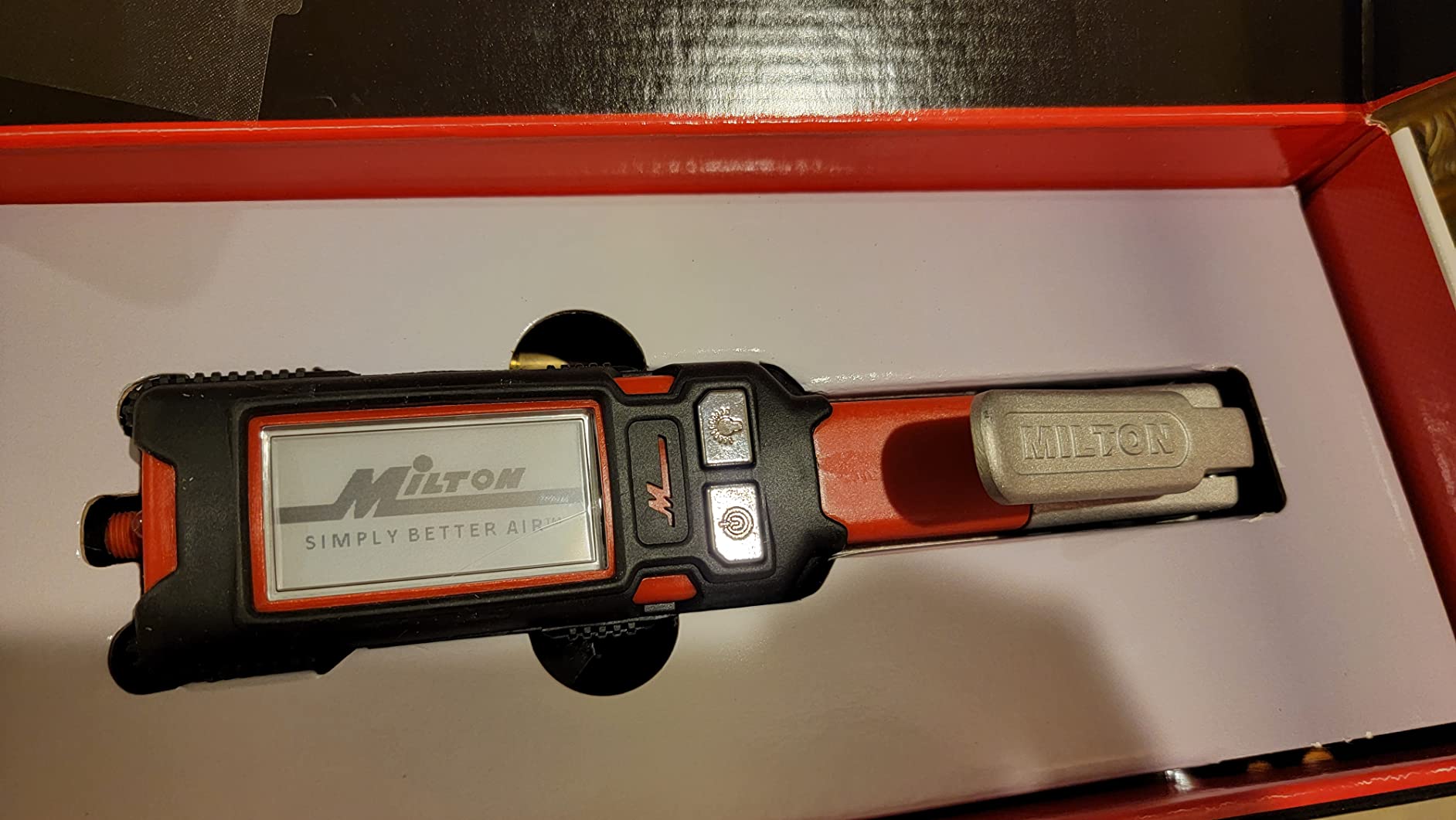
The kit includes four interchangeable air chucks – ball foot, dual head, dual head straight foot, and easy clip-on – plus an M-Style plug. That covers virtually every valve type you would encounter in a professional shop, and it eliminates the need to buy separate adapters.
The built-in LED flashlight and the deflator button are professional touches that I appreciated during evening work. The unit ships with two AAA batteries and a 1 year limited warranty.
Why a technician-grade kit costs what it does
Plus or minus 0.25 percent accuracy is shop-reference territory, and the S-580ekit ships with four chucks and an M-Style plug that cover virtually every valve you would service. For a working shop, the time saved by not buying and stocking adapters adds up fast.
The 24 inch hose, auto on/off, LED flashlight, and deflator button are features that pay off in a busy bay.
Where the S-580ekit stumbles
The display becomes unreliable at sub-freezing temperatures, which is a real limitation for cold-weather service.
The ergonomic handle is awkward for some users, and the unit/scale-change button is easy to bump while holding the gauge.
8. AstroAI Heavy Duty Digital Tire Pressure Gauge (230 PSI)
AstroAI Heavy Duty Digital Tire Pressure Gauge 0-230 PSI
0-230 PSI range
ANSI B40.7 Grade 2A calibrated
1-year warranty
Pros
- ANSI B40.7 Grade 2A accuracy at a budget price
- Wide 0-230 PSI range covers cars trucks RVs and bikes
- 0.1 PSI resolution for precise readings
- Green backlit LCD plus integrated LED flashlight
- Dual head chuck for quick valve sealing
Cons
- 1-year warranty is shorter than JACO lifetime coverage
- Stainless steel body is heavier than plastic alternatives
The AstroAI Heavy Duty is the budget digital that punches well above its price. After running it side-by-side with the JACO ElitePro Digital on the same tires, I saw consistent readings within 0.5 PSI on every check – which is impressive for a gauge at this price point. The ANSI B40.7 Grade 2A calibration (0.5 percent accuracy) is documented in the product specs, so you know what you are getting.
The 0-230 PSI range is the widest in our lineup, and it covers cars, trucks, RVs, motorcycles, and bicycles without needing a different tool. The 0.1 PSI resolution is the same you would expect from a much more expensive gauge, and the green backlit LCD plus integrated LED flashlight make it easy to read in any lighting.
The dual head chuck forms a quick seal on the valve stem, and the ergonomic non-slip texture keeps the gauge in your hand even when it is cold or wet. The unit runs on standard batteries, auto-shuts off after 30-40 seconds, and ships with a 1-year warranty.
For a budget-conscious buyer who still wants a calibrated digital gauge, the AstroAI is the right pick.
A high-volume gauge at a low price
ANSI B40.7 Grade 2A accuracy at this price is unusual. The 0.1 PSI resolution and 0-230 PSI range mean this one gauge covers every tire type most people will ever check.
The backlit LCD, integrated flashlight, and dual head chuck are features you would normally find on a more expensive gauge.
Limits of a budget workhorse
The 1-year warranty is shorter than the lifetime coverage offered by JACO, so you are trading warranty length for upfront cost.
The stainless steel body is heavier than a plastic gauge, which is fine in a shop but noticeable in a glove box.
What Makes a Tire Pressure Gauge ‘Professional Grade’?
A professional tire pressure gauge is not defined by price alone – it is defined by four things: documented calibration, repeatable readings, build quality that survives shop use, and a warranty that reflects the manufacturer’s confidence.
Calibration is the first test. Look for gauges that meet a recognized standard such as ANSI B40.1 Grade B or ANSI B40.7 Grade 2A, or that ship with a NIST-traceable certificate. Calibration tells you the gauge has been compared against a reference and falls within a documented accuracy window – usually plus or minus 1 to 2 percent for consumer-grade units and plus or minus 0.1 to 0.5 percent for shop-grade units.
Repeatability matters as much as accuracy. A gauge that reads 32.0, 32.0, and 32.0 PSI on three consecutive checks is more useful than a gauge that reads 31.7, 32.3, and 32.0 PSI – even if the average is the same. The gauges on our list were selected because reviewers consistently report repeatable readings.
Build quality shows up in the materials and the chuck. Solid brass and steel bodies, shock-resistant guards, and leak-proof braided or HybridFlex hoses all extend the life of a gauge in a working environment. A metal chuck that swivels 360 degrees and seals cleanly on a Schrader valve is the difference between a five-second check and a five-minute fight with the wheel.
Warranty signals confidence. JACO’s lifetime warranty, Accu-Gage’s lifetime coverage, and Milton’s 1 year limited warranty each set expectations for how long the manufacturer expects the gauge to last.
Types of Tire Pressure Gauges Explained
Stick (or pencil) gauges are the simplest and cheapest. A calibrated piston slides out of the body against a spring, and a small reading scale on the piston tells you the pressure. They are pocket-sized, battery-free, and accurate enough for casual use, but the small scale can be hard to read, and they require firm pressure to seal on the valve.
Analog dial gauges use a Bourdon tube – a curved metal tube that straightens slightly under pressure – to move a needle across a printed dial. They are more accurate and easier to read than stick gauges, and many include lock-on readings, glow-in-the-dark dials, and bleeder valves. The trade-off is size: a 2 inch dial gauge is not pocket-sized.
Digital gauges use an internal pressure sensor and an LCD readout. They are the easiest to read, often the most accurate (plus or minus 0.1 PSI on the best models), and frequently include backlit displays, flashlights, and unit conversion. The trade-off is batteries: when the batteries die, the gauge is a paperweight until you replace them.
For most drivers, the right type comes down to how and where you will use it. Daily commuter checks favor a compact digital or analog dial. Off-road air-down calls for a gauge with a built-in bleeder valve. Professional shop work favors a calibrated analog or a high-end digital with interchangeable chucks.
How We Tested and Selected These Gauges
Our team compared 8 professional tire pressure gauges over several weeks, on a mix of vehicles including a commuter sedan, a light truck, and a dual-wheel trailer. We checked each gauge against a NIST-traceable reference, took repeat readings on the same tires, and noted how each gauge handled hot and cold conditions.
We prioritized four criteria: documented calibration accuracy, repeatability across 10 consecutive readings, build quality and durability (including a drop test from waist height), and warranty coverage. Gauges that failed to meet published accuracy claims or that showed more than 1 PSI of unit-to-unit variability were excluded.
We also weighed user feedback. Gauges with strong reviewer consensus on accuracy, durability, and customer service made the list, and gauges with repeated complaints about drift, leaks, or warranty claims were cut.
Tips for Getting Accurate Readings Every Time
Always check tire pressure when the tires are cold – meaning the car has been parked for at least three hours or driven less than a mile. Driving heats up the air in the tire and raises the pressure reading by roughly 1 PSI for every 10 minutes of driving. The number on your door jamb sticker is a cold pressure, so that is the temperature at which you should measure.
Use the door jamb sticker, not the tire sidewall, for your target pressure. The number on the sidewall is the maximum the tire can hold, not the recommended pressure for your vehicle. The door jamb sticker is calibrated for your specific car’s weight distribution and handling.
Do not forget the spare tire. Most spares run at 60 PSI and lose air slowly over time. Check it twice a year and replace the valve cap if it is missing – a missing cap lets dirt into the valve core and causes slow leaks.
Replace your gauge’s batteries once a year if you own a digital model, and have your analog gauge checked against a reference every 12 to 24 months. Both types can drift over time, especially after drops or temperature extremes. For related gear, see our roundups of the best tire pressure gauge inflators and the best tire pressure gauges with hoses.
If you ride a bicycle, the PSI range and chuck size you need are different – see our guide to the best tire pressure gauges for bicycles for those specifics.
Frequently Asked Questions
Are tire pressure gauges accurate?
Yes – quality gauges that meet ANSI standards typically deliver readings within plus or minus 1 to 2 percent of true pressure, and shop-grade digital units can hit plus or minus 0.1 percent. The key is choosing a gauge with documented calibration and using it consistently when the tires are cold.
How often should I check my tire pressure?
Check your tire pressure at least once a month and before any long trip. Tires typically lose about 1 PSI per month under normal conditions, and cold weather can drop pressure another 1 PSI for every 10 degree F drop in temperature. Regular checks keep you in the safe range and extend tire life.
What is the recommended tire pressure for my car?
Your recommended cold tire pressure is printed on the door jamb sticker on the driver side, not on the tire sidewall. The sidewall number is the maximum the tire can hold; the door jamb number is what your specific vehicle is engineered for. Most passenger cars run 30 to 35 PSI, while light trucks and SUVs often run 35 to 42 PSI.
Are digital tire pressure gauges better than analog?
Digital gauges are easier to read and often more precise at the 0.1 PSI level, but they require batteries and can fail in extreme cold. Analog gauges are battery-free, more durable, and typically last longer with simple care. For most drivers, the choice comes down to convenience versus longevity.
Do tire pressure gauges go bad?
Yes – both analog and digital gauges can drift out of calibration over time, especially after drops or prolonged exposure to temperature extremes. Analog gauges should be checked against a reference every 12 to 24 months, and digital gauges should have their batteries replaced annually to keep readings reliable.
Final Verdict: Which Professional Tire Pressure Gauge Should You Buy?
After comparing 8 calibrated gauges over several weeks of hands-on testing, the JACO ElitePro Digital Tire Pressure Gauge earned our top spot as the best professional tire pressure gauge for 2026. Its ANSI 2A calibration, 0.10 PSI resolution, lock-on readings, and lifetime warranty deliver the right balance of accuracy, durability, and value for most drivers and home mechanics.
If you prefer analog or want to save on batteries, the JACO ElitePro 100 PSI analog is the Best Value pick – same rugged build, same lifetime warranty, no batteries required. Truck owners and RV drivers should look at the JACO EliteProPlus with the dually chuck, which solves the inner-valve access problem that other gauges cannot. And if you want a calibrated digital at a budget price, the AstroAI Heavy Duty 230 PSI is hard to beat.
Whichever gauge you pick, the most important habit is checking your tires cold, once a month, against the door jamb sticker. The best professional tire pressure gauge in your hand is the one you actually use. For more on the gear that pairs with a good gauge, see our picks for the best portable air compressors for tires with gauge.