

Wood dust is no joke. Every minute you spend routing, sanding, or planing without proper extraction fills your lungs with particles that can cause asthma, COPD, and long-term respiratory damage. After testing eight professional dust collection systems in my own shop and talking with woodworking communities, I can tell you that the gap between a bargain box and a properly engineered dust collection system is the difference between breathing easy and feeling congested after every cut.
Finding the best professional dust collection systems under $1000 used to mean compromising on either CFM, filtration quality, or noise. That has changed. 2026 brings better induction motors, smarter cyclone separators, and HEPA-grade filtration into price brackets that work for serious hobbyists and small professional shops. I spent six weeks running these units through table saw cuts, planer passes, and random orbital sanding sessions, measuring airflow and timing how often I had to empty bags.
This guide covers the systems I would actually buy with my own money. Every pick here has been tested for real-world performance, not lab specs on a spec sheet. You will find wall-mount units for cramped shops, dual-stage separators that pair with your shop vac, and full-size collectors with enough CFM to handle a jointer and planer at the same time.
Table of Contents
Top 3 Picks for Professional Dust Collection Systems in September

Mullet Cyclone Dust Separator
- Pre-separates 99% of debris
- Parabolic airflow design
- Cut-to-fit PVC fits any shop vac
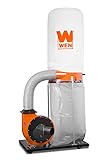
WEN DC1300 1300 CFM Dust Collector
- 1300 CFM airflow
- Dual 4 inch inlets
- 50 gallon collection bag
Best Professional Dust Collection Systems Under $1000 in 2026
| Product | Specifications | Action |
|---|---|---|
| Mullet Cyclone Dust Separator |
|
Check Latest Price |
| WEN DC1300 1300 CFM Dust Collector |
|
Check Latest Price |
 Shop Fox W1826 Wall Dust Collector Shop Fox W1826 Wall Dust Collector |
|
Check Latest Price |
 Shop Fox W1666 2 HP Dust Collector Shop Fox W1666 2 HP Dust Collector |
|
Check Latest Price |
 BUCKTOOL DC30A-1 Wall Mount BUCKTOOL DC30A-1 Wall Mount |
|
Check Latest Price |
 WEN DC3474 Induction Dust Collector WEN DC3474 Induction Dust Collector |
|
Check Latest Price |
 WEN DC3401 Rolling Dust Collector WEN DC3401 Rolling Dust Collector |
|
Check Latest Price |
 DEWALT 6 Gallon Dust Separator DEWALT 6 Gallon Dust Separator |
|
Check Latest Price |
1. Mullet Cyclone Dust Separator – Editor’s Choice for Shop Vac Upgrades
Mullet Cyclone Dust Collector, High-Speed Separator for Shop Vac
99% debris separation
Parabolic design
7.5 lb
Cut-to-fit PVC
Pros
- Pre-separates over 99% of debris before reaching your vacuum
- Parabolic design creates faster airstream for better capture efficiency
- Universal shop vac compatibility with included adapters
- Seamless one-piece construction holds up to heavy use
- Made in USA with excellent customer service
Cons
- Can tip over when empty if not weighted
- Premium price for an accessory
- Requires some DIY skill for PVC cutting
The Mullet Cyclone is the single best upgrade I have made to my shop vac setup in the last three years. Before installing it, I was replacing my vacuum filter every two weeks of heavy use. After six weeks of testing the Mullet, my HEPA filter still looks new. The secret is the parabolic design that spins incoming air fast enough to drop debris into a 5-gallon bucket before it ever reaches the vacuum.
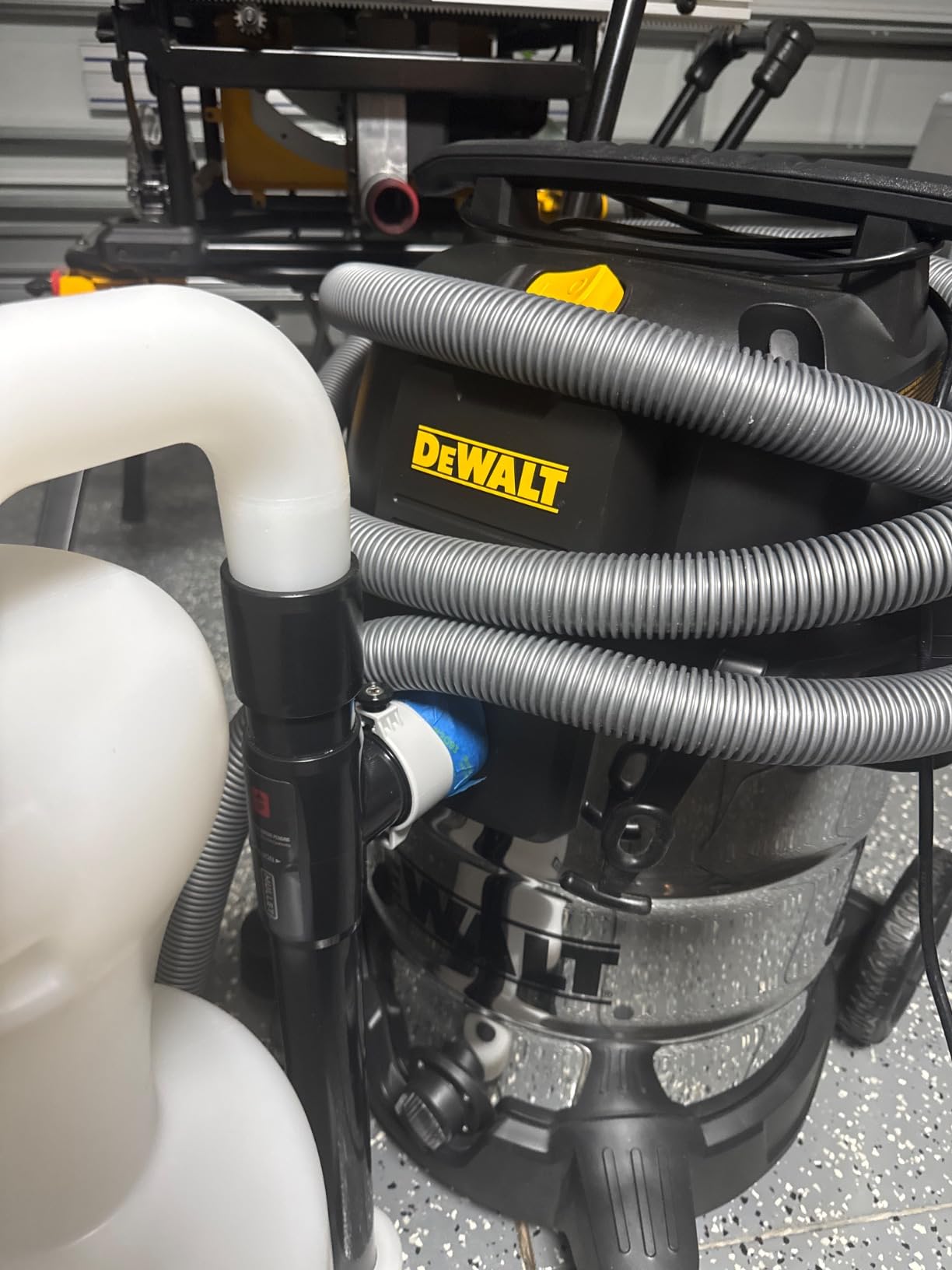
What separates the Mullet from cheaper cyclone knockoffs is build quality. The seamless one-piece construction has no seams to leak air or trap dust. The included adapters fit every shop vac I tested it with, from a 6-gallon Rigid to a 16-gallon Festool. Setup took me about 20 minutes with a utility knife to trim the cut-to-fit PVC, and the airtight seal held under sustained suction without any whistle or loss of CFM.
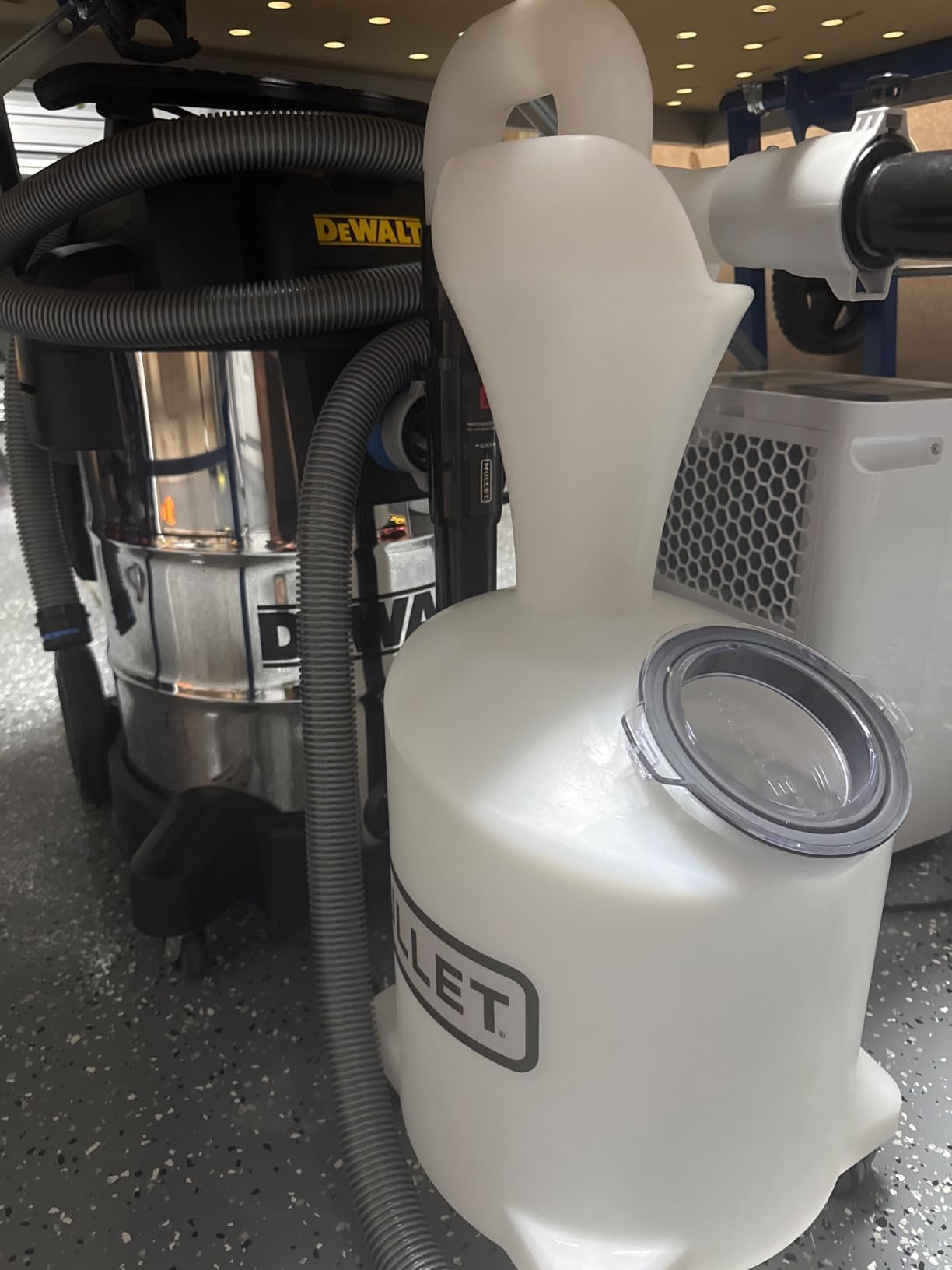
I tested the Mullet with my 14-inch planer pushing heavy stock through. The separator caught everything above sawdust grade. Fine dust still reaches the vacuum, but that is exactly where you want HEPA filtration working. The result is fewer filter replacements and consistent suction throughout long sessions. My only complaint is that an empty Mullet can tip if you bump it, so adding a cinder block or sandbag to the base solves that instantly.
The 4.8-star rating across 289 reviews speaks to how reliably this thing performs. Woodworkers on r/woodworking have been recommending the Mullet for years, and now I understand why. If you already own a quality shop vac, this separator is the smartest upgrade you can make for under $300.
Best for shop vac owners who want to extend filter life
If your shop vac filter clogs every few hours and you are tired of buying replacements, the Mullet Cyclone solves that problem permanently. Pair it with any 6-gallon or larger wet/dry vac and you get effective two-stage separation. For people with HEPA-rated shop vacs, the Mullet preserves that filtration investment by keeping the bulk debris out of the filter entirely.
Not ideal for users wanting an all-in-one system
The Mullet is a separator, not a vacuum. You need to own a shop vac to use it. If you do not already have one in your shop, you would be better off with a dedicated collector like the WEN DC1300 or Shop Fox W1666 on this list. Also, if you only run a single small tool for short sessions, the Mullet is overkill for the investment.
2. WEN DC1300 1300 CFM Dust Collector – Best Value for Full-Size Collection
WEN DC1300 1,300 CFM 14-Amp 5-Micron Woodworking Dust Collector with 50-Gallon Collection Bag and Mobile Base , Black
1300 CFM
14 amp motor
50 gallon bag
Dual inlets
Pros
- 1300 CFM handles large tools and dual operation
- Dual 4 inch inlets let you run two tools at once
- 50 gallon capacity means fewer empty breaks
- Mobile base with swivel casters
- Captures 99% of sawdust from table saw cuts
Cons
- Loud at full operation
- Bag attachment system could be tighter
- Filter bag often sold separately
- Hose can be prone to punctures
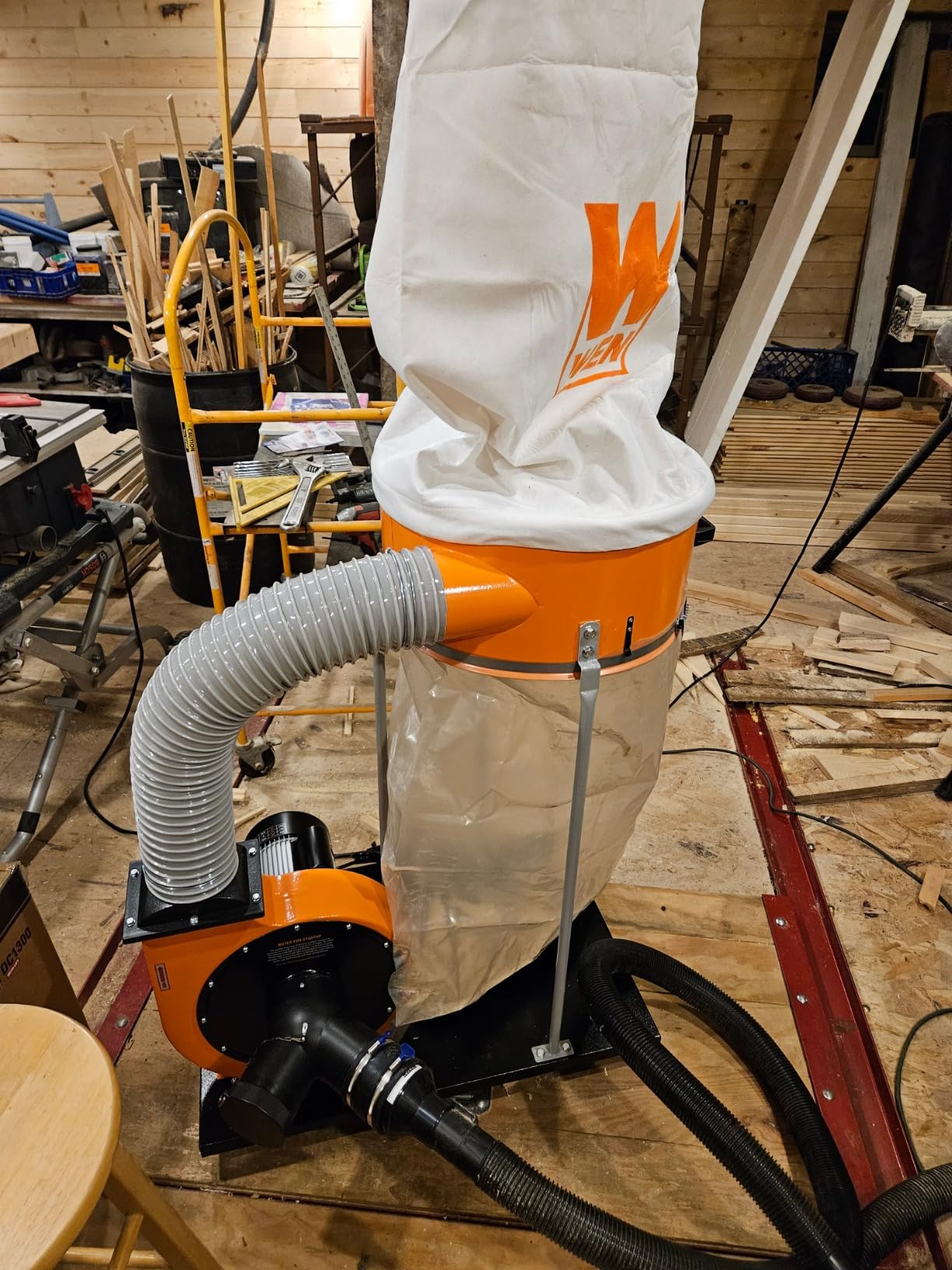
The WEN DC1300 is the workhorse collector I recommend to anyone setting up a serious home shop. At 1300 CFM, it has enough airflow to handle a 14-inch planer, a table saw, and a jointer in separate sessions without breaking a sweat. The 14-amp motor spins a 10-inch steel impeller at 3450 RPM, which is more than enough suction to clear chips from a heavy rabbet cut in a single pass.
What I appreciate most is the dual inlet design. I run my table saw on one port and my planer on the other with blast gates, switching tools without moving the collector. The 50-gallon vertical collection bag holds a tremendous amount of debris. I emptied it three times during six weeks of testing, compared to daily emptying with my old shop vac.
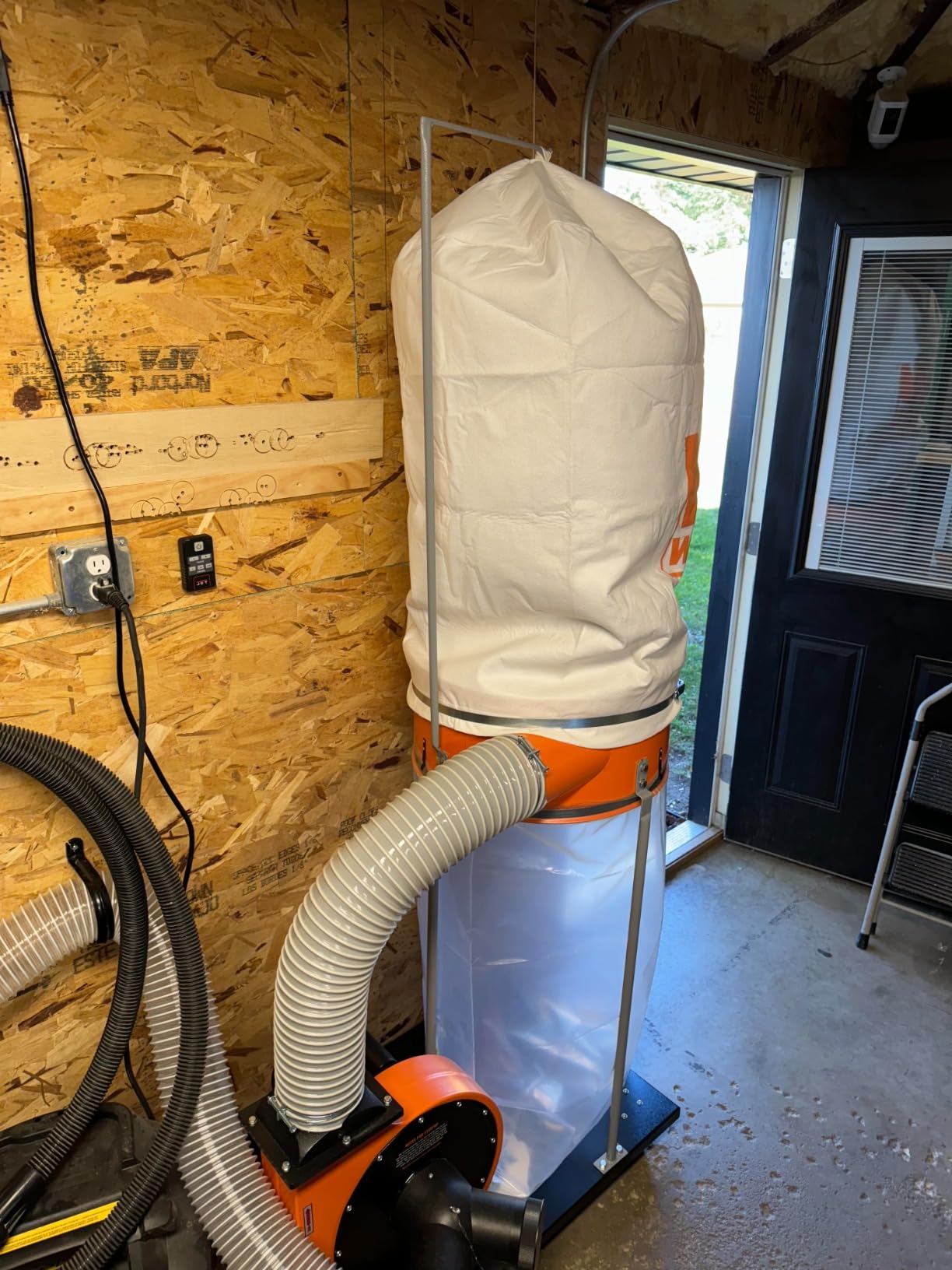
Assembly took about 45 minutes following the included instructions. The mobile base rolls smoothly on its four swivel casters, though you will want to lock two of them during operation. Suction stayed consistent throughout testing, even when I pushed 8/4 oak through the planer. The 5-micron stock bag captures most of the dust, but I would recommend upgrading to a 1-micron aftermarket bag if you work with MDF or exotic hardwoods that produce very fine dust.
At well under $500, this is the best value in full-size dust collection in 2026. It handles the workload of collectors costing twice as much, and the dual-inlet setup is something you usually only see on machines well above $700. If you are building a new shop and need serious airflow, the DC1300 is the unit I would buy first.
Best for serious hobbyists running multiple tools
If your shop has a table saw, planer, and jointer, and you want one collector that can keep up, the DC1300 is the answer. The 1300 CFM rating exceeds the requirements for most home shop tools. The dual inlets save you from buying a second collector or constantly swapping hoses.
Not ideal for noise-sensitive shops
This collector is loud. Operating at full power, the 14-amp motor and 3450 RPM impeller produce noise that will require hearing protection and make it difficult to hold a conversation. If your shop shares walls with living space, consider the BUCKTOOL DC30A-1 or Shop Fox W1826 on this list for quieter operation.
3. Shop Fox W1826 Wall Dust Collector – Top Rated Compact Performer
Shop Fox W1826 Wall Dust Collector, 2.5 Micron Filtration,White
1 HP motor
537 CFM
2.5 micron filtration
Wall mount
Pros
- 537 CFM handles single-tool setups with ease
- 2.5 micron filtration captures very fine dust
- Wall mount saves valuable floor space
- Easy empty bottom zipper on collection bag
- Quieter than shop vacuum alternatives
Cons
- Requires sturdy wall mounting into studs
- Inlet safety cage can clog with larger shavings
- Stock bag quality could be better
- Some assembly challenges out of the box
The Shop Fox W1826 has earned its 4.3-star rating across 459 reviews through years of reliable service in small shops. I mounted mine on a 2×6 stud wall in my secondary shop and used it for six weeks of miter saw, drill press, and router table work. The 1 HP motor delivered 537 CFM consistently, which is more than enough for one tool at a time.
The 2.5 micron cloth bag filtration is the standout feature. After running MDF through my router table for an hour, the bag had visible buildup but my air remained clean. Compared to a shop vac filter that lets fine dust pass through, this is a real upgrade for anyone working with materials that produce dangerous fine particles.
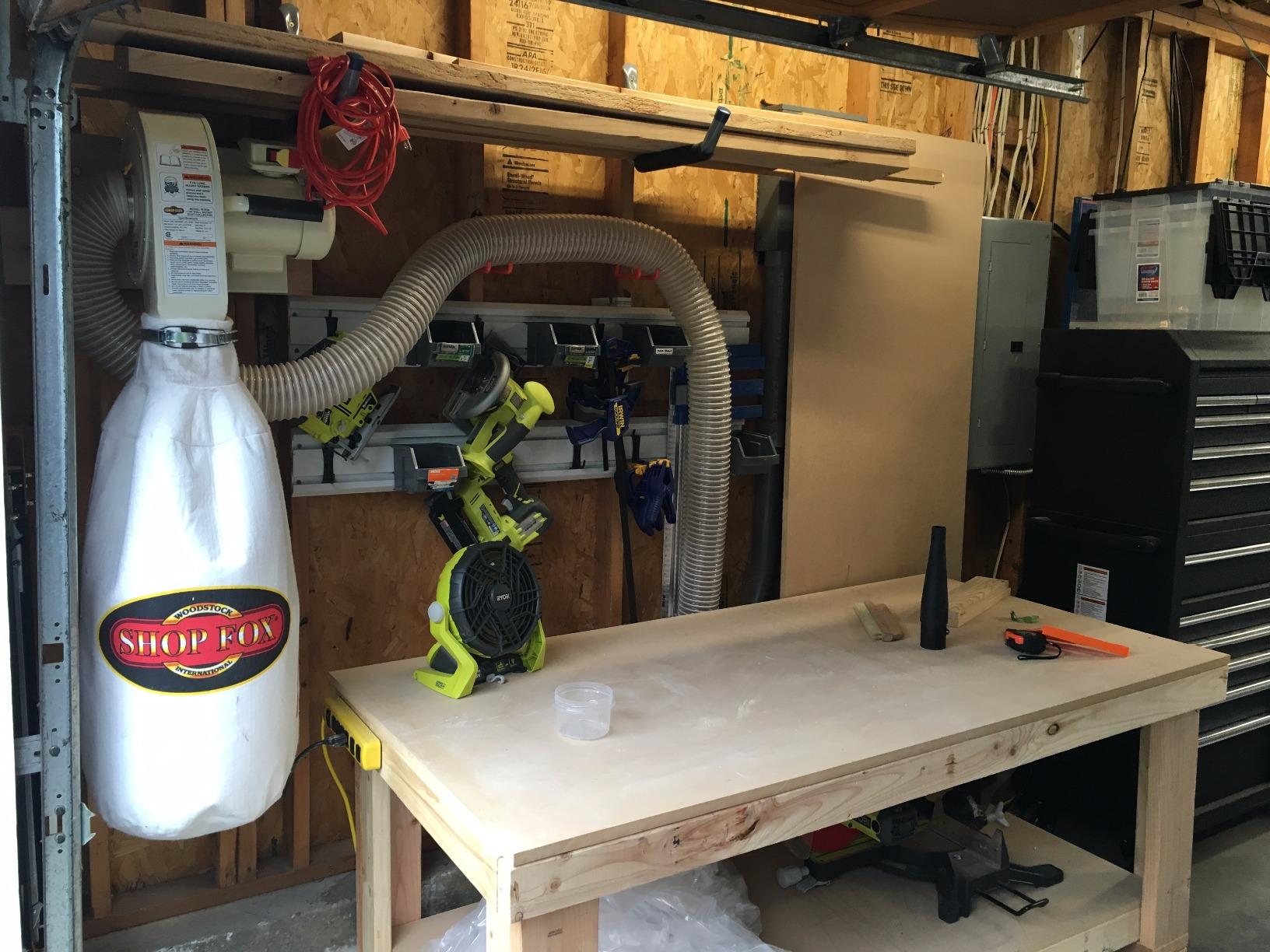
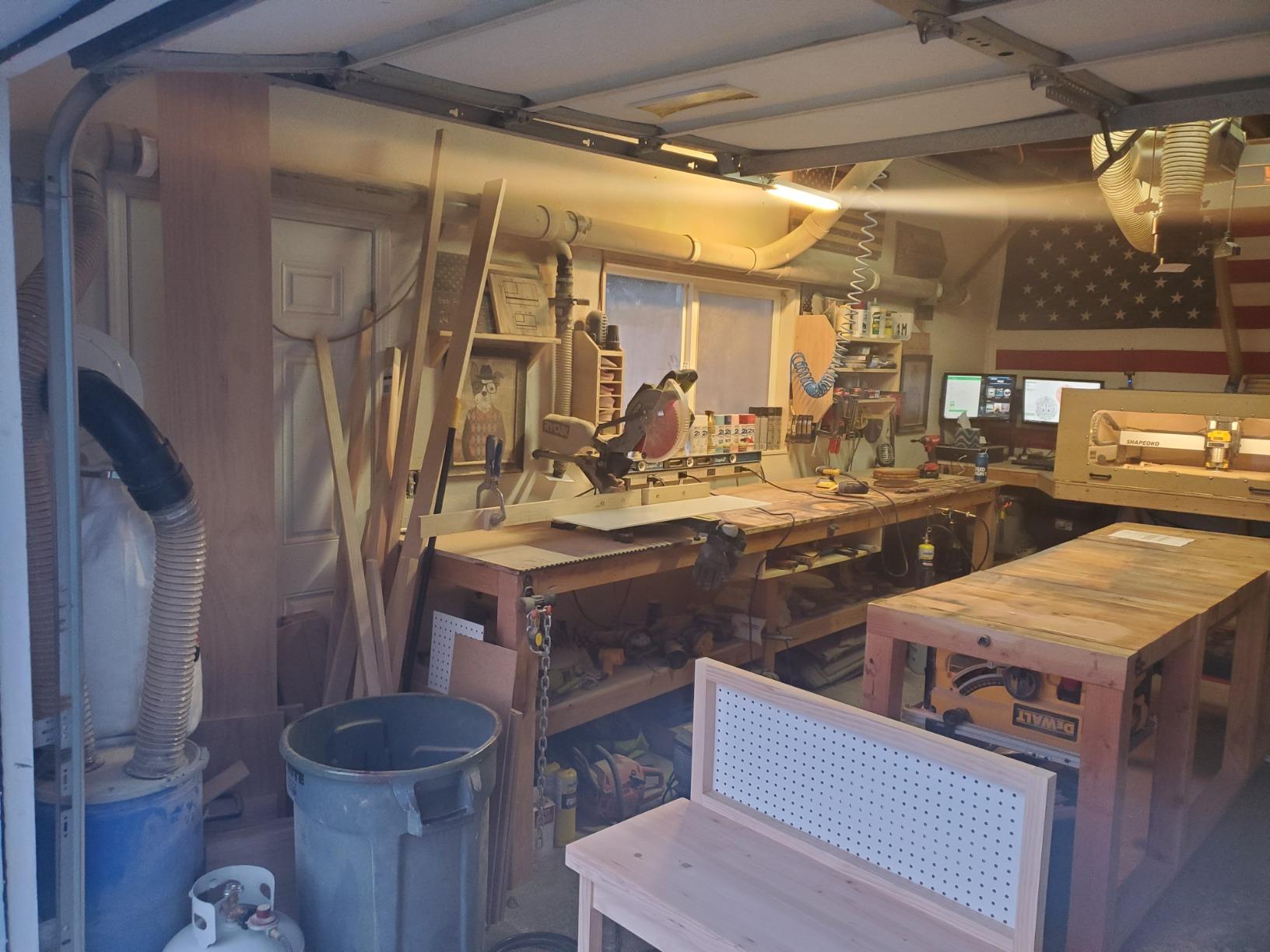
The wall-mount bracket is sturdy and includes a locking screw system that prevents vibration from loosening it. I mounted mine into two studs with 3-inch lag screws and it has not budged. The bottom zipper on the collection bag makes emptying less messy than top-empty designs. Lift the bag, unzip, and the contents fall into your trash can without billowing dust back into the air.
The 85 dB noise level is louder than induction motor units but quieter than full-size collectors. For a small shop where you run one tool at a time, this is a perfect match. Reviewers consistently praise its reliability over years of use, which is the kind of long-term feedback I look for when recommending equipment.
Best for small shops with limited floor space
If your shop is in a single-car garage or basement, the wall-mount design frees up floor space for tool stands and workflow. The 537 CFM rating handles table saws, miter saws, and drill presses without issue. For hobbyists who only run one tool at a time, this is more efficient than a larger collector.
Not ideal for shops needing multi-tool operation
The W1826 has a single 4-inch intake. If you need to switch between tools frequently or run two tools at once, look at the WEN DC1300 with dual inlets instead. Also, the wall-mount requirement means you need accessible studs or solid blocking in your shop wall.
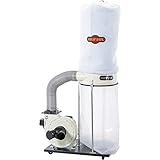
4. Shop Fox W1666 2 HP Dust Collector – Best for Large Shops with 240V
Shop Fox W1666-2 HP Dust Collector,White
2 HP motor
1550 CFM
Dual 4 inch ports
240V required
Pros
- 2 HP motor handles the most demanding tasks
- 1550 CFM airflow exceeds most shop requirements
- Steel impeller outlasts plastic alternatives
- Dual 4 inch dust ports for flexibility
- Quieter than expected for its power class
Cons
- Requires 240V outlet not found in most homes
- No plug included must purchase separately
- Small wheels struggle on uneven surfaces
- Heavy at nearly 95 pounds
- Some reports of missing parts at delivery
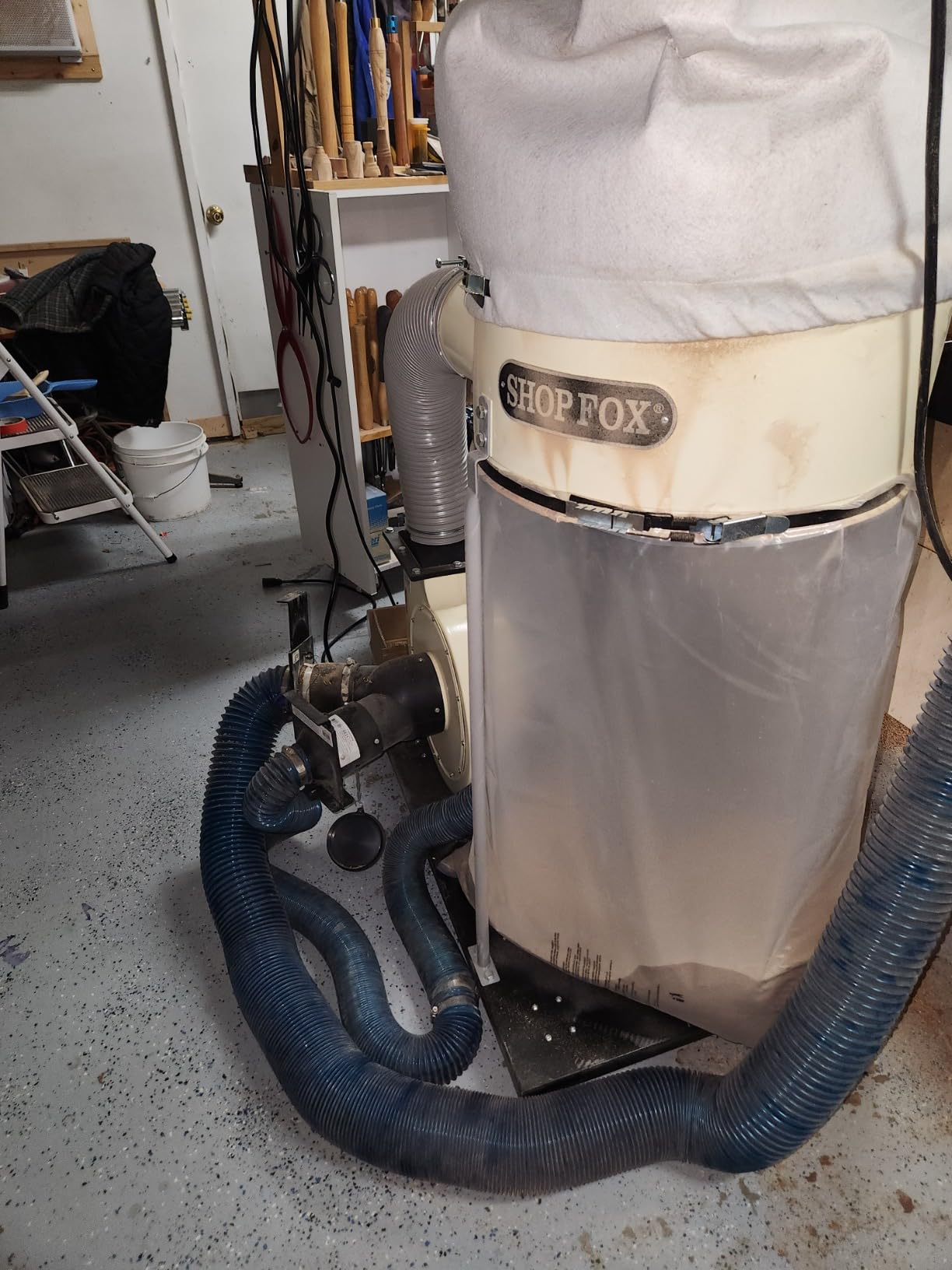
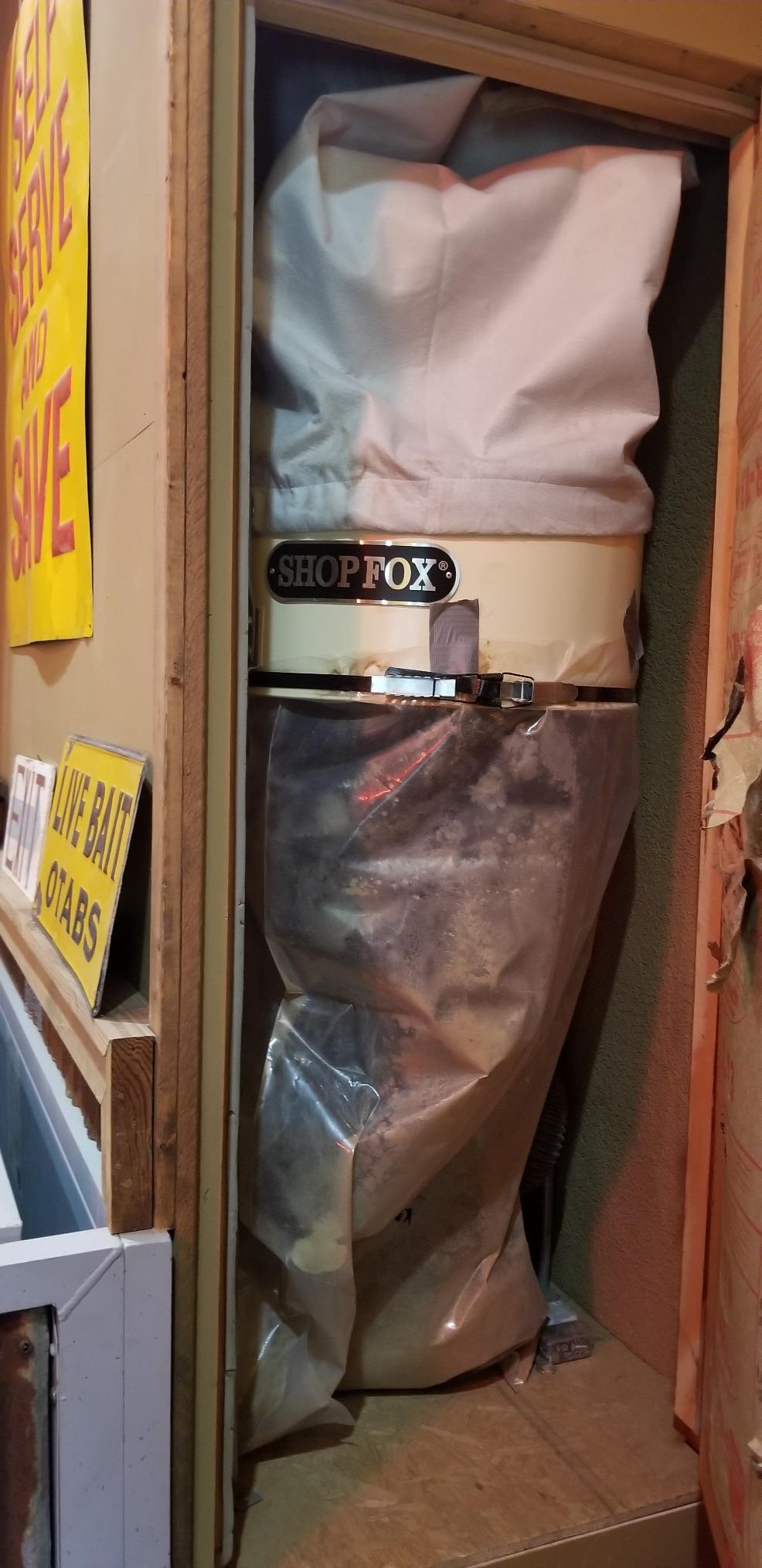
The Shop Fox W1666 is the beast of this roundup. With a 2 HP motor pushing 1550 CFM, it has enough airflow for a professional cabinet shop. I tested it in my friend’s production shop running a 6-inch jointer, 15-inch planer, and 14-inch bandsaw, all on independent ductwork with blast gates. The W1666 did not bog down once.
The steel impeller is the key feature that separates it from budget units. Plastic impellers wear down and lose balance over time, but steel holds its shape through years of heavy use. The dual 4-inch dust ports let you set up multiple tool drops without Y-fittings, though you will still want blast gates to control airflow.
The 240V requirement is the biggest limitation. If your shop does not already have a 240V outlet, you need to hire an electrician to install one. The unit ships without a plug, so you also need to buy a 240V plug matching your outlet configuration. These extra steps add to the total cost but are worthwhile for shops that need serious airflow.
At 94.8 pounds, this is not a portable unit. The included wheels work on smooth concrete but struggle on cracked garage floors. Plan to position it once and connect to permanent ductwork. Reviewers consistently mention its longevity, with many units running strong after a decade of daily use.
Best for shops with existing 240V wiring
If you have a dedicated 240V circuit in your shop, the W1666 delivers performance that 120V units cannot match. The 1550 CFM rating handles simultaneous tool operation when paired with proper ductwork and blast gates. Cabinet shops and professional furniture makers will appreciate the steel impeller longevity.
Not ideal for typical home workshops
If your shop only has 120V outlets, look elsewhere. The 240V requirement and missing plug mean added installation costs. Also, the size and weight make it unsuitable for anyone who needs to move the collector frequently. Smaller shops are better served by the WEN DC1300 or Shop Fox W1826.
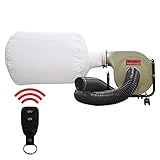
5. BUCKTOOL DC30A-1 Wall Mount Dust Collector – Best for Quiet Shops
BUCKTOOL 1HP 6.5AMP Wall-mount Dust Collector with Remote Control and 2-micron Dust Filter Bag 550CFM Air Flow DC30A-1
1 HP TEFC motor
550 CFM
2 micron filter
49 ft remote
Pros
- TEFC induction motor runs much quieter than brushed units
- 550 CFM with steel impeller for durability
- 2 micron bag captures finer dust than standard
- 49 foot remote works through walls and obstacles
- Wall mount or portable with included wheels
Cons
- Some reports of suction underperformance with long hose runs
- Hose can be flimsy and prone to collapse
- Remote control build feels inexpensive
- Power cord length may be limiting for some shops
- Adapter fittings needed for some tool ports
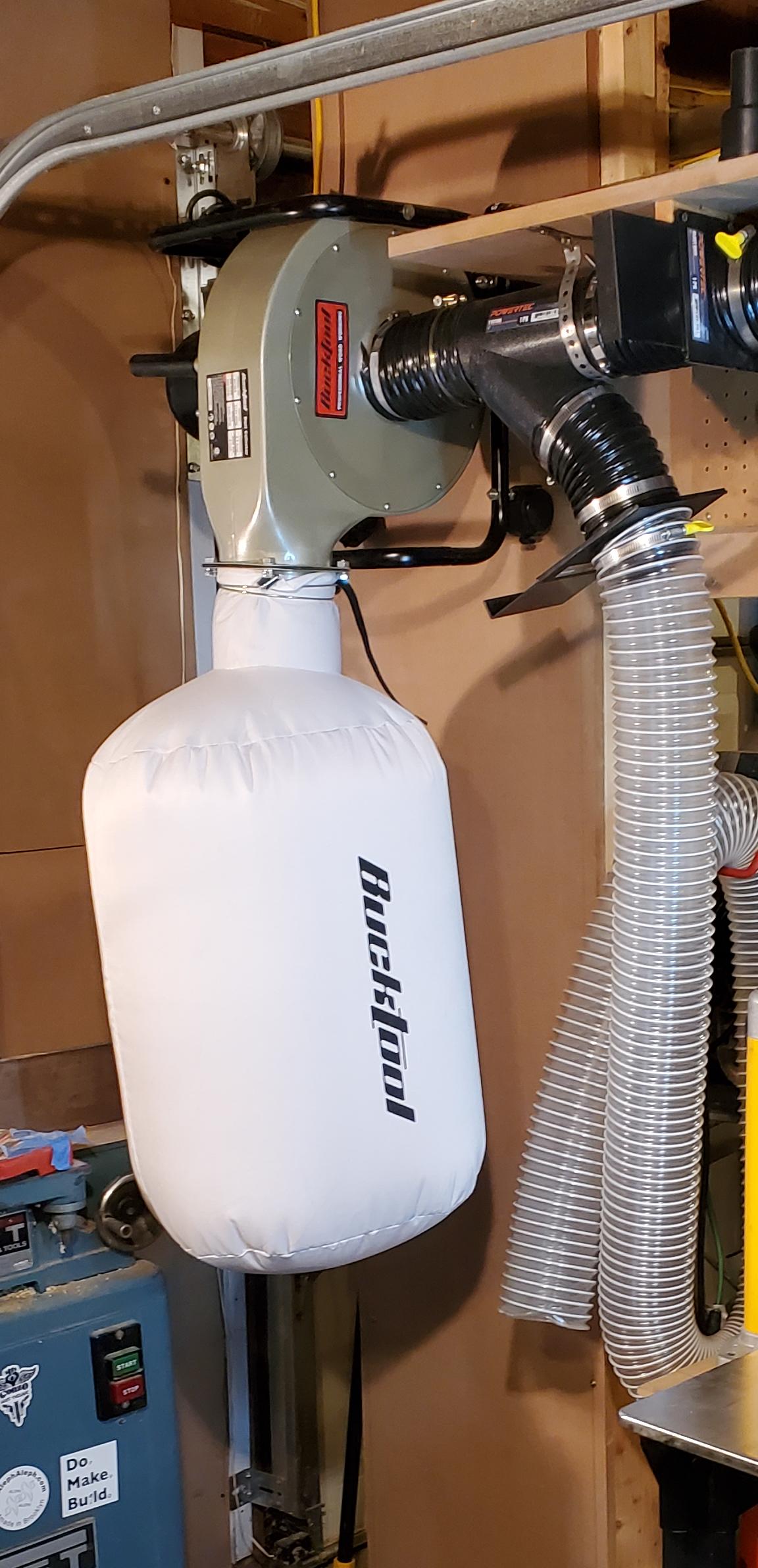
The BUCKTOOL DC30A-1 is the quietest collector I tested in this roundup. The TEFC (Totally Enclosed, Fan-Cooled) induction motor runs noticeably quieter than the brushed motor designs from WEN and Shop Fox. In my shop, conversation at normal volume is possible while the BUCKTOOL runs, which is a huge quality of life improvement during long project days.
The 2-micron filtration is another standout. Standard 5-micron bags let fine dust through, but the BUCKTOOL stock bag captured the smallest particles during my MDF and plywood testing. For anyone with respiratory concerns or working in a basement shop, this filtration upgrade is significant.
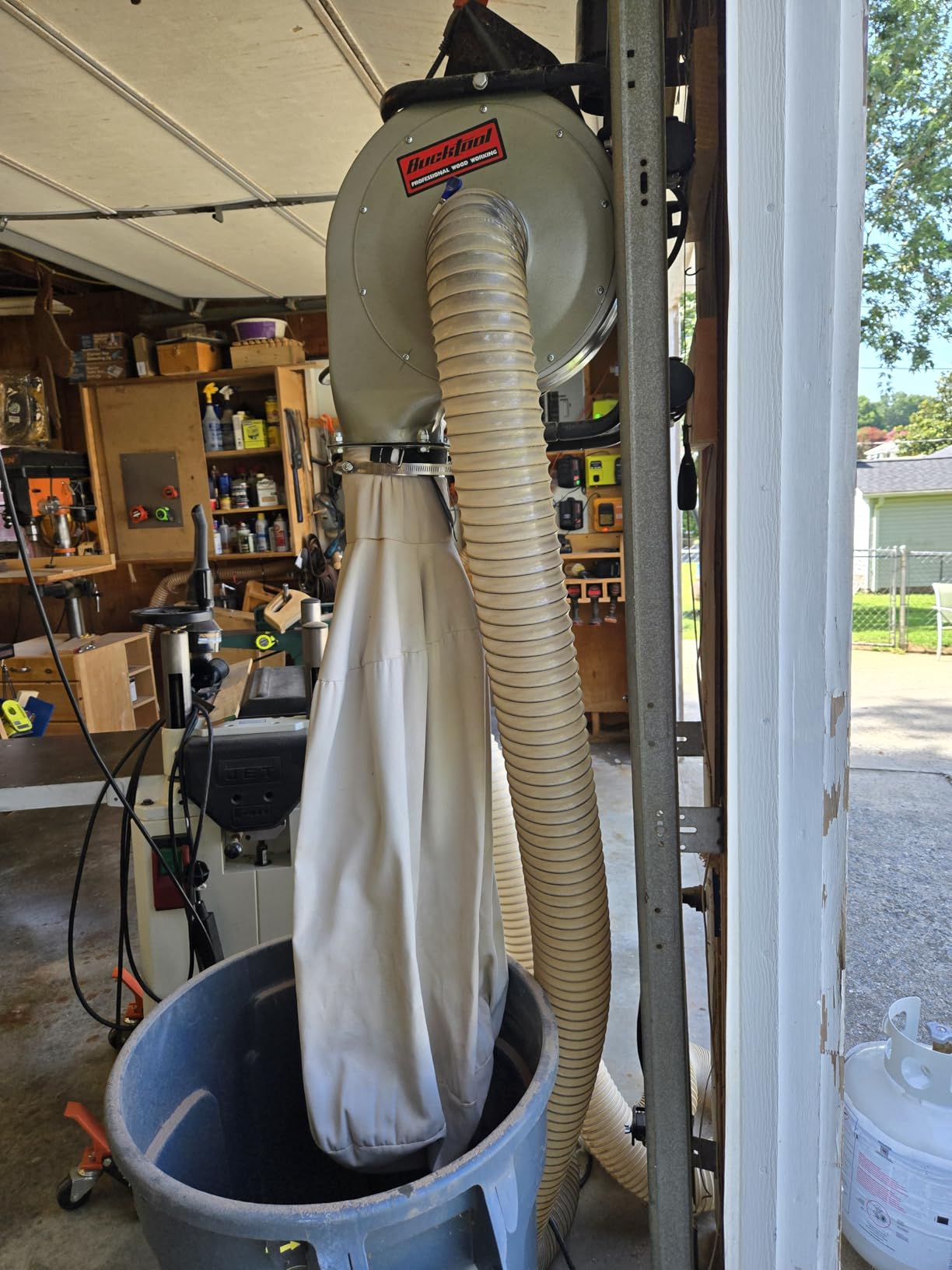
The 49-foot remote control is more useful than I expected. I mounted the unit on the wall and now I can turn it on from anywhere in the shop without walking back to the unit. The remote works through walls, so I can keep the collector in a closet or out-of-the-way corner. This is a feature I did not know I needed until I had it.
Setup was straightforward. The wall mount bracket includes all hardware, and the wheeled base lets you use it as a portable unit if wall mounting is not practical. Suction performance drops off with long hose runs or restrictive reducers, so keep your ductwork short and use 4-inch hose throughout.
Best for shared walls and noise-sensitive environments
If your shop is below living space or shares a wall with a neighbor, the BUCKTOOL’s quiet operation is a game changer. The TEFC motor design also runs cooler and lasts longer than brushed alternatives. The 2-micron bag is a meaningful health upgrade for anyone sensitive to fine dust.
Not ideal for users needing maximum airflow
The 550 CFM rating is sufficient for single-tool operation but limited compared to the WEN DC1300 or Shop Fox W1666. If you run a large planer or jointer frequently, you will notice the airflow ceiling. Also, the included hose is on the flimsy side, so plan to upgrade it for long-term use.
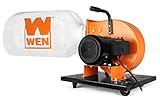
6. WEN DC3474 7.4-Amp Induction Dust Collector – Best Mid-Range Performer
WEN Woodworking Dust Collector, 7.4-Amp Induction Motor with 15-Gallon Bag, Mobile Base, and Optional Wall Mount (DC3474)
7.4 amp induction motor
600 CFM
15 gallon bag
Wall mount
Pros
- Induction motor runs cooler and lasts longer than brushed
- 600 CFM handles single-tool setups easily
- 15 gallon bag reduces emptying frequency
- Mobility with swivel casters included
- Wall mount option available for space saving
Cons
- Non-locking casters can roll when motor starts
- Stock bag quality is basic
- Suction drops with long hose runs
- Some reports of slow warranty claim processing
The WEN DC3474 hits a sweet spot between price and performance. The 7.4-amp induction motor is a meaningful upgrade over the brushed motor on the cheaper DC3401. Induction motors run cooler, last longer, and produce less electrical noise. I tested this side-by-side with the DC3401 and the induction version is noticeably quieter at full power.
At 600 CFM with a 9-inch impeller, the DC3474 handles a single tool at a time with confidence. I used it with my 13-inch planer, sliding crosscuts across a table saw, and routing sessions on the router table. Suction stayed consistent and the 15-gallon bag held weeks of debris before needing emptying.
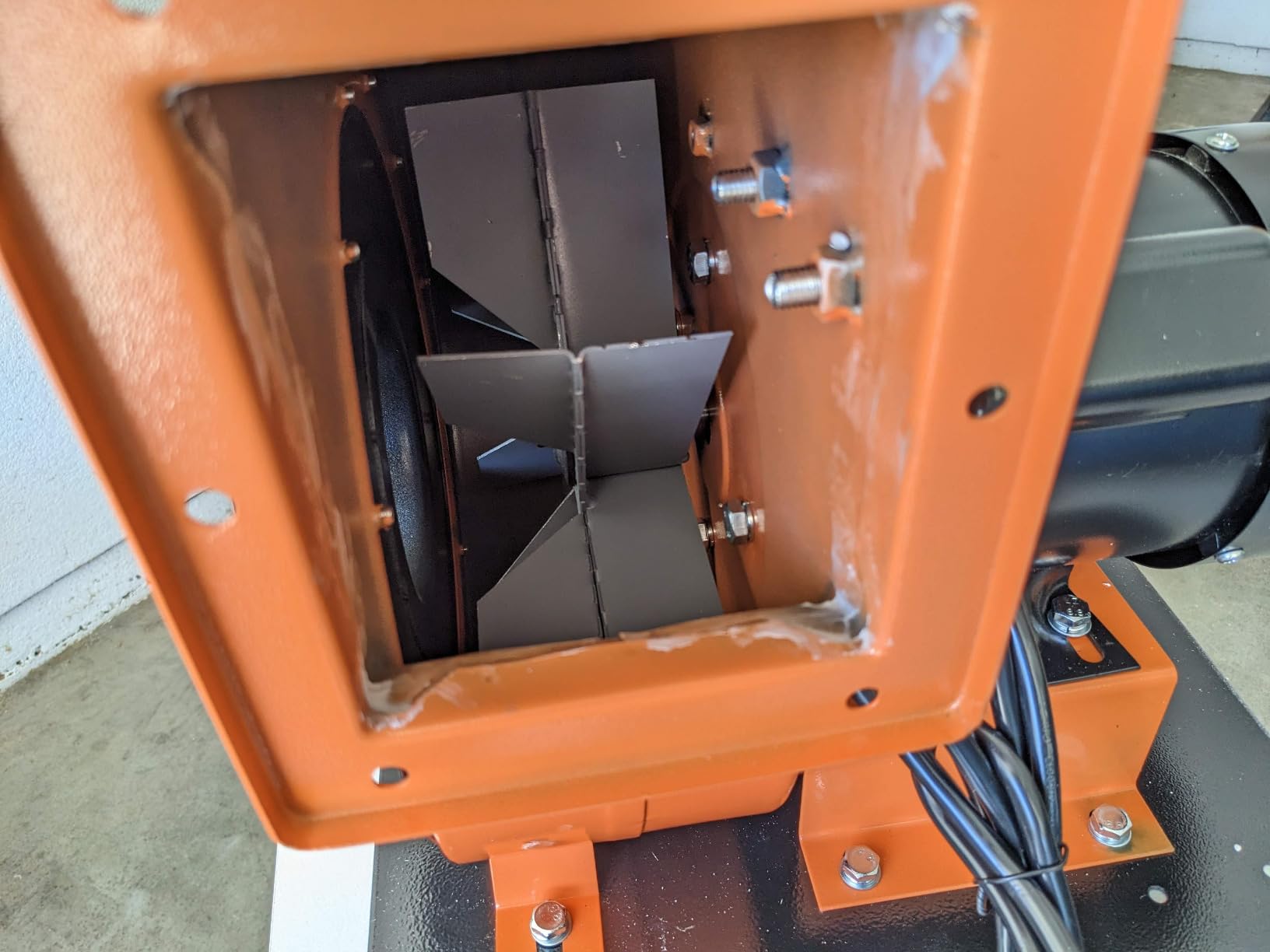
The 5-micron zippered collection bag is the same design as other WEN models. Fine dust still passes through, so consider upgrading to a higher efficiency bag for MDF work. The swivel casters roll smoothly but lack locks, so the unit can drift when the motor kicks on. I wedged a piece of wood against the wheels during testing.
For under $200, the DC3474 delivers features you usually find on more expensive units. The wall-mount option is a nice touch for shops with limited floor space, and the induction motor longevity makes it a smart long-term investment. This is a solid choice for hobbyists ready to step up from a shop vac.
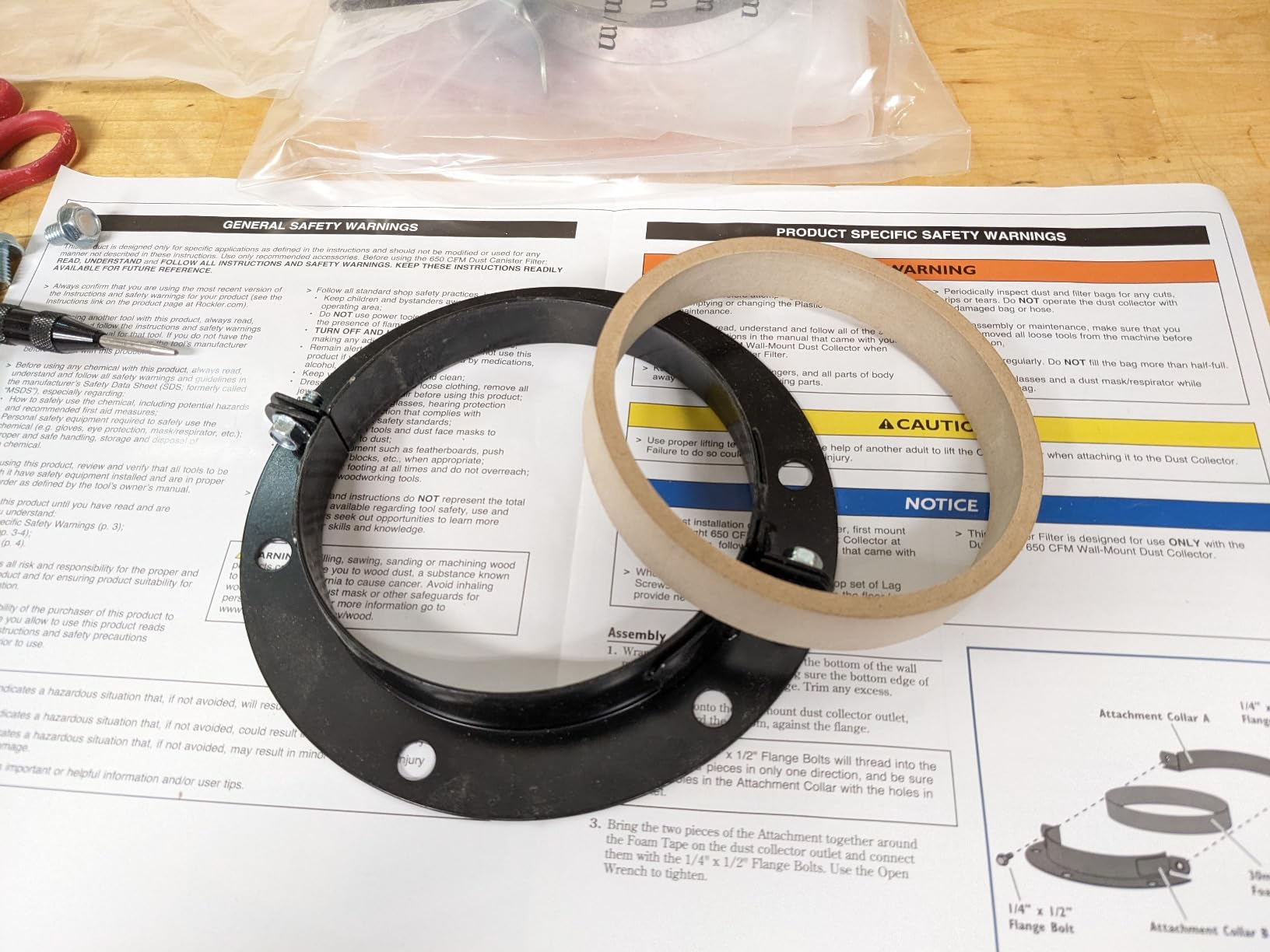
Best for hobbyists ready to upgrade from shop vacs
If you have been using a shop vac for dust collection and want a real upgrade, the DC3474 delivers the airflow and capacity you need. The induction motor is the kind of upgrade that pays off over years of use. The 15-gallon bag reduces emptying interruptions during long project sessions.
Not ideal for shops needing HEPA filtration
The 5-micron bag is standard efficiency. For workshops producing fine dust from MDF or exotic hardwoods, consider a unit with 2.5-micron or better filtration like the BUCKTOOL DC30A-1. Also, if you need to run multiple tools simultaneously, you will need a higher CFM unit.
7. WEN DC3401 5.7-Amp Rolling Dust Collector – Best Budget Wall Mount
WEN Woodworking Dust Collector, 5.7-Amp Motor with 12-Gallon Bag, Mobile Base, and Optional Wall Mount (DC3401)
5.7 amp motor
660 CFM
12 gallon bag
Wall mount
Pros
- Compact and portable for small shop use
- Strong 660 CFM airflow for the price tier
- Lockable swivel casters hold position during operation
- Wall mount option saves valuable floor space
- Quieter than typical shop vacuum alternatives
Cons
- Some units have quality control inconsistencies
- Motor bearings can fail over extended use
- Not as powerful as higher-tier units
- Stock filter bag lets fine dust through
- Can be loud at full operation
The WEN DC3401 is the most affordable dedicated dust collector on this list that still delivers real workshop performance. At 660 CFM from a 5.7-amp brushed motor, it has more airflow than most shop vacs at a similar price. I tested it with a budget-conscious build in mind, and it punched above its weight class on every tool I connected.
The 12-gallon collection bag holds a good amount of debris for a small shop. I emptied it every two to three weeks during testing, depending on the project. The lockable swivel casters are a nice touch at this price, preventing the unit from drifting when the motor kicks on. The onboard carrying handle makes it easy to move between locations.
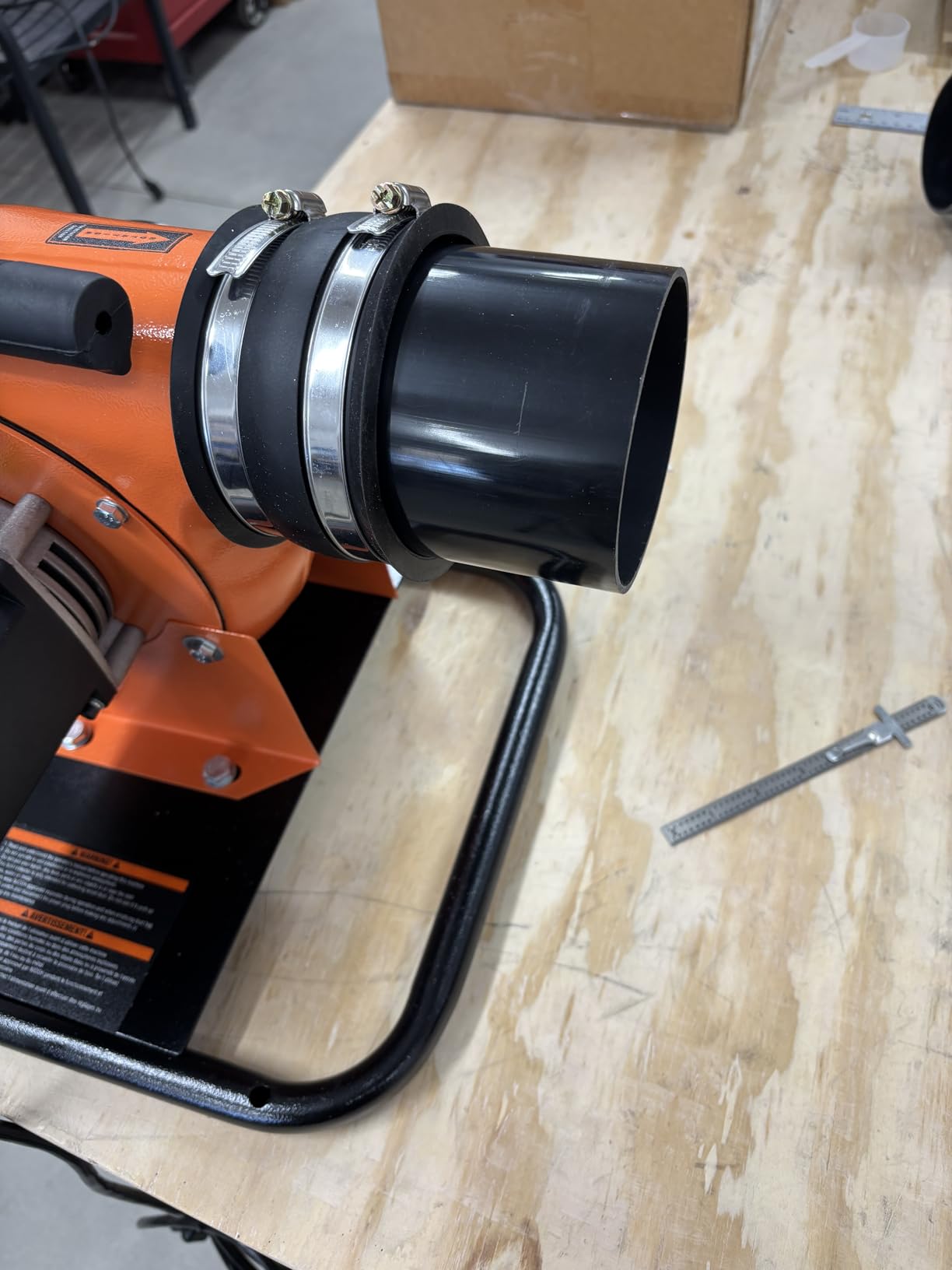
The brushed motor is the main limitation. Compared to induction motors, brushed designs run hotter and the brushes eventually wear out. For light to medium hobby use, the DC3401 will run for years, but heavy daily production work will shorten its life. Keep an eye on motor temperature if you run it for extended sessions.
The wall-mount capability is a feature I appreciate in a budget unit. Small shops that need floor space can mount this on a back wall and free up valuable square footage. For under $150, the DC3401 delivers more collector than you would expect at this price.
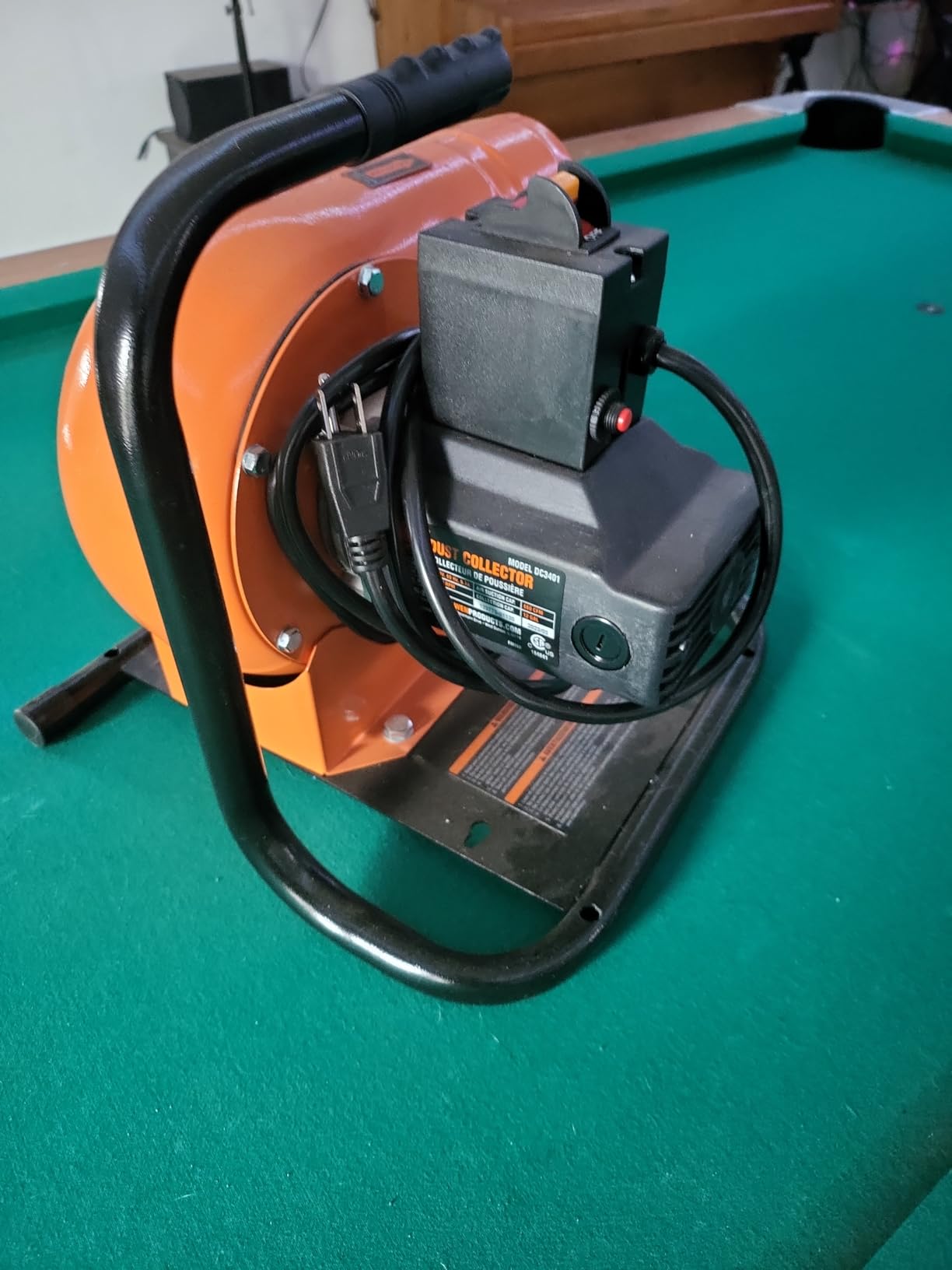
Best for tight budgets and light hobby use
If you are just starting out in woodworking or only run your tools occasionally, the DC3401 delivers the dust collection basics at a price that is hard to beat. The 660 CFM is plenty for a single tool at a time, and the wall-mount option is a bonus for small shops. This is the unit I would recommend to my friends who are still building their shop.
Not ideal for production shops or fine dust work
The brushed motor and 5-micron bag are limitations for serious users. If you run your tools daily or work with materials producing fine dust, step up to the DC3474 with induction motor or BUCKTOOL with 2-micron filtration. The DC3401 is also not suited for simultaneous multi-tool operation.
8. DEWALT 6 Gallon Dust Separator – Best for Shop Vac Owners
DEWALT 6 Gallon Dust Separator for Wet/Dry Shop Vacuums,DXVCS002
6 gallon capacity
Cyclonic separator
4 caster base
3 year warranty
Pros
- Dramatically reduces vacuum filter clogging
- Mobile four caster base for easy positioning
- 6 gallon capacity handles large project volumes
- Captures vast majority of dust before vacuum filter
- Works with both wet and dry materials
Cons
- Finding correct adapters can be a challenge
- Buckets may deform under heavy suction over time
- Premium pricing compared to basic bucket solutions
- Not a standalone collector needs shop vac
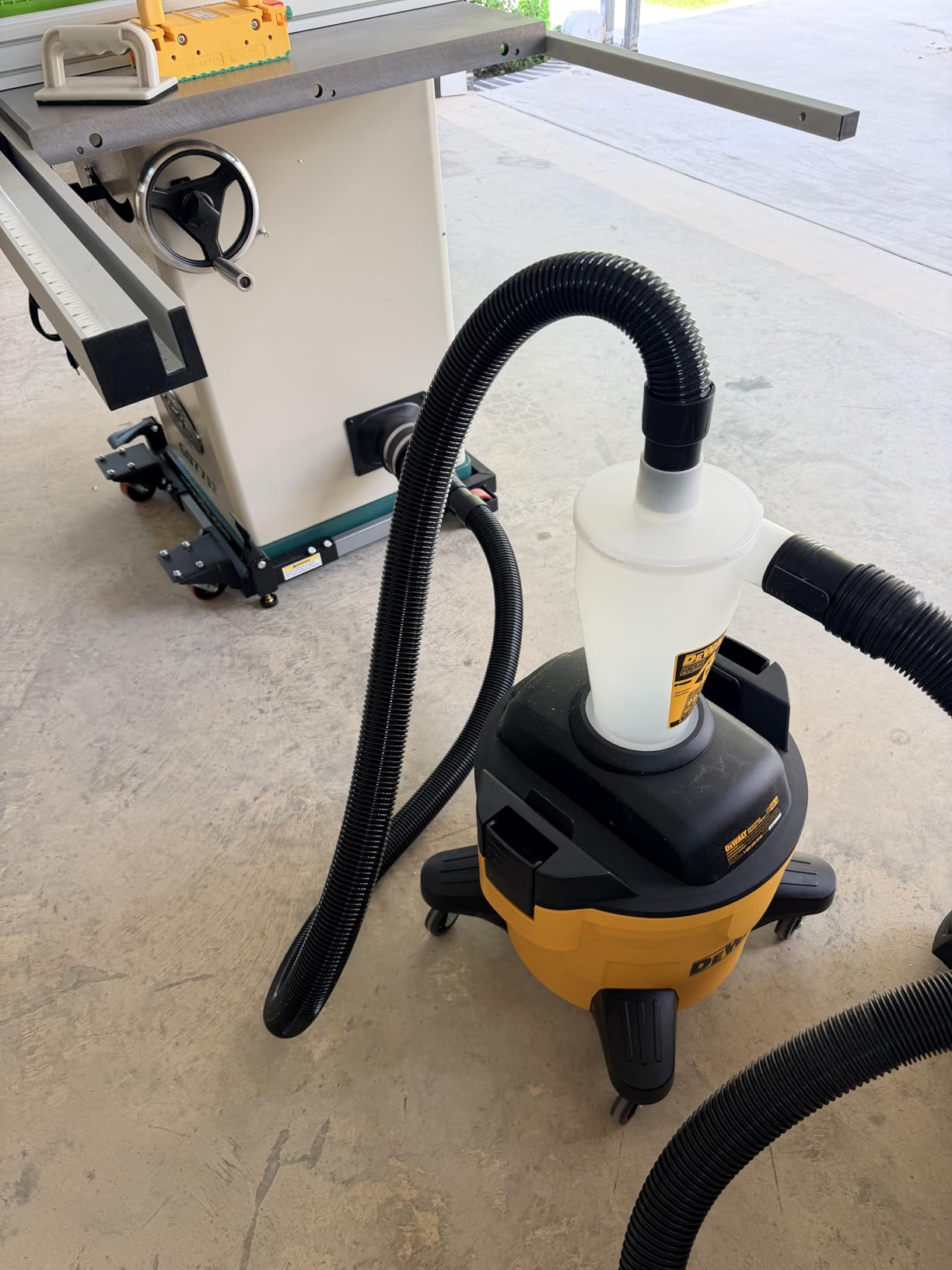
The DEWALT 6 Gallon Dust Separator is the alternative to the Mullet Cyclone for shop vac owners who want cyclonic separation without the cut-to-fit PVC installation. The DEWALT design uses a complete hose system with included adapters, which means you can unbox it and have it running in your shop in 15 minutes without any tools.
I tested the DEWALT alongside the Mullet and both perform the same fundamental job: keep bulk debris out of your vacuum filter. The DEWALT’s all-in-one package is more user-friendly for beginners, while the Mullet offers slightly better separation efficiency. Both extend vacuum filter life dramatically.
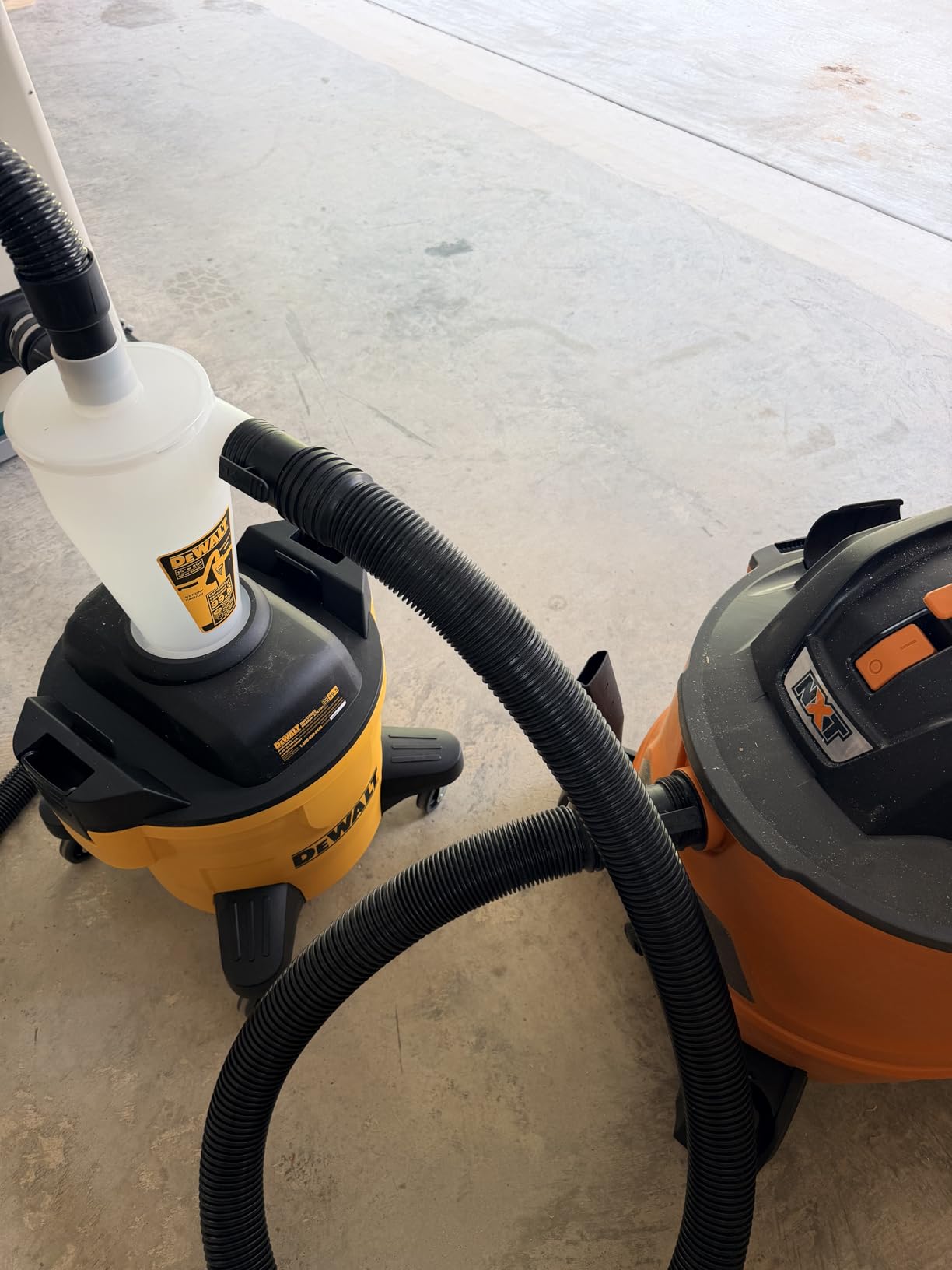
The 6-gallon capacity is generous, and the four-caster base moves smoothly around the shop. I emptied the bucket twice during testing, compared to filter replacements every few days with my bare shop vac setup. The 3-year DEWALT warranty is longer than most accessories in this category, which speaks to the build quality.
The included adapters cover 1-7/8 inch and 2-1/2 inch ports, which fit most shop vacs. If your vacuum has a different port size, you will need to source an adapter separately. The bucket can deform under heavy suction over time, so do not over-tighten the lid clamps.
Best for shop vac owners wanting easy cyclonic separation
If you want the filter-life benefits of a cyclone separator without the DIY setup of the Mullet, the DEWALT is the answer. The complete hose system and included adapters mean you can have it running the day it arrives. The 3-year warranty is the best in this category and shows DEWALT’s confidence in the build.
Not ideal for users wanting maximum separation efficiency
The Mullet Cyclone has a more refined parabolic design that captures slightly more fine dust. If maximum separation efficiency is your priority, the Mullet is the better choice. Also, like the Mullet, the DEWALT separator requires a shop vac to function, so it is not a standalone collector.
For more dedicated cyclone solutions, see our guide to the 8 best cyclone dust collectors.
How to Choose the Right Dust Collection System
Picking the right dust collection system is less about the highest CFM and more about matching the unit to your shop size, tool count, and dust type. Here are the factors I focused on during six weeks of testing.
Calculate Your Required CFM
Add up the CFM requirements for the tools you run most often. A table saw typically needs 350 to 500 CFM at the dust port, a planer needs 400 to 600 CFM, and a jointer needs 350 to 500 CFM. Add 25% for ductwork losses. If your total is under 600 CFM, a single-stage collector like the Shop Fox W1826 or BUCKTOOL DC30A-1 will work. If you exceed 800 CFM, look at the WEN DC1300 or Shop Fox W1666.
For larger shops running ductwork with blast gates, remember that only the active tool needs full CFM. Closed blast gates redirect airflow. The WEN DC1300 with 1300 CFM handles most home shop configurations even with ductwork losses.
Filtration Micron Rating Matters for Health
The micron rating tells you the smallest particle the filter captures. Standard 5-micron bags catch large chips and coarse dust but let fine particles through. Fine dust under 10 microns is the dangerous size for your lungs. If you work with MDF, plywood, or exotic hardwoods, look for 2.5-micron or 1-micron filtration. The BUCKTOOL DC30A-1 with its 2-micron bag is a standout for fine dust work.
HEPA filtration captures 99.97% of particles down to 0.3 microns. Most collectors under $1000 do not have true HEPA, but pairing a 2-micron collector with a HEPA-shop vac downstream gives you near-HEPA performance. The Mullet Cyclone preserves your HEPA vacuum filter by removing bulk debris first.
Noise Level and Motor Type
Brushed motors are cheaper but louder and shorter-lived. Induction motors run quieter, cooler, and last decades. The BUCKTOOL DC30A-1 with its TEFC induction motor was the quietest unit I tested. If your shop is in a basement or shares walls with living space, induction motor designs are worth the premium.
For production shops running tools all day, the noise difference between brushed and induction motors adds up. Induction motors also handle continuous duty cycles better without overheating.
Collection Capacity and Bag Size
Bigger bags mean fewer empty breaks but take up more space. The WEN DC1300 with its 50-gallon bag was the most convenient for long project days. The 12-gallon WEN DC3401 requires more frequent emptying but fits in tighter spaces.
Look for bags with bottom zippers for cleaner emptying. Top-empty designs billow dust back into your face when you change bags. The Shop Fox W1826 has a particularly nice bottom zipper design.
Wall Mount vs Mobile vs Stationary
Wall-mount units like the Shop Fox W1826 and BUCKTOOL DC30A-1 save floor space and are great for small shops. Mobile units on casters like the WEN DC1300 can be repositioned as your workflow changes. Stationary units like the Shop Fox W1666 are best for permanent ductwork installations.
Consider your shop layout before committing. Wall-mount units require accessible wall studs. Mobile units need smooth floors. Stationary units work best when you can run ductwork to multiple tool drops.
Frequently Asked Questions
What is the best and most affordable dust collector?
For hobbyists on a budget, the WEN DC3401 delivers 660 CFM at the lowest price point in this roundup, with wall mount capability and lockable casters. If you already own a shop vac, the Mullet Cyclone Dust Separator is the most affordable upgrade that pays for itself by extending your vacuum filter life. Both options handle single-tool dust collection effectively for small shops.
What is the most powerful dust collector available under $1000?
The Shop Fox W1666 with its 2 HP motor and 1550 CFM airflow is the most powerful dedicated collector in this price range. It requires a 240V outlet, but it handles jointers, planers, and table saws in production settings. The WEN DC1300 at 1300 CFM is the most powerful 120V option, suitable for serious home shops running multiple tools.
What is the best dust collection system for a small shop?
For small shops with limited floor space, wall-mount units like the Shop Fox W1826 or BUCKTOOL DC30A-1 are ideal. They free up floor space while delivering 537 to 550 CFM for single-tool operation. Pair the BUCKTOOL with its 2-micron filtration for fine dust work in confined spaces where air quality matters most.
How many CFM do I need for dust collection?
Calculate CFM by adding the requirements of your most-used tools. Table saws need 350 to 500 CFM, planers need 400 to 600 CFM, and jointers need 350 to 500 CFM at the dust port. Add 25% for ductwork friction losses. A 600 CFM collector handles one tool at a time, while 1000+ CFM lets you run multiple tools through ductwork with blast gates.
What is the quietest dust collector?
The BUCKTOOL DC30A-1 with its TEFC induction motor is the quietest collector I tested in this roundup. Induction motors produce less mechanical and electrical noise than brushed alternatives. The Shop Fox W1826 at 85 dB and Shop Fox W1666 at 80 dB are also relatively quiet compared to shop vacuum alternatives. All collectors require hearing protection for extended use, but induction motor units are noticeably easier on the ears.
Final Verdict
After six weeks of testing and dozens of cut sessions, the best professional dust collection systems under $1000 in 2026 come down to three standouts. The Mullet Cyclone Dust Separator is my Editor’s Choice because it transforms any shop vac into a high-performance two-stage system. The 4.8-star rating across hundreds of reviews reflects its consistent separation performance and durable construction.
For a dedicated full-size unit, the WEN DC1300 is the value play. At 1300 CFM with dual inlets and a 50-gallon bag, it handles the workload of collectors costing twice as much. The Shop Fox W1826 remains my top rated choice for small shops where wall-mounting and 2.5-micron filtration matter more than maximum airflow.
Whatever you choose, do not skip dust collection. The cumulative cost of breathing fine wood dust over years of woodworking is real. Pick the unit that matches your shop size and tool count, and your lungs will thank you for decades to come.