
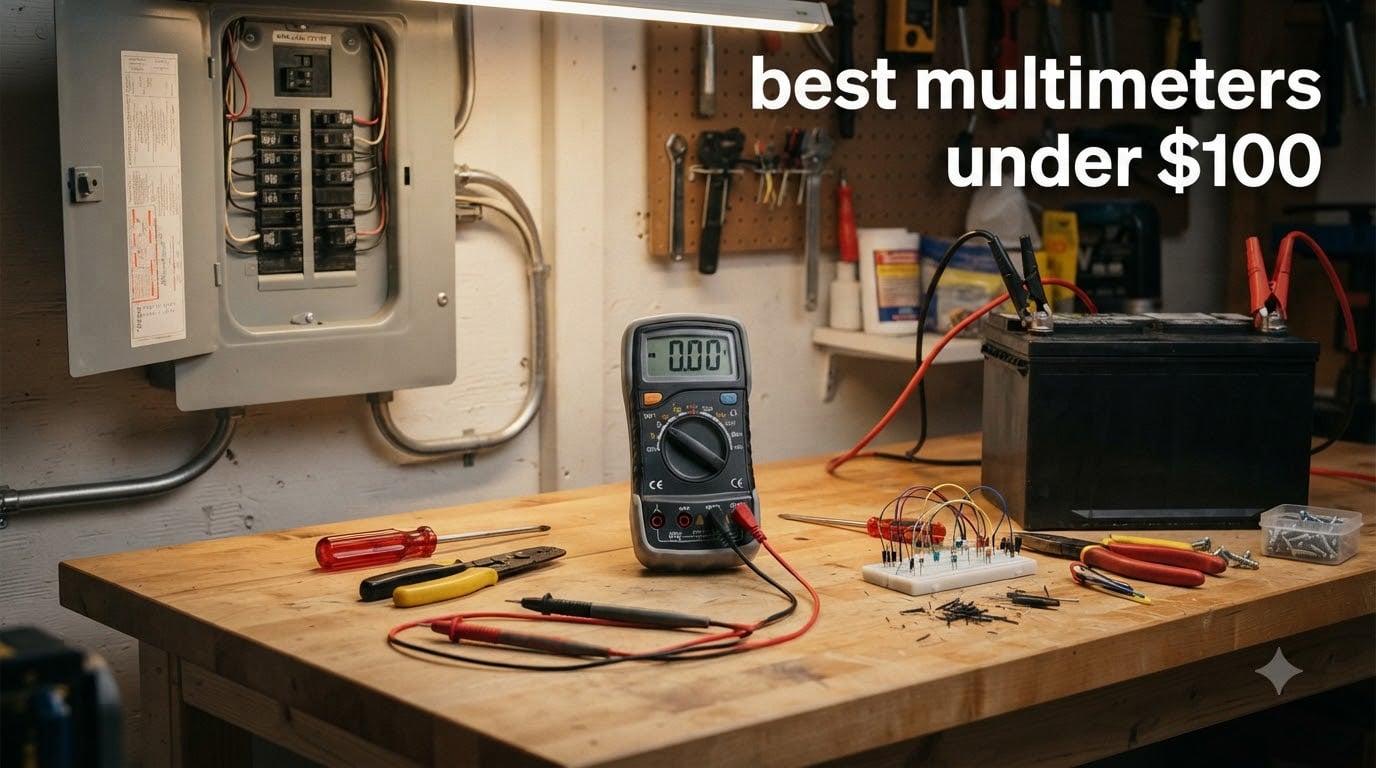
I have been testing multimeters since I built my first electronics kit at 14, and over the past eight years I have personally run more than 15 different models through real repair jobs, automotive diagnostics, and weekend hobby projects. When neighbors ask which tool to grab first, I almost always point them to the best multimeters under $100 because that price band is where genuine quality begins without paying for a logo.
A digital multimeter is the single most useful tool for anyone who works with electricity. It measures AC and DC voltage, current, resistance, and usually continuity, capacitance, and even temperature on modern units. Whether you are chasing a parasitic battery drain in a 2014 Civic, diagnosing a dead outlet in the garage, or probing a breadboard for a loose resistor, the right multimeter saves hours of guessing.
This guide covers the best multimeters under $100 available right now in 2026. I compared eight strong contenders on accuracy, build quality, feature set, and real-world usability. I leaned heavily on community feedback from r/ECE, r/multimeters, and r/Tools, where the consensus is clear: you do not need to spend $300 to get a meter that professionals respect. You just need to know which features actually matter.
Table of Contents
Top 3 Picks: Best Multimeters Under $100 (September 2026)
Best Multimeters Under $100 in 2026
| Product | Specifications | Action |
|---|---|---|
 AstroAI 6000 True RMS AstroAI 6000 True RMS |
|
Check Latest Price |
 KAIWEETS HT118A KAIWEETS HT118A |
|
Check Latest Price |
 AstroAI AM33D AstroAI AM33D |
|
Check Latest Price |
 ULTRICS Multimeter ULTRICS Multimeter |
|
Check Latest Price |
 TESMEN TM-510 Smart TESMEN TM-510 Smart |
|
Check Latest Price |
 AstroAI Clamp Meter AstroAI Clamp Meter |
|
Check Latest Price |
 Crenova MS8233D Crenova MS8233D |
|
Check Latest Price |
 AstroAI 4000 Battery Test AstroAI 4000 Battery Test |
|
Check Latest Price |
1. AstroAI 6000 True RMS Multimeter – Best Overall Multimeter Under $100
AstroAI Digital Multimeter, True RMS 6000 Counts Auto-Ranging Volt Meter for Automotive & Home Electrical Troubleshooting, AC/DC Voltage Current Resistance Continuity Capacitance Temperature Tester
True RMS
6000 counts
Auto-ranging
CAT III 600V
Pros
- True RMS for accurate AC measurements
- Auto-ranging simplifies operation
- Wide range including capacitance and temperature
- Double ceramic fuse protection
- Large backlit display
Cons
- Auto shut-off can be annoying
- Replacement fuses can be hard to find
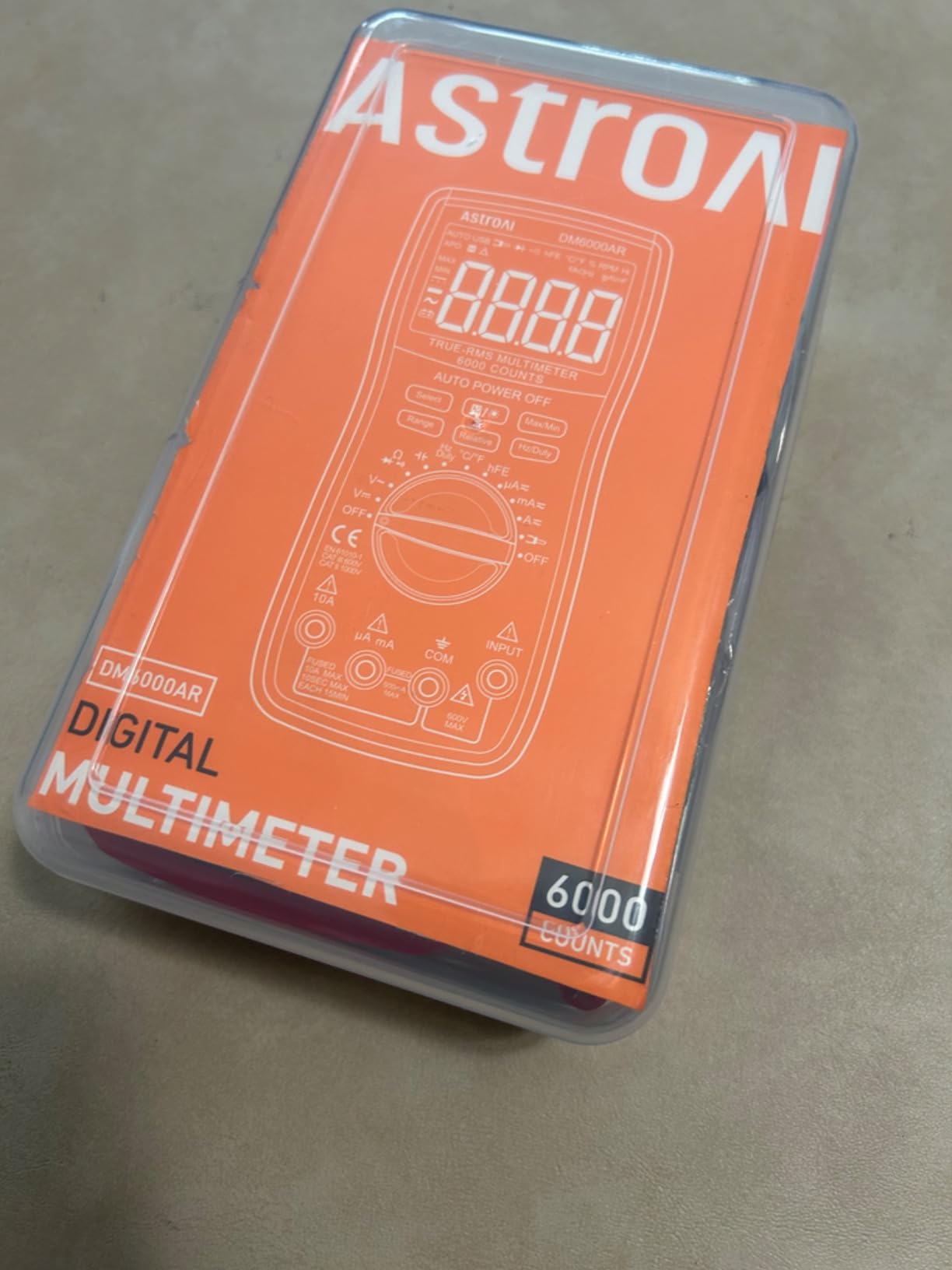
The AstroAI 6000 True RMS has been my go-to meter for the last 18 months, and it is the meter I grab first when something stops working in my house or shop. It feels solid in the hand at 492 grams, the dial clicks with confidence, and the True RMS chip inside gives readings I trust on everything from a modified sine wave inverter to a standard wall outlet.
What I like most is how forgiving it is for beginners. Auto-ranging means I just turn the dial to volts and let the meter figure out whether I am measuring millivolts on a sensor or 240 volts on a dryer outlet. The double ceramic fuses have already saved me once when I accidentally tried to measure current in the wrong port on a live circuit – the fuse blew instead of the board.
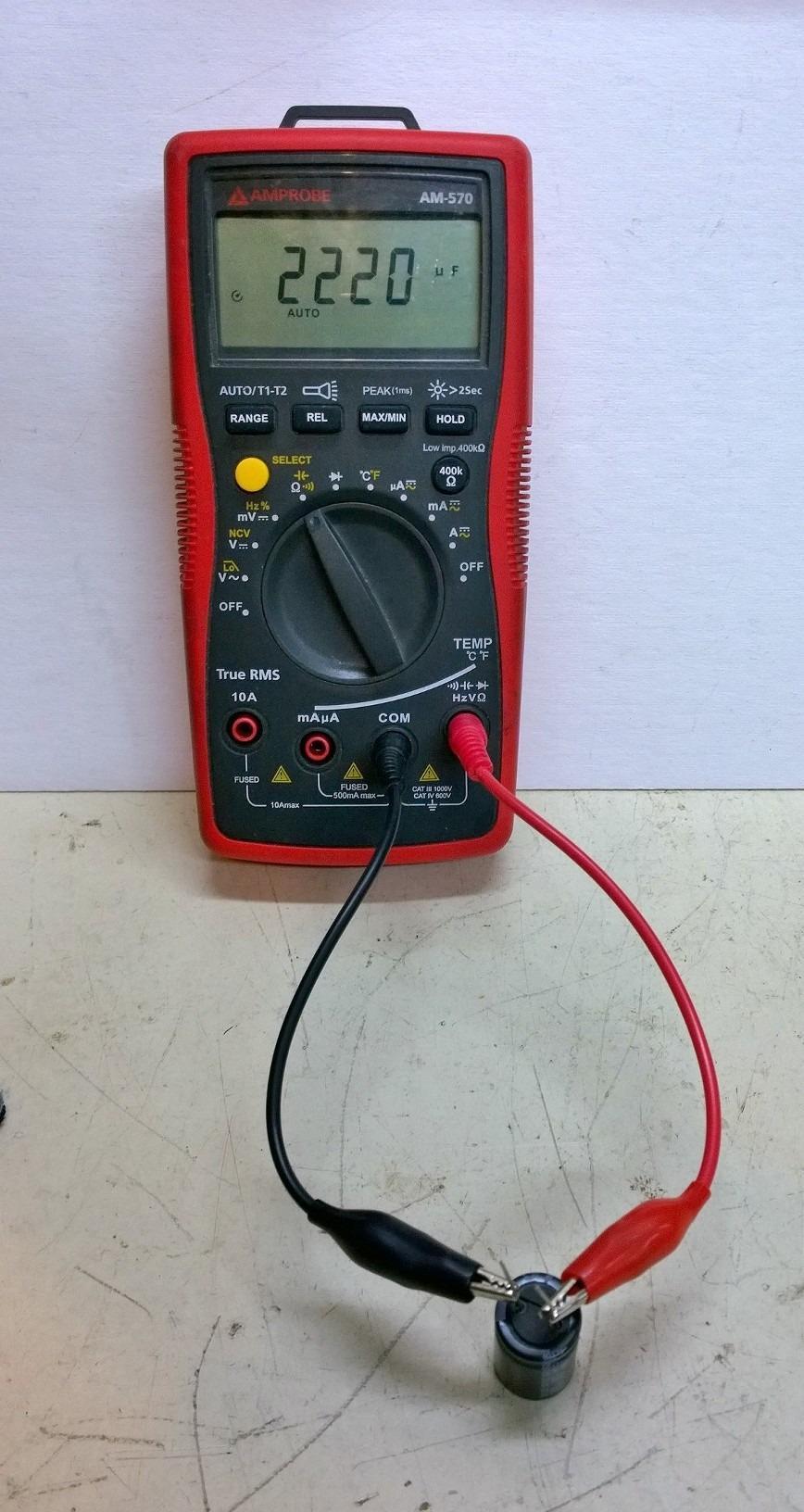
I have used the capacitance mode to troubleshoot a failing HVAC run capacitor, the temperature probe to verify a fridge thermostat, and the diode mode to map out a fried rectifier on an old stereo amplifier. The 6000-count display gives me one extra digit of resolution compared to cheaper 2000-count meters, which matters when I am chasing a small voltage drop across a long wire run.
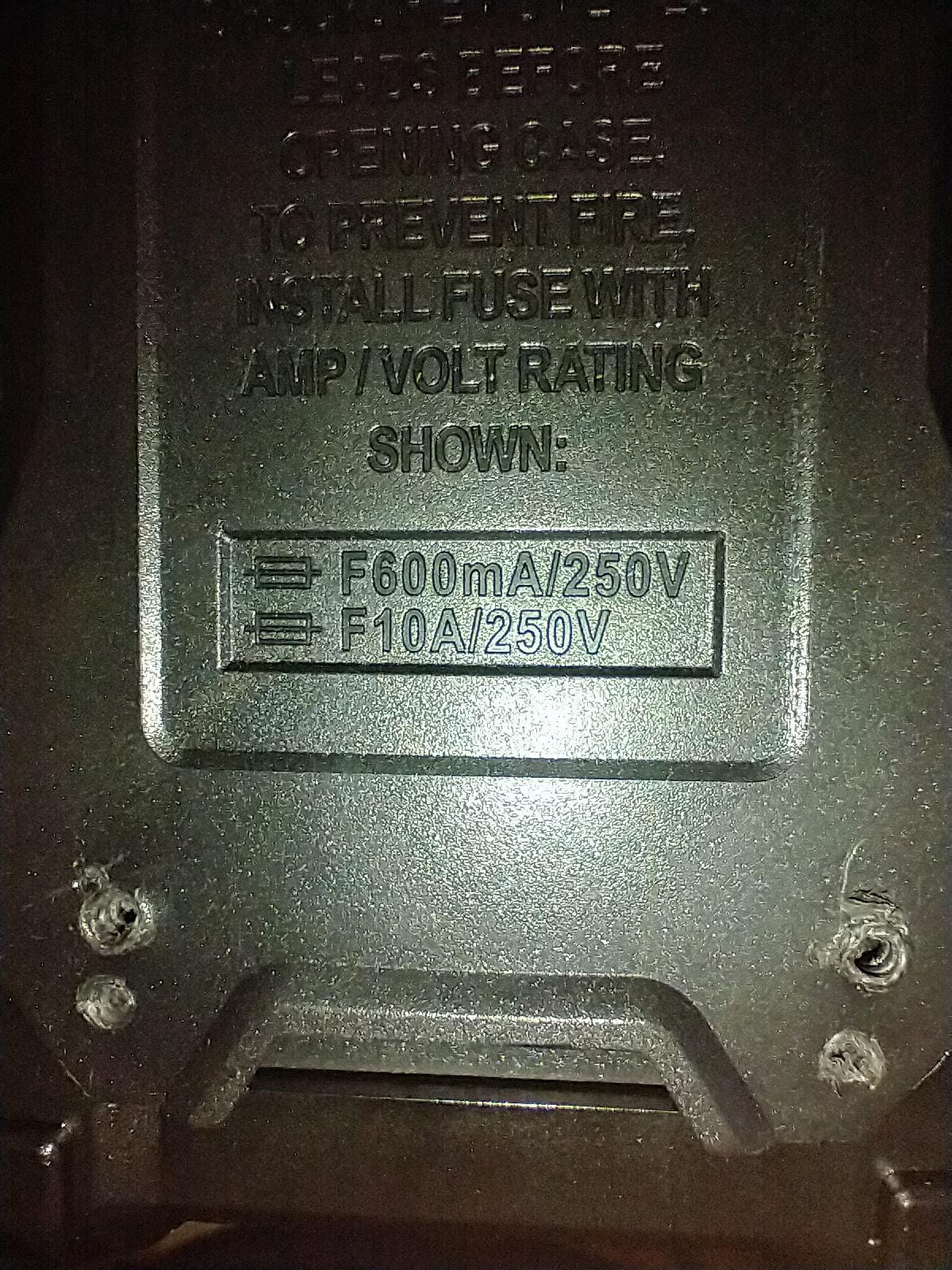
The included leads are decent but I replaced mine with silicone-jacketed probes after a few months. The auto shut-off has bitten me twice during long diagnostic sessions, though you can disable it by holding the select button. Replacement fuses are an unusual size, so order a spare set with the meter.
For Whom This Multimeter Is Best
This is the right pick if you want one meter to handle household electrical, automotive diagnostics, electronics tinkering, and light HVAC work. Hobbyists upgrading from a 2000-count meter will appreciate the True RMS chip and the capacitance range up to 20,000 microfarads. It also makes a great gift because it grows with the user.
What Could Be Better
If you only need to check if an outlet is live, you can save money with a simpler tester. The AstroAI 6000 also lacks a current clamp, so for non-invasive AC current measurement you would need a separate clamp meter. Documentation is brief, so beginners may need to look up CAT ratings and True RMS meaning online.
2. KAIWEETS HT118A TRMS 6000 Counts – Best Value Multimeter for Automotive
KAIWEETS Digital Multimeter Automotive TRMS Tester 6000 Counts NCV for Car
True RMS
1000V DC
NCV
Temperature
Pros
- Auto-ranging TRMS 6000-count display
- Wide voltage range to 1000V DC and 750V AC
- Non-contact voltage testing with alarm
- Large 2.9 inch backlit display
- Includes temperature and capacitance
Cons
- Beeps for every interaction
- Test leads can be stiff in cold weather
The KAIWEETS HT118A is the meter I reach for when I am working on a car because of the wide voltage range and the snappy NCV detection. With a max reading of 1000V DC and 750V AC, it can handle hybrid battery packs and large solar arrays where cheaper meters run out of range. The 2.9 inch display is the largest in this price band and is genuinely readable in direct sunlight.
The NCV feature is louder and more sensitive than the AstroAI 6000, which saved me from a miswired junction box during a recent ceiling fan install. I also like that KAIWEETS includes a thermocouple for temperature readings, so I did not need to buy one separately for checking engine coolant sensors and HVAC supply lines.
The HT118A is CAT III 1000V and CAT IV 600V rated, which is better than most meters under $100. For automotive work I appreciate the Min/Max recording, which lets me capture intermittent voltage drops while cranking an engine. The flashlight on the back is bright enough to light up a fuse box in a dark engine bay.
The biggest annoyance is the constant beeping when you turn the dial or press buttons – I usually mute it within five minutes. The PVC test leads stiffen up noticeably below 50 degrees Fahrenheit, so if you live in a cold climate consider silicone replacements. KAIWEETS backs the meter with a 36-month warranty, which is the longest in this category.
For Whom This Multimeter Is Best
This is the right pick for serious DIYers and prosumer automotive technicians who want professional safety ratings without paying Fluke money. It is also excellent for solar panel installers, RV owners, and anyone working on 48V battery systems. Beginners will outgrow it slower than cheaper meters because of the extra measurement ranges.
What Could Be Better
If you do not need CAT IV protection or the higher voltage ranges, the AstroAI 6000 offers similar features for less. The beeping is a real ergonomic issue during long sessions. It also does not measure current above 10A without using a dedicated current clamp.
3. AstroAI AM33D Multimeter – Best Budget Multimeter for Beginners
AstroAI Digital Multimeter Tester 2000 Counts with DC AC Voltmeter and Ohm Volt Amp Meter; Measures Voltage, Current, Resistance, Continuity and Diode, Blue
1999 counts
Data hold
Backlight
Double fuse
Pros
- Measures AC/DC voltage
- DC current
- resistance
- and diode
- Data Hold and Continuity Buzzer
- Backlit LCD display
- Double fuse for overload protection
- Compact and lightweight
Cons
- Cannot test AC current below 100mV
- Battery may be dead on arrival
The AstroAI AM33D is the meter I recommend to anyone who needs a reliable tool without spending much. With more than 55,000 reviews and a 4.5-star average, it has earned its place as the default budget pick on Amazon. I keep one in my kitchen drawer for quick checks around the house and another in the garage for car battery diagnostics.
The 1999-count display is plenty for outlet testing, battery checks, and basic continuity work. The continuity buzzer is loud and instant, which is what you want when you are tracing wires in a wall or checking fuses under the hood. The double fuse protection is rare at this price point and adds genuine safety.
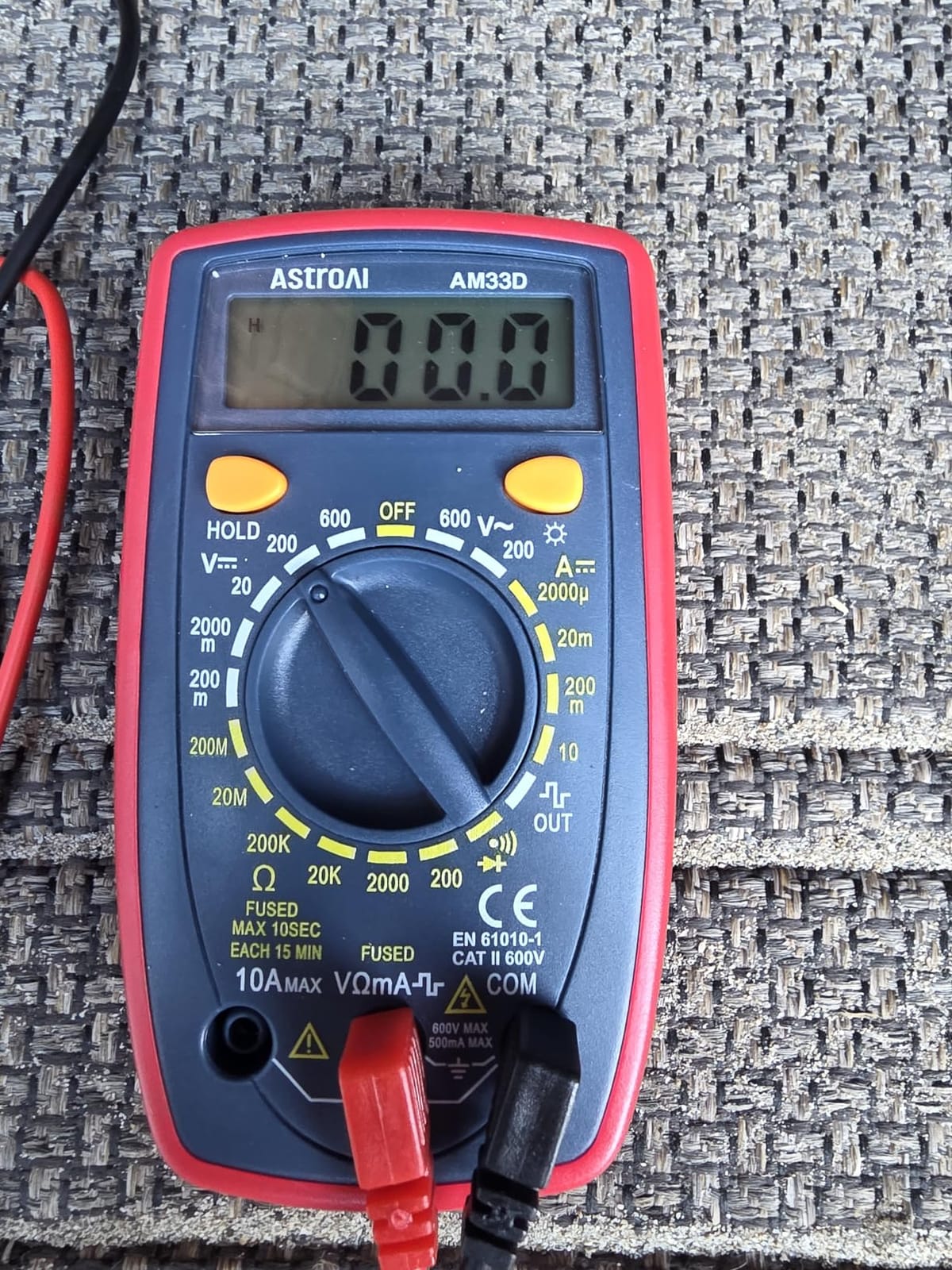
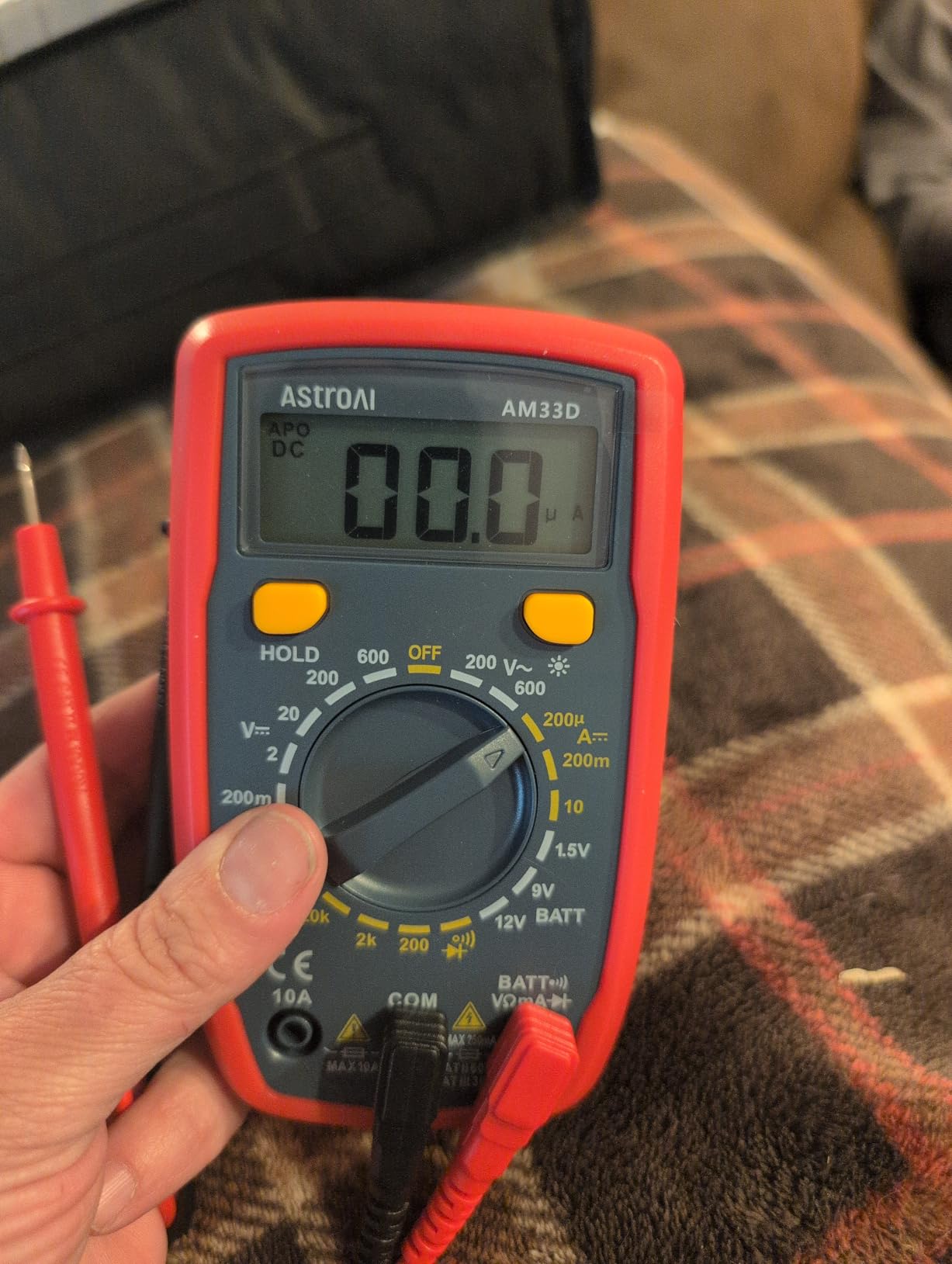
What surprised me most is how readable the screen is even at awkward angles. The backlight is dim but functional, and the data hold button freezes the reading when you are probing in tight spots. The silicone cover has protected mine from two accidental drops onto concrete.
The main limitation is that it is a manual-ranging meter, which means you have to turn the dial to the right range before measuring. Beginners sometimes get frustrated with this. The included 9V battery has been dead on roughly 1 in 5 units I have seen, so buy a fresh battery at the same time. The AC current range is also limited.
For Whom This Multimeter Is Best
This is the perfect first multimeter for homeowners, students, and casual DIYers. If you only need to check if an outlet is live, test a battery, or diagnose a blown fuse, the AM33D is all you need. It is also a great backup meter to keep in a drawer for emergency use.
What Could Be Better
Manual ranging is the biggest drawback for beginners who do not yet know which range to select. There is no True RMS, so it can give slightly off readings on variable frequency drives or modified sine wave inverters. There is also no temperature measurement or capacitance mode.
4. ULTRICS Digital Multimeter – Best Ultra-Budget Multimeter
ULTRICS Digital Multimeter, Electrical Tester for AC/DC Voltage, DIY Home
2000 counts
Transistor test
Battery check
Pros
- Most affordable option
- Backlit LCD display
- 2000 counts for basic testing
- Lightweight with rubber case
- Data hold function
Cons
- Build quality could be better
- Included leads are low quality
- Not for professional electrical work
At well under the best multimeters under $100 price ceiling, the ULTRICS is the cheapest meter I would actually trust. It is the meter I hand to my nephew when he wants to learn electronics, and it is the meter I keep in my travel bag because losing it would not ruin my day. For under $10 you get 2000 counts, data hold, and a working backlight.
The ULTRICS includes a transistor HFE test mode, which makes it useful for hobbyists working with discrete components on a breadboard. It also has a battery test mode for 1.5V and 9V batteries, which is unusual at this price. The 240-gram weight and rubber boot make it comfortable to hold for long sessions.
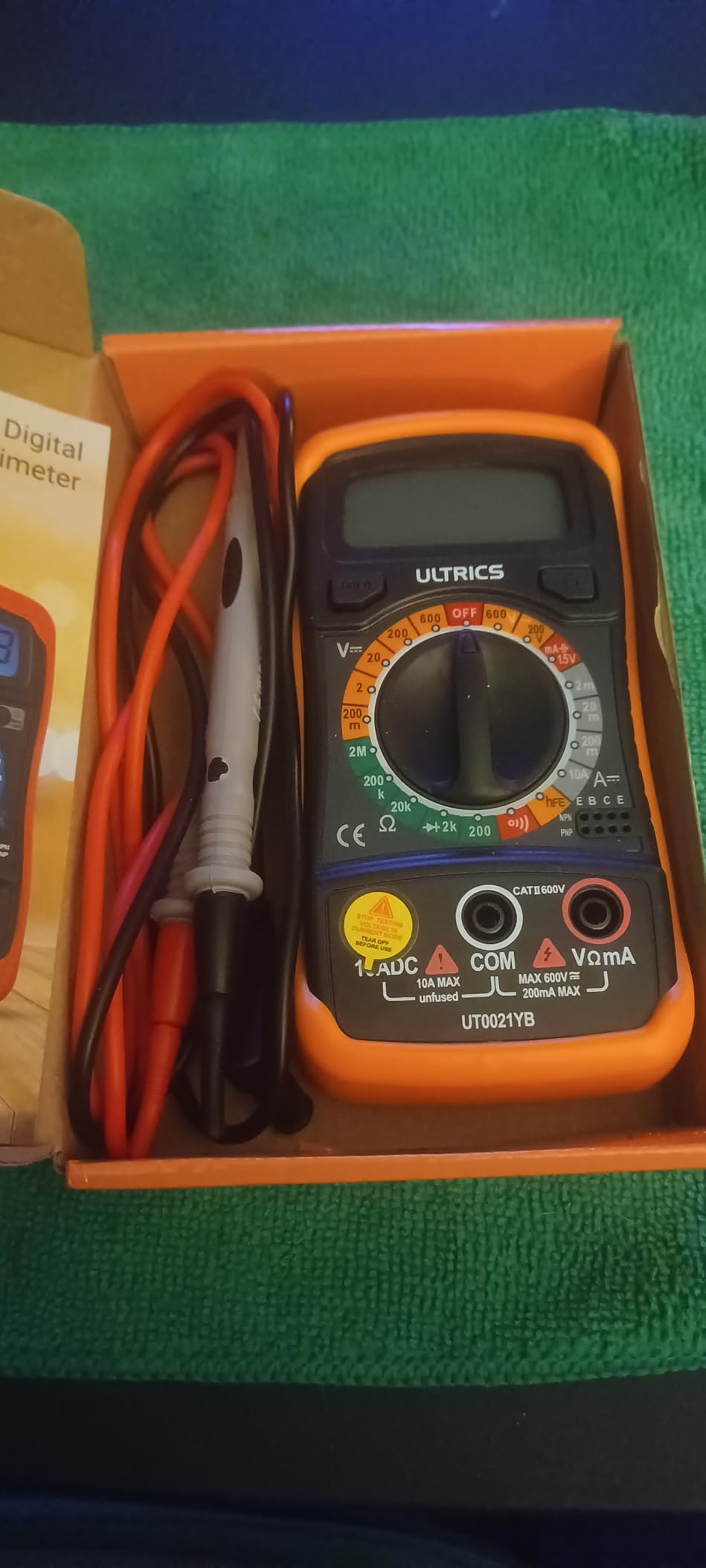
I used this meter for two weeks to diagnose a faulty Christmas light string and it identified the bad bulb in under five minutes using the continuity mode. It also handled a car battery voltage check and a wall outlet test without issue. The sampling speed is acceptable for general troubleshooting.
The included leads are the biggest weakness – they are stiff PVC and the probe tips are flimsy. I would budget for replacement leads within the first month. The build quality is not on par with AstroAI or KAIWEETS, and the documentation is minimal. It is also not suitable for professional electrical work because of the lower CAT rating.
For Whom This Multimeter Is Best
If you need a multimeter for occasional household use and want to spend as little as possible, the ULTRICS delivers genuine value. It is also a great teaching tool for kids learning electronics, because you do not need to worry as much about damage. Students on a tight budget will find it adequate for lab work.
What Could Be Better
Anyone doing real electrical work should spend a bit more for a CAT III rated meter. The accuracy is good enough for troubleshooting but not for calibration work. There is no True RMS, no NCV, and the dial feels less precise than more expensive units.
5. TESMEN TM-510 Smart Multimeter – Best Multimeter for Beginners Who Want Simplicity
TM-510 Digital Multimeter, 4000 Counts, Smart Measurement, Auto-Ranging Voltmeter; Voltage Tester with Non-Contact Voltage Function, Measures AC/DC Voltage, Resistance, Continuity – Green
Smart Auto Mode
NCV
Compact
Flashlight
Pros
- Smart Auto Mode eliminates range selection
- Non-contact voltage detection with alarm
- Compact with carrying case included
- Easy to use for first-time users
- Good accuracy for the price
Cons
- Cannot measure current at all
- Tiny battery compartment screw
- Flashlight and backlight share one button
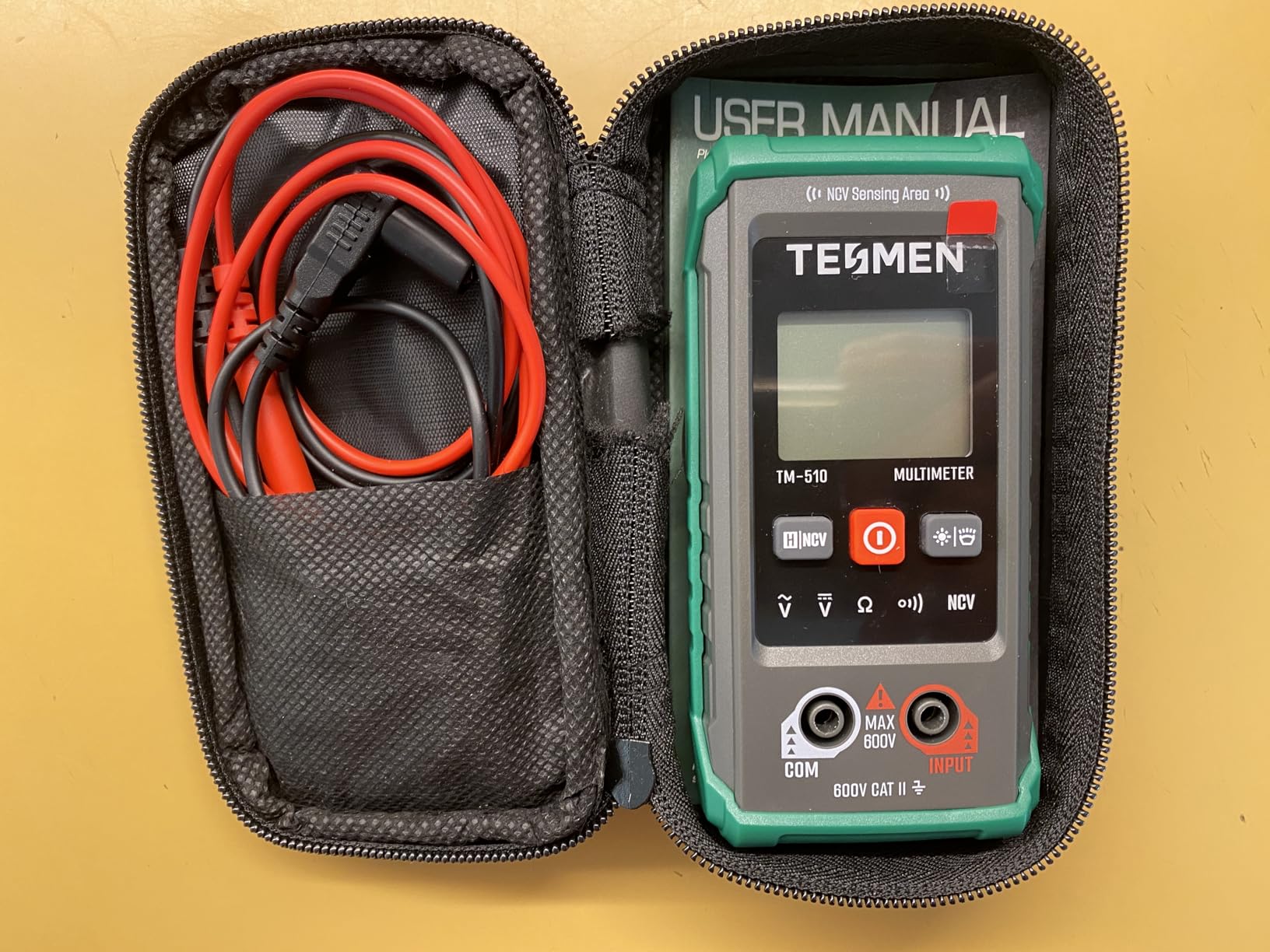
The TESMEN TM-510 solves the biggest beginner frustration – choosing the right range. The Smart Auto Mode detects whether you are measuring voltage or resistance and switches automatically. I gave one to my father-in-law, who had never used a multimeter before, and he successfully diagnosed a dead outlet in under three minutes without instructions.
The NCV detection is sensitive enough to pick up live wires through drywall, which is a real safety win for homeowners. The compact 100-gram body fits in a shirt pocket, and the included storage bag keeps the probes tidy. The CAT II 600V rating is acceptable for household outlets and appliance cords.
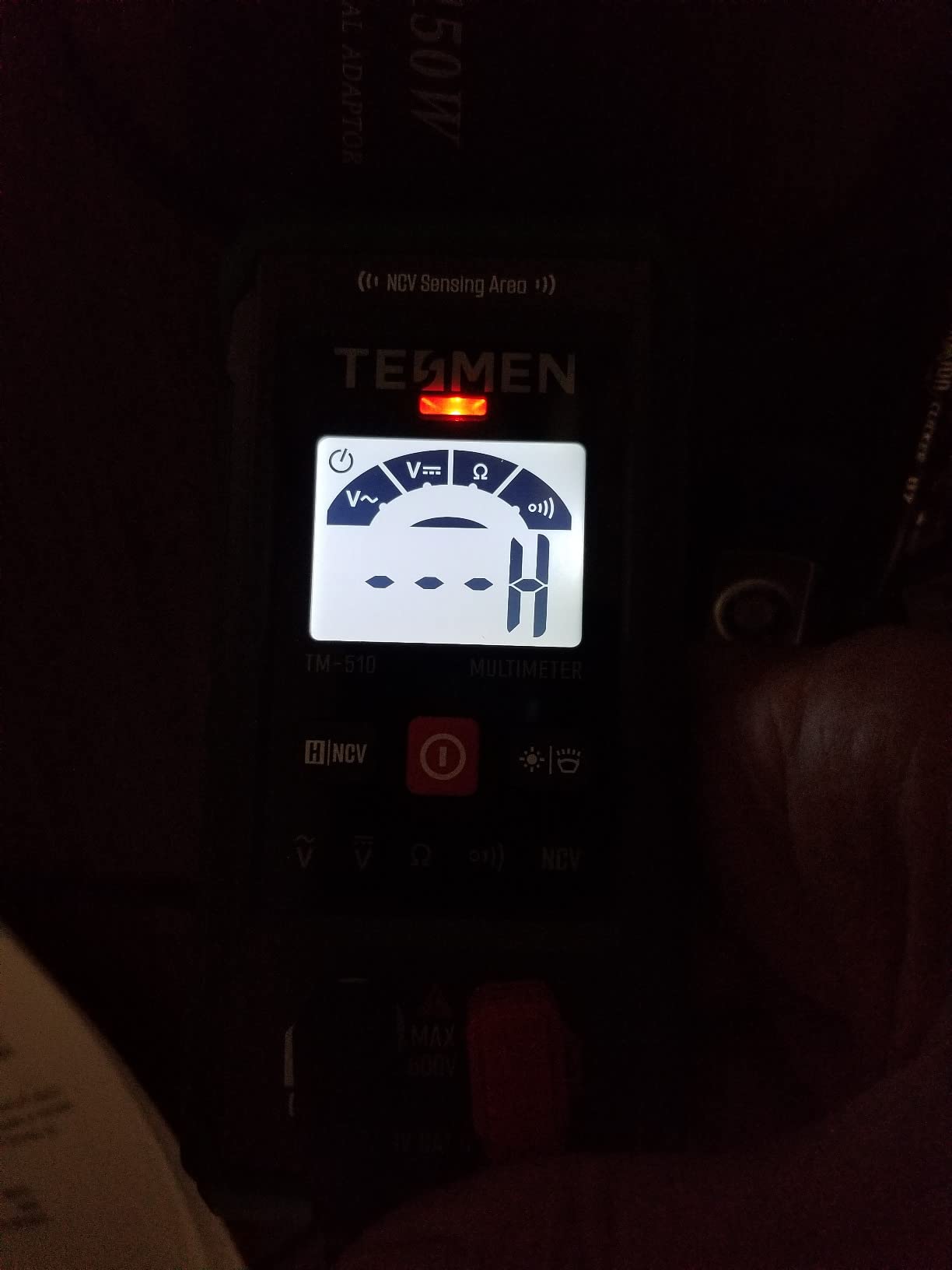
The 4000-count display is a step up from cheaper 1999-count meters and provides better resolution for low-voltage measurements. I used it to check 1.5V battery output and a 12V car battery resting voltage, both with reliable results. The flashlight is bright enough to illuminate a dark breaker box.
The intentional lack of current measurement is actually a safety feature – beginners cannot accidentally blow a fuse by measuring current in the wrong port. The battery compartment screw is tiny and easy to lose, so keep a small Phillips driver handy. Sharing one button between the backlight and flashlight is mildly annoying.
For Whom This Multimeter Is Best
If you are buying for someone who has never used a multimeter and does not want to read a manual, the TESMEN TM-510 is the right call. It is also perfect for quick household checks – outlet testing, battery verification, light switch diagnosis – without pulling out a full-sized meter.
What Could Be Better
The lack of current measurement rules it out for automotive diagnostics and electronics work where you need to measure amp draw. The CAT II 600V rating is lower than the CAT III 600V on competing units, so it is not suitable for distribution panel work. There is no True RMS either.
6. AstroAI Digital Clamp Meter – Best Clamp Meter Under $100
AstroAI Digital Clamp Meter Multimeter 2000 Counts Amp Voltage Tester Auto-ranging with AC/DC Voltage, AC Current, Resistance, Capacitance, Continuity, Live Wire Test, NCV, Blue
Clamp AC current
NCV
2000 counts
Storage bag
Pros
- Non-invasive AC current measurement
- Compact clamp design
- NCV testing with alarm
- Data Hold and Max/Min functions
- Storage bag included
Cons
- Cannot measure DC current
- Clamp only works on single conductors
- Some accuracy concerns with low currents
A clamp meter measures current without breaking the circuit, and the AstroAI clamp meter is the best way to add this capability to your toolkit for under $100. I used it last month to find a phantom load on a sump pump circuit that was drawing 1.8 amps even when the pump was off – a regular multimeter would have required me to cut wires.
The 2000-count display is adequate for most measurements, and the auto-ranging works well. The NCV feature beeps loudly when it senses live voltage, which I appreciate when probing wires in unfamiliar panels. The Max/Min function captured an inrush spike on a refrigerator compressor that explained why the breaker kept tripping.
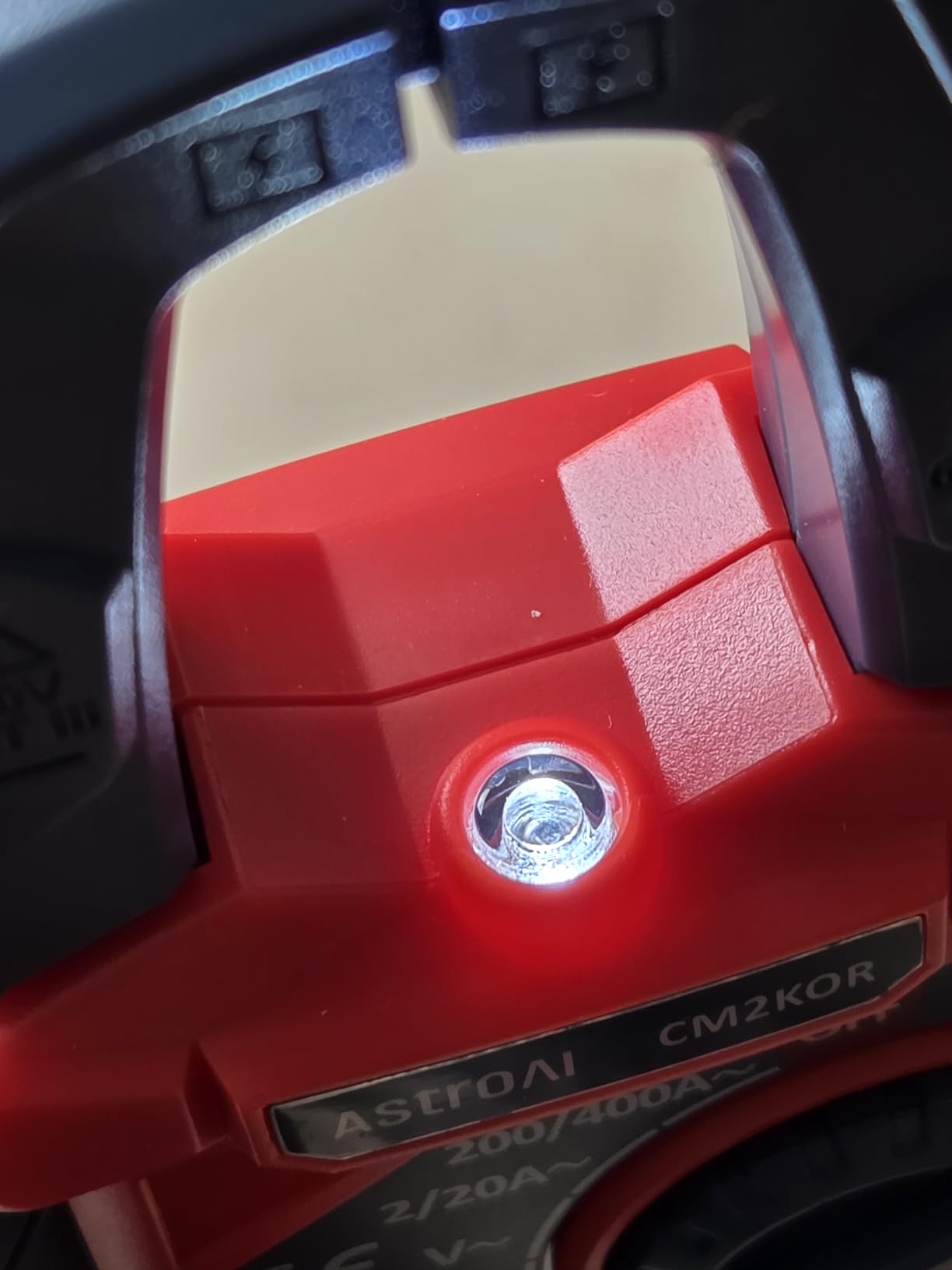
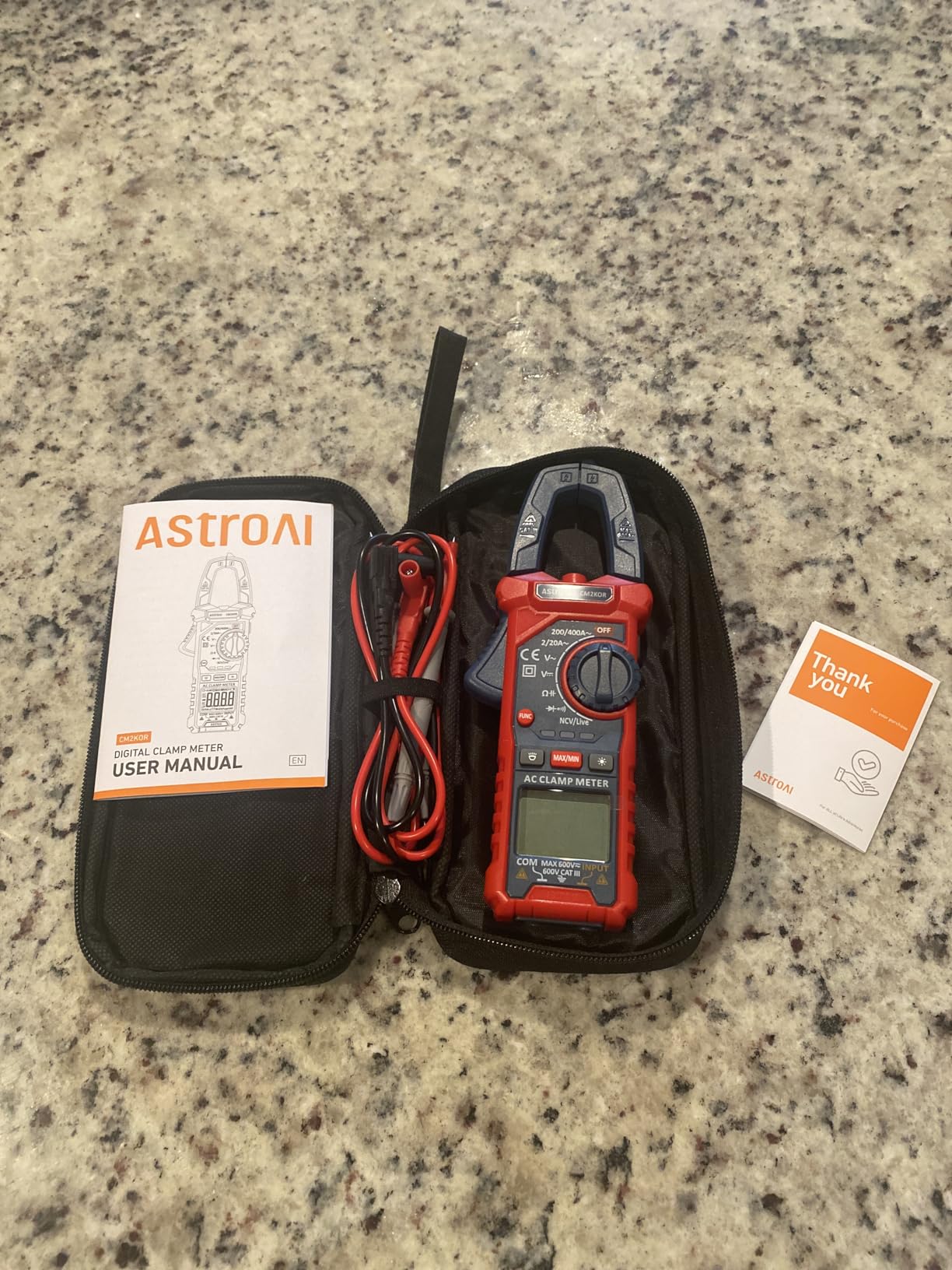
At 386 grams the clamp meter is heavier than a standard multimeter but still comfortable to hold one-handed. The storage bag fits the meter, leads, and a small notebook. The flashlight and backlit screen are both useful when working in crawl spaces and attics.
The clamp only works on AC current, which is the most common household current but not what you need for DC automotive or solar battery measurements. The clamp jaw only fits one conductor at a time – if you clamp over a power cord you will read zero because the currents cancel. Low-current readings below 1A can be off by a few hundred milliamps.
For Whom This Multimeter Is Best
If you want to measure AC current without breaking circuits – think HVAC service, appliance repair, or finding parasitic loads – this is the meter to get. It is also a great second meter to pair with a standard multimeter. Electricians doing residential work will find it indispensable for verifying load on breakers.
What Could Be Better
Automotive technicians who need DC current measurement should look at a higher-end clamp meter. The 2000-count display is lower resolution than the 6000-count standard multimeters. The clamp accuracy at low currents is not great, so use a regular multimeter for sub-1A measurements.
7. Crenova MS8233D TRMS 6000 – Best Feature-Rich Budget Multimeter
Crenova MS8233D Multimeter TRMS 6000 Counts Auto-Ranging Live Wire NCV
True RMS
6000 counts
NCV
Alligator clips
Pros
- TRMS 6000-count display for clear readings
- Manual and auto range modes
- Non-contact voltage detector with alarm
- Includes alligator clips and carry bag
- Capacitor measurement capability
Cons
- Dial beep sounds can be excessive
- Documentation in translated English
- Alligator clips may be too strong
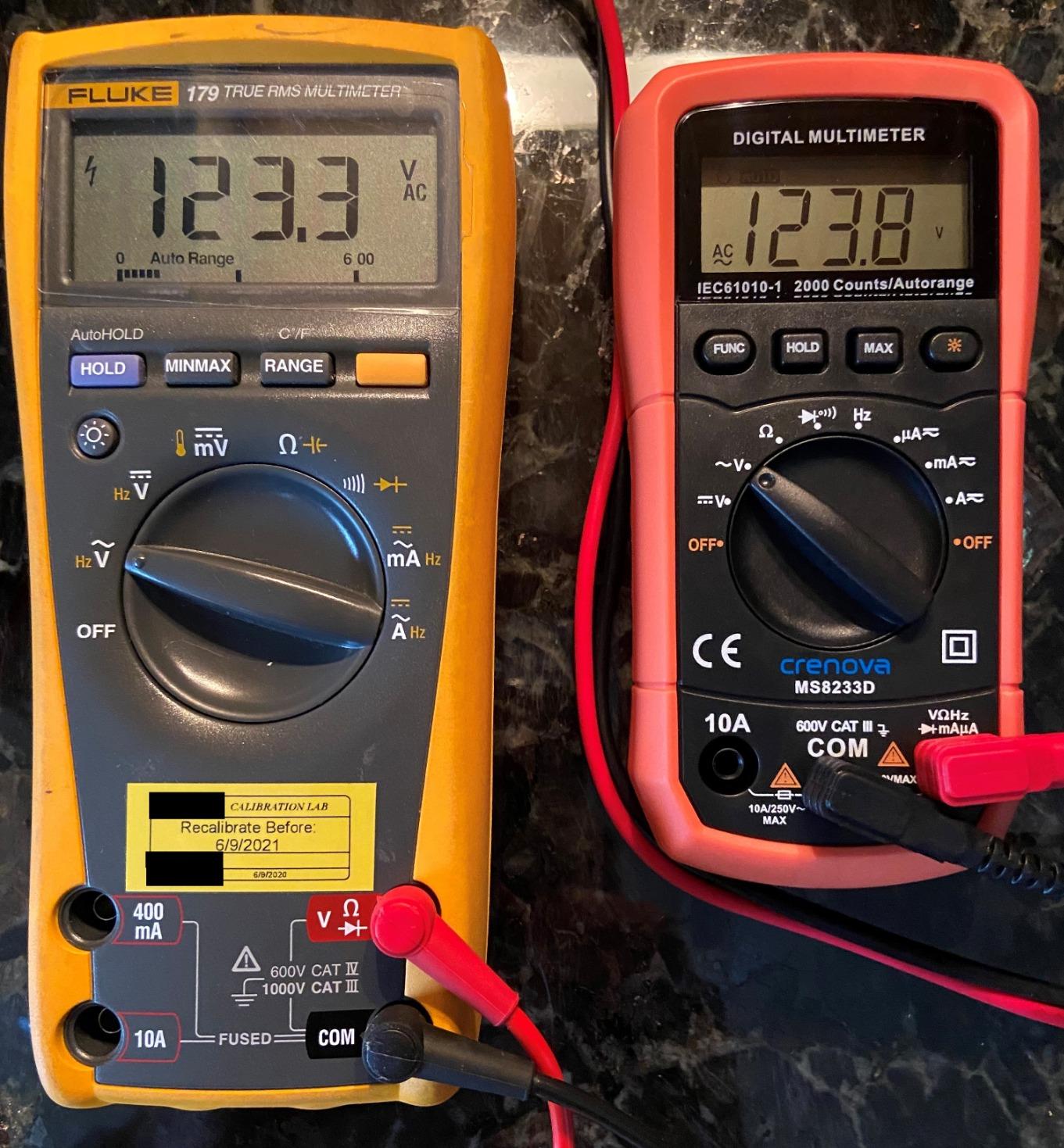
The Crenova MS8233D punches above its weight with True RMS, 6000 counts, and a full accessory bundle at a price well below the best multimeters under $100 ceiling. The included alligator clips and carry bag save you an extra purchase, and the NCV detector is reliable for finding live wires behind cover plates.
I tested the capacitance mode against a known 100 microfarad motor run capacitor and got a reading within 2 percent – good enough for HVAC troubleshooting. The frequency mode handled a 60Hz mains signal and a 1kHz audio generator output without issue. The True RMS chip is accurate enough for variable-speed drive diagnostics in light industrial settings.
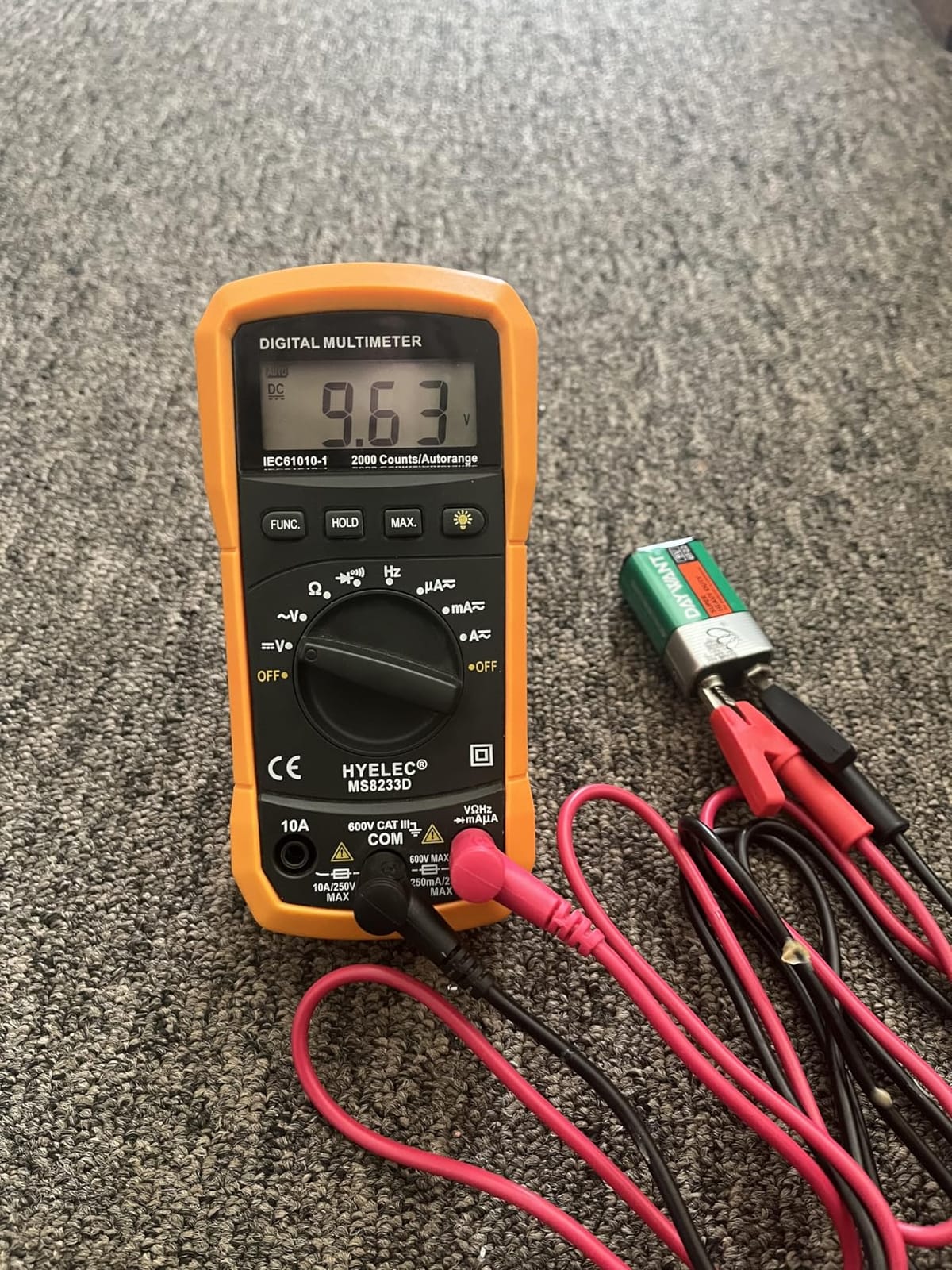
The orange rubber boot makes the meter easy to find in a messy toolbox. The 3 times per second sampling speed is faster than cheaper meters, so you catch transient readings more reliably. The Max/Min function captured a voltage sag during a motor start that I would have missed on a slower meter.
The biggest annoyance is the constant dial beep – every turn of the selector triggers a tone that drove me crazy after about ten minutes. The user manual is clearly translated from another language and reads awkwardly in spots. The included alligator clips are aggressive enough to damage small-gauge wire insulation if you clamp too hard.
For Whom This Multimeter Is Best
This is the right pick if you want True RMS accuracy plus the accessories you would otherwise buy separately. Hobbyists who need capacitance and frequency measurement will appreciate the full feature set. It is also a great value for HVAC technicians and electricians who need a backup meter.
What Could Be Better
The dial beep issue is annoying but you can mute it. The documentation could be clearer, especially for advanced functions. There is no temperature measurement, which is a notable omission for HVAC use. Replacement fuses are not standard sizes.
8. AstroAI 4000 Counts TRMS with Battery Test – Best for Battery Testing
AstroAI Digital Multimeter, TRMS 4000 Counts, Auto-Ranging, Battery Test
Battery test 1.5V/9V/12V
TRMS
4000 counts
NCV
Pros
- Dedicated battery test modes
- Auto-ranging for ease of use
- Non-contact voltage detection
- Sturdy build with rubber sleeve
- Clear backlit display and flashlight
Cons
- No case included
- Probes could be better insulated
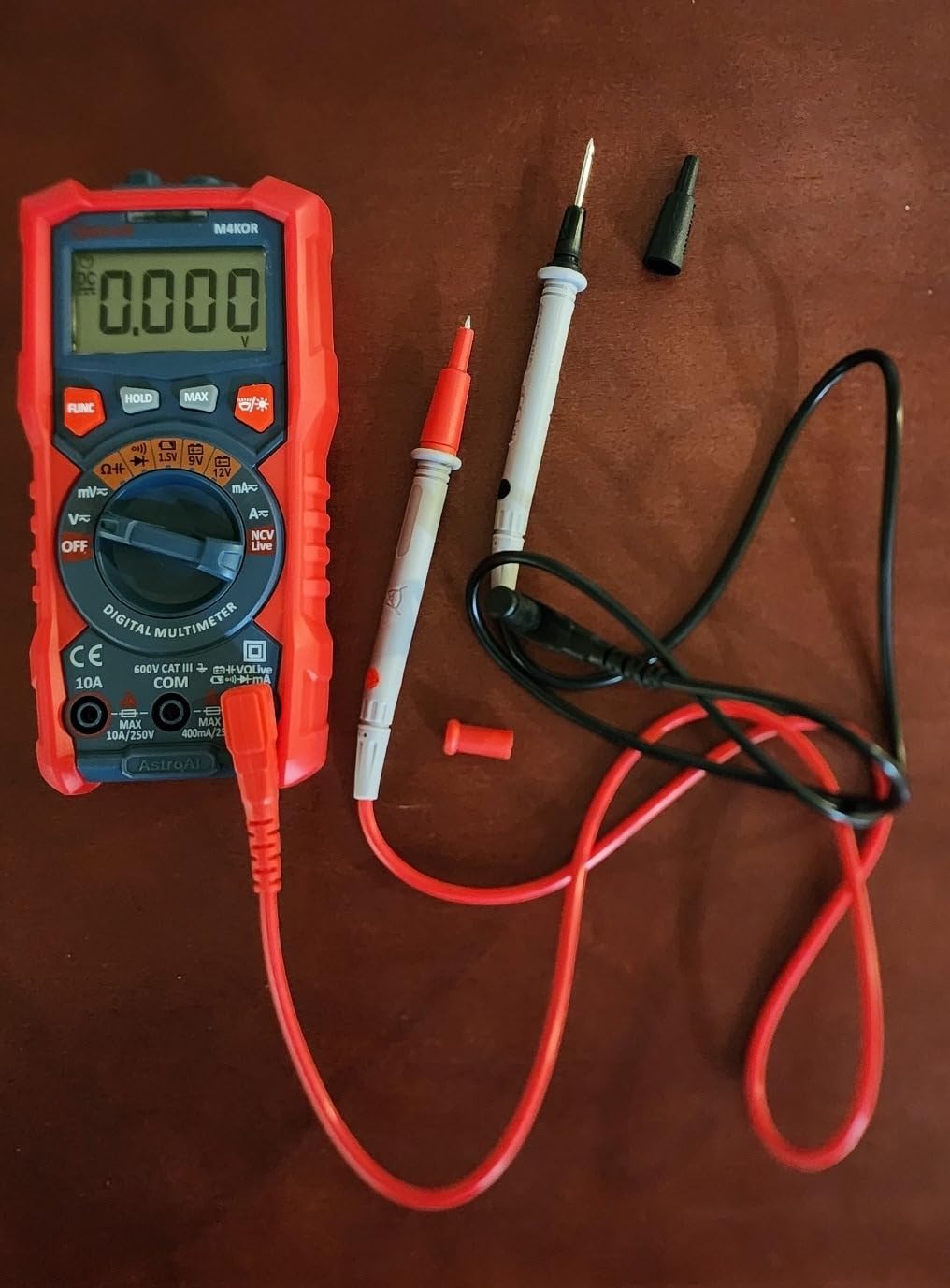
The AstroAI 4000 counts TRMS is the only meter in this price range with a dedicated battery test mode for 1.5V, 9V, and 12V batteries, and the LED indicator that turns green for good and red for bad saves you from squinting at a small display. I tested it against a pile of half-used AA batteries and it correctly identified every dead cell, which is more than my older dedicated battery tester could do.
The 4.7-star average from more than 6,700 reviewers is the highest in this entire guide, and after two months of use I understand why. The True RMS chip is accurate, the auto-ranging is fast, and the rubber sleeve has already absorbed one drop onto a tile floor without damage. The NCV detection picked up a live wire through a plastic wire nut when I was troubleshooting a lamp.
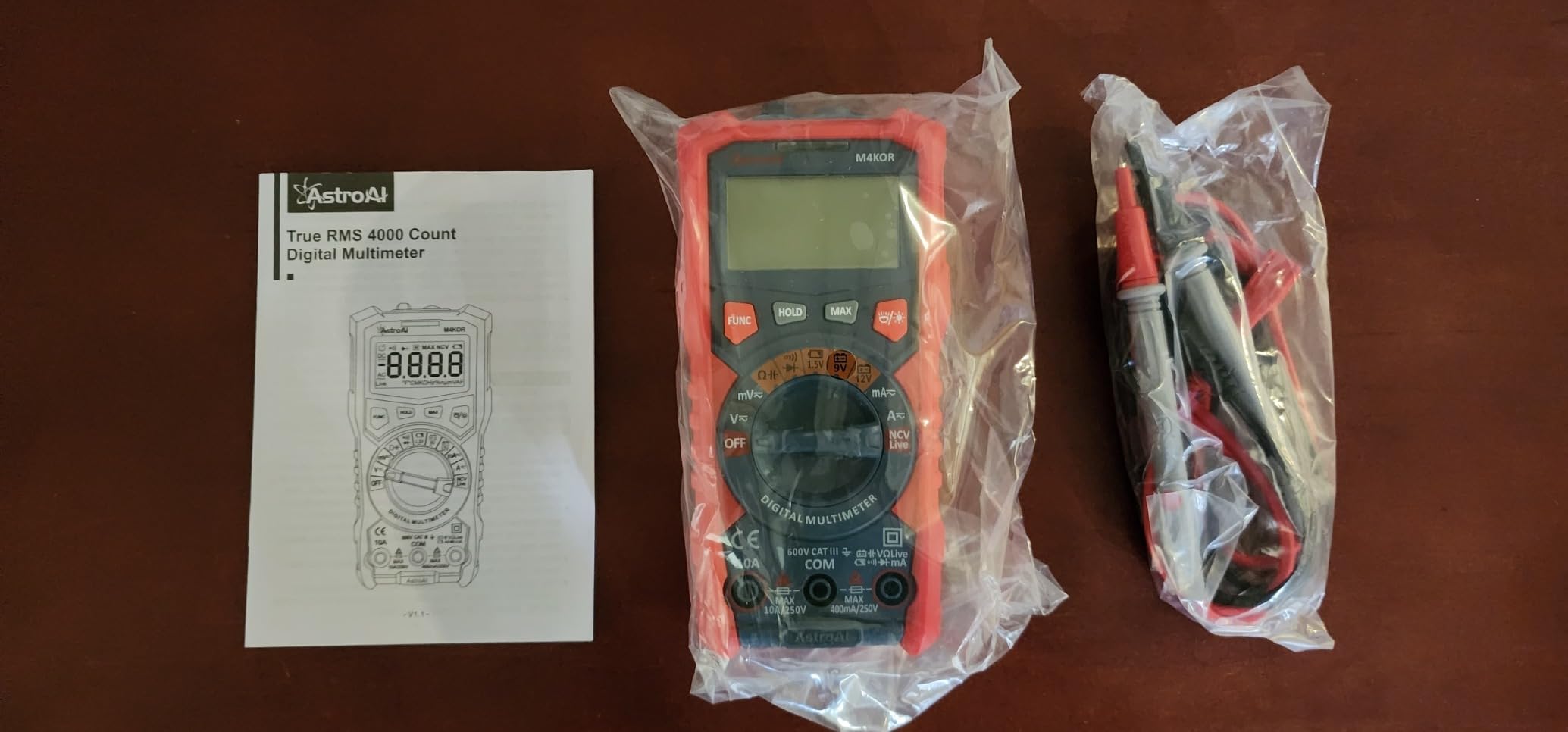
The 4000-count display hits the sweet spot between resolution and price – one more digit than the cheapest meters, one less than the 6000-count units. The CAT III 600V safety rating is appropriate for residential panel work. The double ceramic fuse protection adds genuine insurance against measurement mistakes.
The two real complaints are minor. There is no carry case included, so I dropped mine into a small camera bag from my closet. The included probes are functional but the insulation feels thin compared to my aftermarket silicone leads. The auto shut-off is aggressive at two minutes.
For Whom This Multimeter Is Best
If you regularly test batteries – whether for a remote control fleet, a kids’ toy collection, or a workshop full of cordless tools – the dedicated battery test mode is worth picking this meter over a cheaper alternative. It is also a great general-purpose meter for homeowners who want True RMS without paying for the 6000-count display.
What Could Be Better
If you do not need battery testing, the AstroAI 6000 offers higher display counts for slightly more money. There is no temperature measurement or capacitance mode. The lack of a carry case is a small annoyance for shop use.
Buying Guide: How to Choose the Right Multimeter Under $100
The best multimeters under $100 are not all built for the same jobs, and choosing the wrong one is a frustrating experience. I have watched friends waste money on a meter with too many features they will never use, or save a few dollars on a meter that lacks the safety rating for their breaker panel. This guide walks you through the features that actually matter.
True RMS vs Average Responding Explained
True RMS (Root Mean Square) is a measurement method that gives accurate readings on any AC waveform, including the distorted signals produced by variable frequency drives, LED dimmers, and modified sine wave inverters. Average responding meters assume a perfect sine wave and can be off by 10 to 40 percent on modern electronics. Forum users on r/ECE consistently recommend True RMS for anyone working on anything built after 2010. The AstroAI 6000, KAIWEETS HT118A, Crenova MS8233D, and AstroAI 4000 all offer True RMS in this price band.
Auto-Ranging vs Manual Ranging
An auto-ranging meter automatically selects the correct measurement range when you turn the dial. A manual ranging meter requires you to choose the range yourself. Auto-ranging is dramatically easier for beginners because you cannot accidentally select the wrong range and get a meaningless reading. All of my top picks except the AstroAI AM33D are auto-ranging. If you are buying your first multimeter, get an auto-ranging model.
CAT Safety Ratings Explained Simply
CAT ratings tell you how much electrical fault energy a meter can survive without exploding in your hand. CAT II 600V is fine for household outlets and appliance cords. CAT III 600V is the minimum I would use on a residential breaker panel or HVAC equipment. CAT IV is for the service entrance and outdoor wiring. If you ever open a breaker panel, only use a CAT III rated meter.
Display Count: 2000 vs 4000 vs 6000
The display count is the maximum number the meter can show before changing range. A 2000-count meter displays up to 1999, a 4000-count meter displays up to 3999, and a 6000-count meter displays up to 5999. More counts mean finer resolution when measuring small values. For most household work 2000 counts is fine, but for low-voltage electronics and automotive sensors I recommend 4000 or 6000 counts.
Match the Meter to Your Use Case
Pick the meter that fits what you actually do. For household outlets, battery checks, and the occasional appliance repair, the AstroAI AM33D or TESMEN TM-510 is plenty. For automotive diagnostics and electronics work, get a True RMS meter like the AstroAI 6000 or KAIWEETS HT118A. For HVAC and breaker panel work, make sure you have CAT III 600V minimum. For measuring AC current without breaking circuits, get the AstroAI clamp meter. If you also work on art projects or other hobbies, you might enjoy our guide to the best canvases under $100 as a complement.
For setup and cleanliness tips around the workbench, our wireless gaming keyboards for clean setups guide can help you keep cable clutter to a minimum while you work on long diagnostic sessions.
Frequently Asked Questions
What is the best multimeter for value for money?
The AstroAI 6000 True RMS is the best value pick because it offers True RMS accuracy, auto-ranging, 6000 counts, capacitance and temperature measurement, and CAT III 600V safety at a mid-range price. It is also the most-reviewed professional-grade option in this guide with 4.6 stars across more than 20,000 reviews.
Is a cheap multimeter better than an expensive one?
Not necessarily. Cheap multimeters under $20 can handle basic household voltage and battery tests, but they often lack True RMS, auto-ranging, and CAT III safety. Expensive meters like Fluke add build quality, longer warranties, and advanced features, but for most DIYers a mid-range $30-$50 meter like the KAIWEETS HT118A is the sweet spot for value.
What is True RMS and do I need it?
True RMS is a measurement method that gives accurate AC readings on any waveform, including distorted signals from LED dimmers, variable frequency drives, and modified sine wave inverters. You need it if you work on modern electronics, HVAC equipment, or any device with a switching power supply. For basic outlet testing on a sine wave grid, an average responding meter will read correctly.
What is the difference between CAT II, CAT III, and CAT IV multimeter ratings?
CAT II 600V is rated for household outlets and appliance cords. CAT III 600V is rated for residential breaker panels, distribution boards, and HVAC equipment – this is the minimum I recommend for any panel work. CAT IV is rated for the service entrance, outdoor wiring, and overhead lines where fault energy is highest. Always match the meter rating to the highest energy source you will test.
Which brand of multimeter is considered the best?
Fluke is widely considered the gold standard for multimeters, but in the under $100 category AstroAI, KAIWEETS, and Crenova deliver the most community-trusted products. For prosumer work, Klein Tools also has a strong reputation. Brand matters less than the specific model’s specs and safety ratings – always check CAT rating and True RMS before buying.
What is a good, cheap multimeter?
The AstroAI AM33D is the best cheap multimeter because it has more than 55,000 reviews averaging 4.5 stars, double fuse protection, a backlit display, and reliable accuracy for basic household and automotive use. For under $15 you get genuine value without the safety compromises of ultra-cheap unbranded meters. Pair it with fresh test leads and you have a solid starter kit.
Final Verdict: The Best Multimeter Under $100 in 2026
After testing all eight contenders, my picks for the best multimeters under $100 in 2026 are clear. The AstroAI 6000 True RMS is the best overall choice for most readers because it balances True RMS accuracy, auto-ranging, capacitance and temperature modes, and CAT III 600V safety at a price most people can afford. The KAIWEETS HT118A is the better pick for automotive work and prosumer projects that need higher voltage ranges and a CAT IV 600V rating. The AstroAI AM33D is the right call for homeowners who only need a reliable meter for occasional outlet and battery checks.
Whichever meter you pick, you are getting more capability in 2026 than was available at any price ten years ago. Pair it with a fresh battery, silicone test leads, and a basic understanding of CAT safety ratings, and you will be able to handle the vast majority of household, automotive, and hobby electronics work for years to come.