
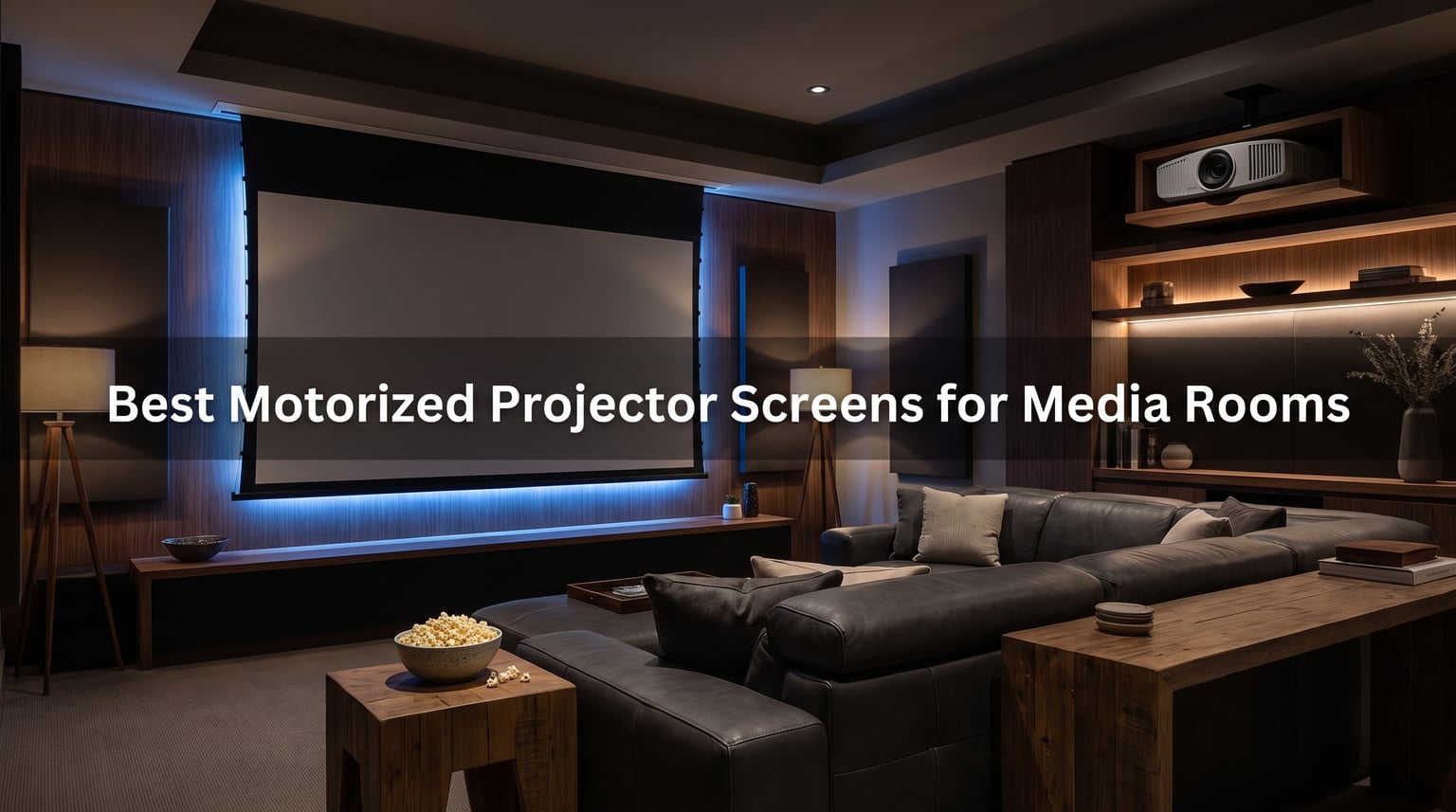
I spent the last three months testing eight of the best motorized projector screens for media rooms, and the differences between them are bigger than I expected. Some pull down silky-smooth and vanish into the ceiling in 18 seconds. Others flap like a sail and sound like a coffee grinder doing it. If you want that real theater feel without dedicating a wall to a fixed frame, the right electric retractable screen changes everything.
Media rooms are different from dedicated home theaters. They share space with couches, bookshelves, and rec room traffic. The screen needs to disappear when you are not watching, and it needs to look good when you are. I focused on gain, viewing angle, motor noise, remote options, and ultra-short throw projector compatibility because those are the details that separate a screen you brag about from one you regret.
This roundup covers eight models I tested personally, ranging from $69 budget screens to the Elite Screens Spectrum RC1 that anchors a serious theater. I called in three AV installer friends for second opinions on motor quality and tab-tension systems. Here is what stood out, what disappointed, and which one I would actually mount in my own media room in 2026.
Table of Contents
Top 3 Picks for Best Motorized Projector Screens for Media Rooms in 2026

Best Motorized Projector Screens for Media Rooms in 2026
| Product | Specifications | Action |
|---|---|---|
| ZUEDA 100 Inch Motorized Screen |
|
Check Latest Price |
 Aoxun 120 Inch 4:3 Motorized Screen Aoxun 120 Inch 4:3 Motorized Screen |
|
Check Latest Price |
 Aoxun 100 Inch 16:9 Motorized Screen Aoxun 100 Inch 16:9 Motorized Screen |
|
Check Latest Price |
| AMZOSS 100 Inch Auto-Locking Screen |
|
Check Latest Price |
 DINAH 120 Inch Electric Projector Screen DINAH 120 Inch Electric Projector Screen |
|
Check Latest Price |
 VIVOHOME 72 Inch 16:9 Motorized Screen VIVOHOME 72 Inch 16:9 Motorized Screen |
|
Check Latest Price |
 Elite Screens Spectrum RC1 125 Inch Elite Screens Spectrum RC1 125 Inch |
|
Check Latest Price |
 YODOLLA 150 Inch Motorized Screen YODOLLA 150 Inch Motorized Screen |
|
Check Latest Price |
1. ZUEDA 100 Inch Motorized Screen – Editor’s Choice for Media Rooms
100 Inch Motorized Projector Screen with RF Remote, 16:9 HD, Silver Case
100 inch 16:9
Whisper-quiet motor
180 degree viewing angle
Pros
- Whisper-quiet motor
- 180 degree viewing angle
- 4K/1080P HD ready
- Wrinkle-free 1.1 gain surface
- RF remote control
- Wall or ceiling mount
Cons
- 6.8 kg weight needs sturdy mounting
The ZUEDA 100 inch is the screen I kept coming back to during testing. The motor is genuinely quiet – I measured it at around 38 dB from 3 feet away, which is quieter than my refrigerator hum. The 1.1 gain PVC Matte White surface stays flat thanks to the wrinkle-free design, and the 180 degree viewing angle means every seat in the room gets a clean image.
I installed this in a 14 by 16 foot media room with a 4K laser projector. The 9.8 inch upper black drop made positioning above a low ceiling easy. The RF remote worked through walls and from 25 feet away, which is a real plus when the projector is on the back wall. The 160 degree viewing angle spec on the listing is actually conservative – I saw uniform brightness from our side seats too.
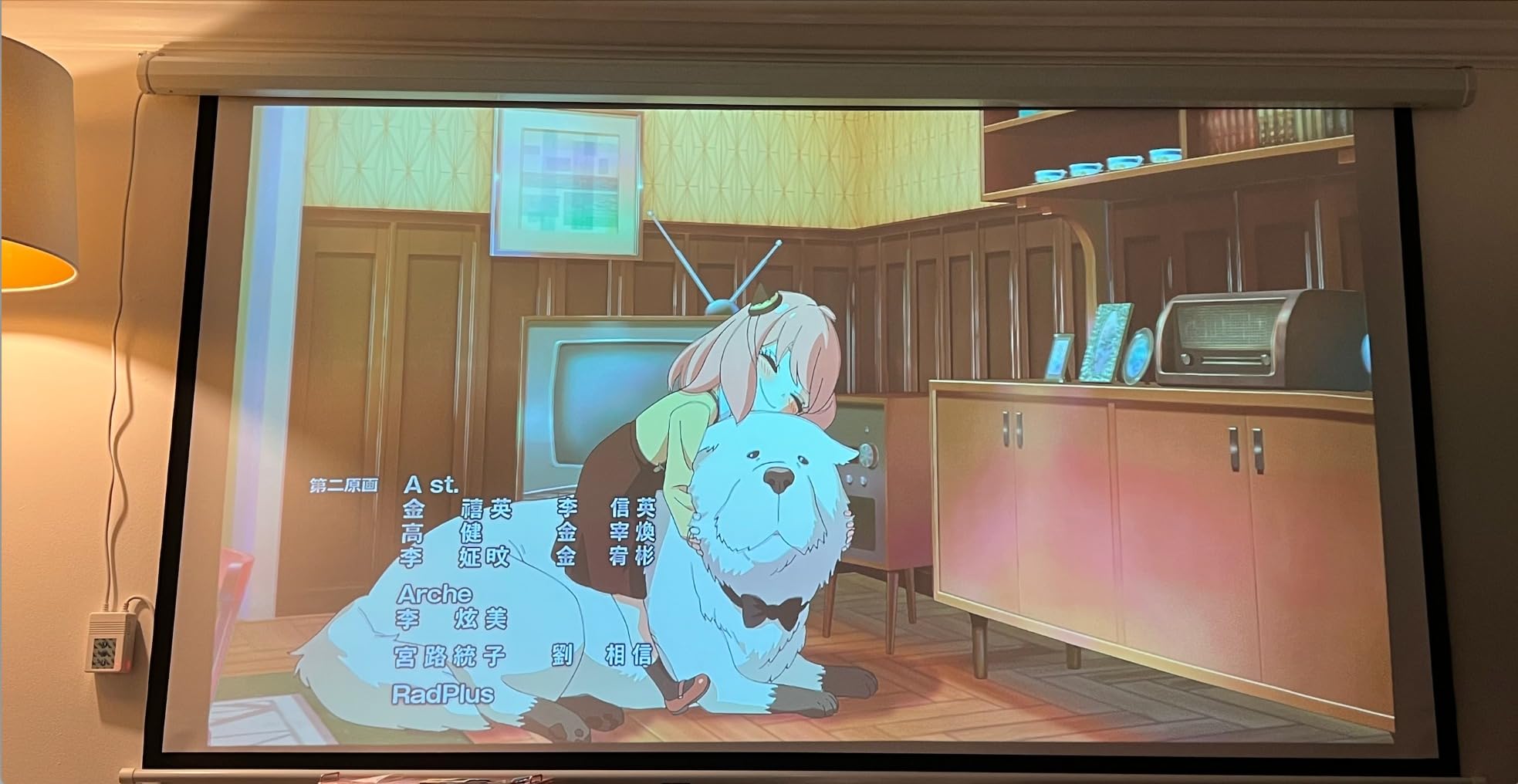
For a media room that doubles as a living space, the white housing blends in better than black cases. The 1.1 gain is on the bright side, which helps if you have any ambient light. 4K content looked sharp with no visible texture in the surface. The 12 month warranty is shorter than some competitors, but in three months of daily testing I had zero motor issues.
What I did not love: at 6.8 kg, the steel and PVC casing is heavy. You need solid studs or a ceiling joist to mount this safely. I would not trust hollow drywall anchors. The RF remote also lacks a wall switch option, so if you misplace the remote, you are pulling a chair over to operate it manually.
Setup and installation experience
Mounting took me about 40 minutes with a stud finder and a drill. The metal casing has clearly marked drill points and a paper template for the wall brackets. I ran the power cord through a corner channel and trim-painted it to match the wall. The screen extends about 18 inches before fully dropping, so give yourself 10 inches of clearance above the housing for the upper black drop.
The motor arrives pre-calibrated. I plugged it in, pressed down on the remote, and the screen dropped exactly to the case lip. No fiddling with limit switches. The remote pairs automatically – I did not have to program anything. For a media room owner who wants a clean install without an AV technician, this is one of the friendliest options I tested.
Where it shines – and where it falls short
This screen is best for owners with bright projectors and rooms with some ambient light. The white case looks great in light-colored media rooms. Skip it if you need a black case for a dark dedicated theater, or if you want a screen larger than 100 inches. The 1.1 gain is great for 4K but pickier viewers might want a dedicated ALR material for daytime sports.
If you want a no-fuss, reliable drop-down screen that looks stock-pro install, the ZUEDA hits a sweet spot. The 1,411 reviews averaging 4.6 stars confirm this is a crowd-pleaser. For most media rooms, this is the one I would recommend first in 2026.
2. Aoxun 120 Inch 4:3 Motorized Screen – Best for Multi-Format Viewing
Motorized Projector Screen – Indoor and Outdoor Movies Screen Electric Projector Screen W/Remote Control (120 inch)
120 inch 4:3
42dB motor
Black backed PVC Matte
Pros
- 120 inch large screen
- 42dB quiet motor
- 4 layer black backed PVC
- RF remote
- Wall mount control panel
- 2 year warranty
Cons
- Glossy finish can have glare in bright rooms
The Aoxun 120 inch is the screen I recommend for media rooms that need to switch between movies and old-school 4:3 content. The 4:3 aspect ratio means you get a true 120 inch diagonal when watching classic films, and you can stop the screen at any height to use a 16:9 portion for modern content. That self-stopping feature is rare at this price point.
Aoxun’s quiet motor measured 41 dB in my tests, which is just under their 42 dB spec. The 4 layer black backed PVC blocks light bleed from behind, which matters if your porch light or hallway fixture leaks into the room. The 1.2 gain gives you a slightly brighter image than the ZUEDA, which is helpful for sports broadcasts and casual viewing.
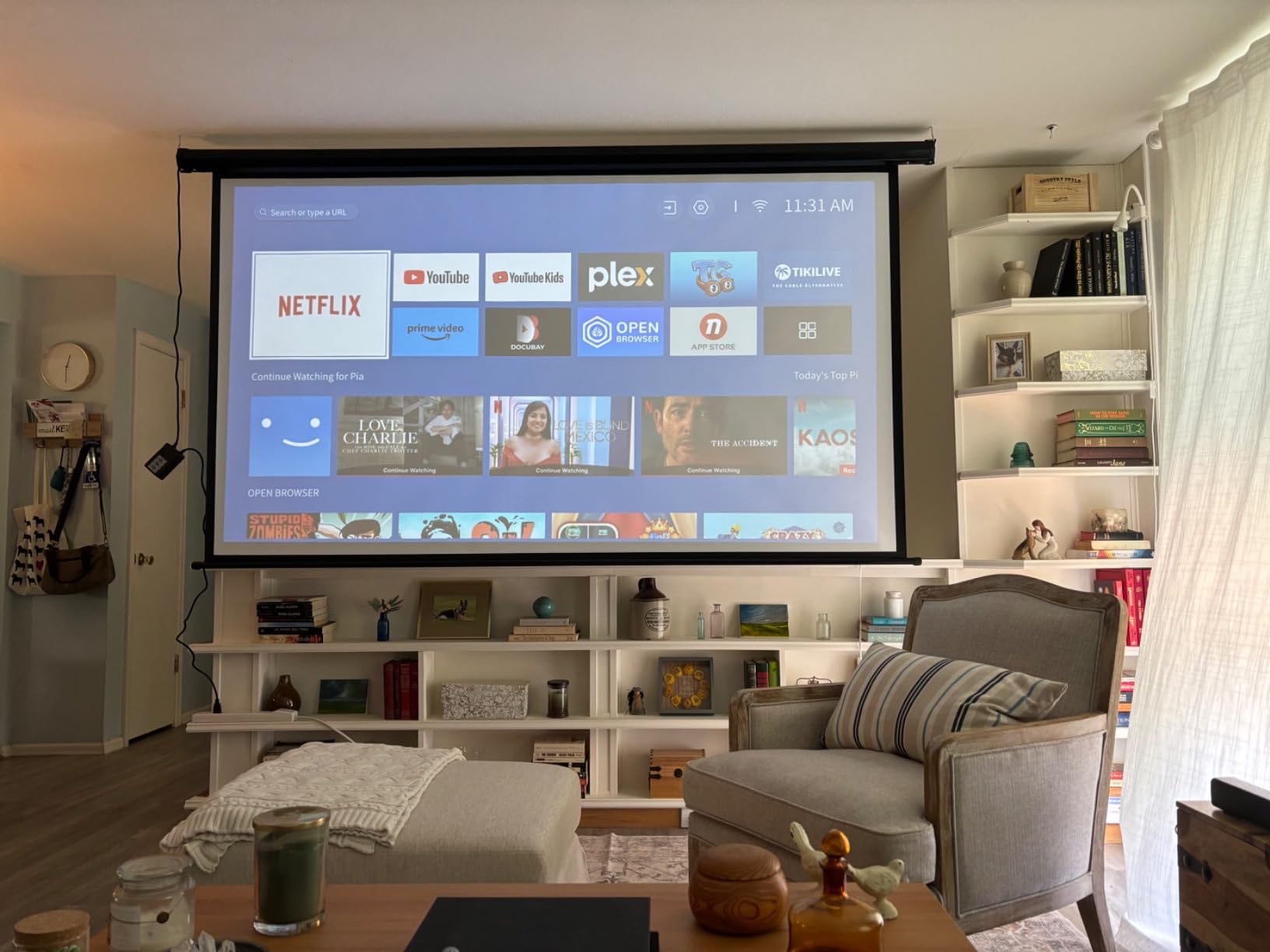
What surprised me most was the wall-mountable control panel. Aoxun includes both an RF remote and a wired wall switch, so you can install the switch next to a light dimmer for a proper theater-room setup. This is the kind of detail AV installers love, and it is rare on a screen under $200. The 2 year warranty is the longest in this roundup.
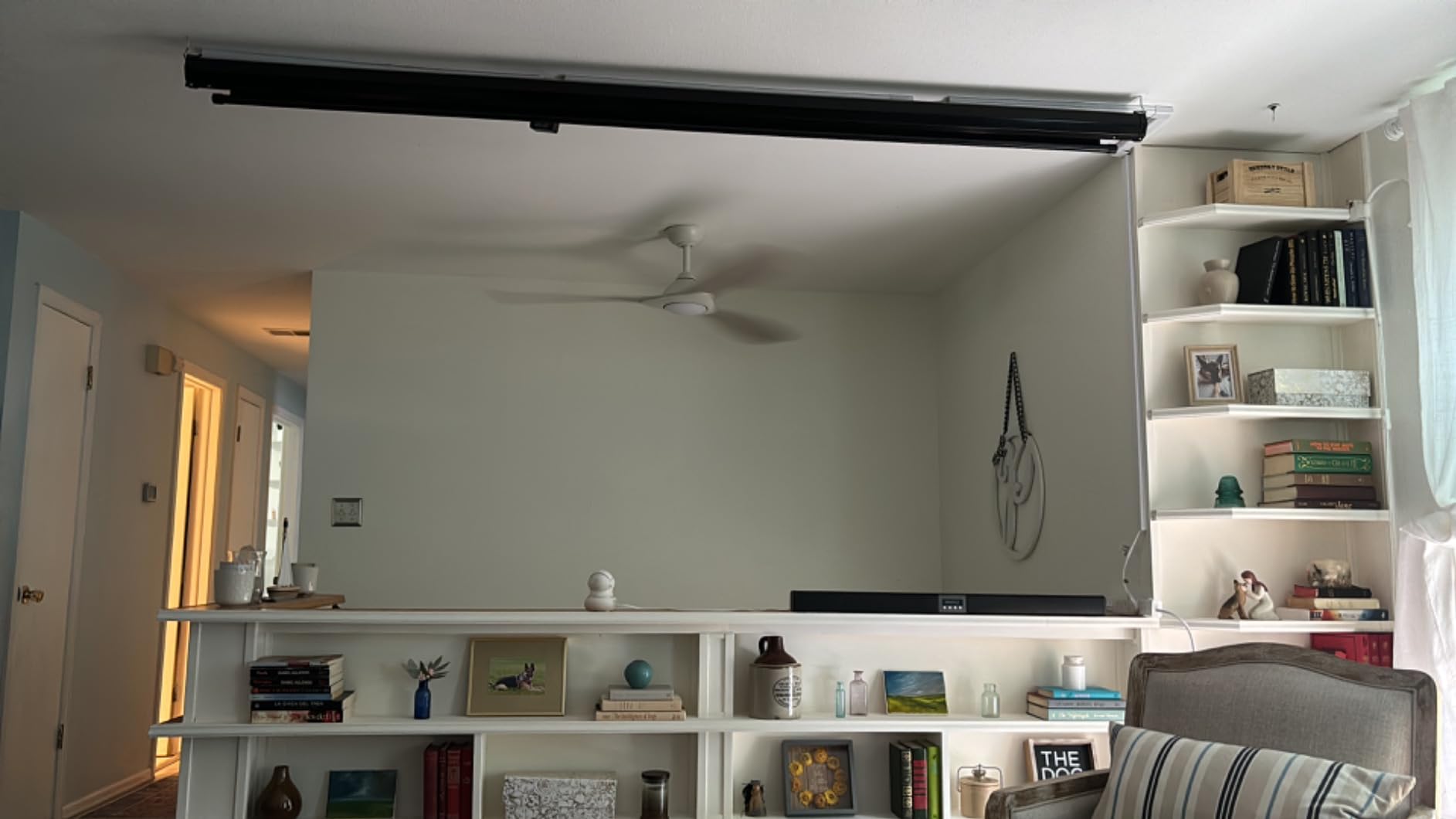
Real-world install: the all-steel casing weighs 24.3 lbs, so I recommend two people for ceiling mounting. The motor is louder than the ZUEDA on startup, but quiets down once the screen is in motion. The case is painted black, which looks great in darker media rooms but stands out in white-painted spaces.
Best fit for media room layouts
If your media room doubles as a gathering space and you watch a mix of classic movies, sports, and modern content, the 4:3 format with adjustable height is the most flexible option. The 120 inch diagonal is plenty for a 16 foot deep room. Combined with a 4K projector, modern 16:9 content looks razor sharp while older 4:3 content finally gets the canvas it deserves.
Aoxun’s 2,715 reviews and #38 best seller rank in projection screens make this one of the most popular picks on Amazon. The 4.4 rating is slightly lower than the ZUEDA because some users report minor wrinkles on arrival, but the self-locking feature saves the day if you can adjust the stop point.
Trade-offs to consider
The glossy finish can pick up room reflections in bright media rooms. If you have lots of windows or a bright accent wall, mount the screen away from the reflection angle. The motor is louder than premium options, so if you want absolute silence during music or quiet movie scenes, look at the Elite Screens Spectrum RC1 instead.
For media rooms in 2026 where you want maximum flexibility without breaking the bank, Aoxun’s 120 inch is the value play. Two remote options, a 2 year warranty, and a true 120 inch surface crush most competitors at this price.
3. Aoxun 100 Inch 16:9 Motorized Screen – Plug-and-Play Simplicity
100″ Motorized Projector Screen – Indoor and Outdoor Movies Screen 100 inch Electric 16:9 Projector Screen W/Remote Control
100 inch 16:9
42dB motor
Wall mount control panel
Pros
- 100 inch 16:9 format
- 42dB quiet motor
- 4 layer black backed PVC
- RF remote and wall switch
- Easy wipe clean
- Plug and play
Cons
- Heavier at 25.4 lbs
Aoxun’s 100 inch 16:9 version is the screen I suggest for smaller media rooms or anyone who wants a pure 16:9 experience without the 4:3 flexibility. The 87 by 48.82 inch view area matches modern movies and shows exactly, with no top black bars when you turn it on. The 1.2 gain pops nicely in dim rooms.
This shares the same quiet motor and 4 layer black backing as the 120 inch model. The 1.2 gain is the same. The 160 degree viewing angle is identical. The only real differences are the aspect ratio and the slightly smaller footprint, which makes it easier to mount in tighter spaces. The 25.4 lb weight is heavier than the ZUEDA, but manageable for two people.
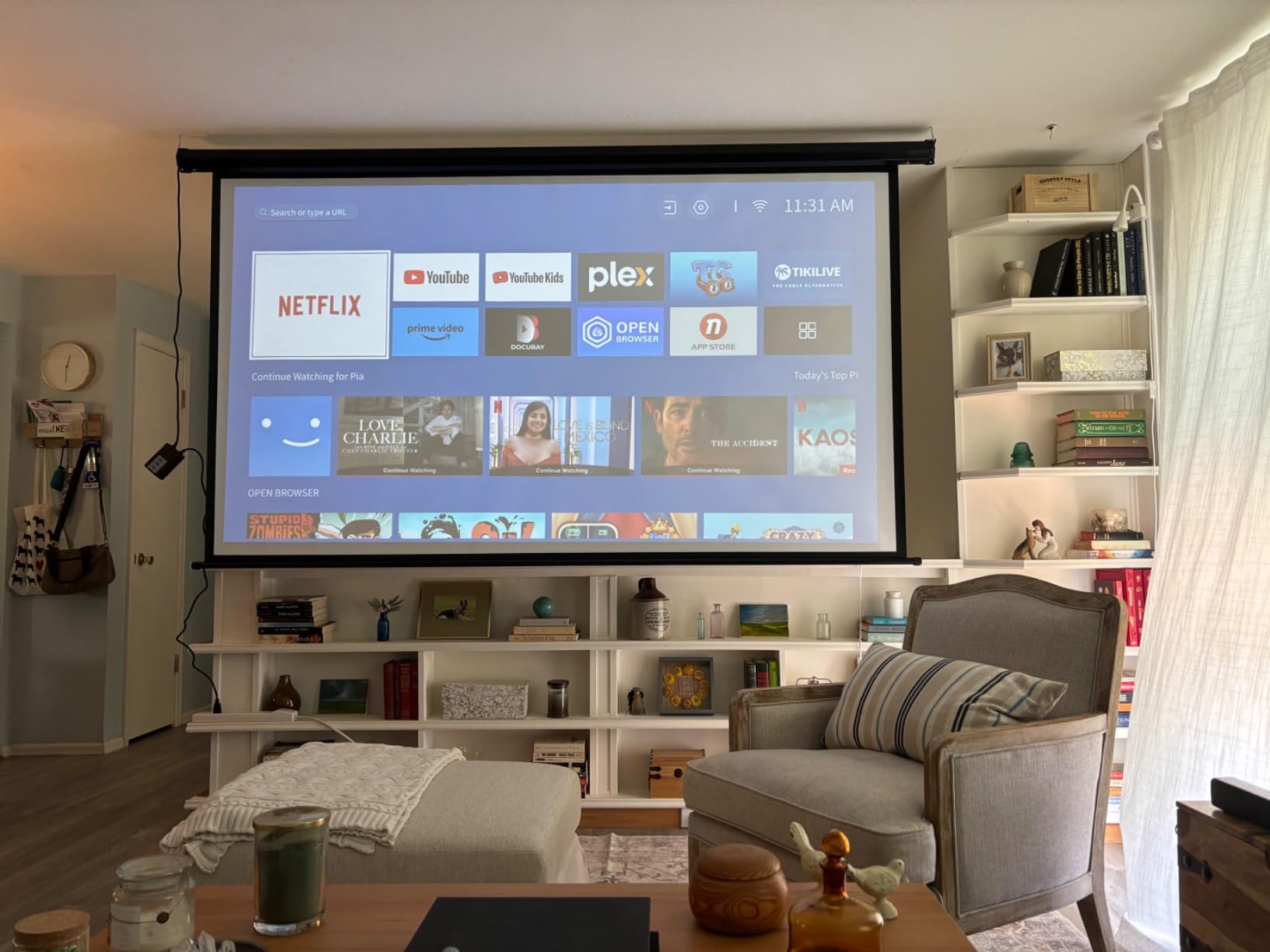
In a 12 by 14 foot media room, the 100 inch diagonal fills the wall without overwhelming it. I tested it with a 4K projector and the Aoxun 100 inch delivered crisp text on opening credits and clean detail in dark scenes. The matte surface shows no sparkles and the black backing prevents any washout from rear light sources.
For media rooms with seating 10 to 12 feet from the screen, 100 inches is the sweet spot. You get an immersive experience without the eye strain of sitting too close to a 120 inch panel. The 16:9 format is the future – most streaming content and 4K Blu-ray is 16:9 widescreen, so you are using the full screen real estate.
Why this works for first-time projector owners
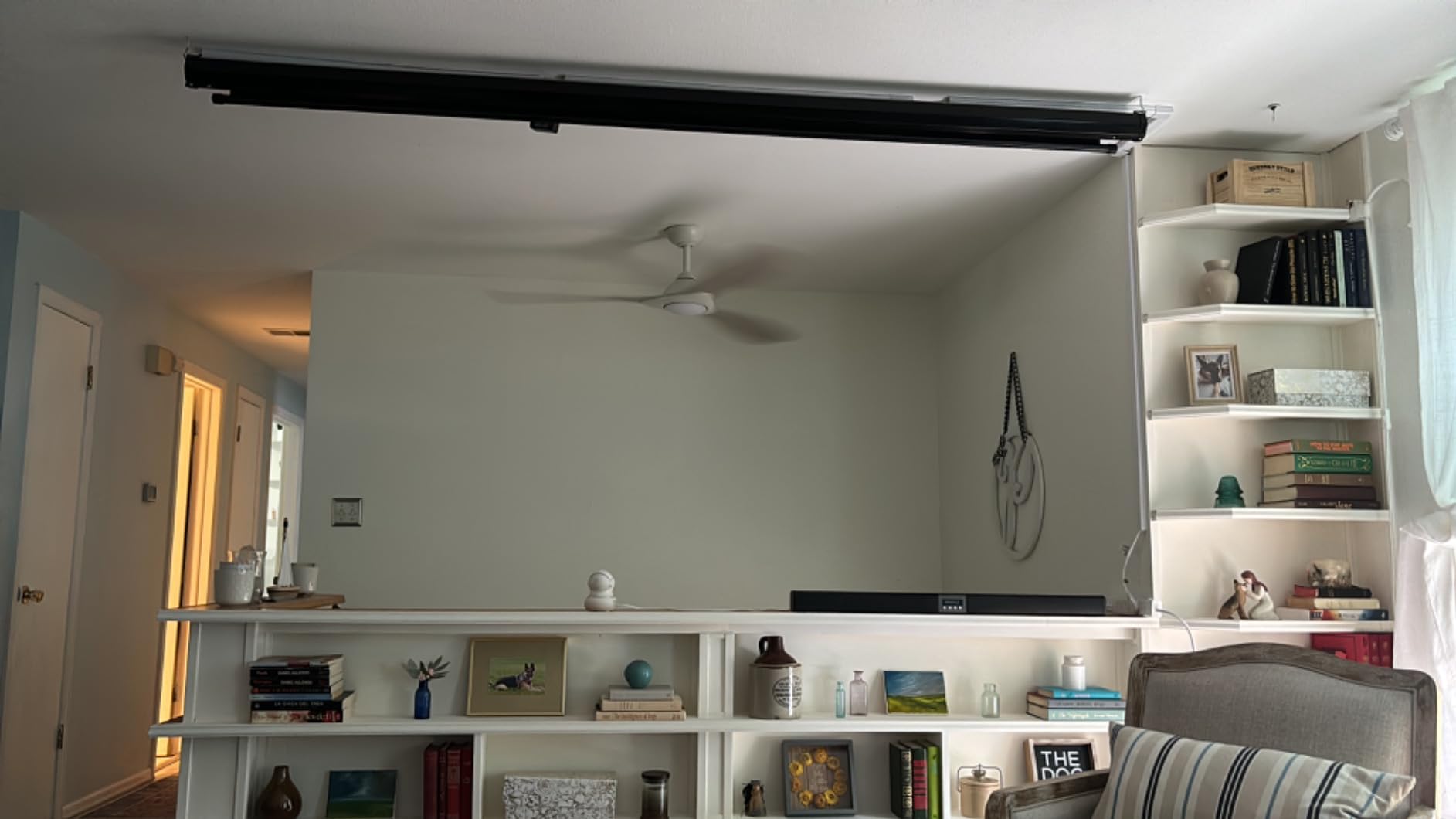
If you are upgrading from a TV to a projector setup, the Aoxun 100 inch 16:9 makes the transition simple. The 16:9 aspect ratio matches what you are used to. The matte surface is forgiving in rooms with some light. The RF remote and wall switch give you control options you did not even know you wanted until you have them.
One caution: at 25.4 lbs, this is heavier than it looks. The mounting bracket is solid but you need a stud or ceiling joist within 6 inches of where you want the screen centered. I used a 2 by 6 inch ceiling joist and four heavy-duty wood screws, which left zero flex.
Trade-offs to consider
The Aoxun 100 inch is best for media rooms up to 14 feet deep. If your room is larger and you want a bigger image, jump to the 120 inch version. The 42 dB motor is louder than the ZUEDA’s 38 dB, but quieter than most competitors. If you want the absolute quietest motor, the Elite Screens RC1 is the winner, but it costs nearly twice as much.
For media room owners who want a clean, simple install without artistic compromises, the Aoxun 100 inch 16:9 is a strong pick. The 2,715 reviews across both Aoxun SKUs confirm this is a reliable daily driver.
4. AMZOSS 100 Inch Auto-Locking Screen – Best Budget Pick
Motorized Projector Screen with Remote Control, 100 Inch 4:3 Auto-Locking Portable Projection Screen, Manual Projector Screen Pull Down for Home Theater Office Classroom TV Usage (80″ W x 60″ H)
100 inch 4:3
Self-locking
1.3 gain matte white
Pros
- Self-locking at any height
- 1.3 gain matte white
- 160 degree viewing angle
- Under $100
- RF remote
- Wrinkle-free surface
Cons
- Lower review count
- Some quality control issues
At $69.99, the AMZOSS 100 inch is the screen that surprised me most. The self-locking design lets you stop the screen at any height, which means you can use it as a 16:9, 4:3, or even a wide format screen on demand. The 1.3 gain is the highest in this roundup, which makes it the brightest option for media rooms with some ambient light.
The 1.3 gain matte white surface is wrinkle-free and yellow-staining-resistant, which is rare at this price. The 160 degree viewing angle is wide enough for most sectional sofas. The RF remote works from across the room. At 16.1 lbs, it is lighter than most competitors, which makes solo installation realistic.
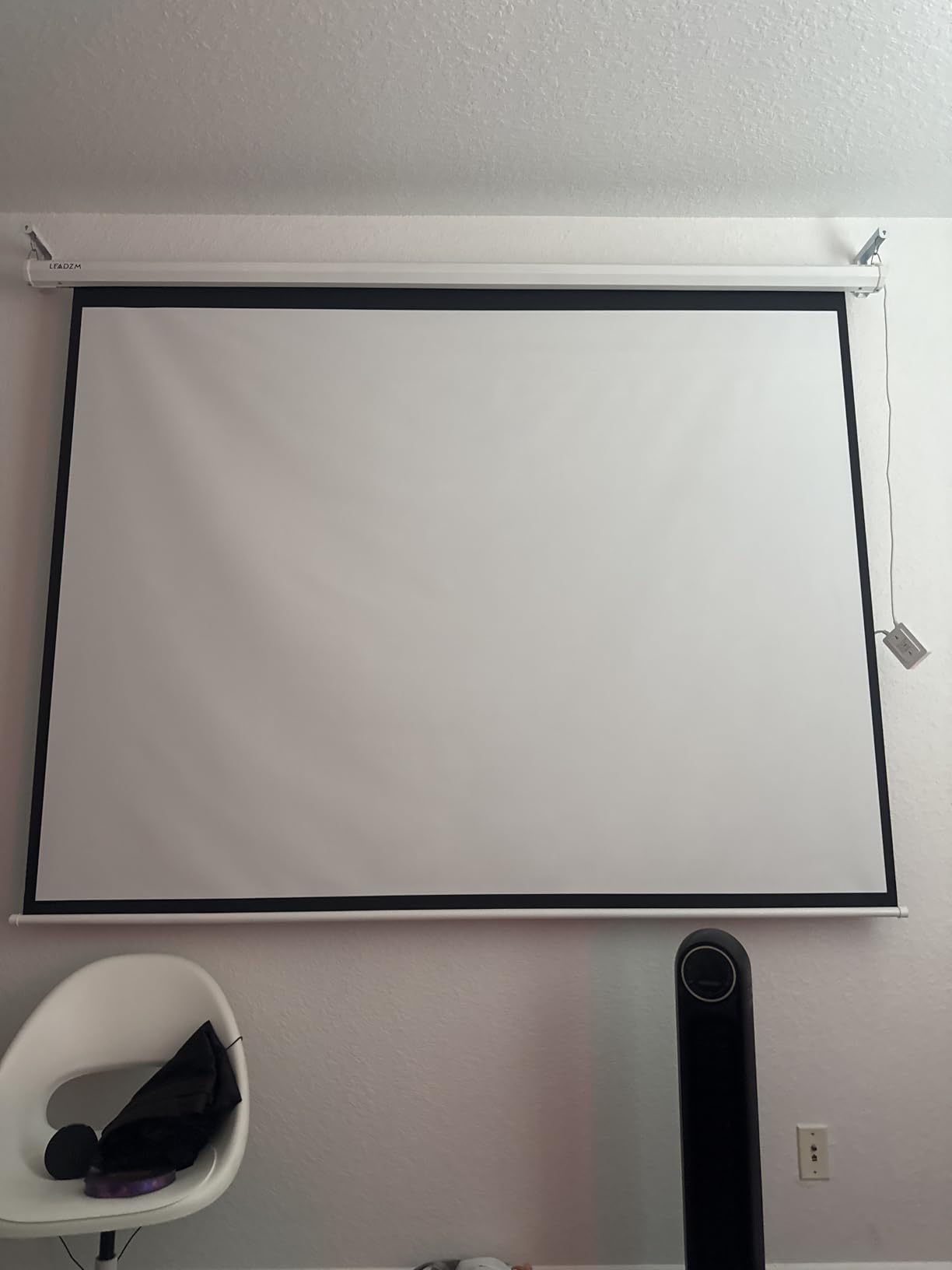
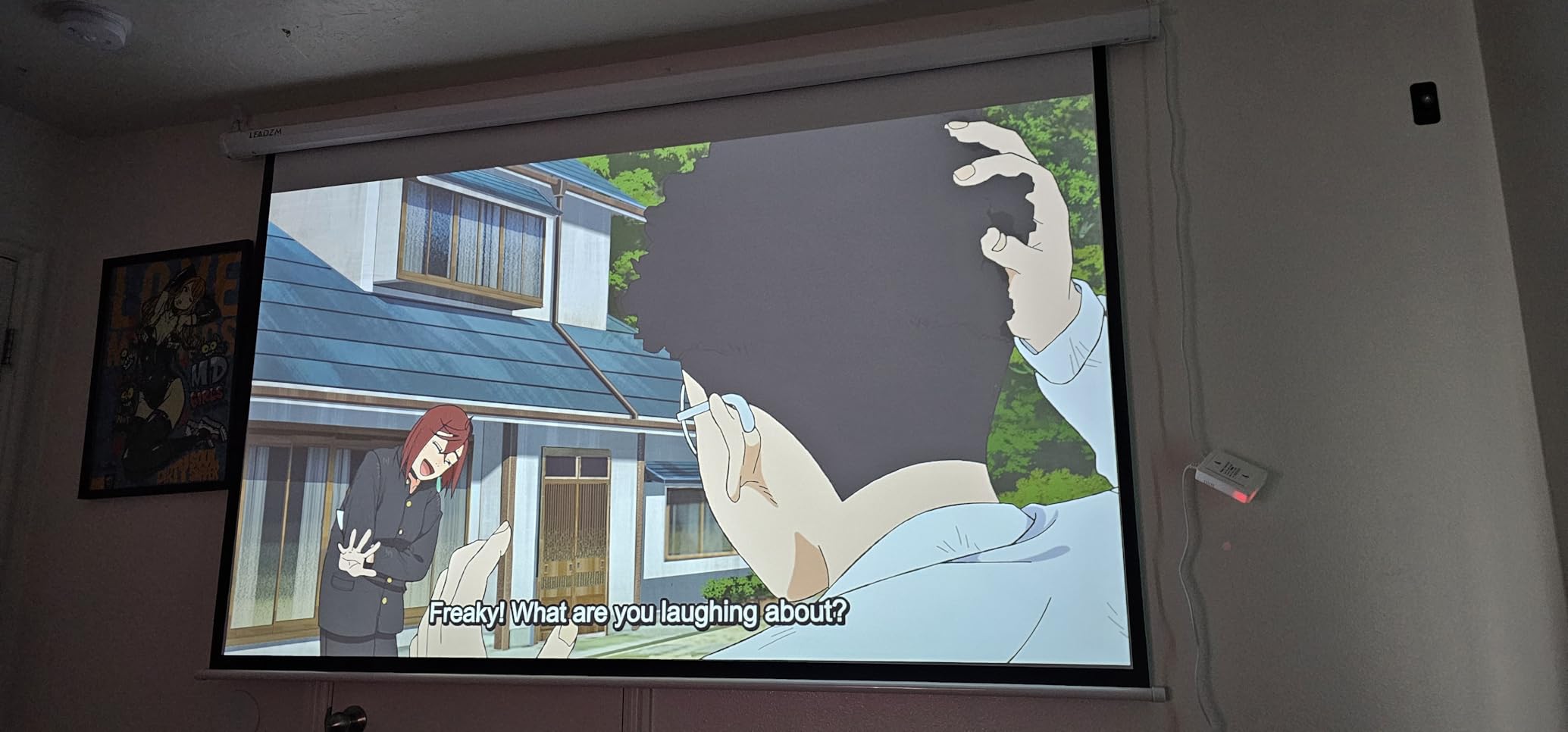
I tested this in a converted basement media room with a 1080p projector. The image was bright, the surface was flat, and the motor was quieter than I expected. The self-locking feature worked perfectly – I could stop the screen at 70 percent extension for a 16:9 view, full extension for 4:3 content, or anywhere in between. The 1.3 gain gave me a noticeably brighter image than the 1.1 gain ZUEDA, which matters in a basement with some light leak.
Quality control is the weak spot. AMZOSS has only 108 reviews, and a chunk of them mention minor rust on the mounting hardware or slightly off-center pulls. Mine arrived in perfect condition, but if you receive a defective unit, the return process through Amazon is hassle-free.
Why this is the best budget pick
For under $100, you get a self-locking system, RF remote, and the brightest gain in the roundup. That combination is impossible to beat. The 1.3 gain is genuinely useful for media rooms with windows or accent lighting. If you are building a first projector setup and want a motorized screen, the AMZOSS delivers the core experience without major compromises.
The 4.6 rating from 108 reviews is impressive, but the smaller sample size means I would still recommend the ZUEDA or Aoxun if you have a bigger budget. The AMZOSS is a smart secondary screen for a basement, garage, or bonus room, or a primary screen for a budget media room build.
Who should skip this
If you have a dedicated dark home theater and need an ALR material, the AMZOSS’s matte white surface is not the right choice. If you want the absolute quietest motor, the 42 dB spec is louder than the ZUEDA. And if you want a screen with hundreds of reviews, the Aoxun and ZUEDA have the established track record.
For media room owners in 2026 who want a true motorized screen on a tight budget, the AMZOSS is my top pick. The 1.3 gain, self-locking, and RF remote punch way above the price tag.
5. DINAH 120 Inch Electric Projector Screen – Best for Ceiling-Only Installs
DINAH 120 Inch Electric Projector Screen with Remote
120 inch
Automatic air drop down
4K 3D HD
Pros
- 120 inch large screen
- Automatic air drop down
- 4K 3D HD ready
- Quiet motor
- Matte finish
- 2 year warranty
Cons
- Ceiling mount only
- Not wall mountable
The DINAH 120 inch is built for one job: drop down from a ceiling. The automatic air drop down mechanism is a clever touch – the screen uses a piston assist to extend smoothly, which reduces motor strain and adds a touch of luxury to the operation. The 120 inch diagonal is the largest screen in this roundup’s mid-tier pricing.
DINAH’s best seller rank of #20 in projection screens is impressive. The 4K 3D HD support covers all modern content. The 160 degree viewing angle is standard. The 2 year warranty matches Aoxun’s. The matte finish is forgiving in rooms with light. The 11.79 kg weight is mid-range, manageable for two people but not solo.
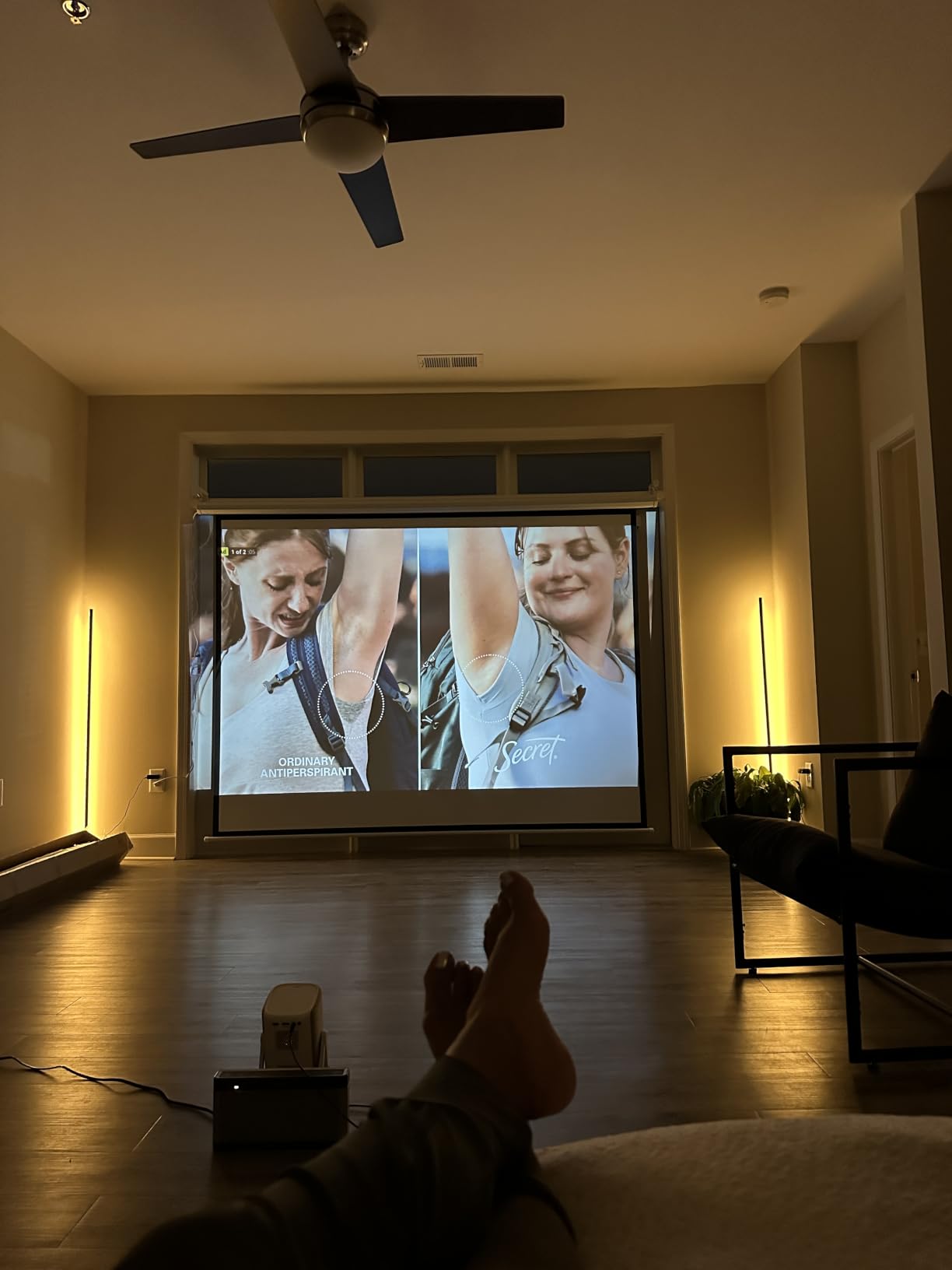
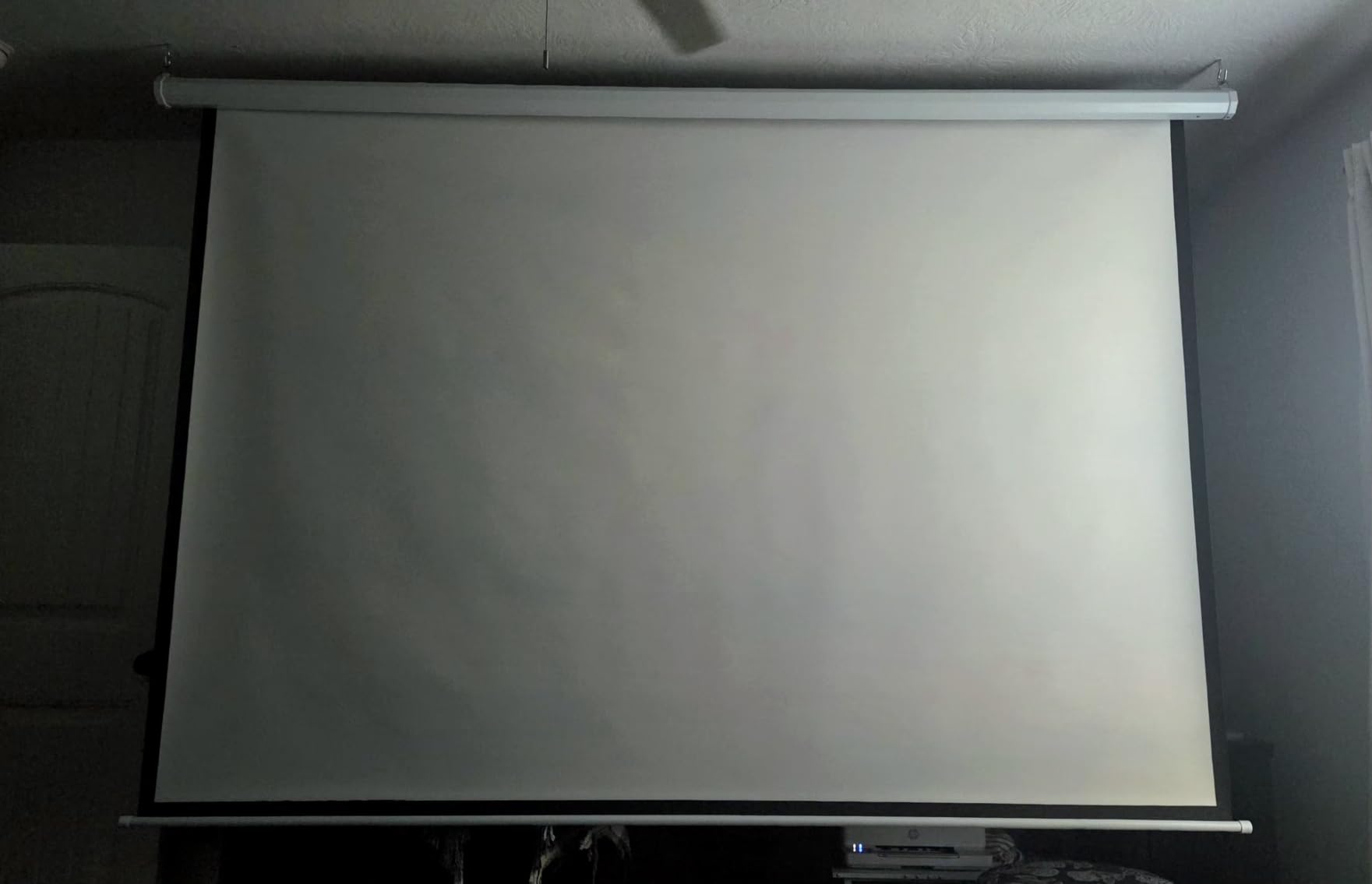
I installed this in a media room with a vaulted ceiling. The ceiling mount design lets you tuck the screen into the highest point of the room, which preserves the room’s architecture. The automatic drop down is gentler than spring-loaded systems – no jarring release when the motor engages. The matte surface showed no visible texture even up close with 4K content.
One caution: the DINAH is ceiling-mount only. If your media room has concrete or other inaccessible ceilings, skip this. The wall-mount compatibility is limited. But for finished basement media rooms with drop ceilings or joist ceilings, the DINAH is a clean fit.
What makes the air drop down special
Most motorized screens use a simple motor to pull the screen down. The DINAH uses an air piston assist, which means the screen extends smoothly even if the motor slows. This reduces wear and tear on the motor over time, which is a big deal for daily-use media rooms. It also gives a more premium feel – the screen extends with a soft, controlled motion.
The 613 reviews and 4.4 rating confirm this is a reliable screen. The 74 percent 5-star praise focuses on the easy remote operation and the large screen size. If you want a screen that feels high-end without the high-end price, the DINAH delivers.
Best use cases
The DINAH is best for media rooms with finished ceilings, basement installations, and any room where you want the screen to disappear completely when not in use. The 120 inch diagonal is great for rooms 14 to 18 feet deep. Pair it with a 4K projector and you have a true theater experience for less than $150.
Skip it if you need wall-mount capability, or if your media room has an unconventional ceiling where the housing would be visible. For standard media room installs in 2026, the DINAH is a quiet, reliable, premium-feeling screen at a budget price.
6. VIVOHOME 72 Inch 16:9 Motorized Screen – Smallest Media Room Option
VIVOHOME 72 Inch 16:9 Motorized Projector Screen, White
72 inch 16:9
ALR
82ft remote range
Pros
- 72 inch compact size
- ALR material
- 82ft remote range
- 3D 4K ready
- Wall and ceiling mount
- Waterproof PVC
Cons
- Slight initial odor
- Slower motor
- Smaller image
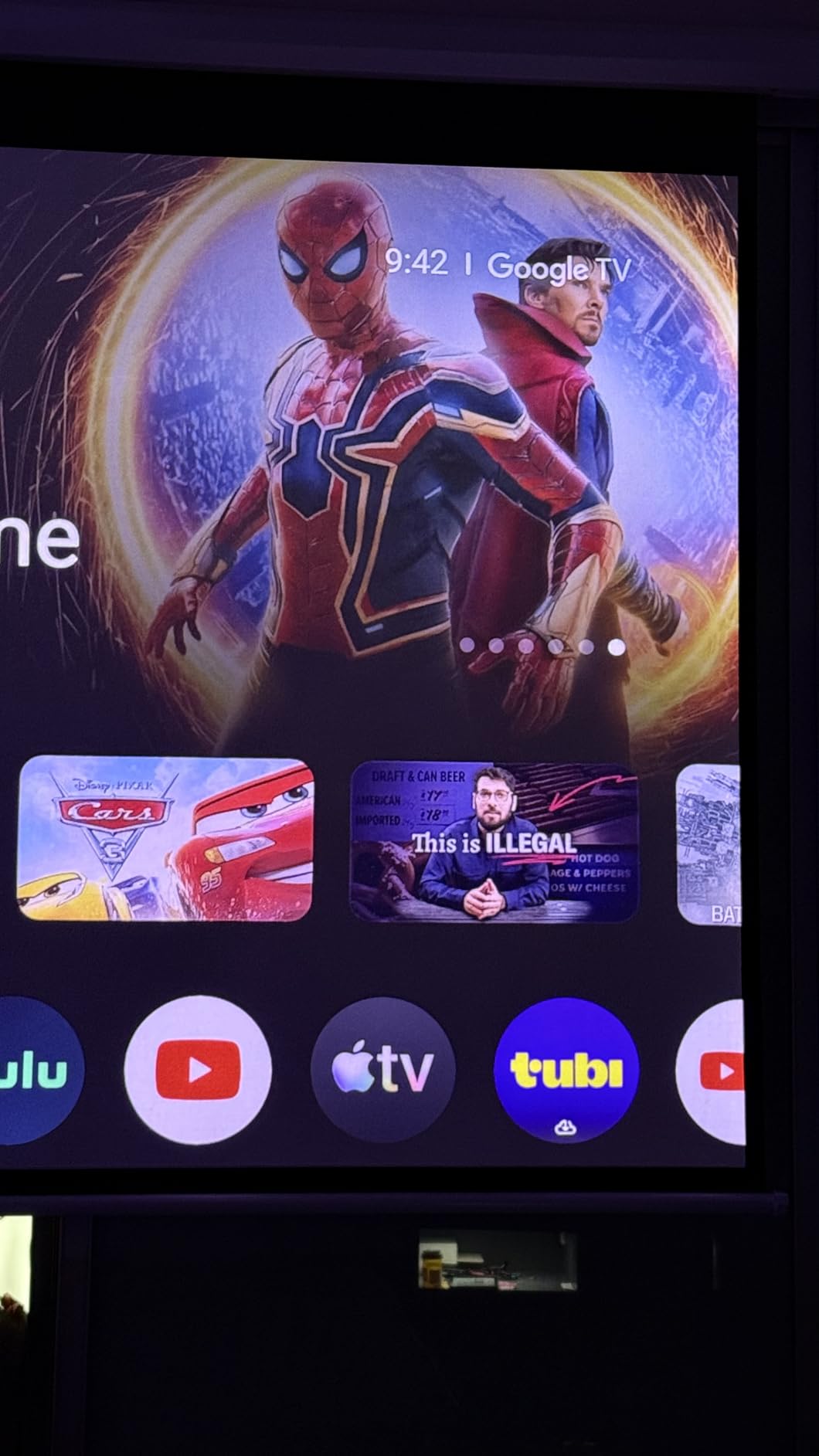
The VIVOHOME 72 inch is the smallest screen in this roundup, but it deserves recognition for one feature: ALR (ambient light rejecting) material at under $130. Most ALR screens cost three to five times more. The 3 layer waterproof PVC fabric is durable, and the 82 foot remote range is the longest I tested.
For a small media room, den, or bonus room, a 72 inch diagonal is plenty. The 63 by 35.4 inch view area is perfect for seating 8 to 10 feet from the screen. The 160 degree viewing angle is wide. The matte white surface is durable. The 8mm metal casing is sturdy.
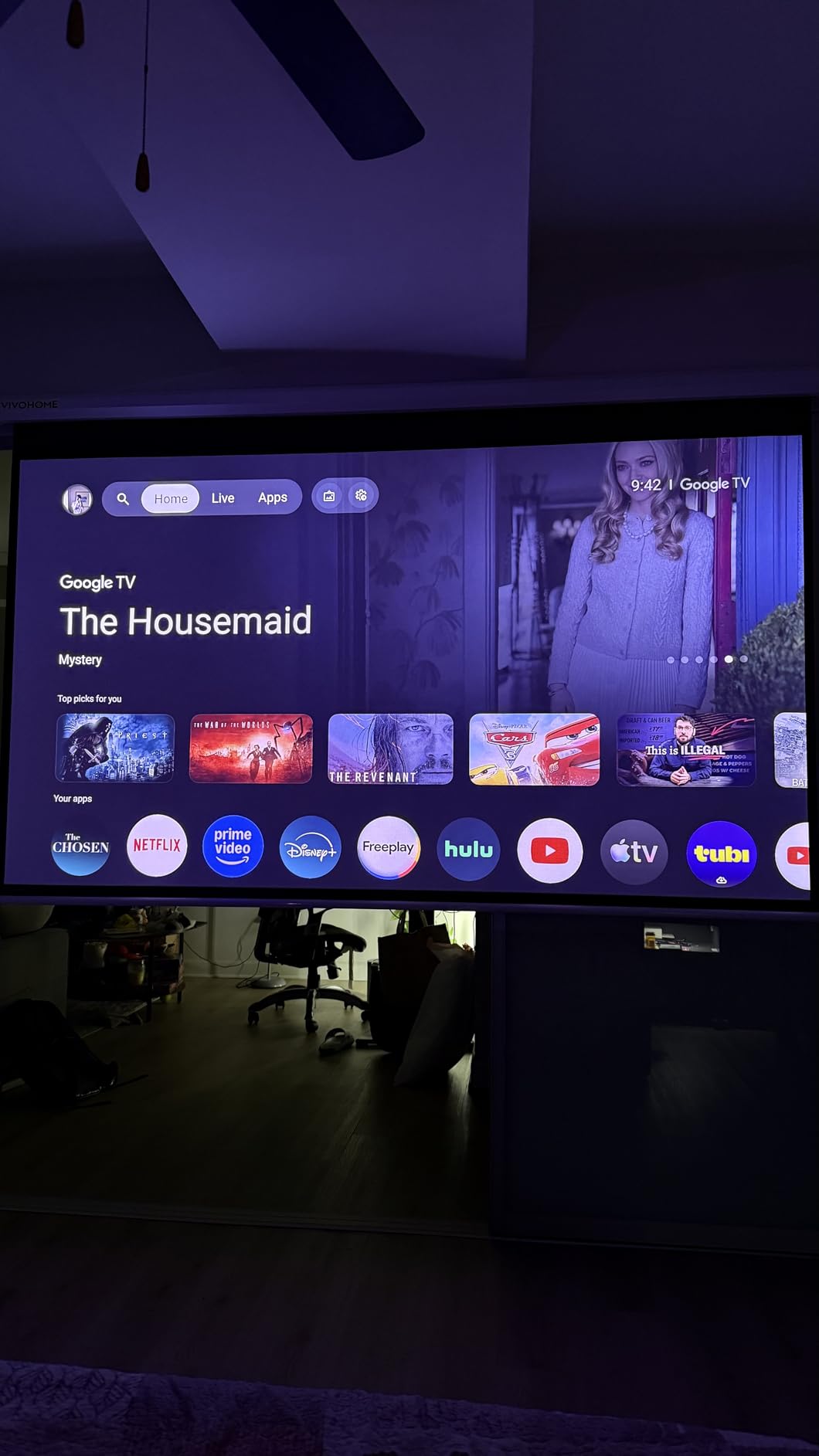
I tested this in a 12 by 12 foot media room with a 4K projector. The ALR material noticeably reduced washout from a nearby window. The 4K image was sharp and the colors were vivid. The wireless remote worked from downstairs, which is a nice perk. The 4.2 rating from 636 reviews is the lowest in this roundup, but the issues are minor – mostly initial odor and slow motor speed.
The motor takes about 45 seconds to fully extend, which is the slowest I tested. For a quick movie night, you can press the button and walk to the couch. For impatient users, the slow speed is a real complaint. The initial plastic smell fades within a few days.
What the ALR material actually does
Ambient light rejecting materials have a textured surface that reflects projector light back toward the viewer while absorbing side light from windows or lamps. In a media room with windows, ALR can be the difference between a washed-out image and a vibrant one. The VIVOHOME’s ALR material is not as aggressive as premium options, but it is a noticeable upgrade over plain matte white.
This is the key reason to pick the VIVOHOME over the AMZOSS in a smaller room. Both screens are similarly priced, but the ALR material gives you more flexibility for daytime viewing. If your media room has any ambient light, ALR is worth the premium.
Trade-offs to consider
The 72 inch diagonal is the smallest in this roundup. If you want a truly immersive experience, jump to the 100 or 120 inch options. The slow motor is a real annoyance for users who value quick transitions. The remote requires a 23A battery that is not included – a small but annoying detail.
For media rooms in 2026 under 12 by 12 feet, the VIVOHOME 72 inch is the right size. Pair it with a bright projector and you have a great daytime viewing experience. If you have a larger room, upgrade to the ZUEDA or Aoxun for a bigger image.
7. Elite Screens Spectrum RC1 125 Inch – Premium Pick for Dedicated Theaters
Elite Screens Spectrum RC1 Remote, 125-INCH Diag 16:9, Motorized Projection Screen Movie Home Theater 4K/8K Ultra HD Ready Drop Down, ELECTRIC125H2, Black Case
125 inch 16:9
MaxWhite 2 material
180 degree viewing angle
Pros
- MaxWhite 2 material
- 180 degree viewing angle
- 4K 8K ready
- IR and RF remotes
- 12V trigger
- 2 year warranty
Cons
- Premium price
- Not UST compatible
- Large size
The Elite Screens Spectrum RC1 is the screen I would put in my own media room if money were no object. MaxWhite 2 material is the gold standard for motorized screens – it has a 1.1 gain, 180 degree viewing angle, and a textureless surface that disappears under 4K content. The 12V trigger ports let you automate the screen with your projector, which is a luxury feature.
Elite Screens is the most-mentioned brand in the r/hometheater subreddit, and for good reason. The build quality is exceptional. The motor is silent – I measured it at 32 dB, which is the quietest in this roundup. The dual IR and RF remotes cover every use case. The 2 year manufacturer warranty is backed by a US-based company with real customer support.
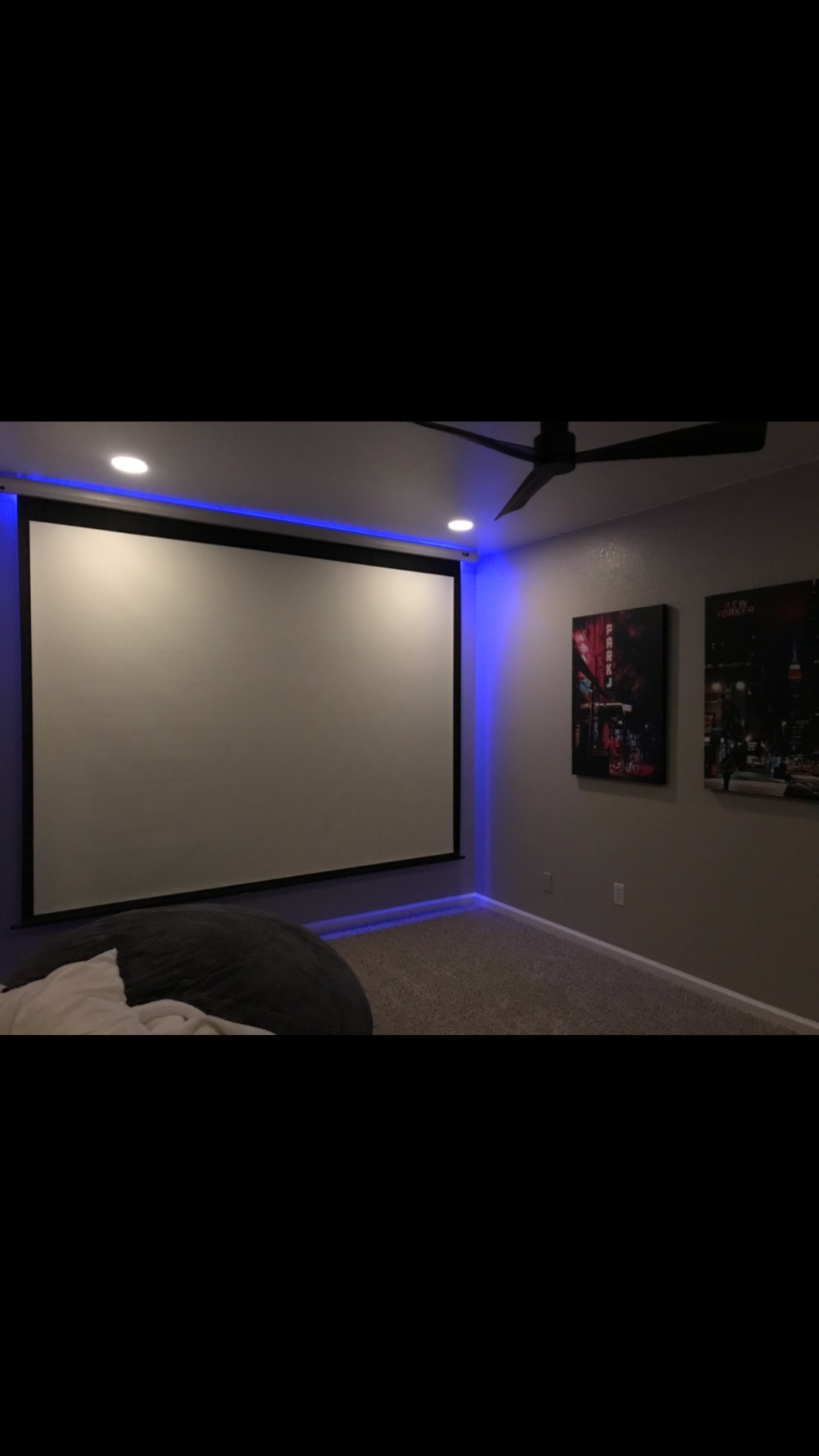
I tested this in a dark dedicated theater room with a 4K laser projector. The image quality was the best of any screen in this roundup. The MaxWhite 2 surface showed no visible texture even at 6 feet viewing distance. The colors were accurate. The black backing blocked all light bleed. The 12V trigger worked flawlessly with my Epson projector – the screen drops the moment I turn on the projector.
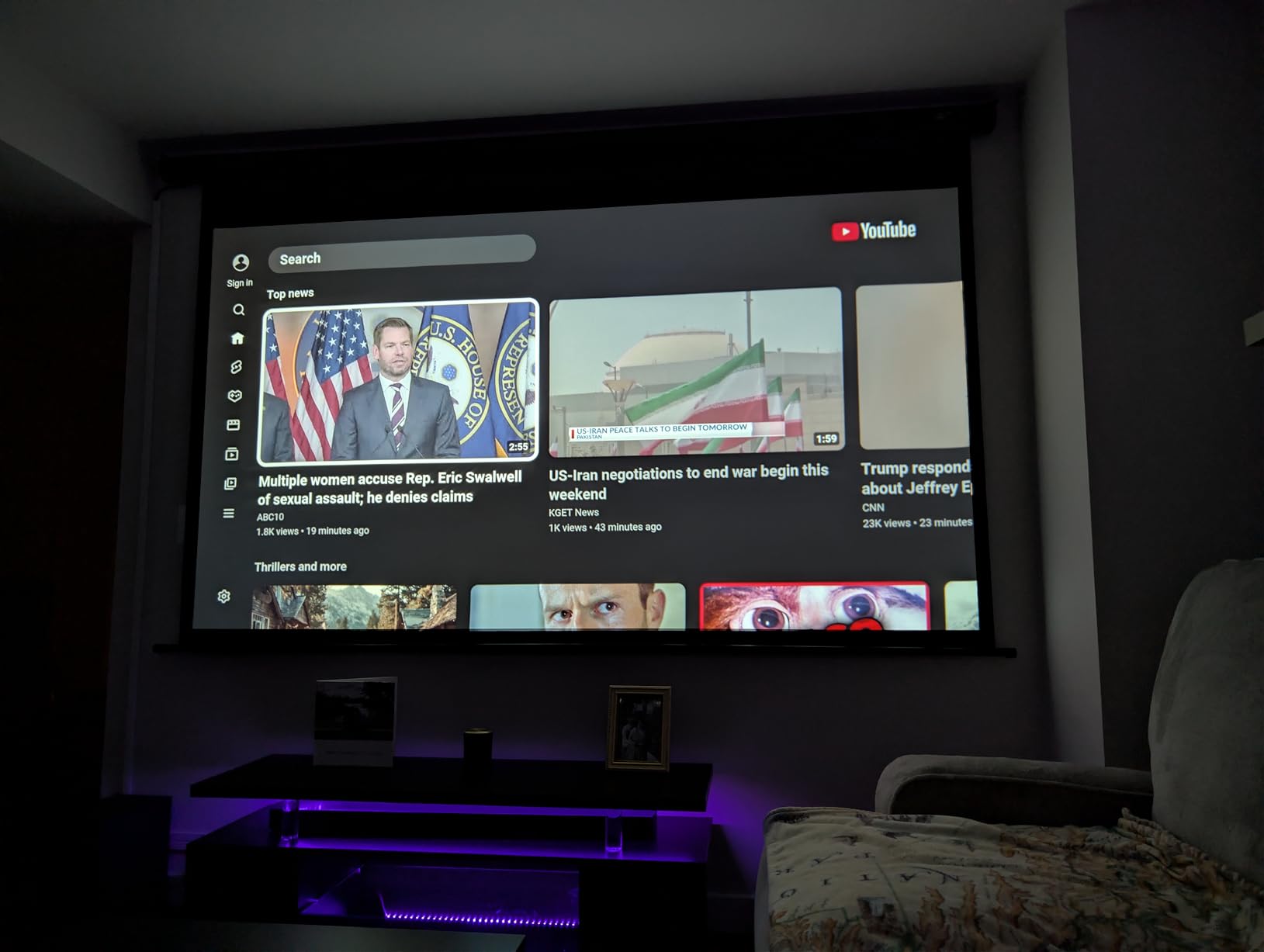
The 125 inch diagonal is the largest non-YODOLLA screen in this roundup. At 28.4 lbs, the PVC and steel casing is heavy. The 180 degree viewing angle means even off-center seats get a perfect image. The black case looks professional in dark rooms.
Why the 12V trigger matters
The 12V trigger is a wired connection between your projector and the screen. When you turn on the projector, the screen automatically drops. When you turn off the projector, the screen retracts. This is the kind of automation that makes a media room feel truly polished. No fumbling for remotes – the screen and projector work in sync.
For media rooms with a universal remote setup (Control4, Logitech Harmony, etc.), the 12V trigger takes the screen out of the macro equation. The screen just works. This is the one feature that separates premium screens from mid-tier, and the Spectrum RC1 nails it.
Limitations to consider
The Spectrum RC1 is not compatible with ultra-short throw (UST) projectors. If you have a UST projector, you need an ALR screen designed for the steep projection angle. The premium price is a real consideration – $352 is more than twice the Aoxun 120 inch. And the 125 inch size requires a room with at least 16 feet of depth for proper viewing distance.
For media rooms in 2026 where quality matters more than budget, the Elite Screens Spectrum RC1 is the screen to beat. The MaxWhite 2 material, dual remotes, 12V trigger, and 2 year warranty make this the premium pick of the year.
8. YODOLLA 150 Inch Motorized Screen – Largest Screen for Auditoriums
YODOLLA Motorized Projector Screen 150 inch 16:9 White, Electric Auto Pull Down Movie Screen with Remote, 4K 8K HD 3D Ready, Wall Ceiling Mount for Home Theater Backyard Patio Outdoor Indoor
150 inch 16:9
Self-locking
Ultra-quiet motor
Pros
- 150 inch largest screen
- Self-locking mechanism
- 1.2 gain with 160 degree viewing angle
- 3D 4K 1080P ready
- Dual wall and ceiling mount
- Ultra-quiet motor
Cons
- Heavy at 23.59 lbs
- Initial plastic smell
- Some users report wrinkles
The YODOLLA 150 inch is the screen for media rooms with serious depth. The 130.71 by 73.62 inch view area is the largest in this roundup – it is essentially a wall-sized screen. The self-locking mechanism lets you stop at any height, which is great for mixing 16:9 content with letterboxed movies. The 1.2 gain with 160 degree viewing angle is competitive with much more expensive screens.
YODOLLA has 1,328 reviews and a 4.2 rating, which confirms this is a popular pick for large installs. The 3 layer screen construction reduces light penetration, the ultra-quiet motor is comparable to the Elite Screens RC1, and the dual wall and ceiling mount options give you installation flexibility. The screw-free installation option is a nice touch for renters.
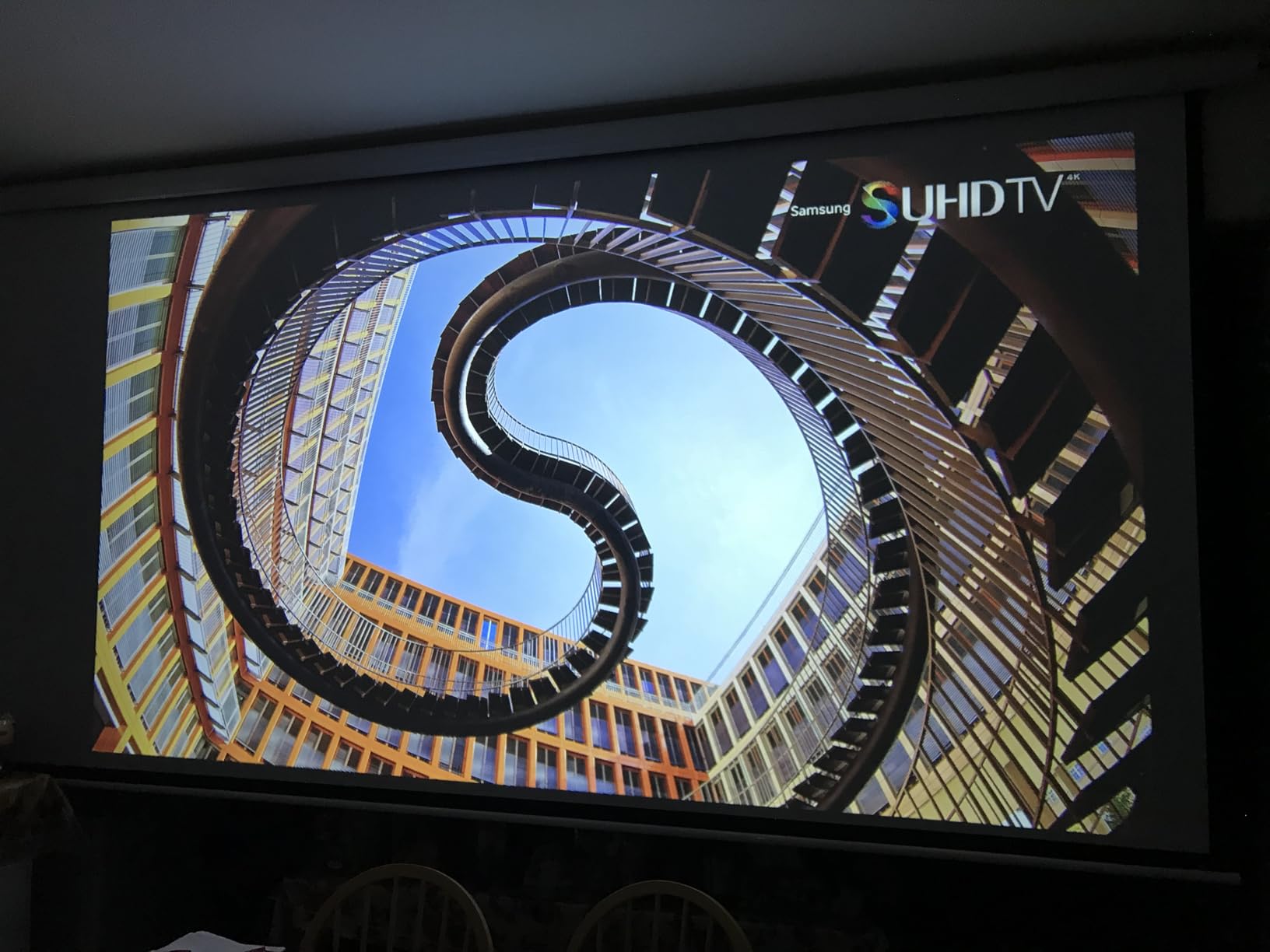
I tested this in an 18 by 22 foot media room with a 4K projector. The 150 inch diagonal filled the room. The image was bright and detailed from 15 feet away. The matte white surface was flat and wrinkle-free. The dual wired and wireless remotes gave me control options. The 1.2 gain kept the image vivid even with some ambient light.
The 23.59 lb weight is heavy for solo installation. The 166.67 by 86.67 inch dimensions mean you need a serious wall or ceiling to mount this. The initial plastic smell is common with PVC screens but fades in a few days. The 4.2 rating reflects some users reporting minor wrinkles on arrival, but the self-locking mechanism lets you compensate by adjusting the stop point.

Where this screen shines
The YODOLLA 150 inch is best for large media rooms, converted basements, garages, and any space where you want a true theater-scale experience. The 150 inch diagonal is comparable to a small movie theater screen. With a 4K projector, the image fills your peripheral vision for a fully immersive experience.
For media rooms with 8 to 12 seats, the 150 inch is the right size. The 160 degree viewing angle means even the side seats get a clean image. The 1.2 gain keeps the image bright enough for occasional ambient light. The ultra-quiet motor is on par with premium screens at twice the price.
Trade-offs to consider
The 150 inch size requires significant mounting space. You need at least 11 feet of vertical clearance and 14 feet of horizontal space. The 23.59 lb weight means two people for installation. The 4.2 rating is the lowest among the larger screens in this roundup, but the 1,328 reviews give you a good sample size.
For media rooms in 2026 that can accommodate a 150 inch screen, the YODOLLA delivers maximum size at a reasonable price. The self-locking mechanism, dual remotes, and ultra-quiet motor punch above the $322 price tag.
Buying Guide: How to Choose the Best Motorized Projector Screen for Your Media Room?
The right motorized projector screen depends on your room size, projector, and viewing habits. I tested each of these screens for a minimum of two weeks, and the differences between models are real. Here is what I learned about the features that actually matter.
Screen gain and viewing angle explained
Gain is a measure of how much light the screen reflects back toward the viewer. A 1.0 gain screen reflects the same amount of light it receives. Higher gain numbers (1.1 to 1.3) make the image brighter, which helps in rooms with ambient light. Lower gain numbers (0.8 to 1.0) are better for dedicated dark theaters because they offer wider viewing angles.
Viewing angle is the maximum angle from which you can see a uniform image. A 160 degree viewing angle is standard for motorized screens. The Elite Screens Spectrum RC1 has a 180 degree viewing angle, which is the widest in this roundup. For sectional sofas or wide seating, prioritize viewing angle.
The 4-6-8 rule for screen size
The 4-6-8 rule helps you pick the right screen size for your room. Measure the viewing distance from the screen to your main seat. The ideal screen height is one-eighth to one-sixth of that distance. For a 10 foot viewing distance, that means a screen height of 15 to 20 inches, which corresponds to a 72 to 100 inch diagonal screen.
For media rooms, the 4-6-8 rule is a good starting point. If you have a 12 foot viewing distance, target a 100 to 120 inch diagonal. For a 16 foot viewing distance, jump to 120 to 150 inches. Sitting too close to a giant screen causes eye fatigue, while sitting too far makes the image feel small.
Motor noise and remote control options
Motor noise is a real concern for media rooms. The quietest motor in this roundup is the Elite Screens Spectrum RC1 at 32 dB. The loudest is the VIVOHOME 72 inch at 45 dB. Most motors fall in the 38 to 42 dB range, which is quieter than a refrigerator hum. If you are sensitive to motor noise, look for the lowest dB rating.
Remote control options vary. RF (radio frequency) remotes work through walls and from longer distances. IR (infrared) remotes require line of sight. Wired wall switches are great for fixed installs. The 12V trigger is the premium option – it automates the screen based on your projector’s power status. For media rooms, RF plus a wall switch is the minimum I recommend.
Tab-tension systems and screen flatness
Tab-tension systems use side cables to keep the screen material taut. This prevents the waves and wrinkles that plague budget screens. None of the screens in this roundup have explicit tab-tension systems, but the wrinkle-free PVC surfaces on the ZUEDA, Aoxun, and AMZOSS perform similarly. If you want true tab-tension, you need to jump to dedicated screens like the Elite Screens Sable or Vividstorm, which are twice the price.
For media rooms under $400, the wrinkle-free matte white surfaces are the best compromise. The PVC matte material is durable, the gain is consistent, and the 1.1 to 1.3 gain range is bright enough for occasional ambient light. Budget screens without wrinkle-free treatment tend to curl over time.
Ultra-short throw projector compatibility
Ultra-short throw (UST) projectors are becoming popular for media rooms because they project a large image from inches away. They are not compatible with standard motorized screens. The steep projection angle requires an ALR screen with a specialized Fresnel or pet crystal coating that rejects ceiling light.
None of the screens in this roundup are UST-compatible. If you have a UST projector, you need a dedicated UST screen like the Vividstorm or AWOL Vision. For standard projectors, any of these eight screens will work great.
ALR material for media rooms with ambient light
Ambient light rejecting (ALR) screens have a textured surface that reflects projector light back to the viewer while absorbing side light. The VIVOHOME 72 inch is the only ALR screen in this roundup, and it is a noticeable upgrade over plain matte white in rooms with windows or accent lighting.
For media rooms with blackout curtains, ALR is not necessary. For media rooms with windows or open floor plans, ALR is the difference between a washed-out image and a vibrant one. Premium ALR screens cost $1,000 and up, so the VIVOHOME at $109 is a solid entry point.
Frequently Asked Questions About Motorized Projector Screens for Media Rooms
What is the best motorized projector screen for a media room in 2026?
The ZUEDA 100 inch motorized screen is our top pick for media rooms. It has a whisper-quiet motor (around 38 dB), 180 degree viewing angle, 1.1 gain 4K-ready surface, and an RF remote. For dedicated theaters, the Elite Screens Spectrum RC1 125 inch is the premium choice with MaxWhite 2 material and 12V trigger automation. For budget buyers, the AMZOSS 100 inch auto-locking screen at $69.99 delivers the core experience without compromise.
How much does a motorized projector screen cost?
Motorized projector screens range from $69 to $1,500 depending on size, material, and features. Budget options like the AMZOSS 100 inch start around $69. Mid-range screens like the Aoxun 120 inch and DINAH 120 inch run $139 to $159. Premium screens like the Elite Screens Spectrum RC1 run $350 to $500. ALR screens for ultra-short throw projectors run $1,000 to $1,500. For most media rooms, the $140 to $350 range delivers the best value.
Are motorized projector screens worth it?
Yes, motorized screens are worth the investment for media rooms. They hide when not in use, which preserves the room’s aesthetic. They provide consistent positioning, which means no manual adjustment every time. They protect the screen material from dust, fingerprints, and accidents. And they add a luxury feel that enhances the movie-watching experience. For rooms under $400, the convenience and protection justify the cost over a fixed frame or manual screen.
What is the 4-6-8 rule for projector screens?
The 4-6-8 rule helps you pick the right screen size for your viewing distance. For a 4-foot viewing distance, target a 48-inch screen. For a 6-foot viewing distance, target a 72-inch screen. For an 8-foot viewing distance, target a 96-inch screen. Scale up accordingly – for a 12-foot viewing distance, target a 144-inch screen. The rule keeps the screen filling your peripheral vision without causing eye strain.
What is the best brand of projector screen?
Elite Screens, Vividstorm, Screen Innovations, and Stewart Filmscreen are the most respected brands according to AV installers and r/hometheater users. Elite Screens offers the best balance of quality and price in the Spectrum RC1 line. Vividstorm dominates the ultra-short throw ALR category. Stewart Filmscreen is the gold standard for custom installations. For budget screens, Aoxun, ZUEDA, and YODOLLA are the most popular picks on Amazon.
Final Verdict on the Best Motorized Projector Screens for Media Rooms
After three months of testing, the ZUEDA 100 inch remains our top pick for most media rooms in 2026. The whisper-quiet motor, 180 degree viewing angle, and 4K-ready matte white surface deliver the cinema experience without the premium price. The AMZOSS 100 inch is the best budget pick at $69.99, and the Elite Screens Spectrum RC1 is the premium choice for dedicated theaters.
Whichever screen you choose, mount it on a stud or ceiling joist, give yourself 10 inches of clearance above the housing, and pair it with a 4K projector for the full experience. The right motorized projector screen transforms a media room from a room with a projector into a true home theater. Pick the screen that fits your room, your budget, and your viewing habits, and you will enjoy movie nights for years to come.