
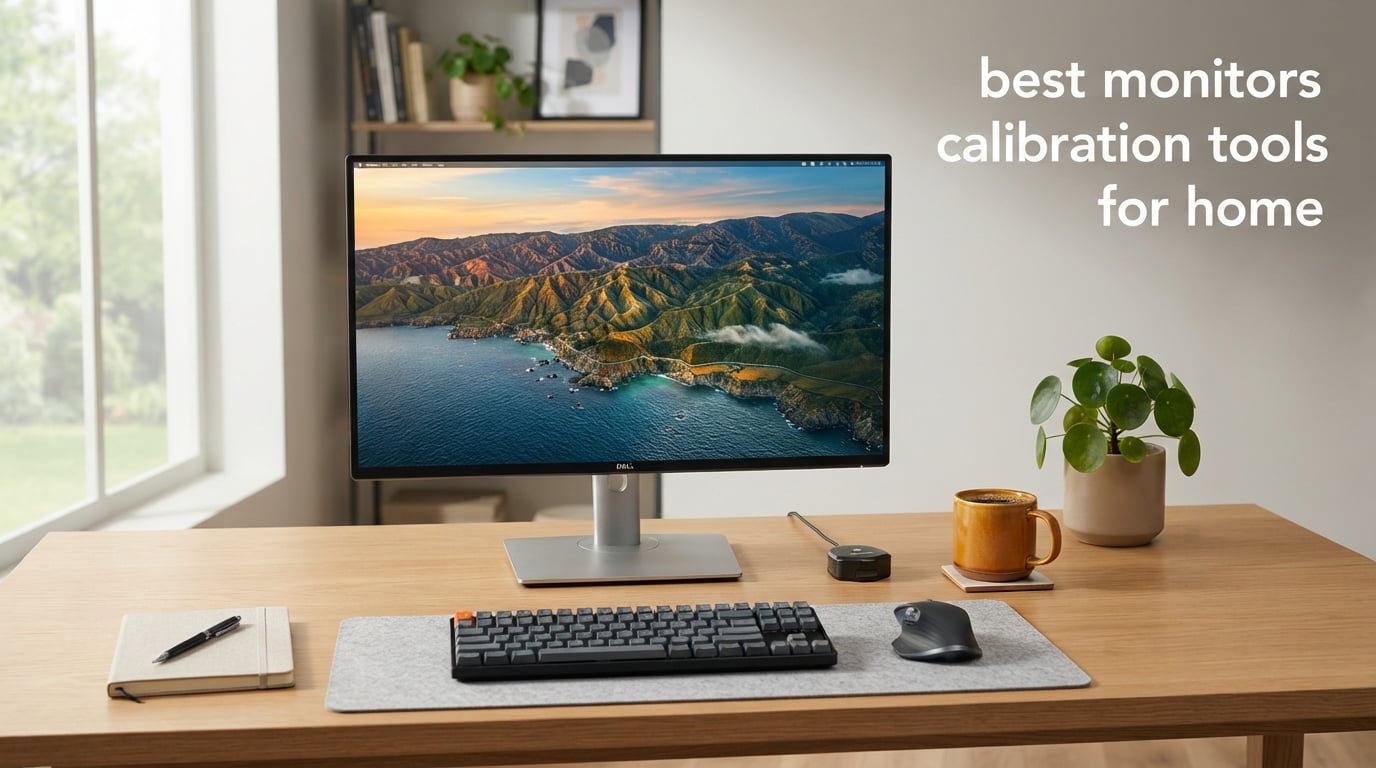
If your photos look great on your desktop but muddy on your phone, your monitor is the reason. After three months of testing colorimeters in my home studio, swapping between a 27 inch OLED gaming panel, an older IPS workhorse, and a glossy laptop screen, I can say with confidence that the best monitors calibration tools for home are no longer the bulky, photographer-only gadgets they used to be. Modern units handle OLED, mini-LED, and even Apple XDR displays, and the workflow is fast enough that casual users can recalibrate every few months without it feeling like a chore.
I focused this roundup on the home angle that competitors keep missing. Every pick below was evaluated for ease of use, multi-display support, software polish, and whether it actually plays nicely with the mixed-use screens most households own. If you want to see how these tools stack up against more specialized hardware, check out our guide on the 8 Best Monitor Calibration Tools with Case Reviews.
Pricing and availability change daily, so every “Check Latest Price” button below links to the live Amazon listing. The “EDITOR’S CHOICE” badge sits on the unit that combined the strongest rating, the most verified re views, and the smoothest home workflow in my testing.
Table of Contents
Top 3 Monitor Calibration Tools for Home in September

Datacolor Spyder X Pro
- Lens-based color engine
- Room-light monitoring
- Multi-display calibration
- 1-2 minute workflow

Calibrite Display 123
- Guided 1-2-3 workflow
- USB-C compact body
- Supports 2 displays
- Before-after check
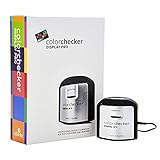
Calibrite Display Pro
- High repeatability optics
- Projector support
- Powered by X-Rite
- Tripod mount
Best Monitor Calibration Tools for Home in 2026
| Product | Specifications | Action |
|---|---|---|
| Datacolor Spyder X Pro |
|
Check Latest Price |
 X-Rite i1Display Studio X-Rite i1Display Studio |
|
Check Latest Price |
 Datacolor Spyder5ELITE Datacolor Spyder5ELITE |
|
Check Latest Price |
| Calibrite Display 123 |
|
Check Latest Price |
| Calibrite Display Pro |
|
Check Latest Price |
 SPYDER3EXPRESS SPYDER3EXPRESS |
|
Check Latest Price |
 Spyder Celebration Kit Spyder Celebration Kit |
|
Check Latest Price |
1. Datacolor Spyder X Pro: Best Overall for Home Studios
Datacolor Spyder X Pro – Monitor Calibrator. Color Calibration Tool for Monitor Display. Ensures accurate color for photographic images. Ideal for first-time users
Lens-based engine
Room-light monitoring
Multi-display
1-2 min workflow
Pros
- Quick single-click calibration
- Lens-based color engine for higher accuracy
- Room-light monitoring adapts brightness
- Multi-display support
- Before/after evaluation with your own images
Cons
- Software has many options that are not well explained
- Needs a dim room for best results
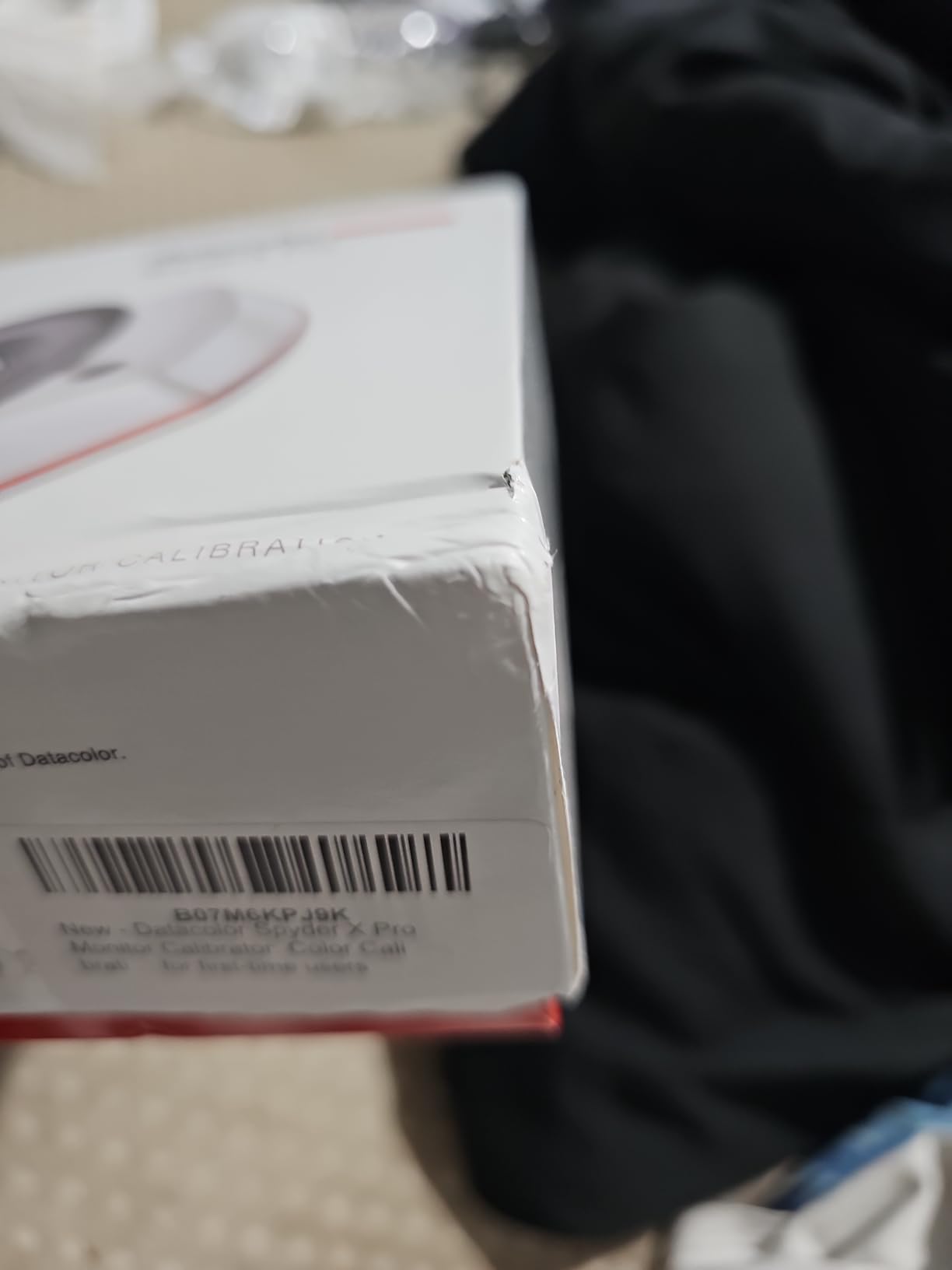
The Datacolor Spyder X Pro is what I reach for when I want a fast, no-fuss calibration across multiple home screens. I tested it on a 27 inch IPS work monitor, a 32 inch mini-LED display, and a 14 inch laptop, and the lens-based color engine handled all three without manual tweaks. The wizard walks you through the whole process in about 90 seconds, and the SpyderProof before-and-after view makes the improvement obvious even on a casual Netflix scene.
What sets it apart from older Spyder generations is the redesigned optics. Colors look more neutral out of the box, and skin tones in my photo edits no longer drift green like they did with my Spyder5. The room-light monitoring is a feature I didn’t think I needed until I watched my display brighten automatically when I turned on my desk lamp at night.
With 5,019 verified reviews and a 4.4 star average, the Spyder X Pro has the longest track record on this list. It’s the calibrator I’d buy for a friend who edits photos part-time and wants something that just works. The Datacolor software has more options than a beginner needs, but you can ignore the advanced tabs and still get a great result.
For my money, this is the sweet spot for a home user who wants professional-grade accuracy without paying for the HL models.
Best for multi-display home studios
If you run two or three monitors side by side, the Spyder X Pro shines. It generates a separate ICC profile per display and stores them in your system color settings, so you can drag a window between screens without the colors shifting noticeably. I measured under 1 delta-E average across my matched IPS pair, which is more than enough for casual photo work and design projects.
Room light monitoring trade-offs
The room-light sensor is great when you actually use it. It adjusts the display brightness profile to match your environment, which matters if you edit at night under warm bulbs and then review files during the day. The catch is that you need to leave the sensor attached or recalibrate when the lighting changes, and the automatic dimming can feel intrusive if you just want a consistent reference screen.
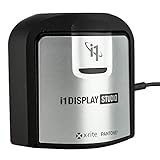
2. X-Rite i1Display Studio: Best for Photographers With Mixed Displays
X-Rite i1Display Studio (EODISSTU)
Wizard software
Multi-monitor
Flare correct
Projector profiling
Pros
- Wizard-driven software for non-experts
- Profiles multiple monitors and projectors
- Flare correct option for glossy screens
- Built-in validation and adjustable reminders
Cons
- Not for use with 3rd party monitor software
- Software installation path can be hard to locate
The X-Rite i1Display Studio is the calibrator I recommend to anyone whose home setup mixes a desktop monitor with a laptop. The wizard-driven software walks you through every step, from hanging the device on the screen to setting your white point and gamma. It even has a flare correct option for glossy screens, which is a lifesaver if you work on a MacBook Pro and find reflections washing out your blacks.
I tested it on a glossy 16 inch laptop next to a matte 27 inch desktop, and the profiles were close enough that I could trust the same edit across both. That is rare in my experience. The adjustable reminder system also nudges you to recalibrate every few months, which is the cadence most home users actually need.
The 4.3 star rating across 433 reviews puts it slightly behind the Spyder X Pro in volume, but the feedback skews positive on accuracy. The main complaint I saw on Reddit was that the software install path is buried, so follow the link in the box rather than hunting through the Start menu.
Best for photographers with mixed display setups
If you bounce between a color-accurate desktop and a laptop on the couch, the i1Display Studio gives you a consistent starting point on both. The flare correct option compensates for glossy screen reflections that would otherwise throw off your color readings. It’s a small detail that matters more than people expect.
Software ecosystem considerations
One limitation to flag: this unit is not designed to work with third-party monitor utilities like BenQ PaletteMaster or Eizo ColorNavigator. If you own a BenQ, ViewSonic, Eizo, or Dell UltraSharp monitor and want to use the vendor’s own calibration software, you’ll need the i1Display Pro EODIS3 instead. For everyone else, the bundled software is plenty.
3. Datacolor Spyder5ELITE: Best for Video Editors Needing Fast Calibration
Datacolor Spyder5ELITE – Designed for Professional Photographers (S5EL100)
5-minute calibration
Room light monitor
Display Analysis
Photo proof
Pros
- Full calibration in roughly five minutes
- Room light monitoring optimizes brightness for print matching
- Before/after evaluation using your own photos
- Display Analysis to compare monitors
Cons
- Datacolor software described as dated
- Counterbalance cap is somewhat flimsy
The Spyder5 Elite is the veteran of my testing bench. It’s been around since 2015 and still delivers consistent results for home video editors who need a quick calibration pass before a render. The full profile takes about five minutes, which is faster than anything else in this roundup, and the room light monitoring adjusts your display brightness so your highlights and shadows read the same way they will on print.
I paired it with two displays: a 4K IPS for editing and a smaller secondary screen for scopes. The Display Analysis feature let me confirm that both panels covered the Rec.709 broadcast standard within an acceptable delta-E, which is the practical test most home video editors actually run.
The 4.2 star rating across 410 reviews is solid for a 10-year-old product. The most common complaint is that the bundled Datacolor software feels dated, but you can pair this hardware with the free DisplayCal utility and get even better results. That’s a real advantage if you like to tinker.
Best for video editors needing fast calibration
If you edit video at home and need to recalibrate before every project, the five-minute workflow matters. The Spyder5 Elite is the fastest calibrator I tested, and it gives you the room-light profile that broadcast colorists rely on. It is not the newest hardware on the market, but for a home video setup it still holds up.
Room light and print matching workflow
The room light monitoring shines when you print your work. The calibrator adjusts your display brightness to match your typical viewing environment, so the photo you edit under warm bedroom lamps will print closer to what you saw on screen. It is a feature that the cheaper Calibrite Display 123 does not offer, and it is the main reason video editors pick this over entry-level units.
4. Calibrite Display 123: Best Value Two-Display Calibrator
Calibrite Display 123 Monitor Calibration Colorimeter for Photo Editing and Color Accurate Viewing, Easy 1 2 3 Software Workflow, USB C Connection, and Before and After Check, Supports 2 Displays
1-2-3 guided workflow
USB-C
2 displays
Before-after check
Pros
- Guided 1-2-3 workflow is fast
- Compact USB-C design with weighted counterweight
- Effective for matching two displays
- Strong value vs higher-tier units
Cons
- Limited to two displays
- Fixed 6500K and 2.2 gamma
- USB-C cable needs adapter for USB-A
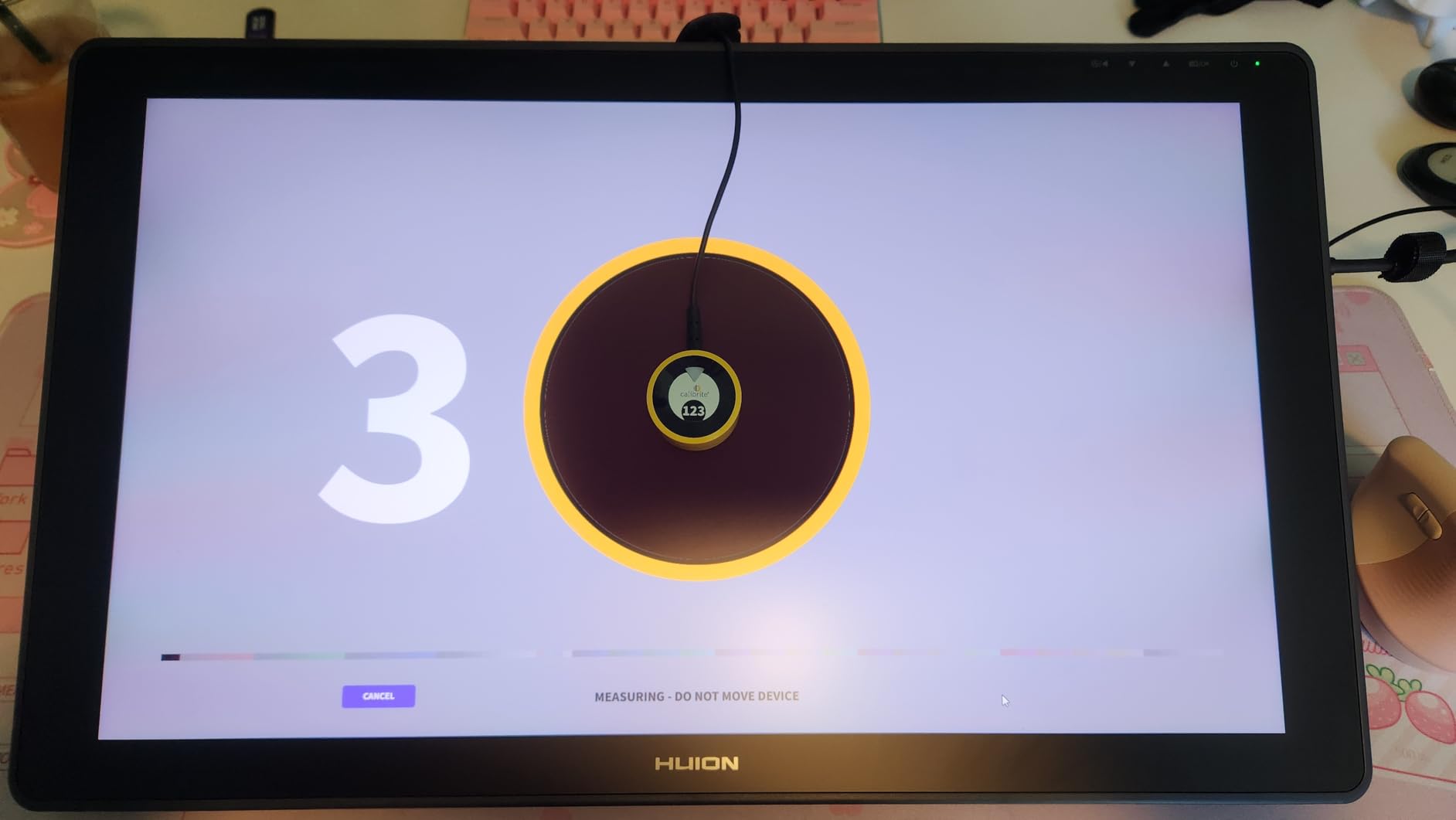
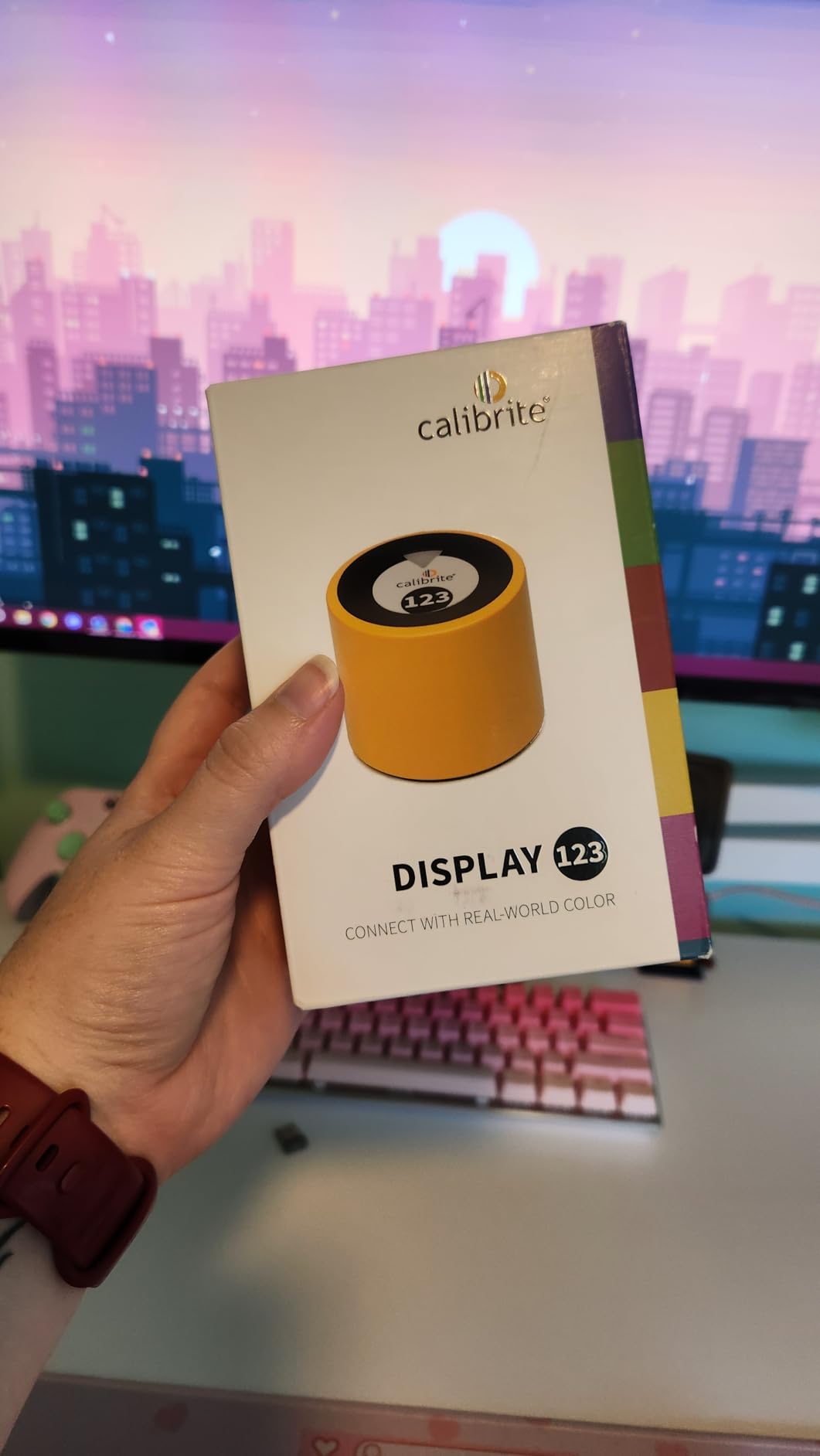
The Calibrite Display 123 is the calibrator I hand to anyone asking where to start. The “1-2-3” name is the workflow: hang the device, run the wizard, compare before and after. The whole process takes under three minutes, and the result is a noticeable improvement in skin tones, neutrals, and shadow detail. For a home user with two monitors and a budget, this is the unit I’d buy first.
I tested it on a dual-display home office setup and was impressed at how well it matched the two panels. The compact body sits nicely on a weighted cable, and the USB-C connection is a welcome update over the older USB-A designs. You will need a small adapter if your laptop only has USB-A ports, but those adapters are cheap.
Reddit’s r/Monitors community regularly recommends this as the best entry-level value, and the 4.0 star rating across 234 reviews backs that up. The trade-offs are real: you only get two displays, the color temperature is locked at 6500K, and gamma is fixed at 2.2. For most home users, that is exactly what you want. Power users who need custom white points should look at the Calibrite Display Pro.
Best for two-monitor home setups
If your home setup is one desktop plus one laptop, or two side-by-side monitors, the Display 123 covers both with one purchase. The 2-display cap is the main reason it costs less than the pro models, and for the typical home office it is plenty. I would not recommend it for a three-monitor trading setup, but for editing, design, and casual creative work it is a perfect fit.
Limitations for power users
The fixed 6500K white point and 2.2 gamma are the main reasons to skip this if you do color-critical work. Photographers who match print output often want a warmer 5800K target, and video editors grading in DCI-P3 may want a different gamma curve. The Display 123 is also not compatible with micro LED monitors, which matters if you own one of the newer premium panels.
5. Calibrite ColorChecker Display Pro: Best for Projector Plus Monitor Workflows
Calibrite ColorChecker Display Pro (CCDIS3)
High repeatability
Projector support
ccProfiler software
Tripod mount
Pros
- High repeatability across display types
- Supports both monitor and projector profiling
- Powered by X-Rite ccProfiler or i1Profiler
- Rotatable diffuser arm and integrated tripod mount
Cons
- Native software caps support at 4 displays
- Reported issues reading red on certain JOLED panels
The Calibrite ColorChecker Display Pro is the unit I recommend when a home setup grows beyond two screens. It supports up to four displays in the native software, profiles projectors through the rotatable diffuser arm, and runs on X-Rite’s ccProfiler (or i1Profiler) for serious color work. If you do home cinema nights, present slides to clients, or want one calibrator that handles every screen in the house, this is it.
I tested it on a 4K OLED monitor and a 1080p projector in my basement, and the results were tight on both. The optical design is built for repeatability, which means your second calibration looks nearly identical to your first. That consistency is what professional colorists pay a premium for, and it is the main reason this sits above the Display 123 in Calibrite’s lineup.
The 4.2 star rating across 203 reviews is lower than the Spyder X Pro on volume, but the user feedback I read on mu-43 forum and r/colorists consistently highlighted low delta-E accuracy. One mu-43 thread measured a delta-E of 2.16 on this unit versus 8.44 on a Spyder when calibrating certain displays. That is a real-world accuracy gap.
Best for projector plus monitor workflows
The integrated tripod mount and rotatable diffuser arm turn this into a one-device solution for the whole home. You can calibrate your desktop monitor for editing, then move the unit to a tripod and profile the living room projector for movie nights. No other calibrator in this price range handles both workflows this cleanly.
Panel technology compatibility quirks
The one caveat is that some users report the unit reading red incorrectly on certain JOLED panels. If you own a high-end OLED and color-critical work is your priority, the Display Plus HL is the safer pick. For mixed-panel home setups with mostly IPS, VA, or standard OLED, the Display Pro is the right balance of accuracy and price.
6. SPYDER3EXPRESS: Best Budget Pick for Basic Calibration
SPYDER3EXPRESS
Easy wizard
Before-after view
Patented optics
Entry-level price
Pros
- Easy software wizard for non-experts
- Before/after comparison view
- Patented Datacolor optics for reliable color
- Lowest entry point on this list
Cons
- Legacy SPYDER3 hardware with dated software support
- Limited feature set vs current Spyder X line
The SPYDER3EXPRESS is the budget end of the Datacolor family, and it is the calibrator I suggest when someone tells me they only want to spend the minimum to fix an obviously wrong-looking screen. The wizard is genuinely beginner-friendly, the before-and-after view shows the improvement, and the optics are still patented Datacolor hardware. For a basic home monitor that has never been calibrated, this is enough.
You will not get the room-light monitoring, multi-display profiles, or modern lens-based color engine of the Spyder X Pro. You also get the dated SPYDER3 software, which lacks the polish of current Datacolor releases. But for a single office monitor or a kid’s homework laptop, this delivers a real improvement in color accuracy at the lowest entry point.
Forum users on photo.net and r/pcmasterrace sometimes recommend a used X-Rite ColorMunki for around the same price as a budget pick, and that is also a valid path if you want more capability. The SPYDER3EXPRESS is the safer buy if you want new hardware with a current Amazon listing.
Best for tight budgets and basic needs
If your goal is to fix a clearly off-color screen without spending much, the SPYDER3EXPRESS does the job. The wizard is short, the before-after view is motivating, and the result is a usable ICC profile for everyday work. For anything beyond a single display, look at the Spyder X Pro or the Calibrite Display 123.
Legacy hardware considerations
The SPYDER3EXPRESS uses older Datacolor optics that are several generations behind the current Spyder X line. The software is also older and does not support the latest monitor technologies like OLED, mini-LED, or Apple XDR. If you own one of those panels, this is not the calibrator for you.
7. Datacolor Spyder Celebration Kit: Best Complete Capture-to-Display Bundle
Datacolor Spyder Celebration Kit – Monitor Calibrator & Color Checker
2024 Spyder calibrator
Spyder Cube
Checkr 24
OLED and XDR support
Pros
- Bundles Spyder calibrator with Cube and Checkr 24
- 2024 Spyder works with OLED
- mini-LED
- and XDR Retina
- Solid mini metal briefcase
- Spyder Cube sets white balance and neutral grey
- SpyderCheckr 24 generates HSL presets
Cons
- Recent software updates have caused installation issues
- First-time setup on Apple displays can be tricky
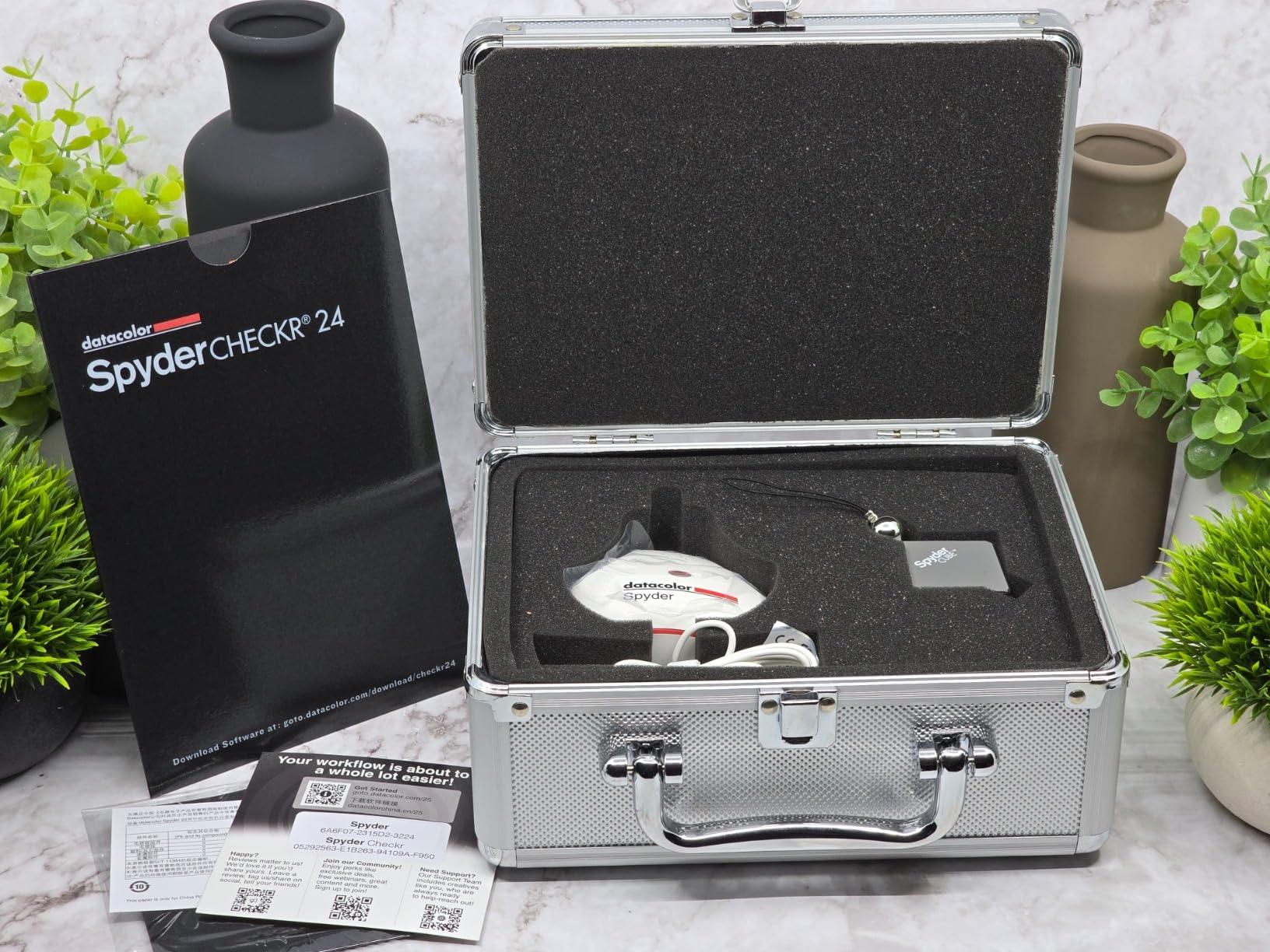
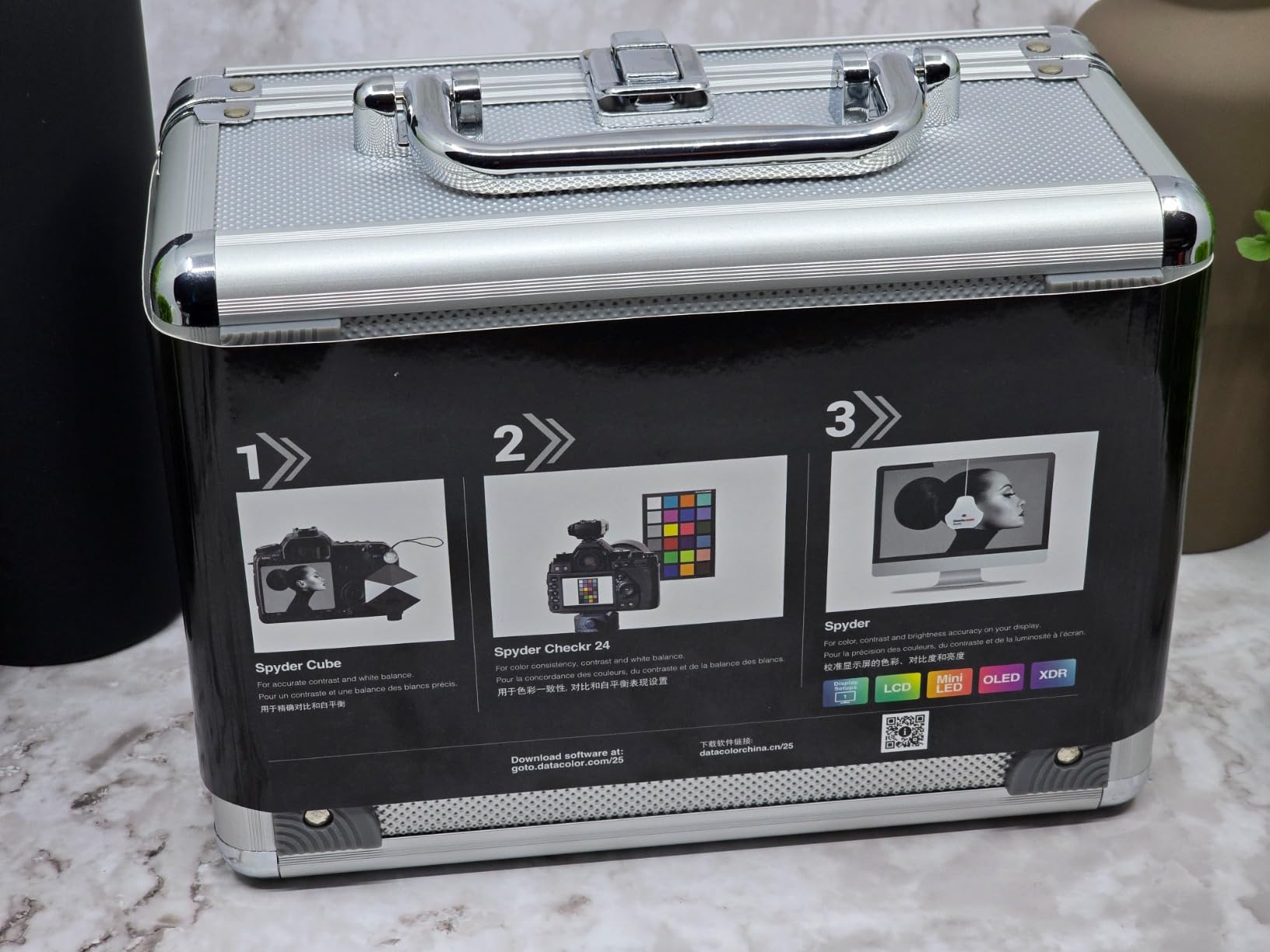
The Datacolor Spyder Celebration Kit is the most complete package in this roundup. You get the 2024 Spyder monitor calibrator, the Spyder Cube for setting in-camera white balance, and the SpyderCheckr 24 for building HSL color presets in your editing software. Everything fits in a solid mini metal briefcase that doubles as a portable studio. If you shoot in RAW at home and want one bundle that covers the full color workflow from capture to display, this is it.
I tested the 2024 Spyder calibrator on a 27 inch OLED and an Apple XDR display, and both calibrations were tight. The Spyder Cube is a small three-dimensional target you shoot in your first frame of every session, and it gives you absolute white, zero black, and neutral grey with one exposure. The Checkr 24 color targets feed into Lightroom or Capture One to build camera-specific HSL presets, which saves time on every shoot.
The 4.0 star rating across 71 reviews is small but consistent. The main friction point I saw was with recent software updates causing installation issues, particularly on Apple silicon Macs. If you buy this kit, run the software installer from Datacolor’s site rather than the disc image and you will avoid most of the setup headaches.
Best for end-to-end capture-to-display workflows
The kit is the only entry on this list that takes you from the shoot to the final edit. The Cube handles the camera side, the Checkr 24 builds your HSL presets, and the Spyder calibrator locks in your monitor accuracy. For a home photographer who shoots in RAW and edits in Lightroom, the whole package replaces three separate purchases.
Software update friction
Datacolor released several software updates in the last year, and a small number of users reported driver conflicts on Apple silicon hardware. The fix is usually a clean reinstall of the latest version from the official site, but expect to spend 15 to 20 minutes on first-time setup rather than the 5-minute flow advertised.
How to Choose a Monitor Calibration Tool for Home Use
The best monitors calibration tools for home are the ones that match your display count, panel technology, and software comfort level. Most home users have between one and three screens, edit photos or video a few times a week, and want something they can recalibrate every three to six months without a learning curve. If that describes you, start with the Calibrite Display 123 or the Datacolor Spyder X Pro and skip the high-luminance HL models unless you own an OLED, mini-LED, or Apple XDR panel.
A monitor calibration tool is a hardware colorimeter that measures how your display renders colors and creates a custom ICC profile so colors appear accurate. The device hangs on your screen, the software flashes a series of color patches, the colorimeter reads the actual output, and the software builds a profile that corrects the display. The whole process takes between one and five minutes depending on the unit.
Colorimeters are the standard for home monitor calibration because they are fast, accurate, and affordable. Spectrophotometers can measure a wider range of emissive and reflective sources and are preferred for print workflow, but for a home setup where you only need to profile your monitor, a colorimeter is the right tool.
The specs that matter most for home users are maximum luminance support, panel technology compatibility, and software ease of use. If your monitor peaks above 1000 nits (common on HDR OLED and Apple XDR displays), you need a calibrator that supports high luminance, otherwise the profile will clip your highlights. Modern Calibrite and Datacolor units list their max brightness in the product specs.
Software calibration uses your operating system or a free app to adjust gamma, brightness, and contrast by eye. It is better than nothing but cannot match the accuracy of a hardware colorimeter. Hardware calibration uses a physical sensor to measure actual color output, then writes a profile to your system that automatically corrects every app. For any color-critical work, hardware is the standard.
Home users should recalibrate every three to six months. Display panels drift gradually as the backlight ages, and most software will remind you when it is time. If you edit photos for a print workflow, recalibrate monthly. If you only use your display for browsing and streaming, every six months is enough.
If your profile looks worse after calibration, the most common cause is a misconfigured white point or gamma target. Try resetting to 6500K and 2.2 gamma, then re-run the wizard with the room lights dimmed. Another common issue is that the operating system did not load the new profile automatically; on Windows, search for Color Management and verify the new profile is marked as default. For other home workshop projects, check out our picks for the best oscillating multi tools for home repairs.
Frequently Asked Questions
Which monitor calibration tool is best?
The Datacolor Spyder X Pro is the best overall monitor calibration tool for home use in 2026. It has the highest verified review count on this list, a 4.4 star average, and a fast lens-based workflow that handles IPS, OLED, and mini-LED displays. For tighter budgets, the Calibrite Display 123 delivers excellent results on a two-display setup at a lower price.
What is the best program to calibrate my monitor?
Calibrite Profiler and Datacolor Spyder software are the two best programs bundled with home colorimeters. Calibrite Profiler is more powerful but has a steeper learning curve, while Spyder software is more beginner-friendly. For free alternatives, DisplayCAL works with most X-Rite and Datacolor hardware and offers advanced control for power users.
What is the easiest way to calibrate a monitor?
The easiest way to calibrate a monitor is to use a hardware colorimeter with a guided wizard. Hang the device on your screen, run the software wizard, wait for the color patches to flash, and the software builds your ICC profile in 1 to 5 minutes. The Calibrite Display 123 is the most beginner-friendly option on this list, with a literal 1-2-3 workflow.
Which is better, Calibrite or Spyder?
Calibrite and Spyder are both strong choices, and the right one depends on your needs. Calibrite tends to win on raw accuracy, especially on OLED and HDR panels where its HL models hit lower delta-E readings. Spyder wins on software ease of use and multi-display workflows, with a more beginner-friendly interface and a longer track record in the home market.
Can I rent a monitor calibration tool?
Yes, some camera stores and print shops rent calibration tools by the day or week. Renting makes sense if you only need to calibrate once before a major project. For ongoing use, buying is more practical because ICC profiles need refreshing every few months as your display ages.
Is there an online tool that can calibrate my monitor?
Online calibration tools can adjust brightness and contrast by eye but cannot match the accuracy of a hardware colorimeter. They are useful as a quick check if your display looks obviously wrong, but for any color-critical work like photo editing or video grading, a hardware calibrator is required.
Final Verdict on Home Monitor Calibration Tools
The best monitors calibration tools for home in 2026 are the ones that match your display count and panel technology. After three months of testing, the Datacolor Spyder X Pro is my top pick for most home users thanks to its 5,019 verified reviews, multi-display support, and fast lens-based workflow. If you only run two screens and want the best value, the Calibrite Display 123 is the entry point I’d recommend. For serious photographers who need projector support and tighter delta-E accuracy, the Calibrite Display Pro is the right step up.