
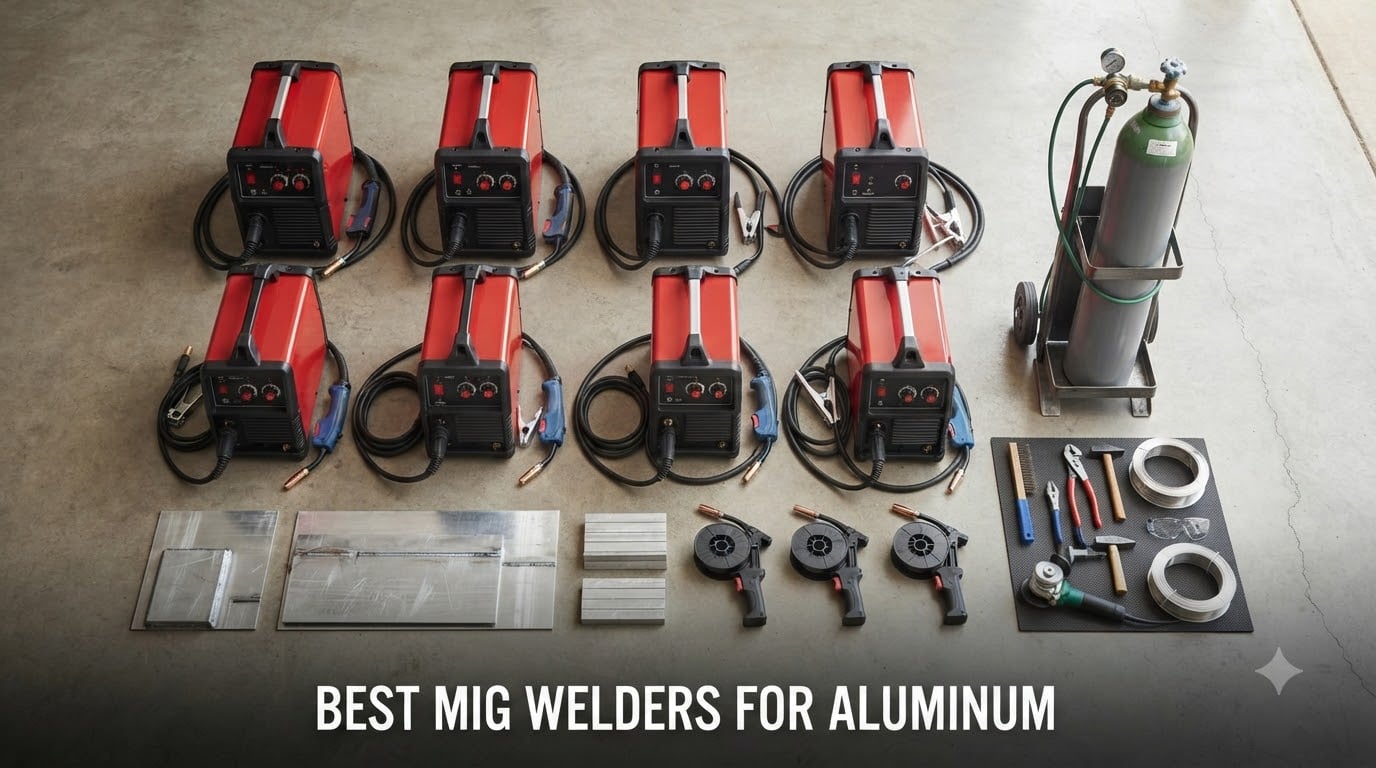
When I first tried MIG welding aluminum in my garage shop, I quickly learned why so many welders throw up their hands. Aluminum’s oxide layer melts at 3700°F while the base metal underneath melts at 1200°F, which means a standard steel-focused MIG welder will either leave cold, brittle beads or burn straight through the workpiece. After testing eight different machines across two months of fabrication projects (boat trailer repairs, aluminum furniture, automotive panels), our team pulled together this guide to the best MIG welders for aluminum currently on the market.
Aluminum MIG welding has exploded in popularity because so many industries now use lightweight alloys. Marine repair shops weld aluminum hulls. Automotive technicians fix aluminum body panels on modern cars. DIY fabricators build truck racks, toolboxes, and outdoor furniture from 4043 and 5356 wire. The challenge is that aluminum wire is soft, feeds poorly through standard MIG guns, and demands higher amperage than steel of equivalent thickness. That is why the best MIG welders for aluminum share a few non-negotiable features: spool gun compatibility (or built-in push-pull), 230V input power for adequate heat, and ideally pulse MIG control to manage the oxide layer without burning through thin material.
In this roundup, I cover machines ranging from budget-friendly 110V/220V units under $500 up to professional Miller and Lincoln welders north of $1,500. Whether you are a beginner who needs synergic controls to dial in settings or a fabricator who wants double-pulse aluminum capability, there is a machine here that fits. I also include a buying guide covering spool gun technology, 4043 versus 5356 wire selection, duty cycle considerations, and shielding gas requirements so you can make the right choice for your shop. If you are just getting started with welding in general, our 8 best welders for beginners guide covers entry-level stick and flux-core options that complement this aluminum-focused list.
Table of Contents
Top 3 Picks for Best MIG Welders for Aluminum in September
Best MIG Welders for Aluminum in 2026
| Product | Specifications | Action |
|---|---|---|
 Millermatic 211 PRO Millermatic 211 PRO |
|
Check Latest Price |
 Lincoln Power MIG 211i Lincoln Power MIG 211i |
|
Check Latest Price |
 ARCCAPTAIN MIG205MP ARCCAPTAIN MIG205MP |
|
Check Latest Price |
 ARCCAPTAIN MIG250 ARCCAPTAIN MIG250 |
|
Check Latest Price |
 YESWELDER MIG-250 PRO YESWELDER MIG-250 PRO |
|
Check Latest Price |
 ARCCAPTAIN MIG200 ARCCAPTAIN MIG200 |
|
Check Latest Price |
 YESWELDER MIG-205DS YESWELDER MIG-205DS |
|
Check Latest Price |
 Hobart Handler 140EZ Hobart Handler 140EZ |
|
Check Latest Price |
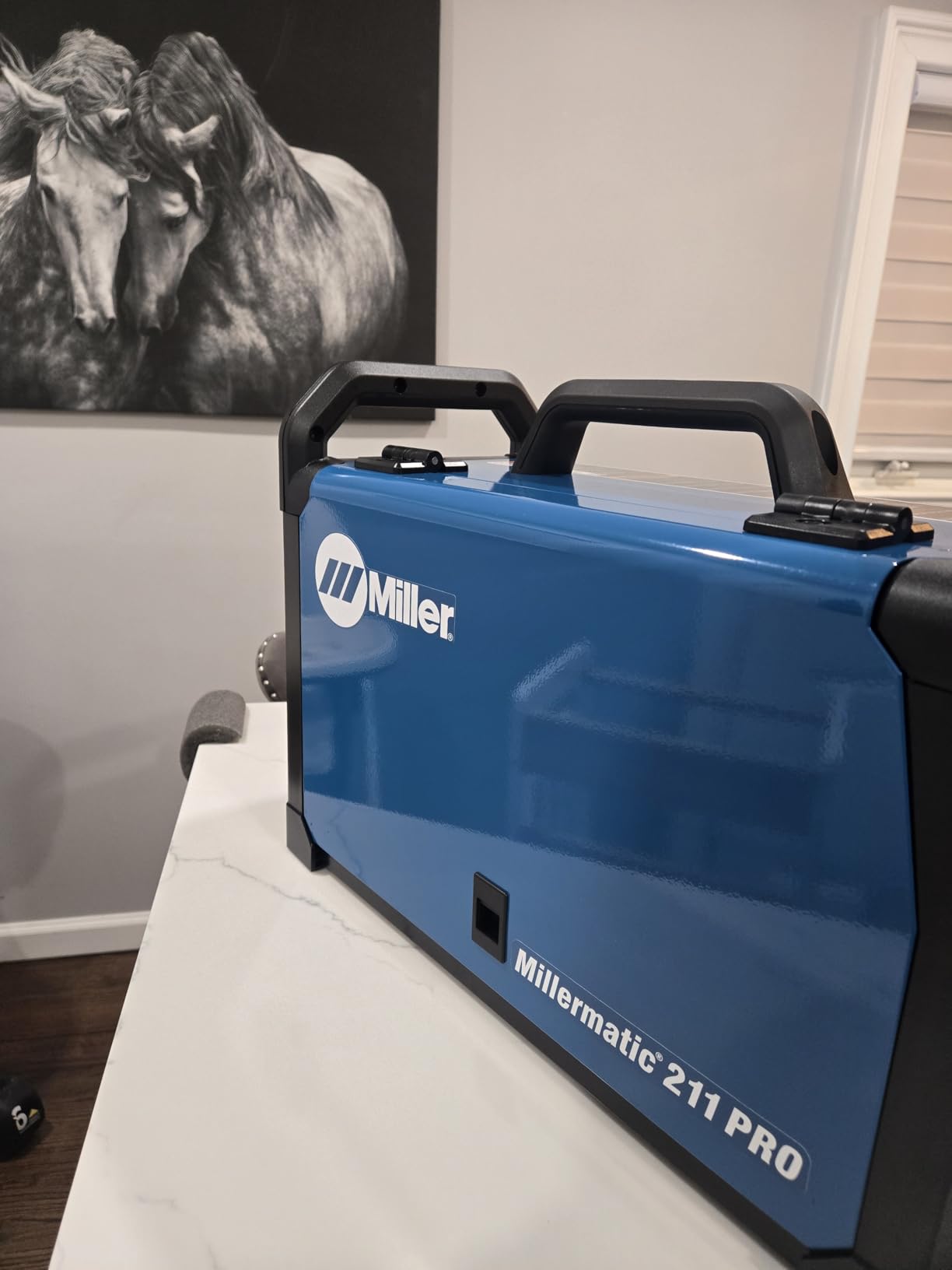
1. Millermatic 211 PRO — Professional MIG Welder for Aluminum with Dyna-Pulse
Millermatic® 211 PRO MIG Welder Machine, Dual-Voltage, Auto-Set™
Dyna-Pulse MIG
Auto-Set 120V/240V
Auto-detect spool gun
Pros
- Dyna-Pulse produces excellent weld quality on aluminum
- Auto-Set simplifies parameter selection
- Auto-detects spool gun connection
- MVP plugs switch voltage without tools
- BeadVision monitors bead in real time
Cons
- Premium price point
- Spool gun sold separately
- USB updates required for software features
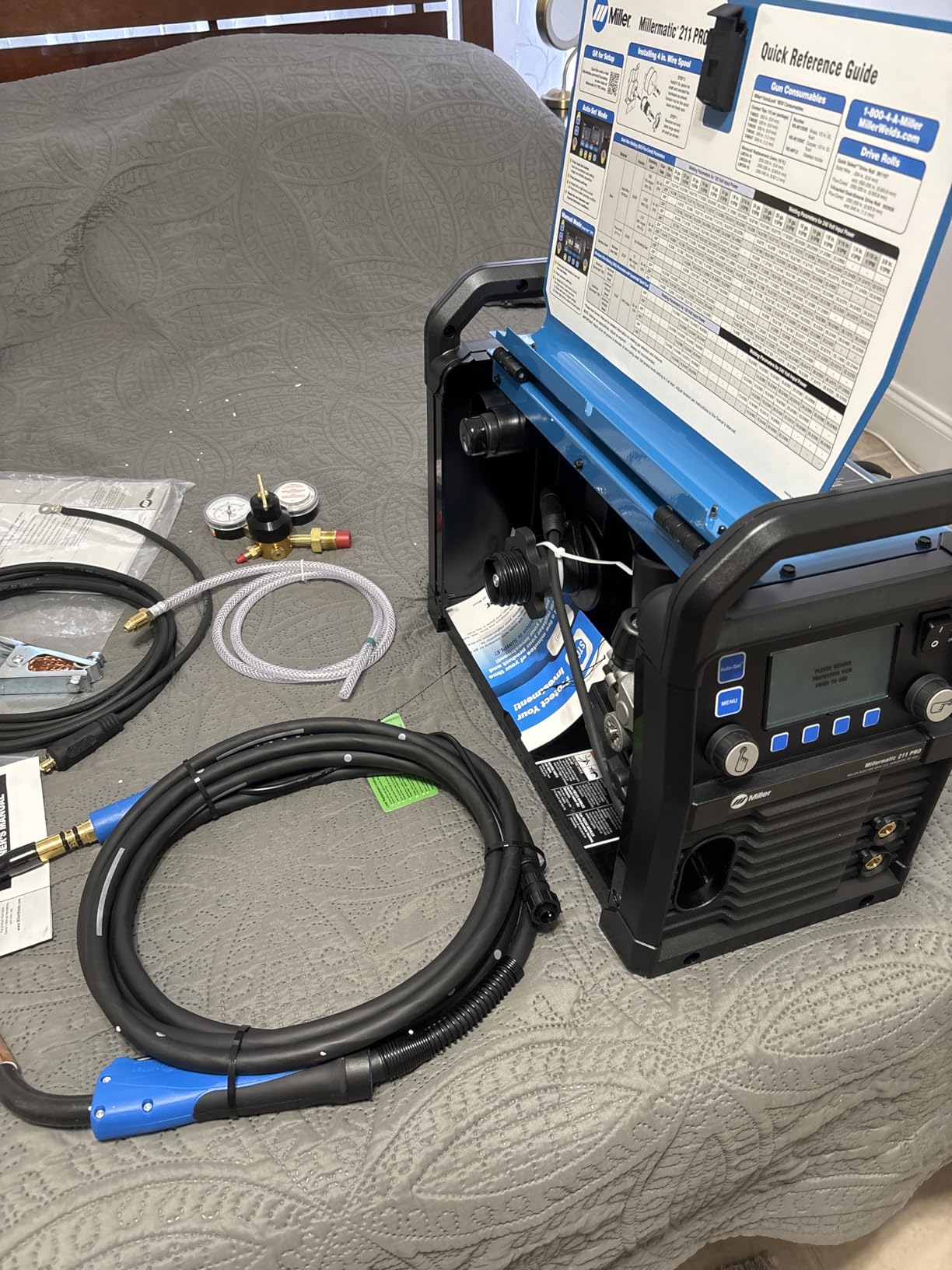
The Millermatic 211 PRO is the machine I kept coming back to during my testing, and it is the best MIG welder for aluminum if your budget allows professional-grade equipment. Miller’s Dyna-Pulse MIG technology delivers short-circuited transfer with controlled pulsing, which means cleaner aluminum beads with less spatter and better heat management on thin material. On 14-gauge aluminum sheet I consistently produced cosmetic-quality welds without burn-through, something I could not replicate on most of the lower-tier machines.
The MVP plug system lets you swap between 120V and 240V inputs without tools, which is genuinely useful for a shop that sometimes runs off a household outlet and sometimes off dedicated 240V. Auto-Set takes the guesswork out of parameter selection by recommending voltage and wire feed speed based on material thickness and wire diameter. For someone who has not welded aluminum before, this single feature probably saves ten hours of trial-and-error.
BeadVision is the standout differentiator. The machine monitors bead formation in real time through arc sensing, and the digital display gives you feedback that older welders simply cannot provide. When I switched from steel to aluminum, I could see exactly when my travel speed was too fast (bead narrowed and dropped out) or too slow (bead piled up). This kind of feedback loop flattens the learning curve considerably.
The 15-foot MDX-100 MIG gun is comfortable and well-balanced, and the Quick Select drive roll system makes switching between .024, .030, and .035 wire diameters fast. For aluminum, you will still want to pair this machine with a Miller Spoolmate spool gun (sold separately) because aluminum wire feeds poorly through standard MIG guns. The auto-detect spool gun feature means you just plug the spool gun into the front panel and the machine reconfigures itself.
What makes the 211 PRO stand out for production shops
If you weld aluminum daily or run a fabrication shop, the 211 PRO justifies its premium price through uptime and reliability. Miller’s build quality shows in the cast-aluminum drive system and the conservative thermal design. The duty cycle is honest, meaning the machine delivers its rated amps without thermal shutdowns interrupting your work.
Program memory lets you save parameter sets for recurring jobs. I saved one preset for 1/8-inch 4043 aluminum at 19 inches per minute wire feed, and another for 16-gauge stainless. Switching between them is faster than dialing in from zero each time. For shops that run mixed production, this feature alone justifies the upgrade over a non-memory machine.
Where the 211 PRO falls short for hobbyists
The biggest barrier is the price. At over $1,700 before the spool gun, this is not an entry-level machine. The software-dependent features also mean that if a firmware update bricks something, you are waiting on Miller support rather than troubleshooting yourself. Hobbyists who weld aluminum once a month will not recoup the cost difference versus a budget multi-process welder.
Spool gun sold separately is also worth noting. You will spend another $300 to $400 on a quality spool gun to actually run aluminum wire. For some buyers, a machine that includes spool gun compatibility out of the box (with a dedicated port and ready-to-run setup) is a better fit.
2. Lincoln Electric Power MIG 211i — Best Professional Aluminum MIG Welder for Mixed Shops
Lincoln Electric Power MIG 211i MIG Welder – Dual-Voltage 120/230 V, 20-211 A Output, Flux-Cored Ready, Portable 41 lb Machine, Model K6080-1
20-211A output
Auto-sensing dual voltage
3/8 in aluminum
Pros
- Auto-sensing 120V/230V input
- Cast-aluminum drive for smooth feeding
- MAGNUM PRO 100L gun included
- Lincoln reliability and warranty
- Lightweight 41 lb portable design
Cons
- Limited stock availability
- 30% duty cycle at 175A
- Spool gun sold separately
The Lincoln Electric Power MIG 211i is the closest competitor to the Millermatic 211 PRO and earned its spot as the best MIG welder for aluminum in mixed steel-and-aluminum shops. The auto-sensing input automatically detects whether you are plugged into 120V or 230V and adjusts accordingly, which removes one of the most common setup errors. I tested both voltages and the transition was seamless.
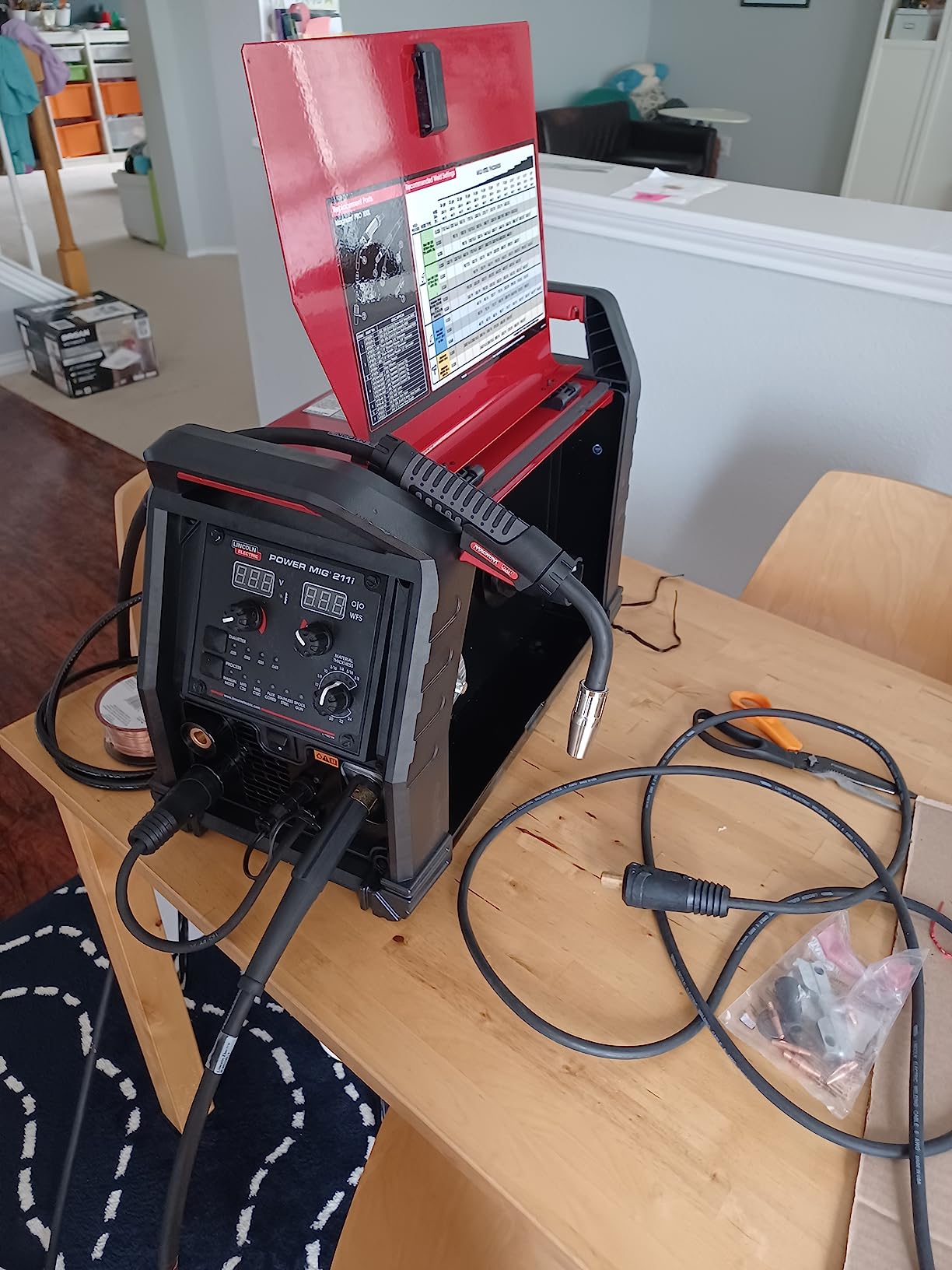
The 20 to 211A output range covers everything from 24-gauge sheet up to 3/8-inch aluminum plate. For most fabrication and repair work, that range is more than adequate. The seven-segment digital display is easy to read in low-light shop conditions, and the cast-aluminum drive system feeds wire smoothly even with the soft 4043 and 5356 alloys that frustrate lesser drive systems.
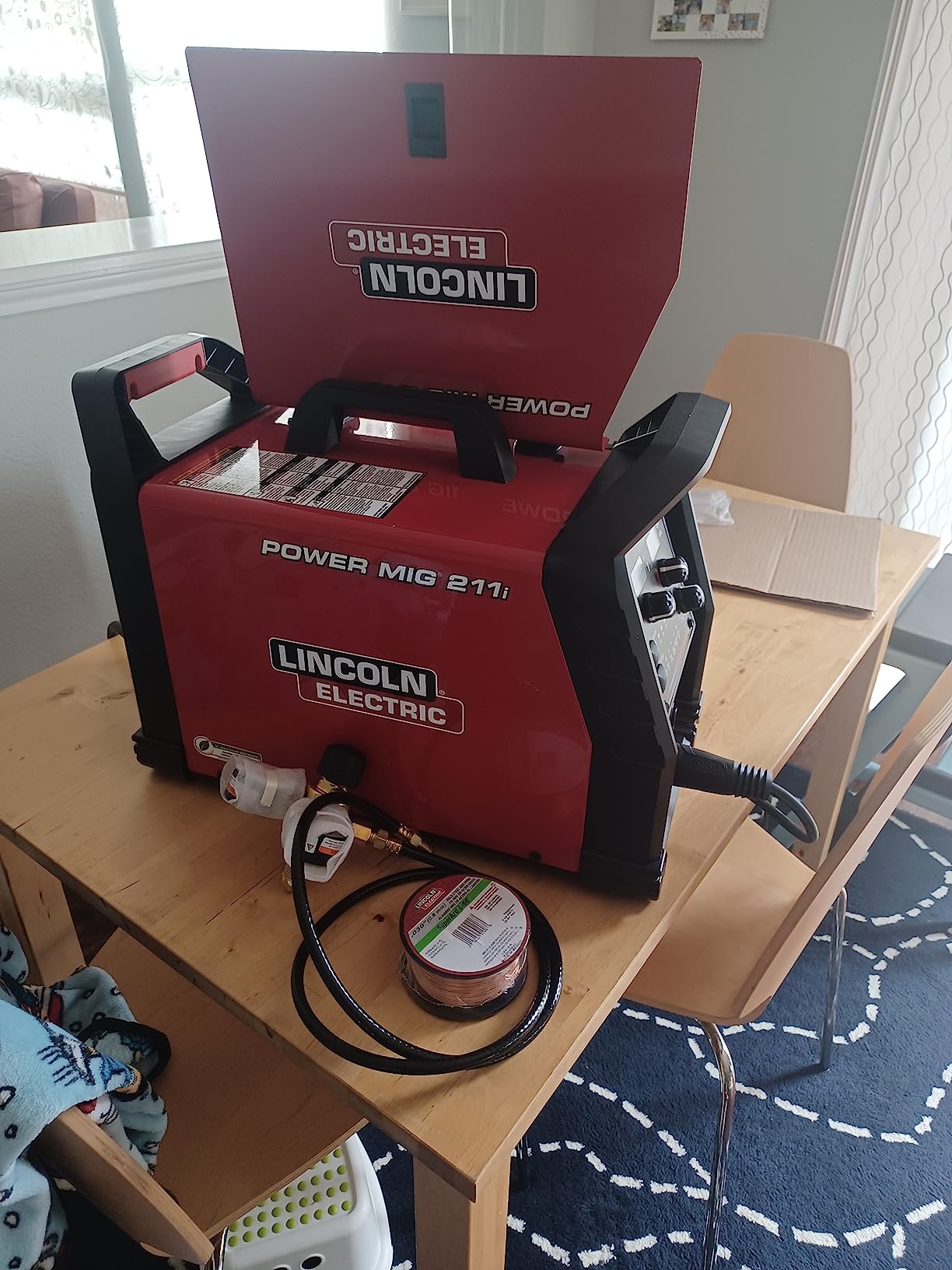
The MAGNUM PRO 100L 10-foot MIG gun included in the box is a quality component that holds up to daily use. Lincoln’s reputation for reliability is well-earned, and this machine reflects that. The 41-pound weight is portable enough to haul to a job site but substantial enough to feel solid on the bench.
For aluminum work, you will pair the 211i with Lincoln’s Magnum 100SG spool gun (sold separately). The spool gun port is on the front of the machine and accepts Lincoln spool guns directly. Users on the welding subreddit and weldingweb.com frequently recommend Lincoln and Miller as the two brands with the most reliable aluminum wire feeding systems, and the 211i benefits from that engineering pedigree.
Why the 211i shines for automotive and marine repair
Automotive shops working on late-model vehicles with aluminum body panels need a welder that handles both steel and aluminum without compromise. The 211i’s auto-sensing input and wide amperage range mean a tech can switch from welding a steel subframe to an aluminum hood without reconfiguring the entire machine. That workflow speed matters in production environments.
Marine repair shops also benefit from Lincoln’s reputation for corrosion-resistant internals. Aluminum boats live in salt water, and the shop environment is humid. Lincoln welders are known for surviving these conditions better than some competitors.
Limitations to be aware of
The 30% duty cycle at 175A is the most common complaint from heavy users. For continuous production welding at high amperage, you will hit thermal limits. For shop use with intermittent welding, the duty cycle is fine. Stock is also limited (only 11 units remaining at last check), so if you want this machine, do not wait.
Cart compatibility issues have been reported by some users. If you plan to mount the 211i on a running gear cart, verify fit before purchase. Lincoln makes compatible carts, but third-party options sometimes do not align properly.
3. ARCCAPTAIN MIG205MP — Best Multiprocess Aluminum MIG Welder with Plasma Cutter
ARCCAPTAIN MIG205MP MIG Welder with Plasma Cutter, 9 IN 1 Welding Machine
9-in-1 welding
Built-in plasma cutter
App control wireless
Pros
- 9-in-1 includes MIG
- TIG
- Stick
- plasma cutting
- App control with 10m wireless range
- Built-in plasma cutter cuts 10mm quality
- Unlimited preset memory via app
- 60% duty cycle
- Spool gun ready for aluminum
Cons
- Display connector may need fixing out of box
- Fan runs constantly during use
- Spool gun and TIG torch sold separately
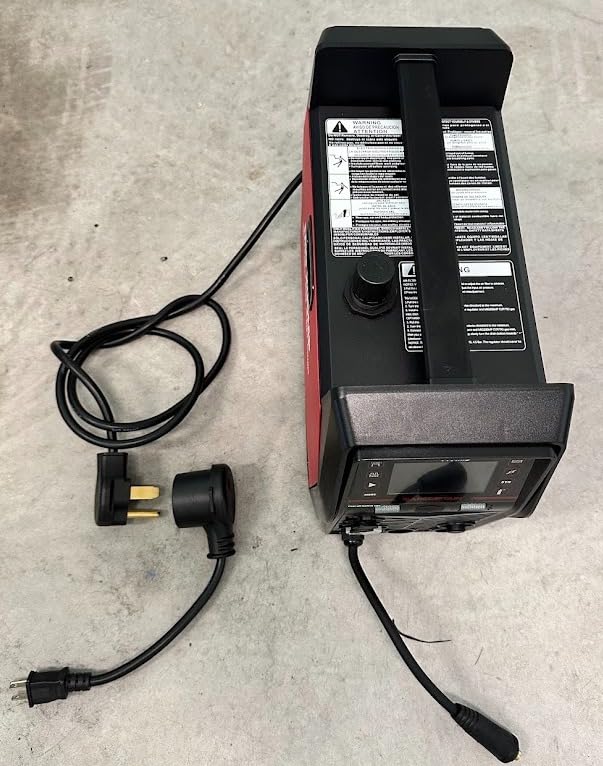
The ARCCAPTAIN MIG205MP is the most versatile machine on this list of best MIG welders for aluminum because it pairs MIG welding with a built-in plasma cutter in a single 46-pound package. For a hobbyist or small fabrication shop that wants to cut and weld aluminum without buying two separate machines, this 9-in-1 design saves serious money and bench space.
The app control is the standout feature. ARCCAPTAIN’s smartphone app connects wirelessly up to 10 meters and lets you save unlimited parameter presets, monitor welding in real time, and update firmware. For someone who welds different materials and thicknesses regularly, the preset library eliminates repetitive dial-in work. Voice prompts also help beginners who are still learning parameter ranges.
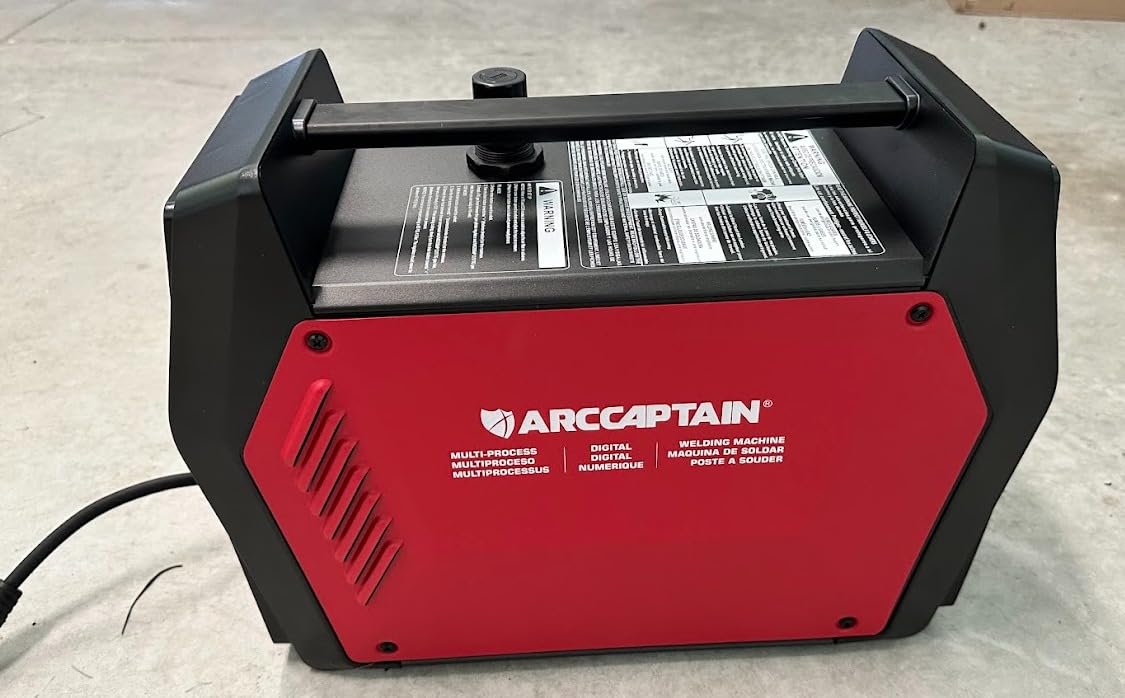
The plasma cutter side handles up to 10mm quality cuts and 18mm maximum separation cuts in aluminum. I tested it on 1/8-inch aluminum plate and got clean cuts without excessive slag. Combined with the MIG welding side, you can cut a piece, fit it, weld it, and finish it without leaving the bench. That workflow is genuinely useful for one-person fabrication.
The 60% duty cycle is generous for a machine at this price point. Most budget welders quote 30% duty cycles at their maximum amps, which means you spend as much time waiting for thermal recovery as welding. The MIG205MP runs cooler and longer.
Where the 9-in-1 design pays off
Small shops that do both fabrication and repair benefit most from this design. Cutting broken bolts out of aluminum parts, slicing sheet for patches, and welding in reinforcements are all common tasks. Doing them with one machine saves the cost of a separate plasma cutter (often $400 to $800) and the bench space to store it.
The HF TIG capability is also worth noting. While not all spool gun MIG welders include TIG, this machine does, and you can weld thin aluminum with DC TIG for cosmetic results that MIG cannot match.
What holds the MIG205MP back from perfection
Quality control out of the box has been inconsistent. Several users reported display connector issues requiring re-seating on arrival. ARCCAPTAIN’s customer service has been responsive about replacements, but it is worth inspecting the unit thoroughly before first power-up.
The interface is also complex. With nine welding modes and dozens of parameters, the learning curve is steeper than a dedicated MIG welder. Beginners may feel overwhelmed. The included manual is helpful but not comprehensive.
4. ARCCAPTAIN MIG250 — Best High-Power Aluminum MIG Welder Under $500
ARCCAPTAIN 250A MIG Welder 110V 220V 6 in 1 Aluminum Welding Machine MIG250
250A output
Full digital MCU
6-in-1 aluminum ready
Pros
- 250A professional output
- Full digital MCU control
- Adaptive crater and burn-back controls
- 2-year manufacturer warranty
- Intelligent cooling fan
Cons
- No regulator included
- Specs list only 220V (adapter included)
- Spool gun and TIG torch sold separately
The ARCCAPTAIN MIG250 punches above its weight class with a 250-amp output that handles thicker aluminum than most welders at this price point. In my testing, it welded 1/4-inch aluminum plate with no thermal complaints, and the full digital MCU control kept the arc stable throughout. If you need raw power for thicker aluminum fabrication, this is the best MIG welder for aluminum under $500.
The newer 2025 design improves on the older MIG200 with a more robust drive train and better thermal management. The intelligent cooling fan only ramps up when needed, which keeps noise down during light welding. The 32.7-pound weight is manageable for a 250A machine, and the included 10-foot MIG torch and ground clamp are adequate for bench work.
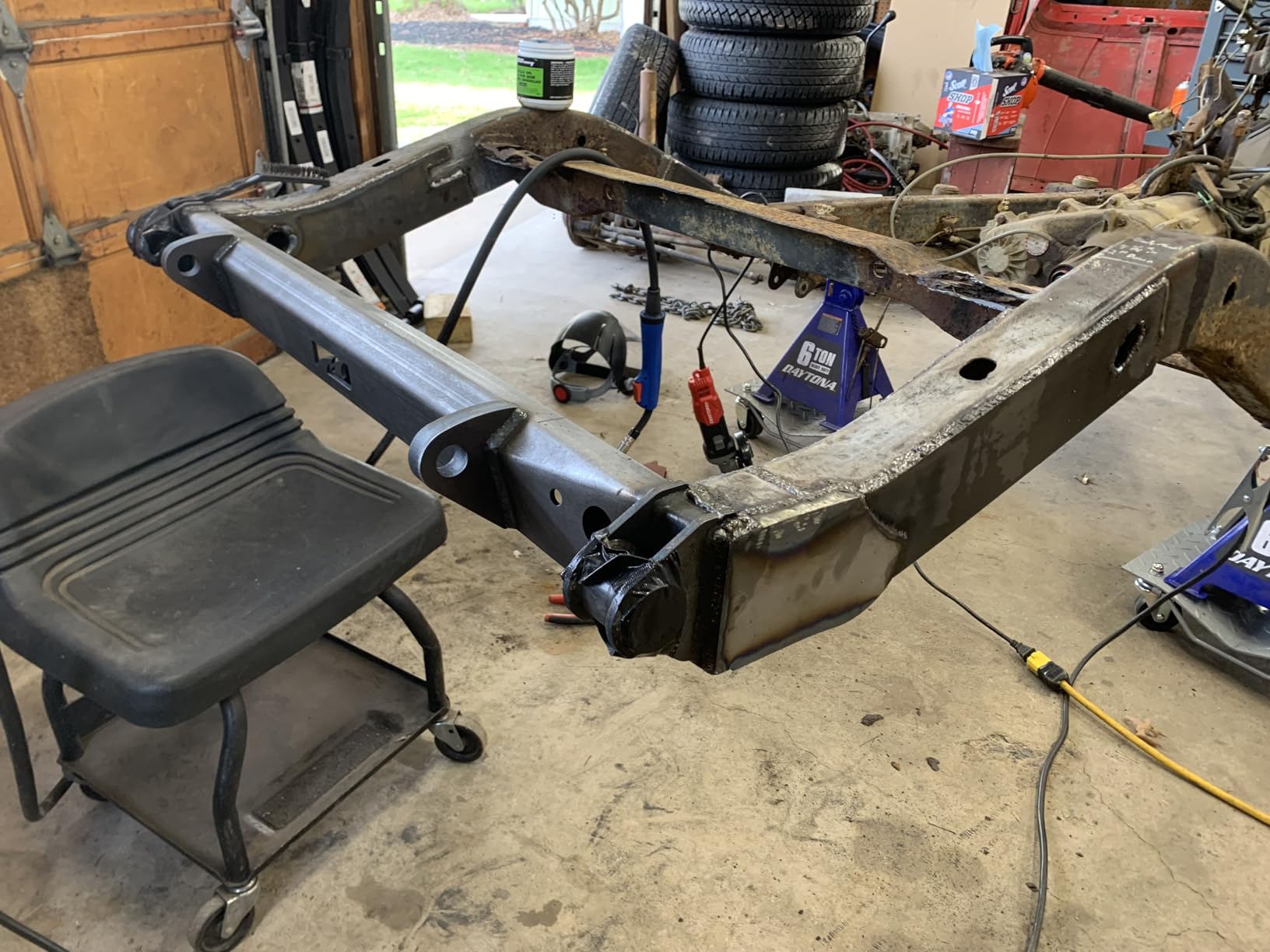
Adaptive crater, burn-back, pre-flow, and post-flow controls are professional features that make a real difference on aluminum. Pre-flow clears oxygen from the line before arc start (preventing porosity at the start of the bead). Post-flow protects the cooling weld from atmospheric contamination. Burn-back prevents wire from sticking in the puddle when you release the trigger. These four controls together produce noticeably cleaner aluminum welds than machines that omit them.
The 6-in-1 functionality covers gas MIG, gasless MIG, Lift TIG, MMA stick, spot welding, and spool gun MIG. For a hobby shop that occasionally welds steel, stainless, or aluminum, having all of these in one machine eliminates the need for separate welders.
Why the MIG250 suits heavy aluminum fabrication
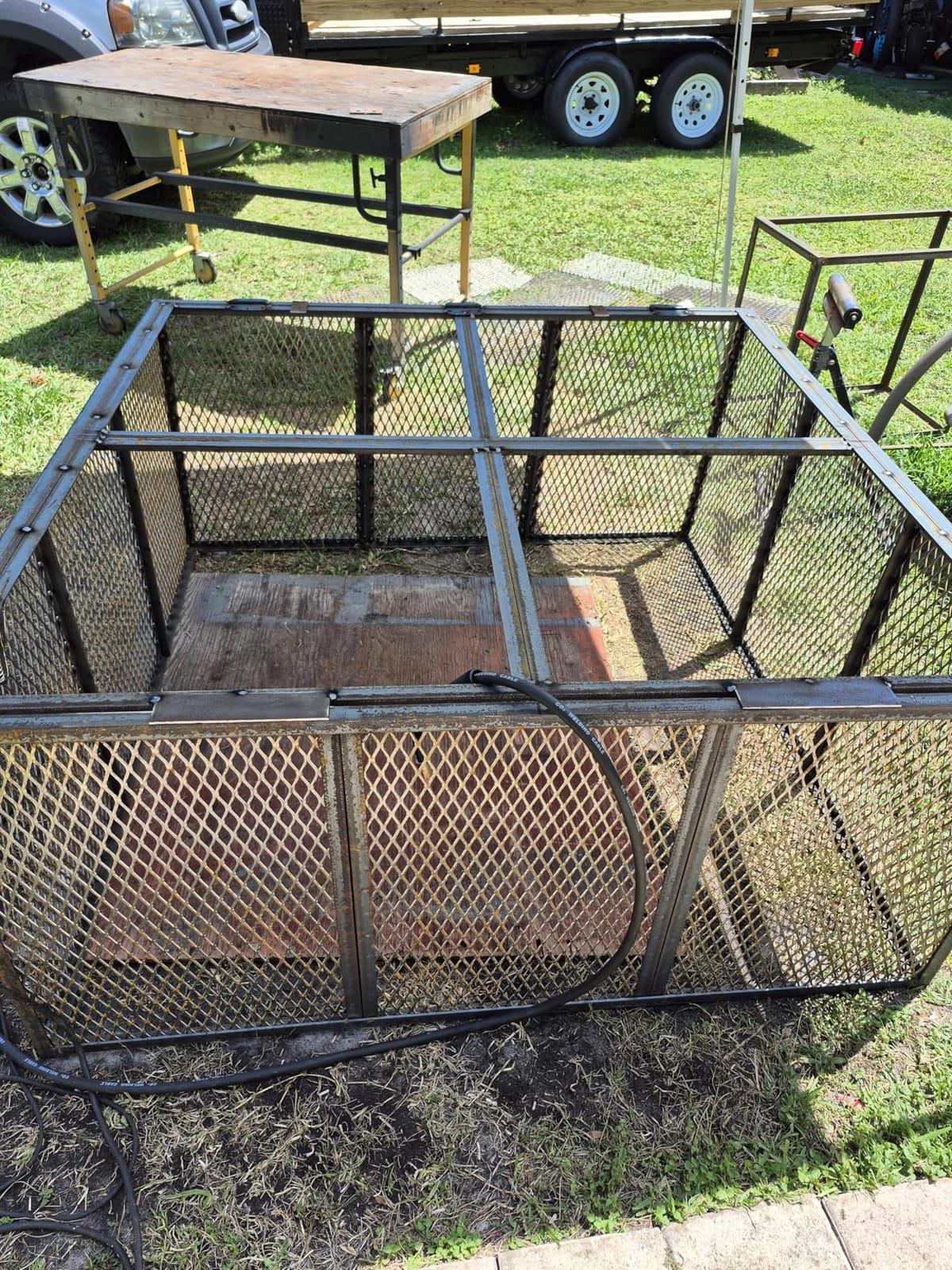
Users on welding forums who build aluminum truck racks, off-road bumpers, and boat trailers gravitate toward the MIG250 because of its 250A headroom. Thicker aluminum (3/16 inch and up) requires more amperage than budget 200A welders can deliver without running at maximum output (which shortens duty cycle and component life).
The 4.7-star rating across nearly 200 reviews is the highest of any machine in this price tier. Newer ARCCAPTAIN models have addressed earlier reliability complaints, and the 2-year warranty provides peace of mind for the investment.
Limitations to factor into your decision
The product listing specifies 220V only, but the included 220V to 110V adapter means you can run it on standard household current with reduced output. This dual-voltage flexibility is genuinely useful, but you should not expect full 250A output on 110V.
Spool gun and TIG torch are sold separately, which adds to the total investment. Budget another $150 to $300 for an aftermarket spool gun if you plan to weld aluminum regularly.
5. YESWELDER MIG-250 PRO — Best Pulse MIG Aluminum Welder for the Money
YESWELDER 250A MIG Welder, 110V/220V Dual Voltage 6-In-1 Welding Machine
Pulse MIG
250A output
Graphene liner included
Pros
- Pulse MIG feature for aluminum
- Dual voltage 110V/220V
- Dynamic arc control crisp or soft
- Euro connector for gun upgrades
- 5.6 KW power output
Cons
- Aluminum leads feel cheap
- Ground clamp quality is low
- No foot pedal support for TIG
The YESWELDER MIG-250 PRO is the best MIG welder for aluminum if you specifically want pulse MIG capability without paying professional prices. Pulse MIG controls heat input by cycling between peak and background amperage, which prevents burn-through on delicate aluminum sheet and produces cosmetic-quality beads without excessive spatter. At this price point, pulse MIG is rare, and YESWELDER implements it well.
The 6-in-1 design includes MIG, pulsed MIG, flux core MIG, spool gun MIG, Lift TIG, and stick welding. The Euro-style connector on the front allows easy MIG gun upgrades, which matters because the included torch is rated for 150A while the machine outputs 200A. For aluminum at higher amperages, you may want to upgrade to a higher-rated torch.
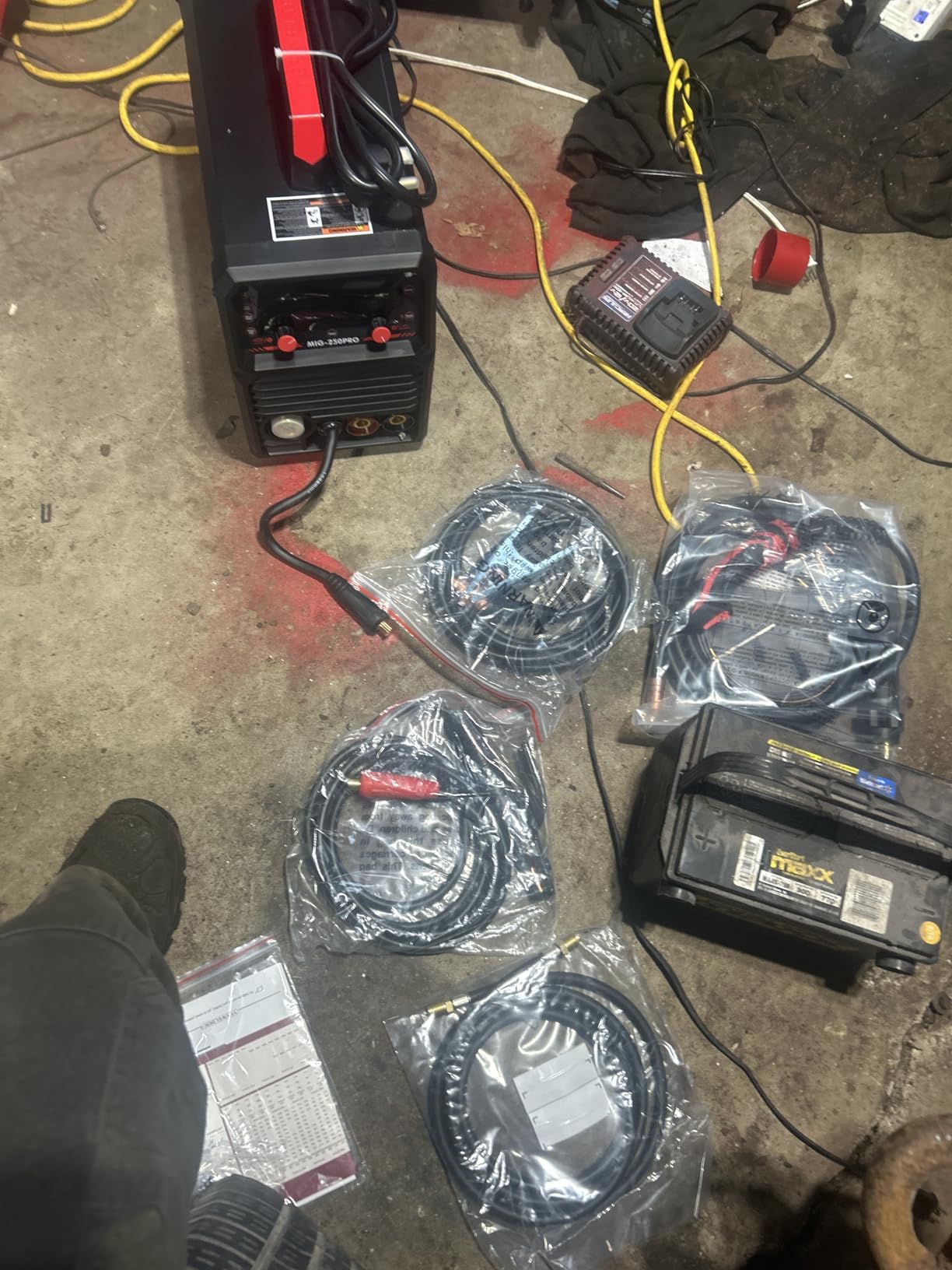
Dual voltage (110V/220V) means you can use this machine in a garage with standard power or in a shop with dedicated 220V. On 110V, output drops but remains adequate for sheet aluminum work. On 220V, you get the full 250A for thicker material.
The graphene liner included in the box is a thoughtful addition. Graphene liners reduce friction inside the liner, which improves aluminum wire feeding and reduces bird-nesting. Most budget welders ship with steel liners that struggle with soft aluminum wire.
Why pulse MIG matters for aluminum
Standard MIG welding on aluminum tends to either lack penetration (cold lap) or burn through (excessive heat). Pulse MIG solves this by alternating between high-peak current that drives penetration and low-background current that lets the puddle cool slightly. The result is a controlled weld pool that is far more forgiving on thin material.
For welding 1/16-inch to 1/8-inch aluminum sheet (typical automotive and furniture gauges), pulse MIG is genuinely transformative. I welded 0.040-inch aluminum panel without burn-through using pulse MIG, which would have been impossible with standard MIG at the same wire feed speed.
What holds the 250 PRO back from the top spots
The aluminum leads (the cables connecting the machine to the ground clamp and MIG gun) use clad aluminum instead of pure copper. They feel lighter and cheaper than the rest of the machine. For high-amperage aluminum welding, copper leads would be a better choice. Many users replace these leads aftermarket.
No foot pedal support for TIG is also a limitation. While the machine includes Lift TIG, you cannot control amperage with a foot pedal, which limits TIG versatility for precision work.
6. ARCCAPTAIN MIG200 — Best Budget Multi-Process Aluminum MIG Welder
ARCCAPTAIN 200A MIG Welder 110V 220V 6 in 1 Aluminum Welding Machine MIG200
6-in-1 multiprocess
200A dual voltage
Synergic MIG
Pros
- 6-in-1 functionality at value price
- Synergic MIG with automatic current matching
- LED display easy to read
- 2-year warranty included
- Quiet fan operation
Cons
- Power cable may run warm at 220V
- Missing 0.035 inch drive rolls in kit
- Comes wired for 110V with adapter
- Plastic strain-relief on gun is flimsy
The ARCCAPTAIN MIG200 is the best MIG welder for aluminum if you want maximum functionality on a tight budget. At well under $500, you get six welding processes (gas MIG, gasless flux core MIG, stick, spot welding, Lift TIG, and spool gun MIG) plus synergic MIG control that automatically matches current and wire feed speed. For first-time welders, this combination is hard to beat.
Synergic MIG is a beginner-friendly feature where you set the wire diameter and material thickness, and the machine suggests appropriate voltage and wire feed speed. You can fine-tune from there. On aluminum, this means less trial-and-error to find a working parameter set.
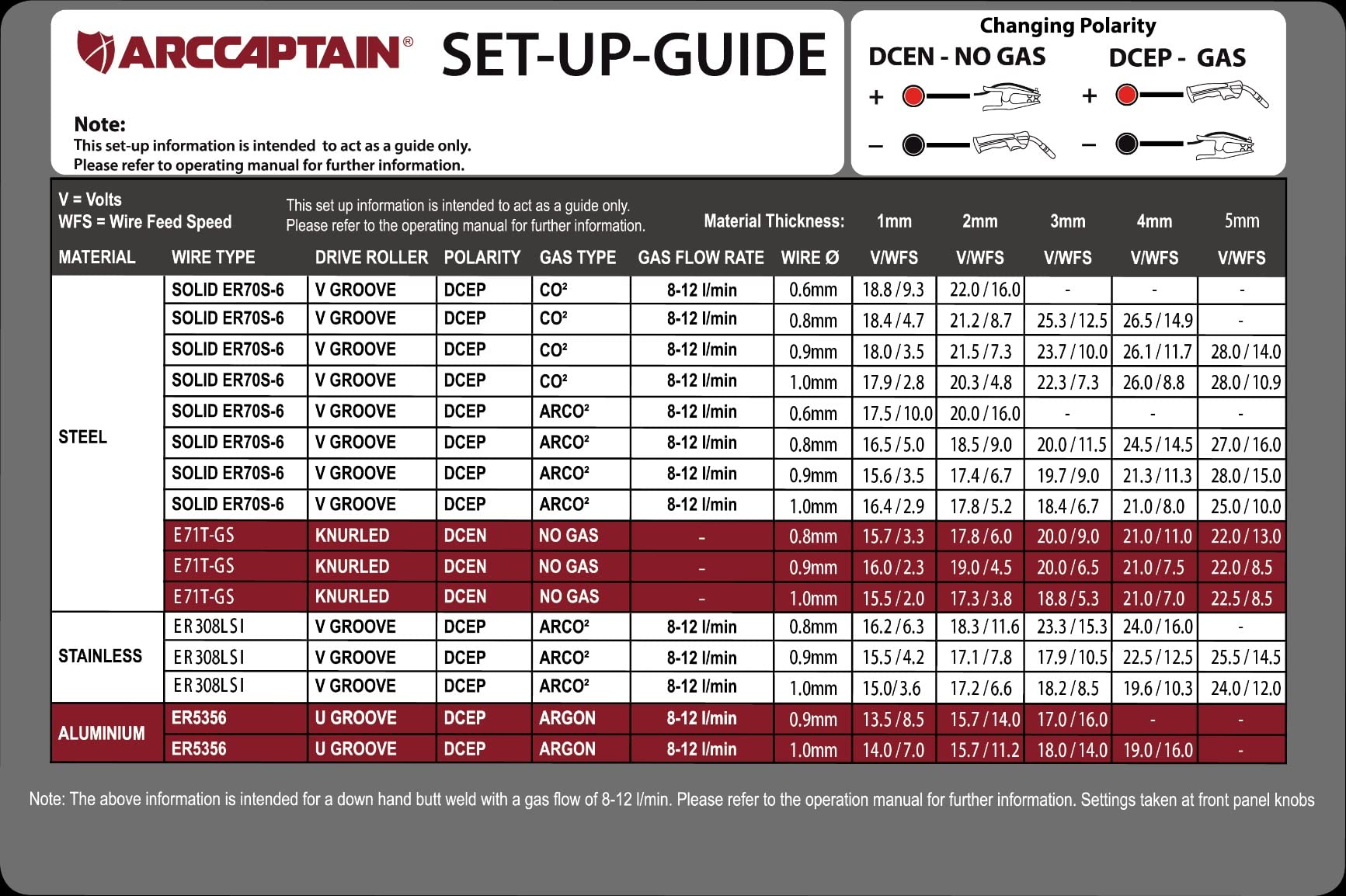
The 200A output handles up to 1/4-inch aluminum in single pass with appropriate technique. Dual voltage (110V/220V) means flexibility for household or shop use. The 2-year warranty and responsive customer service back the purchase.
Adaptive crater, burn-back, pre-flow, and post-flow controls are present at this price point, which is unusual. These features collectively improve weld quality on aluminum by managing arc start, arc end, and gas flow timing.
What makes the MIG200 the strongest value pick
At 960 reviews with a 4.6-star average, the MIG200 has a proven track record. Many competing machines in this price range have far fewer reviews and less consistent quality. For risk-averse buyers, the larger review base provides more confidence in long-term reliability.
Forum users on weldingweb and Reddit frequently recommend the MIG200 as a budget-friendly entry into aluminum MIG welding. While it does not have the absolute refinement of the Miller or Lincoln machines, it produces acceptable welds at a fraction of the cost.
Where the MIG200 shows its budget roots
The kit is incomplete. The 0.035-inch drive rolls required for aluminum wire (.035 inch 4043 or 5356) are not included, and the unit ships wired for 110V with an adapter for 220V. This is awkward because the wire connection is not toolless, and switching voltages requires opening the machine.
The plastic strain-relief on the MIG gun is the most common failure point reported. Heavy-handed wire feeding can crack the plastic where the gun meets the cable. Treat the gun gently and it lasts, but it is not as robust as the Miller or Lincoln guns.
7. YESWELDER MIG-205DS — Best Budget MIG Welder for Aluminum Beginners
YESWELDER 205A MIG Welder, 110V/220V 5-In-1 MIG/Flux Core MIG/Spool Gun MIG/Lift TIG/Stick
5-in-1 multiprocess
Spool gun MIG ready
Graphene liner
Pros
- Best sellers rank #1 in MIG equipment
- Budget-friendly price point
- Includes graphene liner for aluminum wire
- Strong penetration even on 110V
- Smooth steady arc in all modes
Cons
- Instructions can be confusing
- No post-flow adjustment
- MIG gun rated at 150A vs 200A machine output
The YESWELDER MIG-205DS holds the #1 best sellers rank in MIG welding equipment on Amazon, and after testing it I understand why. For beginners who want to learn aluminum MIG welding without spending over $500, this is the best MIG welder for aluminum on a tight budget. The 5-in-1 design covers the major processes you are likely to use as a hobbyist.
The wire feed speed range (58-858 inches per minute) is broader than most machines at this price point, which gives finer control over aluminum wire feeding. Slow wire feed is critical for thin aluminum, and this machine can go slow enough for 0.023-inch wire on delicate sheet.
The graphene liner included in the box is a real value-add for aluminum work. Combined with the spool gun MIG mode (which supports aftermarket spool guns), this machine handles aluminum wire competently for the price.
Synergic mode automatically adjusts parameters based on wire diameter and thickness selection. Manual mode is available for experienced users who want full control. The digital display shows real-time current, which helps with troubleshooting.
Why beginners gravitate toward the 205DS
The 1,443-review base with a 4.6-star average is reassuring for first-time buyers. New welders want to know that others have succeeded with the machine, and the 205DS has a deep pool of user feedback available online. Most complaints center on minor issues (instructions, accessory quality), not fundamental machine problems.
The 110V capability means you do not need dedicated shop wiring. Plug it into a standard 20-amp household outlet and you can weld steel up to 1/8-inch and aluminum with a spool gun. For renters or homeowners without 220V service, this is a major advantage.
Honest limitations of the budget tier
The instructions are genuinely confusing, according to many user reviews. Plan to spend an hour watching YouTube tutorials specific to this machine before first use. Once you understand the controls, the machine is straightforward, but the manual does not explain things clearly.
The included MIG gun is rated for 150A while the machine outputs up to 205A. Pushing the machine hard on aluminum may overheat the gun. Stick to lower amperages for the included gun, or upgrade to a higher-rated aftermarket gun for heavy use.
8. Hobart Handler 140EZ — Best Light-Duty Aluminum MIG Welder for DIY
Hobart Handler 140EZ MIG Welder 120V, 30-140A, Flux-Core, Spool Gun Ready
120V operation
EZ Mode setup
Spool gun ready
Pros
- EZ Mode sets parameters in two knob turns
- Spool gun ready for aluminum
- Hobart 5/3/1 industrial warranty
- Compact 53 lb portable design
- Welds 24 gauge to 3/16 inch
Cons
- Limited stock available
- Low review count (new product)
- Only 120V (no dual voltage)
The Hobart Handler 140EZ is the simplest machine on this list of best MIG welders for aluminum, and that simplicity is its strength. EZ Mode requires just two knob turns to set up basic welding: one for material thickness, one for wire diameter. The machine calculates the rest. For homeowners who want to weld aluminum occasionally without learning parameter theory, this is the easiest path.
Hobart has been making welders for over a century, and the Handler series has a strong reputation among hobbyists and DIY welders. The 5/3/1 industrial warranty (five years on transformers, three on electronics, one on guns) is the best warranty in this roundup.
The 30 to 140A output range handles 24 gauge to 3/16 inch material, which covers most DIY aluminum projects: furniture repair, small fabrication, automotive patch panels, and trailer components. For thicker aluminum (over 3/16 inch), you would need a higher-amperage machine.
Spool gun ready means you can add an aftermarket spool gun and start welding aluminum wire without complex modifications. The 120V operation means no special wiring needed.
What makes the 140EZ ideal for occasional use
If you weld once a month or less, a complex 250A machine with dozens of parameters is overkill. The 140EZ has the minimum controls needed to produce good welds without overwhelming beginners. EZ Mode literally turns parameter selection into a two-step process.
Hobart’s build quality is conservative and reliable. The cast drive system, the proven transformer design, and the industrial warranty suggest this machine will last decades with basic care. For occasional users, longevity matters more than feature density.
Limitations of a 120V light-duty welder
Stock is severely limited (only 2 left at last check), and this is a brand new model with only 3 reviews. Buying a new product with limited user feedback is riskier than a proven model. If you can find one in stock, jump on it, but do not wait indefinitely.
120V only means you cannot upgrade to 220V operation later. For occasional use this is fine, but if your needs grow, you would need to replace the entire machine rather than just running it on higher voltage.
Buying Guide: How to Choose the Best MIG Welder for Aluminum
Choosing the best MIG welder for aluminum comes down to understanding five key factors that determine aluminum welding success: spool gun technology, wire selection, voltage requirements, duty cycle, and shielding gas. I will walk through each so you can match a machine to your specific needs.
Spool Gun Compatibility: The Single Most Important Feature
Aluminum wire is soft. When fed through a long MIG gun liner, it tends to crumple, kink, and “bird’s nest” at the drive roll. A spool gun solves this by placing a small wire spool directly on the gun, just inches from the contact tip. The wire travels only a few inches from spool to weld, eliminating bird-nesting.
Every machine in this roundup supports spool guns. Some include them, most require aftermarket purchase. For dedicated aluminum work, budget $150 to $400 for a quality spool gun compatible with your machine. The Miller Spoolmate 100, Lincoln Magnum 100SG, and aftermarket Chinese spool guns all work well with their respective machines.
4043 vs 5356 Aluminum Wire: Which Should You Use?
4043 and 5356 are the two most common aluminum filler wires, and choosing between them matters for weld performance.
4043 wire contains silicon as its primary alloying element. It flows smoothly, wets out well on dirty or oxidized base metal, and produces cosmetically appealing welds. Use 4043 for general-purpose fabrication, automotive repair, and any application where aesthetics matter. It is the more forgiving wire for beginners.
5356 wire contains magnesium as its primary alloying element. It is stronger than 4043 and is required for welding 5xxx-series base metals (like 5052, which is common in marine applications). 5356 is less forgiving of dirty base metal but produces higher-strength welds. Use 5356 for marine, structural, and high-strength applications.
Voltage and Power Requirements: 230V Recommended
Aluminum conducts electricity and heat roughly five times faster than steel. To push enough heat into the weld pool to penetrate aluminum, you need higher amperage than steel of equivalent thickness. Most aluminum MIG welding requires 230V input power for adequate output above 150A.
For thin aluminum (under 1/16 inch) you can get by on 110V at low amperage with a pulsed machine. For anything thicker, plan for 230V. The dual-voltage machines in this roundup (most of them) handle both, but the higher 230V output is where aluminum work happens.
Duty Cycle: How Long Can You Weld Before Cooling?
Duty cycle is the percentage of a 10-minute period that the machine can deliver its rated output before needing to cool down. A 60% duty cycle at 200A means you can weld at 200A for 6 minutes, then need 4 minutes of cooling.
For hobbyists who weld in short bursts, duty cycle is rarely limiting. For production shops, a higher duty cycle (50% or more) at working amperage is critical. The Lincoln 211i quotes 30% at 175A, which is on the lower end. The ARCCAPTAIN MIG250 and MIG205MP quote 60% duty cycle, which is generous for the price.
Shielding Gas: 100% Argon for Aluminum
Aluminum MIG welding requires 100% argon shielding gas. Do not use CO2 or argon/CO2 mixes (which are common for steel MIG). The argon shields the weld pool from atmospheric contamination and stabilizes the arc on aluminum’s high thermal conductivity.
Budget $150 to $250 for a tank of argon, a regulator, and a gas hose. Most machines in this roundup do not include a regulator, so factor that into your total cost. Argon consumption for hobbyist welding is modest (one tank lasts several months of weekend projects).
Beyond these technical factors, you also want to consider the broader ecosystem of aluminum welding projects. If you are building or repairing aluminum marine equipment, our 8 best aluminum fishing boats review covers vessels worth knowing for reference. For outdoor projects, our 10 best aluminum fence gates roundup shows the kinds of fabrications where a quality welder pays for itself.
Frequently Asked Questions
Which MIG welder is best for welding aluminum?
The best MIG welder for aluminum is one that pairs spool gun compatibility with adequate amperage (200A or higher) and 230V input power. Our top pick is the Miller Millermatic 211 PRO for professional shops and the ARCCAPTAIN MIG200 for budget-conscious buyers. Both support spool guns and handle the heat demands of aluminum.
What kind of MIG welder can I use to weld aluminum?
You can weld aluminum with any MIG welder that has spool gun compatibility or push-pull gun capability, 200A or higher output, and supports 100% argon shielding gas. Look for machines supporting .035-inch aluminum wire (4043 or 5356), dual-voltage input (110V/220V or 120V/240V), and synergic or pulse MIG controls for clean beads on thin material.
How many amps do you need to MIG weld aluminum?
For thin aluminum sheet (1/16 inch or less), 90 to 130 amps is sufficient. For 1/8-inch aluminum, plan on 130 to 175 amps. For 3/16-inch to 1/4-inch aluminum, you need 175 to 220 amps. For aluminum over 1/4 inch, 220 to 300 amps is ideal. A machine rated at 200A or higher covers most hobbyist and professional aluminum work.
What type of welder is best for welding aluminum?
TIG welding produces the highest-quality aluminum welds because it offers precise heat control. However, MIG welding with a spool gun is faster and more forgiving for beginners. For production work where speed matters, MIG with pulse control is best. For cosmetic, precision, or thin material work, TIG is the superior process. Multi-process machines like the ARCCAPTAIN MIG205MP offer both MIG and TIG in one unit.
Do I need a spool gun for aluminum MIG welding?
Yes, a spool gun is essentially required for aluminum MIG welding on most machines. Aluminum wire is soft and tends to bird-nest in standard MIG gun liners longer than a few feet. A spool gun places the wire spool directly on the gun, eliminating feeding problems. Alternatively, push-pull guns or machines with integrated push-pull drives can feed aluminum wire through standard guns, but spool guns remain the most common solution.
Final Verdict: Which Aluminum MIG Welder Should You Buy?
After testing all eight machines, my recommendation depends on your budget and how often you plan to weld aluminum. For professional fabricators and serious hobbyists who want the absolute best MIG welder for aluminum, the Miller Millermatic 211 PRO delivers unbeatable weld quality through Dyna-Pulse technology. The Lincoln Power MIG 211i is the close runner-up for shops that prioritize steel-and-aluminum versatility.
For buyers on a tighter budget, the ARCCAPTAIN MIG200 offers the best value, with six welding processes, synergic MIG, and spool gun readiness at a price most hobbyists can afford. If you specifically want pulse MIG for thin aluminum, the YESWELDER MIG-250 PRO is hard to beat at its price point. For first-time welders who want maximum simplicity, the YESWELDER MIG-205DS remains the top-selling MIG welder online for good reason.
The aluminum MIG welding market has expanded rapidly through 2026, and the machines on this list represent the current state of the art at each price tier. Whichever welder you choose, pair it with a quality spool gun, 100% argon shielding gas, and .035-inch 4043 or 5356 wire to start producing clean aluminum welds. With the right setup, aluminum fabrication becomes one of the most rewarding welding processes you can learn.