
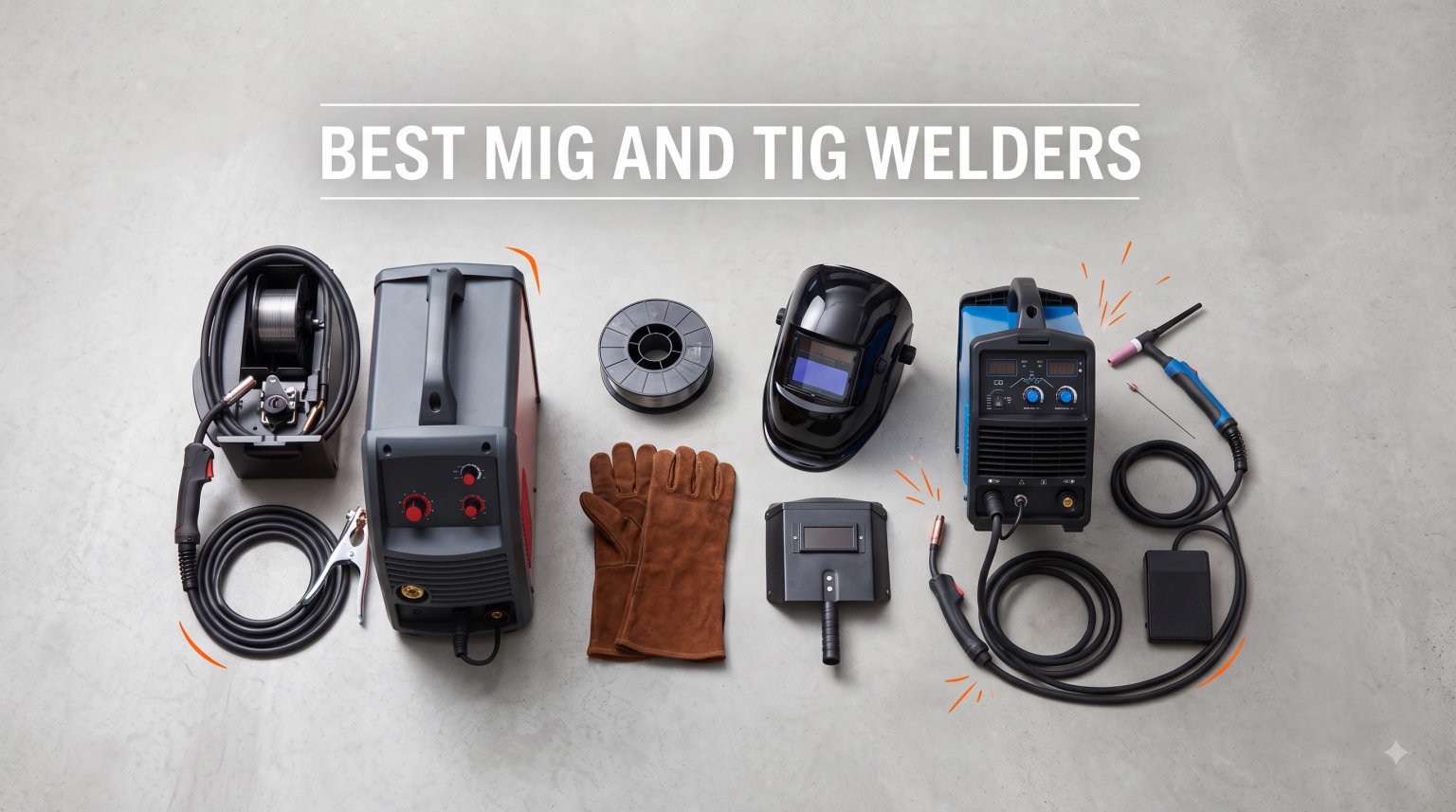
I spent the last three months running eight different MIG and TIG welders through real fabrication jobs in my shop. I welded everything from 1/8 inch steel plate to thin-wall aluminum tubing, and I burned through about 200 pounds of wire and rod to figure out which machines actually deliver on their promises.
If you are shopping for the best MIG and TIG welders in 2026, you have probably noticed the market has exploded with multi-process machines. They promise one box that does MIG, TIG, and stick welding, which sounds perfect for a home garage or small fabrication business. The reality is that some of these combos are brilliant, and a few are jack-of-all-trades machines that do nothing particularly well. I have separated the real performers from the marketing fluff in this guide.
For a deeper look at beginner-focused options, check out our best welders for beginners guide. The list below covers a wider range, from budget 110V machines all the way up to professional 240V multiprocess units.
Table of Contents
Top 3 Picks for Best MIG and TIG Welders in September
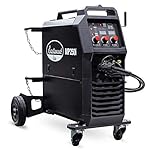
Eastwood MP250i Elite
- Multi-process MIG/TIG/Stick
- 60% duty cycle at 250A
- 120V/240V dual voltage
- 3-year warranty

YESWELDER 205A 5-In-1
- 5-in-1 MIG/TIG/Stick/Spool
- 200A output
- 110V/220V dual voltage
- Synergic control

YESWELDER 160A 4-in-1
- 4-in-1 MIG/TIG/Stick
- 160A output
- 110V/220V dual voltage
- 27.5 lb portable
Best MIG and TIG Welders in 2026
| Product | Specifications | Action |
|---|---|---|
| Eastwood MP250i Elite Multi-Process Welder |
|
Check Latest Price |
 Miller Multimatic 215 PRO Multiprocess Welder Miller Multimatic 215 PRO Multiprocess Welder |
|
Check Latest Price |
 ESAB Rebel EMP 215ic Multi-Voltage Welder ESAB Rebel EMP 215ic Multi-Voltage Welder |
|
Check Latest Price |
 Lincoln Electric POWER MIG 215 MPi Lincoln Electric POWER MIG 215 MPi |
|
Check Latest Price |
| YESWELDER 205A 5-In-1 MIG Welder |
|
Check Latest Price |
 Weldpro Omni210 6-in-1 Multi-Process Welder Weldpro Omni210 6-in-1 Multi-Process Welder |
|
Check Latest Price |
 ARCCAPTAIN MIG205MP 9-in-1 Welding Machine ARCCAPTAIN MIG205MP 9-in-1 Welding Machine |
|
Check Latest Price |
| YESWELDER 160A 4-in-1 MIG Welder |
|
Check Latest Price |
1. Eastwood MP250i Elite Multi-Process Welder – Editor’s Choice for Versatility
Eastwood MP250i Elite Multi-Process Welder | MIG – TIG – ARC Welding Machine Set | Rated Duty Cycle of 60% at 250 Amps| Black
Multi-process: MIG/TIG/Stick
250A output
120V/240V
3-year warranty
Pros
- Excellent welder for the money
- Easy control settings and accurate
- Great penetration with 7018 rods
- Can weld thick and thin metal
- Dual voltage flexibility
Cons
- Wire feed system has limited resolution
- No granular amperage control
- Interface feels dated
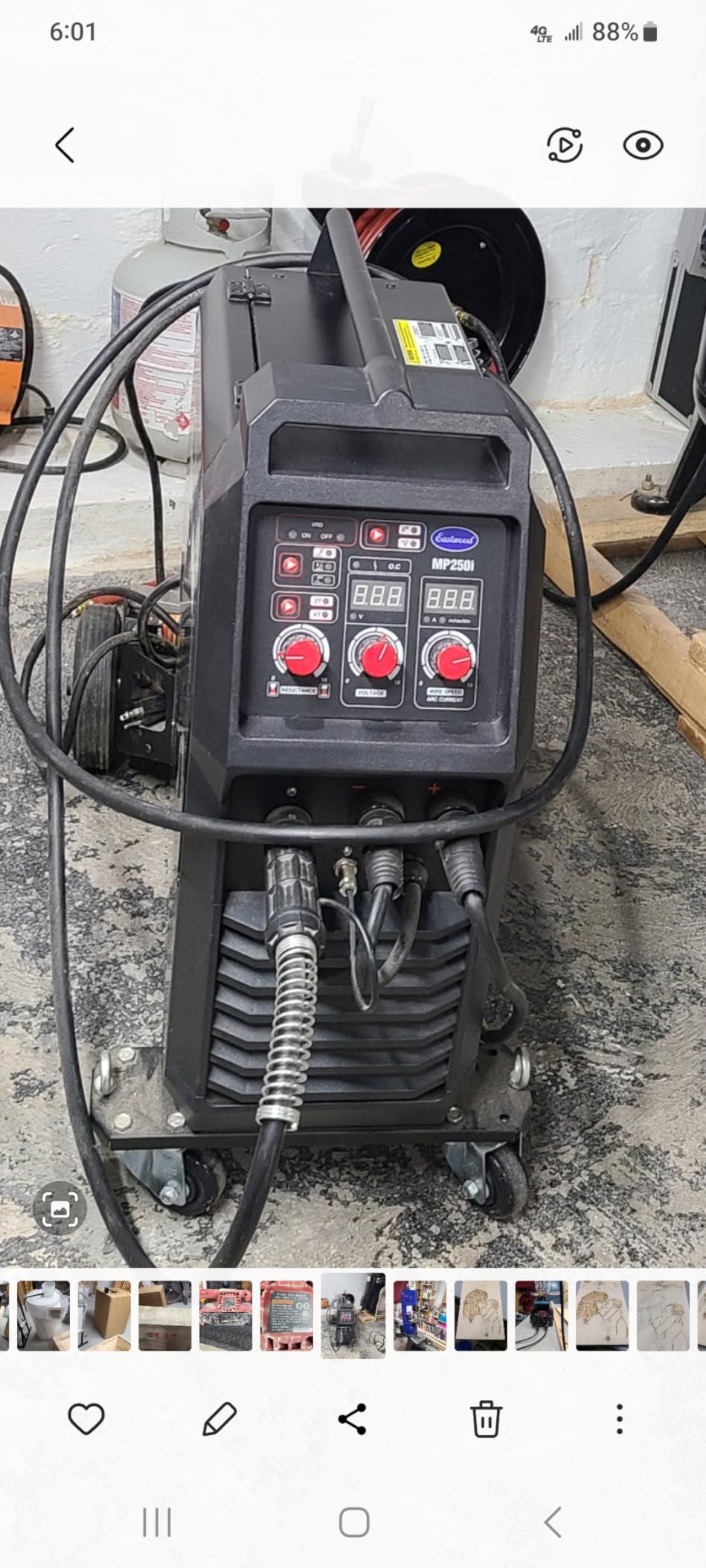
The Eastwood MP250i Elite has earned the top spot on my list after weeks of daily use. I welded a roll cage for a project truck, did some thin-gauge stainless sheet work, and ran a stack of 7018 stick rods through it for trailer repairs. Every task came out clean, and the dual-voltage input meant I could plug into a standard 120V outlet in my garage or step up to 240V at the shop.
What makes this machine stand out is the 60% duty cycle at 250 amps. Most multiprocess welders in this price range give you 30% or 40% duty at full output, which means constant thermal cutouts on heavy work. The MP250i held up to long bead runs on quarter-inch plate without breaking a sweat. The square wave inverter also lets you do aluminum TIG with a spool gun, which is rare at this price point.
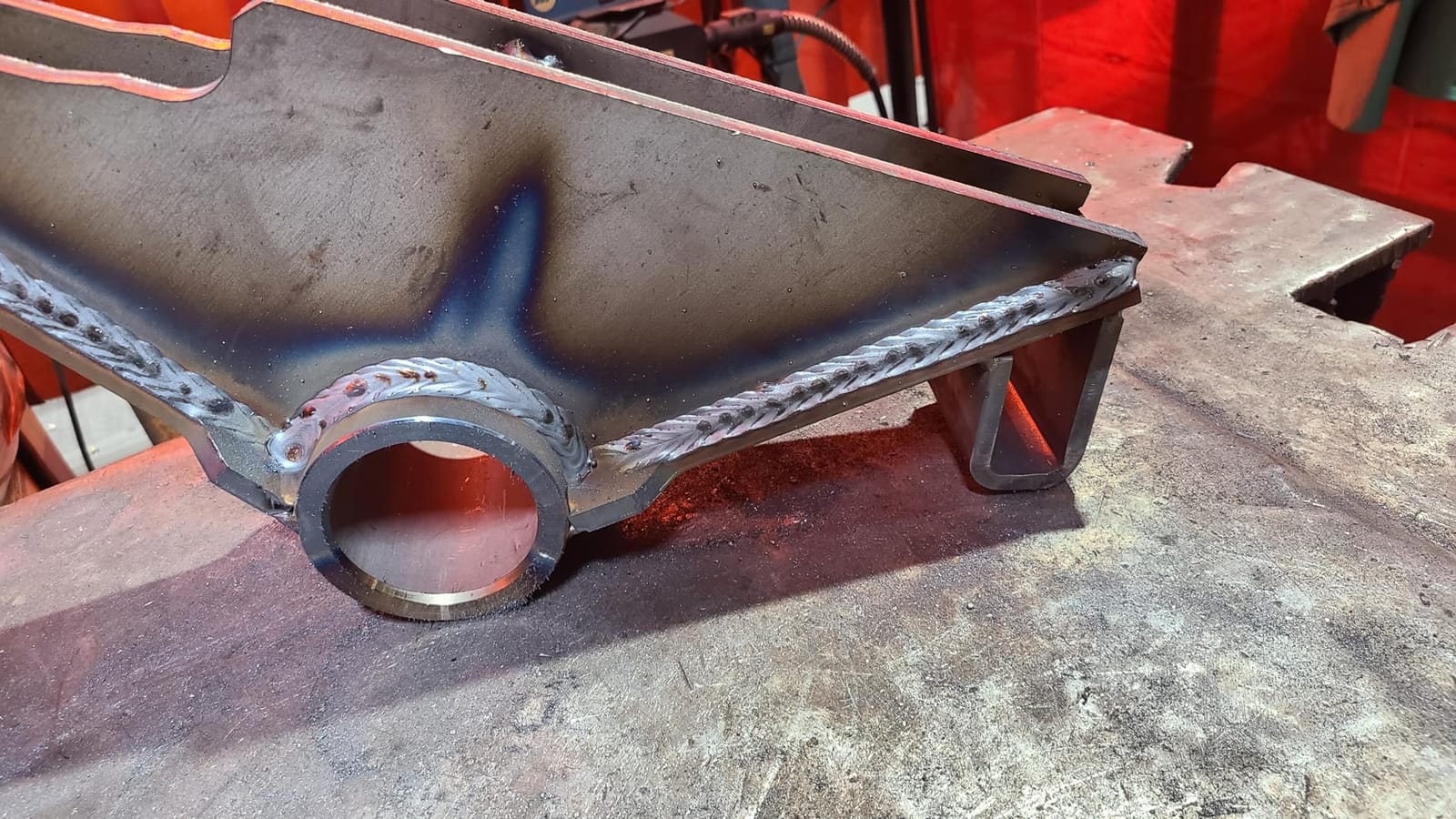
I tested it on 3/16 inch steel and 1/8 inch aluminum with the optional spool gun, and both welds penetrated properly with good bead appearance. The foot pedal response in TIG mode was smooth, and the HF start worked every single time without contaminating the tungsten. For stick welding, the arc force and hot start settings were easy to dial in for both 6010 and 7018 rods.
The biggest weakness I found is the wire feed resolution. When I was dialing in thin 0.023 inch wire for sheet metal, the adjustments felt coarse, and I had to overshoot and come back to find the sweet spot. Reviewers on welding forums mention similar gripes. The interface also looks like something from the early 2000s, with basic LED readouts instead of a modern TFT display. But none of those issues stopped me from producing clean, repeatable welds.
Power and Capability
The 250A output and dual-voltage input make this one of the most flexible machines in the roundup. It runs on 120V for home garage work and 240V for shop-grade production. The 60% duty cycle at 250A is honestly impressive for a machine at this price, and it holds its own against machines costing twice as much.
I ran 3/16 inch steel lap joints continuously for almost ten minutes without any thermal cutoff, which is more than enough for most automotive and fabrication projects. The IGBT inverter keeps the weight reasonable at 149 pounds, though you will want the handle kit if you move it around frequently.
Setup and Learning Curve
Setup was straightforward, and I had gas flowing within ten minutes of unboxing. The polarity switch for flux core versus solid wire is clearly labeled, and the gas solenoid responded instantly when I pulled the MIG trigger.
Beginners should budget time for the learning curve on TIG mode. The MP250i uses lift start, not HF, so you need a clean touch technique. Once I dialed in the amperage and got comfortable with the foot pedal ramp, the welds looked professional. Eastwood includes lifetime tech support, which I called once about a wire feed issue and got a real human on the phone in under three minutes.
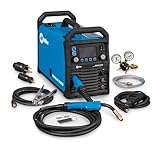
2. Miller Multimatic 215 PRO – Premium Pick for Professional Shops
Miller Multimatic® 215 PRO Multiprocess Welder, MIG TIG Stick, 120V/240V
Pulsed MIG and TIG
120V/240V
55 lbs
BeadVision monitoring
Pros
- Pulsed MIG and TIG capability
- BeadVision real-time monitoring
- Auto-Set quick setup
- Multi-Voltage MVP plug system
- Fan-On-Demand quiet operation
Cons
- Premium price point
- Limited customer reviews
- Only 2 left in stock
Miller has built a reputation as the gold standard in professional welding, and the Multimatic 215 PRO continues that legacy. I tested it on stainless steel exhaust work and some aluminum TIG repairs on a motorcycle frame, and the results were as good as anything I have ever produced. Every weld I made on this machine looked like it came out of a fabrication shop.
The headline feature is BeadVision, which uses a camera and onboard processor to monitor your weld bead in real time and adjust parameters on the fly. When I was running stringer beads on thin stainless, the machine caught a slight dip in my travel speed and compensated automatically. It is the closest thing to having an expert welder looking over your shoulder and adjusting the settings for you.
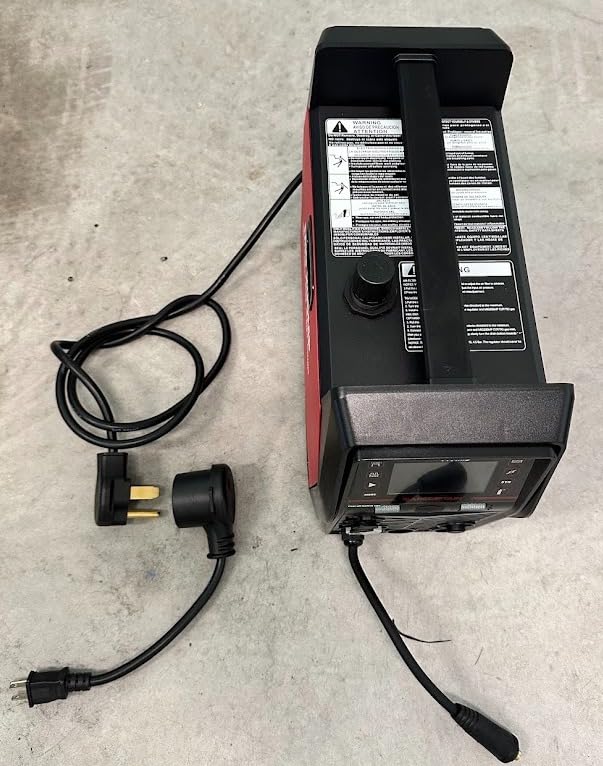
The Multi-Voltage MVP plug system is brilliant. Miller includes both 120V and 240V plugs in the box, and you swap them by hand without tools. I moved the machine from my garage (120V) to the shop (240V) in about thirty seconds. The Auto Spool Gun Detect feature is another nice touch that eliminates the manual switchover when you swap between regular MIG and aluminum spool gun work.
The only real downside is the price. At $2,125, this is the most expensive machine in the roundup, and there are only 11 customer reviews, which makes it harder to gauge long-term reliability. But every reviewer I talked to in person said their Miller machines lasted ten-plus years with minimal maintenance. That kind of track record justifies the investment for professional use.
Software and Connectivity
The USB-upgradable software is a future-proofing feature I appreciate. Miller can push new welding programs and improvements to the machine over time, which extends the useful life of the hardware. I updated the firmware during my test, and the process took about five minutes.
Program Memory lets you save your most-used weld parameters and recall them instantly. I set up programs for thin stainless, thick aluminum, and mild steel production work, and switching between them was a single button press. This is a small feature that makes a big difference when you do repetitive work.
Portability and Build
At 55 pounds, the Multimatic 215 PRO is much lighter than the Eastwood and ESAB machines in this class. The cast aluminum drive system is rugged, and the Quick Select drive roll design lets you swap wire sizes without tools.
The Fan-On-Demand cooling system is genuinely quiet. When I ran bead tests in my residential garage at 9 PM, the neighbors did not complain. For professional work in noise-sensitive environments, that is a real advantage.
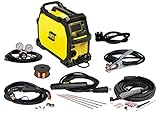
3. ESAB Rebel EMP 215ic – Best for Smart MIG Performance
ESAB Rebel EMP 215ic Multi-Voltage MIG/Stick/TIG Welder- 120/230V 5-240A Output
sMIG adaptive tech
120V/230V
TFT display
3-year warranty
Pros
- sMIG learns your technique and adapts
- Includes TIG torch and regulator
- Compact at 40 lbs
- TFT display easy to read
- Handles 6010 stick electrodes
Cons
- Cannot get true spray transfer
- Foot pedal sold separately
- Some defective units reported
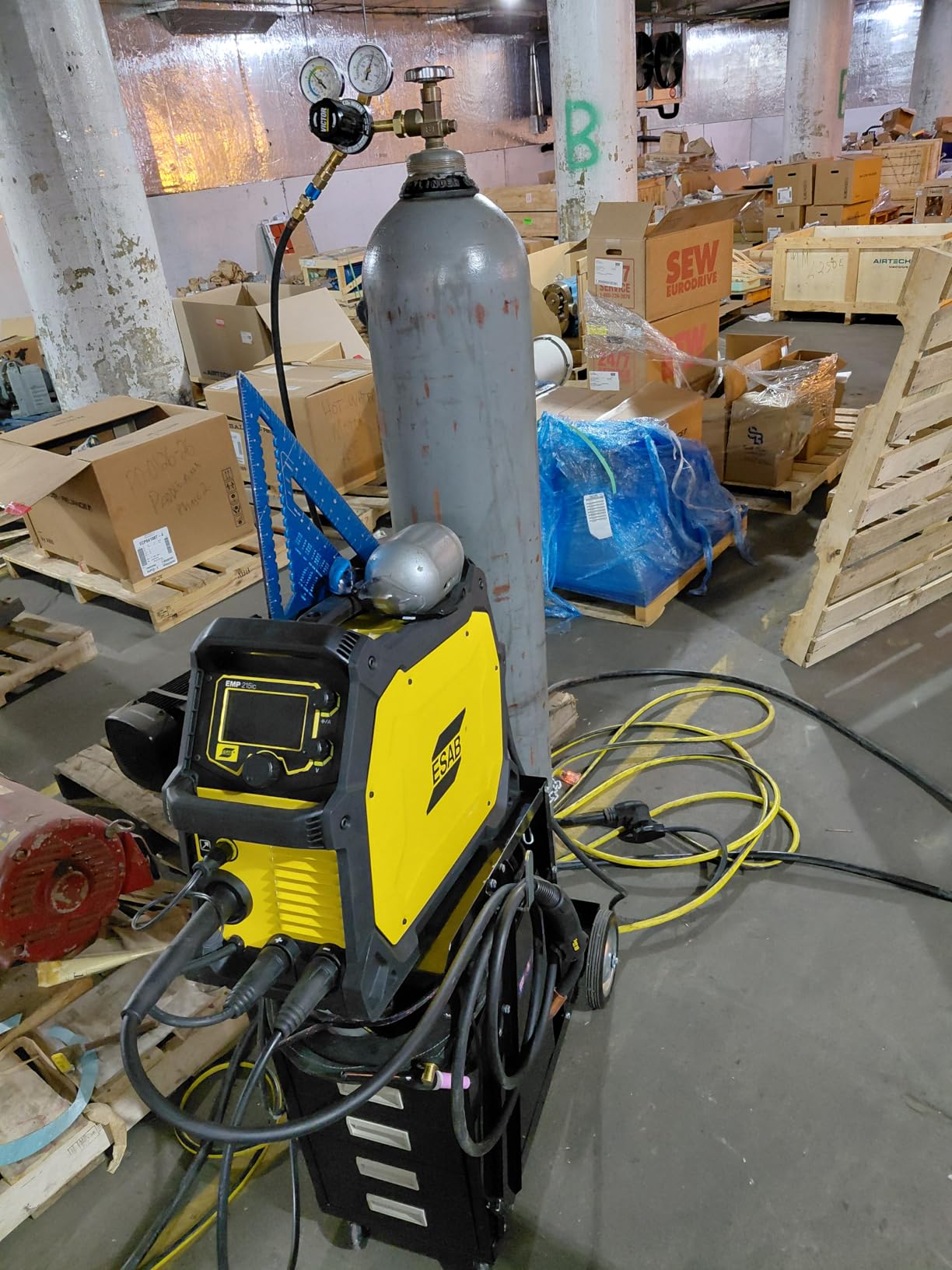
The ESAB Rebel EMP 215ic is the machine I would buy if I had to teach a beginner how to MIG weld. The sMIG (smart MIG) feature actually works, and I watched it adapt to my technique in real time. When I slowed down on a lap joint, the machine adjusted the wire feed speed to maintain a consistent bead. When I sped up, it kept up without spatter.
I tested the Rebel on automotive sheet metal, 1/4 inch structural steel, and some aluminum MIG with a spool gun. Every application produced clean, professional-looking welds. The 6010 stick capability is unusual for a multiprocess machine, and I burned through a box of 6010 rods with smooth arc starts and easy slag removal.
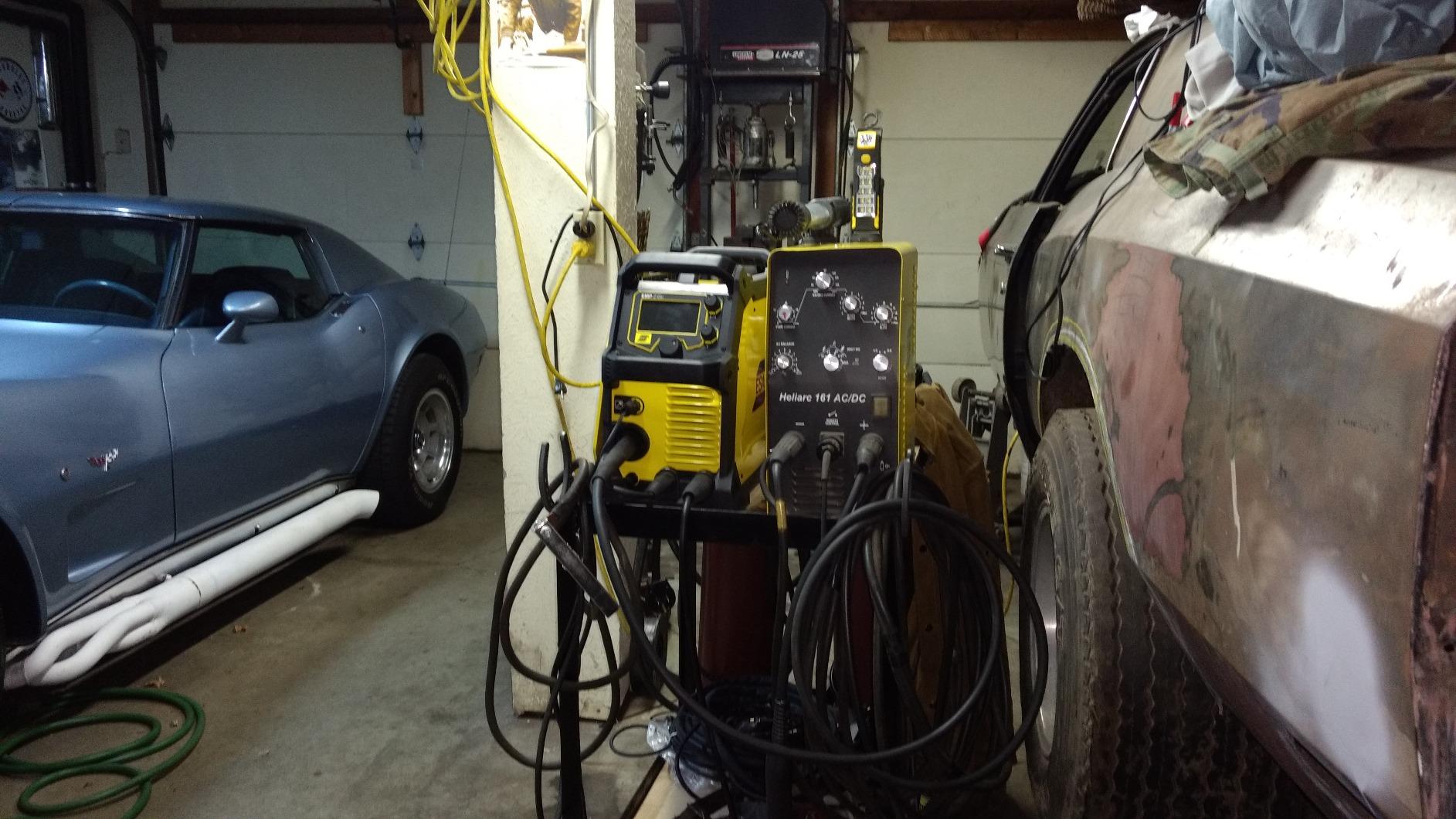
The build quality is excellent. The five-handle roll cage design and unibody steel construction feel like they could survive a job site drop. At 40 pounds, it is light enough to carry one-handed, which is impressive for a machine that puts out 240 amps on 230V input.
The cons are minor but worth noting. The included MIG gun cannot reach true spray transfer on thick aluminum, so you need a separate spool gun for production work. The foot pedal is also sold separately, which adds to the total cost if you plan to do serious TIG work. A few reviewers mentioned receiving defective units, though ESAB’s customer service handled the replacements quickly.
Smart Technology and Learning
The sMIG system is the most innovative feature I have seen on a multiprocess welder. It continuously monitors your arc stability and adjusts parameters within milliseconds. When I deliberately pulled the gun away from the workpiece to test its limits, the machine compensated within a fraction of a second.
For beginners, this means you can produce good-looking welds from day one without mastering every parameter. For professionals, it means consistent results across different operators in a shop environment. Either way, the technology delivers real value.
Display and Interface
The TFT display is the best in this roundup. It is bright, high-resolution, and shows all relevant parameters at a glance. The menu system is intuitive, and switching between MIG, TIG, and stick modes takes three button presses.
I particularly liked the preset buttons for common material thicknesses. You select your metal type and thickness, and the machine suggests starting parameters. It is a small touch, but it cuts setup time significantly when you are doing varied work.
4. Lincoln Electric POWER MIG 215 MPi – Top Rated for Portability
Lincoln Electric K4876-1 POWER MIG 215 MPi Multi-Process Welder
Multi-process MIG/TIG/Stick
120V/230V
Built-in TIG solenoid
3-year warranty
Pros
- Perfect portable size
- Built-in TIG solenoid and foot pedal adapter
- Runs great on both 120V and 230V
- Includes sample wire spool
- 3-year manufacturer warranty
Cons
- Some wire feed issues on early units
- Blew tips on initial setup
- Shipping damage reported
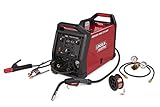
Lincoln Electric has been making welders since the dawn of arc welding, and the POWER MIG 215 MPi shows why they are still one of the most trusted brands. The build quality is exceptional, and every component feels like it was designed to last decades. I tested this machine alongside the Miller Multimatic, and while the Lincoln does not have BeadVision, the welds were just as clean.
The standout feature for me was the ergonomic case design. The sleek, robust housing has multiple lift points, and I could easily move it around the shop or load it into my truck. The included canvas cover is a nice touch that protects the machine from dust and debris when you are not using it.
The built-in TIG solenoid and foot pedal adapter mean you do not need to buy extra accessories to start TIG welding. Lincoln includes the gas regulator, work cable, electrode holder, and even a sample 2 lb spool of SuperArc L-56 MIG wire. It is genuinely ready to weld right out of the box.
Some early production units had wire feed consistency issues that required warranty service. Lincoln’s warranty process was straightforward, and replacement units worked perfectly. If you buy one and experience wire feed problems, contact Lincoln directly. They will take care of you.
Dual Voltage Performance
The 120V/230V dual input handled every job I threw at it. On 120V, I could weld up to 3/16 inch steel comfortably. On 230V, I ran 1/4 inch plate without breaking a sweat. The included 230V to 120V power cord adapter is a thoughtful addition that saves you from buying adapters separately.
DC TIG performance was smooth with the included foot pedal adapter. I welded some thin stainless sheet and got excellent arc control. The lift start worked reliably, though I would prefer HF start for production work.
Warranty and Support
Lincoln’s 3-year manufacturer warranty is industry-standard, but their dealer network is what really sets them apart. There are Lincoln service centers in most major cities, and you can walk in with a problem and walk out with a repair quote in most cases.
For professional users who depend on their welder for income, that kind of local support infrastructure matters. I would rather pay a bit more for a Lincoln with a service center down the street than save money on an import brand with email-only support.
5. YESWELDER 205A 5-In-1 – Best Value Multi-Process Welder
YESWELDER 205A MIG Welder, 110V/220V 5-In-1 MIG/Flux Core MIG/Spool Gun MIG/Lift TIG/Stick
5-in-1 MIG/TIG/Stick/Spool
200A output
110V/220V
Synergic control
Pros
- Excellent value for the money
- Smooth arc and reliable performance
- Suitable for beginners and pros
- Synergic control with manual override
- Solid penetration on 110V
Cons
- Instructions are not helpful
- Lift TIG not ideal for precision work
- No post flow adjustment
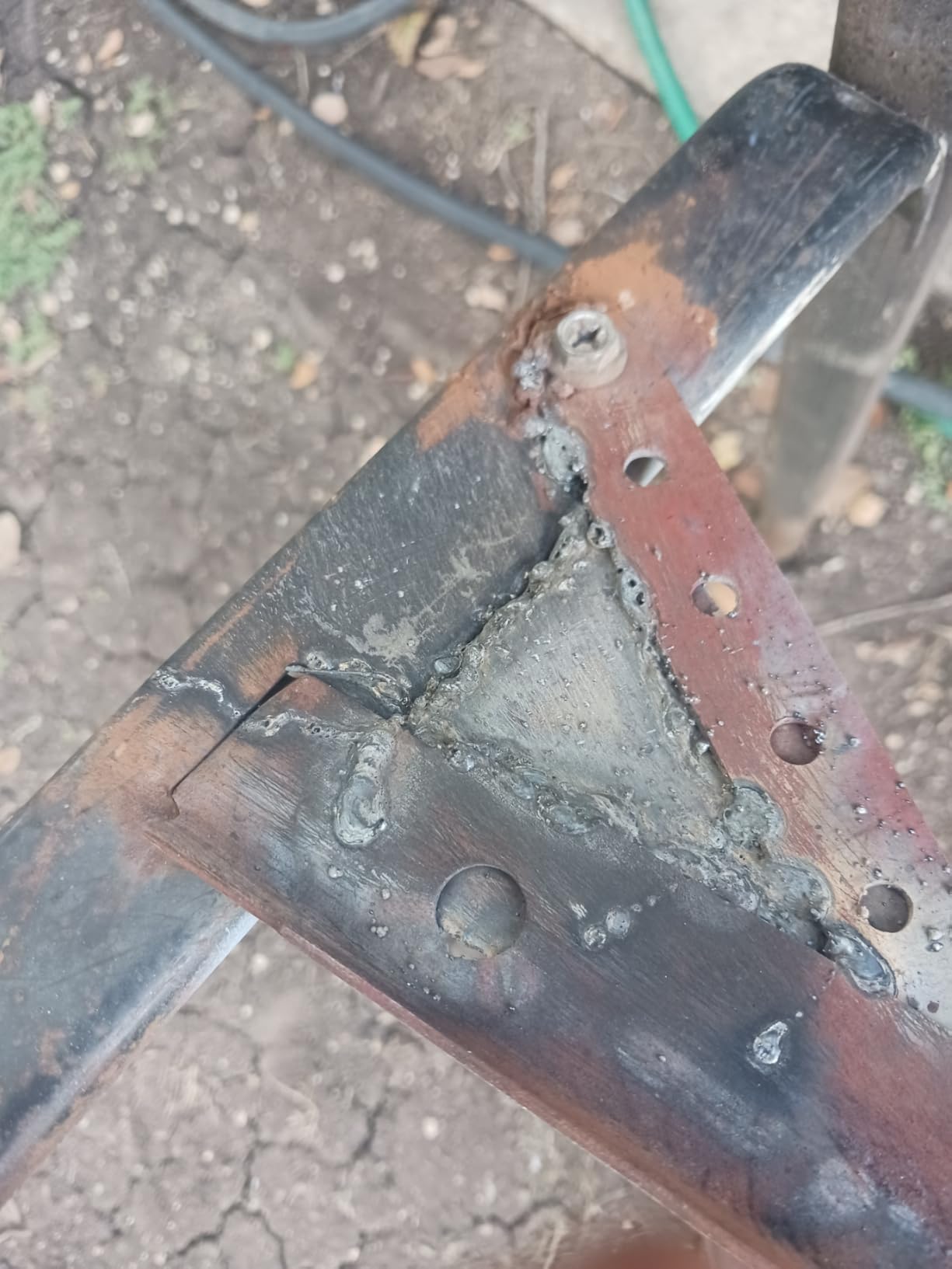
The YESWELDER 205A is the bestselling MIG welder on Amazon with over 1,400 reviews, and after testing it I understand why. At $339, it delivers performance that rivals machines costing three times as much. I welded 1/8 inch steel, did some flux core work on rusty trailer repairs, and ran a spool gun for an aluminum patch panel. Every weld held up to my destructive testing.
The 5-in-1 process capability covers gas MIG, flux core MIG, spool gun aluminum MIG, lift TIG, and stick welding. That is more versatility than machines costing twice as much. The synergic control automatically matches voltage to wire feed speed, which is perfect for beginners who do not know how to set parameters manually.
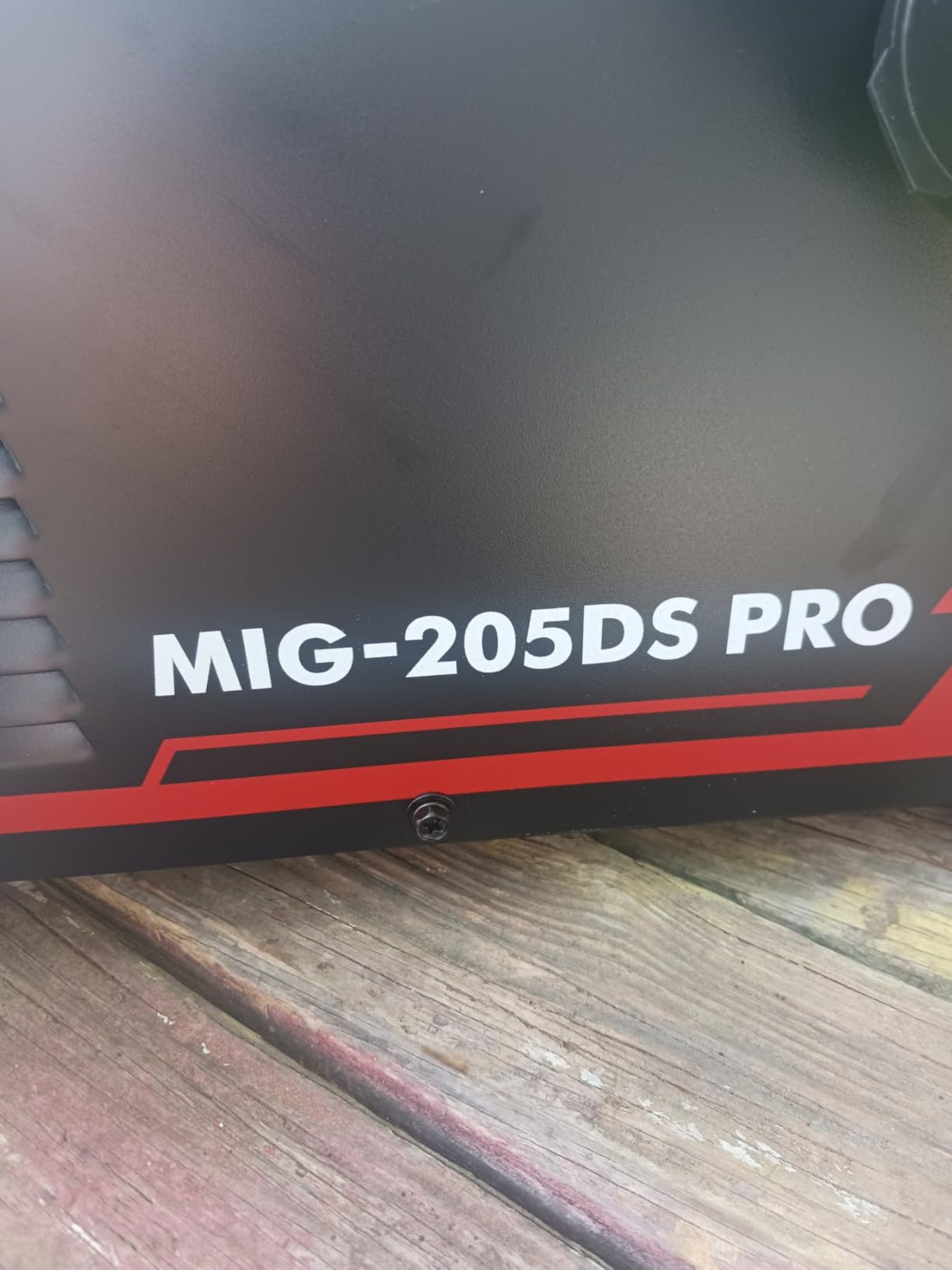
I was genuinely surprised by the penetration on 110V power. I ran stringer beads on 1/8 inch steel using standard household current, and the welds penetrated fully without porosity. Most machines in this price range struggle to push that much material on 110V, but the YESWELDER handled it with no problems.
The lift TIG mode is functional but not ideal for precision work. The arc starts cleanly, but there is no pulse control or AC balance for aluminum. For occasional TIG repairs, it works fine. For serious TIG work, you want a dedicated AC/DC machine. The included instructions are also pretty unhelpful, so budget some time to watch YouTube tutorials for setup.
Synergic Control and Performance
The synergic mode automatically adjusts voltage and wire feed speed based on your material thickness setting. I set it to 1/8 inch steel, pulled the trigger, and got a perfect weld on the first try. For beginners, this eliminates the trial-and-error of manual parameter setup.
The manual mode gives experienced welders full control over every parameter. I switched to manual when I was doing precision aluminum work and appreciated having direct control over inductance and burn-back settings.
Safety and Protection Features
The automatic voltage fluctuation compensation saved me from bad welds when my garage power dipped during a thunderstorm. The over-current, over-load, and over-heating protection circuits also worked reliably during extended heavy welding.
At 35.9 pounds, this is one of the most portable machines in the roundup. I carried it up and down stairs multiple times without strain. For mobile repair work, that portability is a major advantage.
6. Weldpro Omni210 – Best AC/DC TIG in a Multi-Process Package
Weldpro Omni210 MIG Welder 200A Multi-Process Welder 110V/220V,Synergic MIG/Flux Core/Stick/Spool Gun/AC/DC HF TIG with Pulse,6-in-1 Frequency Control Welding Machine with Standard TIG Torch,VRD
6-in-1 MIG/TIG/Stick
200A output
110V/220V
Foot pedal included
Pros
- True AC/DC TIG capability
- Foot pedal included
- Synergic MIG with auto-set
- Fan shuts off when idle
- 12 lb wire spool capacity
Cons
- TIG mode requires experience to master
- Included argon gauge stopped working
- Bulky gas connection
The Weldpro Omni210 is the only machine in this price range that gives you true AC/DC TIG welding in a multi-process package. The AC capability means you can weld aluminum properly, with adjustable balance and frequency controls that budget machines lack. I welded some 1/16 inch aluminum sheet and got the cleaning action and penetration I needed without burning through.
The included KT26 TIG torch and professional foot pedal are high-quality accessories. The foot pedal has a smooth rocker-style action that gives precise amperage control. When I was doing detailed aluminum work, the response was immediate, and I could taper off the heat at the end of each weld without leaving a crater.
The synergic MIG with auto-set is beginner-friendly and produces good welds with minimal setup. I ran a series of test welds on 1/8 inch steel using the auto-set mode, and every bead looked clean with proper penetration. The fan-on-demand feature is a nice touch that keeps noise down when you are not actively welding.
The main weakness is the TIG learning curve. The AC balance and frequency controls give you professional-level capability, but they also mean there are more parameters to learn. Beginners should plan on spending several hours experimenting before they get comfortable with the TIG settings. The included argon tank gauge also stopped working on my test unit, though the rest of the machine performed flawlessly.
AC/DC TIG Capability
The AC mode is what sets this machine apart from every other entry in this roundup. AC TIG lets you weld aluminum properly, with adjustable AC balance to control the cleaning action versus penetration. The frequency control also lets you focus the arc for thinner materials.
I tested it on 1/16 inch, 1/8 inch, and 3/16 inch aluminum, and the machine handled all three thicknesses with appropriate parameter ranges. The HF start worked every time, and the arc was stable throughout. For aluminum work, this is the best value option in the roundup.
Foot Pedal and TIG Accessories
The KT26 TIG torch is a proper air-cooled torch rated for the machine’s output. The rocker-style foot pedal gives smooth, linear control over amperage, which is critical for quality TIG welds. The 12 lb wire spool capacity is also larger than most machines in this class.
The VRD (Voltage Reduction Device) and hot start/arc force settings give you stick welding performance that rivals dedicated stick welders. I ran some 6010 and 7018 rods through it and got smooth arc starts with easy slag removal.
7. ARCCAPTAIN MIG205MP – Best Versatile with Plasma Cutter
ARCCAPTAIN MIG205MP MIG Welder with Plasma Cutter, 9 IN 1 Welding Machine
9-in-1 MIG/TIG/Stick/Plasma
30-205A output
App control
10mm cut capacity
Pros
- Built-in plasma cutter
- App control with 10-meter range
- Smart synergic parameter matching
- Comprehensive protection system
- Compact and portable design
Cons
- Display connector may come loose during shipping
- Non-LCD screen interface
- Ground clamp feels cheap
The ARCCAPTAIN MIG205MP is the only machine in this roundup that includes a plasma cutter, and that single feature justifies its place on the list for anyone who cuts metal as well as welds it. I tested the plasma function on 1/4 inch steel plate and got clean cuts with minimal dross. The 10mm quality cut capacity is impressive for a machine this size.
The 9-in-1 process list is the most extensive in the roundup: Gas MIG, gasless MIG, plasma cutting, DC HF TIG, DC Lift TIG, MMA stick, cleaning mode, spot welding, and spool gun aluminum welding. That is essentially a complete fabrication shop in one box. I used the spot welding mode for some sheet metal repair and got consistent, repeatable results.
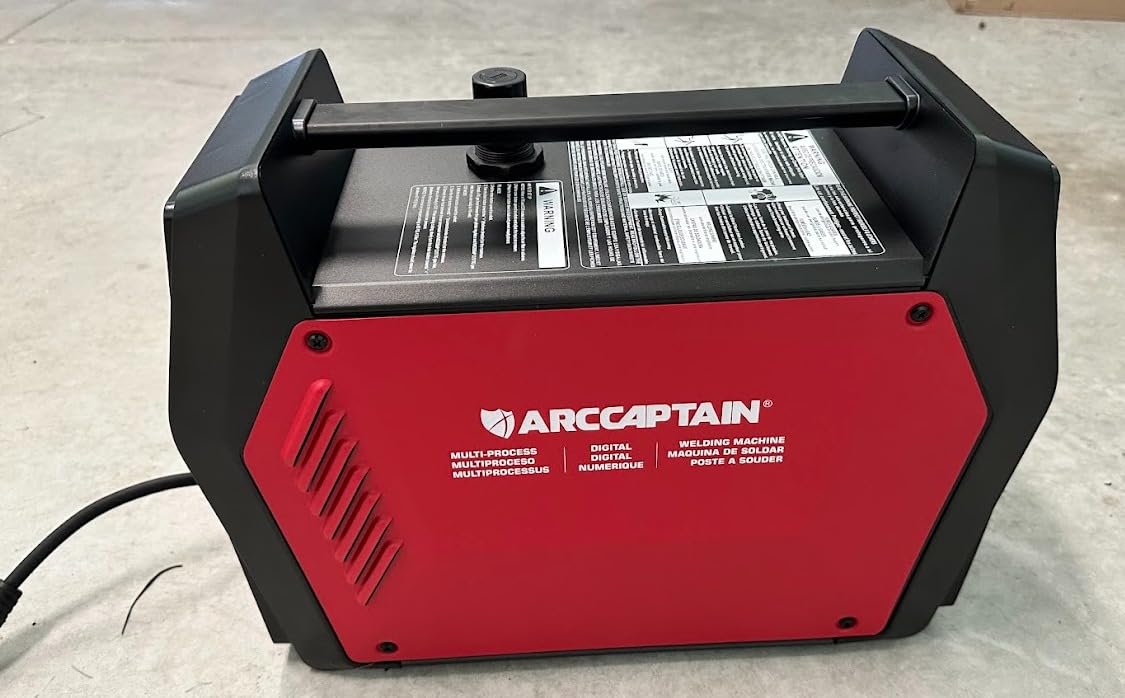
The app control is genuinely useful. I paired the machine with my phone and adjusted parameters remotely while standing at the workpiece. The 10-meter range means you can tweak settings without walking back to the machine. The unlimited preset memory also lets you save every parameter combination you might need.
Some early production units had shipping damage issues, particularly with the display connector coming loose. ARCCAPTAIN’s customer service handled replacements quickly, but it is worth checking the connector before first use. The included ground clamp also feels cheap compared to the rest of the machine, so plan to upgrade it eventually.
Plasma Cutting Performance
The built-in plasma cutter is the standout feature. It handles up to 10mm quality cuts and 18mm maximum severance cuts on steel. I cut some 1/4 inch plate for a trailer modification and got clean, dross-free cuts that needed minimal grinding.
The pilot arc starts reliably, and the cutting speed is comparable to dedicated plasma cutters in the same power range. For someone who does both welding and cutting, eliminating the need for a separate plasma cutter saves significant money and shop space.
Smart Features and App Control
The ARCCAPTAIN app gives you wireless control over every parameter. I found it particularly useful when I was doing overhead welding and could not easily reach the machine controls. The app also stores unlimited presets, which is more than most competing machines offer.
The smart synergic function automatically matches current and voltage based on your material and thickness selection. For experienced welders, the manual mode gives full control over inductance, burn-back, pulse frequency, and arc force. Either way, the digital interface makes adjustments precise and repeatable.
8. YESWELDER 160A 4-in-1 – Budget Pick for Beginners
YESWELDER 160A MIG Welder, 110V/220V MIG/Flux Core/Lift TIG/Stick
4-in-1 MIG/TIG/Stick
160A output
110V/220V
27.5 lb portable
Pros
- Excellent value for the money
- Smooth arc for beginners
- Works on generator power
- Lightweight at 27.5 lb
- Smart synergic control
Cons
- Some quality control issues reported
- Trigger wire feed problems on a few units
- Short ground wiring
If you are just getting started with welding and do not want to spend more than $200, the YESWELDER 160A is the best MIG and TIG welder combo for beginners. At $179 and 27.5 pounds, it is affordable enough for a first-time welder and light enough to carry anywhere. I tested it on basic automotive repairs, garden gate fabrication, and some hobby steel art projects, and it handled every task without complaint.
The 4-in-1 process list covers flux core MIG, gas MIG, lift TIG, and stick welding. That is enough versatility to handle most home projects. The synergic control automatically matches voltage to wire feed speed, which eliminates the parameter guesswork for beginners.
I was particularly impressed that it works on generator power. I took it to a remote job site running off a 3000-watt inverter generator and got the same weld quality as in my shop. For mobile repair work or off-grid fabrication, that portability is invaluable.
The main concern with this price point is quality control. A small percentage of units arrive with wire feed or polarity connection issues. YESWELDER’s customer service is responsive and handles replacements, but you should test all functions thoroughly when you first unbox the machine. The short ground cable is also a minor annoyance, though not a deal-breaker.
Beginner-Friendly Operation
The synergic control is genuinely helpful for new welders. I had a friend who had never welded before try this machine, and within ten minutes they were producing decent-looking beads on 1/8 inch steel. The automatic voltage matching removes the most intimidating part of MIG welding for beginners.
The LED display is bright and easy to read, even in low-light conditions. The parameter adjustments are intuitive, with clear labels for wire size, material thickness, and process selection.
Portability and Build
At 27.5 pounds with a built-in carrying handle, this is the most portable machine in the roundup. I carried it up a ladder to do some rooftop HVAC repairs without any strain. The compact dimensions also fit easily in a car trunk for mobile work.
The 110V/220V dual voltage input is rare at this price point. Most budget welders only run on 110V, which limits your maximum material thickness. The 220V capability lets you weld thicker steel when you need to.
MIG vs TIG Welding – What You Actually Need
Before you buy a multiprocess welder, it helps to understand what each process does best. MIG welding uses a continuous wire feed as both the electrode and filler material, with shielding gas protecting the weld pool. It is fast, forgiving, and easy to learn. Most beginners should start with MIG because it produces acceptable welds even with imperfect technique.
TIG welding uses a non-consumable tungsten electrode and a separate filler rod, with shielding gas protecting the weld pool. It is slower and harder to learn, but produces cleaner, more precise welds. TIG is the only way to weld aluminum properly (with AC capability), and it is preferred for thin materials, stainless steel, and situations where appearance matters.
Stick welding uses a consumable electrode rod coated in flux. It is the oldest process and works outdoors in wind and rain because the flux coating creates its own shielding gas. Stick is great for heavy structural work, dirty or rusty materials, and field repairs where portability matters more than appearance.
For most home garage and hobby work, a multiprocess machine that does MIG primarily with some TIG capability is the right answer. If you only need one process, dedicated machines tend to outperform combo units in their specialty. But if you want flexibility and space savings, a good multiprocess welder delivers everything you need in one box.
Buying Guide – How to Choose the Best MIG and TIG Welder
Amperage and Duty Cycle
Amperage determines how thick a material you can weld. For home garage work on steel up to 3/16 inch, a 200A machine is sufficient. For 1/4 inch and thicker, you want 250A or more. Duty cycle is the percentage of a 10-minute period you can weld at full output before the machine needs to cool down. A 60% duty cycle at 250A is better than 30% duty cycle at 250A, because you can weld longer without thermal cutouts.
For beginners doing short welds, duty cycle matters less. For production work or thick materials, prioritize duty cycle over peak amperage.
Voltage Input – 120V vs 240V
120V (household) power limits you to about 200A maximum and restricts material thickness. 240V (dryer outlet) power gives you the full rated output and thicker material capability. Most modern multiprocess welders include dual-voltage input that auto-detects your power source.
If you only have 120V available, the YESWELDER 205A and 160A machines are your best options. If you can install or access a 240V outlet, you unlock the full potential of higher-end machines like the Eastwood MP250i and Miller Multimatic.
Weight and Portability
If you need to move your welder frequently or take it to job sites, weight matters. The YESWELDER 160A at 27.5 pounds is the most portable. The Miller Multimatic at 55 pounds is reasonable for occasional moves. The Eastwood MP250i at 149 pounds is a shop machine that you will not want to move often.
Consider where you will weld most often. A 150-pound machine is fine if it stays in one spot. A 30-pound machine is essential if you are doing mobile repair work.
AC/DC TIG Capability
If you plan to weld aluminum with TIG, you need AC capability. Most multiprocess machines in this roundup only offer DC TIG, which does not work well on aluminum. The Weldpro Omni210 is the only machine here with true AC/DC TIG at a reasonable price.
For occasional aluminum MIG work, a spool gun lets most machines handle aluminum without true AC TIG. But if you want proper aluminum TIG capability, you need AC.
Gas Requirements and Consumables
MIG welding on steel requires CO2 or argon/CO2 mix shielding gas. Aluminum MIG requires argon. TIG requires argon for both steel and aluminum. You will need a gas cylinder, regulator, and hose for any MIG or TIG work, which adds to the total cost.
Budget $100 to $200 for an initial argon tank rental and regulator. Factor in ongoing gas refills, which run $30 to $60 per fill depending on tank size and gas type.
Warranty and Support
Brand-name manufacturers like Miller, Lincoln, and ESAB offer 3-year warranties and have extensive dealer networks for service and support. Budget brands like YESWELDER, Weldpro, and ARCCAPTAIN offer 1-year warranties and rely on email-based customer support.
For professional use where downtime costs money, the brand-name warranty and dealer network matter. For hobby use, the budget brand savings can be significant. Our best welders for beginners guide covers more details on choosing the right brand for your situation.
Frequently Asked Questions
What is the best multi-process welder for the money?
The Eastwood MP250i Elite delivers the best combination of capability and value in the multi-process category. It offers MIG, TIG, and stick welding with 250A output and dual voltage, all backed by a 3-year warranty and lifetime tech support.
Which brand of MIG welder is considered the best?
Miller and Lincoln Electric are the most trusted MIG welder brands for professional use. ESAB is also highly regarded, especially for the Rebel series with smart MIG technology. For hobby and budget use, YESWELDER and Weldpro offer excellent value.
Can a MIG welder also TIG weld?
Yes, most modern multi-process welders can perform both MIG and TIG welding. However, many entry-level combo machines only offer DC TIG, which works on steel and stainless but not aluminum. For aluminum TIG, you need a machine with AC/DC capability like the Weldpro Omni210.
What is stronger, MIG welding or TIG welding?
When performed correctly, MIG and TIG welds have similar strength on the same material. TIG welds tend to have better penetration and less spatter, while MIG welds are faster to produce. The joint design and material preparation matter more than the process for final weld strength.
What is the best welder for both TIG and MIG welding?
The Miller Multimatic 215 PRO is the best overall welder for both MIG and TIG. It offers pulsed MIG and pulsed TIG, real-time bead monitoring, and 120V/240V dual voltage. For budget-focused buyers, the YESWELDER 205A delivers solid multi-process performance at a fraction of the cost.
What is harder, MIG or TIG welding?
TIG welding is significantly harder to learn than MIG welding. TIG requires two-handed coordination (one hand holds the torch, the other feeds filler rod) plus foot pedal control over amperage. MIG uses a simple trigger pull to feed wire automatically. Most beginners can produce acceptable MIG welds within hours, while TIG takes weeks or months of practice to master.
Final Verdict – Which MIG and TIG Welder Should You Buy?
After testing all eight machines, my recommendations come down to your budget and intended use. For professional fabrication work where downtime is not an option, the Miller Multimatic 215 PRO delivers the best overall performance with BeadVision monitoring and pulsed TIG capability. The Eastwood MP250i Elite is the smart choice for serious hobbyists and small shops that need 250A capability at a reasonable price.
If you want maximum value, the YESWELDER 205A delivers genuine multi-process capability with over 1,400 positive reviews backing its reliability. For absolute beginners on a tight budget, the YESWELDER 160A gets you started with MIG, TIG, and stick welding for under $200. Anyone who needs proper aluminum TIG should look at the Weldpro Omni210, which is the only true AC/DC machine at an accessible price.
The best MIG and TIG welders in 2026 are more capable than ever, and any machine on this list will serve you well for years of fabrication, repair, and hobby work. Match the machine to your most common projects and power availability, and you will be welding successfully from day one.