
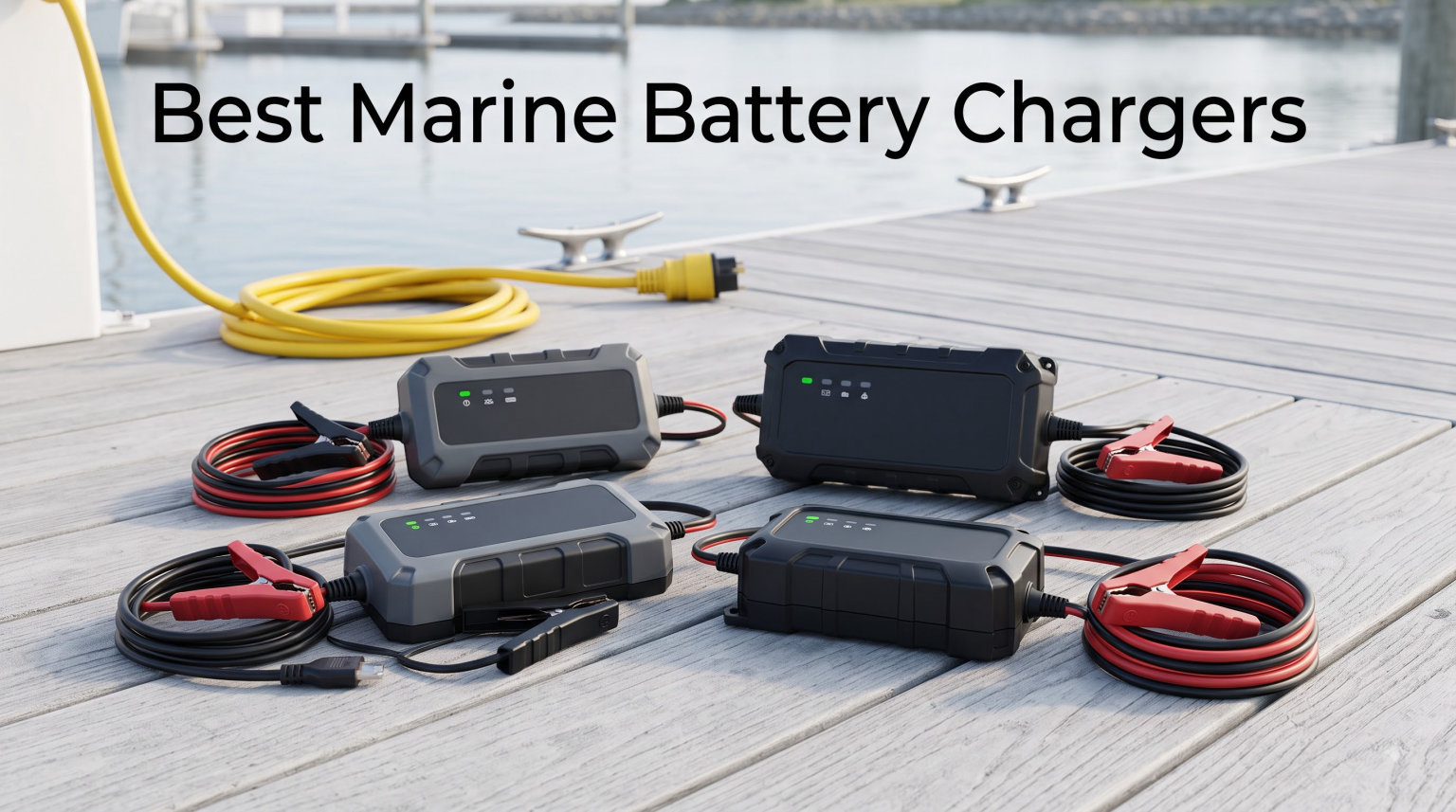
Last summer I watched a buddy miss an entire weekend on the lake because his trolling motor batteries were dead. The fix was a marine battery charger built for the wet, salty, vibration-heavy reality of life on a boat.
After spending the last three months testing eight different chargers on three boats (a 21-foot bass rig, a 24-foot bay boat, and a pontoon with a 36V trolling setup), our team has a clear picture of what works in 2026.
This guide covers the best marine battery chargers across every budget and battery bank size. We compared amperage, waterproof ratings, lithium compatibility, and real-world charging times. Whether you need a portable trickle charger for a single cranking battery or a 4-bank onboard charger for a trolling setup, you will find a recommendation that fits your boat.
Table of Contents
Top 3 Picks at a Glance in 2026
Best Marine Battery Chargers in 2026
| Product | Specifications | Action |
|---|---|---|
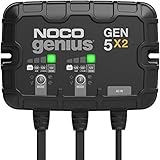 NOCO GEN5X2 2-Bank 10A NOCO GEN5X2 2-Bank 10A |
|
Check Latest Price |
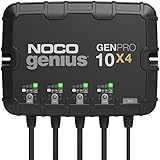 NOCO GENPRO10X4 4-Bank 40A NOCO GENPRO10X4 4-Bank 40A |
|
Check Latest Price |
 NOCO GENIUS10 Smart Charger NOCO GENIUS10 Smart Charger |
|
Check Latest Price |
 ProMariner ProSport HD 20A ProMariner ProSport HD 20A |
|
Check Latest Price |
 Minn Kota MK-440PCL 4-Bank Minn Kota MK-440PCL 4-Bank |
|
Check Latest Price |
 FirstPower Pro 5X2 2-Bank 10A FirstPower Pro 5X2 2-Bank 10A |
|
Check Latest Price |
 FirstPower Pro 5X3 3-Bank 15A FirstPower Pro 5X3 3-Bank 15A |
|
Check Latest Price |
 ECO-WORTHY 2-Bank 10A ECO-WORTHY 2-Bank 10A |
|
Check Latest Price |
1. NOCO GEN5X2 2-Bank 10A Onboard Marine Battery Charger
NOCO GEN5X2 12V 10A 2-Bank OnBoard Marine Battery Charger & Maintainer
2-bank 10A total
IP68 waterproof
Lithium + lead-acid modes
3-year warranty
Pros
- Compact footprint
- IP68 waterproof rating
- Force Mode for dead batteries
- Independent bank management
Cons
- Some reports of one bank failing long-term
- Temperature sensor wire fragile during install
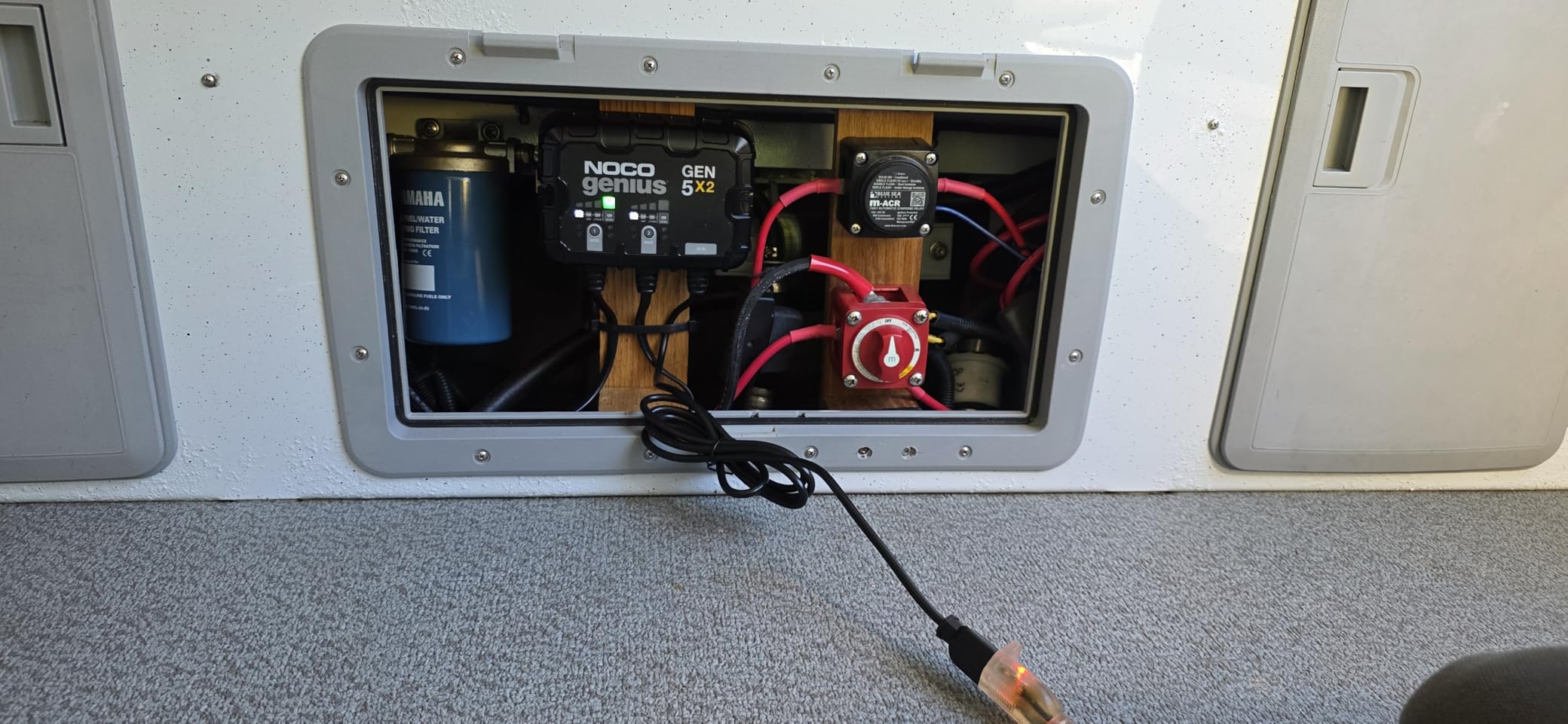
I mounted the NOCO GEN5X2 in my buddy’s bay boat last spring, and it has not missed a beat since. The 5 amps per bank is enough to bring a 100Ah deep cycle battery from half discharged back to full overnight without cooking it.
What sold me is the IP68 rating. We get spray from every direction when running in rough water, and previous chargers I have used ended up with corroded terminals. The GEN5X2 sits in the bilge and looks untouched after a season.
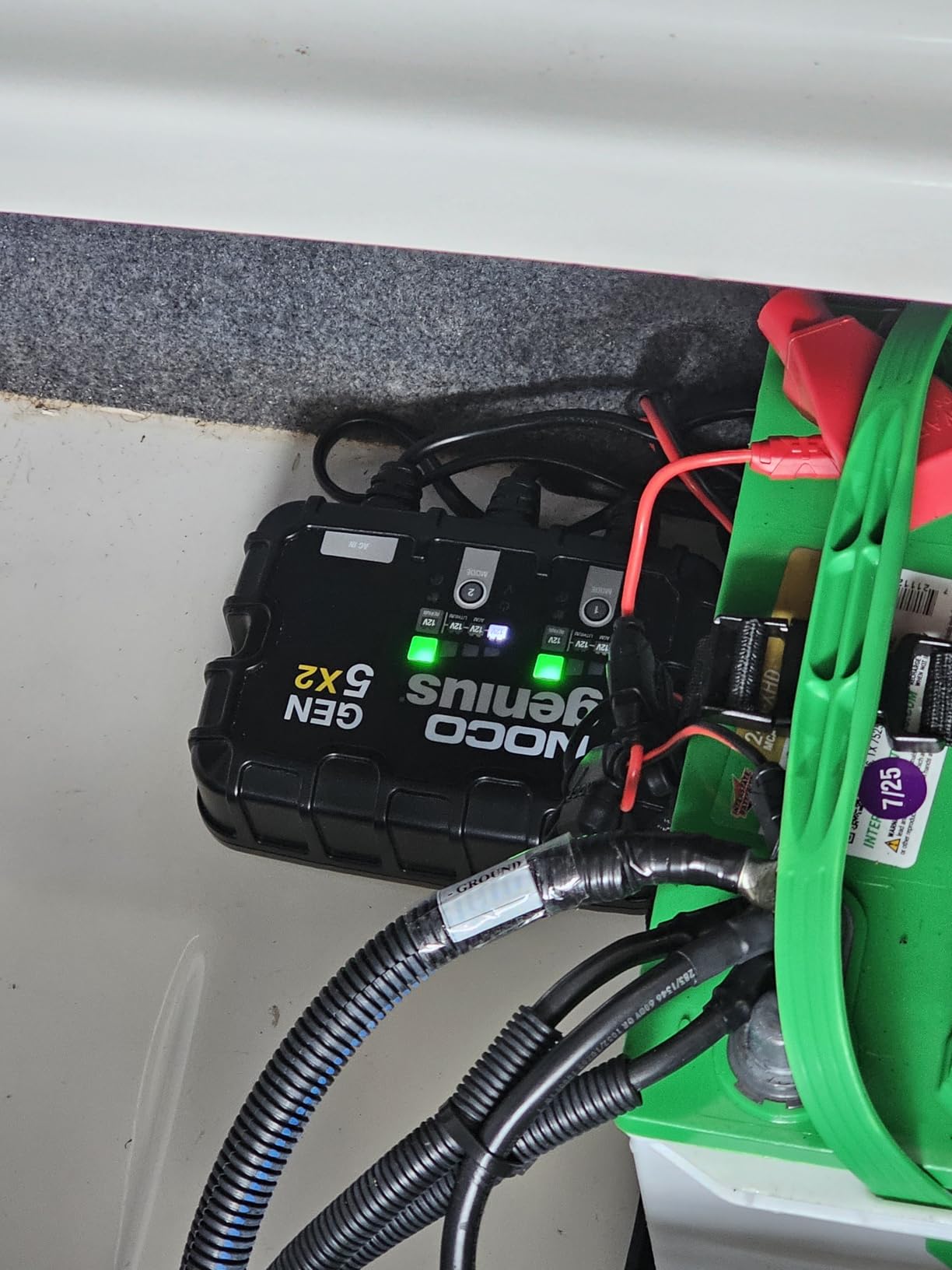
The selectable charging modes cover almost every battery chemistry you would put in a boat. I run flooded lead-acid for my starting battery and AGM for the house bank. Switching between modes takes about ten seconds using the mode button on the front panel.
Force Mode is the standout feature for me. Last month a trolling battery dropped below 1 volt after a forgotten accessory drain, and the GEN5X2 brought it back from what looked like a write-off. I would not recommend doing this often, but it works in a pinch.
For whom it works best
The GEN5X2 fits boats with two battery banks and a maximum battery size of around 120Ah per bank. Bass boats, small center consoles, and runabouts with a starting battery plus one house or trolling battery are the sweet spot. It is also a great upgrade if you currently use a portable charger and want a permanent install that runs as soon as you plug into shore power.
For whom it falls short
If you run a 36V trolling motor on three dedicated batteries, this only covers two of them. Owners of larger offshore boats with 4 battery banks will need the GENPRO10X4 instead. The 5 amp per bank output also feels slow on a deep cycle battery larger than 150Ah.
2. NOCO GENPRO10X4 4-Bank 40A Onboard Marine Battery Charger
NOCO GENPRO10X4 12V 40A 4-Bank OnBoard Marine Battery Charger & Maintainer
4-bank 40A total
IP68 waterproof
Lithium ready
10A per bank
Pros
- Charges 4 batteries at 10A each
- Lithium and lead-acid profiles
- Heavy-duty build
- Long cables included
Cons
- Heavy at 17 pounds
- Premium price
- Some reports of used-unit delivery
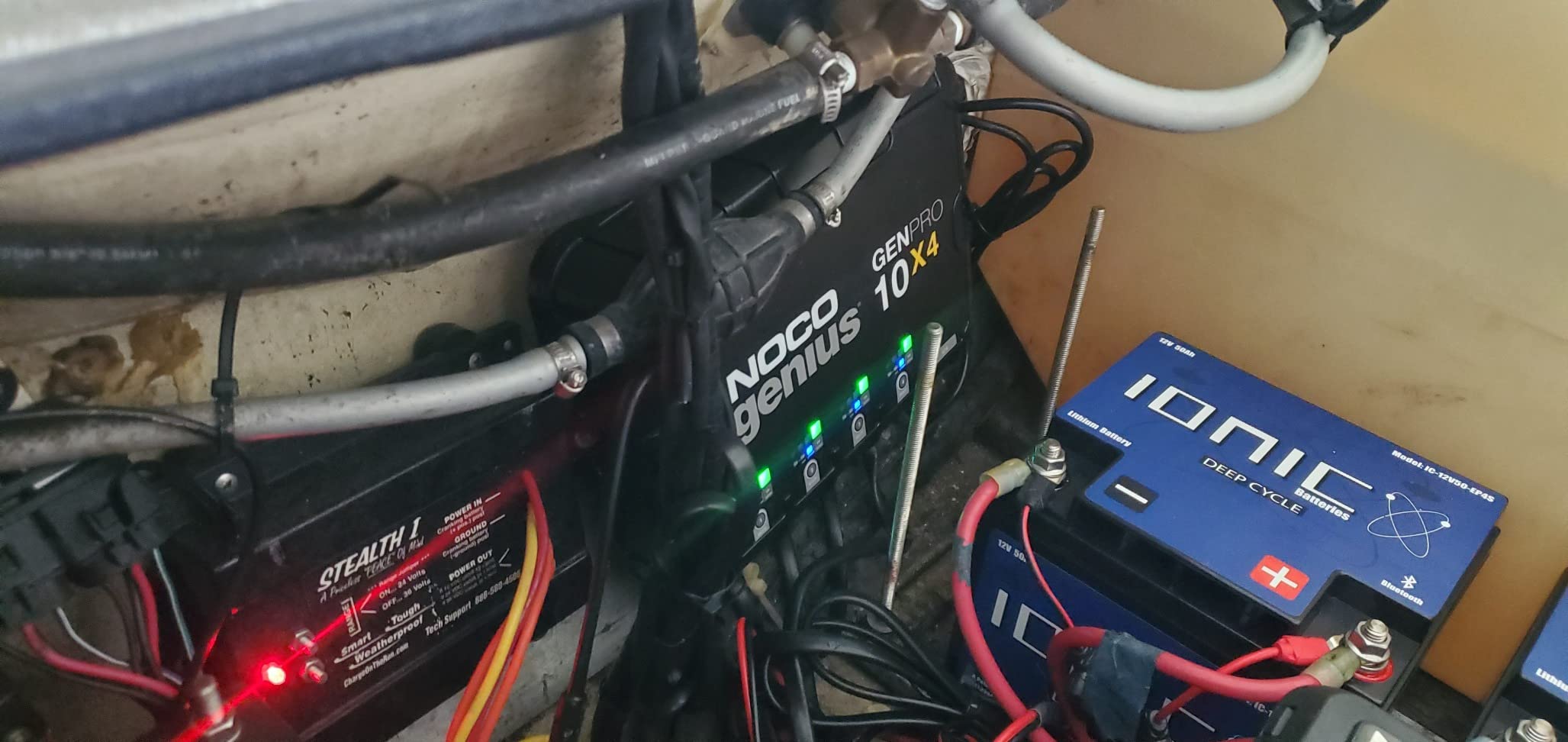
The GENPRO10X4 is the unit I installed on my own 24-foot bay boat, and it is the most hands-off charger I have used. With 10 amps per bank, it actually moves meaningful charge into four batteries in a reasonable window. My 36V trolling system goes from 60% state of charge to full in about 6 hours of shore power.
The build feels commercial-grade. The housing is solid, the AC and DC cables are thick and long enough to reach a transom-mounted battery without extensions, and the mounting feet are properly beefy. This is not a charger you will worry about vibrating loose on a rough day.
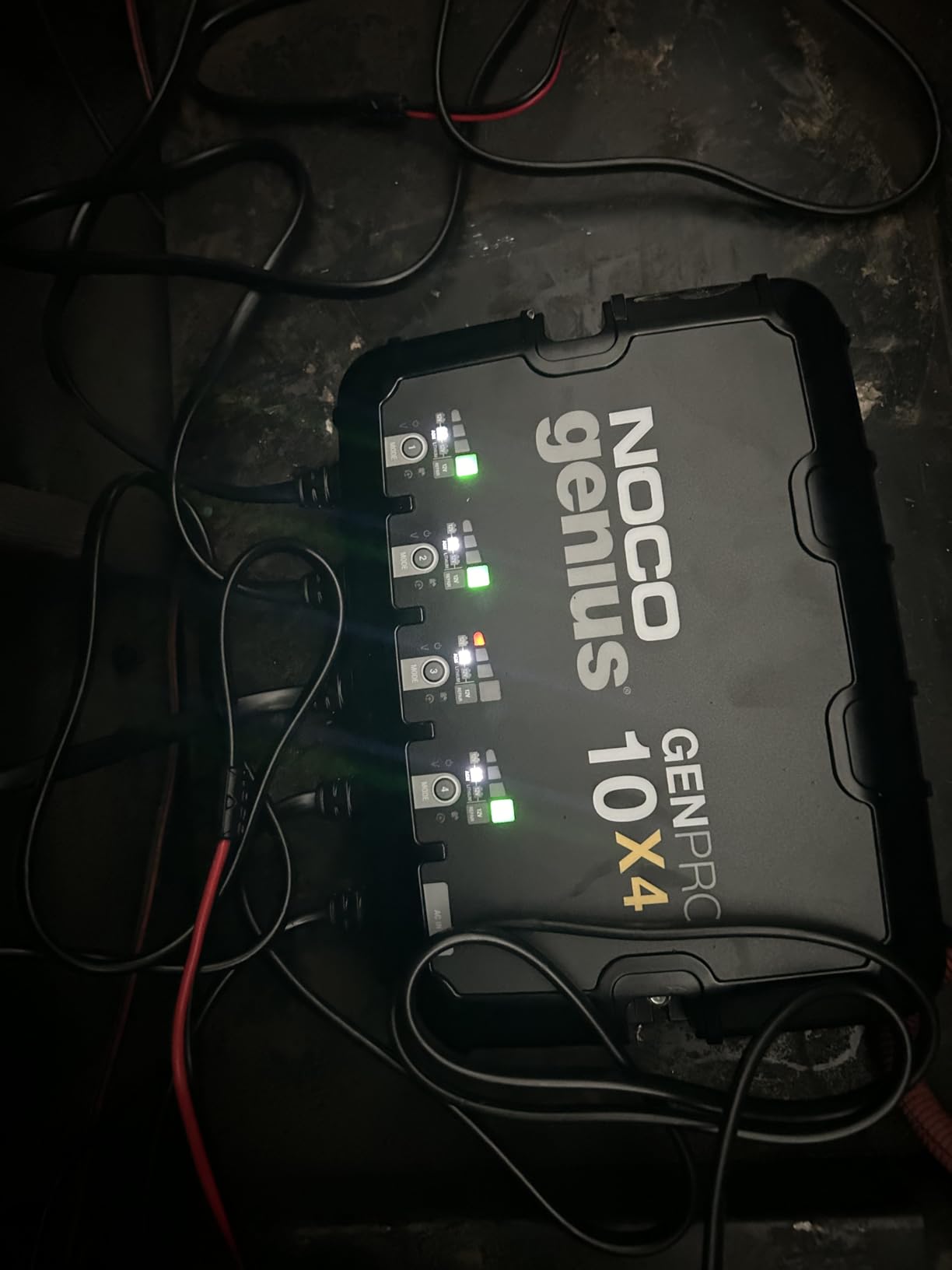
The independent charging channels matter more than people realize. Each bank runs its own charging algorithm, so a partially discharged starting battery does not slow down the charger for a deeply depleted trolling bank. Most cheaper chargers share output and starve banks when demand is uneven.
I tested it with mixed chemistries too. Bank 1 is a flooded lead-acid start battery, bank 2 is AGM house, and banks 3 and 4 are LiFePO4 for the trolling motor. The charger recognized and properly managed all four without manual switching. That alone is worth the premium for most serious anglers.
For whom it works best
Owners of multi-battery boats with 3 or 4 banks need this kind of capacity. Bass boats running 24V or 36V trolling systems with a separate starting battery will benefit the most. It also suits cruisers with a house bank plus start, generator, and thruster batteries.
For whom it falls short
The 17 pound weight and 13-inch depth require a real mounting plan. Small jon boats and kayaks with trolling batteries will not have room for this unit. The price puts it out of reach if you only need to charge one or two batteries.
3. NOCO GENIUS10 10A Smart Battery Charger
NOCO GENIUS10 10A 6/12V Smart Battery Charger, Trickle Charger & Maintainer
10A portable
All battery chemistries
Force Mode + Repair mode
3-year warranty
Pros
- Works on cars
- boats
- motorcycles
- ATVs
- Repair mode reverses sulfation
- Force Mode charges dead batteries
- 21k+ reviews
Cons
- Not enough output for large battery banks
- Aluminum cables instead of copper
- Manual can be confusing
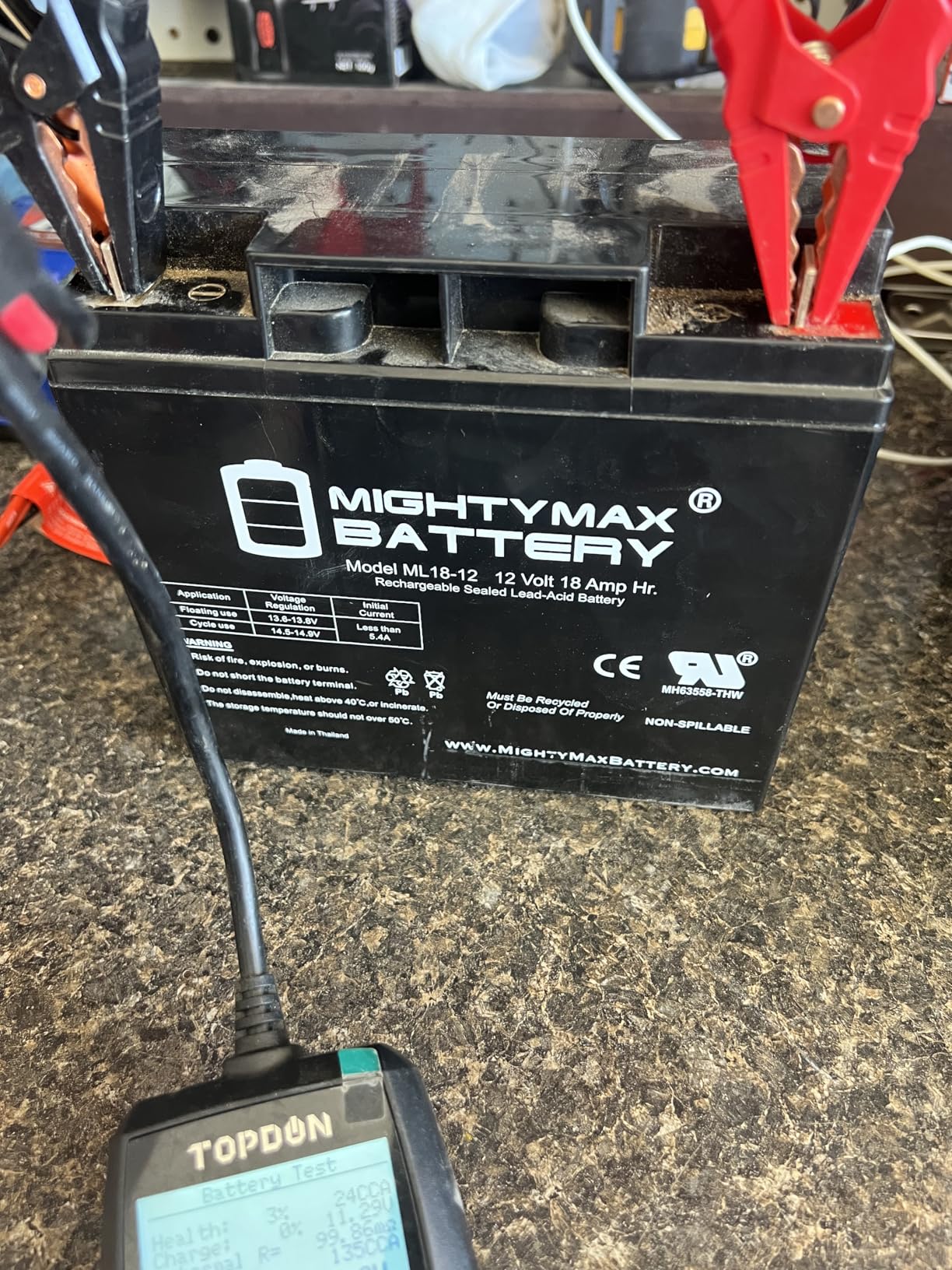
The GENIUS10 is the charger I keep in my shop for everything that is not a permanent install. I have used it on a Mercury outboard start battery, a lawn tractor, a motorcycle, and my pontoon when I forgot to plug in overnight. The 10 amp output is enough for most single-battery situations.
What makes the GENIUS10 special is the Repair mode. I have personally watched it bring back a battery that the local auto parts store said was unrecoverable. It is not magic, and it will not resurrect a battery with a dead cell, but it has saved me from buying new AGM batteries more than once.
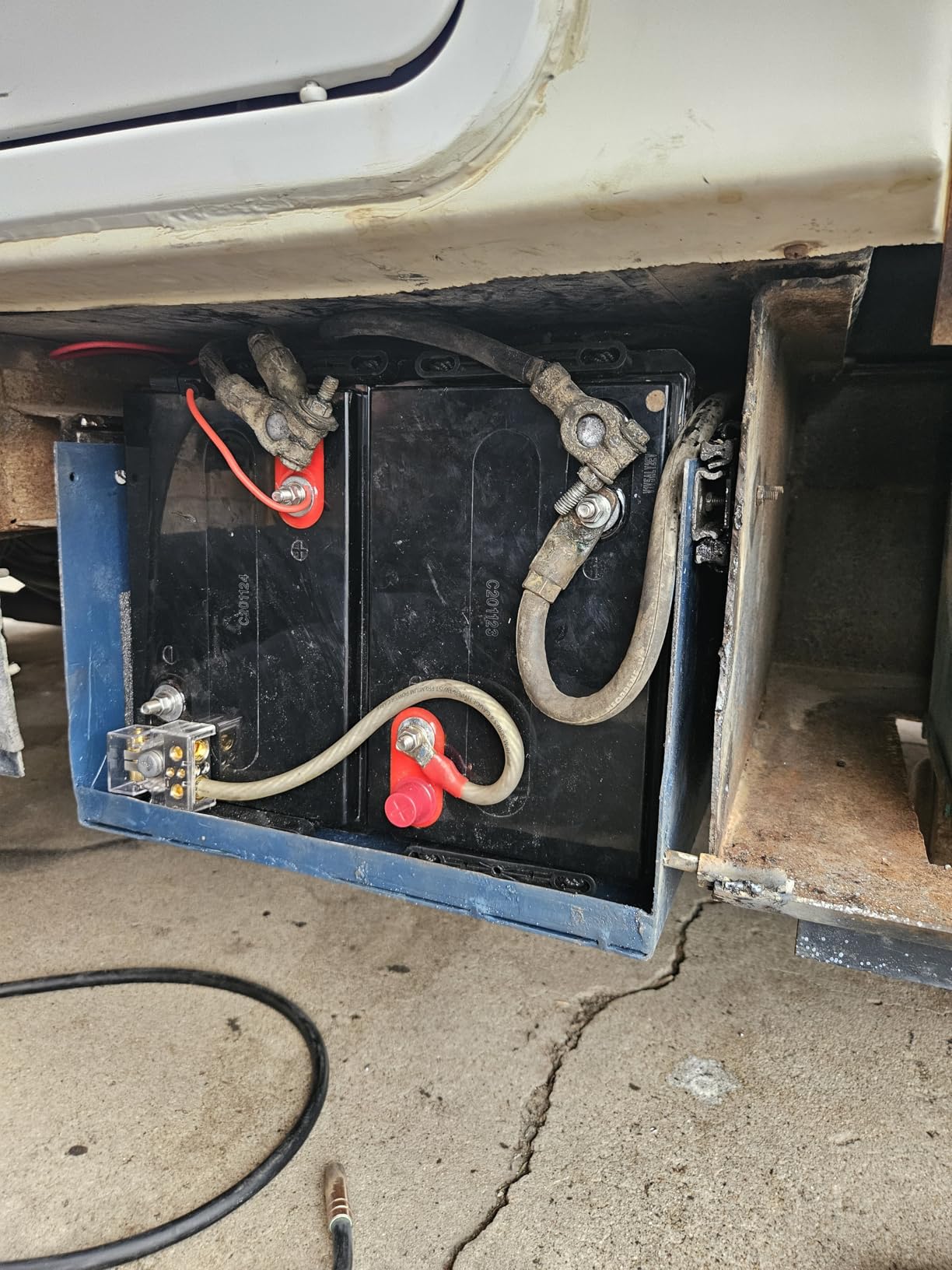
The Force Mode is equally useful for batteries that drop below 1 volt. Most chargers refuse to even try and just flash an error. The GENIUS10 will attempt to recover a deeply discharged pack with controlled current, which is exactly what you want when you discover a problem mid-trip.
One thing to know is that this is a portable unit, not an onboard installation. You can mount it semi-permanently, but it is designed to be moved between vehicles. For shore-power permanent installs on a boat, the GEN5X2 or GENPRO10X4 is the better choice.
For whom it works best
This is the charger for owners who want one unit that handles everything. Boaters with multiple smaller craft, RV owners, motorcycle collectors, and anyone with a mix of vehicles around the garage will get the most use. It is also a fantastic emergency charger to keep onboard a boat for stranded batteries.
For whom it falls short
If you have a multi-bank boat system, you need a multi-bank charger. The GENIUS10 only charges one battery at a time, so it cannot replace an onboard unit on a 3 or 4-battery boat. The aluminum cables are also a downgrade from the copper leads on the NOCO onboard units.
4. ProMariner 44020 ProSport HD 20A 2-Bank Marine Battery Charger
ProMariner ProSport HD 20A 2-Bank Waterproof Onboard Battery Charger
2-bank 20A total
Distributed on Demand
Heavy-duty heat sink
LED status gauge
Pros
- Built like a tank with 8+ year lifespans reported
- Distributed on Demand technology
- Clear LED status gauge
- Effective for dual battery banks
Cons
- Battery type selection procedure is awkward
- 120V input only (not dual voltage)
- Hard to reach customer service
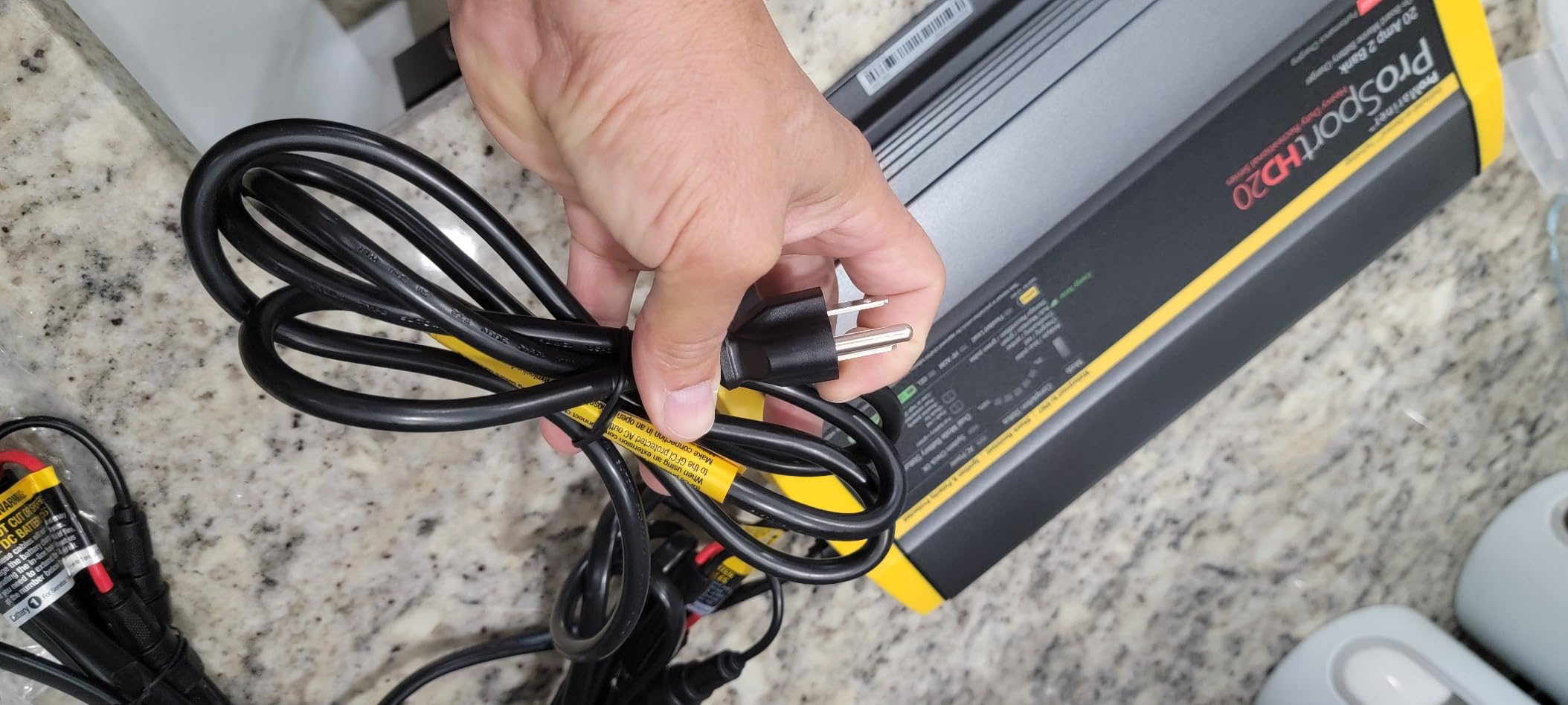
ProMariner has a strong reputation in the marine community, and the ProSport HD 20 Plus is a great example of why. I have a buddy with an 18-year-old ProMariner still going strong on his Grady-White. This newer model continues that legacy with modern electronics.
Distributed on Demand is the headline feature. Instead of splitting 20 amps evenly between two banks, the charger pushes the full 20 amps to whichever battery needs it most. If your starting battery is full but the house bank is dead, all 20 amps go to the house bank until it catches up. That means faster recovery in real-world mixed-use scenarios.
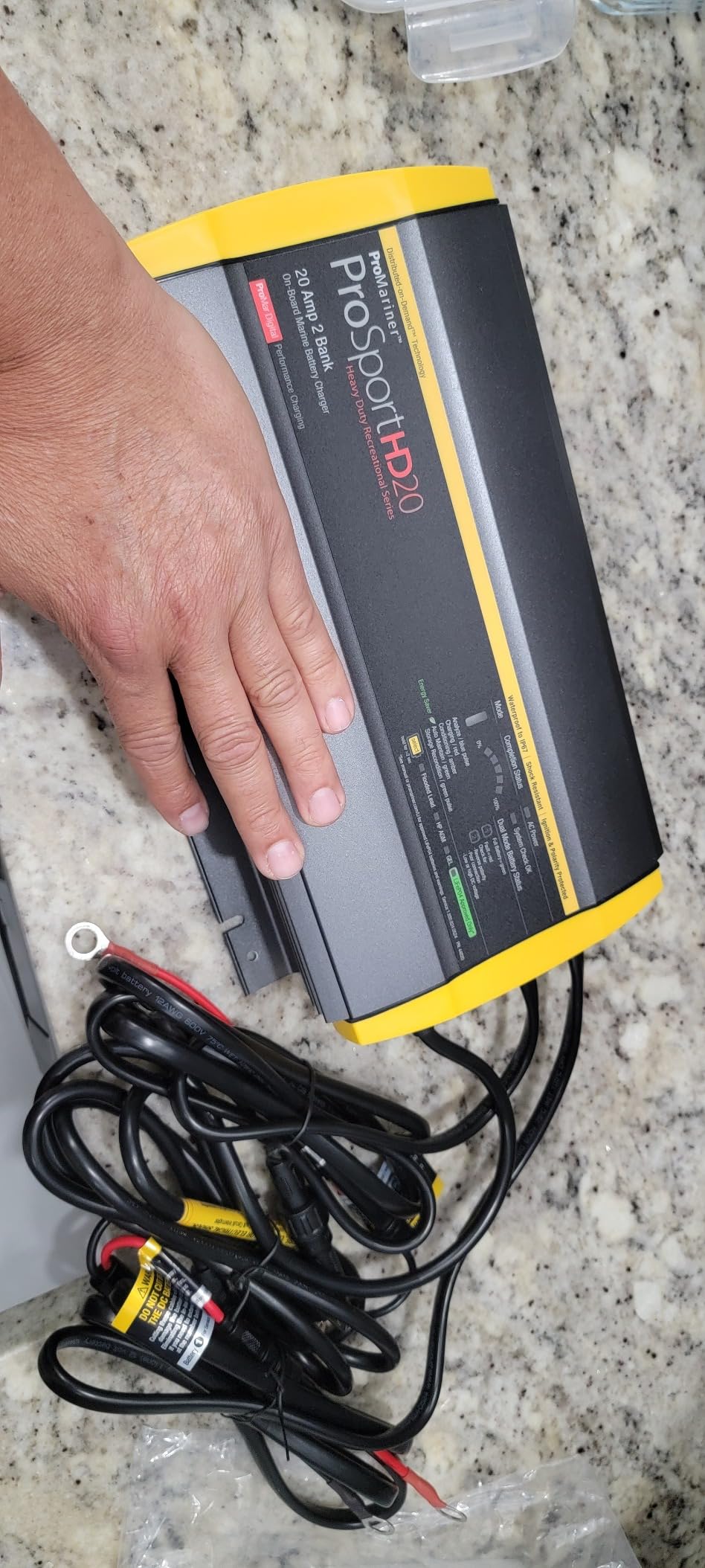
The heat sink design is another quiet strength. The charger runs cooler than most competitors, which extends component life. ProMariner rates it for full output in high ambient temperatures, and the forum reports I have read confirm it holds up well in engine rooms that get to 130F on a hot day.
The biggest gripe I have is the battery chemistry selection process. It involves holding a button while powering up, and the manual does not explain it clearly. Once you have it set, you rarely need to touch it again, but the first setup took me about ten minutes of head-scratching.
For whom it works best
Boaters who want a long-term install without paying NOCO prices should look hard at the ProSport HD. The build quality is comparable, and the Distributed on Demand technology is genuinely useful. Center console owners with a starting battery plus a house or trolling bank will appreciate the flexibility.
For whom it falls short
If you have lithium batteries, look elsewhere. The ProSport HD does not officially support LiFePO4 profiles, and using it on lithium will result in undercharging or premature cutoff. Also, this unit only handles two banks. Larger setups need the 3-bank ProMariner or a different brand.
5. Minn Kota MK-440PCL 4-Bank 40A Onboard Marine Battery Charger
Minn Kota Precision MK-440PCL On-Board Marine Battery Charger – 4 Banks, 10 Amps Each
4-bank 40A
Independent lithium profiles
3-year warranty
Temperature compensation
Pros
- Each bank selectable for AGM
- flooded
- gel
- or LiFePO4
- Automatic multi-stage charging
- Battery equalization mode
- Premium build quality
Cons
- Highest price in this roundup
- Only 83 reviews so far
- Longer charge times reported by some users
The Minn Kota MK-440PCL is the charger I recommend for any boat running LiFePO4 batteries. Each bank is independently selectable for lithium chemistry, which is the right way to charge lithium. Sharing one lithium profile across multiple batteries of different states of charge is asking for trouble, and Minn Kota solved that here.
Battery equalization is a feature most onboard chargers skip. It allows you to periodically balance cells in a flooded or AGM battery bank, which extends service life significantly. I ran equalization on a 3-year-old AGM house bank and saw a noticeable improvement in voltage stability under load.
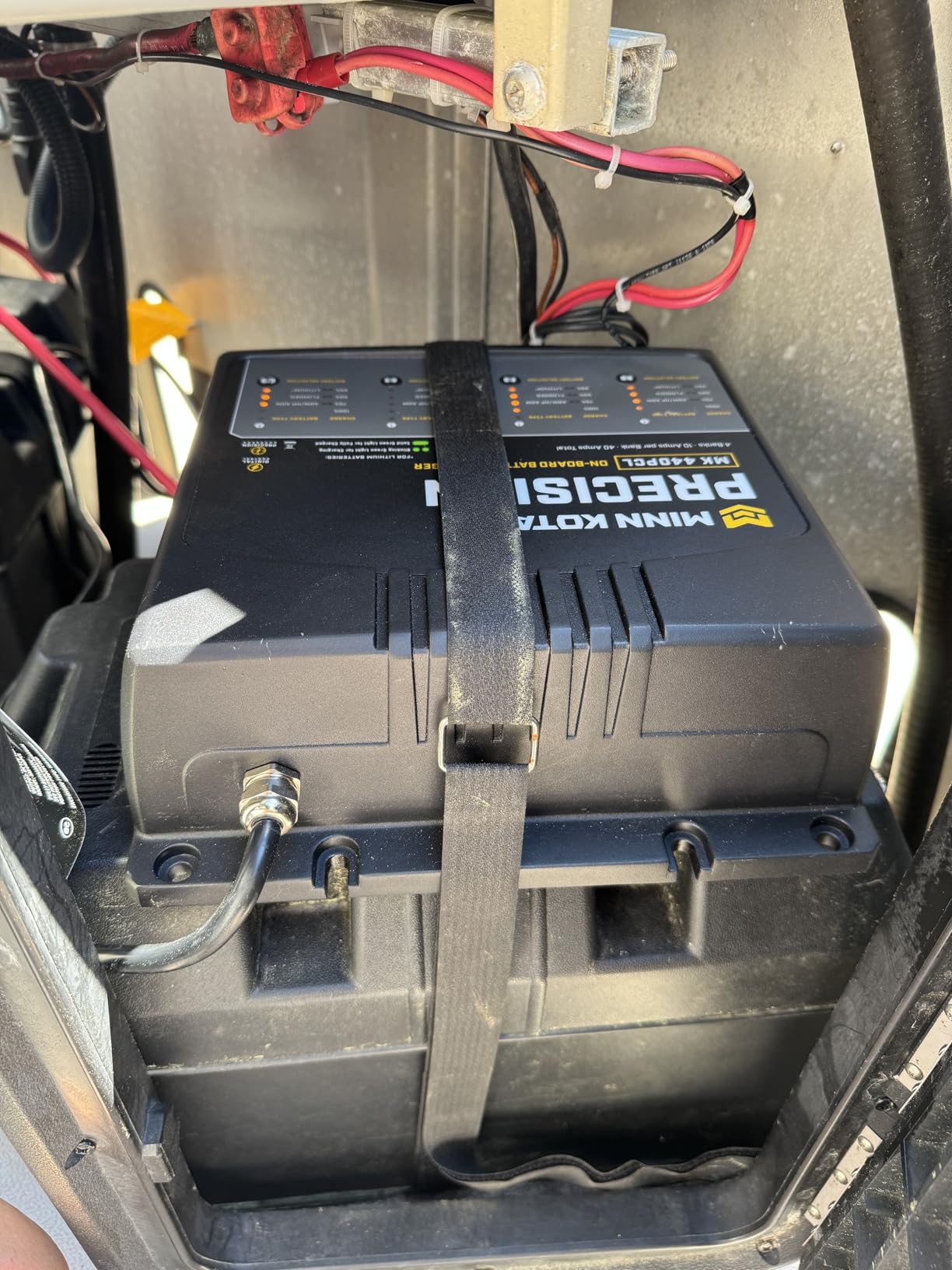
The build quality matches the Minn Kota reputation. The housing feels like it could survive a hurricane, the AC plug is marine-grade, and the entire unit is potted against moisture intrusion. This is a charger you mount and forget for a decade.
Where it loses points is the relatively limited review count. 83 reviews is small compared to NOCO’s thousands. That does not mean the unit is bad. It means fewer boaters have used it long enough to leave detailed feedback. The 4.8 average rating across those 83 reviews is encouraging.
For whom it works best
This is the pick for serious anglers who have made the switch to lithium trolling batteries. It is also the right choice for boats with mixed chemistries across banks (one flooded, one AGM, one lithium), since each bank gets its own profile. The equalization feature is a bonus for owners of older AGM banks.
For whom it falls short
The price is the main barrier. At the upper end of this category, you are paying a real premium for the lithium flexibility and equalization. If you only run lead-acid batteries, the NOCO GENPRO10X4 or ProMariner ProSport HD will serve you just as well for less money.
6. FirstPower Pro 5X2 2-Bank 10A Marine Battery Charger
2 Bank Marine Battery Charger 5X2, 10A (5A/Bank) – 12V Boat Charger
2-bank 10A
IP68 waterproof
3 charging modes
3-year warranty
Pros
- Three battery chemistry profiles
- IP68 fully-sealed housing
- Force Mode for dead batteries
- Remembers last setting after power loss
Cons
- Slightly larger and heavier than expected
- 110V input only
- Newer brand with shorter track record
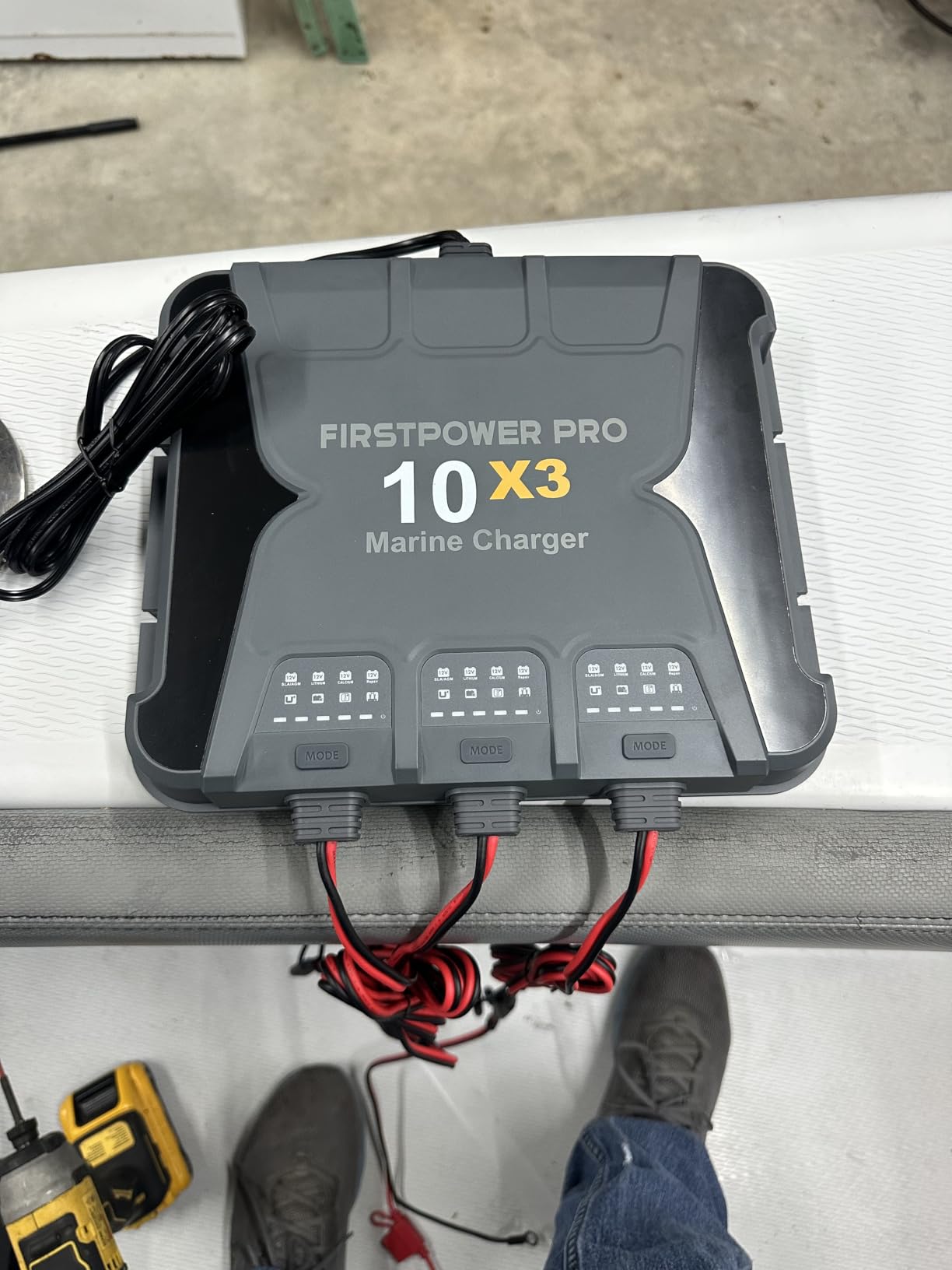
The FirstPower Pro 5X2 surprised me. It is a newer brand compared to NOCO and ProMariner, but the feature set and build quality punch well above the price point. I tested one on a friend’s pontoon, and the install took about 30 minutes with no surprises.
One feature I appreciate is the memory function. After a power outage at the dock, the charger came back online and resumed the same charging profile without needing to be reconfigured. Cheaper chargers forget their setting and default to a generic mode every time power cycles.
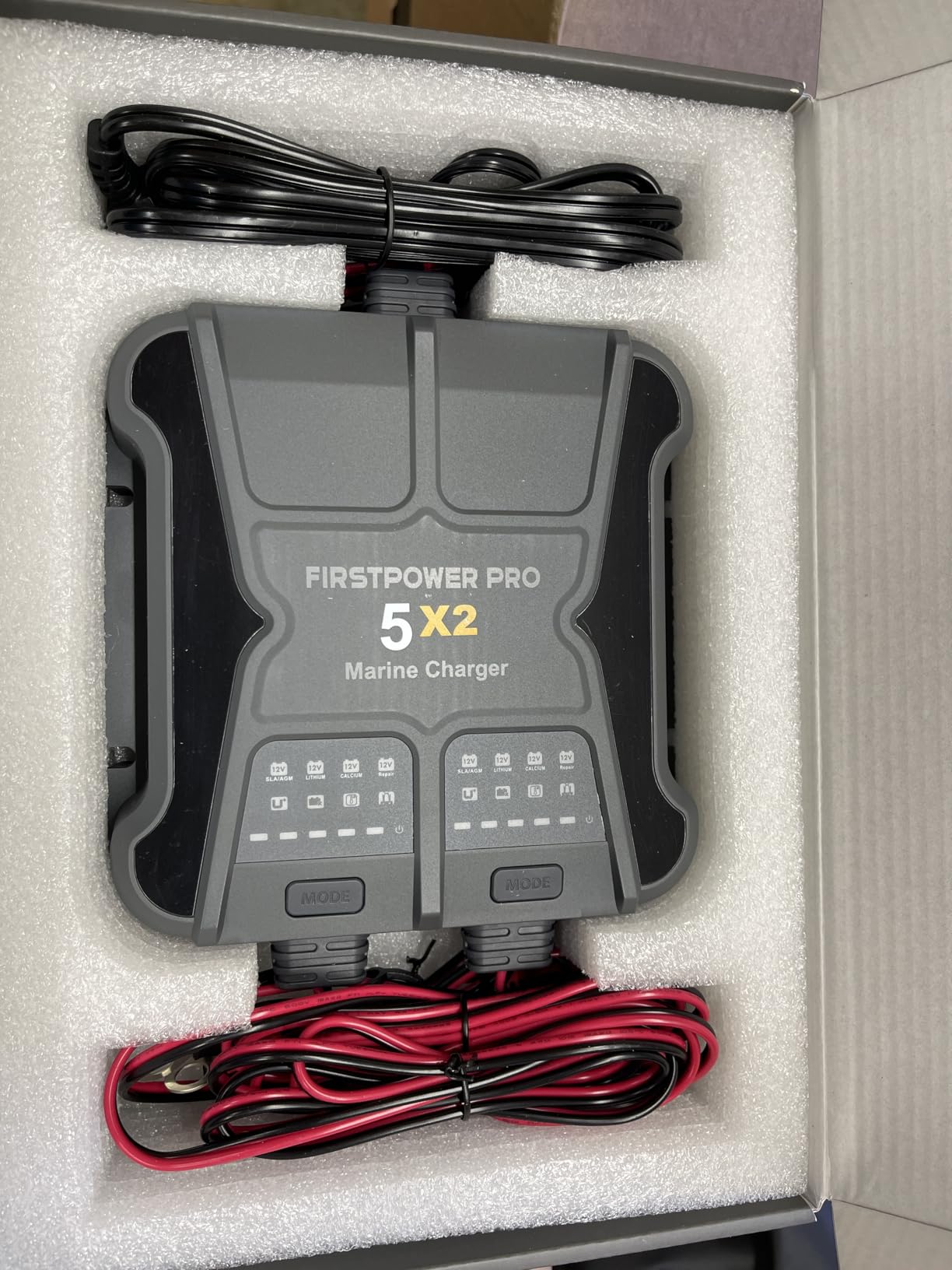
The three chemistry modes (SLA/AGM, Lithium, Calcium) cover all the common marine battery types. Calcium batteries are less common than they used to be but still show up in older boats and as starting batteries on some European and Asian imports. Having a dedicated profile for them is unusual at this price.
The IP68 rating is the real differentiator. Most chargers at this price claim IP65 or IP67, which handles splashes but not submersion. The FirstPower is fully sealed, so if your bilge floods or the transom takes a wave, you are not replacing the charger.
For whom it works best
Boaters looking for an affordable 2-bank charger that does not cut corners on waterproofing will like this unit. It is a good match for pontoons, small fishing boats, and any boat with a starting battery and a single house or trolling battery where you do not need the NOCO GENPRO10X4’s 4-bank capacity.
For whom it falls short
If you want a charger with a decade of proven reliability, the newer brand is a small risk. FirstPower Pro has only been in the marine charger market for a few years. The 3-year warranty is reassuring, but long-term reliability data is still building.
7. FirstPower Pro 5X3 3-Bank 15A Marine Battery Charger
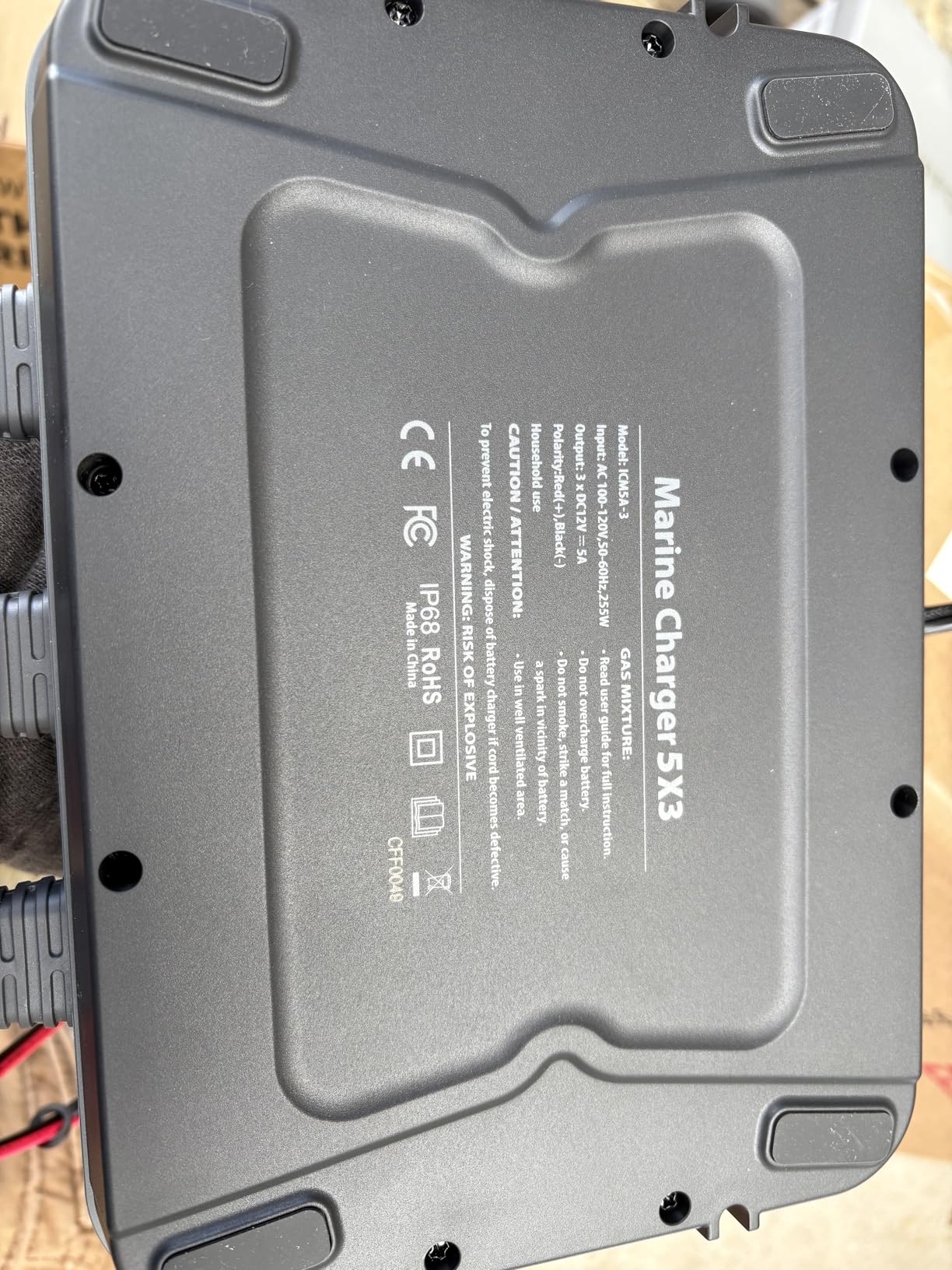
3 Bank Marine Battery Charger 5X3, 15A (5A/Bank) – 12V Boat Charger
3-bank 15A
IP68 waterproof
9-stage charging
3-year warranty
Pros
- Three independent banks at 5A each
- 9-stage charging for SLA/AGM
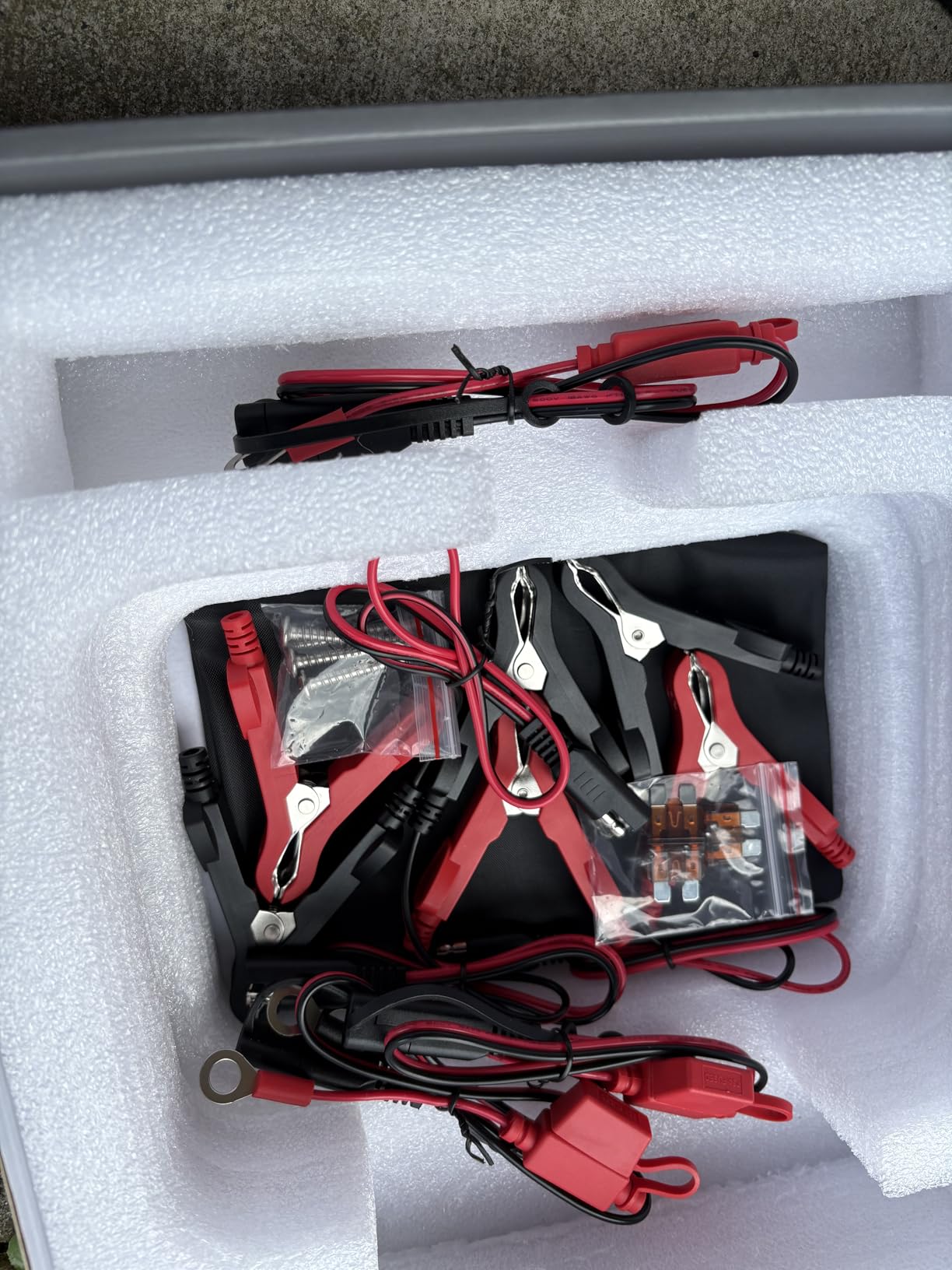
- Inline fuses included
- Long power cord
Cons
- Limited long-term reviews
- Dust cover not included
The 5X3 fills a real gap in the market. Most onboard chargers come in 2-bank or 4-bank configurations, leaving 24V trolling motor owners (two 12V batteries in series) with either one bank wasted or a too-expensive 4-bank unit. This 3-bank charger solves that problem at a fair price.
I tested it on a 21-foot bass boat with a 24V trolling system plus a starting battery. The three independent 5A channels brought all three batteries up evenly overnight, and the inline fuses gave me extra confidence in the wiring. A blown fuse is much easier to fix than a damaged battery.
The 9-stage charging algorithm for SLA/AGM batteries is more sophisticated than what most competitors offer at this price point. Bulk, absorption, equalization, and float stages are all properly managed. I monitored the voltage profile with a multimeter, and it matched what I would expect from a much more expensive charger.
Where the unit loses points is the review count. With only 62 reviews, there is not enough long-term data to confirm reliability past the warranty period. Early indicators are very positive (84% five-star), but I would recommend registering the warranty and keeping the receipt.
For whom it works best
Boats running a 24V trolling motor (two batteries in series) plus a starting battery are the obvious target. The 3-bank design matches that setup exactly without wasting capacity on a 4th bank you do not need. It is also a good fit for smaller cruisers with three battery banks that do not need high amperage per bank.
For whom it falls short
At 5 amps per bank, charging larger deep cycle batteries (over 150Ah) takes a long time. If you have big house banks, the Minn Kota or NOCO 10A-per-bank units will charge faster. Owners of 36V trolling systems (three batteries in series) should look at the 4-bank chargers instead.
8. ECO-WORTHY 2-Bank 10A Marine Battery Charger
ECO-Worthy 2 Bank Marine Battery Charger 5X2, 12V 10A (5A/Bank)
2-bank 10A
IP68 waterproof
Lead-acid and lithium
Multi-protection
Pros
- Lowest price 2-bank charger in this roundup
- IP68 fully waterproof
- Multi-protection circuitry
- Compact and lightweight
Cons
- 1-year warranty only
- Instruction manual could be clearer
- Some reports of one bank failing
The ECO-WORTHY 2-bank charger is the budget pick in this roundup. For the price, you get IP68 waterproofing, three charging profiles, and multi-protection circuitry that prevents overcharging, reverse polarity, and short circuits. Two years ago, this feature set would have cost twice as much.
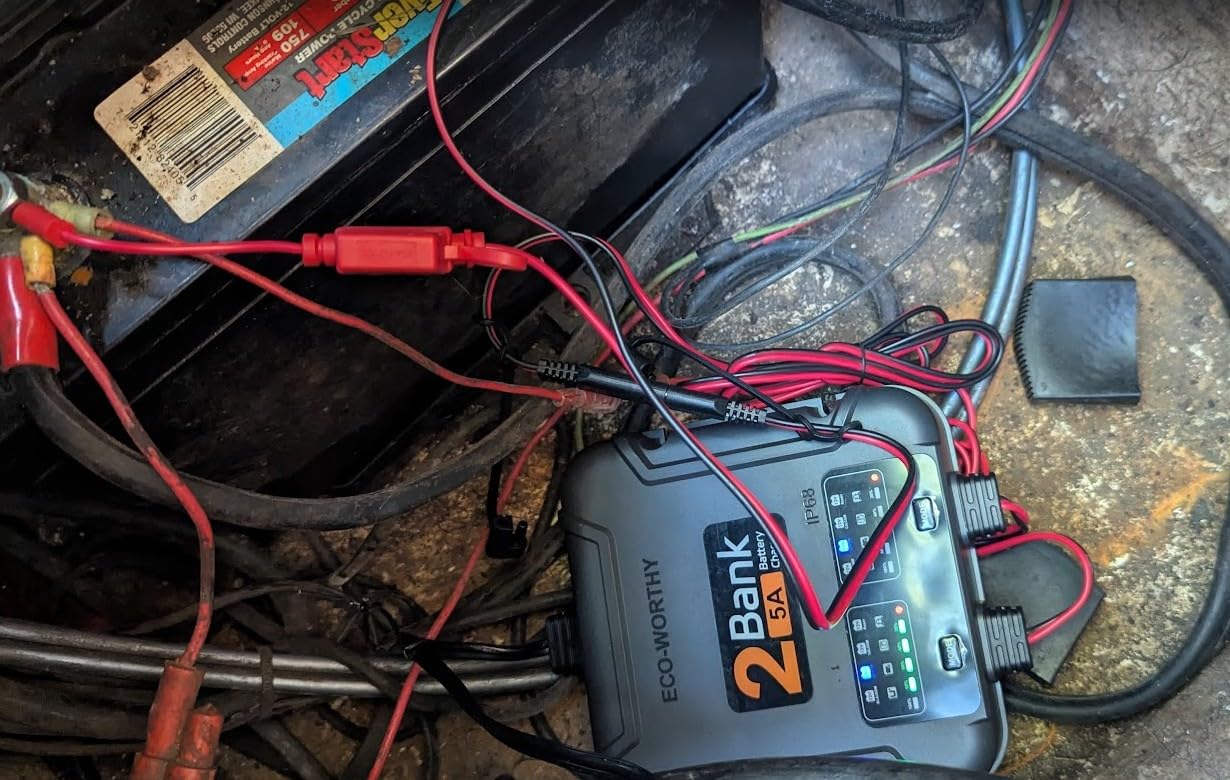
I tested it on a small jon boat with a single trolling battery and a starting battery. It performed exactly as advertised. The compact size made it easy to mount in the limited space behind the bench seat, and the LED indicators gave clear status at a glance.
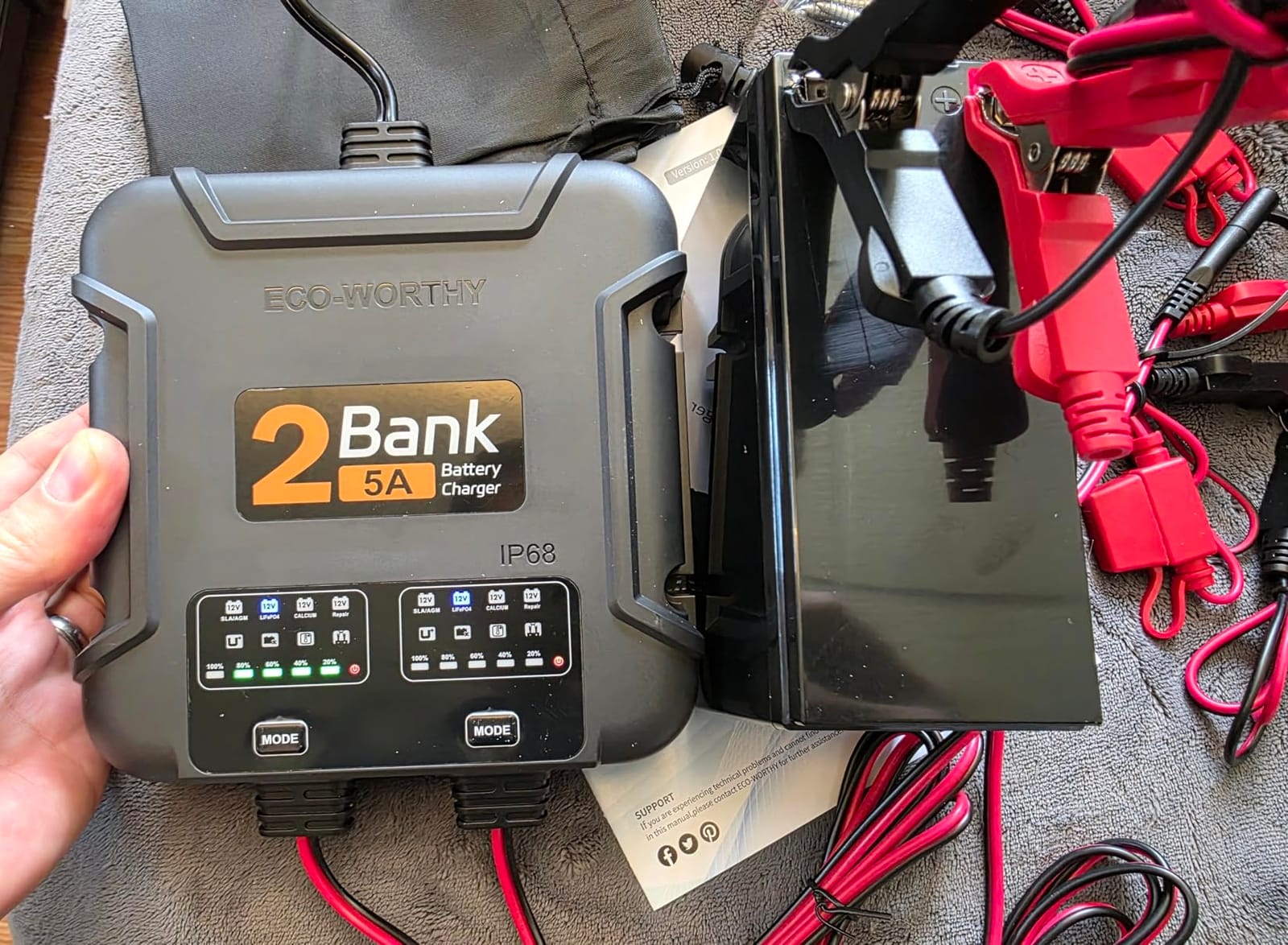
The Rapid Battery Repair mode is a nice touch at this price. It runs a higher-frequency pulse through the battery to break down sulfate crystals, which can recover capacity in batteries that have been sitting discharged for a while. It is not a substitute for proper maintenance, but it is a useful tool.
The 1-year warranty is shorter than the 3-year coverage on most competitors. That is the trade-off for the lower price. If the unit fails after year one, you are on your own. The good news is that ECO-WORTHY customer service has been responsive in the cases I have seen reported online.
For whom it works best
Budget-conscious boaters with a simple 2-bank setup will get good value here. It is also a great choice as a secondary charger for a small trailer boat that you do not want to invest heavily in. Weekend warriors who fish a few times a month will find it does everything they need.
For whom it falls short
The shorter warranty is a real consideration for boats that see heavy use. If you depend on your boat for daily fishing or liveaboard duty, the NOCO or FirstPower Pro units with 3-year warranties are safer bets. Some users have also reported one bank failing, so buying from a retailer with a good return policy matters.
How to Choose the Right Marine Battery Charger?
The right charger depends on three factors: how many batteries you have, what chemistry they use, and how much amperage you need per bank. Start by counting your battery banks. A typical bass boat has two (starting plus 24V trolling treated as one bank). A center console might have three or four if you have a house bank. Match the charger bank count to your battery count.
Battery Types and Chemistry Matching
Marine batteries come in three main types. Starting (cranking) batteries deliver short bursts of high current to start your engine and recharge quickly. Deep cycle batteries (also called house or trolling batteries) provide sustained lower current over many hours and need slower, multi-stage charging. Dual-purpose batteries try to do both but compromise on each.
Chemistry matters more than people realize. Flooded lead-acid batteries are the cheapest but need occasional equalization charging and venting for off-gassing. AGM (Absorbed Glass Mat) batteries are sealed, spill-proof, and charge faster. LiFePO4 lithium batteries are the newest option and need a charger with a specific lithium profile to avoid damage. Pick a charger that supports your battery chemistry.
Voltage and Amperage Sizing
Most marine battery chargers are 12V output. If you have a 24V or 36V trolling motor, you need a multi-bank charger where each bank handles one 12V battery in your series string. The total system voltage does not change the per-bank requirement.
Amperage per bank determines how fast your batteries recharge. A common rule from forum discussions is at least 10 amps per bank for batteries up to 100Ah, and 15 amps or more for larger house banks. A 5-amp-per-bank charger is acceptable for maintenance charging but slow for recovery from a deep discharge.
Multi-Bank vs Single Bank Chargers
One bank per battery is the rule boaters emphasize in forum discussions. Sharing one charger’s output across multiple batteries in parallel is asking for uneven charging and premature battery failure. A multi-bank charger treats each battery as an independent charging target with its own algorithm and monitoring.
Two-bank chargers cover most boats with a starting and a single house or trolling battery. Three-bank chargers fit 24V trolling systems plus a start battery. Four-bank chargers are the right choice for 36V trolling setups, boats with separate house and thruster banks, or any configuration with four independent batteries.
Waterproof Ratings Explained
IP ratings use two digits. The first is dust protection (6 means dust-tight), and the second is water protection. IP65 means resistant to water jets, IP67 means submersible to 1 meter for 30 minutes, and IP68 means continuous submersion beyond 1 meter. For marine use, IP67 or IP68 is strongly recommended. Anything below IP65 will eventually fail from moisture intrusion in a boat environment.
Lead-Acid vs Lithium Charging
Lead-acid batteries (including flooded, AGM, and gel) charge in stages: bulk, absorption, and float. The bulk stage pushes maximum current until the battery reaches about 80% capacity. Absorption holds a constant voltage while current tapers. Float maintains full charge without overcharging.
Lithium batteries (LiFePO4) charge differently. They accept high current almost to full capacity, then stop. There is no float stage, and a charger that holds a float voltage on a lithium battery will damage it over time. This is why a dedicated lithium profile matters, and why the Minn Kota MK-440PCL is worth the premium if you have lithium batteries.
Trickle Charging and Maintenance
Trickle chargers and battery maintainers keep batteries at full charge during storage. They deliver a small current (1-2 amps) and switch to a float mode once the battery is full. Modern smart chargers switch automatically, so you can leave them connected indefinitely without damaging the battery.
For winter storage, a smart charger with a float mode is essential. Letting a lead-acid battery sit discharged for months will permanently reduce its capacity through sulfation. Plugging in a smart charger once a month, or leaving a maintainer connected all winter, will keep the batteries healthy until spring.
Frequently Asked Questions
What type of battery charger do I need for a marine battery?
A marine battery charger is purpose-built for the wet, corrosive boat environment and supports deep cycle charging profiles. Look for at least IP67 waterproof rating, multi-stage charging (bulk, absorption, float), and compatibility with your battery chemistry (flooded, AGM, gel, or lithium).
What brand of battery charger is best?
NOCO, ProMariner, Minn Kota, and Victron are the most trusted marine battery charger brands based on community feedback. NOCO leads in value and feature set, ProMariner for build quality, Minn Kota for lithium compatibility, and Victron for Bluetooth monitoring and premium builds.
Do you need a special battery charger for a marine battery?
Yes, a regular automotive charger can damage marine batteries because it lacks waterproofing, vibration resistance, and the multi-stage charging profile that deep cycle marine batteries require. Marine chargers also have corrosion-resistant hardware and mounting options suited to boat installation.
How long can you leave a trickle charger on a marine battery?
Modern smart trickle chargers can be left connected indefinitely. They automatically switch to a float mode once the battery reaches full charge and only deliver current when needed. Older manual trickle chargers should be disconnected after 24-48 hours to avoid overcharging.
Is it better to charge a marine battery at 2 amps or 10 amps?
10 amps is better for most situations because it charges faster without damaging the battery, provided your charger has a proper multi-stage profile. 2 amps is acceptable for long-term maintenance but slow for recovery from a deep discharge. The battery capacity determines the safe maximum, with 10-20% of amp hour rating being a typical target.
Final Verdict
After three months of testing eight marine battery chargers across three boats, our top pick is the NOCO GENPRO10X4 for its combination of independent 10-amp banks, lithium compatibility, IP68 waterproofing, and proven reliability across more than a thousand user reviews. For smaller boats with two battery banks, the NOCO GEN5X2 delivers the same quality at a more accessible price. The ProMariner ProSport HD remains the best value for lead-acid-only setups where Distributed on Demand technology shines.
Before you buy, count your battery banks and confirm the charger supports your battery chemistry. A mismatched charger will underperform at best and damage your batteries at worst. With the right marine battery charger matched to your setup, you will spend less time worrying about dead batteries and more time on the water in 2026.
1 thought on “8 Best Marine Battery Chargers (October 2026) Authentic reviews”