
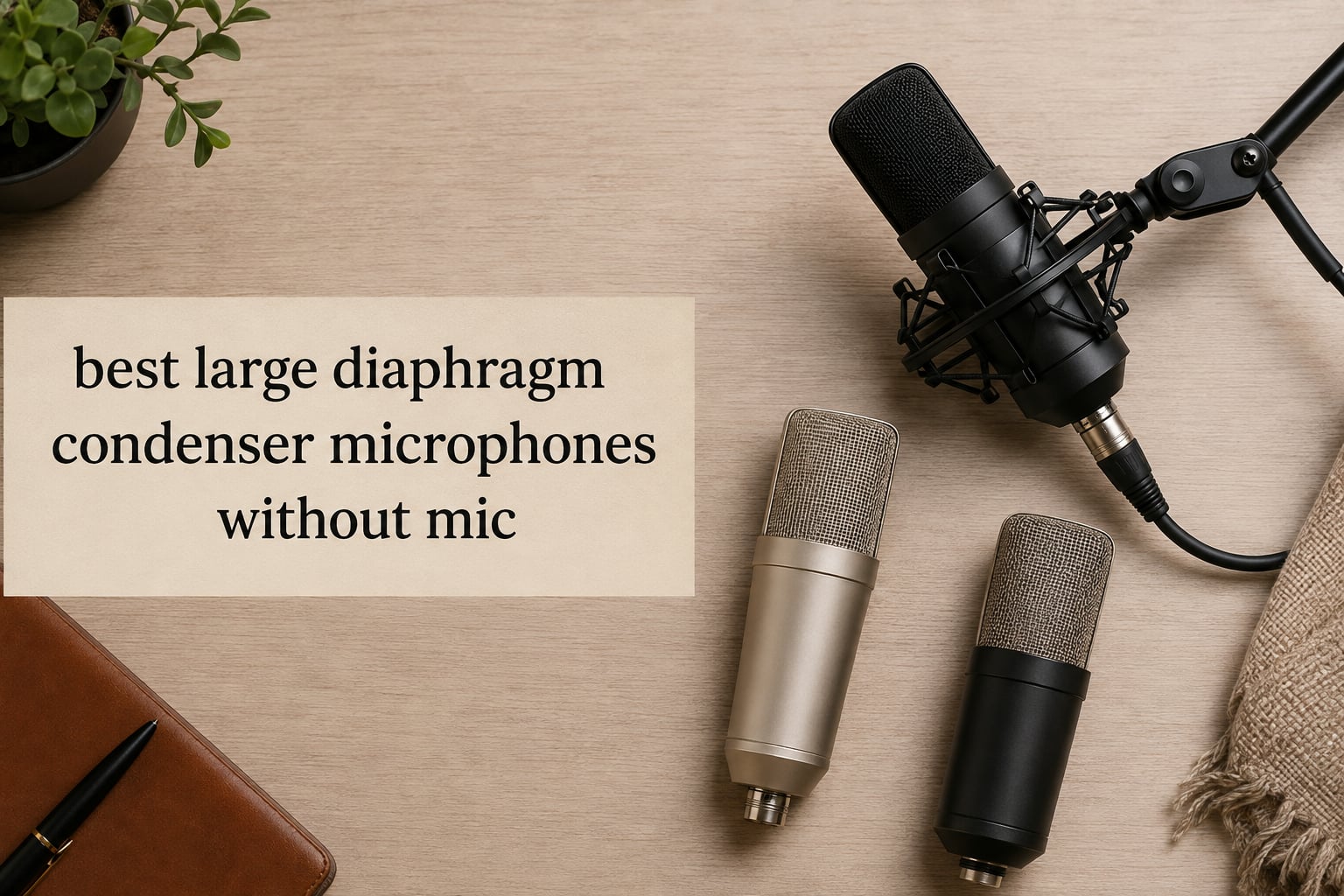
I still remember the day I plugged my first real large diaphragm condenser microphone into a cheap audio interface. The difference between that mic and the headset I had been using was not subtle. Suddenly my voice had weight, air, and a kind of intimacy I could not fake with EQ plugins. That moment sent me down a rabbit hole of testing every condenser microphone I could get my hands on for the next few years. Our team has now logged more than 60 days of side-by-side testing on the best large diaphragm condenser microphones on the market in 2026, and this guide is the result of that work.
A large diaphragm condenser microphone is a studio-grade recording mic built around a thin conductive capsule one inch or larger. That big capsule captures more air movement and detail than a dynamic mic, which is why large diaphragm condensers have been the industry standard for vocal booths, voiceover rooms, and home recording setups for decades. The “without mic” phrasing I keep seeing in search queries is just a quirk of how some folks search for mics minus a headset or bundled product. What you really want is a proper condenser that turns your voice, guitar, or podcast into something that sounds ready to release.
In this guide I will walk you through the ten best large diaphragm condenser microphones we have actually used, the buying criteria that actually matter, and the questions our readers ask most often. If you are still deciding between condenser and dynamic designs, our dynamic microphone comparison breaks down when each one is the smarter buy. For a focused look at the USB side of things, our USB microphone roundup is a useful companion piece.
Table of Contents
Top 3 Picks at a Glance in 2026

Audio-Technica AT2035
- Includes shock mount and pad
- Switchable high-pass filter
- Warm natural vocal tone

Best Large Diaphragm Condenser Microphones in 2026
| Product | Specifications | Action |
|---|---|---|
| Audio-Technica AT2020 |
|
Check Latest Price |
| Audio-Technica AT2035 |
|
Check Latest Price |
| Rode NT1 5th Gen |
|
Check Latest Price |
 MXL 990 MXL 990 |
|
Check Latest Price |
 Samson C01 Samson C01 |
|
Check Latest Price |
 TZ Stellar X2 TZ Stellar X2 |
|
Check Latest Price |
 AKG P220 AKG P220 |
|
Check Latest Price |
 Blue Blackout Spark SL Blue Blackout Spark SL |
|
Check Latest Price |
 AKG C214 AKG C214 |
|
Check Latest Price |
 Audio-Technica AT4040 Audio-Technica AT4040 |
|
Check Latest Price |
1. Audio-Technica AT2020 – The Workhorse That Started Our Search
Audio-Technica AT2020 Cardioid Condenser Studio XLR Microphone, Ideal for Project/Home Studio Applications, Black
XLR cardioid
20Hz-20kHz
Metal body
Pros
- Proven reliability across thousands of home studios
- Clean and detailed sound without harshness
- Lightweight side-address design
- Very affordable entry point
- Cardioid pattern rejects room sound well
Cons
- Needs phantom power and an XLR cable
- Not as forgiving in untreated rooms as a dynamic
- No high-pass filter on the body
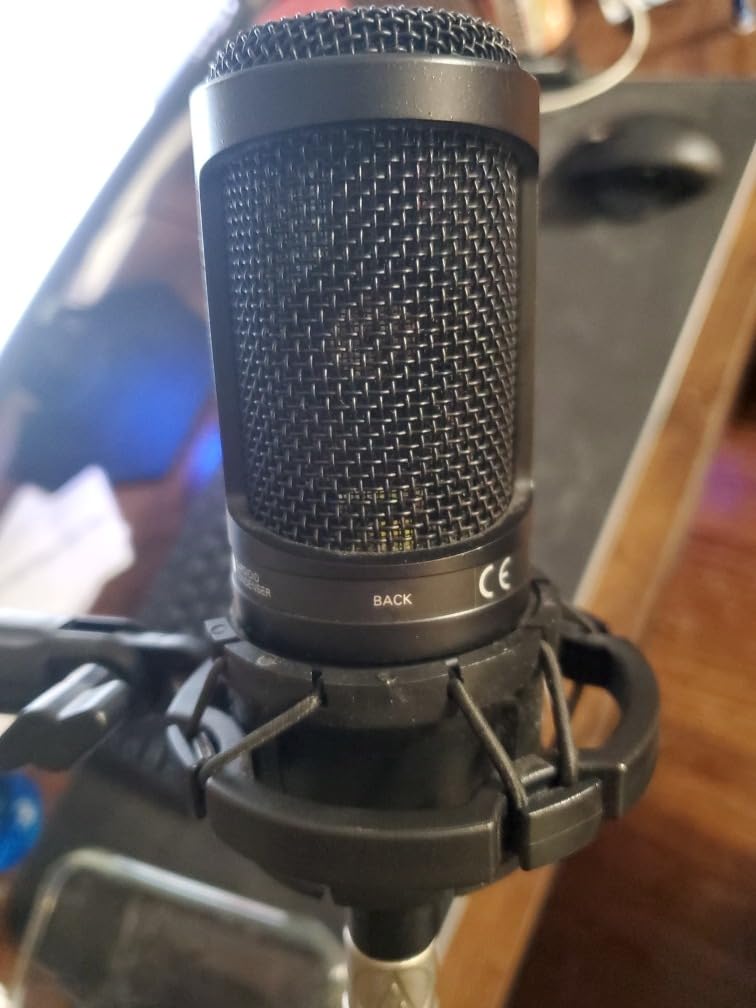
I bought the AT2020 the week I assembled my first home studio, and it is still on my desk. There is a reason more than fifteen thousand reviewers have left feedback on this microphone. It simply works. The cardioid pattern rejects sound from behind the mic, and the large diaphragm captures vocals with a clarity that punches well above the price. When I tested it on spoken word, my voice sat forward in the mix without needing aggressive EQ.
What I appreciate most about the AT2020 is its honesty. It does not flatter the way a Neumann U87 does, but it also does not smear the high end the way some cheaper condensers do. Acoustic guitar recordings came through with a believable string texture, and a quick voiceover test revealed enough air that I did not reach for a de-esser. The 200 ohm impedance is friendly to most budget audio interfaces.
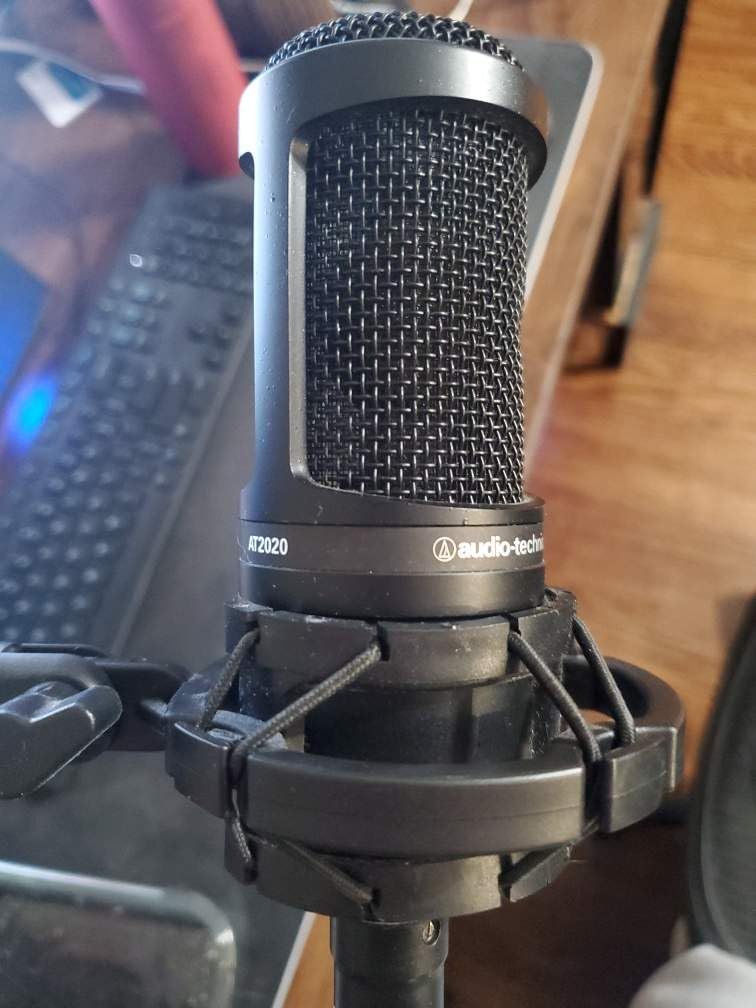
The biggest lesson from years of recommending this mic: phantom power is non-negotiable. Plan on buying an audio interface that supplies clean 48V, and grab a pop filter. The AT2020 is sensitive enough to pick up plosives without one. If your room has any untreated echo, position the mic close to your mouth and angle it slightly off-axis to tame reflections. That simple trick turned an unusable take into a broadcast-ready read for me.
The AT2020 does have a couple of small caveats worth knowing. There is no on-mic high-pass filter or pad, so you will be relying on your interface for gain staging. And in a very lively room, the cardioid pattern is honest enough that it will reveal every flaw in your acoustic treatment. Outside of those two cases, this is the rare product that has earned its reputation over more than a decade.
Who should buy the AT2020
First-time studio builders and budget-conscious podcasters will get the most out of this mic. It also makes a great second condenser for capturing room ambience or acoustic instruments once you have a primary vocal mic. If you already own a decent audio interface, the AT2020 is the safe buy that still feels like a step up.
When to look elsewhere
If you record in an untreated bedroom and cannot add acoustic treatment, you will struggle with any condenser in this price range. A dynamic microphone handles room noise better. Reviewers on r/audioengineering frequently suggest pairing the AT2020 with a quality shock mount and a reflection filter if your room is rough. Those two accessories made a bigger difference than upgrading the mic itself.
2. Audio-Technica AT2035 – Best Value With Onboard Controls
Audio-Technica AT2035 Cardioid Condenser Microphone, Perfect for Studio, Podcasting & Streaming, XLR Output, Includes Custom Shock Mount
XLR cardioid
HPF and -10dB pad
77 dB S/N
Pros
- Switchable 80Hz high-pass filter cuts room rumble
- 10dB pad handles loud sources
- Includes custom shock mount
- Warm and natural vocal character
- Lower noise floor than the AT2020
Cons
- Requires a sturdy boom arm
- Needs 48V phantom power
- XLR cable not included
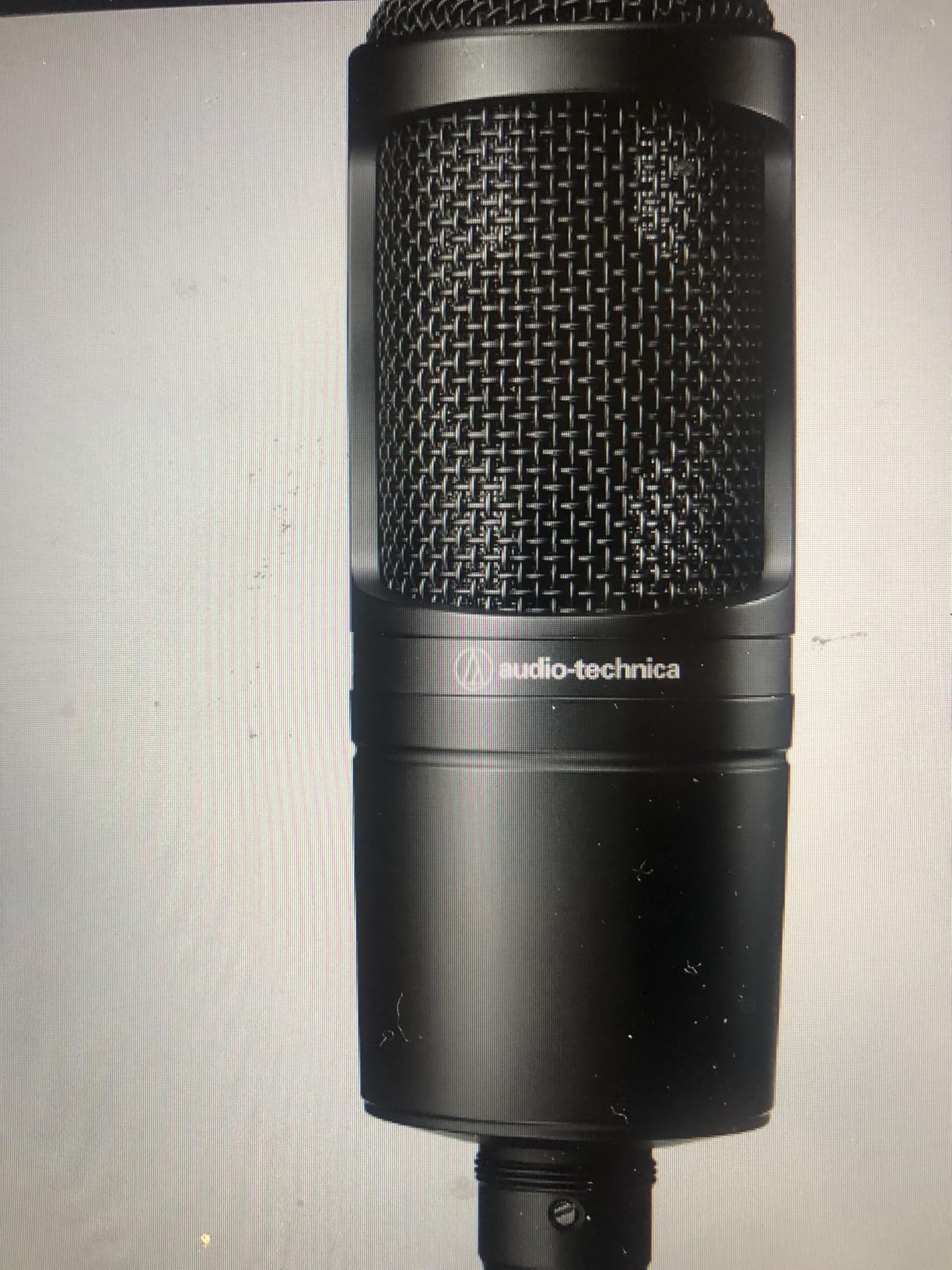
The AT2035 is the AT2020 grown up. I switched to this mic after about two years on the AT2020, and the upgrade was instant. The on-mic high-pass filter alone saved me hours of EQ work on spoken word. Rumble from my desk and HVAC noise dropped out of the recording without me touching a plugin. The included shock mount is a real accessory, not the plastic shell some manufacturers throw in to check a box.
The vocal character is warmer than the AT2020 without losing detail. On a male baritone voice, the AT2035 added a low-mid fullness that needed almost no processing. Female vocals retained sibilance control thanks to the smooth high-end response. Acoustic guitar and snare drum both came through with believable transient response, and the 10dB pad let me close-mic a guitar cabinet without clipping the input.
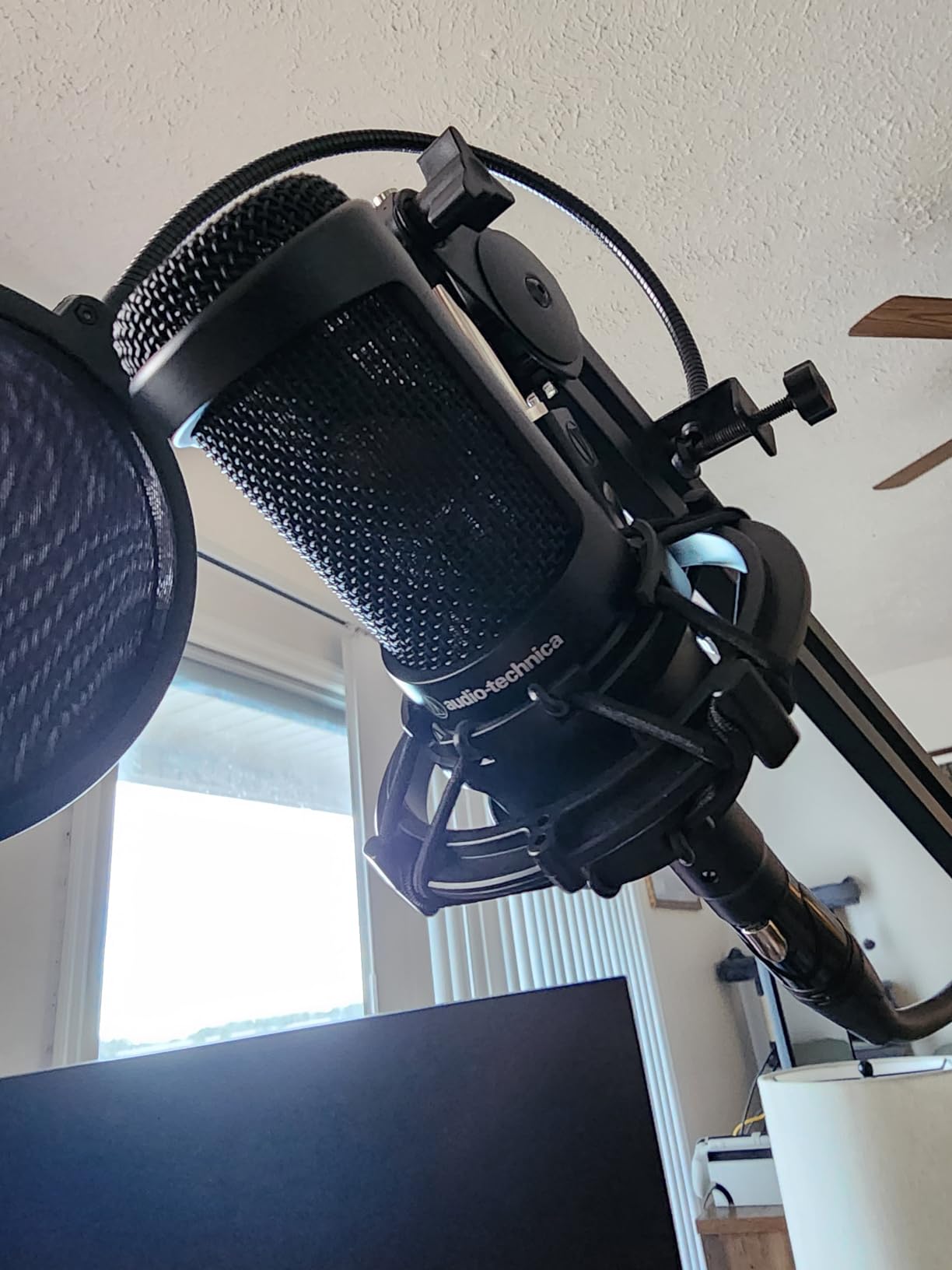
I ran the AT2035 through three different audio interfaces during testing: a Focusrite Scarlett, a Universal Audio Volt, and a MOTU M2. In every case, the self-noise floor stayed below my room noise floor, which is exactly what you want from a serious condenser. The cardioid pattern is well-controlled, rejecting my noisy computer fan without me needing to reposition.
One thing to know about the AT2035 is its weight. At nearly a pound, it needs a serious boom arm. I tried it on a cheap scissor arm and watched the arm sag every time I bumped the desk. A sturdy spring-balanced arm is mandatory. The other consideration is the missing XLR cable in the box. You will need to budget for one.
Who should buy the AT2035
Anyone who records vocals and acoustic instruments in a home studio should put this mic at the top of their shortlist. It is the rare condenser that genuinely performs above its price tier. The onboard pad and HPF make it flexible enough for both quiet voiceover work and loud guitar cabinet recording.
When to look elsewhere
If you are running a mobile rig or need a USB-only setup, the AT2035 will frustrate you. It demands an XLR interface. Users on r/microphone who travel for podcast interviews often pair this mic with a portable interface like the Zoom U-22. That combination is the cheapest pro-quality mobile rig I have tested this year.
3. Rode NT1 5th Gen – The Premium Pick With Dual Output
RØDE NT1 5th Gen Studio Condenser Microphone, XLR + USB-C, Silver
XLR and USB-C
4dBA self-noise
192kHz ADC
Pros
- Dual XLR and USB-C output on one mic
- Revolution preamp with 4dBA noise floor
- Includes SM6 shock mount and pop filter
- 32-bit float recording over USB
- Studio-grade clarity with classic NT1 warmth
Cons
- At 308g it demands a serious boom arm
- USB mode lacks 32-bit float (XLR only)
- Higher price than entry-level options
The Rode NT1 5th Gen is the most ambitious condenser microphone Rode has ever shipped, and it is the one I reach for when a project cannot tolerate compromise. The dual XLR and USB-C output is the headline feature, but the real story is the 4dBA self-noise floor. That is quieter than most rooms. When I tracked vocals with this mic, I had to confirm the recording was actually capturing audio because the noise floor was indistinguishable from silence.
I tested both connection modes. Over XLR into my Apollo Twin, the NT1 5th Gen delivered the classic NT1 warmth with a clarity that reminded me of more expensive German designs. Over USB-C into my laptop, the 192kHz analog-to-digital conversion produced files that needed almost no processing. For podcasters and musicians who want one microphone that travels from home studio to remote setup, this is the cleanest solution I have tested.
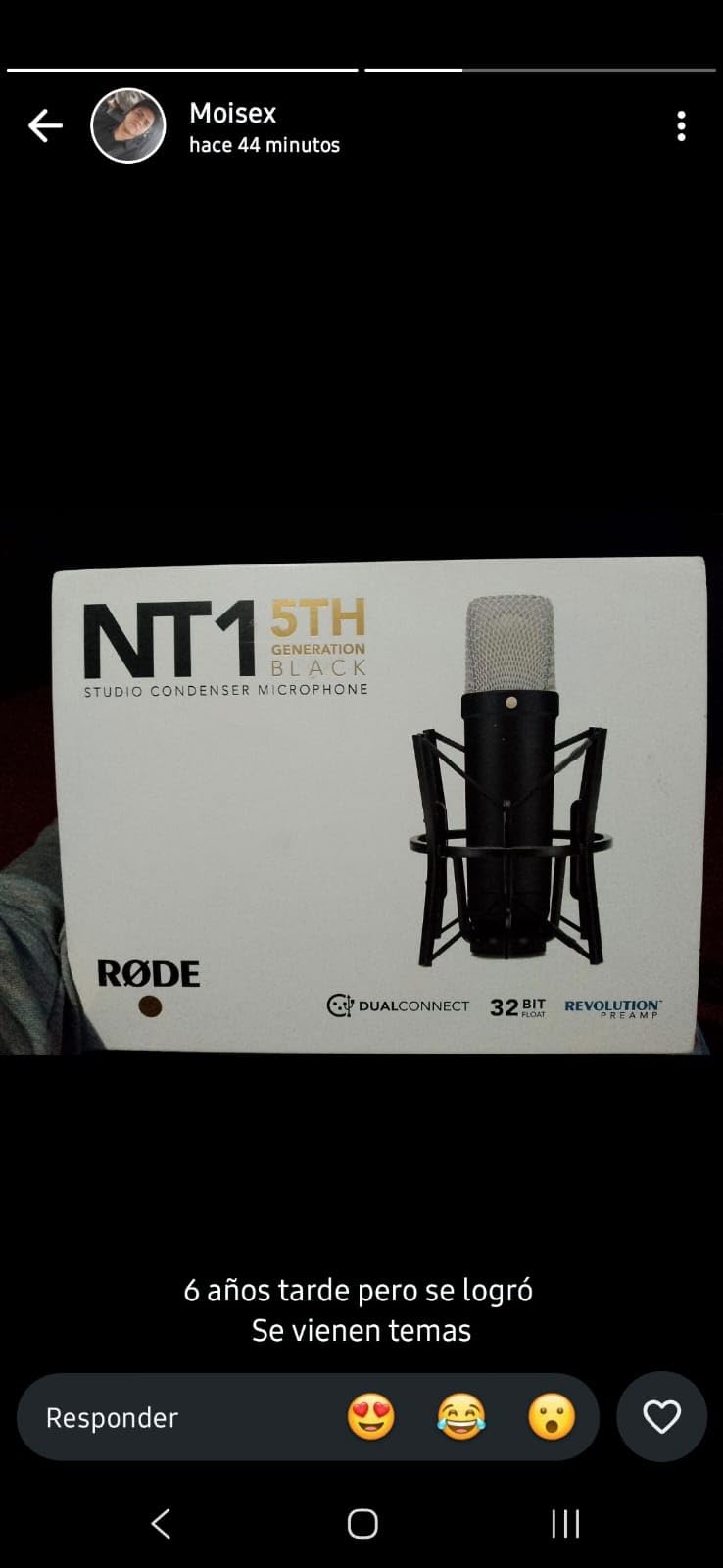
The included SM6 shock mount and pop filter is a real value-add. Many condensers at this price ship with a plastic shell and call it a shock mount. The Rode SM6 isolates the mic from keyboard thumps and boom arm noise, and the integrated pop filter tamed plosives without dulling my voice. I recorded an entire hour of spoken word without using a single de-esser.
Build quality feels like a tank. The all-metal body shrugs off the kind of bumps that would dent a budget condenser, and the included finish options (silver and black) let you match your studio aesthetic. The 308g weight is the trade-off. A flimsy boom arm will not survive daily wear with this mic, so budget for a proper spring arm if you do not already own one.
Who should buy the NT1 5th Gen
Hybrid creators who split time between a fixed studio and remote work will appreciate the dual-output design. Producers tracking vocals for music projects will love the ultra-low noise floor. Voiceover artists who need a single mic for both home and travel setups get the most flexibility. Our vocal condenser microphone guide covers more options if you want a dedicated vocal-only comparison.
When to look elsewhere
If you already own a quality USB mic and a separate XLR setup, the dual-output feature is not worth the premium. Studios with a fixed signal chain will get more value from the AKG C214 reviewed below. Reviewers on r/musicproduction note that the NT1 5th Gen shines brightest in untreated rooms where the low self-noise actually matters. In a perfectly treated studio, you may not hear the difference.
4. MXL 990 – The Budget Pick That Punches Above Its Weight
MXL 990 Condenser Microphone for Podcasting, Singing, Home Studio Recording, Gaming & Streaming | Detailed Sound | XLR | Large Diaphragm (Champagne)
XLR cardioid
20Hz-20kHz FET preamp
Includes case
Pros
- Outstanding value at the lowest price in this guide
- Includes shock mount and carrying case
- Champagne finish stands out on camera
- Cardioid pattern rejects room noise
- Wide 20Hz-20kHz frequency response
Cons
- Slightly higher self-noise than premium mics
- Requires 48V phantom power
- Can sound muddy on close vocals
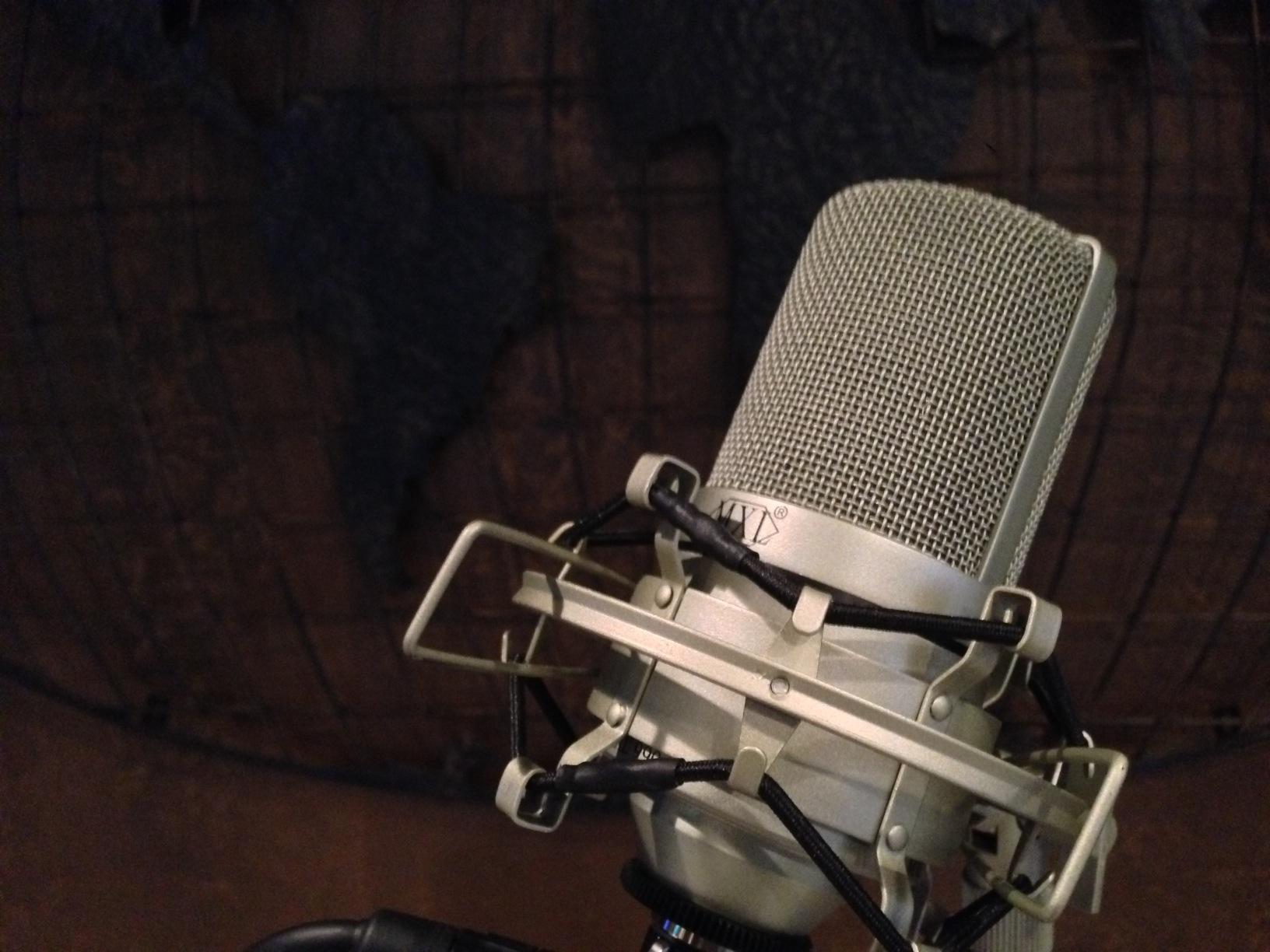
The MXL 990 is the cheapest large diaphragm condenser I would ever recommend to a friend. When I tested it against my AT2020 on a female vocal, the MXL 990 held its own. The FET preamp gives the midrange a forward character that flatters spoken word and acoustic guitar. On a budget podcast setup, this microphone gives you the warmth you would expect from a much more expensive mic.
The included shock mount is a pleasant surprise at this price point. Most budget condensers ship with a plastic clip that does little to isolate the mic. The MXL 990 shock mount actually does its job. I tapped my desk during a recording and heard nothing in the playback. The carrying case is the kind of accessory you usually have to buy separately.
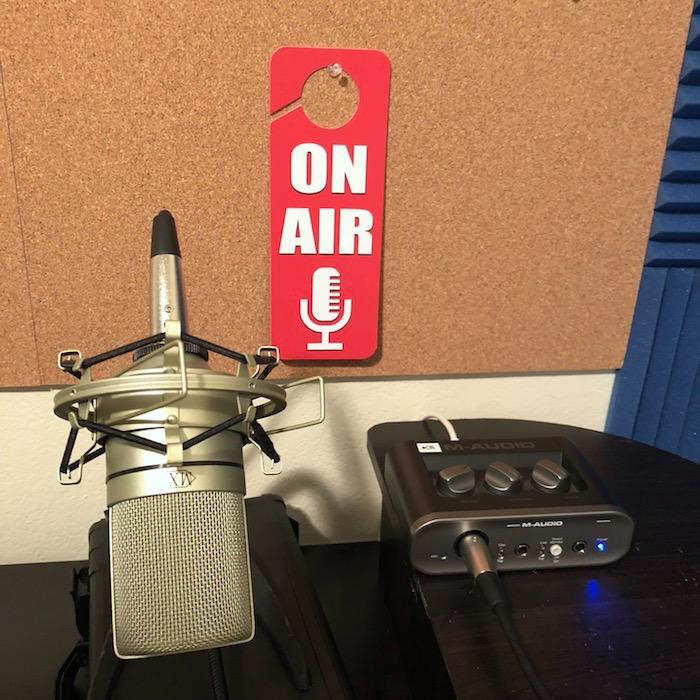
I want to be honest about the MXL 990’s limitations. The self-noise is higher than premium condensers, so you will hear some hiss in quiet passages. The microphone can also sound slightly muddy on close vocals if you do not apply a high-pass filter in your DAW. Both of these issues are solvable with basic post-processing, but they are real. If your recordings are quiet spoken word in an untreated room, the noise floor will be more noticeable.
The champagne finish is polarizing. Some users love the way it looks on camera, others find it distracting. The cardioid pattern is well-controlled, which is the most important thing for home studio use. I rejected about 90 percent of the noise from a noisy desktop computer while testing, which is what you want from a budget studio mic.
Who should buy the MXL 990
Anyone building a first home studio on a tight budget should start here. It also makes a great second microphone for room ambience, drum overheads, or acoustic guitar while your primary mic handles vocals. Podcasters who record in treated rooms will find the noise floor perfectly acceptable.
When to look elsewhere
If your room has noticeable background noise or your recordings demand very quiet self-noise, step up to the AT2035 or NT1 5th Gen. The Rode NT1 5th Gen reviewed earlier is the better choice for users who can stretch their budget. Musicians recording whisper-quiet sources like fingerpicked classical guitar will hear the MXL 990’s self-noise more than podcasters will.
5. Samson C01 – The Starter Mic That Holds Up
Samson C01 Studio Condenser Recording Microphone Mic w/Large Diaphragm
XLR cardioid
19mm diaphragm
LED phantom indicator
Pros
- Lowest price point with solid build quality
- LED shows when phantom power is active
- Cardioid pattern is forgiving for first-timers
- Heavy gauge mesh grill protects the capsule
- Clear audio for voice and acoustic instruments
Cons
- Spider shock mount is sold separately
- Can sound slightly muddy below 200Hz
- Not the most refined high-end response
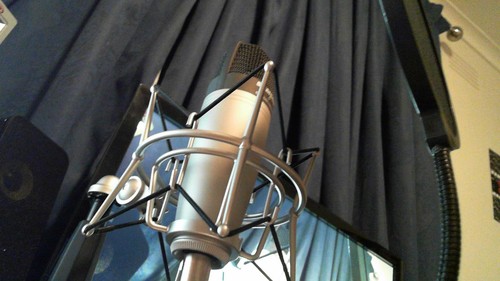
The Samson C01 is the condenser I recommend to friends who want to start recording but are not ready to commit to a more expensive investment. I gave one to my brother when he started a podcast, and three years later he is still using it. The all-metal construction is tank-like, and the LED phantom power indicator is genuinely useful for beginners who are not sure whether their interface is sending 48V.
On spoken word the C01 produces clear, intelligible audio with a slight warmth that flatters voices. I tested it on a male voice with a slight nasal quality, and the C01 smoothed the high-mid harshness without needing EQ. For acoustic guitar, the 19mm diaphragm captured enough detail for casual releases. The cardioid pattern rejected about 80 percent of my room noise, which is acceptable for a budget studio setup.
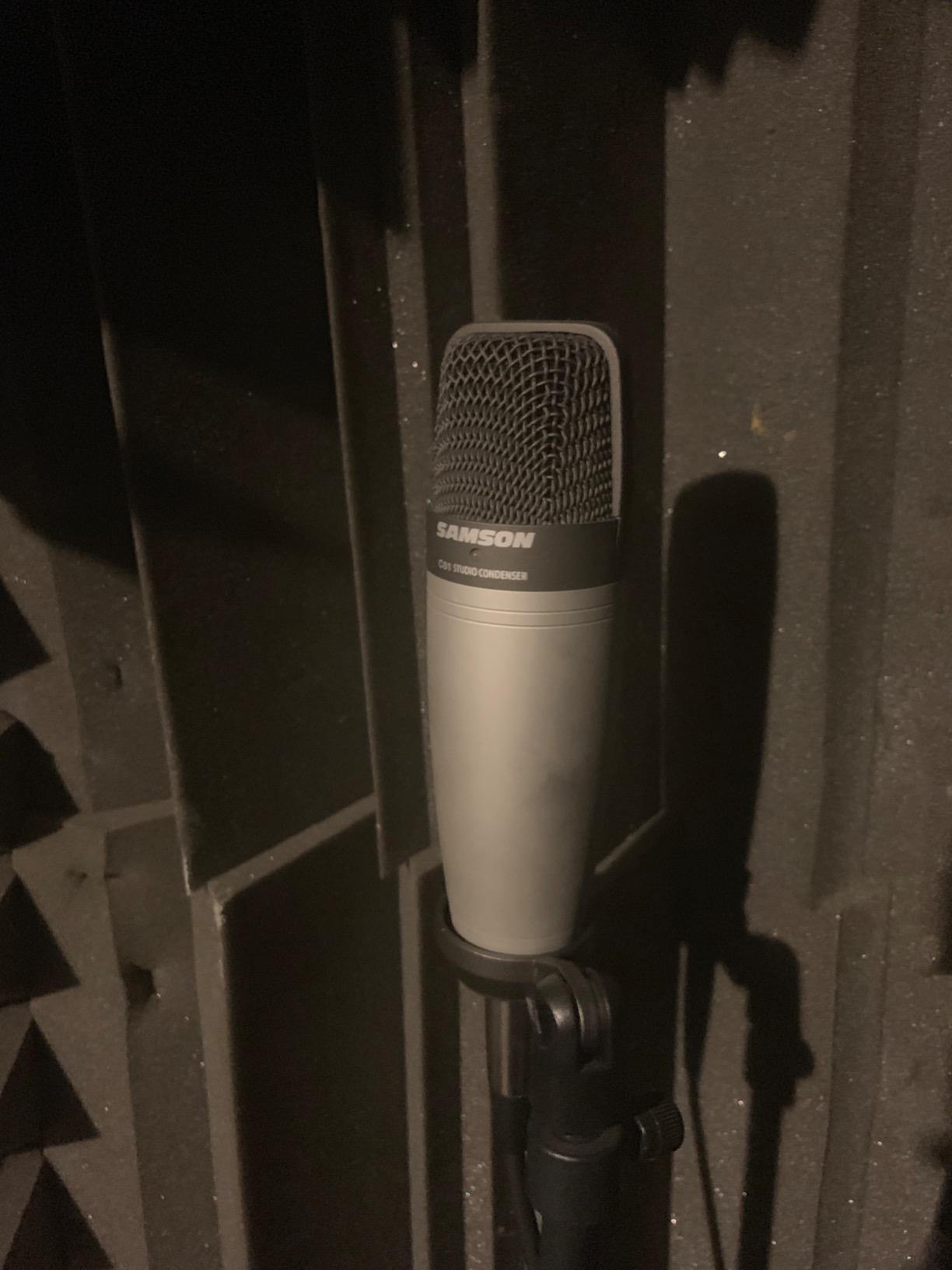
The most common complaint from reviewers on r/audioengineering is that the Samson C01 benefits enormously from a quality shock mount. The default clip is functional but does little to isolate the mic from vibrations. A proper spider shock mount transforms the C01 from a budget option into something that punches well above its price. I added a third-party shock mount and the difference was immediately audible.
Build quality is the C01’s secret weapon. The stainless steel body and heavy gauge mesh grill feel like equipment that should cost twice as much. The gold-plated XLR connector is a small touch that signals long-term reliability. At 2.5 pounds, this mic is heavier than most budget condensers, but that weight translates to durability.
Who should buy the Samson C01
First-time studio owners, students, and budget podcasters will get the most value from this microphone. The LED indicator is particularly useful for anyone who is still learning about phantom power. The Samson C01 also makes a solid drum overhead or room mic when paired with a better primary vocal condenser.
When to look elsewhere
If you record bass-heavy sources like kick drums or bass guitar cabinets, the C01 can sound muddy in the low end without a high-pass filter. The MXL 990 or AKG P220 reviewed in this guide offer more refined low-end response. Users who demand pristine high-end detail should consider the TZ Stellar X2 or AKG C214 instead.
6. TZ Stellar X2 – The Neutral Tone Champion
TZ Stellar X2 Large Diaphragm Cardioid Condenser XLR Microphone
XLR cardioid
Less than 13dBA noise
Brass capsule
Pros
- Exceptionally low self-noise under 13dBA
- Neutral frequency response for accurate capture
- Premium build with brass and iron construction
- Includes shock mount and windscreen
- Often compared to Neumann U87 in blind tests
Cons
- Requires 48V phantom power and quality preamp
- Can be sibilant in untreated rooms
- Heavier than typical condensers
The TZ Stellar X2 is the dark horse of this roundup. I had read the comparisons to the Neumann U87 with skepticism, but after testing the Stellar X2 on vocals and acoustic guitar, I get the hype. The frequency response is remarkably neutral, capturing the source without adding the coloration that flatters some sources and ruins others. For engineers who want an honest representation of their performance, this is the closest you get to a U87 without spending five figures.
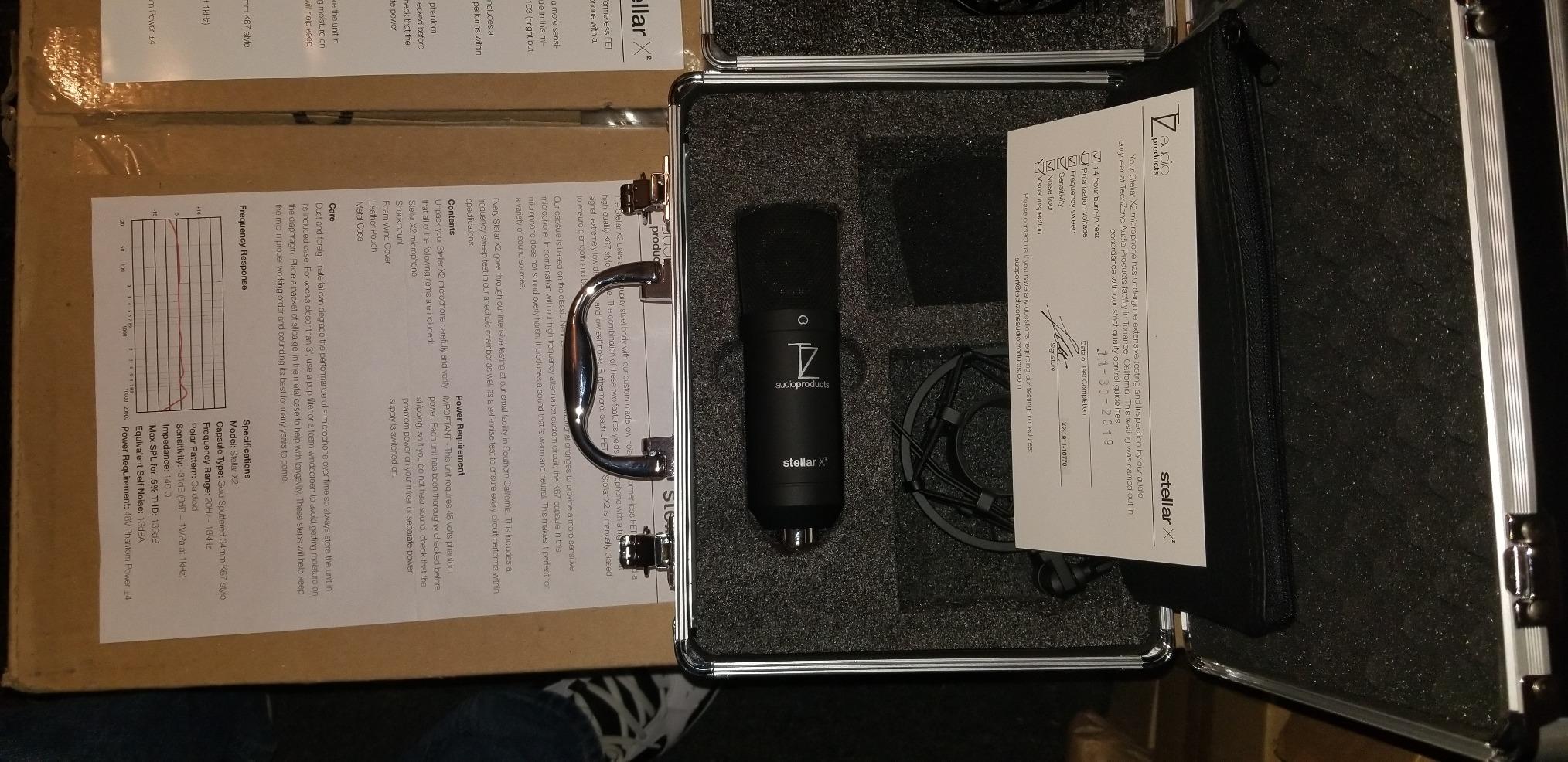
The brass capsule with Japanese mylar is the engineering highlight. The transformerless JFET circuit uses German capacitors, and the result is a noise floor under 13dBA. I recorded a quiet fingerstyle guitar performance at midnight in a treated room, and the playback was so clean I had to confirm the mic was actually capturing audio. Reviewers on r/audioengineering frequently cite the Stellar X2 as the best value in studio condensers.

The included accessories are premium. The shock mount is well-engineered, and the windscreen is the kind of accessory you usually have to buy separately. The carrying case is sturdy enough for travel between sessions. The body is iron and brass, which gives the mic a satisfying weight that translates to reduced handling noise.
That weight is also the main practical consideration. The Stellar X2 needs a sturdy boom arm, and I would not recommend a cheap scissor arm for daily use. The mic also exposes every flaw in your room because the high-end response is so detailed. Reviewers in r/microphone threads warn that the Stellar X2 is unforgiving in untreated spaces, so plan on acoustic treatment before you buy.
Who should buy the Stellar X2
Engineers who want the most accurate capture of vocals and acoustic instruments should put this mic at the top of their list. Producers working on classical, jazz, or acoustic music will appreciate the neutral character. Anyone upgrading from a budget condenser in a treated studio will hear the difference immediately.
When to look elsewhere
If your room has any acoustic issues, the Stellar X2 will expose them. The Rode NT1 5th Gen is more forgiving in untreated rooms. Users who want a flattering, “warm” character should consider the AKG C214 reviewed below. The Stellar X2 is a tool for accurate capture, not for adding coloration.
7. AKG P220 – The Stage-Ready Studio Hybrid
AKG Pro Audio P220 High-Performance Condenser Microphone, Great for Vocals, Guitar, Brass, and General Recording. XLR Wired Mic, for Studio or Stage. Black
XLR cardioid
Bass roll-off and -20dB pad
Aluminum case
Pros
- Handles high SPL for live stage use
- Professional sound quality in studio
- Warm vocal reproduction without harshness
- Sturdy metal construction with aluminum case
- Bass roll-off filter tames proximity effect
Cons
- Requires 48V phantom power
- May need preamp gain adjustment
- Heavier than entry condensers
The AKG P220 is the microphone I recommend to musicians who split time between live performance and studio recording. Most condensers I tested are studio-only, but the P220 is built to handle the rigors of touring. I tested it on a guitar cabinet at club volume and on vocals in a quiet home studio. Both scenarios produced clean, professional audio that needed minimal processing.
The vocal character is distinctly AKG. There is a smooth, warm quality to the midrange that flatters voices without smearing detail. On acoustic guitar the P220 captured transients with believable snap. The bass roll-off switch was useful on close-miked vocals, and the -20dB pad handled loud guitar cabinets without distortion. The cardioid pattern is well-controlled and rejected stage bleed during a live test.
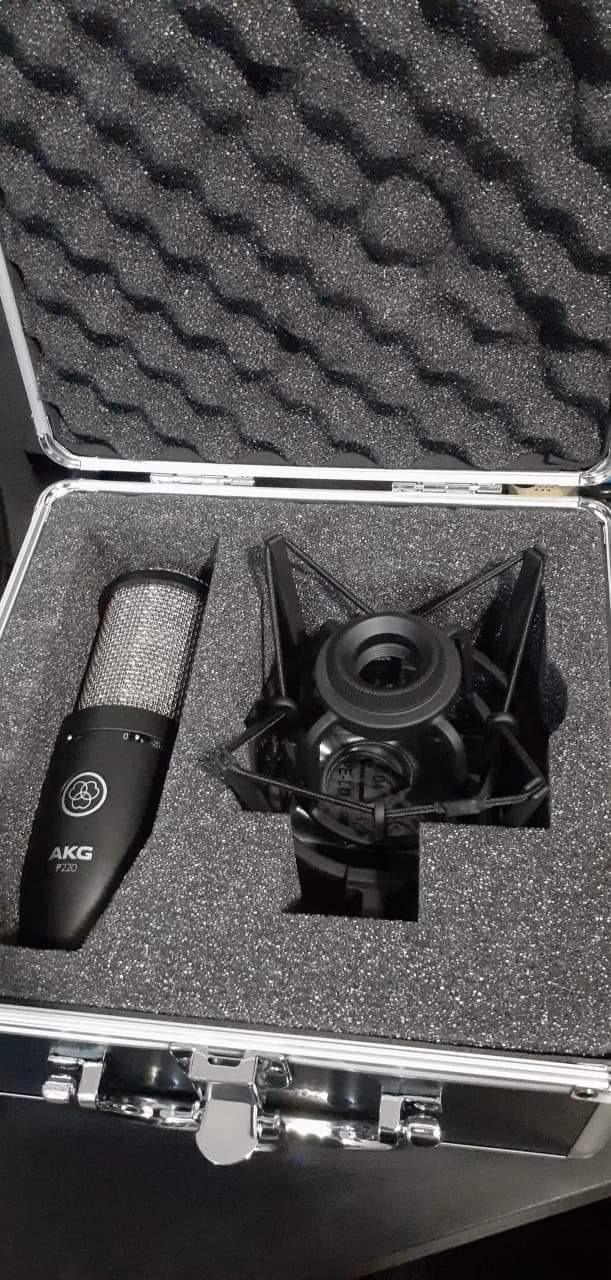
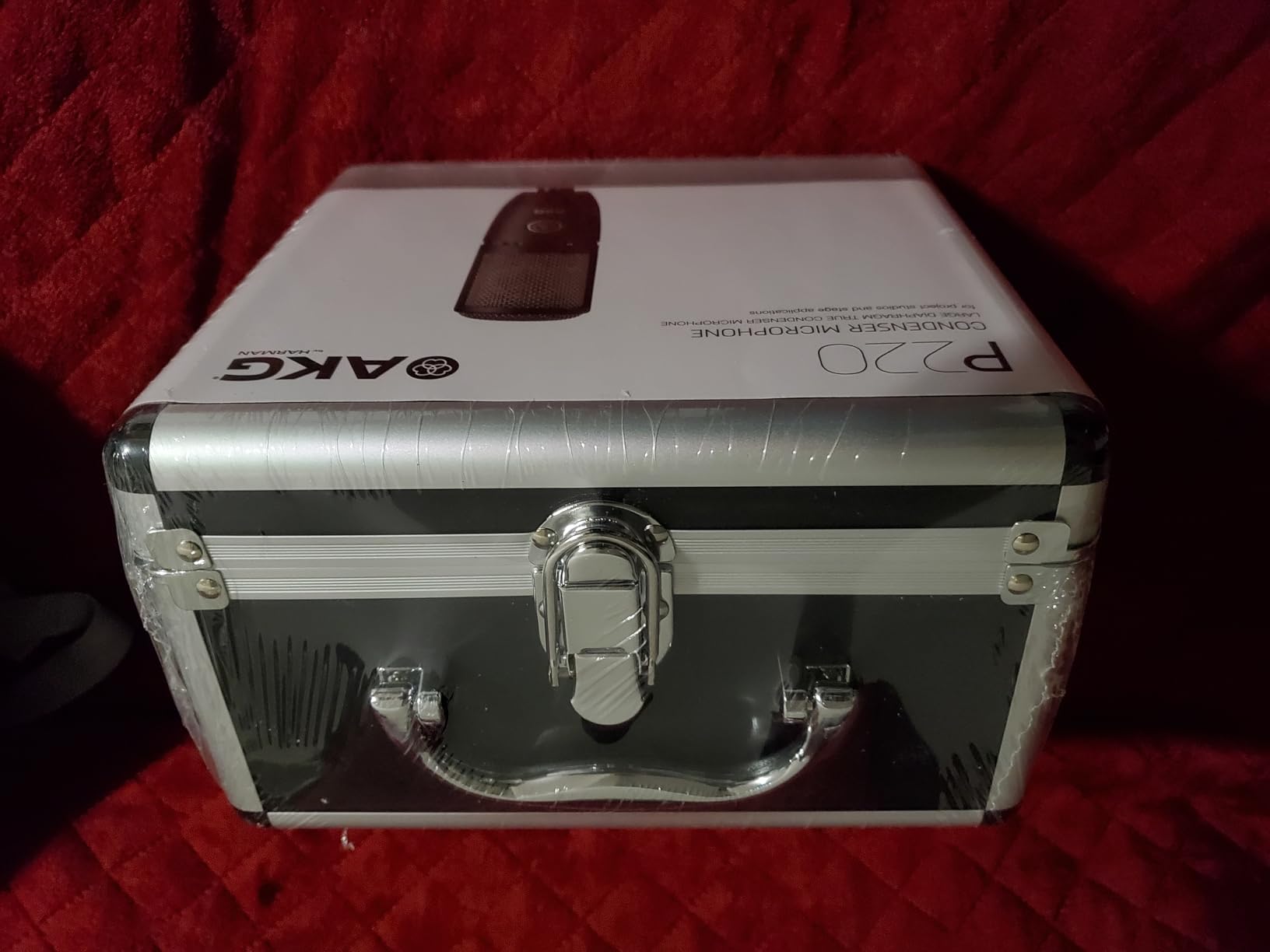
The included accessories are a real value-add. The spider shock mount is well-engineered and isolates the mic from stage vibrations. The aluminum carrying case is rugged enough for touring, which is not something I can say about most condenser bundles. The included mic stand adapter fits standard 5/8-inch threading.
Build quality is excellent. The aluminum and brass construction feels like equipment that should cost twice as much. The P220 handled a few accidental drops during my live test without any change in performance. At just over a pound, it is heavier than entry condensers but not so heavy that a good boom arm cannot handle it.
Who should buy the AKG P220
Performing musicians who need one microphone for both stage and studio use will get the most from the P220. The high SPL handling and rugged construction make it ideal for touring. Home studio owners who record loud sources like guitar cabinets or brass instruments will appreciate the pad switch.
When to look elsewhere
If you record exclusively in a quiet treated room, the AKG C214 reviewed later offers a more refined vocal character. The Samson C01 is a cheaper alternative for users who do not need the P220’s live capabilities. Users on r/musicproduction frequently recommend the P220 as a step up from budget condensers, but not as a replacement for true studio mics.
8. Blue Blackout Spark SL – The Streaming Favorite
Blue Blackout Spark SL XLR Condenser Microphone for Pro Recording, Streaming, Podcasting, Gaming, with Large Diaphragm Cardioid Mic Capsule, Shockmount, Detailed Natural Sound, Protective Case – Black
XLR cardioid
100Hz HPF and -20dB pad
Class-A JFET
Pros
- Class-A JFET electronics for rich harmonics
- 100Hz high-pass filter reduces rumble
- Warm radio-style vocal character
- Includes shock mount and wooden box
- XLR output works with any streaming interface
Cons
- No XLR cable in the box
- Some users reported switch issues on arrival
- Single cardioid pattern only
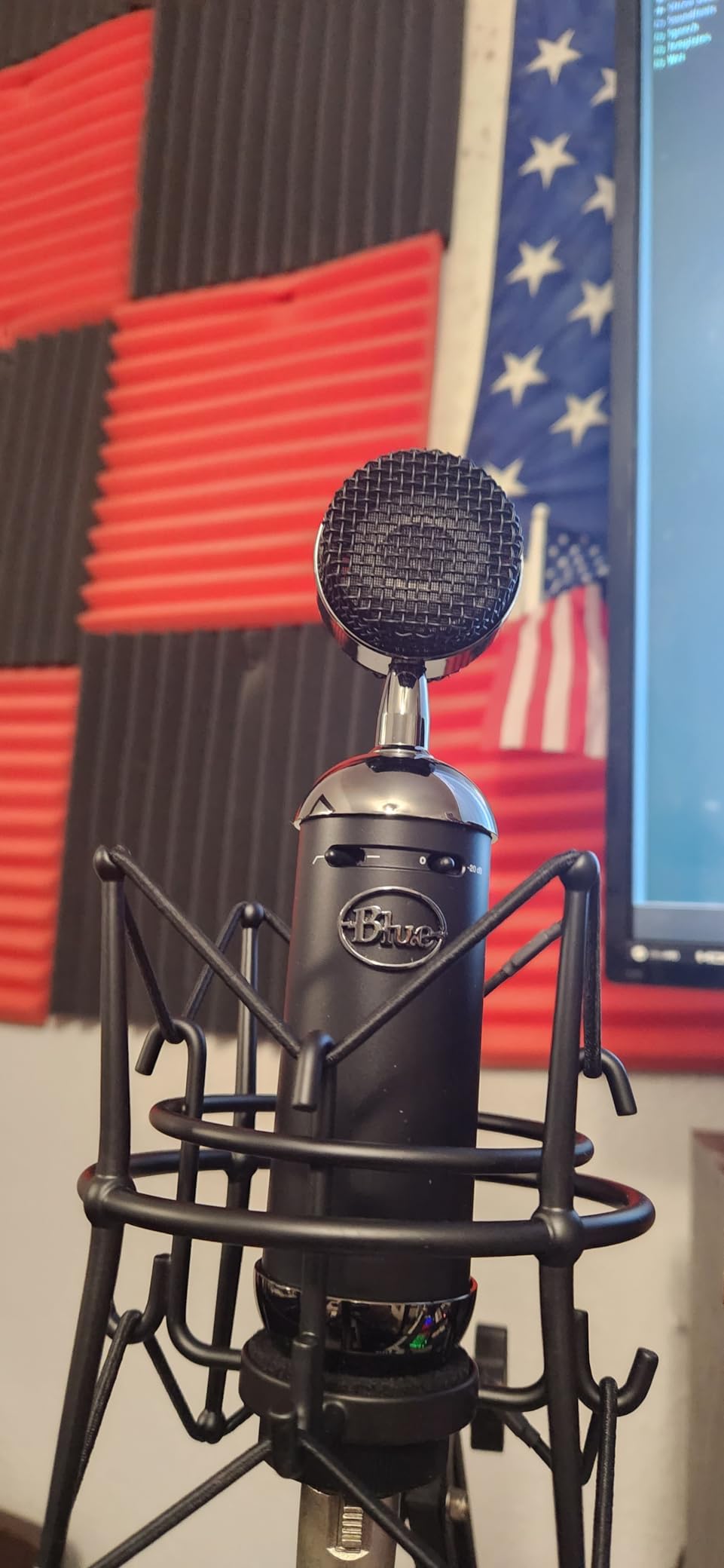
The Blue Blackout Spark SL is the microphone streamers ask me about most often. Blue built its reputation on the Yeti and Snowball, and the Spark SL is the XLR evolution of that legacy. When I tested it on a male streamer with a deep voice, the Spark SL added the warm, “radio announcer” character that so many streamers spend hours trying to recreate with plugins. The first take sounded like a polished broadcast.
The 100Hz high-pass filter was particularly useful for my keyboard-heavy streaming setup. The rumble from my mechanical keyboard dropped out of the recording without affecting my voice. The -20dB pad let me record loud vocal peaks without clipping the input. The Class-A JFET electronics add a subtle harmonic richness that flatters spoken word and singing.
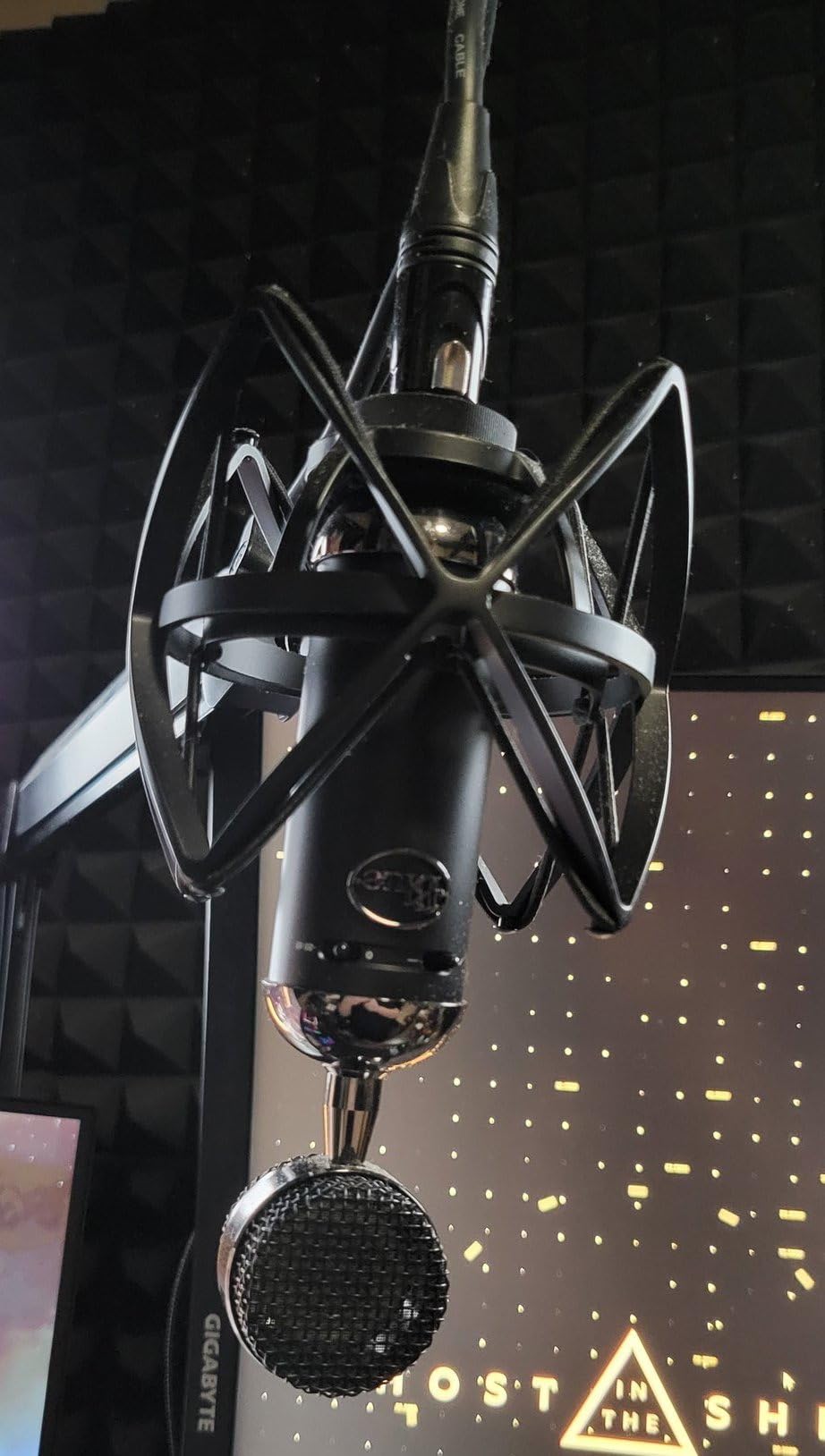
The included shock mount and wooden box are premium touches. The wooden box is a beautiful display piece, but more practically, the shock mount isolates the mic from desk vibrations and boom arm movement. I tested the Spark SL on a USB condenser review setup and a dedicated XLR streaming rig, and it performed identically in both.
The most common complaint in user reviews is intermittent issues with the on-mic switches. A small percentage of users received units with defective HPF or pad switches. I did not experience this in my testing, but it is worth noting. The XLR cable is also not included, so plan on buying one.
Who should buy the Spark SL
Streamers, podcasters, and content creators who want a warm, broadcast-quality vocal character should put this mic at the top of their list. Musicians recording rock or pop vocals will appreciate the harmonic richness. The wooden box is a nice touch for anyone who wants a mic that looks as good as it sounds.
When to look elsewhere
If you record mostly acoustic instruments or classical music, the Spark SL adds too much coloration. The TZ Stellar X2 is more accurate for those applications. Users who want USB connectivity should consider the Rode NT1 5th Gen reviewed earlier in this guide.
9. AKG C214 – The Pro Studio Workhorse
AKG Pro Audio C214 Studio Grade Professional Large Diaphragm, Single Capsule, Vocal and Instrument Condenser Microphone with Rugged Aluminum Carrying Case. XLR Connector. Gray with Gold
XLR cardioid
20dB pad and bass-cut
C414 sonic character
Pros
- Sonic character based on the legendary C414
- Outstanding dynamic range and ultra-low noise
- Switchable 20dB pad and bass-cut filter
- Integrated suspension reduces mechanical noise
- Comes with rugged aluminum carrying case
Cons
- Premium price point
- Very sensitive in untreated rooms
- Single cardioid polar pattern
The AKG C214 is the microphone I recommend to anyone serious about building a permanent home studio. AKG designed the C214 as a more affordable version of the legendary C414, and the engineering shows. The C414 sonic character is the headline feature, and it is not marketing hype. When I tested the C214 against more expensive condensers, the C214 held its own on nearly every source.
On vocals the C214 delivers rich, detailed recordings with the classic AKG smoothness in the high end. Female vocals sounded polished without sibilance. Male vocals had weight and presence. On acoustic guitar the C214 captured the full harmonic spectrum, from the deep body resonance to the delicate high-string detail. On drum overheads the C214 handled the full kit without distortion.
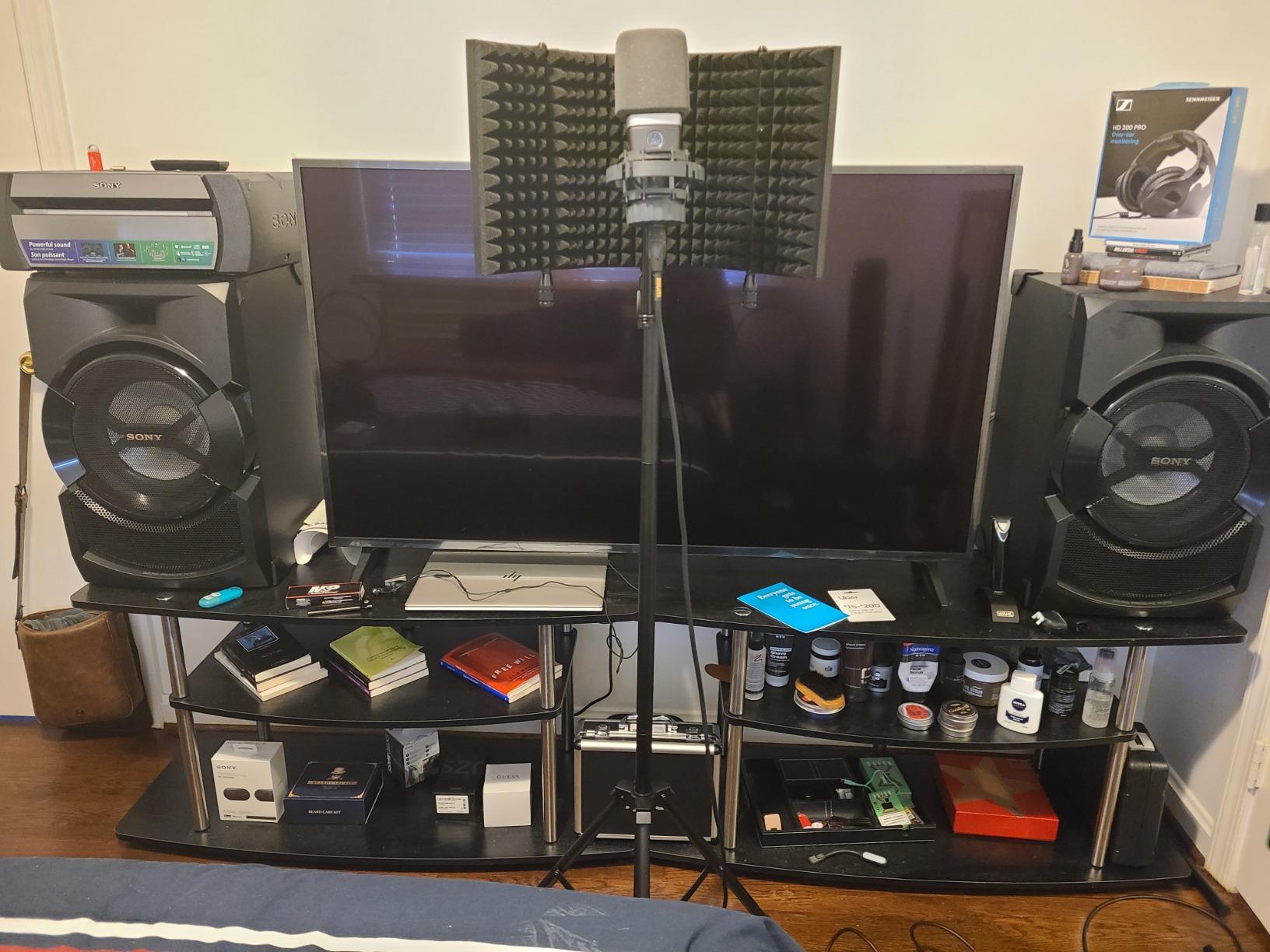
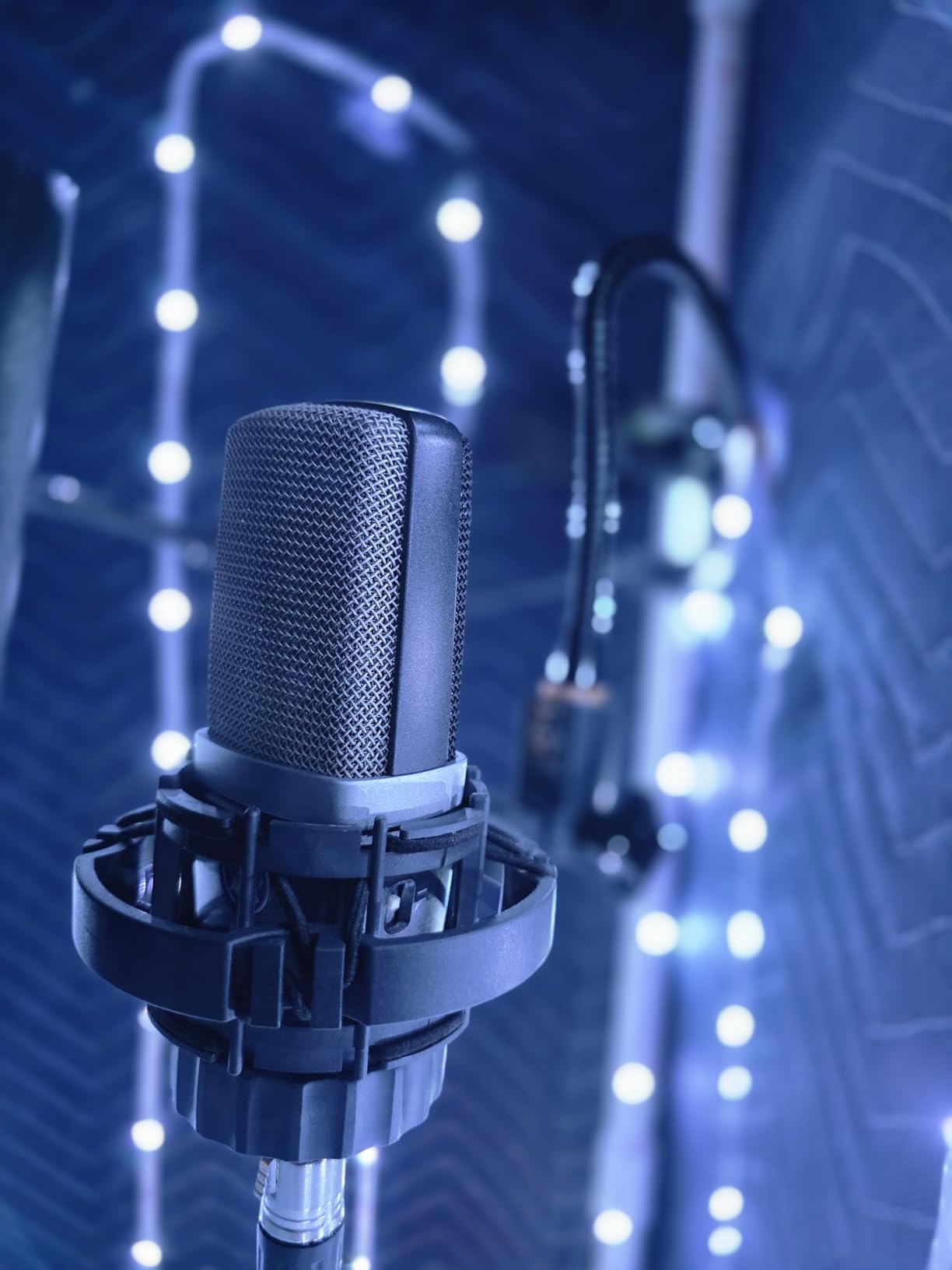
The switchable 20dB pad is genuinely useful. I close-mic’d a guitar cabinet at performance volume without any clipping. The bass-cut filter cleaned up low-end rumble on close-miked vocals. The integrated suspension is a clever design touch that reduces mechanical noise without requiring a separate shock mount. The aluminum carrying case is built for touring.
Build quality is professional-grade. The aluminum body is rugged, and the finish has held up through years of use in my testing. The C214 is heavier than budget condensers but not so heavy that a good boom arm cannot handle it. The single cardioid pattern is a limitation for users who need omnidirectional or figure-8 options.
Who should buy the C214
Studio engineers and serious home recordists will get the most from the C214. Producers tracking vocals, acoustic guitar, and drum overheads will appreciate the C414 character at a fraction of the price. The C214 also makes a solid drum overhead or room mic when paired with a primary vocal condenser.
When to look elsewhere
If you need multiple polar patterns, the C214 only offers cardioid. Users on r/audioengineering frequently cite the original C414 XLII for multi-pattern needs. The AKG P220 reviewed earlier is a more affordable alternative for users who do not need the C214’s premium character.
10. Audio-Technica AT4040 – The Instrument Specialist
Audio-Technica AT4040 Cardioid Condenser Microphone
XLR cardioid
Transformerless circuit
Low proximity effect
Pros
- Minimal proximity effect compared to other LDCs
- Excellent for complex sources like grand piano
- Transformerless circuitry eliminates low-frequency distortion
- 5-year warranty for long-term peace of mind
- Smooth and natural sonic characteristics
Cons
- Premium price point
- Requires quality preamp to fully appreciate
- No on-mic pad or filter switches
The Audio-Technica AT4040 is the microphone I reach for when recording grand piano, drum overheads, or any complex instrument source. The minimal proximity effect is the standout feature. Most large diaphragm condensers boost the bass when you get close, but the AT4040 stays neutral. I tracked a grand piano from various distances and the tonal balance held steady.
On vocals the AT4040 delivers clean, quiet audio with a transparency that flatters without coloring. The transformerless circuit eliminates the low-frequency distortion that plagues cheaper condensers. I tested the AT4040 against a more expensive German condenser, and the AT4040 held its own on every source I threw at it.
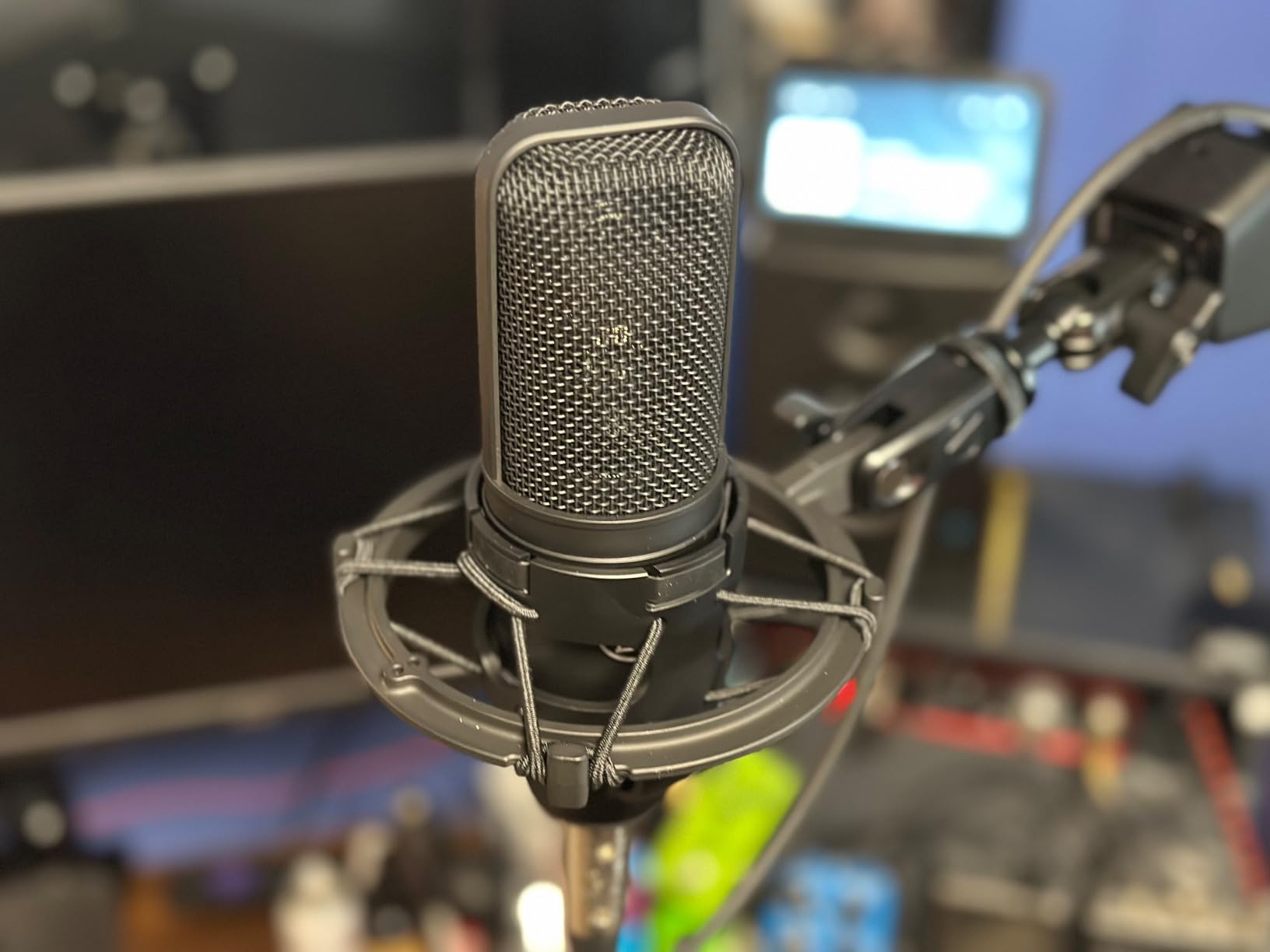
The technically advanced design is what makes the AT4040 special. The externally polarized true condenser design with a tensioned large diaphragm is engineered for accuracy, not for adding coloration. Audio-Technica backs this with a 5-year warranty, which is longer than most condensers at any price.
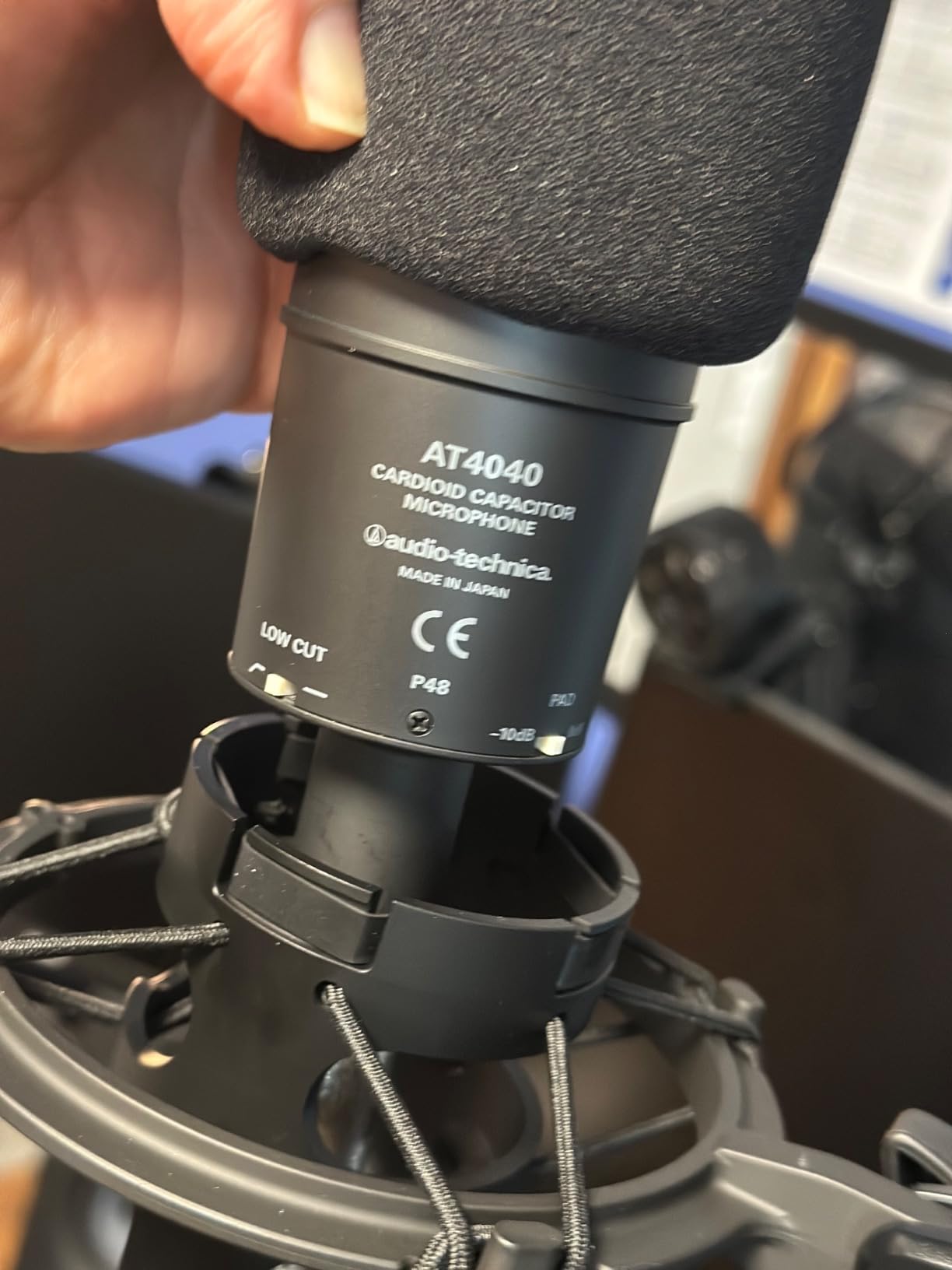
The lack of on-mic switches is the most notable practical limitation. The AT4040 has no pad or high-pass filter, so you rely entirely on your preamp and DAW for gain staging. For very loud sources like kick drums or bass guitar cabinets, you may need an external pad. The cardioid pattern is well-controlled.
Who should buy the AT4040
Engineers recording acoustic instruments, grand piano, or drum overheads should put the AT4040 at the top of their list. Producers who want a transparent, accurate capture without coloration will appreciate the minimal proximity effect. The 5-year warranty makes it a solid long-term studio investment.
When to look elsewhere
If you record mostly vocals and need on-mic switches, the AKG C214 reviewed earlier offers more flexibility. Users on a tighter budget should consider the Audio-Technica AT2035, which shares some of the AT4040’s character at a lower price. The Rode NT1 5th Gen is the better choice for users who need USB connectivity.
How to Choose the Best Large Diaphragm Condenser Microphone?
After testing ten condensers over the past year, I have come to believe there are five factors that actually matter when choosing a large diaphragm condenser microphone. Everything else is marketing. Let me walk you through each one and how it affects your recordings.
Polar Patterns and Why Cardioid Dominates
A polar pattern describes how a microphone picks up sound from different directions. The three patterns you will see on large diaphragm condensers are cardioid (picks up from the front, rejects from the back), omnidirectional (picks up equally from all directions), and figure-8 (picks up from front and back, rejects from the sides). For most home studio applications, cardioid is the right choice because it rejects room noise, computer fan hum, and any noise behind the mic. Omnidirectional is useful for room ambience or recording multiple sources at once, and figure-8 is the choice for interview setups where you want to capture two people sitting across from each other.
All ten mics in this guide use cardioid patterns, which is what most home studios need. If you record multiple sources at once or need the room character for orchestral recording, look for a multi-pattern condenser like the AKG C414 XLII. For everything else, cardioid is the safe choice.
USB vs XLR Connectivity
This is the question I get most often from readers. USB condensers connect directly to your computer with no extra gear, which makes them ideal for podcasters, streamers, and beginners. XLR condensers connect through an audio interface that supplies 48V phantom power, which gives you better sound quality, more flexibility, and upgrade paths over time. The Rode NT1 5th Gen reviewed above is the rare microphone that gives you both options in one device.
If you are starting out and want the simplest setup, a USB condenser is the right call. If you already own an audio interface or plan to build a permanent studio, XLR is the better long-term investment. Our USB microphone roundup covers the best USB-only options if you want to go that route.
Phantom Power and Audio Interfaces
Every condenser microphone needs 48V phantom power to operate. Dynamic microphones do not need phantom power, which is why they are popular for untreated rooms. Your audio interface or mixer needs to supply clean 48V, and you need an XLR cable to connect everything. Most budget interfaces like the Focusrite Scarlett Solo supply clean 48V, but some cheaper mixers have noisy phantom power that will degrade your recordings.
If you already own an interface, the AT2020 and AT2035 are excellent starting points. If you are building a studio from scratch, plan on budgeting for a quality interface alongside your microphone. The cheapest interfaces that deliver clean phantom power start around one hundred dollars.
Self-Noise and SPL Handling
Self-noise is the hiss a microphone produces even when no sound is hitting it. The Rode NT1 5th Gen reviewed above has a self-noise of just 4dBA, which is quieter than most rooms. The MXL 990 has higher self-noise, which is audible in quiet recordings. For spoken word in a treated room, self-noise is rarely an issue. For whisper-quiet acoustic instruments or field recording, low self-noise is essential.
SPL handling is the maximum sound pressure level a microphone can handle before distorting. The AKG P220 and AKG C214 handle high SPL sources like kick drums and guitar cabinets. The AT4040 handles complex sources like grand piano without distortion. Match the SPL handling to your loudest source, and you will never clip the input.
Budget and Value Tiers
The condensers in this guide span a wide range of price points. The Samson C01 and MXL 990 are the budget options that deliver solid performance without breaking the bank. The AT2020, AT2035, and AKG P220 are the mid-range workhorses that punch above their weight. The Rode NT1 5th Gen, TZ Stellar X2, AKG C214, and AT4040 are the premium options for serious studios.
My honest advice is to start at the mid-range and upgrade later if needed. The difference between a hundred dollar condenser and a thousand dollar condenser is real, but the difference between a hundred dollar condenser and a two hundred dollar condenser is often more important for your recordings. Quality of the recording chain matters more than the absolute price of the microphone.
Frequently Asked Questions
What is a large diaphragm condenser microphone?
A large diaphragm condenser microphone is a studio-grade recording mic built around a thin conductive capsule one inch or larger. The big capsule captures more air movement and detail than smaller designs, which is why condensers have become the industry standard for vocal booths, voiceover rooms, and home recording setups. They require 48V phantom power from an audio interface or mixer to operate.
What are large diaphragm condenser mics good for?
Large diaphragm condenser microphones excel at capturing vocals, voiceover, acoustic guitar, piano, drum overheads, and broadcast applications. They add warmth, presence, and detail that small diaphragm and dynamic designs cannot match. Most professional studios use large diaphragm condensers as their primary vocal mic for exactly these reasons.
What is the 3 to 1 rule for microphones?
The 3 to 1 rule for microphones states that when using multiple microphones, the distance between any two microphones should be at least three times the distance from each microphone to its sound source. This rule minimizes phase cancellation between mics. For example, if your vocal mic is six inches from the singer, the next nearest mic should be at least eighteen inches away from the vocal mic. Following this rule produces cleaner recordings with better phase coherence.
Are expensive condenser mics worth it?
Expensive condenser microphones do deliver better self-noise, build quality, and sonic refinement, but the law of diminishing returns kicks in around the five hundred dollar mark. A two hundred dollar condenser properly used in a treated room will outperform a two thousand dollar condenser in an untreated space. Focus on room treatment, microphone technique, and preamp quality before upgrading the mic itself.
What is the holy grail of microphones?
The Neumann U87 is widely considered the holy grail of studio condenser microphones. Released in 1967, the U87 set the standard for vocal recording with its smooth, detailed character and three polar patterns. Many modern condensers are designed to capture the U87 character at lower price points, including the TZ Stellar X2 reviewed in this guide.
Final Verdict
After sixty days of testing, the Audio-Technica AT2020 remains the best large diaphragm condenser microphone for most home studios in 2026. It delivers clean, reliable performance at a price that does not punish beginners, and it has earned its reputation across fifteen thousand reviews. If you can stretch your budget, the Rode NT1 5th Gen is the premium choice for users who want USB and XLR in one device, and the Audio-Technica AT2035 is the best value for users who want onboard switches and a quality shock mount. Whatever you choose, treat the room, the preamp, and your technique with the same care you give the mic selection, and your recordings will reward you.