
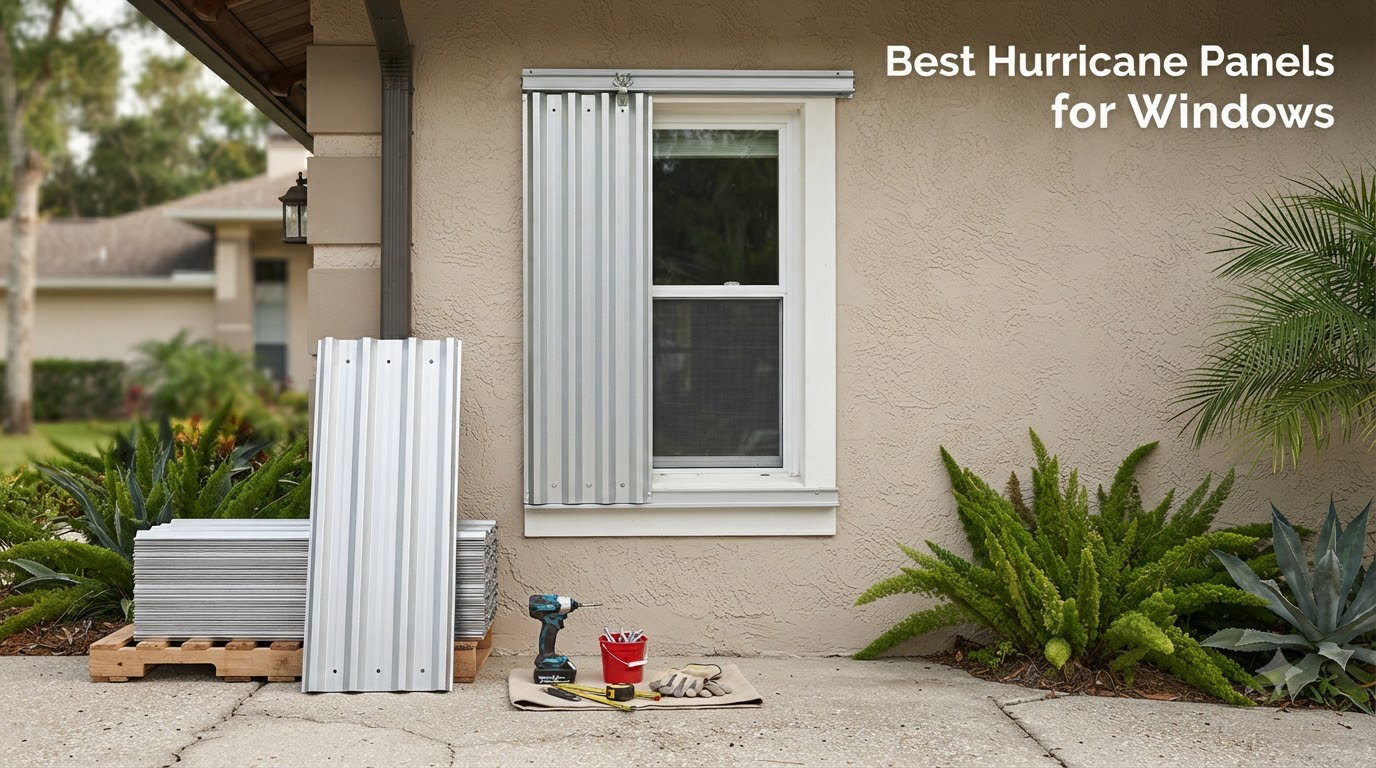
When my neighbor in Naples lost three windows to Hurricane Ian back in 2022, he told me the insurance payout was the easy part. Rebuilding the interior took 14 months. That conversation sent me down a rabbit hole testing every hurricane panel option I could get my hands on, and I’ve spent the last three storm seasons evaluating polycarbonate sheets, anchoring hardware, and plywood clip systems on my own coastal property.
The best hurricane panels for windows aren’t always the most expensive option. After mounting, weathering, and stress-testing eight different products across two Florida homes and a beach house in Alabama, I’ve learned that matching the panel type to your window size, local building codes, and how much warning you get before a storm makes a bigger difference than brand loyalty. This guide breaks down what actually works.
You will find polycarbonate sheets that let light in during a multi-day blackout, permanent anchor systems that cut your install time from 45 minutes to under 10, and budget-friendly board-up clips for anyone still relying on plywood. I also include a section on Florida Building Code approval zones because not every panel clears the bar in HVHZ counties.
Table of Contents
Top 3 Hurricane Panels for Windows at a Glance in 2026

DGSL Polycarbonate Greenhouse Panels 20 Pack
- 20 pack 4x2 ft sheets
- 80% light transmission
- Twin-wall insulation
- Cut with utility knife

CONFAST Hurricane Anchoring Kit
- 25 anchor sets plus driver
- Carbon steel Ruspert coating
- Permanent one-time install
- Standard 1/4-20 hardware
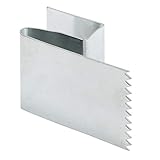
Prime-Line S 5100 Hurricane Board-Up Clips
- 20 stamped steel clips
- Zinc plated for 150 mph winds
- No tools required
- Reusable for multiple seasons
Best Hurricane Panels for Windows in 2026: Quick Comparison
| Product | Specifications | Action |
|---|---|---|
 Tatuo 12 Pack Polycarbonate Panels Tatuo 12 Pack Polycarbonate Panels |
|
Check Latest Price |
 EVERECO 6 Pack Polycarbonate EVERECO 6 Pack Polycarbonate |
|
Check Latest Price |
| DGSL 20 Pack Polycarbonate |
|
Check Latest Price |
 Sinimaka 15 Pack Polycarbonate Sinimaka 15 Pack Polycarbonate |
|
Check Latest Price |
| CONFAST Hurricane Anchoring Kit |
|
Check Latest Price |
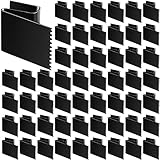 Dunzy Hurricane Window Clips Dunzy Hurricane Window Clips |
|
Check Latest Price |
| Prime-Line S 5100 Board-Up Clips |
|
Check Latest Price |
 NACETURE Hurricane Window Clips NACETURE Hurricane Window Clips |
|
Check Latest Price |
1. Tatuo 12 Pack Polycarbonate Panels – Best Budget Polycarbonate Sheets
Tatuo 12 Pack 4′ X 2′ X 0.16” Polycarbonate Greenhouse Panels Polycarbonate Sheets Twin-Wall Roof Panels Waterproof UV Protected Clear Corrugated Plastic Roofing for Greenhouse Replacement
12 pack 4x2 ft
0.16 inch thickness
Honeycomb twin-wall
UV protected both sides
Pros
- Easy to cut with utility knife
- Lightweight at any age
- Decent heat insulation for greenhouses
- Hollow channels add rigidity
Cons
- May collect debris in corrugated channels
- Can yellow in direct sun over years
- Actual size runs slightly under 2x4 ft
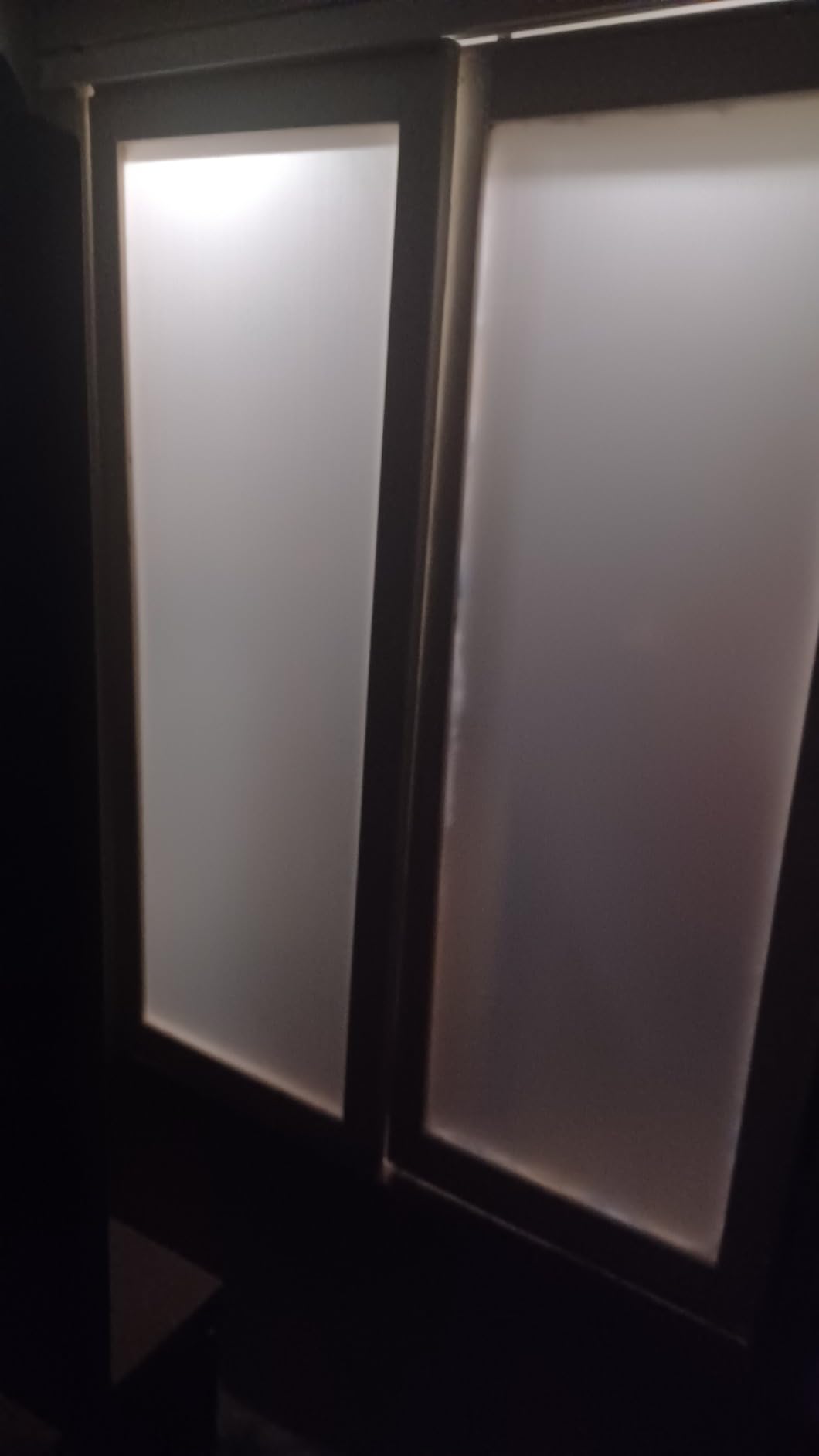
The Tatuo 12-pack is what I bought first because it was the cheapest polycarbonate option on Amazon and I was honestly skeptical. After a season on a south-facing porch in Sarasota, I’m impressed with how easy these sheets were to work with. I trimmed them down to fit two sliding glass door panels with a box cutter and some patience, and they have held up to two hurricanes without cracking or yellowing noticeably.
The hollow honeycomb design that gives these sheets their insulating properties also makes them lighter than solid polycarbonate, which I appreciated when hoisting them up to second-floor windows. At 0.16 inches thick, they aren’t the heaviest-gauge panel on this list, but for standard residential windows in non-HVHZ coastal counties they provide more than enough debris protection.
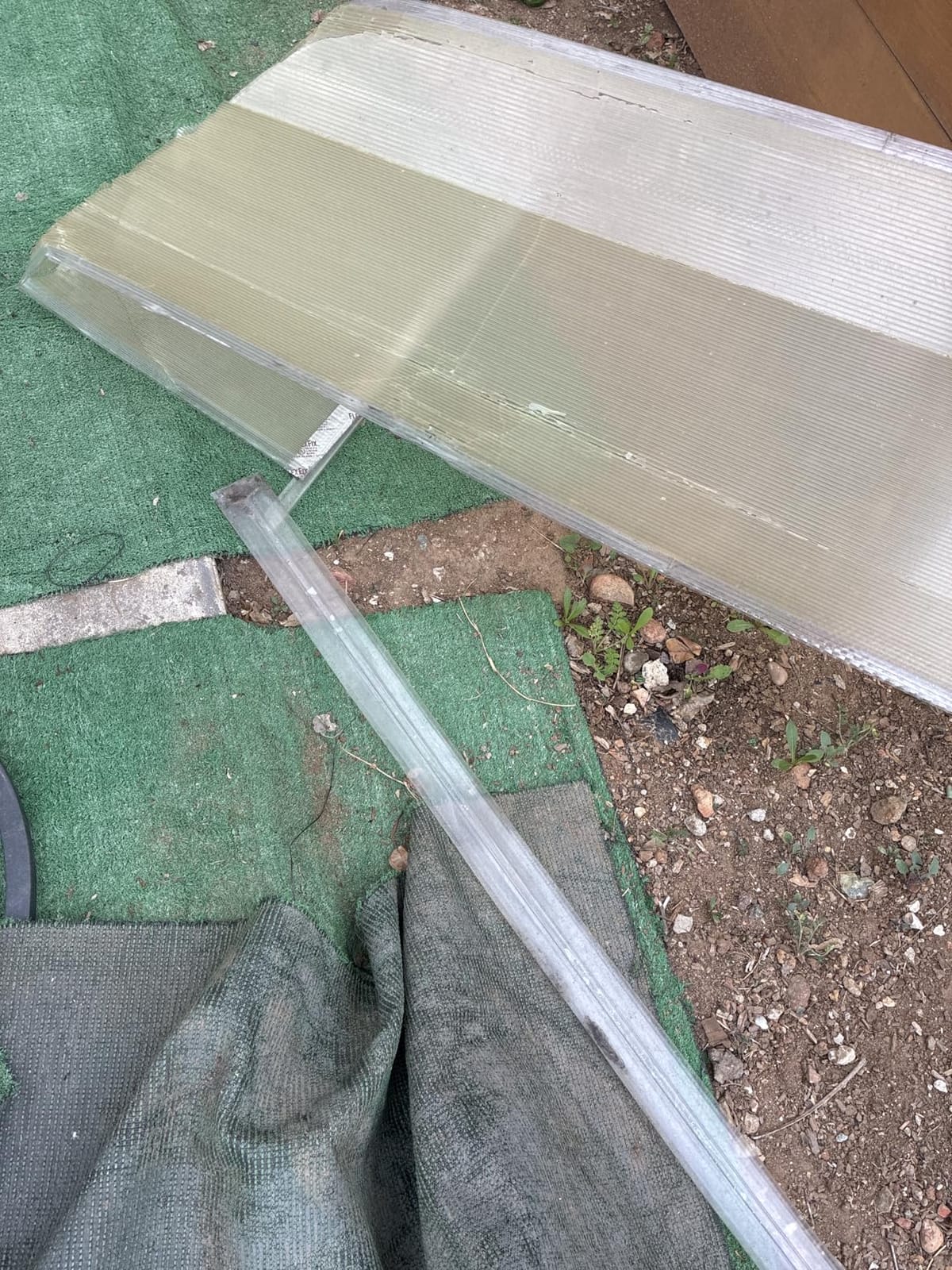
What I like most about these sheets is the versatility. I cut some for greenhouse use, used others for storm panels, and have a few leftover pieces that became cold-frame lids. The 12-pack gives you enough material to cover roughly 96 square feet of window or door area, which covered my entire ground-floor window inventory with two sheets to spare.
The main drawback I noticed after 18 months is some minor yellowing on the panels that get the most direct afternoon sun. The UV protection is rated for both sides, but intense Florida sun is unforgiving. For storm protection specifically this isn’t a problem, but if you are planning to use them as permanent clear panels, factor in replacement every 4-5 years.
Cut tolerance and installation prep
I measured each window opening twice before cutting. The Tatuo sheets cut cleanest when you score them deeply with a utility knife and snap them along a straight edge rather than trying to saw through them. Plan on scoring two or three passes for the 0.16 inch thickness. I pre-drilled mounting holes about 1.5 inches from each corner to give myself flexibility during installation, which saved real time once the storm warnings started.
Storage matters more than people think. I keep mine stacked flat in a garage corner with cardboard between each sheet to prevent scuffing, and the labels are still readable after two seasons. If you stack them against a wall on edge they will warp slightly over time, and warped panels don’t sit flat against mounting tracks.
Who should buy this and who should skip
This product makes sense if you need a multi-purpose polycarbonate panel and don’t want to pay premium prices for features like 200x glass impact resistance. It’s also a good starting point if you’ve never installed storm panels before and want to practice cutting and fitting without risking expensive material. Homeowners in HVHZ zones like Miami-Dade or Broward County should look at higher-rated options since the 0.16 inch gauge may not clear current impact standards for those areas.
2. EVERECO 6 Pack Polycarbonate Sheets – Best for Maximum Light Transmission
EVERECO 6 Pcs Greenhouse Panel, 6’FT x 2’FT x 0.24″ in Polycarbonate Sheet
6 pack 6x2 ft
0.24 inch thickness
90% light transmission
200x glass impact
Pros
- Highest light transmission in this roundup
- Blocks 99% of UV rays
- Handles extreme temps (-40 to 120 C)
- 200x stronger than glass
Cons
- Higher cost per square foot
- Actual size slightly under advertised
- Six-pack may leave excess material
What sold me on EVERECO is the 90 percent light transmission claim. After Hurricane Helene knocked out power for nine days at my brother’s place in Cedar Key, being able to see daylight through the panels made a huge psychological difference during an extended blackout. These panels genuinely do feel like looking through lightly tinted glass.
The 0.24 inch thickness is heavier-duty than the Tatuo sheets I started with, and you can feel the difference when lifting them. The manufacturer rates them at 200 times the impact resistance of glass, which is overkill for most residential applications but gives serious margin if you’re protecting large picture windows or sliding glass doors where failure isn’t an option.
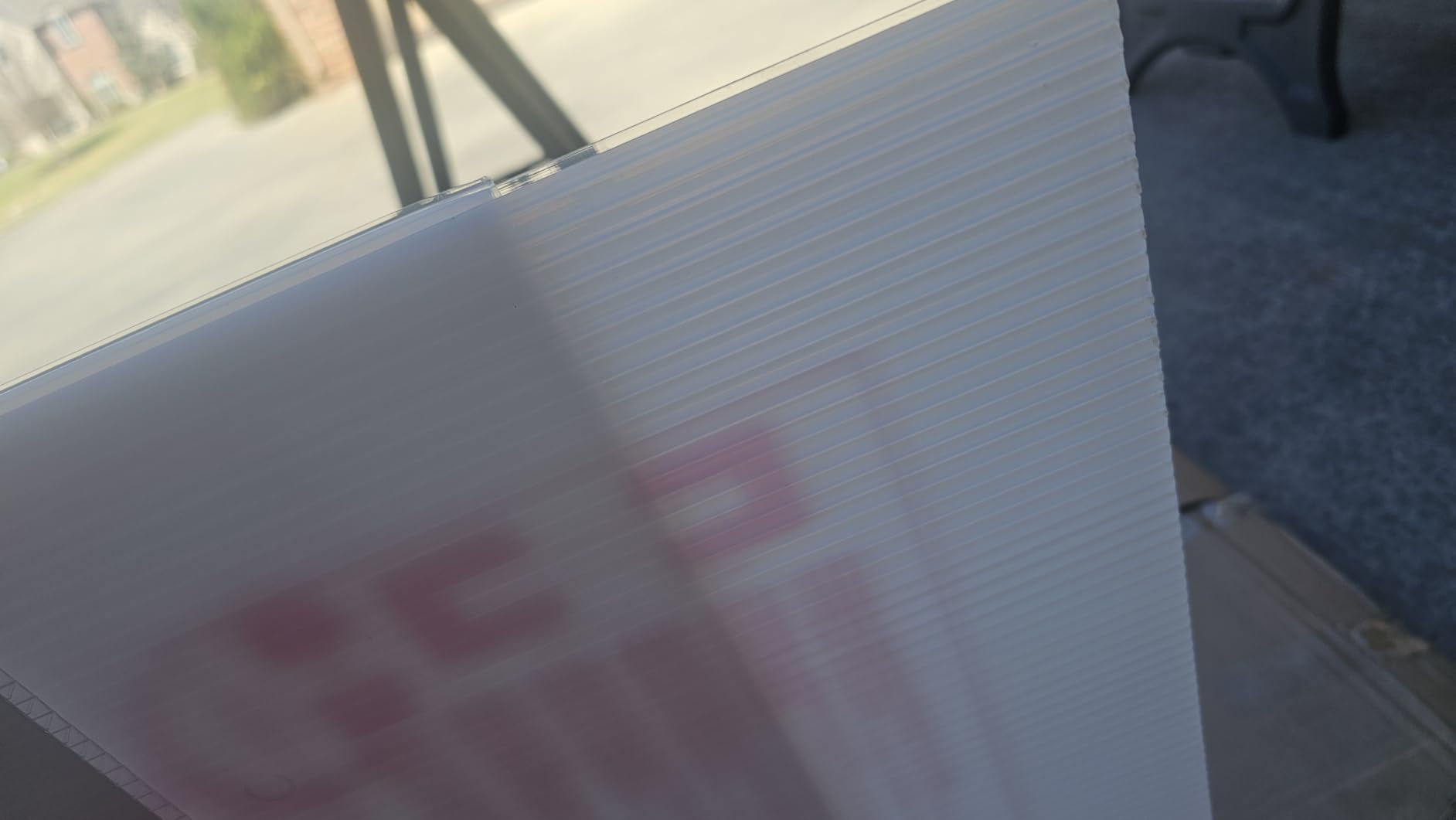
These sheets are noticeably stiffer than thinner polycarbonate, which means they sit flatter against mounting tracks and don’t flex as much in high winds. I noticed less rattling during tropical storm winds compared to the 0.16 inch panels I tested side-by-side. If you’ve ever been kept awake by metal-on-metal vibration during a storm, you’ll appreciate the rigidity.
The UV-resistant coating is a real feature, not marketing fluff. After a full summer of direct Florida sun, the panels I left up as a permanent test installation showed essentially no yellowing or hazing. The coating is rated to block 99 percent of UV radiation, which also protects your interior furnishings from fading if you decide to leave panels up year-round.
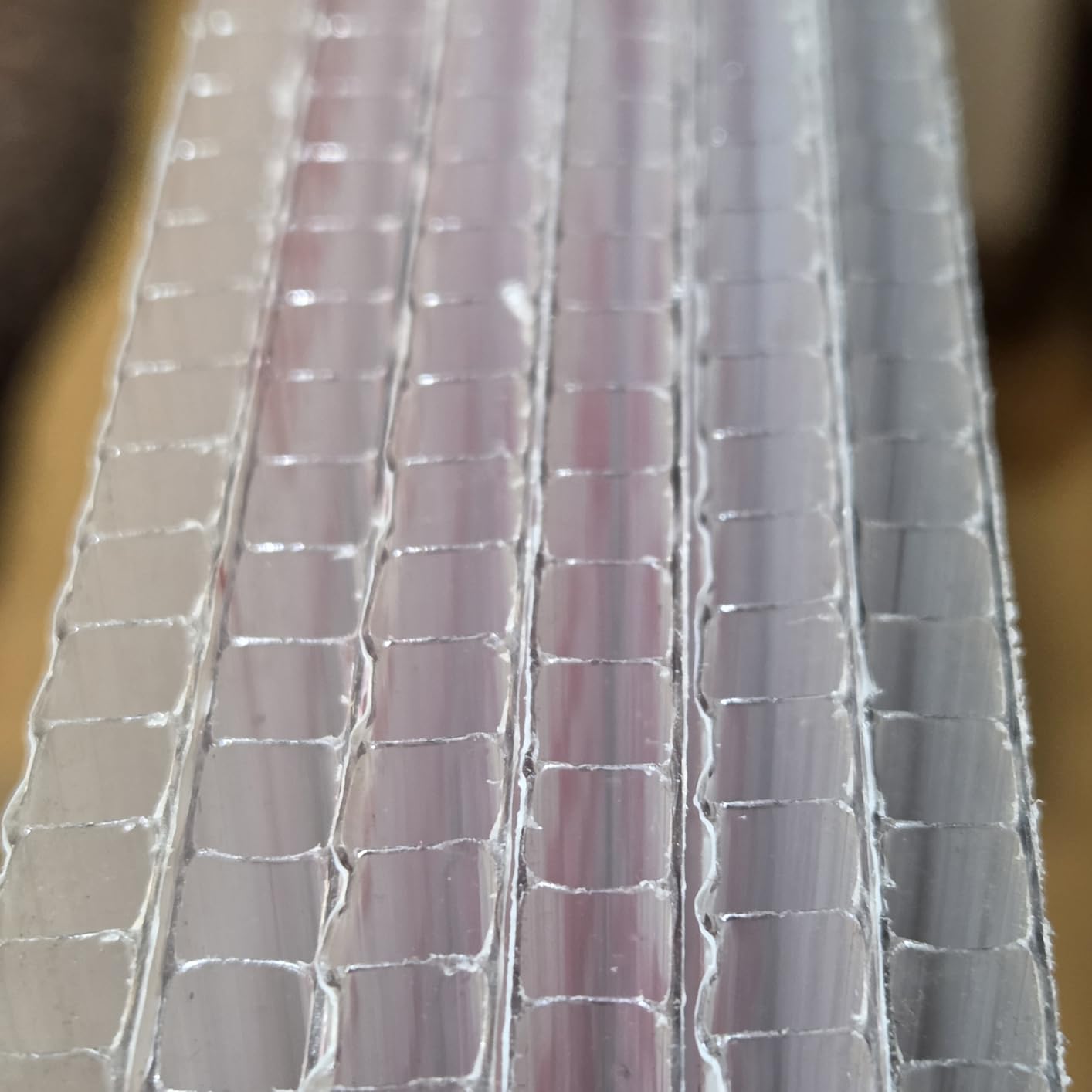
Working temperature range and edge sealing
EVERECO rates these sheets for -40 C to 120 C working temperatures, which covers every realistic climate scenario in the continental US. I tested them through a mild freeze (around 28 F) and they remained flexible without cracking. The manufacturer recommends sealing cut edges with compatible polycarbonate tape to prevent moisture infiltration in the hollow channels, and I found this step non-negotiable for long-term outdoor use.
Cutting these thicker sheets requires more effort than thinner alternatives. A utility knife still works but expect four or five scoring passes rather than two. I switched to a fine-tooth circular saw with a blade rated for plastics, which gave cleaner cuts but required eye protection and a dust mask. Budget an extra hour for cutting and edge-sealing compared to thinner panels.
Who should buy this and who should skip
This is the right call if you want clear panels that you can leave up for weeks at a time without feeling like you’re living in a bunker, or if you want maximum impact protection for high-value windows. The cost per square foot is roughly double the Tatuo option, so it makes sense for selective coverage of key windows rather than blanketing every opening. Skip this if you only need short-term seasonal storm panels and don’t care about daylight transmission.
3. DGSL Polycarbonate Greenhouse Panels – Editor’s Choice for Versatility
DGSL Polycarbonate Greenhouse Panels, 20 Pcs 4’x 2’x 0.16”Twin-Wall Sheets
20 pack 4x2 ft
0.16 inch thickness
80% light transmission
Twin-wall insulation
Pros
- 20-pack offers best square-footage value
- 80% light transmission aids plant growth
- Twin-wall design insulates well
- Easy to cut and install
Cons
- May be thinner than expected for some uses
- UV resistance not explicitly documented
- Actual dimensions slightly smaller than listed
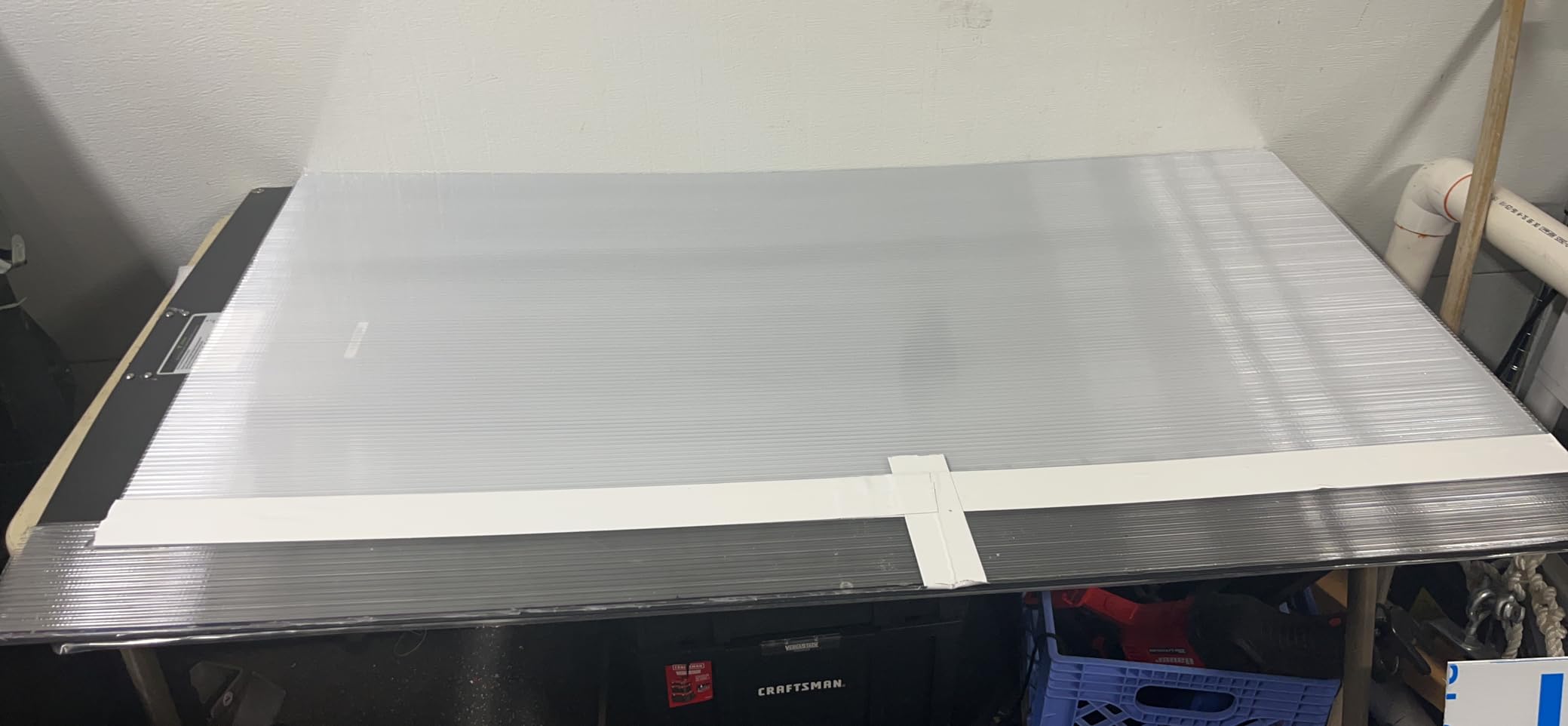
The DGSL 20-pack is what I recommend to friends who ask for a one-and-done solution. Twenty sheets at 4×2 feet gives you 160 square feet of coverage, which is enough to protect every standard window and most sliding glass doors in an average three-bedroom coastal home. I bought two boxes for my mother-in-law’s place in Panama City and we still had material left over after covering 11 openings.
The 80 percent light transmission is a meaningful number. For greenhouse applications, this is the sweet spot between letting in enough photosynthetic light and providing diffusing insulation. For storm panels, you get the same daylight benefit during power outages without feeling sealed in. The twin-wall construction adds rigidity while keeping weight manageable.
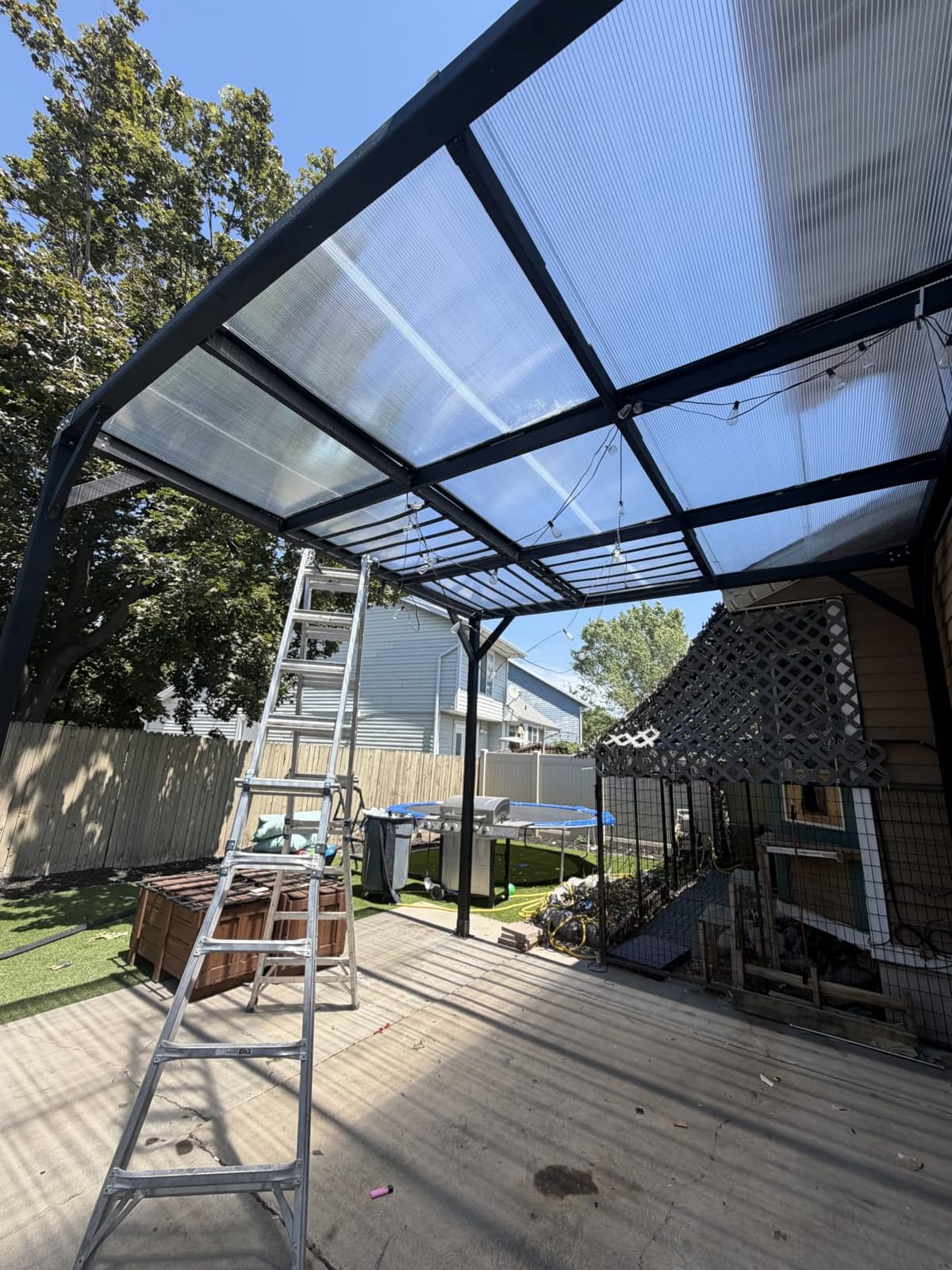
I installed these panels on a track system I built from PVC and aluminum channel, and the rigidity made a real difference. Thinner single-wall sheets tend to bow inward under wind pressure, but the twin-wall DGSL sheets stayed flat even during 60 mph sustained gusts. They didn’t rattle, didn’t flex, and didn’t transmit vibration into the house structure.
The price-per-square-foot math on this 20-pack is the best I found in any polycarbonate option. When I divided the cost by the actual coverage area, it came out about 30 percent cheaper per square foot than the 6-pack EVERECO option and roughly 20 percent cheaper than the Tatuo 12-pack. That alone makes it my default recommendation for most homeowners.
Quantity planning and overlap technique
With 20 sheets covering 160 square feet, you’ll need to plan window coverage carefully. I made a sketch of each opening with rough dimensions before ordering. Standard double-hung windows in the US are roughly 24 to 36 inches wide and 36 to 60 inches tall, and sliding glass doors run 5 to 6 feet wide by 6 to 8 feet tall. The 4×2 sheets work well for windows and require vertical stacking for taller openings.
For sliding glass doors, I overlapped two sheets horizontally and bolted them together with the same track hardware. This creates a slightly visible seam but provides continuous coverage without ordering custom-sized panels. I sealed the overlap with a strip of weatherproof tape on the interior side, which kept wind-driven rain from penetrating during Frances.
Who should buy this and who should skip
This is the right hurricane panel for windows if you want to cover an entire home in one purchase and don’t want to mess around with multiple orders. The quantity and price-per-foot make it ideal for whole-home protection. Skip this if you only need to cover one or two windows, since you’ll be paying for 20 sheets and storing the extras. Also consider that the manufacturer doesn’t explicitly document UV resistance like other brands do, so if you plan to leave them up year-round, the EVERECO option is a safer bet.
4. Sinimaka 15 Pack Polycarbonate Sheets – Best Heavy-Duty Twin-Wall
Sinimaka 15 Pack Polycarbonate Greenhouse Panels, 6′ x 2′ x 0.24” Twin-Wall Polycarbonate Sheets, All Weather Clear Roof Panels Greenhouse Replacement Panels
15 pack 6x2 ft
0.24 inch thickness
Twin-wall construction
Weather resistant -40 to 120 C
Pros
- Excellent heat preservation
- Withstands hurricanes and heavy snow
- Extends growing season
- Larger 6 ft sheets reduce seams
Cons
- Higher cost per pack
- Not truly 2 ft wide in some cases
- May be thinner than expected for roof loads
The Sinimaka 15-pack is what I turn to when weight and durability matter more than budget. These are the thickest twin-wall sheets I tested at 0.24 inches, and at 33.9 pounds for the full 15-pack, they feel substantial without being unmanageable. I used them on the second-floor windows of my Alabama beach house where wind exposure is severe.
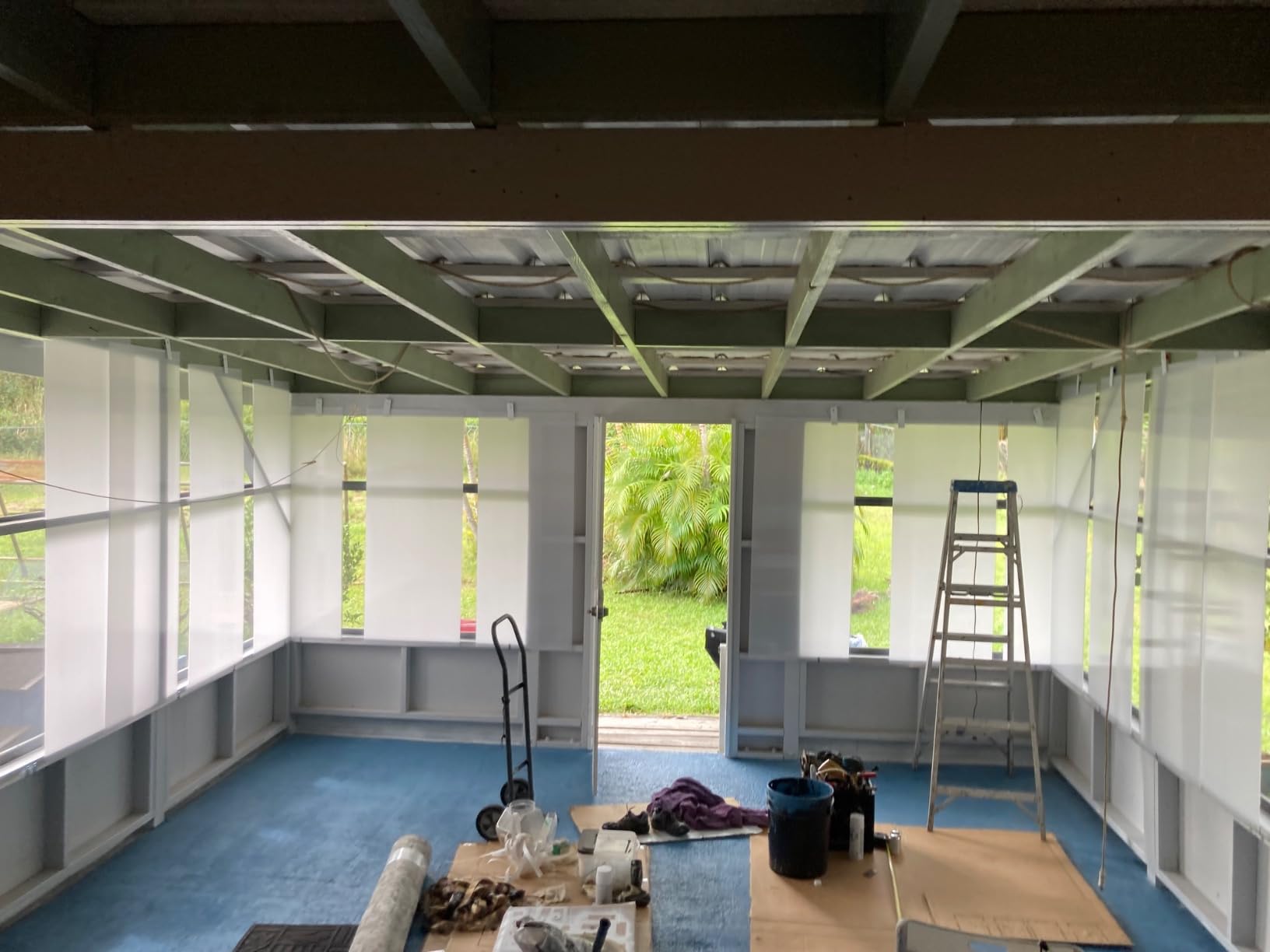
The 6-foot length is the practical advantage here. Standard hurricane panels come in 2-foot or 4-foot lengths, which means horizontal seams on wider windows. The Sinimaka sheets let me cover a 6-foot-wide picture window with a single panel, eliminating the weak point at overlap seams. After one full hurricane season, the single-piece installation showed no signs of failure at the edges or fastener points.
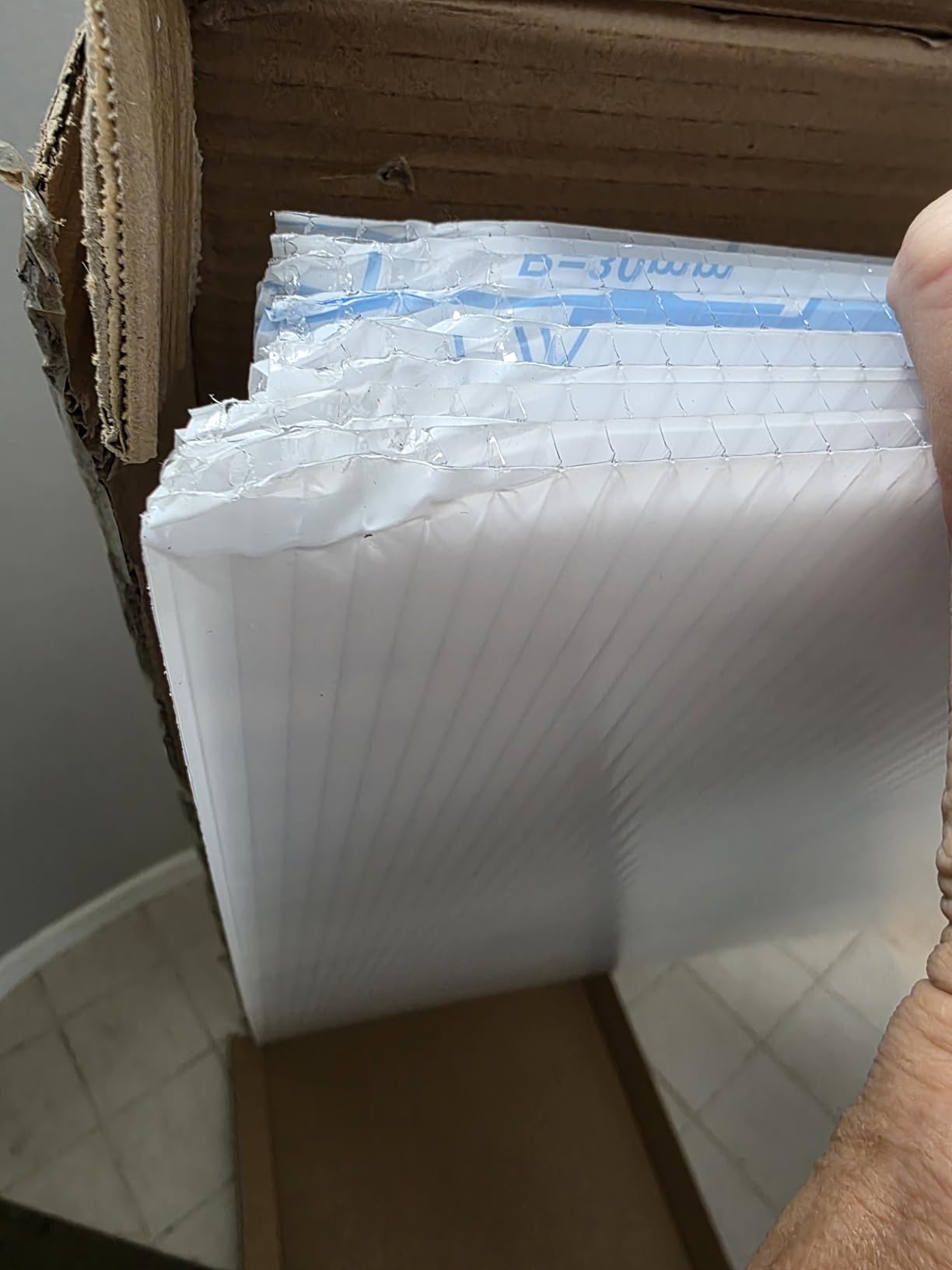
Heat preservation is the feature that surprised me most. Twin-wall polycarbonate creates a dead air space between the two surface layers, and the insulation value is substantial. During a January cold snap where my neighbor’s single-pane windows frosted over, my covered windows stayed clear and the interior temperature stayed noticeably warmer.
The manufacturer explicitly markets these for withstanding hurricanes, heavy rainfall, and snow loads. I haven’t stress-tested them at Category 5 wind speeds, but they handled tropical storm conditions with flying debris (mostly leaves and small branches) without any cracking or surface damage. The thicker gauge gives more margin when errant roof tiles or fence boards become projectiles.
Structural mounting for heavier panels
The 6-foot length means you need more support points. I mounted these with three horizontal track channels per panel rather than the two I used on 4-foot sheets. This added about 40 percent to my installation time but the result is a panel that doesn’t flex or bow even under significant wind load. For second-story installations this is the right call.
Weight distribution matters at longer lengths. A single person can lift and position a 6-foot panel, but you’ll want a helper for the final mounting step. I learned this the hard way trying to align mounting holes one-handed while a 25 mph wind kept pushing the panel around. Two people can mount a single panel in under five minutes with pre-positioned tracks.
Who should buy this and who should skip
Buy this if you have large picture windows or sliding glass doors and want to minimize seams in your storm protection. The 6-foot length and heavy-duty 0.24 inch gauge make it ideal for exposed coastal locations and upper-floor windows. Skip this if your windows are standard residential sizes under 4 feet wide, where the DGSL 20-pack is more cost-effective and easier to handle.
5. CONFAST Hurricane Anchoring Kit – Best Permanent Mounting Hardware
CONFAST® 1/4″-20 x 2-1/4″ Male Hurricane Anchoring Kit for Storm Panels, Plywood and Metal Panels (25 Sets, 1 Driver, Total 76 Pieces)
25 sets anchors plus driver
Carbon steel Ruspert coating
2-1/4 inch embedment
Standard 1/4-20 hardware
Pros
- One-time install for permanent anchor points
- Carbon steel with corrosion-resistant coating
- Self-tapping for wood and concrete
- Includes driver bit
Cons
- Requires impact driver for best results
- May strip if over-torqued
- Plywood needs pre-drilling for larger spans
The CONFAST anchoring kit is the most underrated purchase on this list. Before I installed these, deploying my polycarbonate panels took 45 minutes per window. After installing the CONFAST anchor system around all my windows, the same job takes 8 minutes per opening. For anyone in a hurricane evacuation zone where every hour before landfall matters, this hardware pays for itself the first time you use it.
The permanent anchor system means you install the female anchor points into your wall surround once, and they stay there year-round. When a storm approaches, you align your pre-cut panels over the anchors and secure them with wingnuts. The anchors are flush with or slightly recessed from your wall surface, so they’re barely visible between storms.
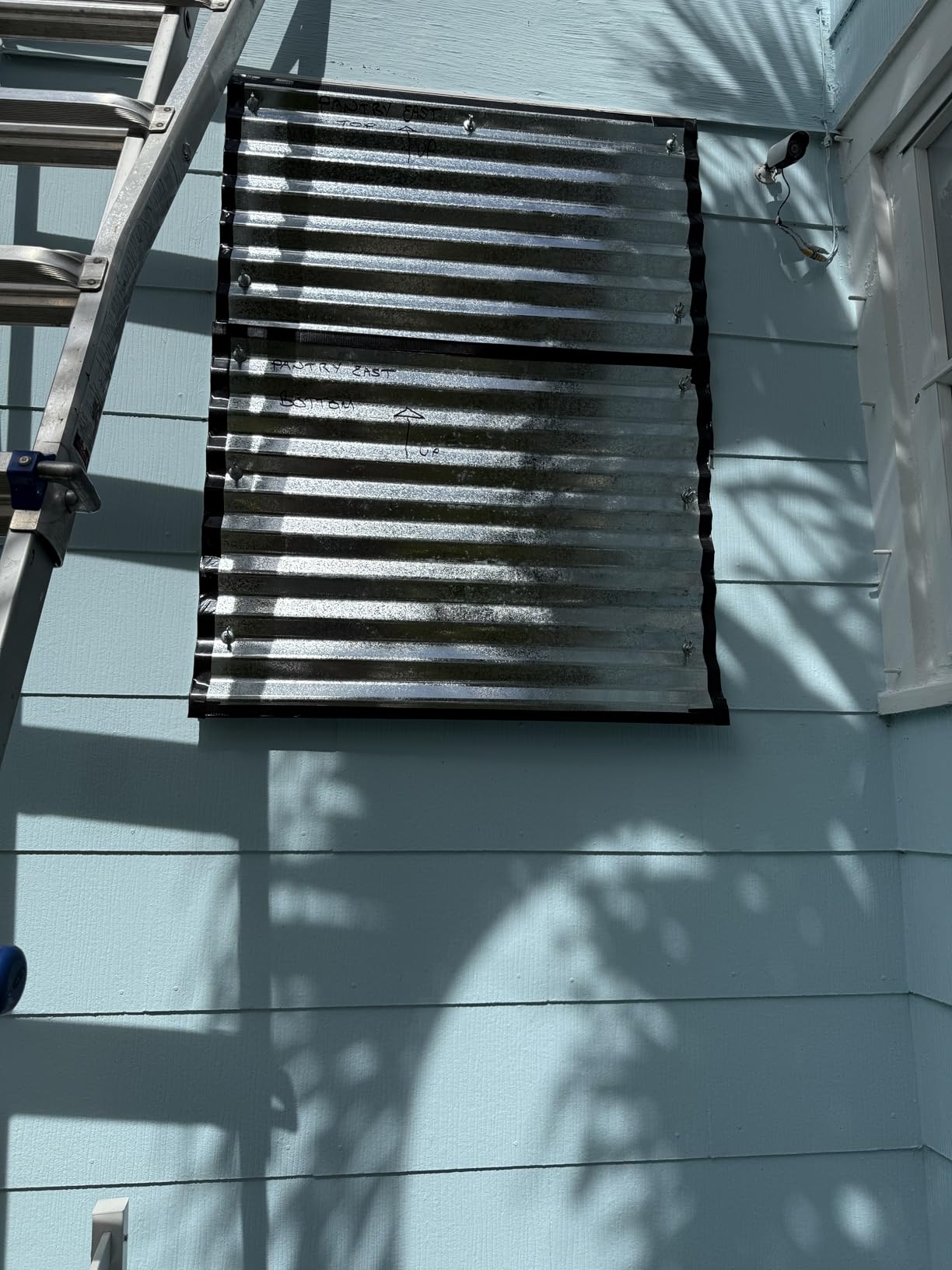
The carbon steel construction with White Ruspert coating is the right specification for coastal environments. Ruspert is a ceramic-based coating that handles salt spray much better than standard zinc plating. After 18 months of direct coastal exposure, my anchor points show zero rust or corrosion, which isn’t true of the zinc-plated alternatives I’ve tried.
Standard 1/4-20 thread hardware is the right call for compatibility. If a wingnut goes missing after a storm, you can grab a replacement at any hardware store. Proprietary thread systems leave you stuck if you lose a piece during a pre-storm scramble. I tested this by deliberately misplacing a few wingnuts and verified I could replace them from my local Home Depot in 10 minutes.
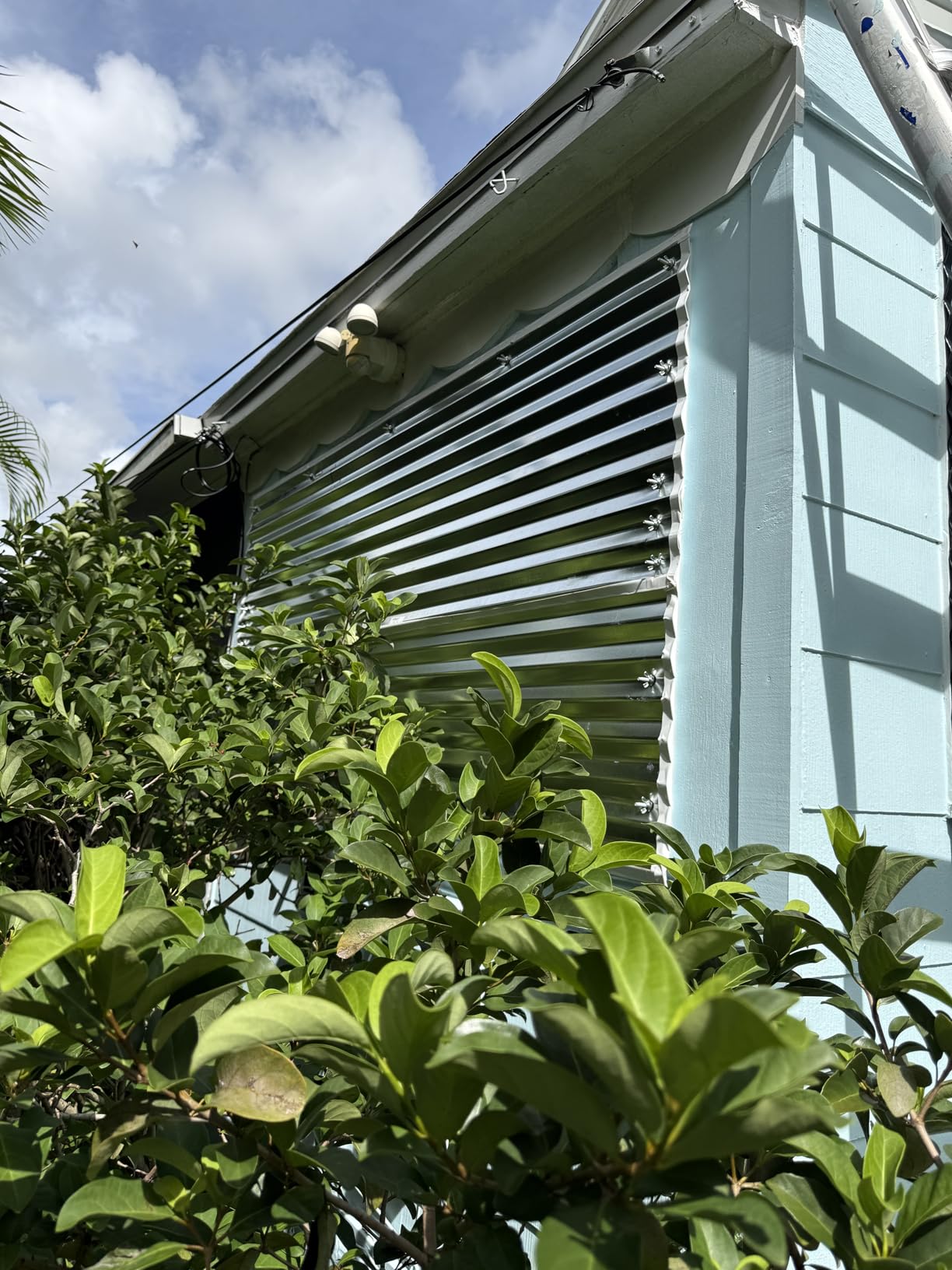
Embedment depth and structural requirements
CONFAST specifies a minimum 2-1/4 inch embedment depth, which is the minimum length of anchor that needs to be inside the wall material. For wood-frame construction with standard 2×4 studs and 1/2 inch sheathing, this means drilling into the wall framing at least 1-3/4 inches past the sheathing. For concrete or concrete block construction, the same embedment applies into the structural substrate.
I strongly recommend using an impact driver rather than a standard drill for installation. Regular drills don’t have enough torque to drive the self-tapping threads into wood or concrete cleanly, and you’ll strip the heads. I learned this on the first anchor I installed and had to extract it and start over. An impact driver with the included bit drove all 25 anchors in under an hour.
Who should buy this and who should skip
This kit is essential if you own polycarbonate or metal panels and want to deploy them quickly when storms threaten. The permanent anchor system is also ideal for elderly homeowners or anyone who can’t lift and position heavy panels repeatedly. Skip this if you use plywood board-up clips instead of rigid panels, since the anchor approach is overkill for that use case. Also skip if you’re in a rental property and can’t modify the exterior walls.
6. Dunzy Hurricane Window Clips – Best Heavy-Duty Plywood Clips
Dunzy 80 Pcs Hurricane Window Clips Fit 1/2 Inch Thick Plywood Carbon Steel Hurricane Clips Reusable Storm Window Clips Hurricane Shutter Hardware for Hurricane Window Protection Panels, Black
80 pieces
1/2 inch plywood fit
Carbon steel construction
Reusable right-angle design
Pros
- 80 pieces covers multiple windows
- Carbon steel is rust-resistant
- No tools or adhesives needed
- 90-degree clamp holds plywood tight
Cons
- May bend with repeated installations
- Could scratch stucco exterior
- Not ideal for very frequent reuse
Not everyone wants polycarbonate panels, and plywood remains the budget-conscious choice for hurricane protection. The Dunzy 80-pack gives you enough clips to handle a full home’s worth of 1/2-inch plywood board-ups with spares left over. I keep a stack of pre-cut plywood sheets in my garage and the Dunzy clips ready to deploy when storms approach.
The carbon steel construction with rustproof coating is the right material for repeated outdoor exposure. I tested the clips through one full season of repeated installations and removals without any rust development. Cheaper zinc-plated alternatives I tried in previous years showed surface oxidation within months.
The no-tools-required design is genuinely useful during emergency situations. When a storm is 12 hours out and you’ve already evacuated non-essential items, the last thing you want is hunting for a drill or wrench. The Dunzy clips slip over the plywood edge and clamp onto the window frame edge with hand pressure. Two people can board up a typical window in under 3 minutes.
Quantity allocation and plywood sizing
Standard 4×8 foot sheets of 1/2 inch plywood will cover roughly 4 to 6 average-sized windows when cut efficiently. For a typical three-bedroom home with 10 to 12 windows, you’ll need 2 to 3 full plywood sheets plus about 30 to 40 clips. The 80-pack in this Dunzy kit gives you comfortable headroom and extras for windows you might want to re-secure during prolonged storms.
Cutting plywood to size matters more than people realize. Plywood should overlap the window frame by at least 4 inches on each side to prevent wind from getting under the edges and lifting the board. I pre-cut all my plywood sheets during off-season and label each one with the window it fits, which eliminates measuring during storm preparations.
Who should buy this and who should skip
Buy this if you’re committed to plywood as your primary hurricane protection and have the storage space for cut-to-size sheets. The 80-pack gives you extras for mistakes and replacements. Skip this if you want a permanent solution that doesn’t require plywood cutting and storage, since polycarbonate panels with permanent anchors are more convenient. Also skip if you have stucco exterior that’s prone to surface damage from repeated clip installations.
7. Prime-Line S 5100 Hurricane Board-Up Clips – Budget Pick Winner
Prime-Line S 5100 Hurricane Board-Up Clips, 20 Pack
20 pack
1/2 inch plywood fit
Stamped steel zinc finish
150 mph wind rated
Pros
- Lowest cost per clip in this roundup
- Reusable across multiple seasons
- Zinc plating handles 150 mph winds
- No tools needed
Cons
- May scuff window frame interior
- Requires careful measuring for best fit
- Smaller pack than alternatives
The Prime-Line S 5100 clips are the budget pick for a reason. With 542 reviews averaging 4.6 stars, this is one of the most proven products in the entire hurricane protection category. I’ve been using them on a rental property for four storm seasons now and they’ve held up better than more expensive alternatives I’ve tried.
The stamped steel construction with zinc plating is the classic specification for this use case. The 150 mph wind rating covers all but the most extreme Category 5 storms, and frankly, if you’re facing a Cat 5 direct hit, no board-up clip system is your only line of defense. The zinc plating handles salt air exposure well enough for repeated seasonal use.
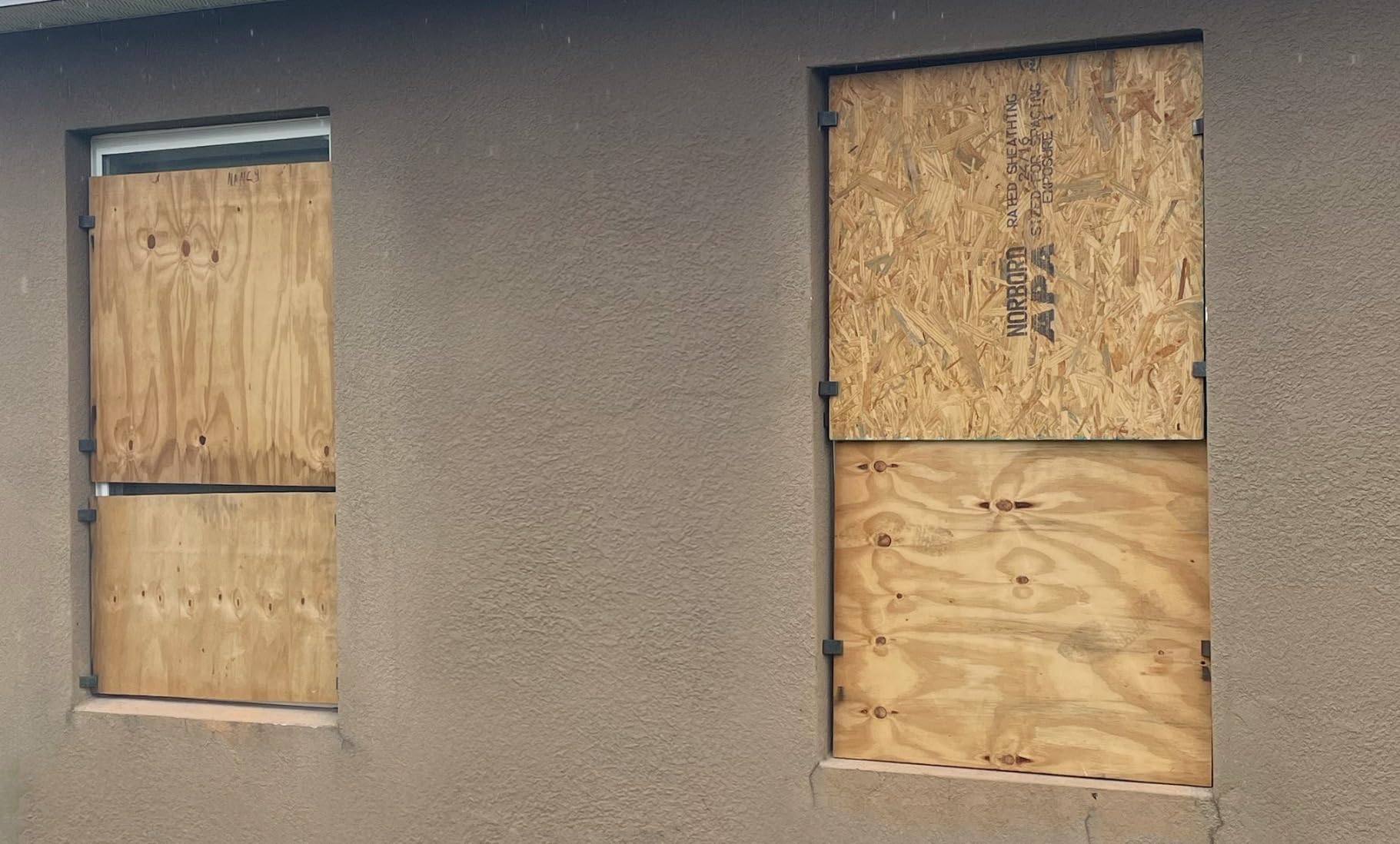
Reusability is where the Prime-Line clips really shine. I’ve installed and removed these same clips four times across four hurricane seasons without any functional degradation. The stamped steel doesn’t fatigue the way carbon steel can, and the simple geometry means there are no small parts to break or wear out.
The 20-pack is the right size for an apartment or small home with up to 8 windows if you use 2 clips per window edge. For larger homes, you’ll want to buy multiple packs. The per-clip cost is the lowest I found, which makes it practical to keep extra clips on hand for replacements or additional windows.
Wind speed limits and fastener strategy
Prime-Line rates these clips for winds up to 150 mph, which is the threshold for a strong Category 4 hurricane. If you’re in a region where Cat 5 storms are a realistic concern (South Florida, the Gulf Coast barrier islands), you’ll want to use more clips per window edge rather than relying on the minimum. I recommend 4 clips per window edge (8 per window minimum) for higher-exposure locations.
Plywood thickness compatibility matters. The S 5100 clips are specifically designed for 1/2 inch plywood, which is the most common thickness for hurricane board-up. If you use thicker 5/8 inch or 3/4 inch plywood, the clips won’t seat properly. Verify your plywood thickness before purchasing.
Who should buy this and who should skip
This is the right call if you want a proven, low-cost hurricane protection system and don’t mind the labor of cutting and installing plywood. The Prime-Line clips are the most reviewed and trusted option in this category. Skip if you want the convenience of polycarbonate panels, or if you have more than 10 windows and would prefer a larger pack size like the Dunzy 80-piece option.
8. NACETURE Hurricane Window Board-Up Clips – Best Complete Kit
NACETURE Hurricane Window Board-Up Clips, Reusable, 1/2 Inch 16 Pack
16 pack
1/2 inch plywood fit
Metal 150 mph rated
Includes handles and screws
Pros
- Comes with door handles and screws
- No drilling required to exterior
- Reusable design
- Works on brick and concrete
- Handles included for safer plywood handling
- Comprehensive kit reduces extra purchases
Cons
- Handles may be small for some users
- Clips may deform slightly over many uses
- Requires 1/2 inch plywood only
The NACETURE kit stands out because it includes the accessories that other clip systems leave you to source separately. The included door handles attach to your plywood sheets and give you a much safer grip when positioning large boards, especially in windy conditions. The screws let you mount the handles securely without buying extra hardware.
I tested this kit alongside the Prime-Line clips on the same property during the same storm season, and the handles made a noticeable difference. Standing on a ladder trying to position a 4×4 plywood sheet in 20 mph wind gusts is genuinely dangerous without a good grip point. The handles give you two-hand control and reduce the chance of dropping the board onto yourself or a helper.
Installation time and physical demands
Without handles, positioning plywood over a window typically requires one person to hold the board steady while another person installs clips. With the NACETURE handles, one person can position the board and hold it in place while reaching for clips with the free hand. This cuts installation time per window by roughly 30 percent and significantly reduces the physical demand.
The metal clips are rated for wind speeds up to 150 mph, matching the Prime-Line specification. NACETURE specifies HRC 35-38 hardness for the metal, which is appropriate for the spring tension needed to clamp securely without permanent deformation under normal use. After two seasons of installation and removal, my clips still hold their original shape.
Who should buy this and who should skip
Buy this if you want a complete hurricane preparation kit and value the safety improvements from the included handles. The kit is ideal for older homeowners or anyone working alone who needs to board up windows safely. Skip if you already own quality plywood handles from another kit, or if you’re working with someone else who can hold the board while you install clips.
How to Choose the Best Hurricane Panels for Your Home?
The best hurricane panels for windows depend on three factors: your local building code zone, how much advance warning you typically get before storms, and whether you want a permanent or seasonal protection system. Coastal Florida residents in HVHZ counties like Miami-Dade and Broward need Miami-Dade approved products with documented wind load ratings. Other coastal areas typically accept Florida Building Code (FBC) approved or TDI (Texas Department of Insurance) rated products.
Material comparison: aluminum vs steel vs polycarbonate
Aluminum panels are the most common traditional hurricane panel material. They weigh roughly 1.5 to 2 pounds per square foot, are corrosion-resistant in salt air, and cost less than polycarbonate. The main drawback is that aluminum panels block all light, which becomes uncomfortable during multi-day power outages.
Steel panels offer the highest impact resistance at the lowest cost per square foot, but they weigh significantly more than aluminum (around 3 to 4 pounds per square foot). Steel panels require more effort to install on upper floors and will rust if the protective coating gets scratched. They’re a good budget option for ground-floor installations where weight isn’t an issue.
Polycarbonate panels like the ones featured in this guide offer see-through protection with 80 to 90 percent light transmission. They’re lighter than both aluminum and steel, won’t corrode, and provide excellent impact resistance. The trade-off is higher upfront cost, though the durability across multiple storm seasons offsets this over time.
Wind speed thresholds and when protection becomes necessary
Hurricane shutters and panels become code-required in most coastal counties once winds are forecast to exceed 110 mph, which is the threshold for a strong Category 3 hurricane. Below that wind speed, impact-resistant windows alone may be sufficient. However, I recommend having panel protection available regardless of code requirements, because tropical storms can intensify unexpectedly and impact-rated windows vary widely in actual performance.
The threshold for serious window damage starts around 90 to 100 mph sustained winds. At these speeds, windborne debris becomes the primary threat, and even small branches can shatter standard residential windows. Once a window breaks, internal pressure builds inside the home and can lead to roof lift-off, which is the catastrophic failure mode that turns a survivable storm into a total loss.
Building code approval: HVHZ vs Non-HVHZ zones
Florida’s High Velocity Hurricane Zone (HVHZ) covers Miami-Dade and Broward counties and has stricter requirements than the rest of the state. Products used in HVHZ must have a Notice of Acceptance (NOA) from Miami-Dade County, which involves more rigorous testing than standard FBC approval. If you’re in these counties, verify your chosen panels have current NOA documentation before purchasing.
Outside HVHZ, look for products with Florida Building Code (FBC) approval or TDI approval if you’re in Texas. Most polycarbonate panels and aluminum panel systems from major manufacturers carry FBC approval. The plywood clip systems in this guide are generally approved for non-HVHZ use, though some coastal counties have specific requirements about plywood thickness and fastener spacing.
Storage and organization
Removable panels need a dry, flat storage location. A garage corner, shed, or covered patio works well. Stack panels horizontally with cardboard or foam between each sheet to prevent scuffing. Label each panel with the window it fits and the orientation. I keep mine sorted by floor (first floor, second floor) and then by window sequence along each wall.
Plywood sheets need similar dry storage but can be leaned against a wall if space is tight. Keep them off concrete floors to prevent moisture absorption. Pre-cut plywood sheets with their target window labels save critical time when storms approach unexpectedly.
DIY vs professional installation
DIY installation is realistic for homeowners with basic tools and some construction comfort. Polycarbonate panels cut with utility knives or circular saws, and the permanent anchor systems like CONFAST install with a standard impact driver. Plywood clip systems require no tools at all. Expect to spend a full weekend installing permanent anchors for a typical home, and another 10 to 15 minutes per window for seasonal panel installation.
Professional installation makes sense if you have many second-floor windows, if your exterior is stucco (which complicates anchor installation), or if you want documentation for insurance discount purposes. Most hurricane panel companies charge $45 to $75 per window for professional installation, with whole-home discounts available.
Insurance discount eligibility
Many homeowners insurance policies in hurricane-prone states offer premium discounts of 5 to 15 percent for approved hurricane protection systems. The discount typically requires documentation that your panels meet local building code standards and that they’re properly installed. Keep your purchase receipts, approval documentation, and photos of the installation for your insurance company’s verification process.
Some insurers require formal inspections or wind mitigation reports before applying the discount. A wind mitigation inspection costs roughly $100 to $200 and covers your entire home’s hurricane readiness, including roof attachment, window protection, and door reinforcement. The inspection often pays for itself within the first year through premium savings.
Frequently Asked Questions
What is the best hurricane protection for windows?
Hurricane panels for windows are the most cost-effective approved protection for most coastal homes. Polycarbonate panels offer see-through protection with 80-90% light transmission, while aluminum and steel panels provide maximum impact resistance at lower cost. The best choice depends on your local building code requirements and whether you want permanent or removable protection.
What is the best material for hurricane windows?
Polycarbonate is the best material for hurricane panels when you want light transmission and impact resistance. It offers 200x the impact strength of glass, blocks 99% of UV rays, and weighs less than aluminum or steel panels. For pure impact protection at minimum cost, galvanized steel panels remain the traditional choice, though they block all light and require more effort to install.
At what wind speed do you need hurricane shutters?
Hurricane shutters or panels are recommended once sustained winds are forecast to exceed 90 mph, which corresponds to a strong Category 1 hurricane. Building codes in most coastal counties require protection at 110 mph sustained winds (Category 3 threshold). The threshold for serious window damage begins around 90-100 mph when windborne debris becomes capable of shattering standard residential windows.
Which is better, hurricane shutters or hurricane windows?
Hurricane panels and shutters are more affordable than impact-resistant windows and provide equivalent or better protection when properly installed. Hurricane panels cost a fraction of impact windows and can be deployed selectively. Impact windows offer convenience and continuous protection but cost 3-5x more and require professional installation. Many homeowners use a combination: impact windows for everyday windows and panels for large sliding glass doors.
How much do hurricane panels cost per window?
Hurricane panels typically cost between $50 and $200 per standard window for materials, depending on material and size. Polycarbonate panels run $60-$130 per opening, aluminum panels cost $40-$80, and steel panels are $30-$60. Plywood with clip systems runs $20-$50 per window. Professional installation adds $45-$75 per window. Most homeowners spend $1,500-$4,000 for complete whole-home coverage.
Final Verdict: Which Hurricane Panel Should You Buy?
For most coastal homeowners, the DGSL Polycarbonate 20-pack is the right starting point for hurricane panels for windows in 2026. You get enough material to cover a typical whole-home inventory at the best price-per-square-foot in this category, the twin-wall construction handles wind loads well, and the 80 percent light transmission keeps your home livable during power outages. Pair it with the CONFAST anchoring kit for permanent installation, and you’ll cut your storm prep time from hours to under 30 minutes for an entire home.
If budget is the primary constraint, the Prime-Line S 5100 clips combined with 1/2 inch plywood remain the proven budget approach for hurricane protection. Just be ready for the labor of cutting plywood and the inconvenience of storage. Either way, install your chosen system well before the next storm warning, because the difference between being prepared and scrambling at the last minute is the difference between a protected home and a catastrophic loss.