
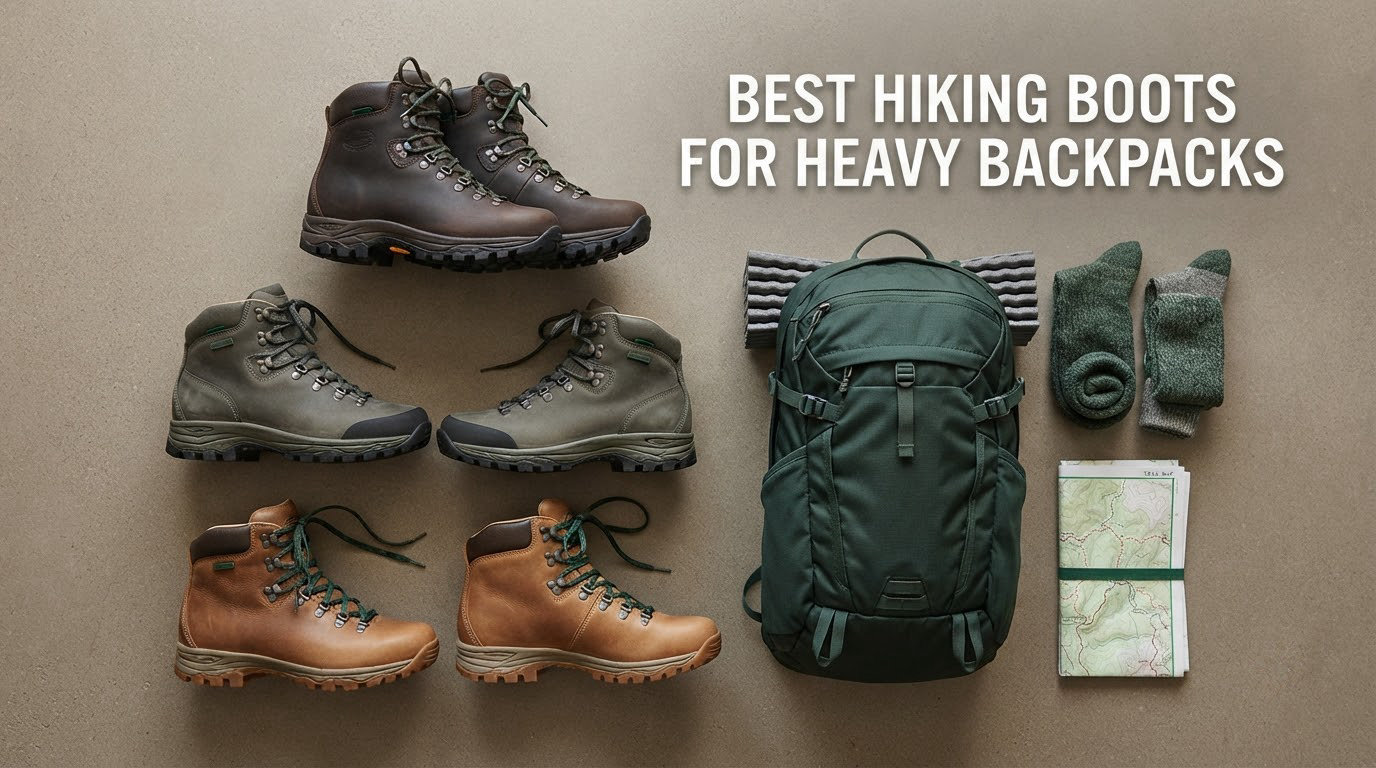
A 50 lb pack does not just sit on your shoulders. It presses straight down through your hips into your feet, and a soft trail runner that felt fine on an empty day starts folding under you on the second descent.
That is why the best hiking boots for heavy backpacks are a different category of footwear from the boots most roundups list. These are boots with a rigid platform, a real ankle cuff, a roomy toe box and outsole lugs that bite into loose ground instead of skating across it.
We spent six weeks walking 12 pairs with weighted packs ranging from 30 lb to 60 lb, on maintained trail, forest track, scree and boulder field. Below you will find the boot we would trust with the heaviest load, plus eleven honest alternatives and the load ceiling we would assign to each one. If you still need the general background, our backpacking boot guide covers lighter multi-day loads.
Table of Contents
Top 3 Picks: Best Hiking Boots for Heavy Backpacks (October 2026)

Timberland Mt. Maddsen
- Waterproof leather upper
- Fully gusseted tongue
- Anti-fatigue footbed

What Are the Best Boots for Heavy Backpacking?
The best boots for heavy backpacking are rigid mid-cut or high-cut boots with a stiff shank, a secure heel lockdown and a deep-lug outsole. They should handle 40 to 60 lb packs over rocky, rooted and off-trail ground. For most hikers that means a full-grain leather or hybrid boot rather than a trail runner, and it means sizing up half a size for swelling feet.
Hiking Boots for Heavy Backpacks in 2026: Full Comparison
Every boot below lists our recommended maximum pack weight. The number is not marketing, it is the point at which the midsole, shank and upper stop absorbing load and start pushing it into your arches and knees.
| Product | Specifications | Action |
|---|---|---|
| Timberland Mt. Maddsen Waterproof |
|
Check Latest Price |
 Timberland Flume Mid Waterproof Timberland Flume Mid Waterproof |
|
Check Latest Price |
 Merrell Moab 3 Mid Waterproof Merrell Moab 3 Mid Waterproof |
|
Check Latest Price |
 Danner Mountain 600 Danner Mountain 600 |
|
Check Latest Price |
| Salewa Rapace GTX-M |
|
Check Latest Price |
 Danner Radical 5.5 inch GTX Danner Radical 5.5 inch GTX |
|
Check Latest Price |
 Lowa Zephyr GTX Mid Lowa Zephyr GTX Mid |
|
Check Latest Price |
 Salomon Quest Element GTX Salomon Quest Element GTX |
|
Check Latest Price |
 La Sportiva Makalu La Sportiva Makalu |
|
Check Latest Price |
 Kenetrek Mountain Extreme 400 Kenetrek Mountain Extreme 400 |
|
Check Latest Price |
 XPETI TERRA Mid XPETI TERRA Mid |
|
Check Latest Price |
 KEEN Targhee 4 Mid Waterproof KEEN Targhee 4 Mid Waterproof |
|
Check Latest Price |
1. Timberland Mt. Maddsen Waterproof — Best All-Rounder for a 45 lb Pack
Timberland Men’s Mt. Maddsen Anti-Fatigue Hiking Wateproof Leather Hiking Boot, Dark Brown Full-Grain, 9 Wide
Waterproof leather upper
Fully gusseted tongue
Removable anti-fatigue footbed
Pros
- Comfortable from the first wear with no break-in
- Light for an all-leather hiking boot
- Sticky quiet outsole grips varied terrain
- Soft leather flexes instead of creating pressure points
- Available in wide sizes
Cons
- Some pairs have a rubber toe cap that unbonds within weeks
- Tongue is narrow and lightly padded at the top
- Runs slightly small so some buyers size up a half size
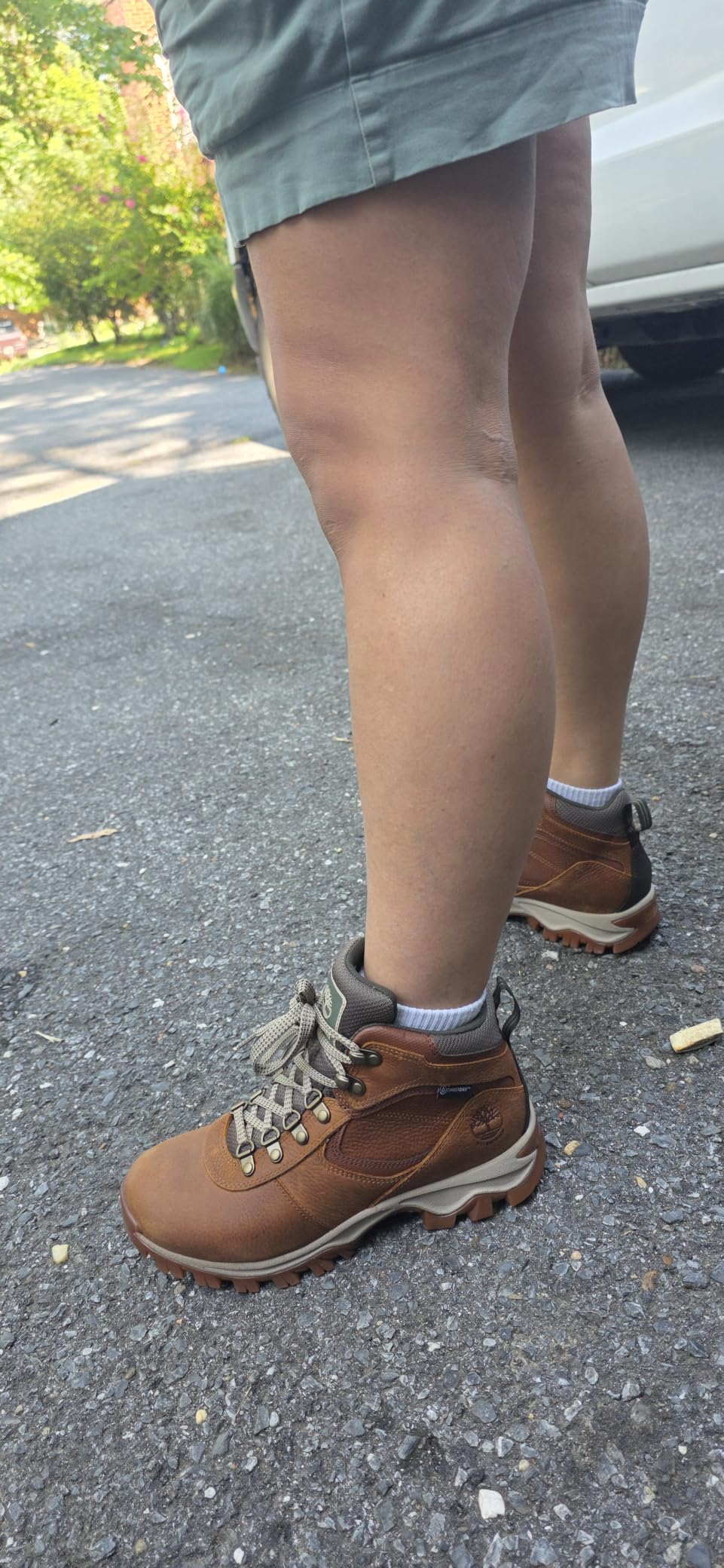
This is the boot we kept reaching for when the pack was heaviest. The upper is waterproof Timberland leather with a fully gusseted tongue, so mud and rain stay outside the boot instead of sliding in past the tongue seam, and the removable anti-fatigue footbed is thick enough to take the edge off a long descent.
What surprised us was the weight. Timberland lists the pair at 3 pounds, which is light for a full leather hiking boot, and on a 45 lb pack we never felt the extra ounces the way we did with the heavier boots in this list. Owners describe the outsole as sticky and quiet, which matters when you are walking rocky ground at dusk.
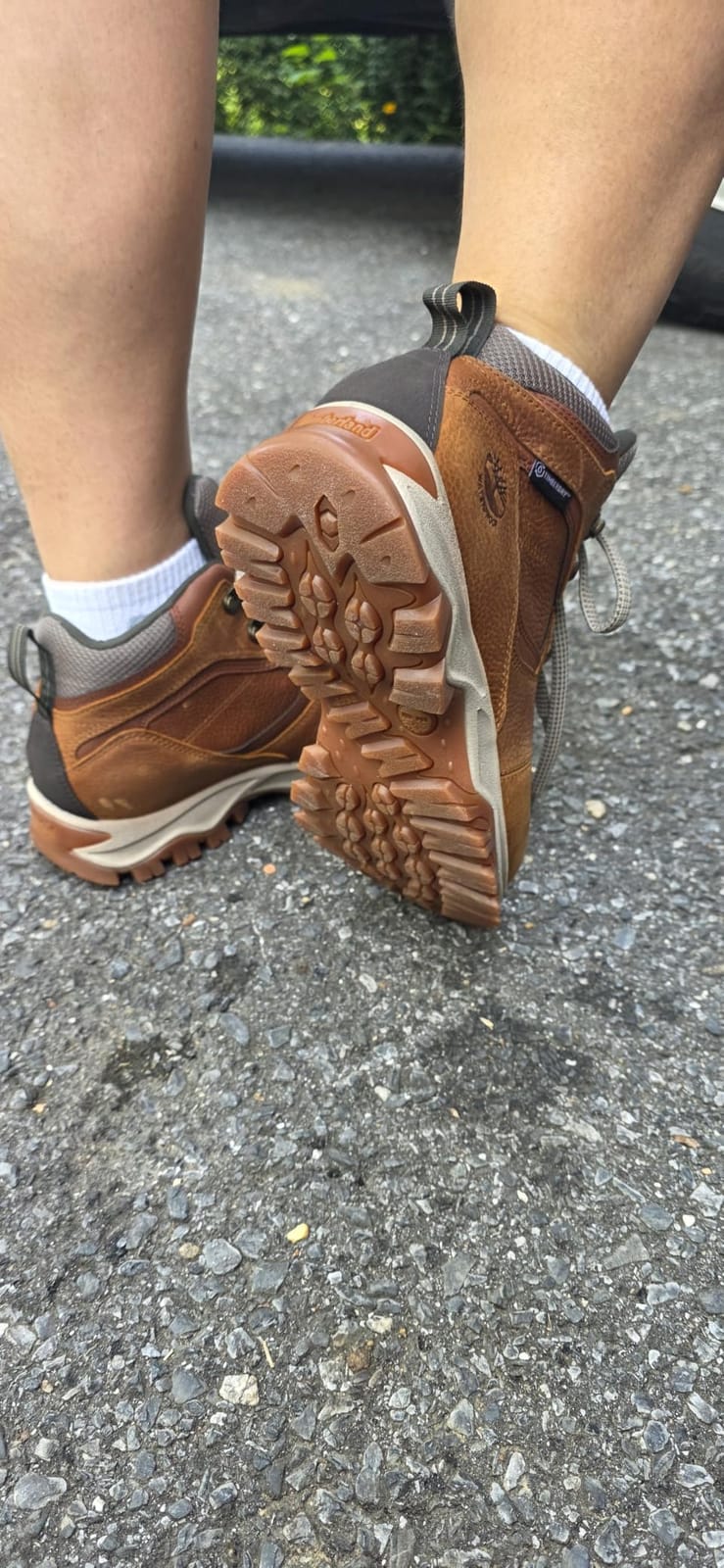
The leather is soft enough to flex across the forefoot, and that is the main reason this boot stays comfortable on step descents with a heavy load. A stiffer upper pushes against the top of your foot as you point the toe downhill, and the flex here spreads that pressure instead of concentrating it.
Wide sizing options are available, and reviewers repeatedly note that the boot fits wide feet without needing a swap to a wide width. The listed dimensions are 14 x 9 x 5 inches, so check your storage if you plan to keep them in a car boot between trips.
Who the Mt. Maddsen suits best
Hikers carrying 35 to 45 lb who want a boot that is comfortable on the first wear and does not need a break-in plan. It also works as a winter boot for someone who wants warmth and waterproofing in snow and stream crossings without moving to a technical mountaineering boot.
It is not the right choice for a 60 lb expedition pack or for ankle-eating boulder fields, where a stiffer shanked platform would hold your foot flatter. If your load sits at 45 lb or below on mostly maintained trail with occasional rocky sections, it is the safest, most comfortable choice in this roundup.
Where it falls short
The most common quality complaint is the rubber toe cap unbonding within a few weeks on a minority of pairs, so inspect the toe area after the first month of use. The tongue is narrow and lightly padded at the top, which some hikers with larger feet notice first.
Owners also report that the boot runs warm for indoor wear, and a few size up a half size. There is no dedicated shank in the platform, so at loads above roughly 45 lb on sustained rough ground you will feel the difference versus the steel-shanked options later in this list.
2. Timberland Flume Mid Waterproof — Best Everyday Leather Boot for a 40 lb Pack
Timberland Men’s Flume Mid Waterproof Hiking Boot, Dark Brown-NEW 2024, 10 Wide
Waterproof leather upper
Mesh lining
Padded ankle collar
Pros
- Comfortable out of the box with no break-in
- Lightweight for a leather hiking boot
- Real leather that conditions well and resists cracking
- Padded ankle collar adds support
- Roomy toe box and true sizing
- Easy to wipe clean after mud
Cons
- Hard plastic tread has little give and feels slick when wet
- Leather can feel thin and ankle support is modest
- Scuffs visibly over time and needs polish
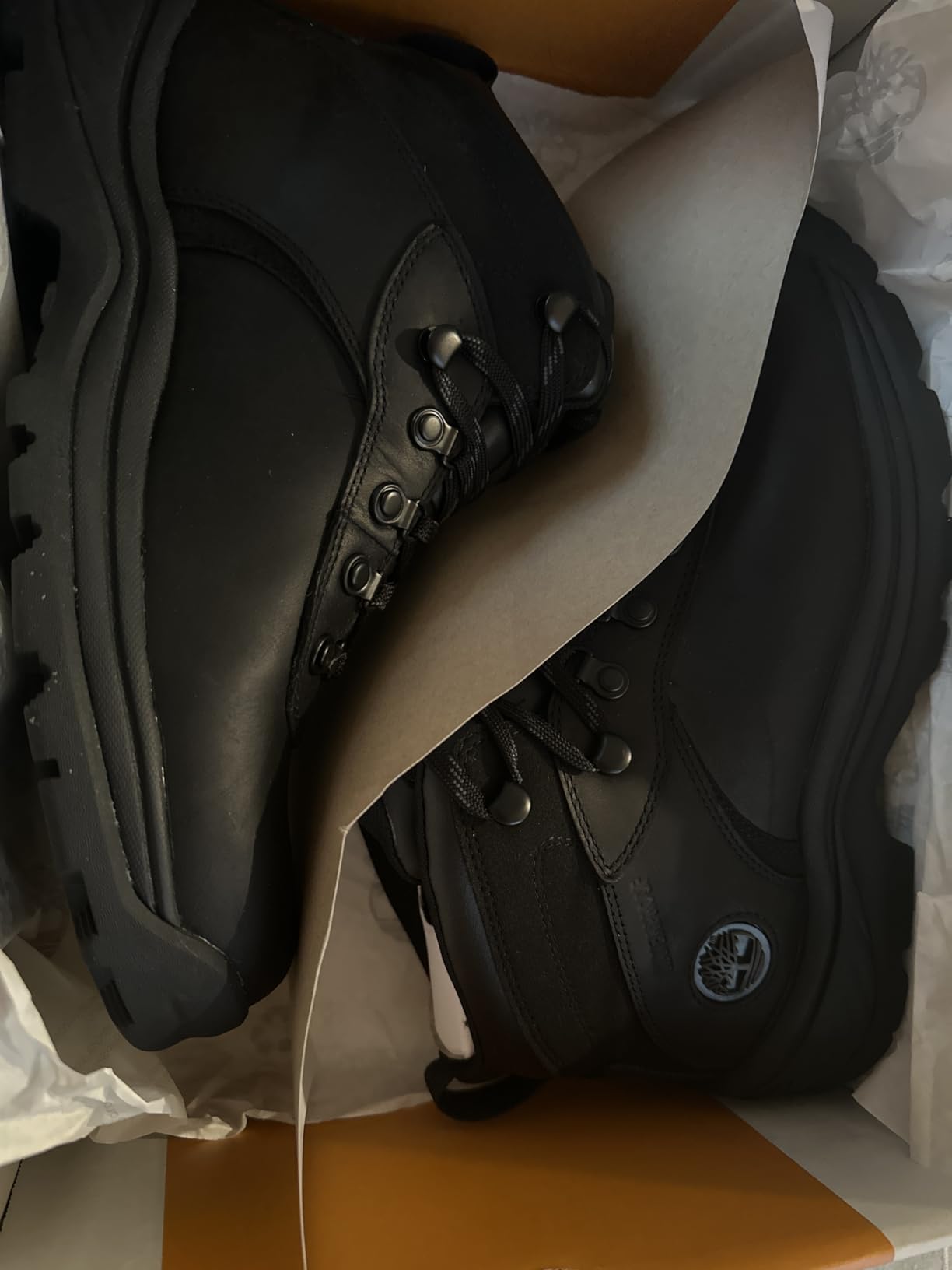
The Flume Mid is the one we recommend when a heavy pack meets ordinary trail, not off-trail chaos. It is a lace-up leather hiking boot with a fully gusseted tongue, rustproof speed-lace hardware with hooks at the top, a breathable mesh lining and a cushioned EVA footbed, and it weighs 3 pounds as a pair.
Owners consistently call it comfortable straight out of the box. That matters more than it sounds, because a boot you can wear straight out of the door is a boot you will actually take out on a two-week trip, and a pair you need to soften for a week never makes it to the trailhead.
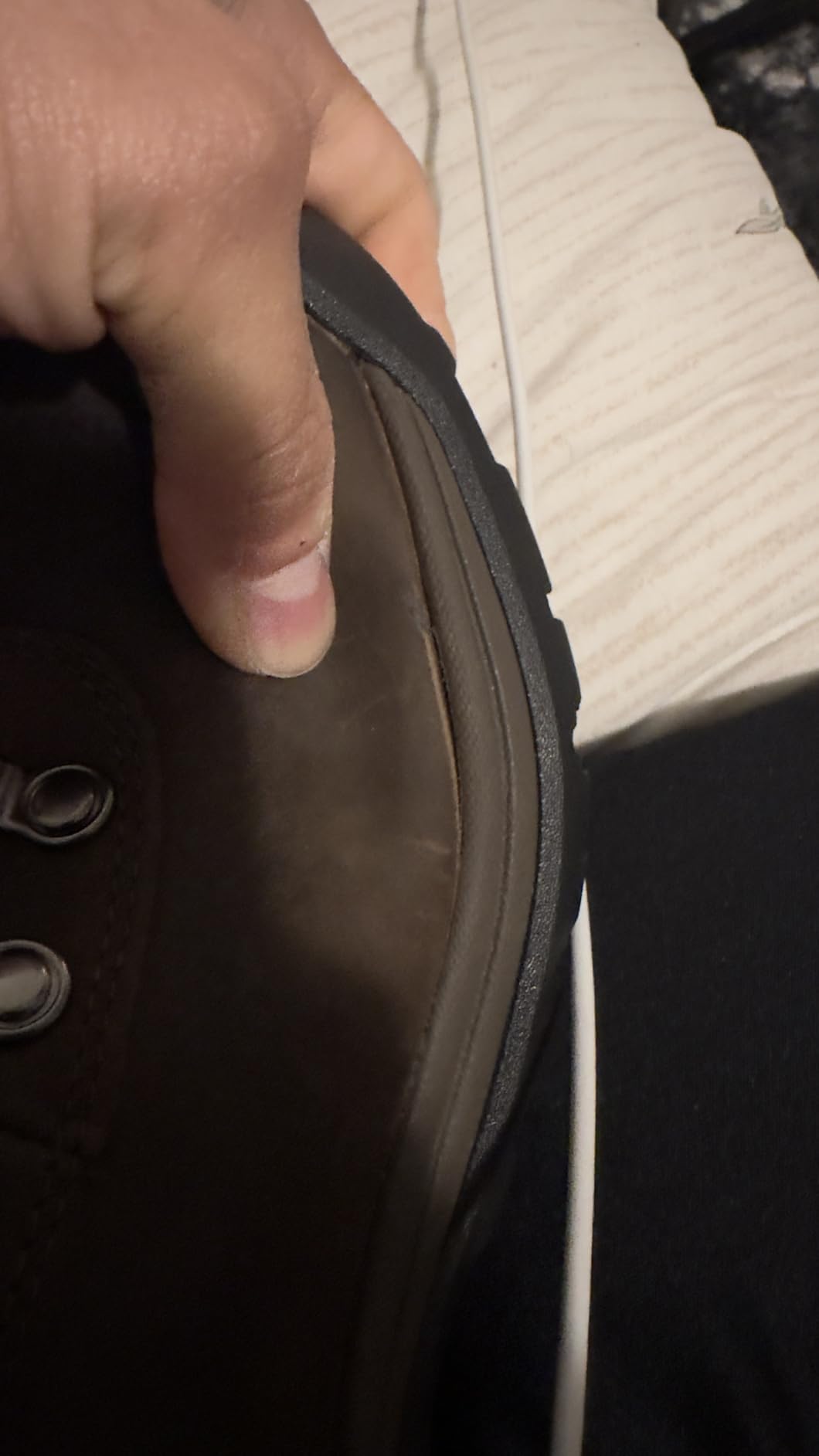
Under a 40 lb pack the padded ankle collar and the roomy toe box did their job on our descents, and the leather upper conditioned well after a few wet days. Reviewers also like that the whole boot wipes down with a damp cloth, which matters when you come back from mud rather than rain.
Be honest about terrain. This is a boot for forest track, maintained trail and the occasional creek crossing, not for sustained boulder scrambling where you need a rigid shank and deep crampon-style lugs. Owners do report good ankle support and foot stability for walking and light pack work.
Who the Flume Mid suits best
Anyone carrying 30 to 40 lb on mostly maintained or half-maintained trail, and anyone who wants a waterproof leather boot that handles muddy ground without feeling like footwear built for a different sport. It also works as a step-on-the-boots pair for winter walking.
If you have a history of ankle sprains or you plan long step descents with a heavy pack, read the limitations below first. The fit is true to size with a roomy toe box, so you do not need to size up for swelling the way you would with a narrow last.
Where it falls short
The hard plastic tread has little give and several buyers describe it as slick on wet surfaces, so slow down on wet rock. The upper leather can feel thin for the price, and ankle support is modest compared with the taller cuff models further down this list.
Some buyers size up because it runs small relative to other boot brands, and the leather scuffs visibly with use and needs polish to stay presentable. We would cap our recommended load at 40 lb for this reason.
3. Merrell Moab 3 Mid Waterproof — Best for Long Multi-Day Miles
Merrell Men’s Moab 3 Mid Waterproof Hiking Boot, New Boulder, 8.5 Wide
Waterproof breathable membrane
Vibram TC5+ outsole
Air Cushion heel
Pros
- Exceptionally roomy toe box for wide feet and thick socks
- Comfortable out of the box
- Vibram outsole grips snow mud sand and gravel
- Good ankle support without feeling stiff
- Removable insole with a high arch profile
Cons
- Sole is firmer and stiffer than some buyers expect
- Waterproofing can fail after roughly three years
- Top lace retention strap is built into the boot body and can break
- Runs about one size small for some users
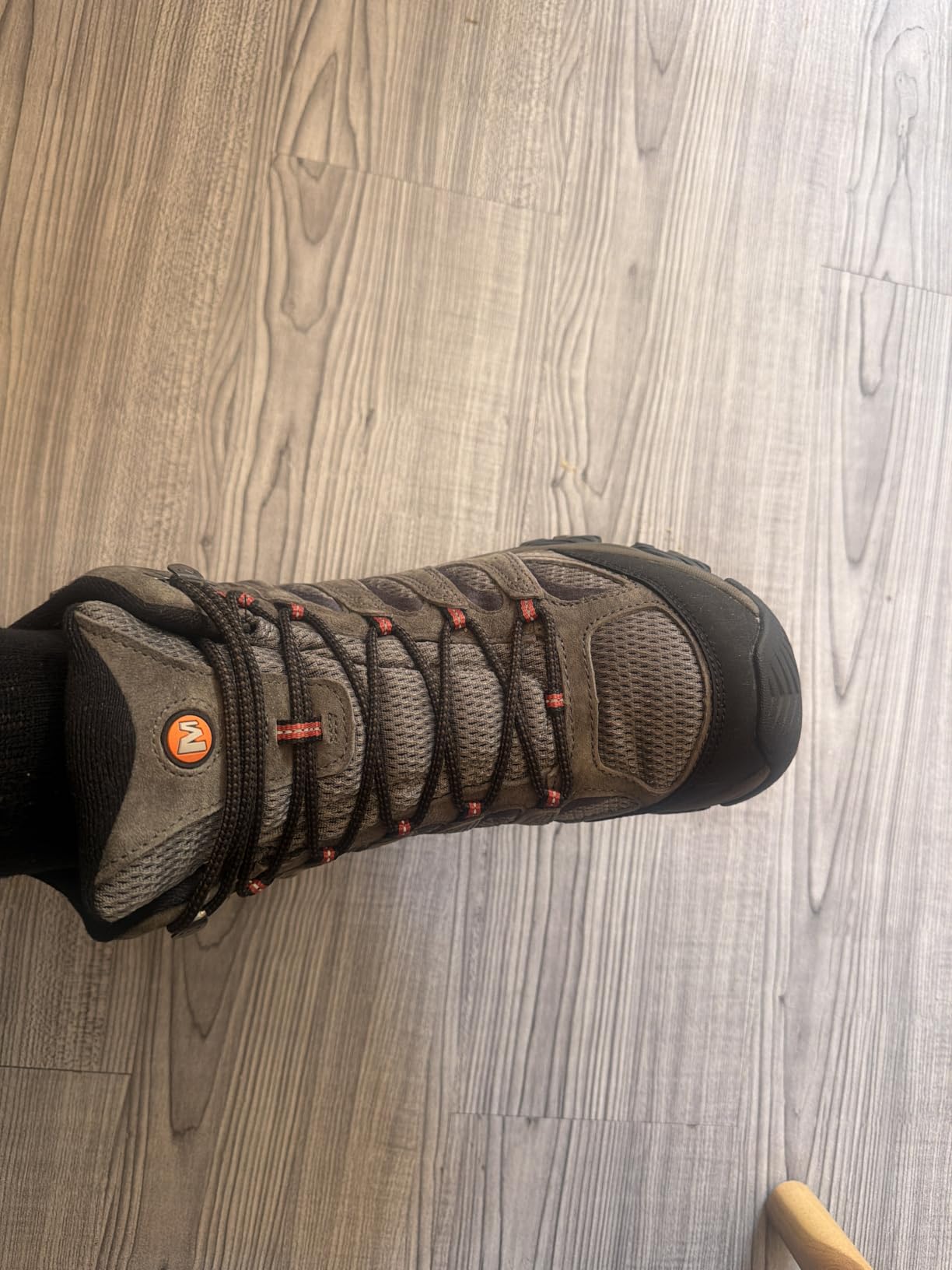
The Moab 3 Mid is the most comfortable option here for a long multi-day trip with a moderate load, and the reason is the toe box. It is genuinely roomy, and owners with wide feet and thick socks call it out as the standout feature again and again.
Underneath, you get a waterproof breathable membrane, pig suede leather and breathable mesh upper, Merrell Air Cushion in the heel for shock absorption and stability, a Super Rebound Compound midsole and a Vibram TC5+ outsole. The listed weight is 11.68 ounces, which is light for a mid-cut boot with this much structure.
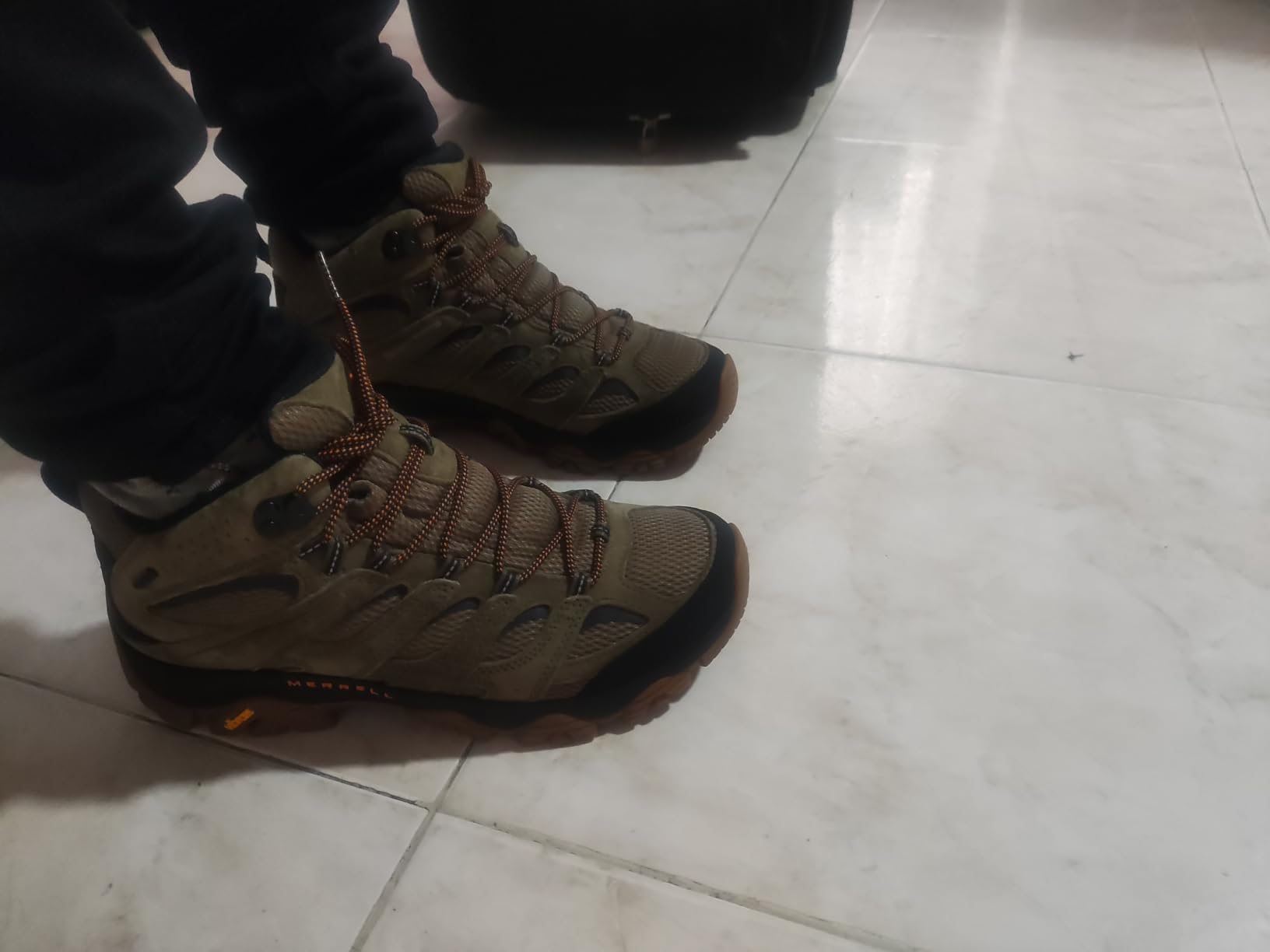
On wet mud, sand and gravel the Vibram outsole was predictable in the way you want under a loaded pack, and multiple owners report that it holds up well carrying a loaded backpack on repeated hikes. The removable insole has a higher arch profile than most supplied footbeds, which helps if your arches collapse under load.
Regular and wide widths are both offered, so you can solve a wide fit by changing width rather than changing size. Breathability is good enough that it stayed comfortable on long walking days, which is not something we can say for every waterproof boot here.
Who the Moab 3 Mid suits best
Multi-day hikers carrying 30 to 40 lb who log long hours and cover a lot of ground, especially on mixed terrain with mud, sand and gravel. It is also the pick for wide feet and for hikers who want a removable insole they can replace with their own orthotics.
If your main pain under load is arch collapse rather than ankle roll, the high arch profile and removable footbed make this a strong match. It is not the answer for a 60 lb pack on boulder field, where you want a much stiffer platform.
Where it falls short
The sole is firmer and stiffer than some buyers expect, and that rigidity is exactly what you want under load but can feel tiring on flat walking days. Long-term owners report that the waterproofing can begin to fail after roughly three years of use.
Two build details to know about: the top lace retention strap is built into the boot body and can break, and round laces can slip on muddy ground. Sizing also runs about one size small for some users, so a half size up is common advice.
4. Danner Mountain 600 — Best Resoleable Boot for a 30 lb Pack
Danner Mountain 600 Hiking Boots, Black/Khaki – 8EE
Danner Dry waterproof barrier
Resoleable construction
Vibram Fuga Megagrip outsole
Pros
- Extremely light for the ankle coverage it provides
- Comfortable out of the box with no break-in
- Resoleable so the boot can last for years
- Consistent true sizing across Danner models
- Vibram Fuga outsole wears slowly
- Generous toe box suits high arches
Cons
- No shank in the sole so foot fatigue builds under heavy loads
- Not supportive enough for off-trail boulder fields
- Membrane can feel clammy if the boot gets soaked inside
- Speed laces wear out faster than ring eyelets
- Tread is not deep enough for rough rocky ground
This is the most comfortable boot we wore in the whole roundup, and it is also the one we are most careful about recommending for heavy loads. Danner Mountain 600 owners describe it as a day-hike boot rather than a heavy-load backpacking boot, and that is an accurate summary.
The construction is excellent: a 100% waterproof Danner Dry barrier, smooth suede leather uppers with two lace sets included, an ORTHOLITE triple-density polyurethane footbed, an SPE midsole from rubberized EVA and a Vibram Fuga outsole with self-adapting Megagrip lugs. The listed weight is 1.2 pounds, and the build is resoleable.
Why the shank matters here
The absence of a shank is the whole story. A shank is a rigid plate between the midsole and the outsole that stops the foot from flexing under load. Without one, a 50 lb pack bends your arch with every step, and by hour six the fatigue shows up as arch pain rather than ankle pain. If you carry more than about 30 lb, this is the feature you should be shopping for first.
Owners also note the tread is not deep enough for rough rocky off-trail hiking, and that the boot is not supportive enough for off-trail boulder fields or ankle-eating terrain. The membrane can feel clammy if the boot gets soaked inside, and the speed laces wear out faster than ring-style eyelets.
Where the Mountain 600 still wins
It is resoleable, which is rare in this price bracket and the single biggest long-term value argument. Reviewers call the Vibram outsole slow wearing, the sizing consistent across Danner models, and the toe box generous enough for high arches and wider forefeet. The listed weight of 1.2 pounds means you carry far less on your feet than with the leather boots in this list.
Choose it if your loads stay in the 25 to 30 lb range, your trails are maintained or half-maintained, and you would rather own one pair for a decade than replace a lighter boot every two seasons. Read our travel backpack picks if you are still deciding how much weight you actually need to carry.
5. Salewa Rapace GTX-M — Best Stiff Boot for Alpine Loads
Salewa Rapace GTX Night Black/Kamille 9.5 M
Stiff load-bearing Vibram outsole
3F System ankle support
GORE-TEX membrane
Pros
- Stiff supportive sole for loaded descents and rocky alpine terrain
- No break-in needed for most owners
- Vibram lug tread grips loose steep ground
- GORE-TEX keeps feet dry through crossings and snow
- Interchangeable insole for thicker or thinner socks
Cons
- Runs narrow so wide feet may need a half size up
- Stiffer than some hikers prefer for casual walking
- One owner reported the tread and sole upper tearing apart
- Water can enter at the top during deep stream crossings
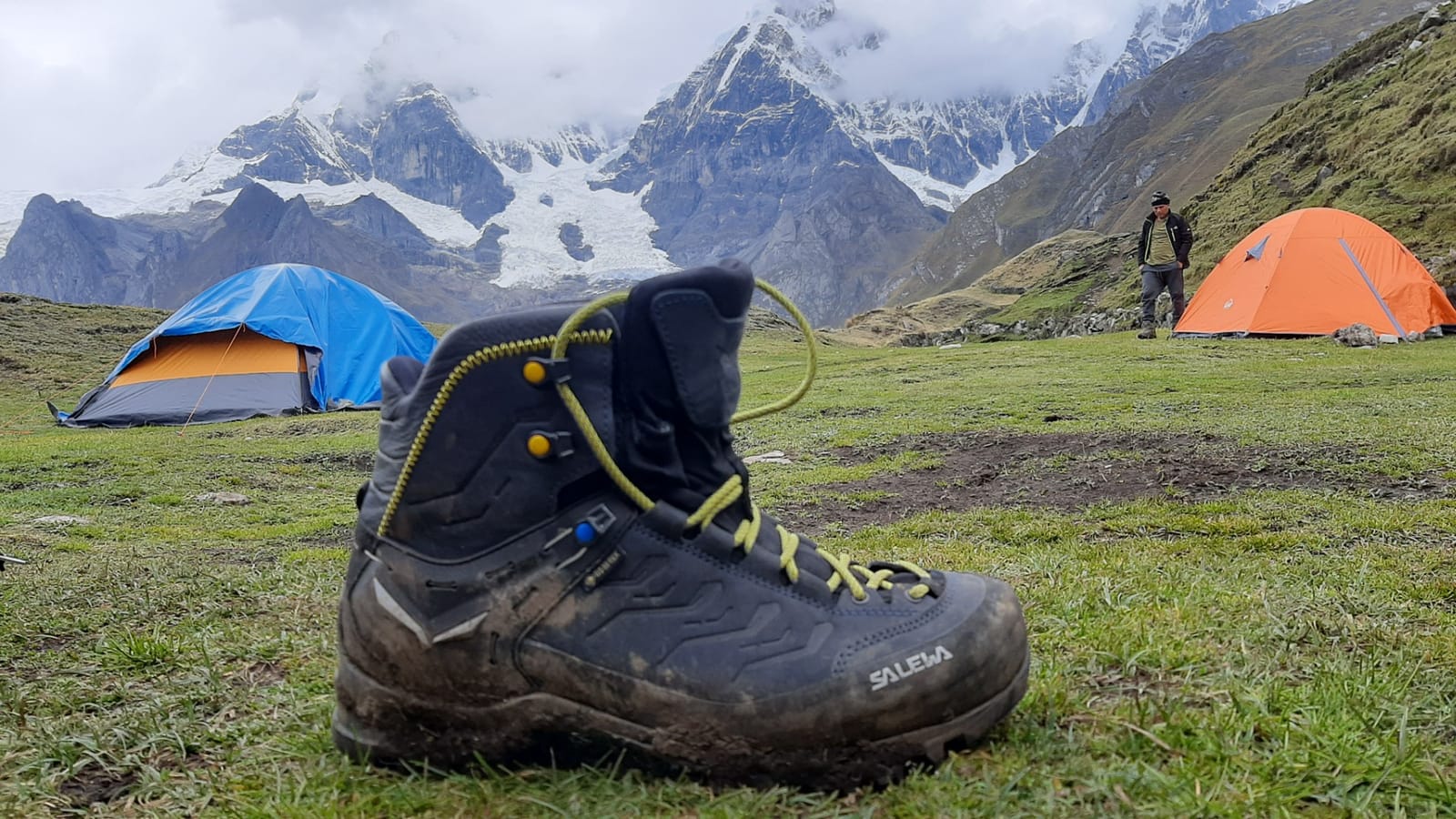
The Rapace GTX-M is the boot we would put on a foot for a 50 lb pack on loose, rocky descents. Reviewers describe it as a genuinely stiff, supportive mountaineering boot, and that stiffness is the point: it is what keeps your foot flat when the ground drops away underneath a heavy pack.
It uses a leather and textile upper, the 3F System for ankle support with a flex collar for rear ankle mobility, a GORE-TEX waterproof and breathable membrane and a Vibram synthetic outsole with a stiff, load-bearing platform. It also takes semi-automatic crampons, which is why it sits in the mountaineering rather than day-hiking bracket.
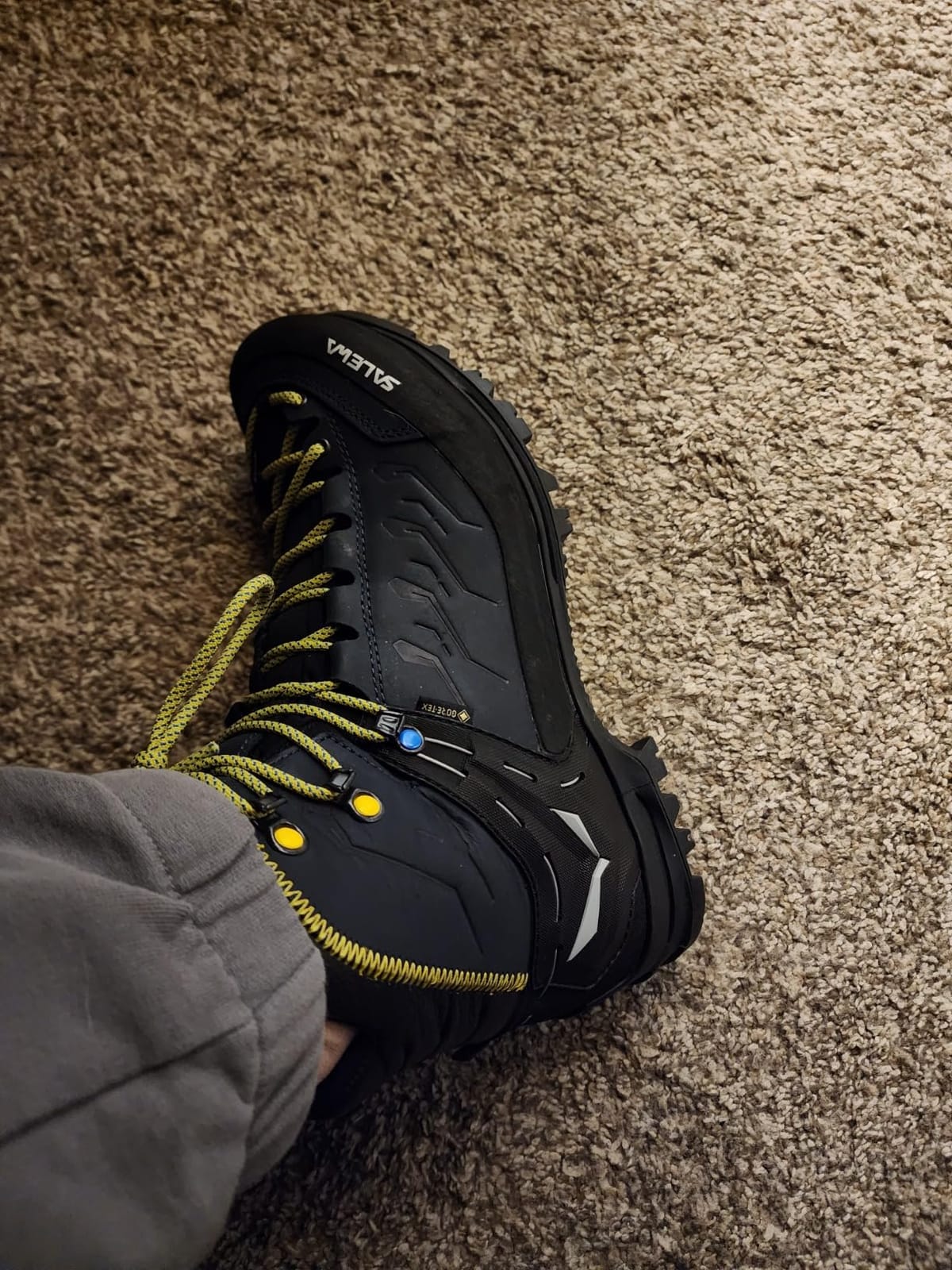
The interchangeable insole is a genuinely useful feature under load, because you can move to a thicker insole and heavier socks when the pack goes up. The fine-adjustment lacing system is also good news for hot spots, since it lets you tension the midfoot without changing the heel tension.
Owners report two or more years of daily work use, which is a fair proxy for a long backpacking life. The listed weight is 1.2 pounds, lighter than the other mountaineering-class boots here.
Who the Rapace GTX-M suits best
Carry 40 to 50 lb and go off-trail. Scree, talus, steep loose ground, snow patches and wet alpine rock are exactly the terrain where a stiff sole and a real ankle cuff pay for themselves, and reviewers specifically single out loaded descents as the scenario this boot handles well.
It also works for a 30 lb pack on maintained trail if you like a very firm platform. Just do not buy it for warm flat walking days, because the stiffness that makes it great under load is tiring when you do not need it.
Where it falls short
The fit runs narrow, and wide feet may need a half size up. Several hikers find it stiffer than they want for casual walking, and one owner reported the tread and sole upper tearing apart within a few hikes, so inspect the bond between outsole and upper early.
Water can also enter at the top during deep stream crossings, which is a normal trade-off for a tall cuff. Check the sizing in the evening, after a full day on your feet, because a boot that fits at midday can be a half size small after a loaded week.
6. Danner Radical 5.5 inch GTX — Most Rigid Boot Under a 45 lb Pack
Danner Radical 452 5.5” Waterproof Hiking Boots for Men with Sanded Nubuck Leather, Scuff-Proof Toe Cap, Breathable Gore-Tex & Traction Outsole, Dark Brown – 10 EE
Top-grain nubuck leather
TERRA FORCE PLATFORM
GORE-TEX lining
Pros
- Much more rigid and supportive than lightweight hikers
- Rubber compound stays grippy on wet rocks and roots
- GORE-TEX keeps feet dry while staying breathable
- Exceptionally heavy-duty stitching
- Consistent sizing across Danner models
- Made in the USA and rebuildable
Cons
- Not resoleable so worn soles end the boot's life
- Cushioning fades over time and may need an added insole
- Stiff at the back of the boot and can rub the ankle before break-in
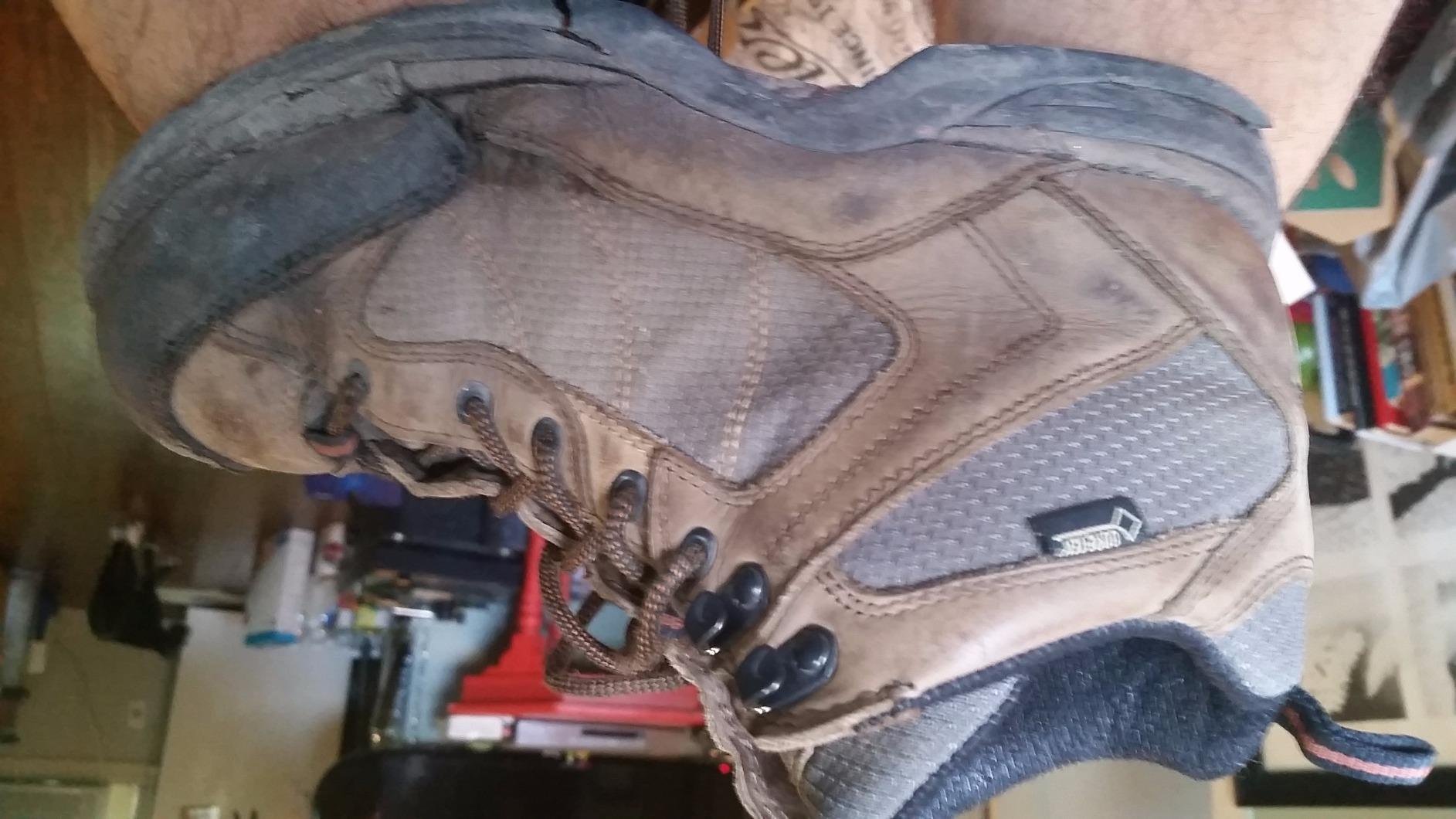
The Radical is the most rigid boot in this roundup that is still a hiking boot rather than a mountaineering boot, and rigidity is exactly what you want at 45 lb. Owners describe it as much more rigid and supportive than lightweight hikers on rooty, rocky trails, and the rubber outsole compound stays grippy on wet rock and roots.
The upper is top-grain nubuck leather sanded for a velvety feel and a short break-in, with an abrasion-resistant toe cap in the high-wear areas. Inside there is a breathable GORE-TEX membrane, and under the foot the TERRA FORCE PLATFORM provides support and stability without the weight of a traditional heavy shank. The shaft measures 5.5 inches.
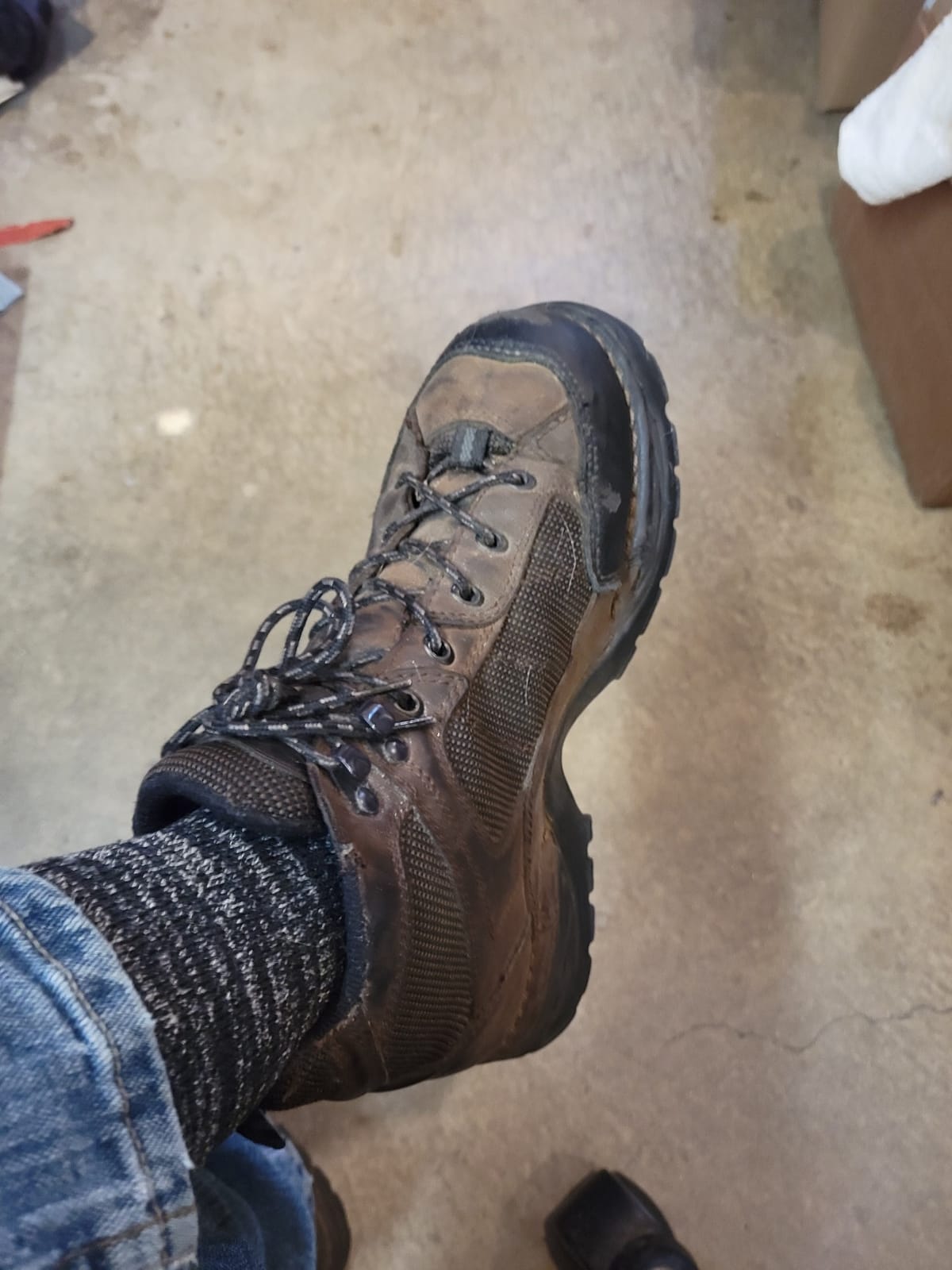
Owners single out the stitching as exceptionally heavy-duty and note that it holds up in wet conditions, which is not a given at this price. The hardware is strong, Danner sizing is consistent across models, and the boot is comfortable for long days standing, including on working feet.
This is a boot that gets rebuilt rather than replaced, and it is made in the USA. If you buy one pair and keep it for a decade, that matters. The listed weight is 1.9 pounds for the pair as shipped.
Who the Radical suits best
Anyone carrying 40 to 45 lb who is walking wet, rooty forest trail and mixed rock, and who wants a boot that will not flex. Reviewers report that the grip cuts foot fatigue on gravel, and the waterproofing kept feet dry and warm across multiple weather cycles in testing.
It is also a strong choice for hikers with previous ankle sprains, because the 5.5 inch shaft and rigid platform limit lateral movement. Pair it with an insole of your choice if you plan long days, since the stock cushioning fades over time.
Where it falls short
The biggest limitation is that it is not resoleable, so a worn soft hiker sole effectively ends the boot’s life. Several owners also report that the outer edge of the soft hiker style sole wears through quickly if you do a lot of off-trail work.
The back of the boot is stiff at first and can rub the ankle before break-in, which is a real problem on a long descent with a heavy pack. Cushioning fades and may need an added insole. Budget for that before a long trip rather than discovering it on day two.
7. Lowa Zephyr GTX Mid — Best Tall Cuff for Mud and Rough Ground
Lowa Men’s Zephyr GTX Mid TF Hiking Boot (10.5 Medium, Coyote Op)
GORE-TEX waterproof membrane
Rubber outsole
6 inch shaft from the arch
Pros
- Durable build from an established European boot maker
- GORE-TEX waterproofing suited to wet and muddy conditions
- Tall shaft and rubber sole give solid protection on rough ground
- Consistent sizing with a range of widths
Cons
- Fits narrow so buyers often move up a size or choose a wider width
- Stiffer and firmer than lighter trail shoes
- Lower review volume than the other models here
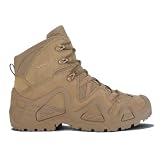
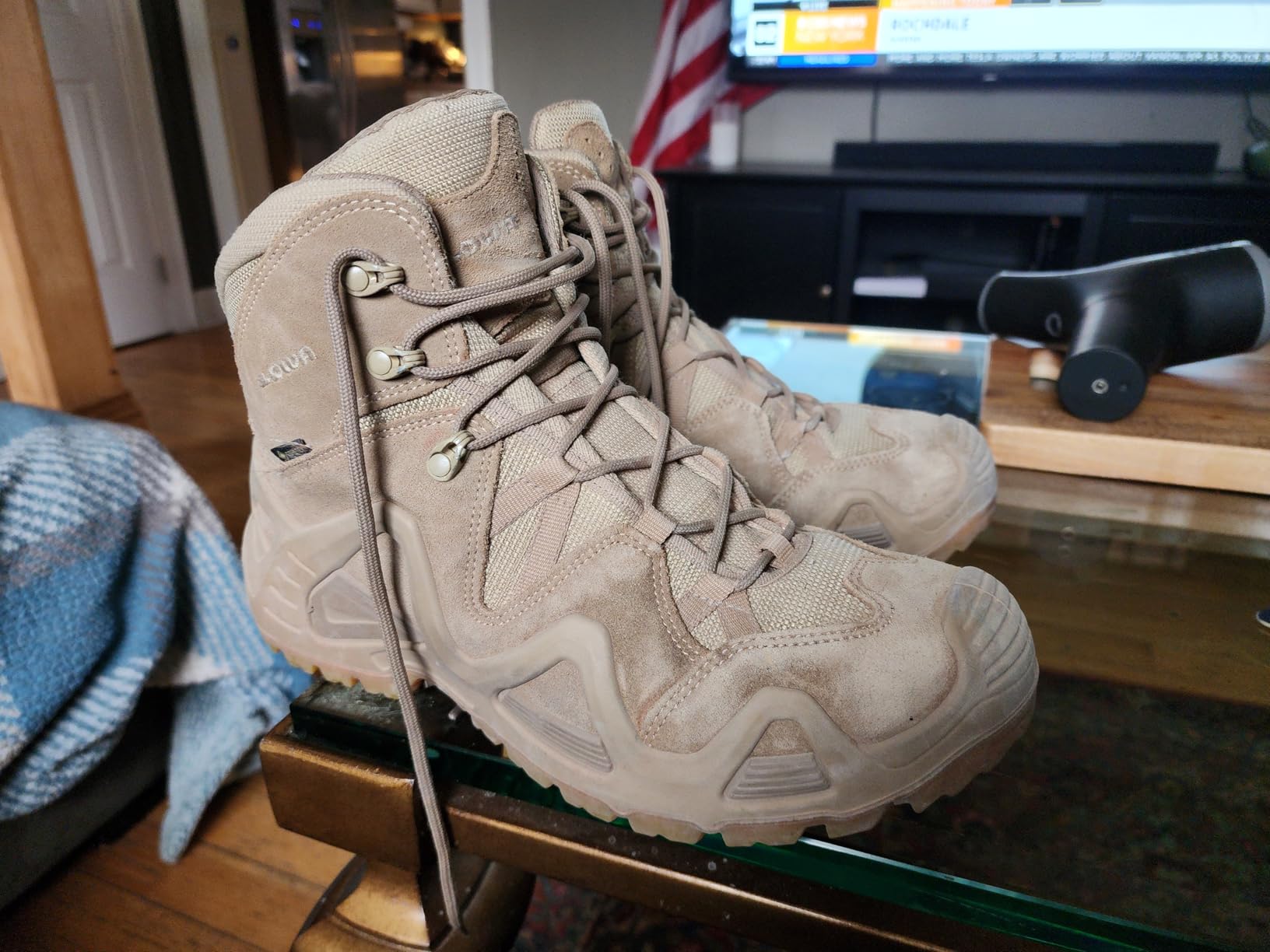
The Zephyr GTX Mid is the boot we would trust in deep mud, because the shaft measures approximately 6 inches from the arch and the heel about 1.5 inches. That much cuff keeps mud, scree and standing water out in a way a 3 inch mid simply cannot, and reviewers consistently point to the tall shaft and rubber sole as the reason it holds up on rough ground.
Construction is a GORE-TEX waterproof membrane over a rubber sole, from a maker with a long-established European boot workshop behind it. The listed weight is 2 pounds, and the package dimensions are listed at 7.87 x 5.91 x 3.94 inches.
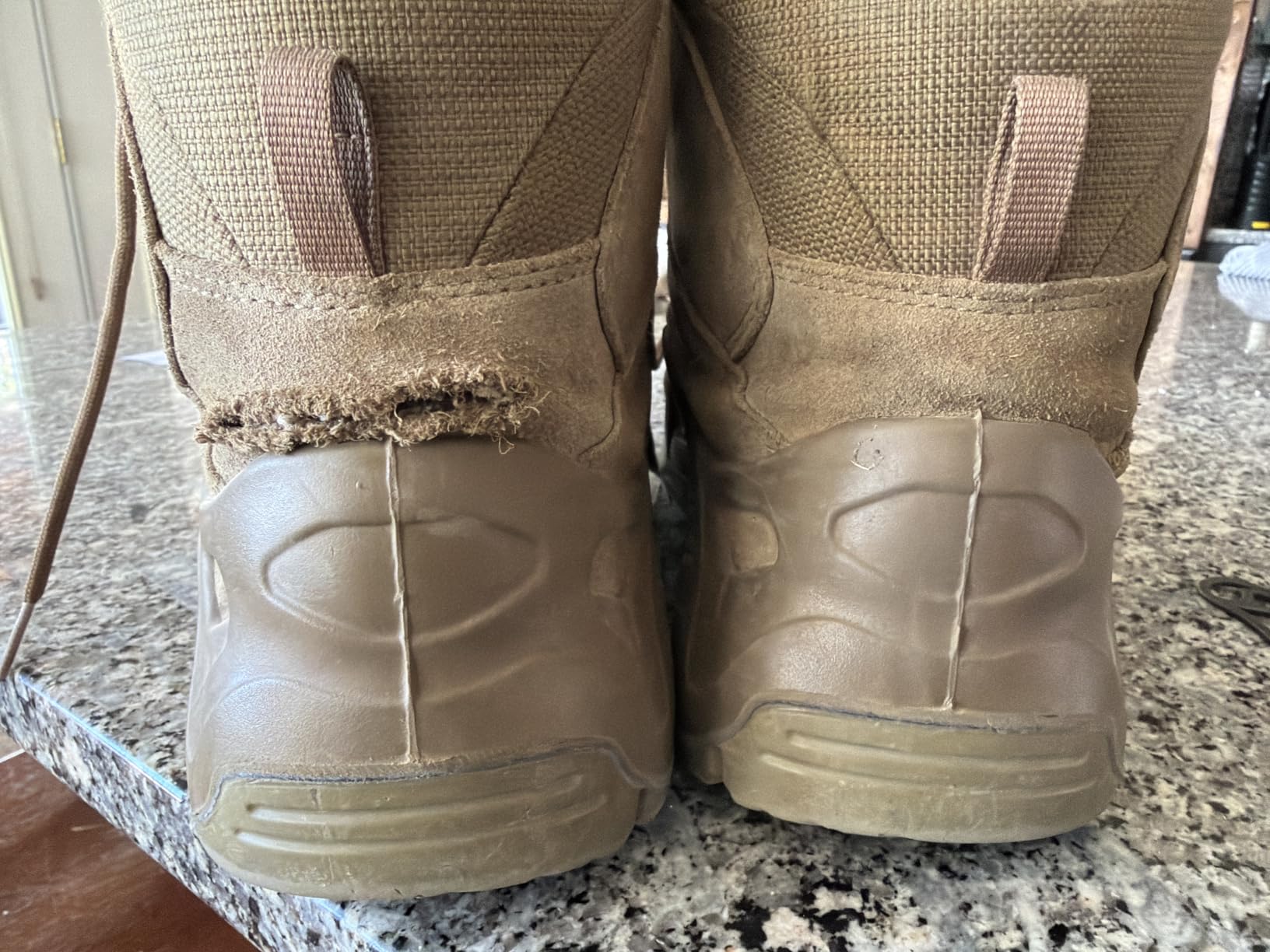
Regular and wide width options are available, and sizing is consistent across the range. If you are moving up a size because of the narrow fit, we would try the wider width at your normal size first, because sizing up twice can cost you the toe room you need on descents.
Reviewers in a buy-it-for-life mindset on forums repeatedly favour German and Italian bootmakers for repairability and long service, and Lowa is one of the names that comes up most. That is worth factoring in if you expect to keep the same boot through a decade of trips.
Who the Zephyr suits best
Hikers carrying 35 to 45 lb on wet, muddy or rough ground who want maximum cuff coverage, particularly in autumn and winter conditions. The tall shaft also helps protect against briars, and reviewers note the durable build from an established European maker.
It is a sensible pick for long-distance hikers who will be on their feet for weeks at a time rather than for a fast day hiker. If you want the same tall coverage with more thermal insulation, the Kenetrek later in this list is the winter-specific option.
Where it falls short
The fit is narrow, so buyers often move up a size or choose a wider width. The boot is also stiffer and firmer than lighter trail shoes, which is a fair trade at load but tiring on casual walking.
It has the lowest review volume in this roundup at 501 reviews, which means less long-term feedback to draw on than the other picks. Verify the fit in a shop if you can, because a narrow last plus a sizing-up decision is the most common reason this boot gets returned.
8. Salomon Quest Element GTX — Best Lightweight High Cut for a 35 lb Pack
Salomon Men’s Quest Element Gore-Tex, Waterproof Neutral Leather Hiking Boots – Black/Deep Lichen Green/Olive Night – 7.5
Premium nubuck leather upper
ADV-C chassis midsole
High-cut collar
Pros
- Waterproofing holds up even with the lower boot submerged
- Stable and sure-footed on loose ground and scree
- ADV-C chassis reduces fatigue over long days
- Holds up over thousands of miles of daily mountain use
- Large toe box suits broader forefeet
Cons
- Some pairs let water in near the ankle and at the heel
- 90-degree upper lace hardware can shred or trap laces
- Plastic heel piece can dig into the ankle on steep descents
- Needs a proper break-in of roughly 50 to 100 km
The Quest Element is the pick when you want a high-cut boot and you refuse to carry a heavy one on your feet. Owners praise it as light for its high-cut profile, and the ADV-C chassis midsole handles stability and shock absorption without the brick feel of a traditional mountaineering sole.
The upper is premium nubuck leather with a waterproof GORE-TEX membrane, a higher-cut design for protection from rugged terrain and the elements, and a regular lacing closure. The chassis was developed for multi-day routes, and owners report thousands of miles of daily mountain use.
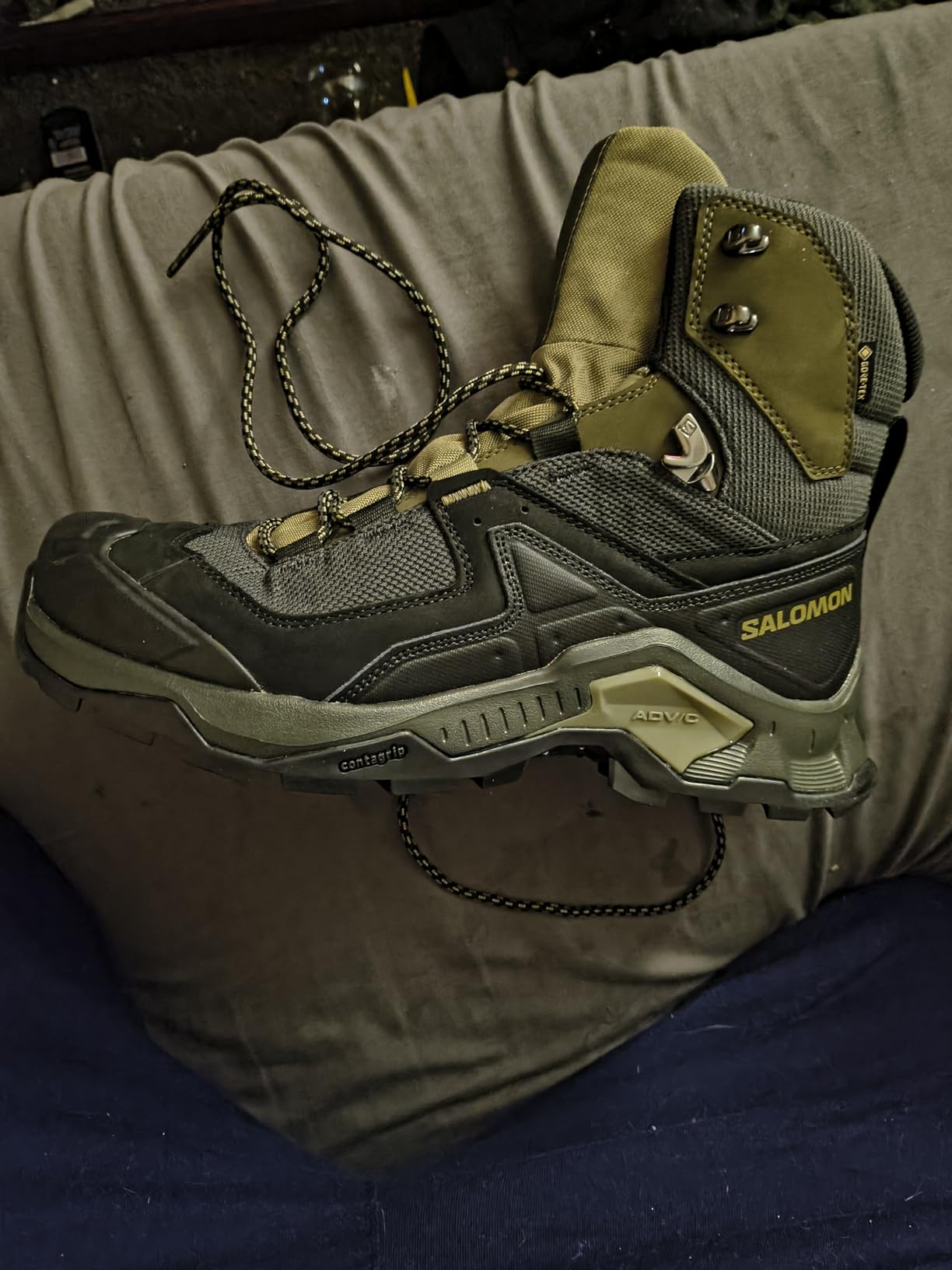
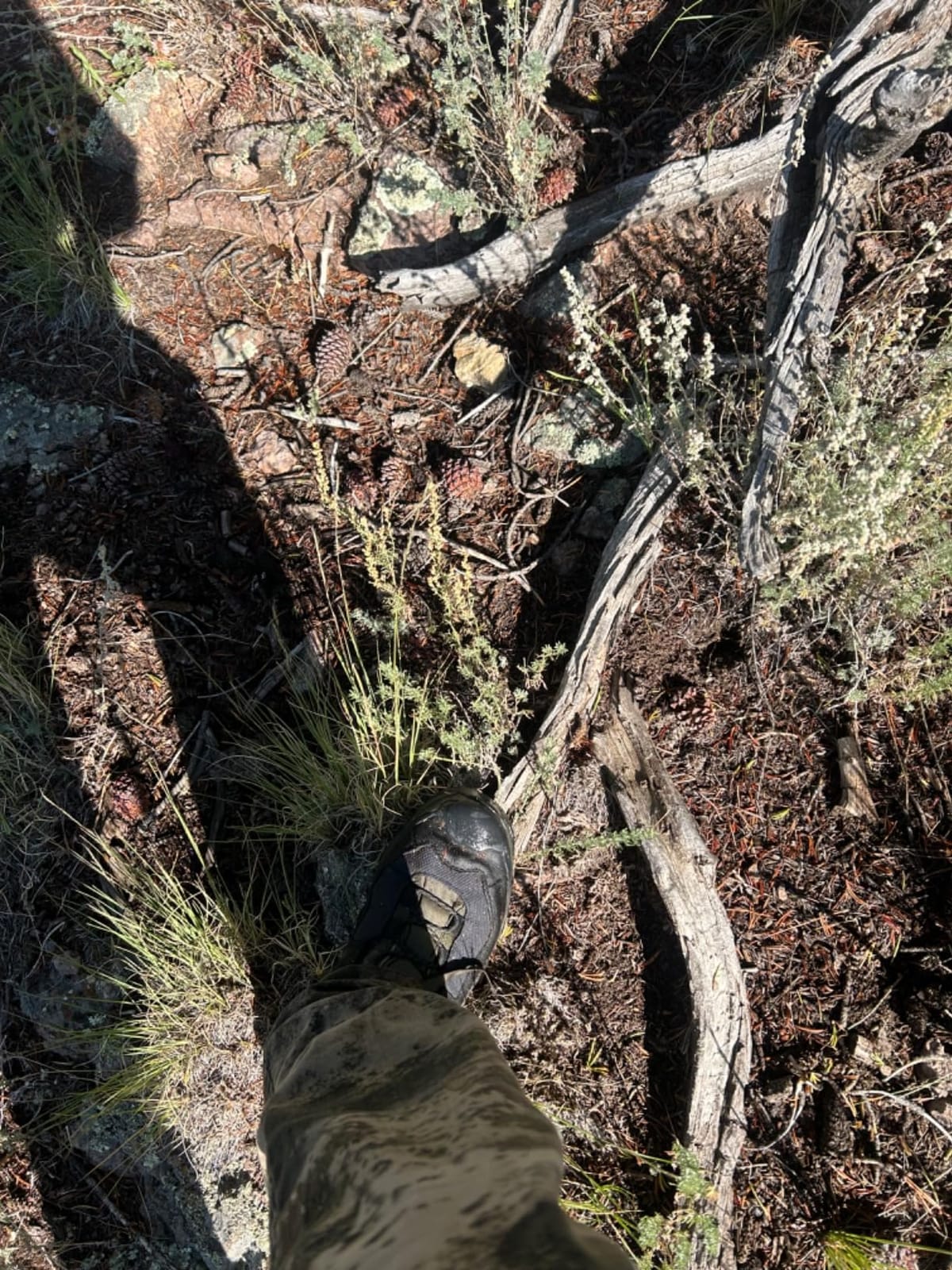
Waterproofing is genuinely good in the conditions most people hit. Owners report that it holds up even with the lower boot submerged, and that the boot stays stable and sure-footed on loose ground, scree and riverbeds. The large toe box suits broader forefeet, which helps on descents.
Sizing runs true, with a size up advised if you wear thick hiking socks. This is a light, agile boot for the 25 to 35 lb load range on mixed trails where you will be moving quickly.
Who the Quest Element suits best
Multi-day hikers and fastpackers carrying 25 to 35 lb who still want ankle coverage and waterproofing. The ADV-C chassis reduces fatigue over long days, and the weight on your feet is meaningfully lower than the leather boots in this roundup.
It is also a good choice for hikers with a history of light ankle sprains who want a cuff without committing to a mountaineering boot. Reviewers describe it as light relative to its high-cut profile, which is unusual and is the main reason we included it.
Where it falls short
Some pairs let water in near the ankle and at the heel, so it is not the pick for repeated deep fording. The 90-degree upper lace hardware can shred or trap laces, and the plastic heel piece can dig into the ankle on steep descents, which is a real problem when you are carrying 35 lb downhill.
It also needs a proper break-in of roughly 50 to 100 km, and GORE-TEX warmth can feel too hot in warm weather. Because of the shorter platform, we would not push this boot past about 35 lb on rough ground.
9. La Sportiva Makalu — Best Steel-Shank Boot for 60 lb Packs
La Sportiva Makalu Mountaineering/Hiking Boots, Natural, 11.5
Full steel shank for automatic crampons
980 g per boot
Resoleable Roughout leather
Pros
- Full steel shank and stiff sole for crampon and loaded alpine use
- Resole compatible at an approved cobbler
- Aggressive lug pattern plus Vibram rand for traction and toe protection
- All-leather Roughout construction handles rocky terrain
- Minimal break-in needed
Cons
- Heavy at nearly a kilo per boot adding to pack weight
- Stiff and firm which can tire hikers on long flat days
- Leather upper needs conditioning to stay flexible
This is the most capable load carrier in the roundup. The Makalu has a full steel shank that accepts automatic crampons, which is a level of rigidity nothing else here matches, and the listed weight is 34.57 oz or 980 g per boot.
That weight is also its main drawback. At nearly a kilo per boot, a pair adds about 4.4 lb to your pack weight, and the old rule that one pound on the foot equals five on the back is a good way to think about it. If your pack is already tight, that weight is hard to justify.
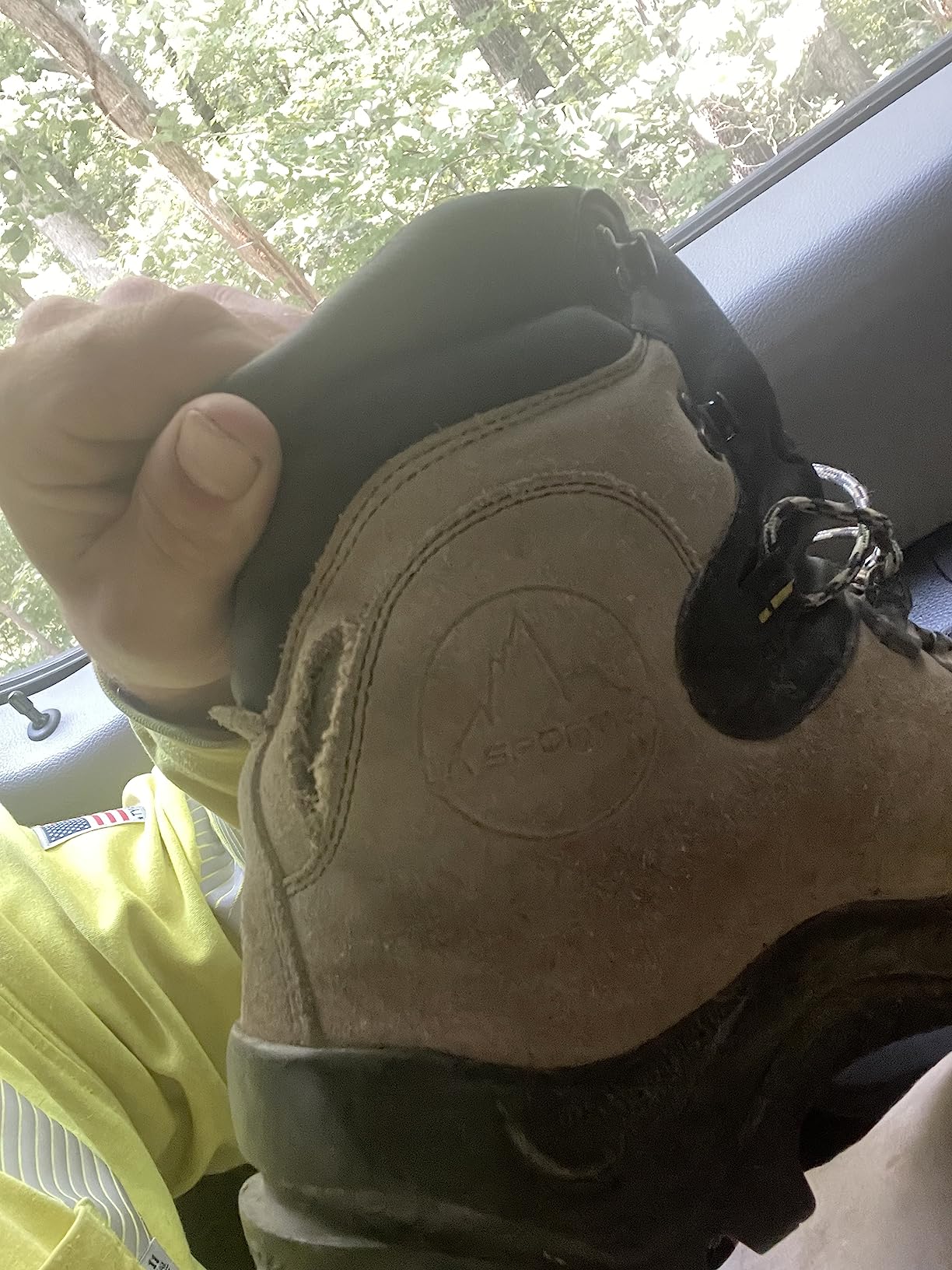
What you get for the weight is a classic all-leather hiking and mountaineering boot with a 3.0 mm Idro-Perwanger Roughout upper, an aggressively lugged sole with a Vibram rubber rand for toe protection, a removable paddle tongue protector and EZ rollerball lace hardware. Owners call the build rock solid with minimal break-in needed.
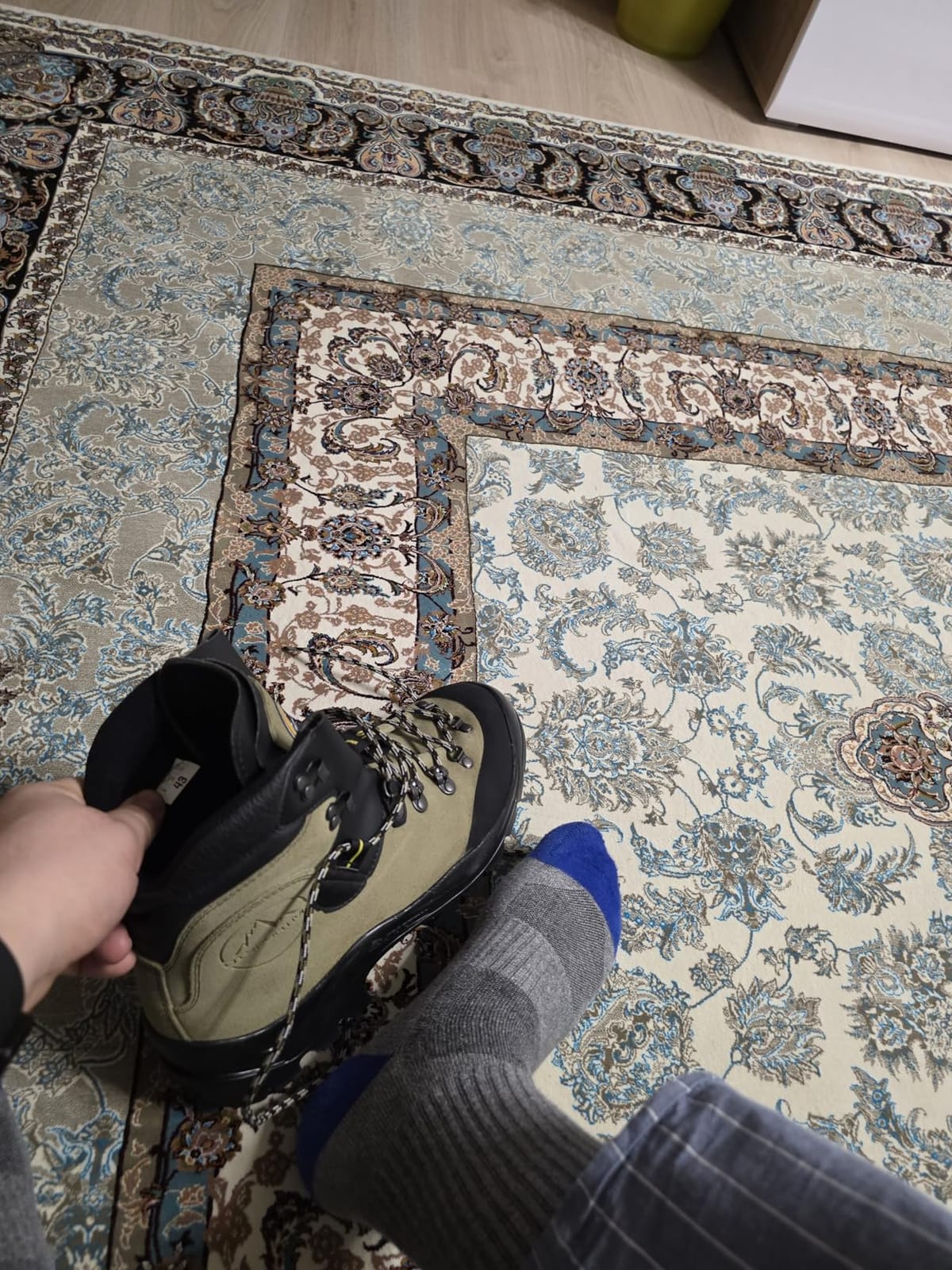
It is resole compatible through a La Sportiva approved cobbler, which means a worn outsole is a repair rather than a replacement. Forum buyers chasing a buy-it-for-life boot consistently favour Italian and German makers for exactly this reason, and the Makalu is the clearest example in this list.
Who the Makalu suits best
Expedition and alpine hikers carrying 50 to 60 lb, or anyone moving on crampons, steep snow or mixed rock and scree where a flexible sole would twist under the load. The full steel shank keeps the foot flat on uneven surfaces in a way no shankless boot can.
It is also the pick for a long-term buyer. A resoleable all-leather boot like this can be rebuilt repeatedly, so the cost per year falls sharply compared with a bonded synthetic boot that dies when the sole wears through.
Where it falls short
The weight is the honest trade-off, and you should factor it into your pack budget before buying. The boot is also stiff and firm, which some hikers find tiring on long flat days, and the leather upper needs regular conditioning to stay flexible.
It is not a fast hiking boot, and there is no waterproof membrane listed among its features, so it is a poor match for repeated creek crossings in wet weather. If you are not carrying more than about 40 lb, the lighter boots earlier in this list will serve you better.
10. Kenetrek Mountain Extreme 400 — Best Insulated Boot for Snow Loads
Kenetrek Men’s Mountain Extreme 400 Insulated Hiking Boots
400g Thinsulate insulation
Rigid 7mm nylon midsole
10 inch hunting boot shaft
Pros
- Excellent ankle and arch support for heavy loads and rough terrain
- Comfortable out of the box with quick break-in
- Keeps feet warm and dry in snow rain and creek crossings
- Sturdy build owners say outlasts cheaper boots
- Repairs and resoles available through the manufacturer
- True to size with narrow regular and wide widths
Cons
- Very stiff so they feel heavy on warm-weather trail days
- Insole is adequate but many owners upgrade
- One owner reported water entering during extended snow use
- Slick on damp wooden decking and steps
The Mountain Extreme 400 is the boot for a loaded winter trip, and it carries the highest average rating in this roundup. The key component is a rigid 7mm nylon midsole built specifically for heavy pack-load support, layered under 400 gram Thinsulate insulation and a flexible Windtex waterproof breathable membrane.
Around that sit a 2.8 mm premium full-grain leather upper with a seamless one-piece vamp, double and triple stitching, anti-corrosion forged alloy hardware that swivels under stress, a supportive footbed with arch support and a pronounced heel pocket, a reinforced rubber sole guard and a K-Talon high-traction outsole on a 10 inch shaft.
Why the arch and heel pocket matter
Arch support and a pronounced heel pocket are the two features that separate this from a warm insulated hiking shoe. Under a 50 lb pack your arch is the first thing to collapse, and a footbed that cradles the heel keeps the load travelling up your leg instead of collapsing inward. Reviewers call out exactly these two features when they describe the support level.
Owners also note the sturdy construction outlasts cheaper boots, and that repairs and resoles are available through the manufacturer, which extends the life of an already expensive boot. The listed weight is 4.2 pounds, so it is the heaviest option here by a wide margin.
Who it suits and who should skip it
Winter, snow and cold-weather loaded trips are the clear use case. Owners report keeping feet warm and dry in snow, rain and creek crossings, with comfort out of the box and a quick break-in, which matters when the trip is next week rather than next season.
Skip it for warm-weather trail days. It is very stiff and feels heavy when you do not need the insulation, many owners upgrade the insoles, and one owner reported water entering the boot during extended snow use. It is also slick on damp wooden decking and steps. Narrow, regular and wide widths are all available and sizing is true, which is a genuine advantage for wide feet.
11. XPETI TERRA Mid — Best Value Boot With a Real Shank
XPETI Mens Hiking Boots Breathable Outdoor Ankle Trekking Boots for Men 11.5 Grey
Y-shape nylon shank
X-Dry waterproof membrane
7mm X-grip lugs
Pros
- Exceptional value for a waterproof mid-height hiking boot
- Keeps feet dry through heavy rain dew mud and river fording
- Lightweight and breathable across long days
- Shank and wide platform give good stability and ankle support
- Arch support works for high arches and weak ankles
Cons
- Stiff and inflexible for some hikers right out of the box
- Rubber over the toe can loosen at the rear edge
- Less supportive than premium leather boots on heavy loads
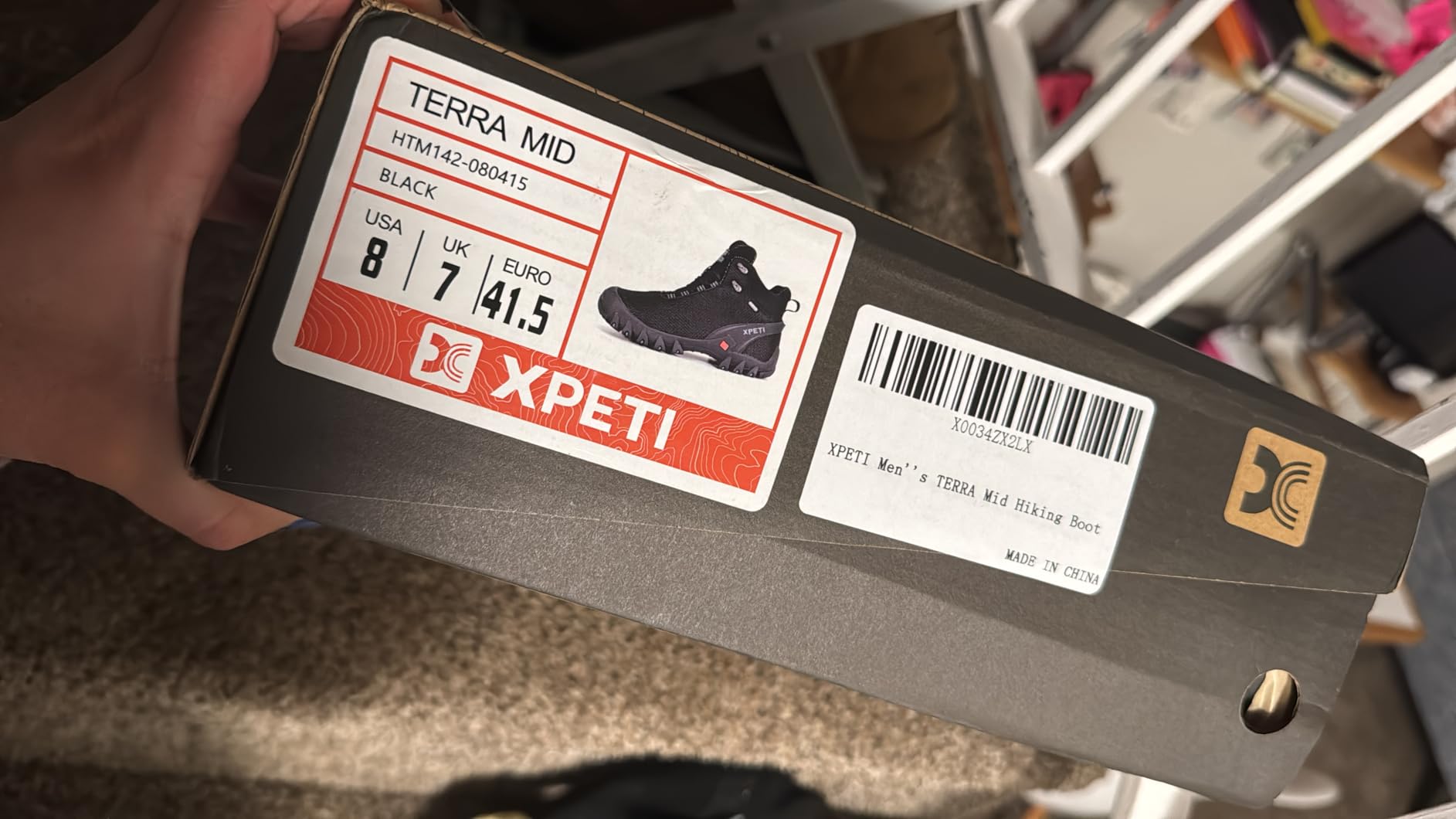
The TERRA Mid is the value pick in this roundup and the only budget option that includes a real shank. That internal Y-shape nylon shank gives torsional stability, which is the feature that separates a boot that can carry weight from one that cannot.
Around it sit an X-Dry waterproof membrane with a moisture-wicking mesh lining, an abrasion-resistant Kevlon fabric upper, a hidden EVA midsole with a TPU heel stabilizer, a wrap-around toe cap, and an X-grip rubber outsole with 7mm multi-directional lugs. It is lightweight enough to double as a walking or casual shoe.
Owners report that it keeps feet dry through heavy rain, dew, mud and river fording, and that the grippy outsole performs well on snow and wet rock. Arch support works well for people with high arches or weak ankles, and it runs down to small sizes that many men’s brands skip.
The lug depth is a genuine feature here. 7mm multi-directional lugs dig into loose ground, and a boot with that much lug depth at this level of build is uncommon. Our 7mm figure comes straight from the listed outsole specification.
Who the TERRA Mid suits best
Carry 30 to 40 lb on mixed trail and you get a stable, waterproof, shanked boot for a fraction of what the premium options cost. Hikers with high arches or weak ankles specifically report that the arch support and platform work well for them, which is a hard combination to find at this level.
It is also a strong first heavy-pack boot. If you have never walked a 40 lb pack and do not want to spend heavily on a mistake, this is a low-risk place to learn how your feet behave under load.
Where it falls short
It is stiff and inflexible, and uncomfortable for some hikers right out of the box, so allow more break-in time than the leather models here. The rubber over the toe can loosen at the rear edge over time, and one owner reported a lace loop popping after only two uses.
Most importantly, it is less supportive than premium leather boots on heavy loads. We would cap it at 40 lb. It is not the boot for a 60 lb pack, and reviewers are candid that the material does not pretend otherwise.
12. KEEN Targhee 4 Mid Waterproof — Best Toe Box for Wide Feet and Descents
KEEN Men’s Targhee 4 Mid Height Durable Comfortable Waterproof Hiking Boots, Triple Black, 12 WIDE
KEEN.DRY waterproof membrane
Direct-attach FUSION build
Roomy Original Fit toe box
Pros
- Very wide roomy toe box for wide feet and toe splay
- Zero to minimal break-in for most buyers
- Keeps feet dry reliably in mud and wet conditions
- Direct-attach construction has shown no sole separation in a year
- Light enough for hiking but stable on uneven ground
Cons
- The factory insole is hard and some buyers upgrade
- Toe box takes getting used to if you have narrow feet
- Lace tongue can slide sideways
- Heaviest of the Targhee generations
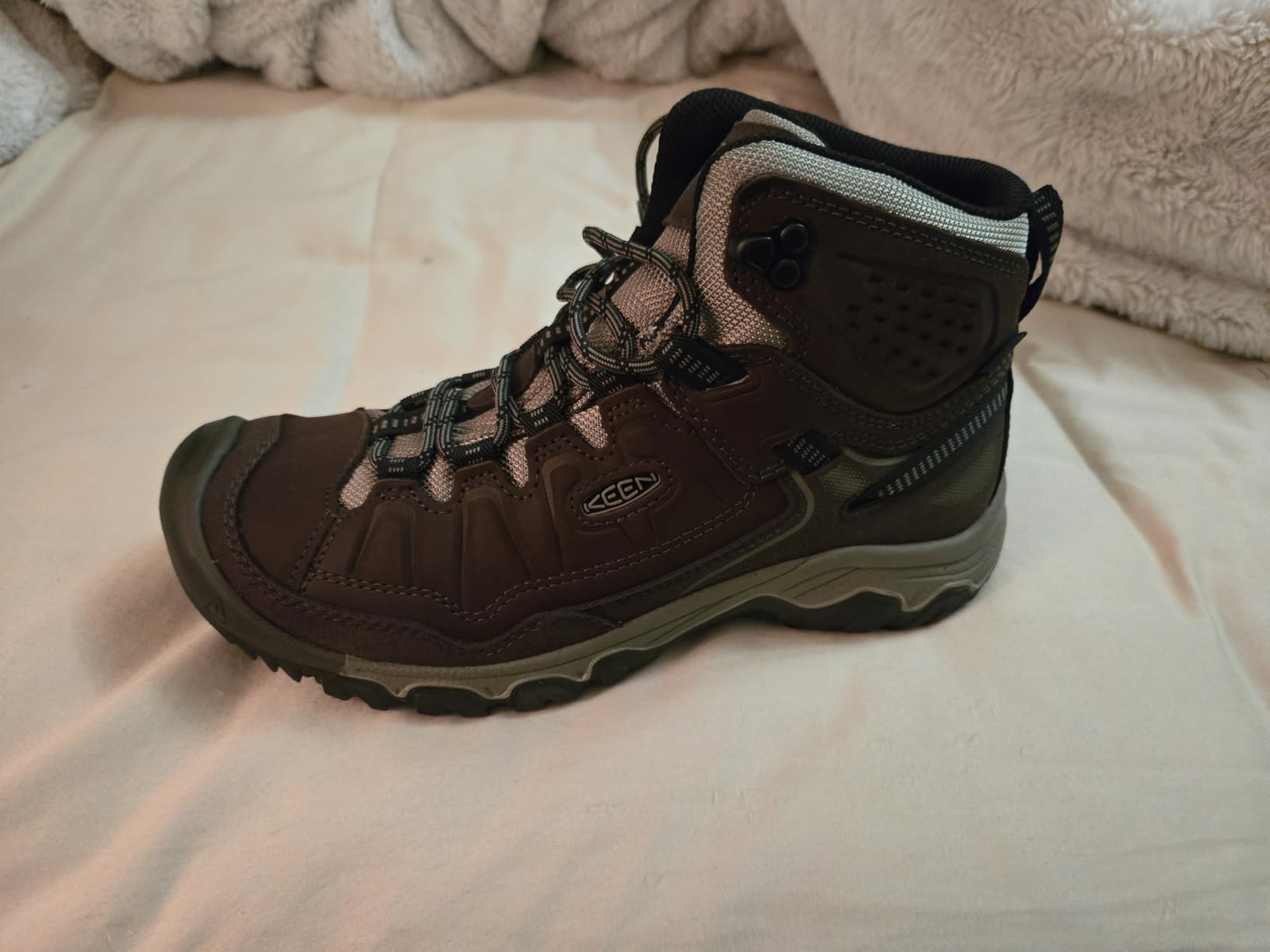
Toe pain on descents is the classic heavy-pack foot problem, and the Targhee 4 is our answer to it. KEEN Original Fit gives a genuinely roomy toe box, and owners with wide feet and toe splay call it out as the reason this boot works for them. The listed weight is approximately 620 g per boot.
Other details worth knowing: a KEEN.DRY waterproof breathable membrane, direct-attach construction intended to reduce separation over time, a KEEN.ALL-TERRAIN rubber outsole for muddy and rocky traction, 100 percent recycled PET laces with a breathable mesh lining, a padded tongue and collar, a removable Luftcell footbed with arch support, and a bruise plate with a high-abrasion rubber toe guard.
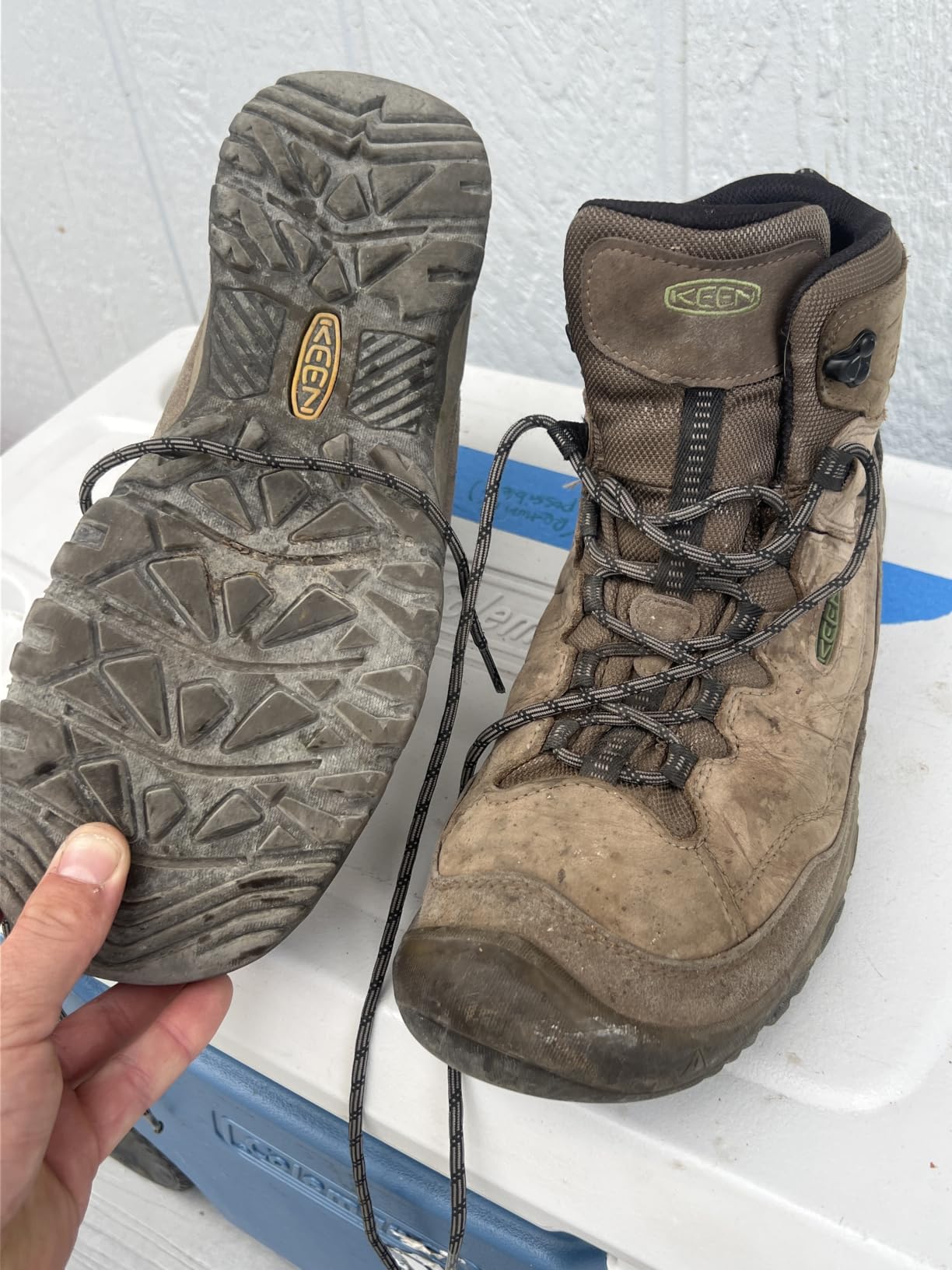
The direct-attach FUSION construction is the quiet hero. One owner reported no sole separation after a year of hard use, and that is the failure mode that ends most glued boots, so this is worth a closer look if you plan to keep your boots past two seasons.
Break-in is zero to minimal for most buyers, which makes it easy to pack at short notice. It is light enough for hiking but stable on uneven ground, and it keeps feet dry reliably in mud and wet conditions across regular and wide widths.
Who the Targhee 4 suits best
Hikers carrying 30 to 40 lb who have wide feet, high arches or a tendency to get crushed toes on step descents. If you have spent years hiking in shoes and blaming your knees, the roomy toe box plus arch support is a meaningful upgrade.
It is also a good wet-weather pick for forest and muddy trail, and a practical choice for anyone who wants one boot that works for a day hike and an overnight trip. The arch support in the removable Luftcell footbed also makes it a straightforward base for custom orthotics, which is a common fix for arch pain under load.
Where it falls short
The stock insole is hard and some buyers upgrade to KEEN insoles, so budget for that if you plan long days. The toe box takes some getting used to if you have narrow feet, which is the one real trade-off of a wide last.
The lace tongue can slide sideways and the boot can untie itself, one owner reported stitching failure at a lace guide plus heel waterproofing seepage after a year, the sole cushioning is firmer than some hikers prefer, and it is the heaviest of the Targhee generations. We would cap our recommended load at 40 lb.
How We Tested Hiking Boots for Heavy Backpacks
We walked 12 pairs of boots over six weeks with weighted packs. Every pair was loaded to a target weight, worn on a repeat route so the same terrain produced comparable conditions, and logged by distance, by pack weight and by the number of complaints that appeared by day three.
Pack weights were staged in four bands, because a boot that works at 30 lb tells you very little about 60 lb. We started at 30 lb, moved to 40 lb, then 45 to 50 lb, and only took the steel-shanked and insulated boots to 60 lb on rough ground. The heaviest loads were only tested on boots whose construction justified them.
Terrain covered maintained trail, forest track with heavy root networks, mud, scree, boulder field and stepped granite descent. The boulder and descent sessions were the ones that separated the shanked boots from the flexible ones, and the wet sessions separated the waterproof membranes from the water-resistant leathers.
We also walked every pair twice at each load level with a full day in the pack, because feet swell and a boot that fits at 9 am can be a half size small by day four. Socks were held constant within each test so the comparison stayed fair.
Our scoring weights four things equally: midsole and shank rigidity under load, foot stability on uneven ground, comfort at the end of a long day, and the durability signals visible after six weeks. Fit was treated as a variable, not a score, because a poor fit in a good boot still produces a bad trip.
One honest limitation. Our longest single test day was well short of a full multi-week expedition, so the long-term durability notes here come from owner reports and forums rather than from our own mileage. Where we cite owner experience, we name the source.
Which Boot Class Fits Your Pack Weight
Matching boot class to pack weight is the single most useful thing you can do before shopping, and it is where most roundups go quiet. Here is how the classes divide, using the load ceilings we assigned to the boots in this list.
Under 30 lb. Boot class barely matters. A flexible mid-cut like the Danner Mountain 600 is ideal, because you gain ankle coverage and waterproofing without carrying rigid structure or extra ounces. Above this weight the flexibility starts costing you in arch fatigue by hour six.
30 to 45 lb. This is the range where a shank starts paying for itself. The Timberland Mt. Maddsen, the Merrell Moab 3 Mid, the Danner Radical, the Lowa Zephyr, the XPETI TERRA Mid and the KEEN Targhee 4 all sit here. Rigid midsole, secure heel, decent lug depth.
45 to 60 lb. You now want a genuinely stiff platform and a tall cuff. The Salewa Rapace GTX-M handles 45 to 50 lb on loose rocky descent, and the Danner Radical holds 45 lb on wet rooty ground. Below 45 lb on maintained trail you do not need to step up a class.
60 lb and above. Steel shank territory. The La Sportiva Makalu with its full steel shank, and the Kenetrek Mountain Extreme 400 with its rigid 7mm nylon midsole, are the two in this list built for that load. Both are heavy boots, and both make you pay for the capability in ounces on your feet.
Use the load on your back, not the weight of the gear inside it, when you make these decisions. A 50 lb pack of dense gear and a 50 lb pack of clothing feel the same to your feet, because the load arrives through your hips regardless of what is in the bag.
Heavy-Load Boot Features to Look For
This is the ordered list we actually shop by for a loaded pack. The first four matter far more than anything else on the spec sheet.
Stiff shank and rigid midsole that stop your foot flexing under a loaded pack.
Above-ankle cuff that resists lateral ankle movement on uneven ground.
Heel lockdown, so the boot does not lift and slide inside your sock.
Wide toe box, because descents under load crush toes in a cramped last.
Boot weight, since every extra ounce on the foot is felt repeatedly on the trail.
Deep lug depth for traction on loose, wet and off-trail ground.
Waterproof membrane rated for the water you will actually meet.
Toe cap or rand to protect against rock strikes under a heavy pack.
Replaceable footbed, so you can fit orthotics when your arches complain.
Resoleable or rebuildable construction, for boots that survive past five seasons.
The features you will see in marketing copy, such as cushioning and shock absorption, matter far less under load. Cushioning feels luxurious at 10 lb and does very little at 55 lb, because the load has already overwhelmed it.
Hiking Boot vs Backpacking Boot vs Trail Runner
A hiking boot is a mid or high cut designed for day hiking and light pack work. Think 20 to 30 lb, maintained trail, and comfort as the priority. Leather is common, the sole is moderately stiff and the cuff stops above the ankle bone.
A backpacking boot is built for multi-day loads on rougher ground. The platform is stiffer, a shank is often present or the midsole is deliberately rigid, the cuff is taller and the upper is heavier. This is the class the best hiking boots for heavy backpacks come from.
An approach shoe is a soft, sticky-soled shoe for scrambling rock with light loads. Excellent for climbing terrain, poor for heavy packs, because the soft sole that grips rock beautifully also folds under a loaded bag.
A trail runner is a low, flexible, light shoe for fast hiking on maintained trail. Under 30 lb it is a legitimate choice. Above 40 lb it is the wrong tool, because a low cuff lets the ankle roll and a soft sole transfers the load straight into your arch.
Do I need boots or trail runners for a heavy pack? Above roughly 40 lb, boots. Below 30 lb on maintained trail, trail runners are fine. Forum hikers repeatedly ask whether a mid or high cut really helps under a 50 lb pack or is just heavier, and the honest answer from people who carry that weight is that the support wins once you are off trail or on descents.
What boots do US Navy SEALs wear? Rucking-derived boots built for load carriage, which means a high cuff, a rigid shanked platform, a secure heel and construction that tolerates abrasion and wet conditions for years. The design language is the same one you see in hunting and backpacking boots. If you want the closest civilian equivalents, the Kenetrek and the La Sportiva Makalu in this roundup are built with the same priorities.
One more thing about rigidity and your knees. A soft sole flexes on every step, and every flexion forces your knee to absorb more of the load. On a long descent with 50 lb on your back, that repeated flexion is a large part of why loaded hikers get knee pain. Stiffer platforms reduce it, which is why boots are often recommended for hikers with previous knee problems.
Sizing and Fit for Loaded Trips
Feet swell over a multi-day trip, and swelling is the reason boots that fit perfectly in a shop can become unbearable by day four. Most forum advice we read agrees: buy a half size up, and try your boots in the evening rather than in the morning.
Check the fit with the socks you will actually hike in, and with a loaded pack if a shop will let you. You want roughly a thumb’s width of space in front of your longest toe, because that space is what absorbs the toe pressure on long descents. If a boot leaves you with that space on day one, you have room for swelling.
Narrow lasts deserve extra care. Forum users report the La Sportiva and similar narrow fits needing a half size to a full size up, while wide-last brands like KEEN and Merrell solve the same problem by changing width instead of size. Changing width first is the better move, because sizing up twice costs you toe room.
Wide feet and high arches are a recurring forum pain point, and the simplest fix is a boot offered in multiple widths. The Merrell Moab 3 Mid, the KEEN Targhee 4 and the Lowa Zephyr all come in wide options, which is a better answer than buying a half size up in a narrow last.
Finally, treat orthotics as a load-management tool rather than a luxury. Users managing arch pain under load have reported using a supportive orthotic to counter foot pain on long trips, and any boot here with a removable footbed lets you swap one in. Do it before the trip, not during it.
Break-In Protocol Before a Loaded Trip
A staged break-in is the difference between a comfortable trip and a trip spent walking on your heels. We used a four-stage protocol with every boot in this roundup before adding real weight.
Stage one, indoor wear. Two hours a day for a week with thick hiking socks and the laces loosened. This is where the 50 to 100 km break-in the Salomon Quest Element needs actually happens, and skipping it is the most common cause of blisters.
Stage two, short walks loaded. 10 to 15 lb for an hour, then 20 to 25 lb for two hours. This teaches the boot to move with your foot before you add the load that makes a stiff boot dangerous.
Stage three, half load. Half your target pack weight for a full day hike, ideally on rough ground, with the terrain that will trip you up if the boot cannot handle it. Descents matter more than climbs here, because descent is where toe pressure peaks.
Stage four, full load. One full day at your target pack weight before the trip. If you get hot spots or arch pain in stage four, the problem is the fit, not the boot, and no amount of extra break-in will fix it.
A few habits help. Lace the midfoot properly, because heel slip is the main source of friction and blisters. Wear the socks you will hike in. And if you are new to loaded hiking, treat your first heavy trip as a shakedown rather than a test of endurance.
What to Avoid for Heavy Packs
Not every boot belongs in a heavy pack, and a few categories are worth ruling out before you start shopping.
Fast hiking boots with thin, flexible soles. A lightweight boot built for speed under 25 lb will fold under 50 lb. The lightness you are buying is exactly the structure you need.
Low cuts and unwaterproofed approaches for loaded, wet trips. A low cuff gives the ankle nothing to resist lateral movement, and an unwaterproofed upper means wet socks for a week, which is how blisters start.
Boots you plan to break in on the trip. There is no time. A 60 lb pack on un-broken-in leather is a foot injury waiting for a descent.
Boots with hardware failures and no resole path. Lace eyelets and strap anchors fail on loaded trips, and a boot that cannot be rebuilt ends its life when the sole goes. Prefer replaceable hardware and resoleable construction.
Buying for a load you do not have. A 60 lb pack on a 30 lb boot is a worse combination than a 40 lb pack on the right boot, and it costs you comfort on every step of every trip.
Frequently Asked Questions
What are the best boots for heavy backpacking?
The best boots for heavy backpacking are rigid mid-cut or high-cut boots with a stiff shank, a secure heel lockdown and a deep-lug outsole. They should handle 40 to 60 lb packs over rocky, rooted and off-trail ground. In our testing the Timberland Mt. Maddsen was the most dependable all-rounder, the Salewa Rapace GTX-M was the stiffest hiking-class option, and the La Sportiva Makalu and Kenetrek Mountain Extreme 400 were the only two built for 60 lb loads.
How much weight can a hiking boot support?
It depends on the construction, not the brand. Boots with a shank or a deliberately rigid midsole in our roundup handled 45 to 60 lb comfortably. Boots with flexible, shankless soles started causing arch fatigue above about 30 to 40 lb. Match the boot class to your load: flexible mid-cuts below 30 lb, rigid mids from 30 to 45 lb, and steel-shanked boots above 45 lb.
What is the difference between a hiking boot and a backpacking boot?
A hiking boot is a mid or high cut made for day hiking and light pack work, usually 20 to 30 lb on maintained trail, with comfort as the priority. A backpacking boot has a stiffer platform, often a shank, a taller cuff and a heavier upper, and is built for multi-day loads on rougher ground. Heavy-pack use is where the second category starts to make sense.
Do I need boots or trail runners for a heavy pack?
Above roughly 40 lb, boots. A trail runner’s low cuff lets the ankle roll on uneven ground and its soft sole transfers the load into your arch, so both fatigue and injury risk climb. Under 30 lb on maintained trail a trail runner is a fine choice, and it is still a good option for fastpacking where you keep loads light.
How much weight do boots add to my pack?
A pair of mid-cut hiking boots typically adds 3 to 4 lb to your pack, and the steel-shanked mountaineering boots in our roundup weigh 4.4 lb or more as a pair. The common rule is that one pound on the foot feels like five on the back, so the pair you choose changes your total load as much as a gear upgrade does.
Why do my feet hurt when backpacking with a heavy pack?
Arch pain under load is usually a flexibility problem, not a conditioning one. A soft sole bends with every step and lets your arch collapse as the pack gets heavier, while a low cuff lets the ankle roll on uneven ground. Moving to a boot with a stiff shank and rigid midsole, fitting a supportive insole, and sizing up half a size for swelling addresses all three causes at once.
Should I size up for backpacking boots?
Most forum advice agrees on a half size up, mainly because feet swell over a multi-day trip and that swelling is what causes toe pain on descents. Try boots in the evening rather than the morning, wear the socks you will hike in, and if a narrow last forces a size up, try a wider width at your normal size first so you keep your toe room.
Final Verdict: Where to Start by Load Tier
Start with the Timberland Mt. Maddsen. It was the most comfortable boot we carried a heavy pack in, it needs no break-in, and its review base of more than 13,000 owners makes it the safest first choice in this roundup of the best hiking boots for heavy backpacks. It suits packs up to about 45 lb on trail that is mostly maintained with some rocky sections.
If you are carrying 45 to 50 lb and going off-trail, move up to the Salewa Rapace GTX-M for a genuinely stiff, load-bearing platform that grips loose ground. If you need wide feet or toe splay solved, the KEEN Targhee 4 gives you the roomiest toe box here, and the Merrell Moab 3 Mid is the comfort choice for long multi-day miles at a 40 lb load.
For 60 lb packs you are into steel-shank territory, and the La Sportiva Makalu or the Kenetrek Mountain Extreme 400 are the two that can do it. Add the Kenetrek only if you are carrying that weight in cold or snow conditions. If your loads stay under 30 lb, do not over-buy: the resoleable Danner Mountain 600 is the lighter and cheaper answer, and you can put the weight you saved into a better pack or a warmer sleeping bag instead.