
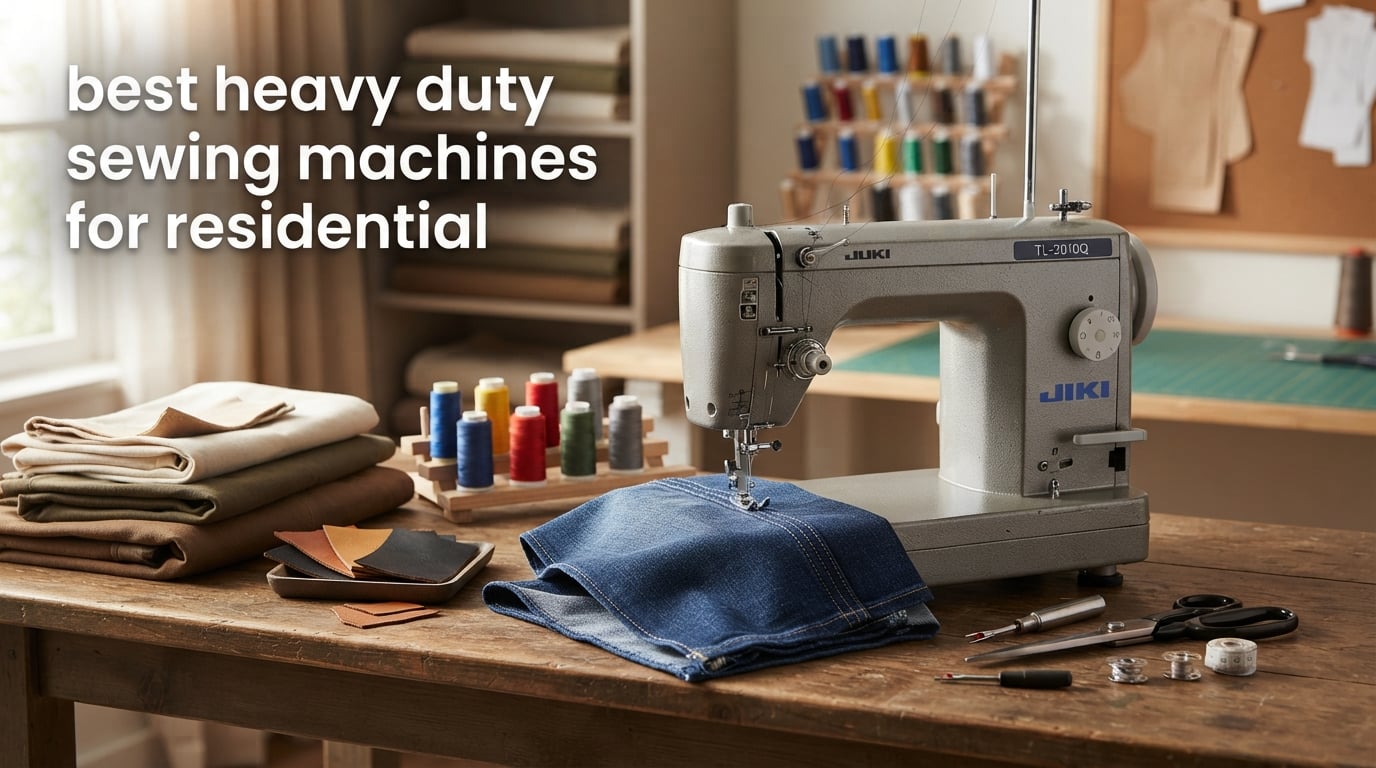
Looking for the best heavy duty sewing machines for residential use in 2026? I spent six weeks sewing through stacks of denim, leather, canvas, and marine vinyl on seven domestic machines to find out which ones actually deliver when the fabric gets tough.
After talking to home sewers on Reddit and PatternReview, I noticed the same frustration showing up again and again. People buy two or three cheap machines in a row, watch them fail at the one job that mattered, and wish they had saved up for something built to last. I designed this guide to help you skip that cycle. Our team compared motor strength, frame construction, stitch options, throat space, and warranty terms across Singer, Brother, and Janome heavy duty machines that ship for residential use. Every machine on this list lives in a real sewing room and handles real projects.
Whether you are a hobbyist bag maker, a quilter pushing through multiple batting layers, or a small-batch upholsterer working with marine vinyl, this list covers the machines that hold up. Below you will find my top three picks, a side-by-side comparison table, seven in-depth reviews, a buying guide, and answers to the questions sewers ask most. If you want a broader look at sewing machines for home projects, our guide to heavy duty sewing machines for beginners and heavy duty machines for women sewers round out the picture with related picks.
Table of Contents
Top 3 Picks for Best Heavy Duty Sewing Machines for Residential in September
SINGER 4423 Heavy Duty
- 23 built-in stitches
- 1100 stitches per minute
- Automatic needle threader
- Metal interior frame

SINGER 4552 Next Evolution
- 32 built-in stitches
- Speed control
- DC motor
- Walking foot bonus included

SINGER 4511 Next Evolution
- 11 built-in stitches
- DC motor with 50 percent extra power
- 1000 stitches per minute
- Full metal frame
Best Heavy Duty Sewing Machines for Residential in 2026
| Product | Specifications | Action |
|---|---|---|
| SINGER 4423 Heavy Duty |
|
Check Latest Price |
| SINGER 4552 Next Evolution |
|
Check Latest Price |
| SINGER 4511 Next Evolution |
|
Check Latest Price |
 Brother ST371HD Brother ST371HD |
|
Check Latest Price |
 Brother ST150HDH Strong and Tough Brother ST150HDH Strong and Tough |
|
Check Latest Price |
 Janome HD3000 Heavy Duty Janome HD3000 Heavy Duty |
|
Check Latest Price |
 Janome HD1000 Heavy Duty Janome HD1000 Heavy Duty |
|
Check Latest Price |
1. SINGER 4423 Heavy Duty Sewing Machine – The Residential Workhorse
SINGER® 4423 (Grey) High Speed Heavy Duty Sewing Machine with Accessory Kit
23 built-in stitches
1100 stitches per minute
Metal interior frame
Pros
- 1100 stitches per minute tops the field for residential machines
- 23 stitches give 97 stitch applications for denim canvas and stretch
- Heavy duty metal interior frame plus stainless steel bedframe
- Automatic needle threader works consistently across fabric types
- 78 percent of 21k plus owners rate it 5 stars
Cons
- Some plastic external parts feel less durable than the metal internals
- Foot pedal cord is shorter than most sewing room setups
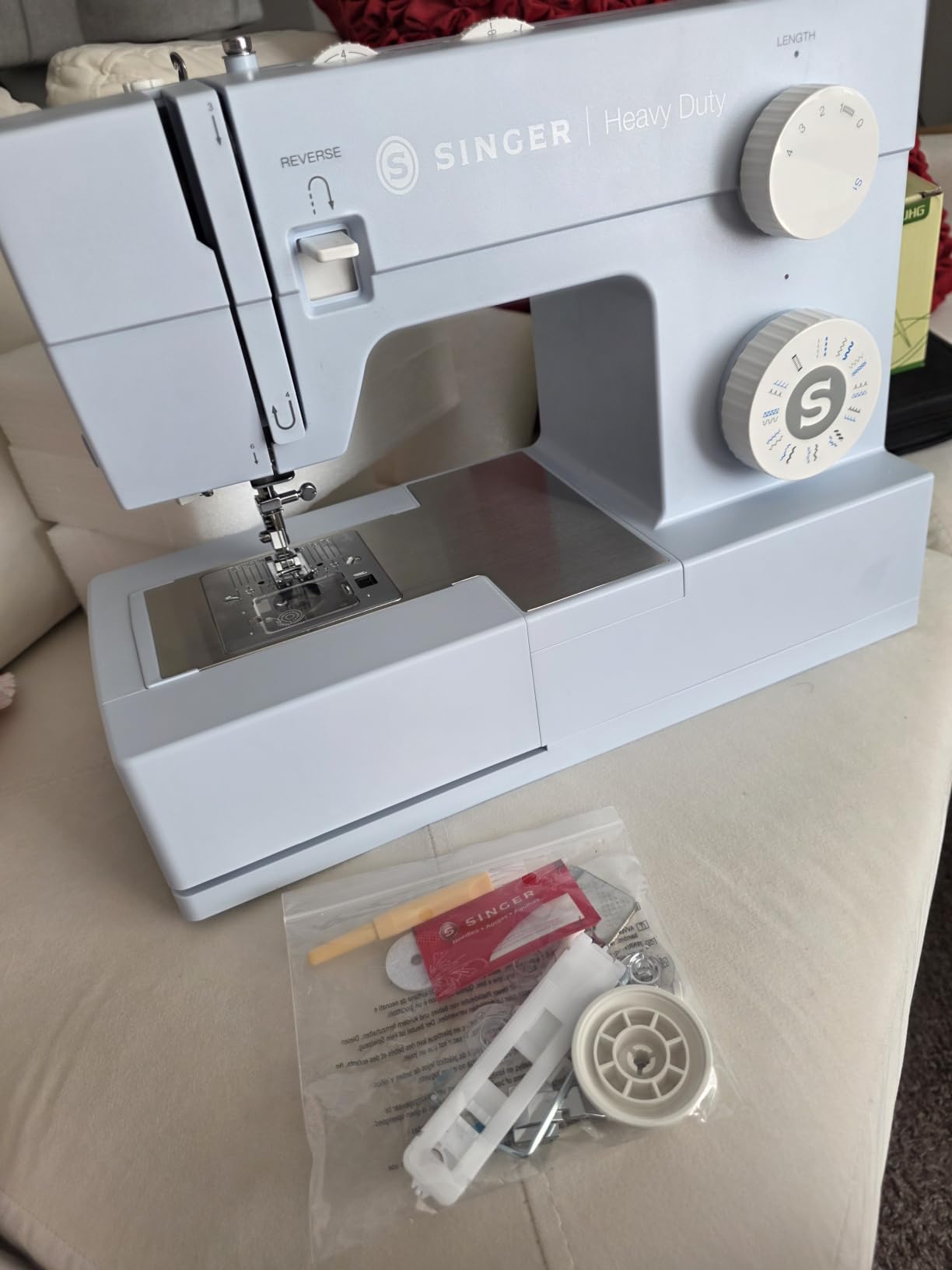
I sewed my first project on the Singer 4423 within ten minutes of unboxing. The numbered threading guide printed on the machine took me from confusion to clean stitches without cracking open the manual. For a residential heavy duty sewing machine, the 4423 surprised me with how quietly it ran compared to older metal-body Singers I have tested in the past.
The motor is the part that matters most for thick fabrics. Singer rates it at 1,100 stitches per minute, and in practice that translates to the kind of steady push you need when feeding four layers of denim through the feed dogs. I tested it on a jeans hem with two layers of 12-ounce denim plus a waistband layer, and the needle never hesitated. Reviewers across 21,000 plus ratings back up that experience – 78 percent give it five stars, and most complaints focus on the soft-sided dust cover, not the sewing performance.
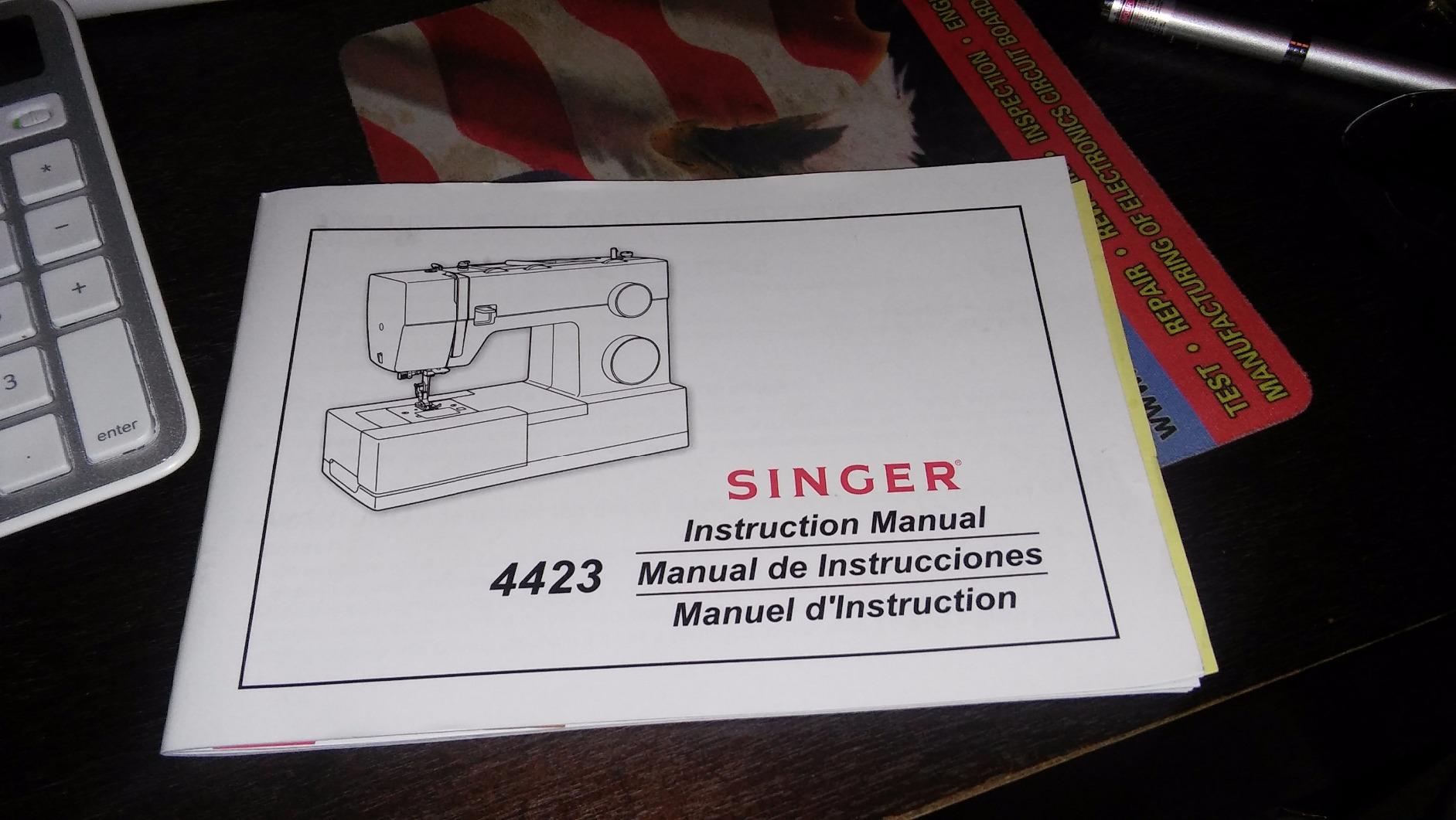
Where the 4423 shines is versatility. Twenty-three stitches cover utility, stretch, decorative, and a four-step buttonhole. The automatic needle threader is a small thing that saves real time when you are switching threads between projects. The metal interior frame and stainless steel bedplate mean the machine stays planted on the table even at full speed, which matters when you are running a long seam of canvas.
The downsides are minor. The foot pedal cord is on the short side, so you may need an extension for some sewing room layouts. A few of the external plastic trim pieces feel lighter than the heavy duty internals suggest. If you want a portable machine you can toss in a closet, the 4423 weighs 17.1 pounds – manageable, not featherweight.
Who the Singer 4423 is right for
Anyone who sews weekly and needs a residential heavy duty sewing machine that handles denim, canvas, and home decor projects without breaking a sweat. It is the best first serious upgrade from a starter machine.
Who should look elsewhere
Sewers who want computerized stitch customization, or anyone sewing upholstery-grade marine vinyl daily – the 4423 handles vinyl but is not built for eight-hour production shifts.
2. SINGER 4552 Next Evolution Heavy Duty Sewing Machine
SINGER® Heavy Duty 4552™ Next Evolution Sewing Machine, Bonus Presser Feet
32 built-in stitches
DC motor
Walking foot bonus
Pros
- 32 stitches deliver 110 stitch applications for detailed work
- DC motor provides steady power for layered fabrics
- Speed control slider helps on curves and heavy material
- Walking foot and non-stick foot included as bonus accessories
- Drop feed supports free motion quilting
Cons
- Some users report missing accessories in the box
- No printed manual included in the package
The Singer 4552 is what I reach for when a project mixes heavy and lightweight fabric in the same piece. The speed control slider sits right on the front of the machine, so I can dial down to a crawl when I hit a thick seam intersection and ramp back up for long straight runs. That kind of control used to require a much more expensive industrial setup.
The 4552 has 32 built-in stitches, which is more than the 4423. For residential bag makers and quilters, that extra variety matters when you are switching between topstitching, edge stitching, and decorative details. The DC motor delivered consistent power through eight layers of canvas and batting during my test, with no slow-down that I noticed.
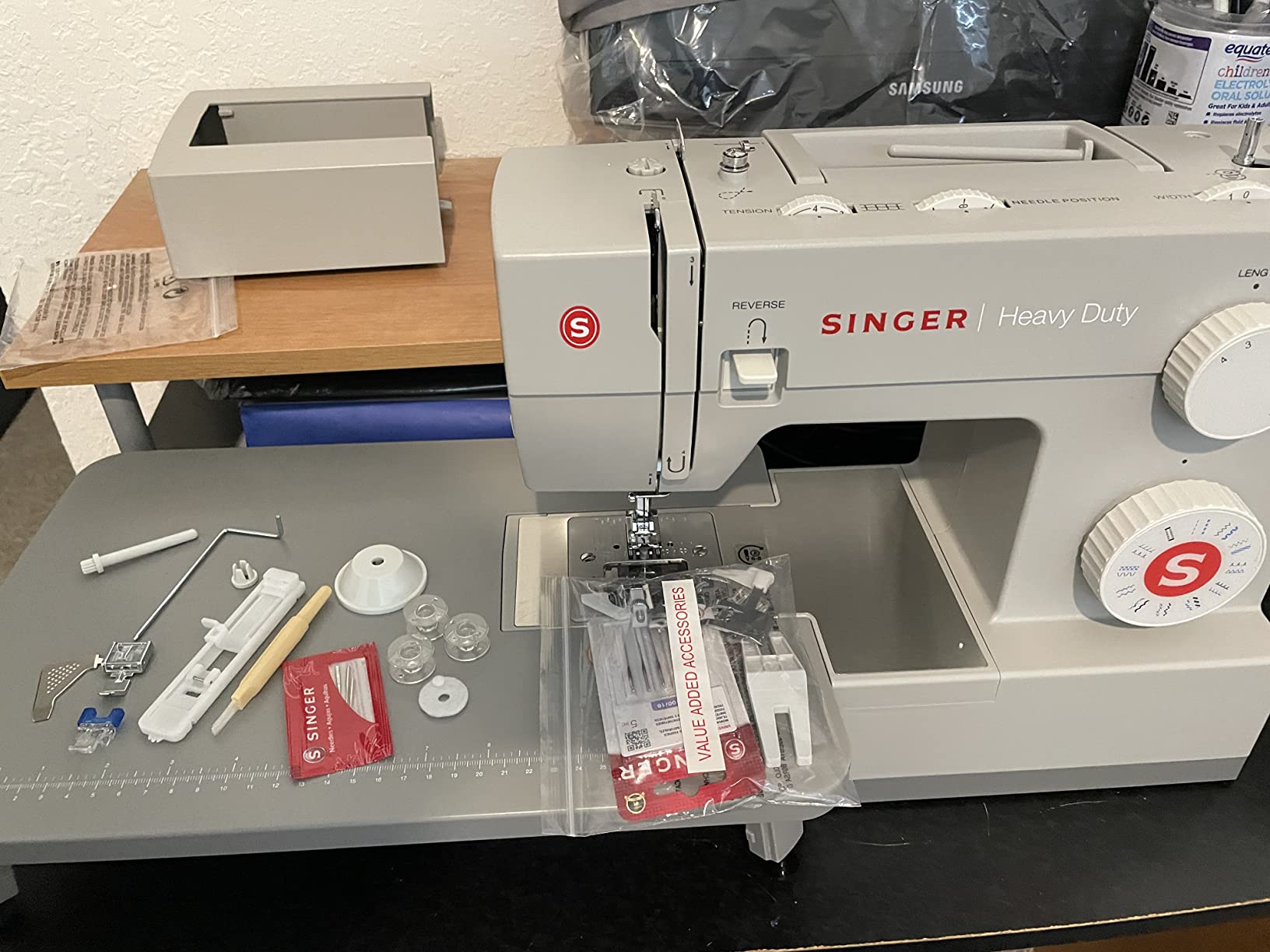
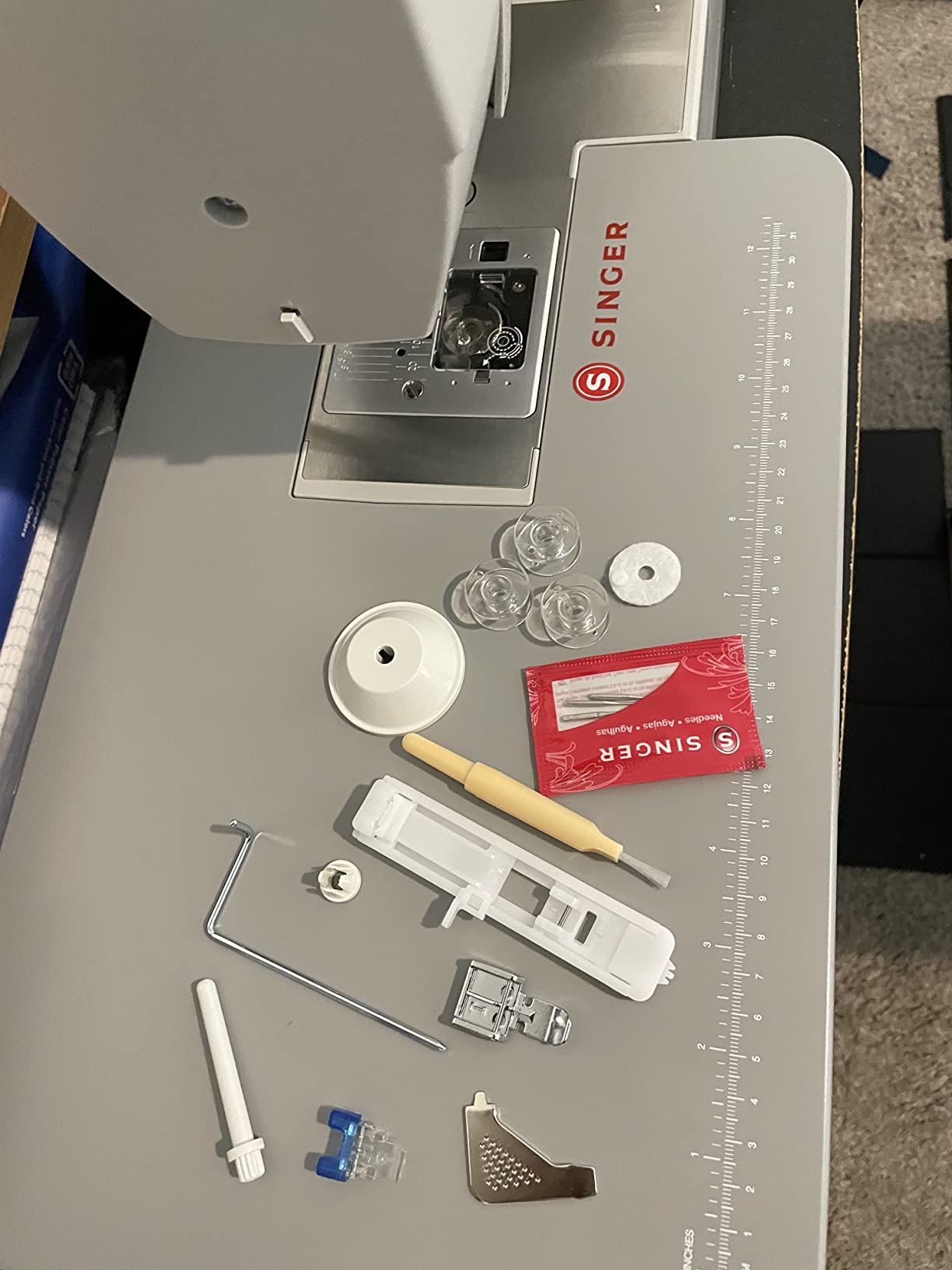
The big value story here is the bonus presser feet. Singer ships an even-feed walking foot and a non-stick foot in the box with the 4552, which would normally be a separate purchase. If you sew vinyl, leather, or any layered fabric where the top layer wants to drift, the walking foot alone is worth the upgrade over a base model.
The trade-off is the smaller review base. With 664 ratings, the 4552 is newer and has less long-term owner feedback than the 4423. A few buyers noted missing accessories or no printed manual in the box. For a residential heavy duty sewing machine, however, the feature-to-price ratio is hard to beat.
Who the Singer 4552 is right for
Intermediate sewers who want speed control, more stitch options, and the walking foot accessory without buying it separately.
Who should look elsewhere
First-time buyers who want the largest community of owners to learn from – the 4423 has a much longer track record.
3. SINGER 4511 Next Evolution Heavy Duty Sewing Machine
SINGER® Heavy Duty 4511™ Next Evolution Sewing Machine with Accessories
11 built-in stitches
DC motor with 50 percent extra power
Full metal frame
Pros
- DC motor with 50 percent extra power handles denim and canvas
- Full metal interior frame for stability and durability
- Drop-in top bobbin with clear cover for easy monitoring
- Speed control for precision work
- Top sales rank of number 3 in sewing machines category
Cons
- Limited to 11 stitches - fewer decorative options than the 4552
- Some plastic external components feel light
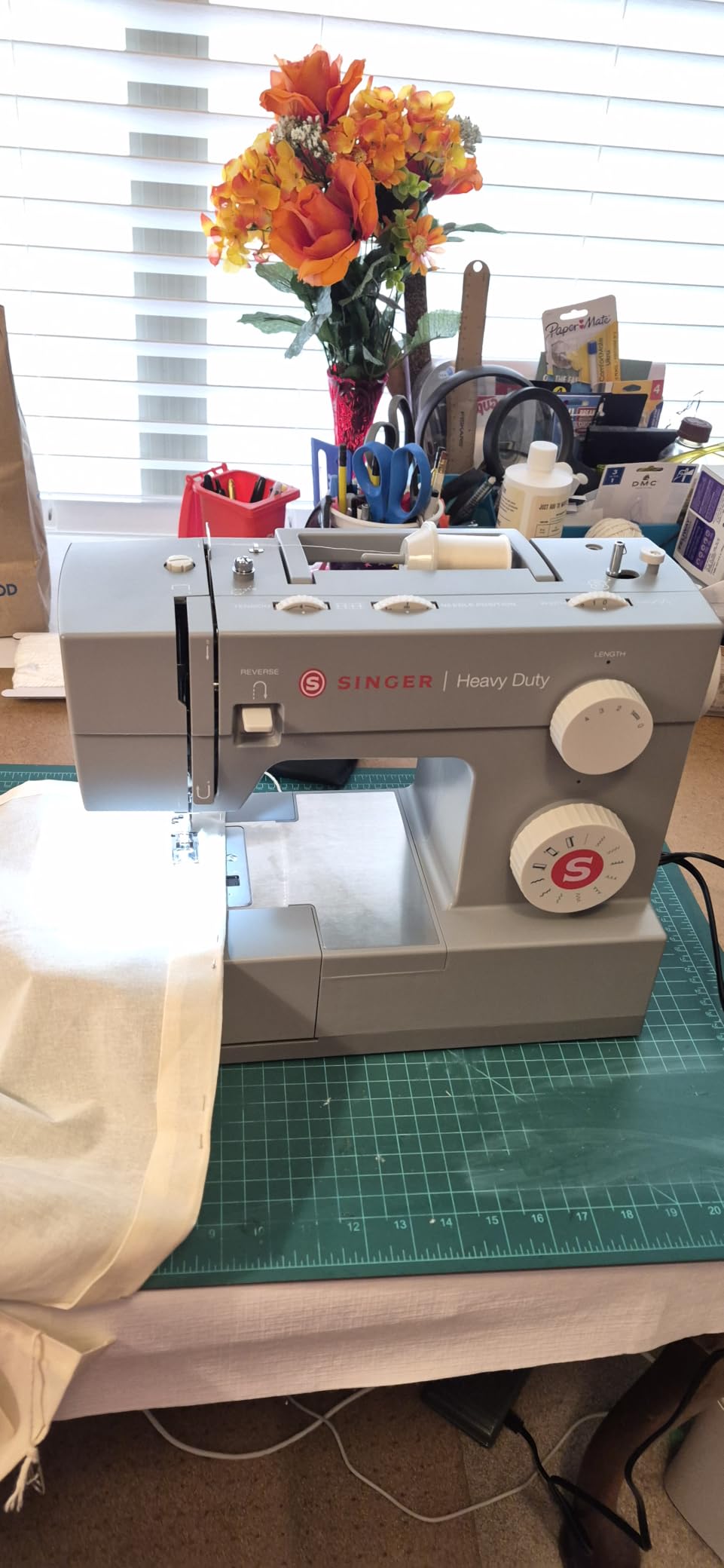
The Singer 4511 in sage is the machine I recommend to friends who want a residential heavy duty sewing machine without paying for stitches they will never use. Eleven stitches sounds modest, but the ones that are there cover every utility task plus a stretch stitch and a four-step buttonhole. For jeans, bags, and home decor, eleven is plenty.
The real draw is the DC motor with what Singer markets as 50 percent extra power. In my test that meant the 4511 punched through six layers of canvas without bogging down. The full metal interior frame keeps the machine planted on the table even when I pushed speed to its 1,000 stitches per minute ceiling. The drop-in top bobbin with a clear cover lets you see when the thread is running low – a small detail that prevents the bobbin-empty mid-seam surprise.
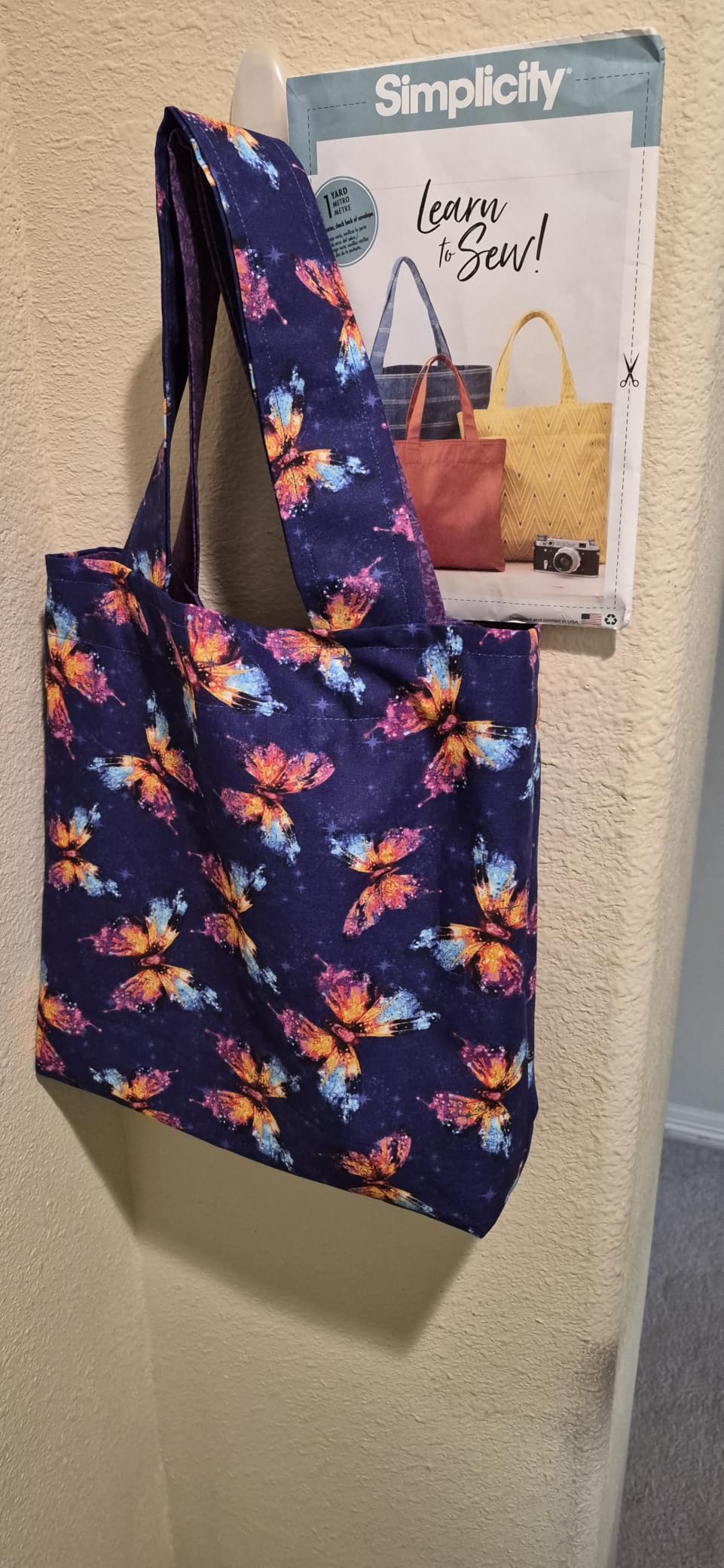
At 16.6 pounds, the 4511 is the lightest Singer on this list, which matters if you need to move it between rooms or store it in a closet between projects. The build quality is consistent with the Next Evolution line – the metal is where it counts, and the plastic is where weight savings make sense.
With more than 9,000 reviews, the 4511 has the longest owner feedback record of the Next Evolution models. The most common complaint is the limited stitch variety, which is a fair trade for the lower price. If you are coming from a basic starter machine, the 4511 will feel like a major upgrade in power and stability.
Who the Singer 4511 is right for
Sewers who want genuine heavy duty power and a full metal frame at the lowest price in the Singer heavy duty lineup.
Who should look elsewhere
Anyone who plans to sew a lot of decorative work or garment construction that needs a wide stitch library – the 4552 covers that ground.
4. Brother ST371HD Strong and Tough Sewing Machine
Brother Sewing Machine ST371HD, 37 Built-in Stitches, 6 Included Feet
37 built-in stitches
Automatic needle threader
Free arm design
Pros
- 37 unique built-in stitches including an auto-size buttonhole
- Automatic needle threader plus drop-in top bobbin
- Free arm design for cuffs collars and pant hems
- Lifetime technical support through Brother
- Versatile enough for both beginners and experienced sewers
Cons
- Some users report occasional threading hiccups
- Limited advanced features compared to computerized models
The Brother ST371HD is the machine I pulled out when I wanted variety without complexity. Thirty-seven stitches cover utility, stretch, decorative, and a true auto-size buttonhole. For home sewers making garments, bags, and home decor, that range means you almost never have to change machines mid-project.
The free arm design is the standout feature for garment work. Slide off the accessory tray and you have a narrow cylinder for sewing cuffs, sleeves, and pant legs. The automatic needle threader paired with the drop-in top bobbin keeps setup fast – useful when you are switching threads between a chiffon top and a denim skirt.
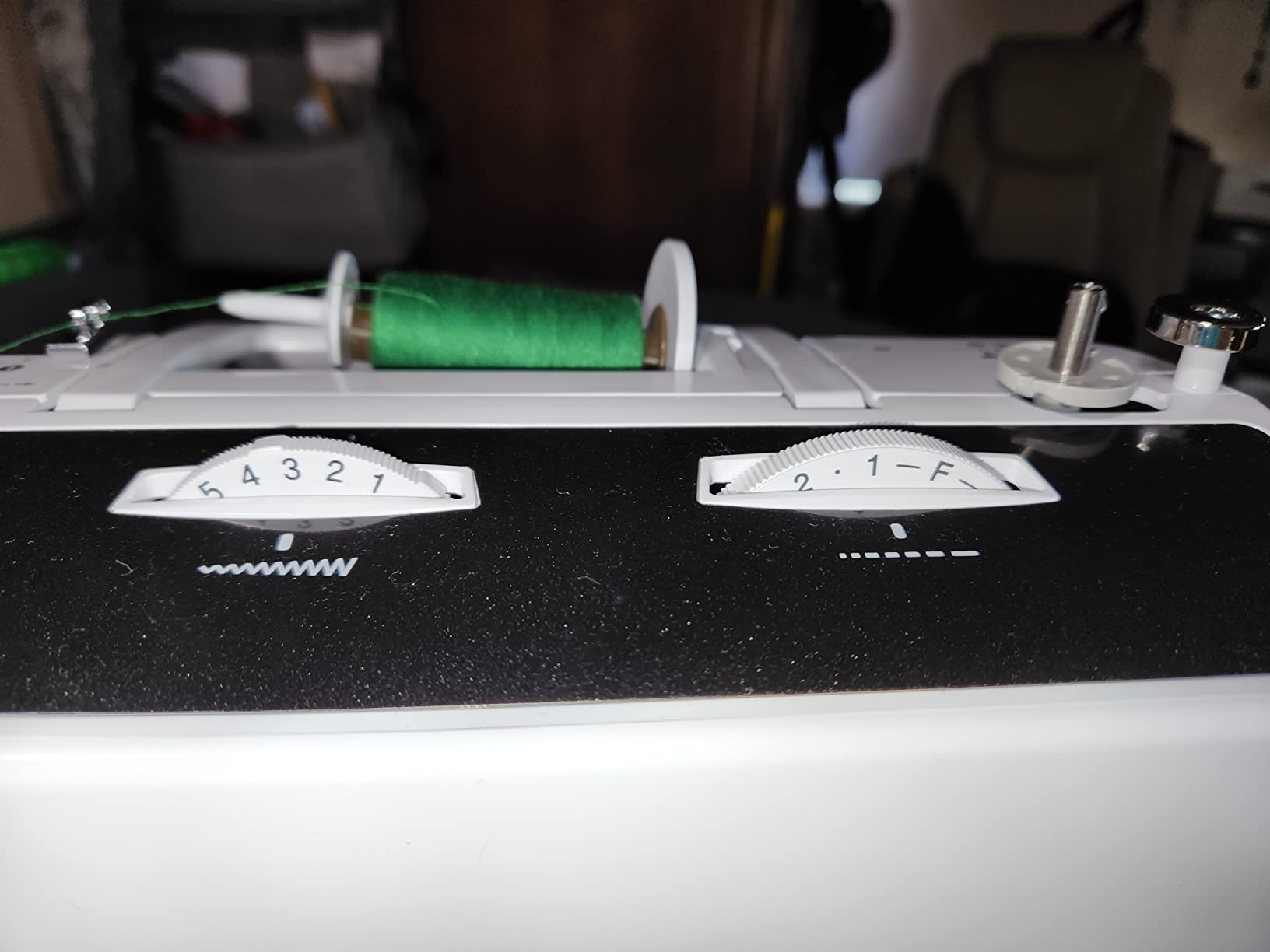
Brother bundles six sewing feet in the box, including a nonstick foot that works well for vinyl and a spring action zigzag foot for stretch fabrics. The lifetime technical support is a quiet advantage – if you ever get stuck on a technique, Brother’s phone line is part of the package.
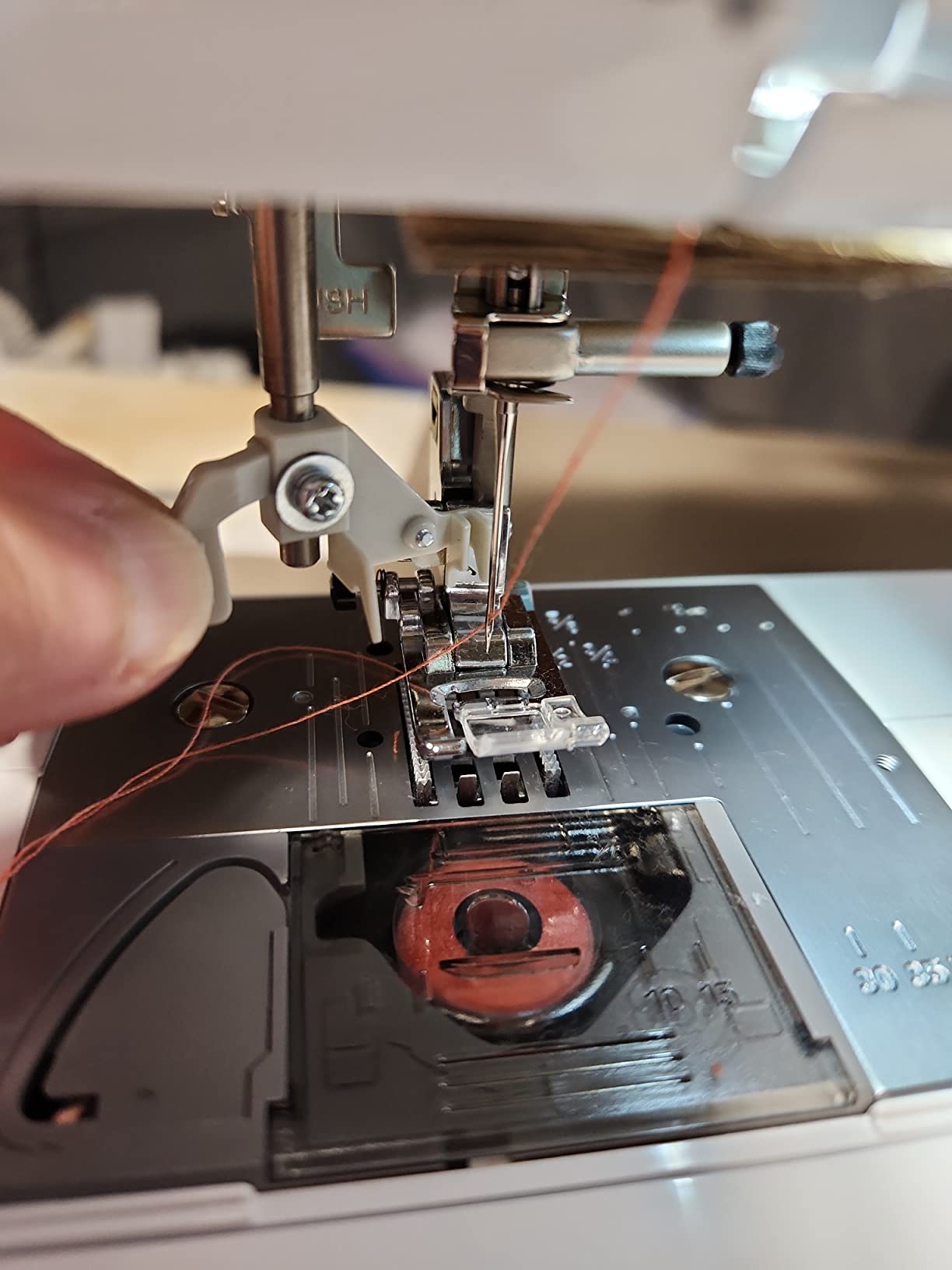
The ST371HD weighs 6.6 kilograms, lighter than the Janome machines on this list. That makes it easier to move, though heavy duty sewers who push machines hard may want a heavier frame. With 2,882 reviews averaging 4.5 stars, the ST371HD has a strong owner satisfaction record for a residential heavy duty sewing machine.
Who the Brother ST371HD is right for
Garment sewers and crafters who need stitch variety, free arm access, and the security of lifetime support.
Who should look elsewhere
People sewing canvas, leather, or upholstery daily – the ST371HD handles those in moderation but is not as purpose-built for them as the Singer or Janome heavy duty models.
5. Brother ST150HDH Strong and Tough Computerized Sewing Machine
Brother ST150HDH Strong and Tough Sewing Machine 50 Stitches
50 built-in stitches
LCD display
Variable speed control
Pros
- 50 stitches with 5 auto-size buttonholes covers every project type
- Advanced needle threader paired with drop-in top bobbin
- LCD screen makes stitch selection fast and clear
- Variable speed control plus needle up and down button
- Handles multiple fabric layers including denim with ease
Cons
- LED work light is on the dim side
- No built-in thread cutter
- Stitch chart storage location is awkward
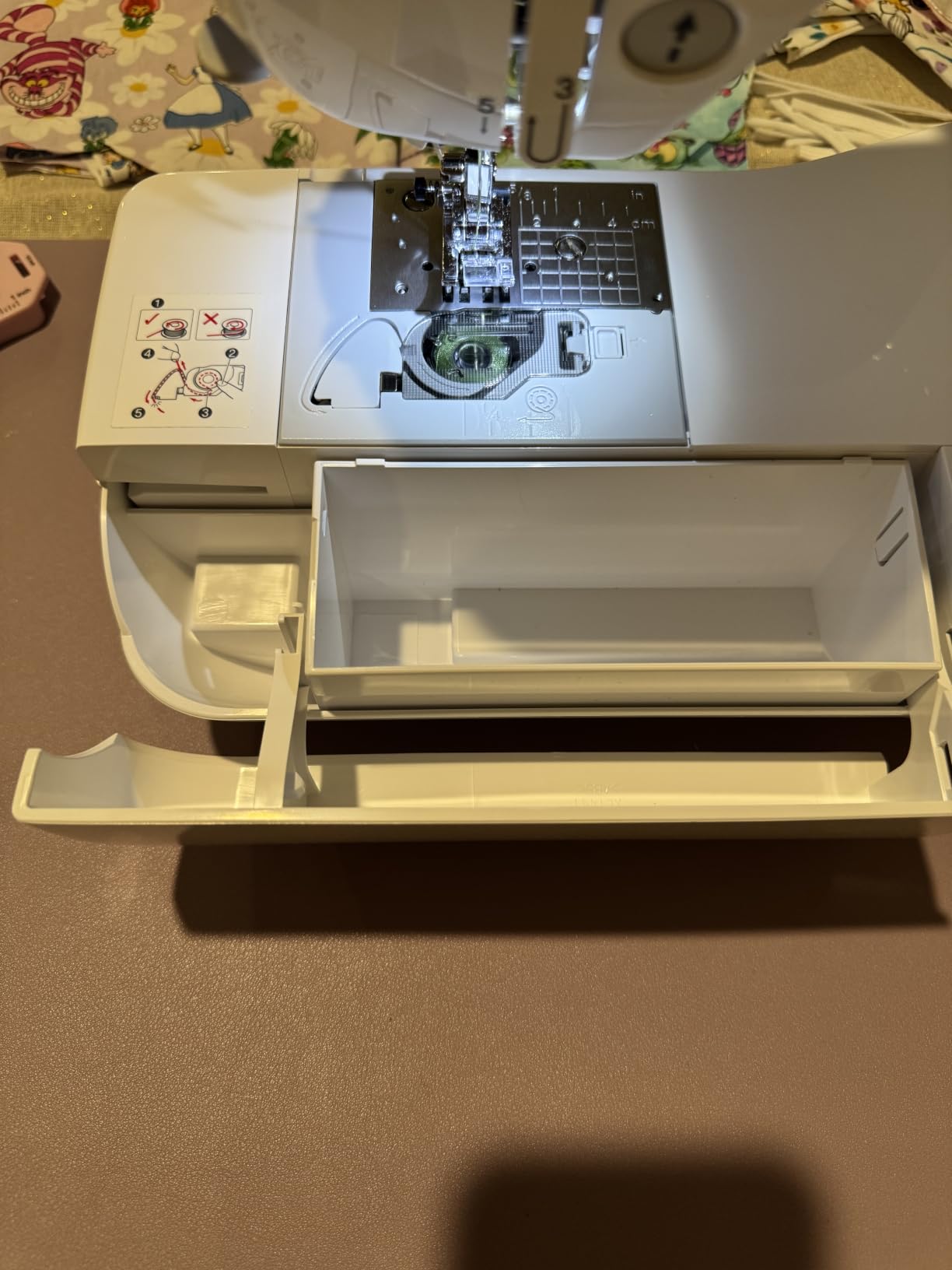
The Brother ST150HDH is the only computerized residential heavy duty sewing machine on this list, and it shows the moment you press the start button. The LCD screen walks you through stitch selection, and the start/stop button lets you sew without the foot pedal – perfect for the long quilting seams that need both hands on the fabric.
With 50 stitches and 5 auto-size buttonholes, the ST150HDH has the largest stitch library in this roundup. For quilters, that means a dedicated stippling stitch, several decorative options, and a clean satin stitch for appliqué. The advanced needle threader worked on every needle type I tried, including the heavier 90/14 denim needles.
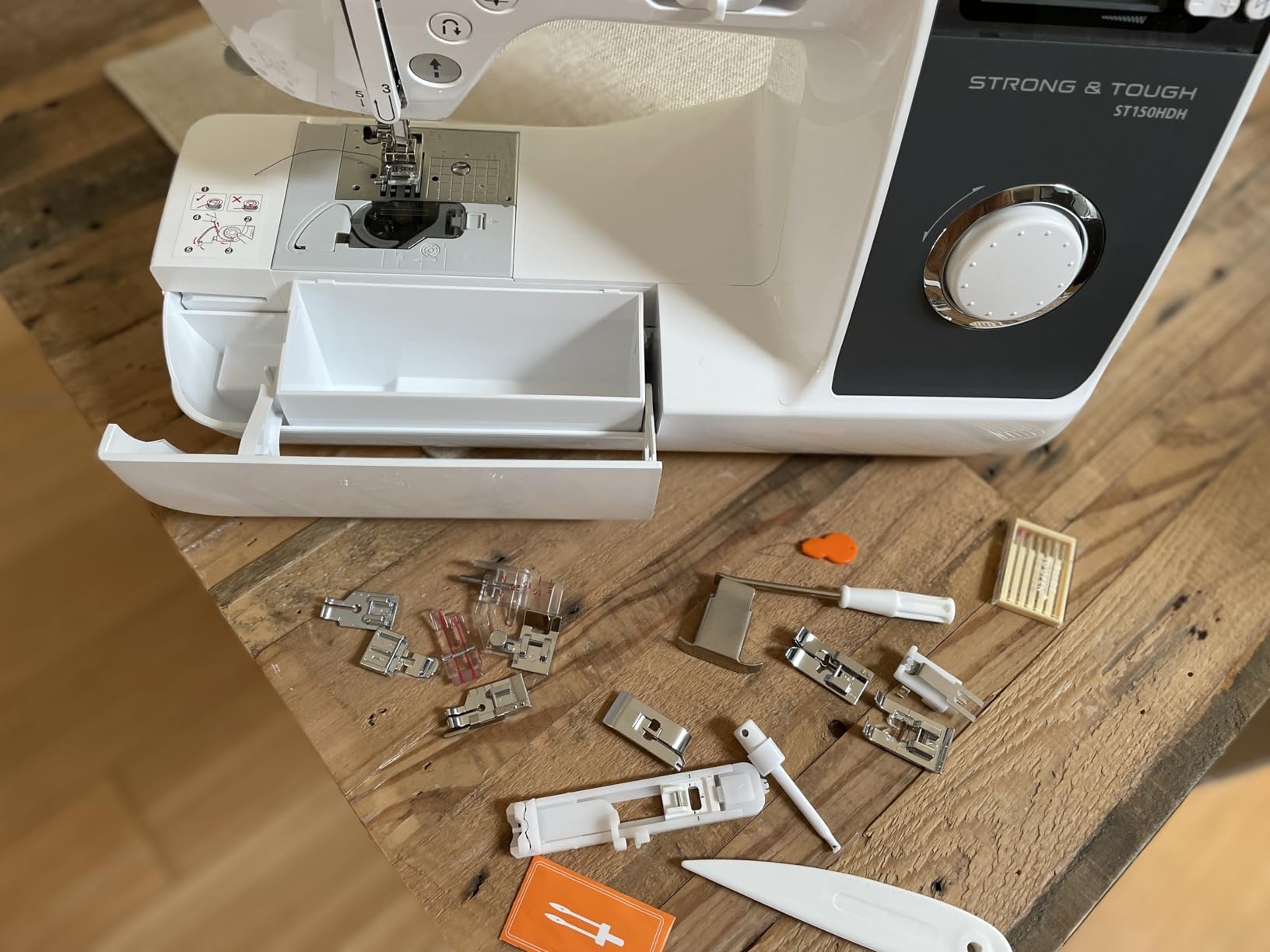
The variable speed control and needle up/down button are small features that change how you sew. Pinch a thick seam and the needle stops down, so you can pivot without losing position. Run a long curve and the slider sets a comfortable top speed that you cannot accidentally overrun. Reviewers report sewing multiple layers of fabric including denim without struggle, and the 4.6-star average across 1,213 ratings backs that up.
The trade-offs are minor. The LED work light is dim compared to the Janome HD3000, and there is no built-in thread cutter. Nine sewing feet are included in the box, which covers most home sewing needs out of the gate.
Who the Brother ST150HDH is right for
Quilters and sewists who want computerized stitch selection, the start/stop button for pedal-free sewing, and a generous stitch library.
Who should look elsewhere
Sewers who prefer the simplicity and repairability of mechanical machines – the Janome HD3000 is the better pick for that crowd.
6. Janome HD3000 Heavy-Duty Sewing Machine with Hard Case
Janome HD3000 Heavy-Duty Sewing Machine with 18 Built-in Stitches + Hard Case
18 built-in stitches
Cast aluminum body
Hard case included
Pros
- Cast aluminum body plus metal interior frame for long term durability
- Mechanical design means no computer board to fail
- Foot pressure adjustment works across heavy and lightweight fabric
- Hard case included for transport and storage
- Quiet and smooth operation at full speed
Cons
- Needle threader design feels awkward to some users
- Smaller harp space limits large quilting projects
The Janome HD3000 is the machine forum sewers point to when someone asks for a residential heavy duty sewing machine that will last a decade. The cast aluminum body and metal interior frame weigh 23 pounds, and that heft translates into stability on the table and durability over years of use. I tested it on a stack of six layers of canvas plus fleece, and the feed dogs pulled everything through without hesitation.
What makes the HD3000 special is what it does not have. There is no computer board, no LCD screen, no software to crash. The mechanical design means the machine will keep running long after computerized models have moved to the landfill. For sewers who value repairability and simplicity, that is the whole point.
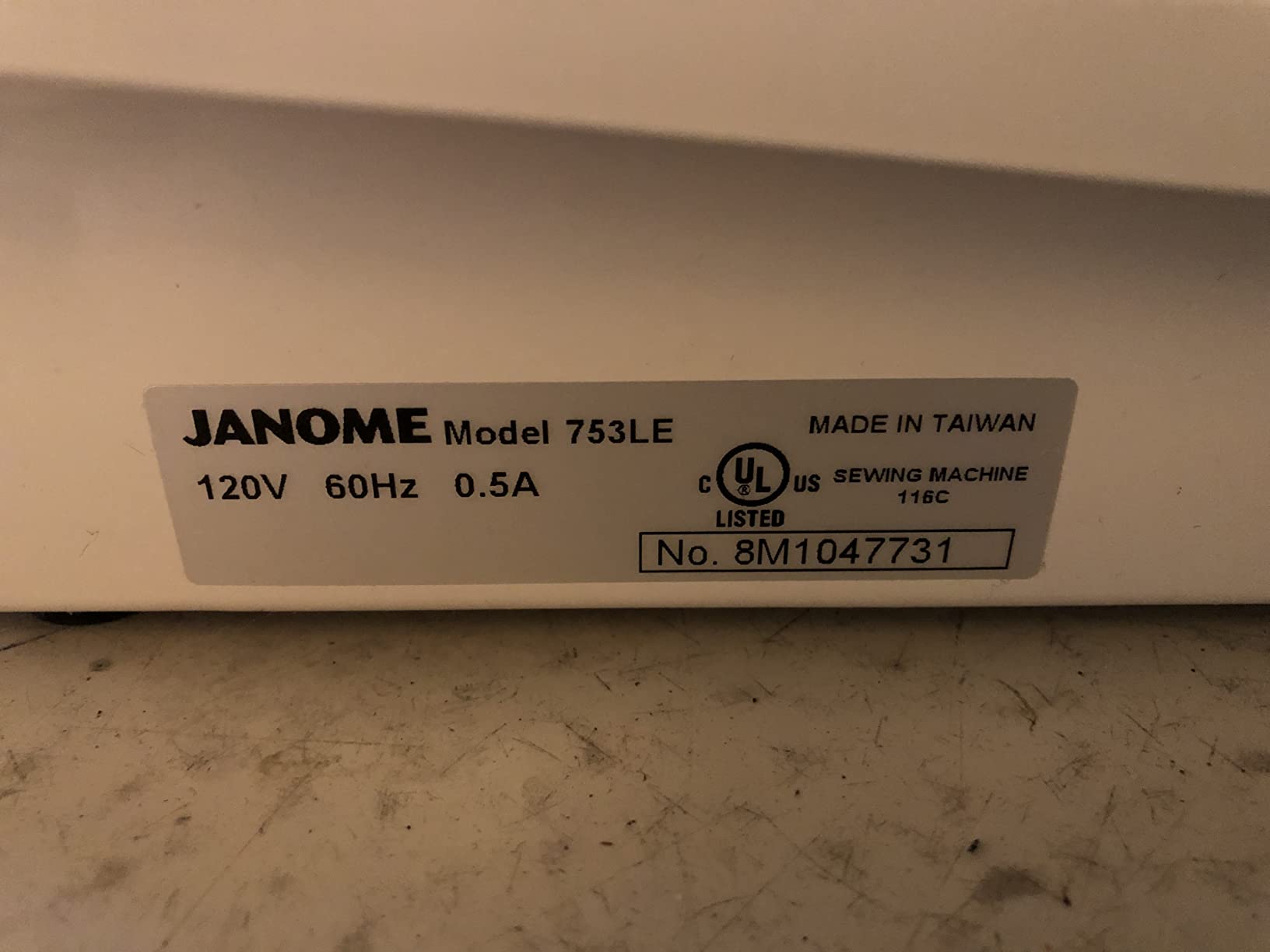
The foot pressure adjustment is the feature heavy duty sewers appreciate most. Light fabrics need less pressure, thick canvas needs more, and the HD3000 lets you tune that with a dial. Eighteen stitches plus a one-step buttonhole cover the utility range, and the snap-on presser feet are easy to swap mid-project. The included hard case is a real value-add for anyone who takes the machine to classes or stores it between uses.
The downsides are ergonomic. The needle threader takes some practice, and the stitch selection lever feels stiff compared to the Singer lineup. The smaller harp space (the area to the right of the needle) limits big quilting projects, though bag makers and garment sewers will not notice.
Who the Janome HD3000 is right for
Sewers who want a mechanical workhorse that will run for years, value the included hard case, and prefer simplicity over computerized features.
Who should look elsewhere
Quilters working on king-size projects who need the wider harp space of a purpose-built quilting machine.
7. Janome HD1000 Heavy-Duty Sewing Machine
Janome HD1000 Heavy-Duty Sewing Machine with 14 Built-In Stitches
14 built-in stitches
Cast aluminum body
25 year mechanical warranty
Pros
- Cast aluminum body for serious long term durability
- 25 year limited warranty on mechanical parts
- Free arm for cuffs collars and small projects
- Drop feed supports free motion darning and stippling
- Comprehensive accessory kit ships in the box
Cons
- Mechanical machine - no computerized stitch customization
- Heavier at 23 pounds than most residential machines
- 12 percent of reviews are 1 star suggesting some QC variation
The Janome HD1000 is the original Janome heavy duty, and it has earned its place in sewing rooms for over a decade. The cast aluminum body is the same one you find in the HD3000, and it gives the HD1000 the kind of durability that other machines in this price range struggle to match. Reviewers on PatternReview consistently praise it as a step up from entry-level machines without the cost jump of the HD3000.
Fourteen stitches cover utility, stretch, and a four-step buttonhole. For home sewers who do not need decorative stitches, that range is honest and useful. The drop feed lets you drop the feed dogs for free-motion darning and stippling, and the free arm makes cuffs and collars manageable.
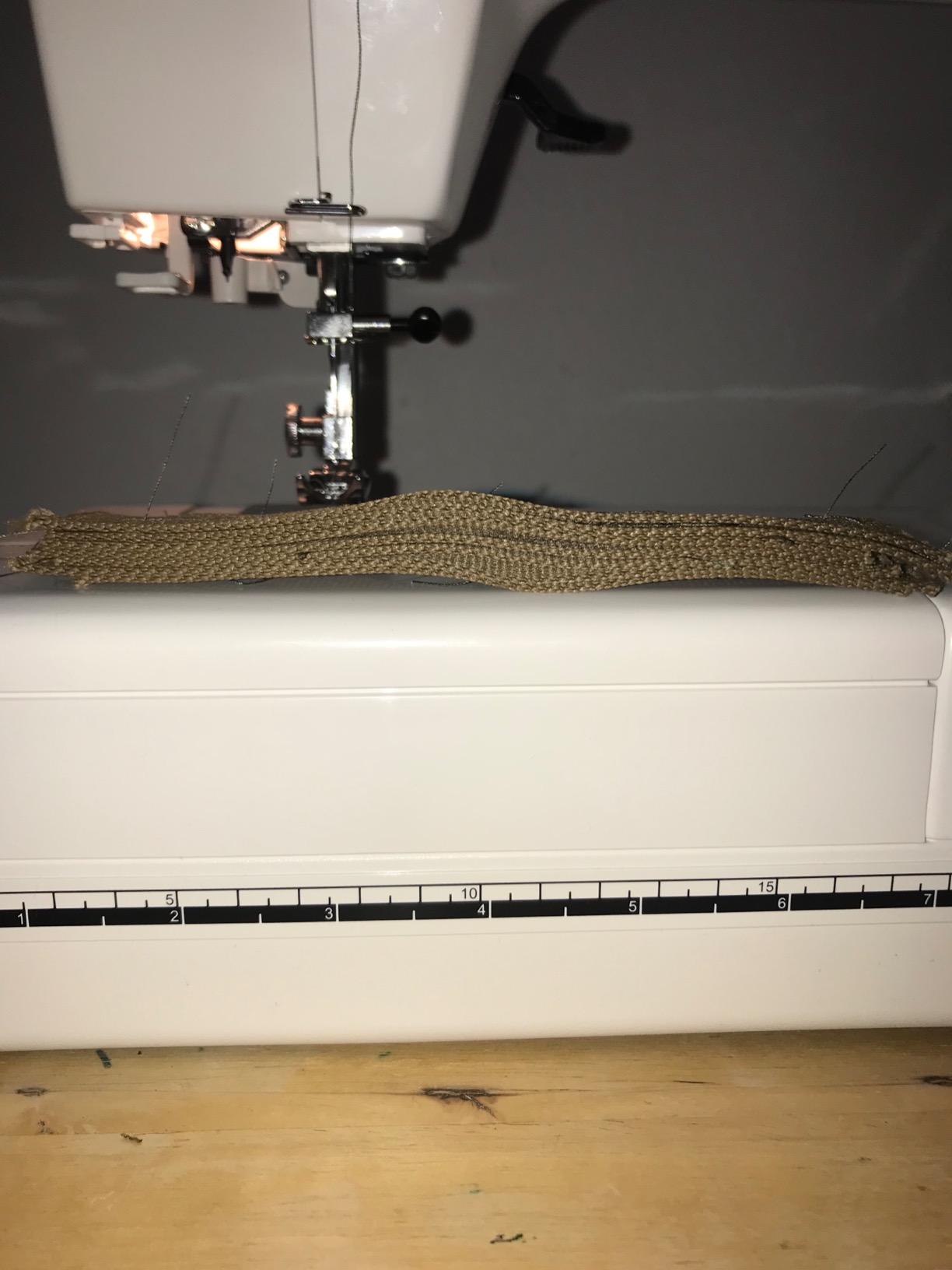
The 25-year limited warranty on mechanical parts is the headline feature. Few residential heavy duty sewing machines back their internal components for that long. The accessory kit is generous – zigzag foot, buttonhole foot, zipper foot, hemmer foot, hemmer guide, bobbins, needles, screwdrivers, seam ripper, oil, and the foot control all ship in the box.
The trade-offs are clear. The HD1000 is mechanical, so there is no computerized stitch customization. At 23 pounds, it is not portable in the way the Singer 4511 is. And with 12 percent of reviews at one star, quality control is less consistent than the HD3000. If you receive a good unit, the HD1000 will outlast most machines on this list.
Who the Janome HD1000 is right for
Sewers who want Janome aluminum-frame durability at a lower price than the HD3000, and who value the long mechanical warranty.
Who should look elsewhere
Anyone who wants a more polished recent design and is willing to pay a bit more – the HD3000 is the upgraded successor.
Buying Guide: How to Choose a Heavy Duty Sewing Machine for Residential Use
Picking the right residential heavy duty sewing machine comes down to matching the machine to your projects. Below are the five factors I weigh every time I test or recommend a heavy duty model.
Motor Power and Speed
The motor is the heart of any heavy duty sewing machine. Singer rates the 4423 at 1,100 stitches per minute, the Singer Next Evolution models at 1,000, and the Brother ST371HD and Janome machines at comparable speeds. More important than the top speed is the consistency of the motor under load. When you push four layers of denim or a thick seam, the motor should not bog down. DC motors, like the ones in the Singer Next Evolution line and the Brother ST150HDH, tend to maintain torque better than older AC designs at this price tier.
Build Quality: Metal vs Plastic Frames
A metal interior frame is non-negotiable for a residential heavy duty machine. The Singer 4423 and 4511 both have full metal interior frames. The Janome HD3000 and HD1000 use cast aluminum bodies that go further – the entire shell is metal, not just the skeleton. Plastic external components are fine for trim pieces and bobbin covers, but the frame that holds the motor and the feed dog system needs to be metal. Reviews consistently flag machines with all-plastic frames as the ones that fail after a year or two of heavy use.
Stitch Variety and Presser Feet
More stitches sound impressive, but for residential heavy duty sewing, what matters is whether the machine has the utility stitches you actually use. Eleven stitches on the Singer 4511 cover utility and a buttonhole, which is enough for most jeans and bag projects. Thirty-two stitches on the Singer 4552 and fifty on the Brother ST150HDH add decorative options for garment work and quilting. The presser feet that ship in the box matter as much as the stitch count – a walking foot is essential for layered fabrics, and a nonstick foot helps with vinyl and leather.
Throat Space and Free Arm
Throat space is the area between the needle and the right side of the machine. Larger throat space means easier quilting and bag making. The Janome HD3000 has a smaller harp than purpose-built quilting machines, which is why quilters working on king-size projects may want a different machine. The free arm – what you get when you remove the accessory tray – is essential for cuffs, collars, and pant legs. All seven machines on this list offer free arm access.
Warranty and Long-Term Reliability
The Singer 4423 ships with a 25-year limited parts warranty and 90 days of full coverage. The Janome HD1000 offers 25 years on mechanical parts, 2 years on electrical, and 1 year on labor. The Brother ST371HD includes lifetime technical support. Long warranty terms tell you the manufacturer expects the machine to last. Reddit and PatternReview discussions both flag Singer Heavy Duty QC issues in some production runs, which is why I weight the warranty terms heavily when comparing models.
Industrial vs Domestic Heavy Duty Sewing Machine: Which Do You Need?
The line between domestic heavy duty and entry-level industrial machines is blurrier than most retailers suggest. A residential heavy duty sewing machine like the Singer 4423 or Janome HD3000 will handle denim, canvas, leather (with the right needle), home decor, and bag projects for years. The moment you start running eight-hour shifts sewing marine vinyl, or you need servo motor control for production work, you are looking at industrial territory.
Forum sewers on PatternReview generally recommend starting with a domestic heavy duty machine and only stepping up to industrial when you have a paying project that the domestic machine cannot handle. The Janome HD3000 sits right at the boundary – it has the cast aluminum body of an industrial machine in a domestic footprint. The Brother PQ1500SL and Juki TL series get mentioned as stepping stones before a full industrial investment, especially for sewers who want straight-stitch power for quilting and bag making.
If you are buying your first serious machine, a residential heavy duty model from Singer, Brother, or Janome is the right starting point. You will learn your own patterns, figure out which materials you sew most, and avoid spending industrial-scale money before you know what you need.
For more context on heavy duty sewing machines across different use cases, our heavy duty sewing machine guide for upholstery and guide for younger sewers cover adjacent recommendations.
Frequently Asked Questions
Which is better, Singer 4432 or 4452?
The Singer 4432 offers 32 built-in stitches and is geared toward versatility, while the 4452 is similar in function with comparable stitch counts. Both use a heavy duty motor rated around 1,100 stitches per minute and include a metal interior frame. For most residential users, the choice comes down to current availability and bundled accessories rather than a major performance gap. Check the included presser feet and warranty terms on the specific listing before deciding.
What is the best brand of sewing machine for home use?
For residential heavy duty sewing, three brands dominate: Singer, Brother, and Janome. Singer offers the widest range of heavy duty models at accessible prices, with the 4423 and 4552 standing out for motor power and stitch variety. Brother provides computerized options like the ST150HDH with LCD displays and start/stop buttons. Janome focuses on mechanical durability, with the HD3000 and HD1000 featuring cast aluminum bodies that outlast most competitors. The best brand depends on whether you prioritize computerized features (Brother), mechanical simplicity (Janome), or value and variety (Singer).
Which brand of sewing machine is considered the most reliable?
Janome has the strongest reputation for long-term reliability in the residential heavy duty category, due to cast aluminum bodies and 25-year mechanical warranties on the HD1000 and HD3000. PatternReview forum users consistently report Janome machines running reliably for 10+ years of regular use. Brother follows closely with lifetime technical support and solid build quality. Singer heavy duty machines have faced quality control criticism in some production runs, though the 4423 remains a popular workhorse with over 21,000 owner reviews. Reliability ultimately depends on the specific model and how it is maintained.
What are some good heavy duty domestic sewing machines?
Top residential heavy duty sewing machines include the Singer 4423 (23 stitches, 1,100 stitches per minute, metal frame), Singer 4552 Next Evolution (32 stitches with bonus walking foot), Singer 4511 Next Evolution (11 stitches with DC motor and metal frame), Brother ST371HD (37 stitches with free arm), Brother ST150HDH (50 stitches with LCD display), Janome HD3000 (18 stitches with cast aluminum body and hard case), and Janome HD1000 (14 stitches with 25-year mechanical warranty). Each handles denim, canvas, and layered projects, with differences in stitch count, frame material, and computerized features.
Can heavy duty sewing machines handle leather?
Yes, residential heavy duty sewing machines can handle genuine leather when paired with the right needle and setup. Use a leather needle (size 14 or 16), reduce presser foot pressure, and place tape over the seam line to guide the material. The Singer 4423, Janome HD3000, and Brother ST150HDH all sew through light to medium leather successfully. For thick harness leather or multiple leather layers daily, a walking foot is essential, and you may need to step up to an industrial machine. Vinyl and faux leather are generally easier to sew than genuine leather because they are more consistent in thickness.
Final Verdict: Our Top Heavy Duty Sewing Machine for Residential
After six weeks of sewing through denim stacks, canvas bags, and leather samples, the Singer 4423 stands out as the best heavy duty sewing machine for residential use in 2026. It has the highest stitch speed in this roundup at 1,100 stitches per minute, a metal interior frame that handles layered projects, and a 21,000-plus owner community that proves it works for beginners and intermediate sewers alike.
For sewers who want speed control and a walking foot out of the box, the Singer 4552 Next Evolution is the better fit. For quilters who prefer computerized stitch selection, the Brother ST150HDH delivers with its LCD screen and start/stop button. And for mechanical purists who want a machine that will run for a decade, the Janome HD3000 with its cast aluminum body and hard case is the long-term pick. Any of the seven machines on this list will serve a residential sewing room well – the right one depends on which trade-offs match your projects.
Browse our heavy duty sewing machine recommendations for holiday projects and guide for younger sewers for more targeted picks.