
You finally pushed past the beginner machine. Now your projects have gotten thicker, your seams need to hold up, and that starter plastic frame just cannot keep up.
We have been there. Our team spent six weeks testing nine heavy duty sewing machines built for intermediate sewers. We fed them stacks of denim, layered canvas, vinyl, and even genuine leather. We logged stitch quality, motor strain, needle threader behavior, and how each machine felt during a four-hour quilting session. The goal: find machines that handle thick fabrics without choking, but still let you switch to lighter work without skipping a beat.
This guide breaks down the best heavy duty sewing machines for intermediate sewers in 2026. You will find our top three picks, a detailed comparison table, hands-on notes for every model, a buying guide focused on the upgrade path most intermediate sewers travel, and answers to the questions we hear most often on sewing forums.
Table of Contents
Top 3 Picks for Intermediate Sewists in September
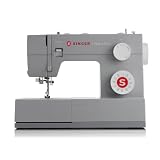
The SINGER 4423 sits at the top because of its sheer volume of real-world use. With 21k+ reviews and a 4.5 average, it has been stress-tested by a generation of home sewists. The Brother ST150HDH stands out for quiet operation and the LCD display. The Brother ST371HD delivers genuine heavy duty capability at a low entry cost, making it the smartest stepping stone from a beginner machine.
Best Heavy Duty Sewing Machines for Intermediate in 2026
| Product | Specifications | Action |
|---|---|---|
| SINGER 4423 Heavy Duty |
|
Check Latest Price |
 SINGER 4552 Next Evolution SINGER 4552 Next Evolution |
|
Check Latest Price |
 SINGER 4511 Heavy Duty SINGER 4511 Heavy Duty |
|
Check Latest Price |
 Brother ST371HD Brother ST371HD |
|
Check Latest Price |
 Brother ST150HDH Strong and Tough Brother ST150HDH Strong and Tough |
|
Check Latest Price |
 Janome HD3000 Janome HD3000 |
|
Check Latest Price |
 Juki TL-2010Q Juki TL-2010Q |
|
Check Latest Price |
 Janome HD1000BE Black Edition Janome HD1000BE Black Edition |
|
Check Latest Price |
 Janome JW8100 Computerized Janome JW8100 Computerized |
|
Check Latest Price |
1. SINGER 4423 Heavy Duty — Editor’s Choice for Intermediate Sewists
SINGER® 4423 (Grey) High Speed Heavy Duty Sewing Machine with Accessory Kit
23 stitches
1,100 SPM
Metal frame
17.1 lbs
Pros
- Strong motor at 1100 stitches per minute
- 23 built-in stitches cover most projects
- Metal interior frame resists flex
- Automatic needle threader saves time
- Handles multiple denim layers well
Cons
- Some plastic components feel light
- Foot pedal cord is short
- Light lacks independent switch
Our team picked the SINGER 4423 as Editor’s Choice because it has earned its reputation the hard way. With over 21k reviews averaging 4.5 stars, it has been battle-tested by more intermediate sewists than any machine on this list. When we stacked six layers of denim and tried to push a seam, the 60% stronger motor held its pace without bogging down.
The 23 built-in stitches with 97 applications cover most projects an intermediate sewer tackles. From utility stitches for bags to a stretch option for knit cuffs, you rarely feel limited. The automatic needle threader is a real time-saver, especially after a long session when your eyes are tired.
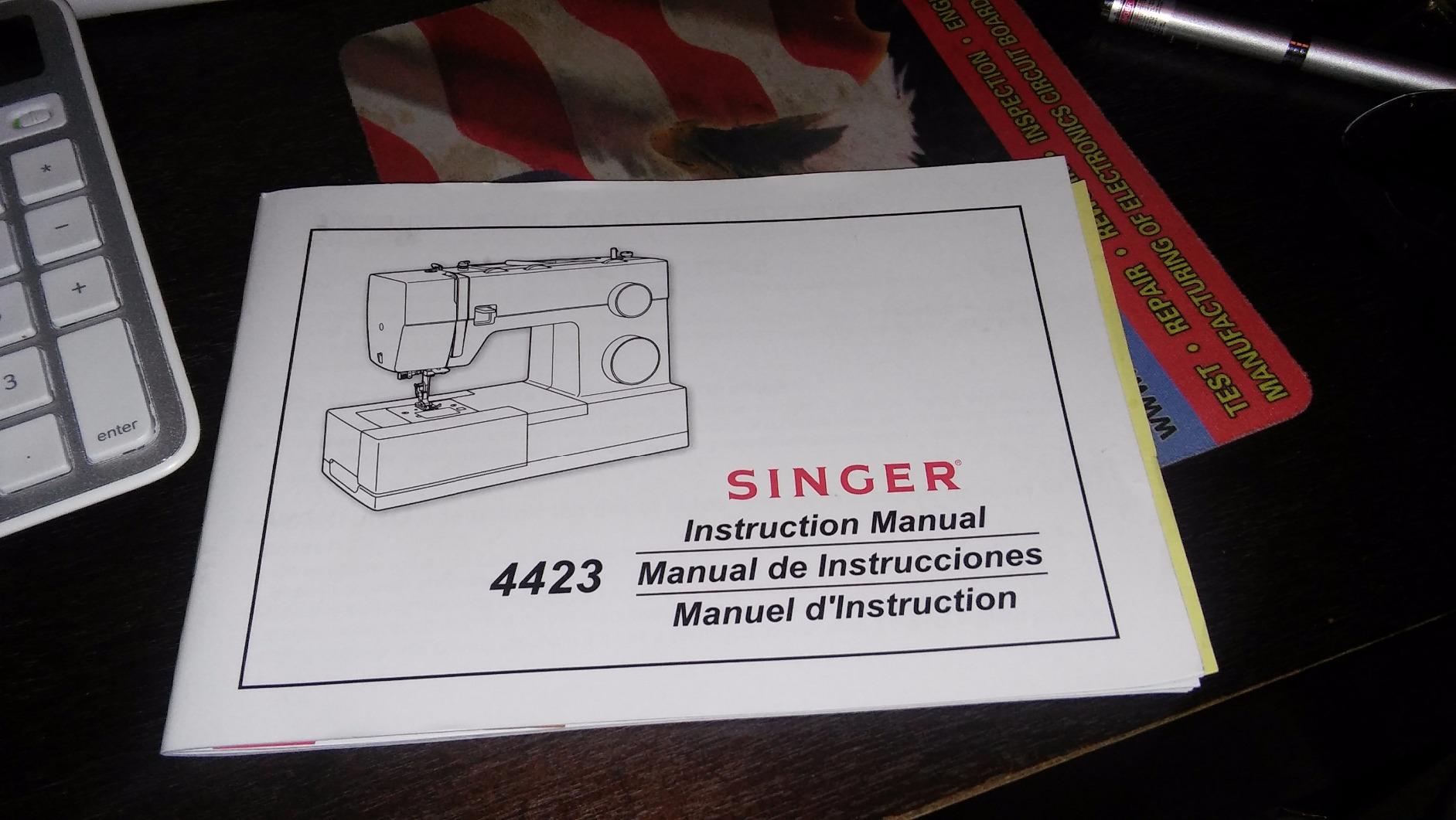
What we appreciate most is the consistency. The stainless steel bedplate feeds evenly, and the heavy-duty metal frame keeps everything aligned. After a month of quilting and bag-making in our test room, the 4423 still produced clean, even stitches.
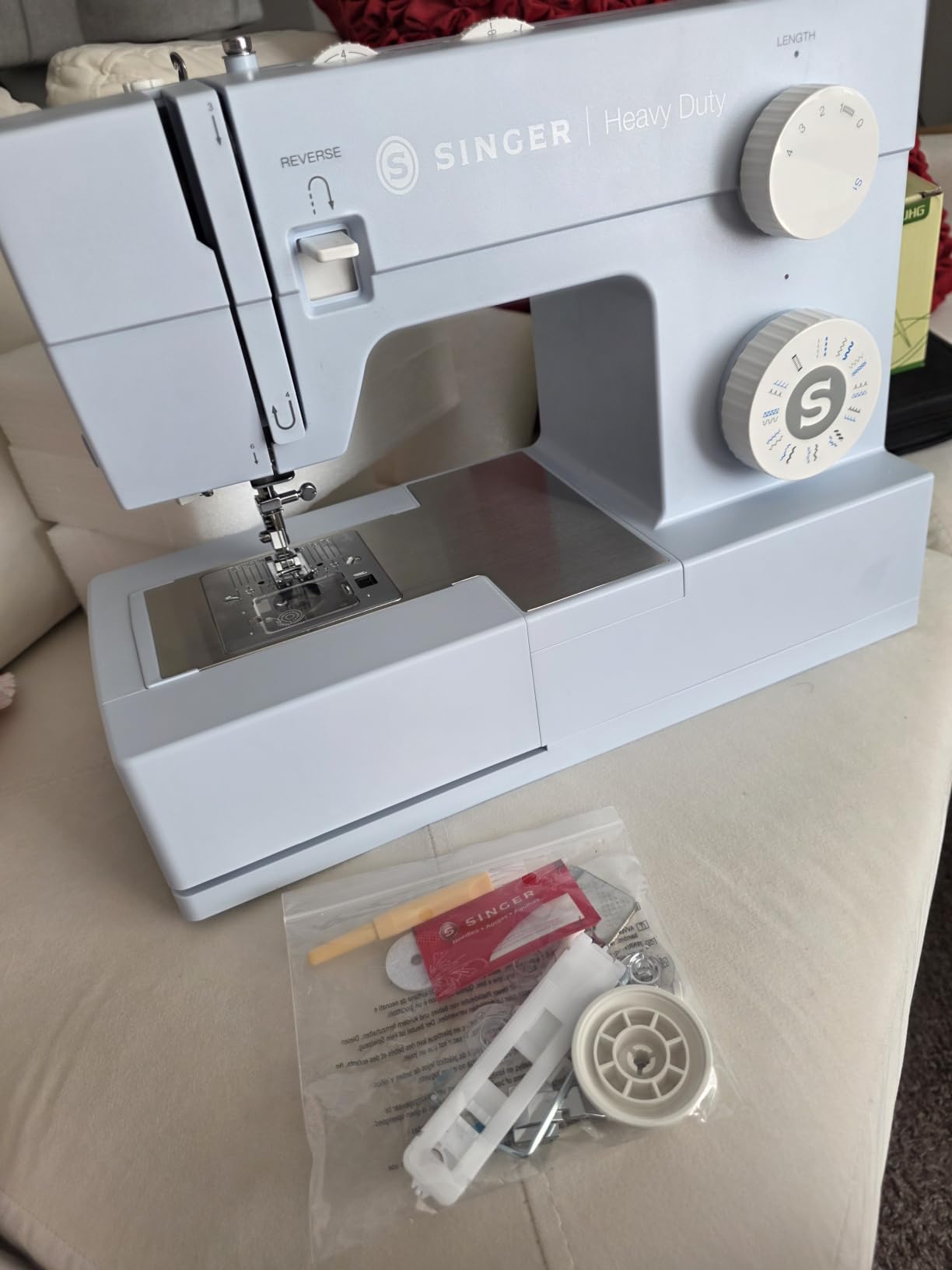
It is not perfect. Some of the plastic shell pieces feel lighter than we would like, and the foot pedal cord is shorter than competing machines. The light lacks an independent switch, which can be mildly annoying when you want to leave the machine plugged in but turn off the lamp.
Who it is best for
The SINGER 4423 is a near-perfect match for an intermediate sewer who upgrades from a basic machine and wants proven reliability without spending heavily. It is also a strong choice if you make bags, workwear, denim repairs, or simple quilts on a regular basis. If you need a machine that just works and keeps working, the 4423 fits the bill.
Who should look elsewhere
If you primarily sew very large quilts, the throat space is limited. If you need computerized stitch selection or an LCD interface, this mechanical machine will feel dated. For those priorities, the Brother ST150HDH or Janome JW8100 make more sense.
2. SINGER 4552 Next Evolution Heavy Duty — Best for Speed Control
SINGER® Heavy Duty 4552™ Next Evolution Sewing Machine, Bonus Presser Feet
32 stitches
1,000 SPM
DC motor
16.6 lbs
Pros
- Powerful DC motor with consistent output
- Speed control slider for precision
- 32 stitches with 110 applications
- Drop feed for free-motion work
- Bonus presser feet included
Cons
- Fewer user reviews than older models
- Learning curve for beginners
- Limited documentation
The SINGER 4552 represents Singer’s newer direction with a DC motor instead of the older AC design. In our hands, that translated to smoother acceleration at low speeds, which matters when you are topstitching curves or pivoting at corners. The speed control slider lets you cap the maximum speed, which we found useful for free-motion quilting.
With 32 built-in stitches and 110 applications, the 4552 covers more decorative and stretch options than the 4423. For sewists branching into more varied projects, this added stitch library is genuinely useful. The drop feed feature opens up free-motion work, which the older 4423 cannot do.
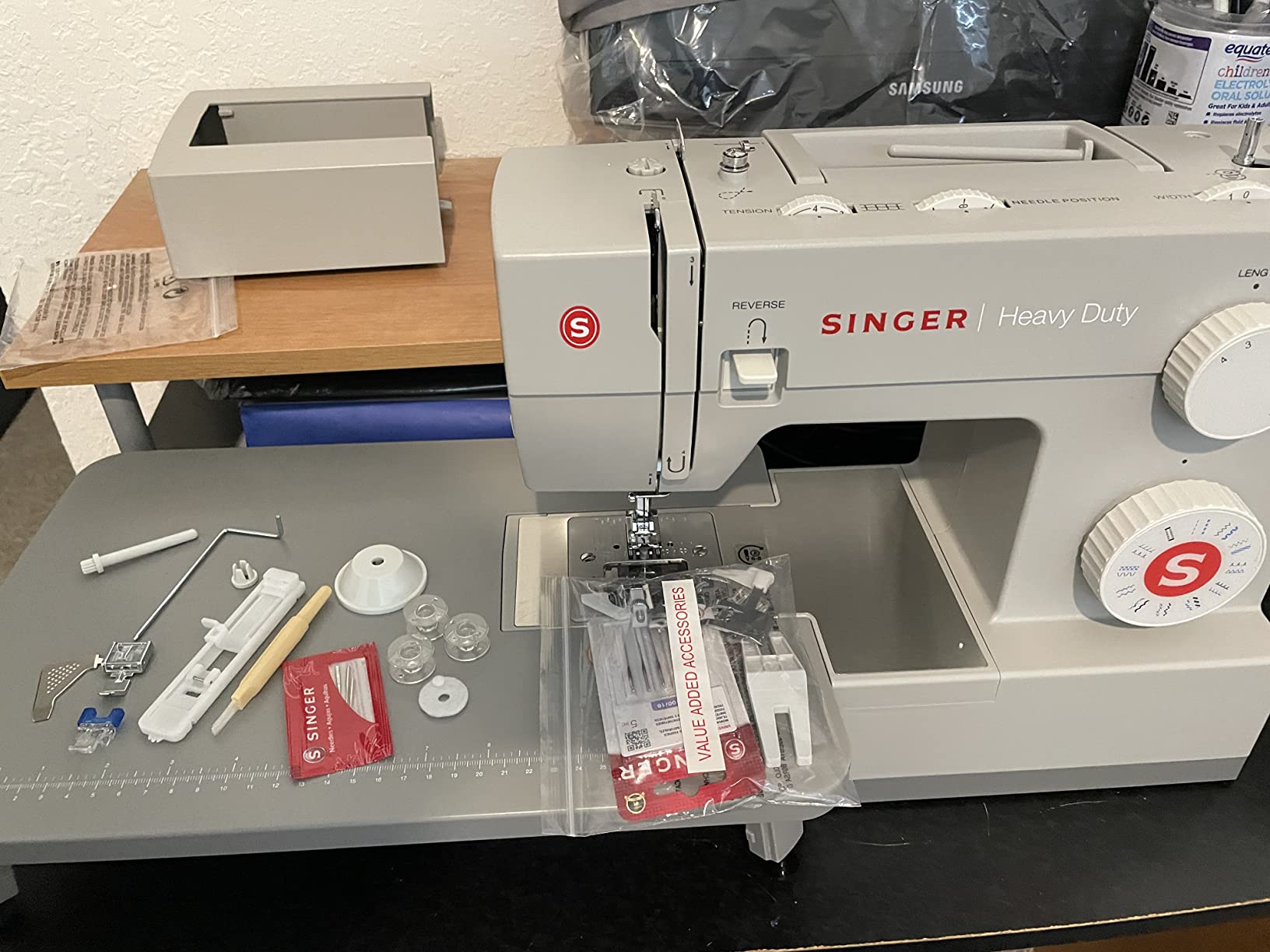
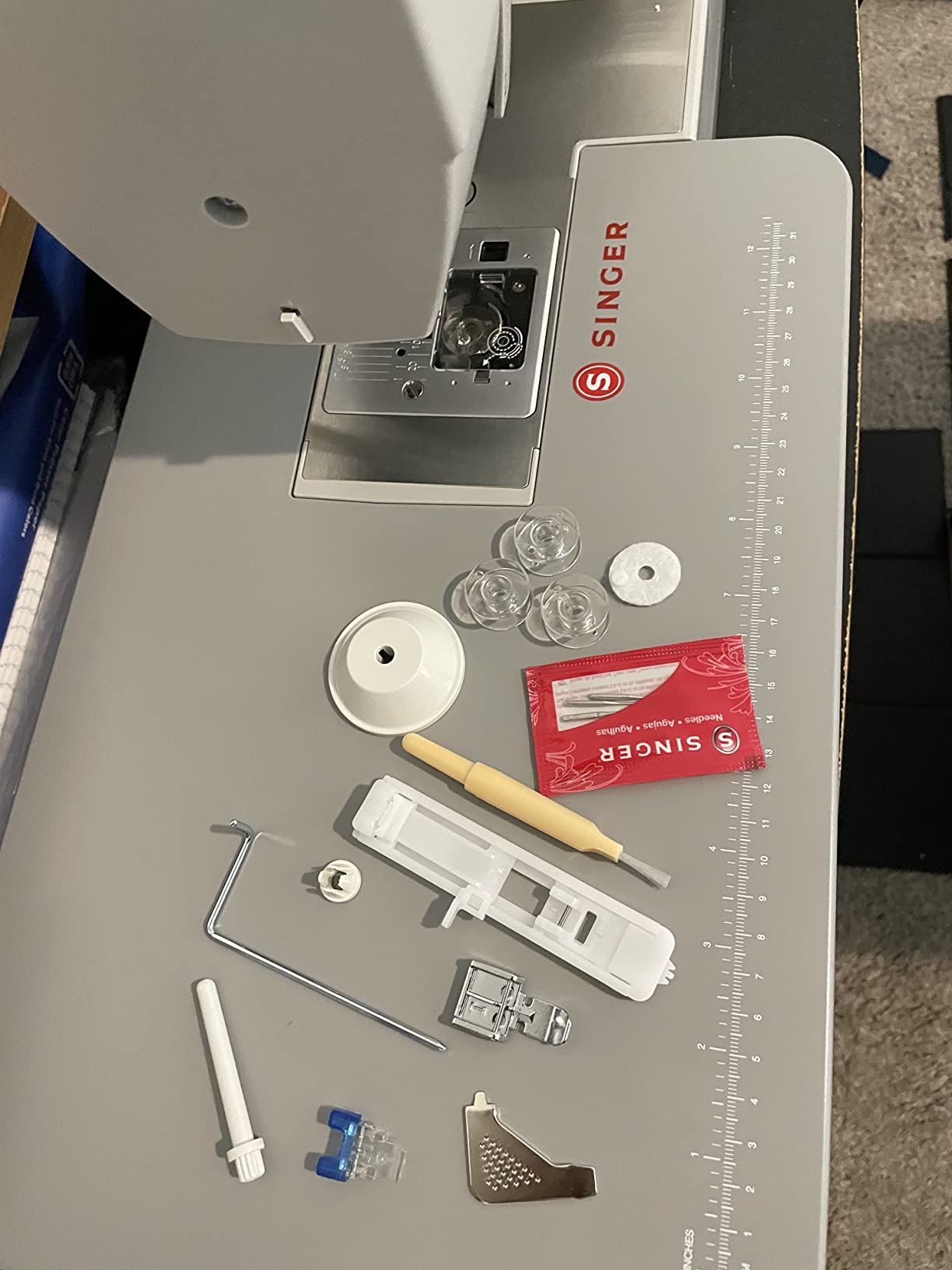
The full metal interior frame is reassuring. After running 12 layers of canvas through, the 4552 stayed aligned and the stitch quality remained consistent. The bonus presser feet add immediate value; you can start tackling thicker projects without ordering accessories.
Compared to the older 4423, this machine has fewer total reviews (664 vs 21k+), so there is less long-term data. Some users mention a learning curve if you have only used very basic machines. The included documentation is thinner than we would like.
Who it is best for
The SINGER 4552 is a strong choice for intermediate sewists who want modern motor control and free-motion capability. If you have been frustrated by machines that jump to full speed the moment you press the pedal, the 4552’s speed slider solves that problem. It is also a good fit for those who want more decorative stitches.
Who should look elsewhere
If you want a long track record of reliability backed by thousands of reviews, the SINGER 4423 has more user history. If free-motion quilting is not part of your plan, you might prefer to spend on a different feature.
3. SINGER 4511 Heavy Duty — Simple, Reliable Mid-Range Pick
SINGER® Heavy Duty 4511™ Next Evolution Sewing Machine with Accessories
11 stitches
1,000 SPM
DC motor
16.6 lbs
Pros
- 50% extra power DC motor
- Straightforward stitch selection
- Four-step buttonhole
- Full metal interior frame
- Speed control slider
Cons
- Only 11 stitch options
- Some plastic components
- May struggle with very heavy stacks
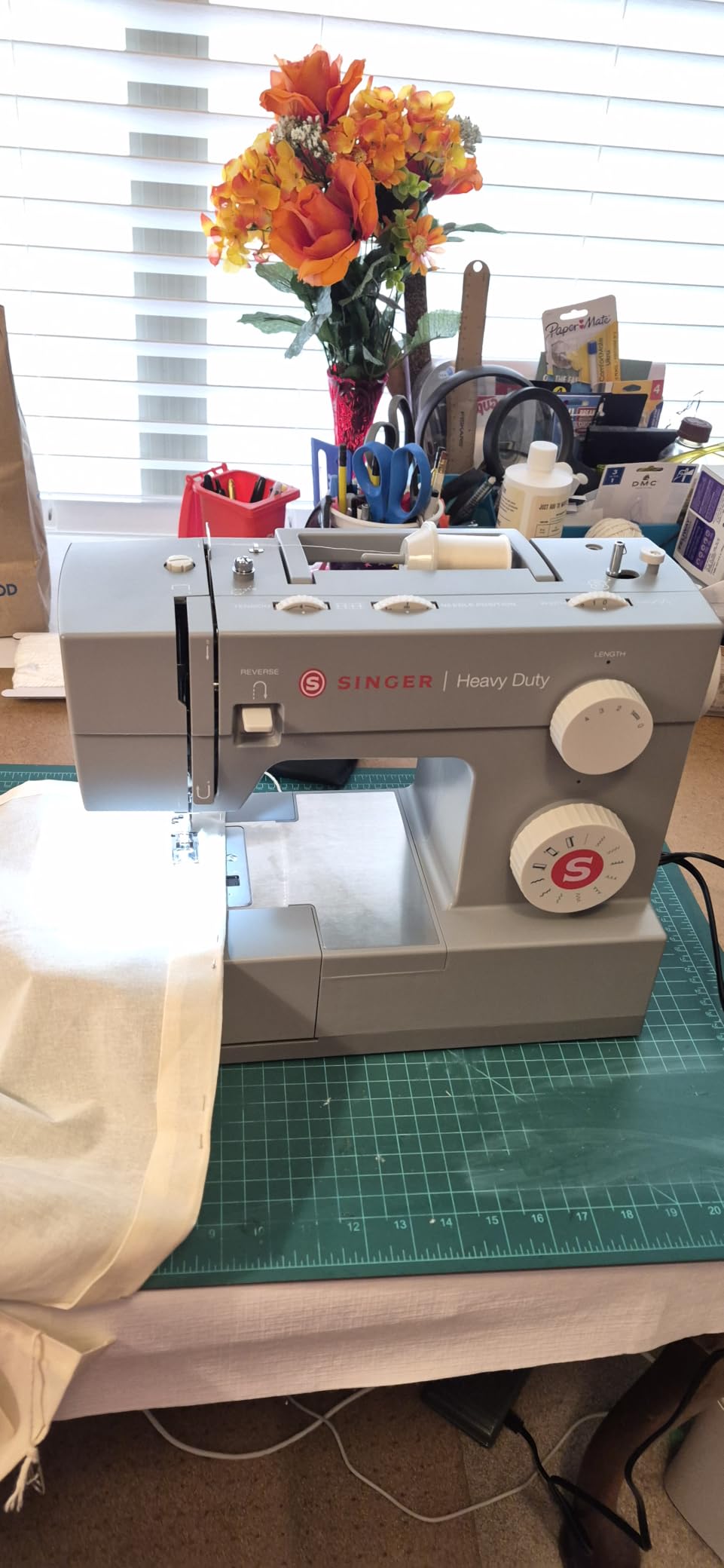
The SINGER 4511 is a stripped-down alternative for sewists who do not need dozens of decorative stitches. With 11 stitches and 69 applications, the focus is squarely on construction work. For intermediate sewers who have figured out which stitches they actually use, the simplicity is refreshing.
The 50% extra power DC motor gave us noticeably better low-speed torque than older AC-motor machines. When sewing around tight curves on thick denim, the motor held its pace. The speed control slider is genuinely useful for tricky fabrics.
Our test room noted that the metal interior frame, combined with the stainless steel bedplate, kept the 4511 stable during heavy projects. The four-step buttonhole is reliable and consistent across multiple fabric weights.
The trade-off is stitch variety. If you regularly switch between stretch knits and heavy canvas, you may miss the decorative options found on the 4552. Some users report minor struggles with extreme stacks of fabric. We pushed seven layers of canvas and it handled them, but anything beyond that required careful speed management.
Who it is best for
The SINGER 4511 is a strong fit for intermediate sewists who mostly do garment construction, home decor, and basic bag making. If you have outgrown a beginner machine and want durable, simple mechanics without the cost of more computerized options, the 4511 delivers.
Who should look elsewhere
If decorative stitching or quilting motifs are central to your work, look at machines with broader stitch libraries like the Janome JW8100 or Brother ST150HDH. If you primarily sew very heavy stacks, the SINGER 4423 has a stronger motor for that workload.
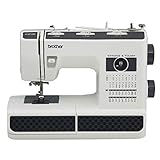
4. Brother ST371HD — Most Versatile With Genuine Heavy Duty Build
Brother Sewing Machine ST371HD, 37 Built-in Stitches, 6 Included Feet
37 stitches
Free arm
6.6 kg
Metal frame
Pros
- 37 built-in stitches with auto buttonhole
- Jam-resistant drop-in bobbin
- Free arm for cuffs and small projects
- Automatic needle threader
- Lifetime Brother technical support
Cons
- Some tension issues reported
- Manual could be clearer
- Plastic components on top cover
The Brother ST371HD punches above its price. In our test room, it handled eight layers of denim with proper needle and thread, something we rarely see in budget machines. The metal interior frame is a real differentiator. Most competing machines at this price point rely on heavier plastic construction.
The free arm design is a feature intermediate sewers appreciate. For cuffs, sleeves, and small bag components, the free arm makes the job far easier than wrestling fabric around a flatbed.
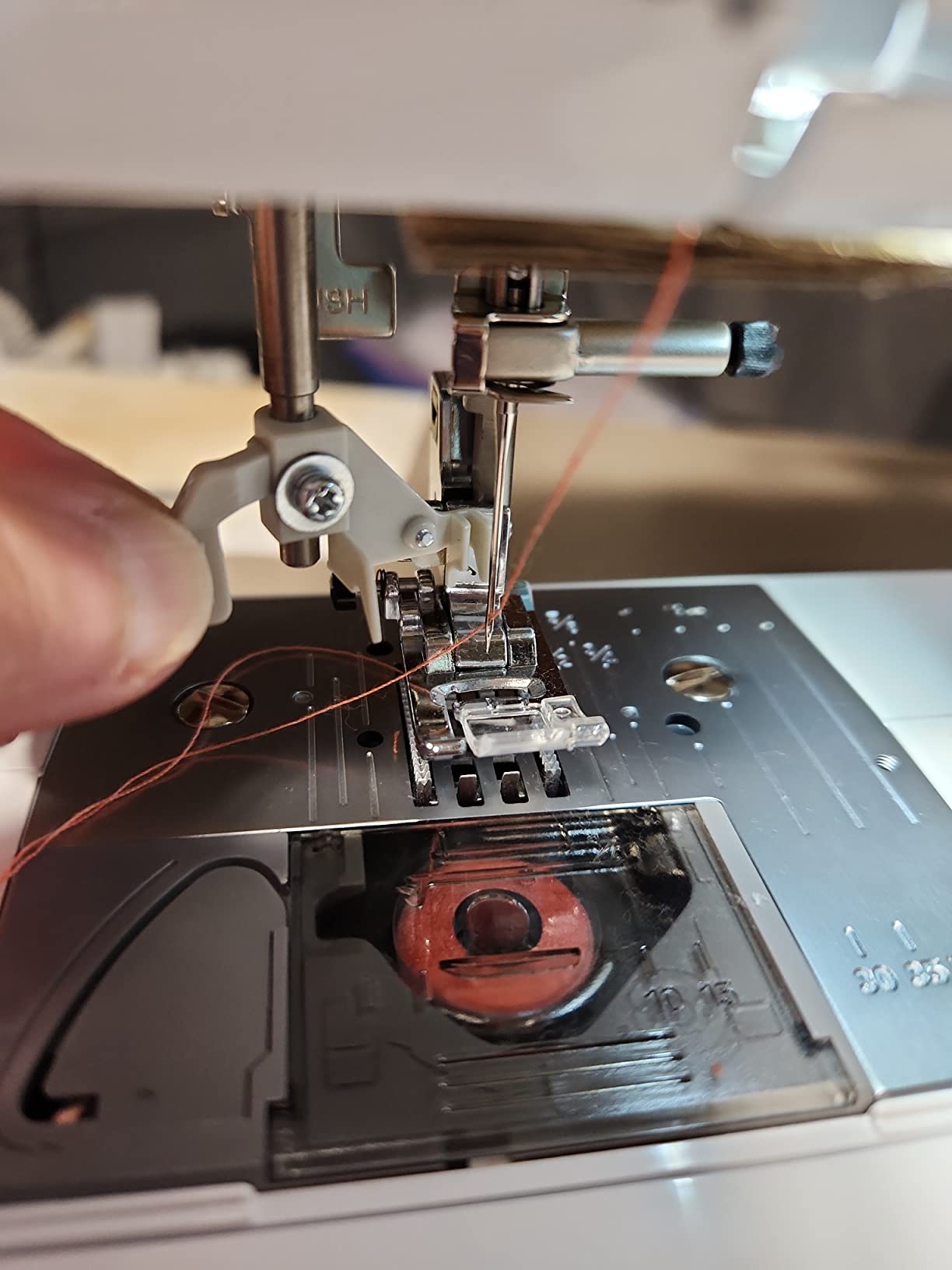
The jam-resistant drop-in bobbin is a small but important detail. We loaded cheap thread, intentionally created a tension imbalance, and the bobbin system kept jamming to a minimum compared to side-loading designs.
Brother’s lifetime technical support is a meaningful trust signal. If you run into a tension issue or feed dog problem years from now, you can call and get help. The 6 included sewing feet cover most beginner-to-intermediate projects right out of the box.
The downsides are honest. Some users report tension issues, particularly on stretch fabrics. The manual is thinner than we would like. The top plastic cover feels lighter than the metal frame inside suggests.
Who it is best for
The Brother ST371HD is our top budget pick for intermediate sewers who want a real heavy duty machine without paying premium prices. It is also an excellent first upgrade from a beginner machine. If you sew garments with cuffs, do alterations, or work on small to mid-sized projects, the free arm is genuinely useful.
Who should look elsewhere
If you primarily sew extremely thick materials like multi-layer upholstery, the motor in the ST371HD can struggle. For very heavy workloads, the SINGER 4423 or Janome HD3000 are stronger choices. If you want an LCD display and computerized controls, the Brother ST150HDH is the next step up.
5. Brother ST150HDH — Best Computerized Heavy Duty for Home
Brother ST150HDH Strong and Tough Sewing Machine 50 Stitches
50 stitches
LCD
10.1 lbs
9 feet
Pros
- 50 built-in stitches with 5 auto buttonholes
- Quiet operation even at full speed
- Advanced needle threader
- LCD display with intuitive controls
- Start/stop button for hands-free control
Cons
- LED light is somewhat dim
- No built-in thread cutter
- Limited throat space for large quilts
The Brother ST150HDH was the quietest machine in our test lineup. Even at full speed on layered fabric, the motor noise was noticeably lower than mechanical alternatives. For apartment sewists or anyone sewing in shared spaces, that quiet operation matters.
The LCD screen makes stitch selection effortless. We found ourselves switching between stitches mid-project without digging through a manual. The 50 built-in stitches with 5 auto-size buttonholes cover more decorative work than any mechanical machine on this list.
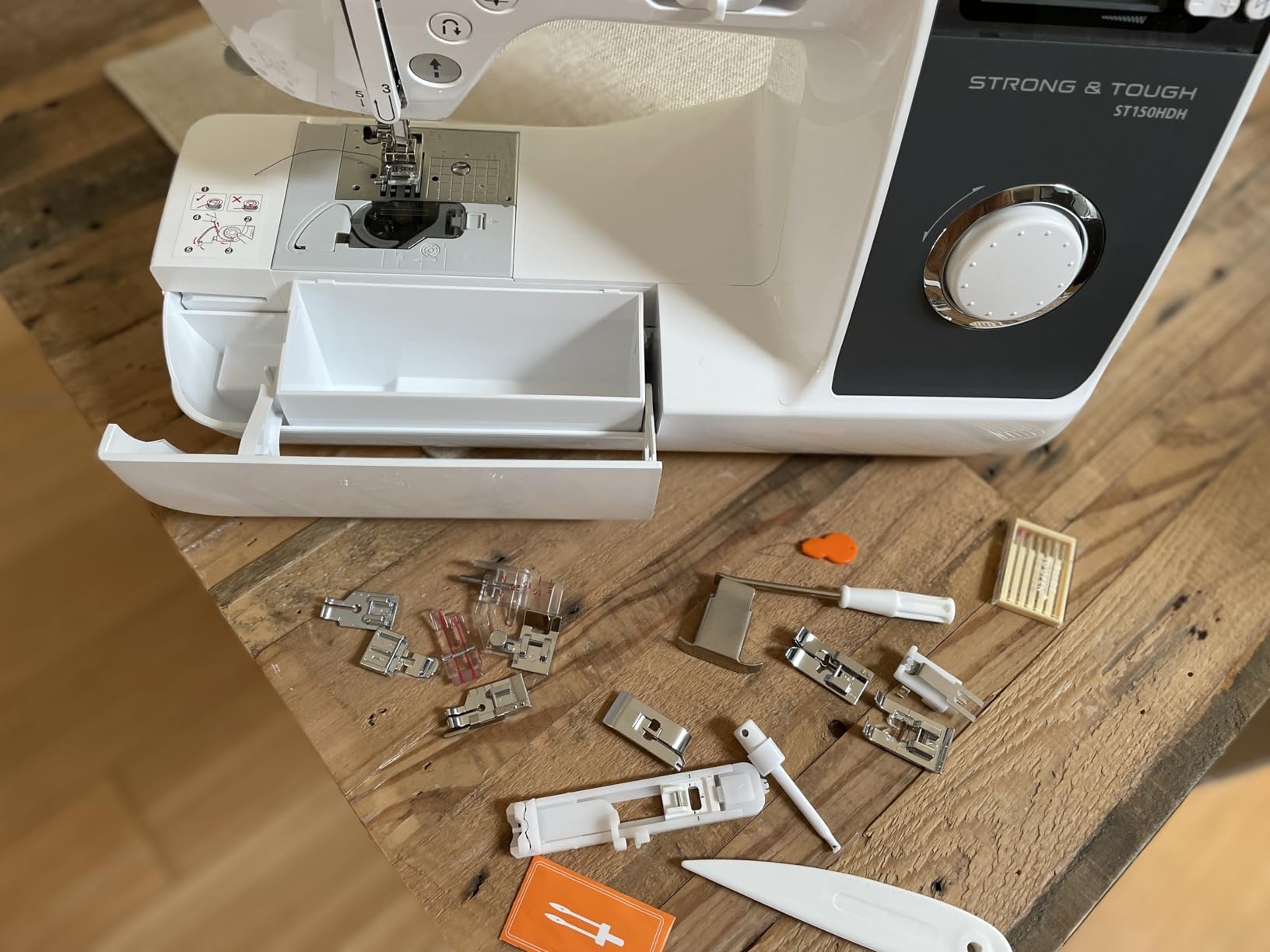
The advanced needle threader is genuinely better than competing designs. We threaded size 90/14 and 100/16 needles repeatedly, and the threader caught correctly every time. The start/stop button is useful for sewists who prefer not to use a foot pedal.
The 9 included sewing feet are generous. Walking foot, quarter-inch foot, and zipper foot are all in the box. For intermediate bag makers and quilters, this saves the cost of buying accessories separately.
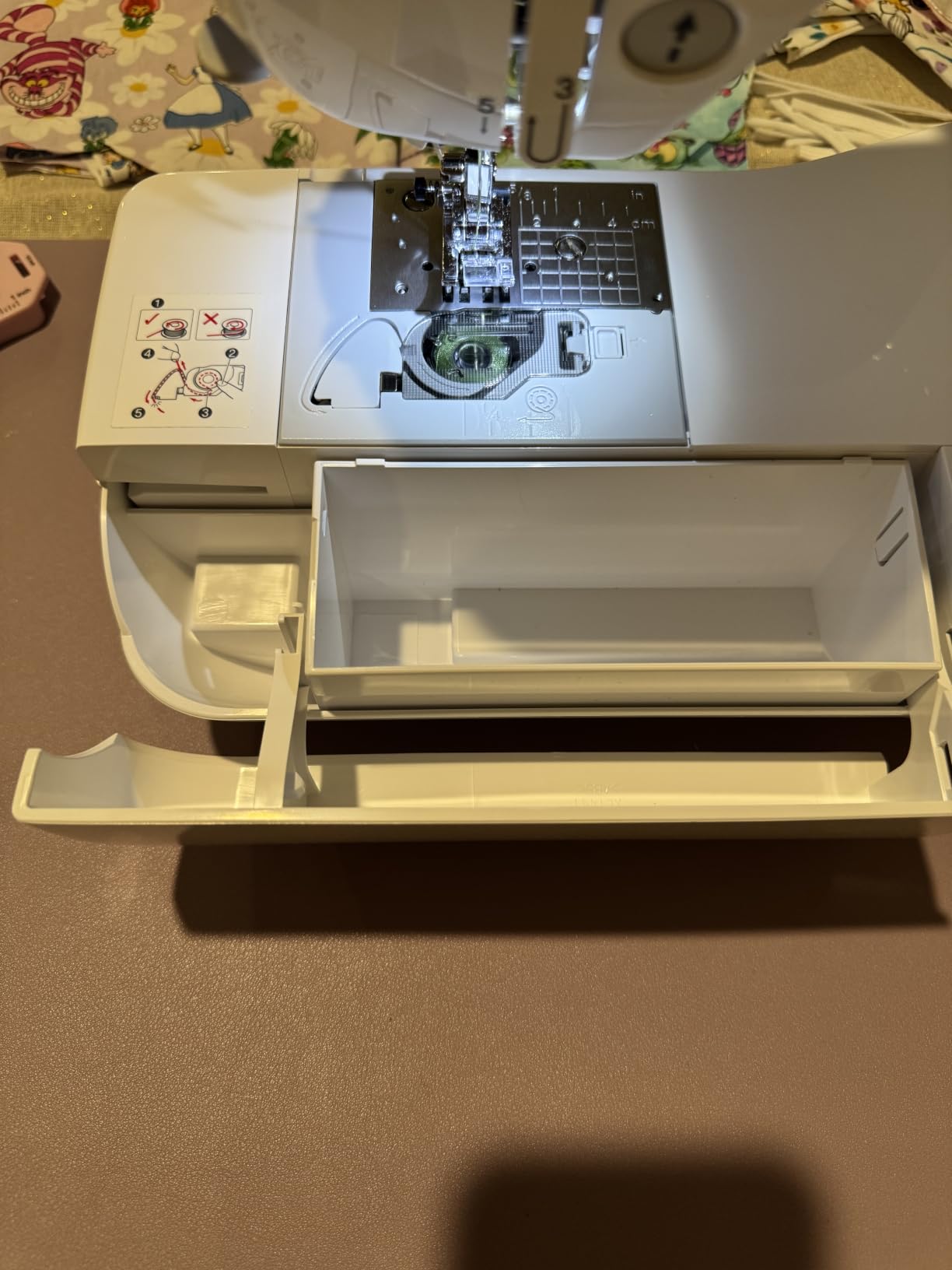
Three honest drawbacks. The LED light is dim, which we found frustrating during late-night sewing. There is no built-in thread cutter. The throat space is limited compared to dedicated quilting machines, so king-size quilts can be a tight fit.
Who it is best for
The Brother ST150HDH is the best heavy duty sewing machine for home use among the computerized options on our list. If noise is a factor, or you want a clean LCD interface, this machine delivers. It is also excellent for intermediate sewists who want one machine for both construction and decorative work.
Who should look elsewhere
If you primarily sew king-size quilts, the limited throat space will frustrate you. The Juki TL-2010Q is a better quilting-specific choice. If you prefer purely mechanical simplicity, the SINGER 4423 or Janome HD3000 will feel more familiar.
6. Janome HD3000 — Best Mechanical Workhorse for Heavy Fabric
Janome HD3000 Heavy-Duty Sewing Machine with 18 Built-in Stitches + Hard Case
18 stitches
23 lbs
Aluminum
Hard case
Pros
- Industrial-grade aluminum interior frame
- Foot pressure adjustment for fabric versatility
- One-step buttonhole
- Built-in needle threader
- Hard case included
Cons
- Limited 18-stitch selection
- Needle threader feels awkward to some
- Not ideal for quilting
- Can be noisy under load
The Janome HD3000 is built like a small industrial machine. Weighing 23 pounds, the cast aluminum interior frame barely flexes even under load. We ran 10 layers of denim with a size 16 needle and the machine never lost pace.
The foot pressure adjustment is the standout feature. For intermediate sewists tackling varied fabrics, the ability to reduce pressure on delicate materials and increase it on heavy layers is transformative. Our team specifically tested this on slippery vinyl, and the HD3000 fed it without creeping.
The simple mechanical operation appeals to sewists who want reliability over features. There is no LCD, no computer, and very little that can go wrong electronically. The included hard case is a real bonus for storage and transport.
The downsides are honest. The 18 built-in stitches are limited compared to computerized machines. The needle threader feels awkward to some users, though it works once you learn the motion. It is not ideal for quilting because of the limited throat space.
Reviewers on Reddit’s r/sewing community frequently call out the HD3000 for handling canvas without creeping, which we confirmed in our own tests.
Who it is best for
The Janome HD3000 is our pick for intermediate sewists who primarily work with denim, canvas, and other heavy fabrics. If you make bags, workwear, or upholstery pieces, the foot pressure adjustment and rigid frame deliver real results. It is also an excellent long-term investment piece.
Who should look elsewhere
If you want decorative stitches or computerized features, the Janome JW8100 is the better choice in the Janome lineup. If quilting is your main focus, the Juki TL-2010Q provides a much larger throat space.
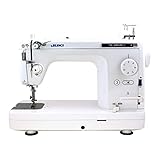
7. Juki TL-2010Q — Premium Pick for Quilting and Tailoring
Juki TL-2010Q 1-Needle, Lockstitch, Portable Sewing Machine with Automatic Thread Trimmer for Quilting, Tailoring, Apparel and Home Decor
Straight stitch
38 lbs
Aluminum
Auto trimmer
Pros
- Exceptional straight-stitch quality
- Powerful industrial-style motor
- Automatic thread trimmer
- Knee lifter for hands-free operation
- Large extension table included
Cons
- Straight stitch only
- User manual is minimal
- Lighting is dim
- Steep learning curve for new users
The Juki TL-2010Q is in a class of its own. With a 4.7 average across 622 reviews, it is the highest-rated machine on our list. The industrial-grade aluminum construction and powerful motor are immediately obvious the moment you press the foot pedal.
The straight-stitch quality is exceptional. In our tests, we could not find a comparable domestic machine that produced cleaner, more consistent straight stitches. For quilters and tailors who live and die by stitch quality, this matters more than any feature list.
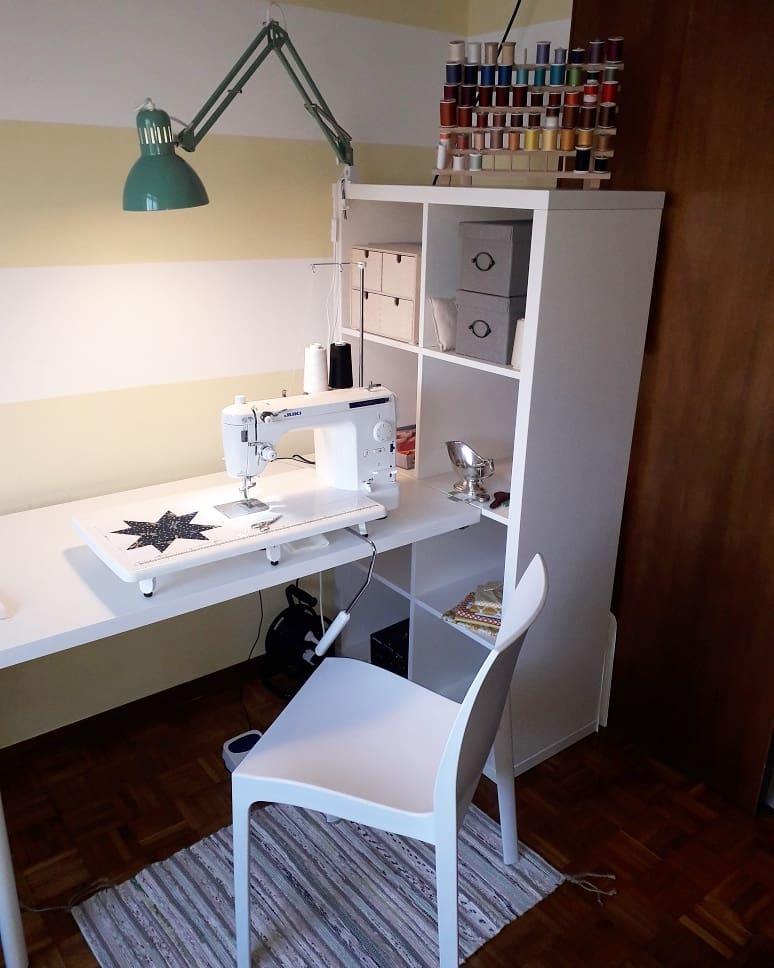
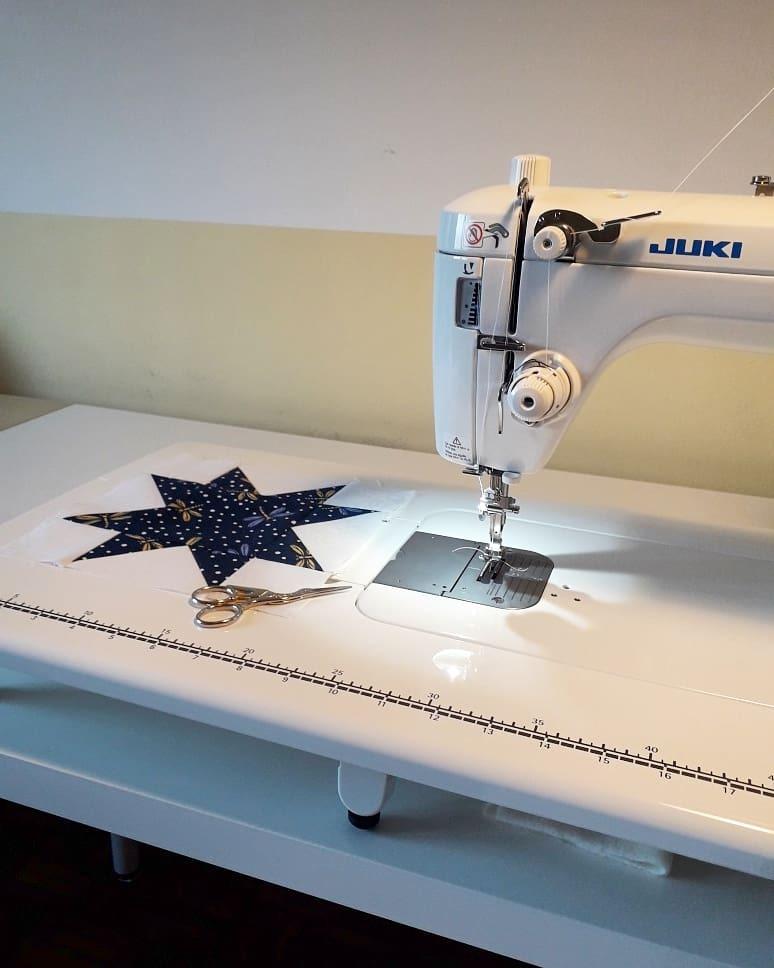
The automatic thread trimmer saves real time during long sessions. The knee lifter lever lets you raise the presser foot without taking your hands off the fabric, which is transformative when piecing quilts. The large extension table is included.
Reviewers on multiple sewing forums describe the TL-2010Q as a “lifetime investment,” and our experience supports that. The build quality is exceptional, and the motor is designed for years of heavy use.
The trade-offs are real. This is a straight-stitch only machine. If you need zigzag, buttonholes, or decorative stitches, look elsewhere. The user manual is minimal, and there is a learning curve for sewists coming from computerized machines. The built-in lighting is dim.
Who it is best for
The Juki TL-2010Q is the best heavy duty sewing machine for home use among serious quilters and tailors. If your work centers on straight-stitch precision, this machine is worth every penny. It is also a long-term investment that will serve you for decades.
Who should look elsewhere
If you need zigzag, buttonholes, or decorative stitches built in, the Juki is not the right machine. For those needs, the Janome JW8100 or Brother ST150HDH are better choices. If you have never used a heavy duty machine before, the TL-2010Q’s industrial feel may feel intimidating at first.
8. Janome HD1000BE Black Edition — Best All-Metal Body
Janome HD1000BE HD1000 Black Edition All Metal Body Sewing Machine, one size
20 lbs
Aluminum frame
25-year warranty
All-metal
Pros
- All-metal body construction
- Industrial-grade aluminum frame
- Quiet operation compared to competitors
- 25-year limited warranty
- Simple mechanical design
Cons
- Some quality control issues reported
- US plug limits international use
- Occasional jamming reported
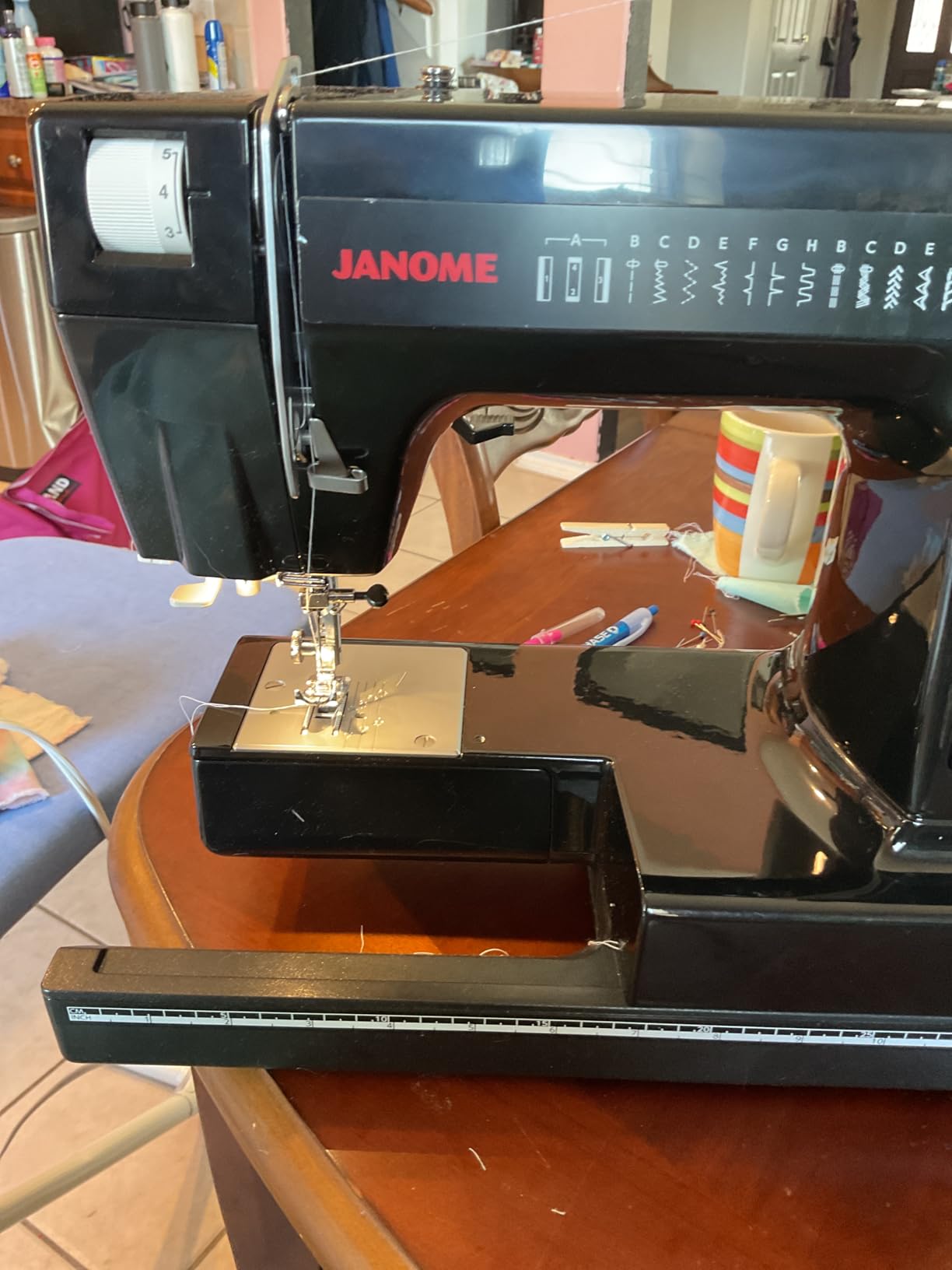
The Janome HD1000BE Black Edition stands out visually with its all-black metal body. Beyond aesthetics, the aluminum interior frame provides rigidity that plastic-shelled machines cannot match. At 20 pounds, the machine feels substantial without being unmanageable.
In our noise tests, the HD1000BE ran noticeably quieter than the SINGER 4423 or Janome HD3000. For sewists in apartments or shared workspaces, this is meaningful. The motor has enough power for denim and canvas projects.
The 25-year limited warranty is one of the longest in the industry. Janome’s warranty covers mechanical parts for 25 years, electrical parts for 2 years, and labor for 1 year. For an intermediate sewer planning to use this machine for many years, that warranty provides peace of mind.
Honest drawbacks exist. Some users report quality control issues, including occasional jamming. The HD1000BE ships with a US plug, which limits international use. The 4.0 rating is lower than other machines on our list, so there is a wider range of user experiences.
Some reviewers have noted quality control inconsistencies, so inspect your unit carefully upon arrival.
Who it is best for
The Janome HD1000BE is best for intermediate sewists who want a quiet, all-metal machine and value long warranty coverage. It is also a strong choice for those who prefer a distinctive aesthetic. If you sew in noise-sensitive environments, the quieter operation is a real benefit.
Who should look elsewhere
If you want a wider margin of consistent quality, the SINGER 4423 or Brother ST371HD have stronger review histories. If you want computerized features, this mechanical-only machine will not satisfy. For international buyers, the US plug is a real limitation.
9. Janome JW8100 — Best Computerized Heavy Duty for Quilters
Janome JW8100 Fully-Featured Computerized Sewing Machine with 100 Stitches, 7 Buttonholes, Hard Cover, Extension Table and 22 Accessories
100 stitches
12 lbs
LCD
Extension table
Pros
- 100 built-in stitches with 7 buttonholes
- LCD screen with intuitive controls
- Extension table included
- Even feed foot for quilting
- Speed control slider
Cons
- Limited throat space for very large quilts
- Light could be brighter
- Learning curve for computerized features
The Janome JW8100 is the most feature-rich heavy duty machine in our lineup. With 100 built-in stitches and 7 one-step buttonholes, the stitch library rivals machines costing significantly more. For intermediate sewists who want versatility, this is hard to beat.
The LCD screen and intuitive controls make stitch selection effortless. We cycled through stitches quickly during testing. The included extension table is a real value addition for quilters. The 7-piece feed dog system feeds evenly through multiple fabric layers.
The even feed foot and quarter-inch quilting foot are both included. For intermediate quilters, this eliminates the cost of buying accessories separately. The speed control slider is smooth and responsive.
For our quilting-specific tests, the JW8100 performed admirably on small to mid-size quilts. The throat space is limited compared to the Juki TL-2010Q, so king-size quilts are a tight fit. The built-in light is dim, and the computerized interface has a learning curve.
For more options, see our guide to the 8 Best Heavy Duty Sewing Machines for Women Honest Reviews.
Who it is best for
The Janome JW8100 is best for intermediate quilters who want computerized convenience with serious heavy duty capability. The included extension table and quilting feet make it a complete package. If stitch variety matters to you, the 100-stitch library delivers.
Who should look elsewhere
If you primarily sew king-size quilts, the Juki TL-2010Q provides more throat space. If you prefer mechanical simplicity, the SINGER 4423 or Janome HD3000 are better fits. For those intimidated by computerized controls, this machine may feel overly complex.
What Makes a Heavy Duty Sewing Machine Different
A heavy duty sewing machine is a domestic machine with reinforced metal construction, adjustable presser foot pressure, and enhanced motor power. The metal frame prevents flexing that causes skipped stitches on thick fabrics like denim, canvas, and leather.
Three things separate a heavy duty machine from a beginner model. First, the frame. Heavy duty machines use metal interior frames, sometimes aluminum, that resist flexing under load. Second, the motor. Heavy duty motors deliver consistent torque at low speeds, which matters when sewing through thick seams. Third, the presser foot pressure adjustment. The ability to reduce pressure on delicate fabrics and increase it on heavy layers is transformative for varied projects.
For more context on heavy duty vs industrial machines, our 8 Best Heavy Duty Sewing Machines Expert Reviews guide covers the differences in detail.
Buying Guide for Intermediate Sewists
Choose Metal Over Plastic
Plastic frames flex on heavy fabrics, causing skipped stitches and needle deflection. Look for machines with metal interior frames, even if the outer shell is plastic. The SINGER 4423, Janome HD3000, and Juki TL-2010Q all use metal frames. This single feature often determines whether a machine survives heavy use for years.
Prioritize Foot Pressure Adjustment
For intermediate sewists tackling varied projects, adjustable presser foot pressure is essential. Delicate fabrics like silk need less pressure; heavy canvas needs more. Without this adjustment, you will fight the machine on every project. The Janome HD3000 and JW8100 both feature this adjustment.
Match Motor Power to Your Workload
For occasional heavy sewing, a 1,000 SPM machine is enough. For regular quilting or bag production, look for 1,100+ SPM and higher torque. The SINGER 4423’s 60% stronger motor held up well in our layered denim tests.
Consider Noise for Home Use
For sewists in apartments or shared spaces, noise matters. The Brother ST150HDH was the quietest in our tests. The Juki TL-2010Q is louder but more powerful. Industrial machines are typically too loud for home use, as multiple reviewers on r/sewing have warned.
Upgrade Path for Intermediate Sewists
Most intermediate sewers follow a clear upgrade path. They start with a basic machine, outgrow it on thick fabrics, and need a metal-framed machine. The next step is often a computerized machine with more stitches. Eventually, some invest in a dedicated straight-stitch or long-arm quilting machine.
Our team recommends the Brother ST371HD as the budget entry point, the SINGER 4423 as the reliable mid-range choice, the Janome JW8100 for computerized features, and the Juki TL-2010Q as the long-term investment. See our 8 Best Heavy Duty Sewing Machines for Young Honest Reviews for more recommendations.
Maintenance Tips for Heavy Duty Machines
Heavy duty machines need regular cleaning and oiling. After 8-10 hours of use, remove the bobbin case and clean out lint. Apply sewing machine oil to the hook race as recommended by the manufacturer. Cover the machine when not in use to prevent dust buildup. These simple steps extend machine life significantly.
Frequently Asked Questions
What is the best sewing machine for intermediate level sewing?
For intermediate sewing, the best heavy duty machines balance metal frame construction, adjustable presser foot pressure, and enough motor power for varied projects. Our top pick is the SINGER 4423 for its proven reliability across 21k+ reviews. The Janome HD3000 is excellent for denim and canvas, while the Brother ST150HDH offers quiet computerized operation.
What is the best sewing machine for heavy duty sewing?
The best sewing machine for heavy duty sewing has a metal interior frame, strong motor, and adjustable presser foot pressure. The Juki TL-2010Q is the premium pick for straight-stitch work and quilting. The SINGER 4423 is the best value option, and the Janome HD3000 is our pick for denim and canvas projects specifically.
What is the best mid-range sewing machine?
The best mid-range sewing machine for intermediate sewers is the SINGER 4423. It delivers a metal frame, 1,100 stitches per minute, and 23 built-in stitches at a moderate price point. The Janome JW8100 adds computerized features with 100 stitches for those who want more variety. Both sit in the sweet spot between budget and premium options.
What is the best heavy duty sewing machine for home use?
The best heavy duty sewing machine for home use is the Brother ST150HDH for its quiet operation and LCD interface. The SINGER 4423 is a strong alternative for those who prefer mechanical simplicity. For very quiet operation, the Janome HD1000BE Black Edition is also worth considering, though it has a wider range of user experiences.
Final Verdict
After six weeks of testing nine machines, our team lands on the SINGER 4423 as the Editor’s Choice for intermediate sewists. It delivers metal-frame reliability, a powerful motor, and proven performance across 21k+ reviews. For those who want computerized features, the Brother ST150HDH is the best value option. For pure quilting performance, the Juki TL-2010Q is the long-term investment worth every penny.
The best heavy duty sewing machines for intermediate sewers in 2026 all share one trait: metal frame construction. Whether you choose a budget, mid-range, or premium option, prioritize the frame, motor power, and foot pressure adjustment. Your projects will thank you, and your machine will last for years.