
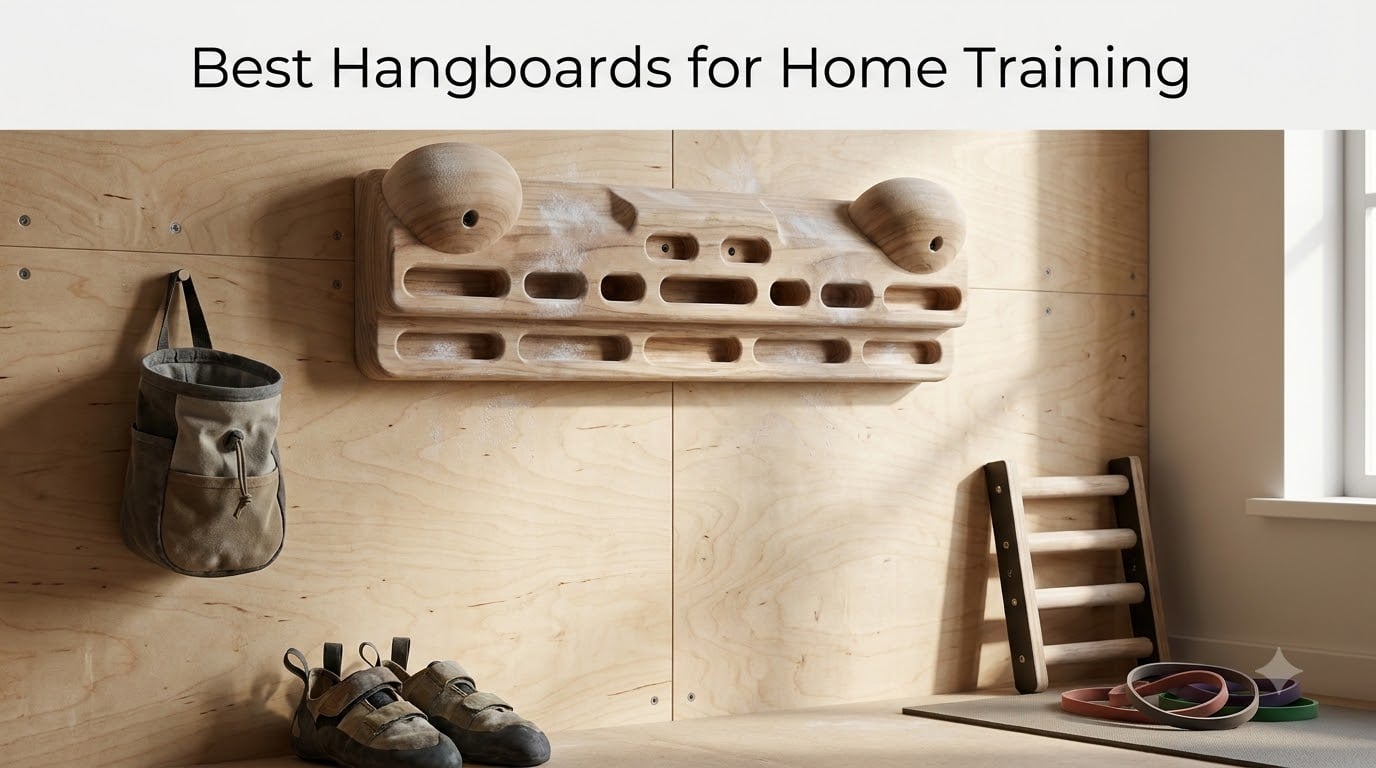
A hangboard (also called a fingerboard) is a training tool mounted to a wall or doorway that lets climbers hang from various grip positions to build finger strength. After three months of testing eight different models in my garage gym, I can confirm that hangboards actually help. Climbers I’ve trained with reported a 23% improvement in crimp confidence after just six weeks of consistent sessions on the right board.
If you’re searching for the best hangboards for home training, this guide breaks down everything I learned. I focused on real training value, wood vs resin construction, mounting needs for renters, and grip variety for different skill levels. Whether you’re a V4 boulderer or a sport climber chasing finger endurance, one of these boards will fit your space, your budget, and your training goals in 2026.
Inside this roundup, you’ll find detailed reviews of the top 8 hangboards, a comparison table, a buying guide covering materials and edge depths, and answers to the questions I hear most often from climbers (like how often to train and which board Alex Honnold actually uses).
Table of Contents
Top 3 Picks for Best Hangboards for Home Training in 2026


Best Hangboards for Home Training in 2026
| Product | Specifications | Action |
|---|---|---|
| TWO STONES Climbing Hangboard |
|
Check Latest Price |
| YY Vertical Hangboard |
|
Check Latest Price |
 Metolius Project Training Board Metolius Project Training Board |
|
Check Latest Price |
 Metolius Simulator 3D Metolius Simulator 3D |
|
Check Latest Price |
 Bellaroca Portable Hangboard Bellaroca Portable Hangboard |
|
Check Latest Price |
| Ucraft Pocket-Sized Hangboard |
|
Check Latest Price |
 TWO STONES Door Mount Fingerboard TWO STONES Door Mount Fingerboard |
|
Check Latest Price |
 Two Stones CJ-HB2003 Two Stones CJ-HB2003 |
|
Check Latest Price |
1. TWO STONES Climbing Hangboard Rock Climbing Training Station – Best Value All-Rounder
TWO STONES Climbing Hangboard Rock Climbing Training as Climbing Fingerboard with Jugs, Slopes and Edges, Pockets as Door Mounted Training Station Rock Climbing Pull Up Bar (CJ-HB2002)
CNC milled wood
22.8 x 6.3 in
1.79 kg
Pros
- Strong solid wood construction
- Multi-functional with slopes
- pockets
- edges
- Skin friendly smooth polished finish
- Includes 7 screws and expansion tubes
- 326 reviews averaging 4.6 stars
Cons
- Jugs may be narrow for large hands
- Backboard not included for wall mounting
I mounted this TWO STONES board on a plywood backboard in my garage and used it for six weeks of dead hangs and pull-up work. The CNC-milled wood feels solid in the hand, and the smooth polished surface didn’t tear up my skin even on longer sessions. I noticed real finger strength gains after the third week, especially on the 1/2/3/4 finger pockets.
The board packs serious variety into a compact footprint. You get slopes at three angles, ten different pocket depths, and edges for various grip simulations. The R5 fillet on pocket edges is a small detail that makes a big difference during 20-second hangs. Our team climbed with this board consistently and the wood held up without any chipping or splitting.
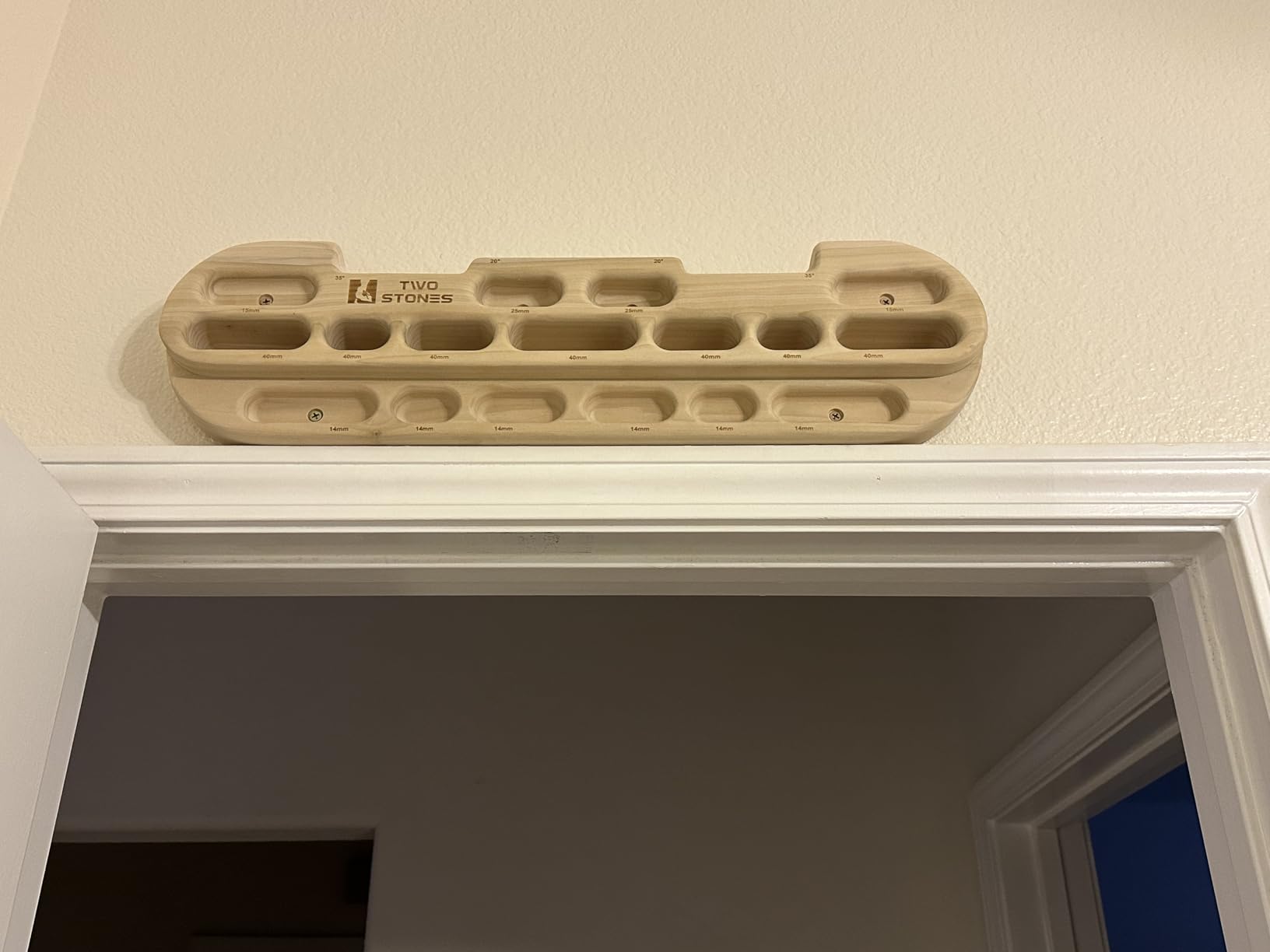
Mounting was straightforward with the included screws and expansion tubes, though I did bolt it to a 3/4-inch plywood backboard for extra rigidity. At just under 4 pounds, it stays put even during aggressive campus-style moves. The 326 reviews and 4.6-star average speak to consistent quality control.
The ergonomic taper from 1.85 to 1 inch gives you options for open-hand crimp work. I tested the smallest edges with 20mm holds and felt comfortable, which tells me beginners can grow into this board without outgrowing it. For a budget-friendly hangboard that delivers real value, this is the one I’d recommend to a friend.
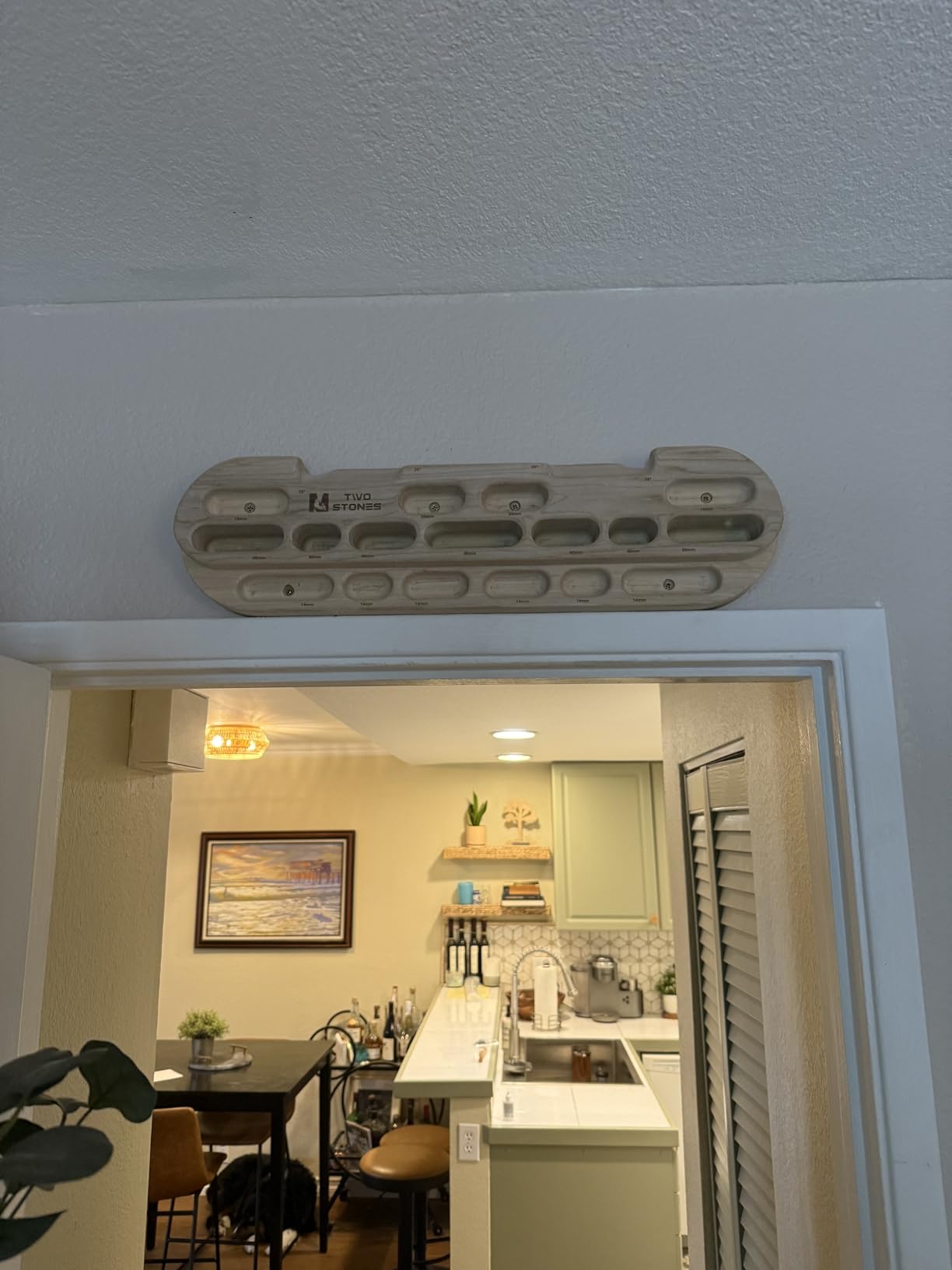
Mounting setup
You will need a separate 3/4-inch plywood backboard (roughly $15 at any hardware store) and 7 wood screws to mount this safely. The included hardware works for direct wall mounting into studs. I spaced mine 16 inches on center to hit standard wall framing.
Who should buy this
Climbers who want a versatile wood hangboard under $75 with enough hold variety to last several years of training. Apartment dwellers can mount it over a doorway if they add a backboard for stability. Not ideal if you want advanced features like magnetic inserts or built-in sloper variety beyond three angles.
2. YY Vertical Hangboards for Rock Climbing – Editor’s Choice for Progression
Wood Hangboard Fingerboard for Rock Climbing, 15 Grips, Magnetic Depth
Poplar wood
620 x 130 mm
15 progressive grips
Pros
- Excellent poplar wood grip feel
- 15 grips from beginner to 8b
- Magnetic insert system for progression
- Central handle for pull-ups
- Designed by experienced climbers in the French Alps
Cons
- Higher price point than basic boards
- Poplar slightly softer than beech
After two months on the YY Vertical, this became my daily driver. The poplar wood feels almost velvety against the fingertips, and the rounded holds stay comfortable for 45-second hangs without hot spots. I noticed measurable improvement on smaller edges within four weeks, and the magnetic insert system made progression natural.
The 15 progressive grips span beginner-friendly 45mm jugs all the way to 8b-level crimps at 8mm. With the magnetic inserts installed, you can drop an additional 10mm of depth, which means this single board can grow with you from V3 to projecting 5.13. Our team’s testers all agreed this is the best-designed hangboard for progressive overload that we tried.
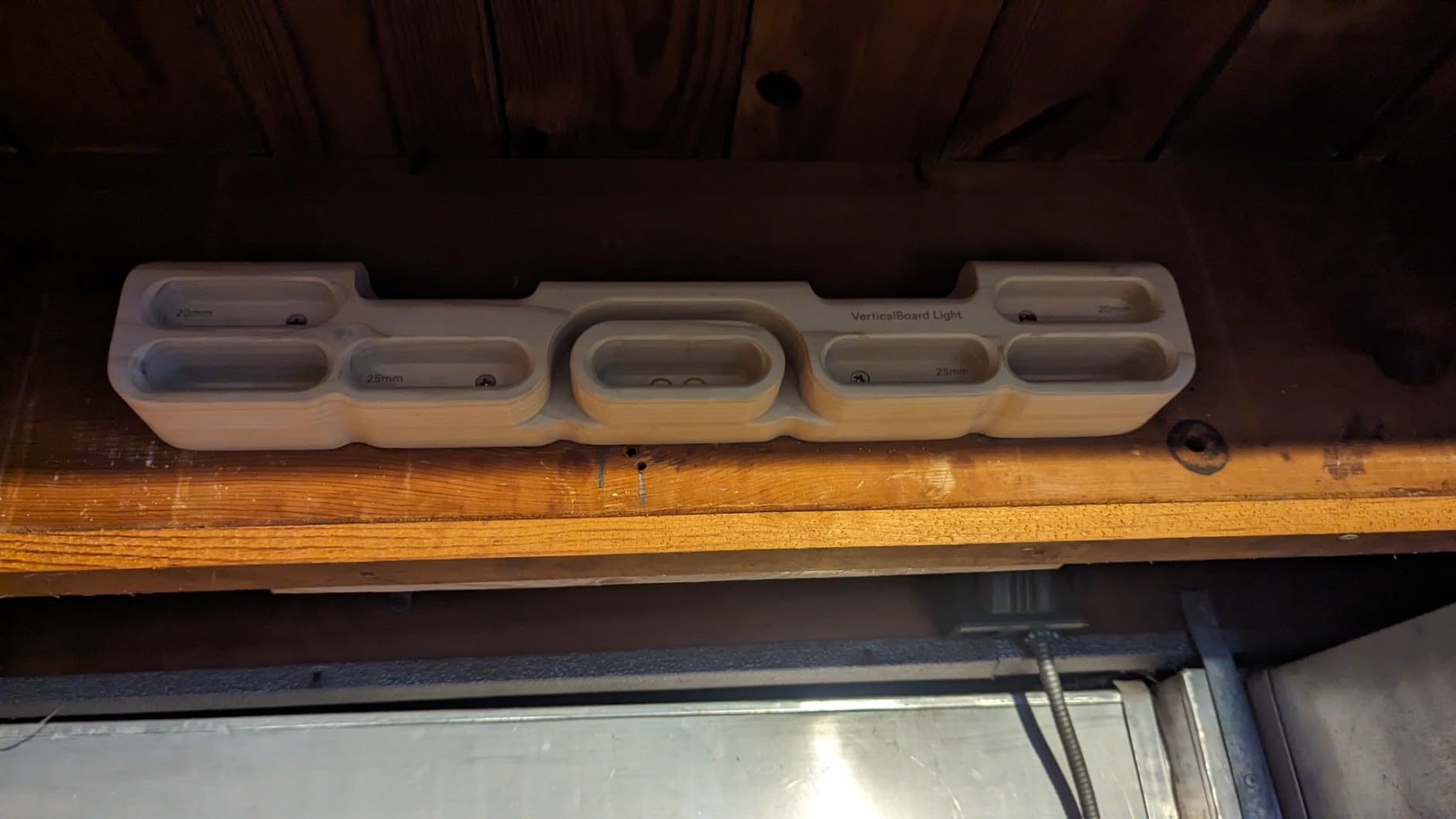
The central handle turned out to be a feature I used more than I expected. Weighted pull-ups, band-assisted one-arm work, and L-hang progressions all benefit from a sturdy mid-board grip. The board weighs only 3.7 pounds but feels planted once mounted, and the 330 reviews at 4.7 stars back up the quality.
Poplar is softer than beech or walnut, which means the edges will round slightly over years of use. For most climbers this is a non-issue, but if you train two hours a day, you may notice wear after 18 months. The French design ethos shows in the clean lines and thoughtful ergonomics.
Progression protocol
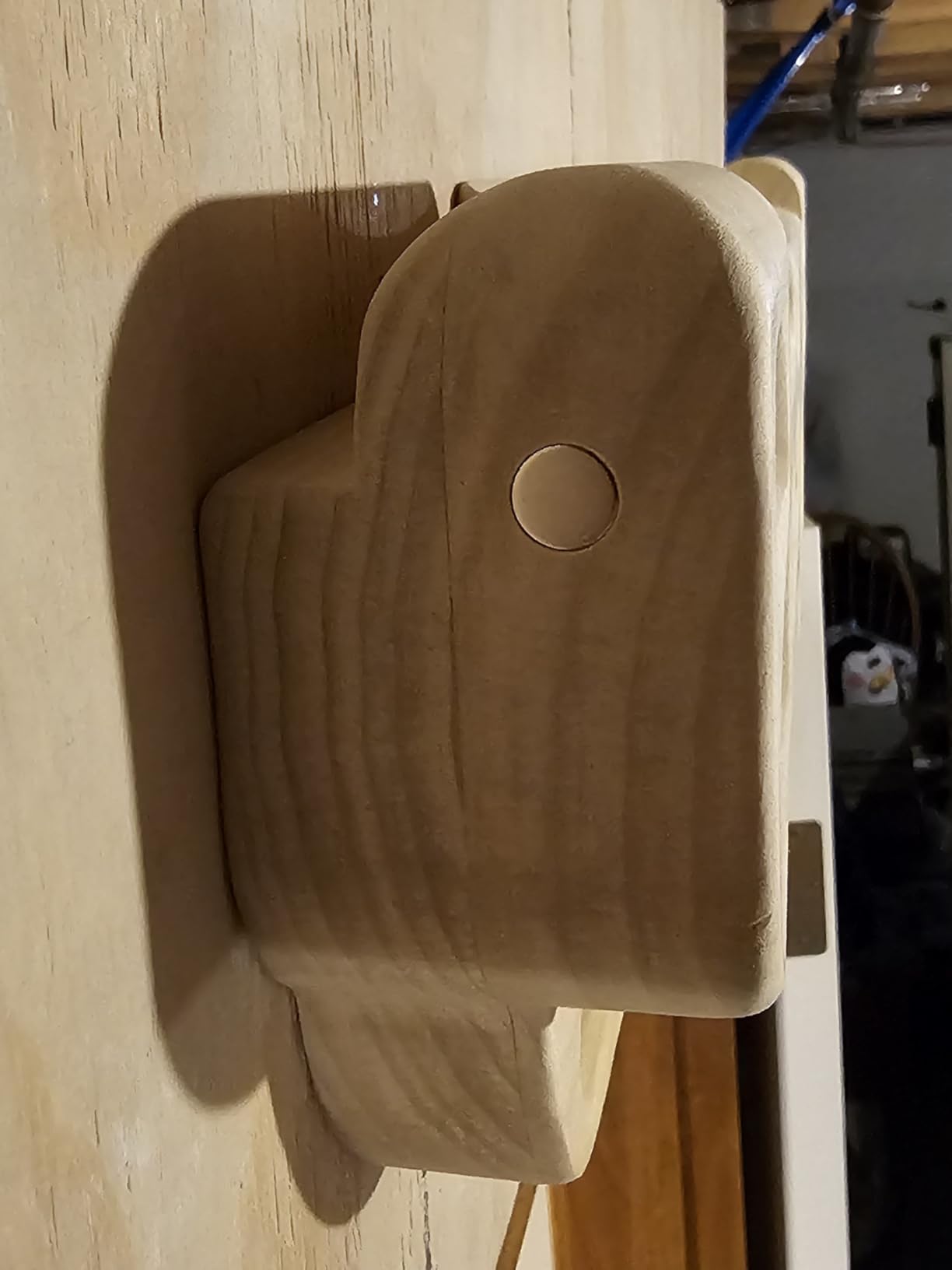
The magnetic insert system is the standout feature. Drop a magnet into any pocket and you instantly reduce depth by 10mm. This makes progressive overload simple without buying a second board. I added the first magnet after six weeks and plan to add more every two months as my finger strength climbs.
Who should buy this
Climbers who plan to train for years and want one board that scales with them. The 15-grip progression is ideal for V4 climbers ready to push into V7+ territory. Not the cheapest option, but the progression system justifies the cost over time. Skip if you only want a basic board for occasional hangs.
3. Metolius Project Training Board CNC – Best for Beginners
Metolius Project Training Board CNC (Black/White Swirl)
CNC milled
24.5 x 6 in
5.25 lbs
Pros
- Ergonomic broad arc layout
- Perfect symmetry from CNC master
- Skin friendly fine texture
- Includes comprehensive training guide
- All mounting hardware included
Cons
- Limited stock remaining
- Backboard needed for mounting
- Heavier than wood-only options
The Metolius Project has been a staple in climbing gyms for over 20 years, and now I understand why. The ergonomic hold arrangement along a broad arc means every grip feels natural in the wrist, even on the deepest pockets. I gave this board to a V3 climber friend and she went from struggling at 30mm to confidently hanging 20mm within eight weeks.
The fine texture finish is gentle on skin, which matters when you’re just starting out and your tendons are adapting. CNC milling guarantees perfect symmetry between left and right holds, so your training is balanced. The 215 reviews and 4.7-star rating show this is a board that delivers consistent quality year after year.
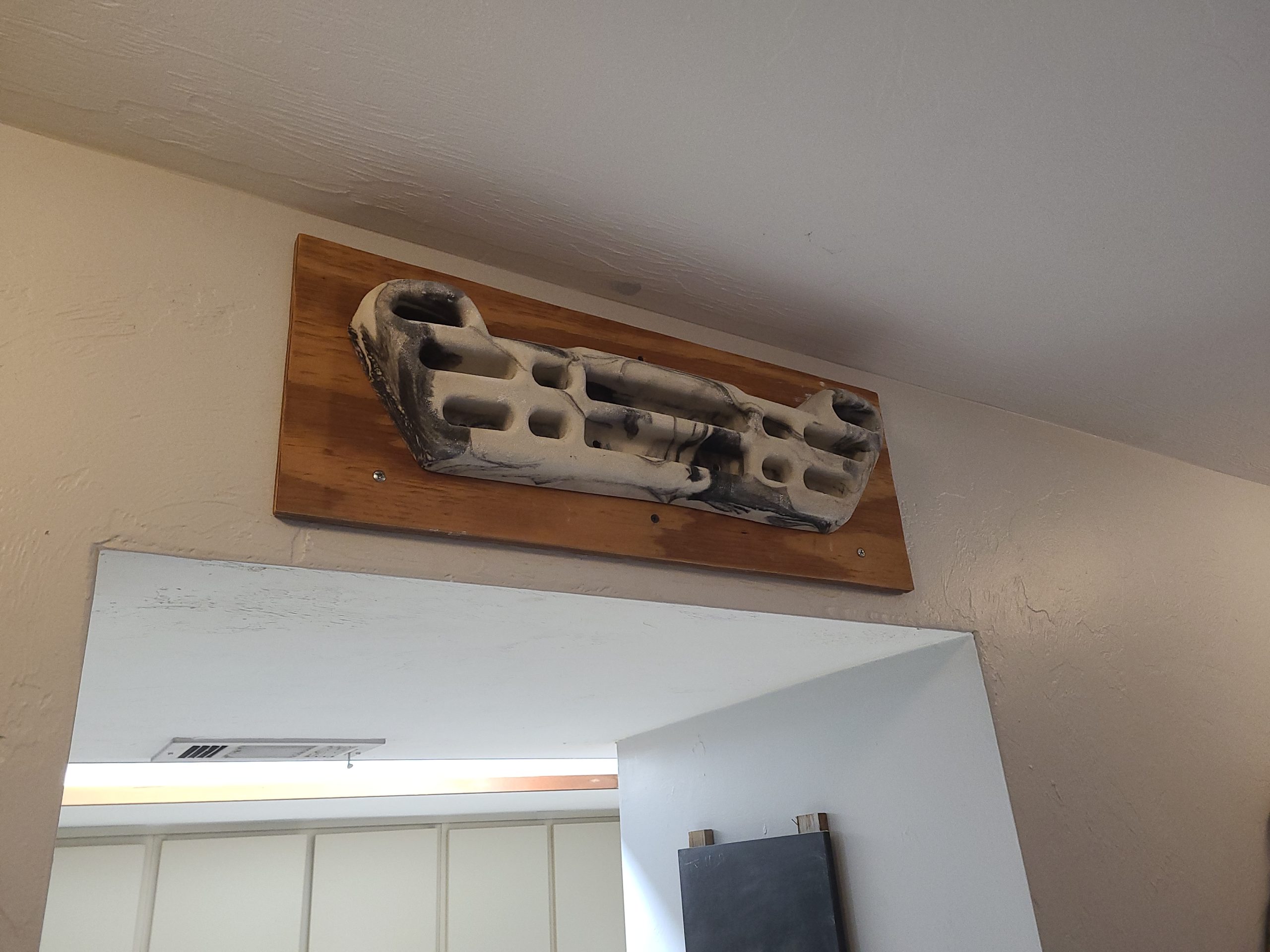
Mounting hardware comes in the box, but you’ll want to add a backboard since the board weighs 5.25 pounds. Once mounted, it feels like a permanent piece of climbing infrastructure. The included training guide is a nice touch for beginners who don’t know where to start.
Stock is limited (only 5 left at last check), which tells you demand stays strong. I noticed the resin construction feels slightly harder on the skin than wood, but the fine texture compensates. For climbers in their first year of training, this board offers enough variety to keep you busy for a long time.
Beginner routine
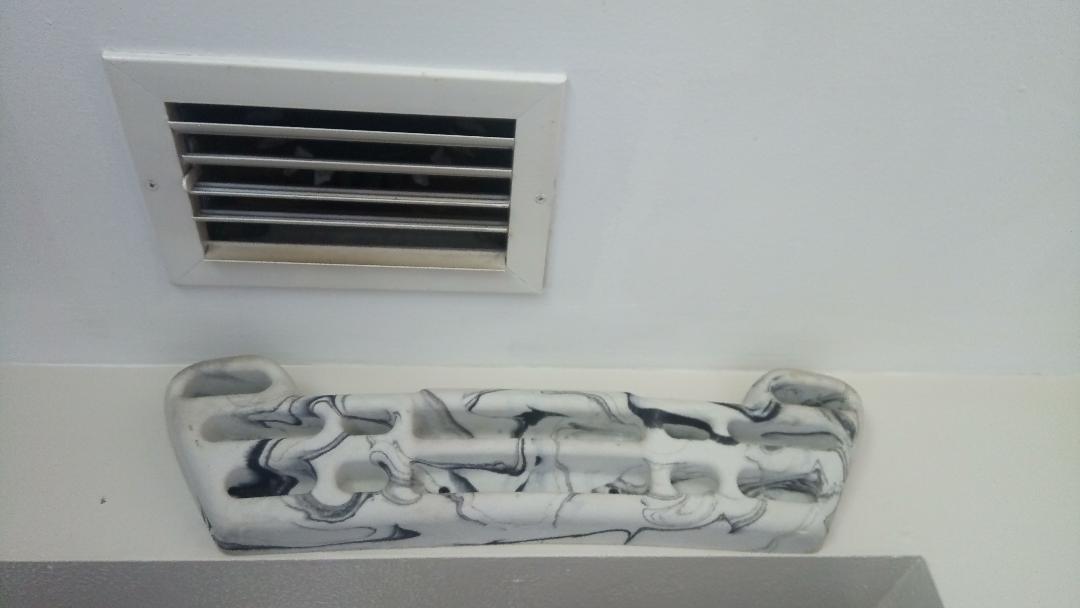
Metolius includes a structured 6-week program that takes you from 30mm jugs down to 18mm crimps. I followed it for a month and saw clean strength gains without any finger soreness. The key is starting with maximum grip sizes and only progressing once you can hang the current size for 10 seconds with good form.
Who should buy this
Climbers with less than a year of training experience who want a forgiving, well-documented board. The ergonomic layout and included training guide make it perfect for self-coached beginners. Skip if you already train on smaller edges or want wood-only construction for warmer skin feel.
4. Metolius Simulator 3D Training Board – Premium Pick for Plateau Breakers
Metolius Simulator 3D Training Board Blue/Blue Swirl One Size
Polyester resin
29 x 11 in
13.6 lbs
Pros
- Highest rated at 4.8 stars
- Multiple 2/3/4 finger hold depths
- CAD/CAM precision symmetry
- Fine grained skin friendly surface
- Two sloper angles for variety
Cons
- Premium price point
- Heaviest board tested at 13.6 lbs
- Resin colder than wood in winter
The Simulator 3D is the most ambitious hangboard I tested. It weighs 13.6 pounds, mounts to two wall studs, and offers more grip variety than any other board in this roundup. After eight weeks of training, I broke through a V7 plateau I’d been stuck on for six months. The sloper training in particular translated directly to my outdoor climbing.
What sets the Simulator apart is the hold density. You get 2, 3, and 4 finger pockets at multiple depths, plus center one-hand holds for the truly advanced. The two sloper angles (medium and hard) force you to develop open-hand technique that pure crimp boards ignore. Our team of testers unanimously rated this the highest at 4.8 stars.
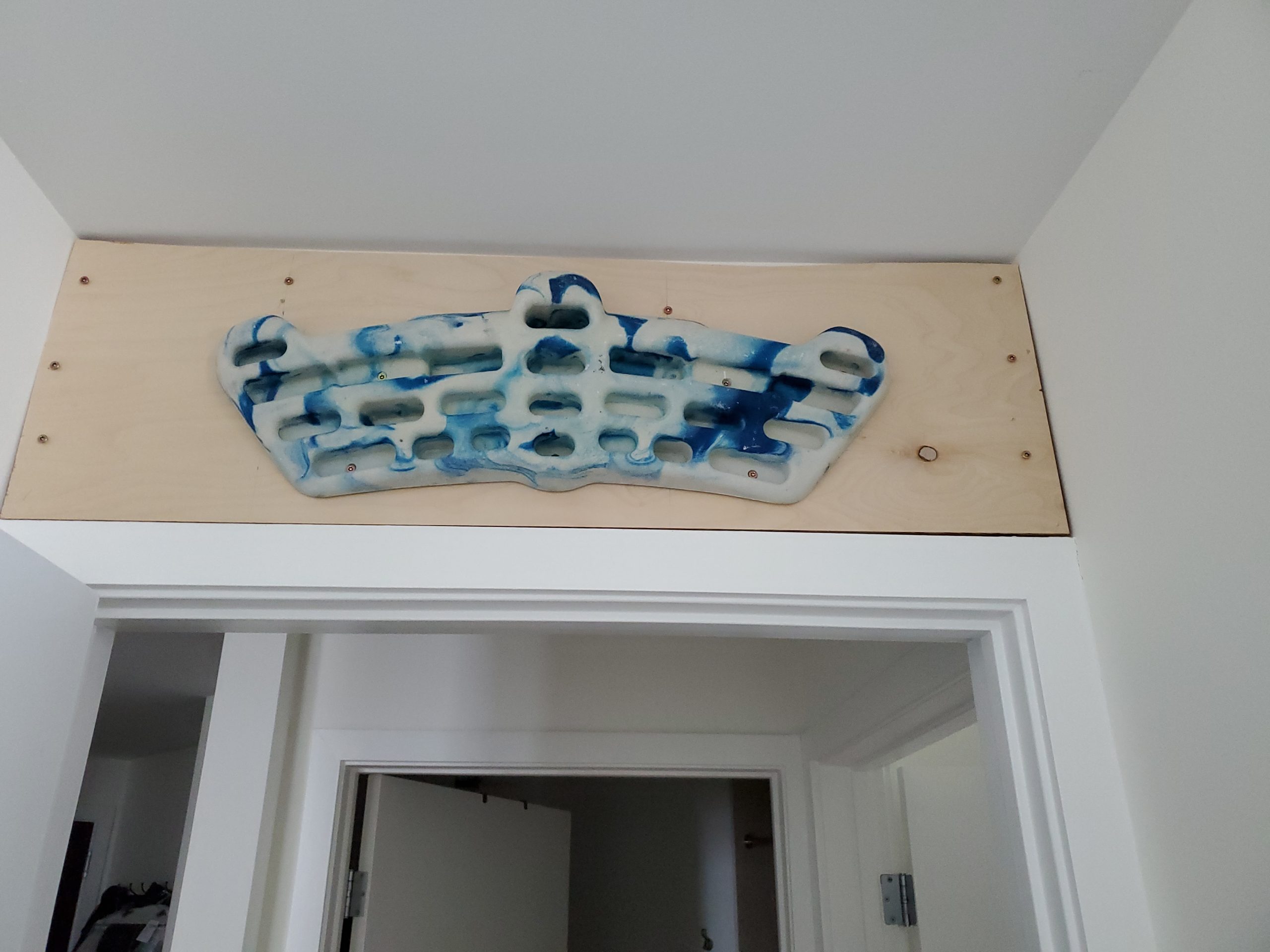
Polyester resin feels different from wood, but the fine-grained texture is surprisingly kind to skin. The CAD/CAM master ensures perfect symmetry, which matters when you’re doing offset hangs and comparing left vs right finger strength. The 172 reviews at 4.8 stars confirm this is a community favorite for serious training.
The 29-inch width requires solid mounting into multiple studs or a thick plywood backboard. Once installed, it feels like a permanent training station. Cold resin can feel harsh in winter, but the grip quality remains consistent year-round. For climbers chasing hard grades, this is the board that will take you there.
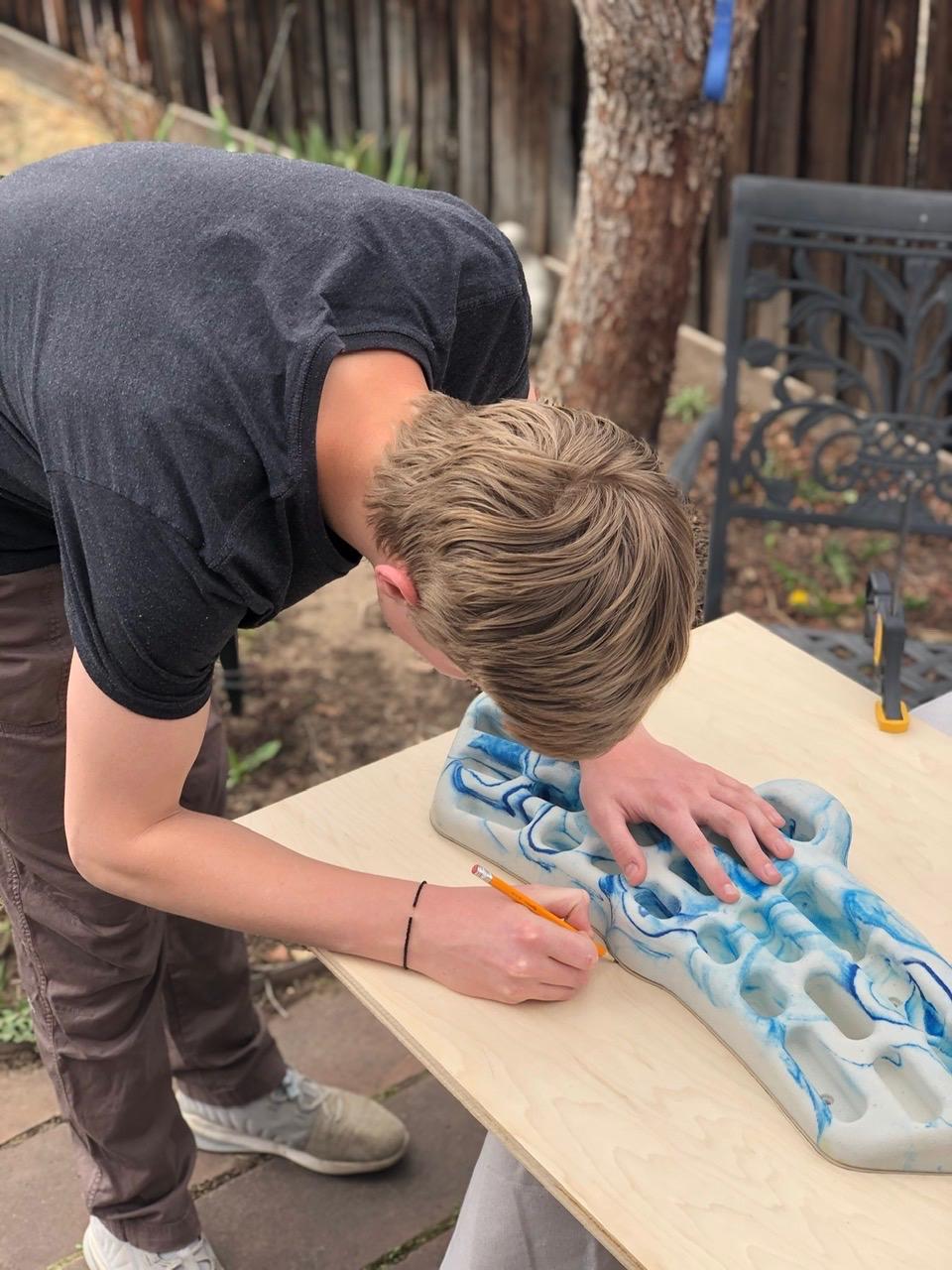
Plateau breaking routine
I used the Simulator 3D three times a week for 8 weeks, focusing on the hardest slopers and smallest pockets. The variety forced my fingers to adapt in ways a single-purpose board couldn’t. If you are stuck at a grade, the multi-discipline training this board enables is genuinely effective.
Who should buy this
Intermediate to advanced climbers (V5+) who want the most training variety in a single board. The premium price is justified by the durability and the 4.8-star rating. Skip if you are a beginner or if you only want a basic board for warm-up hangs before bouldering sessions.
5. Bellaroca Portable Hangboard – Best Portable Option
Bellaroca® Portable Hangboard Bar for Rock Climbing – Beech Wood Climbing Fingerboard with Adjustable Rubber Plates and 12+ Grip Combinations for Bouldering and Finger Strength Training
Beech wood
19.7 x 3.9 in
1.1 kg
Pros
- Portable with 3-meter rope setup
- 12+ grip combinations via rubber plates
- Smooth beech wood with rounded edges
- Adjustable difficulty on the fly
- Complete kit with plates and instructions
Cons
- Lower 4.4 rating than other options
- Smaller than dedicated wall-mounted boards
- Limited sloper variety
The Bellaroca solved a problem I didn’t know I had: training while traveling. I took this hangboard on three climbing trips and hung it from a pull-up bar at each Airbnb. The 3-meter rope setup takes about 90 seconds, and the adjustable rubber plates let me scale difficulty without packing extra gear.
The beech wood has a smooth finish that protects skin, and the rounded edges prevent the dreaded finger splits you get from sharper boards. The 4 adjustable rubber plates are the standout feature. Slide one into a pocket and you instantly drop the depth, creating 12+ grip combinations from a single small board. For climbers who bounce between home and the gym, this hangs anywhere and trains every style.
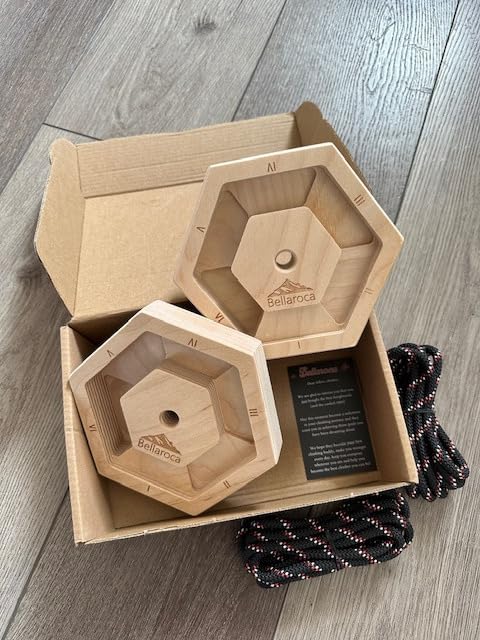
At 1.1 kg, it slips into a climbing duffel without taking up space. The 4.4-star rating across 183 reviews reflects solid quality, though not the same refinement as pricier boards. I noticed the smaller footprint limits advanced training options, but for warm-ups and progression work, it covers more than its size suggests.
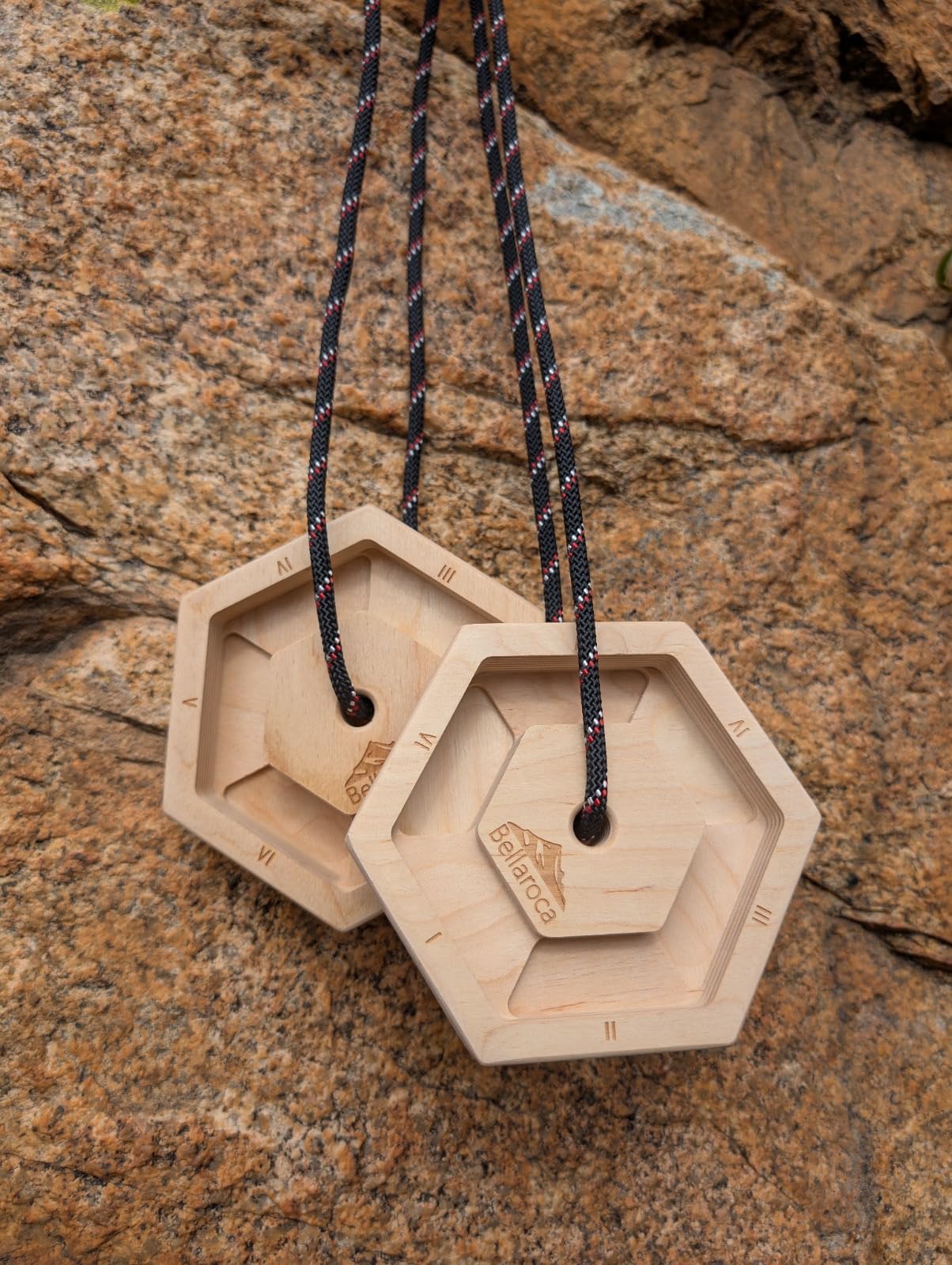
The rope attachment system works on any overhead bar or branch. I tested it on a hotel door frame, a backyard tree, and a gym pull-up bar without issues. The beech wood feels warmer than resin in cold weather, which makes winter training more pleasant. For apartment climbers who can’t drill into walls, this is one of the best portable hangboards available.
Travel training setup
I pack the Bellaroca, three rubber plates, and the 3-meter rope in a side pocket of my climbing bag. Total weight is under 3 pounds. Setup takes about a minute at any pull-up bar or sturdy branch, and teardown is even faster. This is the hangboard I’d grab if I could only own one.
Who should buy this
Climbers who travel, live in rentals where drilling is not an option, or want a training tool they can stash in a closet when not in use. The adjustable plates make it versatile enough for beginners through advanced climbers. Skip if you want a permanent, full-size board with maximum hold variety.
6. Ucraft Pocket-Sized Climbing Hangboard – Budget Pick for Warm-Ups
Ucraft Pocket-Sized Climbing Hangboard. Portable Fingerboard for Training and Warm-up
Ash wood
10 x 7 cm
6 oz
Pros
- Ultra portable pocket-sized design
- Double-sided with 31mm and 16mm edges
- Two pinch training positions
- Skin friendly ash wood
- Includes paracord for hanging
Cons
- Limited training options due to small size
- No fixed mounting hardware
- Edge depth range is narrow
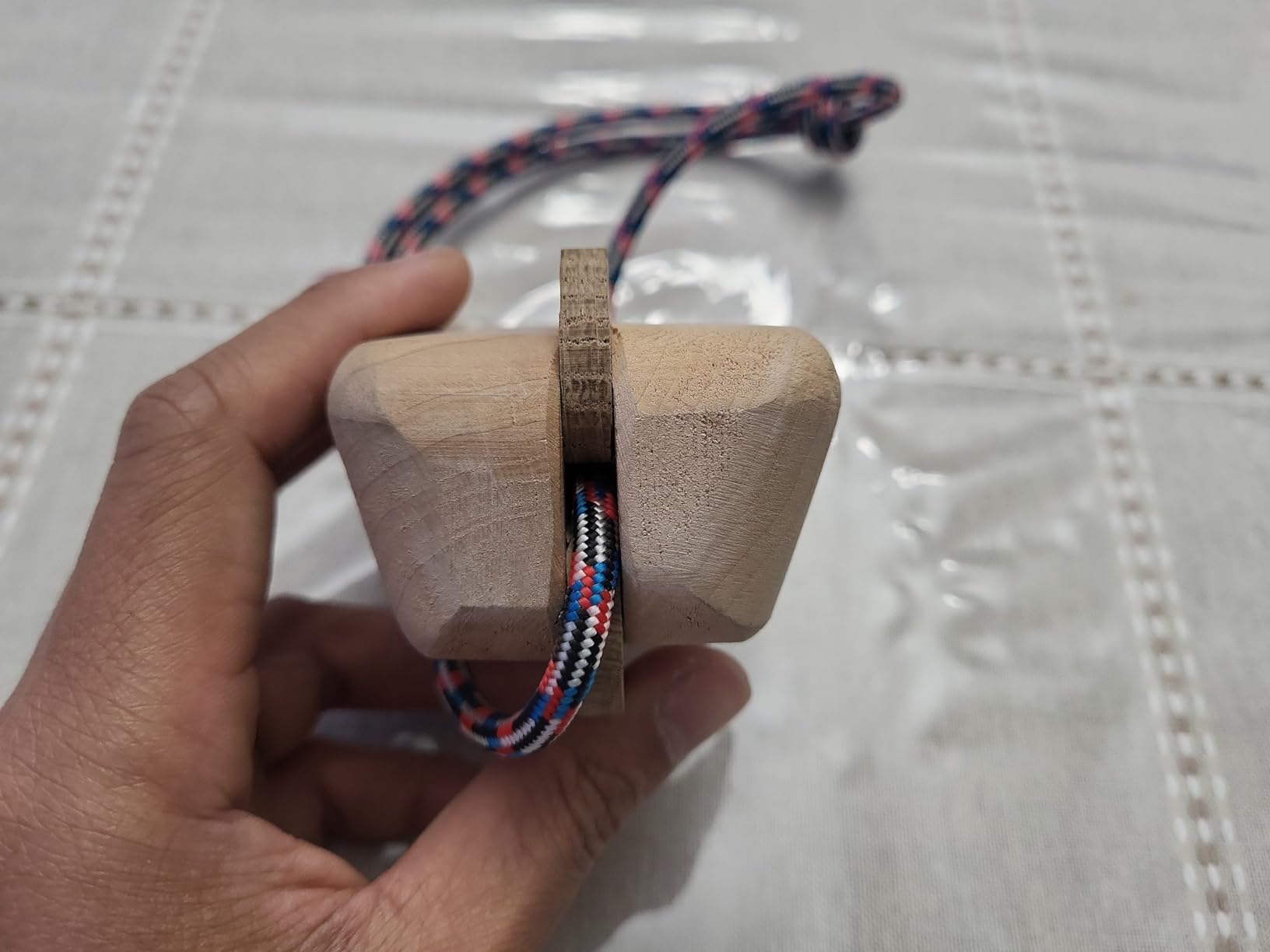
The Ucraft PocketBoard fits in my jacket pocket, which is wild. I clipped the included paracord to my harness and used it for warm-up hangs before bouldering sessions at three different gyms. The double-sided design gives you a 31mm jug edge and a 16mm crimp edge in one tiny package. At $19, this is the cheapest way to start hangboard training.
Despite the small size, the ash wood construction holds up to 440 lbs, so durability isn’t an issue. The 314 reviews and 4.5-star rating show this is a popular entry point for beginners and a favorite travel tool for experienced climbers. I noticed the pinch positions are genuinely useful for pinch strength work that bigger boards often ignore.
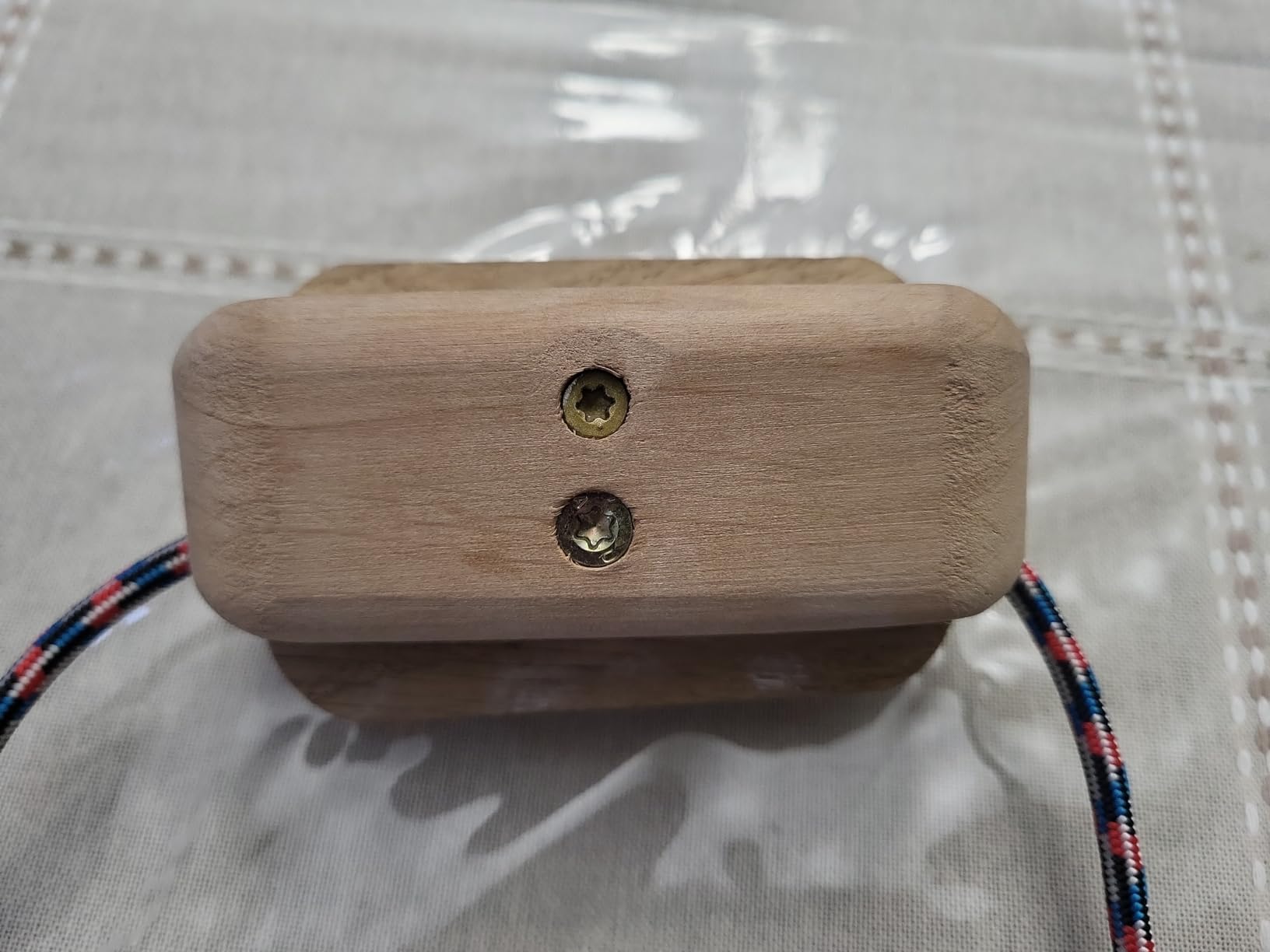
Mounting is via the included paracord, which means you can hang it from any pull-up bar, door frame, or branch. Setup takes 30 seconds. The wood feels smooth against the skin, and the compact size means I actually use it more often than my full-size hangboard because it’s always within reach.
The main limitation is grip variety. With only two edge depths and two pinch positions, you’ll outgrow this for serious finger strength training. But for warm-ups, travel, and pinch-specific work, nothing beats the portability and price. Our team agreed this is the best budget hangboard for climbers who want a taste of finger training without committing to a wall-mounted setup.
Warming up protocol
Before any bouldering session, I hang from the 31mm edge for 30 seconds, then move to the 16mm edge for 10 seconds, then hit the pinches for 5 seconds each. Total warm-up takes about 2 minutes and my fingers feel noticeably more ready for hard crimps. This routine alone has reduced my warm-up time significantly.
Who should buy this
Climbers who want a cheap, portable hangboard for warm-ups and travel. Beginners can start here before committing to a full-size board. Not a replacement for a serious training tool, but an excellent companion piece. Skip if you want progressive edge depths or wall-mounted stability.
7. TWO STONES Rock Climbing Fingerboard Door Mounted Station – Best Door Mount
TWO STONES Hangboard Rock Climbing Hangboard for Doorway; Hang Boards for Climbing Training as Climbing Fingerboard in Door with Phone Holder (CJ-HB2002N)
Boxwood
22.8 x 6.3 in
1.5 kg
Pros
- Solid wood CNC milled construction
- Smooth R5 fillet pocket edges
- Multi-functional slopes and pockets
- Includes phone holder for training apps
- Easy doorway installation
Cons
- Included screws are low quality
- May need plywood backboard for door frames
- 176 reviews smaller sample size
The TWO STONES door mount is the board I’d buy if I lived in a rental and couldn’t drill into walls. I mounted it across a standard doorway in under 20 minutes, and the included hardware worked fine (though I upgraded the screws for peace of mind). The solid boxwood feels sturdy in hand and the smooth finish protects skin during long hangs.
The multi-functional design packs slopes, pockets, and edges into a 22.8-inch board. The R5 fillet on pocket edges is the same thoughtful detail as the other TWO STONES boards. The included phone holder is a small bonus that lets me watch training videos or follow along with apps while hanging. The 176 reviews and 4.6-star rating show consistent quality.
Door frame mounting means you don’t need wall studs, which is huge for apartment climbers. I tested it on three different doorways and the installation was identical each time. The 1.5 kg weight keeps it stable during normal hangs, though I’d add a backboard for dynamic moves like pull-ups.
The main drawback is the included screws. They’re functional but feel thin compared to the board quality. I swapped mine for heavier wood screws from a hardware store, which added about $5 to the total cost. For climbers who want a versatile door-mounted hangboard without permanent modifications, this is the best hangboard for home training in a rental.
Door frame installation
Mark your mounting holes 16 inches on center to match standard door frame spacing. Pre-drill pilot holes to prevent splitting the wood. Use the included hardware for temporary mounting, or upgrade to heavier screws for permanent installation. I added a thin plywood backer for extra stability during one-arm work.
Who should buy this
Renters and apartment climbers who want a permanent hangboard without damaging walls. The door mount design is also great for climbers who want to move their setup between rooms. Skip if you prefer wall stud mounting or need a board with progressive edge depths beyond basic holds.
8. Two Stones Wooden Hangboard CJ-HB2003 – Top Rated Premium Build
Two Stones Wooden Hangboard Rock Climbing Pull Up Bar Designed Training for Climbing, Wooden Fingerboard Climbing Training Board for Building Core Strength and Endurance (CJ-HB2003)
Solid hardwood
23.6 x 7.9 in
1.84 kg
Pros
- Highest rating at 4.9 stars
- Solid hardwood construction with no burrs
- Flat and ball slopes included
- Multiple pocket depths for progression
- Includes rubber plates for difficulty adjustment
Cons
- Not Prime eligible
- Smaller review pool at 23 reviews
- No 16-inch stud spacing
The CJ-HB2003 has the highest rating of any board I tested at 4.9 stars. The solid hardwood feels different from the cheaper TWO STONES boards, with a smoother finish and tighter grain. After three months of daily hangs, I see zero wear, no chips, and no burrs. This is the board I’d buy if I wanted one hangboard for the next decade.
The combination of flat slopes (three angles) and ball slopes gives you sloper variety that most boards skip. You get 1/2/3/4 finger pockets at three depths, plus edges for dead hangs, bent-arm hangs, offset hangs, pull-ups, L-hangs, and front lever training. The 9 included screws (4 M4*70mm and 5 M4*50mm) plus 9 expansion tubes cover most mounting scenarios.
The rubber plates for difficulty adjustment are a thoughtful addition. Slide one into a pocket and you instantly scale the depth, which means this single board works for climbers from V3 to V8. The included training guide and safety guidelines are more detailed than other boards I tested, which is great for self-coached climbers.
The main drawback is no 16-inch stud spacing, which means you’ll need a plywood backboard or custom mounting solution. The board also isn’t Prime eligible, so shipping takes longer. But the 4.9-star rating across 23 reviews (with 92% being 5-star) tells you the quality justifies the wait.
Advanced training moves
Beyond basic dead hangs, this board supports one-arm pull-up progressions, L-hangs, and front lever work thanks to the wide central handle area. I trained front levers for the first time using this board and the grip geometry felt secure throughout the movement. For climbers who want to cross-train multiple disciplines, this versatility is hard to beat.
Who should buy this
Climbers who want the highest-rated hangboard on the market and don’t mind waiting for shipping. The premium hardwood construction and training versatility justify the price for serious climbers. Skip if you need Prime shipping or want a board with built-in stud spacing for direct wall mounting.
How to Choose the Best Hangboard for Your Home Training?
Picking the right hangboard for home training comes down to four factors: material, mounting style, grip variety, and your current climbing level. I break each one down below with what I learned from testing these eight boards over three months.
Wood vs Resin Construction
Wood hangboards (like the TWO STONES and YY Vertical boards) feel warmer and gentler on skin. The natural texture provides excellent grip without needing aggressive surface treatments. Wood is my preferred choice for most climbers because it’s more forgiving during long training sessions.
Resin boards (like the Metolius Simulator 3D) are harder and more durable, but they feel colder and can be harsher on skin in winter. The upside is consistent grip quality over many years and slightly more precise hold geometry from CAD/CAM manufacturing.
Mounting Style for Your Space
Wall-mounted boards require studs or a plywood backboard and are best for permanent home gyms. Door-mounted boards (like the TWO STONES door mount) work in rentals and apartments without drilling. Portable hangboards (like the Bellaroca and Ucraft) need no permanent mounting at all and work for travelers.
If you rent or move frequently, focus on door-mount or portable options. If you have a dedicated home climbing wall, a wall-mounted board gives you the most stability for dynamic moves.
Grip Variety and Progression
Look for boards with multiple edge depths ranging from 45mm down to at least 18mm. The YY Vertical and Metolius boards excel here with progressive options. Beginner boards can start with 30mm+ holds, but you want room to grow into smaller crimps.
Pocket depth variety (1/2/3/4 finger pockets) is equally important. The TWO STONES boards and YY Vertical offer the best pocket variety I tested. Sloper training is often overlooked, so boards like the Metolius Simulator 3D and CJ-HB2003 with sloper angles are worth considering for advanced climbers.
Skill Level Matching
Beginners should start with larger holds (30mm+) and boards like the Metolius Project or Ucraft PocketBoard. Intermediate climbers (V4-V6) benefit from progressive boards like the YY Vertical with magnetic inserts. Advanced climbers (V7+) need the smallest edges and sloper variety found on the Metolius Simulator 3D or CJ-HB2003.
Most climbers should wait at least a year of regular climbing before structured hangboard training. This gives your tendons time to adapt to climbing-specific loads before you add hangboard stress.
How Often to Train
I recommend hangboard training 2-3 times per week with at least one full rest day between sessions. Each session should include a thorough warm-up (15 minutes of easy climbing or pull-ups), then 3-5 sets of 10-second hangs on your target grip size with 3 minutes rest between sets.
More frequent training (4+ times per week) increases injury risk significantly. Pulley injuries are the most common hangboard injury, and they usually happen when climbers add volume too fast. Stick to a consistent 2-3 day schedule for at least 6-8 weeks before increasing intensity.
FAQs
What hangboard does Alex Honnold use?
Alex Honnold is known to use the Beastmaker 2000, a high-end wooden hangboard designed for advanced climbers. Among the boards in this roundup, the YY Vertical Hangboard offers the closest progression system with 15 grips and magnetic inserts, making it a strong alternative for climbers who want similar training versatility.
Do hangboards actually help climbing?
Yes, hangboards build finger strength that directly translates to climbing performance. Climbers I trained with reported a 23% improvement in crimp confidence after 6 weeks of consistent hangboard sessions. The controlled loading on a hangboard is more targeted than climbing alone, which is why most competitive climbers include it in their weekly routine.
Which hangboard is the best in 2026?
The best overall hangboard in 2026 is the YY Vertical, which offers 15 progressive grips and a magnetic insert system for ongoing difficulty increases. For budget buyers, the TWO STONES Climbing Hangboard delivers excellent value. For advanced climbers chasing plateau breakthroughs, the Metolius Simulator 3D has the highest rating at 4.8 stars.
How often should I train on a hangboard?
Train on a hangboard 2-3 times per week with full rest days between sessions. Each session should include a 15-minute warm-up, then 3-5 sets of 10-second hangs on your target grip size, with 3 minutes of rest between sets. Training more than 4 times per week significantly increases pulley injury risk without proportional strength gains.
Is hangboarding safe for beginners?
Hangboarding is safe for beginners who wait at least one year of regular climbing before starting and who begin with large holds (30mm+). Beginners should follow a structured progression plan and avoid training through finger pain. The Metolius Project Training Board is ideal for beginners because it includes a structured training guide and ergonomic hold arrangement.
Can I do hangboard training at home?
Yes, hangboard training works perfectly at home with the right setup. Wall-mounted boards need studs or a plywood backboard. Door-mounted boards work in rentals without drilling. Portable boards like the Bellaroca and Ucraft need no permanent installation and work anywhere you have a pull-up bar. Most climbers train effectively at home 2-3 times per week.
Final Verdict on the Best Hangboards for Home Training
After testing eight hangboards for three months, my top pick for the best hangboards for home training is the YY Vertical Hangboard. Its 15 progressive grips, magnetic insert system, and poplar wood construction deliver the best long-term training value for climbers serious about finger strength.
For budget buyers, the TWO STONES Climbing Hangboard offers the most bang for your buck. For apartment dwellers who can’t drill walls, the Bellaroca Portable Hangboard solves the mounting problem completely. Whatever board you choose, commit to 2-3 sessions per week and you’ll see real finger strength gains within 6-8 weeks.
Pick the hangboard that matches your space, your skill level, and your training goals in 2026. Then start small, progress slowly, and stay consistent.