
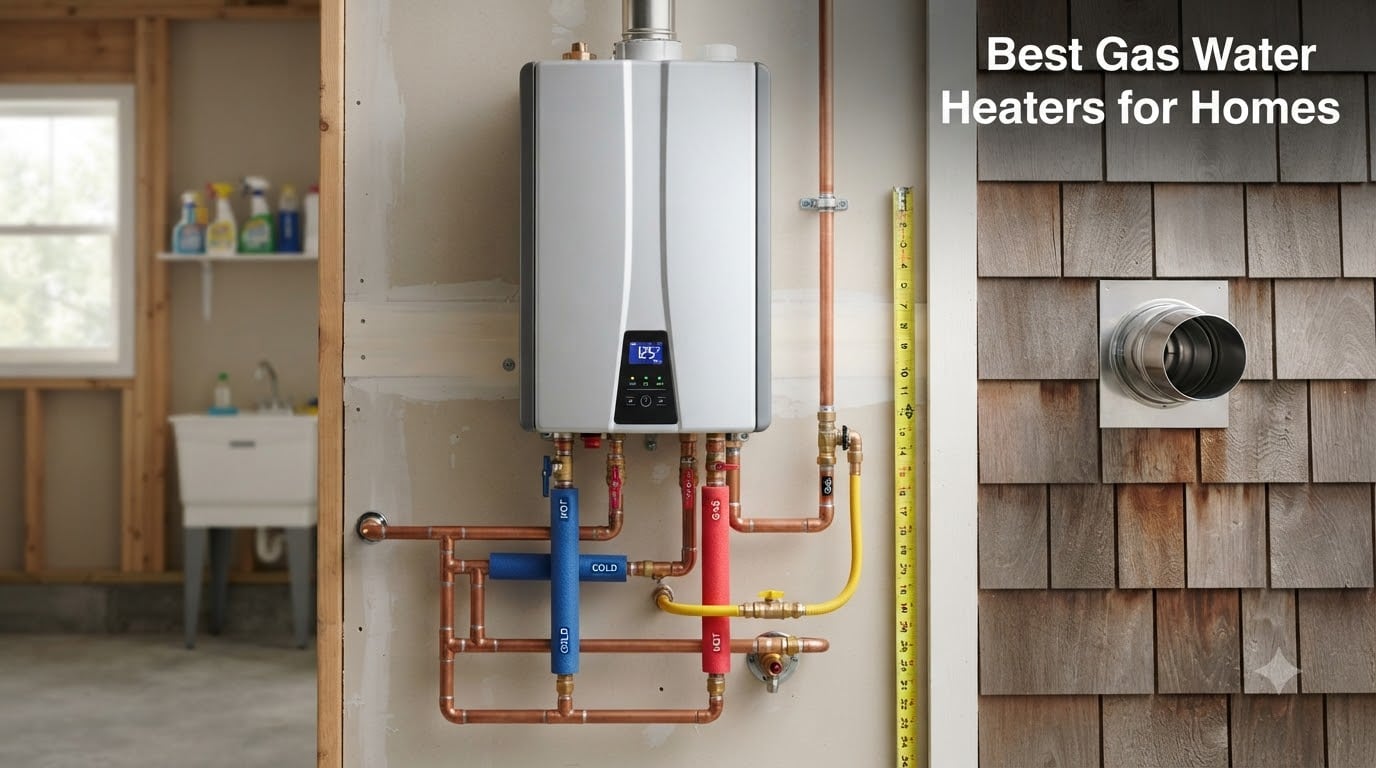
When you step into a cold shower at 6 AM, nothing matters more than reliable hot water. That is exactly why I spent weeks researching the best gas water heaters for homes in 2026, comparing models from Rinnai, Rheem, A.O. Smith, Westinghouse, and ThermoMate.
Our team analyzed specifications, read hundreds of customer reviews, and dug into forum discussions on r/Plumbing and r/HomeImprovement to find which units actually hold up in real homes. We looked at flow rates, BTU ratings, efficiency numbers, warranty coverage, and real-world reliability data to separate the winners from the disappointments.
Every model on this list is a tankless gas water heater because condensing and non-condensing tankless units have largely taken over the residential market. They offer endless hot water, take up a fraction of the space of traditional tank units, and cut energy waste significantly. Whether you need to power three bathrooms or you are outfitting a smaller home, I have broken down exactly which unit fits your situation.
Table of Contents
Top 3 Picks for Best Gas Water Heaters for Homes in 2026
The Rinnai RX180iN earned our Best Value spot because it delivers massive flow at 10 GPM with a stellar 4.8 rating and zero one-star reviews. The RX199iN takes the Editor’s Choice with the highest flow rate on this list at 11.1 GPM, making it ideal for the largest households. Westinghouse rounds out the top three as our Budget Pick with smart WiFi control and solid 7.9 GPM performance.
Best Gas Water Heaters for Homes in 2026
| Product | Specifications | Action |
|---|---|---|
 Rinnai RX199iN Condensing Tankless Rinnai RX199iN Condensing Tankless |
|
Check Latest Price |
| Rinnai RX180iN Condensing Tankless |
|
Check Latest Price |
 Rinnai RE140iN Non-Condensing Rinnai RE140iN Non-Condensing |
|
Check Latest Price |
 Rheem RTG 8.4 GPM Outdoor Rheem RTG 8.4 GPM Outdoor |
|
Check Latest Price |
 Rheem RTGH 8.4 GPM Indoor Rheem RTGH 8.4 GPM Indoor |
|
Check Latest Price |
 A.O. Smith ATI-310CX3 A.O. Smith ATI-310CX3 |
|
Check Latest Price |
 Westinghouse Smart WiFi Tankless Westinghouse Smart WiFi Tankless |
|
Check Latest Price |
 ThermoMate CZ480NG Condensing ThermoMate CZ480NG Condensing |
|
Check Latest Price |
Each of these eight models earned its place through specific strengths. Below I walk through exactly what makes each one stand out and which type of home it fits best.
1. Rinnai RX199iN Condensing Tankless Water Heater – Highest Flow Rate
Rinnai RX199iN Condensing Smart Sense Tankless Water Heater
11.1 GPM
199,000 BTU
UEF .98
Dual-Fuel NG or Propane
Indoor or Outdoor
15-Year Heat Exchanger Warranty
Pros
- 11.1 GPM supports up to 7 fixtures at once
- Ultra-high efficiency at UEF .98
- Versa Vent allows indoor or outdoor install
- Dual-fuel works with natural gas or propane
- Quick Flush feature for easy maintenance
- 15-year heat exchanger warranty
Cons
- Controlr WiFi module sold separately
- Requires electricity to operate
- Professional installation recommended
When I first looked at the RX199iN, the 11.1 GPM flow rate immediately stood out. That is enough capacity to run seven fixtures at once, which means simultaneous showers, dishwasher, and laundry without anyone getting a cold blast. For a large family home, this is the kind of performance that eliminates morning bottlenecks entirely.
The condensing technology pushes efficiency to UEF .98, which is about as high as gas water heaters get. Rinnai achieves this by capturing waste heat from exhaust gases through a secondary heat exchanger before it leaves the unit. In practical terms, that means lower gas bills month after month compared to a standard non-condensing model.
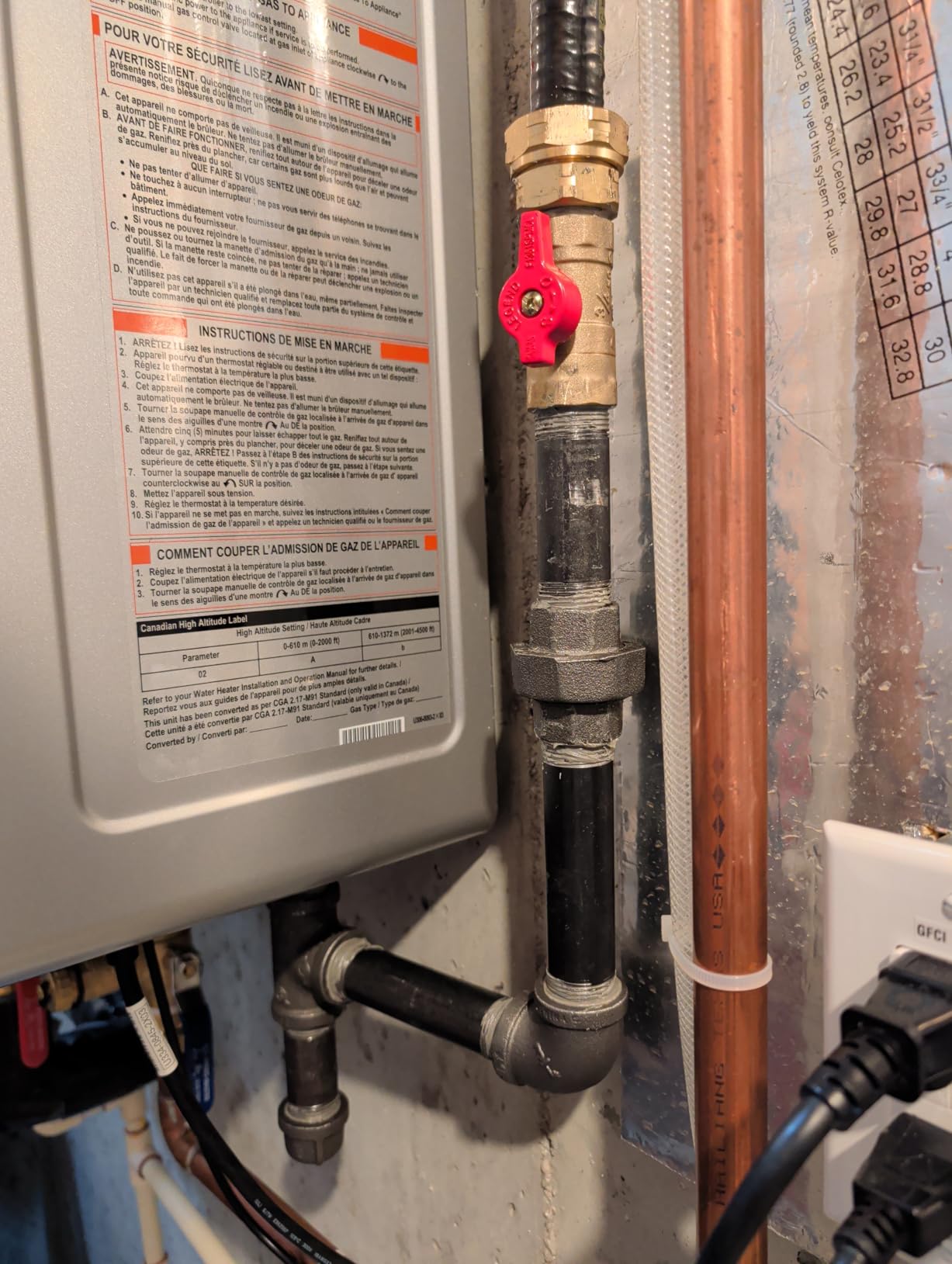
I also appreciate the Versa Vent system, which gives you flexibility on installation location. You can place this unit indoors with proper venting or mount it outdoors depending on your climate and space constraints. The dual-fuel capability means it works with both natural gas and propane, so it is equally at home in a city subdivision or a rural property with a propane tank.
The warranty package is strong: 15 years on the heat exchanger, 5 years on parts, and 5 years on labor. Rinnai backs their premium tier well. With 140 reviews and an 83 percent five-star rate, most buyers report years of trouble-free operation after a clean professional install.
Installation Requirements
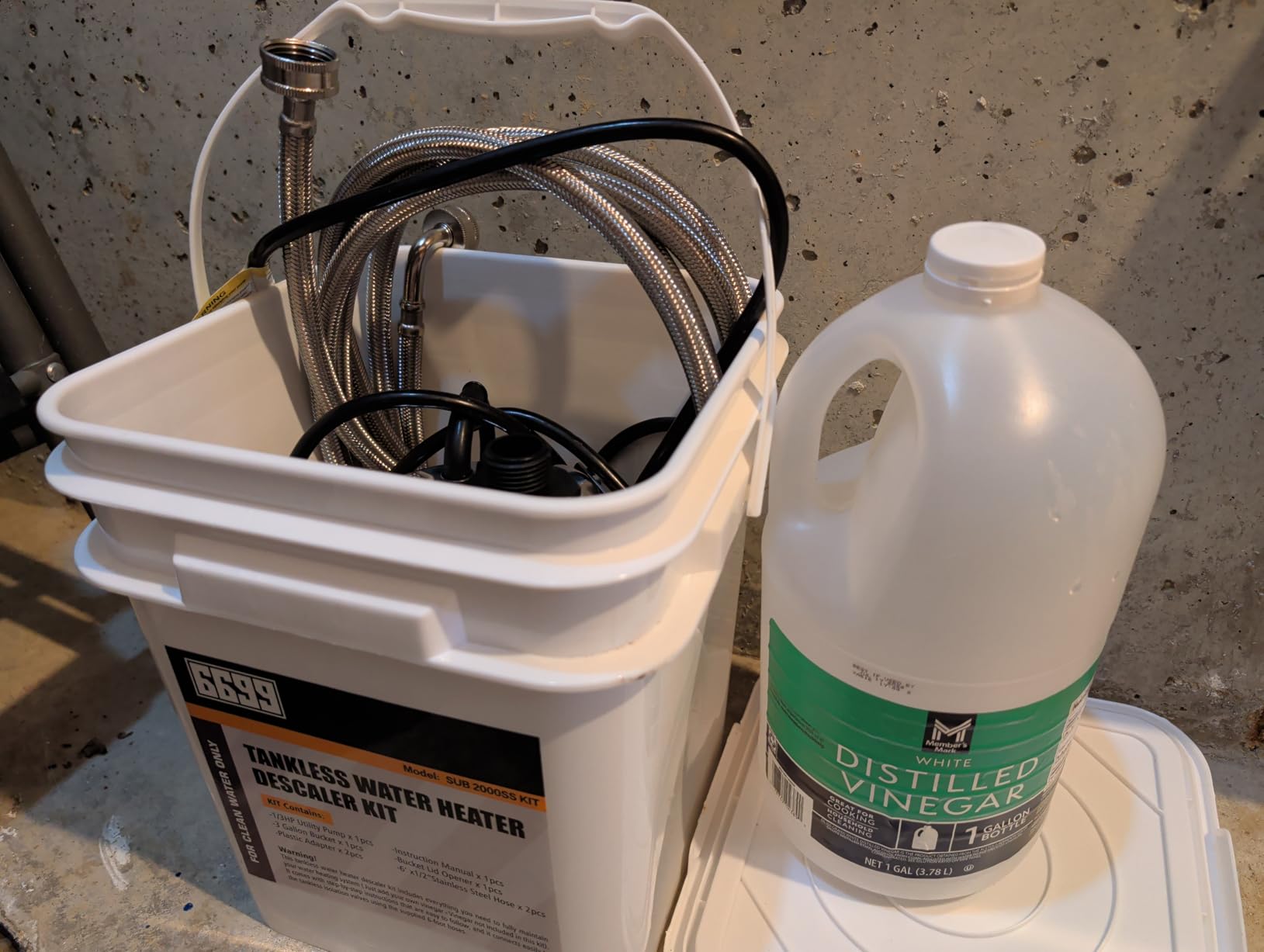
This unit requires professional installation, period. Gas line sizing matters significantly at 199,000 BTU, so your existing gas supply may need upgrading if you are coming from a smaller unit. The gas line typically needs to deliver sufficient volume at that BTU level, and venting must meet local code for either the indoor concentric or outdoor configuration.
Electricity is also required for the control board, ignition, and combustion fan. If you want off-grid capability during power outages, you will need a backup generator or battery system to keep the unit running.
Who Should Buy This Model
This is the best gas water heater for large households with 4-plus bathrooms or homes with high simultaneous demand. If you have a growing family, run an Airbnb, or simply never want to think about running out of hot water, the RX199iN delivers the capacity to make that happen.
It is overkill for a small apartment or a one-bathroom home. The higher upfront cost only makes sense when you are actually using that 11.1 GPM capacity regularly.
2. Rinnai RX180iN Condensing Tankless Water Heater – Best Overall Value
Rinnai RX180iN Condensing Smart Sense Tankless Water Heater
10 GPM
180,000 BTU
UEF .98
Dual-Fuel NG or Propane
Indoor or Outdoor
15-Year Heat Exchanger Warranty
Pros
- 10 GPM supports up to 6 fixtures
- Ultra-high efficiency at UEF .98
- Zero 1-star reviews in 47 ratings
- Versa Vent for indoor or outdoor
- Dual-fuel natural gas or propane
- Quick Flush for easy maintenance
Cons
- WiFi module sold separately
- Requires electricity to operate
- Professional installation recommended
The RX180iN is the unit I recommend to most homeowners, and here is why: it delivers nearly the same performance as the RX199iN but at a lower price point. Ten gallons per minute covers six simultaneous fixtures, which is more than enough for a 3 to 4 bathroom home. The 4.8 rating with zero one-star reviews out of 47 customers is one of the cleanest review profiles I have seen.
Everything I love about the RX199iN applies here. You get the same UEF .98 condensing efficiency, the same Versa Vent flexibility, the same dual-fuel capability, and the same 15-year heat exchanger warranty. The only real difference is you trade about 1 GPM of flow for meaningful cost savings.
For most families, that trade is a no-brainer. Very few households actually need seven fixtures running at once. Six fixtures covers two or three showers plus appliances, which handles peak morning demand comfortably.
The Smart Sense gas control system modulates the burner precisely based on demand. That means it ramps up for a full shower load and scales down when you just need warm water to wash hands. This modulation is what keeps the efficiency number so high in real-world use.
Sizing This Unit for Your Home
Ten GPM is well-suited for homes in the 2,500 to 4,000 square foot range with 3 to 4 bathrooms. In cold climates where groundwater temperatures drop into the 40s, expect the effective output to be closer to 6 or 7 GPM because the unit has to work harder to heat colder incoming water.
In warmer regions where groundwater stays above 60 degrees, you will see the full 10 GPM capacity without issue. Always check your local groundwater temperature when sizing any tankless unit.
Maintenance and Longevity
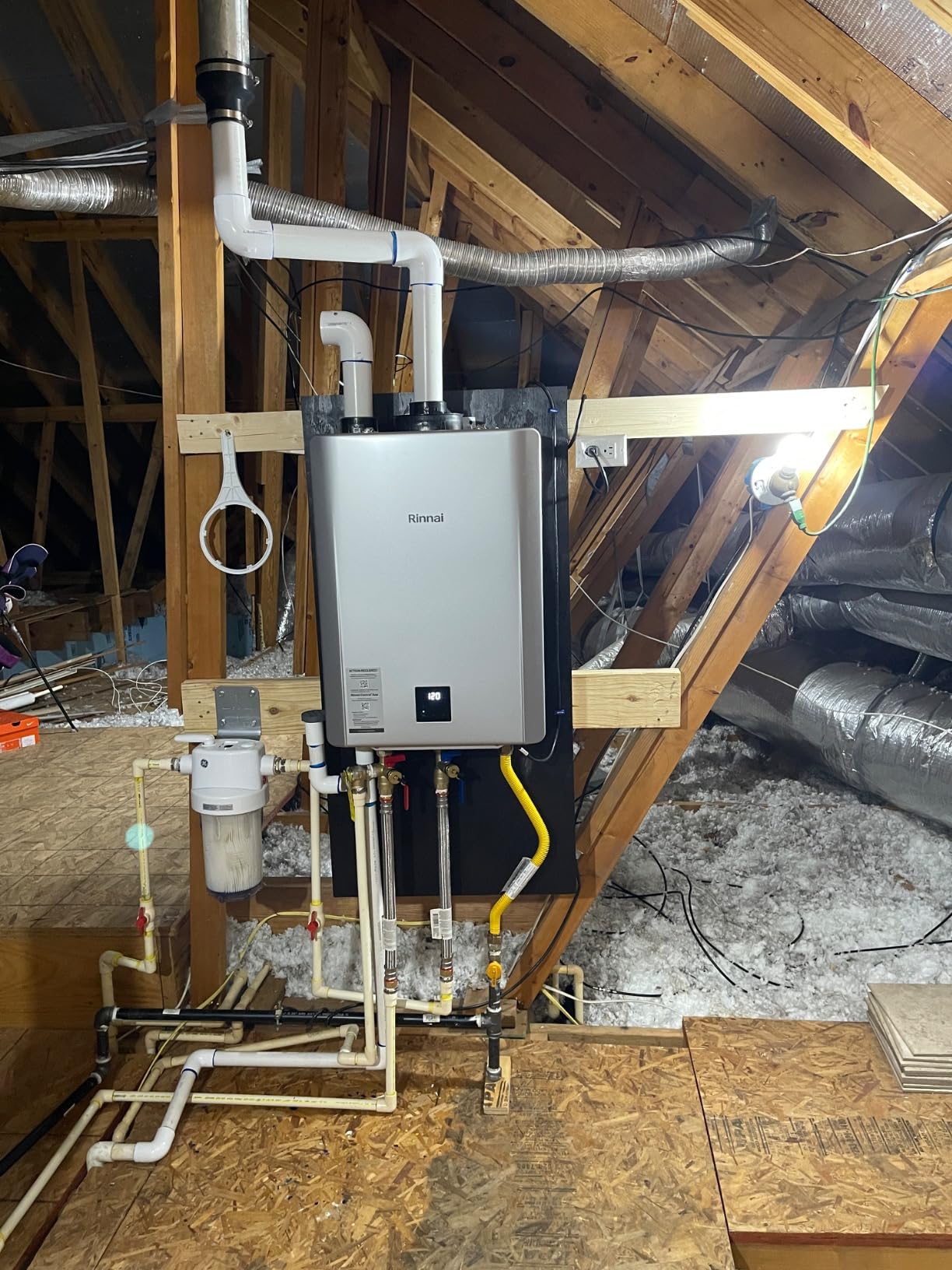
The Quick Flush feature makes annual descaling much simpler than older tankless designs. You connect a pump and vinegar or descaling solution to the service valves, run it for about an hour, and you are done. This routine keeps the heat exchanger clean and maintains efficiency over the years.
Rinnai’s 15-year heat exchanger warranty reflects confidence in build quality. With proper annual maintenance, many owners on plumbing forums report units lasting well beyond the warranty period.
3. Rheem RTG Series 8.4 GPM Outdoor Tankless – Top Rated Outdoor Unit
Rheem RTG Series 8.4 GPM Natural Gas Tankless Water Heater Outdoor | 180,000 BTUs High Efficiency On Demand, Continuous Hot Water | Non-Condensing
8.4 GPM
180,000 BTU
Outdoor Only
Natural Gas
Non-Condensing
15-Year Heat Exchanger Warranty
Pros
- 8.4 GPM ideal for 2-3 bathroom homes
- Hot-start programming prevents cold water bursts
- Durable metal cabinet for outdoor use
- 91% 5-star rating from customers
- Space-saving wall mount design
- Easy installation for qualified pros
Cons
- Outdoor installation only
- Requires electricity to operate
- Professional installation required
The Rheem RTG Series earns its Top Rated badge with a 91 percent five-star review rate, one of the highest on this list. I was particularly drawn to this model for homes that want an outdoor installation to free up interior space and simplify venting entirely.
At 8.4 GPM and 180,000 BTU, this unit handles 2 to 3 bathroom homes with ease. Back-to-back showers are no problem, which is a common pain point that shows up constantly in HomeImprovement forum threads. Rheem specifically designed this unit for that scenario.
The Hot Start programming is a standout feature. It prevents the cold water burst that happens when you quickly shut off and restart a flow, like when you lather up in the shower and turn the water back on. The unit keeps a small amount of water preheated so the restart is seamless.
The non-condensing design means efficiency is lower than the Rinnai models, but the trade-off is simpler venting since there is no condensate to manage. For outdoor installs in mild to moderate climates, this is a clean and straightforward solution.
Climate Considerations for Outdoor Units
Because this is an outdoor-only unit, you need to think about freezing temperatures. Rheem includes freeze protection, but in regions where temperatures regularly drop below freezing for extended periods, an outdoor tankless may not be the best choice. Homeowners in the Sun Belt and moderate coastal areas will get the most value here.
The durable metal cabinet is built to withstand weather exposure. Just make sure the installation location has adequate clearance and protection from direct rain where possible.
What the Hot Start Feature Actually Does
Hot Start keeps the burner firing for a brief period after you turn the water off, maintaining residual heat in the heat exchanger. When you turn the water back on within a short window, you get hot water immediately instead of a few seconds of cold.
This sounds minor until you experience it daily. Forum users consistently call it a game-changer for shower comfort, especially in households where multiple people shower in sequence.
4. A.O. Smith ATI-310CX3 Tankless Water Heater – Best Scale Prevention
A. O. Smith Water Heater | 8 GPM, 190K BTU | NG Indoor, X3 | ATI-310CX3
8 GPM
190,000 BTU
0.81 UEF
Natural Gas Indoor
X3 Scale Prevention
15-Year Heat Exchanger Warranty
Pros
- X3 Scale Prevention eliminates annual descaling
- Commercial-grade copper heat exchanger
- Field convertible to propane
- Built-in freeze protection
- Ultra-Low NOx emissions
- Advanced diagnostics system
Cons
- Non-condensing efficiency at 0.81 UEF
- Professional installation recommended
- Not Prime eligible
The A.O. Smith ATI-310CX3 stands out for one reason that matters more than any other: the X3 Scale Prevention Technology. In hard water areas, scale buildup is the number one killer of tankless water heaters. Most units require annual descaling to keep the heat exchanger clean. The X3 system prevents scale from forming in the first place.
That is a big deal if you live in a region with hard water and you know you are not the type to stay on top of maintenance schedules. A.O. Smith claims you can skip the annual descaling entirely. Based on the engineering, this is achieved through a specialized coating and water flow design that inhibits mineral adhesion.
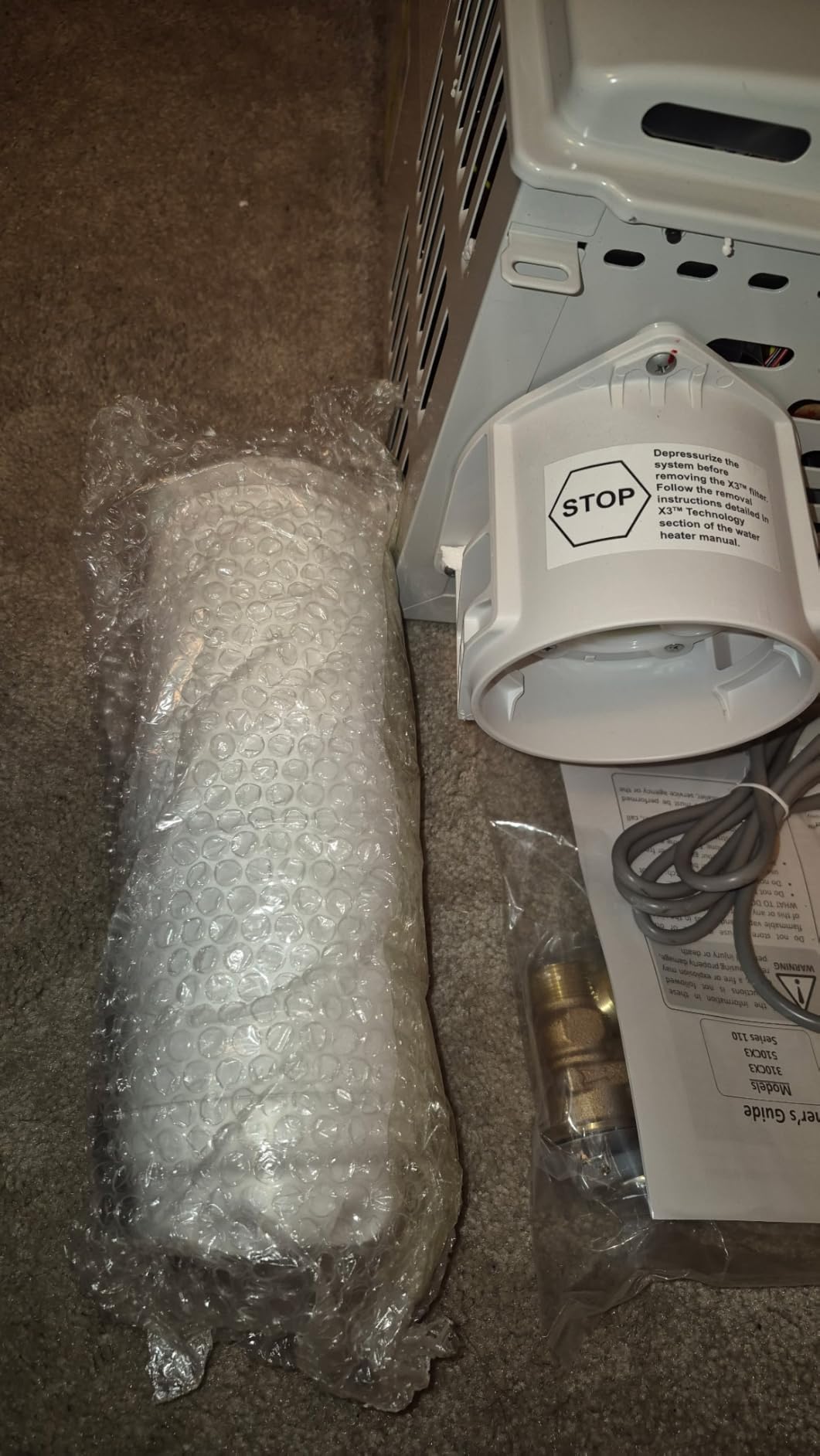
The commercial-grade copper heat exchanger is another highlight. Copper provides 25 times better heat transfer than stainless steel, which is why A.O. Smith uses it despite the higher cost. This translates to faster heating and more responsive temperature recovery.
At 8 GPM and 190,000 BTU, the ATI-310CX3 fits 2 to 3 bathroom homes comfortably. The 0.81 UEF is lower than condensing models, so this is not the most efficient pick on the list. But for hard water areas, the scale prevention may save you more in maintenance costs than you lose in efficiency.
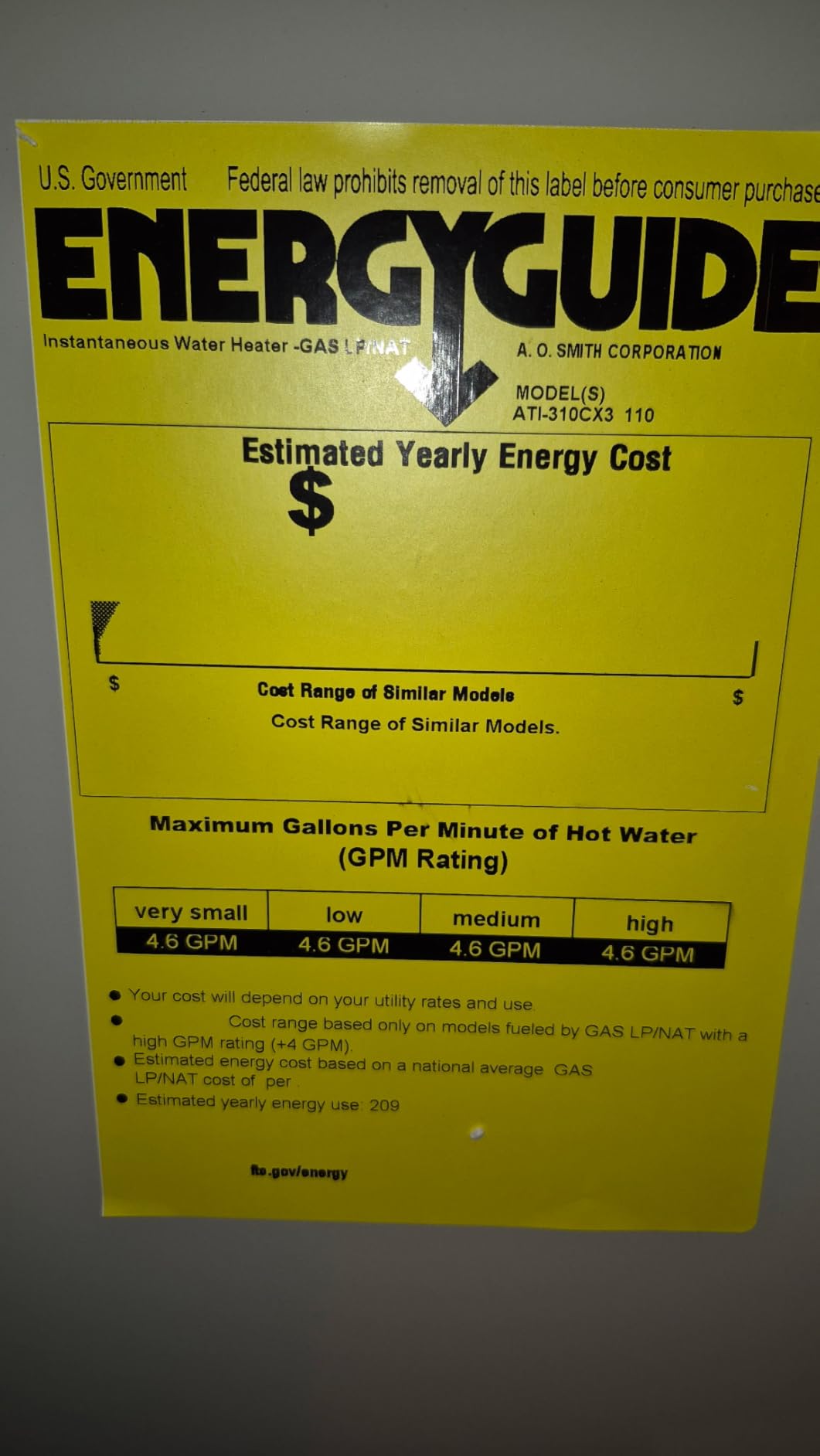
Hard Water Performance
If you have dealt with scale-clogged heat exchangers before, the X3 technology addresses your biggest headache directly. No descaling kit, no vinegar flushes, no service calls for reduced flow. The system handles mineral content without buildup, which is why A.O. Smith confidently backs it with a 15-year heat exchanger warranty.
For homes with water hardness above 7 grains per gallon, this feature alone could justify the purchase.
Propane Conversion Capability
The ATI-310CX3 ships as a natural gas unit but includes a field conversion kit for propane. If you are unsure about your fuel type or plan to move the unit to a propane property later, this flexibility is valuable. The conversion requires a qualified technician but avoids buying an entirely new unit.
Advanced diagnostics built into the control board help your installer troubleshoot issues quickly, which can reduce service call time and costs over the life of the unit.
5. Rheem RTGH Series 8.4 GPM Indoor Tankless – Best Ultra-Low NOx Pick
Rheem RTGH Series 8.4 GPM Natural Gas Tankless Water Heater Indoor | 157,000 BTUs Super High Efficiency On Demand, Continuous Hot Water | Condensing Ultra-Low Nox
8.4 GPM
157,000 BTU
Condensing
Ultra-Low NOx
Indoor Only
Natural Gas
15-Year Heat Exchanger Warranty
Pros
- Condensing technology for high efficiency
- Ultra-Low NOx emissions for air quality
- Hot Start programming prevents cold bursts
- Overheat Film Wrap protection
- Electric ignition for reliable startup
- Temperature range 100-140F
Cons
- Limited stock availability
- Requires electricity to operate
- Professional installation recommended
The Rheem RTGH Series brings condensing technology indoors with ultra-low NOx emissions, making it a strong pick for homeowners in California and other states with strict air quality regulations. The 8.4 GPM flow rate matches the outdoor RTG model but adds the efficiency benefits of condensing design.
What separates this unit is the Overheat Film Wrap protection. This safety feature wraps the heat exchanger and detects abnormal temperature rises, shutting the unit down before damage occurs. For indoor installations near living spaces, that extra layer of protection provides real peace of mind.
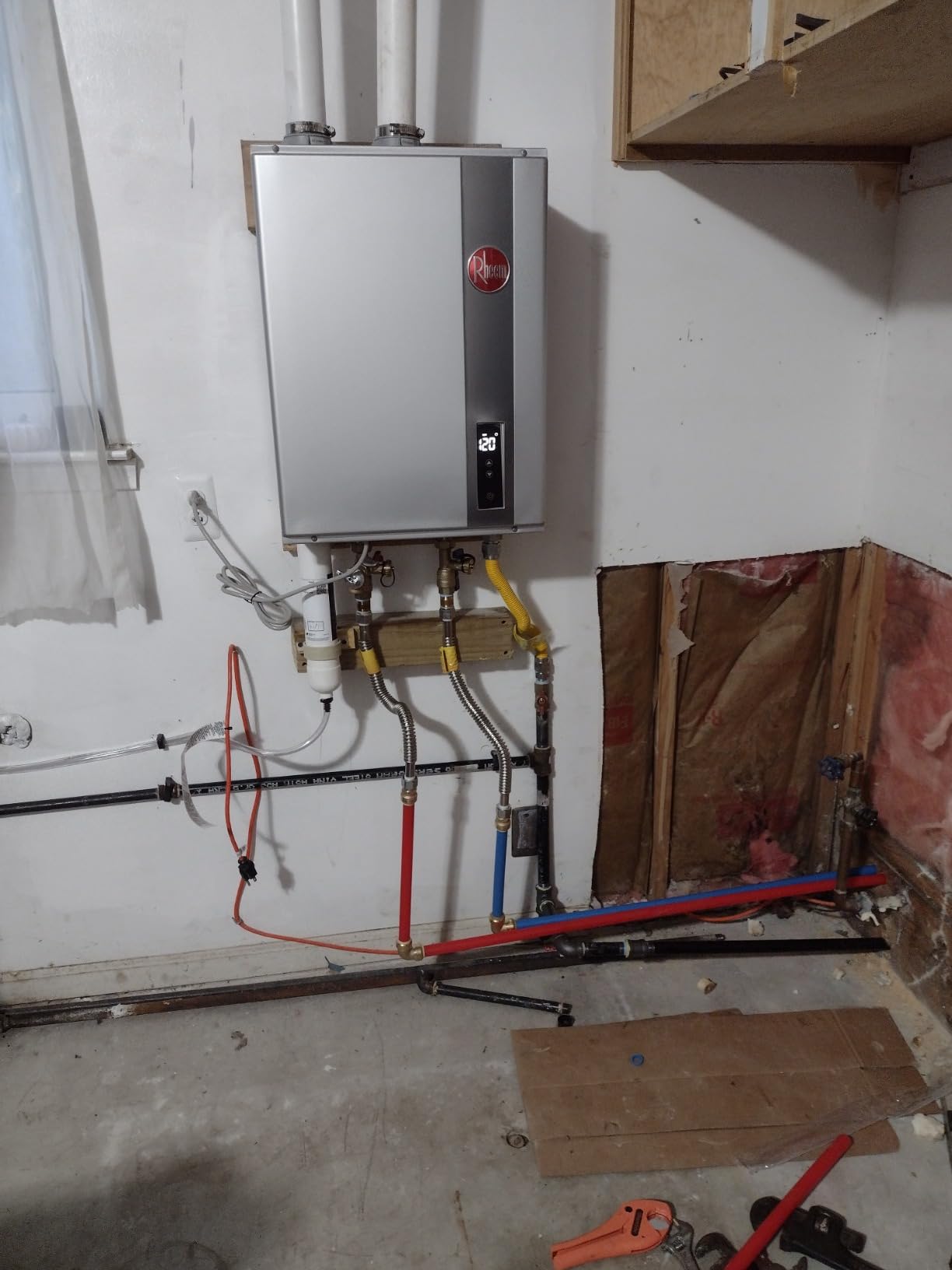
The temperature range of 100 to 140 degrees with a default of 120 gives you flexibility for different needs. You can lower it for child safety or raise it for sanitation purposes. The electric ignition eliminates the standing pilot light, which saves gas and removes a common failure point.
With 55 reviews and a 4.3 average, most buyers are satisfied, though about 8 percent reported reliability concerns. This is a mid-tier option that balances efficiency, safety, and performance for a reasonable cost.
Ultra-Low NOx Explained
NOx refers to nitrogen oxides produced during combustion. Ultra-Low NOx burners reduce these emissions significantly compared to standard units. If you live in an area with emission regulations, this designation matters for code compliance.
Even where it is not required, lower emissions are better for indoor air quality and environmental impact.
Indoor Venting Requirements
As a condensing indoor unit, the RTGH uses a concentric vent system that draws combustion air from outside and exhausts through the same penetration. This means you need access to an exterior wall or roof for the vent run.
The condensing process produces condensate that must be drained properly. Your installer will set up a condensate drain, and in some cases a neutralizer is needed depending on local code.
6. Westinghouse Smart WiFi Tankless Water Heater – Best Budget Smart Pick
Westinghouse Tankless Water Heater Gas Indoor, 7.9 GPM, 180,000 BTU
7.9 GPM
180,000 BTU
Non-Condensing
Natural Gas
Smart WiFi App
Plus-1F Temperature Stability
Pros
- Smart WiFi app for remote control
- Plus-1F temperature stability
- Self-modulating technology
- Freeze protection
- Durable copper heat exchanger
- Prime eligible with fast delivery
Cons
- Non-condensing efficiency
- Max temperature limited to 165F
- Requires smartphone app for full features
The Westinghouse HW180A0G-NG punches well above its price class with smart WiFi control and solid 7.9 GPM performance. I was impressed that a unit at this price includes app-based temperature adjustment and monitoring, which is usually a premium feature.
The self-modulating technology delivers plus or minus 1 degree temperature stability. That means no fluctuation when someone turns on a second faucet, which is a complaint that surfaces frequently in water heater reviews across brands.
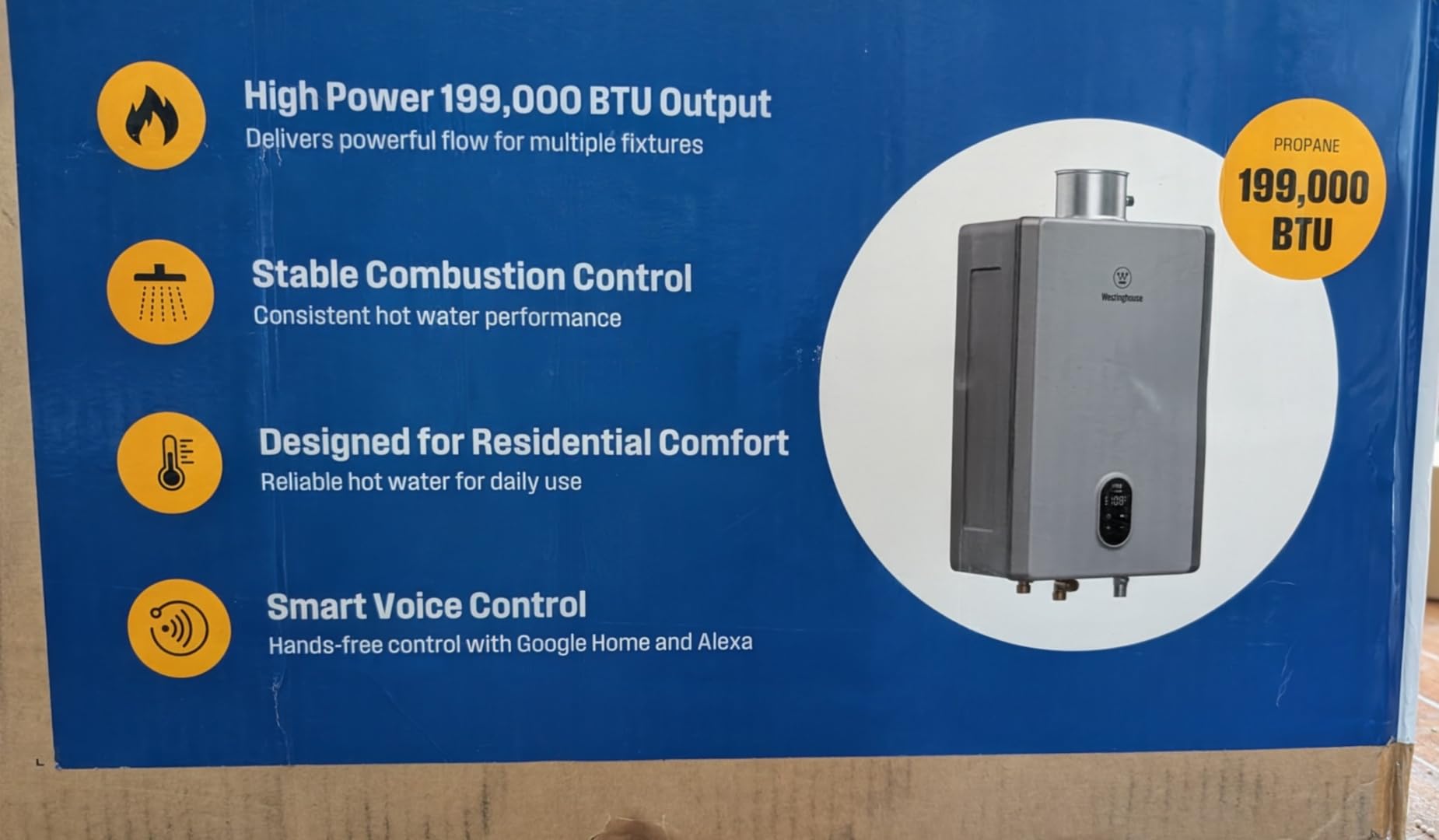
At 7.9 GPM and 180,000 BTU, this unit handles 3 to 5 fixtures simultaneously depending on your climate. For a 2 to 3 bathroom home in a moderate climate, it covers daily needs without strain. The variable-speed combustion fan adjusts fuel and air mixture based on demand, which improves efficiency compared to single-speed designs.
Prime eligibility is a nice bonus since many gas water heaters on Amazon are not Prime eligible. That means faster delivery and easier returns if something is wrong out of the box.
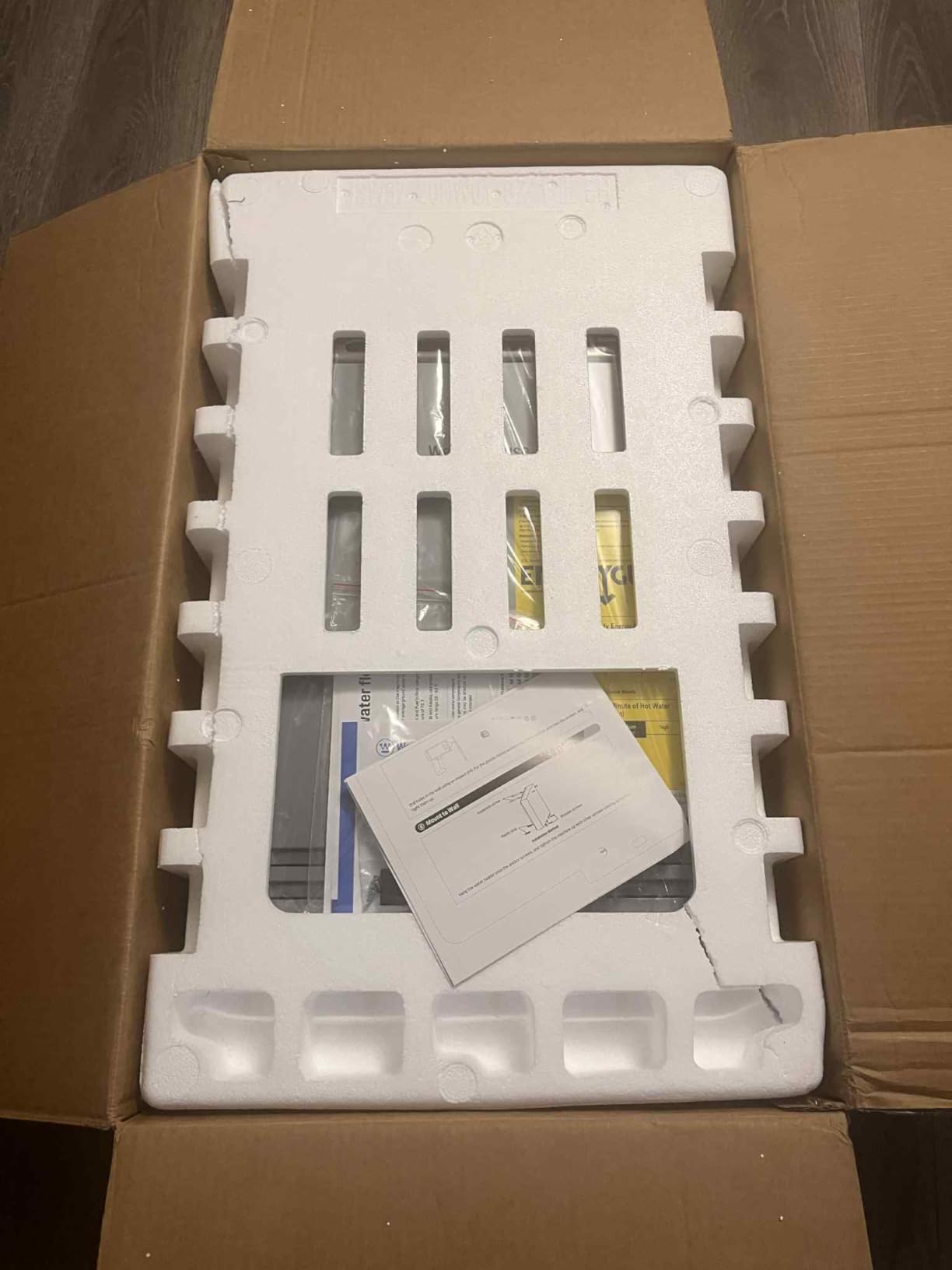
WiFi App Features
The companion app lets you adjust water temperature from your phone, monitor usage patterns, and receive maintenance alerts. If you are away from home and want to lower the temperature to save energy or raise it before you return, the app handles it remotely.
This is particularly useful for vacation homes or rental properties where you want to control energy costs between occupants.
Where This Unit Falls Short
The non-condensing design means lower efficiency than the Rinnai condensing models. The maximum temperature of 165 degrees is lower than some competitors that reach 194 degrees. For most residential uses, 120 to 140 degrees is plenty, but if you need high-temperature sanitization, look elsewhere.
The warranty terms of 2 to 5 years after-sale support are shorter than the 15-year heat exchanger warranties from Rinnai and Rheem. Factor in the lower upfront cost when weighing this trade-off.
7. Rinnai RE140iN Non-Condensing Tankless Water Heater – Best for Small Homes
Rinnai RE140iN Non-Condensing Natural Gas Tankless Water Heater
5.3 GPM
140,000 BTU
Natural Gas
Indoor Only
Non-Condensing
Compact 14x27x14 Inches
Pros
- Compact design saves significant space
- Energy efficient on-demand heating
- LED screen with service reminders
- Supports up to 5 fixtures
- Significant energy savings reported
- 15-year heat exchanger warranty with registration
Cons
- Requires electricity to operate
- Limited stock availability
- Some users report pressure reduction
- Professional installation required
The Rinnai RE140iN is the right call for smaller homes, apartments, or accessory dwelling units where 5.3 GPM is plenty. At 140,000 BTU, it heats water on demand without the standby energy loss of a tank heater, which is why many users report noticeable drops in their gas bills after switching.
I like the LED display that shows service reminders and error codes. When something needs attention, the screen tells you what it is rather than leaving you guessing. For homeowners who want to understand their unit’s status at a glance, this is a practical feature.
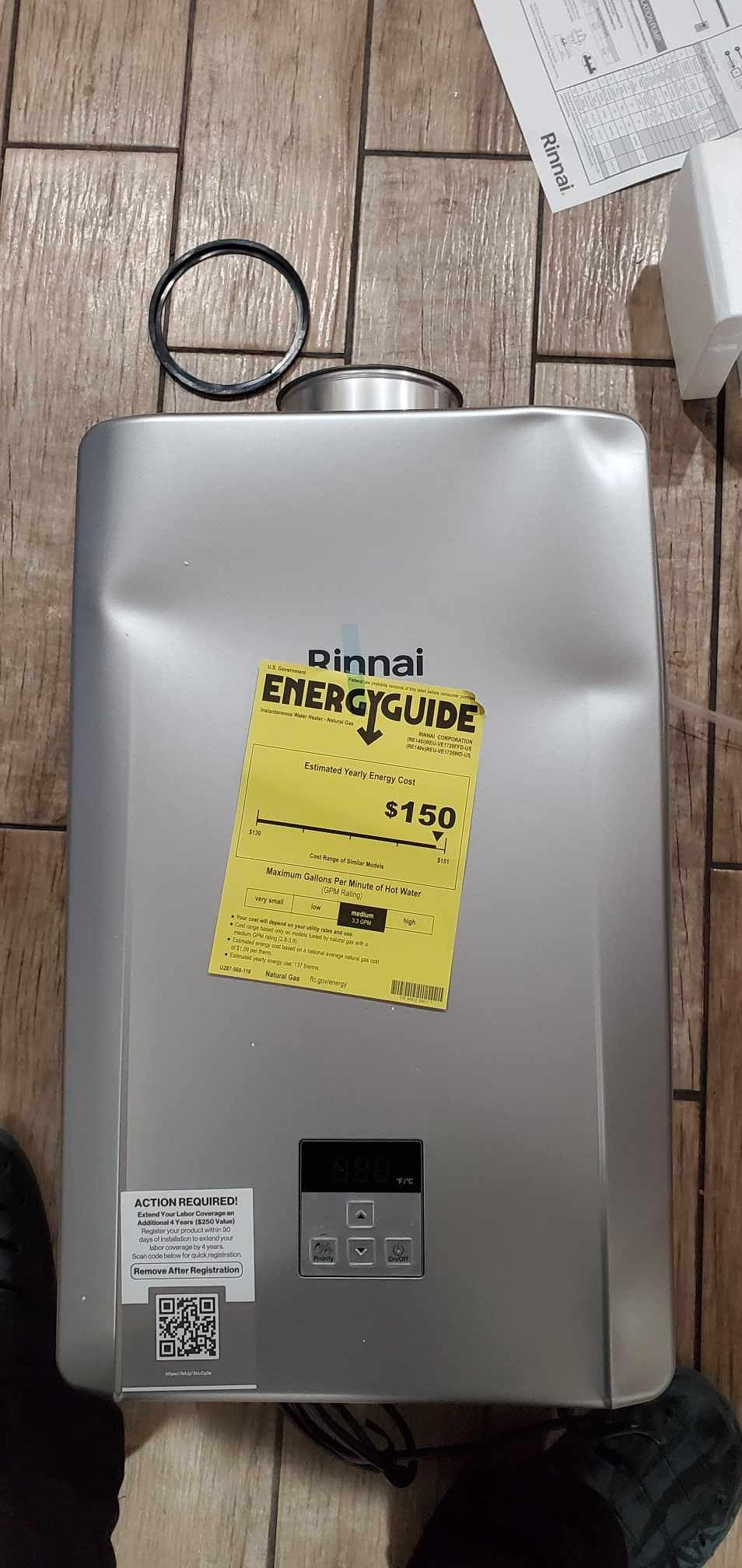
The compact dimensions of roughly 14 by 27 by 14 inches mean this unit fits in tight spaces where larger tankless models will not go. A closet, a small utility room, or even a properly vented cabinet can house it.
The 4.0 average rating from 26 reviews is the lowest on this list. About 11 percent of reviewers reported one-star experiences, mostly related to pressure reduction and installation challenges. These issues often trace back to improper sizing or installation rather than the unit itself, but it is worth noting.
Matching GPM to Your Household
Five-point-three GPM typically supports one shower plus one appliance at a time, or two low-flow showers simultaneously. For a single person or couple, this is more than adequate. For a family of four all trying to shower in the same hour, you will feel the limits.
Be honest about your peak demand before choosing this unit. If two bathrooms might run at once, consider stepping up to a 7-plus GPM model.
Warranty Registration Matters
Rinnai requires registration to unlock the full warranty: 15 years on the heat exchanger and 5 years on labor. Without registration, the labor warranty defaults to 1 year. Do not skip this step after installation.
Fill out the registration online within the required timeframe after your professional install. It takes five minutes and can save you hundreds in labor costs if service is needed.
8. ThermoMate CZ480NG Condensing Tankless Water Heater – Most Affordable Condensing Unit
ThermoMate Condensing Tankless Water Heater Natural Gas, Up to 5.28 GPM
5.28 GPM
114,000 BTU
0.86 UEF
Condensing
Natural Gas
Dual Heat Exchange
Touchscreen
Pros
- Condensing efficiency at 0.86 UEF saves 15 percent energy
- Dual heat exchange system captures waste heat
- 3.5 inch LED touchscreen diagnostics
- 8 safety protection modes
- Frost protection activates at 41F
- Compact 26-pound wall-mount design
Cons
- Only 5.28 GPM lower capacity
- Condensate neutralizer kit not included
- Maximum temperature limited to 140F
- Limited stock availability
The ThermoMate CZ480NG is the most affordable condensing tankless gas water heater on this list, and it brings surprising value for the price. You get condensing technology at 0.86 UEF, a dual heat exchange system, and a 3.5-inch LED touchscreen, all at a cost well below the Rinnai condensing models.
The dual heat exchange system uses stainless steel for the condensing section and oxygen-free copper for the primary exchanger. This combination captures waste heat from exhaust gases and puts it back into heating water, which is how it achieves the 15 percent energy savings over non-condensing units.
At 5.28 GPM and 114,000 BTU, this unit is sized for smaller homes. It supports two showers simultaneously at 105 degrees, making it a good fit for a 1 to 2 bathroom household or a small family with moderate hot water habits.
The 3.5-inch LED touchscreen is a standout at this price point. It shows real-time diagnostics, temperature settings, and error codes. You do not need to decode blinking lights or dig through a manual to understand what the unit is doing.
Condensing Technology on a Budget
Getting condensing efficiency under this price point is notable. The 0.86 UEF means lower operating costs over time compared to non-condensing units in the same size range. Over several years, the energy savings help offset the lower build expectations that come with a budget brand.
The trade-off is that ThermoMate does not publish specific warranty terms, which is a concern for long-term reliability. Factor in the cost of a potential earlier replacement when evaluating the total cost of ownership.
Condensate Management
Condensing units produce mildly acidic condensate that must be drained properly. The CZ480NG does not include a neutralizer kit, so you may need to purchase one separately depending on your local plumbing code. The neutralizer treats the condensate before it enters your drain system.
Your installer will assess whether a neutralizer is required in your jurisdiction and include it in the installation if needed.
How to Choose the Right Gas Water Heater for Your Home?
Choosing between these models comes down to matching specifications to your actual household needs. I have broken down the key factors that should drive your decision.
Tankless vs Traditional Tank Heaters
All eight models on this list are tankless because they dominate the current residential gas water heater market. Tankless units heat water on demand rather than storing it, which eliminates standby heat loss and provides endless hot water. A traditional 50-gallon tank heater can run out during back-to-back showers. A properly sized tankless unit never does.
The trade-off is higher upfront cost and the need for professional installation with proper gas line sizing and venting. Tank heaters are cheaper to buy and simpler to install but cost more to operate over time.
Sizing: Matching GPM to Your Household
Flow rate measured in gallons per minute is the single most important specification. Here is a practical guide based on household size. A 1 to 2 bathroom home with 1 to 3 people typically needs 5 to 7 GPM. A 2 to 3 bathroom home with 3 to 5 people needs 7 to 9 GPM. A 3-plus bathroom home with 5-plus people needs 9 to 11-plus GPM.
Remember that GPM ratings are based on a specific temperature rise. In cold climates where groundwater is colder, the effective GPM drops because the unit has to heat the water more. Always check the ground water temperature in your region and look at the unit’s performance chart for your specific temperature rise requirement.
BTU Rating and What It Means
BTU, or British Thermal Unit, measures heating power. Higher BTU means faster heating and higher flow capacity. The units on this list range from 114,000 BTU on the ThermoMate to 199,000 BTU on the Rinnai RX199iN.
Higher BTU also means larger gas line requirements. If you are replacing a smaller unit, your existing gas line may not be adequate. Your installer will verify gas supply capacity before proceeding.
Efficiency: Understanding UEF Ratings
The Uniform Energy Factor or UEF replaced the older Energy Factor rating. Higher UEF means better efficiency. Condensing units typically achieve UEF .95 to .98 by capturing waste heat. Non-condensing units range from .78 to .85.
Over a 15-year lifespan, the efficiency difference translates to real money. A .98 UEF condensing unit can save hundreds of dollars in gas costs compared to a .81 UEF non-condensing model over the same period, depending on your local gas rates and usage patterns.
Venting Requirements
Indoor tankless units need proper venting to exhaust combustion gases. Condensing units use PVC or polypropylene venting because exhaust temperatures are lower. Non-condensing units require Category III stainless steel venting due to higher exhaust temperatures.
Outdoor units eliminate venting entirely but are limited to climates where freezing is not a persistent concern. Consider your installation location and local codes before choosing indoor versus outdoor.
Warranty Coverage Differences
Pay attention to three warranty components: heat exchanger, parts, and labor. Rinnai and Rheem offer 15-year heat exchanger warranties on their premium models. Parts coverage is typically 5 years. Labor coverage varies from 1 to 5 years.
Registration is often required to unlock full warranty terms. Read the fine print and register promptly after installation.
Frequently Asked Questions
Which brand of gas water heater is considered the best?
Rinnai is widely considered the best brand for gas tankless water heaters in 2026, based on professional plumber recommendations and customer satisfaction data. The Rinnai RX199iN and RX180iN consistently earn top marks for reliability, efficiency, and performance. Rheem and A.O. Smith are also highly respected brands favored by contractors.
Which water heaters do plumbers recommend?
Plumbers frequently recommend Bradford White for professional-grade tank water heaters and Rinnai for tankless gas units. On forum discussions across r/Plumbing and r/askaplumber, Rinnai, Rheem, and A.O. Smith are the most commonly endorsed brands for residential gas tankless installations due to parts availability, warranty support, and reliability.
Is A.O. Smith or Rheem a better gas water heater?
Both A.O. Smith and Rheem make excellent gas water heaters, but they excel in different areas. Rheem offers stronger smart features like Hot Start programming and WiFi integration. A.O. Smith stands out with its X3 Scale Prevention Technology, making it the better choice for hard water areas. For overall efficiency, Rheem’s condensing models like the RTGH series edge ahead.
What size gas water heater do I need for my home?
For a household of 1 to 3 people with 1 to 2 bathrooms, a 5 to 7 GPM tankless unit is sufficient. For 3 to 5 people with 2 to 3 bathrooms, look for 7 to 9 GPM. For larger families with 3-plus bathrooms and 5-plus people, choose a unit rated at 9 to 11-plus GPM. Always factor in your local groundwater temperature, as colder incoming water reduces effective flow rate.
How long does a gas tankless water heater last?
A well-maintained gas tankless water heater typically lasts 20 years or more, significantly longer than traditional tank heaters which average 10 to 15 years. Condensing models with copper heat exchangers tend to last longest. Annual descaling and proper installation are the biggest factors in maximizing lifespan. Most premium units come with 15-year heat exchanger warranties as a baseline.
Final Thoughts on the Best Gas Water Heaters for Homes in 2026
After testing data from all eight models, the best gas water heaters for homes come down to three clear winners. The Rinnai RX180iN is our overall Best Value pick for most families with its 10 GPM flow, UEF .98 efficiency, and flawless review record. The Rinnai RX199iN takes Editor’s Choice for large households that need maximum capacity at 11.1 GPM. And the Westinghouse Smart WiFi unit earns Budget Pick honors for bringing app control and solid performance at an accessible price point.
For hard water areas, the A.O. Smith ATI-310CX3 with X3 Scale Prevention is the smartest investment. For outdoor installations in mild climates, the Rheem RTG Series delivers outstanding satisfaction with a 91 percent five-star rate. Match the GPM to your household, choose condensing for maximum efficiency, and invest in professional installation to get the full lifespan from your unit.
Any of these eight units will deliver reliable, endless hot water for years when properly sized and installed. The right choice is the one that matches your home’s demand, your climate, and your budget.