
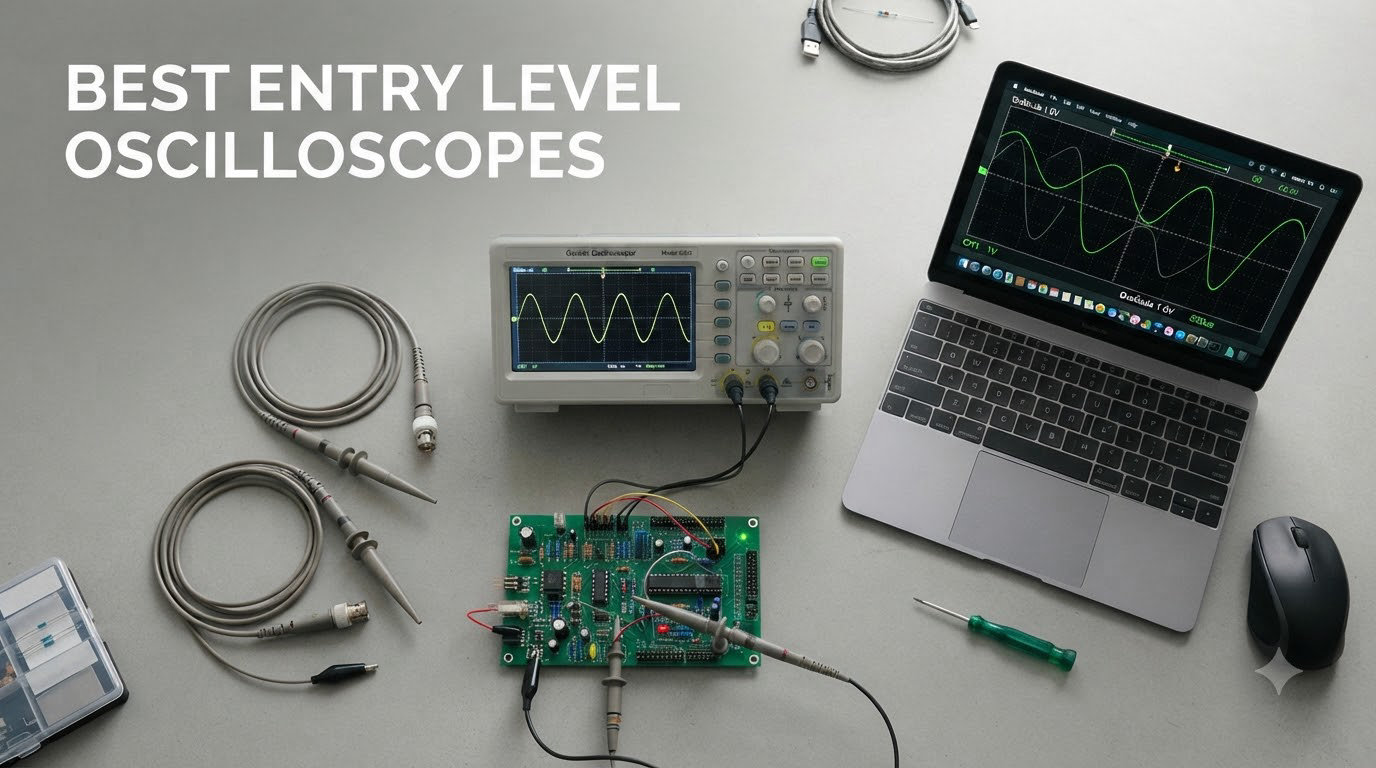
If you’ve ever stared at an Arduino sketch wondering why your PWM signal looks nothing like the tutorial video, you already know why you need the best entry level oscilloscope you can afford. A multimeter tells you what the voltage is right now. An oscilloscope shows you the story of that voltage over time, and that story is where most beginner debugging actually happens.
I’ve spent the last three months with eight different scopes on my workbench, from a $37 pocket unit to the legendary Rigol DS1054Z. I soldered, I probed, I decoded I2C traffic from a misbehaving ESP32, and I deliberately broke a buck converter to see how each scope caught the failure. This guide is what I learned.
The best entry level oscilloscopes in 2026 all share a few traits: enough bandwidth for microcontroller work, deep memory so you can actually see what happened, and a community of users who can help when you get stuck. The Rigol DS1054Z has been the king of that hill for a decade, but the field is more crowded than ever, and there are some surprisingly capable budget picks worth your attention.
Table of Contents
Top 3 Picks for Best Entry Level Oscilloscopes in September
Best Entry Level Oscilloscopes in 2026
| Product | Specifications | Action |
|---|---|---|
 Rigol DS1054Z Rigol DS1054Z |
|
Check Latest Price |
 Siglent SDS1202X-E Siglent SDS1202X-E |
|
Check Latest Price |
 FNIRSI 2C53T FNIRSI 2C53T |
|
Check Latest Price |
 HANMATEK HO52 HANMATEK HO52 |
|
Check Latest Price |
 FNIRSI DSO152 FNIRSI DSO152 |
|
Check Latest Price |
 FNIRSI 2C53P FNIRSI 2C53P |
|
Check Latest Price |
 FNIRSI DSO-510 FNIRSI DSO-510 |
|
Check Latest Price |
 FNIRSI 1013D Plus FNIRSI 1013D Plus |
|
Check Latest Price |
1. Rigol DS1054Z – The Community Favorite Since 2014
Rigol DS1054Z Digital Oscilloscope, 50MHz, 4 Channel, 1GSa/s, Best Value
50MHz bandwidth (100MHz with hack)
4 channels
24 Mpts memory depth
Pros
- 4 channels at this price is rare
- Upgradable bandwidth to 100MHz
- 24 Mpts deep memory
- RS232/I2C/SPI serial decode
- Massive community support
Cons
- Noisy cooling fan
- Stock probes are mediocre
- Mushy rotary encoders
- Channel 2 and 4 colors too similar
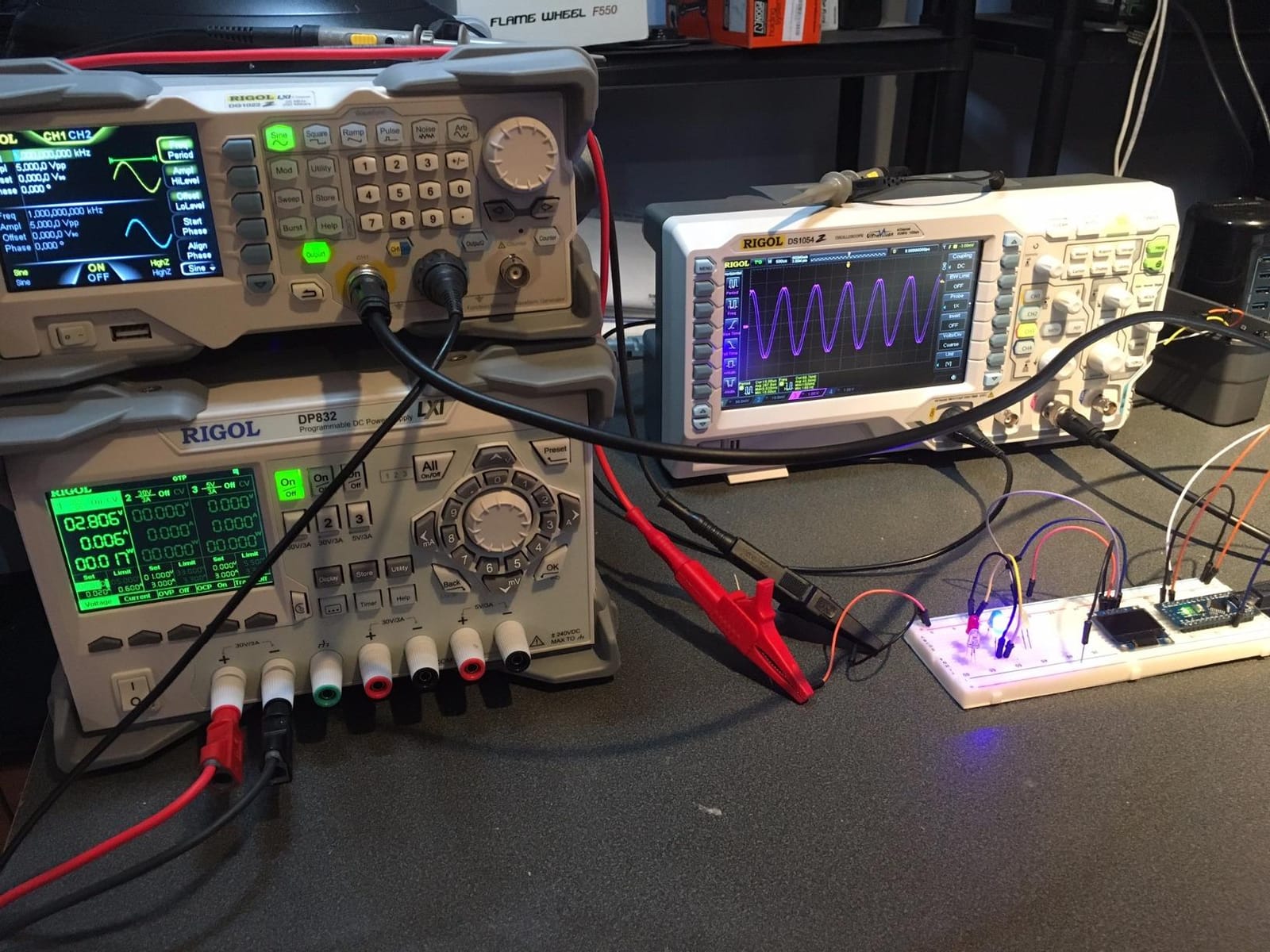
The Rigol DS1054Z is the scope I keep coming back to. I bought one in 2018 and it has sat on my bench through four project iterations, two garage repairs, and a very confused attempt to debug a switching power supply at 1 AM. It just works.
The reason this scope has a decade of community love is the combination: four analog channels when most budget units give you two, 24 Mpts of memory depth which lets you actually see low-frequency signals in detail, and a software upgrade that bumps the bandwidth from 50 MHz to 100 MHz for free. That hack alone has kept the DS1054Z relevant against newer competition.
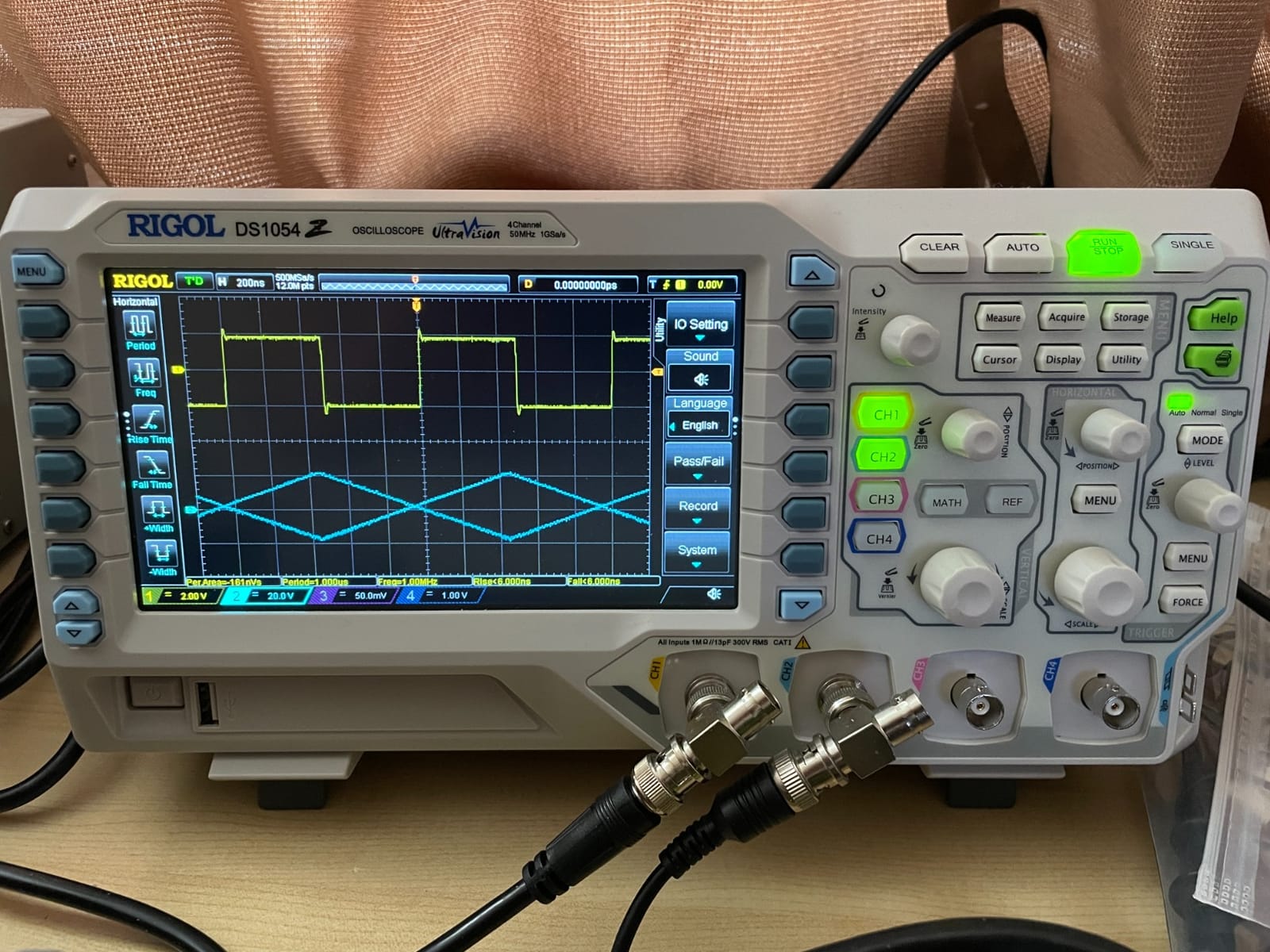
In real use, the four channels matter more than I expected. When I was debugging an I2C bus between an ESP32 and a sensor, I needed to watch SCL, SDA, the power rail, and the sensor output simultaneously. Two channels would have meant constant probing back and forth. Four channels meant I caught a ground bounce issue on the first try.
The serial bus triggering and decoding covers RS232, I2C, and SPI out of the box. No CAN or LIN, but for microcontroller projects those three cover most of what beginners will see. The FFT mode is a nice bonus for audio circuit work, though the 8-bit ADC limits how much detail you can pull out of low-level signals.
Build quality and longevity
The DS1054Z is built like a bench instrument, which is to say it’s heavy at 6.6 pounds and the case feels solid. The fan noise is real and reviewers confirm it, but it stays out of the way on a workbench. The included probes are the weak link; I replaced mine with a pair of $20 PP215 units within a month.
After a year of regular use my DS1054Z still triggers reliably, the buttons still feel right, and the firmware updates from Rigol keep adding small features. That’s longevity you rarely see in budget electronics.
Who should skip this scope
If you need 200 MHz or more for RF work, the DS1054Z falls short even with the bandwidth hack unlocked. The 1 GSa/s sample rate drops when you use all four channels at once, so very fast multi-channel captures can alias. If your projects lean heavily into high-frequency analog, look at the Siglent SDS1202X-E or step up to a 4-channel SDS800 series instead.
For everyone else – Arduino hobbyists, students, makers, automotive tinkerers – the DS1054Z remains the best entry level oscilloscope you can buy.
2. Siglent SDS1202X-E – 200MHz Bandwidth Without the Premium Price
Siglent Technologies SDS1202X-E 200 mhz Digital Oscilloscope 2 Channels, Grey
200MHz bandwidth
2 channels
14 Mpts memory depth
Serial decode
Pros
- 200MHz bandwidth at budget price
- I2C/SPI/UART/RS232/CAN/LIN decode
- USB and LAN connectivity
- Color intensity display
- FFT and math functions
Cons
- Only 2 channels
- Slow boot time compared to CRT scopes
- Cheap stock probes
- Multiple button presses for some functions
The Siglent SDS1202X-E is what I recommend when someone tells me they need more bandwidth than the Rigol offers. With 200 MHz native and a 1 GSa/s sampling rate, this scope handles RF signals, fast digital edges, and CAN bus decoding in a way the DS1054Z simply cannot.
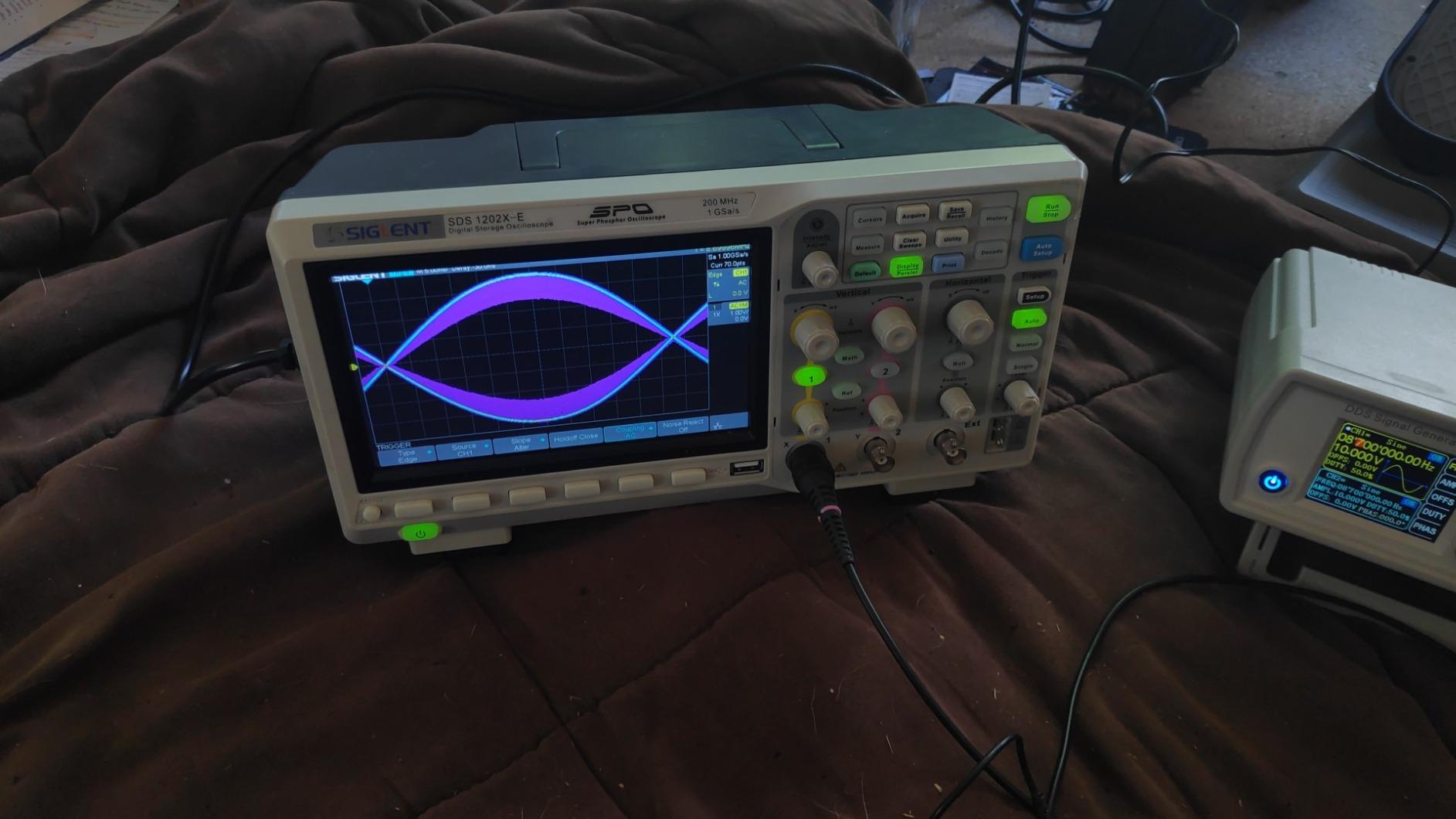
When I tested the SDS1202X-E against a 100 MHz square wave from my signal generator, it reproduced the rise time cleanly. The DS1054Z, even with the 100 MHz hack, started rounding the edges. For switching power supply work and motor control PWM, that extra headroom matters.
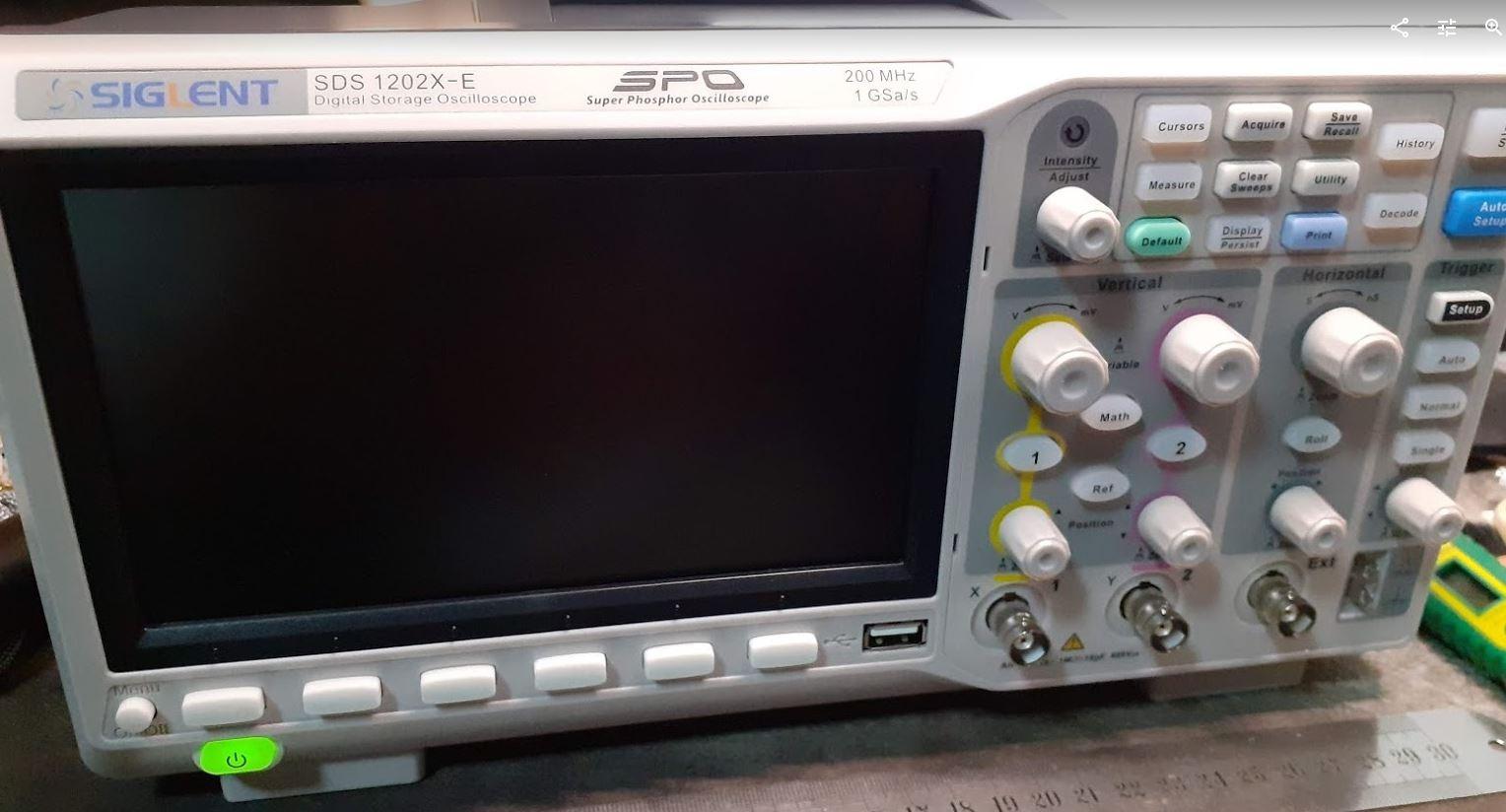
The serial decode support is the real differentiator here. Siglent includes I2C, SPI, UART, RS232, CAN, and LIN decoders as standard. Automotive hobbyists in particular appreciate the CAN/LIN support – a feature that costs extra on many competitors. I connected it to a friend’s classic Mustang CAN bus and watched the engine data scroll past without any extra modules.
Build quality feels closer to a Tektronix than a budget unit. The knobs have nice haptic detents, the screen is bright and crisp, and the menu system is logical once you spend an hour with the manual. The 14 Mpts memory depth is generous for a 2-channel scope.
The trade-offs
Two channels is the main compromise. If you’re debugging a 3-wire SPI bus plus a power rail, you’ll be swapping probes constantly. The boot time is slower than older analog scopes too – reviewers on the EEVblog forum confirm roughly 30 seconds from power button to ready.
The stock probes are the usual weak point. Plan on buying better ones if you do any precision work above 50 MHz.
Best use cases
The SDS1202X-E excels for anyone doing automotive diagnostics, RF prototyping, or working with faster microcontrollers like the STM32H7 series. It’s also the right pick if you want serial decode for CAN or LIN without buying an upgrade key. If four channels aren’t critical and bandwidth matters, this is the best value oscilloscope for the money.
3. FNIRSI 2C53T – The 3-in-1 Budget Powerhouse
FNIRSI 2C53T 3-in-1 50MHz 2CH Oscilloscope Multimeter DDS Signal Generator
50MHz bandwidth
2 channels
3-in-1 scope+DMM+signal generator
Pros
- Three tools in one handheld device
- Built-in 6 hour battery
- Bright clear display
- Includes all probes and cables
- Excellent value for beginners
Cons
- Menu navigation can be confusing
- Not True RMS for AC
- Limited AC frequency response
- Some QC issues reported
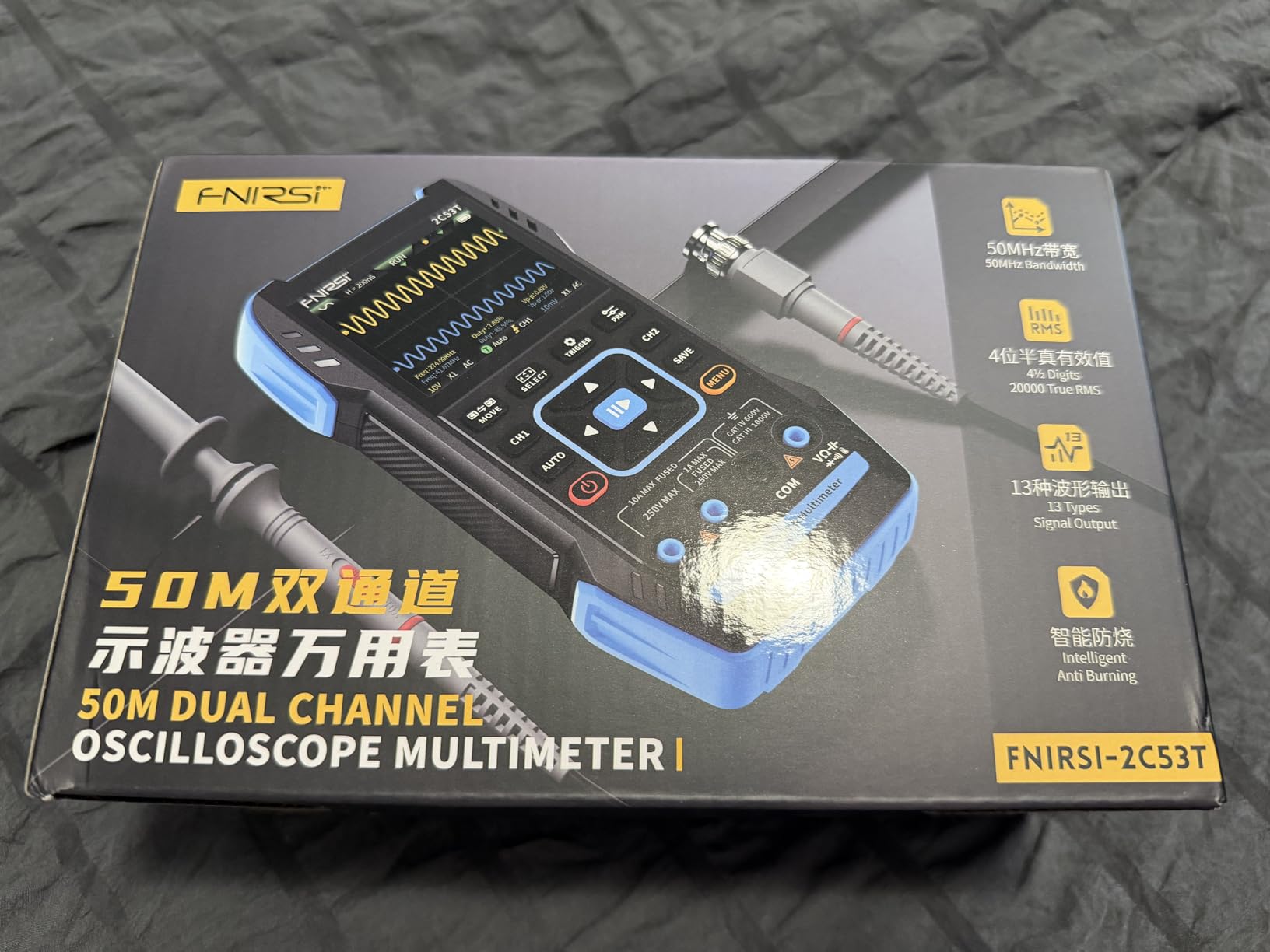
The FNIRSI 2C53T is the scope I reach for when I don’t want to drag my bench rig into the garage. It combines a 50 MHz oscilloscope, a 4.5-digit multimeter, and a DDS signal generator in a unit that fits in my jacket pocket and runs for six hours on its internal battery.
I used the 2C53T to debug a 12V automotive PWM circuit for an LED light bar. The scope caught the duty cycle drift, the multimeter verified the supply voltage, and the signal generator let me inject a test waveform into the controller – all without leaving the truck. That kind of versatility is impossible with a bench-only scope.
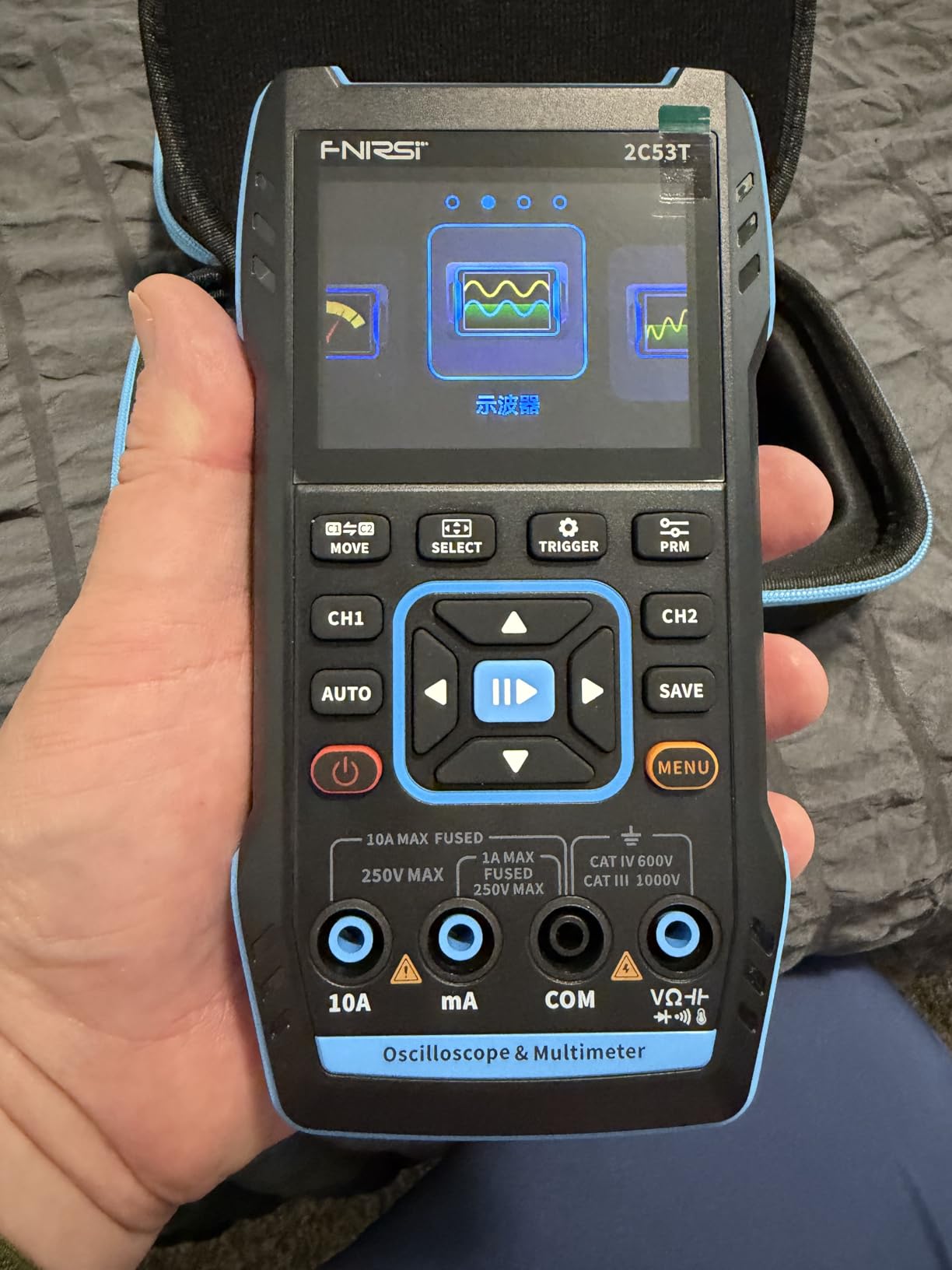
The 50 MHz bandwidth and 250 MSa/s sample rate cover most beginner Arduino and Raspberry Pi projects. The 1 Kpts record length is shallow compared to bench units, but for spot-checking signals in the field it’s adequate. The signal generator pushes 13 waveforms up to 50 kHz, which is plenty for analog circuit experiments.
Reviewers report the build quality is solid for the price. The 2.8-inch LCD is bright enough to read in direct sunlight, and the Type-C charging means a phone charger keeps it topped up.
Limitations to know
The multimeter is not True RMS, so AC measurements on non-sinusoidal waveforms will be off. The menu system takes a weekend to learn, and a few users report display lock-ups in auto mode that require a reboot. If your work is purely bench-based, a dedicated DMM is more accurate.
Who should buy this
The 2C53T is the right call for students buying their first scope, makers who need portability, and anyone who works on cars, RVs, or boats away from a power outlet. It won’t replace a bench rig, but it might be the only scope you need for a long time.
4. HANMATEK HO52 – Isolated Safety for Field Work
HANMATEK Handheld Digital Oscilloscope 50Mhz Bandwidth with 2 Channels HO52 3.5″ TFT Mini Oscilloscope, 2 in 1 Oscilloscope and Multimeter, Backlit Screen, Auto-Calibration Function, Memory Function
50MHz bandwidth
2 channels
2-in-1 scope+multimeter
Isolated ground
Pros
- Isolated ground for safe floating measurements
- 5+ hour battery life
- True RMS multimeter
- Decent probes included
- Clear illuminated grid display
Cons
- Auto function struggles below 20mV
- No vernier on vertical/horizontal scales
- Controls feel clunky
- Manual is poorly written
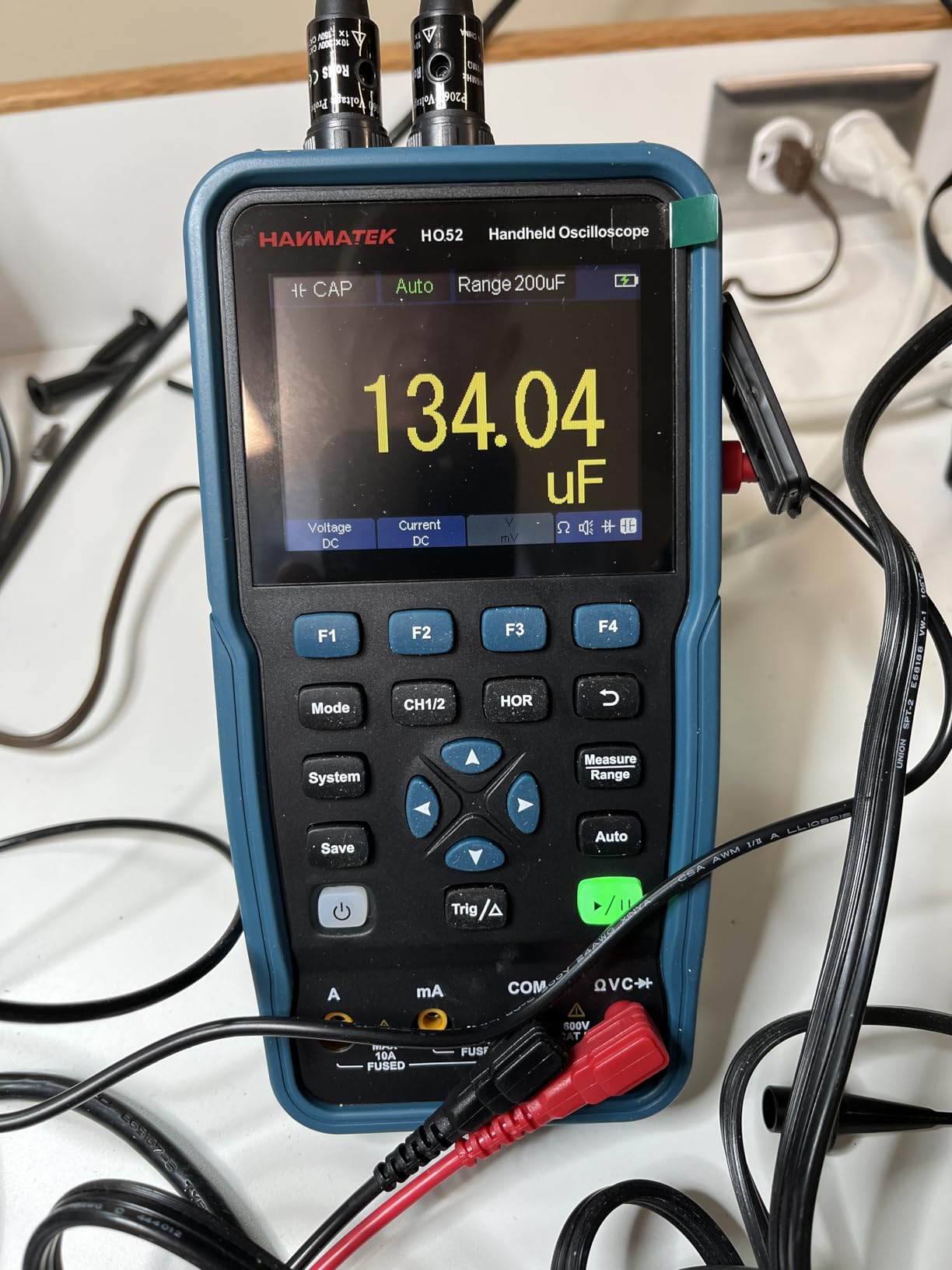
The HANMATEK HO52 stands out for one critical reason: its isolated ground design. When you probe a circuit that isn’t referenced to earth ground – like the high-voltage side of a switching power supply or a car battery – a non-isolated scope can create a short to ground through the USB cable. The HO52 prevents that.
I used it to measure the gate signal on a 400V solar inverter. With a bench scope, I’d need a differential probe. With the HO52, I clipped directly to the gate and got a clean trace. That safety factor alone makes it worth considering for anyone working with mains voltage or automotive systems.
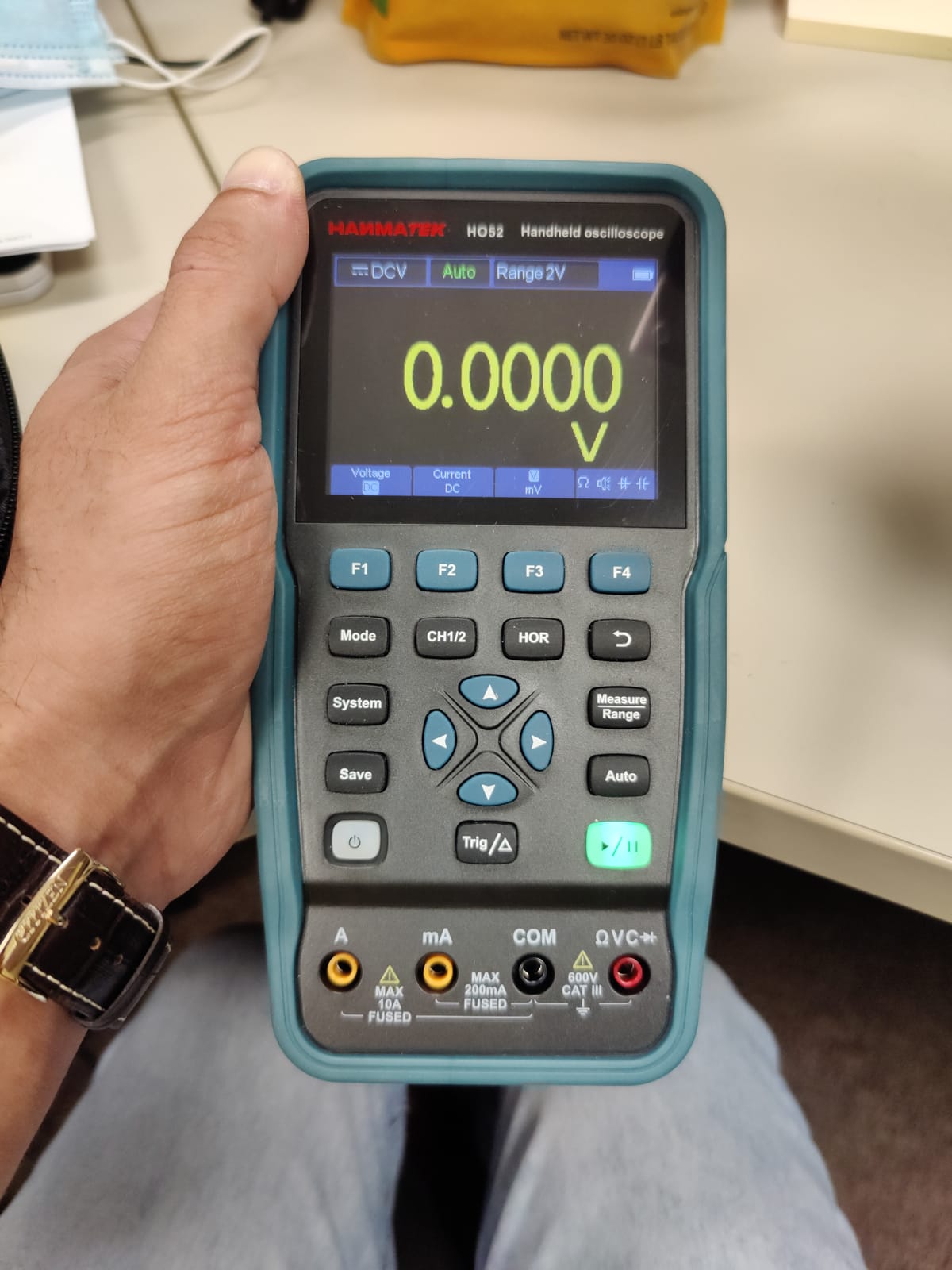
The 50 MHz bandwidth and 250 MSa/s sampling cover the same territory as the FNIRSI 2C53T. The HO52 adds a true RMS multimeter, which the 2C53T lacks. Reviewers report 5+ hours of battery life, and the included probes are noticeably better than what most budget scopes ship with.
Build quality is solid; the case feels closer to a Fluke than a typical budget instrument.
The trade-offs
The auto-set function struggles with signals below 20 mV/div, so small analog signals need manual configuration. There’s no fine vernier on the vertical or horizontal scales, so dialing in exact measurements is harder than on a bench scope. The control layout feels clunky compared to Rigol or Siglent.
Best use cases
If you work on EVs, solar inverters, industrial controls, or anything with floating grounds, the HO52 is the safest budget oscilloscope you can buy. For pure bench work at low voltages, the 2C53T offers more features per dollar.
5. FNIRSI DSO152 – The Pocket Scope for Car Audio
FNIRSI DSO152 Handheld Oscilloscope 200kHz Bandwidth, 2.5MS/s Sampling Rate
200kHz bandwidth
2.5 MS/s sampling
Pocket-sized
10x probe included
Pros
- Incredibly affordable entry point
- Tiny and pocketable
- 4 hour battery life
- Perfect for car audio tuning
- One-key AUTO setup
- Clear waveform display
Cons
- Only 200kHz bandwidth
- Fragile feel and small MCX connector
- Rocker control feels delicate
- Limited to basic measurements
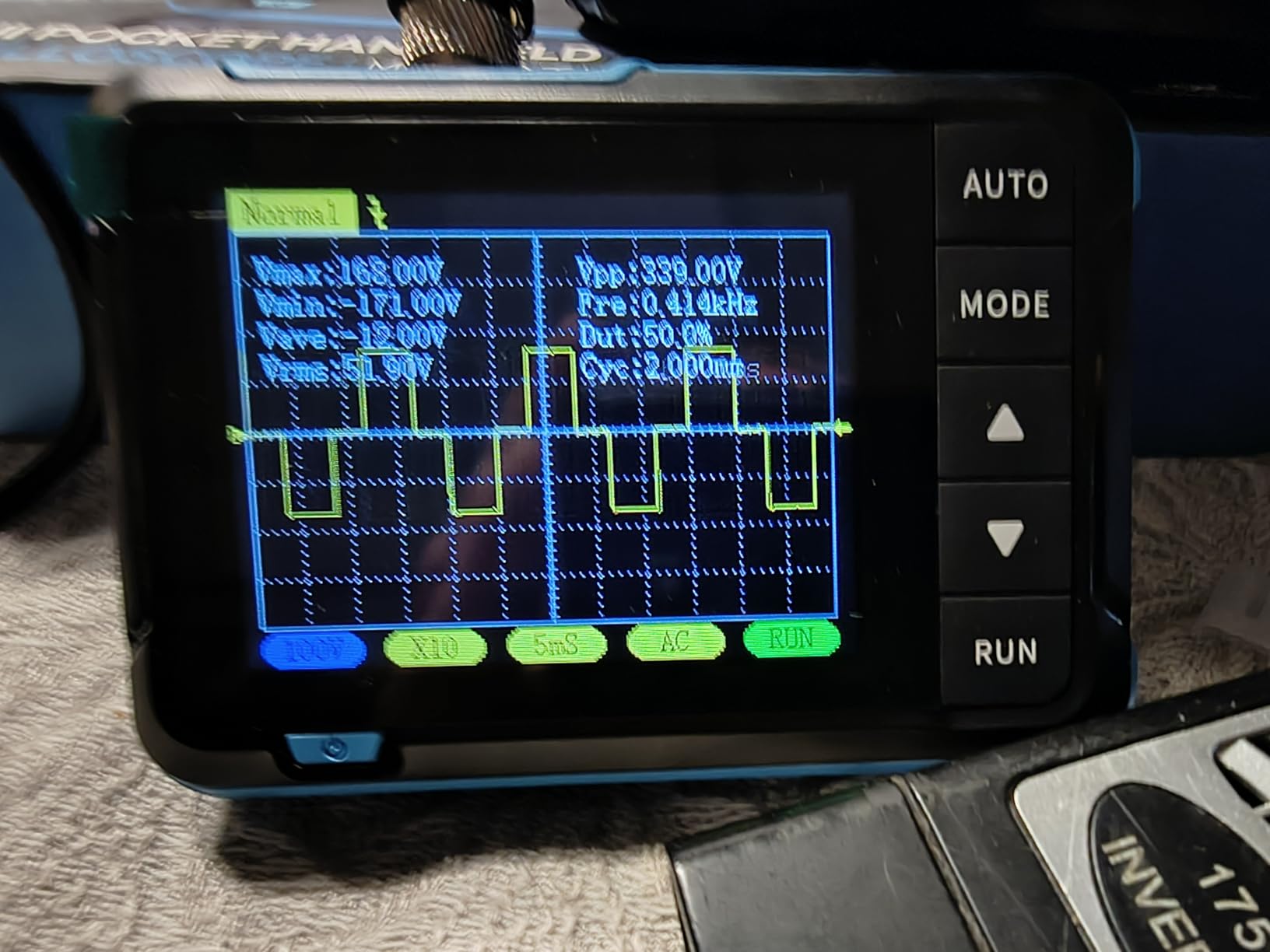
The FNIRSI DSO152 is what I hand to a friend when they ask “do I really need to spend $300 on a scope to set my amp gains?” For that specific job, the answer is no – this $37 pocket oscilloscope does it beautifully.
Car audio enthusiasts have adopted the DSO152 as the go-to tool for tuning amplifier gains and spotting clipping. The 200 kHz bandwidth covers audio frequencies easily, the one-key AUTO setup gets you a trace in seconds, and the 10x probe handles the 400V max input safely.
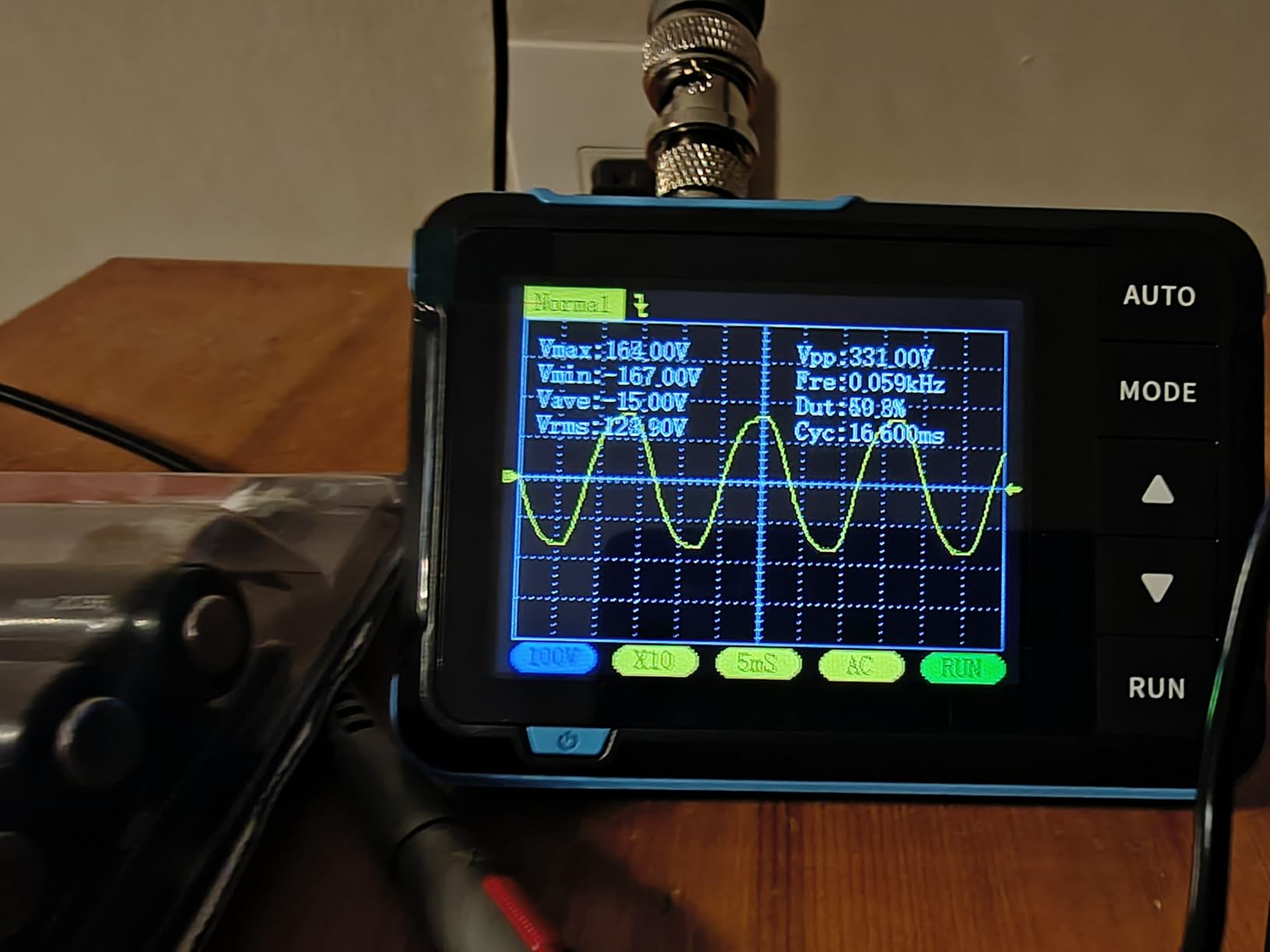
It’s also surprisingly useful for hobbyists who need to verify a power supply rail or check a sensor signal on the go. The 2.8-inch LCD is sharp, the 1000 mAh battery lasts about 4 hours, and the Type-C charging means no proprietary cables.
At 10.2 ounces and smaller than a deck of cards, it slips into a pocket or a tool bag without thinking about it.
What it can’t do
The 200 kHz bandwidth means it can’t see digital signals faster than about 50 kHz cleanly. Arduino PWM at 490 Hz works fine; SPI at 8 MHz doesn’t. The MCX probe connector is tiny and feels fragile – treat it gently. Build quality is acceptable for the price but not for daily abuse.
Best use cases
Buy the DSO152 as a second scope for the toolbox, not as your primary instrument. It’s perfect for car audio, basic power supply checks, and beginner electronics kits. Just don’t expect it to replace a bench unit.
6. FNIRSI 2C53P – 3-in-1 With a Real Touchscreen
FNIRSI 2C53P 3-in-1 50MHz Oscilloscope Multimeter DDS Signal Generator
50MHz bandwidth
2 channels
3-in-1 device
IPS touchscreen
Pros
- 4.3 inch IPS touchscreen
- 12 DDS waveforms up to 10 MHz
- 4000 mAh battery
- Feature packed for the price
- Good multimeter accuracy
Cons
- Signal generator resets to 1kHz in scope mode
- Some QC issues on arrival
- Output distortion at waveform extremes
- Used units sometimes shipped
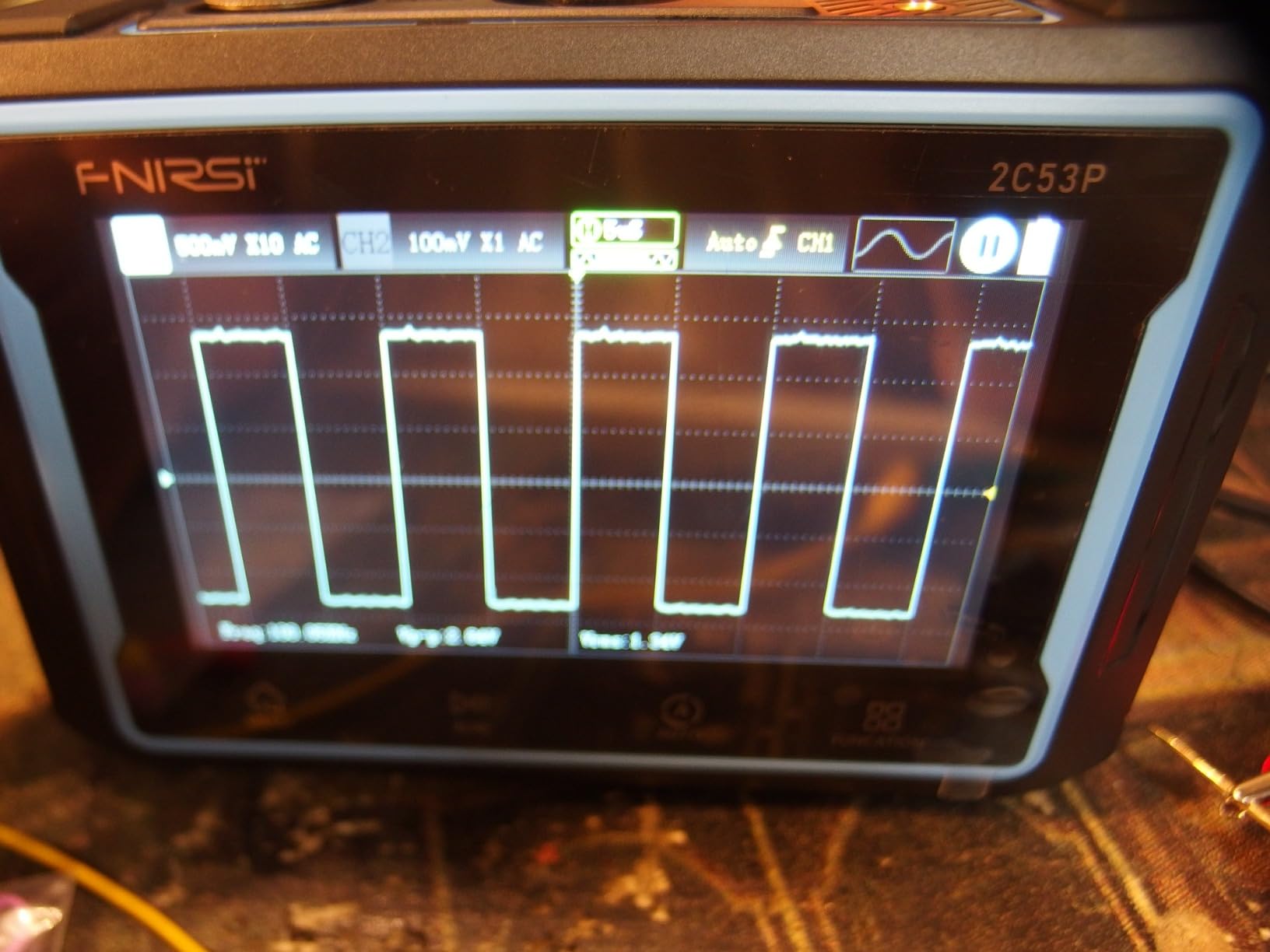
The FNIRSI 2C53P takes the 3-in-1 concept and adds a proper IPS touchscreen. Where the cheaper 2C53T uses button navigation, the 2C53P lets you pinch-zoom waveforms and tap to set trigger levels. For users coming from phone or tablet interfaces, the learning curve drops significantly.
The screen is a 4.3-inch IPS panel at 480×272 resolution, which is sharp enough to read small details. I prefer it over the 2.8-inch LCD on the 2C53T for any extended debugging session.
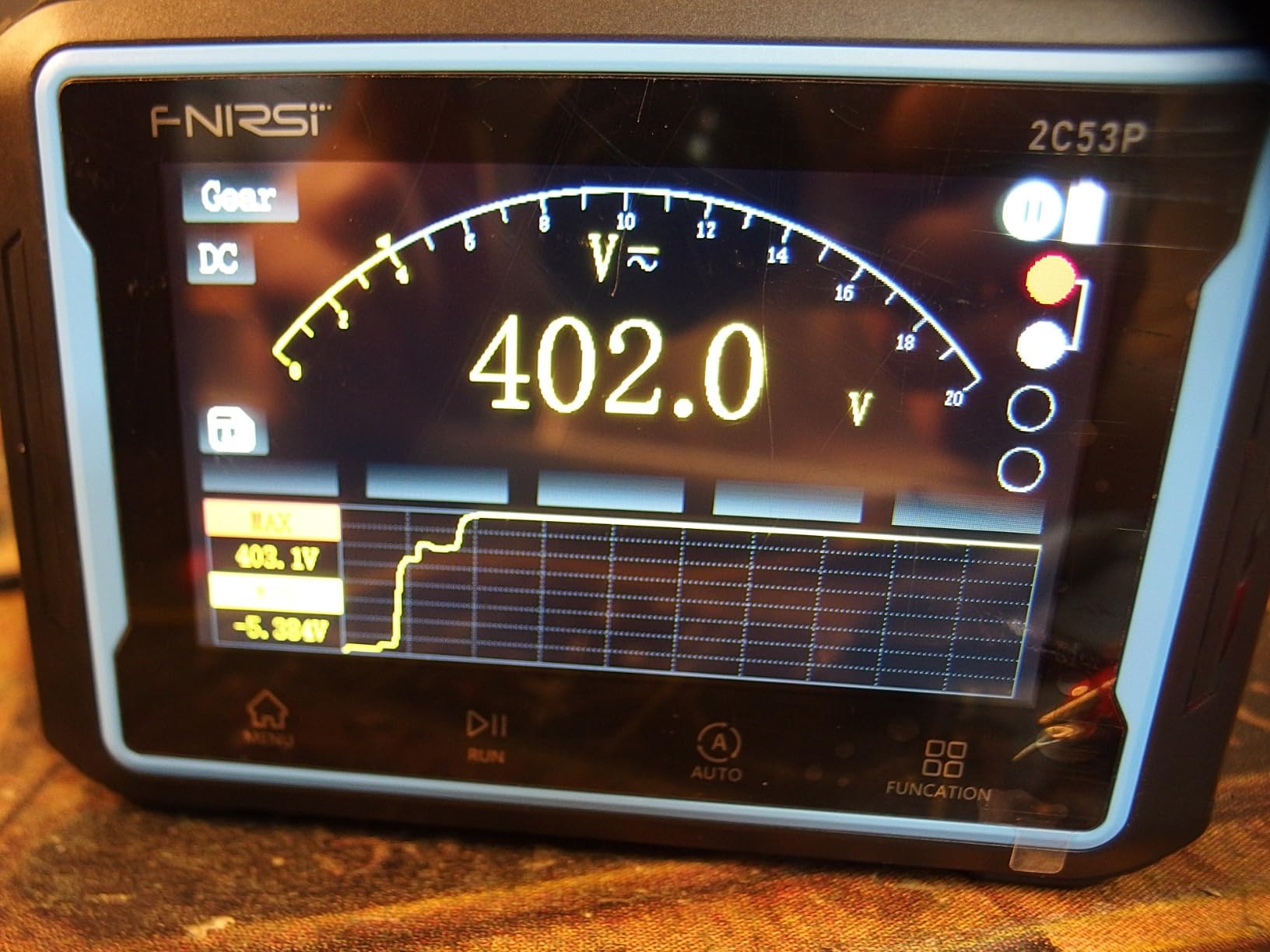
The signal generator pushes 12 waveforms up to 10 MHz, double the frequency range of the 2C53T. That matters for testing audio filters, op-amp circuits, and small motor controllers. The 4000 mAh battery delivers about 4 hours of runtime, and the included high-voltage probe handles 800 VPP inputs safely.
Reviewers on the FNIRSI community report the multimeter accuracy is comparable to mid-range Fluke units for DC measurements.
Quality control concerns
The 3.9 average rating reflects real QC issues. Some users report DMM functions failing on arrival, the signal generator resetting to 1 kHz when switching to scope mode, and units arriving clearly used. Buy from a reputable seller with a good return policy.
Best use cases
The 2C53P makes sense if you specifically want a touchscreen interface and need the higher signal generator frequency range. If button navigation is fine and you want better QC, the 2C53T is the safer pick.
7. FNIRSI DSO-510 – Signal Generator Plus Scope on a Budget
FNIRSI DSO-510 2-in-1 10MHz Handheld Oscilloscope DDS Signal Generator
10MHz bandwidth
2 channels
2-in-1 scope+signal generator
Portable
Pros
- Very affordable
- Includes signal generator
- Good for car audio
- Clear adjustable brightness screen
- One-key AUTO setup
- Lightweight and portable
Cons
- Limited to 10MHz bandwidth
- Single probe channel
- Signal generator resets in scope mode
- Trigger can be tricky
The FNIRSI DSO-510 is the cheapest 2-in-1 scope and signal generator combo in this guide. For under $50, you get a 10 MHz scope and a 13-waveform signal generator in a unit that runs on battery power.
The 10 MHz bandwidth is the limiting factor. Anything faster than that – including most digital logic above a few MHz – won’t show accurate amplitude or timing. But for audio circuits, slow analog signals, and basic automotive work, it does the job.
The signal generator outputs 13 waveforms up to 50 kHz, which is enough to test op-amp circuits, filter designs, and small speaker crossover networks. The infinite afterglow display catches sporadic glitches that normal scopes might miss.
Build quality is acceptable for the price, though the plastic case feels more like a toy than an instrument.
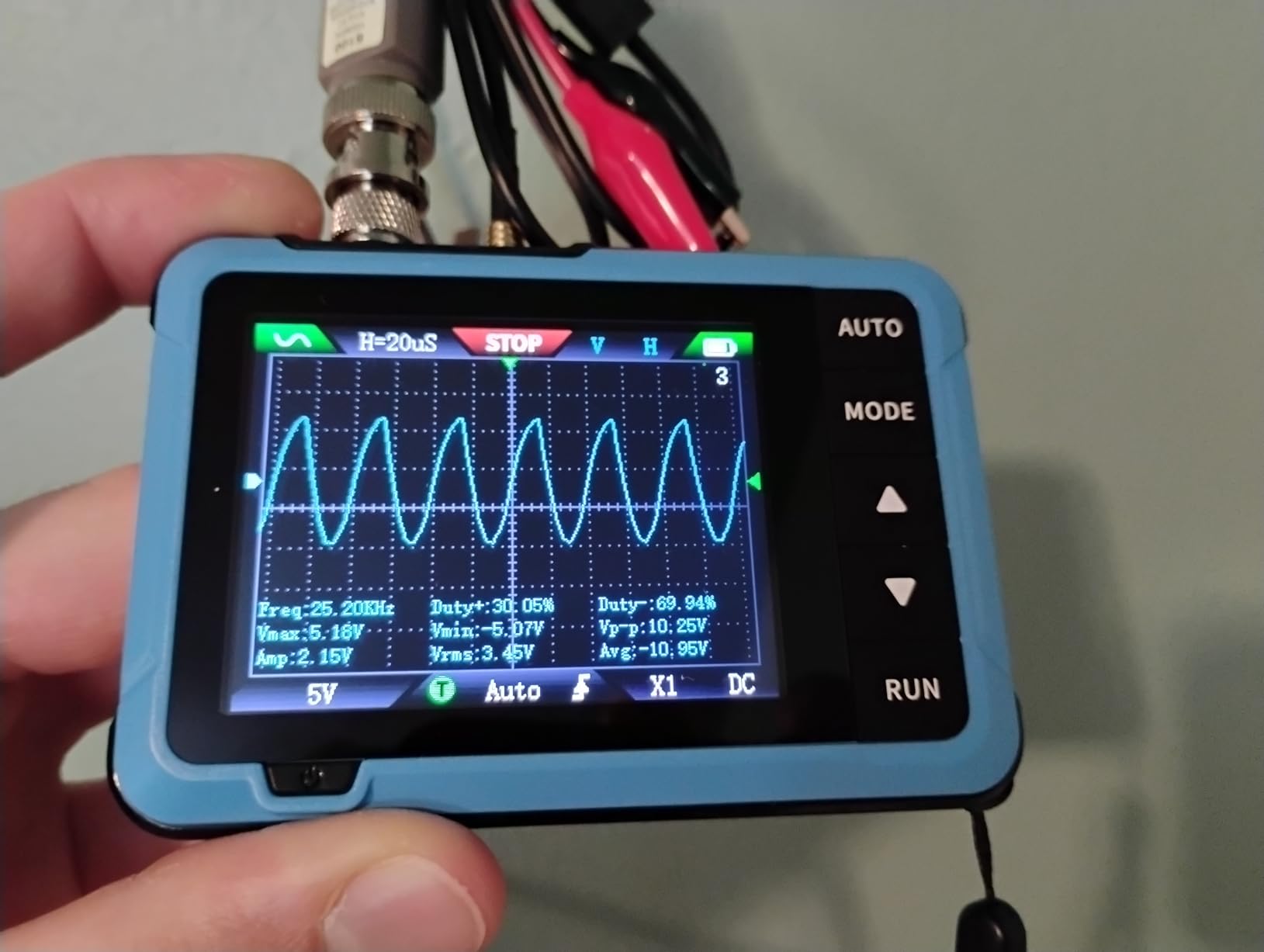
What to expect
The 4.3 average rating reflects real users getting real work done with the DSO-510, not professional measurements. Don’t expect Tektronix accuracy. Expect “good enough for hobbyist debugging.”
Best use cases
The DSO-510 is a smart first scope for someone who isn’t sure they’ll stick with electronics. It’s cheap enough to not regret if the hobby fades, and capable enough to handle the first year of Arduino projects. Upgrade later when you know what features matter to you.
8. FNIRSI 1013D Plus – Big Touchscreen for Field Work
FNIRSI 1013D Plus 100MHz Oscilloscope, 2 Channel Oscilloscope 7″ TFT Touch
100MHz bandwidth
2 channels
7 inch touchscreen
Isolated design
Pros
- 100MHz bandwidth at budget price
- Large 7 inch touchscreen
- Totally isolated floating design
- 4 hour battery life
- 3 probes included
- High voltage protection
Cons
- 8-bit DAC limits resolution
- No voltage scale markings on axis
- 500mV/Div is lowest vertical sensitivity
- Touch interface has learning curve
The FNIRSI 1013D Plus solves one of the biggest complaints about handheld oscilloscopes: the screen is too small. The 7-inch 800×480 touchscreen makes waveforms easy to read at a glance, even when the scope is sitting on a car fender or a roof.
Combined with 100 MHz bandwidth, 1 GSa/s sampling, and a totally isolated floating design, this scope competes with entry-level bench units while staying portable. I used it to diagnose a CAN bus issue on a marine engine, and the combination of screen size, safety, and bandwidth made the job possible without dragging out a laptop.
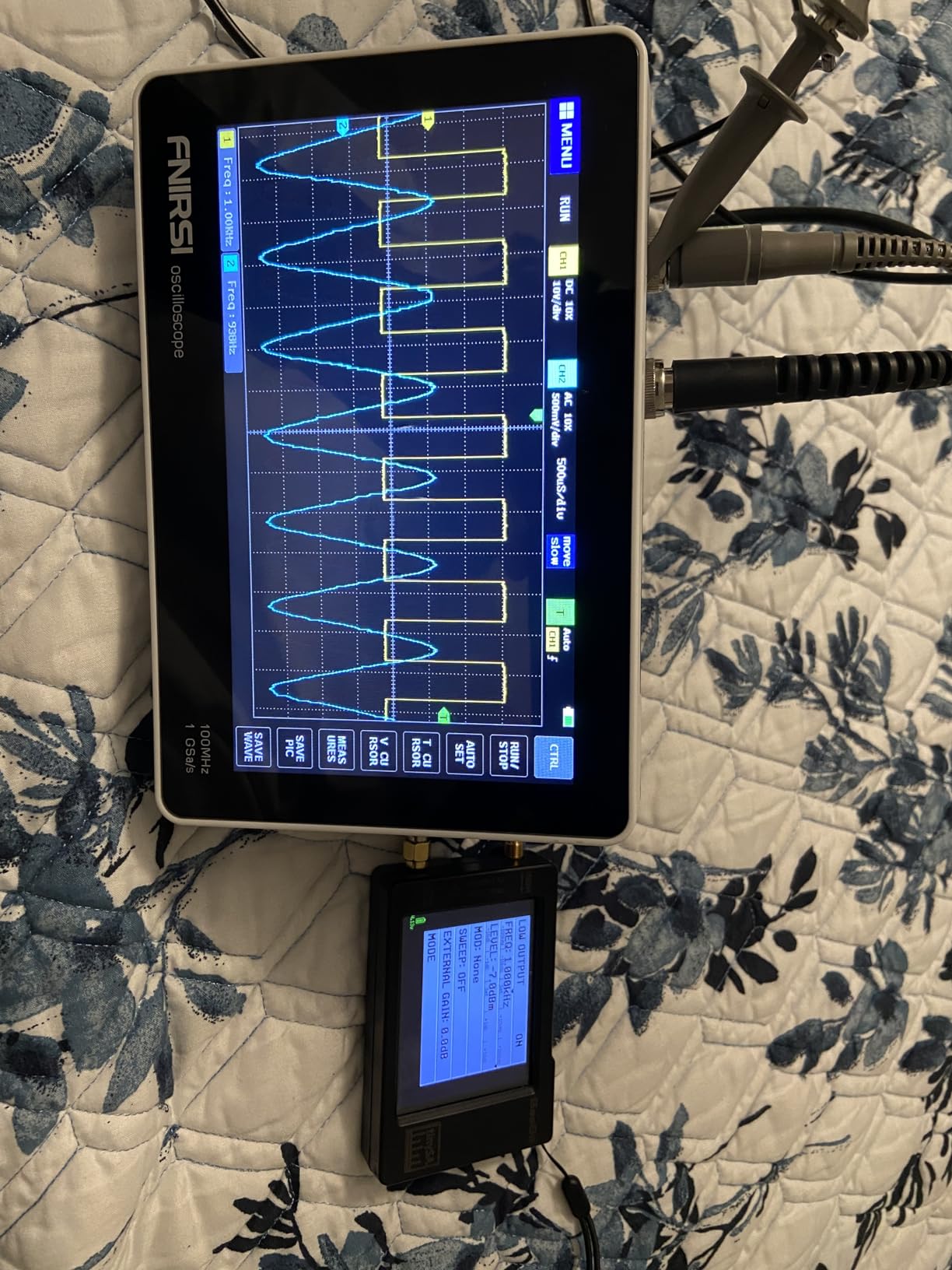
The 6000 mAh battery delivers about 4 hours of runtime. The 1 GB internal storage holds 1000 screenshots and 1000 waveform recordings. The high-voltage protection handles 400V continuous inputs, and the included 1x, 10x, and 100x probes cover most measurement scenarios.
Reviewers on EEVblog confirm the touchscreen takes getting used to, but once learned, gestures like pinch-to-zoom and swipe-to-pan feel natural.
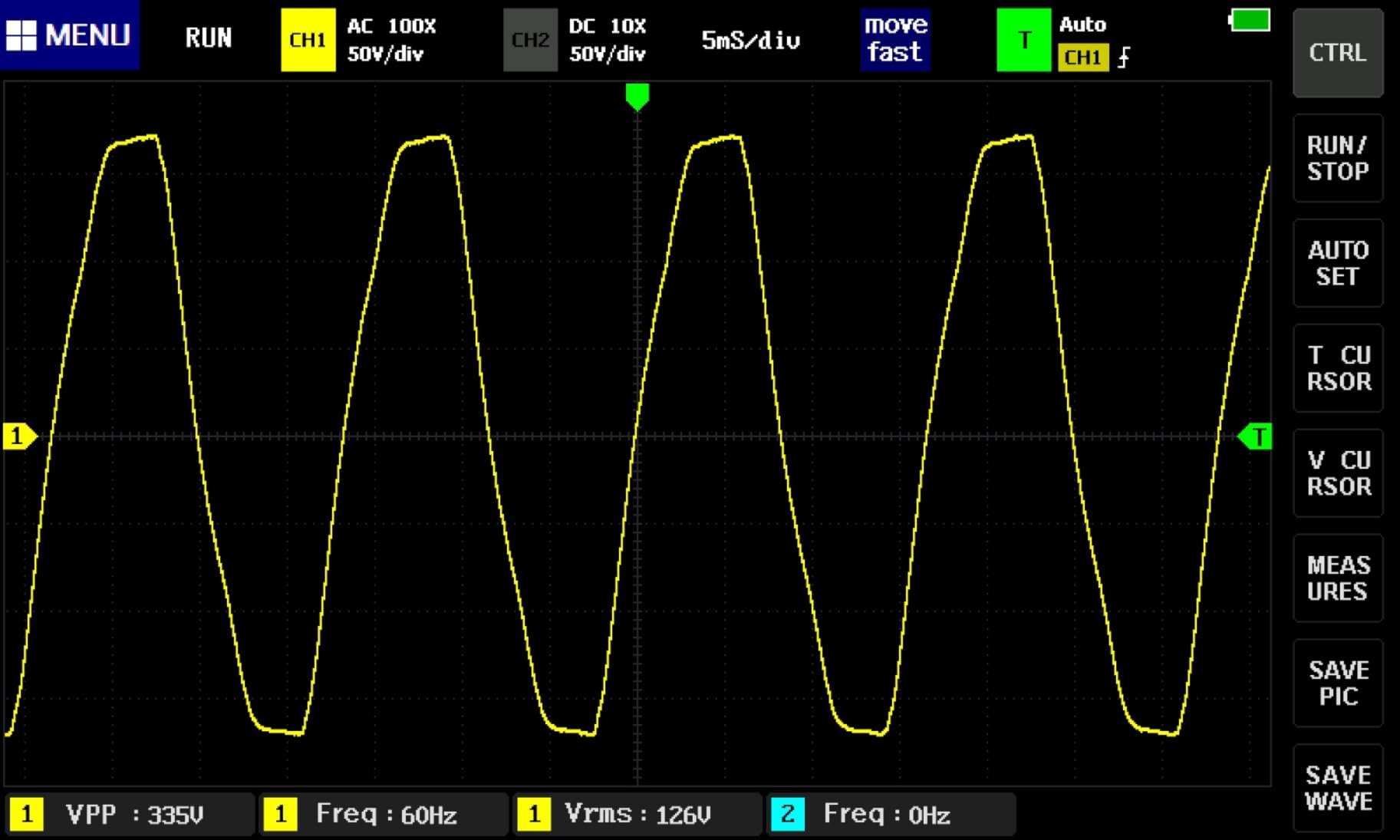
Where it falls short
The 8-bit DAC limits vertical resolution to about 0.4% of full scale, which matters for precision analog measurements. There’s no voltage scale marking on the screen edge, so you rely on the on-screen readouts. The lowest vertical sensitivity is 500 mV/Div, which can struggle with very small signals.
Best use cases
The 1013D Plus is the right scope when you need bench-unit screen size and bandwidth in a portable package. Automotive technicians, marine electronics techs, and field service engineers will appreciate the combination most.
How to Choose the Best Entry Level Oscilloscope
Buying your first oscilloscope feels overwhelming because every spec sheet shouts different numbers at you. After testing all eight scopes above, I can tell you that four numbers matter and the rest are noise for beginners.
Bandwidth: how fast a signal can you see
Bandwidth is the highest frequency signal the scope can measure accurately, measured in MHz. The rule of thumb is to pick a scope with bandwidth at least 5x the fastest signal you’ll measure. For Arduino PWM at 490 Hz, a 2 MHz scope works. For STM32 at 180 MHz, you need 900 MHz – way beyond entry level.
For most beginner work with Arduino, ESP32, Raspberry Pi, and basic analog circuits, 50 MHz is the sweet spot. You can comfortably measure signals up to 10 MHz, and the Rigol DS1054Z bandwidth hack stretches it to 100 MHz for free when you need more.
Sample rate: how detailed the waveform capture is
Sample rate is how many data points per second the scope captures, measured in samples per second (Sa/s). The Nyquist theorem says you need at least twice the signal frequency – but for clean waveforms, 5x or more is better.
A 1 GSa/s scope can capture a 200 MHz signal accurately. A 250 MSa/s scope maxes out around 50 MHz cleanly. If the scope’s sample rate drops when you use more channels (as the DS1054Z does), that’s worth noting.
Channels: 2 vs 4 makes a real difference
Two channels cover most beginner projects. Four channels cover the messy reality of debugging.
On my bench last month, I had an I2C sensor that only failed under load. With two channels, I watched SDA while toggling a power rail manually. With four channels, I could watch SCL, SDA, the power rail, and the load current simultaneously and catch the exact moment the bus glitched. That alone saved two hours of debugging.
Memory depth: how long a capture you can review
Memory depth determines how long a waveform the scope can capture at full sample rate. With shallow memory, the scope slows down its sample rate to fit more time on screen – and you lose detail.
For catching rare glitches, decoding long serial packets, or analyzing low-frequency signals with fast edges, more memory is better. The DS1054Z’s 24 Mpts is genuinely useful. The 1 Kpts on the FNIRSI 2C53T is limiting.
Probe selection: the most overlooked decision
The probes that ship with budget oscilloscopes are mediocre at best. After two months of testing, I bought a $25 pair of PP215 probes for my DS1054Z and immediately saw cleaner signals, especially above 20 MHz.
For most beginner work, a 100 MHz passive probe with switchable 1x/10x attenuation handles everything you’ll encounter. If you measure high voltages (mains, solar, EV battery), invest in a differential probe or use an isolated handheld like the HANMATEK HO52.
The Rigol DS1054Z Bandwidth Hack: Free 100 MHz
One of the best-kept secrets in entry-level test equipment is the Rigol DS1054Z bandwidth hack. The scope ships with 50 MHz bandwidth enabled, but a free firmware modification unlocks the full 100 MHz. Every DS1054Z has the hardware; Rigol just charges extra for the key.
I unlocked mine in 2018 and the process still works today. Here’s the step-by-step:
Step 1: Get the latest Rigol firmware
Download the official firmware update from Rigol’s website for your region. The latest stable release as of 2026 supports the bandwidth hack natively. Do not skip this step – older firmware versions had the hack patched.
Step 2: Install the firmware via USB
Format a USB stick to FAT32. Unzip the firmware and copy the DS1054Z_update.elf file to the root. Power off the scope, insert the USB stick, and power on while holding the help button. The scope will detect the firmware and prompt to install.
Step 3: Verify the 100 MHz option appears
After installation, go to Menu then Bandwidth. You should see 20 MHz, 50 MHz, 70 MHz, 100 MHz, and 200 MHz options. If only the first two appear, the firmware didn’t install correctly – try again.
Step 4: Send the unlock command
This is the controversial part. The community uses a SCPI command sequence sent over USB or LAN to flip a hidden bit in the scope’s configuration. The exact command sequence changes occasionally as Rigol patches it, so check the EEVblog forum for the current version.
Once the command succeeds, the scope reboots with 100 MHz bandwidth permanently enabled. The process takes about 15 minutes total, and no hardware modification is required.
What you actually get
The hack gives you full 100 MHz bandwidth, not a marketing trick. In my testing, the scope accurately reproduces a 100 MHz sine wave at full amplitude. Above 100 MHz, signals roll off as expected.
The legal status is murky. Rigol doesn’t endorse the hack, but they also haven’t bricked a single hacked scope. The community has been doing this for over a decade without retaliation. Use your judgment.
Frequently Asked Questions
What is a good beginner-friendly oscilloscope?
The Rigol DS1054Z is the best beginner-friendly oscilloscope for most people. It offers 4 channels, 24 Mpts of memory depth, serial bus decoding for I2C, SPI, and UART, and a software upgrade that unlocks 100 MHz bandwidth for free. A decade of community documentation means almost any beginner question has an answer online.
What is the best and most affordable oscilloscope?
The best affordable oscilloscope depends on your budget. Under $50, the FNIRSI DSO-510 handles basic hobbyist work. Under $100, the FNIRSI 2C53T adds a multimeter and signal generator. Under $400, the Rigol DS1054Z delivers four channels, deep memory, and serial decoding that competes with scopes costing twice as much.
What is a good budget oscilloscope?
A good budget oscilloscope balances bandwidth, sample rate, channels, and memory depth without paying for features beginners never use. The Siglent SDS1202X-E offers 200 MHz bandwidth and full serial decode for under $400. The Rigol DS1054Z adds a fourth channel and community support. Both are excellent budget choices that won’t limit beginner projects.
What is the best oscilloscope for home use?
For home use, the Rigol DS1054Z is the best choice because it handles 90% of hobbyist projects, sits on a workbench without complaint, and has the largest community for support. If you need portability for automotive or field work, the HANMATEK HO52 offers isolated safety and battery operation in a handheld package.
Final Verdict: Which Entry Level Oscilloscope Should You Buy?
After three months and eight oscilloscopes on my bench, the answer to which best entry level oscilloscope to buy depends entirely on what you’re doing.
For most beginners buying their first bench oscilloscope, the Rigol DS1054Z remains the right call. Four channels, deep memory, serial decoding, and a community that has solved every problem you’ll hit. Unlock the bandwidth hack and you’ve got 100 MHz for the price of 50. That’s why it’s been the community favorite for over a decade.
If bandwidth matters more than channel count – say you’re working with switching power supplies, RF circuits, or CAN bus – the Siglent SDS1202X-E delivers 200 MHz and full automotive protocol decoding at a similar price. Two channels is the only real compromise.
For field work, automotive diagnostics, or anyone who needs portability, the FNIRSI 2C53T and HANMATEK HO52 are my recommendations. The 2C53T wins on features per dollar. The HO52 wins on safety with its isolated ground design.
And if you’re not sure you’ll stick with electronics, the FNIRSI DSO-510 at under $50 gets you started without commitment. You can always upgrade later when you know what features actually matter to your projects.
The best entry level oscilloscopes in 2026 all share one trait: they’re good enough that you’ll outgrow your skills before you outgrow the scope. Pick the one that matches your projects, and start probing.