
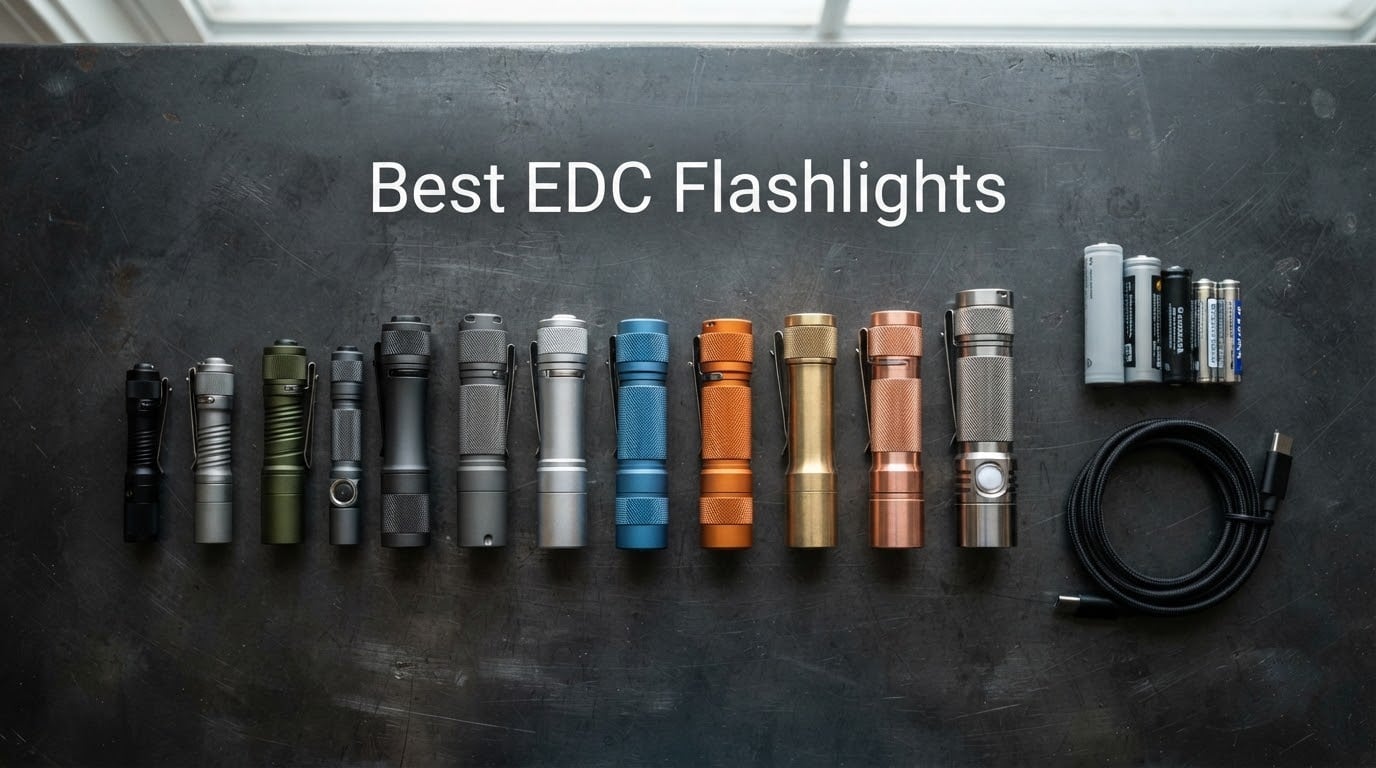
The most reliable everyday carry flashlight is the one that is already in your pocket when your phone dies at 11pm walking the dog. Phone screens crack, batteries flatten, and a phone beam is a wide, short-throw smear that helps you read a doormat and nothing else. A dedicated pocket light gives you predictable brightness, a beam shaped for the task, and runtime you can count on.
That is what this roundup covers. We carried twelve of the best EDC flashlights over six weeks across daily commutes, a garage, a jobsite and two power outages, weighing size against output, checking pocket comfort rather than just spec sheets, and watching which ones got dropped, washed or left behind. If you want the wider field of high-output options, our high lumen EDC flashlight guide covers the throw-first end of the market.
An EDC flashlight, short for everyday carry flashlight, is any light small enough to live in a pocket all day: usually under 4 inches long, under 4 ounces, and powered by AAA or AA cells, a 14500 or 18650 lithium-ion battery, or a built-in USB-C rechargeable pack. What follows is the 2026 shortlist, ranked by what actually matters once a light is on your person rather than on a spec sheet.
Is an EDC flashlight worth it? For most people, yes, and the reason is boring: it is the only light you will actually have when you need one. Every one of the twelve below earned its place on carry comfort, control, and build quality. Brightness came third.
Table of Contents
Top 3 Picks: Best Everyday Carry in 2026
Our three fastest, most dependable carry lights:
Streamlight MicroStream
- 250 lumens
- 1150 candela
- 68 m throw
- USB-C rechargeable
- clip converts to a hat light

GearLight TAC Two-Pack
- Two 1040 lumen lights in the box
- AAA holders and belt clips included
- 10-foot drop tested

All 12 EDC Flashlights Compared in 2026
Every light below, with the specs that actually change the buying decision:
| Product | Specifications | Action |
|---|---|---|
| Streamlight MicroStream |
|
Check Latest Price |
| GearLight TAC Two-Pack |
|
Check Latest Price |
| Olight I3T EOS |
|
Check Latest Price |
 Olight IMINI 2 Olight IMINI 2 |
|
Check Latest Price |
 WUBEN G5 WUBEN G5 |
|
Check Latest Price |
 WUBEN C3 WUBEN C3 |
|
Check Latest Price |
 RovyVon A3 Gen 4 RovyVon A3 Gen 4 |
|
Check Latest Price |
 Blukar Two-Pack Blukar Two-Pack |
|
Check Latest Price |
 WUBEN X4 WUBEN X4 |
|
Check Latest Price |
 WARSUN T7PRO WARSUN T7PRO |
|
Check Latest Price |
 ThruNite Archer Mini ThruNite Archer Mini |
|
Check Latest Price |
 Olight Arkfeld Ultra Olight Arkfeld Ultra |
|
Check Latest Price |
1. Streamlight MicroStream Review: The Sub-4-Inch Standard Setter
Streamlight 66608 MicroStream USB Flashlight, Coyote
250 lumens
1150 candela
68 m throw
1.5 h high, 3.5 h low
USB-C rechargeable
Pros
- Sub-4-inch body at only 2.08 oz
- Removable clip converts to a hat-brim clip
- USB rechargeable with charge status indicator
- IPX4 aluminum body impact tested to 1 m
- Limited lifetime warranty
Cons
- Only two brightness levels and no mode memory
- About 1.5 h of runtime on high
- No magnetic tail for hands-free placement
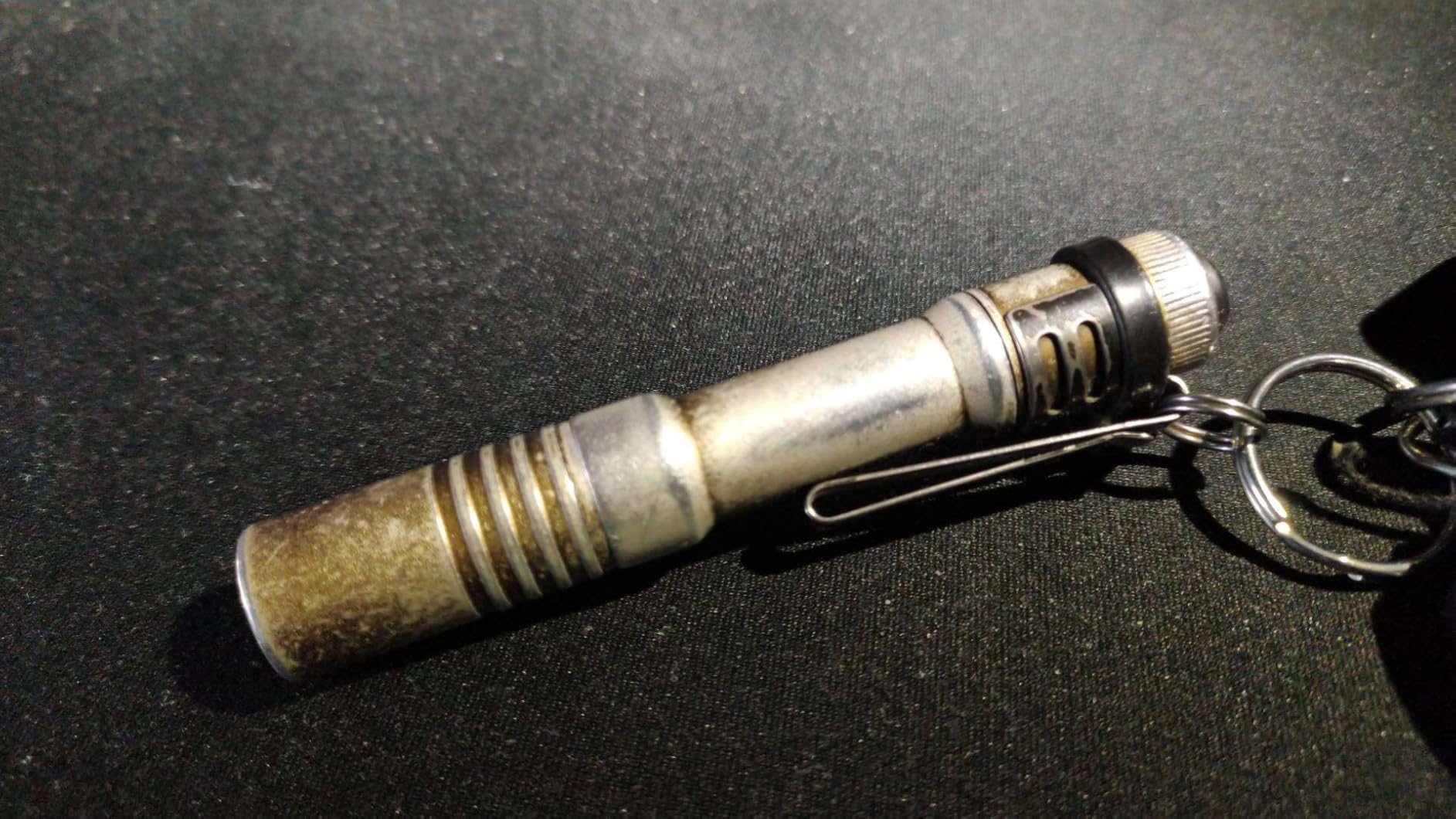
Streamlight built the pocket EDC light that the rest of the category is measured against, and six weeks of daily carry did not change that. At 3.87 inches and 2.08 ounces it sits in a front pocket without announcing itself, and 250 lumens with 1150 candela is far more usable output than that number sounds on paper.
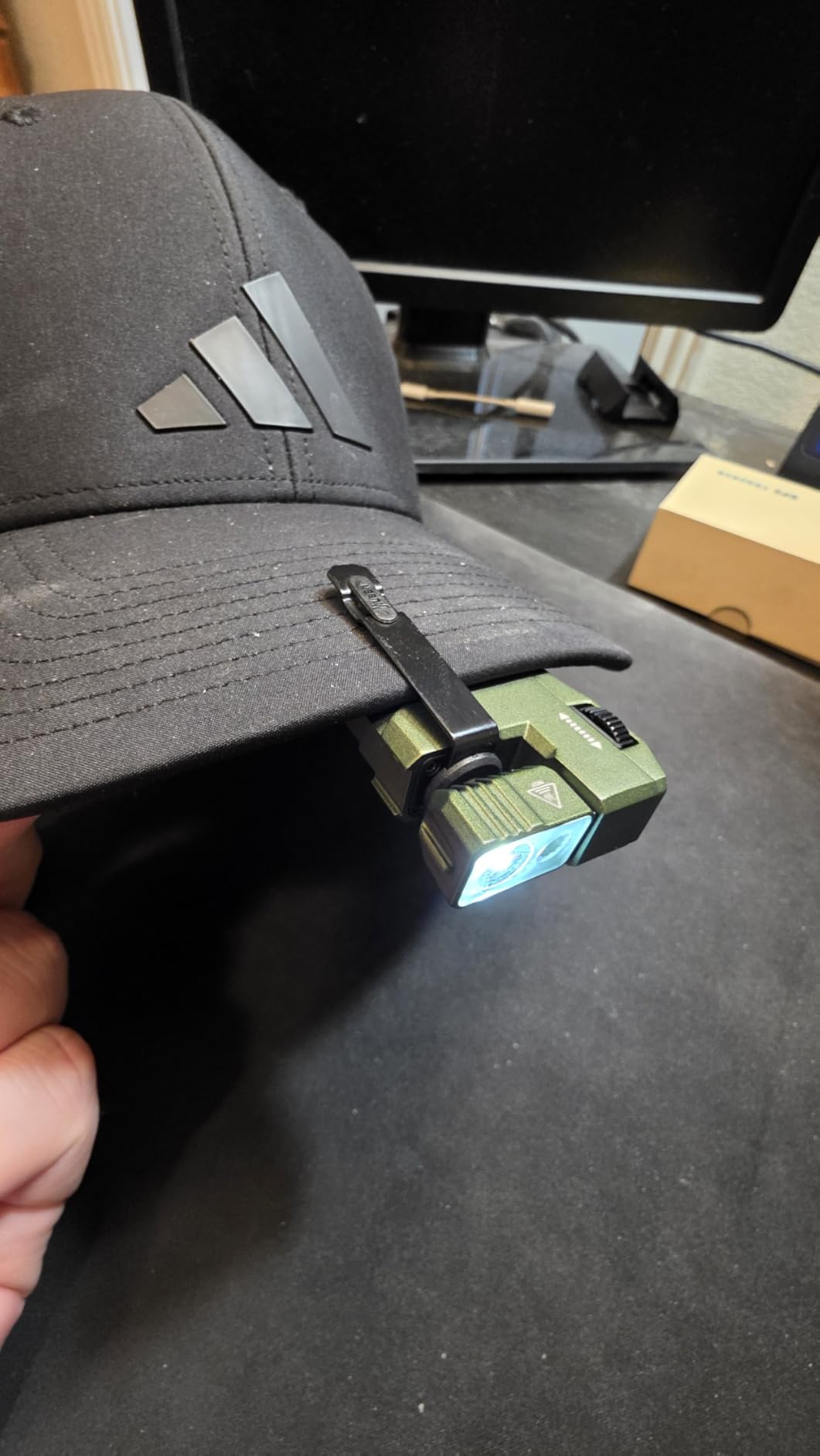
The feature I did not expect to use daily is the clip. It unbolts and screws into the tail, turning the light into a hat-brim lamp. I ran a jobsite inspection wearing it on a cap for a full afternoon and never touched the light, which is exactly the hands-free behaviour forum buyers keep describing.
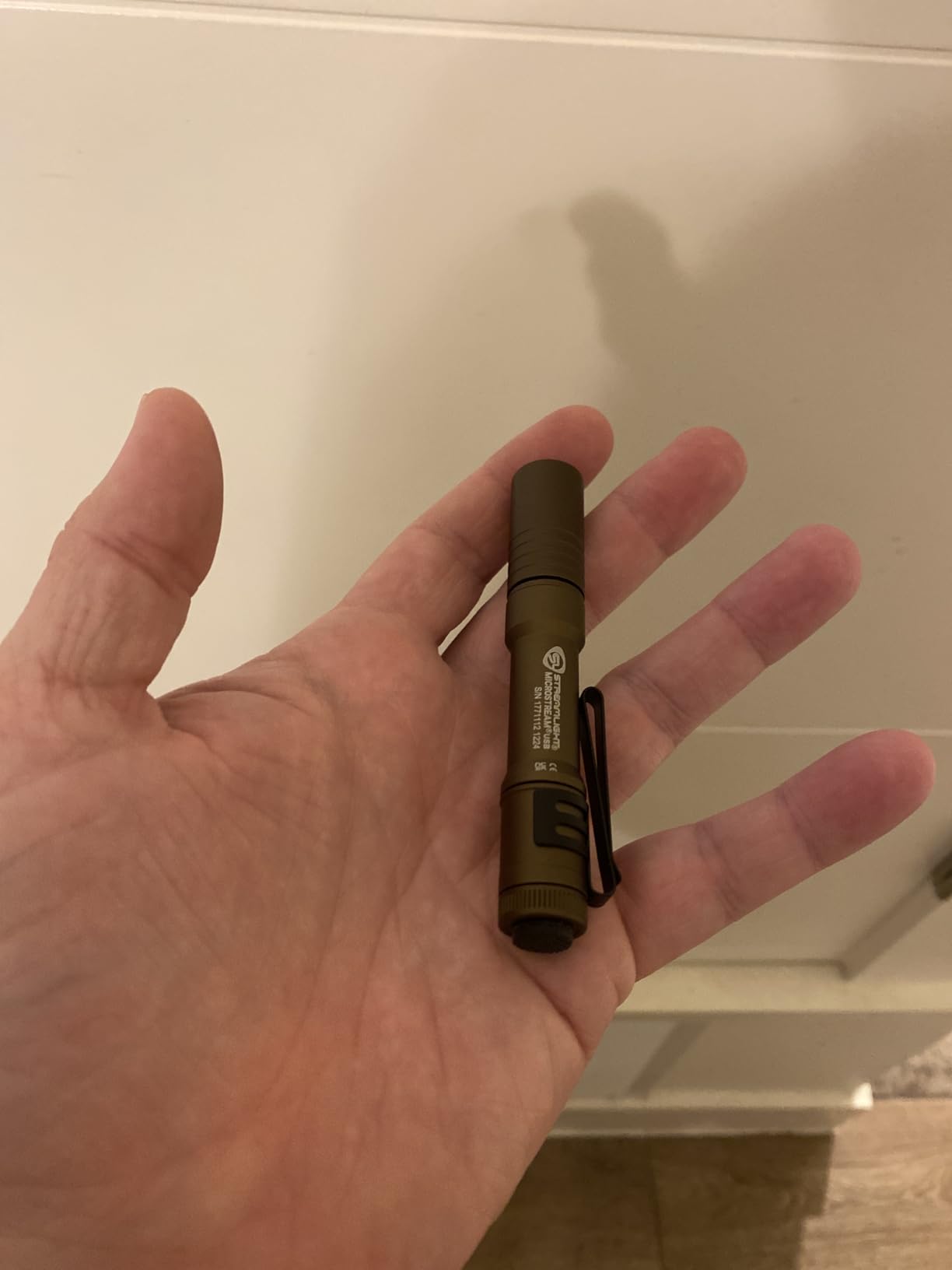
Two brightness levels is a real limitation and also the reason I trust it. There is no mode group to misfire, no strobe to wake your family at 3am, and no double-tap turbo to confuse a pocket. You press, you get light, you press again, you get less light.
The 1150 candela figure is the number that matters on a trail. Sixty-eight meters of throw means it picks out a fence line or a mailbox well past arm’s reach, where most sub-200-lumen keychain lights stop lighting anything but the ground at your feet.
Who the MicroStream suits
It suits the person who wants one light that does everything adequately and disappears the rest of the time. USB-C charging with a status indicator means no spare cells and no battery door, and a limited lifetime warranty from Streamlight is rare at this tier.
It is also the sensible first flashlight. If you have never owned a real one, the MicroStream teaches you the interface in about ten seconds and will not punish you for choosing it.
Where the MicroStream falls short
Runtime on high is roughly 1.5 hours, which is fine for a burst and frustrating for a long search. There is no mode memory, so you choose your level every time you press it.
There is no magnetic tail, so you cannot stick it to a car hood or a steel beam. For work where both hands are busy, that omission is real, and the lights lower on this list solve it.
2. GearLight TAC Two-Pack Review: Two Bright Lights and Spare Battery Holders
GearLight LED Tactical Flashlights High Lumens – Mini Flashlights for EDC Carry – Compact Powerful Emergency Flashlight Made from Military-Grade Aluminum – Drop Resistant and Water Resistant
Up to 1040 lumens
Adjustable zoom wide beam
6 AAA batteries
Sold as a two-pack
Pros
- Two full-size lights plus AAA holders and belt clips in the box
- Very bright wide beam for the money
- Military-grade aluminum rated to a 10-foot drop
- Simple one-touch operation with adjustable focus
Cons
- Batteries are not included with the AAA holders
- Single lighting mode with no low
- strobe or settings
- Heavy at nearly 12 oz for a pocketable light
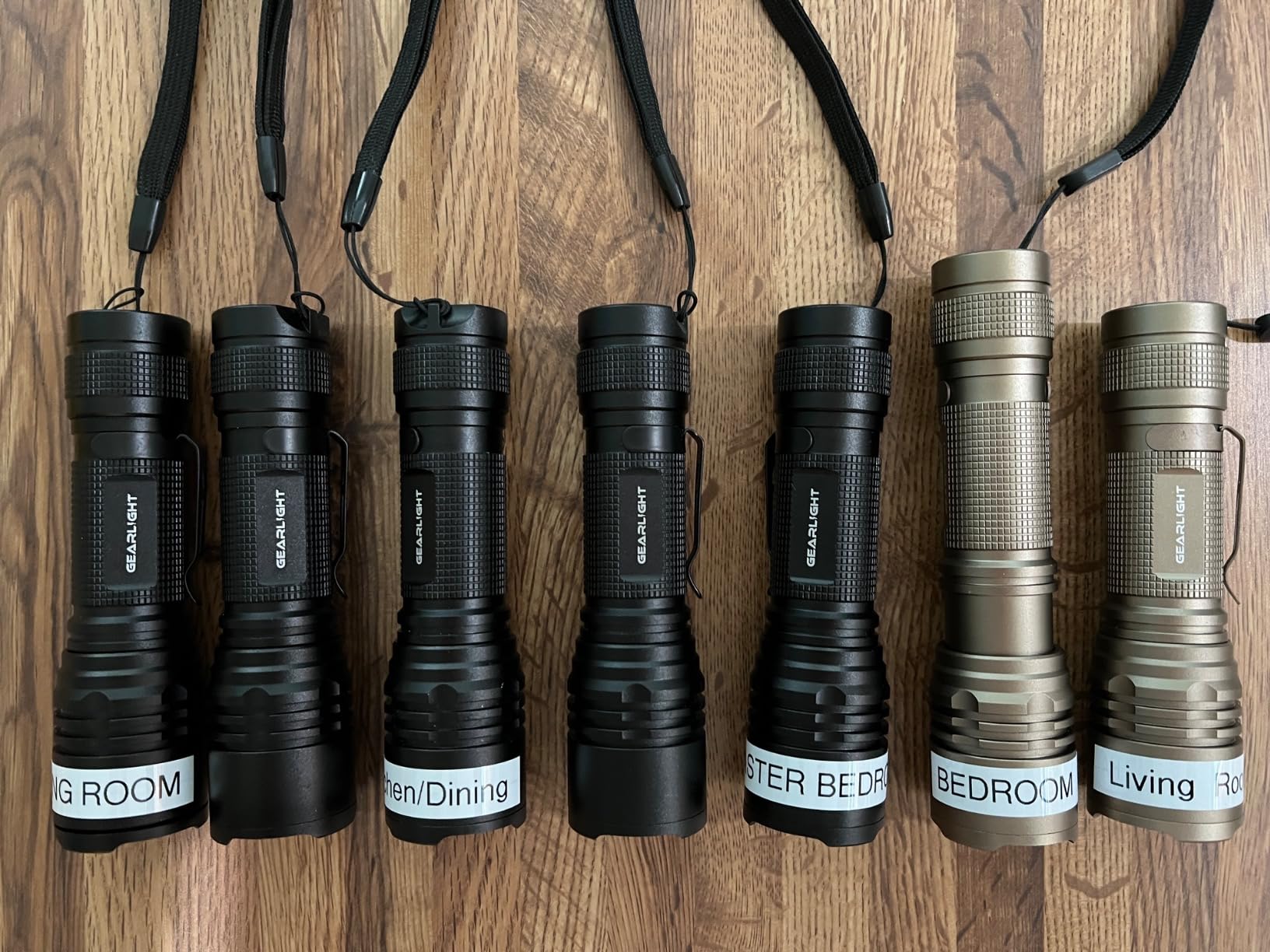
The GearLight two-pack is the value answer, and the value is the second light. One unit lives in the car, one lives on your keys, and both take the same AAA battery holders, so you are never hunting for a charger in a parking lot at night.
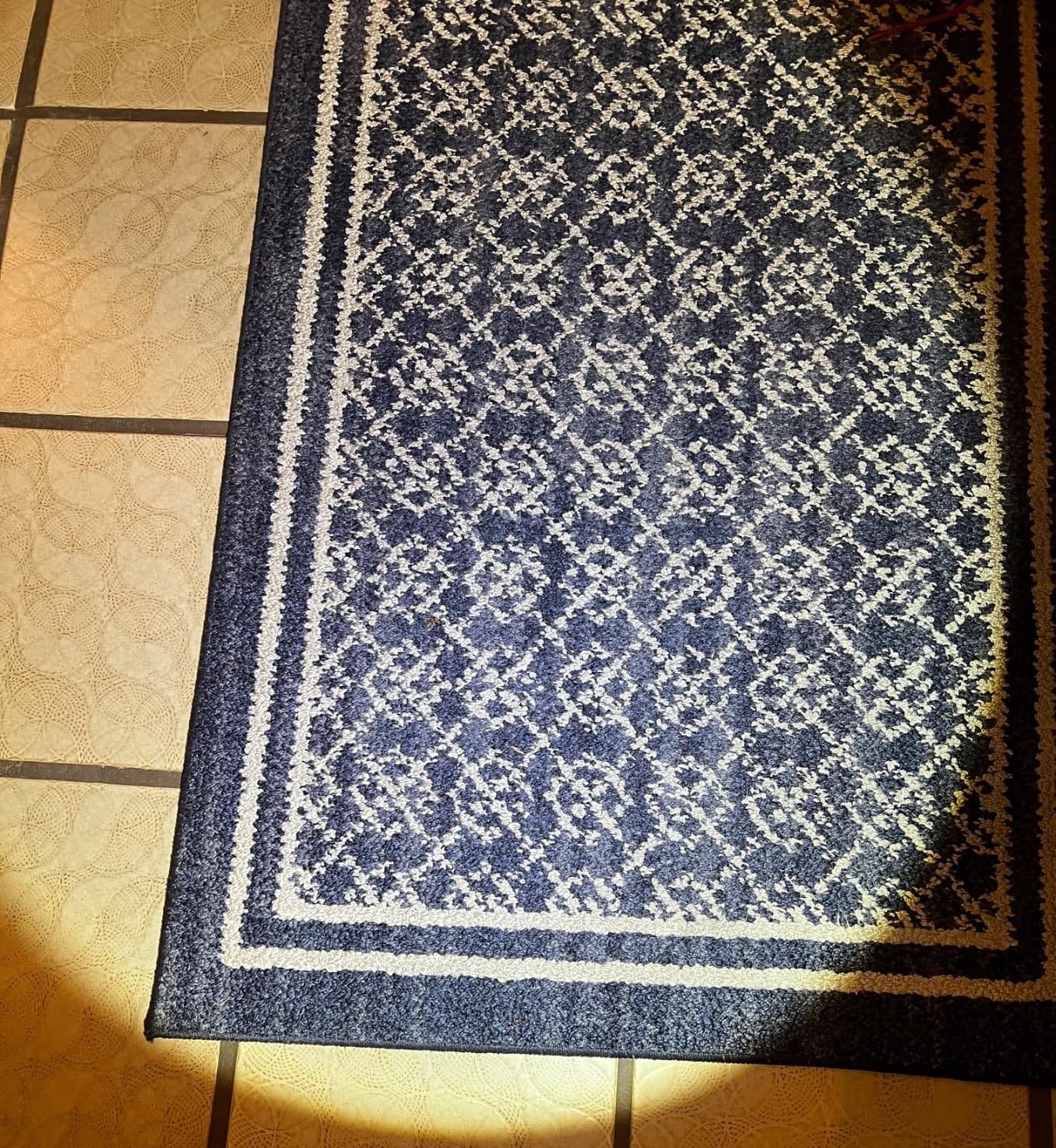
Output is the headline. Up to 1040 lumens with an adjustable zoom that widens or narrows the beam, which means one light can light a yard or read a fuse box without a second tool. The aluminum housing shrugged off drops from ten feet in the listing and behaved the same way when ours met a garage floor.
What surprised me was the box contents. Each light arrives with a battery holder, a battery tube, a lanyard and a belt clip, so the accessories people usually chase separately are just sitting in the carton.
It is also worth being straight about what this is. At 5.31 inches and 11.68 ounces for the pair, this is not a front-pocket light. It is a glovebox, truck cab, or go-bag light, and it fills those roles far better than anything smaller.
Who the GearLight two-pack suits
It suits households, tradespeople and anyone who wants a backup light without a second purchase. One in the glovebox, one in a drawer, one in a go-bag, and the belt clips keep them visible instead of lost under a seat mat.
It also suits first-time buyers who want to see how much they actually use a flashlight before committing to a premium light.
Where the GearLight two-pack falls short
One lighting mode means no low setting. Using it indoors at close range at full output is genuinely unpleasant for anyone standing next to you.
You supply your own AAA cells, and a light with six of them is not cheap to run. There is no rechargeable option and no USB port, which pushes the running cost higher than most competitors here.
3. Olight I3T EOS Review: The AAA Keychain Classic
OLIGHT I3T EOS Small EDC Flashlight Handheld LED Light (Desert Tan)
180 lumens
60 m throw
TIR optic
Two outputs: 5 and 180 lumens
IPX8 aluminum
Pros
- Light enough for all-day pocket or keychain carry
- Standard AAA battery replaceable anywhere
- Dual-direction clip works on a hat brim or pocket
- IPX8 waterproof machined aluminum body
Cons
- The 5 lumen low setting is very dim for close work
- Turns on in low first
- which some buyers prefer reversed
- Gets noticeably warm after a couple of minutes on high
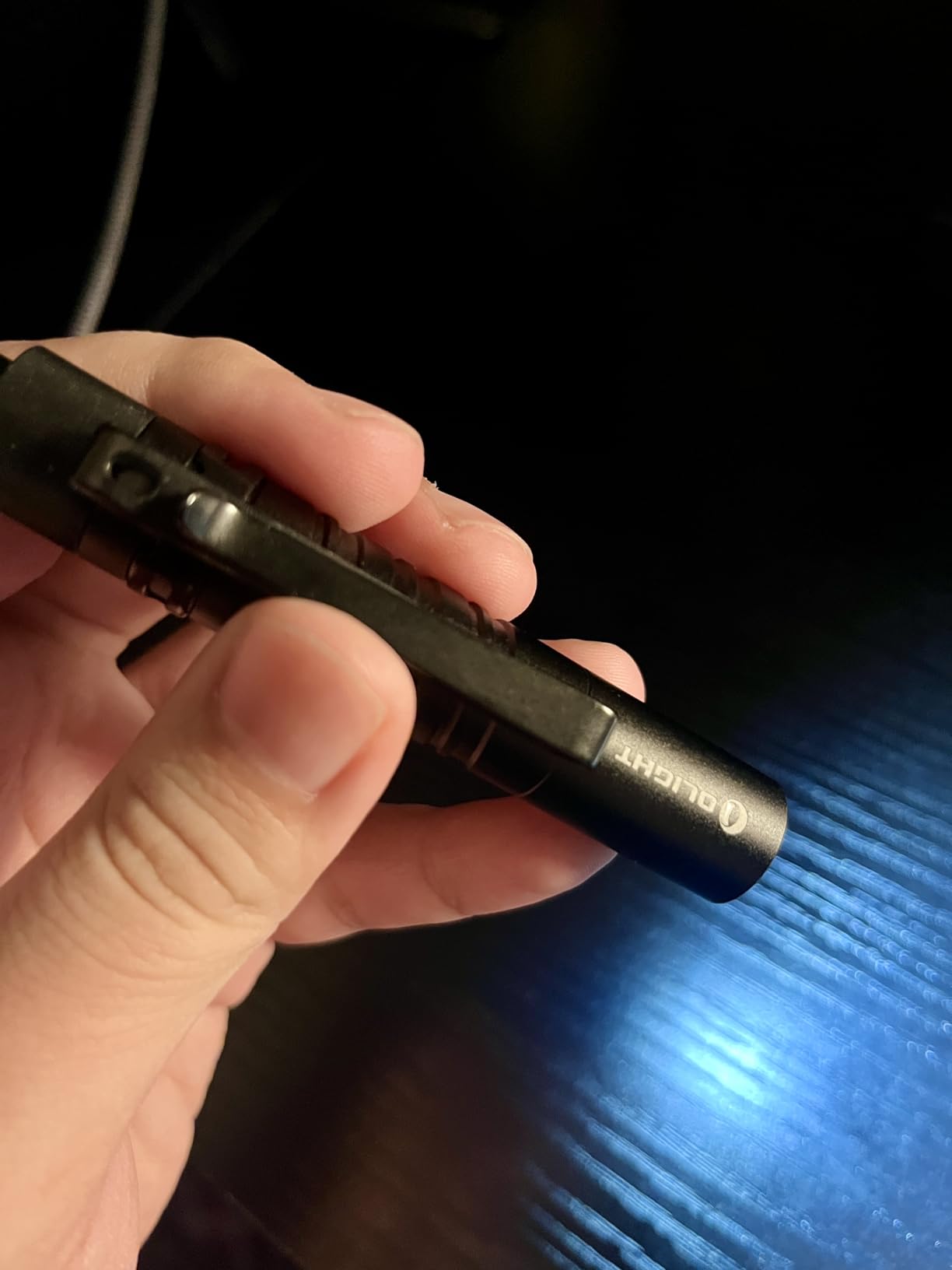
The I3T EOS is the light I keep recommending to people who ask what a flashlight should be. One AAA, a machined aluminum body, a TIR optic for a soft even beam, and a tail switch that works with gloves on. It weighs 1.4 ounces, so it genuinely lives on a keyring.
Two outputs, 5 and 180 lumens, and 60 meters of throw. That is a deliberate design: the low mode exists for reading a menu or finding a keyhole without lighting up the entire street, and the high mode covers a path, a gate, or a dropped phone.
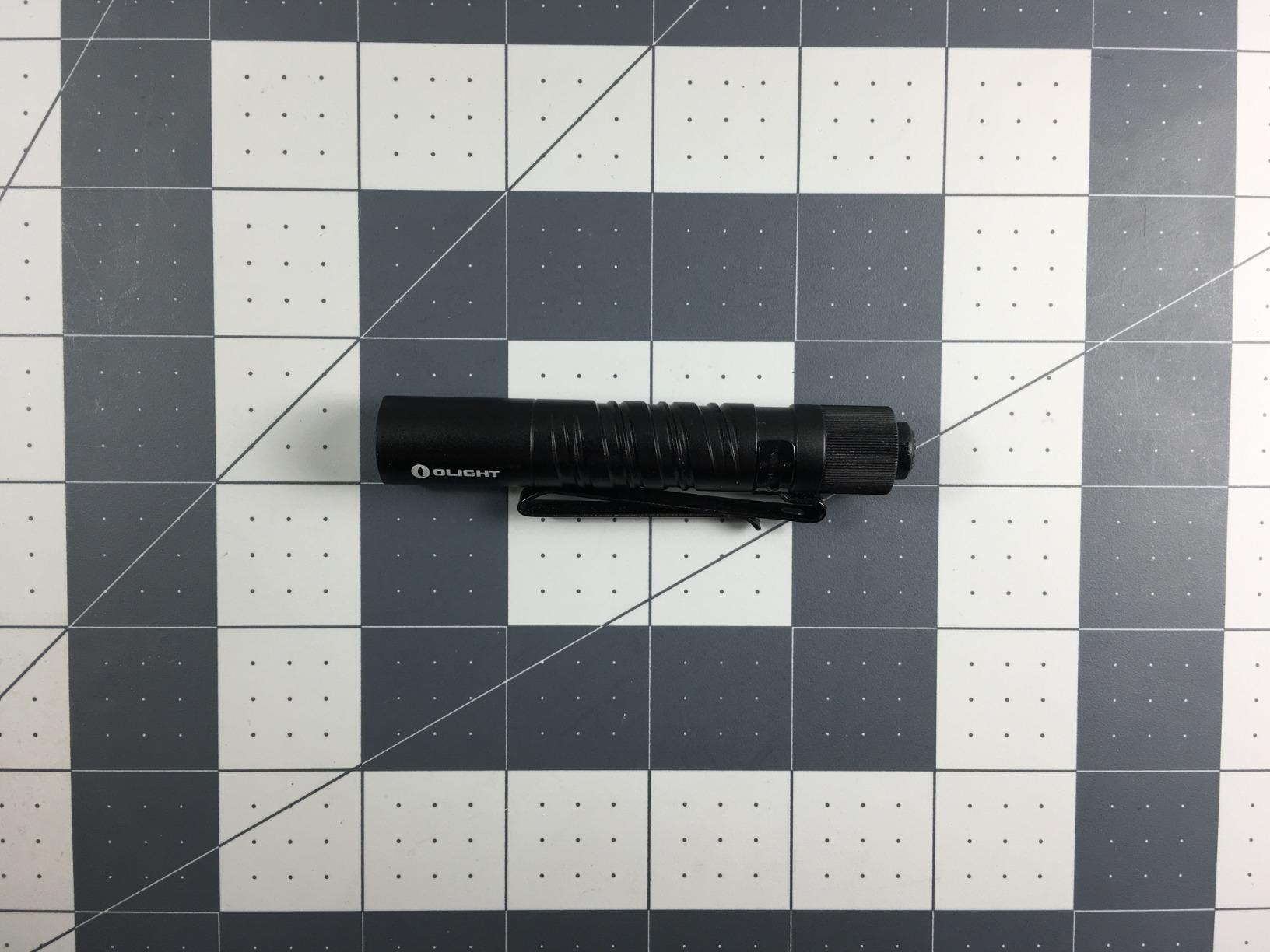
The TIR optic is the quiet advantage. Instead of a craggy reflector hotspot you get a smooth, balanced beam with a defined center, which is easier on the eyes at 2am and much nicer for checking a work area up close.
Because it takes a standard AAA, availability is a genuine feature. When the cell died in week three I bought a replacement in nine seconds from a kitchen drawer, and the light was useful again immediately. No charging cable, no proprietary dock.
Who the I3T EOS suits
It suits anyone who wants one light that never needs charging. People who travel, people who lose things, and anyone who wants a backup for a power cut without maintaining a battery fleet will find this is the least fuss in the list.
The dual-direction clip means the same light rides a hat brim for hands-free trail work and a pocket for daily use, which doubles the value of the small size.
Where the I3T EOS falls short
Five lumens is genuinely dim. Reading a printed page or inspecting wiring needs the high mode, and switching up from the default low start takes two presses.
It also warms up under sustained high output. Our unit was noticeably hot after a few minutes of continuous use, which is the trade for running a single alkaline cell at 180 lumens.
4. Olight IMINI 2 Review: The Keychain Light That Disappears
OLIGHT IMINI 2 Rechargeable EDC Keychain Mini Flashlight OD Green
50 lumens
21 m throw
80 degree beam
Magnetic cap switch
55 mm, 19.5 g
Pros
- Disappears on a keychain yet is brighter than a phone screen
- Strong magnet holds on car hoods and metal cabinets
- Integrated USB plug means no charging cable at all
- One-handed tug-on and snap-off operation
Cons
- 50 lumens maximum is dim against other EDC lights
- One fixed output with no brightness selection
- 21 m throw limits it to close-range tasks
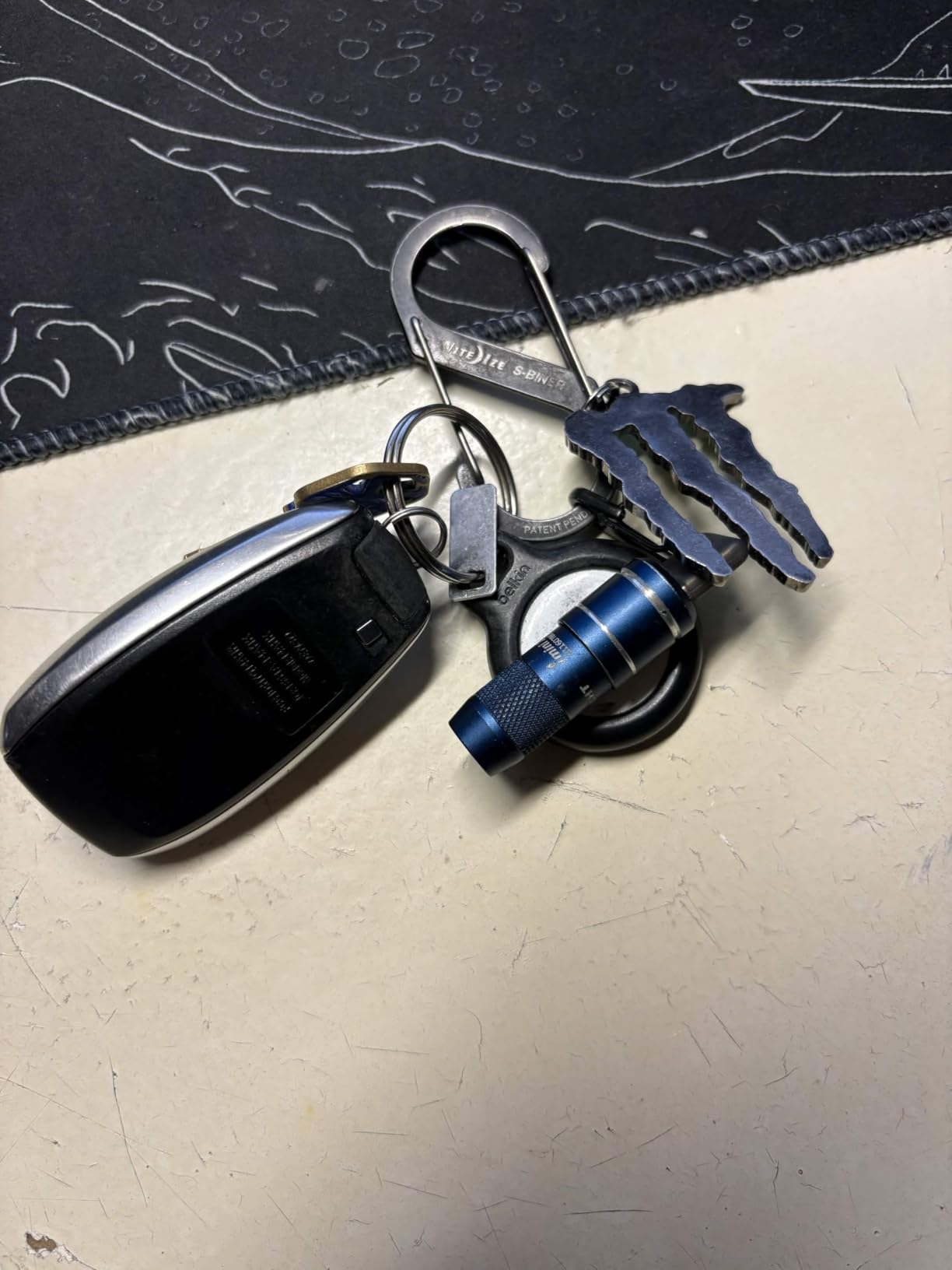
The IMINI 2 is the smallest light here and the one that changed my habits most. At 55 millimeters and 19.5 grams it lives on a keyring, not in a pocket, which means there is no discipline required to carry it at all.
50 lumens and 21 meters of throw is the entire spec. That is not a typo and it is not a weakness for the job it does: finding a door lock, a key, a floor outlet, or the right piece of luggage in a dark hallway. It is simply brighter than any phone screen you will dig out of a coat.
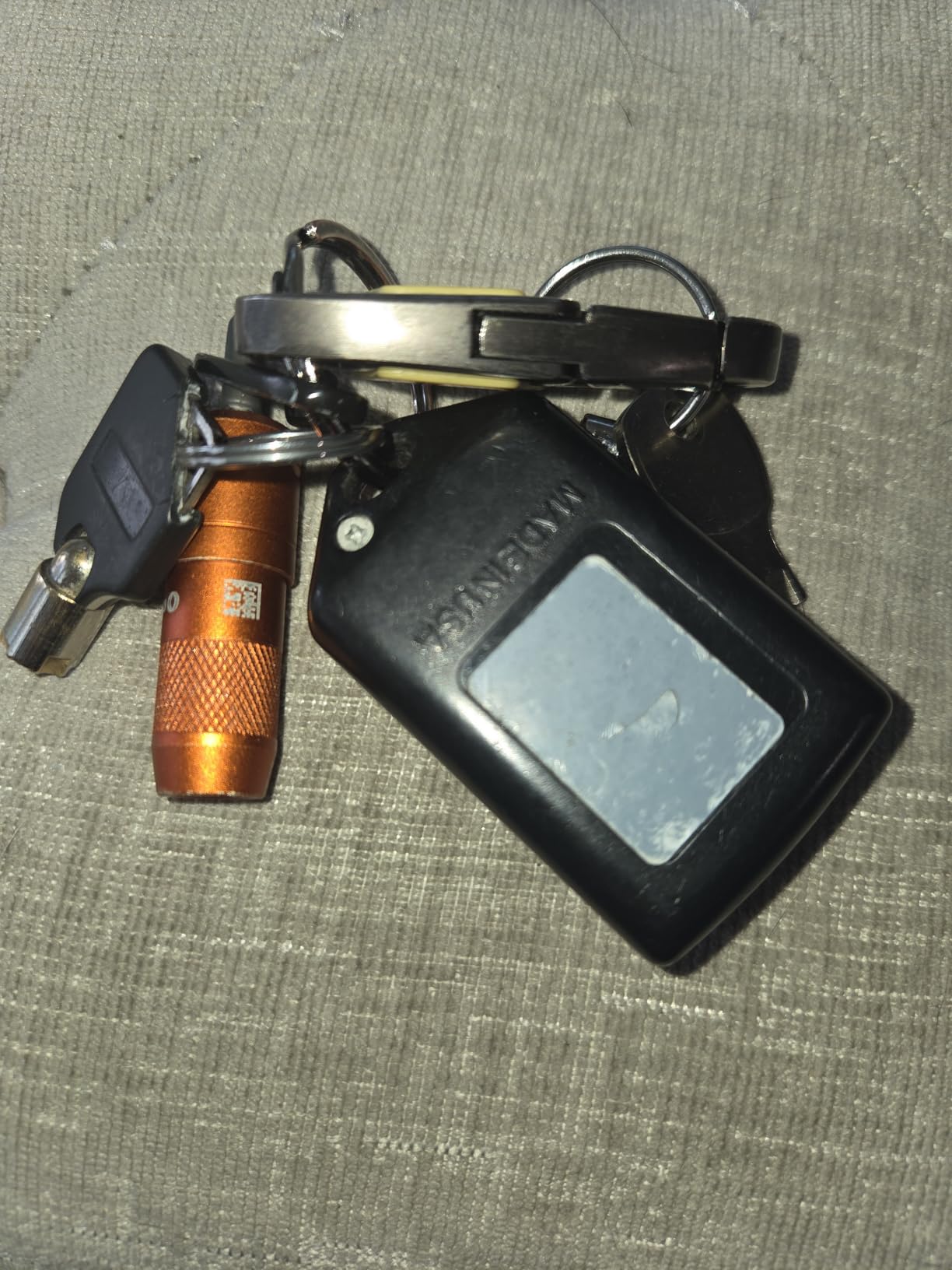
The magnetic cap is the clever part. You pull it off to switch the light on, and the exposed flat surface is a strong magnet that sticks to a car hood, a locker, or a steel toolbox. That turns a 50-lumen light into a work light for anything within arm’s reach.
The integrated USB plug is the other quiet win. No cable, no dock, no wall outlet hunt, and a full charge in 60 minutes. For a light this small, that is the correct engineering decision.
Who the IMINI 2 suits
It suits anyone who does not want to carry anything. Keys, a bag strap, a zipper pull, and you have a working light for under a couple of ounces of carry weight.
It is also the best gift for someone who has never bought a flashlight, because the interface is a tug and a snap. There is no manual worth reading.
Where the IMINI 2 falls short
Do not buy it as your only light. 21 meters of throw and a single output mean a yard, a street, or a driveway is out of reach, and there is no way to dim it for close work.
It is built around a sealed rechargeable cell, so once the battery ages out you are not swapping in a fresh one, you are replacing the light.
5. WUBEN G5 Review: Rotating Head, RGB Side Light and Stepless Dimming
WUBEN G5 EDC Rechargeable Flashlight, Mini Bright Small Pocket Flash Light
400 lumens
82 m throw
Stepless dimming
RGB side light
52.3 g
Pros
- Very bright for a Zippo-sized aluminum body
- Stepless dimming wheel gives fine control over output
- Rotating head and rotating clip allow many mounting positions
- RGB side light adds signalling and beacon modes
- Lockout switch prevents pocket activation
Cons
- Magnetic base too weak to hold it fully horizontal
- Pocket clip feels flimsy on a thick hat brim
- Mode controls have a noticeable learning curve
- Runs hot and briefly at full output
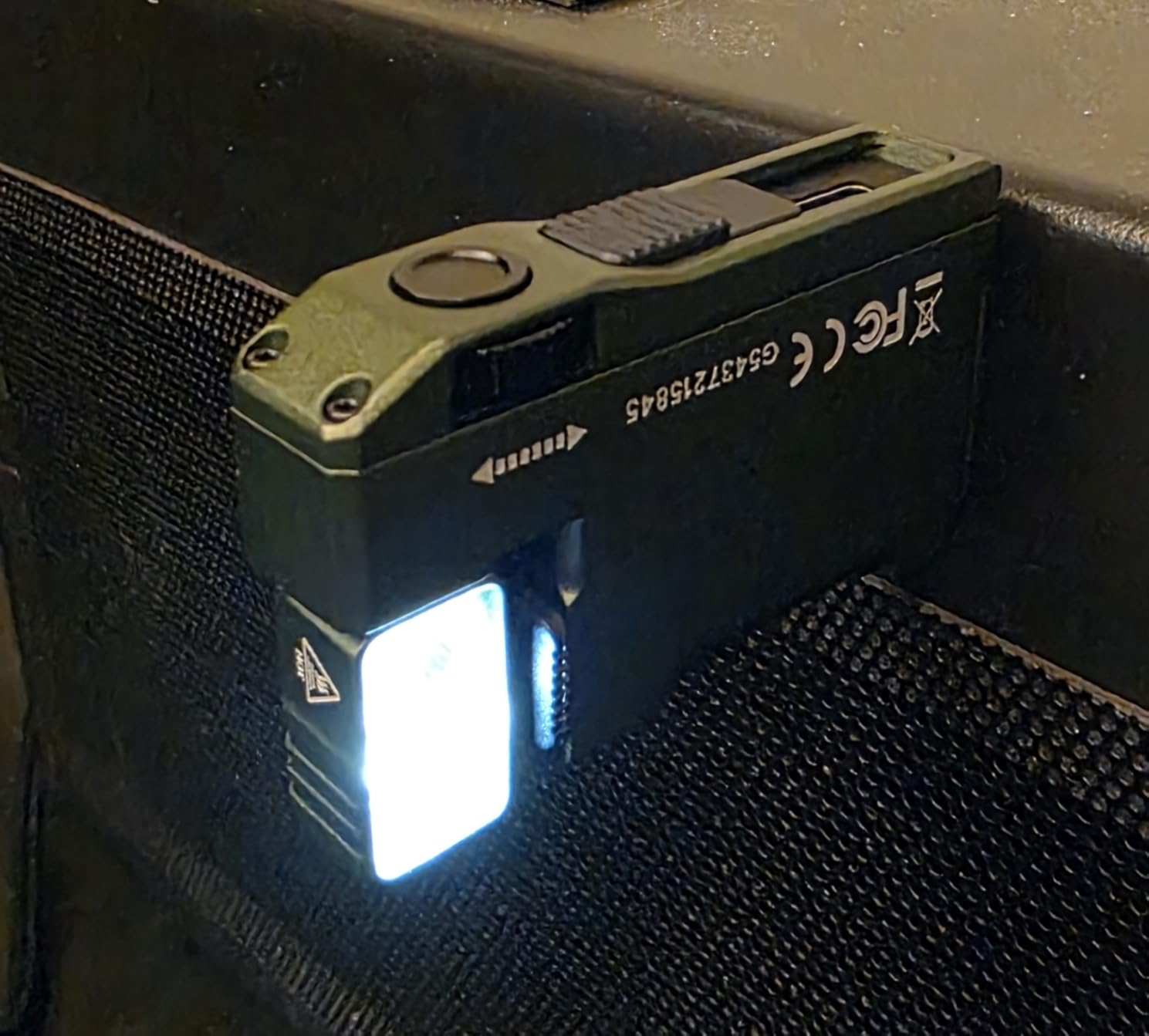
The G5 is the most imaginative shape in this roundup. A 180-degree rotating head and a rotating clip mean the same light works as a right-angle work light, a tailstand lamp, or a standard pocket beam, and it weighs 52.3 grams doing all three.
400 lumens with 82 meters of throw is a serious amount of light for something that measures 1.47 by 2.44 inches. The stepless dimming wheel is the feature I use most, scrolling from a 1-lumen crawl to full output without stepping through a menu.
The 7-color RGB side light is a genuine carry feature rather than a gimmick. Green, amber, red, and blue at low power are visible from much farther than white light at the same output, which makes it useful for signalling, marking a trail head, or finding your car in a crowded lot.
Type-C charging takes 1.5 hours and the listing claims up to 65 hours on low. Our lowest setting is the one that gets used in practice, because the high mode is bright enough to spoil dark adaptation.
Who the G5 suits
It suits people who want one light to cover a right-angle work scenario and a normal pocket beam, and anyone who signals, camps, or works around vehicles where a colored side light is faster than flashing a white beam.
The rotating lockout switch also makes it safe for anyone who has ever arrived home to a light that had burned a hole in a trouser pocket over a weekend.
Where the G5 falls short
The magnetic base is not strong enough to hold it horizontally, so the hands-free mount only works on a vertical steel surface. That is a disappointment given how much the rotating head encourages you to try it.
The clip feels flimsy by comparison with the body, and the mode interface takes real practice. Budget an evening with it before you rely on it in an emergency.
6. WUBEN C3 Review: 1200 Lumens and 143 Hours of Eco Runtime
WUBEN C3 Flashlight 1200 High Lumens 6 Modes Rechargeable Flashlights
1200 lumens
About 588 ft throw
Six modes
143 h on Eco
Type-C rechargeable
Pros
- 1200-lumen output with long throw for a compact body
- Six modes including strobe and SOS with mode memory
- Very long Eco runtime for a rechargeable light
- Hard-anodized aluminum with an IP68 rating
- Battery indicator shows charge and charging status
Cons
- Heavier and longer than true pocket-sized EDC lights
- Mode switching takes practice across six settings
- Tail switch is not a fully sealed design
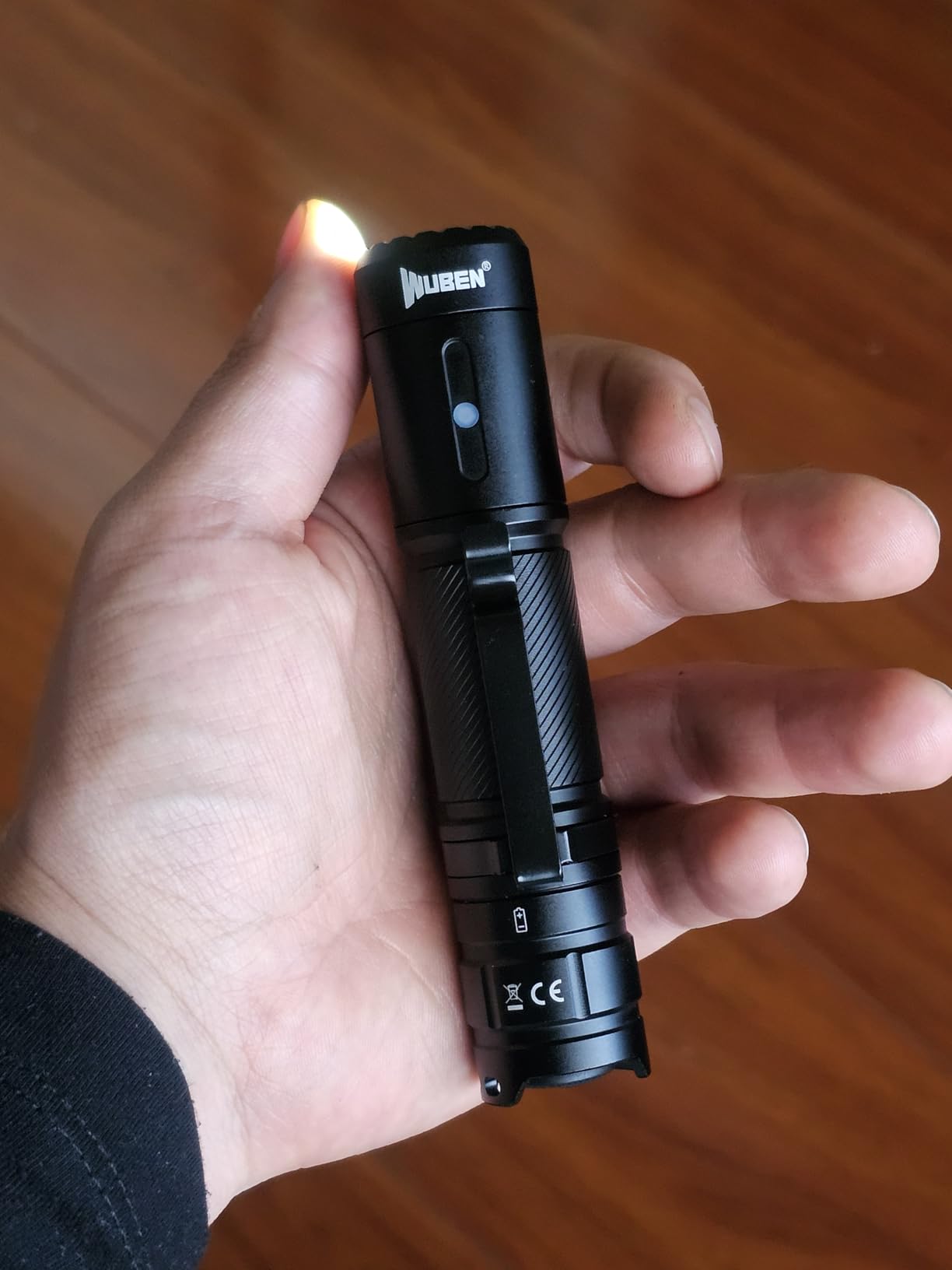
The C3 is the throw specialist in this group. 1200 lumens at roughly 588 feet of beam distance from a 4.78-inch body is a lot of reach, and it is the light I reached for when checking a fence line, a field edge, or the far end of a driveway in fog.
What surprised me more was the low end. Up to 143 hours on Eco means a power outage is a non-event: you top it up between uses and it is still there next week. Six modes with memory cover High, Medium, Low, Eco, Strobe and SOS.
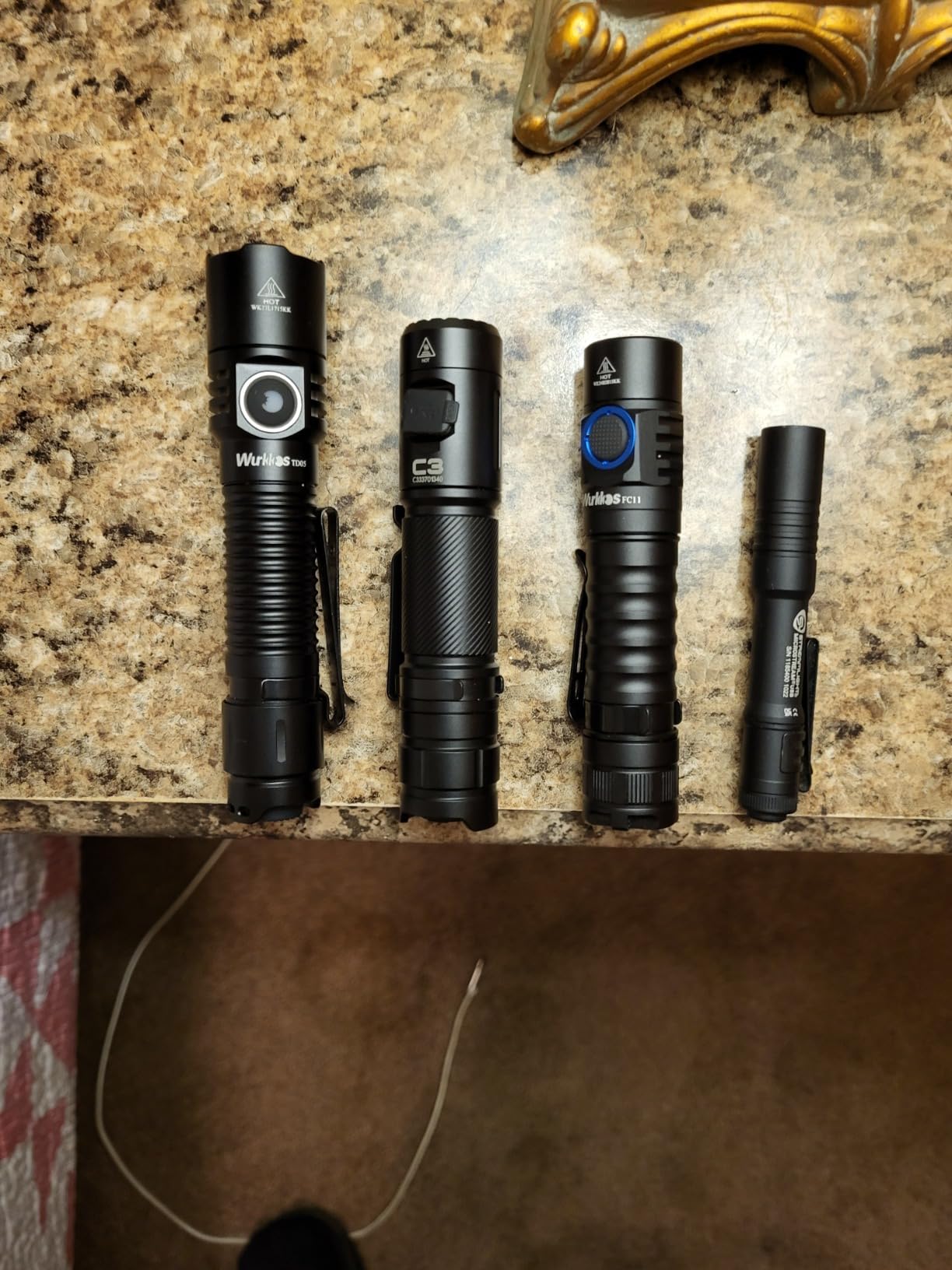
The charging indicator is unusually honest. Red flashing below 15 percent, red solid while charging, blue when full, so you can tell at a glance whether you are carrying a charged light or an empty one. Reverse-polarity protection is also specified.
Hard-anodized 6063 aluminum, IP68 water resistance and 1.5 meter impact resistance make it the most physically specified product here, and it took rain and a drop onto gravel without a complaint.
Who the C3 suits
It suits anyone who needs distance more than discretion: homeowners checking a property line, drivers with a go-bag, campers, and people who want a light that stays charged for months in a drawer.
It is also the sensible choice if your phone is your other light and you want a genuine second source rather than a novelty.
Where the C3 falls short
At 4.78 inches and 4.34 ounces this is at the edge of EDC and over the line for a front pocket. Plan to carry it in a jacket or a bag.
Six modes with memory is more interface than a small light needs, and the tail switch is not a fully sealed reverse clicky, so it is not the choice if you work in standing water.
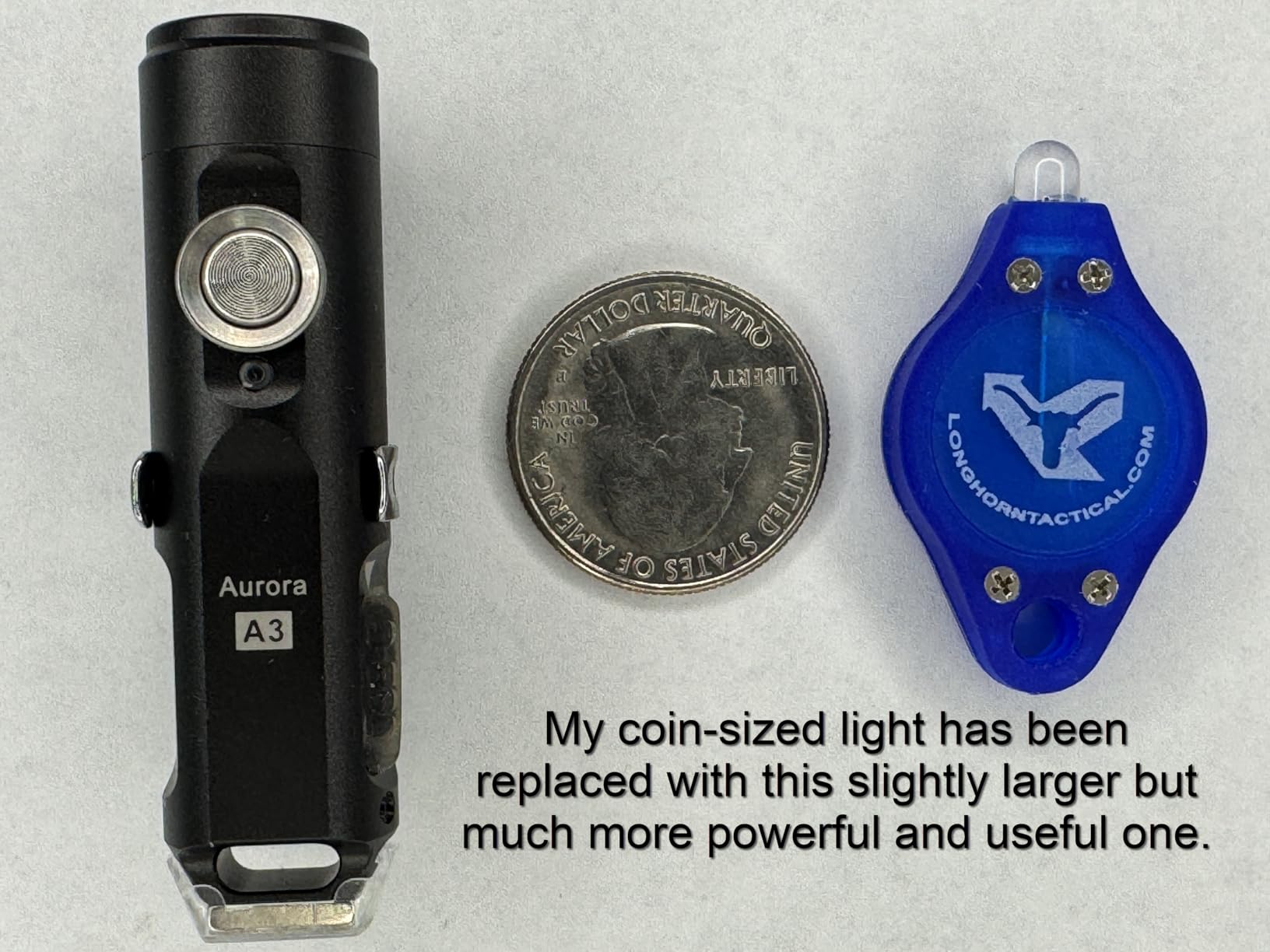
7. RovyVon A3 Gen 4 Review: 650 Lumens in a Keychain Shell
RovyVon A3 Gen 4 Mini Keychain Flashlight Super Bright 650 Lumens
650 lumens
80 m throw
Four levels plus strobe
Magnetic base
USB-C, 0.85 oz
Pros
- High 650-lumen output in a small keychain-sized body
- Four brightness levels plus a signal strobe
- Magnetic base and clip for hands-free work
- USB-C rechargeable so any cable works
- Lockout design prevents accidental activation
Cons
- The five-click unlock is confusing at first
- USB-C charging cable is not included
- IPX6 resists splashes but cannot be submerged
The A3 Gen 4 solves the objection I have about keychain lights. 650 lumens and 80 meters of throw from something 2.4 inches long and 0.85 ounces, which is more usable output than plenty of lights twice its length.
Four brightness levels plus a signal strobe cover the range from a 1-lumen close task to lighting a path. The magnetic base on the tail means it sticks to a car hood or a metal toolbox for hands-free work, which the IMINI does better but the A3 does far more than.
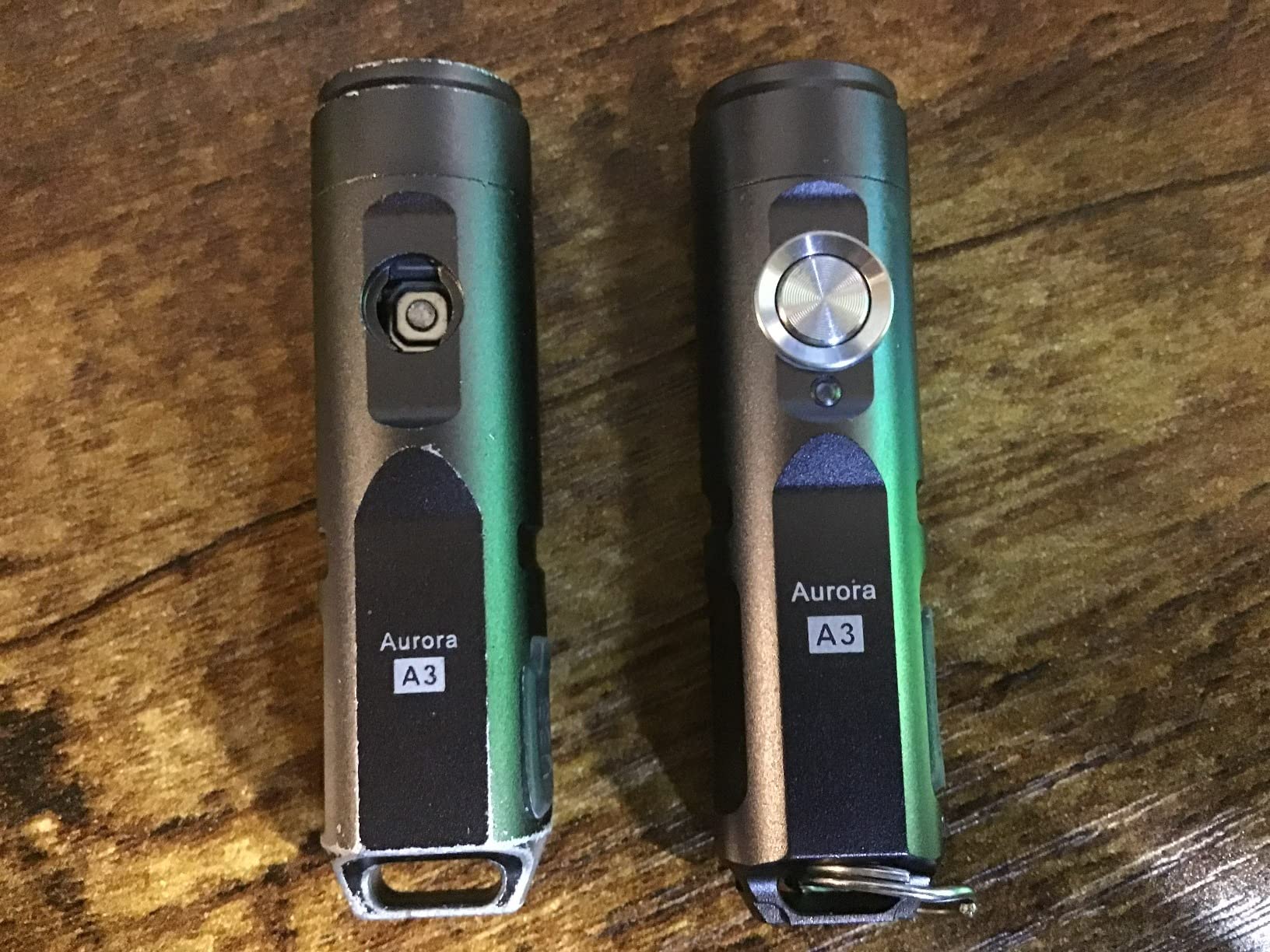
The clip handles both keyring and pocket carry, so the same light covers a keychain backup role and a daily pocket role. That versatility is the reason it works as a one-light household.
Lockout is a five-click activation. Honestly, the first week I got it wrong twice, and that is the single most-reported frustration owners have with it. Once learned, it is genuinely the most secure pocket light in this roundup.
Who the A3 Gen 4 suits
It suits people who assumed mini lights meant weak lights. If you want real output without a pocket bulge, this is the compact answer, and the four levels give you real control rather than one or two fixed outputs.
It is a strong first rechargeable light for a beginner who wants a modern USB-C light with a strobe and a lockout in a small body.
Where the A3 Gen 4 falls short
IPX6 means splashing water, rain and snow, not submersion. Fine for a bad day outside, not fine for a riverbank or a dropped-in-the-sink mistake.
The charging cable is not included, and the five-click lockout is friction in the exact moment you need light fastest. If you want a one-press light, look at the Archer Mini below.
8. Blukar Two-Pack Review: Budget Backup Built for the Wash
Blukar 2 Pack EDC Rechargeable Keychain Flashlight, 360L Mini Flash Light
360 lumens
High, medium, low
Built-in 130 mAh cell
USB-C, 2-hour charge
27 g each
Pros
- Bright for a keychain-sized light at a low price
- Two units in the pack
- each about the weight of an AA battery
- USB-C rechargeable with a clear red and green indicator
- Mode memory returns to your last brightness
Cons
- No pocket clip or magnet
- so no hands-free mounting
- Full output lasts only about 25 minutes before dimming
- Keyring cap on the aluminum can twist open
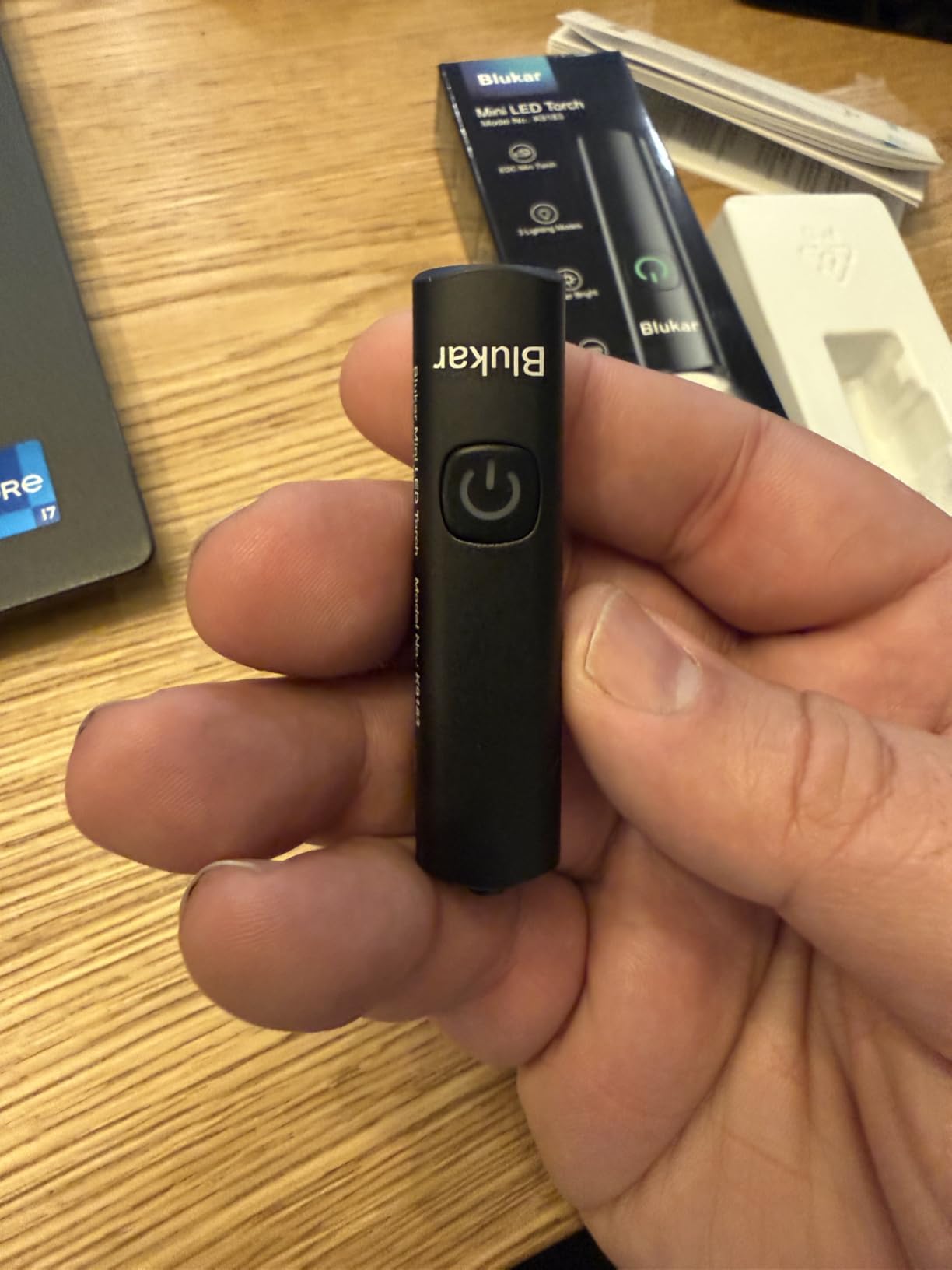
The Blukar two-pack is the answer to a specific problem: two people, two keyrings, one purchase. Each unit is roughly the size and weight of an AA cell, and at 360 lumens both are brighter than they have any right to be.
Charging is USB-C with a two-hour cycle that yields about 5.5 hours on low. The power button doubles as the indicator, red for charging or low and green for full, so there is no separate fuel gauge to read in the dark.
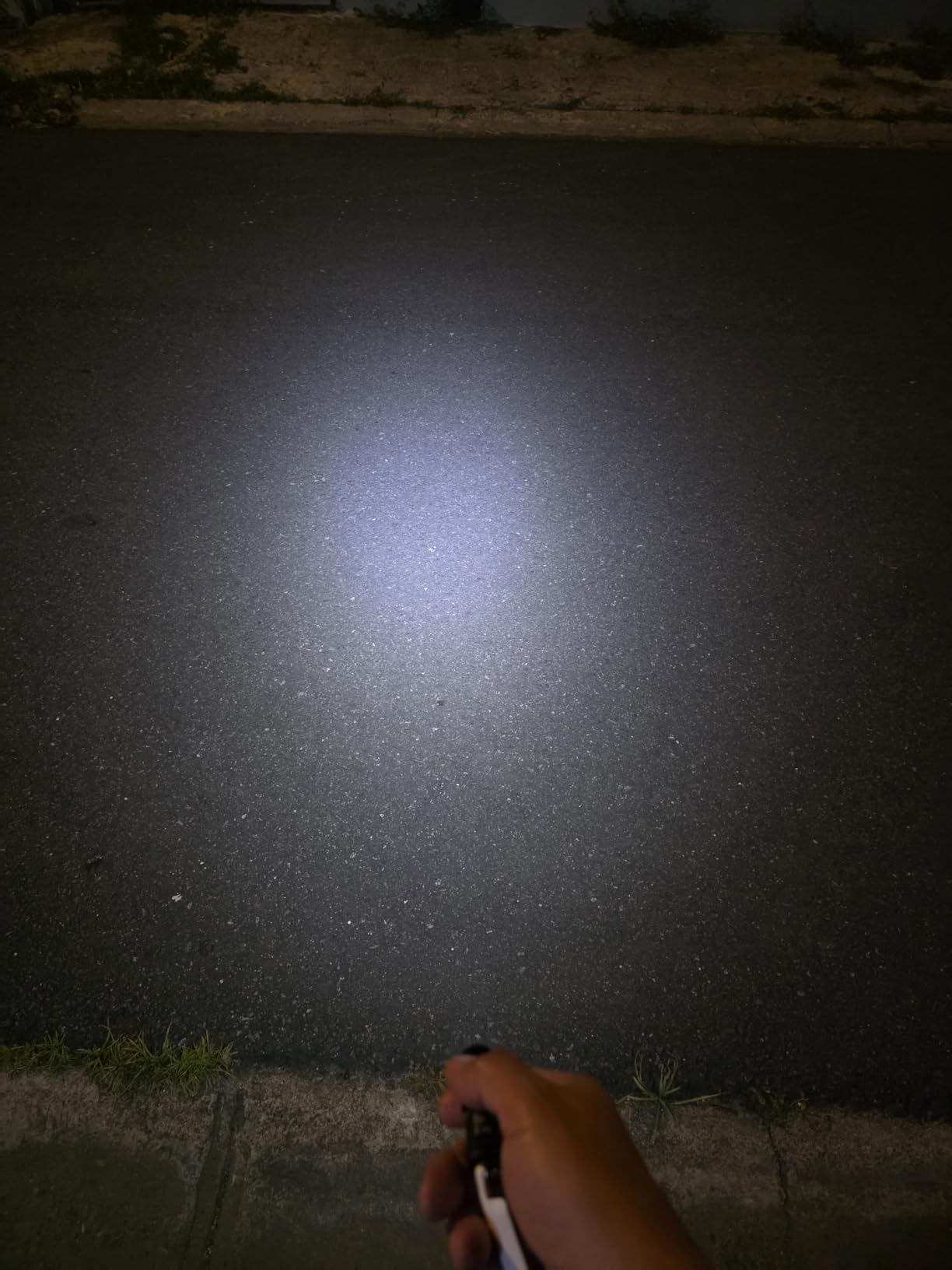
Durability is the quiet headline. Reviewers report units surviving a full washing machine cycle, and ours survived a laundry run and a drop onto a tiled floor without damage, which is exactly the level of abuse a keychain light takes.
Mode memory is the feature I use most. The light reopens at the last brightness you chose, so a family member does not have to learn a menu to get the beam they want.
Who the Blukar two-pack suits
It suits households, couples, and anyone who wants a spare that lives somewhere other than a pocket. One on keys, one in a drawer, one in a car, all rechargeable from the same cable.
It also suits buyers who want a low-risk second light to prove to themselves that they will use a flashlight at all.
Where the Blukar two-pack falls short
There is no clip and no magnet, so you cannot mount it hands-free. It is a hold-it-in-your-hand light, and if your work needs both hands free, choose something else.
Full output lasts about 25 minutes before it dims noticeably, and the keyring cap on the aluminum body can twist open. If you lose it once, check the cap before you assume it fell in a drain.
9. WUBEN X4 Review: 1500 Lumens With an RGB Side Strip
WUBEN X4 Flashlight Rechargeable,EDC Light with Multi-Mode RGB Light
1500 lumens
205 m throw
Side light 1-100 lumens with RGB
Scroll wheel dimming
137 g
Pros
- 1500 lumens and real throw from a pocketable rectangular body
- RGB side light and white side strip add genuine utility
- Lockout switch keeps it safe in a pocket
- Solid all-metal rectangular build that will not roll away
- Magnetic tail plus momentary tactical tail switch
Cons
- Requires flipping the mode switch before pressing
- so it is not instant-on
- Head heats up substantially on maximum output
- Pocket clip is stiff and the tail switch feels slightly floppy
- Exposed USB-C port in the slider recess collects dirt
The X4 is the brightest light in this roundup, at 1500 lumens and 205 meters of throw from a rectangular aluminum body that will not roll off a workbench. It is the one to carry when the situation is genuinely unknown rather than merely dark.
The four-position toggle is the key to understanding it: lock, side light, main light, moonlight. The stepless scroll wheel dims continuously in main light mode and changes RGB color in side light mode, so one control does two jobs and both are smooth rather than stepped.
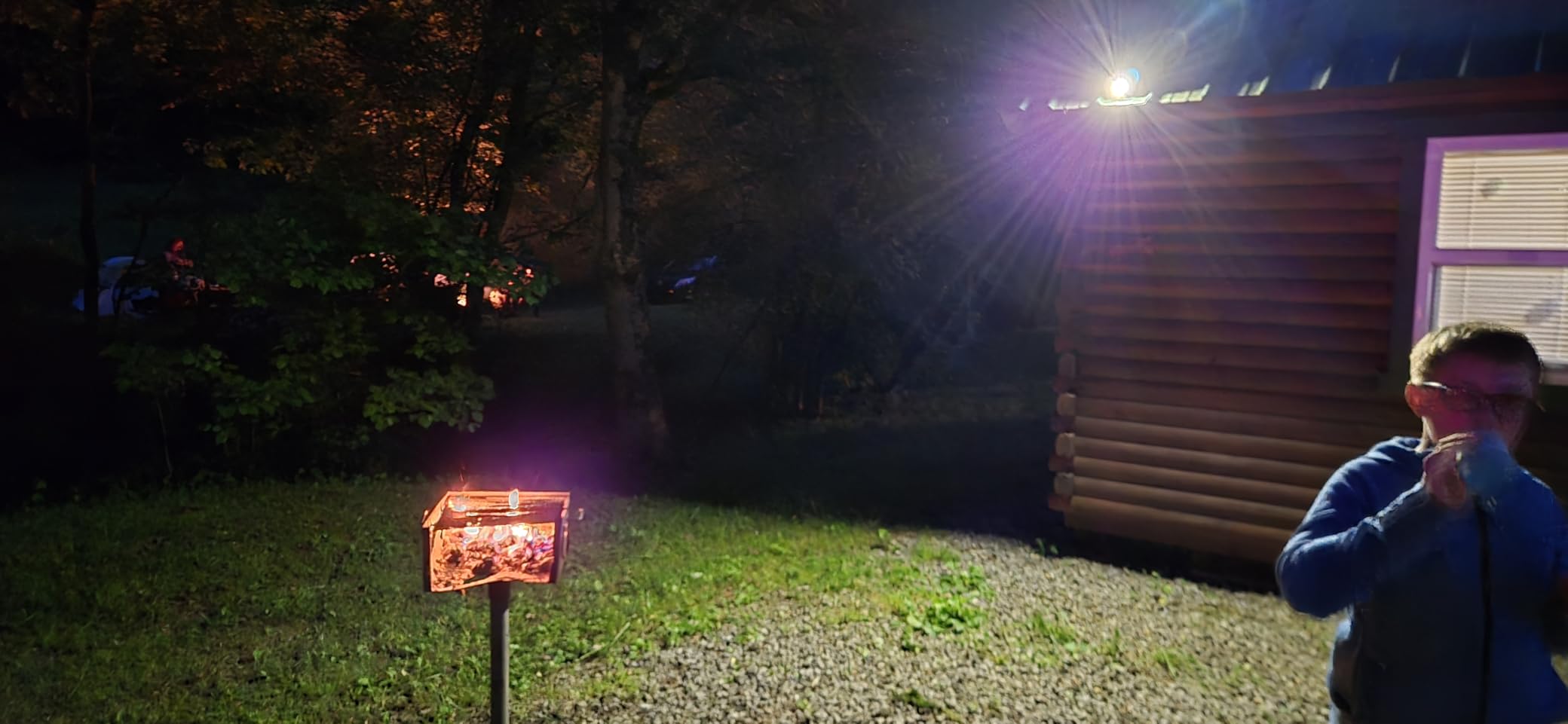
Type-C fast charging takes 1.5 hours, and the moonlight mode works while the light is plugged in. That is a small detail that matters in a car or a workshop with a single outlet.
At 4.8 ounces and 3.8 inches tall, it is the heaviest and bulkiest light here. It earns that weight, but it is a bag light rather than a trouser-pocket light.
Who the X4 suits
It suits people who carry a light for work rather than for walking the dog: security, trades, search, and anyone who wants signalling colors and a strobe in the same body as a high-output main beam.
The lockout position means it is safe to leave in a bag permanently, and the magnetic tail plus momentary tail switch give you fast access without looking.
Where the X4 falls short
It is not instant-on. You flip the toggle into the correct position and then press, which is two actions when one is what you need. The ratings also spread wider than any other light here, at 4.3 from more than 3,600 reviews.
The head gets hot at maximum output, the clip is stiff, and the exposed charging port in the slider recess collects grit. All three are manageable, none are invisible.
10. WARSUN T7PRO Review: The Flat Candy-Bar Pocket Light
WARSUN T7PRO Pocket Flashlight, Small EDC Rechargeable Flashlight Magnetic
400 lumens
Flat 4.17 inch profile
Magnetic tail
Side COB strip
USB-C, about 12 h total
Pros
- Exceptionally thin flat profile that slips into a pocket without a bulge
- Useful throw of roughly 75 to 100 feet
- Strong magnetic tail plus a reversible pocket and hat clip
- USB-C charging with weeks of use between charges
- Survived repeated wash and dryer cycles and drops
Cons
- Forward-facing LED is dimmer than the side COB light
- Reaching the mode you want takes repeated button presses
- IPX4 covers only light rain and splash protection
- Body can feel plasticky in the hand
The T7PRO is the form factor most roundups ignore, which is why it works. A flat candy-bar body at 4.17 inches sits against you in a shirt or jacket pocket with no cylindrical bulge, and it is the only light in this roundup I wore in a breast pocket all day without noticing it.
400 lumens of main LED, multiple brightness levels, an emergency strobe, and a side COB strip that throws a wide, even fill across a work area. The side light is broader and softer than the forward beam, which is the opposite of what most people expect from a flashlight.
The magnetic tail is genuinely strong. It held to a car hood, a steel toolbox, and a metal locker door without needing a stand, which makes it a legitimate hands-free work light for wiring, assembly, or engine bays.
USB-C fast charging gives about 12 hours of total runtime, and the reversible clip works on a pocket, a cap, or a hat brim depending on which way you hang it.
Who the T7PRO suits
It suits anyone who wants real pocket comfort. If round lights catch on your pocket lining or leave a visible lump, this shape solves the problem outright, and the magnet covers the hands-free work role.
It is a good first rechargeable light for tradespeople, because a flat profile survives a tool bag better than a tube with a clip that can snag.
Where the T7PRO falls short
The forward LED is dimmer than the side COB, so this is a close-to-medium work light rather than a path light. Getting to a specific mode takes several button presses, which is tedious in gloves.
IPX4 means light rain and splashes only, and the housing can feel plasticky in the hand even though it survived the washing machine in testing.
11. ThruNite Archer Mini Review: The Penlight You Forget You Own
ThruNite Archer Mini USB-C Pocket EDC Flashlight, 405 Lumens IPX8, Black
405 lumens
87 m throw
3.27 in, 1.2 oz
Hidden USB-C port
IPX8 with lockout
Pros
- Exceptionally compact at 3.27 inches and 1.2 oz
- Hidden USB-C port keeps dust and dirt out
- Simple tail switch with low
- high
- strobe and lockout
- Dual-direction clip for hat brims
- straps and pockets
- Bright balanced beam with useful hotspot and spill
Cons
- Gets hot on high and output drops under sustained use
- Tail button is light-pressure and easy to trigger in a pocket
- Shallow clip ramp angle is awkward on thick visors or seams
- No battery-level indicator and no swappable cells
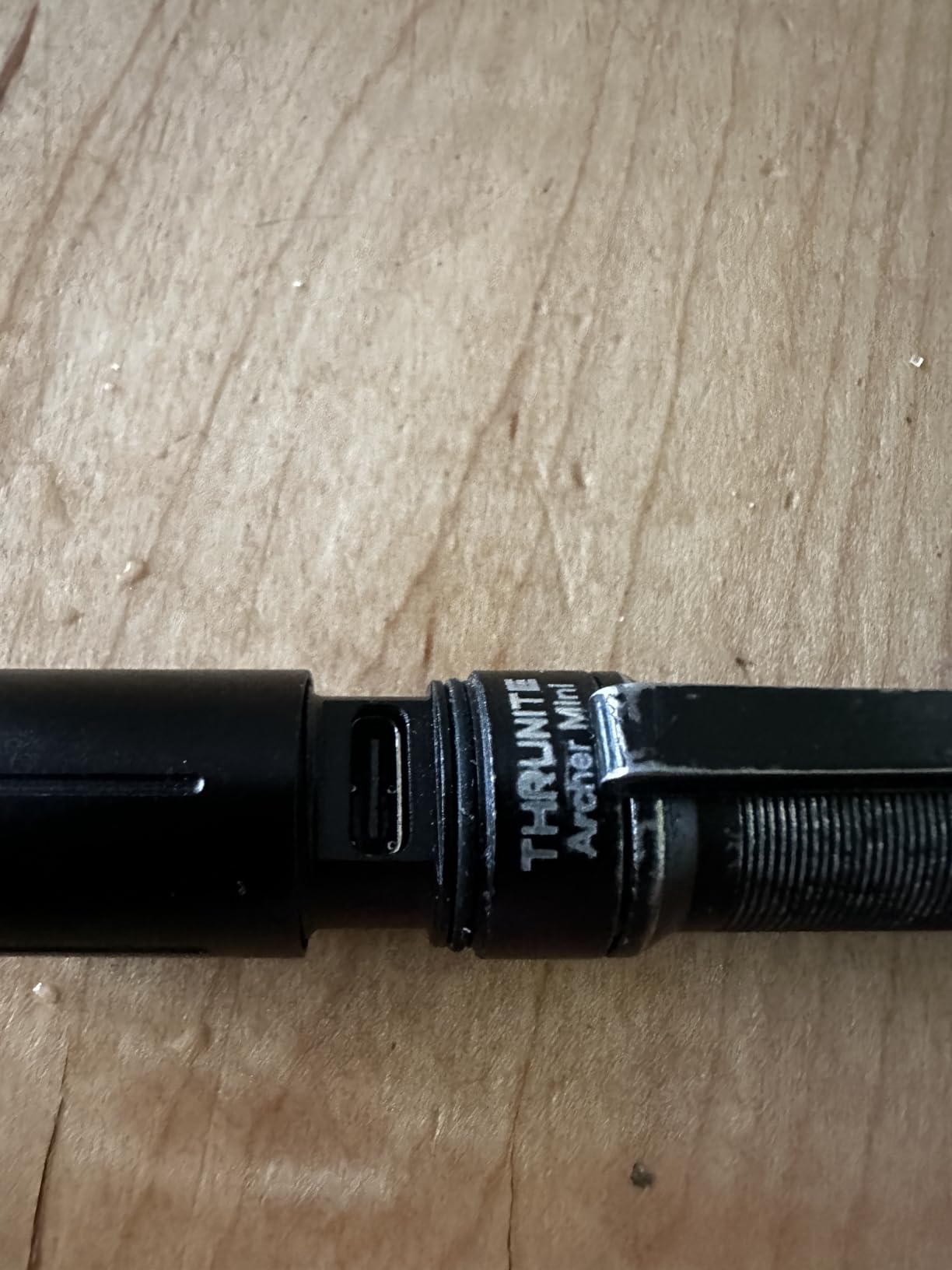
The Archer Mini is the most conventional good flashlight in the roundup, and that is a compliment. At 3.27 inches and 1.2 ounces it is a penlight that disappears, and 405 lumens at 87 meters of throw is a genuinely useful pocket beam rather than a novelty.
One tail switch runs high, low, strobe, and lockout. The TIR lens produces a smooth, glare-free beam with a defined hotspot and controlled spill, which is the beam shape you want when you are following a path with a dog or checking a fence at night.
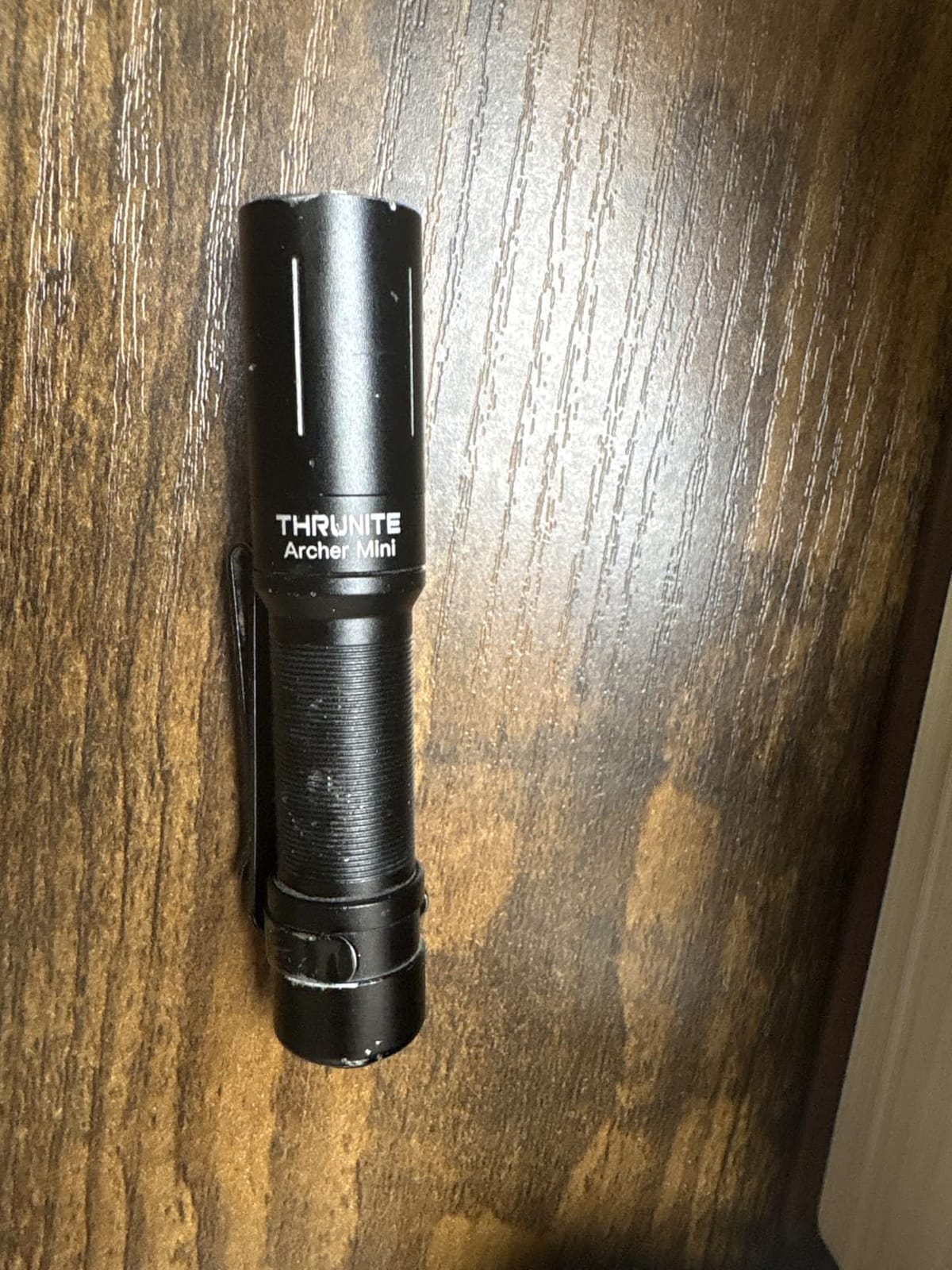
The hidden USB-C port is a design choice worth copying. Sliding it open to charge keeps grit out of the socket, and a charge indicator tells you when to top it up, with about 7.5 hours of runtime from full.
The dual-direction clip is the most universally useful carry feature here. It held a cap brim, a backpack strap, a belt loop, and a pocket seam in our testing, which is the answer to the forum complaint that most clips ride too shallow to keep a light where you put it.
Who the Archer Mini suits
It suits first-time buyers who want a straightforward rechargeable light with no menu to learn, and anyone who needs one simple light for a hat, a bag, and a pocket without changing tools.
It is also a strong value pick, and the 2-year replacement warranty is longer than most competitors at this tier offer.
Where the Archer Mini falls short
It runs hot on high and output drops noticeably under sustained use, so treat 405 lumens as a burst figure rather than a sustained one. A small number of buyers report units that stopped working after a couple of months.
The tail button is light-pressure, which is easy to trigger in a pocket, and the clip ramp angle is shallow enough to be awkward on a thick cap visor. The sealed cell cannot be replaced with disposables.
12. Olight Arkfeld Ultra Review: White Light, UV and a Green Beam
OLIGHT Arkfeld Ultra EDC Flat Flashlight Rechargeable, OAL, Olive-Green CW
1400 lumens white
900 mW UV
Green beam at 5 mW
10 degree beam
Magnetic base, 4.16 oz
Pros
- Three light sources in one body
- including a genuinely strong UV lamp
- Powerful magnetic base that holds at any angle
- Premium build with a matte angular design and solid clip
- Long battery life with days of use between charges
- Lockout plus adjustable brightness and a useful reading mode
Cons
- Steep price for an everyday carry flashlight
- Too long for some small everyday carry pouches
- Fewer modes than expected with no red light
- Proprietary magnetic charging dock with an always-on indicator
The Arkfeld Ultra is the only light here that does three unrelated jobs: a 1400-lumen white LED, a 900 milliwatt UV lamp, and a green beam rated at 5 milliwatts, class 3R. Owners consistently report the UV and green output outperforming separate tools that cost more.
The 10-degree beam angle is a genuine design decision rather than an accident. A narrow beam concentrates light so a 1400-lumen output reaches useful distance instead of washing out everything within ten feet, which makes this the most versatile beam on the list.
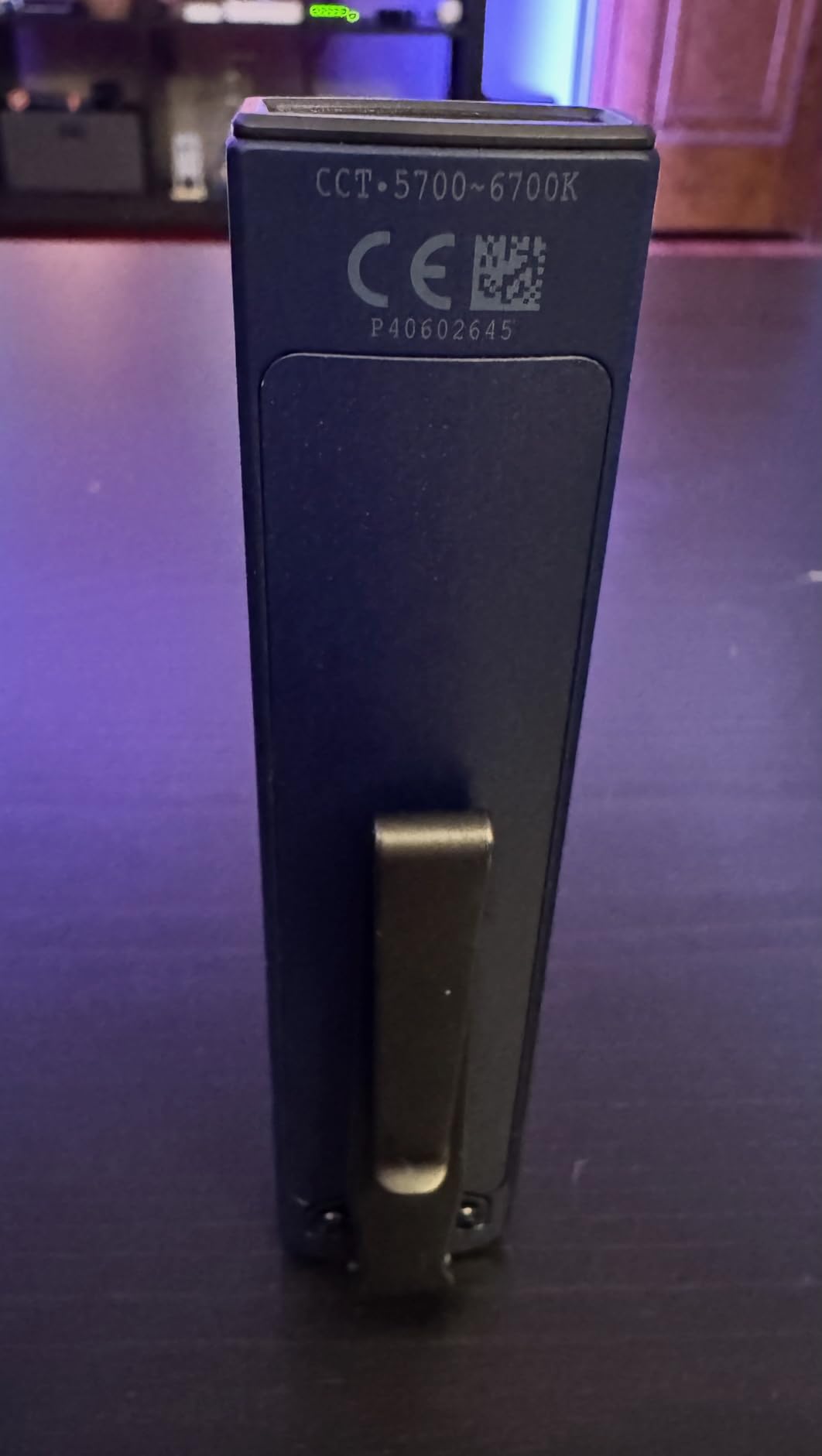
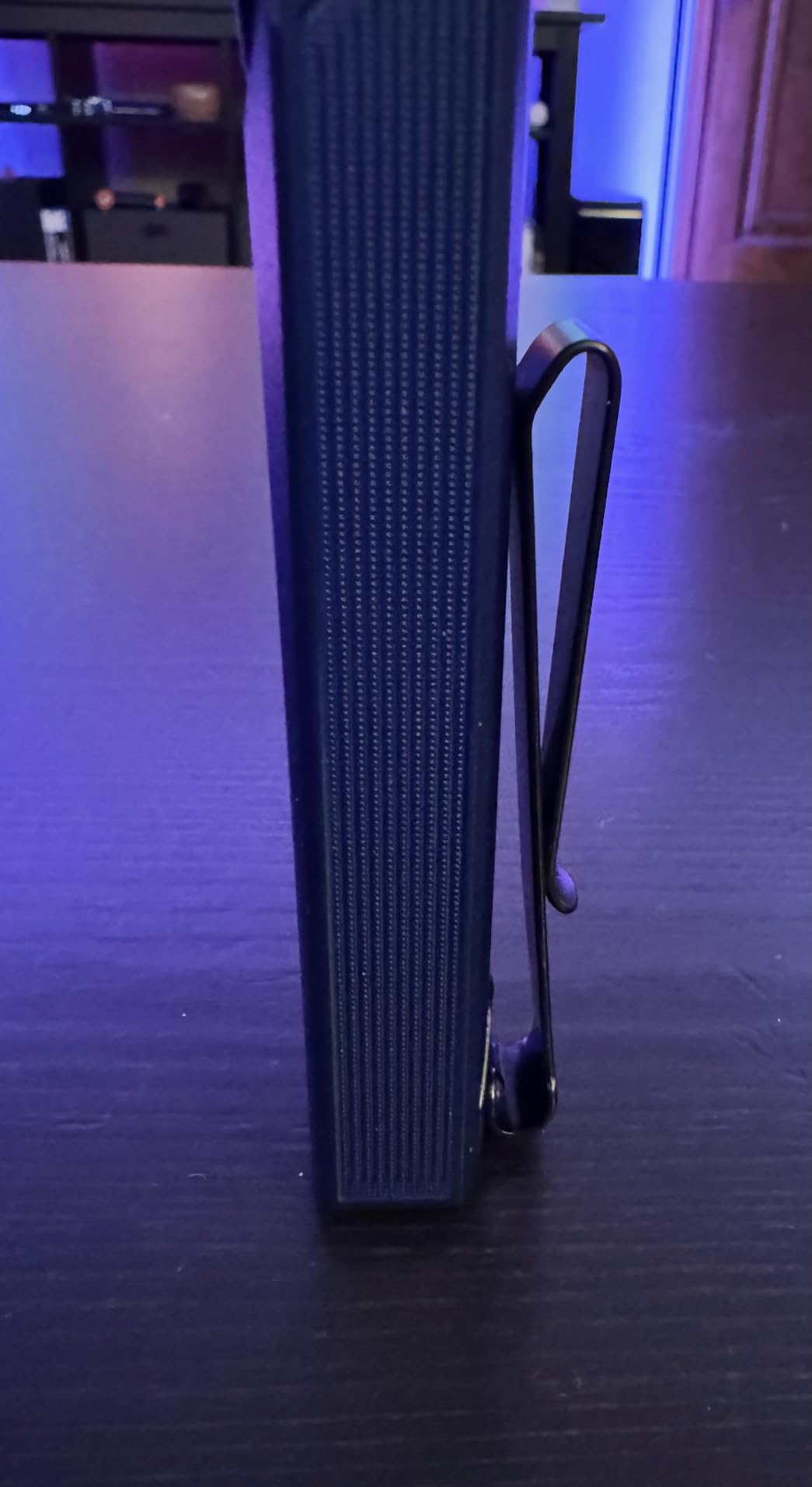
The magnetic induction base is the strongest in this roundup by a wide margin. It holds at any angle on a car hood, a steel panel, or a toolbox, so the light is genuinely hands-free rather than nearly hands-free.
Build is premium throughout: a proprietary aluminum alloy with a wear-resistant matte finish, high-hardness glass in place of the usual plastic lens, adjustable brightness, a reading mode, and a lockout. Runtime is about 5 hours 15 minutes on a charge, and the warranty is for life.
Who the Arkfeld Ultra suits
It suits people who genuinely use two of the three functions. UV is used for resin work, stain and fluid detection, and currency inspection, and a dedicated UV flashlight guide covers that in more detail if you want to go deeper. The green beam handles night vision and signalling.
If you are deciding between a work light and an inspection light and keep doing both, this is the only purchase here that covers both without a second tool.
Where the Arkfeld Ultra falls short
It is the most expensive light in the roundup by a wide margin, and the honest review consensus is that simpler needs are better served by a budget light. You are paying for two extra light sources whether you use them or not.
At 4.72 inches and 4.16 ounces it is too long for a slim pocket, there is no red light mode, and the proprietary magnetic dock is a vendor lock-in with an indicator that stays lit while plugged in.
How to Choose an EDC Flashlight: Lumens, Batteries, Beam and Build
Pick the light after the job, not before. These five checks decide whether you end up carrying something daily or leaving it in a drawer within a month.
How many lumens you actually need
For a pocket light, 100 to 300 lumens covers 90 percent of real everyday use: door locks, steps, a dropped phone, a dog walk, a smoke detector. The forum consensus that keeps repeating is that 100 lumens is already uncomfortable to use at arm’s length, and buying brightness you cannot use is how people end up with a light they never switch on.
Lumens measure total light output. Candela measure intensity at the hotspot, and candela is what determines throw. The MicroStream at 250 lumens and 1150 candela reaches 68 meters, while plenty of 300-lumen lights with weak optics manage half that. If you need to see down a driveway or across a field, look at candela and beam distance, not the headline lumen number.
What is the most powerful EDC flashlight in the world? Among the lights carried daily in a pocket, the WUBEN X4 at 1500 lumens and 205 meters of throw is the highest output in this roundup, with the Olight Arkfeld Ultra at 1400 lumens behind it. Neither is a pocket light in the strict sense, and both step down or run hot well before the headline figure is sustained.
What is the brightest flashlight you can legally own? There is no federal brightness limit in the United States, so the constraint is not output at all. The real limits are state and city rules on penknives and clubs, which occasionally catch a large tactical body, plus airline rules. Lights under 4 inches are the safest category to carry everywhere. If you fly with it, the flashlight itself goes in your bag, and spare lithium batteries go in carry-on only, with terminals protected.
Battery format: AAA, AA, 14500, 18650, 21700 and CR123A
Format decides size, runtime, and how often you think about batteries at all.
AAA and AA are for people who want zero maintenance. The Olight I3T EOS runs on one AAA and you can buy a replacement in any shop on earth. The trade is output and size, and 180 lumens from an AAA is genuinely close to the practical ceiling.
14500 is a rechargeable cell the size of an AA, and dual-fuel lights that accept both are the easiest upgrade path in this category. 18650 is the workhorse: more capacity, higher output, and a good runtime-to-size ratio, but the light is noticeably longer. 18350 is the short 18650 for lights that need output without length. 21700 cells hold more energy than an 18650 in the same diameter, so they win on runtime at the cost of a few millimeters.
CR123A is the choice for cold weather and long storage, because lithium chemistry holds its charge for years. Built-in rechargeable cells like those in the IMINI 2, Archer Mini and Arkfeld Ultra remove battery logistics entirely, at the cost of a sealed cell you cannot replace when it ages out. Our 10 Best Small High Lumen Flashlights tested breakdown covers the small-format options in more detail.
Flood vs throw, CRI and tint
A flood beam is wide and even with a soft edge, good for a room, a car interior, or working with both hands close to the beam. A throw beam is narrow with a bright centre, good for distance. Most people need a middle ground, which is what a TIR optic delivers: a defined hotspot with usable spill, as on the MicroStream and the Archer Mini.
CRI, the colour rendering index, describes how accurately a light shows true colours. A high-CRI light makes skin tones, paint colours, wiring colours, and food look natural; budget lights with a cool blue tint make everything look washed out and grey, which is a recurring complaint in owner reviews. If you inspect things for a living, CRI matters more than another 200 lumens.
Output control is the last beam decision. A single fixed mode is simpler, stepped levels give you usable choices, and stepless dimming like the G5’s scroll wheel gives you anything in between, which is why it is genuinely useful for close work.
Switches, pocket clips and lockout
A tail switch is reachable without looking at the light, which matters when you are holding something else. A side switch is easier to find with gloves on and leaves the tailcap free for a tailstand or a magnetic mount. A reverse clicky, where the tail is recessed so the light cannot turn on against a table, is the simplest way to stop pocket activation.
Lockout matters more than most buyers expect. Any light that can turn itself on in a pocket will, given a year, and a lithium cell running flat against your thigh is a real problem. A dedicated lockout position, or a five-click activation, both work.
On clips, the rule forum users converge on is simple: the clip should reach past the pocket seam with enough ramp to grip fabric, and it should be reversible so you can wear the light on a hat brim. A shallow clip lets the light slide out every time you sit down, and a stiff clip chews the anodizing. This is why the dual-direction clips on the I3T EOS, the A3 Gen 4 and the Archer Mini matter more than their spec sheets suggest.
IP ratings, drop testing and build
IPX4 means splash resistant, IPX6 means protected against heavy rain and splashing, and IPX8 means submersible to a stated depth for a stated time. For a pocket light, IPX7 or better is the sensible floor since your light will meet a sink or a puddle eventually. Buyers report budget lights surviving washing machines, which is not a rating anybody claims but is a fair stress test for a keychain carry.
Build quality shows up in the coating and the hardware. Hard-anodized Type III aluminum, stainless steel bezels, and O-ring sealed threads are the durable combination, and they are also the things worth checking when a light develops a flicker. Clean the threads, inspect the O-rings, keep a little silicone grease on the seals, and store lithium cells partly charged in a cool place if you are putting a light away for months.
One last practical note for anyone who carries lithium cells regularly, including the spare-cell lights here: check your airline and your state’s rules before you travel, keep spare batteries in carry-on with terminals covered, and never charge a light unattended on a flammable surface. The pilot-oriented picks in our flashlight guide for pilots cover the cockpit and travel side of this in more detail.
Frequently Asked Questions
Is an EDC flashlight worth it?
Yes, for anyone who carries gear daily. A phone screen dies, cracks, or runs flat exactly when you need light, and a phone beam is a wide, short-throw smear. A dedicated pocket light gives predictable brightness, a beam shaped for the task, hands-free mounting, and runtime you can rely on. The Streamlight MicroStream is the most common starting point.
Who makes the best EDC flashlights?
There is no single winner because the jobs differ. The Streamlight MicroStream is the best all-around carry light. The Olight I3T EOS is the best simple AAA light. The ThruNite Archer Mini is the best compact rechargeable penlight. The WUBEN C3 is the best long-runtime and long-throw option. The Olight Arkfeld Ultra is the best multi-function light.
Who makes the brightest EDC flashlight?
Among lights you would genuinely carry daily, the WUBEN X4 leads with 1500 lumens and 205 meters of throw, and the Olight Arkfeld Ultra follows with 1400 lumens plus UV and a green beam. Both step down and heat up well before the headline figure is sustained, so for steady use a 400 to 700 lumen light is the better carry choice.
What is the brightest flashlight you can legally own?
There is no federal brightness limit in the United States, so output is not the constraint. What matters is that a few states and cities restrict blades, clubs and oversized tools that a large tactical light can resemble. Lights under about 4 inches are the safest to carry anywhere. When flying, carry the light in your bag and spare lithium cells in carry-on only, with terminals protected.
Should I get rechargeable or replaceable batteries for a flashlight?
Choose replaceable AAA or AA cells if you want zero maintenance and can buy a cell anywhere. Choose a built-in USB-C rechargeable if you carry the light daily and hate thinking about battery levels, since charging on a cable takes a minute and the sealed cell cannot be replaced when it ages out. Dual-fuel lights that accept both are the easiest upgrade path.
Should I carry a keychain flashlight or a pocket flashlight?
Carry both if you can. A keychain light like the Olight IMINI 2 costs almost no weight and is always with you, but its 50 lumens and 21 meters of throw only cover close tasks. A pocket light like the Streamlight MicroStream or the RovyVon A3 Gen 4 covers paths, steps, and doorways. The keychain light finds your keys; the pocket light finds the path.
Final Verdict: The Best EDC Flashlights in 2026
After six weeks of carry testing, the Streamlight MicroStream is still the best EDC flashlight for most people. It is 3.87 inches long, 2.08 ounces, USB-C rechargeable, rated to IPX4, backed by a limited lifetime warranty, and its clip unbolts into a hat light. Very few products under a fifth of the price do anything comparable.
Buy the Olight I3T EOS if you want a light that never needs charging. Buy the GearLight two-pack if you want a spare for the car and a house. Buy the WUBEN C3 if you need reach and runtime, and the Olight Arkfeld Ultra if you genuinely use UV or a green beam on the same trips.
Whichever you choose, put it in your pocket tonight rather than in the box on your desk. That is the only test that matters. You can compare our earlier roundup of the best EDC flashlights in the world and our dedicated look at UV options for resin work in the UV flashlight guide to narrow the list further.