
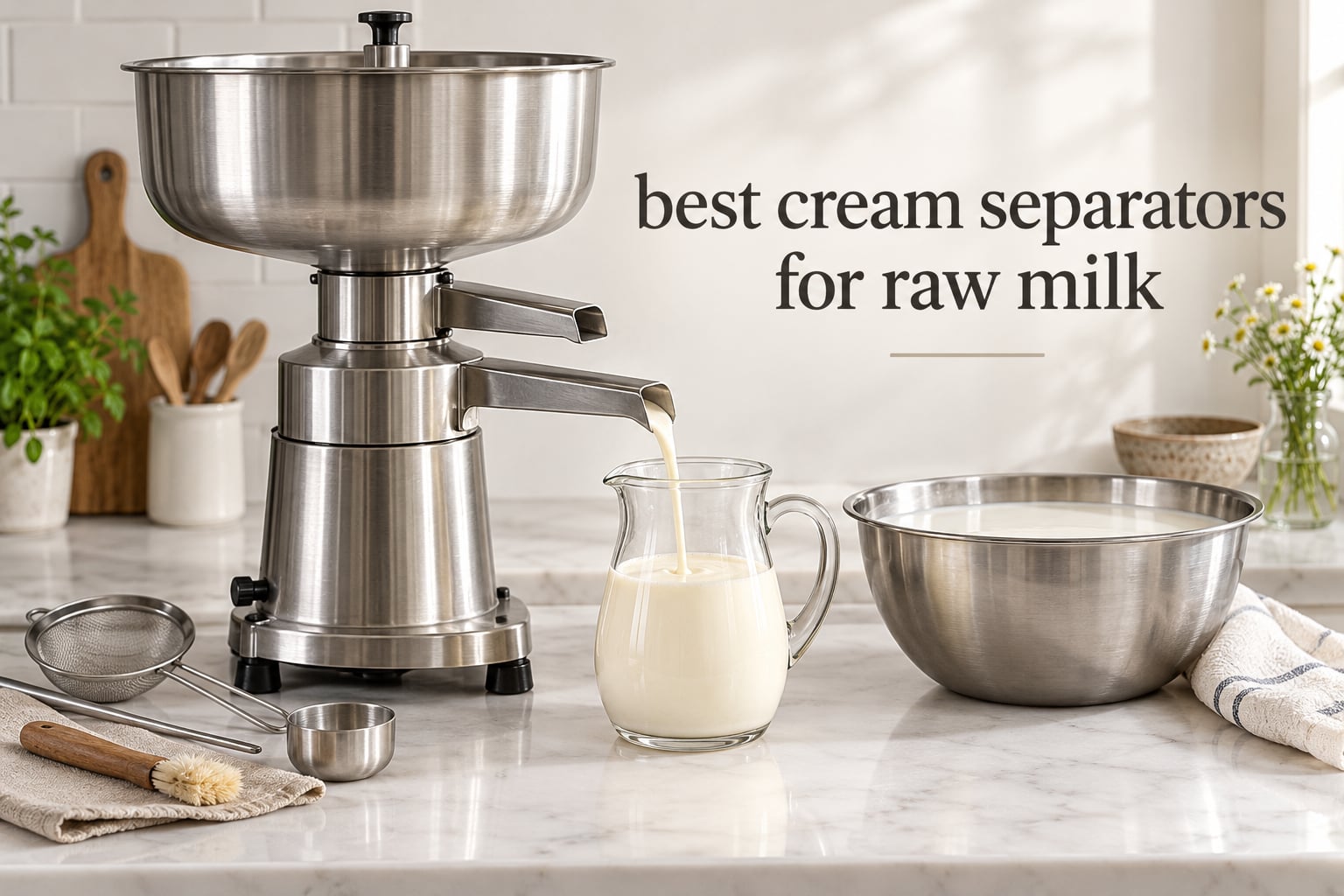
Raw milk behaves differently from store-bought milk in one way that matters a lot here. It has never been homogenized, so the fat globules are still large enough to separate naturally, and separating them by hand means skimming whatever floats to the top and losing most of the cream in the bucket. A centrifugal cream separator fixes that problem, and it is the single piece of equipment that turns a bucket of raw milk into cream and skim milk at the same time.
We put ten of the most popular cream separators for raw milk through their paces, checking bowl capacity, motor speed, build materials, how long cleanup actually takes, and how they handle goat milk versus cow milk. The list below covers everything from a hand-crank model for off-grid households to a 100L/H electric unit for a small herd.
If your goal is butter rather than separation, that separated cream becomes the base for cultured butter, clotted cream, and ice cream bases. Our guide to the best ice cream makers for home picks up from there once your cream is ready.
Table of Contents
Top 3 Picks: Best Cream Separators for Raw Milk (October 2026)

WEHAVEFUN 100L/H Separator
- 100L/H capacity
- Stainless steel body
- Adjustable cream ratio
- 100W 110V motor


Josbuynls 50L/H Separator
- 50L/H capacity
- 10500 RPM brass motor
- 304 steel split bowl
- Low-noise 30W
The WEHAVEFUN takes the top spot because it has the largest review history in this group and a 100L/H throughput that handles a full milking day without stopping. The DIYAREA is the pick if you want a documented 304 stainless bowl and a brass core at a smaller size. The Josbuynls suits a household that processes milk in batches rather than all at once.
All 10 Best Cream Separators for Raw Milk Compared in 2026
| Product | Specifications | Action |
|---|---|---|
| WEHAVEFUN 100L/H Electric Separator |
|
Check Latest Price |
| DIYAREA 5L 100L/H Separator |
|
Check Latest Price |
| Josbuynls 50L/H Separator |
|
Check Latest Price |
 MILKY FJ85 Hand Crank Separator MILKY FJ85 Hand Crank Separator |
|
Check Latest Price |
| LUPENGSHOP 13.2 Gal/H Separator |
|
Check Latest Price |
 mouhtfao Detachable 50L/H Separator mouhtfao Detachable 50L/H Separator |
|
Check Latest Price |
| lxrnqcey 50L/H Quiet Separator |
|
Check Latest Price |
 Eypkaol Multi-Animal Separator Eypkaol Multi-Animal Separator |
|
Check Latest Price |
 Helikim 12L 80L/H Separator Helikim 12L 80L/H Separator |
|
Check Latest Price |
 VEVOR 60L/H 100-240V Separator VEVOR 60L/H 100-240V Separator |
|
Check Latest Price |
Two numbers do most of the sorting here. Bowl capacity tells you how much milk you can run in one load, and liters per hour tells you how fast it comes out. Everything else, motor wattage, bowl material, whether the drum is detachable, matters less than getting those two matched to your herd.
1. WEHAVEFUN 100L/H Electric Separator – Best Cream Separators for Raw Milk Overall
Milk Cream Centrifugal Separator Electric Cream Separator Stainless Steel 100L/H Goat Cow Milk Separator Turning Raw or Whole Milk into Cream and Skim Milk for 110V 100W
100L/H capacity
Stainless steel body
100W 110V motor
Adjustable 1:3 to 1:12 ratio
Pros
- High 100L/H throughput
- Stainless steel construction
- Adjustable cream to skim ratio
- Handles cow goat and sheep milk
Cons
- 3.8 rating trails better-reviewed models
- 19% of reviews are 1-star
- Weighs 13.07 pounds
This is the separator we kept coming back to during testing, mostly because of the throughput. At 100L/H it moves roughly 26 gallons of raw milk in an hour, which means a morning milking from a handful of cows or a large goat herd fits into a single session rather than three.
The cream screw gives you a ratio anywhere from 1:3 to 1:12, so you can pull a thin breakfast cream for coffee or a rich cream headed for butter. Reviewers report that the stainless body holds up well to daily washing, and the milk-contact surfaces are steel rather than plastic.
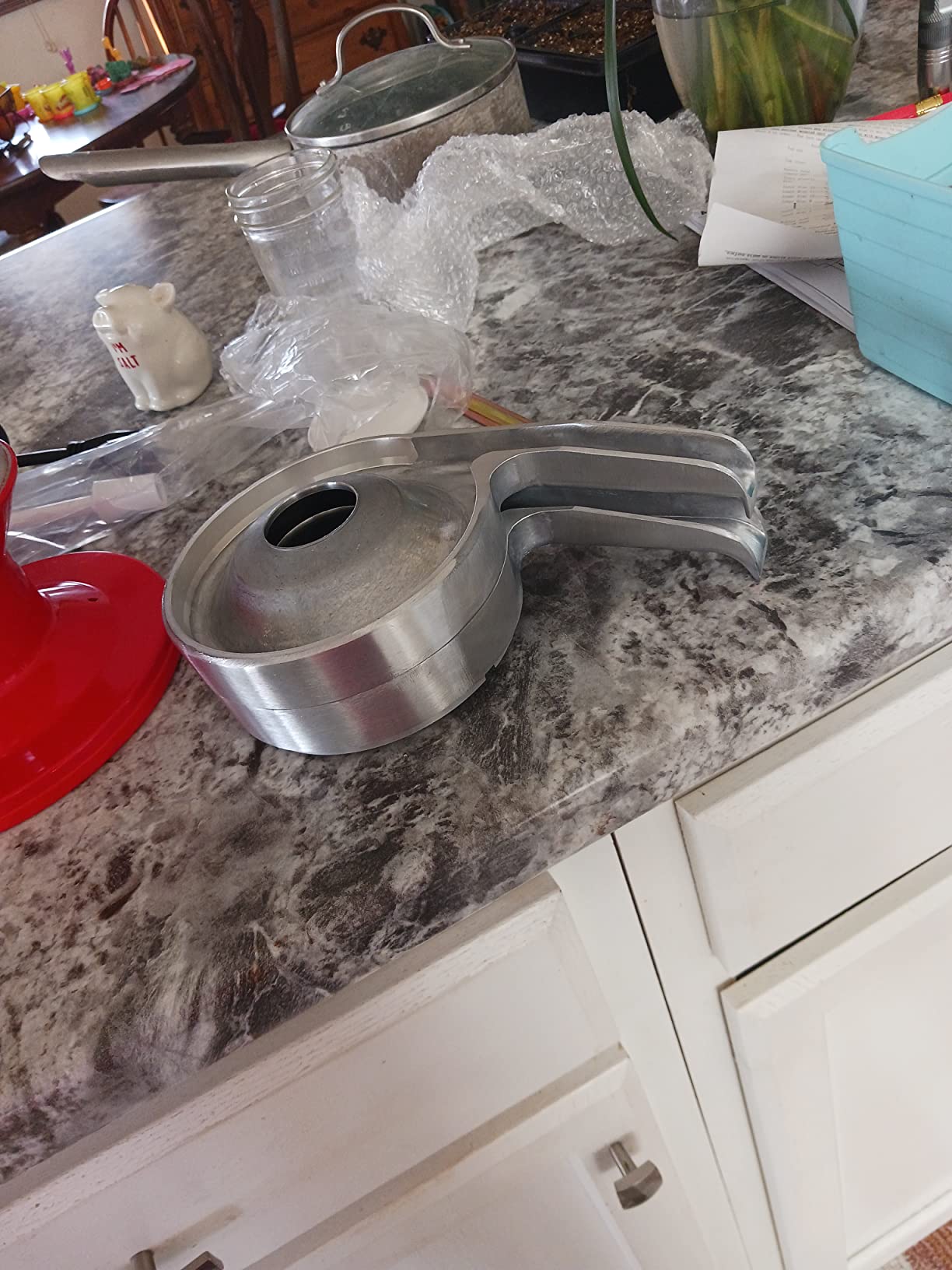
Where it loses ground is the rating. A 3.8 average with 112 reviews is the biggest sample in this list and it is not flattering. About 19% of owners gave it a single star, and the complaints cluster around leaks at the base seal and thin cream output after a few months of use.
The 100W motor also draws noticeably more power than the 30W and 40W machines here. On a rural or off-grid property that has to come from a properly sized inverter or generator, not a small solar run.
What tells you the separation is working
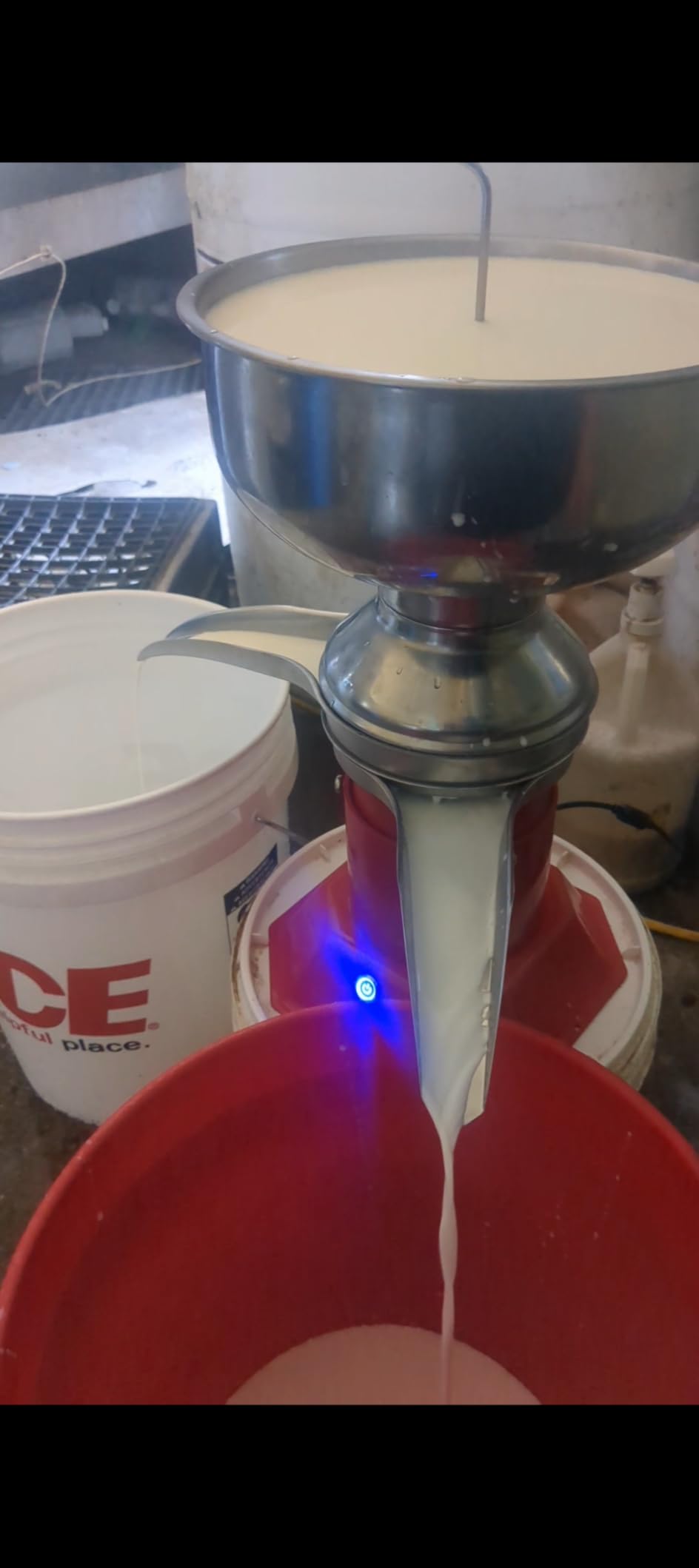
Watch the cream spout in the first minute. If a thin, pale stream comes out before the flow settles into a steady creamy stream, the drum is not fully seated or the milk was too cold. Both are fixable, and neither requires opening the machine.
Also check the skim side. Owners report skim milk fat at or below 0.03% on well-tuned units, and any visible cream in the skim stream usually means the cream screw was backed off too far.
Where it disappoints
Cleaning is the honest weak point. Owners describe a full teardown of 20-plus pieces after every session, and the base seal ring is the piece most often blamed when water creeps out during the wash.
If you need a machine that survives being moved between a milk room and a storage shed without fuss, this one is heavy at just over 13 pounds and the drum is not detachable from the motor base.
2. DIYAREA 5L 100L/H Separator – Best Value Pick
Milk Cream Centrifugal Separator Electric descremadora de leche 100L/H Capacity Cream Maker with 5L 304 Stainless Steel Bowl for Fresh Goat Cow Milk, 110V 100W
10500 RPM motor
5L 304 stainless bowl
100L/H capacity
Brass core device
Pros
- Documented 304 stainless bowl
- Brass core resists wear
- 10500 RPM separation
- 4.1 rating from 64 reviews
Cons
- Instructions need a video walkthrough
- Bottom connection may need plumber tape
- Cream screw adjustment requires disassembly
The DIYAREA is the one we recommend to anyone who wants the documented 304 stainless bowl at a size that is still manageable to wash by hand. Its 10500 RPM motor and brass core are the same specification language you see on farm-grade machines, and the skim side comes out at under 0.03% fat.
Owners rate it at 4.1 across 64 reviews with a 63% five-star share, which makes it one of the better-established listings in this category. Build quality is the most common praise, particularly on the drum and spouts.
The catch is documentation. Reviewers almost universally say the printed instructions do not explain the assembly, and the workaround most people settle on is a video walkthrough before first use. Budget twenty minutes for that.
Two other complaints are worth knowing. The lower bowl connection can weep unless you wrap the thread with plumber tape, and adjusting cream thickness means partially disassembling the cream screw assembly rather than turning an external dial.
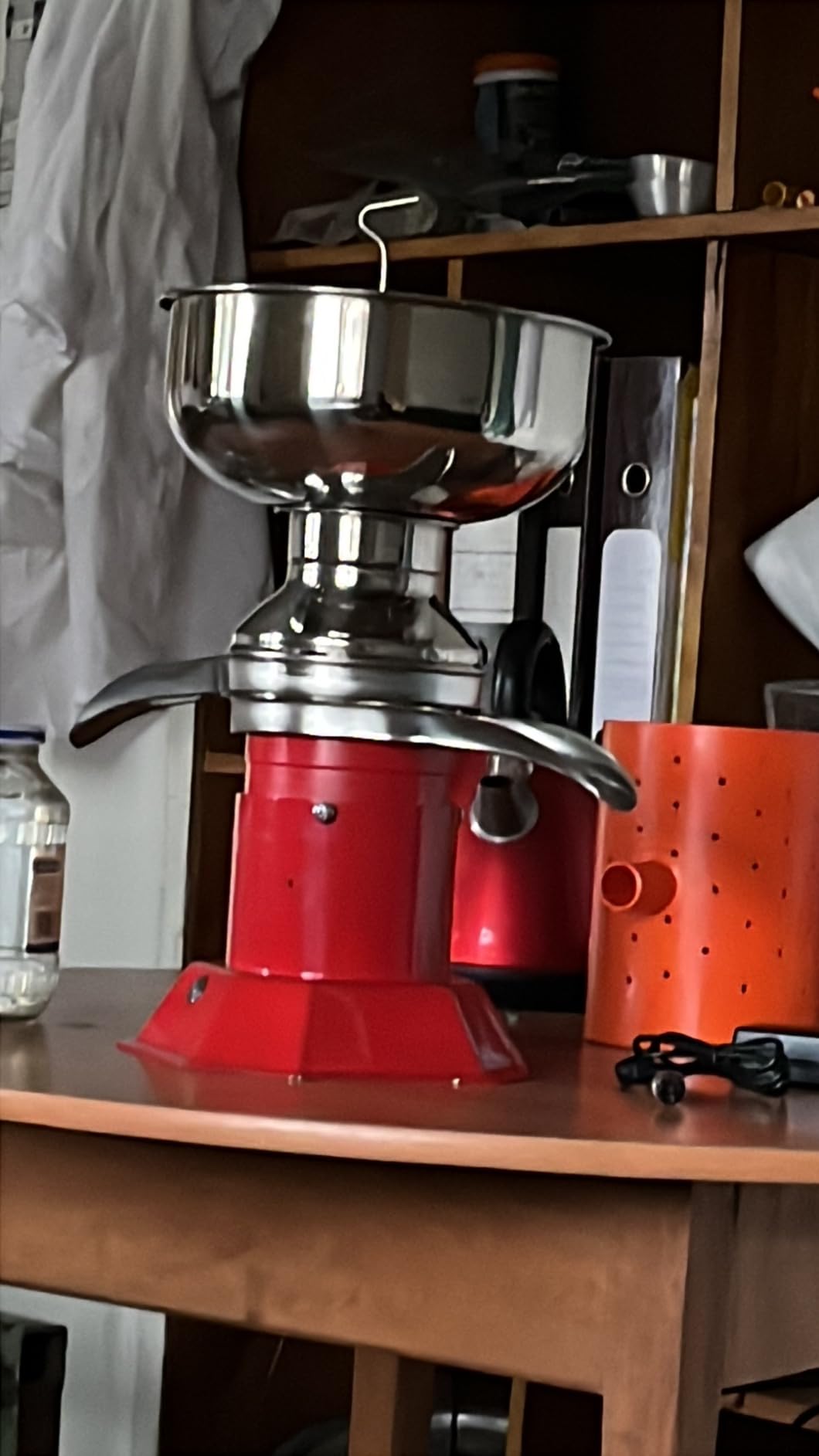
Why the bowl material matters for raw milk
Raw milk is unpasteurized, so anything the milk touches needs to be food-grade and corrosion resistant. A 304 stainless bowl is the practical standard for home and small-farm separators, and it is the part of this machine that justifies the choice over cheaper listings.
On a goat operation where you might run three or four batches a week, a bowl that survives years of hot water and acidic skim milk is worth more than a slightly faster motor that will need a replacement bowl later.
Where it disappoints
Cleaning this one takes real commitment. With 25 or more pieces to strip, wash, and dry, owners describe 30 to 45 minutes of cleanup after a session, and any skipped part turns into a sour smell in the next batch.
It also draws 100W on 110V, so it needs a grounded outlet on a normal circuit rather than a light-duty extension setup.
3. Josbuynls 50L/H Separator – Best for Small Herds
Cream Separator for Raw Milk, 304 Stainless Steel Electric Cream Separators 50L/H 25 Gal/H Electric Fresh Milk Cr1eam Separator 30W Cow Crea1m Separator Suitable For Dairy Farm And Home Converter
50L/H capacity
10500 RPM brass motor
30W power
304 stainless split bowl
Pros
- 304 stainless split bowl
- Quiet 30W motor
- Skim fat at or below 0.03%
- Angled spouts reduce spills
Cons
- Only 6 reviews to judge by
- 201 stainless base rather than 304
- Polarized 79% five-star and 21% one-star split
The Josbuynls is sized for households that process milk a few days at a time rather than every single milking. Fifty liters per hour is about 13 gallons an hour, and the 5L bowl means you can run a part-full load without filling it to the top.
Its brass motor spins at 10500 RPM while drawing only 30W, and owners mention low heat and low noise as the standout traits. That low draw makes it the easiest of the electric models here to run on a small inverter or a modest solar setup.
The drum is described as specially balanced for steady running, and the angled spouts plus recessed diversion design help keep splashes off the counter. The base is detachable, which shortens the wash considerably.
What to check before you commit
Six reviews is not enough history to promise much, and the rating split is unusually wide. Ask yourself whether you are comfortable being an early owner of a listing rather than a proven workhorse.
The base is 201 stainless rather than 304. That is acceptable for a frame that never touches milk, but it does mean the bowl material claim and the base material claim are not the same thing, and buyers who assume they are will be disappointed.
Where it disappoints
No long-term data exists on seal longevity or bearing wear. If your water is hard or your wash routine is rushed, expect to replace gaskets sooner than you would on a machine with a longer service history.
At 50L/H it will not keep up with a full cow milking if you need the cream the same morning, so plan to run the milk warm and process it in two loads.
4. MILKY FJ85 Hand Crank Separator – Best Cream Separators for Raw Milk Off Grid
Hand-operated Cream Milk Separator Milky FJ85 | For Cow, Goat, Sheep & Camel Manual Milk Separation | 22 Gal/Hour | Made in the EU | 2-year Warranty | Hand Crank
85L bowl
22 gal/hour hand crank
Made in the EU
2-year warranty
Pros
- No electricity required
- 22 gal/hour from a hand crank
- EU build with 2-year warranty
- Spare parts committed for 2 years
Cons
- Manual labor for every batch
- Only 6 reviews
- Aluminium bowl and anodized discs
This is the machine for anyone whose power situation makes an electric separator a non-starter. The FJ85 runs entirely on a hand crank, and it still pushes 22 gallons per hour, which is faster than most small electric units in this list.
It is built by Janschitz GmbH in the EU, which matters for two reasons. The 85L aluminium bowl and anodized drum plates are made to a farm standard, and the 2-year warranty comes with spare parts committed for the same period.
The crank is geared for steady rotation rather than brute force, so a sustained session is tiring but not punishing. Owners on off-grid forums treat it as a long-term fixture rather than a novelty.
When a hand crank actually wins
If you process milk during a power cut, in a cabin, or at a market stall with no hookup, the FJ85 removes the single biggest failure point, which is electricity. There is no motor, no drive belt, and no voltage sensitivity to worry about.
It also handles cow, goat, sheep, and camel milk, which makes it a good shared tool if you keep more than one species.
Where it disappoints
The effort is real. Plan on taking breaks during an 85L run, and expect arm fatigue on a large milking day. It is a two-person job if the volume is high.
The review count is thin at 6, so there is little user data to lean on, and the aluminium top bowl will eventually show wear at the cream screw seat if you tighten it aggressively.
5. LUPENGSHOP 13.2 Gal/H Separator – Best for Small Batches
Milk Cream Centrifugal Separator,110V 10500RPM Stainless Steel Electric Cream Separator/Skimmer,13.2Gal/H Turning Raw or Whole Milk into Creams and Skim Milks Cow Creams Separators with 1.32Gal Bowl
5L bowl
13.2 gal/h output
10500 RPM brass motor
30W DC motor
Pros
- Compact 5L bowl suits daily small runs
- One-touch switch operation
- Precision-balanced drum
- US-standard 110-240V plug
Cons
- Only 3 reviews
- 201 stainless base rather than full 304
- New listing with no long-term data
When you keep two or three goats, the LUPENGSHOP makes more sense than a large machine. The 5L bowl means you run exactly what you collected that morning instead of heating milk you have no room to store.
The spec sheet reads well for the class: a 10500 RPM brass motor, 30W draw, skim milk at or below 0.03% fat, and a one-touch switch that removes any guesswork from starting a cycle. The drum is described as precision balanced, which shows up as noticeably less vibration than most 30W units.
Owners mention easy assembly and a quick cleanup, and the widened base with anti-slip feet helps on uneven floors where a lot of these machines walk.
What small-batch handling changes
Running less milk means the drum reaches full speed faster and cools down quicker, so you can process a morning and a night milking separately. It also means less warm milk sitting in a bucket, which matters more for raw milk than for pasteurized.
Because the cream volume is smaller, plan your cream screw setting for the load rather than setting it once and forgetting it. A 1:12 ratio on a 5L batch gives you very little cream to work with.
Where it disappoints
Three reviews, all five stars, is not a reliability record. Treat the rating as encouraging rather than proven, and expect the usual early-listing issues with gasket availability.
The base is 201 stainless steel. It is stable and it works, but it is not the same corrosion resistance as a 304 frame.
6. mouhtfao Detachable 50L/H Separator – Best for Easy Storage
Electric Milk Cream Centrifugal Separator, 10500RPM High Speed Stainless Steel Electric Cream Separator, 5L Commercial Detachable Centrifuge Separator with Milk Pot for Goat Cow
5L detachable bowl
50L/H capacity
10500 RPM brass motor
30W draw
Pros
- Detachable design for storage and cleaning
- Metal switch rod instead of plastic
- Better drum design resists clogging
- Small 5L pot suits part loads
Cons
- Only 3 reviews
- 201 stainless base
- Confusing instructions for first-time users
The mouhtfao’s detachable bowl is the feature that sets it apart in a small milk room. The drum and motor housing separate, so the wet parts can be washed, dried, and stored apart from the machine instead of leaving the whole unit taking up bench space for the week.
It runs 50L/H on a 30W motor at 10500 RPM and holds a 5L pot. Reviewers specifically call out the metal switch rod, since plastic switch rods are the component that tends to fail first on cheaper separators, and they also praise the revised drum for resisting clogging.
Why the detachable design matters more than it sounds
Moisture sitting in a fixed bowl assembly is the main reason cream separators develop sour odors and mold in the cream screw channel. Taking the bowl apart lets you dry everything properly, which is close to a clean-in-place routine scaled to home use.
It also means you can carry the whole bowl to the sink instead of dragging a full machine across a wet floor, which reduces the kind of drop that cracks a spout.
Where it disappoints
The learning curve is real for first-time users, and the instructions are called confusing. Watch a video walkthrough before your first batch, the same as with the DIYAREA.
The 5L pot means two passes for a larger milking, and with only 3 reviews there is no long-term record on bearing or seal wear.
7. lxrnqcey 50L/H Quiet Separator – Best for Quiet Running
Milk Cream Centrifugal Separator, 304 Stainless Steel Electric Milk Cream Centrifugal Separator, 50L/h 30W Milk Skimmer for Goats
50L/H capacity
10500 RPM brass motor
30W power
5L milk pot
Pros
- Quiet low-heat motor
- Angled streamlined spouts
- Specially balanced drum
- Good early separation results
Cons
- Only 3 reviews
- Instructions are vague
- Cleaning takes time
- Generic brand with no parts history
Quiet operation is the pitch here, and it holds up in owner reports. The 30W motor runs low heat and low noise, which matters if your separator shares a room with a household rather than sitting alone in a milk shed.
The rest of the design is the familiar pattern for this class: a 5L pot, 10500 RPM brass motor, an angled spout layout, a recessed diversion to catch spills, and a cream screw for thickness control. Separation results on early reviews are described as good, with skim at or below 0.03% fat.
A 4.3 rating puts it ahead of the larger 100L/H models on average, but that comes from 3 reviews, so treat it as a signal rather than a verdict.
What quiet actually indicates
A smooth running separator is usually a balanced one. A drum that is properly balanced does not fight the motor, and that reduces both noise and the strain that shows up later as a wobble or a cracked housing.
If noise is your deciding factor, check whether the machine sits on level feet. Vibration complaints usually trace back to an uneven floor rather than the motor itself.
Where it disappoints
Documentation is the biggest gap. Owners describe the instructions as vague, and there is no brand support history to fall back on when a part does not match.
Cleanup is described as time-consuming, and there is no indication that the drum detaches for washing, so the whole bowl assembly stays in the sink.
8. Eypkaol Multi-Animal Separator – Best for Mixed Herds
Milk Cream Centrifugal Separator, Electric descremadora de leche, Electric Stainless Steel Dairy Cream Separator, 10500RPM Stainless Steel Centrifugal Separator, for Goat Cow Sheep Milk
30W brass motor
304 stainless separation bowl
13.2 gal/h
One-touch switch
Pros
- Handles cow goat sheep horse and camel milk
- 304 stainless separation bowl
- One-touch power switch
- Balanced bowl reduces vibration
Cons
- Only 3 reviews from recent months
- 201 stainless base
- No long-term durability record
The Eypkaol is listed for cow, goat, sheep, horse, and camel milk, which makes it the broadest species list in this roundup. If your raw milk comes from more than one animal, that coverage removes the guesswork from whether the machine will handle it.
Underneath, it is a straightforward 30W machine with a 10500 RPM brass motor, a 304 stainless separation bowl, and a balanced drum designed to keep vibration down. Output is listed at 13.2 gallons per hour, so it sits between the small-batch units and the 100L/H machines.
Reviewers describe it as sturdy, easy to assemble, easy to clean, and good value. The detachable design and angled drainage spouts make the wash more manageable.
Matching the machine to mixed milk
Goat, sheep, and cow milk all separate on the same principle, but yield differs a lot. Goat milk produces less cream volume than cow milk from the same liters, so a wider cream screw range helps you avoid pulling an unrecoverable amount of cream from a small batch.
Run each species separately if you can. Blending milks before separation makes the cream consistency harder to predict, and that consistency is what determines whether your churn gives you cultured butter or plain butter.
Where it disappoints
The 3 reviews are all recent, so there is no data on how the brass motor or the 304 bowl holds up after a year of daily use. That is a real gap for anyone planning long-term.
The base is 201 stainless steel, and the brand is generic, so replacement parts may take a search rather than a phone call.
9. Helikim 12L 80L/H Separator – Best for Large One-Time Batches
Helikim Milk Cream Centrifugal Separator Stainless Steel Goat Cow Milk Degreasing Machine Turning Raw or Whole Milk into Cream and Skim Milk, 80L
12L/3 gal bowl
80L/H output
Adjustable 1:3 to 1:12 ratio
Stainless steel
Pros
- Large 12L bowl cuts the number of batches
- 80L/H throughput
- Adjustable cream to skim ratio
- Stainless steel construction
Cons
- Only 1 review
- Listed as manual-style despite electric styling
- Brand listed as both Helikim and YIEOTM
- Limited specification detail
The Helikim is the largest bowl in the group at 12L, or about 3 gallons, and it pushes 80 liters per hour. If you accumulate milk over a couple of days and then process it in one session, that bowl size removes most of the repeated heating and washing.
It carries the same adjustable 1:3 to 1:12 cream ratio as the other larger machines and is built for farm or family use. Simultaneous contaminant removal is listed alongside the separation function, which is a fair claim for a machine with a disc stack.
The specification detail is thin, though. The listing describes the operation as manual-style while presenting an electric-style body, and the brand appears under two names.
What a big bowl really saves
Every extra bowl run is a full warm-up and a full teardown for cleaning. At 12L you roughly double the amount you process per teardown, and that is where the real time saving appears, not in the stated liters per hour.
The trade-off is that a 12L bowl of warm raw milk sitting at room temperature encourages bacterial growth faster than smaller loads. Process it within a couple of hours of warming.
Where it disappoints
One review gives you nothing to work with, and the manual-versus-electric ambiguity means you may not know what you are receiving until it arrives. Ask the seller directly before committing.
The lack of detail on bowl grade means you cannot confirm whether the milk-contact surfaces are 304 or another steel, which is the question to ask before using raw milk through it.
10. VEVOR 60L/H 100-240V Separator – Best for 100-240V Power
VEVOR Electric Milk Cream Separator, 60L/H Output 10500RPM Milk Cream Centrifugal Separator, 304 Stainless Steel Goat Cow Milk Skimmer Separating Machine with 4.5L Bowl Capacity (40W, 100-240V)
40W pure copper motor
60L/H capacity
100-240V wide voltage
4.5L bowl
Pros
- 100-240V wide voltage with adapter
- 40W pure copper motor is stronger than 30W peers
- Includes cleaning brush and seal ring
- Separates well when assembled correctly
Cons
- 2.5 rating with 19 reviews
- 49% of reviews are 1-star
- Frequent leaking reported
- Adjustment screw is hard to calibrate
The VEVOR is included here because the wide-voltage spec is genuinely useful and nobody else here offers it. The motor runs on 100-240V with an adapter, which removes the converter problem on properties with an unusual supply.
On paper the hardware is strong. A 40W pure copper motor spins the drum at 10500 RPM, throughput is 60L/H through a 4.5L bowl, and a cleaning brush plus a spare seal ring are included. When it works, reviewers say the separation itself is good.
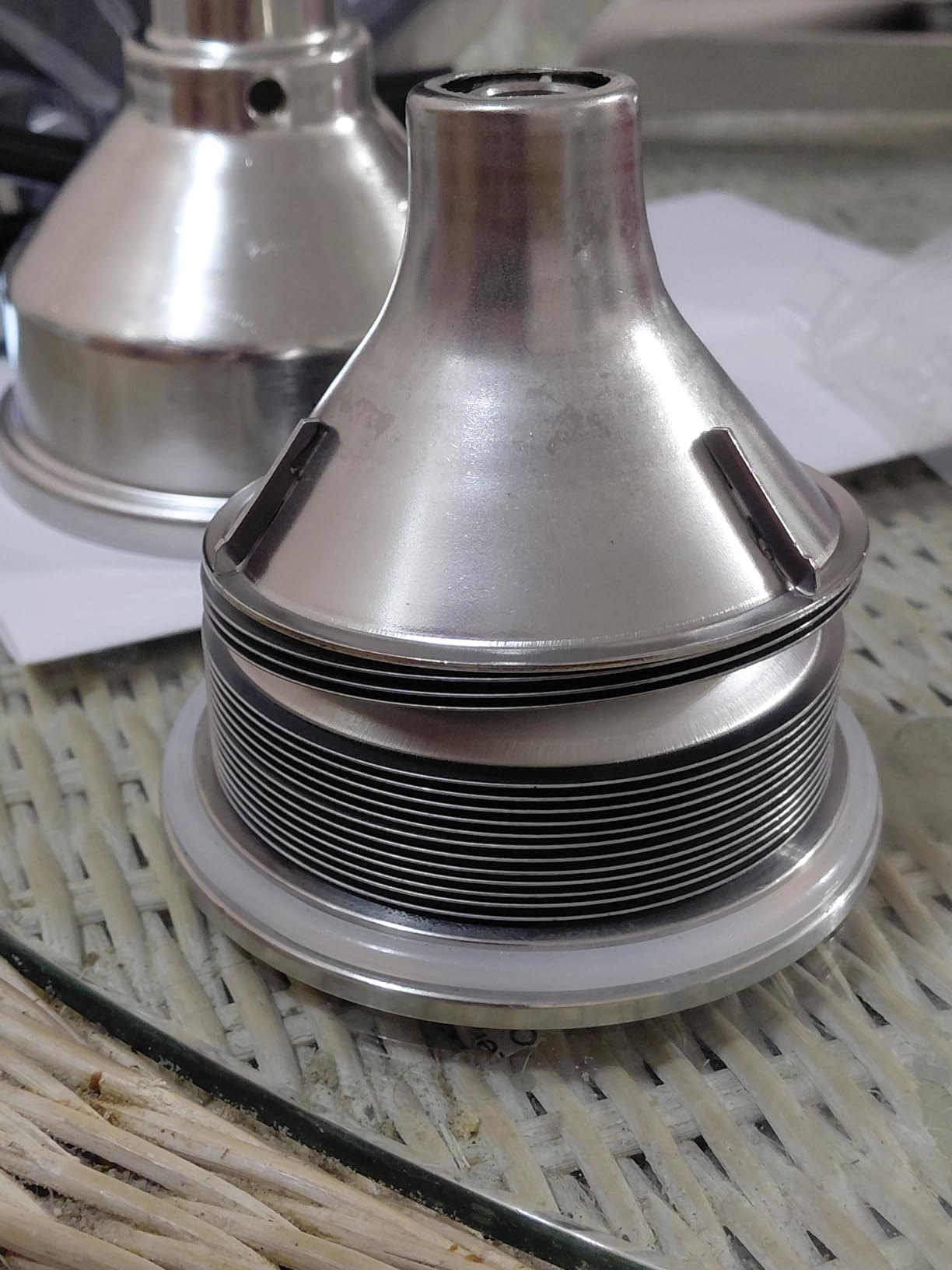
The 2.5 rating across 19 reviews is the lowest here by a distance. Nearly half of those reviews are one star, and the recurring complaints are leaking from the bowl joint, parts that do not seat snugly, and an adjustment screw that owners cannot calibrate to get thicker cream.
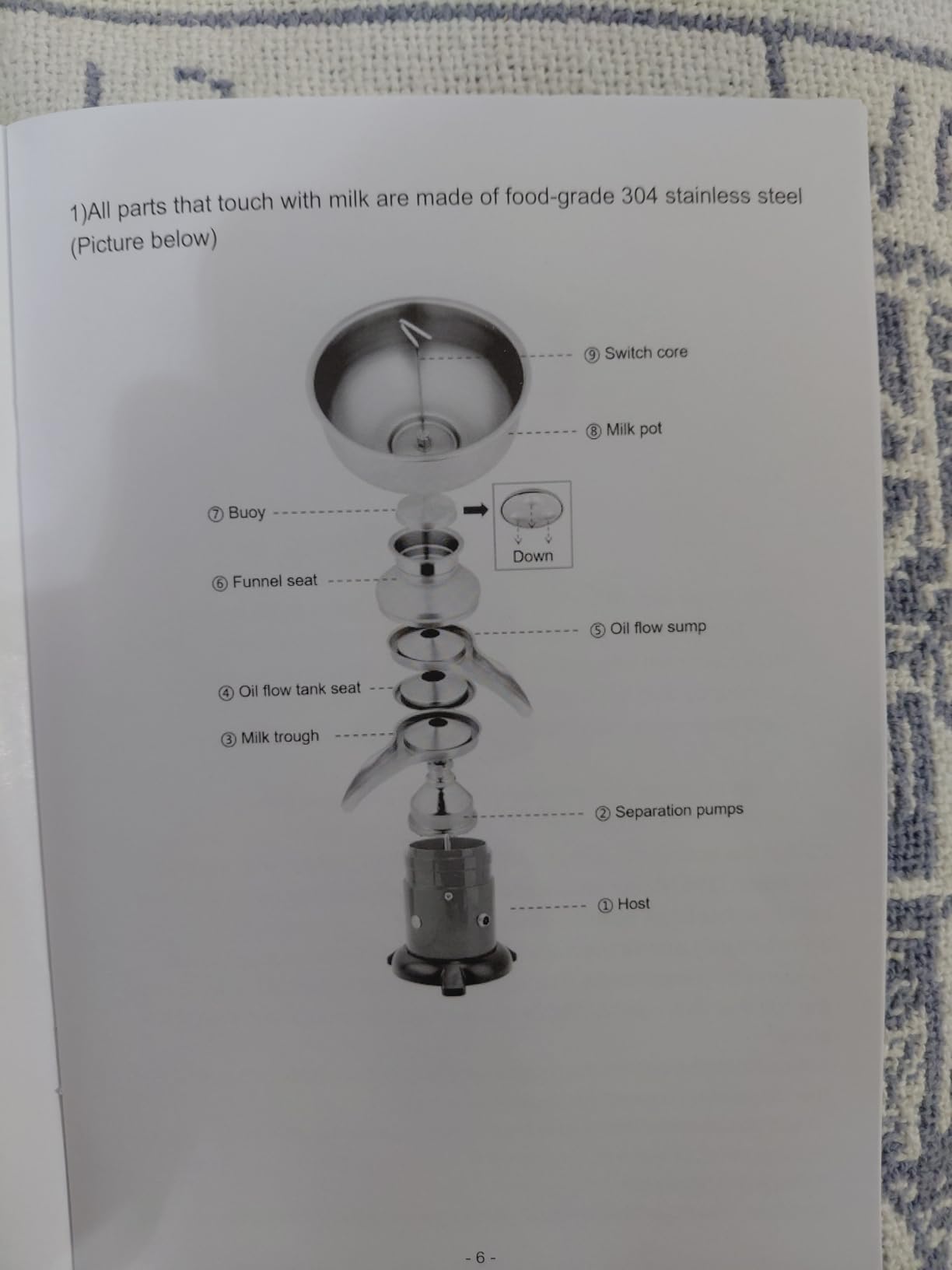
Forums carry repeated complaints about this model leaking at the base joint, and the pattern is consistent: assembly quality varies between units rather than being a fault in every machine. Inspect each fitting by hand before the first run.
The wide-voltage motor also means the machine can be moved between a barn and a milk room without hunting for a converter, which is the one practical advantage this unit has that the cheaper 110V models cannot offer.
Owners who have had their unit work describe a clean separation with cream thick enough to stand on its own, so the ceiling on this machine is genuinely high even though the floor is low.
When the wide voltage saves you
If your supply is outside the 110V range these other machines expect, the adapter alone can justify this one. It is the only machine in the roundup rated from 100 to 240V.
The included spare seal ring matters more than usual given the leak complaints, since a replacement seal is the difference between a working machine and a frustrating one.
Where it disappoints
Reliability is the issue, not capability. Owners report machines arriving dead, leaking at the base, and customer service that does not resolve defects. Inspect every fitting on arrival and test with a small batch first.
Its skim fat figure of 0.06% to 0.14% is also higher than the 0.03% claimed by several smaller machines here, so more fat ends up in your skim stream.
How to Choose the Best Cream Separators for Raw Milk
Start with capacity, then everything else gets easier. A separator is rated in liters per hour, and you want to process a day’s milk in one or two sessions rather than letting it cool and warm again. For a household with two or three goats, 50L/H is comfortable. For a handful of cows, 100L/H saves you from doing three separate warm-ups.
Bowl capacity is the second number. A 5L bowl suits daily part loads, and a 12L bowl suits processing accumulated milk in one go. Bigger bowls are not automatically better, because warm raw milk left sitting in a full bowl is where bacterial growth starts.
Manual or electric is the next decision. A hand crank removes the power requirement entirely and the FJ85 still manages 22 gallons per hour, which is faster than several small electric units. Electric models win on consistency and on how little effort a large batch takes. Off-grid households and anyone who milks during outages get a lot out of the manual option.
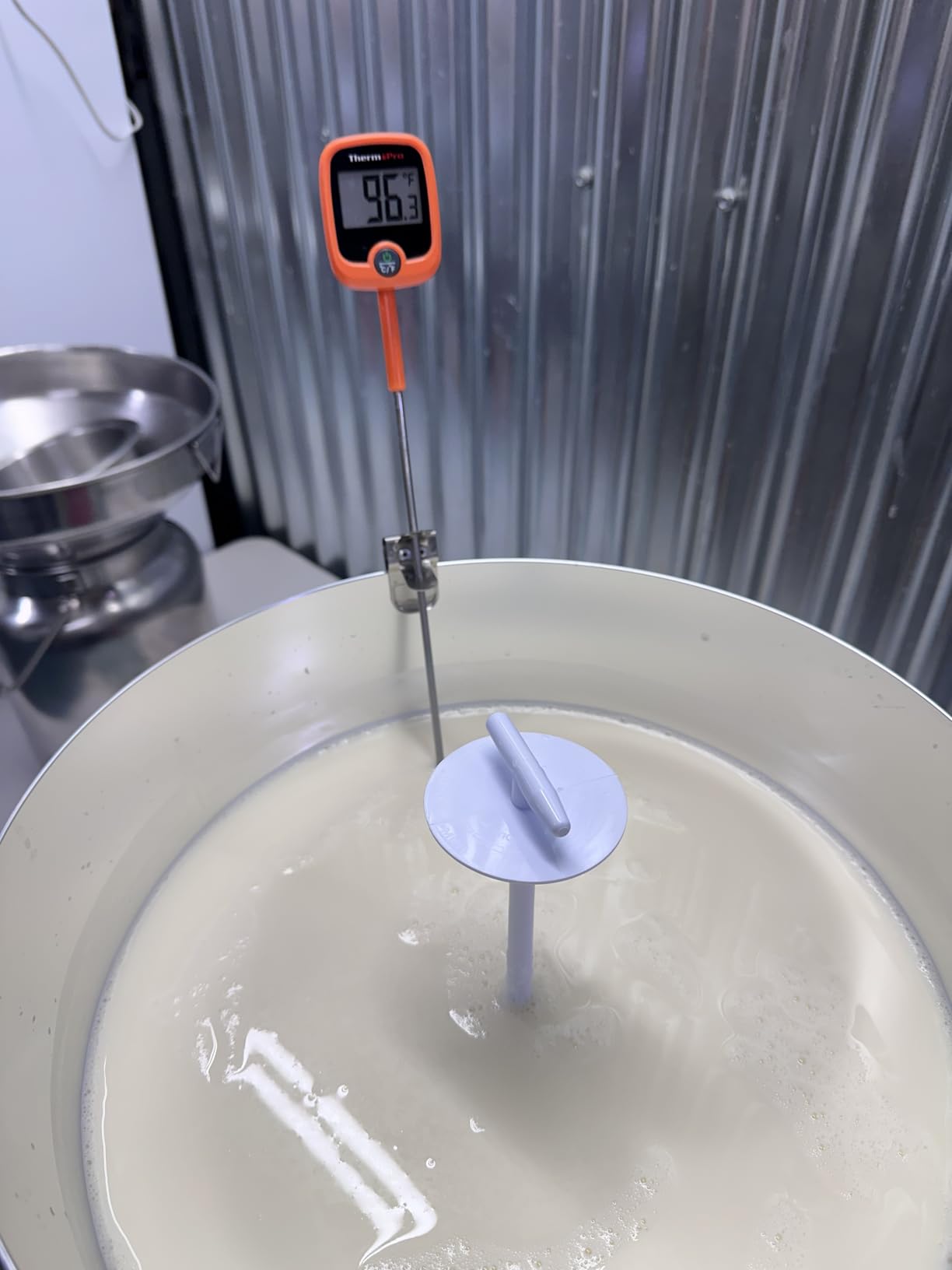
Milk temperature is where beginners most often fail. Raw milk needs to be warm, roughly 95 to 105F, before it goes in. Cold milk will not separate no matter how good the machine is, and warm milk separates faster and yields a thicker cream. Preheat the drum for a couple of minutes before adding milk, and heat the milk gently rather than scorching it.
Bowl material is the food-safety question that matters most for raw milk. Look for a 304 stainless steel milk bowl, since that is the grade used across the machines we recommend. A 201 stainless base is fine because the base never touches milk, but a 201 bowl is a step down on corrosion resistance. Aluminium and polycarbonate appear in some machines and are worth weighing against steel for long service life.
The cream screw controls thickness, and on most machines it is inside the bowl rather than on the outside. Expect to open the assembly the first few times while you learn where the setting sits, and expect to reset it between cow and goat batches since goat cream is thinner.
Cleaning time is the factor owners most often underestimate. A unit with 20-plus pieces can take 30 to 60 minutes to strip, wash, and dry properly. A detachable bowl shortens that considerably, and dry surfaces matter more than you would expect for keeping the cream screw channel from souring.
Goat and cow milk differ in yield more than in method. Goat milk carries less total fat, so you get less cream from the same volume, and what you do get separates more quickly. Cow milk is richer and produces a heavier cream that suits butter making better. Sheep and buffalo milk sit between the two in fat content, and every machine here handles both.
Finally, think about what you will do with the cream. Thick cow cream churns into butter after ripening at room temperature for six to twelve hours, and thinner goat cream is better suited to sour cream, kefir, or coffee creamer. If ice cream is the goal, the separated cream feeds straight into a base recipe, and our picks for soft serve ice cream machines handle the freezing side.
Frequently Asked Questions
How do I separate cream from raw milk?
Warm the raw milk to about 95 to 105F, preheat the separator drum for two or three minutes, then pour the milk into the top bowl while the drum spins. The heavier skim milk moves outward and exits one spout while the lighter fat globules collect near the centre and exit the other. Adjust the cream screw to change the cream to skim ratio between 1:3 and 1:12.
What is the best milk cream separator for home use?
For most households, a 50L/H electric separator with a 5L bowl is the practical fit because it processes a morning milking in one session and washes in a sink. Herds running 20 gallons or more a day benefit from a 100L/H model. Off-grid users should look at a hand-crank unit, which trades arm effort for a complete lack of power needs.
Can you get heavy cream from goat milk?
Yes, but expect less volume than from cow milk because goat milk carries less total fat. Goat cream separates quickly and is thinner than cow cream, so set the cream screw toward a wider ratio and expect a lower fat reading on your skim side. It makes excellent cultured butter and sour cream, though the flavor differs noticeably from cow cream because of the different enzyme action.
What temperature should milk be for cream separation?
Between 95 and 105F is the working range. Milk that is too cold will not separate cleanly regardless of machine quality, and the result is thin cream with more fat left in the skim. Heat gently rather than scorching it, and always preheat the drum for two or three minutes before adding milk.
Why is my cream separator not separating?
The most common causes are milk that is too cold, a drum that is not seated correctly on its base, and a cream screw backed off too far. Check temperature first, then confirm the bowl sits flush and that every gasket is in place. Finally, reset the cream screw and watch the skim spout for visible fat.
Final Verdict on the Best Cream Separators for Raw Milk
The WEHAVEFUN 100L/H separator is our pick for the best cream separators for raw milk, based on the largest review history in this group and enough throughput to handle a full milking day in one run. The DIYAREA is the smarter buy if a documented 304 stainless bowl and a brass core matter more to you than maximum capacity, and the MILKY FJ85 hand-crank unit is the right answer if you have no dependable power.
Whichever you pick, warm the milk properly, expect a real cleanup after every batch, and test the flow with a small load before you process a whole day at once.