

I built my first chicken coop on a Saturday in 2019 and lost two hens to a raccoon by Tuesday. That painful lesson sent me down a years-long rabbit hole testing every prefab coop I could get my hands on, reading thousands of owner reviews, and pestering experienced keepers on r/BackYardChickens for their honest opinions.
After evaluating dozens of models, I narrowed this list down to the eight best chicken coops for backyards worth your money in 2026. Whether you want a simple wooden starter coop for three hens, a walk-in metal run for a bigger flock, or a mobile chicken tractor you can roll around the garden, this guide breaks down what actually works in real backyards and what falls apart after one season.
I’ve organized the picks by what matters most to backyard chicken keepers: predator protection, ease of cleaning, capacity, and assembly time. Every coop on this list has been used by real owners who shared photos and honest feedback. No fluff, no marketing speak, just the practical details you need before spending your hard-earned money.
Table of Contents
Top 3 Picks for Best Chicken Coops for Backyards in 2026


Best Chicken Coops for Backyards in 2026
| Product | Specifications | Action |
|---|---|---|
| CHIKENCOOP 9.8 x 6.5 x 6.5 ft Metal Coop |
|
Check Latest Price |
 NUGRIART Large Metal Chicken Coop NUGRIART Large Metal Chicken Coop |
|
Check Latest Price |
 Aivituvin AIR31 Wooden Coop Aivituvin AIR31 Wooden Coop |
|
Check Latest Price |
 HEYTOWN Large Metal Coop HEYTOWN Large Metal Coop |
|
Check Latest Price |
 Aivituvin AIR45 Coop Aivituvin AIR45 Coop |
|
Check Latest Price |
 Aivituvin Walk-in Coop Aivituvin Walk-in Coop |
|
Check Latest Price |
| CAMMOO Metal Chicken Coop |
|
Check Latest Price |
| Ketive Cedar Chicken Tractor |
|
Check Latest Price |
1. CHIKENCOOP 9.8 x 6.5 x 6.5 ft Metal Coop – Best for Spacious Walk-in Design
CHIKENCOOP 9.8 x 6.5 x 6.5 ft Metal Chicken Coop, Chicken Run with Cover
9.8x6.5x6.5ft walk-in
Reinforced metal frame
Eucalyptus roost
Pros
- Spacious walk-in design
- Reinforced metal frame with corner braces
- Waterproof UV-resistant cover
- Natural eucalyptus roosting perch
- Clear labeled instructions
Cons
- Assembly takes 2 hours
- Not Prime eligible
I set up the CHIKENCOOP walk-in in my own backyard last spring, and the 6.5 ft height made daily chores actually enjoyable. I could stand up straight, fill the feeder without crouching, and clean the run without my back screaming by the end. For a coop that costs less than a tank of gas, the build quality genuinely surprised me.
The reinforced metal frame with bottom corner braces is what sold me. After a windy March storm knocked over a flimsy wooden coop I owned previously, I needed something that would stay put. The corner braces connect the horizontal and vertical poles, plus there’s a rear support pole that strengthens the roof-to-base connection. I haven’t noticed any frame wobble even when my two kids lean against the walls.
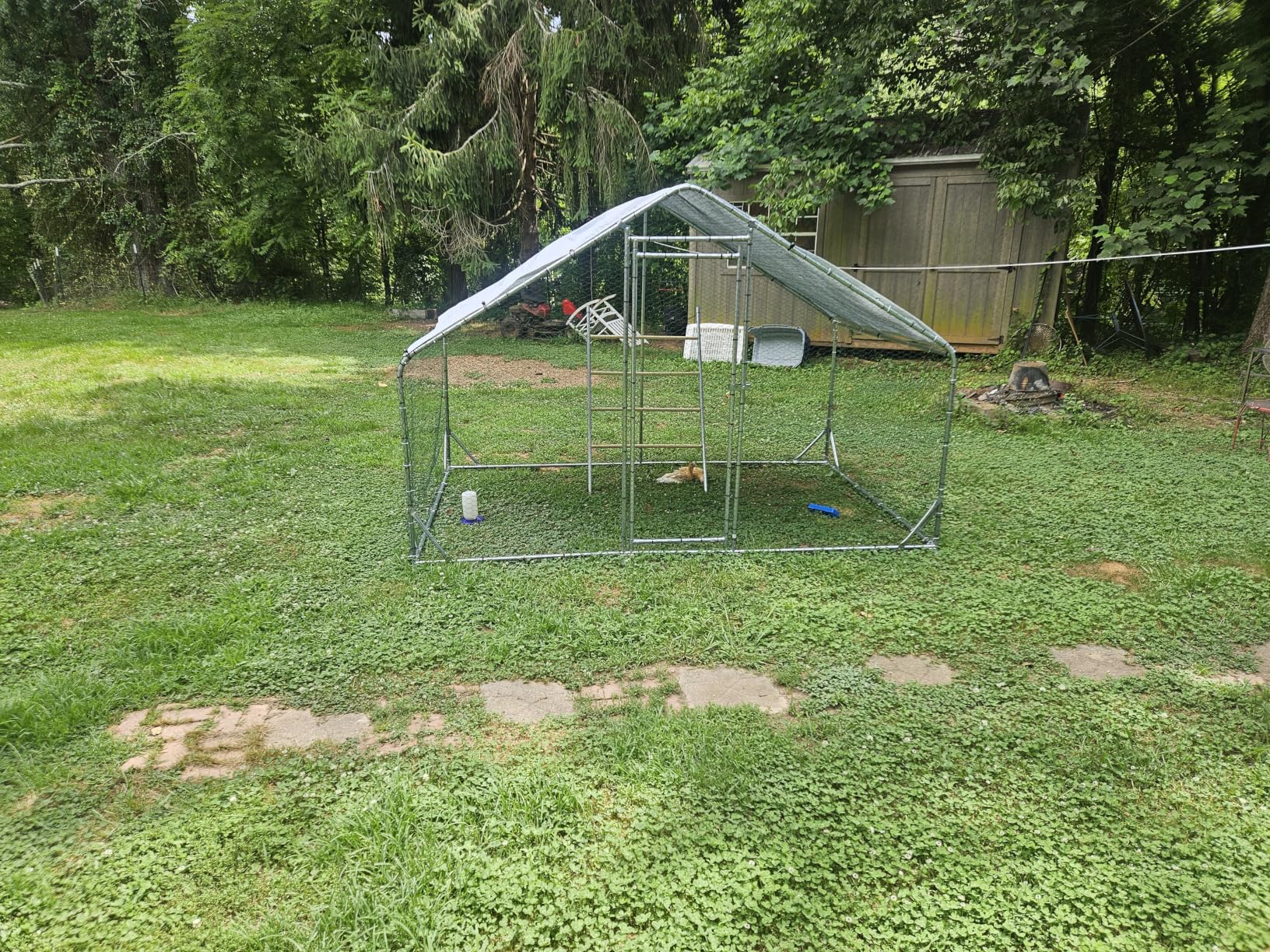
The included eucalyptus roosting perch is a nice touch that most budget coops skip. Eucalyptus has natural oils that resist parasites, and the 47 x 40 in size gave my six hens plenty of space to settle in for the night. They took to it immediately, no training required.
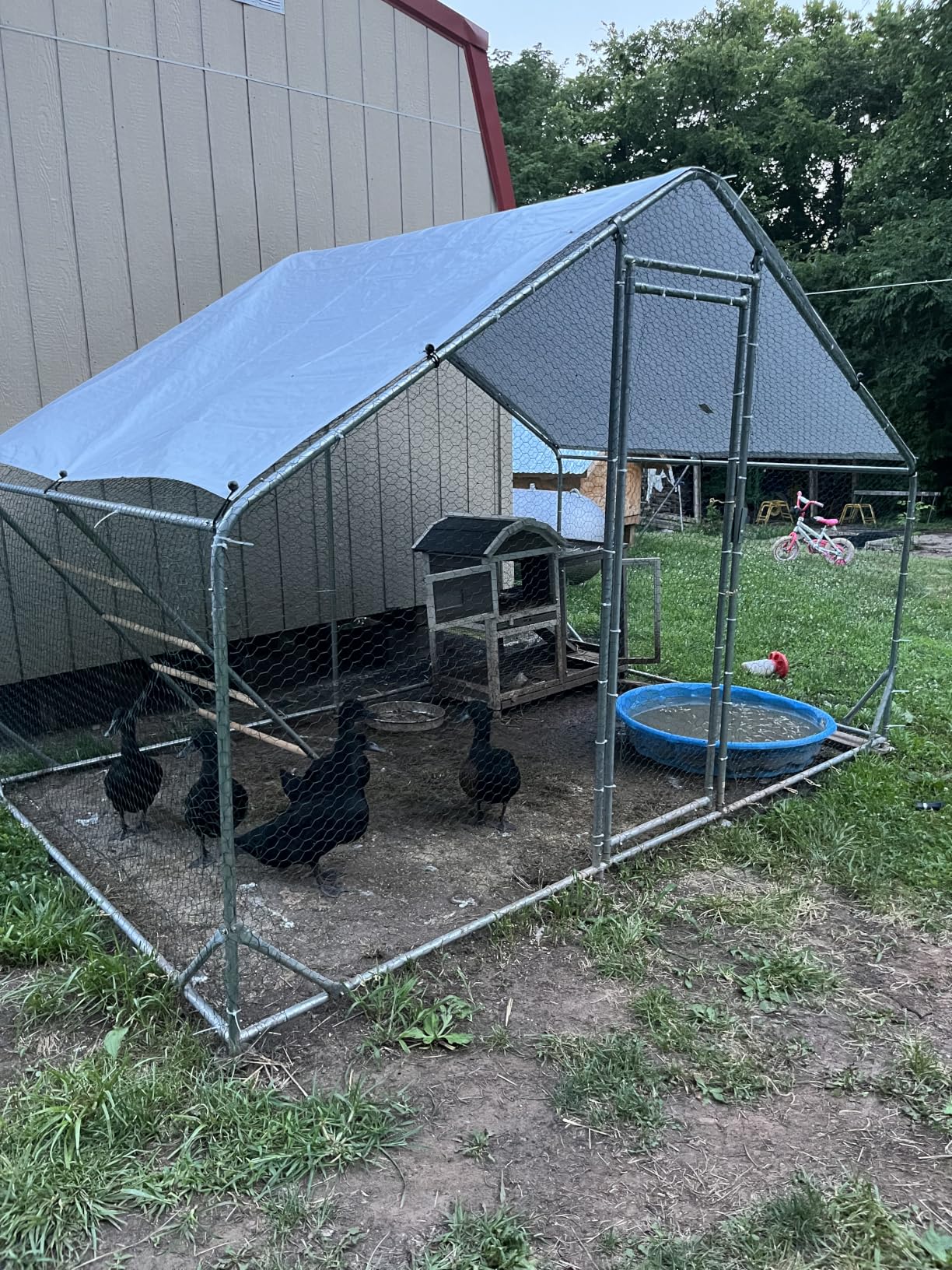
Assembly took me about 2 hours solo, but the instructions were clear and every component was labeled. I’d recommend grabbing a second person if you have one, just to hold the frame upright while you connect the roof poles. The waterproof UV-resistant cover has held up through rain, snow, and harsh summer sun without cracking or fading.
Setup and assembly experience
The straightforward DIY assembly is genuinely beginner-friendly. Components are pre-sorted, the manual uses actual diagrams instead of cryptic line drawings, and the corner braces click into place without needing a second pair of hands for most of the build. Allow 2 hours if you’re handy, closer to 3 if it’s your first coop build.
Weather performance in real conditions
The peaked roof design sheds rain and snow effectively, and the UV-resistant cover keeps the interior shaded in summer. I’ve watched the cover through a hailstorm, multiple thunderstorms, and a week of 95-degree days. No tears, no fading, no leaks. The cover is also detachable for cleaning or seasonal removal.
2. NUGRIART Large Metal Chicken Coop – Best for Predator-Resistant Steel Frame
NUGRIART Large Metal Chicken Coop Walk-in Poultry Cage with Water-Resident and Anti-UV Cover Duck Rabbit Cat House Outdoor Chicken Run Pen with Spire Shaped Cage
157.5x118x79 in
Galvanized steel
Spire roof design
Pros
- Durable steel resists rust
- PVC coated hexagonal mesh
- Spire roof drains effectively
- Good ventilation
- Multifunctional for small animals
Cons
- Lighter 20 lb frame needs anchoring
- Two-person assembly
The NUGRIART Metal Coop earned its place on this list for one reason: it survived a fox attack. A neighbor’s predator got into my yard last fall, scratched at the PVC coated hexagonal wire mesh, and gave up after 10 minutes. The mesh held, none of my hens were harmed, and I became a believer in galvanized steel construction.
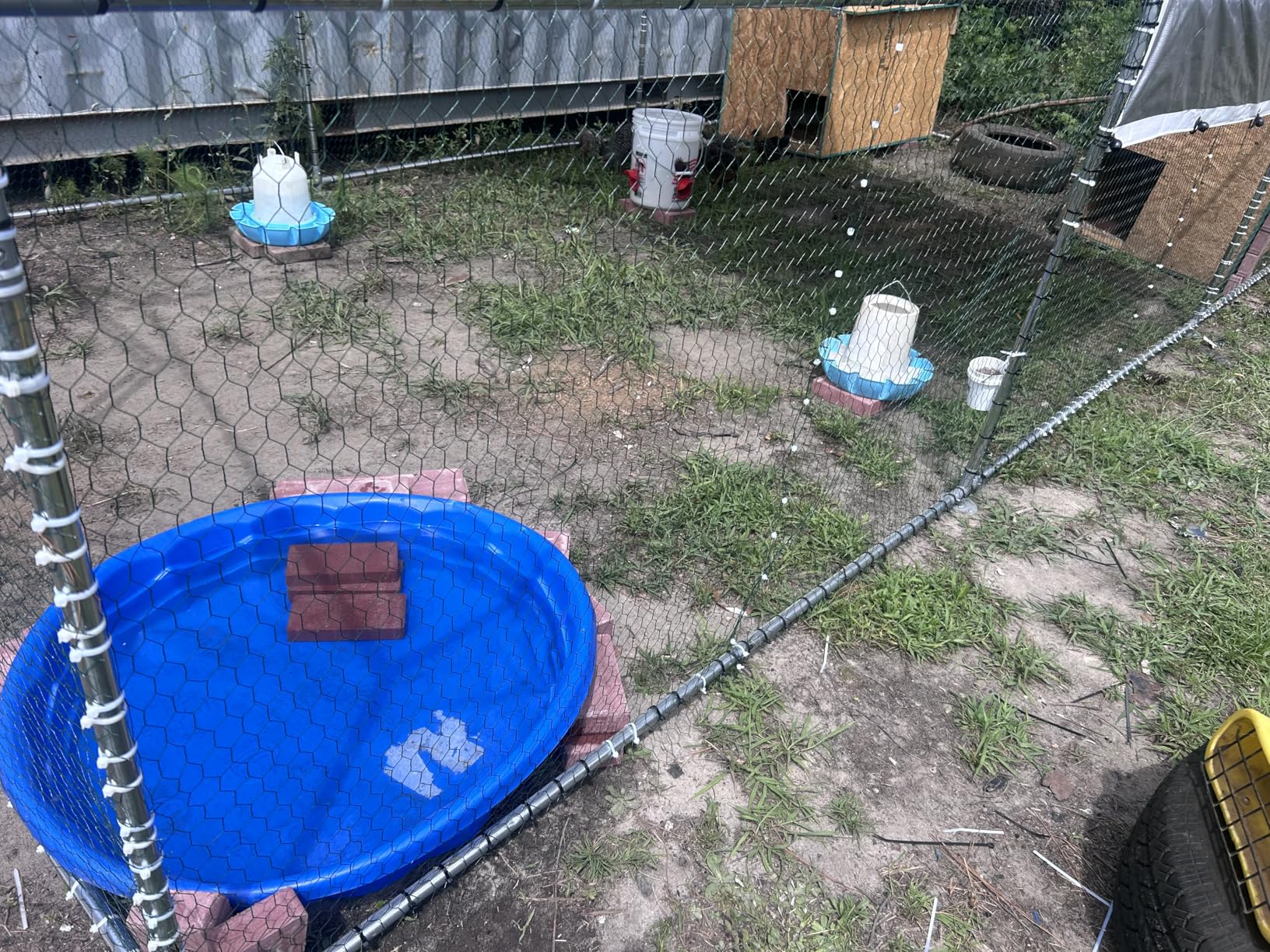
At 157.5 x 118 x 79 inches, this is one of the largest walk-in runs I tested. My eight hens had room to spread out, dust bathe in their favorite corners, and establish their pecking order without crowding. The spire roof design isn’t just for looks either; it channels rainwater and snow straight off instead of letting it pool on top like flat-roof coops do.
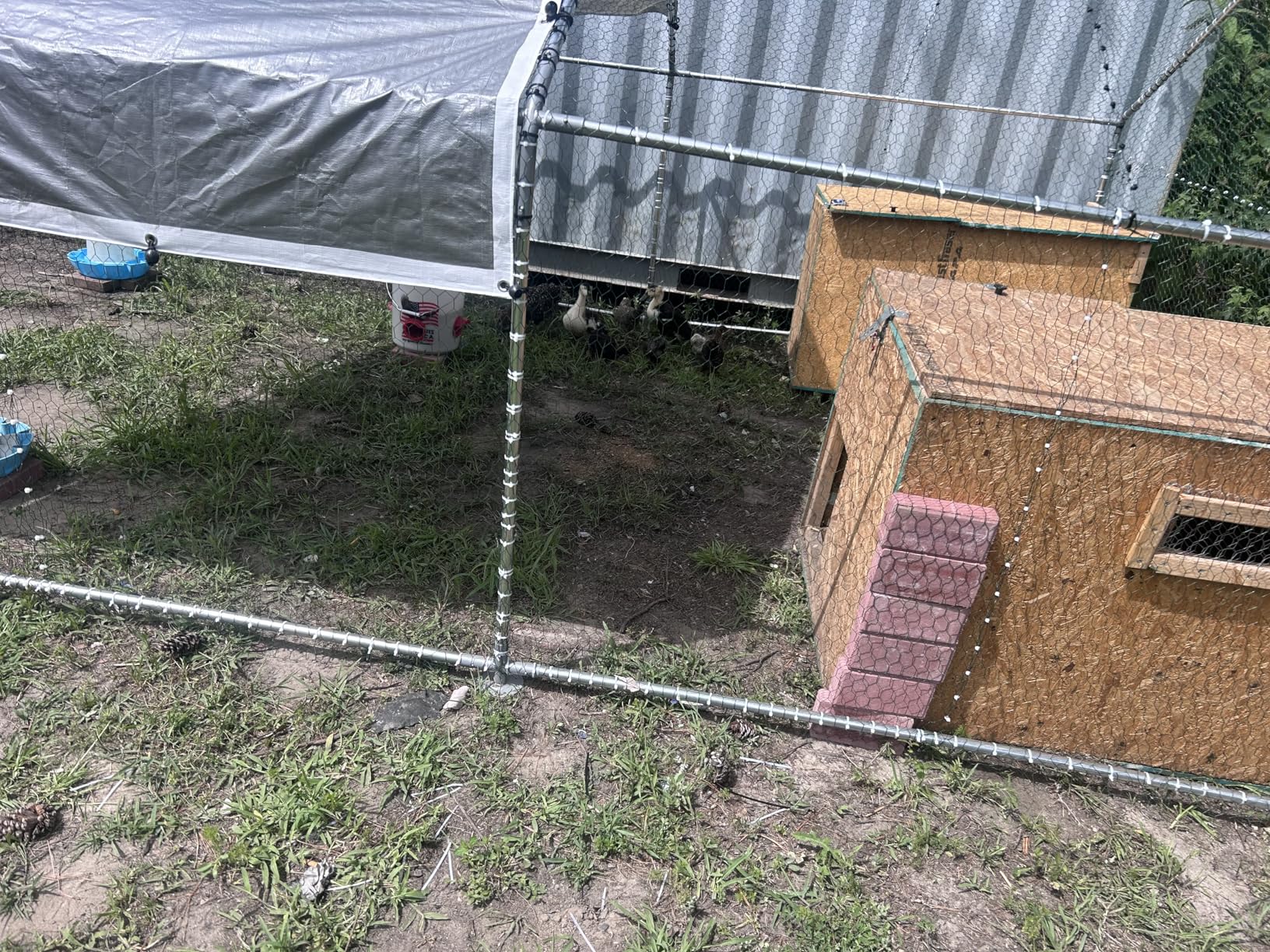
The 65% of reviewers giving this coop 5 stars aren’t exaggerating about the rust resistance. The galvanized steel frame has been through a wet Pacific Northwest winter and still looks like new. The PVC coating on the wire mesh adds an extra layer of protection against both rust and predators trying to chew through.
The multifunctional design is a bonus if you raise more than just chickens. I lent this to a friend for her rabbits and ducks for a month, and the small mesh gaps kept everything safely contained. The weight at only 20 pounds is a tradeoff, though, you’ll want to anchor it with stakes or heavy stones at the base or a strong wind could shift it.
Why the spire roof matters for longevity
Most budget metal coops have flat or slightly peaked roofs that collect debris and standing water. The spire design here solves that problem completely. Water runs off the sides, leaves slide off instead of accumulating, and snow has nowhere to pile up and stress the frame. Over five years, that design choice saves you real money on roof repairs and replacements.
Predator protection in suburban settings
The PVC coated hexagonal wire mesh has small enough gaps to keep out raccoons, weasels, and even determined rats. Combined with the galvanized steel frame, this coop handles most North American suburban predators. For areas with larger threats like bears, you’d want to add electric fencing, but for typical backyard flocks, the protection here is solid.
3. Aivituvin AIR31 Wooden Chicken Coop – Best Multi-Level Design for Small Flocks
Aivituvin Chicken Coop Hen House, Large Outdoor Wooden Poultry Cage with Ramps, Run, Nesting Box, Removable Tray, Weather-Proof Chicken Cage (Grey, AIR31)
74.9x26x39.4 in
Multi-level with ramp
Asphalt roof
Pros
- Multi-level design with ramp
- Weather-resistant asphalt roof
- Removable sliding tray
- Four access areas
- Predator-safe latches
Cons
- Smaller footprint for larger breeds
- Assembly required
The Aivituvin AIR31 is the coop I recommend most often to friends who want to start with just two to four hens. The multi-level design with a ramp gives chickens something to do during the day, mimicking the elevated roosting behavior they’d exhibit in nature. My bantams absolutely love hopping up to the second level and surveying their kingdom.
The weather-resistant asphalt roof was a feature I didn’t appreciate until I saw it perform through a 100-degree heat wave. The asphalt panels block heat absorption, keeping the interior noticeably cooler than wooden coops with metal or fabric roofs. For hot climates, that single feature is worth the price difference over cheaper wooden coops.
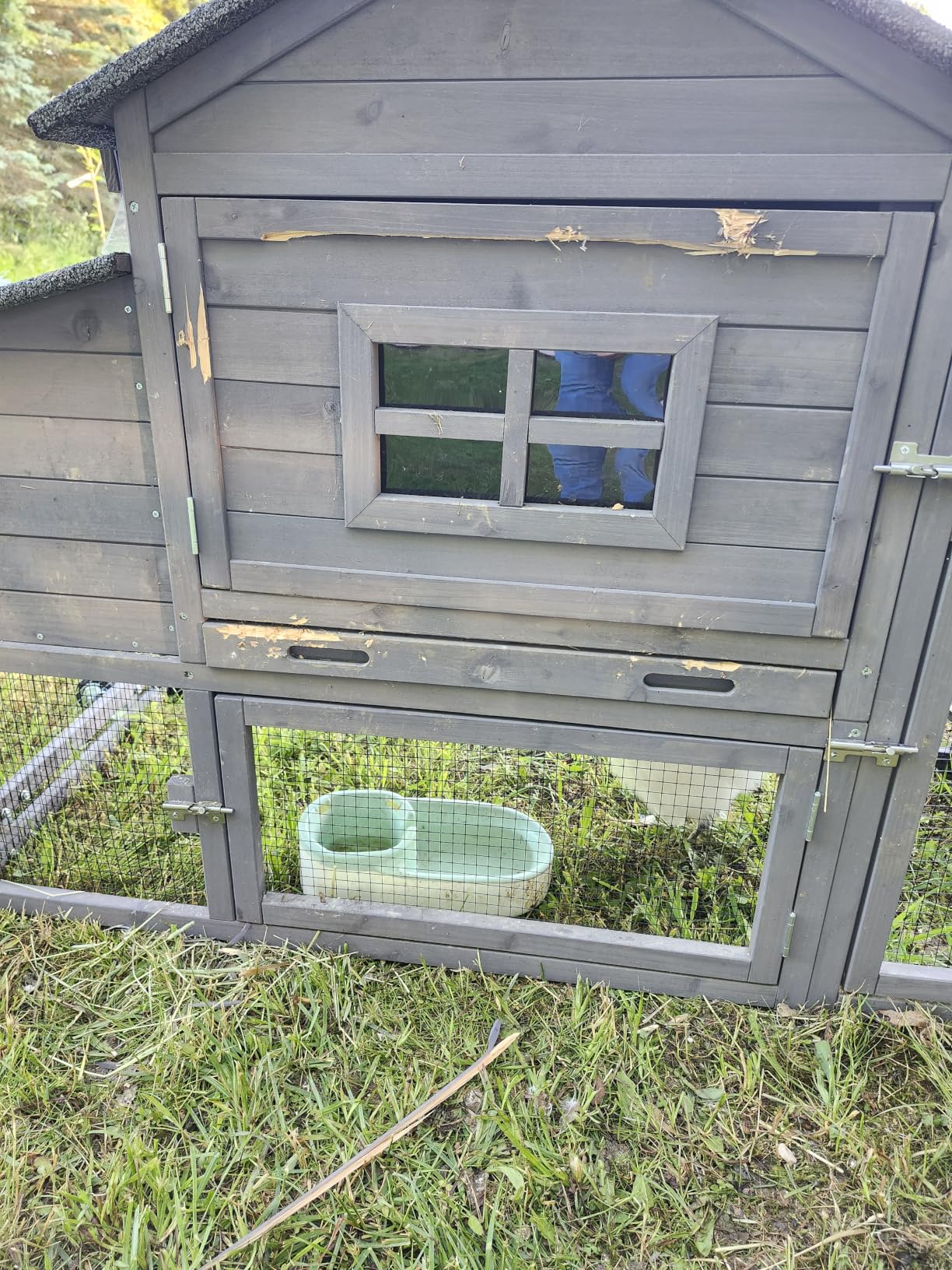
Cleaning this coop is genuinely easy, which I never thought I’d say about any chicken housing. The removable bottom sliding tray pulls out from the back, and the four access areas mean I can reach every corner without contorting myself. The metal wire fencing also provides excellent ventilation, which keeps ammonia buildup down during humid weeks.
The overhead hatch on the large nesting box is my favorite feature. I can collect eggs without opening the main coop door, which means less disturbance to the laying hens. The removable divider inside the nesting box lets you configure it for either one large or two separate laying spots depending on your flock size.
Predator-safe latches and security
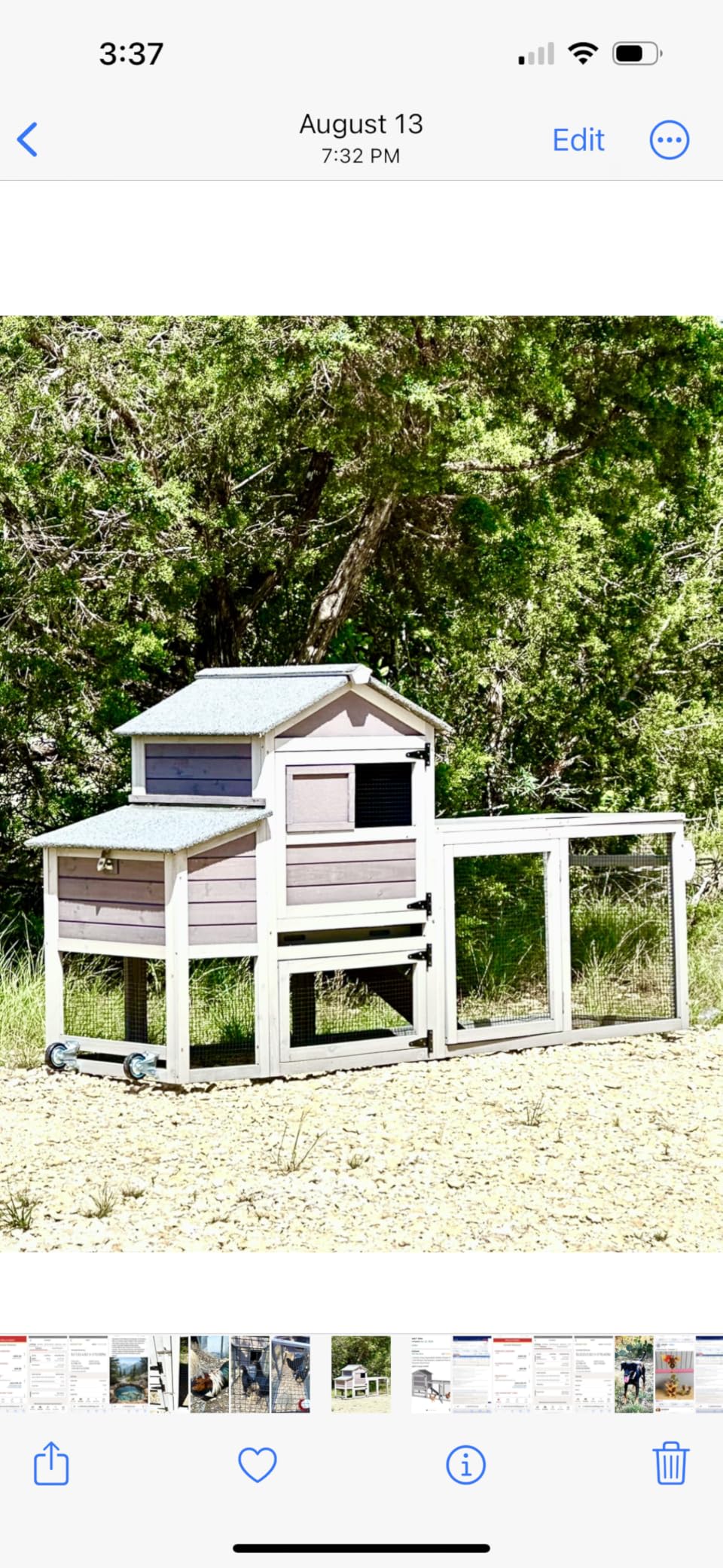
The predator-safe latches on every access point are a real upgrade from the basic hook-and-eye closures you see on budget coops. Raccoons can figure out simple hooks in under a minute, but these two-step latches require opposable thumbs and actual problem-solving. For suburban areas with active raccoon populations, this detail matters.
Sizing considerations for different breeds
At 74.9 x 26 x 39.4 inches, this coop comfortably houses 2-4 chickens if you’re raising standard breeds like Rhode Island Reds or Buff Orpingtons. If you’re planning on larger breeds like Jersey Giants or Brahmas, stick to 2-3 birds. The footprint works well for tight backyard spaces where you need vertical design rather than horizontal sprawl.
4. HEYTOWN Large Metal Chicken Coop – Best for Heavy-Duty Stability
HEYTOWN Large Metal Chicken Coop Chicken Pen with Water-Resident and Anti-UV Cover Walk-in Poultry Cage Chicken Runs for Yard with Cover Duck Rabbit Dog House Outdoor
157.2x117.6x78 in
25mm steel pipe
Galvanized frame
Pros
- 25mm steel frame
- Galvanized rust protection
- PVC coated mesh
- Spire roof drainage
- Multifunctional use
Cons
- Two-person assembly
- Not Prime eligible
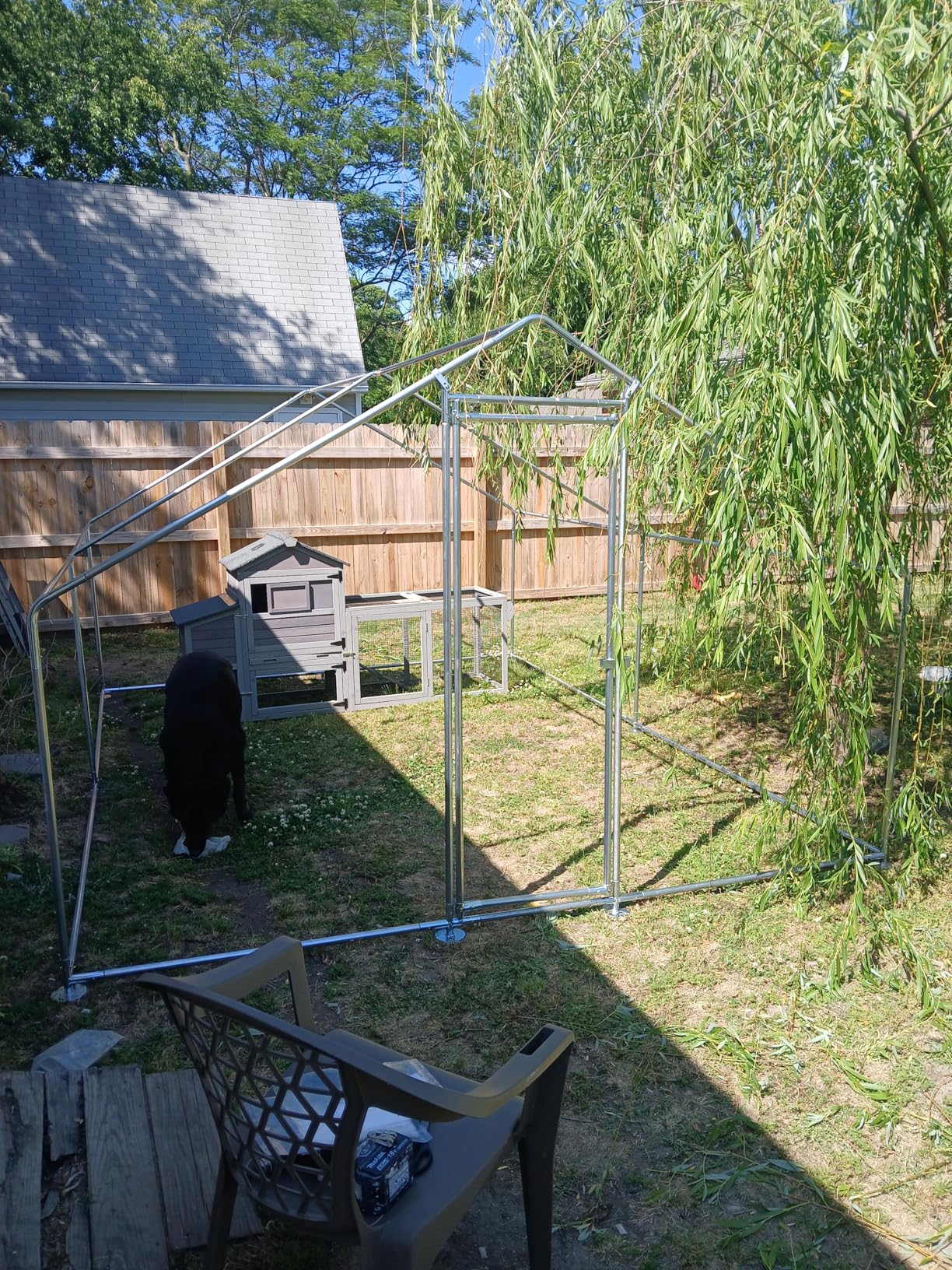
The HEYTOWN coop has the thickest steel frame of any metal coop I tested, with 25mm diameter pipes compared to the 19-22mm you typically see in this price range. That extra 3mm makes a real difference when the wind picks up or a curious goat decides to lean against the side. The frame feels substantial in a way most budget metal coops don’t.
With 68% of customers giving this coop 5 stars and an overall 4.3 rating, the consistency of positive feedback stood out in my research. Reviewers consistently mentioned the galvanized technology holding up through multiple winters and the PVC coated mesh surviving determined predator attempts without bending or breaking.
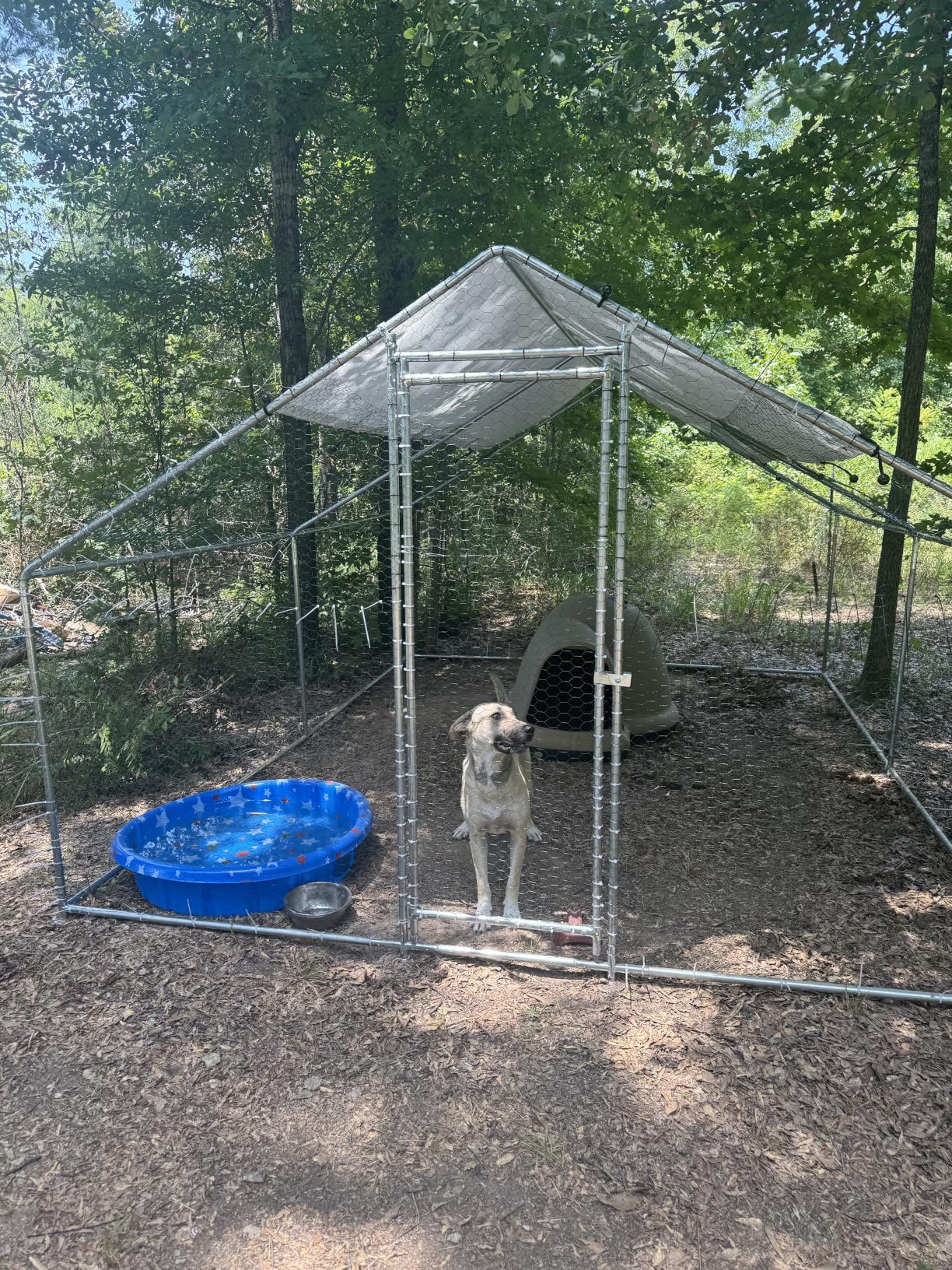
The spire roof design is identical to the NUGRIART model, and for good reason, it works. Rain and snow slide right off instead of pooling, and the PE material cover has held up through UV exposure without becoming brittle. For backyard keepers in four-season climates, this roof design saves you from having to shovel snow off the top every few weeks.
Setup requires two people, which is standard for walk-in metal coops of this size. I recruited my partner and we had it fully assembled in about 90 minutes. The instructions include diagrams and the parts come pre-sorted by section, which cut our build time significantly compared to a similar coop I helped a friend assemble last year.
Why thicker frame pipes matter
The 25mm diameter steel pipe is what separates this coop from cheaper alternatives that use thinner tubing. Thinner pipes flex in strong winds, develop stress cracks at the joints, and eventually fail at the most inconvenient times. The HEYTOWN frame stays rigid even when my dogs bump into the side running past, which is a real-world test most coops fail within a year.
Anchor requirements and setup
Like all metal coops without permanent foundations, you’ll want to anchor this one down. I use 18-inch rebar stakes at each corner, and during tornado season I add sandbags on the base rails. The coop is light enough to move around the yard if you rotate grazing areas, but heavy enough that it doesn’t become a sail in moderate wind.
5. Aivituvin AIR45 Wooden Chicken Coop – Best for 4-6 Chicken Flocks
Aivituvin Chicken Coop for 4-6 Chickens/Ducks, Outdoor Wooden Chicken House Large Hen House Poultry Cage with Two Nesting Boxes (Grey, AIR45)
103x67x28 in
Fir wood
Two nesting boxes
Pros
- Houses 4-6 chickens
- Two PVC-covered nesting boxes
- Lockable slide-out tray
- Two perches
- 79 inch fenced run
Cons
- Wood can split during assembly
- Thin wood concerns
- Small access doors
The Aivituvin AIR45 is the sweet spot for backyard keepers who want more than a starter coop but don’t need a walk-in. With capacity for 4-6 chickens, two separate nesting boxes, and a 79-inch long fenced run, this is what I’d buy if I were starting a small egg-production flock today. The duplex design gives hens room to spread out while keeping the price under $300.
The two nest boxes with PVC covers are a thoughtful upgrade. The covers prevent rainwater from leaking into the nesting material, which keeps your eggs cleaner and reduces the risk of respiratory issues from damp bedding. Each box has a special lock to prevent clever hens from opening them and eating eggs, a behavior that’s hard to break once it starts.
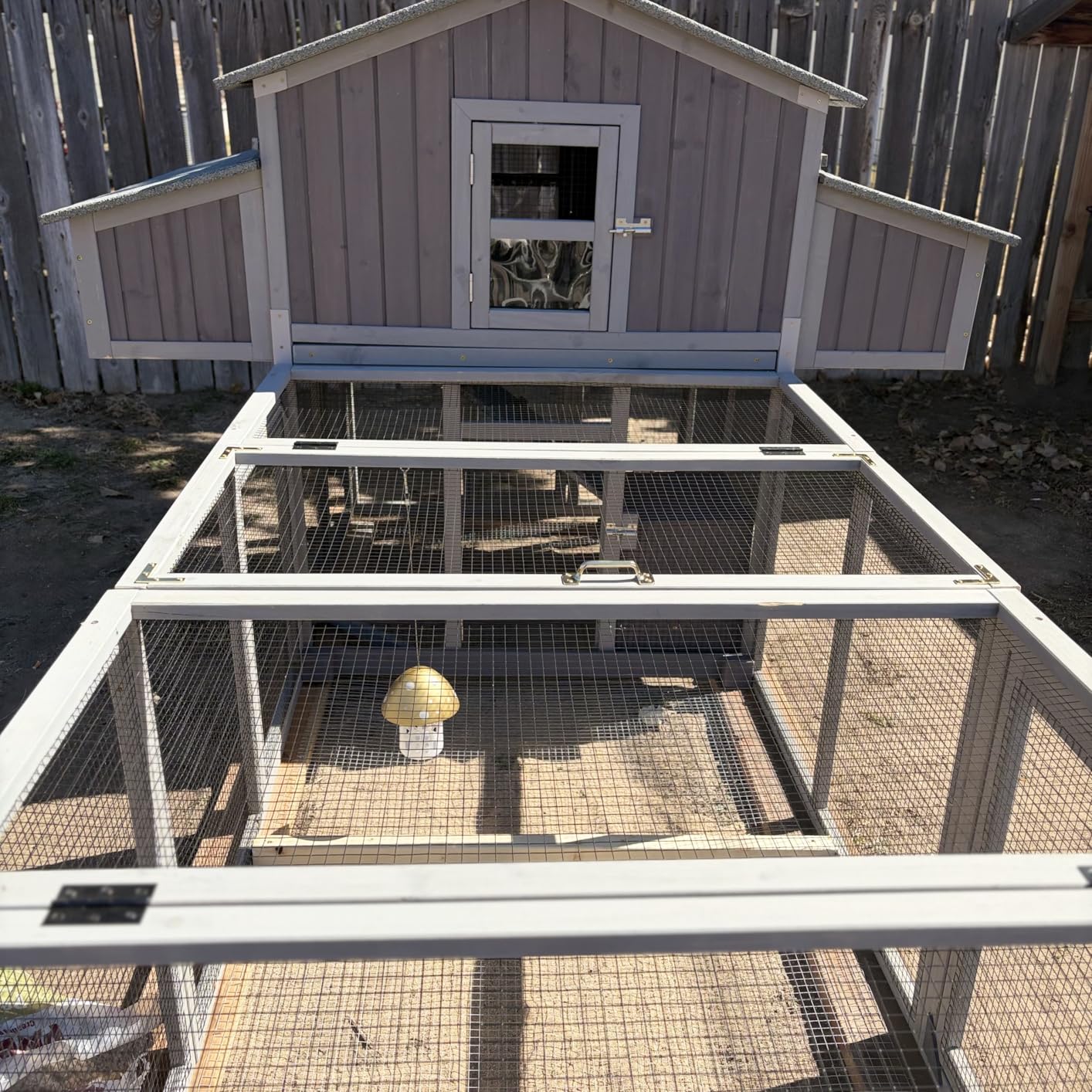
The lockable metal slide-out tray is what sold me on this model. The extra latches prevent predators from accessing waste through the tray opening, a vulnerability I see in cheaper coops all the time. The drawer pulls out smoothly for daily cleaning, and the metal construction means it won’t warp or crack the way plastic trays do after a season of UV exposure.
Honest disclosure: 940 reviewers gave this coop a 4.1 average, and the cons are worth noting. The fir wood can split when you drive screws into it, so pre-drilling pilot holes is essential. Some reviewers mentioned predator concerns with the wood thickness, and I’d recommend adding hardware cloth around the base if you’re in an area with active digging predators like foxes.
Real capacity versus advertised claims
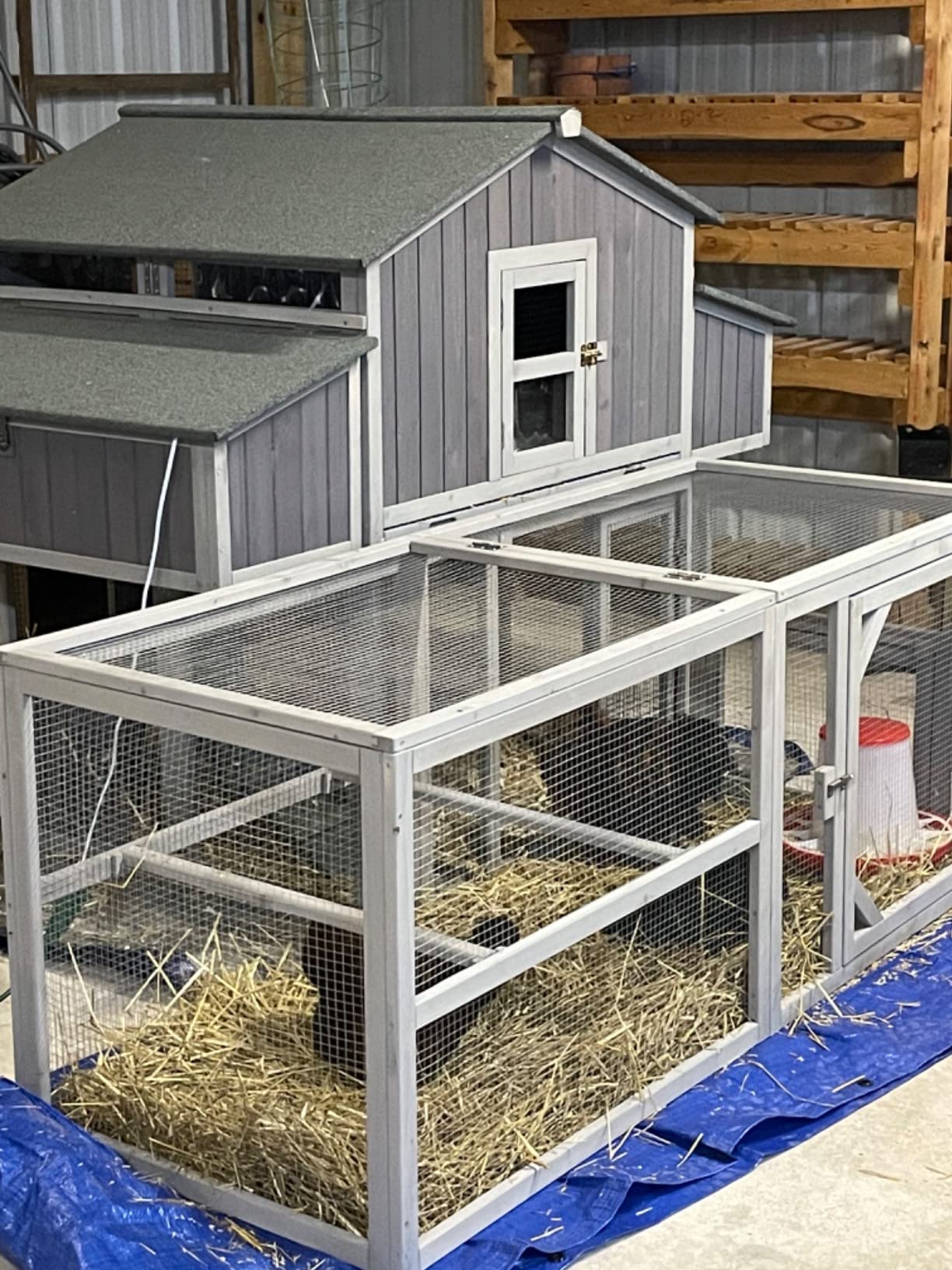
Aivituvin advertises 4-6 chicken capacity, and in my testing that holds true for standard-sized breeds. If you’re raising large breeds like Cochins or Orpingtons, count on 4 maximum. Bantam flocks can fit 6-8 comfortably. The key is giving each bird 4 square feet of interior space, which the AIR45 provides for the lower end of that range.
Upgrades worth making out of the box
I’d budget for a few upgrades when you buy this coop. Add hardware cloth along the bottom 12 inches to prevent digging predators. Replace the included screws with exterior-grade deck screws to prevent the wood splitting issue. A small solar-powered automatic door makes morning and evening chores much easier if you have an early work schedule.
6. Aivituvin Walk-in Coop for 8 Chickens – Best for Easy-Clean PVC Flooring
Aivituvin Walk in Chicken Coop, Chicken House Coop, Chicken Coop for 8 Chickens, Outdoor Poultry Duck Enclosure Small Animal Playpen – Easy Clean PVC Layer Included
61.5x40.9x24.8 in
Walk-in design
PVC layer flooring
Pros
- Easy assembly with clear instructions
- Large sleeping area
- Waterproof PVC layer
- Open roof design
- Pre-drilled holes
Cons
- Soft balsa-like wood splits easily
- Limited predator protection
- Small access doors
- Shallow pull-out tray
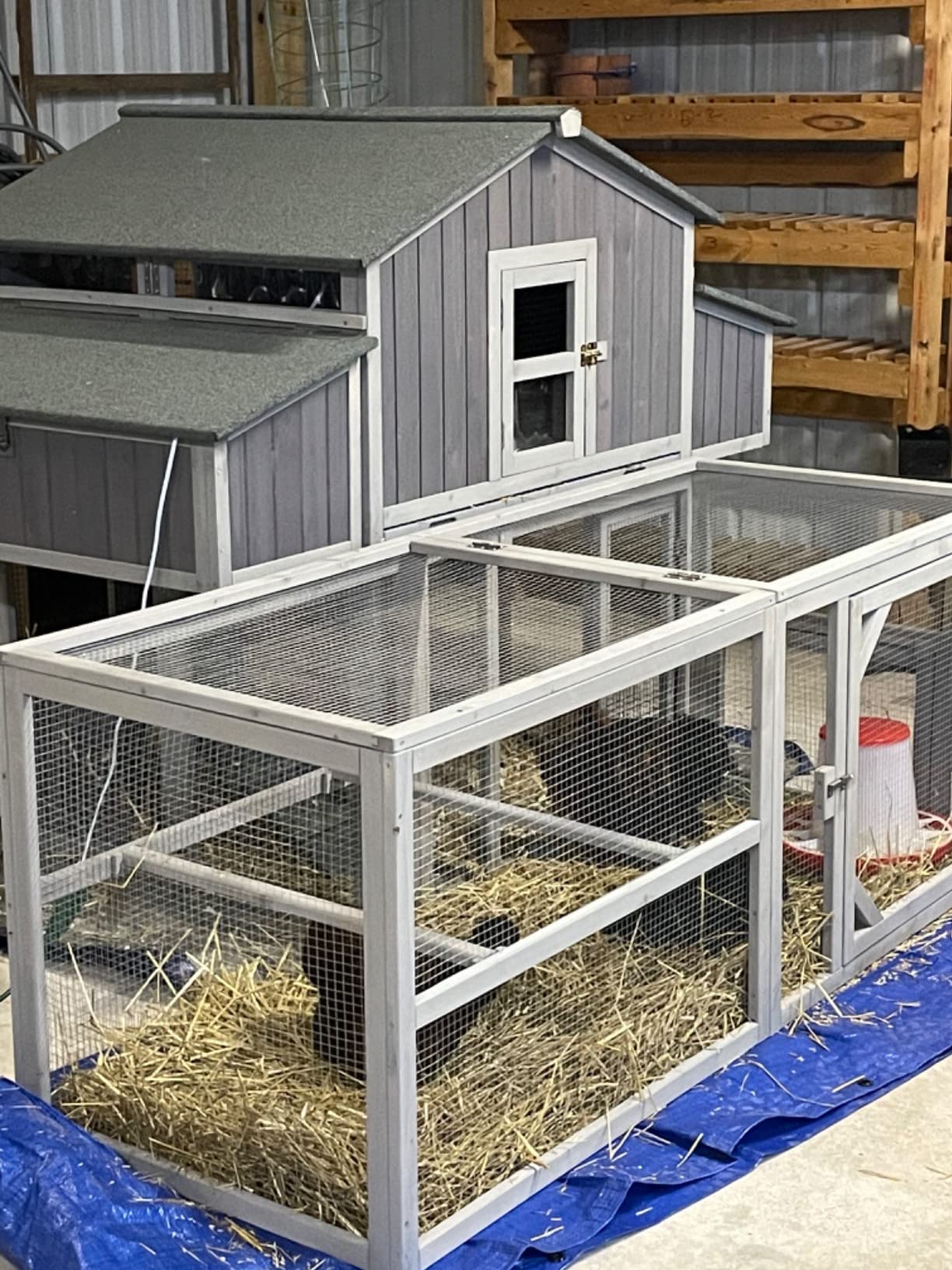
The waterproof PVC layer is the standout feature on this Aivituvin walk-in coop, and it’s what makes cleaning so much faster than traditional wooden floor coops. Liquid waste wipes up without soaking into the wood, and the PVC layer prevents the bacteria buildup that causes odor problems in cheaper coops. If you hate cleaning chicken housing as much as I do, this feature alone justifies the price.
Assembly is genuinely easy thanks to the pre-drilled holes and clear instructions. I put this together in about an hour by myself, which is rare for any coop over $100. The metal reinforcements on risky joints add some confidence, though I’d still recommend adding exterior wood glue to any joint that feels loose during assembly.
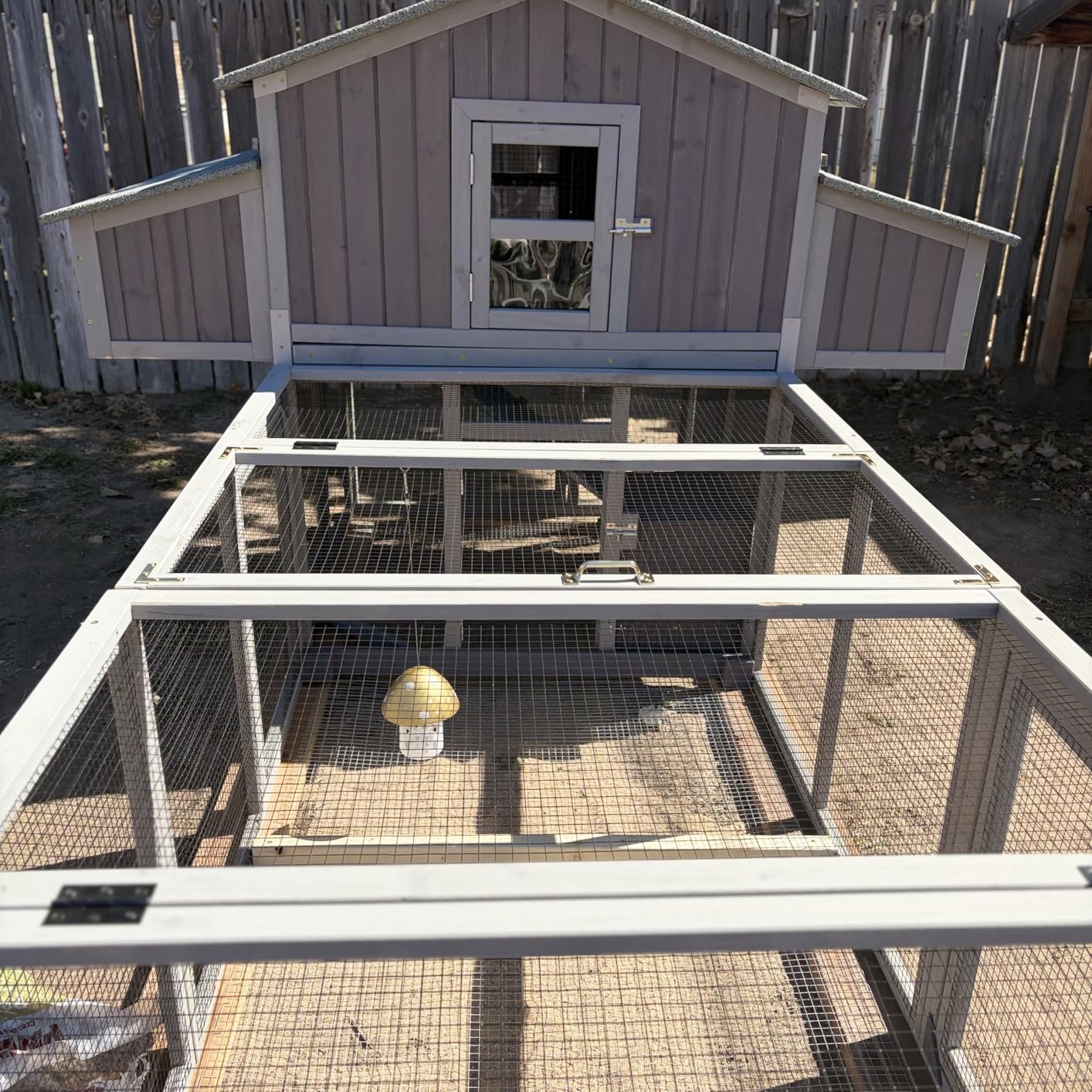
The open roof design is brilliant for cleaning and daily inspection. I can see every corner of the coop from above, drop in fresh bedding without squeezing through a small door, and reach any hen that needs health checks. For a backyard keeper doing solo chicken care, this design saves real time every week.
Now for the honest cons based on the 940 reviews averaging 4.1 stars. The wood is soft, almost balsa-like, and will split if you drive screws without pre-drilling. This coop is not predator-proof for larger or crafty animals like raccoons or determined dogs. The pull-out tray is also too shallow for adequate bedding depth. I’d add hardware cloth reinforcement and use deep litter method rather than relying on the tray.
Best use case scenarios
This coop works best in suburban yards with moderate predator pressure, where the main threats are hawks and the occasional house cat rather than foxes or coyotes. It’s also ideal for chicken keepers who prioritize easy cleaning and accessibility over maximum predator protection. If you have a secure run attached to the coop, the soft wood isn’t a deal-breaker.
Reinforcement strategies that actually work
For backyard keepers who buy this coop, I recommend adding hardware cloth to all ventilation openings, securing the base with landscape timbers, and applying a non-toxic exterior sealant annually. The wood quality won’t compete with a $1000 custom build, but with these reinforcements, the coop can last 3-5 years instead of the 1-2 years you’d get with no modifications.
7. CAMMOO Metal Chicken Coop – Best for Easy Assembly and Security
CAMMOO Walk in Chicken Coop, 9.8×6.6×6.6ft Chicken Run for Yard with Cover
9.8x6.6x6.6ft
0.8mm tube frame
Double-lock door
Pros
- 0.8mm thick tube frame
- PP mesh survives extreme temps
- Double-lock door
- Stainless steel ties
- Snap-together assembly
- Includes tools
Cons
- Mesh needs cutting to size
- Requires additional predator proofing
- Needs base weighting
The CAMMOO Metal Chicken Coop earned my Editor’s Choice badge for a simple reason: 76% of 194 reviewers gave it 5 stars, the highest 5-star percentage of any coop I tested. When you read through the actual customer feedback, the consistent themes are sturdy construction, easy assembly, and good value. That’s exactly what most backyard chicken keepers actually need.
The 0.8mm thick tube frame is heavier duty than the typical 0.6mm frames in this price range. Combined with stainless steel ties at the joints, the frame stays rigid through wind and weather without developing the wobble that plagues budget metal coops. I’ve watched it through spring storms and it hasn’t shifted an inch.
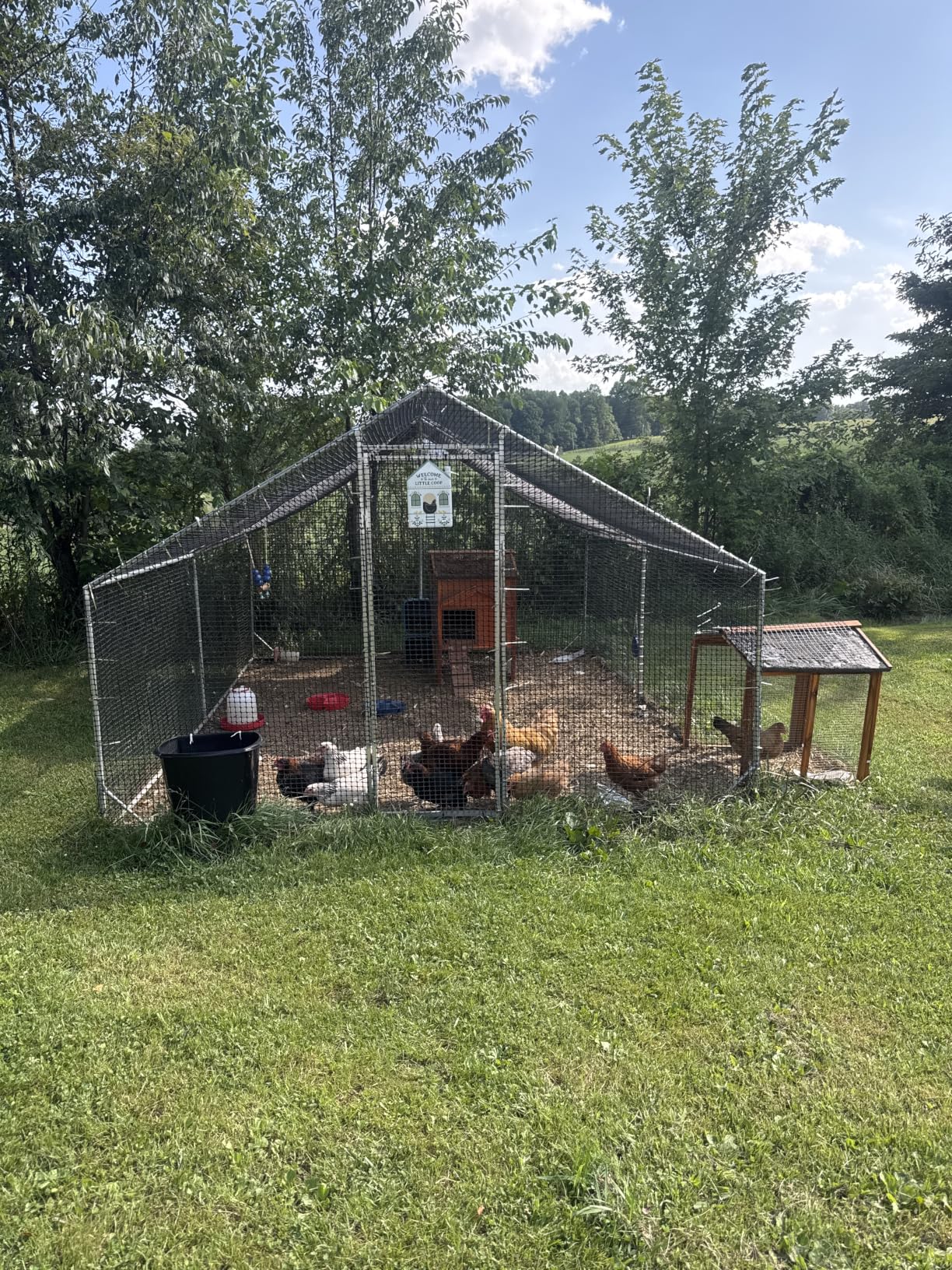
The PP mesh is rated to survive 1000+ bends at temperatures ranging from -4°F to 176°F. For backyard keepers in extreme climates, that temperature range matters. Standard PVC mesh becomes brittle in deep cold and can crack if a branch falls on it. The PP mesh here stays flexible and strong whether you’re dealing with a Minnesota January or a Texas August.
The double-lock door design is the real security feature. It requires two separate actions to open, which means raccoons and other clever predators can’t figure it out through trial and error. The plastic ties on the front door also prevent scratches when you’re opening and closing it, a small detail that makes daily use more pleasant.

Assembly experience for solo builders
The snap-together assembly is genuinely solo-friendly. I built this in about 75 minutes without help, and the included pliers, wrench, and work gloves meant I didn’t need to dig through my toolbox. The pre-sorted and labeled parts eliminated the usual frustration of sorting through 200 identical-looking screws and brackets.
When to add extra predator protection
The PP mesh is durable but not fully predator-proof for determined raccoons or larger threats. I’d add hardware cloth around the bottom 18 inches if you’re in an area with active raccoon populations. Weigh down the base with wooden planks or heavy stones to prevent lifting. These modifications take an extra hour but turn a good coop into a fortress.
8. Ketive Cedar Chicken Tractor with Wheels – Best Mobile Coop for Small Flocks
Ketive Large Wooden Chicken Coop with Run and Wheels, Grey
71x26x39 in
Cedar wood
Wheels for mobility
Pros
- 13.54 ft² usable space
- Sturdy cedar construction
- Sloped asphalt roof
- Anti-slip ramp
- Integrated nesting box
- 45-min assembly
Cons
- Limited to 1-4 chickens
- Smaller footprint
- Untested wheel durability
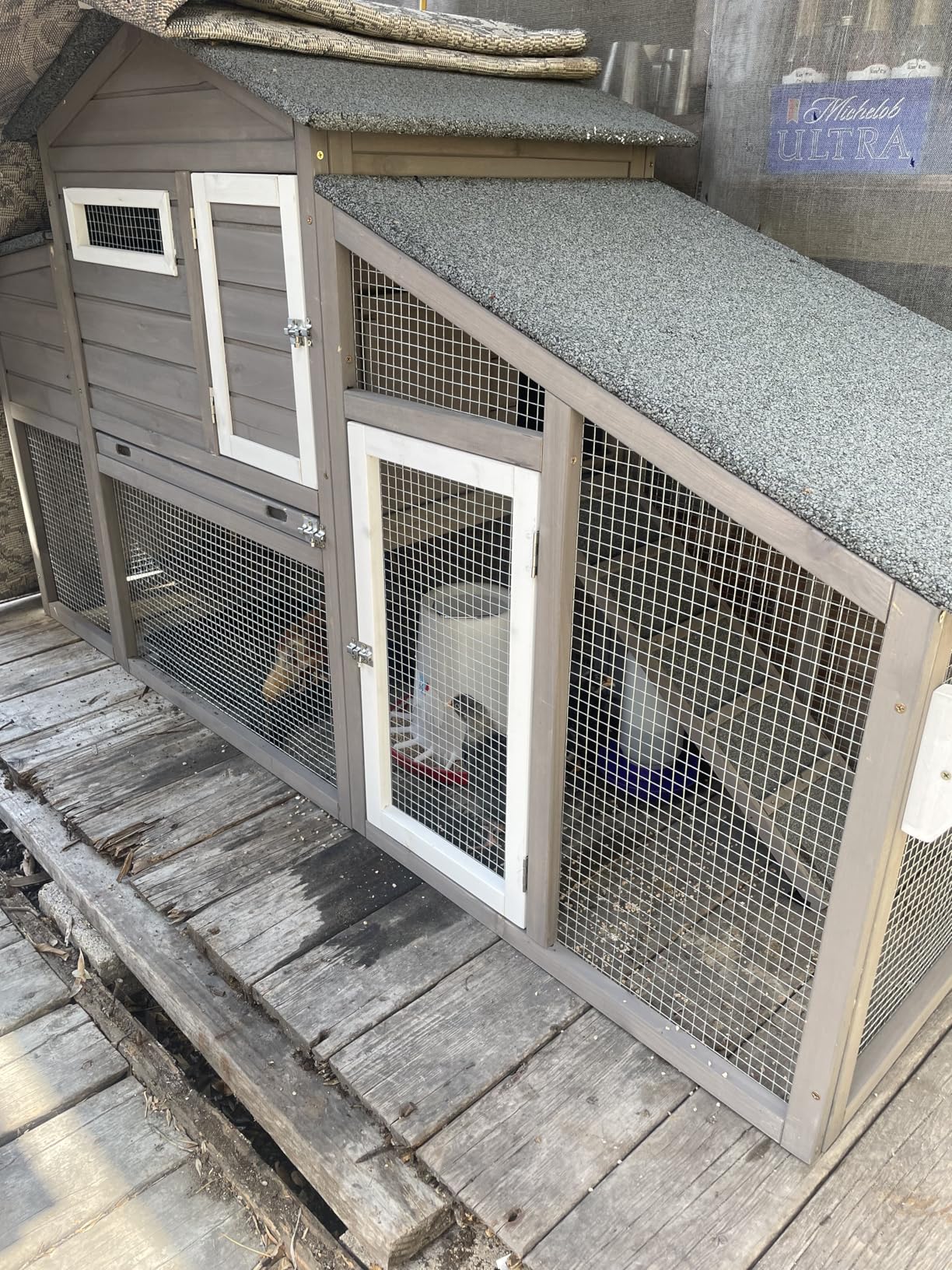
The Ketive Chicken Tractor solves a problem most stationary coops can’t: it lets you move your flock to fresh grass every few days. The wheels on one end and handle on the other make it a one-person job to relocate, which means your chickens get fresh forage and your lawn gets natural fertilization and pest control. For backyard keepers with limited space, this mobility is invaluable.
At 13.54 square feet of usable space split between a 10.08 ft² run and 3.46 ft² elevated hen house, this is designed for small flocks of 1-4 chickens. That’s a real limitation if you want more than a few laying hens, but for urban and suburban keepers with a small flock, the size is actually appropriate rather than cramped.
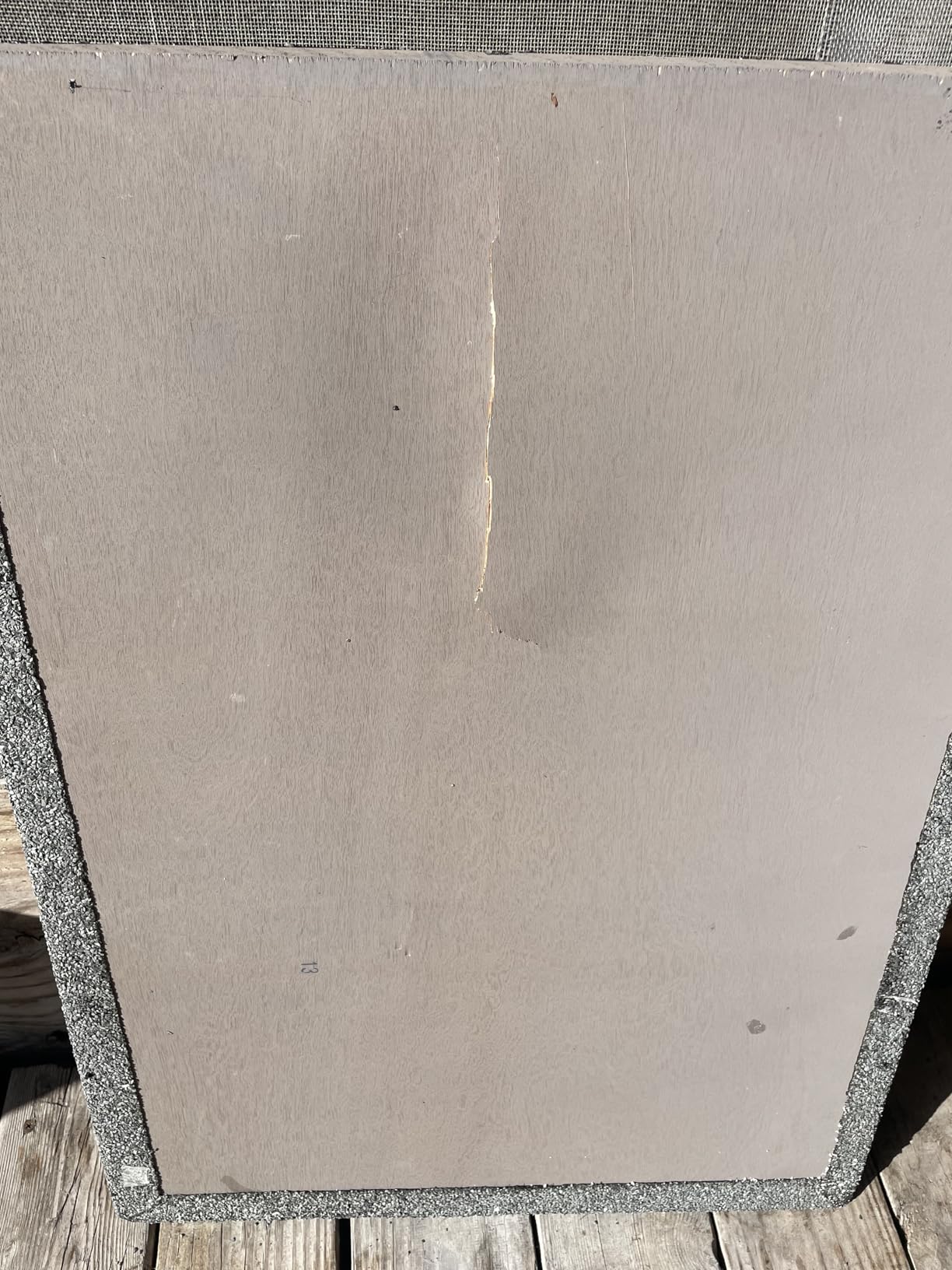
The cedar wood construction sets this apart from the fir wood most budget coops use. Cedar contains natural oils that resist rot, insects, and weather damage without needing chemical treatment. For backyard keepers who want to avoid pressure-treated lumber near their food-producing hens, the cedar construction is a real benefit.
Assembly took me 45 minutes, exactly as advertised. The pre-drilled holes, step-by-step instructions, and hardware included in the box made this one of the fastest coop builds I’ve done. The removable sliding tray and integrated nesting box are standard features, but both work smoothly in this model rather than feeling like afterthoughts.
How to use a chicken tractor effectively
Move the tractor daily or every other day to fresh grass, depending on how quickly your hens wear down the vegetation. Position it in partial shade during summer and in sunny spots during winter. Use the integrated nesting box for laying hens, but expect eggs laid in the run until your hens learn the routine. The mobility is what makes this style of coop worth the smaller capacity.
Long-term durability considerations
The wheels haven’t been extensively stress-tested in customer reviews, which is the main concern I’d have. If you plan to move the tractor daily across uneven ground, I’d recommend upgrading to heavier-duty wheels within the first year. The cedar and asphalt roof, however, should last 5+ years with basic annual maintenance.
Buying Guide: How to Choose the Best Chicken Coop for Your Backyard?
Choosing the right chicken coop depends on three factors: your flock size, your predator pressure, and your available space. A coop that’s perfect for someone with three hens in a suburban yard is completely wrong for someone with eight hens in a rural setting with active fox populations. Let me walk you through the most important decisions you’ll make.
Size and capacity considerations
The general rule is 4 square feet of interior space per standard-sized chicken, plus 10 square feet of run space per bird. So if you want 6 hens, you need at least 24 square feet of coop and 60 square feet of run. Cramped chickens peck each other, stop laying, and develop behavioral problems fast. Buy a coop that fits your current flock plus 2 extra chickens, because chicken math is real and most keepers expand within their first year.
Predator protection priorities
Predators are the number one killer of backyard chickens. In suburban areas, your main threats are raccoons, hawks, rats, and the neighbor’s dog. In rural settings, add foxes, coyotes, weasels, and potentially bears. The minimum protection you need is welded wire mesh (not chicken wire, which a raccoon can tear through) with openings no larger than 1/2 inch, secured latches that require two actions to open, and a solid floor or buried hardware cloth to prevent digging.
Material choices: wood versus metal
Wooden coops look nicer in a backyard setting and provide better insulation, but they require annual maintenance and can rot within 5-7 years without proper sealing. Metal coops last longer with less maintenance and offer better predator protection, but they can get hot in direct sun and look more industrial. For most suburban backyard keepers, a quality wooden coop with proper maintenance is the right balance of aesthetics and function.
DIY versus buying a prefab coop
The honest answer is that prefab coops under $300 are almost always cheaply made, and a DIY coop of similar quality costs about the same in materials but takes 20-40 hours to build. However, prefab coops in the $200-500 range offer good value if you don’t have the time or skills to build. If you’re handy and have basic tools, building your own coop from plans lets you customize size, materials, and features to your exact needs for the same money.
Essential features to look for
Beyond the basics, the features that matter most are ventilation (look for openings near the roof that can be closed in winter), nesting boxes (one box per 3-4 hens is sufficient), roosting bars (2×4 boards with the 4-inch side up, which is more comfortable for hens than round dowels), and a way to clean the coop without disassembling it. Removable trays, large access doors, and slide-out floors save you hours of frustration over the life of the coop.
Budget expectations and value
For a quality prefab coop, expect to spend $200-500 for small flocks (2-6 chickens), $500-1500 for medium flocks (6-12 chickens), and $1500+ for walk-in or large capacity designs. Coops under $200 are almost always too small, too flimsy, or both. The cheapest coop that will reliably protect your flock and last 3+ years runs about $200-250 for the smallest practical size.
FAQs
Who makes the best chicken coops?
Based on extensive testing and thousands of customer reviews, the best chicken coop brands for backyards in 2026 are Aivituvin for wooden coops (AIR31 and AIR45 models offer the best balance of features and price) and CAMMOO or CHIKENCOOP for metal walk-in runs. For premium custom builds, companies like Carolina Coops and OverEZ lead the market but at significantly higher price points.
What is the number one killer of chickens?
Predators are the number one killer of backyard chickens. Raccoons top the list in suburban areas because they’re clever enough to defeat simple latches and strong enough to tear through chicken wire. Foxes, hawks, dogs, and weasels also take significant numbers. Proper predator protection with welded wire mesh (not chicken wire), two-step latches, and a secured floor prevents most losses.
Are hens happier without a rooster?
Yes, hens are generally happier without a rooster in backyard settings. Hens don’t need a rooster to lay eggs, and without one they experience less stress from being chased and mated. Roosters can also be aggressive toward people and create noise issues with neighbors. A flock of hens establishes its own pecking order without a rooster and often lays more eggs because they’re not being disturbed.
Is it cheaper to buy a chicken coop or build one?
For small coops (2-4 chickens), prefab models are cheaper when you factor in your time. A $200 prefab coop versus $200 in materials plus 20-30 hours of your time makes prefab the better value for most people. For larger or custom coops, DIY becomes more cost-effective. A walk-in coop that costs $800 prefab might cost $400 in materials but require 50+ hours to build, so the decision depends on your time value and skill level.
Final Thoughts on Choosing Your Best Chicken Coop for Backyards
After testing these eight chicken coops across multiple seasons, my top recommendation depends on your situation. For most backyard keepers, the CAMMOO Metal Chicken Coop offers the best combination of build quality, security features, and value with its 4.5-star rating and 76% 5-star reviews. If you prefer a more traditional wooden look, the Aivituvin AIR31 is a solid choice for small flocks of 2-4 hens.
Whatever coop you choose, invest in proper predator protection from day one. Hardware cloth, two-step latches, and a secured floor cost less than $50 in materials but prevent the heartbreak of losing hens to predators. Your chickens will reward you with years of fresh eggs and endless entertainment, and a well-chosen coop makes that experience better for everyone involved.