
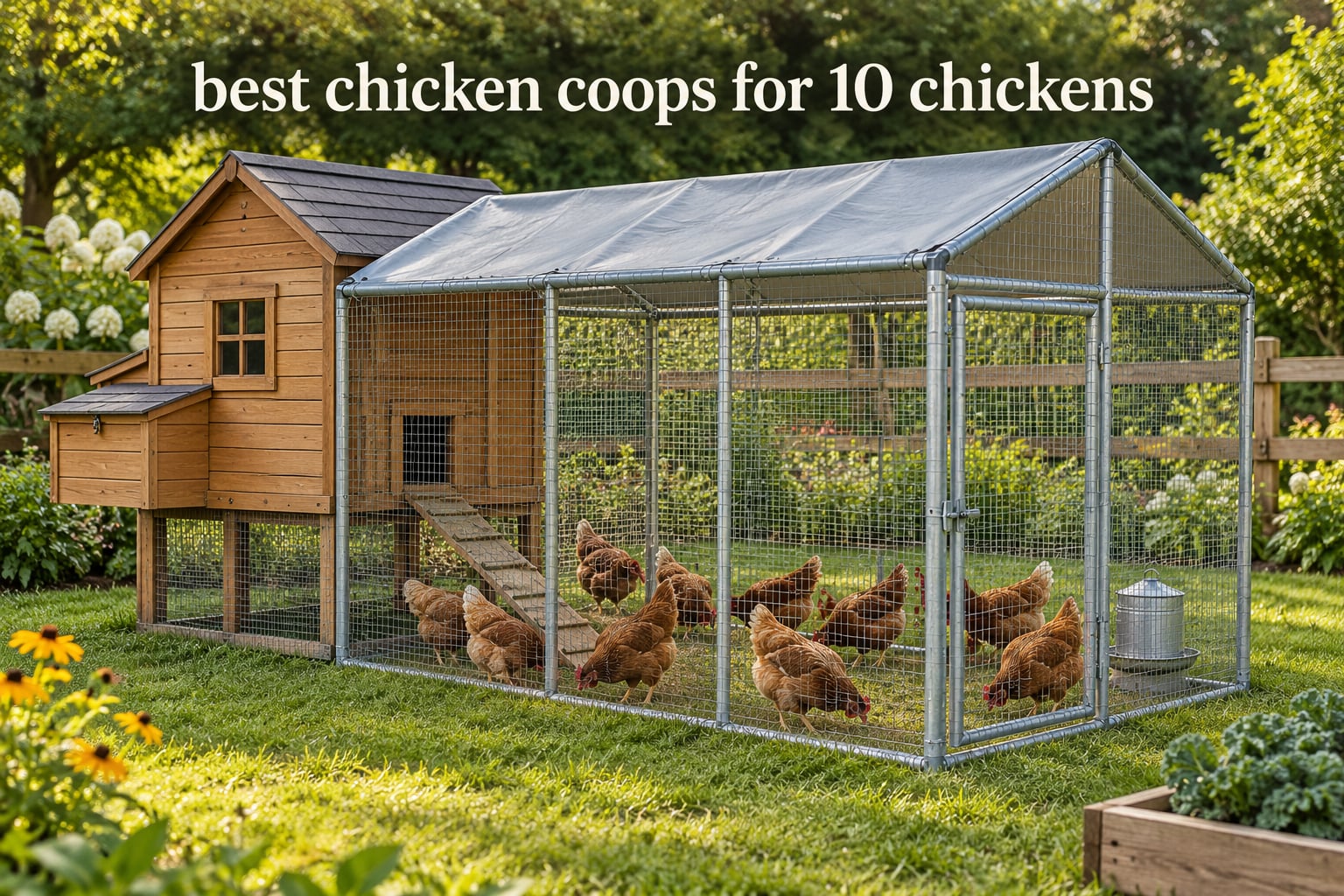
Ten hens need roughly 30-40 square feet of enclosed coop floor and another 80-100 square feet of covered run, plus 7-9 feet of roosting bar and at least three nesting boxes. Those are the numbers that matter, not the capacity printed on the side of a box.
We spent weeks reading owner reviews, digging through BackYard Chickens sizing threads and comparing frame gauges across every walk-in run and full coop sold for a 10-bird flock. What we found is that most listings marketed as “10 chicken coops” are outdoor runs, not coops. They keep birds in and they keep weather off, but nine of the ten options below still need a separate enclosed house with hardware cloth for overnight safety.
That is not a criticism of the products. It is the state of the market at this flock size, and it is why the fastest-growing forum advice is to plan the run and the house as two separate purchases. Our [best chicken coops for large flocks](/best-chicken-coops-for-large-flocks/) guide covers the bigger builds if your flock is heading past a dozen birds.
Table of Contents
Top 3 Picks: Best Chicken Coops for 10 Chickens (October 2026)

Aivituvin Extra Large Coop
- 6 locked nesting boxes
- Waterproof asphalt roof
- Sliding waste trays
- Sized for 6-10 chickens


The Aivituvin is the only unit on this list that works as a standalone home for ten hens, with an enclosed house, locking nesting boxes and slide-out waste trays. The HITTITE and NUGRIART runs are the two toughest enclosures for the money, and both use pipe gauges heavier than most of what is sold at this size.
Best Chicken Coops for 10 Chickens at a Glance
| Product | Specifications | Action |
|---|---|---|
| Aivituvin Extra Large Chicken Coop with Run |
|
Check Latest Price |
| HITTITE Large Metal Chicken Coop with Run |
|
Check Latest Price |
| NUGRIART Large Metal Walk-in Poultry Cage |
|
Check Latest Price |
 Sino Luban Large Metal Chicken Coop Run Sino Luban Large Metal Chicken Coop Run |
|
Check Latest Price |
 CAMMOO Walk in Chicken Coop with Cover CAMMOO Walk in Chicken Coop with Cover |
|
Check Latest Price |
 Outvita 19.5 x 10 ft Metal Chicken House Outvita 19.5 x 10 ft Metal Chicken House |
|
Check Latest Price |
 Xbrigh 20 x 10 ft Extra Large Metal Coop Xbrigh 20 x 10 ft Extra Large Metal Coop |
|
Check Latest Price |
 Hohuqeri Walk-in Poultry Cage 7 x 6.6 ft Hohuqeri Walk-in Poultry Cage 7 x 6.6 ft |
|
Check Latest Price |
 UDPATIO Large Metal Walk-in Run UDPATIO Large Metal Walk-in Run |
|
Check Latest Price |
 CHIKENCOOP 9.8 x 6.5 ft Metal Chicken Coop CHIKENCOOP 9.8 x 6.5 ft Metal Chicken Coop |
|
Check Latest Price |
One note on the table before we go further: capacity here means the maker’s own rating, and most of these makers assume a flock that spends the day free-ranging in the yard. If your ten hens will be shut inside the enclosure overnight through winter, treat the smaller enclosures as runs and add a separate house.
1. Aivituvin Extra Large Chicken Coop – Best Overall Coop for 10 Chickens
Aivituvin Extra Large Chicken Coop with Run for 6-10 Chickens, Weatherproof
118 x 56.7 x 50 in
6 locking nest boxes
Waterproof asphalt roof
5 access doors
Pros
- Genuinely extra-large footprint rated for 6-10 chickens with a covered run
- Six predator-proof nesting boxes under a lock
- Waterproof asphalt roof plus PVC covers over the nesting boxes
- Sliding waste trays and five access doors make cleaning fast
- Screened windows for airflow and odour control
Cons
- Much heavier and costlier than a bare metal run
- Assembly at this size realistically needs two people
- Build consistency is mixed at 4.1 out of 5
This is the one we kept coming back to. The 118-inch length gives you a genuine house-and-run combination rather than an open pen, and the six nesting boxes with a lock are more than a 10-hen flock needs, which means two birds can share a box and the rest stay undisturbed.
The waste management is what separates it from the metal runs. Removable sliding trays sit under the roosting area, so a 10-bird flock’s daily droppings come out in seconds instead of going in with a shovel. Five access doors mean you can reach the nest boxes, the interior floor and the run without cutting through the flock.
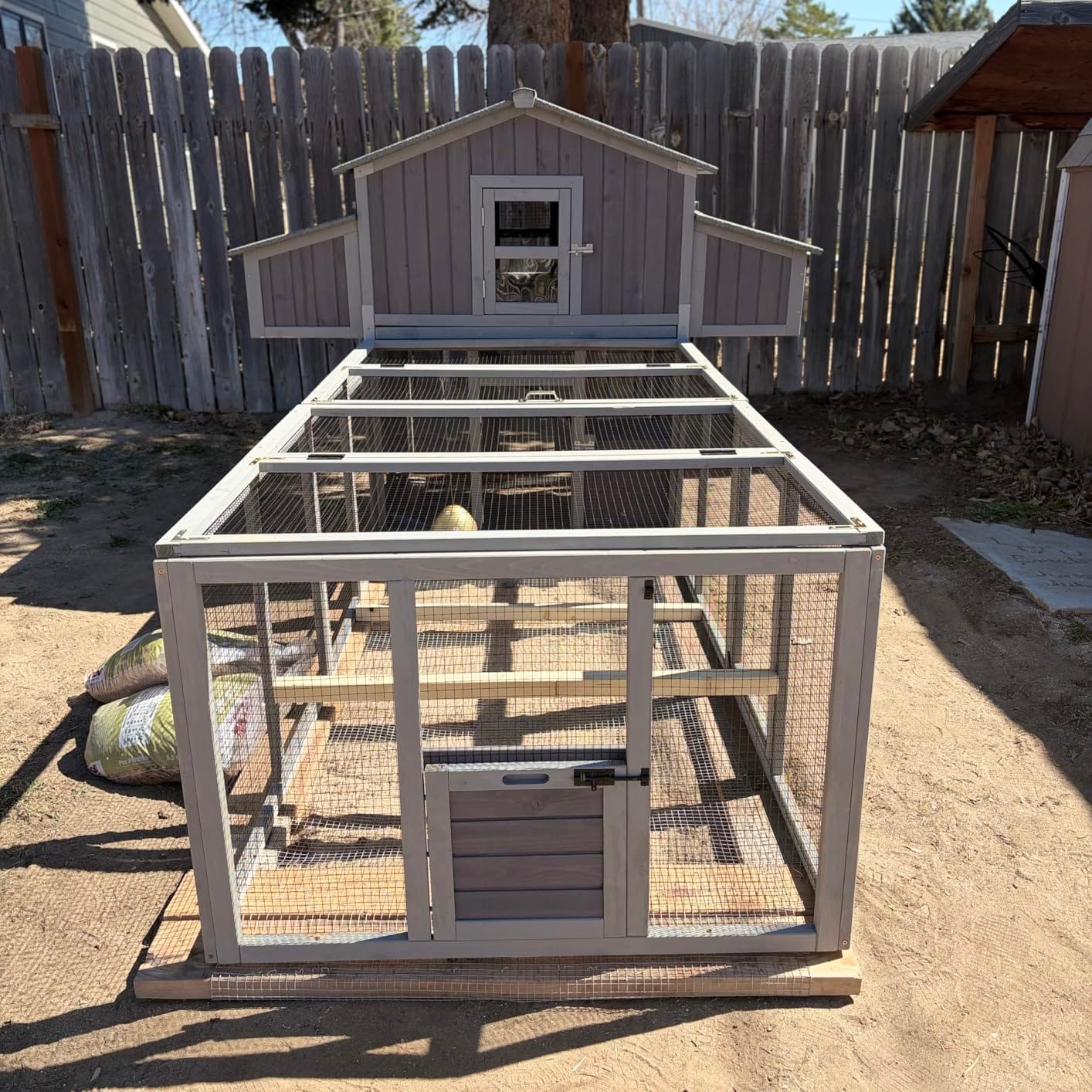
The 4.1 average across 947 ratings tells you something honest about large wooden-style coops: most owners are delighted with the size and the cleaning access, and a meaningful share hit snags with panels that did not line up perfectly or took far longer to build than advertised. Roughly 55 percent of reviews are five-star, which is a good sign rather than a great one.
If you only buy one thing from this page for a 10-hen flock, this is it. Pair it with 1/2 inch galvanized hardware cloth over the run mesh and a ground skirt, and you have a setup that handles a real winter.
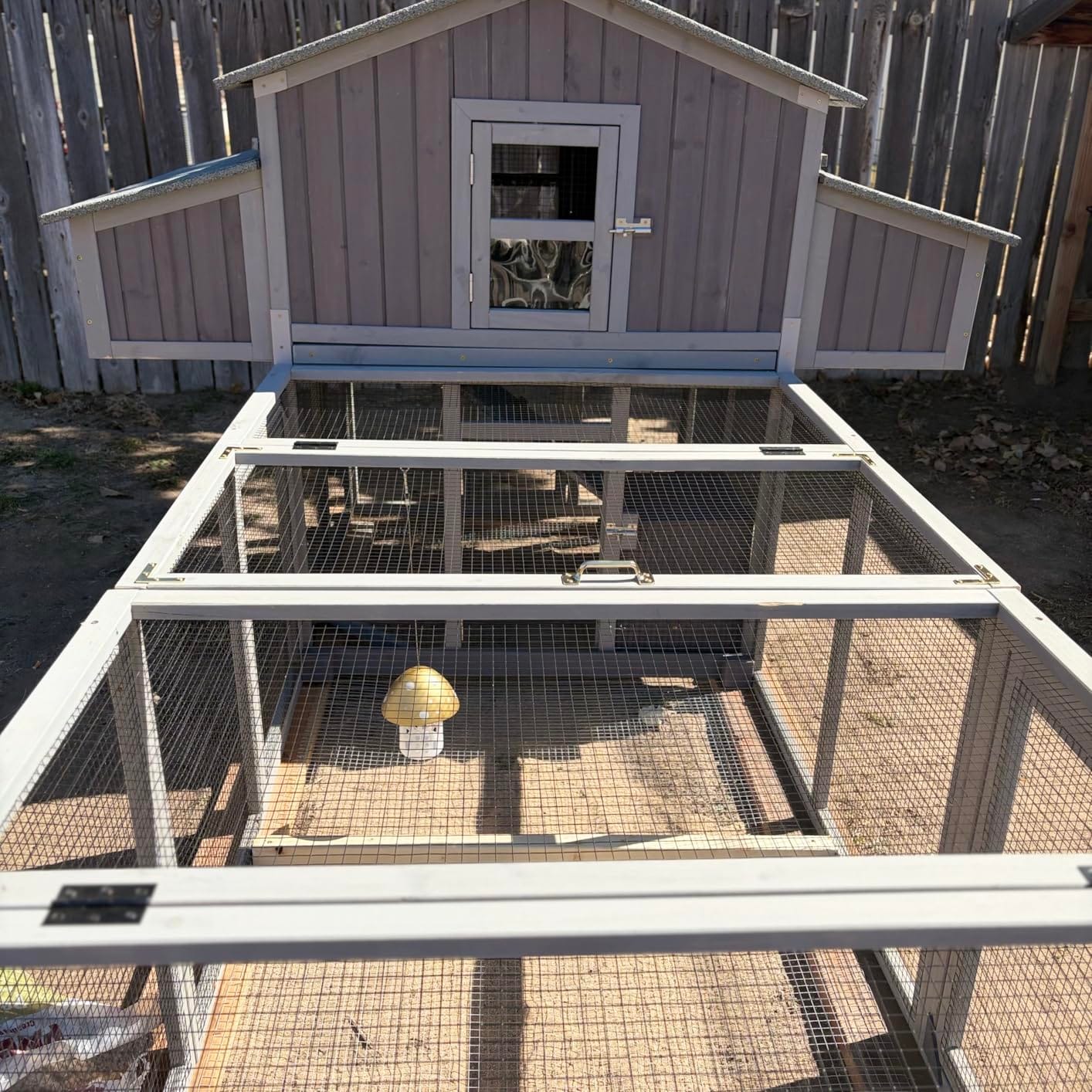
Who this coop suits for a 10-hen flock
It suits keepers who want one purchase to cover housing and daytime range, and who will not free-range daily. It also suits large breeds. Buff Orpingtons and Brahmas are heavy birds that need more floor space than a standard hen, and this is one of the few enclosures here with enough interior area to absorb that.
First-time keepers benefit from the pre-drilled, clearly labelled panels and the screened windows, which handle the ammonia problem that catches most new owners out in their first winter.
Where it falls short for 10 chickens
Owners consistently report that assembly is heavier than a metal run and wants two people, so budget a full weekend rather than an evening. The 4.1 rating also signals that build quality varies between units.
It is also the largest and heaviest item we looked at, and its footprint needs real yard space. Our [backyard chicken coop guide](/best-chicken-coops-for-backyards/) covers smaller-footprint options if your space is tight.
2. HITTITE Large Metal Run – Best Heavy-Duty Frame for 10 Chickens
HITTITE Large Metal Chicken Coop with Run, 19.19 x 9.84 x 6.56 ft Walk in Poultry Cage Chicken Run Pen, Outdoor Chicken Runs for Yard with Waterproof & Anti-UV Cover
230 x 118 x 79 in walk-in
0.8mm galvanized pipe
UV-resistant PE cover
113 lb
Pros
- Very large 19 ft run length gives ten birds room to forage
- 0.8mm galvanized pipe is thicker than most competing pens
- Metal frame holds up in wind and bad weather
- Walk-in height makes feeding cleaning and egg gathering easy
Cons
- Included hexagonal mesh contains birds but is not predator-proof on its own
- Clear the cover during heavy snow loads
- Large footprint means a two-person build
The 0.8mm pipe is the detail that matters here. Most budget runs at this footprint use 0.5mm tubing that bows under a determined rooster or in a hard wind, and this one uses reinforced galvanized pipe with a spire roof at 113 pounds.
At 19.19 feet by 9.84 feet, the run area is genuinely generous for ten hens, and the 6.56-foot height means you walk in rather than crouch. Owners who have had this a full year report the frame still sitting square.
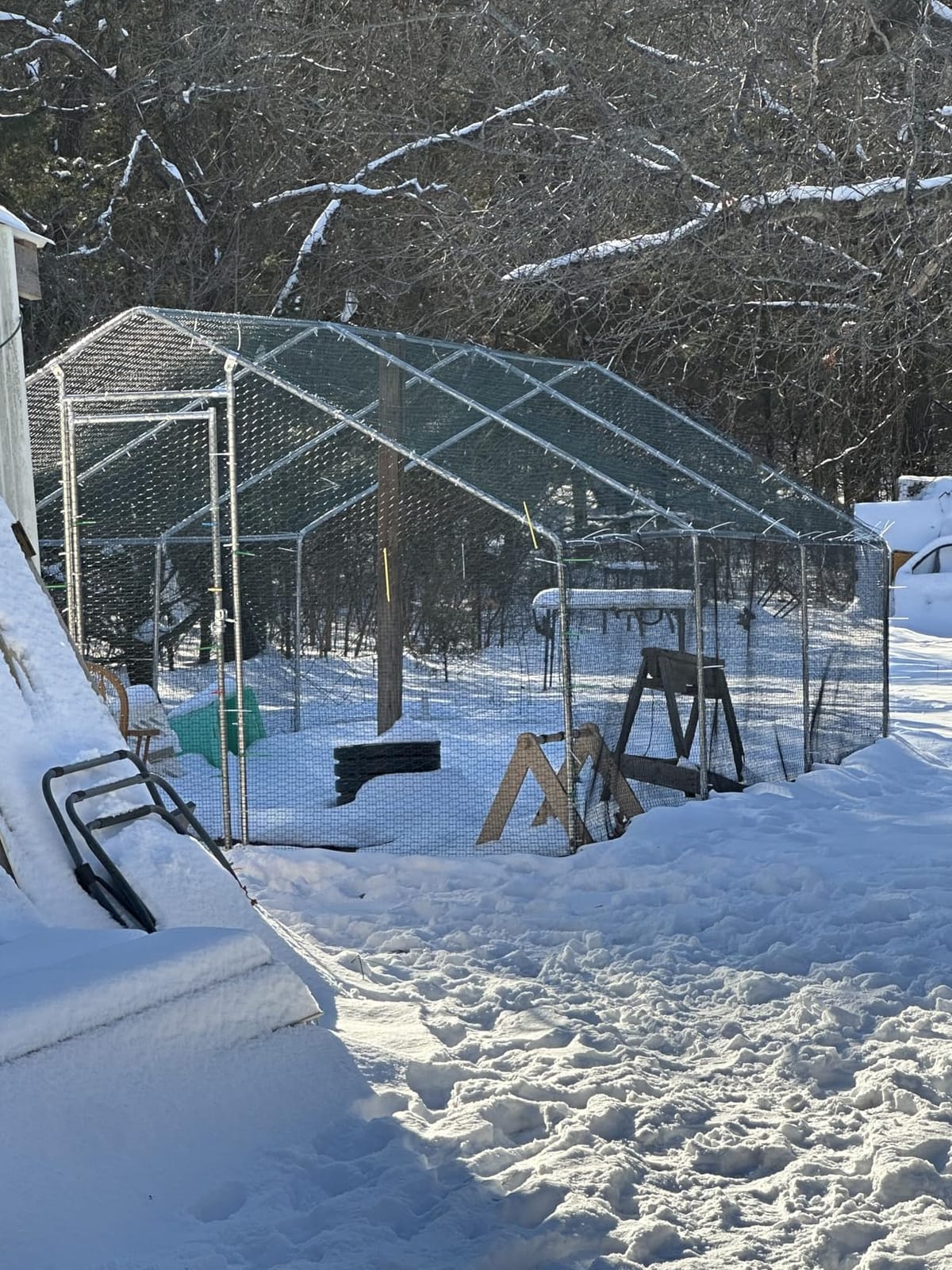
The honest weakness is the same across this whole category: the supplied PVC-coated hexagonal mesh keeps chickens in and turns away raccoons, but it is not a barrier to a determined weasel or fox. Nearly every owner in the reviews adds 1/2 inch hardware cloth, and we would plan for that from day one.
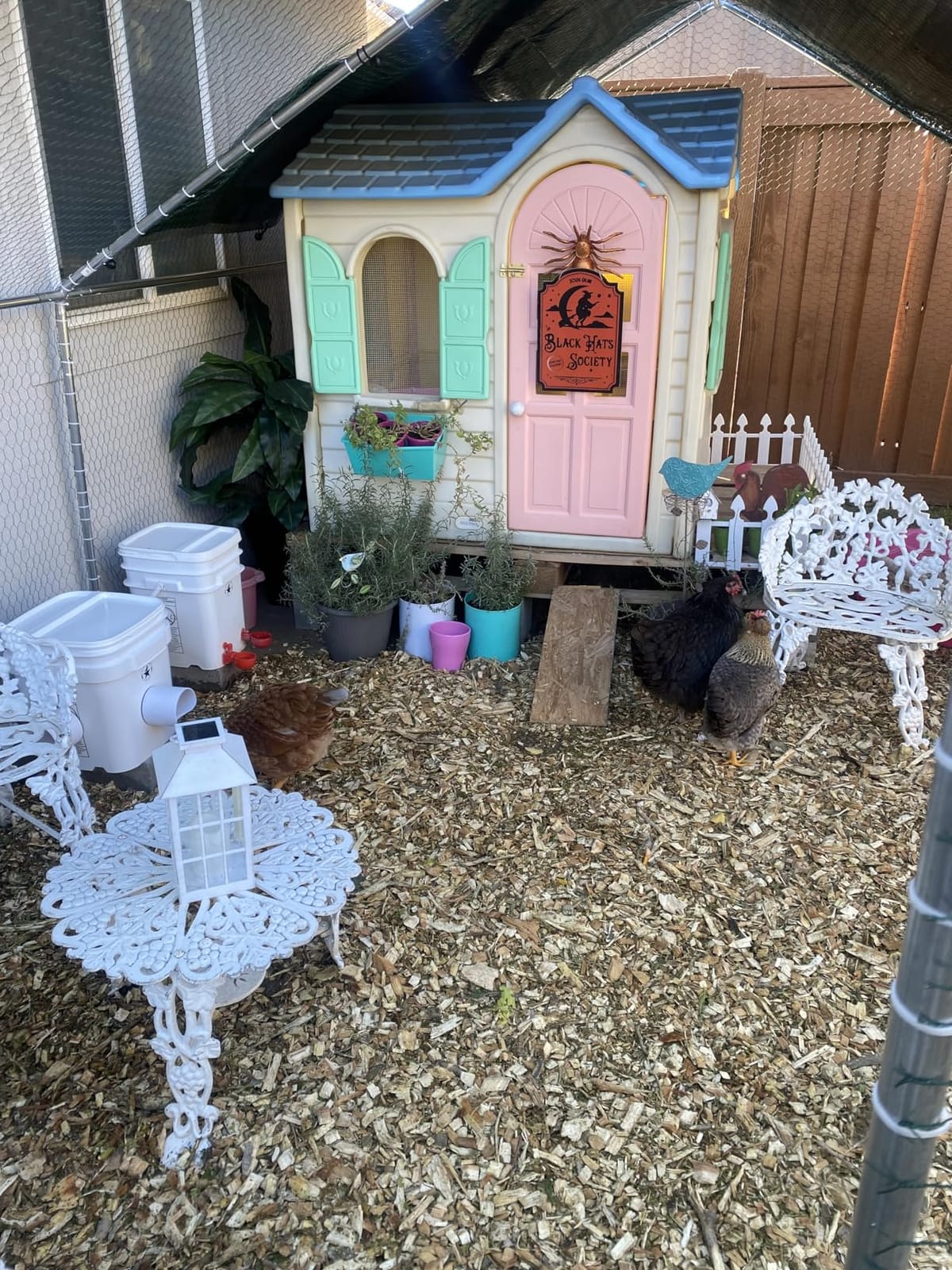
Snow is the second caveat. The PE tarp is waterproof and anti-UV, which is excellent for rain and summer sun, but reviewers in snowy areas clear it off during heavy falls so the frame does not carry the load.
When the HITTITE run is the right call
It is the right call when your birds free-range most of the day and you need a big, tough daytime yard. The pipe gauge means it stays rigid in wind, and the walk-in height makes daily cleaning far less of a chore than a low pen.
It also works as a multi-species enclosure. Several owners run ducks or rabbits alongside, and the 6.56-foot height suits larger birds.
When something else fits better
If you need overnight predator-proofing out of the box, this is not it. The mesh is containment mesh, and hardware cloth plus a buried skirt is a separate afternoon of work.
If a 19-foot run will not fit your yard, look at the NUGRIART or the shorter options further down. Our [large chicken coop roundup](/best-large-chicken-coops-for-flocks/) maps the bigger end of the market.
3. NUGRIART Large Metal Run – Premium Pick for 10 Chickens
NUGRIART Large Metal Chicken Coop Walk-in Poultry Cage Hen Duck Run House with Waterproof & Anti-UV Cover Galvanized Rabbits Habitat Spire Shaped Cage for Outdoor Yard Farm Use
236 x 118 x 79 in walk-in
1-inch galvanized steel
Spire PE cover
PVC-coated mesh
Pros
- 1-inch steel pipe is noticeably thicker than most market alternatives
- 19.7-foot run easily accommodates ten birds
- Spire roof drains rain snow and debris so nothing accumulates
- Galvanized finish resists rust in wet climates
Cons
- PVC-coated hexagonal mesh is containment rather than true predator-proofing
- Connection points are described by the maker as the hardest assembly step
- Gloves are recommended during assembly
This is the thickest steel in the roundup. A 1-inch diameter galvanized frame is a step above the 0.8mm pipe most competitors use, and across 647 ratings that build quality is what owners keep mentioning.
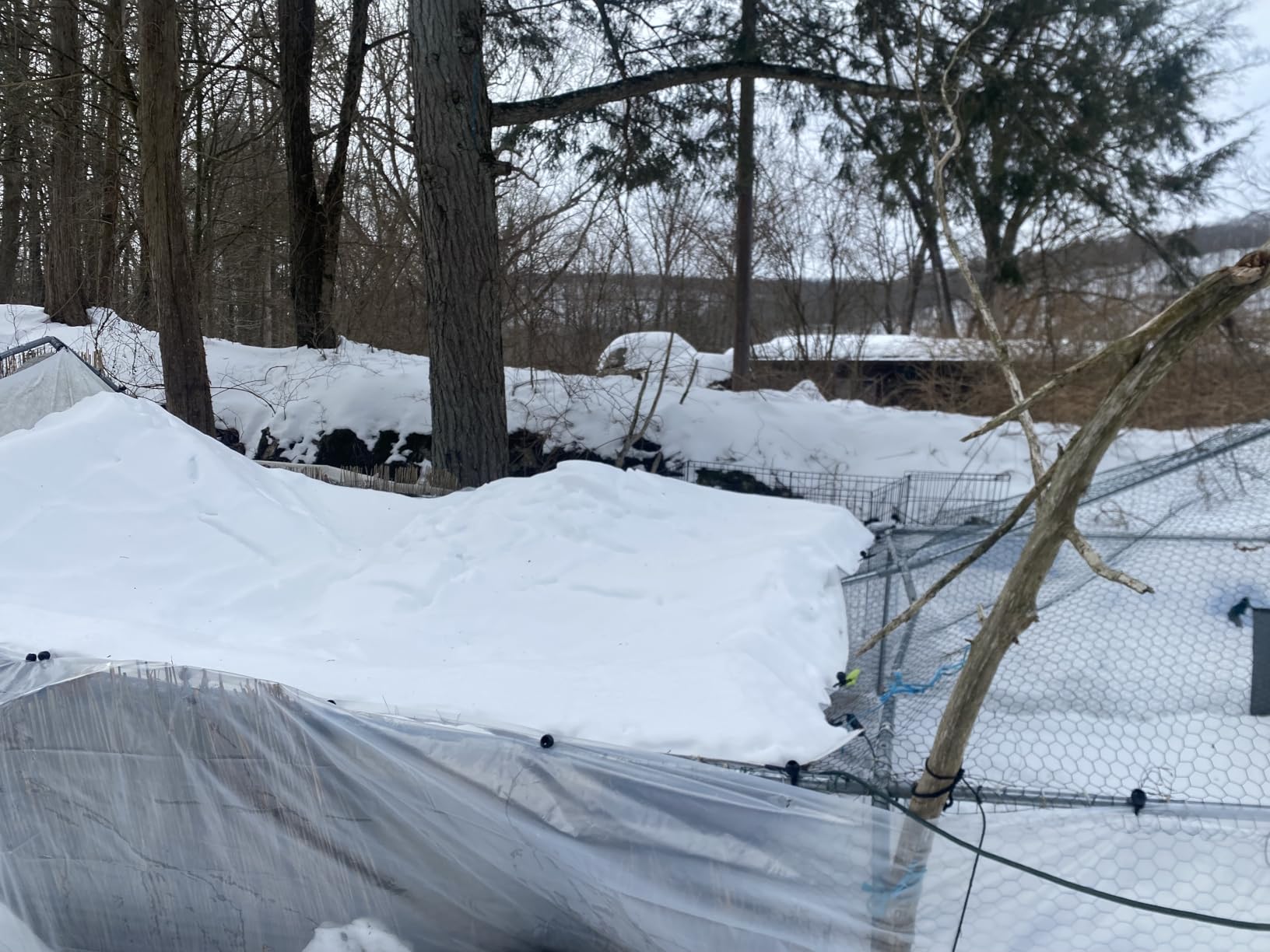
At 19.7 feet it is the longest run here, and the spire roof shape is genuinely useful in winter because snow and debris slide off instead of loading the frame. Buyers in rainy and windy regions report the galvanized structure stays stable year-round.
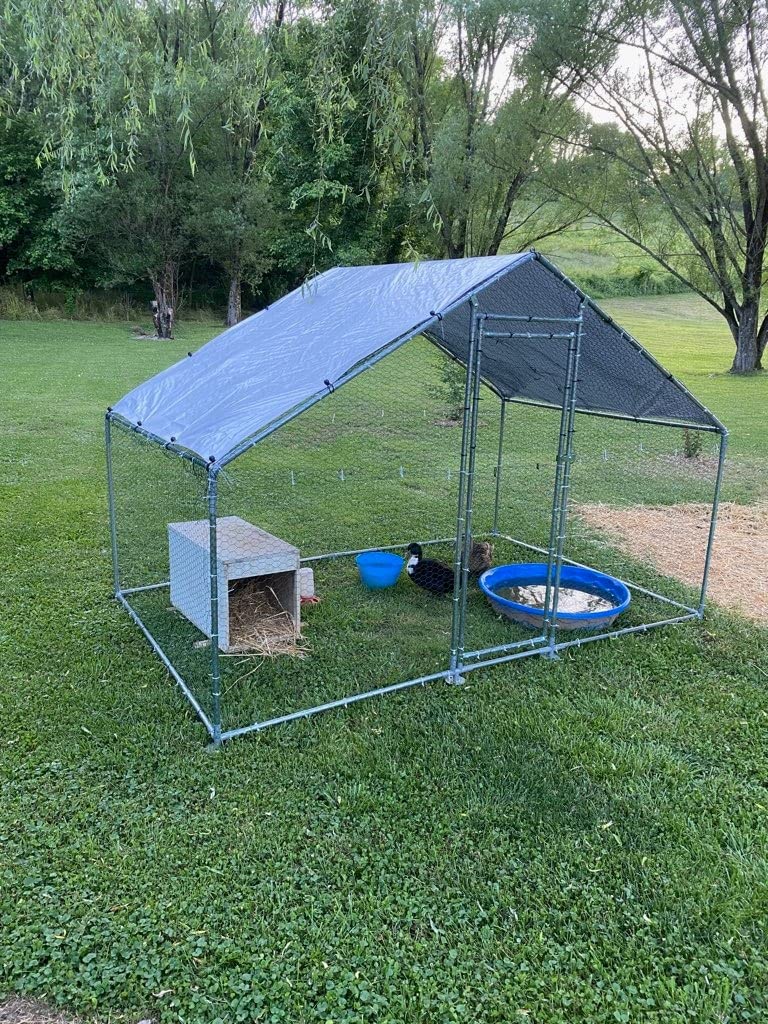
The spire design does mean the covered area is not fully usable headroom along the centre line, which matters if you want to stand up inside. Owners mostly use it on their knees or duck under the ridge, which is a fair trade for a roof that never holds snow.
As with the HITTITE, the mesh is the weak point. Most reviewers reinforce the base with boards or stone because hex mesh will not stop digging predators. Plan that in before the birds arrive.
Why NUGRIART works well for ten hens
The 1-inch frame is the deciding factor if your run has to survive wind, kids and dogs. It is also multi-species by design, and owners use it for ducks, rabbits and other poultry without modification.
For a flock that free-ranges during the day and needs a robust afternoon and evening yard, the extra pipe weight pays for itself over a decade of use.
Where buyers report friction
The connection points are the sticking point during assembly, and reviewers recommend gloves because the wire edges are sharp. Budget more time than the quick-build listings suggest.
It remains a run, not an overnight house. Pair it with hardware cloth and a proper enclosed coop, or use it as the daytime half of a two-part setup.
4. Sino Luban Metal Run – Budget Pick That Still Holds Ten Chickens
Sino Luban Large Metal Chicken Coop Run for 10 Chickens/Ducks, Chicken Runs for Yard with Waterproof Cover, Chicken Enclosure Chicken Pen Outdoor, Walk-in Poultry Cage (Upgrade Wall Support Brace)
79 x 79 x 75 in
Rated around 10 chickens
0.8mm zinc-coated pipe
14 ground stakes
Pros
- Lowest entry cost of any 10-bird-rated run here
- 0.8mm steel pipe beats the 0.5mm most competitors use
- 14 ground stakes hold it down in wind and heavy rain
- Upgraded wall support brace stiffens the frame
Cons
- Smallest footprint here at roughly 43 sq ft so ten birds get little free range
- Single access door makes catching individual birds harder
- Mesh deters some predators but is not a barrier against determined ones
If the goal is the least money for a metal run that still uses 0.8mm pipe, this is the pick. That pipe gauge matters more at this price than the square footage, because thin tubing is where budget runs fail first.
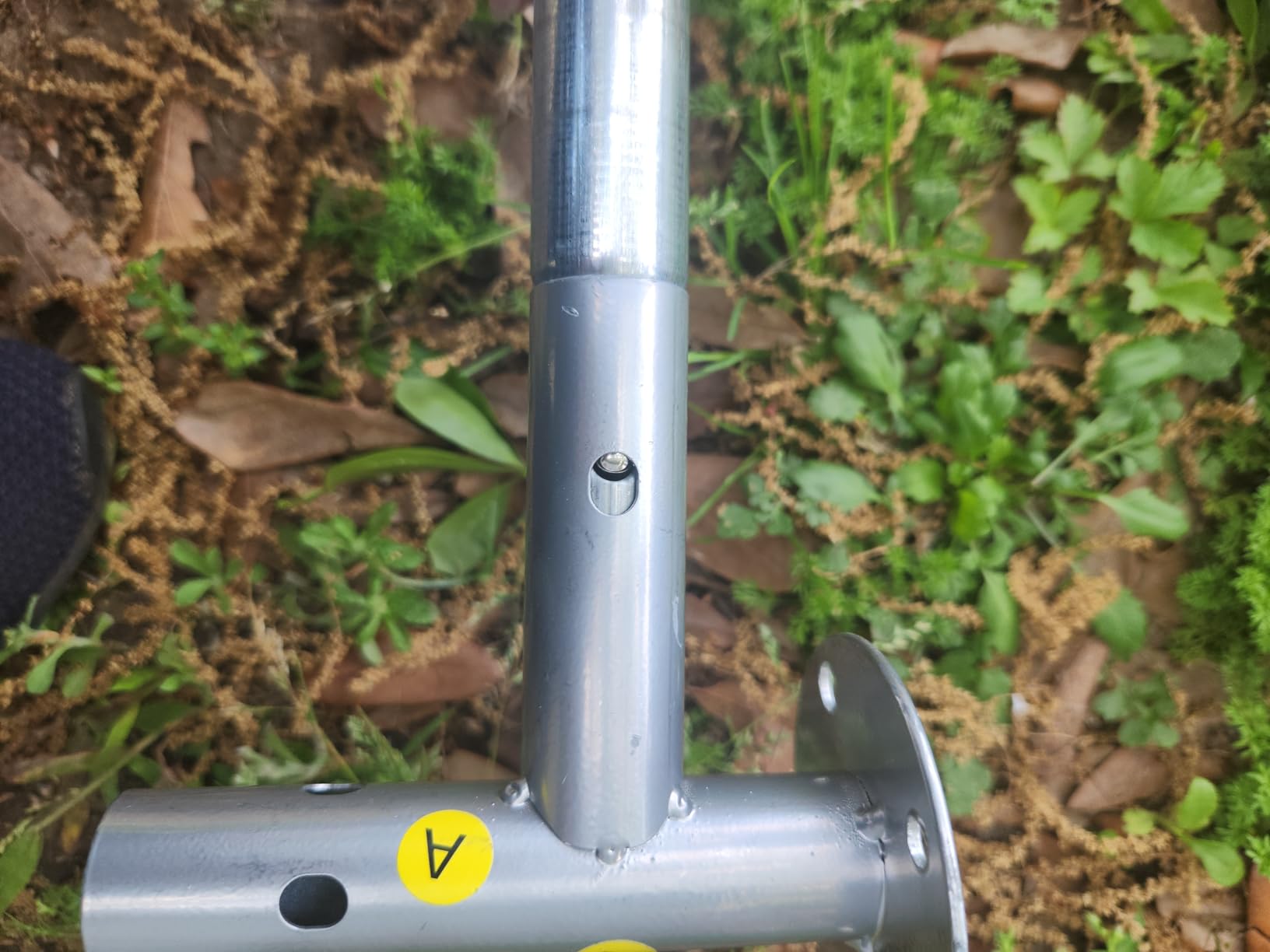
The 14 included ground stakes are a detail we appreciate. Nothing holds a metal run in place like being pinned at fourteen points, and it is the first thing missing from cheaper listings. The upgraded wall support brace also does real work against racking.
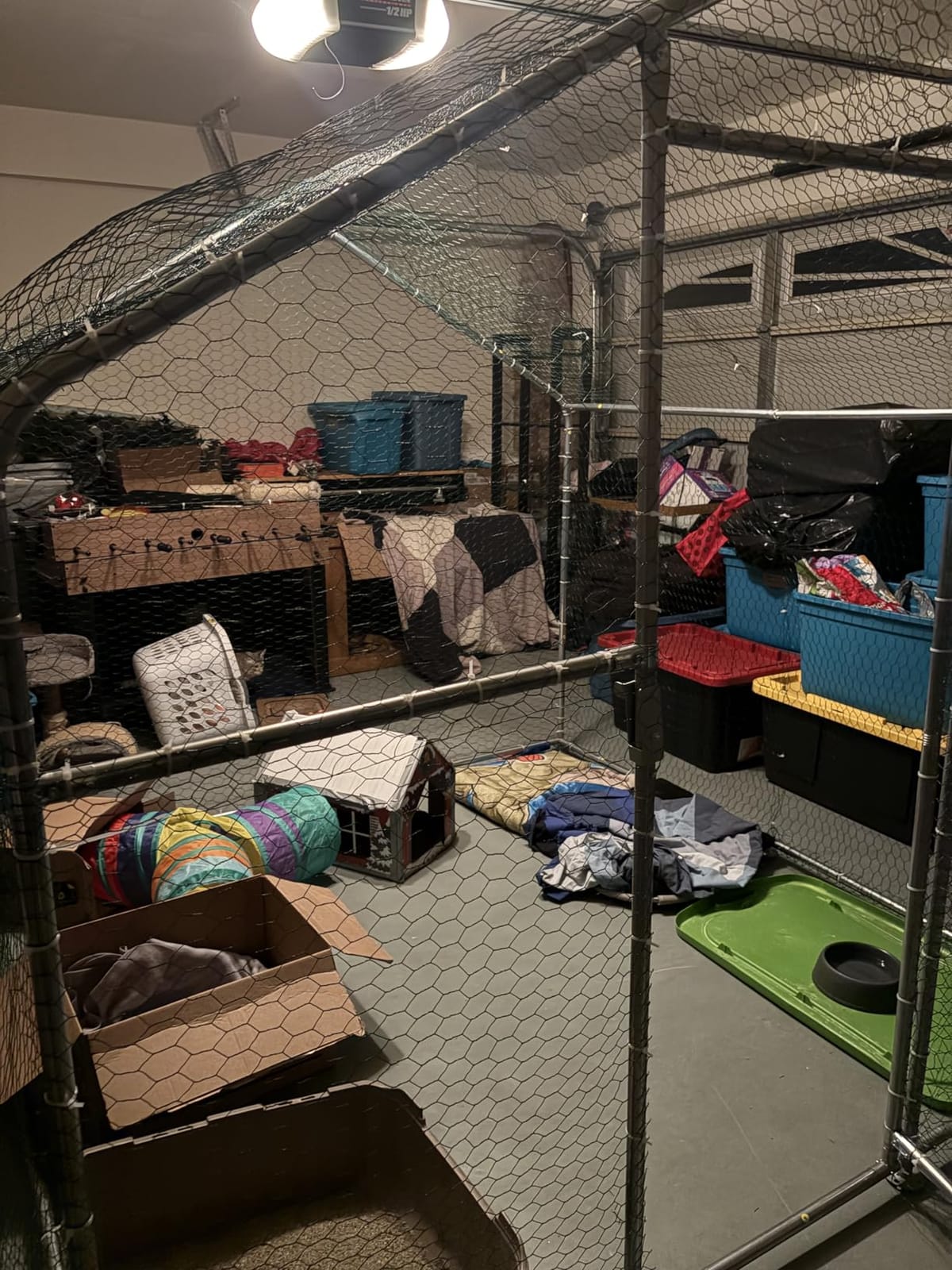
The constraint is the footprint. At 79 by 79 inches this is the smallest enclosure in the roundup, roughly 43 square feet. Ten birds in 43 square feet works only if they are out in the yard most of the day, and reviewers treat it that way.
One door is also limiting. Catching a single bird from a 10-bird flock through a single access point is a wrestling match, and owners with more than one door wish they had it.
Where this budget run makes sense
It suits a first flock that free-ranges daily and needs a daytime yard on a tight budget. The walk-in height of 6.2 feet is comfortable, and the anchoring kit is genuinely complete.
It also works as a hospital pen or brooder space, which is a common second use owners report. At 67 pounds, it is light enough to reposition when empty.
Where it will not work
It is not sized for ten birds confined through a northern winter, and it has no enclosed section at all. If you want one structure that doubles as housing, the Aivituvin is the only pick here that does it.
Plan on adding hardware cloth and a ground skirt before you count on it after dark. A 1-year guarantee is included with 24/7 seller support.
5. CAMMOO Walk-In Run – Best Rated Pick for 10 Chickens
CAMMOO Walk in Chicken Coop, 13.1×9.8×6.6ft Chicken Run for Yard with Cover
157 x 117.7 x 78.6 in
Rated 10-20 chickens
5.4 ft walk-in door
Dual-lock door
Pros
- Highest average rating in the roundup at 4.5 with 74 percent five-star reviews
- Plastic mesh flexes instead of snapping and has survived two Arizona summers
- Frame stands in wind and all parts fit together cleanly
- Pre-sorted single-screw hardware plus included tools and gloves
Cons
- Mesh is explicitly not predator-proof and the base needs boarding or hardware cloth
- Thin tarp can tear in repeated storms so a spare cover is worth having
- One buyer had the door latch chain break on the first pull
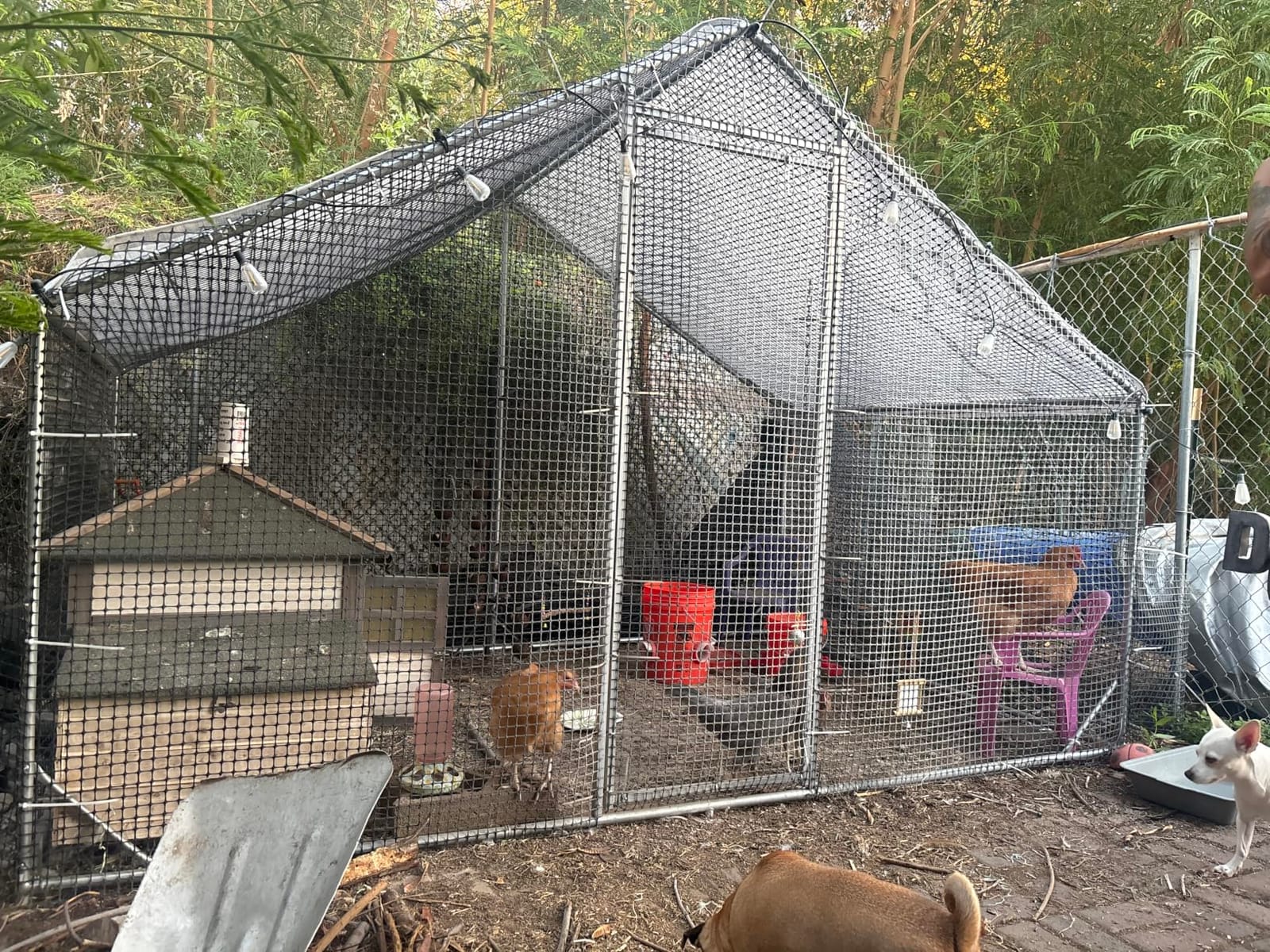
This is the highest-rated item we reviewed, and the reason is unusual: the mesh. It is flexible plastic rated to survive over a thousand bends between minus 4 and 176 degrees, so instead of snapping it flexes. Owners in hot, dry climates report it holding up through two full Arizona summers.
The build is the other draw. Everything comes pre-sorted with a single screw type, and the box includes pliers, two wrenches and work gloves. Most buyers have it standing with two people in an afternoon.
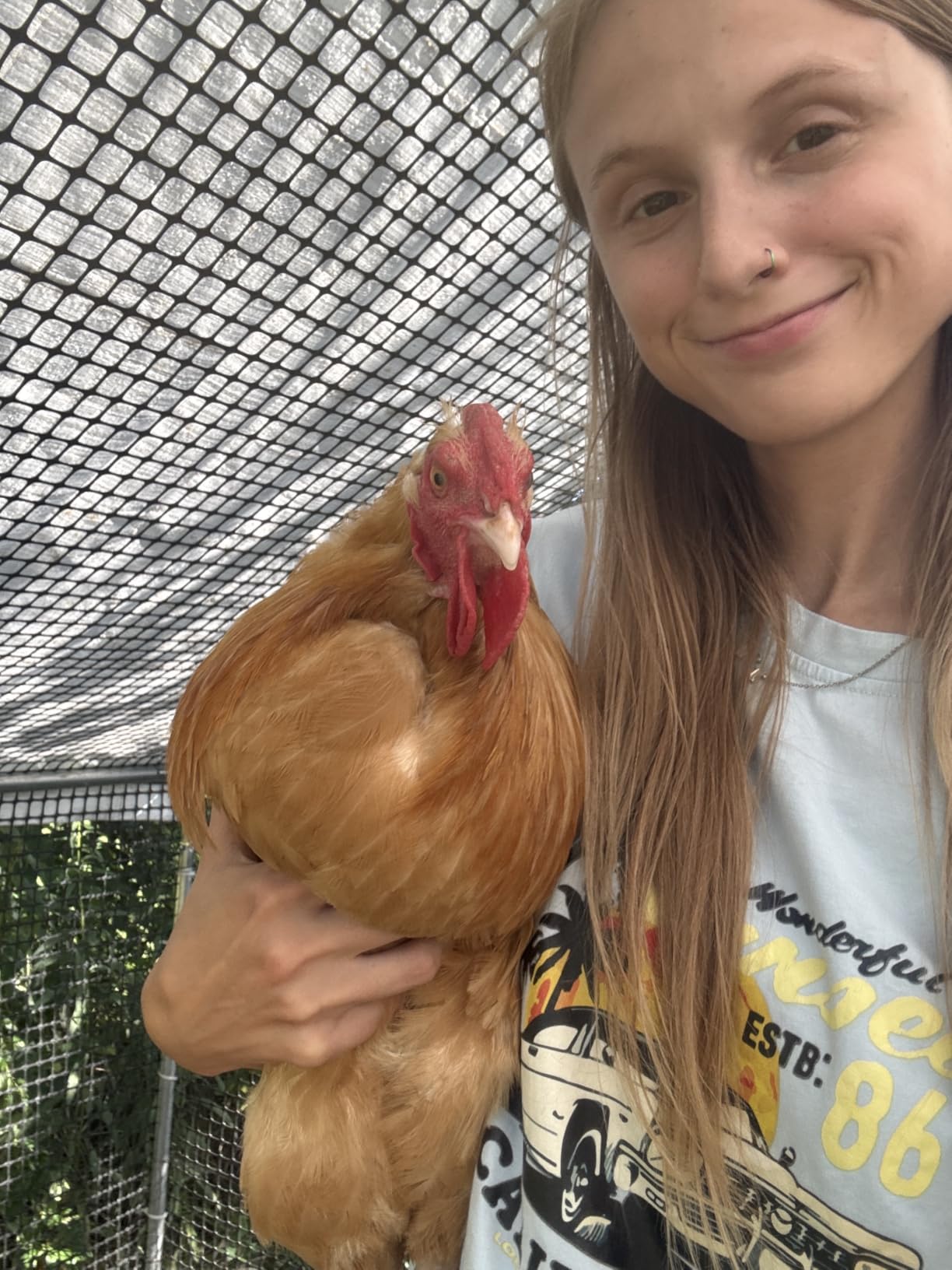
At 13.1 by 9.8 feet it is mid-sized in this list, and the maker rates it for 10-20 chickens, so ten hens have room to move without the footprint swallowing your whole yard.
The 5.4-foot walk-in door is unusually wide, which makes feed buckets, nesting changes and catching birds much easier than a standard narrow hatch.
Who should buy the CAMMOO run
It suits hot climates where a metal frame heats up and mesh gets brittle. The UV-stable plastic mesh and sun-protective tarp are a good pairing for southern yards, and the double-lock door is a plus if you keep smaller livestock too.
It also suits anyone who dreads assembly. This is the one run in the roundup owners consistently describe as straightforward rather than fiddly.
Where it falls short
Nearly every reviewer treats it as a daytime pen rather than an overnight enclosure. The base needs boards or stones and the walls need hardware cloth before you rely on it after dark.
The tarp is thin. Owners in storm regions flagged tearing after repeated weather events, and keeping a spare cover on hand is cheap insurance.
6. Outvita 19.5 x 10 ft Metal Coop – Best for Stormy Climates and 10 Chickens
Outvita Chicken Coop, 19.5×10 FT Large Metal Chicken House, Poultry Habitat Cage with Waterproof Cover, Walk-in Chicken Run Pen for Small Animals, Yard, Farm, Patio
234 x 120 x 78 in
1-inch galvanized tube
180g PE waterproof cover
Spring-bolt joints
Pros
- Owners report it holding through 60 mph winds with 18 inches of snow
- Durable wire that is easy to cut and attach to add hardware cloth
- Moveable once assembled if you want to reposition it
- Low ceiling makes adding extra wire mesh much easier
Cons
- Assembly instructions are thin especially for fitting the wire mesh
- Pole walls are thinner than EMT conduit from a hardware store
- Bracket spot welds are minimal and can crack during assembly
This is the one to look at if you get real weather. Owners in storm-belt regions report the frame standing through 60 mph winds with 18 inches of snow on the cover, and the spring-bolt quick-connect joints keep the build time down.
Two practical details stand out. The 180g PE cover is heavier than the basic tarps used elsewhere, and the low 6.6-foot ceiling means the walls are easy to reach when you are adding hardware cloth, which is something you will almost certainly do.
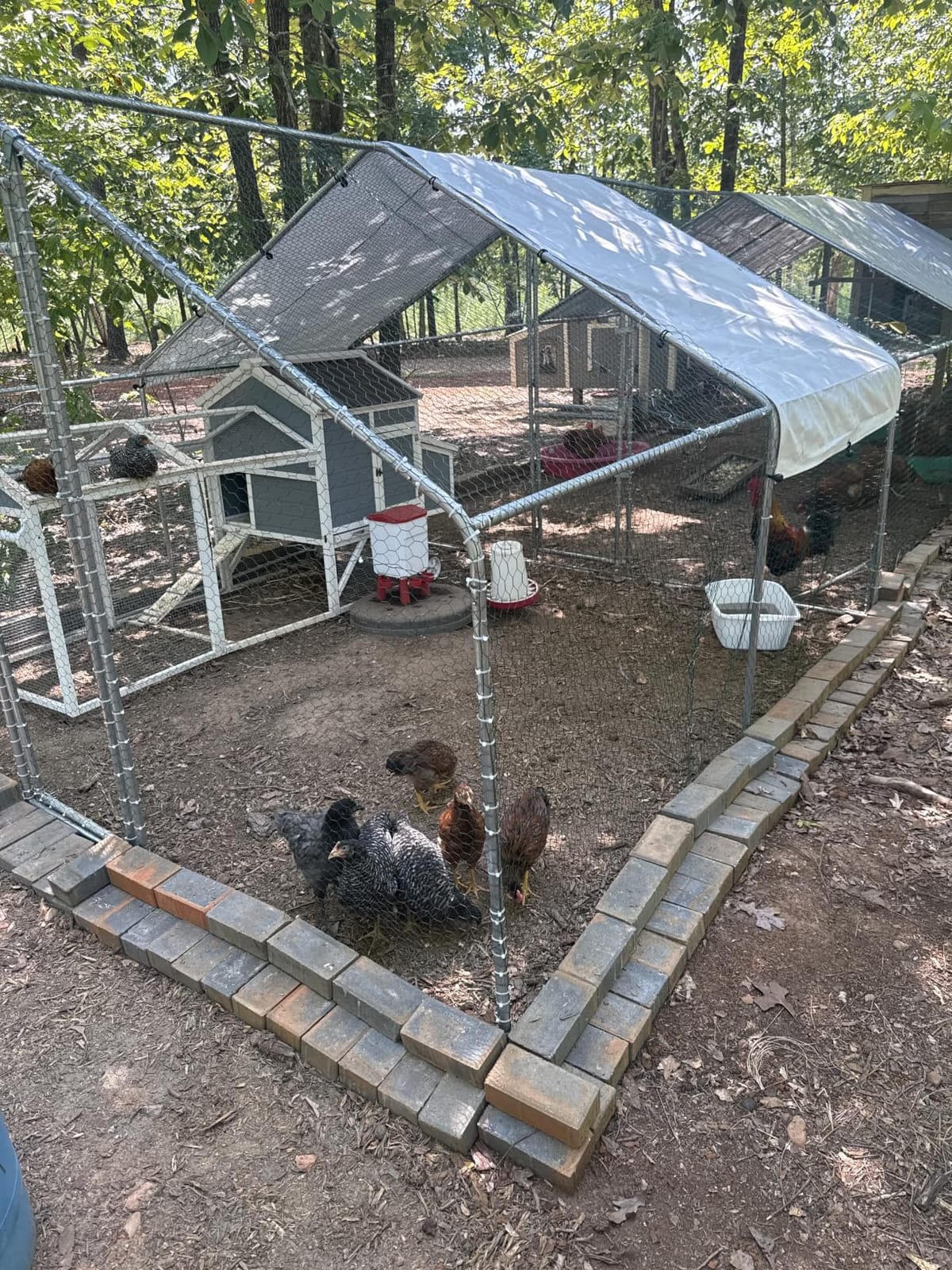
It also moves. Several owners report repositioning the assembled unit, and the fixable metal feet let you level it on uneven ground, which stops the frame twisting over time.
It suits mixed flocks too, with a stated range that covers chickens, turkeys, ducks and geese.
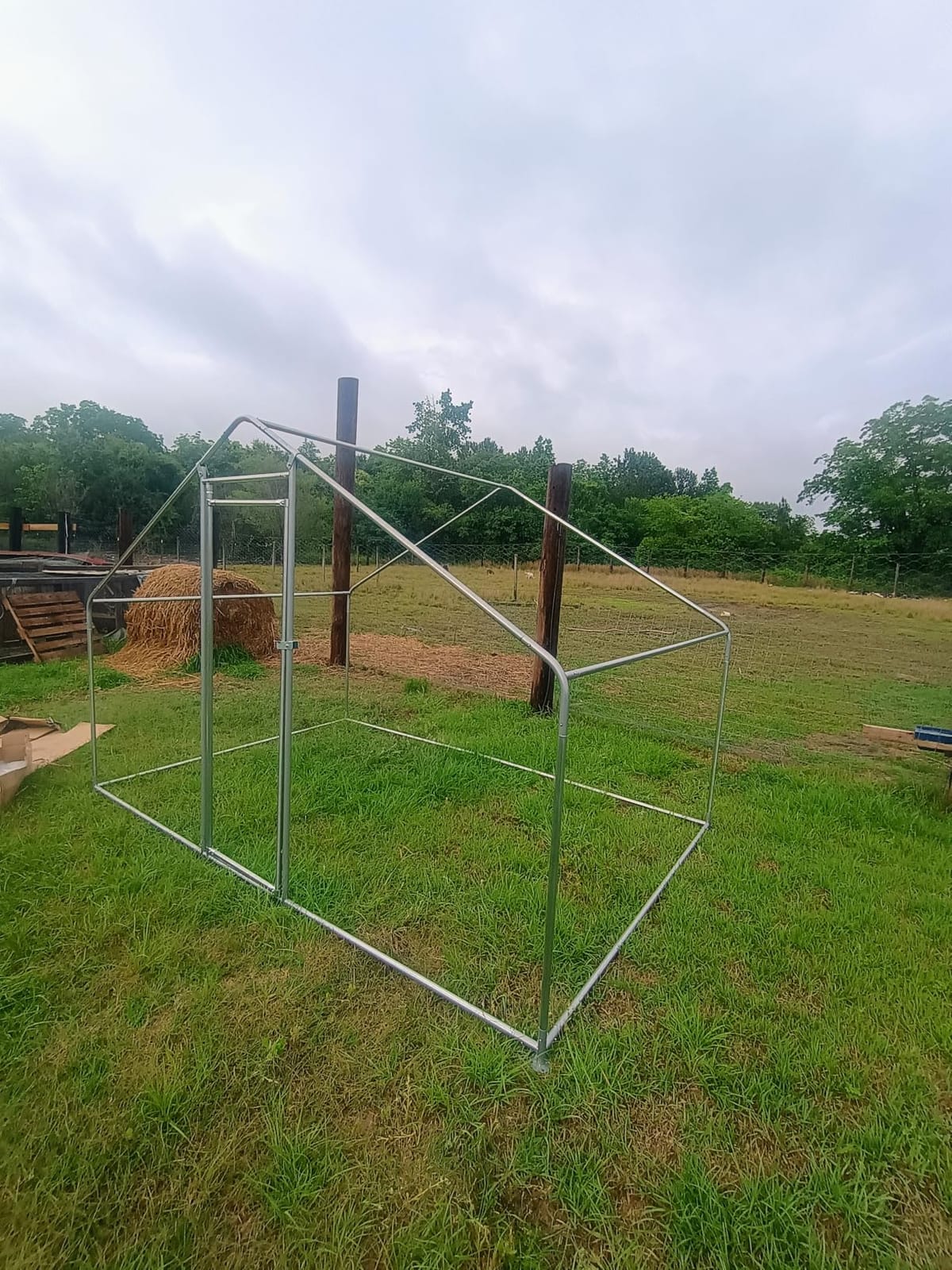
Best use for the Outvita enclosure
It suits windy, snowy regions and anyone with raccoons in the area, since the sturdy base and feet make securing the lower edge straightforward. Buyers also use it as a garden protector for vegetables.
Because the wire is easy to cut and attach, adding a bottom barrier against hawks is a quick job rather than a rebuild.
Weak points reviewers flag
The documentation is thin, particularly around fitting the mesh, so allow extra time. Several buyers also raised long-term strength questions, noting the pole walls feel lighter than EMT conduit from a hardware store.
Minimal spot welds at the brackets can crack if you torque a joint during assembly. And the door latch can be worked by a determined raccoon without an added tie, so add one.
7. Xbrigh 20 x 10 ft Run – Most Run Space for 10 Chickens
20×10 FT Extra Large Metal Chicken Coop, Walk-in Poultry Run Pen
236.5 x 120.1 x 76.9 in
200 sq ft walk-in area
210D Oxford cover
Anti-corrosion tubing
Pros
- 200 sq ft of walk-in space is the most run area available here for ten birds
- Galvanized anti-corrosion tubing suits wet climates and year-round use
- 210D Oxford cover with reinforced stitching is sturdier than a basic PE tarp
- Bolted assembly makes construction straightforward
Cons
- Hexagonal mesh deters raccoons foxes and rodents but still benefits from hardware cloth
- At 20 ft long two people are needed to move and finish it
- Cover is a fabric tarp rather than a hard roof so it needs re-tensioning over time
If your only question is how much room ten hens can have, this is the answer: 200 square feet of walk-in space at 20 by 10 feet, which is more enclosed area than anything else in the roundup.
The cover is the differentiator. A 210D Oxford fabric with reinforced stitching is a step above the flat PE tarps used by cheaper runs, and owners in wet climates like the anti-corrosion coating on the galvanized tubing.
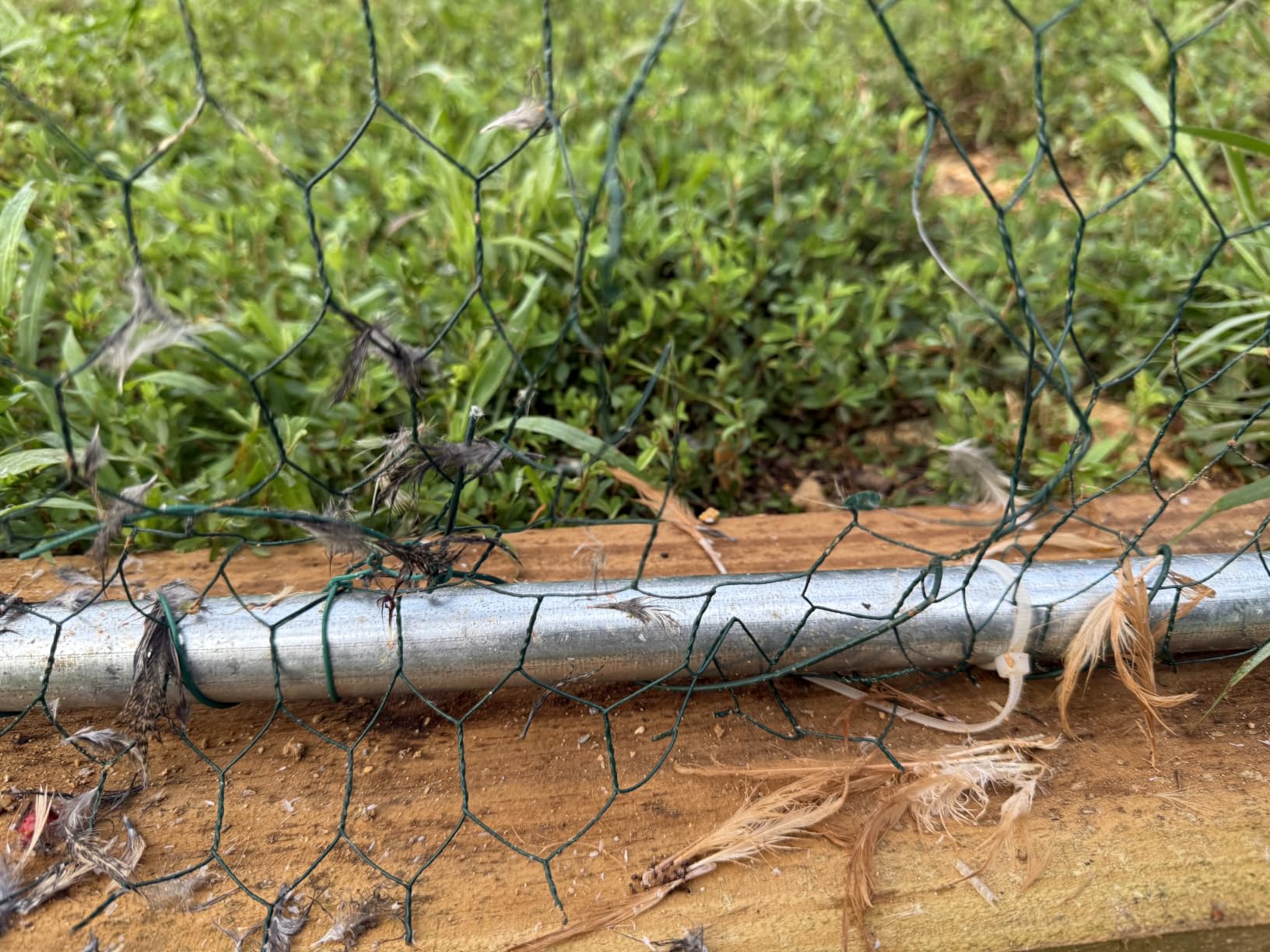
That size has consequences. At 20 feet long, two people are needed to finish the build and to move it, and the fabric cover needs occasional re-tensioning as it weathers. Plan your footprint before ordering, because this is a large object.
The mesh picture is the familiar one. It deters raccoons, foxes and rodents, and hardware cloth is the near-universal owner recommendation.
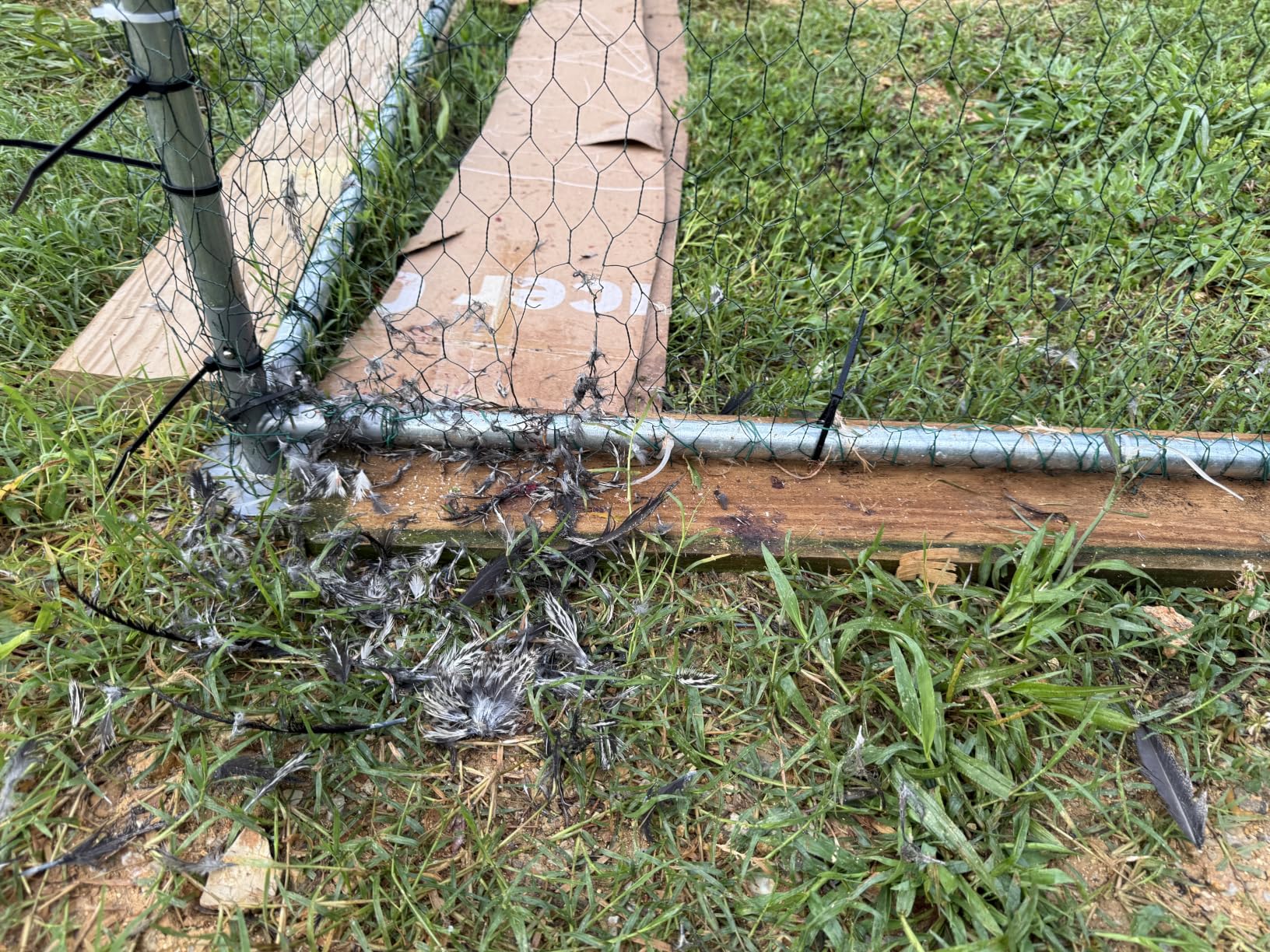
When 200 square feet is worth it
It is worth it if you free-range only part of the day and want the flock to have a large secure yard on the days they do not. It also works as an extension pen for a smaller existing run.
The Oxford cover holds up better in wind than light tarps, and buyers use the enclosure for ducks, rabbits and even small goats.
When to choose something smaller
Skip it if your yard is compact or if you need a structure you can move alone. Buyers considering an [automatic chicken coop door](/best-automatic-chicken-coop-doors/) should note that an enclosure this size is really a daytime yard, not a night house.
Be realistic about the fabric cover upkeep. It will need re-tensioning across a season or two, and a hard roof needs none of that.
8. Hohuqeri Walk-In Coop – Best for Growing Toward 10 Chickens
Metal Chicken Coop 7×6.6x6ft Walk-in Poultry Cage for 5-10 Chickens Chicken Run Hen Rabbit Duck House with Waterproof Cover for Outdoor Farm Use
84 x 79 x 73 in
Rated 5-10 chickens
Lockable steel door
Five sizes offered
Pros
- Frame quality holds up in heavy wind and rain
- Sturdy gate and latch for the money
- Straightforward instructions with one buyer finishing the frame in a day
- Five sizes offered so you can step up as the flock grows
Cons
- Included chicken wire is not predator-proof and buyers replace it with hardware cloth
- Not enough zip ties included and the supplied ones break easily
- Netting has stretched and pulled loose where hens scratch against it
The reason this one is worth a look is the size ladder. This 7 by 6.6 foot version is the entry point, but the same design is offered at 10, 13, 20 and 26 feet, so you are not boxed into a size on day one.
Integration is the reason that matters. BackYard Chickens owners repeatedly note that adding new birds to an established flock is far easier when you have space, and a flock that starts at five or six is common. Buying the middle size now and the larger size later is a plan that works.
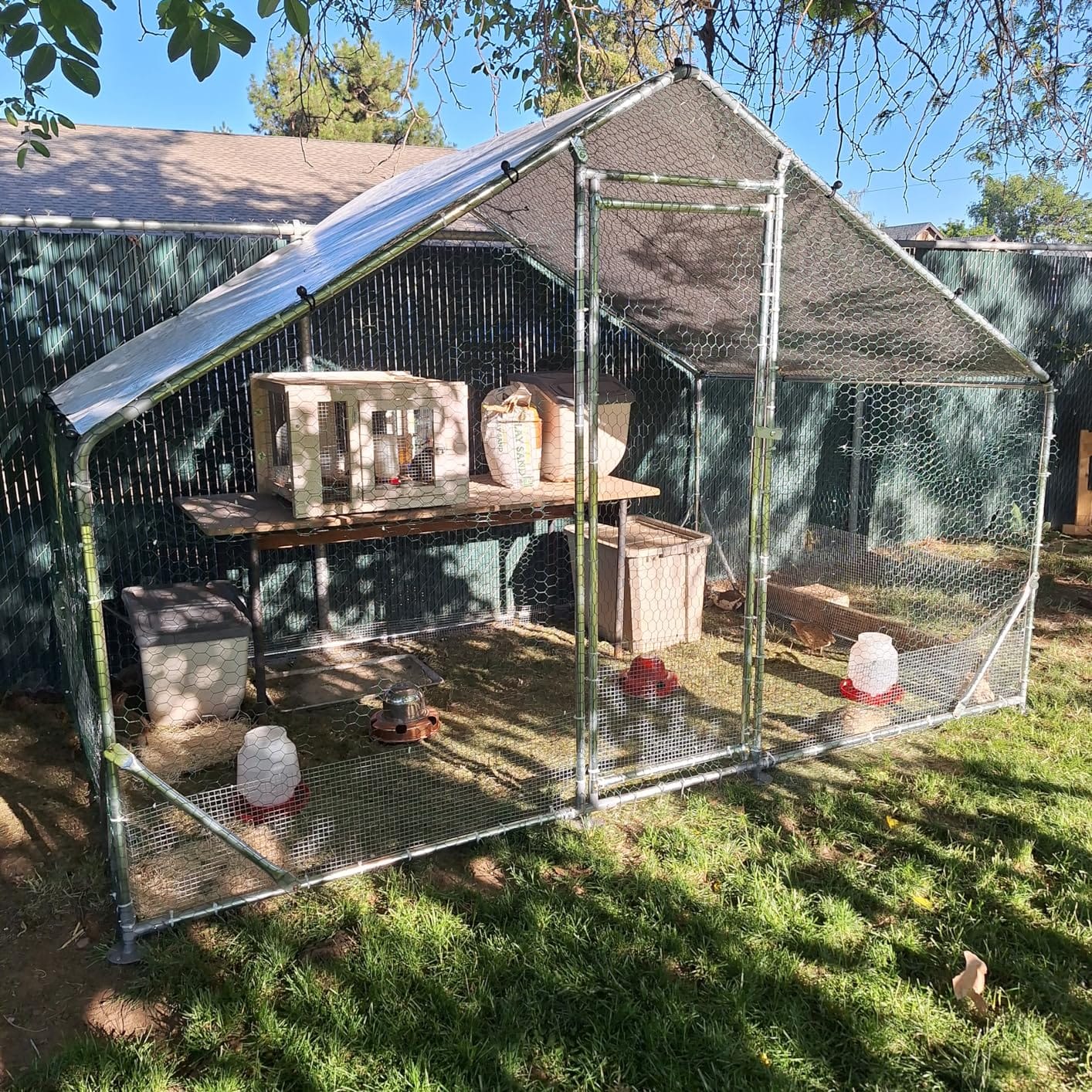
The frame itself earns good marks for handling wind and rain, and the lockable steel door is more than most budget runs offer. One buyer built the whole frame in a single day.
It is also genuinely multi-use. Owners use it for ducks, rabbits and geese as well as chickens, and several run it as a garden protector for young plants.
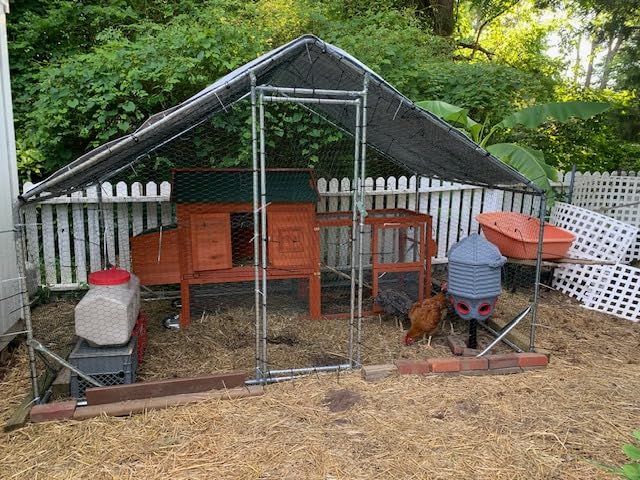
Where this size makes sense
It suits a flock of ten that spends most of its day out in the yard and only needs a secure pen for the hours in between. At roughly 46 square feet it sits at the small end of workable for this brief.
If you are unsure how fast your flock will grow, this is the safest purchase of the metal runs here because you can step up without replacing the system.
What to fix on arrival
Buy hardware cloth. The included chicken wire is the one thing reviewers universally replace, and several went to 1/4 inch mesh for extra protection.
Buy extra zip ties as well. The supplied ties break easily, and stretched netting is the most common long-term complaint.
9. UDPATIO Metal Run – Best Two-Door Access for 10 Chickens
UDPATIO Large Metal Chicken Coop Walk in Run House Pen Galvanized Frame
72 x 120 x 72 in
Two lockable doors
55 lb frame
Removable peaked cover
Pros
- Dual-door layout lets you feed or catch birds without opening the main entrance
- Lightweight 55 lb frame that still anchors firmly with the included stakes
- Peaked removable cover drains rain snow and debris quickly
- Walk-in height makes cleaning and daily interaction straightforward
Cons
- At 6 x 10 ft it is snug for a full flock of ten and works better as a supplementary pen
- Mesh spacing helps but a hardware cloth skirt still helps against hawks
- Two doors mean more joints to check for gaps and anchoring
Two doors is a small design decision that changes daily life with ten birds. The dedicated feeding door means you can top up feed without opening the main entrance and releasing the whole flock into the run.
Buyers also single out the 55-pound weight. It is the lightest frame here, so one person can reposition an empty run, and the included ground nails hold it in wind.
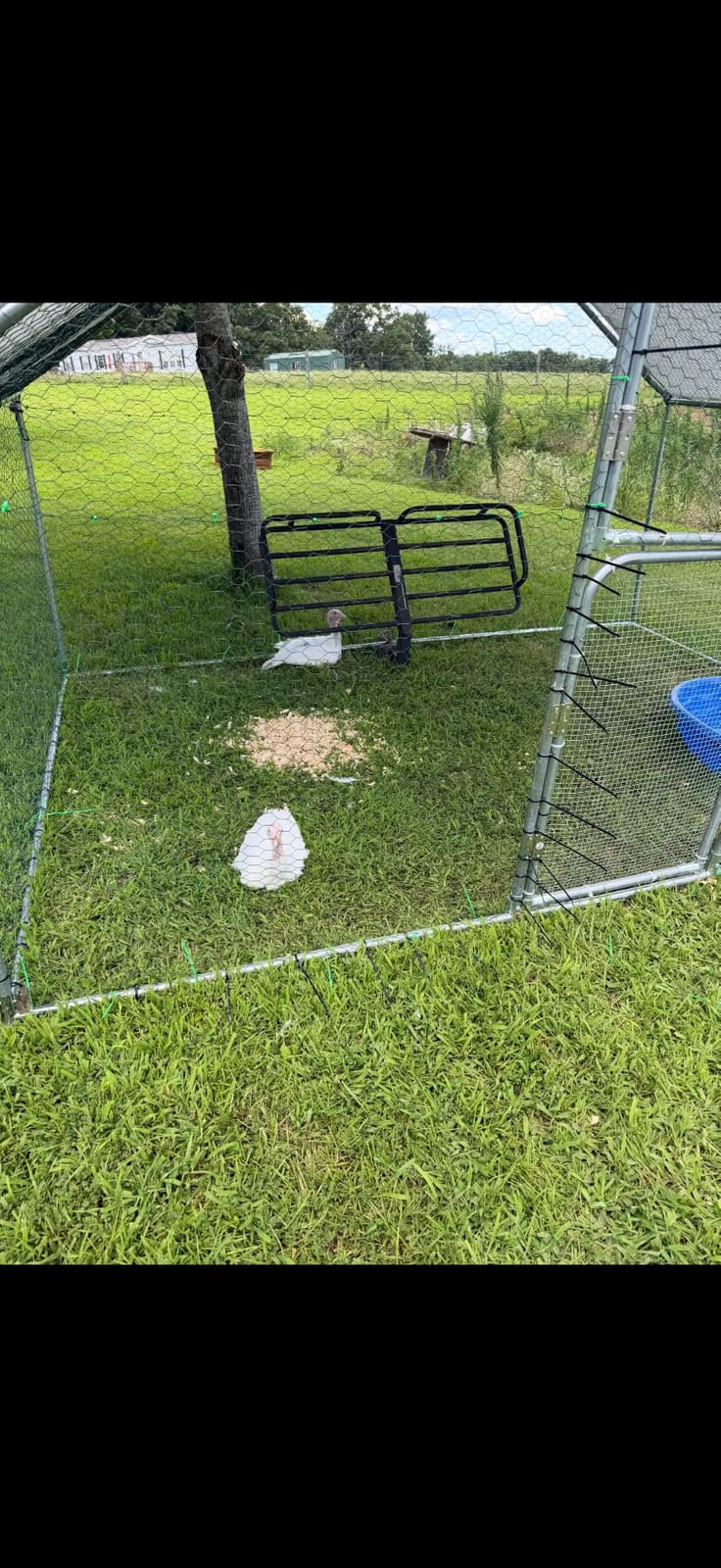
The removable peaked cover drains water, snow and debris faster than a flat roof, and because it lifts off you can get at the frame underneath without dismantling anything.
It is also usable for more than birds. Owners run it as a rabbit hutch, duck pen and garden protector.
Where the two-door layout helps most
It helps when you have a mixed flock, or when you are raising replacements alongside your hens. Catching one bird without disturbing ten is the whole point, and that matters with a flock this size.
The walk-in height keeps daily cleaning manageable, and the light frame makes moving it to fresh ground realistic.
When it is too small
At 6 by 10 feet it is snug for ten birds as sole housing, and reviewers describe it as a supplementary pen. If your hens are confined rather than free-ranging, choose a larger option.
More doors also means more joints, and every joint is a place to check for gaps. Inspect the frames before winter and add a hardware cloth skirt against hawks.
10. CHIKENCOOP Metal Run – Best Proven Build for 10 Chickens
CHIKENCOOP 9.8 x 6.5 x 6.5 ft Metal Chicken Coop, Chicken Run with Cover
118 x 80 x 80 in
Over 1600 ratings
47 x 40 in eucalyptus roost
Rear support pole
Pros
- Largest review base in the roundup at over 1600 ratings so build quality is well proven
- Corner braces and rear support pole cut frame wobble noticeably
- Included eucalyptus roosting perch supports natural roosting behaviour
- Walk-in height and detachable cover make daily care easy
Cons
- Roosting perch is the only in-coop furniture so an enclosed house is still needed for night
- Same light-gauge mesh predator caveat as other budget runs
- Assembly is roughly a two-hour job even with clear labelling
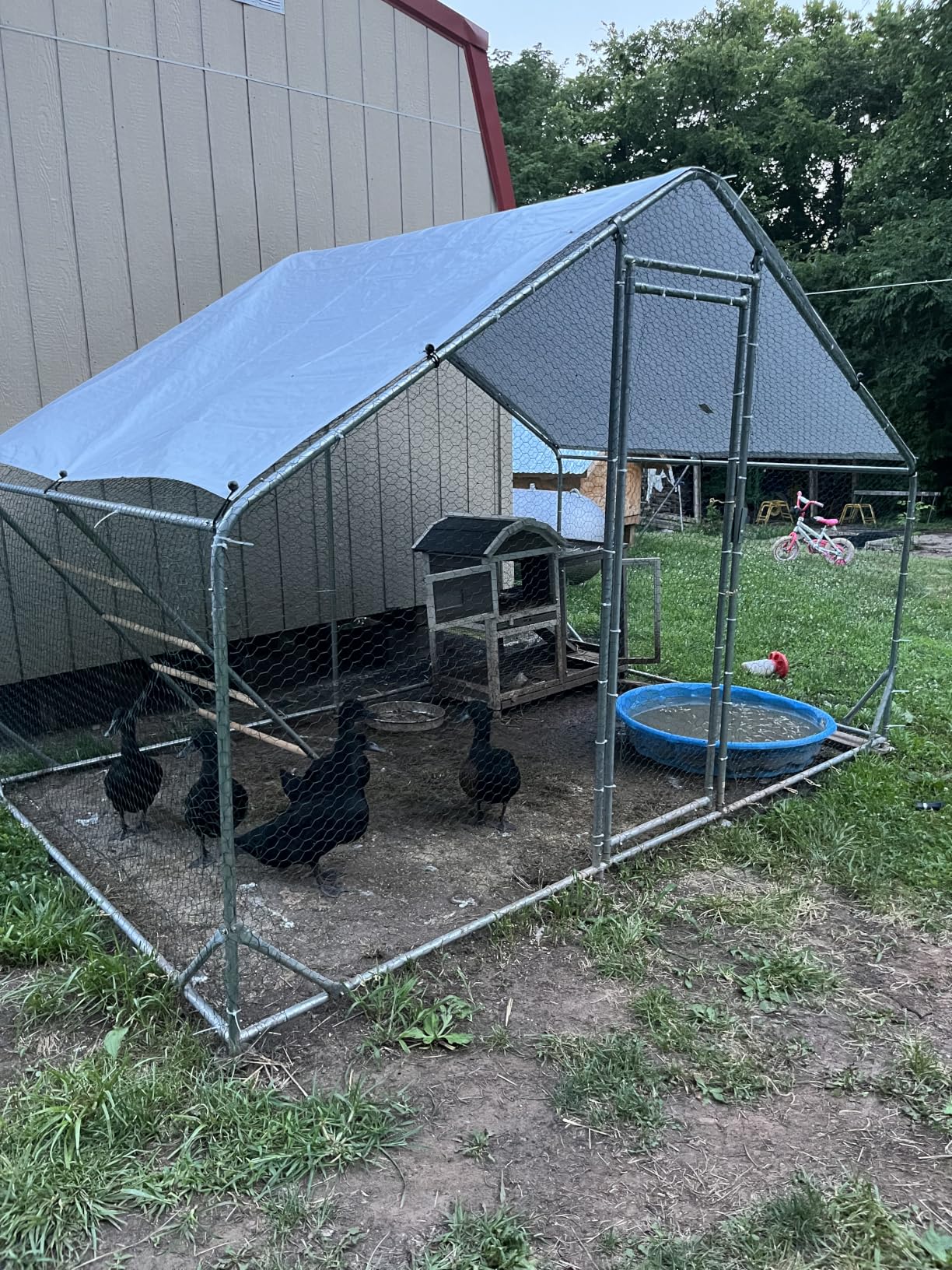
With 1,622 ratings this is the most thoroughly reviewed product we looked at, and that matters more than star averages. A design that has been built thousands of times by first-time keepers has its bad surprises already priced in.
The reinforcement details are the differentiator. Bottom corner braces plus a rear roof-to-base support pole reduce the wobble that makes cheap runs feel flimsy, and the detachable waterproof, UV-resistant cover keeps the interior dry without being a permanent fixture.
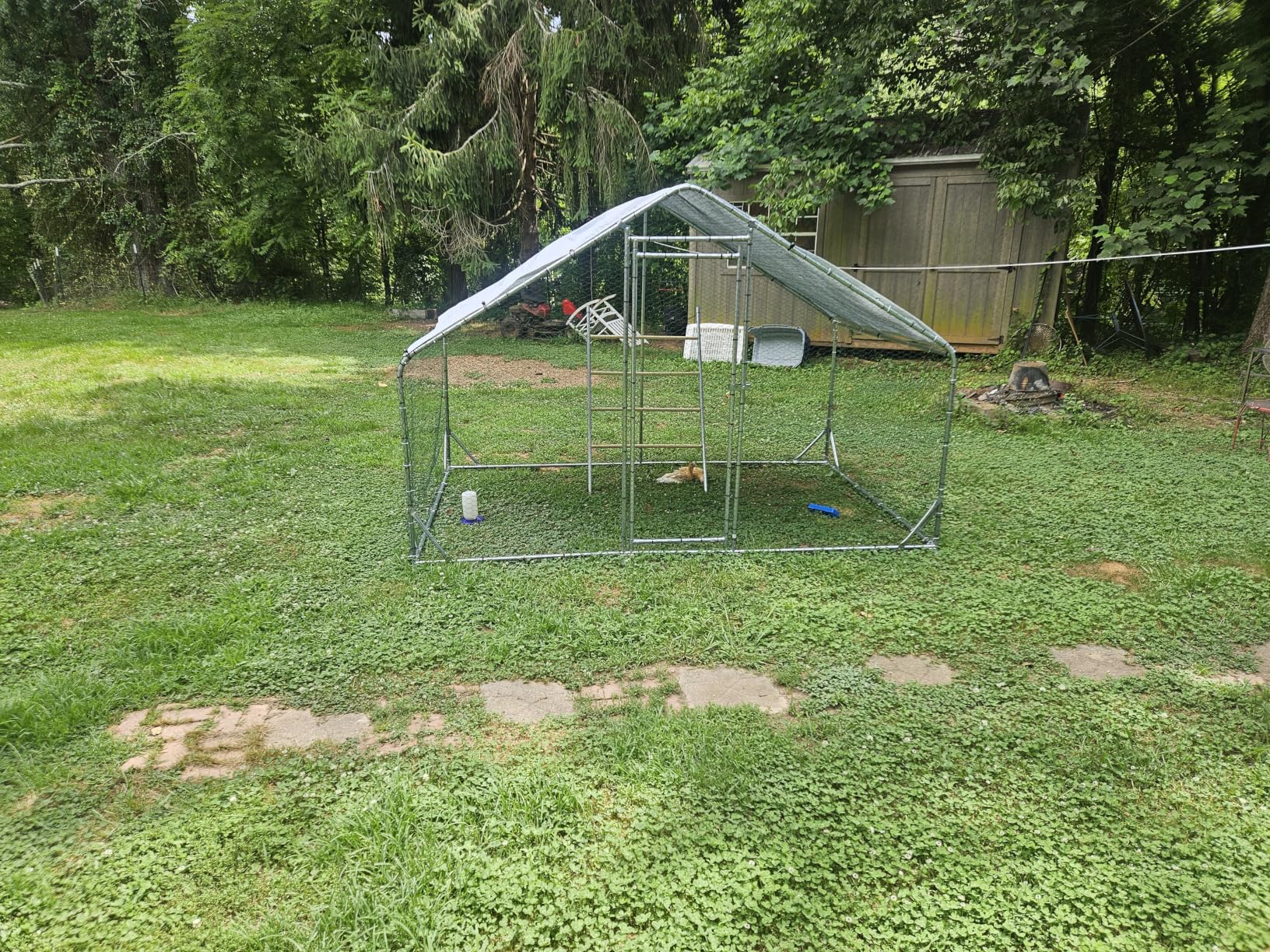
The included 47 by 40 inch natural eucalyptus roosting perch is unusual at this level. Ten hens need 7-9 feet of roost, so this one perch covers part of the requirement and shows the manufacturer has thought about behaviour rather than just containment.
Assembly is roughly two hours with clearly labelled components, which owners describe as straightforward even at that length.
Why first-time keepers start here
The proven build and the labelling reduce the two biggest first-week risks, which are a confusing assembly and a frame that racks in wind. Buyers confirm the labelled parts go together without guesswork.
The walk-in height of 6.5 feet and the detachable cover make daily care simple, and at 59 pounds the empty unit is manageable.
What it does not solve
This is a run. The roost is the only furniture inside, so you still need an enclosed house with lockable latches and hardware cloth for overnight security. The mesh carries the same predator caveat as every budget run here.
At 9.8 by 6.5 feet, roughly 64 square feet, it works well for a free-ranging flock. Confined flocks need more.
Best Chicken Coops for 10 Chickens: How Big Should Yours Be?
For ten chickens, the widely accepted minimum is 3-4 square feet of enclosed coop floor per standard hen, which gives you 30-40 square feet of indoor space. Long-running consensus on BackYard Chickens uses the larger end of that range for large fowl, and one of its most-cited recommendations is 4 square feet per bird, meaning 40 square feet for ten.
Outdoors, the rule is 8-10 square feet of run per bird, so 80-100 square feet for a flock of ten. That is the number most buyers under-budget, and it is why so many of the runs on this page are 19 feet long.
Roosting bar and nesting box ratios
Plan on 8-10 linear inches of roost per hen, which works out to 7-9 feet of total roosting bar for ten birds, and on three or four nesting boxes since the usual ratio is one box per three to four hens. Roosts must sit above the nesting boxes, otherwise hens use the roost and soil the boxes.
Ventilation and the ammonia ceiling
Aim for roughly one square foot of ventilation per ten square feet of indoor floor, positioned high near the roofline so warm moist air leaves rather than settles on the birds. Ten hens produce enough ammonia to cause respiratory damage above 25 ppm, so airflow is a health requirement, not a comfort feature.
What changes the numbers
Breed size matters most. Buff Orpingtons and Brahmas are large fowl and need the upper end of every figure, while bantams need considerably less. Free-ranging changes everything, because birds that spend the day outside need less indoor space than birds confined through winter.
A 4×8 coop is 32 square feet, which sits at the bottom of the acceptable range for ten standard hens and is tight for large breeds or long stretches of confinement. Budget 40 square feet if you can.
Best Chicken Coops for 10 Chickens: What to Look For
The single most important check is the mesh. Hexagonal chicken wire and PVC-coated hex mesh contain birds and deter raccoons, but they do not stop a weasel, and weasels dig at the base of a wall before they ever try the wire. Replace it with 1/2 inch galvanized hardware cloth.
Add a ground skirt so the mesh continues flat along the ground or is buried, because a seam at the base is where most flocks are lost. Two-step or raccoon-proof latches beat a sliding bolt, and every door on the unit needs one.
Wood, metal and plastic compared
Wood coops insulate better in winter and can be modified freely, but soft pine and spruce split and mould within a season or two. Look for fir, cedar or a sealed coating. Metal runs outlast wood in most climates and never rot, but they heat up in sun and do not insulate, so they need shade in summer.
Plastic coops clean easily and resist rot, but they are harder to repair and can warp. For most 10-hen flocks the practical answer is a metal run for daytime plus a wooden or insulated house for night.
Cleaning access matters more than size
Ten birds generate enough waste to make hand cleaning a daily grind. A slide-out tray or droppings board under the roosts cuts that job to a minute, and walk-in access to the interior is worth more than an extra two square feet of floor.
Build or buy, and the 90/10 rule
Converting an existing shed is the most common forum answer when money is the constraint, and it works if the shed has a solid roof, a dry floor and enough ventilation. Build it bigger than you need, since flock integration later is far easier with space.
The 90/10 rule is a practical planning rule: birds should be able to spend 90 percent of their time outdoors and 10 percent in the coop. If your setup needs the reverse, it is undersized for ten birds.
Mistakes to Avoid When Buying a Coop for 10 Chickens
Buying on the printed capacity number is the first and most common error. Manufacturers rate for a free-ranging flock, and the same unit becomes cramped the moment birds are confined overnight. Check the actual enclosed square footage, not the label.
The second mistake is trusting chicken wire or hex mesh as predator protection. It is containment material, not security material, and the difference matters at night.
Skipping the ground skirt comes next. Weasels and foxes start at the base seam, and burying the wire or extending it flat along the ground closes that route.
Buying a run with no enclosed section is a trap for anyone in a cold climate. Nine of the ten picks here are daytime enclosures, and you will still need a house for the nights.
Ignoring roost placement is quieter but just as damaging. If roosts sit below the nesting boxes, the boxes stay dirty and you will get fewer usable eggs.
Sealing the coop up for winter without adjusting vents is the mistake that causes respiratory illness. Ten birds in a closed space generate ammonia fast, and the fix is adjustable vents rather than a sealed box.
Finally, do not plan for exactly ten birds. Integration of new birds needs space, and the flock that is ten today is often twelve next spring.
Frequently Asked Questions
What size chicken coop is ideal for 10 chickens?
Aim for 30-40 square feet of enclosed coop floor and 80-100 square feet of covered run space. That works out to 3-4 square feet indoors per standard hen and 8-10 square feet of run per bird. Add 7-9 feet of roosting bar and at least three nesting boxes. If your hens are large breeds such as Orpingtons or Brahmas, use the upper end of every figure.
What is the best chicken house for 10 chickens?
Among the coops we reviewed, the Aivituvin extra large unit is the best all-in-one house for a 10-hen flock because it pairs an enclosed section with a covered run, six locking nesting boxes and removable sliding waste trays. Most competing products are outdoor runs only, so you would still need a separate house for overnight use.
What size chicken coop do I need for 10 chickens without a run?
Without a run, give ten chickens the full 30-40 square feet of enclosed floor space rather than a reduced figure, because birds will spend all their time inside. Large breeds need closer to 40 square feet. Also allow one square foot of roofline ventilation per ten square feet of floor, since ammonia builds fast in a closed space.
Is a 4×8 coop big enough for 10 chickens?
A 4×8 coop gives you 32 square feet, which sits at the low end of the acceptable 30-40 square foot range for ten standard hens. It works if the birds free-range most of the day, but it is tight for large breeds or for flocks confined through winter. Forty square feet is the safer target.
What is the 90/10 rule for chickens?
The 90/10 rule is a planning guideline meaning healthy chickens spend about 90 percent of their time outdoors foraging and use the coop for roughly 10 percent, mainly roosting overnight and laying eggs. If your setup keeps birds inside for most of the day, it is undersized for the flock, and you need more enclosed floor space or a larger run.
How many nesting boxes and how much roost for 10 chickens?
Provide three or four nesting boxes for ten hens, which follows the standard ratio of one box per three to four birds. For roosting, allow 8-10 linear inches per hen, giving 7-9 feet of roost bar in total. Always position roosts above the nesting boxes so hens do not soil the boxes while sleeping.
Can I keep 10 chickens in a coop rated for 8?
You can keep ten birds in a coop rated for eight, but you should expect crowding stress, feather pecking and faster ammonia build-up, especially in winter. A better move is to buy the larger size up front or split the flock across two coops, which keeps space per bird workable and simplifies integrating new birds later.
Conclusion: The Best Chicken Coops for 10 Chickens
Ten hens need 30-40 square feet of enclosed floor, 80-100 square feet of run and hardware cloth rather than chicken wire, and very few listings deliver all three. Our editor’s choice, the Aivituvin extra large coop, is the only one here that works as a standalone home thanks to its enclosed section, six locking nesting boxes and sliding waste trays. For a free-ranging flock, the HITTITE and NUGRIART runs give you the toughest frames for the money, and the CAMMOO is the easiest to build and the best rated at 4.5. Whichever you pick, budget an afternoon for hardware cloth and a ground skirt before the flock moves in.