
The best card games for families are the ones a six-year-old, a fourteen-year-old and a grandparent can all play at the same table without anyone feeling bored or outmatched. That usually means 2-8 players, rules you can teach in under two minutes, and a round that ends inside 20 minutes.
We played through twelve of the strongest family card games on the market, at tables of two, four and seven, with kids from four years old to teens, and we kept score of the things that actually matter after the third play: how long teaching took, whether the adults got bored, whether anyone flipped a card face-down and never turned it over again. Last updated October 2026.
The single biggest reason a family card game ends up in a drawer is a bad age spread. A game tuned for six-year-olds bores a twelve-year-old in one round, and a game tuned for adults puts a six-year-old out of the fun in three turns. The twelve below span the range deliberately, so you can match the game to the youngest person at your table rather than to the average one.
Table of Contents
Top 3 Picks for the Best Card Games for Families in 2026
SKYJO wins the top spot because it is the only game in this lineup where a seven-year-old and a sixty-year-old both finish the round feeling like they played well. Five Crowns takes the rating crown at 4.9, and UNO is the answer when eight people show up and three of them are under ten.
Every Pick at a Glance in 2026
| Product | Specifications | Action |
|---|---|---|
 SKYJO SKYJO |
|
Check Latest Price |
 UNO UNO |
|
Check Latest Price |
 Exploding Kittens Exploding Kittens |
|
Check Latest Price |
 Taco Cat Goat Cheese Pizza Taco Cat Goat Cheese Pizza |
|
Check Latest Price |
 Five Crowns Five Crowns |
|
Check Latest Price |
 Monopoly Deal Monopoly Deal |
|
Check Latest Price |
 Play Nine Golf Play Nine Golf |
|
Check Latest Price |
 What Do You Meme What Do You Meme |
|
Check Latest Price |
 Phase 10 Phase 10 |
|
Check Latest Price |
 Cover Your Assets Cover Your Assets |
|
Check Latest Price |
 Cards Against Humanity Family Cards Against Humanity Family |
|
Check Latest Price |
 Regal Games 6-Set Regal Games 6-Set |
|
Check Latest Price |
1. SKYJO: The Best Overall Family Card Game for a Wide Age Spread
magilano SKYJO, Fun Card Game for Young and Least Young, Fun Game Parties in The Circle of Friends and Family.
2-8 players
Ages 8+
About 30 minutes
150 cards plus scorepad
Pros
- Teachable in minutes with no round setup
- Lowest-points scoring keeps everyone playing to the end
- Scorekeeping doubles as two-digit addition practice
- Packs flat for travel and camping
Cons
- Cards feel stiff until they break in
- End-of-round scoring needs simple addition and subtraction
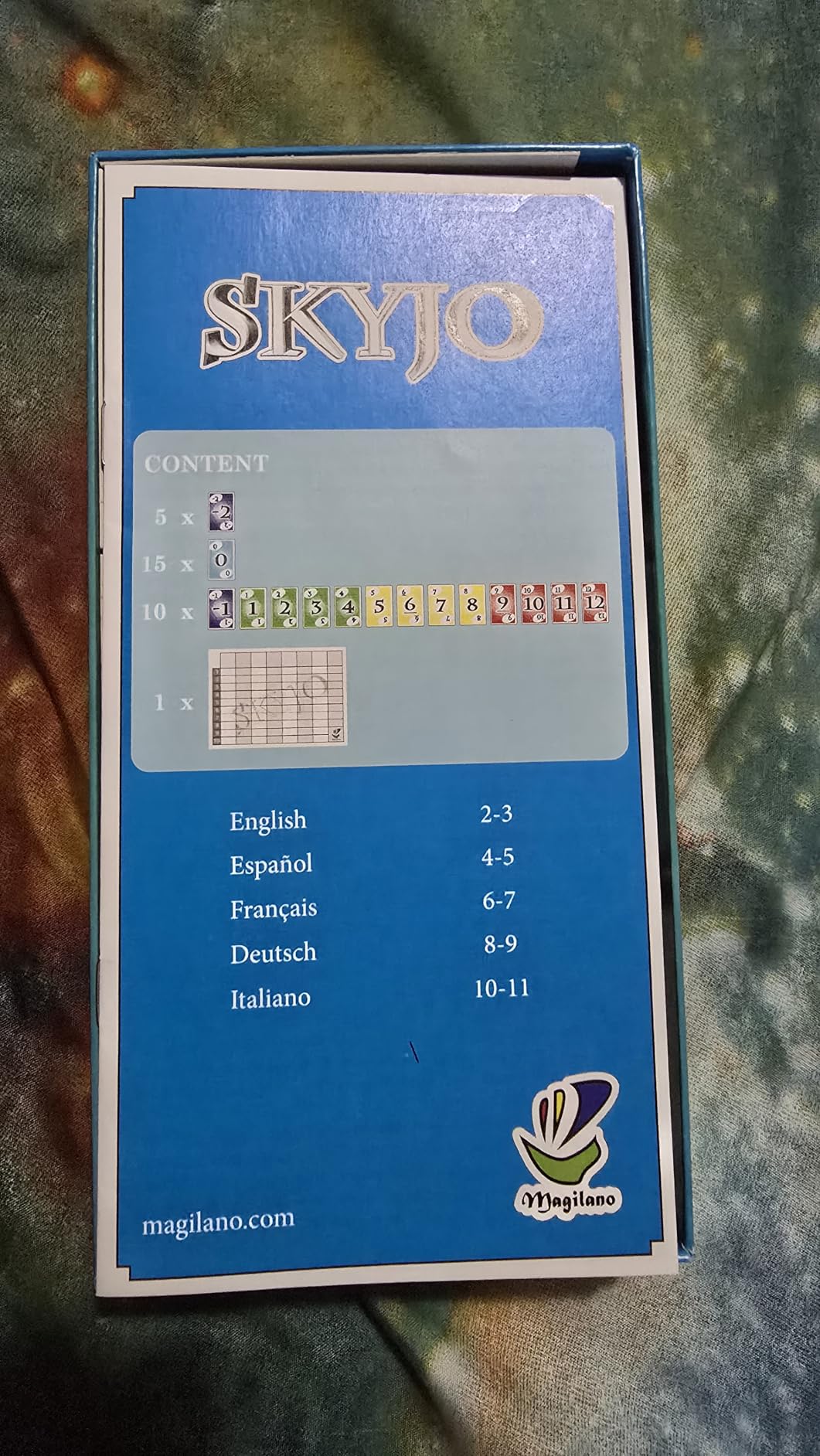
SKYJO is the game I put in front of the widest range of ages I could assemble at one table, and it is the one that kept working. Every player holds a small hand face down, flips one card at a time, and tries to end up with the fewest total points. That single rule is the whole game, and it takes about 30 seconds to explain.
What makes it work across ages is that the scoring punishes greed rather than skill. Collecting an extra card feels good in the moment and hurts your final total, so an eight-year-old and an adult are both quietly making the same mistake, which makes for a much friendlier table than a game that rewards being the smartest person present.
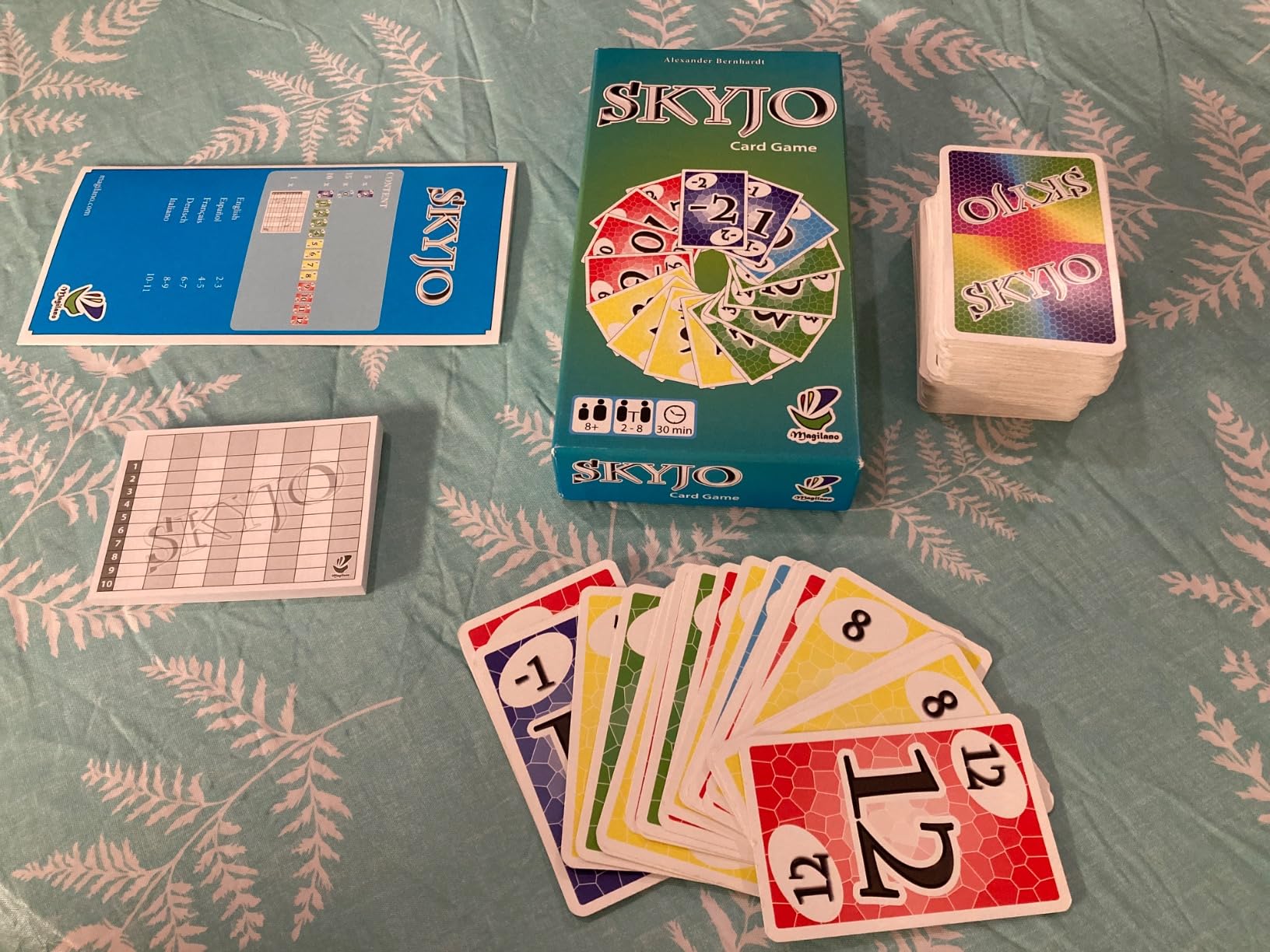
Rounds end the moment one player turns over their last card, so a long round is impossible. Played with four adults and a seven-year-old it ran about 25 minutes. Played with a nine-year-old who loves card games it took longer, mostly because we kept starting another one.
The scorepad is doing quiet work here. Adding and subtracting two-digit numbers at the end of every round is genuine practice dressed up as bookkeeping, and it is why parents keep coming back to this one. Nobody in our group has ever asked what the numbers mean.
How SKYJO holds up when the age gap is ten years wide
The thing SKYJO does better than anything else here is avoid punishing the youngest player. There is no elimination, no turn you can lose outright, and no penalty card aimed at you. A five-year-old with a spare hand is still in the round, which is the difference between a game that gets repeated and a game that gets folded back into the box.
It is also one of the few picks on this list that a r/cardgames thread of families described as a regular with children aged ten and up, alongside Five Crowns. That matches what we saw at our table.
Where SKYJO asks too much of younger players
The age rating is 8 and that is honest. Scoring at the end of a round asks players to add and subtract two-digit numbers, and a five-year-old will need an adult to do the arithmetic even if they played the round perfectly. The fix is to have the adult score and the child keep the cards, which still works.
Card texture is the other small complaint. The cards start stiff, closer to a fresh playing card than a coated game card, and soften noticeably after a few weeks of play. It never affected play for us.
2. UNO: The Best Family Card Game When Everyone Turns Up
Mattel Games UNO Card Game, Ages 7+, 2-10 Players
2-10 players
Ages 7+
First to 500 points
112 cards in a tin
Pros
- Anyone can join mid-game with zero teaching
- Symbol-marked cards are colorblind accessible
- Action and Wild cards swing the round
- Three blank Wild cards support house rules
Cons
- Very familiar design gives veterans little new
- Best at 4-6 players and thinner at 8 to 10
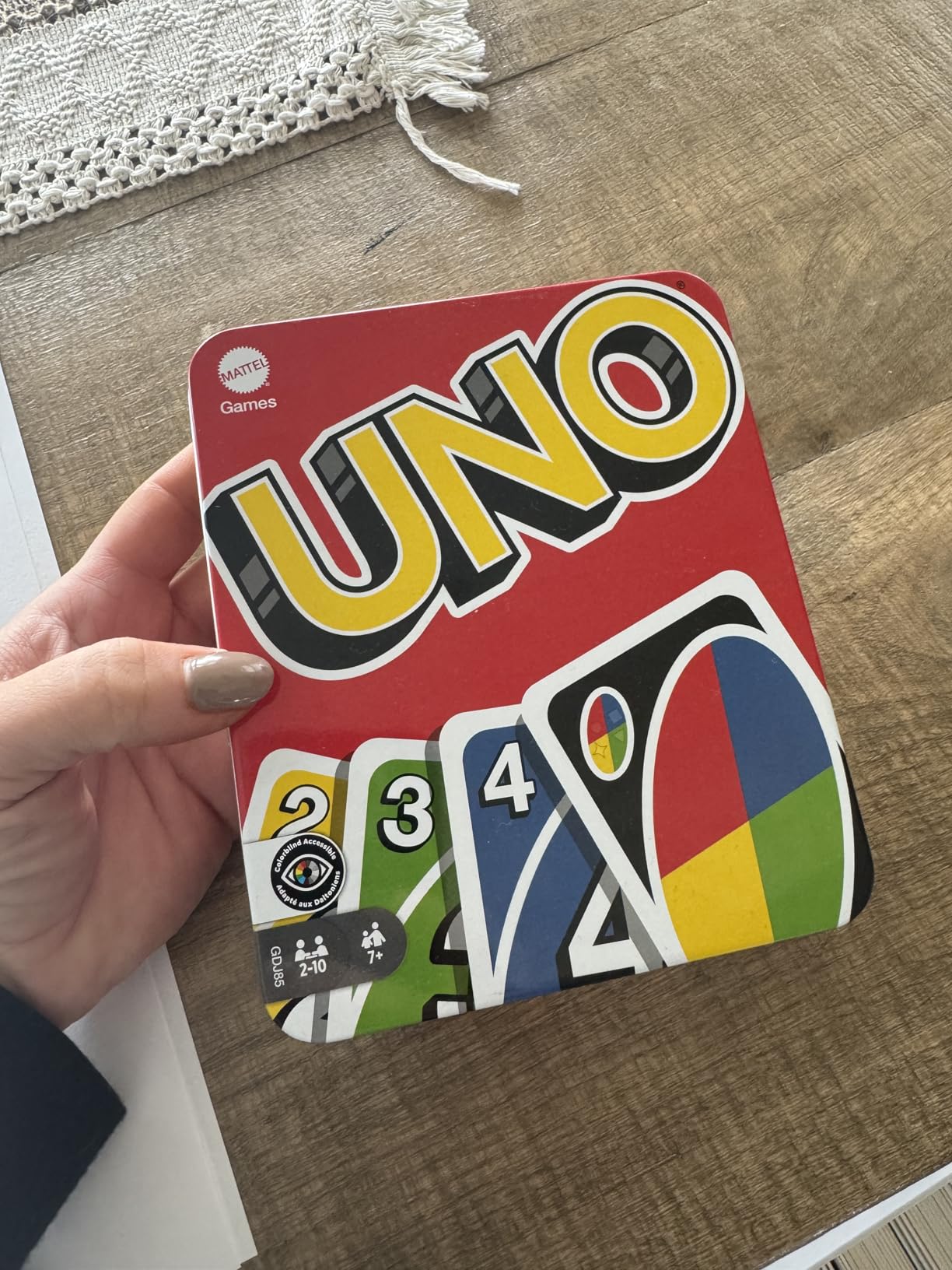
UNO is the answer to a specific problem: a family game night where the guest list is eleven people and half of them are under ten. No other game on this list handles a table that size without falling apart, and the reason is that teaching takes zero seconds. Everyone has played it or watched it played.
The mechanic is a race to shed cards by matching the top card’s color or number, first to 500 points. Action and Wild cards interrupt play, which is what keeps a large table from turning into eight people quietly holding cards until the round ends.
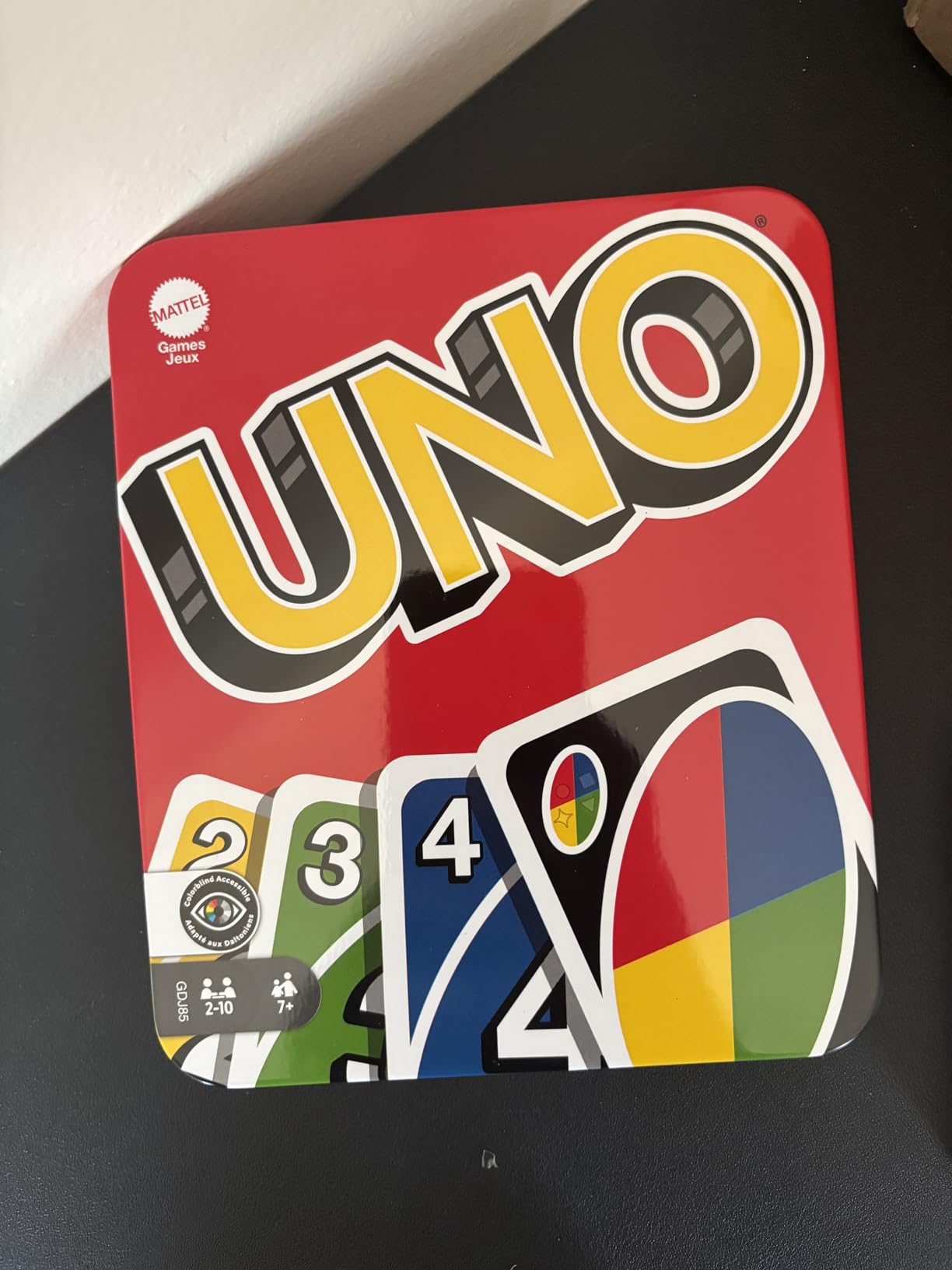
The tin matters more than it sounds. It holds 112 cards and the whole thing measures under seven inches, so this is the game that goes in the bag when you are traveling or camping and have nowhere to put a board out. That complaint comes up constantly in family game forums, and this solves it.
We also appreciated the three blank Wild cards. Writing house rules on them turned a familiar game into ours, which is the cheapest way to solve the complaint that everyone already knows UNO too well.
Why UNO works with kids and adults at the same table
Luck does most of the work and the visible discard pile means nobody is holding information they cannot see, so a seven-year-old is not disadvantaged by playing against an adult. The race structure means every player is doing something on every turn. Nothing about the decision-making requires vocabulary or reading beyond the number and the symbol.
It is also the most accessible game here for color vision. Every color carries its own graphic symbol, so a child who cannot distinguish the red and green cards can still play correctly by matching shapes.
When UNO is the wrong choice
At eight to ten players the turn time gets long enough that the game stops feeling like a race. Six is about the ceiling where it still feels fast, and the box says up to ten because you can, not because you should.
The deeper limitation is novelty. For adults who grew up on it, the design offers almost nothing new, and that boredom tends to transfer to the whole table. Pick it for convenience and accessibility, not for depth.
3. Exploding Kittens: The Best Family Card Game for a 15-Minute Round
Exploding Kittens Original Edition, 2-5 Players, Ages 7+ Card Game
2-5 players
Ages 7+
About 15 minutes
56 illustrated cards
Pros
- Roughly 15 minutes a round
- Draw-or-suffer tension is genuinely strategic
- Small box travels well
- Oatmeal artwork pulls in kids and adults
Cons
- Elimination leaves young kids out early
- Humor lands unevenly across a wide age range
Exploding Kittens solves the timing problem. Most family card games run 30 minutes or more, which is a lot to ask on a school night, and this one closes out in about 15. That makes it the easiest game here to slot in before dinner rather than as the main event.
The rules are thin on purpose. You draw from a pile, you use action cards to skip a turn, defuse a kitten or change the deck, and the last player standing wins. Everyone in our group was playing within a couple of minutes, and the drawn-to-a-design of the artwork does the rest of the recruitment.
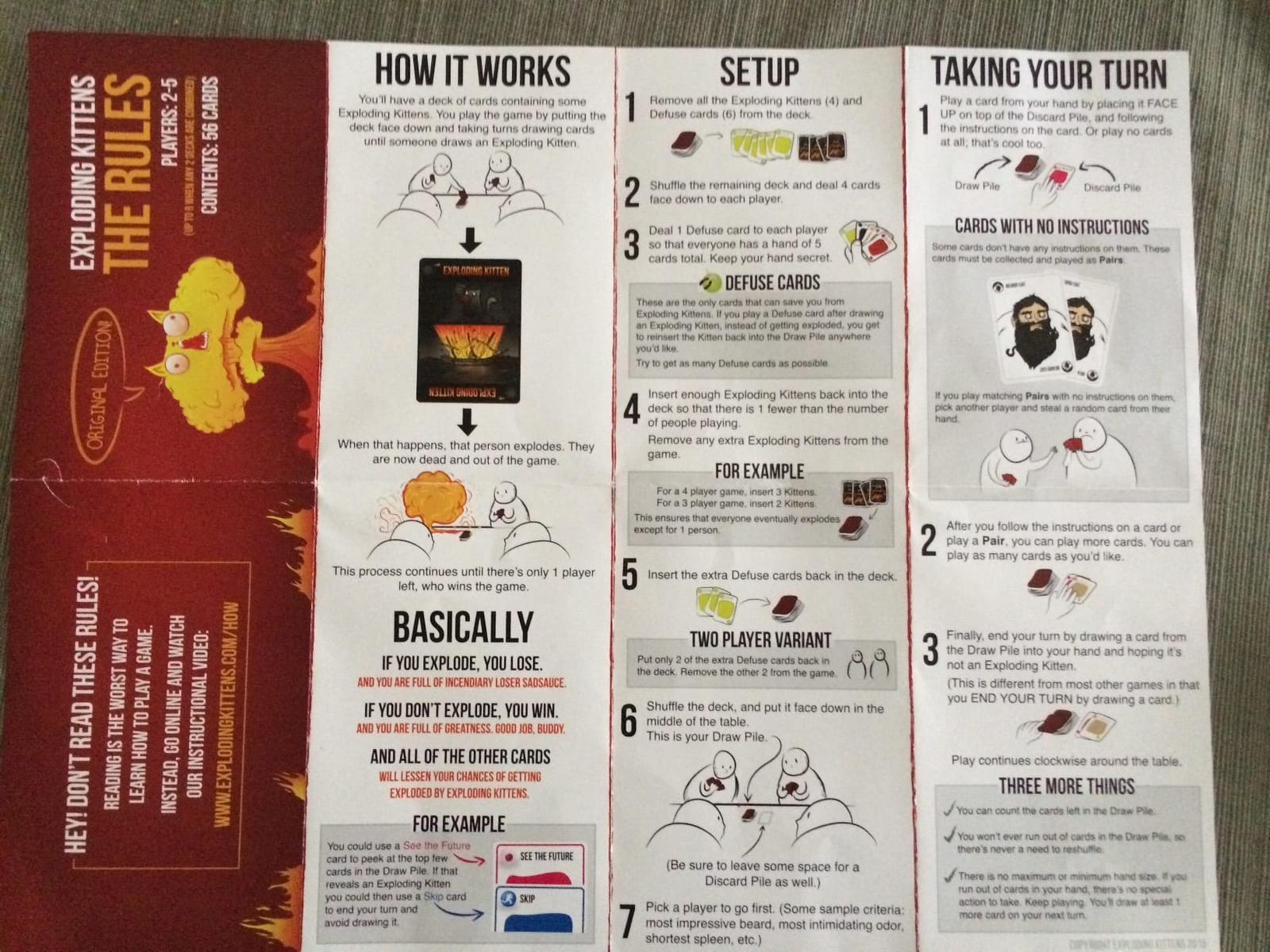
The strategic layer is thinner than the packaging suggests, and that is a feature at family level. With two to five players the decisions are mostly small and fast, so nobody spends a turn thinking while six other people wait. The 4.6 average rating reflects exactly this: people like it, some people do not love it.
Card quality and the box are genuinely good for the size, and the 56 cards fit easily in a side pocket. It is one of the few games here I would pack for a camping trip without thinking about it.
Where Exploding Kittens earns its place on a family night
The elimination design is unusual among family games and it is the whole point. You are not out, you are dead until the next game, which creates a reason to deal someone in immediately rather than explaining what they missed. On a mixed-age table that is a very effective reset button.
It also scales down gracefully. With two players the game is quick and tense enough to work on a long car ride, which is one of the use cases families search for most.
Where it breaks down for younger children
Being eliminated early is genuinely hard on a six or seven-year-old, and that is the most common complaint in reviews. We saw it directly: a child who lost in round one spent the rest of the game shuffling cards instead of playing.
The humor also skews. The illustrations are funny to a ten-year-old and a forty-year-old, but a five-year-old tends to find an exploding kitten mildly alarming rather than funny. Check the ages at your table before you lead with this one.
4. Taco Cat Goat Cheese Pizza: The Best Family Card Game for Ages 7 and Up
Taco Cat Goat Cheese Pizza Card Game by Taco Cat Games, Age 7+, 2-8 Players
2-8 players
Ages 7+
10-15 minute rounds
Rules on one card
Pros
- Rules printed on a single card
- Fastest setup and cleanup on this list
- Grandparents catch on immediately
- Needs no table at all
Cons
- Loud and physical so poor for quiet evenings
- Low decision depth once the pattern is known
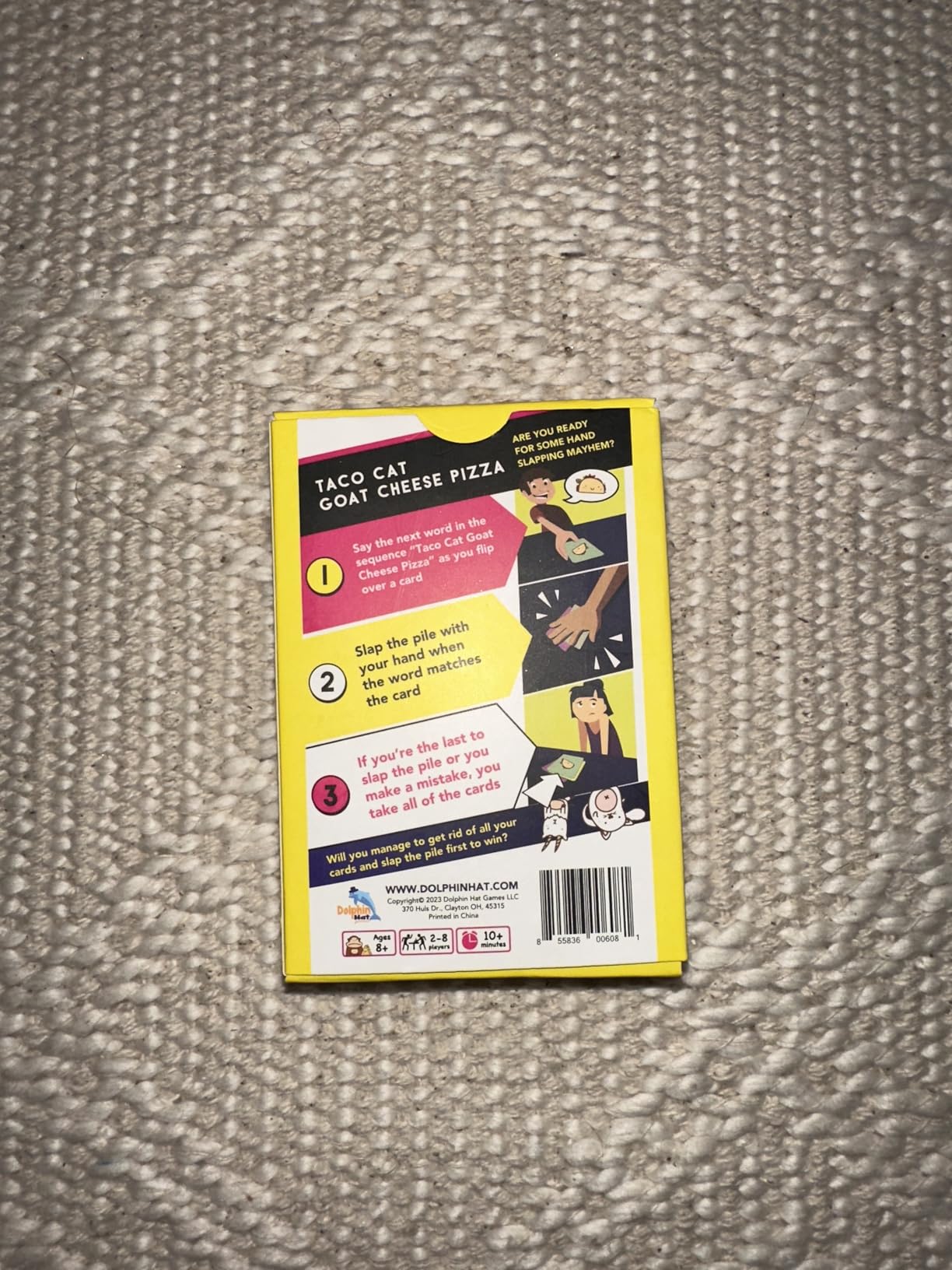
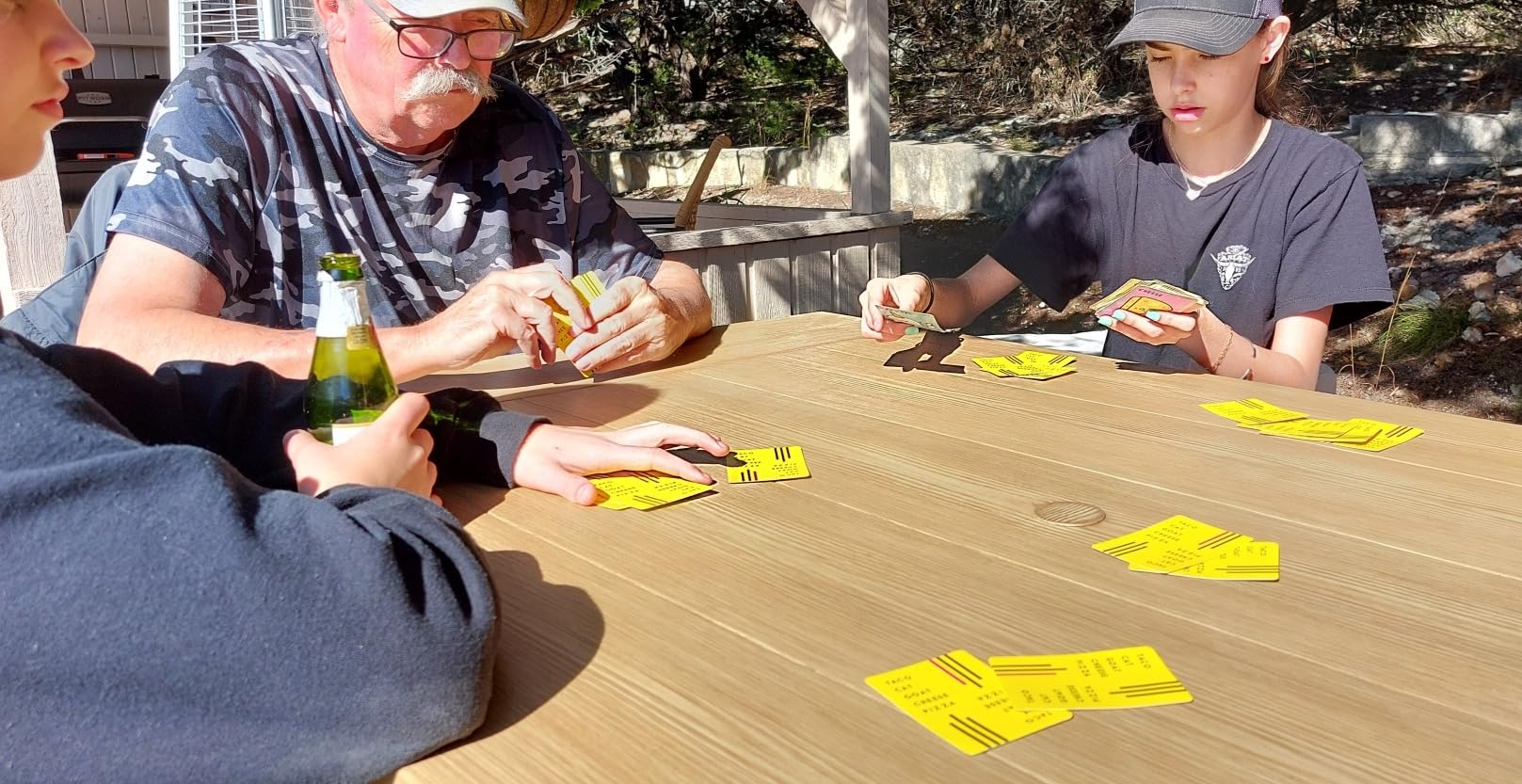
This is the game we hand to anyone who has never played a card game before, including adults. You flip cards one at a time and chant Taco, Cat, Goat, Cheese, Pizza, and when a word matches what is on the card you slap the pile. The last hand to slap takes the cards.
The entire rulebook fits on one card. Setup is about 30 seconds and cleanup is stacking the deck again, which is not true of most games at this price. In our house it is the most-played game we own, and it is the one we pull out when there are guests who do not want a lesson.
What surprised me was the range. It worked with a seven-year-old, two teenagers and a grandparent in the same round, and the grandparents were consistently good at it. Reviewers repeatedly describe it as the game that gets the whole table laughing, including the adults who arrived skeptical.
The surprise cards, Gorilla, Groundhog and Narwhal, break the pattern deliberately. They are the reason the game does not go numb after the fifth round, when the chant itself would otherwise be the whole challenge.
Why this is the one to buy first
If you are starting a family card game collection from nothing, start here. It has almost no failure mode because almost nothing can go wrong: no scoring to explain, no elimination, no turns that stall, and a round that ends fast enough that a bad round does not ruin the evening.
It is also the most portable game here by a distance. It weighs almost nothing, needs no surface, and works in a car seat or on a picnic blanket, which solves the no-table problem that families raise again and again.
When it is the wrong game
It is loud. Slapping and grabbing cards is the point, and with younger children the noise level gets high fast. If your family game night is a calm thing, this is the opposite of what you want.
There is no strategy layer to speak of. Once the chant is known the game is pattern recognition and reflexes, so a competitive adult will not find anything in it after a few sessions. Use it as the icebreaker before a deeper game, not as the evening’s main event.
5. Five Crowns: The Top Rated Family Card Game, Rummy With a Fifth Suit
Five Crowns Rummy Style Card Game for Kids and Adults, Family Game Night
1-7 players
Ages 8+
Two full decks
Award-winning rummy variant
Pros
- Highest average rating in the lineup
- Gentle rummy variant with no punitive cards
- Rotating wild cards change every round
- Plays at a pace that suits mixed ages
Cons
- Two full decks need a proper shuffle
- Capped at seven players
Five Crowns is rummy with one twist that changes the game: a fifth suit of stars. You lay down sets and runs, and one card in play rotates between players each round as a wild, so the same hand is worth something different every time. That single rotating variable is what gives a familiar card game a long life.
It carries the highest average rating of anything we tested at 4.9, and the reason is visible within one round. There are no punitive cards. Nothing punishes a seven-year-old for holding the wrong thing, and nothing makes a grandparent feel slow.
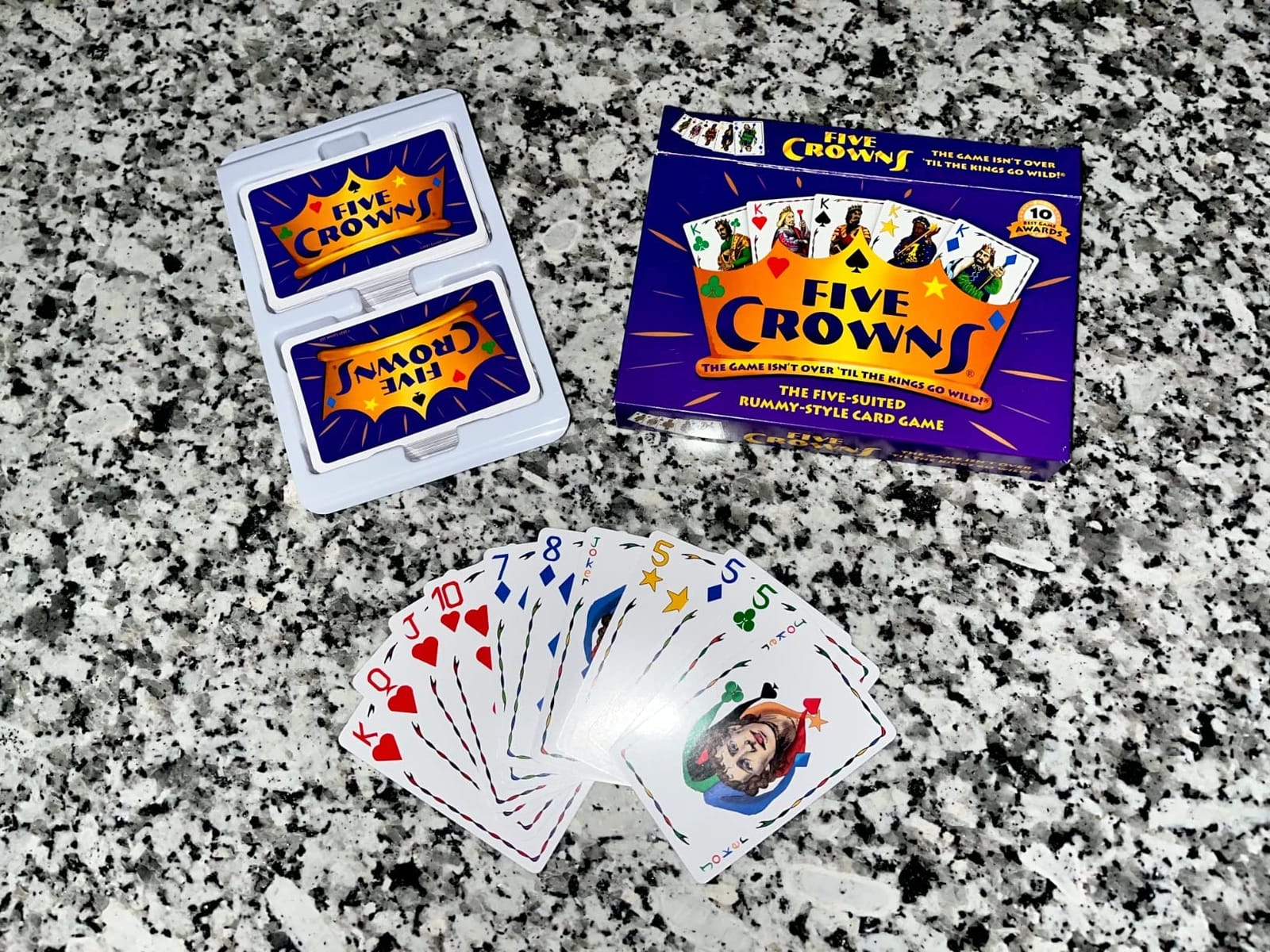
It plays at a good clip. Our five-player round finished in well under half an hour, and the decision points are frequent enough that nobody sat waiting. That matters more than it sounds, because the quiet stretches are what kill rummy with a mixed-age group.
It is also compact enough for a car ride, and it survives being played by people who claim not to like card games, which is a bigger demographic than you would think at a family gathering.
Why families keep coming back to Five Crowns
The rotating wild card means the same group of players is never making the same set of decisions, which is the closest thing here to real replayability without a campaign. Combined with the fifth suit, it means you are not just playing rummy, you are playing a slightly different rummy each round.
It was one of the two games that a card-games subreddit family described as a regular they play with children from age ten up, alongside Skyjo. Our experience with younger children matched that, provided an adult handles the scoring and the first couple of hands.
The practical drawbacks
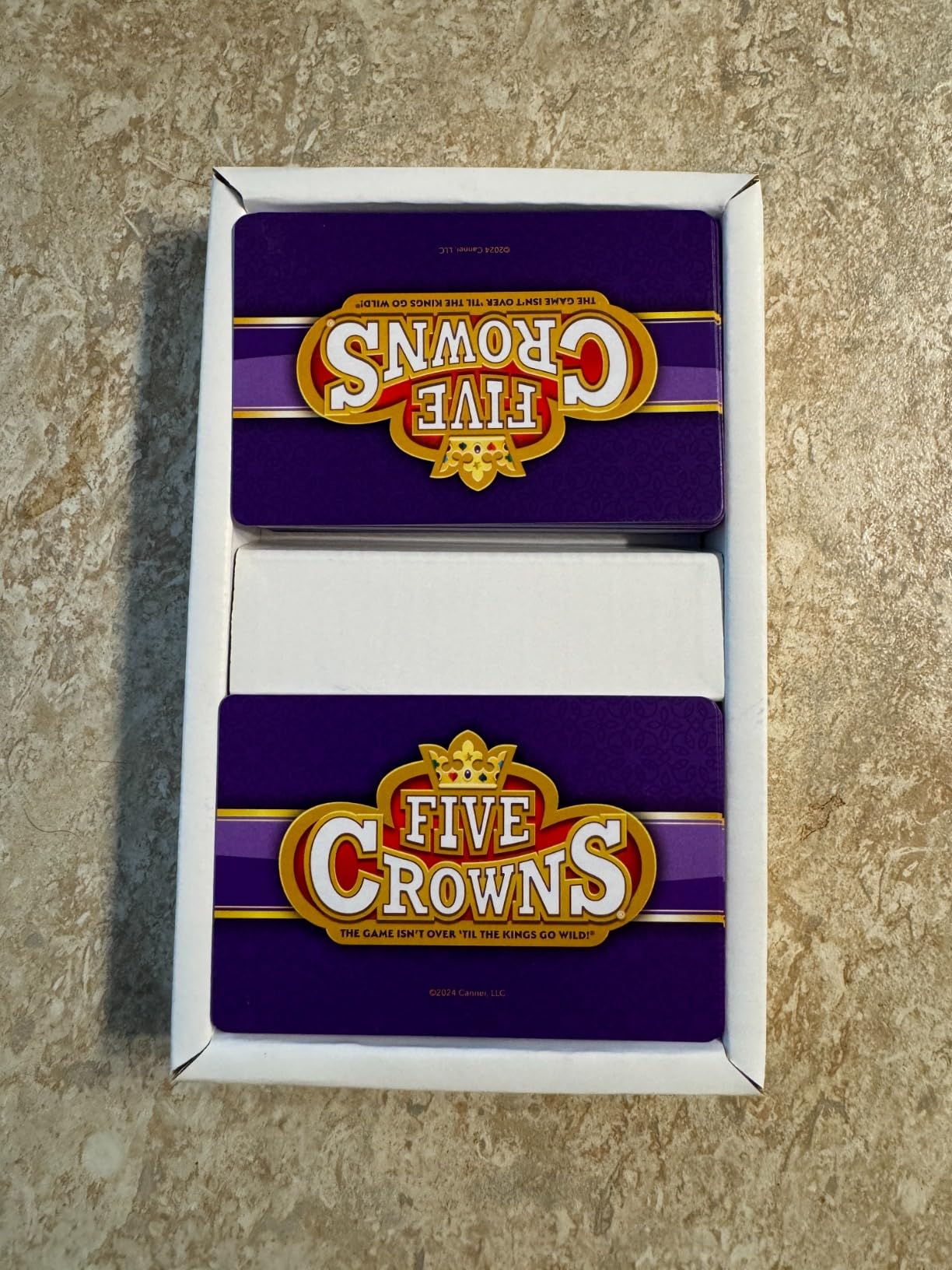
It uses two full decks, which is 100-odd cards to shuffle and a real difference in a household that does not own a card shuffler. It is not a fatal problem, but it is the reason a group of kids will sometimes pick something else instead.
Seven players is the ceiling, so it will not cover a big blended family or a large gathering. And with two players the rotating wild card has less to do, so the game is thinner than it is at five.
6. Monopoly Deal: The Best Value Family Card Game for Fast Sessions
Monopoly Deal Card Game | Quick-Playing Card Game | Fun Games for Families and Kids | Ages 8 and Up | 2 to 5 Players | 15 Mins. | Travel Games
2-5 players
Ages 8+
About 15 minutes
110 cards
Pros
- Finishes in about 15 minutes
- Self-explanatory with reference cards included
- Travel-friendly deck
- Recognizable theme lowers the barrier
Cons
- Property dealing is luck-weighted
- Familiar format can feel repetitive
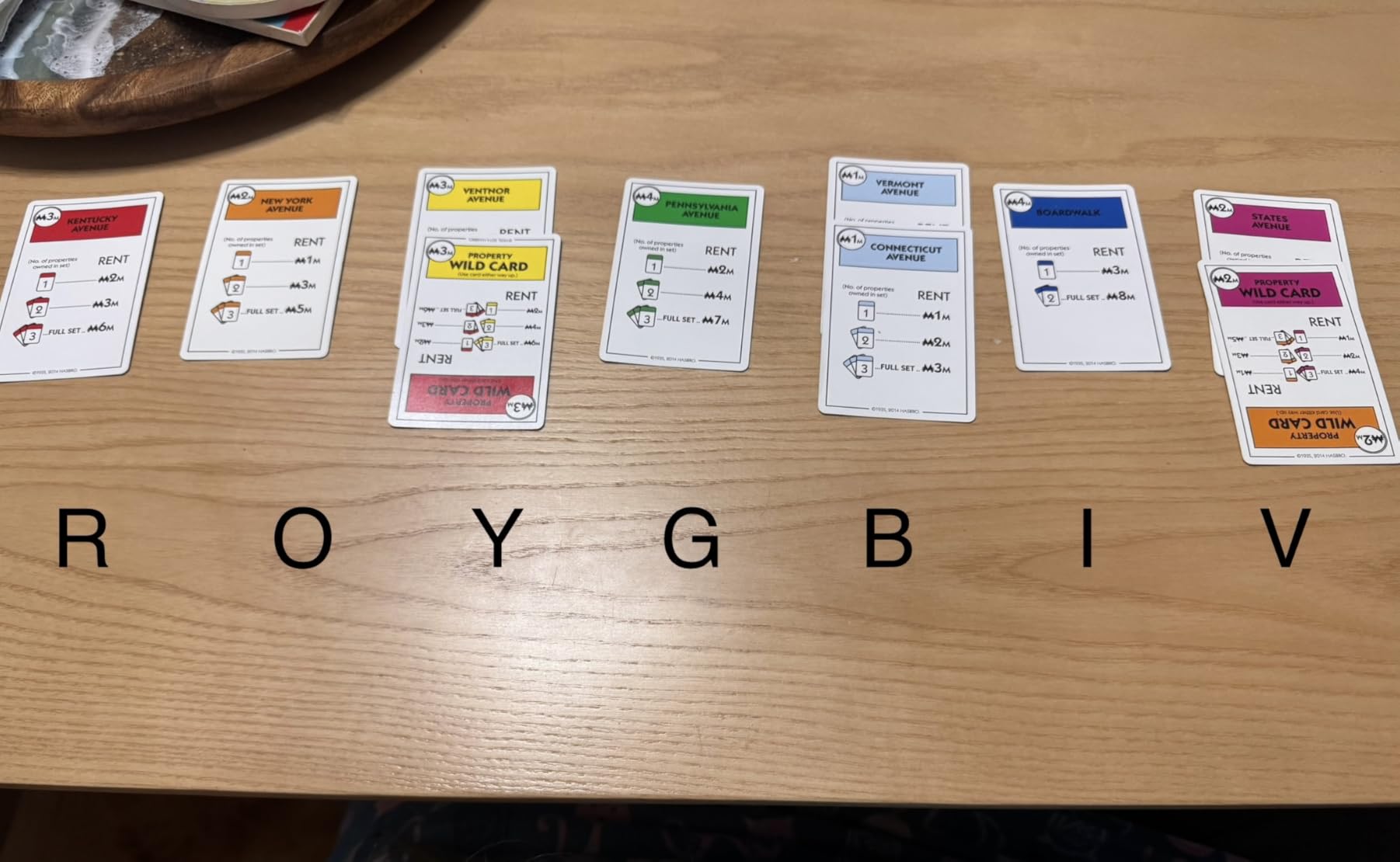
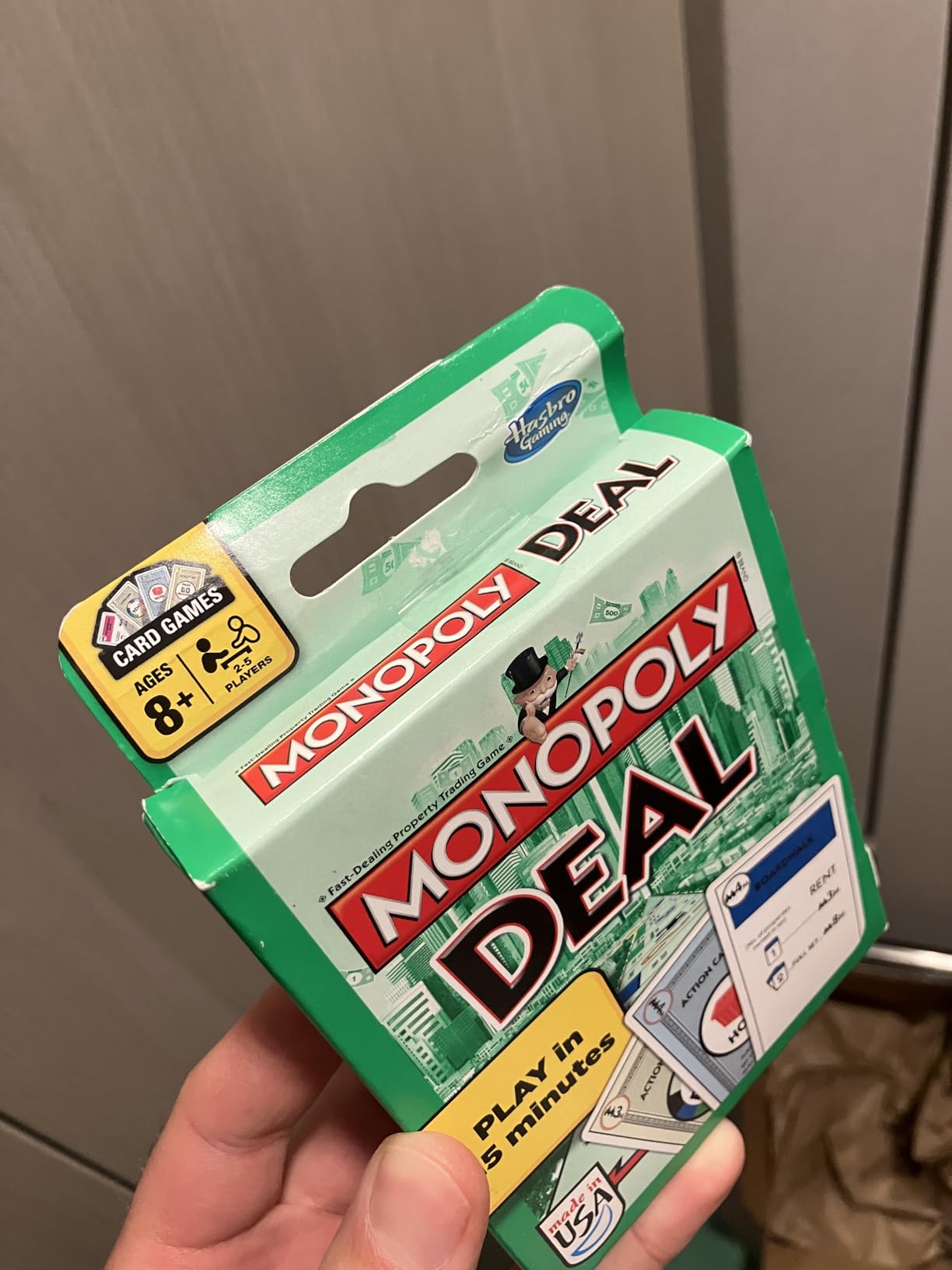
Monopoly Deal is the board game with the board taken away. You deal property cards, trade with the player to your left, and try to assemble three complete sets in different color groups. There is no board, no money, no hotel buildings, and the whole thing can be over in 15 minutes.
The theme does the teaching. Anyone who has played Monopoly understands what a property set is, so the learning curve is close to flat. The included reference cards with turn tips and rules mean even a child who cannot read fluently can follow along by looking.
It is the most practical object in this list. The box is under six inches on its long side and weighs about four ounces, so it goes in a carry-on without a conversation. Our version has survived more travel than anything else we own.
Action cards that collect rent, steal and swap are where the actual decisions live, and they give an eight-year-old something to think about without adding any rules complexity.
Why it suits a weeknight rather than a weekend
Fifteen minutes is the number that matters here. A game that ends inside 20 minutes can be played before dinner without anyone giving up an evening, and games that end inside 20 minutes get played far more often than ones that do not. Frequency is what turns a purchase into a habit.
It also fills a gap the others cannot. This is a genuinely competitive game that still works with two to five people, including a pair of adults on a bad-weather evening, which none of the party games on this list manage.
Where the Monopoly format shows its seams
Dealing property is heavily luck-weighted. In our group the winner was usually decided by the opening hand rather than by any decision made after it, and a child who lost that way sometimes treated it as the game being unfair.
After a dozen plays the format does start to feel repetitive, because the strategy space is genuinely small. If your household already plays Monopoly Deal regularly, an upgrade is worth it, but as a first game it holds up well.
7. Play Nine Golf: The Best Family Card Game for Two Players
Play Nine The Card Game of Golf, Ages 8 and Up, Couples Date Night Gift, Game Night Favorite, 15 Min Gameplay, Family Friendly Card Game for Kids, Teens & Adults, Great Golf Gift
2-6 players
Ages 8+
About 15 minutes
108 cards plus scorecards
Pros
- Lowest score wins and instantly intuitive
- Good luck-and-strategy mix for all skill levels
- Slim deck works well at a table for two
Cons
- Shallow with only two players
- Paper components feel less premium
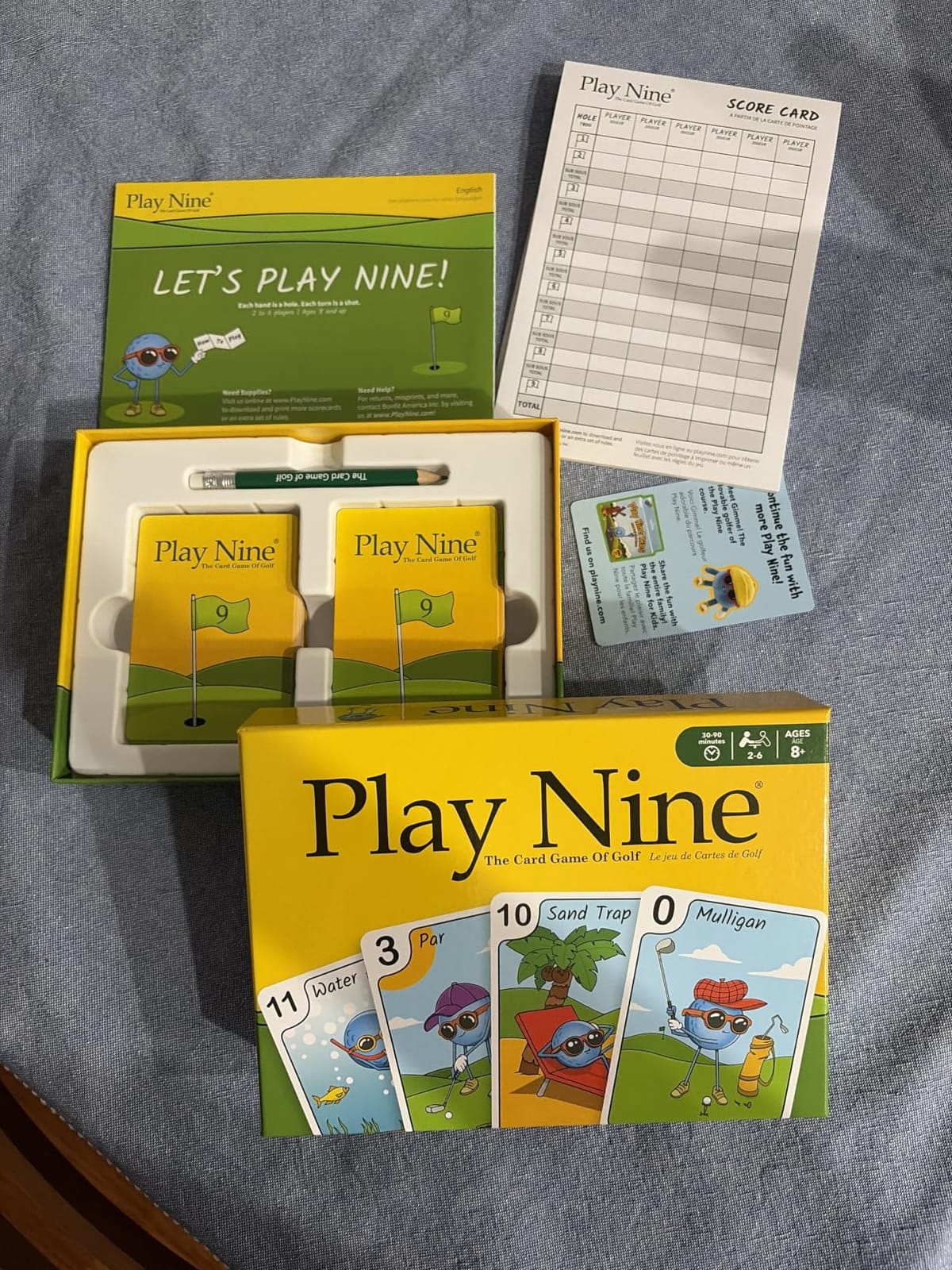
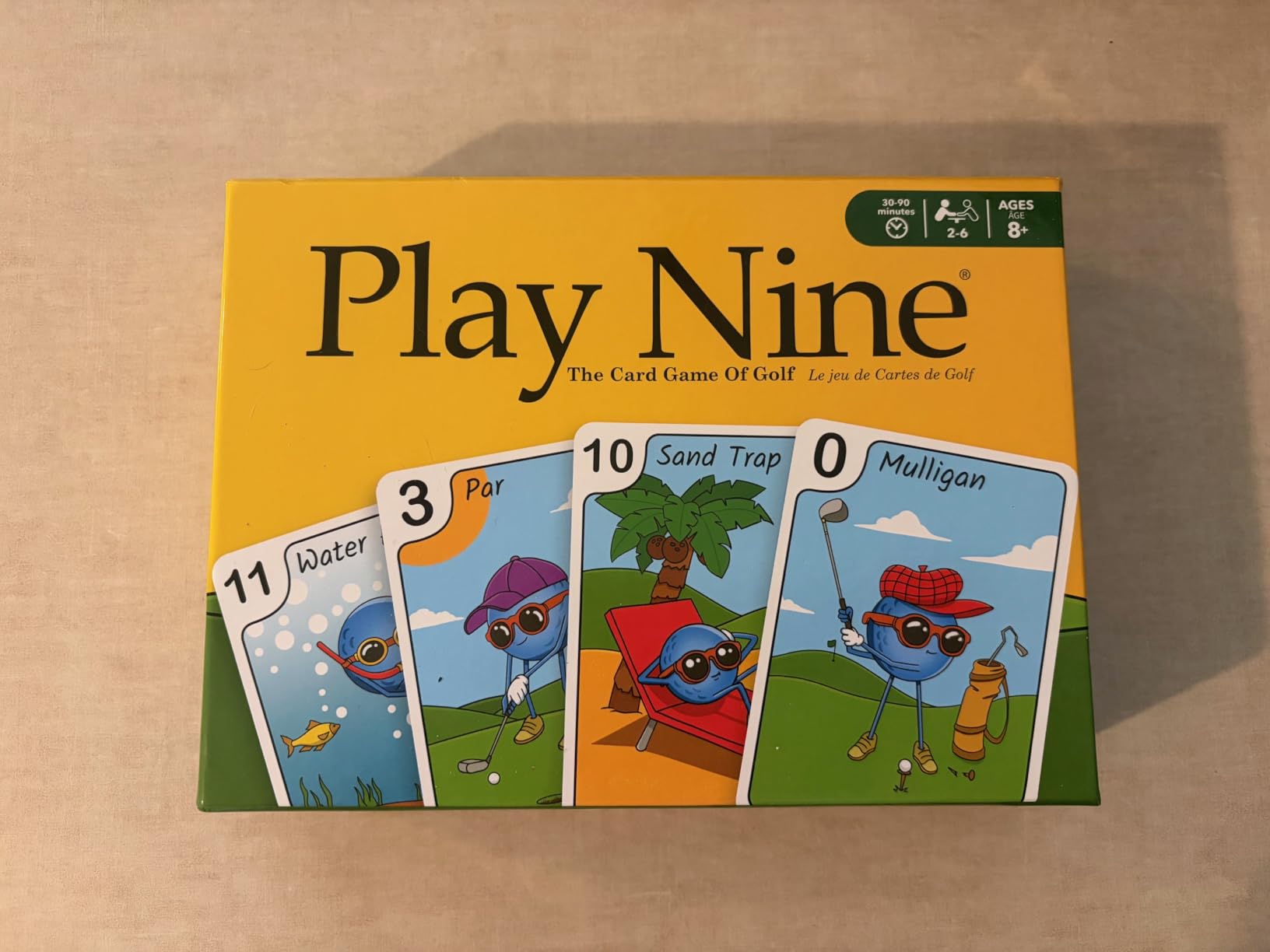
Play Nine takes golf scoring and moves it onto 108 cards. Everyone is dealt eight cards, there is a shared draw pile and a discard pile, and at the end you add up your face value and try to have the lowest number. Golf is one of the few games everyone understands intuitively, and that is the entire design brief.
It is the best choice here for a family of two. Many of the games on this list need four players to make sense, and a couple either drag or trivialise at two. This one was designed to hold two and does, with a draw-discard-trade decision every single turn.
The luck-to-strategy ratio is well judged. A newer player will win some rounds on the draw pile, but the trade decision, which lets you dump a bad card onto someone else, rewards thinking. That is enough to keep an adult interested without making a child feel outplayed.
It is also a natural gift for anyone who plays golf, which is a wider audience than you would expect and makes it one of the easiest cards here to give without asking a question first.
How it plays with kids and grandparents together
Scoring is addition, so the youngest players can be handling the scorecards and the oldest players can be making the trades. Splitting the mechanical and strategic jobs across ages is a good trick, and this game makes it natural.
It fills the awkward middle of a family evening, between the icebreaker and the deeper game. Fifteen minutes of golf scoring between a loud round and a serious one is a rhythm we ended up keeping.
Where Play Nine falls short
With only two players the decision space gets thin, and the shared draw pile stops being contested enough to matter. It works, but it is at its best with four or more.
The physical product is paper, not plastic or card stock, and the slim box gives it a lighter feel than the Five Crowns or Phase 10 packaging. Nothing broke in our weeks of use, but it is the least gift-ready object on this list.
8. What Do You Meme Family Edition: The Best Family Card Game With Teens
WHAT DO YOU MEME? Family Edition by Relatable
3+ players
Ages 8+
300 caption cards and 108 photos
Easel included
Pros
- Often needs no rules explanation at all
- Family Edition stays clean for mixed ages
- Easel shows the template to the whole room
- Strong with teens and cousins
Cons
- Needs three or more players to work
- Some caption cards land flat
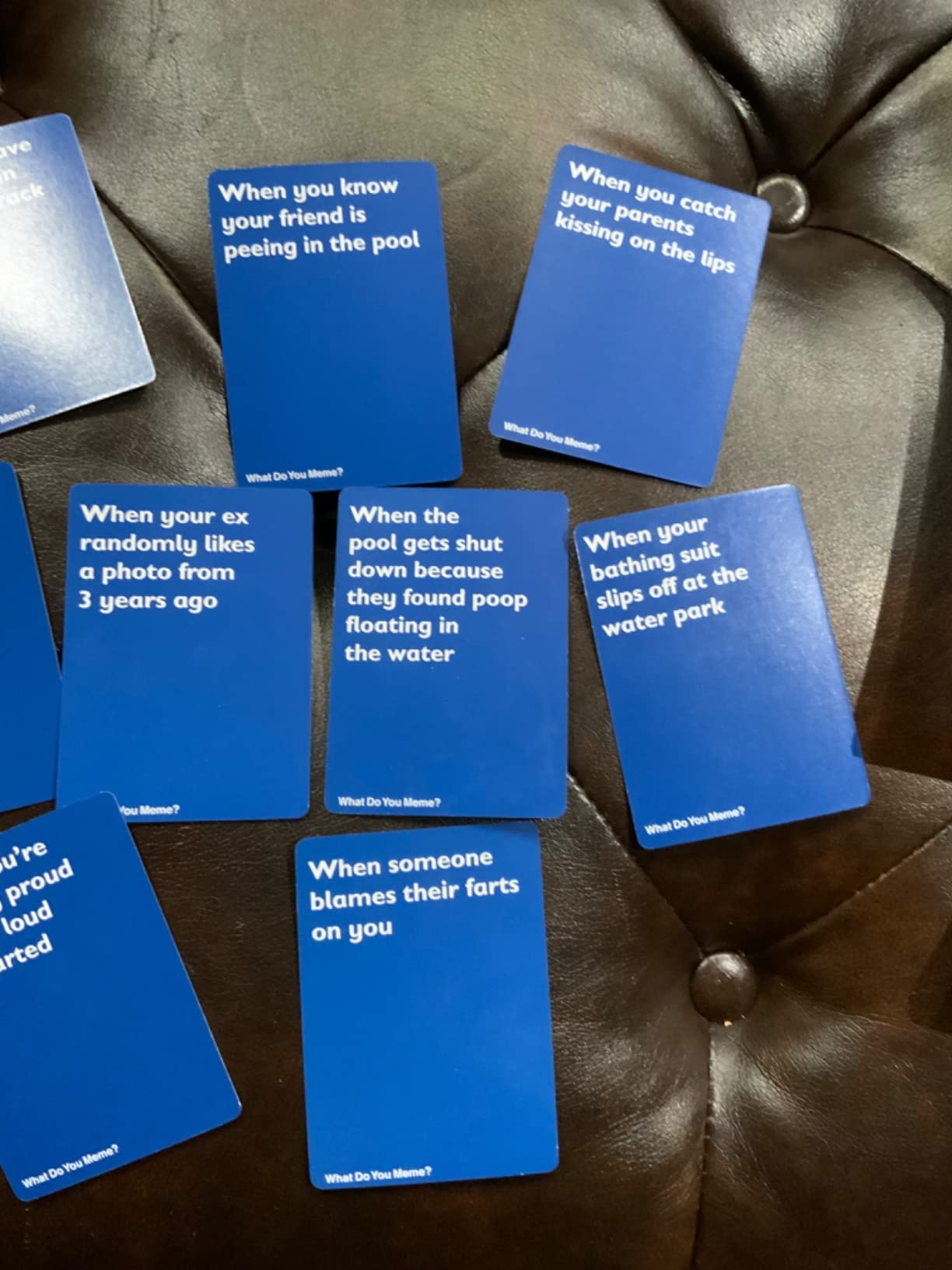
The hardest part of a family game night is getting a fourteen-year-old to stop scrolling. This is the game that most reliably did it. You pick a photo card, play it face up, everyone plays a caption card face down, and a rotating judge picks the funniest combination.
It is self-explanatory. In our group nobody asked a single rules question, which puts it ahead of most card games when a mixed group of cousins is sitting down. The scoring at the end is just counting collected meme cards, so there is no arithmetic and nothing to keep track of mid-round.
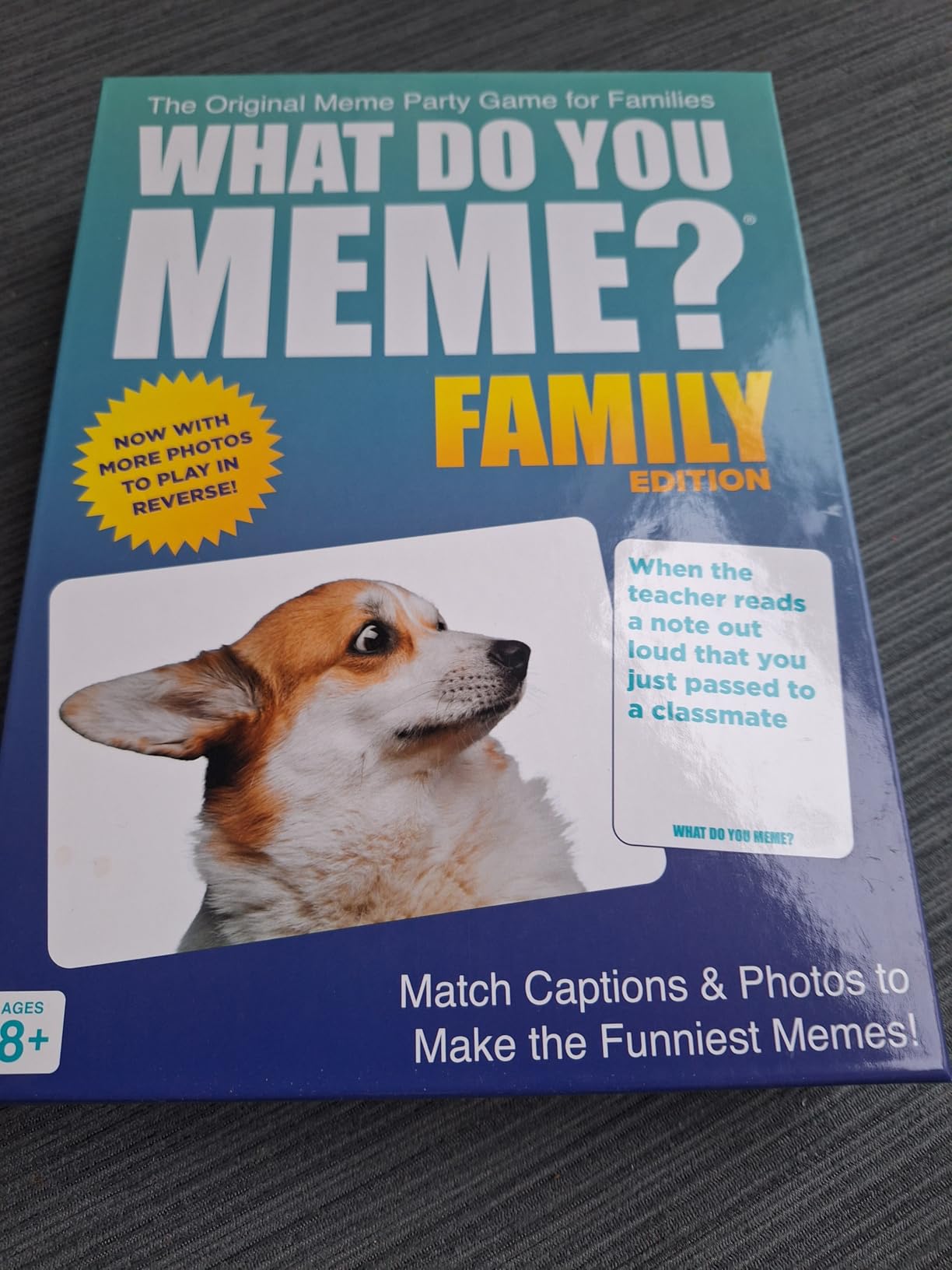
The included easel is not a gimmick. It props the photo card up so the whole room can see it, and without that you end up with six people leaning over one card and complaining about whose turn it is to hold it.
Content is the reason to buy the Family Edition rather than the standard box. The 300 caption cards and 108 photo cards in this version are filtered so nothing makes you cross the room to change the audience, which is what lets you play it around a mixed-age table.
Why this is the answer for a table with teenagers
Teens tolerate a game that looks like something they already do. Building a caption to fit an image is a familiar, low-stakes creative task, and unlike most family games it does not feel like a children’s activity being imposed on them.
It also scales up well. Our group of six ran it for two hours because judging each round takes as long as picking the cards, which makes it the natural finale of an evening rather than the opening act.
Where it does not work
Three players is the real minimum, and it is worse at exactly three than at six. With a couple, the game needs a workaround, so do not buy it for a family of two.
Some of the photo cards are not great, and that is the honest weakness behind a 4.6 average. Younger kids also tend to miss the references the captions depend on, so it works best once the youngest player is at least eight and fluent enough with the format to keep up.
9. Phase 10: The Best Travel Family Card Game in a Tin
Mattel Games Phase 10 Card Game in Storage Tin for Ages 7+
2-6 players
Ages 7+
108 cards
Decorative storage tin
Pros
- Ten phases stop the game going stale
- Symbol-coded cards are colorblind accessible
- Storage tin keeps it travel-ready
- Runs and sets offer gentle strategy
Cons
- Getting stuck on a phase stalls the round
- Long waits in larger groups
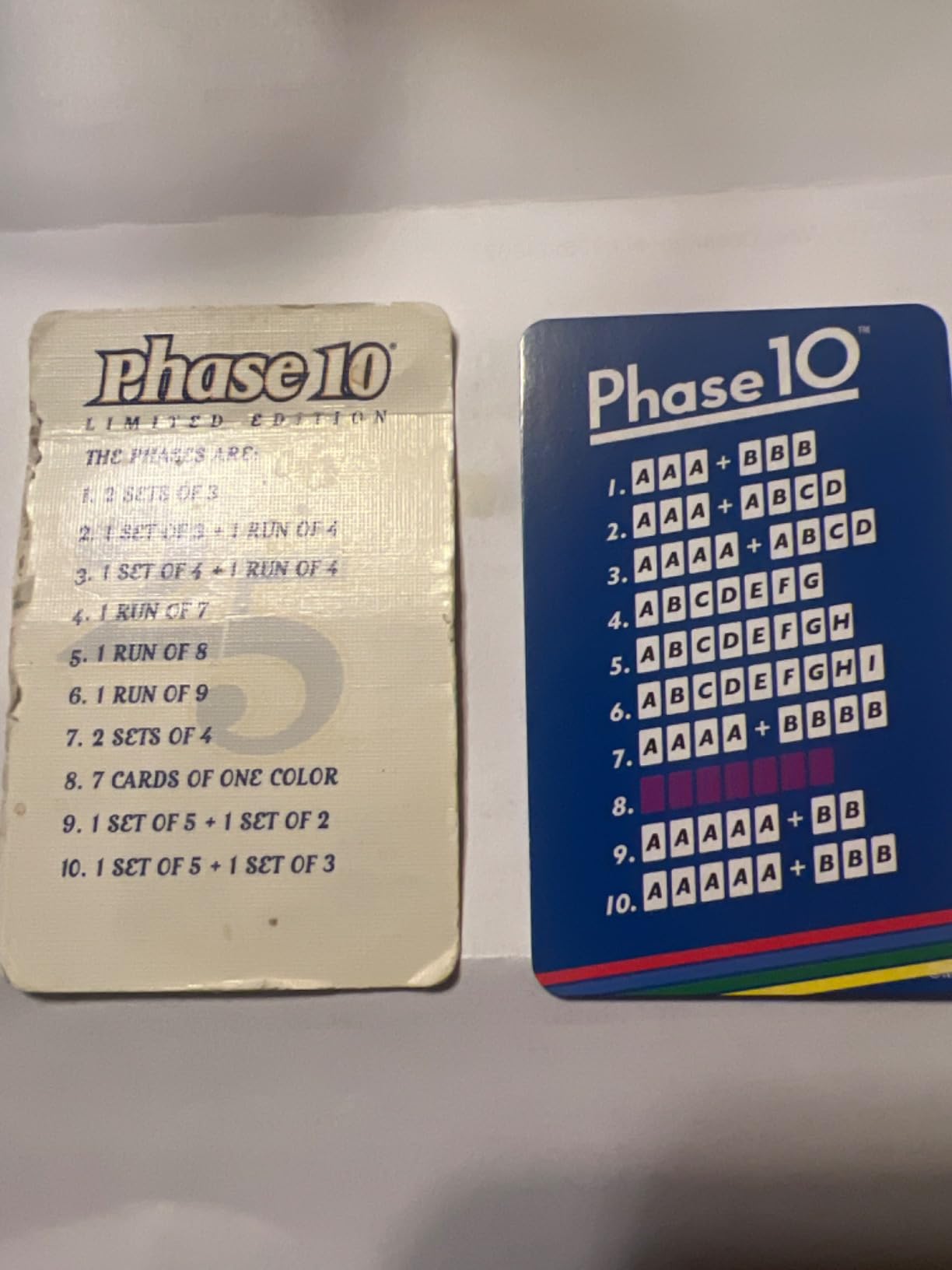
Phase 10 is a rummy-style game with a chase attached. You build sets and runs of the same color, and the first player to complete the current phase wins and picks the next one. The phase list has ten entries and each phase is a different pattern, so the goal genuinely changes from round to round.
That rotating goal is what keeps it fresh. Regular rummy settles into a single way of building, and after a few sessions the table is playing the same game. Here the target moves, which means the strategies move with it.
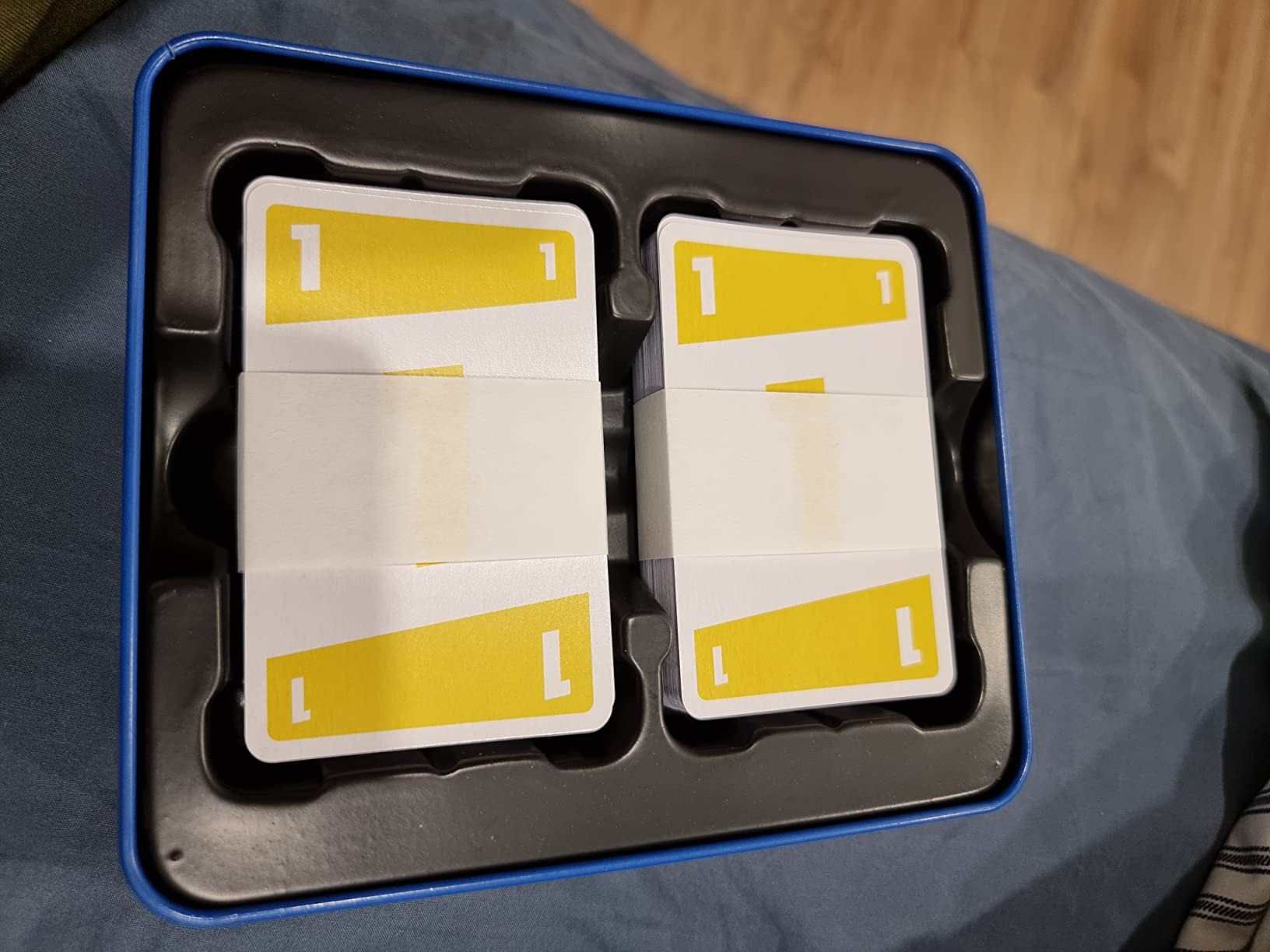
The tin is the quiet win. It is a genuinely decorative storage tin rather than a cardboard sleeve, and the whole thing closes flat enough to sit in a rucksack without bending the cards. If your family game time involves a car, this is the one to pack.
Colors carry graphic symbols on every card, so it is playable by a child who cannot separate the red and green suits. That is a real accessibility gain, and it also makes the cards easier for a young player to call out loud.
What the phase structure actually adds
It converts a maintenance game into a race. With plain rummy, holding back is often correct. Here, because the phase on the table is visible and different every round, playing forward usually beats playing safe, which pushes younger players to be more aggressive than their instincts would suggest.
Wild and Skip cards create the memorable moments. A Skip handed to a child right at the edge of finishing a phase produces a reaction that the game is worth owning for on its own.
When a phase gets in the way
The failure mode is stalling. If everyone is two cards short of the current phase, the round can drag, and a younger player who cannot see how to reach it often just stops participating. We hit this twice in a six-player game, which is enough to know it happens.
Large groups also mean long waits between turns, since each player is holding cards until their turn. Two to four is the range where this runs smoothly.
10. Cover Your Assets: The Best Family Card Game for Grandparents and Teens
Grandpa Beck’s Games Cover Your Assets Set Collection Card Game
2-6 players
Ages 7+
20-40 minutes
Set collection
Pros
- Simple rules and competitive enough for adults
- Works across a very wide age span
- Constant stealing keeps the table talking
Cons
- Noticeably weaker with only two players
- Stealing can sour a competitive group
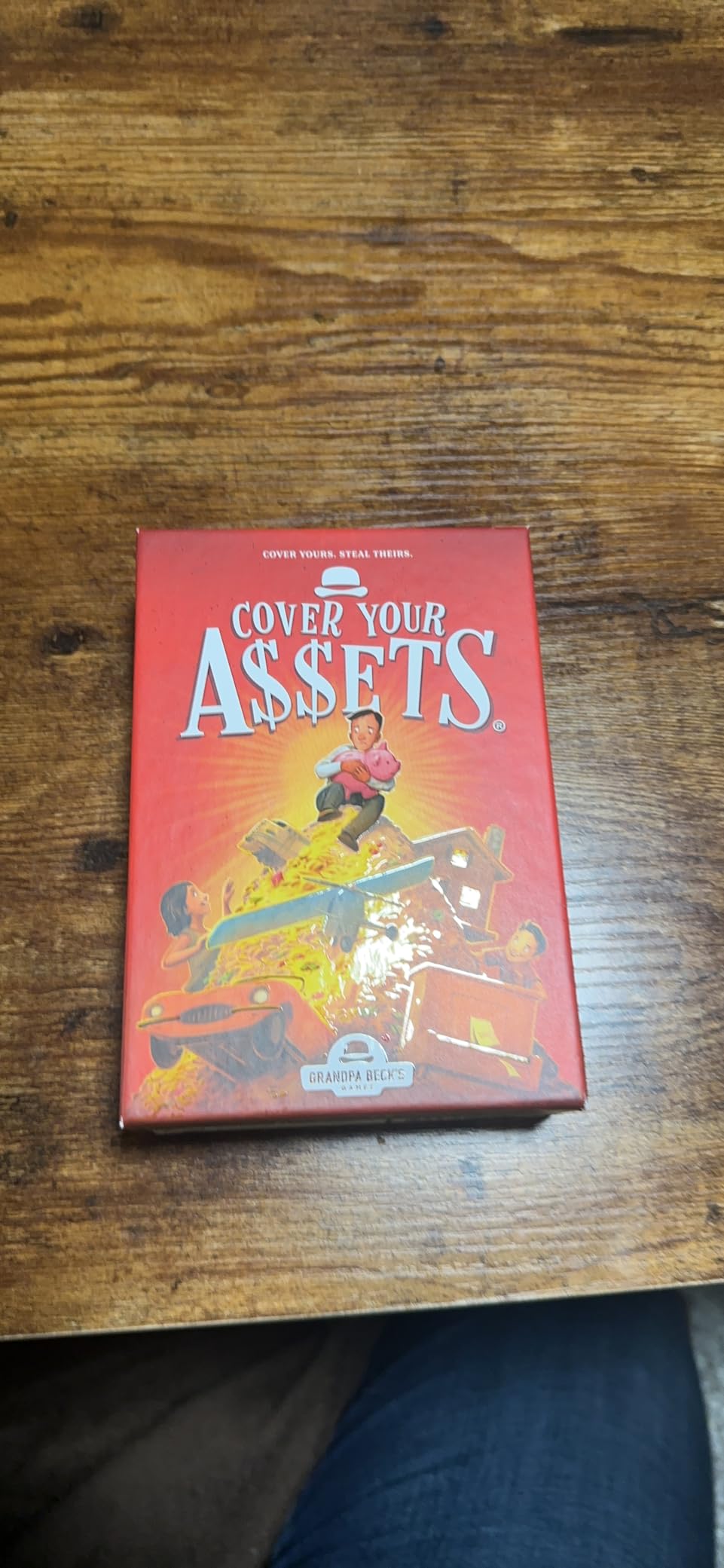
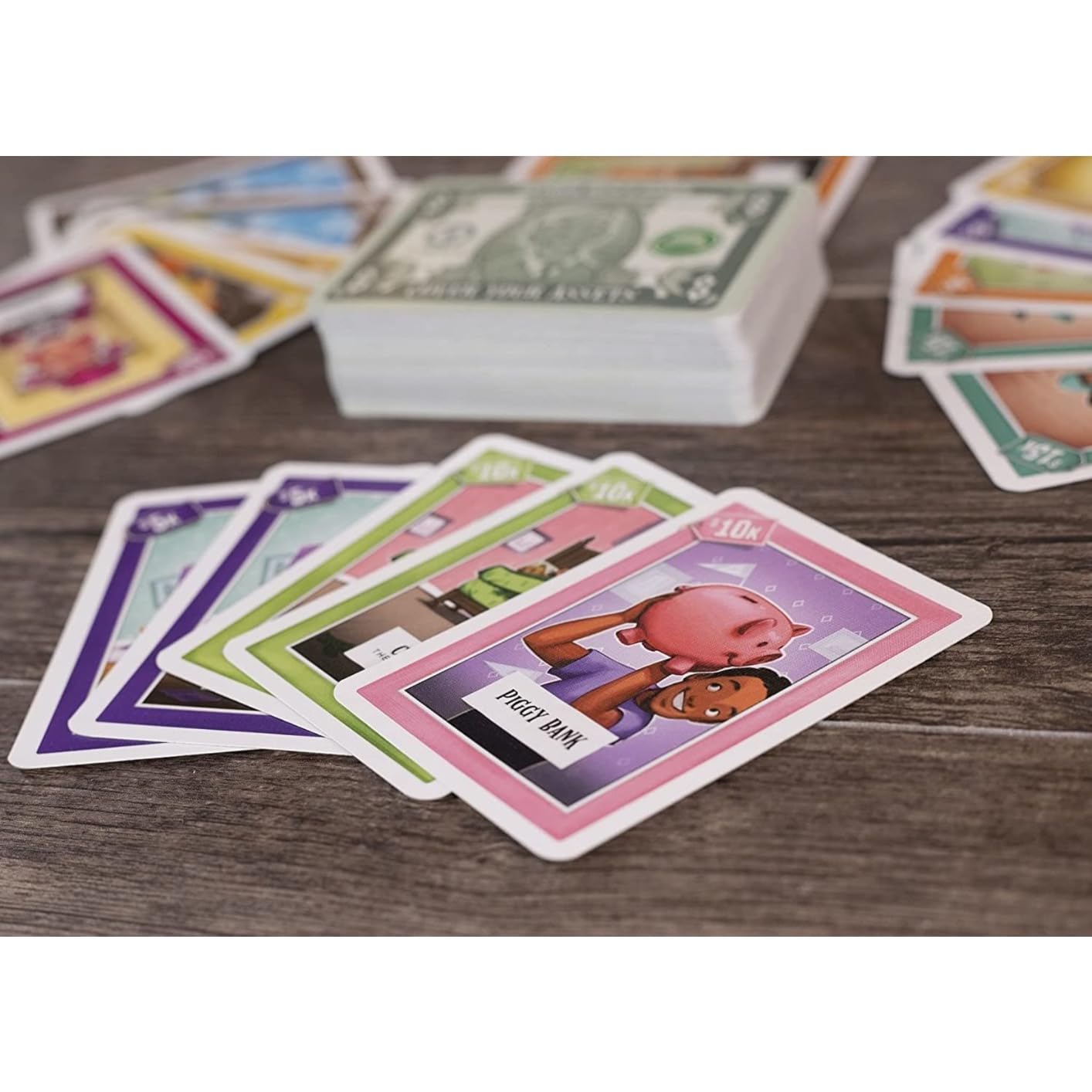
Cover Your Assets is set collection with an aggressive streak. You build point-rich stacks, everyone reveals one card, and matching sets get passed around. When a set is exposed, the player to your right takes the whole thing. The stealing is the game, and the game is about taking from your neighbours without giving them a reason to take from you.
It is the widest age range we managed to play here. Reviewers describe households playing it with ages from 10 to 70, and our own group covered a nine-year-old, three adults and a grandparent without anyone being talked down to.
Nothing in the rules requires reading, counting or strategy vocabulary. You match a symbol, you decide whether to keep or expose, and the consequences arrive immediately. That is why the youngest player here could join the second hand rather than the tenth.
Rounds run 20-40 minutes, which makes this the longest game in the lineup, but the pace inside a round is quick because every turn is a decision with a visible payoff.
Why it beats the usual rummy alternatives with a big family
Set collection games usually have a turn structure where nothing happens while someone thinks. This one has a reveal every round, so the table is continuously engaged and the loud moments are frequent. That is what keeps a teenager awake through a full game.
It is also not a game you need to already like card games to enjoy. There is no meld to memorise, no bidding round, and no two-hour structure. Reviewers pick it out for exactly that reason.
The drawbacks to plan around
Two players is the weak spot. There is nobody to steal from in a meaningful way, and the table talk that makes the game good largely disappears. Play it with four or more.
The stealing mechanic can sour a genuinely competitive group, so if your family tends to argue about board game outcomes, know that this leans into it. It also comes in a redesigned version with a pastel palette and longer numbers that reviewers find slower to read at a glance than the earlier bright-color edition.
11. Cards Against Humanity Family Edition: The Best Family Card Game for a Big Table
Cards Against Humanity Family Edition • Card Game for Your Horrible Family
4-20+ players
Ages 8+
600 all-new cards
Party game
Pros
- 600 cards written from scratch for family play
- Kid-friendly while still landing with adults
- Scales to a very big blended family table
Cons
- Needs at least four players
- Humor skews younger so teens may drift
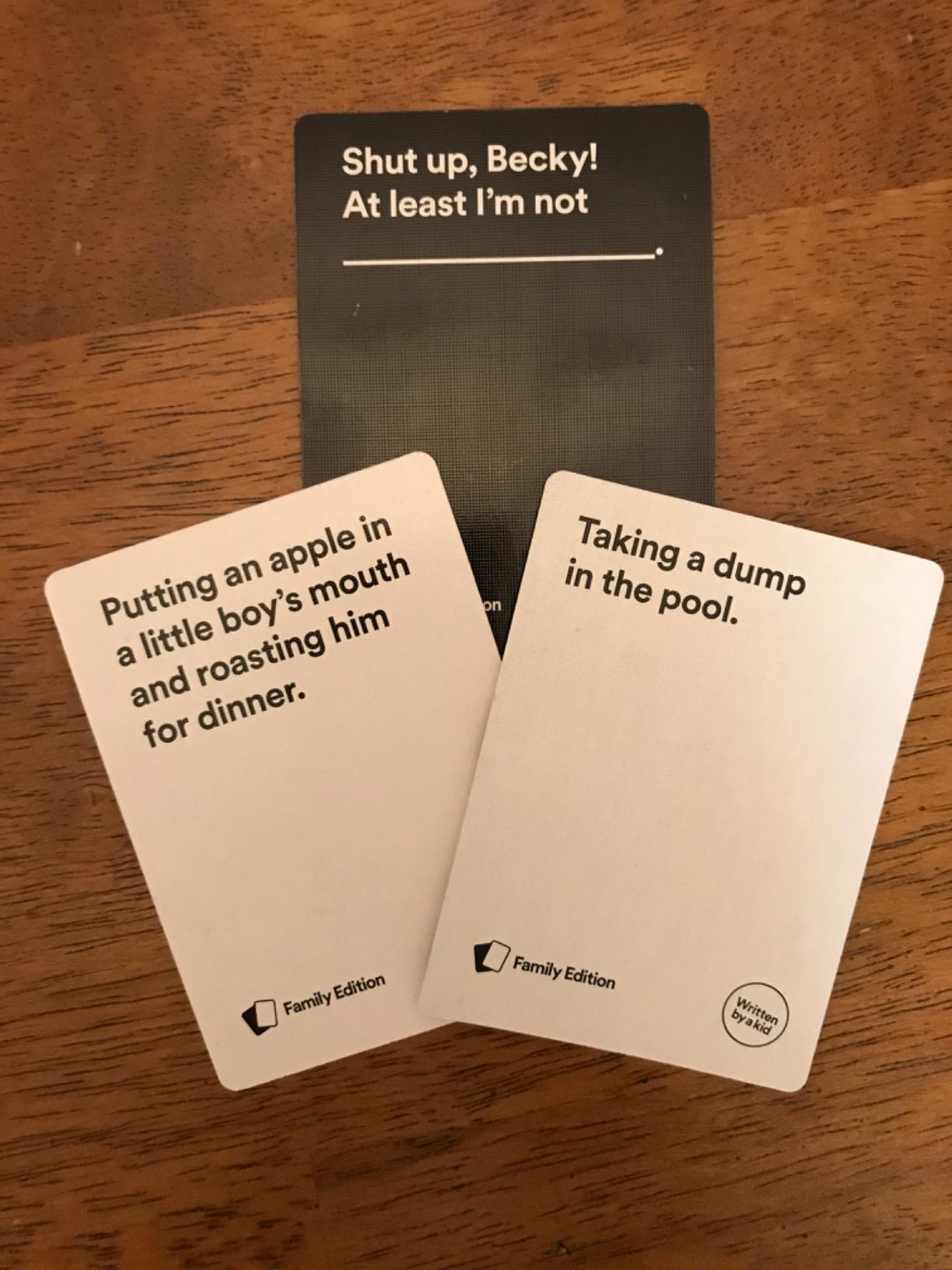
This is a rewrite rather than a filter. The standard edition was written for adults, and the Family Edition was written for the awkward middle ground between a child and an adult, with 600 cards covering topics that work with a grandparent in the room. You fill in a blank prompt, everyone plays a card face down, and a random judge picks the winner.
The player range is the headline. Four to twenty-plus players means it is the only game on this list that scales to a large blended family gathering, a birthday party or a holiday table, and it does not slow down as the group grows because each person only plays one card.
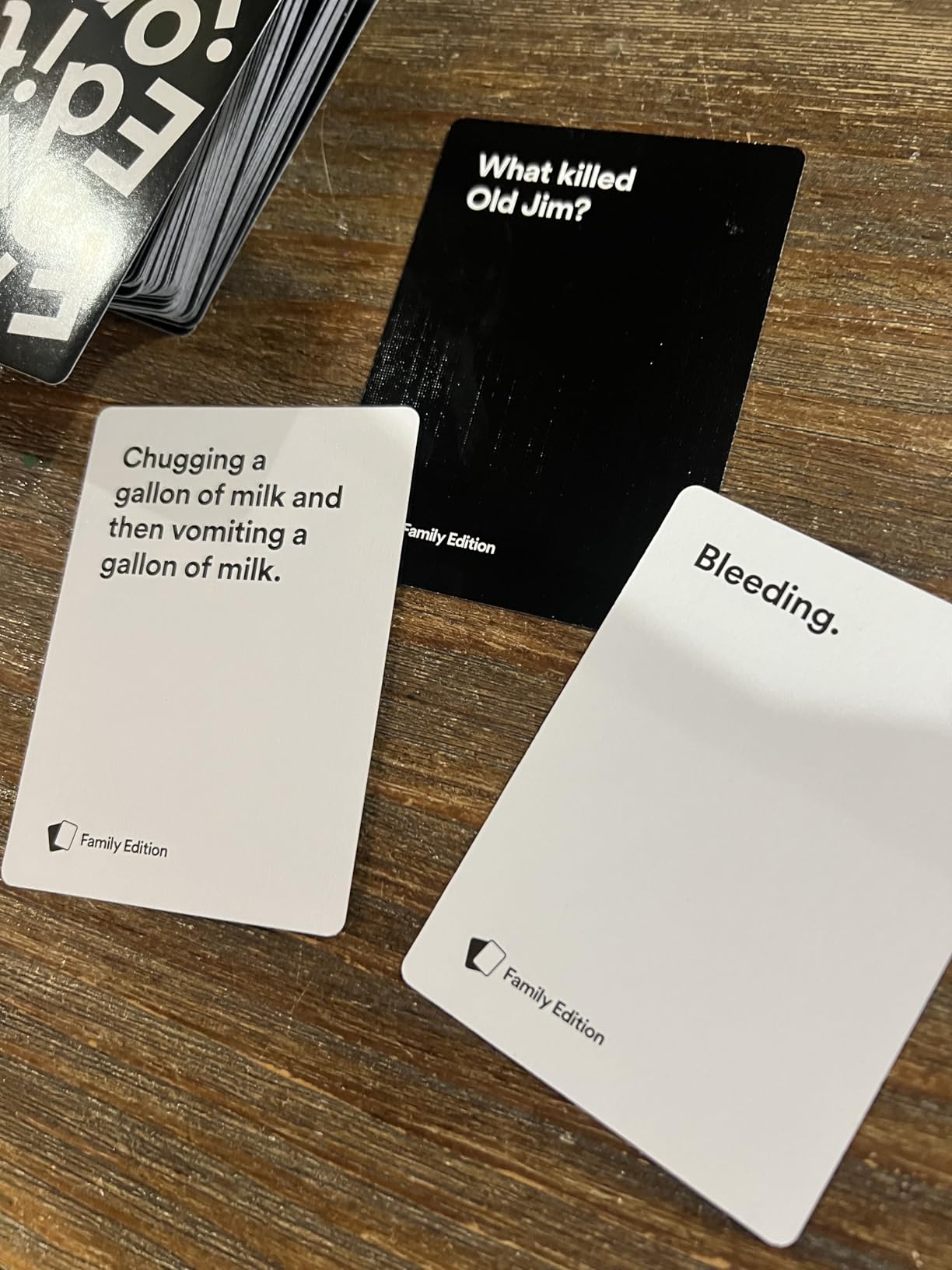
It was described by its manufacturer as tested with thousands of families over many years, and that shows in the card pool. We did not hit a single prompt where we had to vet the content, which is the problem that usually kills a party game in a mixed group.
Because the judging is random, there is no way to prepare a good answer, and that keeps it fresh across a long evening. Two hundred cards went into one sitting at our house without repeating.
When this is the right pick for your family
If you host people who do not regularly play games, this is the one that works on strangers. A group of relatives who see each other twice a year can be playing within a minute, and nobody needs to be good at anything to win a round.
It is also a good choice when the adults want to laugh rather than think. There is no hidden information, no hand management and nothing to lose, which makes it the opposite of Five Crowns and the perfect pairing with it.
Where it stops working
Four players is the real minimum, and below that the group picks from the same small pile and runs out of novelty fast. With a couple, pick something else.
The humor skews younger by design. Teenagers and adults who know the original edition often find the family version tamer, and that is the single most common note in reviews. If your table is mostly adults, this is the wrong box.
12. Regal Games 6-Set: The Best Family Card Games for Ages 4 to 12
Regal Games Card Games for Kids – Go Fish, Crazy 8’s, Old Maid, Slap Jack, Garbage Monster, War – Simple & Fun Classic Family Table Games – Games May Vary (6 Set)
2-6 players
Ages 4-12
Six decks in one tin
Extra-large cards
Pros
- Six classic games in a single tin
- Oversized cards suit small hands
- Covers the youngest end of the range
- Each deck fits a backpack
Cons
- Thin cardstock creases with rough handling
- Newer decks run smaller and shuffle less easily
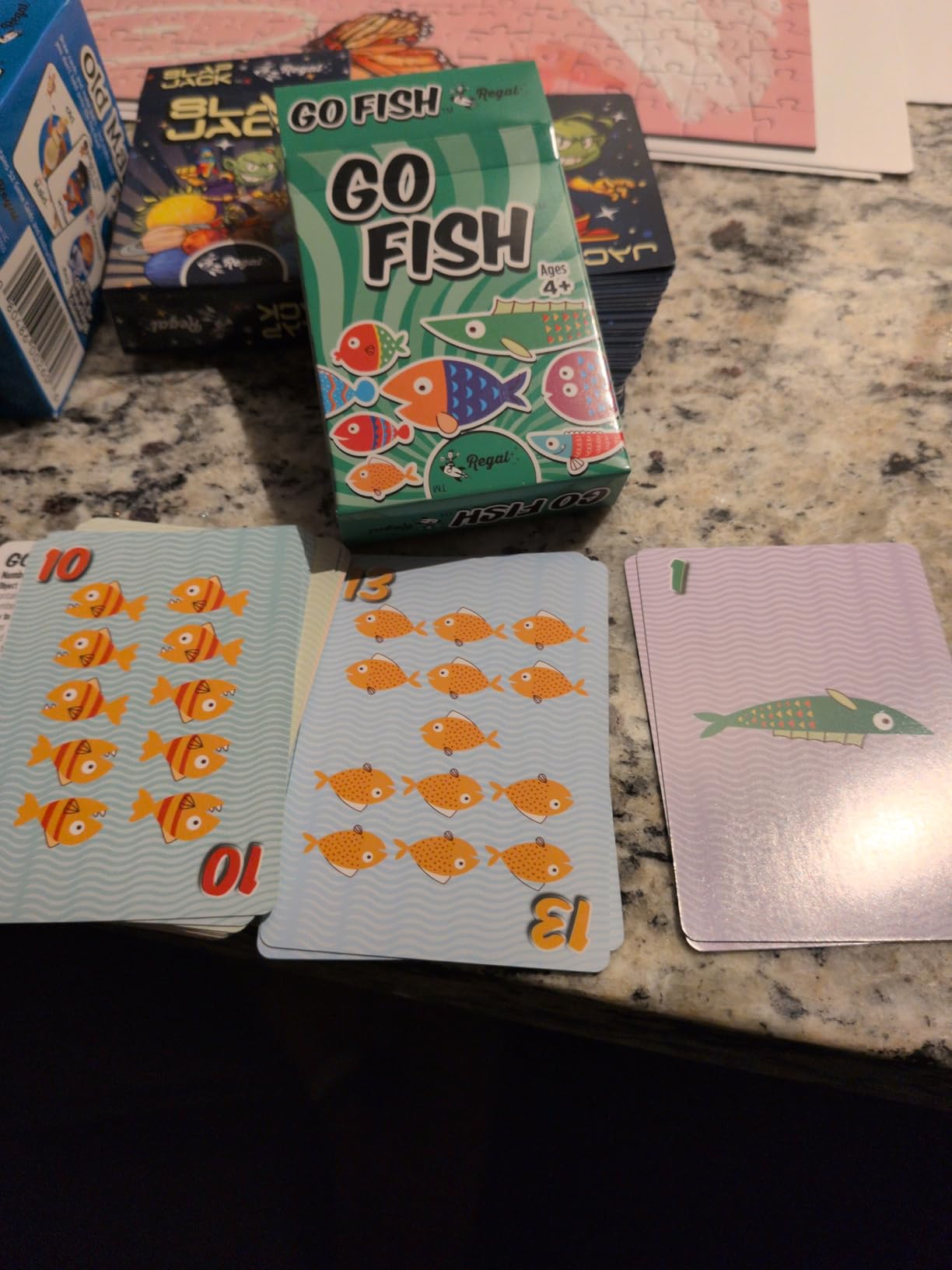
This set solves the problem none of the other eleven solve. Six separate decks sit in one tin: Old Maid, Go Fish, Slap Jack, Crazy Eights, War and Garbage Monster, a memory match. Each one is a two-minute explanation, which makes it the best value in the lineup for a household with young children.
The cards are extra-large. That sounds like a minor spec until you watch a four-year-old try to hold a standard deck, and it also makes the games readable from across a table, which matters when the adults are not all leaning in.
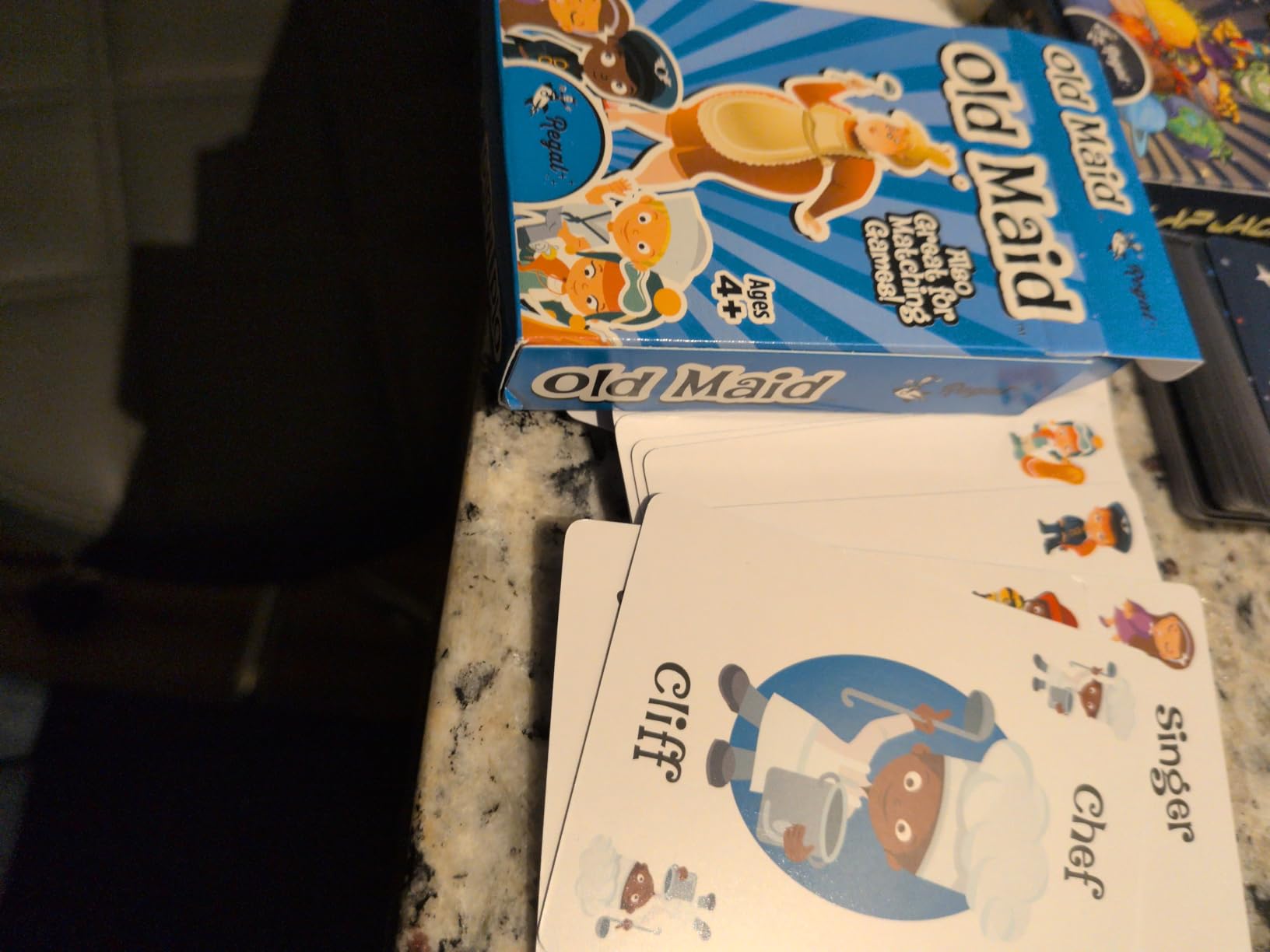
Six games means game night does not repeat. Our youngest played Go Fish and Garbage Monster most, our oldest drifted to Crazy Eights and War, and the adults settled on Slap Jack, which is a decent competitive game in its own right with older kids.
Each deck has distinct character art so nobody confuses them in the tin, and every deck is small enough for a diaper bag or a backpack. That portability is the other reason this set travels well.
Why a multi-deck set beats one good game for a young family
A four-year-old has a short attention span and no interest in a game with a scoring phase. Six shallow games means you always have something that fits the moment: a memory game while the adults finish a drink, a matching game for the kids in the corner, and something competitive for the older ones.
It is also the most sensible buy for anyone with a range of young children and a limited budget for games. One purchase covers the ages from four to twelve, which no single game on this list manages.
Where the card quality disappoints
The cardstock is thinner and lighter than a premium playing card deck, and it bends and creases when small hands handle it roughly. War and Slap Jack are the worst offenders because both involve a lot of handling and slapping.
Reviewers also note that newer production runs run a little smaller than the original version and are harder to shuffle, particularly for children. Nothing was unusable for us, but if you have a four-year-old, expect some bent corners.
How to Choose Card Games for Families
The wrong question is which card game is best. The useful question is which card game matches the youngest person at your table, the number of people actually turning up, and how long you have before somebody needs to leave. Work through those three and the list above narrows itself fast.
Choose by the youngest player’s age, not the average
Family card games fail on age spread far more often than on complexity. A game pitched at eight will not break for a six-year-old, but a game pitched at eight will absolutely bore a fifteen-year-old, and a bored teenager ends the evening for everyone.
Ages 4-6: the Regal Games 6-Set, where every rule is a one-liner and the cards are oversized
Ages 7-9: Taco Cat Goat Cheese Pizza, UNO and Phase 10, all of which hold up at a birthday party
Ages 10-12: Five Crowns, SKYJO and Monopoly Deal, which reward a bit of planning
Teens and adults: Cover Your Assets, Cards Against Humanity Family Edition, What Do You Meme
Multigenerational: SKYJO and Five Crowns, the two games that most often bridge a child and a grandparent
Choose by how many people are actually playing
Player count is the most commonly misread number on a box. Two to ten does not mean ten is good, it means ten is possible. Match the game to the table.
Two players: Play Nine Golf and Monopoly Deal, both of which were designed to hold a pair
Three to four: Exploding Kittens, Five Crowns, Phase 10 and Cover Your Assets
Five to eight: SKYJO, UNO, Taco Cat and the Regal Games set
Eight and up: Cards Against Humanity Family Edition is the only one here that stays quick as the table grows
A game that needs a minimum player count will limp along below it. A game played at its maximum gets long turns and quiet players, which is the second most common reason a family game gets abandoned.
Choose by round length and teachability
Rule-teaching time is the biggest hidden cost of a card game. Ten minutes of explanation before the first turn is the number one complaint in family gaming, and it is entirely avoidable by picking a game whose rules fit in one paragraph.
Round length matters just as much. Games that finish inside 20 minutes get played on school nights; games that run 40 minutes become a weekend event that has to be scheduled. If you want frequency rather than occasion, buy short.
Check accessibility before you buy
Color vision affects more players than most publishers admit. UNO and Phase 10 both print a distinct graphic symbol on every color, so a child or adult who cannot separate red and green can still play correctly by matching shapes. Most of the other games here rely on color matching without a symbol backup.
Card size is the other one. Extra-large cards matter below about age seven, and the Regal Games set is the clearest example of a product designed around that. If anyone at your table has low vision, look for large print symbols before you buy rather than after.
Games you can play tonight with a standard 52-card deck
None of the twelve above require a purchase to get started, so before you spend anything, try these. Go Fish, Fan Tan, Speed, Old Maid, Crazy Eights, Cheat, Palace, Skip-Bo and rummy all run on an ordinary deck with no components at all, and families on gaming forums repeatedly name Cheat, Fan Tan, Palace and Speed as the ones that work with children.
They also have one advantage no boxed game has: there is nothing to set up, nothing to lose and nothing that ages out. For a household with a five-year-old and a lot of travel, a deck in a bag solves more problems than a shelf of boxes.
Running an actual family game night
Most families own one game and play it into the ground. Two or three games, rotated, is the number that keeps a night fresh, and pairing a fast icebreaker with a longer game is a rhythm that works: Taco Cat or UNO first, Five Crowns or Cover Your Assets second.
Teach one rule at a time and only when the current round demands it. Games with a reference card, like Monopoly Deal, let you avoid the ten-minute lecture entirely. And keep a game that fits the youngest player’s attention span in the rotation, because a family game night fails when the four-year-old leaves the table and takes the mood with them.
If your family collects trading cards or displays graded cards between games, our guides to trading card storage cabinets and graded card display cases cover the other half of the shelf. If the group is bigger than a table, our guide to giant yard games handles the same problem outdoors.
Frequently Asked Questions
What are some good card games for playing with family members?
The strongest family card games keep the rules short, the hidden information low and a round under 20 minutes. SKYJO, UNO, Five Crowns, Monopoly Deal and Taco Cat Goat Cheese Pizza cover most households. The first three hold a mixed-age table, the fourth works with a pair, and the fifth teaches in thirty seconds. Buy the one that matches your youngest player rather than the average one.
What are some hilarious family card games?
Taco Cat Goat Cheese Pizza produces the most immediate laughter, because slapping a pile is funny before anyone understands the rules. Cards Against Humanity Family Edition is the choice for adults and older kids, with 600 cards written for mixed-age tables. What Do You Meme Family Edition wins with teens, since the caption format is familiar to anyone already online. For a loud, fast, four-player round, Exploding Kittens also fits.
What are the top 10 card games for families?
Our top ten, in order: SKYJO, UNO, Exploding Kittens, Taco Cat Goat Cheese Pizza, Five Crowns, Monopoly Deal, Play Nine Golf, What Do You Meme Family Edition, Phase 10 and Cover Your Assets. SKYJO wins because it works from about age six to adulthood, UNO because it handles ten players, and Five Crowns because it carries the highest average rating at 4.9. Two more picks, Cards Against Humanity Family Edition and a six-deck classic set, cover large tables and young children.
What is the most popular family game right now?
UNO is the most widely owned family card game, with the largest player range here at two to ten and a symbol-coded deck that anyone can read. Among newer family purchases, Skyjo has the most reviews in this group at over 76k reviews, and Skyjo and Five Crowns are the two games families on card-gaming forums name most often as regulars with children. Popularity and repeat play are not the same thing, though. UNO gets bought once, and Skyjo gets replayed.
What are some new card games for families?
Most of what is arriving in family card games is an edition rather than a new mechanic: Exploding Kittens now ships as Streaking, Zombie, Good vs Evil and Party editions, and What Do You Meme has holiday and Halloween expansions built on the same caption format. The genuinely new direction is cooperative play, where the whole table wins or loses together, which suits mixed-age groups because the youngest player is not the weakest link. Judge any new release on one thing: how long the rules take to teach.
The Best Card Games for Families in 2026
SKYJO takes the top spot for the reason that matters most at a family table: it is the only game here that a young child, a teenager and an adult can all finish feeling like they played well. UNO wins the crowded-table and accessibility categories, Five Crowns holds the highest rating at 4.9, and Monopoly Deal is the fastest route to a 15-minute family game night.
Buy for the youngest player at the table, not the average one, and pick a round length that fits a school night. Tell us the ages of your players and how much space you have, and we will narrow the list to two or three.