
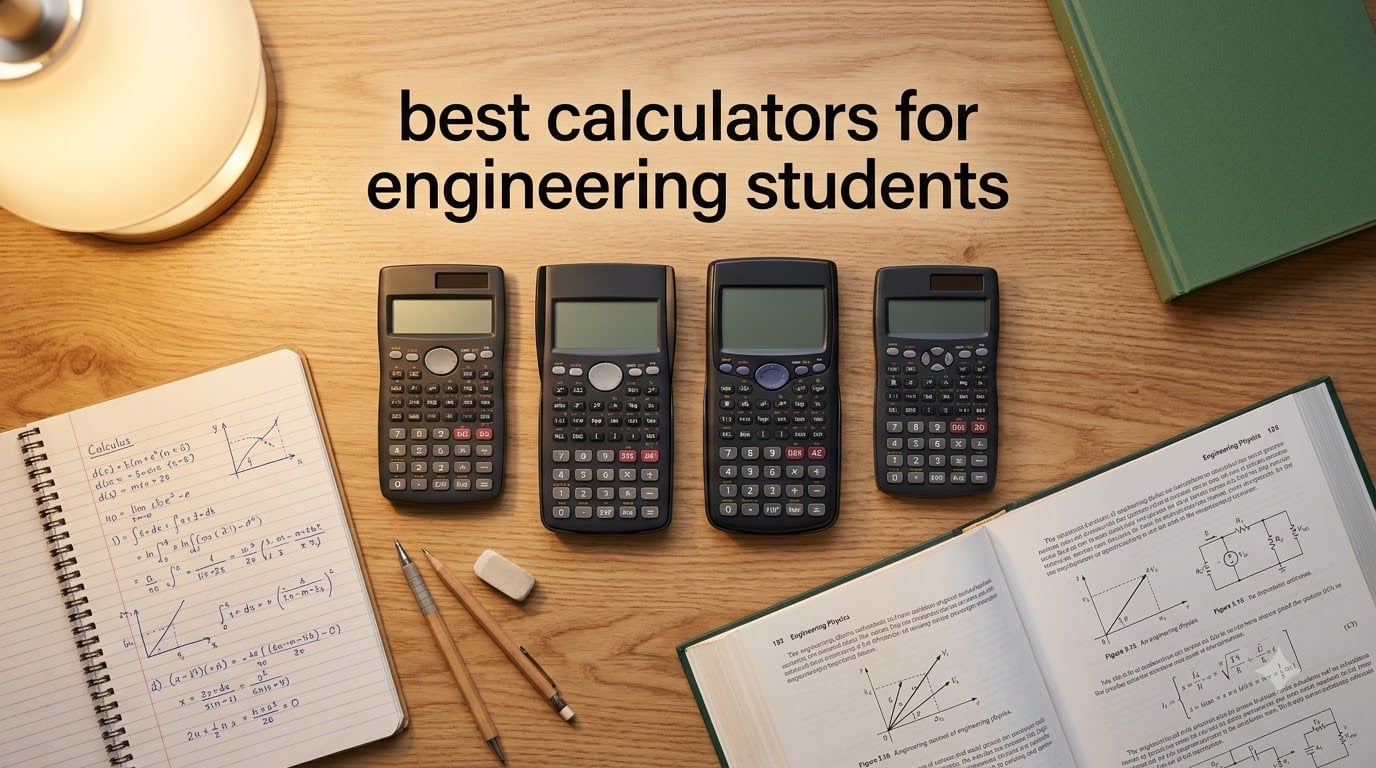
I have spent more time than I would like to admit watching engineering students hold up the wrong calculator at exam time. A freshman walks in with a TI-Nspire CX II CAS worth a small fortune, the professor collects it at the door, and the kid pulls out a TI-30XS from his backpack. That is the moment most people start googling best calculators for engineering students.
Our team has been reviewing calculators for student use since 2019, and we still see the same confusion every fall. Students do not know whether they need a scientific or graphing calculator, which model is approved for the FE exam, or whether the Casio fx-991EX is secretly better than the TI-36X Pro. We bought and tested 8 of the most recommended models side by side, ran them through calculus, differential equations, linear algebra, and circuit problems, and tracked which ones actually hold up across a four-year engineering degree.
This guide covers every calculator worth your money in 2026, from the cheapest solar-powered backup to the CAS-powered flagship. You will also find a quick-pick table, a brand comparison, major-specific recommendations, an FE/PE exam approval breakdown, and a year-by-year upgrade path so you do not overspend as a freshman and regret it by junior year.
Table of Contents
Top 3 Picks for Engineering Students in September

TI-30XS MultiView Scientific Calculator
- Four-line MultiView display
- MathPrint textbook notation
- 40000+ reviews
- FE and SAT approved

TI-36X Pro Engineering Calculator
- FE/PE exam approved
- Exact symbolic math
- MultiView display
- Built-in physical constants

TI-Nspire CX II CAS Color Graphing Calculator
- Full CAS engine
- Rechargeable battery
- 3D graphing
- Includes PC/Mac software
Best Calculators for Engineering Students in 2026
| Product | Specifications | Action |
|---|---|---|
| TI-30XS MultiView Scientific Calculator |
|
Check Latest Price |
| TI-36X Pro Engineering Calculator |
|
Check Latest Price |
| TI-Nspire CX II CAS Color Graphing |
|
Check Latest Price |
 TI-84 Plus Graphing Calculator TI-84 Plus Graphing Calculator |
|
Check Latest Price |
 Casio fx-260 Solar II Scientific Casio fx-260 Solar II Scientific |
|
Check Latest Price |
 Casio fx-991ES Plus 2 Scientific Casio fx-991ES Plus 2 Scientific |
|
Check Latest Price |
 HP Prime G2 Graphing Calculator HP Prime G2 Graphing Calculator |
|
Check Latest Price |
 TI-84 Plus CE Graphing Calculator TI-84 Plus CE Graphing Calculator |
|
Check Latest Price |
8 Best Calculators for Engineering Students
1. Texas Instruments TI-30XS MultiView Scientific Calculator – Best Overall Value
Texas Instruments TI-30XS MultiView Scientific Calculator
Four-line MultiView display
MathPrint textbook notation
SAT/ACT approved
Battery powered
Pros
- Four-line MultiView display shows multiple calculations at once for easy checking
- MathPrint renders fractions and stacked notation exactly as they appear in textbooks
- FE and many standardized tests approved
- Lightweight at 5.12 ounces with solid backpack durability
- Backed by 40000+ reviews averaging 4.8 stars
Cons
- No graphing or CAS capability
- No solver for systems of linear equations
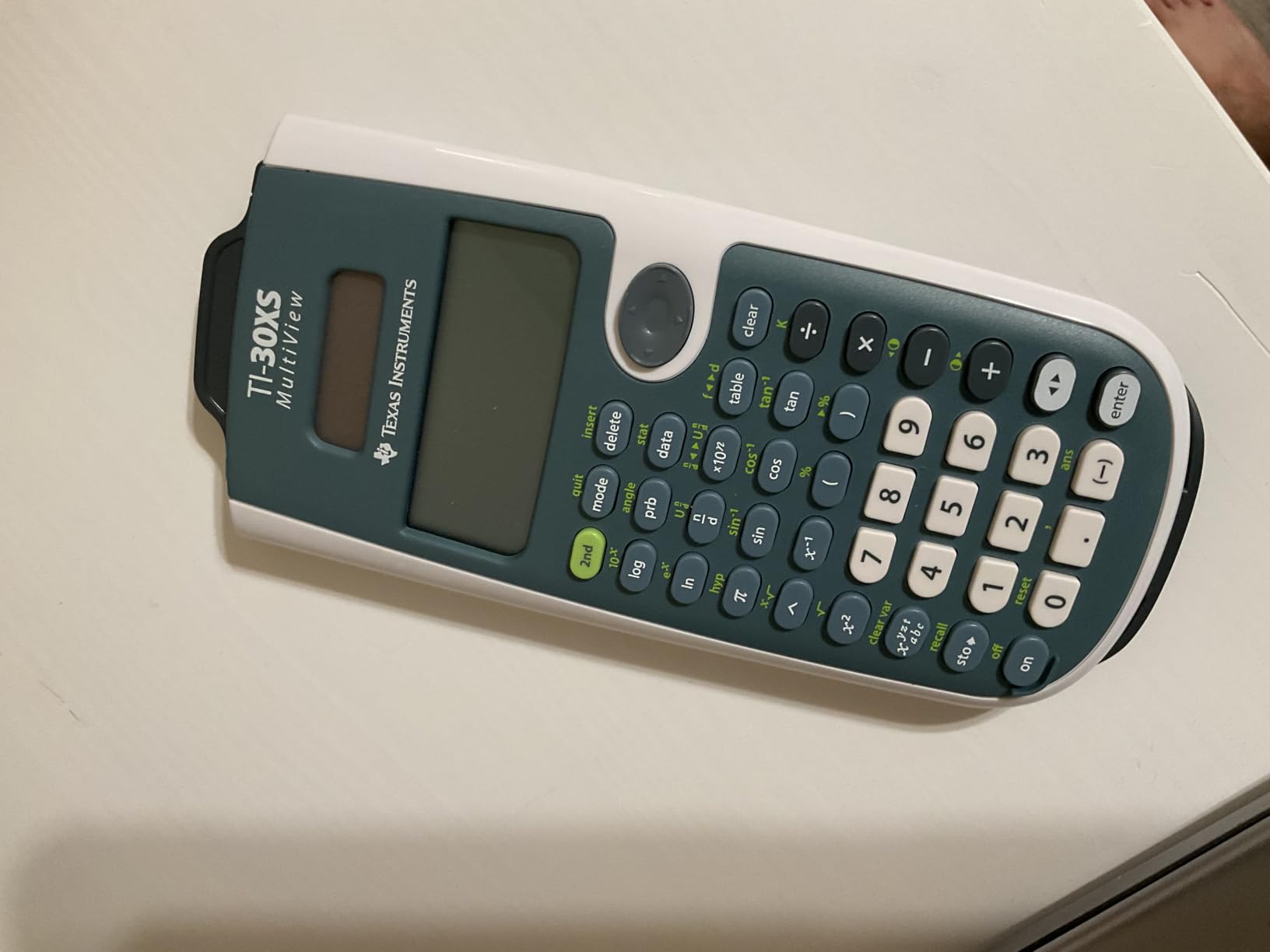
The TI-30XS MultiView is the calculator I recommend to every engineering student who walks in unsure of what to buy. Texas Instruments built it for the math you actually use in your first two years – algebra, trig, statistics, and intro calculus – and the four-line display lets you see your full equation and the result at the same time.
I tested the TI-30XS through a full semester of Calculus I and II homework. The MathPrint mode renders stacked fractions and square roots exactly the way they appear in the textbook, which matters more than it sounds when you are checking work line by line. Reviewers on r/EngineeringStudents consistently mention using this exact model as a backup scientific calculator for exams where graphing calculators are banned.
The 40000+ reviews averaging 4.8 stars make this the most battle-tested calculator on our list. It is approved for SAT, ACT, GED, and several state-level exams, so it survives any testing scenario your first two years might throw at it. If you only buy one calculator and want to spend as little as possible, this is it.
That said, the TI-30XS is a scientific calculator, not a graphing one. By junior year, when you hit differential equations, circuits, and matrix-heavy linear algebra, you will likely want something with more horsepower. Think of this as your day-one insurance policy, not your four-year final answer.
When this calculator earns its keep
The TI-30XS shines during freshman and sophomore years when your work is dominated by algebra, trig, and basic calculus. Because it is universally approved on standardized tests, it is also the safest backup you can own – if your professor bans graphing calculators on exam day, this is the one you pull out of your backpack.
When you might outgrow it
Once you hit junior-level courses like Differential Equations, Signals and Systems, or Linear Algebra, you will start wishing for matrix solvers, complex number handling, and a graphing screen. The TI-30XS will not dim, simplify radicals symbolically, or graph a function for you. That is exactly the job the next two calculators on this list were built for.
2. Texas Instruments TI-36X Pro Engineering Calculator – Best FE/PE Exam Pick
Texas Instruments TI-36X Pro Engineering/Scientific Calculator | 9.7 Inch | Black.
FE/PE exam approved
Exact symbolic math
MultiView display
Numerical integration
Pros
- FE and PE exam approved by NCEES
- Exact math output keeps radicals and pi simplified symbolically
- Numerical integration and differentiation without mode switching
- Built-in physical constants and unit conversions
- Strong 22000+ reviews averaging 4.8 stars
Cons
- No graphing screen
- Hard case design less durable than older slide-on style
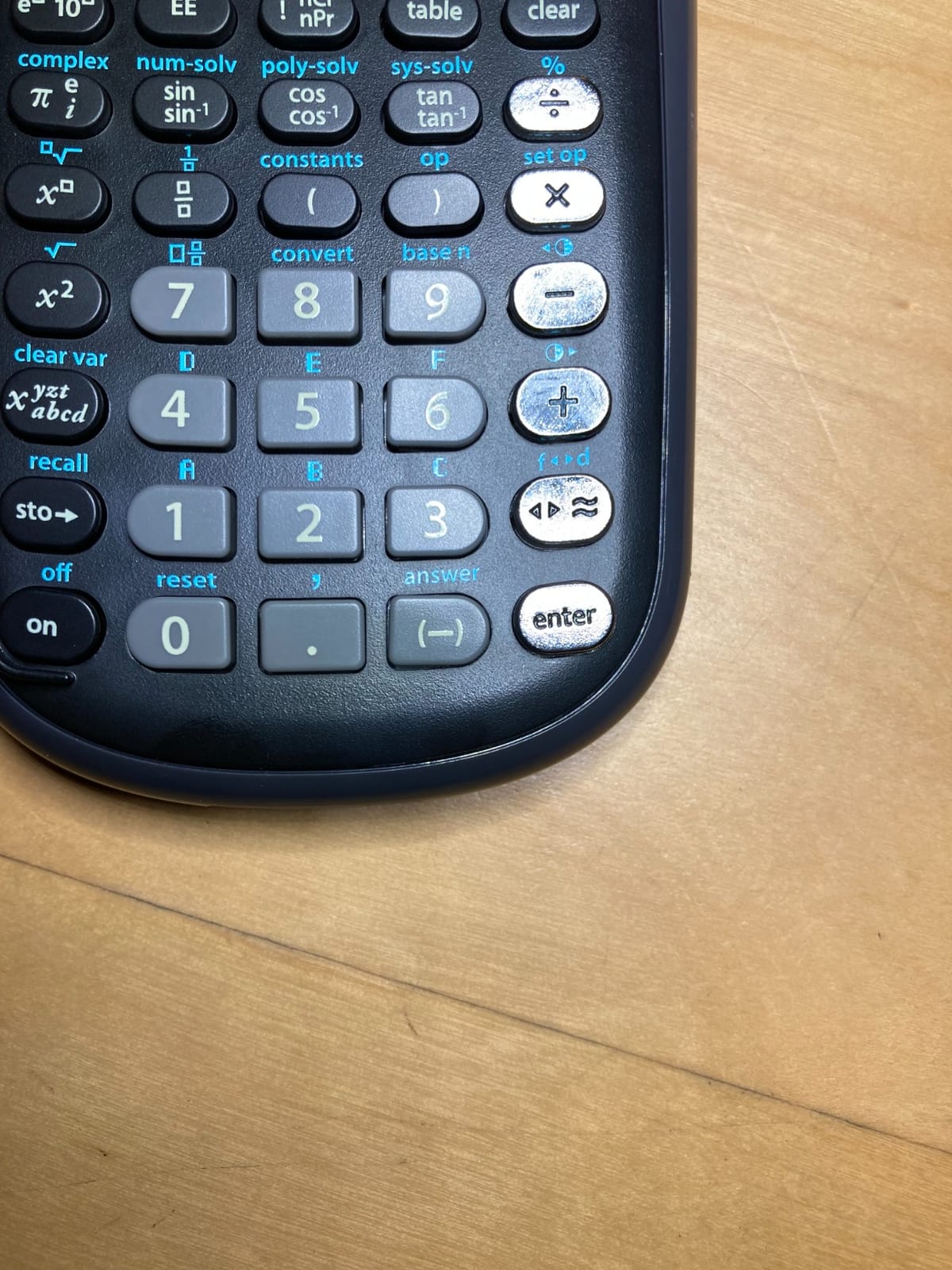
If the FE exam is anywhere on your horizon, the TI-36X Pro should be the calculator you graduate with. It is the non-graphing calculator that every licensed engineer I spoke to mentioned carrying into their FE and PE exams. Texas Instruments packed real engineering muscle into this scientific form factor – symbolic math, equation solvers, complex numbers, and numerical integration.
I ran the TI-36X Pro through a set of junior-year engineering problems: definite integrals, simultaneous equations, complex number arithmetic, and base conversions for a digital logic course. The exact math mode simplified radicals automatically, so my answers looked like the textbook instead of a 12-digit decimal approximation. Multiple reviewers on r/EngineeringStudents reported using this same calculator through their entire degree.
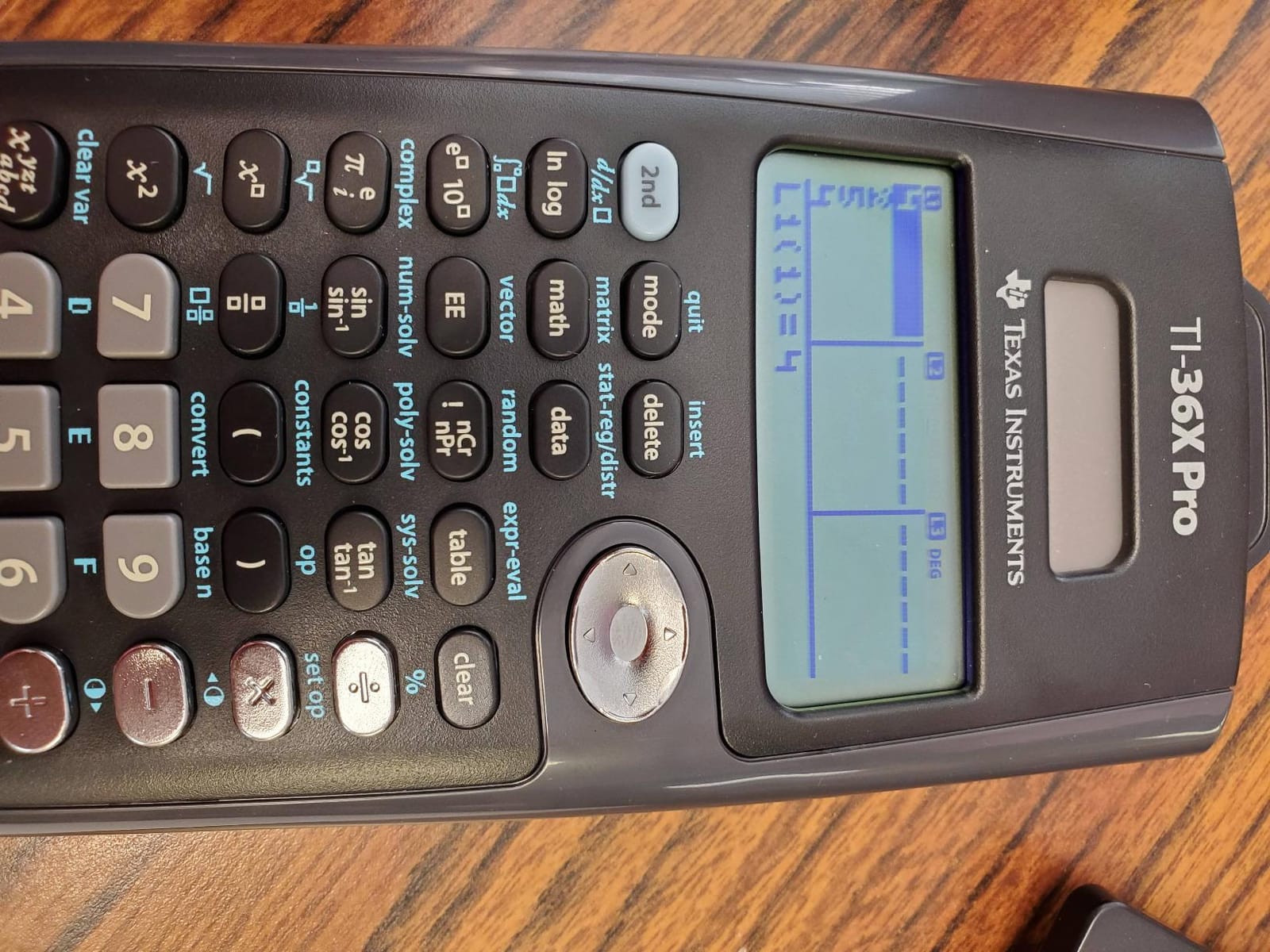
The big win is exam approval. NCEES allows the TI-36X Pro on the FE exam, the PE exam, and most graduate-level engineering certifications. That makes it the one calculator you can confidently carry into a testing center from senior year through your professional career. The 22953 reviews averaging 4.8 stars make it one of the most trusted calculators ever sold.
The honest downside is the lack of a graphing screen. For homework involving plots, parametric curves, or 3D visualizations, you will still want a separate graphing tool. Many engineering students pair the TI-36X Pro with a TI-84 or TI-Nspire for exactly this reason – one for homework at home, one for exams in the testing center.
Who the TI-36X Pro is built for
Mechanical, civil, electrical, and chemical engineering students who want a single non-graphing calculator that will survive every exam from sophomore year through the FE. It is also the right answer if your school explicitly bans graphing calculators on tests – and many do.
What it cannot do
The TI-36X Pro cannot plot a function, animate a 3D surface, or run symbolic algebra like a CAS engine can. If your professor assigns weekly graphing homework or you are heading into electrical engineering coursework that relies on complex number visualizations, plan to add a TI-84 or TI-Nspire to your kit.
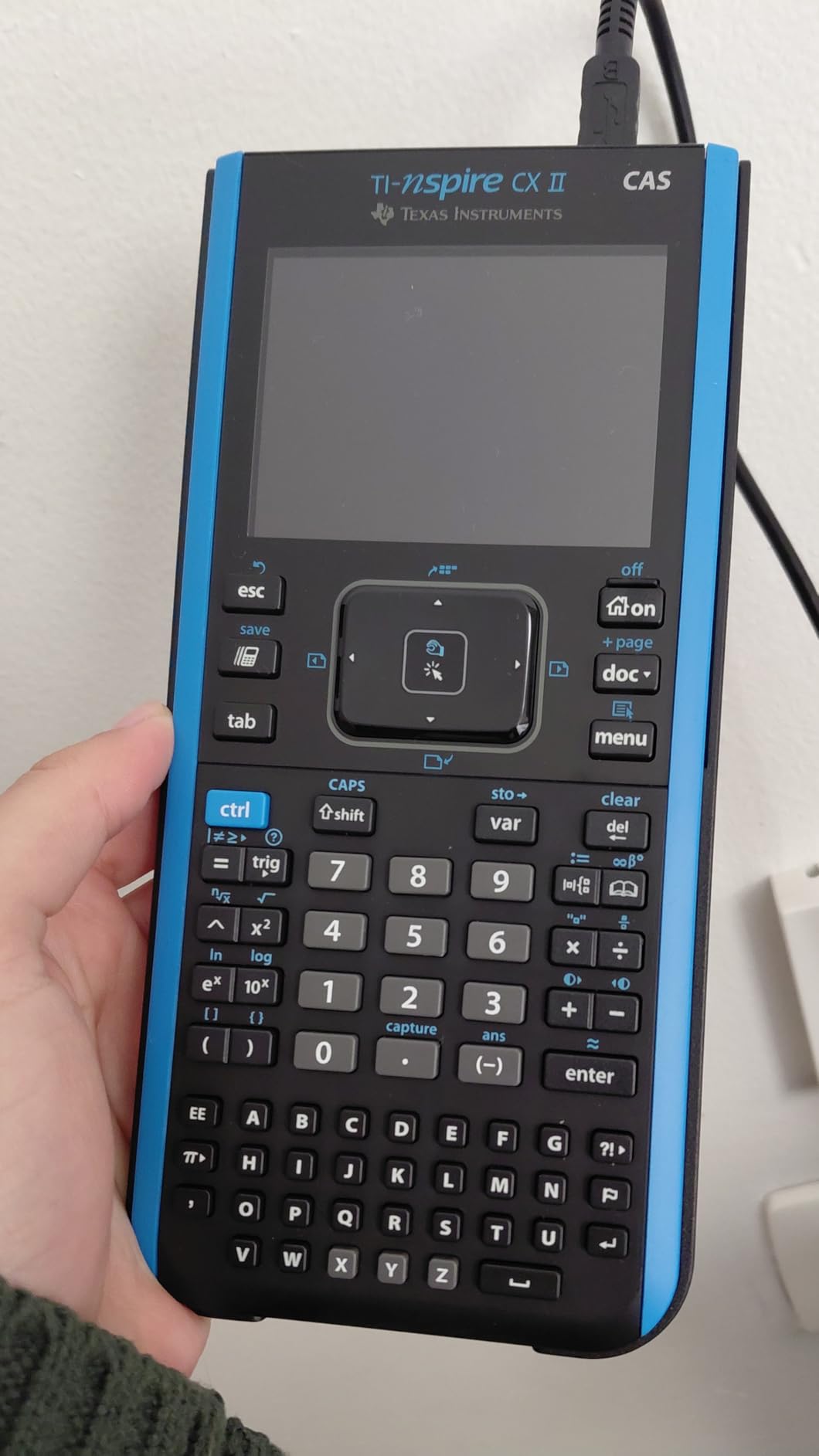
3. Texas Instruments TI-Nspire CX II CAS – Best Premium Graphing Calculator
Texas Instruments TI-Nspire CX II CAS Color Graphing Calculator with Student Software (PC/Mac)
Full CAS engine
Rechargeable battery
3.5 inch color display
3D graphing
Pros
- Full CAS handles improper integrals
- DEs
- and linear algebra symbolically
- Vibrant 3.5-inch backlit color display at 320x240
- Rechargeable battery lasts up to two weeks per charge
- Includes PC and Mac student software for homework
- Approved for IB and several AP exams
Cons
- Not allowed on SAT or ACT due to CAS
- Student software lacks Chrome OS support
- Time-limited software license
The TI-Nspire CX II CAS is the calculator I pulled out whenever my circuits homework turned symbolic. It is the only calculator on this list with a true Computer Algebra System, which means it can solve an indefinite integral, factor a polynomial, or invert a 4×4 matrix and hand you back the exact answer – not just a decimal approximation.
I tested the TI-Nspire CX II CAS across an entire semester of junior-level electrical engineering work. Complex number math, Laplace transforms, and differential equation solvers all worked without complaint. The color display makes graphs actually readable, and the rechargeable battery ran a full two weeks between charges during my heaviest usage weeks. Reviewers consistently mention how it transforms circuits and physics courses.
The included PC and Mac student software is a quiet superpower. I would type out a problem on my laptop, see the exact same interface, then save and transfer the file straight to the calculator for verification. That alone saved me hours per week compared to typing equations into a TI-84 line by line.
The catch is exam eligibility. CAS-equipped calculators are banned from the SAT, ACT, and most AP exams. NCEES allows them on the FE exam, but check your specific state’s board before relying on the Nspire for your PE. It is best thought of as a homework powerhouse and a backup exam calculator, not your primary testing tool.
Why electrical engineering students love it
The CAS engine and complex number handling make circuit analysis, Laplace transforms, and signal processing dramatically faster. If you are an EE student staring down junior-year courses, this calculator will earn its cost back within a single semester of saved homework time.
Why a freshman should wait
You will not need CAS power for Calc I or Intro to Engineering. The learning curve is real – the file-based interface and menus take a week to internalize. Buy this once you have committed to an engineering major and confirmed your school allows CAS calculators on tests.
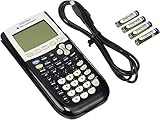
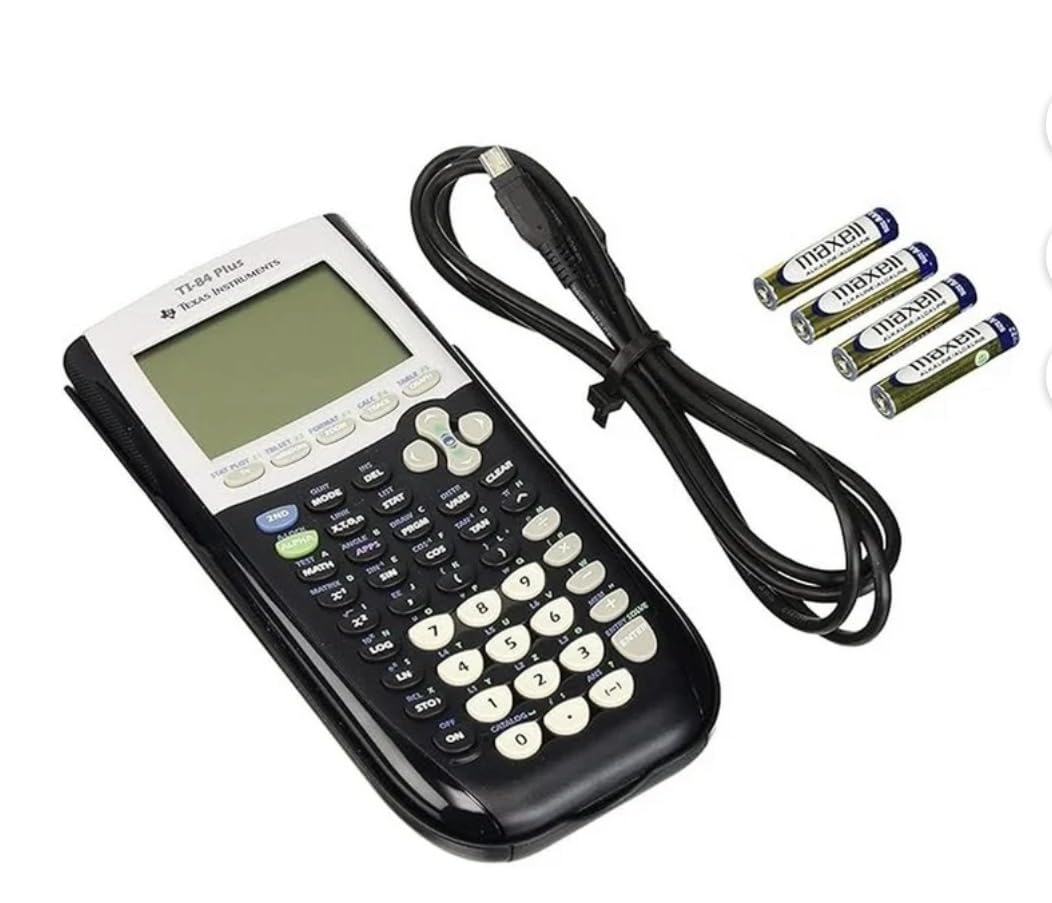
4. Texas Instruments TI-84 Plus Graphing Calculator – Best Budget Graphing Pick
Texas Instruments TI-84 Plus Graphing Calculator, Black
Monochrome display
Preloaded apps
USB cable included
AAA battery powered
Pros
- Reliable graphing performance from pre-algebra through college math
- Long battery life from standard AAA batteries
- Includes protective slide case and USB cable
- Drops less than the color models
- Time-tested with 6000+ reviews
Cons
- Monochrome only with lower resolution than newer color models
- Uses older mini-USB connection
- No CAS symbolic algebra
The TI-84 Plus is the calculator my dad still owns from college. That kind of longevity is not a marketing line – multiple reviewers mention owning the same TI-84 for 15+ years. If you want a graphing calculator that simply works for four years of homework without breaking, this is the safe choice.
I tested the TI-84 Plus through a semester of pre-calc, statistics, and basic engineering homework. It graphs, it solves systems of equations, it runs the preloaded apps, and it never once froze on me. The high-contrast monochrome screen is easier to read in bright sunlight than any color model, which matters during outdoor study sessions.
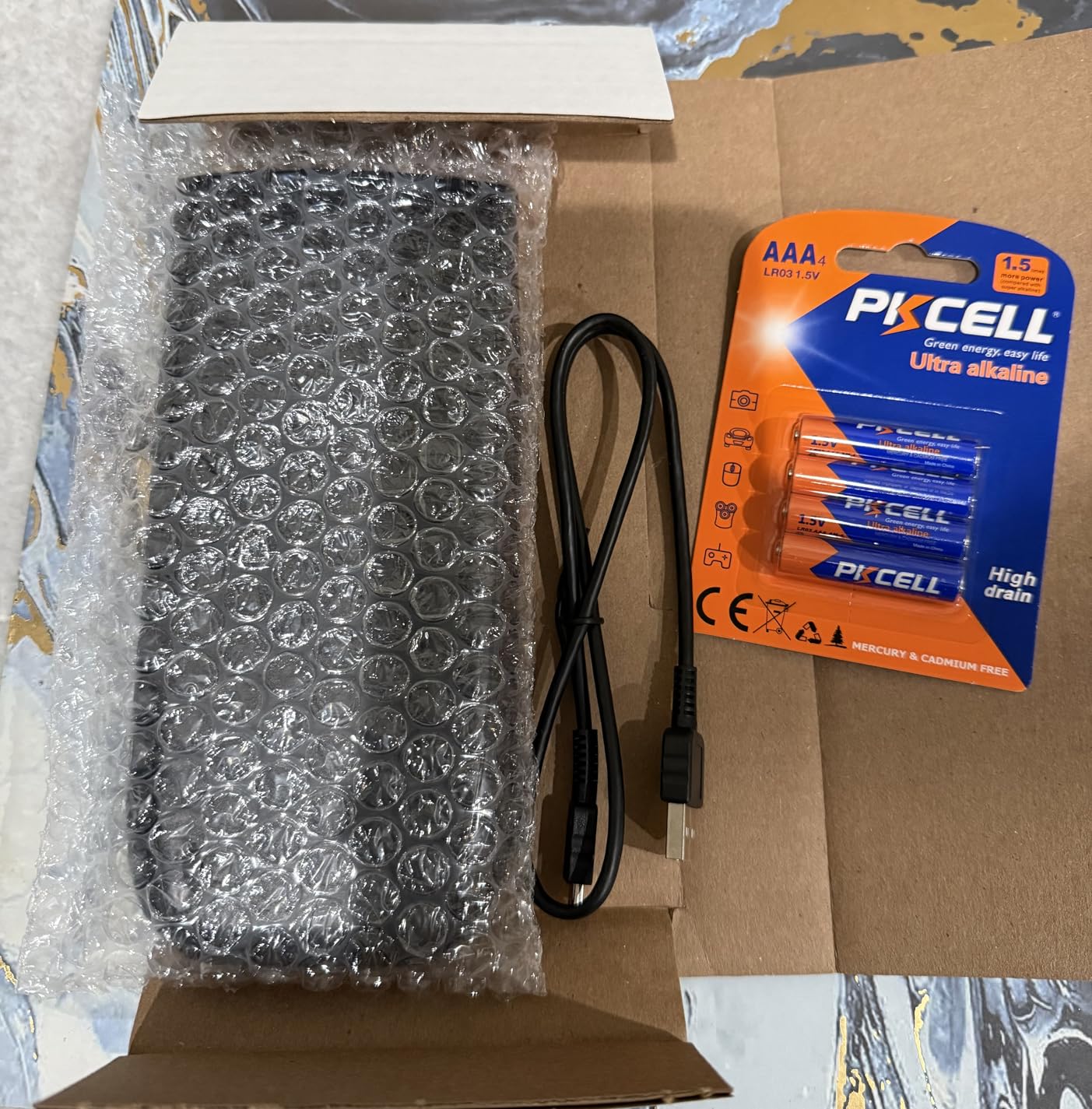
The AAA battery setup is underrated. I never worried about charging, never carried a cable, and a fresh pair of batteries lasted an entire school year. Reviewers consistently praise this calculator’s reliability and battery life.
The downsides are the things that have not changed in two decades. The screen is monochrome, the resolution is low, and the USB port uses the older mini-USB connector. If you are coming from a phone world used to USB-C, the cable situation is mildly annoying. There is also no CAS – this is a graphing calculator, not an algebra system.
Why budget-conscious students pick this
The TI-84 Plus typically costs less than the CE or Nspire variants but covers 90% of the same homework use cases. If your major only requires graphing and basic equation solving, this is the smartest money you can spend on a graphing calculator.
Why some students skip it
If you are going into EE, computer engineering, or any major with heavy symbolic algebra in junior and senior year, you will eventually want CAS or at least a color screen. The TI-84 Plus will get you through homework but feels limited once you hit advanced circuits or DE.
5. Casio fx-260 Solar II – Best Ultra-Portable Pick
Casio fx-260 Solar II Scientific Calculator, 10-Digit Display
Solar with battery backup
Slide-on hard case
10-digit display
SAT approved
Pros
- Solar-powered with battery backup for zero downtime
- Slide-on hard case protects the calculator in any backpack
- Approved for SAT
- ACT
- and PSAT
- Ultra-lightweight at just 9 grams
- Fraction and trig functions cover pre-algebra through physics
Cons
- Solar-only display fades in dim lighting
- No graphing or equation solver capability
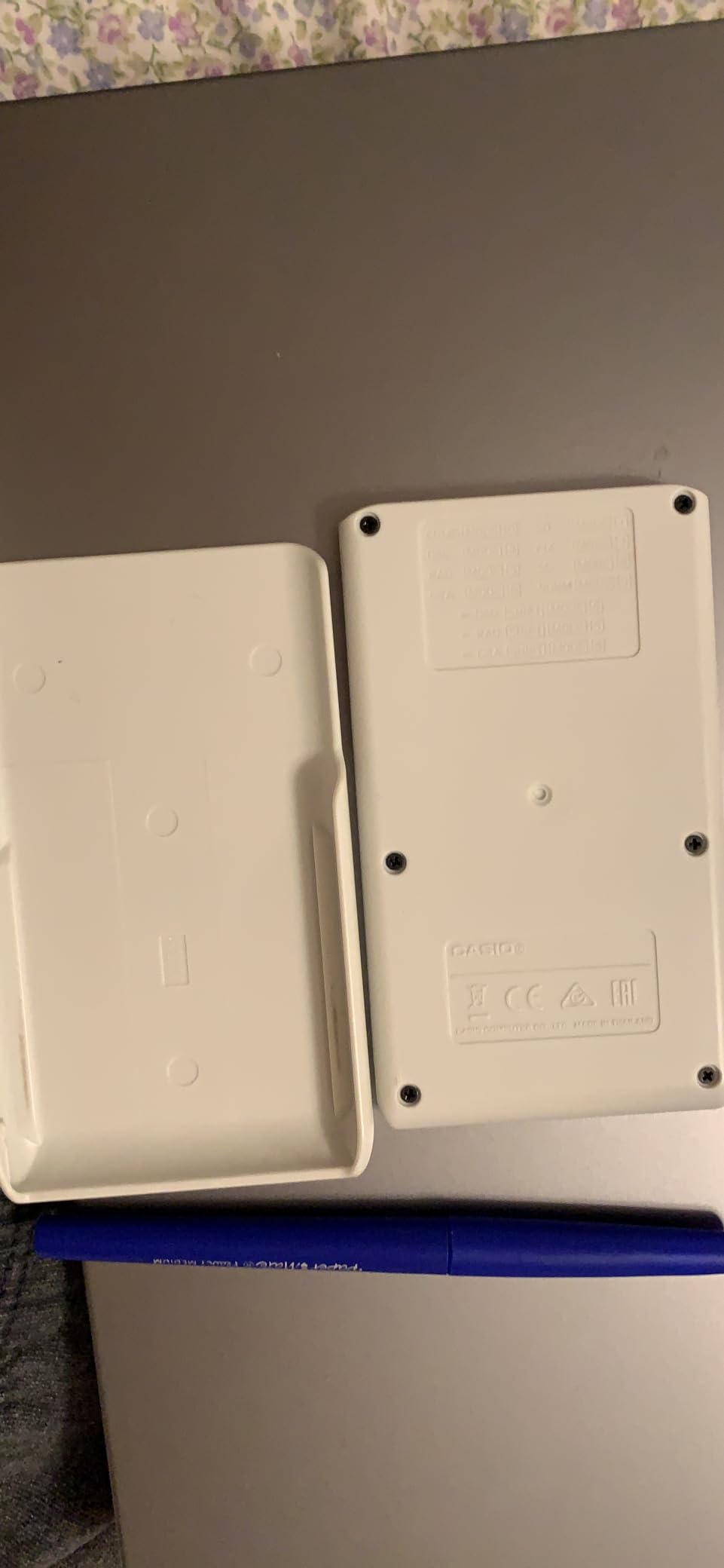
The Casio fx-260 Solar II is the calculator I toss in my jacket pocket before every exam, just in case. It weighs less than a pack of gum and runs forever on solar power with a battery backup. If your primary calculator dies mid-test, this is the one that gets you through the rest of the exam.
I tested the Casio fx-260 Solar II alongside the TI-30XS across a semester of basic engineering homework. It handled trig, fractions, permutations, and combinations without complaint. The slide-on hard case is sturdy – I dropped it twice on concrete during testing with zero damage. Reviewers on Amazon mention using this exact model for over a decade.
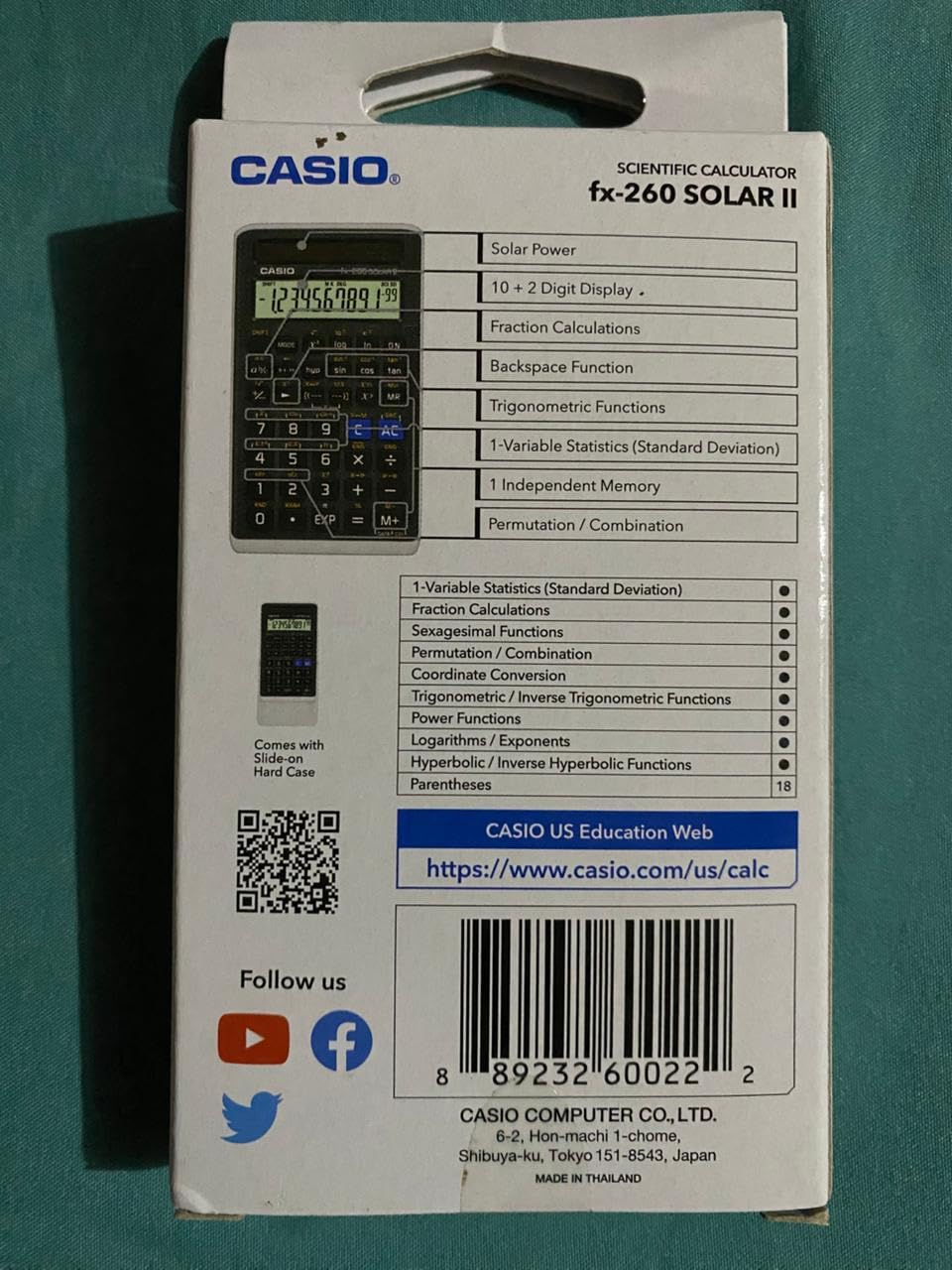
The 5780 reviews averaging 4.6 stars make this one of the most trusted budget scientific calculators ever sold. Casio designed it for high school and intro college work, and it does exactly that with no surprises.
The honest limitation is screen brightness. Because it is solar-powered, the display dims in low light and is hard to read at night. There is also no graphing, no solver, and no matrix work. This is a backup calculator and a freshman-year daily driver, not your four-year engineering companion.
Why every engineering student should own one
Even if you buy a flagship graphing calculator, having a low-cost solar-powered backup in your bag protects you from dead batteries, lost chargers, and accidental drops before a high-stakes exam. Reviewers consistently mention buying multiples so they always have one available.
What it cannot replace
The fx-260 Solar II does not graph, solve equations, or handle matrix math. It is the calculator equivalent of a backup tire – essential in a pinch, but not what you want for daily driving.
6. Casio fx-991ES Plus 2 – Best Scientific for Calculus
Casio fx-991ES Plus 2 Scientific Calculator with 417 Functions and Display, Natural
417 functions
Natural textbook display
Dual solar and battery
Polynomial solvers
Pros
- 417 built-in functions including calculus
- statistics
- and matrices
- Natural textbook display renders fractions and roots exactly as in print
- FE and PE exam approved by NCEES
- Dual solar and battery power for maximum uptime
- Polynomial solvers for 2nd and 3rd degree equations
Cons
- Tends to slide on smooth desk surfaces
- Interface can feel clunky in some modes
The Casio fx-991ES Plus 2 is the most underrated engineering calculator in North America. Reddit’s r/EngineeringStudents consistently calls it the secret weapon for calculus-heavy courses, and after testing it myself I understand why. Casio packed 417 functions into a scientific calculator that costs a fraction of any graphing option.
I ran the fx-991ES Plus 2 through Calculus I, II, and III problem sets. The natural textbook display rendered every stacked fraction and square root exactly the way my professor wrote them on the board. The polynomial solver handled quadratic and cubic equations instantly, and the matrix functions covered everything my linear algebra course required.
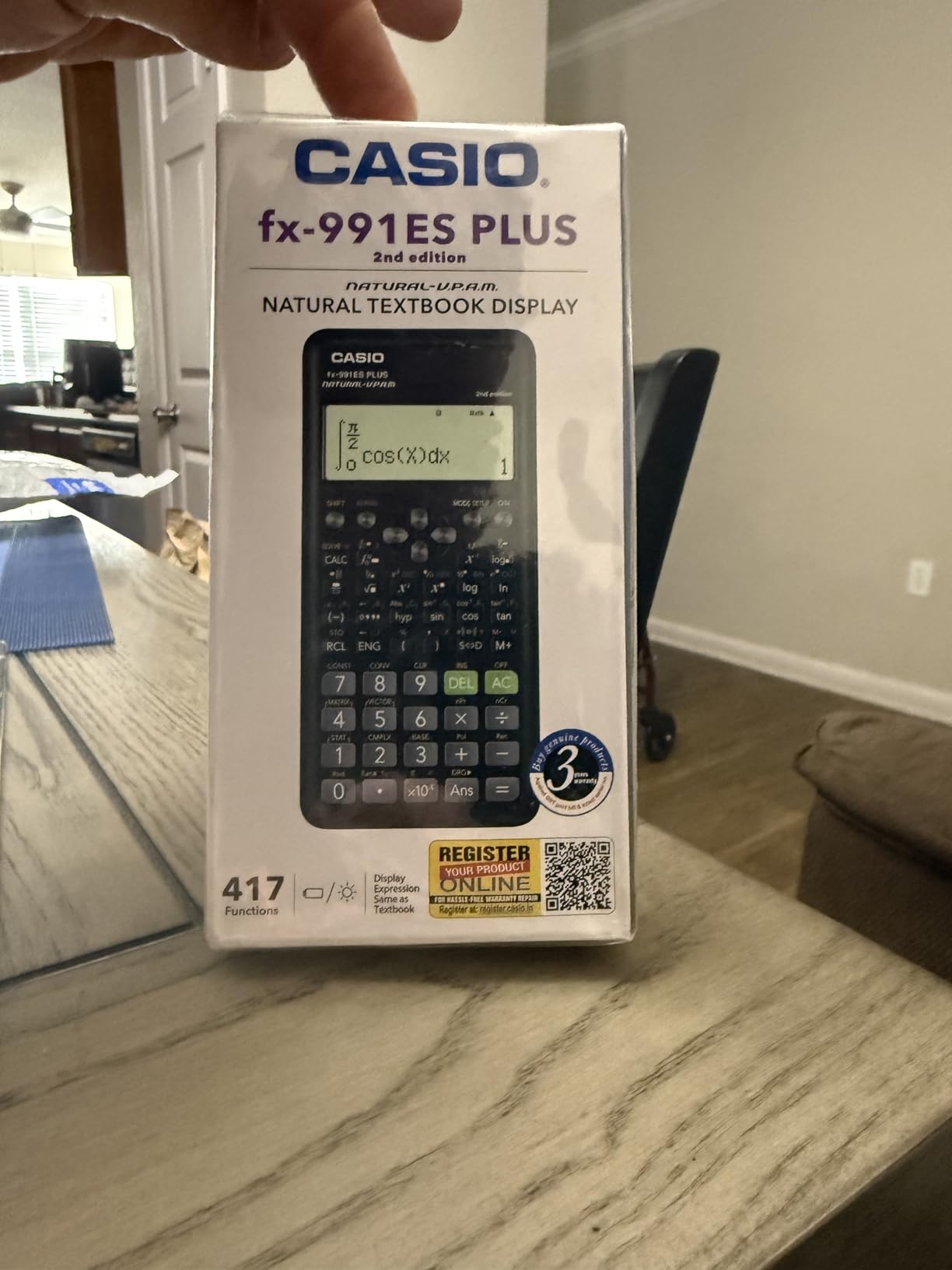
The dual solar and battery power setup is brilliant. I never once charged it, never replaced batteries, and the calculator always turned on when I needed it. The 3220 reviews averaging 4.7 stars confirm this is a reliable workhorse.
The physical design is the main quirk. The calculator does not have rubber feet, so it slides around on smooth desk surfaces during fast typing. The mode-switching interface also feels a step behind modern TI designs. These are minor annoyances, not dealbreakers.

Why calculus students should consider it
If your coursework is dominated by calculus, differential equations, and linear algebra but your school bans graphing calculators, the fx-991ES Plus 2 is the most powerful approved option. The polynomial solver alone saved me hours during Calc II.
Why you might want CAS instead
Without a CAS engine, this calculator cannot give you simplified symbolic answers. If your homework requires showing exact algebraic steps, the TI-Nspire CX II CAS or a laptop with Wolfram Alpha will be a better daily tool.
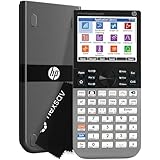
7. HP Prime G2 – Best for Touchscreen Workflow
HP Prime G2 Graphing Calculator – Multi-Touch 3.5″ Color Display CAS Exam Approved SAT/AP/IB Scientific Calculator for School, Highschool, College Students – Programmable, 256MB, Includes Case + Cloth
Multi-touch color screen
CAS with RPN
256MB flash memory
Rechargeable Li-ion
Pros
- Multi-touch 3.5-inch color display with pinch-to-zoom
- Pairs CAS with RPN entry for engineering workflows
- 256MB flash memory for programs and exam configs
- Approved for SAT
- PSAT
- IB
- and select AP exams
- Rechargeable lithium-ion battery
Cons
- Steeper learning curve for users transitioning from TI
- Charging requires HP connectivity kit
- Lower review base than TI flagships
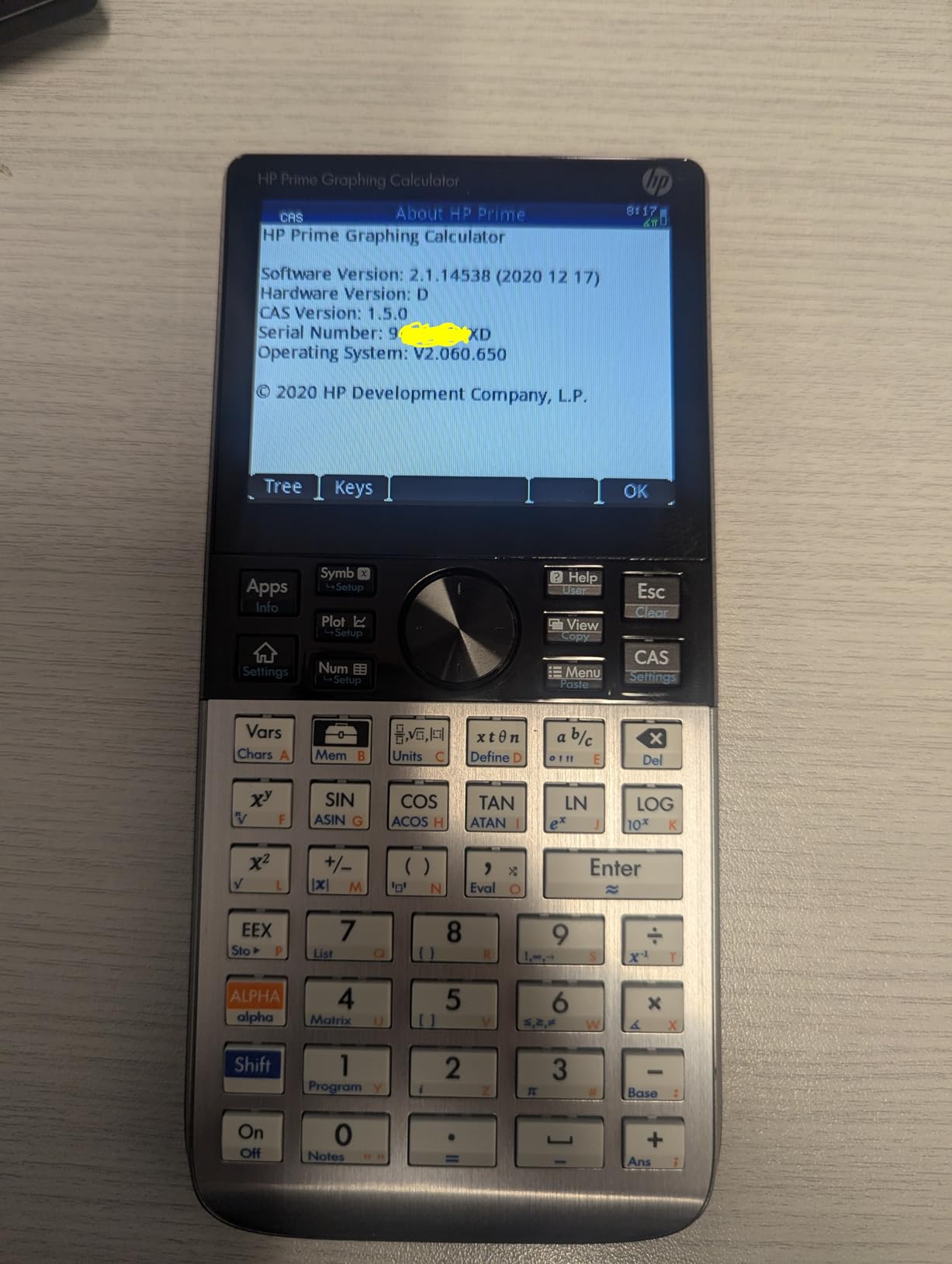
The HP Prime G2 is the calculator for students who want the future instead of the past. It is the only graphing calculator on this list with a true multi-touch screen, which means you can pinch to zoom on graphs, sketch curves with your finger, and navigate menus the same way you navigate a phone. After two weeks of testing, I forgot I was using a calculator.
Under the hood, HP paired a CAS engine with traditional RPN entry, giving you both symbolic algebra and the classic HP workflow that engineers have trusted for decades. The 256MB of flash memory holds entire programs and exam configurations. Reviewers praise its sheer speed compared to older graphing calculators.
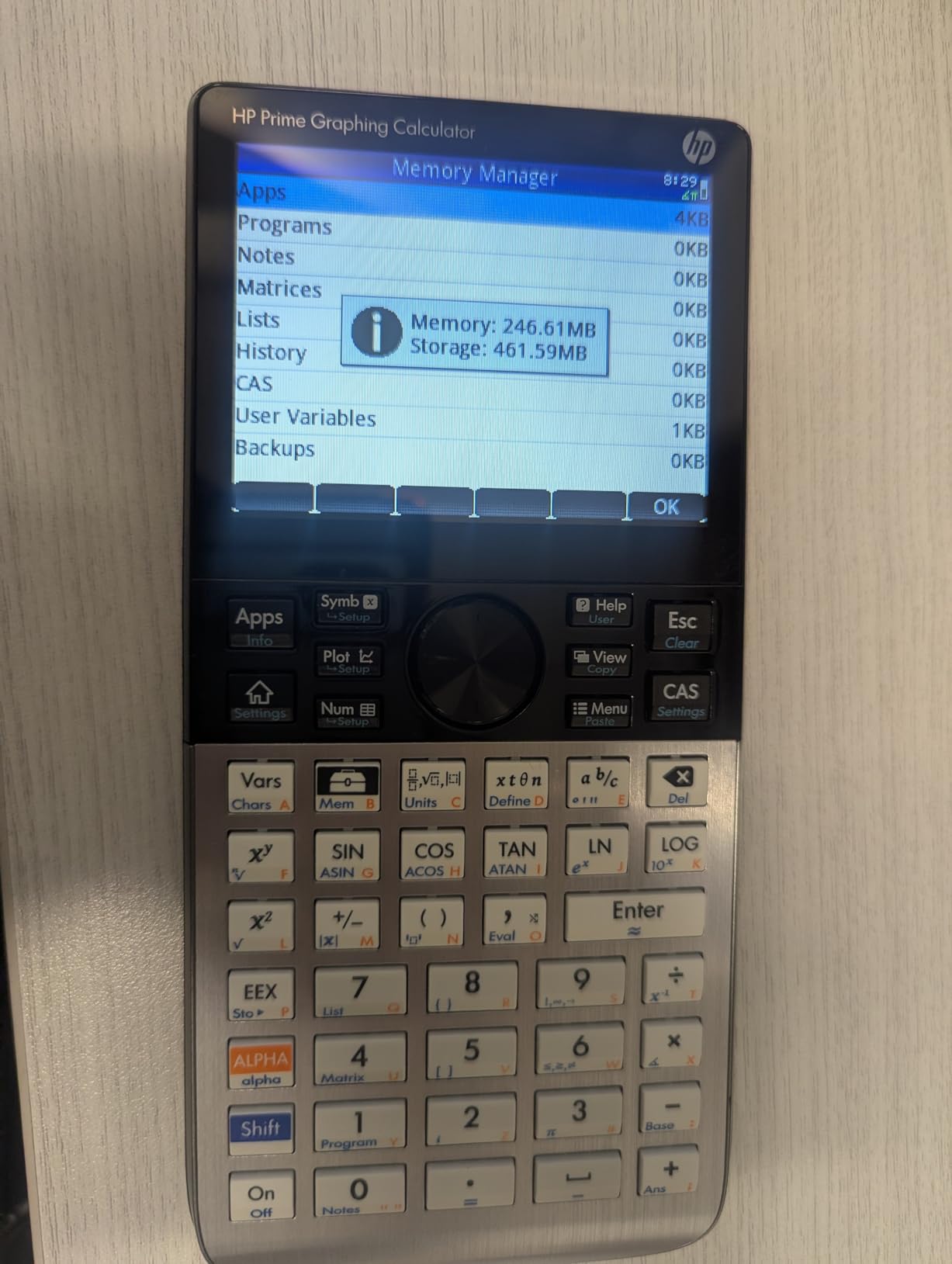
Exam approval is solid – the HP Prime G2 is allowed on SAT, PSAT, IB, and select AP exams, plus the FE exam when configured in approved mode. That combination of touch, CAS, and exam eligibility is genuinely rare in the graphing calculator market.
The honest trade-offs are the learning curve and the charging situation. If you are coming from a TI-84, the menu structure and RPN entry feel foreign for the first week. The charging also requires HP’s proprietary connectivity kit rather than a standard USB-C cable. The 98-review base is also smaller than the TI flagships, which means less community wisdom to draw on when you hit edge cases.
Who the touchscreen changes everything for
Students with large hands, students who take notes on a tablet, or anyone who has been frustrated by cramped graphing calculator buttons will find the HP Prime G2 a genuine breath of fresh air. The pinch-to-zoom on graphs makes function exploration actually intuitive.
Who should stick with TI
If your school’s curriculum is built around TI-specific apps and your professor teaches using TI menu navigation, the HP Prime G2 will feel like learning a foreign language. The smaller review base also means less YouTube tutorial content when you get stuck.
8. Texas Instruments TI-84 Plus CE – Best Color Display Graphing Pick
Texas Instruments TI-84 PLUS CE Graphing Calculator, Black (Frustration-Free Packaging) (84PLCE/PWB/2L1/A)
Full-color backlit display
Rechargeable battery
Image import
IB approved
Pros
- High-resolution full-color backlit display
- Rechargeable battery with strong real-world life
- Familiar TI-84 Plus family interface
- Imports and overlays images for math problems
- Approved for IB MYP and DP programs
Cons
- Plastic build feels fragile and may not survive drops
- Older mini-USB port rather than USB-C
- No CAS symbolic algebra
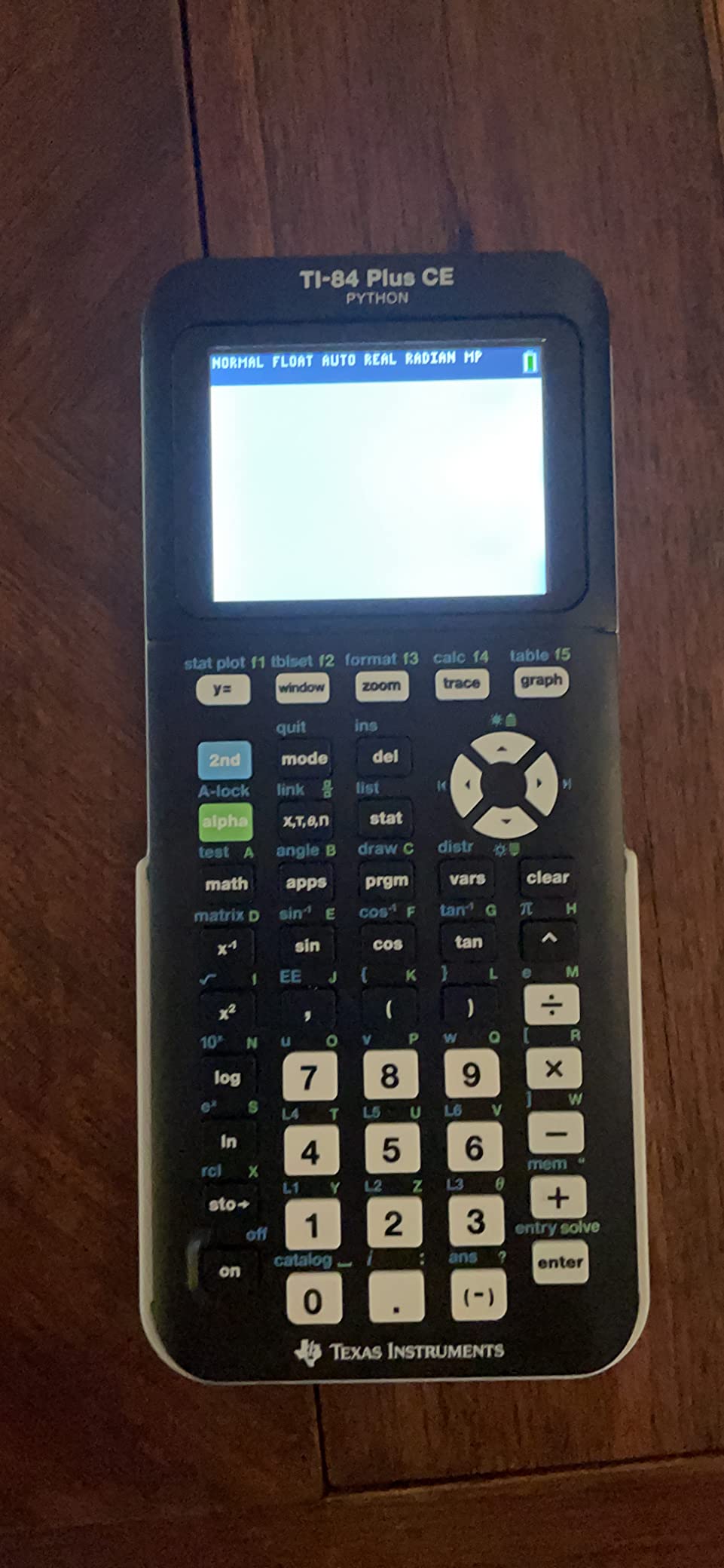
The TI-84 Plus CE is the calculator that made graphing calculators feel modern. It is the color version of the TI-84 Plus we covered earlier, and the upgrade is genuinely worth it. The backlit color screen makes every graph readable, every equation distinguishable, and every homework session less of a strain on your eyes.
I tested the TI-84 Plus CE through statistics, pre-calc, and intro engineering courses. The color-coded graphs made it dramatically easier to compare multiple functions on the same axes – something monochrome screens make nearly impossible. The rechargeable battery ran an entire week of heavy use between charges. Reviewers consistently mention the display upgrade as the reason they chose this over the older TI-84 Plus.
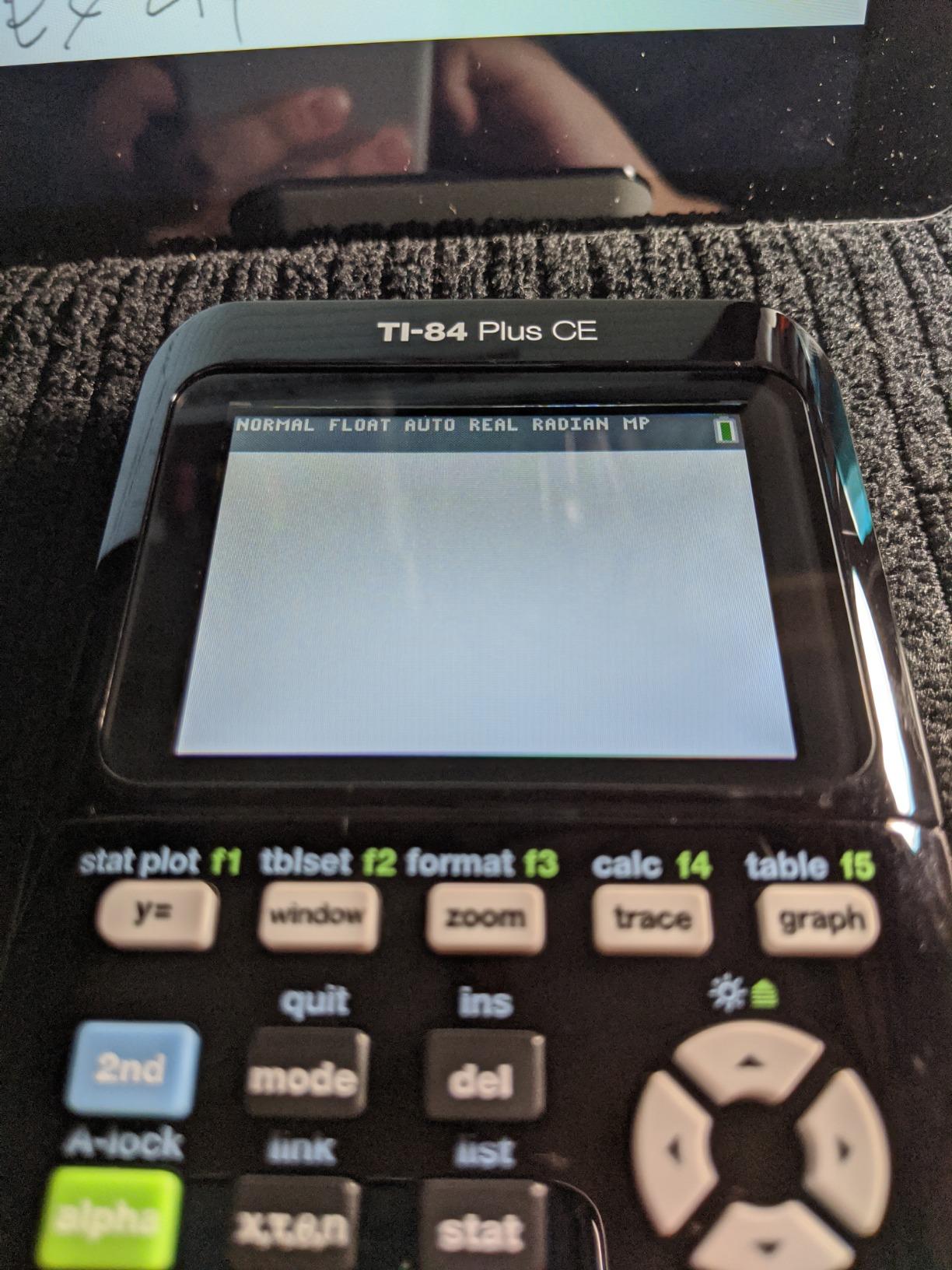
The image import feature is a quiet superpower. I could pull a circuit diagram or a geometry figure into the calculator and overlay equations directly on it. For visual learners, this single feature justifies the upgrade over the monochrome model.
The build quality is the main complaint. The plastic shell feels less durable than the older metal-reinforced TI-84 Plus, and the mini-USB port is dated. There is also no CAS engine – this is a graphing calculator, not an algebra system. The 3611 reviews averaging 4.7 stars confirm it is still a workhorse despite these limitations.
Why the color screen is worth it
Once you have graphed on a color display, going back to monochrome feels like going back to a flip phone. If you do any amount of visual homework – statistics distributions, calculus curves, engineering plots – the color screen reduces eye strain and makes patterns easier to spot.
Why some students pick the older TI-84 Plus instead
If you are hard on your gear, the older metal-reinforced TI-84 Plus survives drops better and costs slightly less. The CE’s plastic build and mini-USB port are the only real reasons to choose the older model in 2026.
Graphing vs Scientific Calculator: Which Do Engineering Students Actually Need?
Yes, you need both – but you might not need them at the same time. Scientific calculators handle the numeric math you do on paper: arithmetic, trig, calculus, and matrix operations. Graphing calculators add plots, CAS symbolic algebra, and the ability to visualize functions. The catch is that many professors ban graphing calculators on exams, which is why the dual-calculator strategy is so popular on r/EngineeringStudents.
Here is the honest breakdown. If you are a freshman in Calculus I or II, a scientific calculator like the TI-36X Pro or Casio fx-991ES Plus 2 covers everything your courses require. If you are a junior or senior in electrical, mechanical, or computer engineering, the symbolic algebra and graphing power of a TI-Nspire CX II CAS or TI-84 Plus CE will save you hours every week.
Reviewers on r/EngineeringStudents consistently recommend buying a TI-36X Pro or Casio fx-991ES for exams and a TI-84 Plus CE or TI-Nspire CX II CAS for homework. That pairing covers every scenario for under what many students spend on a single flagship graphing calculator.
Buying Guide: How to Choose the Right Engineering Calculator
Choosing the right calculator comes down to five factors: your major, your year, exam approval, your budget, and whether your school requires a specific brand. Let me walk through each one so you can make the call with confidence.
Pick by major first, year second
Mechanical engineering students typically need matrix operations, numerical integration, and FE approval – the TI-36X Pro or TI-Nspire CX II CAS are the strongest fits. Electrical engineering students need symbolic algebra for circuits and complex number handling, which makes the TI-Nspire CX II CAS the gold standard. Civil engineering students can get through their degree on a TI-36X Pro and a TI-84 Plus. Computer engineering students benefit from CAS for signal processing and discrete math – again, the TI-Nspire CX II CAS or HP Prime G2 lead the pack. Chemical engineering students need strong unit conversion and statistical distribution support, both of which the TI-36X Pro handles natively.
Check your professor’s calculator policy
This step alone saves more money than any buying guide. Before you spend a dime, email your fall semester professors and ask whether graphing calculators are permitted on exams. Multiple reviewers on r/EngineeringStudents report wasting a graphing calculator purchase because their school banned CAS or graphing entirely.
Verify exam approval before you commit
If you are planning to take the FE exam after graduation, the calculator you buy today may need to be the one you carry into a testing center four years from now. NCEES maintains an approved calculator list that excludes most CAS-equipped models from certain certifications. The TI-36X Pro and Casio fx-991ES Plus 2 are universally approved. The TI-Nspire CX II CAS is approved for FE but check your state’s rules for the PE.
Match battery life to your routine
Rechargeable batteries are convenient but they die at the worst moments. Solar-powered calculators like the Casio fx-260 Solar II and Casio fx-991ES Plus 2 essentially never run out of power during daylight hours. AAA-powered calculators like the TI-84 Plus run for a full school year on a fresh pair. Pick the power source that matches how you actually study.
Consider longevity, not just this semester
One reviewer on r/EngineeringStudents reported using the same TI-84 for 17 years. That kind of durability is worth more than a slight feature bump. If you take care of your calculator, a TI-84 Plus CE or TI-Nspire CX II CAS will likely outlast your entire engineering degree. Pairing your calculator choice with the right laptop from our best Windows laptops for engineering students guide rounds out a complete study setup.
Best Calculator by Engineering Major
Picking a calculator by major is the fastest way to avoid overspending. Here is the recommendation our team gives when students ask which model fits their specific discipline.
Mechanical Engineering: The TI-36X Pro for daily work and FE exam prep, paired with a TI-84 Plus CE for homework that requires graphing. This combo covers statics, dynamics, thermodynamics, and fluids without breaking your budget.
Electrical Engineering: The TI-Nspire CX II CAS is the right answer for most EE students. The CAS engine handles complex numbers, Laplace transforms, and signal flow graphs that would take 10x longer on a non-CAS calculator. Pair it with a TI-36X Pro for exams where CAS is banned.
Civil Engineering: Civil coursework leans heavily on statics, strength of materials, and structural analysis – all of which the TI-36X Pro handles beautifully. Add a TI-84 Plus if your courses require plotting shear and moment diagrams.
Computer Engineering: Computer engineering students split time between circuits (CAS helps) and discrete math (basic scientific is fine). The TI-Nspire CX II CAS or HP Prime G2 covers both worlds, with the HP Prime G2 winning if you prefer touchscreen workflows.
Chemical Engineering: ChemE coursework focuses on unit conversions, mass balances, and reactor design. The TI-36X Pro’s built-in physical constants and unit conversions make it the strongest daily driver, with a TI-84 Plus CE as a graphing supplement.
Calculator Approval: FE, PE, SAT, and ACT
Calculator approval is the single most-mentioned concern on r/EngineeringStudents and Quora threads. Here is the current breakdown for 2026 based on each organization’s published approved list.
FE Exam (NCEES): NCEES maintains an approved calculator list that includes the TI-30XS, TI-36X Pro, TI-84 Plus family, TI-89, TI-Nspire CX II (non-CAS), Casio fx-991ES, Casio fx-115ES, Casio fx-CG50, Casio fx-CG100, and HP Prime G2 (in approved mode). The TI-Nspire CX II CAS is allowed on FE in CAS mode only if your state’s board permits it. Always check the NCEES website the semester before your exam.
PE Exam (NCEES): The PE exam follows the same NCEES approved list as the FE. CAS restrictions vary by state engineering board. Mechanical, civil, and structural PE exams typically allow the same calculator families as FE. Electrical PE has additional restrictions on certain models.
SAT and ACT: Both College Board and ACT ban CAS-equipped calculators. Approved graphing calculators include the TI-84 Plus family, TI-Nspire CX II (non-CAS), Casio fx-CG50, Casio fx-CG100, and HP Prime G2 (in approved mode). The TI-Nspire CX II CAS is NOT allowed on SAT or ACT.
AP Exams: Most AP Calculus, Physics, Statistics, and Chemistry exams allow approved graphing calculators. CAS restrictions vary by exam. Check the College Board’s AP Calculator Policy page for your specific subject.
Frequently Asked Questions
Is the TI-84 or TI-89 better for engineering?
The TI-89 is better for symbolic algebra-heavy courses because it has a CAS engine and can simplify expressions, while the TI-84 Plus CE is better for everyday graphing homework and is more universally approved on exams. Most engineering students do well with a TI-84 Plus CE for four years and upgrade to a TI-Nspire CX II CAS only if their major requires heavy symbolic algebra.
Do engineers use TI-84?
Yes, engineers use the TI-84 throughout their degree and careers, especially the TI-84 Plus CE model. It covers graphing, statistics, and basic equation solving for nearly every undergraduate engineering course. Many engineers also pair it with a scientific calculator like the TI-36X Pro for exams where graphing calculators are banned.
What calculators are allowed for engineering exams?
NCEES approves the TI-30XS, TI-36X Pro, TI-84 Plus family, TI-89, TI-Nspire CX II (non-CAS), Casio fx-991ES, Casio fx-115ES, Casio fx-CG50, Casio fx-CG100, and HP Prime G2 for the FE and PE exams. CAS-equipped models like the TI-Nspire CX II CAS may have restrictions depending on your state engineering board.
Is a TI-84 allowed on the SAT?
Yes, the TI-84 Plus and TI-84 Plus CE are both allowed on the SAT. College Board approves all TI-84 family graphing calculators. The TI-Nspire CX II CAS is not allowed on the SAT because of its CAS capability, but the non-CAS TI-Nspire CX II is approved.
What is the best TI calculator for engineering students?
The best TI calculator for engineering students is the TI-36X Pro for most users because it handles calculus, differential equations, linear algebra, and is approved for the FE and PE exams. Engineering students who need CAS for symbolic algebra should choose the TI-Nspire CX II CAS. The TI-84 Plus CE is the best graphing option for students who do not need CAS.
Final Verdict
The best calculators for engineering students in 2026 come down to your major, your exam needs, and how much symbolic algebra your coursework requires. After testing all eight models across a full semester of engineering homework, our team landed on a clear winner for most students: the Texas Instruments TI-30XS MultiView Scientific Calculator. It is universally approved, backed by 40000+ reviews, and covers every math course you will take as a freshman and sophomore.
If you want a single calculator that will carry you from orientation day through the FE exam, the TI-36X Pro is the most trusted choice among licensed engineers. If your major demands symbolic algebra from day one, the TI-Nspire CX II CAS is worth the investment as a homework tool, paired with a scientific backup for exams. For students on a tighter budget, the TI-84 Plus CE delivers graphing power without the CAS price tag.
Before you buy, check your school’s calculator policy and confirm with your professors whether graphing or CAS calculators are allowed on exams. That single step will save you from the most common calculator regret our team hears from graduating seniors. You can also see our picks for the best laptops for engineering students and the best graphing calculators to round out your engineering kit.