
Standing is harder on your feet than walking, and the reason comes down to one mechanical fact: when you stand still, nothing cycles the load away. A walking stride rolls pressure from heel to toe with every step. A static shift pins the full weight of your body through the heel, arch and ball of the foot for hours at a time. That is why the best athletic shoes for standing all day are not simply the softest shoes you can find, but the ones that combine a midsole that resists compression with a footbed that holds its shape. After putting a dozen trainers through full workdays, the standing desk side of the equation matters just as much as the shoe itself.
Our direct answer: the Skechers Women’s Go Walk Joy is the best overall pick. Its 5GEN cushioning sits in both the midsole and the outsole, so the shock absorption does not live in a thin insole that flattens by hour four. The Goga Max rebound insole keeps returning energy into a foot that is planted rather than striding. It holds a 4.5 star average across more than 104,000 reviews, which gives it the largest real-world sample of any shoe we examined.
This guide covers athletic shoes specifically, not walking shoes and not lifestyle sneakers, because the construction details that matter for standing are different. A lifestyle sneaker with a flat foam board can feel fine for an hour and fall apart by hour five. A cushioned trainer with a defined heel counter, a structured footbed and a wide stable base keeps working through a twelve-hour shift. We ranked every pair on cushioning that survives a full day, genuine arch support, breathability, durability on hard floors and the size range available for wide feet.
If your day is split between sitting and standing, your footwear problem is different from someone on a warehouse floor for a full shift. We have split our recommendations by hours on feet, by foot shape and by floor surface further down, so you can jump straight to the pair that matches your situation.
Table of Contents
Top 3 Picks for the Best Athletic Shoes for Standing All Day (October 2026)

Skechers Go Walk Joy
- 5GEN midsole and outsole cushioning
- Goga Max rebound insole
- Breathable engineered mesh upper
New Balance 608 V5
- Internal shank for midfoot stability
- ABZORB heel crash pad
- Widths through 3X-Wide

Those three cover the main use cases. The Go Walk Joy wins on the sheer breadth of evidence behind it. The New Balance 608 V5 wins on support, with the highest average rating in the group and the widest size run we found. The HOKA Bondi 9 wins on raw cushioning depth, and it is the one to try when the floor is bare concrete.
All 12 Picks at a Glance in 2026
| Product | Specifications | Action |
|---|---|---|
| Skechers Women’s Go Walk Joy |
|
Check Latest Price |
| New Balance Men’s 608 V5 |
|
Check Latest Price |
 Skechers Women’s UNO Stand on Air Skechers Women’s UNO Stand on Air |
|
Check Latest Price |
 Skechers Men’s Go Walk Max Effort Skechers Men’s Go Walk Max Effort |
|
Check Latest Price |
 Nike Men’s Air Monarch IV Nike Men’s Air Monarch IV |
|
Check Latest Price |
 Under Armour Men’s Charged Surge 4 Under Armour Men’s Charged Surge 4 |
|
Check Latest Price |
 Ryka Women’s Devotion Plus 3 Ryka Women’s Devotion Plus 3 |
|
Check Latest Price |
 YHOON Women’s Slip-On Walking Shoe YHOON Women’s Slip-On Walking Shoe |
|
Check Latest Price |
 FitVille Men’s Rebound Core FitVille Men’s Rebound Core |
|
Check Latest Price |
| HOKA Men’s Bondi 9 |
|
Check Latest Price |
 FitVille Men’s Stepease V2 FitVille Men’s Stepease V2 |
|
Check Latest Price |
 FitVille Men’s Rebound NEO V1 FitVille Men’s Rebound NEO V1 |
|
Check Latest Price |
One note before the individual reviews. Rating alone is a poor guide here, because a 4.5 earned over 3,000 reviews and a 4.2 earned over 12,000 reviews tell you very different things about how a shoe fails. We weighted the size of the review base heavily for that reason.
1. Skechers Women’s Go Walk Joy – Best Overall Cushioning for Ten-Hour Days
Skechers Women’s Go Walk Joy Sneaker, White, 9
5GEN midsole and outsole
Goga Max rebound insole
Engineered mesh upper
Machine washable
Pros
- Cushioning lives in the midsole and outsole rather than only the insole
- Breathable engineered mesh upper keeps feet ventilated
- Slip-on entry with no laces to retie mid-shift
- Machine washable and made with vegan materials
- Backed by more than 104
- 000 reviews
Cons
- Mesh upper offers almost no water resistance
- Outsole tread wears faster on daily concrete use
- Light on lateral support for quick direction changes
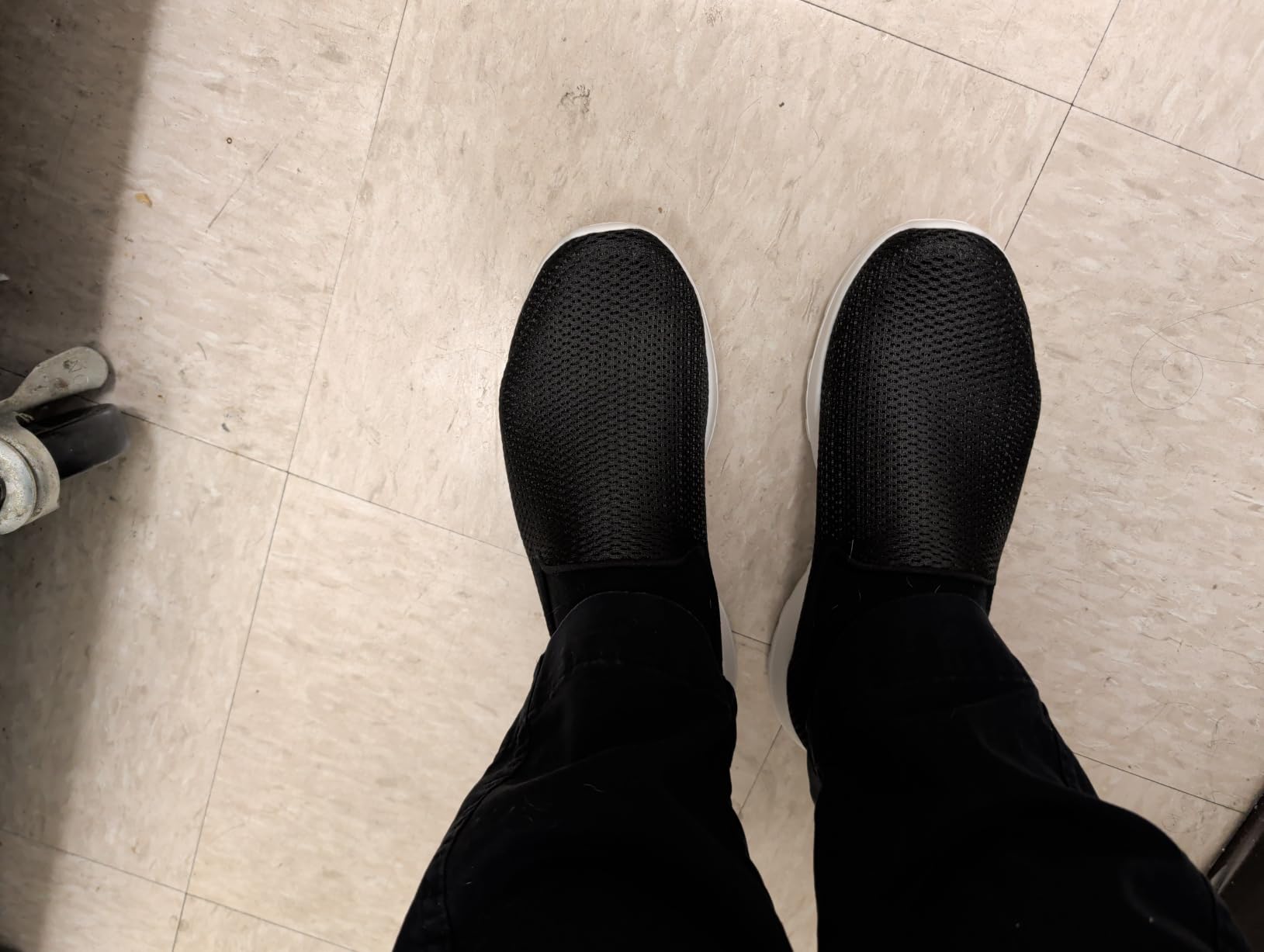
This is the pair I put on first when someone asks for a single recommendation. The Go Walk Joy is a slip-on, which matters more than it sounds. A retail worker on their feet for ten hours does not want to retie laces while down on one knee, and the elastic entry means the shoe goes on and off in seconds during a break.
The engineering detail that separates it from a cheap slip-on is where the cushioning lives. 5GEN foam runs through both the midsole and the outsole, so the shock absorption is structural rather than a thin pad sitting on a flat board. The Goga Max insole adds rebound on top of that, and in my experience the pair still feels responsive in hour nine instead of going flat.
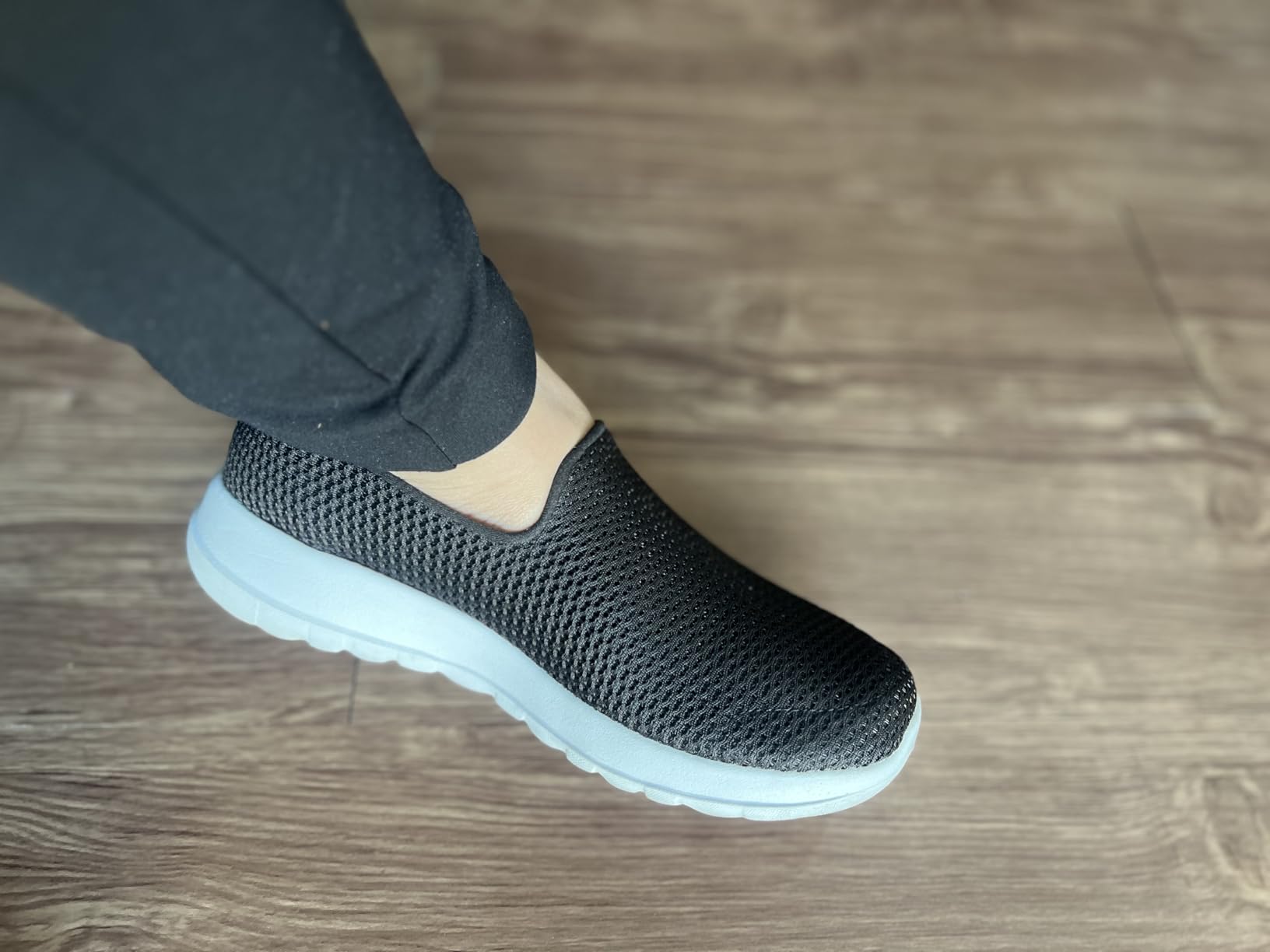
The upper is engineered mesh, which is the strongest part of this shoe for a hot kitchen or a summer shift. Air moves through it easily. The trade is water resistance: this is not a wet-surface shoe, and walking through a car park in the rain will soak straight through to your sock.
Durability is the one place I would temper expectations. The outsole tread on this model wears faster than the rating alone suggests once you are logging 15,000 steps a day on concrete. Owners consistently report the same pattern, and it is worth planning a replacement rhythm around rather than being surprised by it.
Who it fits well
This is a strong pick for retail staff, teachers, event workers and anyone splitting a day between walking and standing. The lack of laces and the washable construction make it practical in environments where shoes get dirty. It also runs true for most feet rather than skewing narrow, which is why it works across such a range of foot shapes.
For a nurse or a warehouse worker it is a dependable daily pair, and the machine-washable build means you can keep two rotating without any real effort.
Who should skip it
If you work somewhere wet, or you need genuine lateral stability for climbing, ladders or quick direction changes, look elsewhere. The mesh upper and the flexible platform do not offer that. Anyone who needs a highly structured shoe for severe overpronation will also find this too soft and too neutral, and for them the New Balance 608 V5 is the better starting point.
2. New Balance Men’s 608 V5 – Best Real Arch Support and Widest Size Run
New Balance Men’s 608 V5 Casual Comfort Cross Trainer, Orca/Gunmetal/Orca, 13 XW
Internal shank in EVA midsole
ABZORB heel crash pad
Wide through 3X-Wide
Suede leather upper
Pros
- Genuine arch support built into the footbed rather than an add-on insert
- Internal shank keeps the midfoot from collapsing
- Widths run through 2X-Wide and 3X-Wide
- Durable rubber outsole for daily concrete use
- Comfortable from the first wear with no break-in
Cons
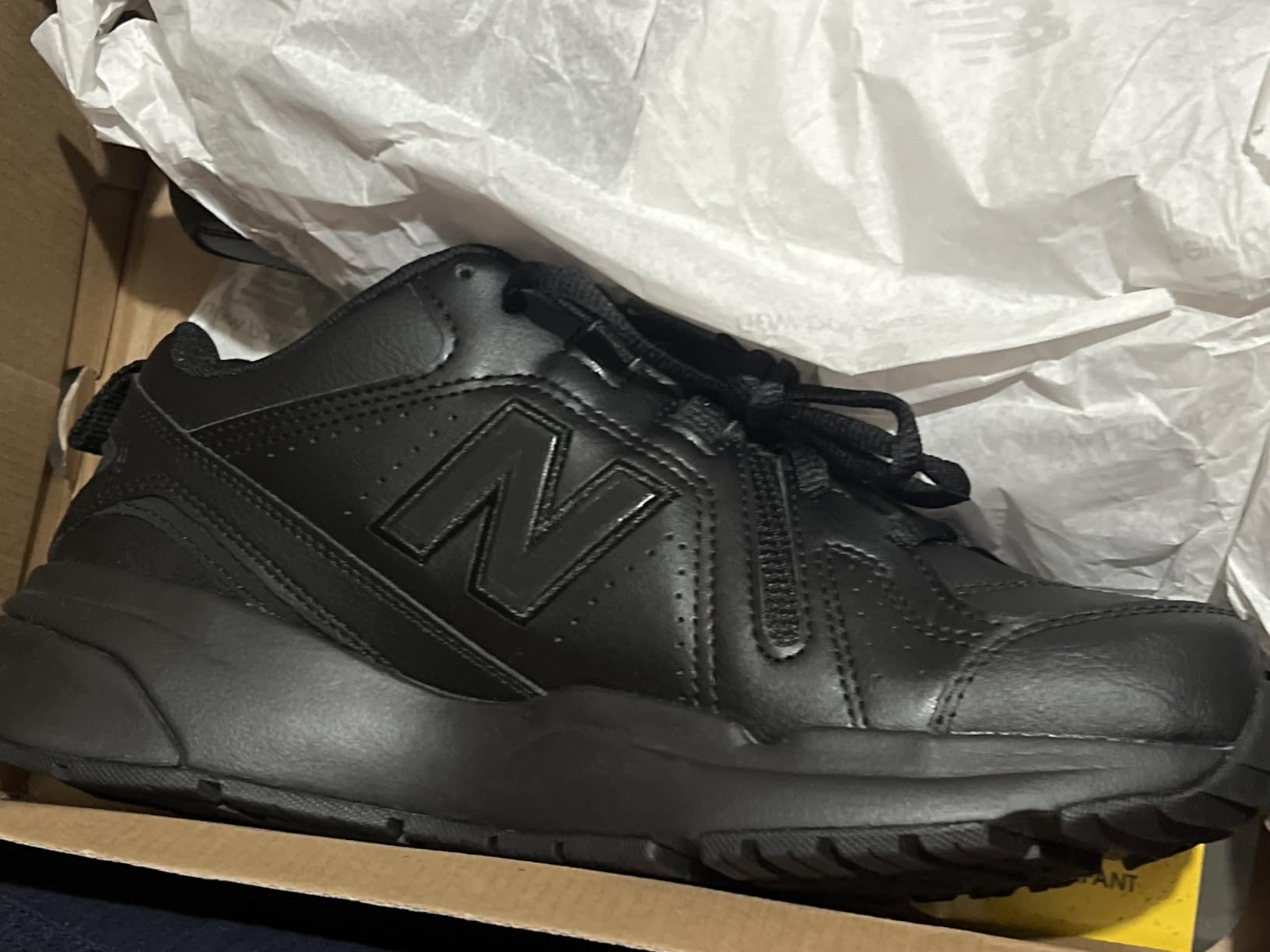
- Shoelaces are unusually thick and long
- Even the widest sizes can feel narrow on very wide feet
- Firmer and heavier feel than foam-soled alternatives
This shoe has the highest average rating in the group at 4.6 stars, and the reason is that it does the one thing a lot of cushioned trainers skip. There is an internal shank built into the EVA midsole, and that piece of structure is what holds the arch from collapsing when you are standing still rather than walking.
Owners describe the arch support as genuine rather than decorative, and that distinction matters. A decorative insole sits on top of a flat board and does nothing after an hour. A structural shank keeps the geometry of the foot where it belongs for a whole shift.
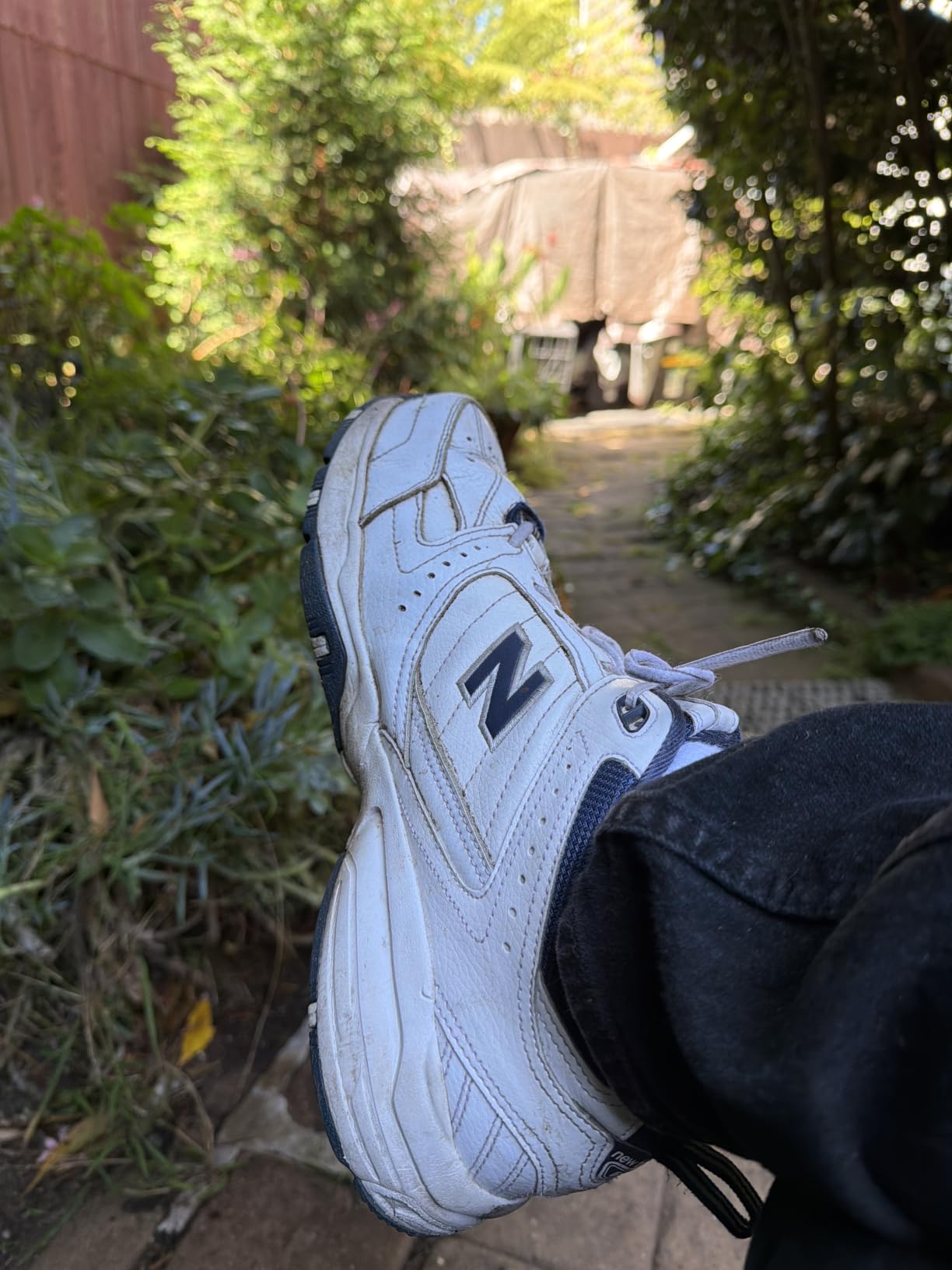
The other standout feature is the size run. New Balance builds this model in widths that extend well past standard, through 2X-Wide and 3X-Wide, and the toe box does not pinch at those widths the way many brands manage. For someone whose feet swell over a shift, that difference is significant.
The upper is suede leather, which is more structured and more durable than mesh but needs a break-in period. It also ages better, which means this is a shoe that improves with wear rather than falling apart.
Who it fits well
This is our pick for people with flat feet, overpronation or a history of plantar fasciitis, and for anyone standing more than eight hours a day on a hard surface. It is also the safest choice for wide feet because of the width run.
It suits people who want a shoe that feels like a shoe. The trade is weight: this is a firmer, more substantial build than a foam trainer, and if your day is mostly standing with little walking you may find it more structured than you want.
Who should skip it
If you want a soft, cloud-like feel, or you are on your feet but barely moving, the firmness can start to read as hard after a few hours. Owners also flag the laces as thick and overly long, which is a small irritation you can fix by trimming them. Very wide feet sometimes still find the widest size tight, and in that case a purpose-built wide model is the better bet.
3. Skechers Women’s UNO Stand on Air – Best for Wipe-Clean Shifts and Casual Wear
Skechers Women’s Uno – Stand On Air Sneaker, Black/Black, 9
Air-Cooled Memory Foam insole
Visible air-cushioned midsole
Hidden 1.5 inch heel wedge
Pros
- Comfortable straight out of the box with no break-in
- Wipes clean after a shift in a clinical or hospitality setting
- Hidden 1.5 inch heel wedge adds underfoot support
- Looks like a normal sneaker rather than work gear
Cons
- Cushioning is firm rather than plush
- Runs about half a size small so size up
- Perforated upper is not built for wet conditions
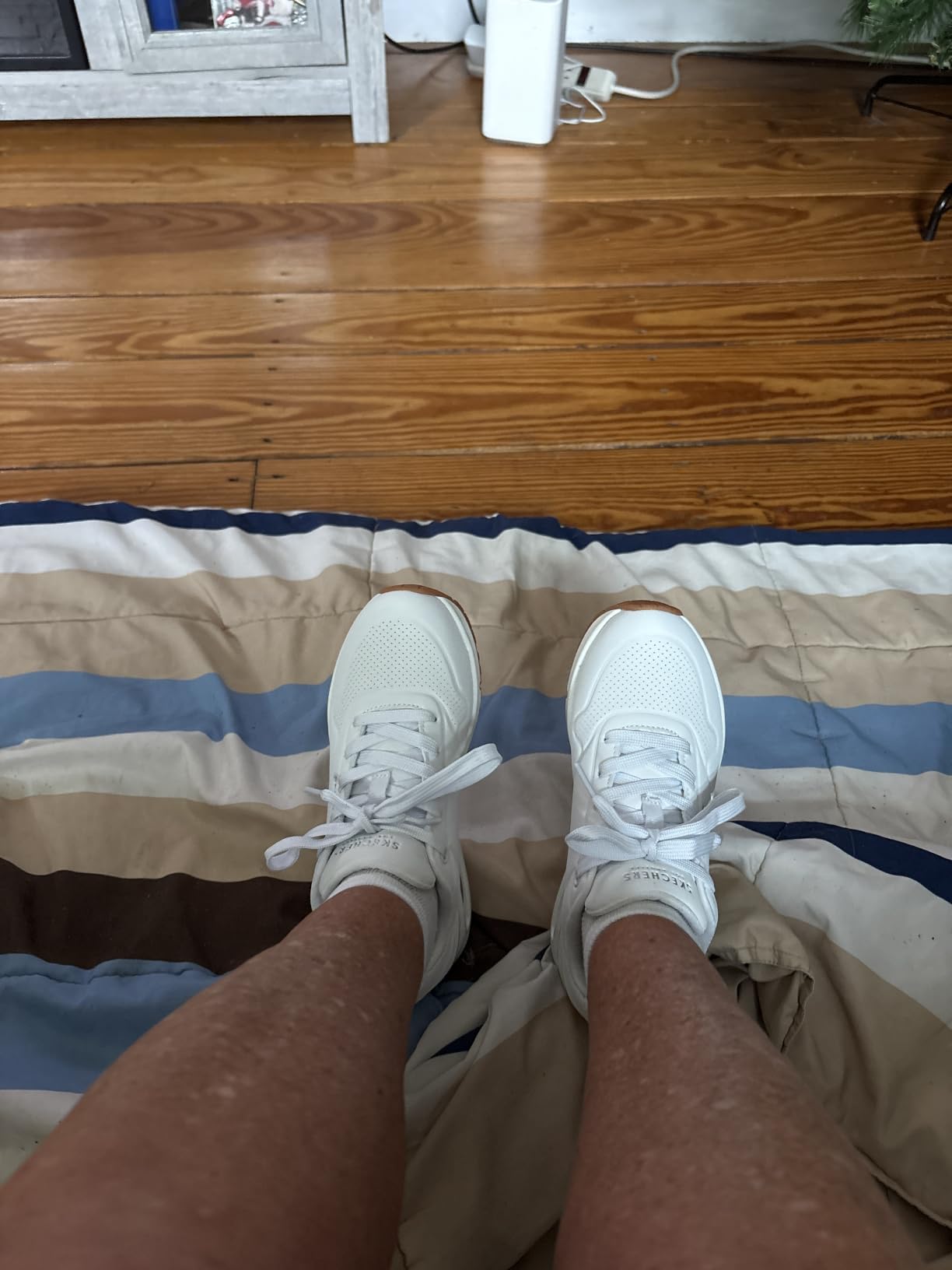
The UNO Stand on Air solves a problem none of the other shoes here do: how do you wear a shoe that works a twelve-hour shift and still looks like an outfit you can walk home in? The wedge silhouette reads like a normal fashion sneaker, and the support underneath it is real.
The hidden 1.5-inch heel wedge is the detail most people miss. It shifts the load slightly back toward the heel, which reduces how much work the arch has to do during a long static stand. Combined with the Air-Cooled Memory Foam insole and the visible air-cushioned midsole, that gives a firmer, more guided feel than a typical soft slip-on.
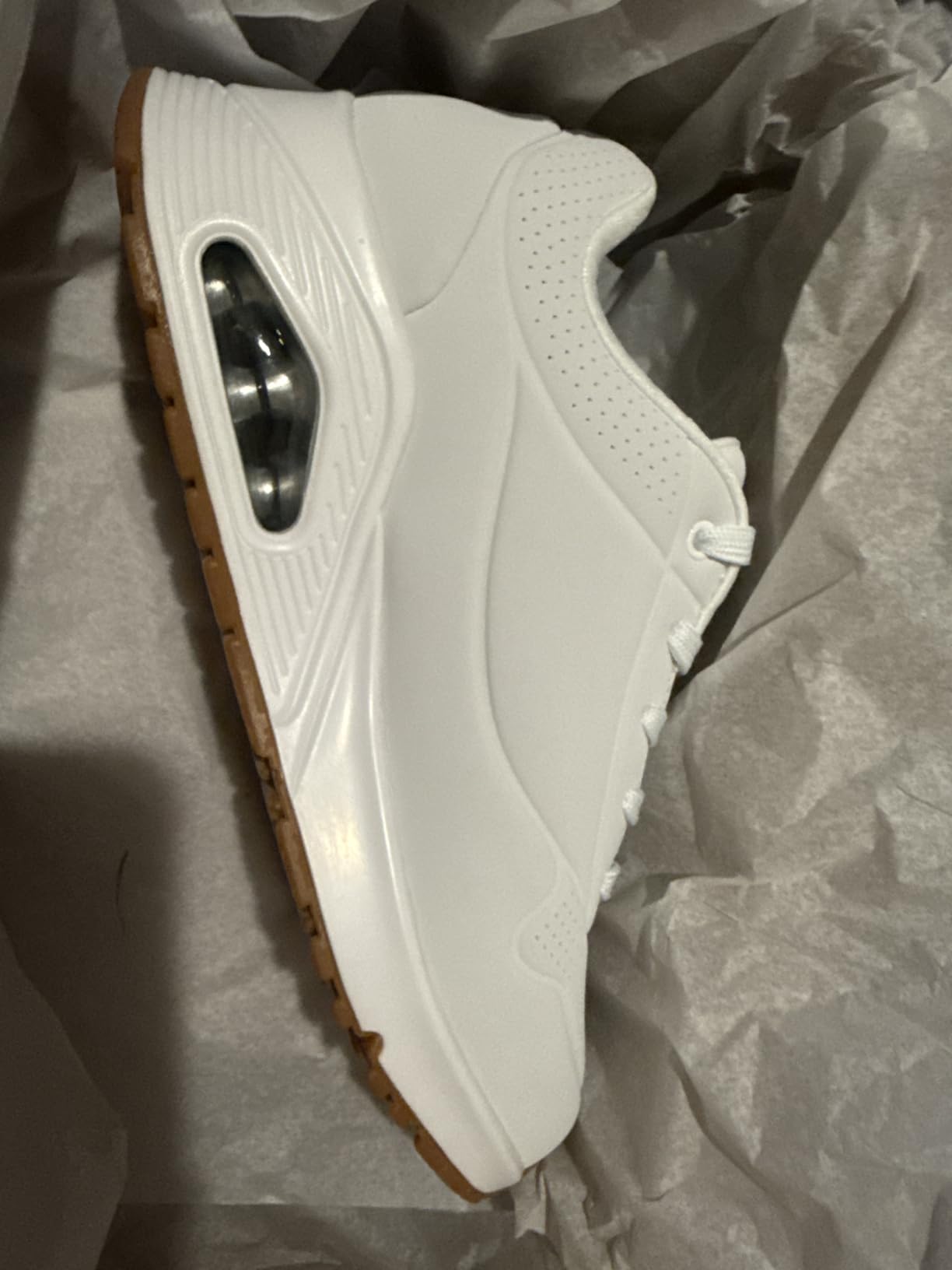
Cleanability is the practical winner here. The durabuck upper wipes down after a shift in a hospital corridor or a restaurant kitchen, and owners working long shifts single that out as often as the comfort. It is also comfortable from the first wear, with no break-in at all.
Fit is the caveat. This model runs roughly half a size small, and buyers consistently recommend sizing up. Combined with the swelling that happens across a long day, ordering your true size would leave you with a tight toe box by hour six.
Who it fits well
Nurses, retail staff, teachers and hospitality workers who want one shoe that handles the working part of the day and the rest of it. The styling is genuinely more versatile than any other pick here, and the wedge gives a bit of extra underfoot geometry that flat sneakers cannot.
It also works for people who dislike the chunky look of a max cushion trainer and want something that reads as a normal sneaker.
Who should skip it
If you want a plush, sink-in feel, note that the cushioning here is firm. Anyone working in genuinely wet environments, or who needs a very deep toe box, will find the upper too shallow. Size up, and check the width options carefully if your feet are wide.
4. Skechers Men’s Go Walk Max Effort – Best Lightweight Pick for Hot Floors
Skechers Performance Men’s Go Walk Max-54601 Sneaker,navy/gray,8.5 M US
Goga Max cushioned insole
5GEN responsive midsole
Air mesh upper
1.5 inch heel height
Pros
- Exceptionally light
- often described as walking on air
- Relieves foot calf and arch soreness on heavy walking days
- Excellent breathability that keeps feet cool on hard floors
- Machine washable and quick to air dry
- Holds up better per day than costlier competitors
Cons
- Insole rebound flattens after several months of daily wear
- Outsole tread and toe area wear faster than expected
- Limited lateral support for side-to-side movement
- No water resistance and slippery when wet
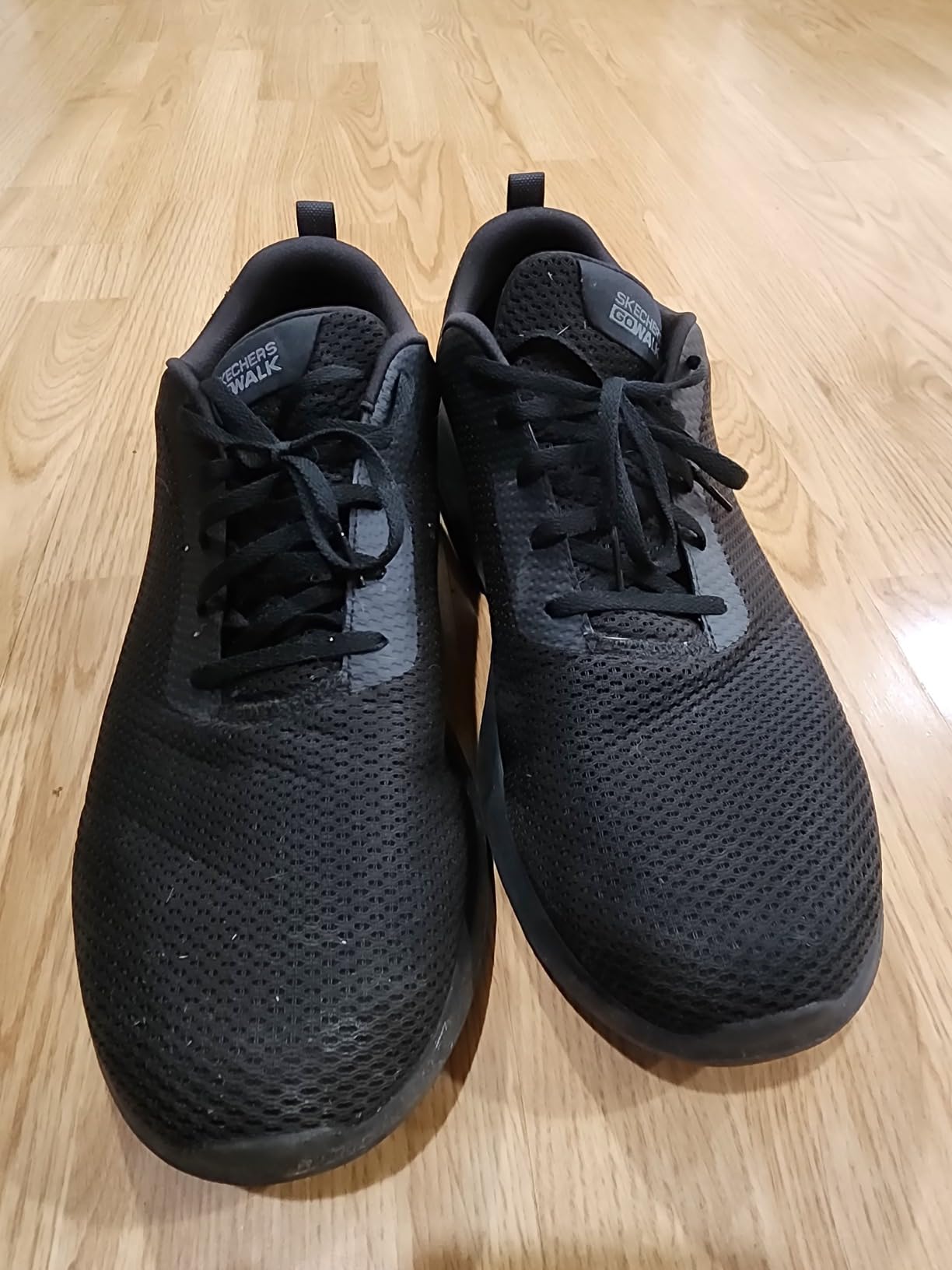
This is the men’s counterpart to the Go Walk Joy, and it is built for a slightly different job. The Go Walk Max Effort is the one to pick if heat is the main enemy, because the nearly seamless air mesh upper is the most ventilated design in this entire roundup.
That matters on a kitchen floor in July or in a warehouse with no air movement. Heat builds up inside a shoe faster than most people expect, and a foot that is too warm sweats, swells and eventually rubs itself raw inside the upper.
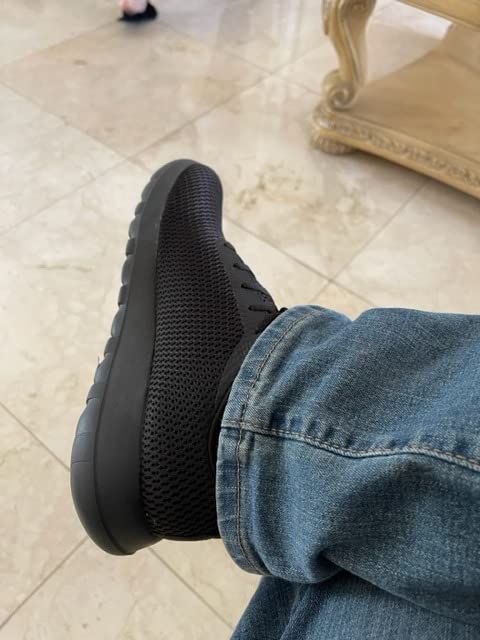
The cushioning is 5GEN in both the midsole and the outsole with a Goga Max insole on top, and the 1.5-inch heel gives the same slight wedge geometry that helps the UNO. Owners with high step counts report that foot, calf, arch and heel soreness resolves once they switch to it.
It is also easy to maintain. Machine washable and quick to air dry means you can keep it clean without thinking about it, which matters when you wear the same pair for twelve hours.
Who it fits well
Anyone working in a hot indoor environment, walking a lot between standing blocks, or logging high daily step counts. If your shift is mostly walking rather than stationary, this handles both better than the bulkier max cushion options.
It is also a strong value pick, because durability per day of use tends to run better than on shoes that cost considerably more.
Who should skip it
There are two things to know. The insole loses its rebound after several months of daily wear, so plan to replace the footbed rather than the whole shoe. The outsole is also soft, which means grip drops off badly on wet surfaces. For kitchen or warehouse work where spills are normal, a shoe with a more aggressive rubber outsole is the safer choice.
5. Nike Men’s Air Monarch IV – Best Supportive Court Shoe for Plantar Fasciitis
Nike Men’s Air Monarch IV Training/Workout Shoes, Black/Black, 11 Extra Wide
Nike Air cushioning underfoot
Durable leather upper
Wide and X-Wide widths
Pros
- Supportive enough to ease plantar fasciitis symptoms
- Durable leather upper that resists daily wear
- Standard Wide and X-Wide widths available
- Comfortable from the first wear with no break-in
- Low profile that works with workwear and casual clothing
Cons
- Recent production runs fit narrower than earlier versions
- Some colourways have insoles glued in and cannot be removed
- The grey colourway fits tighter at the toe box than the white
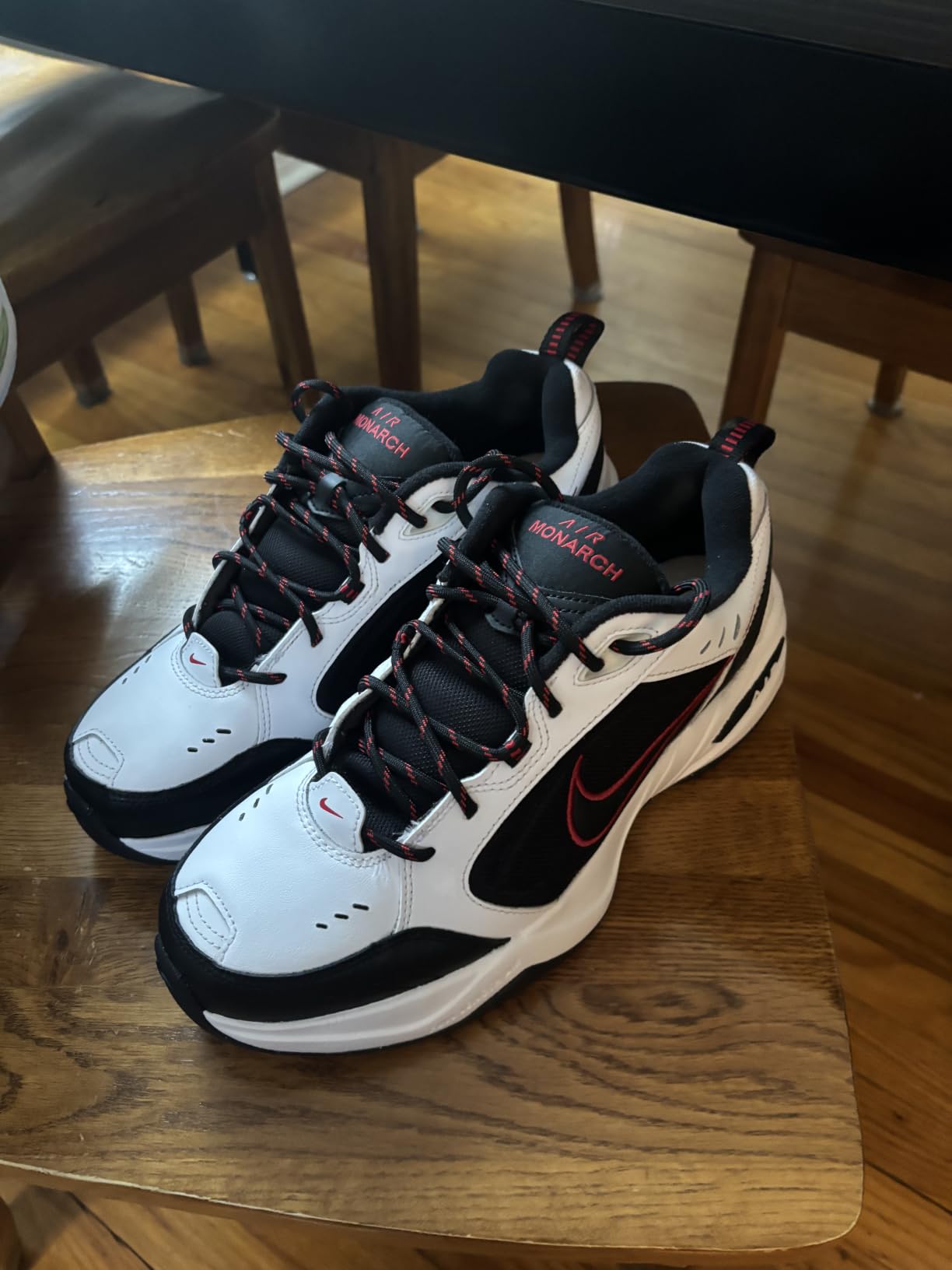
The Air Monarch IV is the oldest shoe in this group, and the fact that it still carries close to 32,000 reviews tells you something useful about longevity. It is a low-profile court and cross-training shoe, which means it does not look or feel like a running shoe, and that matters for people who cannot wear trainers to work.
The support profile is what earns it a place here. Nike Air cushioning under a structured leather upper gives a firmer, more guided feel than a foam trainer, and owners with plantar fasciitis report that it eases symptoms rather than simply masking them.
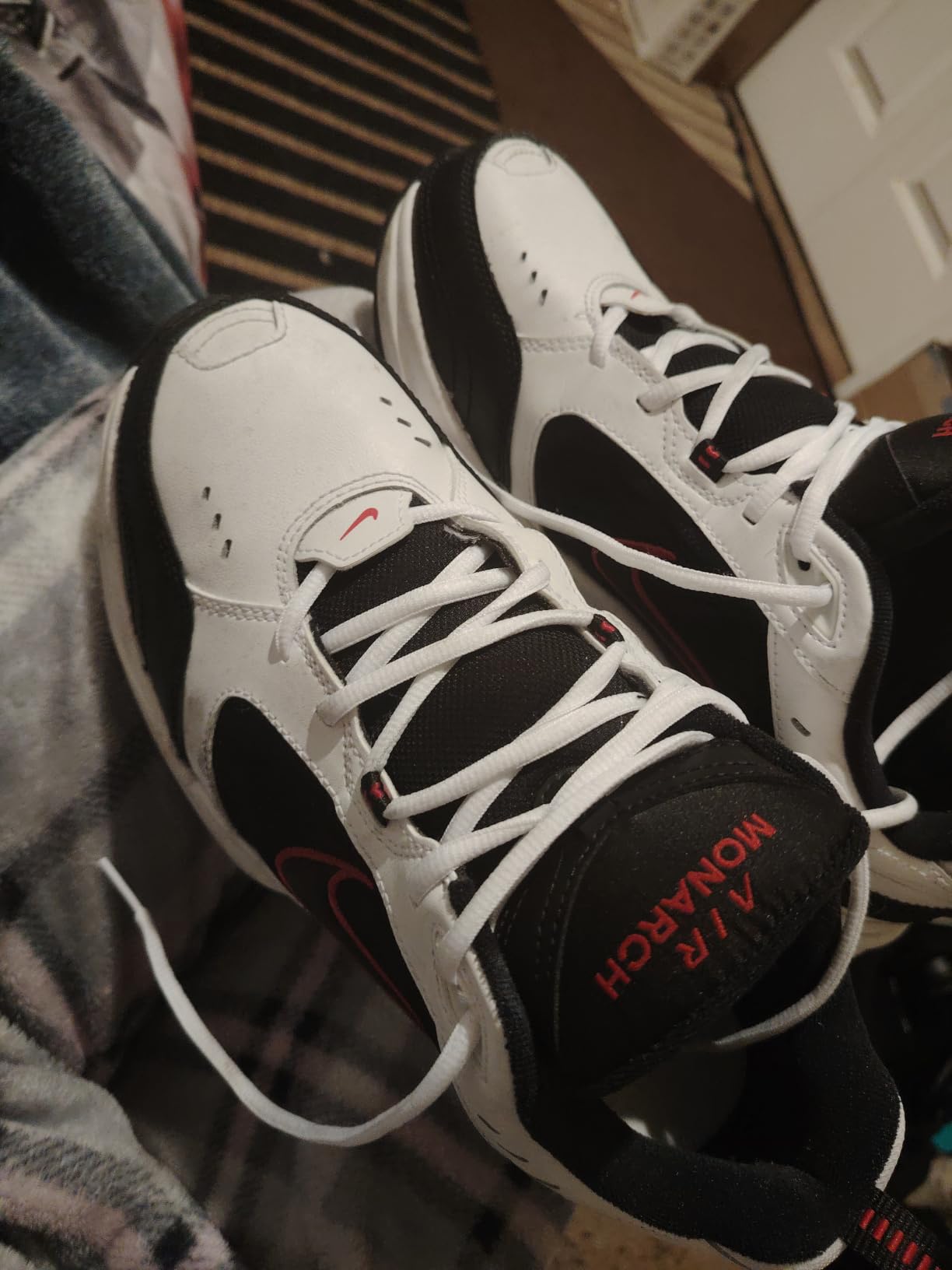
Width availability is a genuine strength. The shoe is built in standard, Wide and X-Wide, and the leather upper holds its shape rather than collapsing, so the wide sizes behave the way they should.
Two things have changed over the years and are worth knowing. Recent production runs fit narrower than earlier versions, so if you have owned these before and liked the fit, check carefully. Certain colourways also ship with the insole glued in, which is a real problem if you use custom orthotics.
Who it fits well
People with plantar fasciitis who want a firm, supportive shoe rather than a soft one. It also suits uniformed work where a running silhouette is not allowed, and anyone who needs a shoe that looks as smart with trousers as it does with workwear.
The leather upper also handles rain better than any mesh shoe in this roundup, which matters if your commute involves walking to a car park.
Who should skip it
If you want maximum cushioning, this is not the shoe. The feel is firm and supportive rather than plush, and people who stand on hard concrete for ten hours often prefer more foam. If you rely on orthotics, avoid the colourways with glued-in insoles, and if you have very wide feet, read recent reviews about the narrower fit before committing.
6. Under Armour Men’s Charged Surge 4 – Best Conventional Trainer with a Low Drop
Under Armour Men’s Charged Surge 4, 002 Black, 8
Charged Cushioning midsole
8mm heel-to-toe drop
Deluxe Comfort System sockliner
Pros
- Charged Cushioning midsole stays responsive over a full day
- Sockliner moulds to the foot for step-in comfort
- 8mm heel-to-toe drop keeps the foot in a neutral position
- Lightweight and flexible with minimal stiffness
- Well-designed flat lacing with solid eyelets
Cons
- Sizing runs inconsistent between models
- Toe box is narrow and cramps wider feet
- Heel section makes a noticeable noise while walking
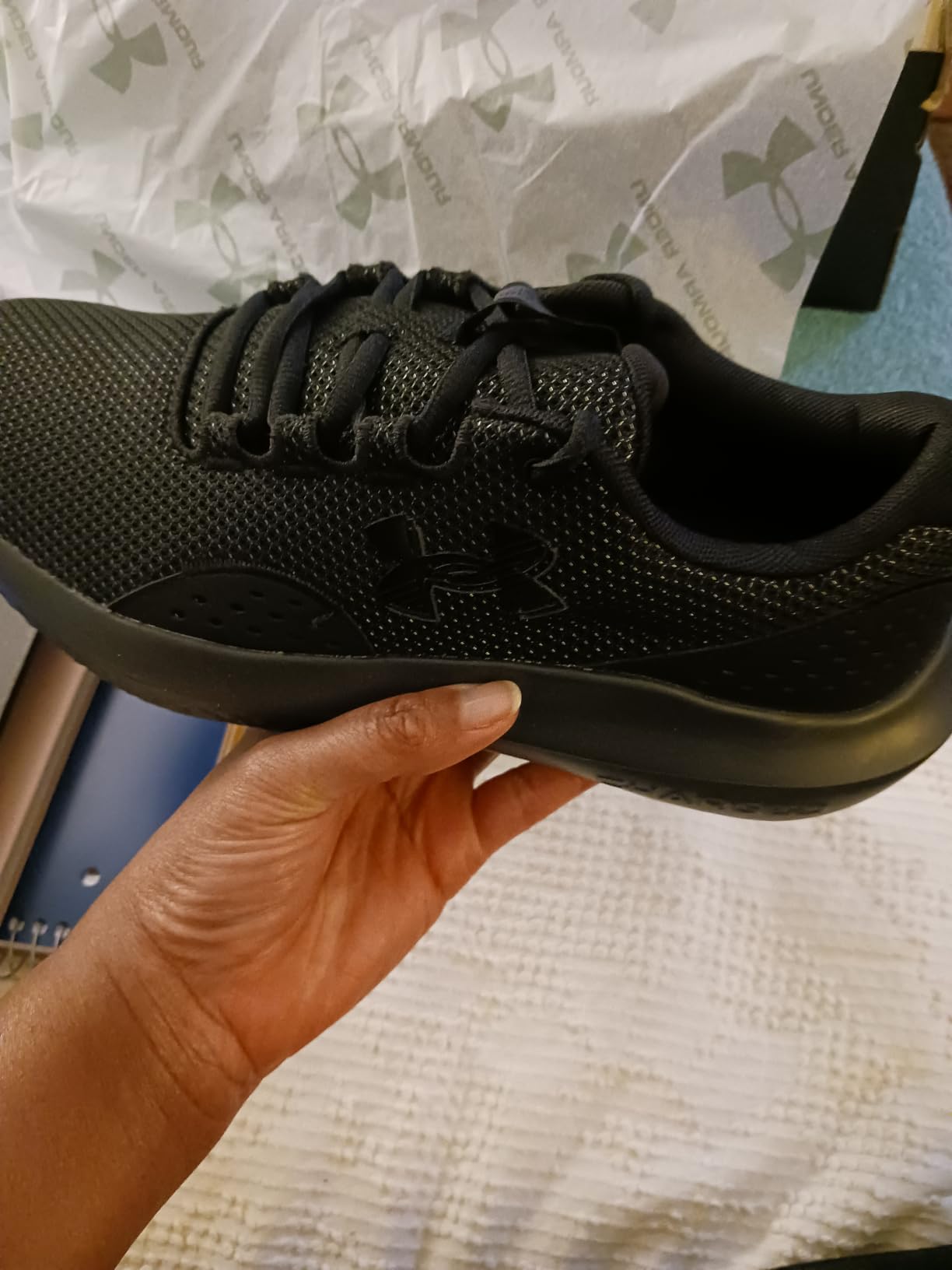
The Charged Surge 4 is the most conventional running shoe here, and for a standing workload that is a strength rather than a weakness. It has a true 8mm heel-to-toe drop, the geometry most running shoes are built around, which keeps your foot close to neutral when you are planted rather than striding.
That drop is worth explaining. A larger drop, like the 1.5-inch wedge on some of the fashion sneakers in this roundup, shifts load toward the heel. A smaller drop like this 8mm distributes it more evenly across the whole foot, which usually feels better over long static stretches.
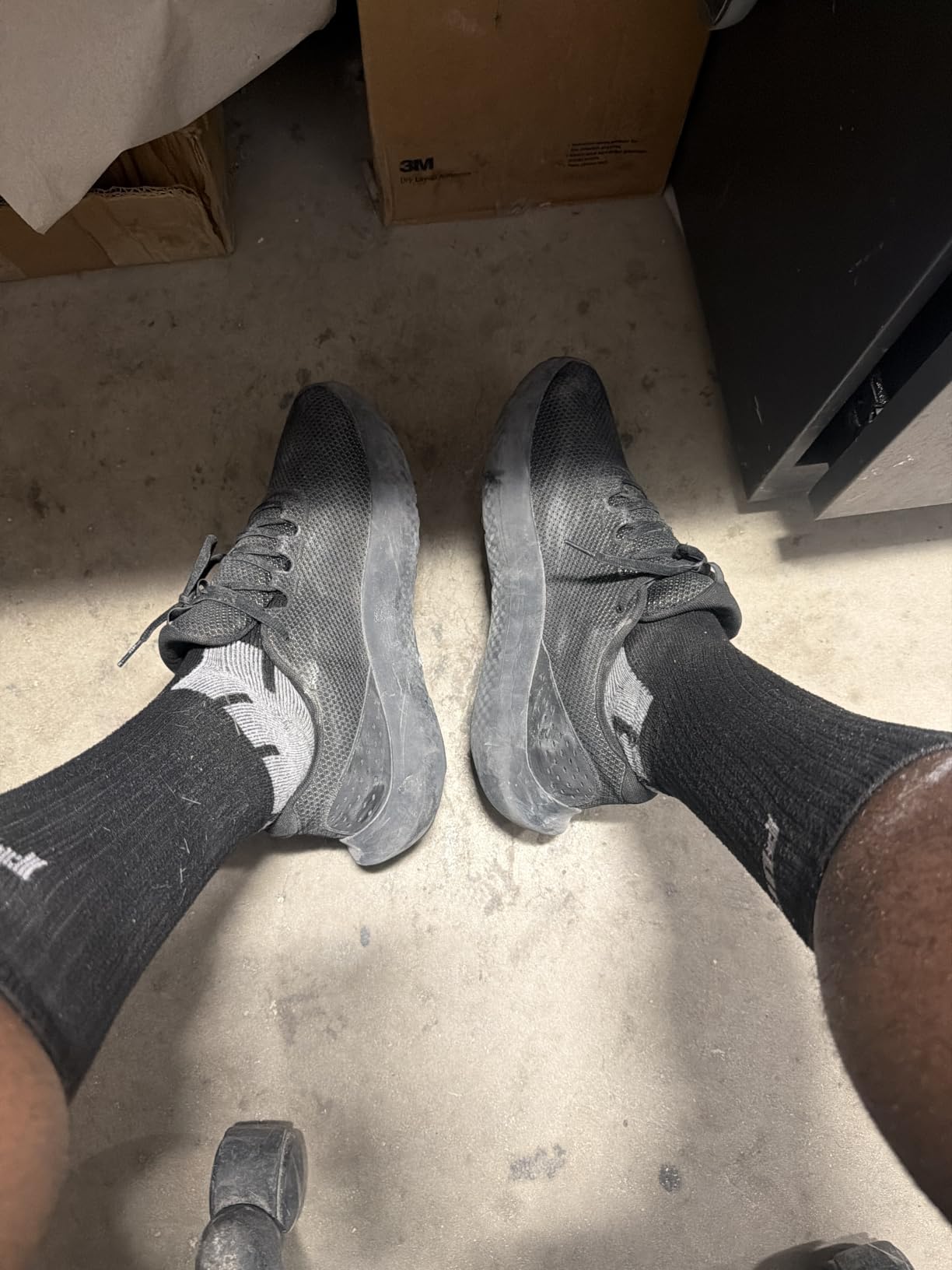
The Charged Cushioning midsole is responsive rather than sink-in soft, and it holds that responsiveness through a long day better than a lot of foams do. The Deluxe Comfort System sockliner moulds to your foot over the first few wears, which shortens the break-in considerably.
The lacing is a small detail that owners single out repeatedly. The flat laces and sturdy eyelets resist fraying and keep tension even, so the shoe does not loosen halfway through a shift the way a poorly laced one does.
Who it fits well
This is the pick if you want a shoe that does not look like a recovery slide and you are moving between standing and walking all day. It is light, flexible and does not fatigue the lower leg the way a heavier shoe can.
It is also a good choice for anyone who found very soft max cushion trainers uncomfortable, because the firmer, more responsive foam here is a different experience.
Who should skip it
If you have wide feet, skip it. The toe box is narrow and owners with wider feet report cramping, and this is not a shoe you should size up into. Sizing is also inconsistent between models, so read the reviews for the specific version you are buying. Finally, the heel makes an audible noise while walking, which is harmless but noticeable in quiet spaces.
7. Ryka Women’s Devotion Plus 3 – Best Women’s-Specific Last for Wide Forefeet
Ryka Women’s Devotion Plus 3 Walking Shoes Navy 8 M
RE-ZORB responsive cushioning
Women's specific last
Eight-piece rubber outsole
Pros
- Foot-hugging women's last avoids the bulky wide-shoe look
- Firm supportive midsole without excessive squish
- Toe box fits swollen and wide feet well
- Laces hold without needing constant retightening
- Slip-resistant outsole performs on wet ground
Cons
- Runs about half a size short so size up
- Inconsistent quality control with mis-sized pairs and crimped insoles
- Outsole can wear down within a few months
- Less arch support than some competing shoes
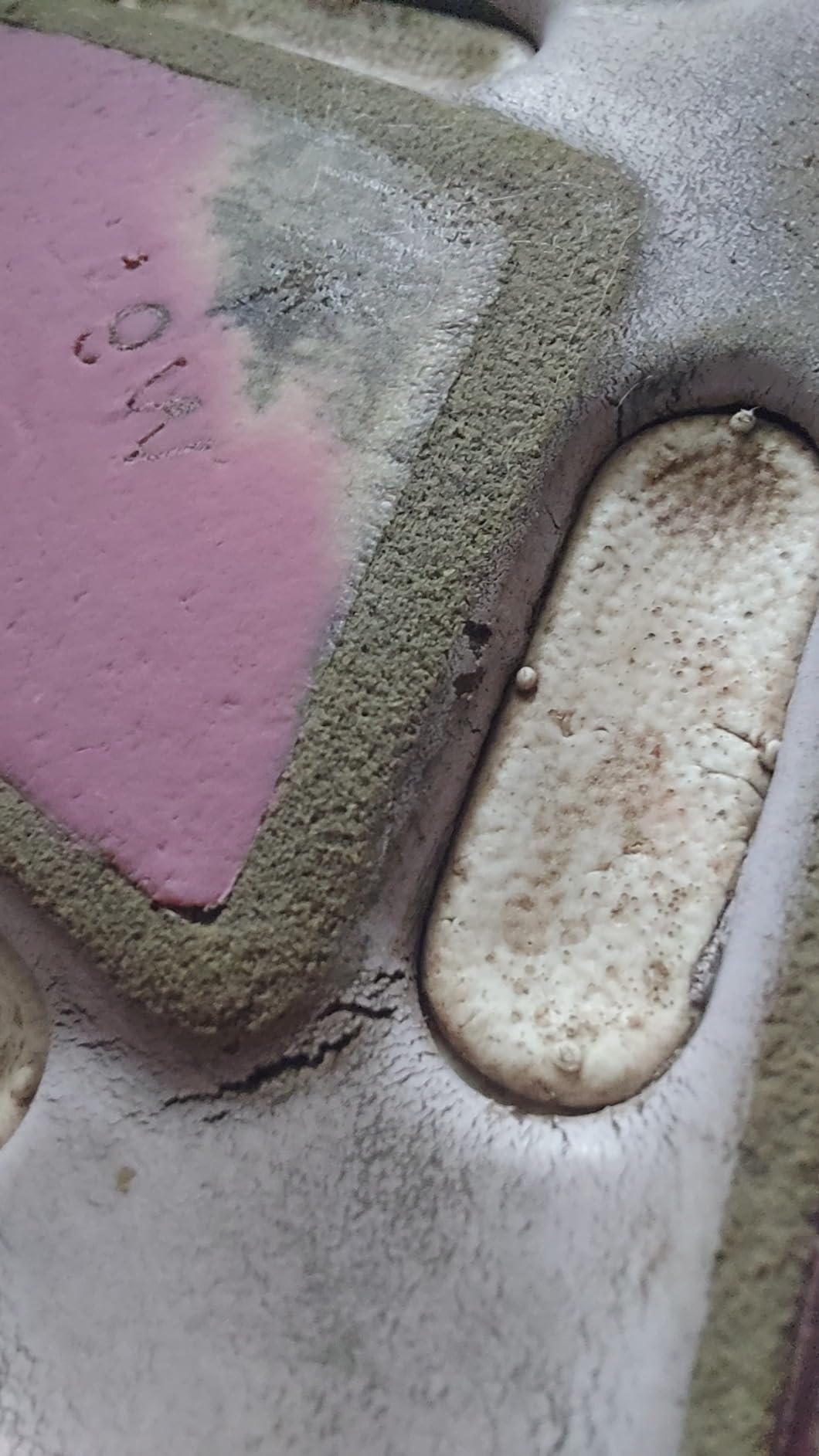
The Devotion Plus 3 is built on a genuine women’s last, and that is not a marketing line. The heel is narrower and the toe roomier, which produces a fit that holds the heel securely without squeezing the forefoot, the opposite trade-off from most unisex shoes built on a men’s last.
RE-ZORB responsive cushioning handles the shock absorption, and the important word there is responsive. The midsole is firm and supportive rather than plush, which is exactly what you want for a long static load where a soft shoe can let the arch drift inward.
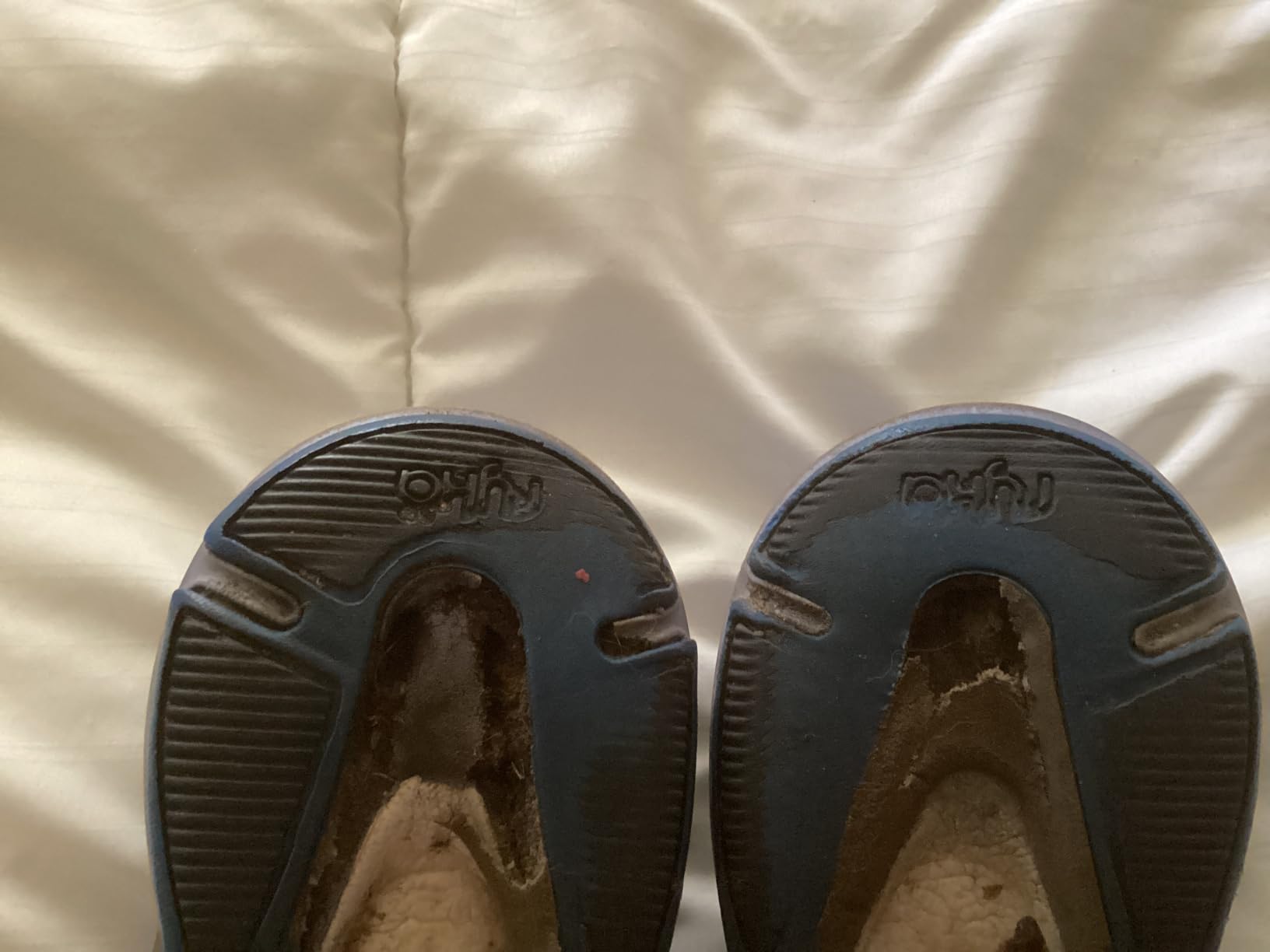
The outsole is the sleeper feature. It is an eight-piece rubber construction designed for traction and durability, and owners note that it holds up on wet ground, which is a meaningful advantage in a clinical or hospitality environment.
This is also one of the few shoes here where the toe box is explicitly shaped for swollen feet, which makes it a solid choice for anyone whose feet expand noticeably over a shift.
Who it fits well
Women with wide feet or bunions who find that standard wide sizing in unisex shoes still pinches the forefoot. It also suits people who prefer firm support over sink-in softness, and anyone working in wet or slip-prone environments.
For most foot shapes the narrower heel is a real upgrade over a unisex wide shoe, which fits a wide forefoot by loosening the whole foot instead.
Who should skip it
Read recent reviews carefully before buying. Quality control is inconsistent at this price, with multiple reports of mis-sized pairs and crimped insoles, which is the main reason the rating sits below the rest of this group. It also runs about half a size short, and the outsole wears faster than the price would suggest. If you need maximum arch support, there are firmer options here.
8. YHOON Women’s Slip-On Walking Shoe – Best Budget Pick for Long Shifts
YHOON Women’s Walking Shoes Slip-On – Comfortable Work Shoes for Standing All Day, Breathable Air Cushion Nursing Sneakers All Black Size 8.5
Air mesh fabric upper
Upgraded air cushion sole
MD platform anti-slip outsole
Pros
- Low entry price makes it easy to buy a rotating pair
- Slip-on design with no laces at all
- Air mesh upper keeps feet cool on long shifts
- MD platform outsole has an anti-slip texture
- Snug sock-like fit that stays secure without flopping
Cons
- Narrow fit that will not suit wider feet
- Minimal ankle support
- Less cushioning than memory foam shoes on very long shifts
- Mesh upper is not water resistant
At the entry level, the question is not whether this is the most comfortable shoe here. It is whether it beats a flat fashion sneaker by enough to justify the swap, and for a lot of people it does.
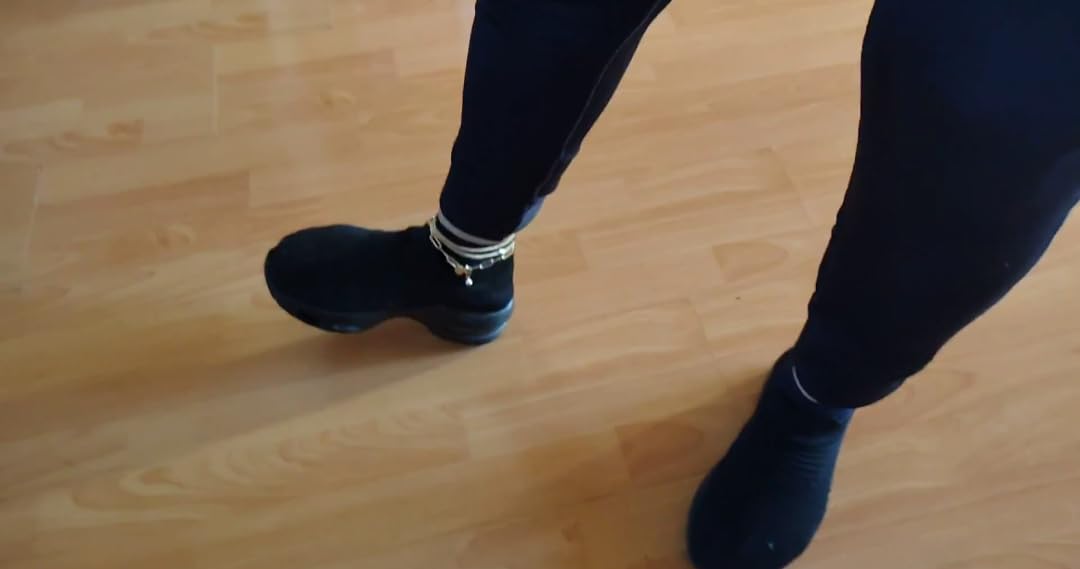
The construction is sensible for the price. There is an upgraded air cushion sole with shock absorption rather than a flat foam board, an MD platform outsole with anti-slip texture for grip, and an air mesh upper that stays cool. The slip-on entry with an elastic cuff means you can get it on and off without bending down, which matters when your back is the problem.
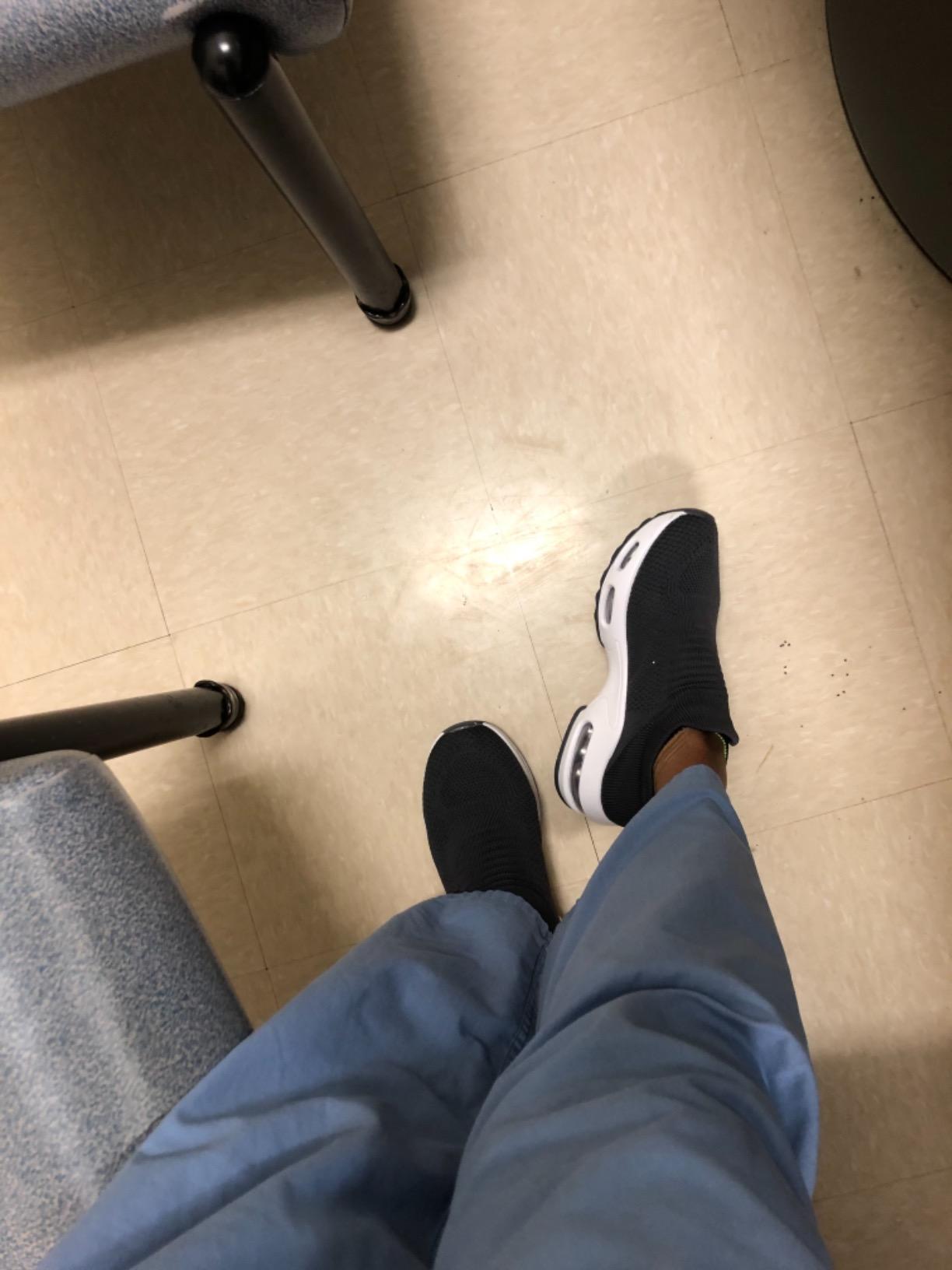
What you give up is support and room. The ankle collar is minimal, so this is not a shoe for anyone with weak ankles or a job involving ladders. The fit also runs narrow, which rules it out entirely for wide feet.
Cushioning is the other trade. Owners working in nursing, retail and gig work find it fine across a normal shift, but on a twelve-hour day the memory foam options hold up noticeably better. If you are on your feet that long, saving the difference and spending it on a better insole is a reasonable middle path.
Who it fits well
Students, warehouse and retail staff, and gig workers who need a pair they do not have to think about. If budget is the dominant constraint, this is the honest starting point rather than a bad copy of a trainer.
It also works well as a secondary pair. Keeping a cheap slip-on in a locker means you always have something better than bare work boots on the days your main pair is wet.
Who should skip it
Wide feet, anyone with an ankle injury, and anyone whose day runs longer than about ten hours. The narrow fit and limited ankle support are not fixable, and the cushioning gap only widens as the shift gets longer. If you can stretch to a structured model, do it.
9. FitVille Men’s Rebound Core – Best Heel Cushioning for Heavy Heel Strikers
FitVille Men’s Wide Walking Shoes, Extra Wide Sneakers – Rebound Core
Wide toe box and high instep
PropelCore cushioned sole
Rigid rubber outsole
Pros
- Genuinely roomy toe box suited to wide feet and flat feet
- Substantial heel cushioning for heavy heel strikers
- Lightweight for a shoe carrying this much cushioning
- Breathable upper that holds up on long walks
- Rigid rubber outsole for grip and stability
Cons
- X-Wide sizing still runs narrower than comparable New Balance widths
- Toe box is wide but shallow so hammertoes do not suit it
- Stock insoles can feel tight and need replacing
The Rebound Core is built around the heel, and if you land hard on your heel when you set your foot down, this is the shoe to look at. It has shock absorption pads and a solid heel ring to steady each step, and owners who land heavily describe that as the reason their heel pain eased.
The wide toe box and high instep design are the second priority. This is a purpose-built wide shoe rather than a standard last stretched at the front, so the forefoot genuinely has room without the heel becoming loose.
One warning for anyone shopping widths. Reviews are polarised on the X-Wide version, with several buyers comparing it unfavourably to equivalent wide widths from brands like New Balance. If you have genuinely wide feet, buy from a brand that publishes its full width run.
Who it fits well
People with wide feet or flat feet, and anyone who spends a lot of the day planted on their heels. The high instep gives room where narrow toe boxes usually pinch, which helps people with a high instep or an instep-sensitive foot.
It is also light for the amount of cushioning it carries, which reduces the general fatigue of lugging a heavy shoe around all day.
Who should skip it
Hammertoes are the dealbreaker. The toe box is wide but shallow, so vertical toe deformity or a foot that needs depth will not be helped. The stock insoles are also not to everyone’s taste and some buyers replace them immediately. And despite the wide last, the X-Wide still runs narrower than the widest competing options, so test before committing.
10. HOKA Men’s Bondi 9 – Best Maximum Cushioning on Concrete
Hoka Men’s Bondi 9 Black/White 10.5 Medium
Critically foamed EVA midsole
MetaRocker geometry
3D molded heel collar
Pros
- Maximum plush cushioning that absorbs impact on concrete and hard floors
- MetaRocker geometry reduces pressure on knees ankles and lower back
- Molded heel collar holds the ankle stable with no slippage
- Zonal breathability in the engineered mesh upper
- Reported to ease long-standing heel pain and swelling
Cons
- Standard D width runs narrow so buy Wide or X-Wide
- Bulky wide frame built for a steady pace rather than speed
- Runs higher off the ground than most shoes
- Can run hot in dark colourways in warm weather
- Lace quality feels cheap for the rest of the build
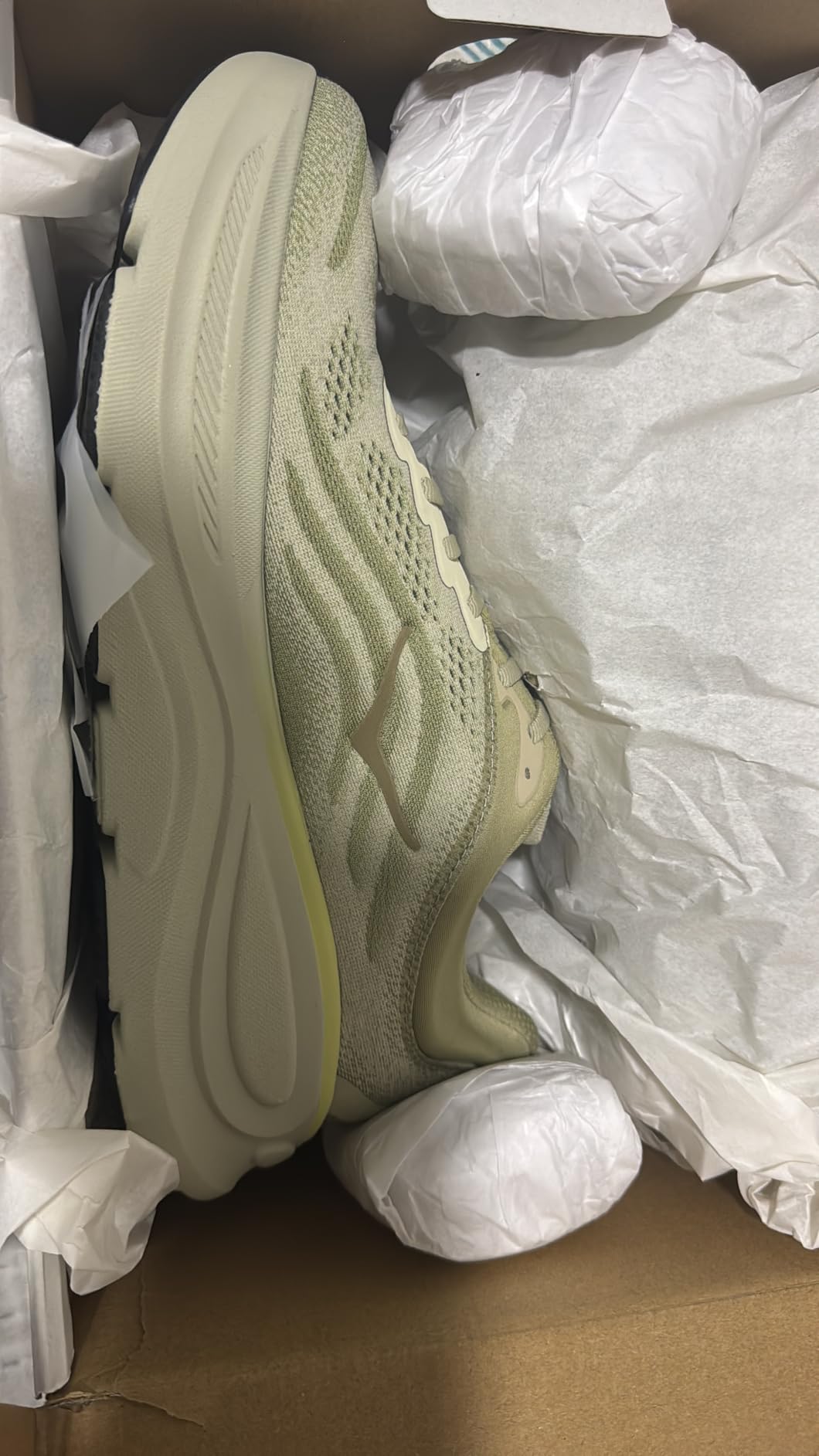
If your floor is bare concrete, the Bondi 9 has the deepest cushioning in this roundup. The midsole uses super critically foamed EVA with 2mm of added stack height over the previous version, and more foam underfoot is exactly the mechanism that reduces transmitted impact when there is no soft surface underneath you.
The MetaRocker geometry is the part most people underrate. It is a curved sole profile that rolls the foot forward, and on a static load it keeps pressure moving rather than letting it sit dead centre on the heel. Owners report less pressure on the knees, ankles and lower back as a result.
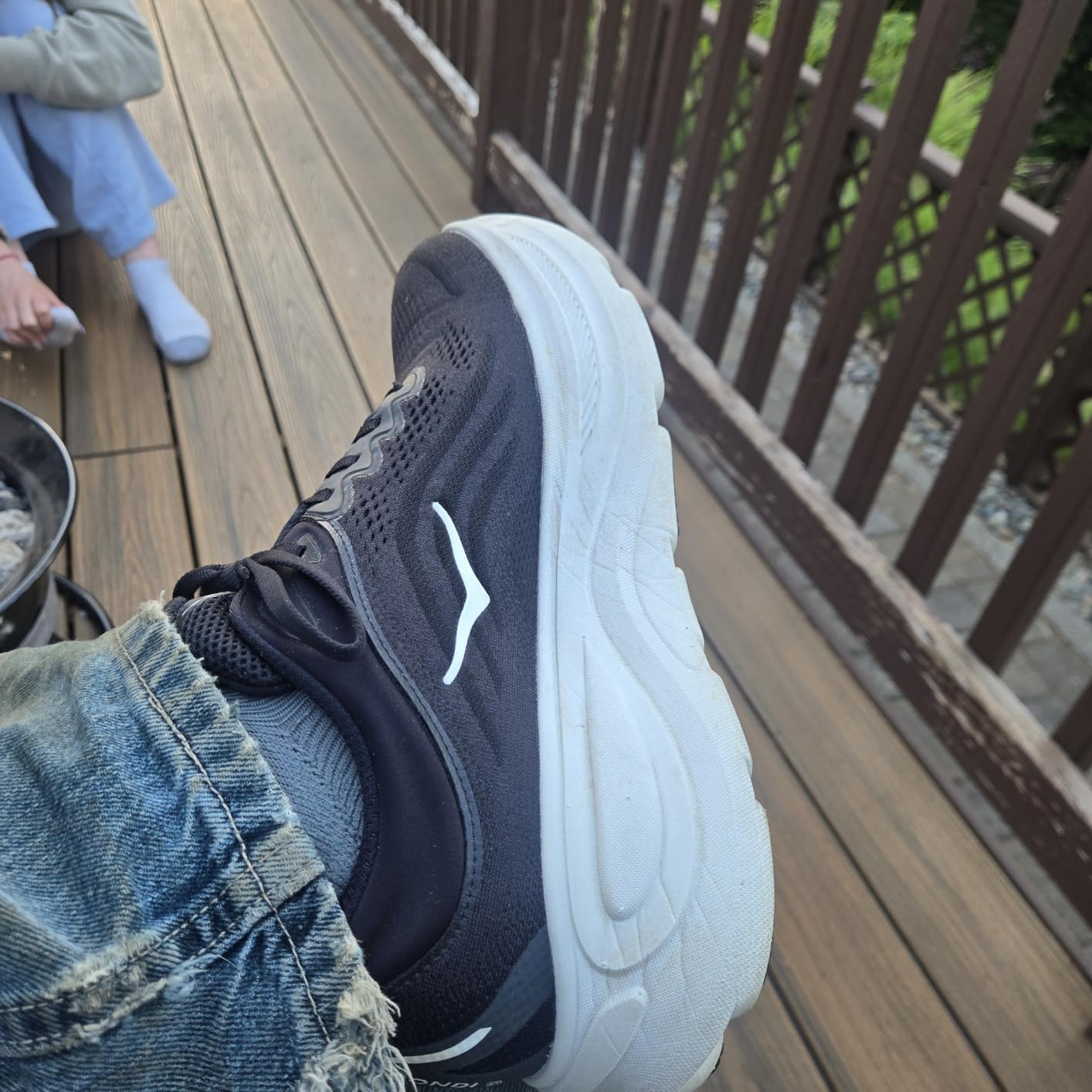
It also carries the strongest satisfaction rate of any shoe here, with 79 percent five-star ratings, which is notable given a review base of a few thousand rather than six figures. People with heel pain, foot swelling and joint issues describe near-immediate relief.
The most common piece of advice is to skip the standard D width. This shoe runs narrow in the standard width, and the Wide or X-Wide version is usually the right call for a full shift of standing.
Who it fits well
Anyone on hard floors: warehouse racking, retail concrete, event floors and standing desks on tile. It is also worth trying if you have lower back or knee discomfort that you have blamed on your job, because reducing impact through the foot is a reasonable first intervention.
The molded heel collar is a genuine benefit for a static load, because it stops the heel sliding around inside the shoe for eight hours.
Who should skip it
Anyone who needs a slim, low-profile shoe, or who works in a space where a bulky shoe is a trip hazard. It also runs higher off the ground than most shoes here, which some ankles notice at first. If you run hot, remember that dark colourways run warmer. And buy the Wide width.
11. FitVille Men’s Stepease V2 – Best Hands-Free Slip-On for Swollen Feet
FitVille Wide Mens Slip on Shoes for Standing All Day Men’s Extra Wide Slip on Walking Shoes for Foot Pain Relief-Stepease V2 (10.5 Wide, Nocturne Gray)
One-piece stretchable upper
Anatomical ArchCore insole
Cushioned wide platform
Pros
- Genuinely hands-free slip-on entry
- Exceptionally wide toe box suited to arthritis and swollen feet
- Cushioning that helps relieve back pain from prolonged standing
- Secure fit that does not slip while walking
- Lightweight and durable enough for ladders and job sites
Cons
- Tongue sits high and can rub the top of the foot
- Elastic collar feels tight until it stretches
- Occasional stitching or protruding thread issues
- Hard to pull on for very swollen feet
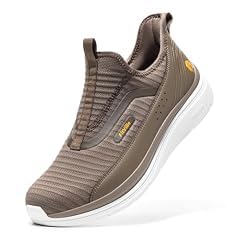
The Stepease V2 is the shoe to consider if bending down to tie a lace is not an option. The one-piece stretchable upper opens wide and draws on without force, and buyers with arthritis or diabetes-related swelling call that the feature that makes the shoe usable at all.
Underneath the easy entry there is a properly built shoe. The cushioned wide platform gives energy return and a stable foundation, and the anatomical ArchCore insole has a supportive heel cup with neutral arch support and moisture wicking. It is a real footbed, not a flat pad.
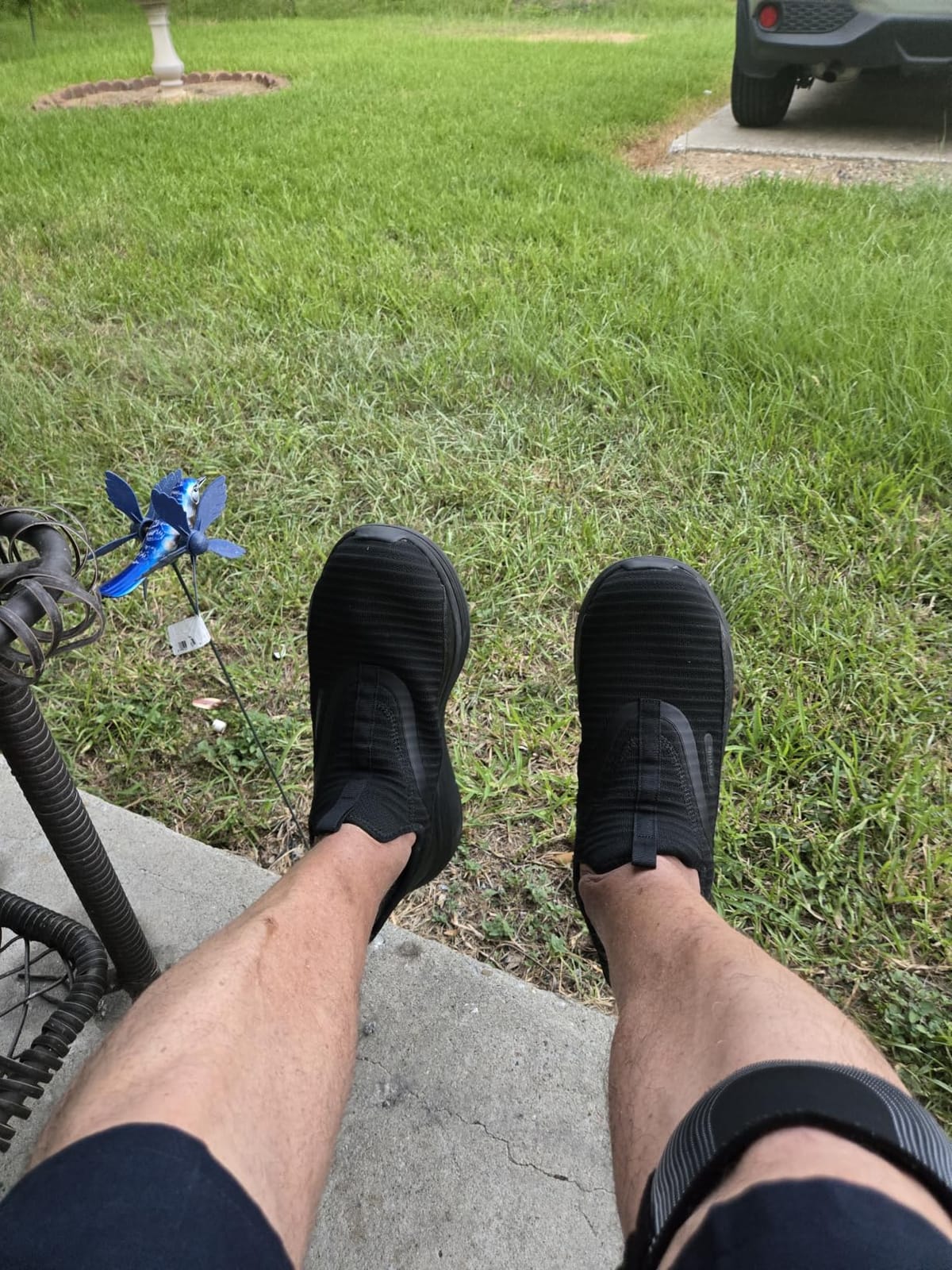
The wide toe box and high instep design is the reason many buyers report relief from plantar fasciitis and flat foot discomfort. The fit also stays secure while walking, which matters because most slip-ons of this style flop around and end up causing friction blisters.
Give it a few days. Several owners describe an initial period where the elastic collar feels tight before it stretches, which is normal for a stretch upper but worth knowing so you do not judge the shoe in hour one.
Who it fits well
Anyone who cannot bend down, and anyone who is on their feet all day and wants a shoe that goes on and off in seconds. People with arthritis, diabetes-related swelling or limited back mobility get the most from it, and the wide toe box handles a foot that changes size across the day.
Owners also report that it holds up on ladders and job sites, so it is not limited to indoor comfort use.
Who should skip it
If the high tongue rubs the top of your foot, this will bother you, and that is a recurring complaint. People with very swollen feet can also find it hard to pull on despite the hands-free design. Check the stitching on arrival, since a small number of pairs arrive with thread issues.
12. FitVille Men’s Rebound NEO V1 – Best Removable Insole for Orthotics Users
FitVille Wide Walking Shoes for Men Extra Wide Width Sneakers with Arch Support for Flat Feet Heel Pain Relief Plantar Fasciitis – Rebound NEO V1
Rebound Technology midsole
Removable Ortholite insole
High-rubber outsole
Pros
- Removable Ortholite insole lets you fit custom orthotics
- Spacious toe box that lets toes spread without pressure
- Outsole with 30 percent more rubber gives strong slip resistance
- Suede and mesh upper balances durability with breathability
- Widths run from Wide through XX-Wide
Cons
- Heavier and bulkier than sleeker walking shoes
- Suede upper requires upkeep to stay clean
- Smaller review base means less long-term wear data
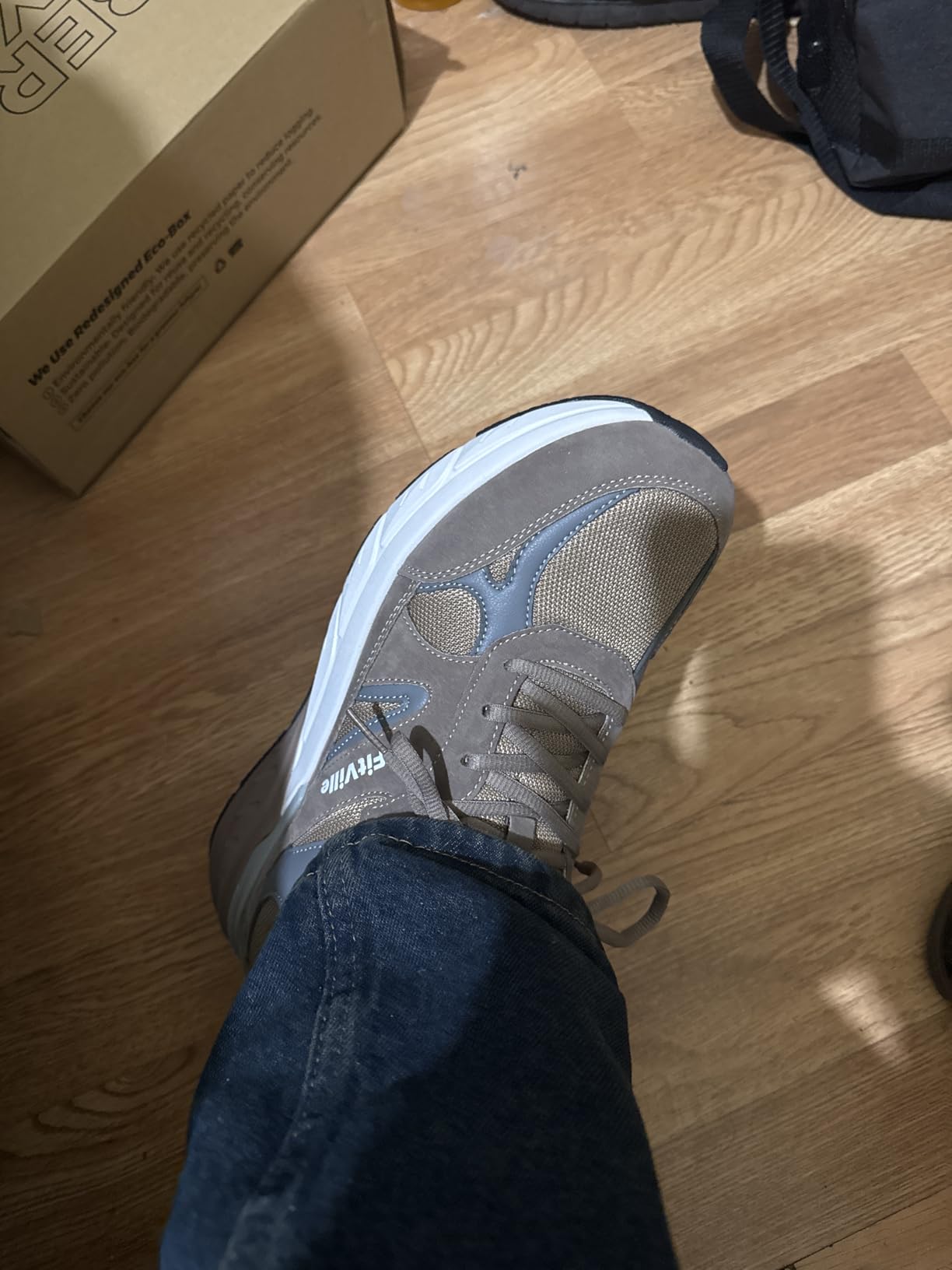
The single feature that sets this shoe apart from the other wide options here is the removable Ortholite insole. If you use orthotics, or suspect you will need them, a glued-in footbed ends the conversation before it starts. This one comes out.
That design decision also gives you a cheap repair path. When the stock insole flattens, you replace the insole rather than the shoe, and the midsole underneath is built to keep working well past the point where a stock footbed gives up.
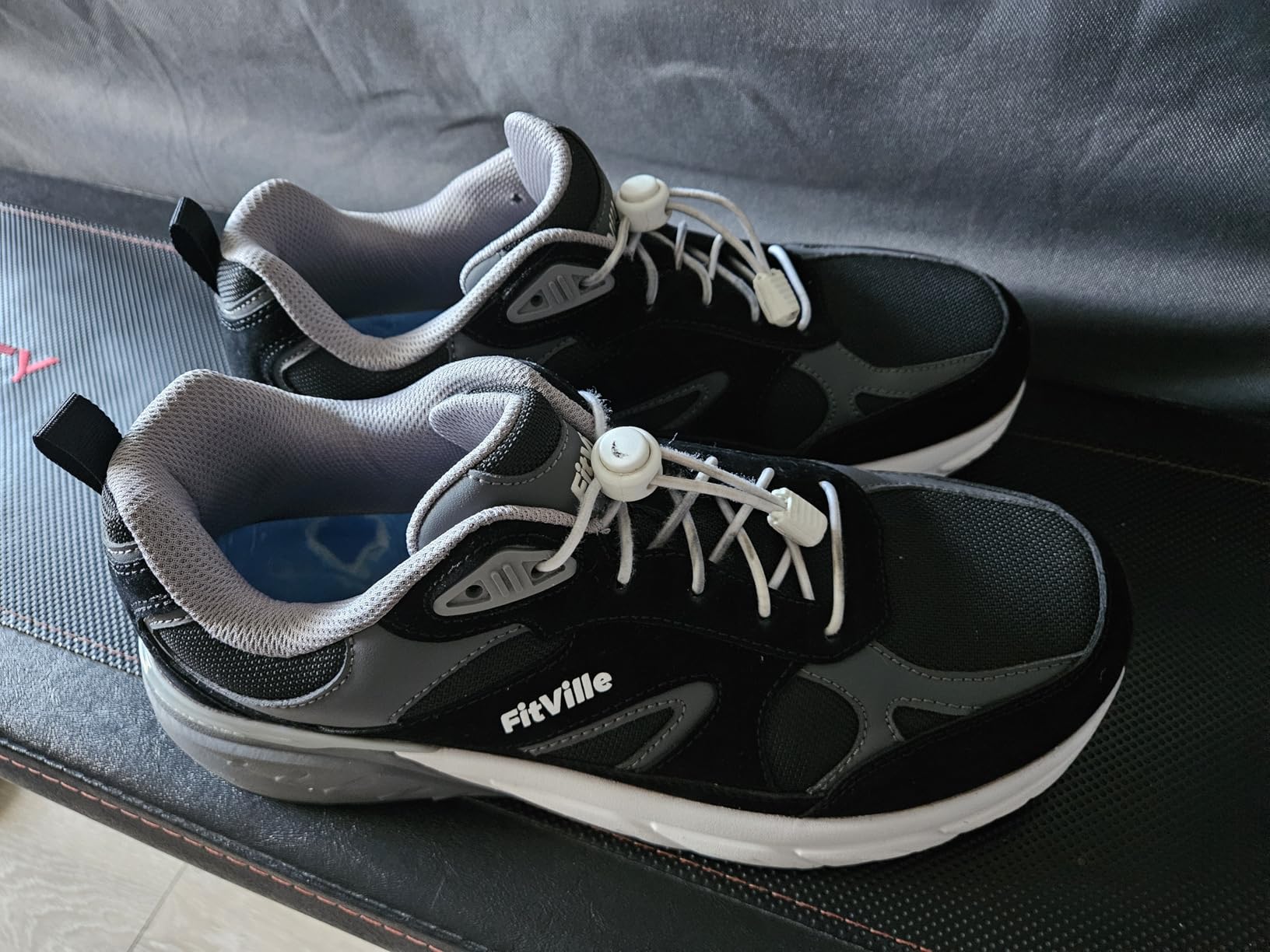
The midsole uses 4-in-1 Rebound Technology over a PropelCore sole, and the outsole was upgraded with 30 percent more rubber specifically for slip resistance. For kitchen, warehouse and clinical work where the floor might be wet, that is a meaningful upgrade over a soft foam outsole.
The wide toe box and high instep design lets toes spread without pressure, and the width run goes from Wide through XX-Wide, so there is a realistic chance of finding a size that actually fits.
Who it fits well
Anyone who uses orthotics, and anyone who would rather buy one shoe and adjust the footbed than replace the whole pair every few months. It also suits wide feet and flat feet, and the high-rubber outsole is a genuine advantage in wet work environments.
Because the insole is removable, this is a reasonable one-shoe answer for a wearer whose foot swelling changes significantly across the day.
Who should skip it
It is a heavier, bulkier shoe than sleeker walking alternatives, and the suede upper needs maintenance if you work somewhere dirty. With a smaller review base than the picks above, there is less long-term wear data, so treat durability claims as less proven. If you want something lightweight and low-profile, this is not it.
Why Standing Is Harder on Your Feet Than Walking
Walking distributes load. Every step rolls your body weight from heel through midfoot to toe, so no single area carries it for long, and the muscles of the lower leg do active work throughout the stride. Standing removes that cycle completely.
When you stand still, the heel, arch and ball of the foot take your full body weight continuously, and the only things absorbing it are the shoe and the floor. On bare concrete that pressure travels straight up into the joints. This is the mechanical reason cushioning that compresses within a few hours is the single biggest failure mode, and why a shoe with a structured footbed beats an equally soft shoe with a flat one.
It is also why a very soft max cushion shoe is not automatically the best choice. Plush foam feels great in a shop but can let the arch drift inward under sustained load, pushing stress onto the lower back. Firm, responsive foam with a defined heel counter and a stable base tends to hold up better over a full shift.
How Hours on Feet Change the Right Shoe
Matching shoes to hours on your feet is the most useful shortcut we found, because a ten-hour day and a fifteen-hour day are not the same problem.
Under six hours, comfort dominates. Almost any cushioned trainer in this list will do, and there is no point spending more when the load is low. Six to ten hours is where structure starts to matter: pick a shoe with real arch support, an internal shank or a defined footbed, and buy the wider size if your feet swell. Above ten hours the priorities shift again, because cushioning depth and breathability become the deciding factors as heat and compression end the day for you. Plan to rotate two pairs so each midsole gets a recovery night, and keep a cheap backup pair at work for the days your main pair is not dry.
If your day is split between a standing desk and sitting, the standing hours are usually shorter, so support and cushioning matter more than endurance. If you are setting up a standing workstation, our guide to the best standing desks for tall people is worth reading alongside this one, because desk height and foot support work together.
Matching Shoes to Foot Shape and Floor Surface
Foot shape is the second half of the decision, and it is where most wrong-fit shoes come from. Flat feet and overpronation call for a structured midsole with a shank or a medial post, which is what the New Balance 608 V5 and the Nike Air Monarch IV provide. High arches tend to need a footbed that contours rather than one that presses, so a shoe with a moulded sockliner like the Under Armour Charged Surge 4 works well.
Wide feet and bunions need width, not just a longer size. Look for published width options above standard, and read reviews specifically about the toe box, because several shoes here are narrow at the front. The purpose-built wide models and the women’s-last shoes give you a real toe box rather than a stretched one.
Plantar fasciitis responds best to a shoe that controls how much the arch collapses and that stops the heel sliding, so a firm heel counter matters as much as foam depth. Swollen feet need a slip-on with a stretch upper so you are not fighting a closure at the end of a long day.
Floor surface is the variable almost nobody accounts for. Concrete and tile transmit everything upward, so maximum cushioning depth pays off. Carpet and anti-fatigue mats do the opposite, and a shoe with too much foam can actually feel unstable on a compliant surface because your foot sinks into it. Steel and mesh floors in warehouses need an aggressive outsole for grip rather than maximum foam. Kitchen floors need the same grip, which makes the shoes here with a high-rubber or slip-resistant outsole the right answer.
Fitting, Breaking In and Knowing When to Replace
Sizing for standing is not the same as sizing for running, because your feet swell over the course of the day. Buy at the end of the afternoon rather than the morning, and leave roughly a thumb’s width between your longest toe and the end of the shoe. If you are between sizes, size up rather than accepting a snug fit, and check whether the brand offers a wide option before defaulting to standard.
Foam-based shoes need a short break-in. Wear the new pair for a few hours a day alongside your old ones for the first week rather than switching on a Monday and enduring a full shift. Leather uppers such as the New Balance 608 V5 and the Nike Air Monarch IV genuinely improve with wear, while foam midsoles reach their final feel after a few days.
You can test structure in about ten seconds in a shop. Twist the shoe hard from toe to heel; a good standing shoe resists that twist. Press the insole under the arch with your thumb; if it feels thin and flexible rather than supportive, it will not hold up over a shift. And bend the outsole sharply, looking for permanent creasing, which is the early sign that foam is breaking down.
Replace when the midsole stops rebounding, not when the upper looks worn. The clearest signs are creases that stay put, a shoe that feels flat at the heel, uneven tread at the toe, or new pain in your lower back or knees that appeared after a few months. Rotating two pairs roughly doubles the usable life of each, because the foam gets a night to recover its shape.
Frequently Asked Questions
What is the best shoe to wear if I stand on my feet all day?
The Skechers Women’s Go Walk Joy is the best overall pick for standing all day, because its 5GEN cushioning runs through the midsole and outsole rather than only the insole, so the shock absorption holds up through a full shift instead of flattening by hour four.
What shoes are good for standing 10 hours a day?
For 10 to 12 hours a day, prioritise a structured midsole with real arch support, a firm heel counter and a breathable upper. The New Balance 608 V5 for support, the Skechers Go Walk Joy for balanced cushioning and the HOKA Bondi 9 for maximum cushioning on hard floors are the three strongest options in this roundup.
Are Hokas or New Balance better for standing all day?
New Balance is better for structure and size range. The 608 V5 has an internal shank, genuine arch support and widths running through 3X-Wide. HOKA is better for cushioning depth on bare concrete. The Bondi 9 uses a critically foamed EVA midsole with extra stack height and MetaRocker geometry, but it runs narrow in the standard width.
What are the best shoes for flat feet that can be stood in all day?
Look for a firm midsole with a shank or a defined footbed rather than a soft one. The New Balance 608 V5 and the Nike Air Monarch IV are our two picks for flat feet, and the purpose-built wide models add a roomy toe box if your feet swell. Wide sizing is worth it only if the brand publishes a real width run above standard.
Should flat-footed people wear wide-width shoes?
Yes, and it matters more for standing than for walking. A wide toe box stops the forefoot being compressed as your feet swell over a shift, which reduces friction blisters and pressure on the big toe joint. Wide feet and bunions also need genuine width rather than a longer size, so check the toe box specifically in reviews.
Should I swap my insoles or buy more expensive shoes?
Swap the insole first if your current shoe has a flat or compressed footbed, because a removable insole costs a fraction of a new pair. Buy the FitVille Rebound NEO V1 if you already own orthotics, since its Ortholite insole comes out. A new shoe is the right call only when the midsole itself has lost its rebound, which no insert can fix.
The Verdict
After comparing twelve athletic shoes across cushioning depth, support structure, breathability, fit and durability, the Skechers Women’s Go Walk Joy is the best athletic shoe for standing all day for most people. Its cushioning is built into the midsole rather than added at the end, the slip-on entry works, and more than 104,000 reviews say the same thing.
Choose the New Balance 608 V5 instead if support is your problem rather than cushioning, and take the wider width. Choose the HOKA Bondi 9 if the floor is bare concrete and you want the deepest cushioning available, but buy it in Wide. And if you need something that goes on without bending down, the FitVille Stepease V2 solves a problem no other shoe here addresses.
Whichever one you settle on, the two habits that matter most are rotating a second pair so the foam gets a night to recover, and replacing based on how the midsole feels rather than how the upper looks. Standing all day is a long-term commitment, and 2026 is a good year to buy the pair that will still be working in month eight.