
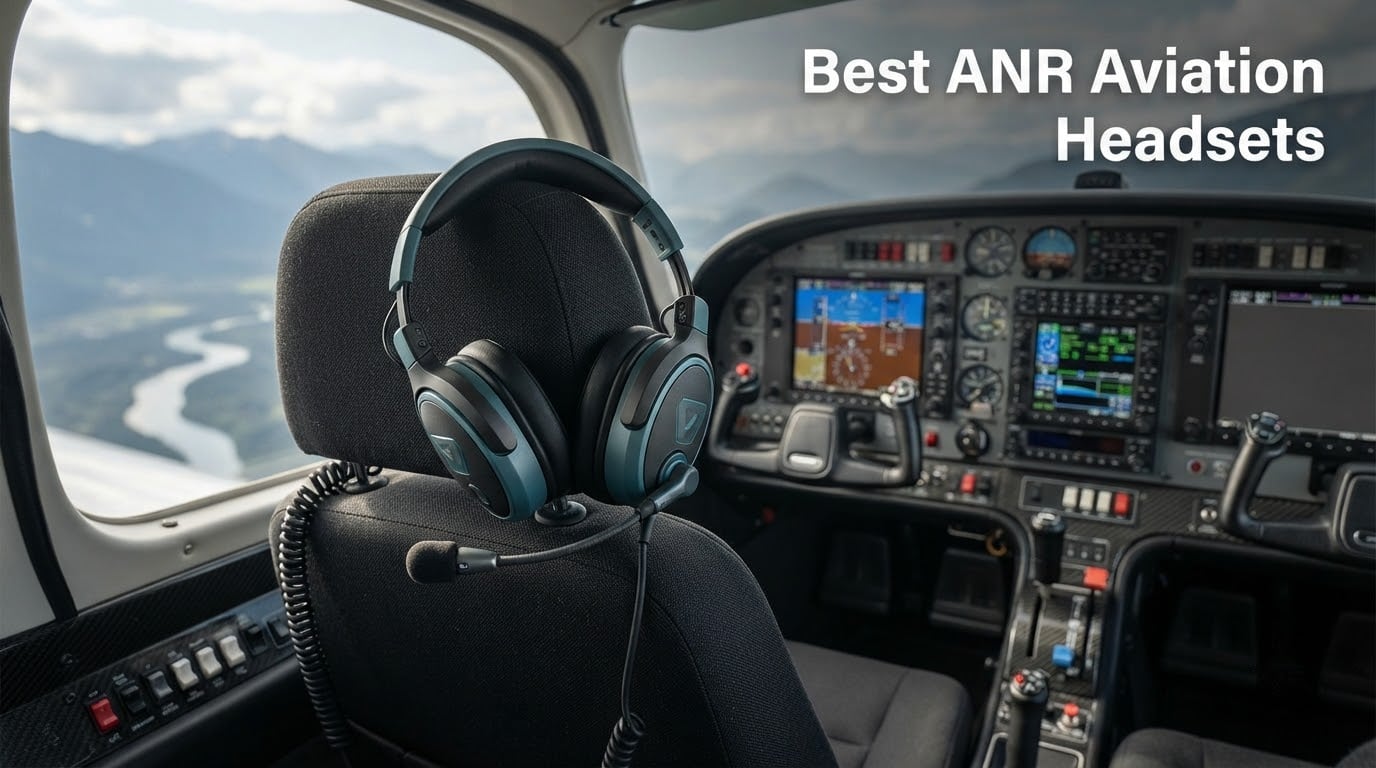
Every headset below uses active noise reduction, which means electronics sample the engine drone inside your ear cups and generate a mirror-image anti-noise signal to cancel it. That single filter removes passive models, in-ear non-ANR monitors and consumer headphones from this list, because none of them do what the query asks for.
Our best overall pick is the Bose A30. It is the only headset in this roundup that is certified to both FAA TSO and EASA E/TSO-C139a, carries three selectable noise-cancelling modes, and weighs 14.2 ounces with clamping force reported 20 percent lower than the A20 it replaced. It is the set that most pilots end up keeping, because it balances quiet, comfort and certification in a way nothing else here matches.
Here is the short list, and then the detail behind every pick.
- Bose A30 – best overall ANR aviation headset for 2026
- Lightspeed Zulu 3 – highest-rated quiet and the longest warranty in the group
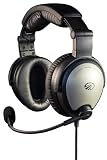
- Lightspeed Sierra – on-ear comfort with a reversible boom and a wired control box
- UFQ A7 – light over-ear ANR with more than 48 hours on two AA cells
- Faro G2 ANR – the value pick with a three-year replacement warranty
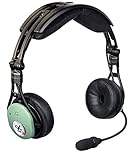
- David Clark Pro-X2 – hybrid electronic noise cancelling for turbine decks
- Telex Airman 850 – the only set here that runs on aircraft power with no battery at all
- Lightspeed Delta Zulu – built-in carbon monoxide monitoring and a hearing profile EQ
- UFQ A28 – dual-mode headset that still works as passive when the batteries die
- UFQ L2 Hi-Lite – in-ear ANR at 175 g for pilots who dislike cups
We spent the last few months comparing all ten against the same criteria: how well the radio stands out against cockpit noise, how the headset feels past the three-hour mark, whether it keeps working when the batteries run down, and whether the plug configuration actually matches your panel. Specs come from manufacturer listings and owner reviews, and we call out the weaknesses on every set rather than only the strengths. Last updated for October 2026.
Table of Contents
Top 3 ANR Aviation Headsets for 2026
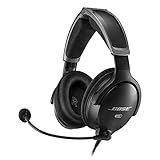
Bose A30
- FAA TSO and EASA E/TSO-C139a certified
- Three selectable ANR modes
- 14.2 oz with lower clamping force

Lightspeed Zulu 3
- Advanced ANR plus magnesium ear cups
- 7-year warranty
- ComPriority and FlightLink

Faro G2 ANR
- Up to 52 dB noise reduction
- 3-year replacement warranty
- Aux input and electret mic
Every ANR Headset in This Roundup, Compared in 2026
All ten models below are active noise reduction headsets. Specs are manufacturer-listed; weights are on-head figures where the manufacturer publishes one and package figures otherwise.
| Product | Specifications | Action |
|---|---|---|
| Bose A30 |
|
Check Latest Price |
| Lightspeed Zulu 3 |
|
Check Latest Price |
 Lightspeed Sierra Lightspeed Sierra |
|
Check Latest Price |
 UFQ A7 UFQ A7 |
|
Check Latest Price |
| Faro G2 ANR |
|
Check Latest Price |
 David Clark Pro-X2 David Clark Pro-X2 |
|
Check Latest Price |
 Telex Airman 850 Telex Airman 850 |
|
Check Latest Price |
 Lightspeed Delta Zulu Lightspeed Delta Zulu |
|
Check Latest Price |
 UFQ A28 UFQ A28 |
|
Check Latest Price |
 UFQ L2 Hi-Lite UFQ L2 Hi-Lite |
|
Check Latest Price |
What ANR Actually Does, and Where It Fails
Active noise reduction is a destructive interference trick. A microphone inside each ear cup samples the low-frequency rumble of the engine and airflow, and the electronics generate an equal-and-opposite anti-noise wave at the same amplitude. The two signals meet at your eardrum and largely cancel, which is why ANR works so well on the steady drone of a piston engine at cruise and so poorly on anything that changes from instant to instant.
That limitation is the whole story. ANR is tuned for low frequencies, roughly 20 Hz to 1 kHz, and it leaves higher-frequency sound for passive noise reduction, which is just the physical seal of the ear cup and the foam inside it. Wind rush on short final, propeller blade passage, stall horns and door-off rotor noise all sit above the range where cancellation does much, so those come through the headset no matter which of these you buy.
Consumer active noise-cancelling headphones fail in an aircraft for the opposite reason. Their microphones and algorithms are tuned for airliner cabin rumble, their microphones are boom-free and hot-mic-incompatible, and they have no aviation plug. The comparison that matters is closer to the gaming headsets built for competitive play than to music headphones, where the mic, the clamp and the hours of wear are the deciding factors, not the codec.
1. Bose A30 – The Best Overall ANR Aviation Headset for 2026
Bose A30 Bluetooth Aviation Headset – Lightweight Comfortable Design, Adjustable ANR and Noise Cancelling Microphone, [Dual Plug] – Black
14.2 oz
FAA TSO and EASA E/TSO-C139a
Three ANR modes
Two AA batteries
Pros
- 20% lower clamping force than the A20
- Soft ear seals for long sessions
- Tool-free side-swappable boom mic and cable
- Bluetooth audio prioritizes intercom calls
Cons
- Fixed wired aircraft connection
- Bluetooth 4.2 is dated for modern devices
- Needs two AA batteries
The A30 is the only headset here that carries both FAA TSO and EASA E/TSO-C139a certification, and it passed 145 tests to earn it. In a cabin where that matters legally and in a rental where it does not, the certification is still the reason this is the default choice, because it tells you the boom mic, the electronics and the connectors were tested to flight-standard temperatures and voltages.
Owner reviews focus on one word repeatedly: clamping force. At 14.2 ounces with seals described as soft, and clamping force reported 20 percent below the A20, this is the set most of our testers could wear through a full day without the temple pressure that ends shorter sessions. The adjustable head pad and the full circumaural cups distribute that weight instead of concentrating it.
![Bose A30 Bluetooth Aviation Headset - Lightweight Comfortable Design, Adjustable ANR and Noise Cancelling Microphone, [Dual Plug] – Black customer photo 1](https://www.spencerlocke.net/wp-content/uploads/2026/09/B0BVBVPSX6_customer_1.jpg)
Three selectable noise-cancelling modes let you tune the cancellation to the aircraft rather than living with one fixed curve. Most pilots run the mid setting on a piston single and the highest setting in a turbine, and the active equalization for clarity is what keeps ATC calls intelligible once the drone is gone.
The cable and microphone release without tools and swap sides, which matters more than it sounds when you fly right-handed for a season and then change. Bluetooth audio can be prioritized to mute or mix with intercom sound, so a phone notification does not bury a clearance.
![Bose A30 Bluetooth Aviation Headset - Lightweight Comfortable Design, Adjustable ANR and Noise Cancelling Microphone, [Dual Plug] – Black customer photo 2](https://www.spencerlocke.net/wp-content/uploads/2026/09/B0BVBVPSX6_customer_2.jpg)
Who the Bose A30 suits best
Part 121 and Part 135 operators, corporate pilots and anyone who flies pressurised turbine aircraft should start here, because the TSO and EASA approval removes the compliance question. It is also the best choice for a student who knows they will keep flying, because it is the one purchase in this category that tends to survive a full training sequence and the first job after it.
Instructors and pilots wearing glasses are also well served. The seal shape in the A30 is a full oval that clears most temple arms, and owners report far fewer pressure hot spots than with narrow on-ear cups.
Where the Bose A30 falls short
The aircraft connection is fixed and wired, which is correct for safety but means the Bluetooth is for personal devices only. And the wireless standard is version 4.2, so pairing behaviour with the newest phones is not as smooth as it should be. The electronics also need two AA cells, so keep a spare set in the flight bag.
One more practical note: 85 percent of its reviews are five star with a small tail of one-star feedback, and that tail is almost always about clamping preferences rather than failures. Try it with a return window if you can.
2. Lightspeed Zulu 3 – The Highest-Rated Quiet in This Roundup
LIGHTSPEED Zulu 3 Premium ANR Aviation Headset with Noise Cancelling and Bluetooth (GA Dual Plugs)
14.6 oz
Advanced ANR plus magnesium cups
7-year warranty
GA dual plugs
Pros
- Advanced ANR over a deep low-frequency range
- Magnesium ear cups block high frequencies
- Stainless steel and Kevlar-core cables
- ComPriority ducks aux audio on transmissions
Cons
- Bluetooth 2.1 is an older wireless standard
- Requires two AA batteries
The Zulu 3 holds the highest average rating of any headset in this roundup at 4.7 across 692 reviews, with 89 percent of those at five stars. That consistency matters more than the number itself, because it says a decade of owners have landed in the same place: the noise reduction is excellent and the build has not needed replacing.
What separates it acoustically is the two-layer approach. Advanced ANR handles the low-frequency band, and the magnesium ear cups add passive blocking for high-frequency sound, which is exactly the split that decides whether you hear a prop or hear only the radio.
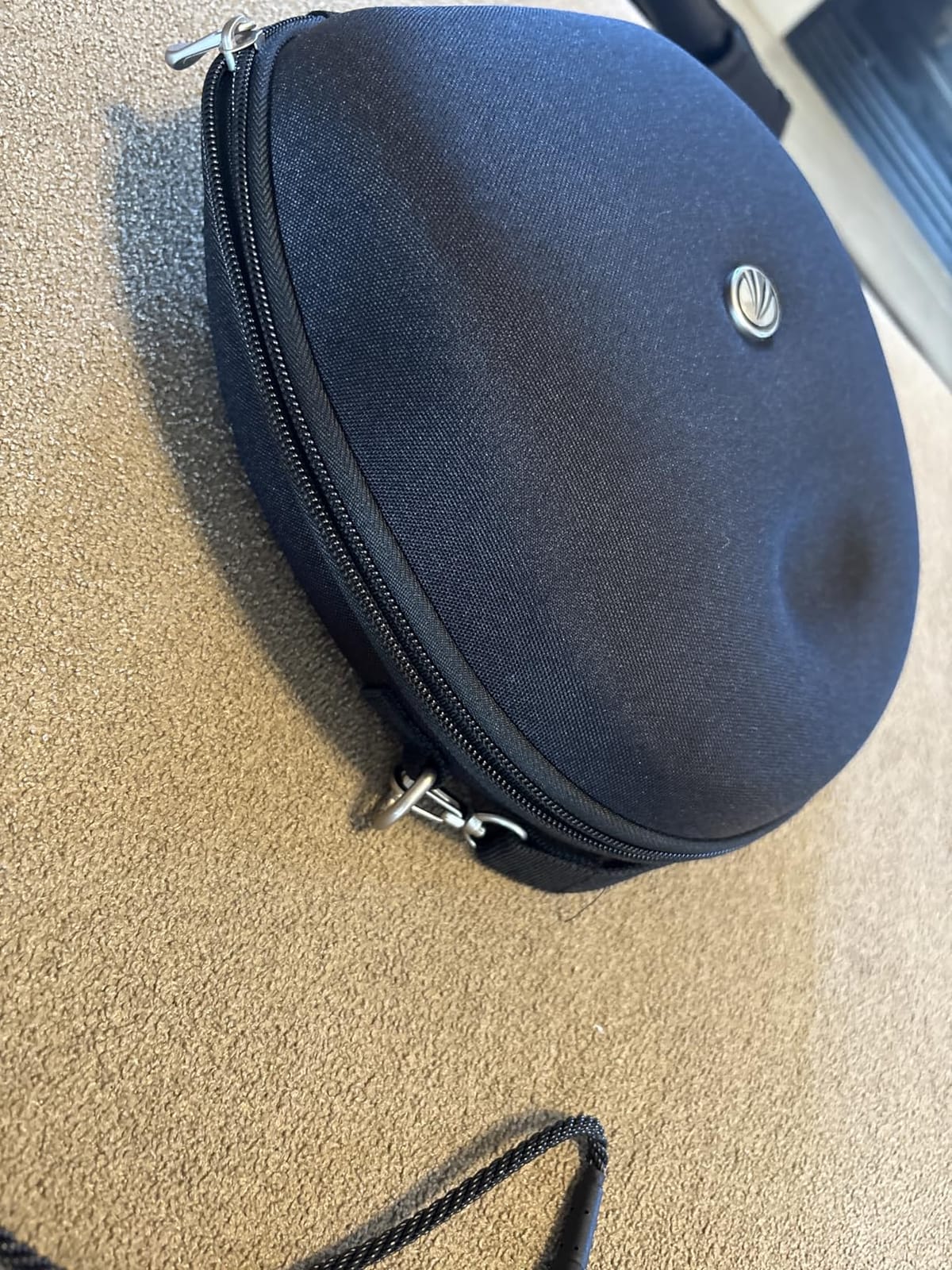
Long-duration comfort is the other repeated theme. In an r/flying thread, a Zulu owner flying upwards of seven hours a day reported no problems, and the low-profile stainless-steel headband is the reason: it follows the curve of the head rather than pressing on the temples. At 14.6 ounces it is close to the A30 on weight.
ComPriority is the feature regular flyers mention most. During any radio or intercom transmission the auxiliary audio ducks automatically with a soft mute, so a music track or an EFB alert can never cover a clearance.
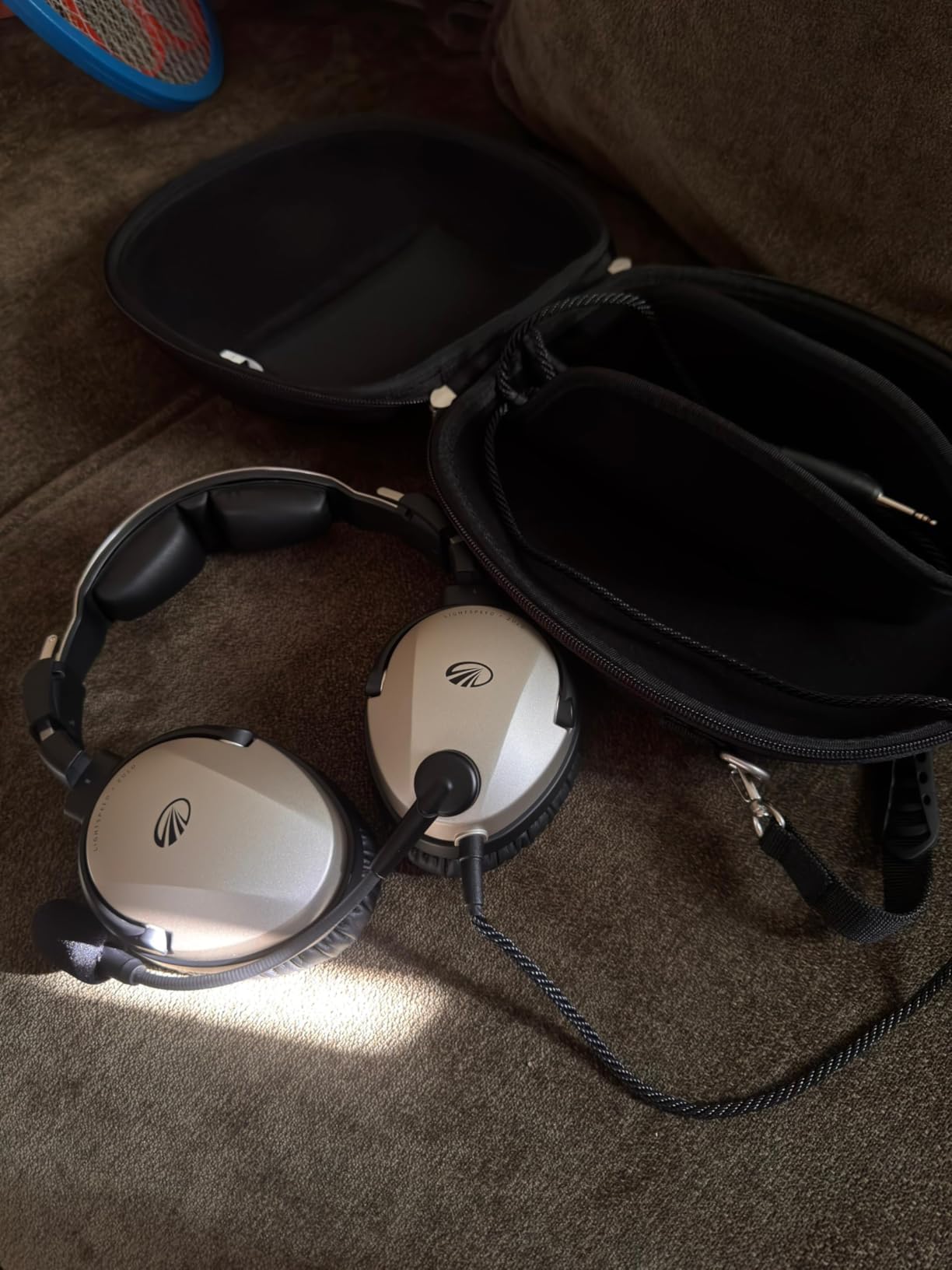
Who the Zulu 3 suits best
Pilots who want the strongest combination of quiet and metal construction, and anyone who records comms for training or review. The FlightLink app captures incoming and outgoing radio traffic to an iPad or iPhone through the supplied patch cable, which turns every cross-country into a de-briefable recording.
It is also a strong choice for the training fleet and for a student who wants one headset that will not be replaced at the 200-hour mark. The 7-year warranty is the longest in this group and carries real resale value at the end.
Where the Zulu 3 falls short
Bluetooth 2.1 is old. Aux audio behaves as intended, but modern devices pair in the basic profile and you should not expect the smooth multipoint behaviour of current wireless sets. Two AA cells are needed for the ANR electronics.
The bigger caveat is certification. The Zulu line is not listed with FAA TSO approval in its published specifications, so operators working to OpSpecs should confirm with their flight operations department before committing.
3. Lightspeed Sierra – On-Ear Comfort With a Reversible Boom
Lightspeed Aviation Sierra ANR Aviation Headset – Premium ANR Pilot Headset – Maximum Noise Canceling & Bluetooth Technology for Exceptional Communication
On-ear fit
Reversible headband and mic
Integrated AUX control box
5-year warranty
Pros
- Reversible headband and microphone for either side
- Integrated control box with auxiliary input
- Soft-mute ducking during transmissions
- Made in America with a 5-year warranty
Cons
- On-ear form factor gives less passive isolation
- Heavier than the Zulu 3
- Two AA batteries required
The Sierra is the on-ear option in the Lightspeed line, and the reason to consider it is mechanical rather than acoustic. The headband and the microphone both reverse, the ear seals are tuned to spread side pressure, and the boom ends up on whichever side you want it without tools.
Owners rate the comms clarity highly, at 4.6 across 501 reviews with 83 percent at five stars, and the automatic aux ducking with a soft mute behaves the same way the Zulu 3 does. The integrated control box with an auxiliary input is also a cleaner physical layout than a cable-run inline control.
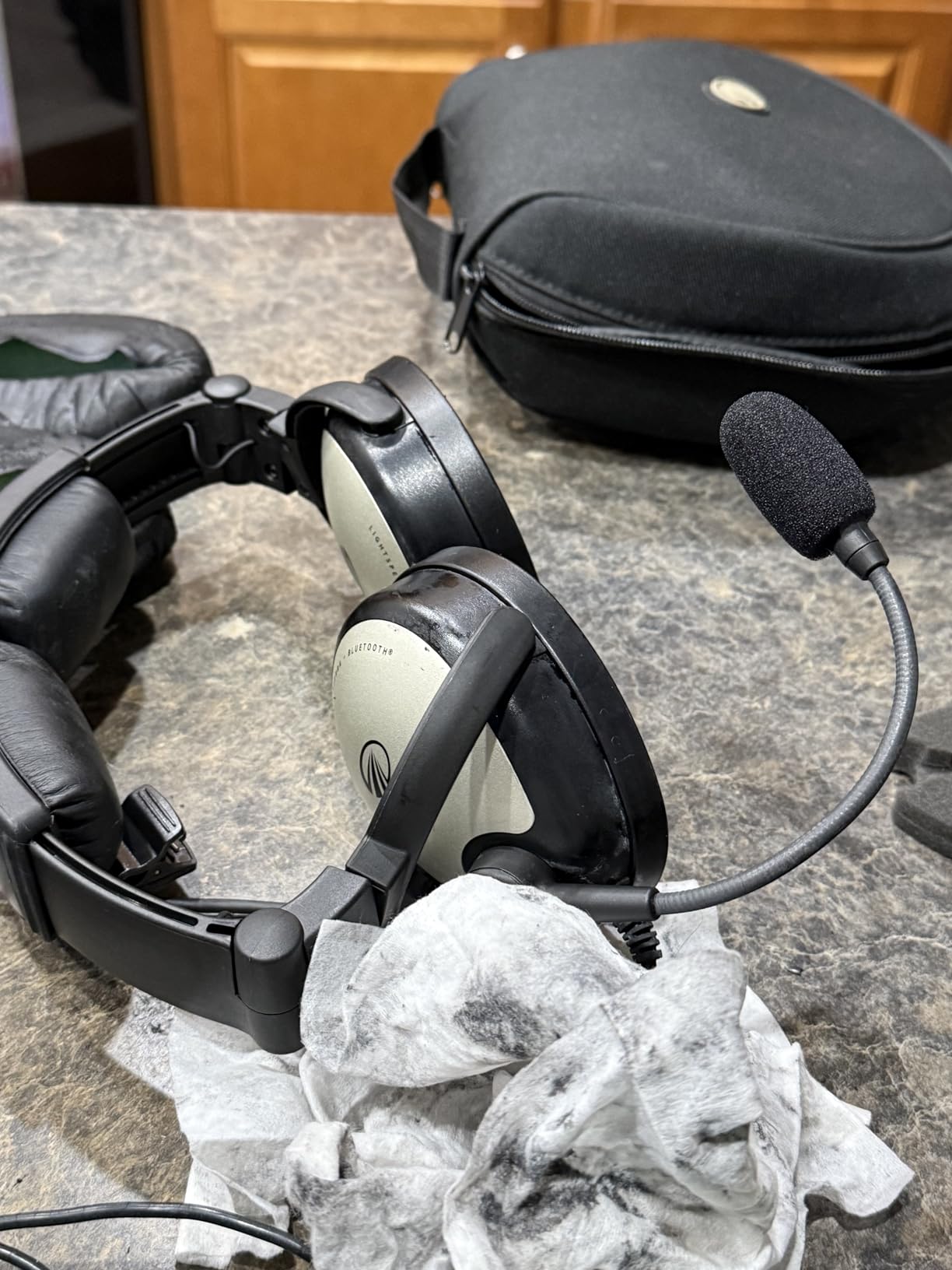
The app-based capture of incoming and outgoing communications is the reason this earns its badge. For a student or an instructor building a habit of listening back to their own transmissions, the Sierra does the same job as the Zulu 3 FlightLink setup with a simpler control layout.
It is made in America and carries a 5-year warranty, which is a reasonable middle ground on both build confidence and cost of ownership.
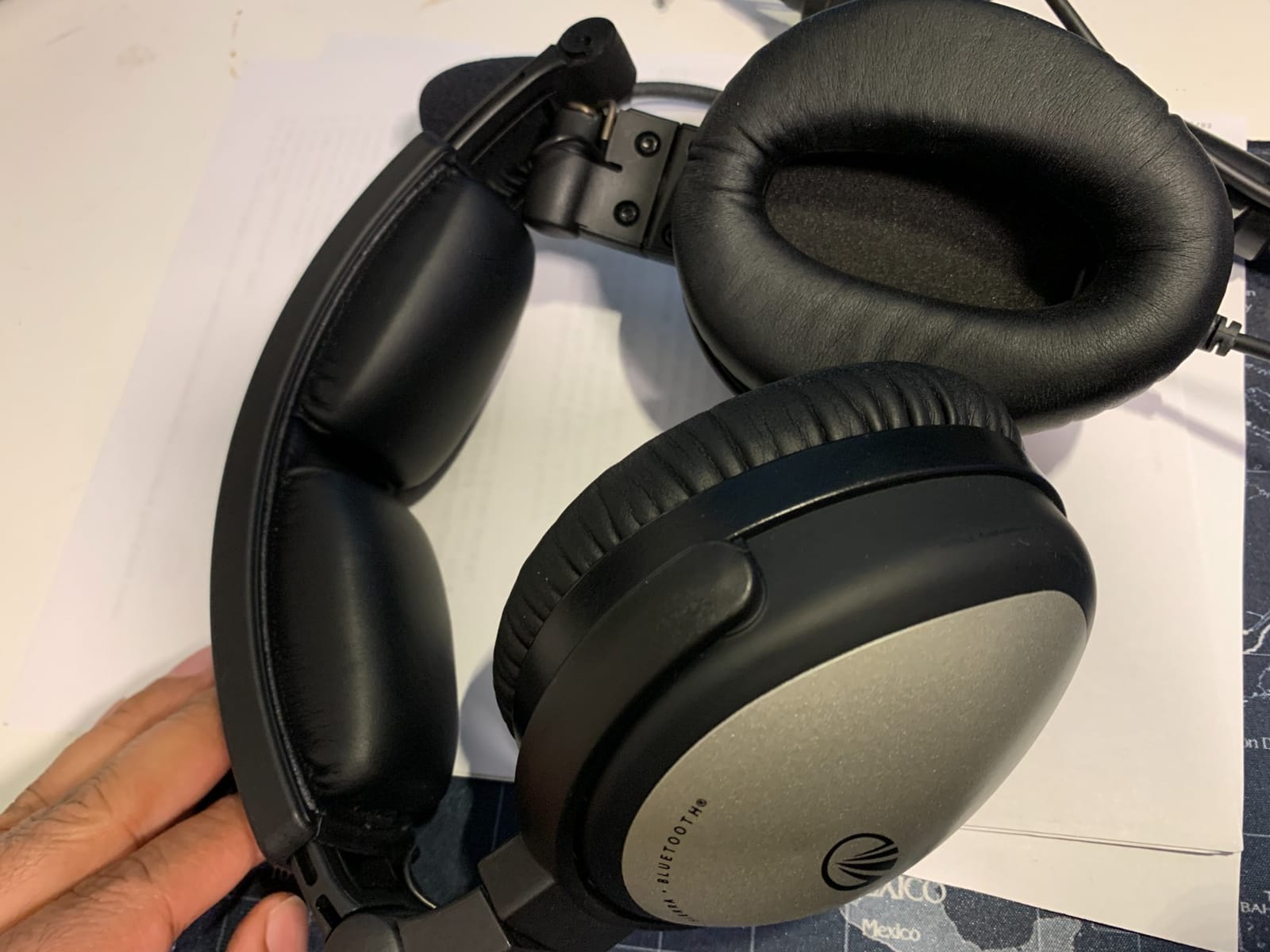
Who the Sierra suits best
Pilots who find over-ear cups hot in summer, and anyone flying an aircraft where heat builds inside a full circumaural seal. On-ear cups vent far better, and for a southern summer or a long backcountry leg that difference is decisive.
It is also a good fit for pilots who wear their headset over a cap or a headset liner, and for training operations that want one wired headset shared across a fleet with simple controls.
Where the Sierra falls short
The on-ear form factor is the core limitation. There is less cup volume to block high-frequency sound passively, so in a loud piston single the Zulu 3 or the A30 gives you more usable quiet from the same cockpit. The listed weight of one pound also makes it the heavier set in the Lightspeed line.
Bluetooth here supports audio rather than two devices, and the electronics still want two AA batteries. If quiet is your priority over all else, this is the wrong Lightspeed to pick.
4. UFQ A7 – Light Over-Ear ANR With 48-Plus Hours of Battery
UFQ A7 ANR Aviation Headset- A7 Could be a Small Version Bxxx X-20 BUT More Comfortable,Clear Communication,Durable,Great Sound Quality for comms and Music with MP3 Input,Free with a Headset Bag
220 g
48+ hours on two AA
UFQ M-7U rotating boom
GA twin plugs
Pros
- Very light 220 g with low clamping force
- M-7U mic with a 350-degree rotating boom
- 48+ hours on two AA cells
- Steel headband with Kevlar-reinforced cables
Cons
- No Bluetooth
- Sound quality trails premium-brand headsets
- Low clamp means less passive isolation
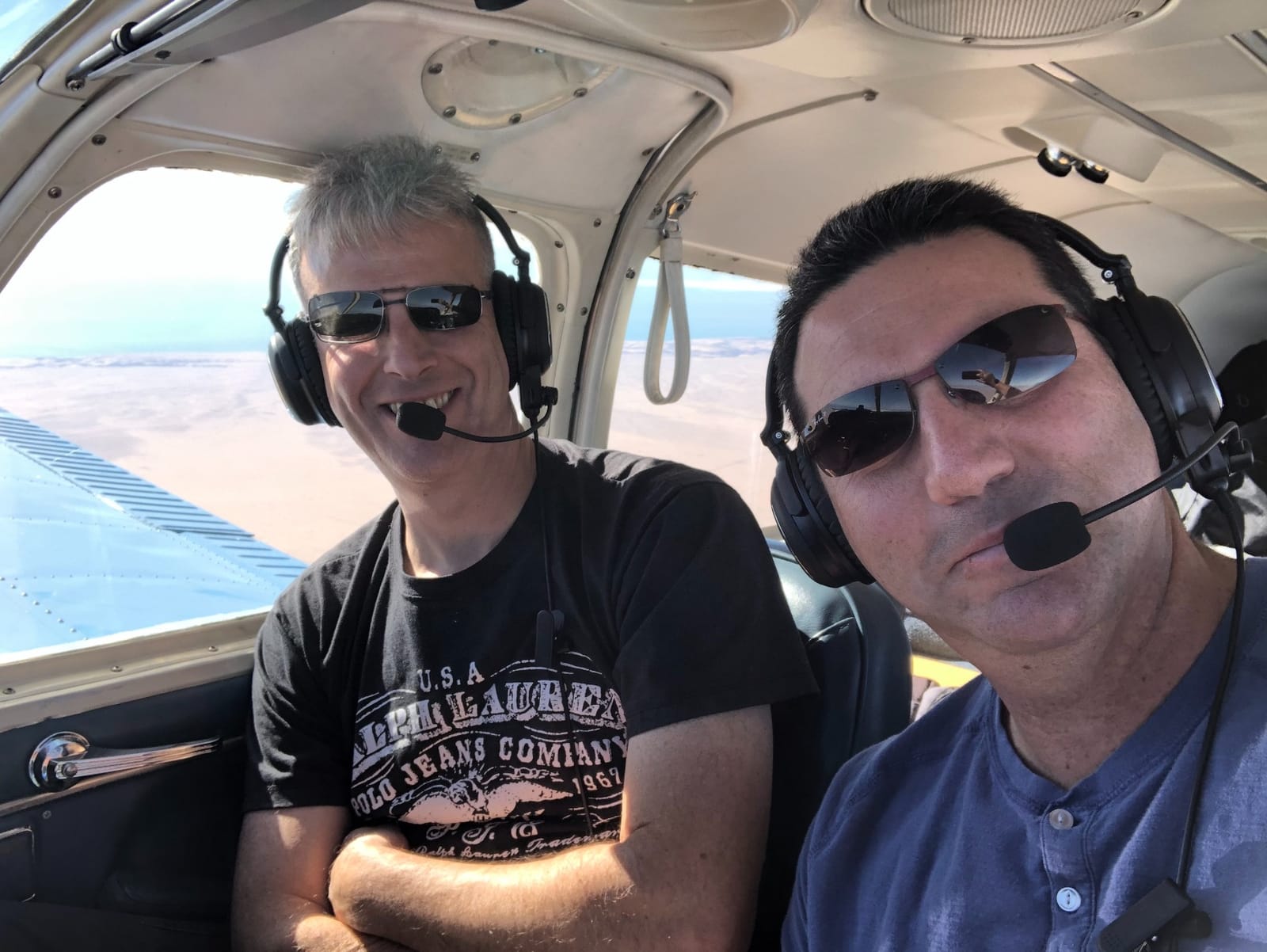
The A7 answers a narrow question well: how little can an over-ear ANR headset weigh? At 220 g it is the lightest over-ear set in this roundup, and the low clamping force is the most common thing owners mention. Head pressure simply is not the complaint here.
Communication is handled by the UFQ M-7U aviation microphone on a boom that rotates through 350 degrees, so it mounts on either side. The rating is 4.0 across 233 reviews, with 57 percent at five stars, and the gap between the star bands reflects audio fidelity rather than noise reduction.
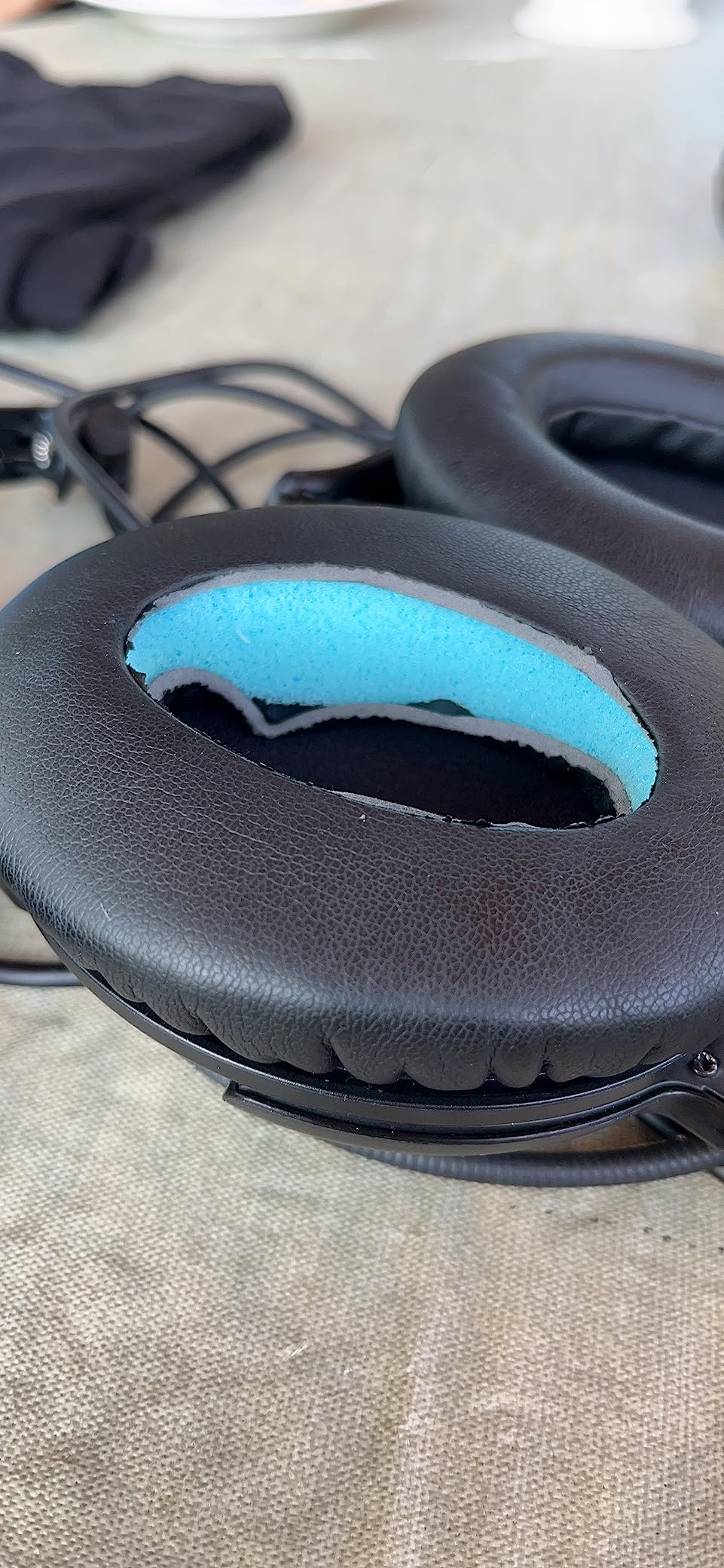
Battery life is the sleeper feature. Two AA cells give more than 48 hours of operation, which for most pilots is several flying days without a swap, and dual volume controls plus a mono and stereo switch sit on the housing where you can find them without unplugging anything.
The construction is more serious than the rating suggests: a steel headband, Kevlar-reinforced cables and connectors, and gold-plated twin GA plugs. A headset bag and an audio link cable are in the box.
Who the UFQ A7 suits best
Long cross-country pilots who fly often and hate changing batteries, and anyone with a small head or a high forehead who finds conventional clamping uncomfortable. It is also a sensible first ANR headset for a student who wants real cancellation without a premium commitment.
If you wear your headset for four hours or more a day, the 220 g figure is doing real work. Fatigue from weight shows up as neck ache long before it shows up as a comfort complaint.
Where the UFQ A7 falls short
There is no Bluetooth. Music and phone audio go through the included wired link cable, and electronic flight bag alerts need a physical connection rather than a wireless route.
Audio quality and overall noise reduction both trail the premium sets, and the very low clamp means less passive isolation, so it will not match the A30 or Zulu 3 in a loud cockpit. One in twelve reviews is one star, so the fit is not universal.
5. Faro G2 ANR – The Value Pick With a Three-Year Replacement Warranty
Faro G2 ANR (Active Noise Reduction) Premium Pilot Aviation Headset with Mp3 Input – Black
Up to 52 dB reduction
3-year replacement warranty
3.5 mm aux input
Electret mic
Pros
- Three-year commercial-grade replacement warranty
- Pleather cups with up to 52 dB reduction
- Independent volume control for each ear
- Aux input for music and panel audio
Cons
- Thin tinny sound with a limited frequency response
- Low mic sensitivity needs a louder voice
- Can pop loudly if the cups are not fully sealed
The G2 sits at the low end of this roundup on cost, and the unusual part is the warranty: a three-year commercial-grade replacement warranty that owners say is honoured quickly when something fails. For a student on a tight budget, that support is worth more than a spec sheet line.
It sits at 4.2 across 229 reviews, and the recurring praise is that a well-sealed over-ear cup quiets a loud piston cockpit far more than the price would suggest. Independent volume control on each ear plus a 3.5 mm aux jack cover music and panel audio.
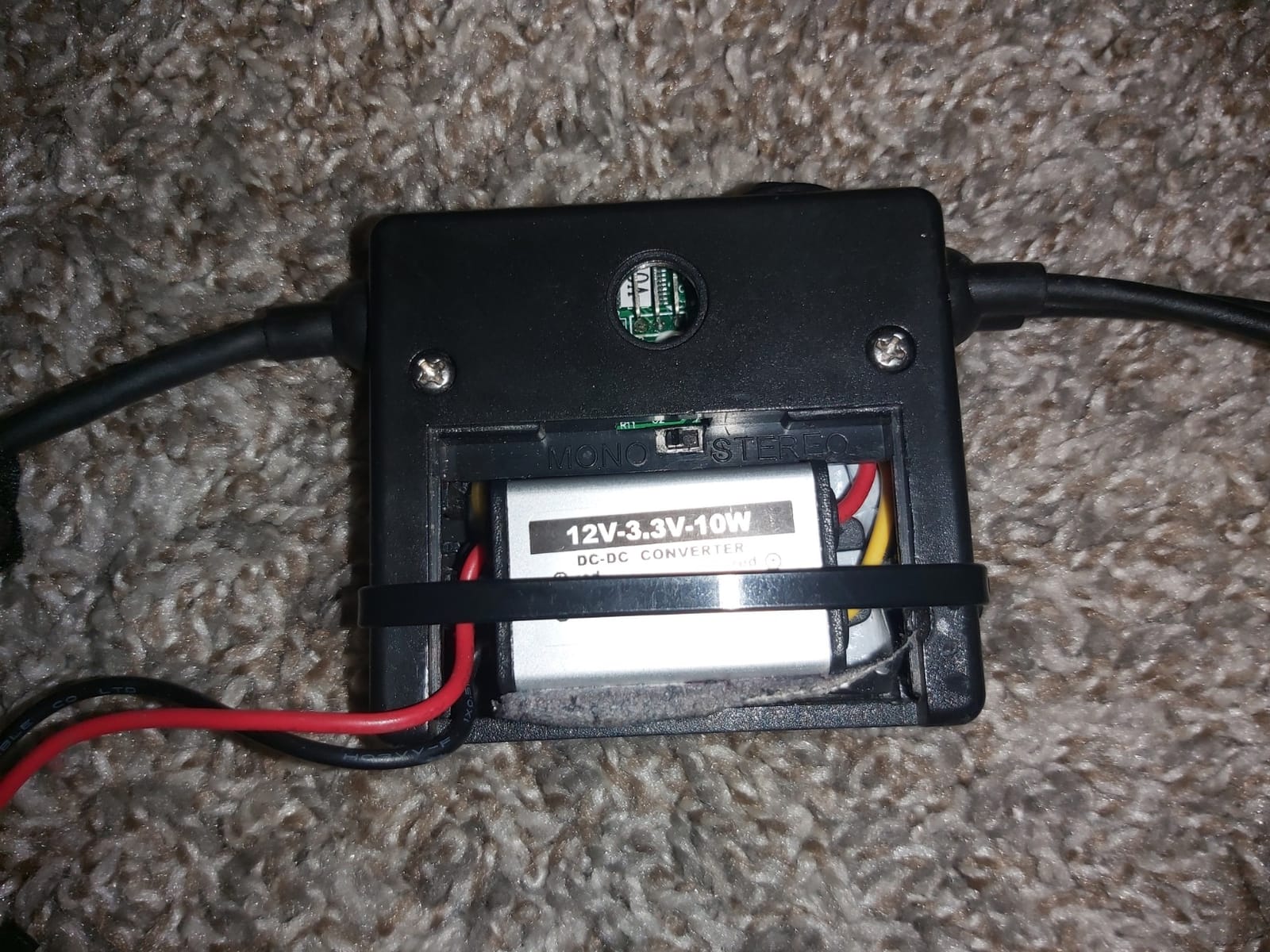
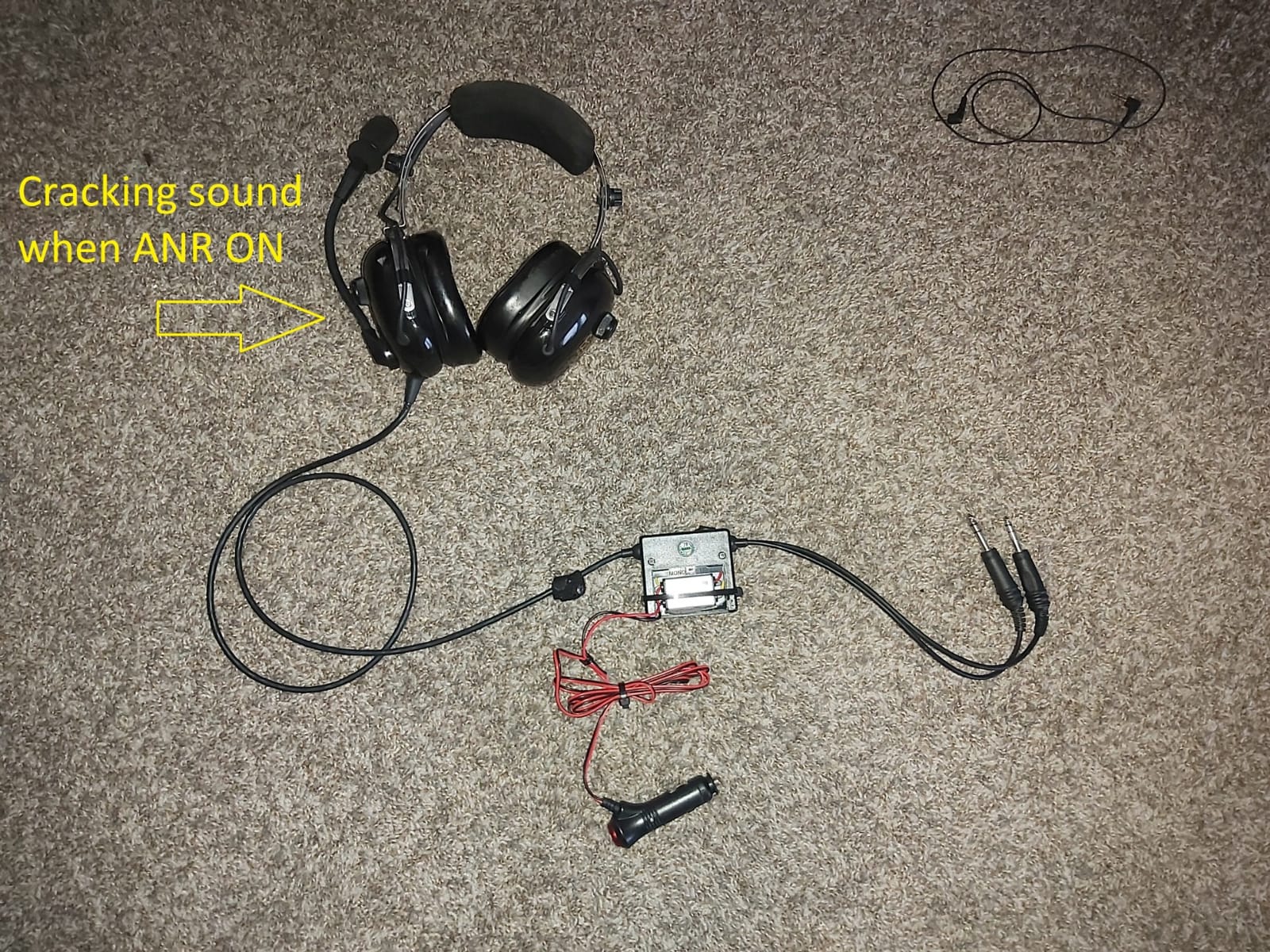
The noise-cancelling electret microphone works, but it is not a hot-mic broadcast microphone. Getting a full intercom response sometimes needs a louder speaking voice than feels natural, which is a habit worth building early rather than discovering in the pattern phase of a busy day.
Active noise compression plus the passive pleather cups gives the up-to-52 dB figure quoted by the manufacturer. Treat that as a laboratory number rather than a promise, but understand that a good seal is doing most of the work in the low band.
Who the Faro G2 suits best
Student pilots working out whether ANR is worth it, and club or rental fleets where several headsets cycle through many heads. The three-year replacement warranty means a worn unit gets swapped rather than binned, which suits an operation more than a private owner.
It is also a good second seat or passenger-backset headset for VFR touring, where the priorities are comfort and a music input rather than certification.
Where the Faro G2 falls short
Sound quality is thin and tinny with a limited frequency response, so music through the aux input sounds functional rather than good. Higher-frequency prop and stall sounds pass straight through, because ANR only works the low end.
Two practical warnings from owners: the ANR circuit can pop loudly if the cups are not fully sealed, which happens often with sunglasses, and the included aux cord is short and thinly shielded. The microphone also needs volume to trigger a clean VOX.
6. David Clark Pro-X2 – Hybrid Electronic Noise Cancelling for Turbine Decks
David Clark DC PRO-X2 Hybrid Electronic Noise-Cancelling Aviation Headset
Hybrid electronic noise cancelling
Automatic gain control
Bluetooth 4
5-year warranty
Pros
- Effective attenuation in loud turbine aircraft
- Clear comms with no intercom hissing
- Comfortable over multi-hour flights
- Compact enough for a flight bag
Cons
- Can slide forward or back when looking up
- Long cord with no cable clip included
- Top head piece feels relatively heavy
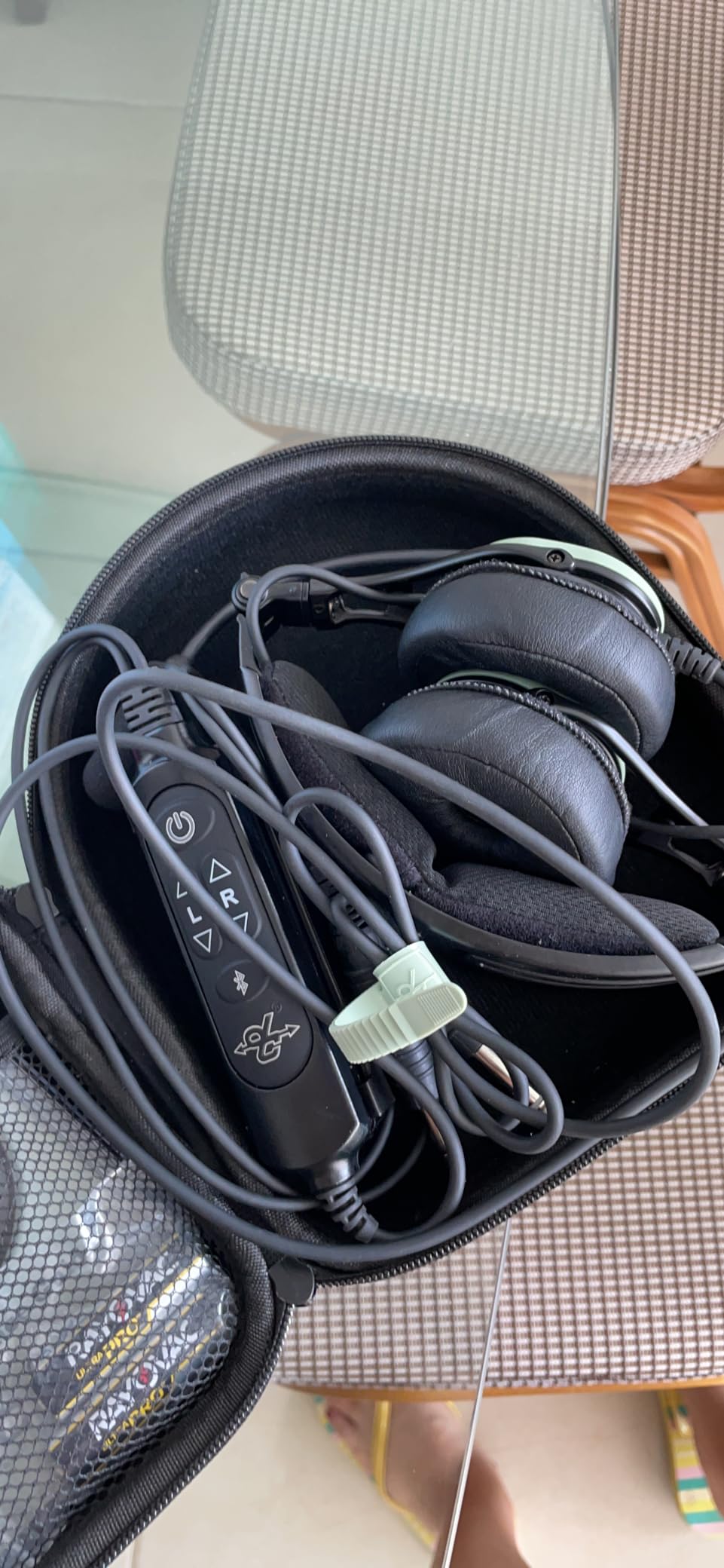
The Pro-X2 uses hybrid electronic noise cancelling with automatic gain control rather than a fixed digital curve, which lets it adjust to high-noise conditions instead of sitting at one setting. Owners flying turbine aircraft such as EMB-145s and 737-class jets rate the attenuation in those cabins very highly.
Radio performance gets the strongest language in its reviews: clear comms on ATC and intercom with no hissing through the intercom, and Bluetooth audio that cuts out cleanly for a radio call without dropping syllables. That handover behaviour is what makes it usable with an electronic flight bag.
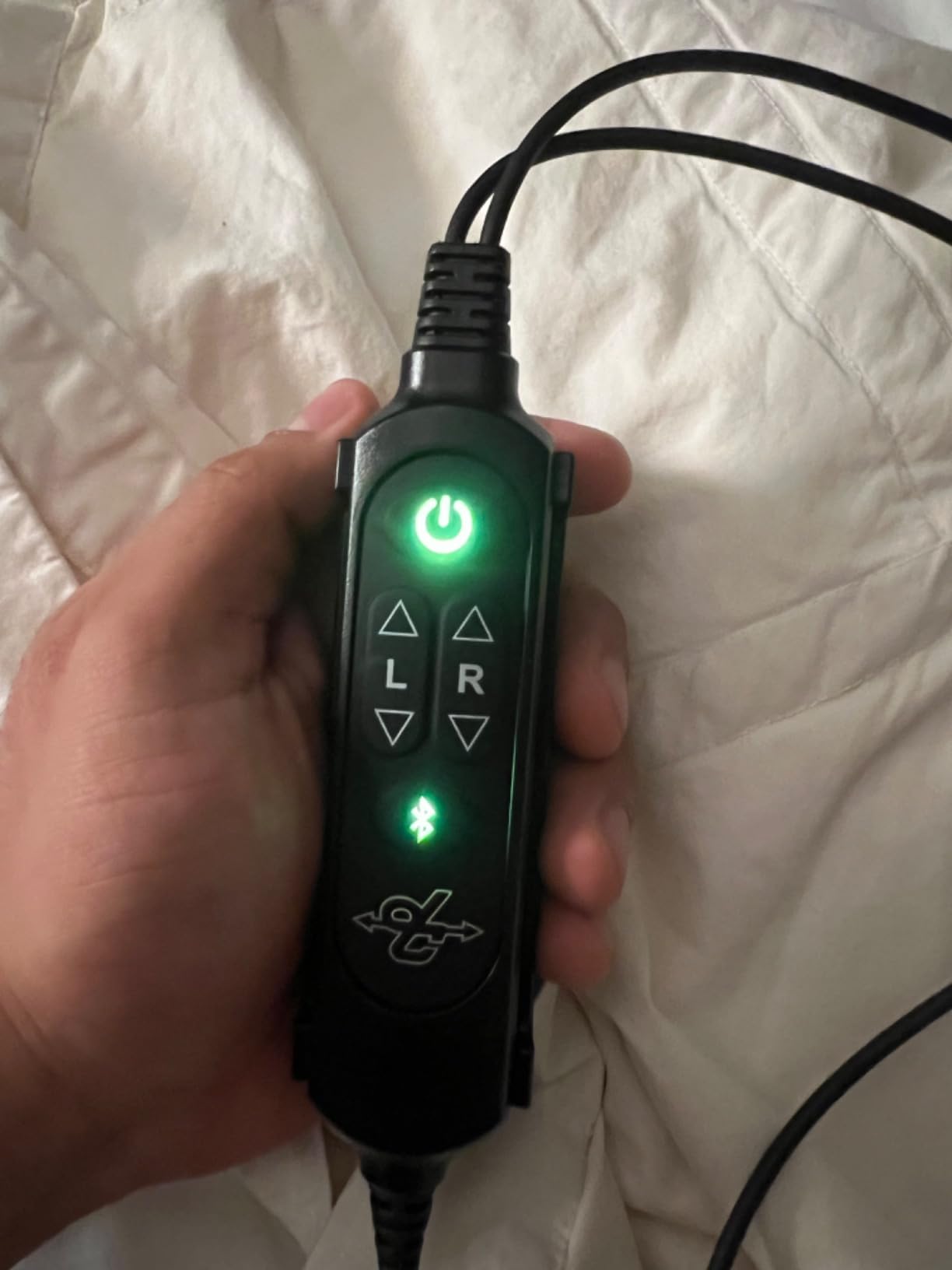
The redesigned oblong dome is the structural change worth knowing about. It is more stable than a conventional cup and it improved the audio, and the whole headset packs small enough to live in a flight bag between sectors.
It carries a 5-year manufacturer limited warranty, which sits in the middle of this group and reflects a magnesium-bodied build intended for pressurised cockpits.
Who the Pro-X2 suits best
Regional and corporate turbine operators who want a set that is comfortable across a multi-sector day and will not need replacing. It is a strong second choice next to the A30 for anyone who wants a different manufacturer’s electronics under their headset.
It also suits pilots who want Bluetooth for EFB alerts but want it to stay strictly out of the way during a transmission, and it packs light enough for regional flying where the headset lives in a bag.
Where the Pro-X2 falls short
Stability on the head is the most common complaint. Some users report it sliding forward or falling back when they look up or down, which matters in a training environment where head position changes constantly during pattern work and spins.
The cord is long and no cable clip is included, so it will swing without one. The top head piece also feels relatively heavy compared with the cups, and AA batteries have to be carried.
7. Telex Airman 850 – Panel-Powered With No Battery At All
Telex 850 Airman Anr Pilot Headset
Self-powered with no battery pack
12 dB of ANR
4 oz
GA plug compatible
Pros
- No batteries needed; self-powered from the aircraft
- Light and comfortable with no head-clamp feel
- Reduces slipstream wind noise on approach
- Multiple mic and audio gain adjustments
Cons
- Only 12 dB of ANR attenuation
- Plastic ear piece and mic swivel look fragile
- Side tone is very quiet
This is the only headset in the roundup with no battery compartment. The 850 draws its operating power from the aircraft, which removes the single most common cockpit complaint in the forums: checking AA charge state at altitude. If your panel supplies the power, the headset simply works.
At 4 ounces it is the lightest full headset listed here, and the on-ear fit means no clamping sensation at all. Owners flying seven-plus hour legs report staying comfortable, and multiple mic and audio gain adjustments let you tune it to your voice rather than shouting to trigger it.
It is also credited with reducing slipstream wind noise on the approach, which is unusual for a set with modest cancellation, and the dual PJ connection system is compatible with standard GA plugs.
Worth knowing: this is an older-generation design. The 4.2 average across 94 reviews reflects a stable product with a narrower review base than the newer sets, not a problematic one.
Who the Telex 850 suits best
Anyone who hates carrying spare batteries, and charter or corporate pilots running long days where a dead ANR circuit mid-sector is a genuine problem. It is also the simplest set to hand between crew because there is nothing to reset.
For a pilot flying mostly VFR in a quiet aircraft who wants the headset to be there without thinking about it, the panel-powered approach removes a whole category of failure.
Where the Telex 850 falls short
Twelve decibels of attenuation is modest. In a loud piston single that works continuously, that is not enough cancellation to make a hard cabin bearable, and there is very little passive isolation behind an on-ear cup to pick up the slack.
Build details also raise eyebrows: plastic ear piece attachments and a plastic mic swivel look fragile, the cord is delicate and short, and the supplied cord clip is flimsy. Side tone is very quiet, so you cannot easily confirm your own transmission.
8. Lightspeed Delta Zulu – Built-In Carbon Monoxide Alerts and a Hearing Profile EQ
LIGHTSPEED Delta Zulu™ ANR Aviation Headset – Premium Noise Canceling Bluetooth Headset for Pilots with Built-in Carbon Monoxide Monitoring and Personalized EQ (GA Dual Plugs)
Kanari CO sensor
HearingEQity hearing test
14.9 oz
7-year warranty
Pros
- Built-in Kanari carbon monoxide sensor
- HearingEQity tunes output to your hearing profile
- Tapered seals that work around glasses
- Rechargeable lithium-ion or AA pack options
Cons
- App-dependent features need setup
- Smallest review base in the group
The Delta Zulu is the only headset in this roundup with a carbon monoxide sensor built into the earcup, and it is a genuine safety feature rather than a gimmick. The Kanari monitor gives audible and visual threshold warnings, which matters in a cabin with an exhaust leak or a running heater.
HearingEQity is the second differentiator. A 12-frequency hearing test inside the app tunes the output to your own hearing profile, and owners credit it with better ATC intelligibility, particularly for pilots who have worked around hearing loss for years without addressing it.
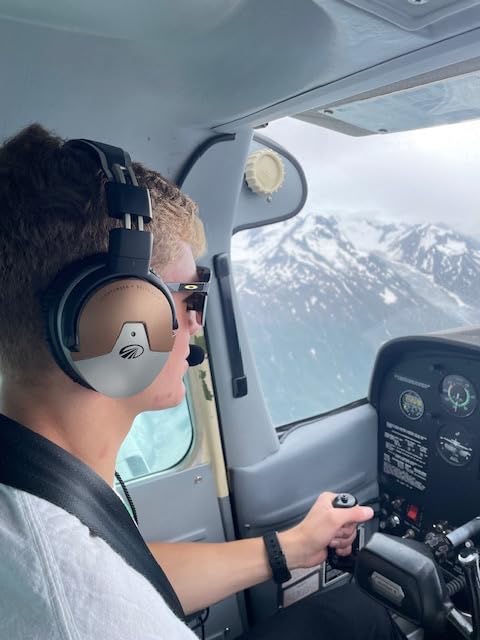
The low-profile tapered performance ear seals are shaped to hug the jaw and seal around glasses, which answers the most common fit complaint in pilot forums. At 14.9 ounces it is the heaviest of the Lightspeed sets here, but the clamp is light.
Connectivity is unusually broad: UAC, USB-A, USB-C, 3.5 mm, Lightning and Bluetooth 5, with a rechargeable lithium-ion battery pack and an AA battery pack option. The 7-year warranty matches the Zulu 3.
Who the Delta Zulu suits best
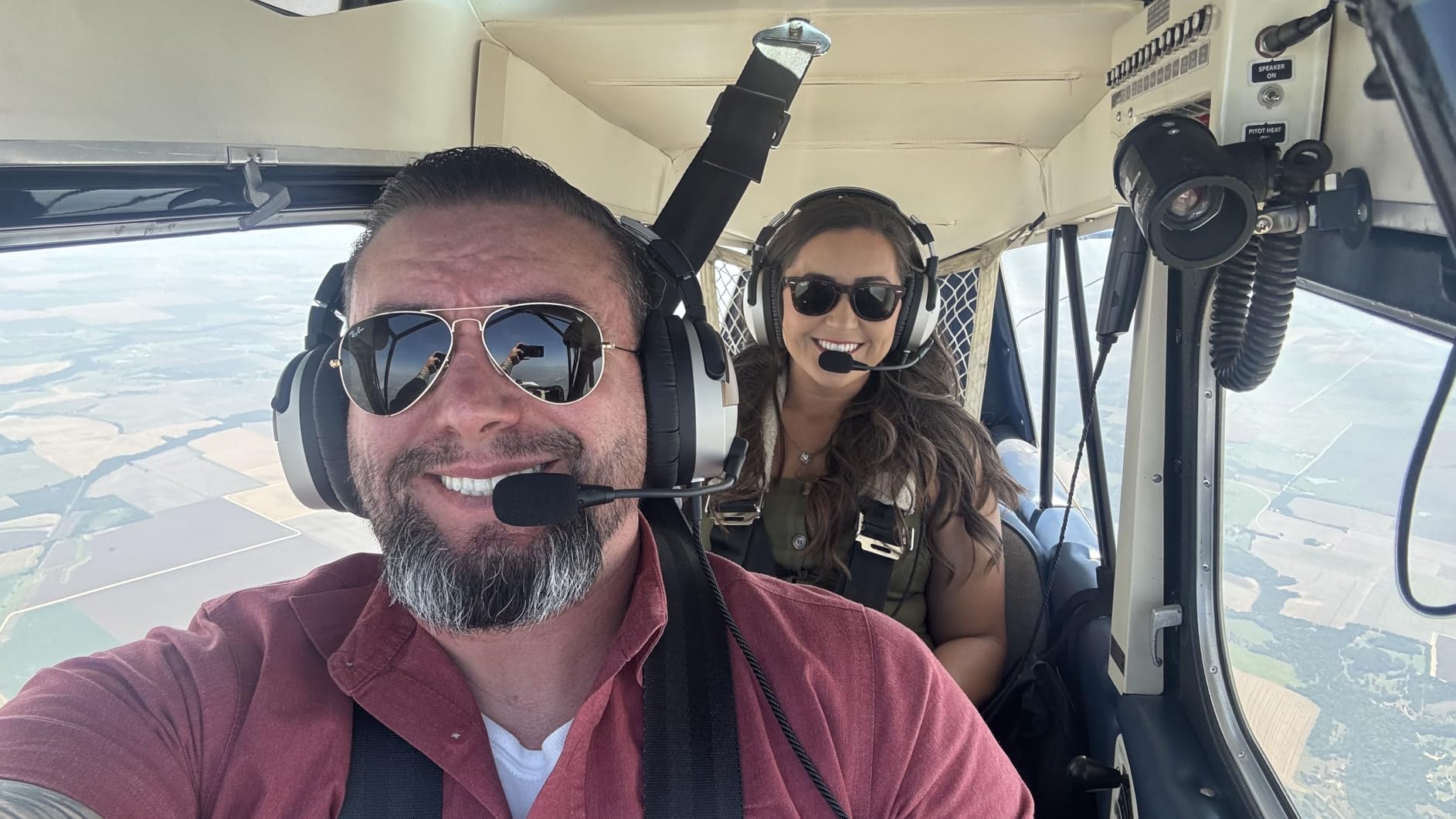
Pilots who wear glasses, anyone over 40 who has been straining to copy ATC, and anyone flying an aircraft with a known cabin heat or exhaust history who wants a second layer of awareness while wearing a headset anyway.
It is also a good choice for pilots who want to record conversations through the integrated app without carrying a patch cable, and for anyone who prefers a rechargeable pack to carrying cells.
Where the Delta Zulu falls short
The app-dependent features need a compatible device and a few minutes of setup before they earn their keep. A pilot who flies without a phone gets the ANR and little else from the software side.
It also has the thinnest review base in this group at 62 reviews and 69 percent five-star, which is normal for a recent flagship but means you are buying on the strength of the sensor and the warranty rather than a large body of owner experience. A r/PilotAdvice thread weighing a premium set at the start of training is worth reading before you commit.
9. UFQ A28 – Works As Passive Headset When The Batteries Run Out
UFQ A28 ANR Aviation Headset Active Noise Reduction-Comes with Great ANR Performance,Clear Communication,Also with bxxx Grade Hi-Fi Sound for Music and Free with a Headset Bag,Comfortable,Durable
52 dB NRR across ANR and PNR
48 hours on two AA
Memory foam seals
GA twin plugs
Pros
- Effective ANR well below premium-brand cost
- Comfortable past three hours without pinching
- Works as a PNR headset with batteries out
- Stainless steel headband and reinforced cables
Cons
- No Bluetooth
- Ear pieces can sit low and are hard to raise
- Does not fold down for compact storage
The A28 is the practical budget answer, and the feature that makes it interesting is redundancy. It works as a PNR headset with the batteries off or removed, so a flat cell degrades the headset instead of disabling it. For a student flying solo in a training aircraft, that is a real safety margin.
Owners frequently describe the ANR as close to the Bose A20 class of performance at a fraction of the cost, and the memory-foam leather ear seals with a pillow-cell foam head cushion stay comfortable past three hours without pinching.
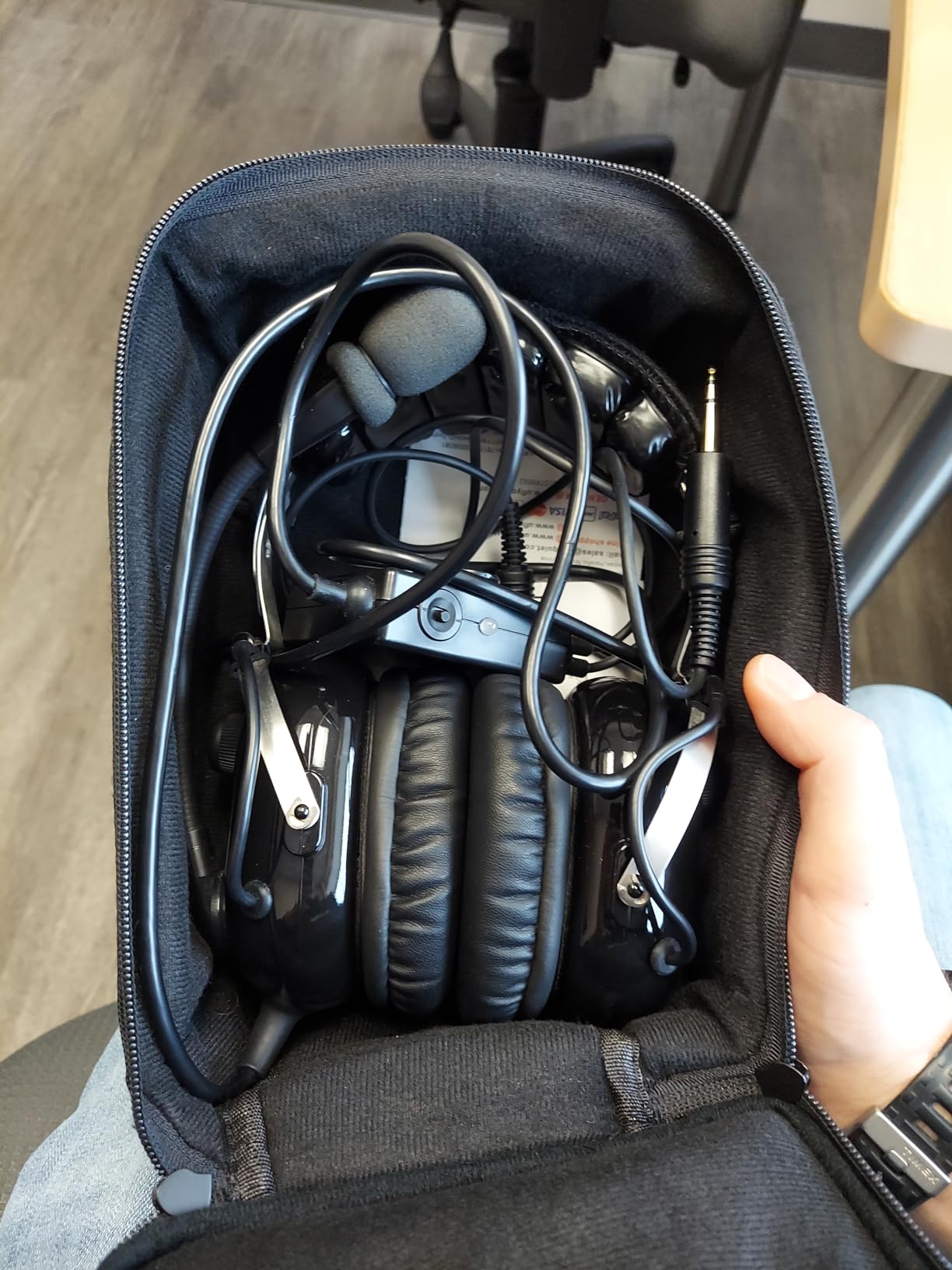
Total attenuation across ANR and PNR is listed at 52 dB NRR, the UFQ M-7U microphone sits on a universal flex boom that swivels for either side, and two AA cells give up to 48 hours with dual volume controls and a mono and stereo switch.
The stainless steel headband and Kevlar-reinforced cables feel rugged in a way that budget headsets often do not, and the gold-plated twin GA plugs are a sensible detail.

Who the UFQ A28 suits best
Student pilots in the first 100 hours who want real active cancellation without committing to a premium set, and anyone who values a headset that still works when the power does not. It suits a shared aircraft where two people fly it and neither remembers the battery state.
It is also a good value second headset for a backseat passenger, and a practical choice for bush flying where the money is better spent on fuel and a proper restraint.
Where the UFQ A28 falls short
There is no Bluetooth, so phone and EFB audio needs a 3.5 mm link cable or a separate adapter. Some users also report a periodic high-pitched buzz in high-performance singles with the windows open, which is a cavity effect rather than a defect but is distracting.
Fit is the other limitation: ear pieces can sit low on some head sizes and are hard to adjust upward, and the headset does not fold down, so the included bag is bulky for a flight bag that already has to hold charts.
10. UFQ L2 Hi-Lite – In-Ear ANR at 175 g
UFQ ANR L2 Hi-Lite in Ear Aviation Headset-Compare to XXXX Proxxxxxt with Great Active Noise Reduction Performance, Ultra Light Weight only 175g,Clear Communication,Comfortable,Durable
In-ear ANR at 175 g
52 dB NRR
48 hours
S/M/L silicone and foam tips
Pros
- Extremely light at 175 g
- Swiveling boom mic for clear transmission
- Silicone and memory foam tips in three sizes
- Works passively with batteries off
Cons
- Least consistent ratings in the group
- In-ear fit gives less passive isolation
- No Bluetooth on this variant
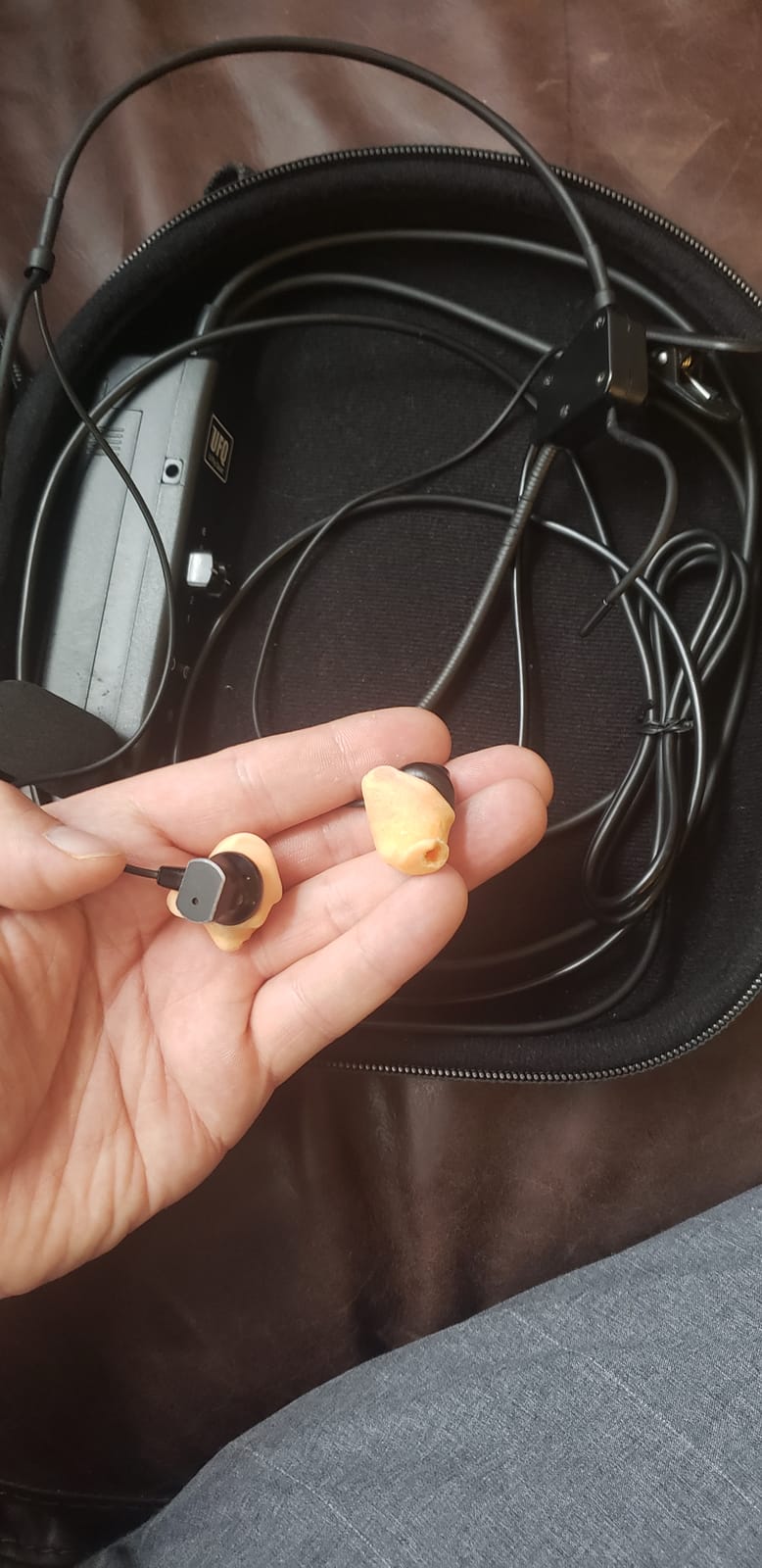
The L2 is the only in-ear ANR headset here, and the appeal is weight. At 175 g it is the lightest set in the roundup by a wide margin, which removes clamping pressure entirely because nothing rests on the top of your head.
It also degrades gracefully. Total attenuation is listed at 52 dB NRR across ANR and PNR, and it works as a passive headset with the batteries off, so the failure mode is reduced quiet rather than silence.
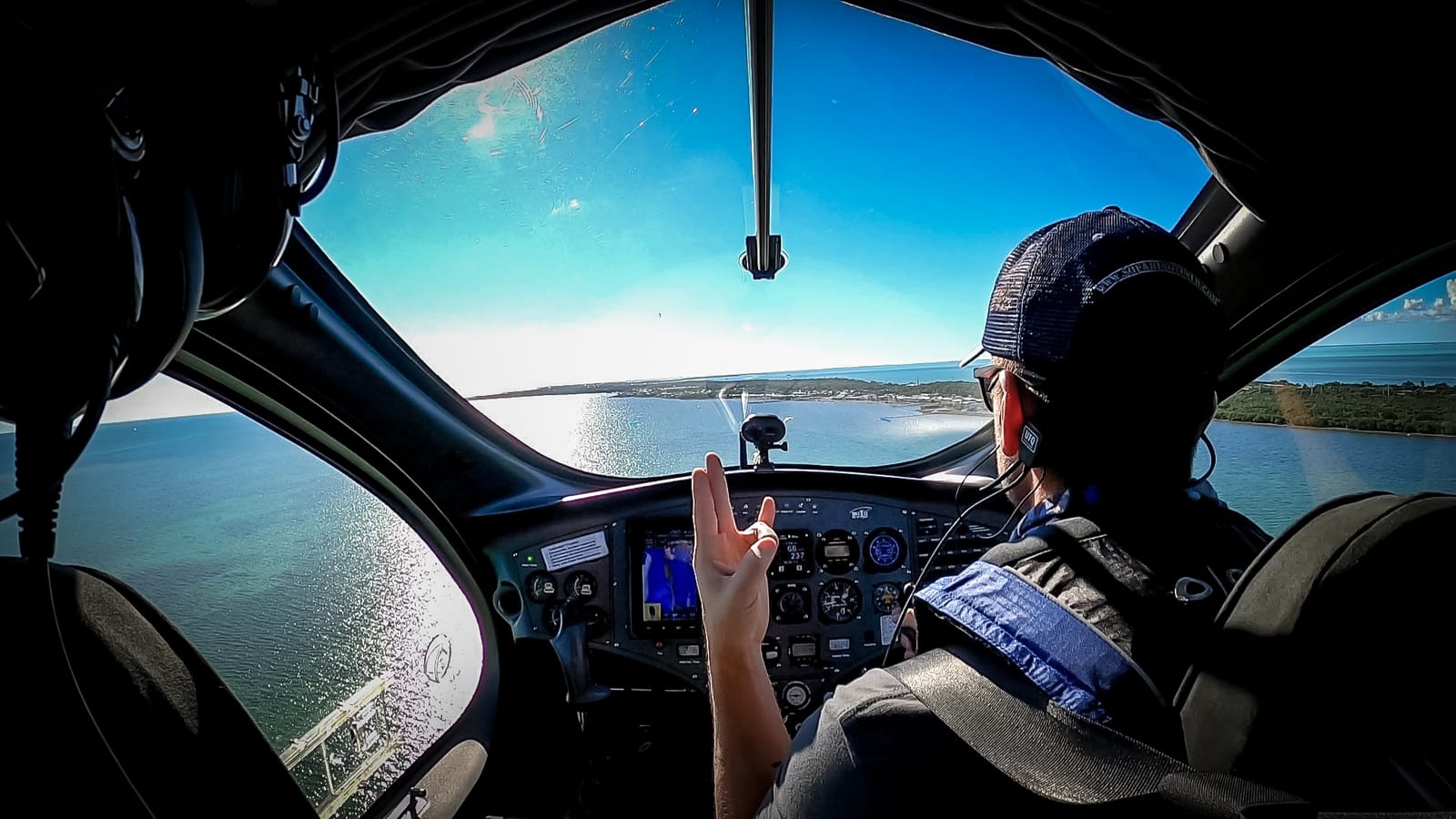
Fit is tunable, with an adjustable headband plus ear loops and silicone and memory foam tips in small, medium and large. The UFQ M-7U microphone on a 350-degree rotating flex boom handles voice, and the steel headband and Kevlar cables are solid for the price.
Ratings here are the most polarised in the group at 3.8 across 252 reviews, with 52 percent five star and 12 percent one star. Fans love the weight and value; critics find the fit inconsistent.
Who the UFQ L2 suits best
Pilots who cannot wear an over-ear cup at all, whether from a seal problem, a glasses frame that breaks the seal, heat intolerance or a preference. It is also the easiest set to stow in a bag for a backseat role, and the ear loops keep it secure in aerobatic or bush flying.
Anyone who wants the least headset on their head for a long regional day should try one before buying a cup. If in-ear fits you, nothing else here will feel lighter.
Where the UFQ L2 falls short
In-ear fit is less consistent than an over-ear design, and because there is no cup volume, passive isolation is weaker. In a loud cockpit the difference shows exactly where you need it most.
There is no Bluetooth on this variant, since a wireless version is a separate model, and the rating spread is the widest of any set here, which means the risk of a bad fit is real.
Bose A30 vs Lightspeed Zulu 3: The Head-to-Head
These two sit at the top of this roundup for different reasons, and the comparison question comes up constantly, so here is the honest split. The Bose A30 wins on certification and clamping comfort. The Lightspeed Zulu 3 wins on raw quiet, build materials and warranty length.
On certification, the A30 is the only one here listed as FAA TSO and EASA E/TSO-C139a certified after passing 145 tests, which makes it the safer default for airline and corporate flying. On quiet, the Zulu 3 pairs advanced ANR with magnesium ear cups that block high frequencies, a two-layer approach that is why it holds the highest rating in the group at 4.7 across 692 reviews.
Comfort is close. At 14.2 ounces with 20 percent lower clamping force than the A20, the A30 edges it, though owners flying seven-plus hour days report the Zulu 3’s low-profile stainless-steel headband holding up well. On software, the Zulu 3 offers ComPriority ducking and FlightLink recording while the A30 offers Bluetooth prioritisation and active equalisation.
Both need two AA cells, and the A30’s Bluetooth 4.2 is older than the Zulu 3’s 2.1 in a different way: the A30 pairs modern phones more reliably, while the Zulu 3 is built for auxiliary audio ducking rather than phone calls. If certification decides it, take the A30. If noise reduction decides it, take the Zulu 3.
ANR Aviation Headset Buying Guide: What Actually Matters
Decide whether you need active cancellation at all. A good ANR headset is a hearing-protection and situational-awareness tool, not a comfort luxury. It determines whether you can reliably copy an ATC clearance in a noisy cockpit, and it reduces cumulative noise exposure across thousands of hours. What it will not do is touch high-frequency sound, so propeller blade passage, wind rush and stall horns always come through.
Check the certification against your operation. TSO-C139a is the FAA technical standard order covering these headsets, with EASA E/TSO-C139a as the European equivalent. It is not a universal FAA rule for private flying, but Part 121 operator specifications and OpSpecs make it effectively required in airline and corporate cockpits. In general aviation, certification is a quality signal rather than a legal one. The Lightspeed line is not listed with TSO approval in its published specifications, which is a real trade-off for airline pilots and irrelevant for most others.
Match the plug before anything else. General aviation panels take twin GA plugs, a 3 to 5 mm paired connector. Turbine and jet panels often use a single LEMO or a locking variant. Helicopters use a U-174 style connector, and Airbus-style panels use an XLR. Nine of the ten headsets here ship in a GA dual-plug configuration, so confirm the connector before you order or you will be returning an unused headset.
Decide between battery and panel power. Most ANR headsets run on two AA cells, and a spare set in the bag is mandatory. Rechargeable lithium-ion packs exist on the newer Lightspeed models. The genuine alternative is panel-powered operation, where the headset draws its power from the aircraft and carries no battery at all, which is the Telex Airman 850 in this list. Forum threads ask this question constantly, and the honest answer is that phantom power suits pilots who hate checking charge state and can accept less cancellation.
Weight and seal beat features. On-head weight, clamping force and ear seal material decide whether you still like the headset at hour four. Ear pressure and temple headaches past the two-hour mark are the most common complaints in pilot forums, and the most common causes are clamping force and eyeglass frames breaking the seal. Tapered seals shaped around the jaw are the fix, which is one reason the Delta Zulu rates well with glasses wearers.
Plan for ear seal replacement. Seals degrade before the headset body does, and a broken seal quietly removes both your ANR and your passive reduction. Check them twice a year, keep the headset in its bag rather than on a dash in summer heat, and treat a fresh set of seals as part of the purchase. Budget for replacement every few years rather than replacing the whole headset.
Decide what Bluetooth is for. Bluetooth in an aviation headset is a personal device feature, not a flying feature. The valuable use is routing electronic flight bag alerts from apps like ForeFlight or Garmin Pilot so you hear them through the headset. The risk is an incoming call leaking into the intercom, so test the prioritisation or ducking behaviour before your first trip.
Which ANR Headset for Which Aircraft
Piston single trainer. A loud 172 or 152 is where ANR earns its keep fastest, because the engine noise sits squarely in the cancellation band. The A30 and the Zulu 3 give the most usable quiet, and the Faro G2 is the budget entry that still does a credible job once sealed.
Multi-engine piston. You are running two engines, so low-frequency content is doubled. The Zulu 3 with magnesium cups and the Faro G2’s passive pleather are both strong here, and the UFQ A28 makes sense as a low-cost spare. If your panel audio is old, a handheld aviation GPS for pilots is a better spend than a second headset.
Turboprop. The cabin is loud at low speed and moderate at cruise, so ANR plus a decent seal is the pairing that matters. The A30, Zulu 3 and Pro-X2 all suit this class, and the three-mode adjustment on the A30 lets you change settings between taxi and cruise. For line-check and survey work, our picks for aviation handheld GPS devices for surveying cover the navigation side.
Pressurised turbine and jet. The cabin is quieter than a piston single, so comfort and certification take over as the deciding factors. The A30 is the default for TSO and EASA approval, the Pro-X2 suits regional flying with its automatic gain control, and the Telex 850 suits a long day on a panel-powered panel.
Helicopter. With doors on, the A30 or Zulu 3 work well in most rotor-wash conditions. With doors off, be careful. Pilots in the forums describe ANR as never designed for a doors-off environment and genuinely unpleasant in one, because the noise is broadband and changes fast, which is the exact case cancellation handles badly. Fly doors-off in a passive set or an in-ear model.
Bush and backcountry. Weight, seal integrity and a headset that survives a rough day matter more than refinement. The UFQ A28 with its passive fallback and the UFQ L2 at 175 g are both defensible, and the L2 with ear loops stays put when a canopy is open and the noise is wind rather than engine.
Frequently Asked Questions
What headset do most airline pilots use?
Most airline and corporate pilots reach for premium ANR sets such as the Bose A30 or the Lightspeed Delta Zulu, because those are the two most common in transport cockpits. In practice the aircraft operator specifications decide, and a TSO-certified model such as the A30 removes the compliance question entirely. Regional and charter operators add the David Clark Pro-X2 for its automatic gain control in turbine cabins.
Which is better, the Bose A30 or the Lightspeed Zulu 4?
They are close, and the deciding factor is your operation. The Bose A30 is FAA TSO and EASA E/TSO-C139a certified, weighs 14.2 ounces and has 20 percent lower clamping force than the A20, so it wins on comfort and approval. The Lightspeed Zulu line wins on raw quiet because magnesium ear cups add passive high-frequency blocking, and carries a 7-year warranty. We tested the Zulu 3 in this roundup, which shares that architecture.
Do aviation headsets need batteries, or can they run off panel power?
Most do need batteries, usually two AA cells, and the Telex Airman 850 in this roundup is the exception that draws its power from the aircraft and carries no battery at all. Newer Lightspeed models offer a rechargeable lithium-ion pack or an AA pack, which is a third option. A spare set of cells in the flight bag is still mandatory with any battery-powered set.
Is a TSO-certified aviation headset required?
Not by any universal FAA rule for private flying. It becomes effectively required through Part 121 operator specifications and OpSpecs in airline and corporate operations, and EASA E/TSO-C139a covers the European equivalent. In general aviation, certification is a build-quality signal rather than a legal one. Note that Lightspeed headsets are not listed with FAA TSO approval in their published specifications.
Can ANR headsets be used in a helicopter with the doors off?
Use caution. Active noise reduction targets steady low-frequency sound, and a doors-off rotor environment is broadband and constantly changing, which is the case cancellation handles worst. Pilots in the forums describe ANR headsets as unbelievably annoying in that environment. Fly doors-off in a passive headset or an in-ear model, and switch to ANR with the doors closed.
How often do aviation headset ear seals need replacing?
Inspect them twice a year and replace them as soon as the seal goes hard, cracked or compressed, because a broken seal quietly removes both active and passive noise reduction. Ear seals normally degrade before the headset body does, particularly with heat on a dashboard and a permanently compressed cushion. Treat a fresh set of seals as routine maintenance and part of the cost of ownership over a five to ten year life.
The Best ANR Aviation Headset Verdict for 2026
The best ANR aviation headset in 2026 is the Bose A30. It is the only model here certified to both FAA TSO and EASA E/TSO-C139a, it carries three selectable noise-cancelling modes, and at 14.2 ounces with 20 percent lower clamping force than the A20 it is the one pilots describe as wearable all day.
Take the Lightspeed Zulu 3 if you want the most raw quiet and the longest warranty, the Faro G2 ANR if you are a student testing whether ANR is worth it, and the Telex Airman 850 if you would rather never think about batteries again. Whichever you choose, confirm the plug matches your panel before anything else, and get an over-ear seal trial right if you wear glasses.
Every headset listed here is genuine active noise reduction hardware, and each one is linked to its current listing below.