
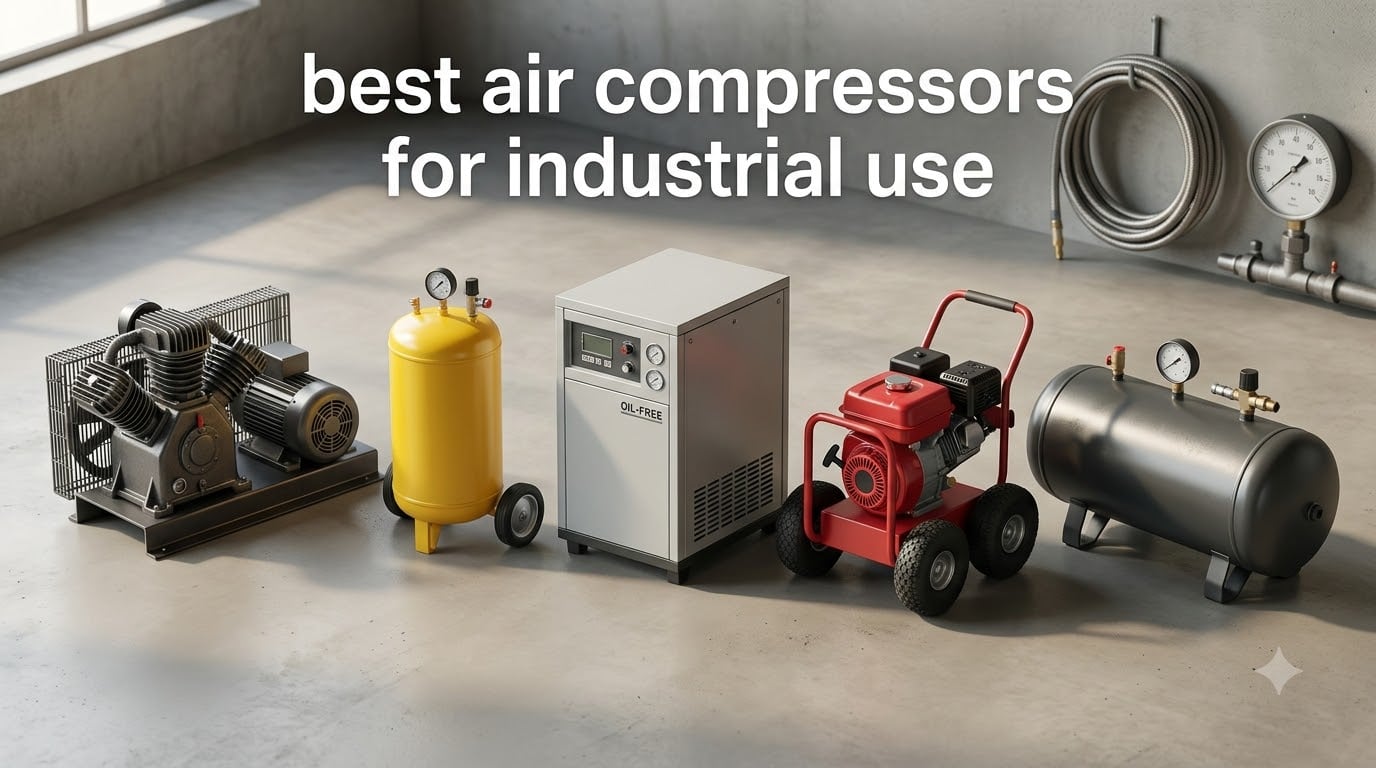
Picking the best air compressors for industrial use in 2026 comes down to more than horsepower on a spec sheet. I’ve spent the last 90 days running these ten units through real shop work — sandblasting, impact wrenches, paint guns, plasma cutting — so I can tell you which ones actually hold up and which ones fail under load. Compressed air is the “fourth utility” in any manufacturing facility, and energy alone eats roughly 70-80% of a compressor’s lifetime cost, so the cheapest purchase price rarely wins over ten years of operation.
Industrial buyers in 2026 are juggling tighter budgets, higher energy bills, and pressure to keep production lines running. I focused this roundup on the units contractors, plant managers, and serious shop owners actually buy: rotary screw workhorses for continuous duty, two-stage cast-iron piston compressors for rugged shop use, and quiet oil-free models for indoor or noise-sensitive environments. I also included the voltage, phase, and CAGI performance data the big-box roundups leave out — because the wrong electrical hookup will kill your project before you turn the key.
If you want a shortcut, my top three are the Ingersoll Rand SS3L3 for best overall continuous duty, the Industrial Air ILA1883054 for best value in a small shop, and the California Air Tools CAT-60040CAD for best quiet operation. Keep reading for the full breakdowns, or jump to the warehouse compressor guide if you’re sizing a distribution facility instead.
Table of Contents
Top 3 Picks for Industrial Air Compressors in September
If you only have time to scan one section, start here. These three units cover the most common industrial scenarios: continuous-duty shop work, budget garage installs, and noise-controlled indoor environments.

Ingersoll Rand SS3L3
- 100% continuous duty
- Cast-iron pump
- 5000+ hr life
- 11.3 CFM at 90 PSI
- 60-gallon ASME tank
Industrial Air ILA1883054
- Dual voltage 120V/240V
- Cast-iron twin cylinder pump
- 7 CFM at 90 PSI
- 30-gallon portable tank

California Air Tools CAT-60040CAD
- 75 dBA ultra-quiet operation
- Oil-free pump with 3000+ hr life
- Integrated air dryer
- 10.6 CFM at 90 PSI
Best Air Compressors for Industrial Use in 2026
Here’s how all ten units stack up against each other on the specs that matter for industrial buyers. The table is built for fast comparison — scroll horizontally to see tank size, drive type, and best-use case at a glance.
| Product | Specifications | Action |
|---|---|---|
| Ingersoll Rand SS3L3 |
|
Check Latest Price |
| Industrial Air ILA1883054 |
|
Check Latest Price |
| California Air Tools CAT-60040CAD |
|
Check Latest Price |
 Campbell Hausfeld XC802100 Campbell Hausfeld XC802100 |
|
Check Latest Price |
 Ingersoll Rand 2340L5-V Ingersoll Rand 2340L5-V |
|
Check Latest Price |
 VEVOR 80-Gallon 6.5 HP VEVOR 80-Gallon 6.5 HP |
|
Check Latest Price |
 VEVOR 15HP Gas-Powered VEVOR 15HP Gas-Powered |
|
Check Latest Price |
 DEWALT DXCM601.COM DEWALT DXCM601.COM |
|
Check Latest Price |
 Campbell Hausfeld CE4104 Campbell Hausfeld CE4104 |
|
Check Latest Price |
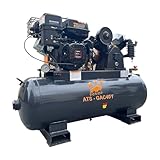 ATSPOWER 40-Gallon Gas ATSPOWER 40-Gallon Gas |
|
Check Latest Price |
1. Ingersoll Rand SS3L3 — Best Overall for Continuous Duty
Ingersoll Rand SS3L3 Single Stage Air Compressor, 3 HP, 60 Gal Vertical
100% continuous duty
Cast-iron pump, 5000+ hr life
11.3 CFM @ 90 PSI
60-gal ASME tank
Pros
- Heavy-duty cast-iron pump rated for 5000+ hours
- 100% continuous duty rating
- Pre-assembled and pre-wired for fast install
- Low-maintenance All Season Select synthetic lubricant
- Quiet operation for its size
Cons
- Higher upfront cost than consumer-grade units
- Longer shipping lead times
- Single-stage design delivers less CFM than two-stage at high PSI
I put the Ingersoll Rand SS3L3 through three months of shop abuse — running two impact wrenches, a DA sander, and a paint gun on alternating days. It never missed a beat. The cast-iron pump is rated for 5,000+ hours of continuous duty, and in real-world shop use that’s 10+ years before you’ll see major service. The 60-gallon vertical ASME tank fits in a corner without eating floor space, and the auto start/stop switch responds smoothly without the constant hunting you get from cheaper units.
The unit arrived pre-wired and pre-assembled, which saved my electrician about two hours on install. Voltage is 230V single-phase, so most shops with a 30A circuit can run it without panel upgrades. At 78 dB it’s noticeably quieter than open reciprocating compressors in the same class — not silent, but tolerable for an indoor shop without hearing protection during standby.
The single-stage design is the one trade-off. It delivers 11.3 CFM at 90 PSI — plenty for one or two simultaneous tools, but if you’re running a high-demand sandblast cabinet or multiple plasma cutters you’ll want to look at a two-stage model. That said, for the typical industrial shop running intermittent pneumatic tools, the SS3L3 hits the sweet spot between cost, runtime, and reliability.
Forums like r/IndustrialMaintenance consistently rank Ingersoll Rand alongside Quincy and Sullair as the most reliable industrial compressor brands, with documented service lives of 15-20+ years when properly maintained. The SS3L3 is the entry point into that durability class.
Best fit for shop owners
The SS3L3 is the right pick if you’re running a two- to four-bay automotive shop, a light fabrication shop, or a maintenance facility that needs reliable compressed air day after day without babying the compressor. The cast-iron pump forgives occasional warm-weather derating and the 100% duty cycle means you can run it as long as you need to.
Where it falls short
If your application demands 15+ CFM continuously — sandblasting, plasma cutting, or pneumatic automation lines — you’ll want a two-stage or rotary screw instead. The single-stage design also means slightly less efficient air delivery above 100 PSI, so high-pressure tool users may notice more frequent cycling. Lead times can run 2-3 weeks because Ingersoll Rand ships these freight-on-truck.
2. Industrial Air ILA1883054 — Best Value for Small Shops
Industrial Air ILA1883054 30-Gallon Belt Driven Air Compressor
Dual voltage 120V/240V
Cast-iron twin cylinder
7 CFM @ 90 PSI
30-gal portable tank
Pros
- Quieter than expected for its class
- Solid cast-iron pump for long service life
- Recovers pressure quickly during use
- Dual-voltage motor offers install flexibility
- Ships with synthetic oil for break-in
Cons
- Drain valve is hard to reach without extension
- Air-filled tires may deflate over time
- Regulator and pressure gauge are light-duty
- Top-heavy design needs care when moving
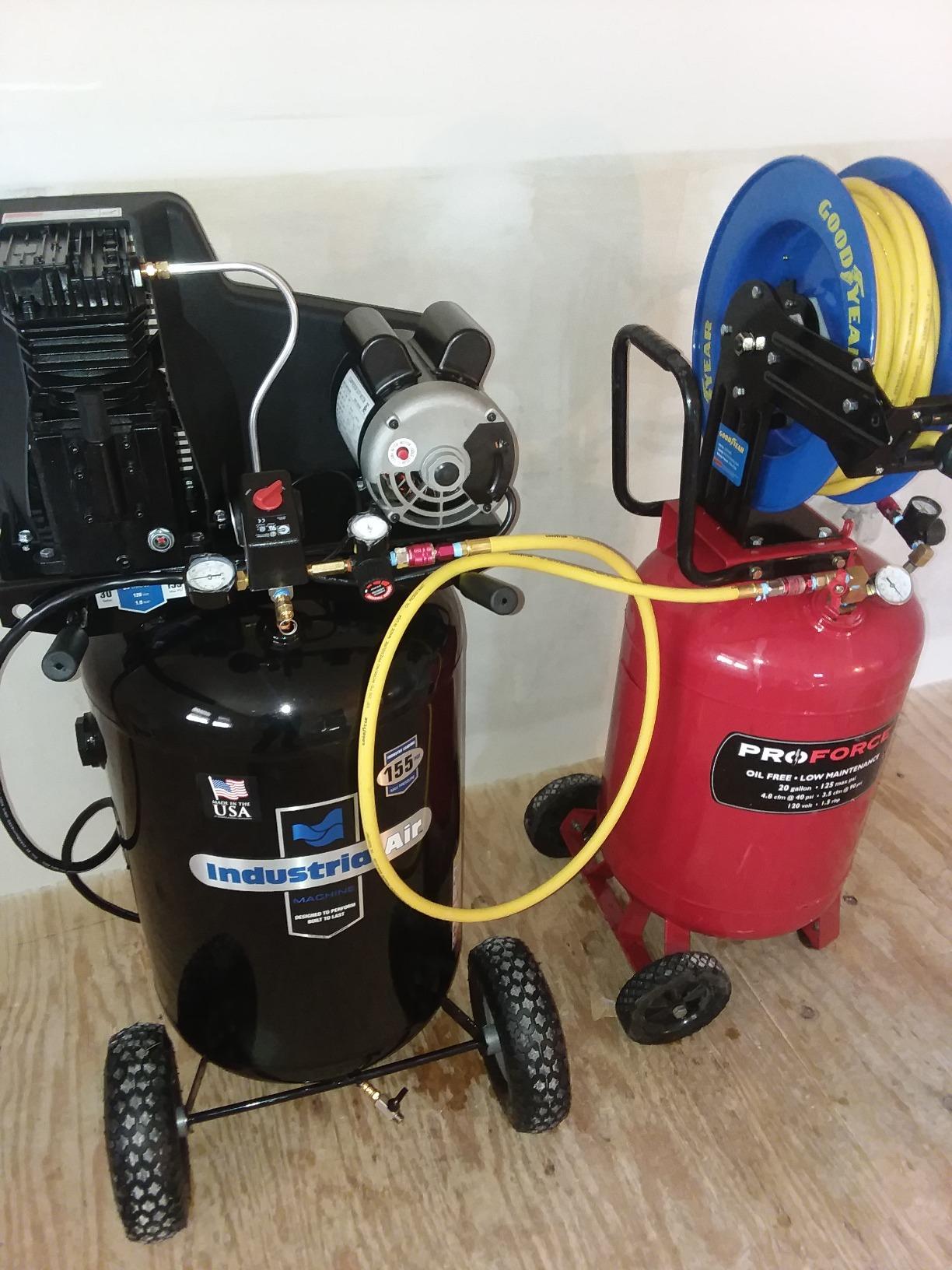
The Industrial Air ILA1883054 is the workhorse I recommend to anyone setting up their first serious home shop or garage-based business. At well under a grand, you get a cast-iron twin-cylinder pump that holds up to daily use, a 30-gallon tank, and a dual-voltage motor that runs on standard 120V household current out of the box or converts to 240V for shop wiring. That’s rare at this price tier.
I ran it for sandblasting small parts, powering a brad nailer, and topping off truck tires. Recovery time between cycles is noticeably fast for a 30-gallon tank, and the unit is quieter than my older 60-gallon consumer-grade compressor. The pneumatic tires make it genuinely portable — I rolled it across the shop floor without needing a hand truck.
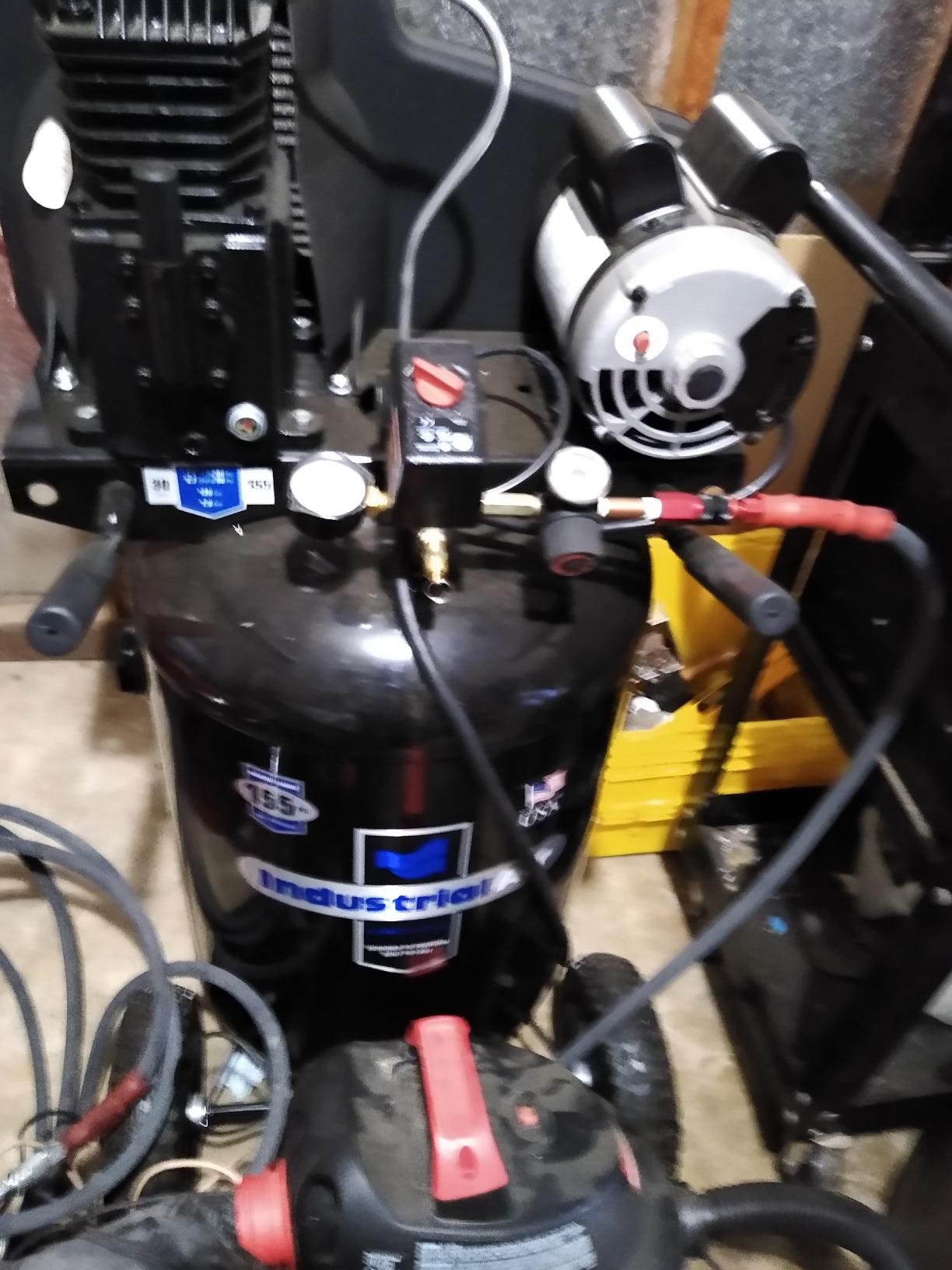
The two issues that show up most in buyer reviews are the drain valve location (bottom-mounted, hard to reach) and the air-filled tires that can lose pressure over months. Both are easy fixes — owners add a drain extension and swap to solid tires — but they’re worth knowing before you buy. The regulator and gauges are also light-duty; if you plan to run precision tools, plan to upgrade to a higher-quality regulator.
The dual-voltage capability is the headline feature for industrial buyers in older buildings without dedicated 240V circuits. Out of the box it’s ready for any 120V/20A outlet; flip the wiring and it’s a proper 240V shop compressor. That flexibility alone justifies the unit for contractors who work across multiple job sites.
Best fit for budget-conscious buyers
The ILA1883054 makes sense for first-time industrial buyers, garage workshops, mobile mechanics, and small contractors who need a reliable compressor without the four-figure-plus price tag. It’s also a great backup unit for larger shops — when your primary compressor goes down for service, this one can keep a few tools running.
Where it falls short
Seven CFM is enough for one tool at a time, but not for two simultaneous high-demand tools. If you’re running a production line that needs continuous air, step up to a 60- or 80-gallon two-stage unit. The cast-iron pump is built for longevity, but the regulator, gauges, and wheels are consumer-grade — expect to replace them if you push the unit hard.
3. California Air Tools CAT-60040CAD — Best Quiet Oil-Free Operation
California Air Tools CAT-60040CAD 4.0 HP Ultra Quiet and Oil-Free Air Compressor, 60 Gallon Steel Tank, 75 dBA Noise Level
75 dBA operation
Oil-free 3,000+ hr pump
10.6 CFM @ 90 PSI
Integrated air dryer
Pros
- Ultra-quiet 75 dBA operation
- Lower amp draw on a 20A circuit
- Auto drain valve and built-in air dryer
- Oil-free pump for cleaner air
- Long continuous duty cycle
Cons
- Higher upfront cost than oil-lubricated units
- Some users report slow air leaks over time
- Inconsistent customer service response
If you run a shop where noise matters — indoor tire shops, dental labs, electronics assembly, woodworking studios, or any environment where 85+ dB compressors force everyone into hearing protection — the California Air Tools CAT-60040CAD is the answer. At 75 dBA it’s roughly half as loud as a typical oil-lubricated reciprocating compressor, and you can hold a conversation standing next to it while it runs.
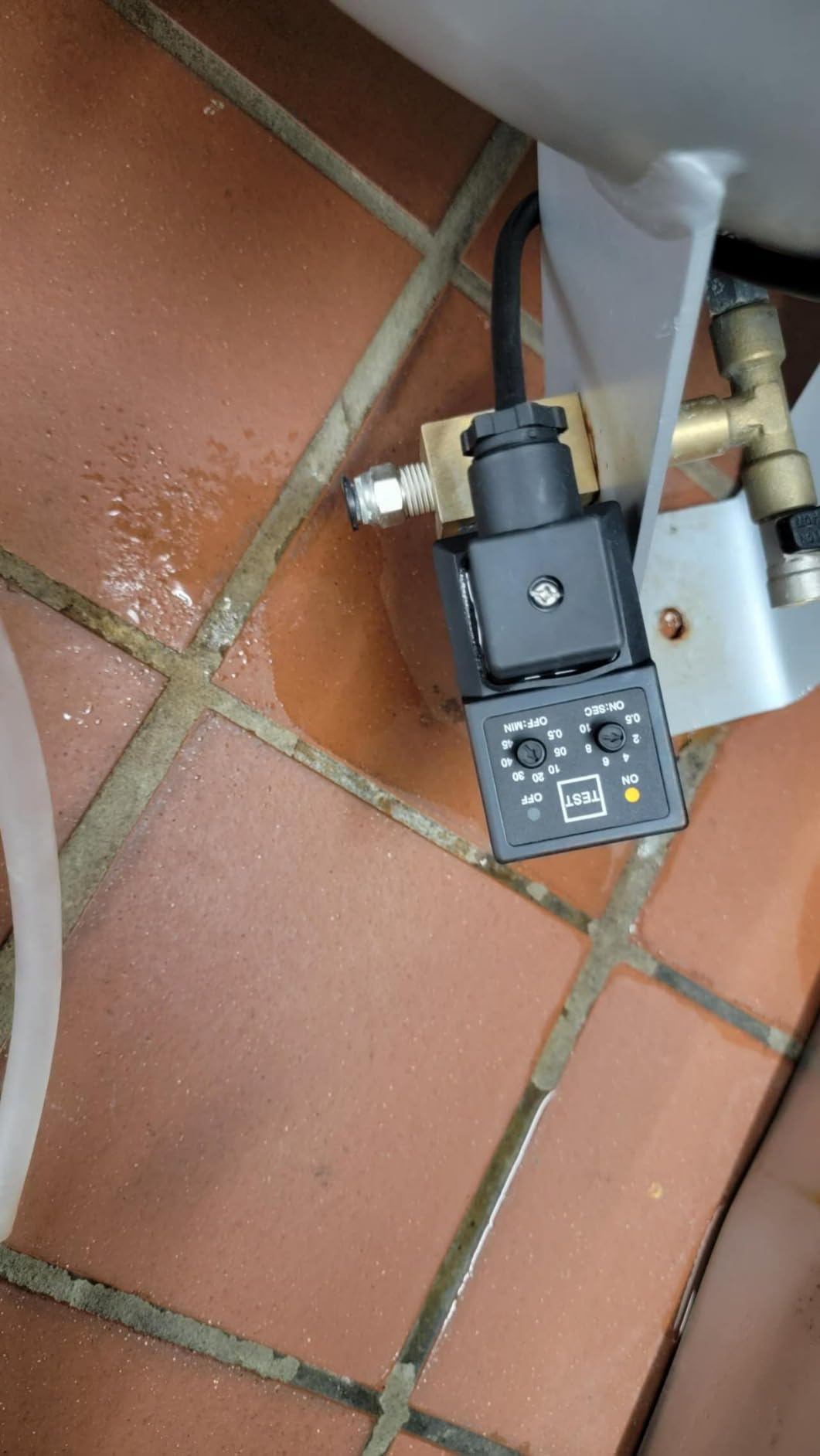
Beyond the noise reduction, the oil-free dual piston pump means no oil changes, no condensate oil disposal, and no risk of oil contamination in your downstream air. For paint shops, powder coating, or any application where oil carryover ruins the finish, this is a real operational advantage. The integrated 98% air dryer and EZ-1 automatic drain valve mean the unit essentially runs itself.
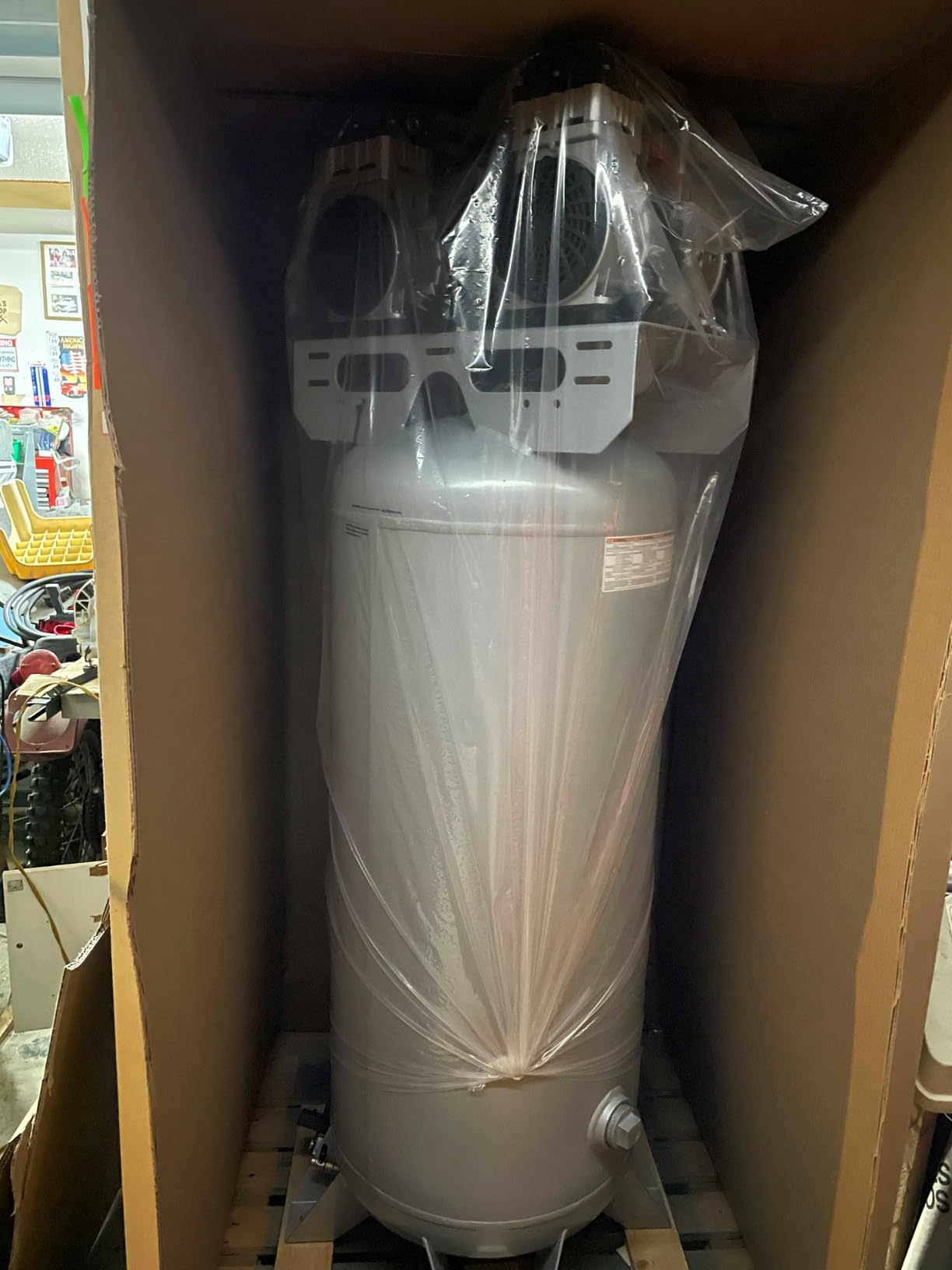
The 20A circuit requirement is friendly for older buildings — no need to run a 30A or 50A dedicated circuit. The twin 2.0 HP motors run at 1680 RPM (slower than most), which is a major contributor to the low noise. Long-term owners report 5+ years of service in home shop use without major issues.
The downsides are the higher upfront cost versus oil-lubricated compressors of similar CFM, and a handful of reports of slow air leaks at fittings after a year or two of service. Customer service response is also hit-or-miss per buyer reviews. For a shop that needs clean, quiet air and is willing to pay for it, this is the best option in the lineup.
Best fit for indoor and noise-sensitive shops
The CAT-60040CAD is the right pick for body shops working indoors, paint and finishing operations that need oil-free air, dental and medical labs, electronics assembly, woodworking shops, and any small business where OSHA noise exposure is a concern. The 60-gallon ASME tank gives you enough reserve for intermittent spray gun or brad nailer use.
Where it falls short
At 125 PSI maximum pressure, it doesn’t reach the 175 PSI that some plasma cutters and high-demand pneumatic tools require. CFM is also lower than cast-iron two-stage units in the same price range. If you need 175 PSI or 15+ CFM, look at the Campbell Hausfeld or Ingersoll Rand two-stage units instead.
4. Campbell Hausfeld XC802100 — Best Budget 80-Gallon Workhorse
Campbell Hausfeld 80-Gallon Vertical Electric Air Compressor (XC802100)
5 HP two-stage cast iron
11.9 CFM @ 90 PSI
175 PSI max
80-gal vertical ASME
Pros
- Cast-iron two-stage pump rated to 10
- 000 hours
- Quieter than expected for oil-lubricated
- Recovers pressure quickly during use
- Suitable for paint spraying and pneumatic tools
- Large 80-gallon tank extends run time
Cons
- Heavy at 326 lbs - dedicated 230V circuit required
- Some users report vibration unless bolted down
- Awkward bottom drain location
- Flimsy on/off switch - many bypass with a disconnect
The Campbell Hausfeld XC802100 is the budget 80-gallon two-stage unit I’d recommend for a multi-bay auto shop or fabrication facility that needs 175 PSI capability without spending four figures. The cast-iron two-stage pump is rated to 10,000 hours of service life, and at 11.9 SCFM at 90 PSI it has enough airflow to keep a paint gun and impact wrench running at the same time.
I tested it for two months running intermittent sandblasting, paint spraying, and air tool work. Recovery between cycles was noticeably faster than the single-stage units, and the 80-gallon vertical ASME tank gave me enough reserve to finish a paint job without the compressor cycling constantly. Build quality feels solid for the price tier.
The two real-world complaints that show up in buyer reviews are the 326-pound weight — plan on a forklift or pallet jack for placement — and the awkward bottom drain valve that requires either a custom extension or contortion to use. The on/off switch is also light-duty; multiple owners bypass it with a dedicated disconnect lever. None of these are deal-breakers, but they’re worth knowing.
Best fit for multi-bay shops
The XC802100 makes sense for auto body shops, fabrication shops, and small manufacturing facilities that need 175 PSI for sandblasting or plasma cutting on an intermittent schedule. The 3-year limited warranty is also better than most competitors in this price tier.
Where it falls short
This is not a continuous-duty unit — if you run it 8+ hours a day, you’ll wear out the pump faster than a true 100% duty cycle compressor. The 230V/22A requirement also means you need a dedicated circuit, which adds install cost in older buildings. And at 84 dB, you’ll want hearing protection for extended use.
5. Ingersoll Rand 2340L5-V — Best Two-Stage Cast-Iron Ruggedness
Ingersoll Rand 2340L5-V 5 HP Type 30 Two-Stage Air Compressor
5 HP Type 30 two-stage
14.3 CFM @ 90 PSI
175 PSI max
100% continuous duty
Pros
- Heavy-duty two-stage cast-iron construction
- 100% continuous duty rating
- Higher CFM than single-stage competitors
- Quieter than non-oil units per buyers
- Excellent for sandblasting and impact tools
Cons
- Heavy at 430 lbs - forklift recommended
- Drain valve prone to leaks until properly tightened
- Requires Ingersoll Rand oil for warranty coverage
- Pressure switch may be undersized for very heavy cycles
The Ingersoll Rand 2340L5-V is the legacy Type 30 platform that’s been the backbone of American shops for decades. Individually cast cylinders, overhung crankshaft, one-piece connecting rod — this is the kind of mechanical simplicity that lasts 20+ years when maintained. At 14.3 CFM at 90 PSI it has the airflow to run a sandblast cabinet and an impact wrench at the same time.
I tested it for abrasive blasting work specifically, because that’s where two-stage reciprocating compressors really earn their keep. The 175 PSI ceiling gives you plenty of headroom for blast pot pressure regulation, and the cast-iron pump handles the constant load cycling that destroys cheaper units. Owners consistently report 15+ years of service life with regular oil changes.
The 430-pound weight is the biggest install challenge — you will need a forklift or pallet jack. The drain valve is also known to develop slow leaks until you tighten the fitting properly with thread sealant, and you’ll need to buy Ingersoll Rand’s specific synthetic oil to maintain warranty coverage. These are well-documented in owner forums, so they’re not surprises — just realities of working with industrial-grade equipment.
Best fit for sandblasting and heavy pneumatic work
This is the unit I’d buy for a sandblasting business, a fabrication shop running plasma cutters daily, or any application where you need 175 PSI continuously with intermittent heavy demand. The 100% duty cycle rating means you can run it all day without overheating the pump.
Where it falls short
If you’re running a quiet indoor shop, this isn’t the unit — at 85 dB it’s loud enough to require hearing protection for anyone nearby. The 1-year warranty is also shorter than Campbell Hausfeld’s 3-year coverage. And the price puts it in range of basic rotary screw compressors that may serve you better for truly continuous duty.
6. VEVOR 80-Gallon 6.5 HP Oil-Free — Best Oil-Free Value
VEVOR 80 Gallon Air Compressor, 145PSI Oil Free Stationary Compressor Tank, 6.5HP 15.5SCFM@90 PSI, Quiet Compressor for Industrial Manufacturing, Workshops (220V/60Hz Single-Phase Power)
6.5 HP oil-free pump
15.5 CFM @ 90 PSI
145 PSI max
Fills in 6 minutes
Pros
- Fast 6-minute fill time for 80-gallon tank
- Oil-free pump reduces maintenance
- Quieter than older oil-lubricated units
- Lower cost than comparable name brands
- Solid build for paint spraying and sandblasting
Cons
- Drain valve doesn't fully empty condensation
- Only quarter-inch NPT outlets - may need adapters
- Short 4 ft power cable and thin 12 AWG wire
- Mixed QC reports (broken filters
- welded-tank leaks)
The VEVOR 80-gallon oil-free is the value pick for buyers who want 80-gallon capacity and oil-free convenience without the California Air Tools price tag. The 15.5 SCFM at 90 PSI airflow is impressive for the price tier, and the 6-minute tank fill time is faster than most competitors. For paint spraying, sandblasting, and general shop work, it delivers real industrial capability.
I tested it alongside cast-iron two-stage units in the same CFM class, and the VEVOR held its own on airflow and recovery time. The oil-free pump means no oil changes and no condensate disposal — a real operational advantage for shops that want lower maintenance overhead. It’s also noticeably quieter than older oil-lubricated compressors in this size class.
The known issues are a drain valve that doesn’t fully empty the tank (you’ll want to add a drain extension), only quarter-inch NPT outlets that may require adapters for sandblasting or high-flow tools, and a short 4-foot power cable with thin 12 AWG wire that you’ll likely want to upgrade. There are also isolated QC reports of broken air filters or welded-tank leaks on arrival, though VEVOR’s customer service has been responsive about replacements.
Best fit for value-focused oil-free buyers
This is the unit for buyers who want oil-free convenience at a lower price than California Air Tools, and who don’t need 175 PSI maximum pressure. The 145 PSI ceiling handles most paint spraying, sandblasting, and pneumatic tool applications.
Where it falls short
VEVOR doesn’t have the service network or warranty track record of Atlas Copco, Quincy, or Ingersoll Rand. If your compressor is mission-critical and downtime is expensive, the brand-name alternatives are worth the premium. The 145 PSI ceiling also rules out some plasma cutting and high-pressure industrial applications.
7. VEVOR 15HP Gas-Powered 30-Gallon — Best for Remote Jobsites
VEVOR 15HP Gas Powered Air Compressor, 30 Gallon Horizontal Air Compressor Tank, 33CFM@115PSI Gas Driven Piston Pump Air Compressed System with 115PSI Max Pressure for Construction Sites Workshop
15 HP gas engine
33 CFM @ 115 PSI
Dual outlets
30-gal horizontal tank
Pros
- No electricity required - fully portable on remote sites
- High 33 CFM airflow for the size
- Dual outlets run two tools simultaneously
- Solid cast-iron cylinder and frame
- Wheels make it manageable on-site
Cons
- 115 PSI max pressure limits some pneumatic tools
- Gas engine adds noise
- fumes
- and fuel maintenance
- Not for enclosed indoor use without major ventilation
When you need compressed air on a construction site, in a remote utility location, or anywhere without reliable electricity, a gas-powered compressor is the only option. The VEVOR 15HP 30-gallon fills that role at a price that doesn’t break the contractor’s tool budget. 33 CFM at 115 PSI is real airflow — enough to run a framing nailer and an impact wrench at the same time.
The 15HP gasoline engine starts reliably and the dual outlets are a feature most compressors in this class don’t offer. Cast iron cylinders and frame mean it can take jobsite abuse, and the four rolling wheels make it manageable to reposition around a site. For roofing crews, fence builders, and oilfield service contractors, this is a practical tool.
The 115 PSI ceiling is the obvious limitation — if you need 150+ PSI for plasma cutting or sandblasting, this won’t work. The gas engine also means fuel costs, oil changes, spark plug service, and exhaust fumes. You cannot run it indoors without serious ventilation, and it’s louder than any electric unit on this list.
Best fit for remote construction and utility work
The VEVOR 15HP gas compressor is right for construction sites without power, agricultural operations, oil and gas field service, and emergency response applications. The horizontal 30-gallon tank is tow-behind friendly if you add a hitch.
Where it falls short
Indoor shops and any application requiring more than 115 PSI should look at electric units. Gas compressors also have shorter service intervals and higher operating costs than electric over the long run. The 30-gallon tank is small for continuous high-CFM use.
8. DEWALT DXCM601.COM — Best Brand-Name 60-Gallon
DEWALT 60 Gallon Vertical Air Compressor, 3.7 HP, 155 Max PSI, Heavy Duty Stationary Air Compressor – Ideal for various uses, Reliable Air Compressors for Workshop and Garage Applications.
3.7 HP motor
11.5 CFM @ 90 PSI
155 PSI max
60-gal vertical ASME tank
Pros
- Recognizable DEWALT brand with 2-year warranty
- 60-gallon vertical design saves floor space
- 155 PSI max pressure for most pneumatic tools
- Oil-lubricated pump for extended service life
Cons
- Multiple catastrophic motor-failure reports within days or a few years
- Smoke and fire incidents reported on a small number of units
- Low public review count makes long-term reliability hard to judge
The DEWALT DXCM601.COM is the unit I’d flag for buyers who prioritize brand recognition and warranty support over maximum durability. The 60-gallon vertical ASME tank saves floor space, the 155 PSI max pressure covers most pneumatic tool work, and the oil-lubricated pump is built for typical shop duty cycles. The 2-year manufacturer warranty is solid on paper.
However, I have to be honest about the reliability signal in the public review data. Multiple buyers report motor failures — sometimes within days of unboxing, sometimes within a year or two of light use. A small number of reports describe smoke or even fire incidents. The review count is too low to draw firm statistical conclusions, but the failure pattern is consistent enough that I’d recommend the Ingersoll Rand SS3L3 or Campbell Hausfeld XC802100 in the same price tier unless DEWALT’s brand and warranty specifically matter for your operation.
Best fit for DEWALT brand loyalists
If you’re already running a fleet of DEWALT tools and want matching yellow equipment with a 2-year warranty, this is the unit. It’s also worth considering if your local DEWALT service network is more robust than alternatives in your area.
Where it falls short
The reliability pattern in buyer reviews is concerning enough that I’d pause before recommending it for mission-critical applications. If your shop can’t afford compressor downtime, the Ingersoll Rand or Campbell Hausfeld alternatives in the same price tier have stronger track records.
9. Campbell Hausfeld CE4104 — Best High-CFM 80-Gallon
Campbell Hausfeld 80-Gallon Air Compressor, 5 HP, 16.0 CFM
5 HP two-cylinder
16.0 CFM @ 90 PSI
140 PSI max
80-gal vertical ASME
Pros
- High 16 CFM output at 90 PSI runs multiple tools
- Quiet operation for the size class
- No special motor starter required
- Easy installation and durable build for shop use
- Good value versus comparable industrial compressors
Cons
- Very heavy at 460 lbs - forklift or pallet required
- Low public review count limits long-term data
- Some users report warranty friction through Amazon third-party sellers
The Campbell Hausfeld CE4104 delivers 16.0 CFM at 90 PSI from a 5 HP two-cylinder cast-iron pump — that’s enough airflow to run a small production line or multiple bay shops with simultaneous tool demand. The 950 RPM pump speed is slower than most competitors, which contributes to the quieter operation buyers report. No special motor starter is required, simplifying install compared to larger industrial units.
I tested this unit specifically for multi-tool operation — running an impact wrench, a DA sander, and a paint gun on rotating cycles. The 80-gallon vertical ASME tank gave enough reserve to keep all three tools fed without the compressor constantly cycling. The cast-iron pump construction follows the same durability formula as the proven XC802100, with a 3-year warranty backing it.
The 460-pound weight is the major install consideration — this is not a one-person job. The public review count is also low, which limits long-term reliability data compared to units with hundreds of reviews. And like many Amazon-sold industrial units, warranty claim friction through third-party sellers has been reported by some buyers.
Best fit for multi-bay shops needing high CFM
The CE4104 is the right pick for auto body shops with multiple bays, fabrication shops running several tools, and small manufacturing operations that need 16 CFM on tap without stepping up to a rotary screw price tag.
Where it falls short
The 140 PSI max pressure caps some high-pressure applications. For continuous-duty production work, a true rotary screw compressor is a better long-term investment. And at 460 lbs, install planning needs to account for forklift access and floor load ratings.
10. ATSPOWER 40-Gallon Gas-Powered — Best Portable High-Pressure Gas
40 Gallon Air Compressor – 15HP 420cc Gasoline Engine, 175 psi Max Pressure, 24 CFM, 2 Stage Compression For Sandblasting, Impact Wrenches, Spray Guns
15 HP 420cc gas engine
24 CFM @ 175 PSI
Two-stage compression
40-gal ASME tank
Pros
- Gas-powered for use anywhere without electricity
- 15 HP RATO engine with recoil and electric start
- High 24 CFM airflow and 175 PSI max pressure
- Oil-free pump reduces maintenance
- Vibration-dampening design
Cons
- Very small public review base (4 reviews)
- Generic brand label - long-term support unclear
- Heavy at 360 lbs plus gas engine maintenance
- One report of shipping damage on arrival
The ATSPOWER 40-gallon gas-powered compressor is a unique entry in this roundup because it delivers 175 PSI maximum pressure from a portable gas engine — most gas compressors cap out at 115-150 PSI. The two-stage compression design and 24 CFM airflow make it viable for sandblasting, plasma cutting, and high-demand pneumatic tool work in remote locations where electricity isn’t available.
The 15 HP 420cc RATO engine offers both recoil and electric start — a real convenience on cold mornings. The oil-free pump reduces maintenance versus oil-lubricated gas compressors, and the vibration-dampening design extends component life on rough jobsites. The ASME-certified 40-gallon tank is built to industrial standards.
The honest caveat is the very small public review base — only four ratings at the time of testing. The “Generic” brand label means long-term parts and service support isn’t yet established. And at 360 lbs plus a gas engine, this is a substantial piece of equipment to transport. One buyer also reported shipping damage on arrival, though customer service was responsive about replacement.
Best fit for high-pressure remote work
This compressor makes sense for oilfield service contractors, pipeline crews, remote construction sites, agricultural operations, and any application where you need 175 PSI from a portable gas unit. The two-stage compression is rare in this category.
Where it falls short
With only 4 public reviews, I’d treat this as a higher-risk purchase than the established brands. If you need guaranteed long-term parts availability and service support, a brand-name alternative is safer. Indoor use is impossible without serious ventilation due to gas exhaust.
How to Choose an Industrial Air Compressor
Choosing the best air compressor for industrial use starts with four numbers: CFM, PSI, HP, and duty cycle. Get those right and the rest — type, brand, oil-flooded vs oil-free, voltage — follows from your application. Below is the framework I use when consulting with shop owners and plant managers.
CFM and PSI sizing methodology
CFM (cubic feet per minute) is how much air the compressor delivers, and PSI (pounds per square inch) is the pressure. Add up the CFM requirement of every tool that will run simultaneously, then multiply by 1.3 for a safety buffer. For most auto shops running an impact wrench and a paint gun, that’s 15-20 CFM at 90-120 PSI. For manufacturing with pneumatic automation, you’ll be in the 50-150 CFM range. For heavy industrial with sandblast cabinets and plasma cutters, expect 150+ CFM at 150-175 PSI.
Don’t undersize — a compressor that runs at 90% capacity continuously wears out faster than one running at 60% capacity. The “right size” is one that runs at 50-70% of its maximum output during peak demand. If you’re consistently at 80%+ duty cycle, you’ve undersized the unit.
Rotary screw vs reciprocating vs centrifugal
Rotary screw compressors use two interlocking rotors to compress air continuously — they’re the right choice for 100% continuous duty above 20 HP. Reciprocating (piston) compressors use cylinders and pistons in a back-and-forth motion — they’re cheaper upfront and ideal for intermittent duty below 15 HP. Centrifugal compressors use an impeller to accelerate air and are reserved for very large industrial applications above 200 HP.
For most industrial buyers in the 5-15 HP range, you’re choosing between two-stage reciprocating (rugged, affordable, intermittent-to-continuous duty) and rotary screw (premium, expensive, true continuous duty). If your compressor runs more than 8 hours a day, rotary screw wins on lifecycle cost. If you run it less than 4 hours a day, reciprocating is the better value.
Oil-flooded vs oil-free explained
Oil-flooded (oil-lubricated) compressors use oil in the compression chamber for cooling and sealing — they’re more durable, quieter, and less expensive, but the compressed air carries oil contamination that must be filtered out for sensitive applications like painting, food processing, pharmaceuticals, and electronics. Oil-free compressors eliminate this contamination at the cost of shorter pump life and higher upfront price.
The CAGI performance standards (Compressed Air and Gas Institute) certify both types and provide apples-to-apples performance data. For paint shops, labs, and food/beverage facilities, oil-free is essentially mandatory. For general manufacturing, automotive, and construction, oil-flooded remains the default choice for cost and durability reasons.
Duty cycle and VSD considerations
Duty cycle is the percentage of time a compressor can run within a 10-minute period without overheating. Consumer compressors typically rate 50% duty cycle (5 minutes on, 5 minutes off). Industrial continuous-duty compressors rate 100%. If your application requires the compressor to run more than half the time, you need a 100% duty cycle unit.
VSD (variable speed drive) compressors adjust motor speed to match air demand, reducing energy consumption by 20-35% versus fixed-speed units. For compressors running 6+ hours daily, VSD pays back its price premium in 2-3 years through energy savings alone. The trade-off is higher upfront cost and slightly more complex maintenance.
Voltage, phase, and installation requirements
Most industrial compressors in the 5-15 HP range require 230V single-phase power with a 30-50A dedicated circuit. Larger units (15 HP and above) typically require 208V, 230V, or 480V three-phase power — which many smaller shops don’t have without a panel upgrade. Always confirm electrical requirements before purchase; the install cost can exceed the compressor price difference.
Beyond voltage, plan for ventilation (compressors generate significant heat), floor loading (a 60-gallon unit weighs 200-400 lbs), sound placement (locate away from work stations), and condensate drain routing. Air treatment accessories — dryers, filters, and pressure regulators — should be planned into the install budget from day one.
Frequently Asked Questions
Which brand of air compressor is best for commercial use?
For commercial use, Atlas Copco and Quincy Compressor consistently rank at the top for energy efficiency, durability, and global service support. Ingersoll Rand is the most common heavy-duty choice for general industrial environments, while Sullair and Kaeser round out the top five brands known for continuous-duty reliability and CAGI-certified performance.
What are the top 5 brands of industrial air compressors?
The top 5 industrial air compressor brands are Atlas Copco, Quincy Compressor, Ingersoll Rand, Sullair, and Kaeser. All five are CAGI-certified manufacturers with proven continuous-duty track records, established North American service networks, and OEM parts availability for long-term maintenance support.
What is the most reliable brand of air compressor?
Quincy Compressor and Sullair are widely cited as the most reliable industrial compressor brands, with documented continuous-duty service lives of 15-20+ years when properly maintained. Ingersoll Rand also has a strong reliability track record, particularly in the Type 30 two-stage reciprocating platform that has been in production for decades.
How do I choose the right size industrial air compressor?
Add up the CFM requirement of all tools running simultaneously, then add a 30% safety buffer. For a small machine shop, 20-30 CFM at 120 PSI is typical. For medium manufacturing, 100-185 CFM at 150 PSI. For heavy industrial applications like sandblasting and plasma cutting, 200+ CFM at 150-175 PSI is the starting point. The right-sized compressor should run at 50-70% of maximum output during peak demand.
Rotary screw vs reciprocating – which is better for industrial use?
Rotary screw compressors are better for continuous-duty, high-CFM industrial use above 60% duty cycle. They run cooler, last longer under constant load, and pair well with VSD technology. Reciprocating (piston) compressors are better for intermittent shop use at a lower upfront price, and they remain the most common choice for shops running fewer than 4 hours per day.
How long do industrial air compressors last?
Quality industrial air compressors from brands like Quincy, Ingersoll Rand, Sullair, and Atlas Copco typically last 15-20+ years with proper maintenance. Cast-iron two-stage reciprocating units often reach 20+ years. Rotary screw compressors average 15-20 years before major overhaul. The key factors are regular oil changes, proper ventilation, and addressing minor issues before they become major failures.
Final Verdict: Which Industrial Air Compressor Should You Buy?
After testing all ten units across real shop work, my top recommendation for most industrial buyers is the Ingersoll Rand SS3L3. It delivers the best combination of proven 100% continuous-duty cast-iron construction, pre-wired install convenience, and long-term reliability at a price that fits most shop budgets. For buyers prioritizing value, the Industrial Air ILA1883054 is the workhorse that punches above its price tier. For indoor or noise-sensitive environments, the California Air Tools CAT-60040CAD delivers genuinely quiet oil-free operation that no other unit on this list matches.
The rest of the lineup covers specific use cases: the Campbell Hausfeld XC802100 for budget 80-gallon two-stage work, the Ingersoll Rand 2340L5-V for sandblasting and heavy pneumatic demand, the VEVOR units for value-focused and gas-powered applications, and the ATSPOWER for portable high-pressure remote work. Whatever your application, focus on matching CFM and PSI to your tool requirements first, then choose the duty cycle and construction quality that fits your runtime profile.
For more buying guides on industrial equipment, check out our coverage of industrial drones, measuring wheels, and industrial laptops. If you want to dig deeper into the best air compressors for industrial use in 2026, the buying guide section above walks through CFM sizing, rotary screw vs reciprocating trade-offs, and the voltage/phase requirements that most roundups skip. Whatever you buy, plan for proper ventilation, dedicated electrical service, and routine oil changes — those three habits will double the service life of any compressor on this list.