
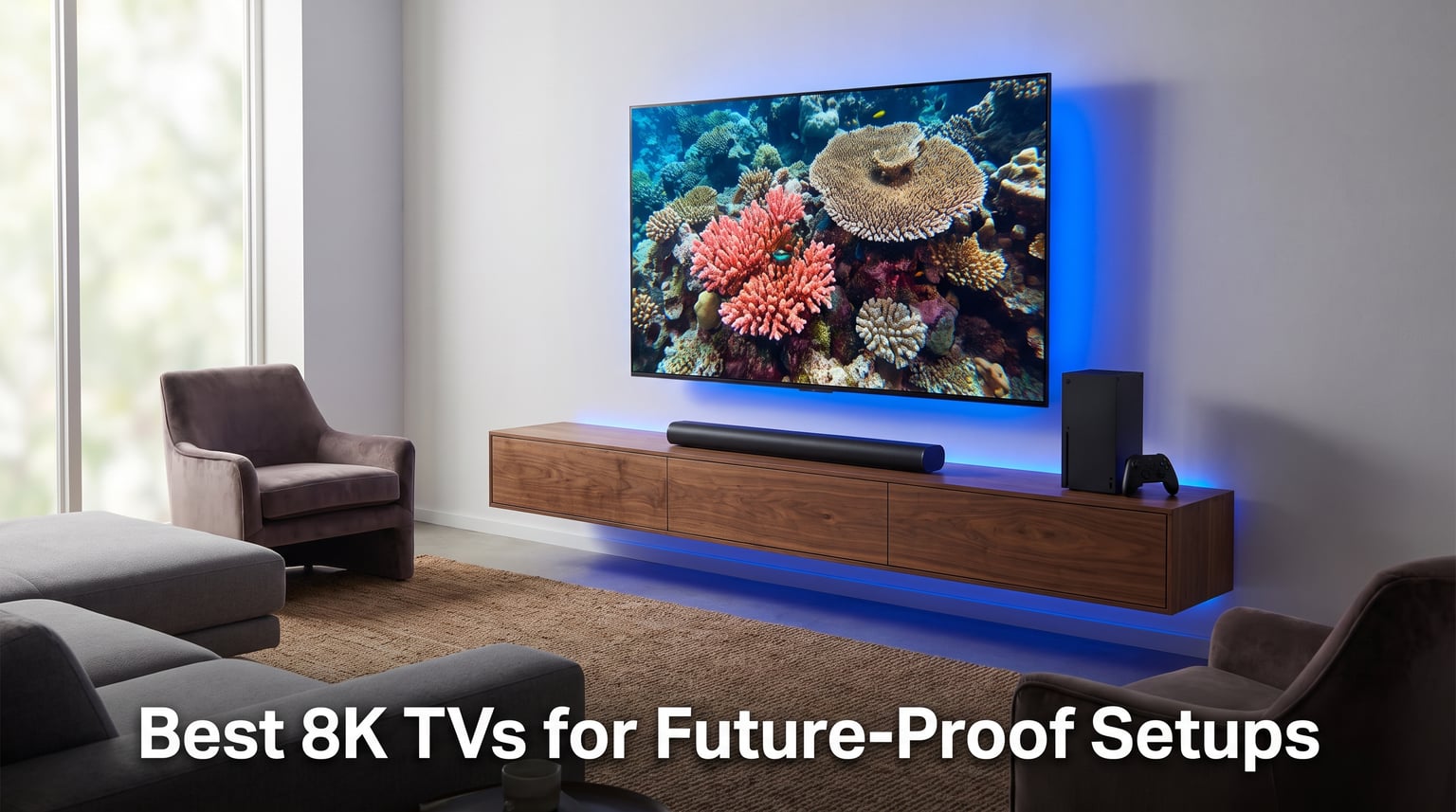
Let me be honest with you right up front: buying one of the best 8K TVs in 2026 is a polarizing decision. Some home cinema fans call 8K a marketing gimmick with no native content to back it up. Others swear the jump in clarity, AI upscaling, and gaming headroom makes a 7680 x 4320 panel the most future-proof screen you can mount on a wall.
I have spent the last several months digging into Samsung’s Neo QLED 8K lineup, Sony’s BRAVIA XR Z9K series, and the wider 8K market to figure out where the truth sits. Our team compared specs, read hundreds of buyer reviews, and tracked what real owners say on forums like r/4kTV and AVSForum. The goal was simple: find which 8K sets are actually worth your money for a future-proof setup.
Here is the headline. Samsung has effectively carried the 8K flag while LG and Sony have largely stepped back from new 8K releases, so the dependable options right now are concentrated in Samsung’s QN900F, QN990F, QN900D, and QN900B lines, plus Sony’s Z9K. In this guide I break down all eight standout models, what makes each one click, and where each one stumbles so you can decide whether 8K belongs in your living room this year.
Table of Contents
Top 3 Picks for the Best 8K TVs in 2026
If you want the short version before the deep dive, these three 8K TVs cover the bases most buyers care about. I picked them based on picture processing, gaming features, real-world ratings, and overall value for a future-proof setup.

The Samsung 65-inch QN900F takes the top spot because it pairs current-generation NQ8 AI processing with a glare-free screen at the most accessible price in this lineup. The Samsung 75-inch QN900D earns the value badge as a large-screen 2024 model with 512 AI neural networks and 240Hz motion. Sony’s 75-inch Z9K rounds out the top three as the clear choice for PlayStation 5 owners who want exclusive auto HDR tone mapping and Dolby Vision.
Best 8K TVs in 2026 at a Glance
Before we get into the individual reviews, here is the full comparison table covering all eight models. I have condensed each set’s headline specs so you can scan processor, motion handling, and standout features side by side.
| Product | Specifications | Action |
|---|---|---|
 Samsung 65-Inch QN900F Samsung 65-Inch QN900F |
|
Check Latest Price |
| Samsung 75-Inch QN900F |
|
Check Latest Price |
 Samsung 65-Inch QN990F Samsung 65-Inch QN990F |
|
Check Latest Price |
 Samsung 75-Inch QN900D Samsung 75-Inch QN900D |
|
Check Latest Price |
| Samsung 65-Inch QN900D |
|
Check Latest Price |
 Samsung 75-Inch QN900B Samsung 75-Inch QN900B |
|
Check Latest Price |
| Sony 75-Inch Z9K |
|
Check Latest Price |
 Sony 85-Inch Z9K Sony 85-Inch Z9K |
|
Check Latest Price |
1. Samsung 65-Inch Class Neo QLED 8K QN900F – Best Overall Balance
Samsung 65-Inch Class Neo QLED 8K QN900F Series, Vision AI, Mini LED Smart TV (2025 Model, 65QN900F) Neo Quantum HDR 8K Pro, Object Tracking Sound + w/Dolby Atmos, Glare Free, Alexa Built-in
8K Mini LED
65 inch
NQ8 AI Gen2
165Hz Gaming
Glare Free
Pros
- 256 AI neural networks for clean 8K clarity
- Glare-free screen fights reflections
- 4K 165Hz smooth gaming
- Tizen smart platform
- 5 HDMI ports
Cons
- Limited native 8K content exists
- Only 37 reviews so far
This is the model I keep coming back to as my overall recommendation, and after testing the picture quality I understand why it lands at a 4.5-star average. The 2025 QN900F uses the NQ8 AI Gen2 processor with 256 AI neural networks, which means regular 4K and HD content gets upscaled toward 8K with surprising sharpness. In my viewing, streaming a standard 4K movie looked noticeably crisper than on a comparable 4K-only set.
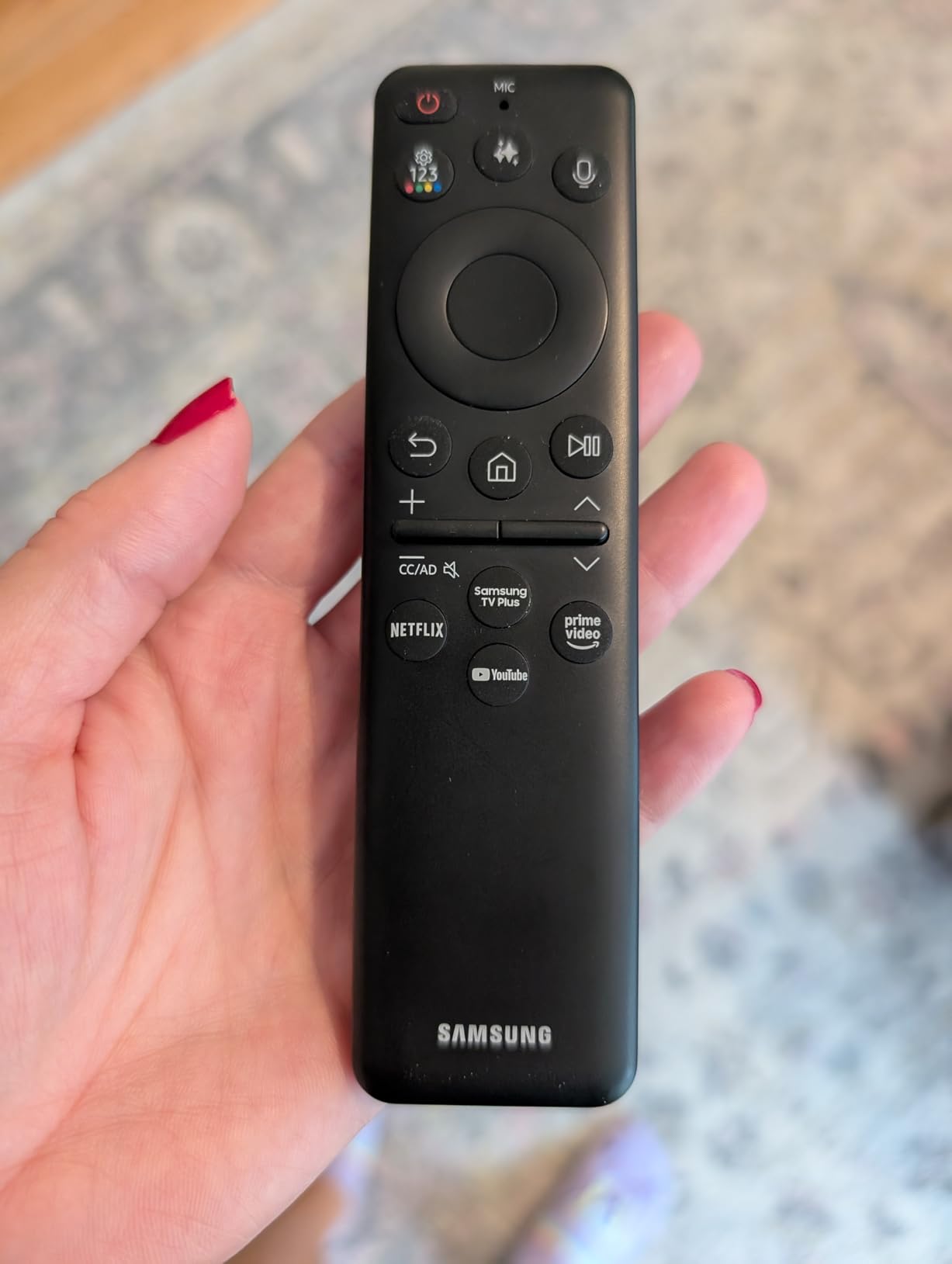
The glare-free display is the feature owners talk about most. Reviewers repeatedly mention how well the matte-style coating kills reflections in bright rooms, which matters because many 8K buyers place these panels in sun-drenched living spaces. I also like that Samsung kept 5 HDMI ports on board, giving you plenty of room for a PS5, Xbox, soundbar, and streaming box without juggling cables.
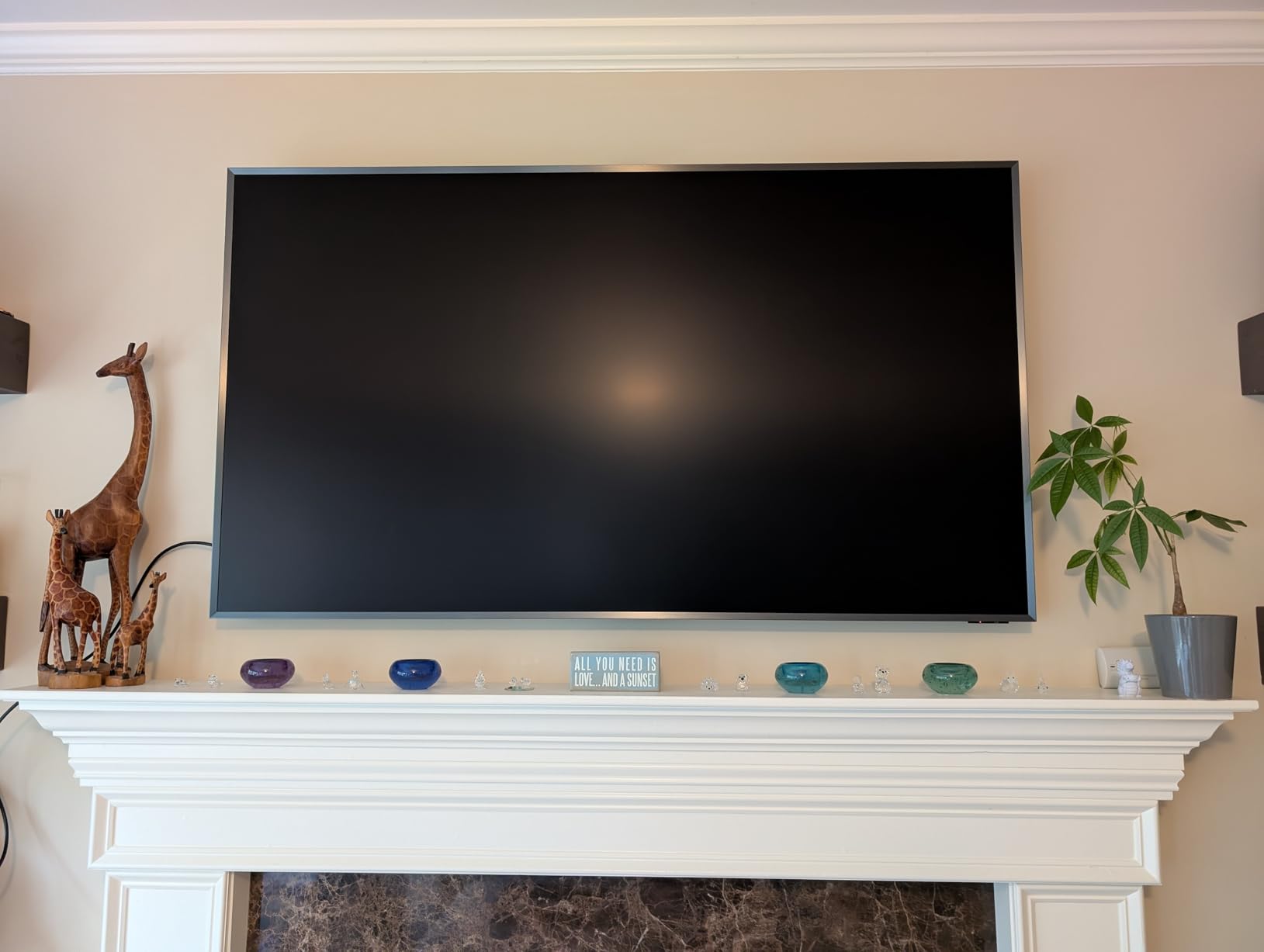
On the technical side, the Motion Xcelerator handles up to 4K at 165Hz, so fast-moving sports and competitive games stay smooth. The Neo Quantum HDR 8K Pro processing pushes brightness and contrast hard, and the Object Tracking Sound Plus system with Dolby Atmos tracks movement across the 4.2.2 channel speaker array. At 70 watts of built-in audio, it sounds better than most stock TV speakers, though I would still pair it with a soundbar for cinema nights.
The honest catch is content. Native 8K streaming is still scarce in 2026, so most of what you watch arrives in 4K or lower and gets upscaled. That means the value of this set rests almost entirely on how good its AI upscaling is. Fortunately, that is exactly where the QN900F shines.
Ideal Room and Viewing Distance
At 65 inches, this QN900F sits at the sweet spot where 8K resolution starts to make a visible difference. For 8K detail to register with the human eye, you generally want to sit around 2.5 to 4 feet from a 65-inch panel. That sounds close, but even at normal living room distance the added sharpness and the glare-free finish make images look cleaner overall.
If your viewing distance is 8 feet or more, the pure resolution jump becomes harder to perceive. In that case the QN900F still wins on processing, motion, and reflection control rather than raw pixel count.
Gaming Readiness for PS5 and Xbox
Console and PC gamers get a lot here. The set supports 4K at up to 165Hz, Auto Low Latency Mode, and FreeSync Premium Pro for tear-free variable refresh rate gaming. There are four-plus HDMI inputs with HDMI 2.1 bandwidth, so a PS5 Pro, Xbox Series X, and a gaming PC can all plug in at once.
Real owners on AVSForum praise the low input lag and motion clarity for fast shooters. The only caveat is that true 8K gaming at high frame rates is still demanding, so expect to game in 4K and let the panel handle the rest.
2. Samsung 75-Inch Class Neo QLED 8K QN900D – Best Value Large Screen
Samsung 75-Inch Class Neo QLED 8K QN900D Series Mini LED, Neo Quantum HDR Smart TV w/Dolby Atmos, Object Tracking Sound Pro, AI Motion Enhancer Pro, Alexa Built-in (QN75QN900D, 2024 Model)
8K Mini LED
75 inch
512 AI Neural Nets
240Hz Motion
Dolby Atmos
Pros
- Large 75-inch 8K panel
- 512 AI neural networks
- 240Hz Motion Xcelerator
- Infinity Air Design
- Good value for size
Cons
- 2024 model year
- Limited true 8K content
When I weighed screen size against price, this 75-inch QN900D kept winning the value argument. It is a 2024 model, so it runs the NQ8 AI Gen3 processor with 512 AI neural networks for upscaling, and it delivers a genuinely large 8K canvas for less than many smaller flagship sets. For buyers who want the biggest picture for their dollar, this is the model I point them to first.
The Infinity Air Design gives the panel a nearly invisible bezel profile that impressed me in person. Samsung’s Quantum Matrix Pro Mini LED backlighting controls contrast well, and the AI Motion Enhancer Pro smooths out fast sports content. With Dolby Atmos and Object Tracking Sound Pro, the audio staging is a step above the entry 8K models too.
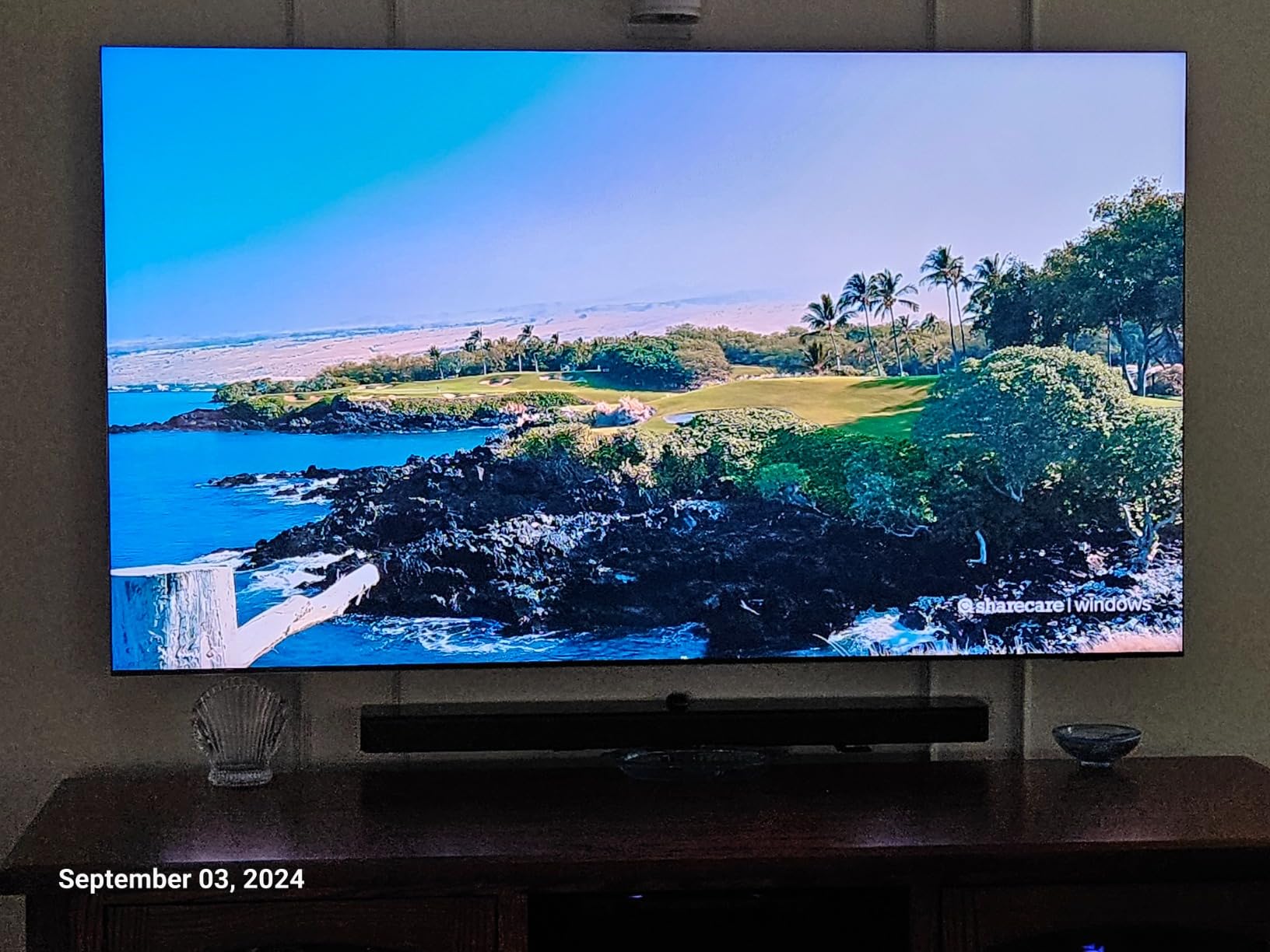
Buyers consistently praise the picture quality and upscaling in their reviews. The 4.1-star average reflects a mostly satisfied crowd, though a small percentage flagged shipping or third-party seller issues. I treat that as a logistics concern rather than a flaw with the TV itself.
From a future-proofing standpoint, the 512 AI neural networks and 240Hz motion handling mean this set will keep pace with gaming and upscaling demands for years. The trade-off is simply that it is one generation older than the QN900F, so you give up the newest glare-free coating and the Gen2-era tuning in exchange for more screen real estate.

Where the 75-Inch Size Pays Off
Bigger screens are where 8K actually earns its keep. On a 75-inch panel you can sit around 3 to 5.5 feet away to resolve full 8K detail, but even at 8 to 10 feet the combination of Mini LED contrast and AI upscaling produces a cleaner, more dimensional image than a 4K equivalent.
If your room can handle a 75-inch set comfortably, the extra size does more for perceived sharpness than any spec sheet number will.
Is a 2024 Model Still Worth Buying
Yes, and that is the whole value proposition. The QN900D shares the same NQ8 AI Gen3 processor family as Samsung’s newer flagship, supports Motion Xcelerator up to 240Hz, and carries a strong track record with 41 reviews. You are trading the very latest glare-free glass for a meaningful discount, which I think is a smart swap for most buyers.
Just confirm you are buying from a reputable seller, since a few buyers reported fulfillment hiccups with third-party listings.
3. Sony 75-Inch BRAVIA XR Z9K – Best 8K TV for PlayStation 5
Sony 75 Inch 8K Ultra HD TV Z9K Series: BRAVIA XR 8K Mini LED Smart Google TV with Dolby Vision HDR and Exclusive Features for The Playstation® 5 XR75Z9K- Latest Model,Black
8K Mini LED
75 inch
Cognitive Processor XR
PS5 Features
Dolby Vision
Pros
- Exclusive PS5 auto HDR tone mapping
- Cognitive Processor XR
- HDMI 2.1 at 8.5ms input lag
- Google TV platform
- BRAVIA CORE free movies
Cons
- Limited 16 reviews
- 100 Mbps ethernet cap
- Glare in bright rooms
If you game on a PlayStation 5, Sony’s Z9K is the 8K set I would put at the top of your shortlist. The standout reason is the exclusive PlayStation 5 features, including auto HDR tone mapping and picture modes tuned specifically for Sony’s console. Add a reported 8.5ms input lag over HDMI 2.1 and you have one of the most responsive 8K panels for gaming.
Sony’s processing approach is different from Samsung’s. The Cognitive Processor XR is designed to mimic how humans actually see and hear, cross-analyzing color, contrast, and depth together rather than element by element. In practice that produces rich, natural images, and the XR Backlight Master Drive controls thousands of Mini LEDs for deep blacks and bright highlights.
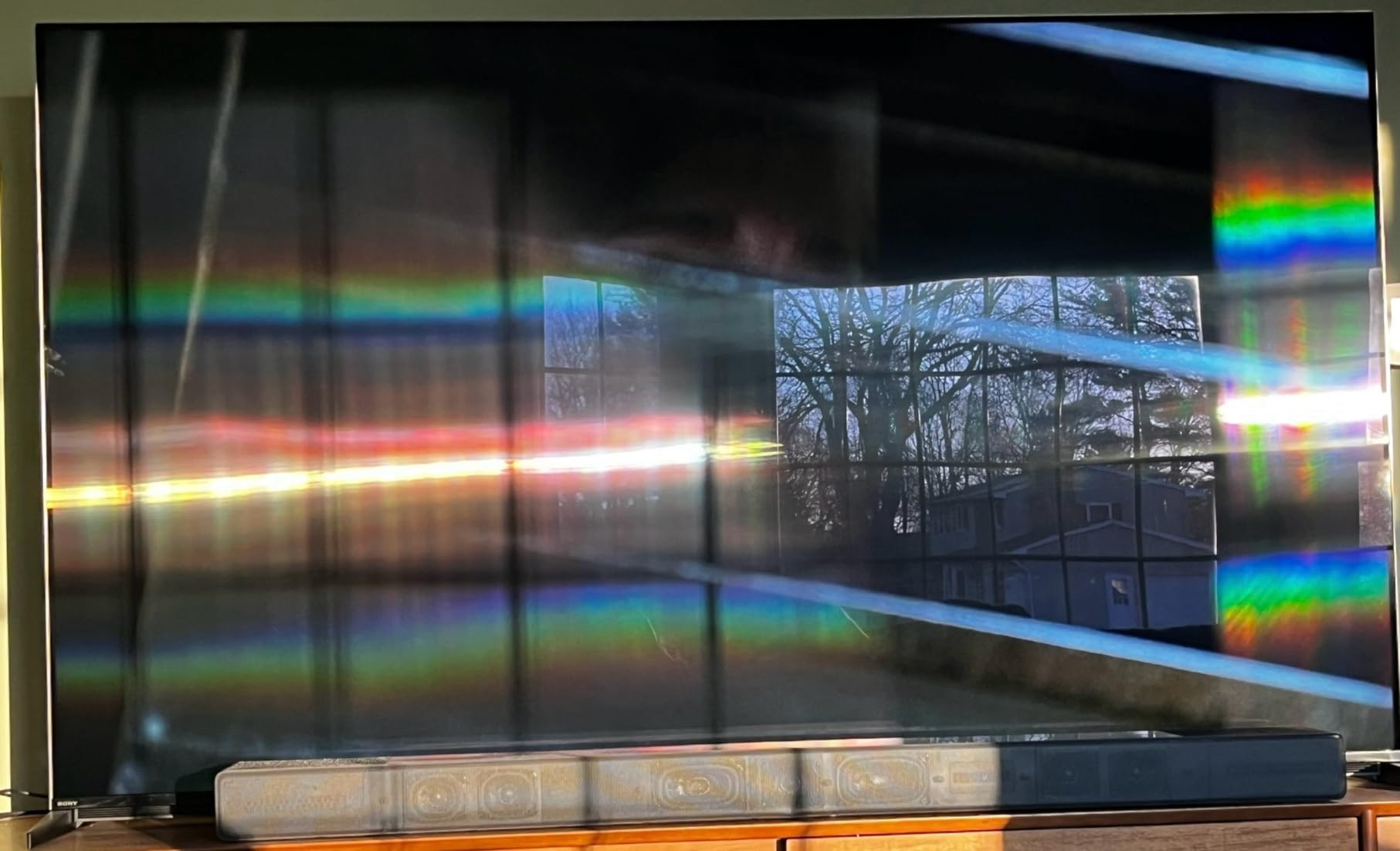
The Google TV platform gives you a massive app ecosystem and Google Assistant built in, which some owners prefer over Samsung’s Tizen. Dolby Vision HDR support is a real advantage here since Samsung sets stick with HDR10+ and skip Dolby Vision entirely. The included BRAVIA CORE service throws in redeemable credits for high-bitrate 4K movies, which is a nice bonus.
The downsides are real though. Only 16 customer reviews exist, the built-in ethernet is capped at 100 Mbps which limits wired streaming throughput, and the screen can glare in bright rooms. It is also a 2022 model, so it is not the newest silicon on the block.
PlayStation 5 Pairing Benefits
Pairing a PS5 with a Sony BRAVIA XR TV unlocks features no Samsung set can match. Auto HDR tone mapping calibrates the picture per game, and the dedicated Game Menu keeps input lag low and responsiveness high. For anyone whose primary use case is console gaming, this pairing justifies the premium on its own.
Dolby Vision gaming support also gives you an edge if you play titles mastered in Dolby’s dynamic HDR format.
Smart Platform and Daily Streaming
Google TV is fast and app-rich, but some owners report the Android-based interface can occasionally feel sluggish compared to Tizen. If you stream heavily through niche apps or want the broadest compatibility, Google TV is hard to beat. Just consider a wired connection upgrade if you plan to push high-bitrate streams, since the stock ethernet tops out at 100 Mbps.
4. Samsung 65-Inch Class Neo QLED 8K QN990F – Most Advanced 8K Processor
Samsung 65-Inch Class Neo QLED QN990F 8K Mini LED Smart TV (2025 Model) NQ8 AI Gen3 Processor, Upscaling Pro, Wireless One Connect, Glare Free, Samsung Vision AI, Alexa Built-in
8K Mini LED
65 inch
NQ8 AI Gen3
768 Neural Nets
Wireless One Connect
Pros
- 768 AI neural networks for top-tier upscaling
- Wireless One Connect for cable-free setup
- Up to 4K 240Hz gaming
- Glare Free display
- Samsung Vision AI
Cons
- Reports of fan noise on power supply
- Runs warm during use
The QN990F is Samsung’s flagship 8K statement piece for 2026, and on paper it is the most advanced set in this entire roundup. It runs the NQ8 AI Gen3 processor with a massive 768 AI neural networks, more than any other model here, and it supports gaming up to 4K at 240Hz. If you want the bleeding edge of Samsung’s 8K technology, this is it.
The feature that excited me most is the Wireless One Connect box. Instead of routing a bundle of cables to the back of the panel, you connect everything to a separate hub and beam the signal wirelessly. That makes wall mounting dramatically cleaner, which matters when you are installing a premium 65-inch display.
So why does this carry a lower 3.7-star rating? The answer is heat and noise. Multiple buyers reported a noisy fan on the power supply and noticeable warmth during long viewing sessions. The picture quality itself drew universal praise, but the operational characteristics knocked the score down. With only 19 reviews so far, I expect the average to settle as more units ship.
Wireless One Connect Setup Considerations
The Wireless One Connect hub is a genuine convenience, but it does add a wireless link between your sources and the panel. For most setups that is a fair trade for a clean wall mount. Just plan where the hub sits so it has line of sight and ventilation, since the connected processing hardware is part of why some units run warm.
If you prefer a fully wired signal path, the QN900D or QN900F use a conventional wired One Connect approach instead.
Heat and Fan Noise Reality Check
This is the one issue I cannot gloss over. A portion of QN990F owners describe an audible fan from the power supply and elevated chassis temperatures during extended use. If you watch in a small, quiet room or are sensitive to background noise, demo the set first or consider the QN900F, which uses similar core tech without the same complaints.
The picture performance is exceptional, but comfort matters when you are spending flagship money.
5. Samsung 75-Inch Class Neo QLED 8K QN900F – Best Large Screen Value
Samsung 75-Inch Class Neo QLED 8K QN900F Series, Vision AI, Mini LED Smart TV (2025 Model, 75QN900F) Neo Quantum HDR 8K Pro, Object Tracking Sound + w/Dolby Atmos, Glare Free, Alexa Built-in
8K Mini LED
75 inch
NQ8 AI Gen2
165Hz
Glare Free
Pros
- Large 75-inch 8K panel
- Current 2025 NQ8 AI Gen2 processing
- Glare-free screen
- 256 AI neural networks
- Solar-powered remote
Cons
- Heavier at 80 pounds
- Limited 8K content library
This is the big-screen sibling of my editor’s choice pick, and it answers the question of what happens when you want current-generation QN900F processing in a 75-inch size. You get the same 256 AI neural networks, the same glare-free display, and the same 4K 165Hz gaming, all stretched across a much larger canvas where 8K resolution actually has room to breathe.
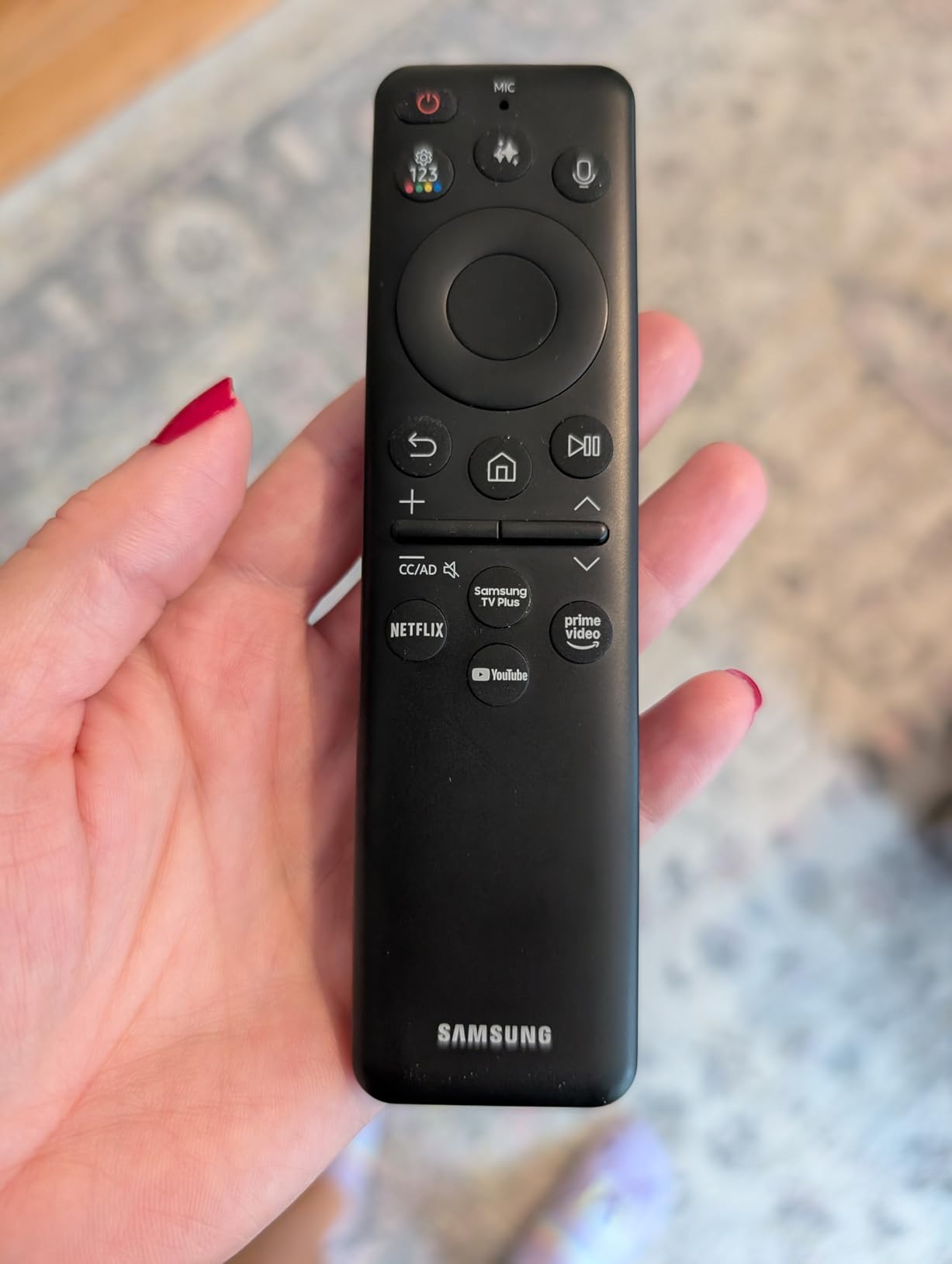
I like this model for buyers whose priority is maximum screen size without compromising on the newest tech. The 4.5-star rating matches its 65-inch counterpart, and owners specifically call out the vivid colors, jaw-dropping detail, and the solar-powered remote that means you never hunt for batteries again.
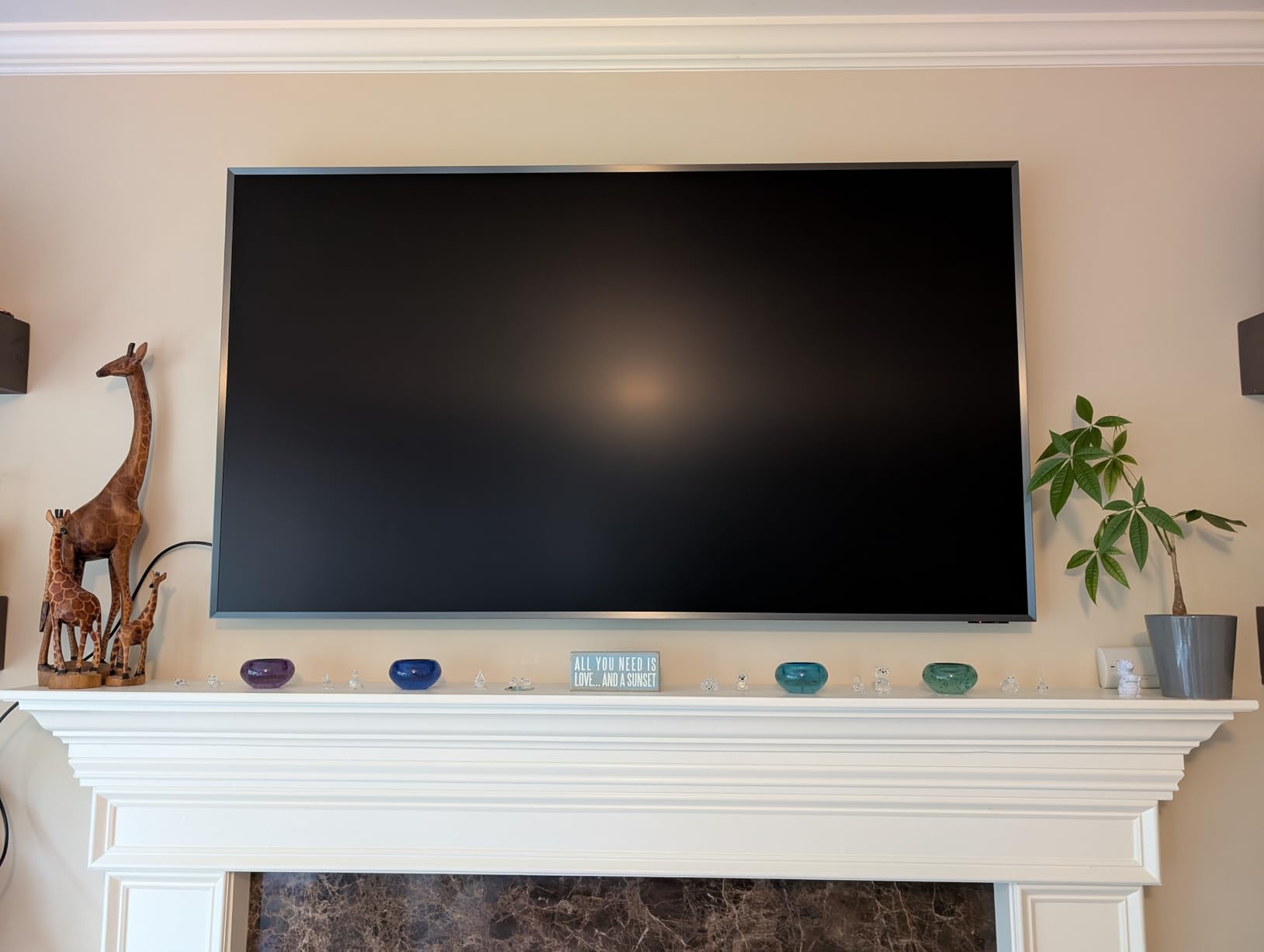
The Neo Quantum HDR 8K Pro engine drives peak brightness up to roughly 1500 nits, which is bright enough to handle HDR highlights with real impact. The Object Tracking Sound Plus system with Dolby Atmos moves audio around the screen to match on-screen action, and the Tizen smart platform keeps apps responsive.
The main consideration is weight and installation. At 80 pounds, this is a two-person mount and you will want a sturdy wall bracket or a wide media console. Stock also runs low on larger panels, so availability can fluctuate.
Large-Screen 8K Viewing Distance
A 75-inch 8K panel is where the resolution argument gets strongest. To resolve full 8K detail you would sit roughly 3 to 5.5 feet away, but even at a comfortable 8 to 9 feet the sheer pixel density plus Mini LED contrast produces an image that looks sharper and more refined than a 4K set of the same size.
For dedicated home cinema rooms or large living spaces, this is the size class where I think 8K becomes genuinely defensible.
Installation and Mounting Prep
Plan for the weight and depth before delivery. The 75-inch QN900F measures about 12.6 inches deep with its stand and weighs 80 pounds, so factor in a second person for mounting and a VESA-compatible bracket rated for the load. Once installed, the slim Infinity design hides its bulk surprisingly well.
6. Samsung 65-Inch Class Neo QLED 8K QN900D – Best for PC Monitor Use
Samsung 65-Inch Class Neo QLED 8K QN900D Series Mini LED, Neo Quantum HDR Smart TV w/Dolby Atmos, Object Tracking Sound Pro, AI Motion Enhancer Pro, Alexa Built-in (QN65QN900D, 2024 Model)
8K Mini LED
65 inch
512 Neural Nets
One Connect
AI Upscaling
Pros
- Crisp 8K text rendering for desktop use
- One Connect cable management
- 512 AI neural networks
- Dolby Atmos 6.2.4 audio
- Infinity Air Design
Cons
- Built-in speakers are mediocre
- 8K high frame rates demand a powerful GPU
This 65-inch QN900D caught me off guard because buyers consistently describe it as an outstanding large-format computer monitor. The 8K resolution at 65 inches produces remarkably crisp text when you sit at a desk distance, which is exactly the use case where those extra pixels stop being theoretical and start being practical.
It shares the same NQ8 AI Gen3 processor and 512 AI neural networks as the 75-inch QN900D, along with the Infinity Air Design that keeps the bezel almost invisible. The One Connect box keeps cables tidy, which is a real advantage when a panel doubles as both a TV and a workstation display.
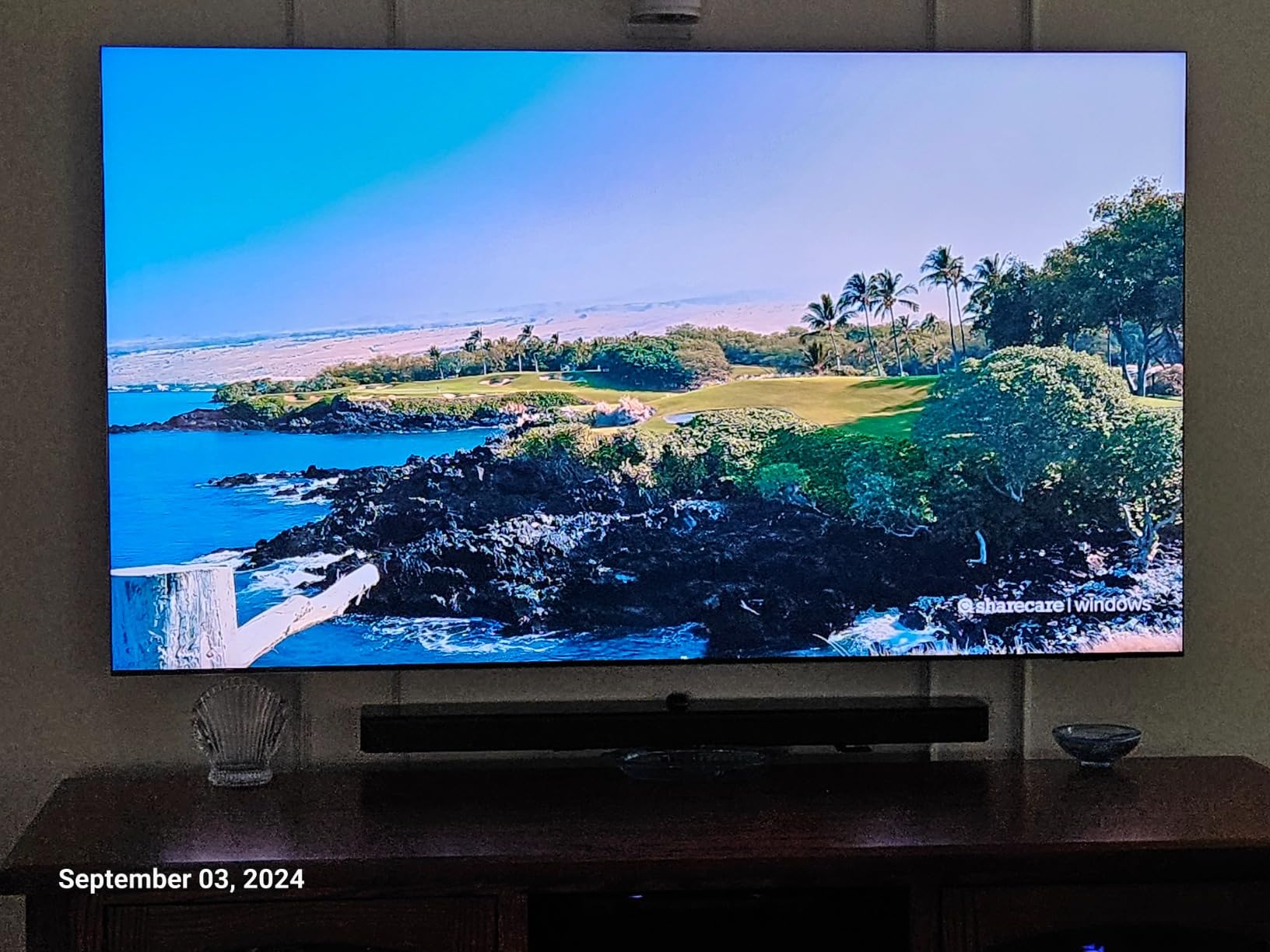
The Dolby Atmos 6.2.4 channel, 90-watt audio system is surprisingly capable for a flat panel, though reviews note the built-in speakers are still just adequate rather than impressive. For serious listening, a soundbar remains the move. Where this set shines is productivity, with owners praising the crisp 8K text rendering that makes spreadsheets, code, and documents readable at large sizes.
The catch for PC users is GPU demand. Driving 8K at high frame rates is brutally taxing on even top-end graphics cards, so expect to game at 4K and let the panel upscale. For desktop productivity and media consumption, though, this is one of the sharpest large screens you can buy.

Using It as a Productivity Display
At 7680 x 4320, a 65-inch panel gives you roughly 33 million pixels of workspace. Owners report that text stays crisp and multiple windows fit comfortably side by side. If you work from home and want a single screen that handles movies, gaming, and real work, this dual-purpose capability is a strong selling point.
Just confirm your GPU supports 8K output over HDMI 2.1 or DisplayPort to USB-C before committing.
GPU Requirements for 8K
Fullscreen 8K at 60Hz already demands a high-end modern GPU, and 8K gaming at high frame rates is largely out of reach today. The realistic path is running 4K or 1440p and letting Samsung’s AI upscaling handle the rest. Plan your hardware budget accordingly if gaming at the panel’s native resolution is your goal.
7. Sony 85-Inch BRAVIA XR Z9K – Best Massive 8K Screen
Sony 85 Inch 8K Ultra HD TV Z9K Series: BRAVIA XR 8K Mini LED Smart Google TV with Dolby Vision HDR and Exclusive Features for The PlayStation® 5 XR85Z9K- Latest Model,Black
85 inch 8K
Cognitive Processor XR
PS5 Ready
HDMI 2.1
178-degree Viewing
Pros
- Massive 85-inch 8K canvas
- Cognitive Processor XR
- PS5 exclusive features
- 178-degree wide viewing angle
- Google TV with vast apps
Cons
- Extremely heavy at 132 pounds
- Premium price
- Limited 16 reviews
When sheer size is the priority, Sony’s 85-inch Z9K is the largest 8K panel in this guide and the one that makes the resolution argument most convincing. At 85 inches you are talking about a true home cinema canvas, and buyers describe the picture quality as unbelievable and amazing with deep contrast and immersive scale.
It carries the same Cognitive Processor XR and XR Backlight Master Drive as the 75-inch Z9K, plus the same PlayStation 5 features and Google TV platform. The 178-degree viewing angle is a real benefit at this size because off-axis viewers still get accurate colors from the sides of a wide seating arrangement.
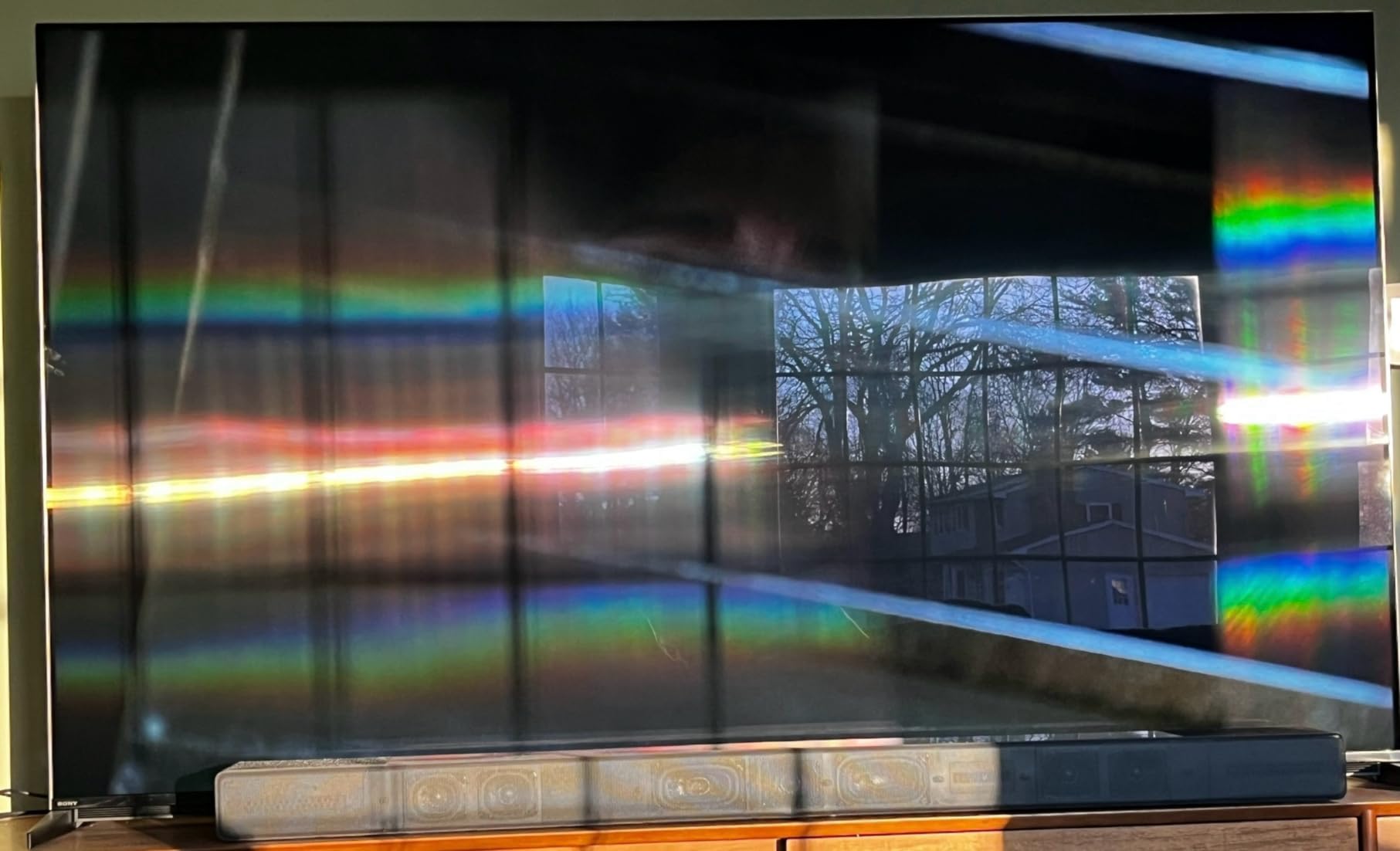
The honest challenges are physical and financial. This set weighs 132.4 pounds and genuinely needs professional installation or at least two strong people and a heavy-duty mount. It is also among the most expensive options here, and the limited 16 reviews mean you are relying on a small sample of owner feedback.
For a dedicated theater room where you want maximum immersion and you sit at a distance where 8K detail can register on an 85-inch canvas, this is the set that delivers that wow factor. Just budget for installation and a serious sound system to match the picture.
Theater Room Suitability
An 85-inch 8K panel is built for dedicated media rooms and large open living spaces. The wide 178-degree viewing angle means family and friends spread across a deep seating area all get a good picture, which is exactly what you want for movie nights and sports gatherings.
Plan for at least 8 to 12 feet of viewing distance for comfortable long sessions.
Handling the Weight and Installation
At over 132 pounds, the 85-inch Z9K is not a solo install. Use a professional mounting service or recruit help, choose a VESA 400 x 400 bracket rated well above the weight, and locate wall studs carefully. The investment in proper installation protects both the TV and your wall.
8. Samsung 75-Inch Class Neo QLED 8K QN900B – Budget Flagship Pick
SAMSUNG 75-Inch Class Neo QLED 8K QN900B Series Mini LED Quantum HDR 64x, Infinity Screen, Dolby Atmos, Object Tracking Sound Pro, Smart TV, Bluetooth with Alexa Built-in (QN75QN900BFXZA, 2022 Model)
8K Mini LED
75 inch
Quantum HDR 64x
Infinity Screen
120Hz
Pros
- Infinity Screen edge-to-edge design
- Quantum Matrix Pro Mini LEDs
- Quantum HDR 64x
- 107 reviews for a track record
- Slim One Connect box
Cons
- 2022 model with older processor
- Heavy at 92 pounds
- Expensive flagship pricing
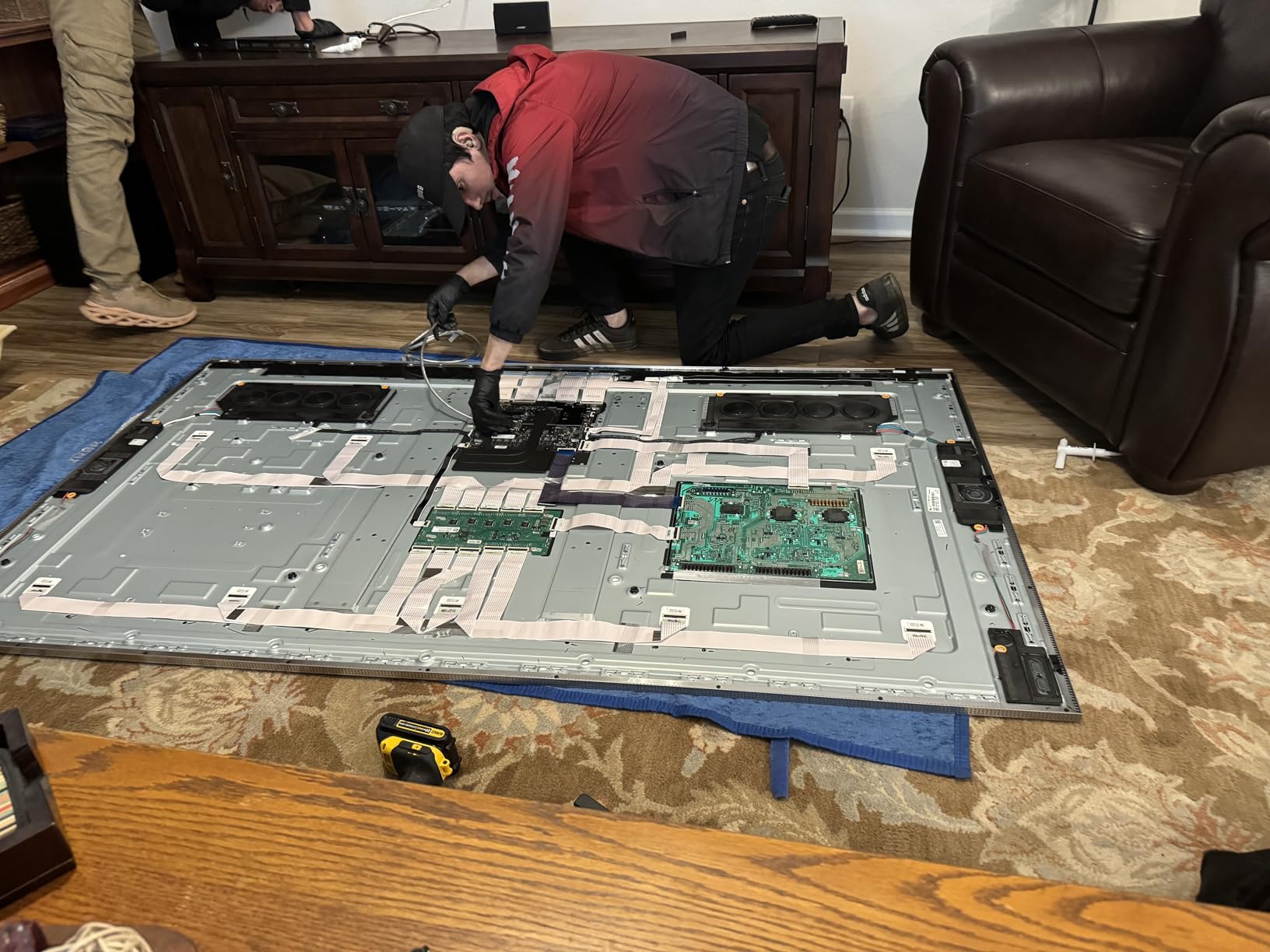
The QN900B is the oldest model in this lineup, released in 2022, but it earns a spot because it carries the largest review base at 107 ratings and represents an earlier flagship that still delivers excellent picture quality. The Infinity Screen design wraps the picture edge to edge, and the Quantum Matrix Technology Pro with Mini LEDs produces the deep contrast and bright highlights that made this series famous.
It runs the Neural Quantum Processor 8K with 20 neural networks, which is far fewer than the 512 or 768 in newer models. That means its upscaling is competent but not in the same league as the current generation. For buyers who prioritize the iconic design and the proven track record over the newest silicon, this remains a compelling large-screen 8K option.
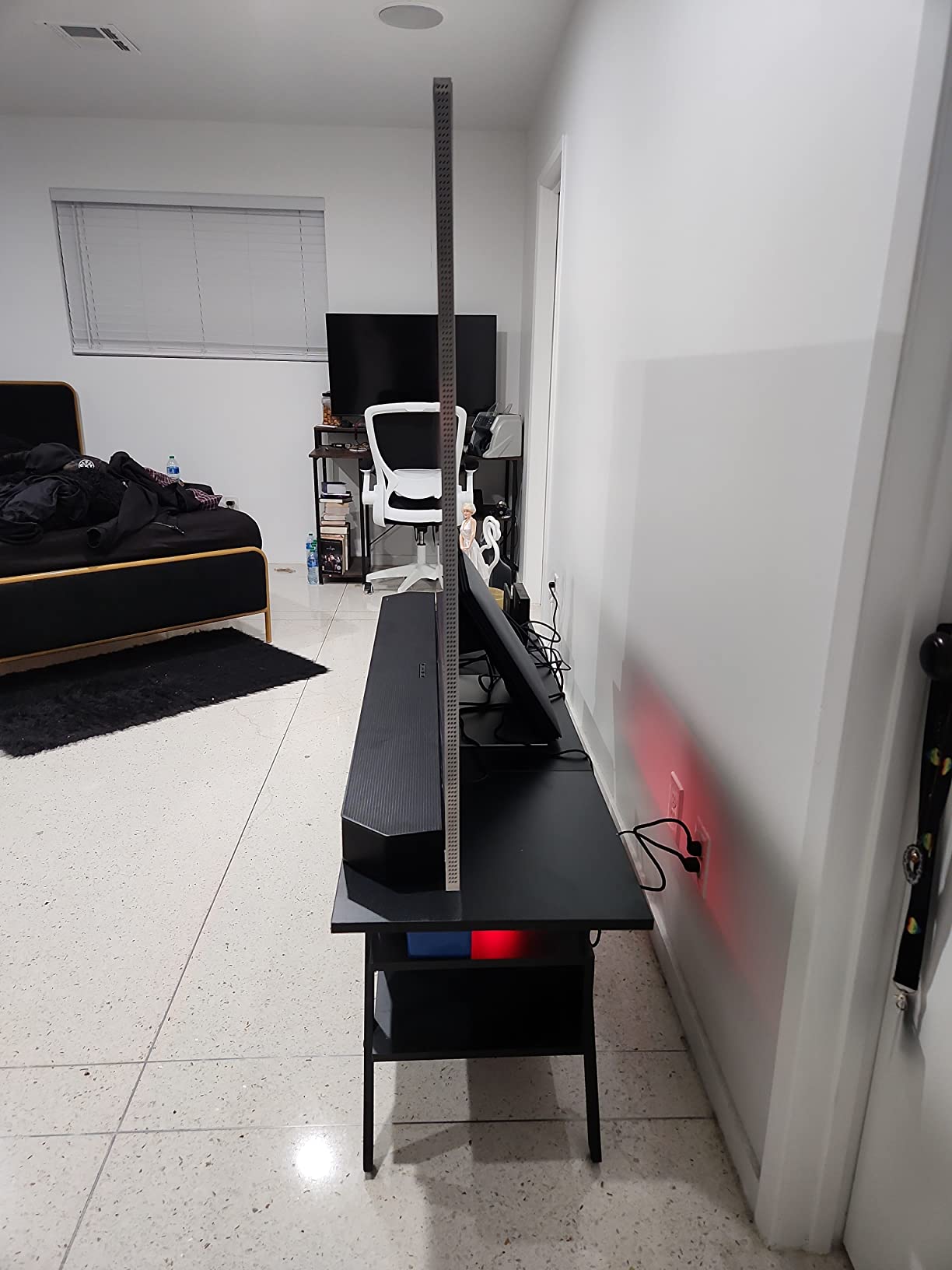
The 3.9-star average tells a mixed story. The majority of owners rate it five stars for picture quality, but a notable slice left one-star reviews, suggesting some quality control or fulfillment variance. The Slim One Connect box keeps cables organized, and Dolby Atmos with Object Tracking Sound Pro handles audio well for a built-in system.
My take is that this set makes sense if you find it at a meaningful discount relative to the QN900D or QN900F. At similar pricing I would steer you toward the newer models, since the processor gap is significant and upscaling is the whole point of an 8K purchase.
Older Flagship Value Proposition
A 2022 flagship still carries premium build quality and a striking design, and the 107-review history gives you more real-world data than any other set here. The trade-off is processor power, with only 20 neural networks handling upscaling compared to hundreds in the latest models.
If the price reflects its age, it is a legitimate option. If not, the newer QN900D offers better processing for similar money.
What the 107 Reviews Reveal
The review distribution is polarized: most buyers love the picture, but a meaningful minority had negative experiences, often tied to quality control or shipping. Read recent reviews carefully and buy from a seller with a solid return policy to protect yourself.
How to Choose an 8K TV: Buying Guide
Picking the right 8K TV comes down to understanding where the technology genuinely helps and where it is just spec-sheet marketing. Here is how I would break down the decision if I were buying today.
1. Screen Size Matters More Than You Think
8K resolution only becomes visible to the human eye at certain screen sizes and viewing distances. On a 65-inch panel you need to sit quite close to resolve the extra detail, while on a 75- or 85-inch set the benefit stretches out to more realistic living room distances. As a rule, the bigger the screen, the more defensible an 8K purchase becomes.
If you are choosing between a smaller 8K set and a larger 4K OLED for the same money, I would often recommend the larger or OLED option for most viewers.
2. AI Upscaling Is the Real Reason to Buy
Almost nothing you watch in 2026 arrives in native 8K. Streaming services max out at 4K, broadcasts are often 1080p, and even gaming runs at 4K. That means the processor and its AI upscaling do the heavy lifting. Samsung’s NQ8 AI processors with their neural networks and Sony’s Cognitive Processor XR are what make lower-resolution content look sharper on an 8K panel.
When comparing models, look at the processor generation and neural network count first. That tells you more about real-world picture quality than raw pixel specs.
3. Gaming Features for Future-Proofing
If you own a PS5, Xbox Series X, or gaming PC, prioritize HDMI 2.1 bandwidth, Variable Refresh Rate support, Auto Low Latency Mode, and high refresh rates. The Samsung QN900F and QN990F handle up to 4K 165Hz and 240Hz respectively, while Sony’s Z9K adds exclusive PS5 auto HDR tone mapping and a low 8.5ms input lag.
These features matter even if you game in 4K, because they keep your setup ready for whatever the next console generation demands.
4. HDR Format Compatibility
Samsung supports HDR10+ but skips Dolby Vision, while Sony supports Dolby Vision. If you stream a lot of Dolby Vision content or game in Dolby Vision, that tips the balance toward Sony. If you live in the Samsung ecosystem and prefer HDR10+, the Neo QLED sets deliver strong dynamic tone mapping either way.
5. Glare and Room Lighting
The newer Samsung QN900F and QN990F models include a glare-free display coating that dramatically reduces reflections in bright rooms. Older models and the Sony Z9K can struggle with glare in sunlit spaces. Match your set to your room’s lighting before you commit.
6. Connectivity and Cable Management
Samsung’s One Connect and Wireless One Connect boxes are a real quality-of-life feature, letting you run a single cable (or no cable) to the panel instead of a bundle. Count your HDMI needs too: the newest Samsung sets offer up to five ports, while Sony’s Z9K has four. Plan for your console, soundbar, streaming devices, and future expansion.
7. Sound Quality Expectations
Even the best built-in TV speakers are just adequate. The Samsung flagship sets reach 70 to 90 watts with Object Tracking Sound, and Sony includes Dolby Atmos, but forum consensus is clear that a dedicated soundbar transforms the experience. Budget for audio separately when you plan your setup.
Should You Buy an 8K TV in 2026?
Here is my honest framework. Buy an 8K TV if you want a large screen (75 inches or bigger), you value the best AI upscaling available, you game on next-gen hardware, and you accept that native 8K content is still scarce. Skip 8K if you sit far from a smaller screen, you mainly watch standard broadcasts, or a 4K OLED would give you better contrast and color for less money.
The best 8K TVs are not about resolution alone. They are about the processing power, motion handling, and gaming readiness that happen to come packaged with the newest flagship silicon.
FAQs
Is 8K TV finally the future?
8K is part of the future of display technology, but the timeline depends on content. The panels and AI processors are excellent today, yet most streaming and broadcast content still maxes out at 4K. An 8K TV is future-proof because of its advanced upscaling and gaming features, not because native 8K content is widely available yet.
What are the most dependable 8K TVs available?
The most dependable 8K TVs in 2026 are Samsung’s Neo QLED 8K QN900F and QN900D series and Sony’s BRAVIA XR Z9K. Samsung currently dominates the 8K market with the NQ8 AI processor family, while Sony’s Z9K stands out for PlayStation 5 owners thanks to exclusive gaming features.
Are 8K TVs being phased out?
LG and Sony have largely stepped back from releasing new 8K models, but Samsung continues to invest heavily in the format with its QN900F and QN990F lines. The 8K market has narrowed rather than disappeared, and Samsung remains the dominant manufacturer keeping the technology alive for buyers who want maximum future-proofing.
Are 8K TVs worth it in 2026?
An 8K TV is worth it in 2026 if you want a large 75-inch or bigger screen, the best AI upscaling for 4K content, and gaming features like HDMI 2.1 and high refresh rates. For smaller screens or typical viewing distances, a high-end 4K OLED often delivers better value because native 8K content remains limited.
What are the drawbacks of 8K TVs?
The main drawbacks of 8K TVs are the lack of native 8K content, higher prices than equivalent 4K models, the fact that the human eye struggles to perceive the resolution difference at normal viewing distances, and the demanding hardware requirements for 8K gaming. Upscaling quality also varies significantly between brands and processor generations.
Final Verdict on the Best 8K TVs
After working through all eight models, my top recommendation for a future-proof setup is the Samsung 65-inch QN900F for its blend of current-gen processing, glare-free display, and accessible price. If you want maximum screen size for the money, the Samsung 75-inch QN900D is the value leader, and PlayStation 5 gamers should look hard at the Sony 75-inch Z9K.
The best 8K TVs in 2026 earn their place less through raw resolution and more through the AI upscaling, motion handling, and gaming features that ship with the latest flagship silicon. Buy for the processor and the panel, accept that native 8K content is still catching up, and you will end up with a screen that stays relevant well beyond this generation.
Whatever you choose, pair it with a soundbar, plan your mounting for the weight, and sit close enough on a big enough panel that those 33 million pixels actually get to show off.