
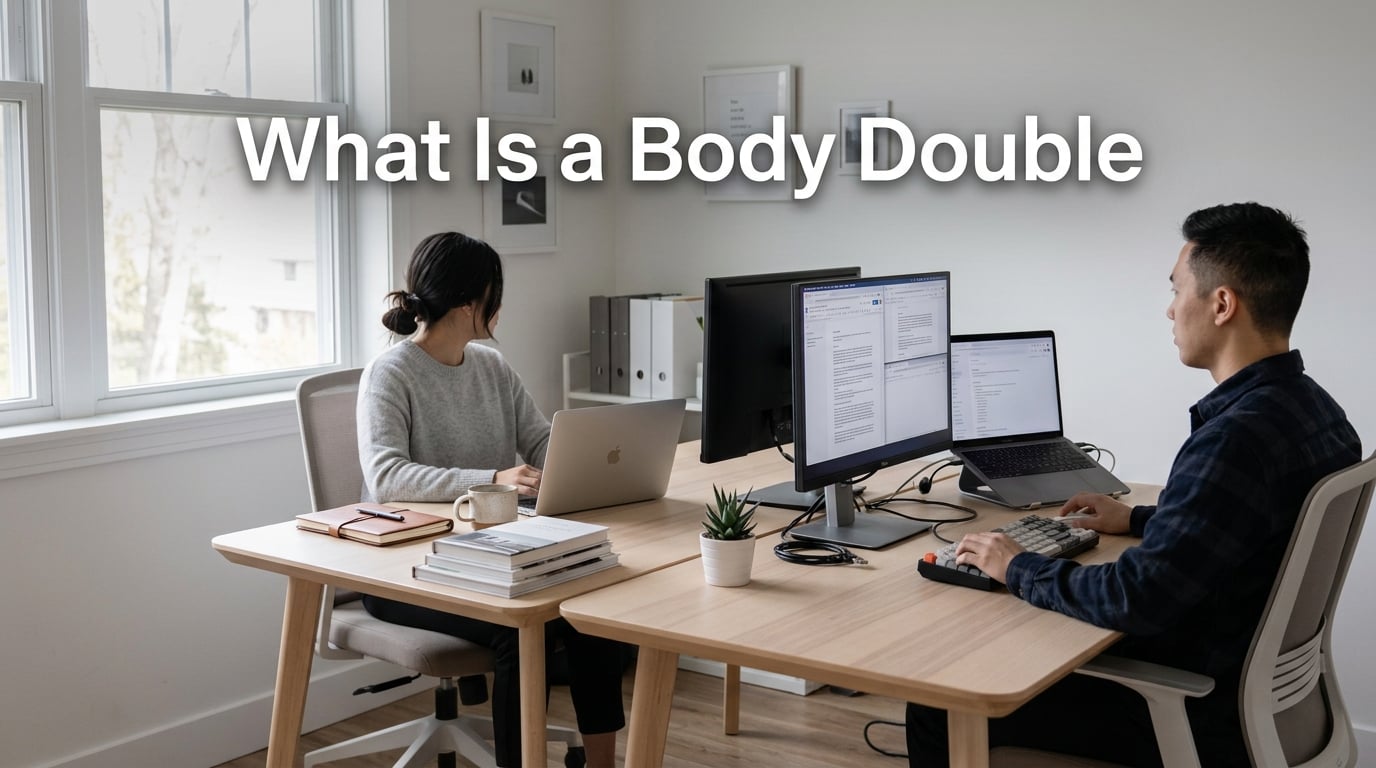
If you have ever struggled to start or finish a task, you are not alone. Millions of people face challenges with focus, motivation, and task completion every day. Body doubling is a productivity strategy that has gained significant attention in recent years, particularly within ADHD and neurodivergent communities. But what is a body double, exactly? Simply put, a body double is another person who is present while you work, helping you stay focused and accountable to completing your tasks.
Table of Contents
What Is Body Doubling?
Body doubling is a productivity technique where you work alongside another person, either in person or virtually, to help maintain focus and motivation. The concept is straightforward: the presence of another person creates external accountability, which can make it easier to start tasks and stay on track. Unlike working with a coach or tutor, a body double does not necessarily engage with you during the work session. Their primary role is simply to be there.
The term “body double” originally comes from the film industry, where it refers to a person who substitutes for an actor in scenes requiring physical attributes or dangerous stunts. In the productivity context, the meaning has evolved but the core concept remains similar: one person stands in for another to help accomplish something that might otherwise be difficult.
The Basic Definition
Body doubling, also called parallel working, is a strategy used to initiate and complete tasks by having another person present. This presence creates a sense of accountability and external anchoring that helps individuals overcome procrastination, distraction, and task avoidance. The body double does not need to be actively working on the same task or even talking to you. Their mere existence in your workspace can be enough to help you focus.
Body Doubling vs Other Productivity Strategies
Unlike traditional accountability partners who might check in regularly or offer guidance, body doubles provide passive support. You would not discuss your progress with a body double mid-task or ask for feedback. This distinguishes body doubling from methods like the Pomodoro Technique, which relies on timed work intervals, or meditation-based focus approaches that use internal cues. Body doubling leverages external social presence as its primary mechanism.
How Does Body Doubling Work?
The effectiveness of body doubling comes from psychological mechanisms that many people with ADHD and focus challenges experience firsthand. When you know someone is watching or simply present, your brain responds differently than when you are alone. This external anchor can be the difference between starting a dreaded task and continuing to scroll through your phone.
The Science Behind It
Researchers and practitioners offer several explanations for why body doubling works. One theory involves mirror neurons, which are brain cells that fire both when you perform an action and when you watch someone else perform the same action. When you see another person working, your mirror neurons may help activate similar focus states in your own brain. Additionally, body doubling may trigger dopamine release associated with social connection and accountability, making tasks feel more rewarding.
From an executive function perspective, body doubling helps bridge the gap between intention and action. Executive function deficits, common in ADHD, make it difficult to initiate tasks and sustain attention. The presence of another person creates an external scaffolding that supports these internal processes. This is why many users report that body doubling helps them start tasks they have been avoiding for days or weeks.
Why External Presence Helps
Our team has spoken with dozens of individuals who use body doubling regularly, and a consistent theme emerges: the external presence creates internal accountability. When you are alone, it is easy to justify quitting early or getting distracted. You might tell yourself “no one will know” or “I can do this later.” With a body double present, that internal narrative shifts. There is a real or imagined awareness that someone else is there, witness to your work session.
Many users also report that body doubling creates healthy pressure without the stress of evaluation. You are not being judged or graded. The body double is simply present, working alongside you. This creates what researchers might call a “social facilitation” effect, where the presence of others improves performance on simple or well-learned tasks. Even for complex tasks, the accountability aspect often outweighs any performance anxiety.
Who Can Benefit from Body Doubling?
While body doubling has become particularly popular in ADHD communities, the strategy is not limited to any single diagnosis or condition. Any person who struggles with task initiation, procrastination, or maintaining focus may find body doubling helpful. The technique is remarkably flexible and can adapt to various needs and preferences.
ADHD and Neurodivergent Users
Body doubling originated as an informal strategy within ADHD communities, and it remains most associated with attention deficit hyperactivity disorder. Organizations like ADDA and CHADD have recognized body doubling as a valid accommodation strategy for individuals with ADHD. The approach addresses specific challenges common to ADHD: task avoidance, difficulty initiating boring or difficult tasks, and susceptibility to distractions.
Beyond ADHD, body doubling can benefit people with autism spectrum conditions. For individuals who experience executive function challenges or anxiety around task completion, the presence of a supportive person can reduce overwhelm and provide structure. Body doubling offers a flexible framework that does not require specific social interaction, making it accessible for people who find traditional coaching or therapy sessions challenging.
Beyond ADHD – Other Applications
Anxiety disorders can also respond well to body doubling. When you have someone present during a difficult task, the anxiety associated with that task often diminishes. This is particularly relevant for tasks you have been avoiding due to fear of failure or perfectionism. The body double does not need to understand your anxiety or offer reassurance; their presence alone can be grounding.
Even people without clinical conditions can benefit from body doubling. If you have ever worked productively in a coffee shop or library simply because others were around, you have experienced a form of incidental body doubling. Many remote workers find that they are more productive during video calls, not because of the meeting content, but because the awareness of colleagues being present keeps them focused.
Benefits of Body Doubling
The advantages of body doubling extend across multiple dimensions of productivity and wellbeing. Understanding these benefits can help you decide if body doubling is worth trying and how to maximize its effectiveness.
Accountability and Motivation
The most frequently cited benefit of body doubling is increased accountability. When someone else is present, you feel a sense of obligation to follow through on your intentions. This external accountability can be especially powerful for tasks that lack intrinsic motivation. Even if the task itself is unpleasant, the body double provides a reason to continue: you do not want to disappoint or be seen as quitting.
Motivation often follows action rather than preceding it. Body doubling helps you take that crucial first step by reducing the activation energy required to start. Many users report that simply having someone present makes the difference between spending five minutes on a task and spending an hour. Once you have started, momentum often takes over.
Focus Enhancement
Body doubling naturally reduces distractions. When you know someone is present, you are less likely to check your phone, browse social media, or engage in other time-wasting behaviors. This is not about fear of judgment; it is about creating a mental framework where work is the expected activity. The presence signals “this is a working session,” helping your brain switch into focus mode.
For people with ADHD, focus enhancement from body doubling can be dramatic. Some users report being able to concentrate for hours longer than they typically could alone. The external anchor provided by the body double seems to help regulate attention and reduce the pull of competing stimuli in the environment.
Emotional Support
Beyond practical productivity benefits, body doubling provides emotional support. Knowing someone is there can reduce feelings of isolation that often accompany challenging work sessions. This is particularly relevant for difficult or emotionally taxing tasks where you might otherwise give up or avoid entirely.
Many users find that body doubling reduces anxiety around task completion. The body double does not need to offer encouragement or positive reinforcement. Their presence alone creates a sense of safety and support that makes challenging work more manageable.
Where to Find a Body Double
Finding the right body double depends on your preferences, schedule, and comfort level with different types of presence. Fortunately, body doubling has become increasingly accessible through both virtual platforms and traditional in-person arrangements.
Virtual Options
Virtual body doubling has exploded in popularity, particularly through platforms like FocusMate and study with me videos on YouTube and TikTok. FocusMate connects you with random accountability partners for timed work sessions. You simply sign up, indicate when you want to work, and are matched with another user who has similar goals. The video-based nature of these sessions creates presence without requiring real-time interaction.
Study with me videos offer another virtual option. These videos, popular on YouTube and streaming platforms, show another person studying or working. While not interactive, many users find the recorded presence helpful. The videos create a sense of companionship and structure that can make solitary work sessions feel less isolating.
In-Person Options
If you prefer physical presence, consider asking a friend, family member, or colleague to serve as your body double. This does not require them to actively work alongside you; they might read, work on their own projects, or simply be in the same room. Many people are happy to help once they understand what body doubling involves and how simple their role can be.
Working from coffee shops, libraries, or coworking spaces can also provide incidental body doubling. The presence of strangers working around you creates a similar accountability effect. Some users find this less pressure than having someone they know personally present, while others prefer the familiarity of someone they have asked directly.
Pets as Body Doubles
An emerging trend in body doubling involves using pets, particularly cats and dogs, as body doubles. While pets cannot provide the same accountability as human partners, many users report that having their pet nearby helps them focus. The routine and comfort of pet presence can create a similar anchoring effect.
Our team has heard from many users who say their dog curled up next to their desk while they worked through a challenging project. While the scientific explanation for this effect is less clear than for human body doubling, the emotional support and routine stability that pets provide may contribute to improved focus. If you have a pet and are struggling to start tasks, having them nearby might be worth trying.
Tips for Successful Body Doubling
Like any productivity strategy, body doubling works best when implemented thoughtfully. These practical tips can help you get the most from your body doubling experiences.
Start with clear expectations. Before your first body doubling session, discuss with your partner what you are both looking for. Some people prefer complete silence, while others benefit from brief check-ins at the start and end. Understanding your preferences helps create productive sessions.
Use timers to structure your sessions. Many body doubling enthusiasts recommend working in timed blocks, similar to the Pomodoro Technique. A typical session might involve 45-50 minutes of focused work followed by a short break. The timer creates structure and makes it easier to commit to focused periods.
Choose the right environment. Whether virtual or in-person, your environment matters. Find a space where you can work without interruptions but also feel comfortable. Some people prefer complete silence, while others work better with ambient noise or background music.
FAQs
What does being a body double mean?
Being a body double means serving as a present but non-interactive partner during someone else’s work session. The body double’s role is simply to exist in the space while the other person works, creating accountability and focus through their presence.
Is a body double a real person?
Yes, a body double is a real person who is physically or virtually present while you work. The body double does not need to engage with your work or provide feedback. Their mere presence creates accountability and can help improve focus and motivation.
How much do body doubles get paid?
Most body doubling arrangements are informal and free. Friends, family members, or coworkers often serve as body doubles without compensation. Virtual platforms like FocusMate are typically free to use. Professional body double services are rare and usually unnecessary for productivity purposes.
Is body doubling an autistic thing?
While body doubling is popular in ADHD communities, it is not limited to any specific diagnosis. People with autism, anxiety, and other conditions that affect focus and task completion can benefit from body doubling. The strategy is versatile and adapts to various needs.
Does body doubling really work?
Many people report significant improvements in focus and task completion from body doubling. The strategy leverages psychological mechanisms like external accountability, social facilitation, and mirror neurons. While individual results vary, the approach has enough anecdotal and empirical support that organizations like ADDA recommend it.
Can I use technology instead of a real person?
Yes, technology can provide body double-like benefits. Study with me videos, virtual coworking platforms like FocusMate, and even video call backgrounds can create a sense of presence. While some users prefer human presence, many find technology-based alternatives effective and more accessible.
Conclusion
Body doubling is a versatile and accessible productivity strategy that can help anyone struggling with focus, motivation, or task completion. By leveraging the power of external presence, body doubling addresses some of the most common productivity challenges, from task initiation to sustained attention. Whether you have ADHD, anxiety, or simply struggle to stay on track, body doubling offers a practical solution that requires minimal setup and can adapt to your specific needs.
The strategy continues to evolve, with virtual platforms making body doubling more accessible than ever. From FocusMate to study with me videos to simply asking a friend to sit with you, finding a body double is easier than you might expect. If you have been struggling to start or finish tasks, consider trying body doubling. You might find that the simple presence of another person is exactly what you needed to unlock your productivity potential.