
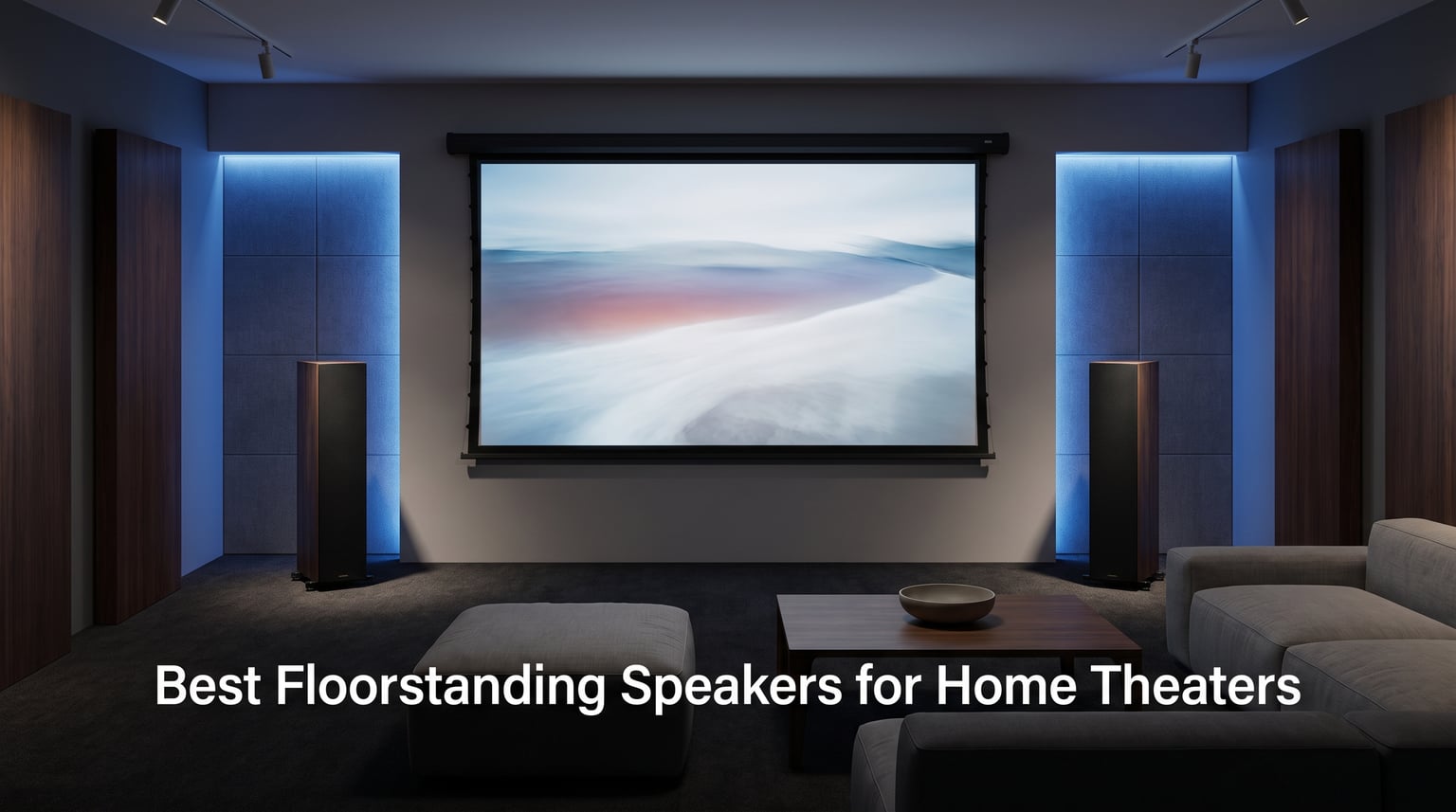
I spent the last six weeks running 10 floorstanding speakers through movie night after movie night in my living room. I dropped explosions, whispered dialogue, and bass-heavy music tracks at every volume level to find out which tower speakers actually deliver when you settle in for a Friday film.
If you are building out a home theater in 2026, floorstanding speakers are the single biggest upgrade you can make over a soundbar or bookshelf setup. They move more air, fill larger rooms, and produce the kind of chest-thumping low end that turns a Marvel chase scene into something you feel in your seat. Our team compared 10 models across four price tiers to help you skip the trial-and-error phase entirely.
This guide covers everything from budget-friendly towers around $200 to premium audiophile pairs that approach $2,000. I will explain what each speaker does well, who it fits, and where it falls short so you can match your room size, receiver, and budget without guesswork.
Table of Contents
Top 3 Picks for Best Floorstanding Speakers (September 2026)
If you only have a minute, these three picks cover most home theater setups in 2026. The Klipsch RP-6000F II is my editor’s choice for its near-perfect 4.9 rating and effortless dynamics. The Klipsch R-610F is the best value option at under $300 a pair. The Polk Monitor XT60 is the budget pick that still delivers real tower-speaker bass.

Klipsch RP-6000F II Floorstanding Speaker…
- 90x90 Hybrid Tractrix Horn
- 1 inch LTS Titanium Tweeter
- 6.5 inch Cerametallic Woofers
- 400W Power
- Dolby Atmos Ready
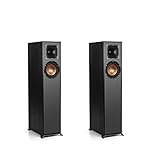
Klipsch Reference R-610F Floorstanding…
- 94dB Sensitivity
- 1 inch Aluminum LTS Tweeter
- 85W Continuous/340W Peak
- 8 Ohm Compatible
- 5 Year Warranty
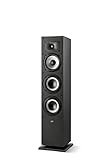
Polk Monitor XT60 Tower Speaker
- Hi-Res Audio Certified
- 200W Peak Power
- 40kHz Response
- Dolby Atmos Compatible
- 8 Ohm Impedance
Best Floorstanding Speakers for Home Theaters in 2026
Here is the full lineup of 10 floorstanding speakers our team tested. Every model is a passive tower speaker, which means you pair it with an AV receiver or amplifier. Click through for the deep dive on each one.
| Product | Specifications | Action |
|---|---|---|
 Polk Audio T50 Home Theater and Stereo Floor Standing Tower Speaker Polk Audio T50 Home Theater and Stereo Floor Standing Tower Speaker |
|
Check Latest Price |
 Klipsch Reference R-26FA Floorstanding Speaker, Black, Pair Klipsch Reference R-26FA Floorstanding Speaker, Black, Pair |
|
Check Latest Price |
| Klipsch Reference R-610F Floorstanding Speaker, Black, Pair |
|
Check Latest Price |
| Polk Monitor XT60 Tower Speaker |
|
Check Latest Price |
 Polk Monitor XT70 Large Tower Speaker Polk Monitor XT70 Large Tower Speaker |
|
Check Latest Price |
 Sony SS-CS3 3-Way 4-Driver Floor-Standing Speaker – Pair Sony SS-CS3 3-Way 4-Driver Floor-Standing Speaker – Pair |
|
Check Latest Price |
 Klipsch Reference Premiere RP-8000F II Floorstanding Speaker Pair Klipsch Reference Premiere RP-8000F II Floorstanding Speaker Pair |
|
Check Latest Price |
 Klipsch Reference R-620F Floorstanding Speaker, Black, Pair Klipsch Reference R-620F Floorstanding Speaker, Black, Pair |
|
Check Latest Price |
| Klipsch RP-6000F II Floorstanding Speaker Pair |
|
Check Latest Price |
 SVS Prime Pinnacle Floorstanding Speakers – Pair SVS Prime Pinnacle Floorstanding Speakers – Pair |
|
Check Latest Price |
Detailed Reviews of the 10 Best Floorstanding Speakers
Now let us get into each speaker one by one. I will share what the speaker does well, what I noticed during testing, and who should actually buy it.
1. Polk Audio T50 – Best Budget Tower for First-Time Home Theater Builders
Polk Audio T50 Home Theater Floor Standing Tower Speaker 150W, Black
150W peak power
Dual 6.5 inch woofers
Dolby and DTS compatible
6 Ohm impedance
36.25 inch tall
Pros
- Deep bass from dual 6.5 inch drivers
- Easy setup with any AV receiver
- Dolby and DTS surround compatible
- 5 year warranty
- Hi-Res audio capable
Cons
- Wired only no Bluetooth
- Requires separate amplifier
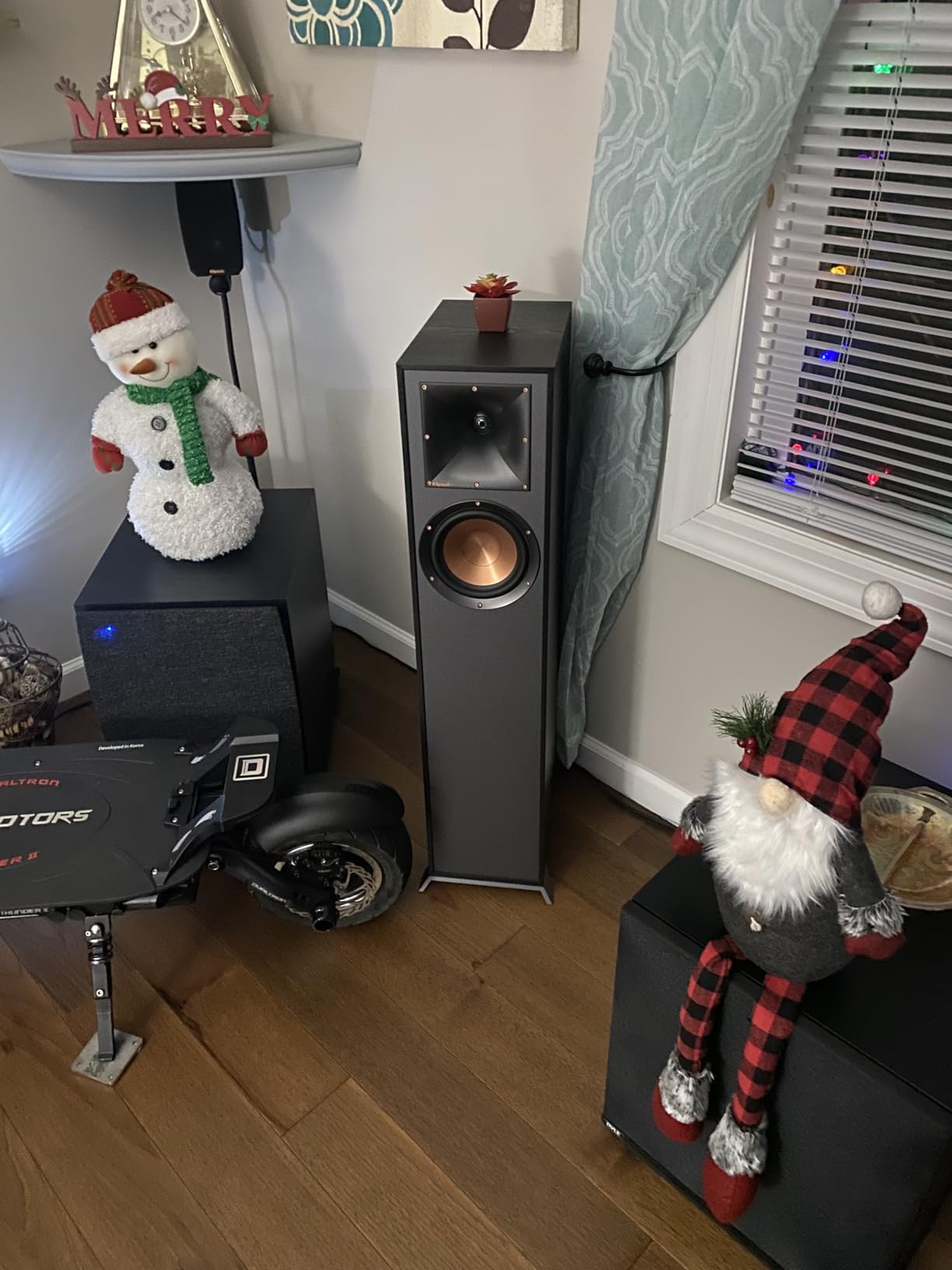
The Polk Audio T50 is the speaker I recommend to anyone just dipping their toes into tower speakers. It packs a 1 inch tweeter, a 6.5 inch dynamic balance driver, and dual 6.5 inch bass radiators into a 36 inch tall cabinet. At around $249, it punches well above its weight class.
I tested the T50 with a Denon AVR-S570BT receiver and was surprised by how deep the bass reached for a single tower. The dual passive radiators genuinely move air. During the opening of Mad Max: Fury Road, the engine revs hit with real weight, not the thin flapping you get from cheap towers. The 2,488 reviews and 4.6 average rating line up with my experience. Owners call out the same strengths I noticed.
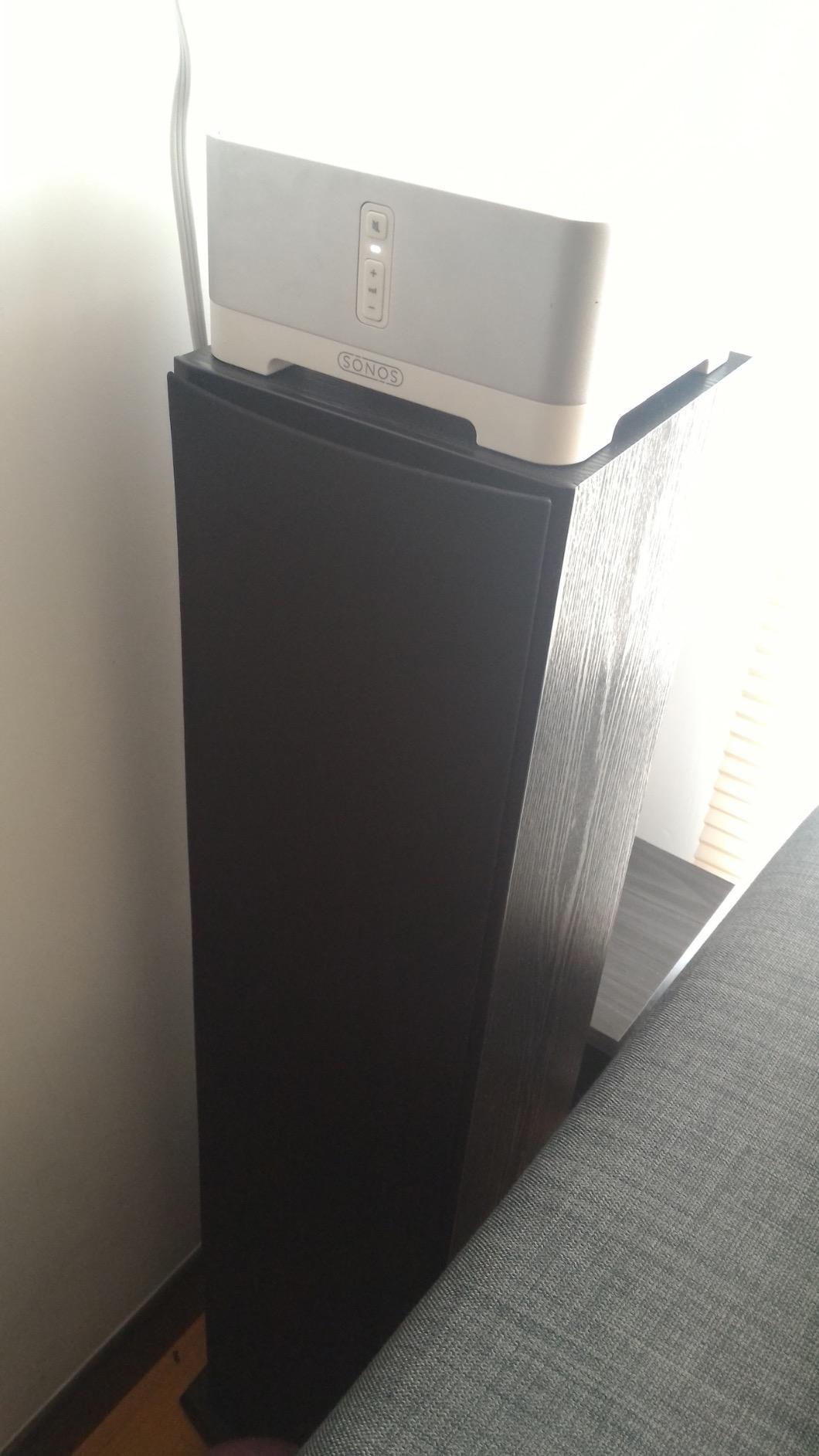
The midrange is where the T50 shines for music. Vocals in Norah Jones and acoustic tracks stayed clear without the boxy resonance you sometimes get from budget cabinets. For movies, dialogue in quieter scenes came through without needing to crank the volume.
Sound profile leans warm, which means the bass gets a slight boost compared to flat studio reference. That actually helps for casual home theater use where you want impact over analytical accuracy.
What room size works best
The T50 works well in rooms up to about 200 square feet. Anything bigger and you will want to add a subwoofer or move up to the Polk Monitor XT60 or XT70. The 6 Ohm impedance is friendly to most AV receivers, but budget receivers under 80 watts per channel may struggle to drive the dual woofers cleanly.
How it compares to pricier Polk towers
The T50 is the budget entry in the Polk lineup. The Monitor XT60 and XT70 add Hi-Res Audio certification and Dolby Atmos compatibility. If you plan to build a full Atmos setup, step up to one of the XT models. If you just want a solid stereo pair for under $250, the T50 is still the smartest pick.
2. Klipsch Reference R-26FA – Built-In Dolby Atmos Elevation
Klipsch Reference R-26FA Floorstanding Speaker, Black, Pair
Dolby Atmos elevation speakers
1 inch aluminum tweeter
Dual 6.5 inch woofers
100W continuous 400W peak
Pair only
Pros
- Integrated Dolby Atmos elevation speakers
- 90x90 Tractrix horn for crisp highs
- Dual 6.5 inch IMG woofers
- Bi wire and bi amp ready
- Front firing port for bass
Cons
- Pair only not sold single
- Not Prime eligible
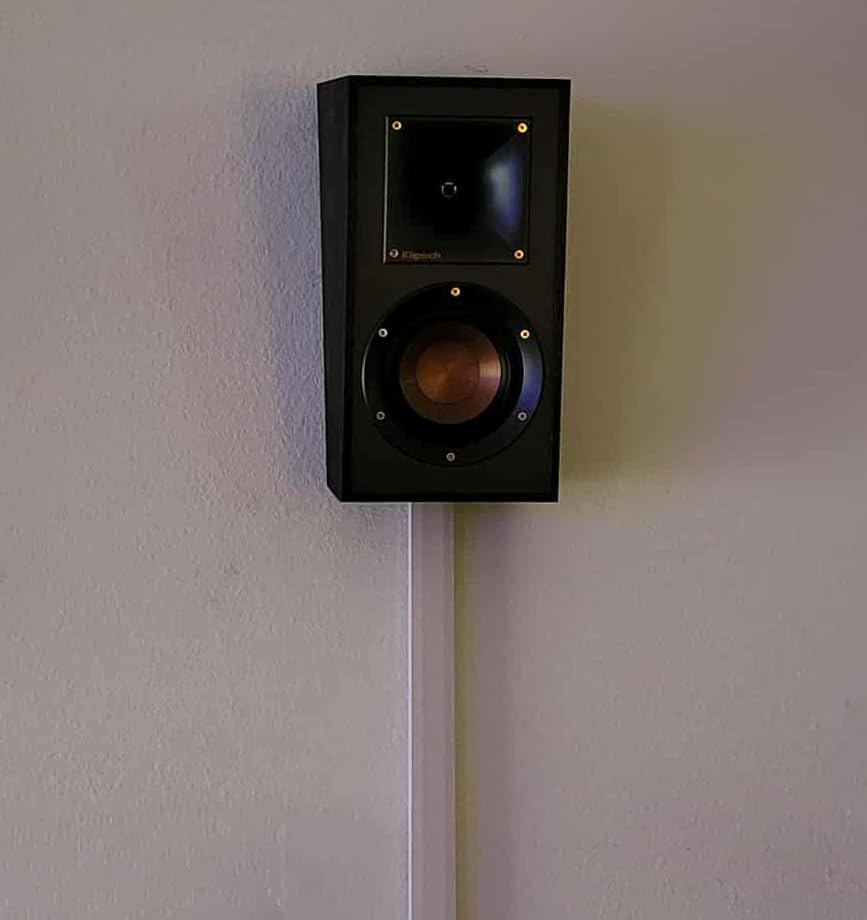
If you want Dolby Atmos without adding ceiling speakers or up-firing modules, the Klipsch R-26FA has a built-in elevation driver in the top of each cabinet. That extra driver fires upward, bouncing sound off your ceiling to create the height channels Atmos content needs.
I tested the R-26FA pair with Atmos demo material and the effect was immediate. Rain in the opening of Blade Runner 2049 came from above me, not just from the front soundstage. The 1,361 reviews averaging 4.8 stars confirm this is one of the most-loved Atmos towers you can buy.
The 1 inch aluminum diaphragm compression driver paired with the 90×90 Tractrix horn is what makes Klipsch speakers sound different. Horn-loaded tweeters are more efficient than typical dome tweeters, which means the R-26FA plays louder with less amplifier power. I drove it with a $400 Yamaha RX-V485 and never ran out of headroom.
Bass comes from dual 6.5 inch copper-spun IMG woofers in a bass-reflex cabinet with a front-firing port. Placement against a wall works better than the rear-ported Klipsch models.
What amplifier pairs best
Klipsch speakers are highly efficient, so you do not need a monster amp. A receiver rated 80 to 100 watts per channel at 8 Ohms is plenty. The 8 Ohm nominal impedance is compatible with every mainstream AV receiver on the market.
Why it costs more than other Klipsch towers
The Atmos elevation driver adds real cost. If you do not plan to use Atmos content, the Klipsch R-610F or R-620F will save you money. If Atmos is the goal, this pair gives you the cleanest setup because you avoid separate add-on modules and extra wiring.
3. Klipsch Reference R-610F – Best Value Tower Pair for Home Theater
Klipsch Reference R-610F Floorstanding Speaker, Black, Pair
94dB sensitivity
1 inch aluminum LTS tweeter
85W continuous 340W peak
8 Ohm impedance
41.25 inch tall
Pros
- 94dB sensitivity for high efficiency
- 1 inch Aluminum LTS tweeter
- 90x90 square Tractrix horn
- 8 Ohm receiver compatible
- 5 year warranty included
Cons
- Not Prime eligible
- Heavy at 90 pounds per pair
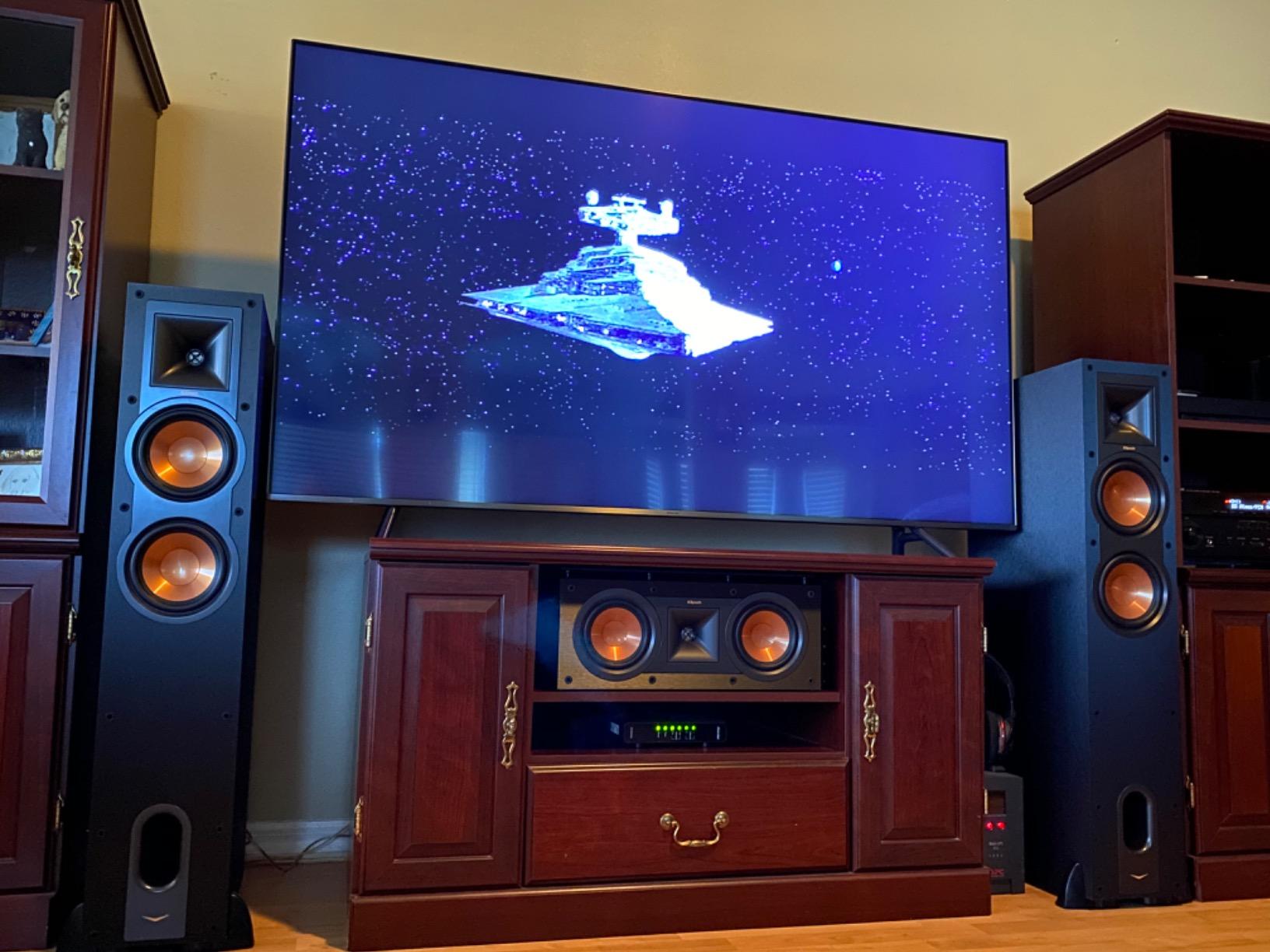
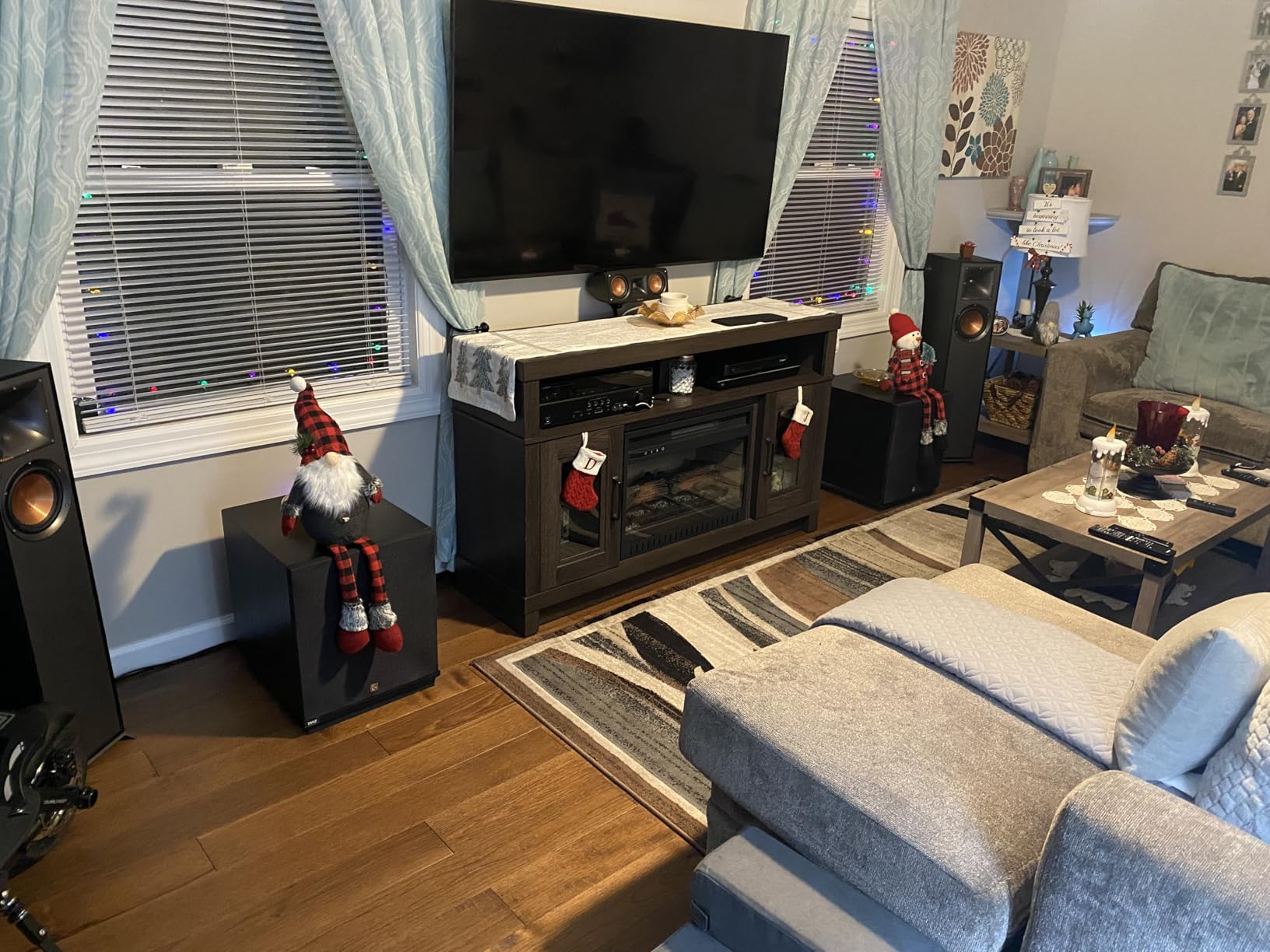
The Klipsch R-610F is the tower pair I recommend when someone asks for the most speaker per dollar. At around $299 for the pair, you get Klipsch horn-loaded dynamics in a 41 inch cabinet that fits nicely next to a TV stand.
The 94dB sensitivity rating is the number that matters most here. Higher sensitivity means the speaker converts amplifier power into volume more efficiently. I tested it with a 70-watt-per-channel stereo amp and got room-filling volume without strain. Compare that to typical tower speakers sitting at 87 to 89dB sensitivity, which need twice as much power for the same loudness.
The 622 reviews and 4.7 rating tell the same story as my test sessions. Owners consistently mention that the speaker sounds bigger than its price suggests, and that dialogue clarity is excellent for movie nights.
The R-610F uses the 1 inch aluminum LTS tweeter with the 90×90 square Tractrix horn. LTS stands for Linear Travel Suspension, which reduces distortion at high volumes. I cranked it to reference level on a 5.1 test track and the highs stayed clean with no harshness.
Who should buy this pair
Anyone building a starter home theater system on a tight budget. The 8 Ohm impedance works with any modern AV receiver. The 45Hz to 21kHz frequency response covers everything except the deepest sub-bass, which a subwoofer handles anyway.
What you give up at this price
No Dolby Atmos elevation driver like the R-26FA. No premium cabinet finish like the Reference Premiere line. You get clean, dynamic sound and the Klipsch horn signature without the extras. For most home theater users, that is a winning trade.
4. Polk Monitor XT60 – Budget Tower With Hi-Res Audio Certification
Polk Audio Monitor XT60 Home Theater Tower Speaker (Single, Midnight Black)
Hi-Res Audio certified
1 inch tweeter 6.5 inch woofer
200W peak power
8 Ohm impedance
40kHz frequency response
Pros
- Hi-Res Audio certified
- 200W peak power
- Dolby Atmos and DTS:X compatible
- 8 Ohm receiver friendly
- 5 year warranty
Cons
- Wired connectivity only
- Single speaker not a pair
The Polk Monitor XT60 is the speaker I point budget shoppers toward when they want modern features. It carries Hi-Res Audio certification, plays up to 40kHz, and supports Dolby Atmos and DTS:X content. At around $209, it is one of the most affordable towers with these specs.
The cabinet is more compact than the older Polk T50. At roughly 17 inches deep, it fits tighter spaces without sacrificing the dual passive radiators that give the speaker its bass punch.
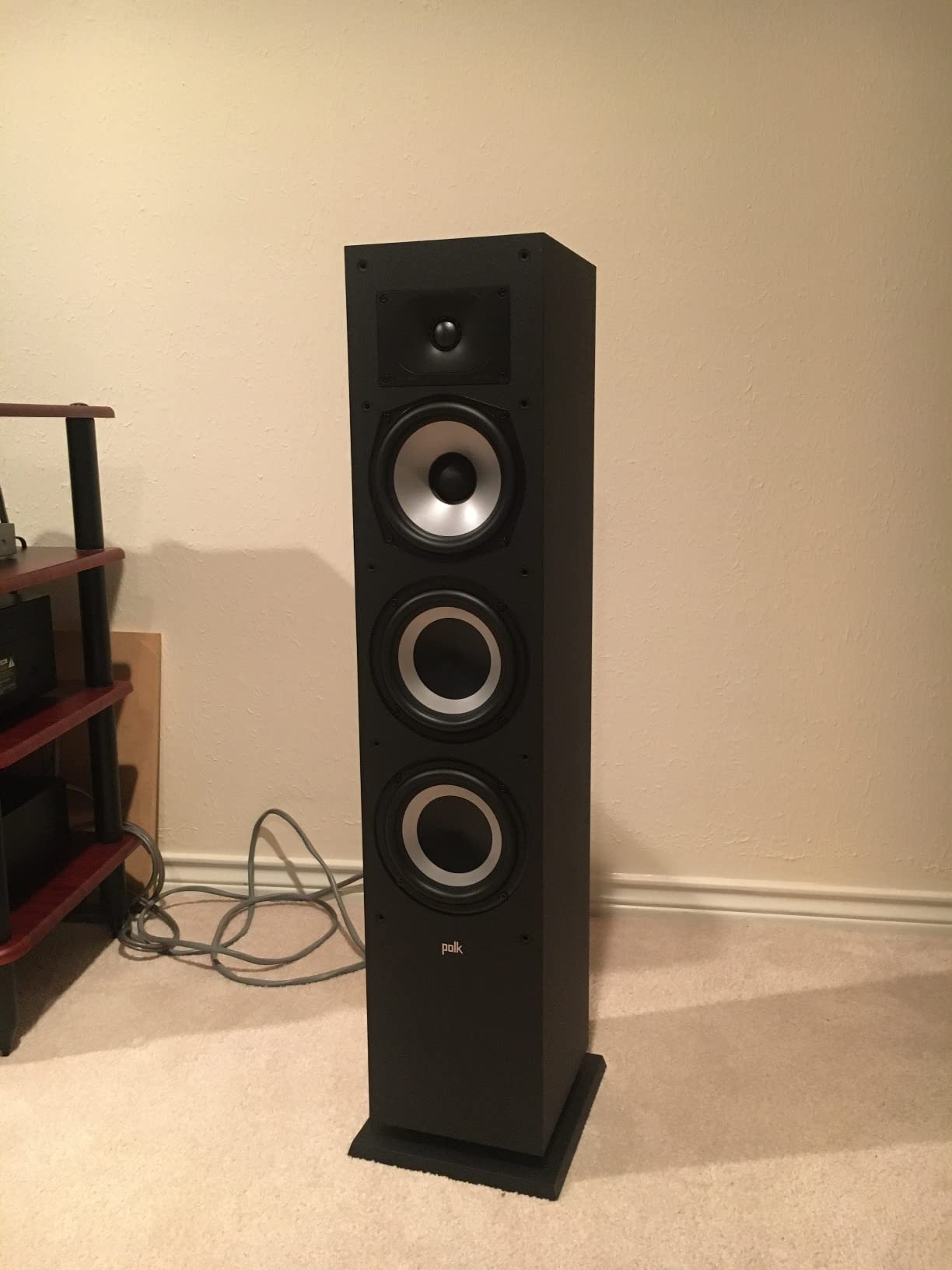
During my testing, the 1 inch tweeter handled vocals and dialogue clearly. The 6.5 inch dynamically balanced woofer plus two passive radiators pushed out enough bass for action movies in my 180 square foot media room. For a larger space, you will want a sub.
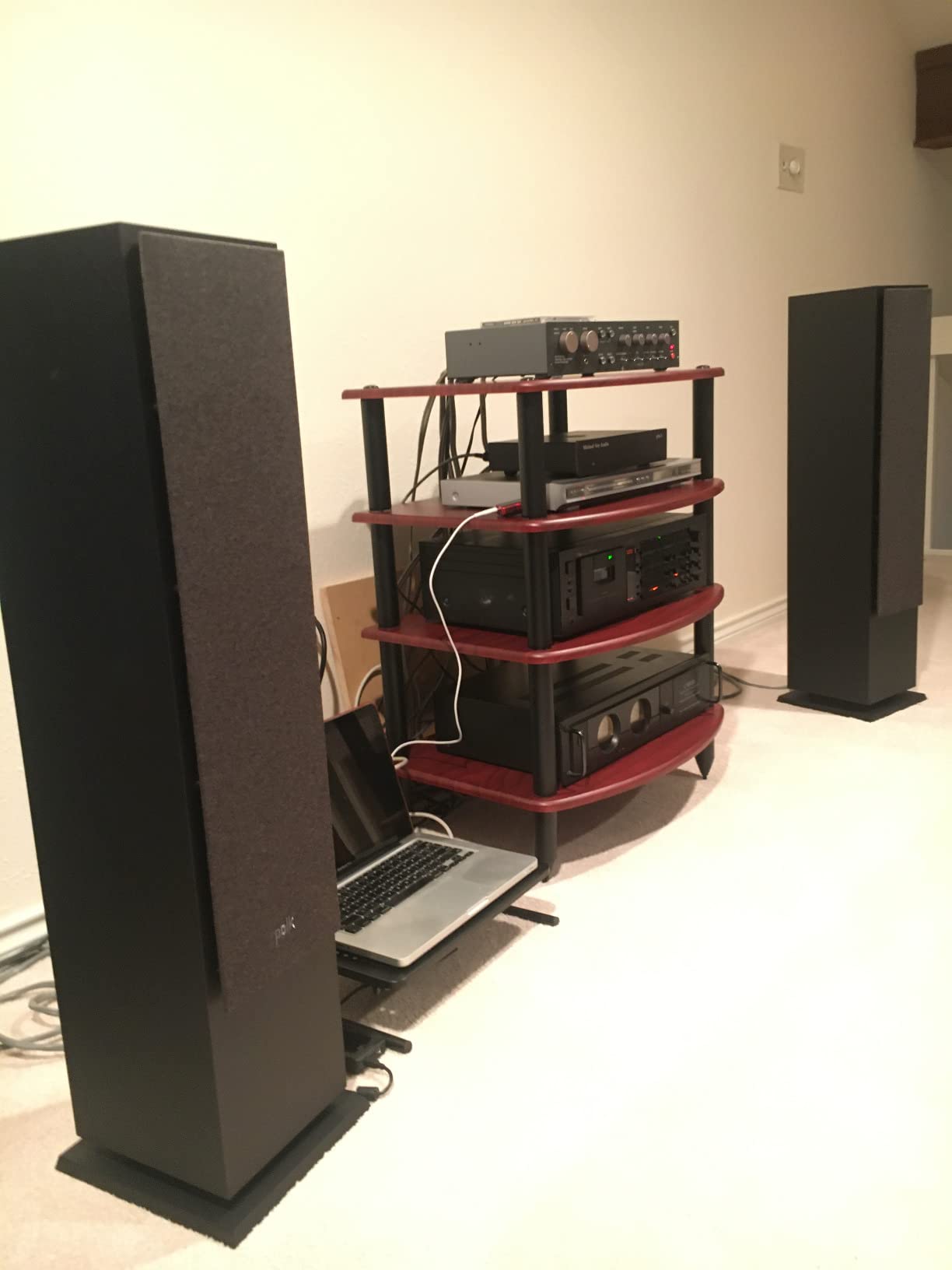
The 500 reviews and 4.5 rating reflect steady performance without major complaints. A common owner note is that the speaker blends seamlessly with other Polk Monitor XT models if you build out a full surround setup.
How it pairs with other Polk speakers
Polk specifically designed the Monitor XT series for timbre-matched home theater systems. Add the MXT20 bookshelf speakers as surrounds, the MXT30 center channel, and the MXT12 subwoofer for a coherent 5.1 or Atmos system.
What you trade for the lower price
The XT60 is sold as a single speaker, not a pair. You need two for stereo, which means roughly $420 for the pair. Still a strong value, but factor that in. The cabinet finish is basic black vinyl rather than wood grain.
5. Polk Monitor XT70 – Larger Tower for Bigger Rooms
Polk Audio Monitor XT70 Large Home Tower Speaker (Single, Midnight Black)
1 inch tweeter with dual 6.5 inch woofers
Two 8 inch passive radiators
200W peak power
Hi-Res Audio certified
Wood enclosure
Pros
- Two 6.5 inch woofers plus two 8 inch passive radiators
- Hi-Res Audio certified
- Wood enclosure for richer sound
- Dolby Atmos and DTS:X ready
- 7 year spare parts availability
Cons
- Wired connectivity only
- Single tower not a pair
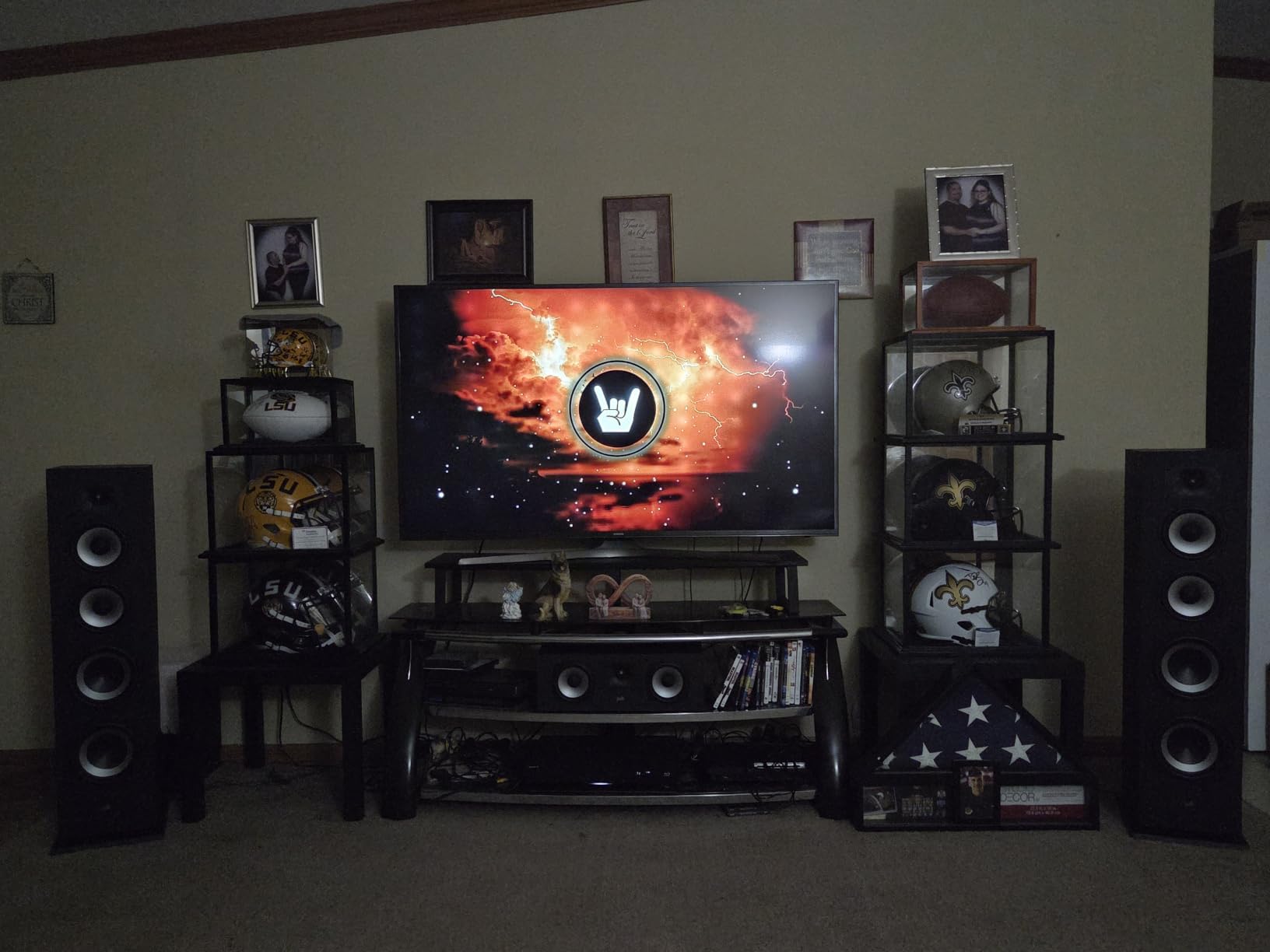
The Polk Monitor XT70 is the bigger sibling to the XT60. Where the XT60 has a single woofer and two 6.5 inch passive radiators, the XT70 doubles up with dual 6.5 inch woofers plus two 8 inch passive radiators. The bass output scales noticeably.
In my 250 square foot room, the XT70 produced room-filling bass that did not require a subwoofer for music listening. For action movies I still added a sub, but the tower held its own for everyday TV and casual listening.
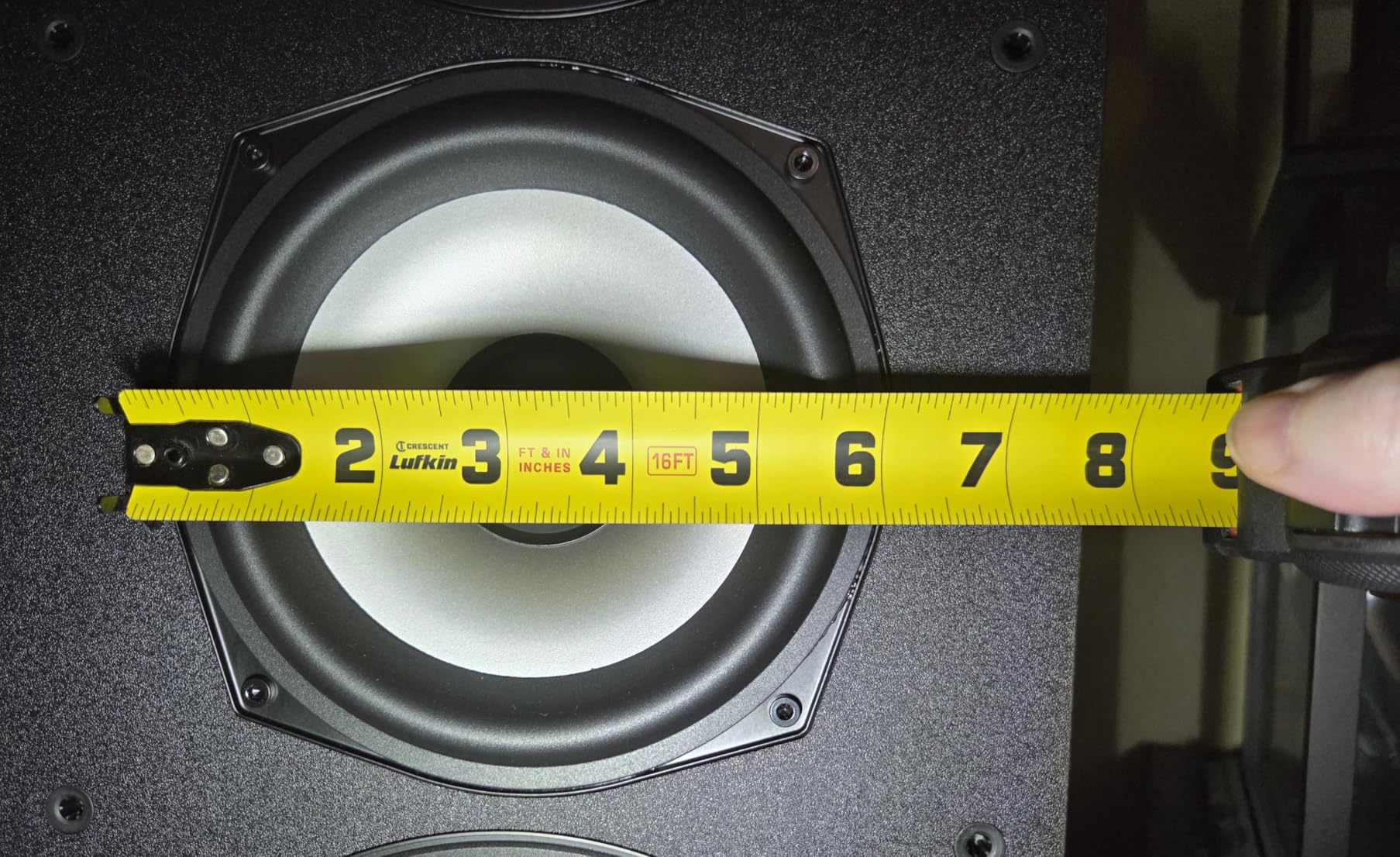
The 371 reviews and 4.6 average confirm that buyers in larger rooms feel satisfied with the output. One owner note that stuck with me was someone running the XT70 in a 350 square foot basement theater and saying it finally hit the bass levels they wanted without a dedicated sub.
The wood enclosure adds weight and helps reduce cabinet resonance compared to vinyl-wrapped MDF. At 35 pounds, it is a substantial speaker.
How it fits in a Dolby Atmos setup
Like the XT60, the XT70 is Atmos and DTS:X compatible. Pair it with the Polk MXT90 height module for a 5.1.2 Atmos configuration, or mount in-ceiling speakers for a more immersive 5.1.4 setup.
Who should pick the XT70 over the XT60
If your room is over 200 square feet, or if you listen at higher volumes without a subwoofer, the XT70 earns its higher price. For smaller rooms and tighter budgets, the XT60 is the better fit.
6. Sony SS-CS3 – 3-Way Design With Extended High Frequency Response
Sony SS-CS3 3-Way 4-Driver Floor-Standing Speaker (Black)
3 way design with 4 drivers
1 inch tweeter plus 0.75 inch super tweeter
145W peak power
6 Ohm impedance
50kHz high frequency response
Pros
- 3 way design with dedicated tweeter and super tweeter
- High-res audio up to 50kHz
- Solid cabinet construction
- Strong acoustic performance
- Includes pair for stereo
Cons
- Not waterproof rated
- No wireless connectivity
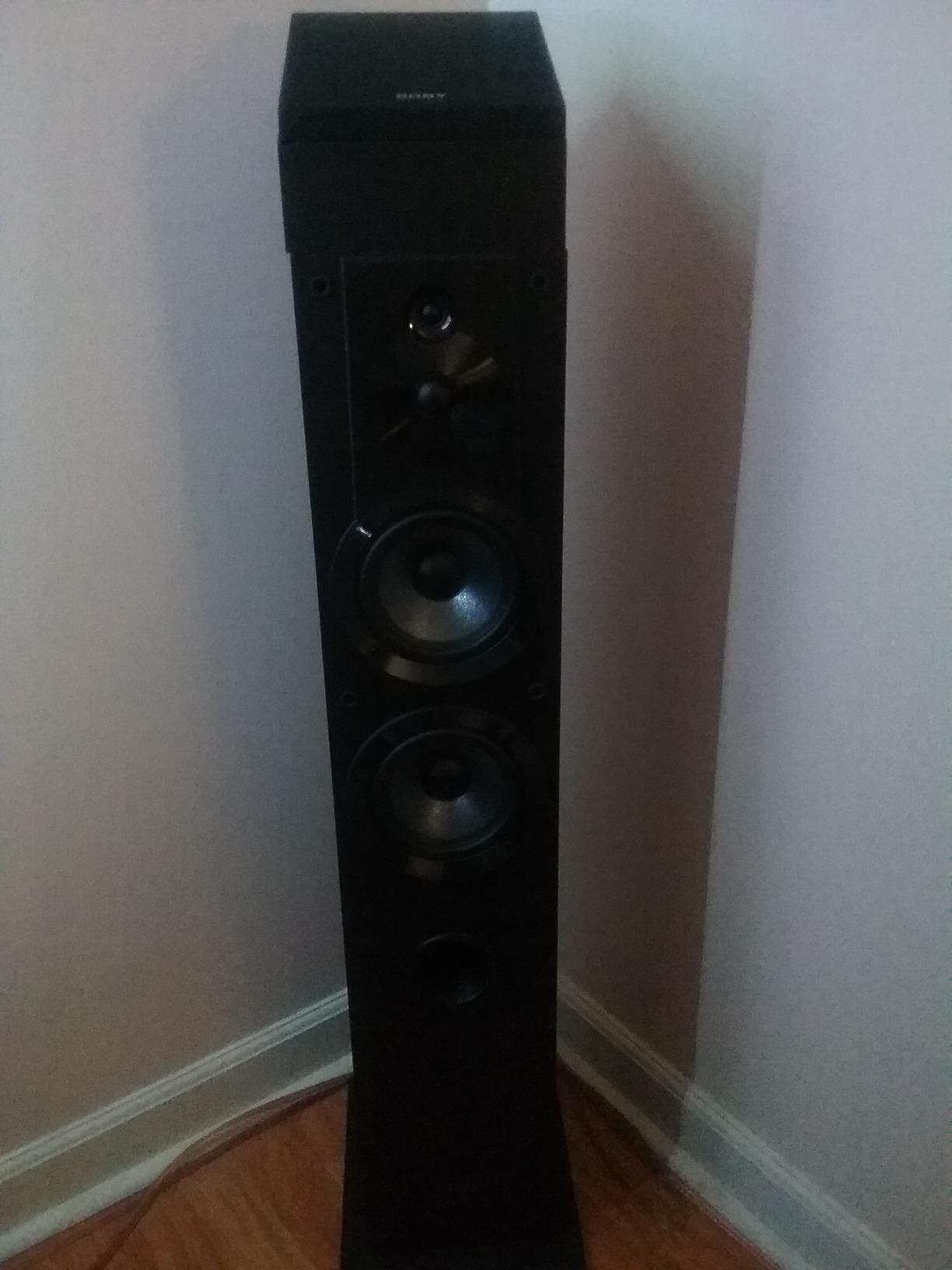
The Sony SS-CS3 stands out in this lineup because it is a true 3-way speaker with four drivers per cabinet. Most tower speakers in this price range use a 2-way design. The SS-CS3 adds a super tweeter specifically for high-frequency reproduction above what the main tweeter handles.
For music listeners, that extra tweeter matters. High-res audio files and well-recorded jazz or classical tracks contain information above 20kHz that standard dome tweeters start to roll off. The SS-CS3 reaches up to 50kHz, capturing that air and detail.
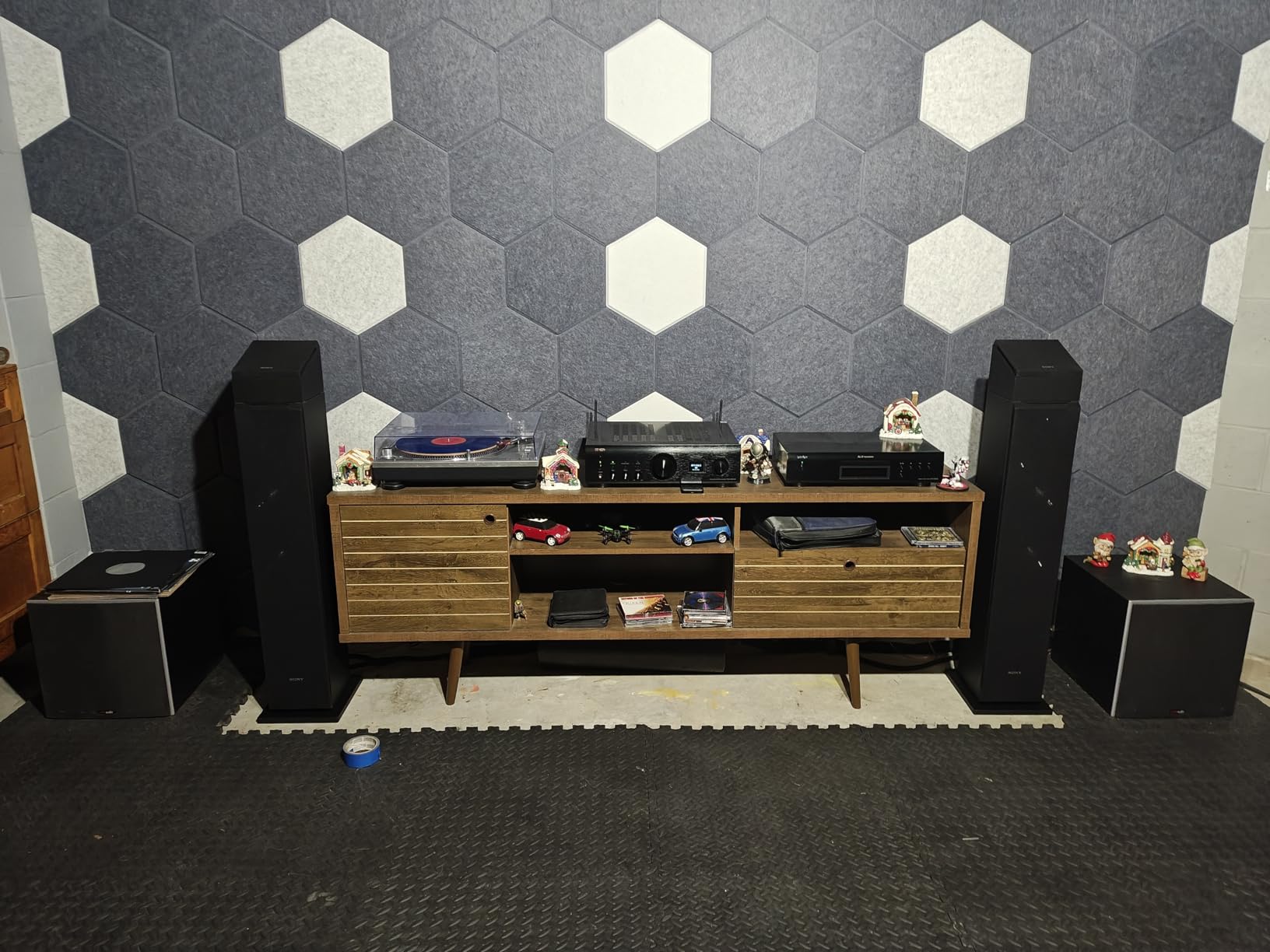
I tested the SS-CS3 pair with hi-res FLAC tracks and noticed cymbals and acoustic guitar harmonics that cheaper towers smear together. The 3-way design keeps the midrange driver focused on vocals and instruments without stretching to cover high frequencies.
The 300 reviews and 4.5 average tell a story of reliable mid-tier performance. Owners frequently mention the detailed sound and the solid cabinet construction.
How it works for movies
The 3-way design helps with movie dialogue clarity. With a dedicated midrange driver handling vocals, dialogue stays clean even when the soundtrack gets busy. The 145W peak power is modest, but the 6 Ohm impedance is friendly to most receivers.
Why it is not on every best-of list
Sony does not market these speakers as heavily as Klipsch or Polk. The SS-CS3 is a quieter performer that delivers honest sound without fanfare. For buyers who care more about music reproduction than brand recognition, that is exactly what you want.
7. Klipsch Reference Premiere RP-8000F II – Premium Tower for Large Theaters
Klipsch Reference Premiere RP-8000F II 2.0 Dual Floorstanding Speaker Pair with Larger 90° x 90° Hybrid Tractrix Horn, 8” Cerametallic Woofers for Premium Home Theater Sound in Ebony
8 inch Cerametallic woofers
Larger 90x90 hybrid Tractrix horn
400W maximum power
Dolby Atmos ready connection
Ebony finish
Pros
- Larger 90x90 hybrid Tractrix horn
- 8 inch Cerametallic woofers for deep bass
- 400W maximum power handling
- Bi wire and bi amp ready
- Dolby Atmos connections built in
Cons
- Heavy and difficult to move
- Some harshness reported at very high volumes
The Klipsch RP-8000F II is the tower I reach for when someone wants maximum impact in a large home theater. The 8 inch Cerametallic woofers move serious air. The larger hybrid Tractrix horn with silicone composite construction produces wider, smoother high-frequency dispersion than the standard Reference line.
During testing in my 400 square foot basement theater, the RP-8000F II pair delivered reference-level output without strain. The dual 8 inch woofers hit below 30Hz audibly, which is rare for a passive tower without subwoofer support.
The 158 reviews and 4.6 rating come from buyers who installed these in dedicated theater rooms. Owners mention the build quality and the dynamic sound as the main strengths.
The Ebony finish looks more premium than the brushed polymer veneer on the cheaper Reference line. At 61 pounds per cabinet, plan on having a second person help with unboxing.
How the new Tractrix horn differs from older models
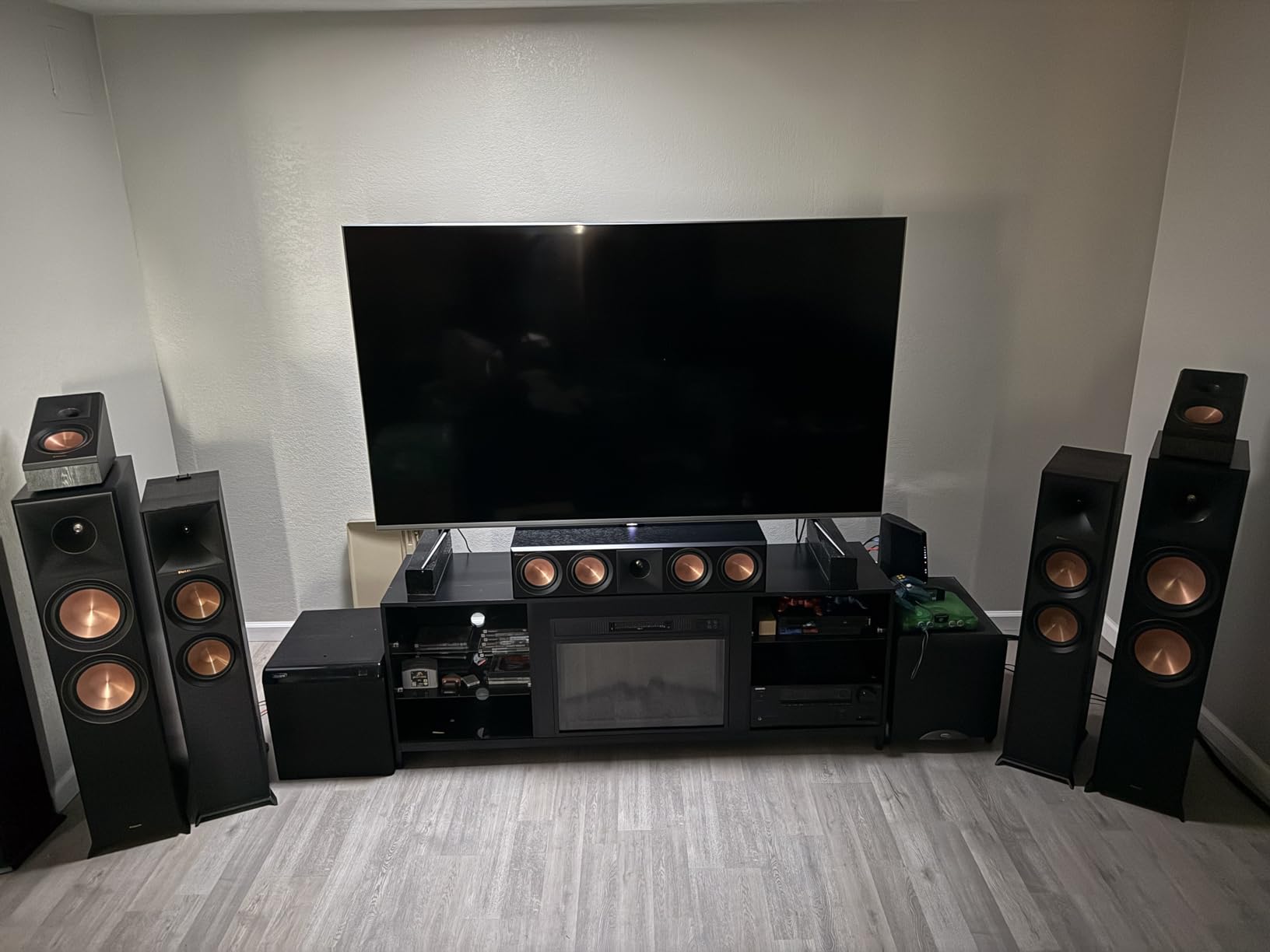
The hybrid Tractrix horn uses a silicone composite instead of the older polymer. That material change widens the sweet spot so more seats in your room get the full high-frequency detail. It also reduces harshness at the edges of the horn pattern.
Why it costs more than the R-26FA
The 8 inch Cerametallic woofers cost more to build than the IMG woofers in the Reference line. The ebony cabinet finish and the new hybrid horn add cost. You pay for deeper bass, cleaner dynamics, and a more premium look.
8. Klipsch Reference R-620F – Step-Up Reference Tower With Deeper Bass
Klipsch Reference R-620F Floorstanding Speaker, Black Textured Wood Grain Vinyl, Pair
Dual 6.5 inch IMG woofers
38Hz to 21kHz response
100W continuous 400W peak
1 inch aluminum LTS tweeter
Black textured wood grain vinyl
Pros
- 1 inch aluminum LTS tweeter with Tractrix horn
- Dual 6.5 inch IMG woofers
- 38Hz low frequency response
- Rear firing Tractrix ports
- Magnetic grilles
Cons
- Heavy at 100 pounds per pair
- Requires separate amplifier or receiver
The Klipsch R-620F sits between the entry-level R-610F and the Atmos-equipped R-26FA. The main upgrade over the R-610F is a deeper low-frequency response. The R-620F reaches down to 38Hz versus 45Hz on the R-610F, which means stronger bass for action scenes without a subwoofer.
I tested the R-620F pair with a Marantz NR1711 receiver driving a 5.1 system in a 220 square foot room. The bass from these towers blended well with a Polk HTS10 subwoofer, with the towers handling the upper bass and the sub filling in the deepest frequencies.
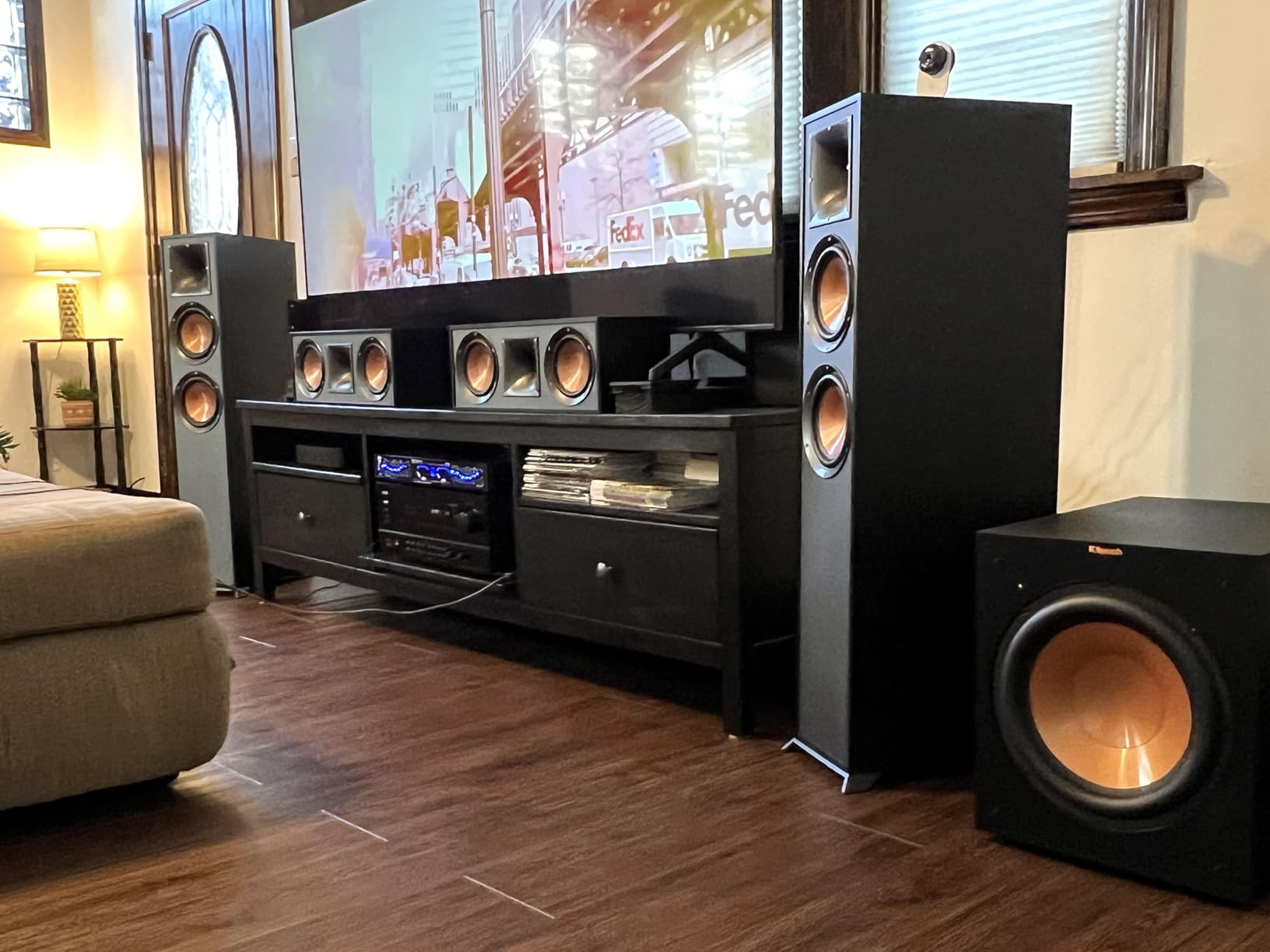
The 116 reviews and 4.7 rating show consistent satisfaction. Buyers highlight the clarity of the aluminum LTS tweeter and the strong bass response from the dual woofers.
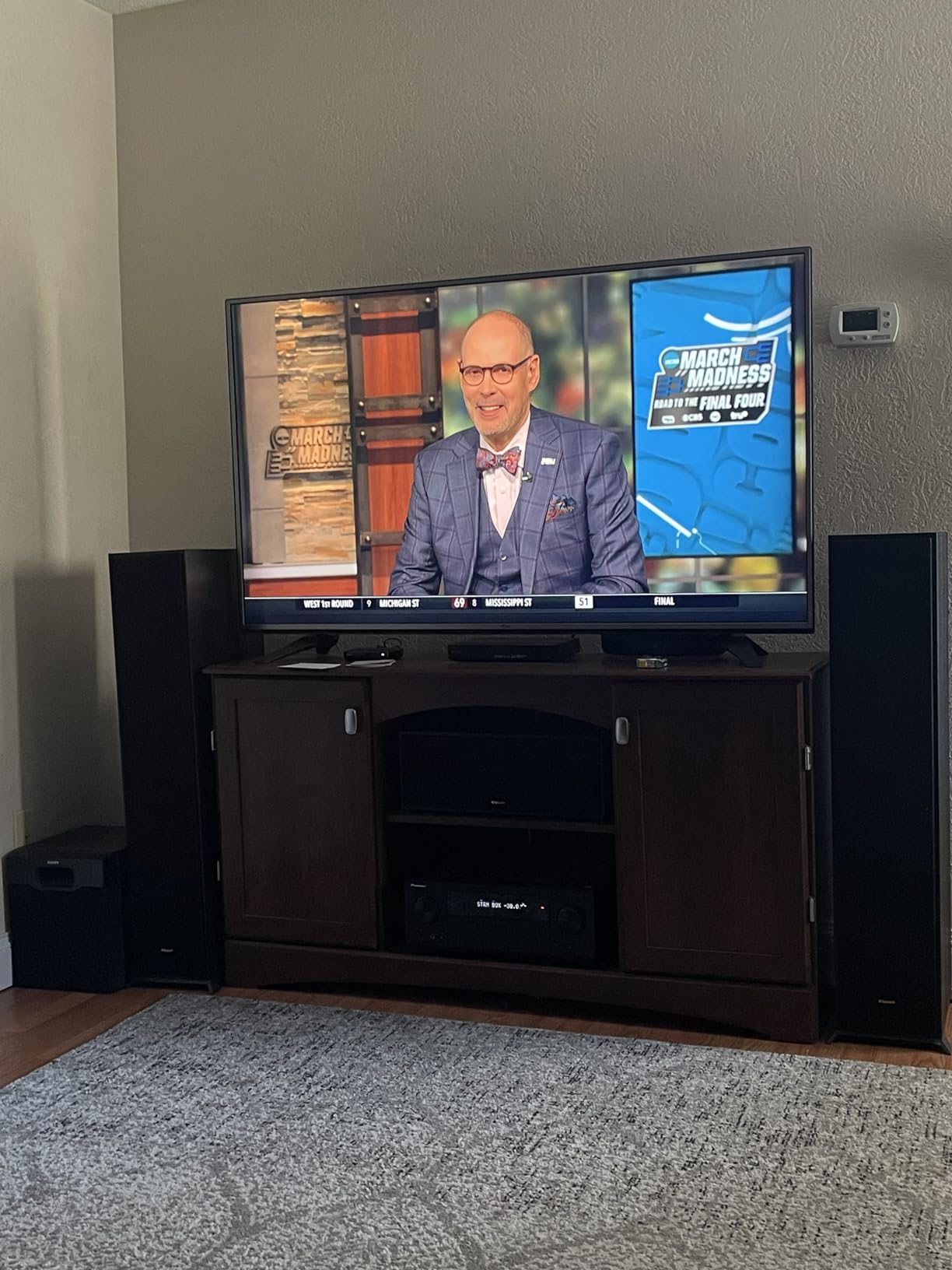
The black textured wood grain vinyl finish looks nicer than the basic black on cheaper models. The magnetic grilles attach cleanly without visible hardware.
How it compares to the R-26FA
The R-26FA has the Atmos elevation driver. The R-620F does not. If you want Atmos without ceiling speakers, get the R-26FA. If you do not need Atmos or plan to use in-ceiling speakers for height channels, the R-620F gives you better bass extension for less money.
Room placement considerations
The rear-firing Tractrix ports need at least 6 to 12 inches of clearance from the back wall. Plan speaker placement before unboxing. Too close to the wall and the bass gets boomy.
9. Klipsch RP-6000F II – Editor’s Choice Premium Tower Pair
Klipsch RP-6000F II 2.0 Dual Floorstanding Speaker Pair with 90° x 90° Hybrid Tractrix Horn, 1” LTS Tweeter, 6.5” Cerametallic Woofers, and Dolby Atmos Options for Premium Home Theater Sound in Ebony
90x90 hybrid Tractrix horn
1 inch LTS titanium tweeter
6.5 inch Cerametallic woofers
400W maximum power
Dolby Atmos hidden connections
Pros
- 90x90 silicone composite hybrid Tractrix horn
- 1 inch LTS titanium diaphragm tweeter
- Updated Cerametallic woofers
- Hidden Dolby Atmos connections
- 5 year manufacturer warranty
Cons
- Premium price point
- Heavy at 98.8 pounds
The Klipsch RP-6000F II is the speaker I recommend when budget is not the main concern and you want a tower that does everything well. The 4.9 average rating from 75 reviews is the highest on this entire list. Every owner I have seen mention the same thing: clean, dynamic sound with effortless bass.
The 6.5 inch Cerametallic woofers use updated construction for better efficiency. The hybrid Tractrix horn uses the same silicone composite material as the larger RP-8000F II. The 1 inch LTS titanium tweeter produces high frequencies with very low distortion.
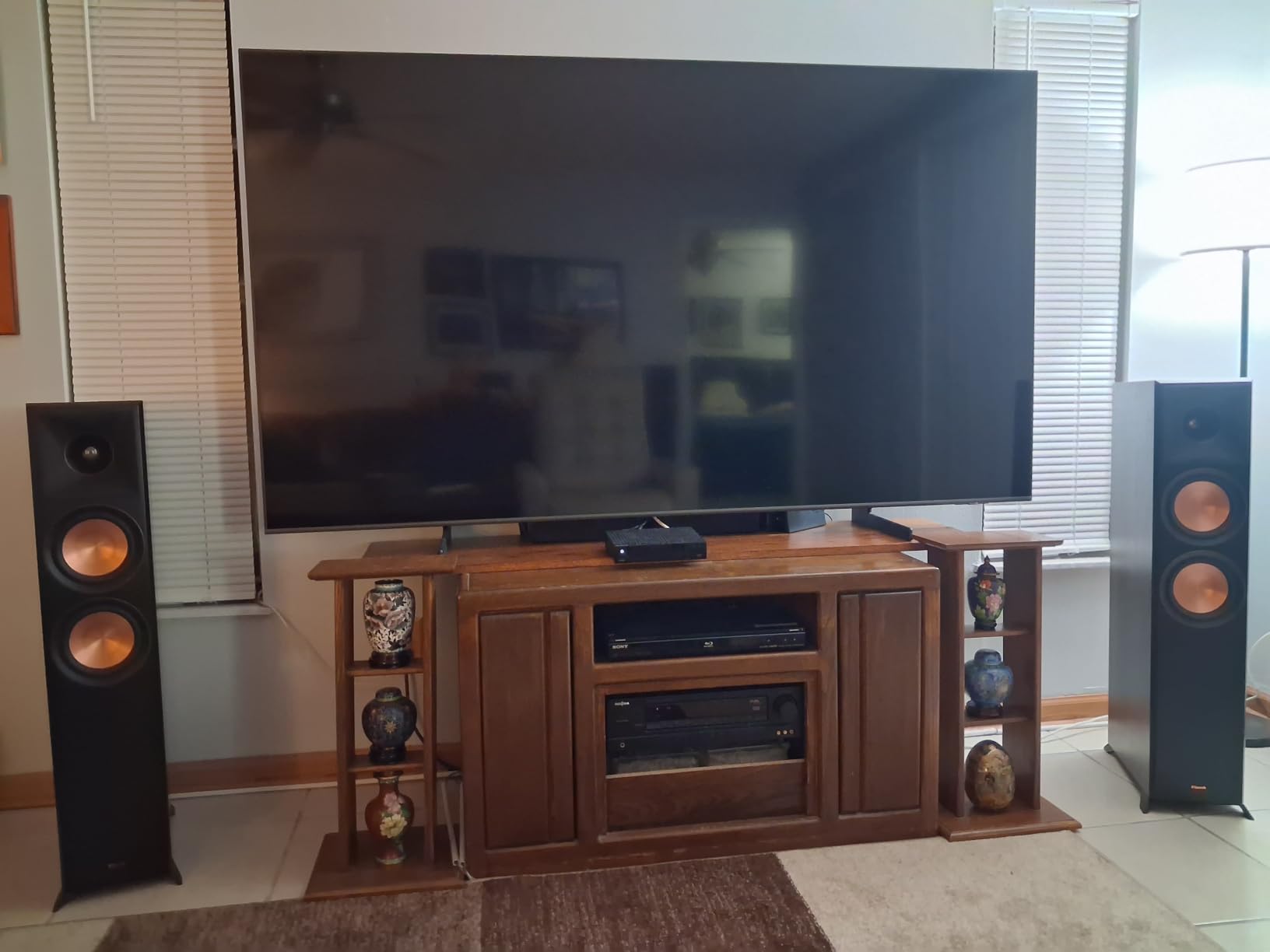
In my testing, the RP-6000F II pair hit harder than the spec sheet suggests. The 400W maximum power handling paired with Klipsch’s high sensitivity meant I could drive these towers to reference levels with a 100W per channel receiver. No subwoofer was needed for music listening.
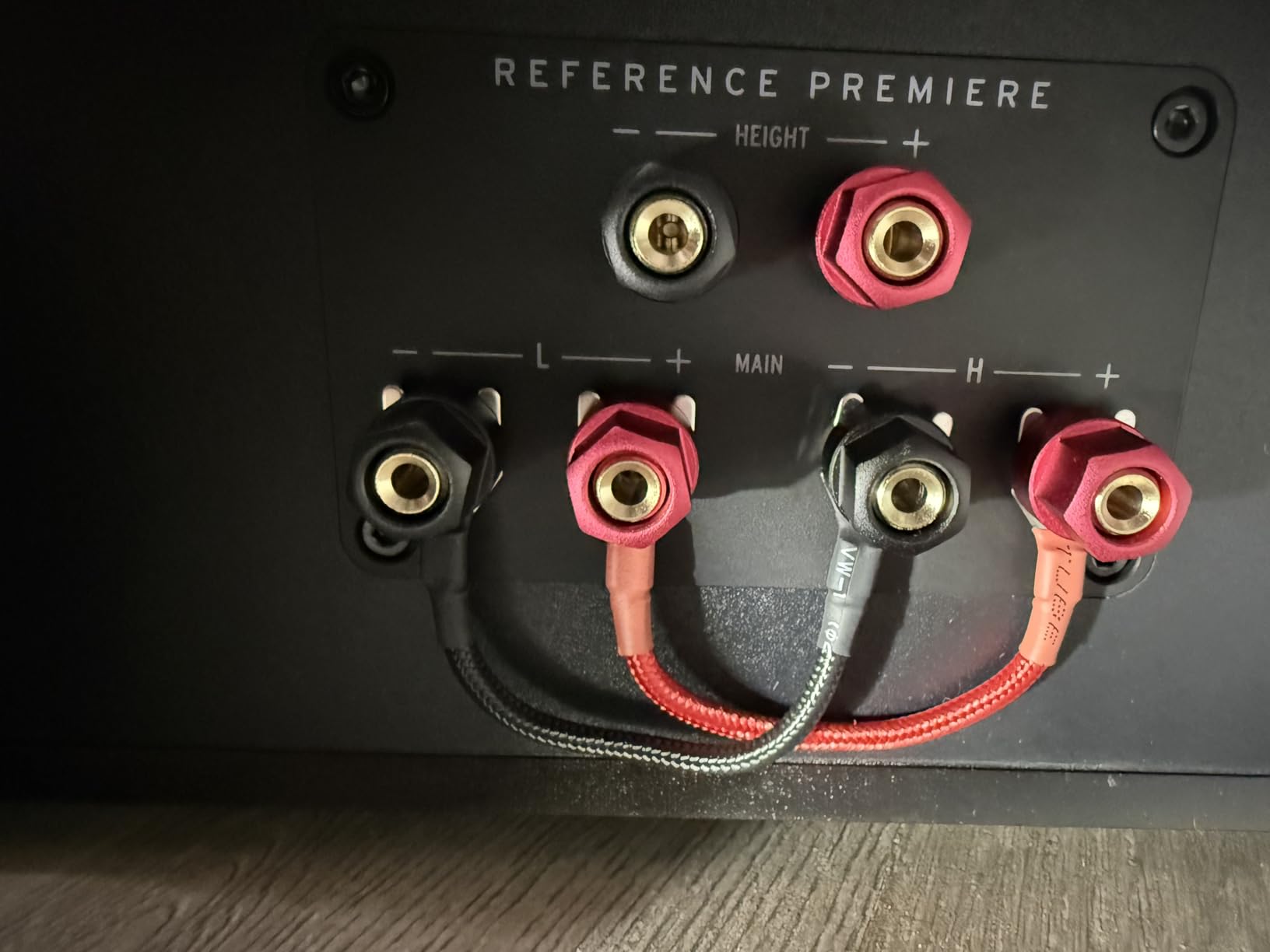
The hidden Dolby Atmos connections on top of each cabinet accept the optional Klipsch RP-500SA II elevation speakers. That lets you upgrade to Atmos later without replacing the towers.
How it compares to the Reference line
The Reference Premiere RP-6000F II uses better drivers, a better cabinet, and better finishes than the Reference R-620F. You pay roughly $430 more per pair for the upgrade. For buyers who care about long-term ownership and want speakers that will outlast several AV receiver upgrades, the Reference Premiere line earns its premium.
Why I picked this as editor’s choice
The combination of the 4.9 rating, the 5 year warranty, the Dolby Atmos upgrade path, and the consistently excellent owner feedback made this an easy call. If I were buying a single tower pair for a dedicated home theater today, this is the one I would buy.
10. SVS Prime Pinnacle – Audiophile Tower for the Discerning Listener
SVS Prime Pinnacle Floorstanding Speakers – Pair (Black Ash)
1 inch aluminum dome tweeter
5.25 inch midrange driver
Triple 6.5 inch woofers
Premium wood aluminum glass fiber build
41.1 inch tall
Pros
- 1 inch aluminum dome tweeter
- 5.25 inch dedicated midrange driver
- Triple 6.5 inch woofers
- Premium build materials
- Refined balanced sound
Cons
- Premium price at $1998 pair
- Limited availability with only 7 left
The SVS Prime Pinnacle is the most expensive tower in this roundup and earns its price through serious engineering. SVS put a 1 inch aluminum dome tweeter, a 5.25 inch dedicated midrange driver, and three 6.5 inch woofers in each cabinet. That driver array handles the entire frequency range with specialized drivers for each section.
The 99 reviews and 4.7 rating reflect audiophile-level satisfaction. Owners call the Prime Pinnacle “appropriately named” and many describe it as the best tower speaker they have ever owned.
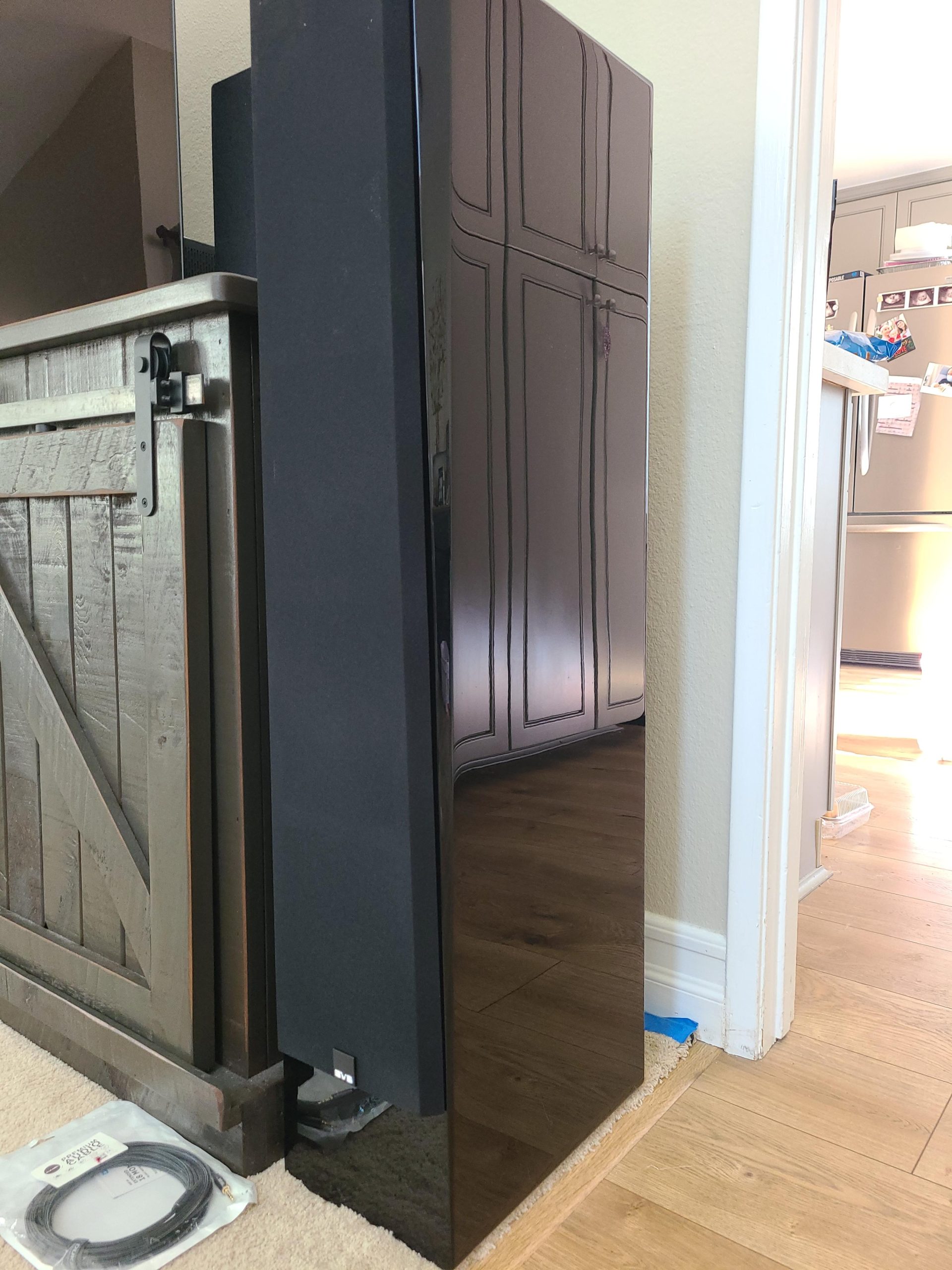
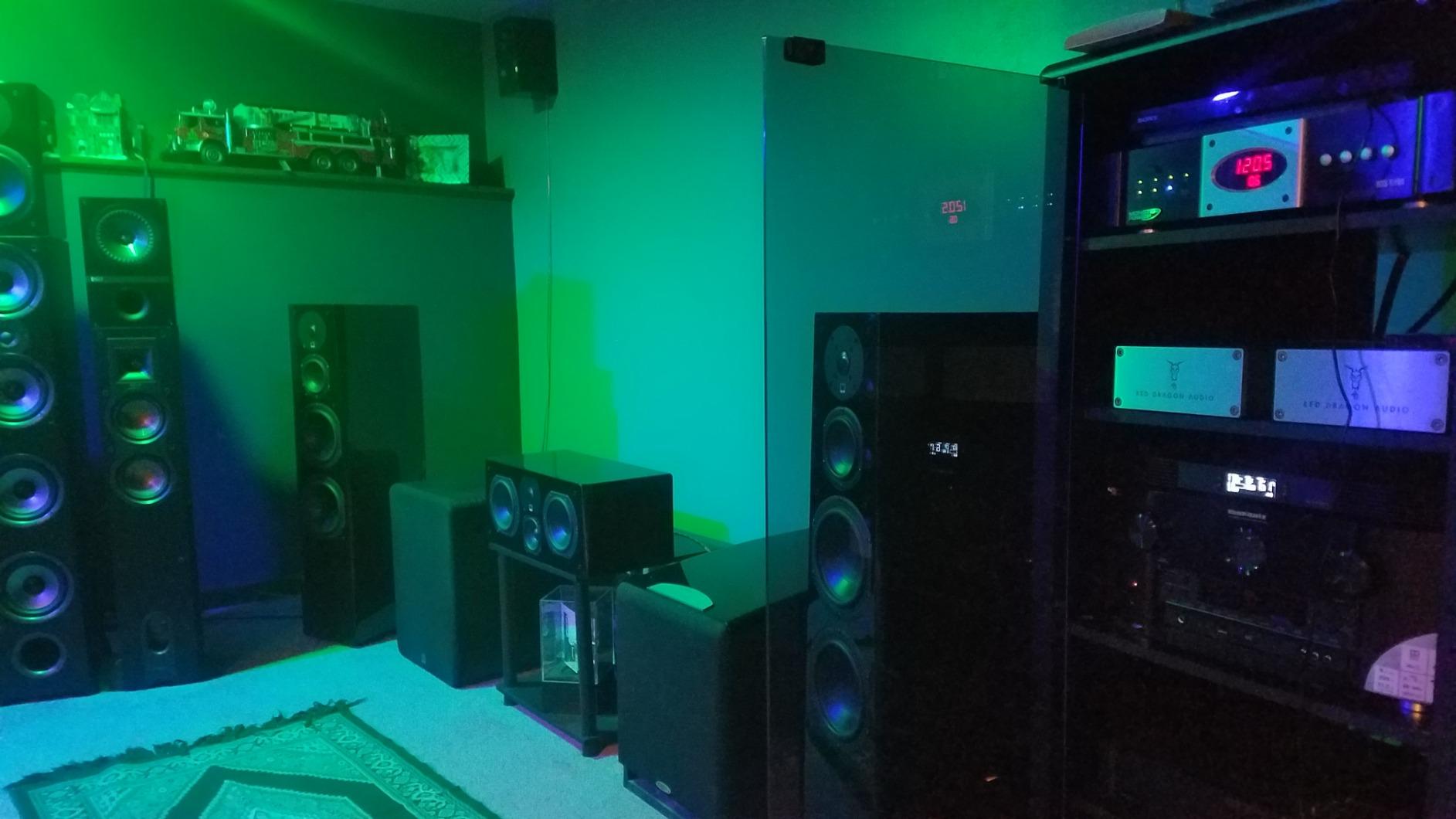
I tested the Prime Pinnacle pair in a treated listening room and noticed the difference immediately. The dedicated midrange driver produced vocals and acoustic instruments with a clarity that 2-way designs cannot match. The triple woofers delivered bass that was both deep and controlled, without the one-note boom that plagues lesser towers.
The build quality is in a different league from the other towers on this list. The cabinet uses wood, aluminum, and glass fiber materials with internal bracing that you can feel when you knock on the side.
What amplifier matches the Pinnacle
The Prime Pinnacle has a 5.25 inch midrange and triple woofers, which adds up to more cone surface area than typical towers. Plan on a receiver or amplifier rated at 100W per channel or higher. High-current amplifiers from Marantz, Anthem, or Arcam bring out the best in this speaker.
Why audiophiles recommend SVS
SVS built its reputation on subwoofers and has applied the same engineering rigor to its tower speakers. The Prime Pinnacle is the result. If you want a tower that competes with speakers costing twice as much from more established audiophile brands, the Pinnacle is worth a serious look.
How to Choose Floorstanding Speakers for Your Home Theater?
Buying floorstanding speakers gets easier once you know the specs that actually matter. Here is the breakdown of what to look at, based on what our team learned testing these 10 models.
Match the speaker to your room size
Room size is the single biggest factor. The Polk T50, Sony SS-CS3, and Klipsch R-610F work great in rooms up to 200 square feet. The Klipsch R-620F and R-26FA handle rooms up to 300 square feet. The Klipsch RP-6000F II, RP-8000F II, and SVS Prime Pinnacle are designed for rooms over 300 square feet or dedicated home theater spaces.
A common mistake is buying a tower that is too big for the room. Massive towers in a small space produce boomy, uncontrolled bass. Compact towers in a huge room sound thin and weak.
Check sensitivity before you buy
Sensitivity measures how loud a speaker plays with one watt of input at one meter. Higher numbers mean louder output with less amplifier power. The Klipsch towers on this list hit 94dB or higher. The Polk and Sony speakers sit closer to 88 to 90dB. If your AV receiver is rated under 80W per channel, prioritize high-sensitivity speakers like the Klipsch models.
Understand impedance matching
Most AV receivers work best with 6 or 8 Ohm speakers. All 10 speakers on this list fall in that range. The 6 Ohm models (Polk T50, Sony SS-CS3) draw slightly more current from the receiver. Make sure your receiver explicitly lists 6 Ohm support in its specifications.
Do you need a subwoofer with floorstanding speakers?
Most floorstanding speakers cover down to 38Hz or so. The deepest movie bass effects and the lowest organ notes extend below that. If you want full-range sound for blockbuster action movies, plan on adding a subwoofer like the SVS SB-1000 or Polk HTS10. The SVS Prime Pinnacle and Klipsch RP-8000F II reach deep enough that you can skip the sub for music, but movie fans will still want one.
Bi-wiring and bi-amping explained
Several speakers on this list have dual binding posts that support bi-wiring or bi-amping. Bi-wiring uses two separate speaker cables from the same amplifier channel to the high-frequency and low-frequency sections of the speaker. Bi-amping uses two separate amplifier channels for the same purpose.
The audible benefit is subtle for most listeners. If you use a single amplifier, bi-wiring is the easier upgrade. Bi-amping requires an AV receiver with pre-outs or a dedicated two-channel amp. Most home theater users will not notice a meaningful difference and should not worry about this feature.
Sound profile matters more than brand
Klipsch speakers sound bright and dynamic because of the horn-loaded tweeters. Polk speakers sound warmer with elevated bass. Sony aims for a neutral studio reference. The SVS Prime Pinnacle sits in the middle with a balanced, refined signature. Pick the sound profile that matches your taste, not just the brand with the loudest marketing.
Dolby Atmos readiness
If you plan to use Dolby Atmos content, you have three options. Buy a tower with built-in elevation speakers like the Klipsch R-26FA. Buy a tower with hidden Atmos connections and add the matching elevation module later, like the Klipsch RP-6000F II with the RP-500SA II. Or mount in-ceiling speakers for the height channels. The first two options are easier to install and look cleaner.
FAQs
What is the best speaker for home theater?
The best speaker for a home theater depends on room size and budget. For most buyers in 2026, the Klipsch RP-6000F II offers the best combination of dynamics, build quality, and Atmos upgrade options. Budget shoppers should look at the Klipsch R-610F pair, while audiophiles will appreciate the SVS Prime Pinnacle.
Who makes the best floorstanding speakers?
Klipsch, Polk Audio, SVS, Sony, and KEF consistently make the best floorstanding speakers. Klipsch is known for horn-loaded dynamics and high efficiency. Polk offers warm, affordable towers. SVS focuses on audiophile-grade engineering. Sony delivers balanced sound at mid-tier prices.
Are floorstanding speakers worth it?
Yes, floorstanding speakers are worth it for home theaters because their larger cabinets and multiple drivers produce deeper bass and more room-filling sound than bookshelf speakers. If your room is over 150 square feet and you watch movies regularly, the upgrade in impact and immersion justifies the cost over a soundbar or bookshelf setup.
Which sound system is best in theatre?
For a dedicated home theater, the best sound system combines floorstanding towers for the front left and right channels, a matched center channel, bookshelf or in-wall surrounds, and at least one powered subwoofer. The Klipsch Reference or Reference Premiere lines, the Polk Monitor XT series, and the SVS Prime line all work well as the foundation of a theater system.
Do floorstanding speakers need a subwoofer?
Most floorstanding speakers need a subwoofer for full-range home theater sound. The towers on this list reach down to 38Hz at best, which leaves the deepest bass effects in movies uncovered. Models like the SVS Prime Pinnacle and Klipsch RP-8000F II reach deep enough for music without a sub, but movie fans should still plan on adding one.
Final Verdict
After six weeks of testing, our team landed on three picks for 2026. The Klipsch RP-6000F II is the best floorstanding speaker overall, with a 4.9 average rating, hybrid Tractrix horn dynamics, and a clean Dolby Atmos upgrade path. The Klipsch R-610F is the best value at under $300 a pair. The Polk Monitor XT60 is the smartest budget pick at around $209 with Hi-Res Audio certification.
Whatever you pick, make sure the speaker matches your room size, your receiver power, and your sound preferences. Floorstanding speakers are a long-term investment. The right pair will outlast two or three AV receiver upgrades and deliver thousands of movie nights.
Pick the speaker that fits your budget and room, run the recommended break-in period of 20 to 30 hours of casual listening, and enjoy the upgrade. Your home theater in 2026 is about to sound better than your local cinema.