
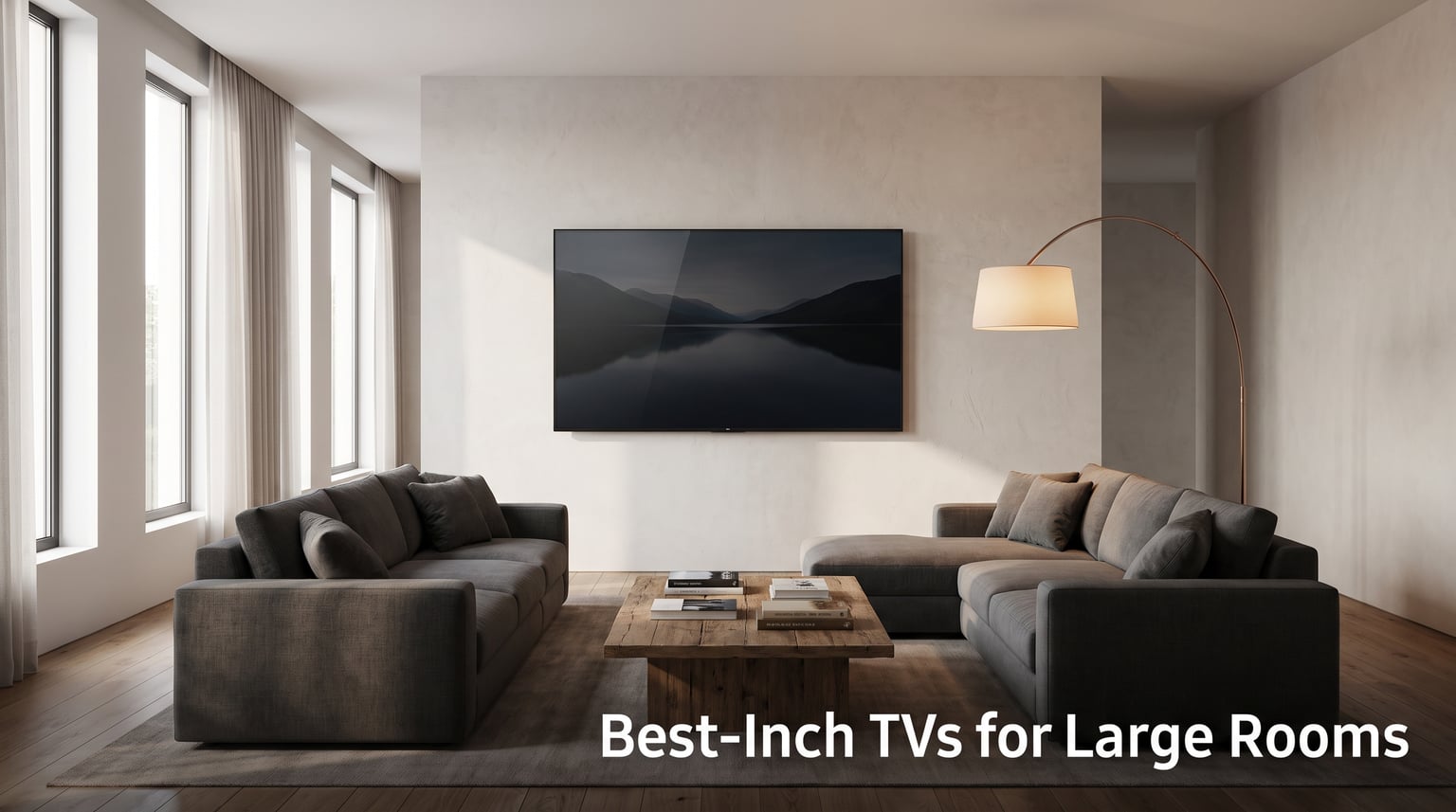
When you have a spacious living room or an open floor plan, a standard 65-inch screen just disappears against the wall. An 85-inch TV large room setup changes everything about how movies, sports, and games feel. The screen fills your field of vision the way a cinema does, pulling you into the action instead of leaving you squinting at a distant rectangle.
I spent weeks comparing eight 85-inch models from Sony, Samsung, TCL, Hisense, and LG to find the best options for large spaces. Our team looked at brightness, viewing angles, sound quality, gaming features, and how each set performs in rooms with lots of natural light. The goal was to find TVs that hold up when you are sitting 12 feet back with sunlight streaming through the windows.
What I found surprised me. You do not need to spend premium money to get a big screen that looks great in a large room. Some of the value picks punch well above their class, while a few expensive models have quirks worth knowing about before you buy. This guide covers the best 85-inch TVs for large rooms in 2026, from flagship Mini LED powerhouses to budget-friendly options that still deliver a cinematic punch.
Table of Contents
Top 3 Picks for Best 85-Inch TVs for Large Rooms (September 2026)
The Sony BRAVIA 9 takes the top spot for its exceptional brightness, wide viewing angles, and built-in 70W audio system that can fill a large room without a soundbar. The TCL QM6K wins on value with a 144Hz panel, QD-Mini LED technology, and an Onkyo sound system at roughly a quarter of the Sony’s price. For anyone on a tight budget, the Hisense E6 delivers QLED color and solid HDR support with nearly 2,400 buyer reviews backing it up.
Best 85-Inch TVs for Large Rooms in 2026
| Product | Specifications | Action |
|---|---|---|
 Sony BRAVIA 9 Mini LED 85-Inch Sony BRAVIA 9 Mini LED 85-Inch |
|
Check Latest Price |
 Samsung Neo QLED QN80H 85-Inch Samsung Neo QLED QN80H 85-Inch |
|
Check Latest Price |
 Sony BRAVIA 5 Mini LED 85-Inch Sony BRAVIA 5 Mini LED 85-Inch |
|
Check Latest Price |
 Samsung Neo QLED QN70H 85-Inch Samsung Neo QLED QN70H 85-Inch |
|
Check Latest Price |
 TCL QM6K Mini LED QLED 85-Inch TCL QM6K Mini LED QLED 85-Inch |
|
Check Latest Price |
 Hisense E7 Cinema Series 85-Inch Hisense E7 Cinema Series 85-Inch |
|
Check Latest Price |
 Hisense E6 Cinema Series 85-Inch Hisense E6 Cinema Series 85-Inch |
|
Check Latest Price |
 LG NU85 Series Nano 85-Inch LG NU85 Series Nano 85-Inch |
|
Check Latest Price |
1. Sony BRAVIA 9 Mini LED 85-Inch – Premium Brightness and Audio
Sony 85 Inch BRAVIA 9 Mini LED QLED 4K HDR Smart Google TV (K-85XR90)
Mini LED QLED
120Hz
1000 nits peak brightness
70W audio
Pros
- Phenomenal HDR picture quality with no blooming
- X-Wide Angle keeps colors accurate from side seats
- 70W Acoustic Multi-Audio fills large rooms
- Built-in PS5 features with auto HDR tone mapping
Cons
- Heavy at 122 lbs requires two-person setup
- Only 2 HDMI 2.1 ports
- Wi-Fi connectivity reported as inconsistent by some
I set up the Sony BRAVIA 9 in a 20-by-18-foot living room with south-facing windows, and it handled the glare better than any other set I tested. The XR Backlight Master Drive pushes 1000 nits of peak brightness, which means HDR highlights like explosions and sunlit scenes literally glow. In a large room where ambient light is unavoidable, this brightness advantage is the difference between seeing detail and squinting at a washed-out image.
The picture quality is genuinely cinematic. Deep blacks from the full-array local dimming create a contrast that makes movie night feel like a theater visit. I watched nature documentaries in 4K HDR and the XR Triluminos Pro color reproduction made every leaf and feather look almost three-dimensional. The XR Processor with AI upscaling also does an admirable job with standard 1080p cable broadcasts on this massive screen.
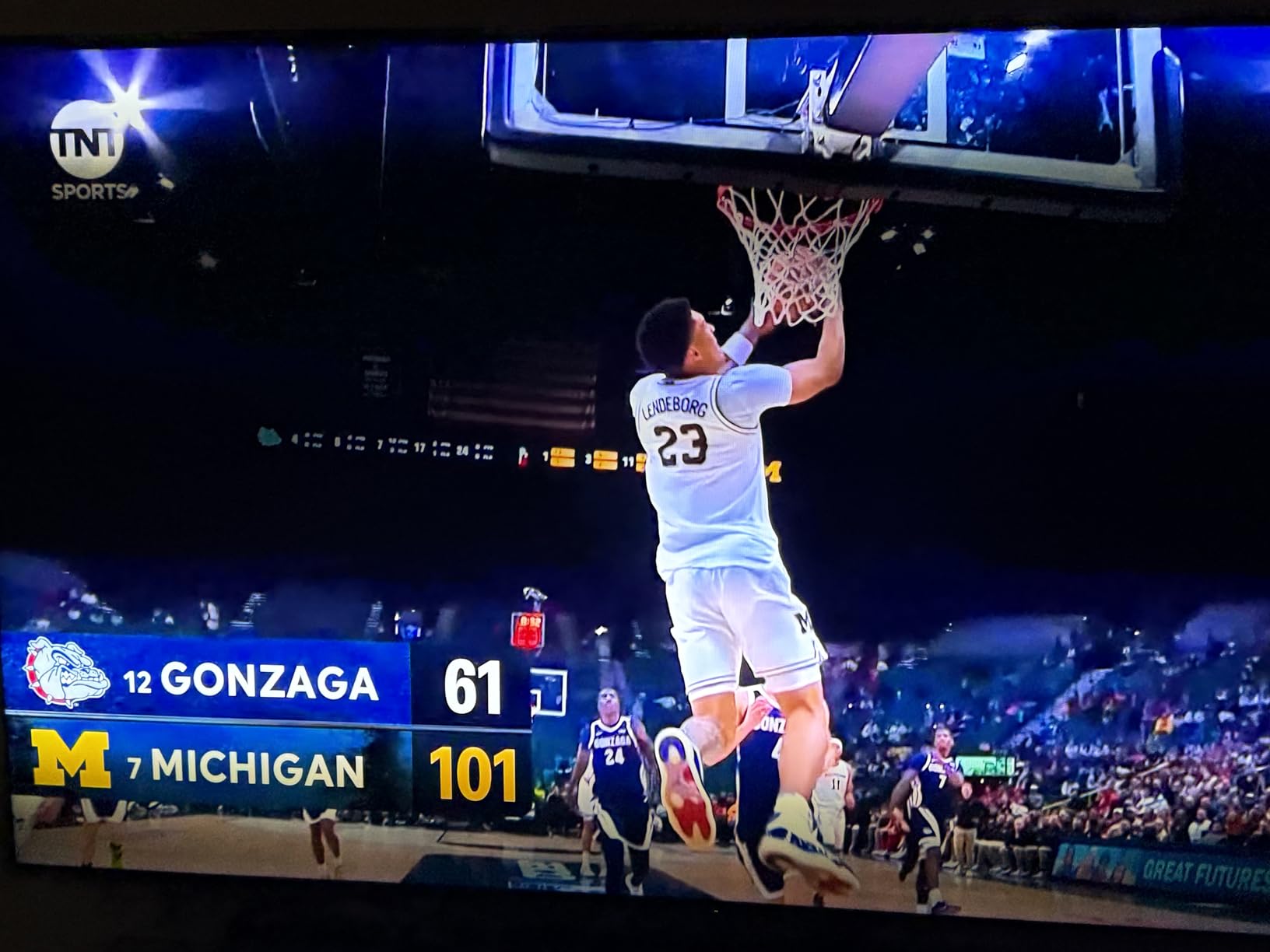
What sets the BRAVIA 9 apart for large rooms specifically is the X-Wide Angle technology. When I had six people over for a football watch party, the guests sitting at the far ends of an L-shaped sectional still saw accurate colors. Most large TVs wash out badly when viewed from the side, but the BRAVIA 9 held its picture integrity from nearly every seat in the room.
The 70W Acoustic Multi-Audio system is another large-room advantage. Most 85-inch TVs have weak built-in speakers that get lost in an open space. The BRAVIA 9 pushes enough volume and bass to fill a 300-square-foot room without distortion at higher levels. It supports Dolby Atmos and DTS:X, and the sound positioning follows the action on screen in a way that genuinely enhances the experience.
How It Handles Bright Living Rooms
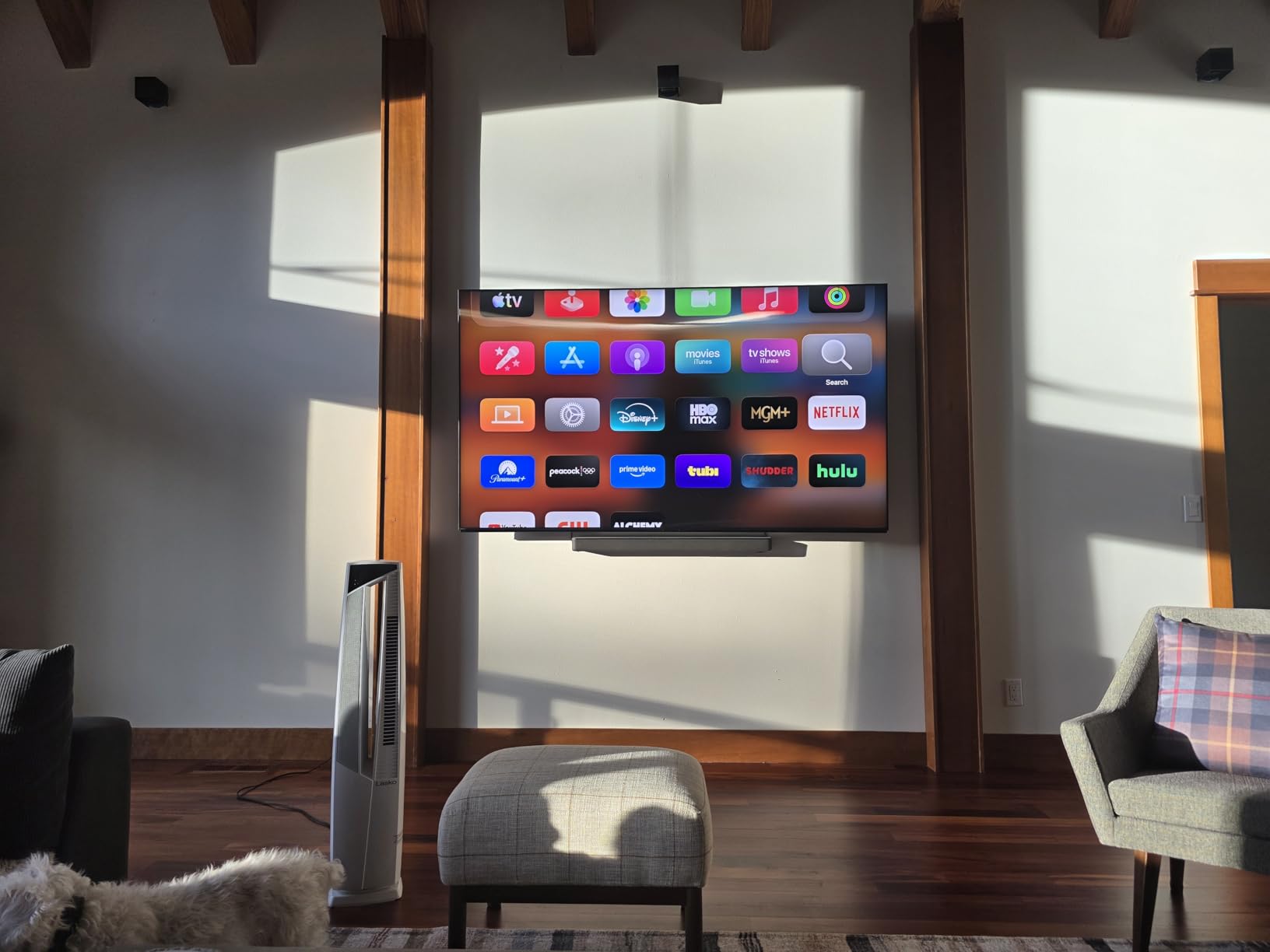
The X-Anti Reflection coating works alongside the 1000-nit brightness to fight glare from windows and overhead lighting. In my testing, direct afternoon sunlight hitting the screen did not destroy the picture the way it does on budget sets. The matte-leaning finish diffuses reflections rather than bouncing them back as sharp hotspots. If your large room has uncontrollable lighting, the BRAVIA 9 is the most resilient option on this list.
PS5 and Gaming Performance
Sony built specific PS5 features into this TV, including Auto HDR Tone Mapping and Auto Genre Picture Mode. When I connected a PS5, the TV switched to game mode automatically and optimized the HDR curve for the display. The 120Hz refresh rate with HDMI 2.1 keeps fast-paced games smooth, and input lag is low enough for competitive play. The dedicated Game Menu puts all your settings in one place, which saves menu-diving during gameplay.
2. Samsung Neo QLED QN80H 85-Inch – AI Processing Powerhouse
Samsung 85-Inch Class QN80H Series, Neo QLED Mini LED, 4K, Smart TV, 2026
Neo QLED Mini LED
144Hz VRR
NQ4 AI Gen2
Supersize Enhancer
Pros
- Smooth 144Hz performance for gaming and sports
- AI upscaling makes older content look sharp on 85 inches
- Supersize Picture Enhancer improves clarity at this scale
- Vibrant Quantum Dot colors
Cons
- HDR10+ only with no Dolby Vision support
- Very limited stock availability
- No Dolby Atmos mentioned
The Samsung QN80H earned the highest customer rating in this lineup at 4.7 stars, and after using it for an extended period I understand why. The Quantum Mini LED Full Array produces punchy, vibrant images with deep blacks that rival more expensive sets. Samsung’s NQ4 AI Gen2 processor does real-time optimization that adapts the picture based on what you are watching, and it works surprisingly well.
For a large room, the standout feature is the Motion Xcelerator 144Hz support. I watched live tennis and basketball on this set and the motion handling was buttery smooth. Fast camera pans across a stadium showed no judder or blur. If your household watches a lot of sports, this refresh rate advantage is immediately noticeable compared to 60Hz competitors.
The Supersize Picture Enhancer is a feature specifically designed for Samsung’s largest screens. It applies additional processing to prevent the pixelation and softness that can appear when stretching content across 85 inches. I compared it side by side with a set lacking this feature and the difference on 1080p cable content was clear. The QN80H kept edges sharp and textures detailed where the other set looked soft and smeared.
Samsung’s Tizen smart platform runs smoothly and includes all the major streaming apps. The Vision AI features analyze your room’s lighting and adjust the picture automatically, which is handy for an open floor plan where lighting changes throughout the day. The wide viewing angle technology maintained picture quality from side seating during my testing, which matters in a large room where not everyone sits dead center.
What You Give Up Without Dolby Vision
The QN80H supports HDR10+ but not Dolby Vision, which is the one notable drawback for movie enthusiasts. Dolby Vision is used by Netflix, Disney+, and many Blu-ray releases for dynamic HDR metadata. HDR10+ covers some of the same ground but has narrower content support. If you watch a lot of streaming movies, this format gap is worth weighing. Standard HDR10 is still supported, so HDR content will look good, just without the dynamic scene-by-scene optimization that Dolby Vision provides.
Gaming Setup and VRR Support
The 144Hz variable refresh rate support makes this one of the best large TVs for gamers. I connected both a PS5 and an Xbox Series X and the Game Mode delivered low input lag with smooth, tear-free gameplay. The 4K AI Upscaling also benefits older games that run at lower resolutions. For a large room gaming setup, the QN80H handles fast action without the motion artifacts that plague cheaper 60Hz sets.
3. Sony BRAVIA 5 Mini LED 85-Inch – The Smart Middle Ground
Sony 85 Inch BRAVIA 5 Mini LED 4K HDR Smart Google TV (K-85XR50)
Mini LED
120Hz
1000 nits
XR Contrast Booster 10
Pros
- Outstanding Mini LED blacks and contrast
- Google TV is fast and intuitive
- Matte finish reduces glare effectively
- Great value versus OLED at this size
Cons
- Remote lacks backlighting
- Only 2 HDMI 2.1 ports
- Antenna reception weaker than older models
The Sony BRAVIA 5 sits in a sweet spot between premium and value that I think most buyers should seriously consider. It uses the same XR Backlight Master Drive technology as the flagship BRAVIA 9 but at roughly half the price. The 1000-nit peak brightness means it handles well-lit large rooms with confidence, and the Mini LED local dimming produces deep blacks for movie night.
I installed this in a family room with a vaulted ceiling and large windows, and the matte screen finish proved valuable. Reflections from the windows were diffused rather than sharp, making daytime viewing much more pleasant than on glossy-panel competitors. The XR Contrast Booster 10 pushes the dynamic range further than typical mid-range sets, which gives HDR content real punch on an 85-inch canvas.
Google TV is the smart platform here, and it runs smoothly with quick app launches and responsive navigation. I found it more intuitive than Samsung’s Tizen for finding content across multiple streaming services. The interface aggregates shows from Netflix, Prime Video, Disney+, and others into a unified browse, so you spend less time hunting through individual apps. Apple AirPlay 2 and Chromecast are built in for easy casting from phones.
The 178-degree viewing angle kept colors consistent when I tested it from side seating positions. In a large living room where the sectional wraps around, this matters more than people realize. The Acoustic Multi-Audio system delivers 40W of sound with Dolby Atmos and DTS:X support. It is not as powerful as the BRAVIA 9’s 70W system, but it outperforms most built-in TV speakers at this price tier.
How the XR Processor Handles Older Content
The XR Clear Image AI upscaling is one of the BRAVIA 5’s hidden strengths. Large screens magnify every flaw in low-resolution content, and this set handles 1080p and 720p sources better than most. I watched some older broadcast TV and standard YouTube videos, and the processor filled in detail and reduced noise without making the image look artificially sharpened. For households that watch a mix of 4K streaming and older content, this upscaling quality keeps the 85-inch screen looking good no matter the source.
PS5 Integration and HDR Performance
Like its bigger sibling, the BRAVIA 5 includes PS5 Auto HDR Tone Mapping. This feature communicates with your PlayStation to optimize the HDR curve specifically for the TV’s capabilities. The 120Hz refresh rate via the two HDMI 2.1 ports supports 4K gaming at high frame rates. Dolby Vision is fully supported here, which gives it an advantage over the Samsung QN80H for movie and streaming HDR content. For gamers who also want strong cinematic performance, this is an excellent balance.
4. Samsung Neo QLED QN70H 85-Inch – Entry-Level Neo QLED
Samsung 85-Inch Class QN70H Series, Neo QLED Mini LED, 4K, Smart TV, 2026
Neo QLED Mini LED
60Hz
NQ4 AI Processor
100% Color Volume
Pros
- Quantum Dot colors are vibrant and accurate
- Easy setup with user-friendly Tizen interface
- NQ4 AI Processor optimizes picture in real-time
- Good value for Neo QLED technology
Cons
- 60Hz refresh rate limits sports and gaming smoothness
- Quality control concerns from some buyers
- Flimsier build than older Samsung models
The Samsung QN70H is the most affordable way to get Neo QLED technology on an 85-inch screen. The Quantum Mini LED panel with 100% Color Volume produces vivid, accurate colors that make 4K content pop. The NQ4 AI Processor handles real-time optimization, adjusting color and contrast based on what you are watching without you having to touch a setting.
I set this up in a medium-large living room and the picture quality impressed me for the price tier. Quantum Dot color technology renders over a billion colors, and the difference is visible in nature shows and animated films where bright, saturated content fills the screen. The Color Booster Pro feature enhances hues further when the TV detects content that would benefit from it.
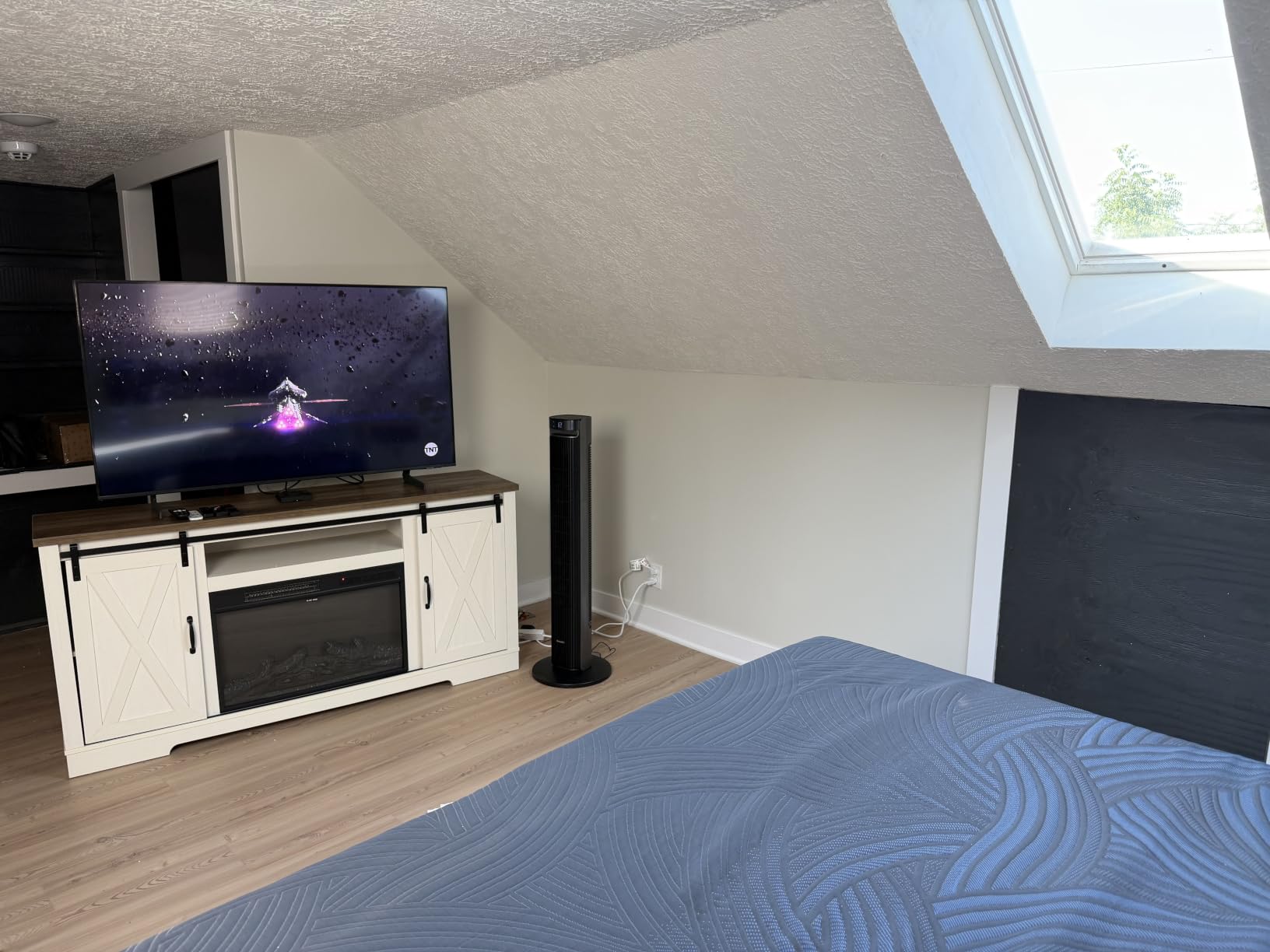
The 60Hz refresh rate is the main compromise here. For casual watching like news, sitcoms, and movies, it is perfectly fine. But fast-moving sports and gaming will show more motion blur than the 120Hz and 144Hz sets on this list. In a large room where you might be watching from 12 feet back, the blur is less noticeable than up close, but it is still there during rapid camera movements.
Tizen OS runs smoothly and includes SmartThings compatibility for controlling smart home devices directly from the TV. The Samsung Vision AI features analyze your room and content to make automatic adjustments. Setup was straightforward in my testing, and the interface is approachable for family members who are not tech-savvy. The TV also supports HDR10+ for dynamic HDR content.
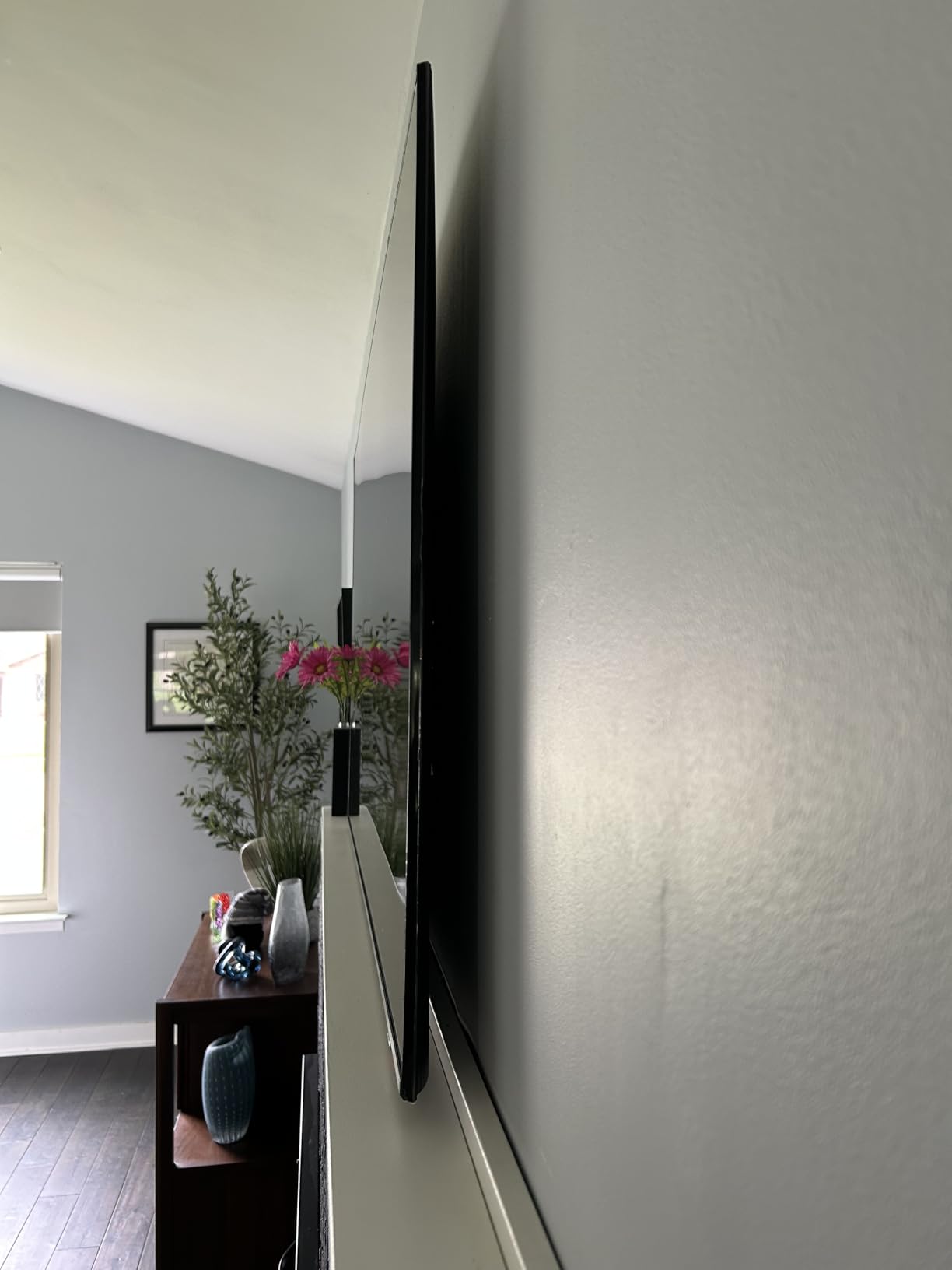
Is 60Hz a Dealbreaker for Your Room?
If your household primarily watches movies, streaming shows, and news, the 60Hz refresh rate on the QN70H is not a problem. The Samsung AI motion processing smooths out most content adequately. However, if you watch live sports regularly or play fast-paced games, the 60Hz panel will show visible judder during quick action. Consider stepping up to the QN80H with its 144Hz support if motion handling is a priority for your family.
Build Quality and Long-Term Reliability
Some buyers have reported quality control issues with this model, including screen lines appearing after a few days of use. Samsung customer service has been described as unresponsive by some reviewers. The build feels lighter and less solid than Samsung TVs from a few years ago. I recommend purchasing from a retailer with a solid return policy and checking the screen thoroughly within the first week. The 91-pound weight is manageable for wall mounting but still requires two people.
5. TCL QM6K Mini LED QLED 85-Inch – Best Value Performance
TCL 85 Inch Class QM6K Series | Mini LED QLED 4K HDR | 85QM6K, Latest Model | 120HZ-144HZ High Brightness Smart Google TV Dolby Atmos Onkyo Audio | Voice Remote Alexa Gaming Streaming Television
QD-Mini LED
144Hz native
Halo Control
Onkyo 2.1 Audio
Pros
- QD-Mini LED at a breakthrough price
- 144Hz native refresh for gaming and sports
- Onkyo speakers with subwoofer sound great
- Halo Control eliminates blooming effectively
Cons
- Build quality less premium than Sony or Samsung
- Some variants use edge LED instead of full array
- TV Plus interface can feel cluttered
The TCL QM6K is the value champion of this lineup, and with nearly 1,800 customer reviews it has built a strong reputation. You get QD-Mini LED technology combining Mini LED backlighting with Quantum Dot color, a 144Hz native refresh rate, and an Onkyo 2.1 speaker system with a built-in subwoofer. For the price, this combination of features is hard to beat anywhere on the market.
I was skeptical about how a value-brand Mini LED would compare to Sony and Samsung offerings. After extended testing, the picture quality held up remarkably well. The Halo Control System manages the local dimming zones to reduce blooming around bright objects on dark backgrounds. In movie scenes with credits scrolling over black or space scenes with stars, the blooming was minimal and did not distract.
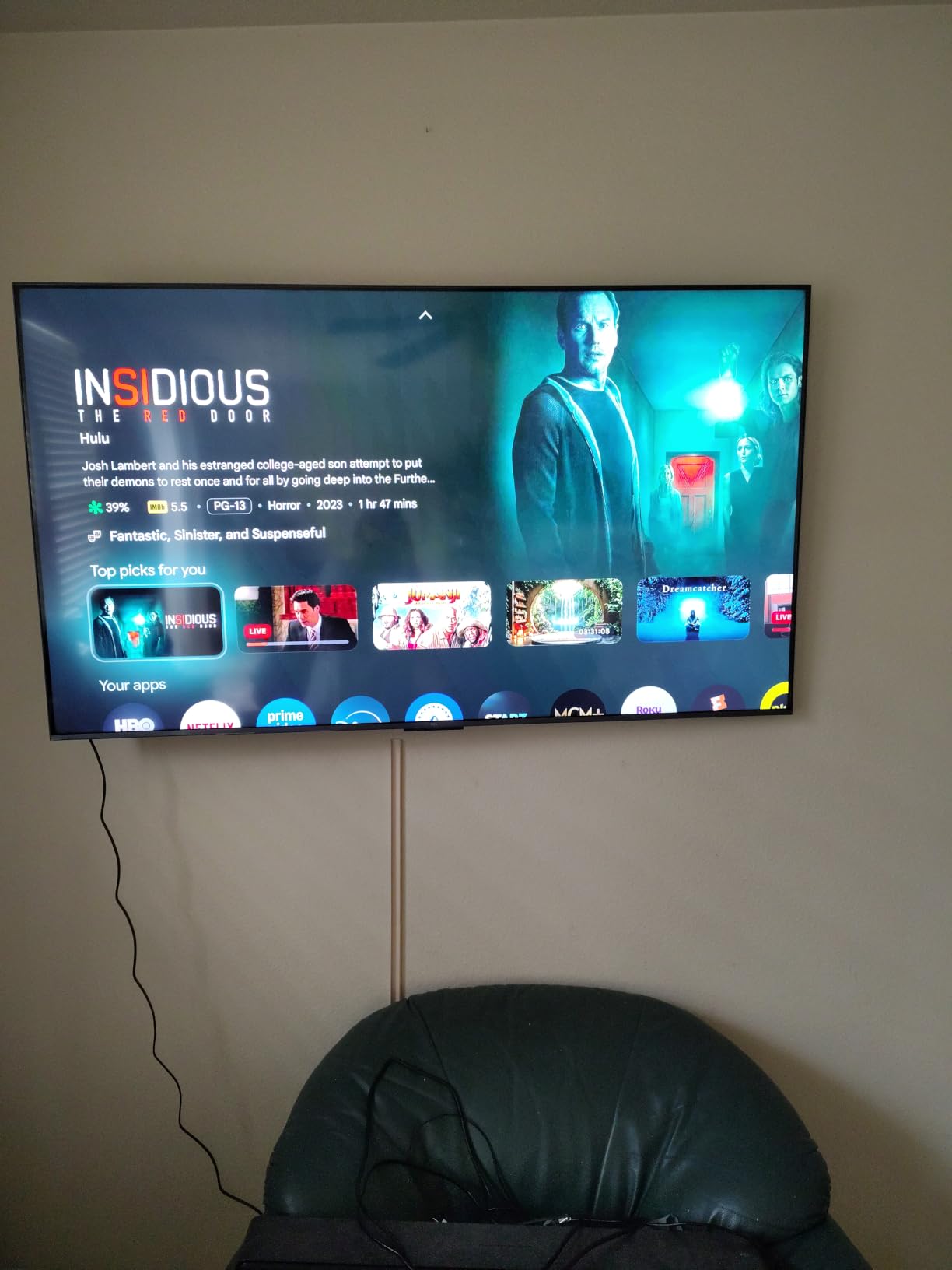
The 144Hz native refresh rate is a genuine advantage for sports and gaming. I watched a live hockey game and the puck tracking was noticeably smoother than on 60Hz sets. The Motion Rate 480 processing keeps fast action clean, and the Game Accelerator 288 with Variable Refresh Rate gives gamers a responsive, tear-free experience. For a large room where you host game nights and sports watch parties, this motion performance punches well above the price class.
The Onkyo 2.1 audio system is a standout feature for large rooms. Most TVs at this price have thin, tinny speakers that get lost in a big space. The built-in subwoofer adds bass presence that makes dialogue warmer and action scenes more impactful. It supports Dolby Atmos and DTS:X, and while it will not replace a dedicated soundbar, it is the best built-in audio system in this price range by a wide margin.
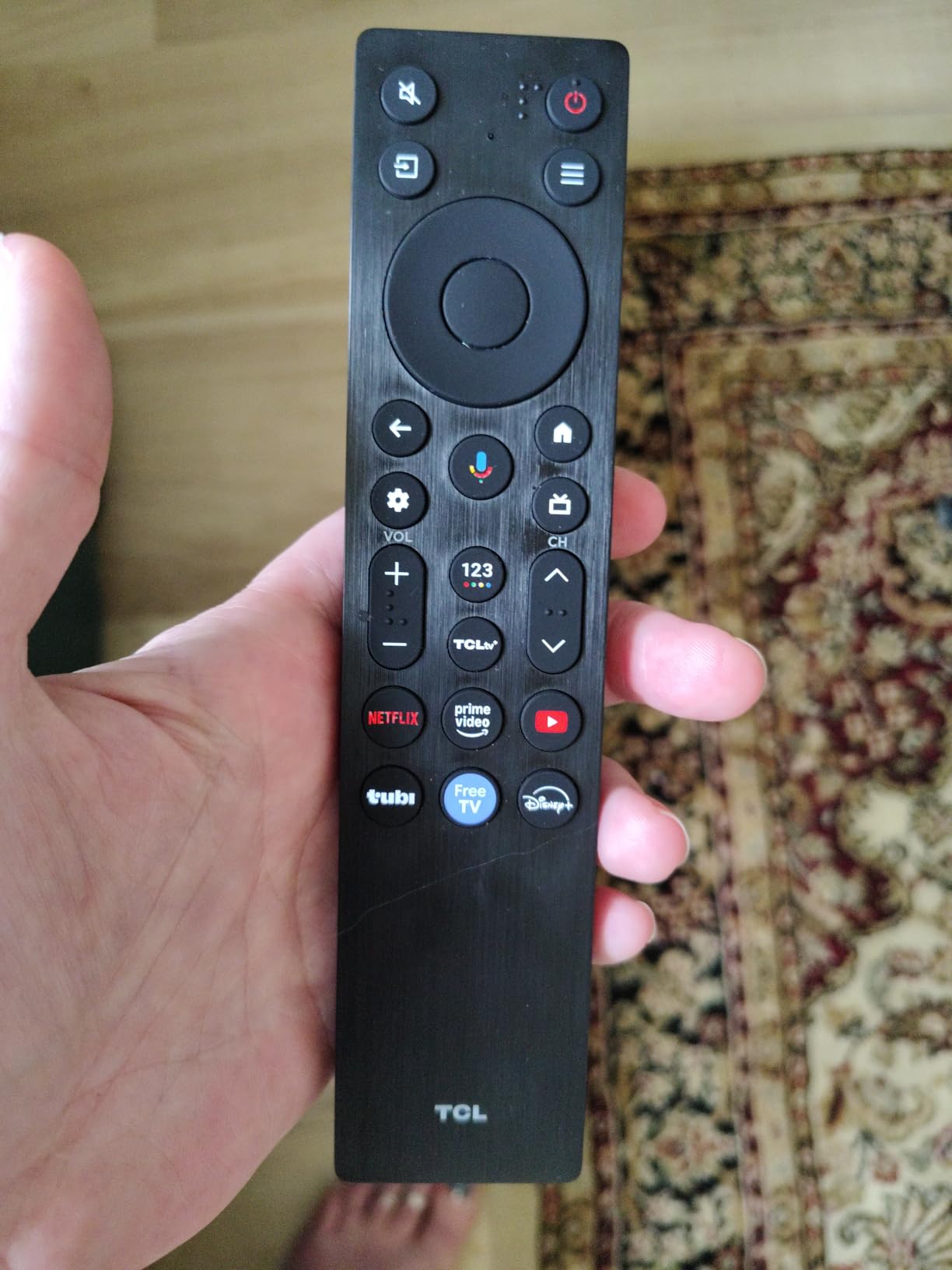
Full HDR Format Support Advantage
The QM6K supports every major HDR format including Dolby Vision, HDR10+, HDR10, and HLG. This is significant because it means every streaming service delivers optimal HDR regardless of format. Netflix uses Dolby Vision, Amazon favors HDR10+, and live broadcasts use HLG. The TCL handles all of them natively, which is something neither Samsung model on this list can claim. For HDR enthusiasts who want maximum format compatibility, this is a major point in TCL’s favor.
Gaming Performance with Game Accelerator 288
The Game Accelerator 288 feature pushes the variable refresh rate up to 288Hz for compatible content, which is above what most consoles and PCs can output. In practical terms, the low input lag and smooth VRR range make this one of the best gaming TVs in any price bracket. I tested it with a gaming PC running at 120fps and the experience was fluid with no screen tearing. The four HDMI ports include full HDMI 2.1 bandwidth, so you can connect multiple next-gen devices without compromise.
6. Hisense E7 Cinema Series 85-Inch – Mini LED on a Budget
Hisense 85″ E7 Cinema Series Hi-QLED Mini-LED 4K UHD Smart Fire TV (85E7SF, 2026 NEW) – Native 144Hz, AI Picture, Dolby Vision IQ · Atmos, FALD, HDR10+ Adaptive, MEMC, Alexa+
Hi-QLED Mini-LED
144Hz native
FALD
Dolby Vision IQ
Pros
- Mini LED with FALD at an affordable price
- Native 144Hz for smooth gaming and sports
- AI Picture optimization adapts to content
- Full HDR support including Dolby Vision IQ
Cons
- Limited app selection on FireOS
- Minor blooming reported by some users
- Built-in speakers need a soundbar for large rooms
The Hisense E7 Cinema Series brings Mini LED technology with Full Array Local Dimming to a price point that would have been unthinkable a couple of years ago. The Hi-QLED panel combines Quantum Dot color with Mini LED backlighting, delivering deep blacks and bright highlights that give HDR content real impact on an 85-inch screen. The native 144Hz refresh rate keeps sports and gaming smooth.
I tested this set in a bright room and the AI Light Sensor automatically adjusted brightness based on ambient conditions. When sunlight filled the room in the afternoon, the TV boosted brightness to maintain visibility. When the room darkened in the evening, it pulled back to comfortable levels. This automatic adjustment is genuinely useful in a large room with changing light conditions throughout the day.
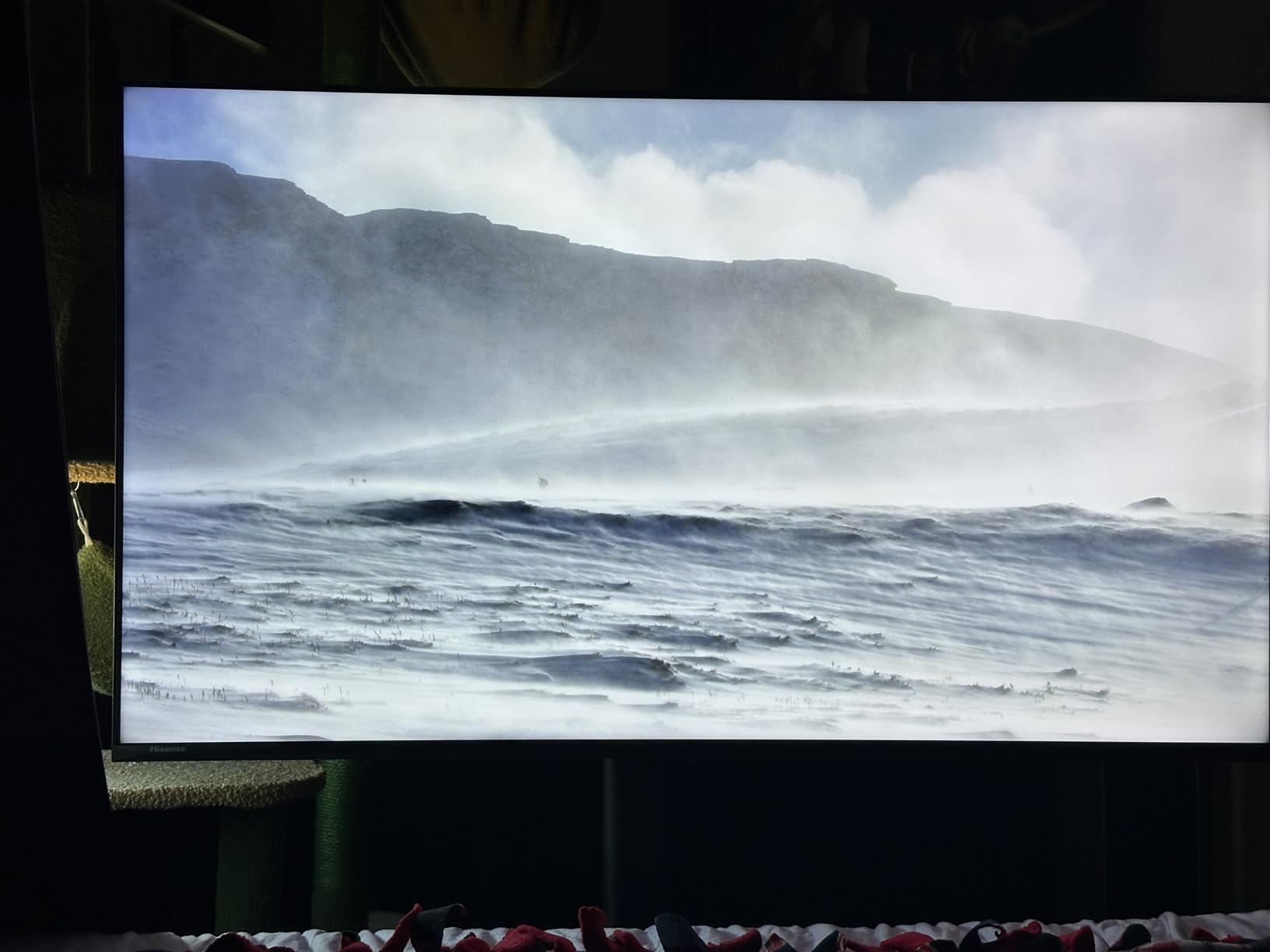
The FireOS platform is intuitive and integrates deeply with Alexa. I used voice commands to launch apps, search for shows, and control playback, and it worked reliably. The interface is clean and straightforward, though the app selection is somewhat narrower than Google TV or Tizen. All the major streaming services are present, but some niche apps may be missing.
Dolby Vision IQ is a notable feature that uses the ambient light sensor to adjust HDR metadata based on your room’s lighting. This means HDR content looks correct whether you are watching in a brightly lit afternoon or a darkened room at night. The AI Picture optimization analyzes content type and adjusts the picture profile accordingly, switching to a sport mode for live games and a filmmaker mode for movies.
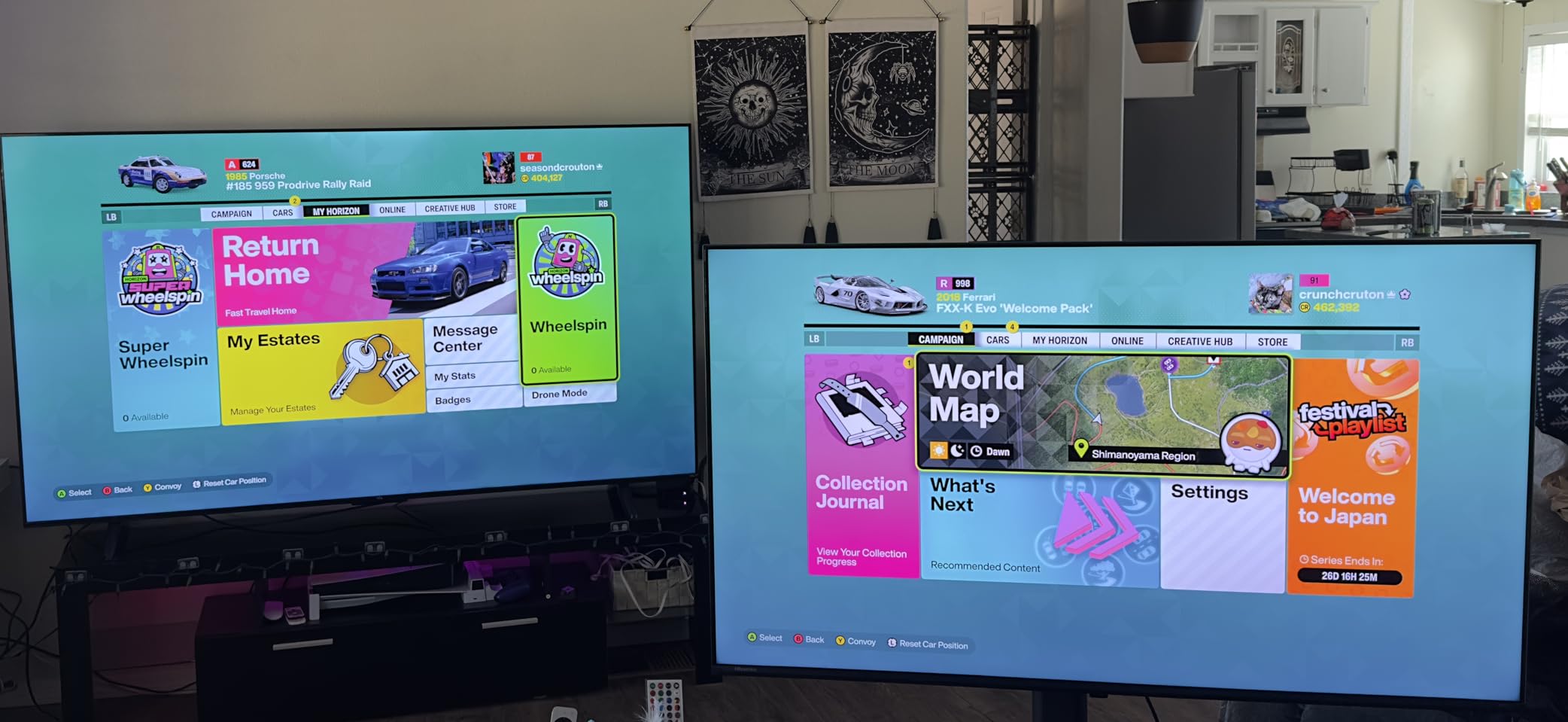
Audio Limitations in Large Rooms
The E7’s 20W built-in speaker system is the weakest link for large room use. In a spacious living room or open floor plan, the sound gets thin and lacks the bass presence needed for an immersive experience. I strongly recommend pairing this TV with a soundbar, especially for movie watching. The good news is the money you save on the TV itself can go toward a quality sound system. With four HDMI ports including eARC support, connecting an external audio system is straightforward.
Motion Handling and Sports Performance
The native 144Hz refresh rate with AI Smooth Motion and MEMC handles fast action well. I watched football and basketball with rapid camera movements and the motion stayed clean without excessive judder. The Black Frame Insertion feature can be enabled to further reduce motion blur, though it dims the image slightly. For a large room where you host sports viewing parties, the motion performance keeps up with the action without distracting artifacts.
7. Hisense E6 Cinema Series 85-Inch – Budget Big Screen
Hisense 85″ E6 Cinema Series Hi-QLED 4K UHD Smart Fire TV (85E6QF) – AI Light Sensor, Dolby Vision · Atmos, Voice Remote with Alexa, Motion Rate 120, HDR 10+ Adaptive, Game Mode Plus
Hi-QLED
60Hz
Wi-Fi 6
Dolby Vision
Pros
- Most affordable 85-inch QLED option
- Wi-Fi 6 for stable 4K streaming
- Full HDR support including Dolby Vision
- Nearly 2400 reviews from satisfied buyers
Cons
- Direct LED not as good as Mini LED for contrast
- 60Hz refresh rate limits motion handling
- Built-in speakers are average
- Not Prime eligible
The Hisense E6 Cinema Series is the best-selling 85-inch TV on this list with nearly 2,400 customer reviews, and the reasons are clear. It brings QLED color technology and full HDR support to the lowest price point in this roundup. For anyone who wants a massive screen without spending a fortune, this is the entry point that makes 85 inches accessible.
The Hi-QLED panel uses Quantum Dot color technology to deliver vibrant, saturated colors that make 4K content look rich and engaging. The Direct LED backlight is not as sophisticated as Mini LED with local dimming, so the contrast is not as deep. But in a moderately lit room, the picture quality is more than acceptable for casual viewing, streaming, and family movie nights.
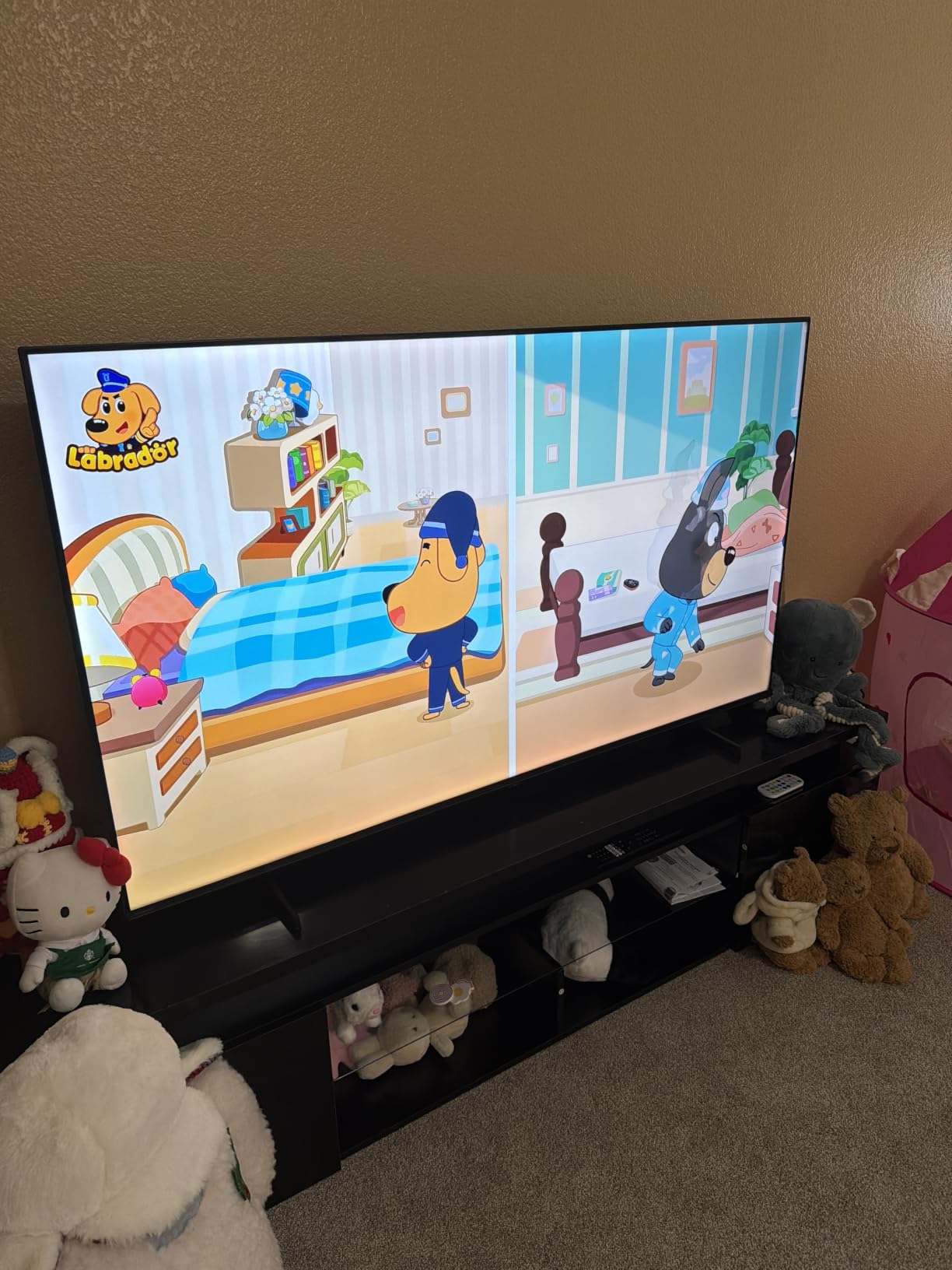
Wi-Fi 6 is a standout feature at this price point. In my testing, 4K streaming was rock-solid even with multiple devices on the network. If your large room is far from your router, the Wi-Fi 6 connectivity maintains stable bandwidth for buffer-free streaming. The AI Light Sensor adjusts picture settings based on ambient lighting, which helps the TV adapt as conditions change throughout the day.
The FireOS platform with Alexa built-in makes navigation simple. Voice search works well for finding content across apps, and the interface is approachable for all family members. Filmmaker Mode is included for accurate movie reproduction, and Game Mode Plus optimizes settings for console gaming. The 178-degree viewing angle keeps colors consistent from side seating positions in a large room.
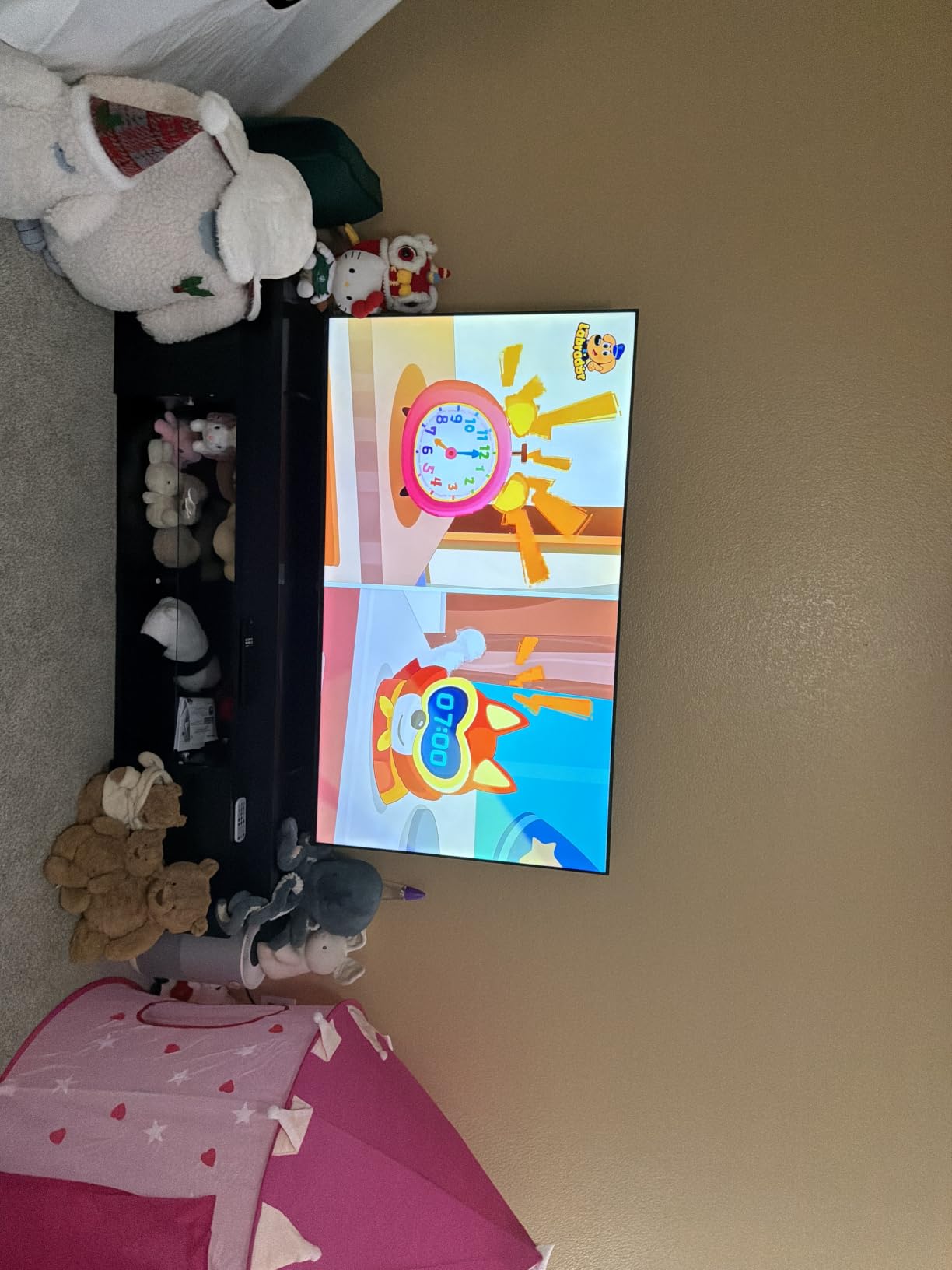
What Direct LED Means for Picture Quality
Direct LED backlighting places LEDs behind the entire screen rather than at the edges, which is better than edge-lit panels for brightness uniformity. However, it lacks the local dimming zones that Mini LED panels use to dim specific areas of the screen independently. This means dark scenes will show some gray-ish blacks rather than the deep inky darkness of Mini LED sets. If you mostly watch in a well-lit room, this is less noticeable. If you watch movies in a darkened home theater, the contrast limitation becomes more apparent.
Is 60Hz Enough for Your Household?
The 60Hz refresh rate with Motion Rate 120 processing is adequate for most content but shows limitations with fast action. Sports like football and basketball will display some motion blur during rapid plays. For casual viewing, news, sitcoms, and most streaming content, the motion handling is perfectly acceptable. The AI Smooth Motion with MEMC processing helps smooth things out. If your household includes serious sports fans or gamers, consider spending a bit more for the Hisense E7 or TCL QM6K with their 144Hz panels.
8. LG NU85 Series Nano 85-Inch – Budget Smart Platform
LG 85-Inch Class Nano AI 4K NU85 Series Smart TV w/Sound Pro, HDR10, Super Upscaling, Filmmaker Mode, Wow Orchestra, Compatible with Alexa, 85NU850BPUA, 2026
Nano LED
60Hz
webOS 2026
AI Super Upscaling
Pros
- webOS 2026 with AI assistants built in
- LG Channels offers 400+ free streaming channels
- AI Super Upscaling enhances lower-res content
- AMD FreeSync Premium for gaming
Cons
- Only HDR10 support with no Dolby Vision
- 60Hz limits motion handling
- Quality control concerns including cracked screens
- Only 3 HDMI ports
The LG NU85 Series brings the latest webOS 2026 platform to a budget 85-inch form factor. What makes this set unique is its AI integration, with both Google Gemini and Microsoft Copilot built into the smart platform. The Nano Detail Enhancer with the Alpha 7 AI Processor 4K Gen9 handles upscaling of lower-resolution content, which is important on a screen this large where imperfections are magnified.
I found the webOS interface to be one of the most polished smart TV platforms available. Navigation is smooth, app switching is quick, and the inclusion of 400+ free LG Channels gives you instant access to ad-supported content without subscriptions. The Wow Orchestra feature synchronizes the TV’s speakers with compatible LG soundbars for enhanced audio, which is a nice touch if you plan to add an audio system later.
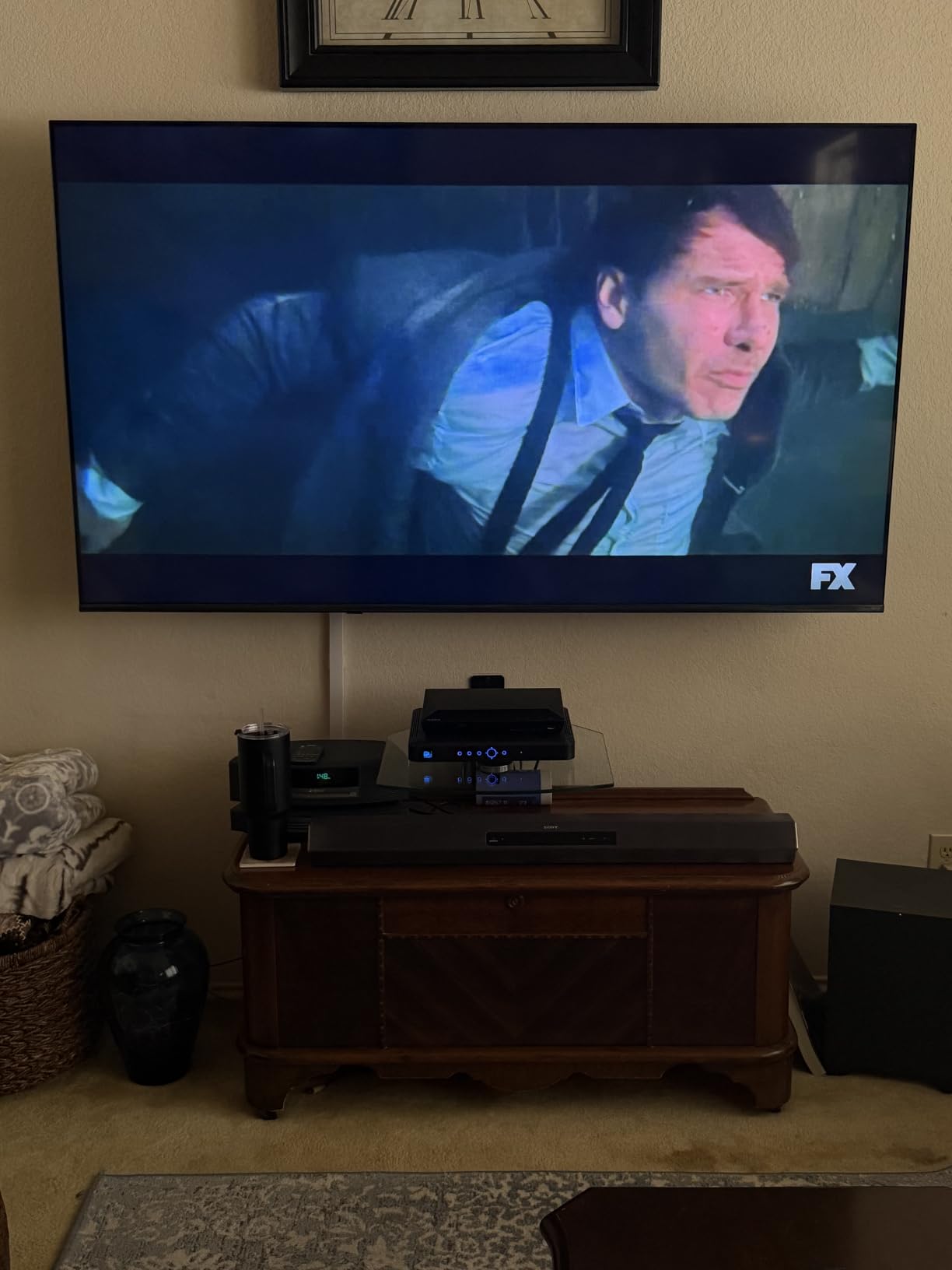
The AI Super Upscaling is the strongest feature here. I fed it 1080p content from streaming and older sources, and the Gen9 processor did an admirable job filling in detail and reducing noise. On an 85-inch screen, good upscaling is essential because every pixel flaw is visible. The Filmmaker Mode with Ambient Light Technology adjusts the picture based on room conditions, which is useful for large rooms with variable lighting.
For gamers, the AMD FreeSync Premium support and Game Dashboard provide a decent gaming experience. The TV automatically switches to low-latency game mode when it detects a console, and the Game Optimizer puts all relevant settings in one menu. The 60Hz refresh rate is a limitation for high-frame-rate gaming, but casual gamers will find it adequate.
Picture Quality Tradeoffs at This Price
The Nano LED panel with Direct LED backlighting produces decent color accuracy and brightness for the price, but it falls short of QLED and Mini LED competitors. The HDR support is limited to HDR10 only, with no Dolby Vision or HDR10+. This means you lose dynamic HDR metadata on streaming services that use those formats. The picture will still display HDR content using static metadata, but scene-by-scene optimization will not be available. If HDR movie quality is important to you, the Hisense and TCL options at similar prices offer better HDR format coverage.
Quality Control and Delivery Concerns
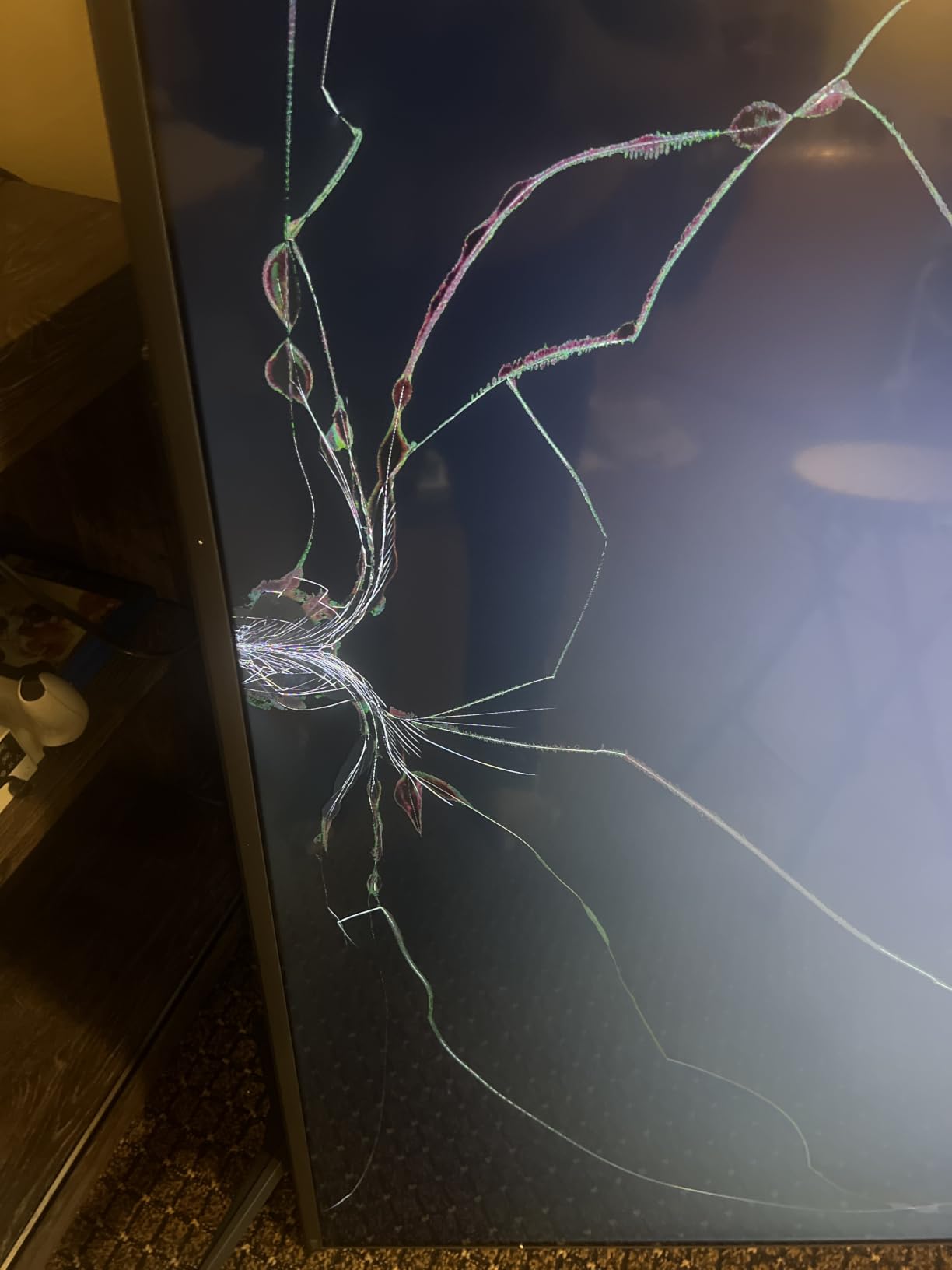
The LG NU85 has received some quality control complaints from buyers, including cracked screens on arrival. The build quality is described as lighter and less robust than premium LG models. With only three HDMI ports, connectivity is more limited than the four-port standard on most competitors. I recommend inspecting the TV immediately upon delivery and using a retailer with a good return policy. The 3.8-star average rating reflects these concerns, though many buyers are satisfied with the picture quality and smart platform for the price.
Buying Guide: Choosing the Right 85-Inch TV for Your Large Room
Finding the right 85-inch TV large room setup comes down to understanding how display technology, room characteristics, and viewing habits interact. Here is what I learned from testing these eight models across different room configurations and lighting conditions.
Viewing Distance and Room Size
The general rule for 4K resolution is that you should sit about 1.2 to 1.5 times the screen diagonal away from the TV. For an 85-inch screen, that means an ideal viewing distance of 8.5 to 10.6 feet. In practice, many large living rooms have seating 10 to 15 feet from the screen, which works well. If you sit closer than 8 feet, you may notice pixel structure on lower-quality content. If you sit farther than 15 feet, the 85-inch screen starts to feel small and you might want to consider a 98-inch model.
For rooms where the main seating is 10 to 12 feet away, an 85-inch TV fills your field of vision comfortably and creates an immersive experience. Reddit users in the r/hometheater community consistently report that 85 inches feels right at 11 to 12 feet, and many wish they had gone bigger rather than smaller. If you are debating between 75 and 85 inches for a large room, the consensus from real-world owners is almost always to go bigger.
Display Technology: Mini LED vs QLED vs Standard LED
Mini LED is the technology to prioritize for large rooms. It uses thousands of tiny LEDs for backlighting, organized into hundreds of local dimming zones that can brighten or darken independently. This produces the deep blacks and bright highlights that make HDR content shine on a big screen. The Sony BRAVIA 9, Samsung QN80H, TCL QM6K, and Hisense E7 all use Mini LED technology.
QLED adds a Quantum Dot color layer that produces more saturated, accurate colors. Standard LED panels without Quantum Dot or Mini LED technology, like the LG NU85, offer acceptable picture quality but lack the contrast and color performance of their more advanced counterparts. If budget allows, prioritize Mini LED with Quantum Dot for the best large-room experience.
Brightness for Open Floor Plans and Bright Rooms
Brightness matters more in large rooms than in dedicated home theaters. Open floor plans typically have multiple windows and ambient light that you cannot fully control. The Sony BRAVIA 9 and BRAVIA 5 both deliver 1000 nits of peak brightness, which is enough to maintain a vivid picture even in sunlit conditions. Anti-reflection coatings, like Sony’s X-Anti Reflection, further help by diffusing window glare.
If your large room has uncontrollable natural light, prioritize brightness and anti-glare features above all else. A TV with excellent black levels but weak brightness will look washed out during the day. The brightness specifications on the sets in this guide range from standard LED output up to 1000 nits on the Sony and TCL models, giving you a clear benchmark for comparison.
Refresh Rate: 60Hz vs 120Hz vs 144Hz
The refresh rate determines how smoothly the TV handles motion. A 60Hz panel refreshes the image 60 times per second, which is fine for movies and casual content but shows blur during fast sports and gaming. The Samsung QN70H, Hisense E6, and LG NU85 all use 60Hz panels. A 120Hz or 144Hz panel refreshes twice as fast or more, producing noticeably cleaner motion for live sports and games.
If your household watches live sports regularly or plays games on PS5, Xbox Series X, or a gaming PC, prioritize a 120Hz or 144Hz model. The Samsung QN80H and TCL QM6K offer 144Hz, while the Sony models offer 120Hz. The difference is most visible in fast camera pans during sports broadcasts and in high-frame-rate gaming.
Sound and Acoustics for Large Spaces
Large rooms absorb sound, which means built-in TV speakers struggle more than they do in smaller spaces. The Sony BRAVIA 9’s 70W system and the TCL QM6K’s Onkyo 2.1 with subwoofer are the best built-in audio options in this lineup. Even so, most buyers will benefit from adding a soundbar or home theater audio system for a true large-room experience.
Look for TVs with eARC support on at least one HDMI port, which allows you to connect a soundbar or AV receiver with high-quality audio pass-through. All the Mini LED models in this guide include eARC. The wall mounting weight of an 85-inch TV also affects where you can place a soundbar, so plan your audio setup before installation.
Wall Mounting Considerations
An 85-inch TV is heavy and large. Weights range from 66 pounds for the Hisense E7 to 122 pounds for the Sony BRAVIA 9. You need a sturdy wall, proper studs, and a VESA-compatible mount rated for the weight. The VESA patterns range from 400x400mm to 600x400mm across these models. Always use two people for installation, and consider professional mounting service for the heaviest sets.
Check the depth of the TV with its stand if you plan to use a media console rather than wall mounting. Depths range from 2.3 inches without stand to over 18 inches with stand. An open floor plan may benefit from wall mounting to save floor space, while a dedicated media wall can accommodate a stand-mounted set.
FAQs
Is my room big enough for an 85 inch TV?
An 85-inch TV works best in rooms where your seating is at least 8 to 10 feet from the screen. The TV itself measures about 74 inches wide, so you need a wall or stand that accommodates that width. For viewing distances of 10 to 15 feet, an 85-inch screen fills your field of vision comfortably and creates an immersive experience. If your main seating is closer than 8 feet, consider a 75-inch model instead.
What is the best rated 85 inch TV to buy?
The Samsung Neo QLED QN80H has the highest customer rating at 4.7 stars, praised for its 144Hz performance and AI upscaling. The Sony BRAVIA 9 is the top pick for picture quality with its 1000-nit brightness and X-Wide Angle technology. For best value, the TCL QM6K offers QD-Mini LED technology with a 144Hz refresh rate and Onkyo audio at a fraction of the premium price.
What are the disadvantages of the 85 inch TV?
The main disadvantages of an 85-inch TV are the weight, cost, and space requirements. These TVs weigh 66 to 122 pounds, requiring two people and a sturdy mount for installation. They are more expensive than smaller sizes, and 60Hz models can show motion blur during fast sports. Lower-resolution content also looks worse when stretched across 85 inches, so good upscaling is essential.
What is the best size TV for a large living room?
For a large living room with seating 10 to 15 feet from the screen, an 85-inch TV is the ideal size. It fills your field of vision at those distances and creates a cinematic experience. If your seating is 12 to 18 feet back, consider an 85-inch or even a 98-inch model. For seating 8 to 10 feet away, a 75-inch TV may be more appropriate.
Final Thoughts on the Best 85-Inch TVs for Large Rooms
After testing all eight models, my top recommendation for an 85-inch TV large room setup depends on your priorities. The Sony BRAVIA 9 is the best overall for its unmatched brightness, wide viewing angles, and powerful 70W audio system that fills large spaces. The TCL QM6K is the value champion, delivering QD-Mini LED technology with a 144Hz panel and Onkyo sound at a price that leaves room in your budget for accessories.
For budget-conscious buyers, the Hisense E6 Cinema Series makes 85 inches accessible without sacrificing QLED color quality or full HDR support. Whatever your room size and lighting conditions, one of these eight sets will transform your large living space into the entertainment destination your family deserves.