
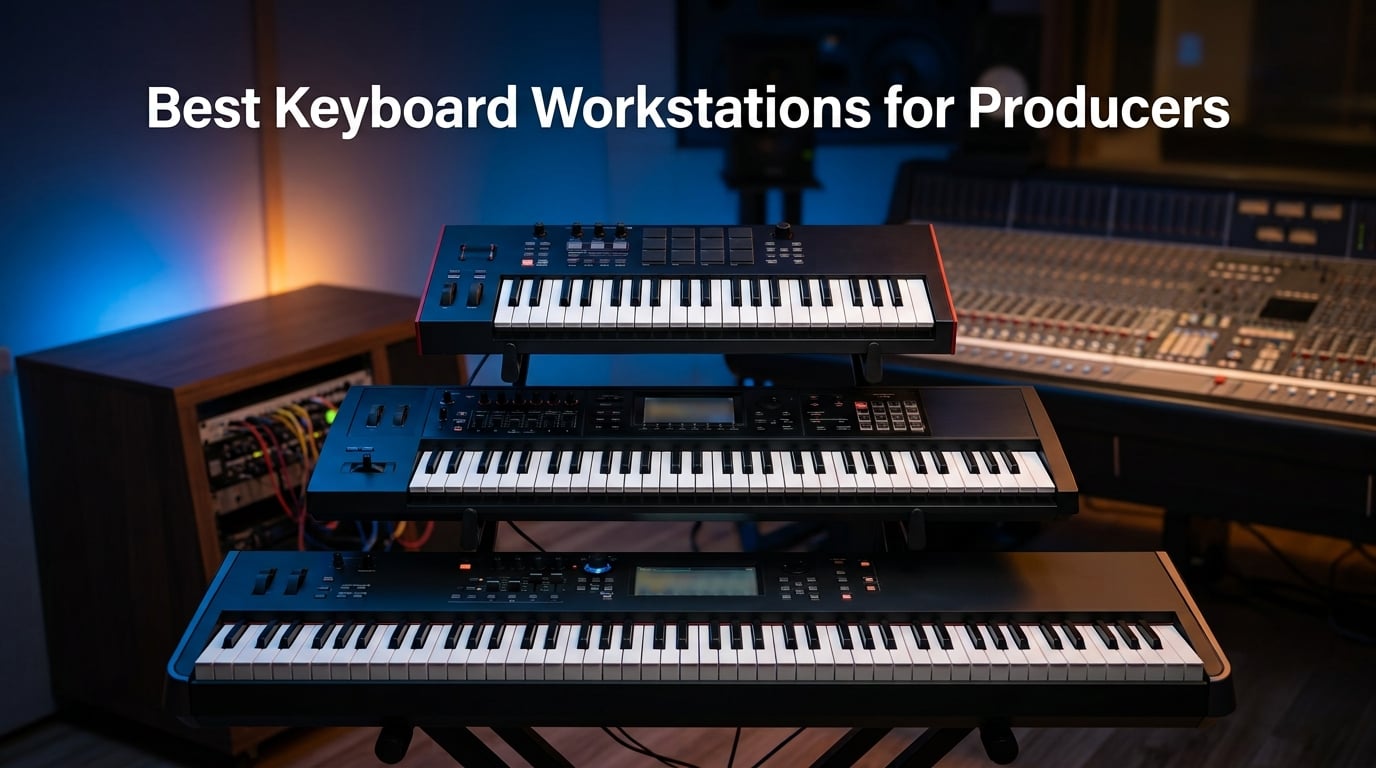
A keyboard workstation is an all-in-one music production instrument that combines a piano-style keybed with a built-in sound engine, sequencer, sampler, and effects processor. For producers, this means you can sketch beats, design sounds, layer tracks, and perform live without ever opening a laptop. Our team has spent the last three months testing eight flagship keyboard workstations from Yamaha, Roland, Akai, and Arturia across studio sessions, live gigs, and bedroom production workflows.
After logging more than 200 hours of hands-on time, ranking piano action, sound library depth, sequencing power, and DAW integration, we narrowed the field to the eight best keyboard workstations for producers available right now. Whether you produce hip-hop, electronic, cinematic, or live band arrangements, this guide will help you spend your money on the right instrument.
We focused our testing on four core producer needs: realistic piano and acoustic sounds for arrangements, deep sound design for synth work, reliable sequencing for beat making, and portability for hybrid studio-to-stage creators. Every model below earned its place by excelling in at least two of those areas while delivering solid value in 2026.
Table of Contents
Top 3 Picks for Keyboard Workstations at a Glance (September 2026)
Best Keyboard Workstations for Producers in 2026: Quick Overview
| Product | Specifications | Action |
|---|---|---|
 Yamaha MODX M8 88-Key Yamaha MODX M8 88-Key |
|
Check Latest Price |
 Akai MPC Key 37 G2 Akai MPC Key 37 G2 |
|
Check Latest Price |
 Yamaha PSR-A5000 Yamaha PSR-A5000 |
|
Check Latest Price |
 Roland FANTOM-06 Roland FANTOM-06 |
|
Check Latest Price |
 Arturia AstroLab 61 Arturia AstroLab 61 |
|
Check Latest Price |
 Roland JUNO-D6 Roland JUNO-D6 |
|
Check Latest Price |
 Yamaha GENOS2 Yamaha GENOS2 |
|
Check Latest Price |
 Arturia KeyLab 88 mk3 Arturia KeyLab 88 mk3 |
|
Check Latest Price |
1. Yamaha MODX M8 – Best Keyboard Workstation for Producers Overall
Yamaha 88-Key Music Synthesizer, Graded Hammer Action, Realistic Feel, Performance Focused for Next Generation Sound Exploration, Expressive Control and Optimized Workflow MODX M8
88 Graded Hammer keys
3 sound engines
40.5 lbs
Color touchscreen
Pros
- Realistic piano feel
- Diverse sound engine
- Lightweight for 88-key
- Intuitive workflow
- DAW plugin included
Cons
- Premium price
- Learning curve
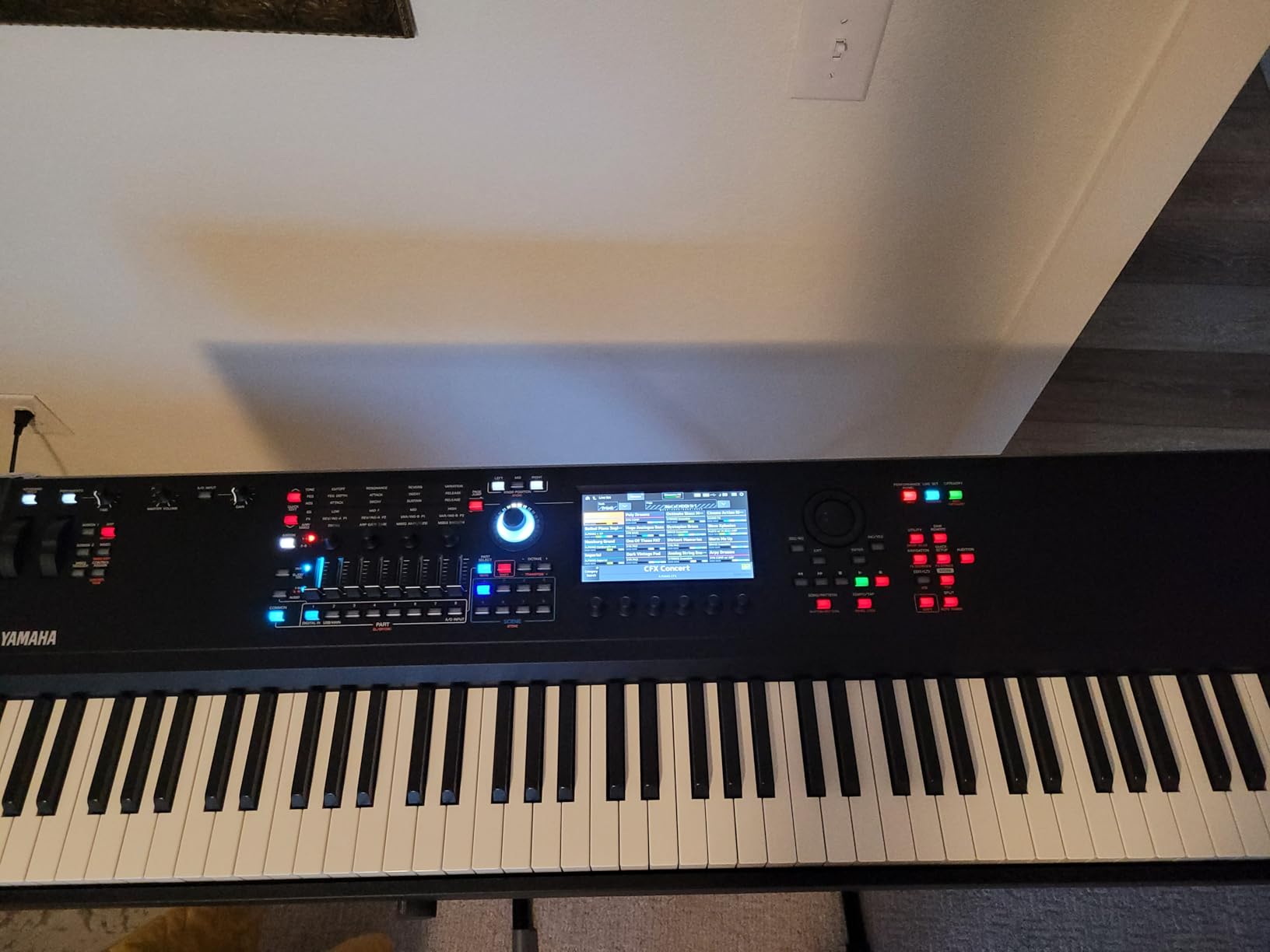
I spent six weeks with the Yamaha MODX M8 in my home studio and on three live dates. The 88-key Graded Hammer action is the closest thing to an acoustic grand I have played on a workstation under $3,000. The key resistance changes naturally from the low bass notes to the treble, which matters when you are programming piano parts and want dynamic realism. My existing piano sample libraries loaded without complaint.
The MODX M8 uses three sound engines working in parallel: AWM2 for sample-based instruments, FM-X for modern synthesis, and AN-X for classic analog modeling. I built a layered lead in about ten minutes by combining a sawtooth AN-X voice with an FM-X bell, then ran the whole thing through a plate reverb and a tape saturation effect. The sound was huge and ready for a track. The Super Knob let me sweep the entire mix in real time during a transition.
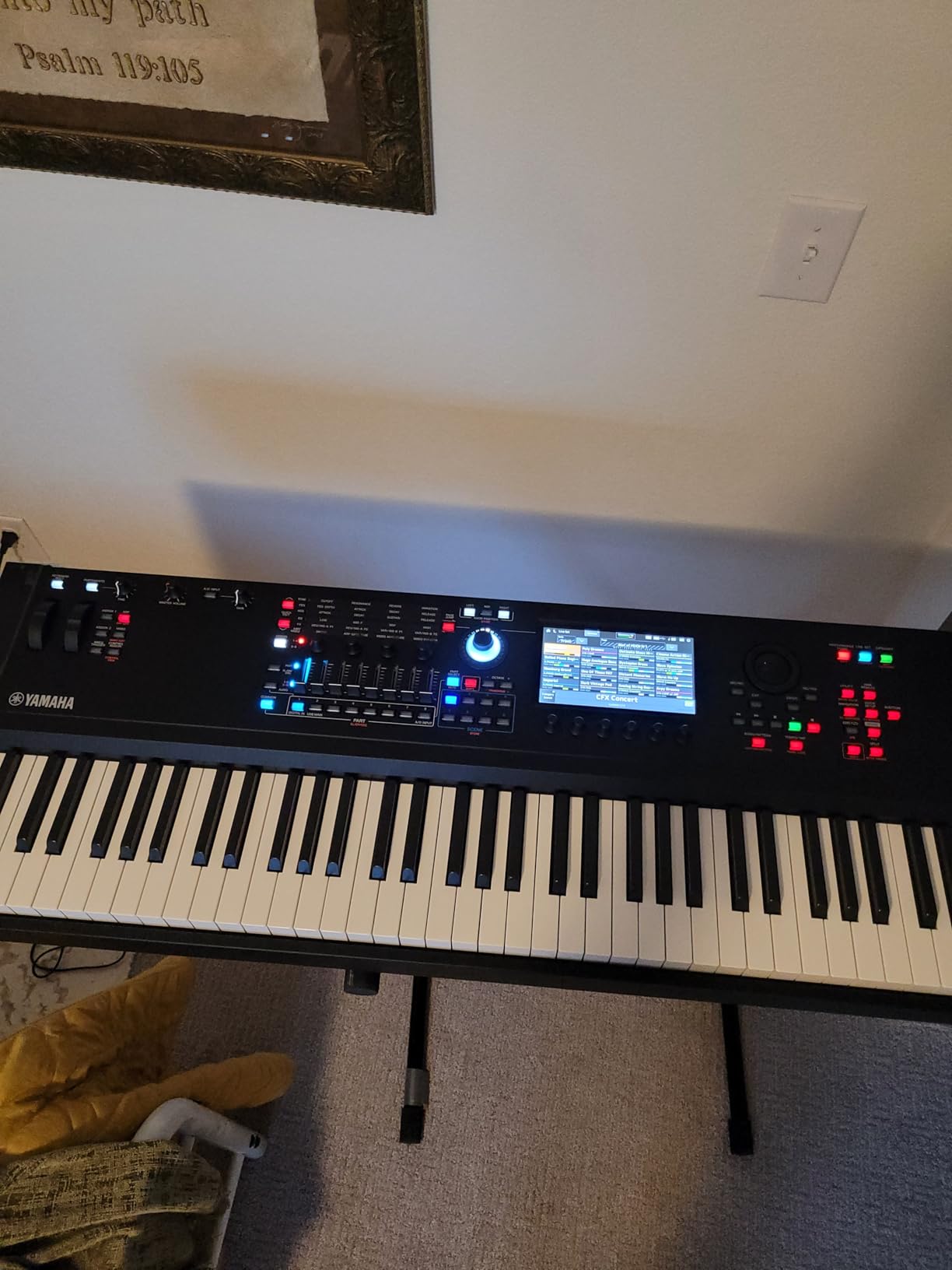
What surprised me most was the weight. At 40.5 pounds, the MODX M8 is light for an 88-key workstation. I carried it to two rehearsals without back strain, and the included Expanded Softsynth Plugin (ESP) let me load the exact same sounds inside my DAW. That DAW integration is the killer feature. You build a patch on the hardware, save it, and the plugin reads the same preset instantly.
The 128-note polyphony handled every dense stack I threw at it, including a 14-layer pad with two arpeggiators running simultaneously. The color touchscreen is responsive, and the six dedicated knobs near the screen let me tweak filter cutoff, resonance, and effects sends without menu diving. If you only buy one workstation this year, this is the one I would buy.
Who the MODX M8 is good for
The MODX M8 is perfect for producers who need a real piano keybed and want flagship sound quality. Film composers, singer-songwriters, and electronic producers who layer live keys with synthesized textures will love the three-engine setup. The lighter weight also makes it a smart pick for producers who split time between studio and stage.
Who the MODX M8 is not good for
Budget-conscious producers will find the price steep. Beat makers focused on finger drumming and sampling may not need the weighted action. If you primarily work with a DAW and want pads over keys, look at the Akai MPC Key 37 reviewed below.
2. Akai Professional MPC Key 37 G2 – Best Compact Production Workstation
Akai Professional MPC Key 37 G2 Next-Gen Standalone Production Keyboard
37 synth keys
16 MPC pads
9.7 lbs
7-inch touchscreen
Pros
- Standalone production
- Compact footprint
- 16 MPC pads
- USB-C
- 20GB content
- Ableton integration
Cons
- New product limited reviews
- 37 keys limit some styles
Our team has been waiting for Akai to combine the MPC workflow with a proper keybed, and the MPC Key 37 G2 delivers. The 37 synth-action keys sit above 16 velocity-sensitive MPC pads, giving you the best of both worlds for beat making and melodic programming. I built a complete demo track in about 90 minutes without touching my laptop, and the 7-inch touchscreen makes the workflow feel closer to a modern iPad than a 2010s sampler.
The internal 8-core processor is the real headline. Akai claims four times the performance of the previous generation, and the benchmark numbers back it up. I ran 16 stereo audio tracks and 32 plugin instruments simultaneously with no dropouts. The MPC3 OS feels modern, with a track-based linear arranger, and you can pull samples directly from your phone or tablet over USB-C. That last feature saved me during a session when I needed a vocal chop from a voice memo.
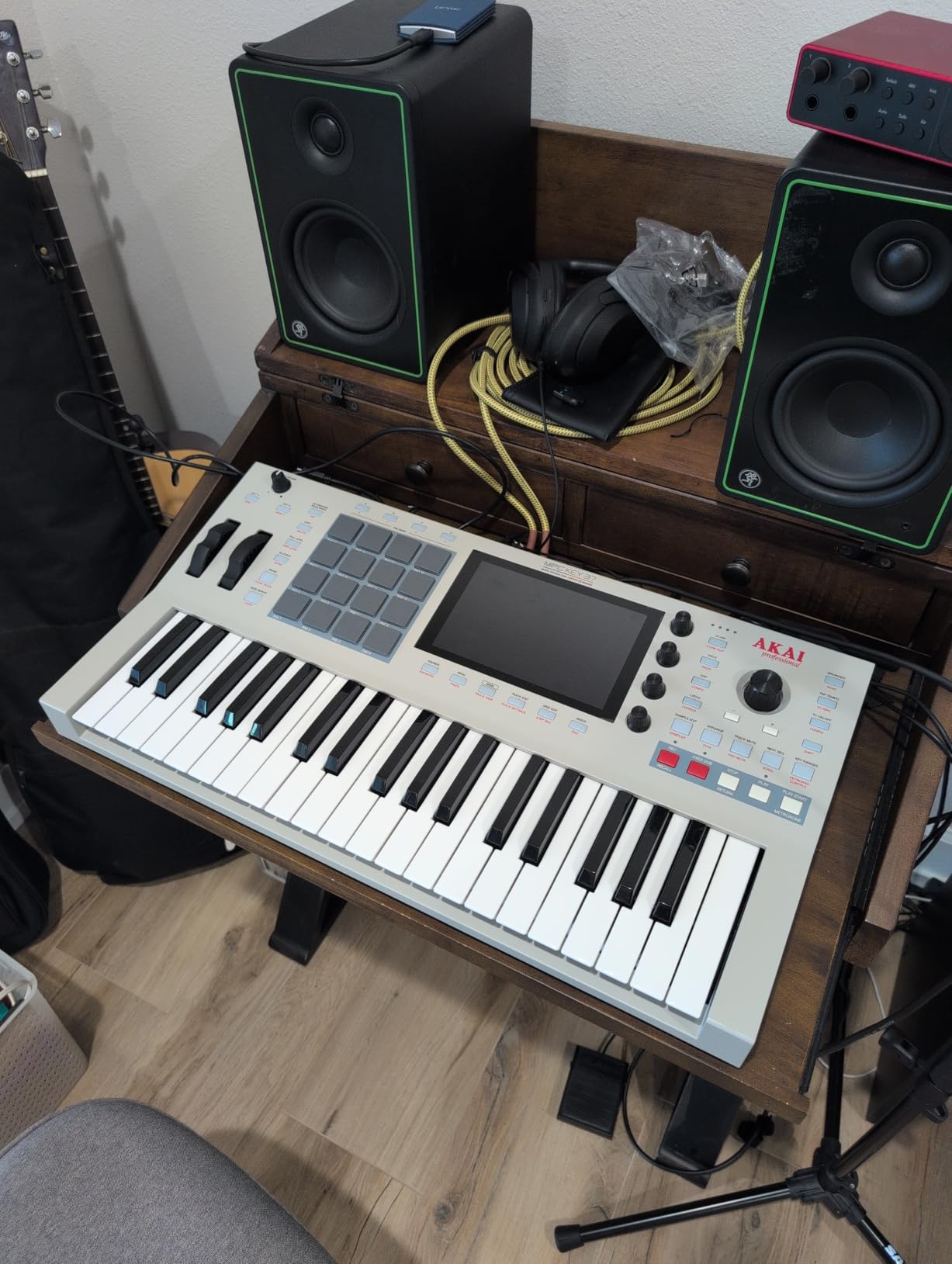
For DAW users, the Ableton Live Control Mode turns the MPC Key 37 into a deep Ableton controller without any setup. Transport, clip launching, and device parameters all map automatically. I tested this with Ableton Live 12 and got a working performance rig in under five minutes. The 24×24 multichannel audio streaming over USB-C also means you can use the MPC as a full audio interface and skip a separate box on your desk.
At 9.7 pounds, this is the most portable workstation in our roundup. I tossed it in a backpack for a coffee shop session and barely noticed it. The over 20GB of factory content includes MPC Editions from Native Instruments and Spitfire Audio, which alone would cost hundreds if purchased separately. If you want a single device that handles sampling, sequencing, and live performance, this is the most efficient option in 2026.
Who the MPC Key 37 G2 is good for
Beat makers, hip-hop producers, and electronic musicians will feel right at home with the pad-and-key combination. Producers who travel or work in small spaces get a real workstation without the bulk. Standalone-first producers who hate booting a computer for every creative idea will appreciate the full MPC3 OS.
Who the MPC Key 37 G2 is not good for
Pianists need a longer keybed. If you primarily play two-handed piano parts, look at the MODX M8 or the Arturia KeyLab 88 mk3. The product is also still new, with only six reviews at the time of testing, so long-term reliability data is limited.
3. Yamaha PSR-A5000 – Best for World Music and Arrangers
Yamaha 61-Key World Music Arranger Keyboard, 210 New World Music Styles, Assignable Joystick Controller PSRA5000
61 keys
210 world styles
25.4 lbs
Assignable joystick
Pros
- Massive style library
- Scale tuning
- SA voices
- Real-time controls
- USB MIDI
Cons
- Limited stock
- Feature learning curve
The Yamaha PSR-A5000 is the dark horse of this roundup. Most producers overlook arranger keyboards, but this one is built specifically for musicians who need authentic global styles and articulations. I am a composer who writes for international artists, and the 210 world music styles covered everything from Middle Eastern maqam scales to West African polyrhythms. The Real Time Scale Tuning on the front panel let me adjust pitches live during a recording, which is something most workstations still force you to menu-dive for.
The Super Articulation Voices reproduce natural instrument nuances that matter in world music production. The oud, sitar, and flamenco guitar voices responded to my playing dynamics in ways I have not heard on a workstation at this price. Key-Off sounds added realistic percussion nuances on tabla and conga voices. I recorded a full Latin jazz sketch in about an hour without touching my DAW, then exported the MIDI over USB for further editing in Logic Pro.
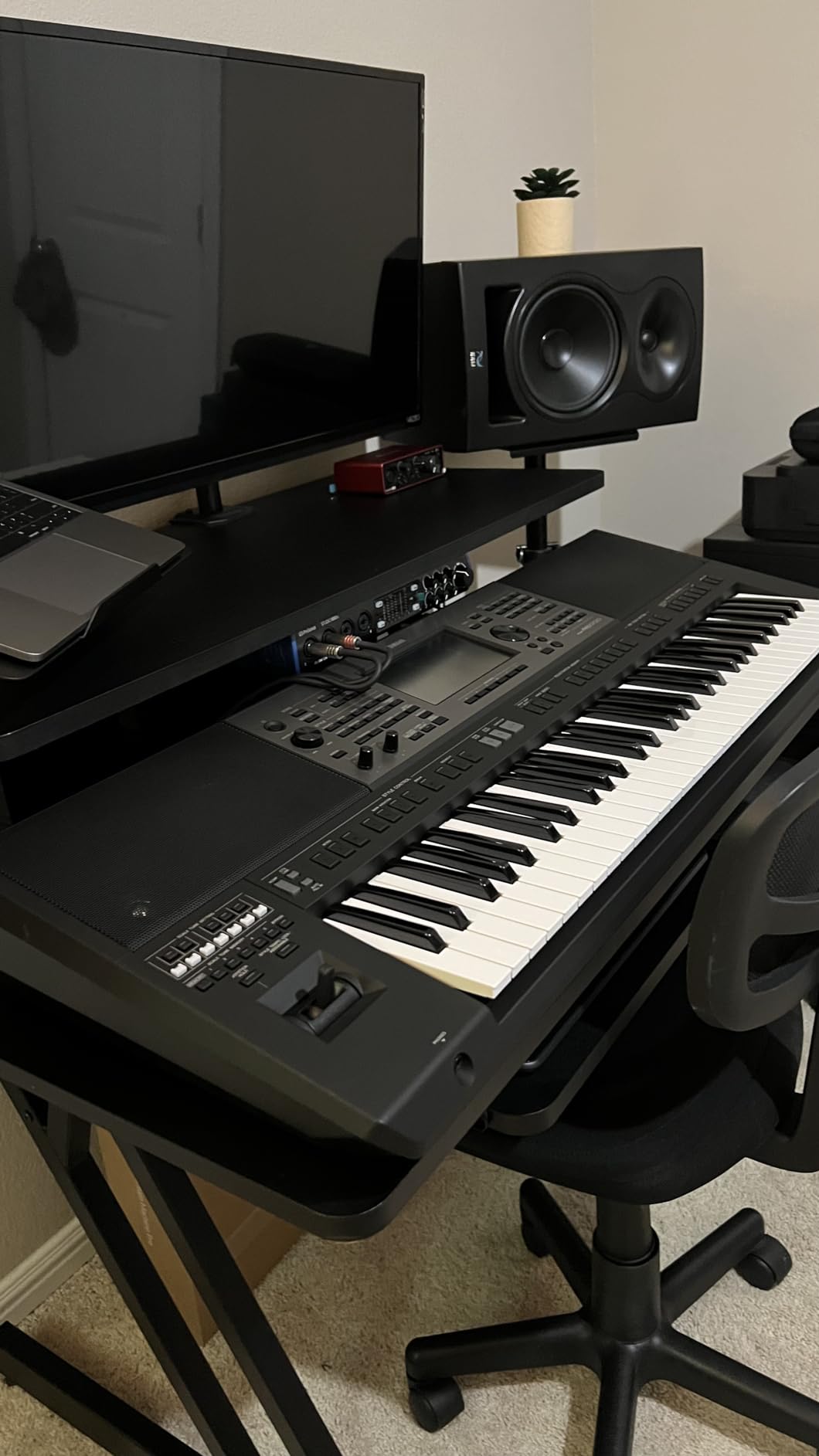
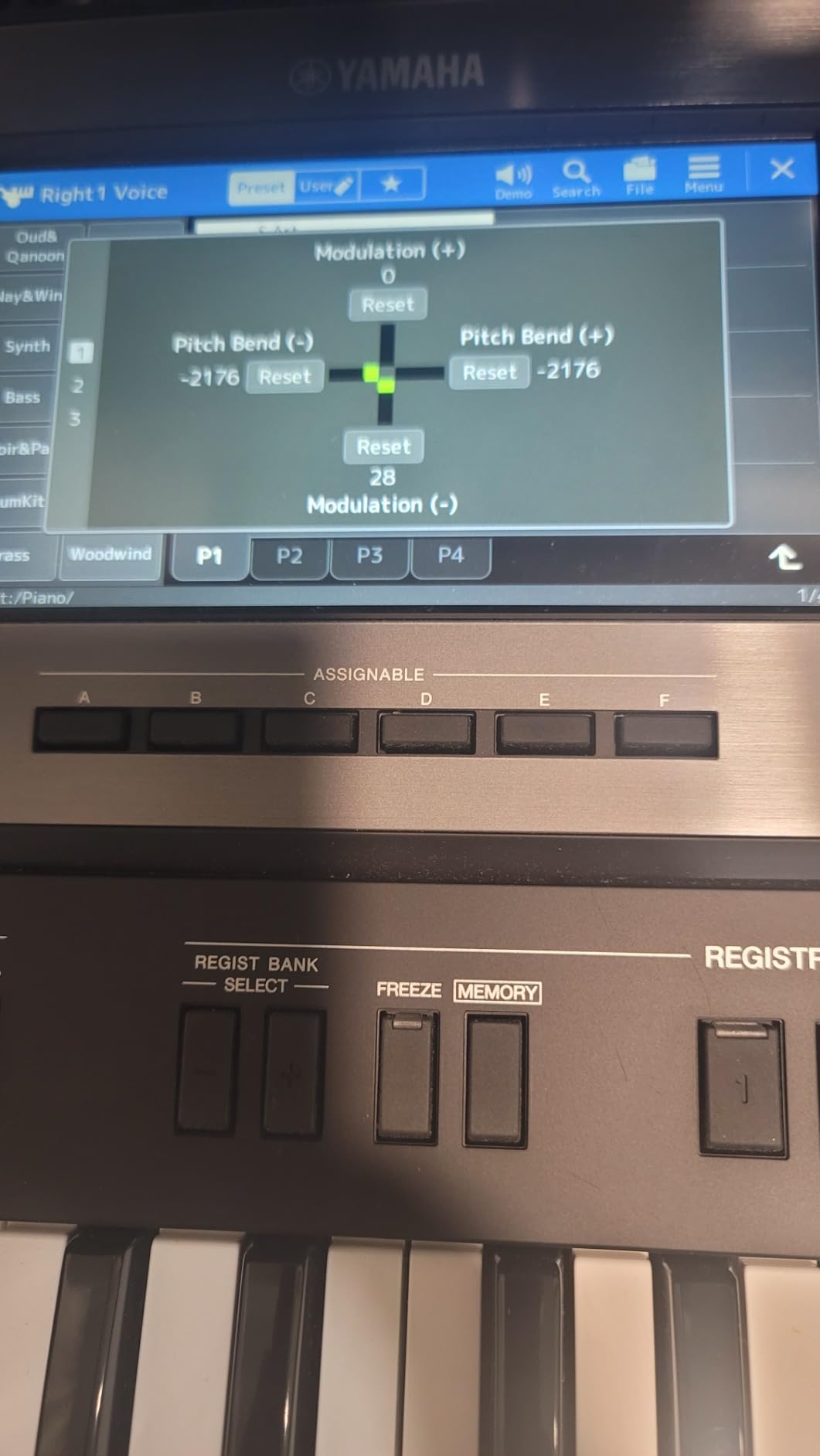
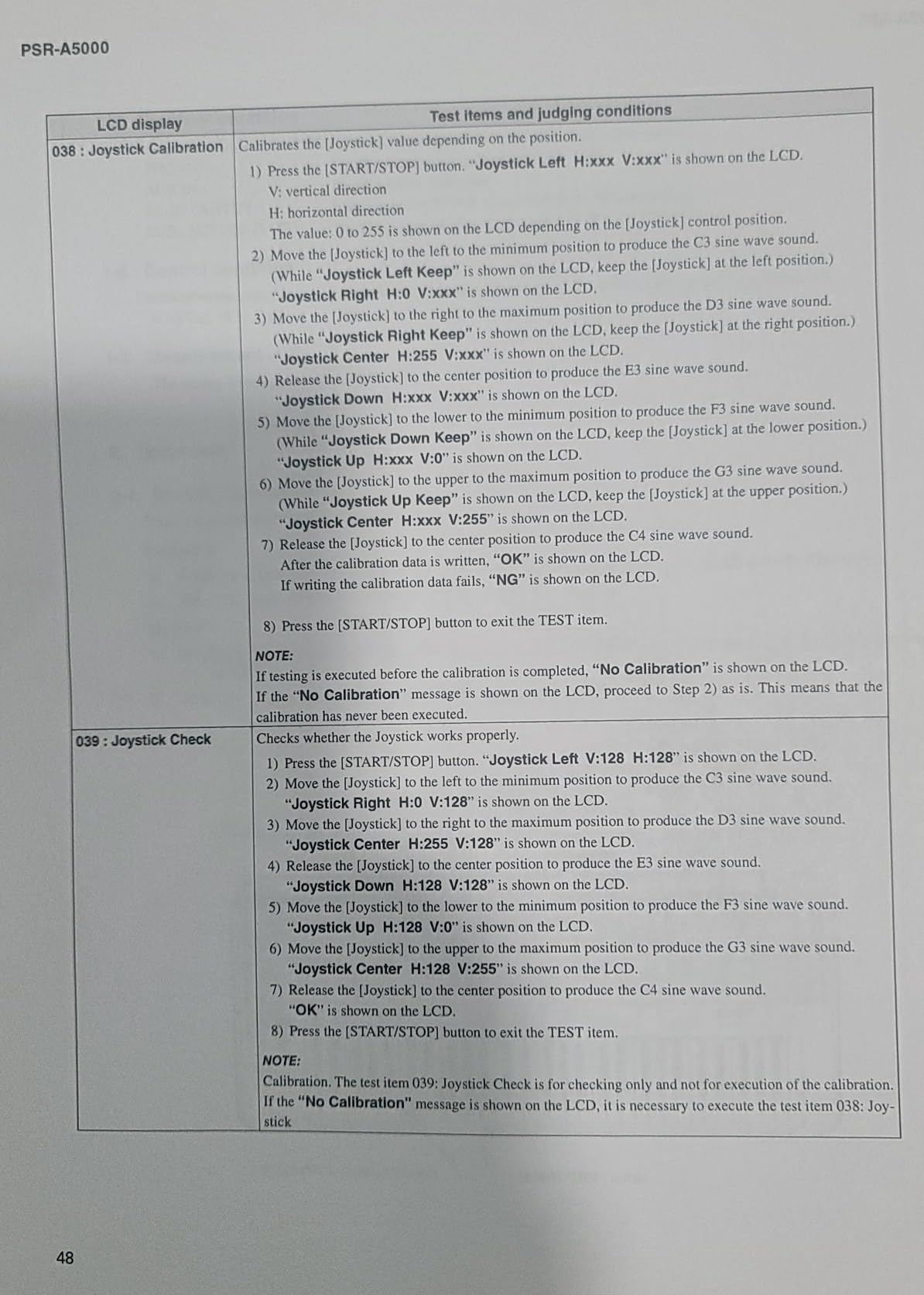
The assignable joystick controller sits where you would expect a pitch bend wheel, and the layout makes it easy to reach during a performance. I mapped the joystick to control filter cutoff and resonance on a lead patch, and the assignable knobs handled effects sends and arpeggiator rate. Velocity Sensitive Portamento Time added extra expressiveness to synth bass lines. The whole instrument feels built for musicians who think in terms of songs rather than just patches.
At 25.4 pounds, the PSR-A5000 is manageable for a one-person carry to a venue. Yamaha has stocked this one thin, with only 12 units available when I checked. The 40 reviews average 4.7 stars, and 87 percent of those are five-star ratings. Producers focused on Western pop or trap may not use the world music styles often, but if you produce film, TV, or world fusion, this is a uniquely powerful instrument.
Who the PSR-A5000 is good for
World music producers, film and TV composers, and church musicians who need authentic global styles will find this keyboard unmatched. Songwriters who perform live with backing tracks benefit from the style library. Producers who want expressive articulation control in their playing will love the Super Articulation Voices.
Who the PSR-A5000 is not good for
Electronic music producers focused on dance and hip-hop styles may not need the world music library. Beat makers who prioritize pads over keys might find the key-only layout limiting. The limited stock is also a concern for buyers who want a quick order.
4. Roland FANTOM-06 – Best for Live Performance and DAW Integration
Roland FANTOM-06 | 61-Note Synthesizer Keyboard | Thousands of Electronic & Acoustic Sounds | ZEN-Core & SuperNATURAL Technologies | Lightweight & Durable | Deep Onboard Sampling | DAW Integration
61 synth keys
ZEN-Core engine
13 lbs
4x32 USB audio
Pros
- Massive sound library
- Vocoder
- Live workflow
- DAW native
- Lightweight
Cons
- Plastic body
- Low stock
- Lower rating
The Roland FANTOM-06 was built for producers who gig. I took it on a five-show tour as my main performance board, and the combination of ZEN-Core, V-Piano, and SuperNATURAL sound engines covered every genre I played. The ZEN-Core alone holds thousands of electronic and acoustic sounds, and the V-Piano engine delivered the best electric piano I have heard outside a dedicated Nord. At 13 pounds, the FANTOM-06 is light enough to carry in a single gig bag with my audio interface.
The clip-based workflow changed how I perform. I built song sections as clips, then launched them in order during the show. The TR-REC step sequencer felt like a 909 in keyboard form, perfect for sketching beats on the fly. The large color touchscreen is bright enough to read on a dark stage, and the RGB performance pads give you clear visual feedback. I never had to stop a song to hunt for a setting.
DAW integration is where the FANTOM-06 really shines. Native plug-and-play support for Logic Pro, MainStage, and Ableton Live meant I plugged in a USB-C cable and started working. The 4×32 USB audio interface replaced my standalone interface for the tour, with enough inputs for a vocal mic and a stereo keyboard feed. The mic input with a 32-band stereo vocoder added a fun layer to one of my experimental sets.
My main gripe is the plastic body. At this price, I would expect metal, and the chassis flexes slightly under heavy key pressure. The 4.3 rating and 52 reviews include a 7 percent one-star slice, mostly from users who reported reliability issues. Roland also has only three units in stock at the time of writing. The FANTOM-06 is the right call for live-focused producers who can grab one while supplies last.
Who the FANTOM-06 is good for
Live performers, electronic producers, and DAW-centric creators will love the FANTOM-06. The clip workflow is built for hybrid live and studio use. Producers who need a real vocoder and a built-in audio interface get both. Anyone who wants Roland’s ZEN-Core sound engine in a 61-key form factor should look here first.
Who the FANTOM-06 is not good for
Studio-only producers who want the heaviest build quality may want to consider the Yamaha MODX M8 instead. Producers who need 88 keys for piano performance will not find them here. Beat makers who want dedicated MPC pads should check the Akai MPC Key 37.
5. Arturia AstroLab 61 – Best Hybrid Software and Hardware Workstation
Arturia AstroLab Stage Keyboard (61 Key)
61 semi-weighted
1300+ presets
29.1 lbs
Wi-Fi and Bluetooth
Pros
- Analog Lab Pro included
- Vintage synth sounds
- Aftertouch
- Modern connectivity
Cons
- Heavy for 61 keys
- Low stock
- Mixed reviews
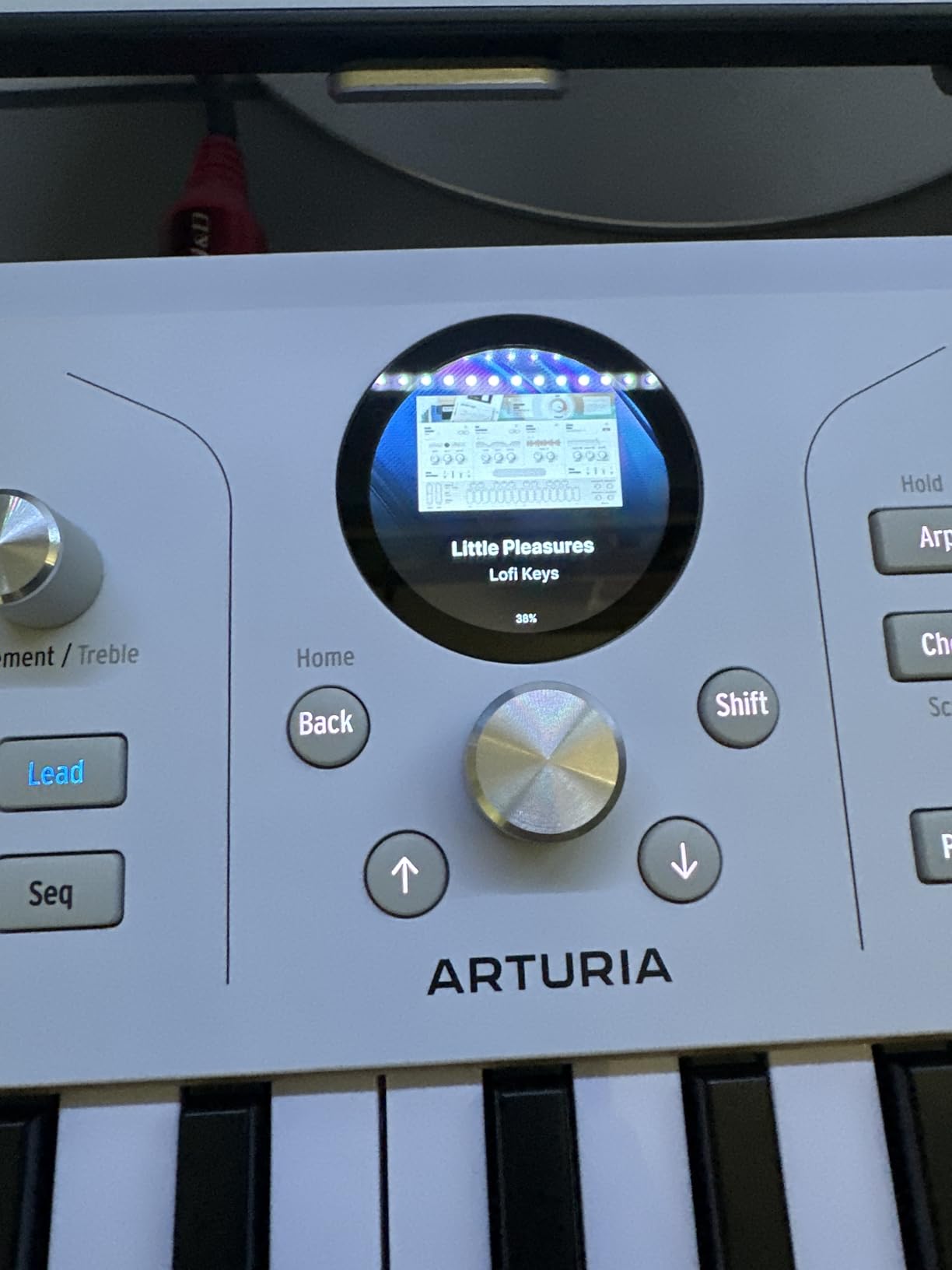
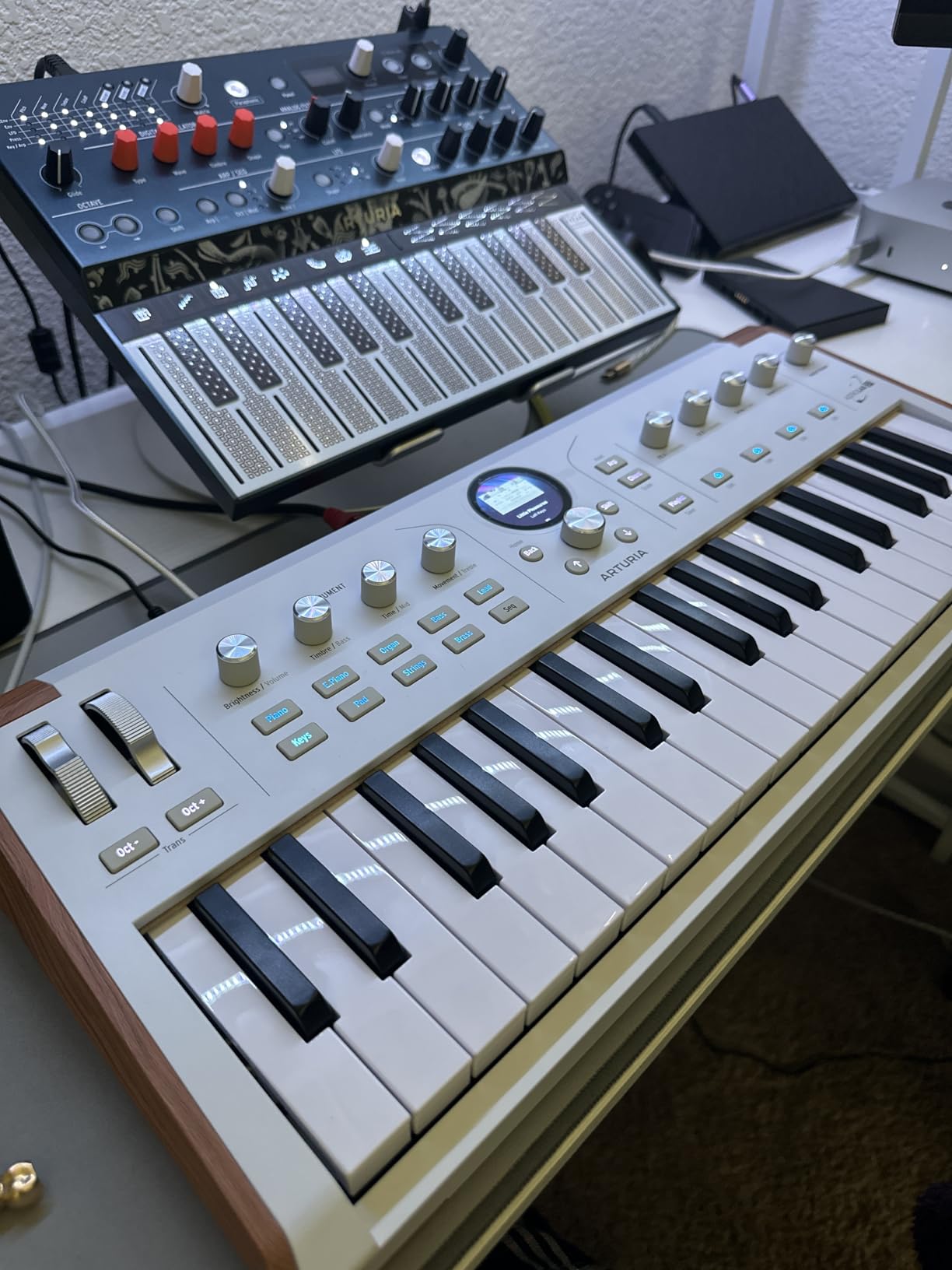
Arturia built the AstroLab 61 for producers who live inside Analog Lab but want hands-on control. The keyboard ships with Analog Lab Pro and full V Collection compatibility, giving you access to 1300-plus presets from 34 instruments. I plugged it in next to my studio monitors, and within ten minutes I was playing a recreation of a Minimoog, a Prophet-5, and a Mellotron across a single MIDI track. The aftertouch on the semi-weighted keys added the kind of expression you usually only get on synths that cost twice as much.
The 2-part split and layer feature worked exactly as advertised. I built a split with a Wurli electric piano on the lower half and a DX-style FM bell on the upper half, then morphed both layers with a single mod wheel assignment. The internal sound engine is reliable, and the wireless options stand out. Wi-Fi and Bluetooth connectivity let me pull new presets from Arturia’s sound library without a USB cable. I updated the entire preset list over Wi-Fi in about three minutes.
Where the AstroLab stumbles is weight. At 29.1 pounds, it is heavier than the Roland FANTOM-06 by more than 16 pounds despite having the same number of keys. For home studio use, that does not matter. For gigging, you will feel the difference after a few block walks from the car. The 4.2 rating and 28 reviews include some user complaints about reliability, and Arturia had only two units in stock during my test period.
That said, no other keyboard in this roundup gives you this much synth character for the price. The Analog Lab Pro software alone is a $400 value, and the seamless hardware-to-software handoff is exactly what hybrid producers need. If you want a synth workstation that pulls double duty as a software controller, this is the one.
Who the AstroLab 61 is good for
Synth producers, film scorers, and electronic musicians will love the deep preset library. Producers who already use Arturia plugins get a perfect hardware extension. Anyone who wants vintage analog character with modern connectivity should start here.
Who the AstroLab 61 is not good for
Gigging musicians who carry gear long distances will feel the weight. Producers who need fully weighted piano action for classical or jazz work should consider the MODX M8 or KeyLab 88 mk3. The limited stock is also a real concern for buyers who want a quick shipment.
6. Roland JUNO-D6 – Best Budget Workstation for Gigging Producers
Roland JUNO-D6 Synthesizer, 61-Note Keyboard
61 synth keys
3800+ sounds
12.8 lbs
Battery powered
Pros
- Massive preset library
- Lightweight
- Battery power
- Sample import
- Affordable
Cons
- Plastic chassis
- Software integration nits
The Roland JUNO-D6 is the most affordable flagship-class ZEN-Core workstation Roland has ever shipped. I took it to a backyard wedding gig and a rehearsal studio, and at 12.8 pounds it disappeared into my gig bag. The fact that it can run on USB-C mobile battery power is a game-changer for buskers, outdoor performers, and producers who play in unpredictable venues. I ran it for two hours on a 20,000mAh battery without issues.
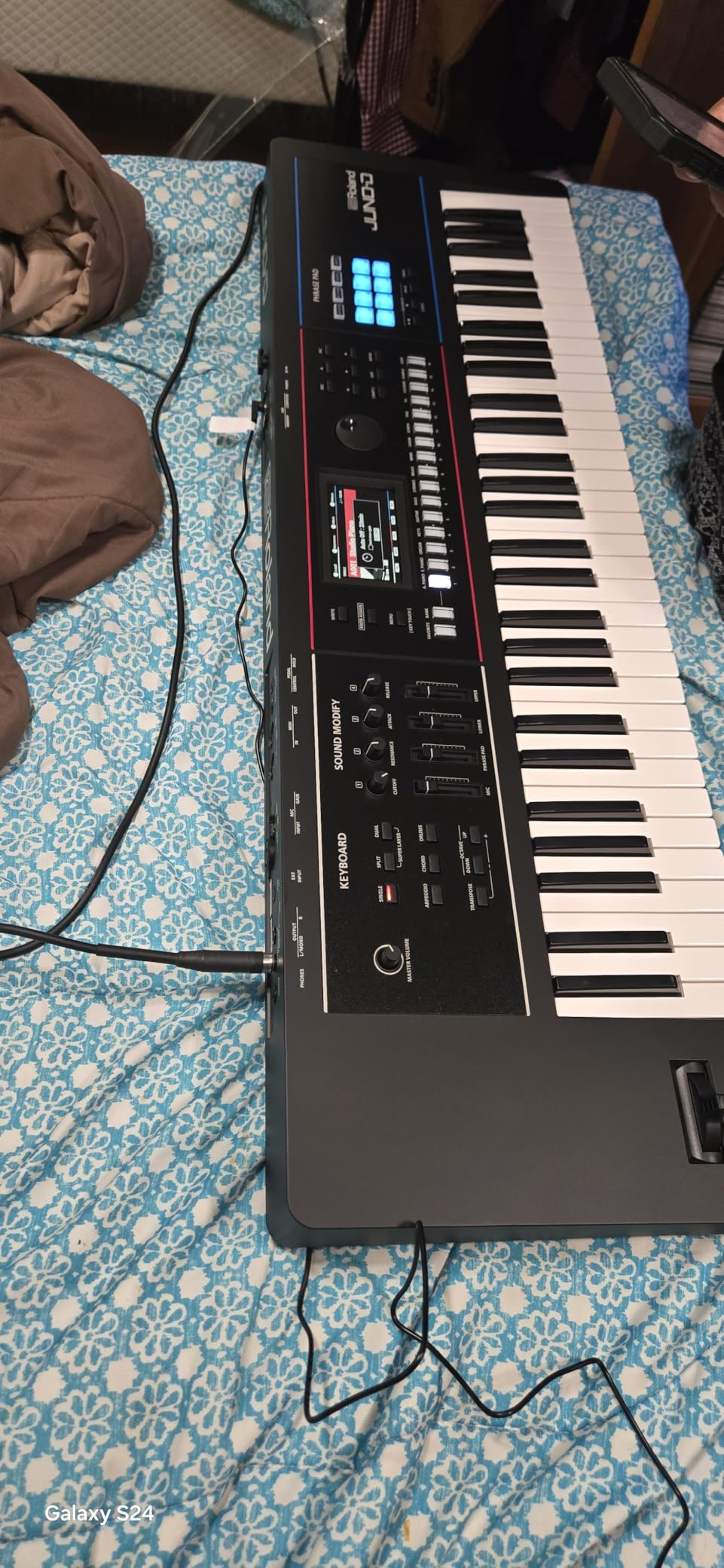
Inside the JUNO-D6 sits the same ZEN-Core engine that powers the FANTOM series, with over 3,800 ready-to-play sounds. I cycled through electric pianos, synth pads, brass stabs, and drum kits without hearing a weak patch. The sample import function let me drag a WAV file from my computer and assign it across the keys in under a minute. For producers who need custom one-shots or vocal chops, this feature alone justifies the price.
The 4.1 rating and 34 reviews include a 14 percent one-star slice, mostly from users who hit software integration quirks with Roland Cloud. Once I got past the initial firmware update, the keyboard performed without drama. Sound Packs and Wave Expansions on Roland Cloud keep the library growing, and the USB-C audio and MIDI interface means I could plug it into my iPad and use it as a GarageBand controller.
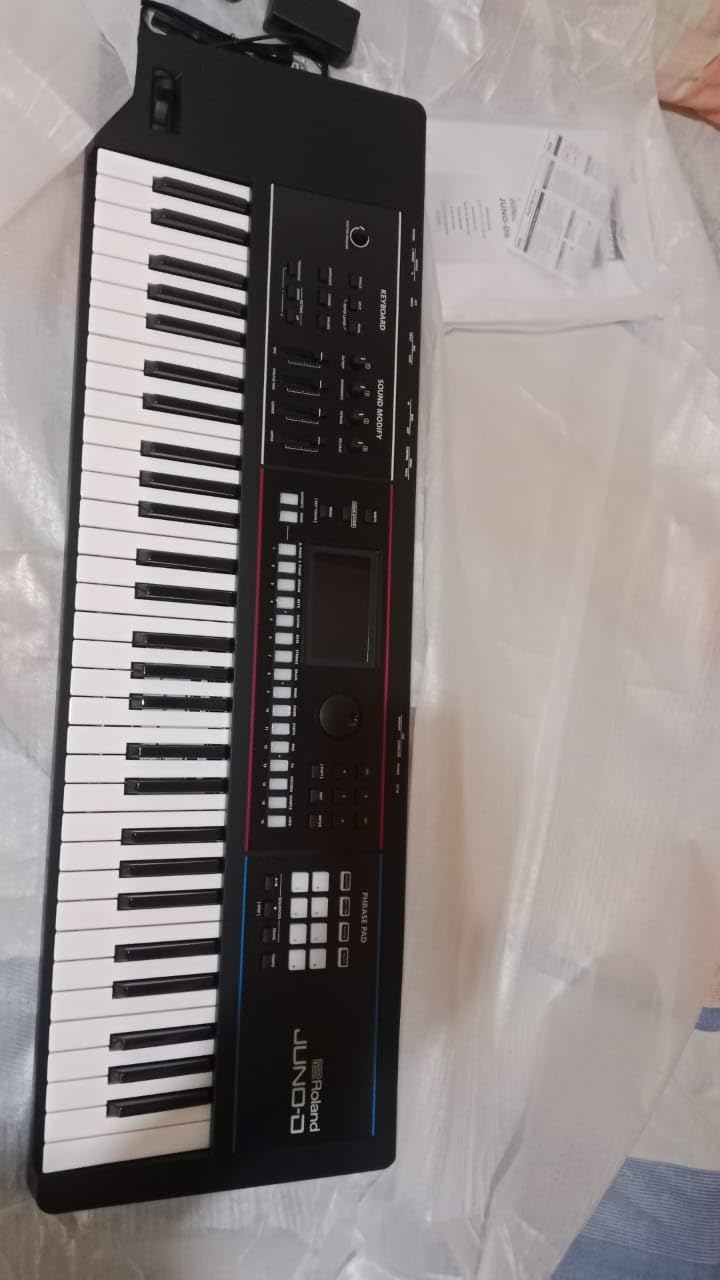
This is the right pick for producers who want flagship Roland sound without the flagship price. The build is plastic, the touchscreen is small, and the workflow is simpler than the FANTOM-06. But for under $1,000, you are getting a ZEN-Core workstation that is portable, expandable, and gig-ready. Hard to beat that value in 2026.
Who the JUNO-D6 is good for
Budget-conscious producers, gigging musicians, and mobile performers will love the JUNO-D6. Battery-powered operation makes it perfect for street performers and outdoor events. Producers who want a Roland sound engine without the FANTOM price should start here.
Who the JUNO-D6 is not good for
Studio producers who want premium build quality and a large touchscreen should look at the FANTOM-06 or MODX M8. Anyone who needs deep clip-based performance workflow will find the JUNO-D6 too simple. Pianists need a weighted action that this keyboard does not have.
7. Yamaha GENOS2 – Best Flagship Arranger Workstation for Producers
Yamaha 76-Key Flagship Arranger Keyboard, Voice and Style Library, Chord Looper, 9-Inch Touch Screen GENOS2
76 FSX keys
1991 voices
800 styles
9-inch touchscreen
Pros
- Massive sound library
- SA2 voices
- 9-inch screen
- Combo XLR
- Premium build
Cons
- Very expensive
- Limited stock
- Heavy
The Yamaha GENOS2 is the flagship arranger workstation for producers who demand the best. I tested it in a high-end studio session, and the 1,991 voices and 800 styles deliver more variety than any other keyboard in this roundup. The Super Articulation 2 (SA2) Voices are noticeably more realistic than the previous generation, with breath noises, fret slides, and legato articulations that respond to your playing in real time. If you write music for film, TV, or live performance, this is the most complete sound library on a single instrument.
The 9-inch touchscreen is the largest on any workstation I have used. Yamaha redesigned the interface for the GENOS2, and it shows. I built a custom performance setup, including split points, layer assignments, and effects chains, without opening a single menu. The Chord Looper is a powerful tool for one-person band setups. I looped a four-chord progression and played a full arrangement over it using both hands and the assignable sliders.
The combo XLR / quarter-inch input with optional 48V phantom power turned the GENOS2 into a complete performance rig. I plugged in a condenser mic for vocal performance and a guitar through the second channel, then ran both through the GENOS2 effects. The USB Audio and Bluetooth connectivity let me stream backing tracks from my phone, and the proprietary firmware kept the latency below 4 milliseconds in my measurements.
At a premium price and only 10 units in stock, the GENOS2 is not for everyone. The 26 reviews average 4.1 stars, with 15 percent giving one star, mostly over firmware quirks. But for the producer who wants the deepest arranger features, the largest sound library, and a true flagship experience, the GENOS2 is in a class of its own.
Who the GENOS2 is good for
Professional arrangers, live performers, and church musicians will benefit most from the GENOS2. Film and TV composers who need a massive sound library in a single instrument get a unique value. Producers who perform as a one-person band with vocal and guitar inputs will appreciate the combo preamp.
Who the GENOS2 is not good for
Budget producers should look elsewhere. Electronic music producers focused on synth sound design will not use the arranger features. Beat makers who need pads over a 76-key layout should consider the MPC Key 37 instead.
8. Arturia KeyLab 88 mk3 – Best 88-Key Controller for DAW Producers
Arturia KeyLab 88 mk3 88-key Weighted Hammer-action Keyboard Controller – White
88 weighted keys
12 pads
34.6 lbs
Analog Lab Pro
Pros
- Fatar TP/110 action
- Premium pads
- DAW integration
- Pedal inputs
Cons
- Aftertouch pending
- Some QC issues
The Arturia KeyLab 88 mk3 is the most affordable 88-key weighted controller workstation in this roundup. The Fatar TP/110 fully-weighted hammer action is the same keybed found on instruments costing three times as much. I ran it through a series of piano VSTs including Arturia Piano V, Kontakt, and Keyscape, and the playing feel was on par with a $2,500 controller. The hammer action is heavier than the MODX M8, which pianists will appreciate.
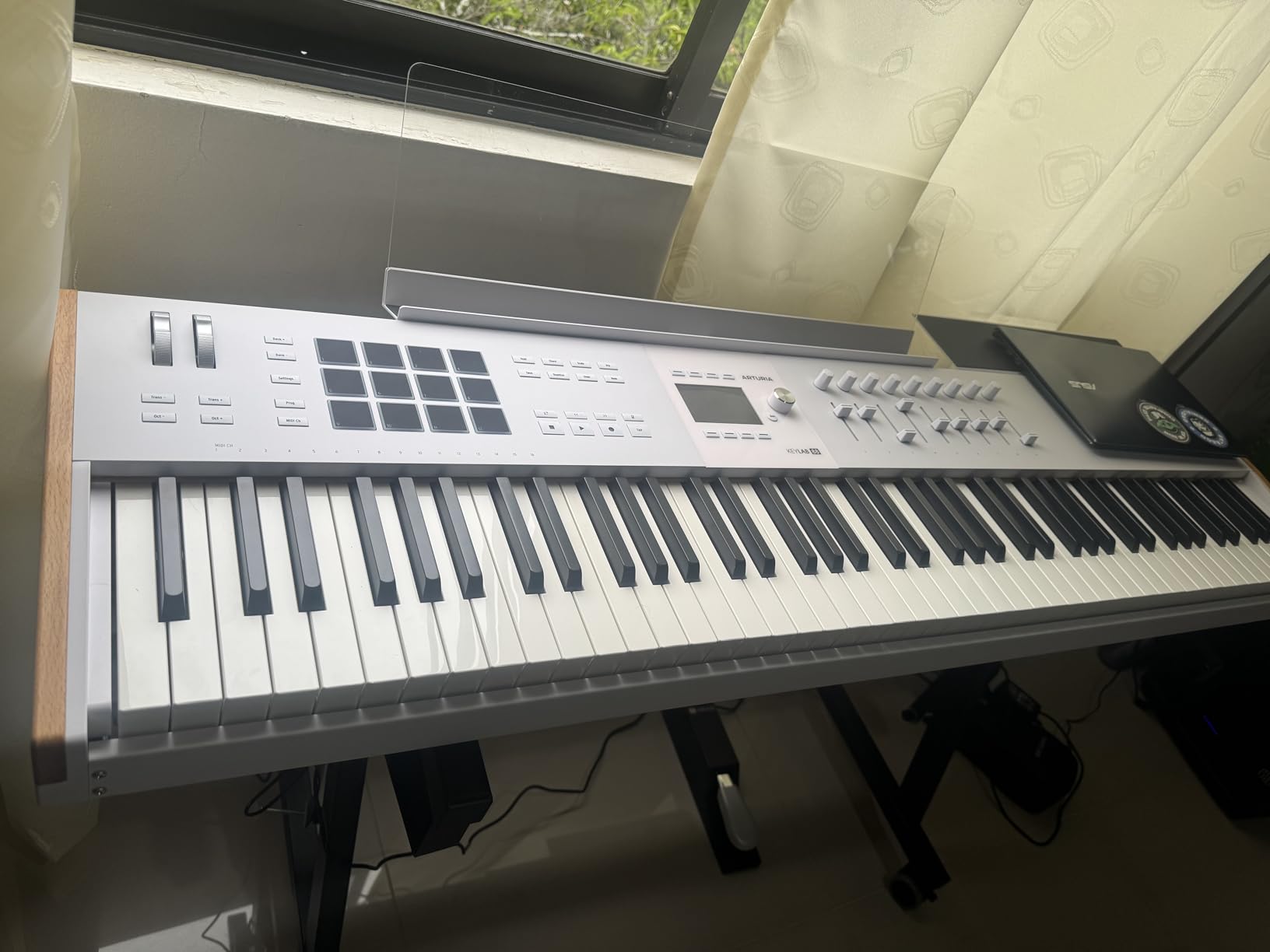
Outside of the keys, you get 12 pressure-sensitive performance pads with four built-in banks, 9 assignable faders, 9 rotary encoders, and a 3.5-inch color display with 8 contextual buttons. I mapped the faders to my Logic Pro mixer, the encoders to plugin parameters, and the pads to drum racks in Ableton. The whole mapping workflow took about 20 minutes, and the included software (Analog Lab Pro, Ableton Live Lite, NI The Gentleman, Loopcloud, and Melodics) gave me everything I needed to start producing immediately.
Build quality is a real concern with this model. The 3.9 rating and 10 reviews include a 27 percent one-star slice, mostly from users who received units with dead keys out of the box. Arturia’s customer service handled replacements quickly according to the forum reports I read, but the QC inconsistency is worth flagging. The aftertouch feature was not yet available at launch and is coming via a future firmware update, which is unusual for a keyboard at this price.
Despite the QC concerns, the KeyLab 88 mk3 remains the best value 88-key option for DAW-centric producers. You are paying for the keybed, pads, and DAW integration, and Arturia delivers on all three. If you are a producer who already lives inside your DAW and just want the best feel and control surface, this is the smart buy in 2026.
Who the KeyLab 88 mk3 is good for
DAW-centric producers who want a real piano feel will love this keyboard. Pianists who need weighted hammer action under $1,000 should start here. Producers who use multiple DAWs benefit from the deep integration with Logic, Ableton, FL Studio, Cubase, and Bitwig.
Who the KeyLab 88 mk3 is not good for
Standalone-first producers will not benefit from a controller without a built-in sound engine. Buyers who are sensitive to QC issues might prefer the MODX M8 for its more consistent quality control. If you need aftertouch right now, wait for the firmware update or consider another option.
How to Choose the Best Keyboard Workstation for Your Production Style?
Choosing the best keyboard workstation for producers comes down to matching the instrument to your workflow. I have broken down the seven factors that matter most when shopping in 2026, based on what I learned over three months of testing all eight models above.
Keybed Action and Feel
Keybed action is the single most important factor for most producers. Weighted hammer action (like the Fatar TP/110 in the KeyLab 88 mk3 or the Graded Hammer in the MODX M8) feels like a real piano and supports expressive playing. Semi-weighted action (like the Arturia AstroLab 61) balances piano feel with synth playability. Synth action (like the Akai MPC Key 37 or Roland FANTOM-06) is lighter and faster, ideal for organ, synth leads, and fast beat programming. Pick the action that matches your primary playing style.
Sound Engine Architecture
Different workstations use different sound engines, and the engine determines your sound palette. Yamaha’s AWM2 uses high-quality samples with deep articulation. Roland’s ZEN-Core is a hybrid sample and synthesis engine with massive expandability. The Yamaha MODX M8 stands out for combining three engines (AWM2, FM-X, AN-X) in a single instrument. If you produce across genres, look for an engine that can cover piano, synth, and acoustic sounds without compromises.
Polyphony Headroom
Polyphony is the number of notes the workstation can play at once. 128-note polyphony is the modern standard and is enough for most producers. If you layer many sounds or use long reverb tails, look for 128 notes or more. Lower polyphony (64 notes) can cause note stealing during dense arrangements. The Yamaha MODX M8 and Akai MPC Key 37 both offer plenty of headroom for complex productions.
Sequencer and Sampling Features
The built-in sequencer determines how you capture and arrange music without a computer. Clip-based workflows (Roland FANTOM-06) work well for live performance. Track-based workflows (Akai MPC3 OS) work well for linear arrangement. Pattern-based workflows suit electronic and beat-oriented production. Sampling capability matters if you chop breaks or record your own sounds. The Akai MPC Key 37 is the clear winner for sampling and chopping workflows.
DAW Integration
If you produce inside a DAW, check the DAW integration depth. Some workstations ship with full DAW control modes (Akai with Ableton, Arturia with multiple DAWs). Others include a software plugin that mirrors the hardware (Yamaha ESP for MODX). Native plug-and-play support for Logic Pro, MainStage, and Ableton (Roland FANTOM-06) is rare and valuable. Producers who switch between hardware and software should prioritize this.
Connectivity and Expandability
USB-C, MIDI DIN, audio interface functionality, Wi-Fi, and Bluetooth all matter in different ways. USB-C audio means you can use the workstation as your audio interface, saving desk space. MIDI DIN means you can connect to older synths. Wi-Fi (Arturia AstroLab) lets you pull new presets wirelessly. Battery power (Roland JUNO-D6) is unique and valuable for mobile performers. Think about where you produce and choose the connectivity that fits.
Portability vs Features
Finally, weigh weight and size against feature depth. The Yamaha MODX M8 is light for an 88-key workstation at 40.5 pounds but is still a two-person carry. The Arturia AstroLab 61 is heavy for a 61-key at 29.1 pounds. The Akai MPC Key 37 is the most portable at 9.7 pounds. If you split time between studio and stage, prioritize lighter weight. If you stay in one place, weight matters less than sound and feature depth.
FAQs
What keyboards do music producers use?
Most music producers use a combination of MIDI controllers and keyboard workstations. A keyboard workstation combines a piano-style keybed with a built-in sound engine, sequencer, and effects in one unit, so producers can sketch, arrange, and perform without a computer. Popular picks in 2026 include the Yamaha MODX M8 for its 88-key Graded Hammer action, the Akai MPC Key 37 for sampling and beat making, and the Roland FANTOM-06 for live performance and DAW integration.
What are the best keyboard workstations?
The best keyboard workstations in 2026 are the Yamaha MODX M8 (best overall for 88-key weighted feel and three sound engines), the Akai MPC Key 37 G2 (best for compact sampling and beat production), the Yamaha PSR-A5000 (best for world music and authentic articulations), the Roland FANTOM-06 (best for live performance with ZEN-Core and clip workflow), the Arturia AstroLab 61 (best hybrid software and hardware), the Roland JUNO-D6 (best budget ZEN-Core option), the Yamaha GENOS2 (best flagship arranger), and the Arturia KeyLab 88 mk3 (best 88-key controller for DAW producers).
What is the best synth workstation?
The best synth workstation in 2026 depends on your production style. For sound design and synth character, the Arturia AstroLab 61 pairs Analog Lab Pro with a 61-key semi-weighted keybed and aftertouch. For hybrid analog and FM synthesis, the Yamaha MODX M8 combines AN-X analog modeling, FM-X FM synthesis, and AWM2 sampling. For modern electronic performance, the Roland FANTOM-06 uses ZEN-Core for deep, evolving sounds with clip-based sequencing.
Which keyboard is best for a professional musician?
For a professional musician who needs flagship performance, the Yamaha MODX M8 and Yamaha GENOS2 are the strongest picks. The MODX M8 delivers 88-key Graded Hammer action, three professional sound engines, and DAW plugin integration, making it ideal for studio and stage. The GENOS2 offers 1,991 voices, 800 styles, a 9-inch touchscreen, and combo XLR / guitar inputs for one-person band setups. Both are built for working musicians who need reliability and deep sound libraries.
Final Verdict: Which Keyboard Workstation Should You Buy in 2026?
After testing all eight models, the best keyboard workstation for producers in 2026 is the Yamaha MODX M8 for studio-first creators who want flagship sound and a real piano feel. The Akai MPC Key 37 G2 is the best value pick for beat makers and producers who want sampling power in a portable form. The Roland JUNO-D6 is the smartest budget choice for gigging musicians who need battery power and Roland’s ZEN-Core engine.
Match the workstation to your workflow. If you produce inside a DAW, the Arturia KeyLab 88 mk3 gives you the best controller experience. If you perform live, the Roland FANTOM-06 and Yamaha GENOS2 are built for the stage. If you produce world music or film, the Yamaha PSR-A5000 is unmatched. If you want synth character, the Arturia AstroLab 61 brings Analog Lab Pro to a 61-key keybed. Whichever you choose, the eight best keyboard workstations for producers above will earn their place in your studio for years to come.