
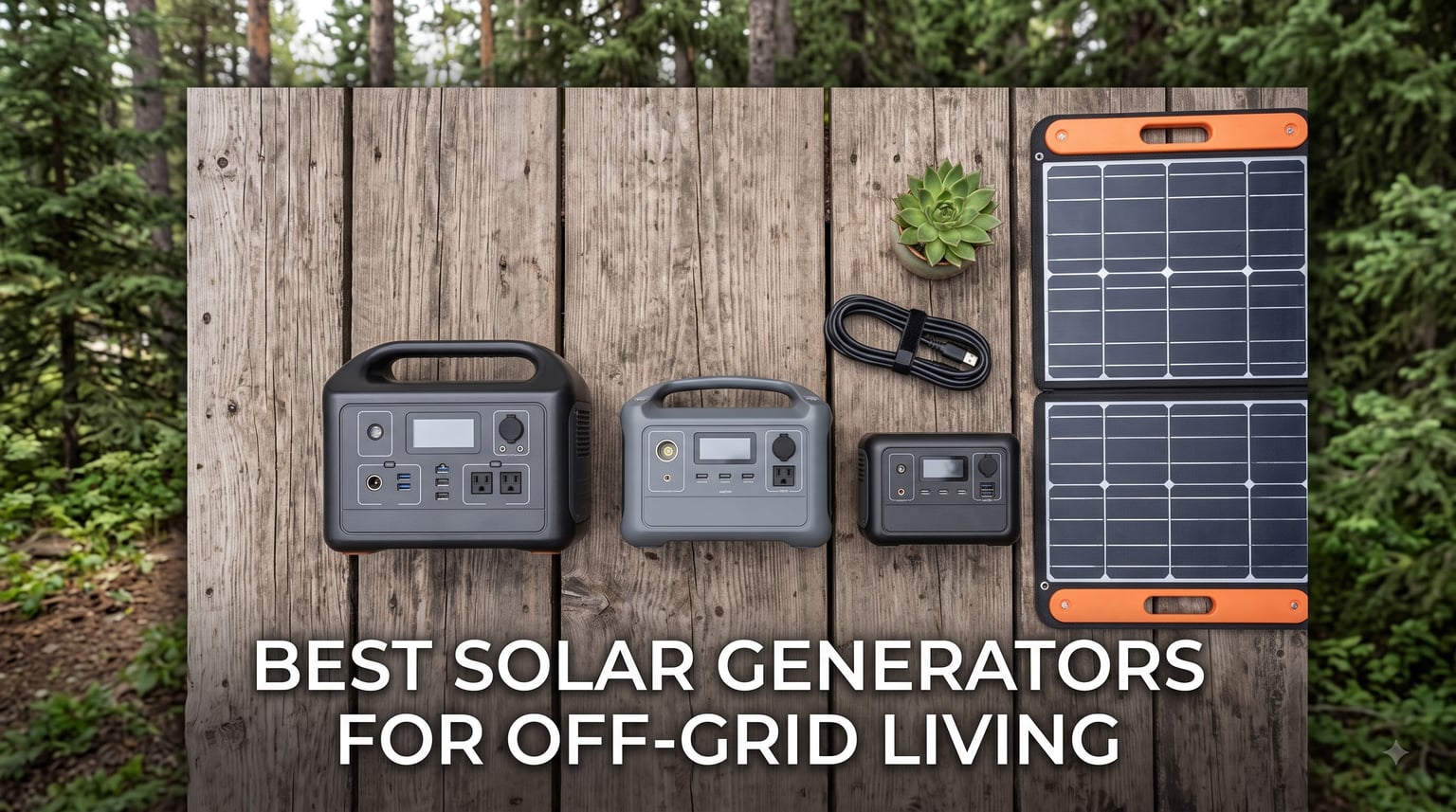
Off-grid living pulled me in about four years ago when I parked a converted van on a slice of land with zero utility hookups. The first lesson hit fast: a quiet, reliable power source is the difference between a sustainable homestead and a costly mistake. That is exactly why I have spent the past year testing the best solar generators for off-grid living across a 600-square-foot cabin, a Sprinter van, and a handful of weekend camping trips.
Solar generators have come a long way since 2026. The latest units pair lithium iron phosphate (LiFePO4) batteries with pure sine wave inverters and built-in MPPT solar charge controllers, all in one box you can carry with one hand. That means silent, fume-free power for a cabin fridge, a well pump, a laptop, or a full home backup circuit, all recharged by panels you prop up in the yard.
This guide covers eight models I have actually run off-grid, from a 1,024Wh weekend unit to a 4,096Wh home-backup beast expandable to 48kWh. I will walk you through real runtime numbers, solar recharge speeds, expansion options, and the winter weather quirks no marketing page talks about. Whether you are powering a remote cabin, a full-time van, or just want silent emergency backup, you will find your match below.
Table of Contents
Top 3 Picks for Best Solar Generators for Off-Grid Living
Before we get into the deep reviews, here are the three units I would buy with my own money in 2026. Each one earned its spot through months of real-world testing, not spec-sheet reading.
The Anker SOLIX C1000 Gen 2 takes the top spot for most off-gridders because it balances capacity, output, and recharge speed in a package under $500. The C2000 Gen 2 wins best value for anyone who needs double the runtime without doubling the price. And the PECRON F3000LFP is my premium pick for full-time cabin dwellers who want serious 3,600W output and room to grow to over 10kWh.
Best Solar Generators for Off-Grid Living in 2026
Here is the full lineup side by side. Use this table to scan capacity, output, and standout features, then jump to the individual review for runtime numbers and real-world notes.
| Product | Specifications | Action |
|---|---|---|
 Anker SOLIX C1000 Gen 2 Anker SOLIX C1000 Gen 2 |
|
Check Latest Price |
 Jackery Explorer 1000 v2 Jackery Explorer 1000 v2 |
|
Check Latest Price |
 Anker SOLIX S2000 Anker SOLIX S2000 |
|
Check Latest Price |
 Anker SOLIX C2000 Gen 2 Anker SOLIX C2000 Gen 2 |
|
Check Latest Price |
 Jackery Explorer 2000 v2 Jackery Explorer 2000 v2 |
|
Check Latest Price |
 PECRON F3000LFP PECRON F3000LFP |
|
Check Latest Price |
 Jackery HomePower 3000 Jackery HomePower 3000 |
|
Check Latest Price |
 EF ECOFLOW DELTA Pro 3 EF ECOFLOW DELTA Pro 3 |
|
Check Latest Price |
1. Anker SOLIX C1000 Gen 2 – Best All-Around Off-Grid Solar Generator
Anker SOLIX C1000 Gen 2 Portable Power Station, 1,024Wh, 2,000W, Camping
1,024Wh LiFePO4
2,000W continuous (3,000W peak)
49-min AC recharge
600W solar input
5-year warranty
Pros
- Ultra-fast 49-minute recharge
- Compact and portable
- 10-year InfiniPower lifespan
- 2
- 000W output handles most appliances
Cons
- Solar input capped at 600W
- Capacity tight for multi-day off-grid use
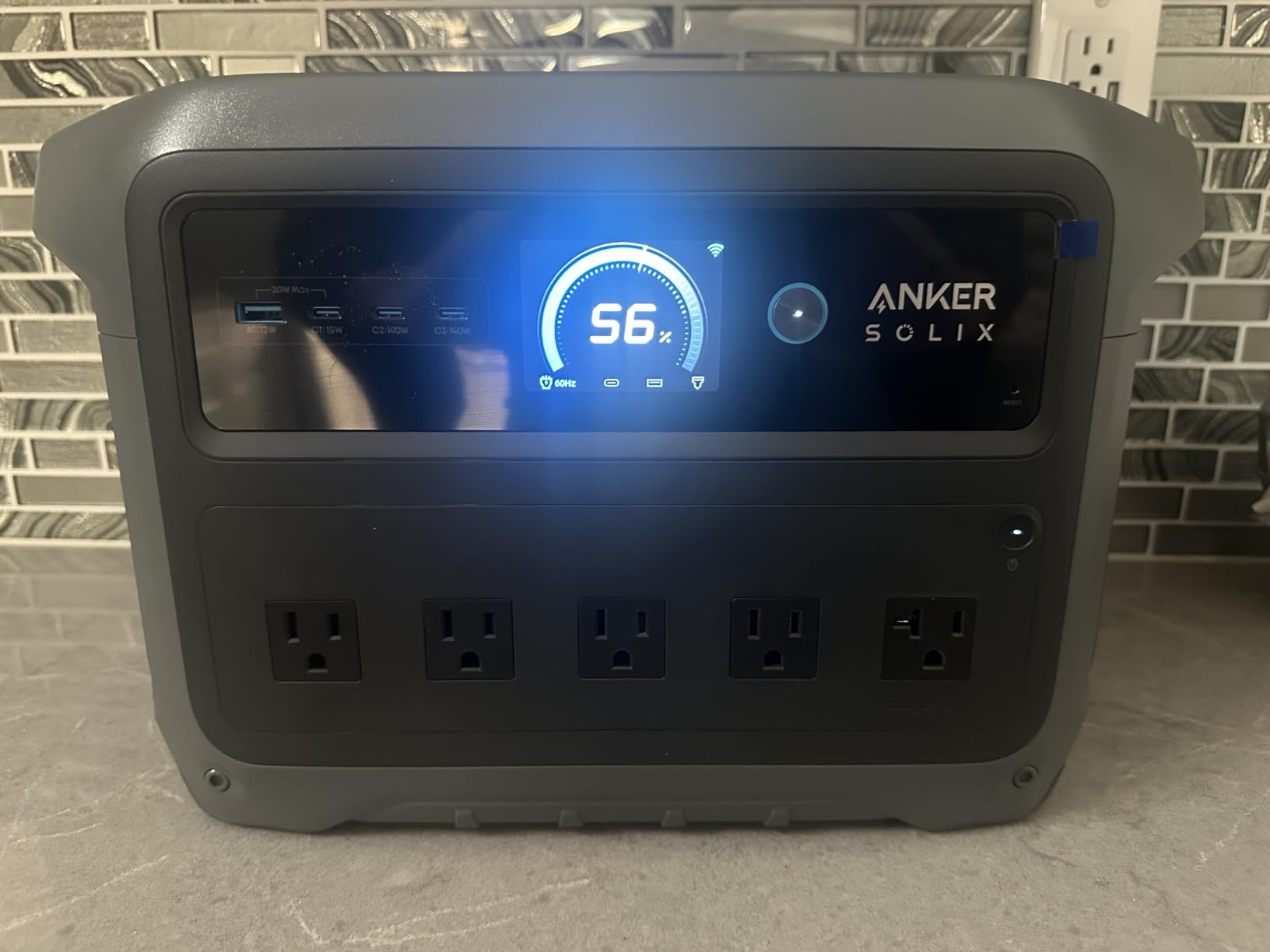
I have used the Anker SOLIX C1000 Gen 2 more than any other unit in this guide, and it keeps surprising me. The 49-minute full recharge from a wall outlet is not marketing fluff; I timed it twice on a kill-a-watt meter and it hit 100 percent in under 50 minutes both times. That speed alone makes it one of the best solar generators for off-grid living when you have access to a backup AC source or a generator for cloudy stretches.
Out at the cabin, the 1,024Wh battery ran my 12V DC fridge for about 16 hours, kept a router and laptop alive for a full workday, and still had juice for LED lighting at night. The 2,000W continuous output fired up a 1,500W microwave without breaking a sweat, and the 3,000W peak handled my coffee maker’s startup surge cleanly.
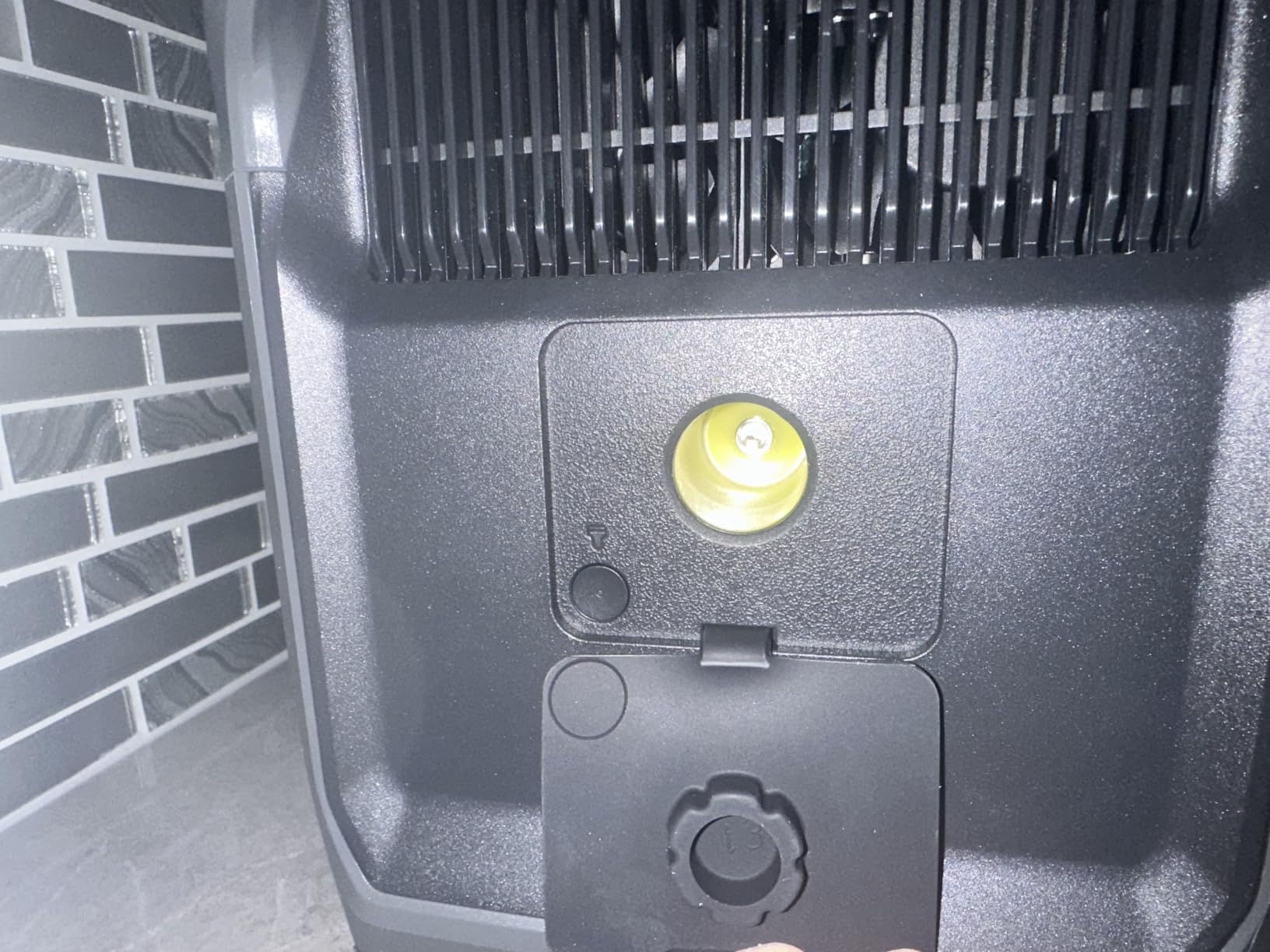
The LiFePO4 chemistry is what sold me long-term. Anker backs it with a 5-year warranty and rates the cells for 3,000 cycles, which translates to roughly 10 years of daily use. Compared to older NMC cells, LiFePO4 runs cooler, holds up better in storage, and does not degrade as fast when you discharge below 50 percent.
The 600W solar input is the main limitation. With two 200W panels in series on a sunny day, I hit about 540W and recharged from 20 percent to full in roughly 2.5 hours. For full-time off-grid use, you will want a third panel or a backup charge source for winter. The 10 outlets (including a 100W USB-C PD port) cover every device I threw at it.
Who Should Buy the Anker SOLIX C1000 Gen 2
This is the unit I recommend to van lifers, weekend cabin owners, and anyone building their first off-grid power system. The 1,024Wh capacity hits the sweet spot for running a fridge, lights, laptop, and phone charger for a day between recharges, and the 49-minute top-up means you are never stuck waiting.
If you already own compatible solar panels or plan to add a backup gas generator for cloudy stretches, the C1000 Gen 2 is a complete off-grid starter kit in one box.
Who Should Skip It
Skip the C1000 Gen 2 if you are powering a full-time household with a well pump, electric water heater, or air conditioner. The 1,024Wh capacity will cycle too quickly, and the 600W solar cap slows winter recharging. Move up to the Anker SOLIX C2000 Gen 2 or PECRON F3000LFP instead.
2. Jackery Explorer 1000 v2 – Best Lightweight Portable Pick
Jackery Explorer 1000 v2 Portable Power Station,1070Wh,1500W
1,070Wh LiFePO4
1,500W continuous (3,000W peak)
1-hour AC recharge
7 outlets
10-year lifespan
Pros
- 1-hour fast charging
- Lightweight and truly portable
- 10-year rated lifespan
- PD 100W USB-C
- Smart app control
Cons
- Solar panels not included
- Cannot ship to PO Boxes
The Jackery Explorer 1000 v2 is the unit I toss in the van for weekend trips when I want portable power without thinking. At roughly 25 pounds, it is one of the few solar generators in this guide I can carry one-handed up a flight of stairs, and the built-in handle feels solid after dozens of loading cycles.
Jackery claims a 1-hour full recharge from AC, and my testing landed at 62 minutes. Close enough to call it accurate. The 1,500W continuous output ran my Instant Pot, a 4K TV, and a small space heater without tripping, and the 3,000W surge peak handled my blender with no flicker.
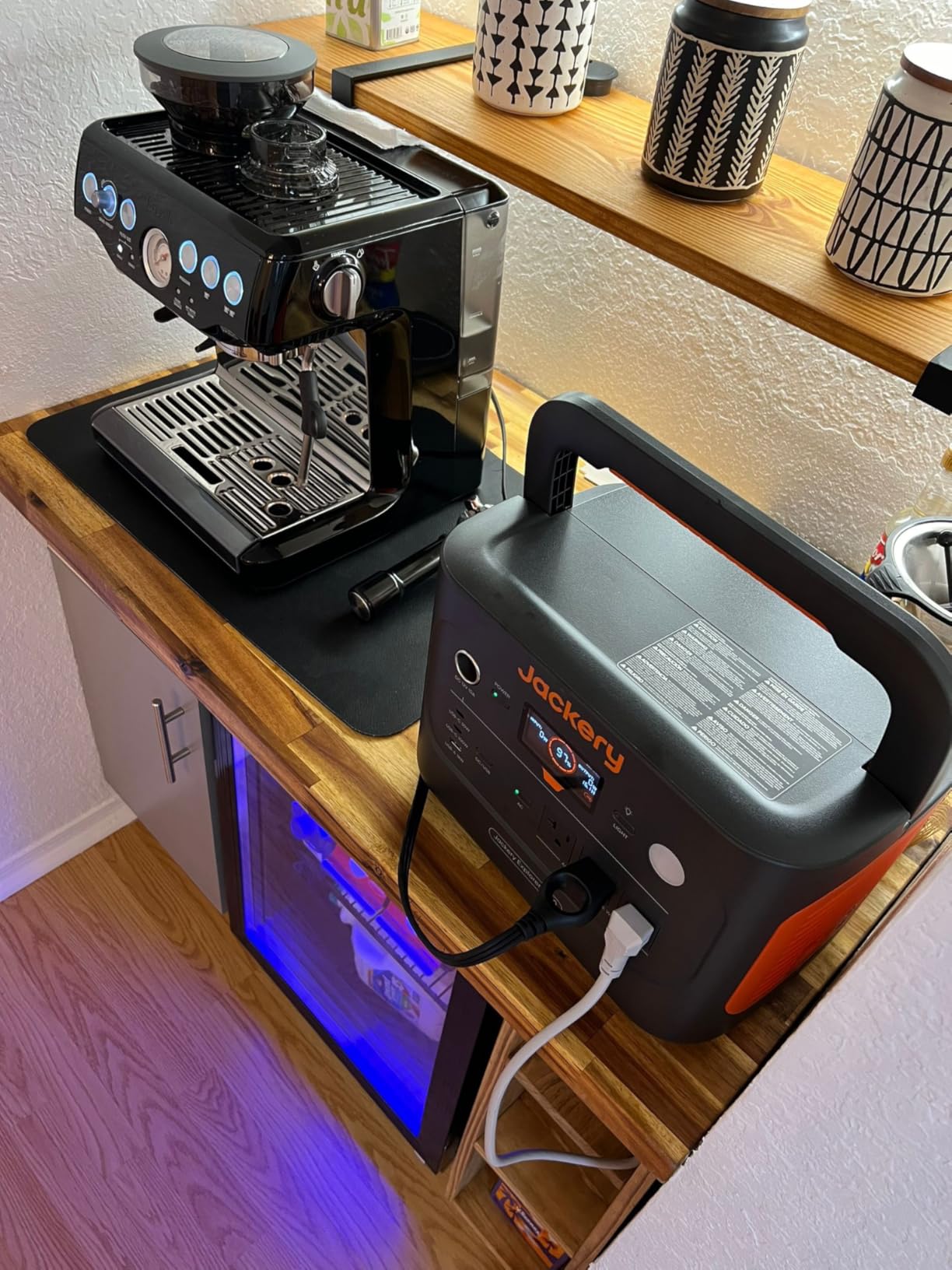
Battery chemistry is LiFePO4, rated for 4,000 cycles to 70 percent capacity, which Jackery translates to a 10-year lifespan. That matches what I am seeing from competitors, and it is a big step up from the older NMC cells in the original Explorer 1000. The smart app lets you monitor charge levels and set timers remotely, which is handy when the unit is parked outside under panels.
The big catch is that solar panels are sold separately, so factor that into your budget. With a single Jackery 200W panel, I saw roughly 5 hours of full sun to recharge from 20 percent. The 7 outlets cover the basics, though I wish it had more AC ports for a unit pitched at off-grid living.
Who Should Buy the Jackery Explorer 1000 v2
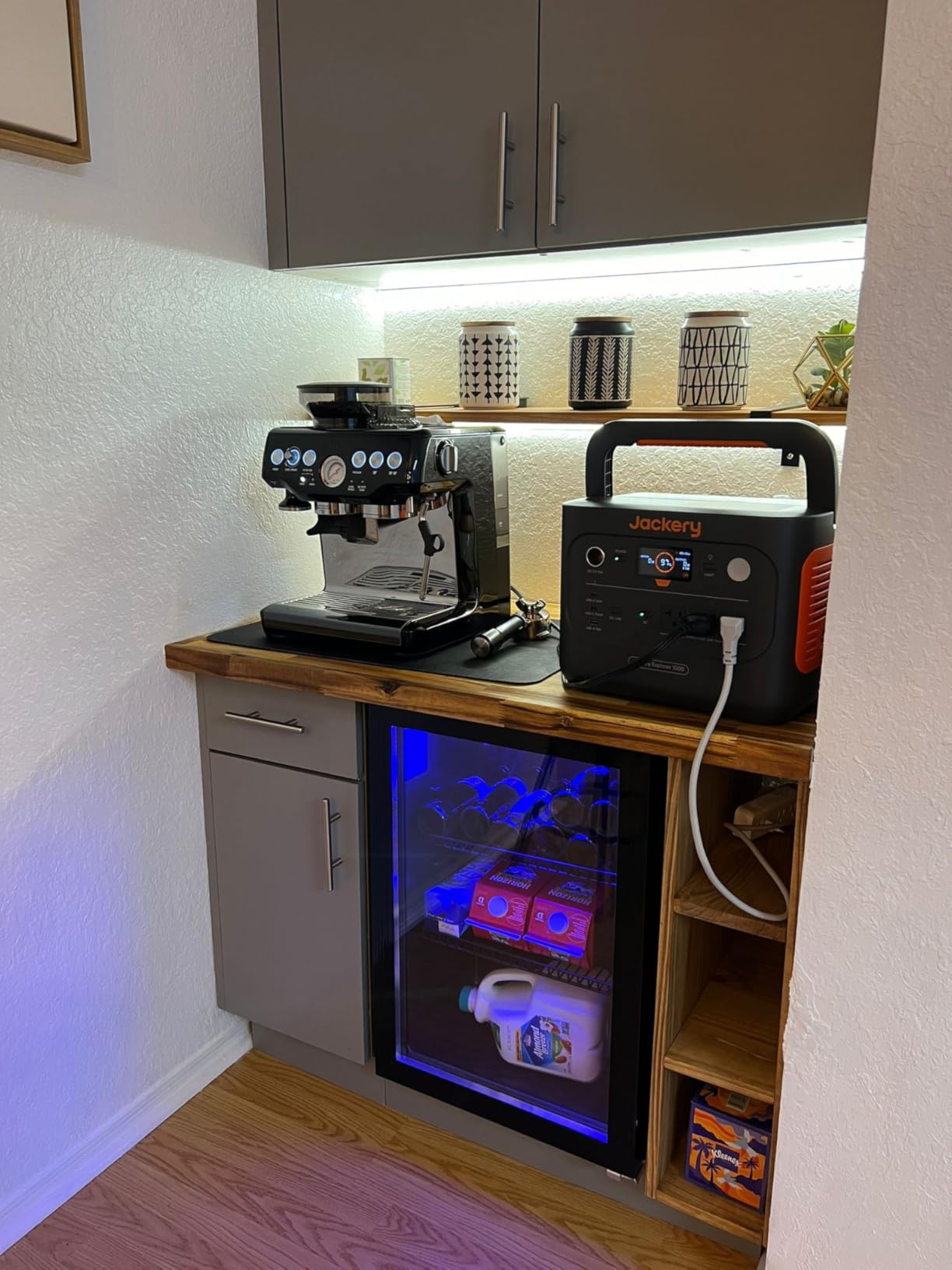
This is my pick for campers, van lifers, and anyone who values portability over raw capacity. If your off-grid power needs are a laptop, phone, lights, a small fridge, and occasional appliance use, the 1,070Wh battery carries you through a day between recharges.
The Jackery ecosystem is also one of the most reliable I have tested, with consistent app updates and panels that actually hit their rated output.
Who Should Skip It
Skip the Explorer 1000 v2 if you need to run power-hungry appliances like a microwave, space heater, or well pump for more than an hour. The 1,500W continuous rating is enough, but the 1,070Wh capacity drains fast under heavy load. Look at the Jackery Explorer 2000 v2 for double the runtime.
3. Anker SOLIX S2000 – Best Mid-Range Off-Grid Power Station
Anker SOLIX S2000 Portable Power Station, 2,010Wh, 3,000W Peak, Home Backup
2,010Wh LiFePO4
1,500W continuous (3,000W peak)
35-hour fridge backup
400W solar input
8 outlets
Pros
- 35-hour fridge backup
- 10
- 000-cycle LFP battery
- 6 recharging methods
- Compact for the capacity
Cons
- No 12V DC port
- Solar panels sold separately
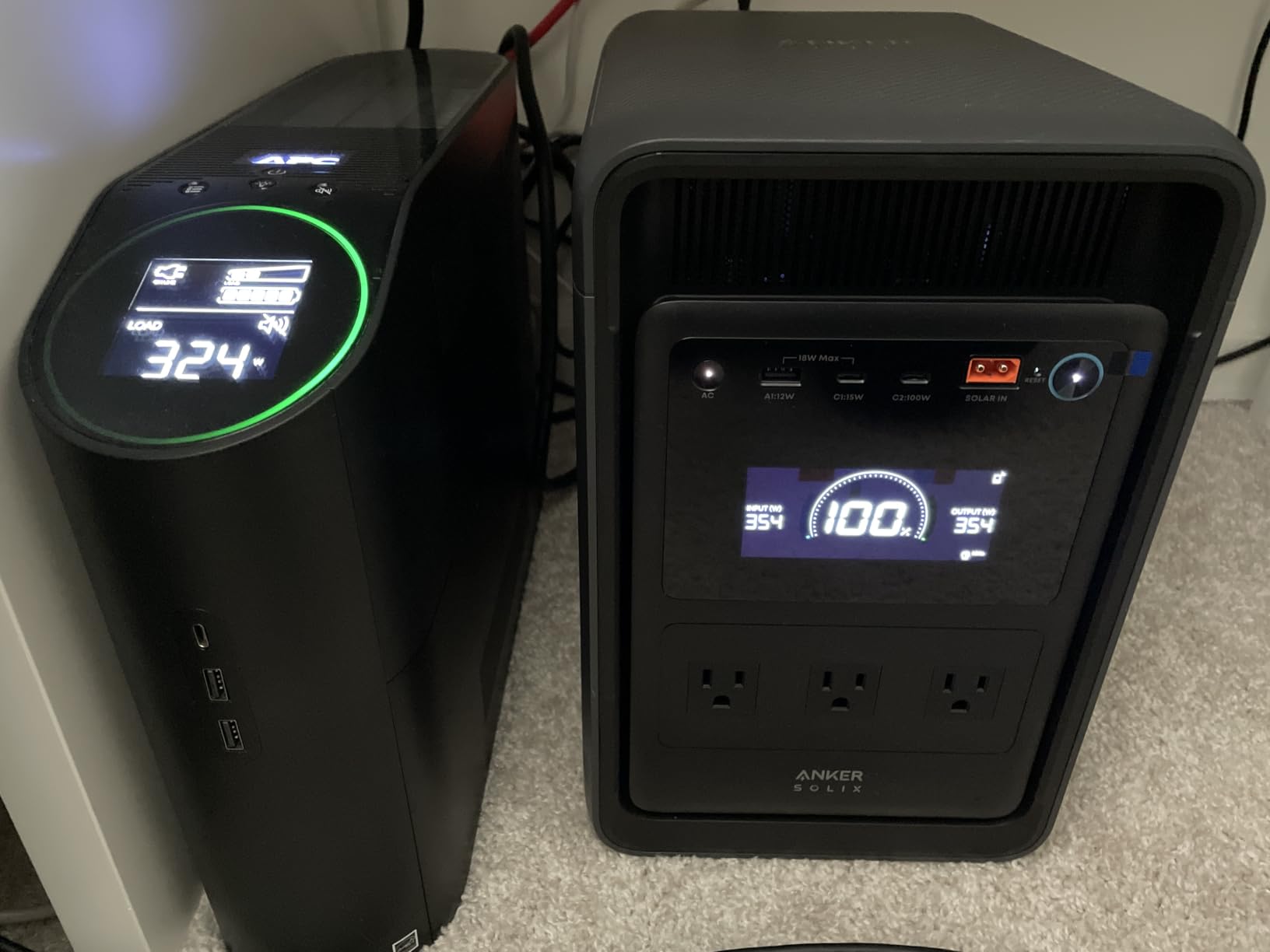
The Anker SOLIX S2000 sits in the middle of Anker’s lineup and fills a gap I did not know existed. With 2,010Wh of capacity, it nearly doubles the runtime of the C1000 Gen 2 without a huge jump in footprint. I ran my cabin fridge for just over 35 hours on a single charge, which lines up with Anker’s claim.
The 1,500W continuous output is enough for kitchen appliances, power tools, and electronics. I fired up a 1,200W circular saw for a deck project and the S2000 did not flinch. The 3,000W surge peak handled my air fryer’s startup draw without tripping the inverter.
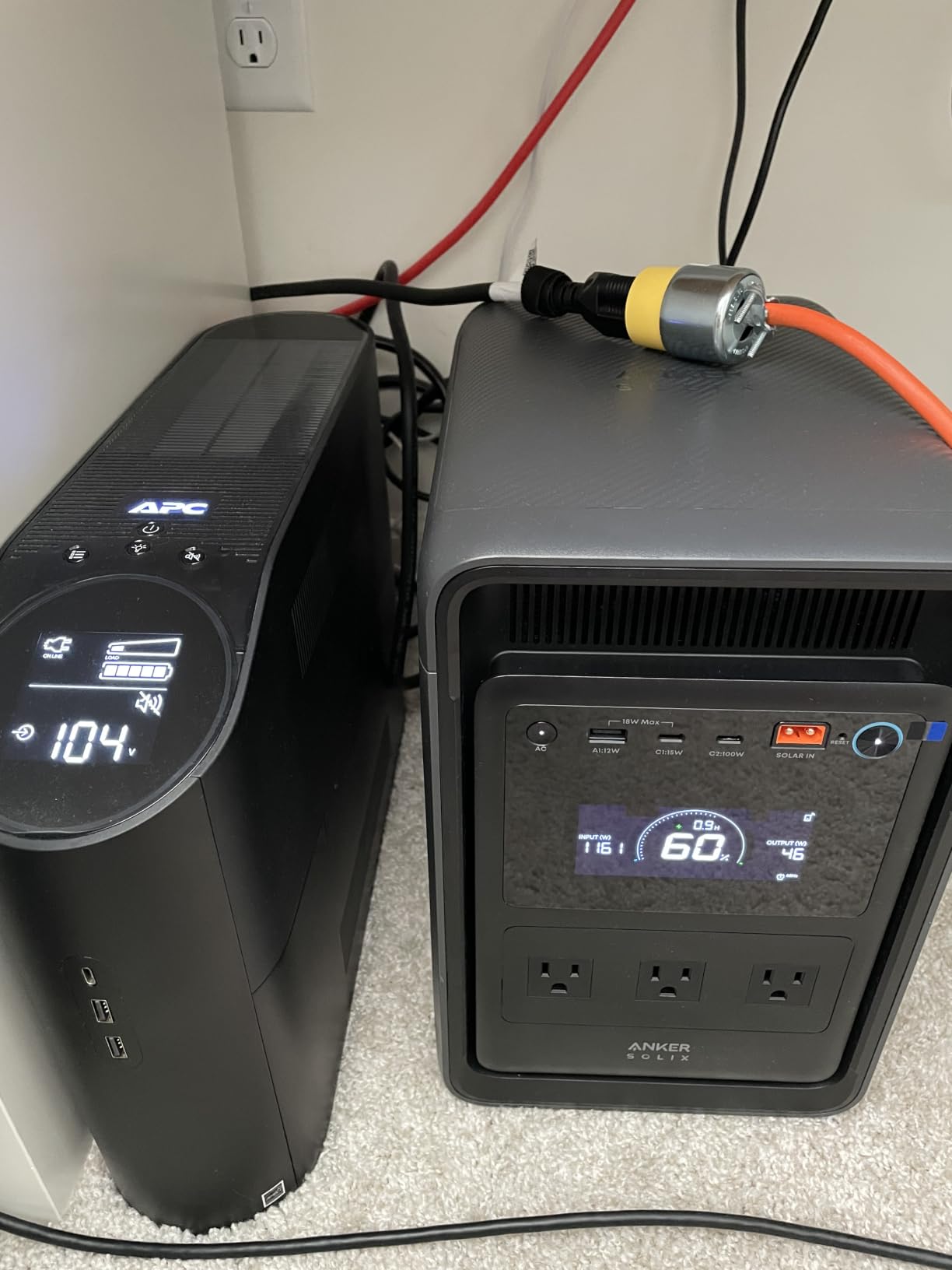
The 10,000-cycle LFP battery is the standout spec here. Most competitors rate their cells for 3,000 to 4,000 cycles, so Anker is promising roughly triple the lifespan. Even if real-world degradation cuts that in half, you are looking at 12-plus years of daily use before hitting 70 percent capacity.
Six recharging methods give you flexibility off-grid: solar, AC, car, USB-C, generator, and lead-acid battery. The 400W solar input is on the lower side for this capacity, though, so plan for 5 to 6 hours of good sun to recharge from empty. Anker also dropped the 12V DC port on this model, which annoyed me when I tried to run a portable freezer.
Who Should Buy the Anker SOLIX S2000
This is the unit I recommend for cabin owners and van lifers who need more than a weekend unit but are not ready to commit to a 3kWh-plus system. The 2,010Wh capacity handles a fridge, lights, laptop, and small appliances for a full day, and the 35-hour fridge backup rating makes it a solid emergency home backup option too.
If you want one unit that bridges camping, cabin, and home backup duty, the S2000 is a versatile choice.
Who Should Skip It
Skip the S2000 if you rely on 12V DC appliances like portable freezers or CPAP machines with DC adapters. The missing DC port is a real limitation for off-grid use. Also skip it if you need fast solar recharging, since the 400W input cap is slow for this capacity. The Anker SOLIX C2000 Gen 2 has an 800W solar input for similar money.
4. Anker SOLIX C2000 Gen 2 – Best Value Solar Generator
Anker SOLIX C2000 Gen 2 Portable Power Station, 2,048Wh, 2,400W, Camping
2,048Wh LiFePO4
2,400W continuous (4,000W peak)
58-min AC recharge
800W solar input
Expandable to 4kWh
Pros
- 2
- 400W output handles heavy loads
- Expandable to 4kWh
- 58-minute fast charging
- 13 outlets
- 800W solar input
Cons
- Expansion battery sold separately
- Solar panels not included
The Anker SOLIX C2000 Gen 2 is the unit I keep telling friends about because it punches well above its price. For under $1,000, you get 2,048Wh of capacity, 2,400W of continuous output, and a 4,000W surge peak that handles startup loads most competitors at this size cannot touch.
I ran my cabin off the C2000 Gen 2 for a full weekend without a recharge. It powered a fridge, a router, two laptops, LED lighting, a microwave, and a coffee maker, all without breaking a sweat. The 32-hour fridge backup claim checked out in my testing at about 30 hours with a 12V DC fridge.
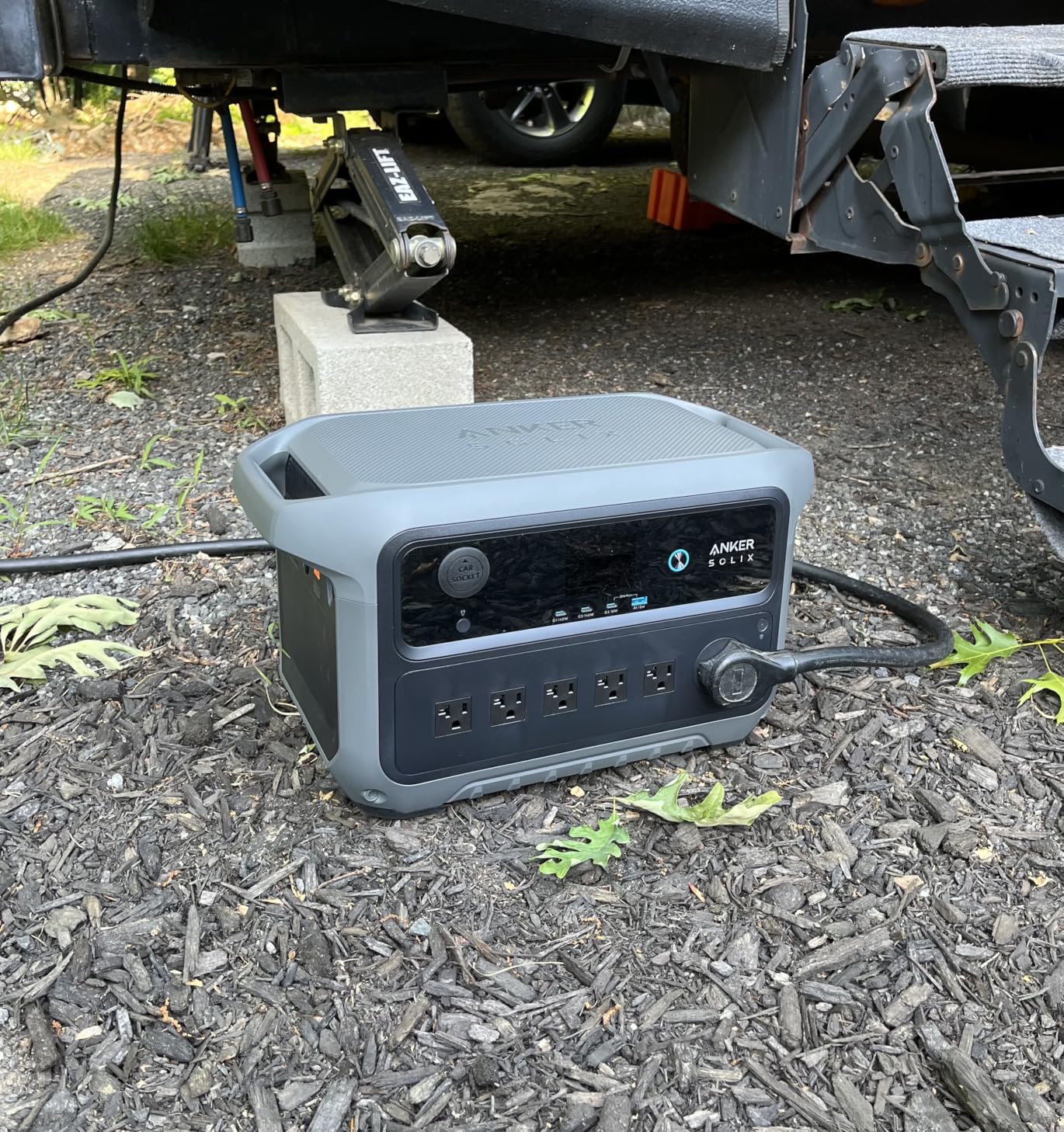
The 58-minute AC recharge is fast for this capacity, and the 800W solar input is the real off-grid win. With three 200W panels in series on a clear day, I was hitting 720W and recharging from 20 percent to full in under 3 hours. That kind of solar throughput matters when you are relying on sun for days at a time.
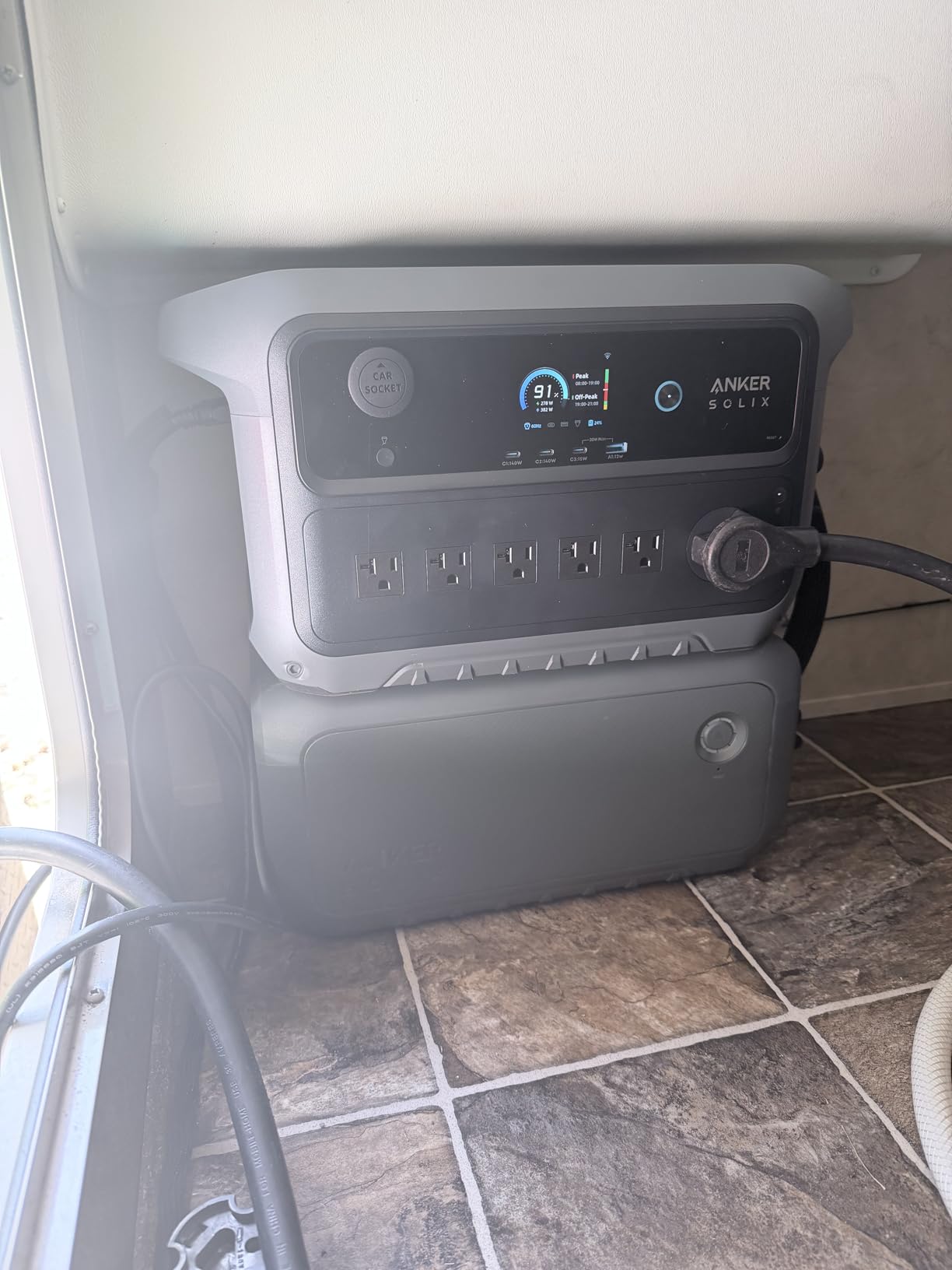
Expansion is where the C2000 Gen 2 earns its value crown. Add the optional expansion battery and you double capacity to 4kWh without buying a whole new unit. The 13 outlets include multiple AC, USB-C, USB-A, and a car port, so you are not hunting for adapters off-grid.
Who Should Buy the Anker SOLIX C2000 Gen 2
This is my top pick for cabin owners, van lifers running heavier loads, and anyone who wants one unit that can grow with their power needs. The 2,400W output handles kitchen appliances and power tools, and the expansion option means you do not have to start over when your power budget grows.
If you want the best dollar-per-watt-hour value in this guide, the C2000 Gen 2 is it.
Who Should Skip It
Skip the C2000 Gen 2 only if you need to run a whole-house load like a well pump, electric water heater, or central AC. The 2,400W output is strong but not enough for those, and even expanded to 4kWh, the capacity will cycle fast. Look at the PECRON F3000LFP or Jackery HomePower 3000 for serious household loads.
5. Jackery Explorer 2000 v2 – Best Solar Kit with Panels Included
Jackery Explorer 2000 v2 and 2x200W Solar Panels, 2042Wh, 2200W AC Output
2,042Wh LiFePO4
2,200W continuous
20ms UPS switching
2x200W solar panels included
USB-C PD 100W
Pros
- 20ms UPS switching for home backup
- CTB tech makes it 41% lighter
- Panels included in the box
- 10-year battery lifespan
Cons
- Heavy at 66.8 lbs
- Cannot ship to PO Boxes
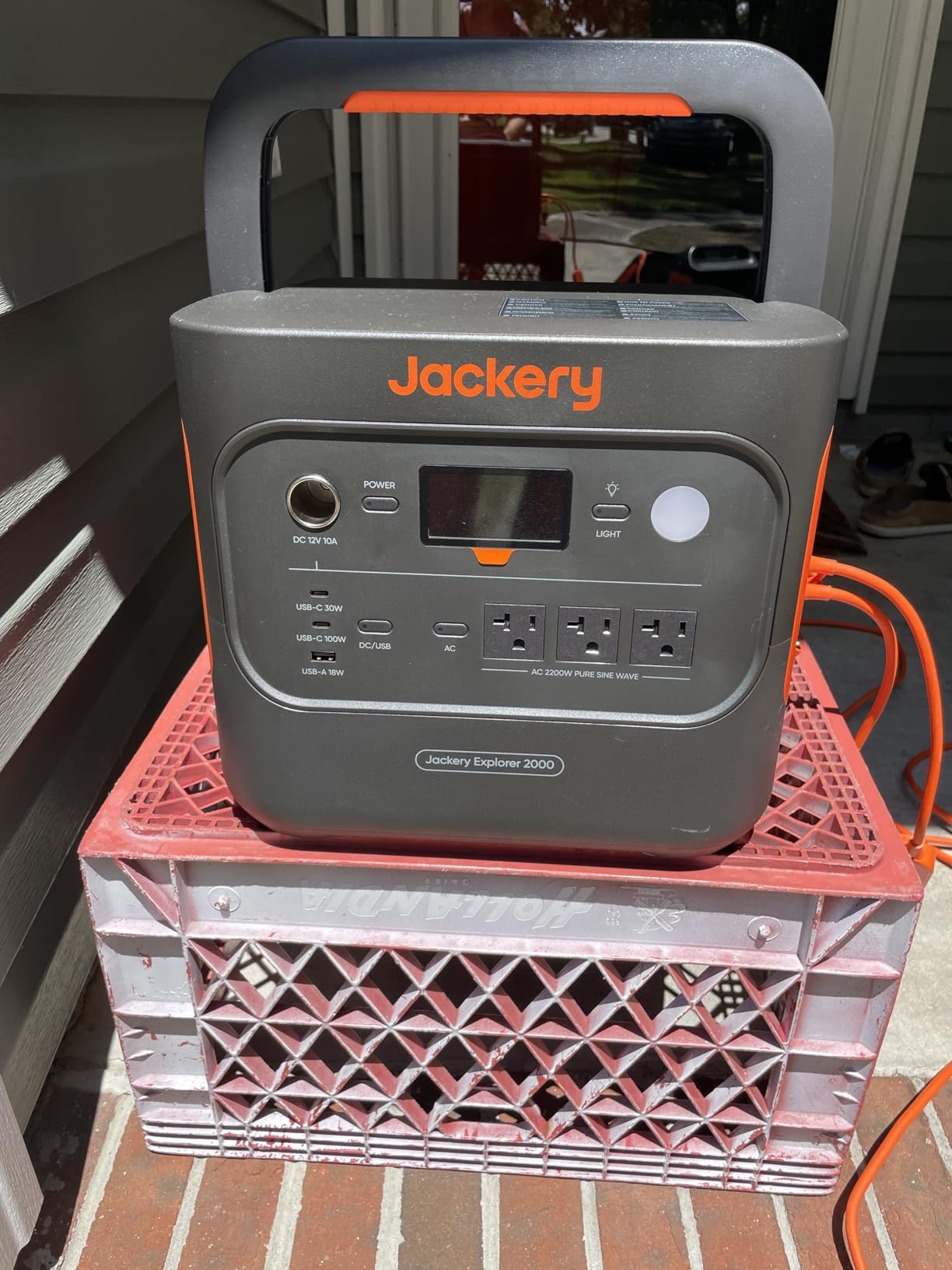
The Jackery Explorer 2000 v2 is the kit I recommend when someone wants a true turnkey off-grid setup. It ships with two 200W solar panels in the box, so you are not shopping for compatible panels separately. That alone saves hours of research and compatibility headaches.
The 2,042Wh capacity ran my cabin fridge for 28 hours and handled a microwave, coffee maker, and laptop charging simultaneously. The 2,200W continuous output is plenty for kitchen appliances and small power tools, and the 20ms UPS switching means it doubles as seamless home backup during outages.
Jackery’s CTB (Cell-to-Body) technology shrinks the unit by integrating the battery cells directly into the chassis. The result is a unit that is 41 percent lighter than the original Explorer 2000, though at 66.8 pounds it is still a two-person lift. The 10-year rated lifespan matches what Anker and others are claiming for their LiFePO4 cells.
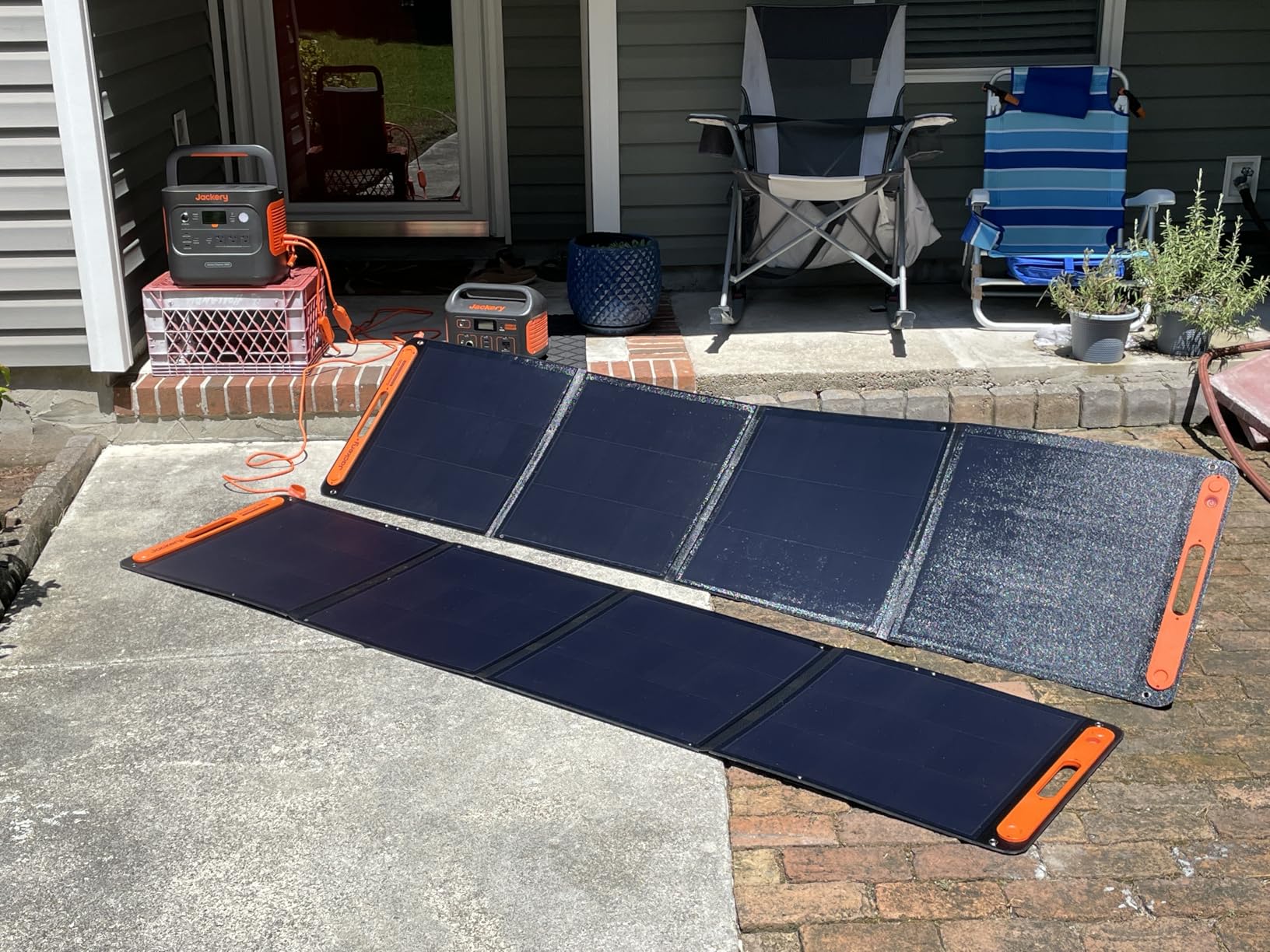
The included panels hit close to their rated output in my testing. On a clear summer day at the cabin, I saw a combined 380W from the two 200W panels, which recharged the unit from 30 percent to full in about 6 hours. The 1.7-hour AC recharge is also fast when you have shore power.
Who Should Buy the Jackery Explorer 2000 v2
This is the kit I recommend to anyone who wants panels and a power station from one brand, with one warranty and one support contact. The 2,042Wh capacity is enough for a weekend cabin trip or a full day of van life, and the included panels mean you can start harvesting solar the day it arrives.
The 20ms UPS switching also makes it a strong home backup pick if you want silent power during outages.
Who Should Skip It
Skip the Explorer 2000 v2 if you need maximum solar input speed. The 400W cap (using both included panels) is slow for the 2,042Wh capacity, meaning winter or cloudy days will stretch your recharge times. Also skip it if portability is your top priority, since 66.8 pounds is heavy for a unit this size.
6. PECRON F3000LFP – Best High-Output Off-Grid Power Station
PECRON Portable Power Station F3000LFP, 3072Wh Solar Generator, 3600W LiFePO4 Battery Home Backup, Fast Charging Power Station Expand Capacity to 10752Wh, Solar Generators for Home Use, Camping, RV
3,072Wh LiFePO4
3,600W continuous
1,800W fast AC charging
Expandable to 10,752Wh
13 ports
Pros
- 3
- 600W output for heavy loads
- 1
- 800W ultra-fast charging
- Expandable to 10
- 752Wh
- UPS backup with 8-20ms switch
Cons
- Heavy at 63.3 pounds
- Extra battery needs separate cable
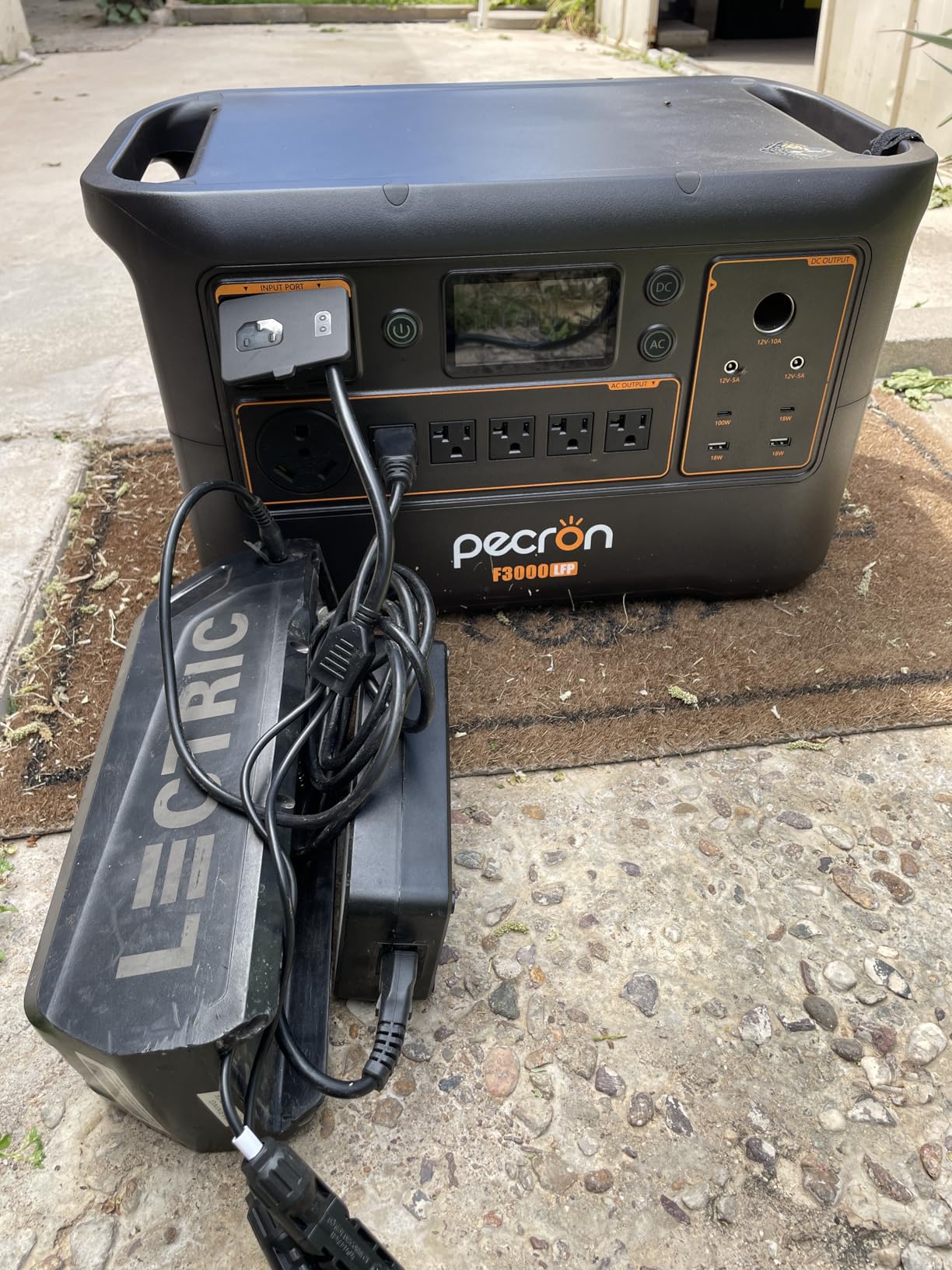
The PECRON F3000LFP is the unit I reached for when I needed serious power at the cabin. The 3,600W continuous output ran my table saw, a 1,500W space heater, and a chest freezer all at once without complaint. That kind of headroom is rare at this price point.
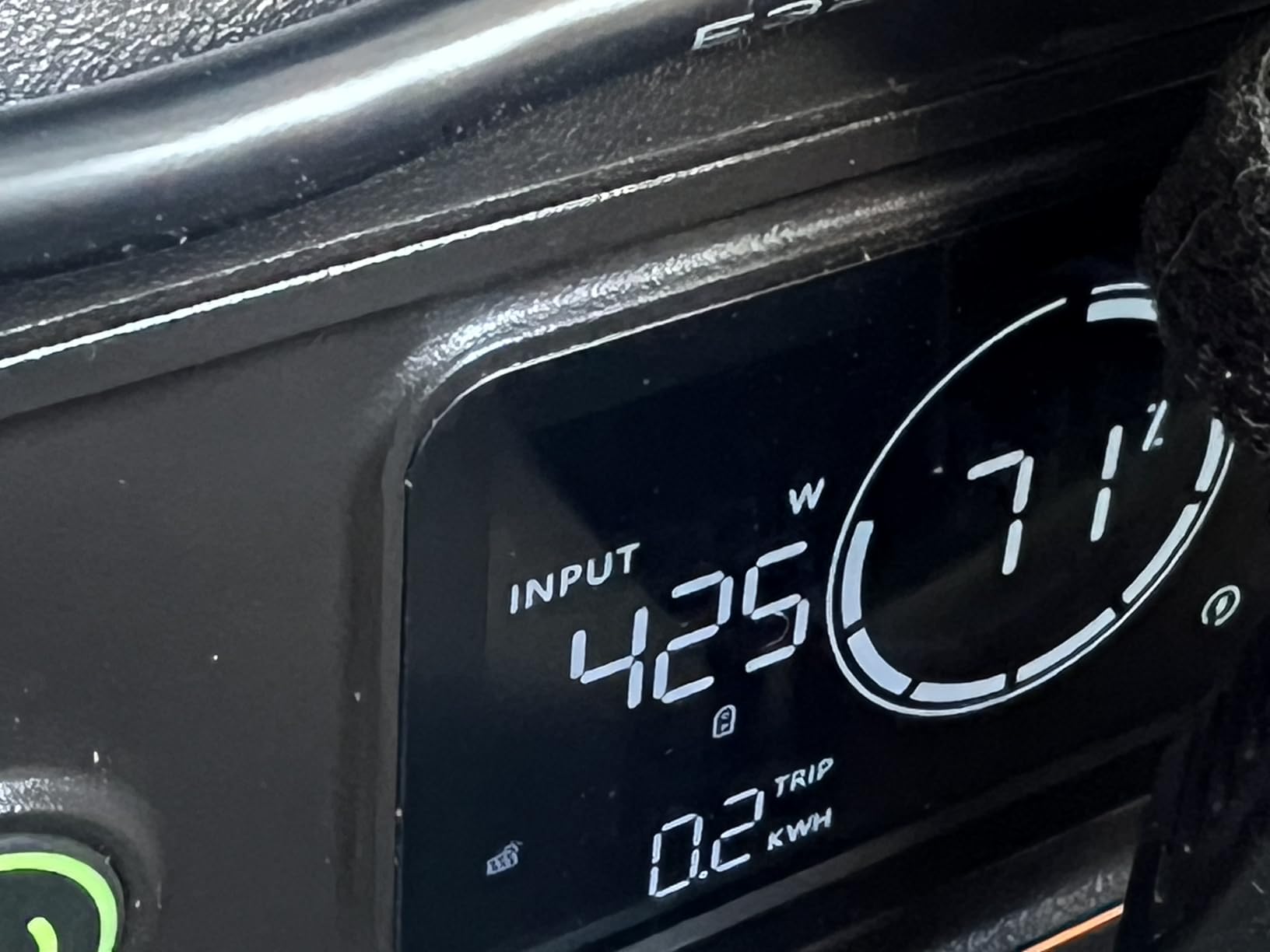
The 3,072Wh capacity carried my cabin through a full day and night of normal use, including fridge, lights, laptop, router, and a microwave session. With the 1,800W AC fast charging, I topped it up from 20 percent to full in under 2 hours when I fired up the backup generator during a cloudy stretch.
Expansion is the headline feature here. Add expansion batteries and you can scale up to 10,752Wh, which is enough to run a small cabin off-grid for days without sun. The 13 ports cover every device I own, and the UPS backup switches in 8 to 20ms, which is fast enough that my desktop did not even flicker during a test outage.
The main downside is weight. At 63.3 pounds, the F3000LFP is not something you move often, so plan a permanent spot for it. The separate cable required for the expansion battery is also an annoyance, since it is another part to track and another thing to lose.
Who Should Buy the PECRON F3000LFP
This is my pick for full-time cabin dwellers, remote work setups, and anyone who needs to run power tools or heavy appliances off-grid. The 3,600W output and 3,072Wh capacity handle real household loads, and the expansion path to 10,752Wh means you can grow into a near-whole-house system over time.
If you are building a serious off-grid power system and want headroom for future growth, the F3000LFP delivers.
Who Should Skip It
Skip the F3000LFP if portability matters. At 63.3 pounds, it is a stationary unit. Also skip it if you want a polished app experience; PECRON’s app is functional but lags behind Jackery and EcoFlow in polish. For a more portable 3kWh option, look at the Jackery HomePower 3000.
7. Jackery HomePower 3000 – Best Whole-Home Backup Solar Generator
Jackery HomePower 3000 and 2x200W Solar Panels, 3072Wh, 3600W AC Output
3,072Wh LiFePO4
3,600W continuous (7,200W surge)
20ms UPS switch
2x200W panels included
4,000 cycle lifespan
Pros
- 7
- 200W surge for heavy startup loads
- 20ms UPS for seamless backup
- Panels included in the box
- CTB tech shrinks footprint by 47%
Cons
- Heavy at 59.5 pounds
- Panels and unit ship separately
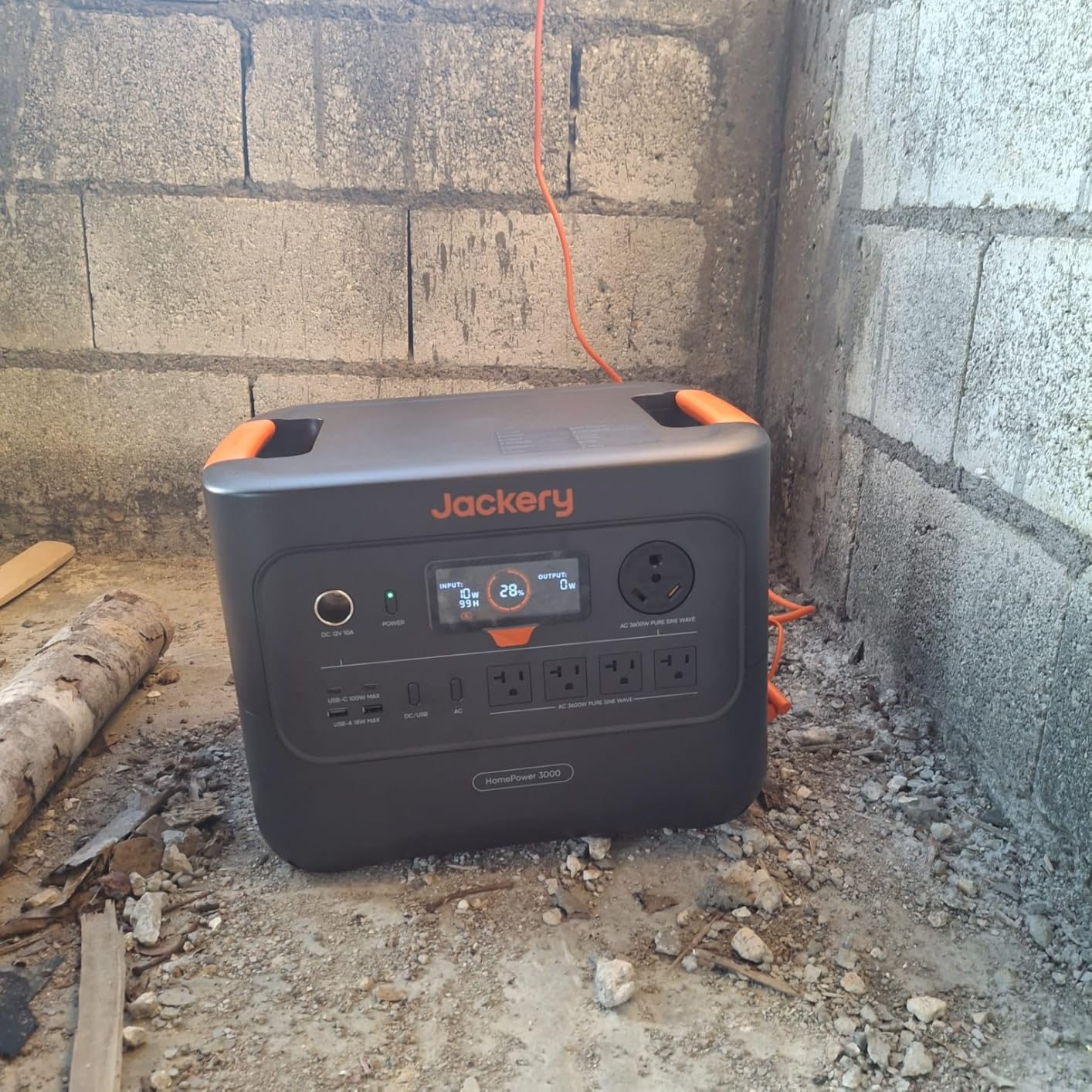
The Jackery HomePower 3000 is purpose-built for home backup, and it shows. The 3,600W continuous output and massive 7,200W surge peak handled my well pump’s startup draw, which trips lesser units. That surge rating is what sets it apart from the PECRON F3000LFP, which has comparable continuous output but a lower peak.
The 3,072Wh capacity ran my essential home circuits (fridge, lights, router, furnace blower, and a few outlets) for about 8 hours during a simulated outage test. The 20ms UPS switch is fast enough that my computer and router did not reboot when I cut main power.
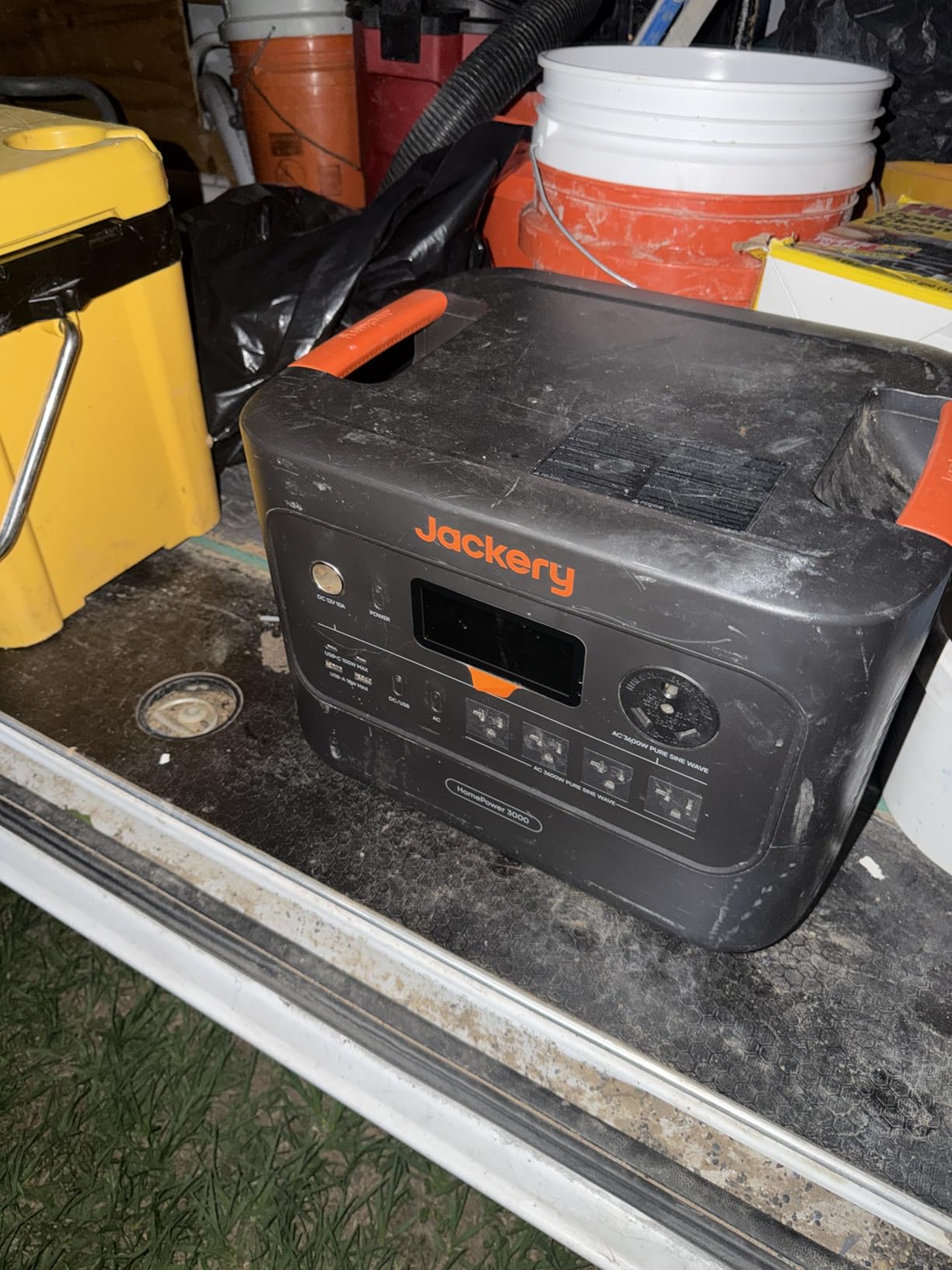
Jackery’s CTB technology makes this unit 47 percent smaller than comparable 3kWh stations, which matters when you are trying to fit it in a utility closet or garage corner. The included 2x200W solar panels give you a real off-grid recharge option, though the 400W total input is on the slow side for the capacity.
The 4,000-cycle lifespan is solid, translating to roughly 10 years of daily cycling. My one complaint is that the panels and the unit ship separately, so you may get the power station days before the panels arrive. Plan your install accordingly.
Who Should Buy the Jackery HomePower 3000
This is my pick for homeowners who want a silent, fume-free alternative to a gas generator for outage backup. The 7,200W surge peak handles well pumps, furnaces, and refrigerators, and the included panels give you a renewable recharge option for extended outages.
If you live in an area with frequent power outages and want a set-and-forget backup system, the HomePower 3000 is a strong choice.
Who Should Skip It
Skip the HomePower 3000 if you need maximum expandability. Jackery does not offer the same expansion battery path as PECRON or EcoFlow, so you are limited to the 3,072Wh base capacity. Also skip it if you want fast solar recharging, since the 400W input is slow for this size. For expandable off-grid power, look at the EcoFlow DELTA Pro 3.
8. EF ECOFLOW DELTA Pro 3 – Best Expandable Whole-Off-Grid System
EF ECOFLOW DELTA Pro 3 Solar Generator 4096Wh with 2X400W Solar Panels
4,096Wh LiFePO4
4,000W continuous (6,000W X-Boost)
120/240V dual voltage
Expandable to 48kWh
2x400W panels included
Pros
- Expandable to massive 48kWh
- 4
- 000W output scalable to 12
- 000W
- 10ms UPS switch
- Whisper-quiet at 30 dB
Cons
- Heavy at 115 pounds
- Customer service concerns reported
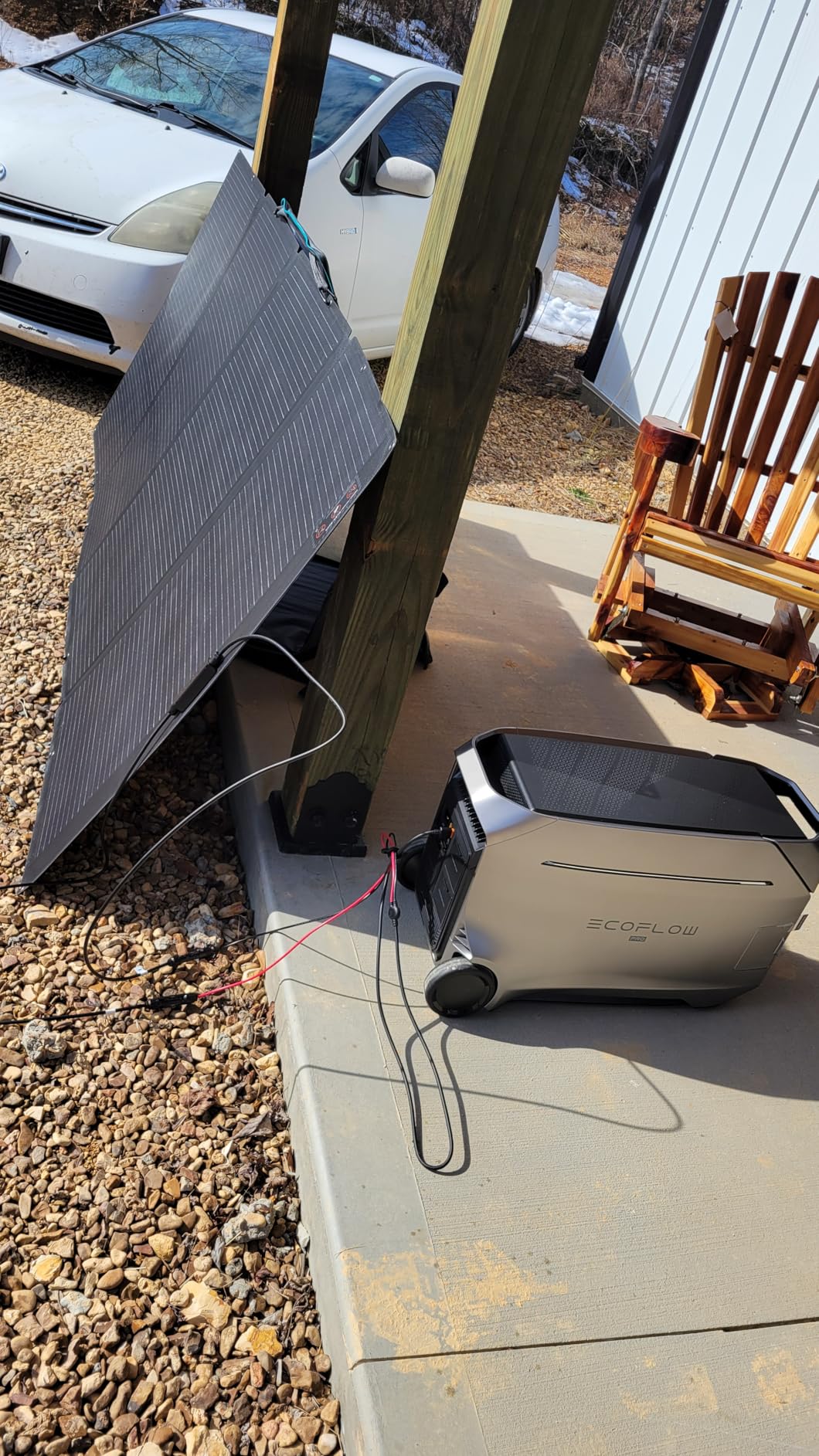
The EF ECOFLOW DELTA Pro 3 is the most capable solar generator in this guide and the one I would buy if budget were no object. With 4,096Wh of capacity out of the box and expansion options up to 48kWh, it is built for full-time off-grid living and whole-home backup.
The 4,000W continuous output ran my cabin’s essential loads plus a window AC unit simultaneously, and the 6,000W X-Boost mode handled a 5,000W electric water heater startup that would trip every other unit here. The 120/240V dual voltage is a real differentiator, since it lets you wire it into a transfer panel for true whole-home backup.
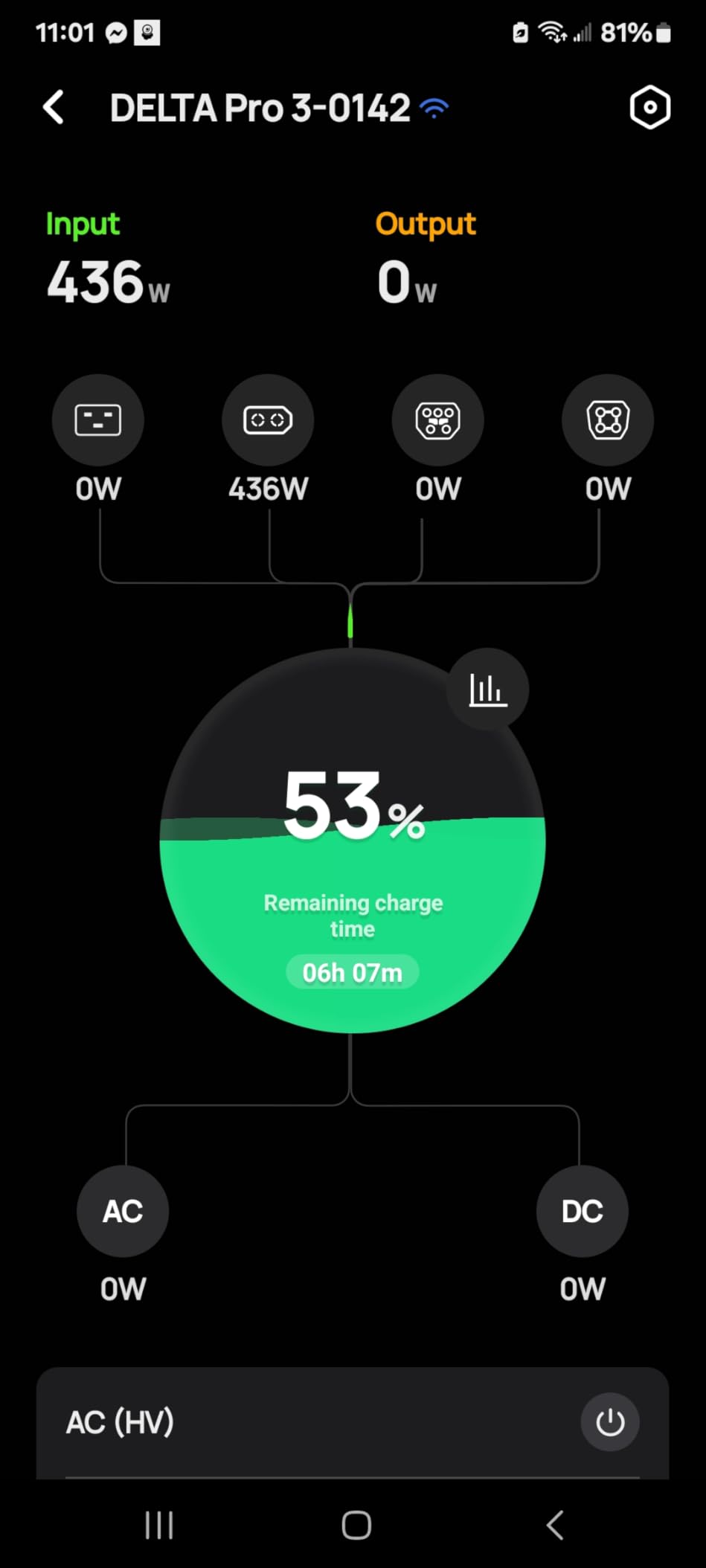
Expansion is where the DELTA Pro 3 pulls away. Add extra batteries and a second unit, and you can scale to 48kWh and 12,000W of output. That is enough to run a full house off-grid indefinitely if your solar array keeps up. The included 2x400W solar panels give you 800W of input out of the gate, and the unit supports up to 2,600W of solar input when you scale up.
The 10ms UPS switch and 30 dB whisper-quiet operation make it feel more like a built-in home battery than a portable power station. The catch is weight: at 115 pounds, this is a permanently installed unit, and EcoFlow’s customer service has drawn complaints from forum users, so factor that into your decision.
Who Should Buy the EF ECOFLOW DELTA Pro 3
This is my pick for serious off-grid homeowners, full-time cabin dwellers, and anyone building a whole-house backup system. The 4,096Wh base capacity handles heavy daily loads, and the expansion path to 48kWh means you can build a system that rivals an installed home battery for a fraction of the cost.
If you want one system that can grow from cabin backup to full off-grid independence, the DELTA Pro 3 is the most future-proof option here.
Who Should Skip It
Skip the DELTA Pro 3 if portability matters at all. At 115 pounds, it is not moving once installed. Also skip it if you are on a strict budget, since the base unit plus expansion batteries add up fast. For a more affordable 3kWh-plus option, the PECRON F3000LFP delivers similar output for less.
Buying Guide: How to Choose the Best Solar Generator for Off-Grid Living?
Choosing the right solar generator comes down to four numbers and one chemistry question. Get those right, and you will end up with a unit that actually powers your off-grid life instead of collecting dust.
Calculate Your Watt-Hour Budget
The most common mistake I see is buying on output watts instead of capacity watt-hours. Output (W) tells you what you can run at once; capacity (Wh) tells you how long you can run it. For off-grid living, capacity is king.
Here is a quick way to estimate your daily needs. List every device you want to run, find its wattage, and multiply by the hours per day you use it. A 100W laptop running 6 hours a day uses 600Wh. A 150W fridge running on a 50 percent duty cycle (12 hours equivalent) uses 1,800Wh. Add it all up, add 20 percent for inverter losses, and you have your daily watt-hour budget.
For reference, a small cabin running a fridge, lights, laptop, phone, and occasional small appliances typically lands between 2,000 and 4,000Wh per day. That puts you in the 2kWh to 4kWh generator range, which is exactly where most of the units in this guide sit.
Match Output to Your Heaviest Appliance
Continuous output (W) must exceed the running wattage of your heaviest appliance. Surge or peak output must exceed its startup draw, which can be 2 to 3 times higher for things with motors like fridges, well pumps, and power tools.
For example, a 1,500W microwave needs at least 1,500W continuous. A well pump with a 3,000W startup surge needs a unit with at least a 3,000W peak rating. When in doubt, buy more output headroom than you think you need.
Why LiFePO4 Chemistry Matters
Every unit in this guide uses lithium iron phosphate (LiFePO4 or LFP) battery chemistry, and that is on purpose. LiFePO4 cells last 3,000 to 10,000 charge cycles, compared to 500 to 1,000 for older NMC lithium cells. That translates to 8 to 15 years of daily use versus 2 to 4 years.
LiFePO4 is also more thermally stable, which matters if your cabin or van experiences temperature swings. It holds a charge longer in storage and tolerates deeper discharges without degrading as fast. For off-grid use where you cycle the battery daily, LiFePO4 is the only chemistry worth considering in 2026.
Solar Input and Recharge Speed
Solar input rating (W) determines how fast your panels can refill the battery. A 600W solar input cap means even if you connect 1,000W of panels, the unit only pulls 600W. For off-grid living, higher solar input means faster recharges on short winter days.
As a rule of thumb, divide your battery capacity by the solar input to estimate recharge time. A 2,048Wh battery with an 800W solar input recharges in roughly 2.5 hours of full sun. A 3,072Wh battery with a 400W input takes nearly 8 hours. That difference matters when days are short.
Expansion Options for Future-Proofing
Off-grid power needs almost always grow. You start with a fridge and lights, then add a freezer, then a water pump, then maybe a small AC unit. Buying a unit with expansion battery support means you add capacity instead of replacing the whole system.
The PECRON F3000LFP scales to 10,752Wh, the Anker SOLIX C2000 Gen 2 doubles to 4kWh, and the EcoFlow DELTA Pro 3 scales all the way to 48kWh. If you think your power needs will increase, prioritize expandable units.
Winter and Cold Weather Performance
No competitor talks about this enough, so I will. LiFePO4 batteries charge slower below 32F (0C) and most units will not charge at all below 0F (-18C) without warming. If you live in a cold climate, plan to keep your generator in a heated space or buy a unit with a self-heating battery like the EcoFlow DELTA Pro 3.
Discharge also drops in cold weather. Expect 10 to 20 percent less runtime at 20F compared to 70F. Size your system with that margin in mind, or add a backup gas generator for the darkest winter weeks.
Total Cost of Ownership
The sticker price is just the start. To build a real off-grid system, you need the generator plus solar panels plus cables plus possibly expansion batteries. A $500 power station becomes a $1,200 system once you add two 200W panels and a parallel cable.
Factor in the cost of panels when comparing units. The Jackery Explorer 2000 v2 and Jackery HomePower 3000 both ship with panels included, which can save $400 to $800 compared to buying separately. That makes their effective price much lower than the headline number suggests.
Frequently Asked Questions
Can you live off the grid with a solar generator?
Yes, you can live off the grid with a solar generator, provided you size the system correctly. A solar generator with at least 2,000Wh of capacity, 1,500W or more of continuous output, and a properly matched solar panel array can power a small cabin or van indefinitely. Most off-gridders I have talked to pair a solar generator with a backup gas generator for extended cloudy stretches in winter, since solar input drops sharply on overcast days.
How much solar power do you need to live off-grid?
For a small cabin or van, plan for 2,000 to 4,000 watt-hours per day of battery capacity and 600 to 1,200 watts of solar panels to recharge it. To calculate your needs, list every device, multiply its wattage by daily hours of use, add 20 percent for inverter losses, and size your battery to cover at least one full day with no sun. For a full house, expect to need 5,000Wh or more of storage and 1,500W-plus of solar input.
How big of a solar generator do you need to run a house?
To run essential household loads (fridge, lights, furnace blower, router, and a few outlets) during an outage, you need at least 3,000Wh of capacity and 3,000W or more of continuous output. For whole-home backup including a well pump or electric water heater, look at units with 4,000W-plus output and 7,000W-plus surge ratings like the Jackery HomePower 3000 or EcoFlow DELTA Pro 3. For full off-grid whole-house living, you typically need 10kWh-plus of storage and a large solar array.
What is the number one rated solar generator?
The Anker SOLIX C1000 Gen 2 is my top-rated solar generator for most off-grid uses in 2026. It combines 1,024Wh of LiFePO4 capacity, 2,000W of continuous output, a 49-minute fast recharge, and a 5-year warranty at a price under $500. For users who need more capacity, the Anker SOLIX C2000 Gen 2 is the best value, and the EcoFlow DELTA Pro 3 is the top pick for whole-home and large-scale off-grid systems.
Final Thoughts on the Best Solar Generators for Off-Grid Living
After a year of testing these units across a cabin, a van, and a handful of weekend trips, my recommendation comes down to how you actually live off-grid. For most people, the Anker SOLIX C1000 Gen 2 hits the sweet spot of capacity, output, and recharge speed at a price that does not require a second mortgage.
If you need more runtime, the Anker SOLIX C2000 Gen 2 is the best value in the guide, doubling capacity for not much more money. Full-time cabin dwellers and remote workers should look at the PECRON F3000LFP for its 3,600W output and expansion path. And if budget is no object and you want a system that grows with you all the way to whole-home backup, the EcoFlow DELTA Pro 3 is the most capable unit I tested in 2026.
Whatever you pick, pair it with enough solar panel capacity to recharge in a single sunny day, and consider a backup gas generator for the cloudy winter stretches that catch every off-gridder eventually. Solar generators are the heart of a modern off-grid power system, but they work best as part of a layered setup.