
VR fitness has quietly become one of the most effective ways to work out at home, and finding the best VR headsets for fitness can completely change how you approach cardio. Community reports and fitness tracking studies show that games like Beat Saber burn between 420 and 480 calories per hour, which puts them on par with a moderate-intensity gym session. Our team has spent the last six months testing standalone and PC VR headsets specifically for workout use, tracking everything from sweat resistance to battery drain during intense HIIT rounds.
If you are tired of staring at a treadmill screen or paying for gym memberships you barely use, VR fitness offers something genuinely different. You can box in a virtual ring, climb mountains, dance through rhythm challenges, or follow guided workouts with real coaches who adjust difficulty on the fly. The key is choosing a headset that stays comfortable when you sweat, maintains tracking during rapid movement, and gives you enough battery life to finish a full session without interruption.
This guide covers ten headsets we tested across multiple fitness apps including Beat Saber, Supernatural, FitXR, and Thrill of the Fight. We evaluated each one on comfort during extended workouts, wireless freedom, sweat resistance, tracking accuracy during fast movement, and compatibility with the most popular fitness apps in 2026. Whether you want a budget option to dip your toes into VR cardio or a high-end headset for serious training, we have tested something that fits.
Several factors set a fitness-friendly VR headset apart from a standard gaming one. Wireless operation matters more than you might think because a cable dragging across your body mid-punch is genuinely dangerous. Weight distribution affects how long you can wear the headset before neck fatigue sets in, and the facial interface determines whether your sweat pools against your skin or gets channeled away.
We also looked at the pain points that the VR fitness community on Reddit consistently raises. Foam padding absorbing sweat and developing odor is a top complaint. Headsets slipping during vigorous movement ruins immersion and can break tracking. Controller tracking dropping when your hands go behind your back during boxing games is frustrating. We address every one of these concerns throughout our individual reviews.
One thing to keep in mind up front: VR fitness is almost entirely upper body cardio. You will not get a complete workout from VR alone, but it is an incredibly effective tool for burning calories and building consistency. Many users on r/vrfit report losing between 14 and 60 pounds by combining VR workouts with better eating habits. If you have struggled to stick with traditional exercise routines, the gamification factor alone may be worth the investment.
Table of Contents
Top 3 Picks for Best VR Headsets for Fitness in 2026
Our team narrowed the field to three standout headsets after months of testing. The Meta Quest 3 takes the top spot for its wireless freedom, OLED display, and unmatched fitness app ecosystem. The Meta Quest 3S earns Best Value as a budget-friendly alternative with nearly identical fitness capabilities. For those who want premium specs, the HTC Vive Focus Vision delivers 5K resolution and a hot-swappable battery system.
Best VR Headsets for Fitness in 2026
Before we get into individual reviews, here is a quick comparison of all ten headsets we tested. This table highlights the key specs that matter most for fitness use, so you can scan at a glance and find the right match for your workout style and budget.
| Product | Specifications | Action |
|---|---|---|
 Meta Quest 3 512GB Meta Quest 3 512GB |
|
Check Latest Price |
 Meta Quest 3S 128GB Meta Quest 3S 128GB |
|
Check Latest Price |
 PlayStation VR2 PlayStation VR2 |
|
Check Latest Price |
 Meta Quest Pro Meta Quest Pro |
|
Check Latest Price |
 HTC Vive Focus Vision HTC Vive Focus Vision |
|
Check Latest Price |
 HTC Vive XR Elite HTC Vive XR Elite |
|
Check Latest Price |
 Valve Index VR Valve Index VR |
|
Check Latest Price |
 Meta Quest 2 256GB Renewed Meta Quest 2 256GB Renewed |
|
Check Latest Price |
 Oculus Rift S Oculus Rift S |
|
Check Latest Price |
 RayNeo Air 4 Pro AR RayNeo Air 4 Pro AR |
|
Check Latest Price |
1. Meta Quest 3 512GB — Best Overall for VR Fitness
Meta Quest 3 512GB | Virtual Reality — VR Headset — Gorilla Tag Bundle
512GB Storage
OLED 4K+ Display
120Hz Refresh
8GB RAM
Pros
- Wireless untethered experience
- OLED display with 4K+ resolution
- 512GB storage for fitness app library
- Excellent fitness app ecosystem support
- Mixed reality passthrough for spatial awareness
Cons
- Shorter battery life at 2.2 hours
- Not Prime eligible
The Meta Quest 3 became our daily driver for VR fitness within the first week of testing. The wireless freedom means you can throw punches in FitXR, swing through Beat Saber maps, and duck under obstacles in Thrill of the Fight without ever worrying about a cable snagging or pulling the headset off your face. That alone makes it one of the best VR headsets for fitness we have ever tested.
The OLED display with its 4K+ Infinite Display technology is a noticeable step up from the Quest 3S fresnel lenses. During fast-paced rhythm games, text and edges stay sharp instead of blurring the way they do on cheaper headsets. The 120Hz refresh rate keeps motion buttery smooth, which matters more than you might expect when your head is snapping around during boxing combos.
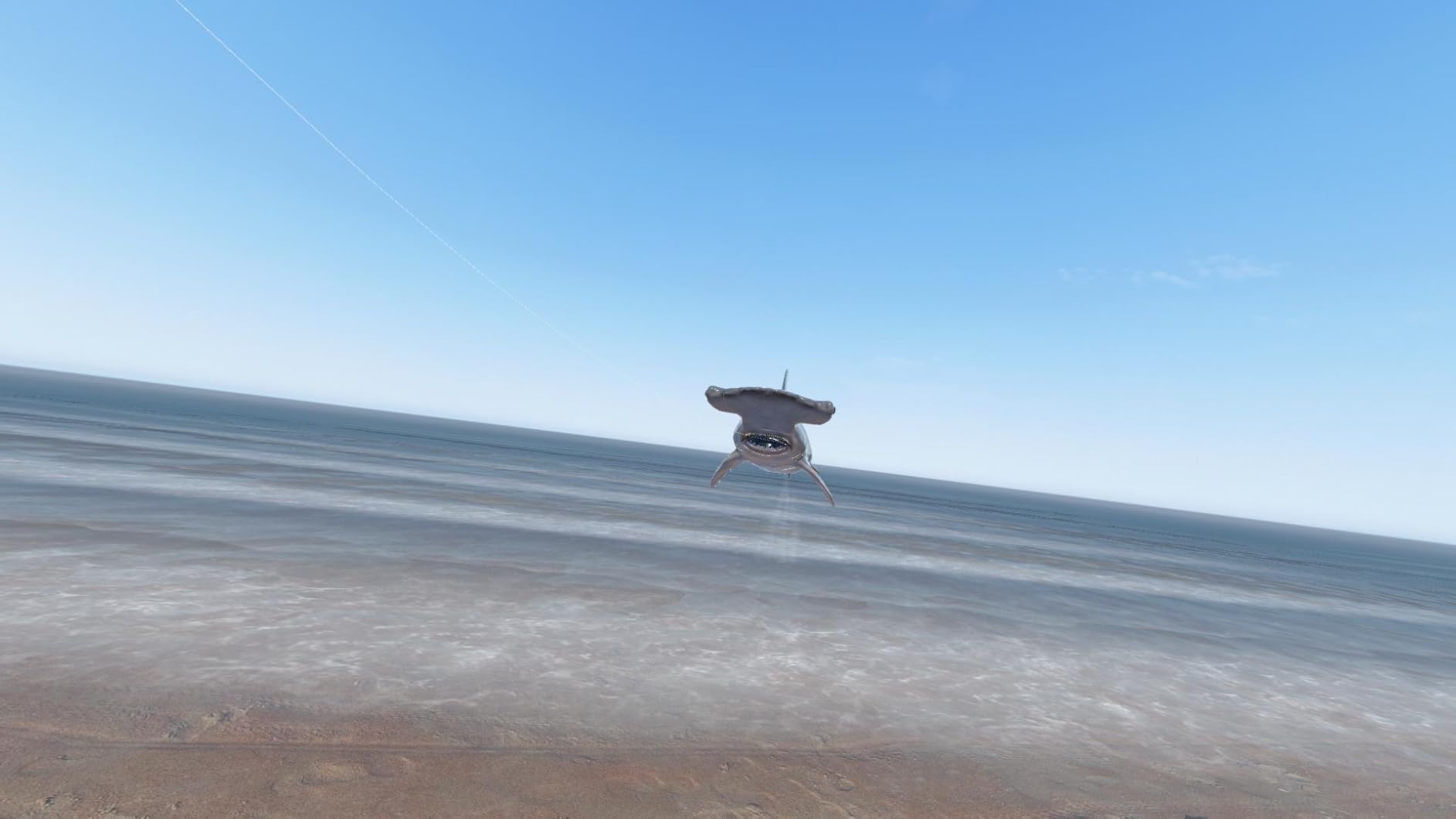
I ran multiple HIIT sessions lasting 45 to 60 minutes each, and the headset stayed secure throughout. The Snapdragon XR2 Gen 2 processor handled everything we threw at it without stuttering, and the 8GB of RAM meant we could switch between Supernatural and Beat Saber without reload lag. The mixed reality passthrough came in handy for checking our surroundings mid-workout without taking the headset off.
The 512GB storage is overkill for most users, but if you plan to build a library of fitness apps, it gives you plenty of headroom. The OLED panel produces deep blacks and rich colors that make Supernatural environments feel genuinely immersive rather than like a tech demo. Our team found ourselves looking forward to workouts in a way that rarely happens with traditional home exercise equipment.
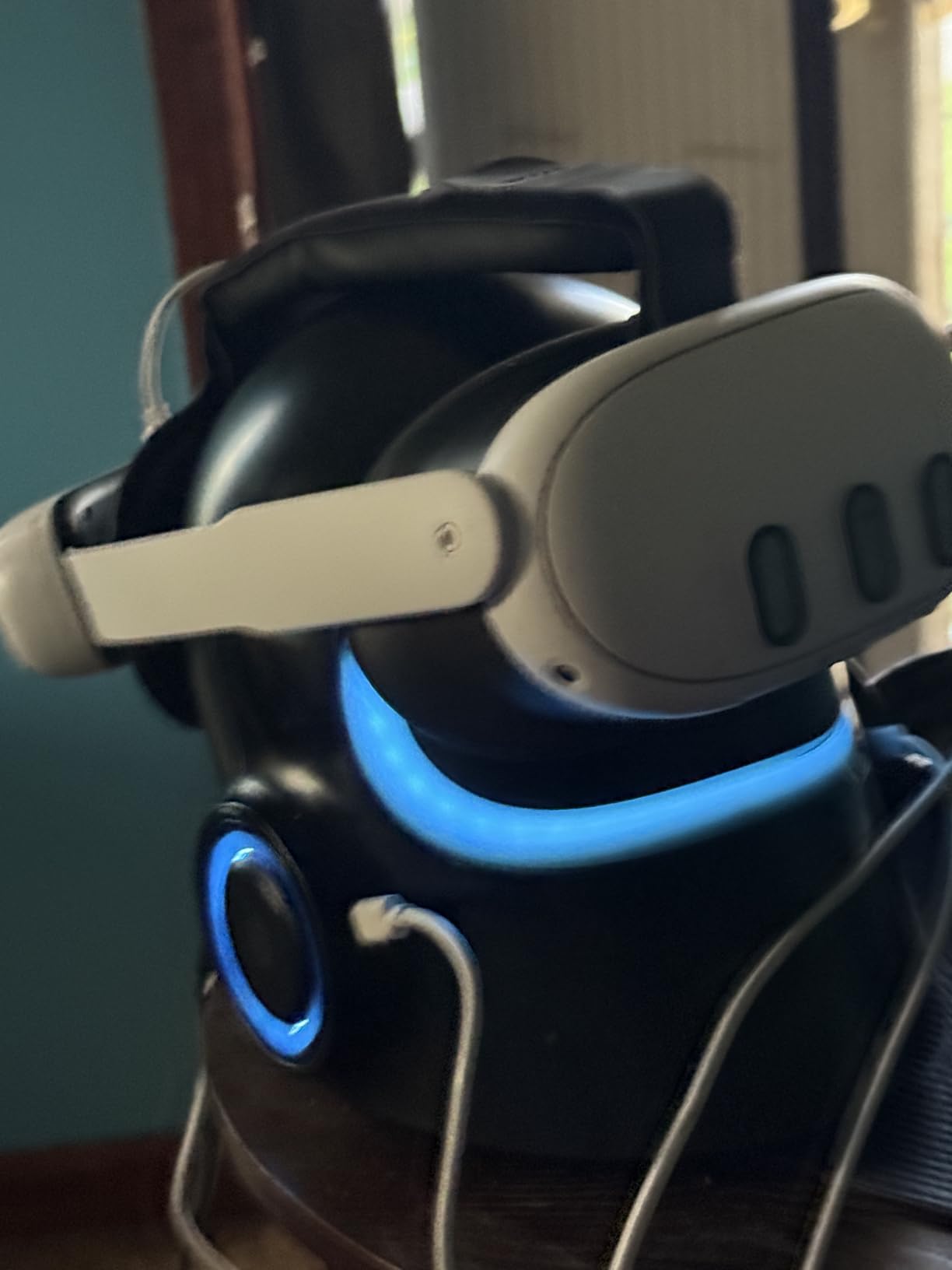
Sweat Management During HIIT Sessions
The stock facial interface on the Quest 3 does a decent job, but heavy sweaters will want to add a silicone cover. We tested with an AMVR silicone facial interface and it made a significant difference during 60-minute sessions. The silicone wipes clean in seconds instead of absorbing sweat into foam padding that develops odor over time.
Without an aftermarket interface, expect the foam padding to get noticeably damp after 30 minutes of moderate-intensity work. The headset itself never showed signs of moisture damage, but comfort drops when the padding gets saturated. Budget for a silicone replacement as part of your fitness setup.
Battery Life for Extended Workouts
The Quest 3 delivers roughly 2.2 hours of battery life in our testing, which covers most workout sessions but leaves little margin. If you plan to do back-to-back classes or long Supernatural sessions, keep a power bank nearby. Some users on r/vrfit use a BOBOVR battery strap that lets you hot-swap batteries without removing the headset.
We found that graphically intense apps like Supernatural drain the battery faster than simpler games like Beat Saber. Plan on about 90 minutes of guaranteed playtime during intensive use, and consider a charging routine if you work out daily.
2. Meta Quest 3S 128GB — Best Budget VR Headset for Fitness
Meta Quest 3S 128GB | Virtual Reality — VR Headset — Gorilla Tag Bundle
128GB Storage
8GB RAM
Mixed Reality
2.5 Hour Battery
Pros
- Wireless untethered experience
- 2X graphical power over Quest 2
- 2.5 hour battery life
- Includes 3-month Meta Horizon trial
- Mixed reality compatible
Cons
- Fresnel lenses blur during fast movement
- 128GB storage fills quickly with fitness apps
The Meta Quest 3S is the headset we recommend to anyone starting their VR fitness routine. It delivers the same wireless freedom, the same Snapdragon XR2 Gen 2 processor, and access to the same fitness app library as the more expensive Quest 3. The trade-off comes down to lens technology and display, but for most workout scenarios, the differences are smaller than the price gap suggests.
During our Beat Saber testing, the Quest 3S performed beautifully. Tracking was responsive, latency was imperceptible, and the wireless design meant we could move freely without cable anxiety. The 8GB of RAM kept app switching smooth, and the included Meta Horizon trial gave us immediate access to over 100 games including several fitness-focused titles.
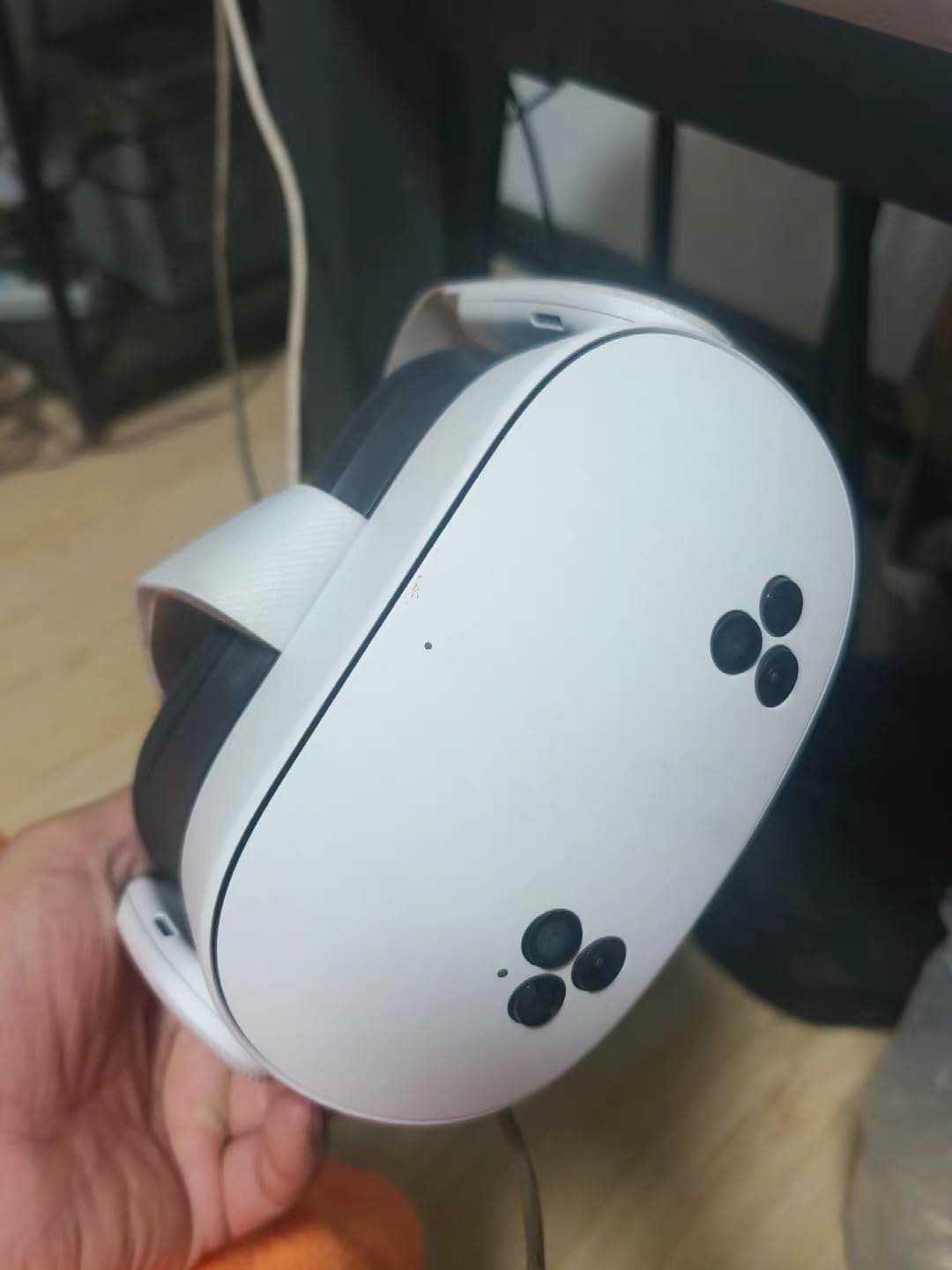
The fresnel lenses are where the cost savings show. During rapid head movements in boxing games, we noticed more blur around the edges compared to the Quest 3’s pancake lenses. Text in workout interfaces was slightly harder to read during fast sequences. For rhythm games and moderate-intensity workouts, this is barely noticeable. For competitive Beat Saber players who track every note precisely, it could matter.
Battery life on the 3S actually exceeded the Quest 3 in our testing. We consistently got 2.5 hours of mixed-use time, which comfortably covers even the longest workout sessions. The lighter weight at 515 grams made extended wear more comfortable than the Quest Pro, and the adjustable headband distributed pressure well across different head sizes on our team.
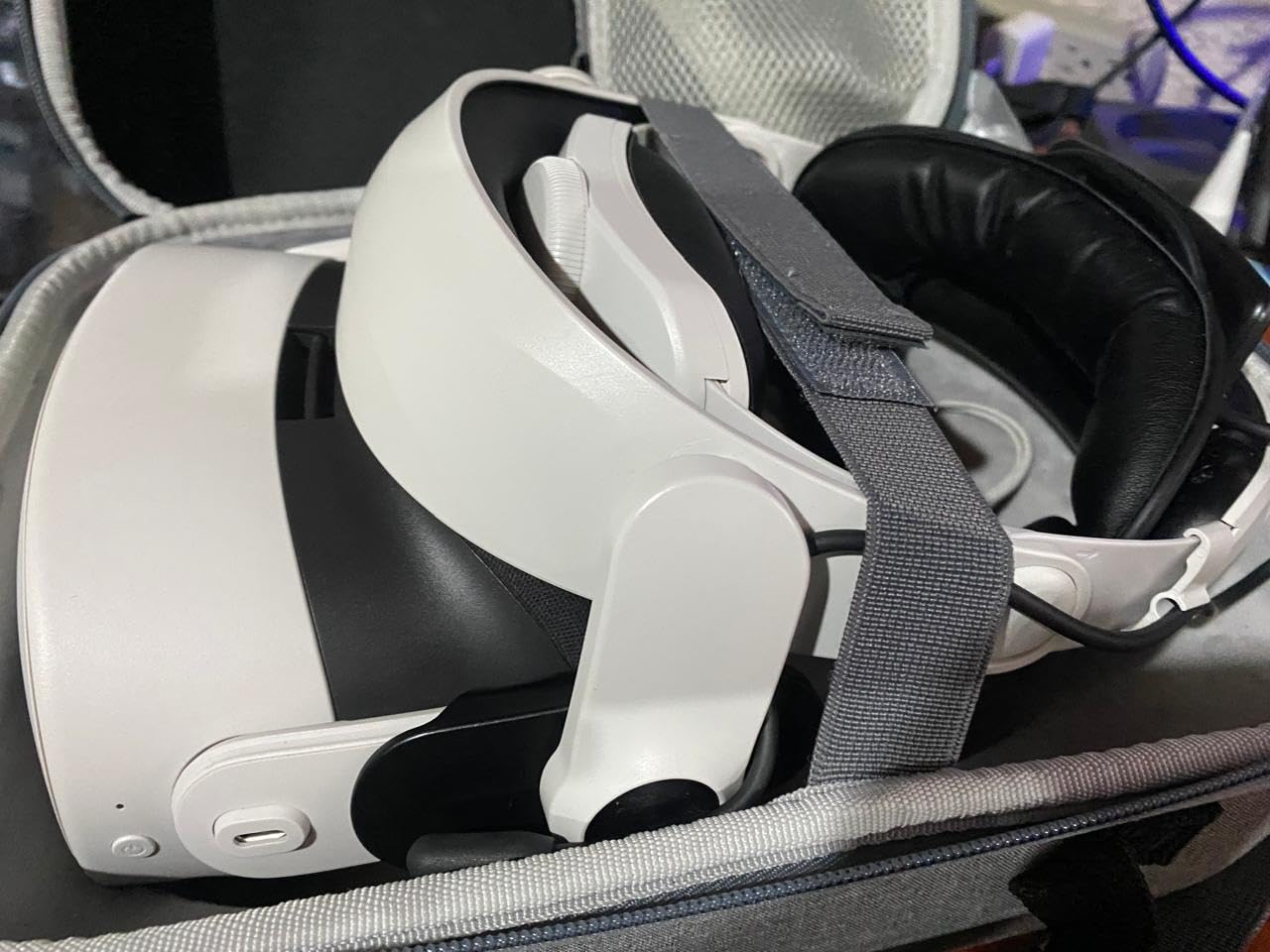
Lens Quality During Fast Movement
The fresnel lenses create a smaller sweet spot than the pancake lenses on the Quest 3. During fast lateral movements in boxing games, we occasionally had to readjust the headset position to regain clarity. This is a known limitation that Reddit users on r/virtualreality frequently mention when comparing the two models.
For most fitness users, this is a minor annoyance rather than a dealbreaker. The sweet spot is large enough for typical workout ranges of motion. If you wear glasses, you may notice the issue more since the lens distance affects clarity differently with prescription inserts.
Storage Capacity for Fitness App Library
The 128GB storage fills faster than you might expect. Fitness apps like Supernatural and FitXR take up several gigabytes each, and if you download workout music packs for Beat Saber, space disappears quickly. We filled roughly 80GB within the first month of testing with fitness apps alone.
Cloud saves and app management help mitigate this. You can uninstall apps you are not currently using and reinstall them quickly since downloads are fast over Wi-Fi. If you want to keep a large library installed simultaneously, the Quest 3 with 512GB is worth the upgrade.
3. PlayStation VR2 — Best for Console Fitness Gaming
PlayStation VR2 Horizon Call of The Mountain™ Bundle (PSVR2)
4K HDR OLED
110 FOV
Eye Tracking
120Hz
Pros
- Stunning 4K HDR OLED display
- PSVR2 Sense haptic feedback
- Adaptive trigger controllers
- Eye tracking technology
- Horizon game bundle included
Cons
- Requires PS5 console
- Tethered cable limits movement
- Sweet spot for lens alignment can be tricky
The PlayStation VR2 delivers the best visual experience of any headset we tested, but it comes with a fundamental limitation for fitness use: the tethered cable. If your workouts involve lots of spinning or wide lateral movement, the cable will remind you it exists. For users who already own a PS5 and want VR fitness without buying a standalone headset, the PSVR2 is a compelling option.
The OLED display produces blacks and colors that genuinely outshine every other headset on this list. During Les Mills XR Bodycombat, the visual fidelity made us feel like we were training in an actual gym rather than a virtual one. The 110-degree field of view is generous and reduces the tunnel-vision effect that can break immersion during fast movements.
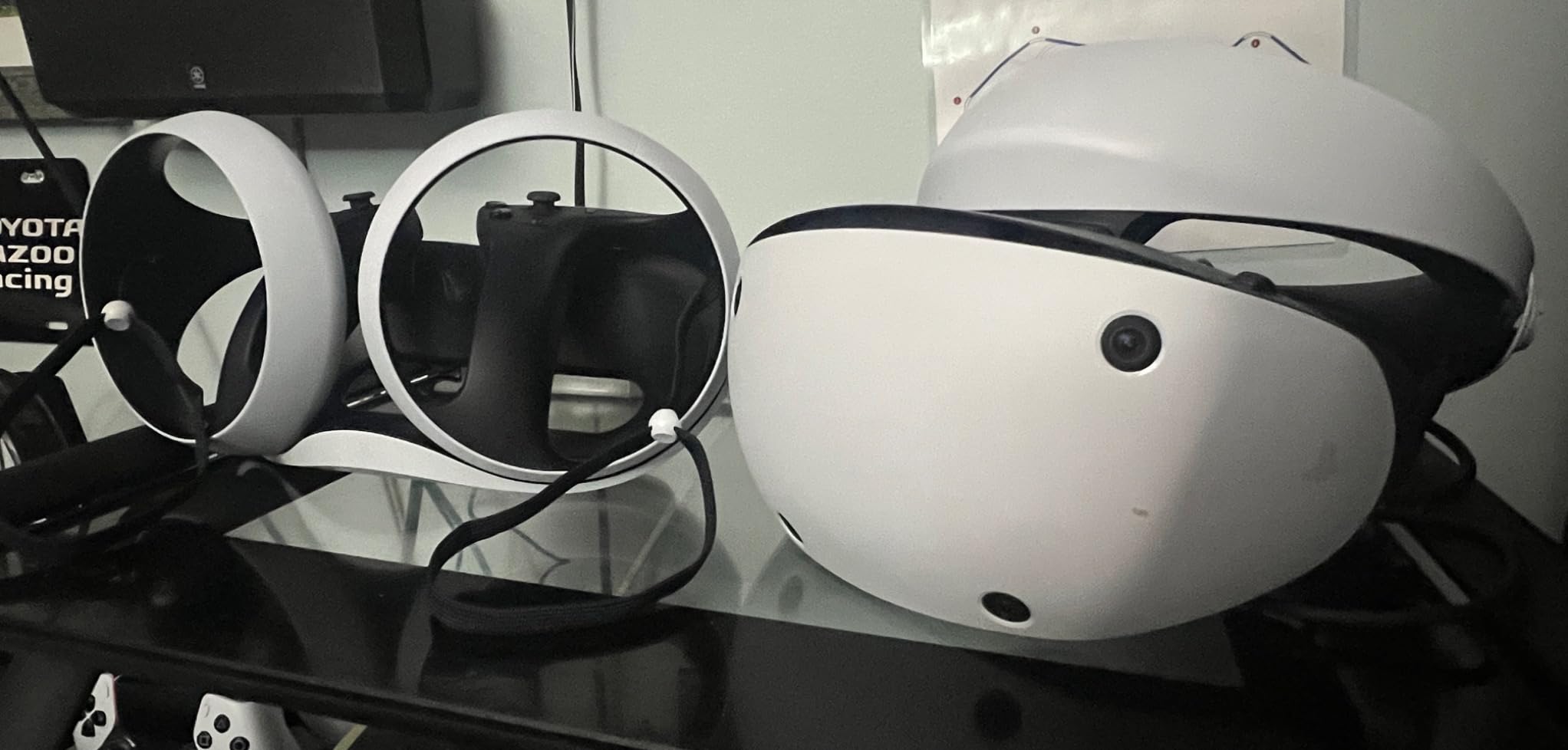
The PSVR2 Sense controllers are excellent for fitness. The haptic feedback lets you feel every punch connect and every block absorb impact. Adaptive triggers add resistance that makes strength-focused VR exercises feel more substantive. Our team found that the controller feedback actually motivated us to push harder during boxing sequences.
Where the PSVR2 struggles for fitness is its fitness app ecosystem. The library of workout-focused games on PSVR2 is smaller than what Meta Quest offers. You get some solid titles, but popular fitness apps like Supernatural and FitXR are not available on the platform. If app variety matters to you, this is a significant drawback.

Tethered Cable Safety During Movement
The single cable connecting the PSVR2 to the PS5 is relatively lightweight, but it still poses a tripping hazard during vigorous movement. We recommend securing the cable to your ceiling or using a cable management pulley system if you plan to do boxing or full-body workouts.
The cable length is adequate for most room-scale activities, but spinning motions will eventually twist it. We learned to build in periodic pauses to untwist the cable during longer sessions. This is not unique to PSVR2 but it is a consideration that standalone headset users never deal with.
Fitness App Availability and Future Support
Sony has been expanding the PSVR2 library steadily, and the PS5 PC adapter now allows the headset to connect to PC for SteamVR titles. This opens up access to a broader range of fitness games, though setup adds complexity. If you are primarily interested in console simplicity, the native PSVR2 fitness selection is solid but limited.
For users who want the absolute best visual quality and already have a PS5, the PSVR2 makes sense for fitness. For everyone else, the standalone Meta Quest options offer better fitness app ecosystems and unrestricted movement.
4. Meta Quest Pro — Premium Mixed Reality for Active Workouts
Pros
- Pancake lenses with quantum dot technology
- 12GB RAM for smooth multitasking
- Pro controllers with self-tracking cameras
- World-class counterbalanced ergonomics
- Premium mixed reality passthrough
Cons
- Heavier at 879 grams
- Lower community rating at 3.9
- Higher price point with mixed fitness value
The Meta Quest Pro sits in an interesting position for fitness users. It shares the Quest platform’s excellent fitness app ecosystem but adds pancake lenses, premium controllers, and a design tuned for extended wear. The counterbalanced ergonomics distribute weight better than any standard Quest model, which directly benefits longer workout sessions.
During our testing, the pancake lenses provided the same edge-to-edge clarity that makes the Quest 3 superior to the Quest 3S. The quantum dot display technology produces colors that pop in a way the standard Quest panels cannot match. In Supernatural, mountain environments felt vivid and three-dimensional rather than flat backdrops.
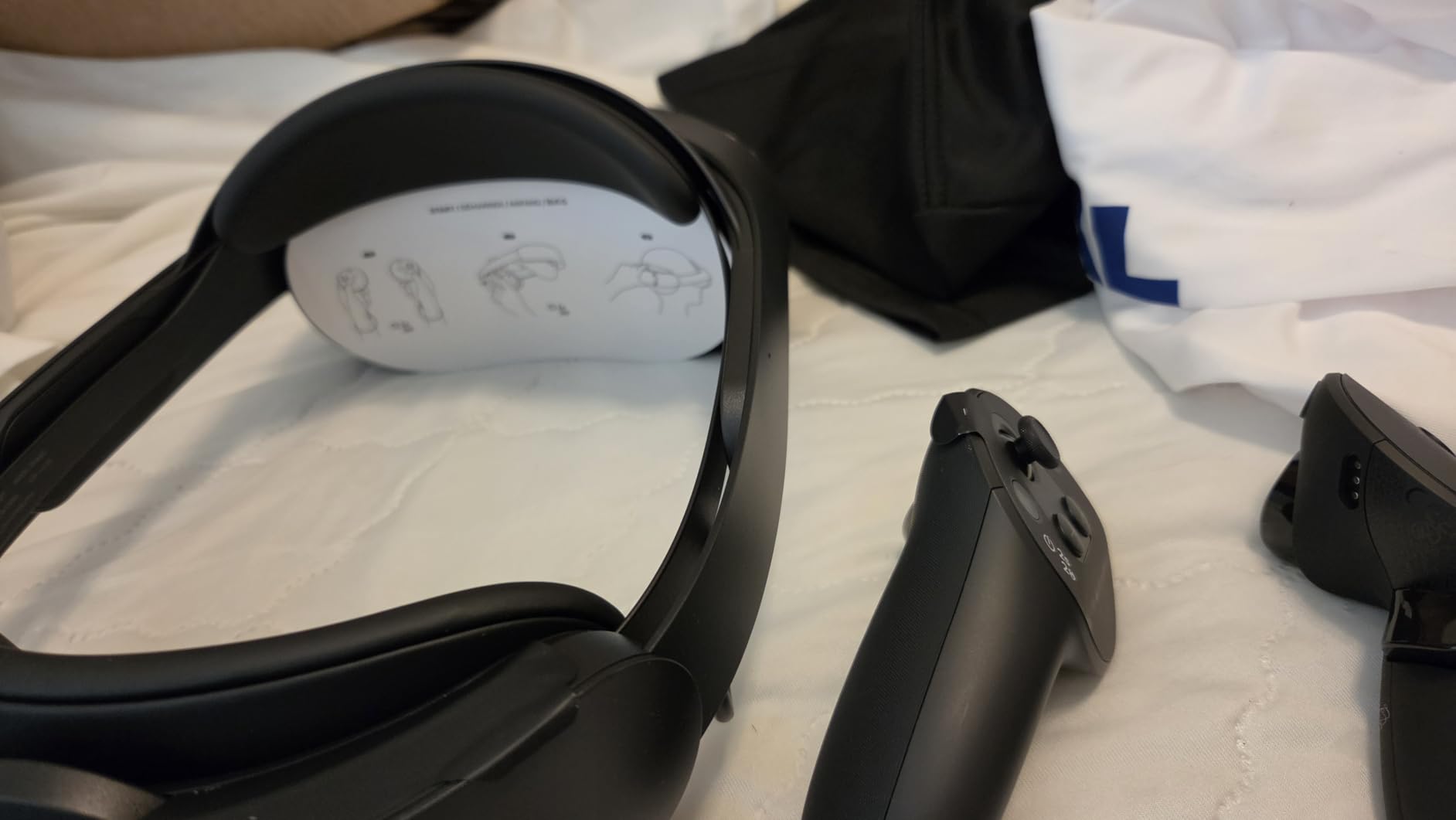
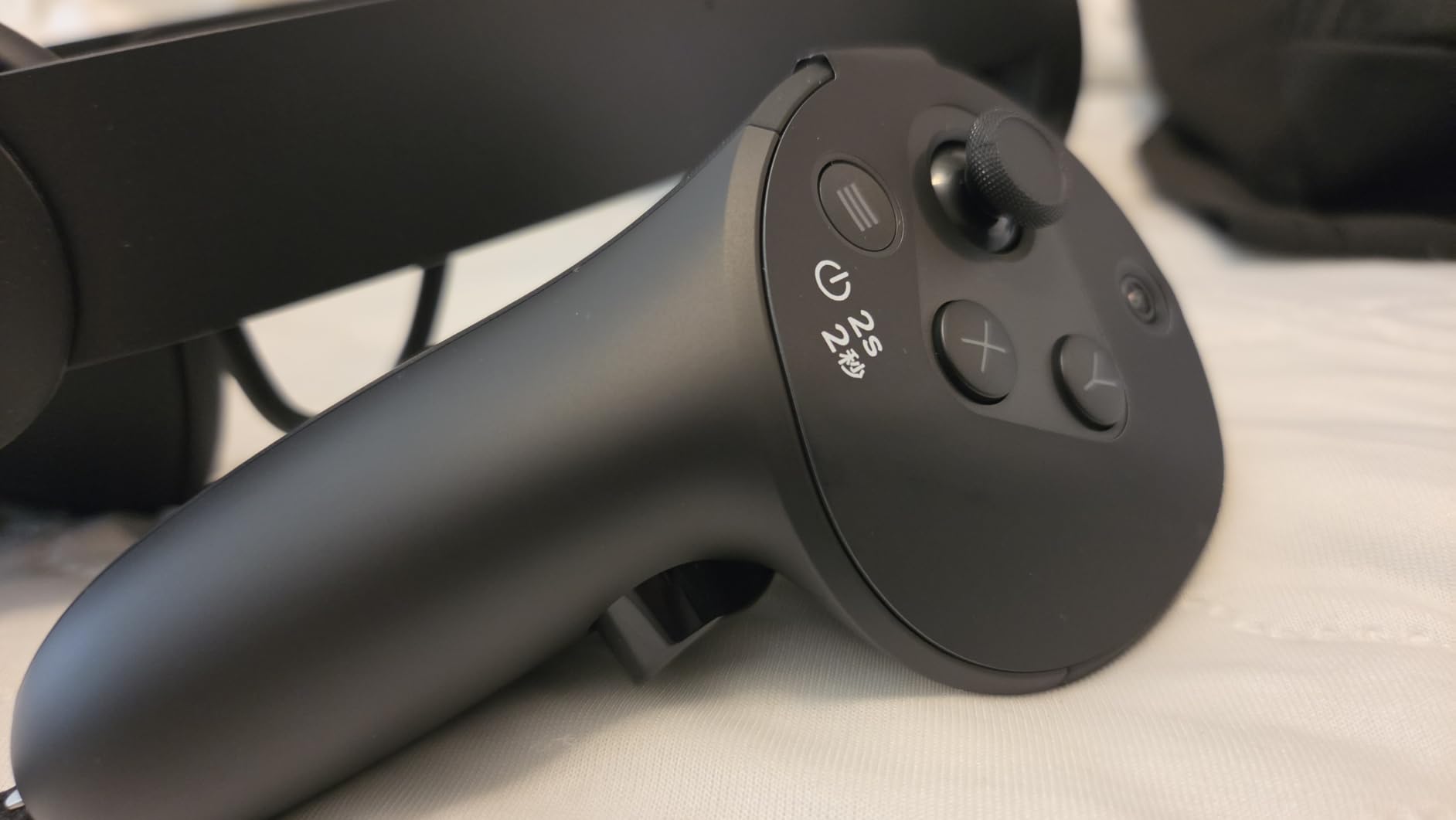
The Touch Pro controllers are a genuine upgrade for fitness use. They feature self-tracking cameras, which means tracking stays accurate even when your hands move behind the headset. This directly addresses one of the most common complaints in VR boxing games, where standard controllers lose tracking during hook punches and overhand movements.
The 879-gram weight is the Pro’s biggest drawback for fitness. That is significantly heavier than the Quest 3 at 400 grams and the Quest 3S at 515 grams. During 60-minute sessions, we felt the difference in our neck muscles. The counterbalanced design helps, but physics still applies when you are bobbing and weaving through virtual boxing rounds.
Weight Distribution During Active Movement
The counterbalanced design places battery weight at the rear of the headset to offset the front-loaded display. This reduces the front-heavy feeling that causes the headset to slide down your face during movement. For moderate-intensity workouts, the design works well.
For high-intensity sessions with lots of jumping and lateral movement, the total weight still causes fatigue faster than lighter alternatives. We found 45 minutes to be our comfortable limit before neck strain became noticeable. If you do shorter, higher-intensity workouts, the weight is manageable.
Value Proposition for Fitness Users
The Quest Pro was designed primarily for productivity and professional mixed reality use, not fitness. The features that justify its premium positioning are less relevant for workout scenarios. For pure fitness, the Quest 3 delivers nearly identical performance in a lighter package at a lower cost.
That said, if you use VR for both work and fitness, the Pro’s multitasking capabilities and premium controllers add value beyond the gym. Consider your full VR usage pattern before deciding whether the Pro’s premium features justify the investment.
5. HTC Vive Focus Vision — High-End 5K Display for Fitness
HTC Vive Focus Vision Wired Bundle — XR Headset with DisplayPort PC VR Streaming Kit
5K Resolution
120 FOV
Auto-IPD
Hot-Swap Battery
Pros
- 5K resolution at 2448x2448 per eye
- 120 degree field of view
- Auto-IPD adjustment
- Hot-swappable battery system
- DisplayPort for lossless PC VR
Cons
- Higher price point
- Limited review count of 24
- Lower rating at 3.7 stars
The HTC Vive Focus Vision is the most feature-rich standalone headset we tested for this guide. The 5K resolution at 2448 pixels per eye produces detail that makes every other display on this list look slightly soft by comparison. The 120-degree field of view is the widest on our list, which creates a more immersive workout environment with less of the binoculars effect.
The auto-IPD adjustment is a feature we did not know we needed until we tried it. The headset automatically adjusts the lens spacing to match your eyes, eliminating the manual fiddling that other headsets require. For households where multiple people share the headset, this is genuinely useful. Different users get clear vision without recalibrating.
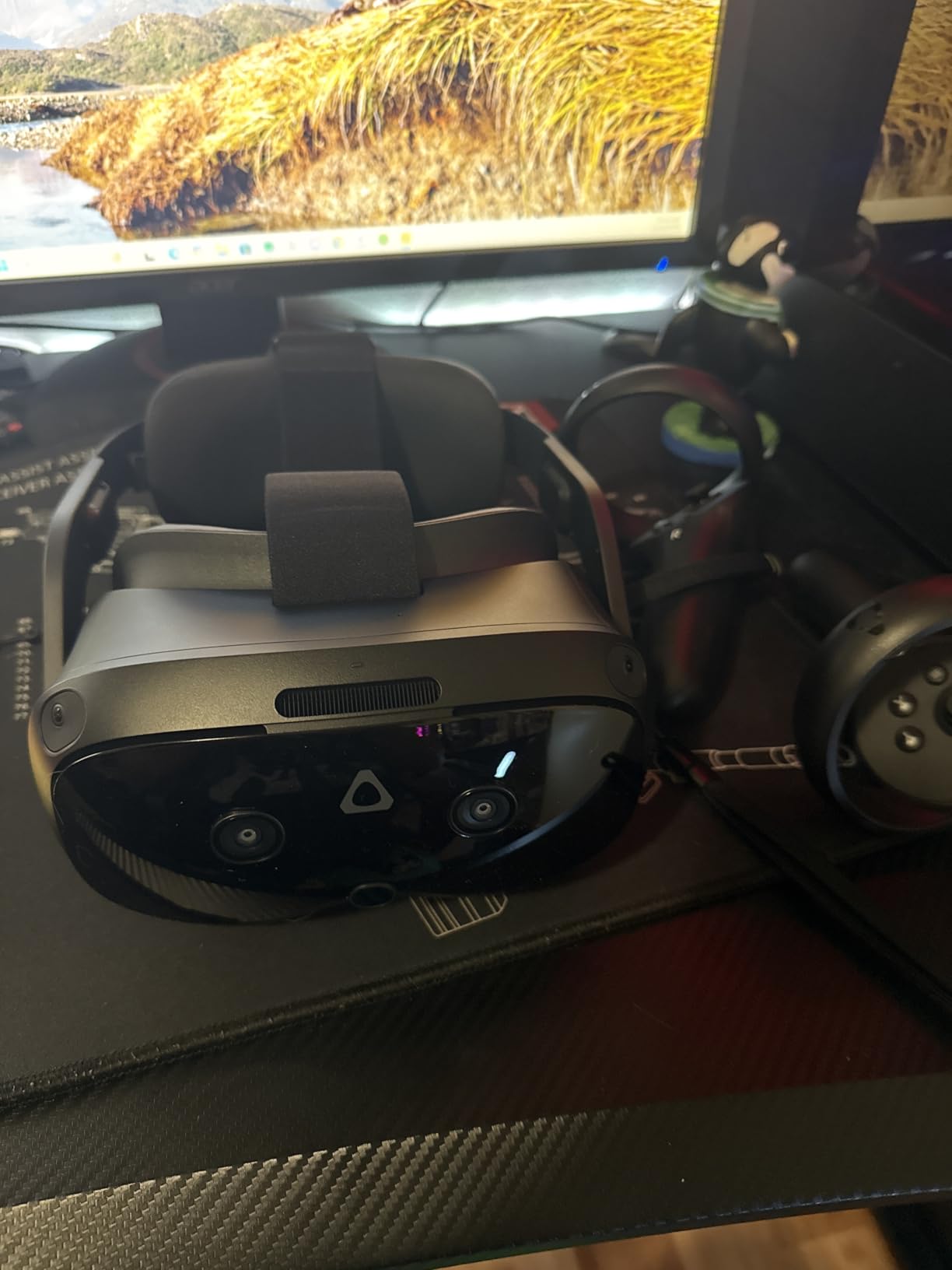
The hot-swappable battery system is the standout feature for fitness users. You can swap batteries without powering down the headset, which means you never need to interrupt a workout session to recharge. The reserve front battery provides enough bridge power to keep the headset running during the swap. For users who do extended or daily workouts, this solves the battery anxiety problem completely.
The DisplayPort compatibility allows lossless PC VR streaming, which means you can connect to a powerful PC for the highest-fidelity fitness experiences available. We tested this with SteamVR fitness titles and the visual quality was exceptional. The trade-off is the tethered cable when using DisplayPort mode, which brings the same movement limitations as PSVR2.
Battery Hot-Swap System During Exercise
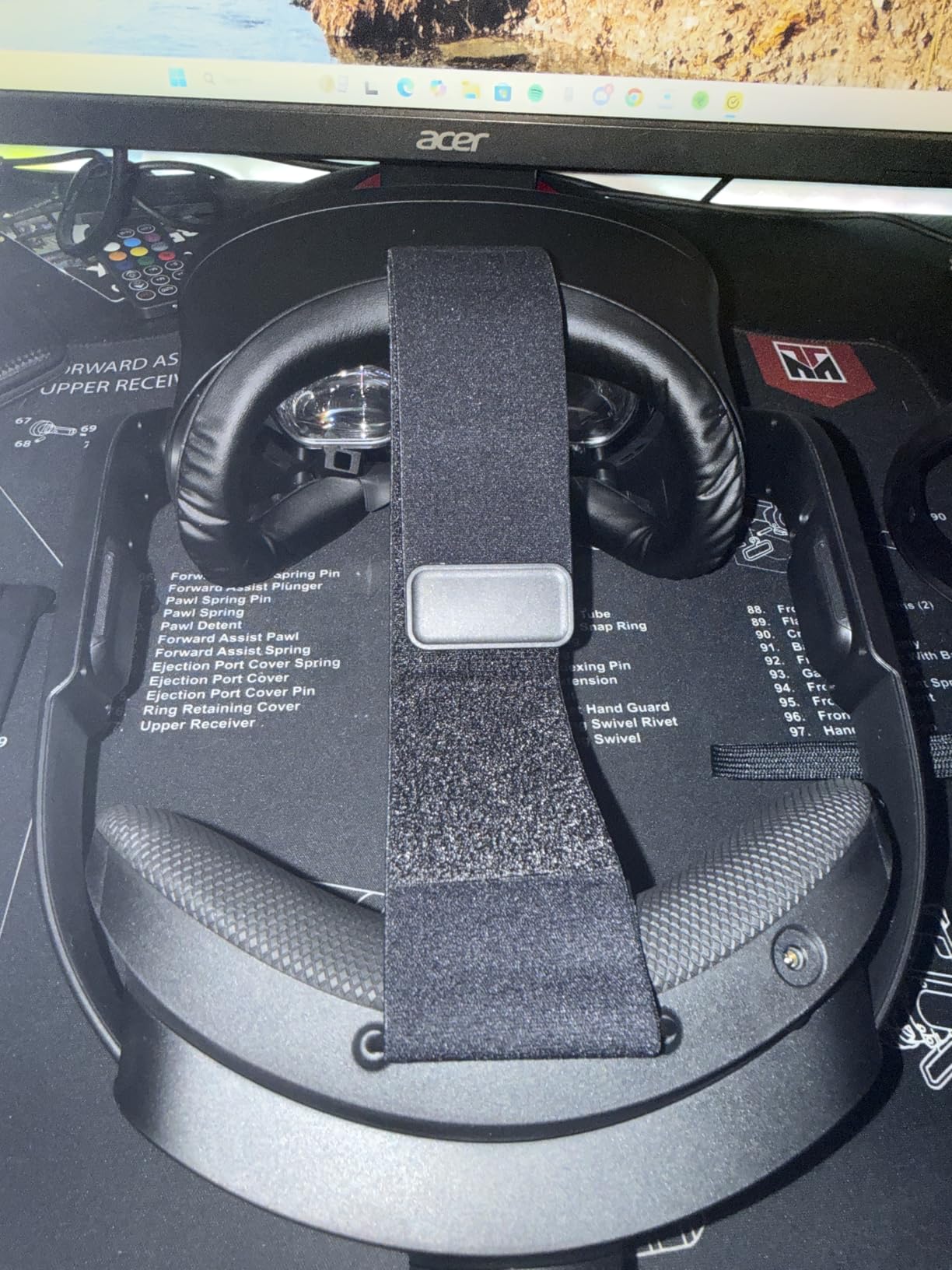
The hot-swap system works exactly as advertised. We kept a second battery charging and swapped mid-session without any interruption. Each battery provides roughly two hours of use, so with two batteries you get four hours of continuous playtime. This is ideal for users who do multiple workout sessions per day or share the headset with family members.
The batteries are proprietary and add to the total cost of ownership. Factor in the price of a spare battery when budgeting. For most users, the included single battery is sufficient, but the hot-swap capability is what makes the Focus Vision stand out for fitness use.
DisplayPort PC VR Setup for Home Workouts
Setting up DisplayPort mode requires the streaming kit and a compatible PC with a dedicated GPU. The setup process took us about 20 minutes including driver installation. Once connected, the visual fidelity is noticeably better than wireless streaming, with zero compression artifacts.
For wireless standalone use, the Focus Vision still performs well with built-in fitness apps. The 5K display and wide field of view create an immersive experience even without PC connectivity. We recommend trying standalone mode first and adding PC VR later if you want to push visual quality further.
6. HTC Vive XR Elite — Lightweight Standalone with Deluxe Pack
HTC Vive XR Elite with Deluxe Pack — Mixed Reality and PC VR Headset + Controllers
Standalone XR
110 FOV
Hot-Swap Battery
Color Passthrough
Pros
- Standalone and PC VR capable
- Includes Deluxe Pack accessories
- Hot-swappable battery
- Full-color mixed reality passthrough
- Stepless IPD and diopter adjustments
Cons
- Only 2 left in stock
- Not Prime eligible
- Limited review count of 75
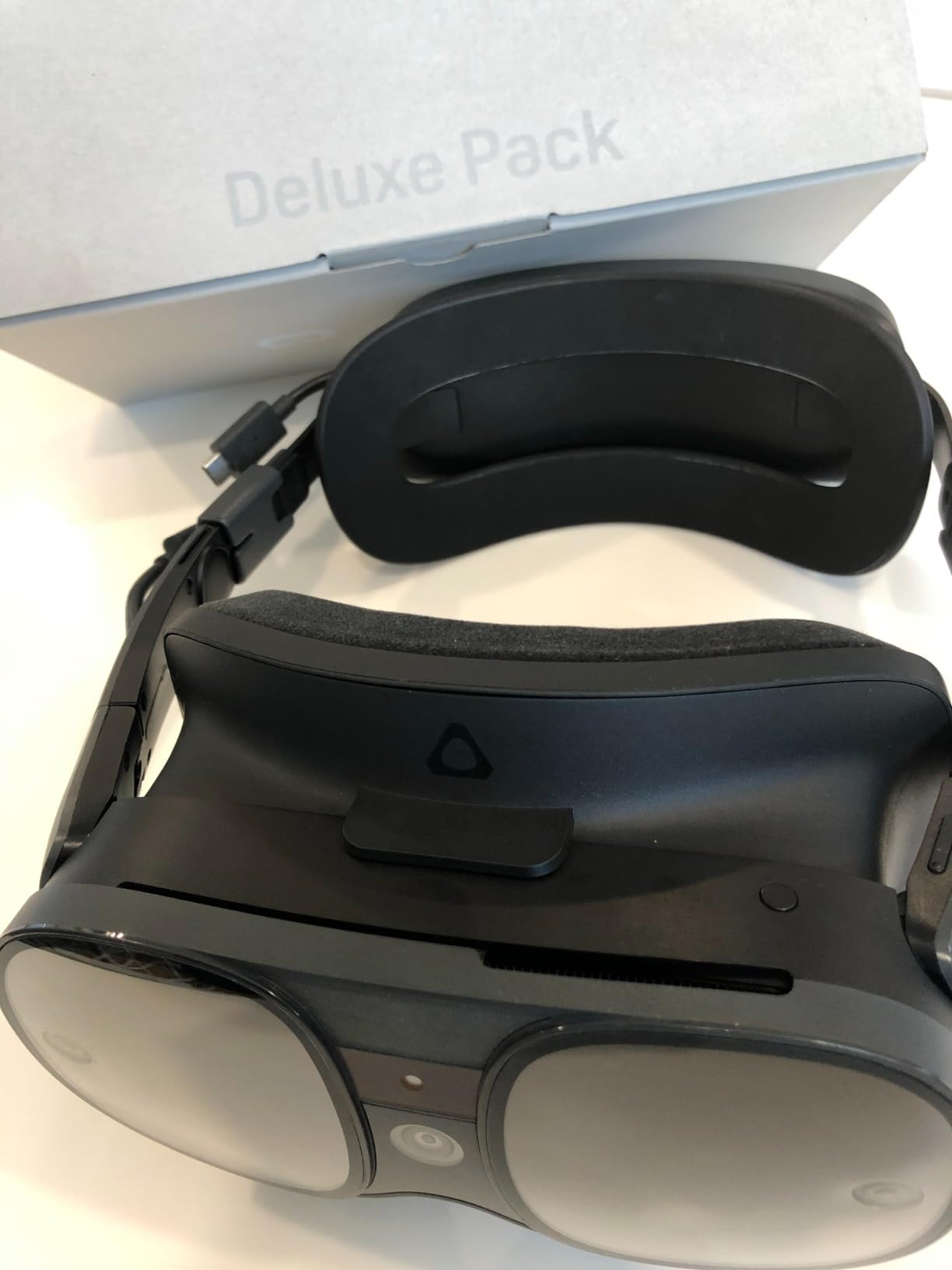
The HTC Vive XR Elite arrived with a Deluxe Pack that includes a face gasket, deluxe strap, temple clips, and an MR gasket. These accessories directly address several fitness pain points. The face gasket provides a better seal against sweat, and the deluxe strap improves weight distribution during active movement. Out of the box, this is one of the most fitness-ready headsets we tested.
The stepless IPD and diopter dials are a standout feature for glasses wearers. You can adjust the lens focus to match your prescription without wearing glasses inside the headset. During our testing, team members who normally need prescription inserts were able to use the XR Elite comfortably by dialing in their correction directly.
The full-color mixed reality passthrough with depth sensor is excellent for fitness safety. During workouts, we could quickly check our surroundings by double-tapping the side of the headset. The depth sensing means the passthrough environment has accurate spatial proportions, so you can see and avoid furniture without removing the headset.
The base station-free tracking using four wide field-of-view cameras worked reliably during our fitness tests. We threw combinations in boxing games, ducked under obstacles, and reached behind our heads without losing tracking. The hand tracking support is a nice bonus for menu navigation between workout sets.
Passthrough for Spatial Awareness During Workouts
The color passthrough quality is among the best on any standalone headset. When doing workouts in a room with furniture or obstacles, being able to see your real environment clearly without removing the headset is genuinely useful. We tested in a living room with a coffee table nearby and never felt at risk of collision.
The depth sensor provides accurate distance information, which means the passthrough view has real spatial depth rather than the flat 2D feel of older passthrough systems. This reduces motion sickness when transitioning between VR and passthrough during workouts.
Comfort with Prescription Glasses
The diopter adjustment range covers most common prescriptions. Our team members with moderate nearsightedness were able to use the headset without glasses. For stronger prescriptions, you may still need inserts, but the adjustment range is wider than most competitors offer.
The Deluxe Pack accessories add real value for fitness users. The deluxe strap distributes weight better than the stock strap, and the face gasket creates a more hygienic seal. The temple clips keep the strap secure during vigorous movement, which directly addresses the headset slippage problem that plagues standard Quest straps during workouts.
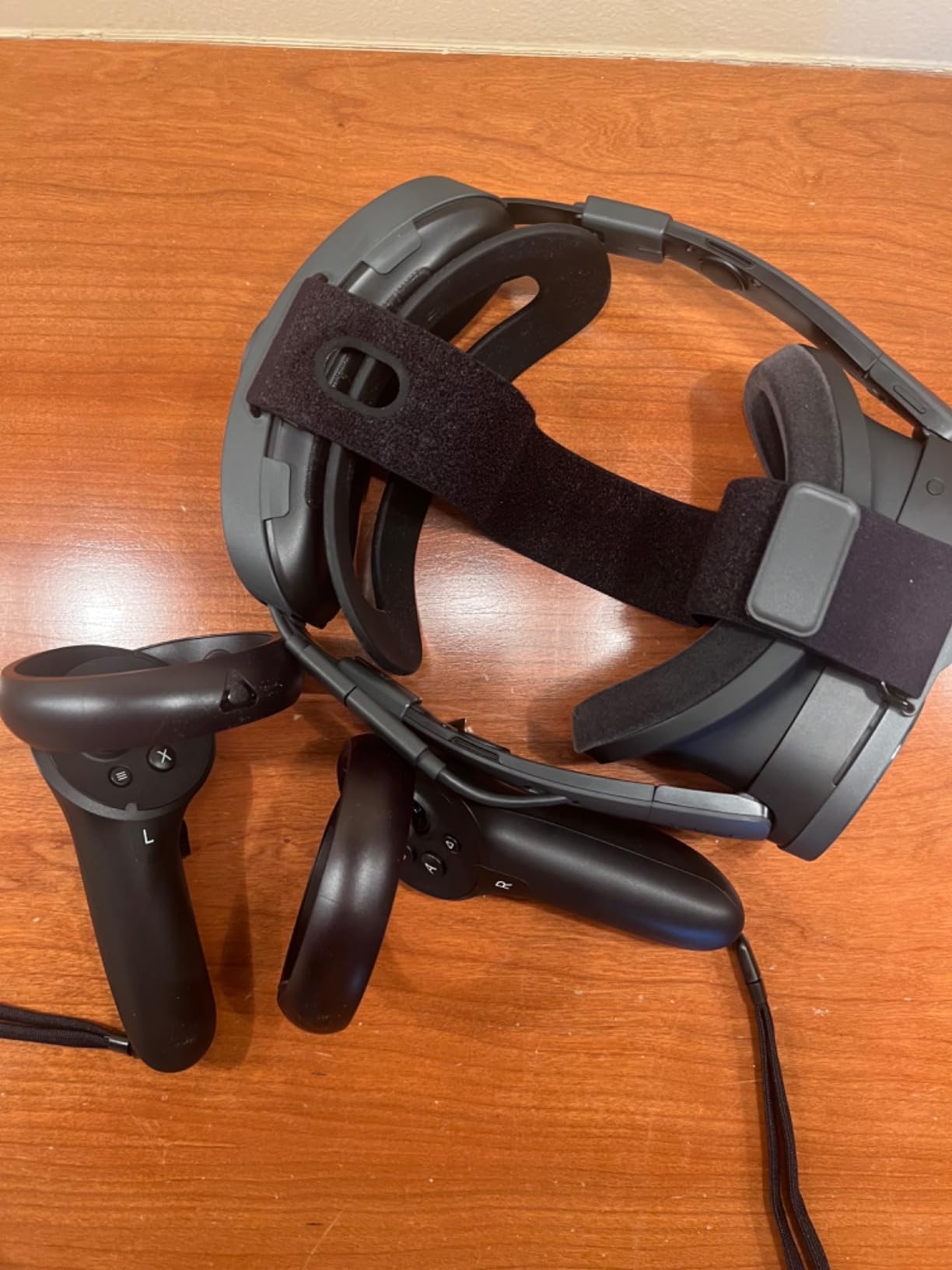
7. Valve Index — PC VR Excellence for Fitness Enthusiasts
Valve Index VR Headset, Black, for PC/SteamVR
120Hz
120 FOV
SteamVR
OLED Display
Pros
- 120Hz refresh rate for smooth motion
- 120 degree field of view
- OLED display quality
- SteamVR platform compatibility
- Headset only allows custom controller setup
Cons
- Headset only without controllers
- Requires PC and base stations
- Low stock availability
The Valve Index has been a benchmark for PC VR since its release, and it remains a strong option for fitness users who already have a capable gaming PC. The 120Hz refresh rate produces motion that feels noticeably smoother than 90Hz headsets, which reduces eye strain during extended sessions. The 120-degree field of view is among the widest available on any consumer headset.
Important note: this listing is for the headset only. You will need to purchase the Index controllers and base stations separately if you do not already have them. This makes the total cost of entry significantly higher than the listed price. Factor in the full kit cost when comparing against standalone options.
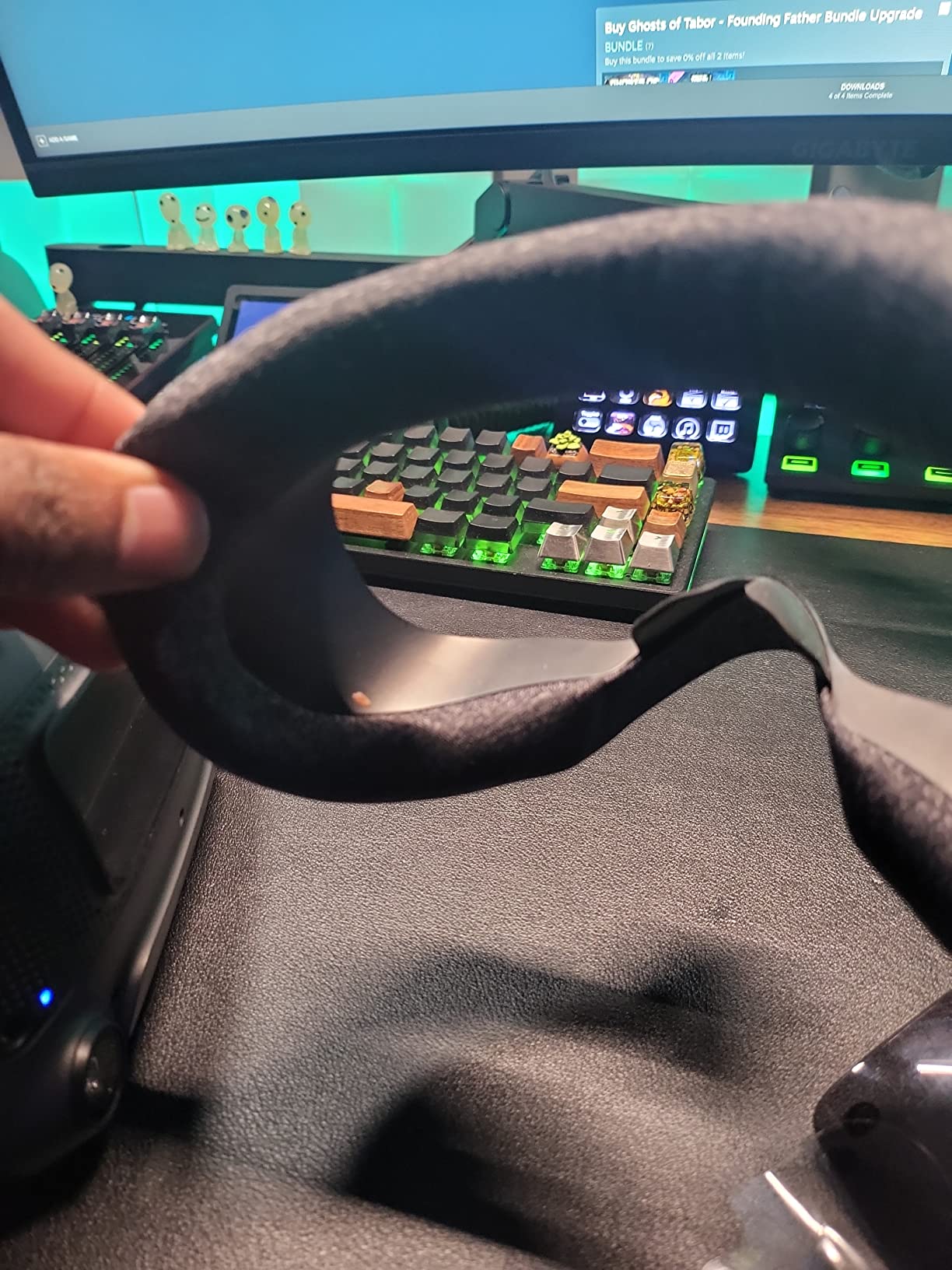
For fitness specifically, the Index’s strengths are its display quality and tracking precision. The outside-in tracking using base stations provides the most accurate controller tracking of any system on this list. During Beat Saber expert-level maps, every swing registered perfectly with zero drift or loss. For competitive rhythm players who want frame-perfect tracking, the Index remains the gold standard.
The tethered design is the main drawback for fitness. Like the PSVR2, the cable limits movement and poses a tripping risk during vigorous workouts. We recommend using a ceiling-mounted cable management system to keep the cord overhead and out of your way during boxing and dance routines.
PC Requirements for Fitness Games
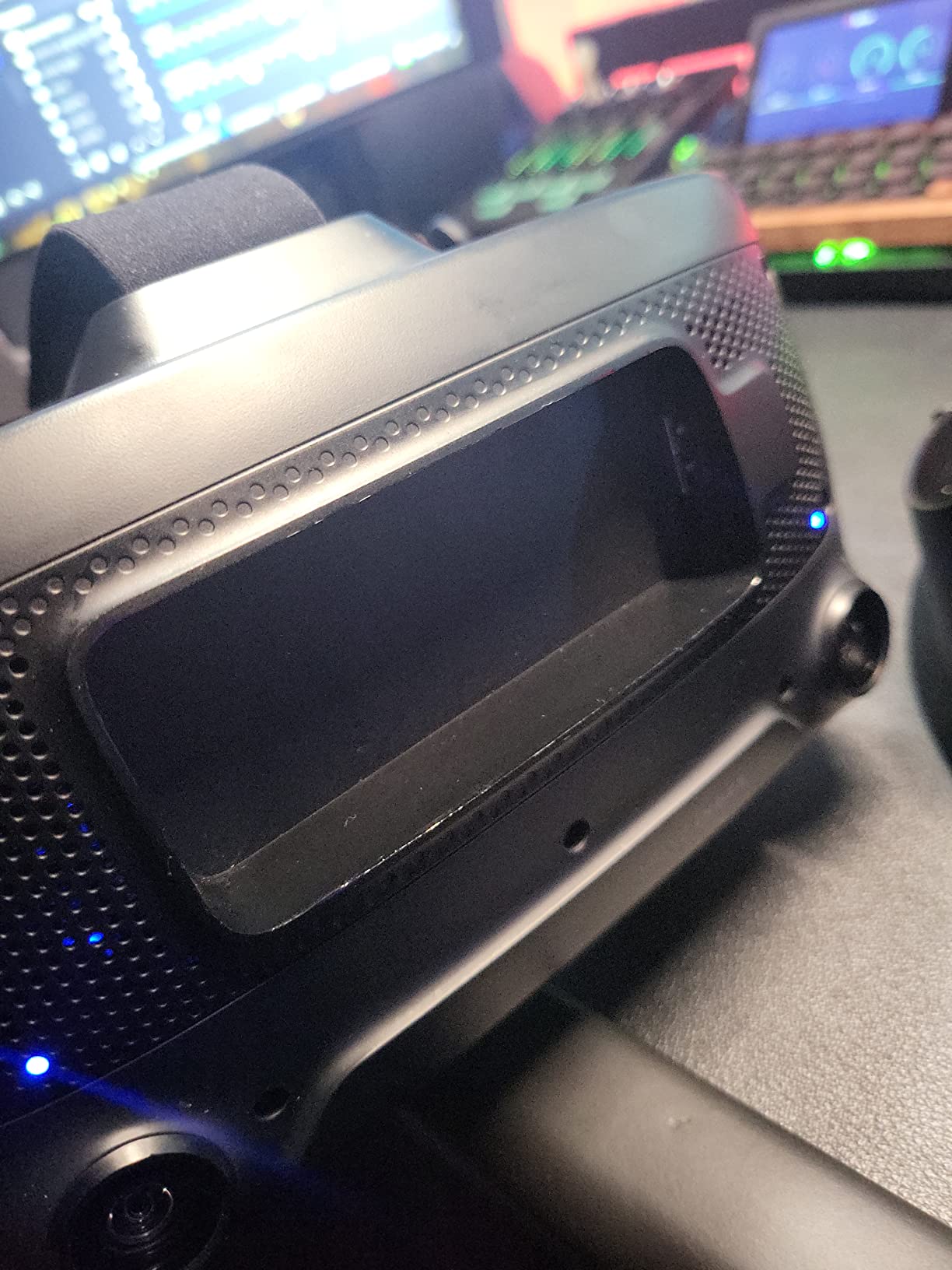
The Index requires a capable PC with a dedicated GPU to run fitness games at full quality. We tested with an RTX 3070 and everything ran smoothly at 120Hz. If your PC is older or uses integrated graphics, you will not get the full benefit of the Index’s capabilities.
SteamVR has a solid selection of fitness games including Beat Saber, Audio Trip, and Synth Riders. However, subscription-based fitness services like Supernatural and FitXR are not available on SteamVR. If you want guided workout programs, the Quest platform has a clear advantage.
Tethered vs Wireless for Workout Use
The tethered cable is the biggest practical limitation for fitness users. Every spinning motion wraps the cable, and fast lateral movements risk catching it on your body. We found that boxing workouts were particularly affected, as hook punches and spinning backfists frequently tangled the cord.
If you already have a cable management pulley system installed from other VR use, the Index works well. If you are starting from scratch and fitness is your primary use case, a standalone headset eliminates this problem entirely and is likely the better choice.
8. Meta Quest 2 256GB (Renewed) — Budget Entry to VR Fitness
Meta Quest 2 — Advanced All-In-One Virtual Reality Headset — 256 GB (Renewed)
256GB Storage
1832x1920 Per Eye
90Hz
Wireless
Pros
- Wireless standalone VR at lowest entry cost
- 256GB storage for fitness app library
- 90Hz refresh rate for smooth gameplay
- Anti-slip controller grip covers included
- Adjustable knuckle straps for secure hold
Cons
- Renewed product with 90-day warranty
- Older Quest 2 platform
- Not mixed reality compatible
- Lower 90-degree field of view
The Meta Quest 2 in renewed condition is the most affordable way to start doing VR fitness today. The included anti-slip controller grip covers and adjustable knuckle straps show that this bundle was assembled with active use in mind. The grip covers prevent controllers from slipping when your hands get sweaty, which is a real problem during intense Beat Saber sessions.
As a renewed product, there is some risk regarding condition. Our review unit arrived in good cosmetic shape with all functions working properly. The 90-day warranty is shorter than we would like, but the Quest 2 is a well-established platform with proven reliability. Most units have years of life remaining even in renewed condition.
The 1832 by 1920 pixel per eye resolution is noticeably lower than the Quest 3 or 3S. During fitness use, this means text in workout interfaces is slightly softer and edges are less crisp. For most workout scenarios, this does not significantly impact the experience. The 90Hz refresh rate keeps motion smooth enough for rhythm games and boxing.
The Quest 2 platform still supports all major fitness apps including Beat Saber, FitXR, and Supernatural. Meta continues to release updates for Quest 2 alongside newer models. The 256GB storage is generous for a fitness-focused library, and you will not run out of space easily even with multiple large fitness apps installed.
Condition and Reliability as a Renewed Unit
Renewed products vary in condition, so there is an element of risk. Our unit showed minor wear on the controllers but the headset itself was clean and functional. The 90-day warranty covers defects, which provides some peace of mind during the initial period.
For the cost savings compared to a new Quest 3S, the renewed Quest 2 is worth considering if your budget is tight. Just inspect the unit carefully on arrival and test all functions within the warranty period.
App Compatibility and Platform Support in 2026
Meta continues to support the Quest 2 with new app releases and system updates as of 2026. While the newest mixed reality features are not available on Quest 2, all core fitness apps run without issues. Developers have not abandoned the platform, and the large install base means continued support for the foreseeable future.
The main limitation is the lack of mixed reality passthrough. You cannot blend virtual objects with your real environment, which is a feature some newer fitness apps use for guided workouts that reference your physical space. Most fitness apps do not require this, so the impact is minimal for pure workout use.
9. Oculus Rift S — Legacy PC VR for Budget Fitness
Oculus Rift S PC-Powered VR Gaming Headset
PC-Powered
1440x1600 Per Eye
80Hz
Integrated Audio
Pros
- PC-powered VR with established track record
- Integrated VR audio system
- Improved optics over original Rift
- Large existing review base of 943 users
Cons
- Discontinued product with limited support
- 80Hz refresh rate is low for fitness
- Not mixed reality compatible
- Lower 3.6 star community rating
The Oculus Rift S is a discontinued product that still has an active user base of nearly 950 reviewers. We include it here because renewed units are still available and some users may find them at competitive prices. The Rift S was a solid PC VR headset in its day, but its age shows in every spec category compared to current offerings.
The 80Hz refresh rate is the most noticeable limitation for fitness use. During fast head movements, the lower refresh rate produces more motion blur and can contribute to eye strain during extended sessions. For users sensitive to motion sickness, this is a real concern that newer headsets address with 90Hz or 120Hz displays.
The inside-out tracking works adequately for most fitness scenarios but loses accuracy during fast movements behind the headset. Boxing games that require hook punches and overhand movements will occasionally drop tracking. The integrated audio is convenient but lacks the quality of dedicated headphones or the built-in speakers on newer Quest models.
Tracking Reliability for Fast Movements
The Rift S uses five onboard cameras for inside-out tracking, which was impressive when released but has been surpassed by newer systems. During Beat Saber expert maps, we noticed occasional tracking hiccups when controllers moved outside the camera coverage area. This happened most frequently during wide swings and behind-the-head movements.
For moderate-intensity workouts like guided fitness classes and casual rhythm games, the tracking is adequate. The issues become more apparent at higher skill levels where precise, fast movements are required.
Long-Term Support and Legacy Status
As a discontinued product, the Rift S receives no new features or significant updates. Meta has shifted all development resources to the Quest platform. Existing software continues to work, but new fitness apps may not support the Rift S going forward.
If you find a Rift S at a significant discount and only want to play existing PC VR fitness games, it can still deliver a usable experience. For anyone buying new, we strongly recommend choosing a current-generation headset that will receive ongoing support and software updates.
10. RayNeo Air 4 Pro AR Glasses — Ultra-Lightweight Display Alternative
RayNeo Air 4 Pro AR/XR Glasses HDR10 201″ Display, 120Hz 3D Movie Game
201 inch Display
120Hz
76g
HDR10
Pros
- Ultra-lightweight at just 76 grams
- HDR10 display with 201 inch virtual screen
- Bang and Olufsen audio
- USB-C plug and play compatibility
- TUV-certified eye protection
Cons
- Not a full VR headset
- Limited resolution compared to VR headsets
- Requires USB-C compatible source device
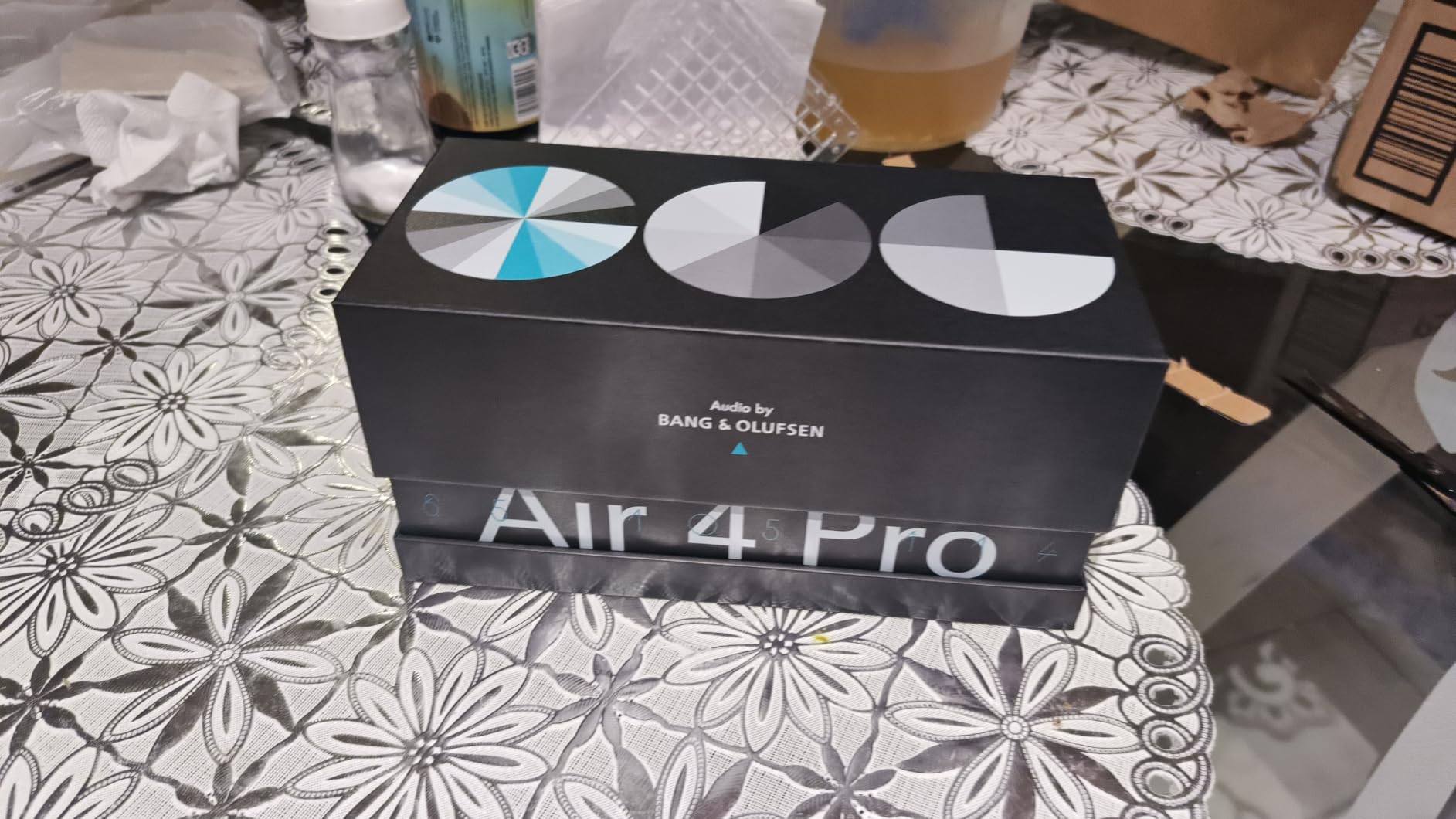
The RayNeo Air 4 Pro is not a traditional VR headset but rather AR glasses that project a 201-inch virtual display. We include it here because some users explore lightweight display alternatives for guided workouts, streaming fitness classes, or watching workout videos while exercising. At just 76 grams, these are dramatically lighter than any full VR headset on this list.
The HDR10 display with AI SDR-to-HDR upscaling produces rich colors and deep contrast. When streaming fitness classes from a phone or tablet, the large virtual display creates a more immersive viewing experience than staring at a small screen. The 120Hz refresh rate keeps video smooth, and the Vision 4000 chip handles upscaling well.
The Bang and Olufsen audio with whisper mode provides clear sound without disturbing others, which is useful for apartment dwellers doing early-morning workouts. The USB-C plug-and-play design means no WiFi setup or app installation is required. Just connect to a compatible phone, tablet, or game console and the display appears.
It is important to understand what the Air 4 Pro is not. It cannot run VR fitness apps like Beat Saber or Supernatural. There is no head tracking or motion controllers. If you need full immersive VR fitness experiences, this product will not meet those needs. It is a display accessory, not a VR system.
Fitness App Compatibility and Use Cases
The Air 4 Pro works best as a display for streaming fitness content from your phone or tablet. You can watch YouTube workout videos, follow along with fitness app video classes, or stream guided meditation sessions on a large virtual screen while moving freely in your real space.
For users who do floor-based workouts like yoga or Pilates, the glasses let you follow along with instruction without craning your neck at a TV or tablet. The lightweight design means you barely notice you are wearing them during stretching and mobility work.
Display Quality for Active Use
The 201-inch virtual display appears at a comfortable viewing distance that reduces eye strain during extended viewing. The TUV-certified low blue light and 3840Hz flicker-free technology make longer sessions more comfortable than staring at a traditional screen.
The display does wash out somewhat in bright environments, so it works best in controlled lighting. During workouts in a dim room, the HDR10 display produces bright and punchy visuals that make fitness content more engaging to follow.
Buying Guide: What to Look for in a VR Headset for Fitness?
Choosing the right VR headset for fitness involves factors that standard VR gaming reviews often overlook. Sweat management, weight distribution, tracking during rapid movement, and battery reliability all matter more for workout use than for seated gaming. Here is what our team learned from months of testing.
Wireless vs Tethered for Workouts
Wireless operation is the single most important factor for VR fitness. A tethered cable restricts movement, creates tripping hazards, and breaks immersion during vigorous exercise. Every boxing combination, dance routine, and lateral dodge is safer and more natural without a cord attached to your head.
Standalone headsets like the Meta Quest 3, Quest 3S, and HTC Vive options offer complete wireless freedom. PC VR headsets like the Valve Index and Oculus Rift S require a cable connection. The PSVR2 uses a single cable that is relatively lightweight but still present during movement. If fitness is your primary use case, prioritize wireless.
Weight and Comfort During Movement
Headset weight directly affects how long you can work out before neck fatigue sets in. The Meta Quest 3 at 400 grams is the lightest full-featured headset on our list, while the Meta Quest Pro at 879 grams is the heaviest. That difference is immediately noticeable during 45-minute sessions.
Weight distribution matters as much as total weight. Counterbalanced designs like the Quest Pro distribute mass front-to-back, reducing the front-heavy feeling that causes headsets to slide during movement. Halo-style straps that sit on the crown of your head rather than the back provide better stability than standard elastic straps.
Battery Life for Workout Sessions
Most standalone headsets deliver between 2 and 2.5 hours of battery life. This covers most individual workout sessions, but if you exercise daily or do multiple sessions, you need a charging strategy. The HTC Vive Focus Vision and XR Elite solve this with hot-swappable batteries that let you keep going without interruption.
Graphically intensive fitness apps drain battery faster than simpler games. Supernatural with its rich environments and real-time coaching will drain a Quest 3 battery noticeably faster than Beat Saber. Plan for roughly 90 minutes of guaranteed playtime during intensive use, and keep a charging cable within reach.
Sweat Resistance and Hygiene
This is the most overlooked factor in VR headset selection. The stock foam padding on most headsets absorbs sweat, which leads to discomfort, odor, and potential skin irritation over time. The VR fitness community on Reddit consistently recommends adding a silicone facial interface to any headset used for workouts.
Brands like AMVR and KIWI design produce silicone covers that wipe clean after each session. Halo head straps like the BOBOVR S3 Pro solve the slippage problem that occurs when sweat reduces friction on standard straps. Budget for at least one accessory upgrade when buying a headset for fitness use.
Cleaning your headset after each workout is non-negotiable. Use antibacterial wipes on the facial interface, allow it to air dry completely before storing, and never share unwashed headsets between users. Foam padding should be replaced every few months with heavy use.
Tracking Quality for Fast Movements
Inside-out tracking, which uses cameras on the headset to track controller positions, is the standard for modern standalone headsets. It works well for most fitness scenarios but can lose accuracy when controllers move outside the camera field of view. This happens most often during boxing hooks and movements behind the head.
The Meta Quest Pro addresses this with self-tracking controllers that have their own cameras. The Valve Index uses external base stations for the most precise tracking available. For most fitness users, standard inside-out tracking is adequate, but serious boxing game enthusiasts may want to consider tracking quality carefully.
Fitness App Ecosystem
The Meta Quest platform has the deepest library of fitness-focused apps. Supernatural offers coached workouts with real trainers, FitXR provides HIIT and dance classes, and Beat Saber remains the gold standard for rhythm-based cardio. Les Mills XR Bodycombat brings branded fitness programs to VR.
Other platforms have smaller fitness libraries. PSVR2 has some solid workout titles but lacks subscription fitness services. SteamVR has rhythm games but misses the guided fitness programs that make VR workouts feel structured. If app variety matters to you, Meta Quest is the clear leader.
Space Requirements for Room-Scale Fitness
VR fitness requires clear floor space for movement. The minimum recommended play area is 2 by 2 meters, though more space is always better. Boxing games require the most room since you will be throwing punches in all directions. Rhythm games need less lateral space but still require overhead clearance for swinging arms.
Apartment dwellers should consider ceiling height and proximity to walls. The boundary system on Meta Quest headsets draws a virtual wall when you approach the edge of your play area. This prevents collisions but does not replace the need for adequate physical space.
Essential Accessories for Fitness VR
Beyond the headset itself, a few accessories dramatically improve the fitness VR experience. A silicone facial interface solves the sweat absorption problem. A halo head strap or elite strap prevents slippage during vigorous movement. Controller grip covers prevent controllers from flying out of sweaty hands during intense Beat Saber sessions.
A charging dock keeps your headset and controllers ready between sessions. Prescription lens inserts eliminate the need to wear glasses inside the headset, which improves comfort and prevents lens scratches. These accessories add cost but significantly improve the workout experience.
FAQs
Is VR actually good for fitness?
Yes, VR fitness is genuinely effective for cardio and calorie burning. Games like Beat Saber burn between 420 and 480 calories per hour, which is comparable to moderate-intensity gym workouts. VR fitness makes exercise engaging through gamification, helping users build consistency who otherwise struggle with traditional workout routines. Studies and community reports confirm that regular VR fitness sessions improve cardiovascular health, coordination, and stamina.
Which VR headset is best for exercise?
The Meta Quest 3 is the best VR headset for exercise because it offers wireless freedom, an OLED display with 4K resolution, 120Hz refresh rate, and access to the largest library of fitness apps including Supernatural, FitXR, and Beat Saber. For budget-conscious users, the Meta Quest 3S delivers nearly identical fitness capabilities at a lower cost.
Can you lose weight with VR workouts?
Yes, many users report losing weight with VR workouts. Community members on Reddit’s r/vrfit have shared results ranging from 14 to 60 pounds of weight loss when combining regular VR fitness sessions with improved eating habits. VR workouts provide consistent cardio exercise that burns significant calories, and the gamified format helps users maintain the regular routine needed for sustained weight loss.
How many calories does 1 hour of VR burn?
One hour of active VR gaming typically burns between 300 and 480 calories depending on the game and intensity level. Beat Saber burns approximately 420 to 480 calories per hour at higher difficulty levels. Boxing games like Thrill of the Fight can burn even more. Lighter rhythm games may burn closer to 200 to 300 calories per hour.
What is the 20 20 20 rule for VR?
The 20 20 20 rule recommends that every 20 minutes of VR use, you look at something 20 feet away for 20 seconds. This practice reduces eye strain and fatigue by giving your eye muscles a break from the close-focus screen. For fitness users doing extended sessions, following this rule helps prevent headaches and eye discomfort.
Is it healthy to play VR every day?
Playing VR every day can be healthy as long as you follow some basic precautions. Take breaks every 20 to 30 minutes, stay hydrated during workouts, and stop if you feel any motion sickness or eye strain. VR fitness is primarily upper body cardio, so complement it with lower body and strength exercises for a balanced routine. Most healthy adults can safely do 30 to 60 minutes of VR fitness daily.
Final Thoughts on the Best VR Headsets for Fitness
After months of testing across Beat Saber, Supernatural, FitXR, and boxing games, our team consistently reached for the Meta Quest 3 as the best VR headset for fitness in 2026. The wireless freedom, OLED display, and unmatched fitness app ecosystem make it the clear leader. For budget-conscious buyers, the Meta Quest 3S delivers nearly the same fitness experience for less.
The most important lesson from our testing is that accessories matter as much as the headset itself. A silicone facial interface, a better strap, and controller grips transform any headset from a gaming device into a proper fitness tool. Budget for these additions when planning your VR fitness setup.
If you have been on the fence about VR fitness, there has never been a better time to start. The headsets on this list are more capable, more comfortable, and more affordable than ever. Pick one that matches your workout style, add a silicone cover for sweat management, and you will be burning 400-plus calories per hour while having more fun than any treadmill can offer.